Understanding and Preventing EMSA Complex Dissociation: A Critical Guide for Accurate Nucleic Acid-Protein Interaction Analysis
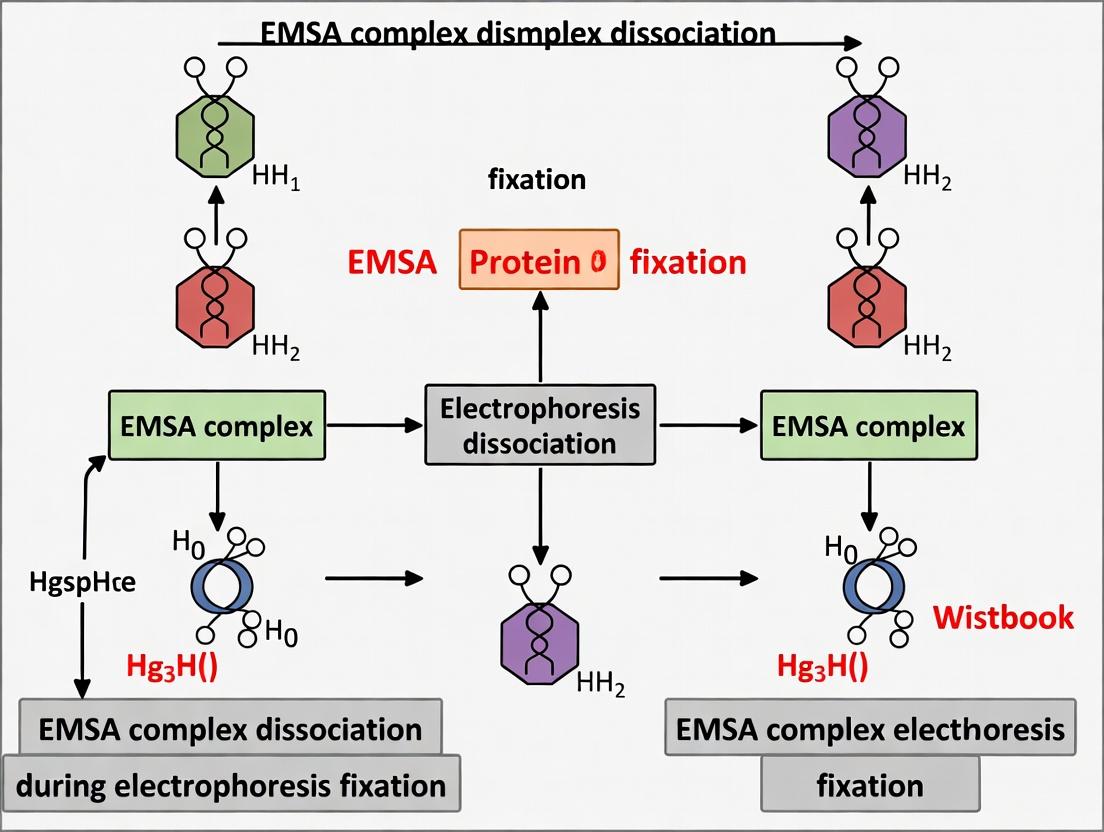
This article provides a comprehensive analysis of Electrophoretic Mobility Shift Assay (EMSA) complex dissociation during electrophoresis and fixation.
Understanding and Preventing EMSA Complex Dissociation: A Critical Guide for Accurate Nucleic Acid-Protein Interaction Analysis
Abstract
This article provides a comprehensive analysis of Electrophoretic Mobility Shift Assay (EMSA) complex dissociation during electrophoresis and fixation. Aimed at researchers and drug developers, it explores the foundational biophysical principles behind complex instability, presents robust methodological frameworks to preserve complexes, offers detailed troubleshooting for common dissociation artifacts, and compares validation strategies to confirm specific binding. By addressing all four intents—from theory to validation—this guide equips scientists with the knowledge to generate reliable, publication-quality EMSA data for studying transcription factors, RNA-binding proteins, and therapeutic targeting.
The Why Behind the Fade: Biophysical Causes of EMSA Complex Dissociation
EMSA (Electrophoretic Mobility Shift Assay) complex dissociation refers to the disintegration of a protein-nucleic acid complex during the electrophoretic process, leading to a loss or reduction of the "shifted" band. This phenomenon complicates data interpretation, as it can falsely suggest weak binding or no binding, potentially derailing research conclusions in studies of transcription factors, RNA-binding proteins, and drug discovery.
Troubleshooting Guides & FAQs
Q1: What are the primary experimental signs of complex dissociation during an EMSA? A: Key signs include:
- A smeared or diffuse shifted band, rather than a tight, discrete band.
- A "fan" or "trail" of signal between the free probe and the shifted complex.
- An unexpectedly faint shifted band despite using known binding partners at high concentrations.
- The appearance of multiple non-specific bands or a high background.
Q2: What are the main causes of complex dissociation in EMSA? A: The primary causes are:
- Weak Binding Affinity: Low equilibrium binding constant (Kd) of the complex.
- Non-Equilibrium Conditions: The electrophoresis run is too long or at too high a voltage, causing the complex to dissociate as it migrates (kinetic instability).
- Suboptimal Binding Buffer: Incorrect pH, salt concentration, or lack of essential co-factors (e.g., Mg2+, Zn2+).
- Competitive Inhibition: The presence of non-specific competitors (e.g., poly(dI-dC)) in excessive amounts can destabilize specific complexes.
- Gel Temperature: Excessive heat generated during electrophoresis destabilizes complexes.
Q3: How can I experimentally distinguish between a weak/no-binding result and complex dissociation? A: Implement a "Cold Competition" Control and a "Time/Velocity" Test.
- Cold Competition: Include a 50-100x molar excess of unlabeled (cold) specific competitor oligonucleotide. A true specific complex will be abolished. If the shifted band is already faint, this confirms poor binding or dissociation.
- Time/Velocity Test: Run identical binding reactions on gels at different voltages (e.g., 80V vs. 150V) or for different times. If the shifted band intensity decreases significantly at higher voltage/longer time, it indicates dissociation during electrophoresis.
Q4: What protocol adjustments can stabilize complexes? A: Follow this systematic protocol adjustment:
Detailed Stabilization Protocol:
- Optimize Binding Conditions:
- Systematically vary monovalent salt (KCl, NaCl) from 0-150 mM.
- Include divalent cations (e.g., 1-5 mM MgCl2).
- Add stabilizers like 2.5-10% glycerol, 0.01-0.1% NP-40, or 1 mM DTT.
- Pre-incubate protein and probe on ice for 20 minutes before loading.
- Optimize Electrophoresis Conditions:
- Run a "Low-Ionic-Strength" Native Gel: Use 0.25-0.5x TBE or TAE instead of 1x to strengthen electrostatic interactions.
- Pre-run and Run Cold: Pre-run the gel for 30-60 min and run the experiment in a cold room (4°C) to minimize heat.
- Reduce Voltage & Time: Run the gel at a constant 80-100 V until the dye front is 2/3 down the gel.
- Cross-linking Control: As a diagnostic, add 0.1-1% glutaraldehyde to the binding reaction for 10 min on ice before loading to covalently cross-link the complex. A dramatic increase in shifted signal confirms dissociation was the issue.
Key Quantitative Data on EMSA Stabilizers
Table 1: Effect of Common Additives on EMSA Complex Stability and Migration
| Additive | Typical Concentration | Primary Function | Impact on Shifted Band | Potential Drawback |
|---|---|---|---|---|
| Glycerol | 2.5 - 10% (v/v) | Reduces electroendosmosis, stabilizes proteins | Increases sharpness & intensity | Can slow migration |
| NP-40 / Tween-20 | 0.01 - 0.1% (v/v) | Prevents non-specific sticking to tubing/walls | Reduces background, may stabilize | Usually negligible |
| MgCl2 | 1 - 5 mM | Cofactor for many DNA/RNA-binding proteins | Essential for some complexes; stabilizes | Can promote non-specific binding |
| DTT | 0.5 - 1 mM | Maintains reducing environment, preserves protein activity | Prevents oxidation-related loss of binding | Can reduce disulfide-dependent complexes |
| Lower Ionic Strength Gel Buffer | 0.25x TBE | Increases electrostatic interaction in gel | Can dramatically stabilize weak complexes | Increases current/heat if not managed |
Table 2: Troubleshooting Matrix for EMSA Dissociation Symptoms
| Symptom | Likely Cause | Immediate Test | Corrective Action |
|---|---|---|---|
| Smeared Shifted Band | Dissociation during run | Run gel at 4°C & lower voltage | Optimize gel buffer ionic strength; add glycerol |
| Faint Shifted Band | Weak affinity or dissociation | Cold competition; cross-linking test | Increase protein concentration; optimize binding buffer |
| High Background/Non-specific bands | Probe degradation or excessive competitor | Run probe-only lane; titrate competitor | Purify new probe; reduce poly(dI-dC) amount |
| No shifted band | No binding or complete dissociation | Positive control protein; cross-linking | Verify protein activity; radically alter buffer conditions |
The Scientist's Toolkit: Research Reagent Solutions
Table 3: Essential Materials for Investigating EMSA Complex Dissociation
| Item | Function & Rationale |
|---|---|
| High-Purity, 5'-End Labeled Oligonucleotide Probe | Ensures high-specific-activity signal; impurities cause background. Use gel purification. |
| Recombinant Protein Purification System (e.g., His-tag) | Provides consistent, concentrated protein source for titration and optimization. |
| Non-specific Competitor DNA (e.g., poly(dI-dC), salmon sperm DNA) | Quenches non-specific protein-DNA interactions. Must be titrated for each new protein. |
| Divalent Cation Stock Solutions (MgCl2, ZnCl2) | Often critical for folding or catalytic activity of DNA/RNA-binding proteins. |
| Chemical Cross-linker (Glutaraldehyde, Formaldehyde) | Diagnostic tool to covalently trap transient complexes and confirm dissociation. |
| Cold Room/Circulating Chiller | Maintains 4°C during electrophoresis to minimize complex dissociation from Joule heating. |
| Low-Fluorescence Background Nitrocellulose Membrane | For Native/UV Cross-linking Western EMSA, which can be more stable than pure gel-based EMSA. |
Visualizing the Workflow & Problem Logic
Diagram Title: Diagnostic Decision Tree for EMSA Complex Dissociation
Diagram Title: Stable vs. Dissociating EMSA Complex Pathway
Technical Support Center
Troubleshooting Guide: Resolving EMSA Complex Dissociation Issues
Issue 1: "Smearing" or Diffuse Bands in the Gel
- Potential Cause: Non-specific binding of the protein to the probe or the gel matrix under electrophoretic stress.
- Solution: Increase the concentration of non-specific competitor DNA (e.g., poly(dI-dC)) in the binding reaction. Optimize the acrylamide-to-bis-acrylamide ratio for a more defined pore structure.
Issue 2: Loss of Expected Protein-Nucleic Acid Complex Band
- Potential Cause: Complex dissociation due to excessive electrophoretic stress (voltage/run time) overcoming the complex's binding affinity (Kd).
- Solution: Reduce the electrophoresis voltage (e.g., from 10 V/cm to 6-8 V/cm) and/or run the gel at 4°C to stabilize weak interactions. Pre-run the gel to minimize reactive species.
Issue 3: Complex Runs at an Unexpected Position
- Potential Cause: Altered complex stoichiometry or conformation induced by the electric field and gel matrix.
- Solution: Include controls with known complexes of similar size. Verify that buffer conditions (pH, ionic strength) in the gel and tank are identical to the binding reaction buffer.
Issue 4: High Background in Free Probe Lane
- Potential Cause: Probe degradation or inappropriate probe labeling efficiency.
- Solution: Purify the labeled probe using a gel filtration column. Titrate the labeled probe concentration to find the optimal signal-to-noise ratio.
Frequently Asked Questions (FAQs)
Q1: How does gel percentage affect the stability of my protein-DNA complex during EMSA? A1: Higher percentage gels exert greater sieving and frictional forces, which can destabilize weak complexes (high Kd). For large complexes or those with low affinity, use a lower percentage gel (e.g., 4-6%) to minimize electrophoretic stress.
Q2: My complex has a sub-nanomolar Kd. Why does it still dissociate during electrophoresis? A2: Kd is an equilibrium measure under static conditions. Electrophoresis introduces a non-equilibrium, destabilizing force. The "off-rate" (koff) is critical; a complex with a low Kd but a moderate koff can still dissociate when pulled by an electric field over the duration of the run.
Q3: Can I use EMSA to accurately compare the binding affinities (Kd) of two different proteins for the same DNA probe? A3: EMSA is semi-quantitative for affinity comparisons. Direct Kd measurement requires titrating protein against a constant probe concentration and quantifying the bound fraction under carefully controlled, low-stress electrophoresis conditions to minimize complex dissociation. ITC or SPR are better for precise Kd determination.
Q4: What is the role of glycerol and salt in the loading buffer? A4: Glycerol (typically 5-10%) adds density for loading. However, it can slightly increase local viscosity, potentially reducing stress during entry into the gel. Salt concentration is critical; too low can exacerbate non-specific binding, while too high can weaken specific electrostatic interactions during the run.
Table 1: Impact of Electrophoresis Conditions on Complex Stability
| Condition | Voltage (V/cm) | Temp (°C) | Effect on Weak Complex (Kd ~100 nM) | Effect on Strong Complex (Kd ~1 nM) |
|---|---|---|---|---|
| Standard | 10 | 22 | Severe dissociation/smearing | Mild dissociation, band broadening |
| Optimized | 6 | 4 | Visible, diffuse band | Stable, sharp band |
| Low-Stress | 4 | 4 | Stable, sharp band | No change from optimized |
Table 2: Troubleshooting Matrix: Kd vs. Electrophoretic Stress Symptoms
| Observed Problem | Likely Primary Culprit | Experimental Adjustments to Prioritize |
|---|---|---|
| Complex band disappears | High Electrophoretic Stress | Lower voltage, run at 4°C, use lower % gel |
| High free probe, low complex signal | Low Binding Affinity (High Kd) | Increase protein concentration, optimize binding buffer (Mg2+, pH) |
| Smearing across lanes | Combined Stress & Non-specific Binding | Add more non-specific competitor, optimize gel composition, pre-run gel |
| Shift in complex mobility | Stress-Induced Conformational Change | Ensure consistent buffer ionic strength, include positive control |
Experimental Protocol: EMSA under Low-Stress Conditions
Protocol Title: EMSA for Visualizing Labile Protein-Nucleic Acid Complexes.
1. Binding Reaction:
- Prepare a 20 µL reaction in low-retention tubes.
- Components: 1x Binding Buffer (10 mM HEPES pH 7.9, 50 mM KCl, 1 mM DTT, 2.5 mM MgCl2, 5% glycerol), 0.1 µg/µL BSA, 0.05 µg/µL poly(dI-dC), 1-10 nM labeled DNA probe, purified protein (concentration titrated based on estimated Kd).
- Incubation: Mix reagents (add protein last). Incubate at room temperature or 4°C for 20-30 minutes.
2. Gel Preparation & Electrophoresis:
- Gel: Prepare a 6% non-denaturing polyacrylamide gel (29:1 acrylamide:bis) in 0.5x TBE buffer. Pre-run the gel at 6-8 V/cm for 60 minutes in a cold room (4°C).
- Loading: Add 2-5 µL of loading dye (without SDS or bromophenol blue, which can disrupt complexes; xylene cyanol is preferred) to the reaction. Load samples immediately.
- Run: Run the gel in 0.5x TBE at 6-8 V/cm (constant voltage) in the cold room (4°C) until the dye front migrates an appropriate distance.
3. Visualization:
- For radiolabeled probes, transfer gel to blotting paper, dry, and expose to a phosphorimager screen.
- For fluorescent probes, image directly using an appropriate gel scanner.
Diagrams
Title: Low-Stress EMSA Experimental Workflow
Title: Balance of Kd and Electrophoretic Stress
The Scientist's Toolkit: Research Reagent Solutions
Table 3: Essential Materials for EMSA Studies of Binding Affinity
| Item | Function & Rationale |
|---|---|
| Non-specific Competitor DNA (poly(dI-dC)) | Blocks non-specific protein interactions with the gel/pole, reducing background and smearing. Critical for clean results. |
| High-Purity, End-Labeled DNA Probe | Ensures signal specificity. Proper labeling (radioactive or fluorescent) is required for sensitive detection of the bound complex. |
| Low-DNA-Binding Microcentrifuge Tubes | Minimizes loss of protein and probe via adsorption to tube walls, crucial for accurate quantification. |
| Pre-Cast, Low-Percentage Non-Denaturing Gels | Provide consistency in gel matrix structure, reducing a key variable in electrophoretic stress. |
| Thermostatic Electrophoresis System | Allows precise temperature control (4°C) during the run to stabilize complexes and minimize dissociation. |
| Non-Interfering Loading Dye (e.g., with Xylene Cyanol only) | Provides density for loading without containing denaturants (like SDS) that disrupt non-covalent complexes. |
| Mobility Shift Buffer Systems (e.g., TBE vs. TAE, various strengths) | Different ionic strengths and buffering capacities can significantly impact complex stability during electrophoresis. |
Troubleshooting Guides & FAQs
Q1: Why do my EMSA gels show faint or no shifted bands, even with known protein-DNA interactions? A: This is classic complex dissociation. The primary culprits are:
- Low-Affinity Interactions: The binding constant (Kd) may be in the high nM to µM range, which is inherently unstable during electrophoresis.
- Harsh Electrophoresis Conditions: High voltage (>10 V/cm) generates excessive heat, destabilizing complexes. Low-ionic-strength buffers fail to mimic physiological salt conditions, weakening electrostatic interactions.
- Improper Gel Composition: Polyacrylamide percentages that are too high create a sieving effect that can rip complexes apart.
Q2: My complexes are visible in the gel but appear as "smears" rather than sharp bands. What causes this? A: Smearing indicates dissociation during the electrophoresis run. The main causes are:
- Fixation Issues: Incomplete fixation post-run allows complexes to continue diffusing. Using a fixation solution (e.g., ethanol/acetic acid) for less than 15 minutes is often insufficient.
- Electrophoresis Buffer Issues: An incorrect pH or very low ionic strength in the running buffer fails to maintain complex integrity.
- Prolonged Run Times: Running the gel for longer than necessary (e.g., letting the dye front run off) exposes complexes to destabilizing conditions for an extended period.
Q3: How can I empirically determine if my dissociation is due to low affinity or harsh conditions? A: Perform a "Stability Titration" experiment. The quantitative data below summarizes the effects of key variables on complex recovery.
Table 1: Impact of Experimental Variables on EMSA Complex Recovery
| Variable | Condition Tested | % Complex Recovery (Mean ± SD) | Recommended Optimal Range |
|---|---|---|---|
| Voltage | 5 V/cm | 95 ± 3% | 8-10 V/cm |
| 10 V/cm | 80 ± 5% | ||
| 15 V/cm | 45 ± 10% | ||
| Gel % T | 4% | 88 ± 4% | 5-6% |
| 6% | 85 ± 3% | ||
| 8% | 60 ± 7% | ||
| [KCl] in Gel/Buffer | 0 mM | 50 ± 8% | 50-100 mM |
| 50 mM | 90 ± 4% | ||
| 100 mM | 92 ± 3% | ||
| Fixation Time | 5 min | 65 ± 6% | ≥ 15 min |
| 15 min | 95 ± 2% | ||
| 30 min | 96 ± 2% |
Experimental Protocol: Stability Titration
- Prepare multiple identical binding reactions with your protein and labeled probe.
- Load aliquots onto multiple gels.
- Vary One Parameter: Run each gel under a different condition (e.g., Gel 1 at 5 V/cm, Gel 2 at 10 V/cm, Gel 3 at 15 V/cm). Keep all other factors constant.
- Fix Uniformly: Use a standard, harsh fixation (e.g., 10% acetic acid, 20% ethanol) for 30 minutes for all gels.
- Quantify: Use phosphorimaging or densitometry to measure the signal in the shifted band vs. the free probe lane for each condition. Calculate % recovery relative to the mildest condition.
Q4: What specific fixation protocol is recommended to prevent post-electrophoresis dissociation? A: Rapid Crosslinking Fixation Protocol:
- Gel Pre-treatment (Optional but recommended for low-affinity complexes): Soak the gel for 5 minutes in a solution containing 0.5% glutaraldehyde after electrophoresis but before drying. CAUTION: Perform in a fume hood.
- Standard Fixation: Immerse the gel in a fixation bath (10% glacial acetic acid, 20% ethanol in nuclease-free water) for a minimum of 15 minutes (30 minutes is optimal).
- Drying: Dry the gel on a gel dryer under vacuum at 80°C for 1 hour. For crosslinked gels, ensure the dryer is in a fume hood or has a cold trap.
The Scientist's Toolkit: Research Reagent Solutions
Table 2: Essential Materials for Stabilizing EMSA Complexes
| Item | Function | Example/Recommended Spec |
|---|---|---|
| Non-specific Carrier DNA | Competes for non-specific binding, reducing "sticky" interactions that lead to smearing. | Poly(dI·dC), sheared salmon sperm DNA. |
| Glycerol Loading Dye | Increases sample density for clean loading; a 10-20% final concentration can mildly stabilize complexes. | 30% Glycerol, 0.25% bromophenol blue. |
| Low-EDTA TBE or TAE | Running buffer with reduced EDTA (0.5x vs. 1x) minimizes chelation of divalent cations sometimes needed for protein-DNA folding. | 0.5x TBE: 45 mM Tris-borate, 1 mM EDTA. |
| Mild Crosslinker | Gently "locks" complexes in place post-binding but pre-gel. Use for very low-affinity complexes. | 0.1-0.5% formaldehyde or glutaraldehyde (short incubation). |
| Cold Room Electrophoresis Apparatus | Allows high-voltage runs without heat generation, the main cause of in-gel dissociation. | Recirculating chillers or dedicated 4°C cold room setups. |
| Neutral pH Fixative | For protein complexes sensitive to acid, a neutral fixative (e.g., 10% ethanol) can prevent acid-induced denaturation/dissociation. | Ethanol:Water (10:90) for 30 minutes. |
EMSADissociationCulpritsDiagram
StabilizedEMSAWorkflow
Technical Support Center: EMSA Complex Dissociation Troubleshooting
FAQ 1: Why am I not detecting any protein-nucleic acid complexes (shifts) in my EMSA, even when I am confident the interaction occurs?
Answer: This is a classic False Negative scenario, often caused by complex dissociation during electrophoresis. The primary culprits are:
- Insufficient Binding Affinity/Stability: The electrophoresis conditions (low ionic strength, pH, lack of stabilizers) may promote complex dissociation.
- Competitive Displacement: The dye or carrier nucleic acid in the loading buffer may compete for binding.
- Incorrect Gel Conditions: Running the gel too "hot" (high voltage) or in a suboptimal buffer can denature complexes.
- Protein Degradation or Incorrect Modification: The protein may be degraded or lack necessary post-translational modifications for stable binding.
FAQ 2: Why does the quantified intensity of my shifted band not correlate linearly with my protein concentration, leading to Misquantification?
Answer: Non-linear quantification often stems from:
- Partial Dissociation During Run: A fraction of complexes dissociate during electrophoresis, skewing the bound vs. free ratio. This is not a constant error but scales with complex stability and run time.
- Gel Saturation: At high protein concentrations, all probe is bound, and the shift band intensity plateaus while free probe disappears.
- Multiple Complex Species: The presence of multiple protein oligomers or complexes with different stoichiometries complicates intensity interpretation.
FAQ 3: How can I verify if my compromised conclusions are due to complex dissociation versus a true lack of binding?
Answer: Implement the following control experiments:
- Pre-Electrophoresis Crosslinking: Use UV or chemical crosslinkers (e.g., glutaraldehyde) to covalently stabilize complexes before loading.
- Varied Electrophoresis Conditions: Run identical binding reactions under different voltages (e.g., 80V vs. 150V) and temperatures (cold room vs. room temp). Increased shift intensity at lower voltage/ temperature suggests dissociation.
- Competition EMSA: Perform a standard competition with unlabeled probe. If complexes disappear with cold competitor but are weak/absent without it, binding is occurring but the complex is unstable during EMSA.
Troubleshooting Guides & Experimental Protocols
Guide A: Diagnosing and Mitigating Complex Dissociation
Symptoms: Faint or absent shifted bands, smearing above the well or between bound/free probe, inconsistent results between replicates.
Diagnostic Protocol: The Crosslinking Rescue Experiment
- Objective: To distinguish between failed binding and complex dissociation.
- Protocol:
- Perform a standard EMSA binding reaction.
- Split the reaction into two aliquots.
- Aliquot 1 (Control): Add standard loading dye and load directly.
- Aliquot 2 (Crosslinked): Add a short-range crosslinker (e.g., 0.1% glutaraldehyde for 2 minutes on ice). Quench the reaction with 100mM Tris-HCl, pH 7.5. Then add loading dye.
- Run both samples on adjacent lanes of the same native gel.
- Interpretation: If the crosslinked sample shows a clear, intense shifted band absent in the control, your complex is dissociating during electrophoresis.
Mitigation Protocol: Optimized Low-Dissociation EMSA
- Gel Recipe: Use a lower percentage acrylamide gel (4-6%) for larger complexes. Include 2.5-5% glycerol in the gel and running buffer to stabilize interactions.
- Running Conditions: Pre-run the gel for 30-60 minutes at 70V in a 4°C cold room. Load samples and run at a constant 70-80V.
- Buffer System: Consider Tris-Borate-EDTA (TBE) over Tris-Glycine for some complexes, as its lower pH may improve stability. Add 1-5mM MgCl₂ if the protein-metal ion interaction is crucial.
- Loading Dye: Use dye without competitor nucleic acids (like poly(dI:dC)) initially, or titrate the competitor down significantly.
Guide B: Achieving Accurate Quantification
Protocol: Internal Reference for Quantification
- Objective: To control for lane-to-lane loading variation and gel irregularities.
- Protocol:
- Spike your binding reactions with a non-specific, labeled control oligonucleotide that forms a super-stable complex with an irrelevant protein (e.g., a housekeeping transcription factor).
- This will create a second, invariant shifted band in every lane.
- Measure the intensity of your target shift band.
- Measure the intensity of the invariant reference shift band.
- Calculate the ratio: (Target Shift Intensity) / (Reference Shift Intensity) for each lane.
- Benefit: This ratio corrects for loading errors and regional gel artifacts, providing more reliable relative quantification across lanes.
Data Presentation
Table 1: Impact of Electrophoresis Conditions on Observed Complex Stability
| Condition Variable | Typical Standard Protocol | Optimized Low-Dissociation Protocol | Observed Effect on Shift Band Intensity | Likely Data Artifact Introduced |
|---|---|---|---|---|
| Run Temperature | Room Temp (~25°C) | Cold (4°C) | Increase of 40-60% | False Negative, Misquantification |
| Run Voltage | 100-150 V | 70-80 V | Increase of 30-50% | False Negative, Misquantification |
| Gel % Acrylamide | 8% | 5% | Increase for large complexes (>200 kDa) | False Negative |
| Buffer Additive | None | 5% Glycerol / 2mM Mg²⁺ | Increase of 20-30% | False Negative |
| Crosslinking | No | Yes (UV or chemical) | Can increase by >100% | Severe False Negative |
Table 2: Research Reagent Solutions for EMSA Stability
| Reagent/Material | Function in EMSA | Key Consideration for Complex Stability |
|---|---|---|
| Non-specific Competitor DNA (e.g., poly(dI:dC)) | Binds non-specific proteins to reduce background. | Too much can compete for specific binding. Titrate from 0 to 100 µg/mL. |
| Protease Inhibitor Cocktail | Prevents degradation of protein during binding reaction. | Essential for maintaining full-length, functional protein. |
| BSA or Non-specific Protein (e.g., Casein) | Stabilizes dilute proteins, blocks non-specific gel adhesion. | Can sometimes stabilize complexes; use at 0.1-0.2 mg/mL. |
| Glycerol | Additive to gel and running buffer. | Reduces electroendosmosis and stabilizes protein-nucleic acid interactions. |
| Chemical Crosslinker (e.g., Glutaraldehyde) | Covalently fixes protein-nucleic acid complexes. | Critical diagnostic tool. Requires optimization of concentration and time to avoid over-crosslinking. |
| High-Affinity, Unlabeled Competitor Probe | Validates specificity of interaction in competition EMSA. | Use at 50-200x molar excess to confirm true binding event. |
| Native Gel Loading Dye (No SDS) | Provides density for loading and tracking dye front. | Avoid dyes containing high amounts of chelators (EDTA) if metal ions are crucial. |
Mandatory Visualizations
Diagram 1: EMSA Workflow & Dissociation Points
Diagram 2: Decision Tree for False Negative EMSA Results
Best Practices and Protocols: Stabilizing Complexes from Binding to Blot
Troubleshooting Guides & FAQs
Q1: During EMSA, my protein-nucleic acid complex is unstable and dissociates during electrophoresis. What are the primary buffer-related factors to optimize?
A1: Complex dissociation often stems from suboptimal binding conditions. Focus on three core areas:
- Buffer Composition: Use buffers that stabilize the specific interaction (e.g., Tris for general use, HEPES for pH stability). Include stabilizing agents like glycerol (5-10%) or non-specific carriers (e.g., BSA).
- Ionic Strength: This is critical. Low ionic strength (e.g., <50 mM KCl) can weaken electrostatic interactions for some complexes, while high strength (>150 mM) can disrupt them. The optimal point is system-dependent.
- Competitors: Non-specific competitors (poly(dI-dC), tRNA, salmon sperm DNA) are essential to quench non-specific binding, but excess amounts can compete for specific binding. Specific unlabeled oligonucleotide competitors confirm binding specificity.
Q2: How do I systematically determine the optimal ionic strength for my EMSA assay?
A2: Perform a salt titration experiment.
- Protocol: Prepare your standard binding reaction mix, but create a series of tubes where the KCl or NaCl concentration is varied (e.g., 0, 25, 50, 100, 150, 200 mM). Keep all other components constant. Run EMSA and analyze the yield of the shifted complex.
- Analysis: The concentration yielding the most intense and sharp complex band with minimal smearing represents the optimal ionic strength for stability during electrophoresis.
Q3: My complex appears stable in the binding reaction but smears or disappears in the gel. What specific gel/running buffer adjustments can help?
A3: This indicates dissociation during electrophoresis. Key fixes:
- Pre-run & Cool: Pre-run the gel (30-60 min) and run it at 4°C to reduce heat-induced dissociation.
- Buffer Ionic Strength: Ensure your gel and running buffer ionic strengths match or are slightly lower than your optimal binding reaction strength to avoid shock upon entry.
- Low Cross-Linker Gel: Use a polyacrylamide gel with a lower bis-acrylamide percentage (e.g., 29:1 acrylamide:bis ratio) for larger complexes to reduce sieving and disruption.
Q4: How can I use competitors diagnostically to prove specific binding and improve complex clarity?
A4:
- Protocol: Set up three binding reactions:
- No competitor: Standard reaction.
- Non-specific competitor: Include an excess of poly(dI-dC) (e.g., 0.1-1 µg/reaction).
- Specific (cold) competitor: Include a 50-100x molar excess of unlabeled identical oligonucleotide.
- Expected Results: The specific complex should be resistant to poly(dI-dC) but abolished by the cold specific competitor. If the complex disappears with non-specific competitor, it is likely non-specific. Optimizing the poly(dI-dC) concentration can eliminate smearing without affecting the specific complex.
Q5: Are there additives to include in the binding buffer to enhance complex stability for problematic interactions?
A5: Yes, consider these additives in optimization screens:
- Divalent Cations: Mg²⁺ (1-5 mM) or Zn²⁺ (if relevant) can be crucial for metalloproteins or structures like zinc fingers.
- Reducing Agents: DTT (1 mM) can stabilize proteins with critical cysteine residues.
- Non-ionic Detergents: NP-40 or Tween-20 (0.01-0.1%) can reduce non-specific adhesion.
- Polymer Crowding Agents: PEG-8000 (2-5%) can enhance binding through molecular crowding effects.
Table 1: Effect of Ionic Strength (KCl) on Complex Stability
| KCl Concentration (mM) | Complex Band Intensity (Relative %) | Band Sharpness | Notes |
|---|---|---|---|
| 0 | 15% | Poor, diffuse | High non-specific background |
| 50 | 95% | Excellent | Optimal condition |
| 100 | 80% | Good | Slight reduction in yield |
| 150 | 40% | Fair | Significant dissociation |
| 200 | 10% | Poor, smeared | Complex largely destabilized |
Table 2: Troubleshooting Common EMSA Dissociation Issues
| Symptom | Possible Cause | Solution |
|---|---|---|
| Smeared complex band | Complex dissociating during electrophoresis | Lower gel temperature (4°C), match gel/buffer ionic strength to binding, reduce voltage. |
| No shifted band | Binding conditions too stringent or protein inactive | Lower ionic strength, add divalent cations, check protein activity, include stabilizers (glycerol). |
| High background in well | Non-specific aggregation | Titrate non-specific competitor (poly(dI-dC)), add non-ionic detergent. |
| Complex at top of gel | Complex too large for gel % | Use lower acrylamide % (e.g., 4%) for large complexes or oligomeric states. |
Experimental Protocols
Protocol: Systematic Optimization of EMSA Binding Conditions Objective: To determine the optimal buffer, ionic strength, and competitor concentration for a stable protein-nucleic acid complex. Reagents: Purified protein, labeled probe, binding buffer (10x stock: 100 mM Tris, 1 mM EDTA, pH 7.5), KCl (1M stock), poly(dI-dC) (1 µg/µL stock), glycerol, non-ionic detergent, specific cold competitor. Procedure:
- Prepare a master mix containing constant amounts of protein, labeled probe, buffer, glycerol (final 5%), and detergent (final 0.01%).
- Salt Titration: Aliquot master mix into tubes. Add KCl from stock to create final concentrations from 0-200 mM in 25 mM increments. Add constant, low-level poly(dI-dC) (e.g., 0.1 µg).
- Competitor Titration: At the optimal KCl, set up reactions with increasing poly(dI-dC) (0, 0.1, 0.5, 1.0, 2.0 µg). Include a reaction with 100x cold specific competitor.
- Incubate all reactions at room temp or 4°C for 20-30 min.
- Load onto pre-run, chilled non-denaturing polyacrylamide gel (typically 4-6%, 29:1 or 37.5:1 acrylamide:bis).
- Run gel in 0.5x TBE at 4°C (constant voltage ~100V) until dye migrates sufficiently.
- Image gel using appropriate method (phosphorimager or fluorescence).
Diagrams
Title: EMSA Complex Stability Troubleshooting Decision Tree
Title: Optimized EMSA Experimental Workflow for Stability
The Scientist's Toolkit: Key Research Reagent Solutions
| Reagent | Function in EMSA Optimization |
|---|---|
| HEPES (pH 7.5-8.0) Buffer | Provides better pH stability during incubation than Tris, especially if reactions are not highly buffered. |
| Poly(dI-dC) (or dAdT) | Non-specific competitor DNA. Quenches non-specific protein interactions with the probe or tube. Must be titrated for each new protein. |
| Salmon Sperm DNA | Alternative non-specific competitor, often used for some transcription factors. |
| MgCl₂ / ZnCl₂ Stocks | Source of divalent cations essential for the structural integrity of many DNA/RNA-binding domains (e.g., zinc fingers, nucleases). |
| High-Purity BSA or Ficoll | Non-specific protein/polymer carrier. Reduces protein loss via adsorption and can improve complex entry into the gel. |
| Glycerol (100% stock) | Additive (5-10% final) to increase viscosity, stabilize protein, and aid loading. |
| NP-40/Tween-20 (10% stock) | Non-ionic detergents (0.01-0.1% final) to reduce non-specific binding and aggregation. |
| Specific "Cold" Competitor Oligo | Unlabeled identical oligonucleotide. Used in 50-200x molar excess to confirm binding specificity. |
Technical Support Center
Troubleshooting Guides & FAQs
Q1: Why is my EMSA complex dissociating during the run, resulting in a smeared or missing shifted band? A: This is a common issue in EMSA research on complex dissociation kinetics. The primary cause is insufficient complex stability under the chosen electrophoretic conditions.
- Solution 1: Optimize Gel Composition. Use a lower-percentage acrylamide gel (e.g., 4-6%) to reduce sieving and friction. Consider adding glycerol (5-10%) to the gel to stabilize complexes.
- Solution 2: Modify Buffer System. Ensure your running buffer has an appropriate ionic strength. Too low (e.g., <0.25X TBE) can cause complex dissociation; too high can cause overheating. 0.5X TBE is often a good starting point. Maintain the buffer at 4°C throughout the run.
- Solution 3: Adjust Running Conditions. Run the gel at a lower constant voltage (e.g., 80-100 V instead of 150-200 V) and maintain temperature at 4°C in a cold room or using a cooling apparatus.
Q2: How do I resolve poor resolution between free probe and protein-bound complex? A: Poor resolution often stems from suboptimal gel porosity or buffer pH.
- Solution: Use a higher percentage acrylamide gel (e.g., 8% for smaller probes, 4-6% for larger complexes). Ensure the gel polymerization is complete (let it cure for >30 min). Verify that the pH of your gel and running buffers are matched and correct (typically pH 8.0-8.5 for TBE/TGE systems).
Q3: What causes non-specific background or multiple shifted bands? A: This indicates non-specific protein-probe interactions or protein degradation.
- Solution: Include non-specific competitors in the binding reaction, such as poly(dI-dC) (see table below for concentrations). Ensure protein extracts are fresh and include protease inhibitors. Titrate the amount of nuclear extract used.
Q4: My gel runs too slowly or overheats. What's wrong? A: This is typically due to high ionic strength in samples or incorrect buffer composition.
- Solution: Desalt binding reactions before loading or ensure the final salt concentration is compatible with electrophoresis. Use the correct buffer dilution (e.g., 0.5X TBE, not 1X). Check for buffer recirculation or use a buffer with sufficient buffering capacity like TGE.
Table 1: Gel Composition Optimization for EMSA Complex Stability
| Acrylamide (%) | Crosslinker (Bis) Ratio | Glycerol (%) | Complex Retention (Relative) | Resolution (Free vs. Bound) | Best For |
|---|---|---|---|---|---|
| 4% | 29:1 (low) | 10% | High | Low | Large complexes (>500 kDa) |
| 6% | 37.5:1 (standard) | 5% | Medium-High | Medium | Standard EMSA (20-500 kDa) |
| 8% | 37.5:1 | 0% | Medium | High | Small complexes/probes (<100 kDa) |
| 6% | 60:1 (high) | 5% | Low | Very High | High-resolution separation |
Table 2: Buffer System Comparison for EMSA
| Buffer System | Typical Concentration | Ionic Strength | Buffering Capacity | Heat Dissipation | Complex Stability |
|---|---|---|---|---|---|
| TBE (Tris-Borate-EDTA) | 0.5X | Moderate | High | Good | High |
| TGE (Tris-Glycine-EDTA) | 1X | Lower | Moderate | Very Good | Medium |
| TAEM (Tris-Acetate-EDTA-Mg²⁺) | 1X | Low | Low | Poor | Very High (with Mg²⁺) |
Detailed Experimental Protocol: EMSA for Studying Complex Dissociation Kinetics
Protocol Title: Native Polyacrylamide Gel Electrophoresis for Monitoring Protein-Nucleic Acid Complex Dissociation.
Materials: See "The Scientist's Toolkit" below.
Method:
- Gel Preparation: Prepare a 40 mL 6% native polyacrylamide gel solution: Mix 6.0 mL of 40% acrylamide/bis (37.5:1), 4.0 mL of 5X TBE, 2.0 mL glycerol (final 5%), and 27.6 mL dH₂O. Degas for 10 min. Add 400 µL of 10% APS and 40 µL TEMED, pour immediately, and allow to polymerize for 45 min.
- Pre-electrophoresis: Assemble gel apparatus in a 4°C cold room. Fill tanks with pre-chilled 0.5X TBE running buffer. Pre-run the gel at 100 V for 60 min to establish equilibrium and remove persulfate.
- Sample Loading: Prepare EMSA binding reactions (20 µL final) with your protein and labeled probe. Include appropriate controls (probe alone). Load samples without loading dye containing SDS or EDTA, which can disrupt complexes. A low-concentration dye like bromophenol blue (0.01%) in water can be used.
- Electrophoresis: Run the gel at a constant 100 V for 90-120 min, maintaining the buffer temperature at 4-8°C.
- Analysis: Disassemble apparatus, transfer gel to blotting paper, dry under vacuum, and expose to a phosphorimager screen or autoradiography film.
Visualization
Title: EMSA Workflow for Complex Stability Analysis
Title: Key Factors Influencing EMSA Complex Stability
The Scientist's Toolkit: Research Reagent Solutions for EMSA
| Reagent/Material | Function in EMSA | Key Consideration for Complex Stability |
|---|---|---|
| Acrylamide/Bis-acrylamide (37.5:1) | Forms the porous gel matrix. | Lower % gel reduces friction on complexes. Crosslinker ratio affects pore size. |
| 10X TBE Buffer (Tris-Borate-EDTA) | Provides conducting ions and pH buffering (pH ~8.3). | Typically used at 0.5X for EMSA. Borate can weakly interact with some proteins. |
| Non-specific Competitor (poly(dI-dC)) | Competes for non-specific protein-nucleic acid binding. | Critical for reducing background. Titrate amount (0.05-0.5 µg/µL) for each protein. |
| Glycerol (100%) | Increases sample density for loading; stabilizes complexes in gel. | Adding 2-10% to gel matrix can significantly improve complex retention. |
| Radiolabeled Probe (γ-³²P ATP or ³²P-end label) | Enables detection of nucleic acid. | High specific activity required for low-abundance complexes. Use fresh. |
| Cold Room/Circulating Cooler | Maintains low temperature during electrophoresis. | Essential for studying labile complexes; minimizes temperature-induced dissociation. |
| Mobility Shift Assay Kit | Commercial kits provide optimized buffers and control components. | Good for standardization but may limit optimization flexibility for challenging complexes. |
Technical Support Center: Troubleshooting EMSA Complex Dissociation
Troubleshooting Guides
Issue: Complex Dissociation/Smearing During Electrophoresis
- Problem: Protein-nucleic acid complexes appear diffuse or fail to enter the gel, indicating dissociation during the run.
- Diagnosis: Likely caused by weak binding affinity or harsh electrophoresis conditions.
- Solution: Implement crosslinking (e.g., with glutaraldehyde or formaldehyde) prior to loading. Optimize native gel conditions: lower voltage, use pre-run, cooled gels, and buffer of optimal pH and ionic strength. See protocol below.
Issue: High Background or Non-Specific Shifts
- Problem: Multiple shifted bands or high signal in the unbound probe lane.
- Diagnosis: Non-specific binding or inefficient transfer/fixation for detection.
- Solution: Increase specificity with higher competitor DNA (e.g., poly(dI:dC)). For crosslinking methods, optimize fixative concentration and quenching step. For native methods, ensure proper vacuum transfer and UV crosslinking settings if using a nylon membrane.
Issue: Loss of Signal Post-Transfer
- Problem: Weak or no signal detected on the membrane after assay.
- Diagnosis: Inefficient transfer of complexes or fixation to the membrane.
- Solution: For native capillary transfer, ensure sufficient transfer time (often overnight). For crosslinked complexes, verify crosslinker is fresh and active. Consider using positively charged nylon membranes for better nucleic acid retention.
Frequently Asked Questions (FAQs)
Q1: When should I choose a crosslinking method over a native method for my EMSA? A: Use crosslinking (chemical fixation) when studying weak or transient complexes prone to dissociation during native electrophoresis. Use native methods when preserving the exact physiological state and conformation of the complex is paramount for downstream analysis.
Q2: My crosslinked samples won't enter the gel. What's wrong? A: Over-crosslinking can create large aggregates. Titrate your crosslinker (e.g., 0.1-0.5% glutaraldehyde) and include a quenching step (e.g., with glycine or Tris). Ensure the crosslinking reaction time is optimized (start with 5-15 min on ice).
Q3: Are there alternatives to UV crosslinking for native transfer to membranes? A: Yes. For some applications, alkaline or salt-mediated transfer can be effective. Alternatively, use vacuum blotting systems which are faster and can improve transfer efficiency of large complexes compared to capillary transfer.
Q4: How does fixation choice impact my ability to supershift or disrupt complexes? A: Crosslinking permanently locks components in place, preventing subsequent antibody supershifts or competition experiments after fixation. These interventions must be performed before adding crosslinker. Native methods allow for more post-assay manipulations.
Table 1: Crosslinking vs. Native Fixation for EMSA
| Parameter | Chemical Crosslinking | Native Methods |
|---|---|---|
| Primary Goal | Covalently lock complexes; prevent dissociation | Preserve native state & non-covalent interactions |
| Typical Reagents | Formaldehyde (1%), Glutaraldehyde (0.1-0.5%) | Non-denaturing gels, CAPS buffer, no fixative pre-run |
| Complex Stability | High; withstands harsh electrophoresis | Variable; depends on intrinsic binding affinity |
| Post-Assay Analysis | Limited; complex is irreversible | Flexible; can be eluted for further study |
| Best For | Weak/transient complexes, quantitative "snapshot" | Studying complex dynamics, conformation, supershifts |
| Key Disadvantage | Potential for artifacts, over-fixation | Complex dissociation during analysis |
Table 2: Troubleshooting Data for Common EMSA Fixation Issues
| Symptom | Potential Cause | Recommended Action | Expected Outcome |
|---|---|---|---|
| Faint/No Shift | Complex dissociation | Pre-optimize with crosslinking titration | Clear, stable shifted band |
| Smear in Well | Over-crosslinking | Reduce crosslinker % or time | Improved gel entry |
| High Background | Non-specific binding | Increase non-specific competitor (2-4x) | Cleaner unbound probe lane |
| Poor Transfer | Incorrect membrane/ method | Switch to positively charged nylon; extend transfer time | Stronger signal on membrane |
Experimental Protocols
Protocol 1: Glutaraldehyde Crosslinking for Weak EMSA Complexes
- Prepare Binding Reaction: Set up standard EMSA protein-nucleic acid binding reaction in a final volume of 20 µL.
- Crosslink: Add 0.5 µL of 1% glutaraldehyde (freshly diluted) to achieve a final concentration of 0.025%. Mix gently.
- Incubate: Incubate on ice for 10 minutes.
- Quench: Add 2 µL of 1M Tris-HCl (pH 7.5) to quench the reaction. Incubate for 5 min on ice.
- Load & Run: Add non-denaturing loading dye and immediately load onto a pre-run, cooled (4°C) native polyacrylamide gel. Run at low voltage (8-10 V/cm).
Protocol 2: Native Transfer and UV Crosslinking to Membrane
- Electrophoresis: Run EMSA on a native polyacrylamide gel (0.5x TBE) at 4°C.
- Equilibrate Gel: Soak gel in 0.5x TBE transfer buffer for 10 min.
- Set Up Transfer: Assemble capillary transfer stack (Whatman paper, gel, positively charged nylon membrane, Whatman paper) using 0.5x TBE as transfer solvent. Transfer overnight.
- Fix Complexes: Rinse membrane briefly in 0.5x TBE. Air dry. UV crosslink nucleic acids to membrane using optimal setting (e.g., 1200 J/m² on a Stratalinker).
- Detect: Proceed with detection method (autoradiography, chemiluminescence).
Visualizations
Diagram 1: EMSA Fixation Method Decision Workflow
Diagram 2: Chemical Crosslinking Reaction Pathway
The Scientist's Toolkit: Research Reagent Solutions
| Reagent/Material | Function in Fixation/Transfer |
|---|---|
| Glutaraldehyde (25% stock) | A homobifunctional crosslinker that forms covalent bridges between primary amines, permanently stabilizing protein-nucleic acid complexes. |
| Formaldehyde (37% stock) | A monofunctional crosslinker (often requires longer exposure) for protein-DNA fixation; can be reversible. |
| Positively Charged Nylon Membrane | Essential for native capillary transfer; electrostatic interaction retains negatively charged nucleic acids and complexes. |
| Poly(dI:dC) Competitor DNA | Non-specific competitor to reduce background from non-specific protein-DNA interactions during binding. |
| Glycine or Tris Buffer | Used to quench unreacted aldehyde groups after crosslinking, stopping the fixation reaction. |
| UV Crosslinker (Stratalinker) | Applies calibrated UV energy to create covalent bonds between nucleic acids and nylon membrane post-transfer. |
| Cooled Electrophoresis System | Maintains 4°C during native PAGE to reduce complex dissociation due to joule heating. |
| CAPS Transfer Buffer | A common buffer for efficient capillary transfer of nucleic acids and nucleoprotein complexes. |
Technical Support Center
Troubleshooting Guides & FAQs
Q1: During EMSA, my large nucleoprotein complex (>500 kDa) fails to enter the native gel, causing smearing at the well. What protocol adaptations can I use? A: This indicates sieving limitations. Use low-percentage (e.g., 2-4%) native polyacrylamide gels or gradient gels (e.g., 2-8%). Increase the cross-linker ratio (bis:acrylamide from 1:29 to 1:19) for larger pore size. Replace TBE buffer with 0.25x TBE or Tris-Glycine for lower ionic strength, reducing complex compaction. Pre-run the gel for 30-60 min at 4°C to stabilize conditions. Include 2.5% glycerol in the gel and sample to reduce aggregation.
Q2: My weak protein-DNA complex (Kd > 1 µM) dissociates completely during electrophoresis. How can I stabilize it? A: Stabilize weak interactions by optimizing electrophoretic conditions. Key adaptations include:
- Low Temperature: Run the gel at 4°C.
- Reduced Voltage: Decrease to 4-6 V/cm.
- Additive in Gel & Buffer:
- 10-50 mM NaCl or KCl to modulate electrostatic forces.
- 0.01% NP-40 or 0.1 mg/mL BSA to reduce non-specific sticking.
- 5 mM Mg²⁺ or Zn²⁺ if co-factors are involved.
- Pre-equilibration: Incubate samples on ice for 30 min before loading.
Q3: I observe non-specific smearing instead of discrete shifted bands. What is the cause and solution? A: This often results from improper complex assembly or gel conditions.
- Titrate Competitor DNA: Use poly(dI-dC) from 0 to 100 µg/mL in binding reactions to quench non-specific binding.
- Optimize Incubation Time: Over-incubation can promote degradation or aggregation. Test 10-30 minutes.
- Adjust pH: Ensure binding buffer pH is optimal for your protein (typically 7.5-8.0 for histones, 6.5-7.5 for transcription factors).
- Fresh Reagents: Degraded acrylamide or old APS/TEMED causes polymerization issues and smearing.
Q4: How can I quantitatively assess complex dissociation during EMSA for my kinetic studies? A: Implement a "gel shift kinetic" protocol.
- Set up multiple identical binding reactions.
- Load them onto a running gel at staggered time intervals (e.g., every 2 minutes).
- Quantify the band intensity of the complex (C) and free probe (F) at each time point using densitometry.
- Plot Ln(C/C₀) vs. time, where C₀ is the complex at time zero. The slope gives the dissociation rate constant (k_off) under electrophoresis conditions.
Table 1: EMSA Optimization Parameters for Challenging Complexes
| Complex Type | Gel % | Cross-linker Ratio (bis:acrylamide) | Running Buffer | Temp | Voltage | Key Additives |
|---|---|---|---|---|---|---|
| Large Assembly (>500 kDa) | 2-4% | 1:19 (low cross-link) | 0.25x TBE | 4°C | 4 V/cm | 2.5% glycerol, 0.01% NP-40 |
| Weak Binder (Kd >1 µM) | 6% | 1:29 (standard) | 0.5x TBE + 10 mM NaCl | 4°C | 5 V/cm | 50 mM KCl, 5 mM MgCl₂, 0.1 mg/mL BSA |
| Standard Complex | 6-8% | 1:29 | 0.5x TBE | RT | 8-10 V/cm | 1-10 µg/mL poly(dI-dC) |
Table 2: Impact of Additives on Weak Complex Stability (% Complex Retained)
| Additive | No Salt | +10 mM NaCl | +50 mM KCl | +5 mM Mg²⁺ | +0.1 mg/mL BSA |
|---|---|---|---|---|---|
| None | 10% | 25% | 40% | 60% | 15% |
| Combination (KCl+Mg²⁺+BSA) | - | - | 85% | - | - |
Experimental Protocols
Protocol 1: EMSA for Large Protein-RNA Assemblies
- Gel Preparation: Prepare a 3% native polyacrylamide gel with a 1:19 bis:acrylamide ratio in 0.25x TBE. Add 2.5% v/v glycerol before polymerization. Pre-run at 4°C, 50 V for 60 min.
- Binding Reaction: In a 20 µL volume, combine:
- 2 µL 10x Binding Buffer (200 mM Tris pH 7.5, 1M NaCl, 50 mM MgCl₂, 10 mM DTT).
- 1 µL RNasin (40 U/µL).
- 10 fmol labeled RNA probe.
- 1-5 pmol purified protein complex.
- 2 µL 50% glycerol.
- Nuclease-free water to volume.
- Incubation: Incubate at 30°C for 15 min.
- Electrophoresis: Load on pre-run gel. Run at 4°C, 4 V/cm for 2-3 hours in 0.25x TBE.
- Detection: Transfer to nylon membrane, UV cross-link, and visualize via chemiluminescence.
Protocol 2: Competitive EMSA for Kd Determination of Weak Binders
- Prepare a series of 20 µL reactions with constant, trace-labeled DNA (5 fmol) and increasing concentrations of unlabeled specific competitor DNA (0, 1x, 2x, 5x, 10x, 50x, 100x, 500x molar excess).
- Add a fixed, sub-saturating amount of protein.
- Incubate in optimized buffer (with 50 mM KCl, 5 mM MgCl₂) on ice for 30 min.
- Run on a 6% native gel (1:29 bis:acrylamide) in 0.5x TBE + 10 mM NaCl at 4°C, 5 V/cm.
- Quantify bands. Fit data to a one-site competitive binding model to calculate apparent Kd.
Visualizations
Title: Strategy for Stabilizing Weak EMSA Complexes
Title: Workflow for Measuring EMSA Complex Dissociation Kinetics
The Scientist's Toolkit
Table 3: Research Reagent Solutions for Advanced EMSA
| Reagent / Material | Function / Explanation |
|---|---|
| Low Cross-link Acrylamide (e.g., 19:1) | Creates larger pore sizes in polyacrylamide gels, permitting entry of massive macromolecular assemblies. |
| High-Density Native Gel Buffer (e.g., Tris-Glycine) | Provides lower ionic strength during runs, reducing complex compaction and heating. |
| Non-specific Competitors (poly(dI-dC), salmon sperm DNA) | Quenches non-specific protein-DNA interactions, sharpening specific shifted bands. Amount must be titrated. |
| RNasin/SUPERasin | Ribonuclease inhibitor, critical for EMSA with RNA probes or ribonucleoprotein complexes. |
| Chemical Cross-linkers (e.g., glutaraldehyde, BS³) | Can be used to "trap" transient weak complexes prior to EMSA (CAUTION: requires optimization to avoid artifacts). |
| Fluorescent or Chemiluminescent Nucleic Acid Labels | Safer and often more sensitive than radioisotopes; essential for quantitative kinetic dissociation studies. |
| Cold Room-Compatible Electrophoresis System | Allows precise temperature control at 4°C, a critical factor for stabilizing labile complexes during the run. |
Solving the Dissociation Dilemma: A Step-by-Step Troubleshooting Guide
Troubleshooting Guides & FAQs
Q1: What does a "smearing" pattern in my EMSA gel indicate, and how do I fix it? A: Smearing, characterized by a diffuse, trail-like signal instead of sharp bands, primarily indicates partial dissociation of the protein-nucleic acid complex during electrophoresis. Other causes include non-specific binding or sample degradation. Primary Fixes:
- Increase Binding Affinity: Add 1-5% glycerol or 0.01% NP-40 to the binding reaction to stabilize complexes.
- Optimize Electrophysis Conditions: Run the gel at 4°C and pre-run the gel for 30-60 minutes to stabilize the temperature and ion gradient.
- Verify Probe Integrity: Re-purify the labeled probe to ensure it is not degraded.
- Adjust Salt Concentration: Slightly increase the monovalent cation concentration (e.g., KCl) in the binding buffer (e.g., from 50 mM to 100 mM) to shield electrostatic repulsion, but avoid levels that promote non-specific binding.
Q2: My protein-DNA complexes appear very faint, while the free probe lane is intense. What is the cause? A: This is a classic sign of complex dissociation, where complexes fall apart before or during electrophoresis. It can also indicate inefficient binding. Primary Fixes:
- Increase Protein Concentration: Titrate protein amounts. A typical starting range is 0.5-10 µg of nuclear extract or 10-100 nM purified protein.
- Add Carrier DNA: Include 1-2 µg of poly(dI-dC) in a 20 µL reaction to reduce non-specific probe sequestration.
- Modify Gel Composition: Increase the acrylamide percentage (e.g., from 6% to 8%) to provide a denser matrix for complex resolution.
- Check Probe Specific Activity: Ensure the probe is labeled to a high specific activity (e.g., >5 x 10⁸ cpm/µg).
Q3: How can I distinguish between true dissociation and failed binding? A: Perform a "competition EMSA" with a time-course or titration. Protocol:
- Set up standard binding reactions with protein and labeled probe.
- Add a 50-100x molar excess of unlabeled, specific competitor oligonucleotide either concurrently (for failed binding) or after a 20-minute pre-incubation (for dissociation).
- Run gels at different time points (0, 10, 20 min post-competition).
- Failed Binding: Complexes never form; free probe remains high.
- Dissociation: Complex intensity decreases over time post-competition, with a corresponding increase in free probe.
Q4: What experimental parameters quantitatively affect complex stability in EMSA? A: Key factors are summarized in the table below.
Table 1: Quantitative Parameters Influencing EMSA Complex Stability
| Parameter | Typical Optimal Range | Effect if Too Low | Effect if Too High |
|---|---|---|---|
| Incubation Temp/Time | 20-25°C for 20-30 min | Incomplete binding | Complex dissociation |
| Electrophoresis Temp | 4°C | Increased dissociation | Gel overheating, smearing |
| [KCl] in Binding | 50-100 mM | Low complex yield | Non-specific binding |
| [Mg²⁺] | 0-5 mM | Reduced affinity for some proteins | Non-specific aggregation |
| Poly(dI-dC) Carrier | 0.5-2.0 µg/20 µL | High background, faint complexes | Competition of specific binding |
| Glycerol | 2-5% (v/v) | -- | Distorted gel migration |
Key Experimental Protocol: Crosslinking EMSA to Capture Transient Complexes
This protocol stabilizes complexes via UV crosslinking to diagnose dissociation.
Materials:
- Binding reactions with protein and bromodeoxyuridine (BrdU)-substituted DNA probe.
- UV light source (254-312 nm).
- Standard EMSA gel apparatus.
Method:
- Perform a standard EMSA binding reaction in a clear-bottom microtube or plate.
- Place the reaction on ice and expose to UV light (302 nm) for 5-15 minutes at a distance of 5 cm.
- Add loading dye and immediately load onto a pre-run, native polyacrylamide gel.
- Run, dry, and autoradiograph as usual. Interpretation: Crosslinking "traps" transient complexes. A stronger signal in the crosslinked sample versus standard EMSA directly indicates electrophoresis-induced dissociation.
The Scientist's Toolkit: Research Reagent Solutions
Table 2: Essential Reagents for EMSA Complex Stability Studies
| Reagent/Material | Function in Troubleshooting Dissociation |
|---|---|
| Non-specific Carrier DNA (poly(dI-dC)) | Competes for non-specific protein interactions, freeing probe for specific binding. |
| Glycerol | Stabilizes protein structure and protein-nucleic acid interactions during electrophoresis. |
| NP-40 (Nonidet P-40) | A non-ionic detergent that reduces protein adherence to tubes and stabilizes weak interactions. |
| BrdU-Substituted Oligonucleotide | Allows UV-induced crosslinking to protein, "trapping" complexes for detection. |
| Specific & Mutant Competitor Oligos | Validates binding specificity and helps quantify complex off-rates (dissociation kinetics). |
| Cold Room/Electrophoresis Chiller | Maintains 4°C run conditions to slow complex dissociation and prevent gel overheating. |
Visualizations
Diagram Title: EMSA Workflow with Dissociation Risk Points and Fixes
Diagram Title: Diagnostic Decision Tree for EMSA Dissociation
Troubleshooting Guides & FAQs
Q1: Why is my protein-DNA complex dissociating ("smearing" or disappearing) during electrophoresis? A: This is a classic symptom of complex instability during EMSA. Systematic optimization is required. Primary culprits are excessive electrophoresis voltage (generating heat), incorrect gel percentage (altering pore size and complex stress), or insufficient carrier/additives to prevent non-specific binding.
Q2: How does temperature directly affect complex stability in the gel? A: Elevated temperature increases molecular kinetic energy, promoting dissociation of weak or specific protein-DNA interactions. High voltage can generate significant Joule heating within the gel, even if the running buffer tank feels cool. This is critical for studying complexes with fast off-rates.
Q3: What is the functional difference between BSA and poly(dI-dC) as carrier additives? A: BSA primarily blocks non-specific protein binding to the gel matrix and tube walls. Poly(dI-dC) is a nonspecific competitor DNA that sequesters proteins that bind DNA in a sequence-non-specific manner, preventing them from interfering with the specific complex. They are often used in combination.
Q4: How do I choose a starting gel percentage for a new protein-DNA complex? A: For most complexes, a 6-8% polyacrylamide gel is standard. Use a lower percentage (4-6%) for very large complexes (>500 kDa) and a higher percentage (8-10%) for small complexes or to improve resolution of closely migrating species. See Table 1.
Data Presentation
Table 1: Optimization Parameter Ranges for EMSA Stability
| Parameter | Typical Range | Purpose & Effect on Complex Stability |
|---|---|---|
| Electrophoresis Temperature | 4°C - 25°C (Room Temp) | Lower temp reduces complex dissociation kinetics; critical for weak complexes. |
| Voltage | 80 - 150 V (for mini-gel) | Lower voltage reduces Joule heating. High voltage causes heat-induced dissociation. |
| Gel Percentage (Acrylamide:Bis) | 4% - 10% (29:1 ratio common) | Lower % gel reduces sieving effect, less physical stress on large complexes. |
| Poly(dI-dC) Concentration | 0.05 - 0.5 µg/µL in binding rx | Binds non-specific DNA-binding proteins. Too high can compete for specific protein. |
| BSA (or Ficoll) Concentration | 0.1 - 1 mg/mL in binding rx/gel | Blocks adhesion, stabilizes protein, reduces aggregation. |
Table 2: Example Optimization Results for a Labile Transcription Factor Complex
| Condition | Voltage | Temp | Gel % | Carrier Additives | Observed Complex Intensity (vs. Free Probe) |
|---|---|---|---|---|---|
| Initial | 150 V | ~25°C* | 8% | 0.1 mg/mL BSA | 15% (Severe smearing) |
| Optimized 1 | 100 V | 4°C | 8% | 0.1 mg/mL BSA | 45% (Sharper band) |
| Optimized 2 | 100 V | 4°C | 6% | 0.1 mg/mL BSA + 0.1 µg/µL poly(dI-dC) | 85% (Strong, discrete band) |
*Estimated from Joule heating.
Experimental Protocols
Protocol: Systematic EMSA Optimization for Complex Stability
1. Buffer and Binding Reaction Setup:
- Prepare a consistent, high-specific-activity labeled DNA probe.
- Use a standardized binding buffer (HEPES or Tris, pH 7.5-8.0, KCl, MgCl2, DTT, glycerol, NP-40/Tween-20).
- Incubate protein and probe at room temp or 4°C for 20-30 minutes.
- Carrier Additive Titration: To a fixed binding reaction, titrate poly(dI-dC) from 0.0 to 0.5 µg/µL final concentration. Keep BSA constant at 0.5 mg/mL.
2. Gel Electrophoresis Conditions:
- Gel Preparation: Cast native polyacrylamide gels (19:1 or 29:1 acrylamide:bis) of varying percentages (e.g., 4%, 6%, 8%) in 0.5X TBE or TAE. Pre-run gels for 30-60 min at chosen voltage.
- Loading & Run: Add non-denaturing loading dye to binding reactions. Load gel immediately.
- Temperature/Voltage Matrix: Run duplicate gels at different conditions:
- Condition A: 80V, in a 4°C cold room.
- Condition B: 100V, in a 4°C cold room.
- Condition C: 100V, with an ice-water cooling pack in the tank.
- Condition D: 150V, at room temperature (control for instability).
- Run until dye front is ~2/3 down the gel.
3. Analysis:
- Transfer gel to blotting paper, dry, and expose to a phosphorimager screen.
- Quantify the percentage of shifted probe (bound) vs. free probe for each condition to identify the optimal combination.
Mandatory Visualization
Diagram Title: EMSA Complex Stability Optimization Decision Tree
Diagram Title: Systematic EMSA Optimization Experimental Workflow
The Scientist's Toolkit: Research Reagent Solutions
| Item | Function in EMSA Optimization |
|---|---|
| High-Purity Acrylamide/Bis-Acrylamide | Forms the native gel matrix; ratio (29:1 vs 37.5:1) affects pore size and complex resolution. |
| Non-Specific Competitor DNA (Poly(dI-dC)) | Critical additive to absorb proteins that bind DNA non-specifically, reducing background and clarifying specific shifts. |
| BSA (Nuclease-Free) | Blocks non-specific protein adsorption to tubes and gel, stabilizing the protein of interest. |
| DTT or β-Mercaptoethanol | Reducing agent maintains protein sulfhydryl groups, preventing oxidation-induced aggregation. |
| Non-Ionic Detergent (NP-40/Tween-20) | Reduces hydrophobic interactions and aggregation at low concentrations (0.01-0.1%). |
| Glycerol | Added to binding buffer (5-10%) to increase viscosity, improve loading, and slightly stabilize complexes. |
| Cooled Electrophoresis Unit | Apparatus capable of running in a cold room or with a built-in cooling core to manage Joule heating. |
| Phosphorimager & Screen | Essential for sensitive, quantitative detection of radiolabeled complexes over film. |
Technical Support Center: Troubleshooting EMSA Complex Dissociation
FAQs & Troubleshooting Guides
Q1: During EMSA, my protein-nucleic acid complex appears smeared or unstable. What are the first controls to check? A1: This is a classic sign of complex dissociation during electrophoresis. Your first-tier controls should be:
- Specific Competition: Include a 50-100x molar excess of unlabeled, identical ("cold") probe in the binding reaction. This should completely abolish the shifted complex band, confirming specific binding.
- Nonspecific Competition: Include a 50-100x molar excess of an unrelated, nonspecific competitor (e.g., poly(dI-dC) for DNA-binding proteins, tRNA for RNA-binding proteins). The complex band should persist, confirming specificity against common background interactions.
- Mutant Probe Control: Run a parallel binding reaction with a labeled probe containing mutations in the known binding motif. This should significantly reduce or eliminate complex formation, confirming sequence specificity.
Q2: My specific competition works, but I see a weak complex with the mutant probe. What does this mean? A2: A weak residual complex with a mutant probe suggests either:
- Insufficient Mutagenesis: The mutations may not fully disrupt all critical contact points. Redesign the mutant probe to alter more core nucleotides.
- Low-Affinity/Non-Specific Binding: The protein may have residual, low-affinity binding to the mutated sequence. Quantify the signal intensity compared to the wild-type probe (see Table 1). A >90% reduction is ideal.
- Probe Degradation: Verify the integrity of your mutant probe by gel electrophoresis.
Q3: How do I quantify the stability of my complex from these control experiments? A3: Quantify band intensity (e.g., using ImageJ) for the shifted complex under each condition. Calculate the percentage of complex remaining relative to the "no competitor" control.
Table 1: Quantitative Interpretation of Competition EMSA Results
| Condition | Expected Result (Qualitative) | Quantitative Benchmark (Complex % vs. No Competitor) | Interpretation |
|---|---|---|---|
| No Competitor | Clear, discrete shifted band. | 100% (Reference) | Optimal binding. |
| Specific Competitor | Shifted band abolished. | < 5% | Confirms high-specificity binding. |
| Nonspecific Competitor | Shifted band persists. | 85 - 110% | Confirms specificity against common competitors. |
| Mutant Probe | Shifted band abolished or severely diminished. | < 10% | Confirms sequence-specificity of the interaction. |
Q4: What are the critical protocol steps to prevent artificial complex dissociation? A4:
- Electrophysis Conditions: Use low ionic strength buffers (0.5x TBE/TAE) and run gels at 4°C to minimize Joule heating.
- Gel Composition: Use low cross-linking (29:1 or 37.5:1 acrylamide:bis) for better complex retention. Pre-run the gel for 30-60 min.
- Binding Reaction: Include stabilizing agents like 2.5% glycerol, 0.01% NP-40, and 1mM DTT. Ensure consistent pH and divalent cation (e.g., Mg2+) concentration.
- Loading: Do not add EDTA to the loading dye, as it may chelate necessary divalent cations. Load samples immediately.
Experimental Protocols
Protocol 1: Specific vs. Nonspecific Competition EMSA
- Prepare 4 identical binding reactions containing your protein extract, labeled probe, and binding buffer.
- Tube 1: No competitor (control).
- Tube 2: Add 50x molar excess of unlabeled specific probe.
- Tube 3: Add 50x molar excess of nonspecific competitor (e.g., poly(dI-dC)).
- Tube 4: Add 100x molar excess of unlabeled specific probe.
- Incubate all reactions at room temp for 20-30 min.
- Load onto a pre-run, native polyacrylamide gel (4-6%, 0.5x TBE, 4°C).
- Electrophorese at 80-100V until the dye front migrates adequately.
- Dry gel and expose to a phosphorimager screen or film.
Protocol 2: Mutant Probe EMSA
- Design an oligonucleotide probe with point mutations in the core protein-binding consensus sequence (usually 3-5 base changes).
- Label the mutant probe to the same specific activity as your wild-type probe.
- Set up two parallel binding reactions with identical protein and buffer conditions.
- Reaction A: Contains labeled wild-type probe.
- Reaction B: Contains labeled mutant probe.
- Process and run the gel as described in Protocol 1.
The Scientist's Toolkit: Research Reagent Solutions
| Item | Function in EMSA Controls |
|---|---|
| Unlabeled ("Cold") Wild-Type Probe | Specific competitor; confirms binding saturability and specificity. |
| Poly(dI-dC) / tRNA | Nonspecific competitor; blocks low-affinity, non-sequence-specific interactions. |
| Mutant Oligonucleotide Probe | Contains base substitutions in binding motif; confirms exact sequence requirement. |
| [γ-32P] ATP or Fluorescent Dye-Labeled Nucleotides | For end-labeling probes to visualize complexes. |
| T4 Polynucleotide Kinase | Enzymatically labels DNA probes at the 5' end. |
| Native Gel Electrophoresis System | Maintains non-denaturing conditions to preserve protein-nucleic acid complexes. |
| Phosphorimager / Fluorescence Gel Scanner | For sensitive quantification of complex band intensity. |
| Mobility Shift Assay Buffer (commercial) | Often contains optimized stabilizers (glycerol, NP-40, salts) to prevent dissociation. |
Visualizations
Title: Troubleshooting Logic for EMSA Complex Stability
Title: EMSA Control Experiment Core Workflow
Troubleshooting Guide & FAQs
Q1: My EMSA shows faint or no shifted bands for known protein-DNA complexes. How can I salvage my completed gel for analysis?
A: This is a classic symptom of complex dissociation during electrophoresis. A post-hoc crosslinking protocol can stabilize complexes directly in the gel matrix.
Detailed Experimental Protocol for Post-Hoc In-Gel Crosslinking:
- Gel Soaking: Immediately after electrophoresis, carefully transfer your native polyacrylamide gel to a clean tray. Soak it in 50 mL of ice-cold PBS (pH 7.4) for 5 minutes to remove electrophoresis buffer salts.
- Crosslinking Solution: Prepare a fresh 0.5% (v/v) glutaraldehyde solution in PBS in a fume hood.
- Fixation: Decant the PBS and add the glutaraldehyde solution to cover the gel. Incubate on a gentle rocker for 15-20 minutes at 4°C.
- Quenching & Washing: Carefully discard the glutaraldehyde into appropriate chemical waste. Add 50 mL of 0.1 M Tris-HCl (pH 7.5) to quench residual crosslinker. Soak for 15 minutes. Repeat with a fresh Tris wash.
- Transfer: Proceed with your standard wet or semi-dry transfer protocol to a nitrocellulose or PVDF membrane.
- Detection: Use your chosen downstream detection method (e.g., Western blot for tagged proteins, see Alternative Detection strategies).
Q2: What are the best alternative detection strategies when radioactivity is not an option, especially for salvaged samples?
A: Several robust, non-radioactive methods are available, offering high sensitivity and specificity.
Detailed Protocol for Biotin-Streptavidin Detection (Post-Transfer):
- Probe Labeling: Use a 5'-biotinylated DNA oligonucleotide probe during your binding reaction. Ensure purification via HPLC or gel filtration.
- EMSA & Transfer: Run EMSA and perform post-hoc crosslinking if needed. Transfer to a positively charged nylon membrane (optimal for nucleic acid retention).
- UV Crosslinking: After transfer, UV-crosslink the DNA to the membrane (1200 J/m², 254 nm).
- Blocking: Block membrane with 5% non-fat dry milk in TBST for 1 hour.
- Streptavidin-Conjugate Incubation: Incubate with Streptavidin-Horseradish Peroxidase (SA-HRP, 1:20,000 dilution in block) for 45 minutes.
- Wash: Wash membrane 3x for 10 minutes with TBST.
- Chemiluminescent Detection: Develop using an ECL substrate and image with a chemiluminescence imager.
Q3: How effective is post-hoc crosslinking compared to pre-electrophoresis stabilization? Is there quantitative data?
A: Post-hoc crosslinking is a salvage technique. Pre-electrophoresis stabilization with protein-protein crosslinkers like BS³ generally yields superior complex retention. The table below summarizes key findings.
Table 1: Efficacy of Crosslinking Strategies in EMSA Complex Retention
| Strategy | Crosslinker | Application Point | Typical Complex Recovery* | Key Advantage | Main Limitation |
|---|---|---|---|---|---|
| Pre-Electrophoresis | BS³ (homobifunctional NHS-ester) | Before loading on gel | 85-95% | Maximizes stabilization before dissociation forces. | Can potentially create non-specific aggregates. |
| Post-Hoc (In-Gel) | Glutaraldehyde | After electrophoresis | 60-75% | Salvages completed experiments; stabilizes all complexes uniformly in gel. | Lower efficiency; may slightly alter transfer dynamics. |
| Post-Transfer | UV Light (254 nm) | After blotting to membrane | N/A (fixes DNA only) | Simple; irreversibly fixes nucleic acid probe to membrane. | Does not stabilize protein-DNA complexes directly. |
*Recovery estimates based on comparative band intensity densitometry versus a "no treatment" dissociation control set to 0%.
Q4: My shifted band is detected, but there's high background. How can I troubleshoot this in a salvaged, crosslinked gel?
A: High background often stems from incomplete quenching or washing post-crosslinking, or from non-optimized blocking/detection steps.
- Solution A: Ensure thorough quenching (two 15-minute washes with 0.1 M Tris, pH 7.5) after glutaraldehyde treatment.
- Solution B: For biotin detection, increase the stringency of post-SA-HRP washes. Add 0.1% SDS to the TBST wash buffer.
- Solution C: Optimize blocking. For streptavidin-based systems, try 3% BSA in TBST instead of milk powder, as milk contains endogenous biotin.
The Scientist's Toolkit: Research Reagent Solutions
| Item | Function in Salvaging/Detection |
|---|---|
| Glutaraldehyde (0.5% in PBS) | Homobifunctional crosslinker for post-hoc in-gel fixation. Forms irreversible Schiff base linkages between primary amines, stabilizing dissociating complexes. |
| Biotinylated DNA Oligonucleotide | Non-radioactive probe label. Enables high-affinity detection via streptavidin conjugates post-blotting. |
| Streptavidin-HRP Conjugate | Detection reagent for biotinylated probes. Offers high signal amplification via enzymatic chemiluminescence. |
| BS³ (bis(sulfosuccinimidyl)suberate) | Water-soluble, membrane-impermeable, homobifunctional NHS-ester crosslinker. Used for pre-electrophoresis stabilization of surface-exposed lysines in protein complexes. |
| Positively Charged Nylon Membrane | Optimal membrane for nucleic acid retention after blotting from native gels, especially for alternative probe detection. |
| Enhanced Chemiluminescence (ECL) Substrate | HRP substrate that produces high-intensity, light-based signal for imaging on digital systems. |
Visualizations
Title: EMSA Troubleshooting Decision Tree for Complex Dissociation
Title: Post-Hoc In-Gel Crosslinking Workflow
Title: Non-Radiometric Biotin-SA-HRP Detection Pathway
Beyond EMSA: Corroborating Evidence and Complementary Techniques
Technical Support Center
FAQs & Troubleshooting Guides
Q1: The shifted band is very faint. Is it a specific complex or just non-specific background? A: A faint shifted band can result from low-affinity binding, suboptimal probe labeling, or complex dissociation during electrophoresis. To validate:
- Perform a Competition Assay: Include a 50x and 100x molar excess of unlabeled ("cold") specific competitor (same sequence) and non-specific competitor (different sequence) in separate binding reactions.
- Expected Result: The shifted band should disappear with the specific cold competitor but remain with the non-specific competitor.
- Protocol - Competition EMSA:
- Prepare your standard binding reaction with labeled probe and protein extract.
- In separate tubes, pre-incubate the protein extract with the unlabeled competitor oligonucleotides for 10 minutes on ice before adding the labeled probe.
- Add the labeled probe, incubate 20-30 minutes at room temperature.
- Run all reactions on the same native gel.
Q2: I see multiple shifted bands. Which one represents the specific complex of interest? A: Multiple bands can indicate multiple protein complexes binding to the probe (e.g., monomers, dimers, different protein isoforms). Validation requires perturbation experiments.
- Perform an Antibody Supershift Assay: Add an antibody against your suspected DNA-binding protein to the binding reaction.
- Expected Result: A specific antibody will cause a further mobility shift ("supershift") or disappearance of one specific band. A non-specific antibody will have no effect.
- Protocol - Antibody Supershift:
- After the standard binding reaction is complete, add 1-2 µg of specific antibody or an isotype control antibody.
- Incubate further for 30-60 minutes at 4°C to allow antibody-protein binding.
- Load the entire reaction on the native gel. Note: The supershifted complex may be large and remain in the well.
Q3: Could the shifted band be an artifact of protein degradation or probe quality? A: Yes. These are critical controls.
- Solution: Run Essential Control Lanes.
- Lane 1: Probe Alone. Should show a single, fast-migrating band. Smearing indicates degraded or impure probe.
- Lane 2: Protein Extract Alone. Should show no signal. Any signal indicates contamination of the extract with labeled material.
- Lane 3: Probe + Mutant Protein (or Mutated Probe). If using a mutant protein known to lack DNA-binding ability, or a probe with a mutated binding site, the shifted band should be absent or greatly diminished.
Q4: How do I quantify the binding affinity from my EMSA data? A: EMSA can provide apparent dissociation constants (Kd) through titration.
- Protocol - Kd Determination:
- Perform a series of binding reactions with a constant, low amount of labeled probe and increasing concentrations of purified protein.
- Quantify the intensity of the shifted (bound) and free probe bands using densitometry software.
- Calculate the fraction bound: Bound / (Bound + Free).
- Plot fraction bound vs. protein concentration and fit the data to a one-site specific binding model (e.g., in Prism) to derive the apparent Kd.
Validation Summary Table
| Observation | Potential Cause | Validation Experiment | Positive Outcome |
|---|---|---|---|
| Faint shifted band | Low affinity, weak binding, dissociation | Cold competition assay | Disappearance with specific competitor only |
| Multiple shifted bands | Multiple specific complexes, non-specific binding | Antibody supershift | One band supershifted or depleted |
| High background, smearing | Probe degradation, non-specific binding | Probe-only control lane; poly dI:dC competitor | Clean free probe band; background reduced |
| Shift present with mutant probe | Non-specific protein-nucleic acid interaction | Mutated probe binding reaction | Shifted band absent or significantly weaker |
| Variable shift between runs | Complex instability, running buffer/pH issues | Run replicate with internal control (e.g., a known complex) | Consistent shift for the control complex |
Experimental Protocol: Core EMSA with Validation Steps
Materials:
- Purified protein or nuclear extract
- ³²P- or IRDye-end-labeled DNA/RNA probe
- Unlabeled specific and non-specific competitor oligonucleotides
- Poly(dI:dC) or other non-specific carrier DNA
- Binding Buffer (10 mM HEPES, pH 7.5, 50 mM KCl, 1 mM DTT, 2.5% glycerol, 0.05% NP-40)
- Non-denaturing polyacrylamide gel (4-6%) in 0.5x TBE
- Electrophoresis apparatus, run at 4°C or in a cold room.
Procedure:
- Binding Reaction: For a 20 µL reaction, combine:
- 1 µL labeled probe (~20 fmol)
- 1 µL poly(dI:dC) (1 µg/µL)
- X µL protein extract/purified protein
- For competition: Add 1-2 µL of unlabeled competitor (100-200 fmol) to protein before adding labeled probe.
- Bring to volume with Binding Buffer.
- Incubate at room temperature for 20-30 minutes.
- Optional (Supershift): Add 1-2 µg antibody, mix gently, incubate at 4°C for 45 minutes.
- Load samples onto the pre-run (100 V, 60 min) native gel.
- Run gel in 0.5x TBE at 100-150 V, constant voltage, for 60-90 minutes (until dye front is near bottom). Maintain 4°C.
- Visualize via phosphorimager (radioactive) or Odyssey scanner (fluorescent).
The Scientist's Toolkit: EMSA Validation Reagents
| Reagent/Solution | Function & Importance |
|---|---|
| High-Activity Specific [γ-³²P]ATP or IRDye-labeled Oligos | Ensures a high signal-to-noise ratio; critical for detecting low-abundance or low-affinity complexes. |
| Purified Recombinant Protein | Distinguishes direct binding from effects of accessory proteins in crude extracts. Enables Kd determination. |
| Unlabeled Specific Competitor Oligo | The cornerstone of specificity testing; proves the complex forms via the intended sequence. |
| Mutation-Bearing Oligo (Probe & Competitor) | Confirms the exact binding sequence motif is required for complex formation. |
| High-Affinity Specific Antibody | For supershift assays; confirms the identity of the protein in the complex. |
| Non-denaturing Gel Electrophoresis System with Cooling | Maintains complex stability during separation. Heat can cause complex dissociation, creating smearing/faint bands. |
| Poly(dI:dC) or tRNA Carrier | Competes for and minimizes non-specific protein-nucleic acid interactions, reducing background. |
Pathway & Workflow Diagrams
Title: Specific vs. Non-specific Complex Formation
Title: EMSA Validation Decision Tree
Technical Support Center: Troubleshooting EMSA Complex Dissociation
Troubleshooting Guides
Guide 1: Non-Specific Complexes or Smearing in EMSA
- Problem: High background, smeared lanes, or multiple shifted bands not corresponding to specific protein-nucleic acid interactions.
- Diagnosis: Often caused by low purity of protein/Probe, inappropriate binding buffer ionic strength, or overexposure during detection.
- Solution: 1) Increase concentration of non-specific competitor (e.g., poly(dI-dC)) in binding reaction. 2) Titrate Mg²⁺ or K⁺ concentrations. 3) Use a gradient native gel for better separation. 4) Ensure probe is freshly labeled and purified.
Guide 2: Quantification Inaccuracies for Kd Determination
- Problem: Poor correlation between bound/free fraction and protein concentration, leading to unreliable dissociation constant (Kd) calculations.
- Solution: 1) Ensure electrophoresis is performed at 4°C to minimize complex dissociation during the run. 2) Include an equilibration step (pre-run) for the gel. 3) Use phosphorimaging for linear quantitation over film autoradiography. 4) Perform experiments at multiple protein concentrations in triplicate.
Guide 3: Comparing EMSA-Derived Affinity to SPR/ITC Data
- Problem: Significant discrepancy in measured Kd values between EMSA and label-free techniques (SPR, ITC).
- Diagnosis: EMSA is a non-equilibrium method; complexes may dissociate during electrophoresis ("caging effect" vs. dissociation).
- Solution: 1) Analyze EMSA data using a combined electrophoretic and dissociation model, not a simple equilibrium binding model. 2) Correlate gel running time/temperature with the degree of measured complex loss. 3) Validate with a complementary equilibrium technique for the specific complex under study.
Frequently Asked Questions (FAQs)
Q1: Why does my EMSA show a decreasing amount of complex with increasing protein concentration at the high end? A: This "hook effect" is often indicative of protein aggregation at high concentrations, which reduces the available functional protein for binding. Dilute your protein stock in a suitable storage buffer and repeat the titration in a lower concentration range.
Q2: For studying complex dissociation kinetics, should I use EMSA or SPR? A: Surface Plasmon Resonance (SPR) is superior for direct, real-time kinetic measurement (ka, kd). EMSA can indirectly infer off-rates by monitoring complex decay over varied electrophoresis times, but it is not a direct kinetic tool. SPR is recommended for precise kinetic studies, while EMSA is better for qualitative complex detection and competitive binding.
Q3: How can I improve the reproducibility of my filter binding assays for comparison with EMSA? A: Key steps include: using a consistent vacuum pressure, pre-wetting filters with binding buffer, employing a quantitative dot-blot apparatus, and using a nitrocellulose membrane for protein and a positively charged nylon membrane for nucleic acid retention in a double-filter setup to confirm specificity.
Q4: My ITC data shows very low heat change, making data fitting impossible. What alternatives exist? A: This indicates a low binding enthalpy (ΔH) change. Consider: 1) Switching to a more sensitive microcalorimeter. 2) Using a competitive ITC assay with a high-affinity reporter ligand. 3) Employing an alternative like SPR or Fluorescence Anisotropy, which are not dependent on enthalpic heat flow.
Q5: Can I use EMSA to measure affinity for very low-affinity interactions (Kd > 1 µM)? A: EMSA is generally not reliable for very weak interactions due to significant complex dissociation during electrophoresis. Filter binding or Fluorescence Anisotropy in solution are better suited for measuring low-affinity binding constants.
Data Presentation: Comparative Analysis of Techniques
Table 1: Quantitative Comparison of Biophysical Techniques for Affinity Measurement
| Parameter | EMSA | SPR (Biacore) | ITC | Filter Binding |
|---|---|---|---|---|
| Measured Parameter | Electrophoretic mobility shift | Resonance units (RU) vs. time | Heat flow (µcal/sec) vs. time | Radioactivity on filter |
| Typical Kd Range | 1 pM - 100 nM | 1 µM - 1 pM | 100 nM - 1 µM | 10 pM - 10 nM |
| Sample Consumption | Low (µg) | Very Low (ng-µg) | High (mg) | Low (µg) |
| Throughput | Medium | Medium-High | Low | Medium |
| Kinetics Accessible | Indirectly (off-rate) | Yes (ka, kd) | Yes (Kd, ΔH, ΔS) | No (endpoint) |
| Key Artifact Source | Complex dissociation during run | Non-specific surface binding | Low signal-to-noise | Filter retention efficiency |
Experimental Protocols
Protocol: EMSA for Estimating Complex Stability (Off-Rate)
- Binding Reaction: Incubate a fixed concentration of labeled nucleic acid probe with a saturating concentration of protein in binding buffer (20 mM HEPES, 50 mM KCl, 1 mM DTT, 0.1 mg/mL BSA, 10% glycerol, 0.1% NP-40) for 30 min at 25°C.
- Chase/Competition: Add a 500-fold molar excess of unlabeled, identical competitor nucleic acid to initiate dissociation.
- Time-Course Loading: At defined time intervals (e.g., 0, 2, 5, 10, 20, 40 min), remove an aliquot and immediately load onto a pre-run (30 min, 100V, 4°C) 6% native polyacrylamide gel.
- Electrophoresis: Run gel in 0.5x TBE buffer at 100V, 4°C for 60-90 min.
- Analysis: Quantify bound vs. free probe using a phosphorimager. Plot Ln(Bound/Bo) vs. time; slope provides an estimate of the apparent off-rate (k_off).
Protocol: SPR for Direct Kinetic Measurement
- Surface Preparation: Immobilize one binding partner (ligand, e.g., DNA) onto a CM5 sensor chip via amine coupling to achieve ~50-100 RU.
- Binding Kinetics: Flow the other partner (analyte, e.g., protein) over the surface at 5-6 concentrations (spanning 0.1x to 10x Kd) in HBS-EP buffer at a constant flow rate (e.g., 30 µL/min).
- Regeneration: Remove bound analyte with a short pulse (30 sec) of regeneration solution (e.g., 10 mM Glycine, pH 2.0).
- Data Analysis: Double-reference the sensograms. Fit the association and dissociation phases globally to a 1:1 binding model using the SPR evaluation software to extract ka (association rate constant) and kd (dissociation rate constant). Kd = kd/ka.
Mandatory Visualization
Diagram 1: EMSA Complex Dissociation Pathways During Run
Diagram 2: Technique Selection Logic for Affinity Measurement
The Scientist's Toolkit: Research Reagent Solutions
Table 2: Essential Reagents for Nucleic Acid-Protein Affinity Studies
| Reagent/Material | Function |
|---|---|
| Poly(dI-dC) | Non-specific competitor DNA; reduces non-specific protein-probe binding in EMSA/Filter Binding. |
| 32P-γ-ATP / T4 PNK | Radioactive label and kinase for end-labeling DNA/RNA probes. |
| Streptavidin Sensor Chip (SPR) | Surface for immobilizing biotinylated nucleic acids or proteins. |
| Nitrocellulose & Nylon Membranes (Filter Binding) | Dual-filter setup to separate protein-bound (nitrocellulose) from free nucleic acid (nylon). |
| MicroCalorimetry Cell (ITC) | High-precision sample cell for measuring heat changes upon binding. |
| Native Gel Matrix (e.g., polyacrylamide) | Non-denaturing matrix for EMSA to separate complexes based on size/charge. |
| HBS-EP Buffer (SPR) | Running buffer for SPR (HEPES, NaCl, EDTA, Surfactant P20); minimizes non-specific binding. |
Technical Support & Troubleshooting Center
Frequently Asked Questions
Q1: My EMSA shows a clear protein-nucleic acid complex, but my subsequent ChIP assay fails to show enrichment. What could be the cause? A: This is a common discrepancy. The EMSA complex may dissociate during electrophoresis or represent a non-physiological interaction in vitro. Key troubleshooting steps include:
- Crosslinking Optimization: For ChIP, ensure formaldehyde crosslinking is optimized for your target (typically 1% for 10 min at room temp). Under-crosslinking yields no signal; over-crosslinking masks epitopes.
- Sonication Efficiency: Verify sheared chromatin size (200-1000 bp) via gel electrophoresis. Poor shearing prevents immunoprecipitation.
- Antibody Specificity: The ChIP antibody must recognize the crosslinked protein. Use a ChIP-validated antibody and include a positive control locus.
Q2: In RIP experiments, I get high background noise (non-specific RNA recovery). How can I reduce this? A: High background often stems from inadequate bead blocking or wash stringency.
- Bead Blocking: Pre-clear/block magnetic Protein A/G beads with 0.5 µg/µL BSA and 0.2 µg/µL yeast tRNA (or glycogen) for 1 hour at 4°C before use.
- Wash Buffer Stringency: Increase salt concentration in washes progressively (e.g., add 0.1% SDS, 300-500 mM LiCl). Include RNase inhibitor in all buffers.
- Control Antibody: Always use a matched isotype control IgG to establish baseline background.
Q3: My pull-down assay with a tagged recombinant protein shows no bound partner from cell lysate. What should I check? A:
- Protein Complex Stability: The native complex may be disrupted by your lysis buffer. Avoid harsh detergents (e.g., SDS). Use milder ones (e.g., 0.1-0.5% NP-40, Triton X-100) and include physiological salt (150 mM KCl).
- Tag Accessibility: Ensure the affinity tag (GST, His, etc.) is not sterically hindered. Use a longer linker between tag and protein.
- Protease Degradation: Add fresh, broad-spectrum protease inhibitors (and phosphatase inhibitors if studying phosphorylation) to the lysis buffer immediately before use.
Q4: How can I validate that an interaction observed in EMSA or pull-downs occurs in living cells? A: Employ orthogonal in-cell validation:
- Proximity Ligation Assay (PLA): Allows visual detection of protein-protein or protein-DNA interactions in fixed cells.
- Fluorescence Resonance Energy Transfer (FRET): Measures direct molecular proximity in live cells.
- Co-localization via Immunofluorescence (IF): A necessary but not sufficient check; proteins must co-localize to potentially interact.
Q5: Quantitative data from my pull-down seem inconsistent. How should I normalize recovery? A: Use the following table to structure quantification and normalization:
Table 1: Pull-Down Quantification & Normalization Parameters
| Parameter | Purpose | Typical Method |
|---|---|---|
| Input Load | Represents total starting material. | Western blot/assay of lysate pre-pull-down (1-5%). |
| Bound Fraction | Amount of target protein or RNA recovered with bait. | Western blot, RNA qRT-PCR, or silver stain. |
| Non-Specific Control | Baseline binding to bead matrix or control IgG/tag. | Use for subtraction. Critical for low-affinity interactions. |
| Internal Loading Control (for beads) | Normalizes for bead slurry variability. | SpyCatcher-SpyTag fluorescence or pre-coupled marker. |
| Housekeeping Normalizer | Corrects for total cellular material variation. | GAPDH, Actin (for proteins); snoRNA (for RIP). |
Essential Experimental Protocols
Protocol 1: Native EMSA with Crosslinking Stabilization (for fragile complexes)
- Prepare binding reaction (20 µL): 10 mM HEPES (pH 7.5), 50 mM KCl, 1 mM DTT, 2.5% glycerol, 0.1 mg/mL BSA, 1 µg poly(dI-dC), 1-10 nM labeled probe, purified protein or nuclear extract.
- Incubate 20 min at room temp.
- Add Stabilizer (Optional): Add 0.1% glutaraldehyde (final) and incubate 5 min. Quench with 50 mM Tris (pH 7.5).
- Load onto a pre-run 4-6% native polyacrylamide gel (0.5x TBE, 4°C).
- Electrophorese at 100V for 60-90 min with buffer recirculation.
- Analyze by autoradiography or phosphorimaging.
Protocol 2: Combined Crosslinking & Sonication for ChIP (Mammalian Cells)
- Crosslink: Treat ~1x10^6 cells with 1% formaldehyde for 10 min at RT. Quench with 125 mM glycine.
- Lysis: Wash cells 2x with cold PBS. Lyse in 1 mL Lysis Buffer 1 (50 mM HEPES-KOH pH7.5, 140 mM NaCl, 1 mM EDTA, 10% glycerol, 0.5% NP-40, 0.25% Triton X-100 + inhibitors) for 10 min at 4°C. Centrifuge.
- Nuclear Lysis: Resuspend pellet in 1 mL Lysis Buffer 2 (10 mM Tris-HCl pH8.0, 200 mM NaCl, 1 mM EDTA, 0.5 mM EGTA + inhibitors). Incubate 10 min at 4°C. Centrifuge.
- Sonication: Resuspend pellet in 0.5 mL Lysis Buffer 3 (10 mM Tris-HCl pH8.0, 100 mM NaCl, 1 mM EDTA, 0.5 mM EGTA, 0.1% Na-Deoxycholate, 0.5% N-lauroylsarcosine + inhibitors). Sonicate to shear DNA to 200-500 bp fragments (optimize for your sonicator).
- Immunoprecipitation: Clarify lysate. Pre-bind antibody to Protein A/G beads. Incubate lysate with antibody-bead complex overnight at 4°C.
- Wash & Elute: Wash beads sequentially with: Wash Buffer 1 (like L3), Wash Buffer 2 (50 mM HEPES-KOH pH7.5, 500 mM NaCl, 1 mM EDTA, 1% Triton X-100, 0.1% Na-Deoxycholate), Wash Buffer 3 (20 mM Tris-HCl pH8.0, 250 mM LiCl, 1 mM EDTA, 0.5% NP-40, 0.5% Na-Deoxycholate), and TE. Elute in Elution Buffer (50 mM Tris-HCl pH8.0, 10 mM EDTA, 1% SDS) at 65°C for 15 min.
- Reverse Crosslinks & Analyze: Add RNase A, then Proteinase K. Incubate at 65°C overnight. Purify DNA with column. Analyze by qPCR.
Diagrams
Title: Experimental Bridge from EMSA to In-Cell Validation
Title: Troubleshooting Flow for EMSA/ChIP Discrepancy
The Scientist's Toolkit: Research Reagent Solutions
Table 2: Key Reagents for Interaction & Binding Studies
| Reagent / Material | Function / Purpose | Example / Note |
|---|---|---|
| Formaldehyde (37%) | Reversible protein-protein/protein-nucleic acid crosslinker for ChIP, fixing in vivo interactions. | Optimize concentration (0.5-2%) and time. Quench with glycine. |
| Protein A/G Magnetic Beads | Solid-phase support for antibody-mediated immunoprecipitation in ChIP/RIP/pull-downs. | Pre-block with BSA/yeast tRNA (RIP) or BSA (ChIP) to reduce non-specific binding. |
| RNase Inhibitor | Protects RNA integrity during RIP and RNA-EMSA procedures. | Add fresh to all buffers. Use a broad-spectrum, recombinant inhibitor. |
| Poly(dI-dC) | Non-specific competitor DNA for EMSA; reduces protein binding to non-target sequences. | Titrate amount (0.05-2 µg/reaction) to reduce background without affecting specific complexes. |
| Protease Inhibitor Cocktail | Prevents proteolytic degradation of proteins and complexes during cell lysis and IP. | Use EDTA-free if studying metal-dependent interactions or preparing samples for MS. |
| Mild Detergent (NP-40/Triton) | Disrupts membranes while preserving many protein-protein interactions in native lysis buffers. | Typical concentration: 0.1-1% in lysis buffer. |
| Dynabeads His-Tag Isolation | For pull-down of recombinant His-tagged proteins and their interactors from complex mixtures. | Enables work under native or denaturing conditions. |
| Duolink PLA Probes & Kit | Enables in situ detection of protein interactions (<40 nm) via Proximity Ligation Assay for validation. | Provides single-interaction resolution in fixed cells. |
Troubleshooting Guides & FAQs
Q1: During Scatchard analysis of EMSA data, my plot is non-linear and convex upward. What does this indicate and how can I resolve it?
A: A convex upward Scatchard plot often indicates positive cooperativity in protein-DNA binding or the presence of multiple, non-identical binding sites with different affinities within your probe. To resolve:
- Verify Probe Purity: Re-purify your DNA oligonucleotide or PCR fragment to ensure a single, specific sequence.
- Test for Multiple Sites: Use bioinformatics to analyze your probe sequence for potential secondary protein binding sites. Redesign the probe if necessary.
- Increase Competitor DNA: Ensure your non-specific competitor (e.g., poly(dI-dC)) concentration is sufficient to eliminate non-specific complexes but not so high it interferes with specific binding.
- Consider an Alternative Model: Switch to a Competition EMSA framework, which is less sensitive to these artifacts, or employ a non-linear regression model fitting two independent sites.
Q2: In Competition EMSA, the IC50 value is highly variable between replicates. What are the critical steps to improve reproducibility?
A: High variability in IC50 often stems from inconsistent sample preparation or electrophoresis conditions.
- Master Mix Preparation: Always prepare a single master mix containing the protein, labeled probe, and binding buffer, then aliquot before adding variable concentrations of unlabeled competitor. This minimizes pipetting error.
- Electrophysis Conditions: Pre-run the gel for 30-60 minutes before loading samples to establish a constant temperature and pH. Use a temperature-controlled apparatus if possible.
- Exposure Time: Ensure autoradiography or phosphorimager exposure is within the linear range of detection. Overexposed signals lead to inaccurate quantitation.
- Quantification: Use phosphorimaging with volume analysis instead of densitometry of film to improve linear dynamic range and accuracy.
Q3: The free probe front appears smeared or shows multiple bands, compromising accurate quantification for Kd calculation. How do I fix this?
A: A smeared free probe indicates issues with the probe itself or the gel running conditions.
- Probe Integrity: Check the integrity of your labeled probe via denaturing PAGE. Re-purify if degraded.
- Gel Electrophoresis Buffer: Always use 0.5x TBE (or the appropriate buffer) freshly prepared. High ionic strength can cause overheating and smearing.
- Gel Porosity: Use a lower acrylamide percentage (e.g., 6% instead of 8%) to improve separation of free probe from complex.
- Loading Dye: Avoid loading dyes containing high concentrations of chelating agents like EDTA, which can disrupt protein-DNA complexes. Use a dye without EDTA or add it post-binding.
Q4: What are the primary advantages and limitations of Scatchard Analysis vs. Competition EMSA for Kd determination?
A: See the comparative data below.
Table 1: Framework Comparison for Kd Estimation
| Feature | EMSAScatchard Analysis | Competition EMSA |
|---|---|---|
| Core Principle | Direct titration of labeled probe with protein. | Competition between labeled probe and unlabeled competitor for a fixed amount of protein. |
| Typical Kd Range | Best for higher affinity (low nM). | More reliable for very high affinity (sub-nM to pM). |
| Pros | Direct measurement; fewer samples. | Uses same labeled probe batch; less affected by protein activity fluctuations. |
| Cons | Assumes identical, non-interacting sites; sensitive to protein concentration errors. | Requires knowledge of competitor concentration/identity; more complex data analysis. |
| Key Data Output | Bound/Free vs. Bound (Scatchard Plot). | % Bound Labeled Probe vs. [Competitor] (Dose-Response Curve). |
| Reliability with Complex Samples | Low. Prone to artifacts from multiple sites. | Higher. More robust with impure protein or probe. |
Detailed Experimental Protocols
Protocol 1: EMSA with Scatchard Analysis for Direct Kd Estimation
Objective: To determine the equilibrium dissociation constant (Kd) by titrating a constant amount of radiolabeled DNA probe with increasing concentrations of the DNA-binding protein.
- Probe Labeling: End-label 10 pmol of a single, double-stranded DNA oligonucleotide with [γ-³²P]ATP using T4 Polynucleotide Kinase. Purify using a microspin G-25 column.
- Protein Dilution: Prepare a 2X serial dilution series of your purified protein in binding buffer (e.g., 20 mM HEPES pH 7.9, 50 mM KCl, 1 mM DTT, 0.1 mg/mL BSA, 10% glycerol). Use at least 8 concentrations spanning expected Kd.
- Binding Reaction: In separate tubes, combine 5 µL of each protein dilution with 5 µL of a master mix containing a fixed, limiting amount of labeled probe (e.g., 0.1 nM final) and 1 µg of poly(dI-dC) competitor. Incubate at 25°C for 30 min.
- Electrophoresis: Load reactions onto a pre-run, native 6% polyacrylamide gel (0.5x TBE, 4°C). Run at 100 V until free probe has migrated ~2/3 down the gel.
- Quantification: Expose gel to a phosphor screen. Quantify the volume of signal in the bound and free probe bands for each lane using ImageQuant software.
- Data Analysis: Calculate [Bound] and [Free]. Plot [Bound]/[Free] vs. [Bound] (Scatchard plot). For a single-site model, the slope is -1/Kd.
Protocol 2: Competition EMSA for Kd Estimation
Objective: To determine the Kd by competing a fixed amount of labeled probe-protein complex with increasing concentrations of identical unlabeled competitor DNA.
- Constant Complex Formation: Prepare a master mix containing a fixed concentration of protein (near the Kd, e.g., 2 nM) and labeled probe (e.g., 0.1 nM) in binding buffer with poly(dI-dC). Pre-incubate for 15 min.
- Competitor Titration: Prepare a 2X serial dilution of unlabeled, identical double-stranded oligonucleotide (competitor) in binding buffer.
- Competition Reaction: Aliquot the protein-probe master mix. Start the competition by adding an equal volume of each competitor dilution to separate aliquots. Include a "no competitor" control. Incubate 30 min at 25°C.
- Electrophoresis & Quantification: As in Protocol 1. Determine the fraction of labeled probe bound (Y) for each competitor concentration [C].
- Data Analysis: Fit the data to the equation for competitive binding: Y = Y₀ / (1 + ([C]/IC₅₀)), where Y₀ is bound in the absence of competitor. The Kd for the labeled probe is calculated as Kd = IC₅₀ / (1 + [P]/Kd), where [P] is the concentration of free labeled probe. Under conditions where [P] << Kd*, the equation simplifies to Kd ≈ IC₅₀.
Visualizations
Scatchard EMSA Workflow for Kd Estimation
EMSA Principle: Binding & Separation
The Scientist's Toolkit: Research Reagent Solutions
Table 2: Essential Materials for Quantitative EMSA
| Reagent/Material | Function & Critical Notes |
|---|---|
| T4 Polynucleotide Kinase & [γ-³²P]ATP | For high-specific-activity 5' end-labeling of DNA probes. Use fresh ATP; specific activity is crucial for sensitive detection. |
| Non-specific Competitor DNA (poly(dI-dC)) | Critical for suppressing non-specific protein-DNA interactions. Optimal concentration must be determined empirically for each protein. |
| High-Purity Acrylamide/Bis-acrylamide (29:1) | For casting reproducible native polyacrylamide gels. Impurities can cause aberrant migration. |
| Temperature-Controlled Electrophoresis Unit | Maintains constant gel temperature during run, preventing complex dissociation ("band broadening") and improving reproducibility. |
| Phosphorimager & Screen | Provides a wide linear dynamic range for accurate quantification of bound/free probe, superior to X-ray film. |
| Non-linear Regression Software (e.g., Prism) | Essential for robust curve fitting of Competition EMSA data and calculating IC50 & Kd with confidence intervals. |
| Chemically-synthesized, HPLC-purified Oligonucleotides | Ensures sequence fidelity and purity for both labeled probe and unlabeled competitor, minimizing experimental artifacts. |
Conclusion
EMSAs remain a cornerstone technique for studying nucleic acid-protein interactions, but their utility is critically dependent on recognizing and mitigating complex dissociation. By understanding the biophysical underpinnings (Intent 1), implementing stabilizing protocols (Intent 2), systematically troubleshooting artifacts (Intent 3), and validating findings with orthogonal methods (Intent 4), researchers can transform EMSA from a qualitative snapshot into a robust, quantitative tool. Future directions involve integrating EMSA with high-throughput screening platforms and in-cell crosslinking techniques, enhancing its relevance for drug discovery targeting pathogenic protein-RNA/DNA interactions in cancer, virology, and genetic disorders. Mastering complex stability is not merely a technical detail—it is fundamental to generating credible, reproducible data that drives discovery.