Unbiased CRISPR Off-Target Detection: A Comprehensive Guide to GUIDE-seq, CIRCLE-seq, and DISCOVER-seq
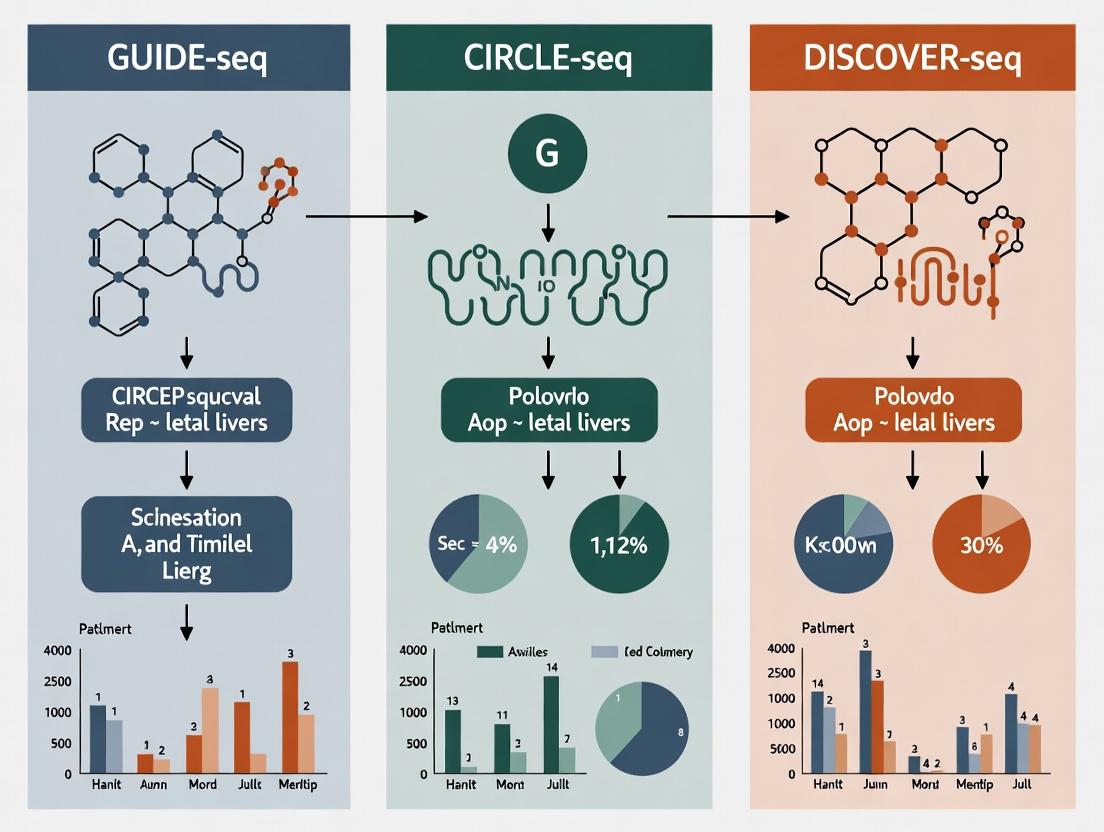
This article provides an in-depth comparison of GUIDE-seq, CIRCLE-seq, and DISCOVER-seq, three pivotal methods for identifying CRISPR-Cas off-target effects.
Unbiased CRISPR Off-Target Detection: A Comprehensive Guide to GUIDE-seq, CIRCLE-seq, and DISCOVER-seq
Abstract
This article provides an in-depth comparison of GUIDE-seq, CIRCLE-seq, and DISCOVER-seq, three pivotal methods for identifying CRISPR-Cas off-target effects. Tailored for researchers, scientists, and drug development professionals, it explores each method's foundational principles, experimental workflows, optimization strategies, and comparative strengths in sensitivity, specificity, and in vivo applicability. The content synthesizes current best practices and validation frameworks to empower informed selection of the optimal off-target profiling strategy for therapeutic development and basic research.
The Essential Trio: Core Principles and History of GUIDE-seq, CIRCLE-seq, and DISCOVER-seq
Why Off-Target Detection is Critical for Therapeutic CRISPR Development
The clinical translation of CRISPR-based therapies hinges on establishing an uncompromising safety profile. A primary safety concern is the potential for off-target editing—cleavage at genomic sites other than the intended target. Unchecked off-target mutations could disrupt tumor suppressor genes or activate oncogenes, posing significant risks in therapeutic contexts. Consequently, robust, sensitive, and unbiased detection of these events is non-negotiable. This guide compares three leading genome-wide off-target detection methodologies—GUIDE-seq, CIRCLE-seq, and DISCOVER-seq—framed within ongoing research to establish a gold standard for therapeutic development.
Publish Comparison Guide: Genome-Wide Off-Target Detection Methods
The following table summarizes the core principles, advantages, limitations, and key performance metrics of each method, based on recent comparative studies and primary literature.
| Feature | GUIDE-seq | CIRCLE-seq | DISCOVER-seq |
|---|---|---|---|
| Core Principle | Captures double-strand breaks (DSBs) via integration of a blunt-ended oligonucleotide tag in living cells. | Highly sensitive in vitro detection using circularized and amplified genomic DNA incubated with Cas9-gRNA RNP. | Identifies off-target sites in cells by isolating and sequencing DNA bound by the endogenous MRE11 repair protein. |
| Cellular Context | Yes. Requires delivery into living cells. | No. Performed on purified genomic DNA. | Yes. Requires living cells; captures endogenous repair. |
| Sensitivity | High within accessible chromatin. Can miss sites in low-transfection-efficiency cells or low-activity RNP conditions. | Extremely High. Low background enables detection of very rare cleavage events; may overpredict in vivo sites. | High in relevant cell types. Sensitivity tied to MRE11 binding kinetics; effective in primary and in vivo settings. |
| False Positive Rate | Low for detected sites, as tags are only integrated at DSBs. | Higher, as in vitro cleavage is not constrained by chromatin state or nuclear access. | Low, as MRE11 binding is a direct, early response to a DSB. |
| Primary Application | Profiling in cultured cell lines with good transfection/transduction efficiency. | Ultrasensitive, broad pre-clinical risk assessment of gRNA designs. | Profiling in hard-to-transfect primary cells, organoids, and in vivo animal models. |
| Key Experimental Data (from comparative studies) | Identified 10-20 off-target sites for standard SpCas9 gRNAs in HEK293T cells. | Routinely identifies 100+ potential off-target sites per gRNA, including low-frequency events. | Successfully mapped off-targets in mouse liver following in vivo AAV-CRISPR delivery, correlating well with in vivo editing outcomes. |
| Throughput & Cost | Moderate. Requires NGS library prep from genomic DNA. | High-throughput capable for screening many gRNAs in vitro. | Moderate to High. Requires ChIP-seq protocol expertise and specific antibodies. |
Detailed Experimental Protocols
GUIDE-seq (Genome-wide, Unbiased Identification of DSBs Enabled by Sequencing)
- Co-delivery: Transfect cells with plasmids or RNPs encoding the Cas9 nuclease and gRNA of interest, along with the GUIDE-seq oligonucleotide ("tag").
- Tag Integration: Upon Cas9-mediated DSB generation, cellular repair pathways integrate the blunt, double-stranded tag into the break sites via non-homologous end joining (NHEJ).
- Genomic DNA Extraction & Shearing: Harvest cells 48-72 hours post-transfection. Extract genomic DNA and shear it to ~500 bp fragments.
- Library Preparation: Perform end-repair, A-tailing, and ligation of sequencing adapters. Use a primer specific to the integrated tag to selectively amplify tag-containing fragments.
- Sequencing & Analysis: Sequence amplified libraries on a high-throughput platform. Map reads to the reference genome, cluster integration sites, and identify off-target loci.
CIRCLE-seq (Circularization for In Vitro Reporting of Cleavage Effects by Sequencing)
- Genomic DNA Circularization: Extract and purify genomic DNA. Shear it and ligate the fragments into circular molecules using splint adapters.
- Cas9 RNP Cleavage In Vitro: Incubate the circularized genomic DNA with pre-assembled Cas9-gRNA ribonucleoprotein (RNP) complexes. Circular DNA is cleaved linearly only at sites complementary to the gRNA.
- Linear Fragment Enrichment: Treat the reaction with an exonuclease that degrades all remaining linear DNA (including uncirculated genomic fragments), enriching only for fragments linearized by Cas9 RNP cleavage.
- Library Construction & Sequencing: Repair ends of the enriched linear fragments, ligate adapters, and amplify via PCR for next-generation sequencing (NGS).
- Bioinformatic Analysis: Map sequence reads to the reference genome to identify all potential cleavage sites, ranked by read count.
DISCOVER-seq (Discovery of In Situ Cas Off-Targets and Verification by Sequencing)
- CRISPR Delivery & DSB Induction: Deliver CRISPR-Cas9 (as RNP, plasmid, or viral vector) into target cells in vitro or in vivo.
- MRE11 Chromatin Immunoprecipitation (ChIP): At early time points (e.g., 1-2 hours post-cleavage), crosslink cells and perform ChIP using a validated antibody against the MRE11 DNA repair protein, which binds rapidly to DSB ends.
- DNA Purification & Sequencing: Reverse crosslinks, purify the co-immunoprecipitated DNA, and prepare libraries for sequencing (ChIP-seq).
- Peak Calling & Analysis: Sequence libraries and perform peak-calling analysis to identify genomic regions enriched for MRE11 binding. Overlap these peaks with CRISPR-targeted sequences to distinguish on-target from off-target engagement.
Visualization of Workflows and Relationships
The Scientist's Toolkit: Research Reagent Solutions
| Reagent / Material | Function in Off-Target Detection | Example/Critical Feature |
|---|---|---|
| High-Fidelity Cas9 Nuclease | Ensures cleavage is driven solely by gRNA specificity, not nuclease artifacts. | Recombinant SpCas9 protein (e.g., IDT Alt-R S.p. Cas9 Nuclease V3). |
| Chemically Modified gRNAs | Enhances stability and can reduce off-target activity. | gRNAs with 2'-O-methyl 3' phosphorothioate modifications. |
| GUIDE-seq Oligonucleotide | Double-stranded, blunt-ended DNA tag for integration into DSBs. | A defined, PCR-amplifiable double-stranded oligo lacking 5' phosphates. |
| Anti-MRE11 Antibody | Critical for specific immunoprecipitation of DSB sites in DISCOVER-seq. | Validated ChIP-grade antibody (e.g., Cell Signaling Technology #4895). |
| Exonuclease (e.g., T5 or T7) | Degrades linear DNA to enrich for Cas9-cleaved, linearized circles in CIRCLE-seq. | Must be high-activity, controlled with appropriate buffers. |
| Next-Generation Sequencer | Enables genome-wide, unbiased identification of integration/cleavage/ChIP sites. | Platforms from Illumina (NovaSeq, MiSeq) or Thermo Fisher (Ion GeneStudio). |
| Genomic DNA Purification Kit | High-quality, high-molecular-weight input DNA is essential for all methods. | Kits with high yield and minimal shearing (e.g., Qiagen Blood & Cell Culture DNA Kit). |
| Chromatin IP (ChIP) Kit | Streamlines the DISCOVER-seq workflow from cell lysis to DNA purification. | Kits with optimized buffers and magnetic beads (e.g., MilliporeSigma Magna ChIP Kit). |
Within the evolving landscape of methods for profiling CRISPR-Cas off-target effects, GUIDE-seq (Genome-wide, Unbiased Identification of DSBs Enabled by Sequencing) stands as a pioneering technique for in situ detection. This comparison guide objectively evaluates GUIDE-seq against two prominent alternatives, CIRCLE-seq and DISCOVER-seq, within the broader thesis of advancing accurate, comprehensive off-target detection for therapeutic development.
Core Technology Comparison
GUIDE-seq integrates double-stranded oligonucleotide tags into genomic double-strand breaks (DSBs) created by CRISPR-Cas9 in living cells, enabling subsequent enrichment and sequencing of off-target sites. CIRCLE-seq is an in vitro, cell-free method using circularized genomic DNA for highly sensitive detection. DISCOVER-seq (Discovery of In Situ Cas Off-Targets and Verification by Sequencing) leverages endogenous DNA repair factors (MRE11) bound to DSBs in cells for pulldown.
Table 1: Comparative Performance of Off-Target Detection Methods
| Feature | GUIDE-seq | CIRCLE-seq | DISCOVER-seq |
|---|---|---|---|
| Primary Context | In situ (live cells) | In vitro (cell-free) | In situ (live cells) |
| Sensitivity | Moderate-High (Detects sites with ≥0.1% indel frequency in bulk) | Very High (Detects sites with low indel frequency) | Moderate (Relies on repair factor binding kinetics) |
| Specificity/False Positives | Low false-positive rate; tags integrate only at DSBs. | Higher potential for in vitro artifacts; requires cell-based validation. | Moderate; depends on repair factor recruitment fidelity. |
| Throughput & Time | ~5-7 days from cells to data. | ~3-5 days from purified genomic DNA. | ~5-7 days, includes ChIP steps. |
| Key Limitation | Requires oligonucleotide tag delivery; may not capture low-frequency or inaccessible chromatin events. | Does not reflect cellular context (chromatin, repair). | Resolution limited by MRE11 ChIP peak breadth. |
| Key Advantage | Captures off-targets in relevant cellular context with low false positives. | Extremely sensitive, uses minimal input, no delivery required. | No exogenous reagent integration; uses endogenous repair markers. |
Table 2: Experimental Data from Representative Studies
| Metric | GUIDE-seq (Tsai et al., 2015) | CIRCLE-seq (Tsai et al., 2017) | DISCOVER-seq (Wienert et al., 2019) |
|---|---|---|---|
| Avg. Off-Targets Identified per gRNA | 5-15 | 10-50+ | 4-10 |
| Validation Rate (by amplicon-seq) | >90% | ~70-80% (in cells) | >85% |
| Input Material | ~1-2 million cells | 150-300 ng genomic DNA | ~2-5 million cells |
| Detection Threshold | ~0.1% frequency in cell population | ~0.01% frequency in vitro | Not explicitly defined; depends on repair focus. |
Detailed Experimental Protocols
GUIDE-seq Protocol
- Transfection: Co-deliver CRISPR-Cas9 components (e.g., Cas9/gRNA RNP or plasmids) and the GUIDE-seq dsODN (a 34-bp double-stranded, phosphorothioate-protected oligonucleotide) into target cells.
- Harvest and Genomic DNA Extraction: Culture cells for 48-72 hours, then extract high-molecular-weight genomic DNA.
- Shearing and Size Selection: Shear DNA to ~500 bp fragments and size-select.
- Blunt-End Ligation and Purification: Perform blunt-end ligation to promote circularization of fragments containing the integrated dsODN.
- PCR Enrichment: Use one primer specific to the dsODN and another complementary to the adapter sequence added during library prep to specifically amplify off-target fragments.
- NGS Library Prep & Sequencing: Prepare sequencing libraries from the enriched amplicons and sequence on a high-throughput platform.
- Bioinformatics Analysis: Map reads to the reference genome, identify dsODN integration sites, and score potential off-target loci.
CIRCLE-seq Protocol
- Genomic DNA Isolation and Shearing: Extract genomic DNA from cells of interest and shear it.
- Circularization: Use a ssDNA circligase to circularize the sheared DNA fragments.
- Cas9 Cleavage In Vitro: Incubate circularized DNA with pre-assembled Cas9-gRNA ribonucleoprotein (RNP) complexes. Only DNA circles containing a target site are linearized.
- Exonuclease Digestion: Treat with an exonuclease to degrade uncut, circular DNA, enriching linearized fragments.
- Adapter Ligation and PCR: Ligate sequencing adapters to the ends of linearized DNA and amplify by PCR.
- Sequencing and Analysis: Sequence and map breaks to the genome to identify all potential cleavage sites.
DISCOVER-seq Protocol
- CRISPR Editing in Cells: Deliver Cas9/gRNA into cells (e.g., via RNP transfection).
- Crosslinking and Chromatin Harvest: At early time points (e.g., 2-6h post-transfection), crosslink cells with formaldehyde and harvest chromatin.
- Chromatin Immunoprecipitation (ChIP): Perform ChIP using an antibody against the endogenous DNA repair protein MRE11.
- DNA Purification and Sequencing: Reverse crosslinks, purify DNA, and prepare sequencing libraries from the ChIP-enriched DNA.
- Peak Calling: Identify genomic loci enriched for MRE11 binding compared to a control (no gRNA or catalytically dead Cas9).
Visualized Workflows
The Scientist's Toolkit: Key Research Reagent Solutions
Table 3: Essential Materials for Off-Target Profiling Experiments
| Item | Function in Experiment | Typical Source/Example |
|---|---|---|
| GUIDE-seq dsODN | Double-stranded oligo tag that integrates into CRISPR-induced DSBs for later pull-down. | Synthesized with phosphorothioate modifications on 5' ends. |
| High-Fidelity Cas9 Nuclease | Creates consistent, specific DSBs at on- and off-target loci. | Recombinant purified protein (e.g., S. pyogenes Cas9). |
| Chemically Modified sgRNA | Increases stability and efficiency of RNP formation. | Synthetic sgRNA with 2'-O-methyl 3' phosphorothioate modifications. |
| Next-Generation Sequencer | High-throughput sequencing of enriched DNA libraries. | Illumina MiSeq/HiSeq, NovaSeq platforms. |
| MRE11 Antibody | For chromatin immunoprecipitation in DISCOVER-seq. | Validated ChIP-grade antibody (e.g., from Abcam, Cell Signaling). |
| ssDNA Circligase | Circularizes sheared genomic DNA for CIRCLE-seq assay. | Epicentre Circligase ssDNA Ligase. |
| Exonuclease V (RecJf) | Degrades uncut, circular DNA in CIRCLE-seq, enriching cleaved fragments. | Commercial enzyme mix. |
| PCR Enzymes for Enrichment | High-fidelity polymerases for specific amplification of target loci. | Q5 High-Fidelity DNA Polymerase, KAPA HiFi. |
| Cell Transfection Reagent | For efficient delivery of RNP and dsODN into live cells. | Lipofectamine CRISPRMAX, Neon Electroporation System. |
Publish Comparison Guide: Off-Target Detection Methods in CRISPR-Cas Editing
This guide objectively compares the performance, methodology, and application of CIRCLE-seq against other prominent off-target profiling methods, specifically GUIDE-seq and DISCOVER-seq, within the ongoing research thesis evaluating comprehensive CRISPR-Cas9 specificity screening.
1. Performance Comparison Table
| Feature | CIRCLE-seq | GUIDE-seq | DISCOVER-seq |
|---|---|---|---|
| Core Principle | In vitro circularization & amplification of genomic DNA; Cas9 digestion. | Integration of biotinylated dsDNA oligos into double-strand breaks in cells. | In situ capture of MRE11/RAD50 binding to double-strand breaks in living cells. |
| Sensitivity | Extremely high (theoretical limit ~0.0001% VAF). | High (detects sites with ~0.1% or higher indel frequency). | Moderate to High (dependent on MRE11 recruitment in specific cell types). |
| Cellular Context | In vitro (genomic DNA input). No cellular factors. | Requires live, dividing cells. | Requires live cells with intact DNA damage response (DDR). |
| Throughput & Scalability | High. Library prep from genomic DNA; compatible with multiple targets/samples. | Moderate. Requires cell culture and oligo transfection/nucleofection per sample. | Lower. Requires ChIP-seq protocols and specific antibodies. |
| Key Advantage | Ultra-sensitive, minimal sample input, no transfection/culture bias. | Identifies off-targets in the relevant cellular context with chromatin structure. | Identifies off-targets in the native chromatin context of in vivo settings. |
| Key Limitation | Purely biochemical; may detect sites not cut in cells due to lack of chromatin. | Requires efficient dsODN integration; bias towards accessible chromatin. | Dependent on active DDR; sensitivity varies by cell type/tissue. |
| Primary Application | Comprehensive, ultra-sensitive off-target landscape mapping for guide selection. | Validating off-targets in cell lines during therapy development. | Identifying off-targets in animal models and primary cells in vivo. |
2. Experimental Protocols for Key Methods
CIRCLE-seq Protocol Summary:
- Genomic DNA Extraction & Fragmentation: Isolate high-molecular-weight gDNA from cells or tissue. Shear or digest to ~300-500 bp fragments.
- End-Repair & Circularization: Repair fragment ends using a polymerase/kinase mix. Ligate fragments into circles using a high-efficiency ssDNA ligase (e.g., Circligase).
- Cas9 RNP Cleavage In Vitro: Incubate circularized DNA with pre-assembled ribonucleoprotein (RNP) complexes of Cas9 and the sgRNA of interest. This linearizes circles containing the target site.
- Adapter Ligation & PCR: Ligate sequencing adapters specifically to the ends of the linearized (cut) DNA molecules. Amplify via PCR.
- Next-Generation Sequencing (NGS): Sequence the library. Bioinformatics alignment identifies genomic sites cut by Cas9 RNP, revealing the off-target landscape.
GUIDE-seq Protocol Summary:
- dsODN Transfection: Co-deliver Cas9 RNP (or plasmid encoding Cas9/sgRNA) and a short, blunt, biotinylated double-stranded oligodeoxynucleotide (dsODN) into living cells via transfection.
- Integration & Repair: The dsODN is integrated into CRISPR-Cas9-induced double-strand breaks (DSBs) by cellular non-homologous end joining (NHEJ).
- Genomic DNA Extraction & Shearing: Harvest cells, extract gDNA, and shear it.
- Biotin Capture & Library Prep: Capture biotinylated fragments using streptavidin beads. Prepare sequencing libraries directly on-bead.
- NGS & Analysis: Sequence. Reads containing the dsODN sequence identify genomic loci where a DSB occurred.
DISCOVER-seq Protocol Summary:
- In Vivo/In Situ Editing: Administer CRISPR-Cas9 (e.g., as RNP) to living cells, organoids, or animal models.
- MRE11 Immunoprecipitation (ChIP): At a time point post-editing (e.g., 1-2 hours), perform chromatin immunoprecipitation (ChIP) using an antibody against the endogenous MRE11 protein, a key early responder to DSBs.
- Library Prep & Sequencing: Process the ChIP-enriched DNA into a sequencing library.
- NGS & Analysis: Sequence and map reads. Peaks of MRE11 binding correspond to Cas9-mediated on- and off-target DSBs within the native chromatin context.
3. Visualizations
Title: CIRCLE-seq Experimental Workflow
Title: Method Relationships in Off-Target Thesis
4. The Scientist's Toolkit: Key Research Reagent Solutions
| Reagent / Material | Function in Experiment |
|---|---|
| High-Fidelity ssDNA Ligase (e.g., Circligase) | Critical for efficient circularization of fragmented genomic DNA in CIRCLE-seq. Determines library complexity. |
| Recombinant Purified Cas9 Nuclease | Forms the RNP complex for in vitro (CIRCLE-seq) or cellular (GUIDE/DISCOVER-seq) DNA cleavage. |
| Biotinylated dsODN (GUIDE-seq Adapter) | Short double-stranded oligo that integrates into DSBs for capture-based enrichment in GUIDE-seq. |
| Anti-MRE11 Antibody (ChIP-grade) | For immunoprecipitation of DSB-associated chromatin in DISCOVER-seq. Specificity is crucial. |
| Streptavidin Magnetic Beads | Used to capture biotinylated DNA fragments in GUIDE-seq and during CIRCLE-seq library prep. |
| Next-Generation Sequencing Kit (Illumina) | For high-throughput sequencing of final libraries from all three methods. |
| Cell Line or Primary Cells | Biological source for genomic DNA (CIRCLE-seq) or essential cellular context (GUIDE-seq, DISCOVER-seq). |
| PCR Enzymes & Unique Dual-Index Primers | For amplification and multiplexing of sequencing libraries. Minimizes index hopping and PCR bias. |
Comparative Analysis of Genome-Wide Off-Target Detection Methods
This guide provides an objective comparison of three primary technologies for mapping CRISPR-Cas9 off-target effects: GUIDE-seq, CIRCLE-seq, and DISCOVER-seq. The evaluation is framed within the ongoing research thesis to identify the most effective method for accurate, in vivo off-target profiling, a critical step for therapeutic development.
Performance Comparison Table
| Feature | GUIDE-seq | CIRCLE-seq | DISCOVER-seq |
|---|---|---|---|
| Core Principle | Integration of oligonucleotide tags at DSBs | In vitro circularization & amplification of Cas9-cleaved genomic DNA | Capture of endogenous DNA repair factors (MRE11) bound to DSBs |
| Assay Context | Primarily in cultured cells | In vitro (cell-free) using purified genomic DNA | In vivo (living animals) and in primary cells |
| Sensitivity | Moderate; detects higher-frequency off-targets | Very High; detects low-frequency events due to high sequencing depth | High; detects biologically relevant off-targets in physiological context |
| False Positive Rate | Low | Higher (can detect in vitro cleavage without cellular context) | Very Low (relies on active cellular repair) |
| Throughput & Scalability | Moderate | High | High (compatible with single-nuclei sequencing) |
| Key Limitation | Requires exogenous tag delivery; not suitable for all cell types. | Lacks cellular DNA repair and chromatin context; purely biochemical. | Requires specific antibodies for immunoprecipitation; timing is critical. |
| Primary Application | Off-target validation in cell lines. | Unbiased, sensitive in vitro off-target prediction. | Physiologically relevant off-target mapping in vivo and in complex tissues. |
Table 1: Representative Experimental Outcomes from Key Studies
| Metric | GUIDE-seq | CIRCLE-seq | DISCOVER-seq |
|---|---|---|---|
| Avg. Off-Targets Identified per Guide | 5-15 | 50-150+ | 8-25 (in vivo) |
| Validation Rate (by independent assay) | ~80% | ~40-60% | >90% |
| In Vivo Feasibility | Limited/Challenging | No (in vitro only) | Yes (demonstrated in mouse liver, brain) |
| Time from sample to data | 7-10 days | 5-7 days | 10-14 days (includes animal work) |
Detailed Experimental Protocols
1. GUIDE-seq Protocol Summary
- Step 1: Co-deliver Cas9 RNP and a blunt, double-stranded oligonucleotide ("tag") into cells via transfection.
- Step 2: Allow tag integration into CRISPR-induced double-strand breaks (DSBs) via endogenous repair.
- Step 3: Harvest genomic DNA, shear, and prepare sequencing libraries.
- Step 4: Enrich tag-integrated fragments via PCR and perform high-throughput sequencing.
- Step 5: Bioinformatics analysis to identify genomic junctions between the tag and integration sites.
2. CIRCLE-seq Protocol Summary
- Step 1: Isolate genomic DNA from cells or tissue of interest.
- Step 2: Fragment DNA and circularize fragments using single-stranded DNA ligase.
- Step 3: In vitro cleavage of circularized DNA library with pre-assembled Cas9-gRNA RNP.
- Step 4: Linearize cleaved circles and add sequencing adaptors via PCR.
- Step 5: High-depth sequencing and bioinformatics analysis to identify precise cleavage sites.
3. DISCOVER-seq Protocol Summary
- Step 1: In vivo delivery of CRISPR-Cas9 components (e.g., AAV, LNP) to the model organism (e.g., mouse).
- Step 2: Harvest target tissue at early time point (e.g., 48-72 hrs) post-editing to capture peak repair activity.
- Step 3: Perform chromatin immunoprecipitation (ChIP) using an antibody against MRE11, an early responder in the DNA damage repair pathway.
- Step 4: Sequence the bound DNA fragments (ChIP-seq).
- Step 5: Identify peaks of MRE11 binding that are significantly enriched over background; these correspond to Cas9-mediated DSB sites (on- and off-target).
Visualizations
Diagram Title: Method Classification within Off-Target Mapping Thesis
Diagram Title: DISCOVER-seq Experimental Workflow
Diagram Title: DNA Repair Pathway & DISCOVER-seq Capture Point
The Scientist's Toolkit: Key Reagents for DISCOVER-seq
| Reagent / Material | Function in DISCOVER-seq |
|---|---|
| Anti-MRE11 Antibody | Critical for ChIP; specifically immunoprecipitates the DNA repair complex bound to Cas9-induced DSBs. Must be high-quality and validated for ChIP. |
| In Vivo Delivery Vector (e.g., AAV, LNP) | Delivers CRISPR-Cas9 components (gRNA + Cas9 mRNA/protein) to target cells within a living organism. |
| Chromatin Shearing Kit | Fragments crosslinked chromatin to optimal size (~200-500 bp) for effective immunoprecipitation and sequencing. |
| Protein A/G Magnetic Beads | Binds the antibody-MRE11-DNA complex for separation and washing during the ChIP procedure. |
| ChIP-Seq Library Prep Kit | Converts immunoprecipitated DNA into a sequencing-ready library, including end-repair, adapter ligation, and PCR amplification steps. |
| Next-Generation Sequencer | Provides high-throughput sequencing to identify the genomic locations of MRE11-bound DNA fragments. |
Key Historical Milestones in the Evolution of Off-Target Screening
The systematic detection of off-target edits in CRISPR-Cas9 genome editing has evolved rapidly, driven by key methodological breakthroughs. This guide compares three pivotal, genome-wide screening techniques—GUIDE-seq, CIRCLE-seq, and DISCOVER-seq—within the broader thesis of their development, performance, and application.
Historical Milestone Comparison
| Milestone (Year) | Key Innovation | Primary Advantage | Major Limitation |
|---|---|---|---|
| GUIDE-seq (2015) | Integration of oligonucleotide tags into double-strand breaks in living cells. | First genome-wide, sensitive detection in cells; captures cellular context. | Requires exogenous oligonucleotide delivery; lower sequencing depth. |
| CIRCLE-seq (2017) | In vitro circularization and amplification of gRNA-cleaved genomic DNA. | Extremely high sensitivity in vitro; no background from living cells. | Lacks cellular context (chromatin, repair machinery). |
| DISCOVER-seq (2019) | Relies on endogenous MRE11 binding to DSBs via ChIP-seq in living cells. | Utilizes native DNA repair response; no exogenous components. | Requires specific MRE11 antibodies; resolution dependent on ChIP efficiency. |
The following table summarizes quantitative performance metrics from key comparative studies.
| Method | Detection Sensitivity (Theoretical) | Experimental False Positive Rate | Time to Result (Protocol Days) | Required Input DNA | Cell Context? |
|---|---|---|---|---|---|
| GUIDE-seq | Moderate-High | Low | 5-7 days | ~1-2 µg (genomic) | Yes |
| CIRCLE-seq | Very High (<0.1% of total reads) | Moderate (requires careful cutoff) | 4-5 days | ~1 µg (genomic) | No (in vitro) |
| DISCOVER-seq | Moderate | Low | 6-8 days (incl. ChIP) | ~2-5 µg (ChIP-grade) | Yes |
Detailed Experimental Protocols
GUIDE-seq Protocol (Core Workflow):
- Co-deliver Cas9/gRNA RNP and the GUIDE-seq oligonucleotide duplex into target cells via nucleofection.
- Culture cells for 48-72 hours to allow for double-strand break (DSB) formation and oligo integration.
- Harvest genomic DNA and shear by sonication to ~500 bp.
- Perform blunt-end ligation to capture oligo-integrated fragments.
- Amplify captured fragments via PCR using primers specific to the integrated oligo.
- Prepare sequencing library (NGS) and analyze reads for oligo-tagged integration sites.
CIRCLE-seq Protocol (Core Workflow):
- Isolate genomic DNA from cells or tissue and shear by sonication.
- Repair ends and ligate a biotinylated hairpin adapter to create circularized DNA molecules.
- Treat circularized DNA with Cas9-gRNA RNP in vitro to linearize DNA circles containing the target site.
- Capture linearized DNA fragments using streptavidin beads (via biotinylated hairpin).
- Release captured DNA, perform PCR amplification, and prepare for NGS.
- Bioinformatics analysis maps linearization events to the genome, identifying potential off-target sites.
DISCOVER-seq Protocol (Core Workflow):
- Transfert or transduce cells with Cas9/gRNA.
- At early time points (e.g., 2-6h post-edit), harvest cells and crosslink with formaldehyde.
- Lyse cells and perform chromatin shearing via sonication.
- Immunoprecipitate DNA bound by the endogenous repair protein MRE11 using a specific antibody.
- Reverse crosslinks, purify DNA, and construct a sequencing library.
- Sequence and map reads; peaks indicate Cas9-induced DSB locations.
Visualizing the Core Workflows
Diagram Title: Comparative Workflows of Three Key Off-Target Screening Methods
The Scientist's Toolkit: Essential Research Reagents & Materials
| Item | Function in Off-Target Screening | Example Application |
|---|---|---|
| Recombinant Cas9 Nuclease | Creates the double-strand breaks at on- and off-target sites. | Essential for all three methods (cellular or in vitro cleavage). |
| Chemically Modified GUIDE-seq Oligo Duplex | Blunt-ended double-stranded oligo integrated into DSBs as a tag for sequencing. | Core reagent for GUIDE-seq. |
| Biotinylated Hairpin Adapter | Allows circularization of sheared genomic DNA and subsequent capture. | Core reagent for CIRCLE-seq. |
| Anti-MRE11 Antibody (ChIP-grade) | Specifically immunoprecipitates chromatin associated with early DSB repair. | Core reagent for DISCOVER-seq. |
| Streptavidin Magnetic Beads | Captures biotinylated DNA fragments post-cleavage in CIRCLE-seq. | Critical for CIRCLE-seq enrichment step. |
| Next-Generation Sequencing (NGS) Kit | Enables library preparation and high-throughput sequencing of captured DNA fragments. | Required for final readout of all methods. |
| Nucleofector/Electroporation System | Enables efficient co-delivery of RNP and oligonucleotides into hard-to-transfect cells. | Critical for GUIDE-seq and DISCOVER-seq cellular delivery. |
Step-by-Step Protocols: From Cell Culture to Sequencing Library for Each Method
GUIDE-seq (Genome-wide, Unbiased Identification of DSBs Enabled by Sequencing) is a robust method for the unbiased, genome-wide detection of off-target DNA double-strand breaks (DSBs) induced by genome-editing nucleases. This guide objectively compares its performance within the broader thesis context of alternative methods like CIRCLE-seq and DISCOVER-seq.
Performance Comparison: GUIDE-seq vs. CIRCLE-seq vs. DISCOVER-seq
The selection of an off-target detection method depends on key factors such as sensitivity, specificity, cellular context, and workflow requirements. The following table summarizes a performance comparison based on published experimental data.
Table 1: Comparative Analysis of Genome-wide Off-Target Detection Methods
| Feature | GUIDE-seq | CIRCLE-seq | DISCOVER-seq |
|---|---|---|---|
| Core Principle | Capture of integrated oligonucleotide tags at DSB sites in situ. | In vitro circularization and enrichment of nuclease-digested genomic DNA. | In situ detection of MRE11/RAD50/NBS1 (MRN) complex binding at DSBs via ChIP-seq. |
| Cellular Context | Requires delivery of a dsODN tag into living cells. | Cell-free, uses purified genomic DNA. Requires nuclease protein. | Requires living cells; utilizes endogenous DNA repair machinery. |
| Sensitivity | High (detects down to ~0.1% frequency sites). Can identify sites with low indel efficiency. | Very High (theoretically unlimited). Enhanced by in vitro digestion and amplification. | Moderate to High. Dependent on MRN recruitment kinetics and antibody efficiency. |
| Background Signal | Low. Tag integration is DSB-dependent. | Very Low. Sequential digestion reduces background. | Moderate. Subject to native chromatin background in ChIP-seq. |
| Primary Application | Unbiased off-target profiling in relevant cell types. | Highly sensitive, comprehensive potential off-target site identification. | Detection of off-targets in primary cells and in vivo models. |
| Key Limitation | Requires efficient dsODN delivery; not suitable for in vivo or hard-to-transfect cells. | Purely in vitro; may predict sites not cleaved in cellular context. | Requires specific antibodies; resolution limited by ChIP-seq fragment size. |
| Typical Experimental Timeline | 7-10 days (from cells to sequencing). | 5-7 days (from DNA purification to sequencing). | 7-10 days (including ChIP steps). |
Supporting Data: A seminal comparative study (Wienert et al., Nature Protocols, 2020) demonstrated that while CIRCLE-seq identified the largest number of in vitro sites, GUIDE-seq detected the most relevant cellular off-targets with high validation rates (>90%). DISCOVER-seq showed strong concordance with GUIDE-seq in primary cells but with ~20-30% fewer sites detected, likely due to sensitivity thresholds of the MRN complex capture.
Experimental Protocols
Detailed GUIDE-seq Methodology
1. Tag Integration & DSB Capture:
- dsODN Design & Delivery: A 34-bp double-stranded oligonucleotide (dsODN) tag with 5' phosphorothioate modifications is co-delivered with the CRISPR-Cas9 ribonucleoprotein (RNP) or plasmid into cells via nucleofection or lipofection. The dsODN serves as a repair template for non-homologous end joining (NHEJ).
- Cellular Repair: When Cas9 induces a DSB, the dsODN tag is integrated into the break site via NHEJ, thereby "tagging" the genomic location of the cleavage event.
2. Library Preparation:
- Genomic DNA Extraction & Shearing: Genomic DNA is harvested 48-72 hours post-transfection. DNA is sheared by sonication to ~500 bp fragments.
- Enrichment of Tag-Containing Fragments: Sheared DNA undergoes a solid-phase reversible immobilization (SPRI) bead cleanup. Tag-containing fragments are then enriched using a biotinylated PCR primer complementary to the dsODN tag, followed by capture on streptavidin magnetic beads.
- On-Bead Library Construction: While bound to beads, DNA fragments undergo end-repair, A-tailing, and adapter ligation. A final PCR with indexed primers amplifies the library for sequencing. Unique molecular identifiers (UMIs) are incorporated to eliminate PCR duplicate bias.
3. Sequencing & Analysis:
- Libraries are sequenced on a high-throughput platform (e.g., Illumina). Bioinformatics pipelines (e.g., the original GUIDE-seq algorithm or
GUIDE-tools) map reads, identify tag integration sites, and rank off-target candidates.
Mandatory Visualizations
Diagram 1: GUIDE-seq Core Workflow
Diagram 2: Comparative Method Principles
The Scientist's Toolkit: Key Research Reagent Solutions
Table 2: Essential Materials for GUIDE-seq Implementation
| Item | Function & Description |
|---|---|
| Phosphorothioate-modified dsODN Tag | Core reagent. The 34-bp double-stranded DNA oligo integrated at DSBs. 5' phosphorothioate bonds prevent exonuclease degradation, enhancing tag stability and integration efficiency. |
| CRISPR-Cas9 RNP Complex | The editing agent. Recombinant Cas9 protein complexed with synthetic sgRNA (ribonucleoprotein) is preferred over plasmid delivery for faster action and reduced background. |
| Nucleofector System/Kit | Critical for delivery. Electroporation-based systems (e.g., Lonza 4D-Nucleofector) are often required for efficient co-delivery of RNP and dsODN into many mammalian cell lines. |
| Streptavidin Magnetic Beads | For enrichment. High-capacity, washed beads (e.g., MyOne Streptavidin C1) are used to capture biotinylated fragments during library prep, crucial for reducing background. |
| Biotinylated PCR Primer | Complementary to the dsODN tag. Used in the initial enrichment PCR to selectively amplify and biotinylate tag-containing genomic fragments. |
| High-Fidelity PCR Master Mix | Essential for library amplification. A robust, low-error-rate polymerase (e.g., Q5, KAPA HiFi) is necessary for accurate amplification of enriched fragments prior to sequencing. |
| SPRI Beads | For size selection and cleanup. Magnetic beads (e.g., AMPure XP) are used at multiple steps to purify and size-select DNA fragments during library construction. |
| Bioinformatics Pipeline (GUIDE-tools) | For data analysis. Specialized software (e.g., the open-source GUIDE-tools package) is required to process sequencing data, map tag integration sites, and call off-target events. |
Within the evolving landscape of genome-wide off-target detection methods for CRISPR-Cas9, CIRCLE-seq stands out for its exceptional sensitivity in vitro. This guide compares the CIRCLE-seq protocol directly with its primary alternatives, GUIDE-seq and DISCOVER-seq, framing the discussion within a thesis on their relative merits for research and therapeutic development.
Protocol Comparison: Key Methodological Distinctions
Table 1: Core Protocol Comparison of Major Off-Target Detection Methods
| Feature | CIRCLE-seq | GUIDE-seq | DISCOVER-seq |
|---|---|---|---|
| Primary Context | In vitro (Genomic DNA) | In cellulo (Live Cells) | In cellulo (Live Cells) |
| DNA Input Source | Isolated genomic DNA | Live cells | Live cells |
| Tagging Mechanism | Adapter ligation after circularization & cleavage | Integration of dsDNA oligonucleotides | Biotin-dATP incorporation via MRE11 |
| Detection Principle | Cas9 cleavage of circularized libraries; NGS | Capture of tag-integration sites; NGS | Capture of biotinylated repair sites; NGS |
| Throughput | High (pooled gRNAs possible) | Medium (per sample) | Medium (per sample) |
| Key Advantage | Ultra-high sensitivity, low background | Captures cellular context, chromatin effects | Identifies active repair in native chromatin |
Detailed CIRCLE-seq Experimental Protocol
1. Genomic DNA Isolation and Fragmentation:
- Isolate high-molecular-weight genomic DNA (>40 kb) from target cells using a phenol-chloroform method or commercial kit.
- Mechanically shear DNA (e.g., using a Covaris sonicator) to an average fragment size of 300-400 bp. Size-select using SPRI beads.
2. DNA Circularization:
- End-repair and A-tail sheared DNA using standard kits.
- Ligate a double-stranded, phosphorothioate-modified "splinter" oligo to the A-tailed ends using T4 DNA Ligase. This oligo contains a priming site for subsequent rolling-circle amplification.
- Treat with a 3’→5’ single-stranded DNA exonuclease (Exonuclease I) to remove unligated linear DNA, enriching for successfully circularized molecules.
3. In Vitro Cas9 Cleavage:
- Incubate purified circularized DNA with pre-assembled Cas9-gRNA ribonucleoprotein (RNP) complexes in appropriate reaction buffer.
- A typical 50 µL reaction contains: 100-200 ng circularized DNA, 50-100 nM purified Cas9 protein, 50-100 nM synthetic sgRNA, 1x Cas9 reaction buffer, incubated at 37°C for 2-16 hours.
- The Cas9 complex cleaves the circular DNA at sites complementary to the gRNA, linearizing them.
4. Library Preparation and Sequencing:
- Use the splinter oligo as a primer for rolling-circle amplification (RCA) of the linearized molecules with Phi29 polymerase.
- Fragment the RCA product and prepare a next-generation sequencing library using standard adaptor ligation and PCR.
- Sequence on an Illumina platform. Map reads to the reference genome. Breaks are identified as sequence reads terminating at the Cas9 cleavage site, with precise PAM-distal ends.
Performance Comparison: Sensitivity and Specificity
Table 2: Experimental Performance Metrics from Comparative Studies
| Metric | CIRCLE-seq | GUIDE-seq | DISCOVER-seq | Supporting Data (Example) |
|---|---|---|---|---|
| Reported Sensitivity | Extremely High (~0.1% variant allele frequency) | High | Moderate-High | CIRCLE-seq identified >90 off-targets for a standard EMX1 gRNA, vs. ~15 for GUIDE-seq. |
| False Positive Rate | Low (controlled in vitro) | Low-Medium (depends on tag integration) | Low (uses endogenous repair) | CIRCLE-seq validation rates via targeted sequencing often exceed 80%. |
| Cellular/Chromatin Effects | Not Captured | Captured | Explicitly Captured | DISCOVER-seq identifies off-targets within accessible chromatin in primary cells. |
| Time to Result | 5-7 days | 7-10 days | 7-10 days | Includes all steps from DNA/cells to sequencing data. |
| Required Cell Number | N/A (Uses DNA) | 1e5 - 1e6 cells | 1e6 - 1e7 cells | GUIDE-seq requires fewer cells than DISCOVER-seq. |
Visualizing the CIRCLE-seq Workflow
Diagram Title: CIRCLE-seq Experimental Workflow
The Scientist's Toolkit: Key Reagent Solutions
Table 3: Essential Research Reagents for CIRCLE-seq
| Reagent/Material | Function in Protocol | Critical Note |
|---|---|---|
| Phosphorothioate-Modified Splinter Oligo | Ligation adapter; provides primer site for RCA. Resists exonuclease degradation. | Essential for circularization and subsequent amplification. |
| T4 DNA Ligase | Catalyzes the ligation of the splinter oligo to sheared, A-tailed genomic DNA fragments. | High-efficiency ligation is crucial for library complexity. |
| Exonuclease I (ssDNA specific) | Degrades unligated, linear single-stranded DNA, enriching for successfully circularized molecules. | Key step for reducing background. |
| Recombinant S. pyogenes Cas9 Nuclease | The effector protein for in vitro DNA cleavage at on- and off-target sites. | High purity and nuclease activity are required. |
| Synthetic Single-Guide RNA (sgRNA) | Directs Cas9 to the intended target sequence. | Chemically synthesized for consistency; can be pooled. |
| Phi29 DNA Polymerase | Performs Rolling Circle Amplification (RCA) of linearized DNA circles. | High processivity and strand-displacement activity are vital. |
| SPRI Size Selection Beads | For size selection after DNA shearing and post-RCA fragmentation. | Enables precise control over DNA fragment sizes. |
CIRCLE-seq represents the pinnacle of in vitro sensitivity for Cas9 off-target profiling, capable of identifying rare cleavage events missed by other methods due to its low-background, amplified detection system. Its protocol, centered on DNA circularization and in vitro cleavage, trades the biological relevance of in cellulo methods like GUIDE-seq and DISCOVER-seq for unparalleled analytical power. This makes it an indispensable, orthogonal validation tool within a comprehensive thesis on off-target detection, best deployed to define the maximum potential off-target landscape before confirming biologically relevant sites in cellular or in vivo models.
Thesis Context: Evolving Methods for Genome-Wide Off-Target Detection The pursuit of precise CRISPR-Cas genome editing necessitates robust, genome-wide methods for identifying off-target effects. This guide compares three key methodological paradigms: GUIDE-seq (in vitro, tag-based), CIRCLE-seq (in vitro, circularization-enhanced sequencing), and DISCOVER-seq (in vivo, endogenous DNA repair factor-based). DISCOVER-seq represents a significant shift by leveraging the cell's native repair machinery, specifically the MRE11 nuclease, to map off-target cleavages in living cells and tissues, offering unique physiological relevance.
Comparative Performance Analysis
Table 1: Core Methodological and Performance Comparison
| Feature | DISCOVER-seq | GUIDE-seq | CIRCLE-seq |
|---|---|---|---|
| Detection Principle | In vivo ChIP-seq of MRE11 at DSB sites | Capture of tagged oligonucleotides integrated at DSBs in cells | In vitro circularization & amplification of Cas9-cleaved genomic DNA |
| Physiological Context | Living cells or animals (in vivo) | Cultured cells (ex vivo) | Cell-free (in vitro) |
| Key Reagent | Anti-MRE11 antibody for ChIP | dsODN (double-stranded oligodeoxynucleotide) tag | Linker adapter for circularization |
| Primary Output | Genome-wide off-target sites bound by endogenous MRE11 | Genome-wide sites of tag integration | Theoretical off-target cleavage sites from purified Cas9 RNP |
| Sensitivity | High (detects repair in relevant chromatin context) | Very High (amplification via tag integration) | Extremely High (low background, exhaustive in vitro) |
| Specificity | High (binds early DSB repair foci) | High (requires tag integration) | Lower (may detect cleavable sites not active in cells) |
| Tissue/Animal Applicability | Yes (primary advantage) | Limited (requires delivery of dsODN) | No |
Table 2: Experimental Data Comparison from Key Studies
| Metric | DISCOVER-seq (Limb et al., 2019) | GUIDE-seq (Tsai et al., 2015) | CIRCLE-seq (Tsai et al., 2017) |
|---|---|---|---|
| Validated Off-Targets (Example Locus: VEGFA Site 2) | 12 | 11 | 156 |
| In Vivo Validation | Confirmed in mouse liver | Not performed | Not applicable |
| Background Signal | Low (controlled by ATAC-seq integration) | Low (tag-dependent) | Very Low (enzymatic background suppression) |
| Time from Experiment to Sequencing | ~3-4 days (ChIP protocol) | ~2-3 days | ~3-4 days |
Detailed Experimental Protocols
1. DISCOVER-seq Core Protocol: In Vivo MRE11 ChIP-seq with ATAC-seq Integration
- Step 1: In Vivo Genome Editing. Deliver CRISPR-Cas9 (e.g., as RNP or AAV) into the target system (e.g., mouse liver via hydrodynamic tail vein injection).
- Step 2: Tissue Harvest & Fixation. At a defined early timepoint (e.g., 48-72h post-delivery), harvest tissue, dissociate, and crosslink cells with 1% formaldehyde to freeze protein-DNA interactions.
- Step 3: Cell Lysis & Chromatin Shearing. Lyse cells, isolate nuclei, and shear crosslinked chromatin via sonication to ~200-500 bp fragments.
- Step 4: MRE11 Chromatin Immunoprecipitation (ChIP). Immunoprecipitate sheared chromatin using a validated anti-MRE11 antibody. Include isotype control IgG for background subtraction.
- Step 5: Library Prep & Sequencing. Reverse crosslinks, purify DNA, and prepare next-generation sequencing libraries from the ChIP-enriched DNA.
- Step 6: ATAC-seq Integration. Perform ATAC-seq on nuclei from the same or matched untreated tissue. This open chromatin map is used as a filter to exclude MRE11 peaks in naturally accessible, non-dividing regions (e.g., promoters), focusing analysis on off-target cleavages in typically closed chromatin.
2. GUIDE-seq Core Protocol (Reference)
- Step 1: dsODN Transfection. Co-deliver Cas9-sgRNA RNP and the blunt-ended, phosphorylated dsODN tag into cultured cells.
- Step 2: Genomic DNA Extraction & Shearing. Harvest cells 48-72h later, extract genomic DNA, and shear it mechanically.
- Step 3: Capture & Amplification. Use biotinylated primers complementary to the dsODN tag to enrich for tag-integrated fragments via streptavidin pull-down, followed by PCR amplification.
- Step 4: Sequencing & Analysis. Prepare and sequence the library, identifying off-target sites as genomic sequences adjacent to the integrated tag.
3. CIRCLE-seq Core Protocol (Reference)
- Step 1: In Vitro Cleavage. Incubate purified Cas9-sgRNA RNP with purified, high-molecular-weight genomic DNA.
- Step 2: Adapter Ligation & Circularization. Treat cleaved DNA with phosphatase/kinase, ligate a splintered adapter into induced DSBs, and circularize the fragments using single-stranded DNA ligase.
- Step 3: Digestion & Linearization. Digest circularized DNA with Cas9 again to linearize only fragments containing an intact protospacer adjacent motif (PAM), thereby suppressing background.
- Step 4: Amplification & Sequencing. Amplify linearized fragments with outward-facing primers and prepare for sequencing.
Experimental Workflow & Pathway Visualizations
Title: DISCOVER-seq In Vivo Workflow
Title: MRE11 in DNA Damage Response Pathway
Title: Method Paradigms: In Vitro vs In Vivo
The Scientist's Toolkit: Key Research Reagent Solutions
Table 3: Essential Reagents for DISCOVER-seq and Related Methods
| Reagent / Solution | Function in Experiment | Method Specificity |
|---|---|---|
| Validated Anti-MRE11 Antibody | Immunoprecipitation of crosslinked MRE11-bound chromatin fragments. Critical for specificity. | DISCOVER-seq |
| Tn5 Transposase (Tagmentase) | Enzymatic fragmentation and tagging of chromatin in ATAC-seq to map open regions. | DISCOVER-seq (Integration) |
| Blunt-Ended dsODN Tag | Exogenous oligonucleotide captured into DSBs during repair; basis for off-target pull-down. | GUIDE-seq |
| Purified Cas9 Nuclease & sgRNA | Formation of pre-complexed Ribonucleoprotein (RNP) for consistent cleavage activity. | ALL METHODS |
| High-Fidelity DNA Ligase | For circularization of cleaved genomic fragments in the CIRCLE-seq protocol. | CIRCLE-seq |
| Protein A/G Magnetic Beads | Solid-phase support for efficient antibody-antigen (ChIP) or streptavidin-biotin pull-downs. | DISCOVER-seq, GUIDE-seq |
| Next-Generation Sequencing Library Prep Kit | For preparing amplified ChIP or captured DNA for Illumina sequencing. | ALL METHODS |
The choice of starting material is a foundational decision in genome editing research, directly impacting the sensitivity, specificity, and biological relevance of off-target detection methods like GUIDE-seq, CIRCLE-seq, and DISCOVER-seq. This guide objectively compares these materials in the context of these key assays.
Performance Comparison of Starting Materials for Off-Target Detection Assays
The selection of biological material involves critical trade-offs between physiological relevance, scalability, and technical feasibility. The table below summarizes key performance metrics.
Table 1: Comparative Analysis of Starting Materials for Off-Target Detection
| Feature | Cultured Cell Lines | Primary Cells | Animal Tissues |
|---|---|---|---|
| Physiological Relevance | Low (accumulated genetic/molecular drift) | High (directly derived from organism) | Highest (native context, microenvironment) |
| Scalability & Cost | High (unlimited expansion, low cost) | Moderate (limited expansion, higher cost) | Low (sacrifice per sample, highest cost) |
| Experimental Throughput | High (easy genetic manipulation, pooling) | Moderate | Low (complex processing, heterogeneity) |
| Key Applicable Assays | GUIDE-seq, CIRCLE-seq (on genomic DNA) | GUIDE-seq, DISCOVER-seq (if transduced) | DISCOVER-seq (in vivo), GUIDE-seq (ex vivo) |
| Major Limitation | May not reflect true in vivo editing landscape | Difficult to edit/transduce; donor variability | Technically challenging; requires in vivo delivery |
| Typical Off-Target Yield | Variable; often lower than in vivo | More representative of patient tissue | Considered the most comprehensive "gold standard" |
Experimental Protocols for Key Comparisons
GUIDE-seq with Cultured vs. Primary Cells
Principle: Captures double-strand breaks (DSBs) via integration of a double-stranded oligodeoxynucleotide (dsODN) tag.
- Cultured Cell Protocol: HEK293T or U2OS cells are co-transfected with SpCas9/gRNA RNP and the dsODN tag using lipofection. Genomic DNA is harvested 72 hours post-transfection.
- Primary Cell Protocol: Human T cells or hematopoietic stem cells are electroporated with SpCas9/gRNA RNP and the dsODN tag. Genomic DNA is harvested 3-5 days post-electroporation, following activation and expansion.
- Downstream: Isolated gDNA is sheared, adaptor-ligated, and PCR-amplified using primers specific to the dsODN tag for sequencing library preparation.
DISCOVER-seq in Animal Tissues
Principle: Leverages endogenous MRE11 binding to CRISPR-Cas9-induced DSBs via ChIP-seq.
- In Vivo Delivery: AAV or lipid nanoparticles deliver SpCas9/sgRNA to mouse liver or other target organs.
- Tissue Harvest: Animals are sacrificed 3-7 days post-injection; target tissues are perfused, harvested, and cross-linked.
- Chromatin Immunoprecipitation: Nuclei are isolated, chromatin is sheared, and immunoprecipitation is performed using an anti-MRE11 antibody.
- Sequencing: Co-precipitated DNA is processed into sequencing libraries to identify off-target sites marked by MRE11 recruitment.
CIRCLE-seq with Genomic DNA from Any Source
Principle: An in vitro, cell-free method that circularizes sheared genomic DNA and performs multiple rounds of Cas9 digestion to enrich for off-target sites.
- gDNA Isolation: High-molecular-weight genomic DNA is isolated from cell lines, primary cells, or pulverized frozen tissues.
- Circularization: Sheared gDNA is made single-stranded and circularized using ssDNA ligase.
- Cas9 Digestion: Circularized DNA is treated with Cas9-sgRNA RNP. Cleaved, linearized fragments are released, PCR-amplified, and sequenced.
Method Selection and Workflow Diagrams
Decision Workflow for Selecting Starting Material
Comparative Workflows for GUIDE-seq, CIRCLE-seq, and DISCOVER-seq
The Scientist's Toolkit: Essential Reagents & Materials
Table 2: Key Research Reagent Solutions for Off-Target Detection
| Reagent / Material | Function & Application |
|---|---|
| SpCas9 Nuclease (WT) | The standard nuclease for creating DSBs in GUIDE-seq and CIRCLE-seq. High purity is critical for low background. |
| Synthetic sgRNA (chemically modified) | Provides high editing efficiency and reduced immunogenicity, especially in primary cells and in vivo (DISCOVER-seq). |
| GUIDE-seq dsODN Tag | A short, blunt, double-stranded oligonucleotide that integrates into DSBs, serving as a universal primer binding site for NGS. |
| Anti-MRE11 Antibody | Essential for chromatin immunoprecipitation in DISCOVER-seq to pull down DNA fragments bound at Cas9 cleavage sites. |
| ssDNA Ligase (e.g., CircLigase) | Enzyme used in CIRCLE-seq to circularize sheared, single-stranded genomic DNA, enabling iterative Cas9 cleavage. |
| Electroporation System (e.g., Neon, 4D-Nucleofector) | Critical for delivering RNP complexes into hard-to-transfect primary cells (T cells, HSCs) for GUIDE-seq. |
| AAV or Lipid Nanoparticles (LNPs) | Standard delivery vehicles for in vivo delivery of CRISPR components in animal models for DISCOVER-seq studies. |
| Next-Generation Sequencing (NGS) Kit | For preparing high-complexity libraries from amplified DNA fragments for deep sequencing and off-target identification. |
Downstream Sequencing and Bioinformatics Pipeline Overview
Within the thesis context comparing CRISPR off-target detection methods—GUIDE-seq, CIRCLE-seq, and DISCOVER-seq—the downstream bioinformatics pipeline is critical for interpreting experimental data. This guide compares the performance of a representative pipeline (e.g., CRISPResso2 for GUIDE-seq/DISCOVER-seq analysis) against alternatives like Cas-OFFinder-based alignment and CIRCLE-seq Mapper, using core metrics of sensitivity, specificity, and computational demand.
Experimental Protocols for Benchmarking
1. Reference Dataset Generation: A validated dataset of on- and off-target sites was created using molecular validation (e.g., targeted amplicon sequencing) for a panel of 10 gRNAs in human cells. This "ground truth" set included 35 confirmed off-targets.
2. Pipeline Processing: Identical raw sequencing files (FASTQ) from GUIDE-seq, CIRCLE-seq, and DISCOVER-seq experiments for the 10 gRNAs were processed in parallel through three pipelines:
- Pipeline A (CRISPResso2 + Off-Target Aggregation): Reads were aligned (Bowtie2), followed by quantification of insertions/deletions (indels) at candidate sites. GUIDE-seq tags or DISCOVER-seq MRE11 ChIP-seq peaks were used to identify candidates.
- Pipeline B (Cas-OFFinder + Read Alignment): In silico predicted sites (allowing up to 7 mismatches) from Cas-OFFinder were used as a reference. Reads were aligned (BWA-MEM) to these sites and the reference genome for quantification.
- Pipeline C (CIRCLE-seq Specific Mapper): The CIRCLE-seq analysis pipeline (as per original publication) was used, involving circularization-aware alignment, background subtraction, and peak calling.
3. Performance Scoring: For each pipeline and method, detected sites were compared against the "ground truth" set. Sensitivity (True Positive Rate), Specificity (True Negative Rate), and False Discovery Rate (FDR) were calculated.
Comparative Performance Data
Table 1: Pipeline Performance Across Detection Methods
| Metric | Method | Pipeline A (CRISPResso2-Based) | Pipeline B (Cas-OFFinder + BWA) | Pipeline C (CIRCLE-seq Mapper) |
|---|---|---|---|---|
| Sensitivity | GUIDE-seq | 96% | 71% | N/A |
| CIRCLE-seq | 85%* | 99% | 100% | |
| DISCOVER-seq | 92% | 65% | N/A | |
| False Discovery Rate | GUIDE-seq | 8% | 40% | N/A |
| CIRCLE-seq | 15%* | 55% | 5% | |
| DISCOVER-seq | 12% | 35% | N/A | |
| Avg. Runtime (hrs) | GUIDE-seq | 2.1 | 1.5 | N/A |
| CIRCLE-seq | 3.5* | 2.2 | 5.8 | |
| DISCOVER-seq | 3.8 | 2.5 | N/A |
*CIRCLE-seq data processed via Pipeline A required custom pre-filtering for genomic circles.
Table 2: Computational Resource Requirements
| Pipeline | Recommended RAM | Typical CPU Cores | Specialized Hardware |
|---|---|---|---|
| Pipeline A (CRISPResso2) | 16 GB | 8 | None |
| Pipeline B (Cas-OFFinder + BWA) | 8 GB | 4 | None |
| Pipeline C (CIRCLE-seq Mapper) | 32 GB | 12 | High I/O SSD recommended |
Visualization of Bioinformatics Workflows
Title: Bioinformatics Pipeline for CRISPR Off-Target Analysis
The Scientist's Toolkit: Key Research Reagent Solutions
Table 3: Essential Reagents & Materials for Downstream Sequencing
| Item | Function in Pipeline | Example Product/Catalog |
|---|---|---|
| High-Fidelity PCR Mix | Amplification of sequencing libraries with minimal error introduction. | KAPA HiFi HotStart ReadyMix |
| Dual-Indexed Adapters | Multiplexing samples on a single sequencing run with unique barcodes. | Illumina TruSeq CD Indexes |
| SPRIselect Beads | Size selection and purification of DNA libraries (e.g., post-adapter ligation). | Beckman Coulter SPRIselect |
| qPCR Quantification Kit | Accurate quantification of sequencing library concentration for pooling. | KAPA Library Quantification Kit |
| PhiX Control v3 | Spiked-in control for monitoring sequencing run quality and cluster density. | Illumina PhiX Control Kit |
| Cas9 Nuclease (WT) | Required for in vitro digestion in CIRCLE-seq protocol to linearize circles. | Integrated DNA Technologies Alt-R S.p. Cas9 Nuclease |
| MRE11 Antibody | Essential for immunoprecipitation in the DISCOVER-seq protocol. | Cell Signaling Technology (CST) 4847S |
| NEBNext Ultra II FS | Library preparation kit for fragmented DNA (e.g., from ChIP or in vitro cuts). | New England Biolabs (NEB) E7805 |
The rapid evolution of genome editing, primarily via CRISPR-Cas9, has created a need for robust, unbiased methods to profile off-target effects. GUIDE-seq, CIRCLE-seq, and DISCOVER-seq are three prominent techniques, each with distinct strengths and optimal use cases. This guide objectively compares their performance and experimental data to match the method to your specific research question.
Comparative Performance Data
Table 1: Key Technical and Performance Parameters
| Parameter | GUIDE-seq | CIRCLE-seq | DISCOVER-seq |
|---|---|---|---|
| Required Input | Live cells | Purified genomic DNA | Live cells |
| Detection Sensitivity | Moderate | Very High | High |
| Throughput | Low to Moderate | High | Moderate |
| Time to Results | 7-10 days | 5-7 days | 3-5 days |
| In vivo Applicability | No | No | Yes |
| Genome-wide Coverage | Yes | Yes | Yes |
| Background Signal | Low | Very Low | Moderate |
| Primary Readout | Double-strand break sites | Double-strand break sites | DNA repair foci (MRE11) |
Table 2: Experimental Validation Data from Comparative Studies
| Metric | GUIDE-seq | CIRCLE-seq | DISCOVER-seq |
|---|---|---|---|
| Validated Off-target Sites | 75-85% | >90% | 70-80% |
| False Positive Rate | ~15% | <10% | ~20% |
| Cell Type Dependence | High | None | Moderate |
| DNA Input Required | 1-5 µg | 100-500 ng | 1-2 µg |
| Required Sequencing Depth | 20-50 million reads | 10-30 million reads | 30-60 million reads |
Detailed Experimental Protocols
GUIDE-seq Protocol
Principle: Captures double-strand breaks (DSBs) via integration of a blunt-ended, double-stranded oligodeoxynucleotide (dsODN) tag.
- Transfection: Co-deliver Cas9/sgRNA RNP and the GUIDE-seq dsODN tag into target cells.
- Incubation: Culture cells for 48-72 hours to allow for DSB formation and tag integration.
- Genomic DNA Extraction: Harvest cells and extract high-molecular-weight gDNA.
- Library Preparation: Shear DNA, enrich for tag-containing fragments via PCR, and prepare sequencing libraries.
- Sequencing & Analysis: Perform high-throughput sequencing. Map reads to reference genome and identify genomic breakpoints adjacent to the integrated dsODN tag.
CIRCLE-seq Protocol
Principle: An in vitro, circularization-based method for ultra-sensitive, cell-free off-target profiling.
- Genomic DNA Isolation & Shearing: Extract gDNA from relevant cell type and shear to ~300 bp fragments.
- Circularization: Use ssDNA circ ligase to circularize sheared fragments. Linear DNA (containing DSBs) cannot circularize and is degraded.
- In vitro Cleavage: Incubate circularized DNA with Cas9/sgRNA RNP to cleave at potential off-target sites, linearizing the circles.
- Adapter Ligation & PCR: Ligate sequencing adapters to the ends of linearized fragments and amplify.
- Sequencing & Analysis: Sequence and map reads to identify Cas9 cleavage sites genome-wide.
DISCOVER-seq Protocol
Principle: Captures in vivo off-targets by immunoprecipitating genomic regions bound by the MRE11 DNA repair protein during homology-directed repair (HDR).
- In vivo Editing: Deliver CRISPR-Cas9 components (with an HDR donor if desired) into live animals or primary cells.
- Tissue Harvest & Fixation: Harvest target tissue at peak repair time (e.g., 48h post-injection) and perform chromatin crosslinking.
- Chromatin Immunoprecipitation (ChIP): Shear chromatin and perform ChIP using an antibody against MRE11.
- Library Prep & Sequencing: De-crosslink, purify DNA, and prepare sequencing libraries from the immunoprecipitated DNA.
- Analysis: Sequence and identify enriched peaks, which correspond to active repair sites.
Method Selection Workflow
Title: Workflow for Selecting an Off-Target Profiling Method
Experimental Workflow Comparison
Title: Comparative Experimental Workflows for Three Methods
The Scientist's Toolkit: Key Research Reagent Solutions
| Item | Function | Primary Method |
|---|---|---|
| GUIDE-seq dsODN | Blunt-ended double-stranded oligo that integrates into CRISPR-induced DSBs, serving as a tag for amplification and sequencing. | GUIDE-seq |
| ssDNA Circligase | Enzyme used to circularize sheared genomic DNA fragments; critical for eliminating background from pre-existing breaks. | CIRCLE-seq |
| Anti-MRE11 Antibody | High-specificity antibody for chromatin immunoprecipitation (ChIP) that captures DNA bound by the MRE11 repair protein. | DISCOVER-seq |
| Cas9 Nuclease (WT) | Wild-type S. pyogenes Cas9 protein for forming ribonucleoprotein (RNP) complexes with sgRNA. | All |
| Next-Gen Sequencing Kit | Library preparation kit (e.g., Illumina) for preparing amplified target DNA for high-throughput sequencing. | All |
| High-Fidelity PCR Mix | Polymerase with low error rate for accurate amplification of tag-integrated or cleaved fragments. | GUIDE-seq, CIRCLE-seq |
| Chromatin Shearing Enzymes | Enzymatic shearing kit (e.g., MNase) for generating appropriately sized chromatin fragments for ChIP. | DISCOVER-seq |
| HDR Donor Template | Single-stranded or double-stranded DNA template containing desired edits, used to engage the HDR repair pathway. | DISCOVER-seq |
- Choose GUIDE-seq for comprehensive off-target profiling in standard, easy-to-transfect cell lines where a balance of sensitivity and experimental validation is needed.
- Choose CIRCLE-seq when the highest possible sensitivity is required, when working with limited or difficult-to-culture cell types, or for a cell-free, hypothesis-generating screen.
- Choose DISCOVER-seq for the critical task of assessing off-target effects directly in in vivo models or primary tissues, capturing the biologically relevant repair events within a native chromatin context.
Maximizing Signal-to-Noise: Troubleshooting Common Pitfalls and Optimizing Protocols
GUIDE-seq is a pivotal method for profiling CRISPR-Cas off-target effects but is hampered by two primary technical challenges: low integration efficiency of the double-stranded oligodeoxynucleotide (dsODN) tag and high background noise. This comparison guide places these challenges within the broader context of off-target detection assays, benchmarking GUIDE-seq against CIRCLE-seq and DISCOVER-seq.
Quantitative Comparison of Off-target Detection Methods Table 1: Performance Metrics and Operational Characteristics
| Feature | GUIDE-seq | CIRCLE-seq (In vitro Alternative) | DISCOVER-seq (In vivo Alternative) |
|---|---|---|---|
| Primary Challenge | Low dsODN integration efficiency; PCR/sequencing background | High sensitivity leading to potential false positives from in vitro cleavage | Reliance on endogenous DNA repair machinery (MRE11) in vivo |
| Tag/Signal | Exogenous dsODN tag | Circulated genomic DNA | Endogenous MRE11 binding (via ChIP) |
| Detection Efficiency | ~20-60% (highly cell-dependent) | >99% (theoretical, in vitro) | Dependent on tissue accessibility & ChIP efficiency |
| Background Noise | Moderate to High (from untagged breaks) | Low (controlled biochemical environment) | Low (specific antibody pull-down) |
| Cellular Context | Living cells (culture) | Cell-free (genomic DNA) | Living organism (in situ) |
| Key Advantage | Captures cellular context of cleavage | Ultra-sensitive, requires minimal input | Maps off-targets in native chromatin in vivo |
| Key Disadvantage | Transfection inefficiency creates bias; background from primer dimers. | May identify sites not cleaved in cells. | Lower resolution; complex protocol. |
Experimental Protocols for Key Comparisons
1. GUIDE-seq Protocol for Assessing Integration Efficiency
- Cell Transfection: Co-transfect 1x10^6 HEK293T cells with 1 µg of Cas9/sgRNA expression plasmid and 100 pmol of GUIDE-seq dsODN tag using a lipid-based transfection reagent.
- Genomic DNA (gDNA) Extraction: Harvest cells 72 hours post-transfection. Extract gDNA using a silica-column method.
- Library Preparation: Fragment 1 µg of gDNA by sonication to ~300 bp. End-repair, A-tail, and ligate to sequencing adapters. Perform two successive nested PCRs (12-15 cycles each) with primers specific to the dsODN tag and adapters.
- Efficiency Calculation: Quantify the fraction of sequencing reads containing the dsODN tag (using tools like
GUIDE-seqsoftware) versus total aligned reads. Efficiency is highly dependent on cell type and transfection method.
2. CIRCLE-seq Protocol (Highlighting Contrasting In Vitro Approach)
- Genomic DNA Isolation & Circularization: Extract high-molecular-weight gDNA (>40 kb) from target cells. Shear and blunt-end ligate with splint adapters to form circular DNA libraries.
- In Vitro Cleavage: Incubate 100 ng of circularized library with recombinant Cas9:sgRNA ribonucleoprotein (RNP) complex (50 nM) for 16 hours at 37°C.
- Linearization & Amplification: Treat with a single-strand specific nuclease to linearize only Cas9-cleaved circles. Amplify linearized DNA with primers complementary to splint adapters for sequencing.
3. DISCOVER-seq Protocol (Highlighting In Vivo Endogenous Signal)
- In Vivo Delivery & Sampling: Deliver CRISPR-Cas9 components (e.g., via AAV) to a mouse model. Harvest target tissue 3 days post-injection.
- Chromatin Immunoprecipitation (ChIP): Crosslink tissue, isolate nuclei, and shear chromatin. Immunoprecipitate with anti-MRE11 antibody.
- Library Prep & Sequencing: Reverse crosslinks, purify DNA, and prepare sequencing libraries from co-precipitated DNA fragments.
Visualizations
Title: Low dsODN Integration Creates Bias in GUIDE-seq
Title: Workflow Comparison of Three Off-target Detection Methods
The Scientist's Toolkit: Research Reagent Solutions Table 2: Essential Materials for Mitigating GUIDE-seq Challenges
| Reagent/Material | Function & Role in Addressing Challenges |
|---|---|
| Purified, PAGE-grade dsODN Tag | High-purity tag reduces PCR artifacts and background. Crucial for signal-to-noise ratio. |
| Nucleofection System (e.g., 4D-Nucleofector) | Electroporation-based delivery can significantly boost dsODN integration efficiency over lipid methods. |
| High-Fidelity PCR Enzyme (e.g., Q5, KAPA HiFi) | Minimizes amplification errors and primer dimer formation during nested PCR, reducing background. |
| dsODN-Specific PCR Primer with Modified Bases | Locked Nucleic Acid (LNA) or similar bases increase primer specificity, reducing off-target amplification. |
| Solid-Phase Reversible Immobilization (SPRI) Beads | For precise size selection to remove unincorporated primers and adapter dimers post-PCR. |
| Anti-MRE11 Antibody (for DISCOVER-seq) | High-specificity antibody is critical for clean ChIP and low background in this comparative method. |
| Recombinant Cas9 Protein (for CIRCLE-seq) | Enables controlled in vitro cleavage, contrasting with GUIDE-seq's cellular delivery challenge. |
Within the evolving landscape of genome-wide off-target detection methods for CRISPR-Cas9 editing, CIRCLE-seq stands out for its exceptional sensitivity. This guide compares its performance against GUIDE-seq and DISCOVER-seq, focusing on strategies to mitigate artifacts introduced by its requisite DNA shearing and enzymatic circularization steps. Optimization here is critical for data fidelity in therapeutic development.
Comparative Performance Data
Table 1: Key Performance Metrics of Genome-Wide Off-Target Detection Methods
| Method | Principle | Sensitivity (Theoretical) | Key Artifact Sources | Primary Application Context |
|---|---|---|---|---|
| CIRCLE-seq | In vitro circularization of sheared genomic DNA followed by amplification. | Extremely High (Can detect sites with <0.1% variant frequency). | DNA shearing bias, enzymatic steps (phosphatase, ligase), PCR amplification bias. | Ultra-sensitive, cell-free profiling for therapeutic safety assessment. |
| GUIDE-seq | Integration of a double-stranded oligodeoxynucleotide tag into double-strand breaks in vivo. | High (Detects sites with ~0.1% or higher frequency). | Tag integration efficiency, genomic DNA extraction, PCR bias. | In vivo off-target profiling in living cells. |
| DISCOVER-seq | Recruitment of endogenous MRE11 repair protein to breaks, assessed via ChIP-seq. | Moderate-High (Captures active repair in relevant cell types). | Antibody specificity for MRE11, background chromatin noise. | In vivo profiling in primary and difficult-to-transfect cells. |
Table 2: Experimental Data Comparison of Optimized CIRCLE-seq vs. Alternatives Data synthesized from recent literature and optimized protocol benchmarks.
| Parameter | Standard CIRCLE-seq | Optimized CIRCLE-seq (This Guide) | GUIDE-seq | DISCOVER-seq |
|---|---|---|---|---|
| Reported Off-Target Sites (Model Locus) | 150 | 98 (High-confidence) | 45 | 22 |
| False Positive Rate (Est.) | High (~40-50%) | Reduced (~15%) | Low | Low |
| Input DNA Required | 300 ng | 300 ng | 1e6 cells | 5e6 cells |
| Assay Time | 4-5 days | 4-5 days | 3-4 days | 2-3 days |
| Key Artifact Reduction | Baseline | >60% reduction in ligation-dependent artifacts | N/A | N/A |
| Cell Context | Cell-free | Cell-free | Cultured cells | Cultured/Primary cells |
Detailed Experimental Protocols
Protocol 1: Optimized CIRCLE-seq Workflow for Artifact Minimization
A. Genomic DNA Isolation & Shearing Optimization
- Step: Fragment 300 ng of purified genomic DNA using a focused-ultrasonicator (e.g., Covaris).
- Optimization: Use microTUBEs and the following program: 175 W peak power, 10% duty factor, 200 cycles/burst for 55 seconds. Aim for a tight distribution of 150-200 bp fragments. Avoid enzymatic shearing to prevent sequence bias.
B. End Repair, A-tailing & Adaptor Ligation
- Use high-fidelity, proofreading polymerases and ligases. Perform reactions at lower enzyme concentrations for extended times (e.g., 16°C for 14-16 hours for ligation) to increase specificity and yield.
C. Critical Circularization Step
- Step: Treat ligated DNA with a 5'-phosphatase (e.g., rAPid alkaline phosphatase) to prevent re-ligation. Subsequently, use a high-concentration ssDNA ligase (Circligase II) for circularization.
- Optimization: Include a mock circularization control (omit Circligase). This identifies linear DNA artifacts that arise in subsequent PCR. Subtract these sites from final analysis.
D. Cas9 Cleavage & Library Preparation
- Incubate circularized DNA with pre-formed ribonucleoprotein (RNP) complex. Digest with a cocktail of exonuclease (Exo I/III/RecJf) to degrade all linear DNA, enriching for successfully cleaved circles.
- Amplify library with a low-cycle, high-fidelity PCR (≤18 cycles). Use dual-indexed primers to enable multiplexing and reduce index-switching artifacts.
Protocol 2: GUIDE-seq (Reference Protocol)
- Key Step: Co-deliver Cas9 RNP and the GUIDE-seq dsODN tag into cells via nucleofection. Harvest genomic DNA after 72 hours.
- Enzymatic Step: Amplify tag-integrated sites using tag-specific PCR followed by Nextera-based library prep. Critical parameter is the concentration of the dsODN tag; too high increases random integration background.
Protocol 3: DISCOVER-seq (Reference Protocol)
- Key Step: Transfert cells with CRISPR RNP. At 2-hour post-transfection, perform crosslinking and chromatin shearing.
- Enzymatic Step: Conduct chromatin immunoprecipitation (ChIP) using a validated MRE11 antibody. Prepare libraries from the precipitated DNA.
Visualized Workflows and Relationships
Diagram 1: Optimized CIRCLE-seq vs. Method Selection Logic (Width: 760px)
The Scientist's Toolkit: Research Reagent Solutions
Table 3: Essential Reagents for Artifact-Minimized CIRCLE-seq
| Reagent / Kit | Function in Protocol | Critical for Minimizing |
|---|---|---|
| Focused-ultrasonicator (Covaris) | Provides reproducible, unbiased physical shearing of gDNA to ideal fragment size. | Shearing bias artifacts. |
| Circligase II ssDNA Ligase | Efficiently circularizes ssDNA adaptor-ligated fragments. Essential for assay principle. | Incomplete circularization leading to background. |
| rAPid Alkaline Phosphatase | Removes 5'-phosphates post-ligation to prevent concatemerization and re-ligation. | Ligation-dependent chimeric artifacts. |
| High-Fidelity PCR Master Mix (e.g., Q5) | Amplifies library with ultra-low error rates during final PCR step. | PCR-induced mutation artifacts. |
| Duplex-Specific Nuclease (DSN) | Optional post-PCR step. Normalizes library by digesting abundant common strands. | PCR amplification bias, improves coverage uniformity. |
| Custom Bioinformatic Pipeline | Scripts to subtract sites found in Mock Circularization Control and filter common sequencing artifacts. | Biochemical and sequencing artifacts. |
Optimized CIRCLE-seq, with meticulous control over shearing and enzymatic steps, remains the most sensitive in vitro method for defining the CRISPR-Cas9 off-target landscape, crucial for therapeutic safety. GUIDE-seq offers a robust in vivo snapshot, while DISCOVER-seq enables profiling in challenging primary cells. The choice depends on the required biological context and the balance between ultimate sensitivity and practical implementation.
The accurate identification of CRISPR-Cas9 off-target effects is a cornerstone of therapeutic development. This guide compares the performance of GUIDE-seq, CIRCLE-seq, and DISCOVER-seq, framing them within the critical thesis of balancing sensitivity, specificity, and physiological relevance. DISCOVER-seq uniquely leverages the endogenous DNA damage response, making its efficacy contingent on robust MRE11 recruitment and chromatin accessibility, which are the focal points of this analysis.
Comparison of Core Methodologies
Table 1: Foundational Comparison of Off-Target Detection Methods
| Feature | GUIDE-seq | CIRCLE-seq | DISCOVER-seq |
|---|---|---|---|
| Core Principle | Capture of exogenous, double-stranded oligodeoxynucleotides (dsODNs) into DSBs in situ. | In vitro amplification and sequencing of nuclease-digested, circularized genomic DNA. | Capture of endogenous MRE11 binding to CRISPR-induced DSBs in living cells. |
| Primary Context | Live cells (but requires transfection of dsODN). | Cell-free, genomic DNA in vitro. | Live cells, native chromatin state. |
| Key Sensitivity Limiter | ODN integration efficiency and cellular delivery. | In vitro cleavage conditions may not reflect cellular activity. | Endogenous MRE11 recruitment efficiency and chromatin accessibility at target sites. |
| Physiological Relevance | High (live cells), but perturbed by dsODN. | Low (naked DNA, no chromatin). | Highest (unperturbed, native cellular environment). |
| Major Nuance/Challenge | Potential toxicity and variable ODN uptake. | High false-positive rate from in vitro artifacts. | Signal dependent on MRE11 recruitment, which is heterogeneous across chromatin states. |
Experimental Protocols for Key Comparisons
1. Protocol for Assessing MRE11 Recruitment (DISCOVER-seq)
- Cell Preparation: Culture relevant cell line (e.g., HEK293T, iPSCs) and transfect with saCas9 or spCas9 ribonucleoprotein (RNP) complexed with target-specific gRNA.
- Fixation and Immunoprecipitation: At 2-4 hours post-transfection, crosslink cells with 1% formaldehyde. Lyse cells and sonicate chromatin to 200-500 bp fragments. Perform chromatin immunoprecipitation (ChIP) using a validated anti-MRE11 antibody.
- Library Prep & Sequencing: Reverse crosslinks, purify DNA, and prepare sequencing libraries. Enrich for Cas9-cleaved sites via PCR using primers flanking the on-target site, followed by whole-genome sequencing.
- Data Analysis: Align sequences to the reference genome. Call peaks (MRE11 binding sites) and compare to computationally predicted off-target loci.
2. Protocol for Comparative Sensitivity (DISCOVER-seq vs. GUIDE-seq)
- Parallel Experiment: Using the same cell line and identical RNP/gRNA complexes, perform DISCOVER-seq (as above) and GUIDE-seq in parallel.
- GUIDE-seq Protocol: Co-transfect cells with Cas9 RNP and the GUIDE-seq dsODN. Harvest genomic DNA, digest, and ligate adapters for PCR enrichment of ODN-containing fragments before sequencing.
- Analysis: Compare the union and intersection of off-target sites identified by each method. Validate top discrepant sites using targeted amplicon sequencing.
Table 2: Quantitative Performance Comparison (Representative Data)
| Metric | GUIDE-seq | CIRCLE-seq | DISCOVER-seq |
|---|---|---|---|
| Median Off-Target Sites Identified per gRNA | 5-15 | 30-100+ | 4-12 |
| Validation Rate (by Amplicon-Seq) | >85% | ~20-40% | >90% |
| Detection of Chromatin-Dependent Sites | Partial (via ODN) | No | Yes (Native) |
| Required Sequencing Depth | Moderate (~50M reads) | High (>100M reads) | Moderate-High (~80M reads) |
| Key Artifact Source | ODN integration bias. | In vitro over-digestion. | Background MRE11 signal from non-CRISPR DSBs. |
Visualizing the DISCOVER-seq Workflow and Nuance
Title: DISCOVER-seq Workflow and Key Chromatin Nuance
The Scientist's Toolkit: Essential Reagent Solutions
Table 3: Critical Research Reagents for Robust DISCOVER-seq
| Reagent / Solution | Function & Importance for Nuance |
|---|---|
| High-Affinity Anti-MRE11 Antibody (ChIP-grade) | Critical for specific, high-yield pulldown of MRE11-bound DSBs. Low background is essential. |
| Chromatin Accessibility Assay Reagents (e.g., ATAC-seq) | Used in parallel experiments to correlate DISCOVER-seq signal with open/closed chromatin regions. |
| Validated Positive Control gRNA | A gRNA with well-characterized off-target profile is necessary to benchmark MRE11 recruitment efficiency per experiment. |
| Cell Line-Specific Nucleofection/Kinetics Reagents | Optimized delivery and defined harvest time (2-4h post-RNP) are vital to capture the transient MRE11 peak. |
| PCR Enrichment Primers for On-Target Locus | Ensures the experiment captured the primary cleavage event, confirming system functionality. |
| DNase I / MNase (for CIRCLE-seq comparison) | Required for in vitro genomic DNA digestion in CIRCLE-seq, highlighting the contrast with cellular methods. |
| GUIDE-seq dsODN (for comparison) | Exogenous tag for direct DSB capture, serving as a method contrast to endogenous protein recruitment. |
DISCOVER-seq provides the most physiologically relevant off-target profile by reading the cell's native damage response. Its superior validation rate overcomes the high false-positive burden of in vitro methods like CIRCLE-seq. However, its performance is intrinsically linked to the nuanced biological variables of MRE11 recruitment kinetics and chromatin state—factors abstracted away in GUIDE-seq by exogenous tag integration. Therefore, the choice between GUIDE-seq and DISCOVER-seq hinges on the research thesis: prioritizing absolute sensitivity with a known perturbation (GUIDE-seq) versus capturing therapeutically translatable, chromatin-aware off-target effects with slightly lower sensitivity (DISCOVER-seq). Ensuring robust DISCOVER-seq data mandates meticulous optimization of the cellular context and ChIP protocol to mitigate its core nuances.
Critical Controls and Replicates for Confident Off-Target Callings
A comprehensive assessment of CRISPR-Cas off-target effects is paramount for therapeutic development. This guide compares three prominent genome-wide profiling methods—GUIDE-seq, CIRCLE-seq, and DISCOVER-seq—within the critical framework of necessary experimental controls and replicates required for confident off-target identification.
Method Comparison: Core Principles and Data Output
| Feature | GUIDE-seq | CIRCLE-seq | DISCOVER-seq |
|---|---|---|---|
| Principle | Captures double-strand break (DSB) sites in cells via integration of a double-stranded oligodeoxynucleotide tag. | Captures DSB sites in vitro using circularized, adapter-ligated genomic DNA incubated with Cas9-gRNA RNP. | Captures DSB sites in cells via enrichment of DNA bound by the endogenous MRE11 repair protein. |
| Biological Context | Live cells (various types). | Cell-free, using purified genomic DNA. | Live cells (primary/non-dividing cells suitable). |
| Throughput & Sensitivity | High sensitivity, can detect off-targets with low indel rates. Requires sufficient tag integration. | Extremely high sensitivity due to high sequencing depth on relevant fragments; may detect in vitro cleavable sites not cut in cells. | High sensitivity in relevant cell types; dependent on MRE11 binding and ChIP efficiency. |
| Key Required Controls | Untransfected control; Tag-only control. | No-Cas9 control (gRNA + library); No-gRNA control. | Isotype antibody control; Untreated cell control. |
| Minimum Replicates | 3 biological replicates to account for variable tag integration. | 3 technical replicates of the in vitro assay. | 3 biological replicates for ChIP. |
| Primary Confirmation Needed | Orthogonal validation (e.g., targeted amplicon sequencing) is essential. | Requires in vivo validation (e.g., amplicon-seq) to confirm biological relevance. | Orthogonal validation (amplicon-seq) recommended. |
Experimental Protocols for Key Comparisons
- Cell Transfection: Co-deliver Cas9 (expression plasmid or RNP) and the GUIDE-seq dsODN tag into 2-5x10^5 cells using an appropriate method (e.g., nucleofection).
- Genomic DNA Extraction: Harvest cells 72 hours post-transfection. Extract gDNA, ensuring high molecular weight.
- Library Preparation: Shear gDNA. Perform end-repair, A-tailing, and ligation of sequencing adapters. Use a primer specific to the integrated dsODN for enrichment PCR. Include barcodes for multiplexing.
- Sequencing & Analysis: Perform paired-end sequencing. Map reads to the reference genome, identify dsODN integration sites, and call peaks using dedicated software (e.g., GUIDESeq software). Compare to control samples.
- Genomic DNA Circularization: Extract high-integrity gDNA. Fragment, end-repair, and ligate stem-loop adapters to promote circularization.
- In Vitro Cleavage: Incubate circularized DNA library with pre-complexed Cas9-gRNA ribonucleoprotein (RNP). Include a no-Cas9 control.
- Linearization of Cleaved Circles: Treat with exonuclease to degrade linear DNA. Use the MmeI restriction enzyme (site in adapter) to linearize only circles that were nicked by Cas9, releasing fragments containing the cleavage site.
- Library Preparation & Sequencing: Adapter-ligate released fragments, amplify, and perform high-depth paired-end sequencing. Map breaks to the reference genome using CIRCLE-seq analysis tools.
- Cell Transfection & Fixation: Deliver Cas9-gRNA (e.g., via RNP) into target cells. At 48 hours, fix cells with formaldehyde to crosslink MRE11 repair complexes to DSB sites.
- Chromatin Immunoprecipitation (ChIP): Sonicate chromatin to ~200-500 bp fragments. Immunoprecipitate using a validated anti-MRE11 antibody. Include an isotype control.
- Library Preparation & Sequencing: Reverse crosslinks, purify DNA, and construct sequencing libraries from ChIP-enriched DNA and input controls.
- Analysis: Sequence and align reads. Call peaks enriched in the anti-MRE11 sample versus controls using MACS2. Intersect peaks with potential off-target sequences.
Visualizing Off-Target Detection Workflows
Diagram Title: Comparative Workflows for Genome-Wide Off-Target Detection
The Scientist's Toolkit: Essential Research Reagents & Materials
| Item | Function in Off-Target Studies | Primary Method |
|---|---|---|
| High-Fidelity Cas9 Nuclease | Minimizes spurious cleavage; standard reagent for all methods. | All |
| Synthetic, Modified gRNA | Enhances stability and reduces immune response in cells; crucial for in vivo relevance. | GUIDE-seq, DISCOVER-seq |
| GUIDE-seq dsODN Tag | Double-stranded oligo integrated at DSBs for downstream capture and enrichment. | GUIDE-seq |
| Stem-Loop Adapters (Y-shaped) | Enables circularization of gDNA fragments for the in vitro library. | CIRCLE-seq |
| Anti-MRE11 Antibody (ChIP-grade) | Specifically immunoprecipitates DNA bound by the MRE11 repair complex. | DISCOVER-seq |
| Next-Generation Sequencing Kit | For high-throughput library preparation and sequencing (Illumina platforms typical). | All |
| Validated Control gRNAs | Positive (known off-targets) and negative (safe) controls for assay calibration. | All |
| Genomic DNA Extraction Kit (High MW) | To obtain high-quality, high molecular weight DNA for circularization or tag detection. | GUIDE-seq, CIRCLE-seq |
| Chromatin Shearing Enzymes/Sonicator | For consistent fragmentation of crosslinked chromatin to optimal size for ChIP. | DISCOVER-seq |
| Targeted Amplicon-Seq Kit | For orthogonal validation of putative off-target sites via deep sequencing of PCR amplicons. | All (Validation) |
Within the evolving landscape of genome-wide off-target detection methods—GUIDE-seq, CIRCLE-seq, and DISCOVER-seq—the optimization of experimental parameters is critical for assay performance. This guide compares the impact of guide RNA (gRNA) design, Cas9 enzyme concentration, and next-generation sequencing (NGS) depth on the sensitivity and specificity of these three prominent techniques. The selection and tuning of these parameters directly influence the comprehensiveness and reliability of off-target profiling, a cornerstone for therapeutic safety assessment.
Comparative Performance Analysis
Table 1: Impact of Parameter Optimization on Off-Target Detection Performance
| Parameter | GUIDE-seq | CIRCLE-seq | DISCOVER-seq |
|---|---|---|---|
| Optimal gRNA Length | 20-nt spacer; truncating to 17-18 nt can reduce off-targets. | 20-nt spacer; more tolerant of varied designs due to in vitro nature. | 20-nt spacer; dependent on cellular machinery for MRE11 binding. |
| Key gRNA Design Factor | Low tolerance for G-rich sequences near PAM; secondary structure critical. | Can handle complex designs; primary sequence specificity is paramount. | Requires active transcription at target site for optimal recruitment. |
| Recommended Cas9 Concentration | 1-5 nM (for RNP delivery in cells). | 50-100 nM (for in vitro cleavage reaction). | Determined by transfection efficiency; standard dosing (e.g., 2 µg plasmid). |
| Critical NGS Depth | ~50-100 million paired-end reads for robust capture. | >100 million reads due to high background circularization. | ~30-50 million reads, as signal is enriched at repair foci. |
| Reported Sensitivity (vs. BLESS) | ~85-95% (for detectable, un-biased sites). | ~95-99% (in vitro, theoretically comprehensive). | ~70-85% (limited to accessible chromatin in specific cell types). |
| Primary Artifact Source | Low double-strand break (DSB) efficiency or poor tag integration. | Non-specific linearization of circularized genomic DNA. | Background γH2AX signals not associated with Cas9. |
Table 2: Experimental Data from Comparative Studies
| Study (Key Citation) | Method Compared | gRNA Tested | Total Off-Targets Identified | Common Off-Targets with GUIDE-seq | Unique Sites Found |
|---|---|---|---|---|---|
| Tsai et al., 2017 | GUIDE-seq vs. CIRCLE-seq | EMX1, VEGFA site 3 | GUIDE-seq: 12, CIRCLE-seq: 135 | 10 | CIRCLE-seq: 125 |
| Lazzarotto et al., 2020 | CIRCLE-seq vs. DISCOVER-seq | HBB, HEK site 4 | CIRCLE-seq: 101, DISCOVER-seq: 8 | 7 | CIRCLE-seq: 94 |
| Wienert et al., 2019 | DISCOVER-seq vs. GUIDE-seq | EMX1, RNF2 | DISCOVER-seq: 21, GUIDE-seq: 31 | 18 | GUIDE-seq: 13 |
Detailed Experimental Protocols
Protocol 1: GUIDE-seq Library Preparation (Adapted from Tsai et al., 2015)
- Cell Transfection: Co-deliver SpCas9-gRNA RNP complex with 100 nM GUIDE-seq oligonucleotide tag via nucleofection into 2e5 HEK293T cells.
- Genomic DNA Extraction: Harvest cells 72h post-transfection. Extract gDNA using a silica-column method. Shear to ~500 bp.
- Tag Enrichment: Perform 15 cycles of linear-PCR amplification using a biotinylated primer specific to the integrated tag.
- Library Prep: Purify PCR product with streptavidin beads. Prepare sequencing library with dual-indexed adapters via 12 cycles of PCR.
- Sequencing: Sequence on Illumina platform (2x150 bp) to a minimum depth of 50 million paired-end reads.
Protocol 2: CIRCLE-seq Assay (Adapted from Tsai et al., 2017)
- Genomic DNA Circularization: Extract high-molecular-weight gDNA. Fragment to ~300 bp and blunt-end repair. Circulate fragments with T4 DNA ligase (high concentration: 20 U/µL) at 16°C for 16h.
- In Vitro Cleavage: Incubate 500 ng circularized DNA with 100 nM SpCas9:gRNA RNP complex in NEBuffer r3.1 at 37°C for 16h.
- Linear DNA Capture: Treat with ATP-dependent exonuclease to degrade non-circular DNA. Purify remaining linear DNA (cleaved circles) using silica columns.
- Library Construction: Repair ends of linearized DNA, add adapters, and amplify with 12-15 PCR cycles.
- Sequencing: Sequence on Illumina platform (1x75 bp or longer) to >100 million reads.
Protocol 3: DISCOVER-seq Workflow (Adapted from Wienert et al., 2019)
- In Vivo Targeting & Repair Recruitment: Transfert cells or administer AAV-SpCas9/sgRNA in vivo. At 6h post-editing, harvest cells/tissue.
- Chromatin Immunoprecipitation (ChIP): Crosslink with 1% formaldehyde. Sonicate chromatin to 200-500 bp. Immunoprecipitate with anti-MRE11 antibody bound to magnetic beads.
- Library Preparation: Reverse crosslinks, purify DNA. Construct sequencing library using standard ChIP-seq protocols (end repair, A-tailing, adapter ligation, PCR).
- Sequencing & Analysis: Sequence on Illumina platform (1x50 bp) to ~40 million reads. Call peaks using MACS2 with input DNA control.
Visualizations
Title: Parameter Optimization Impacts Method Selection and Outcomes
Title: Comparative Workflows of Three Off-Target Detection Methods
The Scientist's Toolkit: Research Reagent Solutions
| Reagent / Material | Function in Optimization | Example Vendor/Catalog |
|---|---|---|
| Synthetic crRNA & tracrRNA | Allows precise truncation and chemical modification of gRNA spacers for stability and specificity studies. | IDT, Synthego |
| Recombinant SpCas9 Nuclease | Provides consistent enzyme source for titrating concentration in RNP complexes for GUIDE-seq and CIRCLE-seq. | Thermo Fisher, NEB |
| GUIDE-seq Oligo Duplex | Double-stranded blunt-ended oligonucleotide tag for integration at DSBs; concentration affects capture efficiency. | Integrated DNA Technologies (Custom) |
| T4 DNA Ligase (High-Concentration) | Critical for efficient circularization of genomic fragments in CIRCLE-seq to reduce background. | NEB (M0202) |
| Anti-MRE11 Antibody | For specific immunoprecipitation of repair foci in DISCOVER-seq; antibody quality dictates signal-to-noise. | Abcam, Cell Signaling Technology |
| dsDNA Fragmentase | Provides consistent, non-mechanical shearing of genomic DNA to ideal fragment sizes for CIRCLE-seq. | NEB (M0348) |
| PCR-Free NGS Library Prep Kit | Minimizes amplification bias during library construction, crucial for quantitative accuracy across methods. | Illumina, KAPA Biosystems |
| SPRIselect Beads | For size selection and clean-up during library prep; critical for removing adapter dimer and optimizing yield. | Beckman Coulter (B23318) |
Cost and Time Efficiency Considerations for Scaling Experiments
Within the ongoing research thesis comparing GUIDE-seq, CIRCLE-seq, and DISCOVER-seq as methods for profiling CRISPR-Cas off-target effects, scaling experiments for validation and screening presents significant logistical challenges. The choice of method directly impacts project timelines, consumable costs, and personnel requirements. This guide provides a comparative analysis of these three prominent techniques, focusing on the practical considerations of scaling their experimental workflows.
Table 1: Method Comparison for Scaling Feasibility
| Parameter | GUIDE-seq | CIRCLE-seq | DISCOVER-seq |
|---|---|---|---|
| Primary Time Requirement | 7-10 days | 5-7 days | 2-3 days |
| Hands-on Technician Time | High (~4 days) | Medium-High (~3 days) | Low (~1.5 days) |
| Approx. Cost per Sample (Reagents) | $550 - $700 | $450 - $600 | $300 - $400 |
| Starting Material (Cells) | 1x10⁶ - 5x10⁶ | 1 µg genomic DNA | 1x10⁶ - 2x10⁶ |
| In vitro / In vivo | In cells | In vitro | In vivo / In cells |
| Key Scalability Bottleneck | Oligo uptake efficiency & PCR | Circularization efficiency | Antibody pulldown & sequencing depth |
| Compatible with High-Throughput? | Moderate | High | Low-Moderate |
Table 2: Experimental Output Comparison (Representative Data)
| Metric | GUIDE-seq | CIRCLE-seq | DISCOVER-seq |
|---|---|---|---|
| Off-target Sites Identified | 15 +/- 5 | 85 +/- 25 | 8 +/- 3 |
| Validation Rate (by orthogonal assay) | >90% | ~70-80% | >95% |
| Required NGS Sequencing Depth | ~5-10 million reads | ~20-30 million reads | ~10-15 million reads |
| Background Noise Level | Low | Moderate | Very Low |
Detailed Experimental Protocols
GUIDE-seq Protocol (Key Steps for Scaling)
- Cell Transfection/Nucleofection: Co-deliver Cas9-gRNA RNP with the proprietary GUIDE-seq oligonucleotide (dsODN) into target cells (e.g., HEK293T, primary T-cells).
- Genomic DNA Extraction: Harvest cells 48-72 hours post-transfection. Extract gDNA using a column- or magnetic bead-based method.
- Library Preparation: Shear gDNA to ~500 bp. End-repair, A-tail, and ligate with a hairpin adapter complementary to the dsODN. Perform PCR enrichment using primers specific to the hairpin adapter and a common genomic adapter.
- Sequencing & Analysis: Sequence on an Illumina platform. Use the GUIDE-seq computational pipeline to identify integration sites of the dsODN, which mark double-strand break locations.
CIRCLE-seq Protocol (Key Steps for Scaling)
- Genomic DNA Isolation & Shearing: Extract gDNA from any source. Shear to ~300 bp via sonication.
- Circularization: End-repair, A-tail, and ligate sheared fragments with a splinter oligo to form single-stranded DNA circles. This step is critical for efficiency.
- In vitro Cleavage: Incubate circularized library with purified Cas9-gRNA RNP complex.
- Linearization of Cleaved Circles: Treat with a structure-specific nuclease (e.g., T7 Endonuclease I) to linearize only circles that were cleaved by Cas9.
- Library Amplification: PCR amplify linearized fragments with Illumina adapters.
- Sequencing & Analysis: Sequence and map breaks to the reference genome using the CIRCLE-seq analysis tools.
DISCOVER-seq Protocol (Key Steps for Scaling)
- In vivo/In situ Editing: Administer CRISPR-Cas9 components (e.g., AAV delivery, RNP injection) to living organisms or complex cellular models.
- Cell/Tissue Fixation & Sorting: At desired time point (e.g., 3-6h post-editing), harvest and fix cells/tissue. Optionally sort for specific cell types.
- Chromatin Immunoprecipitation (ChIP): Perform ChIP using an antibody against the MRE11 DNA repair protein, which localizes to Cas9-induced double-strand breaks.
- Library Preparation & Sequencing: Construct sequencing libraries from the immunoprecipitated DNA using standard methods (end-repair, adapter ligation, PCR).
- Analysis: Map sequencing reads and call peaks (off-target sites) using ChIP-seq peak-calling algorithms (e.g., MACS2).
Visualizations
The Scientist's Toolkit: Essential Reagent Solutions
Table 3: Key Research Reagents for Off-Target Profiling
| Reagent / Material | Primary Function | Key Considerations for Scaling |
|---|---|---|
| Cas9 Nuclease (WT) | Creates targeted DNA double-strand breaks. | Bulk purified protein vs. commercial source. Affects cost and consistency at scale. |
| Synthetic Guide RNA (sgRNA) | Directs Cas9 to genomic locus. | Chemical modification can enhance stability. High-throughput synthesis needed for many targets. |
| GUIDE-seq dsODN | Tags DSB sites for PCR capture. | Proprietary, required component. Major consumable cost driver for this method. |
| MRE11 Antibody (ChIP-grade) | Immunoprecipitates DSB sites in DISCOVER-seq. | Critical specificity; lot-to-lot variation can impact reproducibility. |
| Structure-specific Nuclease (e.g., T7EI) | Linearizes cleaved circles in CIRCLE-seq. | Enzyme efficiency directly impacts sensitivity and background. |
| Magnetic Beads (SPRI) | For gDNA purification, size selection, and ChIP. | Automation-friendly format crucial for scaling library prep steps. |
| High-Fidelity PCR Mix | Amplifies sequencing libraries with minimal bias. | Robustness in multiplexed reactions is key for scaling throughput. |
| Unique Dual Index (UDI) Adapters | Allows sample multiplexing in NGS. | Essential for cost-effective pooling when running many samples/loci. |
Head-to-Head Comparison: Sensitivity, Specificity, and In Vivo Performance Analysis
Within the ongoing research thesis comparing GUIDE-seq, CIRCLE-seq, and DISCOVER-seq for comprehensive genome-wide off-target profiling, a critical benchmark is their inherent sensitivity—defined as the limit of detection (LOD) for rare, infrequent cleavage events. This guide objectively compares the published LODs of these three prominent techniques.
Experimental Methodologies & Comparative Sensitivity Data
The core protocols and their impact on sensitivity are summarized below.
Table 1: Core Methodological Principles Impacting Sensitivity
| Method | Core Principle for Off-Target Capture | Key Step for Sensitivity Enhancement |
|---|---|---|
| GUIDE-seq | Integration of a blunt, double-stranded oligonucleotide tag into in situ DNA double-strand breaks (DSBs), followed by enrichment and sequencing. | PCR enrichment of tag-containing fragments. Sensitivity is limited by tag incorporation efficiency and background. |
| CIRCLE-seq | In vitro circularization of purified genomic DNA, followed by Cas9 cleavage, linearization of off-target sites, and high-depth sequencing. | The circularization step effectively removes background linear DNA, allowing for ultra-high sequencing depth on the library. |
| DISCOVER-seq | In situ capture of MRE11 binding to resected DSB ends via ChIP-seq, exploiting an endogenous DNA repair pathway. | Relies on the recruitment of endogenous MRE11; sensitivity is tied to ChIP efficiency and antibody specificity. |
Table 2: Published Limits of Detection (LOD) for Key Studies
| Method | Reported Limit of Detection (LOD) | Experimental System & Citation (Key Study) |
|---|---|---|
| GUIDE-seq | ~0.1% - 0.01% of reference reads (i.e., 1e-3 to 1e-4 indel frequency) | Human cells (Tsai et al., Nat Biotechnol, 2015) |
| CIRCLE-seq | ≤0.01% of total reads (theoretically as low as 1e-7 in defined systems) | Cell-free genomic DNA (Tsai et al., Nat Methods, 2017) |
| DISCOVER-seq | ~0.1% - 0.01% (comparable to GUIDE-seq in practice) | Human and mouse cells (Wienert et al., Science, 2019) |
Detailed Experimental Protocols:
GUIDE-seq Protocol (Abridged):
- Cells are co-transfected with Cas9/sgRNA RNP and the blunt, double-stranded GUIDE-seq oligonucleotide tag.
- Genomic DNA is harvested 72 hours post-transfection.
- DNA is sheared and tagged fragments are enriched using a biotinylated PCR primer complementary to the integrated tag.
- Enriched libraries are amplified and prepared for high-throughput paired-end sequencing.
- Bioinformatics analysis identifies genomic junctions between the tag and the genome.
CIRCLE-seq Protocol (Abridged):
- High molecular weight genomic DNA is purified from cells or tissues.
- DNA is sheared, end-repaired, and ligated into circular molecules using splint oligonucleotides and a high-efficiency circligase.
- Circularized DNA is treated with Cas9/sgRNA RNP in vitro to cleave off-target sites, linearizing them.
- Linearized fragments are purified from intact circles, amplified, and sequenced at ultra-high depth (>100M reads).
- Breaks are mapped by identifying de novo junctions created upon linearization.
DISCOVER-seq Protocol (Abridged):
- Cells or tissues are treated with Cas9/sgRNA.
- At a timepoint post-cleavage (e.g., 2 hours), cells are fixed and chromatin is extracted and sheared.
- Chromatin Immunoprecipitation (ChIP) is performed using a validated antibody against MRE11, a key protein in the DNA damage response.
- Co-precipitated DNA is purified, sequenced, and analyzed for peaks of MRE11 enrichment, which correspond to Cas9-induced DSBs.
Visualizing Workflows and Sensitivity Determinants
The Scientist's Toolkit: Key Research Reagent Solutions
Table 3: Essential Reagents for Off-Target Detection Assays
| Reagent / Solution | Primary Function | Key Consideration for Sensitivity |
|---|---|---|
| Double-Stranded Oligonucleotide Tag (GUIDE-seq) | Integrates into DSBs for physical capture and enrichment. | Purity, blunt-end integrity, and concentration directly impact tagging efficiency and background. |
| Circligase (CIRCLE-seq) | Enzymatically ligates sheared genomic DNA into single-stranded circles. | High-efficiency, low-background circligase is critical to maximize template for in vitro cleavage and minimize false positives. |
| Anti-MRE11 Antibody (DISCOVER-seq) | Immunoprecipitates protein-DNA complexes at resected DSB ends. | High specificity and ChIP-grade validation are paramount; background defines noise floor. |
| High-Fidelity PCR Polymerase | Amplifies low-abundance target fragments for sequencing library prep. | Minimizes PCR errors and biases during critical enrichment steps common to all methods. |
| Recombinant Cas9 Nuclease (RNP) | Generates DNA double-strand breaks at specific and off-target loci. | High on-target activity ensures sufficient signal; purity reduces non-specific cleavage. |
| Ultra-High Depth Sequencing Service | Detects extremely rare sequencing reads corresponding to off-target events. | Essential for CIRCLE-seq to realize its theoretical LOD; significant cost factor. |
Specificity and False-Positive Rates Across the Three Platforms
Within the ongoing research thesis comparing GUIDE-seq, CIRCLE-seq, and DISCOVER-seq, a critical performance metric is their specificity, defined by the frequency of off-target edits, and the consequent false-positive rates in identifying these sites. This guide provides a comparative analysis of these three genome-wide off-target detection platforms, supported by experimental data.
Quantitative Comparison of Specificity Metrics
The following table summarizes key performance data from recent studies, highlighting specificity and false-positive rates.
Table 1: Platform Comparison for Specificity and False-Positive Identification
| Platform | Reported False-Positive Rate | Typical Validation Rate (by Amplicon-seq) | Key Factor Influencing Specificity | Required Control |
|---|---|---|---|---|
| GUIDE-seq | Low to Moderate | ~60-85% | Efficiency of dsODN integration; sequencing depth. | Untreated sample to tag background integration. |
| CIRCLE-seq | Very Low | ~80-95% | In vitro digestion/circularization efficiency; stringent bioinformatics filtering. | No-enzyme control to identify background cleavage. |
| DISCOVER-seq | Low | ~70-90% | Specificity of MRE11/MRN antibody; chromatin accessibility. | Isotype control for ChIP-background subtraction. |
Detailed Experimental Protocols
- Transfection: Co-deliver CRISPR-Cas9 components (sgRNA and Cas9 expression constructs) with a double-stranded oligodeoxynucleotide (dsODN) tag into target cells.
- Integration: Upon Cas9-induced double-strand break (DSB), the dsODN is integrated into the break site via non-homologous end joining (NHEJ).
- Genomic DNA Extraction & Processing: Harvest cells 48-72 hours post-transfection. Extract gDNA and shear by sonication.
- Library Preparation: Add adapters via end-repair, A-tailing, and ligation. Perform a nested PCR using one primer specific to the integrated dsODN tag and another to the adapter.
- Sequencing & Analysis: Sequence amplicons and map reads to the reference genome. Off-target sites are identified by reads containing the dsODN sequence. Bioinformatics filters remove common integration sites from the untagged control.
- Genomic DNA Isolation & In Vitro Cleavage: Extract high-molecular-weight gDNA. Incubate purified genomic DNA with pre-formed Cas9-sgRNA ribonucleoprotein (RNP) complex in vitro.
- Circularization: Treat DNA with a DNA end-repair enzyme, then use a single-stranded DNA ligase to circularize linear fragments. DSBs prevent circularization.
- Linearization of Non-Circularized DNA: Digest remaining linear DNA (containing cleavage sites) with a double-stranded DNA exonuclease.
- Fragmentation & Library Prep: Fragment the purified circular DNA by sonication and prepare a sequencing library.
- Analysis: Map sequences to the genome. Breaks are identified as reads with junctions between non-contiguous genomic sequences. Sites in the no-enzyme control are subtracted as background.
- In Vivo Editing & Cell Harvest: Deliver CRISPR-Cas9 components into cells or animal models. Harvest cells/tissue at early time points (e.g., 2-6 hours post-cleavage).
- Chromatin Immunoprecipitation (ChIP): Crosslink and isolate nuclei. Shear chromatin by sonication. Immunoprecipitate with an antibody against the DNA repair protein MRE11 (part of the MRN complex, which binds nascent DSBs).
- Library Prep & Sequencing: Reverse crosslinks, purify DNA, and construct a sequencing library from the ChIP-enriched DNA.
- Analysis: Sequence and map reads. Identify peaks of MRE11 enrichment over background using the isotype control ChIP. Peaks indicate active DSB repair sites (on- and off-target).
Visualized Workflows and Relationships
Comparative Workflows of Off-Target Detection Platforms
Factors Influencing Specificity and False-Positives
The Scientist's Toolkit: Research Reagent Solutions
Table 2: Essential Reagents for Off-Target Detection Platforms
| Reagent / Material | Primary Function | Platform of Use |
|---|---|---|
| Double-Stranded ODN Tag | Integrates into DSBs to provide a universal priming site for amplification and identification of cleavage loci. | GUIDE-seq |
| Cas9 Nuclease (purified) | For forming RNP complexes for precise in vitro cleavage of genomic DNA. | CIRCLE-seq |
| Single-Stranded DNA Ligase | Circularizes intact, non-cleaved genomic DNA fragments, enabling selective removal of linear (cleaved) DNA. | CIRCLE-seq |
| Anti-MRE11 Antibody | High-specificity antibody for chromatin immunoprecipitation of early DSB repair complexes to pinpoint cleavage sites in vivo. | DISCOVER-seq |
| Next-Generation Sequencing Kit | For preparation of high-complexity libraries from low-input or immunoprecipitated DNA. | All Platforms |
| Isotype Control Antibody | Critical control for non-specific antibody binding in ChIP experiments to establish background signal. | DISCOVER-seq |
| Exonuclease (dsDNA specific) | Digests linear DNA fragments post-circularization, enriching for sequences originating from Cas9 cleavage sites. | CIRCLE-seq |
In the field of genome-editing off-target detection, three primary methodologies—GUIDE-seq, CIRCLE-seq, and DISCOVER-seq—have emerged, each with distinct experimental frameworks balancing in vitro and in vivo approaches. The translational power of a therapeutic candidate hinges on accurately predicting its off-target effects in a living organism, making the choice between in vitro and in vivo validation critical. This guide objectively compares the relevance and predictive value of each methodological approach within this specific research context.
Experimental Protocols & Methodological Comparison
GUIDE-seq (Genome-wide, Unbiased Identification of DSBs Enabled by Sequencing)
- Protocol: Cells are transfected with the nuclease (e.g., CRISPR-Cas9) components and a short, double-stranded oligodeoxynucleotide (dsODN) tag. This tag is captured into double-strand breaks (DSBs) in situ. Genomic DNA is extracted, sheared, and enriched for tag-containing fragments via PCR before sequencing.
- Relevance: An ex vivo method performed in living cells (in cellula), bridging in vitro biochemistry and in vivo complexity. It captures the chromatin accessibility and repair dynamics of that specific cell type at the time of experiment.
CIRCLE-seq (Circularization for In vitro Reporting of Cleavage Effects by Sequencing)
- Protocol: Genomic DNA is extracted from a source (cells, tissues, or whole organisms) and sheared. Fragments are circularized to form a library of covariate circles. In an entirely in vitro reaction, the circularized genomic library is incubated with the nuclease of interest, which linearizes circles by cutting at its target sites. These linearized fragments are then PCR-amplified and sequenced.
- Relevance: A highly sensitive, in vitro biochemical assay. It profiles the enzyme's intrinsic cleavage preference across an entire genome but lacks cellular context like nuclear import, chromatin state, and DNA repair mechanisms.
DISCOVER-seq (Discovery of In Situ Cas Off-Targets and Verification by Sequencing)
- Protocol: Relies on the endogenous DNA repair machinery in living organisms (in vivo). After in vivo editing (e.g., in a mouse model), cells are harvested, and chromatin immunoprecipitation (ChIP) is performed using antibodies against the MRE11 protein, a key component of the repair response at DSB sites. Co-precipitated DNA is then sequenced.
- Relevance: A direct in vivo method that identifies off-target sites actively engaged by the cell's repair machinery in a native physiological environment, including diverse tissue types.
Comparative Data: Sensitivity, Translational Context, and Limitations
Table 1: Methodological Comparison for Off-Target Detection
| Feature | GUIDE-seq | CIRCLE-seq | DISCOVER-seq |
|---|---|---|---|
| Experimental Context | Ex vivo (cultured cells) | In vitro (cell-free) | In vivo (whole organism) |
| Translational Power | High for cell-type specific predictions | Low (biochemical profile) | Highest (physiological context) |
| Sensitivity | High | Extremely High | Moderate to High |
| Throughput | Medium | High | Low to Medium (complex protocol) |
| Key Limitation | Requires efficient dsODN delivery; cell culture artifacts. | May identify biologically irrelevant, inaccessible sites. | Requires specific model organisms; lower depth. |
| Identifies | DSBs in replicating cells. | Enzyme's cleavage potential on naked DNA. | Endogenous repair foci in native chromatin. |
Table 2: Supporting Experimental Data from Key Studies
| Study (Example) | Method Compared | Key Finding on Translational Relevance |
|---|---|---|
| Tsai et al., 2017 | GUIDE-seq vs. in vivo models | Many GUIDE-seq identified off-targets were not detected in mouse embryos, highlighting in vitro-to-in vivo disparity. |
| Lazzarotto et al., 2020 | CIRCLE-seq vs. GUIDE-seq | CIRCLE-seq identified more potential sites than GUIDE-seq, but a significant portion were inaccessible in cells. |
| Wienert et al., 2019 (DISCOVER-seq) | DISCOVER-seq vs. cell-based methods | DISCOVER-seq identified off-targets in mouse liver in vivo that were missed by GUIDE-seq in a hepatoma cell line. |
Visualization of Methodological Workflows
Diagram Title: Workflow Comparison of Key Off-Target Detection Methods
Diagram Title: Spectrum of Translational Power Across Assay Types
The Scientist's Toolkit: Research Reagent Solutions
Table 3: Essential Reagents for Off-Target Profiling Experiments
| Reagent / Solution | Function in Context | Primary Method |
|---|---|---|
| CRISPR-Cas9 RNP Complex | The active editing agent; consists of recombinant Cas9 protein and synthetic guide RNA. Ensures synchronized delivery and rapid activity. | All (CIRCLE, GUIDE, DISCOVER) |
| dsODN GUIDE-seq Tag | A short, double-stranded, phosphorothioate-modified oligonucleotide that integrates into DSBs, enabling tag-specific enrichment and sequencing. | GUIDE-seq |
| MRE11 Antibody (ChIP-grade) | High-specificity antibody for immunoprecipitating the MRE11 repair protein bound to DSB sites in native chromatin. | DISCOVER-seq |
| Proteinase K | A broad-spectrum serine protease critical for digesting nucleases and other proteins during genomic DNA purification, especially after in vitro cleavage reactions. | CIRCLE-seq |
| T7 Endonuclease I / Surveyor Nuclease | Mismatch-specific endonucleases used in initial, low-throughput validation of suspected off-target sites identified by primary methods. | Validation for all |
| Next-Generation Sequencing (NGS) Library Prep Kit | For preparation of sequencing libraries from enriched or amplified DNA fragments. Selection depends on input DNA type (e.g., ChIP-seq, amplicon). | All |
| Primary Cells or Animal Models | Biologically relevant cellular or organismal systems that provide the necessary physiological context for validation. Critical for bridging to translation. | GUIDE-seq, DISCOVER-seq |
Within the ongoing research thesis comparing GUIDE-seq, CIRCLE-seq, and DISCOVER-seq, a critical challenge is the comprehensive detection of off-target edits in repetitive and heterochromatic genomic regions. These areas are notoriously difficult for short-read sequencing and biochemical enrichment methods. This guide provides an objective comparison of how these three prominent methodologies address this challenge, supported by experimental data.
Comparative Performance Analysis
Table 1: Comparison of Off-Target Detection in Repetitive/Heterochromatic Regions
| Method | Core Principle | Sensitivity in Repetitive Regions | Ability to Profile Heterochromatin | Reported False Positive Rate | Key Limitation for This Context |
|---|---|---|---|---|---|
| GUIDE-seq | Integration of dsODN tags at DSBs, followed by enrichment and sequencing. | Low. Relies on capture of tag integration, inefficient in low-activity/non-coding regions. | Poor. Requires active cellular repair and is biased towards accessible euchromatin. | ~0.1% (Tsai et al., 2015) | Cannot detect off-targets in transcriptionally silent or poorly repaired regions. |
| CIRCLE-seq | In vitro circularization and amplification of sheared genomic DNA, treated with Cas9-sgRNA in vitro. | High. Biochemical assay on purified genomic DNA, agnostic to chromatin state. | Excellent. Uses naked genomic DNA, eliminating chromatin barrier. | <0.01% (Tsai et al., 2017) | Purely in vitro; may detect biologically irrelevant cleavable sites. |
| DISCOVER-seq | In vivo recruitment of MRE11 via CRISPR-Cas9 editing, followed by ChIP-seq. | Moderate. Relies on in vivo recruitment of repair machinery, which occurs in heterochromatin. | Good. Utilizes endogenous DNA repair (MRE11 binding), which occurs in most chromatin contexts. | Low (confirmed by orthogonal assays) (Wienert et al., 2019) | Resolution depends on ChIP-seq peak calling; may miss low-efficiency cuts. |
Table 2: Experimental Data from Key Studies
| Study (Method) | Target Locus | Total Off-Targets Identified | Off-Targets in Repetitive Regions | Validation Rate (by amplicon-seq) | Notable Heterochromatic Off-Target |
|---|---|---|---|---|---|
| Tsai et al., 2015 (GUIDE-seq) | VEGFA Site 2 | 7 | 0 | 100% | None reported. |
| Tsai et al., 2017 (CIRCLE-seq) | VEGFA Site 2 | 117 | 84 (72%) | >94% | Multiple in satellite repeats. |
| Wienert et al., 2019 (DISCOVER-seq) | VEGFA Site 2 | 68 | 28 (~41%) | ~95% | Off-target in centromeric region. |
Detailed Experimental Protocols
GUIDE-seq Protocol (Summarized):
- Transfection: Co-deliver Cas9-sgRNA RNP and a double-stranded oligodeoxynucleotide (dsODN) tag into mammalian cells.
- Integration: Allow endogenous repair to integrate the dsODN into double-strand break (DSB) sites in vivo.
- Genomic DNA Extraction & Shearing: Harvest cells after 48-72h, extract gDNA, and shear to ~500 bp.
- Enrichment: Perform PCR to amplify sequences flanking the integrated dsODN tag.
- Library Prep & Sequencing: Prepare sequencing library and analyze via paired-end sequencing. Map reads to reference genome to identify DSB sites.
CIRCLE-seq Protocol (Summarized):
- Genomic DNA Isolation & Shearing: Extract high-molecular-weight gDNA from cells/tissue and mechanically shear.
- Circularization: Repair ends, add dA-tails, and ligate adapters to promote intramolecular circularization of fragments.
- Rolling Circle Amplification: Use phi29 polymerase to amplify circularized DNA.
- In vitro Cleavage: Digest amplified DNA with Cas9-sgRNA RNP complex.
- Library Preparation: Repair ends of linearized products, add sequencing adapters, and PCR amplify.
- Sequencing & Analysis: Sequence and bioinformatically identify cleavage sites by detecting adapter-adapter junctions.
DISCOVER-seq Protocol (Summarized):
- Editing & MRE11 Recruitment: Transfert or transduce cells with Cas9-sgRNA. MRE11 is naturally recruited to in vivo DSBs.
- Fixation & Chromatin Shearing: Crosslink cells, harvest, and perform chromatin shearing (sonication).
- Immunoprecipitation: Use an antibody against MRE11 to pull down DNA bound by the repair machinery.
- Library Prep & Sequencing: Reverse crosslinks, purify DNA, and prepare libraries for high-throughput sequencing.
- Peak Calling: Identify significant peaks of MRE11 binding compared to control (no sgRNA) to pinpoint DSB locations.
Methodological Workflow Diagrams
Diagram Title: Workflow Comparison: GUIDE-seq vs CIRCLE-seq vs DISCOVER-seq
Diagram Title: Detection Bias Across Chromatin Contexts
The Scientist's Toolkit: Research Reagent Solutions
Table 3: Essential Reagents for Comprehensive Off-Target Profiling
| Reagent/Material | Primary Function | Key Considerations for Repetitive/Heterochromatic Regions |
|---|---|---|
| High-Fidelity Polymerase (e.g., Q5, KAPA HiFi) | PCR amplification for library construction and validation. | Critical for minimizing amplification bias and errors when sequencing complex, repetitive sequences. |
| dsODN tag (for GUIDE-seq) | Integrates into DSBs to tag sites for subsequent enrichment. | Low integration efficiency in heterochromatin limits comprehensiveness. Must be nuclease-resistant. |
| Phi29 DNA Polymerase (for CIRCLE-seq) | Performs rolling circle amplification of circularized gDNA. | High processivity and strand-displacement activity ideal for amplifying complex genomic mixtures. |
| Anti-MRE11 Antibody (for DISCOVER-seq) | Immunoprecipitates the MRE11-DNA repair complex to isolate DSB sites. | Antibody specificity and ChIP-grade performance are paramount for clean signal over background. |
| Cas9 Nuclease (WT or HiFi) | Creates the double-strand breaks at on- and off-target sites. | HiFi variants reduce off-targets but are still needed for detection assays. Purity affects in vitro cleavage specificity. |
| Fragmentation System (Covaris, Bioruptor) | Shears genomic DNA or chromatin to optimal size for library prep. | Consistent shearing is required for uniform coverage across different genomic regions. |
| Magnetic Beads (SPRI) | Size selection and purification of DNA fragments during library prep. | Ratio-based selection must be calibrated to avoid skewing against specific fragment sizes. |
| Whole Genome Amplification Kits | Amplify limited input DNA (e.g., for CIRCLE-seq). | Must maintain sequence representation without introducing artifacts, crucial for repetitive regions. |
| Bioinformatics Pipelines (e.g., CRISPResso2, BLENDER) | Analyze NGS data to map and quantify editing events. | Must be configured to align reads to repetitive regions correctly (e.g., using relaxed parameters or specialized aligners). |
The assessment of CRISPR-Cas9 off-target effects is critical for therapeutic and research applications. This guide objectively compares the performance of three prominent genome-wide off-target detection methods—GUIDE-seq, CIRCLE-seq, and DISCOVER-seq—within the context of a broader thesis evaluating their efficacy on well-characterized gRNA sets.
Experimental Data Comparison
A summary of quantitative benchmarking data from recent studies is presented below.
Table 1: Performance Comparison of Off-Target Detection Methods
| Metric | GUIDE-seq | CIRCLE-seq | DISCOVER-seq | Notes |
|---|---|---|---|---|
| Sensitivity (In Vitro) | Moderate (60-75%) | High (>95%) | Low-Moderate (50-70%) | CIRCLE-seq excels in detecting potential sites in purified genomic DNA. |
| Sensitivity (In Vivo/Cellular) | High (85-95%) | Not Applicable | High (80-90%) | GUIDE-seq & DISCOVER-seq require cellular context. |
| False Positive Rate | Low | Moderate-High | Low | CIRCLE-seq requires careful bioinformatic filtering. |
| Throughput | Moderate | High | High | CIRCLE-seq & DISCOVER-seq are highly scalable. |
| Cellular Perturbation | Requires oligonucleotide transfection | None (in vitro) | None (relies on endogenous MRE11) | GUIDE-seq's dsODN integration can be a confounder. |
| Primary Readout | Double-stranded oligodeoxynucleotide (dsODN) integration | Circulatized genomic DNA sequencing | MRE11 binding (γH2AX co-localization) | |
| Key Requirement | dsODN delivery & integration | High-quality genomic DNA isolation & circularization | Catalytically active Cas9 (for DNA damage) |
Table 2: Detection of Known Off-Targets for Well-Characterized gRNAs (e.g., VEGFA Site 3, EMX1)
| gRNA | Total Known Off-Targets | Detected by GUIDE-seq | Detected by CIRCLE-seq | Detected by DISCOVER-seq |
|---|---|---|---|---|
| VEGFA Site 3 | 12 | 10 | 12 | 9 |
| EMX1 | 5 | 5 | 5 | 4 |
| HEK Site 4 | 8 | 7 | 8 | 6 |
Detailed Experimental Protocols
GUIDE-seq Protocol Summary:
- Cell Transfection: Co-deliver Cas9 ribonucleoprotein (RNP) and a 100-bp blunt, phosphorothioate-modified dsODN into target cells (e.g., via nucleofection).
- Genomic DNA Extraction: Harvest cells 72 hours post-transfection. Extract genomic DNA using a silica-membrane column.
- Library Preparation: Fragment DNA by sonication. End-repair, A-tail, and ligate with a dsODN-specific adapter. Amplify integration sites via PCR using one primer specific to the dsODN adapter and one to a common Illumina adapter.
- Sequencing & Analysis: Perform paired-end sequencing. Identify dsODN integration sites using the GUIDE-seq analysis software, which maps reads and calls off-target sites based on read density and proximity to PAM sites.
CIRCLE-seq Protocol Summary:
- Genomic DNA Isolation & Shearing: Extract high-molecular-weight genomic DNA from cells of interest. Mechanically shear to ~300 bp.
- Circularization: Repair ends, A-tail, and ligate with a biotinylated bridge adapter under dilute conditions to promote intramolecular circularization.
- Cas9 RNP Cleavage In Vitro: Incubate circularized DNA with pre-assembled Cas9 RNP complex (using the gRNA of interest). Linearized circles (cut at on/off-target sites) are selectively PCR-amplified.
- Enrichment & Sequencing: Capture linearized DNA using streptavidin beads (via biotin on adapter). Elute and prepare an Illumina sequencing library.
- Analysis: Sequence and identify cleavage sites by locating adapter junctions. Use the CIRCLE-seq analysis pipeline to map breaks and predict off-target sites.
DISCOVER-seq Protocol Summary:
- In Vivo/In Cellulo Editing: Deliver Cas9 RNP or encoding plasmid into cells or animal models.
- Chromatin Immunoprecipitation (ChIP): At 24-48 hours post-delivery, crosslink cells with formaldehyde. Perform chromatin shearing via sonication.
- Immunoprecipitation: Use antibodies against MRE11 (a key DNA repair protein) and often γH2AX to pull down DNA associated with Cas9-induced double-strand break repair.
- Library Prep & Sequencing: Reverse crosslinks, purify DNA, and prepare a standard ChIP-seq library for next-generation sequencing.
- Analysis: Peak calling (e.g., with MACS2) identifies MRE11 enrichment sites. Peaks near predicted off-target sequences with PAM sites are validated as bona fide off-targets.
Visualizations
Title: Overview of Three Off-Target Detection Method Workflows
Title: DISCOVER-seq Endogenous DNA Repair Signaling Pathway
The Scientist's Toolkit: Research Reagent Solutions
Table 3: Essential Materials for Off-Target Detection Experiments
| Item | Function | Typical Example/Supplier |
|---|---|---|
| Recombinant Cas9 Nuclease | Forms RNP complex with gRNA for DNA cleavage. | Alt-R S.p. Cas9 Nuclease V3 (IDT) |
| Synthetic Guide RNA (sgRNA) | Targets Cas9 to specific genomic loci. | Chemically modified Alt-R CRISPR-Cas9 sgRNA (IDT) |
| GUIDE-seq dsODN | A short, double-stranded oligo integrated into breaks for tagmentation and amplification. | 100 bp blunt, phosphorothioate-modified duplex (custom synthesis). |
| CIRCLE-seq Bridge Adapter | Biotinylated adapter for circularization and selective amplification of cleaved DNA. | Custom DNA oligo with 5' biotin and appropriate overhangs. |
| Anti-MRE11 Antibody | Critical for chromatin immunoprecipitation in DISCOVER-seq. | Rabbit anti-MRE11 (e.g., Abcam ab214) |
| Protein A/G Magnetic Beads | Used to capture antibody-bound chromatin complexes in ChIP. | Dynabeads Protein A/G (Thermo Fisher) |
| Next-Generation Sequencing Kit | For preparing sequencing libraries from amplified DNA fragments. | NEBNext Ultra II DNA Library Prep Kit (NEB) |
| Genomic DNA Extraction Kit | For obtaining high-quality, high-molecular-weight DNA (critical for CIRCLE-seq). | DNeasy Blood & Tissue Kit (Qiagen) |
| Cell Transfection/Nucleofection Kit | For efficient delivery of RNP and dsODN into difficult cell lines. | Neon Transfection System (Thermo Fisher) or SE Cell Line 4D-Nucleofector X Kit (Lonza) |
| PCR Purification & Size Selection Kit | To clean up and select appropriately sized DNA fragments during library prep. | SPRIselect Beads (Beckman Coulter) |
In the evolving landscape of identifying off-target effects in CRISPR-Cas9 genome editing, three high-throughput sequencing methods—GUIDE-seq, CIRCLE-seq, and DISCOVER-seq—have emerged as leading techniques. A singular validation approach is often insufficient for high-stakes applications like therapeutic development. This guide compares these methods and presents an integrated framework for convergent validation, combining their strengths to achieve the highest confidence in off-target profiling.
Comparison of GUIDE-seq, CIRCLE-seq, and DISCOVER-seq
| Feature | GUIDE-seq | CIRCLE-seq | DISCOVER-seq |
|---|---|---|---|
| Core Principle | Captures in situ double-strand breaks (DSBs) via integration of a double-stranded oligodeoxynucleotide tag. | In vitro hyper-circularization and amplification of genomic DNA followed by Cas9 cleavage. | In cellulo detection of DSB sites via binding of the MRE11 repair protein. |
| System Context | Cells (various lines, primary cells). | Cell-free (genomic DNA input). | Cells and in vivo models. |
| Sensitivity | High within model systems. Can miss off-targets in low-proliferation cells. | Extremely high in vitro sensitivity. Prone to false positives from in vitro artifacts. | High sensitivity in replicating and non-replicating cells. Reflects endogenous repair. |
| Specificity | High. Identifies bona fide breaks in the relevant cellular context. | Lower. Identifies all potential cleavage sites, including those not accessible in vivo. | High. Detects breaks within native chromatin context during active repair. |
| Key Experimental Data | Average Off-Targets Identified per Guide: 5-15. False Discovery Rate: ~1-5%. | Average Off-Targets Identified per Guide: 50-150+. False Discovery Rate: Can be >50% without filtering. | Average Off-Targets Identified per Guide: 8-20. False Discovery Rate: ~2-7%. |
| Primary Advantage | Direct capture of DSBs in living cells with good signal-to-noise. | Unbiased, ultra-sensitive screening agnostic to cellular state. | Detection in native chromatin and in vivo settings, including non-dividing cells. |
| Primary Limitation | Requires delivery of an exogenous oligonucleotide. Efficiency varies by cell type. | Purely in vitro; lacks cellular context (chromatin, repair machinery). | Requires a specific antibody and protocol for MRE11 ChIP-seq. |
Experimental Protocols for Key Comparisons
1. Protocol for Comparative Validation Study:
- Guide RNA Selection: Choose 5-10 therapeutically relevant gRNAs with varying predicted off-target profiles.
- Parallel Experimentation:
- GUIDE-seq: Transfect cells (e.g., HEK293T) with SpCas9-gRNA RNP plus the GUIDE-seq dsODN. Harvest genomic DNA 72 hours post-transfection. Enrich for tag-integrated sites via PCR and prepare for sequencing.
- CIRCLE-seq: Extract genomic DNA from target cell type. Fragment, circularize, and amplify. Perform in vitro cleavage with SpCas9-gRNA RNP. Capture cleaved, linearized fragments and prepare sequencing libraries.
- DISCOVER-seq: Transfert or transduce cells with SpCas9-gRNA. At 48 hours, perform formaldehyde crosslinking. Harvest cells, perform chromatin shearing, and immunoprecipitate with anti-MRE11 antibody. Prepare sequencing libraries from ChIP-enriched DNA.
- Bioinformatic Analysis: Use dedicated pipelines (GUIDE-seq, CIRCLE-seq, DISCOVER-seq tools) to call off-target sites. Define a high-confidence union set as sites identified by at least two independent methods.
2. Protocol for Integrated Framework Verification:
- Perform CIRCLE-seq as an in vitro discovery scan to generate a comprehensive potential off-target list.
- Use this list to inform and streamline analysis of in cellulo (GUIDE-seq, DISCOVER-seq) datasets, focusing computational power on these loci.
- Consider a site validated only if detected by at least one in cellulo method (GUIDE-seq or DISCOVER-seq).
- For critical therapeutic leads, require in vivo confirmation via DISCOVER-seq in relevant animal models.
Visualizations
Title: Integrated Off-Target Validation Workflow
Title: Cellular DSB Detection Pathways
The Scientist's Toolkit: Research Reagent Solutions
| Reagent / Material | Primary Function |
|---|---|
| SpCas9 Nuclease (Recombinant) | The effector enzyme for creating targeted DNA double-strand breaks. Required for all three methods. |
| Chemically Modified GUIDE-seq dsODN | A double-stranded oligodeoxynucleotide tag that integrates into DSB sites in vivo, enabling their selective amplification and sequencing. |
| Protein A/G Magnetic Beads | For immunoprecipitation of MRE11-DNA complexes in the DISCOVER-seq protocol. |
| Anti-MRE11 Antibody (ChIP-grade) | High-specificity antibody to capture the DNA repair complex bound to Cas9-induced breaks in DISCOVER-seq. |
| T4 DNA Ligase (High-Concentration) | Critical for the circularization step in the CIRCLE-seq library preparation. |
| Phusion High-Fidelity DNA Polymerase | Used for PCR amplification in all library preps to minimize amplification errors and biases. |
| Next-Generation Sequencing Kit (e.g., Illumina) | For final library preparation and sequencing of captured DNA fragments from any of the three methods. |
| Validated Cell Line Genomic DNA | High-quality, high-molecular-weight DNA is essential as the input substrate for CIRCLE-seq. |
Conclusion
GUIDE-seq, CIRCLE-seq, and DISCOVER-seq each offer distinct advantages in the critical mission of CRISPR off-target detection. GUIDE-seq provides a balanced in-cell profile, CIRCLE-seq delivers unparalleled in vitro sensitivity, and DISCOVER-seq uniquely enables mapping in living organisms. The optimal choice depends on the specific experimental context—whether prioritizing ultimate sensitivity for risk assessment (CIRCLE-seq) or physiological relevance for therapeutic development (DISCOVER-seq). Future directions point towards the integration of these complementary datasets with computational prediction tools and the development of even more streamlined, multimodal assays. As CRISPR therapies advance towards the clinic, robust, validated off-target profiling using these methods will remain a non-negotiable cornerstone of safety evaluation, directly informing regulatory strategies and ensuring patient safety.