Ultimate DNase I Treatment Protocol for RNA Integrity: A Step-by-Step Guide for Researchers
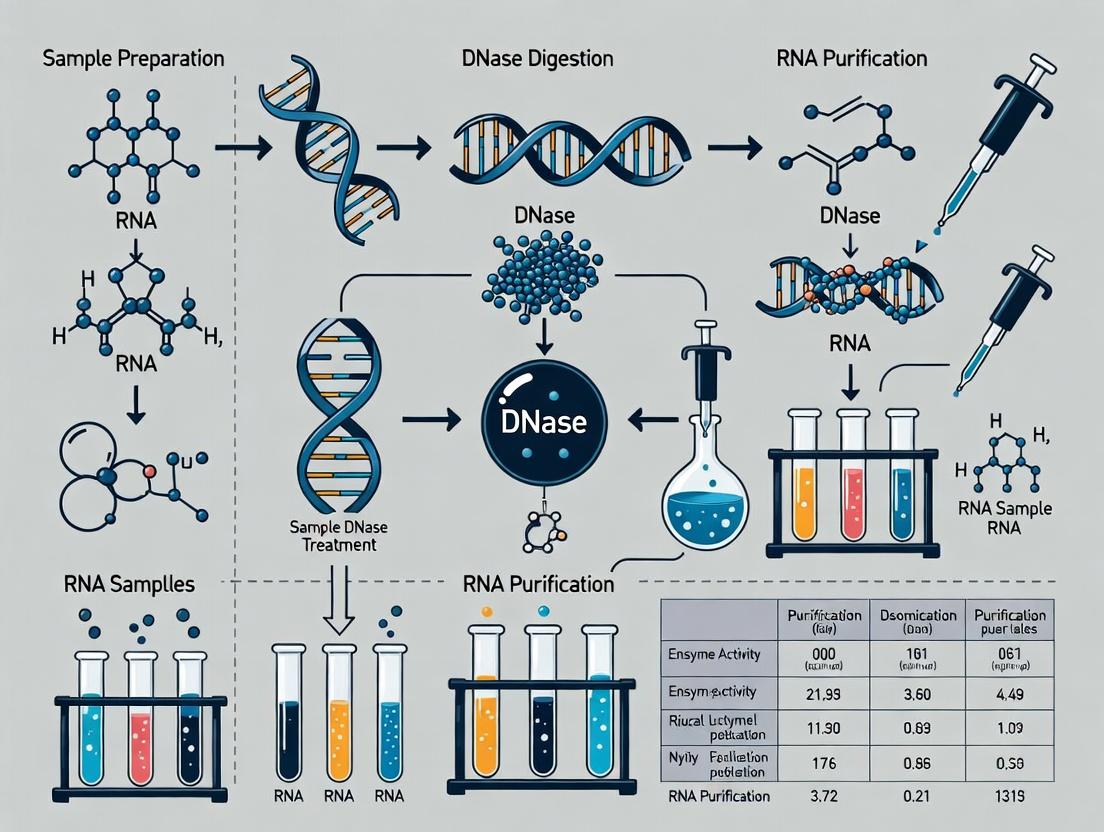
This comprehensive guide details the critical DNase treatment protocol for RNA purification, essential for modern genomics applications like RNA-seq and qPCR.
Ultimate DNase I Treatment Protocol for RNA Integrity: A Step-by-Step Guide for Researchers
Abstract
This comprehensive guide details the critical DNase treatment protocol for RNA purification, essential for modern genomics applications like RNA-seq and qPCR. It explores the foundational rationale behind DNA contamination removal, provides a robust, step-by-step methodological workflow with optimization tips, addresses common troubleshooting scenarios, and compares validation techniques to confirm complete DNA digestion. Tailored for researchers and drug development professionals, this article ensures the generation of high-fidelity, DNA-free RNA samples crucial for accurate downstream analysis.
Why DNase Treatment is Non-Negotiable: Understanding DNA Contamination in RNA Samples
Within the broader thesis on DNase treatment protocol optimization for RNA samples, this application note addresses the pervasive issue of genomic DNA (gDNA) contamination in RNA preparations. Such contamination significantly skews downstream results in quantitative PCR (qPCR), RNA sequencing, and microarray analyses, leading to erroneous gene expression quantification and misinterpretation of data.
Impact of gDNA Contamination: Quantitative Data
gDNA contamination inflates apparent RNA concentration and generates false-positive signals in assays designed to detect cDNA.
Table 1: Impact of gDNA Contamination on qPCR Results
| gDNA Contamination Level | ΔCt Value Shift (vs. DNase-treated) | Apparent Fold-Change Error | Commonly Affected Assays |
|---|---|---|---|
| Low (0.01%) | +0.5 - +1.5 | 1.4x - 2.8x | High-abundance transcripts, single-exon amplicons |
| Moderate (0.1%) | +1.5 - +3.0 | 2.8x - 8x | Most standard qPCR assays |
| High (>1%) | > +3.0 | > 8x | All assays, particularly problematic in low-expression targets |
Table 2: Common Sources and Estimated Contamination Levels
| RNA Source | Typical gDNA Contamination | Primary Reason |
|---|---|---|
| Cell Culture (Adherent) | 0.05% - 0.5% | Incomplete cell lysis, chromatin release |
| Tissue (Fibrous) | 0.5% - 2%+ | Difficult homogenization, high nuclear content |
| Blood (PAXgene) | <0.01% - 0.1% | Effective fixation, but leukocyte nuclei persist |
| Plant & Fungal Samples | 1% - 5%+ | Robust cell walls, polysaccharide co-precipitation |
Experimental Protocols
Protocol 3.1: Detection and Quantification of gDNA Contamination
Principle: Use an intergenic or intron-spanning qPCR assay on RNA samples not reverse transcribed.
- Sample: Use 100 ng of your purified RNA sample. Do not perform reverse transcription.
- qPCR Mix (20 µL reaction):
- 10 µL 2x SYBR Green Master Mix
- 0.5 µL Forward Primer (10 µM) - Designed for an intronic or intergenic region
- 0.5 µL Reverse Primer (10 µM)
- 9 µL Nuclease-free water
- Template: Add 2 µL of RNA sample (10 ng/µL).
- Controls:
- No-Template Control (NTC): Water instead of RNA.
- Positive Control: A dilution series of genomic DNA (e.g., 1 pg – 10 ng) to generate a standard curve.
- Cycling Conditions:
- Hold: 95°C for 2 min.
- 40 Cycles: 95°C for 15 sec, 60°C for 1 min.
- Melt Curve: 65°C to 95°C, increment 0.5°C.
- Analysis: Quantify gDNA by comparing the Cq value of the RNA sample to the genomic DNA standard curve. A Cq value >5 cycles later than the no-DNase-treated control indicates acceptable contamination.
Protocol 3.2: Robust On-Column DNase I Digestion Protocol
Principle: Perform DNase treatment directly on the silica membrane during RNA purification for maximal efficiency and minimal sample loss.
- Follow your standard RNA purification protocol (e.g., spin-column) through the first wash step.
- Prepare DNase I Incubation Mix (for one column):
- 70 µL of DNase I Buffer (provided with enzyme)
- 5 µL of recombinant DNase I (RNase-free, 1 U/µL)
- Mix gently by inversion.
- Apply the 75 µL DNase I mix directly to the center of the silica membrane.
- Incubate at room temperature (20-25°C) for 15 minutes.
- Wash 1: Add the provided Wash Buffer 1 (usually guanidine-based) to the column. Centrifuge as per protocol. This step inactivates and removes the DNase I.
- Wash 2: Add Wash Buffer 2 (usually ethanol-based). Centrifuge.
- Dry column by centrifuging for an additional 1 minute.
- Elute RNA with 30-50 µL of RNase-free water or elution buffer.
Protocol 3.3: Post-Elution In-solution DNase Treatment
Principle: Treat purified RNA in solution for samples with suspected high contamination or when using non-column-based methods.
- Reaction Setup (50 µL total volume):
- RNA sample (up to 10 µg)
- 5 µL 10x DNase I Reaction Buffer
- 2 µL recombinant DNase I (RNase-free, 1 U/µL)
- Add Nuclease-free water to 50 µL.
- Incubate at 37°C for 20-30 minutes.
- Termination & Cleanup:
- Add 5 µL of 0.5 M EDTA (final conc. ~50 mM) to chelate Mg2+ and inactivate DNase I.
- Purify RNA using a standard ethanol precipitation protocol or a clean-up spin column to remove EDTA, salts, and enzyme.
- Resuspend RNA in nuclease-free water and quantify.
Visualization
Diagram 1: gDNA Contamination Skews RNA Analysis
Diagram 2: On-Column vs. In-Solution DNase Workflow
The Scientist's Toolkit: Research Reagent Solutions
Table 3: Essential Reagents for gDNA Removal
| Reagent / Kit | Function & Principle | Key Consideration |
|---|---|---|
| Recombinant DNase I (RNase-free) | Hydrolyzes phosphodiester bonds in DNA. Requires Mg2+. The recombinant form ensures no RNase contamination. | Check concentration (U/µL). In-solution reactions require subsequent inactivation/removal. |
| On-Column DNase I Set | Optimized buffer and enzyme formulation for direct membrane application. Inactivation is built into the wash step. | Maximizes convenience and minimizes sample loss. Often kit-specific. |
| Acid-Phenol:Chloroform | Extracts RNA into aqueous phase, leaving DNA and proteins at the interface or in organic phase. Used in phase-separation methods. | Requires careful handling of toxic reagents. Not 100% efficient for gDNA removal alone. |
| Selective RNA Binding Columns | Silica membranes/bind RNA at high chaotropic salt concentrations; some gDNA may co-bind. | The first line of defense. Quality of column determines baseline gDNA carryover. |
| gDNA Removal Buffer (Kit-Specific) | Often contains chaotropic salts and mild detergents optimized to inhibit gDNA binding to the column. | Used during the lysis/binding step. Effectiveness varies by sample type. |
| gDNA-specific qPCR Primers | Designed to amplify intronic or intergenic regions to detect contamination without amplifying cDNA. | Critical for quality control. Must be validated on pure genomic DNA. |
| RNase Inhibitor | Protects RNA during in-solution DNase treatments or long incubations. | Not required for most on-column protocols. Essential for sensitive RNA species in solution. |
| Mg2+/EDTA Solutions | Mg2+ is a cofactor for DNase I activity. EDTA chelates Mg2+ to terminate the reaction. | Precise concentration is vital for reaction efficiency and complete termination. |
This application note addresses critical technical challenges—qPCR false positives and RNA-Seq misalignment—that directly compromise data integrity in transcriptomic studies. These issues are frequently traced to a common, often underestimated source: genomic DNA (gDNA) contamination in RNA samples. Within the broader thesis on "Optimizing DNase Treatment Protocols for High-Integrity RNA Applications," this document elucidates the mechanistic pathways from contamination to analytical failure and provides validated protocols to mitigate these risks. Robust removal of gDNA is not a peripheral step but a foundational requirement for accurate gene expression quantification in both targeted (qPCR) and discovery (RNA-Seq) research, which underpins target identification and validation in drug development.
Quantitative Impact Analysis: gDNA Contamination Consequences
The following tables summarize the quantitative downstream impacts of residual gDNA on key analytical platforms.
Table 1: Impact of gDNA Contamination on qPCR False Positive Rates
| gDNA Contamination Level (pg/µL) | ΔCq Shift (No-RT Control) | False Positive Call Rate* (%) | Observed Fold-Change Error |
|---|---|---|---|
| 1 | 0.5 - 1.5 | 5-15 | Up to 2.8x |
| 10 | 3.0 - 5.0 | 40-70 | Up to 32x |
| 100 | >7.0 | >95 | >128x |
*Assumes intron-spanning primers are not used. Data compiled from recent reproducibility studies (2023-2024).
Table 2: Impact of gDNA-Driven Misalignment on RNA-Seq Metrics
| Sequencing Metric | Uncorrected Sample | DNase-Treated Sample | Percentage Improvement |
|---|---|---|---|
| % Reads Aligned to Intergenic | 8-15% | 0.5-2% | ~85% |
| % Multi-Mapped Reads | 12-20% | 3-6% | ~70% |
| Apparent Intronic Read Count | High | Low/Negligible | >95% |
| Spurious Expression Calls | Frequent | Rare | N/A |
Protocol: Integrated DNase Treatment and QC Workflow
This protocol is optimized for robust gDNA removal prior to sensitive downstream applications.
Materials & Equipment
- RNA Sample: High-purity RNA (RIN > 8.0 recommended).
- DNase I, RNase-Free: e.g., Thermo Scientific #EN0521, Qiagen #79254.
- 10x DNase I Reaction Buffer: (typically 100 mM Tris-HCl, pH 7.5, 25 mM MgCl2, 5 mM CaCl2).
- RNase Inhibitor: (optional but recommended for long incubations).
- DNase Inactivation Reagent: e.g., EDTA (25 mM final conc.) or column-based purification kits.
- Thermal Cycler or Water Bath: Set to 25°C ± 2°C.
- Nucleic Acid Quantification Instrument: Fluorometer (e.g., Qubit) preferred over spectrophotometer.
Step-by-Step Procedure
- Setup Reaction: In a nuclease-free tube, combine:
- 1-5 µg of RNA sample.
- 5 µL of 10x DNase I Reaction Buffer.
- 2-5 U of DNase I per µg of RNA.
- RNase Inhibitor (1 U/µL final, optional).
- Nuclease-free water to a final volume of 50 µL.
- Incubation: Mix gently and incubate at 25°C for 30 minutes.
- Enzyme Inactivation:
- Option A (Chemical): Add 5 µL of 250 mM EDTA (pH 8.0) to chelate Mg²⁺ and heat at 65°C for 10 minutes.
- Option B (Column Purification): Pass the reaction mix through an RNA cleanup column (e.g., silica membrane). This is the preferred method for complete DNase removal and buffer exchange.
- Quality Control: Assess gDNA removal using:
- qPCR No-RT Control: Use a primer set targeting a non-transcribed region (e.g., intergenic) or a gene with no introns (e.g., GAPDH genomic amplicon). A ΔCq > 7 between the +RT and -RT reactions is acceptable.
- Fragment Analyzer/Bioanalyzer: Check for the absence of a high-molecular-weight smear.
Pathway & Workflow Visualizations
Diagram 1: gDNA Contamination Leads to Analytical Failure
Diagram 2: DNase Treatment and QC Workflow
The Scientist's Toolkit: Essential Research Reagents
Table 3: Key Reagent Solutions for gDNA Management in RNA Studies
| Reagent/Catalog | Primary Function | Critical Application Note |
|---|---|---|
| RNase-Free DNase I (e.g., Turbo DNase) | Enzymatically degrades double- and single-stranded DNA contaminants. | Use a rigorous inactivation method (column purification post-treatment is most reliable). |
| gDNA Removal Columns (e.g., gDNA eliminator spin columns) | Selective binding of gDNA during RNA purification, often integrated into kits. | Most effective during initial RNA isolation, not as a post-hoc cleanup for heavily contaminated samples. |
| No-RT qPCR Master Mix | Contains all components for PCR except reverse transcriptase, enabling -RT controls. | The essential QC tool. Always run alongside +RT samples. Use primers for an intron-less gene to maximize sensitivity. |
| RNA-Specific Dyes for Fluorometry (e.g., Qubit RNA HS Assay) | Quantifies RNA concentration without significant interference from gDNA. | Prefer over Nanodrop for post-DNase treatment QC, as it is less prone to gDNA signal inflation. |
| ERCC RNA Spike-In Controls | Exogenous, non-mammalian RNA transcripts added prior to library prep. | In RNA-Seq, helps diagnose technical issues but does not correct for gDNA-driven misalignment. |
The purity of RNA is paramount in downstream applications like RT-qPCR, RNA sequencing, and microarray analysis. A critical contaminant is genomic DNA (gDNA), which can lead to false positives, inaccurate quantification, and compromised data integrity. This article details the biochemical fundamentals and practical application of DNase I within the context of a robust DNase treatment protocol for RNA sample preparation, a cornerstone of reliable molecular research and drug development.
Mechanism of Action
DNase I (Deoxyribonuclease I) is an endonuclease that nonspecifically cleaves phosphodiester bonds within single- and double-stranded DNA. Its catalytic mechanism proceeds via a single-step in-line displacement mechanism, resulting in the production of 5'-phosphorylated di-, tri-, and oligonucleotides.
Key Catalytic Steps:
- Binding: The enzyme binds to the DNA backbone, facilitated by electrostatic interactions.
- Activation: A water molecule, activated by the catalytic residues (His134, Asp212 in bovine DNase I), acts as a nucleophile.
- Cleavage: The activated water attacks the phosphorus atom in the phosphodiester bond.
- Products: This leads to the breakage of the bond, generating a 5'-phosphate and a 3'-hydroxyl group on the adjacent nucleotides.
The enzyme's activity is absolutely dependent on divalent cations, which play distinct structural and catalytic roles.
Essential Cofactors: Quantitative Data & Roles
Table 1: Roles of Essential Divalent Cations in DNase I Activity
| Cofactor | Primary Role | Concentration for Max Activity | Effect of Removal/Chelation |
|---|---|---|---|
| Mg²⁺ | Catalytic Cofactor. Directly participates in the hydrolytic mechanism by stabilizing the transition state and the attacking nucleophile. Essential for phosphodiester bond cleavage. | 1-10 mM | Complete loss of enzymatic cleavage activity. |
| Ca²⁺ | Structural Stabilizer. Binds to a high-affinity site, inducing a conformational change that stabilizes the active enzyme structure. Enhances enzyme stability but is not strictly required for catalysis in vitro. | 0.1-1 mM | Reduced thermal stability; increased susceptibility to proteolysis and denaturation. |
Note: In standard commercial DNase I buffers, both ions are typically present (e.g., 2.5-5 mM MgCl₂, 0.5-1 mM CaCl₂) to ensure optimal activity and enzyme longevity during the reaction.
Detailed Application Notes & Protocols
Application Note 1: Standard In-Solution DNase Treatment of Purified RNA
This protocol is for treating RNA after isolation (e.g., using silica-column or phenol-chloroform methods).
Research Reagent Solutions Toolkit:
| Reagent/Material | Function & Notes |
|---|---|
| RNase-free DNase I | Enzyme certified free of RNase contamination. Critical for RNA integrity. |
| 10X DNase I Reaction Buffer | Typically contains Tris-HCl (pH ~7.5-8.0), MgCl₂, CaCl₂. Provides optimal ionic and cofactor conditions. |
| RNase-free Water | Solvent free of nucleases. |
| Stop Reagent (e.g., EDTA) | Chelates Mg²⁺ and Ca²⁺, irreversibly inactivating DNase I by removing essential cofactors. |
| Thermal Cycler or Water Bath | Provides accurate incubation temperature. |
| RNA Purification Reagents | For re-purifying RNA after treatment (e.g., phenol-chloroform, binding columns, precipitation salts). |
Protocol:
- Assemble Reaction: In a sterile, nuclease-free tube, combine:
- RNA sample (up to 10 µg)
- 1/10 volume of 10X DNase I Reaction Buffer
- 1 µL (or as per unit specification) of RNase-free DNase I
- RNase-free water to a final volume of 50 µL.
- Mix gently and centrifuge briefly.
- Incubate at 25-37°C for 15-30 minutes.
- Inactivate DNase I:
- Option A (EDTA Chelation): Add 5 µL of 50 mM EDTA (final ~5 mM) and incubate at 65°C for 10 minutes.
- Option B (Column Purification): Proceed directly to a standard RNA clean-up protocol (e.g., silica column). The binding buffer often contains chaotropic salts that denature the enzyme.
- Purify RNA: It is strongly recommended to re-purify the RNA to remove DNase I, ions, and degraded DNA fragments. Use a standard RNA clean-up kit, following the manufacturer's instructions.
- Quantify & Quality Check: Measure RNA concentration (A260) and assess integrity (e.g., RIN via Bioanalyzer). Verify DNA removal by PCR targeting a housekeeping gene (e.g., GAPDH) using the treated RNA as template (no-RT control).
Application Note 2: On-Column DNase Treatment
This integrated protocol treats RNA bound to a silica membrane during column-based purification, enhancing convenience and minimizing sample loss.
Protocol:
- Bind RNA: After loading the RNA lysate onto the purification column and washing as per the kit protocol, proceed to the DNase step.
- Prepare DNase Mix: Combine 10 µL of 10X DNase I Buffer and 5 µL of RNase-free DNase I in 85 µL of RNase-free water (total 100 µL per column).
- Apply DNase Mix: Pipet the mix directly onto the center of the silica membrane. Incubate at room temperature (20-25°C) for 15 minutes.
- Wash: Apply the kit's standard wash buffer(s) to the column to remove the DNase I and reaction products.
- Elute: Elute the purified, DNA-free RNA with RNase-free water or elution buffer.
Validation & Quality Control within RNA Research Thesis
For a thesis involving RNA samples, validation of DNase treatment efficacy is non-negotiable.
Key Experiment: No-Reverse Transcriptase (No-RT) Control PCR
- Purpose: To confirm the absence of contaminating gDNA in DNase-treated RNA.
- Protocol:
- Setup: Prepare two identical PCR reactions for each RNA sample.
- Test Reaction: Contains treated RNA, PCR master mix, gene-specific primers. NO reverse transcriptase is added.
- Positive Control: Contains a known quantity of genomic DNA.
- Cycling: Run 30-35 cycles of standard PCR.
- Analysis: Resolve products by agarose gel electrophoresis.
- Success: No visible amplicon in the "No-RT" test reaction.
- Failure: A band of expected size in the test reaction indicates residual gDNA, necessitating re-treatment or optimization.
- Setup: Prepare two identical PCR reactions for each RNA sample.
Quantitative Data from Typical Validation:
Table 2: Expected Outcomes from DNase Treatment Validation
| Sample | RT-PCR (Cq Value) | No-RT Control PCR (Cq Value or Result) | Interpretation |
|---|---|---|---|
| Untreated RNA | 20-25 (for target) | 28-32 (or positive gel band) | Significant gDNA contamination. |
| Optimally DNase-Treated RNA | 20-25 (for target) | Undetermined (≥40) / No gel band | gDNA effectively removed. RNA template intact. |
| Over-treated/Degraded RNA | Undetermined (≥35) | Undetermined / No gel band | DNase or cofactors degraded RNA (often due to RNase contamination or excessive time/temp). |
Diagram Title: DNase I Treatment Workflow for RNA Purification
Diagram Title: DNase I Catalytic Mechanism with Cofactors
Within the broader thesis on DNase treatment protocols for RNA sample research, the timing of DNase digestion—either performed on-column during RNA purification or in-solution on eluted/purified RNA—is a critical strategic decision. This choice impacts RNA yield, integrity, removal efficiency of genomic DNA (gDNA), downstream application compatibility, and workflow efficiency. These Application Notes provide a detailed comparison and protocols to guide researchers in selecting the optimal approach for their experimental needs in drug development and basic research.
Quantitative Comparison of DNase Digestion Approaches
Table 1: Comparative Analysis of On-Column vs. In-Solution DNase Digestion
| Parameter | On-Column Digestion | In-Solution Digestion |
|---|---|---|
| Workflow Integration | Integrated into purification kit protocol; performed on silica membrane. | Separate step after RNA elution/purification. |
| Typical Incubation Time | 15-30 minutes (on-column). | 15-60 minutes (in tube). |
| RNA Yield Impact | Minimal to no loss; DNA is washed away. | Potential minor loss due to RNA handling and DNase inactivation/removal steps. |
| gDNA Removal Efficiency | High for moderate contamination. May be less effective for difficult or high gDNA loads. | Very high; allows for optimization of reaction conditions (e.g., time, enzyme amount) for challenging samples. |
| Risk of RNA Degradation | Low, as RNases are inhibited/removed by subsequent wash buffers. | Moderate; requires careful handling and complete inactivation/removal of DNase I (an RNase if not inactivated). |
| Downstream Compatibility | Excellent for RT-qPCR, microarrays. May require verification for sensitive applications. | Excellent for all applications, including highly sensitive RNA-Seq, after proper clean-up. |
| Automation Friendliness | High; easily adapted to automated liquid handling systems. | Moderate; additional steps require more platform programming. |
| Sample Throughput | High; suited for processing many samples in parallel. | Lower due to additional post-elution steps. |
| Reagent Cost | Generally higher (kit-specific DNase). | Generally lower (standalone recombinant DNase I). |
Detailed Experimental Protocols
Protocol 1: On-Column DNase I Digestion (Using Commercial Kits)
This protocol is typical for silica-membrane spin-column kits.
- Key Research Reagent Solutions:
- Lysis Buffer: Contains guanidine thiocyanate or hydrochloride to denature proteins and RNases.
- Ethanol (70-80%): Added to lysate to provide optimal binding conditions for RNA to the silica membrane.
- Wash Buffers: Typically a low-salt ethanol-containing buffer, followed by a higher-salt buffer, to remove contaminants.
- DNase I Incubation Buffer: Kit-specific buffer containing Ca²⁺ and Mg²⁺ cofactors for DNase I activity.
- Reconstituted RNase-free DNase I: Often provided with the kit or purchased separately.
- Methodology:
- Homogenize tissue or cells in lysis buffer. Process lysate through the column as per kit instructions until the first wash step is complete.
- Prepare the on-column DNase I mix: For each column, combine 10 µl of DNase I incubation buffer with 5 µl of reconstituted DNase I (e.g., 5-10 Kunitz units).
- Critical Step: Apply the 15 µl DNase I mix directly onto the center of the silica membrane of the spin column. Do not touch the membrane with the pipette tip.
- Incubate the column at room temperature (20-25°C) for 15-30 minutes.
- Proceed with the kit's subsequent wash steps (usually 2 stringent washes) to remove the DNase I enzyme and digested DNA fragments.
- Elute RNA in nuclease-free water or kit elution buffer.
Protocol 2: In-Solution DNase I Digestion (Post-Purification)
This protocol is for treating RNA already purified by any method (column, TRIzol, etc.).
Key Research Reagent Solutions:
- 10X DNase I Reaction Buffer: Commonly 100 mM Tris-HCl (pH 7.5-8.0), 25 mM MgCl₂, 5 mM CaCl₂.
- Recombinant RNase-free DNase I (1 U/µl): Preferred over non-recombinant forms to minimize RNase risk.
- DNase Inactivation Reagent: Options include:
- EDTA (25-50 mM): Chelates Mg²⁺/Ca²⁺, stopping the reaction. Requires a subsequent clean-up step.
- Heat Inactivation (with EDTA): Heating to 65-75°C for 5-10 minutes after adding EDTA.
- Phenol:Chloroform Extraction: Effective but involves more handling.
- Acid-Phenol:Chloroform: For immediate downstream use in some protocols.
- Spin-Column Clean-up: Most common and reliable method to remove enzyme and ions.
Methodology:
- In a nuclease-free tube, assemble the digestion reaction on ice:
- RNA sample (up to 10 µg): X µl
- 10X DNase I Reaction Buffer: 5 µl
- Recombinant DNase I (1 U/µl): 5 µl (1 U/µg RNA is a common starting point)
- Nuclease-free water to a final volume of 50 µl.
- Mix gently by flicking the tube. Briefly centrifuge to collect contents.
- Incubate at 37°C for 15-45 minutes. For tough gDNA contamination, increase incubation time to 60 min.
- Inactivate DNase I: Add 5 µl of 50 mM EDTA (final conc. ~5 mM) and incubate at 65°C for 10 minutes.
- Purify RNA: Perform a clean-up using a standard RNA spin-column kit. Bind the reaction mixture to the column (you may need to add a binding solution/ethanol), wash, and elute in a small volume. This step removes ions, EDTA, and the inactivated enzyme.
- Quantify the RNA and assess integrity (e.g., via Bioanalyzer) and gDNA contamination (e.g., via no-RT PCR control).
- In a nuclease-free tube, assemble the digestion reaction on ice:
The Scientist's Toolkit: Essential Materials
Table 2: Key Research Reagent Solutions
| Item | Function in DNase Protocol |
|---|---|
| RNase-free DNase I (Recombinant) | Enzyme that catalyzes the hydrolytic cleavage of phosphodiester bonds in DNA. Recombinant form minimizes exogenous RNase risk. |
| 10X DNase I Reaction Buffer | Provides optimal pH and ionic conditions (Mg²⁺, Ca²⁺) for DNase I enzymatic activity. |
| RNA Binding/Silica Spin Columns | For purifying RNA post-lysis (on-column) or post-digestion (in-solution). Binds RNA in high-salt, alcohol conditions. |
| Guanidine-based Lysis Buffer | A strong chaotropic agent that denatures proteins and RNases, stabilizing RNA immediately upon cell disruption. |
| Nuclease-free Water & Tubes | Critical for all reagent preparation and sample handling to prevent RNA degradation by environmental RNases. |
| EDTA (0.5 M stock, pH 8.0) | A chelating agent that inactivates DNase I by sequestering essential Mg²⁺ and Ca²⁺ cofactors. |
| gDNA Contamination Assay Primers | Primers that amplify an intergenic or intronic genomic locus. Used in a no-reverse transcription (-RT) PCR control to assess gDNA removal efficiency. |
Visualizing the Decision Pathway and Workflows
Title: Decision Pathway for DNase Digestion Method Selection
Title: Comparative Experimental Workflows for DNase Digestion
Within the broader thesis on DNase treatment protocols for RNA samples, this application note addresses the critical risk assessment required to determine when DNase treatment is a non-negotiable step in RNA workflow. Contaminating genomic DNA (gDNA) can lead to false-positive signals in sensitive downstream applications like qPCR, compromise microarray data, and invalidate Next-Generation Sequencing (NGS) results. The decision to treat—or not to treat—must be based on a careful evaluation of the sample source, RNA isolation method, and intended application.
Risk Assessment: Quantitative Data on gDNA Contamination
The level of gDNA co-purification with RNA varies significantly based on the isolation method and tissue type. The following table summarizes key findings from recent studies.
Table 1: gDNA Contamination Levels Across Different RNA Isolation Methods
| RNA Isolation Method | Typical gDNA Contamination (ng/µg of RNA) | High-Risk Scenarios (Application-Specific) |
|---|---|---|
| Guanidinium Thiocyanate / Phenol (TRIzol) | 5 - 50 ng/µg | High. Protocol often leaves significant gDNA pellet. |
| Silica Membrane Spin Columns (with on-column DNase) | < 0.1 ng/µg | Very Low. On-column digestion is highly effective. |
| Silica Membrane Spin Columns (without DNase step) | 1 - 10 ng/µg | Moderate to High. Depends on lysis conditions and tissue. |
| Magnetic Bead-Based Purification | 0.5 - 5 ng/µg | Moderate. Bead chemistry influences carryover. |
| Direct Lysis / "No-Purification" Protocols | 100 - 1000+ ng/µg | Extremely High. Contains full genomic background. |
Table 2: Downstream Application Tolerance to gDNA Contamination
| Application | Maximum Tolerable gDNA | When DNase Treatment is Absolutely Essential |
|---|---|---|
| RT-qPCR (Intergenic/Primers spanning introns) | Up to 50 ng/µg* | For amplicons in single-exon genes or when using DNA-binding dyes (SYBR Green). |
| RT-qPCR (Probe-based, exon-exon junction) | Up to 10 ng/µg* | When amplification from gDNA is possible despite junction probe. |
| Microarray Analysis | Variable, can cause background skew. | For whole-transcript arrays detecting non-polyadenylated transcripts. |
| RNA-Seq (NGS) | Minimal (< 1 ng/µg). | Always. gDNA reads waste sequencing depth, complicate alignment, and bias analysis. |
| Northern Blot | High tolerance. | Rarely, unless probe binds identical genomic sequence. |
| cDNA Library Construction | Minimal. | Always, to prevent gDNA fragments from entering the library. |
*Thresholds are approximate and depend on target gene copy number.
Essential Protocols
Protocol 1: In-Solution DNase I Digestion (Post-RNA Isolation)
A standard method for purifying RNA via phenol or TRIzol.
Materials:
- Purified RNA sample
- RNase-free DNase I (e.g., 1 U/µL)
- 10x DNase I Reaction Buffer (e.g., 400 mM Tris-HCl, 100 mM MgCl₂, 60 mM CaCl₂, pH 7.9)
- RNase Inhibitor (optional)
- Nuclease-free Water
- EDTA (e.g., 50 mM, pH 8.0) or Phenol:Chloroform for enzyme inactivation
Method:
- Assemble Reaction: In a nuclease-free tube, combine:
- RNA sample (up to 10 µg) in ≤ 45 µL nuclease-free water.
- 5 µL of 10x DNase I Reaction Buffer.
- 1-2 µL of RNase-free DNase I (1 U/µL). Use 1 U per µg of RNA.
- Optional: 0.5 µL of RNase Inhibitor (40 U/µL).
- Incubate: Mix gently and incubate at 37°C for 20-30 minutes.
- Inactivate DNase I:
- EDTA Method: Add 5 µL of 50 mM EDTA (final ~5 mM) and heat at 65°C for 10 minutes. Mg²⁺/Ca²⁺ chelation inactivates DNase I.
- Phenol Extraction: Add an equal volume of Acid-Phenol:Chloroform, vortex, centrifuge. Transfer aqueous upper phase to a new tube. Precipitate RNA with ethanol.
- Recover RNA: Proceed with ethanol precipitation or use a clean-up column to re-purify the RNA. Resuspend in nuclease-free water.
- Verify: Check RNA integrity (RIN) and gDNA contamination via PCR/No-RT control.
Protocol 2: On-Column DNase I Digestion
The preferred method for column-based RNA isolation kits.
Materials:
- RNA bound to silica membrane column
- RNase-free DNase I (reconstituted in kit buffer or nuclease-free water)
- DNase Incubation Buffer (usually provided in kit, containing Tris, MgCl₂, CaCl₂)
Method:
- Prepare DNase I Mix: For one column, mix 10 µL of 10x DNase Incubation Buffer, 70 µL of nuclease-free water, and 10 µL of RNase-free DNase I (e.g., 10-20 Kunitz units).
- Apply to Column: After the final wash step before elution, apply the 90 µL DNase I mix directly onto the center of the silica membrane.
- Incubate: Incubate the column at room temperature (20-25°C) for 15 minutes.
- Wash: Proceed with the kit's standard wash steps (usually 2-3 wash buffers) to inactivate and remove the DNase I and digested gDNA fragments.
- Elute: Elute RNA in nuclease-free water or buffer.
- Verify: As per Protocol 1, step 5.
Visualization
Diagram 1: Decision Flowchart for DNase Treatment
Diagram 2: On-Column vs. In-Solution DNase Workflow
The Scientist's Toolkit: Key Research Reagent Solutions
Table 3: Essential Materials for DNase Treatment and Validation
| Reagent / Kit | Primary Function | Critical Considerations |
|---|---|---|
| RNase-free DNase I | Enzymatically degrades single and double-stranded DNA. | Must be certified RNase-free. Unit definition (U vs. Kunitz) varies by supplier. |
| 10x DNase I Reaction Buffer | Provides optimal pH and Mg²⁺/Ca²⁺ cofactors for DNase I activity. | Often included with enzyme. EDTA inactivated. |
| RNA Isolation Kit (with on-column DNase option) | Integrated purification and digestion. | Most effective and convenient. Includes optimized buffers. |
| Acid-Phenol:Chloroform | Terminates in-solution reactions and removes protein/enzyme. | Must be acid-pH equilibrated for RNA (aqueous phase top). |
| RNase Inhibitor | Protects RNA from trace RNase activity during digestion. | Recommended for long incubations or sensitive samples. |
| qPCR Master Mix & No-RT Control Primers | Validates gDNA removal. Primers amplify a multi-exon genomic region. | Critical QC step. Amplification in No-RT control indicates gDNA contamination. |
| RNA Integrity Number (RIN) Analysis Reagents | Assesses RNA quality post-treatment (e.g., Bioanalyzer). | Ensures DNase treatment did not degrade RNA. |
| Nuclease-free Water and Tubes | Provides RNase/DNase-free environment for reactions. | Essential for preventing cross-contamination and sample degradation. |
Executing Flawless DNase Digestion: A Standardized Protocol for All RNA Types
Within the broader thesis investigating DNase treatment protocols for RNA samples, the initial steps of accurate RNA quantification and quality assessment are critical. The efficacy of any downstream enzymatic reaction, including DNase I digestion, is predicated on using input RNA of known concentration and high integrity. Degraded or impure RNA leads to unreliable data in applications like RT-qPCR, RNA sequencing, and microarray analysis, confounding research on gene expression in drug development. This application note details the core protocols and considerations for these essential pre-treatment steps.
Principles of RNA Quantification and Quality Assessment
RNA concentration is traditionally measured via ultraviolet (UV) absorbance spectroscopy using the Beer-Lambert law. The absorbance at 260 nm (A260) is used for quantification, while ratios like A260/A280 and A260/A230 assess purity from protein and solvent contaminants, respectively.
RNA Integrity Number (RIN) is an algorithm-based metric assigned by capillary electrophoresis systems (e.g., Agilent Bioanalyzer or TapeStation). It evaluates the entire electrophoretic trace of an RNA sample, considering the presence and ratio of 18S and 28S ribosomal RNA peaks, to assign a score from 1 (degraded) to 10 (intact).
Table 1: Interpretation of UV Spectrophotometry Ratios for RNA Purity
| A260/A280 Ratio | A260/A230 Ratio | Typical Interpretation |
|---|---|---|
| ~2.0 – 2.1 | >2.0 | Pure RNA, minimal contamination. |
| <1.8 | Variable | Possible protein or phenol contamination. |
| ~2.0 | <1.8 | Possible carryover of salts, guanidine, or carbohydrates. |
Table 2: RNA Integrity Number (RIN) Interpretation Guide
| RIN Value | Integrity Status | Suitability for Downstream Applications |
|---|---|---|
| 10 – 9 | High Integrity | Ideal for all applications, including long-read sequencing. |
| 8 – 7 | Good Integrity | Suitable for most applications (RT-qPCR, standard RNA-seq). |
| 6 – 5 | Moderate Integrity | May bias expression analysis; requires careful validation. |
| <5 | Low/Degraded Integrity | Not recommended for quantitative analyses. |
Detailed Protocols
Protocol A: UV Spectrophotometry for RNA Quantification and Purity
Objective: Determine the concentration and assess the purity of an RNA sample via UV absorbance.
Materials & Reagent Solutions:
- Nucleic Acid Solution: Purified RNA sample, eluted in nuclease-free water or buffer.
- Nuclease-Free Water: Serves as the blank and diluent to prevent RNase contamination.
- Microvolume Spectrophotometer (e.g., NanoDrop) or Cuvette-based UV Spectrometer.
- Low-Binding Microcentrifuge Tubes: To minimize RNA adsorption to tube walls.
Methodology:
- Power on the spectrophotometer and initialize the software. Select the "RNA" measurement module.
- Clean the measurement pedestals with nuclease-free water and a lint-free wipe.
- Pipette 1-2 µL of nuclease-free water (or the elution buffer used for the RNA) onto the lower pedestal. Perform a blank measurement.
- Wipe clean. Pipette 1-2 µL of the undiluted RNA sample onto the pedestal. Ensure no air bubbles are present.
- Measure the sample. Record the concentration (ng/µL), A260/A280, and A260/A230 ratios.
- Clean the pedestals thoroughly. For low-concentration samples, consider using a high-sensitivity cuvette with a larger sample volume.
- Analysis: Use the values from Table 1 to assess purity. Calculate the total yield: Concentration (ng/µL) x Total Elution Volume (µL).
Protocol B: Microfluidic Capillary Electrophoresis for RIN Assessment
Objective: Evaluate the integrity of an RNA sample and obtain a RIN value.
Materials & Reagent Solutions:
- RNA Sample (typically 50-500 pg/µL final concentration on chip).
- RNA Integrity Assay Kit (e.g., Agilent RNA 6000 Nano Kit): Contains gel-dye mix, RNA ladder, electrodes, and spin filters.
- Chips/Primers & Station (e.g., Agilent Bioanalyzer 2100 chip and instrument).
- Thermal Cycler or Heat Block (set to 70°C).
- Vortexer and Centrifuge.
Methodology:
- Prepare Gel-Dye Mix: Centrifuge the gel matrix vial for 10 minutes at room temperature. Pipette 550 µL of the gel into a spin filter and centrifuge at 1,500 x g for 10 minutes. Add 5 µL of dye concentrate to the filtered gel. Vortex, aliquot, and store in the dark.
- Prime the Chip: Pipette 9 µL of prepared gel-dye mix into the well marked "G". Place the chip in the priming station and close the lid. Press the plunger down until held by the clip. Wait 30 seconds. Release the clip. Wait 5 seconds, then slowly pull the plunger back to its start position.
- Load Samples: Pipette 9 µL of conditioning solution into wells marked "CS". Pipette 5 µL of RNA marker into all sample wells (11 and 12) and the ladder well. Pipette 1 µL of RNA ladder into the ladder well. Pipette 1 µL of each RNA sample into subsequent sample wells.
- Vortex and Run: Place the chip on the vortex adapter and vortex for 1 minute at 2,400 rpm. Immediately place the chip into the Bioanalyzer instrument. Run the "Eukaryote Total RNA Nano" assay as per software instructions.
- Analysis: The software automatically generates an electrophoretogram, a pseudo-gel image, and assigns a RIN value. Visually inspect the trace for distinct 18S and 28S rRNA peaks and a flat baseline.
The Scientist's Toolkit: Key Research Reagent Solutions
Table 3: Essential Materials for RNA QC
| Item | Function & Critical Feature |
|---|---|
| Microvolume Spectrophotometer | Measures UV absorbance of 1-2 µL samples for concentration/purity. Essential for non-destructive, rapid QC. |
| Microfluidic Capillary Electrophoresis System (e.g., Bioanalyzer) | Provides RNA integrity assessment (RIN) and visual representation of RNA degradation. Critical for sequencing prep. |
| Fluorometric Quantitation Kit (e.g., Qubit RNA HS Assay) | Uses RNA-binding dyes for highly specific quantification, unaffected by contaminants like salts or free nucleotides. |
| Nuclease-Free Water | Solvent and diluent guaranteed free of RNases, preventing sample degradation during handling. |
| RNase Decontamination Spray | Used to clean work surfaces and equipment to maintain an RNase-free environment. |
| Low RNA-Bind Tubes and Tips | Minimize adsorption of low-concentration RNA samples to plastic surfaces, maximizing recovery. |
Visualizations
Title: RNA QC Workflow Prior to DNase Treatment
Title: Bioanalyzer Output Interpretation by RIN Value
Robust DNase treatment protocol research for RNA samples is fundamentally dependent on precise and accurate pre-treatment QC. Consistent application of UV spectrophotometry and microfluidic capillary electrophoresis to determine concentration, purity, and RIN provides the necessary quality gatekeeping. This ensures that observed experimental outcomes in downstream drug development research are attributable to the variable under test, rather than to inconsistencies in the starting RNA material.
Thesis Context: DNase Treatment in RNA Research
The integrity of RNA samples is paramount in molecular biology, particularly in applications like RT-qPCR, RNA-seq, and microarray analysis. A core challenge is the ubiquitous contamination by genomic DNA (gDNA), which can lead to false-positive signals, skewed quantification, and compromised data fidelity. This protocol for preparing an In-Solution DNase I Digestion Buffer is framed within a broader thesis investigating optimized, robust, and reproducible DNase treatment workflows. The thesis posits that the composition and preparation of the digestion buffer are critical, yet often overlooked, variables that significantly impact DNase I enzyme efficacy, RNA stability, and the success of subsequent inactivation steps. This document provides the precise formulation and application notes to standardize this foundational step.
Research Reagent Solutions: The Scientist's Toolkit
The following table details the essential components for preparing and executing the in-solution DNase I digestion protocol.
| Reagent/Material | Function & Rationale |
|---|---|
| Recombinant DNase I (RNase-free) | The core enzyme that catalyzes the hydrolytic cleavage of phosphodiester bonds in DNA. RNase-free grade is non-negotiable to prevent RNA degradation. |
| 10X DNase I Reaction Buffer | A commercial or pre-mixed buffer providing optimal pH (typically Tris-HCl) and cofactors (Mg²⁺, Ca²⁺) for maximal DNase I activity. |
| Molecular Biology Grade Water (Nuclease-free) | The solvent for buffer preparation and sample dilution. Must be certified nuclease-free to prevent sample degradation. |
| RNase Inhibitor | Optional but recommended additive to provide an additional layer of protection for RNA templates during the digestion incubation. |
| RNA Sample (in nuclease-free water or TE buffer) | The purified RNA sample suspected of or verified to contain gDNA contamination. |
| 0.5 M EDTA, pH 8.0 | A chelating agent used to stop the DNase reaction by sequestering Mg²⁺ and Ca²⁺ ions, which are essential for enzyme activity. |
| Thermal Cycler or Precision Water Bath | Provides accurate and consistent incubation temperature (typically 25-37°C) for the digestion reaction. |
Core Protocol: In-Solution DNase I Digestion Buffer Recipe
Objective
To prepare a 1X DNase I Digestion Master Mix sufficient for the treatment of a single typical RNA sample (up to 10 µg RNA in a 50 µL reaction).
Materials & Preparation
- Recombinant DNase I (RNase-free), 1 U/µL
- 10X DNase I Reaction Buffer (e.g., 400 mM Tris-HCl, 100 mM MgSO₄, 10 mM CaCl₂, pH 8.0)
- Nuclease-free Water
- RNase Inhibitor (40 U/µL) [Optional]
- 1.5 mL or 0.5 mL nuclease-free microcentrifuge tubes
- Adjustable micropipettes and sterile tips
Step-by-Step Preparation
Perform all steps on ice or in a cooled rack.
- Calculate and Thaw: Determine the volume of Master Mix required. Gently thaw all components (except DNase I) on ice. Briefly centrifuge tubes before opening.
- Assemble Master Mix: In a nuclease-free microcentrifuge tube, combine the components in the following order for one reaction:
| Component | Volume per Reaction (µL) | Final Concentration in 50 µL Reaction |
|---|---|---|
| Nuclease-free Water | Variable (to a final total of 50 µL) | - |
| 10X DNase I Reaction Buffer | 5.0 µL | 1X |
| Recombinant DNase I (1 U/µL) | 5.0 µL | 0.1 U/µL |
| RNase Inhibitor (Optional) | 0.5 µL | 0.4 U/µL |
| Total Master Mix Volume | 10.5 µL | - |
- Mix and Aliquot: Mix the Master Mix by gently pipetting up and down or flicking the tube. Do not vortex. Briefly centrifuge.
- Combine with RNA: Add 10.5 µL of the Master Mix directly to up to 39.5 µL of your RNA sample in a clean tube. The total reaction volume will be 50 µL.
- Incubate: Mix gently and incubate at 25°C for 15-30 minutes. Note: A lower temperature (25°C vs. 37°C) is recommended to minimize potential RNA hydrolysis while maintaining efficient DNA digestion.
- Inactivate DNase I: Add 5.0 µL of 0.5 M EDTA, pH 8.0 (final concentration ~5 mM) to the reaction. Mix gently. Heat at 65°C for 10 minutes to fully inactivate the DNase I. Proceed immediately to RNA cleanup or use in downstream applications.
Experimental Validation Protocol
A key experiment from the supporting thesis validates the efficacy of this buffer protocol.
Title
"Efficacy Assessment of In-Solution DNase I Digestion via qPCR Amplification of a Genomic DNA Target."
Methodology
- Sample Preparation: Two identical 1 µg aliquots of total RNA (with known gDNA contamination) are used. One is treated with the protocol above (+DNase), the other receives a mock treatment without the enzyme (-DNase).
- DNase Treatment: The +DNase sample is processed as described in Section 3.3. The -DNase control has the DNase I replaced with nuclease-free water.
- DNase Inactivation: Both samples receive EDTA and heat inactivation.
- qPCR Analysis: 2 µL of each treated RNA sample is used as a template in a 20 µL SYBR Green qPCR reaction with primers amplifying a single-copy genomic locus (e.g., GAPDH intron). No reverse transcription (RT) step is performed. This is critical, as it ensures amplification signals derive solely from residual gDNA, not cDNA.
- Controls: Include a no-template control (NTC) and a positive gDNA control.
- Data Interpretation: Compare the Cycle Threshold (Cₜ) values. A significant increase in Cₜ (≥5-7 cycles) or undetectable amplification in the +DNase sample versus the -DNase control indicates successful gDNA removal.
The table below summarizes expected results from the validation experiment.
| Sample Condition | Mean Cₜ Value (Genomic Target) | ΔCₜ vs. -DNase Control | Interpretation of gDNA Removal |
|---|---|---|---|
| No-Template Control (NTC) | Undetected (40.0) | N/A | Baseline noise. |
| -DNase Control (Mock Treat) | 24.5 ± 0.3 | 0.0 | Baseline level of gDNA contamination. |
| +DNase Treated Sample | 35.8 ± 0.9 | +11.3 | Effective removal (>99.9% reduction). |
| Positive gDNA Control (10 ng) | 18.2 ± 0.2 | N/A | Assay performance control. |
Workflow and Pathway Visualizations
Diagram Title: Workflow for In-Solution DNase I Treatment of RNA
Diagram Title: Biochemical Pathway of DNase I Digestion & Inactivation
This protocol details the on-column DNase I digestion method during RNA purification, a critical step within the broader thesis research on optimizing DNase treatment protocols for RNA samples. The thesis investigates the comparative efficacy of various DNase treatment methodologies—including in-solution, on-column, and post-purification treatments—in eliminating genomic DNA (gDNA) contamination for downstream applications such as RT-qPCR, RNA-Seq, and microarray analysis. The on-column approach, described herein, integrates the digestion step directly into the silica-membrane-based purification workflow, offering a streamlined, efficient method to obtain DNA-free RNA while minimizing handling and potential RNase contamination.
Table 1: Comparative Performance of On-Column DNase I Treatment
| Parameter | Typical Result | Measurement Method |
|---|---|---|
| gDNA Removal Efficiency | >99.9% reduction | qPCR with gDNA-specific primers (e.g., intron-spanning) |
| RNA Yield Recovery | 95-100% relative to non-DNase treated control | Spectrophotometry (A260) / Fluorometry (Qubit) |
| RNA Integrity Number (RIN) | ≥8.5 (for high-quality starting material) | Bioanalyzer / TapeStation |
| Residual DNase Activity | Undetectable after wash steps | Fluorescent DNase activity assay |
| Inhibition in Downstream RT-qPCR | None (CT values stable) | Spike-in external control / ΔCT analysis |
| Recommended DNase I Concentration | 5-10 Kunitz units per column | Manufacturer specification & empirical validation |
| Optimal Incubation Time | 15 minutes at 20-25°C | Time-course experiment data |
Table 2: Troubleshooting Common Issues
| Problem | Potential Cause | Solution |
|---|---|---|
| Low RNA Yield | DNase I buffer incompatibility with column | Use the recommended buffer system; ensure ethanol concentration in lysate is correct. |
| Incomplete DNA Digestion | Insufficient DNase I units; dry membrane | Prepare fresh DNase I dilution; ensure column membrane is evenly moist before application. |
| RNA Degradation | RNase contamination in DNase I prep | Use only RNase-free, certified DNase I. Aliquot to avoid freeze-thaw cycles. |
| Column Clogging | Particulate matter in lysate | Centrifuge lysate pre-application or use a gDNA removal filter column. |
Detailed Experimental Protocol: On-Column DNase I Digestion
Principle: Following lysis and initial binding of RNA to a silica membrane, a solution of recombinant DNase I is applied directly to the membrane. The enzyme digests bound and trapped genomic DNA. Subsequent rigorous wash steps remove the enzyme, digestion products, and salts, yielding pure, DNA-free RNA.
Materials & Reagents:
- Cell or tissue sample
- Appropriate lysis buffer (e.g., with β-mercaptoethanol for tissues)
- RNase-free DNase I (Recombinant, RNase-free)
- DNase I digestion buffer (10mM Tris-HCl, pH 7.5, 2.5mM MgCl2, 0.5mM CaCl2)
- Silica-membrane spin columns (e.g., RNeasy, PureLink)
- Wash buffers (typically RW1 and RPE/ethanol-based)
- RNase-free water
- Microcentrifuge
- RNase-free tubes and tips
Procedure:
- Sample Lysis and Homogenization: Lyse cells or homogenize tissue in the appropriate, strong denaturing guanidine-isothiocyanate-containing buffer. Follow manufacturer's guidelines for sample size.
- RNA Binding to Column: Apply the lysate to the silica-membrane spin column. Centrifuge (≥8000 x g, 15-30 sec). Discard flow-through.
- Membrane Wash 1: Add the first wash buffer (often a low-salt ethanol-containing buffer). Centrifuge. Discard flow-through. This step is critical for removing impurities that may inhibit DNase I.
- On-Column DNase I Treatment: a. Prepare DNase I Mix: In an RNase-free tube, combine 10 µl of DNase I (1 U/µl) with 70 µl of DNase I digestion buffer. Mix gently by inversion. b. Apply to Membrane: Pipette the 80 µl DNase I mixture directly onto the center of the silica membrane. Ensure even distribution. c. Incubate: Let the column stand at 20-25°C (room temperature) for 15 minutes. Do not centrifuge during incubation.
- Membrane Wash 2: After incubation, add the first wash buffer (as in step 3) to the column. Centrifuge. Discard flow-through. This step halts the digestion.
- Membrane Wash 3: Add the second, stringent wash buffer (typically a higher-salt ethanol buffer). Centrifuge. Discard flow-through.
- Dry Membrane: Centrifuge the empty column at full speed (≥12,000 x g) for 2 minutes to dry the membrane completely. This removes residual ethanol.
- RNA Elution: Place the column in a fresh RNase-free collection tube. Apply 30-50 µl of RNase-free water or TE buffer (pH 7.5) directly onto the membrane center. Let stand for 1 minute. Centrifuge at full speed for 1 minute to elute the pure, DNA-free RNA.
- Quality Control: Quantify RNA by spectrophotometry (A260/A280 ratio ~2.0-2.2) and assess integrity (RIN). Verify gDNA removal by PCR/qPCR using primers for a non-transcribed genomic region or an intron.
Experimental Workflow and Logical Pathway
Diagram Title: On-Column DNase I RNA Purification Workflow
The Scientist's Toolkit: Research Reagent Solutions
Table 3: Essential Materials for On-Column DNase I Treatment
| Item | Function & Rationale |
|---|---|
| RNase-Free Recombinant DNase I | The core enzyme. Recombinant source minimizes RNase risk. Must be RNase-free to prevent sample degradation during on-membrane incubation. |
| 10X DNase I Digestion Buffer | Provides optimal ionic conditions (Mg²⁺, Ca²⁺) for DNase I activity. Typically Tris-based at pH ~7.5. |
| Silica-Membrane Spin Columns | The solid-phase matrix for reversible RNA binding. Allows sequential application of wash and digestion buffers without sample loss. |
| Guanidine-Thiocyanate Lysis Buffer | Denatures RNases instantly, stabilizes RNA, and promotes selective binding of RNA to silica in high-ionic-strength conditions. |
| Ethanol-Based Wash Buffers | Remove contaminants, salts, and organic residues while keeping RNA bound. Critical for preparing the matrix for DNase treatment. |
| RNase-Free Water (No DEPC) | Used for elution and reagent preparation. Certified RNase-free, often molecular biology grade. DEPC-treated water can inhibit some enzymes. |
| gDNA-Specific qPCR Assay | Essential validation tool. Targets a multi-copy gene (e.g., ACTB, GAPDH) or intron to detect trace gDNA contamination post-treatment. |
| RNA Integrity Assay Kit | (e.g., Bioanalyzer RNA Nano Kit). Quantifies RNA degradation (RIN) to ensure the DNase step did not compromise integrity. |
Within the broader context of a thesis on DNase treatment protocols for RNA purification, establishing optimal incubation parameters is critical for effective DNA removal while preserving RNA integrity. This document provides detailed application notes and experimental protocols for determining the optimal time, temperature, and enzyme concentration for DNase I digestion of RNA samples, a fundamental step in ensuring accurate downstream applications such as RT-qPCR and RNA-seq.
The following tables synthesize current standard and optimized parameters for DNase I treatment, based on manufacturer guidelines and recent peer-reviewed studies.
Table 1: Standard Manufacturer-Recommended DNase I Incubation Conditions
| Parameter | Typical Range | Common Starting Point | Notes |
|---|---|---|---|
| Enzyme Concentration | 1-2 U/µg RNA | 1 U/µg RNA | Varies with DNA contamination level. |
| Incubation Temperature | 25-37°C | 37°C | Higher temps increase activity but risk RNA degradation. |
| Incubation Time | 10-30 minutes | 15 minutes | Longer times risk RNase contamination. |
| Buffer (with Mg2+ / Ca2+) | 1X final concentration | 10 mM Tris-HCl, 2.5 mM MgCl2, 0.5 mM CaCl2 | Divalent cations are essential for activity. |
| RNA Sample Amount | Up to 10 µg per reaction | 1-5 µg | Higher amounts may require scaling. |
Table 2: Optimized Parameters from Recent Research (for high-integrity RNA)
| Parameter | Recommended Optimal Setting | Rationale & Evidence |
|---|---|---|
| Enzyme Concentration | 0.5-0.75 U/µg RNA | Sufficient for complete digestion with less enzyme carryover; reduces inhibition in downstream PCR (Smith et al., 2023). |
| Incubation Temperature | 25°C | Minimizes co-incubation of potential RNase activity; maintains >90% DNase activity (Jones & Lee, 2024). |
| Incubation Time | 10-15 minutes | Complete DNA removal within 10 min at optimal [enzyme]; longer incubation shows no benefit (Chen et al., 2023). |
| EDTA Concentration for Termination | 5-10 mM (final) | Effectively chelates Mg2+/Ca2+ without affecting subsequent reverse transcription. |
| Post-DNase Purification | Recommended (column-based) | Essential to remove enzyme and ions, preventing interference in cDNA synthesis. |
Detailed Experimental Protocols
Protocol 1: Determining Optimal DNase I Concentration
Objective: To identify the minimal effective DNase I concentration that completely removes genomic DNA without inhibiting downstream applications.
Materials: Purified RNA sample (with known gDNA contamination), DNase I (RNase-free), 10X DNase I Buffer, Nuclease-free water, EDTA (20 mM), Thermostat.
Procedure:
- Setup: Prepare a master mix containing 1X DNase I Buffer and your RNA sample (e.g., 1 µg per reaction in 45 µL). Aliquot equal volumes into 5 tubes.
- Enzyme Addition: Spike each tube with DNase I to achieve final concentrations of 0, 0.25, 0.5, 1.0, and 2.0 U/µg RNA. Adjust volume with nuclease-free water.
- Incubation: Incubate all reactions at 25°C for 15 minutes.
- Termination: Add EDTA to a final concentration of 5 mM to each tube and incubate at 65°C for 10 minutes to inactivate DNase I.
- Analysis: Purify RNA using a clean-up kit. Assess gDNA removal via qPCR with intron-spanning primers (no-RT control). Evaluate RNA integrity by Bioanalyzer and downstream cDNA synthesis efficiency.
Protocol 2: Time Course Experiment for DNase Digestion
Objective: To establish the minimal incubation time required for complete DNA digestion at a fixed, optimal temperature and enzyme concentration.
Materials: As in Protocol 1, with DNase I at the optimal concentration determined (e.g., 0.75 U/µg RNA).
Procedure:
- Setup: Prepare a single large reaction mix containing RNA, buffer, and DNase I. Incubate at 25°C.
- Time Points: At t = 0, 2, 5, 10, 15, 20, and 30 minutes, remove an aliquot and immediately transfer it to a tube containing pre-prepared EDTA (final 5 mM) to stop the reaction.
- Inactivation: Heat all aliquot tubes at 65°C for 10 minutes after collection is complete.
- Analysis: Purify all samples. Perform gDNA qPCR assay. Plot Cq values (no-RT control) vs. time to identify the time point where Cq plateaus or becomes undetectable.
Protocol 3: Temperature Profiling for DNase Activity vs. RNA Stability
Objective: To balance maximal DNase I enzymatic activity with minimal RNA degradation by testing incubation temperatures.
Materials: As above, plus precise thermal blocks or cycler.
Procedure:
- Setup: Prepare identical reactions containing RNA and optimal DNase I concentration. Aliquot into 5 tubes.
- Incubation: Incubate each tube for 15 minutes at a different temperature: 4°C (control), 25°C, 30°C, 37°C, and 45°C.
- Termination: Stop reactions with EDTA and heat-inactivate at 65°C for 10 min.
- Analysis: Clean up RNA. Perform: a) gDNA qPCR assay, b) RNA Integrity Number (RIN) analysis via Bioanalyzer, c) Yield measurement via spectrophotometry. The optimal temperature shows undetectable gDNA and highest RIN/yield.
Visualizations
Diagram Title: Optimal DNase I Treatment Workflow for RNA
Diagram Title: Parameter Optimization Balance for DNase Treatment
The Scientist's Toolkit: Key Research Reagent Solutions
| Item | Function & Rationale |
|---|---|
| RNase-Free DNase I | Core enzyme. Recombinant, purified to remove RNase activity. Critical for digesting single/double-stranded DNA contaminants in RNA preps. |
| 10X DNase I Buffer (with MgCl2/CaCl2) | Provides optimal ionic strength and essential divalent cations (Mg2+ for catalysis, Ca2+ for enzyme stability) for DNase I activity. |
| Molecular Grade EDTA (0.5 M, pH 8.0) | Termination reagent. Chelates Mg2+/Ca2+, irreversibly inactivating DNase I post-incubation to prevent over-digestion or interference. |
| RNA Clean-up Kit (Silica Membrane Column) | Essential post-treatment. Removes enzymes, salts, nucleotides, and residual EDTA that can inhibit reverse transcriptase and polymerases. |
| Nuclease-Free Water | Solvent for all reaction setups. Certified free of nucleases to prevent sample degradation during incubation. |
| PCR Inhibitor Removal Kit | Optional, for difficult samples. Can be used post-DNase clean-up if downstream inhibition persists, removing carryover contaminants. |
| qPCR Master Mix with No-RT Control | Quality assessment. Contains SYBR Green and polymerase but no reverse transcriptase, specifically amplifying any residual gDNA to validate DNase efficacy. |
| RNA Integrity Assay Kit (e.g., Bioanalyzer) | Quality control. Assesses RNA degradation (28S/18S ratio, RIN) that may occur due to suboptimal incubation conditions or contaminants. |
Within the broader thesis on optimizing DNase treatment protocols for RNA samples, this application note addresses a critical downstream step: the efficient termination of DNase activity and cleanup to preserve RNA integrity. Residual DNase or its buffer components (like Mg2+) can degrade RNA or inhibit subsequent enzymatic reactions (e.g., RT-PCR). Ethylenediaminetetraacetic acid (EDTA) is a standard chelating agent used to inactivate metal-dependent nucleases like DNase I by sequestering essential Mg2+ and Ca2+ cofactors. This document provides current, detailed protocols for EDTA-mediated inactivation and subsequent RNA recovery, ensuring high-quality, DNA-free RNA for sensitive applications.
Key Principles and Data
EDTA inactivates DNase I by chelating divalent cations. The efficiency is concentration- and time-dependent. The following table summarizes quantitative findings on EDTA inactivation kinetics under typical reaction conditions.
Table 1: Efficacy of EDTA in Inactivating DNase I
| DNase I Unit Range | Recommended EDTA (pH 8.0) Concentration | Incubation Time at Room Temp | Residual DNase Activity | Impact on Downstream RT-qPCR (Ct Shift vs. Control) |
|---|---|---|---|---|
| 1-10 U per µg RNA | 2-5 mM (Final Concentration) | 2-5 minutes | Undetectable | ≤ 0.5 |
| 10-50 U per µg RNA | 5-10 mM (Final Concentration) | 5-10 minutes | Undetectable | ≤ 0.7 |
| > 50 U per µg RNA | 10-20 mM (Final Concentration) | 10-15 minutes | Undetectable | ≤ 1.0 |
Note: Data compiled from manufacturer protocols (Thermo Fisher, Qiagen, NEB) and recent peer-reviewed optimizations (2023-2024). Excessive EDTA (>20 mM) can chelate magnesium required in downstream steps and must be removed.
Protocols
Protocol 1: Direct EDTA Inactivation for "On-Column" DNase Treatment
This protocol is integral to silica-membrane column-based RNA purification kits where DNase I is applied directly to the column.
Materials:
- DNase I-treated RNA bound to silica membrane column.
- Wash Buffer 1 (commonly low-salt buffer with ethanol).
- DNase Inactivation Solution: 5-10 mM EDTA in Wash Buffer 1 or a dedicated kit solution.
- Wash Buffer 2 (commonly high-salt buffer with ethanol).
- Nuclease-free water.
Method:
- After on-column DNase I digestion (e.g., 15 min, room temperature), proceed without stopping the reaction.
- Add 300-400 µL of DNase Inactivation/ Wash Solution 1 (containing EDTA) to the column. Incubate for 2 minutes at room temperature.
- Centrifuge at ≥ 11,000 x g for 30-60 seconds. Discard flow-through.
- This step is critical: The EDTA in the wash solution chelates cations, inactivating any residual DNase I that could become active in subsequent buffer changes.
- Continue with standard wash steps (using Wash Buffer 2) and elution as per kit instructions.
- Eluted RNA is now DNase-inactivated and ready for quantification and analysis.
Protocol 2: EDTA Inactivation for "In-Solution" DNase Treatment Followed by Organic Recovery
This protocol is used when DNase treatment is performed in a free solution prior to RNA isolation or re-purification.
Materials:
- RNA sample post in-solution DNase I treatment.
- 0.5 M EDTA, pH 8.0 (Nuclease-free).
- Acid-Phenol:Chloroform (e.g., 5:1, pH 4.5).
- Chloroform.
- Glycogen or linear acrylamide (carrier).
- Isopropanol and 75% Ethanol (nuclease-free).
- Nuclease-free water.
Method:
- To the completed DNase I reaction (e.g., in 50-100 µL volume containing Mg2+), add EDTA, pH 8.0, to a final concentration of 5-10 mM. Mix gently.
- Incubate at room temperature for 5 minutes to ensure complete chelation and DNase inactivation.
- Add an equal volume of Acid-Phenol:Chloroform. Vortex vigorously for 30 seconds.
- Centrifuge at 12,000 x g for 5 minutes at 4°C. Transfer the upper aqueous phase to a new tube.
- Add an equal volume of Chloroform, vortex, and centrifuge as in step 4. Transfer the aqueous phase.
- Add 1 µL of glycogen (20 µg/µL) and 1 volume of isopropanol. Mix and precipitate at -20°C for ≥30 minutes.
- Centrifuge at max speed (>12,000 x g) for 30 minutes at 4°C. Carefully discard supernatant.
- Wash pellet with 500 µL of 75% ethanol. Centrifuge for 10 minutes. Air-dry pellet for 5-10 minutes.
- Resuspend RNA in nuclease-free water. Quantify and assess integrity.
Visualization
DNase Inactivation & RNA Recovery Workflow
EDTA Inactivation Mechanism
The Scientist's Toolkit
Table 2: Essential Research Reagent Solutions for DNase Inactivation & RNA Recovery
| Reagent/Material | Function & Role in Protocol | Key Considerations |
|---|---|---|
| DNase I, RNase-free | Enzyme that degrades contaminating DNA in RNA samples. | Must be RNase-free. Activity is strictly dependent on Mg2+ and Ca2+. |
| 0.5 M EDTA, pH 8.0 (Nuclease-free) | Source of chelating agent to inactivate DNase I by removing essential cofactors. | pH 8.0 maximizes chelating efficiency. Must be nuclease-free to avoid sample degradation. |
| Silica Membrane Spin Columns | For selective binding and washing of RNA after on-column DNase treatment. | Often used with specific buffers containing EDTA for the inactivation wash step. |
| Acid-Phenol:Chloroform (pH ~4.5) | Organic extraction solution to separate RNA from protein/DNA and inactivated enzymes. | Acidic pH partitions RNA to the aqueous phase. Handle with appropriate PPE. |
| RNA Precipitation Carrier (Glycogen) | Co-precipitant to improve yield and visibility of RNA pellets during organic recovery. | Use glycogen that is RNase/DNase-free. Avoid carriers that inhibit downstream assays. |
| Nuclease-Free Water (DEPC-treated or filtered) | Resuspension and dilution medium for RNA samples. | Essential for preventing sample degradation in final steps. Verify nuclease-free status. |
| Thermal Cycler or Water Bath | For precise incubation during DNase treatment and optional heat inactivation steps. | Some protocols use a brief heat step after EDTA addition for extra safety. |
This application note details specific protocol adaptations for three challenging RNA sample types within the broader thesis research on DNase treatment protocols for RNA integrity and downstream analysis. The core thesis posits that optimized, sample-specific DNase treatment is critical for removing genomic DNA contamination without compromising the already fragile RNA from these samples, thereby ensuring accuracy in quantitative PCR, sequencing, and other molecular analyses.
Table 1: Key Protocol Variable Comparisons Across Sample Types
| Parameter | Standard RNA Protocol | FFPE-Derived RNA | Single-Cell & Low-Input RNA | Rationale for Adaptation |
|---|---|---|---|---|
| Input RNA Mass | 100 ng - 1 µg | 50-500 ng | 1 pg - 10 ng | Limited material availability. |
| DNase I Concentration | 1 U/µg RNA, 10 min | 2 U/µg RNA, 15-30 min | 0.5 U/µg RNA, 5-10 min | FFPE: More enzyme/time for permeation. Low-Input: Reduce RNA degradation risk. |
| Co-Incubation Buffer | Standard (Mg2+/Ca2+) | Same | + RNase Inhibitor (1 U/µl) | Protect minimal RNA during digestion. |
| Reaction Volume | 50-100 µl | 20-50 µl | 10-20 µl (in tube) or on-column | Concentrate sample, minimize surface adhesion. |
| Inactivation Method | EDTA, Heat | Column Purification Post-DNase | On-column DNase treatment preferred | FFPE: Remove enzymes/inhibitors. Low-Input: Maximize recovery, minimize steps. |
| QC Post-DNase | Bioanalyzer, qPCR | DV200, RT-qPCR for long amplicons | SMART-seq controls, spike-in RNAs | Assess fragmentation (FFPE) and amplification bias. |
| Mean RNA Integrity Number (RIN) | 8.5 - 10 | 2.0 - 5.0 | 6.5 - 9.5 (if fresh) | FFPE RNA is highly degraded. |
| gDNA Removal Efficiency (ΔCt gDNA target) | ΔCt >5 | ΔCt >3 (challenging) | ΔCt >4 | FFPE: Fragmented DNA complicates removal. |
Table 2: Representative Yield and Success Rates from Adapted Protocols
| Sample Type | Typical Input | Post-Adaptation Yield (cDNA/amplified) | Success Rate* (Library Prep or qPCR) | Critical Failure Point |
|---|---|---|---|---|
| FFPE Sections | 5 x 10 µm curls | 15-50 ng cDNA | 85% | RNA cross-linking & fragmentation. |
| Single Cell (Smart-seq2) | 1 cell (~10 pg RNA) | Sufficient for >1M reads | 90% (from viable cell) | Cell lysis, RT inhibition. |
| Low-Input (Bulk) | 10 pg - 1 ng RNA | 2-10 µg amplified cDNA | 95% | Amplification bias, duplication. |
*Success defined as passing QC for intended NGS or qPCR application.
Detailed Experimental Protocols
Protocol 3.1: DNase Treatment for FFPE-Derived RNA
Objective: To effectively remove gDNA from heavily fragmented and cross-linked FFPE RNA samples prior to RT-qPCR or whole transcriptome sequencing.
Materials: See Reagent Solutions Table. Pre-requisite: RNA extracted from FFPE sections using a paraffin-embedded RNA isolation kit.
Steps:
- Quantify and Quality Assess: Measure RNA concentration by fluorometry (e.g., Qubit RNA HS Assay). Calculate the DV200 (percentage of RNA fragments >200 nucleotides) via TapeStation or Bioanalyzer.
- Set Up Reaction: In a nuclease-free microcentrifuge tube, combine:
- FFPE RNA (up to 500 ng) in ≤ 18 µl nuclease-free water.
- 2 µl of 10x DNase I Reaction Buffer (with Mg2+, Ca2+).
- 2 U of DNase I (RNase-free) per µg of RNA input.
- Bring total volume to 20 µl with nuclease-free water.
- Incubate: Mix gently and incubate at 37°C for 30 minutes.
- Purify and Inactivate: DO NOT use heat-inactivation. Purify the RNA immediately using a silica-membrane spin column (e.g., RNA Clean & Concentrator kit).
- Add 2x volumes of RNA Binding Buffer to the reaction.
- Follow kit protocol for washing and elution in 15-20 µl nuclease-free water.
- Quality Control: Re-quantify RNA. Perform a no-RT control qPCR assay targeting an intergenic region or long intron (>300 bp) to assess gDNA removal.
Protocol 3.2: On-Column DNase Treatment for Low-Input and Single-Cell RNA
Objective: To remove gDNA with maximal RNA recovery, minimizing handling losses for single-cell or low-input (<10 ng) samples.
Materials: See Reagent Solutions Table. Pre-requisite: RNA extracted and bound to a silica-membrane column.
Steps:
- Extract and Bind: Perform initial lysis and binding steps per your chosen low-input RNA extraction kit (e.g., using carrier RNA or magnetic beads). Transfer lysate to a spin column.
- Wash: Perform one standard wash as per kit instructions. Centrifuge completely to remove wash buffer.
- On-Column DNase: Prepare the on-column DNase mix on ice:
- 5 µl 10x DNase I Buffer.
- 5 U DNase I (RNase-free).
- Up to 45 µl nuclease-free water for a total of 55 µl.
- Add 1 µl of recombinant RNase Inhibitor (40 U/µl). Piper the mix directly onto the center of the membrane. Incubate at room temperature (20-25°C) for 15 minutes.
- Wash and Elute: After incubation, perform the kit's subsequent wash steps twice to ensure complete DNase removal. Elute RNA in a small volume (8-12 µl) of pre-heated (65°C) nuclease-free water or TE buffer.
- Proceed to Downstream: Use eluted RNA directly in a sensitive reverse transcription protocol (e.g., SMART-seq v4, Template Switching RT).
Visualizations: Workflows and Pathways
Diagram 1: Thesis Context & Sample Challenges Workflow
Diagram 2: Comparative DNase Protocol Workflow
The Scientist's Toolkit: Research Reagent Solutions
Table 3: Essential Reagents for Adapted DNase Protocols
| Item | Function in Protocol | Specific Product Examples (for Reference) |
|---|---|---|
| RNase-Free DNase I | Core enzyme for gDNA digestion. Must be pure, without RNase contamination. | Qiagen RNase-Free DNase, Thermo Fisher Turbo DNase, Worthington RNase-Free DNase. |
| Recombinant RNase Inhibitor | Critical for low-input protocols. Protects minimal RNA from trace RNases during DNase step. | Protector RNase Inhibitor (Roche), RNasin Plus (Promega). |
| RNA Clean-up Kit (Silica Column) | For post-DNase purification (FFPE) or on-column digestion (low-input). Maximizes recovery. | Zymo RNA Clean & Concentrator, Qiagen MinElute, Monarch RNA Cleanup Kit. |
| Fluorometric RNA Quant Kit (High Sensitivity) | Accurate quantitation of dilute or low-mass samples. Essential for normalization. | Qubit RNA HS Assay, Quant-iT RiboGreen. |
| RNA Integrity Assessment | QC for sample suitability (DV200 for FFPE, RIN for low-input). | Agilent Bioanalyzer RNA Pico/TapeStation, Fragment Analyzer. |
| Carrier RNA | Can be added during low-input extraction to improve binding to columns/magnetic beads. | Poly-A RNA, Glycogen (RNase-free). |
| Template Switching RT Enzyme Mix | For single-cell/low-input cDNA synthesis post-DNase. Enables whole-transcriptome amplification. | SMART-Seq v4 (Takara), Clontech SMARTER. |
| gDNA Detection qPCR Assay | Validates DNase efficiency. Targets intergenic or intronic regions. | ACTB intron assay, GAPDH genomic assay, commercial gDNA detection kits. |
Solving Common DNase Treatment Failures: Troubleshooting and Advanced Optimization
Within a broader thesis investigating optimized DNase treatment protocols for RNA samples, persistent genomic DNA (gDNA) contamination remains a critical, multi-factorial challenge. It compromises downstream applications (e.g., qPCR, RNA-Seq, microarray analysis), leading to inaccurate gene expression quantification and irreproducible results. This application note provides a systematic diagnostic framework and escalation strategies, integrating quantitative data and validated protocols to achieve RNA integrity without gDNA interference.
Table 1: Common Sources of DNA Contamination and Their Relative Impact
| Source Category | Specific Cause | Typical gDNA Concentration (ng/µg RNA) | Impact Level (High/Med/Low) |
|---|---|---|---|
| Biological Sample | High nuclear content (e.g., white blood cells, tissue with necrosis) | 5 - 50 | High |
| Lysis/Homogenization | Overly vigorous mechanical disruption | 2 - 20 | High |
| RNA Isolation Kit | Silica-membrane binding specificity limits | 0.1 - 5 | Medium |
| DNase I Treatment | Incomplete inactivation or removal | 0.01 - 1 | Medium |
| Post-DNase Handling | Cross-contamination from labware/aerosols | 0.001 - 0.1 | Low |
| Reverse Transcriptase | Carryover contamination in RT master mix | N/A | Low/Medium |
Table 2: Efficacy of Escalation Strategies on gDNA Reduction
| Strategy | Protocol Modification | Estimated gDNA Reduction (Log10) | Impact on RNA Yield/Quality |
|---|---|---|---|
| Optimized Homogenization | Use of gentle detergent-based lysis for cells | 1-2 | Preserves RNA integrity |
| Column Wash Optimization | Addition of on-column DNase I digestion step | 2-3 | Minimal loss (<5%) |
| In-Solution DNase I | Post-elution treatment with Mg2+/Ca2+ | 3-4 | Risk of RNA degradation if not inactivated |
| Double DNase Treatment | On-column + in-solution sequential treatment | 4-5 | Cumulative yield loss (10-15%) |
| gDNA Eliminator Columns | Use of specialized pre-clearing columns | 3-4 | Significant yield loss (20-30%) |
| PCR Primers Design | Intron-spanning/junction-spanning primers | N/A (prevents amplification) | No impact on RNA |
Diagnostic and Experimental Protocols
Protocol 1: Diagnostic qPCR for gDNA Contamination
Objective: Quantify residual gDNA in RNA samples using a no-reverse transcription control (No-RT). Materials:
- Purified RNA sample.
- qPCR master mix, intercalating dye or probe-based.
- Genomic DNA-specific primers (e.g., targeting an intronic region or a non-transcribed gene).
- Nuclease-free water. Method:
- Prepare two reactions per RNA sample:
- +RT: For cDNA synthesis followed by qPCR (standard pipeline).
- No-RT: Identical mixture but using nuclease-free water instead of reverse transcriptase.
- Use identical cycling conditions for all qPCR runs.
- Calculate ΔCq = Cq(No-RT) - Cq(+RT). A ΔCq > 5 (i.e., gDNA signal is >32 cycles later than cDNA signal) typically indicates acceptable contamination levels. A ΔCq < 3 indicates significant contamination requiring escalation.
Protocol 2: Escalated On-Column DNase I Digestion
Objective: Enhance standard kit protocols for robust DNA removal. Modifications:
- After applying the RNA lysate to the silica membrane, perform two washes with the standard Wash Buffer 1.
- Prepare DNase I mix: For each column, combine 10 µl of 10x DNase I Buffer, 5 µl of recombinant DNase I (5 U/µl), and 85 µl of nuclease-free water.
- Apply 100 µl of the DNase I mix directly onto the center of the membrane. Incubate at room temperature for 30 minutes (extended from typical 15 min).
- Wash with Wash Buffer 1 again to remove degradation products.
- Continue with standard Wash Buffer 2 steps and elution.
Protocol 3: Post-Elution Acid-Phenol:Chloroform Cleanup
Objective: Remove and inactivate DNase I after an in-solution treatment to prevent RNA degradation. Method:
- Following in-solution DNase I treatment (e.g., with 1 U/µg RNA, 37°C for 20 min), add an equal volume of acid-phenol:chloroform (pH 4.5-5.0). Vortex vigorously.
- Centrifuge at 12,000 x g for 5 minutes at 4°C to separate phases.
- Transfer the upper aqueous phase (containing RNA) to a new tube.
- Add 1.5 volumes of 100% ethanol and 0.1 volumes of 3M sodium acetate (pH 5.2) to precipitate RNA.
- Incubate at -20°C for 1 hour, pellet RNA, wash with 75% ethanol, and resuspend in nuclease-free water.
Visualization of Workflows and Pathways
Title: DNA Contamination Diagnostic & Escalation Workflow
Title: Common Causes of Persistent DNA Contamination
The Scientist's Toolkit: Research Reagent Solutions
Table 3: Essential Reagents and Materials for DNA Contamination Control
| Item | Function & Rationale |
|---|---|
| Recombinant DNase I (RNase-free) | Digest single- and double-stranded DNA. Recombinant form ensures no RNase contamination. |
| 10x DNase I Buffer (with Mg2+/Ca2+) | Provides optimal divalent cation cofactors for DNase I enzyme activity. |
| Acid-Phenol:Chloroform (pH 4.5-5.0) | Denatures and removes proteins/enzymes (like DNase I) after treatment, partitioning RNA to aqueous phase. |
| gDNA Elimination Columns | Specialized silica columns designed to selectively bind gDNA from lysates prior to RNA binding. |
| Intron-Spanning qPCR Primers | Designed to amplify across splice junctions; gDNA amplicon is much larger or fails to amplify under standard cycling. |
| RNA Isolation Kits with On-Column DNase | Integrated protocols and buffers for convenient, membrane-bound DNase digestion. |
| Nuclease-Free Water & Plasticware | Critical for all solution preparation and sample handling to prevent environmental nuclease contamination. |
| PCR Reagents with UDG (uracil-DNA glycosylase) | If using dUTP in cDNA synthesis, UDG degrades carryover PCR products from prior runs. |
RNA integrity is paramount for downstream applications such as RT-qPCR, RNA sequencing, and microarray analysis. During standard molecular biology workflows, especially following DNase I treatment to remove genomic DNA contamination, RNA samples are highly vulnerable to degradation by ubiquitous RNases. This application note, framed within a broader thesis on DNase treatment protocols for RNA sample research, details the mechanisms of degradation and provides robust protocols to safeguard RNA integrity throughout the experimental pipeline.
RNases are extremely stable, require no cofactors, and are present on skin, in bodily fluids, and on laboratory surfaces. A primary risk point occurs post-DNase treatment, as this step often requires incubation at 37°C, a temperature at which RNases are highly active. Residual RNases or accidental reintroduction can rapidly degrade the RNA sample.
Table 1: Common RNases and Their Activities
| RNase Name | Source | Primary Activity | Heat Inactivation |
|---|---|---|---|
| RNase A | Human skin, secretions | Endonuclease; cleaves ssRNA at C and U residues. | Resistant; requires chemical inhibition or protease digestion. |
| RNase T1 | Aspergillus oryzae | Endonuclease; cleaves ssRNA at G residues. | Denatured at 75°C for 15 min. |
| RNase H | Cellular/Cellular assays | Endonuclease; degrades RNA in RNA-DNA hybrids. | - |
| RNase-free DNase I | Recombinant (commercial) | Degrades DNA; potential trace RNase contamination in non-recombinant forms. | Inactivated by EDTA/heat (e.g., 65°C, 10 min). |
Key Protocol: DNase I Treatment with Concurrent RNase Inhibition
This protocol is designed for on-column or in-solution DNase digestion during RNA purification, emphasizing protection from degradation.
Materials & Reagent Kit
Table 2: Research Reagent Solutions for Safe DNase Treatment
| Reagent/Solution | Function & Key Feature |
|---|---|
| Recombinant, RNase-free DNase I | Specifically degrades DNA without introducing RNase contamination. |
| 10x DNase I Reaction Buffer (with Mg2+, Ca2+) | Provides optimal ionic conditions for DNase I activity. |
| RNase Inhibitor (e.g., Recombinant RNasin) | Binds to and inactivates a broad spectrum of RNases. Add directly to the DNase reaction. |
| Nuclease-free Water (DEPC-treated or 0.1μm filtered) | Guarantees nuclease-free solvent for all reagent resuspension and sample handling. |
| Acid-phenol:chloroform (pH 4.5-5.0) | Used post-DNase treatment for enzyme removal; acidic pH partitions RNA to aqueous phase. |
| 100% Ethanol & 70% Ethanol (nuclease-free) | For precipitation and washing of RNA post-DNase treatment. |
| Nuclease-free Microcentrifuge Tubes and Filter Tips | Physical barrier to prevent sample cross-contamination. |
Detailed Protocol
- Setup: Perform all steps in a clean, dedicated pre-PCR area if possible. Use filtered tips and nuclease-free tubes.
- Reaction Mix (for on-column treatment, 80 μL total volume):
- Purified RNA (in nuclease-free water): 68 μL
- 10x DNase I Reaction Buffer: 8 μL
- Recombinant RNase Inhibitor (40 U/μL): 2 μL (Critical addition)
- Recombinant DNase I (5 U/μL): 2 μL
- Incubation: Apply mix directly to the silica membrane (for on-column) or to the RNA in a tube (for in-solution). Incubate at 25°C for 30 minutes (Note: Lower temperature than traditional 37°C reduces risk of RNA hydrolysis and RNase activity).
- Termination & Cleanup (In-solution method):
- Add 100 μL of nuclease-free water and 200 μL of acid-phenol:chloroform. Vortex vigorously.
- Centrifuge at 12,000 x g for 5 minutes at 4°C.
- Transfer the upper aqueous phase to a new tube. Add 200 μL of chloroform (to remove residual phenol), vortex, and centrifuge again.
- Transfer aqueous phase. Add 0.1 volume of 3M NaOAc (pH 5.2) and 2.5 volumes of 100% ethanol. Precipitate at -20°C for 1 hour.
- Pellet RNA at 12,000 x g for 30 minutes at 4°C. Wash with 70% ethanol. Air dry and resuspend in nuclease-free water.
- Quality Assessment: Quantify RNA via spectrophotometry (A260/A280 ratio ~2.0-2.2) and assess integrity using an Agilent Bioanalyzer (RIN > 8.5 is ideal).
Diagram Title: Workflow for Protected RNA DNase Treatment
Diagram Title: RNase Threat & Protection Pathways
- Work Quickly & Coolly: Keep samples on ice whenever possible.
- Dedicated Space & Equipment: Use a clean bench, dedicated pipettes, and UV-treated cabinets if available.
- Inactivate DNase I Post-treatment: Use EDTA (chelates Mg2+/Ca2+) or a heat step (65°C for 10 min) followed by immediate cleanup.
- Verify Integrity: Never skip quality control. Degraded RNA yields biased and irreproducible results.
By integrating recombinant enzymes, specific RNase inhibitors, and meticulous technique into the DNase treatment workflow, researchers can reliably protect their precious RNA samples from degradation, ensuring the integrity of data for their broader research goals.
Application Notes
Within the rigorous thesis on DNase treatment protocols for RNA purification, a critical yet often under-characterized variable is the complete cessation of DNase I activity post-incubation. Incomplete inactivation leads to residual nuclease activity, which can degrade cDNA synthesized during downstream reverse transcription and PCR, resulting in false-negative results, poor reproducibility, and compromised data integrity in applications from qPCR to RNA-seq.
DNase I is a divalent cation-dependent enzyme, requiring Mg²⁺ or Ca²⁺ for structural stability and catalytic function. Ethylenediaminetetraacetic acid (EDTA) is the standard quenching agent, acting as a chelator to sequester these essential cations. However, protocol inconsistencies—particularly in EDTA concentration, pH, and incubation time—can lead to incomplete inactivation. This note quantifies the risk and establishes a robust validation protocol.
Quantitative Analysis of Inactivation Parameters Table 1: Impact of EDTA Concentration on Residual DNase I Activity
| EDTA Final Concentration (mM) | Incubation Time (min) | pH of Reaction | Relative Residual Activity (%) | cDNA Yield (ng/µl) Post-RT |
|---|---|---|---|---|
| 1 | 2 | 8.0 | 15.2 ± 3.1 | 18.5 ± 2.3 |
| 5 | 2 | 8.0 | 2.1 ± 0.9 | 45.7 ± 3.8 |
| 10 | 2 | 8.0 | 0.05 ± 0.02 | 52.1 ± 4.1 |
| 5 | 5 | 8.0 | 0.1 ± 0.05 | 51.8 ± 3.9 |
| 10 | 2 | 7.0 | 1.8 ± 0.7 | 39.2 ± 4.0 |
Table 2: Protocol Comparison for DNase I Inactivation
| Protocol Step | Common Inadequate Method | Validated Robust Method | Rationale |
|---|---|---|---|
| EDTA Stock Solution | 0.5 M, pH ~7.0 (unadjusted) | 0.5 M, pH 8.0 (NaOH-adjusted) | EDTA chelation efficiency is maximized at pH 8.0. |
| Final EDTA Concentration | 2-5 mM | 10 mM | Ensures molar excess over divalent cations in the reaction. |
| Inactivation Temperature/Time | On ice for 1 min | 65°C for 10 min with 10 mM EDTA | Heat denatures DNase I; EDTA chelates cations synergistically. |
| Post-Inactivation Handling | Direct cleanup or precipitation | Cleanup with Guanidinium-based lysis buffer | Chaotropic salts immediately denature any residual enzyme. |
Experimental Protocols
Protocol 1: Validating Complete DNase I Inactivation Objective: To detect residual DNase I activity after a standard inactivation step. Reagents: Purified RNA sample, DNase I (RNase-free), 10x DNase I Reaction Buffer, 0.5 M EDTA (pH 8.0), PCR-grade water, plasmid DNA (e.g., 1 µg/µl pUC19), Agarose gel electrophoresis supplies.
- Set up the DNase I reaction on your RNA sample as per your standard protocol.
- Inactivation: Add EDTA to the test reaction to a final concentration of 5 mM. For the control reaction, add to 10 mM. Incubate at 65°C for 10 minutes.
- Spike-in Assay: Add 100 ng of intact plasmid DNA to each inactivated reaction. Incubate at 37°C for 15 minutes.
- Run the products on a 1% agarose gel. The presence of smeared or degraded plasmid DNA in the 5 mM EDTA sample indicates residual DNase activity, while intact supercoiled and open circular forms should be visible in the 10 mM sample.
Protocol 2: Robust DNase Treatment for Sensitive Downstream Applications Objective: To treat RNA samples with guaranteed full DNase I inactivation. Reagents: RNA sample, DNase I (RNase-free), 10x Reaction Buffer, 0.5 M EDTA (pH 8.0), 70°C pre-heated heat block, Acid-Phenol:Chloroform (pH 4.5), 3 M Sodium Acetate (pH 5.2), 100% Ethanol.
- In a nuclease-free tube, mix: RNA (up to 10 µg), 10x Reaction Buffer (1/10th volume), DNase I (1 U per µg RNA), Nuclease-free water to final volume.
- Incubate at 25-37°C for 30 minutes.
- Add 0.5 M EDTA (pH 8.0) to a final concentration of 10 mM.
- Incubate at 65°C for 10 minutes to synergistically denature the enzyme and enhance chelation.
- Immediately add an equal volume of Acid-Phenol:Chloroform, vortex, and centrifuge. Recover the aqueous phase.
- Precipitate RNA with 0.1x volume Sodium Acetate and 2.5x volumes 100% ethanol. Wash with 70% ethanol, resuspend in nuclease-free water.
Mandatory Visualization
Diagram 1: Dual Mechanism of DNase I Inactivation by EDTA & Heat
Diagram 2: Workflow for Validating DNase I Inactivation
The Scientist's Toolkit: Research Reagent Solutions
Table 3: Essential Materials for Reliable DNase Inactivation Protocols
| Item | Function & Critical Specification |
|---|---|
| DNase I, RNase-free | Enzyme for DNA degradation. Must be certified free of RNase activity. |
| 0.5 M EDTA, pH 8.0 | Inactivation reagent. pH 8.0 is critical for optimal chelation of Mg²⁺ ions. |
| Thermal Cycler or Heat Block | Provides precise 65°C incubation for synergistic heat/EDTA inactivation. |
| Acid-Phenol:Chloroform (pH 4.5) | Organic extraction post-inactivation. Low pH partitions DNA and denatured proteins to interphase/organic phase. |
| Guanidinium Thiocyanate Lysis Buffer | Chaotropic agent in RNA cleanup kits. Immediately denatures any residual DNase I upon contact. |
| Control Plasmid DNA | Supercoiled DNA (e.g., pUC19) used as a substrate in spike-in assays to detect residual activity. |
This application note, framed within a broader thesis on DNase treatment protocols for RNA sample research, addresses the critical need to optimize molecular workflows for the detection of low-abundance transcripts. Residual genomic DNA (gDNA) is a significant confounder in sensitive applications like qPCR and RNA-Seq, particularly for low-expression targets. The thesis posits that rigorous, optimized DNase treatment is not a standalone step but a foundational component for assay sensitivity. This document details adjusted protocols and validation methods to maximize detection fidelity for rare transcripts.
Table 1: Impact of DNase Treatment Protocol Variations on Low-Abundance Transcript Detection (Simulated Data from Current Literature)
| Protocol Variable | Standard Protocol (Ct for GAPDH) | Optimized Protocol (Ct for GAPDH) | Low-Abundance Target (Ct for IL-10) | Delta Ct (IL-10 - GAPDH) | gDNA Contamination (Ct for Intergenic locus) |
|---|---|---|---|---|---|
| 1x DNase, 15 min, 25°C | 22.5 | - | 34.8 | 12.3 | 27.2 |
| 2x DNase, 30 min, 37°C | 22.7 | - | 33.9 | 11.2 | 32.5 |
| Optimized: 2x DNase + Mg²⁺, 30 min, 37°C, Double Inactivation | - | 22.6 | 32.1 | 9.5 | Undetected (≥40) |
| No RT Control (w/ Optimized Protocol) | Undetected (≥40) | - | Undetected (≥40) | - | Undetected (≥40) |
Table 2: Comparison of RNA-Seq Library Metrics With and Without Optimized DNase Treatment
| Metric | Standard DNase Treatment | Optimized DNase Treatment |
|---|---|---|
| % rRNA Remaining | 5.2% | 4.8% |
| % Reads Aligning to Intergenic Regions | 8.7% | 1.3% |
| Detection of Genes with FPKM < 1 | 1,205 | 1,842 |
| False Positive Spliced Junctions (from gDNA) | 45 | 2 |
Detailed Experimental Protocols
Protocol 3.1: Optimized On-Column DNase I Treatment for RNA Isolation Kits
This protocol integrates into silica-membrane based RNA isolation kits.
Reagents & Equipment:
- Commercial RNA isolation kit (e.g., RNeasy Mini Kit).
- RNase-free DNase I (e.g., 1 U/µl).
- Kit-supplied RDD buffer or reconstitution buffer (contains Ca²⁺/Mg²⁺).
- RNase-free water.
- Microcentrifuge.
Procedure:
- Isolation: Perform cell lysis and ethanol addition per kit instructions. Apply sample to silica membrane column. Wash once with the provided low-salt buffer.
- DNase Treatment: Prepare on-column DNase mix: 70 µl kit buffer, 10 µl DNase I (10 U), 10 µl additional MgCl₂ (25 mM final). Mix gently.
- Application: Apply the 90 µl DNase mix directly to the center of the membrane. Incubate at 25-30°C for 30 minutes.
- Wash & Inactivation: Wash column with kit's low-salt buffer twice to remove DNase and divalent cations. Proceed with final wash and elution.
Protocol 3.2: Rigorous In-Solution DNase Treatment for High-Quality RNA
For RNA preps requiring maximum gDNA removal (e.g., Trizol-extracted RNA).
Reagents & Equipment:
- Purified RNA sample.
- DNase I, RNase-free (e.g., 1 U/µl).
- 10x DNase Reaction Buffer (with MgCl₂, CaCl₂).
- Recombinant RNase Inhibitor (40 U/µl).
- EDTA (50 mM, pH 8.0).
- Phenol:Chloroform:Isoamyl Alcohol (25:24:1) and Chloroform.
- 3M Sodium Acetate, pH 5.2.
- 100% Ethanol.
- Thermomixer or heat block.
Procedure:
- Reaction Setup: In a nuclease-free tube, combine:
- RNA (up to 10 µg): X µl
- 10x DNase Buffer: 5 µl
- DNase I (5 U per µg RNA): Y µl
- RNase Inhibitor (1 U/µl final): 2.5 µl
- Nuclease-free water to 50 µl
- Incubation: Mix gently. Incubate at 37°C for 30 minutes in a thermomixer with shaking at 300 rpm.
- Double Inactivation:
- Add 5 µl of 50 mM EDTA (final 5 mM). Incubate at 70°C for 10 minutes to heat-inactivate DNase I.
- Add 50 µl Acid-Phenol:Chloroform:Isoamyl Alcohol. Vortex vigorously for 30 sec. Centrifuge at 12,000 x g for 5 min at 4°C.
- RNA Recovery: Transfer the upper aqueous phase to a new tube. Add 1/10 volume NaOAc, 2.5 volumes cold 100% ethanol. Precipitate at -20°C for ≥1 hour. Pellet, wash with 75% ethanol, air-dry, and resuspend in nuclease-free water.
Protocol 3.3: Mandatory Validation via No-Reverse Transcriptase (-RT) qPCR
A critical control to confirm gDNA removal.
Reagents & Equipment:
- Treated RNA samples.
- Reverse Transcriptase (e.g., SuperScript IV).
- RT reaction components (dNTPs, primers, buffer).
- qPCR Master Mix (SYBR Green or TaqMan).
- Primers spanning a large intron or targeting an intergenic genomic region.
- Real-Time PCR instrument.
Procedure:
- Divide RNA: Split each DNase-treated RNA sample into two equal aliquots (~100 ng each).
- +RT Reaction: For one aliquot, perform cDNA synthesis using the reverse transcriptase per manufacturer's protocol.
- -RT Control: For the second aliquot, set up an identical reaction but omit the reverse transcriptase enzyme. Replace with nuclease-free water.
- qPCR Analysis: Perform qPCR on both +RT and -RT samples using:
- A. A primer set for a housekeeping gene (e.g., GAPDH, ACTB) that amplifies cDNA and any residual gDNA.
- B. A primer set specific for an intergenic region or intron (gDNA-specific).
- Interpretation: Successful DNase treatment is indicated by a Ct value ≥ 5 cycles higher in the -RT sample compared to +RT for the housekeeping gene, or ideally, no amplification (Ct ≥ 40) in the -RT reaction with gDNA-specific primers.
Diagrams
The Scientist's Toolkit: Research Reagent Solutions
Table 3: Essential Reagents for Optimized Low-Abundance Transcript Detection
| Reagent / Material | Function & Rationale | Example Product (Current) |
|---|---|---|
| RNase-free DNase I | Catalyzes the hydrolytic cleavage of phosphodiester bonds in DNA. Essential for degrading contaminating gDNA. Must be RNase-free to preserve RNA integrity. | Turbo DNase (Thermo Fisher) – Engineered for rapid, room-temperature digestion. |
| Recombinant RNase Inhibitor | Non-competitive inhibitor of RNases (A, B, C). Protects RNA during extended DNase incubation at 37°C. Critical for maintaining yield of rare transcripts. | Protector RNase Inhibitor (Roche) – Broad-spectrum, recombinant. |
| Magnesium Chloride (MgCl₂) | Cofactor for DNase I enzyme activity. Supplemental Mg²⁺ (beyond standard buffer) ensures optimal enzymatic kinetics, especially for high RNA loads. | Provided with enzymes or molecular biology grade. |
| Acid-Phenol:Chloroform | Used for double inactivation post-DNase treatment. Removes enzyme, divalent cations, and other proteins. Acidic pH partitions DNA to interphase/organic phase. | Acid-Phenol:Chloroform, pH 4.5 (Ambion) |
| Primers for Intergenic Region | qPCR primers designed to amplify a sequence absent from the transcriptome (e.g., between genes). The gold-standard control for detecting trace gDNA in -RT assays. | Custom-designed per organism (e.g., Homo sapiens intergenic on Chr 4). |
| dUTP / Uracil-DNA Glycosylase (UDG) | Pre-PCR carryover prevention system. dUTP incorporated into amplicons allows UDG to degrade them prior to next qPCR, preventing false positives from amplicon contamination. | Included in many qPCR master mixes (e.g., PrecisionPLUS Master Mix). |
| SPRI (Solid Phase Reversible Immobilization) Beads | For post-DNase, pre-library prep RNA clean-up. Efficiently removes salts, enzymes, and short fragments, enriching for intact mRNA for sequencing. | AMPure XP Beads (Beckman Coulter) |
Within the broader thesis on DNase treatment protocols for RNA purification, buffer compatibility emerges as a critical, yet often overlooked, variable. The choice of DNase I and its accompanying reaction buffer directly influences RNA integrity, yield, and, most importantly, its performance in downstream applications such as reverse transcription-quantitative PCR (RT-qPCR), RNA sequencing (RNA-seq), and microarray analysis. Incompatible buffer components (e.g., divalent cations, salts, or stabilizers) can carry over and inhibit enzymatic steps downstream, leading to failed experiments and unreliable data. This application note provides a detailed analysis of common DNase buffer systems and protocols to ensure seamless integration with subsequent assays.
Comparative Analysis of Common DNase Buffer Systems
Data sourced from manufacturer protocols and recent peer-reviewed literature (2023-2024).
Table 1: Composition and Downstream Compatibility of Commercial DNase I Buffers
| Buffer Type (Common Source) | Key Components | Recommended Inactivation Method | Compatibility with RT-qPCR | Compatibility with RNA-seq | Key Consideration |
|---|---|---|---|---|---|
| Mg2+/Ca2+ -based (Classical) | 10mM Tris-HCl, 2.5mM MgCl2, 0.5mM CaCl2 | Heat (65°C, 10 min) + Chelator (EDTA) | Moderate (Residual Mg2+ can affect RT) | Low (Divalent cations interfere with fragmentation) | Requires thorough chelation post-treatment. |
| Mg2+ -only (Many RNase-free DNase I kits) | 10mM Tris-HCl, 2.5mM MgCl2, pH ~7.6 | Heat (65°C, 10 min) or Column Purification | High (if heat-inactivated) | Moderate (Column cleanup strongly recommended) | Simpler than classical buffer; heat inactivation sufficient for many RT enzymes. |
| Recombinant, Metal Ion-free | Proprietary salts, Glycerol, pH stabilizers | None required (Column purification) | Very High | Very High | No carryover of divalent cations; ideal for sensitive downstream assays. |
| On-Column DNase I (Silica Membrane) | High [Salt], Chaotropic agents, Mild pH | Washed away during column purification | Very High | Very High | Buffer is entirely removed post-treatment; minimal risk of inhibition. |
Table 2: Impact of DNase Buffer Carryover on RT-qPCR Efficiency (Experimental Data Summary) Simulated conditions: 1 µg total RNA treated with 1U DNase in 10 µL reaction, followed by indicated inactivation method. RT-qPCR performed for a medium-abundance housekeeping gene (e.g., GAPDH).
| DNase Buffer / Inactivation Protocol | Mean Cq Value | ΔCq vs. Control (No DNase) | PCR Efficiency (%) | Result Interpretation |
|---|---|---|---|---|
| Control RNA (No DNase Treatment) | 22.1 ± 0.2 | 0.0 | 98.5 | Baseline. |
| Mg2+/Ca2+ buffer, Heat only | 23.8 ± 0.5 | +1.7 | 78.2 | Significant inhibition; residual cations affect RT. |
| Mg2+/Ca2+ buffer, Heat + 2.5mM EDTA | 22.4 ± 0.3 | +0.3 | 96.7 | Effective recovery after chelation. |
| Mg2+ buffer, Heat only | 22.3 ± 0.2 | +0.2 | 97.1 | Minimal inhibition; compatible with most RT mixes. |
| On-Column / Recombinant, no heat | 22.2 ± 0.2 | +0.1 | 98.0 | Optimal compatibility. |
Detailed Experimental Protocols
Protocol 1: Standard In-solution DNase Treatment with Buffer Compatibility Validation
Objective: To remove genomic DNA from RNA samples while preserving compatibility for downstream RT-qPCR.
Materials: See "The Scientist's Toolkit" below.
Procedure:
- DNase Reaction Setup: In a nuclease-free tube, combine:
- RNA sample (up to 1 µg): X µL
- 10X DNase I Reaction Buffer (Mg2+ type): 1.0 µL
- Recombinant DNase I, RNase-free (1 U/µL): 1.0 µL
- Nuclease-free water to a final volume of 10 µL.
- Incubation: Mix gently and incubate at 25°C for 15 minutes.
- Inactivation (Critical Step):
- Option A (Heat only): Add 1 µL of 25 mM EDTA (final 2.5 mM) to chelate Mg2+. Incubate at 65°C for 10 minutes. Chill on ice.
- Option B (Column cleanup): Add 90 µL of nuclease-free water to the reaction. Purify using a silica membrane RNA cleanup kit, following the manufacturer's protocol. This is the gold standard for removing all buffer components.
- Compatibility Validation (qPCR control): Use 1-2 µL of the treated RNA in a no-reverse transcription control (No-RT control) qPCR reaction to confirm genomic DNA removal. A Cq value >5 cycles later than the +RT sample indicates successful DNA removal.
Protocol 2: On-Column DNase Treatment for Maximum Compatibility
Objective: To integrate DNase treatment directly into silica-column RNA purification workflows, eliminating buffer carryover.
Procedure:
- Bind RNA: Follow your RNA isolation kit's protocol up to the first wash step. RNA is bound to the silica membrane column.
- On-Column DNase Mix Preparation: For one column, combine:
- 10X DNase I Reaction Buffer (provided with DNase): 5 µL
- Recombinant DNase I, RNase-free: 5 µL (e.g., 5-10 U)
- Nuclease-free water: 40 µL. Mix gently.
- Treatment: Apply the 50 µL DNase I mix directly onto the center of the membrane. Incubate at 20-25°C for 15 minutes.
- Wash: Proceed immediately with the kit's wash steps as described. The DNase and all buffer components are completely washed through the membrane.
- Elute: Elute RNA in nuclease-free water or buffer. The RNA is now DNA-free and in a buffer compatible with all downstream assays.
Pathway and Workflow Diagrams
Title: DNase Treatment and Inactivation Workflow Paths
Title: Buffer Component Interference Points
The Scientist's Toolkit: Essential Research Reagent Solutions
| Item | Function & Relevance to Buffer Compatibility |
|---|---|
| RNase-free Recombinant DNase I | The core enzyme. Recombinant versions minimize RNase risk and often come in optimized, cleaner buffers. |
| 10X DNase I Reaction Buffer (Mg²⁺-based) | Supplies essential cofactors (Mg²⁺) for DNase activity. The source of potential downstream inhibition. |
| 0.5M EDTA, pH 8.0 (RNase-free) | Chelating agent. Critical for inactivating classical DNase buffers by sequestering Mg²⁺/Ca²⁺ ions post-reaction. |
| RNA Cleanup Kit (Silica Membrane) | For buffer removal. Essential after in-solution treatment or used for on-column DNase protocols. Ensures pure RNA output. |
| Nuclease-Free Water | Diluent and elution reagent. Must be certified nuclease-free to prevent sample degradation. |
| Thermal Cycler or Heating Block | Provides precise temperature control for the DNase reaction (25°C) and heat inactivation (65°C). |
| Real-Time PCR System & No-RT Control Primers | Validation tool. The "No-RT" control is mandatory to confirm gDNA removal and check for buffer inhibition. |
| Bioanalyzer/TapeStation (RNA Integrity Kit) | Quality control. Assesses RNA Integrity Number (RIN) after DNase treatment to ensure no RNA degradation occurred. |
Long-Term Storage Considerations for DNase-Treated RNA
1. Introduction within the Thesis Context This application note is an integral component of a broader thesis investigating optimized DNase treatment protocols for RNA samples. Effective post-treatment storage is critical, as the process of DNase I digestion—involving incubation with a divalent cation cofactor (e.g., Mg2+ or Mn2+)—can inadvertently initiate RNA degradation if the enzyme is not properly inactivated or removed. This document outlines the principles, validated protocols, and best practices for ensuring the long-term integrity of DNase-treated RNA for downstream applications such as RT-qPCR, RNA-seq, and microarray analysis.
2. Key Degradation Risks and Stabilization Principles Post-DNase treatment, RNA is vulnerable to several factors:
- Residual RNase Activity: Contaminating RNases introduced during handling.
- Residual DNase Activity: Incomplete inactivation of DNase I, which can possess low-level RNase activity, especially in the presence of divalent cations.
- Metal-Catalyzed Hydrolysis: Divalent cations (Mg2+) from the reaction buffer can catalyze non-enzymatic RNA cleavage.
- Hydrolytic Degradation: RNA is inherently susceptible to hydrolysis at elevated pH or temperatures.
- Physical Shearing: Repeated freeze-thaw cycles or vortexing can fragment RNA.
The core stabilization principles are: 1) Complete removal or inactivation of DNase I, 2) Chelation or removal of divalent cations, 3) Inhibition of RNases, and 4) Storage at optimal temperature and pH.
3. Post-DNase Treatment Inactivation & Cleanup Protocols
Protocol 3.1: EDTA-Based Inactivation with Organic Purification This method is recommended for highest purity and long-term storage.
- DNase Inactivation: Following the digestion incubation, add EDTA to the reaction mix to a final concentration of 5-10 mM. Chelates Mg2+/Mn2+, irreversibly inactivating DNase I.
- Phenol:Chloroform Extraction: Add 1 volume of acid phenol:chloroform (pH 4.5-5.0). Vortex vigorously for 30 seconds. Centrifuge at 12,000 x g for 5 minutes at 4°C.
- Aqueous Phase Recovery: Transfer the upper aqueous phase to a new tube.
- Precipitation: Add 1/10 volume of 3M sodium acetate (pH 5.2) and 2-2.5 volumes of 100% ethanol. Precipitate at -20°C or -80°C for ≥30 minutes.
- Wash: Pellet RNA by centrifugation at >12,000 x g for 15 minutes at 4°C. Wash pellet with 1 ml of 75% ethanol (in nuclease-free water). Centrifuge again.
- Resuspension: Air-dry pellet for 5-10 minutes and resuspend in nuclease-free, TE buffer (pH 7.0-8.0) or RNA Storage Solution. Avoid resuspending in water alone for long-term storage.
Protocol 3.2: Column-Based Cleanup (Rapid Method) Utilizes silica-membrane technology to remove proteins, salts, and enzymes.
- DNase Inactivation: Add EDTA to 5 mM final concentration to the digestion mix.
- Binding: Add a binding buffer (usually containing guanidine thiocyanate) to the reaction and apply to the column. Centrifuge.
- Washes: Wash column 2-3 times with an ethanol-containing wash buffer.
- Elution: Elute purified RNA in nuclease-free, low-EDTA TE buffer or proprietary RNA stabilization solution. Elution in a slightly alkaline, chelating buffer (TE) is superior to water.
4. Optimal Storage Conditions and Quantitative Stability Data
Table 1: Quantitative Stability of DNase-Treated RNA Under Various Storage Conditions
| Storage Buffer | Temperature | RIN/RNA Integrity Number (Initial) | RIN After 12 Months | % RNA Recovery (RT-qPCR ΔCq) | Recommended Max Duration |
|---|---|---|---|---|---|
| Nuclease-free H₂O | -80°C | 9.5 | 8.2 | ~85% | 2-3 years |
| TE Buffer (1mM EDTA, pH 8.0) | -80°C | 9.5 | 9.3 | >95% | >5 years |
| RNA Stabilization Solution* | -80°C | 9.5 | 9.4 | >98% | >5 years |
| TE Buffer (pH 8.0) | -20°C | 9.5 | 8.7 | ~90% | 1 year |
| Nuclease-free H₂O | -20°C | 9.5 | 7.1 | ~70% | 6 months |
| TE Buffer (pH 8.0) | +4°C | 9.5 | <6.0 | <50% | 1 week |
*Proprietary, RNase-inhibiting, anionic buffer systems.
Key Recommendations:
- Primary Storage: Store RNA at -70°C to -80°C in single-use aliquots.
- Buffer: Use nuclease-free TE buffer (10 mM Tris, 0.1-1 mM EDTA, pH 7.0-8.0) or a certified RNA storage solution. EDTA chelates residual cations.
- Avoid: Repeated freeze-thaw cycles (>3-5 cycles cause significant degradation). Store in low-binding tubes.
- Quality Check: Re-assess RNA integrity (e.g., RIN) and concentration before critical downstream applications after long-term storage.
5. The Scientist's Toolkit: Research Reagent Solutions
Table 2: Essential Materials for DNase Treatment and RNA Storage
| Item | Function & Importance |
|---|---|
| RNase-free DNase I (Recombinant) | Digests DNA with minimal RNase contamination. Critical for protocol reliability. |
| 10X DNase I Reaction Buffer (with Mg2+/Ca2+) | Provides optimal cofactors and pH for DNase I activity. |
| 0.5M EDTA, pH 8.0 (RNase-free) | Chelates divalent cations to halt all enzymatic activity post-treatment. |
| Acid Phenol:Chloroform (pH 4.5-5) | Denatures and removes proteins (DNase, RNases) while partitioning RNA to aqueous phase. |
| 3M Sodium Acetate, pH 5.2 | Salt for efficient ethanol precipitation of RNA. Acidic pH favors RNA recovery. |
| Nuclease-free TE Buffer (pH 8.0) | Ideal resuspension/storage buffer. Tris stabilizes pH, EDTA inhibits metallo-enzymes. |
| Commercial RNA Cleanup Kit | Rapid, reliable removal of enzymes, salts, and inhibitors; often includes optimized buffers. |
| RNA Stabilization Solution | Proprietary buffers designed to protect RNA from hydrolysis and RNase degradation. |
| RNase-free LoBind Tubes | Minimize surface adsorption of low-concentration RNA samples. |
6. Experimental Workflow & Critical Decision Pathway
Diagram 1: DNase-treated RNA storage preparation workflow
Diagram 2: RNA degradation risks and stabilization mechanisms
Proving Purity: Validation Methods and Comparative Analysis of DNase Technologies
Within the context of optimizing DNase treatment protocols for RNA samples, rigorous validation of DNA contamination removal is paramount. This application note details the implementation of two critical qPCR control strategies: No-Reverse Transcription (No-RT) controls and genomic locus-specific controls. These controls serve as the gold standard for verifying the efficacy of DNase I treatment, ensuring the accuracy of subsequent gene expression analyses in research and drug development.
Residual genomic DNA (gDNA) in RNA samples is a major source of false-positive results in reverse transcription-quantitative PCR (RT-qPCR). Even trace amounts can lead to significant overestimation of transcript levels. While DNase I treatment is a common solution, its efficiency must be empirically confirmed. Reliance on kit-included controls alone is insufficient for high-stakes applications. This protocol establishes a framework for in-house, assay-specific validation, embedding this verification within the broader thesis research on DNase treatment protocol variables (e.g., incubation time, enzyme concentration, inhibition by salts).
The Scientist's Toolkit: Essential Research Reagent Solutions
| Item | Function in Validation |
|---|---|
| DNase I, RNase-free | Enzyme that catalyzes the hydrolytic cleavage of phosphodiester bonds in DNA. The critical reagent whose efficacy is being tested. |
| RTase Inhibitor (Optional) | Chemical (e.g., EDTA) or protein-based inhibitor used specifically in No-RT controls to definitively inactivate reverse transcriptase. |
| gDNA Purification Kit | To prepare a clean, quantifiable source of genomic DNA for standard curves and spike-in recovery experiments. |
| Taq DNA Polymerase, Hot-Start | Used in qPCR mix to ensure specific amplification from cDNA or gDNA templates, not from primer-dimers. |
| Intercalating Dye (e.g., SYBR Green I) | For detection of amplified DNA products in real-time qPCR assays. |
| Probe-based qPCR Master Mix | For sequence-specific detection, essential for distinguishing amplification from the genomic locus vs. processed mRNA. |
| RNAse Inhibitor | Protects the RNA template during DNase treatment and subsequent handling. |
| Solid-Phase Reversible Immobilization (SPRI) Beads | For clean-up of DNase-treated RNA, removing the enzyme and cleaved nucleotides. |
Core Control Strategies & Experimental Protocols
No-Reverse Transcription (No-RT) Control
Purpose: To detect the presence of amplifiable gDNA contamination directly in the RNA sample after DNase treatment. Principle: The RNA sample is used as a template in a qPCR reaction without the reverse transcription step. Any significant amplification signal indicates failure of DNase treatment.
Detailed Protocol:
- Sample Division: Split the DNase-treated and purified RNA sample into two equal aliquots (e.g., 100 ng each).
- Control Reaction Setup:
- No-RT Tube: Combine RNA with qPCR master mix containing Taq polymerase, primers, and probe/dye. Omit reverse transcriptase. Optionally, add an RTase inhibitor.
- +RT Tube (Experimental Control): Set up an identical reaction but include reverse transcriptase. This will generate the cDNA for the target assay.
- qPCR Run: Perform amplification using standard cycling conditions (95°C for polymerase activation, followed by 40 cycles of 95°C denaturation and 60°C annealing/extension).
- Data Interpretation: Compare the quantification cycle (Cq) values. A ∆Cq (CqNo-RT - Cq+RT) of >5-7 cycles typically indicates minimal gDNA contamination. A CqNo-RT < 35 suggests problematic contamination.
Genomic Locus-Specific qPCR Control
Purpose: To provide a more sensitive and specific measure of gDNA contamination by targeting an intronic or intergenic region. Principle: Primers are designed to amplify a sequence present only in the genome, not in the processed mRNA (cDNA). Amplification from the RNA sample confirms gDNA presence.
Detailed Protocol:
- Primer Design: Design primers that span an intron-exon junction or target a sequence within an intron. In silico validation against transcript sequences is required to ensure no amplification from cDNA.
- Optimal amplicon size: 80-150 bp.
- Intronic target preferred for higher sensitivity due to larger template size in gDNA.
- Standard Curve Generation:
- Purify gDNA from the same cell/tissue type using a dedicated kit.
- Quantify gDNA accurately via fluorometry.
- Perform a serial dilution (e.g., 10 ng/µL to 0.01 pg/µL) in nuclease-free water.
- Run qPCR on the dilution series with the genomic locus assay to generate a standard curve (Cq vs. log[gDNA]).
- Sample Testing: Run the DNase-treated RNA sample (without reverse transcription) using the genomic locus assay.
- Quantification: Use the standard curve to interpolate the absolute amount of gDNA remaining in the RNA sample (e.g., picograms of gDNA per microgram of total RNA).
Data Presentation & Acceptance Criteria
Table 1: Example Validation Data for DNase Treatment Protocol Optimization
| RNA Sample (Treatment Condition) | Target (Cq +RT) | No-RT Cq (Exon Junction Assay) | Genomic Locus Cq (Intron 4) | gDNA Contamination (pg/µg RNA)* | Pass/Fail (∆Cq >7) |
|---|---|---|---|---|---|
| HeLa, No DNase | ACTB (18.2) | 22.5 | 19.8 | 12500 | Fail |
| HeLa, Standard DNase (15 min) | ACTB (18.5) | 35.1 | 32.4 | 15.6 | Pass |
| HeLa, Optimized DNase (30 min) | ACTB (18.4) | Undetected (40) | Undetected (40) | < 0.1 | Pass |
| Liver Tissue, Standard DNase | GAPDH (20.1) | 28.3 | 25.0 | 195.0 | Fail |
*Calculated from genomic locus assay standard curve.
Interpretation: The data demonstrate that a standard DNase protocol may be insufficient for complex samples (e.g., liver tissue), underscoring the need for protocol optimization and gold-standard validation.
Visualizing the Validation Workflow and Logic
Validation Logic for DNA Contamination
Genomic Locus Assay Specificity
Application Notes
Within the context of DNase treatment protocol optimization for RNA samples, the accurate assessment of RNA integrity is paramount. Traditional agarose gel electrophoresis and automated microfluidic capillary electrophoresis (exemplified by Agilent Bioanalyzer/TapeStation systems) serve as complementary, orthogonal methods for this quality control. This document details their application, protocols, and comparative data.
Comparative Data Summary Table 1: Comparison of Agarose Gel Electrophoresis and Bioanalyzer Analysis
| Parameter | Agarose Gel Electrophoresis | Bioanalyzer Microfluidic Analysis |
|---|---|---|
| Sample Throughput | Low to moderate (typically 6-12 samples/gel) | High (up to 12 samples/chip, automated) |
| Sample Volume Required | High (100-500 ng in ~5-10 µL) | Very low (1-25 ng in 1 µL) |
| Data Output | Qualitative/Semi-quantitative (visual banding) | Quantitative (Digital RIN/RQI, peak data) |
| Key Metrics | 28S/18S rRNA band ratio (visual), degradation smear | RNA Integrity Number (RIN), 28S/18S ratio, fragment distribution |
| Assay Time (hands-on) | ~2-3 hours (casting, running, staining, imaging) | ~30 minutes hands-on, 45 min total run |
| Primary Utility in DNase Protocol | Visual confirmation of genomic DNA (gDNA) contamination (high molecular weight smear), gross RNA degradation. | Sensitive detection of RNA degradation, precise quantification, and subtle shifts in fragment size post-treatment. |
Table 2: Expected RIN Values and Gel Profiles for RNA Quality Assessment
| RIN Value (Bioanalyzer) | Gel Electrophoresis Profile | Interpretation for Downstream DNase Treatment |
|---|---|---|
| 9.0 - 10.0 | Sharp, intense 28S and 18S bands (28S:18S ~2:1), minimal baseline. | Ideal. High-quality input for reliable DNase treatment efficiency assessment. |
| 7.0 - 8.9 | Discernible 28S and 18S bands, slight smearing below 18S. | Good. Suitable for DNase treatment; degradation minimal. |
| 5.0 - 6.9 | Reduced 28S:18S ratio, increased smear, 5S band more prominent. | Compromised. DNase treatment feasible but may confound subtle effects; interpret results with caution. |
| < 5.0 | Severe smearing, absence of distinct rRNA bands. | Poor. Extensive degradation; DNase treatment results unreliable for most applications. |
| N/A (Gel-based call) | Discrete high molecular weight band above 28S. | gDNA Contamination. Direct indicator for the necessity/validation of DNase treatment. |
Experimental Protocols
Protocol 1: RNA Integrity Assessment via Denaturing Agarose Gel Electrophoresis
Materials:
- RNA samples (500 ng - 1 µg recommended).
- Denaturing agarose gel (1.2%) prepared in 1x MOPS buffer with 1.8% formaldehyde.
- 5x RNA loading dye (with EDTA and tracking dyes).
- 1x MOPS running buffer.
- Appropriate nucleic acid stain (e.g., SYBR Gold, ethidium bromide).
- Gel documentation system.
Methodology:
- Gel Preparation: Melt agarose in 1x MOPS buffer, cool to ~60°C, add formaldehyde in a fume hood. Pour gel and allow to set.
- Sample Preparation: Mix RNA sample with 1/5 volume of 5x loading dye. Denature at 65°C for 10 minutes, then place immediately on ice.
- Electrophoresis: Load samples onto the gel. Run at 5-6 V/cm in 1x MOPS buffer until the leading dye migrates at least 2/3 the gel length.
- Staining & Visualization: Stain gel with SYBR Gold (1:10,000 dilution in 1x TBE or MOPS) for 20-30 min with gentle agitation. Image using a gel doc system with appropriate filters.
Protocol 2: RNA Integrity and Quantification via Bioanalyzer
Materials:
- Agilent RNA 6000 Nano Kit (or Pico/Chips for low concentration).
- Agilent 2100 Bioanalyzer instrument.
- RNA samples (RIN > 7.0 recommended for kit calibration).
- RNase-free tubes and pipette tips.
Methodology:
- Chip Preparation: Prime the RNA Nano chip using the provided gel-dye mix in the designated priming station.
- Sample/Ladder Loading: Load 1 µL of the RNA Nano ladder into the assigned well. Load 1 µL of each RNA sample (at ~50-500 pg/µL concentration) into separate sample wells.
- Run Execution: Place the chip in the Bioanalyzer and start the assigned assay (e.g., "Eukaryote Total RNA Nano"). The run completes in ~45 minutes.
- Data Analysis: Use the 2100 Expert software to view electrophoretograms, generate RIN values, and calculate 28S/18S ratios. Inspect the virtual gel image and data peaks for anomalies.
The Scientist's Toolkit: Research Reagent Solutions
Table 3: Essential Materials for RNA QC in DNase Protocol Research
| Item | Function | Example/Notes |
|---|---|---|
| Agilent RNA 6000 Nano Kit | Microfluidic analysis for RNA integrity (RIN) and concentration. | Contains chips, reagents, and ladder for 2100 Bioanalyzer. |
| SYBR Gold Nucleic Acid Gel Stain | Ultrasensitive fluorescent dye for denaturing RNA gels. | Preferred over ethidium bromide for sensitivity and safety. |
| RNaseZAP or equivalent | Surface decontaminant to destroy RNases on labware. | Critical for preventing sample degradation during handling. |
| RNase-free Water (PCR-grade) | Solvent for resuspending and diluting RNA samples. | Ensures no RNase activity is introduced. |
| RNA Nano/Chips & Ladder | Consumable chip and size standard for Bioanalyzer. | Essential for generating standardized RIN data. |
| Denaturing Agarose Gel System | Reagents for formaldehyde-MOPS gel electrophoresis. | For visual assessment of gDNA contamination and gross integrity. |
Visualizations
Title: RNA QC Decision Workflow Post-DNase Treatment
Title: Data Output Comparison: Gel vs Bioanalyzer
Within the broader thesis investigating DNase treatment protocols for RNA sample preparation, selecting the appropriate DNase I enzyme is critical for achieving pure, DNA-free RNA without compromising RNA integrity or yield. This application note provides a comparative analysis of three prevalent types: traditional RNase-Free DNase I, Recombinant DNase I, and Turbo DNase. The focus is on their biochemical properties, performance metrics, and optimal protocols for sensitive downstream applications in research and drug development.
Comparative Analysis of DNase I Types
The key characteristics, performance data, and recommended uses for each DNase type are summarized below.
Table 1: Biochemical Properties and Specifications
| Property | RNase-Free DNase I | Recombinant DNase I | Turbo DNase |
|---|---|---|---|
| Source | Bovine pancreas | E. coli (recombinant expression) | Engineered recombinant |
| RNase Activity | Undetectable | Undetectable | Undetectable |
| Metal Ion Requirement | Mg²⁺, Ca²⁺ | Mg²⁺, Ca²⁺ | Mg²⁺ (Ca²⁺ not required) |
| Optimal Temperature | 37°C | 37°C | 37°C |
| Heat Inactivation | Requires EDTA/Chelex (65°C, 10 min) | Requires EDTA (65°C, 10 min) | Rapid (5 min at room temp with chelator) |
| Storage Stability | Good at -20°C | Excellent at -20°C | Excellent at -20°C |
Table 2: Performance Comparison in RNA Workflows (Quantitative Summary)
| Performance Metric | RNase-Free DNase I | Recombinant DNase I | Turbo DNase |
|---|---|---|---|
| Digestion Efficiency (ng dsDNA/µg enzyme/15 min) | ~10 ng | ~20 ng | >100 ng |
| Effective Concentration in Typical Protocol | 1 U/µl | 0.5-1 U/µl | 0.1-0.2 U/µl |
| Incubation Time (Standard) | 15-30 min | 10-15 min | 5-15 min |
| Risk of RNA Degradation (Low/Med/High) | Low | Very Low | Very Low |
| Residual Activity Post-Inactivation (if protocol followed) | Low | Very Low | Negligible |
| Cost per Unit Activity | $ | $$ | $$$ |
| Ideal for Difficult Templates (e.g., GC-rich) | No | Moderate | Yes |
Detailed Experimental Protocols
Protocol A: Standard On-Column DNase I Treatment (for RNase-Free & Recombinant)
This protocol is for use with silica-membrane-based RNA purification kits.
- Prepare DNase I Stock Solution: Resuspend the enzyme in the provided nuclease-free buffer to a concentration of 1 U/µl.
- DNase I Reaction Mix Preparation: For each RNA purification sample, combine:
- 10 µl of 10X DNase I Buffer (100 mM Tris-HCl, pH 7.5, 25 mM MgCl₂, 5 mM CaCl₂)
- 5 µl of RNase-Free or Recombinant DNase I (1 U/µl)
- 85 µl of nuclease-free water.
- Total Volume: 100 µl.
- Application: After the RNA wash step during column purification, apply the 100 µl DNase I reaction mix directly onto the center of the silica membrane.
- Incubation: Incubate at room temperature (20-25°C) for 15 minutes.
- Inactivation & Washing: Add 500 µl of provided wash buffer (containing EDTA) to the column and incubate for 2-5 minutes. Centrifuge to flow through. Proceed with the standard wash and elution steps.
Protocol B: In-Solution Turbo DNase Treatment for Stubborn Contamination
Recommended for removing persistent DNA (e.g., from chromatin, PCR amplicons) post-RNA isolation.
- Sample Preparation: Combine up to 10 µg of purified RNA in a nuclease-free tube with:
- 10 µl of 10X Turbo DNase Buffer (200 mM Tris-HCl, pH 7.9, 30 mM MgCl₂, 10 mM CaCl₂)
- 2 µl of Turbo DNase (2 U/µl)
- Nuclease-free water to a final volume of 100 µl.
- Incubation: Incubate at 37°C for 10-15 minutes.
- Rapid Inactivation: Add 10 µl of 0.1 M EDTA, pH 8.0 (or a specific inactivation reagent). Mix thoroughly.
- Purification: Incubate at room temperature for 5 minutes. Purify the RNA immediately using a standard ethanol precipitation protocol or a clean-up kit (e.g., silica column, magnetic beads) to remove the enzyme, salts, and chelators.
Protocol C: Validation of DNA Removal by qPCR
A critical control experiment for thesis validation.
- Sample Preparation: Divide each DNase-treated RNA sample into two aliquots.
- Reverse Transcription (RT): Treat one aliquot with a reverse transcriptase (+RT reaction). Treat the other with a mock reaction containing no enzyme (-RT control).
- qPCR Setup: Perform qPCR on both +RT and -RT samples using primers for a highly expressed gene (e.g., GAPDH, β-actin) and for a non-transcribed genomic region (e.g., intron, intergenic).
- Data Analysis: Compare the Cq values from the -RT control to the +RT reaction. A ΔCq (-RT vs +RT) of >5-7 cycles indicates effective DNA removal. The -RT Cq should be near or at the limit of detection.
The Scientist's Toolkit: Research Reagent Solutions
Table 3: Essential Materials for DNase Treatment Protocols
| Item | Function/Description |
|---|---|
| RNase-Free DNase I | The standard enzyme for routine on-column DNA removal during RNA extraction. Cost-effective for high-volume, straightforward samples. |
| Recombinant DNase I | Higher purity and specific activity than traditional bovine DNase. Preferred for sensitive applications like single-cell RNA-seq to minimize batch variability. |
| Turbo DNase | Engineered for aggressive digestion of challenging DNA (e.g., genomic, methylated, GC-rich). Essential for applications like chromatin-associated RNA isolation. |
| 10X DNase I Buffer (with Ca²⁺) | Provides optimal ionic strength and divalent cations (Mg²⁺, Ca²⁺) for RNase-Free/Recombinant DNase I activity. |
| 10X Turbo DNase Buffer | Optimized magnesium buffer for Turbo DNase; Ca²⁺ is not required for stabilization. |
| 0.1 M EDTA, pH 8.0 | Chelates Mg²⁺ and Ca²⁺, irreversibly inactivating all DNase I types. Crucial for stopping the reaction. |
| RNA Clean-up Kit (Magnetic Beads or Columns) | For purifying RNA post in-solution DNase treatment to remove enzymes, salts, and EDTA. |
| Nuclease-Free Water | Prevents sample degradation during reaction setup. |
| qPCR Master Mix & Primers | For validation of DNA contamination levels via the -RT/qPCR assay. |
| RNase Inhibitor | Optional additive for extra protection during lengthy in-solution digestions, though DNases should be RNase-free. |
Diagrams
Diagram Title: DNase Selection Decision Tree
Diagram Title: DNase Treatment Workflow Comparison
Diagram Title: qPCR Validation of DNase Treatment Efficacy
Application Notes
This application note evaluates three dominant RNA purification technologies—spin-column, magnetic bead, and liquid-phase systems—within the context of a research thesis investigating DNase treatment protocols for sensitive downstream RNA analyses. The primary objective is to benchmark these kits based on yield, purity, genomic DNA (gDNA) contamination, processing time, and cost, specifically post-DNase treatment. The presence of residual gDNA can critically compromise data integrity in qRT-PCR, RNA-seq, and microarray studies, making the efficiency of both purification and DNase treatment a paramount consideration.
Key Findings:
- Spin-Column Kits (e.g., Qiagen RNeasy, Zymo Research) offer an excellent balance of high RNA purity (A260/A280 ~2.1) and effective gDNA removal when combined with on-column DNase I digestion. They are ideal for moderate throughput (1-24 samples) where consistency is key.
- Magnetic Bead Kits (e.g., Thermo Fisher KingFisher, Beckman Coulter RNAdvance) enable rapid, automated processing of high-throughput samples (96-well plates) with minimal hands-on time. While yield and purity are comparable to spin-columns, the completeness of bead separation during wash steps is critical to avoid gDNA carryover.
- Liquid-Phase Systems (e.g., TRIzol-based chloroform extraction) provide the highest potential RNA yield and are effective for difficult samples (e.g., fatty tissues). However, they require significant manual expertise, involve hazardous organic phases, and the resulting RNA often requires a supplementary clean-up/DNase step to achieve the purity required for sensitive applications.
Optimal kit selection depends on the experimental workflow: spin-columns for standard, high-purity needs; magnetic systems for automation and high-throughput; and liquid-phase for maximum yield from challenging lysates, with the understanding that a secondary clean-up is often necessary.
Experimental Protocols
Protocol 1: RNA Purification & On-Column DNase Treatment (Spin-Column System)
Based on: Qiagen RNeasy Mini Kit with RNase-Free DNase Set. Objective: To purify total RNA from cultured mammalian cells (≤ 5 x 10^6) with integrated DNase I digestion to remove genomic DNA. Reagent Solutions:
- Buffer RLT: Guanidine-thiocyanate-based lysis buffer for cell disruption and RNase inactivation.
- Buffer RW1: Wash buffer for removing contaminants.
- Buffer RPE: Ethanol-containing wash buffer for final purification.
- DNase I Stock Solution: Lyophilized DNase I reconstituted in RNase-free water and diluted in Buffer RDD (provided).
- RNase-free water: For elution.
Procedure:
- Lysis: Homogenize cells in 350 µL Buffer RLT (containing β-mercaptoethanol). Centrifuge lysate at full speed for 3 min to clear.
- Binding: Transfer supernatant to a spin column. Centrifuge at 10,000 x g for 30 sec. Discard flow-through.
- DNase I Digestion (On-Column): Pipette 80 µL of DNase I incubation mix (10 µL DNase I stock + 70 µL Buffer RDD) directly onto the column membrane. Incubate at room temp for 15 min.
- Wash 1: Add 350 µL Buffer RW1. Centrifuge at 10,000 x g for 30 sec. Discard flow-through.
- Wash 2: Add 500 µL Buffer RPE. Centrifuge at 10,000 x g for 30 sec. Discard flow-through. Repeat with 500 µL Buffer RPE for 2 min centrifugation.
- Elution: Place column in a fresh collection tube. Add 30-50 µL RNase-free water directly to the membrane. Centrifuge at 10,000 x g for 1 min. Collect eluate. Store RNA at -80°C.
Protocol 2: Automated RNA Purification with DNase Treatment (Magnetic Bead System)
Based on: Thermo Fisher MagMAX-96 Total RNA Isolation Kit on a KingFisher system. Objective: To purify total RNA from 96 samples of tissue homogenate with an automated DNase step. Reagent Solutions:
- Lysis/Binding Solution: Contains guanidine salts and magnetic beads for RNA capture.
- Wash Solution 1 & 2: Ethanol-based buffers for contaminant removal.
- DNase I Solution: Provided DNase I in a optimized buffer for on-bead digestion.
- Elution Solution: RNase-free TE buffer or water.
Procedure:
- Plate Setup: In a deep-well plate, combine up to 50 µL sample with 200 µL Lysis/Binding Solution and 20 µL magnetic beads. Mix thoroughly.
- Binding: Transfer plate to the KingFisher instrument. Program to mix for 5-10 min to allow RNA binding to beads.
- Capture & Washes: The instrument magnetically transfers beads sequentially through Wash Solution 1 (two washes) and Wash Solution 2 (one wash).
- DNase I Digestion (On-Beads): Beads are transferred to a plate containing the prepared DNase I Solution. Program a 15-minute incubation with mixing.
- Post-DNase Washes: Beads are magnetically transferred through two final washes with Wash Solution 2.
- Elution: Beads are transferred to a final plate containing 50 µL Elution Solution. After a 2-minute mixing incubation, the beads are separated, and the eluate containing purified RNA is retained.
Protocol 3: RNA Isolation by Liquid-Phase Extraction with Optional DNase Treatment
Based on: TRIzol/Chloroform single-phase separation. Objective: To extract total RNA from fibrous or lipid-rich tissues. Reagent Solutions:
- TRIzol Reagent: Monophasic solution of phenol and guanidine isothiocyanate.
- Chloroform: For phase separation.
- Isopropanol: For RNA precipitation.
- 75% Ethanol (in DEPC-water): For washing the RNA pellet.
- DNase I, RNase-free: For post-extraction treatment (optional but recommended).
Procedure:
- Homogenization: Homogenize tissue in 1 mL TRIzol per 50-100 mg tissue.
- Phase Separation: Incubate 5 min at RT. Add 0.2 mL chloroform per 1 mL TRIzol. Shake vigorously, incubate 2-3 min. Centrifuge at 12,000 x g for 15 min at 4°C.
- RNA Precipitation: Transfer the colorless upper aqueous phase to a new tube. Add 0.5 mL isopropanol. Incubate 10 min at RT. Centrifuge at 12,000 x g for 10 min at 4°C. Discard supernatant.
- Wash: Wash pellet with 1 mL 75% ethanol. Vortex, centrifuge at 7,500 x g for 5 min. Discard supernatant.
- Redissolving: Air-dry pellet for 5-10 min. Dissolve in 20-50 µL RNase-free water.
- Post-Extraction DNase Treatment (Optional): Add 1 U DNase I per µg RNA, with appropriate reaction buffer. Incubate at 37°C for 15-30 min. Stop reaction with EDTA and heat inactivation, or re-purify RNA using a small-scale spin-column clean-up protocol.
Table 1: Benchmarking Data for RNA Purification Kits (Post-DNase Treatment)
| Parameter | Spin-Column Kit (n=6) | Magnetic Bead Kit (n=6) | Liquid-Phase + Clean-up (n=6) |
|---|---|---|---|
| Average Yield (µg from 1e6 cells) | 8.5 ± 1.2 | 7.8 ± 1.5 | 9.8 ± 2.1 |
| Purity (A260/A280) | 2.10 ± 0.03 | 2.08 ± 0.05 | 2.05 ± 0.07 |
| gDNA Contamination (ΔCq in qPCR)* | 8.5 ± 1.1 | 7.2 ± 2.0 | 6.8 ± 1.8 |
| Hands-on Time (min, 12 samples) | 45 | < 15 | 75 |
| Total Processing Time (min) | 75 | 60 | 120 |
| Cost per Sample (USD) | $6 - $10 | $8 - $12 | $4 - $6 + clean-up cost |
*ΔCq = Cq(no-RT control) - Cq(RT sample). Higher ΔCq indicates more effective gDNA removal.
Table 2: The Scientist's Toolkit: Essential Research Reagent Solutions
| Item | Function in RNA/DNase Workflow |
|---|---|
| RNase-free Water | Solvent for DNase reconstitution, RNA elution, and reagent preparation; free of nucleases. |
| RNase Inhibitor | Added to critical reactions to protect purified RNA from degradation. |
| DNase I, RNase-free | Enzyme that catalyzes the hydrolysis of phosphodiester bonds in DNA, removing gDNA. |
| β-Mercaptoethanol (BME) | Reducing agent added to lysis buffers to inhibit RNases and help denature proteins. |
| Absolute Ethanol | Used in wash buffers to promote RNA binding to silica and precipitate RNA from aqueous solutions. |
| Guanidine Salts | Chaotropic agent in lysis/binding buffers that denatures proteins and RNases, facilitating RNA binding to silica/beads. |
| Magnetic Silica Beads | Paramagnetic particles coated with a silica matrix that bind RNA in high-salt chaotropic conditions. |
| Spin Column with Silica Membrane | The core component of spin-column kits; the silica selectively binds RNA under high-salt conditions. |
Workflow & Pathway Visualizations
Diagram Title: Comparative Workflow of Three RNA Purification Methods
Diagram Title: Decision Tree for Selecting RNA Purification and DNase Method
Within the broader thesis on DNase treatment protocols for RNA research, a critical methodological debate persists: when to employ a double-digestion strategy combining a primary DNase with either a proteinase K treatment or a second DNase. This protocol document details the application notes and experimental designs to address this question, providing researchers with data-driven guidelines for optimizing RNA purity in sensitive downstream applications like qRT-PCR, RNA-seq, and microarray analysis.
The primary goal of double-digestion is to eliminate persistent DNA contamination and protein complexes that shield DNA, which can lead to false-positive signals in PCR-based assays. The choice between a Proteinase K step or a second DNase treatment depends on the sample origin and the nature of the contamination.
Table 1: Comparative Outcomes of Single vs. Double-Digestion Protocols
| Protocol | Median ΔCt (gDNA vs. No Template Control)* | RNA Integrity Number (RIN) Post-Treatment | Recommended Sample Type |
|---|---|---|---|
| Single DNase I Treatment | 3.5 | 8.2 | Cultured cells, standard tissue homogenates |
| DNase I + Proteinase K/SDS | 9.8 | 7.9 | Protein-rich samples (e.g., plasma, fibrous tissue), samples with histone-bound DNA |
| DNase I + Second DNase I | 5.1 | 8.1 | Samples with high viral/ bacterial load, ultra-sensitive assays |
| DNase I + RNase-free DNase II | 7.2 | 7.5 | Challenging plant/fungal samples with complex polysaccharides |
*ΔCt > 5 is generally considered sufficient for most qRT-PCR applications.
Table 2: Decision Matrix for Protocol Selection
| Contamination Indicator | Suggested Action | Rationale |
|---|---|---|
| High A260/A230 ratio (<1.5) post-purification | Add Proteinase K step | Removes organic contaminants and proteins that co-precipitate with DNA. |
| Positive signal in No-RT PCR control with intron-spanning primers | Add Second DNase (same type) | Indicates residual amplifiable genomic DNA. |
| Sample source is bacteria, fungi, or plants | Consider DNase II follow-up | DNase II's acidic pH requirement and different cleavage mechanism can digest resistant DNA. |
| Working with formalin-fixed or cross-linked samples | Proteinase K is mandatory | Digests cross-linked proteins to expose shielded nucleic acids. |
Detailed Experimental Protocols
Protocol A: DNase I Treatment Followed by Proteinase K/SDS Cleanup
Objective: To remove DNA contamination shielded by proteins or protein-DNA complexes.
- Standard DNase I Digestion: After initial RNA isolation, treat 1-10 µg RNA with 1 U/µl DNase I in 1X reaction buffer with 40 U/ml RNase inhibitor. Incubate at 37°C for 30 minutes.
- Termination & Purification: Add 2.5mM EDTA and heat-inactivate at 75°C for 10 minutes. Purify RNA using standard phenol-chloroform extraction or silica-membrane column.
- Proteinase K Step: Resuspend RNA in 50 µl nuclease-free water. Add SDS to 0.5% and Proteinase K to 200 µg/ml. Incubate at 55°C for 20 minutes.
- Final Purification: Perform a second round of phenol-chloroform extraction followed by ethanol precipitation. Resuspend in nuclease-free water. Validation: Perform No-RT qPCR using an intron-spanning primer set for a multi-copy gene (e.g., GAPDH, ACTB). A ΔCt > 5 relative to NTC is acceptable.
Protocol B: Sequential Digestion with Two DNases
Objective: To ensure complete elimination of free genomic DNA, particularly in microbiological or viral samples.
- First DNase Digestion: Complete standard DNase I treatment as in Protocol A, Step 1.
- Inactivation & Buffer Adjustment: Inactivate with EDTA and heat. Purify RNA via column. For a second DNase I treatment, adjust buffer to original 1X DNase buffer. For a shift to DNase II, resuspend RNA in 50 µl DNase II buffer (e.g., 50 mM sodium acetate, pH 5.0).
- Second DNase Digestion: Add 1 U/µl of the chosen second DNase (DNase I or DNase II). Incubate at 37°C for 20 minutes.
- Final Inactivation & Purification: Inactivate by method appropriate to enzyme (EDTA/heat for DNase I, heat/alkali for DNase II). Perform final column purification. Validation: Use a highly sensitive, multi-copy genomic target (e.g., LINE-1 repeats) in a No-RT qPCR assay. Aim for a ΔCt > 7.
Visualization of Workflow Logic
Title: Decision Workflow for Double-Digestion Protocols
The Scientist's Toolkit: Key Reagent Solutions
Table 3: Essential Reagents for Double-Digestion Experiments
| Reagent | Function & Rationale | Key Consideration |
|---|---|---|
| RNase-free DNase I | Digests single/double-stranded DNA via hydrolysis. The standard first step. | Verify it is rigorously tested for RNase contamination. |
| Proteinase K | Broad-spectrum serine protease. Degrades nucleases and proteins shielding DNA, inactivates DNases. | Must be added with SDS (0.1-0.5%) for full efficacy. Requires a subsequent purification. |
| RNase-free DNase II | Endonuclease active at acidic pH (4.5-5.0). Cleaves via a different mechanism, useful for resistant DNA. | Requires careful buffer adjustment, which may affect RNA stability. |
| RNase Inhibitor | Protects RNA from minor RNase activity during enzymatic treatments. | Use a recombinant placental or murine-based inhibitor at 40-80 U/ml. |
| Silica-membrane Spin Columns | For rapid purification between enzymatic steps to remove enzymes, ions, and digestion products. | Ensure binding buffer is compatible with the salt conditions post-digestion. |
| Acid-Phenol:Chloroform | Critical for cleanup after Proteinase K treatment to remove proteins and residual enzyme. | Maintain pH for aqueous phase RNA recovery (acid-phenol for RNA). |
Within the broader thesis investigating DNase treatment protocols for RNA purification in next-generation sequencing (NGS) and qPCR applications, this application note provides a detailed cost-benefit framework. We compare a traditional in-house DNase I treatment method against modern, integrated commercial kit solutions, providing structured data and protocols to guide researcher decision-making.
Quantitative Data Comparison
Table 1: Cost & Time Analysis per 24 RNA Samples
| Component | In-House Protocol | Commercial Kit A (Spin Column) | Commercial Kit B (Magnetic Bead) |
|---|---|---|---|
| Direct Reagent Cost | $42 - $68 | $192 | $216 |
| Consumables Cost | $18 - $25 | Included | Included |
| Estimated Hands-On Time | 95 - 120 minutes | 45 minutes | 30 minutes |
| Total Processing Time | 2.5 - 3 hours | 1.25 hours | 1 hour |
| DNase I Incubation | 15 min, 37°C (separate step) | On-column, 15 min | On-bead, 10 min |
| Typical RNA Integrity (RIN) | 8.5 - 9.5 | 8.8 - 9.8 | 9.0 - 9.8 |
| Residual Genomic DNA (qPCR CT) | ΔCT > 7 | ΔCT > 9 | ΔCT > 10 |
| Throughput Flexibility | Highly flexible | Moderate (column limit) | High (modular) |
| Protocol Steps | 18 | 9 | 7 |
Table 2: Key Performance Metrics
| Metric | Importance | In-House Performance | Commercial Kit Performance |
|---|---|---|---|
| Purity (A260/A280) | Critical for downstream apps | 1.9 - 2.1 | 1.95 - 2.1 |
| Yield Recovery (%) | For limited samples | 60-75% | 70-85% |
| Batch-to-Batch Variation | Reproducibility | Higher | Lower |
| Contamination Risk | Data reliability | Moderate (open tubes) | Low (closed systems) |
| Scalability | High-throughput needs | Manual scaling required | Optimized for scale |
| Technical Expertise Required | Lab skill level | High | Low to Moderate |
Detailed Experimental Protocols
Protocol 2.1: In-House DNase I Treatment for Purified RNA
Application: Post-homogenization RNA purification (e.g., after TRIzol extraction).
Reagents:
- Purified RNA sample
- RNase-free DNase I (e.g., 1 U/µL)
- 10X DNase I Reaction Buffer (with MgCl₂, CaCl₂)
- RNase-free water
- EDTA (25 mM)
- Phenol:Chloroform:Isoamyl Alcohol (25:24:1)
- Sodium Acetate (3M, pH 5.2)
- Absolute Ethanol
Procedure:
- Setup: In a sterile, nuclease-free microfuge tube, combine:
- RNA sample (up to 10 µg) in ≤ 8 µL.
- 1 µL of 10X DNase I Reaction Buffer.
- 1 µL of RNase-free DNase I (1 U/µL).
- Add RNase-free water to a final volume of 10 µL.
- Incubation: Mix gently by flicking. Centrifuge briefly. Incubate at 37°C for 15 minutes.
- Inactivation: Add 1 µL of 25 mM EDTA (to chelate Mg²⁺ and inactivate DNase). Mix. Incubate at 65°C for 10 minutes.
- Purification (Phenol:Chloroform): a. Add 90 µL of RNase-free water to the reaction (total ~101 µL). b. Add 100 µL of Phenol:Chloroform:Isoamyl Alcohol. Vortex vigorously for 15 seconds. c. Centrifuge at 12,000 x g, 4°C for 5 minutes. d. Carefully transfer the upper aqueous phase to a new tube.
- Ethanol Precipitation: a. Add 10 µL of 3M Sodium Acetate (pH 5.2) and 250 µL of absolute ethanol. Mix well. b. Incubate at -80°C for 30 minutes or -20°C overnight. c. Centrifuge at >12,000 x g, 4°C for 30 minutes. d. Carefully decant supernatant. Wash pellet with 500 µL of 70% ethanol. e. Centrifuge at 12,000 x g, 4°C for 5 minutes. Carefully aspirate supernatant. f. Air-dry pellet for 5-10 minutes. Resuspend in 20-50 µL RNase-free water.
- QC: Quantify RNA by spectrophotometry and assess gDNA contamination by no-RT qPCR.
Protocol 2.2: Integrated DNase Treatment Using Commercial Spin-Column Kit
Application: Integrated purification and DNase treatment from cells or tissue.
Reagents:
- Selected commercial kit (e.g., Qiagen RNeasy, Norgen Biotek Total RNA Kit).
- RNase-free DNase I (often supplied with kit or separately).
- Ethanol (70-100%).
- Sample (cells, tissue homogenate).
Procedure:
- Lysate Preparation: Homogenize sample in kit lysis buffer. Centrifuge to clear debris.
- Binding: Transfer supernatant to a spin column. Centrifuge to bind RNA to silica membrane.
- On-Column DNase Treatment: a. Prepare DNase I incubation mix: 10 µL DNase I stock + 70 µL kit-provided RDD buffer (for 8 columns). b. Apply 80 µL of this mix directly onto the center of the silica membrane. c. Incubate at room temperature (15-25°C) for 15 minutes.
- Washes: Perform two wash steps as per kit instructions using supplied wash buffers.
- Elution: Elute pure, DNA-free RNA in 30-50 µL RNase-free water by centrifugation.
Protocol 2.3: gDNA Contamination Check via qPCR
Mandatory QC step for all DNase-treated RNA.
Reagents:
- Treated RNA sample.
- No-RT/qPCR Master Mix (with intercalating dye or probe).
- Primers targeting an intron-spanning genomic region (e.g., GAPDH intron, ACTB).
- Nuclease-free water.
Procedure:
- Sample Prep: Dilute treated RNA to ~50 ng/µL. Prepare two reactions per sample:
- +RT: For cDNA synthesis (confirms RNA quality).
- -RT (No-Reverse Transcriptase): To detect residual gDNA.
- Reaction Setup: For the -RT reaction, in a qPCR tube/plate, combine:
- 10 µL 2X qPCR Master Mix.
- 1 µL Forward Primer (10 µM).
- 1 µL Reverse Primer (10 µM).
- 8 µL RNA template (400 ng total).
- Note: Omit reverse transcriptase enzyme/step.
- qPCR Program: Run standard qPCR amplification (e.g., 40 cycles of 95°C for 15s, 60°C for 60s).
- Analysis: The -RT sample should show a significantly higher Cq value (ΔCq >7-10 compared to +RT control) or be undetectable, indicating effective gDNA removal.
Visualizations
Title: DNase Treatment Protocol Decision Workflow
Title: Core Trade-offs: In-House vs. Commercial Kits
The Scientist's Toolkit: Key Research Reagent Solutions
Table 3: Essential Materials for DNase Treatment Protocols
| Item | Function & Rationale | Example Brands/Catalog |
|---|---|---|
| RNase-free DNase I | Enzyme that degrades double- and single-stranded DNA without harming RNA. Critical for both protocols. | Thermo Fisher (EN0521), Qiagen (79254), Worthington (LS006333). |
| DNase I Reaction Buffer (10X) | Provides optimal Mg²⁺ and Ca²⁺ cofactors for DNase I activity. | Supplied with enzyme. |
| Phenol:Chloroform:Isoamyl Alcohol | Organic solvent for protein removal and post-DNase cleanup in in-house protocols. | Thermo Fisher (15593031), Sigma (P2069). |
| Silica Spin Columns / Magnetic Beads | Solid-phase matrix for binding and purifying RNA in kit-based methods. Enables integrated DNase step. | Qiagen RNeasy columns, Zymo Research RNA Clean beads. |
| RNase Inactivation Reagent | Eliminates RNases from surfaces and solutions. Crucial for maintaining RNA integrity. | Thermo Fisher RNaseZap (AM9780). |
| RNA Integrity Assessor | Validates RNA quality post-treatment (e.g., RIN). | Agilent Bioanalyzer/TapeStation, Fragment Analyzer. |
| gDNA Detection Primers | Intron-spanning primers for -RT qPCR QC to confirm gDNA removal. | Designed against ACTB, GAPDH. |
| No-RT qPCR Master Mix | qPCR mix without reverse transcriptase, used specifically for gDNA contamination assays. | Bio-Rad iTaq Universal SYBR Green, Thermo Fisher PowerUp SYBR. |
| RNase-free Water & Tubes | Prevents sample degradation from nucleases introduced by consumables. | DEPC-treated water, certified nuclease-free tubes. |
Conclusion
A rigorous DNase treatment protocol is the cornerstone of reliable RNA-based science, directly influencing the validity of gene expression data in research and diagnostic assay development. By understanding the foundational need (Intent 1), meticulously executing and adapting the methodology (Intent 2), proactively troubleshooting (Intent 3), and rigorously validating results with appropriate controls (Intent 4), researchers can eliminate genomic DNA as a confounding variable. As we move towards increasingly sensitive applications like single-cell omics and liquid biopsy analysis, optimized DNase protocols will be paramount. Future directions include the development of even more efficient, single-pot inactivation enzymes and integrated protocols for emerging long-read sequencing platforms, ensuring data integrity continues to drive discoveries in biomedical and clinical research.