The Complete Guide to PCR and RT-PCR Amplification Efficiency: From Foundational Principles to Advanced Troubleshooting
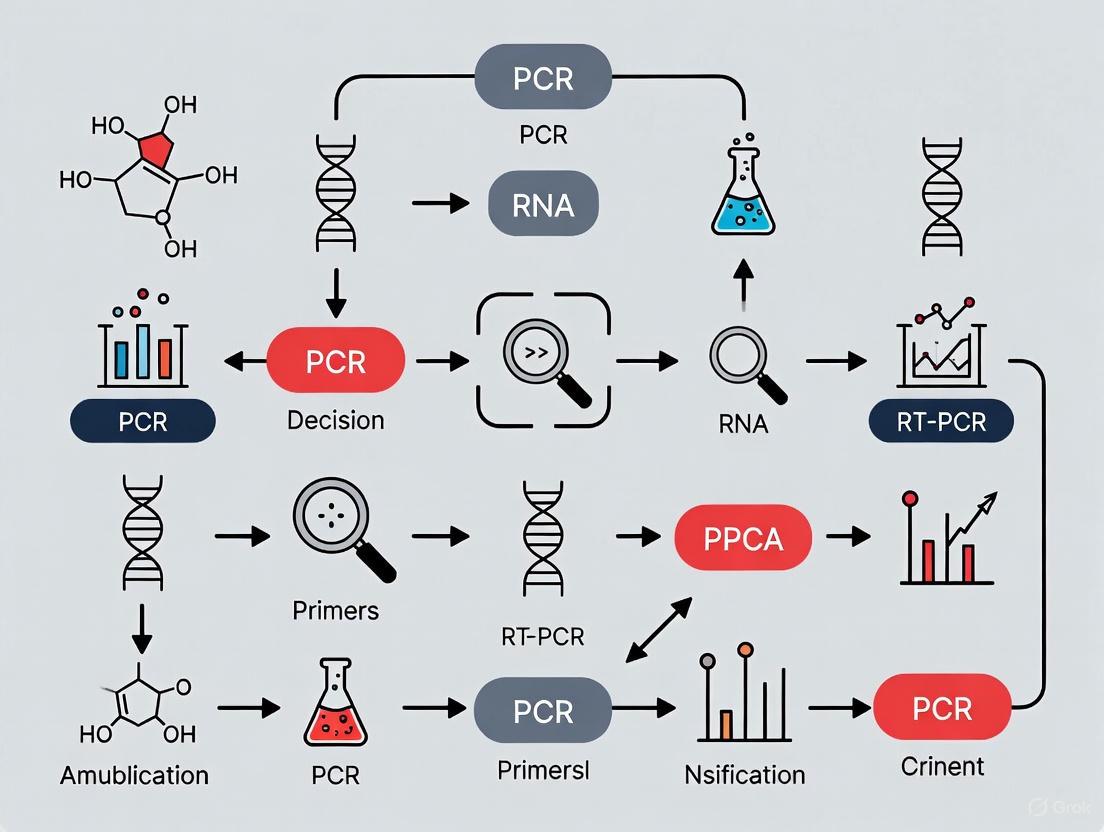
This comprehensive guide provides researchers, scientists, and drug development professionals with a systematic framework for understanding, optimizing, and validating PCR and RT-PCR amplification efficiency.
The Complete Guide to PCR and RT-PCR Amplification Efficiency: From Foundational Principles to Advanced Troubleshooting
Abstract
This comprehensive guide provides researchers, scientists, and drug development professionals with a systematic framework for understanding, optimizing, and validating PCR and RT-PCR amplification efficiency. Covering foundational principles to advanced methodologies, the article details proven strategies for troubleshooting common amplification problems, including poor yield, non-specific products, and inhibitor effects. It further explores rigorous validation techniques and comparative analyses of reagents and protocols to ensure reliable, reproducible results for critical applications in biomedical research and clinical diagnostics. The content integrates the latest optimization techniques and MIQE-guided best practices to empower professionals in achieving robust, high-efficiency amplification.
Understanding PCR Amplification Efficiency: Core Principles and Critical Metrics
Polymerase Chain Reaction (PCR) efficiency is a critical parameter that quantifies the effectiveness of the amplification process in each cycle of a PCR reaction. In an ideal reaction, the amount of target DNA doubles every cycle, resulting in 100% efficiency. In practice, however, various factors can cause efficiency to drop below or, artifactually, rise above this theoretical maximum. Understanding, calculating, and troubleshooting PCR efficiency is fundamental for obtaining accurate and reproducible quantitative data, especially in gene expression studies, diagnostic assays, and drug development research. This guide provides a comprehensive troubleshooting resource to help researchers identify and resolve issues related to PCR efficiency.
FAQs on PCR Efficiency
1. What is PCR efficiency and why is it important?
PCR efficiency (E) is the fraction of template molecules that is amplified in a single PCR cycle [1]. It is a crucial indicator of reaction performance. Optimal efficiency (90-110%) ensures that the calculated difference in starting template quantity between samples is accurate [2] [3]. Poor efficiency leads to significant underestimation or overestimation of target levels, compromising data reliability in sensitive applications like relative quantitation of gene expression.
2. How do I calculate the efficiency of my PCR assay?
The most common method involves creating a standard curve from a serial dilution of a known template amount. The efficiency is then calculated from the slope of the curve using the formula: E = 10^(–1/slope) – 1 [2] [3].
The following table summarizes the interpretation of the slope and its corresponding efficiency:
| Standard Curve Slope | PCR Efficiency (%) | Interpretation |
|---|---|---|
| -3.32 | 100 | Ideal amplification [1] |
| -3.6 to -3.3 | 90 - 110 | Acceptable range [4] |
| Below -3.6 (e.g., -3.8) | < 90 | Poor efficiency; requires troubleshooting [4] |
| Above -3.3 (e.g., -2.9) | > 110 | Artifactual efficiency; indicates inhibition or errors [4] [3] |
3. My PCR efficiency is below 90%. What are the most common causes?
Suboptimal efficiency is frequently caused by issues that hinder the polymerase enzyme or primer binding. The primary culprits are:
- PCR Inhibitors: Contaminants in the sample, such as phenol, ethanol, heparin, or proteins, can inhibit the DNA polymerase [4] [5].
- Poor Primer/Probe Design: Primers with secondary structures (hairpins), self-complementarity (primer-dimers), or suboptimal melting temperatures (Tm) lead to inefficient annealing [4] [6].
- Suboptimal Reaction Conditions: Inaccurate Mg²⁺ concentration, insufficient DNA polymerase, or inappropriate annealing temperature can all reduce efficiency [7] [8].
4. Can PCR efficiency be greater than 100%? What does it mean?
While thermodynamically impossible, calculated efficiencies above 110% are commonly observed. This artifact typically indicates the presence of PCR inhibitors in the more concentrated samples of your standard curve [3]. The inhibitors cause a delay in the Ct value for concentrated samples, flattening the slope of the standard curve and leading to a calculated efficiency over 100% [4] [3]. Diluting the sample often removes the effect of the inhibitor and restores a proper slope.
5. How does PCR efficiency affect the ΔΔCt method for relative quantification?
The standard ΔΔCt method assumes that the efficiency of the target and reference genes is 100% (or at least equal and close to 100%). If the efficiencies are not the same, this method will produce inaccurate results [1] [2]. The error can be significant; for example, with a true efficiency of 90% at a Ct of 25, the calculated expression level can be 3.6-fold less than the actual value [2]. It is critical to validate that your assays have similar and high efficiency before using the ΔΔCt method.
Troubleshooting Guide: Poor PCR Efficiency
Use the following flowchart to diagnose and resolve common PCR efficiency issues. This systematic approach helps identify the root cause, from sample quality to data analysis.
Experimental Protocol: Assessing PCR Efficiency
This section provides a detailed methodology for determining the amplification efficiency of your qPCR assay, which is a critical first step in any rigorous quantification experiment.
Objective
To generate a standard curve through serial dilutions of a template and calculate the PCR amplification efficiency and correlation coefficient (R²) for a specific primer pair.
Materials and Reagents
The following table lists the essential components for a standard qPCR efficiency experiment.
| Reagent / Material | Function | Specification & Notes |
|---|---|---|
| qPCR Master Mix | Contains DNA polymerase, dNTPs, Mg²⁺, and optimized buffer. | Use a hot-start polymerase for specificity. Ensure it is compatible with your detection chemistry (e.g., SYBR Green or TaqMan) [7]. |
| Sequence-Specific Primers | Binds to the target sequence for amplification. | Designed for uniqueness and optimal Tm (e.g., 18-25 bases, 40-60% GC content). Avoid dimers and secondary structures [6] [9]. |
| Template DNA/cDNA | The target nucleic acid to be amplified. | For the standard curve, use a high-concentration, pure sample (e.g., plasmid, genomic DNA, or cDNA). Quantify via spectrophotometry [4]. |
| Nuclease-Free Water | Solvent to bring the reaction to final volume. | Ensures no enzymatic degradation of reaction components. |
| Optical Plate & Seals | Vessel for the reaction. | Compatible with your real-time PCR instrument. |
Step-by-Step Procedure
Prepare Template Dilutions: Create a minimum of 5-point, 10-fold serial dilution series of your template (e.g., from 10⁻¹ to 10⁻⁵). Use a high-quality, known-concentration stock and nuclease-free water as the diluent [4] [2]. Accurate pipetting is critical for a valid standard curve.
Prepare qPCR Reactions:
- Calculate the required number of reactions (including triplicates for each dilution point and a no-template control (NTC)).
- Prepare a master mix containing all common components (master mix, primers, water) to minimize pipetting error and ensure consistency [6].
- Aliquot the master mix into the optical plate.
- Add the respective template from each dilution tube to the designated wells. Add nuclease-free water to the NTC well.
Run Real-Time PCR: Seal the plate, centrifuge briefly to collect contents, and place it in the thermocycler. Use the cycling conditions recommended for your master mix and primers. A typical two-step cycling protocol is shown below.
- Data Analysis:
- Use the real-time PCR instrument's software to determine the Ct (threshold cycle) value for each well.
- Generate a standard curve by plotting the Ct values (Y-axis) against the logarithm of the starting template quantity or dilution factor (X-axis).
- The software will typically provide the slope and the correlation coefficient (R²) of the linear regression line. A high R² value (≥0.99) indicates a precise dilution series [4].
- Calculate the PCR efficiency (E) using the formula: E = 10^(–1/slope) – 1.
Expected Outcomes and Interpretation
- Ideal Result: Slope ≈ -3.32, Efficiency ≈ 100%, R² ≥ 0.99. The assay is highly efficient and precise.
- Acceptable Result: Slope between -3.6 and -3.3, Efficiency between 90% and 110%, R² ≥ 0.98. The assay is acceptable for most relative quantification experiments.
- Action Required: Slope outside the -3.6 to -3.3 range, Efficiency <90% or >110%, R² < 0.98. The assay requires troubleshooting following the guide above before proceeding with experimental samples.
For researchers and scientists in drug development, achieving precise and reliable quantification in quantitative PCR (qPCR) is paramount. At the heart of this reliability lies a key metric: amplification efficiency. PCR efficiency refers to the fold-increase of amplified product during each cycle of the PCR reaction, with an ideal range of 90-100% considered the gold standard for reliable quantification [10]. This range corresponds to an efficiency value (E) of 1.9 to 2.0, meaning the DNA quantity nearly doubles with each cycle.
When efficiency falls within this optimal window, the reactions are highly reproducible, and the data analysis—whether using absolute quantification, relative expression, or the ΔΔCq method—is mathematically sound [10]. This ensures that comparisons between samples, treatments, or time points are accurate and biologically meaningful. Deviations from this ideal range can introduce significant bias, compromising experimental conclusions, especially in sensitive applications like viral load quantification, gene expression analysis in preclinical models, or biomarker validation [11] [12].
Diagnosing Sub-Optimal Efficiency: Key Questions & Answers
FAQ: How can I quickly diagnose an efficiency problem in my qPCR data?
You can identify potential efficiency issues by examining your standard curve. A slope between -3.1 and -3.3 (corresponding to 90-110% efficiency), an R² value >0.99, and a y-intercept within a consistent range are indicators of a robust assay [13]. Significant deviations from these values suggest a problem.
FAQ: My amplification curves have a sigmoidal shape. Is that sufficient to confirm good efficiency?
No, a sigmoidal shape is necessary but not sufficient. You must generate a standard curve from a serial dilution of a known template quantity to calculate the actual efficiency [10]. Plot the Cq values against the logarithm of the template concentration. The slope of this line is used in the formula: Efficiency % = (10^(-1/slope) - 1) * 100%.
FAQ: What are the immediate consequences of low PCR efficiency in my drug treatment experiment?
Low efficiency directly reduces the sensitivity of your assay, making it difficult to detect small but biologically relevant changes in gene expression or pathogen load [11]. Critically, it invalidates the core assumption of the ΔΔCq method, leading to an underestimation of the true fold-change between your control and treated samples [10].
The following workflow provides a systematic guide for diagnosing and troubleshooting sub-optimal PCR efficiency:
Troubleshooting Guide: Resolving Efficiency Problems
The table below outlines common causes of sub-optimal PCR efficiency and their respective solutions, synthesized from leading technical guides.
| Problem Area | Specific Issue | Recommended Solution | Underlying Principle |
|---|---|---|---|
| Primer/Probe Design | Non-specific binding or primer-dimer formation [14] | Redesign primers using validated software; avoid complementary 3' ends. Check ΔG for dimer formation (should be ≥ -2.0 kcal) [14]. | Ensures specific amplification of the intended target, minimizing side reactions that consume reagents and skew efficiency. |
| Primer/Probe Concentration | Sub-optimal concentration leading to poor kinetics [14] [12] | Perform concentration optimization (typical range 50–800 nM for primers; 100–250 nM for probes) [14]. | Provides an optimal molar ratio for polymerase binding and extension, maximizing the rate of product formation per cycle. |
| Reaction Components | Impure template or PCR inhibitors [7] | Re-purify template DNA (e.g., ethanol precipitation); use polymerases with high inhibitor tolerance. | Removes contaminants that sterically hinder polymerase activity or degrade reaction components. |
| Mg²⁺ Concentration | Incorrect Mg²⁺ level [7] [15] | Optimize Mg²⁺ concentration in 0.2–1 mM increments. Note that MgSO₄ is preferred for some polymerases (e.g., Pfu) [7]. | Mg²⁺ is a essential cofactor for polymerase activity; its concentration directly affects enzyme fidelity and processivity. |
| Thermal Cycling | Sub-optimal annealing temperature (Ta) [7] [14] | Determine primer Tm accurately; use a gradient cycler to test Ta in 1–2°C increments, usually 3–5°C below the Tm [7]. | An optimal Ta ensures primers bind specifically to their target sequence, preventing non-specific amplification and improving yield. |
The Scientist's Toolkit: Research Reagent Solutions
Successful optimization requires the right tools. The following table details key reagents and their critical functions in achieving optimal PCR efficiency.
| Reagent / Material | Function in Optimization | Application Note |
|---|---|---|
| Hot-Start DNA Polymerase | Reduces non-specific amplification and primer-dimer formation by remaining inactive until a high-temperature activation step [7] [15]. | Essential for complex templates (e.g., genomic DNA) and multiplex assays. Improves specificity and yield. |
| PCR Optimization Kit (e.g., Buffers A-H) | Provides a range of pre-formulated buffer conditions with varying salt and additive concentrations to empirically determine the optimal chemical environment for a specific primer-template pair [13]. | Streamlines the process of optimizing Mg²⁺, salt, and additive conditions without manual titrations. |
| GC Enhancer / Co-solvents | Additives like DMSO, formamide, or proprietary GC enhancers help denature GC-rich templates and resolve secondary structures that hinder polymerase progression [7] [15]. | Critical for amplifying difficult targets with high GC content or strong secondary structures. |
| High-Fidelity Polymerase (e.g., Q5, Phusion) | DNA polymerases with proofreading (3'→5' exonuclease) activity offer higher fidelity, reducing misincorporation errors that can lower effective efficiency and introduce sequence errors [15]. | Preferred for cloning and sequencing applications where sequence accuracy is critical. |
| Magnetic Bead-based Cleanup Kits | For purifying template DNA or PCR products to remove salts, enzymes, and other inhibitors (e.g., from blood, soil, plant tissues) that can carry over into the reaction [7] [11]. | Simple and effective method to ensure template purity, a common factor in failed or inefficient reactions. |
Advanced Optimization: A Step-by-Step Experimental Protocol
This detailed protocol is designed for systematically troubleshooting and optimizing a qPCR assay that is showing sub-optimal efficiency.
Objective: To identify the optimal combination of annealing temperature (Ta) and primer concentration for a new qPCR assay, aiming for 90-110% amplification efficiency.
Materials:
- Template DNA (e.g., a validated positive control sample)
- Forward and Reverse Primers, Probe (if using)
- Optimization PCR Buffer Kit or Master Mix with customizable Mg²⁺
- Thermostable DNA Polymerase
- dNTP Mix
- Nuclease-free Water
- Real-time PCR Instrument with gradient functionality
Procedure:
Primer Quality Control: Resuspend primers to a high concentration (e.g., 100 µM) in nuclease-free water or TE buffer. Verify concentration spectrophotometrically and store in single-use aliquots to prevent freeze-thaw degradation [7].
Initial Reaction Setup: Prepare a master mix containing all common components (buffer, polymerase, dNTPs, water, template). Aliquot this master mix into individual PCR tubes or a multi-well plate.
Primer Concentration Matrix: As visualized in the diagram below, create a two-dimensional optimization matrix. Test a range of forward and reverse primer concentrations (e.g., 50 nM, 200 nM, 400 nM, 600 nM) against a range of annealing temperatures (e.g., 55°C to 65°C) using the thermal cycler's gradient function [14].
qPCR Run and Data Collection: Run the qPCR protocol with a melt curve analysis step at the end. Record the Cq value, calculate the amplification efficiency (from a standard curve if included, or observe the raw Cq shift across a dilution series), and analyze the melt curve for a single, specific peak.
Data Analysis and Selection: The optimal condition is the combination of lowest primer concentration and highest annealing temperature that produces the earliest Cq value, an efficiency between 90-110%, and a single peak in the melt curve, with no amplification in the no-template control (NTC) [14]. This combination ensures high sensitivity, specificity, and reagent economy.
The Future of Efficiency Control
Traditional optimization addresses reagent and cycling conditions. However, emerging research highlights an intrinsic challenge in multi-template PCR (e.g., in microbiome studies or high-throughput sequencing): sequence-specific amplification bias. Even with optimized universal conditions, different DNA templates can amplify at vastly different efficiencies based solely on their sequence, leading to skewed quantitative data [16].
A groundbreaking 2025 study used deep learning (1D-CNNs) to predict a sequence's amplification efficiency based solely on its nucleotide sequence. The model identified that specific sequence motifs near the primer binding sites, which can lead to adapter-mediated self-priming, are a major cause of poor efficiency [16]. This AI-driven approach paves the way for the in silico design of amplicon libraries with inherently more homogeneous amplification, potentially revolutionizing quantitative accuracy in complex multi-target applications. This represents the next frontier in moving from troubleshooting efficiency post-hoc to designing it into our experiments from the start.
The Core Relationship: Slope and Efficiency
In quantitative PCR (qPCR), the standard curve is a fundamental tool for assessing the performance of your amplification reaction. The slope of this curve, generated by plotting the Cycle Threshold (Ct) values against the logarithm of the known template concentrations, has a direct mathematical relationship with PCR efficiency [1] [2].
The efficiency (E) of a PCR reaction is calculated from the slope using the following formula: E = 10^(-1/slope) - 1
This efficiency is frequently expressed as a percentage: Efficiency (%) = (10^(-1/slope) - 1) × 100
The following table summarizes the key quantitative relationships between slope, efficiency, and reaction performance:
| Standard Curve Slope | PCR Efficiency (Value) | PCR Efficiency (%) | Theoretical Amplification per Cycle | Performance Assessment |
|---|---|---|---|---|
| -3.32 | 2.00 | 100% | 2 (doubling) | Ideal [1] |
| -3.58 | 1.90 | 90% | 1.9 | Acceptable Range [2] |
| -3.10 | 2.08 | 108% | ~2.1 | Acceptable Range [2] |
| Less than -3.58 (e.g., -3.8) | Less than 1.90 | <90% | Less than 1.9 | Low efficiency; requires troubleshooting |
| Greater than -3.10 (e.g., -2.9) | Greater than 2.15 | >115% | More than 2.15 | High efficiency; may indicate inhibition or artifacts [3] |
This relationship is foundational because the ΔΔCt method of relative quantification assumes an efficiency of 100% (slope of -3.32). A deviation from this ideal slope introduces significant errors in the calculated gene expression levels [2]. For example, an efficiency of 90% instead of 100% can lead to a 261% error at a Ct of 25, meaning the calculated expression level could be 3.6-fold less than the actual value [2].
Troubleshooting Guide: FAQs on Slope and Efficiency Issues
What should I do if my calculated efficiency is below 90%?
Low PCR efficiency (steep slope) is often a sign of suboptimal reaction conditions that prevent the reagents from functioning properly.
- Possible Cause: Problematic Primer Design or Quality. Primers with secondary structures (like hairpins or dimers), non-optimal melting temperatures (Tm), or consecutive G/C nucleotides at the 3' end can lead to poor annealing and inefficient amplification [7] [3].
Solutions:
- Redesign Primers: Verify that primers are specific to the target and have minimal complementarity to each other. Use online primer design tools and ensure the Tm is appropriate for your polymerase and buffer system [7] [17].
- Check Primer Quality: Use purified primers to remove truncated oligos that can inhibit the reaction. Aliquot primers after resuspension to avoid repeated freeze-thaw cycles [7].
- Optimize Annealing Temperature: Perform a gradient PCR to determine the optimal annealing temperature for your primer set. Increasing the temperature can improve specificity, while decreasing it can aid binding if the temperature was too high [7] [18].
Possible Cause: Suboptimal Reaction Components. The concentration of key components, particularly Mg²⁺, is critical for polymerase activity.
- Solutions:
- Optimize Mg²⁺ Concentration: Mg²⁺ is a cofactor for the DNA polymerase. Test concentrations in 0.2-1 mM increments to find the optimum. Excess Mg²⁺ can reduce fidelity and promote non-specific amplification, while too little can inhibit the enzyme [7] [18].
- Ensure Fresh, High-Quality Reagents: Use fresh dNTPs and ensure their concentrations are balanced, as unbalanced nucleotides increase the error rate. Prepare new working aliquots if you suspect degradation [7] [18].
- Verify Template Quality/Purity: Assess template DNA integrity by gel electrophoresis and check for contaminants like phenol, EDTA, or proteins that can inhibit the polymerase. Re-purify the template if necessary [7] [19].
What does an efficiency significantly above 100% indicate?
While an efficiency slightly above 100% can fall within an acceptable range, a value substantially exceeding 110% (shallower slope) often points to specific experimental artifacts [3].
- Possible Cause: PCR Inhibition in Concentrated Samples. This is a primary reason for artificially high calculated efficiencies. If inhibitors (e.g., heparin, hemoglobin, salts, or residual organics from purification) are present in your more concentrated standard samples, the Ct values will be delayed compared to expectations. As the standard series is diluted, the inhibitors are also diluted, reducing their effect and causing a flattening of the standard curve slope [3].
Solutions:
- Dilute the Template: Diluting the sample can reduce the concentration of inhibitors to a level that no longer affects the reaction. If the problem is resolved with dilution, inhibition was likely the cause [3].
- Purify the Sample: Re-purify your nucleic acid template using ethanol precipitation or a dedicated clean-up kit to remove potential inhibitors [7] [19].
- Use a Robust Master Mix: Consider using a polymerase or master mix formulated to be more tolerant of common inhibitors found in biological samples [7] [20].
Possible Cause: Pipetting Errors or Inaccurate Dilution Series. Inconsistencies in preparing the standard curve are a common source of error.
- Solutions:
- Check Pipette Calibration: Ensure pipettes are properly calibrated and use good technique, especially when creating serial dilutions [1].
- Prepare Fresh Dilutions in a Stabilizing Buffer: To prevent DNA from adsorbing to tube walls and skewing concentrations, dilute standards in a buffer containing a chelating agent (e.g., 0.1 mM EDTA) and a detergent (e.g., 0.05% Tween-20). Avoid freezing diluted standards; keep them at 4°C and prepare fresh batches regularly [21].
How can I visually assess efficiency from an amplification plot?
Beyond calculating from a standard curve, you can get a quick assessment of efficiency by examining the amplification curves [1].
- Protocol for Visual Assessment:
- Plot your qPCR data with fluorescence on a logarithmic (log10) Y-axis and cycle number on the X-axis.
- Observe the exponential phase of the curves. Reactions with 100% efficiency should have parallel slopes during this phase [1].
- Compare the slopes of your samples to each other, or to an assay known to have 100% efficiency (e.g., a verified reference gene assay). Non-parallel slopes indicate differences in amplification efficiency between assays [1].
This visual method is not a replacement for a proper standard curve validation, but it offers a rapid way to identify potential efficiency problems without additional experiments and is not impacted by pipette calibration errors [1].
Experimental Protocol: Determining Your qPCR Assay Efficiency
This protocol provides a detailed method for establishing a standard curve to calculate the amplification efficiency of your qPCR assay.
Principle: By amplifying a known quantity of template DNA across a serial dilution, a linear relationship between the log of the starting quantity and the Ct value is established. The slope of this line is used to calculate PCR efficiency [2].
Materials and Reagents
| Item | Function |
|---|---|
| Quantified DNA Template | The target used to create the standard dilution series (e.g., gBlock, plasmid, PCR product). |
| qPCR Master Mix | A ready-to-use mix containing buffer, dNTPs, Mg²⁺, hot-start polymerase, and a reference dye if required. |
| Sequence-Specific Assay | Primers (and probe, if using a probe-based chemistry) designed for your target. |
| Nuclease-Free Water | Solvent for creating dilutions and completing reaction volume. |
| Real-Time PCR Instrument | The equipment used to run the thermal cycling and detect fluorescence. |
| Dilution Buffer (10 mM Tris-HCl, 0.1 mM EDTA, 0.05% Tween-20, pH 8.0) | A buffer to prevent degradation and adsorption of DNA in dilute standards [21]. |
Step-by-Step Procedure
Prepare Standard Dilutions:
- Start with a stock solution of your DNA template of known concentration (e.g., 10 ng/µL).
- Perform a serial dilution (e.g., 1:10 or 1:5 dilutions) in the recommended dilution buffer to create at least 5 points covering the dynamic range you expect in your experimental samples [2]. A 7-point, 10-fold dilution series is considered ideal for a robust curve [1].
- Critical Note: Avoid freezing these diluted standards. Store them at 4°C and prepare a fresh batch for each new standard curve to ensure accuracy [21].
Set Up qPCR Reactions:
- For each standard dilution point, prepare replicate reactions (at least duplicates, triplicates are better).
- Include a no-template control (NTC) containing nuclease-free water instead of DNA to check for contamination.
- Use a consistent reaction volume according to your master mix protocol.
Run the qPCR Program:
- Use the thermal cycling conditions optimized for your primer set and master mix. This typically includes:
- Initial Denaturation: 1 cycle (e.g., 95°C for 2-10 minutes)
- Amplification: 40-45 cycles of:
- Denaturation: 95°C for 10-30 seconds
- Annealing/Extension: 60°C for 30-60 seconds (temperature and time depend on the assay)
- Use the thermal cycling conditions optimized for your primer set and master mix. This typically includes:
Analyze the Data:
- The instrument software will typically generate a standard curve automatically.
- Record the Slope (S) and the R² value (coefficient of determination, which should be >0.98 for a linear series) from the standard curve.
- Calculate Efficiency: Use the formula E = 10^(-1/slope) - 1 to determine the efficiency of your assay.
Workflow for Determining qPCR Efficiency
The following diagram illustrates the logical workflow for this experiment, from setup to data interpretation and subsequent action.
The Scientist's Toolkit: Research Reagent Solutions
Selecting the right reagents is critical for achieving optimal qPCR performance. The table below details key solutions for troubleshooting efficiency problems.
| Research Reagent Solution | Function in Troubleshooting Efficiency |
|---|---|
| Hot-Start DNA Polymerase | Prevents non-specific amplification and primer-dimer formation during reaction setup by inhibiting polymerase activity at room temperature, thereby improving specificity and yield [7] [19]. |
| PCR Additives (e.g., GC Enhancer, BSA, Betaine) | Helps denature GC-rich templates and sequences with secondary structures, improving amplification efficiency of difficult targets. BSA can also bind to inhibitors present in the sample [7] [19]. |
| Inhibitor-Tolerant Polymerase Blends | Specially formulated enzymes with high processivity and tolerance to common PCR inhibitors carried over from complex biological samples like blood, soil, or plant tissues [7] [20]. |
| UDG/UNG Decontamination System | Uses Uracil-DNA Glycosylase (UDG/UNG) with dUTP-substituted nucleotides to degrade carryover amplicon contamination from previous PCRs, preventing false positives and maintaining accurate Ct values [22]. |
Essential Reaction Components and Their Roles in Efficiency
In the context of troubleshooting PCR and RT-PCR amplification efficiency, a deep understanding of each reaction component is paramount. Even minor deviations in the quality, concentration, or handling of these components can lead to experimental failure, resulting in issues such as no amplification, non-specific products, or poor fidelity. This guide details the essential building blocks of these reactions, explaining their precise roles and how they interact to determine the overall success and efficiency of your amplification experiments. The following sections provide a systematic, question-and-answer style troubleshooting framework to help researchers and drug development professionals identify and resolve common challenges.
FAQ: Core Reaction Components and Troubleshooting
What are the essential components of a PCR reaction, and what are their optimal concentrations?
A standard Polymerase Chain Reaction (PCR) requires a precise mixture of several core components, each playing a critical role. The table below summarizes these components, their functions, and their typical optimal concentrations in a 50 µL reaction.
Table 1: Essential PCR Components and Their Roles [6] [23]
| Component | Function | Recommended Final Concentration |
|---|---|---|
| DNA Template | The target sequence to be amplified. | 104–107 molecules (∼1–1000 ng for genomic DNA) [6] [23] |
| Forward & Reverse Primers | Short DNA sequences that define the start and end of the amplification region. | 0.1–1 µM each (typically 20–50 pmol per reaction) [7] [6] [23] |
| DNA Polymerase | Enzyme that synthesizes new DNA strands by adding nucleotides. | 0.5–2.5 units per 50 µL reaction [7] [6] |
| Mg2+ | Essential cofactor for DNA polymerase activity. | 0.5–5.0 mM (often supplied with buffer; requires optimization) [7] [23] |
| dNTPs (dATP, dCTP, dGTP, dTTP) | The four nucleotide building blocks for new DNA strands. | 20–200 µM of each dNTP (typically 200 µM total) [6] [23] |
| Reaction Buffer | Provides optimal pH and ionic conditions (e.g., KCl) for enzyme activity. | 1X concentration [6] [23] |
| Sterile Water | Brings the reaction to its final volume. | Quantity sufficient (Q.S.) |
How does the choice of DNA polymerase influence PCR efficiency and specificity?
The DNA polymerase is the core enzyme of the reaction, and its properties directly impact success. Selecting the right polymerase is crucial for challenging templates or specific downstream applications.
Table 2: DNA Polymerase Properties and Selection Guide [7] [23]
| Property | Impact on PCR | Recommendations |
|---|---|---|
| Thermostability | Determines how well the enzyme withstands high denaturation temperatures. | For high-temperature denaturation, use polymerases from hyperthermophiles (e.g., Pfu polymerase) [23]. |
| Fidelity (Error Rate) | The accuracy of DNA synthesis. Critical for cloning and sequencing. | Use high-fidelity polymerases with 3'→5' exonuclease (proofreading) activity (e.g., Q5, Phusion) for applications requiring low error rates [7] [24]. |
| Processivity | The number of nucleotides added per enzyme binding event. | For long targets or difficult templates (e.g., high GC-content), choose polymerases with high processivity [7]. |
| Hot-Start | Prevents enzymatic activity at room temperature. | Use hot-start DNA polymerases to suppress non-specific amplification and primer-dimer formation during reaction setup [7] [19]. |
Which additives can improve the amplification of difficult templates?
Difficult templates, such as those with high GC-content or complex secondary structures, often require specialized additives. These co-solvents help by altering DNA melting behavior or polymerase stability.
Table 3: Common PCR Additives for Challenging Templates [7] [23]
| Additive | Function | Recommended Final Concentration |
|---|---|---|
| DMSO | Disrupts base pairing, helping to denature GC-rich regions and reduce secondary structures. | 1–10% [6] [23] |
| Formamide | Similar to DMSO, it weakens hydrogen bonding, increasing stringency. | 1.25–10% [7] [23] |
| Betaine | Equalizes the stability of AT and GC base pairs, aiding in the uniform melting of GC-rich templates. | 0.5 M to 2.5 M [6] [23] |
| BSA (Bovine Serum Albumin) | Binds to inhibitors that may be present in the template preparation (e.g., from blood, plants). | 10–100 µg/mL (∼400 ng/µL) [6] [23] |
Experimental Protocol: A Standard Workflow for PCR Setup
A meticulous and systematic approach to setting up a PCR reaction is fundamental to achieving high efficiency and reproducibility.
- Design and Prepare Primers: Primers should be 15–30 nucleotides long with a GC content of 40–60%. The melting temperatures (Tm) for both primers should be similar (within 5°C), ideally between 52–58°C. Avoid complementarity at the 3' ends to prevent primer-dimer formation [6] [23]. Use reputable software for design.
- Prepare a Master Mix: When setting up multiple reactions, combine all common reagents (water, buffer, dNTPs, MgCl₂, DNA polymerase) into a single Master Mix. This ensures consistency and reduces pipetting errors. Prepare a mix for n+1 reactions to account for pipetting loss [6] [23].
- Aliquot the Master Mix: Dispense the appropriate volume of Master Mix into each PCR tube.
- Add Template and Primers: Add the specific DNA template and primers to their respective tubes. For a negative control, add sterile water instead of template DNA.
- Mix Thoroughly: Gently mix the reaction by pipetting up and down. Avoid introducing bubbles.
- Begin Thermal Cycling: Place the tubes in a pre-heated thermal cycler and start the programmed protocol.
Diagram 1: PCR Setup Workflow.
The Scientist's Toolkit: Key Research Reagent Solutions
Table 4: Essential Research Reagents for PCR and RT-PCR [7] [24] [25]
| Category | Specific Examples | Function & Application |
|---|---|---|
| High-Fidelity Polymerases | Q5 (NEB), Phusion (NEB) [24] | Provides low error rates for cloning, sequencing, and mutagenesis. |
| Hot-Start Polymerases | OneTaq Hot Start (NEB), Platinum (Thermo Fisher) [7] [24] | Prevents non-specific amplification at room temperature, improving yield and specificity. |
| Reverse Transcriptases | SuperScript II (Thermo Fisher) [26] | Creates complementary DNA (cDNA) from RNA templates for RT-PCR. |
| PCR Enhancers | GC Enhancer (Thermo Fisher), DMSO, Betaine [7] [23] | Aids in the amplification of difficult templates like GC-rich sequences. |
| Cleanup Kits | Monarch PCR & DNA Cleanup Kit (NEB) [24] | Purifies PCR products or template DNA to remove salts, enzymes, and other inhibitors. |
| DNA Repair Mix | PreCR Repair Mix (NEB) [24] | Repairs damaged DNA templates prior to PCR to improve amplification success. |
FAQ: Special Considerations for RT-PCR Efficiency
Reverse Transcription PCR (RT-PCR) introduces additional complexity, as it involves converting RNA into cDNA before amplification. The quality of the starting RNA is the single most critical factor.
What are the primary causes of low or no amplification in RT-PCR?
- Poor RNA Integrity: Degraded RNA will result in truncated cDNA or no product. Always assess RNA quality by gel electrophoresis or microfluidics to ensure sharp ribosomal RNA bands. Minimize freeze-thaw cycles and use RNase inhibitors [25] [26].
- Genomic DNA (gDNA) Contamination: Can lead to false positives or nonspecific amplification. Treat RNA samples with DNase I and always include a no-RT control (a reaction without reverse transcriptase) to check for gDNA contamination [25] [26].
- Suboptimal Primer Choice: The type of primer used for reverse transcription depends on the RNA template.
- Oligo(dT) primers: Best for synthesizing cDNA from eukaryotic mRNA with poly-A tails.
- Random hexamers: Ideal for degraded RNA, non-polyadenylated RNA (e.g., bacterial), or for generating a comprehensive cDNA pool.
- Gene-specific primers: Provide the highest specificity but only for one target [25].
- Presence of Reverse Transcriptase Inhibitors: Residual salts, guanidinium, SDS, or EDTA from RNA purification can inhibit the enzyme. Repurify RNA by ethanol precipitation if inhibition is suspected [25] [26].
How can the reverse transcription process be optimized for difficult RNA targets?
- For RNA with Secondary Structure: Denature the RNA and primers by heating the mixture to 65°C for ~5 minutes before cooling on ice. Use a thermostable reverse transcriptase that allows the reaction to be performed at a higher temperature (e.g., 50°C or more) to melt stable structures [25].
- For Low-Abundance Targets: Use a reverse transcriptase with high sensitivity and efficiency. Increase the amount of input RNA within the linear range of the enzyme, and consider using up to 10% of the first-strand cDNA reaction in the subsequent PCR [25] [26].
Diagram 2: RT-PCR Troubleshooting Guide.
The Critical Impact of Efficiency on Data Accuracy in Gene Expression and Diagnostic Assays
Frequently Asked Questions (FAQs)
What does "PCR efficiency" mean and why is it critical for data accuracy?
PCR efficiency refers to the rate at which a target DNA sequence is amplified during each cycle of the Polymerase Chain Reaction. An ideal, 100% efficient reaction means the amount of PCR product doubles exactly with every cycle. This efficiency is a cornerstone of accurate quantification, especially in real-time PCR (qPCR) used for gene expression analysis.
Even slight deviations from perfect efficiency can lead to significant quantitative inaccuracies. For instance, if the PCR efficiency drops to 0.90 (90%) instead of 1.0 (100%), the resulting error at a threshold cycle of 25 can be as high as 261%, meaning the calculated expression level could be 3.6-fold less than the actual value [2]. Another study demonstrated that a mere 4% decrease in PCR efficiency could result in a 400% error when using the common cycle-threshold (Ct) quantification method [27]. Maintaining high and consistent PCR efficiency is therefore non-negotiable for reliable diagnostic and research outcomes.
My negative control is clean, but my PCR product appears as a smear on the gel. What should I do?
A smear in the absence of contamination typically indicates overcycling, suboptimal reaction conditions, or poorly designed primers. You can optimize your experiment by [28]:
- Reducing the number of PCR cycles to prevent accumulation of non-specific products and errors.
- Increasing the annealing temperature in increments of 2°C to enhance specificity.
- Reducing the amount of template DNA used in the reaction.
- Redesigning your primers to avoid self-complementarity and ensure specificity to the target.
- Using touchdown PCR or nested PCR to improve amplification specificity.
How can I identify and overcome PCR inhibition in my samples?
PCR inhibitors are substances that co-purify with your nucleic acids and can lead to reduced sensitivity, inefficient amplification, or even false-negative results [28].
- Common Inhibitors: These include heparin, hemoglobin, IgG, polysaccharides, melanin, humic acids, SDS, phenol, ethanol, and guanidinium [4].
- How to Identify Inhibition: In qPCR, you can perform a dilution series of your sample. If the sample contains inhibitors, the CT values between consecutive dilutions will be less than the expected 3.3 cycles (for a 10-fold dilution). A smeared standard curve can also indicate inhibition [4] [27].
- Solutions:
- Further purify your template DNA or RNA using ethanol precipitation, column-based cleanup kits, or phenol-chloroform extraction [7] [4].
- Dilute your template sample to reduce the concentration of the inhibitor [28].
- Use a DNA polymerase with high processivity and tolerance to common inhibitors found in samples like blood, soil, or plant tissues [7].
Troubleshooting Guides
Guide 1: Troubleshooting No or Low Amplification
| Observation | Possible Cause | Recommended Solution |
|---|---|---|
| No Product | Poor primer design | Verify primer specificity using BLAST; ensure primers are not self-complementary; check for appropriate GC content (40-60%) and a G or C at the 3' end [7] [6]. |
| Incorrect annealing temperature | Perform a temperature gradient PCR; start at 5°C below the calculated Tm of your primers [29]. | |
| Presence of PCR inhibitors | Repurify template DNA using a cleanup kit or ethanol precipitation; use a polymerase tolerant to inhibitors [7] [28]. | |
| Insufficient template quantity or quality | Increase the amount of template; assess DNA integrity by gel electrophoresis; ensure A260/A280 ratio is ~1.8-2.0 [7] [4]. | |
| Suboptimal Mg2+ concentration | Optimize Mg2+ concentration in 0.2-1 mM increments; ensure Mg2+ concentration is higher than the total dNTP concentration [7] [29]. | |
| Low Yield | Too few cycles | Increase the number of cycles by 3-5, up to 40 cycles, especially for low-abundance targets [7] [28]. |
| Poor polymerase performance | Use a polymerase with high sensitivity and processivity; ensure the enzyme is active and stored correctly [7]. | |
| Complex template (e.g., high GC%) | Use a PCR additive like DMSO, formamide, or a commercial GC enhancer; increase denaturation temperature [7] [29]. | |
| Short extension time | Increase the extension time, particularly for long amplicons [7] [28]. |
Guide 2: Troubleshooting Non-Specific Amplification and Smearing
| Observation | Possible Cause | Recommended Solution |
|---|---|---|
| Multiple Bands or Smearing | Low annealing temperature | Increase the annealing temperature stepwise by 2°C increments [7] [28]. |
| Excess primer concentration | Optimize primer concentration, typically between 0.1–1 μM; high concentrations promote primer-dimer formation [7]. | |
| Too much template DNA | Reduce the amount of template by 2–5 fold [28]. | |
| High Mg2+ concentration | Lower the Mg2+ concentration to reduce non-specific binding and improve fidelity [7] [29]. | |
| Non-hot-start polymerase | Use a hot-start DNA polymerase to prevent activity at room temperature and suppress primer-dimer formation [7] [29]. | |
| Excessive number of cycles | Reduce the number of PCR cycles to prevent accumulation of non-specific products [7] [28]. |
Guide 3: Troubleshooting Quantitative Inaccuracy in qPCR
| Observation | Possible Cause | Recommended Solution |
|---|---|---|
| Poor PCR Efficiency (Slope < -3.6 or > -3.3) | Suboptimal primer/probe design | Redesign primers and probes; perform bioinformatic evaluation to ensure specificity and avoid SNP sites and low-complexity regions [4]. |
| PCR inhibition in samples | Further purify the RNA/DNA template; use an inhibition plot to identify inhibited samples [4] [27]. | |
| Inaccurate pipetting | Use calibrated pipettes; avoid pipetting volumes <5 µl; centrifuge plates before running [4]. | |
| Improper baseline/threshold setting | Use the auto-baseline and auto-CT features of your qPCR software; ensure the threshold is set in the exponential phase of all amplifications [4]. | |
| High Variability Between Replicates | Inconsistent sample pipetting | Check pipette calibration; mix reagents thoroughly before use; ensure homogeneous reagent distribution [7] [4]. |
| Low template concentration | Stochastic variations are inherent at very low copy numbers; increase template amount if possible [4]. | |
| Incorrect quantification using ΔΔCT method | Different amplification efficiencies between target and reference genes | Do not use the ΔΔCT method if efficiencies differ. Prepare standard curves for both genes and use a relative quantification model that accounts for different efficiencies [2]. |
Experimental Protocols
Protocol 1: Determining PCR Amplification Efficiency
This protocol is essential for validating any qPCR assay to ensure accurate quantification [4] [2].
- Prepare a Standard Curve: Create a dilution series of your target DNA or cDNA (e.g., 1:10, 1:100, 1:1000, 1:10,000). A minimum of 5 dilution points is recommended, each run in triplicate.
- Run Real-Time PCR: Amplify the dilution series using your optimized qPCR protocol.
- Analyze the Data: The qPCR software will generate a standard curve by plotting the Log of the starting template quantity against the CT value for each dilution.
- Calculate Efficiency: Determine the slope of the standard curve. Use the following formula to calculate the amplification efficiency (E):
Protocol 2: Systematic PCR Optimization
A robust methodology for setting up and optimizing a conventional PCR experiment [6].
- Primer Design:
- Design primers 15-30 nucleotides long with a GC content of 40-60%.
- Ensure the 3' end ends in a G or C to increase priming efficiency.
- Check that primers are not self-complementary or complementary to each other to avoid hairpins and primer-dimers.
- Calculate the melting temperature (Tm) for both primers; the Tm values should not differ by more than 5°C.
- Reaction Setup:
- Assemble reagents on ice. A typical 50 µl reaction includes:
- 1X PCR Buffer (supplied with polymerase)
- 200 µM of each dNTP
- 1.5 mM MgCl₂ (optimize if necessary, see troubleshooting guides)
- 0.1–1 µM of each primer
- 10–1000 ng template DNA
- 0.5–2.5 units of DNA Polymerase
- Nuclease-free water to 50 µl
- Include both negative (no template) and positive controls.
- Assemble reagents on ice. A typical 50 µl reaction includes:
- Thermal Cycling:
- Initial Denaturation: 94–98°C for 2–5 minutes.
- Amplification (25–40 cycles):
- Denature: 94–98°C for 15–30 seconds.
- Anneal: 45–72°C for 15–60 seconds (set 3–5°C below primer Tm).
- Extend: 68–72°C for 1 minute per kb of product.
- Final Extension: 68–72°C for 5–10 minutes.
- Analysis: Analyze PCR products by agarose gel electrophoresis.
The following workflow outlines the logical steps for diagnosing and resolving common PCR problems.
The Scientist's Toolkit: Key Research Reagent Solutions
This table details essential reagents and materials for troubleshooting and optimizing PCR experiments.
| Item | Function & Application |
|---|---|
| Hot-Start DNA Polymerase | Remains inactive at room temperature to prevent non-specific amplification and primer-dimer formation prior to the first denaturation step, greatly improving specificity [7] [29]. |
| High-Fidelity DNA Polymerase | Contains proofreading (3'→5' exonuclease) activity to correct nucleotide misincorporation, resulting in much lower error rates. Essential for cloning and sequencing applications [29]. |
| PCR Additives (DMSO, BSA, Betaine) | Co-solvents that help denature complex DNA secondary structures, especially in GC-rich templates. They improve yield and specificity by facilitating primer binding [7] [6]. |
| MgCl₂ / MgSO₄ Solution | Magnesium ions are essential cofactors for DNA polymerase activity. The concentration must be optimized, as it directly affects enzyme activity, specificity, and fidelity [7] [29] [6]. |
| dNTP Mix | The building blocks (dATP, dCTP, dGTP, dTTP) for DNA synthesis. Use balanced, equimolar concentrations to prevent misincorporation of bases, which can lead to mutations [7] [29]. |
| Nucleic Acid Cleanup Kit | For removing PCR inhibitors (e.g., salts, proteins, phenol) from template DNA samples. Crucial for restoring amplification efficiency when working with complex biological samples [7] [28] [4]. |
| TaqMan Probes / SYBR Green I | Fluorescent chemistries for real-time PCR quantification. TaqMan probes offer high specificity, while SYBR Green I is a cost-effective option for well-optimized assays [27]. |
Methodological Mastery: Designing and Executing High-Efficiency PCR and RT-PCR Assays
FAQs on PCR Primer Design
What are the most critical parameters for designing a good PCR primer? The most critical parameters are primer length, melting temperature (Tm), GC content, and the absence of secondary structures. Primers should be 18-30 bases long, have a Tm between 55-65°C, a GC content of 40-60%, and must be screened to avoid self-dimers, hairpins, or cross-dimers with the partner primer [30] [31] [32].
How can I prevent primer-dimer formation? Primer-dimer occurs when primers anneal to each other. To prevent it [30] [33] [31]:
- Design carefully: Use software tools to ensure primers lack complementary sequences, especially at their 3' ends.
- Optimize reaction conditions: Lower primer concentrations and increase annealing temperatures can reduce dimerization.
- Use a hot-start DNA polymerase: This enzyme is inactive until high temperatures are reached, preventing spurious amplification during reaction setup.
Why is my PCR efficiency low, and how is it related to primer design? In quantitative PCR (qPCR), efficiency measures how perfectly the target doubles each cycle. Ideal efficiency is 100%. Low efficiency can result from poor primer design, including primers with inappropriate Tm, secondary structures, or sequences that lead to non-specific binding [1] [3]. These issues prevent the polymerase from working optimally, reducing amplification yield.
What is a GC clamp, and why is it important? A "GC clamp" refers to having a G or C base at the 3' end of the primer. Because G and C bases form stronger hydrogen bonds than A and T, a GC clamp helps stabilize the binding of the primer to the template DNA, increasing priming efficiency and specificity [6] [32].
Troubleshooting Guides
Problem 1: No Amplification or Low Yield
Potential Causes and Solutions:
- Cause: Incorrect Annealing Temperature
- Cause: Poor Primer Specificity or Quality
- Cause: Suboptimal Mg2+ Concentration
Problem 2: Non-Specific Bands or Smearing
Potential Causes and Solutions:
- Cause: Annealing Temperature is Too Low
- Cause: Primer Concentration is Too High
- Cause: Genomic DNA Contamination
Problem 3: Primer-Dimer Formation
Potential Causes and Solutions:
- Cause: Complementarity at Primers' 3' Ends
- Cause: Overabundant Primers
- Cause: Inefficient Polymerase
Data Presentation: Optimal Primer Design Parameters
The following table summarizes the key quantitative parameters for designing effective primers, synthesized from industry-leading guidelines [30] [31] [6].
| Parameter | Optimal Range | Key Considerations & Rationale |
|---|---|---|
| Primer Length | 18 - 30 nucleotides | Provides a balance between specificity (longer) and binding efficiency (shorter) [31] [32]. |
| Melting Temp (Tm) | 55°C - 65°C | The Tm for both primers in a pair should be within 2°C - 5°C of each other [31] [6]. |
| GC Content | 40% - 60% | Sequences with <40% GC may be less stable; >60% GC may form stable secondary structures [30] [35]. |
| GC Clamp | G or C at the 3'-end | Strengthens the terminal binding due to stronger hydrogen bonding [6] [32]. |
| 3' End Stability | Avoid >3 G/C in last 5 bases | Prevents mispriming and non-specific amplification at the critical extension point [35]. |
| Amplicon Length | 70 - 150 bp (qPCR)Up to 500 bp (standard PCR) | Shorter amplicons are amplified more efficiently in qPCR. Longer amplicons may require extended extension times [31]. |
Experimental Protocols
Protocol 1: In Silico Primer Design and Validation Workflow
This protocol outlines a systematic approach for designing and validating primers before synthesis [35].
- Define Target: Obtain the exact reference sequence (FASTA format) from a trusted database like NCBI. Define the boundaries of the region you wish to amplify.
- Use Design Tool: Input your sequence into a specialized tool like NCBI Primer-BLAST or Primer3.
- Set parameters to the optimal ranges listed in the table above (e.g., product size, Tm).
- Select the appropriate organism for specificity checking.
- Evaluate Candidates: From the list of generated primer pairs, select several candidates that best meet the design criteria.
- Screen for Secondary Structures: Analyze each candidate primer sequence using a tool like the IDT OligoAnalyzer.
- Check for hairpins, self-dimers, and cross-dimers.
- Accept structures with ΔG values weaker (more positive) than -9.0 kcal/mol [31].
- Final Specificity Check: Use the integrated BLAST function in Primer-BLAST to confirm the primer pair will amplify only your intended target and no other regions in the genome.
Protocol 2: Empirical Optimization of Annealing Temperature
Even well-designed primers may require experimental optimization [19] [6].
- Prepare Master Mix: Create a standard PCR master mix containing your template, primers, polymerase, dNTPs, and buffer.
- Set Up Gradient PCR: Aliquot the master mix into PCR tubes and run them in a thermal cycler with a gradient annealing temperature function.
- Set Temperature Range: Program the gradient to test a range from 3-5°C below the calculated lower Tm to 3-5°C above the calculated higher Tm.
- Analyze Results: Run the PCR products on an agarose gel. The correct annealing temperature will yield a single, bright band of the expected size with no smearing or primer-dimer.
Visualization: Primer Design and Troubleshooting Workflow
The following diagram illustrates the logical workflow for designing primers and the primary troubleshooting paths for common experimental failures.
The Scientist's Toolkit: Research Reagent Solutions
This table details essential materials and reagents used in PCR primer design and troubleshooting [30] [19] [31].
| Reagent / Tool | Function / Application |
|---|---|
| Hot-Start DNA Polymerase | Enzyme activated only at high temperatures; critical for reducing primer-dimer and non-specific amplification during reaction setup [19] [33]. |
| dNTP Mix | The building blocks (dATP, dCTP, dGTP, dTTP) for DNA synthesis. Unbalanced or degraded dNTPs can cause failed PCR [19] [6]. |
| MgCl2 Solution | A essential cofactor for DNA polymerase activity. Its concentration is a primary variable for reaction optimization [19] [6]. |
| PCR Additives (DMSO, BSA, Betaine) | Used to enhance amplification of difficult templates (e.g., GC-rich regions) or to overcome the effects of inhibitors in the reaction [19] [6]. |
| IDT OligoAnalyzer Tool | A free online tool for analyzing Tm, hairpins, self-dimers, and heterodimers of designed primer sequences [31]. |
| NCBI Primer-BLAST | A critical tool that combines primer design with a specificity check against genomic databases to ensure primers are unique to the target [35]. |
| Nuclease-Free Water | Used to prepare all reagent stocks and reactions; prevents degradation of primers and template by environmental nucleases [34]. |
Core Concepts and Strategic Importance
What are the primary challenges when designing primers for regions with high sequence homology or SNPs?
Designing primers for regions with high sequence homology or containing Single Nucleotide Polymorphisms (SNPs) presents unique challenges that can compromise assay specificity and performance. Homologous sequences, which are similar DNA segments found elsewhere in the genome, can serve as unintended primer binding sites, leading to non-specific amplification and false positive results. Similarly, SNPs within primer binding sites can act as mismatches that reduce amplification efficiency or, in the case of allele-specific PCR, prevent the detection of specific variants.
The core challenges include:
- Mispriming in Homologous Regions: Primers may bind to non-target sequences with high similarity, co-amplifying homologous genes or pseudogenes. This is particularly problematic in gene families with conserved regions or in polyploid organisms [36].
- Allele Dropout from SNP Interference: Unidentified SNPs in primer binding sites, especially near the 3' end, can cause preferential amplification of one allele over another, leading to genotyping errors and inaccurate results in quantitative applications [37] [36].
- Reduced Amplification Efficiency: Template structures influenced by flanking sequences and localized GC content significantly impact PCR efficiency. This is critical in quantitative PCR (qPCR) where efficiency values directly influence gene expression calculations [38].
How do these factors impact PCR amplification efficiency and quantification accuracy?
The presence of homologous sequences or SNPs directly impacts key PCR performance metrics, particularly in quantitative applications. Amplification efficiency (E), defined as the fraction of target molecules copied per PCR cycle, is highly dependent on assay design and template characteristics [38]. Inefficient reactions (E < 90%) lead to substantial underestimation or overestimation of target concentration. In qPCR, a 5% difference in efficiency can result in greater than 400% error in calculated fold-change differences when comparing samples with large expression variations [39]. Furthermore, homologous sequences can cause overestimation of starting template quantity due to non-specific amplification, while SNP-induced mismatches can create inefficient reactions that fail to reach threshold fluorescence, thereby underestimating true target concentration.
Experimental Protocols and Workflows
Protocol 1: In Silico Primer Design for Specific Amplification
This protocol ensures primer specificity while accounting for homologous sequences and known SNP positions.
Step 1: Sequence Retrieval and Analysis
- Obtain the complete target sequence with at least 50-100 nucleotides flanking the region of interest [36].
- Identify known SNP positions using databases like dbSNP and note their locations relative to your target.
- Perform a BLAST search to identify homologous sequences and conserved domains that might cause mispriming.
Step 2: Primer Design with Specificity Parameters
- Design primers 15-30 nucleotides long with optimal GC content between 40-60% [6].
- Position the 3' end of allele-specific primers directly at the SNP site for genotyping assays [36].
- Avoid primer placement in regions with high homology to non-target sequences.
- Ensure balanced melting temperatures (Tm) between 52-65°C for both primers, with not more than 5°C difference [6].
- Incorporate unique "anchor" bases near polymorphic sites to enhance selectivity in homologous regions [36].
Step 3: Specificity Verification Using Primer-BLAST
- Use the NCBI Primer-BLAST tool to verify target specificity [37] [6].
- Select appropriate databases for your organism and enable specific search parameters:
- Check "Primer pair specificity checking"
- Select "Show results with at least mismatches to primer(s)" to detect potential cross-hybridization
- For SNP-aware design, use the "Exclude primers binding to SNP" option or intentionally place primers over SNPs for allele-specific design [37].
- Analyze results to ensure primers only hit the intended target sequence.
Step 4: Efficiency Prediction
- Use online tools like pcrEfficiency to predict amplification efficiency before wet-lab experiments [38].
- Input primer sequences and template to obtain efficiency estimates based on amplicon characteristics.
Protocol 2: SNP Genotyping Using Competitive Allele-Specific PCR
This protocol describes the PACE (PCR Allele Competitive Extension) system for reliable SNP and Indel detection [36].
Step 1: Primer Design for Allele-Specific PCR
- Design two allele-specific forward primers that differ only at their 3' terminal nucleotide corresponding to the SNP variant.
- Design one common reverse primer located downstream of the polymorphism.
- Add universal tail sequences to the 5' ends of allele-specific primers for fluorescence detection.
Step 2: Reaction Setup
- Prepare a master mix containing:
- 1X PACE Master Mix (contains DNA polymerase, dNTPs, buffer, and universal fluorescent reporters)
- 0.5-1 μM of each allele-specific forward primer
- 0.5-1 μM of common reverse primer
- 10-100 ng genomic DNA template
- Aliquot into PCR tubes or plates.
Step 3: Thermal Cycling
- Initial denaturation: 95°C for 5-10 minutes
- 35-40 cycles of:
- Denaturation: 95°C for 15-30 seconds
- Annealing/Extension: 60-65°C for 30-60 seconds (optimize based on primer Tm)
- Final extension: 72°C for 5 minutes
Step 4: Fluorescence Detection and Genotype Calling
- Read endpoint fluorescence using a plate reader or real-time PCR instrument.
- For homozygous samples, only one allele-specific primer will amplify, producing a single fluorescent signal.
- For heterozygous samples, both primers will amplify, producing a mixed fluorescent signal.
Table 1: Essential Reagents for SNP Genotyping Assays
| Reagent | Function | Optimal Concentration |
|---|---|---|
| Allele-Specific Primers | Discriminate between SNP variants | 0.05-1 μM [40] |
| High-Fidelity DNA Polymerase | Accurate amplification with minimal errors | 0.5-2.5 units/50 μL reaction [6] |
| dNTP Mix | Building blocks for DNA synthesis | 200 μM each [6] |
| Mg²⁺ Solution | Cofactor for DNA polymerase activity | 1.5-4.0 mM (optimize) [6] |
| Fluorescent Reporting System | Detection of allele-specific amplification | As per manufacturer |
Figure 1: Workflow for robust SNP genotyping assay design and validation
Troubleshooting Guides and FAQs
Frequently Asked Questions
Q: How can I prevent amplification of homologous sequences when my gene belongs to a conserved gene family? A: To prevent amplification of homologous sequences: 1) Use bioinformatics tools like Primer-BLAST to identify unique regions in your target gene that have minimal similarity to other family members [37]; 2) Position primers across exon-exon junctions when working with cDNA (this eliminates amplification of genomic DNA and often targets more variable regions) [37]; 3) Incorporate deliberate mismatches near the 3' end to destabilize binding to non-target homologs; 4) Increase annealing temperature in increments of 2°C to enhance stringency [41].
Q: What steps can I take when my SNP genotyping assay shows inconsistent clustering or poor allele discrimination? A: Poor allele discrimination in SNP genotyping often results from suboptimal primer design or reaction conditions. First, verify that the 3' end of your allele-specific primers corresponds exactly to the SNP position with the discriminatory base at the ultimate position. Second, optimize Mg²⁺ concentration (test 0.2-1 mM increments) and annealing temperature (use gradient PCR) [40]. Third, ensure primer quality by ordering HPLC-purified oligonucleotides and preparing fresh dilutions. Finally, include known positive controls for all genotypes to validate assay performance.
Q: How do I accurately determine PCR efficiency for my assay, and why do I get efficiencies above 100%? A: PCR efficiency should be determined using a standard curve with serial dilutions (minimum 3-4 replicates per concentration) across at least 5 orders of magnitude [39]. Use the formula: Efficiency = [10^(-1/slope)] - 1. Efficiencies above 100% often indicate technical issues such as: 1) PCR inhibition in concentrated samples causing deviation from linearity; 2) inaccurate pipetting during dilution series preparation; 3) template degradation; or 4) presence of contaminants. To improve accuracy, use larger volumes (>2 μL) when preparing serial dilutions to minimize sampling error, and ensure the template is pure and intact [39].
Troubleshooting Common Scenarios
Table 2: Troubleshooting PCR Specificity Issues
| Observation | Potential Cause | Solution |
|---|---|---|
| Multiple non-specific bands | Homology to related sequences | Increase annealing temperature 2-5°C; Use touchdown PCR; Redesign primers to target unique regions [41] |
| No amplification product | SNP in primer binding site preventing extension | Verify no known SNPs in primer sites; Redesign primers avoiding polymorphic regions; Lower annealing temperature [37] [40] |
| Smearing or high background | Mispriming in homologous regions | Reduce template amount (2-5 fold); Increase annealing temperature; Use hot-start DNA polymerase [41] |
| Inconsistent genotyping results | Poor allele-specific primer discrimination | Verify 3' end match to SNP; Optimize Mg²⁺ concentration; Use fresh primer aliquots [36] |
| Low PCR efficiency (<90%) | Secondary structures or suboptimal primer design | Redesign primers with balanced Tm; Use additives like DMSO (1-5%) or Betaine (0.5-2.5 M) for GC-rich templates [38] [6] |
Scenario: Failed Amplification Due to Unidentified SNP in Primer Binding Site
Problem: After apparently successful in silico design, a PCR reaction fails to produce any amplification product despite optimization of standard parameters.
Investigation:
- Verify sequence accuracy of the template source and check for updated genome annotations
- Use databases like dbSNP to identify potential polymorphisms within primer binding sites
- Test primers on control templates with known sequences
Solution:
- Redesign primers to avoid polymorphic regions, ensuring at least 50 bp of high-quality sequence information flanking the SNP [36]
- If avoiding the SNP is impossible, position it in the 5' region of the primer rather than the critical 3' end
- For genotyping applications, intentionally place the SNP at the 3' end but design separate allele-specific primers
- Include mismatch-tolerant polymerases or buffers if working with diverse templates containing unknown SNPs
Figure 2: Systematic troubleshooting pathway for PCR specificity issues
Research Reagent Solutions
Table 3: Essential Tools and Reagents for Advanced Primer Design
| Tool/Reagent | Specific Application | Key Features |
|---|---|---|
| NCBI Primer-BLAST | Target-specific primer design | Combines Primer3 with BLAST to ensure specificity; allows SNP exclusion [37] |
| pcrEfficiency Web Tool | Efficiency prediction before testing | Predicts PCR efficiency based on amplicon length, GC content, and primer parameters [38] |
| PACE Genotyping System | Allele-specific SNP detection | Competitive allele-specific PCR with universal fluorescent reporting; flexible multiplexing [36] |
| Hot-Start DNA Polymerases | Specificity enhancement | Prevents non-specific amplification during reaction setup; improves yield of desired product [7] [40] |
| Proofreading Polymerases | High-fidelity applications | Reduces misincorporation errors; essential for cloning and sequencing (e.g., Q5, Phusion) [40] |
| PCR Enhancers/Additives | Challenging templates | DMSO, formamide, or Betaine help denature GC-rich templates and resolve secondary structures [6] |
FAQs and Troubleshooting Guides
Why Should I Use DOE Instead of Traditional Methods for Probe Optimization?
Answer: Using a Design of Experiments (DOE) approach for probe optimization, rather than a One-Factor-at-a-Time (OFAT) method, provides significant advantages in efficiency, cost-effectiveness, and the quality of your results.
- Efficiency and Reduced Experimental Burden: DOE allows you to test multiple factors and their interactions simultaneously. A study on mediator probe (MP) design for real-time PCR demonstrated that DOE required a maximum of 180 individual reactions, whereas an OFAT approach would have needed 320 reactions [42] [43]. This represents a substantial reduction in time and laboratory resources.
- Identification of Critical Interactions: Biological systems are complex, and factors often interact in non-independent ways. OFAT approaches cannot detect these interactions, which can lead to incorrect conclusions. DOE is specifically designed to quantify how factors influence one another, helping you find a true optimum instead of a local maximum [44] [45]. For instance, in MP PCR optimization, DOE revealed that the dimer stability between the mediator and the universal reporter had the greatest influence on assay performance, increasing PCR efficiency by up to 10% [43].
- Avoiding Suboptimal Results: Because OFAT ignores interactions, the final combination of variable set points it identifies is often suboptimal. The order in which you optimize variables in OFAT can change the final outcome, a pitfall that DOE avoids by exploring the multi-factor design space comprehensively [45].
How Do I Get Started with a DOE Approach for My Assay?
Answer: Implementing a DOE-based optimization involves a structured process from goal definition to experimental execution. The workflow below outlines the key stages:
Step 1: Define Your Goal and Target Value Clearly define what you want to optimize. The goal should be specific and measurable. For a PCR assay, this could be achieving a detection limit of 10-100 target copies per reaction [43]. To monitor progress, you can create a single "target value" that combines several performance characteristics (e.g., PCR efficiency, R², and Cq value) into one quantifiable metric [43].
Step 2: Select Input Factors and Their Levels Choose the key factors you believe will influence your assay. In probe optimization, critical factors often include [42] [43]:
- Dimer Stability (ΔG): The Gibbs free energy of dimer formation between the probe and its target or a universal reporter.
- Primer-Probe Distance: The distance between the primer's annealing site and the probe's cleavage site.
- Probe Concentration.
For each factor, select a minimum of two "levels" (i.e., specific values to test). For example, you might test dimer stability (ΔG) at two levels: a high-stability value (e.g., -8 kcal/mol) and a low-stability value (e.g., -4 kcal/mol) [43].
Step 3: Execute the DOE and Analyze Results Using a statistical software package, generate an experimental matrix—a list of all the different factor-level combinations that need to be tested. After running the experiments and collecting data on your target value, the software will perform an analysis of variance (ANOVA) to determine which factors and interactions have a statistically significant effect. This allows you to build a model that predicts the optimal probe design configuration [43] [45].
My PCR Efficiency is Low Even After Probe Redesign. What Else Should I Check?
Answer: Low amplification efficiency can stem from issues beyond probe design. If you have optimized your probe using DOE and still face problems, investigate these common areas:
- Primer Design and Concentration: Verify that your primers are specific, do not form primer-dimers (particularly with a stable 3'-end ΔG ≥ -2.0 kcal/mol), and are used at an optimal concentration, typically between 200-400 nM for SYBR Green assays [46]. Problematic primer design is a leading cause of poor specificity and yield [7].
- Template Quality and Quantity: Assess the integrity and purity of your DNA or RNA template. Degraded DNA or contaminants like phenol, EDTA, or salts can inhibit the reaction. Re-purify your template if necessary [7] [25].
- Mg²⁺ Concentration: Magnesium is a essential cofactor for DNA polymerase. Insufficient Mg²⁺ can drastically reduce PCR efficiency. Optimize the Mg²⁺ concentration for your specific primer-template system [7].
- Thermal Cycler Conditions: Suboptimal annealing temperature is a frequent culprit. Use a gradient thermal cycler to determine the optimal annealing temperature in 1-2°C increments, typically 3-5°C below the primer Tm [7] [46].
How Can I Improve the Detection Limit and Reproducibility of My qPCR Assay?
Answer: To enhance sensitivity and reproducibility, focus on the following:
- Use a Hot-Start DNA Polymerase: This minimizes non-specific amplification and primer-dimer formation at low temperatures, which is crucial for robust detection of low-copy-number targets [7].
- Thoroughly Optimize Primer and Probe Concentrations: As part of your DOE screening, include primer and probe concentration as key factors. The optimal balance minimizes Cq values and variation between replicates while ensuring the no-template control (NTC) remains negative [46].
- Ensure Reaction Homogeneity: Mix all reagent stocks and prepared reactions thoroughly to eliminate density gradients that form during storage and setup, which can cause well-to-well variation [7].
- Validate with a Standard Curve: A well-optimized assay will have a standard curve with a slope corresponding to an efficiency between 90-105% (a slope of -3.6 to -3.1) and an R² value >0.985 [46]. This confirms both sensitivity and linearity over your desired dynamic range.
Experimental Protocols and Data
Detailed Methodology: DOE-Based Probe Optimization
The following protocol is adapted from studies on optimizing mediator probes (MP) in real-time PCR [43].
Definition of Optimization Goal
- Objective: Achieve a detection limit of 3-14 target copies per 10 µL reaction for influenza B virus (InfB) RNA [43].
- Target Value Calculation: A single target value (TV) is calculated from multiple performance characteristics to streamline optimization: TV = a×R² + b×PCR efficiency + c×signal increase + d×Cq value at 10⁴ copies/reaction The coefficients (a-d) are weighting factors determined based on the mean values of the performance characteristics from initial screening experiments [43].
Input Factor Screening
- Selected Factors:
- Factor A: Dimer stability (ΔG) between the mediator probe (MP) and the target sequence (InfB).
- Factor B: Dimer stability (ΔG) between the mediator probe (MP) and the universal reporter (UR).
- Factor C: Distance between the primer and the mediator probe's cleavage site.
- Experimental Design: A screening design (e.g., a fractional factorial design) is used to test these three factors at multiple levels. The study cited used nine different MP designs to maximize information from the experiments [42] [43].
Experimental Procedure
- Primer and Probe Design: Design several mediator probe variants that cover the desired ranges for the three input factors (A, B, and C).
- Template Preparation: Prepare a dilution series of the target RNA (e.g., InfB RNA) covering a range from below the desired detection limit to a high copy number (e.g., 10 to 10⁶ copies/reaction).
- RT-MP PCR Setup: Perform reverse transcription and MP PCR reactions using a one-step kit. Each reaction should contain:
- The specified target RNA.
- Primers at a constant, pre-optimized concentration.
- One of the nine MP variants from the experimental design.
- The universal reporter (UR).
- Master mix, enzymes, and nuclease-free water.
- Run Real-Time PCR: Amplify the samples on a real-time PCR instrument using the recommended temperature profile for hydrolysis probes.
- Data Collection: Record the Cq values, fluorescence signal increase, and other relevant metrics for each reaction. Calculate the target value for each MP design.
The table below summarizes key quantitative findings from relevant DOE studies in PCR optimization.
Table 1: Summary of Quantitative Data from DOE Optimization Studies
| Study Focus | Key Factors Optimized | DOE Efficiency (Number of Reactions) | OFAT Equivalent (Number of Reactions) | Key Improvement |
|---|---|---|---|---|
| Real-time PCR Probe Design [42] [43] | Probe-Target ΔG, Probe-Reporter ΔG, Primer-Probe Distance | 180 | 320 | Detection limit of 3-14 copies/reaction; PCR efficiency increased by up to 10%. |
| Multiplex RT-qPCR for SARS-CoV-2 [12] | Primer/Probe Concentrations (0.2 µM selected) | Not Specified | Not Specified | Achieved 100% sensitivity and 96% specificity; detection limit of 10 copies/reaction in a triplex format. |
| Genetic/Metabolic Engineering [45] | Promoters, RBS, Gene Order, Culture Conditions | Drastic reduction vs. OFAT | Intractable for large systems (e.g., 3^8=6561 designs for 8 genes) | Avoids suboptimal local maxima by accounting for factor interactions. |
The Scientist's Toolkit: Research Reagent Solutions
Table 2: Essential Materials for Probe-Based qPCR and DOE Optimization
| Item | Function/Benefit in Optimization |
|---|---|
| Universal Reporter (UR) System | A single, dual-labeled fluorescent oligonucleotide used with multiple unlabeled mediator probes (MPs). Reduces costs and simplifies fluorescence optimization [43]. |
| Hot-Start DNA Polymerase | Prevents non-specific amplification and primer-dimer formation during reaction setup by requiring thermal activation. Crucial for achieving high sensitivity and specificity [7]. |
| One-Step RT-qPCR Kit | Combines reverse transcription and PCR in a single tube. Minimizes hands-on time, reduces experimental error, and is ideal for high-throughput testing [12]. |
| Nuclease-Free Water | Ensures the absence of RNases and DNases that could degrade templates, primers, or probes, which is critical for achieving a low and consistent detection limit [25]. |
| Gradient Thermal Cycler | Allows for the empirical determination of the optimal annealing temperature for multiple primer/probe sets simultaneously within a single run, accelerating the optimization process [46]. |
Workflow and Factor Interaction Diagrams
The following diagram illustrates the key interactions between factors in a hydrolysis probe system that can be systematically investigated using a DOE approach.
The polymerase chain reaction (PCR) is a foundational technique in molecular biology, yet achieving robust and specific amplification is contingent upon the precise formulation of the Master Mix. The delicate balance between deoxynucleotide triphosphates (dNTPs), magnesium ions (Mg2+), reaction buffer, and DNA polymerase is critical for optimal enzymatic activity and replication fidelity. This guide provides detailed troubleshooting protocols and FAQs to address common challenges in PCR and RT-PCR amplification efficiency, offering researchers a systematic approach to Master Mix optimization.
FAQs and Troubleshooting Guides
How do unbalanced dNTP concentrations affect PCR efficiency and fidelity?
Issue: Unbalanced dNTP concentrations are a common source of reduced amplification yield and increased error rates in PCR.
Background Explanation: dNTPs (dATP, dCTP, dGTP, and dTTP) are the essential building blocks for DNA synthesis. The DNA polymerase incorporates them in a template-directed manner to extend the primer strand. When the concentrations of the four dNTPs are not equimolar, several problems can arise:
- Misincorporation and Reduced Fidelity: DNA polymerases have a higher probability of misincorporating a nucleotide if the correct one is present at a low concentration. This increases the mutation rate in the final amplicon, which is critically important for applications like cloning and sequencing [7].
- Premature Reaction Stalling: If one dNTP is depleted before the others, polymerase extension cannot proceed to completion on all templates, leading to truncated products and reduced overall yield [6].
Troubleshooting Protocol:
- Preparation: Use a commercially available, pre-mixed dNTP solution, where each dNTP is present at an equal concentration (e.g., a 10 mM mix contains 2.5 mM of each dNTP) [47].
- Validation: If using individual dNTP stocks, confirm their concentrations spectrophotometrically before preparing a working master mix.
- Optimization: In the final reaction, use dNTPs at a final concentration of 200 μM (50 μM of each dNTP) as a starting point [6]. For some applications, a range of 20-200 μM total dNTPs may be suitable.
What is the relationship between Mg2+ and dNTPs, and why is it crucial?
Issue: Nonspecific amplification, smeared bands on gels, or complete PCR failure.
Background Explanation: Magnesium ions (Mg2+) are an essential cofactor for DNA polymerase activity. They facilitate primer binding, stabilize the interaction between DNA, primers, and nucleotides, and are directly involved in the catalytic reaction of phosphodiester bond formation [48]. The relationship with dNTPs is particularly critical because Mg2+ in the reaction buffer exists in a balance:
- As a Cofactor: Mg2+ is required for polymerase function.
- In Competition with dNTPs: dNTPs bind to Mg2+ to form a soluble complex, which is the actual substrate for the polymerase. Therefore, a significant portion of the Mg2+ in the reaction is chelated by dNTPs [48].
- Concentration Balance: If the Mg2+ concentration is too low, the polymerase has insufficient available cofactor, leading to low yield or failure. If the Mg2+ concentration is too high, the polymerase activity decreases, and nonspecific primer-template binding is stabilized, resulting in nonspecific products and smeared bands [7] [48].
Troubleshooting Protocol:
- Establish a Baseline: Begin with a Mg2+ concentration of 1.5 mM if it is not already supplied in the PCR buffer [6].
- Titrate Systematically: Perform a Mg2+ titration experiment. Set up a series of reactions with final Mg2+ concentrations ranging from 0.5 mM to 5.0 mM in 0.5 mM increments [6].
- Analyze and Optimize: Analyze the results by agarose gel electrophoresis. Select the Mg2+ concentration that yields the highest amount of the specific product with the least background smear.
How does the choice of polymerase and buffer system impact Master Mix performance?
Issue: Failure to amplify complex targets (e.g., GC-rich, long amplicons) or presence of primer-dimers and nonspecific products.
Background Explanation: The DNA polymerase and its proprietary buffer form the core engine of the PCR. Different polymerases have distinct properties:
- Standard vs. Hot-Start Polymerase: Standard polymerases can be active at room temperature during reaction setup, leading to nonspecific priming and primer-dimer formation. Hot-start polymerases remain inactive until a high-temperature activation step, dramatically improving specificity and yield [33] [7].
- Processivity: This refers to the number of nucleotides a polymerase can add per binding event. High-processivity enzymes are better for amplifying long targets and are more tolerant of PCR inhibitors sometimes found in complex samples [7].
- Buffer Composition: The buffer provides the optimal chemical environment (pH, ionic strength) for the polymerase. Specialized buffers may contain cation combinations that maintain primer annealing specificity over a broader temperature range, reducing the need for extensive optimization [48].
Troubleshooting Protocol:
- For Nonspecific Amplification/Primer-Dimers: Switch to a hot-start DNA polymerase [33] [7].
- For Difficult Templates (GC-rich, long amplicons):
- For High-Fidelity Applications: Use polymerases with proofreading (3'→5' exonuclease) activity to minimize errors, and ensure balanced dNTP and optimized Mg2+ concentrations [7].
The following tables summarize key quantitative information for Master Mix components as derived from established laboratory protocols and troubleshooting guides.
Table 1: Standard Final Concentrations for Key Master Mix Components in a 50 μL Reaction
| Component | Standard Final Concentration | Notes and Range |
|---|---|---|
| dNTPs (each) | 50 μM | Total dNTPs: 200 μM; Range: 20-200 μM total [6] |
| Mg2+ | 1.5 mM | Requires titration from 0.5 mM to 5.0 mM for optimization [6] |
| Primers (each) | 0.1-1.0 μM | High concentrations can promote primer-dimer formation [7] |
| DNA Polymerase | 0.5-2.5 units/50 μL reaction | Follow manufacturer's recommendations [6] |
| Buffer | 1X | Supplied by polymerase manufacturer; may contain Mg2+ [6] |
Table 2: Common PCR Additives and Their Usage
| Additive | Recommended Final Concentration | Primary Function |
|---|---|---|
| DMSO | 1-10% | Reduces secondary structure in GC-rich templates [7] [6] |
| Betaine | 0.5 M - 2.5 M | Equalizes the stability of AT and GC base pairs, beneficial for GC-rich regions [6] |
| BSA (Bovine Serum Albumin) | 10-100 μg/mL | Stabilizes enzymes and binds inhibitors [6] |
| Formamide | 1.25-10% | Helps denature DNA with strong secondary structures [6] |
Experimental Optimization Workflows
The following diagram illustrates the logical decision-making process for troubleshooting and optimizing a Master Mix formulation.
Diagram 1: A logical workflow for troubleshooting common PCR issues by optimizing Master Mix components and cycling conditions.
The Scientist's Toolkit: Research Reagent Solutions
Table 3: Essential Reagents for Master Mix Formulation and Troubleshooting
| Item | Function | Key Considerations |
|---|---|---|
| Pre-mixed dNTPs | Provides balanced equimolar dNTPs for cDNA/DNA synthesis. | Minimizes pipetting errors and ensures consistency; typically supplied as a 10 mM mix (2.5 mM each) [47]. |
| Magnesium Salt (MgCl2/MgSO4) | Essential cofactor for DNA polymerase activity. | Concentration is critical; must be optimized for each primer-template system. Check polymerase preference for chloride vs. sulfate [7]. |
| Hot-Start DNA Polymerase | Enzyme engineered to be inactive at room temperature. | Dramatically reduces primer-dimer and nonspecific product formation by preventing activity during reaction setup [33] [7]. |
| Optimized PCR Buffer | Provides optimal pH and ionic environment for polymerization. | Often proprietary; may include stabilizers and enhancers. Special cation combinations can improve annealing specificity [48]. |
| PCR Enhancers (e.g., DMSO, Betaine) | Additives to improve amplification of difficult templates. | Alters DNA melting temperature and reduces secondary structure; concentration must be optimized to avoid inhibiting the polymerase [7] [6]. |
| Nuclease-Free Water | Solvent for the reaction. | Prevents degradation of primers, template, and nucleotides by nucleases. Essential for reliable results [6]. |
FAQs on PCR Thermal Cycling Optimization
What are the key steps in a standard PCR cycle and how do I optimize them?
A standard PCR cycle consists of three fundamental steps: denaturation, annealing, and extension. Optimizing each is crucial for efficient amplification of your specific target.
Denaturation: This step separates double-stranded DNA into single strands. For most templates, 94–98°C for 15–30 seconds is effective [49]. However, GC-rich templates (>65% GC content) require higher denaturation temperatures (e.g., 98°C) or longer times for complete separation [49] [50]. Incomplete denaturation is a common cause of failure for complex templates.
Annealing: This is where primers bind to their complementary sequences. The annealing temperature is critical for specificity and is typically set 3–5°C below the primer's melting temperature (Tm) [49] [7]. If you observe no product, try lowering the temperature in 2–3°C increments. If you see non-specific products, increase the temperature by 2–3°C to enhance stringency [49] [7]. Using a thermal cycler with a precise gradient function is highly recommended for this optimization [49].
Extension: The DNA polymerase synthesizes the new DNA strand at this step. The temperature is set to the enzyme's optimum, usually 68–72°C [49] [50]. The extension time is determined by both the polymerase's speed and the amplicon length. A common guideline is 1 minute per kilobase for standard polymerases, though "fast" enzymes may require only 10–20 seconds per kilobase [49] [50].
How do I choose between a two-step and a three-step PCR protocol?
The choice depends on the relationship between your primers' annealing temperature and the polymerase's optimal extension temperature.
- Use a three-step PCR when the primers' Tm is significantly lower (e.g., below 68°C) than the extension temperature. This protocol keeps denaturation, annealing, and extension as separate steps [50].
- Use a two-step PCR when the primers' Tm is close to or within a few degrees of the extension temperature. This protocol combines the annealing and extension steps into a single temperature, often 68°C or 72°C, which shortens the cycling time and can improve efficiency for some targets [49] [50].
My PCR yield is low or absent. What thermal cycling parameters should I investigate first?
Low or no yield is a common issue often linked to suboptimal cycling conditions. Focus on these parameters first:
- Confirm Denaturation Efficiency: Ensure your denaturation temperature and time are sufficient, especially for GC-rich or complex genomic DNA templates. Try increasing the temperature to 98°C or extending the initial denaturation time to 1-3 minutes [49] [7].
- Optimize Annealing Temperature: This is the most common parameter requiring optimization. Use a gradient thermal cycler to test a range of temperatures around the calculated Tm of your primers [7] [51].
- Check Extension Time: Verify that the extension time is appropriate for both your amplicon length and the speed of your DNA polymerase. Insufficient time will result in incomplete products [49] [52].
- Adjust Cycle Number: For low-copy targets (fewer than 10 copies), increasing the number of cycles to up to 40 may be necessary. However, avoid exceeding 45 cycles, as this can lead to high background and nonspecific amplification [49] [7].
I am getting non-specific products (multiple bands). How can I adjust my thermal cycle to fix this?
Non-specific amplification occurs when primers bind to incorrect sequences. To increase reaction stringency:
- Increase Annealing Temperature: This is the primary adjustment. Raising the temperature in 2–3°C increments can prevent primers from binding to partially matched sites [49] [7] [51].
- Use a Hot-Start DNA Polymerase: These enzymes are inactive until the first high-temperature denaturation step, preventing primer-dimer formation and mispriming during reaction setup [19] [7] [51].
- Shorten Annealing Time: Reducing the annealing time to the minimum required (e.g., 15-30 seconds) can minimize opportunities for non-specific binding [7] [50].
- Reduce Cycle Number: Running too many cycles can allow nonspecific products to accumulate. Use the minimum number of cycles needed for sufficient product yield [49] [7].
Optimization Data Tables
Table 1: Troubleshooting Thermal Cycling Parameters
| Symptom | Possible Cause | Recommended Adjustment |
|---|---|---|
| No amplification or low yield | Denaturation incomplete | Increase denaturation temperature (to 98°C) or time, especially for GC-rich templates [49] [50] |
| Annealing temperature too high | Lower annealing temperature in 2–3°C increments [49] [7] | |
| Extension time too short | Increase extension time (guide: 1 min/kb for standard polymerases) [49] [52] | |
| Insufficient number of cycles | Increase to 35-40 cycles for low-copy targets [49] [7] | |
| Non-specific bands/multiple products | Annealing temperature too low | Increase annealing temperature in 2–3°C increments [49] [7] [51] |
| Annealing time too long | Shorten the annealing time [7] [50] | |
| Excessive cycle number | Reduce the number of cycles (typically 25-35 is sufficient) [49] [7] | |
| Enzyme activity at low temp | Use a hot-start DNA polymerase [19] [7] | |
| Smeared bands on gel | Non-specific priming | Increase annealing temperature; use hot-start polymerase [19] [7] |
| Excessive extension time | Shorten extension time to reduce secondary product formation [19] | |
| Contamination with previous PCR products | Use separate pre- and post-PCR areas; employ UV decontamination [19] [53] |
Table 2: Optimized Conditions for Challenging Templates
| Template Type | Key Challenges | Recommended Thermal Cycling Adjustments | Additional Reagent Considerations |
|---|---|---|---|
| GC-Rich (>65%) | Incomplete denaturation, secondary structures | Higher denaturation temp (98°C); shorter annealing times; higher primer Tm (>68°C) [50] | PCR additives like DMSO (2.5-5%), betaine, or GC enhancer [7] [50] |
| Long Targets (>10 kb) | Polymerase incompletion, depurination | Longer extension times; lower extension temp (68°C); shorter denaturation times to reduce depurination [49] [50] | Use polymerases specifically designed for long-range PCR [7] [50] |
| AT-Rich | Low primer-binding stability | Lower extension temperature (can be reduced to 60–65°C) to facilitate reliable DNA replication [50] | Polymerases optimized for GC-rich templates often work well [50] |
| Low Copy Number | Stochastic sampling, low signal | Increase number of cycles (up to 40); ensure maximum efficiency of each step [49] [7] | Use high-sensitivity DNA polymerases; ensure template quality [7] |
Experimental Workflow for Systematic Optimization
The following diagram illustrates a logical, step-by-step workflow for troubleshooting and optimizing your PCR thermal cycling parameters.
Research Reagent Solutions for PCR Optimization
This table details key reagents that are essential for successful optimization of PCR thermal cycling parameters.
Table 3: Essential Reagents for PCR Optimization
| Reagent | Function in PCR | Optimization Consideration |
|---|---|---|
| Hot-Start DNA Polymerase | Prevents non-specific amplification and primer-dimer formation by remaining inactive until the initial high-temperature denaturation step [19] [7]. | Critical for improving specificity. Choose based on fidelity, speed, and template requirements (e.g., standard, long-range, GC-rich) [7] [51]. |
| Magnesium Salts (MgCl₂/MgSO₄) | Essential cofactor for DNA polymerase activity. Concentration directly influences enzyme fidelity, primer annealing, and product specificity [19] [54]. | Requires empirical optimization (e.g., testing 0.2-1.0 mM increments). Excess Mg²⁺ can cause non-specific bands; too little can result in no product [7] [51] [54]. |
| PCR Additives (e.g., DMSO, Betaine) | Aid in amplifying difficult templates by reducing secondary structures (e.g., in GC-rich regions) and lowering the DNA melting temperature [19] [7] [50]. | Use at appropriate concentrations (e.g., 2.5-5% DMSO). Note that additives may lower the effective annealing temperature, requiring adjustment [7] [50]. |
| Buffer with Isostabilizing Agents | Specialized buffer components that increase the stability of primer-template duplexes, enabling a universal annealing temperature for primers with different Tms and improving yield [49]. | Simplifies protocol design by reducing the need for extensive annealing temperature optimization for different primer sets [49]. |
Frequently Asked Questions (FAQs)
FAQ 1: When should I consider using additives in my PCR reaction? You should consider using PCR additives when you are dealing with challenging templates that result in no amplification, low yield, or non-specific products. Such templates include those with high GC content (typically >60%), long DNA fragments, or samples that may contain trace amounts of inhibitors. Additives can help by destabilizing secondary structures, neutralizing inhibitors, or increasing the specificity of the reaction [55] [56] [19].
FAQ 2: How do DMSO, BSA, and Betaine work to improve PCR? These additives function through distinct mechanisms:
- DMSO: Interacts with water molecules on the DNA strand, reducing hydrogen bonding. This lowers the melting temperature (Tm) of DNA, helping to denature GC-rich secondary structures that can block polymerase progression. However, it can also reduce Taq polymerase activity at high concentrations [55] [57].
- BSA (Bovine Serum Albumin): Binds to and neutralizes inhibitors commonly found in environmental or complex biological samples (e.g., phenolic compounds, humic acids, indigo dyes, heme). It prevents these inhibitors from interacting with and deactivating the DNA polymerase [58] [55] [56].
- Betaine (Betaine monohydrate): Equalizes the stability of AT and GC base pairs by interacting with negatively charged groups on the DNA strand. This reduces the formation of DNA secondary structures and eliminates the dependence on base pair composition during denaturation, making it particularly effective for amplifying GC-rich sequences [55] [57].
FAQ 3: Can I use these additives together? Yes, additives can be used in combination, and for some challenging applications, this is recommended. Research has shown that using BSA as a co-additive along with DMSO can produce a significant synergistic effect, leading to a greater increase in the yield of GC-rich DNA targets than when either additive is used alone [56]. It is advisable to optimize the concentrations of each additive when using them in combination.
FAQ 4: What are the typical working concentrations for these additives? The optimal concentration can vary depending on the specific reaction, but general starting ranges are well-established. The table below summarizes these concentrations and their primary applications.
Table 1: Common PCR Additives and Their Usage
| Additive | Common Final Concentration | Primary Application |
|---|---|---|
| DMSO | 2% - 10% [55] [6] [57] | GC-rich templates, reduces secondary structure [55] [57] |
| BSA | 0.1 - 0.8 mg/mL (or 10-100 μg/mL) [58] [56] [6] | Inhibited samples (e.g., from blood, soil, plants) [58] [56] |
| Betaine | 0.5 M - 2.5 M (often 1-1.7 M) [55] [6] [57] | GC-rich templates, destabilizes secondary structure [55] [57] |
FAQ 5: Why might a high concentration of an additive inhibit PCR? Every additive can become inhibitory if used at too high a concentration. For instance, high concentrations of DMSO can significantly reduce Taq DNA polymerase activity [55]. Similarly, high concentrations of betaine can negatively affect the PCR reaction [55]. The key is to find a balance where the beneficial effect (e.g., template denaturation) is achieved without critically impairing enzyme function or other reaction components. A systematic optimization of concentration is always recommended.
Troubleshooting Guides
Problem 1: No Amplification or Low Yield from a GC-Rich Template
Potential Cause: The high GC content leads to stable secondary structures (e.g., hairpins) that prevent the polymerase from efficiently reading the template and extending the primer [56].
Solutions:
- Add Betaine: This is often the first-choice additive for GC-rich templates. Start with a final concentration of 1.0 M to 1.7 M [55].
- Add DMSO: Use at a final concentration of 2% to 10%. Begin with 5% and titrate to find the optimal concentration, keeping in mind that DMSO can inhibit the polymerase at higher levels [55] [57].
- Use a Combination: For stubborn templates, try a combination of 1.0 M betaine with 6–8% DMSO, which has been shown to be effective [58].
- Optimize Thermal Cycling: Increase the denaturation temperature and/or time. For the annealing step, try a "touchdown" protocol or use higher temperatures than calculated for your primers [58].
Problem 2: No Amplification or Low Yield from a Complex Biological Sample
Potential Cause: The sample (e.g., blood, serum, soil, plant extract) contains inherent inhibitors of DNA polymerase, such as phenolic compounds, heme, or melanin [58] [19].
Solutions:
- Add BSA: This is the primary solution for this problem. Add BSA to a final concentration of 0.1 to 0.8 mg/mL. Fraction V, fatty acid-free BSA is recommended [58] [55] [56].
- Dilute the Template: Increasing the reaction volume can dilute the inhibitor to a less critical concentration [58].
- Increase Enzyme Amount: Adding more Taq DNA polymerase can sometimes overcome mild inhibition [58].
- Purify the Template: Re-purify the DNA template using a method designed to remove the specific contaminants in your sample type.
Problem 3: Non-Specific Bands or Smearing on the Gel
Potential Cause: The primers are annealing to non-target sequences due to low reaction stringency, or there is contamination from previous PCR products [58] [19].
Solutions:
- Increase Annealing Temperature: Raise the temperature in 2–5°C increments to increase stringency [58].
- Use a Hot-Start Polymerase: This prevents non-specific priming and primer-dimer formation that can occur during reaction setup at lower temperatures [58] [19].
- Add DMSO or Formamide: These additives can increase the stringency of primer annealing, reducing non-specific binding. Formamide can be used at 1-5% final concentration [55] [56].
- Optimize Mg²⁺ Concentration: Try a lower Mg²⁺ concentration, as high levels can reduce specificity [58].
- Check for Contamination: Use aerosol-resistant tips, designate a separate pre-PCR work area, and consider using uracil-DNA glycosylase (UDG) to prevent carryover contamination [58].
Experimental Protocols
Protocol 1: Systematic Optimization of PCR Additives
This protocol provides a method for testing different additives and concentrations to find the optimal conditions for a challenging PCR.
Research Reagent Solutions:
- 10X PCR Buffer: Usually supplied with the DNA polymerase.
- MgCl₂ Solution (25 mM): A cofactor for DNA polymerase; its concentration can be optimized.
- dNTP Mix (10 mM): Contains equimolar amounts of dATP, dCTP, dGTP, and dTTP.
- Primers (20 μM each): Forward and reverse primers, designed for specificity and similar Tm.
- Taq DNA Polymerase (5 U/μL): A thermostable enzyme for DNA amplification.
- Template DNA: 1–1000 ng of genomic DNA or 1–100 ng of plasmid DNA.
- Additive Stocks:
- DMSO (100%)
- BSA (10 mg/mL)
- Betaine (5 M)
- Sterile Nuclease-Free Water: To adjust the final volume.
Methodology:
- Prepare Master Mix: For a 50 μL reaction, combine the following components in a sterile tube on ice. Multiply the volumes by the number of reactions you plan to run, plus one extra to account for pipetting error.
- Sterile Water: Q.S. to 50 μL final volume
- 10X PCR Buffer: 5 μL
- MgCl₂ (25 mM): 3 μL (1.5 mM final) – adjust as needed
- dNTP Mix (10 mM): 1 μL (200 μM final each dNTP)
- Forward Primer (20 μM): 1 μL
- Reverse Primer (20 μM): 1 μL
- Template DNA: X μL (variable)
- Taq DNA Polymerase: 0.5–1.0 μL (2.5–5.0 U total)
- Aliquot Master Mix: Dispense equal volumes of the Master Mix into individual PCR tubes.
- Add Additives: Add different additives to each tube according to a pre-planned matrix. For example:
- Tube 1: No additive (negative control)
- Tube 2: 2.5 μL DMSO (5% final)
- Tube 3: 5.0 μL DMSO (10% final)
- Tube 4: 4.0 μL BSA stock (0.8 mg/mL final)
- Tube 5: 5.0 μL Betaine stock (0.5 M final)
- Tube 6: 17.0 μL Betaine stock (1.7 M final)
- Tube 7: 2.5 μL DMSO + 4.0 μL BSA stock
- Adjust the volume of sterile water in the Master Mix to compensate for the additive volumes.
- Perform PCR Amplification: Place the tubes in a thermal cycler and run a standard cycling program, which may need optimization (e.g., longer extension times for longer products).
- Analyze Results: Separate the PCR products by agarose gel electrophoresis. Identify the reaction that produces the strongest, most specific band of the expected size with the least background smearing.
Protocol 2: Overcoming Inhibition with BSA
This protocol is specifically for amplifying target DNA from samples known or suspected to contain PCR inhibitors.
Methodology:
- Set up two identical 50 μL PCR reactions containing all standard components (buffer, Mg²⁺, dNTPs, primers, template, enzyme).
- To the experimental reaction, add 4 μL of a 10 mg/mL BSA stock solution for a final concentration of 0.8 mg/mL. Add an equivalent volume of sterile water to the control reaction.
- Run both reactions simultaneously in the thermal cycler.
- Compare the results by gel electrophoresis. Successful amplification in the BSA-supplemented reaction, but not in the control, indicates the presence of inhibitors in the sample that were neutralized by BSA [56].
Diagrams and Workflows
PCR Additive Decision Workflow
This diagram outlines a logical workflow for selecting the appropriate additive based on the observed PCR problem.
Mechanism of Action of PCR Additives
This diagram illustrates the molecular mechanisms by which DMSO, BSA, and Betaine enhance PCR.
PCR Troubleshooting and Optimization: A Step-by-Step Protocol for Fixing Failed Reactions
The Polymerase Chain Reaction (PCR) is a foundational technique in molecular biology, yet achieving optimal amplification efficiency is a common challenge in research and diagnostic laboratories. This guide provides a systematic approach to diagnosing and resolving the most frequent PCR issues—no amplification, low yield, and non-specific bands—within the broader context of amplification efficiency research. Precise troubleshooting is critical for generating reliable, reproducible data in downstream applications ranging from gene expression analysis to drug target validation [53]. The following sections provide detailed flowcharts, structured troubleshooting tables, and validated experimental protocols to assist researchers in restoring and enhancing PCR performance.
Comprehensive Troubleshooting Flowcharts
The following decision trees provide a systematic approach for diagnosing common PCR failures. Follow the pathways based on your experimental observations to identify likely causes and solutions.
Flowchart for No Amplification or Low Yield
Flowchart for Non-Specific Bands or Primer-Dimers
Structured Troubleshooting Tables
No Amplification or Low Yield: Causes and Solutions
| Possible Cause | Specific Solutions | Experimental Protocol |
|---|---|---|
| Poor Template Quality/Quantity | - Analyze DNA integrity via gel electrophoresis [7]- Check concentration and purity (A260/280 ratio) [52]- Use 1pg-10ng for plasmid DNA; 1ng-1μg for genomic DNA per 50μL reaction [59] | - Run 1μL template on 1% agarose gel- Measure A260/A280 (ideal: ~1.8)- Serial dilute template to optimize concentration |
| Primer Design Issues | - Design primers 18-30bp with 40-60% GC content [60] [6]- Ensure Tm between 55-65°C with <5°C difference between primers [60]- Verify specificity using NCBI Primer-BLAST [60] | - Use primer design software (Primer3, NCBI Primer-BLAST)- Test annealing temperature gradient (3-5°C below Tm) |
| Suboptimal Reaction Components | - Use fresh dNTP aliquots (200μM final concentration) [6]- Optimize Mg2+ concentration (0.5-5mM) [7] [6]- Verify polymerase activity and use hot-start enzymes [7] | - Prepare master mix excluding template- Test Mg2+ in 0.2-1mM increments- Include positive control |
| Incorrect Thermal Cycling | - Increase cycles to 25-40 for low copy targets [60] [7]- Ensure denaturation at 94-98°C for 30 sec [60]- Optimize extension time (1min/kb) at 72°C [60] | - Program initial denaturation: 94-98°C for 3-5 min- Include final extension: 72°C for 5-10 min |
Non-Specific Bands: Causes and Solutions
| Possible Cause | Specific Solutions | Experimental Protocol |
|---|---|---|
| Low Annealing Temperature | - Increase temperature incrementally (1-2°C steps) [7]- Use gradient PCR to determine optimal temperature [59]- Calculate Tm using formula: Tm = 2°C(A+T) + 4°C(G+C) [60] | - Set up annealing temperature gradient (e.g., 50-65°C)- Use thermocycler with gradient capability |
| Excess Primers or Template | - Optimize primer concentration (0.05-1μM) [59] [7]- Reduce template concentration to recommended levels [59]- Avoid high primer concentrations that promote primer-dimer formation [19] | - Test primer concentrations from 0.05-1μM- Serial dilute template to find optimal concentration |
| High Mg2+ Concentration | - Reduce Mg2+ concentration in 0.2-1mM increments [59]- Ensure balanced dNTP concentrations (50μM each) [6] | - Prepare Mg2+ dilution series- Maintain constant dNTP concentration |
| Primer Specificity Issues | - Verify no complementarity at 3' ends [6]- Check for secondary structures (hairpins) [60]- Use longer primers (22-28bp) for greater specificity [59] | - Analyze primers with oligo analyzer software- Test nested PCR for difficult templates |
Sequence Errors and Fidelity Issues
| Possible Cause | Specific Solutions | Experimental Protocol |
|---|---|---|
| Low-Fidelity Polymerase | - Use high-fidelity polymerases with proofreading (3'→5' exonuclease activity) [59]- Choose enzymes specifically designed for high accuracy applications [7] | - Compare results with different polymerases- Use proofreading enzymes for cloning applications |
| Unbalanced dNTPs | - Use fresh dNTP aliquots with equal concentrations of all four dNTPs [59] [52]- Avoid multiple freeze-thaw cycles of dNTP stocks [52] | - Prepare fresh dNTP mix from individual stocks- Verify concentration by spectrophotometry |
| Excessive Cycle Number | - Reduce number of cycles to minimum required for detection [59]- Increase input DNA to avoid unnecessary amplification cycles [7] | - Test different cycle numbers (25-35)- Use real-time PCR to determine minimum detectable cycles |
| UV Damage to DNA | - Limit UV exposure during gel extraction [59]- Use long-wavelength UV (360nm) for visualization [59]- Work quickly when excising bands from gels [52] | - Use blue light transilluminators when possible- Limit exposure to <30 seconds when using UV |
The Scientist's Toolkit: Essential Research Reagents
| Reagent Category | Specific Examples | Function and Application |
|---|---|---|
| DNA Polymerases | - Standard Taq Polymerase [60]- Hot-Start Polymerases [7]- High-Fidelity Polymerases (Q5, Phusion) [59] | - Hot-start: prevents non-specific amplification during setup [7]- High-fidelity: reduces error rates for cloning and sequencing [59] |
| PCR Additives/Enhancers | - DMSO (1-10%) [6]- Betaine (0.5-2.5M) [6]- BSA (10-100μg/mL) [6] | - DMSO: helps denature GC-rich templates [6]- Betaine: destabilizes secondary structures [6]- BSA: binds inhibitors in difficult samples [6] |
| Magnesium Salts | - MgCl₂ (0.5-5mM) [6]- MgSO₄ (for some specialized polymerases) [7] | - Cofactor for DNA polymerase activity [7]- Affects primer annealing and specificity [7] |
| Specialized Kits/Systems | - PCR Master Mixes [60]- PCR Cleanup Kits [59]- Inhibitor Removal Kits [59] | - Master mixes: reduce setup time and contamination risk [60]- Cleanup kits: remove enzymes, salts, and unincorporated nucleotides [59] |
Detailed Experimental Protocols
Standard PCR Protocol and Setup
Reaction Setup:
- In a 200μL PCR tube, combine the following reagents for a 50μL reaction [60]:
- 38μL sterile water
- 2μL forward primer (10μM)
- 2μL reverse primer (10μM)
- 1μL dNTPs (50μM)
- 5μL reaction buffer containing MgCl₂ (10X)
- 1μL DNA template (100ng/μL)
- 1μL DNA polymerase (0.5U/μL)
- Pipette gently to mix and briefly centrifuge to collect contents [60]
- In a 200μL PCR tube, combine the following reagents for a 50μL reaction [60]:
Thermal Cycling Parameters [60]:
- Initial Denaturation: 94-98°C for 3-5 minutes
- 25-35 cycles of:
- Denaturation: 94-98°C for 30 seconds
- Annealing: 45-65°C for 30 seconds (template-specific)
- Extension: 72°C for 1 minute per kb of product
- Final Extension: 72°C for 5-10 minutes
- Hold: 4°C indefinitely
Analysis by Gel Electrophoresis:
Primer Design and Validation Protocol
Design Specifications [6]:
- Length: 18-30 nucleotides (optimal 20-25)
- GC content: 40-60%
- Melting temperature (Tm): 55-65°C
- Avoid runs of identical nucleotides (>4) and self-complementarity
- Ensure 3' end ends with G or C to prevent "breathing"
Validation Steps:
- Check specificity using NCBI Primer-BLAST [60]
- Verify absence of secondary structures using oligo analyzer software
- Test primer pairs with positive control template before experimental use
- Optimize annealing temperature using gradient PCR
Magnesium Optimization Protocol
Preparation:
- Prepare master mix containing all components except Mg2+ and template
- Aliquot equal volumes to separate tubes
- Add MgCl₂ to achieve final concentrations of 0.5, 1.0, 1.5, 2.0, 2.5, 3.0, 4.0, and 5.0mM [6]
Analysis:
- Run PCR with all Mg2+ concentrations
- Analyze products by gel electrophoresis
- Select concentration giving strongest specific product with least background
Frequently Asked Questions (FAQs)
Q1: How can I prevent primer-dimer formation in my PCR reactions?
- Optimize primer concentration (typically 0.05-1μM) to avoid excess primers [59] [7]
- Ensure primers have minimal complementarity, especially at 3' ends [6]
- Use hot-start polymerases to prevent spurious amplification during reaction setup [7]
- Increase annealing temperature to promote specific binding [19]
Q2: What are the recommended housekeeping genes for RT-PCR normalization?
- Common housekeeping genes include 18S rRNA, GAPDH, and ACTB (β-actin) [60]
- Validate candidate genes under your experimental conditions to ensure stable expression [60]
- Use multiple reference genes for more reliable normalization [60]
Q3: How do I troubleshoot PCR when working with GC-rich templates?
- Use PCR additives such as DMSO (1-10%), formamide (1.25-10%), or GC enhancers [7] [6]
- Increase denaturation temperature and/or time to ensure complete strand separation [7]
- Use polymerases specifically designed for amplifying difficult templates [7]
- Incorporate betaine (0.5-2.5M) to destabilize secondary structures [6]
Q4: What steps can I take to prevent contamination in PCR?
- Set up separate pre- and post-PCR work areas with dedicated equipment [53] [19]
- Use aerosol-resistant pipette tips and wear gloves at all times [53]
- Include negative controls (no template) in every experiment [60]
- Use UV irradiation of workstations and reagents (except enzymes and primers) [53]
Q5: How many replicates should I use for quantitative PCR experiments?
- Perform minimum of three technical replicates for each sample [60]
- Include biological replicates to account for natural variation in samples
- The exact number may vary based on experimental system and required statistical power [60]
Within the broader research on troubleshooting PCR and RT-PCR amplification efficiency, the integrity of the template DNA stands out as a foundational parameter. The polymerase chain reaction (PCR) is exquisitely sensitive to the quality and quantity of the nucleic acid template used to initiate the process [19]. Failures related to template DNA are among the most frequently encountered problems in molecular diagnostics and research laboratories, often manifesting as complete amplification failure, low yield, or non-specific products [19] [61] [62]. Successful amplification requires not only that the target sequence is present in the reaction mix but also that it is accessible to polymerase enzymes and free of substances that inhibit enzymatic activity [63]. This article examines the common pitfalls associated with template DNA and provides targeted troubleshooting methodologies to resolve these critical issues.
Troubleshooting Guide: Template DNA Issues
Common Problems and Research-Backed Solutions
The following table synthesizes evidence-based solutions for the most prevalent template DNA-related issues encountered in PCR and RT-PCR workflows.
Table: Troubleshooting Guide for Template DNA-Related PCR Failures
| Observation | Possible Cause | Recommended Solution |
|---|---|---|
| No amplification or low yield [19] | Poor template quality or presence of inhibitors [4] [63] | Purify DNA using silica columns, alcohol precipitation, or drop dialysis [62]. |
| Low template concentration [19] | Quantify DNA using spectrophotometry/fluorometry and use optimal amount (e.g., 1 pg–10 ng for plasmid; 1 ng–1 µg for genomic DNA per 50 µl reaction) [19] [62]. | |
| Co-purified PCR inhibitors (e.g., heparin, phenol, hemoglobin) [4] [63] | Dilute template to reduce inhibitor concentration; use additives like BSA (0.1-0.5 µg/µL) [4] [63]. | |
| Non-specific products or smeared bands [19] | Excessive template concentration leading to mispriming [62] | Titrate template concentration to the optimal level for the specific reaction [62]. |
| Degraded template DNA [19] | Analyze DNA integrity via gel electrophoresis; use fresh, high-quality template [19] [62]. | |
| Complete PCR failure | Potent inhibition of polymerase activity [63] | Use an inhibitor-resistant polymerase or a specialized clean-up kit [63] [62]. |
| Denatured or damaged DNA template | Avoid repeated freeze-thaw cycles; store DNA appropriately. Repair damaged DNA with PreCR Repair Mix if necessary [62]. | |
| Uneven or smeared bands [19] | Gradual accumulation of amplifiable DNA contaminants specific to the primer set [19] | Switch to a new set of primers with different sequences to avoid accumulated contaminants [19]. |
| Unexpected data values or later than expected Cq [64] | Inhibitors in the sample affecting reaction efficiency [64] | Dilute the sample; inhibitors will be diluted and may result in a lower Cq for diluted material [64]. |
Workflow for Systematic Diagnosis of Template DNA Issues
The following diagram outlines a logical, step-by-step workflow for diagnosing and resolving template DNA problems, based on established troubleshooting protocols.
Experimental Protocols for Diagnosis and Resolution
Protocol 1: Assessing DNA Purity and Quantity
Principle: Accurate quantification and purity assessment are critical first steps in diagnosing template-related PCR failure. UV spectrophotometry provides rapid assessment of both concentration and common contaminants [4].
Materials:
- NanoDrop or equivalent UV spectrophotometer
- Nuclease-free water
- Purified DNA sample
Procedure:
- Blank the spectrophotometer with nuclease-free water.
- Apply 1-2 µL of DNA sample to the measurement pedestal.
- Record the absorbance values at 260 nm, 280 nm, and 230 nm.
- Calculate the following ratios:
- A260/A280: Ideal range is 1.8-2.0 [4]. A ratio of ~1.8 suggests about 70-80% protein contamination.
- A260/A230: Ideal range is 2.0-2.2. Lower values indicate contamination with salts, EDTA, or carbohydrates.
Interpretation: Significant deviation from the ideal ratios suggests the need for further purification before PCR amplification [4].
Protocol 2: Detecting PCR Inhibition via Dilution Series
Principle: This experiment determines if PCR failure is due to inhibitors in the template DNA by observing whether dilution improves amplification. Dilution reduces inhibitor concentration while retaining sufficient target for detection [4].
Materials:
- DNA template
- PCR master mix
- Primers for a reliable control amplicon
- Nuclease-free water
Procedure:
- Prepare a 5-fold or 10-fold serial dilution of the DNA template in nuclease-free water.
- Set up PCR reactions containing each dilution of the template.
- Run the PCR with optimized cycling conditions.
- Analyze the results by gel electrophoresis or qPCR analysis.
Interpretation: If amplification success improves with dilution, inhibitors are likely present in the original sample. The dilution that yields optimal amplification should be used for future experiments, or the DNA should be repurified [4].
Protocol 3: Purifying Contaminated DNA Templates
Principle: This protocol uses silica membrane-based columns to remove common PCR inhibitors from DNA samples, improving amplification efficiency.
Materials:
- Commercial DNA purification kit (silica membrane-based)
- Ethanol (96-100%)
- Microcentrifuge tubes
- Water bath or heating block
Procedure:
- Adjust the DNA sample to the recommended binding conditions (usually with a binding buffer).
- Apply the sample to the silica membrane column and centrifuge.
- Wash the membrane with the provided wash buffer to remove salts and inhibitors.
- Centrifuge the empty column to remove residual ethanol.
- Elute DNA in nuclease-free water or a low-salt buffer.
- Re-quantify the purified DNA and proceed with PCR.
The Scientist's Toolkit: Essential Research Reagents
Table: Key Reagents for Overcoming Template DNA-Related PCR Issues
| Reagent / Material | Function / Application | Key Considerations |
|---|---|---|
| Silica Membrane Columns [62] | Purifies DNA by binding in high salt and eluting in low salt; removes inhibitors. | Effective for removing humic acids, phenols, and other common contaminants. |
| Bovine Serum Albumin (BSA) [19] [63] | Additive that binds to and neutralizes common PCR inhibitors. | Use at 0.1-0.5 µg/µL final concentration; especially useful for inhibitors in blood and soil. |
| DMSO (Dimethyl Sulfoxide) [65] | Additive that disrupts secondary structures in GC-rich templates. | Typical concentration is 2-10%; helps denature stable hairpins in template. |
| Betaine [19] [65] | Additive that equalizes DNA melting temperatures; reduces secondary structure. | Use at 0.5-1.5 M final concentration; beneficial for GC-rich and long amplicons. |
| dNTPs [62] | Building blocks for DNA synthesis. | Use balanced concentrations; unbalanced dNTPs can reduce fidelity and yield. |
| MgCl₂ [62] [65] | Essential cofactor for DNA polymerase activity. | Optimal concentration is typically 1.5-2.5 mM; requires titration for each new assay. |
| Hot-Start Polymerase [19] [62] | Enzyme modified to be inactive at room temperature; prevents non-specific amplification. | Reduces primer-dimer formation and improves specificity, especially with suboptimal template. |
| PreCR Repair Mix [62] | Enzyme mix that repairs damaged DNA bases and strand breaks. | Used to treat damaged or ancient DNA templates before amplification. |
Frequently Asked Questions (FAQs)
Q1: My DNA has good A260/A280 ratios but my PCR still fails. What could be wrong? A: While protein contamination (indicated by A260/A280) is a common issue, your sample might contain PCR inhibitors that do not significantly affect these UV ratios. Substances like humic acid, polysaccharides, or hematin can potently inhibit polymerase activity without dramatically altering the A260/A280 ratio [63]. We recommend performing a dilution series experiment or using a specialized inhibitor removal kit.
Q2: How can I overcome PCR inhibition when I cannot repurify my DNA sample? A: Several strategies can help. Diluting the template is the simplest approach, as it reduces the concentration of inhibitors [4] [63]. Alternatively, adding bovine serum albumin (BSA) to a final concentration of 0.1-0.5 µg/µL can bind to and neutralize many inhibitors [19] [63]. You can also try using a more robust, inhibitor-resistant DNA polymerase or increasing the polymerase concentration in the reaction [63].
Q3: Why does using too much DNA template sometimes inhibit PCR? A: Excess DNA can introduce a proportionally higher amount of co-purified inhibitors into the reaction [63]. Furthermore, very high concentrations of DNA can physically interfere with the polymerization process and promote non-specific priming. The key is to titrate the template amount to find the optimal concentration for your specific assay, typically between 1 pg-10 ng for simple templates and 1 ng-1 µg for genomic DNA per 50 µL reaction [62].
Q4: What are the most common sources of PCR inhibitors in clinical and environmental samples? A: The sources vary by sample type [63]:
- Blood/Hematological: Heparin, hemoglobin, IgG.
- Tissue/Fecal: Complex polysaccharides, bile salts, collagen.
- Environmental: Humic acids, fulvic acids, melanin, heavy metals.
- General: Detergents (SDS), phenol, ethanol, salts, EDTA. Understanding the likely inhibitors in your sample type can guide the choice of the most effective purification method or additive.
Q5: Can a new batch of PCR master mix cause template-specific failure? A: Yes. In a documented case study, a new batch of a commercial one-step RT-PCR mix failed to amplify a specific target (Lassa virus) despite working perfectly for other targets (Yellow Fever virus) with the same template RNA [61]. This highlights that different PCR assays can show individual sensitivity to minute changes in reaction mixture components. The solution was to validate new reagent batches with all critical assays or switch to a different manufacturer's master mix for the affected assay.
PCR inhibitors are a heterogeneous class of substances that can prevent the amplification of nucleic acids, leading to false-negative results, decreased sensitivity, or complete amplification failure [66]. These compounds interfere with the PCR process through various mechanisms, such as binding to nucleic acids or polymerases, degrading essential enzymes, or sequestering co-factors like Mg²⁺ ions [67]. Understanding and identifying PCR inhibition is crucial for researchers, scientists, and drug development professionals working with challenging sample types across clinical diagnostics, forensic science, food safety, and environmental monitoring.
The efficacy of modern DNA analysis techniques, including quantitative PCR (qPCR), digital PCR (dPCR), and massively parallel sequencing (MPS), is highly dependent on sample purity [68]. Inhibitors can affect not only the DNA polymerization process but also fluorescence measurements in real-time detection systems, potentially skewing quantification results [68]. This technical support guide provides comprehensive troubleshooting information to help researchers combat PCR inhibitors effectively, ensuring reliable and reproducible amplification results.
FAQ: Understanding PCR Inhibitors
PCR inhibitors originate from various sources, including the original sample material, sample preparation reagents, and purification processes [66]. The table below summarizes common inhibitors and their typical sources:
Table 1: Common PCR Inhibitors and Their Sources
| Inhibitor Category | Specific Inhibitors | Common Sources |
|---|---|---|
| Blood-derived | Hemoglobin, immunoglobulin G (IgG), lactoferrin, heparin, EDTA | Blood, serum, plasma [68] [66] |
| Plant-derived | Polysaccharides, polyphenols, tannic acid | Leaves, berries, tomatoes, grapevine tissues [69] [66] |
| Environmental | Humic substances, fulvic acid, melanin | Soil, sediment, decaying organic matter [68] [70] |
| Fecal | Bile salts, urea, complex carbohydrates | Stool samples, intestinal content [71] [67] |
| Laboratory reagents | Phenol, ethanol, isopropanol, EDTA, detergents | Extraction buffers, purification kits, storage solutions [66] [67] |
| Cellular constituents | Collagen, proteases, nucleases, calcium ions | Tissues, bacterial cells [67] [72] |
How can I identify PCR inhibition in my experiments?
Several indicators can help identify PCR inhibition:
- Amplification failure: No amplification products despite confirmed DNA presence
- Reduced sensitivity: Higher quantification cycle (Cq) values in qPCR or decreased read numbers in MPS [70]
- Abnormal amplification curves: Irregular curves in qPCR analysis
- Size-dependent dropout: Larger amplicons failing to amplify while smaller ones succeed [70]
- Inconsistent results: Variation between replicates or unexpected negative controls
To confirm inhibition, researchers can:
- Compare an internal positive control (same tubes) to an external positive control (different tubes) [67]
- Perform spectrophotometric analysis (A260/280 and A260/230 ratios) to detect contaminants [67]
- Test sample dilution - improved amplification with dilution suggests inhibition [66]
- Use droplet digital PCR, which has demonstrated higher resistance to inhibitors compared to qPCR [68]
Why are some DNA polymerases more resistant to inhibitors than others?
Different DNA polymerases exhibit varying degrees of resistance to PCR inhibitors due to their structural and functional characteristics. For instance:
- Taq DNA polymerase is considerably less resistant to blood (completely inhibited by 0.004% vol/vol) compared to DNA polymerases isolated from Thermus thermophilus (rTth polymerase) and Thermus flavus (Tfl polymerase), which maintain efficiency in the presence of 20% blood [66].
- Engineered mutant polymerases developed through directed evolution show enhanced resistance. For example, Taq C-66 (E818V) and Klentaq1 H101 (K738R) variants demonstrate superior resistance to diverse PCR inhibitors, including blood, humic acid, and plant extracts [73].
- Structural advantages: Modifications in mutant polymerases may enhance nucleotide binding or stabilize the polymerase-DNA complex, reducing susceptibility to inhibitor interference [73].
How does digital PCR compare to qPCR in handling inhibitors?
Digital PCR (dPCR) has been proven less affected by PCR inhibitors than qPCR [68]. The main reasons for this improved tolerance include:
- End-point measurement: dPCR does not rely on amplification kinetics for quantification, making it less susceptible to inhibition-induced amplification delays [68].
- Sample partitioning: Dividing the sample into thousands of miniature reactions reduces the effective concentration of inhibitors in each reaction compartment [68].
- Binary readout: Each partition is scored as positive or negative, with quantification based on the ratio of positive partitions rather than amplification efficiency.
However, complete inhibition can still occur in dPCR at high inhibitor concentrations, and different DNA polymerases show considerable variation in dPCR quantification accuracy in the presence of inhibitors [68].
Troubleshooting Guide: Practical Solutions
Sample Preparation and Purification Methods
Effective sample preparation is the first line of defense against PCR inhibitors. The table below compares common inhibitor removal methods:
Table 2: Comparison of PCR Inhibitor Removal Methods
| Method | Mechanism | Effectiveness | Limitations |
|---|---|---|---|
| PowerClean DNA Clean-Up Kit | Silica-based purification with specialized chemistry | Effectively removed all tested inhibitors except indigo at various concentrations [72] | Commercial cost; may require optimization |
| DNA IQ System | Paramagnetic beads with silica coating | Effectively removed hematin, calcium, and urea; partial removal of others [72] | Combines DNA extraction and purification; may not suit all sample types |
| Phenol-Chloroform Extraction | Organic phase separation | Effectively removed melanin and humic acid; variable for other inhibitors [72] | Uses hazardous chemicals; time-consuming |
| Chelex-100 Resin | Chelating resin that binds metal ions | Effectively removed calcium ions; limited effect on other inhibitors [72] | Simple and rapid but limited scope of inhibitor removal |
| Dilution | Simple dilution of DNA extract | Reduces inhibitor concentration below inhibitory threshold [66] | Also dilutes target DNA; reduces sensitivity |
| HotShot Vitis Method | Alkaline lysis with chemical additives | Effective for plant tissues rich in polysaccharides and polyphenols [69] | Protocol-specific; may require optimization for different tissues |
Experimental Design Strategies
Several PCR strategies can help overcome inhibition:
- Hot-start PCR: Employ enzyme modifiers (antibodies, aptamers, or chemical modifications) to inhibit DNA polymerase activity at room temperature, preventing nonspecific amplification and improving specificity in challenging samples [74].
- Additives and facilitators: Incorporate specific compounds that counteract inhibitors:
- Polymerase selection: Choose inhibitor-resistant DNA polymerases, either natural variants or engineered mutants, specifically designed for challenging sample types [73] [66].
- Touchdown PCR: Start with higher annealing temperatures to promote specificity, then gradually decrease temperature to maintain yield [74].
Diagram 1: PCR inhibition troubleshooting workflow
Optimized Protocols for Challenging Samples
This protocol is specifically optimized for grapevine tissues rich in polysaccharides and polyphenols:
- Sample Preparation: Place 500 mg of grapevine tissues (midribs and veins) in a extraction bag with 3 mL of alkaline buffer (60 mM NaOH, 0.2 mM disodium EDTA, 1% PVP-40, 0.1% SDS, 0.5% sodium metabisulfite, pH 12).
- Homogenization: Homogenize at room temperature using a grinder.
- Incubation: Transfer 500 µL aliquot to a microcentrifuge tube and incubate at 95°C for 10 min at 300 rpm in a thermo-mixer.
- Cooling: Cool samples on ice for three minutes.
- Neutralization: Add equal volume (500 µL) of neutralization buffer (40 mM Tris-HCl, pH 5), mix gently, and centrifuge at 10,000 × g for 5 min at 12°C.
- Recovery: Carefully transfer supernatant to a new tube, avoiding pellet disturbance.
- Storage: Store extracts at 4°C for short-term use or at -20°C for longer preservation.
This method reduces extraction time to about 30 minutes compared to 2 hours for CTAB methods, while maintaining compatibility with downstream applications including qPCR and sequencing.
This innovative approach rapidly identifies inhibitor-resistant DNA polymerase variants:
- Library Generation: Create randomly mutagenized libraries of Taq or Klentaq1 using error-prone PCR.
- Transformation: Clone amplified products into expression vectors and transform bacterial host cells.
- Culture Growth: Pick single colonies into 96-well plates containing media with IPTG inducer, incubate 12-16 hours at 37°C.
- Screening: Transfer 5 µL of culture to PCR plates containing master mix with challenging inhibitors (e.g., chocolate, black pepper extract).
- Selection: Identify resistant clones through real-time PCR amplification in the presence of inhibitors.
- Validation: Purify and characterize selected mutants for enhanced inhibitor resistance.
This method enables screening of ~14,000 clones directly from culture without enzyme purification, significantly reducing time and cost compared to conventional approaches.
Research Reagent Solutions
Table 3: Essential Reagents for Combating PCR Inhibition
| Reagent/Category | Specific Examples | Function/Application |
|---|---|---|
| Inhibitor-Resistant Polymerases | Taq C-66 (E818V), Klentaq1 H101 (K738R), OmniTaq, Phusion Flash [73] | Engineered variants with enhanced resistance to blood, humic acid, plant extracts |
| Purification Kits | PowerClean DNA Clean-Up Kit, NucleoSpin Plant Kit, QIAamp Stool Mini Kit [69] [72] | Specialized chemistries for removing inhibitors from specific sample types |
| Chemical Additives | BSA, DMSO, Betaine, Glycerol, Tween-20, PVP [69] [66] [74] | Counteract specific inhibitors by binding, stabilizing enzymes, or facilitating denaturation |
| Extraction Resins | Chelex-100, CTAB, Silica-based magnetic beads [68] [72] | Bind contaminants while preserving nucleic acids during extraction |
| Specialized Buffers | Alkaline lysis buffer (HotShot Vitis), CTAB buffer, Commercial kit buffers [69] | Optimized chemical environments for specific sample types to minimize co-purification of inhibitors |
Advanced Considerations for Specific Applications
Impact on Massively Parallel Sequencing (MPS)
PCR inhibitors can significantly impact MPS (next-generation sequencing) results through several mechanisms:
- Library preparation interference: Inhibitors affect the initial PCR amplification steps in library preparation, leading to lowered read numbers and specific marker dropouts [70].
- Size-dependent effects: Larger amplicons are more likely to be affected than smaller ones [70].
- Fluorescence quenching: Some inhibitors may interfere with fluorescence-based detection in sequencing-by-synthesis platforms [68].
Studies have shown that adding BSA to the initial PCR can improve inhibitor tolerance 5-10 times in forensic MPS analysis [70]. Additionally, common capillary electrophoresis-based STR kits can handle at least 200 times more inhibitors than some MPS kits, suggesting room for improvement in MPS chemistries [70].
Sample-Specific Challenges and Solutions
- Forensic samples: May contain humic acid (from soil), hematin (from blood), or indigo (from denim). Effective solutions include the DNA IQ System or PowerClean Kit combined with BSA addition [70] [72].
- Clinical stool samples: Contain bile salts, complex carbohydrates, and urea. Separation of bacteria from other fecal residues prior to DNA extraction improves metagenomic DNA quality [71].
- Plant tissues: Rich in polysaccharides and polyphenols. CTAB methods or optimized protocols like HotShot Vitis provide effective solutions [69].
- Blood samples: Contain IgG, hemoglobin, lactoferrin, and anticoagulants. Inhibitor-resistant polymerases or Chelex extraction provide improved results [68] [66].
Diagram 2: PCR inhibitor mechanisms and effects
By understanding the sources, mechanisms, and solutions for PCR inhibition, researchers can implement appropriate strategies at multiple levels - from sample collection through purification to amplification - to ensure successful nucleic acid analysis even with the most challenging samples. The key is matching the solution strategy to the specific inhibitor profile of the sample type being analyzed.
In polymerase chain reaction (PCR) and reverse transcription PCR (RT-PCR), achieving optimal amplification efficiency is a cornerstone of reliable genetic research and diagnostic applications. Among the numerous variables that require optimization, the concentration of magnesium chloride (MgCl₂) stands out as one of the most critical. Mg²⁺ ions function as an essential cofactor for DNA polymerase activity, influencing everything from enzyme kinetics to the hybridization dynamics between primers and DNA templates [54] [53]. This guide provides detailed troubleshooting and FAQs to help researchers systematically overcome challenges related to MgCl₂ concentration, thereby unlocking superior reaction specificity and yield.
Core Principles: How Magnesium Chloride Affects PCR
The Dual Role of Mg²⁺ Ions
Magnesium ions play two non-negotiable roles in the PCR reaction:
- Cofactor for DNA Polymerase: The DNA polymerase enzyme requires Mg²⁺ ions to form a catalytically active complex. The ions facilitate the nucleotidyl transfer reaction, which is essential for primer extension [54] [75].
- Thermodynamic Moderator: Mg²⁺ influences the melting temperature (Tm) of DNA by stabilizing the double helix. It affects the kinetics of DNA denaturation and the annealing of primers to their target sequences [54] [76].
Quantitative Relationship Between MgCl₂ and Melting Temperature
A recent comprehensive meta-analysis quantified the relationship between MgCl₂ concentration and DNA melting temperature, providing a foundational principle for evidence-based optimization [54] [76].
Table 1: Effect of MgCl₂ Concentration on DNA Melting Temperature
| MgCl₂ Concentration (mM) | Impact on DNA Melting Temperature (Tm) |
|---|---|
| 1.5 - 3.0 mM (Optimal Range) | Demonstrates a strong logarithmic relationship with Tm [76]. |
| +0.5 mM increment | Associated with an average increase in Tm of ~1.2°C [54] [76]. |
| < 1.5 mM | Can lead to weak or failed amplification due to insufficient DNA polymerase activity [7] [75]. |
| > 3.0 mM | Often promotes non-specific amplification and increases the error rate of nucleotide incorporation [7] [77]. |
This relationship means that even small adjustments to MgCl₂ concentration can significantly alter the stringency of primer annealing, thereby directly impacting the specificity and efficiency of the entire reaction.
Template-Specific Optimization Guidelines
The optimal MgCl₂ concentration is not universal; it is profoundly influenced by the characteristics of the DNA template. The following diagram and table provide a workflow and specific recommendations for different template types.
Table 2: Recommended MgCl₂ Optimization Based on Template Characteristics
| Template Type | Recommended Starting [MgCl₂] | Key Considerations & Adjustments |
|---|---|---|
| Standard Templates | 1.5 - 2.0 mM | Ideal for amplicons with balanced GC content and minimal secondary structure. Use as a baseline [78] [79]. |
| GC-Rich Templates / Complex Secondary Structures | Upper end of 1.5 - 3.0 mM | Higher Mg²⁺ helps destabilize strong secondary structures and GC-rich duplexes. May require coupling with PCR enhancers like DMSO, formamide, or betaine [7] [77]. |
| Genomic DNA | > 2.0 mM | Meta-analysis shows genomic DNA templates generally require higher concentrations than plasmid DNA due to their complexity and potential presence of PCR inhibitors that may chelate Mg²⁺ ions [54] [76]. |
| Long Amplicons (>5 kb) | Requires titration | Long-range PCR is particularly sensitive to Mg²⁺ concentration. A mixture of a non-proofreading and a proofreading polymerase often works best, and Mg²⁺ must be optimized for that specific enzyme blend [80]. |
Troubleshooting Common PCR Problems Related to MgCl₂
This section addresses specific experimental issues in a Q&A format, directly linking symptoms to Mg²⁺-related causes and solutions.
FAQ & Troubleshooting Guide
Q1: I observe multiple non-specific bands or a smeared background on my agarose gel. Could MgCl₂ be the cause?
- Possible Cause: Excess MgCl₂ concentration is a common culprit. High Mg²⁺ levels reduce the stringency of primer annealing, allowing primers to bind to non-target sequences with partial complementarity [7] [77].
- Solutions:
- Titrate Downward: Reduce the MgCl₂ concentration in 0.2 mM to 0.5 mM increments [77].
- Increase Annealing Temperature: Combine a lower [MgCl₂] with a step-wise increase in annealing temperature (1-2°C increments) to enhance specificity [7] [79].
- Use Hot-Start Polymerase: Employ a hot-start DNA polymerase to prevent spurious primer extension during reaction setup at lower temperatures [7] [80].
Q2: My PCR yield is very low, or I have no product at all. How should I adjust MgCl₂?
- Possible Cause: Insufficient Mg²⁺ ions can lead to weak or complete PCR failure, as the DNA polymerase lacks the necessary cofactor for efficient catalysis [7] [75].
- Solutions:
- Titrate Upward: Increase MgCl₂ concentration in 0.2 mM to 0.5 mM increments, testing up to 3.0 mM or slightly higher [77].
- Check for Chelators: Ensure your reaction is not contaminated with metal chelators like EDTA (common in DNA storage buffers). If present, you will need to add extra MgCl₂ to compensate for the sequestered ions [7].
- Verify Template Quality: Confirm that the template DNA is intact and free of inhibitors that might bind Mg²⁺ [7] [53].
Q3: Why does the optimal MgCl₂ concentration differ between my primer sets?
- Possible Cause: The sequence and Tm of your primers influence the stability of the primer-template duplex. Different duplex stabilities require different Mg²⁺ concentrations for optimal specificity and efficiency [54] [79].
- Solution: There is no universal concentration. Each primer-template pair must be empirically optimized. Always perform a MgCl₂ titration when setting up a new assay [78] [77].
Q4: I am setting up a RT-PCR reaction. Are there special considerations for MgCl₂?
- Possible Cause: The reverse transcription (RT) step also requires Mg²⁺ (or Mn²⁺) as a cofactor. The optimal concentration for the combined RT-PCR may differ from a standard PCR [80].
- Solutions:
- Two-Step RT-PCR: If performing two-step RT-PCR, optimize MgCl₂ concentration separately for the PCR step after cDNA synthesis.
- One-Step RT-PCR: For one-step protocols, use a buffer and MgCl₂ concentration specifically designed and optimized for the unified reaction conditions [80].
Experimental Protocol: MgCl₂ Titration
To systematically determine the optimal MgCl₂ concentration for your specific reaction, follow this standardized titration protocol.
Materials and Reagents
Table 3: Research Reagent Solutions for MgCl₂ Optimization
| Reagent | Function in the Reaction | Notes for Optimization |
|---|---|---|
| MgCl₂ Solution (e.g., 25 mM) | Adjusts the final concentration of free Mg²⁺ ions, the essential polymerase cofactor. | Use a sterile, nuclease-free stock solution. Ensure it is well-mixed before use [75]. |
| 10X PCR Buffer (without MgCl₂) | Provides the core pH and salt conditions for the reaction. | Using a Mg-free buffer allows for precise, independent control over Mg²⁺ concentration. |
| DNA Polymerase Master Mix | Contains the thermostable enzyme, dNTPs, and sometimes buffer. | If using a master mix with pre-added MgCl₂, consult the manual. You may need to add less supplemental MgCl₂ [75]. |
| dNTP Mix | The building blocks for DNA synthesis. | Note that dNTPs can chelate Mg²⁺ ions. The standard 200 µM dNTPs chelate an equivalent of 0.8 mM Mg²⁺, which must be accounted for as "bound" Mg²⁺ [7]. |
Step-by-Step Titration Methodology
- Prepare a Master Mix: Create a master mix containing all common components for your reactions: sterile water, 1X PCR buffer, primers, dNTPs, DNA polymerase, and template DNA. Omit MgCl₂ at this stage.
- Aliquot the Master Mix: Dispense equal volumes of the master mix into individual PCR tubes.
- Spike with MgCl₂: Add varying volumes of a MgCl₂ stock solution (e.g., 25 mM) to each tube to create a final concentration gradient. A recommended range is 1.0 mM to 4.0 mM in 0.5 mM increments.
- Run the PCR: Place the tubes in a thermal cycler and start the optimized cycling program.
- Analyze the Results: Separate the PCR products via agarose gel electrophoresis. Identify the MgCl₂ concentration that produces the strongest specific band with the least background smearing or non-specific bands.
The Interplay Between MgCl₂ and Other Reaction Components
Optimizing MgCl₂ does not occur in a vacuum. The following diagram and text explain its interaction with other critical PCR components.
- dNTPs: dNTPs chelate Mg²⁺ ions. The standard 200 µM dNTP mix chelates approximately 0.8 mM Mg²⁺. Therefore, the free [Mg²⁺] available for the polymerase is the total added [Mg²⁺] minus the [Mg²⁺] bound to dNTPs [7]. Unbalanced dNTP concentrations can further complicate this relationship.
- PCR Enhancers: Additives like DMSO, formamide, and betaine work by reducing the stability of DNA secondary structures. Because they lower the effective Tm of the DNA, they can sometimes allow for a lower MgCl₂ concentration to be used while still maintaining specificity. The combined effect must be optimized together [7] [79].
Annealing temperature optimization is a critical step in developing robust and reliable polymerase chain reaction (PCR) protocols, directly impacting the quality of downstream applications like sequencing, cloning, and gene expression analysis [81]. The annealing temperature governs the specificity and efficiency of primer-template binding [81]. An incorrect temperature can lead to issues such as non-specific amplification, primer-dimer formation, or complete reaction failure [7] [82]. This guide explores the pivotal role of gradient PCR and other advanced methods for determining the optimal annealing temperature, ensuring maximum assay specificity and yield for researchers and drug development professionals.
Frequently Asked Questions (FAQs)
1. What is the primary purpose of a gradient thermal cycler? A gradient thermal cycler is engineered to apply a precise linear thermal gradient across the sample block during the annealing step of PCR [81]. Unlike conventional cyclers that maintain a single uniform temperature, a gradient system allows you to screen a range of annealing temperatures simultaneously in a single run. This dramatically accelerates protocol development by enabling rapid identification of the optimal temperature that provides the highest specificity and yield [81] [83].
2. How does annealing temperature affect PCR specificity and efficiency? The annealing temperature dictates the stringency of primer-template hybridization [81]. If the temperature is too low, primers may bind to non-specific sequences, leading to off-target amplification and smeared bands [7] [82]. If the temperature is too high, primer binding may be inefficient or not occur at all, resulting in low or no product yield [7]. The optimal temperature is the precise point that maximizes the yield of the desired specific product while minimizing non-specific artifacts [81].
3. Beyond gradient PCR, what other factors should I optimize? While annealing temperature is crucial, it is not the only factor. A successful PCR requires a balanced optimization of several parameters [78]:
- Primer Design and Concentration: Ensure primers are well-designed and used at an optimal concentration (typically 0.1–1 µM) to avoid primer-dimer formation or non-specific binding [7] [84].
- Mg²⁺ Concentration: Magnesium is a essential cofactor for DNA polymerase. Its concentration must be optimized, as excess Mg²⁺ can promote non-specific amplification, while insufficient amounts can reduce yield [7] [82].
- Template Quality and Quantity: Use high-quality, intact template DNA at an appropriate concentration. Degraded or impure template, or the presence of PCR inhibitors, can severely reduce efficiency [7] [84].
- DNA Polymerase Selection: Choose a polymerase suited to your application. Hot-start polymerases are often recommended to prevent non-specific amplification at lower temperatures during reaction setup [7] [82].
4. My PCR shows a smear or multiple bands. How can I fix this? A smear or multiple bands typically indicates low specificity, often due to a sub-optimal annealing temperature [7] [82]. The most direct solution is to use a gradient thermal cycler to find a higher, more stringent annealing temperature that eliminates non-specific binding [81]. Other measures include using a hot-start polymerase, optimizing Mg²⁺ concentration, and reviewing your primer design to ensure specificity [7] [82].
5. I get no PCR product. What are the first things to check? First, verify all reaction components were added and at the correct concentrations. Then, recalculate the primer melting temperatures (Tm) and test an annealing temperature gradient starting at about 5°C below the calculated Tm [82]. Also, check the quality and integrity of your template DNA, as degraded DNA or the presence of inhibitors are common causes of reaction failure [7] [84].
Troubleshooting Guides
Problem 1: Non-specific Amplification or Multiple Bands
Observed Result: Multiple bands or a smeared background on an agarose gel instead of a single, sharp band of the expected size.
Potential Causes and Solutions:
| Potential Cause | Recommended Solution | Key Experimental Parameters to Test |
|---|---|---|
| Annealing temperature too low | Increase annealing temperature. Use a gradient cycler to find the optimal temperature [7] [81]. | Annealing temperature gradient (e.g., 50°C to 70°C). |
| Poor primer design | Redesign primers to avoid self-complementarity, hairpins, or mispriming to non-target sites. Use primer design software [7]. | Test new primer sequences. |
| Excess Mg²⁺ concentration | Titrate Mg²⁺ concentration downward in 0.2–1 mM increments [7] [82]. | Mg²⁺ concentration (e.g., 1.0, 1.5, 2.0, 2.5, 3.0 mM). |
| Insufficient primer specificity | Use a hot-start DNA polymerase to prevent activity during reaction setup [7] [82]. | Compare standard vs. hot-start polymerase. |
Experimental Protocol:
- Prepare a master mix containing all PCR components except the template. Aliquot it equally into several PCR tubes.
- Set up the gradient. On your thermal cycler, set the annealing step to a gradient spanning from 5°C below to 5°C above the calculated Tm of your primers.
- Run the PCR and analyze the products using agarose gel electrophoresis.
- Identify the optimal temperature as the one that produces the brightest, single band of the correct size with the least background [81].
Problem 2: Low or No Yield
Observed Result: A very faint band or no visible band after gel electrophoresis.
Potential Causes and Solutions:
| Potential Cause | Recommended Solution | Key Experimental Parameters to Test |
|---|---|---|
| Annealing temperature too high | Decrease annealing temperature. Use a gradient to find the functional range [7] [81]. | Annealing temperature gradient. |
| Insufficient number of cycles | Increase the number of cycles, typically to 35–40, especially for low-copy-number templates [7] [84]. | Cycle number (e.g., 30, 35, 40). |
| Poor template quality or quantity | Repurify template DNA to remove inhibitors. Check concentration and integrity via spectrophotometry and gel electrophoresis [7] [82]. | Template amount (e.g., 10 ng, 50 ng, 100 ng). |
| Inactive or insufficient enzyme | Use a fresh aliquot of DNA polymerase and ensure it is added at the recommended concentration [7]. | Positive control with a known-working template and primers. |
Experimental Protocol:
- Check template quality: Run template DNA on a gel to confirm it is intact (a single band for pure plasmid, a high molecular weight smear for genomic DNA).
- Test a temperature gradient as described in Problem 1.
- Titrate template amount: Set up a series of reactions with a constant, sub-optimal annealing temperature but varying template amounts (e.g., 1 ng, 10 ng, 50 ng, 100 ng).
Advanced Optimization Techniques
Utilizing Gradient PCR for Systematic Optimization
The workflow for using a gradient thermal cycler is a systematic process designed to efficiently pinpoint the best conditions for your assay [81]. The following diagram illustrates the key stages:
Deep Learning for Multi-Template PCR Efficiency
For complex applications like multi-template PCR (e.g., in metabarcoding or DNA data storage), sequence-specific factors beyond simple Tm can cause skewed amplification efficiencies. Recent research uses deep learning models (e.g., 1D-CNNs) trained on synthetic DNA pools to predict sequence-specific amplification efficiencies based on sequence information alone [16]. These models can identify problematic motifs that lead to poor amplification, enabling the in silico design of inherently homogeneous amplicon libraries before synthesis and testing [16].
Research Reagent Solutions
The following table lists key reagents and their roles in optimizing annealing temperature and overall PCR performance.
| Reagent / Material | Function in Optimization | Notes & Considerations |
|---|---|---|
| Gradient Thermal Cycler | Enables parallel screening of multiple annealing temperatures in a single run [81]. | Look for models with precise temperature control and uniform block heating. |
| Hot-Start DNA Polymerase | Reduces non-specific amplification and primer-dimers by remaining inactive until the high-temperature denaturation step [7] [82]. | Essential for high-specificity assays. Available as master mixes for convenience. |
| MgCl₂ or MgSO₄ Solution | Serves as a essential cofactor for DNA polymerase; concentration critically affects specificity and yield [7] [82]. | Concentration must be optimized; often the first component titrated after annealing temperature. |
| PCR Additives (e.g., DMSO, GC Enhancers) | Aid in denaturing complex templates (e.g., high GC-content, secondary structures), improving primer binding and overall efficiency [7]. | Use at the lowest effective concentration as they can inhibit the polymerase at high levels. |
| dNTP Mix | Provides the building blocks (nucleotides) for DNA synthesis [7]. | Use a balanced, high-quality mix to prevent incorporation errors and maintain high fidelity. |
| Nucleic Acid Gel Electrophoresis System | Standard method for visualizing PCR products to assess amplicon size, specificity, and yield [53]. | Use appropriate DNA stains and ladders for accurate size determination. |
The Power of Hot-Start Polymerases for Suppressing Non-Specific Amplification
FAQs on Hot-Start PCR
What is non-specific amplification and how do I recognize it?
Non-specific amplification occurs when PCR primers bind to unintended regions of the template DNA or to themselves, leading to the amplification of non-target products. This can compromise experimental results by reducing the yield of the desired product and generating background noise [85] [19].
You can recognize it through the following patterns on an agarose gel:
- Primer dimers: A bright band, typically between 20-60 bp, at the very bottom of the gel. These are amplicons formed by two primers hybridizing to each other [85].
- Multiple bands: Several discrete bands of unexpected sizes, instead of a single, clean band at the expected size [85] [7].
- Smears: A broad, diffuse smear of DNA, indicating a population of DNA fragments of many different lengths [85] [86].
- Ladder-like patterns: A series of bands at the bottom of the gel, which can be caused by primer multimers [85].
What is the fundamental mechanism behind hot-start polymerases?
Hot-start polymerases are engineered to be inactive at room temperature. This inactivity prevents the enzyme from extending primers that have bound non-specifically during reaction setup, a common cause of non-specific amplification and primer-dimer formation. The polymerase is only activated after the first high-temperature denaturation step in the thermal cycler, ensuring that priming and extension begin specifically at the correct target sequence [23] [87].
The inhibition is achieved through several methods:
- Aptamer-mediated: A complementary DNA or RNA aptamer binds to the enzyme, blocking its activity until it dissociates at a higher temperature [87].
- Antibody-mediated: A heat-labile antibody binds to the polymerase's active site, denaturing and releasing the enzyme during the initial heat activation step [23] [87].
- Chemical modification: The enzyme is chemically blocked with a heat-labile group that is removed during the initial denaturation [87].
What are the key benefits of using a hot-start polymerase?
- Enhanced Specificity: Dramatically reduces non-specific amplification and primer-dimer formation [87].
- Increased Yield: By preventing non-productive reactions at low temperatures, more enzyme and substrates are available for specific amplification of the target, often leading to higher yields of the desired product [87].
- Improved Sensitivity: Allows for more robust amplification of low-copy-number targets [87].
- Room Temperature Setup: Facilitates convenient reaction setup without requiring a cold block or ice [87].
- Better Reproducibility: Delivers more consistent and reliable results across experiments [87].
My hot-start PCR still shows smearing or multiple bands. What should I do?
Even with a hot-start polymerase, reaction conditions must be optimized. Key parameters to troubleshoot are listed in the table below.
Table: Troubleshooting Non-Specific Amplification in Hot-Start PCR
| Issue | Possible Cause | Solution |
|---|---|---|
| Smearing | Annealing temperature too low [7] [86] | Increase the annealing temperature in 2°C increments. |
| Too much template DNA [85] [86] | Reduce the amount of template by 2- to 5-fold. | |
| Too many cycles [7] [86] | Reduce the number of PCR cycles (e.g., from 35 to 30). | |
| Primer design [7] [86] | Redesign primers to improve specificity; check for secondary structures. | |
| Multiple Bands | Primers binding to non-target sites [86] | Use BLAST to check primer specificity; redesign if necessary. |
| Mg²⁺ concentration too high [7] [88] | Optimize Mg²⁺ concentration, lowering it in 0.2-1 mM increments. | |
| Excess primers [7] | Lower primer concentration (optimal range is typically 0.1-1 µM) [23]. |
Troubleshooting Guides
Guide 1: Resolving Primer-Dimer Formation
Primer-dimer is a common issue where primers anneal to each other due to complementary sequences, especially at the 3' ends.
Step-by-Step Protocol:
- Verify Primer Design: Use software to check for 3'-end complementarity between your forward and reverse primers. Redesign primers if significant complementarity is found [6].
- Employ Hot-Start Polymerase: This is the most effective step, as it prevents enzymatic activity during setup where primer-dimer formation initiates [87].
- Optimize Primer Concentration: Titrate primer concentrations down from 1 µM to 0.1 µM. High primer concentrations promote dimerization [7] [23].
- Increase Annealing Temperature: Raise the temperature stepwise by 1-2°C to favor specific binding and discourage loose primer-primer interactions [7] [88].
- Set Up Reactions on Ice: Although hot-start enzymes offer protection, maintaining reactions on ice until cycling begins provides an extra layer of security against non-specific activity [85].
Guide 2: Optimizing Specificity for a New Assay
When developing a new PCR assay, follow this systematic protocol to achieve high specificity from the start.
Step-by-Step Protocol:
- Design Primers Meticulously:
- Use a Hot-Start High-Fidelity Polymerase: Combines the specificity of hot-start with proofreading (3'→5' exonuclease) activity for higher accuracy [7] [23].
- Perform a Temperature Gradient PCR: Use a thermal cycler with a gradient function to test annealing temperatures from 3-5°C below to 3-5°C above the calculated Tm of your primers to find the optimal temperature [7] [88].
- Optimize Mg²⁺ Concentration: Test a range of Mg²⁺ concentrations (e.g., 1.5 mM, 2.0 mM, 2.5 mM) as it is a critical cofactor for polymerase activity and can significantly impact specificity [7] [88].
- Include Additives if Needed: For difficult templates (e.g., high GC content), include additives like DMSO (1-10%) or formamide (1.25-10%) to help denature secondary structures and improve specificity [7] [23] [6].
The following workflow summarizes the logical decision process for achieving specific amplification:
Guide 3: Overcoming PCR Inhibition for Robust RT-PCR
Inhibitors co-purified with nucleic acids can reduce amplification efficiency, which is critical in sensitive RT-PCR assays.
Step-by-Step Protocol:
- Identify Inhibition:
- Dilute the Template: A simple 10- to 100-fold dilution of the template can reduce inhibitor concentration below a critical level while retaining enough target for amplification [4] [86].
- Purify the Nucleic Acid:
- Use Inhibitor-Resistant Polymerases: Some polymerases are specifically engineered for high tolerance to common inhibitors found in blood, plants, or soil [7] [86].
- Add PCR Enhancers: Include additives like Bovine Serum Albumin (BSA) at 10-100 μg/μL to bind and neutralize certain inhibitors [19] [23] [6].
Research Reagent Solutions
The following table details key reagents essential for setting up highly specific hot-start PCR experiments.
Table: Essential Reagents for Hot-Start PCR
| Reagent | Function | Optimal Concentration / Type |
|---|---|---|
| Hot-Start DNA Polymerase | Enzymatically amplifies DNA; inactive at room temperature to prevent non-specific priming. | Type: Aptamer-, antibody-, or chemically-modified. Concentration: 0.5-2.5 U/50 μL reaction [6] [87]. |
| Primers | Define the start and end of the target DNA sequence to be amplified. | Length: 15-30 nt. Concentration: 0.1-1 μM each. Tm: 52-58°C, within 5°C of each other [23] [6]. |
| dNTPs | The building blocks (dATP, dCTP, dGTP, dTTP) for synthesizing new DNA strands. | Concentration: 20-200 μM of each dNTP. Use balanced, equimolar mixtures [7] [23]. |
| Magnesium Salt (Mg²⁺) | Essential cofactor for DNA polymerase activity; concentration critically affects specificity and yield. | Type: MgCl₂ or MgSO₄. Concentration: 1.5-2.5 mM (requires optimization) [7] [23] [6]. |
| Reaction Buffer | Provides optimal pH and salt conditions for polymerase activity and stability. | Usually supplied as a 10X concentrate with the polymerase. Use the buffer recommended by the manufacturer [23]. |
| PCR Additives | Assist in amplifying difficult templates (e.g., GC-rich) by destabilizing secondary structures. | DMSO: 1-10%. Formamide: 1.25-10%. Betaine: 0.5-2.5 M. BSA: 10-100 μg/μL [7] [23] [6]. |
FAQs: Understanding Primer-Dimers and Gel Smearing
Q1: What is a primer-dimer and how does it form during PCR? A primer-dimer is a small, unintended DNA fragment that can form during a polymerase chain reaction (PCR). It occurs when primers anneal to each other instead of to the intended target DNA. This can happen through two main mechanisms: self-dimerization (a single primer contains regions complementary to itself) or cross-dimerization (two primers have complementary regions that bind to each other). In both cases, the DNA polymerase can extend the bound primers, creating a short, artifactual product [33].
Q2: How can I visually identify primer-dimers vs. my target amplicon in a gel? Primer-dimers have two telltale characteristics in gel electrophoresis:
- Short length: They are typically below 100 base pairs (bp) and will run far ahead of your target amplicon, usually below the smallest band of your DNA ladder [33].
- Smeary appearance: They often appear as a fuzzy, diffuse smear rather than a sharp, well-defined band [33]. To confirm a band is a primer-dimer, you can run a no-template control (NTC). Since primer-dimers form without a DNA template, they will be the only product visible in the NTC lane [33].
Q3: What are the primary causes of smeared bands in gel electrophoresis? Smeared bands, which are blurry and poorly resolved, can result from several issues related to sample preparation and the gel run itself [89]:
- Sample Overloading: Adding too much DNA to a well is a common cause.
- Sample Degradation: DNA that has been degraded by nucleases will appear as a smear.
- Incompatible Gel Type: Using a non-denaturing gel for single-stranded nucleic acids (like RNA) can cause smearing.
- Suboptimal Electrophoresis Conditions: Very low or high voltage, or an incorrect run time, can lead to poor resolution and smearing.
- Well Damage: Puncturing the well with a pipette tip during loading can cause the sample to smear.
Troubleshooting Guide
Preventing Primer-Dimers
The following table summarizes the primary strategies to prevent primer-dimer formation, focusing on primer design and reaction setup.
Table 1: Strategies to Prevent and Reduce Primer-Dimer Formation
| Approach | Specific Action | Rationale |
|---|---|---|
| Primer Design | Use software to design primers with low 3' complementarity [33]. | Minimizes the chance of primers annealing to themselves or each other. |
| Ensure primers have a GC content of 40-60% and avoid long repeats [90] [91]. | Reduces nonspecific interactions and secondary structures. | |
| Cap the 3' end of the primer with a G or C [90]. | Strengthens specific annealing at the site of extension. | |
| Reaction Setup | Lower primer concentration (e.g., 0.1-1 µM) [33] [90] [91]. | Reduces the probability of primer-primer interactions. |
| Use a hot-start DNA polymerase [33] [7]. | Inactivates the polymerase until the high-temperature denaturation step, preventing spurious extension during reaction setup. | |
| Thermal Cycling | Increase the annealing temperature [33] [7]. | Promotes more stringent primer binding, discouraging nonspecific annealing. |
| Increase denaturation times [33]. | Helps ensure primers are available to interact with the template DNA by fully dissociating any dimers. |
Resolving Smeared Gels
The table below outlines common causes and solutions for smeared bands in gel electrophoresis.
Table 2: Troubleshooting Guide for Smeared Bands in Gel Electrophoresis
| Problem Area | Possible Cause | Recommended Solution |
|---|---|---|
| Sample | DNA degradation [89] [92] | Use fresh, high-quality DNA. Re-isolate template DNA if necessary. |
| Sample overloading [89] [92] | Reduce the amount of template DNA loaded. A general guideline is 0.1–0.2 μg of DNA per mm of gel well width [89]. | |
| High salt or protein in sample [89] | Dilute, purify, or precipitate the sample to remove contaminants. | |
| PCR Protocol | Too many cycles [92] [7] | Reduce the number of PCR cycles (keep within 20-35 cycles) [92]. |
| Low annealing temperature [92] [7] | Increase the annealing temperature in 1-2°C increments to improve specificity [7]. | |
| Excessive extension times [92] | Reduce extension times to prevent nonspecific amplification. | |
| Gel & Run | Incorrect gel type [89] | Use denaturing gels for RNA and standard gels for double-stranded DNA. |
| Thick gels or poorly formed wells [89] | Cast gels 3-4 mm thick and ensure combs are clean and properly positioned. | |
| Voltage too low or high [89] | Apply the recommended voltage for the gel type and nucleic acid size. |
Experimental Protocols
Protocol: Optimizing Annealing Temperature Using Gradient PCR
A key method to eliminate both primer-dimers and smearing is to optimize the annealing temperature.
Objective: To determine the highest possible annealing temperature that yields a strong, specific product with no primer-dimers.
Materials:
- PCR reagents: template DNA, primers, dNTPs, buffer, hot-start DNA polymerase [7].
- Gradient thermal cycler [49].
- Gel electrophoresis equipment.
Method:
- Calculate Tm: Determine the melting temperature (Tm) of your primers. A simple formula is Tm = 4(G + C) + 2(A + T)°C [49].
- Set Gradient: Program your thermal cycler with a gradient across the annealing step. Set the range from 3–5°C below the lowest primer Tm to 3–5°C above it [7] [49].
- Run PCR: Perform the PCR amplification.
- Analyze Results: Run the products on a gel. Identify the well within the gradient that shows a single, strong band of the correct size and the absence (or minimal presence) of primer-dimers. This temperature is your optimal annealing temperature [49].
Protocol: Using a No-Template Control (NTC)
This control is critical for diagnosing primer-dimer formation.
Objective: To confirm that amplification products are derived from the template DNA and not from primer-artifacts.
Materials:
- Same PCR master mix used for sample reactions.
- Nuclease-free water.
Method:
- Prepare Master Mix: Create a master mix containing all PCR components except the DNA template.
- Aliquot: Aliquot the master mix into a PCR tube.
- Add Water: To this NTC tube, add a volume of nuclease-free water equal to the volume of the missing template.
- Run PCR: Amplify the NTC alongside your experimental samples.
- Interpretation: If bands appear in the NTC lane, they are primer-derived artifacts (e.g., primer-dimers). Your target band in the sample lanes should be at a different, larger size than any bands in the NTC [33].
Workflow and Relationship Diagrams
The following diagram illustrates a systematic troubleshooting workflow for addressing primer-dimers and smeared gels.
The Scientist's Toolkit: Research Reagent Solutions
Table 3: Essential Reagents for Troubleshooting PCR Artifacts
| Reagent | Function in Troubleshooting | Key Considerations |
|---|---|---|
| Hot-Start DNA Polymerase | Reduces non-specific amplification and primer-dimer formation by remaining inactive until a high-temperature activation step [33] [7]. | Essential for complex templates or multiplex PCR. Choose based on fidelity, speed, and tolerance to inhibitors. |
| PCR Additives (DMSO, Betaine) | Aids in denaturing DNA templates with high GC-content or secondary structures, improving specificity and yield [90] [7]. | Use at recommended concentrations (e.g., 5% DMSO). Note that additives can lower the effective annealing temperature [49]. |
| Magnesium Chloride (MgCl₂) | Cofactor for DNA polymerase. Concentration directly affects primer annealing, specificity, and enzyme fidelity [90] [7]. | Optimize concentration (typically 1.5-2.0 mM). Excess Mg²⁺ can increase nonspecific products; too little can reduce yield [7]. |
| dNTP Mix | Building blocks for DNA synthesis. Unbalanced concentrations can increase PCR error rate [7]. | Use fresh aliquots to prevent freeze-thaw degradation. Final concentration is typically 50-200 µM for each dNTP [90] [7]. |
| Gel Stain (e.g., Ethidium Bromide, SYBR Safe) | Enables visualization of DNA fragments in gels after electrophoresis. | Check sensitivity and compatibility with your imaging system. For faint bands, ensure sufficient stain is used and has penetrated the gel [89]. |
Validation and Comparative Analysis: Ensuring Robust and Reproducible qPCR Data
This guide provides a systematic approach to validating your PCR and RT-qPCR assays, focusing on achieving the stringent performance criteria of an R² ≥ 0.99 and an amplification efficiency of 100% ± 5%. These parameters are fundamental for generating reliable, reproducible, and publication-quality data, especially in sensitive applications like drug development and diagnostic research.
Frequently Asked Questions (FAQs)
What do R² and Amplification Efficiency actually measure, and why are they critical?
- R² (Coefficient of Determination): This statistic, which should be ≥ 0.99, measures the linearity of your standard curve [93]. A high R² indicates a strong, predictable relationship between the log of the starting template concentration and the Ct (Threshold Cycle) value obtained, which is the foundation for accurate quantification.
- Amplification Efficiency: Expressed as a percentage, efficiency describes the rate at which a PCR target is amplified during each cycle of the reaction [1]. An ideal efficiency of 100% means the amount of PCR product doubles exactly with each cycle. Efficiencies between 90–110% (or 100% ± 5%) are generally considered acceptable for precise relative quantification [3]. Low efficiency (<90%) suggests poor reaction optimization, while efficiency >110% often indicates issues like PCR inhibition or problems with the standard curve dilution series [3].
My amplification efficiency is consistently below 90%. What are the most common causes and fixes?
Suboptimal efficiency is often due to issues with reaction components or conditions. The following table outlines common culprits and solutions.
| Possible Cause | Detailed Explanation | Recommended Solution |
|---|---|---|
| Poor Primer Design | Primers with low specificity, tendency to form dimers, or suboptimal melting temperatures (Tm) can lead to inefficient amplification [7] [6]. | Redesign primers using tools like Primer-BLAST, ensuring they are sequence-specific [94] [6]. Aim for a Tm of 52–65°C, with less than 5°C difference between the primer pair [6]. |
| Suboptimal Mg²⁺ Concentration | Mg²⁺ is a cofactor for the DNA polymerase. Insufficient levels can reduce enzyme activity, while excess can promote non-specific binding [7] [95]. | Optimize the Mg²⁺ concentration in 0.2–1 mM increments. Use the magnesium salt (e.g., MgCl₂ vs. MgSO₄) recommended for your specific polymerase [7]. |
| Inappropriate Annealing Temperature | An annealing temperature that is too high prevents proper primer binding; one that is too low encourages non-specific amplification [7]. | Perform a gradient PCR to empirically determine the optimal annealing temperature. It is typically 3–5°C below the primer Tm [7]. |
| Presence of PCR Inhibitors | Residual substances from nucleic acid extraction (e.g., phenol, ethanol, salts, or heparin) can inhibit the polymerase enzyme [7] [3]. | Re-precipitate and wash DNA with 70% ethanol to remove salts/ions. Use a master mix tolerant to inhibitors or dilute the template to reduce inhibitor concentration [7] [3]. |
My efficiency is above 110%. How is that possible and how do I resolve it?
An efficiency exceeding the theoretical maximum often points to a technical artifact rather than superior performance.
- Primary Cause: PCR Inhibition in Concentrated Samples: The most frequent reason is the presence of polymerase inhibitors in the more concentrated samples of your standard curve [3]. While the template is more abundant, the inhibitor reduces amplification, resulting in a higher Ct value than expected. As the sample is diluted, the inhibitor becomes too dilute to affect the reaction, and amplification proceeds at near-optimal efficiency in the later dilution points. This "flattening" of the standard curve leads to a shallower slope and a calculated efficiency of over 100% [3].
- Other Causes: Inaccurate serial dilutions, pipetting errors, or the presence of primer-dimers when using intercalating dyes like SYBR Green can also cause this issue [3].
- Resolution:
- Purify your template: Ensure your nucleic acid samples are pure by spectrophotometric measurement (e.g., A260/A280 ratio should be ~1.8-2.0) [3].
- Exclude problematic points: Re-calculate efficiency by excluding the most concentrated sample points from the standard curve where inhibition is most likely [3].
- Verify dilutions: Carefully prepare a fresh, accurate serial dilution of your standard.
Can I use the ΔΔCt method if my efficiency is not 100%?
The traditional ΔΔCt method assumes a perfect efficiency of 100% for both target and reference genes. Using it when efficiencies are different and not accounted for will lead to inaccurate results [2] [1]. The error can be substantial; for example, with an efficiency of 90% at a Ct of 25, the calculated expression level can be 3.6-fold less than the actual value [2].
- If efficiencies are similar but not 100%: You can use a modified version of the ΔΔCt formula that incorporates the actual efficiency value (E): Relative Quantity = (Etarget)^(-ΔCttarget) / (Eref)^(-ΔCtref) [1].
- Best Practice: The most robust approach is to optimize your assays until they achieve 100% ± 5% efficiency, allowing you to use the simple and reliable 2^(–ΔΔCt) method [1].
Troubleshooting Guides
Step-by-Step Protocol for Determining qPCR Efficiency
This protocol allows you to calculate the amplification efficiency and R² of your assay [96].
1. Prepare a Serial Dilution Series:
- Start with a cDNA or DNA sample known to express your target gene in high abundance.
- Create a minimum of five (5) serial dilutions (e.g., 1:10, 1:100, 1:1000, etc.). Using a 5-fold or 10-fold dilution series is common [96]. Ensure dilutions are prepared with high precision to avoid introducing error.
2. Run the qPCR Reaction:
- Amplify each dilution in your real-time PCR instrument using your optimized primer set and reaction conditions. Run each dilution in at least duplicate, preferably triplicate.
3. Generate the Standard Curve and Calculate Efficiency:
- The instrument's software will typically plot the Ct values against the logarithm of the starting template concentration or dilution factor.
- The software will perform a linear regression analysis on these data points to generate a trendline. The equation of this line is y = mx + b, where
mis the slope. - Calculate R²: This value is a direct output of the linear regression and should be ≥ 0.99.
- Calculate Efficiency (E): Use the slope (m) in the following formula [2] [96]:
- E = [10^(–1/slope)] – 1
To simplify, you can use the reference table below to see the relationship between slope and efficiency.
| Standard Curve Slope | Calculated Efficiency | Interpretation |
|---|---|---|
| -3.32 | 100% | Ideal efficiency |
| -3.58 | 90% | Acceptable range |
| -3.10 | 110% | Acceptable range |
| -4.00 | 77% | Too low; requires troubleshooting |
| -2.90 | 125% | Too high; requires troubleshooting |
Comprehensive Workflow for Troubleshooting PCR Amplification
The following diagram outlines a logical, step-by-step workflow for diagnosing and resolving common PCR efficiency and specificity problems.
The Scientist's Toolkit: Essential Reagents & Materials
The following table details key reagents and materials required for establishing a robust PCR validation protocol.
| Item | Function & Importance in Validation |
|---|---|
| High-Fidelity or Hot-Start Polymerase | High-fidelity enzymes reduce misincorporation errors [95]. Hot-Start polymerases prevent non-specific amplification and primer-dimer formation at low temperatures, greatly improving specificity and yield [7] [95]. |
| Ultra-Pure dNTPs | Deoxynucleotides (dATP, dCTP, dGTP, dTTP) are the building blocks for new DNA strands. Use fresh, equimolar concentrations of ultra-pure dNTPs to prevent unbalanced nucleotide pools that increase error rates [7] [95]. |
| Magnesium Salt (MgCl₂/MgSO₄) | A critical cofactor for DNA polymerase activity. The optimal concentration must be determined empirically, as it directly impacts enzyme processivity, primer annealing, and amplicon specificity [7] [6] [95]. |
| PCR Additives (e.g., DMSO, Betaine) | Additives can help denature complex templates with high GC-content or secondary structures, facilitating primer binding and improving amplification efficiency and specificity [7] [6]. |
| Quantified Standard Template | A critical material for generating the standard curve. This can be a synthetic oligonucleotide (gBlocks), plasmid DNA, or cDNA of known concentration. Its accuracy and purity are paramount for valid efficiency calculations [93]. |
| Nuclease-Free Water | The solvent for all reactions. Must be nuclease-free to prevent degradation of primers, templates, and PCR products. |
Core Concepts: Replication and Amplification Efficiency
Why is strategic replication critical in RT-qPCR experiments?
Strategic replication is fundamental to generating statistically robust and biologically relevant RT-qPCR data. It mitigates technical variability introduced at each experimental stage—RNA extraction, reverse transcription, and quantitative PCR. Without adequate replication, distinguishing true biological differences from technical noise becomes impossible, potentially leading to erroneous conclusions [97]. Proper replication establishes a foundation for assessing data precision, calculating meaningful confidence intervals, and ensuring the reproducibility of your research findings.
What is PCR Efficiency and why does it matter for replication?
PCR efficiency (E) refers to the fraction of template molecules that is successfully amplified in each PCR cycle. An ideal reaction has 100% efficiency (E=1.0), meaning the amount of product doubles every cycle. In practice, efficiency is calculated from a standard curve using the formula: E = 10^(–1/S) – 1 where S is the slope of the standard curve [2]. The acceptable efficiency range is typically 90–110% (slope of -3.6 to -3.1) [98].
Efficiency critically impacts replication because it determines how comparable your results are across different genes and samples. If the amplification efficiencies of your target and reference genes differ significantly, the widely used ΔΔCq method for relative quantification can produce substantial errors. For instance, if the PCR efficiency is 0.9 instead of 1.0, the resulting error at a threshold cycle of 25 can be 261%, leading to a calculated expression level 3.6-fold less than the actual value [2].
Troubleshooting Guide: FAQs on Replication and Efficiency
My qPCR replicates show unacceptably high variability (high Cq SD). What should I investigate first?
Inconsistent replicates most commonly stem from technical errors in liquid handling or reaction setup.
- Primary Causes and Solutions:
- Pipetting Inconsistency: Ensure proper pipetting technique, use calibrated pipettes, and opt for low-retention tips. For high-throughput work, consider automated liquid handling systems to improve precision [97].
- Poor Reagent Mixing: After thawing, vortex all reagents briefly and centrifuge them to ensure homogeneous mixtures [98].
- Plate Sealing Issues: A poorly sealed qPCR plate can lead to evaporation, causing significant well-to-well variation. Ensure the plate is properly sealed before running [98].
- Air Bubbles: Bubbles in the reaction mix can interfere with fluorescence reading. Centrifuge the sealed plate prior to cycling to remove bubbles [98].
My No-Template Control (NTC) shows amplification. How does this affect my experimental replicates?
Amplification in the NTC invalidates the results for that specific assay run, as it indicates contamination or non-specific amplification.
- Primary Causes and Solutions:
- Contaminant Carryover: Replace all stocks and reagents. Decontaminate equipment and the setup area with a 10% chlorine bleach solution. Consider using a master mix containing Uracil-DNA Glycosylase (UDG) to degrade carryover contaminants from previous PCRs [98].
- Non-specific Primer Binding: Redesign primers using dedicated software to improve specificity. A melt curve analysis can help confirm if the NTC product differs from the specific target [98] [99].
- Genomic DNA Contamination (for RT-qPCR): If a "No-Reverse-Transcriptase" control shows amplification, it indicates genomic DNA contamination. Treat your RNA samples with DNase I or design primers to span an exon-exon junction [98] [99].
The amplification efficiency of my target and reference genes is different. Can I still proceed with the ΔΔCq method?
Proceeding with the standard ΔΔCq method when efficiencies are significantly different is not recommended, as it will introduce a systematic error in your quantification [2].
- Alternative Strategies:
- Use an Efficiency-Corrected Calculation: Employ software like the Relative Expression Software Tool (REST) that can incorporate individual assay efficiencies into the quantification model [2].
- Standard Curve Method: For each experiment, run a standard curve for both the target and reference genes. Use these curves to calculate the absolute quantities in your samples, and then perform normalization (target/reference) [2].
- Redesign Assays: The most robust long-term solution is to redesign the inefficient assay (typically the one with efficiency outside the 90-110% range) to achieve comparable and optimal efficiency.
How can I prevent failed experiments due to poor RNA quality at the start of the workflow?
The quality of your initial RNA is the most critical factor for successful RT-qPCR.
- Preventive Measures:
- Assess Integrity and Purity: Use gel electrophoresis to check for RNA integrity (sharp ribosomal RNA bands) and measure A260/280 and A260/230 ratios to check for protein or solvent contamination [7] [99].
- Minimize RNase Exposure: Use RNase inhibitors and RNase-free reagents and plastics [99].
- Avoid Repeated Freeze-Thaw: Aliquot RNA samples to minimize freeze-thaw cycles [99].
- Include a Quality Control Step: Run an RNA quality control check on a subset of samples before proceeding to the costly reverse transcription step.
PCR Efficiency and Error Calculation
The following table quantifies the relationship between standard curve slope, PCR efficiency, and the potential error introduced in the ΔΔCq method when an efficiency of 1.0 is assumed incorrectly [2].
| Standard Curve Slope | PCR Efficiency (E) | Error at Cq=25 (if E=1.0 is assumed) |
|---|---|---|
| -3.32 | 1.00 (100%) | 0% |
| -3.58 | 0.90 (90%) | 261% |
| -3.10 | 1.10 (110%) | -86% |
Recommended Replication Scheme for RT-qPCR Experiments
A robust experimental design incorporates replication at multiple levels to account for different sources of variation.
| Replication Type | Purpose | Minimum Recommended Number | Level of Variance Assessed |
|---|---|---|---|
| Technical Replicates | Measure pipetting and plate variability | 3 per sample on the same plate | Intra-assay variance |
| Biological Replicates | Capture population/biological variability | 5-6 independent samples | Inter-subject/biological variance |
| Independent RT Replicates | Account for cDNA synthesis variability | 2-3 separate reactions | Reverse transcription variance |
Experimental Protocols
Protocol: Validating Amplification Efficiency for a New Assay
This protocol is essential before using any new primer set for relative quantification.
- Prepare Dilution Series: Create a minimum 5-point, 1:5 or 1:10 serial dilution of your cDNA or a high-quality control RNA/cDNA sample [2].
- Run qPCR: Amplify the entire dilution series for both your target gene and endogenous reference gene in the same run.
- Construct Standard Curves: Plot the Cq values (Y-axis) against the logarithm of the relative template amount or dilution factor (X-axis) for both genes [2].
- Calculate Efficiency: Determine the slope (S) of the standard curve for each gene. Calculate efficiency using the formula: E = 10^(–1/S) – 1 [2].
- Compare Efficiencies: The amplification efficiencies of the target and reference are considered comparable if the absolute value of the slope of the plot of ΔCq (Cqtarget - Cqreference) vs. log template amount is < 0.1 [2].
Protocol: Troubleshooting Poor PCR Efficiency
If your assay efficiency falls outside the 90-110% range, follow this systematic optimization workflow.
Workflow Details:
- Check Primer Design and Quality: Verify primer specificity using BLAST, ensure they are free of secondary structures and dimers, and check for correct Tm (ideally 60-65°C). Order primers with high-quality purification [7] [99].
- Check Template Quality and Quantity: Assess RNA Integrity Number (RIN) or run an agarose gel. Template degradation is a common cause of low efficiency. Avoid overloading the reaction with too much template, which can introduce inhibitors [7] [99].
- Optimize Annealing Temperature: Use a thermal cycler with a gradient function to test annealing temperatures in 1-2°C increments around the calculated Tm of your primers. The optimal temperature is usually 3-5°C below the primer Tm [7] [74].
- Optimize Mg2+ Concentration: Magnesium is a critical cofactor for DNA polymerase. Perform a titration of Mg2+ (e.g., from 1 mM to 4 mM in 0.5 mM increments) to find the optimal concentration for your specific primer-template system [7] [78].
- Test PCR Additives: For difficult templates (e.g., GC-rich sequences), additives like DMSO (1-3%), formamide, or GC enhancers can help by destabilizing secondary structures and facilitating primer annealing [7] [74].
The Scientist's Toolkit: Research Reagent Solutions
Key Reagents for Robust RT-qPCR
Selecting the right reagents is paramount for achieving high efficiency and reproducible results.
| Reagent / Kit | Critical Function | Recommendation / Note |
|---|---|---|
| Hot-Start DNA Polymerase | Prevents non-specific amplification and primer-dimer formation by remaining inactive until the high-temperature denaturation step. | Essential for multiplex PCR and improving assay specificity [74]. |
| DNase I | Degrades contaminating genomic DNA in RNA samples prior to reverse transcription. | Critical for accurate gene expression analysis to avoid false positives [98] [99]. |
| UDG (Uracil-DNA Glycosylase) | Prevents carryover contamination by degrading PCR products from previous reactions that contain dUTP. | Include in the master mix for routine use [98]. |
| Inhibitor-Tolerant Master Mix | Contains specialized components that allow amplification in the presence of common inhibitors found in blood, plant, or FFPE samples. | Use when working with complex or crude samples without extensive nucleic acid purification [99]. |
| GC Enhancer / DMSO | Additives that help denature GC-rich templates and resolve secondary structures, improving amplification efficiency. | Titrate concentration (e.g., 1-5% DMSO) as high amounts can inhibit the polymerase [7] [74]. |
Logical Workflow for RT-qPCR Experimental Design
The following diagram outlines the key decision points and steps for designing a robust RT-qPCR experiment from start to finish, incorporating strategic replication and efficiency checks.
This technical support center resource is framed within a broader thesis on troubleshooting PCR and RT-PCR amplification efficiency. For researchers, scientists, and drug development professionals, the selection of an appropriate DNA polymerase is a critical determinant of experimental success. This guide provides a comparative analysis of DNA polymerase properties, presented in an accessible FAQ format, to directly address common experimental challenges and enable informed reagent selection.
Core Properties of DNA Polymerases
FAQ: What are the key characteristics I should consider when choosing a DNA polymerase?
The four key characteristics for selecting a DNA polymerase are fidelity, processivity, thermostability, and specificity. Understanding these properties allows you to match the enzyme to your specific application, whether it's cloning, quantitative PCR, or amplifying difficult templates.
- Fidelity: This refers to the accuracy of DNA synthesis, or the enzyme's ability to incorporate the correct nucleotide. High-fidelity polymerases are essential for applications like cloning and sequencing where errors are detrimental. Fidelity is often expressed as the inverse of the error rate and is frequently compared to Taq polymerase (e.g., 1x, 10x, or >50x higher fidelity) [100].
- Processivity: This is the number of nucleotides a polymerase can add in a single binding event. A highly processive enzyme can synthesize long stretches of DNA without falling off the template, making it beneficial for amplifying long targets, GC-rich sequences, and templates with secondary structures [100].
- Thermostability: The ability of the enzyme to withstand high temperatures, particularly the repeated denaturation steps around 95°C in PCR. Enzymes from hyperthermophiles, such as Pyrococcus furiosus, exhibit greater stability than those from moderate thermophiles like Thermus aquaticus [100] [101].
- Specificity: This is the enzyme's ability to amplify only the intended target sequence. Nonspecific amplification can be mitigated by using hot-start polymerases, which remain inactive until a high-temperature activation step, preventing spurious amplification during reaction setup [100] [19].
Table 1: Comparison of Common DNA Polymerases and Their Core Properties
| DNA Polymerase | Source Organism | Fidelity (Relative to Taq) | Proofreading (3'→5' Exo) | Primary Applications |
|---|---|---|---|---|
| Taq | Thermus aquaticus | 1x [100] | No [100] | Routine PCR, genotyping [100] |
| Pfu | Pyrococcus furiosus | ~10x [100] [101] | Yes [100] [23] | High-fidelity PCR, cloning [100] |
| KOD | Thermococcus kodakarensis | ~10x [100] | Yes [100] | High-fidelity and long-range PCR [100] |
| "Next-Gen" High-Fidelity | Engineered | >50x - 300x [100] | Yes (enhanced) [100] | Cloning, sequencing, site-directed mutagenesis [100] |
| Bst LF | Geobacillus stearothermophilus | Low (no proofreading) [102] | No [102] | Isothermal amplification (e.g., LAMP) [102] |
FAQ: How are fidelity and processivity experimentally measured?
Measuring Fidelity: The fidelity of a DNA polymerase can be determined using several methods, and it is crucial to compare values obtained with the same method [100].
- Colony Screening (lacZ assay): A PCR-amplified fragment of the lac gene is cloned. Colonies with a mutation in the lac insert (forming white colonies) indicate a replication error during PCR. The ratio of white to blue colonies provides an error rate [100].
- Sanger Sequencing: Cloned PCR fragments are sequenced to identify mutations introduced by the polymerase [100].
- Next-Generation Sequencing (NGS): PCR amplicons are directly sequenced, providing a comprehensive and direct assessment of the error rate across the entire product [100].
Measuring Processivity: Processivity is often assessed by the enzyme's ability to amplify challenging templates under standardized conditions. Key experimental benchmarks include [100]:
- Amplicon Length: Successfully amplifying long DNA targets (e.g., >10 kb) indicates high processivity.
- GC-Rich Templates: Amplifying sequences with high GC content without the need for enhancers.
- Inhibitor Tolerance: Efficient amplification in the presence of common PCR inhibitors like heparin or humic acid demonstrates high processivity and template affinity [100].
Troubleshooting Common PCR Issues
FAQ: My PCR yield is low or I get no product. What should I do?
Low or no amplification is a common problem with multiple potential causes. Follow this systematic troubleshooting guide.
Table 2: Troubleshooting No/Low Amplification
| Possible Cause | Recommended Solution |
|---|---|
| Template DNA | Confirm concentration and purity (A260/A280). Re-purify if contaminated with inhibitors like phenol or EDTA [7]. For low copy numbers, increase template amount or cycle number [19]. |
| Primers | Verify primer design (length 15-30 nt, GC content 40-60%, Tm 52-58°C) [23]. Check concentration; 0.1–1 μM is typically optimal [7]. |
| Mg²⁺ Concentration | Optimize Mg²⁺ concentration (usually 0.5-5.0 mM) as it is a critical cofactor for polymerase activity [7] [23]. |
| Cycling Conditions | Optimize annealing temperature (typically 3–5°C below primer Tm) [7]. Ensure denaturation temperature and time are sufficient (94–98°C) [23]. Increase extension time for long amplicons [7]. |
| Enzyme Selection | Use a polymerase with high processivity for long or complex templates, or high sensitivity for low-copy-number templates [7]. |
FAQ: I see multiple bands or a smear on my gel. How can I improve specificity?
Nonspecific amplification and primer-dimer formation are key causes of smeared or multiple bands.
- Use a Hot-Start DNA Polymerase: This is the most effective strategy. Hot-start enzymes are inactivated at room temperature by antibodies, chemical modifications, or aptamers. They only activate after a high-temperature step, preventing nonspecific priming and primer-dimer formation during reaction setup [100] [19].
- Optimize Reaction Conditions:
- Re-design Primers: Ensure primers are specific to the target and lack self-complementarity or complementary 3' ends that foster primer-dimer formation [19] [7].
The following diagram outlines the decision-making process for selecting a DNA polymerase based on experimental goals and common problems.
Application-Oriented Enzyme Selection
FAQ: Which polymerase should I use for cloning or sequencing?
For applications where sequence accuracy is paramount, you must use a high-fidelity, proofreading DNA polymerase.
- Why? These enzymes possess 3'→5' exonuclease activity, which allows them to identify and remove misincorporated nucleotides, dramatically reducing the error rate [100] [23]. While natural archaeal polymerases like Pfu offer ~10x higher fidelity than Taq, engineered "next-generation" enzymes can provide >50x to 300x higher fidelity [100].
- Experimental Protocol: When performing PCR for cloning, use the manufacturer's recommended protocol for your high-fidelity enzyme. Key steps include:
- Template Preparation: Use high-quality, pure DNA template to avoid inhibitors.
- Cycling Parameters: Follow guidelines for extension time (typically 1-2 minutes per kb) and cycle number (minimize to reduce cumulative errors).
- Post-Amplification: A final extension step of 5-10 minutes is often recommended to ensure all products are full-length and blunt-ended for cloning [7] [23].
FAQ: What are the key reagents for a standard PCR setup?
A reliable PCR requires a set of core components, each at an optimized concentration.
Table 3: The Scientist's Toolkit: Key Reagents for a Standard PCR
| Reagent | Typical Final Concentration (in 50 μL reaction) | Function |
|---|---|---|
| 10X PCR Buffer | 1X | Provides optimal pH and salt conditions for the polymerase [23]. |
| dNTPs | 200 μM each | The building blocks (dATP, dCTP, dGTP, dTTP) for new DNA synthesis [23]. |
| Forward & Reverse Primers | 0.1–1 μM each | Short DNA sequences that define the start and end of the target amplicon [7] [23]. |
| MgCl₂ or MgSO₄ | 1.5–2.0 mM | Essential cofactor for DNA polymerase activity; concentration requires optimization [7] [23]. |
| DNA Template | Varies (e.g., 10–100 ng genomic DNA) | The DNA containing the target sequence to be amplified [23]. |
| DNA Polymerase | 1–2.5 units | The enzyme that catalyzes the synthesis of new DNA strands [23]. |
| PCR-Grade Water | To volume | Nuclease-free water to bring the reaction to the final volume. |
Advanced Topics and Reagent Engineering
FAQ: How are DNA polymerases being engineered for better performance?
Protein engineering is used to create DNA polymerases with enhanced properties for specific diagnostic and research applications.
- Enhanced Processivity: Engineering strategies include fusing DNA polymerases with high-affinity DNA-binding domains (e.g., Helix-hairpin-helix or HhH motifs) from other proteins. This can increase the number of nucleotides added per binding event by 2 to 5-fold, improving performance on long or difficult templates [100] [102].
- Specialized Functions: For isothermal amplification techniques like LAMP, the Bst DNA polymerase large fragment is a key reagent. It lacks 5'→3' exonuclease activity and has strong strand displacement activity, allowing it to unwind DNA without the need for thermal denaturation cycles [102]. Further engineering of its palm and thumb domains has been pursued to improve its fidelity, extension rate, and tolerance to inhibitors for point-of-care diagnostic applications [102].
- Drug Discovery: DNA polymerases are important drug targets, particularly in virology and oncology. Structural biology techniques like cryo-electron microscopy (cryo-EM) are used to visualize polymerases like Herpes Simplex Virus (HSV) polymerase bound to DNA and antiviral drugs. This helps in understanding drug resistance mechanisms and designing more effective inhibitors [103] [104]. For example, inhibiting translesion polymerases like Pol η (POLH) is a promising strategy for overcoming cisplatin resistance in cancers [103].
Evaluating Master Mixes and Commercial Kits for Complex Templates and High-Throughput Needs
Troubleshooting Guide: Addressing Common PCR Challenges
This guide helps diagnose and resolve frequent issues encountered during PCR amplification, especially with complex templates or in high-throughput settings.
Table 1: Troubleshooting Common PCR Problems
| Observation | Possible Causes | Recommended Solutions |
|---|---|---|
| No Product | • Incorrect annealing temperature• Poor primer design• Missing reaction component• Poor template quality or quantity• Suboptimal Mg²⁺ concentration | • Recalculate primer Tm and use a gradient cycler to optimize annealing temperature [105] [7].• Verify primer specificity and avoid self-complementarity; use fresh, high-quality primers [105] [91].• Check reagent additions; use a master mix to reduce pipetting error [105].• Re-quantify template DNA; use 1-10 ng for plasmid, 1 ng–1 µg for genomic DNA [105] [91]. Analyze DNA integrity by gel electrophoresis [7].• Optimize Mg²⁺ concentration in 0.2–1 mM increments [105]. |
| Multiple or Non-Specific Bands | • Primer annealing temperature too low• Excess primers or enzyme• Poor primer design• Contamination with exogenous DNA | • Increase annealing temperature stepwise by 1-2°C [7].• Optimize primer concentrations (typically 0.1-1 µM); avoid excess polymerase [105] [7] [91].• Check for primer-dimer potential; avoid GC-rich 3' ends and repetitive sequences [105] [7].• Use dedicated workspace, filter tips, and wear gloves. Use hot-start polymerase to prevent activity at room temperature [105] [7]. |
| Low Yield | • Too few cycles• Inefficient denaturation or extension• Complex template (e.g., high GC content) | • Increase cycle number to 30-40 for low-copy templates, but avoid over-cycling [84].• Ensure denaturation at 94-98°C; optimize extension time (1 min/kb is common) [91].• Use a specialized polymerase or PCR additives like DMSO, GC enhancers, or 1 M betaine [105] [84] [7]. |
| Smear or High Background | • Excess template DNA• Degraded template• Non-specific priming | • Titrate template amount to the optimal concentration [7].• Use fresh, properly stored template DNA [84].• Increase annealing temperature; use touchdown PCR [7]. |
| Sequence Errors (Low Fidelity) | • Low-fidelity polymerase• Unbalanced dNTP concentrations• Excess Mg²⁺ | • Switch to a high-fidelity polymerase (e.g., Q5, Phusion) [105].• Use fresh, equimolar dNTP mixes [105] [7].• Optimize and potentially reduce Mg²⁺ concentration [7]. |
Experimental Protocols for Key Evaluations
Protocol 1: Systematic Optimization of a New Master Mix
When evaluating a new master mix for a specific application, a systematic approach is crucial.
- Primer and Template Preparation: Resuscent primers to 10 µM stock concentration. Verify template DNA purity and concentration using a spectrophotometer (e.g., NanoDrop). A 260/280 ratio of ~1.8 is ideal. Store aliquots at -20°C to avoid freeze-thaw cycles [84] [7] [91].
- Reaction Setup: Prepare reactions on ice. A standard 25 µL reaction might contain:
- 12.5 µL of 2X Master Mix
- 0.5-1 µL each of Forward and Reverse Primer (10 µM)
- 1-100 ng of Template DNA
- Nuclease-free water to 25 µL
- Thermal Cycling with Gradient: Use a thermal cycler with a gradient function. A recommended program:
- Initial Denaturation: 95°C for 2-5 minutes.
- Amplification (30-40 cycles):
- Denaturation: 95°C for 20-30 seconds.
- Annealing: Gradient from 50°C to 65°C for 20-30 seconds.
- Extension: 72°C for 15-60 seconds/kb.
- Final Extension: 72°C for 5-10 minutes.
- Hold: 4°C ∞.
- Analysis: Analyze results using agarose gel electrophoresis. The lane with the strongest, most specific band indicates the optimal annealing temperature.
Protocol 2: Validating Performance in a High-Throughput Automated System
For labs implementing high-throughput automated nucleic acid detection systems, a comprehensive validation framework based on CLSI guidelines is essential to ensure accuracy and reliability [106].
- Sample Preparation: Collect clinical residual samples (e.g., plasma, oropharyngeal swabs) with known status (positive/negative). Include internationally recognized reference standards (e.g., WHO International Standards) for quantitative assays.
- Concordance Testing: Test all samples in parallel on the new automated system and the established reference method. Calculate positive, negative, and overall concordance rates per CLSI EP12 guidelines [106].
- Precision Evaluation: Assess intra-assay and inter-assay precision by testing multiple replicates of low, medium, and high concentration samples within the same run and across different days. The coefficient of variation (CV) should ideally be below 5% [106].
- Linearity and Accuracy Assessment: Create a dilution series of the reference standard across the measurable range. Test each dilution in replicates. The linear correlation coefficient (|r|) should be ≥ 0.98, and measured values should closely match theoretical concentrations [106].
- Limit of Detection (LoD) Determination: Test a dilution series of low-concentration samples in multiple replicates. The LoD is the lowest concentration at which ≥95% of replicates test positive, as defined by CLSI EP17 [106].
- Carryover Contamination Check: Run samples with very high analyte concentrations followed by negative samples in the same operational sequence. No amplification in the negative samples indicates effective contamination controls [106].
The Scientist's Toolkit: Key Reagent Solutions
Table 2: Essential Research Reagents and Their Functions
| Reagent / Kit | Primary Function | Application Notes |
|---|---|---|
| High-Fidelity DNA Polymerase (e.g., Q5, Phusion) | Amplifies DNA with very low error rates due to 3'→5' exonuclease (proofreading) activity. | Critical for cloning, sequencing, and any downstream application where sequence accuracy is paramount [105] [7]. |
| Hot-Start DNA Polymerase (e.g., OneTaq Hot Start, Hieff Ultra-Rapid II) | Polymerase is inactive at room temperature, preventing non-specific amplification and primer-dimer formation before the PCR starts. | Essential for improving specificity and yield, especially in complex reactions [105] [84]. |
| One-Step RT-PCR Kits | Combines reverse transcription and PCR amplification in a single tube and buffer system. | Simplifies workflow, reduces handling time and contamination risk for RNA template detection [107]. Ideal for diagnostic and high-throughput viral RNA screening. |
| GC Enhancer / PCR Additives (e.g., DMSO, Betaine) | Disrupts secondary structures and stabilizes DNA melting, reducing the stability of GC-rich regions. | Vital for amplifying complex templates with high GC content (>60%) or strong secondary structures [84] [7] [91]. |
| dNTP Mix | Provides the essential nucleotides (dATP, dCTP, dGTP, dTTP) for DNA synthesis by the polymerase. | Use fresh, equimolar mixes. Unbalanced concentrations can increase error rates and reduce yield [105] [7]. |
| High-Throughput Automated System (e.g., PANA HM9000) | Integrates sample preprocessing, nucleic acid extraction, PCR setup, and amplification into a fully automated, closed system. | Enables "sample in, result out" processing, ideal for large-scale clinical screening. Minimizes manual error and cross-contamination [106]. |
Frequently Asked Questions (FAQs)
Q1: My template has a very high GC content (>70%). What are my best strategies for successful amplification? A: GC-rich templates are challenging due to stable secondary structures. A multi-pronged approach is best:
- Polymerase Choice: Use a polymerase specifically designed for robust amplification of complex templates [84].
- Additives: Incorporate GC enhancers like 5% DMSO, 1 M betaine, or proprietary commercial solutions to help denature the stable DNA [7] [91].
- Buffer Formulation: Some master mixes use specially formulated buffers with higher pH to facilitate denaturation.
- Thermal Cycling: Increase the denaturation temperature (e.g., to 98°C) and/or time [7]. A "touchdown" PCR protocol can also be effective.
Q2: How can I minimize cross-contamination in a high-throughput lab setting? A: Contamination control is paramount for result integrity.
- Automation: Implement fully automated, closed-loop nucleic acid detection systems to minimize manual handling and aerosol formation [106].
- Workflow Separation: Physically separate pre- and post-PCR areas, using dedicated equipment and reagents for each [106].
- Laboratory Practice: Use filtered pipette tips, change gloves frequently, and decontaminate surfaces with UV light and reagents like bleach [105] [106].
- Reagent Choice: Use uracil-DNA glycosylase (UDG) systems or hot-start enzymes to carryover contamination from previous amplifications.
Q3: What is the most critical factor in primer design to ensure specificity? A: While length (18-25 bp), Tm (55-65°C), and GC content (40-60%) are all important, paying close attention to the 3' end is crucial for specificity. The last few bases, especially the 3' terminal base, should be a G or C to promote strong binding (GC clamp). Crucially, you must verify that the primer sequence, particularly the 3' end, is unique to the target and has no significant complementarity to other regions in the template genome, which causes mispriming and non-specific amplification [84] [91].
Q4: How does multi-template PCR differ from standard PCR in terms of optimization, and what new technologies are emerging? A: Standard PCR optimizes for absolute efficiency of a single target. In multi-template PCR (used in library prep for NGS or metabarcoding), the relative amplification efficiency between templates is critical, as small efficiency differences are exponentially amplified, severely skewing abundance data [16]. Optimization is harder because conditions cannot be tailored to a single sequence. Emerging deep learning models (e.g., 1D-CNNs) can now predict sequence-specific amplification efficiencies from sequence data alone, identifying motifs that lead to poor amplification and enabling the design of more balanced amplicon libraries [16].
Q5: What are the key performance indicators I should validate when introducing a new master mix or automated system into my lab? A: A rigorous validation should assess:
- Specificity: Ability to detect only the target without cross-reactivity.
- Sensitivity/LoD: The lowest amount of target that can be reliably detected.
- Precision: Reproducibility (low CV) within and between runs.
- Accuracy/Linearity: How close the measured values are to the true value across the working range.
- Robustness: Consistent performance under normal variations in lab conditions [106].
- Concordance: For qualitative tests, high agreement with a reference method [106].
Accurate gene expression analysis using quantitative real-time polymerase chain reaction (qRT-PCR) is a cornerstone of molecular biology research. The reliability of this data, however, is fundamentally dependent on the selection of appropriate internal control genes, often referred to as reference genes. These genes are used to normalize qRT-PCR data to account for variations in RNA quality, cDNA synthesis efficiency, and sample loading. The ideal reference gene should exhibit stable expression across all experimental conditions, tissue types, and treatment groups in a given study. It is now widely accepted that the expression stability of traditional "housekeeping" genes must be empirically validated for each specific experimental system, as their expression can vary significantly under different physiological or treatment conditions [108] [109] [110]. This guide provides a structured framework for the selection and validation of reference genes, complete with troubleshooting advice for associated PCR challenges.
A Case Study in Reference Gene Validation
Experimental Workflow for Validation
The process of validating a reference gene involves a series of methodical steps, from initial candidate selection to final confirmation. The following diagram outlines a standard workflow for this process.
Case Study: Validating Reference Genes under Heat Stress inLentinula edodes
To illustrate the validation process, we examine a study that identified stable reference genes for qRT-PCR in the shiitake mushroom, Lentinula edodes, under high-temperature stress [108].
1. Candidate Gene Selection and Primer Design: Ten traditional housekeeping genes were selected as candidates: TUB, TUA, GADPH, EF1, 18S, GTP, ACT, UBI, UBC, and H2A. Primers were designed using the NCBI online server tool, with amplicon lengths ranging from 70 to 300 bp. The primer sequences and their annotations are summarized in the table below [108].
Table 1: Candidate reference genes and primer sequences used in the L. edodes case study.
| Symbol | Gene Name | Primer Sequence (Forward/Reverse) | Amplicon Size (bp) |
|---|---|---|---|
| 18S | 18S ribosomal RNA | GCAACATCAAAACCTGGCGT / GACATTCGACAACGCCCAAC | 164 |
| EF1 | Elongation factor | CGGTGTTGTCAAGGGAAAGA / GGTGACGATCATTCCAGCTT | 178 |
| ACT | Actin | GTGTTACCCATACCGTTCCC / ATCGGTCAAATCACGACCAG | 89 |
| GAPDH | Glyceraldehyde-3-phosphate dehydrogenase | GTTCCTACCCTCGACGTTTC / GATCGAAGAGTGGTTGTCCC | 180 |
| GTP | GTP-binding protein | ACCATCGTTCACACTCCCAC / GGGAAGCTCGAACTTGGGAA | 267 |
| H2A | Histones H2A | TTTGTATCCGTGTCGTGTCC / TGGGACTATCGCACATTTCC | 108 |
| TUA | Alpha-tubulin | CGACGAGATCAGGAATGGTC / TTCCGATGGTGTAGTGACCT | 110 |
| TUB | Beta-tubulin | GACATTTGCTTCCGAACCCT / CGGACATAACAAGGGACACA | 79 |
| UBI | Ubiquitin-protein ligase E3 | CGTCGGGTTCTACGAGAAAG / GTTCCGTGCTTTGTTCCTTG | 133 |
| UBC | Ubiquitin-conjugating | CTTGGAAATGAGTGGTCCCC / TTGCGGGTCTCCATTAAACC | 187 |
2. Material and Treatment: L. edodes mycelia from two strains (a high-temperature-sensitive strain, 18, and a high-temperature-tolerant strain, 18N44) were subjected to heat stress at 37°C for varying durations (0, 4, 8, 12, 18, and 24 hours). Control samples were not exposed to high-temperature stress. Mycelia were collected, flash-frozen, and stored at -80°C [108].
3. RNA Extraction and cDNA Synthesis: Total RNA was extracted using a commercial reagent kit. RNA integrity was confirmed via agarose gel electrophoresis, and purity was measured using a spectrophotometer. cDNA was synthesized using a commercial reverse transcription kit according to the manufacturer's instructions [108].
4. qRT-PCR and Amplification Efficiency: qRT-PCR was performed using a SYBR Green kit and a real-time PCR system. The amplification efficiency for each primer pair was calculated by generating a standard curve from a serial dilution of cDNA. The cycle threshold (Ct) values were recorded for analysis [108].
5. Data Analysis and Stability Evaluation: The expression stability of the ten candidate genes was evaluated using three different statistical algorithms:
- geNorm: Calculates a gene stability measure (M), where a lower M value indicates more stable expression.
- NormFinder: Estimates expression variation and provides a stability value; the most stable gene has the lowest value.
- BestKeeper: Relies on the standard deviation (SD) of Ct values; genes with an SD greater than 1 are considered unstable [108] [109].
Case Study Results and Key Findings
The comprehensive analysis revealed that the most stable reference genes were dependent on the statistical method and fungal strain, but overall trends were clear.
Table 2: Summary of the most and least stable reference genes in L. edodes under heat stress, as determined by three algorithms.
| Analysis Tool | Strain 18 (Most Stable) | Strain 18N44 (Most Stable) | Unstable Genes (Across both strains) |
|---|---|---|---|
| geNorm | TUB (lowest M value) | TUB (lowest M value) | Information not specified |
| NormFinder | TUB (stability value: 0.030) | UBI (stability value: 0.047) | Information not specified |
| BestKeeper | UBI and TUB (SD < 1) | UBI and TUB (SD < 1) | UBC, TUA, H2A, EF1, ACT, 18S, GTP (in strain 18); GADPH, GTP (in strain 18N44) |
Conclusion of the Case Study: By integrating the results from all three software programs, the study concluded that TUB (Beta-tubulin) was the most stable gene across conditions and was validated as an appropriate reference gene for qRT-PCR in L. edodes mycelia under high-temperature stress [108]. This finding underscores the principle that stability must be tested empirically, as many traditional housekeeping genes (like GADPH and ACT) proved to be unstable.
The Scientist's Toolkit: Essential Reagents and Materials
The following table lists key reagents and materials required for a reference gene validation experiment.
Table 3: Key research reagents and materials for reference gene validation.
| Item | Function / Description | Example / Note |
|---|---|---|
| Candidate Gene Primers | Sequences designed to amplify potential reference genes. | Designed for genes like TUB, ACT, GAPDH, EEF1A1, etc. [108] [109] |
| RNA Extraction Kit | Isolate high-integrity, pure total RNA from samples. | Kits are often specific to sample type (e.g., plant, animal, fungus) [108] [4] |
| Reverse Transcription Kit | Synthesize complementary DNA (cDNA) from RNA templates. | Includes reverse transcriptase, buffers, dNTPs. [108] [111] |
| SYBR Green qPCR Master Mix | Contains buffer, Taq polymerase, dNTPs, and SYBR Green dye for real-time PCR detection. | Provides all components except primers and template for the qPCR reaction [108] |
| Thermal Cycler | Instrument that automates temperature cycling for PCR. | Requires real-time detection capability for qPCR [108] |
| Statistical Software | Algorithms to analyze gene expression stability. | geNorm, NormFinder, BestKeeper, and RefFinder are commonly used [108] [110] |
Troubleshooting Guide: Common PCR and qPCR Issues
This section addresses common problems encountered during PCR and qPCR experiments related to reference gene validation.
No or Low Amplification
| Possible Cause | Recommended Solution |
|---|---|
| PCR Inhibitors in Sample | Further purify the RNA/cDNA template using alcohol precipitation or a cleanup kit. Diluting the template can also help reduce inhibitor concentration [7] [4] [112]. |
| Poor Primer Design | Verify primer specificity using BLAST. Redesign primers to avoid secondary structures, high GC content, and self-complementarity. Ensure primers have a Tm within 3°C of each other [7] [113] [6]. |
| Suboptimal Reaction Components | Ensure reagents are fresh and not degraded. Check Mg²⁺ concentration and optimize if necessary. Increase the amount of DNA polymerase if additives (e.g., DMSO) are used [7] [113]. |
| Insufficient Template/Cycles | Increase the amount of input cDNA. Increase the number of PCR cycles (up to 40 cycles) for low-abundance targets [7] [112]. |
| Incorrect Thermal Cycler Conditions | Lower the annealing temperature in 2°C increments. Increase extension time, especially for longer amplicons [113] [112]. |
Non-Specific Amplification or Multiple Bands
| Possible Cause | Recommended Solution |
|---|---|
| Low Annealing Temperature | Increase the annealing temperature stepwise (1-2°C increments) to enhance specificity. Use a gradient cycler if available [7] [113]. |
| Excess Primer/Template | Optimize primer concentrations (typically 0.1-1 μM). Reduce the amount of template DNA by 2-5 fold [7] [112]. |
| Non-specific Primer Binding | Use a hot-start DNA polymerase to prevent activity at room temperature. Set up reactions on ice [7] [113]. |
| Impure Template | Re-purify the template DNA to remove contaminants. Evaluate template integrity by gel electrophoresis [7] [113]. |
High Variation Between Replicates
| Possible Cause | Recommended Solution |
|---|---|
| Inaccurate Pipetting | Use calibrated pipettes and avoid pipetting very small volumes (< 5 μL). Mix reagents thoroughly and centrifuge tubes briefly before cycling [4]. |
| Poor Quality RNA | Check RNA quality using a spectrophotometer (A260/A280 ratio should be ~2.0) or bioanalyzer. Re-extract RNA if degraded or impure [4]. |
| Inconsistent cDNA Synthesis | Use a high-quality reverse transcription kit and ensure consistent RNA input across all samples [111]. |
Poor PCR Efficiency
PCR efficiency is critical for accurate gene expression quantification. It is evaluated from the slope of a standard curve (Efficiency = [10^(-1/slope) - 1] * 100%). Ideal efficiency is 90-100% (slope of -3.6 to -3.3) [4].
| Possible Cause | Recommended Solution |
|---|---|
| PCR Inhibitors | See solutions in "No or Low Amplification" [4]. |
| Suboptimal Primer/Probe Design | Redesign the assay. For TaqMan probes, perform a bioinformatic evaluation to ensure specificity and avoid SNP sites or low-complexity regions [4]. |
| Errors in Standard Curve Preparation | Ensure accurate serial dilution when creating the standard curve. Poor pipetting here will lead to an incorrect efficiency calculation [4]. |
Frequently Asked Questions (FAQs)
Q1: Why is it necessary to validate reference genes for my specific experiment? The expression of traditional housekeeping genes can vary significantly depending on the experimental conditions, such as treatments, tissue types, or disease states. Using a non-validated gene that is unstable under your specific conditions can lead to inaccurate normalization and erroneous conclusions regarding target gene expression [108] [109] [110].
Q2: How many reference genes should I use in my qRT-PCR experiments? It is considered best practice to use more than one validated reference gene. Software like geNorm can calculate a pairwise variation (V) value to determine the optimal number of genes required for reliable normalization. Typically, using the two or three most stable genes is sufficient [108].
Q3: My negative control (no template control) shows amplification. What should I do? Amplification in the no-template control (NTC) indicates contamination, most commonly from previous PCR products (amplicon contamination) or reagents. To address this: decontaminate work surfaces and pipettes with 10% bleach or UV irradiation; use separate pre- and post-PCR work areas and equipment; prepare fresh reagents; and use aerosol-filter pipette tips [112].
Q4: What does a smear or multiple peaks in my melt curve analysis indicate? A smear on a gel or multiple peaks in a melt curve after SYBR Green qPCR suggests the presence of non-specific PCR products, primer-dimers, or genomic DNA contamination. To resolve this, optimize annealing temperature, ensure primer specificity, and treat RNA samples with DNase to remove genomic DNA [111] [112].
Q5: How do I calculate the expression stability of my candidate reference genes? You should use dedicated algorithms such as geNorm, NormFinder, and BestKeeper. These programs use the Ct values from your qPCR data to rank genes based on their expression stability across all samples. Using multiple algorithms provides a more robust validation [108] [109] [110].
The Minimum Information for Publication of Quantitative Real-Time PCR Experiments (MIQE) guidelines establish a standardized framework for ensuring the reproducibility, reliability, and credibility of qPCR data. First introduced in 2009 and recently updated to MIQE 2.0, these guidelines provide comprehensive standards for experimental design, execution, analysis, and reporting of qPCR experiments. Adherence to MIQE guidelines is now considered essential for publication in quality scientific journals, as they address the complexities of contemporary qPCR applications and emerging technologies.
For researchers, scientists, and drug development professionals, implementing MIQE guidelines from the initial experimental planning stage through to publication ensures that results are robust, verifiable, and scientifically sound. This technical support center provides a practical framework for integrating MIQE standards into your qPCR workflow, with specific troubleshooting guidance for maintaining optimal amplification efficiency—a cornerstone of valid qPCR data.
Understanding qPCR Efficiency: Fundamentals for MIQE Compliance
What is qPCR Efficiency and Why Does it Matter?
qPCR efficiency refers to the rate at which a PCR amplicon is duplicated during each cycle of the amplification process. In an ideal reaction with 100% efficiency, the amount of target DNA doubles exactly with each cycle, corresponding to a 2-fold increase. The MIQE guidelines emphasize that accurate determination and reporting of amplification efficiency is critical for correct data interpretation [114].
The quantification cycle (Cq) values obtained from qPCR instruments must be converted into efficiency-corrected target quantities to ensure accurate results. As per MIQE 2.0, researchers should report detection limits and dynamic ranges for each target based on the chosen quantification method [114]. Understanding efficiency is fundamental because even small deviations from ideal efficiency can lead to significant errors in calculated gene expression levels.
The Mathematical Relationship Between Efficiency and Quantification
The core mathematical relationship in qPCR quantification describes how the original gene amount (quantity) relates to the Cq value:
Quantity ≈ e^(-Cq)
Where:
- Quantity = original gene amount in the PCR reaction
- e = geometric efficiency (ranging between 1 and 2, where 2 represents 100% efficiency)
- Cq = quantification cycle (threshold cycle number) [1]
This exponential relationship means that minor changes in efficiency values can have substantial impacts on calculated quantities. For example, with a Cq of 20, the quantities resulting from 100% efficiency versus 80% efficiency differ by approximately 8.2-fold [1]. This dramatic effect underscores why precise efficiency determination is mandatory for publication-quality data under MIQE guidelines.
qPCR Efficiency Troubleshooting FAQs
FAQ 1: Why is my amplification efficiency below 90%?
Suboptimal amplification efficiency typically results from issues in reaction components or conditions. The table below summarizes common causes and solutions:
| Cause | Solution |
|---|---|
| Poor primer design | Redesign primers using validated software tools; verify specificity and avoid secondary structures [7] [115]. |
| PCR inhibitors | Purify template DNA/RNA; use inhibitor-tolerant master mixes; dilute template [7] [3]. |
| Suboptimal Mg²⁺ concentration | Optimize Mg²⁺ concentration in 0.2-1 mM increments [7] [115]. |
| Inappropriate annealing temperature | Optimize using a gradient thermal cycler; increase temperature to improve specificity [7]. |
| Insufficient primer concentration | Optimize primer concentration (typically 0.1-1 μM) [115]. |
FAQ 2: Why is my amplification efficiency exceeding 110%?
Efficiency values above 110% typically indicate technical artifacts rather than superior performance:
| Cause | Solution |
|---|---|
| PCR inhibition in concentrated samples | Dilute template DNA; exclude concentrated samples from efficiency calculations [3]. |
| Pipetting errors | Verify pipette calibration; improve technique; use fresh dilution series [116] [3]. |
| Inaccurate baseline setting | Manually adjust baseline in analysis software; use algorithms that reconstruct log-linear phase [117]. |
| Contamination | Use fresh reagents; decontaminate work area and equipment [116] [115]. |
| Primer-dimer formation | Add dissociation curve analysis; optimize primer design [116]. |
Polymerase inhibition is a particularly common cause of efficiency values exceeding 110%. Inhibitors present in concentrated samples—such as heparin, hemoglobin, ethanol, phenol, or SDS—can prevent amplification despite sufficient template quantity. This results in smaller than expected ΔCq values between dilutions, flattening the standard curve slope and calculating artificially high efficiency [3].
FAQ 3: How do I properly calculate amplification efficiency for MIQE compliance?
The MIQE guidelines require transparent reporting of how efficiency was determined. The standard curve method remains the most widely accepted approach:
- Prepare a dilution series: Create at least 5-point, ideally 7-point, serial dilutions (e.g., 1:10) of your template [1].
- Amplify all dilutions: Run all dilution points in the same qPCR run.
- Generate standard curve: Plot Cq values against the logarithm of the starting quantity.
- Calculate efficiency: Use the slope of the standard curve in the formula: Efficiency = 10^(-1/slope) [1] [3]
The theoretical maximum efficiency of 100% corresponds to a slope of -3.32. MIQE-compliant reports should include the slope, R² value (should be >0.98), and efficiency for each assay [114] [116].
FAQ 4: What efficiency range is acceptable for publication?
For publication-quality data, amplification efficiencies should ideally fall between 90% and 110% with a corresponding R² value of >0.98 for the standard curve [3]. The MIQE guidelines emphasize that the dynamic range and detection limits for each assay should be established and reported [114]. Consistency across replicates is equally important—high variation between technical replicates suggests problematic assays requiring re-optimization.
Experimental Protocols for MIQE-Compliant Efficiency Determination
Protocol 1: Standard Curve Method for Efficiency Determination
This protocol satisfies MIQE requirements for efficiency determination and assay validation:
Template Preparation:
- Use a high-quality, concentrated template (e.g., plasmid DNA, purified PCR product)
- Prepare a 7-point 1:10 serial dilution series in nuclease-free water
- Use fresh dilutions prepared immediately before use to prevent degradation [116]
qPCR Setup:
- Run all dilution points in technical triplicate
- Include no-template controls (NTC) for each primer set
- Use consistent reaction volumes and master mix composition
Data Analysis:
MIQE Reporting Requirements:
- State quantification method (Cq vs Ct terminology)
- Report efficiency values with calculation method
- Include dynamic range and linearity (R²)
- Detail assay specificity verification (e.g., melt curves, gel electrophoresis) [114]
Protocol 2: Visual Assessment of Amplification Efficiency
The MIQE guidelines emphasize the importance of data inspection beyond numerical values:
Amplification Plot Analysis:
- Plot amplification curves with log-scale y-axis
- Assess parallelism of geometric phase slopes within the same assay
- Compare slopes between different assays on the same plate [1]
Parallelism Assessment:
- Assays with 100% efficiency should display parallel log-linear phases
- Non-parallel slopes indicate differential efficiencies between assays
- Compare suspect assays to validated controls (e.g., RNase P assay) [1]
Melt Curve Analysis:
- Perform dissociation curve analysis for SYBR Green assays
- Verify single peak indicating specific amplification
- Multiple peaks suggest primer-dimer or non-specific products affecting efficiency calculations [116]
This workflow illustrates the comprehensive process for ensuring MIQE compliance in qPCR efficiency determination:
The Scientist's Toolkit: Essential Research Reagent Solutions
| Reagent/Equipment | Function | MIQE Compliance Considerations |
|---|---|---|
| TaqMan Assays | Predesigned probe-based assays | Provide assay ID and context sequences; efficiency typically guaranteed at 100% [1] [118] |
| High-Fidelity DNA Polymerase | Enzyme for amplification with proofreading | Reduces sequence errors; essential for high-fidelity applications [115] |
| Hot-Start DNA Polymerase | Enzyme activated only at high temperatures | Minimizes nonspecific amplification; improves specificity and efficiency [7] [115] |
| PCR Additives (e.g., GC Enhancer) | Co-solvents for difficult templates | Improves amplification of GC-rich targets; optimize concentration [7] |
| DNA/RNA Purification Kits | Sample preparation and purification | Removes PCR inhibitors; ensures template quality and purity [7] [3] |
| Spectrophotometer/Nanodrop | Nucleic acid quantification and quality assessment | Determines 260/280 ratio (DNA: ≥1.8, RNA: ≥2.0) to detect contaminants [3] |
Advanced Considerations for Robust qPCR Data
Normalization and Quality Control
The MIQE 2.0 guidelines emphasize that Cq values should be converted into efficiency-corrected target quantities and reported with prediction intervals [114]. Proper normalization is essential for accurate gene expression analysis:
- Multiple reference genes: Use at least two validated reference genes for normalization
- Stability assessment: Evaluate reference gene stability across experimental conditions
- Data quality metrics: Report confidence intervals or measures of variability for efficiency estimates
Instrument-Specific Considerations
Different qPCR platforms may require specific calibration and validation procedures. Thermo Fisher Scientific provides instrument-specific support for various QuantStudio models, StepOne systems, and other platforms [119]. Regular instrument calibration and maintenance is essential for obtaining reproducible efficiency measurements across experiments.
Data Transparency and Availability
MIQE guidelines encourage researchers to enable export of raw data to facilitate thorough analyses and re-evaluation by manuscript reviewers and interested researchers [114]. This includes providing:
- Raw fluorescence data for all replicates
- Baseline correction methods applied
- Amplification efficiency values for each assay
- Sample quality control metrics
By implementing these comprehensive troubleshooting approaches and maintaining meticulous documentation throughout the qPCR workflow, researchers can generate publication-quality data that fully complies with MIQE guidelines, ensuring scientific rigor and reproducibility in molecular biology research.
Conclusion
Achieving and maintaining optimal PCR amplification efficiency is not a single adjustment but a holistic process that integrates sound foundational knowledge, meticulous methodology, systematic troubleshooting, and rigorous validation. By mastering the principles outlined in this guide—from precise primer design and reagent optimization to strategic experimental design and adherence to MIQE guidelines—researchers can generate robust, reproducible data that stands up to the highest levels of scientific scrutiny. The future of PCR in biomedical and clinical research, particularly in sensitive applications like low-abundance biomarker detection and liquid biopsies, will be built upon these pillars of efficiency and reliability, driving more accurate diagnostics and accelerating therapeutic discovery.
References
- 1. Efficiency of Real-Time PCR [https://www.thermofisher.com/us/en/home/life-science/pcr/real-time-pcr/real-time-pcr-learning-center/real-time-pcr-basics/efficiency-real-time-pcr-qpcr.html]
- 2. PCR efficiency | Determining amplification efficiencies [https://www.qiagen.com/us/knowledge-and-support/knowledge-hub/bench-guide/pcr/pcr-quantification/determining-amplification-efficiencies]
- 3. Understanding qPCR Efficiency and Why It Exceeds 100% [https://biosistemika.com/blog/qpcr-efficiency-over-100/]
- 4. Poor PCR Efficiency [https://www.thermofisher.com/us/en/home/life-science/pcr/real-time-pcr/real-time-pcr-learning-center/real-time-pcr-basics/real-time-pcr-troubleshooting-tool/gene-expression-quantitation-troubleshooting/poor-pcr-efficiency.html]
- 5. Troubleshooting your PCR [https://www.takarabio.com/learning-centers/pcr/faq/troubleshooting?srsltid=AfmBOoqNTc1JdJ5mrajYS3s_5Xw2JiViYeyohoLFgQPAAVEGXsKcNz03]
- 6. Polymerase Chain Reaction: Basic Protocol Plus ... [https://pmc.ncbi.nlm.nih.gov/articles/PMC4846334/]
- 7. PCR Troubleshooting Guide | Thermo Fisher Scientific - US [https://www.thermofisher.com/us/en/home/life-science/cloning/cloning-learning-center/invitrogen-school-of-molecular-biology/pcr-education/pcr-reagents-enzymes/pcr-troubleshooting.html]
- 8. PCR Troubleshooting Guide [https://www.neb.com/en-us/tools-and-resources/troubleshooting-guides/pcr-troubleshooting-guide?srsltid=AfmBOoqY3i4SyPAfVEnILYMe2CxgjddroL_tpKNOke9Hphzz2fZIxmH4]
- 9. Common Mistakes in PCR Experiments and How to Avoid Them [https://shop.cgenomix.com/archives/54051/common-mistakes-in-pcr-experiments-and-how-to-avoid-them/?srsltid=AfmBOoqMm1RWkNPi7p-1G3KBCadJ9gRVKoZZW9DzwroAI8Rh--eZj-5u]
- 10. Analysis of qPCR Data: From PCR Efficiency to Absolute ... [https://www.preprints.org/manuscript/202510.2485]
- 11. Digital PCR outperforms quantitative real-time PCR for the ... [https://pmc.ncbi.nlm.nih.gov/articles/PMC12288185/]
- 12. Development and Optimization of a Multiplex Real-Time ... [https://pmc.ncbi.nlm.nih.gov/articles/PMC10948217/]
- 13. How to Optimize RT-qPCR using the PCR Optimization Kit [https://worldwide.promega.com/resources/pubhub/2017/rt-qpcr-using-the-pcr-optimization-kit/]
- 14. PCR Assay Optimization and Validation [https://www.sigmaaldrich.com/US/en/technical-documents/technical-article/genomics/pcr/assay-optimization-and-validation?srsltid=AfmBOoqB6PXUE6PVJO8HkhAXf9OWhmiN0S5h_KPnapikX1uqZ_HVv9p7]
- 15. PCR Troubleshooting Guide [https://www.neb.com/en-us/tools-and-resources/troubleshooting-guides/pcr-troubleshooting-guide?srsltid=AfmBOooBuWokcK__P2JGjtOLmA8bYI6FD4Uku-ttLiSGHN68yi117oOs]
- 16. Predicting sequence-specific amplification efficiency in ... [https://www.nature.com/articles/s41467-025-64221-4]
- 17. Troubleshooting your PCR [https://www.takarabio.com/learning-centers/pcr/faq/troubleshooting?srsltid=AfmBOoqScAuwTYYkxLd7206OVSw1jypXEJxs1tZ7LwUH6fzBAQ46_VnD]
- 18. PCR Troubleshooting Guide [https://www.neb.com/en-us/tools-and-resources/troubleshooting-guides/pcr-troubleshooting-guide?srsltid=AfmBOorUThj-3EFW___Z9xLmWC_Hi5kN8ZeDkXjN7GGe_aCIQWkTsiFP]
- 19. PCR Troubleshooting: Common Problems and Solutions [https://www.mybiosource.com/learn/pcr-troubleshooting-common-problems-and-solutions/]
- 20. Essential role of polymerases for assay performance [https://pmc.ncbi.nlm.nih.gov/articles/PMC6287537/]
- 21. What troubleshooting is recommended if efficiency of ... [https://pcrbio.com/resources/faqs/qpcrbio-sygreen-mix/what-troubleshooting-is-recommended-if-efficiency-of-amplification-is-reduced-with-standard-dilutions/]
- 22. Your Ultimate Guide to PCR Contamination Troubleshooting [https://www.clyte.tech/post/guide-to-pcr-contamination-troubleshooting?srsltid=AfmBOooe5yJQnk-aQudUi_wBm5XcexPrEKKL4w5Mhn_c33CrzciQ3pyj]
- 23. Optimizing PCR: Proven Tips and Troubleshooting Tricks [https://www.the-scientist.com/optimizing-pcr-proven-tips-and-troubleshooting-tricks-71660]
- 24. PCR Troubleshooting Guide [https://www.neb.com/en-us/tools-and-resources/troubleshooting-guides/pcr-troubleshooting-guide?srsltid=AfmBOoqhGAK4dnNxz0kNj167PrpYD0bwanAhyA2cP8-Rbyh29HuUkC4G]
- 25. Reverse transcription troubleshooting guide [https://www.thermofisher.com/us/en/home/life-science/cloning/cloning-learning-center/invitrogen-school-of-molecular-biology/rt-education/reverse-transcription-troubleshooting.html]
- 26. Reverse Transcription and RACE Support - Troubleshooting [https://www.thermofisher.com/us/en/home/technical-resources/technical-reference-library/pcr-cdna-synthesis-support-center/reverse-transcription-race-support/reverse-transcription-race-support-troubleshooting.html]
- 27. A new real-time PCR to overcome significant quantitative... method [https://bmcbioinformatics.biomedcentral.com/articles/10.1186/1471-2105-9-326]
- 28. Troubleshooting your PCR [https://www.takarabio.com/learning-centers/pcr/faq/troubleshooting?srsltid=AfmBOorbCjIfvZskIqRn3iiuu0hIszpZ5T6cdNyLxai39d2LjfC6-0aw]
- 29. PCR Troubleshooting Guide [https://www.neb.com/en-us/tools-and-resources/troubleshooting-guides/pcr-troubleshooting-guide?srsltid=AfmBOopKurSx4cAzL7kDOa7kSqnbJ6pxk4azUD3MKX1j91N-MRrsncO6]
- 30. Proven tips for PCR primer design [https://www.neb.com/en-us/nebinspired-blog/proven-tips-for-pcr-primer-design?srsltid=AfmBOooJ4UvEbFHatlEpB1-wwMMQr8DFlvbHlQspRx6LZog-iXFuRLCf]
- 31. Rules and Tips for PCR & qPCR Primer Design | IDT [https://www.idtdna.com/page/support-and-education/decoded-plus/how-to-design-primers-and-probes-for-pcr-and-qpcr/]
- 32. PCR Primer Design Tips - Behind the Bench [https://www.thermofisher.com/blog/behindthebench/pcr-primer-design-tips/]
- 33. Troubleshooting primer dimer in PCR [https://www.minipcr.com/primer-dimer-pcr/]
- 34. Why Did My PCR Fail? 10 Common Problems and Fixes [https://synapse.patsnap.com/article/why-did-my-pcr-fail-10-common-problems-and-fixes]
- 35. How to Design Primers for DNA Sequencing | Practical Lab ... [https://www.cd-genomics.com/resource-how-to-design-primers-for-dna-sequencing.html]
- 36. Efficient SNP Genotyping Assays with PACE® for PCR ... [https://3crbio.com/blog/snp-genotyping-assays/]
- 37. Primer-BLAST: A tool to design target-specific primers for ... [https://bmcbioinformatics.biomedcentral.com/articles/10.1186/1471-2105-13-134]
- 38. a Web tool for PCR amplification efficiency prediction | BMC ... [https://bmcbioinformatics.biomedcentral.com/articles/10.1186/1471-2105-12-404]
- 39. How good is a PCR efficiency estimate [https://pmc.ncbi.nlm.nih.gov/articles/PMC4822216/]
- 40. PCR Troubleshooting Guide [https://www.neb.com/en-us/tools-and-resources/troubleshooting-guides/pcr-troubleshooting-guide?srsltid=AfmBOopyFR4yjbPrw5PShNRAEuOyR_K5RY6B5bs3CC768y7LQzHL4Hoh]
- 41. Troubleshooting your PCR [https://www.takarabio.com/learning-centers/pcr/faq/troubleshooting?srsltid=AfmBOorWeJA94F68Ifg3Jn4OzoVNhAoCpaWM4Ypq1UNjnWD4B3pP2ure]
- 42. Real-time PCR probe optimization using design of ... [https://www.sciencedirect.com/science/article/pii/S2214753515300139]
- 43. Real-time PCR probe optimization using design of ... [https://pmc.ncbi.nlm.nih.gov/articles/PMC4827641/]
- 44. What is Design of Experiments (DOE)? [https://www.synthace.com/blog/what-is-design-of-experiments-doe]
- 45. Using design of experiments to guide genetic optimization of ... [https://pmc.ncbi.nlm.nih.gov/articles/PMC10981448/]
- 46. PCR Assay Optimization and Validation [https://www.sigmaaldrich.com/US/en/technical-documents/technical-article/genomics/pcr/assay-optimization-and-validation?srsltid=AfmBOoor0J2RL_cqt-98Xjg-Mrr_MHkfkFN_5DAhgYWgdAli29wkb2wr]
- 47. Deoxynucleotide triphosphates - dNTPs [https://www.takarabio.com/products/pcr/other-pcr-related-products/dntps/dntps?srsltid=AfmBOoqGHOZlRY1JYJcJfyrO3Mb185YNCExfCqmh0jetpVyf3GkQuRME]
- 48. PCR conditions | Primer annealing specificity | PCR buffers [https://www.qiagen.com/us/knowledge-and-support/knowledge-hub/bench-guide/pcr/introduction/pcr-conditions]
- 49. PCR Cycling Parameters—Six Key Considerations for ... [https://www.thermofisher.com/us/en/home/life-science/cloning/cloning-learning-center/invitrogen-school-of-molecular-biology/pcr-education/pcr-reagents-enzymes/pcr-cycling-considerations.html]
- 50. Optimizing your PCR [https://www.takarabio.com/learning-centers/pcr/faq/optimization?srsltid=AfmBOoq1KmsyglTB1brh9_pUyuaK-d0v2QrZBRZHLBT9QzEH7NdZ5PNy]
- 51. PCR Troubleshooting Guide [https://www.neb.com/en-us/tools-and-resources/troubleshooting-guides/pcr-troubleshooting-guide?srsltid=AfmBOopi5CAIWwOW1mms08FuPvHRUyYGf8eRjDd2pslRkFKjFagp3K-6]
- 52. PCR Basic Troubleshooting Guide [https://www.creative-biogene.com/blog/pcr-basic-troubleshooting-guide]
- 53. Polymerase Chain Reaction (PCR) - StatPearls - NCBI [https://www.ncbi.nlm.nih.gov/books/NBK589663/]
- 54. Investigating concentration effects on reaction efficiency ... [https://www.sciencedirect.com/science/article/abs/pii/S0003269725001472]
- 55. Enhancement of DNA amplification efficiency by using ... [https://www.bocsci.com/blog/enhancement-of-dna-amplification-efficiency-by-using-pcr-additives/?srsltid=AfmBOoqguEoafaJvJj5K9V6e51pBPhKLbYtlIZV8Wt7sbptVYIbl1KWw]
- 56. Bovine serum albumin further enhances the effects of organic ... [https://pmc.ncbi.nlm.nih.gov/articles/PMC3466135/]
- 57. PCR Problems? Try an Additive [https://bitesizebio.com/24/pcr-problems-try-an-additive/]
- 58. End-point PCR and PCR Primers Support - Troubleshooting [https://www.thermofisher.com/kr/ko/home/technical-resources/technical-reference-library/pcr-cdna-synthesis-support-center/end-point-pcr-primers-support/end-point-pcr-primers-support-troubleshooting.html]
- 59. PCR Troubleshooting Guide [https://www.neb.com/en-us/tools-and-resources/troubleshooting-guides/pcr-troubleshooting-guide?srsltid=AfmBOop2fzZbZfKAl9HMq3YTGPGHcFNK9EqOyUpZ6KIkDrhKJo1k9HO5]
- 60. PCR Protocols & Primer Design Guide [https://www.bosterbio.com/protocol-and-troubleshooting/pcr-protocol?srsltid=AfmBOorNvpfMyhv_ZDQ8gGuqpsLNMbix8kb-kKXGgI9pXCo48lqSutWC]
- 61. Pitfalls in PCR troubleshooting: Expect the unexpected? [https://pmc.ncbi.nlm.nih.gov/articles/PMC4822207/]
- 62. PCR Troubleshooting Guide [https://www.neb.com/en-us/tools-and-resources/troubleshooting-guides/pcr-troubleshooting-guide?srsltid=AfmBOopTvOrsPtmtMUCBQ0GX--jpCFEKcQAMPf6l_NdIlDBuQPkbZW3C]
- 63. Forensic implications of PCR inhibition—A review [https://www.sciencedirect.com/science/article/abs/pii/S1872497311001797]
- 64. Troubleshooting qPCR: Interpreting Amplification Curves [https://blog.biosearchtech.com/thebiosearchtechblog/bid/63622/qpcr-troubleshooting]
- 65. Optimizing PCR Reaction Conditions for High Fidelity and ... [https://www.labx.com/resources/optimizing-pcr-reaction-conditions-for-high-fidelity-and-yield/5579]
- 66. Inhibit inhibition: PCR inhibition and how to prevent it [https://www.bioecho.com/blog/inhibit-inhibition-pcr-inhibition-and-how-to-prevent-it]
- 67. The Inhibitors Haunting Your PCR [https://bitesizebio.com/35727/inhibitors-haunting-pcr/]
- 68. PCR inhibition in qPCR, dPCR and MPS—mechanisms and ... [https://pmc.ncbi.nlm.nih.gov/articles/PMC7072044/]
- 69. An optimized DNA extraction protocol for reliable PCR-based ... [https://pmc.ncbi.nlm.nih.gov/articles/PMC12532460/]
- 70. The impact of common PCR inhibitors on forensic MPS ... [https://www.sciencedirect.com/science/article/pii/S1872497318306562]
- 71. Application of PCR-Based Techniques for the Identification ... [https://www.mdpi.com/2036-7449/16/5/75]
- 72. A comparison of four methods for PCR inhibitor removal [https://www.sciencedirect.com/science/article/abs/pii/S1872497314002762]
- 73. Live culture-based qPCR screening of Taq DNA ... [https://www.frontiersin.org/journals/bioengineering-and-biotechnology/articles/10.3389/fbioe.2025.1624735/full]
- 74. PCR Methods - Top Ten Strategies [https://www.thermofisher.com/us/en/home/life-science/cloning/cloning-learning-center/invitrogen-school-of-molecular-biology/pcr-education/pcr-reagents-enzymes/pcr-methods.html]
- 75. Magnesium Chloride (25 mM MgCl2) [https://bento.bio/product/magnesium-chloride/]
- 76. Investigating concentration effects on reaction efficiency ... [https://pubmed.ncbi.nlm.nih.gov/40436087/]
- 77. PCR Troubleshooting Guide [https://www.neb.com/en-us/tools-and-resources/troubleshooting-guides/pcr-troubleshooting-guide?srsltid=AfmBOorZExcpUdOBE4pU7o6ef0ihOw9tDyKNJJNw0ye1TEI715sunyrK]
- 78. PCR Optimization: Factors Affecting Reaction Specificity ... [https://www.mybiosource.com/learn/pcr-optimization-factors-affecting-reaction-specificity-and-efficien/]
- 79. Polymerase Chain Reaction: Basic Protocol Plus ... [https://www.jove.com/t/3998/polymerase-chain-reaction-basic-protocol-plus-troubleshooting]
- 80. PCR Amplification | An Introduction to PCR Methods [https://www.promega.com/resources/guides/nucleic-acid-analysis/pcr-amplification/]
- 81. Gradient Thermal Cyclers: When and How to Use Them [https://www.labx.com/resources/gradient-thermal-cyclers-when-and-how-to-use-them/5580]
- 82. PCR Troubleshooting Guide [https://www.neb.com/en-us/tools-and-resources/troubleshooting-guides/pcr-troubleshooting-guide?srsltid=AfmBOor9f8bRcLujJp6GtSkg0uuF8w-S6tzNnVYOaKbNkNEQA6MMDTCG]
- 83. 5 Essential Tips for Successful Gradient PCR [https://www.4esci.com/5-essential-tips-for-successful-gradient-pcr.html?srsltid=AfmBOooYg1_JXSY288hmokma6KuRyqxdxnIM2D9cJQRPvi870snvhjyX]
- 84. Free Guide: Top 5 PCR Optimization Tips - Yeasen [https://www.yeasenbio.com/blogs/molecular-biology/free-guide-top-5-pcr-optimization-tips]
- 85. - Troubleshooting Non Specific Amplification [https://bento.bio/resources/bento-lab-advice/troubleshooting-non-specific-amplification-with-bento-lab/]
- 86. Troubleshooting your PCR [https://www.takarabio.com/learning-centers/pcr/faq/troubleshooting?srsltid=AfmBOorXNV-_-YFeC0nNyl61W4giJevrdgsXdKg2HqqPBVL8MOfD33Il]
- 87. Optimizing Your PCR To Avoid Non - specific Amplification [https://aptamergroup.com/optimizing-your-pcr-to-avoid-non-specific-amplification/]
- 88. PCR Troubleshooting Guide [https://www.neb.com/en-us/tools-and-resources/troubleshooting-guides/pcr-troubleshooting-guide?srsltid=AfmBOorWLOPBeUf2o5NRfs1cGYokCZQy6wOTyTaApLuvhuLuj_w2TrAy]
- 89. Nucleic Acid Gel Electrophoresis Troubleshooting [https://www.thermofisher.com/us/en/home/life-science/cloning/cloning-learning-center/invitrogen-school-of-molecular-biology/na-electrophoresis-education/na-electrophoresis-troubleshooting.html]
- 90. Four Tips for Optimizing Your PCR Amplification [https://www.genscript.com/synthetic-biology-news/four-tips-for-optimizing-your-pcr-amplification.html]
- 91. Some Optimizing Strategies for PCR Amplification Success [https://www.creative-biogene.com/blog/some-optimizing-strategies-for-pcr-amplification-success]
- 92. Weak PCR Band Results or Smearing - What To Do [https://www.goldbio.com/blogs/articles/troubleshooting-pcr-part-three-solutions-for-weak-bands-and-smearing?srsltid=AfmBOorrKaIsI-2lGrq8lhbaJ9JMQfwUS8rRABHB3RbaW48wihFM1kTe]
- 93. RT-qPCR half-reaction optimization for the detection of ... [https://pmc.ncbi.nlm.nih.gov/articles/PMC8687447/]
- 94. An optimized protocol for stepwise optimization of real-time ... [https://www.nature.com/articles/s41438-021-00616-w]
- 95. PCR Troubleshooting Guide [https://www.neb.com/en-us/tools-and-resources/troubleshooting-guides/pcr-troubleshooting-guide?srsltid=AfmBOorUwf_XWagw72mtX5UUYV6D518yakx4YKZINKPU8g0MEnVPCicD]
- 96. How do I determine the amplification efficiency of my qPCR ... [https://www.qiagen.com/us/resources/faq/2694]
- 97. qPCR Troubleshooting: How to Ensure Successful ... [https://dispendix.com/blog/qpcr-troubleshooting]
- 98. Luna® One-Step RT-qPCR Troubleshooting Guide [https://www.neb.com/en-us/tools-and-resources/troubleshooting-guides/luna-one-step-rt-qpcr-troubleshooting-guide?srsltid=AfmBOoqSm5cojmjUSG5zwGc4AT9H7pXxaDCy0k-_fYq7DukJmg5ce6yf]
- 99. 5 Questions to Ask When Your RT-qPCR Isn't Working [https://www.promegaconnections.com/5-questions-to-ask-when-your-rt-qpcr-isnt-working/]
- 100. DNA Polymerase—Four Key Characteristics for PCR [https://www.thermofisher.com/us/en/home/life-science/cloning/cloning-learning-center/invitrogen-school-of-molecular-biology/pcr-education/pcr-reagents-enzymes/dna-polymerase-characteristics.html]
- 101. DNA polymerases as useful reagents for biotechnology [https://pmc.ncbi.nlm.nih.gov/articles/PMC4148896/]
- 102. Engineering and enhancement of Bst DNA polymerase ... [https://www.sciencedirect.com/science/article/abs/pii/S0141813025092487]
- 103. A New Drug Discovery Platform: Application to DNA ... [https://www.mdpi.com/1422-0067/24/23/16637]
- 104. Viral DNA polymerase structures reveal mechanisms of ... [https://www.sciencedirect.com/science/article/pii/S0092867424008420]
- 105. PCR Troubleshooting Guide [https://www.neb.com/en-us/tools-and-resources/troubleshooting-guides/pcr-troubleshooting-guide?srsltid=AfmBOorpKpnddRbMtQLTiky_MIMb35v9xyIG5zguu13oYl5GwjXFZyDa]
- 106. Comprehensive performance evaluation of a high ... [https://www.frontiersin.org/journals/microbiology/articles/10.3389/fmicb.2025.1609142/full]
- 107. How One-Step RT-PCR Kit Works — In One Simple Flow ... [https://www.linkedin.com/pulse/how-one-step-rt-pcr-kit-works-one-simple-flow-2025-vwj0c]
- 108. Reference Gene Selection for Quantitative Real-Time PCR ... [https://pmc.ncbi.nlm.nih.gov/articles/PMC6016149/]
- 109. Selection and stability validation of reference gene ... [https://www.nature.com/articles/s41598-021-01260-z]
- 110. Selection and evaluation of new reference genes for qRT ... [https://www.sciencedirect.com/science/article/pii/S235251342500167X]
- 111. Real-Time PCR Basics Support—Troubleshooting [https://www.thermofisher.com/us/en/home/technical-resources/technical-reference-library/real-time-digital-PCR-applications-support-center/real-time-pcr-basics-support/real-time-pcr-basics-support-troubleshooting.html]
- 112. Troubleshooting your PCR [https://www.takarabio.com/learning-centers/pcr/faq/troubleshooting?srsltid=AfmBOopqp-RQrKpTGB-2Gz3WbzcXKXoUIerJUcii5aDs27DzQZuMIPl-]
- 113. PCR Troubleshooting Guide [https://www.neb.com/en-us/tools-and-resources/troubleshooting-guides/pcr-troubleshooting-guide?srsltid=AfmBOoqS2MB_PuVziSPoLbhr4JGPnBM3t2M1i2gesUouOu95F6YUN9EP]
- 114. MIQE 2.0: Revision of the Minimum Information for ... [https://pubmed.ncbi.nlm.nih.gov/40272429/]
- 115. PCR Troubleshooting Guide [https://www.neb.com/en-us/tools-and-resources/troubleshooting-guides/pcr-troubleshooting-guide?srsltid=AfmBOoo-6qAq9cHC3KJ6iph6YykWak7AjmMJS8hnyaGpm6-lMxj3SCYR]
- 116. qPCR Troubleshooting Guide [https://azurebiosystems.com/qpcr-resources/troubleshooting/]
- 117. Amplification efficiency: linking baseline and bias in the ... [https://pmc.ncbi.nlm.nih.gov/articles/PMC2665230/]
- 118. MIQE Guidelines | Thermo Fisher Scientific - US [https://www.thermofisher.com/us/en/home/life-science/pcr/real-time-pcr/real-time-pcr-assays/why-choose-taqman-assays/publish-real-time-pcr-results.html]
- 119. Real-Time PCR and Digital PCR Instruments Support Center [https://www.thermofisher.com/us/en/home/technical-resources/technical-reference-library/real-time-digital-PCR-instruments-support-center.html]