The Complete Guide to DNA Yield Calculation: Mastering Spectrophotometry for Accurate Quantification in Research
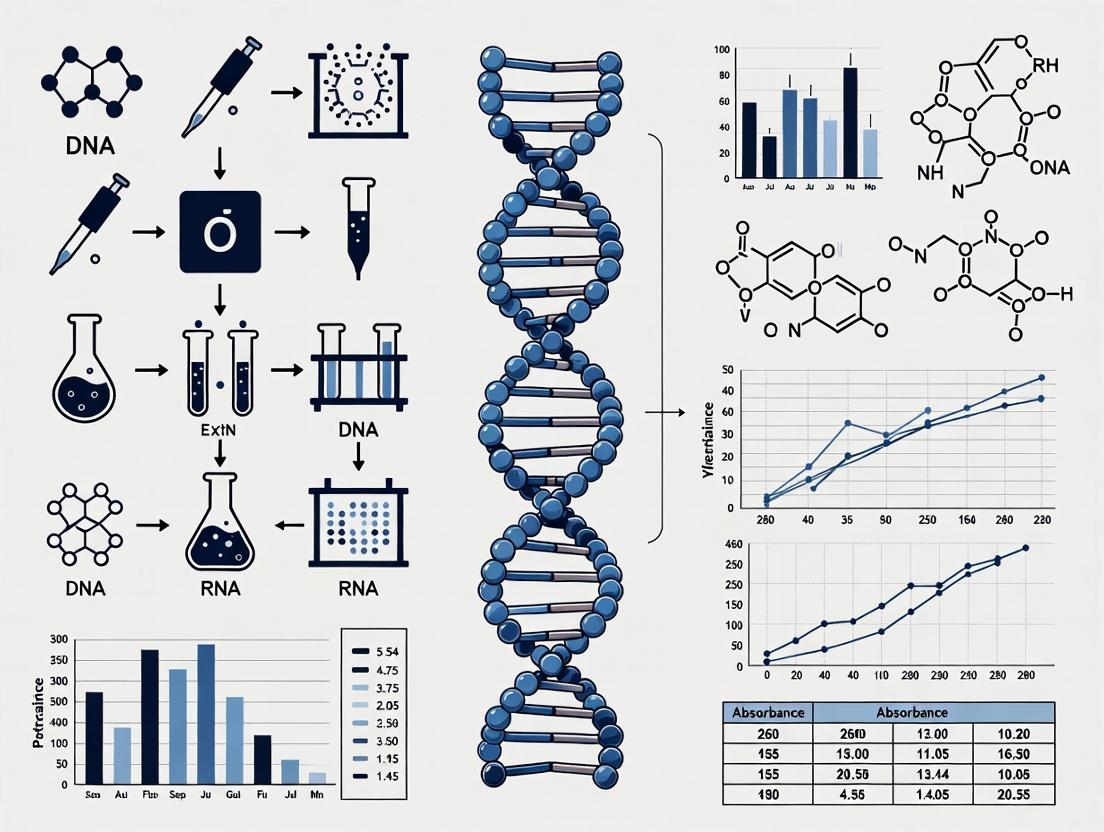
This comprehensive guide details the principles and practices of calculating DNA yield from spectrophotometry data for researchers, scientists, and drug development professionals.
The Complete Guide to DNA Yield Calculation: Mastering Spectrophotometry for Accurate Quantification in Research
Abstract
This comprehensive guide details the principles and practices of calculating DNA yield from spectrophotometry data for researchers, scientists, and drug development professionals. It covers the foundational theory of UV absorbance, provides step-by-step methodologies for application, offers solutions for common troubleshooting and optimization challenges, and critically compares spectrophotometry with modern validation techniques like fluorometry. The article synthesizes best practices to ensure reliable, reproducible DNA quantification essential for downstream applications in genomics, diagnostics, and therapeutic development.
DNA Quantification 101: Understanding the Core Principles of Spectrophotometry
This application note details the rigorous application of the Beer-Lambert Law for calculating nucleic acid concentration and yield, a critical first step in downstream genomic analyses, bioprocessing, and drug development workflows. Accurate DNA quantification via UV-Vis spectrophotometry directly informs the success of PCR, sequencing, cloning, and transfection experiments. Within the broader thesis on DNA yield optimization, this document establishes the foundational protocol and validation methods for deriving accurate concentration data from raw absorbance measurements, addressing common pitfalls such as contamination and instrument limitations.
Fundamental Equation and Key Parameters
The Beer-Lambert Law (or Beer's Law) is expressed as: A = ε * l * c Where:
- A is the measured absorbance (no units).
- ε is the molar attenuation coefficient (extinction coefficient) in L·mol⁻¹·cm⁻¹.
- l is the path length of the cuvette in cm.
- c is the concentration of the analyte in mol·L⁻¹.
For double-stranded DNA (dsDNA) quantification, the law is applied using the average extinction coefficient for nucleotide bases. The standard approximation is that an absorbance (A) of 1.0 at 260 nm corresponds to 50 µg/mL for dsDNA. The fundamental calculation for concentration is: cdsDNA (µg/mL) = A₂₆₀ × Dilution Factor × 50 µg/mL
Data Presentation: Spectrophotometric Metrics for Nucleic Acid Purity and Yield
Table 1: Key Absorbance Ratios and Interpretations for Nucleic Acid Purity
| Absorbance Ratio | Target Value (Pure DNA) | Interpretation & Common Contaminants |
|---|---|---|
| A₂₆₀/A₂₈₀ | ~1.8 | Protein contamination (e.g., phenol, aromatic amino acids) if significantly lower. |
| A₂₆₀/A₂₃₀ | 2.0 - 2.2 | Presence of chaotropic salts, carbohydrates, or phenol if significantly lower. |
| A₂₆₀/A₂₃₂ | 4.0 - 4.5 | Indicates residual guanidine or other reagents from purification kits. |
Table 2: Extinction Coefficients and Conversion Factors for Biomolecules
| Biomolecule | Extinction Coefficient (ε) or Conversion Factor | Notes for Calculation |
|---|---|---|
| dsDNA | 50 µg/mL per 1 A₂₆₀ unit | Industry-standard average for base pairs. |
| ssDNA/RNA | 40 µg/mL per 1 A₂₆₀ unit | Used for single-stranded nucleic acids. |
| Oligonucleotides | Calculated via nearest-neighbor method | ε is sequence-specific; provided by synthesizer. |
Table 3: DNA Yield Calculation from Spectrophotometry Data (Example)
| Parameter | Value | Calculation |
|---|---|---|
| Measured A₂₆₀ | 0.385 | (Direct measurement) |
| Sample Dilution Factor | 50 | (2 µL in 98 µL buffer) |
| Concentration (Stock) | 962.5 µg/mL | = 0.385 × 50 × 50 µg/mL |
| Initial Elution Volume | 100 µL | (Volume DNA is dissolved in) |
| Total DNA Yield (µg) | 96.25 µg | = 962.5 µg/mL × 0.1 mL |
Experimental Protocols
Protocol 1: Standard dsDNA Quantification and Purity Assessment Using a Microvolume Spectrophotometer
Objective: To determine the concentration, yield, and purity of a purified dsDNA sample.
Materials: See "The Scientist's Toolkit" below.
Procedure:
- Instrument Preparation: Power on the microvolume spectrophotometer and initialize the associated software. Perform a system check and blank initialization with the appropriate buffer (e.g., TE, nuclease-free water).
- Sample Preparation: Dilute the DNA sample appropriately. A target A₂₆₀ reading between 0.1 and 1.0 (within the linear range) is ideal. A 1:50 dilution (e.g., 2 µL DNA + 98 µL buffer) is a common starting point.
- Blank Measurement: Apply 1-2 µL of the blanking buffer to the measurement pedestal, lower the arm, and perform the blank measurement. Clean both pedestals with a laboratory wipe.
- Sample Measurement: a. Apply 1-2 µL of the diluted sample to the lower measurement pedestal. b. Lower the sampling arm. The software will automatically display the absorbance spectrum (typically 220 nm - 350 nm). c. Record the A₂₆₀ value. The software will often calculate concentration automatically using the 50 µg/mL factor. d. Record the A₂₈₀ and A₂₃₀ values for purity ratios. e. Clean the pedestals thoroughly between samples.
- Data Analysis: a. Calculate the stock concentration: C (µg/mL) = A₂₆₀ × Dilution Factor × 50. b. Calculate total yield: Yield (µg) = C (µg/mL) × Elution Volume (mL). c. Calculate purity ratios: A₂₆₀/A₂₈₀ and A₂₆₀/A₂₃₀.
Protocol 2: Validation of Beer-Lambert Law Linearity and Determination of Working Range
Objective: To experimentally verify the linear relationship between absorbance and concentration and define the instrument's reliable working range.
Procedure:
- Prepare a stock solution of a DNA standard (e.g., λ-DNA) of known concentration.
- Create a serial dilution series in the buffer to cover a wide absorbance range (e.g., from ~0.05 to ~2.0 A₂₆₀).
- Measure the A₂₆₀ of each dilution in triplicate, following Protocol 1 steps 3-4.
- Plot the measured A₂₆₀ (mean) against the calculated concentration for each dilution.
- Perform linear regression analysis. The coefficient of determination (R²) should be >0.99 for a reliable instrument. Deviation from linearity at high absorbance (>1.0 for many microvolume instruments) defines the upper limit of the working range.
Mandatory Visualization
Title: DNA Quantification via UV Absorbance Workflow
Title: Protocol for DNA Yield Calculation & QC Decision Tree
The Scientist's Toolkit: Essential Reagents & Materials
Table 4: Key Research Reagent Solutions for Spectrophotometric DNA Analysis
| Item | Function & Critical Notes |
|---|---|
| Nuclease-Free Water or TE Buffer (pH 8.0) | Primary dilution blank and sample eluent. Low ionic strength and absence of nucleases preserve DNA integrity and ensure accurate blanking. |
| DNA Standard (e.g., λ-DNA) | Used for validating instrument linearity, creating standard curves, and verifying the accuracy of the extinction coefficient. |
| High-Quality Cuvettes (Quartz or UV-Compatible) | For traditional spectrophotometers. Must be clean, scratch-free, and have a defined 1-cm path length for accurate application of Beer's Law. |
| Microvolume Spectrophotometer | Instrument for measuring 1-2 µL samples. Contains integrated pedestals; path length is software-corrected. Eliminates need for cuvettes. |
| Absorbance-Compatible Plates | For high-throughput quantification in plate reader spectrophotometers. Must have a clear, UV-transparent bottom. |
| Precision Pipettes & Certified Tips | Essential for accurate serial dilutions and handling of microvolume samples. Inaccuracy directly translates to concentration error. |
| Lint-Free Laboratory Wipes | For cleaning spectrophotometer measurement surfaces between samples to prevent cross-contamination and light scattering. |
Why 260 nm? The Spectral Signature of DNA and the Basis for Quantification
Nucleic acid quantification via UV spectrophotometry is a cornerstone technique in molecular biology, biotechnology, and pharmaceutical development. The measurement of absorbance at 260 nm (A260) is the universal standard for determining DNA and RNA concentration. This application note, framed within a thesis on DNA yield calculation from spectrophotometry, elucidates the photophysical principles behind this specific wavelength, details best-practice protocols, and provides resources for accurate quantification in research and drug development pipelines.
The Photophysical Basis of the 260 nm Peak
The absorption maximum at 260 nm arises from the electronic structure of the nitrogenous bases (adenine, guanine, cytosine, thymine, uracil). The conjugated double-bond systems (aromatic heterocycles) within these purines and pyrimidines allow for π→π* electronic transitions when irradiated with ultraviolet light. The sum of these individual base transitions creates a strong, composite absorption peak centered around 260 nm. The sugar-phosphate backbone, in contrast, contributes minimally to absorbance in this region.
Table 1: Molar Extinction Coefficients (ε) for Nucleic Acids and Common Contaminants
| Substance | Molar Extinction Coefficient (ε) at 260 nm (L·mol⁻¹·cm⁻¹) | Peak Absorbance (nm) |
|---|---|---|
| Double-stranded DNA | ~6,600 (per nucleotide) | 260 |
| Single-stranded DNA/RNA | ~7,400 - 8,200 (per nucleotide) | 260 |
| Protein (e.g., BSA) | Minimal (mainly at 280 nm) | ~280 |
| Guanidine Thiocyanate | Very low | 260 |
| Phenol | High | 270 |
The Beer-Lambert Law (A = ε * c * l) forms the quantitative basis, where A is absorbance, ε is the molar extinction coefficient, c is concentration, and l is the pathlength (typically 1 cm). Pure DNA with an A260 of 1.0 corresponds to approximately 50 µg/mL for dsDNA.
Protocols for Accurate DNA Quantification via A260
Protocol 3.1: Standard Microvolume Spectrophotometry for DNA Yield Calculation
Purpose: To determine the concentration, yield, and purity of purified DNA samples. Materials: See "The Scientist's Toolkit" below. Procedure:
- Instrument Blanking: Pipette 1-2 µL of the same elution or dilution buffer used for the sample onto the measurement pedestal. Perform a blank measurement.
- Sample Measurement: Wipe the pedestal clean. Apply 1-2 µL of the purified DNA sample. Lower the sampling arm.
- Data Acquisition: Initiate the spectrophotometric scan from 230 nm to 350 nm.
- Analysis & Yield Calculation:
- Record A260 and A280 values.
- Calculate dsDNA Concentration (ng/µL): A260 × 50 × Dilution Factor.
- Calculate Total Yield (µg): (Concentration × Total Elution Volume) / 1000.
- Assess Purity via Ratios: A260/A280 (pure DNA ~1.8; pure RNA ~2.0). A260/A230 (pure nucleic acid ~2.0-2.2).
Table 2: Interpretation of Spectral Ratios for Purity Assessment
| A260/A280 Ratio | Typical Interpretation | A260/A230 Ratio | Typical Interpretation |
|---|---|---|---|
| ~1.8 | Pure dsDNA | ~2.0-2.2 | Pure nucleic acid, low salt |
| >2.0 | May indicate RNA contamination | <2.0 | May indicate chaotropic salt, phenol, or carbohydrate carryover |
| <1.8 | Protein or phenol contamination |
Protocol 3.2: Cuvette-Based Spectrophotometry for High-Accuracy Applications
Purpose: For samples requiring high accuracy or those incompatible with microvolume systems. Procedure:
- Dilution: Dilute the DNA sample in the appropriate buffer (e.g., TE buffer, pH 8.0) to bring the expected A260 reading between 0.1 and 1.0.
- Blank Preparation: Fill a quartz cuvette (1 cm pathlength) with dilution buffer.
- Measurement: Blank the spectrometer at all wavelengths using the buffer-filled cuvette. Replace the buffer with the diluted DNA sample. Record the absorbance spectrum from 220 nm to 350 nm.
- Calculation: Use the Beer-Lambert law with the known dilution factor and pathlength (1 cm).
Visualizing Concepts and Workflows
Title: UV Spectrophotometry Workflow for DNA Quantification
Title: Basis of DNA Absorption at 260 nm
The Scientist's Toolkit: Key Reagent Solutions & Materials
| Item | Function & Rationale |
|---|---|
| TE Buffer (10 mM Tris, 1 mM EDTA, pH 8.0) | Standard dilution and storage buffer. Tris maintains stable pH; EDTA chelates Mg²⁺ to inhibit nucleases. |
| Nuclease-Free Water | A low-ionic-strength alternative for dilution, especially for downstream enzymatic applications. |
| Quartz Cuvette (1 cm pathlength) | Required for cuvette-based spectrophotometry; quartz transmits UV light. |
| Microvolume Spectrophotometer | Enables measurement of 0.5-2 µL samples without cuvettes, using surface tension technology. |
| BSA Standard Solution | Used for verifying protein contamination sensitivity of A260/A280 ratio. |
| DNA Ladders (e.g., λ-HindIII) | Provide known concentration standards for instrument validation and calibration. |
| Guanidine HCl / Thiocyanate | Common chaotropic salts in extraction kits; major contaminants affecting A260/A230. |
| Phenol (Water-Saturated) | Organic extraction reagent; significant contaminant absorbing near 270 nm. |
Within a broader thesis on DNA yield calculation from spectrophotometry data, precise definitions of key analytical metrics are foundational. Accurate determination of DNA yield, concentration, and purity is critical for downstream applications in molecular biology, genomics, and drug development. This document outlines the core terminology, provides application notes, and details standardized protocols for spectrophotometric assessment.
Table 1: Core Spectrophotometric Metrics for DNA Analysis
| Term | Definition | Calculation | Ideal Value (Pure dsDNA) | Interpretation of Deviations |
|---|---|---|---|---|
| Concentration | Amount of DNA per unit volume, typically derived from absorbance at 260 nm. | Conc. (µg/mL) = A260 × Dilution Factor × 50 µg/mL | N/A | Directly proportional to A260. |
| Total Yield | The absolute mass of DNA recovered from an extraction or purification. | Yield (µg) = Concentration (µg/mL) × Total Volume (mL) | N/A | Measures extraction efficiency. |
| A260/A280 Ratio | Ratio of absorbance at 260 nm and 280 nm, indicating protein contamination. | A260 / A280 | ~1.8 (range 1.8-2.0) | <1.8: Protein/phenol contamination. >2.0: Possible RNA contamination. |
| A260/A230 Ratio | Ratio of absorbance at 260 nm and 230 nm, indicating salt or organic solvent contamination. | A260 / A230 | ~2.0-2.2 (often >2.0) | <2.0: Contamination with chaotropic salts, carbohydrates, or residual ethanol. |
Table 2: Common Contaminants and Their Spectral Signatures
| Contaminant | Primary Absorbance Peak (nm) | Effect on A260/A280 | Effect on A260/A230 |
|---|---|---|---|
| Proteins | ~280 nm (Tryptophan, Tyrosine) | Decreases ratio | Variable |
| Phenol | ~270 nm | Drastically decreases ratio | Decreases ratio |
| Chaotropic Salts (e.g., Guanidine) | ~230 nm | Minimal | Severely decreases ratio |
| Carbohydrates | ~230 nm | Minimal | Decreases ratio |
| RNA | ~260 nm | May increase ratio (>2.0) | Variable |
Experimental Protocols
Protocol 1: Standard DNA Quantification and Purity Assessment via UV Spectrophotometry
Purpose: To determine the concentration, yield, and purity ratios (A260/A280, A260/A230) of a purified DNA sample.
Materials: See "The Scientist's Toolkit" below.
Method:
- Blank Preparation: Use the same buffer/solution used to elute or suspend the DNA sample (e.g., TE buffer, nuclease-free water). Blank the spectrophotometer.
- Sample Dilution: Dilute the DNA sample in the blanking buffer. A typical dilution to keep A260 between 0.1 and 1.0 (within the linear range) is 1:10 to 1:50.
- Measurement:
- Load the blank, zero the instrument.
- Load the diluted sample.
- Record absorbance values at 230 nm, 260 nm, and 280 nm.
- Data Analysis & Calculation:
- Concentration (µg/mL) = A260 × Dilution Factor × 50 µg/mL.
- Total DNA Yield (µg) = Concentration × Original Sample Volume (mL).
- Calculate A260/A280 and A260/A230 ratios.
- Interpretation: Compare ratios to ideal values in Table 1. Low purity ratios indicate the need for further sample clean-up.
Protocol 2: Clean-up of DNA Samples with Low Purity Ratios
Purpose: To remove contaminants (salts, organics, proteins) indicated by suboptimal A260/A230 or A260/A280 ratios.
Method (Ethanol Precipitation):
- Estimate Volume: Start with your DNA sample in a microcentrifuge tube.
- Add Salt: Add 0.1 volumes of 3M sodium acetate (pH 5.2). Mix gently.
- Add Precipitant: Add 2-2.5 volumes of ice-cold 100% ethanol. Mix thoroughly by inverting.
- Incubate: Place at -20°C for 30 minutes to overnight.
- Pellet DNA: Centrifuge at >12,000 × g for 15-30 minutes at 4°C.
- Wash: Carefully remove supernatant. Add 1 mL of ice-cold 70% ethanol. Centrifuge at >12,000 × g for 5 minutes.
- Dry: Carefully remove all ethanol. Air-dry pellet for 5-10 minutes (do not over-dry).
- Resuspend: Resuspend DNA pellet in an appropriate volume of TE buffer (pH 8.0) or nuclease-free water.
- Re-quantify: Repeat Protocol 1 to assess improvement in concentration and purity ratios.
Visualizations
Title: DNA Quantification & Purity Decision Workflow
Title: Interpreting Low Purity Ratios
The Scientist's Toolkit
Table 3: Essential Research Reagent Solutions for DNA Quantification
| Item | Function / Purpose |
|---|---|
| Nucleic Acid Spectrophotometer/Nanodrop | Instrument that measures UV absorbance of micro-volume samples (1-2 µL) to calculate concentration and purity ratios. |
| Cuvette-based UV Spectrophotometer | Traditional instrument for measuring UV absorbance of larger volume samples (typically 50-1000 µL) in quartz cuvettes. |
| TE Buffer (10 mM Tris-HCl, 1 mM EDTA, pH 8.0) | Standard elution/storage buffer. Tris stabilizes pH, EDTA chelates Mg2+ to inhibit DNases. The low ionic strength ensures accurate A260. |
| Nuclease-free Water | DNase/RNase-free water for diluting and blanking samples when buffer ions are not desired downstream. |
| 3M Sodium Acetate (pH 5.2) | Provides salt (Na+) necessary for efficient ethanol precipitation of DNA. Acidic pH ensures DNA is protonated and insoluble. |
| Absolute Ethanol (100%) & 70% Ethanol | 100% ethanol precipitates nucleic acids; 70% ethanol effectively removes residual salts during the wash step without redissolving DNA. |
| Quartz Cuvettes (for traditional spec) | Required for accurate UV transmission; plastic cuvettes are not suitable for UV wavelengths. |
Application Notes
Within a research thesis focused on DNA yield calculation, the UV-Vis spectrophotometer is the foundational analytical instrument. Accurate determination of DNA concentration and purity (via A260/A280 and A260/A230 ratios) is entirely dependent on the performance and proper use of its core components. Understanding each part is critical for generating reliable, reproducible data for downstream applications in drug development, such as PCR, sequencing, or transfection.
1. Core Components and Their Role in Nucleic Acid Analysis
- Light Source: A combination of a deuterium lamp (for UV range ~190-350 nm) and a tungsten-halogen lamp (for visible range ~350-1100 nm). Stability and intensity of the source directly affect the signal-to-noise ratio, crucial for measuring low-concentration DNA samples.
- Monochromator: Comprises an entrance slit, a diffraction grating, and an exit slit. It selects a specific, narrow wavelength of light (e.g., 260 nm for DNA) from the broad-spectrum source. The bandwidth (typically 1-2 nm) affects spectral resolution and adherence to the Beer-Lambert law.
- Sample Compartment: Holds cuvettes or microvolume platforms. For DNA, quartz or UV-transparent plastic cuvettes are mandatory for readings at 260 nm. Microvolume systems use 1-2 µL samples, conserving precious nucleic acid extracts.
- Detector: Typically a photodiode or CCD array. Converts transmitted light intensity into an electrical signal. Sensitivity and dynamic range determine the instrument's ability to accurately measure both highly concentrated and very dilute samples.
- Software & Data System: Modern systems integrate control, data acquisition, and analysis. For DNA yield, software automates calculation of concentration (using the extinction coefficient: 50 µg/mL for dsDNA per 1 AU at 260 nm) and purity ratios.
Table 1: Quantitative Specifications of Modern UV-Vis Components Relevant to DNA Analysis
| Component | Key Parameter | Typical Specification | Impact on DNA Measurement |
|---|---|---|---|
| Light Source | Lamp Life | Deuterium: 1,000 hrs; Tungsten: 2,000 hrs | Declining output increases noise, affecting low-conc. accuracy. |
| Monochromator | Spectral Bandwidth | 1.0 nm, 1.5 nm, or 2.0 nm | Narrower bandwidth improves resolution of absorption peaks. |
| Detector | Wavelength Range | 190-1100 nm | Covers essential DNA/RNA (260 nm) and protein (280 nm) peaks. |
| Optical System | Absorbance Range | 0.000 to 4.000 AU | >3.0 AU for dsDNA indicates saturation; requires dilution. |
| Sample System | Volume Requirement | Standard: 0.5-1.5 mL; Microvolume: 0.5-2 µL | Microvolume is essential for limited-yield samples (e.g., biopsies). |
2. Experimental Protocol: DNA Concentration and Purity Assessment
Protocol Title: Measurement of Double-Stranded DNA Yield and Purity Using a UV-Vis Spectrophotometer.
Principle: Pure dsDNA has a maximum absorbance at 260 nm (A260). The Beer-Lambert law (A = ε * c * l) is applied using the known extinction coefficient (ε) for dsDNA (50 µg/mL for a 1 cm pathlength) to calculate concentration. Contaminant absorption at 230 nm (salts, organics) and 280 nm (proteins) is used to assess purity via ratios.
Materials & Equipment:
- Modern UV-Vis spectrophotometer with microvolume capability.
- Nuclease-free water or TE buffer (10 mM Tris-HCl, 1 mM EDTA, pH 8.0).
- UV-transparent microcuvettes or disposable tips for microvolume system.
- Micropipettes and nuclease-free tips.
- Purified DNA sample.
Procedure:
- Instrument Initialization: Power on the instrument and software. Allow lamps to warm up for at least 15 minutes.
- Blank Preparation: Load 1 µL (microvolume) or 1 mL (cuvette) of your chosen blank solution (nuclease-free water or TE buffer). TE buffer is preferred for DNA storage but will contribute slightly to A230.
- Blank Measurement: Place the blank in the sample position. Execute a "blank" or "baseline" correction across the relevant wavelength range (e.g., 230-300 nm).
- Sample Measurement: Wipe the blank. Load 1 µL of your purified DNA sample. Place it in the instrument.
- Acquisition: Initiate a full spectrum scan or a direct measurement at 230, 260, and 280 nm. Record the absorbance values.
- Analysis & Calculation:
- DNA Concentration:
[dsDNA] (µg/mL) = A260 × Dilution Factor × 50 µg/mL - Purity Ratios: Calculate
A260/A280andA260/A230. Optimal ratios for pure DNA are ~1.8 and 2.0-2.2, respectively.
- DNA Concentration:
- Validation: For A260 > 1.0, dilute the sample with blank solution and re-measure to ensure readings are in the linear range of the detector.
The Scientist's Toolkit: Key Reagent Solutions for DNA Spectrophotometry
| Item | Function in DNA Analysis |
|---|---|
| TE Buffer (pH 8.0) | Standard DNA elution/storage buffer. Tris stabilizes pH; EDTA chelates Mg2+ to inhibit nucleases. |
| Nuclease-Free Water | A contaminant-free blanking and dilution agent, avoiding buffer component absorption. |
| UV-Transparent Micro-Cuvette | Holds micro-volumes (5-50 µL) for measurement, conserving sample. Must transmit UV light. |
| Disposable Denistometer Tips | For touch-screen microvolume systems. Eliminates cross-contamination; no cleaning required. |
| DNA Standard (e.g., λ DNA) | Known-concentration standard used for instrument performance verification and protocol validation. |
Visualization: DNA Analysis Workflow via UV-Vis
Title: DNA Yield & Purity Analysis Protocol
Visualization: Signal Path in a UV-Vis Spectrophotometer
Title: Optical Path in a UV-Vis Spectrophotometer
Within the broader thesis on accurate DNA yield calculation from spectrophotometry, this application note details the critical impact of sample and equipment variables. Precise quantitation of DNA via UV absorbance at 260 nm is foundational, yet the calculated yield is directly influenced by the nucleic acid conformation, the solvent buffer, and the cuvette type used. These factors affect the extinction coefficient, pathlength accuracy, and baseline corrections, ultimately impacting the reliability of downstream research and development in drug discovery and molecular biology.
Impact of DNA Type and Buffer on Absorbance and Yield Calculation
The accuracy of the Beer-Lambert law (A = ε * c * l) for DNA concentration depends on the correct extinction coefficient (ε). This coefficient varies with DNA conformation, sequence, and the ionic strength of the buffer.
Extinction Coefficients by DNA Type
Extinction coefficients are typically expressed as the absorbance of a 1 cm pathlength of a 1 mg/mL solution. The commonly used average value for dsDNA is 50 µg/mL per absorbance unit (AU) at 260 nm, but this is an approximation.
Table 1: Standard Extinction Coefficients and Factors for Nucleic Acid Types
| Nucleic Acid Type | Average ε (µg/mL per AU260) | Notes & Considerations |
|---|---|---|
| Double-stranded DNA (dsDNA) | 50 | Assumes random sequence, pH 8.0 in TE buffer. Hyperchromicity from denaturation can increase A260. |
| Single-stranded DNA (ssDNA) | 33 | More variable; depends on secondary structure and base composition. |
| Oligonucleotides (15-30 bases) | 20-30 | Sequence-specific. Must be calculated based on individual base composition (see protocol 1.1). |
| RNA | 40 | Susceptible to degradation, which can alter readings. |
Buffer Effects: Ionic Strength and pH
The buffer composition influences DNA secondary structure and the baseline UV absorbance.
- High Ionic Strength (e.g., High-salt TE): Stabilizes dsDNA, can reduce hyperchromic effect. Salt contributes to absorbance at 230 nm and below.
- Low Ionic Strength (e.g., water): Promotes denaturation of dsDNA, leading to inflated A260 readings and underestimated purity ratios (A260/A280).
- pH: Absorbance spectrum of DNA shifts with pH. TE buffer (10 mM Tris-HCl, 1 mM EDTA, pH 8.0) is standard, providing stability and consistent readings.
- Contaminants: Common buffer components like guanidine HCl, phenols, or imidazole have strong UV absorbance and must be accounted for with appropriate blanking.
Table 2: Effect of Common Buffers on Spectrophotometric Readings
| Buffer / Solvent | A260/A280 Typical for Pure DNA | Key Impact on Readings |
|---|---|---|
| TE Buffer (pH 8.0) | ~1.8 | Gold standard. Maintains DNA structure, low background absorbance. |
| Nuclease-free Water | 1.6-1.7 | Can lower A260/A280 due to DNA denaturation and pH variability. |
| 10 mM Tris-HCl (pH 7.5) | ~1.8 | Good alternative to TE if EDTA is problematic. |
| High-Salt Buffers (e.g., PBS) | Variable, often lowered | High absorbance below 260 nm; requires meticulous blanking. |
Influence of Cuvette Type on Pathlength and Volume Requirements
The verified pathlength is critical for the Beer-Lambert calculation. Discrepancies between stated and effective pathlength are a major source of quantitation error.
Table 3: Cuvette Types and Their Impact on DNA Quantitation
| Cuvette Type | Typical Volume (µL) | Pathlength (cm) | Key Considerations for DNA Yield |
|---|---|---|---|
| Standard Rectangular (Quartz) | 1000-3000 | 1.0 (precise) | High accuracy. Requires significant sample volume. Must be meticulously clean. |
| Semi-Micro (Quartz) | 100-500 | 1.0 (precise) | Balance of accuracy and sample conservation. |
| Macro (Glass/Plastic) | 3000+ | 1.0 | Glass/plastic may have limited UV transparency; not for high-precision work. |
| Ultra-Microvolume (with pedestal) | 0.5-2.0 | 0.05-0.2 (variable) | Conserves sample. Pathlength is software-estimated and sensitive to sample surface tension and buffer viscosity. Must use correct extinction coefficient adjustment. |
Detailed Experimental Protocols
Protocol 3.1: Calculating Oligonucleotide Extinction Coefficients
Purpose: To determine the precise extinction coefficient (ε) for an oligonucleotide sequence. Materials: Oligonucleotide in nuclease-free water or TE buffer, spectrophotometer with UV capability, appropriate cuvette. Procedure:
- Obtain the oligonucleotide sequence.
- Calculate the sum of the molar extinction coefficients (L mol⁻¹ cm⁻¹) for each base at 260 nm:
- dA: 15,200
- dC: 7,050
- dG: 12,010
- dT: 8,400
- For example, for oligo "ATCG": ε = 15,200 + 8,400 + 7,050 + 12,010 = 42,660 L mol⁻¹ cm⁻¹.
- Convert to mass-based coefficient: ε (µg/mL) = (ε molar * 1000) / Oligo Molecular Weight (g/mol).
- Use this calculated ε in the Beer-Lambert law for accurate concentration determination.
Protocol 3.2: Validating Effective Pathlength in Ultra-Microvolume Systems
Purpose: To empirically determine the effective pathlength for microvolume measurements. Materials: Standardized DNA solution (e.g., 100 µg/mL dsDNA in TE), spectrophotometer with microvolume and standard 1 cm cuvette capability. Procedure:
- Blank the instrument with TE buffer using the standard 1 cm cuvette.
- Measure the A260 of the standardized DNA solution in the 1 cm cuvette. Record as A_1cm.
- Clean the sample surface. Blank the instrument with TE buffer using the microvolume system.
- Measure the A260 of the same DNA solution in the microvolume system. Record as A_micro.
- Calculate the effective pathlength: Pathlengtheffective (cm) = Amicro / A_1cm.
- For yield calculations: Use Concentration (µg/mL) = (A260micro * 50) / Pathlengtheffective.
Protocol 3.3: Assessing Buffer Contribution to Background Signal
Purpose: To quantify the UV absorbance contributed by the sample buffer. Materials: Test buffer (e.g., elution buffer, lysis buffer), reference buffer (TE or water), spectrophotometer, matched quartz cuvettes. Procedure:
- Fill both sample and reference cuvettes with the reference buffer. Perform a baseline correction or blank scan from 320 nm to 220 nm.
- Replace the sample cuvette's contents with the test buffer.
- Perform a full wavelength scan (320-220 nm).
- Analyze the spectrum. Significant peaks or elevated baseline below 260 nm indicate buffer interference.
- Critical Step: Always use the exact test buffer as the blank when quantifying DNA dissolved in that buffer.
Visualization of Experimental Decision Pathways
Title: Workflow for Accurate DNA Yield Calculation
The Scientist's Toolkit: Research Reagent Solutions
Table 4: Essential Materials for Accurate DNA Spectrophotometry
| Item | Function & Relevance |
|---|---|
| Quartz Cuvettes (Semi-Micro, 1 cm) | Provide precise 1 cm pathlength and full UV transparency; essential for validating microvolume systems and high-accuracy work. |
| Ultra-Microvolume Spectrophotometer | Enables quantitation of minute sample volumes (0.5-2 µL); critical for precious samples from ChIP, biopsies, or single-cell workflows. |
| Nuclease-Free TE Buffer (pH 8.0) | The standard solvent for DNA storage and quantitation. Maintains pH, minimizes denaturation, and provides low UV background. |
| Certified DNA Standard (e.g., λ DNA) | A solution of known concentration and purity used to calibrate instruments and validate measurement protocols. |
| Low-Binding Microcentrifuge Tubes/Pipette Tips | Minimizes adsorption of nucleic acids to plastic surfaces, especially critical for dilute samples and oligonucleotides. |
| Optical Lens Cleaning Tissue & Spectroscopic-Grade Methanol | For cleaning cuvettes without scratching; ensures no contaminant residue affects absorbance readings. |
| Software with Oligo Coefficient Calculator | Integrated or web-based tools to compute precise extinction coefficients and concentrations for oligonucleotides. |
Step-by-Step Protocol: How to Calculate DNA Yield from Spectrophotometry Data
Accurate DNA yield calculation using spectrophotometry (e.g., Nanodrop, Qubit) is foundational to downstream genomic analyses in research and drug development. Inconsistent pre-measurement practices, particularly in instrument blanking and sample preparation, are primary sources of error, leading to overestimation or underestimation of DNA concentration and purity (A260/A280, A260/A230 ratios). This protocol details standardized best practices to ensure data integrity for the high-stakes calculations required in a thesis on DNA yield determination.
The Critical Role of the Blank
The blank corrects for absorbance contributions from everything except the analyte of interest. An improper blank is the most frequent cause of inaccurate yield calculations.
Table 1: Common Blanking Solvents & Applications
| Blanking Solvent | Primary Use Case | Key Consideration for DNA Yield |
|---|---|---|
| Nuclease-free Water | Pure DNA samples in TE buffer or water. | Default choice. Must match sample diluent. |
| TE Buffer (10mM Tris, 1mM EDTA, pH 8.0) | Long-term storage of DNA samples. | Corrects for buffer ions. Essential if sample is in TE. |
| Elution Buffer | Kit-eluted DNA (from columns or beads). | Critical for accuracy; commercial buffers vary. |
| Sample-specific Buffer | Complex matrices (e.g., lysates). | Use the supernatant from a blank extraction. |
Detailed Experimental Protocols
Protocol 2.1: Spectrophotometer (UV-Vis) Instrument Blanking
Objective: To establish a baseline absorbance of zero for the sample diluent/solvent. Materials: Microvolume spectrophotometer, appropriate blanking solvent (see Table 1), lint-free wipes, low-retention pipette tips.
- Power & Initialize: Turn on instrument and associated software. Allow lamp to warm up for recommended time (typically 10-15 min).
- Clean Measurement Surface: Using a lint-free wipe moistened with nuclease-free water, gently clean the upper and lower optical pedestals.
- Apply Blank: Pipette 1.5-2.0 µL of the chosen blanking solvent onto the lower pedestal. Close the sampling arm.
- Execute Blanking: In software, select the "Blank" or "Zero" function. Confirm successful blanking (software typically confirms).
- Wipe: Open arm and thoroughly wipe both pedestals clean with a dry lint-free wipe.
- Verification: Repeat blanking with a fresh aliquot of solvent. Absorbance values at key wavelengths (A260, A280) should be stable and near zero (<0.005 AU).
Protocol 2.2: Pre-Measurement DNA Sample Preparation
Objective: To prepare a DNA sample for accurate spectrophotometric measurement and yield calculation. Materials: Purified DNA sample, appropriate blanking solvent, low-retention microcentrifuge tubes, low-retention pipette tips, vortex mixer, microcentrifuge.
- Thaw & Mix: Thaw DNA sample and blanking solvent on ice. Vortex solvent briefly. Gently vortex DNA sample, then centrifuge briefly to collect liquid.
- Dilution Planning: For UV-Vis, target an A260 reading between 0.1 and 1.0 Absorbance Units (linear range). If expected concentration is high, prepare a dilution in the same solvent used for blanking. Example Calculation: If DNA is in 50 µL of TE buffer, prepare a 1:10 dilution by adding 5 µL DNA to 45 µL TE buffer.
- Clean Measurement Surface: As per Protocol 2.1, Step 2.
- Apply Sample: Pipette 1.5-2.0 µL of the prepared sample (or neat sample if within range) onto the pedestal.
- Measure: Close arm and initiate measurement. Record A260, A280, A230, and calculated ratios.
- Post-Measurement Clean: Wipe pedestals thoroughly as in Step 2.1.5.
- Yield Calculation: Use the measured A260, the dilution factor (DF), and the DNA-specific conversion factor. DNA Yield (µg/mL) = A260 × 50 µg/mL × DF Note: The factor "50" is for double-stranded DNA. Use "33" for single-stranded DNA or RNA.
Workflow Visualization
Title: Workflow for Accurate DNA Yield Measurement
The Scientist's Toolkit: Essential Research Reagent Solutions
Table 2: Key Reagents & Materials for DNA Yield Analysis
| Item | Function in Pre-Measurement | Critical Specification |
|---|---|---|
| Nuclease-Free Water | Universal blanking & dilution solvent. | Certifies absence of RNase, DNase; low organic contamination. |
| TE Buffer (pH 8.0) | Common DNA storage buffer; used for blanking and dilution. | Prevents acid-catalyzed DNA depurination; EDTA inhibits nucleases. |
| Low-DNA-Bind Tubes/Tips | Sample handling and dilution. | Minimizes surface adsorption of low-concentration DNA samples. |
| Lint-Free Lab Wipes | Cleaning spectrophotometer pedestals. | Prevents fiber contamination that scatters light. |
| UV-Vis Cuvettes (if applicable) | Holding samples for traditional spectrophotometers. | Required pathlength (e.g., 1 cm) for using Beer-Lambert law directly. |
| Fluorometric Assay Kit (e.g., Qubit dsDNA HS) | Alternative for specific quantitation in complex buffers. | Binds specifically to dsDNA, ignoring RNA, nucleotides, and salt. |
| Integrity Gel Matrix (e.g., Agarose) | Qualitatively assess sample degradation post-measurement. | Verifies that high yield correlates with intact DNA, not contaminant. |
Within the broader thesis on DNA yield calculation from spectrophotometry data research, the application of the conversion factor stands as a foundational, yet critical, step. This protocol details the accurate conversion of absorbance at 260 nm (A260) readings into a quantitative DNA concentration measurement using the standard factor of 50 µg/mL for double-stranded DNA (dsDNA). This calculation is essential for downstream applications in molecular biology, genomics, and drug development, where precise DNA quantification informs experimental success.
Key Concepts and Data
The conversion is based on the principle that nucleic acids absorb ultraviolet light at 260 nm. The established relationship between absorbance and concentration for pure dsDNA is defined by the Beer-Lambert law, with a specific pathlength correction.
Table 1: Standard Nucleic Acid Conversion Factors
| Nucleic Acid Type | Conversion Factor (µg/mL per A260 unit) | Typical A260/A280 Purity Ratio |
|---|---|---|
| Double-stranded DNA (dsDNA) | 50 | ~1.8 |
| Single-stranded DNA (ssDNA) | 33 | ~1.8 |
| RNA | 40 | ~2.0 |
| Oligonucleotides | Varies; use supplier-provided extinction coefficient | N/A |
Table 2: Impact of Pathlength on Calculation
| Cuvette Pathlength (cm) | Pathlength Adjustment Factor (for 1 cm standard) | Corrected Calculation Formula |
|---|---|---|
| 1.0 (Standard) | 1.00 | Conc. = A260 × 50 µg/mL |
| 0.5 | 2.00 | Conc. = (A260 / 0.5) × 50 µg/mL |
| 0.1 (Microvolume) | 10.00 | Conc. = (A260 / 0.1) × 50 µg/mL |
Experimental Protocol: dsDNA Quantification via A260
Materials and Reagent Solutions
Table 3: Research Reagent Solutions for Spectrophotometric DNA Quantification
| Item | Function/Brief Explanation |
|---|---|
| Purified dsDNA Sample (e.g., plasmid, genomic) | The target molecule for quantification. |
| UV-Transparent Cuvette (Quartz, 1 cm pathlength) | Holds sample for accurate absorbance measurement; quartz transmits UV light. |
| Spectrophotometer (UV-Vis) | Instrument that measures light absorbance at specified wavelengths (260 nm, 280 nm). |
| Blanking Solution (e.g., TE buffer: 10 mM Tris, 1 mM EDTA, pH 8.0) | Serves as the reference to zero the instrument; matches the sample's solvent conditions. |
| Micropipettes and Sterile Tips | For precise handling and dilution of samples. |
| Nuclease-Free Water | For sample dilution without degrading nucleic acids. |
Step-by-Step Procedure
- Instrument Preparation: Power on the UV spectrophotometer and allow the lamp to warm up for at least 15 minutes. Set the measurement wavelength to 260 nm and subsequently to 280 nm for purity assessment.
- Blank Measurement: Pipette an appropriate volume of the blanking solution (e.g., TE buffer or water used in the final DNA resuspension) into a clean quartz cuvette. Wipe the cuvette with a lint-free tissue. Insert it into the sample holder and perform a blank measurement to zero the instrument.
- Sample Measurement: Replace the blank with the DNA sample solution. Ensure the sample volume is sufficient for the cuvette's pathlength. Record the absorbance reading at 260 nm (A260).
- Purity Assessment: Record the absorbance at 280 nm (A280). Calculate the A260/A280 ratio.
- Concentration Calculation: Apply the core conversion formula, adjusting for any dilution factor (DF) and pathlength (if not 1 cm). > Core Formula: dsDNA Concentration (µg/mL) = A260 × Conversion Factor (50) × DF × (1 / Pathlength in cm) Example: For an undiluted sample (DF=1) in a standard 1 cm cuvette with A260 = 0.65, Concentration = 0.65 × 50 = 32.5 µg/mL.
- Yield Determination (if applicable): To calculate total yield from a dissolved sample, multiply the concentration by the total sample volume in mL. > Total DNA Yield (µg) = Concentration (µg/mL) × Total Sample Volume (mL).
Visualizing the Workflow and Decision Process
Title: DNA Quantification Workflow from A260
Title: Relationship Between A260 and DNA Concentration
The precise application of the 50 µg/mL conversion factor to A260 readings, with corrections for pathlength and dilution, is a non-negotiable standard in DNA yield calculation research. This protocol ensures reproducible and accurate quantification, forming a reliable basis for critical downstream experiments in research and therapeutic development. Consistent adherence to this core calculation minimizes experimental variance and supports robust scientific conclusions.
Within the broader thesis on DNA yield calculation from spectrophotometry data research, accurate quantification of nucleic acids is a foundational step. This application note provides detailed protocols and worked examples for calculating total yield (µg) and concentration (ng/µL) from ultraviolet (UV) absorbance spectra, which are critical parameters for downstream applications in molecular biology, genomics, and drug development.
Core Principles and Formulas
The calculation of nucleic acid concentration and yield relies on the Beer-Lambert law and established conversion factors. The standard formulas are:
Concentration (ng/µL) = A₂₆₀ × Conversion Factor × Dilution Factor
- For double-stranded DNA (dsDNA): Conversion Factor = 50 ng·µL⁻¹
- For single-stranded DNA/RNA: Conversion Factor = 40 ng·µL⁻¹
- For single-stranded oligonucleotides: Conversion Factor = 33 ng·µL⁻¹
Total Yield (µg) = [Concentration (ng/µL) × Total Sample Volume (µL)] / 1000
Purity is assessed by the ratio of absorbance at A₂₆₀/A₂₈₀ (protein contamination) and A₂₆₀/A₂₃₀ (organic compound/salt contamination). Pure DNA typically has A₂₆₀/A₂₈₀ ~1.8 and A₂₆₀/A₂₃₀ ~2.0-2.2.
Experimental Protocol: DNA Quantification via UV Spectrophotometry
Objective: To determine the concentration, yield, and purity of a purified DNA sample using a microvolume spectrophotometer.
Materials:
- Purified DNA sample (e.g., plasmid, genomic DNA, PCR product).
- Nuclease-free water or TE buffer (10 mM Tris-HCl, 1 mM EDTA, pH 8.0).
- Microvolume spectrophotometer (e.g., Thermo Fisher NanoDrop, DeNovix DS-11).
- Appropriate pipettes and certified nuclease-free tips.
- Lint-free wipes.
Methodology:
- Instrument Initialization: Power on the spectrophotometer and associated software. Initialize the instrument with the appropriate blank solution (typically the same buffer used to elute/resuspend the DNA sample, e.g., nuclease-free water or TE buffer).
- Blank Measurement: Apply 1-2 µL of blank solution to the measurement pedestal. Perform the blank measurement and clean the pedestals thoroughly with a lint-free wipe.
- Sample Measurement: Apply 1-2 µL of the DNA sample to the measurement pedestal. Acquire the full UV spectrum (typically 220 nm to 350 nm). Record the absorbance values at 230 nm, 260 nm, and 280 nm.
- Data Analysis: The software will typically provide calculated concentration and purity ratios. Verify calculations manually using the formulas in Section 2.
- Clean-up: Wipe the sample from the pedestals thoroughly after each measurement.
Worked Examples from Real Spectra Data
The following table summarizes data acquired from a microvolume spectrophotometer for three different nucleic acid samples. Calculations are shown step-by-step below.
Table 1: Spectrophotometry Data and Calculated Parameters for Nucleic Acid Samples
| Sample ID | Sample Type | Dilution Factor | A₂₆₀ | A₂₈₀ | A₂₃₀ | A₂₆₀/A₂₈₀ | A₂₆₀/A₂₃₀ | Calc. Conc. (ng/µL) | Total Vol. (µL) | Total Yield (µg) |
|---|---|---|---|---|---|---|---|---|---|---|
| Plasmid_A | dsDNA | 1 (neat) | 12.547 | 6.732 | 5.891 | 1.86 | 2.13 | 627.4 | 100 | 62.7 |
| gDNA_HeLa | dsDNA | 5 | 0.465 | 0.251 | 0.205 | 1.85 | 2.27 | 116.3 | 50 | 5.8 |
| siRNA_01 | ssRNA | 1 (neat) | 8.112 | 4.505 | 3.902 | 1.80 | 2.08 | 324.5 | 30 | 9.7 |
Calculation Details:
Plasmid_A (dsDNA):
- Concentration: A₂₆₀ × 50 ng/µL = 12.547 × 50 = 627.35 ng/µL.
- Yield: (627.35 ng/µL × 100 µL) / 1000 = 62.7 µg.
- Purity: A₂₆₀/A₂₈₀ = 1.86 (acceptable); A₂₆₀/A₂₃₀ = 2.13 (acceptable).
gDNA_HeLa (dsDNA, diluted 5-fold):
- Concentration: (A₂₆₀ × 50 ng/µL × Dilution Factor) = 0.465 × 50 × 5 = 116.25 ng/µL.
- Yield: (116.25 ng/µL × 50 µL) / 1000 = 5.81 µg.
- Purity: Ratios indicate minimal protein (1.85) and organic/salt (2.27) contamination.
siRNA_01 (ssRNA):
- Concentration: A₂₆₀ × 40 ng/µL = 8.112 × 40 = 324.48 ng/µL.
- Yield: (324.48 ng/µL × 30 µL) / 1000 = 9.73 µg.
- Purity: Ratios are within expected ranges for pure RNA.
The Scientist's Toolkit: Key Research Reagent Solutions
Table 2: Essential Materials for Nucleic Acid Quantification
| Item | Function & Rationale |
|---|---|
| TE Buffer (pH 8.0) | Standard elution/resuspension buffer. Tris maintains pH; EDTA chelates Mg²⁺, inhibiting nucleases. Provides stable baseline for A₂₆₀ measurement. |
| Nuclease-Free Water | A nuclease-free alternative to TE buffer for applications where EDTA is contraindicated (e.g., some enzymatic reactions post-quantitation). |
| dsDNA/RNA Standards | Calibrated standards (e.g., λ DNA, rRNA) used for validation and calibration of spectrophotometer accuracy. |
| Fluorometric Assay Kits | Dye-based kits (e.g., Qubit) that bind specifically to dsDNA or RNA. Provide highly accurate concentration data unaffected by contaminants, used to cross-validate spectrophotometric results. |
| Microvolume Spectrophotometer | Instrument enabling quantification of nucleic acids from 1-2 µL samples without cuvettes, offering full-spectrum analysis for purity assessment. |
Visualizing the Decision Pathway for Spectrophotometric Analysis
Diagram Title: Decision Pathway for DNA/RNA Spectrophotometric Analysis
Within the broader thesis on DNA yield calculation from spectrophotometry data, the accurate determination of nucleic acid concentration is a fundamental first step. However, yield calculations based solely on concentration are insufficient for downstream success. This document focuses on the critical interpretation of purity ratios—A260/A280 and A260/A230—to assess sample quality, which directly impacts the reliability of calculated yields for applications in molecular biology, diagnostics, and drug development.
Quantitative Data on Purity Ratios
Table 1: Standard Spectrophotometric Purity Ratios and Interpretations
| Ratio | Ideal Value (Pure DNA) | Acceptable Range | Low Value Indication | High Value Indication |
|---|---|---|---|---|
| A260/A280 | ~1.8 | 1.7 - 2.0 | Protein/phenol contamination (<1.7) | RNA contamination (>2.0) |
| A260/A230 | ~2.0 - 2.2 | 2.0 - 2.5 | Chaotropic salt, EDTA, carbohydrate contamination (<1.8) | - |
Table 2: Impact of Contaminants on Calculated DNA Yield
| Contaminant Type | Primary Affected Ratio | Effect on A260 & Calculated Yield | Result for Thesis Yield Calculations |
|---|---|---|---|
| Protein | Depresses A260/A280 | Overestimates purity; yield appears valid but sample may fail. | Yield number is accurate but functionally misleading. |
| Phenol | Depresses A260/A280 | Absorbs at 270nm; inflates A260, causing significant overestimation. | Gross overestimation of true nucleic acid yield. |
| Chaotropic Salts | Depresses A260/A230 | Strong absorbance at 230nm; does not inflate A260. | Yield may be accurate but sample is unusable for PCR. |
| RNA | Elevates A260/A280 | Contributes to A260, inflating the DNA concentration reading. | Overestimation of double-stranded DNA yield. |
Detailed Experimental Protocols
Protocol 3.1: Spectrophotometric Assessment of Nucleic Acid Purity and Concentration
Objective: To accurately measure DNA concentration and assess sample purity via A260/A280 and A260/A230 ratios to inform correct yield calculations. Materials: See "The Scientist's Toolkit" (Section 5). Procedure:
- Instrument Blanking: Pipette an appropriate volume of the same buffer used to elute/resuspend the sample (e.g., TE buffer, nuclease-free water) into a clean quartz cuvette or as a droplet for microvolume systems. Use this to blank the spectrophotometer across the UV range (200-350nm).
- Sample Measurement: Wipe the blanking cuvette carefully or replace with a fresh measurement pedestal droplet. Load the nucleic acid sample. Record the absorbance values at 230nm, 260nm, and 280nm.
- Data Calculation:
- Concentration (dsDNA): [DNA] (µg/mL) = A260 × 50 × Dilution Factor.
- Purity Ratios: Calculate A260/A280 and A260/A230.
- Interpretation: Compare ratios to Table 1. Samples with ratios outside the acceptable range require cleanup before yield is considered valid for thesis analysis.
Protocol 3.2: Post-Measurement Cleanup Using Solid-Phase Reversible Immobilization (SPRI) Beads
Objective: To purify nucleic acid samples with poor A260/A230 ratios, removing salts and organic contaminants. Procedure:
- Bind: Combine the DNA sample with SPRI beads at a recommended ratio (e.g., 1.8X bead volume to sample volume). Mix thoroughly and incubate at room temperature for 5 minutes.
- Wash: Place the tube on a magnetic stand until the supernatant is clear. Remove and discard the supernatant. While on the magnet, add 200 µL of freshly prepared 80% ethanol. Incubate for 30 seconds, then remove and discard the ethanol. Repeat wash once. Air-dry beads for 5 minutes.
- Elute: Remove the tube from the magnet. Add an appropriate volume of TE buffer or nuclease-free water (e.g., 30-50 µL). Mix thoroughly to resuspend beads. Incubate at room temperature for 2 minutes. Place back on the magnet. Once clear, transfer the purified eluate (containing DNA) to a new tube.
- Re-assess: Repeat Protocol 3.1 on the eluate to obtain accurate concentration and purity for final yield calculation.
Visualization Diagrams
Title: Decision Pathway for DNA Sample Purity Assessment
Title: Workflow for Accurate DNA Yield Calculation via Purity Assessment
The Scientist's Toolkit
Table 3: Essential Reagents and Materials for Quality Spectrophotometry
| Item | Function/Benefit |
|---|---|
| UV-Transparent Cuvettes (Quartz) | Essential for accurate UV absorbance readings below 300 nm; disposable plastic cuvettes are not suitable for full spectrum. |
| TE Buffer (10 mM Tris, 1 mM EDTA, pH 8.0) | Ideal sample diluent; Tris stabilizes DNA, EDTA inhibits nucleases, and pH 8 minimizes acid hydrolysis. |
| Nuclease-Free Water | A common, low-cost diluent. Its low ion content is suitable for measurement but does not protect DNA during storage. |
| SPRI (Magnetic) Beads | Enable rapid, efficient cleanup of contaminants affecting A260/A230 (salts, organics) without columns. |
| Ethanol (70% and 80%) | 70% used in column washes; 80% is standard for SPRI bead washes to remove salts without eluting DNA. |
| Spectrophotometer | Instrument capable of measuring absorbance at specific wavelengths (230, 260, 280 nm). Microvolume models conserve precious samples. |
| Fluorometric Assay Kit (e.g., Qubit dsDNA HS) | Provides specific quantification of dsDNA, unaffected by common contaminants like RNA, offering orthogonal validation of yield. |
Within the context of a thesis on DNA yield calculation from spectrophotometry data research, a critical translational step is applying calculated yields to downstream molecular applications. This document provides application notes and protocols to guide researchers in interpreting their DNA quantification data to make informed decisions for Next-Generation Sequencing (NGS), Polymerase Chain Reaction (PCR), and Molecular Cloning.
DNA Sufficiency Thresholds: A Quantitative Guide
The following table consolidates current requirements for successful initiation of key applications. Note that these are minimum starting points; optimal inputs may be higher.
Table 1: Minimum DNA Requirements for Core Applications
| Application | Specific Method | Minimum Mass Required | Minimum Concentration | Purity (A260/A280) | Critical Notes |
|---|---|---|---|---|---|
| NGS | Illumina WGS (PCR-free) | 100 ng - 1 µg | > 5 ng/µL | 1.8 - 2.0 | High integrity (DV200 > 70% for FFPE) is often more critical than yield. |
| NGS | Illumina Targeted (amplicon) | 1 - 10 ng | > 0.5 ng/µL | 1.8 - 2.0 | Input can be extremely low with optimized kits. |
| PCR | Standard Taq-based | 0.1 - 10 ng (total) | Not Critical | 1.7 - 2.0 | Highly tolerant of moderate purity issues. Yield is rarely limiting. |
| PCR | Long-Amp / High-Fidelity | 10 - 100 ng (total) | Not Critical | 1.8 - 2.0 | Requires higher template integrity and purity for processivity. |
| Cloning | Restriction Digest/Ligation | 100 ng - 1 µg | > 10 ng/µL | 1.8 - 2.0 | Purity is crucial for enzyme efficiency. |
| Cloning | Gibson Assembly / SLiCE | 20 - 100 ng (total) | > 5 ng/µL | 1.8 - 2.0 | More sensitive to contaminants that inhibit polymerase/exonuclease. |
| Cloning | Transformation (general) | 1 - 100 ng (vector) | Not Critical | 1.8 - 2.0 | Yield is rarely the limiting factor; transformation efficiency is key. |
Experimental Protocols for Decision Support
Protocol 1: Integrated Assessment of DNA for NGS Library Prep Objective: To evaluate if a spectrophotometrically quantified DNA sample meets the criteria for a specific NGS workflow.
- Quantify: Measure DNA concentration and purity using a UV-Vis spectrophotometer or fluorometer. Fluorometry is preferred for low-concentration or impure samples.
- Calculate Total Mass: Multiply concentration (ng/µL) by total elution volume (µL). Compare to Table 1 requirements.
- Assess Purity: Confirm A260/A280 ratio is between 1.8-2.0. An offset indicates potential contamination (e.g., phenol/protein <1.8, RNA >2.0) that may interfere with library prep enzymes.
- Verify Integrity: Run 100-200 ng on a 1% agarose gel with a high-molecular-weight marker. A tight, high-molecular-weight band is ideal for WGS; degraded samples appear as a smear.
- Decision Point: If mass, purity, and integrity meet the threshold, proceed. If yield is insufficient, consider whole-genome amplification (for targeted panels) or sample re-isolation.
Protocol 2: Suitability Test for Cloning via Diagnostic Digest Objective: To functionally validate DNA purity and concentration for restriction enzyme-based cloning.
- Dilute DNA: Using spectrophotometry data, dilute the purified plasmid or insert DNA to 50 ng/µL in nuclease-free water.
- Setup Reaction: Combine 5 µL DNA (250 ng), 2 µL 10X reaction buffer, 1 µL (10 U) of a frequent-cutter restriction enzyme (e.g., EcoRI, HindIII), and 12 µL nuclease-free water. Include an uncut control.
- Incubate: Digest at enzyme's optimal temperature for 1 hour.
- Analyze: Run the entire reaction on an agarose gel alongside uncut control and a DNA ladder.
- Decision Point: Complete digestion to the expected pattern confirms sufficient purity and concentration for downstream enzymatic steps. Incomplete digestion suggests contaminant inhibition, demanding cleanup or re-isolation despite adequate spectrophotometric yield.
Visualization of Decision Pathways
Title: DNA Yield & Sufficiency Decision Tree
Title: Workflow from Spectra to Decision
The Scientist's Toolkit: Research Reagent Solutions
Table 2: Essential Materials for DNA Yield Assessment & Application
| Item | Function & Relevance |
|---|---|
| UV-Vis Microvolume Spectrophotometer | Measures absorbance at 230nm, 260nm, 280nm. Provides concentration (via A260) and purity ratios (A260/280, A260/230). Foundation of yield calculation. |
| Fluorometric DNA Quantitation Kit (e.g., Qubit dsDNA HS/BR Assay) | Binds specifically to dsDNA, providing accurate concentration in the presence of common contaminants (RNA, protein, salts). Critical for low-yield NGS samples. |
| Broad-Range DNA Ladder | Essential for agarose gel electrophoresis to visually assess DNA integrity, size, and approximate yield/quality post-quantitation. |
| Solid-Phase Reversible Immobilization (SPRI) Beads | Enable DNA cleanup, size selection, and concentration adjustment post-quantitation to meet application-specific volume and purity requirements, especially for NGS. |
| High-Fidelity DNA Polymerase Master Mix | For PCR applications following yield assessment. Requires minimal template, forgiving of moderate purity issues, but benefits from accurate yield data for optimization. |
| Restriction Enzyme with Universal Buffer | Used in diagnostic digests to functionally test DNA purity post-spectrophotometry, confirming suitability for cloning. |
| Nuclease-Free Water | The critical diluent for samples and reactions. Contaminating nucleases can degrade precious samples after accurate yield determination. |
Solving Common Problems: Optimizing Spectrophotometry for Accurate DNA Yield Results
Within the broader thesis research on accurate DNA yield calculation from spectrophotometry data, a low A260/A280 ratio is a critical diagnostic metric. A pure DNA sample typically exhibits a ratio of ~1.8. Ratios significantly below 1.8 (<1.6-1.7) strongly indicate protein contamination, as aromatic amino acids absorb at 280 nm, elevating the denominator and depressing the ratio. Accurate yield calculation is compromised if this contamination is not identified and corrected.
Table 1: Interpretation of Nucleic Acid A260/A280 Ratios
| A260/A280 Ratio | Typical Interpretation | Common Contaminant | Impact on DNA Yield Calculation |
|---|---|---|---|
| 1.8 - 2.0 | Pure DNA | None | Accurate |
| 1.6 - 1.8 | Moderate Protein | Residual Protein | Overestimation of DNA Purity |
| < 1.6 | Significant Protein | Phenol, Protein | Significant Overestimation |
| > 2.0 | RNA Contamination | RNA | Overestimation of DNA Yield |
Table 2: Efficacy of Protein Removal Protocols
| Protocol | Typical Post-Treatment A260/A280 | DNA Recovery Yield | Suitability for Sample Type |
|---|---|---|---|
| Phenol-Chloroform Re-extraction | 1.79 ± 0.03 | 85-90% | Broad (Tissue, Cells, Blood) |
| Silica Column Clean-up | 1.81 ± 0.02 | 75-85% | Broad, especially kits |
| Protease K Digest & Re-purify | 1.80 ± 0.04 | 70-80% | Fixed tissues, tough lysates |
| Ethanol Precipitation (2x) | 1.75 ± 0.05 | 60-75% | High-concentration DNA |
Experimental Protocols for Identification & Remediation
Protocol 3.1: Verification of Protein Contamination via Agarose Gel Electrophoresis
Purpose: To visually confirm protein contamination indicated by low A260/A280. Materials: See Scientist's Toolkit. Procedure:
- Prepare a 0.8-1% agarose gel in 1X TAE buffer with a safe DNA stain.
- Mix 5 µL of the suspect DNA sample with 1 µL of 6X DNA loading dye.
- Load the sample alongside a DNA ladder of appropriate size range.
- Run the gel at 5-8 V/cm until adequate separation.
- Visualize using a gel documentation system.
- Interpretation: Protein contamination appears as smearing at the well or in the lower molecular weight region, distinct from a sharp genomic DNA band. RNA appears as a low molecular weight smear.
Protocol 3.2: Protein Removal by Phenol-Chloroform Re-extraction
Purpose: To effectively remove protein contamination from DNA samples. Procedure:
- Bring the volume of the protein-contaminated DNA sample to 100 µL with TE buffer in a 1.5 mL microcentrifuge tube.
- Add an equal volume (100 µL) of Tris-equilibrated phenol:chloroform:isoamyl alcohol (25:24:1). Cap tightly.
- Vortex vigorously for 30 seconds to form an emulsion.
- Centrifuge at 12,000 x g for 5 minutes at room temperature to separate phases.
- Using a pipette, carefully transfer the top, aqueous phase (containing DNA) to a new tube. Avoid the white interphase (protein).
- Add an equal volume of chloroform:isoamyl alcohol (24:1) to the aqueous phase. Vortex and centrifuge as in steps 3-4.
- Transfer the aqueous phase to a new tube.
- Precipitate DNA by adding 0.1 volumes of 3M sodium acetate (pH 5.2) and 2.5 volumes of ice-cold 100% ethanol. Incubate at -20°C for 30 min.
- Pellet DNA by centrifugation at >12,000 x g for 15 min at 4°C.
- Wash pellet with 500 µL of 70% ethanol, air-dry, and resuspend in TE buffer or nuclease-free water.
- Re-measure A260/A280 to confirm improvement.
Protocol 3.3: Protein Removal via Silica Membrane Column Clean-up
Purpose: To use a commercial kit for rapid protein decontamination. Procedure (Generalized):
- Adjust the contaminated DNA sample to binding conditions per kit instructions (often involves adding a chaotropic salt/binding buffer).
- Apply the mixture to a silica membrane spin column.
- Centrifuge (e.g., 30-60 sec at ≥10,000 x g) to bind DNA. Discard flow-through.
- Critical Step: Perform an additional wash with the provided Wash Buffer 1 (often containing a mild detergent/chaotrope) to remove residual protein. Centrifuge and discard flow-through.
- Perform the standard second wash (often with ethanol-containing Wash Buffer 2). Centrifuge.
- Dry the column with an additional empty centrifugation step (1-2 min).
- Elute DNA in a low-salt buffer (e.g., TE or nuclease-free water).
- Quantify via spectrophotometry.
Visualizations
Diagram Title: Workflow for Addressing Low A260/A280 Ratio
Diagram Title: Logic of Low A260/A280 & Thesis Impact
The Scientist's Toolkit: Research Reagent Solutions
| Item | Function in Protocol | Key Consideration |
|---|---|---|
| Tris-EDTA (TE) Buffer | DNA suspension and dilution; maintains stable pH. | Use EDTA to chelate Mg2+ and inhibit nucleases. |
| Phenol:Chloroform:Isoamyl Alcohol (25:24:1) | Denatures and partitions proteins into organic phase. | Use Tris-equilibrated, high-purity phenol. Handle with extreme care. |
| Chloroform:Isoamyl Alcohol (24:1) | Removes residual phenol from aqueous phase. | Isoamyl alcohol reduces foaming. |
| Sodium Acetate (3M, pH 5.2) | Salt for efficient DNA ethanol precipitation. | pH is critical for optimal DNA recovery. |
| Ethanol (100% and 70%) | Precipitates and washes DNA, removing salts. | Use molecular biology grade; ice-cold for precipitation. |
| Silica Membrane Spin Columns | Bind DNA in high-salt, wash away contaminants. | Select kit appropriate for DNA size range. |
| Binding & Wash Buffers (Kit) | Create conditions for DNA binding to silica. | Follow kit specifications; do not substitute. |
| Protease K | Digests proteins enzymatically. | Requires incubation (56°C); must be inactivated or removed post-digest. |
| Agarose & TAE Buffer | Gel matrix and running buffer for contamination check. | Use gel-grade agarose; prepare fresh buffer. |
| DNA Gel Stain | Visualizes nucleic acids under blue light/UV. | Choose safe (non-mutagenic) stains when possible. |
Within the broader thesis research on accurate DNA yield calculation from spectrophotometry data, the A260/A230 ratio serves as a critical secondary purity metric. While A260/A280 assesses protein contamination, a low A260/A230 (typically <2.0) indicates carryover of co-purified compounds—primarily salts (e.g., guanidine, chaotropic agents), organic solvents (e.g., ethanol, phenol), or EDTA from lysis and purification buffers. These contaminants artificially depress the A230 signal, leading to an underestimated A260/A230 ratio and, more critically, can interfere with downstream enzymatic applications, thereby compromising the experimental validity of yield-based conclusions.
Table 1: Common Contaminants and Their Spectral Interference
| Contaminant | Typical Source | Absorbance Peak (nm) | Effect on A260/A230 |
|---|---|---|---|
| Guanidine HCl / Thiocyanate | Chaotropic salt in kits | ~230 nm | Severe decrease (Strong absorbance at 230 nm) |
| Ethanol / Isopropanol | Precipitation wash steps | ~230 nm (Far-UV) | Decrease (Absorbs strongly < 220 nm, tailing effect) |
| Phenol | Organic extraction | 230-270 nm | Variable decrease (Depends on residual amount) |
| EDTA (Tris-EDTA buffers) | Elution / storage buffer | ~230 nm (weak) & ~260 nm (chelate effect) | Mild decrease (Can affect metal-dependent assays) |
| Carbohydrates (e.g., glycogen) | Co-precipitant | ~230 nm | Decrease |
Table 2: Purity Assessment Guidelines from Spectrophotometry
| Metric | Optimal Range (Pure DNA) | Caution Range | Indicative Problem |
|---|---|---|---|
| A260/A280 | 1.8 - 2.0 | <1.8 | Protein / Phenol contamination |
| A260/A230 | 2.0 - 2.4 | <2.0 | Salt, Solvent, or EDTA carryover |
| A320 (Turbidity) | ~0.0 | >0.01 | Particulate or bacterial cell debris |
Experimental Protocols for Diagnosis and Remediation
Protocol 1: Diagnostic Re-measurement with Dilution
Purpose: To determine if low A260/A230 is due to concentrated salt.
- Dilute the nucleic acid sample 1:10 in the same buffer used for elution/storage (e.g., TE, water).
- Vortex thoroughly and centrifuge briefly.
- Measure absorbance again from 220 nm to 350 nm using the dilution buffer as blank.
- Analysis: If the A260/A230 improves significantly upon dilution, the initial low ratio was likely due to high ionic strength.
Protocol 2: Ethanol Re-precipitation for Desalting
Purpose: To remove salts, solvents, and free nucleotides.
- Add 0.1 volume of 3M sodium acetate (pH 5.2) to the DNA sample.
- Add 2.5 volumes of ice-cold 100% ethanol.
- Mix thoroughly and incubate at -20°C for ≥30 minutes.
- Centrifuge at >12,000 x g for 15 minutes at 4°C.
- Carefully decant supernatant without disturbing pellet.
- Wash pellet with 1 mL of ice-cold 70% ethanol. Centrifuge 5 minutes.
- Air-dry pellet for 5-10 minutes (do not over-dry).
- Resuspend in nuclease-free water or TE buffer (pH 8.0). Re-measure spectrophotometry.
Protocol 3: Spin Column Clean-up (Modified)
Purpose: Targeted removal of specific contaminants.
- Select a silica-membrane or bead-based clean-up kit designed for DNA >100 bp.
- Modify Binding: Increase chaotropic salt (e.g., guanidine) concentration in binding buffer by 10% if dealing with solvent carryover.
- Enhanced Washes:
- Perform two wash steps with the provided wash buffer (often ethanol-based).
- Optional Intermediate Wash: For suspected salt carryover, add a wash with 70% ethanol containing 20 mM NaCl.
- Extended Centrifugation: After final wash, spin column empty for 2 additional minutes to fully dry membrane.
- Elute with pre-warmed (55°C) low-EDTA (0.1 mM) TE buffer or nuclease-free water.
Visualization of Troubleshooting Workflow
Title: Troubleshooting Workflow for Low A260/A230 Ratio
The Scientist's Toolkit: Key Research Reagent Solutions
Table 3: Essential Materials for Remediation Protocols
| Item / Reagent | Function & Rationale |
|---|---|
| 3M Sodium Acetate (pH 5.2) | Provides counter-ions for efficient ethanol precipitation of DNA; acidic pH ensures complete precipitation. |
| Molecular Biology Grade Ethanol (100% & 70%) | Precipitating agent (100%) and wash solution (70%) to remove salts; high purity prevents introduction of new contaminants. |
| Nuclease-Free Water (Low-EDTA TE Buffer) | Final resuspension buffer; minimizes chemical interference for accurate spectrophotometry and downstream assays. |
| Silica-Membrane Clean-up Kit | Selective binding of DNA for removal of salts, solvents, and short oligonucleotides. |
| Guanidine HCl (6M Solution) | Chaotropic salt in binding buffers for spin columns; denatures proteins and promotes DNA binding to silica. |
| Microcentrifuge (≥12,000 x g) | Essential for pelleting DNA during precipitation and driving solutions through spin columns. |
| UV-Vis Spectrophotometer / NanoDrop | For pre- and post-remediation purity assessment; requires calibration with the same resuspension buffer. |
| pH Meter & Calibrated Buffers | To verify pH of sodium acetate and TE buffers, as efficiency of precipitation and EDTA chelation are pH-dependent. |
In a broader thesis investigating accurate DNA yield calculation from spectrophotometry, a primary confounding factor is the presence of light scatter due to turbidity from contaminants like cell debris, proteins, or precipitated reagents. This scatter causes falsely elevated absorbance readings, particularly at 260 nm, leading to overestimation of nucleic acid concentration and purity ratios (A260/A280). This application note details protocols to identify, correct for, and mitigate scatter through dilution, ensuring data integrity for downstream research and drug development applications.
Core Principles: Scatter & Its Impact
Light scatter, not true chromophore absorbance, increases the measured optical density (OD) across wavelengths. Its effect is inversely proportional to λ⁴ (Rayleigh approximation), meaning it has a disproportionately large effect at shorter wavelengths like 260 nm compared to 320 nm.
Impact on DNA Yield Calculation:
The standard DNA concentration calculation is:
[DNA] (µg/mL) = A260 × Dilution Factor × 50
If A260 is inflated by scatter, the calculated yield is erroneously high. Similarly, the A260/A280 purity ratio is distorted, compromising quality assessment.
Table 1: Effect of Turbidity on Spectrophotometric Readings
| Sample Condition | A260 | A280 | A320 | Calculated [DNA] (µg/mL) | A260/A280 | Interpretation |
|---|---|---|---|---|---|---|
| Pure DNA (No scatter) | 0.200 | 0.100 | 0.000 | 1000 | 2.0 | Accurate |
| DNA with Scatter | 0.250 | 0.130 | 0.035 | 1250 | 1.92 | Overestimated [DNA], skewed ratio |
| Corrected (A260 - A320) | 0.215 | 0.095 | 0.035 | 1075 | 2.26 | More accurate |
Diagnostic Protocol: Identifying Significant Scatter
Objective: Determine if scatter correction is necessary for a sample.
Materials & Equipment:
- UV-transparent cuvette (e.g., Quartz, BRAND)
- Microvolume spectrophotometer (e.g., Thermo Fisher NanoDrop) or traditional spectrophotometer
- Appropriate buffer (e.g., TE, nuclease-free water)
- Piper and tips
Procedure:
- Blank the instrument with the same buffer used to suspend the sample.
- Measure the absorbance spectrum of the undiluted sample from 240 nm to 350 nm.
- Record absorbance values at A260, A280, and A320 (or A340).
- Calculate Baseline Absorbance: Subtract A320 from A260 and A280.
- Decision Point: If A320 > 0.01 (or >10% of A260), scatter correction is mandatory. Visual inspection of a non-flat baseline from 300-350 nm also indicates scatter.
Correction Protocol: The Dilution Method
Objective: Reduce scatter by diluting particulates, and apply mathematical correction.
Detailed Protocol:
Step 1: Initial Measurement & Correction
a. Measure the sample undiluted. Record A260(undiluted), A280(undiluted), A320(undiluted).
b. Apply baseline correction:
A260(corr) = A260(undiluted) - A320(undiluted)
A280(corr) = A280(undiluted) - A320(undiluted)
c. Calculate preliminary concentration.
Step 2: Assess Need for Physical Dilution a. If A260(corr) is within the instrument's linear range (typically 0.1-1.0 AU) and A320 > 0.01, proceed to Step 3. If the sample is too concentrated (A260 > 1.0), dilution is required for accuracy regardless of scatter. b. When to Dilute for Scatter: If A320 exceeds 0.02-0.03 after initial correction, physical dilution is recommended to reduce scatter effects further.
Step 3: Performing Diagnostic Dilution a. Prepare a 1:2 or 1:5 dilution of the sample in blank buffer. Mix thoroughly. b. Re-measure the diluted sample's full spectrum. c. Observe the reduction in A320 relative to A260. A proportional decrease indicates successful reduction of scatter. d. Calculate concentration using the corrected, diluted values and the new dilution factor.
Step 4: Final Calculation
The corrected DNA concentration formula incorporating both dilution and scatter correction is:
[DNA] (µg/mL) = (A260(diluted) - A320(diluted)) × Dilution Factor × 50
Table 2: Dilution Correction Example
| Sample Step | Dilution Factor | A260 | A320 | Corr. A260 | Calc. [DNA] (µg/mL) | Note |
|---|---|---|---|---|---|---|
| Undiluted | 1 | 0.95 | 0.05 | 0.90 | 45 | High scatter error likely |
| 1:5 Dilution | 5 | 0.22 | 0.008 | 0.212 | 53 | Scatter minimized, accurate measure |
The Scientist's Toolkit: Key Reagent Solutions
Table 3: Essential Materials for Scatter Correction Protocols
| Item | Function & Rationale |
|---|---|
| TE Buffer (10 mM Tris, 1 mM EDTA, pH 8.0) | Standard suspension buffer for DNA; low UV absorbance, chelates Mg²⁺ to inhibit nucleases. |
| Nuclease-Free Water | For dilutions where chelators are undesirable; ensures no enzymatic degradation. |
| Quartz (Suprasil) Cuvettes | Provide full UV transparency down to 220 nm; essential for accurate A260/A280 ratios. |
| Disposable Micro-Cuvettes (UV-transparent) | Prevent cross-contamination for high-throughput screening of samples in drug development. |
| Spectral Scanning Software | Enables visualization of the 240-350 nm spectrum to identify sloping baselines from scatter. |
| Centrifugal Filters (100-kDa MWCO) | Can be used pre-measurement to physically remove scatter-causing particulates via spin filtration. |
Visualizing Decision and Correction Pathways
Diagram Title: Decision Pathway for Scatter Correction & Dilution
Diagram Title: How Scatter Artificially Inflates A260 Measurement
Within the thesis on DNA yield calculation from spectrophotometry data, a persistent challenge is the accurate quantification of low-concentration nucleic acid samples. Traditional UV-Vis spectrophotometry (A260) becomes unreliable at concentrations below 10 ng/μL, where noise obscures the target signal, leading to inaccurate yield calculations. This document details application notes and protocols for enhancing the signal-to-noise ratio (SNR) to improve the fidelity of spectrophotometric measurements for dilute DNA solutions.
Key Techniques and Comparative Data
The following table summarizes core techniques for improving SNR in spectrophotometric DNA quantification.
Table 1: Techniques for Improving SNR in Low-Concentration DNA Spectrophotometry
| Technique | Principle | Typical SNR Improvement Factor | Optimal DNA Conc. Range | Key Limitation |
|---|---|---|---|---|
| Pathlength Extension | Uses a longer light path (e.g., 10 mm vs 1 mm) to increase absorbance signal. | 2-10x | 1-50 ng/µL | Requires specialized cuvettes or microvolume platforms. |
| Signal Averaging | Averages multiple rapid scans to reduce random electrical noise. | √2x per 2x increase in scans | < 50 ng/µL | Increases measurement time; diminishing returns. |
| Fluorescence Assays (e.g., Qubit) | Uses DNA-binding dyes; fluorescence signal is inherently low-background. | 10-100x vs A260 | 0.2-100 ng/µL | Dye-specific; requires standard curve; not for purity (A260/A280). |
| Specialized Microvolume Platforms | Employs surface tension to hold a small sample in an extended pathlength. | 5-10x vs standard 1mm | 2-2000 ng/µL | Sample must be free of bubbles/particulates. |
| Cuvette Pre-conditioning | Pre-rinsing with sample to prevent adsorption losses to cuvette walls. | 1.1-1.5x (signal recovery) | < 20 ng/µL | Does not reduce instrumental noise. |
| Background Subtraction with Blank | Uses a matched buffer blank to subtract systematic baseline drift. | Essential for stability | All concentrations | Does not reduce stochastic noise. |
Detailed Experimental Protocols
Protocol 1: Enhanced Microvolume Spectrophotometry with Signal Averaging
This protocol is optimized for instruments like the Thermo Scientific NanoDrop or equivalent.
Materials:
- Purified DNA sample in low-ionic-strength buffer (e.g., TE, pH 8.0).
- Matching blank buffer (e.g., TE, pH 8.0).
- Lint-free laboratory wipes.
- Microvolume spectrophotometer.
Procedure:
- System Initialization: Power on the instrument and software. Allow the lamp to warm up for 15 minutes.
- Blank Measurement: Clean the upper and lower measurement pedestals with a lint-free wipe. Apply 1.5 µL of blank buffer to the lower pedestal. Lower the arm. Execute the "Blank" measurement. Clean pedestals thoroughly.
- Sample Loading: Apply 1.5 µL of the low-concentration DNA sample to the lower pedestal.
- Signal Averaging Setup: In the software, navigate to the measurement settings. Set the "Number of Replicates" or "Averaging Time" to a minimum of 10 scans.
- Measurement: Initiate the sample measurement. The instrument will average multiple readings.
- Data Recording: Record the averaged A260 value and the calculated concentration. Note the A260/A280 and A260/A230 ratios for purity assessment.
- Post-Measurement: Clean the pedestals meticulously with distilled water and a wipe between samples.
Protocol 2: Fluorescence-Based Quantification for Ultra-Low Yield DNA
This protocol uses a dsDNA-binding dye (e.g., PicoGreen) for superior SNR.
Materials:
- Quant-iT PicoGreen dsDNA assay kit.
- Low-concentration DNA sample and blank buffer.
- DNA standard (e.g., λ DNA) provided in the kit.
- Black-walled, clear-bottom 96-well microplate or fluorometer tubes.
- Microplate reader or fluorometer capable of excitation ~480 nm, emission ~520 nm.
Procedure:
- Standard Curve Preparation: Prepare a dilution series of the DNA standard in the same buffer as the unknown samples, typically ranging from 0 to 100 ng/mL. Prepare in duplicate.
- Working Dye Solution: Prepare the PicoGreen working solution by diluting the concentrated DMSO stock 1:200 in the TE buffer provided, as per kit instructions. Protect from light.
- Assay Plate Setup: a. Aliquot 100 µL of each standard, sample (diluted if necessary), and blank into assigned wells. b. Add 100 µL of the PicoGreen working solution to each well. Mix thoroughly by pipetting.
- Incubation: Cover the plate and incubate at room temperature in the dark for 5 minutes.
- Fluorescence Measurement: Read the fluorescence on the microplate reader using the appropriate filters/optics.
- Data Analysis: Subtract the average blank value from all standards and samples. Generate a standard curve (fluorescence vs. DNA concentration). Use the linear regression equation to calculate the concentration of the unknown samples. Multiply by the dilution factor for the original sample concentration.
Visualizations
Diagram Title: Strategies to Boost SNR for DNA Quant
Diagram Title: Fluorescence DNA Quant Workflow
The Scientist's Toolkit: Research Reagent Solutions
Table 2: Essential Materials for Low-Concentration DNA Analysis
| Item | Function in SNR Improvement | Example Product/Brand |
|---|---|---|
| Specialized Elution/Dilution Buffer (TE, pH 8.0) | Maintains DNA stability, provides consistent blank for background subtraction. | Ambion Nuclease-Free TE Buffer. |
| Fluorescent DNA Binding Dye | Provides high-specificity, low-background signal for fluorescence assays. | Invitrogen Quant-iT PicoGreen dsDNA Reagent. |
| Ultra-Low DNA Binding Tubes | Minimizes adsorptive loss of dilute samples to tube walls. | Eppendorf LoBind microcentrifuge tubes. |
| High-Purity Spectral Blank | Critical for accurate baseline subtraction in UV-Vis. | Molecular biology-grade water (RNase/DNase free). |
| Microvolume Spectrophotometer | Enables pathlength extension with sub-2 µL samples. | Thermo Scientific NanoDrop One. |
| Black-Walled Assay Plates | Minimizes cross-talk and background for fluorescence assays. | Corning 96-well Black Polystyrene Microplates. |
| Precision Nucleic Acid Standard | Essential for generating accurate standard curves in fluorometry. | Invitrogen λ DNA Standard. |
Within the context of a thesis focused on DNA yield calculation from spectrophotometry data, the precision of nucleic acid quantification is paramount. Instrument calibration and rigorous maintenance are non-negotiable prerequisites for generating reproducible, publication-quality data. These protocols ensure that absorbance measurements at 260 nm (A260) and ratios like A260/A280 remain accurate over time, directly impacting yield calculations and downstream applications in drug development and molecular biology.
Application Notes
Note 1: The Direct Impact of Calibration on DNA Yield Calculations DNA concentration is calculated using the Beer-Lambert law: Concentration (µg/mL) = A260 × Dilution Factor × Conversion Factor (typically 50 for dsDNA). An uncalibrated spectrophotometer with a 2% error in A260 measurement propagates directly into a 2% error in calculated yield. For high-throughput sequencing or CRISPR-based screening, such inaccuracies can compromise experimental integrity and reproducibility.
Note 2: Frequency of Calibration and Verification Routine performance verification is distinct from full calibration. Verification using certified reference materials (e.g., NIST-traceable standards) should be performed weekly or prior to critical experiments. Full calibration by a qualified service engineer is recommended annually or according to manufacturer specifications.
Protocols
Protocol 1: Weekly Performance Verification for UV-Vis Spectrophotometers
Objective: To verify the accuracy, wavelength accuracy, and stray light performance of a spectrophotometer used for nucleic acid quantification.
Materials & Reagents:
- Holmium Oxide (HoO₃) Filter or Solution: For wavelength accuracy verification. Provides sharp, known absorption peaks.
- NIST-Traceable Neutral Density Filters (e.g., at 260 nm & 280 nm): For photometric accuracy verification. Certified absorbance values provide a gold standard.
- Potassium Chloride (KCl) Solution (12 g/L): For stray light check at 220 nm. A pure KCl solution should show an absorbance >2.0, indicating low stray light.
- Certified Cuvettes: Matched, quartz cuvettes for UV range.
- DNA Calf Thymus Standard: For functional check of DNA yield calculation.
Procedure:
- Warm-up: Power on the instrument and allow it to warm up for the manufacturer-specified time (typically 30 minutes).
- Blank Measurement: Perform a blank correction with the appropriate solvent (e.g., TE buffer, water) in a certified cuvette.
- Wavelength Accuracy:
- Place the Holmium oxide standard in the sample holder.
- Scan from 240 nm to 650 nm.
- Record the observed wavelengths for characteristic peaks (e.g., 360.8 nm, 418.5 nm, 453.2 nm, 536.2 nm).
- Acceptance Criterion: Deviation must be within ±1.0 nm.
- Photometric Accuracy:
- Blank with air or an empty cuvette holder as directed.
- Measure the absorbance of the NIST-traceable neutral density filter at 260 nm and 280 nm.
- Acceptance Criterion: Measured absorbance must be within ±0.01 A of the certified value.
- Stray Light Check:
- Blank with distilled water.
- Measure the absorbance of the 12 g/L KCl solution at 220 nm.
- Acceptance Criterion: Absorbance should be >2.0 A.
- Functional Check (DNA Yield Simulation):
- Prepare a 1:100 dilution of the DNA standard.
- Measure A260 and A280 in duplicate against the appropriate blank.
- Calculate the concentration and A260/A280 ratio.
- Acceptance Criterion: Calculated concentration within ±5% of expected value; A260/A280 ratio between 1.8 and 2.0.
Table 1: Performance Verification Results and Acceptance Criteria
| Test Parameter | Standard Used | Target Value | Measured Value | Acceptance Limit | Pass/Fail |
|---|---|---|---|---|---|
| Wavelength Accuracy | Holmium Oxide | 453.2 nm | 453.0 nm | ±1.0 nm | Pass |
| Photometric Acc. @260nm | NIST Filter | 0.501 A | 0.505 A | ±0.01 A | Pass |
| Photometric Acc. @280nm | NIST Filter | 0.250 A | 0.248 A | ±0.01 A | Pass |
| Stray Light @220nm | KCl Solution | >2.0 A | 2.3 A | >2.0 A | Pass |
| DNA Yield Check | Calf Thymus Std | 50 µg/mL | 51.2 µg/mL | ±5% | Pass |
| Purity Ratio Check | Calf Thymus Std | ~1.8 | 1.85 | 1.7-2.0 | Pass |
Protocol 2: Routine Cleaning and Preventive Maintenance
Objective: To prevent physical and biological contamination that affects optical performance.
Procedure:
- Daily: Wipe exterior with a lint-free cloth slightly dampened with deionized water or 70% ethanol.
- Weekly (or after spill/sample contact):
- Cuvette Holder Cleaning: Use compressed air to remove debris. Clean with a cotton swab moistened with deionized water. For contaminants, use a mild detergent, followed by water and ethanol. Allow to dry completely.
- Optical Window Inspection: Check the sample compartment window for dust or droplets. Clean gently with optical lens tissue and spectroscopic-grade methanol.
- Monthly:
- Lamp Life Documentation: Record total lamp usage hours. Plan for replacement well before the manufacturer's rated end-of-life (typically 1000-2000 hours) to avoid sudden failure and photometric drift.
Visualizations
Weekly Instrument Verification Workflow
Impact of Calibration on DNA Data Quality
The Scientist's Toolkit: Key Research Reagent Solutions
Table 2: Essential Materials for Spectrophotometer Calibration in Nucleic Acid Research
| Item | Function & Importance |
|---|---|
| NIST-Traceable Absorbance Standards | Provides an unbroken chain of calibration to national standards. Essential for validating the photometric scale accuracy at 260 nm and 280 nm. |
| Holmium Oxide Wavelength Standard | Verifies the spectrophotometer's wavelength accuracy. Critical because a 1 nm shift at 260 nm can cause a significant error in DNA concentration. |
| Stray Light Reference Solution (KCl or NaI) | Assesses the instrument's ability to block non-sample light. High stray light at low wavelengths compromises the accuracy of dilute samples and purity ratios. |
| Certified DNA/RNA Reference Material | A biologically relevant control to functionally test the entire workflow from measurement to yield calculation. |
| Spectroscopic-Grade Quartz Cuvettes | Matched cuvettes with minimal UV absorption ensure that absorbance readings are from the sample, not the container. |
| Lint-Free Optical Wipes & Swabs | For safe cleaning of optical surfaces without introducing scratches or fibers that scatter light. |
| Instrument Logbook (Digital/Physical) | Critical for tracking calibration dates, lamp hours, performance trends, and linking data quality to instrument state for reproducibility. |
Beyond A260: Validating Spectrophotometry Data with Modern Techniques
Within the critical research on calculating DNA yield from spectrophotometry data, selecting the appropriate quantification method is foundational. This Application Note provides a detailed comparison of two principal techniques: general nucleic acid spectrophotometry and dsDNA-specific fluorometry. Each method has distinct advantages, limitations, and optimal use cases that directly impact the accuracy of downstream yield calculations and experimental success.
Principle and Application Comparison
Table 1: Core Principle and Optimal Use Cases
| Feature | UV Spectrophotometry (Nucleic Acid) | Fluorometry (dsDNA Specific) |
|---|---|---|
| Detection Principle | Absorbance of UV light at 260 nm by purine and pyrimidine rings. | Fluorescence enhancement of dye upon intercalation/binding to dsDNA. |
| Specificity | Low. Measures all nucleotides (RNA, ssDNA, dsDNA) and free NTPs. | High. Dye binds specifically to dsDNA; minimal interaction with RNA, ssDNA. |
| Sample Volume | Typically 1-2 µL (microvolume) to 50-1000 µL (cuvette). | Typically 1-20 µL (microplate or microcuvette). |
| Detection Limit | ~2-5 ng/µL (NanoDrop). | ~0.2-5 pg/µL (Qubit, Picogreen). |
| Dynamic Range | ~2-15,000 ng/µL (broad). | Narrow, typically 0.2-1000 ng/µL (depends on assay). |
| Key Output | Concentration (ng/µL), A260/A280 (purity), A260/A230 (purity). | Concentration of dsDNA only (ng/µL or ng/mL). |
| Best For | Quick assessment, high-concentration samples, purity ratios (salt/organics). | Accurate quantification of low-yield dsDNA (e.g., NGS libraries, PCR products). |
| Major Interferents | Protein (A280), phenol (A270), chaotropic salts (A230). | High concentrations of detergent (SDS), single-stranded nucleic acids (minimal). |
Table 2: Quantitative Purity and Yield Accuracy Data
| Parameter | Spectrophotometry (A260) | Fluorometry (dsDNA dye) |
|---|---|---|
| Average Yield Variance (vs. known standard) | ±10-30% (due to contaminants) | ±1-10% (when within assay range) |
| Purity Indicator (A260/A280) | Directly provided (Target: ~1.8 for DNA, ~2.0 for RNA) | Not provided. Requires separate measurement. |
| Impact of RNA Contamination | Overestimates DNA concentration significantly. | Minimal to no signal from RNA. |
| Impact of Protein Contamination | Can lower A260/A280, affecting purity read & modestly affecting A260. | Generally negligible unless extreme. |
| Cost per Sample | Low (no consumables for microvolume). | Moderate to High (requires specific dye/assay kits). |
Detailed Experimental Protocols
Protocol 1: Nucleic Acid Quantification via UV Spectrophotometry (Microvolume)
Objective: Determine the concentration and purity of a nucleic acid sample using a microvolume spectrophotometer (e.g., Thermo Fisher NanoDrop, DeNovix DS-11). Materials: Microvolume spectrophotometer, lint-free lab wipes, nuclease-free water, sample.
- System Initialization: Power on the instrument and initialize the software. Use 2 µL of nuclease-free water to perform a blank measurement to establish a baseline. Clean the pedestals with a lint-free wipe.
- Sample Measurement: Pipette 1-2 µL of the nucleic acid sample onto the lower measurement pedestal. Close the arm to form the liquid column. In the software, select the appropriate analyte (e.g., "dsDNA"). Measure the sample.
- Data Recording: Record the concentration (ng/µL), A260/A280 ratio, and A260/A230 ratio. The software automatically calculates concentration using the Beer-Lambert law (A260 * dilution factor * conversion factor (50 for dsDNA, 40 for RNA)).
- Post-Measurement: Raise the sampling arm and thoroughly clean both pedestals with a damp, lint-free wipe. Perform a second blank to ensure no carryover. Note: For cuvette-based systems, use a quartz cuvette with a 1 cm pathlength and a sample volume of 50-100 µL, blanking with the same dilution buffer.
Protocol 2: dsDNA Quantification via Fluorometry (Intercalating Dye)
Objective: Precisely quantify dsDNA concentration using a fluorescence-based assay (e.g., Invitrogen Qubit dsDNA HS Assay, Promega QuantiFluor). Materials: Fluorometer (e.g., Qubit 4, plate reader), specific dsDNA assay kit, PCR tubes or microplate, nuclease-free water, standards.
- Working Solution Preparation: Prepare the working solution by diluting the fluorescent dye concentrate 1:200 in the provided assay buffer. Mix thoroughly by vortexing. Prepare 200 µL per standard and sample.
- Standard Curve Setup: Label PCR tubes or plate wells. Pipette 190 µL of working solution into each tube for standards. Add 10 µL of each standard (usually 0 ng/µL and a high standard, e.g., 100 ng/µL) to the appropriate tubes. Mix by vortexing for 2-3 seconds. Avoid creating bubbles.
- Sample Preparation: For each unknown sample, add 1-20 µL of DNA (volume within linear range) to 190-199 µL of working solution, for a total volume of 200 µL. The sample volume should not exceed 10% of the total. Mix gently.
- Incubation: Incubate all tubes at room temperature for 2 minutes, protected from light.
- Measurement: Turn on the fluorometer and select the appropriate assay. Read the standards first to establish the calibration curve, then read the samples. The instrument reports concentration directly in ng/µL or ng/mL.
- Calculation: If using a plate reader, generate a standard curve from the known standards and calculate sample concentrations from the linear regression equation.
Visualized Workflows
Spectrophotometry Nucleic Acid Quantification Workflow
Fluorometry dsDNA Specific Quantification Workflow
Method Selection Decision Tree for Yield Research
The Scientist's Toolkit: Research Reagent Solutions
Table 3: Essential Materials for DNA Quantification Experiments
| Item | Function in Protocol | Example Brands/Types |
|---|---|---|
| Microvolume Spectrophotometer | Measures UV absorbance of 1-2 µL samples directly, calculating conc. & purity. | Thermo Fisher NanoDrop, DeNovix DS-11, BioDrop μLITE. |
| Fluorometer & Assay Kits | Measures fluorescence of dsDNA-bound dye for highly specific quantification. | Invitrogen Qubit 4 + dsDNA HS/BR Assay Kits, Promega QuantiFluor. |
| Fluorescent dsDNA Dye | Binds specifically to dsDNA, emitting fluorescence proportional to mass. | PicoGreen, SYBR Green I, Qubit dsDNA dye. |
| Nuclease-Free Water | Used for blanks, dilutions, and reagent prep to prevent nucleic acid degradation. | Invitrogen UltraPure, Sigma-Aldrich Molecular Biology Grade. |
| Quartz Cuvettes (1 cm path) | Required for traditional spectrophotometers for accurate absorbance readings. | Hellma Analytics, BrandTech Precision Cells. |
| Low-Binding Microtubes/Pipette Tips | Minimizes adsorption of low-concentration DNA samples onto plastic surfaces. | Axygen Low-Retention, Eppendorf LoBind. |
| DNA Quantification Standards | Known concentration DNA used to calibrate fluorometers and validate spectrophotometers. | Lambda DNA (48.5 kb), Salmon Sperm DNA, Assay-specific standards. |
Within the broader thesis on DNA yield calculation from spectrophotometry data, a critical methodological challenge is the inherent limitation of UV absorbance methods like Nanodrop in specific applications. This note delineates the sensitivity and specificity limits of traditional spectrophotometry and provides explicit guidance on when to employ fluorometric (Qubit, PicoGreen) or fragment analysis (TapeStation) techniques for accurate quantitation and qualification, which is paramount for downstream processes in research and drug development.
Quantitative Comparison of Sensitivity and Specificity
Table 1: Comparison of DNA Quantification and Analysis Methods
| Method | Principle | Dynamic Range | Sample Volume | Specificity | Key Limitation | Optimal Use Case |
|---|---|---|---|---|---|---|
| NanoDrop | UV Absorbance at 260 nm | 2-3700 ng/µL (dsDNA) | 0.5-2 µL | Low; detects free nucleotides, RNA, protein contaminants. | Poor sensitivity below 2 ng/µL; overestimates yield in impure samples. | Quick, crude assessment of high-concentration, pure nucleic acids. |
| Qubit Fluorometer | DNA-binding fluorescent dye | 0.1-1000 ng/µL (HS Assay) | 1-20 µL | High; dsDNA- or ssDNA-specific dyes. | Requires standard curve; one sample type per assay. | Accurate quantitation of low-concentration or contaminated samples (e.g., NGS libraries, PCR products). |
| PicoGreen Assay | Fluorescent dsDNA-binding dye | 0.25-1000 ng/mL (plate-based) | 50-200 µL | Very high for dsDNA. | Plate-based, more hands-on time. | High-throughput, sensitive quantitation of many samples (e.g., genomic DNA, amplicons). |
| Agilent TapeStation | Microcapillary electrophoresis & fluorescence | 0.1-50 ng/µL (Genomic DNA) | 1 µL per well | Very high; provides size distribution and integrity score. | Higher cost per sample; requires specific reagents. | Assessing DNA integrity, sizing, and accurate quantitation simultaneously (e.g., gDNA QC, NGS library QC). |
Detailed Experimental Protocols
Protocol 3.1: Accurate Quantitation of Low-Yield NGS Libraries Using Qubit
Purpose: To overcome Nanodrop's insensitivity and protein/RNA contamination interference for next-generation sequencing (NGS) library quantification. Materials: Qubit 4 Fluorometer, Qubit dsDNA HS Assay Kit, low-bind tubes. Procedure:
- Prepare the Qubit working solution by diluting the dsDNA HS reagent 1:200 in the provided buffer.
- Prepare standard curves: Pipet 190 µL of working solution into each of two tubes. Add 10 µL of the provided Standard #1 to one tube and Standard #2 to the other. Mix thoroughly.
- For samples: Pipet 199 µL of working solution and 1 µL of each undiluted NGS library sample into separate low-bind tubes. Vortex.
- Incubate all tubes (standards and samples) at room temperature for 2 minutes, protected from light.
- On the Qubit fluorometer, select the dsDNA HS assay. Read the standards when prompted.
- Read each sample tube. Record the concentration (ng/µL). The instrument uses the standard curve to calculate sample concentration.
Protocol 3.2: High-Throughput DNA Quantitation Using PicoGreen
Purpose: To precisely quantify dsDNA concentration across many samples in a 96-well plate format. Materials: Quant-iT PicoGreen dsDNA reagent, TE buffer (pH 7.5), black 96-well plate, fluorescence plate reader. Procedure:
- Prepare lambda DNA standards in TE buffer (e.g., 0, 1, 5, 10, 50, 100, 250 ng/mL).
- Dilute unknown samples in TE buffer to an estimated concentration within the standard curve range.
- Prepare a 1:200 dilution of the concentrated PicoGreen reagent in TE buffer (working solution).
- In a black 96-well plate, add 100 µL of each standard or unknown sample per well, in duplicate.
- Add 100 µL of the PicoGreen working solution to each well. Mix gently on an orbital shaker. Incubate for 5 minutes at room temperature, protected from light.
- Measure fluorescence using a plate reader with excitation ~480 nm and emission ~520 nm.
- Generate a standard curve (fluorescence vs. concentration) and calculate the concentration of unknown samples.
Protocol 3.3: Integrated QC of Genomic DNA Using TapeStation
Purpose: To assess DNA concentration, integrity (DV200), and size distribution in one assay, surpassing Nanodrop's capabilities. Materials: Agilent TapeStation system, Genomic DNA ScreenTape & Reagents, vortex mixer. Procedure:
- Thaw and vortex the Genomic DNA ScreenTape ladder and buffer. Spin down briefly.
- Prepare the ladder: Pipet 90 µL of buffer into a tube. Add 10 µL of the genomic DNA ladder. Mix by pipetting.
- Prepare samples: Pipet 90 µL of buffer into separate tubes. Add 1 µL of each genomic DNA sample. Mix by pipetting.
- Load the Tape into the instrument. Load the ladder into well 1 and samples into subsequent wells as per the software guide.
- Run the analysis using the Agilent TapeStation Controller software.
- Interpret results: Review the electrophoretogram for peak distribution, the gel-like image for integrity, and the calculated concentration. The DV200 metric (% of fragments >2000 bp) is critical for NGS applications like whole-genome sequencing.
Visualized Workflows and Decision Pathways
Diagram 1: DNA Quantification Method Selection Guide (92 chars)
Diagram 2: PicoGreen Assay Workflow (62 chars)
The Scientist's Toolkit: Essential Research Reagent Solutions
Table 2: Key Reagents and Materials for Advanced Nucleic Acid QC
| Item | Function/Benefit | Typical Use Case |
|---|---|---|
| Quant-iT PicoGreen dsDNA Reagent | Ultra-sensitive, selective fluorescent dye for dsDNA. Binds minimally to ssDNA, RNA, or free nucleotides. | High-throughput, plate-based quantification of PCR products, genomic DNA, or NGS libraries. |
| Qubit dsDNA HS Assay Kits | Optimized, ready-to-use assay tubes containing target-specific dye. Provides robust standard curves. | Accurate, simple quantitation of low-abundance samples directly in the Qubit fluorometer. |
| Agilent Genomic DNA ScreenTape | Pre-formulated gel matrix and dyes in a tape format for automated microcapillary electrophoresis. | Provides sizing, integrity number (DIN/DV200), and concentration for gDNA or large fragments. |
| Low-Bind Microcentrifuge Tubes | Polymer surface reduces nucleic acid adhesion. | Essential for handling low-concentration samples (e.g., NGS libraries) to prevent loss. |
| TE Buffer (pH 7.5-8.0) | Tris-EDTA buffer chelates Mg2+ and stabilizes DNA. Standard diluent for accurate fluorometry. | Used for diluting standards and samples in Qubit and PicoGreen assays. |
| Agilent TapeStation Genomic DNA Ladder | A mixture of DNA fragments of known size (ranging from ~200 to 48,500 bp). | Used as a reference standard to align and assign sizes to sample fragments in TapeStation analysis. |
Within the broader thesis on DNA yield calculation from spectrophotometry data, assessing nucleic acid integrity is a critical subsequent step. Spectrophotometric yield (A260) quantifies total nucleic acid but cannot distinguish between intact, degraded, or contaminated samples. This application note details protocols for integrating yield data with integrity assessment using agarose gel electrophoresis and automated Fragment Analyzer systems, providing a complete workflow for quality control in downstream applications such as cloning, sequencing, and PCR.
Data Presentation: Comparative Analysis of Integrity Assessment Methods
Table 1: Comparison of DNA Integrity Assessment Techniques
| Parameter | Agarose Gel Electrophoresis | Capillary Electrophoresis (Fragment Analyzer) |
|---|---|---|
| Sample Throughput | Low to medium (1-20 samples/gel) | High (up to 96 samples/run) |
| Sample Volume Required | High (5-50 µL of prepared sample) | Low (1-5 µL of sample) |
| Data Output | Semi-quantitative, image-based | Quantitative, electropherogram & DV50 |
| Size Resolution | Low to medium (~100 bp - 25 kb) | High (50 bp - 50,000 bp) |
| Sensitivity | Low (ng range per band) | High (pg/µL range) |
| Key Metrics | Visual band sharpness, smearing | DV50 (size value >50% of total mass), peak ratios |
| Automation Level | Manual | Fully automated |
| Primary Use Case | Quick, low-cost check; size verification | High-precision QC for NGS, qPCR; regulatory filing |
Table 2: Interpreting Combined Yield & Integrity Data for Common Scenarios
| A260/A280 | A260/A230 | Yield (ng/µL) | Gel Result | Fragment Analyzer DV50 | Interpretation & Recommendation |
|---|---|---|---|---|---|
| 1.8-2.0 | 2.0-2.2 | High | Sharp high MW band | > Expected size | High-Quality DNA: Proceed to all applications. |
| 1.8-2.0 | 1.5-1.9 | High | Smear toward lower MW | << Expected size | Degraded DNA: Yield overestimates functional material. Not suitable for long-range PCR. |
| ~1.6 | ~1.0 | Variable | No clear band, possible smear | Multiple small peaks | Protein/Organic Solvent Contamination: Re-purify. Yield data is unreliable. |
| >2.0 | Variable | Low | Faint or no band | Low signal | RNA Contamination: A260 inflated. Treat with RNase, re-assess yield and integrity. |
Experimental Protocols
Protocol 1: Integrity Assessment via Agarose Gel Electrophoresis
Objective: To visually assess the integrity and approximate size of genomic or plasmid DNA following spectrophotometric yield determination.
Materials:
- DNA sample with pre-calculated yield.
- Molecular grade water.
- 6x DNA loading dye.
- DNA ladder (covering expected size range).
- Agarose, electrophoresis grade.
- 1x TAE or TBE buffer.
- Nucleic acid stain (e.g., ethidium bromide, SYBR Safe).
- Gel electrophoresis system, gel documentation system.
Procedure:
- Prepare Gel: Prepare a 0.8-1.0% agarose solution in 1x electrophoresis buffer. Microwave to dissolve. Cool to ~60°C, add stain per manufacturer's instructions. Pour into cast with comb.
- Prepare Samples: In a microcentrifuge tube, mix 1 µL of 6x loading dye with 5 µL of DNA sample. Use the known concentration (yield) to load 50-100 ng of DNA for clear visualization. Prepare a ladder lane.
- Electrophoresis: Submerge gel in buffer chamber. Load samples. Run at 5-8 V/cm until dye front migrates sufficiently.
- Visualization & Analysis: Image gel under UV transillumination. Analyze: a) Presence of a single, tight high-molecular-weight band (genomic DNA) or correct supercoiled/linear forms (plasmid); b) Absence of smearing below the main band (indicates degradation); c) Absence of RNA contamination (low MW smear).
Protocol 2: Integrity & Size Quantification via Fragment Analyzer
Objective: To obtain quantitative size distribution and integrity metrics for DNA samples, complementing spectrophotometric yield data.
Materials:
- Genomic DNA Sample (post-yield calculation).
- Agilent Genomic DNA 50 kb Kit (or equivalent for Fragment Analyzer).
- ProSize 2.0 Software (or equivalent).
Procedure:
- Instrument & Reagent Setup: Prime the Fragment Analyzer capillary cartridge with the appropriate gel matrix, buffer, and dye as per kit instructions. Pre-condition the system.
- Sample Preparation: Dilute the DNA sample to a concentration within the kit's optimal range (e.g., 1-5 ng/µL) based on the A260 yield data. Prepare the sample by mixing 5 µL of diluted DNA with 25 µL of marker solution. Include ladder and blank controls.
- Loading & Run: Load the prepared samples into the sample plate. Set up the run method (e.g., Genomic DNA 50 kb method). Start the run.
- Data Analysis: Analyze data using proprietary software (e.g., ProSize). Key outputs:
- Electropherogram: Graphical representation of fluorescence vs. size.
- DV50: The size value (in bp) above which 50% of the total detected mass is found. Compare to expected size.
- Concentration: Instrument-calculated concentration (ng/µL), which can be compared to the initial spectrophotometric yield to assess consistency.
- Peak Analysis: Assess for multiple peaks or shoulder peaks indicating contamination or degradation.
Mandatory Visualization
Title: Workflow for Integrating DNA Yield and Integrity Assessment
Title: Logic Map for Combined DNA Quality Metric
The Scientist's Toolkit: Research Reagent Solutions
Table 3: Essential Materials for DNA Yield and Integrity Workflows
| Item | Function/Benefit |
|---|---|
| UV-Vis Microvolume Spectrophotometer (e.g., NanoDrop) | Enables rapid, small-volume measurement of DNA concentration (A260) and purity ratios (A260/280, A260/230). |
| Fluorometric Assay Kit (e.g., Qubit dsDNA HS Assay) | Provides dye-based specific quantification of double-stranded DNA, unaffected by common contaminants, to validate spectrophotometric yield. |
| Standardized DNA Ladders | Essential for both gel and capillary electrophoresis to accurately assign size to sample fragments and assess integrity. |
| Sensitive Nucleic Acid Gel Stain (e.g., SYBR Safe, GelRed) | Fluorescent dyes for visualizing DNA in gels with high sensitivity and lower mutagenicity than ethidium bromide. |
| Automated CE System & Kits (e.g., Agilent Fragment Analyzer, Genomic DNA Kit) | Provides integrated reagents, capillaries, and software for automated, quantitative sizing and integrity analysis. |
| High-Quality RNase A | Critical for treating RNA-contaminated samples to obtain accurate DNA yield and integrity readings. |
| Solid-Phase Reversible Immobilization (SPRI) Beads | Used for post-analysis clean-up or size selection of samples failing integrity checks, based on Fragment Analyzer data. |
Application Notes and Protocols
Abstract Within the context of a comprehensive thesis on DNA yield calculation from spectrophotometry data, this study addresses the critical translational question: does a spectrophotometrically determined high DNA yield reliably predict functional success in downstream enzymatic applications? We correlate yields (A260) from purified plasmid and PCR amplicon samples with performance metrics in restriction digestion and quantitative PCR (qPCR) assays. Data indicate that while yield is a necessary baseline metric, the A260/A280 and A260/A230 ratios are superior predictors of functional success, highlighting the limitation of yield-alone calculations.
1. Introduction Spectrophotometry (A260) remains the standard for rapid, non-destructive nucleic acid quantification. However, the broader thesis posits that yield calculation is merely the first step in sample qualification. Contaminants such as residual salts, phenol, or protein, inferred from absorbance ratios, can inhibit enzymes despite acceptable yield values. This application note provides protocols and data to empirically establish correlation thresholds between spectrophotometric parameters and downstream assay efficiency.
2. Materials & Reagents: The Scientist's Toolkit
| Research Reagent Solution | Function in Experiment |
|---|---|
| High-Copy Plasmid Miniprep Kit | Provides template DNA with variable potential for co-purification of contaminants (e.g., endotoxins, RNA). |
| PCR Purification Kit | Cleans up amplicons, but may carryover primers, dNTPs, or buffer salts affecting A260/A230. |
| Broad-Range DNA Ladder | Essential for quantifying functional yield via gel electrophoresis post-digestion. |
| FastDigest Restriction Enzymes | Model downstream enzyme assay sensitive to contaminant inhibition. |
| SYBR Green qPCR Master Mix | Model downstream enzyme assay for polymerase activity; sensitive to contaminants affecting amplification efficiency. |
| RNase A | Critical for accurate plasmid DNA quantification by digesting RNA contamination. |
| TE Buffer (pH 8.0) | Optimal low-EDTA storage buffer for accurate spectrophotometry and enzyme compatibility. |
| Nanodrop/UV-Vis Spectrophotometer | Primary instrument for yield (A260) and purity ratio calculation. |
3. Experimental Protocols
3.1. Protocol: Nucleic Acid Preparation and Spectrophotometric Characterization Objective: Generate DNA samples with a spectrum of purities and yields.
- Purification: Purify pUC19 plasmid from E. coli DH5α using a standard alkaline lysis miniprep kit. Elute in 50 µL TE buffer.
- Controlled Contamination: For a subset of samples, intentionally introduce contaminants: add 1 µL of 0.5M guanidine hydrochloride (simulates chaotropic salt carryover) to 9 µL of purified DNA.
- PCR Amplicon Generation: Amplify a 500-bp target from the plasmid using a standard Taq polymerase. Purify amplicons using a spin-column kit, with some eluted in nuclease-free water (optimal) and some in the kit's elution buffer (may affect A230).
- Spectrophotometry: Measure 2 µL of each sample using a microvolume spectrophotometer. Record:
- Concentration (ng/µL) calculated from A260.
- A260/A280 ratio.
- A260/A230 ratio.
- Dilution: Dilute all samples to a standardized yield of 25 ng/µL in nuclease-free water based on the A260 calculation.
3.2. Protocol: Downstream Functional Assay – Restriction Digest Objective: Correlate spectrophotometric data with enzymatic efficiency.
- Setup: For each standardized DNA sample, set up a 20 µL digestion containing: 100 ng DNA (4 µL of 25 ng/µL), 1X FastDigest Green Buffer, 10U of EcoRI-HF.
- Control: Include a "No Enzyme" control for each DNA sample.
- Incubation: Incubate at 37°C for 30 minutes.
- Analysis: Resolve products on a 1% agarose gel stained with ethidium bromide. Image and quantify band intensities using gel analysis software.
- Metric: Calculate Functional Digest Efficiency (%) = (Intensity of Digested Bands / Total Intensity of Lane) * 100 for the sample minus the background from its "No Enzyme" control.
3.3. Protocol: Downstream Functional Assay – Quantitative PCR (qPCR) Objective: Correlate spectrophotometric data with polymerase amplification efficiency.
- Setup: Prepare a 20 µL qPCR reaction for each DNA sample (diluted to 5 ng/µL based on A260) in triplicate: 1X SYBR Green Master Mix, 250 nM forward/reverse primers (targeting a 150-bp region of the amplicon), 1 µL DNA template (5 ng total).
- Run: Use a standard two-step cycling protocol: 95°C for 2 min; 40 cycles of (95°C for 5 sec, 60°C for 30 sec).
- Analysis: Determine the Mean Cq value for each sample's triplicate. Calculate Amplification Delta (ΔCq) = Mean Sample Cq - Cq of the Optimal Purity Control Sample. A ΔCq > 1.0 indicates significant inhibition.
4. Data Presentation & Correlation Analysis
Table 1: Spectrophotometric Data and Downstream Assay Results
| Sample ID | Type | A260 Yield (ng/µL) | A260/A280 | A260/A230 | Digest Efficiency (%) | qPCR ΔCq |
|---|---|---|---|---|---|---|
| P-01 | Plasmid (Optimal) | 112.4 | 1.92 | 2.15 | 98.5 | 0.0 |
| P-02 | Plasmid (Low A260/A280) | 98.7 | 1.75 | 2.05 | 85.2 | 2.3 |
| P-03 | Plasmid (Low A260/A230) | 105.6 | 1.90 | 1.65 | 45.8 | 4.7 |
| A-01 | Amplicon (Optimal) | 67.8 | 1.88 | 2.10 | 96.7 | 0.2 |
| A-02 | Amplicon (Low A260/A230) | 72.3 | 1.85 | 1.50 | 62.1 | 3.1 |
Table 2: Correlation Thresholds for Functional Success
| Spectrophotometric Parameter | Strong Functional Success Threshold | Moderate/Partial Inhibition Zone | High Failure Risk Threshold |
|---|---|---|---|
| A260/A280 Ratio | 1.8 - 2.0 | 1.7 - 1.8 | < 1.7 |
| A260/A230 Ratio | > 2.0 | 1.5 - 2.0 | < 1.5 |
| Interpretation | Minimal protein/phenol contamination. | Detectable contaminants; assay-specific inhibition possible. | Significant salt/organic solvent carryover; likely failure. |
5. Visual Workflows & Decision Pathways
Title: DNA Yield & Purity Decision Workflow
Title: Correlation Analysis Experimental Design
6. Conclusion This study, framed within a thesis on advanced yield calculation methodologies, demonstrates that spectrophotometric DNA yield is a necessary but insufficient metric for predicting functional success. The A260/A230 ratio is the most critical indicator, with values below 1.5 correlating strongly with failure in downstream enzymatic assays. Researchers must integrate purity ratios into their yield calculations and sample qualification protocols to ensure experimental reproducibility and efficiency in drug development pipelines.
Within the broader research on DNA yield calculation from spectrophotometry data, accurate nucleic acid quantification is a critical first step. The choice of quantification tool significantly impacts downstream application success. This note provides a decision matrix and protocols for selecting the appropriate method based on sample type and intended application, emphasizing data integrity for drug development pipelines.
Decision Matrix for Nucleic Acid Quantification
Table 1: Quantification Method Selection Matrix
| Sample Type | Primary Application | Recommended Method | Key Metric & Ideal Range | Throughput | Cost per Sample |
|---|---|---|---|---|---|
| Pure DNA (e.g., plasmid) | Cloning, sequencing, transfections | UV Spectrophotometry | A260/A280: 1.8-2.0; Yield: >50 ng/µL | Low-Medium | Very Low |
| Complex DNA (e.g., gDNA) | PCR, genotyping, NGS library prep | Fluorometry (dsDNA BR) | Concentration (ng/µL); Purity via dye specificity | Medium-High | Medium |
| FFPE or Degraded DNA | Oncology, archival analysis, qPCR | Fluorometry (ssDNA/dsDNA) | Degradation index; Functional yield | Medium | Medium |
| RNA (Total or mRNA) | Gene expression (qRT-PCR, RNA-Seq) | Fluorometry (RNA-specific) | RIN/RQN; Concentration (ng/µL) | Medium-High | Medium |
| Low-Abundance Samples | Single-cell analysis, liquid biopsy cfDNA | Fluorometry (High Sensitivity) | Detection limit: <0.5 pg/µL | Medium | High |
| Crude Lysates (inhibitors) | High-throughput screening, rapid diagnostics | Fluorometry (buffer-tolerant dyes) | Signal vs. control; Functional concentration | High | Low-Medium |
Table 2: Spectrophotometry vs. Fluorometry Quantitative Comparison
| Parameter | UV Spectrophotometry (NanoDrop) | Microvolume Fluorometer (Qubit) |
|---|---|---|
| Specificity | Low - detects all nucleotides, contaminants | High - specific to DNA, RNA, or protein |
| Sensitivity | 2-5 ng/µL (DNA) | 0.5 pg/µL – 100 ng/µL (DNA HS Assay) |
| Sample Volume Required | 0.5-2 µL | 1-20 µL (assay dependent) |
| Purity Assessment (A260/280) | Yes | No (requires separate spectrophotometry) |
| Impact of Common Contaminants | High (e.g., guanidine, phenol) | Low (dye specific to target molecule) |
| Optimal Use Case | Pure, high-concentration samples | Complex or low-concentration samples, precise yield for NGS |
Detailed Experimental Protocols
Protocol 1: Standard UV Spectrophotometry for Pure DNA Yield Calculation
Purpose: To determine the concentration and purity of purified DNA samples. Materials: See "The Scientist's Toolkit" below. Procedure:
- Blank Preparation: Pipette 1.5 µL of the elution buffer (e.g., TE, nuclease-free water) onto the measurement pedestal. Lower the lever arm and initiate the blank measurement using the instrument software.
- Sample Measurement: Wipe the pedestal clean with a laboratory wipe. Apply 1.5 µL of the DNA sample. Lower the lever and initiate the measurement.
- Data Recording: Record the concentration (ng/µL) from the A260 calculation. Record the A260/A280 and A260/A230 ratios.
- Yield Calculation: Calculate total yield using the formula: Total DNA Yield (µg) = [DNA] (ng/µL) x Sample Volume (µL) / 1000.
- Purity Assessment: Accept samples with A260/A280 ratios of 1.8-2.0 and A260/A230 ratios >2.0 for downstream molecular applications.
Protocol 2: Fluorometric Quantification for Complex or Low-Yield Samples
Purpose: To obtain accurate concentration measurements of DNA in complex mixtures or at low concentrations for NGS library preparation. Materials: See "The Scientist's Toolkit" below. Procedure:
- Assay Selection: Choose the appropriate assay kit (e.g., dsDNA Broad Range for 0.5-100 ng/µL, dsDNA High Sensitivity for 0.5 pg/µL–100 ng/µL).
- Standard Preparation: Prepare the standard curve as per the kit instructions. Typically, this involves diluting the provided standard to create 6-7 points.
- Working Solution Preparation: Prepare the working solution by diluting the fluorescent dye 1:200 in the provided assay buffer. Prepare enough for standards and samples (e.g., 200 µL per tube).
- Sample/Standard Mixing: Pipette 199 µL of working solution into assay tubes. Add 1 µL of each standard or unknown sample to the respective tube. Mix thoroughly by vortexing for 2-3 seconds.
- Incubation: Incubate all tubes at room temperature, protected from light, for 2 minutes.
- Measurement: Insert tubes into the fluorometer. Run the predefined assay program. Record the concentration (ng/µL) provided by the software, which extrapolates from the standard curve.
- Yield Calculation: Use the same yield formula as in Protocol 1, with the fluorometrically derived concentration.
Visual Decision Workflow
Diagram Title: Quantification Method Decision Tree
The Scientist's Toolkit: Essential Reagent Solutions
Table 3: Key Research Reagents and Materials
| Item Name | Function / Purpose | Example Product/Brand |
|---|---|---|
| TE Buffer (10 mM Tris, 1 mM EDTA) | Elution and dilution buffer; maintains DNA stability and provides accurate spectrophotometry blank. | Invitrogen TE Buffer, pH 8.0 |
| dsDNA Broad Range (BR) Assay Kit | Fluorometric quantification of dsDNA in the range 0.5–100 ng/µL; specific, ignores RNA and nucleotides. | Qubit dsDNA BR Assay Kit |
| dsDNA High Sensitivity (HS) Assay Kit | Fluorometric quantification of dsDNA in the range 0.5 pg/µL–100 ng/µL; critical for low-input samples. | Qubit dsDNA HS Assay Kit |
| RNA-Specific Assay Kit (e.g., RNA BR) | Fluorometric quantification of RNA; specific, ignores DNA contamination. | Qubit RNA BR Assay Kit |
| Microvolume UV-Vis Spectrophotometer | Measures nucleic acid concentration and purity (ratios) via A260, A280, A230 absorbance. | Thermo Scientific NanoDrop One |
| Benchtop Fluorometer | Measures fluorescence of sample-dye complexes for highly specific quantification. | Invitrogen Qubit 4 Fluorometer |
| Nuclease-Free Water | Solvent for dilutions and blanks; free of nucleases that could degrade samples. | Ambion Nuclease-Free Water |
| DNA Quality Assessment Kit | Electrophoresis-based (e.g., TapeStation, Bioanalyzer) for sizing and integrity number (e.g., DIN, RIN). | Agilent Genomic DNA ScreenTape |
Conclusion
Accurate DNA yield calculation via spectrophotometry remains a cornerstone of molecular biology, providing a rapid, cost-effective first pass for quantification and purity assessment. Mastering the foundational principles, precise application of the Beer-Lambert law, and vigilant troubleshooting of purity ratios are non-negotiable for reliable data. However, researchers must recognize the technique's limitations, particularly for low-concentration or complex samples, and validate critical measurements with more specific methods like fluorometry. As biomedical research advances towards single-cell genomics and low-input clinical diagnostics, the informed integration of spectrophotometry with next-generation validation tools will be paramount. Future directions point towards automated, microvolume platforms that combine spectral analysis with integrity assessment, ensuring that yield calculations directly translate to successful outcomes in gene editing, diagnostics, and therapeutic development.