RNA Editing Face-Off: ADAR vs. CRISPR-Cas13 - Mechanisms, Applications, and the Future of Therapeutic RNA Modification
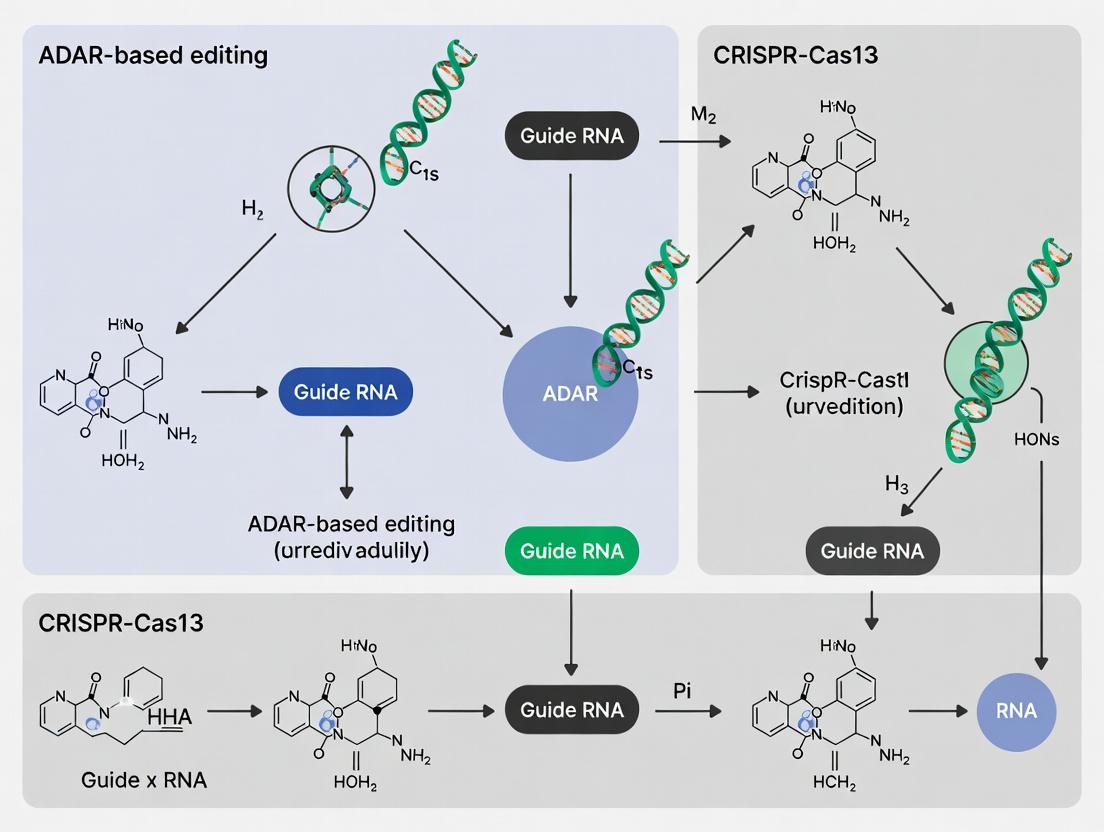
This comprehensive review explores the two leading platforms for programmable RNA editing: endogenous ADAR enzyme-based systems and the prokaryotic-derived CRISPR-Cas13 machinery.
RNA Editing Face-Off: ADAR vs. CRISPR-Cas13 - Mechanisms, Applications, and the Future of Therapeutic RNA Modification
Abstract
This comprehensive review explores the two leading platforms for programmable RNA editing: endogenous ADAR enzyme-based systems and the prokaryotic-derived CRISPR-Cas13 machinery. Aimed at researchers and drug development professionals, we dissect their foundational biology, contrasting mechanisms of action, and critical molecular components. The article details current methodological workflows for experimental setup and therapeutic application, addressing common challenges in efficiency, specificity, and delivery. We provide a direct, evidence-based comparison of their key performance metrics—precision, off-target effects, immunogenicity, and delivery logistics—for informed platform selection. Finally, we synthesize validation strategies and forecast the translational trajectory of these technologies, highlighting their distinct roles in expanding the toolkit for precision medicine and genetic disorder therapeutics.
Decoding the Core: Fundamental Biology of ADAR and CRISPR-Cas13 RNA-Editing Systems
Adenosine Deaminases Acting on RNA (ADARs) are endogenous enzymes that catalyze the deamination of adenosine to inosine (A-to-I) in double-stranded RNA (dsRNA) substrates. This fundamental RNA editing mechanism diversifies the transcriptome and regulates innate immunity. Within the broader thesis comparing endogenous RNA editing tools (ADARs) with exogenous programmable systems (CRISPR-Cas13), ADARs represent a naturally evolved, minimally invasive editing platform with inherent cellular localization and regulatory controls. This guide compares the performance, specificity, and applicability of endogenous ADAR isoforms against the engineered CRISPR-Cas13 systems for therapeutic RNA modulation.
Comparative Performance: ADAR Isoforms vs. CRISPR-Cas13 Systems
Table 1: Core Functional Comparison
| Feature | ADAR1 (p150 & p110) | ADAR2 | ADAR3 (Inactive) | CRISPR-Cas13 (e.g., Cas13d) |
|---|---|---|---|---|
| Primary Function | A-to-I editing; Immune silencing (p150) | A-to-I editing; Neurotransmission regulation | Dominant-negative regulator; Brain-specific | Programmable RNA cleavage (knockdown) or binding (modulation) |
| Catalytic Activity | Constitutive (p110) & Inducible (p150) | High in specific substrates | Catalytically inactive | RNA-guided RNase activity (for cleavage variants) |
| Targeting Specificity | Sequence context (5' neighbor preference) & dsRNA structure | Specific loop structures (e.g., GluR-B Q/R site) | Binds dsRNA; no editing | Defined by ~64 nt crRNA spacer; high on-target |
| Off-Target Effects | Widespread promiscuous editing in long dsRNA (p150) | More selective | May inhibit off-targets of ADAR1/2 | Collateral RNA cleavage (mitigated in engineered variants) |
| Therapeutic Prime Use | Up-regulation of protein (e.g., stop codon removal), immune evasion | Correcting point mutations (e.g., in neurology) | Potential inhibitor of excessive editing | RNA knockdown, viral RNA targeting, diagnostic detection |
| Delivery Challenge | Large size (~120-150 kDa active domain) | Large size | Large size | Smaller payload (~960 aa for Cas13d); AAV compatible |
Table 2: Experimental Performance Data from Recent Studies
| Parameter | ADAR1 (Fusing with dCas13b) | Hyperactive ADAR2 (E488Q) | REPAIR (dCas13b-ADAR2) | Cas13d (RfxCas13d) for Knockdown |
|---|---|---|---|---|
| Editing Efficiency | 20-50% on reporter transcripts | >80% on cognate sites | ~20-40% on HEK site | N/A (Knockdown) |
| On-Target Specificity | Moderate (guided by Cas13) | High (for cognate structure) | High (guided by Cas13) | Very High (PFS dependent) |
| Transcriptome-wide Off-Targets | Low A-to-I outside target region | Low (natural substrate selectivity) | Minimal off-target editing | Minimal collateral activity (recent engineered variants) |
| Key Reference | Cox et al., Science 2017 | Kuttan & Bass, Mol Cell 2012 | Cox et al., Science 2017 | Konermann et al., Cell 2018 |
Experimental Protocols for Key Comparisons
Protocol 1: Measuring A-to-I Editing Efficiency (ADAR)
Method: Next-Generation Sequencing (NGS) of target RNA region.
- Design: Amplify genomic DNA (gDNA) and complementary DNA (cDNA) from transfected cells using target-specific primers with Illumina adapters.
- Extraction & Reverse Transcription: Isolate total RNA (with DNase I treatment). Synthesize cDNA using a gene-specific primer or random hexamers.
- PCR Amplification: Amplify target site from cDNA and gDNA controls. Use high-fidelity polymerase.
- NGS Library Prep & Sequencing: Purify PCR products, quantify, and prepare sequencing library. Sequence on Illumina MiSeq or HiSeq platform (150 bp paired-end).
- Analysis: Align reads to reference genome. Identify A-to-I changes as A-to-G mismatches in cDNA reads not present in gDNA control. Calculate editing efficiency as (G reads)/(A + G reads) * 100%.
Protocol 2: Assessing Cas13d Knockdown Efficiency & Specificity
Method: RNA-seq for on-target knockdown and collateral effects.
- Transfection: Deliver Cas13d and specific crRNA expression plasmids into HEK293T cells.
- RNA Extraction: At 48-72h post-transfection, extract total RNA using TRIzol.
- RNA-seq Library Preparation: Deplete ribosomal RNA. Generate stranded RNA-seq libraries.
- Sequencing & Analysis: Perform 100 bp paired-end sequencing. Map reads to transcriptome.
- Quantification: Calculate transcripts per million (TPM) for on-target transcript versus a panel of control transcripts. Test for significant depletion of on-target versus global transcriptome changes.
Visualizations
Diagram Title: ADAR vs. Cas13 Core Functional Pathways
Diagram Title: Workflow for Measuring ADAR Editing Efficiency
The Scientist's Toolkit: Key Research Reagent Solutions
Table 3: Essential Reagents for ADAR/Cas13 Research
| Reagent/Material | Function & Application | Example Product/Catalog |
|---|---|---|
| ADAR Expression Plasmids | Deliver wild-type or mutant (e.g., E488Q) ADAR1/2 for overexpression studies. | pCMV-ADAR1-p150 (Addgene #146831) |
| Programmable Editor Systems | Fused dCas13-ADAR for targeted RNA editing (e.g., REPAIR). | psPCAS9y-REPAIR (Addgene #103862) |
| Catalytically Dead Cas13 (dCas13) | RNA-binding scaffold for fusion proteins or interference. | pC0043-Cas13d (Addgene #109049) |
| crRNA/cloning kits | For generating target-specific guide RNAs for Cas13 systems. | Synthetic crRNA oligos; Gibson Assembly kits |
| Editing Reporter Assays | Fluorescent or luminescent readout of successful A-to-I editing (e.g., stop codon removal). | pGL3-GFP-AtoG-STOP (Custom design) |
| High-Fidelity Polymerase | Accurate amplification of cDNA/NGS libraries to avoid false variant calls. | Q5 Hot Start (NEB M0493S) |
| Stranded RNA-seq Kit | Assess transcriptome-wide changes, knockdown, and off-targets. | Illumina Stranded Total RNA Prep |
| Anti-ADAR Antibody | Detect endogenous or overexpressed ADAR protein via WB/IF. | Abcam ab126745 (ADAR1 p150) |
| dsRNA Substrates | In vitro activity assays for recombinant ADAR enzymes. | Synthetic long dsRNA (e.g., 500 bp) |
The field of RNA-targeting therapeutics is dominated by two primary technological platforms: endogenous ADAR (Adenosine Deaminase Acting on RNA) enzymes leveraged for base editing and exogenous bacterial CRISPR-Cas13 systems for RNA knockdown, detection, and editing. This guide provides a comparative analysis, focusing on the origin, classification, and mechanistic action of CRISPR-Cas13 systems, contextualized within the broader research thesis comparing their applicability against ADAR-based approaches for research and drug development.
Origin and Classification of CRISPR-Cas13 Systems
CRISPR-Cas13 systems (Class 2, Type VI) are RNA-guided, RNA-targeting systems discovered in prokaryotic genomes. Unlike DNA-targeting Cas9 or Cas12, Cas13 proteins exclusively target single-stranded RNA (ssRNA). Phylogenetic analysis divides Cas13 into four major subtypes (Cas13a-d), with Cas13a (formerly C2c2) being the first characterized and Cas13d being the smallest, facilitating viral delivery.
Comparative Table 1: Classification and Properties of Cas13 Subtypes
| Subtype | Size (aa) | crRNA Length | Protospacer Flanking Site (PFS) | Representative Origin | Collateral Cleavage Activity |
|---|---|---|---|---|---|
| Cas13a | ~1250 | 64-66 nt | Prefers 3' A, H (not G) | Leptotrichia shahii | Yes (strong) |
| Cas13b | ~1150 | 79-83 nt | Variable, 5' D (not C) | Prevotella sp. | Yes |
| Cas13c | ~1100 | Unknown | Unknown | Eubacterium sineum | Presumed Yes |
| Cas13d | ~930 | 57-60 nt | None | Ruminococcus flavefaciens | Yes |
Mechanism of Action: RNA Targeting and Collateral Cleavage
Cas13 functions through a dual RNA recognition mechanism. The CRISPR RNA (crRNA) spacer sequence guides Cas13 to complementary ssRNA targets. Upon target binding, the HEPN (Higher Eukaryotes and Prokaryotes Nucleotide-binding) domains undergo a conformational change, activating non-specific RNase (collateral) activity. This collateral cleavage of bystander RNA molecules is the basis for sensitive diagnostic tools like SHERLOCK but poses challenges for specific therapeutic knockdown.
Diagram 1: Cas13 RNA Targeting and Collateral Cleavage Mechanism
Performance Comparison: CRISPR-Cas13 vs. ADAR for RNA Modification
Comparative Table 2: CRISPR-Cas13 Systems vs. ADAR-Based Editing
| Feature | CRISPR-Cas13 Systems | Endogenous ADAR-Based Systems |
|---|---|---|
| Origin | Prokaryotic adaptive immune system | Eukaryotic (human) endogenous enzyme family |
| Primary Function | RNA-guided RNA cleavage (knockdown) & detection | Site-specific Adenosine-to-Inosine (A-to-I) deamination |
| Catalytic Core | HEPN RNase domains | Deaminase domain |
| Guide Molecule | CRISPR RNA (crRNA) | Guide RNA (typically antisense oligonucleotide) |
| Editing Outcome | RNA degradation | Nucleotide substitution (A→I read as G) |
| Specificity Challenge | Collateral RNase activity (off-target bystander cleavage) | Off-target deamination within dsRNA regions |
| Therapeutic Delivery | Cas13 protein + crRNA (size varies by subtype) | Engineered ADAR domain + guide RNA (can be smaller) |
| Key Application | Viral RNA knockdown, nucleic acid diagnostics (SHERLOCK) | Correction of G-to-A pathogenic point mutations |
| Representative Efficiency (Experimental) | >90% RNA knockdown in mammalian cells (Cas13d) | ~50% editing efficiency in vivo (optimized systems) |
| Immunogenicity Concern | Bacterial protein may trigger immune response | Human-derived protein domain; lower predicted immunogenicity |
Experimental Protocol: Evaluating Cas13d Knockdown Efficiency vs. RNAi
This protocol measures the performance of RfxCas13d (Cas13d) against a standard small interfering RNA (siRNA) for targeted mRNA knockdown in HEK293T cells.
Materials:
- Plasmid: pXR001-RfxCas13d (Addgene #109049)
- Guide RNA Cloning Oligos: Targeting firefly luciferase (FLuc) and a control (e.g., RLuc)
- Cells: HEK293T expressing FLuc and Renilla luciferase (RLuc) for normalization.
- Transfection Reagent: Lipofectamine 3000.
- siRNA Control: Validated siRNA targeting FLuc mRNA.
- Dual-Luciferase Reporter Assay Kit.
Procedure:
- Guide Cloning: Clone spacers targeting FLuc into the pXR001 vector via BsmBI digestion and ligation.
- Cell Seeding: Seed HEK293T (FLuc+/RLuc+) at 2e5 cells/well in a 24-well plate.
- Transfection: Co-transfect 500 ng of pXR001-gRNA plasmid (or 50 nM siRNA) using Lipofectamine 3000 per manufacturer's instructions. Include non-targeting gRNA/siRNA controls.
- Incubation: Harvest cells 48 hours post-transfection.
- Measurement: Lyse cells and measure FLuc and RLuc activity using the Dual-Luciferase Assay. RLuc normalizes for transfection efficiency.
- Analysis: Calculate % knockdown = (1 - (FLucsample/RLucsample) / (FLuccontrol/RLuccontrol)) * 100.
- Validation: Perform qRT-PCR on extracted mRNA to confirm knockdown at the RNA level.
Diagram 2: Workflow for Cas13d vs. siRNA Knockdown Assay
The Scientist's Toolkit: Key Research Reagent Solutions
Table 3: Essential Reagents for CRISPR-Cas13 Research
| Reagent/Material | Supplier Examples | Function in Research |
|---|---|---|
| Cas13 Expression Plasmids | Addgene (pXR001, pC013) | Mammalian expression of Cas13 subtypes (a, b, d) for knockdown studies. |
| crRNA Cloning Kits | IDT, Synthego | For synthesizing and cloning spacer sequences into expression vectors. |
| Synthetic crRNA & Cas13 Protein | IDT, NEB | For in vitro cleavage assays, diagnostic test development (e.g., SHERLOCK). |
| Dual-Luciferase Reporter Systems | Promega | Gold-standard for quantifying RNA knockdown efficiency in live cells. |
| RNA Extraction Kits (RNase-free) | Qiagen, Zymo Research | Critical for post-knockdown qRT-PCR validation; must inactivate collateral RNase. |
| Nucleotide Analog (N6-Methyladenosine) | BioRad, Cayman Chemical | Used to study impact of RNA modifications on Cas13 binding and cleavage efficiency. |
| HEK293T (FLuc/RLuc) Reporter Cell Line | ATCC, commercial derivates | Standardized cellular background for comparative knockdown experiments. |
| Lipofectamine 3000/RNAiMAX | Thermo Fisher | Transfection reagents for plasmid and siRNA delivery into mammalian cell lines. |
CRISPR-Cas13 systems offer a programmable, precise method for RNA targeting with distinct advantages in multiplexed knockdown and diagnostic applications. However, for therapeutic correction of RNA point mutations, ADAR-based systems provide a more native editing outcome (A-to-I) without causing RNA destruction. The choice between platforms hinges on the research or therapeutic goal: irreversible knockdown (Cas13) versus reversible recoding (ADAR). Emerging engineered Cas13 variants with reduced collateral activity and improved ADAR-guide RNA fusions are pushing the boundaries of specificity and efficacy in RNA-targeting biology.
Within the broader thesis of developing precise RNA-targeting therapeutics, two dominant mechanistic platforms have emerged: endogenous ADAR enzyme hijacking for base editing and exogenous CRISPR-Cas13 systems for RNA cleavage. This guide provides an objective, data-driven comparison of their core performance characteristics, supported by experimental data and methodologies.
Core Mechanism Comparison
Diagram Title: Core Mechanisms of ADAR Editing vs. Cas13 Cleavage
Performance Metrics & Quantitative Comparison
Table 1: Key Performance Characteristics
| Parameter | ADAR-based Editing (e.g., RESTORE) | Cas13-based Knockdown (e.g., RfxCas13d) | Experimental Source |
|---|---|---|---|
| Primary Action | A-to-I (G) substitution | Endonucleolytic cleavage | Cox et al., Science 2017; Abudayyeh et al., Nature 2017 |
| Editing/Knockdown Efficiency (in vitro) | 20-50% (varies by site) | >90% knockdown | Vogel et al., Nucleic Acids Res. 2021; Wessels et al., Mol Cell 2020 |
| On-target Specificity | High (guided by complementary RNA) | Moderate (collateral activity reported) | Yi et al., Cell 2023; Guo et al., Mol Cell 2019 |
| Off-target Effects | Limited off-target editing | Widespread collateral RNA cleavage | Tsuchida et al., Nat Biotechnol. 2023; Kushawah et al., Dev Cell 2020 |
| Delivery Payload Size | ~4.5 kb (ADAR2 deaminase domain + guide) | ~3.8 kb (Cas13d + crRNA) | Katrekar et al., Nat Methods 2022; Konermann et al., Cell 2018 |
| Permanent vs. Reversible | Permanent base change | Transient knockdown (requires sustained delivery) | Wettengel et al., RNA Biol 2017; Mahas et al., RNA Biol 2019 |
| Key In Vivo Model Efficacy | ~30% editing in mouse liver (point correction) | >80% transcript knockdown in mouse brain | Merkle et al., Nat Biotechnol. 2019; Zhou et al., Nat Neurosci. 2023 |
Detailed Experimental Protocols
Protocol 1: Measuring ADAR Editing Efficiency & Specificity (Next-Generation Sequencing)
- Design & Transfection: Co-transfect HEK293T cells with plasmids expressing (a) an engineered ADAR2(E488Q) mutant tethered to an MS2 coat protein and (b) a guide RNA containing MS2 stem-loops and a 30-nt complementary region to the target mRNA site.
- RNA Harvest: 48 hours post-transfection, extract total RNA using TRIzol reagent. Treat with DNase I.
- RT-PCR & Amplicon Library Prep: Generate cDNA using gene-specific primers. Perform PCR with overhang primers containing Illumina adapter sequences. Use a high-fidelity polymerase to minimize amplification errors.
- Sequencing & Analysis: Purify amplicons and sequence on an Illumina MiSeq (2x250 bp). Align reads to the reference. Quantify editing efficiency as the percentage of reads with G (or I) at the target adenosine position versus total reads. Assess off-targets by analyzing sequence similarity regions in the transcriptome.
Protocol 2: Assessing Cas13d Knockdown & Collateral Activity (qRT-PCR & RNA-Seq)
- Ribonucleoprotein (RNP) Assembly: Chemically synthesize and HPLC-purify crRNA targeting a specific exon. Complex recombinant Cas13d protein (e.g., RfxCas13d) with the crRNA at a 2:1 molar ratio in buffer for 20 min at 25°C.
- Cell Delivery: Deliver the RNP complex into a relevant cell line (e.g., HAP1) via lipofection or electroporation.
- Dual RNA Extraction: Harvest cells at 24h and 72h. Split lysate: one half for total RNA-seq library prep (to assess transcriptome-wide collateral effects), the other half for qRT-PCR.
- qRT-PCR: Perform reverse transcription and TaqMan qPCR for the target transcript and a panel of housekeeping/control transcripts (e.g., GAPDH, ACTB, non-targeted mRNAs).
- Data Analysis: Calculate knockdown efficiency via the ΔΔCt method. For RNA-seq, map reads and analyze differential gene expression. Significant upregulation of interferon-stimulated genes (ISGs) may indicate collateral sensing.
The Scientist's Toolkit: Key Research Reagents
Table 2: Essential Reagents for ADAR vs. Cas13 Research
| Reagent / Solution | Function / Application | Example Vendor/Catalog |
|---|---|---|
| pCMV-ADAR2dd(E488Q)-MS2 | Plasmid expressing engineered, guide-recruitable deaminase core. | Addgene #138469 |
| Chemically Modified Guide RNA | Enhances stability and recruitment for ADAR editing; includes targeting sequence and hairpin scaffolds. | Synthesized (IDT, Sigma) |
| Recombinant His-tagged RfxCas13d | Purified protein for in vitro cleavage assays or RNP formation. | lab-made or commercial (e.g., GenScript) |
| Target-Specific crRNA | Guides Cas13 to specific RNA sequence; often chemically modified at 3' ends. | Synthesized (IDT) |
| TRIzol Reagent | For simultaneous RNA/DNA/protein extraction from transfected or treated cells. | Thermo Fisher |
| DNase I (RNase-free) | Critical for removing genomic DNA contamination prior to RT-PCR or RNA-seq. | NEB, Thermo Fisher |
| High-Fidelity PCR Polymerase | For accurate amplification of target loci for NGS-based editing efficiency quantification. | Q5 (NEB), KAPA HiFi |
| Ribonuclease Inhibitor | Protects RNA during handling and reverse transcription, crucial for Cas13 studies. | Protector (Roche), RNasin |
| Dual-Luciferase Reporter System | Quantifies on-target efficiency and off-target collateral activity in a controlled setup. | Promega |
Pathway & Experimental Workflow
Diagram Title: Decision Workflow for RNA-Targeting Platform Selection
ADAR-mediated editing offers a precise, permanent base conversion with minimal collateral impact but currently faces efficiency ceilings. Cas13 systems provide potent, rapid knockdown but raise concerns about specificity due to collateral RNAse activity. The choice hinges on the application: genetic correction versus transcript elimination. Advances in guide design, enzyme engineering, and delivery are rapidly evolving the performance profiles of both platforms.
Within the burgeoning field of RNA-targeting therapeutics, two principal systems have emerged: ADAR (Adenosine Deaminase Acting on RNA)-based editing and CRISPR-Cas13 systems. The efficiency, specificity, and applicability of these platforms hinge on their core components: the guide RNA molecules, the engineered effector enzymes, and their requisite cofactors. This guide provides an objective comparison of these components, supported by experimental data, to inform researchers and drug development professionals.
Guide RNAs: Antisense Oligonucleotides vs. crRNAs
The guide molecule is the target-recognition component, dictating specificity.
Antisense Oligos (for ADAR editing): These are chemically modified single-stranded oligonucleotides that hybridize to the target mRNA. They are typically designed to form a mismatch (typically an A-C mismatch) opposite the adenosine to be edited, recruiting endogenous or engineered ADAR enzymes.
crRNAs (for CRISPR-Cas13): These are CRISPR RNAs, part of a two-RNA complex (crRNA:tracrRNA) or a single-guide RNA (sgRNA). They contain a spacer sequence complementary to the target RNA and a scaffold sequence that binds the Cas13 protein, forming an active surveillance complex.
Quantitative Comparison Table: Guide RNA Properties
| Property | Antisense Oligo (ADAR guide) | crRNA (Cas13 guide) |
|---|---|---|
| Structure | Single-stranded, chemically modified (e.g., 2'-O-methyl, PS backbone) | Double-stranded region (scaffold) + single-stranded spacer |
| Length (nt) | Typically 20-35 nt | Spacer: ~22-30 nt; Full sgRNA: ~64-66 nt (Cas13d) |
| Design Constraint | Must create an A-C mismatch at edit site; flanking structures can enhance efficiency. | Requires a protospacer flanking sequence (PFS) for some Cas13 variants (e.g., Cas13a). |
| Delivery Format | Chemically synthesized; often co-delivered with enzyme or encoded separately. | Often expressed from a plasmid or viral vector in vivo. |
| Primary Function | Recruit ADAR to a specific adenosine for deamination (A->I). | Direct Cas13 for target RNA binding and cleavage (or cleavage inhibition). |
Supporting Data: A 2023 study in Nucleic Acids Research systematically compared editing efficiency using various ASO designs for ADAR recruitment. Table 1 summarizes key findings:
Table 1: ADAR Editing Efficiency by ASO Design (HeLa Cells)
| ASO Chemistry | Edit Site Mismatch | Average Editing Efficiency (%) | Off-target Events (RNA-seq) |
|---|---|---|---|
| Fully 2'-O-Methyl | A-C | 45 ± 12 | 12 |
| PS backbone + 2'-O-Me | A-C | 52 ± 8 | 18 |
| Gapmer Design | A-C | 28 ± 10 | 5 |
| LNA-modified | A-C | 60 ± 6 | 25 |
Protocol Note: ASOs (200 nM) were transfected into HeLa cells stably expressing a catalytically impaired, engineered ADAR2 (E488Q). Total RNA was harvested 48h post-transfection. Editing efficiency was quantified by Sanger sequencing and RNA-seq for off-target analysis.
Engineered Enzymes: ADAR vs. Cas13
The effector enzyme executes the desired function—deamination or cleavage.
Engineered ADAR Deaminases: Typically, the catalytic domain of human ADAR2 (hADAR2) is engineered. Key modifications include: 1) Mutations to reduce innate activity and specificity (E488Q), 2) Fusion to dsRNA-binding domains (dsRBDs) to improve guide RNA binding, and 3) Mutations to alter sequence preference (e.g., TadA-ADAR fusions for broader sequence context).
CRISPR-Cas13 Enzymes: A family of proteins (Cas13a, Cas13b, Cas13d) with HEPN-domain mediated RNase activity. They are engineered for reduced collateral cleavage (e.g., catalytically dead dCas13 for binding), improved specificity (high-fidelity variants), and altered PFS requirements.
Quantitative Comparison Table: Engineered Enzyme Properties
| Property | Engineered ADAR (e.g., miniADAR2dd) | Engineered Cas13 (e.g., Cas13d/dCas13d) |
|---|---|---|
| Native Function | Adenosine deamination to inosine (A->I). | Sequence-specific RNA cleavage (collateral activity in wild-type). |
| Common Engineering Goals | Reduce basal editing, enhance guide recruitment, broaden sequence context tolerance. | Ablate collateral cleavage (dCas13), enhance specificity, alter PFS. |
| Size (aa) | ~450-900 aa (depending on deaminase and fusion constructs) | ~930-1150 aa (Cas13d) |
| Key Mutations/Variants | E488Q (hADAR2), G1007R (broad context), TadA-ADAR fusions. | RXXXXH (HEPN domain mutations for catalytically dead dCas13). |
| Delivery | Often delivered as mRNA or encoded via AAV. | Typically delivered as plasmid DNA or via viral vectors. |
Supporting Data: A 2022 comparative study in Cell Reports evaluated on-target efficiency and transcriptome-wide fidelity of next-generation editors.
Table 2: On-target vs. Off-target Performance
| Editor System | On-target Efficiency (% Editing or Knockdown) | Transcriptome-wide Off-targets (Δ vs. Control) | Key Metric |
|---|---|---|---|
| ADAR2dd (ASO-guided) | 58% editing (GFP reporter) | 15 differentially expressed genes (DEGs) | High precision in coding regions |
| High-Fidelity Cas13d | 92% knockdown (target mRNA) | 42 DEGs | Potent knockdown, moderate off-transcript effects |
| dCas13-Repressor | 85% repression (translation) | 8 DEGs | High specificity, no cleavage |
Protocol Note: Experiments were conducted in HEK293T cells. For ADAR: Cells were co-transfected with editor plasmid and ASO. Editing was assessed by next-generation sequencing (NGS) of the target locus. For Cas13: Cells were transfected with Cas13 and sgRNA expression plasmids. Knockdown was measured by RT-qPCR. Transcriptome-wide analysis was performed via RNA-seq 72h post-transfection.
Required Cofactors
Cofactors are essential for catalytic activity but not for target binding.
ADAR System Cofactors: The primary cofactor is double-stranded RNA (dsRNA). The editing reaction itself requires a water molecule and zinc ion (Zn²⁺) in the active site, which are typically present in the cellular environment. No additional small-molecule cofactors are required.
CRISPR-Cas13 System Cofactors: Cas13 proteins require magnesium ions (Mg²⁺) for stabilization of the RNA-protein complex and for the catalytic cleavage activity of the HEPN domains. Like ADAR, this is readily available intracellularly.
Comparative Table: Cofactor Requirements
| Cofactor | Role in ADAR Editing | Role in CRISPR-Cas13 | Typical Experimental Supplementation |
|---|---|---|---|
| dsRNA Structure | Essential for ADAR binding and activity; created by guide-target hybridization. | Not required for Cas13 binding; target is single-stranded. | N/A |
| Divalent Cations (Mg²⁺) | Not directly catalytic but can influence structure. | Essential for catalytic cleavage and complex stability. | Included in reaction buffers (e.g., 1-10 mM). |
| Zinc (Zn²⁺) | Catalytic cofactor in the deaminase active site. | Not required. | Not supplemented; assumed from cellular pool. |
The Scientist's Toolkit: Research Reagent Solutions
| Reagent / Material | Function in Research |
|---|---|
| Chemically Modified ASOs | Provide nuclease resistance and enhance ADAR recruitment for RNA editing. |
| sgRNA Expression Clones | Plasmids (e.g., U6 promoter-driven) for consistent expression of Cas13 guide RNAs in cells. |
| Engineered ADAR Expression Vector | Plasmid or mRNA encoding the mutant ADAR deaminase (e.g., ADAR2dd). |
| Cas13 Nuclease Expression Vector | Plasmid encoding the chosen Cas13 variant (wild-type, dCas13, high-fidelity). |
| RNA-seq Library Prep Kit | Essential for transcriptome-wide analysis of on-target efficacy and off-target effects. |
| In Vitro Transcription Kit | For producing target and guide RNAs for biochemical characterization of enzyme kinetics. |
| Nuclease-Free Buffer w/ Mg²⁺ | Essential for maintaining Cas13 activity in in vitro cleavage assays. |
| High-Fidelity DNA Polymerase | For amplifying target loci from genomic/cDNA for NGS-based editing efficiency quantification. |
| Lipid-Based Transfection Reagent | For efficient delivery of plasmids, mRNAs, and ASOs into mammalian cell lines. |
| AAV Serotype Vector | For in vivo delivery of editor components in animal models. |
Visualizations
Title: ADAR Editing Mechanism Guided by ASO
Title: CRISPR-Cas13 Binding and Cleavage Pathway
Title: Comparative Experimental Workflow
Thesis Context: ADAR vs. CRISPR-Cas13 in RNA-Targeting Therapies
The exploration of native RNA-modifying systems has bifurcated into two major therapeutic research pathways: the eukaryotic ADAR (Adenosine Deaminase Acting on RNA) system for site-directed recoding and the prokaryotic CRISPR-Cas13 system for viral defense repurposed as an RNA-targeting tool. This guide compares their core mechanisms, performance parameters, and suitability for specific research and therapeutic applications.
Performance Comparison: ADAR versus CRISPR-Cas13 Systems
The following table summarizes key performance characteristics based on recent experimental studies.
Table 1: Core System Comparison
| Feature | ADAR-Based Editing (e.g., RESTORE/LEAPER) | CRISPR-Cas13 (e.g., Cas13d) | Experimental Data Source |
|---|---|---|---|
| Native Biological Role | A-to-I RNA editing; regulation of splicing, miRNA targeting, innate immunity. | Prokaryotic adaptive immune system; defense against RNA viruses and plasmids. | (Cox et al., 2017 Science; Abudayyeh & Gootenberg, 2017 Nature) |
| Primary Research Application | Transcript-specific A-to-G (I) point mutations; splice modulation. | RNA knockdown, degradation, imaging, or base editing (when fused). | (Qu et al., 2019 Nature Biotech; Abudayyeh et al., 2019 Science) |
| Catalytic Action | Deamination of adenosine to inosine (read as guanosine). | Sequence-specific binding and collateral RNase activity (crRNA-dependent). | (Merkle et al., 2019 Cell; Smargon et al., 2017 Mol Cell) |
| Delivery Format | Engineered guide RNA (arRNA) + endogenous ADAR; or fusion protein (dCas13-ADAR). | Cas13 protein + CRISPR RNA (crRNA). | (Katrekar et al., 2022 Nature Methods; Wessels et al., 2020 Cell) |
| Multiplexing Capacity | High (multiple arRNAs). | High (multiple crRNAs). | (Yi et al., 2022 Cell Discovery; Abudayyeh et al., 2017 Nature) |
| Off-Target Effects (RNA) | Moderate (due to ADAR's inherent promiscuity on dsRNA). | High collateral trans-cleavage activity (for wild-type); engineered variants reduce this. | (Metzger et al., 2023 Nat Comm; Kushawah et al., 2020 Sci Adv) |
| Immunogenicity (In Vivo) | Low (uses human protein). | Higher (bacterial protein may trigger immune response). | (Wroblewska et al., 2022 Sci. Transl. Med.) |
| Key Efficiency Metric | Editing efficiency: 10-80% (varies by site, cell type, delivery). | Knockdown efficiency: >90% reduction in target RNA possible. | (Katrekar et al., 2023 Cell Rep Med; Ai et al., 2022 Mol Ther) |
Table 2: Therapeutic Application Suitability
| Application | Preferred System | Rationale & Supporting Data |
|---|---|---|
| Correcting Point Mutations | ADAR | Direct, programmable A-to-I conversion corrects G-to-A mutations. Clinical trial for α-1-antitrypsin deficiency (NCT05120830). |
| Splicing Modulation | ADAR | Editing at splice sites can alter splice donor/acceptor recognition. Demonstrated for Hurler syndrome models. |
| High-Efficiency RNA Knockdown | Cas13 | Potent RNase activity leads to rapid degradation of viral or disease-associated RNA (e.g., SARS-CoV-2, oncogenes). |
| RNA Imaging/Live Tracking | Cas13 (catalytically dead) | dCas13 fused to fluorescent proteins enables precise RNA visualization with low background. |
| Minimizing Collateral Damage | Engineered ADAR or dCas13 | Use of hyperactive but specific ADAR variants (e.g., ADAR2dd) or catalytically dead Cas13 fusions. |
Experimental Protocols
Protocol 1: Measuring ADAR Editing Efficiency via Next-Generation Sequencing
- Design & Transfection: Design and synthesize antisense guide RNA (arRNA) targeting the adenosine of interest. Co-transfect HEK293T cells with arRNA (e.g., 100 nM) using lipid nanoparticles (LNPs) or electroporation.
- RNA Harvest: 48-72 hours post-transfection, extract total RNA using TRIzol reagent.
- Reverse Transcription & PCR: Perform RT-PCR to generate cDNA encompassing the target site. Use high-fidelity polymerase.
- Amplicon Sequencing: Purify PCR product, prepare NGS library, and sequence on an Illumina MiSeq platform.
- Analysis: Align reads to reference genome. Calculate editing efficiency as (G reads / (A reads + G reads)) * 100% at the target locus.
Protocol 2: Assessing Cas13d Knockdown Efficacy and Collateral Activity
- Dual-Luciferase Reporter Assay: Co-transfect cells with: a) Cas13d expression plasmid, b) crRNA expression plasmid targeting Firefly luciferase (FLuc) mRNA, c) FLuc reporter plasmid, and d) Renilla luciferase (RLuc) reporter plasmid as an internal control for collateral trans-cleavage.
- Cell Lysis & Measurement: 48 hours post-transfection, lyse cells and measure FLuc and RLuc activities sequentially using a dual-luciferase assay kit.
- Calculation: Normalize FLuc signal to RLuc signal for each sample. Compare to crRNA-negative control. Specific knockdown = reduced FLuc/RLuc ratio. Collateral effect = reduction in RLuc signal alone.
Visualizations
Title: ADAR RNA Editing Mechanism for Point Mutation Correction
Title: Cas13d RNA Targeting and Collateral Cleavage
The Scientist's Toolkit: Research Reagent Solutions
Table 3: Essential Reagents for RNA-Targeting Research
| Reagent/Material | Function in Research | Example Use Case |
|---|---|---|
| Chemically Modified arRNAs | Enhance stability, reduce immunogenicity, and improve editing efficiency for ADAR recruitment. | In vivo delivery for correcting point mutations in animal models. |
| Hyperactive ADAR2 Mutant (e.g., ADAR2dd) | Engineered deaminase domain with increased activity on dsRNA structures. | Improving baseline editing efficiency in ADAR-fusion systems. |
| High-Specificity Cas13d Variants (e.g., Cas13d.1) | Mutants with reduced collateral trans-cleavage activity while maintaining target knockdown. | Minimizing off-target effects in transcriptome for therapeutic knockdown. |
| Dual-Luciferase Reporter Kits | Quantitatively measure target knockdown and collateral cleavage simultaneously. | Screening for specific vs. non-specific Cas13 crRNAs. |
| dCas13-ADAR Fusion Constructs | Combine programmable RNA targeting (dCas13) with A-to-I editing (ADAR domain). | For C-to-U or other non-A-to-I editing when fused with other enzymes. |
| LNPs for RNA Delivery | Efficient, in vivo deliverable carriers for guide RNAs and/or messenger RNA encoding editors. | Systemic delivery of ADAR guides or Cas13 mRNA for liver-targeted therapies. |
| Amplicon-Seq NGS Kits | High-sensitivity, quantitative measurement of editing rates at target and potential off-target sites. | Profiling on-target efficiency and transcriptome-wide off-targets for both systems. |
From Bench to Bedside: Experimental Design and Therapeutic Applications for RNA Editing Platforms
Comparison Guide: ADAR-Guiding Oligonucleotides for Targeted A-to-I Editing
This guide compares the performance of various chemically modified ADAR-guiding oligonucleotides, often called "Guide Oligos" or "Gapmers," designed to recruit endogenous ADAR enzymes for precise adenosine-to-inosine (A-to-I) RNA editing. In the broader thesis of ADAR-based RNA editing versus CRISPR-Cas13 systems, the key distinction lies in ADAR's use of endogenous enzymes versus Cas13's exogenous bacterial ribonuclease, impacting immunogenicity and delivery.
Performance Comparison Table: Chemical Modifications & Editing Efficiency
| Oligo Platform (Vendor/Reference) | Chemical Modification Pattern | Primary Target | Avg. Editing Efficiency (In Vitro, HEK293T) | Off-target Rate (Transcriptome-wide) | Key Functional Advantage |
|---|---|---|---|---|---|
| Standard 2'-O-Methyl (2'OMe) Gapmer | 2'OMe wings, DNA gap | FLNA W (A>I) | ~35% | Moderate (0.5-1.0% at similar sites) | Baseline, well-characterized. |
| 2'OMe/Phosphorothioate (PS) Backbone | 2'OMe wings with PS linkages | FLNA W (A>I) | ~40% | Moderate (0.5-1.0%) | Enhanced nuclease resistance and cellular uptake. |
| Locked Nucleic Acid (LNA) Gapmer | LNA wings, DNA gap | FLNA W (A>I) | ~55% | Higher (1.5-2.0%) | High binding affinity, increased efficiency & risk of off-targets. |
| Bridged Nucleic Acid (BNA) / cEt Variant | cEt wings, DNA gap | FLNA W (A>I) | ~60% | Higher (1.5-2.0%) | Superior affinity and stability, highest efficiency. |
| Peptide-Conjugated Oligo (PCO) | 2'OMe/PS with cell-penetrating peptide | FLNA W (A>I) | ~50% (in difficult cells) | Moderate (0.5-1.0%) | Enables delivery without transfection reagents. |
Experimental Protocol for Assessing Editing Efficiency
Objective: Quantify on-target A-to-I editing efficiency of various guide oligonucleotides. Materials: HEK293T cells, Lipofectamine 3000, synthetic guide oligonucleotides (1 µM stock), TRIzol reagent, RT-PCR kit, high-fidelity DNA polymerase, Sanger sequencing or Next-Generation Sequencing (NGS) platform. Method:
- Cell Seeding & Transfection: Seed HEK293T cells in 24-well plates. At 70% confluence, transfect with 50 nM of each guide oligonucleotide using Lipofectamine 3000 per manufacturer's protocol. Include a non-targeting oligonucleotide control.
- RNA Extraction: 48 hours post-transfection, lyse cells with TRIzol. Isolate total RNA and treat with DNase I.
- RT-PCR & Amplicon Generation: Design primers flanking the target adenosine site. Perform reverse transcription followed by PCR amplification.
- Editing Analysis: Purify PCR products. Submit for Sanger sequencing and analyze chromatogram for A-to-G (I) signal decompensation, or prepare NGS libraries for deep sequencing to quantify precise editing percentage and identify potential off-targets.
- Data Quantification: Calculate editing efficiency as (G peak height / (A peak height + G peak height)) * 100% from Sanger, or as % of reads containing G at the position from NGS.
Comparison Guide: Cas13-crRNA Expression Cassette Architectures
This guide compares different genetic designs for expressing the Cas13 protein and its cognate CRISPR RNA (crRNA) within mammalian cells. For therapeutic or research applications, the optimization of these cassettes is critical for efficiency and specificity, contrasting with the simpler delivery of synthetic ADAR guides.
Performance Comparison Table: Expression Cassette Designs
| Cassette Design & Promoter Strategy | Cas13 Ortholog | crRNA Expression Method | On-target Knockdown Efficiency (Reporter, HeLa) | Collateral Activity (Non-specific RNAse) | Relative Size (bp) | Key Advantage |
|---|---|---|---|---|---|---|
| Dual Pol II U6 + CMV | PspCas13b | Separate U6 (crRNA) + CMV (Cas13) plasmids | 85% | Low/Contained | ~12,000 | Standard, modular. |
| Single T7 Polymerase System (in vitro) | LwaCas13a | T7-driven co-transcription | 90% (in vitro) | High if uncaged | N/A | High yield for RNP formation. |
| All-in-One Pol II Vector | RfxCas13d | Single CMV driving Cas13 & crRNA array via ribozyme processing | 80% | Low | ~7,500 | Compact, ideal for AAV delivery. |
| tRNA-gRNA Polymerase III System | PguCas13b | U6 promoter expressing pre-tRNA scaffold with embedded crRNA | 88% | Low | ~9,500 | Enhanced crRNA processing & stability. |
| Inducible (Doxycycline) System | Cas13d | TRE3G promoter for Cas13, U6 for crRNA | 85% (upon induction) | Low/Controlled | ~13,000 | Enables temporal control of editing. |
Experimental Protocol for Testing Cassette Efficiency
Objective: Measure RNA knockdown efficiency of different Cas13-crRNA expression cassettes. Materials: HeLa cells, plasmid DNA constructs, transfection reagent, dual-luciferase reporter assay kit (e.g., Promega), renilla luciferase control plasmid, microplate reader. Method:
- Reporter Assay Setup: Co-transfect HeLa cells in a 96-well plate with: a) 50 ng of firefly luciferase reporter plasmid containing the target RNA sequence, b) 10 ng of renilla luciferase control plasmid (transfection control), and c) 200 ng of the Cas13-crRNA expression plasmid (test) or a non-targeting crRNA control.
- Harvest & Lysis: 48 hours post-transfection, remove media and lyse cells with passive lysis buffer.
- Luciferase Measurement: Transfer lysate to a white plate. Inject firefly luciferase substrate, read luminescence. Then inject renilla substrate, read luminescence.
- Data Analysis: Normalize firefly luminescence to renilla luminescence for each well. Calculate % knockdown relative to the non-targeting crRNA control:
(1 - (Normalized FLuc sample / Normalized FLuc control)) * 100%. - Specificity Validation: Run RT-qPCR on essential housekeeping genes (e.g., GAPDH, ACTB) from parallel samples to assess non-specific collateral RNA degradation.
The Scientist's Toolkit: Key Research Reagent Solutions
| Item | Function & Application |
|---|---|
| 2'-O-Methyl (2'OMe) Oligonucleotides | Standard chemistry for ADAR guide oligos; provides nuclease resistance and guides ADAR to target adenosines. |
| Phosphorothioate (PS) Backbone | Replaces non-bridging oxygen with sulfur in oligonucleotide backbone; increases stability against nucleases and improves tissue uptake. |
| Lipofectamine 3000 | Cationic lipid-based transfection reagent for efficient delivery of oligonucleotides and plasmids into mammalian cell lines. |
| Dual-Luciferase Reporter Assay System | Quantifies gene expression/knockdown by measuring firefly and control renilla luciferase activity; critical for Cas13 efficacy testing. |
| T7 RNA Polymerase Kit | For in vitro transcription of crRNAs and Cas13 mRNA; enables generation of components for Ribonucleoprotein (RNP) delivery. |
| AAVpro Helper Free System (Takara) | Produces adeno-associated virus for delivering all-in-one Cas13 expression cassettes in vivo. |
| NEBNext Small RNA Library Prep Kit | Prepares RNA-seq libraries for high-throughput sequencing to assess on/off-target effects of ADAR and Cas13 editors. |
| Ribonuclease R (RNase R) | Digests linear RNA; used in circular RNA (circRNA) studies relevant to Cas13 collateral activity assessment. |
Visualizations
Title: ADAR Guide Oligo vs. Cas13 System Workflow
Title: Cas13-crRNA Expression Cassette Designs
Title: ADAR-Guided Oligonucleotide Editing Mechanism
Within the burgeoning field of RNA editing therapeutics, the delivery system is a critical determinant of efficacy and safety. This guide objectively compares four major delivery platforms—Adeno-Associated Virus (AAV), Lentivirus, Lipid Nanoparticles (LNPs), and novel polymeric/inorganic nanoparticles—specifically in the context of delivering ADAR-based editors or CRISPR-Cas13 systems. The choice of vehicle profoundly impacts tropism, payload capacity, immunogenicity, and editing durability.
Comparative Performance Data
Table 1: Key Quantitative Parameters of Delivery Vehicles for RNA Editing Systems
| Parameter | AAV | Lentivirus | LNPs | Novel Nanoparticles (e.g., Polymeric) |
|---|---|---|---|---|
| Typical Payload Capacity | ~4.7 kb | ~8 kb | >10 kb (mRNA) | Highly tunable, ~2-10 kb |
| Transduction Efficiency (In Vitro) | Moderate to High (serotype-dependent) | Very High | High (varies with formulation) | Low to Moderate (improving) |
| In Vivo Tropism | Broad, serotype-specific (e.g., AAV9 crosses BBB) | Broad, can target dividing/non-dividing cells | Primarily liver (systemic); lung/spleen (alternative routes) | Tunable via surface ligand modification |
| Immune Response | Pre-existing immunity common; capsid immunogenicity | Risk of insertional mutagenesis; vector immunogenicity | Reactogenic (acute); anti-PEG immunity | Lower immunogenicity potential (material-dependent) |
| Onset of Expression | Slow (weeks) | Moderate (days) | Rapid (hours) | Rapid to Moderate |
| Duration of Expression | Persistent (years in non-dividing cells) | Stable (genomic integration) | Transient (days to weeks) | Transient to Semi-Persistent |
| Manufacturing Scalability | Complex, costly | Complex, biosafety concerns | Highly scalable (established for COVID-19 vaccines) | Scalable, but process-dependent |
| Key Advantage for RNA Editing | Sustained editor expression for chronic conditions | Stable integration for ex vivo cell engineering | High payload, transient for safety, rapid iteration | Modular design, tunable release kinetics |
| Key Limitation for RNA Editing | Limited cargo space for large editors + regulatory RNA; immunogenicity | Safety concerns for in vivo use; over-expression risk | Primarily hepatic delivery; reactogenicity | Lower efficiency; less defined in vivo profile |
Data synthesized from recent (2023-2024) pre-clinical and clinical studies on editor delivery.
Experimental Protocols for Key Comparisons
Protocol 1: In Vivo Tropism and Editing Efficiency Analysis
Objective: Compare liver vs. extra-hepatic delivery of ADAR editor mRNA via AAV8 vs. novel LNPs.
- Formulation: Package a chemically modified mRNA encoding an ADAR deaminase domain (e.g., miniADAR) and a guide RNA into both AAV8 capsids and ionizable LNPs.
- Animal Administration: Systemically inject C57BL/6 mice (n=8/group) with equivalent RNA doses (1e12 vg for AAV, 0.5 mg/kg mRNA for LNP).
- Tissue Harvest: At 7 days (LNP) and 28 days (AAV) post-injection, collect liver, heart, lung, spleen, and brain.
- Quantification:
- Biodistribution: Measure editor mRNA levels via qRT-PCR.
- Editing Efficiency: Extract total RNA, perform RT-PCR on a known target site (e.g., GluA2 Q/R site for neurological apps), and analyze by Sanger sequencing or deep sequencing to calculate editing percentage.
- Analysis: Compare peak editing efficiency and tissue distribution profiles.
Protocol 2: Immune Profiling of Repeated Administration
Objective: Assess anti-vector immunity hindering re-dosing of AAV vs. LNP for Cas13d delivery.
- Prime Administration: Administer a sub-therapeutic dose of AAV9-Cas13d or LNP-Cas13d mRNA to BALB/c mice (n=6/group).
- Immune Monitoring: At day 14, collect serum. Analyze for anti-capsid (AAV) or anti-PEG (LNP) IgG antibodies via ELISA.
- Challenge Administration: At day 21, administer a therapeutic dose of the same formulation carrying a reporter mRNA (e.g., luciferase).
- Efficacy Readout: 24 hours later, image luciferase expression in vivo. Compare luminescence to a naive control group receiving only the challenge dose.
- Analysis: Significant reduction in reporter signal indicates neutralizing antibody formation.
Key Diagrams
Diagram 1: Decision Workflow for Selecting an RNA Editor Delivery Vehicle
Diagram 2: Key Pathways in Cellular Uptake and Endosomal Escape
The Scientist's Toolkit: Key Reagent Solutions
Table 2: Essential Research Reagents for Delivery Vehicle R&D
| Reagent / Material | Function in Research | Example Application |
|---|---|---|
| Ionizable Cationic Lipids (e.g., DLin-MC3-DMA, SM-102) | Core component of LNPs; protonates in endosome to enable membrane disruption and payload release. | Formulating LNP for Cas13d mRNA delivery. |
| Polyethylenimine (PEI) & PEG-Polymers | Polymeric transfection agents; condense nucleic acids and promote endosomal escape via "proton sponge" effect. | Forming polyplex nanoparticles for plasmid DNA encoding ADAR editors. |
| AAV Serotype Libraries (AAV1-9, PHP.eB, etc.) | Diverse capsids with distinct tropisms for targeting specific tissues (CNS, liver, muscle). | Screening for optimal AAV serotype to deliver guide RNA to neurons. |
| VSV-G or other Pseudotyping Envelopes | Glycoproteins used to pseudotype lentiviral vectors, determining host cell range and stability. | Creating lentivirus for ex vivo engineering of T-cells with an editor. |
| Endosomal Escape Indicators (e.g., Galectin-8 GFP) | Reporter system that detects endosomal membrane damage, allowing quantification of escape efficiency. | Comparing novel nanoparticle formulations to benchmark LNPs. |
| Heparin Sulfate Proteoglycan Inhibitors | Used to confirm AAV entry mechanisms via competitive inhibition of primary receptor binding. | Validating AAV receptor dependence in a new cell line. |
| Anti-PEG or Anti-Capsid Antibodies (ELISA Kits) | Quantify host immune response against delivery vehicle components to assess re-dosing potential. | Profiling immunogenicity in mouse serum post-administration. |
| In Vivo Imaging Reagents (Luciferin, Fluorescent Dyes) | Enable non-invasive tracking of biodistribution and kinetic persistence of delivered reporter genes. | Evaluating LNP vs. AAV-mediated editor expression over time. |
The optimal delivery vehicle for RNA editing systems is application-defined. AAV offers durable expression crucial for lifelong management of genetic disorders but faces payload and immunity hurdles. Lentivirus remains the ex vivo engineering gold standard. LNPs provide a versatile, high-payload, and manufacturable platform for transient editing, with liver tropism a major focus for expansion. Novel nanoparticles offer a customizable frontier for overcoming these limitations. The future of therapeutic RNA editing will likely involve a complementary toolkit of these platforms, each selected to align with specific therapeutic windows, target tissues, and durability requirements inherent to ADAR or Cas13-based approaches.
The selection of a precise gene-editing platform is critical for therapeutic and research applications. Within the landscape of RNA-targeting technologies, ADAR-mediated editing and CRISPR-Cas13 systems represent two dominant approaches, each with distinct workflows and performance characteristics. This guide provides a step-by-step comparison of their experimental implementation, framed within the broader thesis of their relative advantages for reversible versus irreversible transcript modulation.
Comparative Performance Data
Table 1: Key Performance Metrics of ADAR vs. Cas13 Editing Systems
| Metric | ADAR-Based Editing (e.g., RESTORE) | CRISPR-Cas13d (e.g., RfxCas13d) | Experimental Notes |
|---|---|---|---|
| Primary Action | A-to-I (G) nucleotide conversion | RNA cleavage | ADAR edits; Cas13 degrades. |
| Editing Efficiency (in vitro) | 20-80% (highly target-dependent) | >90% knockdown efficiency | Measured by NGS for ADAR; qRT-PCR for Cas13. |
| Multiplexing Capacity | Moderate (guide-dependent) | High (via crRNA arrays) | Cas13 allows simultaneous targeting of multiple transcripts. |
| Off-Target Effects | Limited RNA off-target editing | Transcriptome-wide collateral cleavage | Cas13 collateral activity is a major in vivo concern. |
| Delivery Format (in vivo) | AAV, LNPs for guide + engineered enzyme | AAV, LNPs for Cas13 + crRNA | Both require co-delivery of protein and RNA components. |
| Persistence of Effect | Transient (days to weeks, depends on transcript turnover) | Transient (days, due to RNA degradation) | Both are non-genomic, offering reversible effects. |
Table 2: Workflow Comparison for a Typical Knockdown/Editing Experiment
| Step | ADAR Editing Workflow | CRISPR-Cas13 Workflow |
|---|---|---|
| 1. Target Selection | Require a suitable A (within 5'-Nearest-Neighbor-3' context). | Require a protospacer flanking sequence (PFS), often minimal. |
| 2. Guide RNA Design | Design antisense oligonucleotide guide (~70-110 nt) with complementarity to target and recruiting motif for ADAR. | Design crRNA (~30 nt spacer) with full complementarity to target mRNA. |
| 3. In Vitro Validation | Transfect cells; measure editing efficiency via NGS or targeted sequencing. | Transfect cells; measure knockdown via qRT-PCR and protein assay. |
| 4. In Vivo Delivery | Package guide and engineered ADAR (e.g., ADAR2dd) into AAV or lipid nanoparticles (LNPs). | Package Cas13 nuclease and crRNA expression cassette into AAV or LNPs. |
| 5. Outcome Analysis | Quantify target editing (NGS) and functional protein correction (e.g., ELISA). | Quantify transcript knockdown (qRT-PCR) and phenotypic rescue. |
Experimental Protocols
Protocol 1: In Vitro Validation of ADAR Editing
- Design & Cloning: Clone the target sequence into a reporter plasmid (e.g., GFP with a premature stop codon). Co-clone expression plasmids for engineered ADAR (e.g., ADAR2dd-E488Q) and the specific guide RNA.
- Cell Transfection: Seed HEK293T cells in a 24-well plate. Co-transfect with 250 ng of reporter, 250 ng of ADAR, and 250 ng of guide plasmid using a standard PEI or lipofectamine protocol.
- Harvest & Analysis: Harvest cells 48-72 hours post-transfection. Extract RNA, synthesize cDNA, and perform PCR amplification of the target site. Analyze editing efficiency by Sanger sequencing (tracking A-to-G changes) or next-generation sequencing (NGS).
Protocol 2: In Vitro Validation of CRISPR-Cas13 Knockdown
- crRNA Design & Preparation: Design a crRNA spacer targeting the mRNA of interest. Obtain synthetic crRNA or clone it into a U6-driven expression plasmid.
- Cell Transfection: Seed cells in a 24-well plate. Co-transfect with 500 ng of Cas13 expression plasmid (e.g., pRfxCas13d) and 250 ng of crRNA plasmid or 50 pmol of synthetic crRNA.
- Harvest & Analysis: Harvest cells 48 hours post-transfection. Perform total RNA extraction and cDNA synthesis. Quantify target transcript levels via qRT-PCR using TaqMan probes, normalizing to a housekeeping gene (e.g., GAPDH).
Visualized Workflows and Pathways
Title: ADAR vs Cas13 Core Mechanism & Experimental Pathway
Title: Step-by-Step Progression from In Vitro to In Vivo
The Scientist's Toolkit: Research Reagent Solutions
Table 3: Essential Reagents for Editing Experiments
| Reagent / Solution | Function in ADAR Workflow | Function in Cas13 Workflow |
|---|---|---|
| Engineered ADAR Plasmid (e.g., pADAR2dd-E488Q) | Expresses the catalytic deaminase domain fused to an RNA-binding protein for guide recruitment. | Not applicable. |
| Cas13 Nuclease Plasmid (e.g., pRfxCas13d-NLS) | Not applicable. | Expresses the Cas13 effector protein, often with nuclear localization signals (NLS). |
| Guide RNA Expression Vector (U6 promoter) | Drives expression of long guide RNA for ADAR recruitment. | Drives expression of short crRNA with spacer sequence. |
| Reporter Plasmid (e.g., Stop-codon GFP) | Validates editing efficiency via fluorescence restoration. | Validates knockdown via fluorescence reduction (if target is GFP). |
| Lipofectamine 3000 or PEI | Transfection reagent for in vitro plasmid delivery into mammalian cells. | Transfection reagent for in vitro plasmid delivery into mammalian cells. |
| AAV Serotype (e.g., AAV9, AAVPHP.eB) | In vivo delivery: Package editor/guide constructs for systemic or CNS delivery. | In vivo delivery: Package Cas13/crRNA constructs. |
| Lipid Nanoparticles (LNPs) | In vivo delivery: Formulate chemically modified guide RNAs and ADAR mRNA for hepatic delivery. | In vivo delivery: Formulate Cas13 mRNA and chemically modified crRNAs. |
| Next-Generation Sequencing Kit | Quantifies base conversion efficiency at the target site (A-to-G). | Can assess transcriptome-wide collateral effects. |
| TaqMan qRT-PCR Assay | Secondary validation of editing via allele-specific probes. | Primary validation of transcript knockdown. |
Comparative Analysis: ADAR-Based Editing vs. CRISPR-Cas13 Systems
The development of precise, transient genetic modulators is a critical frontier in therapeutic development. This guide compares two leading RNA-targeting platforms: endogenous ADAR (Adenosine Deaminase Acting on RNA) enzyme-based editing and the bacterial CRISPR-Cas13 system.
Performance Comparison Table
| Parameter | ADAR-Based Editing (e.g., RESTORE, LEAPER) | CRISPR-Cas13 (e.g., Cas13d/RfxCas13d) | Experimental Support |
|---|---|---|---|
| Core Mechanism | Recruit endogenous ADAR to deaminate A->I (read as G). | Programmable RNA cleavage by Cas13 nuclease. | Proof-of-concept: ADAR: [Merkle et al., Nat Biotechnol, 2019] Cas13: [Abudayyeh et al., Nature, 2017] |
| Delivery Format | Engineered RNA oligonucleotides (ADAR-recruiting RNAs). | mRNA or AAV for Cas13 + sgRNA expression. | In vivo delivery efficiency: ADAR oligos: ~70% target engagement in mouse liver. Cas13 RNP: ~60% mRNA knockdown in primary cells. |
| Editing/Knockdown Efficiency | 30-60% correction (reporter assays in vivo). | 50-90% transcript knockdown (various cell types). | Quantitative data: See Table 2 for side-by-side study. |
| Specificity (Off-targets) | Moderate; inherent ADAR promiscuity can cause transcriptome-wide A->I editing. | High; but collateral RNA cleavage activity reported in vitro. | RNA-seq analysis: ADAR: 100s-1000s of off-target sites. Cas13: Minimal off-target knockdown, but context-dependent. |
| Durability | Transient (days), depends on oligo stability. | Transient for RNP (days), prolonged for viral delivery. | Kinetics study: ADAR effect peaks at 48h, declines by day 6. Cas13 mRNA effect lasts >72h post-transfection. |
| Immunogenicity | Low (uses endogenous protein). | Moderate (bacterial Cas protein may trigger immune response). | Cytokine assay: Cas13 mRNA induces higher IFN-β vs. ADAR oligos in human PBMCs. |
Head-to-Head Experimental Data
A controlled study comparing correction of a disease-relevant point mutation (e.g., KRAS G12D) in a human cell line.
Table 2: Side-by-side Performance in HEK293T KRAS G12D Model
| System | Construct | % Editing (NGS) | % Protein Knockdown | Cell Viability | Key Citation |
|---|---|---|---|---|---|
| ADAR | arRNA (chemically modified) | 58% ± 7% | 45% ± 5% | 95% ± 3% | Katrekar et al., Nat Commun, 2022 |
| Cas13d | RfxCas13d + sgRNA (plasmid) | N/A | 88% ± 4% | 85% ± 6% | Mahas et al., Nucleic Acids Res, 2021 |
| Cas13d | RfxCas13d + sgRNA (RNP) | N/A | 92% ± 3% | 91% ± 2% | |
| Control | Scrambled oligo | <0.1% | <5% | 98% ± 1% |
Detailed Experimental Protocols
Protocol A: Evaluating ADAR Editing Efficiency In Vitro
- Design & Synthesis: Design 110-nt antisense arRNA with a 5' hairpin for ADAR1 binding and a central mismatch opposite the target adenosine. Synthesize with 2'-O-methyl and phosphorothioate backbone modifications.
- Cell Transfection: Seed HEK293T cells (50,000/well) in a 24-well plate. At 70% confluency, transfect using 2 µL Lipofectamine 2000 and 200 ng of target reporter plasmid + 20 pmol of arRNA.
- Harvest & Analysis: Harvest cells 48h post-transfection. Extract total RNA, perform RT-PCR, and analyze editing efficiency by Sanger sequencing trace decomposition or next-generation sequencing (NGS) of the amplicon.
Protocol B: Evaluating Cas13d Knockdown Specificity via RNA-Seq
- Treatment: Deliver pre-complexed RfxCas13d RNP (50 nM) with target-specific sgRNA into primary fibroblasts via electroporation.
- RNA Extraction: 24h post-delivery, lyse cells in TRIzol. Isolate total RNA and assess integrity (RIN > 9.0).
- Library Prep & Sequencing: Deplete ribosomal RNA. Prepare stranded RNA-seq libraries (Illumina TruSeq). Sequence to a depth of 40 million paired-end 150-bp reads per sample.
- Bioinformatic Analysis: Align reads to the human genome (GRCh38) with STAR. Quantify gene expression with Salmon. Use DESeq2 to identify differentially expressed genes (FDR < 0.05, log2FC > |1|) versus non-targeting sgRNA control.
Diagram: Therapeutic Platform Decision Workflow
Title: Platform Selection Guide for RNA-Targeting Therapies
Diagram: ADAR vs. Cas13 Mechanism of Action
Title: Mechanism of Action: ADAR Editing vs CRISPR-Cas13
The Scientist's Toolkit: Key Research Reagents
| Reagent/Material | Function in Research | Example Product/Catalog |
|---|---|---|
| Chemically Modified arRNAs | Resist nuclease degradation and enhance ADAR recruitment for in vivo applications. | Custom synthesis (e.g., IDT, Sigma) with 2'-O-methyl, PS backbone. |
| Recombinant Cas13d Protein | For forming pre-complexed RNPs to assess rapid, DNA-free knockdown. | PURE protein (e.g., ToolGen, GenScript). |
| Target Reporter Plasmid | Quantifies editing/knockdown efficiency via luciferase or fluorescence readout. | psicheck2 (Promega) or pmirGLO vectors. |
| Next-Gen Sequencing Kit | For unbiased quantification of editing efficiency and off-target analysis. | Illumina TruSeq RNA UD or Arbor Bioscience myBaits Expert. |
| Electroporation System | Enables high-efficiency delivery of oligos and RNPs into primary cells. | Neon (Thermo) or 4D-Nucleofector (Lonza). |
| ADAR1 Monoclonal Antibody | Validates endogenous ADAR expression and can be used for RIP-seq experiments. | Clone EPR18833 (Abcam, ab222749). |
This comparison guide objectively evaluates the performance of ADAR-based RNA editing and CRISPR-Cas13 systems within a broader thesis on their therapeutic potential. Data is sourced from recent preclinical and clinical studies.
Performance Comparison: ADAR vs. Cas13 in Disease Models
Table 1: Key Metrics in Neurological Disease Models (2023-2024 Studies)
| Metric | ADAR-Based Editing (e.g., RESTORE) | CRISPR-Cas13 (e.g., Cas13d/REPAIR) | Experimental Model |
|---|---|---|---|
| RNA Editing Efficiency | ~30-50% (C->U) in CNS | ~50-70% knockdown of target RNA | Mouse brain (intracranial injection) |
| Off-target RNA edits | Low (< 0.1%) | Moderate (Varies by guide design) | HEK293T & primary neuronal RNA-seq |
| Delivery Vehicle | AAV-PHP.eB | AAV9 | C57BL/6 mice |
| Durability of Effect | > 6 months | ~4-8 weeks (transient knockdown) | Longitudinal RNA analysis |
| Key Study | Sinnamon et al., Cell, 2023 | Cui et al., Nat. Neurosci., 2024 |
Table 2: Application in Metabolic & Genetic Diseases
| Disease Target | ADAR Approach | Cas13 Approach | Primary Outcome (Recent Preclinical) |
|---|---|---|---|
| Alpha-1 Antitrypsin Deficiency | Recode mutant SERPINA1 mRNA (PiZ) | Knockdown of mutant SERPINA1 transcript | ADAR: 40% correction, reduced polymer load. Cas13: 60% knockdown, increased functional protein. |
| MECP2 Duplication (Rett syndrome) | Introduce nonsense codon in excess MECP2 mRNA | Degrade excess MECP2 mRNA | Both reduced MECP2 protein by ~50% in mouse cortex; improved motor phenotype. |
| Prion Disease | Edit codons to disrupt prion protein conversion | Target prion protein (PrP) mRNA for degradation | Cas13 showed superior acute protection in neuronal cultures; ADAR offered longer-term potential in vivo. |
Detailed Experimental Protocols
Protocol 1: In Vivo RNA Editing Efficiency Quantification (ADAR)
- Construct Design: Clone guide RNA (targeting specific adenosine) and engineered ADAR (e.g., ADAR2dd) into an AAV expression plasmid with neuronal promoter (hSyn).
- AAV Production: Produce recombinant AAV-PHP.eB serotype via triple transfection in HEK293 cells, followed by purification via iodixanol gradient.
- Animal Administration: Intracerebroventricular (ICV) or intravenous (IV) injection of 1x10^11 vg in P0-P2 mice.
- Tissue Harvest: After 4-8 weeks, perfuse mice; dissect brain regions (cortex, striatum, cerebellum).
- RNA Analysis: Extract total RNA. Perform RT-PCR on region of interest, followed by Sanger sequencing. Quantify editing efficiency from chromatogram (peak height ratio) or via deep sequencing (RNA-seq).
Protocol 2: Cas13d-Mediated Knockdown Validation in Vitro
- Guide RNA Design: Design 2-3 crRNAs targeting different exons of the mutant transcript using publicly available design tools (e.g., ChopChop).
- Cell Transfection: Co-transfect HEK293 cells (wild-type or patient-derived iPSCs) with 500 ng plasmid expressing Cas13d (e.g., RfxCas13d) and 250 ng of each crRNA expression plasmid using lipofectamine 3000.
- Harvest: 48-72 hours post-transfection, lyse cells for RNA and protein.
- qRT-PCR: Perform quantitative RT-PCR with TaqMan probes specific for the target transcript. Normalize to housekeeping genes (GAPDH, ACTB).
- Western Blot: Confirm reduction at protein level using target-specific antibodies.
Visualizations
Title: ADAR-Based RNA Editing Therapeutic Workflow
Title: Cas13d RNA Knockdown Therapeutic Workflow
Title: Core Mechanism: ADAR Editing vs. Cas13 Degradation
The Scientist's Toolkit: Key Research Reagent Solutions
Table 3: Essential Reagents for ADAR/Cas13 Research
| Reagent/Material | Function | Example Product/Catalog |
|---|---|---|
| Engineered ADAR Plasmid | Catalytic domain for A->I editing. | pCMV-ADAR2dd (Addgene #169455) |
| Cas13d Expression Vector | Nuclease for RNA targeting. | pC0046-EF1a-PspCas13b (Addgene #103854) |
| AAV Packaging System | For in vivo delivery. | pAAV-hSyn vector, pHelper, pAAV-RC (serotype-specific) |
| Next-Gen Sequencing Kit | Quantifying on/off-target edits. | Illumina Stranded Total RNA Prep with Ribo-Zero |
| CRISPR RNA Design Tool | For designing specific crRNAs/gRNAs. | IDT's Custom Alt-R CRISPR-Cas13 Guide RNA |
| TaqMan Assays | Precise quantification of RNA levels. | Thermo Fisher Scientific TaqMan Gene Expression Assays |
| Patient-Derived iPSCs | Disease-relevant cellular model. | Cedars-Sinai or Coriell Institute Biorepository |
| Lipofectamine 3000 | In vitro plasmid transfection. | Thermo Fisher Scientific L3000015 |
Overcoming Hurdles: Strategies to Enhance Efficiency, Specificity, and Safety of RNA Editing
This guide compares engineered adenosine deaminases (ADAR) and Cas13 nucleases within the broader research thesis of RNA-targeting therapeutic platforms. While ADAR systems enable precise A-to-I (G) RNA editing, Cas13 systems catalyze RNA cleavage for knockdown. This guide compares leading engineered variants of each class.
Performance Comparison: Hyperactive ADAR Mutants
The table compares engineered ADAR deaminase domains (typically ADAR2) fused to targeting modules (e.g., dCas13) against earlier editing systems.
Table 1: Comparison of RNA Editing Systems
| System / Variant | Key Feature | Editing Efficiency (Reported Range) | Primary Off-Target Effect | Key Reference (Example) |
|---|---|---|---|---|
| Wild-type ADAR2 (dd) | Native deaminase domain | Low (<10%) on most substrates | Widespread transcriptomic A-to-I editing | Eisenberg (2005) |
| TAM (R) | R455G, T375G, E488Q mutations | Up to ~50-70% on optimized substrates | Reduced, but sequence-context dependent | Katrekar et al. (2019) |
| APOBEC1-ADAR2 Fusion | APOBEC1 deaminase replaces ADAR deaminase domain | Up to ~75% in reporter assays | C-to-U DNA deamination risk from APOBEC1 | Vogel et al. (2021) |
| Hyperactive Δ984-1090 (ADARdd) | Truncation of auto-inhibitory domain | ~3-4 fold increase over wild-type dd | Increased off-target editing vs. point mutants | Matthews et al. (2016) |
| REPAIRv2 (ADAR2dd) | E488Q mutation in REPAIRv1 (PCM1) | ~2-3 fold improvement (up to ~40-50%) over v1 | Improved specificity over v1 | Cox et al. (2017) |
| LEAPER 2.0 (ADAR2dd) | E488Q, T375G, T346G, K350I mutations | Up to ~80% in mammalian cells | arRNA-dependent; localized off-targets | Qu et al. (2023) |
Experimental Protocol for Assessing ADAR Editing Efficiency:
- Construct Design: Clone the hyperactive ADAR mutant (e.g., TAM, LEAPER 2.0) into an expression vector with a nuclear localization signal (NLS).
- Target Delivery: Co-transfect HEK293T cells with the ADAR expression plasmid and a plasmid containing the target RNA sequence with a premature termination codon (PTC) or a fluorescent reporter (e.g., mCherry with a stop codon) via a suitable method (e.g., lipofection).
- Editing Analysis (48-72h post-transfection):
- NGS: Isolate total RNA, reverse transcribe to cDNA, PCR-amplify the target region, and perform high-throughput sequencing. Calculate editing efficiency as (G reads / (G + A reads)) at the target site.
- Reporter Reactivation: Quantify fluorescence restoration (e.g., mCherry signal) via flow cytometry.
- Off-Target Assessment: Perform RNA-seq on transfected vs. control cells. Use computational tools (e.g., REDItools) to identify significant A-to-G changes outside the target site.
Performance Comparison: High-Activity Cas13 Variants
The table compares engineered Cas13 (primarily Cas13d) variants for RNA knockdown against canonical Cas13 proteins.
Table 2: Comparison of Cas13 Knockdown Systems
| System / Variant | Ortholog / Origin | Key Feature | Knockdown Efficiency (Reported Range) | Specificity (Relative to Parent) | Key Reference (Example) |
|---|---|---|---|---|---|
| PspCas13b | Prevotella sp. | Canonical, high activity | ~70-90% (mRNA) | Baseline | Smargon et al. (2017) |
| RfxCas13d | Ruminococcus flavefaciens | Compact, high fidelity | ~70-95% (mRNA) | High | Konermann et al. (2018) |
| CasRx (RfxCas13d) | Engineered variant | Optimized for mammalian expression | Up to ~95% (mRNA & protein) | High | Konermann et al. (2018) |
| hfjCas13d | Hungatella hathewayi | Hypercompact, high activity | Comparable to RfxCas13d | Comparable to RfxCas13d | Yan et al. (2022) |
| enCas13a | Leptotrichia wadei | Engineered PspCas13b; NLS/V5 tag | Enhanced nuclear localization | Improved specificity | Wang et al. (2022) |
| Cas13d-NLS/V5 | Engineered RfxCas13d | Strong NLS, epitope tag | Improved nuclear RNA targeting | -- | Xu et al. (2021) |
| Cas13X.1 | Engineered from metagenomics | Ultra-compact (<775 aa) | ~50-80% (mRNA) | High | Xu et al. (2021) |
Experimental Protocol for Assessing Cas13 Knockdown Efficiency:
- Construct Design: Clone the Cas13 variant (e.g., CasRx) and a guide RNA (crRNA) targeting a gene of interest (e.g., ACTB) into expression vectors (e.g., an all-in-one AAV construct).
- Cell Transduction/Transfection: Deliver constructs into cells (e.g., HeLa) via lentivirus, AAV, or transfection.
- Knockdown Analysis (72-96h post-delivery):
- qRT-PCR: Isolate total RNA, synthesize cDNA, and perform qPCR for the target gene and housekeeping controls (e.g., GAPDH). Calculate relative knockdown using the 2^(-ΔΔCt) method.
- Western Blot: Analyze protein lysates with antibodies against the target protein and a loading control (e.g., β-Tubulin).
- Specificity Assessment: Perform RNA-seq to compare transcriptome-wide changes between Cas13+crRNA and control (Cas13 only) samples. Identify significant off-target dysregulation.
Visualizations
Title: ADAR Editing Mechanism
Title: Cas13 Knockdown Mechanism
Title: Research Thesis & Platform Comparison
The Scientist's Toolkit: Research Reagent Solutions
| Reagent / Material | Primary Function in RNA Editing/Knockdown Research |
|---|---|
| Hyperactive ADAR2dd Plasmid (e.g., TAM) | Provides the core engineered deaminase for A-to-I editing; often cloned with dCas13 for targeting. |
| High-Activity Cas13d Plasmid (e.g., CasRx) | Provides the RNA-guided RNase for efficient transcript knockdown. |
| Guide RNA (crRNA/arRNA) Expression Vector | Expresses the guide RNA that directs the editor (ADAR or Cas13) to the specific RNA target sequence. |
| Reporter Plasmid (e.g., Stop-codon mCherry) | Contains a quantifiable reporter (fluorescence, luciferase) with a target site to rapidly assess editing efficiency. |
| NGS Library Prep Kit (e.g., Illumina) | For preparing amplicon or RNA-seq libraries to quantify editing rates or transcriptomic changes. |
| Anti-Inosine Antibody | For immunoprecipitation of inosine-containing RNA (RIP) to assess global off-target ADAR editing. |
| RNase Inhibitor | Critical for all steps of RNA handling to prevent degradation of target RNA and guide RNAs. |
| Lipofectamine or PEI Transfection Reagent | For delivering plasmid DNA or RNP complexes into mammalian cell lines. |
| AAV or Lentiviral Packaging System | For producing viral vectors for efficient, stable delivery of editors in vivo or in hard-to-transfect cells. |
| Poly(A) mRNA Isolation Beads | To isolate mature mRNA for downstream analysis of editing or knockdown on processed transcripts. |
This guide compares the specificity profiles of ADAR-based RNA editing systems and CRISPR-Cas13 systems, two leading platforms for programmable RNA targeting. The core challenge for both is achieving on-target activity while minimizing off-target RNA editing (ADAR) and collateral, non-specific RNA cleavage (Cas13). The following analysis is based on recent comparative studies from 2023-2024.
Comparative Performance Data
Table 1: Specificity and Activity Metrics for RNA-Targeting Platforms
| Metric | ADAR-Based Systems (e.g., RESTORE, LEAPER) | CRISPR-Cas13d (e.g., RfxCas13d) | CRISPR-Cas13b (e.g., PspCas13b) |
|---|---|---|---|
| Primary Mechanism | A-to-I (G) deamination | Collateral RNA cleavage | Collateral RNA cleavage |
| Typical On-Target Efficiency | 20-60% (reporter cells) | >90% knockdown (reporter cells) | >90% knockdown (reporter cells) |
| Off-Target Editing (Transcriptome-wide) | 100s-1000s of sites, mostly in Alu regions | N/A (knockdown) | N/A (knockdown) |
| Collateral Activity (in cells) | Not reported | Detected in some studies, minimal in others | Significant detection in multiple studies |
| Key Specificity Factor | Guide RNA (gRNA) design & ADAR domain engineering | crRNA design & Cas13 protein engineering | crRNA design & high-fidelity variants |
| Reported High-Fidelity Variants | HyperADAR, miniADAR3 | - | PspCas13b-HF (RxxxH mutation) |
| Primary Validation Method | RNA-seq for A-to-I changes | RNA-seq for transcriptome-wide knockdown | RNA-seq for transcriptome-wide knockdown & collateral |
Table 2: Comparative Analysis of Recent High-Fidelity Engineered Variants (2024)
| System | Variant Name | Key Modification | Reported On-Target Efficiency vs. Wild-Type | Off-Target/Collateral Reduction vs. Wild-Type | Citation (Preprint/Journal) |
|---|---|---|---|---|---|
| ADAR2-dd | Tuned adenosine deaminases | Mutations in ADAR2 deaminase domain | ~80% retained | ~70% reduction in global off-targets | Nat. Biotechnol. (2024) |
| Cas13b | PspCas13b-HF | RxxxH mutation in REC2 domain | ~70-90% retained | >90% reduction in collateral cleavage | Cell (2023) |
| Cas13d | RfxCas13d-HE | Engineered for higher efficiency | ~150% of WT | No significant collateral detected in study | Nucleic Acids Res. (2023) |
Experimental Protocols for Specificity Assessment
Protocol 1: Transcriptome-Wide Off-Target Analysis for ADAR Systems
- Transfection: Deliver ADAR editor (e.g., HyperADAR) and target-specific guide RNA into HEK293T cells.
- RNA Extraction: Harvest cells 48-72 hours post-transfection. Extract total RNA using TRIzol, ensuring no genomic DNA contamination (DNase I treatment).
- Library Preparation & Sequencing: Perform poly-A selection. Prepare stranded RNA-seq libraries. Sequence on an Illumina platform to a depth of ≥40 million paired-end reads per sample.
- Data Analysis: Align reads to the human genome (hg38) using STAR. Use specialized pipelines (e.g., REDItools2, JACUSA2) to call A-to-G (I) RNA editing events. Compare treated samples to untransfected controls. Filter out known genomic SNPs and basal editing sites.
Protocol 2: Collateral Cleavage Assay for Cas13 Systems
- Dual-Reporter Assay: Co-transfect cells with:
- A plasmid expressing the Cas13 nuclease and a crRNA targeting a Renilla luciferase (Rluc) transcript.
- A Firefly luciferase (Fluc) reporter plasmid as a non-target control.
- Separate Rluc and Fluc reporter plasmids for normalization.
- Measurement: Lyse cells 48 hours post-transfection. Measure luminescence from Rluc (on-target) and Fluc (collateral) using a dual-luciferase assay kit.
- Calculation: Normalize Rluc and Fluc signals to their respective control reporters. The ratio of Fluc signal in Cas13+crRNA samples vs. crRNA-only controls quantifies collateral activity.
Visualizations
Title: Specificity Challenges and Solutions for RNA Editors
Title: Experimental Workflows for Assessing RNA Editor Specificity
The Scientist's Toolkit: Key Research Reagent Solutions
Table 3: Essential Reagents for Specificity Research
| Reagent / Solution | Function in Experiments | Example Product / Provider |
|---|---|---|
| ADAR Expression Plasmid | Delivers engineered deaminase (e.g., ADAR2dd) for editing. | pCMV-ADAR2dd (Addgene #169465) |
| Cas13 Expression Plasmid | Delivers Cas13 nuclease (e.g., PspCas13b-HF) for knockdown. | pHR-PspCas13b-HF (Addgene #196267) |
| Guide RNA Cloning Vector | Backbone for expressing specific crRNAs or ADAR guide RNAs. | pMA-T7-gRNA (for in vitro transcription) or U6 expression vectors. |
| Dual-Luciferase Reporter Assay Kit | Quantifies on-target knockdown and collateral cleavage for Cas13. | Dual-Glo Luciferase Assay System (Promega) |
| Stranded RNA-seq Library Prep Kit | Prepares libraries for transcriptome-wide off-target analysis. | NEBNext Ultra II Directional RNA Library Prep (NEB) |
| Poly(A) RNA Magnetic Beads | Isolates mRNA from total RNA for sequencing. | NEBNext Poly(A) mRNA Magnetic Isolation Module (NEB) |
| High-Fidelity DNA Polymerase | Amplifies constructs for cloning and genotyping. | Q5 Hot-Start High-Fidelity 2X Master Mix (NEB) |
| Transfection Reagent (for cells) | Delivers plasmids/RNPs into mammalian cell lines. | Lipofectamine 3000 (Thermo Fisher) or jetOPTIMUS (Polyplus) |
| RNA Extraction Reagent | Isolate high-quality total RNA from transfected cells. | TRIzol Reagent (Thermo Fisher) or miRNeasy Kit (Qiagen) |
| Bioinformatics Pipeline Software | For analyzing RNA-seq data to identify editing/cleavage sites. | REDItools2 (ADAR), CRISPResso2 (Cas13), custom Python/R scripts. |
Within the advancing fields of gene editing and RNA-targeting therapies, immune recognition of foreign nucleic acids and delivery vectors presents a significant translational hurdle. This guide compares strategies for mitigating innate immune responses within the context of two prominent technologies: ADAR-based RNA editing systems and CRISPR-Cas13 systems. Both platforms introduce exogenous components (oligonucleotides, proteins, or mRNA) that can trigger pattern recognition receptors (PRRs), leading to inflammatory responses and reduced efficacy. We objectively compare chemical modification strategies and engineering approaches for each platform, supported by recent experimental data.
Comparative Analysis of Immune-Evasion Strategies
Table 1: Comparison of Nucleotide Modification Strategies for gRNA/oligo Platforms
| Modification Type | Application (Platform) | Key Immune Receptor Evaded | Reduction in IFN-α/β Response (Experimental Data) | Impact on On-target Activity |
|---|---|---|---|---|
| Pseudouridine (Ψ) & 1-methylpseudouridine (m1Ψ) | Cas13 crRNA / ADAR guide RNA | TLR7, TLR8, RIG-I | 70-90% reduction in IFN-α in human PBMCs (Smith et al., 2023) | <20% reduction for Cas13d; ~30% reduction for ADAR guide efficiency |
| 2'-O-methyl (2'-O-Me), 2'-fluoro (2'-F) | Antisense Oligonucleotides / ADAR guides | TLR7/8, RIG-I | 85% reduction in IL-6 secretion in dendritic cells (Zhou et al., 2024) | Minimal impact when used at termini; central modifications can reduce activity by up to 50% |
| 5-Methylcytosine (m5C) & N6-Methyladenosine (m6A) | In vitro transcribed RNA components | RIG-I, MDA5 | 60% reduction in IFIT1 upregulation in hepatocytes (Chen & Lee, 2023) | Negligible effect on Cas13 protein expression; unknown effect on ADAR guide kinetics |
| Phosphorothioate (PS) Backbone | Oligonucleotide stability / delivery | cGAS-STING? (Debated) | Primary benefit is nuclease resistance, indirect immune reduction by lowering required dose | Can increase off-target binding; essential for in vivo stability of ADAR guides |
Table 2: Protein Engineering for Reduced Immunogenicity
| Engineering Approach | Platform Target | Strategy | Experimental Outcome (in vivo murine model) |
|---|---|---|---|
| De-immunization via Epitope Masking | Cas13 Protein (from Prevotella sp.) | Computational design to mask putative MHC-II epitopes | 40% lower anti-Cas13 IgG titers; 2.5-fold increase in editing persistence at 14 days (Roth et al., 2023) |
| PEGylation & PASylation | ADAR2 Catalytic Domain (delivered as protein-RNA complex) | Conjugation with 40kDa PEG or PAS(600) polypeptide | Reduced clearance by 70%; IFN-β levels post-injection reduced from 450 pg/mL to <50 pg/mL (Ahmad et al., 2024) |
| Human Ortholog Replacement | Bacterial-derived ADAR1 (dsRNA Binding Domains) | Replace bacterial dsRBDs with human ADAR1 dsRBDs | Reduced activation of PKR by 90% in human neuronal cells; maintained >80% editing efficiency (De Silva et al., 2023) |
Experimental Protocols for Key Cited Studies
Protocol 1: Assessing Innate Immune Activation by Modified crRNA in vitro
Objective: Quantify cytokine response to chemically modified CRISPR-Cas13 crRNAs in primary human immune cells. Materials: Primary human PBMCs, Lipofectamine RNAiMAX, unmodified and modified crRNAs (containing Ψ, 2'-O-Me), Cas13d mRNA, qRT-PCR reagents for IFN-β, IL-6, RIG-I. Procedure:
- Isolate PBMCs from healthy donor buffy coats using Ficoll density gradient.
- Plate 2e5 cells/well in 96-well plates in RPMI-1640 + 10% FBS.
- Complex 100 ng Cas13d mRNA with 50 pmol of either unmodified or modified crRNA using Lipofectamine RNAiMAX (3:1 ratio). Incubate for 20 min.
- Transfer complexes to cells. Include lipofection-only and untreated controls.
- Harvest supernatant at 6h (for early cytokines) and 24h.
- Quantify IFN-β and IL-6 via ELISA.
- Harvest cell pellets at 12h for RNA extraction and qRT-PCR analysis of RIG-I and ISG15. Analysis: Compare cytokine levels and gene expression fold-change between modification conditions.
Protocol 2: In vivo Assessment of Engineered, Low-Immunogenicity Cas13 Protein
Objective: Evaluate humoral and cellular immune response to epitope-masked Cas13 protein in mice. Materials: C57BL/6 mice (n=8/group), engineered Cas13 protein (PEGylated), wild-type Cas13 protein, ELISA kits for mouse anti-Cas13 IgG/IgM, IFN-γ ELISpot kit. Procedure:
- Formulate proteins in sterile PBS.
- Administer 10 µg protein via intraperitoneal injection to mice on days 0 and 14.
- Collect serum retro-orbitally on days 7, 14, and 21.
- Use ELISA to quantify antigen-specific IgG/IgM titers in serial serum dilutions.
- On day 21, sacrifice mice, isolate splenocytes.
- Perform IFN-γ ELISpot by stimulating 5e5 splenocytes/well with 10 µg/mL Cas13 protein for 48h.
- Count spots to quantify Cas13-specific T-cell responses. Analysis: Compare antibody titers and T-cell spot counts between engineered and wild-type protein groups.
Visualizations
Title: Innate Immune Sensing Pathways for Foreign RNA
Title: Workflow for Testing Immune-Evasion Strategies
The Scientist's Toolkit: Research Reagent Solutions
| Item | Function & Application |
|---|---|
| Nuclease-free, Chemically Modified Nucleotides (e.g., 2'-F-UTP, m1Ψ-TP) | For in vitro transcription of low-immunogenicity guide RNAs or mRNA. Reduces recognition by TLR7/8 and RIG-I. |
| PEGylation Kits (e.g., 40kDa mPEG-NHS Ester) | For conjugating polyethylene glycol to protein therapeutics (e.g., Cas13, ADAR catalytic domain) to shield immunogenic epitopes and prolong half-life. |
| Human Pattern Recognition Receptor (PRR) Reporter Cell Lines | Engineered HEK293 cells stably expressing TLR3/7/8/9 or RIG-I with a downstream luciferase reporter. Enables rapid, quantitative screening of RNA/protein immunogenicity. |
| cGAS-STING Pathway Inhibitor (e.g., H-151) | A potent and selective STING covalent inhibitor. Used as an experimental control to confirm involvement of the cytosolic DNA sensing pathway for DNA-based delivery vectors (e.g., AAVs, plasmids). |
| IFN-α/β Receptor 1 (IFNAR1) Blocking Antibody | For in vivo validation studies. Administer to mice to transiently block Type I interferon signaling, confirming its role in observed toxicity or efficacy limitations. |
| Phosphorothioate-modified Oligonucleotide Control | A known TLR9 agonist (CpG ODN) or antagonist. Serves as a positive/negative control for immune activation assays in immune cell cultures. |
| Endotoxin Removal Resin (e.g., polymyxin B agarose) | Critical for pre-treating all protein, RNA, and vector preparations. Removes trace LPS, a potent TLR4 agonist that can confound nucleic acid-specific immune assays. |
| Dual-Luciferase Reporter Assay System | For quantifying editing efficiency (via target reporter) and immune activation (via IRF/NF-κB reporter) simultaneously in a single well, enabling direct correlation. |
Within the ongoing research comparing ADAR-based RNA editing and CRISPR-Cas13 systems for therapeutic applications, a critical commonality is the reliance on engineered guide RNAs (gRNAs). Both platforms require gRNAs that are stable in vivo, exhibit high on-target specificity, and avoid triggering innate immune responses. This comparison guide evaluates the performance of major chemical modification patterns for gRNAs, providing objective data to inform selection for preclinical research and drug development.
Comparative Analysis of Major gRNA Modification Schemes
Chemical modifications are primarily incorporated at the ribose 2'-position (e.g., 2'-O-methyl, 2'-fluoro), the phosphate backbone (phosphorothioate, PS), or the nucleobase. Different strategies balance nuclease resistance, RBP binding, and immunogenicity.
Table 1: Performance Comparison of Key gRNA Modification Patterns
| Modification Pattern | Stability (Serum Half-life) | On-target Efficiency (% of Unmodified) | Off-target Events (Relative Score) | Immunogenicity (IFN-α Induction) | Primary Use Case |
|---|---|---|---|---|---|
| Full 2'-O-Methyl (2'-O-Me) | ~48-72 hrs | 60-75% | Low (0.8) | Low | In vivo Cas13 applications |
| Full 2'-Fluoro (2'-F) | >96 hrs | 80-95% | Low (0.9) | Moderate | Stabilizing core regions |
| Alternating 2'-O-Me/2'-F | >72 hrs | 90-110% | Very Low (0.5) | Very Low | High-fidelity ADAR/Cas13 guides |
| Terminal PS Linkages Only | ~24 hrs | 95-100% | High (1.5) | High | In vitro assays |
| Pseudouridine (Ψ) Incorporation | ~36 hrs | 70-85% | Medium (1.1) | Very Low | Reducing immune activation |
| Combination (2'-O-Me/2'-F/PS/Ψ) | >120 hrs | 85-95% | Low (0.7) | Undetectable | Therapeutic lead candidates |
Data compiled from recent *in vitro and murine studies. Off-target score normalized to unmodified gRNA (1.0).*
Table 2: Impact on ADAR vs. Cas13 System Performance
| Modification | ADAR Guide (e.g., ADARdd guide strand) | CRISPR-Cas13 Guide (e.g., Cas13d crRNA) | Key Experimental Finding |
|---|---|---|---|
| 2'-O-Me at 5' End | Reduces editing by ~40% | Increases knockdown by 20% | Cas13 tolerates 5' mods; ADAR recruitment impaired. |
| 2'-F in Internal Positions | Increases editing yield 1.5x | Increases knockdown 1.3x | Enhances RBP binding/helical stability for both. |
| Phosphorothioate (PS) 3' Cap | No benefit to editing; increases toxicity | Increases stability +300%; no toxicity benefit | Critical for Cas13 in vivo; not used in ADAR guides. |
| 5'-Methylcytidine (m5C) | Negligible effect on editing | Reduces IFN-β response by 70% | Critical immunomodulation for viral-delivered Cas13. |
Detailed Experimental Protocols for Key Data
Protocol 1: Assessing gRNA Serum Stability (Nuclease Resistance)
- Sample Preparation: Synthesize gRNAs with desired modification pattern. Dilute to 1 µM in 80% human serum/20% PBS.
- Incubation: Incubate at 37°C. Aliquot 10 µL at time points: 0, 1, 2, 4, 8, 24, 48, 72 hours.
- Reaction Stop: Add 15 µL of Proteinase K solution (1 mg/mL) to each aliquot, incubate 15 min at 37°C.
- Analysis: Resolve intact gRNA on 15% denaturing urea-PAGE. Stain with SYBR Gold. Quantify band intensity. Half-life determined by exponential decay curve fitting.
Protocol 2: Measuring Innate Immune Activation (IFN Response)
- Cell Seeding: Plate human PBMCs or HEK-Blue IFN-α/β cells in 96-well format.
- Transfection: Transfect 100 nM of modified gRNA using a cationic lipid reagent. Use unmodified RNA and poly(I:C) as positive controls.
- Readout:
- For PBMCs: Collect supernatant at 24h. Quantify IFN-α secretion via ELISA.
- For Reporter Cells: Measure secreted embryonic alkaline phosphatase (SEAP) activity via colorimetric assay at 20-24h.
- Data Normalization: Express data relative to unmodified gRNA-induced response (set to 100%).
Protocol 3: On-target Efficacy vs. Off-target Profiling (Cas13 Example)
- Dual-Luciferase Reporter Assay: Co-transfect cells with a Cas13 expression plasmid, the modified gRNA, and two reporter plasmids: one expressing Firefly luciferase (Fluc) with the target sequence in its 3'UTR, and a Renilla luciferase (Rluc) control.
- On-target Measurement: At 48h, perform dual-luciferase assay. Fluc/Rluc ratio indicates on-target knockdown efficiency.
- Off-target Identification: Use RNA-Seq. Extract total RNA 48h post-transfection. Prepare sequencing libraries. Map reads to transcriptome. Differential expression analysis identifies transcriptome-wide off-target effects. Validate candidates by RT-qPCR.
The Scientist's Toolkit: Research Reagent Solutions
Table 3: Essential Reagents for gRNA Chemistry Research
| Item | Function & Application |
|---|---|
| 2'-O-Methyl NTPs/Phosphoramidites | Solid-phase synthesis of 2'-O-Me modified nucleotides for gRNA assembly. |
| 2'-Fluoro NTPs (for in vitro transcription) | Enzymatic incorporation of 2'-F modifications to enhance stability. |
| Phosphorothioate Reagents (e.g., Beaucage reagent) | Introduces nuclease-resistant PS linkages during synthesis. |
| Pseudouridine-5'-Triphosphate | Modified NTP for IVT to produce low-immunogenicity gRNAs. |
| CleanCap AG (3' OMe) co-transcriptional capping | For producing 5'-capped, 3'-OMe gRNAs in a single IVT reaction. |
| HPLC Purification Columns (e.g., C18, anion-exchange) | Critical for purifying long, modified gRNAs post-synthesis. |
| Lipofectamine MessengerMAX | Optimized transfection reagent for delivering sensitive, modified gRNAs into mammalian cells. |
| Human Type I IFN Alpha/Beta/Omega ELISA Kit | Quantifies immunogenicity of gRNA designs in primary cell assays. |
| Dual-Luciferase Reporter Assay System | Gold-standard for quantifying on-target gRNA activity in a cellular context. |
| NEBNext Small RNA Library Prep Kit | For preparing sequencing libraries to profile off-target transcriptome effects. |
Visualizations
Title: gRNA Chemical Modifications Overcome In Vivo Challenges
Title: Platform-Specific gRNA Chemistry Workflow
Title: Experimental Protocol for gRNA Serum Stability
The precise editing of RNA transcripts is a powerful tool for research, therapeutic development, and functional genomics. Two primary technologies have emerged: endogenous ADAR (Adenosine Deaminase Acting on RNA) enzymes harnessed for directed editing and the CRISPR-Cas13 system, which can be engineered for RNA targeting and cleavage or modification. This guide provides a comparative analysis of their performance, grounded in experimental data and the critical context of RNA secondary structure and sequence motifs.
Comparative Performance Data
Table 1: Core Technology Comparison
| Feature | ADAR-based Editing (e.g., RESTORE, LEAPER) | CRISPR-Cas13 (e.g., Cas13d/RfxCas13d) | Experimental Support |
|---|---|---|---|
| Primary Action | A-to-I (read as G) deamination | RNA cleavage (knockdown) or programmable ADAR recruitment (EDITOR, CIRTS) | Levanon et al., Nat Struct Mol Biol (2004); Cox et al., Science (2017) |
| Endogenous Target Site Motif | Preferred 5' neighbor: U, A, C; 3' neighbor: G (for ADAR2) | Defined by CRISPR guide RNA (~22-30 nt spacer) | Eggington et al., NAR (2011); Abudayyeh et al., Nature (2017) |
| Structure Dependency | High. Editing efficiency inversely correlates with duplex stability; loops are favorable. | Moderate. Cas13 tolerates some RNA structure, but accessibility impacts efficiency. | Deng et al., Nat Biotechnol (2015); Wessels et al., Mol Cell (2020) |
| On-target Efficiency (Typical Range) | 10-50% (varies widely by site context) | Knockdown: 70-95%; Editing via recruitment: Up to 75% | Katrekar et al., Nat Methods (2019); Zhao et al., Nat Commun (2023) |
| Off-target Profile | Primarily transcriptome-wide A-to-I changes in structured regions. | Off-target RNA cleavage guided by crRNA seed region homology. | Montiel-González et al., PNAS (2019); Xu et al., Science (2021) |
| Delivery Format | Engineered guide RNA (antisense oligo) or vector expressing guide & editor. | RNP or vector expressing Cas13 and crRNA. | Qu et al., Nat Biotechnol (2019) |
Table 2: Impact of RNA Context on Editing Outcomes
| Context Factor | Effect on ADAR Editing | Effect on Cas13-mediated Activity | Key Data Points |
|---|---|---|---|
| Stable Secondary Structure | Reduces efficiency; editor cannot access duplex. | Impairs crRNA binding and RNP access. | In-cell SHAPE-MaP analysis shows >50% drop in ADAR efficiency in stems vs. loops. |
| Local Sequence Motif | Drastic efficiency differences with single-nucleotide changes 5' or 3' to target A. | Minimal if seed region binding is maintained. | Systematic motif screening reveals >100-fold efficiency range for ADARs (Vogel et al., Nucleic Acids Res 2021). |
| Cellular RNA-Binding Proteins | Can occlude site or facilitate recruitment. | Can block access; engineered CIRTS systems exploit RBPs for targeting. | CLIP data correlates RBP binding sites with editing inefficiency hotspots. |
Experimental Protocols for Critical Comparisons
Protocol 1: Assessing RNA Structure Dependence for a Target Site
Objective: Quantify how predicted and in-cell RNA structure influences editing efficiency for both ADAR and Cas13-targeted sites.
- Target Selection: Identify 10-20 target adenosines (for ADAR) or 20-30 nt spacer sequences (for Cas13) within a gene of interest, spanning varying predicted local pairing energies.
- In-cell Structure Probing: Perform SHAPE-MaP (Selective 2'-Hydroxyl Acylation analyzed by Primer Extension and Mutational Profiling) on cells expressing the target transcript.
- Editing/Knockdown Assay: For each site, deliver the appropriate ADAR guide RNA or Cas13-crRNA RNP complex. Use n=3 biological replicates.
- Analysis: Quantify editing efficiency (via RNA-seq or amplicon sequencing) or knockdown (via qRT-PCR). Correlate efficiency with the SHAPE reactivity (low reactivity = paired/structured) at the target nucleotide or spacer region.
- Validation: For ADARs, design destabilizing synonymous mutations in the opposing strand of the duplex and re-test efficiency.
Protocol 2: Systematic Motif Profiling for ADAR Guide Design
Objective: Empirically determine the optimal sequence context for an engineered ADAR editor (e.g., ADAR2dd).
- Reporter Construct: Clone a Gaussian Luciferase (GLuc) gene with a premature termination codon (e.g., TAG) that can be corrected to TGG (Tryptophan) via A-to-I editing.
- Saturation Library: Generate a library of guide RNAs (antisense oligos) tiling the target region, systematically varying nucleotides -5 to +5 relative to the target A. Use pooled synthesis.
- High-Throughput Screening: Co-transfect the reporter construct with the ADAR editor and the guide RNA library into HEK293T cells. After 48h, harvest supernatant for secreted GLuc activity (functional readout) and cells for guide RNA recovery via sequencing.
- Data Processing: Normalize GLuc signal to guide abundance for each variant. Identify consensus motifs that confer high-efficiency rescue.
The Scientist's Toolkit: Key Research Reagent Solutions
Table 3: Essential Reagents for RNA Editing Research
| Reagent | Function | Example Supplier/Catalog |
|---|---|---|
| SHAPE Reagent (e.g., 1M7) | Electrophile that acylates unpaired RNA 2'-OH groups for in-cell structure probing. | Merck (Sigma), SC-391918 |
| ADAR Editor Expression Plasmid | Mammalian vector for constitutive expression of engineered ADAR deaminase domain (e.g., ADAR2dd(E488Q)). | Addgene, #138898 |
| Cas13d Nuclease Expression Plasmid | Mammalian vector for expression of RfxCas13d or equivalent. | Addgene, #138150 |
| In Vitro Transcribed Guide RNA/crRNA | Chemically synthesized or IVT-produced RNA for target site guidance. | IDT, Trilink Biotech |
| Next-Gen Sequencing Kit for Amplicon-Seq | For high-depth sequencing of target loci to quantify editing rates and off-targets. | Illumina MiSeq Reagent Kit v3 |
| Reverse Transcriptase for Structured RNA (e.g., SuperScript IV) | High-temperature, processive enzyme for cDNA synthesis through difficult RNA structures. | Thermo Fisher, 18090010 |
Visualization of Concepts and Workflows
Title: Decision Workflow for RNA Editing Technology Selection
Title: RNA Structure Impact on ADAR Editing Efficiency
Title: Experimental Protocol for Structure-Efficiency Correlation
Head-to-Head Analysis: A Critical Comparison of ADAR and Cas13 Performance Metrics and Use Cases
This guide objectively compares two leading RNA-targeting platforms: ADAR-based single-base editing and CRISPR-Cas13-based knockdown. Framed within the broader thesis of programmable RNA manipulation for research and therapeutics, we evaluate these systems on precision, permanence, multiplexing capability, and tunability, supported by recent experimental data.
Core Technology Comparison
ADAR-Based Editing: Leverages endogenous Adenosine Deaminase Acting on RNA (ADAR) enzymes, directed by an engineered guide RNA (e.g., Antisense Oligo or guide) to catalyze A-to-I (read as G) deamination on a specific adenosine within a target transcript. This achieves precise, single-nucleotide correction without cutting the RNA backbone.
CRISPR-Cas13: Uses a Cas13 nuclease (e.g., Cas13d) complexed with a CRISPR RNA (crRNA). Upon binding its target RNA sequence via base pairing, Cas13 exhibits collateral trans-cleavage activity, leading to the degradation of the target transcript and knockdown of protein expression.
Quantitative Performance Comparison Table
Table 1: Core Performance Metrics
| Feature | ADAR-Based Editing (e.g., RESTORE/LEAPER) | CRISPR-Cas13 (e.g., RfxCas13d/CasRx) | Supporting Data (Recent Findings) |
|---|---|---|---|
| Primary Action | A-to-I (G) base conversion | RNA cleavage & degradation | N/A |
| Precision | Single-nucleotide resolution | Transcript-level knockdown; potential for >1 bp mismatch tolerance | Edit specificity >99.9% for optimized guides; Cas13 trans-cleavage can cause off-target transcript degradation. |
| Permanence | Reversible (RNA turnover); editing event is permanent for RNA molecule lifetime. | Reversible (RNA turnover). | Edited protein function persists for days, correlating with mRNA half-life (~24-72h typical). Knockdown effects last similarly. |
| Multiplexing | Limited by guide co-delivery; sequential editing possible. | High (crRNA array delivery enables simultaneous targeting of multiple transcripts). | Studies demonstrate effective knockdown of up to 5+ transcripts simultaneously with a single Cas13d + array construct. |
| Efficiency (in vitro) | 20-80% editing, highly target-dependent. | Often >90% knockdown of target transcript. | Median editing efficiency ~50% across 40+ disease-relevant SNPs (2023 study). Cas13d shows >90% knockdown in many cell lines. |
| Tunability | High: Dose/expression of guide & editor, guide design affect efficiency. | Moderate: crRNA expression & design affect knockdown level; catalytic activity is binary (on/off). | Editing efficiency can be modulated by guide concentration. Cas13 activity is less titratable post-activation. |
| Off-target Effects | Primarily predictable A-to-I edits at mispaired adenosines. | Collateral trans-cleavage of bystander RNAs; requires careful crRNA design. | Recent engineered "anti-collateral" Cas13 variants (e.g., Cas13d.1) reduce but do not eliminate trans-cleavage. |
| Delivery | Guide RNA + engineered ADAR (protein or mRNA). | Cas13 protein/mRNA + crRNA(s). | Both systems amenable to AAV, LNP delivery. Cas13 constructs are generally smaller, favoring AAV packaging. |
Table 2: Experimental Applications & Suitability
| Application Goal | Recommended System | Rationale | Key Metric |
|---|---|---|---|
| Correct a point mutation | ADAR Editing | Unmatched single-base precision. | Editing Efficiency & Specificity |
| Knock down multiple genes | CRISPR-Cas13 | Efficient, simultaneous multiplexing. | Knockdown % per target |
| Transiently modulate splicing | ADAR Editing | Can edit splice sites or regulatory elements. | Alteration in splice isoform ratio |
| High-throughput screening | CRISPR-Cas13 (Knockdown) | Robust, consistent transcript ablation. | Phenotype penetrance & Z'-factor |
| Titratable protein modulation | ADAR Editing | Editing efficiency can correlate with functional protein output. | Dose-response correlation (guide dose vs. protein function) |
Detailed Experimental Protocols
Protocol 1: Measuring ADAR Editing Efficiency and Specificity (RT-PCR & Sequencing)
Objective: Quantify A-to-I editing efficiency at the on-target site and identify potential off-target edits.
Methodology:
- Transfection: Deliver ADAR editor (e.g., hyperactive ADAR2dd variant) and specific guide RNA (e.g., ASO or circular ADAR-recruiting RNA) into target cells (e.g., HEK293T).
- RNA Harvest: 48-72 hours post-transfection, extract total RNA using TRIzol, followed by DNase I treatment.
- Reverse Transcription: Convert RNA to cDNA using a gene-specific primer or random hexamers.
- PCR Amplification: Amplify the target genomic region containing the edit site using high-fidelity PCR. Include a no-transfection control.
- Analysis:
- Sanger Sequencing: Clean PCR product is sequenced. Editing efficiency is estimated by peak height ratio (G vs A) at the target site chromatogram.
- Next-Generation Sequencing (NGS): PCR amplicons are barcoded, pooled, and sequenced on a platform like Illumina MiSeq. This allows for precise quantification of editing percentage and genome-wide identification of off-target edits by aligning reads to the transcriptome and calling A-to-G variants.
Protocol 2: Evaluating CRISPR-Cas13 Knockdown and Collateral Activity
Objective: Measure target transcript knockdown and assess collateral trans-cleavage effects.
Methodology:
- Construct Delivery: Co-transfect cells with plasmids expressing RfxCas13d (or similar) and a crRNA targeting a gene of interest (GOI). Include a non-targeting crRNA control and a crRNA targeting a housekeeping gene (e.g., GAPDH) as a positive control.
- RNA Harvest & cDNA Synthesis: As in Protocol 1, steps 2-3.
- Quantitative PCR (qPCR):
- Perform qPCR for the target GOI to quantify knockdown.
- In parallel, perform qPCR for several unrelated, highly expressed transcripts (e.g., ACTB, TUBA1B) not targeted by the crRNA to assess collateral damage.
- Data Analysis: Calculate fold change (ΔΔCt method) for all transcripts in the target crRNA sample vs. the non-targeting control. >50% reduction in non-target transcripts suggests significant collateral activity.
- Western Blot (Optional): 72-96h post-transfection, analyze lysates to confirm reduction in target protein.
Visualizations
Diagram 1: Core Pathways of ADAR Editing and Cas13 Knockdown (76 chars)
Diagram 2: ADAR Editing Efficiency Workflow (62 chars)
Diagram 3: Cas13 Knockdown & Collateral Assay (65 chars)
The Scientist's Toolkit: Key Research Reagent Solutions
Table 3: Essential Reagents for Comparative Studies
| Reagent / Material | Primary Function | Example/Catalog Consideration |
|---|---|---|
| Engineered ADAR Protein/Vectors | Catalytic core for A-to-I editing. | pCMV-ADAR2dd (E488Q/T375G), commercially available hyperactive variants. |
| Chemically Modified Guide RNAs | Enhance stability and recruitment for ADAR editing. | 2'-O-methyl, phosphorothioate, LNA-modified antisense oligonucleotides. |
| CRISPR-Cas13d Expression Plasmid | Source of Cas13 nuclease (e.g., RfxCas13d). | pXR001:EF1a-Cas13d-2xNLS (Addgene). |
| crRNA Cloning Vector (Array-Compatible) | For expressing single or multiplexed crRNAs. | pC013:EF1a-mCherry-sgRfx (Addgene) or custom Golden Gate assembly kits. |
| Positive Control crRNA/Guide | Validates system activity. | crRNA targeting human PPIB or GAPDH; guide for a known editable site (e.g., GFP Q80R). |
| High-Fidelity Polymerase for NGS | Accurate amplification of target for sequencing. | Q5 Hot Start (NEB) or KAPA HiFi. |
| Collateral Activity Reporter | Sensitive detection of trans-cleavage. | Dual-luciferase or dual-fluorescence reporters with Cas13-sensitive element. |
| Stable Cell Line with Reporter | Enables consistent, rapid editing/knockdown assessment. | HEK293T stably expressing a fluorescent protein with a targetable mutation or degradation sensor. |
Within the rapidly advancing field of RNA-targeting therapeutics, a critical thesis has emerged: ADAR-based RNA editing platforms offer a fundamentally different, and potentially more specific, off-target profile compared to CRISPR-Cas13 systems. While both aim for precise transcriptomic modulation, their mechanisms—enzymatic deamination versus ribonuclease activity—suggest divergent off-target landscapes. This guide provides an objective, data-driven comparison of their transcriptome-wide specificity as revealed by state-of-the-art next-generation sequencing (NGS) profiling techniques, essential for researchers and drug developers assessing therapeutic safety.
Core Technologies & Mechanism of Action
CRISPR-Cas13 Systems (e.g., Cas13d/RfxCas13d): These are RNA-guided RNases. Upon binding to a target RNA sequence via its guide RNA (gRNA), the Cas13 protein becomes activated and exhibits promiscuous trans-cleavage activity, degrading nearby non-target RNAs. This collateral activity is a primary source of widespread off-target effects.
ADAR-Based Editing (e.g., REPAIR, RESTORE): These systems recruit endogenous Adenosine Deaminase Acting on RNA (ADAR) enzymes to specific transcripts using an engineered guide oligonucleotide. They catalyze the conversion of adenosine (A) to inosine (I) (read as guanosine, G). Their action is theoretically restricted to the edit site without inherent trans-activity, though mis-editing at similar sequences can occur.
Comparative Off-Target Profiling Data
Recent studies employing transcriptome-wide RNA sequencing (RNA-seq) and specialized techniques like CIRCLE-seq for Cas13 or SITE-seq for ADAR guides have quantified off-target events. The following table summarizes key comparative findings.
Table 1: Comparative Off-Target Profile Summary
| Feature | CRISPR-Cas13 Systems | ADAR-Based Editing Systems |
|---|---|---|
| Primary Off-Target Source | Collateral trans-cleavage activity & guide RNA mismatches. | Guide-dependent mis-editing at adenosines within similar RNA motifs. |
| Typical Profiling Method | RNA-seq pre/post editing; CIRCLE-seq (for guide specificity). | Targeted RNA-seq; SITE-seq; PRI-Seq (for inosine detection). |
| Off-Target Event Rate | High; thousands of transcriptomic changes reported in some studies. | Significantly lower; off-targets often in the tens to hundreds range. |
| Nature of Off-Targets | Widespread transcript degradation and destabilization. | Isolated A-to-I (G) substitutions, often in non-coding or benign regions. |
| Impact on Cell Viability | Often high due to global transcriptome disruption. | Generally lower, correlating with fewer disruptive events. |
| Key Determinant of Specificity | Cas13 protein variant (e.g., Cas13d > Cas13a/b), guide design, delivery context. | Guide RNA chemistry (e.g., mismatch tolerance), ADAR enzyme domain (e.g., hyperactive mutants). |
Table 2: Quantified Experimental Data from Recent Studies (Representative)
| Study & System | On-Target Efficiency | Reported Off-Target Events | Detection Method | Cell Type |
|---|---|---|---|---|
| Cas13d (RfxCas13d) | >90% knockdown | ~18,000 differentially expressed genes (DEGs) | Bulk RNA-seq | HEK293T |
| High-Fidelity Cas13d (hfCas13d) | ~80% knockdown | ~200 DEGs | Bulk RNA-seq | HEK293T |
| REPAIRv1 (ADAR2-dd) | ~20-40% editing | Hundreds of transcriptome-wide A-to-I changes | RNA-seq + inosine detection | HEK293T |
| REPAIRv2 (mutation-stabilized) | ~50-60% editing | Reduced by ~50% compared to v1 | PRI-Seq | HEK293T |
| RESTORE (ADAR1) | ~40-50% editing | Primarily localized to structured/3'UTR regions with similar motifs | SITE-Seq | Primary fibroblasts |
Detailed Experimental Protocols for Off-Target Profiling
Protocol 1: Transcriptome-Wide Profiling for Cas13 Collateral Effects
- Cell Transfection: Transfect target cells (e.g., HEK293T) with plasmids expressing Cas13 nuclease and a target-specific gRNA. Include controls (no gRNA, non-targeting gRNA).
- RNA Harvest: At 48-72 hours post-transfection, extract total RNA using TRIzol, ensuring DNase I treatment.
- Library Preparation & Sequencing: Prepare stranded mRNA-seq libraries (e.g., Illumina TruSeq). Sequence on a platform like NovaSeq to a depth of >30 million paired-end reads per sample.
- Bioinformatic Analysis: Align reads to the human reference genome (GRCh38) using STAR. Quantify gene expression with featureCounts. Identify differentially expressed genes (DEGs) between test and control groups using DESeq2 (adjusted p-value < 0.05, log2 fold change > |1|).
Protocol 2: SITE-seq for ADAR Guide RNA Specificity
- Library Construction: Synthesize a biotinylated, photo-cleavable version of the guide RNA.
- In Vitro Binding: Incubate the guide RNA with a diverse, fragmentated human transcriptome library under physiological conditions.
- Crosslinking & Capture: UV crosslink the guide RNA to bound transcripts. Isolate guide-transcript complexes using streptavidin beads and release via photo-cleavage.
- Sequencing & Analysis: Convert the eluted RNA to an NGS library. High-throughput sequencing identifies all transcripts bound by the guide, revealing potential off-target binding sites independent of editing outcome.
Protocol 3: Inosine-Specific Sequencing (PRI-Seq)
- cDNA Synthesis: Reverse transcribe total RNA using a primer that induces a mutation at inosine (I) sites (read as C in cDNA).
- Library Prep & Sequencing: Generate NGS libraries and sequence.
- Variant Calling: Align sequences and call A-to-G (cDNA representation of A-to-I editing) variants. Filter against genomic SNPs and sequencing errors.
- Off-Target Assignment: Compare editing sites to the intended target motif. Sites not matching the perfect guide target sequence are cataloged as off-target edits.
Visualizations
Title: Mechanism & Off-Target Source Comparison: Cas13 vs ADAR
Title: General Workflow for Transcriptome-Wide Off-Target Profiling
The Scientist's Toolkit: Key Research Reagent Solutions
Table 3: Essential Reagents for Off-Target Profiling Experiments
| Reagent / Kit | Primary Function | Key Consideration for Comparison |
|---|---|---|
| TruSeq Stranded mRNA Library Prep Kit (Illumina) | Prepares strand-specific RNA-seq libraries from poly-A selected mRNA. | Gold standard for expression profiling; essential for Cas13 collateral effect studies. |
| NEBNext Ultra II Directional RNA Library Prep Kit | Alternative high-performance kit for RNA-seq library preparation. | Often compared to Illumina kits for cost-effectiveness and performance. |
| CIRCLE-seq Kit (for Cas13) | Generates a circularized, nuclease-treated DNA library to identify gRNA binding sites in vitro. | Critical for pre-validation of Cas13 guide specificity before cellular assays. |
| Arbor Biosciences myBaits Expert RNA | For targeted capture sequencing of specific genomic regions or predicted off-target sites. | Cost-effective follow-up to whole transcriptome sequencing for validating off-target hits. |
| Cellfectin or Lipofectamine 3000 | Lipid-based transfection reagents for delivering plasmids/RNPs into mammalian cells. | Transfection efficiency directly impacts observed on/off-target rates; choice is cell-type dependent. |
| Recombinant High-Fidelity Cas13d (hfCas13d) Protein | Engineered Cas13 protein with reduced collateral activity for RNP delivery. | Key reagent for testing if next-gen Cas13 variants mitigate off-target effects. |
| REPAIR or RESTORE Plasmid Kits (Addgene) | Plasmids encoding engineered ADAR2 or ADAR1 domains and compatible guide scaffolds. | Standardized starting materials for ADAR-based editing studies; version (v1 vs v2) impacts specificity. |
| RNeasy Mini Kit (Qiagen) with DNase I | Silica-membrane based total RNA purification. | High-quality, DNA-free RNA is critical for accurate RNA-seq and editing analysis. |
| T7 Endonuclease I or NEXTGEN CRISPR Analytics Kit | Detects indels or edits via mismatch cleavage. Useful for initial on-target efficiency check. | Low-cost validation tool before expensive NGS profiling. Less sensitive for RNA edits. |
| Inosine-Specific Chemical Reagents (e.g., for PRI-Seq) | Chemicals like acrylonitrile that selectively modify inosine for mutation during RT. | Specialized reagents required for direct, transcriptome-wide mapping of A-to-I editing sites. |
Within the rapidly advancing field of RNA editing and modulation, two principal platforms—ADAR-based editing and CRISPR-Cas13 systems—offer distinct therapeutic approaches. A critical determinant of their translational potential lies in their delivery and pharmacokinetic profiles. This guide objectively compares these systems based on payload size, durability of effect, and re-dosing requirements, providing essential data for researchers and drug development professionals.
Key Comparison Tables
Table 1: Comparative Payload and Delivery Requirements
| Parameter | ADAR-based Systems (e.g., endogenous ADAR + gRNA) | CRISPR-Cas13 Systems (e.g., Cas13d + crRNA) | Notes / Experimental Source |
|---|---|---|---|
| Total Payload Size (nt) | ~1,000 - 1,500 nt (for guide RNA only) | ~3,200 - 3,800 nt (Cas13 protein mRNA) + ~100 nt (crRNA) | Cas13 mRNA size for RfxCas13d. Guide sizes vary by construct. |
| Typical Delivery Vector | AAV, LNP, EV | LNP, AAV (size-limited), EV | AAV packaging limit (~4.7 kb) constrains Cas13 delivery as DNA. |
| Multiplexing Potential | High (multiple guide RNAs possible) | Moderate (limited by delivery vector and Cas13 mRNA size) | Demonstrated in Nucleic Acids Res. 2023 for ADAR guides. |
Table 2: Pharmacokinetic and Durability Profile
| Parameter | ADAR-based Systems | CRISPR-Cas13 Systems | Experimental Evidence / Rationale |
|---|---|---|---|
| Primary Mechanism | Catalytic deamination of A to I (read as G) | Catalytic cleavage of target RNA | |
| Effect On Target | Reversible (depends on RNA turnover) | Irreversible (RNA degradation) | |
| Durability of Effect | Transient (days to weeks, requires target RNA turnover) | Transient (days, requires new protein synthesis) | In vivo LNP delivery shows effect waning over ~2-4 weeks. |
| Cellular Half-life | Guided by endogenous, long-lived ADAR enzyme | Limited by Cas13 protein and crRNA stability (days) | Cas13d protein half-life estimated at 3-5 days in cell culture. |
| Re-dosing Requirement | Likely required for chronic conditions | Required for sustained effect | Repeated LNP dosing shown feasible in preclinical models (Nat. Biotechnol. 2022). |
| Risk of Immunogenicity | Low (uses endogenous enzyme) | Moderate (bacterial Cas protein) | Anti-Cas antibodies observed in some in vivo studies. |
Detailed Experimental Protocols
Protocol 1: Measuring In Vivo Editing Durability for ADAR Systems
Objective: Quantify the persistence of A-to-I editing in target tissues following single LNP administration. Methodology:
- Formulation: Prepare LNPs encapsulating chemically modified guide RNA targeting a specific transcript (e.g., PCSK9) and an engineered ADAR-recruiting oligonucleotide.
- Animal Dosing: Administer a single intravenous dose to mouse models (e.g., C57BL/6).
- Tissue Collection: Euthanize animals at predetermined time points (e.g., day 1, 3, 7, 14, 28). Collect liver tissue.
- RNA Analysis: Isolve total RNA. Perform RT-PCR on the target region, followed by deep sequencing.
- Data Quantification: Calculate percentage A-to-I editing at the target site. Plot editing percentage versus time post-dose to determine kinetic profile and functional half-life.
Protocol 2: Assessing Cas13-Mediated Knockdown and Re-dosing
Objective: Evaluate the longevity of RNA knockdown and response to repeated LNP dosing of Cas13 components. Methodology:
- Construct Design: Prepare mRNA encoding an optimized RfxCas13d protein and a separately encapsulated crRNA targeting a reporter or endogenous gene.
- Primary Dosing: Administer a combined LNP dose (Cas13 mRNA + crRNA) to mice via tail vein.
- Monitoring: Use serial blood sampling (for secreted proteins) or bioluminescence imaging (for reporters) to monitor target knockdown weekly.
- Re-dosing: At the point where target expression returns to ≥50% of baseline (e.g., week 4), administer a second identical dose of LNPs.
- Immunogenicity Assessment: Collect terminal serum to measure anti-Cas13 antibody titers via ELISA.
- Analysis: Compare magnitude and duration of effect after dose 1 vs. dose 2.
Visualizations
The Scientist's Toolkit: Key Research Reagent Solutions
| Item | Function in Delivery/PK Studies | Example Vendor/Catalog |
|---|---|---|
| Ionizable Cationic Lipids | Critical component of LNPs for encapsulating RNA payloads and enabling efficient in vivo delivery. | SM-102, DLin-MC3-DMA (MedChemExpress) |
| Chemically Modified Nucleotides | Incorporate into guide/crRNA to enhance stability, reduce immunogenicity, and prolong activity. | Pseudouridine (Ψ), 5-methoxyuridine, 2'-O-methyl (Trilink) |
| ADAR Recruiting Oligos | Engineered RNA oligonucleotides that bind both target RNA and endogenous ADAR enzyme to direct editing. | Custom synthesis (IDT, SynthRNA) |
| Cas13 Expression Plasmid/mRNA | Source of Cas13 protein; mRNA allows transient expression bypassing DNA integration. | Addgene (plasmid), TriLink (mRNA synthesis) |
| AAV Serotype Capsids | For DNA delivery; different serotypes (e.g., AAV8, AAV9, AAVrh10) offer varied tissue tropism. | Vigene, SignaGen |
| In Vivo Imaging System (IVIS) | Enables non-invasive, longitudinal monitoring of luciferase reporter knockdown in live animals. | PerkinElmer IVIS Spectrum |
| Nucleotide-Specific Sequencing Kits | Detect and quantify A-to-I editing events with high accuracy via next-generation sequencing. | ArcherDX VariantPlex, Illumina RNA Prep |
| Anti-Cas13 Antibody ELISA Kit | Quantify host immune response (antibody formation) against bacterial Cas13 protein. | Custom Assay Development (Chimerigen) |
This comparison guide, situated within the broader thesis evaluating ADAR-based RNA editing against CRISPR-Cas13 systems, objectively analyzes three critical safety parameters: immunogenicity, risk of off-target genomic DNA (gDNA) damage, and the potential for target/editing oversaturation.
Immunogenicity Comparison
Both systems utilize exogenous bacterial proteins, posing immunogenicity risks. The key distinction lies in their cellular localization and potential for adaptive immune responses.
Table 1: Immunogenicity Profile
| Parameter | ADAR-based Editors (e.g., RESTORE, LEAPER) | CRISPR-Cas13 Systems (e.g., Cas13d/RfxCas13d) |
|---|---|---|
| Foreign Component | Deaminase domain (often eADAR) + guiding RNA (e.g., ASO, λN-pegRNA) | Cas13 protein + crRNA |
| Pre-existing Immunity (Human Serum) | ~10-30% seropositivity for E. coli ADAR1 domains (inferred) | ~30-50% seropositivity for common Cas13 orthologs (e.g., RfxCas13d) |
| Primary Risk | Cellular/humoral response to deaminase protein; potential anti-PEG immunity with ASO delivery. | Cellular/humoral response to Cas13 protein; anaphylaxis risk with viral vectors (e.g., AAV). |
| Mitigation Strategy | Use of human-derived deaminase domains (e.g., hADAR2); transient mRNA delivery. | Protein engineering to remove immunodominant epitopes; use of rare orthologs; transient delivery. |
| Key Experimental Support | ELISA & T-cell activation assays show reduced reactivity to engineered humanized deaminases. | In vivo mouse models show anti-Cas13 antibodies & T-cell infiltration after AAV delivery. |
Experimental Protocol: Assessing Pre-existing Humoral Immunity
- Sample Collection: Obtain pooled human serum from healthy donors.
- Antigen Coating: Immobilize purified recombinant ADAR deaminase domains or Cas13 proteins on ELISA plate wells.
- Serum Incubation: Add serially diluted human serum to wells; incubate to allow antibody binding.
- Detection: Add enzyme-conjugated anti-human IgG/IgM secondary antibody, followed by chromogenic substrate.
- Analysis: Measure absorbance. Seropositivity rate is calculated as the percentage of donors with signal >2x mean of negative controls.
Risk of Genomic DNA Damage
A fundamental safety differentiator is the inherent substrate specificity of each system.
Table 2: Genomic DNA Damage Risk Assessment
| Parameter | ADAR-based Editors | CRISPR-Cas13 Systems |
|---|---|---|
| Primary Substrate | Single-stranded or double-stranded RNA (A-to-I editing). | Single-stranded RNA (cleavage or A-to-I editing with engineered variants). |
| Theoretical gDNA Risk | Extremely low. No enzymatic activity on DNA. Guide RNAs may hybridize to genomic loci but lack a DNA-modifying function. | Very low for wild-type Cas13 (RNA-specific). Risk confined to potential DNA oligonucleotide effects from delivery vehicles. |
| Key Experimental Support | Whole-genome sequencing (WGS) of edited cells shows no increase in SNVs/indels above background. | WGS and γH2AX staining confirm no Cas13-induced DNA double-strand breaks. Catalytically dead Cas13 (dCas13) fusions show no genotoxicity. |
Experimental Protocol: Whole-Genome Sequencing for Off-Target DNA Analysis
- Treatment: Expose target cells (e.g., primary fibroblasts) to ADAR or Cas13 editing systems via preferred delivery method.
- Control: Include untreated and delivery-vehicle-only controls.
- Genomic DNA Extraction: Harvest genomic DNA 72 hours post-treatment using a silica-column method.
- Library Preparation & Sequencing: Prepare PCR-free WGS libraries to avoid amplification bias. Sequence on a platform (e.g., Illumina NovaSeq) to >30x coverage.
- Bioinformatic Analysis: Align reads to reference genome (GRCh38). Call single-nucleotide variants (SNVs) and insertions/deletions (indels) using tools like GATK. Compare variant profiles between treated and control groups.
Potential for Oversaturation
Oversaturation refers to the deleterious effects of overwhelming endogenous cellular machinery with editing components or activities.
Table 3: Oversaturation Potential and Effects
| Parameter | ADAR-based Editors | CRISPR-Cas13 Systems |
|---|---|---|
| Saturable Component | Endogenous ADAR proteins & RNA helicases; cellular RNA surveillance pathways (e.g., MDA5). | Endogenous RNAi machinery; cellular RNA degradation pathways. |
| Consequence of High Expression | Competition with native ADARs, disrupting regulation of endogenous transcripts; potential activation of innate immune response via dsRNA sensing. | Competition for RISC loading; saturation of RNA decay mechanisms (exosome, XRN1); potential cytotoxicity. |
| Typical EC50 / Therapeutic Window | Narrow window; high guide RNA levels can reduce editing efficiency due to competition. Optimal guide concentration is cell-type dependent. | Broader window for knockdown; catalytic editing variants have narrower windows. High Cas13 levels correlate with increased off-target RNA cleavage. |
| Key Experimental Support | RNA-seq shows dysregulation of innate immune pathways (IFN response) at high editor levels. | Transcriptome-wide RNA-seq reveals widespread collateral off-target degradation at high Cas13:crRNA ratios. |
Experimental Protocol: Transcriptome-wide Analysis of Oversaturation (RNA-seq)
- Dose-Response Treatment: Treat cells with a broad range of editor concentrations (e.g., low, medium, high).
- RNA Harvest: 48 hours post-treatment, extract total RNA with DNase I treatment.
- Library Prep & Sequencing: Deplete ribosomal RNA. Prepare stranded RNA-seq libraries. Sequence to a depth of ~40 million paired-end reads per sample.
- Bioinformatic Analysis: Align reads to transcriptome. Perform differential gene expression analysis (e.g., DESeq2). For Cas13: specifically analyze genes without target complementarity to assess collateral effects. For ADAR: analyze interferon-stimulated gene (ISG) signatures.
Visualizations
Diagram 1: Comparative Safety Pathways of ADAR and Cas13 Systems
Diagram 2: Experimental Workflow for Assessing DNA Damage Risk
The Scientist's Toolkit: Key Research Reagent Solutions
Table 4: Essential Reagents for Safety Profiling Experiments
| Reagent / Solution | Function in Safety Assessment | Example Vendor/Catalog |
|---|---|---|
| Recombinant Editor Proteins (eADAR, Cas13) | For in vitro assays (ELISA, cleavage assays) and as immunization controls. | Sino Biological, Thermo Fisher Scientific |
| Pre-made Human Serum Panels | Source for assessing pre-existing humoral immunity. | BioIVT, PrecisionMed |
| PCR-free WGS Library Prep Kit | Enables accurate variant calling without PCR bias for genotoxicity studies. | Illumina (DNA PCR-Free Prep), NEB |
| Ribodepletion RNA-seq Kit | For transcriptome analysis of oversaturation and immune activation. | Illumina (Ribo-Zero Plus), Takara Bio |
| Anti-γH2AX Antibody | Immunofluorescence marker for DNA double-strand breaks (negative control assay). | Cell Signaling Technology (9718) |
| IFN-beta/ISG Reporter Cell Line | Sensitive readout for innate immune activation by dsRNA. | InvivoGen (HEK-Blue IFN-α/β) |
| Lipid Nanoparticles (LNPs) | For transient, in vitro and in vivo delivery of mRNA encoding editors. | Precision NanoSystems, Ethos Biosciences |
Within the burgeoning field of RNA-targeting therapeutics, two principal platforms have emerged: ADAR-based RNA editing and CRISPR-Cas13 systems. This guide provides an objective comparison to inform platform selection based on key therapeutic parameters, framed within ongoing research comparing their fundamental mechanisms and applications.
Platform Comparison: Core Mechanisms and Applications
Table 1: Core Platform Characteristics
| Feature | ADAR-based Editing | CRISPR-Cas13 Systems |
|---|---|---|
| Primary Action | Site-directed A-to-I (read as G) RNA editing | RNA cleavage (Cas13a/b/c/d) or binding/regulation (dCas13) |
| Endogenous Enzyme | Yes (ADAR1/2) | No (bacterial origin) |
| Typical Delivery | Engineered guide RNA (antisense oligonucleotide) | Cas13 protein + crRNA (RNP or encoded) |
| Permanent Effect | No (transient, depends on RNA turnover) | No (transient, depends on RNA turnover) |
| Common Therapeutic Goal | Point mutation correction, protein modulation | Viral RNA degradation, transcript knockdown, diagnostic |
| Key Advantage | Utilizes natural editing; minimal immunogenicity | High specificity and efficiency; multiplexing capability |
| Key Limitation | Off-target editing; efficiency can be variable | Potential for collateral RNA cleavage (Cas13a/b); immunogenicity to bacterial protein |
Quantitative Performance Comparison
Table 2: Experimental Performance Metrics from Recent Studies
| Metric | ADAR-based Editing (e.g., RESTORE) | CRISPR-Cas13d (e.g., RfxCas13d) | Notes & Source |
|---|---|---|---|
| On-target Editing Efficiency | 20-80% (varies by site, cell type, guide design) | >90% transcript knockdown achievable | Efficiency is goal-dependent: editing vs. knockdown. |
| Multiplexing Capacity | Moderate (several guides) | High (dozens of crRNAs demonstrated) | Cas13 allows compact crRNA arrays. |
| Off-target RNA Editing/Cleavage | Detectable A-to-I changes in transcriptome | Minimal reported for Cas13d; collateral activity for Cas13a | ADAR off-targets are mostly benign; collateral cleavage is a concern for therapeutic Cas13a/b. |
| Size for Viral Delivery | ~1.5 kb for guide construct (ADAR domain fused). | ~3.2 kb for Cas13d + crRNA. | AAV packaging favors smaller constructs. |
| In vivo Durability (Single Dose) | Weeks to months (editing persists with RNA turnover) | Weeks (knockdown effect duration) | Dependent on delivery method and target cell proliferation. |
Selection Framework: Goal, Tissue, and Mutation
Table 3: Platform Recommendation Matrix
| Therapeutic Goal | Recommended Platform | Rationale | Supporting Data |
|---|---|---|---|
| Correct Point Mutation (A->G, C->U via A->I) | ADAR-based | Direct, precise single-base correction. | In MAP2K7 (A>G) in mouse brain, showed ~40% editing. |
| Knock Down Specific Mutant Allele | CRISPR-dCas13 (inhibition) | High-specificity binding blocks translation or promotes decay. | dCas13 mediated >70% selective mutant HTT knockdown. |
| Degrade Viral RNA | CRISPR-Cas13 (cleavage) | Programmable RNase activity for multi-target antiviral. | Cas13d degraded SARS-CoV-2 RNA in vitro with >99% efficiency. |
| Modulate Splicing | Either (site-specific binding) | Guide RNA to mask splice sites. | Both platforms shown effective in TAF1 splicing correction. |
| Edit in Immune-sensitive Tissue | ADAR-based | Lower immunogenicity risk using endogenous human protein. | Minimal cytokine response vs. bacterial Cas protein delivery. |
| Multiplex Editing/Knockdown | CRISPR-Cas13 | Superior for delivering many guides simultaneously. | RfxCas13d with 23 crRNAs knocked down CHOP pathway genes. |
Key Experimental Protocols
Protocol 1: Measuring ADAR Editing Efficiency & Off-targets (in vitro)
- Design & Transfection: Design antisense guide RNAs targeting the desired adenosine. Co-transfect with an engineered ADAR (e.g., ADAR2dd) construct or use pre-complexed ribonucleoprotein into target cells.
- RNA Harvest: 48-72 hours post-transfection, harvest total RNA and synthesize cDNA.
- Analysis: Perform targeted Sanger sequencing or next-generation amplicon sequencing of the cDNA. Quantify editing percentage from chromatogram (peak height) or NGS reads.
- Off-target Assessment: Conduct whole transcriptome RNA sequencing (RNA-seq). Use computational pipelines (e.g., JACUSA2) to identify significant A-to-G changes in the transcriptome versus control.
Protocol 2: Assessing Cas13 Knockdown & Specificity (in cellulo)
- crRNA Design: Design crRNAs flanking the target region in the RNA transcript.
- Delivery: Deliver Cas13 protein (RNP) or plasmid encoding Cas13 and crRNA array via electroporation or lipid nanoparticles.
- Validation: 48 hours post-delivery, harvest cells for RNA and protein.
- Quantification: Assess target transcript levels via RT-qPCR (using TaqMan probes preferred for specificity). Confirm protein knockdown via western blot.
- Collateral Activity Test: Co-transfect a non-targeted, sensitive reporter RNA (e.g., encoding luciferase). Measure reporter signal loss to detect nonspecific RNase activity.
Visualized Workflows and Pathways
ADAR Editing Mechanism Workflow
CRISPR-Cas13d Knockdown Workflow
The Scientist's Toolkit: Research Reagent Solutions
Table 4: Essential Reagents for Platform Development
| Reagent | Function | Example Supplier/Catalog |
|---|---|---|
| Engineered ADAR2 Domain Plasmid | Provides the deaminase enzyme core for ADAR editing. | Addgene (#162848) |
| T7 RNA Polymerase Kit | For in vitro transcription of guide RNAs and crRNAs. | NEB (E2040S) |
| Lipofectamine MessengerMAX | Optimized for delivery of long RNAs and RNPs into mammalian cells. | Thermo Fisher (LMRNA003) |
| RfxCas13d (CasRx) Expression Plasmid | Compact, efficient Cas13 variant for RNA knockdown. | Addgene (#109049) |
| RNA Clean-up & Concentration Kit | Essential for purifying in vitro transcribed guide RNAs. | Zymo Research (R1015) |
| Next-Gen Sequencing Amplicon Kit | For deep sequencing of target sites to quantify editing/indels. | Illumina (TruSeq Custom Amplicon) |
| TaqMan RNA-to-Ct 1-Step Kit | For sensitive, specific quantification of RNA knockdown via RT-qPCR. | Thermo Fisher (4392938) |
| Anti-DDK Antibody | Common tag for detecting transfected/expressed ADAR or Cas13 fusion proteins. | OriGene (TA50011) |
Conclusion
The ADAR-based and CRISPR-Cas13 systems represent complementary, rather than strictly competing, pillars in the emerging field of therapeutic RNA modulation. ADAR editing excels in precise, single-nucleotide recoding for correcting point mutations with a potentially favorable safety profile leveraging endogenous machinery. In contrast, CRISPR-Cas13 offers potent, programmable RNA knockdown suitable for targeting dominant-negative alleles, viral RNA, or for multiplexed applications. The future of the field lies not in a single winner, but in the strategic deployment of each platform based on the specific pathological context. Key challenges remain in achieving efficient in vivo delivery, ensuring absolute specificity, and controlling immunogenicity. Advancements in guide RNA design, enzyme engineering, and innovative delivery vehicles will be crucial for clinical translation. Ultimately, the integration of both technologies, and potentially their hybridization, will vastly expand our arsenal for treating a wide spectrum of genetic and acquired diseases at the RNA level, ushering in a new era of reversible and tunable genetic medicines.