Reverse Transcription in RT-PCR: A Comprehensive Guide for Researchers and Drug Development
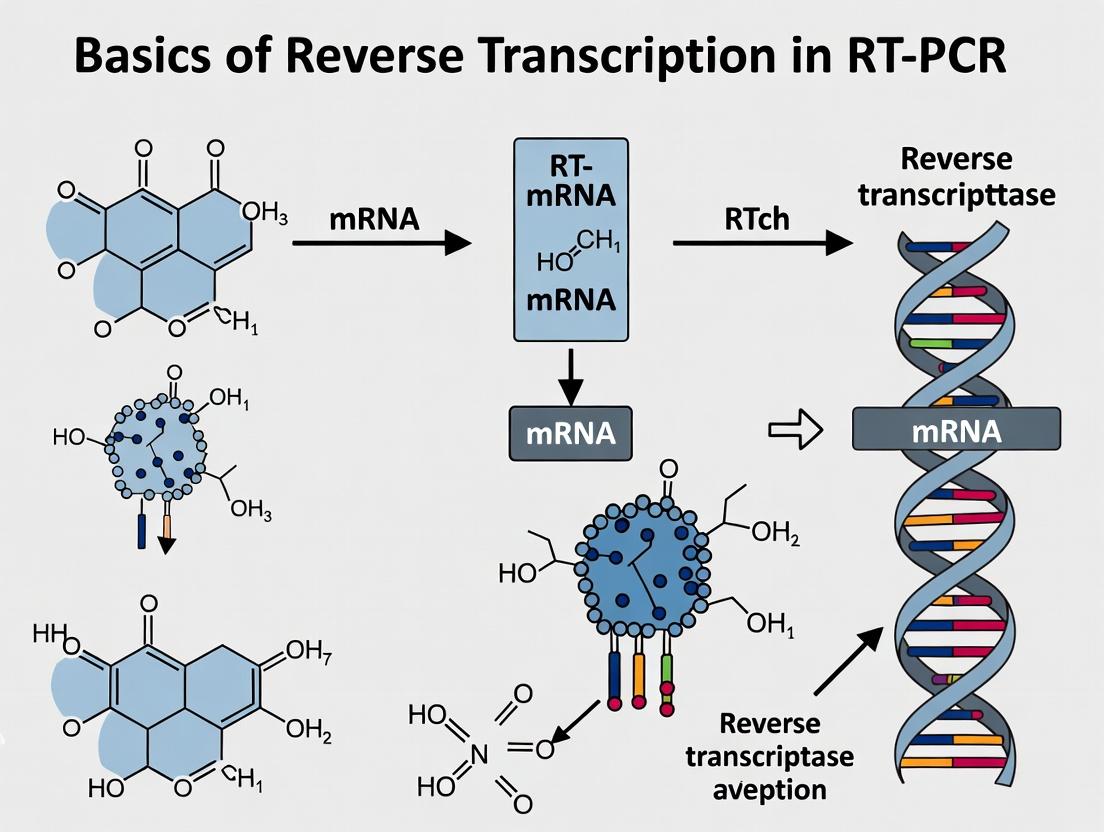
This article provides a detailed examination of reverse transcription, the critical first step in RT-PCR, tailored for researchers, scientists, and drug development professionals.
Reverse Transcription in RT-PCR: A Comprehensive Guide for Researchers and Drug Development
Abstract
This article provides a detailed examination of reverse transcription, the critical first step in RT-PCR, tailored for researchers, scientists, and drug development professionals. Covering foundational concepts, advanced methodologies, common troubleshooting strategies, and validation techniques, this guide synthesizes current best practices to ensure accurate and reliable cDNA synthesis for applications ranging from gene expression analysis to viral detection and biomarker discovery.
The Core of RT-PCR: Understanding Reverse Transcription from RNA to cDNA
Within the framework of reverse transcription polymerase chain reaction (RT-PCR) research, reverse transcription is the foundational enzymatic step that converts labile RNA into stable complementary DNA (cDNA). This process enables the subsequent amplification and quantification of RNA targets via PCR, making it indispensable for gene expression analysis, viral load detection, and molecular diagnostics. Understanding the biological intricacies and enzymatic drivers of reverse transcription is critical for optimizing RT-PCR fidelity, sensitivity, and specificity in research and drug development.
The Biological Process: From RNA to cDNA
Reverse transcription is the synthesis of a double-stranded DNA molecule from a single-stranded RNA template. This process, central to the life cycle of retroviruses (e.g., HIV-1) and retrotransposons, is harnessed in vitro for RT-PCR. The reaction is mediated by the enzyme reverse transcriptase (RT).
Key Stages:
- Initiation & Primer Annealing: A primer (oligo(dT), random hexamers, or sequence-specific) anneals to the RNA template.
- Minus-Strand DNA Synthesis: RT extends the primer, synthesizing a complementary DNA strand (cDNA), forming an RNA-DNA hybrid.
- RNA Template Degradation: Most RTs possess RNase H activity that degrades the RNA strand in the hybrid.
- Plus-Strand DNA Synthesis: RT uses the remaining RNA fragments as primers to initiate second-strand DNA synthesis, resulting in double-stranded cDNA.
Enzymatic Drivers: Reverse Transcriptase Enzymes
The efficiency and characteristics of cDNA synthesis are dictated by the properties of the reverse transcriptase enzyme used. Modern RTs are engineered variants derived from Moloney Murine Leukemia Virus (M-MLV) or Avian Myeloblastosis Virus (AMV).
Table 1: Comparative Properties of Common Reverse Transcriptases
| Enzyme (Source) | Processivity | RNase H Activity | Optimal Temp (°C) | Fidelity (Error Rate) | Common Application in RT-PCR |
|---|---|---|---|---|---|
| AMV RT | High | High | 42-50 | ~1 in 17,000 (Lower) | Robust for structured RNA, less common now. |
| M-MLV RT | Moderate | Active | 37-42 | ~1 in 30,000 | Standard for first-strand cDNA synthesis. |
| M-MLV RT (RNase H–) | High | Inactive | 37-45 | ~1 in 30,000 | Gold standard for long, full-length cDNA. |
| Engineered Group II Intron RT | Very High | Variable | 50-60 | ~1 in 700,000 (Highest) | High-fidelity applications, qPCR, NGS. |
Detailed Experimental Protocol: Two-Step RT-PCR
This is the most common method for sensitive and flexible gene expression analysis.
I. Reverse Transcription (First-Strand cDNA Synthesis) Reagents:
- Total or mRNA (1 pg – 1 µg)
- Reverse Transcriptase (e.g., RNase H– M-MLV, 200 U/µL)
- Reaction Buffer (supplied with enzyme)
- dNTP Mix (10 mM each)
- Primers: Oligo(dT)₁₈ (2.5 µM), Random Hexamers (50 µM), or Gene-Specific (2.5 µM)
- RNase Inhibitor (20-40 U/µL)
- Nuclease-free water
Procedure:
- Primer Annealing: In a nuclease-free tube, combine RNA template and primer(s). Heat to 65°C for 5 minutes, then immediately place on ice for 2 minutes to denature secondary structure and promote primer binding.
- Master Mix Preparation: On ice, prepare a master mix containing:
- 1X Reaction Buffer
- dNTP Mix (final concentration 0.5-1 mM each)
- RNase Inhibitor (1 U/µL final)
- Reverse Transcriptase (50-200 U per reaction)
- Nuclease-free water to final volume.
- Combine and Incubate: Add master mix to the primer-annealed RNA. Mix gently and centrifuge briefly.
- cDNA Synthesis: Incubate at:
- 25°C for 5-10 minutes (for random hexamer priming).
- 42-50°C for 30-60 minutes (for polymerization; follow enzyme specification).
- Enzyme Inactivation: Heat to 70-85°C for 5-15 minutes to inactivate the RT. The cDNA can be used immediately in PCR or stored at –20°C.
II. PCR Amplification
- Use 1-10% of the RT reaction volume as template in a standard PCR or qPCR with gene-specific primers and a DNA polymerase.
- Optimize cycling conditions based on amplicon length and polymerase.
Visualization of Workflows and Mechanisms
Diagram 1: RT-PCR Workflow from RNA to Result
Diagram 2: Mechanism of Reverse Transcription at Molecular Level
The Scientist's Toolkit: Essential Research Reagent Solutions
Table 2: Key Reagents for Reverse Transcription Experiments
| Reagent | Function & Importance | Example/Note |
|---|---|---|
| Reverse Transcriptase | Catalyzes cDNA synthesis. Choice affects yield, length, and fidelity. | RNase H– M-MLV for high yield; engineered high-fidelity RT for sensitive qPCR. |
| RNase Inhibitor | Protects RNA templates from degradation by ubiquitous RNases. | Recombinant murine or human placenta-derived. Essential for long incubations. |
| Primers | Provides a free 3'-OH for RT initiation. Defines which RNAs are copied. | Oligo(dT): mRNAs only. Random Hexamers: All RNA, including rRNA. Gene-Specific: Targeted, highly specific. |
| dNTP Mix | Building blocks for DNA synthesis. Quality impacts cDNA yield and fidelity. | Use a balanced, high-quality mix (10-25 mM each). Avoid freeze-thaw cycles. |
| RNA Template | The target for analysis. Integrity is paramount for accurate representation. | Assessed by RIN/RQN (e.g., Bioanalyzer). Avoid genomic DNA contamination. |
| Reaction Buffer | Provides optimal ionic and pH conditions for RT activity and stability. | Typically supplied with enzyme. May contain MgCl₂, KCl, DTT, and stabilizers. |
| Thermal Cycler | Provides precise temperature control for denaturation, annealing, and synthesis steps. | Required for reproducible primer annealing and enzyme activity. |
The discovery of reverse transcriptase (RT) in 1970 by Howard Temin and David Baltimore fundamentally upended the central dogma of molecular biology, proving that information could flow from RNA back to DNA. This discovery not only illuminated the life cycle of retroviruses but also provided the foundational tool that revolutionized molecular biology, most notably through the development of reverse transcription polymerase chain reaction (RT-PCR). This whitepaper, framed within a thesis on the basics of reverse transcription in RT-PCR research, details the historical trajectory, technical evolution, and current methodologies that stem from this pivotal finding.
The Discovery and Its Immediate Impact
The identification of RNA-dependent DNA polymerase (reverse transcriptase) in Rous sarcoma virus particles provided the mechanistic explanation for Temin's provirus hypothesis. This enzyme catalyzes the synthesis of a complementary DNA (cDNA) strand from an RNA template, followed by degradation of the RNA strand and synthesis of a second DNA strand to form double-stranded cDNA.
Key Quantitative Data from the Discovery Era:
| Parameter | Finding in Seminal Papers (1970) | Modern Benchmark/Comparison |
|---|---|---|
| Enzyme Identity | RNA-dependent DNA polymerase | Reverse Transcriptase (RT) |
| Divalent Cation Requirement | Mg²⁺ (10mM) | Mg²⁺ or Mn²⁺, depending on enzyme |
| Optimal Temperature | 37°C | 37-55°C (enzyme-dependent) |
| Template Specificity | Viral 70S RNA, synthetic poly(rA) | Broad: mRNA, tRNA, rRNA, viral RNA |
| Key Inhibitor | Actinomycin D (intercalates dsDNA) | Now also: NNRTIs, AZT-triphosphate |
Evolution of Reverse Transcriptase Enzymes
The field has progressed from using wild-type viral enzymes (e.g., from Moloney Murine Leukemia Virus, M-MLV) to engineered versions with superior properties for research and diagnostics.
Table: Evolution of Commercial Reverse Transcriptase Enzymes
| Enzyme Type/Name | Key Mutations/Features | Recommended Use | Processivity | Thermostability (Max) |
|---|---|---|---|---|
| Wild-type M-MLV RT | None | First-strand cDNA synthesis | Moderate | 42°C |
| M-MLV RT RNase H⁻ | Point mutation (D524A) | cDNA synthesis of long/structured RNA | High | 42°C |
| AMV RT | None | cDNA synthesis of complex RNA | High | 48°C |
| Engineered Group II Intron RT | Thermostable group II intron | High-temperature RT, high fidelity | Very High | 70-75°C |
| SmartScribe / AffinityScript | Multiple point mutations | High yield, full-length cDNA | High | 50°C |
Core RT-PCR Methodology: A Detailed Protocol
RT-PCR integrates reverse transcription (RT) and the polymerase chain reaction (PCR) to amplify specific RNA targets. The following is a standard two-step protocol for quantitative gene expression analysis.
Protocol: Two-Step Quantitative RT-PCR
Step 1: Reverse Transcription (First-Strand cDNA Synthesis)
- RNA Preparation: Use 10 pg – 1 µg of high-integrity total RNA in nuclease-free water. Include a no-RT control (-RT) for each sample to assess genomic DNA contamination.
- Primer Annealing: Combine in a thin-walled tube:
- RNA template: X µL
- Oligo(dT)₁₈ primer (50 µM): 1 µL or Gene-specific primer (2 µM): 1 µL or Random Hexamers (50 µM): 1 µL
- dNTP Mix (10 mM each): 1 µL
- Nuclease-free water to 12 µL.
- Heat mixture to 65°C for 5 min, then immediately place on ice for 2 min.
- Master Mix Preparation: On ice, prepare a master mix per reaction:
- 5X Reaction Buffer: 4 µL
- RNase Inhibitor (40 U/µL): 0.5 µL
- Reverse Transcriptase (200 U/µL): 1 µL
- Nuclease-free water: 2.5 µL.
- cDNA Synthesis: Add 8 µL of master mix to each primer-annealed RNA tube (total volume 20 µL). Mix gently.
- Incubate at 25°C for 10 min (for random hexamer priming).
- Incubate at 50°C for 30-60 min.
- Inactivate the enzyme by heating to 85°C for 5 min.
- Product Storage: cDNA can be stored at -20°C or used immediately for PCR.
Step 2: Quantitative PCR (qPCR) Amplification
- Reaction Setup: Prepare a master mix on ice for n reactions (including standards and controls):
- 2X SYBR Green qPCR Master Mix: 10 µL
- Forward Primer (10 µM): 0.8 µL
- Reverse Primer (10 µM): 0.8 µL
- Nuclease-free water: 7.4 µL.
- Aliquot 19 µL of master mix into each qPCR well.
- Template Addition: Add 1 µL of cDNA (or standard/dilution) to each well. For the -RT control, use 1 µL of the corresponding -RT reaction.
- qPCR Run Program:
- Initial Denaturation: 95°C for 3 min.
- 40 Cycles of:
- Denaturation: 95°C for 15 sec.
- Annealing/Extension: 60°C for 30-60 sec (acquire SYBR Green signal here).
- Melting Curve Analysis: 65°C to 95°C, increment 0.5°C every 5 sec.
Visualizing Key Concepts and Workflows
Diagram Title: From Central Dogma to RT-PCR Workflow
The Scientist's Toolkit: Essential Reagents for RT-PCR
Table: Key Research Reagent Solutions in RT-PCR
| Reagent | Function & Critical Parameters | Example/Note |
|---|---|---|
| Reverse Transcriptase | Catalyzes cDNA synthesis from RNA. Key parameters: processivity, thermostability, RNase H activity. | M-MLV RT RNase H⁻ for long transcripts; group II intron RT for structured RNA. |
| RNase Inhibitor | Protects RNA template from degradation by RNases. | Recombinant human protein, inhibits a broad spectrum of RNases. |
| Primers for RT | Initiates cDNA synthesis. Oligo(dT): for polyA+ mRNA. Random Hexamers: for all RNA, including degraded. Gene-specific: for targeted cDNA. | Use a mix of oligo(dT) and random hexamers for broad coverage. |
| dNTP Mix | Deoxynucleotide triphosphates (dATP, dCTP, dGTP, dTTP) are the building blocks for cDNA. | Use a balanced, high-quality mix at 10 mM each to ensure fidelity. |
| qPCR Master Mix | Contains thermostable DNA polymerase, dNTPs, buffer, salts, and fluorescent dye (SYBR Green) or probe. | 2X concentrations are standard. Must be optimized for the instrument. |
| Sequence-Specific Primers | Amplify the target cDNA region during qPCR. Typically 18-22 bp, Tm ~60°C, with minimal secondary structure. | Design amplicons 75-200 bp. Verify specificity with BLAST and melt curve analysis. |
| Nuclease-Free Water | Solvent for all reactions. Must be certified free of nucleases to prevent degradation of templates and products. | Often DEPC-treated or ultrapure filtered. |
| RNA Isolation Kit | Purifies intact, protein-free total RNA from cells/tissues. Contains chaotropic salts and silica membranes. | Column-based kits with DNase I treatment are standard. |
Within the foundational thesis of reverse transcription in RT-PCR research, the fidelity and efficiency of cDNA synthesis are paramount. This core enzymatic process, mediated by reverse transcriptase (RT), is entirely governed by the precise formulation and interaction of its key biochemical components. The quality of the resulting cDNA library directly dictates the accuracy of all downstream quantitative PCR (qPCR) or sequencing analyses. This technical guide provides an in-depth examination of these essential components, detailing their functions, optimal use cases, and quantitative specifications.
Core Components: Function and Optimization
RNA Template
The RNA template is the starting material, typically total RNA or mRNA. Its integrity and purity are non-negotiable. Degraded RNA or contaminants like genomic DNA, salts, or alcohols can severely inhibit RTase activity and compromise results.
- Purity: Assessed by A260/A280 (~2.0) and A260/A230 (>2.0) ratios.
- Integrity: Verified via microfluidic capillary electrophoresis (e.g., RIN > 8 for mammalian samples).
- Input Range: Commonly 1 pg – 1 µg per 20 µL reaction, with 10 ng – 1 µg being standard for most applications.
Reverse Transcription Primers
The choice of primer dictates the subset of RNA transcripts converted to cDNA and thus the experimental scope.
| Primer Type | Sequence/Design | Best For | Advantages | Limitations |
|---|---|---|---|---|
| Oligo-dT | 12-18 thymidine nucleotides | Polyadenylated mRNA (eukaryotes). | Selective for mRNA; generates full-length or near-full-length cDNA from the 3' end. | Excludes non-poly(A) RNA (e.g., bacterial RNA, some viral RNAs, non-coding RNAs). Biased towards 3' end of long transcripts. |
| Random Hexamers | Random 6-mer oligonucleotides | Total RNA, degraded RNA, or non-poly(A) targets. | Primes across entire transcriptome, including rRNA, tRNA. Good for fragmented RNA. | Can prime from any RNA fragment, leading to shorter, more complex cDNA. May generate genomic DNA amplification if DNA is present. |
| Gene-Specific (GSP) | Designed complementary to a specific target sequence. | Detecting one or a few specific transcripts; multiplex RT. | Highest sensitivity and specificity for the target. cDNA is immediately ready for specific PCR. | Only converts the targeted RNA. Not suitable for transcriptome-wide analysis. Requires prior sequence knowledge. |
Experimental Protocol: Primer Selection Test
- Setup: Aliquot identical amounts (e.g., 500 ng) of a high-quality total RNA sample into three tubes.
- RT Reaction: Perform separate reverse transcription reactions using identical conditions (buffer, enzyme, dNTPs, temperature, time) but differing only in the primer: a) 50 pmol Oligo-dT, b) 150 pmol Random Hexamers, c) 10 pmol of a validated Gene-Specific Primer.
- Analysis: Perform qPCR on the resulting cDNA using two different primer sets: i) a set amplifying a 150 bp product near the 3' end of a housekeeping gene (e.g., GAPDH), and ii) a set amplifying a product >1 kb from the same gene.
- Interpretation: Compare Cq values. Oligo-dT should perform best for the long amplicon from high-quality RNA. Random hexamers will give more uniform representation across transcript length, especially if RNA is slightly degraded. GSP should yield the lowest Cq (highest efficiency) for its specific target.
Deoxynucleotide Triphosphates (dNTPs)
dNTPs (dATP, dCTP, dGTP, dTTP) are the building blocks for cDNA synthesis.
- Concentration: Typical working concentration is 500 µM of each dNTP (final concentration). Too high (>1 mM) can increase error rate; too low (<50 µM) can limit yield and processivity.
- Quality: Use pH-neutral, high-purity dNTP solutions to prevent reaction inhibition. Aliquot to avoid freeze-thaw cycles.
Buffer Systems
The reaction buffer creates the optimal chemical environment for the RT enzyme. Key components include:
- Tris-HCl: Maintains optimal pH (usually 8.3-8.4 at reaction temperature).
- Potassium Chloride (KCl): Provides ionic strength. Typical concentration: 50-75 mM.
- Magnesium Chloride (MgCl₂): Critical cofactor for RTase activity. Concentration is often optimized (1.5-8 mM). It is frequently supplied separately from the main buffer to allow optimization.
- Reducing Agents (DTT): Stabilizes enzyme structure. Often used at 1-10 mM.
- RNase Inhibitors: Essential to protect the RNA template from degradation. Often added as a separate component at 0.5-1 U/µL.
- Additives: Some systems include betaine or trehalose to destabilize RNA secondary structure or enhance enzyme stability at higher temperatures.
| Buffer Component | Standard Concentration (Final) | Function | Optimization Consideration |
|---|---|---|---|
| Tris-HCl (pH 8.3) | 50 mM | pH maintenance | Must be set for the reaction temperature (often 42-55°C), not room temp. |
| KCl | 75 mM | Ionic strength | Affects enzyme processivity and primer annealing. |
| MgCl₂ | 3-5 mM | Enzyme cofactor | Critical variable. Too low: low yield. Too high: non-specific priming, increased error rate. |
| DTT | 5 mM | Reducing agent | Stabilizes RT enzyme; essential for some RTs (e.g., M-MLV). |
| dNTPs | 500 µM each | Substrates | Balance between yield, fidelity, and cost. |
| RNase Inhibitor | 0.5-1 U/µL | RNA protection | Mandatory for sensitive/long RNA targets. |
Experimental Protocol: Magnesium Titration for Buffer Optimization
- Prepare Mg²⁺ Stock Solutions: Prepare a 25 mM MgCl₂ stock and serial dilutions to cover a range (e.g., 1, 2, 3, 4, 5, 6, 7, 8 mM final concentration).
- Master Mix Setup: Create a master mix containing all RT components (RNA, primers, dNTPs, buffer without Mg²⁺, RT enzyme, RNase inhibitor, water) for all reactions.
- Aliquot and Add Mg²⁺: Aliquot the master mix into separate tubes. Add the calculated volume of each MgCl₂ stock to achieve the desired final concentration range.
- Perform RT: Run the reverse transcription according to the enzyme's protocol.
- Analyze Yield: Perform qPCR on a mid-abundance target gene from each cDNA product. Plot Cq value vs. Mg²⁺ concentration. The concentration yielding the lowest Cq (highest cDNA yield) is optimal for that primer/RNA/enzyme combination.
Visualizing the RT-PCR Workflow and Primer Binding
Primer Selection and RT-PCR Workflow
Primer Binding Sites on an RNA Transcript
The Scientist's Toolkit: Research Reagent Solutions
| Reagent / Kit Component | Function in Reverse Transcription | Key Considerations for Selection |
|---|---|---|
| High-Capacity RTase (e.g., M-MLV RT, SuperScript IV) | Catalyzes cDNA synthesis from RNA template. | Thermostability (for GC-rich templates), processivity (length of cDNA), and RNase H activity (low or absent is preferred to prevent RNA degradation). |
| RNase Inhibitor (Murine or Human) | Irreversibly binds and inhibits RNases, protecting RNA integrity during reaction. | Essential for long incubations or sensitive samples. Check compatibility with reaction buffers (some require DTT). |
| Ultra-Pure dNTP Mix (100 mM, pH 7.0) | Provides equimolar, high-quality nucleotide substrates. | Verify pH and concentration. Lyophilized stocks are stable; avoid repeated thawing of liquid stocks. |
| 5X or 10X First-Strand Buffer | Provides optimized pH, ionic strength, and cofactors (excluding Mg²⁺). | Usually enzyme-specific. May include DTT. The MgCl₂ component is often separate for optimization. |
| Anchor Oligo-dT (dT+1-3 VN) | Oligo-dT with one to three degenerate 3' bases (A/C/G). | "Anchors" the primer at the start of the poly(A) tail, improving specificity over simple oligo-dT. |
| Hexamer/N9 Random Primers | 6-9 base random sequence primers. | Longer random primers (N9) can increase priming specificity and cDNA yield compared to traditional hexamers. |
| Template RNA Integrity Assay Kits | Assess RNA quality (e.g., RIN, DV200). | Critical QC step. Microfluidic systems (e.g., Bioanalyzer, TapeStation) are the gold standard over gel electrophoresis. |
| gDNA Removal Add-on (DNase I) | Enzymatically degrades contaminating genomic DNA prior to RT. | Can be used in a pre-step or integrated into the RT mix. A mandatory control for sensitive qPCR (use No-RT controls). |
| Betaine (5M Solution) | Additive that reduces secondary structure in GC-rich RNA templates. | Used at 1-1.5 M final concentration. Can improve yield and fidelity from difficult templates. |
Within the fundamental thesis of understanding reverse transcription in RT-PCR research, the choice of reverse transcriptase (RT) is a critical determinant of success. This enzyme, which synthesizes complementary DNA (cDNA) from an RNA template, has evolved from wild-type viral enzymes to highly specialized molecular tools. This technical guide provides an in-depth comparison of two foundational viral polymerases—Moloney Murine Leukemia Virus (M-MLV) and Avian Myeloblastosis Virus (AMV) RTs—and contrasts them with modern engineered variants, detailing their properties, optimal applications, and experimental protocols.
Core Enzymes: Properties and Mechanisms
Historical Viral Enzymes: M-MLV and AMV RT
Both M-MLV and AMV RTs are RNA-dependent DNA polymerases derived from retroviruses. Their inherent biochemical properties have shaped early molecular biology and continue to serve as benchmarks.
Key Characteristics:
- M-MLV RT: A monomeric enzyme with lower optimal temperature (37-42°C) and lower RNase H activity compared to AMV RT. This relatively lower RNase H activity allows for the synthesis of longer cDNA fragments (up to ~7 kb).
- AMV RT: A dimeric enzyme with higher optimal temperature (42-55°C) and inherently high RNase H activity. The elevated temperature can help denature RNA secondary structures but the robust RNase H activity can degrade the RNA template during synthesis, limiting cDNA yield and length (typically <5 kb).
Modern Engineered Enzymes
Modern RTs are engineered through mutagenesis and fusion protein strategies to overcome the limitations of wild-type enzymes. Common modifications include:
- RNase H– Mutants: Point mutations (e.g., D524A in M-MLV RT) that drastically reduce or eliminate RNase H activity, enabling higher cDNA yields and longer products.
- Thermostability Engineering: Mutations that increase thermal stability, allowing reactions at 50-60°C to melt stable RNA secondary structures.
- Processivity Enhancements: Changes that improve the enzyme's ability to remain bound to the template, increasing efficiency and speed.
- Fusion Proteins: Fusion with other domains (e.g., DNA-binding proteins) to enhance processivity and primer binding.
Quantitative Comparison Table
Table 1: Comparative Properties of Reverse Transcriptases
| Property | M-MLV RT (Wild-type) | AMV RT (Wild-type) | Modern Engineered RT (e.g., RNase H–, Thermostable) |
|---|---|---|---|
| Optimal Temperature | 37-42°C | 42-55°C | 45-60°C |
| Processivity | Moderate | Moderate | High |
| RNase H Activity | Low | High | None to Very Low |
| Recommended cDNA Length | Up to ~7 kb | Up to ~5 kb | >10 kb possible |
| Thermal Stability | Low | Moderate | High |
| Fidelity | Moderate | Lower than M-MLV | Moderate to High (varies) |
| Common Use Cases | Standard cDNA synthesis for simple templates | Templates with high secondary structure (at higher temp) | Difficult templates (high GC, structure), long cDNA, qRT-PCR |
| Key Limitation | Heat-labile, inhibited by RNA structure | High RNase H degrades template | Higher cost |
Experimental Protocols
Protocol A: Standard First-Strand cDNA Synthesis (Comparative Assessment)
This protocol is adaptable for testing and comparing the performance of M-MLV, AMV, and engineered RTs.
Research Reagent Solutions Toolkit:
| Reagent | Function |
|---|---|
| RNA Template (0.1-1 µg total RNA or 1-500 pg mRNA) | The target nucleic acid for reverse transcription. |
| Reverse Transcriptase (200 U/µL) | The core enzyme being evaluated. |
| RT Buffer (5X) | Provides optimal pH, salt conditions (KCl), and Mg2+ for the enzyme. |
| dNTP Mix (10 mM each) | Building blocks for cDNA synthesis. |
| Primers (Oligo(dT)18, Random Hexamers, or Gene-Specific) | Initiates DNA synthesis from specific (gene-specific) or multiple (oligo-dT/random) sites. |
| RNase Inhibitor (40 U/µL) | Protects RNA template from degradation by contaminating RNases. |
| Nuclease-free Water | Solvent to achieve final reaction volume. |
Methodology:
- Primer Annealing: In a nuclease-free tube on ice, combine:
- 1 µL of primer (e.g., 50 µM Oligo(dT) or 200 ng Random Hexamers).
- 1 µL RNA template.
- 1 µL 10 mM dNTP mix.
- X µL Nuclease-free water to a final volume of 13 µL.
- Heat mixture to 65°C for 5 minutes, then immediately place on ice for 2 minutes.
- Master Mix Preparation: On ice, prepare a master mix for n reactions:
- 4 µL 5X RT Buffer (per reaction).
- 1 µL RNase Inhibitor (40 U) (per reaction).
- 1 µL Reverse Transcriptase (200 U) (per reaction).
- 1 µL Nuclease-free water (per reaction).
- cDNA Synthesis: Add 7 µL of the master mix to each primer/template tube from step 1 (total vol: 20 µL). Mix gently.
- For M-MLV RT: Incubate at 37°C for 50 minutes.
- For AMV RT: Incubate at 42°C for 50 minutes.
- For Thermostable Engineered RT: Incubate at 50-55°C for 20-50 minutes (follow manufacturer specifics).
- Enzyme Inactivation: Heat the reaction to 70°C for 15 minutes to inactivate the RT. The cDNA can be used immediately in PCR/qPCR or stored at -20°C.
Protocol B: Assessing Fidelity by cDNA Sequencing Analysis
A modified protocol to compare error rates between enzymes.
- Synthesize cDNA from a known standard RNA template (e.g., a cloned transcript) using each RT under optimal conditions (Protocol A).
- Amplify the full-length cDNA product via high-fidelity PCR.
- Clone the PCR products into a sequencing vector.
- Sequence 20-30 clones per RT enzyme and align sequences to the known original template.
- Calculate the error rate as (number of mismatches + indels) / (total nucleotides sequenced).
Visualizations
RT-PCR Workflow and Enzyme Decision Logic
Diagram Title: RT Selection Logic for cDNA Synthesis
Engineered RT Domain Architecture Evolution
Diagram Title: From Wild-Type to Engineered RT Domain Map
Within the framework of RT-PCR research, a fundamental understanding of the distinct phases is critical. Reverse transcription (RT) is the initial, singular event that converts RNA into complementary DNA (cDNA). This step is inherently non-amplifying; it is a one-to-one molecular conversion. This whitepaper delineates the biochemical rationale behind this single-step nature, contrasting it with the exponential amplification of PCR, and provides technical protocols and resources for researchers.
The Biochemistry of a Single-Step Conversion
Reverse transcription is catalyzed by reverse transcriptase enzymes (e.g., derived from Moloney Murine Leukemia Virus or Avian Myeloblastosis Virus). The process involves the synthesis of a DNA strand from an RNA template, but no replication of the newly synthesized cDNA occurs during this step. Each RNA molecule serves as a template for at most one cDNA strand. The reaction proceeds to completion and then stops, lacking the cyclic, template-denaturation and primer-annealing mechanisms that characterize PCR.
Key Quantitative Limits of RT:
- Stoichiometry: 1 molecule of RNA → 1 molecule of single-stranded cDNA.
- No enzymatic replication of the cDNA product occurs.
- Reaction kinetics are linear and time-bound, reaching a plateau.
Table 1: Contrasting RT vs. PCR Phases
| Feature | Reverse Transcription (RT) | Polymerase Chain Reaction (PCR) |
|---|---|---|
| Core Function | Template conversion (RNA to DNA) | Template amplification (DNA duplication) |
| Output per Input | 1:1 (at best) | 2^n (exponential) |
| Enzyme Activity | RNA-dependent DNA polymerase | DNA-dependent DNA polymerase |
| Cyclical? | No. Single reaction step. | Yes. Repeated cycles (denature, anneal, extend). |
| Primary Output | Complementary DNA (cDNA) | Amplified DNA amplicons/fragments. |
| Quantitative Phase | Can be quantitative if efficiency is high and consistent. | Inherently quantitative (qPCR) via fluorescence tracking per cycle. |
Detailed Experimental Protocol: Two-Step RT-qPCR
This protocol exemplifies the physical and temporal separation of the non-amplifying RT step from the amplifying qPCR step.
1. RNA Isolation & Quantification:
- Extract total RNA using guanidinium thiocyanate-phenol-chloroform (e.g., TRIzol) or spin-column methods.
- Quantify RNA concentration using UV spectrophotometry (A260/A280 ratio ~2.0) or fluorometric assays.
- Treat with DNase I to remove genomic DNA contamination.
2. Reverse Transcription (Non-Amplifying Step):
- Components in a 20 µL reaction:
- 1 µg total RNA (or fixed amount for consistency).
- 1 µL Oligo(dT)₁₈ primer (50 µM) and/or Gene-Specific Primers (GSP).
- 4 µL 5x Reaction Buffer.
- 1 µL Ribonuclease Inhibitor (20-40 U/µL).
- 2 µL dNTP Mix (10 mM each).
- 1 µL Reverse Transcriptase (200 U/µL).
- Nuclease-free water to volume.
- Thermal Cycling:
- Primer Annealing: 65°C for 5 min, then hold at 4°C.
- cDNA Synthesis: 50-55°C for 30-60 min.
- Enzyme Inactivation: 85°C for 5 min.
- Hold at 4°C. The product is cDNA, ready for amplification or storage.
3. Quantitative PCR (Amplifying Step):
- Components in a 20 µL reaction:
- 2 µL cDNA (diluted 1:5 to 1:20).
- 10 µL 2x SYBR Green or TaqMan Master Mix.
- 0.8 µL Forward Primer (10 µM).
- 0.8 µL Reverse Primer (10 µM).
- 6.4 µL Nuclease-free water.
- Thermal Cycling (Typical):
- Initial Denaturation: 95°C for 3 min.
- 40 Cycles: 95°C for 15 sec (denature), 60°C for 60 sec (anneal/extend).
- Melt Curve Analysis (for SYBR Green): 65°C to 95°C, increment 0.5°C/sec.
Visualizing the RT-qPCR Workflow
Title: Single-Step RT vs. Exponential qPCR Workflow
Title: Molecular Yield Comparison: RT vs. PCR
The Scientist's Toolkit: Essential Research Reagents
Table 2: Key Reagents for Reverse Transcription Experiments
| Item | Function & Rationale |
|---|---|
| Reverse Transcriptase | RNA-dependent DNA polymerase. Engineered variants offer high thermal stability and fidelity. |
| Ribonuclease Inhibitor | Protects labile RNA templates from degradation by RNases during reaction setup. |
| Anchored Oligo(dT)₂₀ Primers | Binds to poly-A tail of mRNA for full-length cDNA synthesis. "Anchored" improves specificity. |
| Random Hexamer Primers | Binds randomly to all RNA (including rRNA, tRNA), ideal for fragmented RNA or non-polyadenylated targets. |
| Gene-Specific Primers (GSP) | Provides the highest specificity for priming reverse transcription of a particular target sequence. |
| Deoxynucleotide Triphosphates (dNTPs) | Building blocks (dATP, dCTP, dGTP, dTTP) for cDNA strand synthesis. |
| 5x RT Reaction Buffer | Provides optimal pH, ionic strength (K⁺, Mg²⁺), and reducing agents for enzyme activity. |
| RNase H | (Optional additive). Degrades RNA strand in RNA-DNA hybrid. Can improve 2nd strand synthesis efficiency. |
| Nuclease-Free Water | Essential to prevent degradation of RNA templates and reaction components. |
Within the broader thesis on the Basics of Reverse Transcription in RT-PCR research, the quality of the input RNA template is the foundational determinant of experimental success. Reverse transcription, the first and critical enzymatic step in RT-PCR, is profoundly sensitive to RNA integrity and purity. Degraded or impure RNA leads to inefficient cDNA synthesis, introducing bias, reducing sensitivity, and generating irreproducible quantitative and qualitative data. This guide details the core parameters used to assess RNA quality, their technical measurement, and their direct mechanistic impact on the reverse transcription process.
Quantitative Assessment of RNA Purity: A260/280 Ratio
The A260/280 ratio is a standard spectrophotometric measure of nucleic acid purity, specifically indicating contamination by proteins or organic compounds.
Principle: Pure RNA has an absorbance peak at 260 nm. Proteins absorb strongly at 280 nm. A ratio of ~2.0 indicates high-purity RNA, as contaminants like proteins or phenol will lower this value.
Experimental Protocol for Spectrophotometric Analysis:
- Instrument Calibration: Blank the spectrophotometer or microvolume spectrophotometer with the same buffer used to elute or dilute the RNA (e.g., nuclease-free water, TE buffer).
- Sample Measurement: Apply 1-2 µL of RNA sample to the measurement pedestal (or dilute in a cuvette). Record absorbance at 260 nm and 280 nm.
- Calculation: The instrument software typically calculates the ratio automatically: A260/280 = Absorbance at 260 nm / Absorbance at 280 nm.
- Interpretation: Acceptable ratios for RT-PCR are typically between 1.8 and 2.1. A ratio below 1.8 often indicates protein contamination. A ratio above 2.2 may indicate residual guanidine thiocyanate or other reagents from the extraction process, or RNA degradation.
Table 1: Interpretation of A260/280 Ratios
| A260/280 Ratio | Typical Interpretation | Implication for RT-PCR |
|---|---|---|
| 1.8 - 2.1 | High-purity RNA | Optimal for reverse transcription. |
| < 1.8 | Protein or phenol contamination | Inhibits reverse transcriptase enzyme. |
| > 2.2 | Possible chaotropic salt carryover or degradation | May inhibit RT and cause inaccurate quantification. |
Qualitative Assessment of RNA Integrity: The RNA Integrity Number (RIN)
The RIN is an algorithm-based metric (scale 1-10) assigned by microfluidic capillary electrophoresis systems (e.g., Agilent Bioanalyzer, TapeStation) that evaluates the entire RNA electrophoretogram.
Principle: It quantifies the degradation state by analyzing the ratio of ribosomal RNA (rRNA) peaks (18S and 28S in eukaryotic RNA). Intact RNA shows two sharp, dominant rRNA bands with a 28S:18S peak ratio of approximately 2:1. Degradation leads to rRNA smear, reduction of the rRNA peaks, and an increase in the low molecular weight region.
Experimental Protocol for Microfluidic Capillary Electrophoresis (e.g., Agilent Bioanalyzer):
- Chip Preparation: Load the RNA Nano Gel Matrix into the appropriate chip primed with the station.
- Sample Preparation: Dilute RNA sample to within the dynamic range (typically 5-500 ng/µL). Denature 1 µL of RNA sample with 2 µL of RNA Marker at 70°C for 2 minutes, then place on ice.
- Loading: Load 1 µL of the denatured mixture into the sample well. Load 5 µL of RNA Marker into the ladder well.
- Run: Place the chip in the instrument and run the "Eukaryote Total RNA Nano" assay.
- Analysis: Software generates an electropherogram, gel-like image, and calculates the RIN.
Table 2: Interpretation of RNA Integrity Number (RIN)
| RIN Value | Electropherogram Profile | Implication for RT-PCR |
|---|---|---|
| 9-10 | Intact 28S & 18S peaks (28S:18S ~2:1), flat baseline. | Ideal. Ensures full-length cDNA representation. |
| 7-8 | Slight degradation, 28S:18S ratio reduced, minor baseline rise. | Acceptable for most RT-qPCR. May bias against long amplicons. |
| 5-6 | Significant degradation, rRNA peaks diminished, baseline elevated. | Risky. May cause failed RT, high Ct values, and data variability. |
| < 5 | Severe degradation/smear, no distinct rRNA peaks. | Unacceptable. Results are unreliable and non-reproducible. |
The Direct Impact of Degradation on Reverse Transcription
RNA degradation is not uniform. It is often mediated by RNases that create breaks in the RNA backbone. The consequences for RT-PCR are systematic and severe:
- Reduced Template Availability: Fewer intact, full-length mRNA molecules are available for the reverse transcriptase to bind.
- Priming Bias: Random hexamers or oligo-dT primers will have fewer complete binding sites. Oligo-dT priming is especially compromised as degradation often starts at the 3' poly-A tail.
- Truncated cDNA Synthesis: Reverse transcriptase enzyme will fall off at breakpoints, generating shorter, incomplete cDNA fragments.
- Quantitative Bias: The measured abundance of a target gene becomes a function of its degradation rate and amplicon position, rather than its true biological concentration. Targets with amplicons closer to the 3' end may be over-represented.
- Loss of Long Transcript Detection: Amplification of long amplicons (>1 kb) becomes impossible.
Diagram: Impact of RNA Degradation on Reverse Transcription Workflow
Title: RNA Degradation Skews cDNA Synthesis and qPCR Results
The Scientist's Toolkit: Essential Research Reagent Solutions
Table 3: Key Reagents for RNA Quality Control and RT-PCR
| Item | Function & Rationale |
|---|---|
| RNase Inhibitors | Enzyme additives that irreversibly bind to and inactivate RNases, crucial for protecting RNA during storage and reverse transcription. |
| DNase I (RNase-free) | Removes genomic DNA contamination prior to RT, preventing false positive signals in subsequent PCR. |
| Agencourt RNAdvance, TRIzol, or Qiagen RNeasy Kits | Robust RNA isolation systems designed to yield high-purity, high-integrity RNA while removing common inhibitors. |
| High-Capacity Reverse Transcriptase (e.g., SuperScript IV, PrimeScript) | Engineered enzymes with high thermal stability and processivity, offering greater resistance to common RT inhibitors and improved cDNA yield from suboptimal RNA. |
| RNA Stabilization Reagents (e.g., RNAlater) | Immediate immersion of tissue/cells in these reagents permeabilizes membranes and inactivates RNases, preserving in vivo RNA expression profiles. |
| Fluorometric RNA Assay Kits (Qubit RNA HS) | Dye-based quantification specific to RNA, unaffected by contaminants that skew A260 readings, providing accurate concentration for RT input. |
| Microfluidic Capillary Kits (Bioanalyzer RNA Nano) | Supplies (chips, gel, dye) for performing the gold-standard RNA integrity analysis (RIN). |
| Nuclease-Free Water & Buffers | Certified free of RNases and DNases, used for all sample dilution and reagent preparation to prevent ambient nuclease contamination. |
For any research based on the fundamentals of reverse transcription and RT-PCR, rigorous assessment of RNA integrity (via RIN) and purity (via A260/280) is non-negotiable. These parameters are direct predictors of cDNA synthesis efficiency and fidelity. Integrating these quality control checkpoints into the experimental workflow, as outlined in this guide, is essential for generating robust, reliable, and biologically meaningful data in drug development and basic research.
In RT-PCR research, the critical first step of reverse transcription (RT) is the synthesis of complementary DNA (cDNA) from an RNA template. This process is fundamentally challenged by the propensity of RNA molecules to form stable intra-molecular secondary structures, such as stem-loops, hairpins, and pseudoknots, via Watson-Crick base pairing. These structures can cause reverse transcriptase enzymes to stall or dissociate, leading to truncated cDNA products, reduced yield, biased representation, and ultimately, inaccurate downstream quantification in qPCR. Overcoming this obstacle is therefore paramount for data fidelity, especially when analyzing complex or GC-rich transcripts. This guide details the core strategies—optimizing reaction temperature and employing chemical denaturants—to ensure efficient and full-length cDNA synthesis.
The Impact of Temperature on RNA Secondary Structure
Temperature is the primary physical parameter controlling RNA stability. Secondary structures melt (unfold) as temperature increases. The melting temperature (Tm) of a given structure depends on its length, GC content, and ionic strength.
Key Quantitative Data on Temperature Effects:
| RNA Structure Feature | Typical Melting Temp. Range (°C) | Effect on Reverse Transcriptase | Recommended RT Temp. Range |
|---|---|---|---|
| Simple hairpin loops | 50-70°C | Moderate pausing | 45-55°C (standard enzymes) |
| Long GC-rich stems | 70-90°C+ | Severe stalling/termination | 50-60°C (thermostable enzymes) |
| Complex pseudoknots | Highly variable | Complete block | >60°C + denaturants |
| Global Recommendation | Use max. tolerated by enzyme |
Experimental Protocol: Determining Optimal RT Temperature Objective: To identify the reverse transcription temperature that yields the highest cDNA yield and longest product for a specific target.
- Setup: Prepare identical RT reaction mixtures containing the target RNA, primers, dNTPs, and buffer.
- Temperature Gradient: Aliquot reactions and perform reverse transcription across a temperature gradient (e.g., 42°C, 47°C, 50°C, 55°C, 60°C) for a fixed time.
- Enzyme Choice: Use a thermostable reverse transcriptase (e.g., engineered M-MLV variants) capable of withstanding higher temperatures.
- Analysis: Quantify total cDNA yield via fluorescent dye binding (e.g., Qubit). Assess transcript length and integrity for specific long or structured targets by RT-PCR followed by agarose gel electrophoresis or capillary electrophoresis.
- Interpretation: The optimal temperature is the highest one that maintains or increases yield and product length without inhibiting enzyme activity.
Chemical Denaturants as Essential Additives
When temperature alone is insufficient, chemical denaturants are added to the RT reaction to destabilize secondary structures. Their use requires careful optimization, as they can also inhibit the reverse transcriptase.
Summary of Common Denaturants:
| Denaturant | Typical Working Concentration | Mechanism of Action | Key Consideration & Protocol Note |
|---|---|---|---|
| DMSO | 5-10% (v/v) | Disrupts RNA base stacking and hydration; lowers Tm. | Can inhibit RT at >10%. Add directly to master mix. |
| Betaine | 1-1.5 M | Isostabilizing agent; reduces the melting temperature difference between GC and AT pairs, promoting uniform melting. | Generally non-inhibitory. Add directly to master mix. |
| Formamide | 5-15% (v/v) | Disrupts hydrogen bonding, effectively lowering Tm. | Potentially inhibitory. May require enzyme titration. |
| DTT | 5-10 mM | Reducing agent; breaks disulfide bonds in ribonucleoproteins, aiding RNA accessibility. | Standard component of many RT buffers. Not a direct RNA denaturant. |
Experimental Protocol: Titrating Denaturants for Structured RNA Targets Objective: To determine the optimal type and concentration of denaturant for cDNA synthesis from highly structured RNA.
- Design: Set up a matrix of RT reactions containing a constant amount of challenging RNA template.
- Variables: Test each denaturant (DMSO, Betaine, Formamide) at multiple concentrations (e.g., 0%, 2.5%, 5%, 10%) in separate reactions. Include a no-denaturant, high-temperature control.
- Compensation: For potentially inhibitory agents (e.g., formamide), increase the amount of reverse transcriptase by 25-50% in the test reactions.
- Incubation: Perform RT at the maximum recommended temperature for the enzyme.
- Analysis: Use qPCR with amplicons designed along the length of the transcript (5', middle, 3') to measure cDNA yield and reverse transcription efficiency. The optimal condition produces the highest, most consistent yield across all amplicons.
Integrated Workflow for Overcoming Secondary Structure
The following diagram illustrates the logical decision-making process for developing an effective RT strategy for structured RNA.
Title: Strategy for RT of Structured RNA
The Scientist's Toolkit: Research Reagent Solutions
| Reagent / Material | Function in Overcoming Secondary Structure |
|---|---|
| Thermostable Reverse Transcriptase (e.g., engineered M-MLV RNase H– variants) | Engineered to withstand temperatures up to 60-65°C, enabling RNA denaturation during cDNA synthesis. |
| High-Temperature Incubation Block | A thermal cycler or heat block capable of maintaining precise temperatures up to 70°C for consistent high-Temp RT. |
| Dimethyl Sulfoxide (DMSO) | A polar solvent that disrupts RNA base pairing. Used as a direct additive to the RT reaction mix. |
| Betaine (Monohydrate) | A zwitterionic osmolyte that equalizes nucleotide stability, promoting the unfolding of GC-rich structures. |
| Sequence-Specific Primers | Primers designed to anneal in structured regions should be placed, if possible, in single-stranded loops rather than stable stems. |
| Random Hexamer Primers | Can bind statistically across the RNA, including within structured regions, initiating local cDNA synthesis to open up structure. |
| PCR-Specific Dyes/Assays for Long Amplicons | SYBR Green or probe-based assays for long (1-3 kb) amplicons are used to empirically test cDNA integrity and length. |
| Capillary Electrophoresis System (e.g., Bioanalyzer, Fragment Analyzer) | Provides high-resolution analysis of cDNA size distribution to directly confirm full-length product synthesis. |
Within the framework of RT-PCR fundamentals, successfully overcoming RNA secondary structure is non-negotiable for accurate gene expression analysis. A systematic approach that first leverages the maximum temperature tolerance of modern reverse transcriptases, followed by the judicious titration of chemical denaturants like DMSO or betaine, provides a robust pathway to efficient, full-length cDNA synthesis. The integration of these parameters, validated by rigorous assessment of cDNA yield and length, ensures that the reverse transcription step faithfully represents the original RNA population, forming a solid foundation for all subsequent quantitative PCR analyses.
Optimized Protocols and Applications: From Standardized Kits to Advanced Research
This whitepaper is framed within the broader thesis on the Basics of Reverse Transcription in RT-PCR Research. A fundamental strategic decision in gene expression analysis is the choice between one-step and two-step reverse transcription polymerase chain reaction (RT-PCR). This choice profoundly impacts experimental workflow, sensitivity, specificity, and data integrity. This guide provides an in-depth technical comparison to inform researchers, scientists, and drug development professionals in their experimental design.
Core Principles and Strategic Comparison
One-Step RT-PCR: Combines reverse transcription (RT) and PCR amplification in a single tube using a single reaction buffer. Both enzymes (reverse transcriptase and DNA polymerase) are added simultaneously or as a master mix. Two-Step RT-PCR: Performs reverse transcription and PCR amplification in two separate, sequential reactions. The first step generates complementary DNA (cDNA), which is then used as a template in a second, optimized PCR reaction.
The selection between these methods hinges on several factors, which are quantitatively compared below.
Table 1: Direct Comparison of One-Step and Two-Step RT-PCR Methods
| Parameter | One-Step RT-PCR | Two-Step RT-PCR |
|---|---|---|
| Workflow Speed | Faster; single-tube setup, no cDNA handling | Slower; requires tube/plate handling between steps |
| Throughput for High Sample # | Lower potential for high-throughput cDNA synthesis | Higher; single cDNA batch can be used for many PCR targets |
| Risk of Contamination | Lower; tube is sealed after setup | Higher; cDNA must be aliquoted for PCR |
| Sensitivity | Generally higher (entire RNA product used) | Generally lower (aliquot of cDNA used) |
| Flexibility | Lower; cDNA cannot be archived or used for multiple targets | High; cDNA can be stored and used for many targets/assays |
| Reaction Optimization | Compromised; single buffer for both enzymes | Optimal; each step can be individually optimized |
| Suitability for qPCR/Quantitation | Excellent for specific, high-throughput assays | Excellent for multiplexing or analyzing many targets from few samples |
| Cost per Reaction | Often higher (specialized kits) | Can be lower, especially for many targets from one RT |
Table 2: Typical Experimental Output Metrics Based on Current Protocols (Representative Data)
| Metric | One-Step RT-qPCR (SYBR Green) | Two-Step RT-qPCR (TaqMan Probe) |
|---|---|---|
| Assay Time (excl. prep) | ~1.5 hours | ~2.5 hours (includes separate RT step) |
| Minimum Detectable Copy Number | 10-100 copies* | 10-100 copies* |
| Dynamic Range | Up to 7-8 log decades | Up to 7-8 log decades |
| Inter-assay CV (Reproducibility) | 1-5% | 1-3% |
| Primer Dimers/Non-specific Amp Risk | Higher without probe | Lower with target-specific probe |
*Highly dependent on RNA quality, primer design, and master mix efficiency.
Detailed Experimental Protocols
Protocol 1: One-Step RT-qPCR Using a Commercial Master Mix
Objective: To quantify specific mRNA targets directly from total RNA.
Key Materials: See "The Scientist's Toolkit" below. Procedure:
- Thaw and Prepare: Thaw all components (One-Step Master Mix, primer set, RNA template, nuclease-free water) on ice. Briefly centrifuge tubes.
- Reaction Setup (on ice): For a 20 µL reaction in a qPCR tube/plate:
- 13 µL of 2X One-Step RT-qPCR Master Mix
- 1 µL of Gene-Specific Forward Primer (10 µM)
- 1 µL of Gene-Specific Reverse Primer (10 µM)
- 1 µL of RT Enzyme Mix (if separate)
- X µL of RNA Template (e.g., 100 ng total RNA)
- Nuclease-free water to 20 µL.
- Mix and Seal: Mix gently by pipetting. Seal plate with optical adhesive film.
- Run qPCR Program:
- Reverse Transcription: 48–55°C for 10–30 minutes.
- Initial Denaturation/Enzyme Activation: 95°C for 2-10 minutes.
- Amplification (40-50 cycles): Denature at 95°C for 15 sec, Anneal/Extend at 60°C for 1 minute (acquire fluorescence).
- Melting Curve (if SYBR Green): 95°C for 15 sec, 60°C for 1 min, ramp to 95°C with continuous fluorescence acquisition.
Protocol 2: Two-Step RT-PCR with Separate Optimization
Objective: To generate stable cDNA for archiving and subsequent analysis of multiple targets.
Step A: cDNA Synthesis Procedure:
- Primer Annealing: In a nuclease-free tube, combine:
- 1-2 µg Total RNA (or fixed amount)
- 1 µL Oligo(dT)18 / Random Hexamers / Gene-Specific Primer (100 µM)
- Nuclease-free water to 12 µL.
- Heat to 65°C for 5 min, then immediately chill on ice.
- Master Mix Addition: Add:
- 4 µL 5X Reaction Buffer
- 1 µL Ribonuclease Inhibitor (20-40 U/µL)
- 2 µL dNTP Mix (10 mM each)
- 1 µL Reverse Transcriptase (200 U/µL).
- Incubation: Mix gently. Run in a thermal cycler:
- 25°C for 5-10 min (if using random primers),
- 42-55°C for 30-60 min,
- 70°C for 15 min to inactivate enzyme.
- Storage: Dilute cDNA 1:5-1:10 with water or TE buffer. Store at -20°C or -80°C.
Step B: Subsequent qPCR Procedure:
- Setup: In a qPCR plate, for a 20 µL reaction:
- 10 µL 2X qPCR Master Mix
- 1 µL Forward Primer (10 µM)
- 1 µL Reverse Primer (10 µM)
- 2-5 µL diluted cDNA template
- Water to 20 µL.
- Run Program:
- Initial Denaturation: 95°C for 2-10 min.
- Amplification (40 cycles): 95°C for 15 sec, 60°C for 1 min (acquire fluorescence).
- Melting Curve Analysis (if applicable).
Visualization of Workflows and Logical Selection
Diagram 1: Strategic Selection Workflow for RT-PCR Method
Diagram 2: Core Workflow Comparison of One-Step vs. Two-Step RT-PCR
The Scientist's Toolkit: Research Reagent Solutions
Table 3: Essential Materials and Reagents for RT-PCR
| Item | Function | Critical Consideration |
|---|---|---|
| High-Quality RNA | The starting template. Integrity (RIN > 8) and purity (A260/A280 ~2.0) are paramount. | Degraded RNA reduces sensitivity. Must be RNase-free. |
| Reverse Transcriptase | Enzyme that synthesizes cDNA from RNA template. | Varieties: MMLV-RT (high yield), AMV-RT (high temp), engineered variants (thermostable). |
| Thermostable DNA Polymerase | Amplifies cDNA. Often combined with RT in one-step kits. | Hot-start versions are essential for specificity in both methods. |
| Sequence-Specific Primers | Govern target specificity for both RT and PCR steps. | Design is critical: Tm 58-62°C, length 18-25 bp, avoid secondary structures. |
| Oligo(dT)/Random Hexamers | Priming strategy for first-strand cDNA synthesis in two-step. | Oligo(dT): mRNAs only. Random Hexamers: All RNA (incl. rRNA, tRNA). Gene-Specific: Highest specificity. |
| dNTP Mix | Building blocks for cDNA and DNA synthesis. | Balanced solution (typically 10mM each dATP, dCTP, dGTP, dTTP). |
| RNase Inhibitor | Protects RNA template from degradation during reverse transcription setup. | Critical for sensitive detection of low-abundance transcripts. |
| One-Step RT-PCR Master Mix | Optimized premix containing buffer, dNTPs, both enzymes, stabilizers. | Simplifies workflow; essential for high-throughput one-step assays. |
| qPCR Probe or Dye | For real-time quantification (e.g., TaqMan probes, SYBR Green I). | Probes: Higher specificity, multiplexing. SYBR Green: Lower cost, requires melt curve. |
| Nuclease-Free Water | Solvent for all reactions. | Must be certified nuclease-free to prevent sample degradation. |
| Optimized Reaction Buffers | Provide optimal pH, ionic strength, and co-factors (Mg2+) for enzyme activity. | One-step requires compromise; two-step allows separate optimization. |
The strategic choice between one-step and two-step RT-PCR is not a matter of superiority, but of optimal application alignment. One-step RT-PCR is the method of choice for streamlined, high-throughput quantification of specific targets where sensitivity and reduced contamination risk are priorities. Two-step RT-PCR offers unparalleled flexibility for researchers needing to create a renewable cDNA archive from precious samples for the analysis of numerous targets over time, with the added benefit of individual reaction optimization. Within the thesis of reverse transcription basics, this decision exemplifies the critical link between fundamental biochemistry (enzyme kinetics, primer design) and pragmatic experimental design that defines successful molecular research and assay development.
1. Introduction & Thesis Context Within the broader thesis on the basics of reverse transcription in RT-PCR research, the two-step reverse transcription (RT) reaction remains a cornerstone methodology. Its principal advantage lies in the physical and temporal separation of the cDNA synthesis step from the subsequent PCR amplification, offering superior flexibility, optimal reaction condition tuning for each step, and the ability to generate a stable, reusable cDNA archive from a single RNA preparation. This whitepaper provides an in-depth technical guide to executing a robust, high-fidelity two-step RT reaction.
2. Core Principles & Rationale The two-step protocol decouples reverse transcription from PCR. In the first step, RNA is reverse transcribed using a primer (oligo-dT, random hexamers, or gene-specific) and a reverse transcriptase enzyme to generate first-strand cDNA. This cDNA product is then used as a template in a second, separate step utilizing a thermostable DNA polymerase for qPCR or endpoint PCR. This separation minimizes primer competition, allows for multiple PCR assays from one RT reaction, and enables the use of optimized buffers for each enzymatic process.
3. Detailed Step-by-Step Protocol
Step 1: First-Strand cDNA Synthesis Objective: To generate high-quality, full-length cDNA from an RNA template.
3.1. Reagent Setup (for a 20 µL reaction):
| Component | Volume | Final Concentration/Amount | Function |
|---|---|---|---|
| RNA Template (e.g., 1 µg total RNA) | Variable | Up to 1 µg | Template for transcription |
| Primer (Oligo-dT, Random Hexamers, or Gene-Specific) | 1 µL | 2.5 µM (Oligo-dT/Random) or 0.5 µM (Gene-Specific) | Initiates cDNA synthesis |
| 10 mM dNTP Mix | 1 µL | 0.5 mM each dNTP | Building blocks for cDNA |
| Nuclease-free Water | To 13 µL | -- | Reaction volume adjuster |
3.2. Procedure:
- Denaturation & Priming: Combine RNA, primer, and dNTPs in a nuclease-free tube. Adjust total volume to 13 µL with water.
- Heat Primer-RNA Mix: Incubate at 65°C for 5 minutes to denature secondary RNA structures, then immediately place on ice for at least 1 minute.
- Prepare Master Mix: While the primer-RNA mix is incubating, prepare the following enzyme mix on ice:
| Component | Volume per Rx | Function |
|---|---|---|
| 5X RT Buffer | 4 µL | Provides optimal ionic conditions (Mg2+, K+) |
| RNase Inhibitor (40 U/µL) | 0.5 µL (20 U) | Protects RNA template from degradation |
| Reverse Transcriptase (200 U/µL) | 1 µL (200 U) | Catalyzes RNA-dependent DNA synthesis |
| Nuclease-free Water | 1.5 µL | Volume adjuster |
- Combine & Incubate: Add 7 µL of the enzyme master mix to each 13 µL primer-RNA mix (total 20 µL). Mix gently and centrifuge briefly.
- Reverse Transcription: Incubate using one of the following profiles:
- For Oligo-dT/Gene-Specific Primers: 42–55°C for 30–60 minutes.
- For Random Hexamers: 25°C for 10 minutes (for primer annealing), followed by 42–50°C for 30–60 minutes.
- Enzyme Inactivation: Heat to 70–85°C for 5–15 minutes to inactivate the reverse transcriptase. The cDNA can now be stored at -20°C or used immediately in PCR.
Step 2: PCR Amplification Objective: To specifically amplify a target sequence from the synthesized cDNA.
3.3. Reaction Setup (for a 25 µL qPCR reaction):
| Component | Volume | Final Concentration/Amount | Function |
|---|---|---|---|
| 2X qPCR Master Mix | 12.5 µL | 1X | Contains Taq DNA Polymerase, dNTPs, Mg2+, buffer, intercalating dye/ probe system |
| Forward Primer (10 µM) | 0.5 µL | 0.2 µM | Target-specific forward primer |
| Reverse Primer (10 µM) | 0.5 µL | 0.2 µM | Target-specific reverse primer |
| cDNA Template (from Step 1) | 2 µL | Typically 1-10 ng of input RNA equivalent | Template for amplification |
| Nuclease-free Water | 9.5 µL | -- | To final volume |
3.4. Procedure:
- Prepare a master mix containing all components except cDNA for multiple reactions to ensure consistency.
- Aliquot the master mix into PCR tubes/plates.
- Add the appropriate volume of cDNA template to each well.
- Seal the plate, centrifuge briefly, and run on a thermal cycler using a standard amplification protocol:
- Initial Denaturation: 95°C for 2-5 minutes.
- Amplification (35-45 cycles): 95°C for 10-30 seconds (denaturation), 55-65°C for 15-30 seconds (annealing), 72°C for 15-60 seconds (extension; plate read for qPCR).
- Final Extension: 72°C for 5 minutes (optional for endpoint PCR).
4. The Scientist's Toolkit: Research Reagent Solutions
| Item | Function in Two-Step RT |
|---|---|
| High-Purity RNA (e.g., RIN > 8) | Intact, non-degraded template is critical for full-length cDNA synthesis and accurate quantification. |
| RNase Inhibitor | Essential for protecting RNA from degradation by RNases during the RT reaction setup. |
| Thermostable Reverse Transcriptase (e.g., M-MLV, Avian Myeloblastosis Virus derivatives) | Engineered for high fidelity, processivity, and ability to work at elevated temperatures to melt RNA secondary structures. |
| Anchored Oligo-dT Primers | Primers that bind specifically to the poly-A tail of mRNA, ensuring synthesis primarily from mRNA. |
| Random Hexamer Primers | A mixture of random 6-base oligonucleotides that prime at multiple sites across the entire RNA population (including non-polyadenylated RNA). |
| Hot-Start DNA Polymerase | Inactive at room temperature, preventing non-specific amplification and primer-dimer formation during PCR setup, improving sensitivity and yield. |
| qPCR Master Mix with Probe Chemistry (e.g., TaqMan) | Provides highly specific, sequence-based detection of the amplified target, superior for multiplexing and absolute quantification. |
5. Visualizing the Two-Step RT-PCR Workflow
Title: Two-Step RT-PCR Experimental Workflow
Reverse transcription polymerase chain reaction (RT-PCR) is a foundational technique in molecular biology, enabling the detection and quantification of RNA. The process begins with the reverse transcription of RNA into complementary DNA (cDNA), which is then amplified via PCR. The fidelity and success of the entire assay are critically dependent on the initial primer design. Within the broader thesis on the basics of reverse transcription, this guide details the strategic design of primers that must simultaneously optimize for specificity (minimizing off-target binding), efficiency (maximizing amplification yield), and target coverage (ensuring detection of relevant variants or isoforms).
Core Principles and Quantitative Benchmarks
Effective primer design navigates trade-offs between multiple, often competing, biochemical parameters. The following table summarizes key quantitative targets and constraints.
Table 1: Quantitative Parameters for Optimal Primer Design
| Parameter | Optimal Range/Target | Rationale & Impact |
|---|---|---|
| Length | 18-30 nucleotides | Balances specificity (longer) with binding efficiency (shorter). |
| Melting Temp (Tm) | 52-65°C; <5°C difference between primer pair | Ensures simultaneous annealing during PCR cycling. |
| GC Content | 40-60% | Provides stable binding; excess GC increases non-specific binding, excess AT reduces efficiency. |
| 3'-End Stability | ΔG ≥ -9 kcal/mol | A stable 3' end (GC clamp) is critical for initiation but overly stable ends can promote mispriming. |
| Self-Complementarity | Hairpin ΔG > -3 kcal/mol; dimer ΔG > -5 kcal/mol | Minimizes primer-dimer and secondary structure formation that reduces available primer. |
| Amplicon Length | 80-250 bp (qPCR); up to 500 bp (standard) | Shorter amplicons enhance qPCR efficiency; longer may be needed for splicing analysis. |
| Specificity Check | ≥2 mismatches within last 5 bases at 3' end | In-silico validation against non-target sequences (e.g., using BLAST) is mandatory. |
Detailed Experimental Protocols for Validation
Protocol 1:In SilicoSpecificity and Coverage Analysis
This protocol validates primer specificity and determines theoretical target coverage, including variant detection.
- Input Sequences: Obtain all transcript variants (isoforms) and genomic DNA sequence of the target gene from databases like NCBI RefSeq or Ensembl.
- Primer Binding Site Mapping: Using alignment software (e.g., Clustal Omega), align all target variants. Manually map proposed primer binding sites to identify regions conserved across all desired targets (for broad coverage) or unique to a specific isoform (for selective coverage).
- Specificity BLAST: Perform a nucleotide BLAST search against the appropriate organism genome and transcriptome. Analyze hits for unintended perfect matches, especially at the 3' end.
- Coverage Score: Calculate the percentage of target variant sequences that contain a perfect match to both forward and reverse primers. Report as "Theoretical Coverage %."
Protocol 2: Empirical Testing of Primer Efficiency
This qPCR-based protocol determines the actual amplification efficiency of the primer pair.
- Template Preparation: Serially dilute (e.g., 1:10, 1:100, 1:1000) a known quantity of cDNA or synthetic gBlock template spanning the amplicon.
- qPCR Setup: Run triplicate reactions for each dilution using a SYBR Green or probe-based master mix. Include a no-template control (NTC).
- Data Analysis: Plot the mean Cq value against the log10 of the template concentration. Perform linear regression.
- Efficiency Calculation: Apply the formula: Efficiency (%) = (10^(-1/slope) - 1) * 100. An ideal efficiency range is 90-110%, with an R² > 0.99 for the standard curve.
Protocol 3: Analysis of Primer Specificity via Melt Curve
This protocol assesses the specificity of amplification post-qPCR, identifying primer-dimer or non-specific products.
- Post-Amplification Melt: Following the SYBR Green qPCR protocol (Protocol 2), program the instrument to perform a melt curve analysis from 65°C to 95°C, with continuous fluorescence measurement.
- Data Interpretation: Plot the negative derivative of fluorescence (-dF/dT) versus temperature. A single, sharp peak indicates a single, specific amplicon. Multiple or broad peaks suggest non-specific amplification or primer-dimer formation.
Visualization of Workflows and Relationships
Primer Design and Validation Workflow
Primer Role in RT-PCR Thesis Context
The Scientist's Toolkit: Research Reagent Solutions
Table 2: Essential Reagents for Primer Design and Validation
| Item | Function & Rationale |
|---|---|
| Thermostable DNA Polymerase with Buffer | Enzyme for PCR amplification; buffer composition (Mg²⁺, salts) critically affects primer annealing and specificity. |
| dNTP Mix | Deoxynucleotide triphosphates (dATP, dCTP, dGTP, dTTP) are the building blocks for cDNA and amplicon synthesis. |
| SYBR Green I Dye | Intercalating dye for real-time qPCR and subsequent melt curve analysis to assess amplicon specificity. |
| Fluorogenic Probe (e.g., TaqMan) | Sequence-specific probe for highly specific target detection, reducing false positives from primer-dimer. |
| RNase Inhibitor | Protects RNA template from degradation during reverse transcription, preserving target integrity for primer binding. |
| Reverse Transcriptase Enzyme | Converts RNA to cDNA; choice of enzyme (MMLV, AMV) affects yield, length, and temperature of synthesis. |
| Quantitative PCR Standard (gBlock) | Synthetic double-stranded DNA fragment containing the exact amplicon sequence, used for generating standard curves to calculate primer efficiency. |
| Nuclease-Free Water | Solvent for all reactions; ensures no contaminating nucleases degrade primers or templates. |
| Primer Design Software (e.g., Primer-BLAST) | Integrates Primer3 design algorithms with BLAST search to optimize for specificity and parameters simultaneously. |
This technical guide is a core chapter within a broader thesis on the Basics of reverse transcription in RT-PCR research. It focuses on the critical evaluation of commercial reverse transcription (RT) kits, which are fundamental tools for converting RNA into complementary DNA (cDNA). The performance, convenience, and specificity of these kits directly influence downstream quantitative PCR (qPCR) or sequencing results, making an informed selection paramount for researchers, scientists, and drug development professionals.
Core Components & Additives: A Functional Analysis
RNase Inhibitors
RNase inhibitors are crucial additives that protect fragile RNA templates from degradation by ubiquitous RNases. Most kits incorporate either recombinant human RNase inhibitor proteins or inhibitor proteins from other sources. Their inclusion is non-negotiable for working with low-abundance or degraded samples.
Reductants: DTT and Alternatives
Dithiothreitol (DTT) is a reducing agent traditionally used to maintain the reducing environment necessary for the activity of certain reverse transcriptases (e.g., Moloney Murine Leukemia Virus (M-MLV) derivatives) by keeping cysteine residues reduced. However, DTT can degrade over time and inhibit some modern engineered enzymes. Many contemporary kits now use alternative stabilizers or optimized enzyme formulations that are DTT-free, offering greater stability and compatibility.
Quantitative Comparison of Leading Commercial RT Kits
Table 1: Feature and Performance Comparison of Select Commercial RT Kits (Representative Data)
| Kit Name (Manufacturer) | Format | Reverse Transcriptase | RNase Inhibitor Included? | DTT / Reductant | Reaction Time (min) | Input RNA Range | Key Claimed Feature |
|---|---|---|---|---|---|---|---|
| SuperScript IV VILO (Thermo Fisher) | Master Mix | Engineered M-MLV (SSIV) | Yes | Proprietary, DTT-free | 10 | 1 pg – 1 µg | High efficiency & speed, gDNA removal |
| PrimeScript RT (Takara Bio) | Component / Mix | M-MLV RNase H- | Yes | DTT-containing (separate) | 15 | 1 pg – 1 µg | High cDNA yield |
| High-Capacity cDNA Reverse Transcription (Applied Biosystems) | Component | MultiScribe | Yes | Included in Buffer | 10 | up to 2 µg | Optimized for TaqMan assays |
| GoScript (Promega) | Flexible System | M-MLV | Yes (optional) | DTT-containing (separate) | 45 | 1 pg – 1 µg | Flexibility in formulation |
| iScript (Bio-Rad) | Master Mix | Engineered M-MLV | Yes | Proprietary, DTT-free | 5 | 1 pg – 1 µg | Fast, simple one-step mix |
Detailed Experimental Protocol: Evaluating RT Kit Efficiency
This protocol is used to systematically compare the performance of different RT kits based on cDNA yield and qPCR outcomes.
Title: Protocol for Benchmarking Reverse Transcription Kit Efficiency
Objective: To quantify the efficiency, sensitivity, and reproducibility of cDNA synthesis from a standardized RNA template using different commercial kits.
Materials:
- Test kits (as listed in Table 1)
- Universal Human Reference RNA (UHRR)
- RNase-free water
- Real-time PCR system and compatible SYBR Green master mix
- Primer set for a medium-abundance housekeeping gene (e.g., GAPDH, ACTB)
- Primer set for a low-abundance target gene of interest
Procedure:
- RNA Standard Preparation: Serially dilute UHRR in RNase-free water to create a standard curve (e.g., 100 ng, 10 ng, 1 ng, 100 pg, 10 pg per RT reaction).
- Reverse Transcription: For each kit under test and each RNA input level, set up RT reactions strictly according to the manufacturer's instructions. Include a no-template control (NTC, water) and a no-RT control (RNA without enzyme) for each kit.
- Reaction Setup: Use identical RNA input volumes across kits. Perform reactions in technical triplicate.
- cDNA Dilution: Post-RT, dilute cDNA reactions uniformly (e.g., 1:5 or 1:10) in nuclease-free water or TE buffer.
- qPCR Analysis: Perform qPCR on all cDNA samples using both housekeeping and target gene primers. Use a standardized SYBR Green protocol: 95°C for 3 min, followed by 40 cycles of 95°C for 10 sec and 60°C for 30 sec.
- Data Analysis:
- Calculate the mean Cq value for each triplicate.
- Assess sensitivity by determining the lowest RNA input level yielding a reproducible Cq value (Cq < 35) for the low-abundance target.
- Assess efficiency by the slope of the Cq vs. log(RNA input) plot for the housekeeping gene. An ideal slope of -3.32 indicates 100% efficiency for the combined RT-qPCR process.
- Assess reproducibility by calculating the coefficient of variation (%CV) of Cq values across technical replicates.
Visualizing the RT Process and Kit Evaluation Workflow
Diagram Title: Core Workflow for cDNA Synthesis Using an RT Kit
Diagram Title: Experimental Framework for RT Kit Benchmarking
The Scientist's Toolkit: Essential Research Reagent Solutions
Table 2: Key Reagents and Materials for RT and Evaluation Experiments
| Item | Function / Purpose | Example Product / Note |
|---|---|---|
| Universal Human Reference RNA (UHRR) | Provides a consistent, complex RNA template for benchmarking kit performance across labs and experiments. | Agilent Technologies' UHRR, or similar pooled RNA from multiple cell lines. |
| RNase Inhibitor (Standalone) | Supplemental protection for high-value samples or kits where it is an optional component. | Recombinant RNase Inhibitor (e.g., from Promega or Takara). |
| Molecular Grade Water | Nuclease-free water for diluting RNA and preparing reagents; critical for preventing sample degradation. | Certified DEPC-treated or 0.1 µm filtered water. |
| DNase I, RNase-free | Removes genomic DNA contamination prior to RT to ensure qPCR specificity, especially for intron-spanning assays. | Amplification Grade DNase I. |
| dNTP Mix | The building blocks (dATP, dCTP, dGTP, dTTP) for cDNA synthesis by the reverse transcriptase. | Usually supplied in kits; standalone available from many vendors. |
| Anchored Oligo(dT) Primers | Binds to the poly-A tail of mRNA for specific cDNA synthesis of the coding transcriptome. | Often 18-20 dT with one anchored base (e.g., VN). |
| Random Hexamer Primers | Binds non-specifically across the entire RNA population, ideal for fragmented RNA, non-polyadenylated RNA, or rRNA. | Random sequences of 6-9 nucleotides. |
| qPCR Master Mix | For downstream quantification of cDNA yield and target abundance. Contains DNA polymerase, dNTPs, buffer, and fluorescent dye. | SYBR Green or probe-based mixes compatible with your instrument. |
| Validated qPCR Primers | Gene-specific primers for accurate amplification of reference and target genes from the cDNA. | Design for ~100 bp amplicon, check specificity. |
This whitepaper details a core application within the broader thesis on the Basics of reverse transcription in RT-PCR research. Quantitative reverse transcription polymerase chain reaction (qRT-PCR) represents the gold standard for sensitive and specific quantification of mRNA levels. It is a direct application built upon the foundational reverse transcription step, converting RNA into complementary DNA (cDNA), which is then exponentially amplified and monitored in real-time. This guide provides an in-depth technical framework for researchers and drug development professionals to execute and interpret qRT-PCR experiments accurately.
Core Principle and Workflow
qRT-PCR quantifies the initial amount of a specific mRNA target by measuring the accumulation of fluorescent signal during each PCR cycle. The cycle threshold (Ct), the cycle at which the fluorescence crosses a defined threshold, is inversely proportional to the starting amount of target mRNA.
Title: qRT-PCR Experimental Workflow
Detailed Experimental Protocols
RNA Isolation & Quality Control
Principle: High-quality, intact RNA is critical. Use guanidinium thiocyanate-phenol-chloroform extraction or silica-membrane columns. Protocol:
- Homogenize tissue/cells in lysis buffer containing β-mercaptoethanol.
- Add acid-phenol:chloroform, mix, and centrifuge to separate phases.
- Transfer aqueous phase, mix with 70% ethanol, and load onto a silica column.
- Wash column with buffer containing ethanol. Dry membrane.
- Elute RNA in nuclease-free water.
- Assess purity via Nanodrop (A260/A280 ratio ~2.0). Assess integrity via agarose gel electrophoresis or Bioanalyzer (RIN > 8.5).
Reverse Transcription for cDNA Synthesis
Principle: Reverse transcriptase enzyme synthesizes cDNA from RNA template using primers. Detailed Protocol (Using Oligo(dT) and Random Hexamers):
- Combine in nuclease-free tube:
- Total RNA: 100 ng – 1 µg
- Oligo(dT) primers (50 µM): 1 µL
- Random hexamers (50 µM): 1 µL
- dNTP mix (10 mM each): 1 µL
- Nuclease-free water to 13 µL.
- Heat mixture to 65°C for 5 min, then immediately place on ice for 2 min.
- Add to the tube:
- 5X RT Buffer: 4 µL
- RNase Inhibitor (20 U/µL): 1 µL
- Reverse Transcriptase (200 U/µL): 1 µL
- Final volume: 20 µL.
- Incubate in a thermal cycler:
- 25°C for 10 min (primer annealing)
- 50°C for 30-60 min (cDNA synthesis)
- 85°C for 5 min (enzyme inactivation).
- Dilute cDNA 1:5 to 1:10 with nuclease-free water for qPCR.
Quantitative PCR (qPCR) Setup
Principle: Target-specific primers and a fluorescent probe (e.g., TaqMan) or DNA-binding dye (e.g., SYBR Green) enable real-time monitoring. Detailed Protocol (SYBR Green Assay, 20 µL reaction):
- Prepare master mix for n replicates (+10% extra):
- 2X SYBR Green Master Mix: 10 µL per reaction
- Forward Primer (10 µM): 0.8 µL
- Reverse Primer (10 µM): 0.8 µL
- Nuclease-free water: 6.4 µL
- Aliquot 18 µL of master mix into each qPCR well.
- Add 2 µL of diluted cDNA template per well. Include no-template controls (NTC, water) and no-reverse transcription controls (NRT, RNA).
- Seal plate, centrifuge briefly.
- Run on real-time PCR instrument using standard cycling conditions:
- Stage 1 (Enzyme Activation): 95°C for 2 min (1 cycle)
- Stage 2 (Amplification): 95°C for 15 sec → 60°C for 1 min (40 cycles)
- Stage 3 (Melt Curve): 95°C for 15 sec → 60°C for 1 min → 95°C for 15 sec.
Data Analysis: Normalization and Quantification
Accurate quantification requires normalization to endogenous control genes (housekeepers) to correct for variations in input RNA and cDNA synthesis efficiency. The ΔΔCt method is standard.
Key Steps:
- Calculate average Ct for target and reference genes from technical replicates.
- Calculate ΔCt = Ct(target) - Ct(reference).
- Calculate ΔΔCt = ΔCt(treated/experimental) - ΔCt(control/calibrator).
- Calculate Fold Change = 2^(-ΔΔCt).
Title: The ΔΔCt Method for qRT-PCR Analysis
Key Data & Performance Metrics
Table 1: Critical Parameters and Their Impact on qRT-PCR Data Quality
| Parameter | Optimal Range/Value | Impact on Experiment |
|---|---|---|
| RNA Integrity Number (RIN) | > 8.5 (mammalian cells) | Degraded RNA causes 3' bias and underestimation. |
| A260/A280 Ratio | 1.9 - 2.1 | Low ratio indicates protein/phenol contamination. |
| Reverse Transcription Efficiency | > 90% (Assessed by qPCR on serial dilutions) | Low efficiency creates non-linear representation of mRNA levels. |
| qPCR Amplification Efficiency (E) | 90-110% (Slope = -3.1 to -3.6) | Essential for accurate ΔΔCt calculations. |
| Correlation Coefficient (R²) of Standard Curve | > 0.990 | Indicates precision of serial dilution analysis. |
| Recommended Number of Replicates | Technical: 3 minimum; Biological: 3-6 minimum | Ensures statistical robustness and reliable results. |
Table 2: Common Endogenous Control Genes
| Gene Symbol | Full Name | Key Considerations for Use |
|---|---|---|
| ACTB | β-Actin | Widely used but can vary in certain tissues/treatments. |
| GAPDH | Glyceraldehyde-3-Phosphate Dehydrogenase | Metabolic enzyme; stability must be validated. |
| 18S rRNA | 18S Ribosomal RNA | Highly abundant, requires separate RT priming strategy. |
| HPRT1 | Hypoxanthine Phosphoribosyltransferase 1 | Often stable across many conditions. |
| RPLP0 | Ribosomal Protein Lateral Stalk Subunit P0 | Involved in translation; generally stable. |
| BEST PRACTICE | Use a minimum of two validated reference genes. | Validated using software like geNorm or NormFinder. |
The Scientist's Toolkit: Essential Research Reagent Solutions
Table 3: Key Reagents and Materials for qRT-PCR
| Item | Function & Critical Notes |
|---|---|
| RNase Inhibitor | Protects RNA from degradation during isolation and cDNA synthesis. Essential for accurate mRNA representation. |
| Reverse Transcriptase (e.g., M-MLV, Avian Myeloblastosis Virus) | Enzyme that catalyzes RNA-templated cDNA synthesis. Processivity and thermostability vary by type. |
| Anchored Oligo(dT) Primers (e.g., dT18-VN) | Primers for RT that bind to the poly-A tail of mRNA, ensuring synthesis of coding sequences. Reduces rRNA background. |
| Random Hexamer Primers | Primers that bind at random points on all RNA, providing a complete transcriptome snapshot, including non-polyadenylated RNA. |
| dNTP Mix | Deoxynucleotide triphosphates (dATP, dCTP, dGTP, dTTP) are the building blocks for cDNA and subsequent DNA amplification. |
| SYBR Green I Dye | Double-stranded DNA intercalating dye. Cost-effective but binds non-specifically to any dsDNA (requires melt curve analysis). |
| Sequence-Specific Probes (e.g., TaqMan, Molecular Beacons) | Fluorophore-quencher labeled oligonucleotides. Provide superior specificity via an additional hybridization step. |
| Hot-Start DNA Polymerase | Reduces non-specific amplification and primer-dimer formation by requiring heat activation. Crucial for low-abundance targets. |
| Nuclease-Free Water & Tubes | Prevents sample degradation by environmental RNases and DNases. A foundational quality control measure. |
| Validated Primer Pairs | Primers with high amplification efficiency (90-110%), specificity (single peak in melt curve), and no primer-dimer formation. |
This whitepaper details the application of Reverse Transcription Polymerase Chain Reaction (RT-PCR) in viral diagnostics, serving as a critical applied module within the broader thesis on the Basics of Reverse Transcription in RT-PCR Research. The foundational principles of reverse transcription—the enzymatic conversion of RNA into complementary DNA (cDNA)—find their most consequential and widespread utility in the detection and quantification of viral pathogens. This guide explores the technical execution, optimization, and analysis of RT-PCR for diagnosing globally significant viral infections such as SARS-CoV-2, HIV, and Influenza, providing researchers and drug development professionals with a rigorous, current, and practical framework.
Core Principles and Quantitative Benchmarks
RT-PCR for viral detection integrates two core processes: 1) reverse transcription of viral RNA into cDNA, and 2) exponential amplification of target cDNA sequences with real-time fluorescence monitoring. Key performance metrics are summarized below.
Table 1: Key Quantitative Parameters for Diagnostic RT-PCR Assays
| Parameter | Typical Target Range / Value | Importance & Explanation |
|---|---|---|
| Analytical Sensitivity (LoD) | 10 - 1000 copies/mL | The lowest viral load reliably detected. Crucial for early infection. |
| Analytical Specificity | >99% | Ability to distinguish target virus from near-neighbors (e.g., SARS-CoV-2 from other betacoronaviruses). |
| Amplification Efficiency (E) | 90% - 105% (Slope: -3.6 to -3.1) | Reflects reaction kinetics. Efficiency near 100% indicates optimal conditions. |
| Dynamic Range | 1 to 109 copies/reaction | Linear range of quantification, essential for assessing viral load. |
| Cycle Threshold (Ct) Cut-off | Typically 35-40 cycles | Ct value above which results are considered negative or non-reproducible. |
| Inter-assay CV (Precision) | <5% for Ct values | Coefficient of variation between runs, ensuring reproducibility. |
Table 2: Comparison of Target Genes for Selected Viruses
| Virus | Common Target Genes (Assay Examples) | Function & Rationale for Selection |
|---|---|---|
| SARS-CoV-2 | N (Nucleocapsid), E (Envelope), RdRp (RNA-dependent RNA polymerase) | Highly conserved, multi-target approach increases specificity and guards against drift. |
| HIV-1 | gag, pol, LTR (Long Terminal Repeat) | Conserved regions across subtypes, essential for monitoring viral load in therapy. |
| Influenza A/B | M (Matrix), NP (Nucleoprotein), HA (Hemagglutinin) | M gene is conserved for type determination; HA for subtyping and strain info. |
Detailed Experimental Protocols
Protocol: One-Step RT-qPCR for SARS-CoV-2 RNA Detection
One-step protocols combine reverse transcription and PCR in a single tube, reducing hands-on time and contamination risk.
I. Principle: Viral RNA is extracted from a nasopharyngeal swab sample. Target sequences (e.g., N1, E gene) are reverse transcribed and amplified in a single reaction mix containing reverse transcriptase, thermostable DNA polymerase, primers, probes, and dNTPs. Fluorescence is measured at each cycle.
II. Reagents & Materials:
- Sample: Purified RNA in nuclease-free water.
- Master Mix: Commercial one-step RT-qPCR master mix (e.g., TaqPath 1-Step RT-qPCR Master Mix).
- Primers & Probes: Specific for SARS-CoV-2 targets and an internal control (e.g., human RNase P gene).
- Equipment: Real-time PCR thermocycler with multiple fluorescence channels.
III. Procedure:
- Reaction Setup (on ice):
- Prepare a master mix for n + 10% reactions.
- For one 20 µL reaction: 10 µL 2X Master Mix, 1 µL primer-probe mix (final concentration: 500 nM each primer, 125-250 nM probe), 5 µL nuclease-free water.
- Pipette 16 µL of master mix into each well of a PCR plate.
- Add 4 µL of RNA template (and negative/positive controls) to respective wells.
- Seal the plate, centrifuge briefly.
- Thermocycling Program:
- Stage 1 (Reverse Transcription): 50°C for 10-15 minutes.
- Stage 2 (Enzyme Activation): 95°C for 2 minutes.
- Stage 3 (Amplification - 45 cycles):
- Denature: 95°C for 3 seconds.
- Anneal/Extend: 60°C for 30 seconds (acquire fluorescence).
- Data Analysis:
- Set baseline and threshold according to manufacturer/assay guidelines.
- Record Cycle Threshold (Ct) values for target and control.
- Interpretation: A sample is positive if the target channel exhibits exponential amplification with a Ct value ≤ the validated cut-off (e.g., Ct ≤ 37). The internal control must be positive for the result to be valid.
Protocol: Two-Step RT-qPCR for HIV-1 Viral Load Quantification
Two-step protocols separate cDNA synthesis from PCR, allowing for archiving cDNA and multiplexing multiple targets from a single RT reaction.
I. Principle: Viral RNA is reverse transcribed using random hexamers or gene-specific primers. The resulting cDNA is then used as a template for quantitative PCR with primers/probes targeting a conserved HIV region (e.g., gag), calibrated against an external standard curve.
II. Procedure:
- Step 1: Reverse Transcription
- In a PCR tube, combine: 1-10 µL RNA, 1 µL dNTPs (10 mM), 1 µL random hexamers (50 µM), and nuclease-free water to 12 µL.
- Heat to 65°C for 5 min, then immediately chill on ice.
- Add: 4 µL 5X RT buffer, 1 µL RNase inhibitor (20 U), 2 µL reverse transcriptase (e.g., M-MLV, 200 U), 1 µL DTT (0.1 M).
- Incubate: 25°C for 10 min, 37°C for 50 min, 70°C for 15 min (inactivate).
- cDNA can be stored at -20°C.
- Step 2: Quantitative PCR
- Prepare qPCR master mix using a probe-based master mix (e.g., TaqMan).
- For a 20 µL reaction: 10 µL 2X Master Mix, 1 µL primer-probe mix, 5 µL nuclease-free water, 4 µL cDNA template.
- Run thermocycling: 95°C for 10 min, followed by 45 cycles of 95°C for 15 sec and 60°C for 1 min (acquire fluorescence).
- Quantification: Use a parallel run of a standardized HIV RNA quantitation standard (e.g., 5-log range) to generate a standard curve. Plot log[copy number] vs. Ct, and interpolate sample Ct values to determine viral load in copies/mL.
Visualization of Workflows and Pathways
Diagram 1: Comparison of One-Step vs. Two-Step RT-qPCR
Diagram 2: Probe Hydrolysis Mechanism in RT-qPCR
The Scientist's Toolkit: Key Research Reagent Solutions
Table 3: Essential Reagents and Materials for Diagnostic RT-PCR
| Category | Specific Item | Function & Critical Notes |
|---|---|---|
| Nucleic Acid Extraction | Silica-membrane spin columns / Magnetic beads | Isolate and purify viral RNA from complex clinical matrices (swab, blood). Efficiency is critical for LoD. |
| Enzyme Systems | One-Step Master Mix (e.g., TaqPath, Luna) | Proprietary blends of reverse transcriptase and hot-start DNA polymerase for combined reactions. |
| Reverse Transcriptase (e.g., M-MLV, HiScript) | For two-step protocols. Fidelity and processivity affect cDNA yield. | |
| Primers & Probes | Assay-specific oligonucleotides | Designed against conserved viral regions. Dual-labeled (FAM/TAQMAN) probes are standard. Must be HPLC-purified. |
| Controls | Synthetic RNA Positive Control | Quantitated external standard for generating calibration curves and validating LoD. |
| Internal Control (IC) RNA (e.g., MS2 phage, human housekeeping gene) | Spiked into sample lysis buffer to monitor extraction efficiency and detect PCR inhibition. | |
| Inhibition Relief | RNA Carrier Molecules (e.g., poly-A, tRNA) | Improve RNA recovery during extraction, especially from low-viral-load samples. |
| PCR Enhancers (e.g., BSA, T4 Gene 32 Protein) | Mitigate the effects of residual inhibitors (heme, heparin, mucus) co-purified with RNA. | |
| Consumables | Nuclease-free tubes, tips, and plates | Prevent degradation of RNA templates and reaction components. |
| Optical sealing films | Ensure no evaporation during thermocycling, critical for well-to-well consistency. | |
| Instrumentation | Real-time PCR thermocycler with multiplex detection | Must have precise thermal control and multiple optical channels for multiplex assays (virus + IC). |
Reverse transcription (RT), the enzymatic synthesis of complementary DNA (cDNA) from an RNA template, is the foundational step in RT-PCR and its advanced applications. While basic RT-PCR focuses on quantifying specific targets, this whitepaper explores sophisticated applications that leverage RT to capture complex transcriptomic information. The fidelity, efficiency, and completeness of the RT reaction directly dictate the success of downstream methods like cDNA library construction, RNA-Seq, and single-cell analysis, framing them as advanced extensions of core RT principles.
cDNA Library Construction
A cDNA library represents a cloned collection of cDNA fragments that collectively mirror the mRNA population of a cell at a specific time.
Detailed Protocol
- Step 1: mRNA Isolation: Purify high-quality total RNA from a sample using guanidinium thiocyanate-phenol-chloroform extraction (e.g., TRIzol) or silica-membrane columns. Isolate poly(A)+ mRNA using oligo(dT) magnetic beads.
- Step 2: First-Strand cDNA Synthesis: Prime with oligo(dT) primers or random hexamers. Use a high-fidelity reverse transcriptase (e.g., M-MLV or SuperScript IV) with RNase H– activity. Reaction includes dNTPs, RNase inhibitor, and buffer. Incubate at 50–55°C for 30–60 min.
- Step 3: Second-Strand cDNA Synthesis: Employ the RNase H method. Remaining RNA is nicked with E. coli RNase H. E. coli DNA Polymerase I uses the nicks as primers to synthesize the second strand, incorporating dNTPs. DNA Ligase seals gaps.
- Step 4: cDNA End Polishing: Blunt ends are created using T4 DNA Polymerase.
- Step 5: Adapter Ligation: Phosphorylated, double-stranded adapters are ligated to blunt-ended cDNA using T4 DNA Ligase.
- Step 6: Size Selection & Amplification: Fragments are size-selected via gel electrophoresis or magnetic beads. Library is amplified by PCR using primers complementary to the adapters.
- Step 7: Quality Control & Cloning/Sequencing: Assess concentration (Qubit), size distribution (Bioanalyzer), and adapter dimer presence. The library is then cloned into vectors or prepared for high-throughput sequencing.
Research Reagent Solutions
| Reagent/Material | Function in cDNA Library Construction |
|---|---|
| Oligo(dT) Magnetic Beads | Selectively binds poly(A) tail of mRNA for purification. |
| High-Fidelity RTase (e.g., SuperScript IV) | Synthesizes first-strand cDNA with high thermostability and yield, low RNase H activity. |
| RNase H | Nicks RNA in RNA-cDNA hybrid to initiate second-strand synthesis. |
| E. coli DNA Polymerase I | Synthesizes second-strand cDNA using RNase H nicks as primers. |
| T4 DNA Polymerase | Creates blunt ends on cDNA fragments for adapter ligation. |
| T4 DNA Ligase | Ligates double-stranded sequencing adapters to cDNA. |
| PCR Primer Mix (Indexed) | Amplifies library and adds unique sample indices/sequencing motifs. |
| SPRIselect Beads | Performs size selection and clean-up of cDNA fragments. |
RNA Sequencing (RNA-Seq) Library Preparation
RNA-Seq prep converts a population of RNA into a library of cDNA fragments with adapters suitable for next-generation sequencing.
Detailed Protocol (Poly-A Selection Method)
- Step 1: RNA QC & Selection: Confirm RNA Integrity Number (RIN) > 8.5. Poly(A)+ RNA is selected using oligo(dT) beads.
- Step 2: Fragmentation: mRNA is fragmented enzymatically (using Mg2+ and heat) or physically (sonication) into 200–500 bp pieces.
- Step 3: First-Strand cDNA Synthesis: Random hexamer primers anneal to fragmented RNA. Reverse transcriptase and dNTPs generate first-strand cDNA.
- Step 4: Second-Strand cDNA Synthesis: Using RNA templates, second strand is synthesized with DNA Polymerase I, RNase H, and dUTP (for strand specificity) to create double-stranded cDNA.
- Step 5: End Repair & A-Tailing: cDNA ends are repaired to blunt, 5'-phosphorylated ends. A single 'A' nucleotide is added to 3' ends to prevent concatemerization and enable ligation to 'T'-overhang adapters.
- Step 6: Adapter Ligation: Universal or indexed sequencing adapters with a 'T' overhang are ligated.
- Step 7: Library Amplification & Clean-up: Adapter-ligated cDNA is PCR-amplified (4-15 cycles). Uracil-specific excision reagent (USER) enzyme may be used to degrade dUTP-containing second strands for strand marking. Final library is size-selected and purified.
Key Quantitative Comparisons: cDNA vs. RNA-Seq Libraries
Table 1: Comparison of Key Parameters in cDNA and RNA-Seq Library Construction
| Parameter | Traditional cDNA Library (for cloning) | Modern RNA-Seq Library (NGS) |
|---|---|---|
| Primary Goal | Archiving, cloning, & screening expressed genes. | Comprehensive digital gene expression profiling. |
| Typical Input | 1-5 µg total RNA / 0.1-1 µg mRNA. | 10 ng - 1 µg total RNA. |
| Fragmentation | Often not performed; full-length emphasis. | Mandatory step (enzymatic/mechanical). |
| Readout | Sanger sequencing of individual clones. | Massively parallel sequencing (Illumina, etc.). |
| Strand Specificity | Typically not preserved. | Often preserved via dUTP or adaptor methods. |
| Throughput | Low (hundreds to thousands of clones). | Extremely high (millions to billions of reads). |
Title: Standard RNA-Seq Library Preparation Workflow
Single-Cell RT-PCR
This technique profiles gene expression from individual cells, requiring extreme sensitivity and specific handling to prevent contamination and bias.
Detailed Protocol (Single-Cell Isolation & Pre-amplification)
- Step 1: Single-Cell Isolation: Use fluorescence-activated cell sorting (FACS), laser capture microdissection (LCM), or micromanipulation. Cells are captured directly into RT-PCR tubes containing lysis buffer and RNase inhibitors.
- Step 2: Cell Lysis & RNA Release: Immediately freeze or process. Lysis uses a detergent-based buffer (e.g., with NP-40 or Triton X-100).
- Step 3: Reverse Transcription: Perform in the same tube. Use gene-specific primers or a mix of oligo(dT) and random hexamers. A high-sensitivity RTase (e.g., SuperScript II or III) is critical. Template-switching technology may be employed.
- Step 4: cDNA Pre-Amplification: To generate sufficient material for analyzing multiple targets, the entire cDNA product is amplified using a limited-cycle (e.g., 18-22 cycles) multiplex PCR with a pool of target-specific primers.
- Step 5: Quantitative Analysis: The pre-amplified product is diluted and used as template for standard quantitative PCR (qPCR) runs for individual genes using SYBR Green or TaqMan chemistry.
Research Reagent Solutions
| Reagent/Material | Function in Single-Cell RT-PCR |
|---|---|
| Cell Lysis Buffer (with RNase Inhibitor) | Rapidly disrupts cell membrane to release RNA while inhibiting degradation. |
| High-Sensitivity Reverse Transcriptase | Maximizes cDNA yield from minute RNA quantities. |
| Template-Switching Oligo (TSO) | Used in some protocols to add universal sequence to 5' end of cDNA for amplification. |
| Multiplex Pre-Amplification Primers | Pool of target-specific primers for amplifying multiple genes in one low-cycle PCR. |
| High-Fidelity Hot-Start DNA Polymerase | For specific, efficient pre-amplification to minimize bias. |
| Microfluidic qPCR System (e.g., Fluidigm) | Enables parallel qPCR of hundreds of genes from many single cells. |
Critical Considerations & Data Analysis
- RT Fidelity & Bias: The choice of priming strategy (oligo(dT) vs. random vs. gene-specific) profoundly affects coverage and bias, especially in RNA-Seq and single-cell work.
- Amplification Artifacts: All methods require PCR amplification, which can introduce duplicates and skew representation. Unique Molecular Identifiers (UMIs) are now standard in RNA-Seq to correct for this.
- Single-Cell Challenges: Amplification noise, stochastic dropout of transcripts, and the need for specialized normalization (e.g., using spike-ins) are major analytical hurdles.
Title: Single-Cell RT-PCR Workflow with Control Points
cDNA library construction, RNA-Seq, and single-cell RT-PCR represent the evolution of reverse transcription from a simple tool for converting RNA into a stable DNA copy into a gateway for systems-level transcriptomic analysis. The continual improvement of reverse transcriptases, ligation chemistries, and amplification strategies directly fuels the resolution, accuracy, and scalability of these advanced applications, enabling deeper insights into gene regulation, cellular heterogeneity, and disease mechanisms.
Solving Common RT-PCR Problems: A Troubleshooting and Optimization Manual
Within the framework of a thesis on the Basics of Reverse Transcription in RT-PCR research, achieving robust cDNA synthesis is a critical foundational step. Failure at this stage—manifesting as no or low cDNA yield—compromises all downstream applications, including qPCR, sequencing, and cloning. This guide provides a systematic, technical approach to diagnosing the root causes, spanning from RNA integrity to enzyme functionality, and outlines validated experimental protocols for troubleshooting.
Systematic Diagnosis of cDNA Synthesis Failure
A logical, stepwise investigation is essential to isolate the failure point. The following diagram outlines the primary diagnostic pathway.
Diagram 1: Diagnostic Workflow for Low cDNA Yield
Quantitative Benchmarks for RNA and cDNA
The following tables summarize critical quantitative thresholds for input materials and expected outputs.
Table 1: RNA Quality Assessment Metrics
| Parameter | Ideal Value/Range | Acceptable Threshold | Indicator of Problem |
|---|---|---|---|
| A260/A280 Ratio | 1.9 - 2.1 (for Tris) | 1.8 - 2.2 | Protein/phenol contamination (<1.8) |
| A260/A230 Ratio | > 2.0 | 1.8 - 2.4 | Salt, guanidine, carbohydrate carryover (<1.5) |
| RNA Integrity Number (RIN) | 8 - 10 (mammalian) | ≥ 7 for RT-PCR | Degradation (RIN < 6) |
| 28S/18S rRNA Ratio | ~2.0 (mammalian) | ≥ 1.5 | Partial degradation (<1.0) |
| Minimum Input for 1-step RT-qPCR | 10 pg - 100 ng | Depends on target abundance | Excessive RNA can inhibit. |
Table 2: Common Reverse Transcriptase Enzymes and Properties
| Enzyme Type | Optimal Temp | Processivity | RNase H Activity | Best For | Potential Pitfall |
|---|---|---|---|---|---|
| MMLV (wild-type) | 37°C | Moderate | High | Standard cDNA, high yield | mRNA secondary structure issues. |
| MMLV RNase H– | 37-42°C | High | None | Long cDNA (>5kb), high yield | Lower thermal stability. |
| AMV | 42-50°C | High | High | High secondary structure RNA | More primer-independent synthesis. |
| Thermostable (e.g., Tth) | 60-70°C | High | Variable (engineered) | 1-step RT-PCR, GC-rich RNA | May require Mn^{2+}, not Mg^{2+}. |
Key Experimental Protocols for Diagnosis
Protocol 1: Comprehensive RNA Quality Control
Purpose: To definitively rule out RNA quantity, purity, and integrity as the cause. Materials: RNA sample, NanoDrop/spectrophotometer, Agilent Bioanalyzer/TapeStation, denaturing agarose gel. Procedure:
- Quantification/Purity: Dilute RNA in nuclease-free water or TE buffer. Measure A260, A280, and A230. Calculate concentrations and ratios.
- Integrity - Gel Electrophoresis:
- Prepare a 1% denaturing agarose gel (with formaldehyde or MOPS buffer).
- Load 100-200 ng of RNA per lane alongside an RNA ladder.
- Run at 5-6 V/cm for ~1 hour.
- Visualize sharp 28S and 18S rRNA bands. Smearing indicates degradation.
- Integrity - Bioanalyzer: Follow manufacturer's protocol for RNA Nano or Pico chips. The RIN algorithm provides a numerical score.
Protocol 2: Reverse Transcription Control Reactions
Purpose: To test the activity of the reverse transcriptase and the absence of inhibitors in the RNA sample. Materials: RNA sample, RT enzyme, buffers, dNTPs, oligo(dT)/random hexamer/gene-specific primers, nuclease-free water, thermal cycler. Procedure: Set up the following four 20 µL reactions:
- Test Reaction: Complete mix with RNA sample.
- Positive Control Reaction: Complete mix with a known, high-quality control RNA (e.g., in vitro transcript).
- No-Enzyme Control (-RT): Contains RNA but no reverse transcriptase. Critical for detecting gDNA contamination in subsequent qPCR.
- No-Template Control (NTC): Contains no RNA. Detects reagent contamination.
- Incubate according to the enzyme's optimal protocol (e.g., 25°C for 10 min, 50°C for 50 min, 85°C for 5 min).
- Analyze 5 µL of each product on a 1% agarose gel. A smear in the +control and test, but not in -RT and NTC, indicates successful synthesis.
Protocol 3: RNA/Dilution Test for Inhibition
Purpose: To determine if carryover inhibitors from RNA isolation are present. Materials: RNA sample, nuclease-free water. Procedure:
- Perform a 1:5 serial dilution of the RNA sample in nuclease-free water (e.g., undiluted, 1:5, 1:25).
- Use equal volumes of each dilution as template in parallel RT reactions.
- If cDNA yield increases with dilution, the original sample contained inhibitors (e.g., salts, alcohols, phenol, heparin).
- Re-precipitate the RNA with ethanol and 0.1M sodium acetate (pH 5.2), wash with 70% ethanol, and resuspend in nuclease-free water.
The Scientist's Toolkit: Essential Research Reagent Solutions
| Reagent/Material | Function & Importance in cDNA Synthesis |
|---|---|
| RNase Inhibitor (e.g., Recombinant RNasin) | Crucial for protecting RNA templates from degradation by ubiquitous RNases during reaction setup. |
| High-Purity dNTP Mix | Provides the nucleotide building blocks for cDNA synthesis. Impurities can inhibit polymerization. |
| Anchored Oligo(dT)18-20 Primers | Binds to the poly-A tail of eukaryotic mRNA, guiding synthesis from the 3' end. Prevents 3' bias in priming. |
| Random Hexamer Primers | Binds randomly along RNA transcripts, enabling synthesis of rRNA, tRNA, and degraded mRNA fragments. |
| Gene-Specific Primers (GSPs) | Provides the highest specificity and priming efficiency for a single target, often used in 1-step RT-PCR. |
| MgCl2 Solution | Cofactor for reverse transcriptase activity. Concentration is critical and enzyme-specific. |
| DTT or β-Mercaptoethanol | Reducing agent that stabilizes enzyme structure and activity by preventing oxidation of cysteine residues. |
| Nuclease-Free Water | Solvent for all reactions. Trace RNases in standard water will degrade the RNA template. |
| Control RNA Template | A well-characterized, intact RNA (often synthetic) used to validate RT enzyme and reagent performance. |
| Thermal Cycler with Heated Lid | Prevents condensation in reaction tubes during prolonged incubations, ensuring consistent reaction volumes. |
Detailed Analysis of Key Failure Points
RNA Integrity
Degraded RNA is the most common cause of low yield. The workflow below details the pathway from sample collection to RNA degradation.
Diagram 2: Pathways Leading to RNA Degradation
Enzyme Inactivation
Reverse transcriptase can be inactivated by physical or chemical factors.
- Heat Inactivation: Most enzymes are inactivated by a 5-min incubation at 85°C post-reaction. However, accidental pre-incubation at high temperatures will destroy activity.
- Chemical Inhibition: Carryover of alcohols, EDTA (chelates Mg^{2+}), or SDS from purification kits. Always ensure ethanol is completely evaporated.
- Improper Storage: Repeated freeze-thaw cycles of enzyme stocks. Aliquot enzymes and store at -20°C or -80°C.
Diagnosing no or low cDNA yield requires meticulous attention to pre-analytical (RNA quality) and analytical (reaction setup) variables. By systematically applying the quantitative benchmarks, control experiments, and dilution tests outlined in this guide, researchers can confidently isolate and rectify the failure point. Ensuring a robust reverse transcription step is paramount, as it forms the foundational accuracy for all subsequent analyses in RT-PCR-based research and development.
In the context of the broader thesis on the Basics of Reverse Transcription in RT-PCR research, achieving reliable and reproducible data is paramount. The initial reverse transcription step, which converts RNA to complementary DNA (cDNA), is a critical source of variability that propagates through subsequent quantitative PCR (qPCR) amplification. Inconsistent results between technical replicates—aliquots of the same cDNA sample—directly undermine data integrity, leading to inaccurate gene expression quantification. This guide addresses the core technical pillars for minimizing this variability: the strategic use of master mixes and rigorous pipetting accuracy.
The Impact of Variability on RT-PCR Data
Technical variability in RT-qPCR can originate from multiple stages. Inconsistent reverse transcription efficiency, often due to inhibitor carryover or suboptimal reaction conditions, creates a variable cDNA template pool. This pre-analytical variability is then compounded during qPCR setup by volumetric errors and reaction mixture heterogeneity. The coefficient of variation (CV%) for Ct values between technical replicates is the key metric for assessing this precision; a CV > 1% often indicates problematic technical execution.
Core Strategy I: Master Mix Formulation and Application
A master mix is a homogeneous solution containing all common reaction components for a set of samples. Its use is non-negotiable for high-precision work.
Experimental Protocol: cDNA Synthesis Master Mix Preparation
- Thaw Components: Thaw all reagents (RT buffer, dNTPs, random hexamers/oligo-dT, RNase inhibitor, reverse transcriptase enzyme) on ice. Vortex briefly and centrifuge.
- Calculate Volumes: For N reactions, prepare a master mix for N + x (where x is an overage, typically 10%, to account for pipetting loss). Example for a 20 µL reaction:
- Nuclease-free H₂O: (Volume per reaction * (N+x))
- 5X RT Buffer: (4 µL * (N+x))
- dNTP Mix (10mM): (1 µL * (N+x))
- Random Hexamers (50 µM): (1 µL * (N+x))
- RNase Inhibitor (40 U/µL): (0.5 µL * (N+x))
- Mix and Aliquot: Combine all calculated components, except the enzyme, in a single sterile tube. Mix thoroughly by vortexing at low speed or by pipetting up and down 10-15 times. Centrifuge briefly.
- Aliquot Master Mix: Dispense the appropriate volume (e.g., 18.5 µL per reaction for the above example) into each reaction tube or plate well.
- Add Variable Components: Add the unique components (RNA template, e.g., 1 µL, and reverse transcriptase enzyme, e.g., 0.5 µL) to each individual reaction.
- Run Reaction: Place tubes/plate in a thermal cycler programmed per the enzyme manufacturer's protocol.
Table 1: Impact of Master Mix Use on qPCR Replicate Consistency
| Condition | Description | Mean Ct Value (Target Gene) | CV% of Ct (Technical Replicates) | Outcome |
|---|---|---|---|---|
| Individual Mix Prep | Each reaction mixed component-by-component from stock tubes. | 24.5 | 2.8% | High variability, poor precision. |
| Master Mix Prep | Common components combined and aliquoted, then template added. | 24.3 | 0.7% | Low variability, high precision. |
| Full Master Mix + Template | Template included in master mix before aliquoting. Only valid for identical samples. | 24.3 | 0.5% | Lowest variability, maximum precision. |
Core Strategy II: Principles of Pipetting Accuracy
Volumetric error is the single largest contributor to technical variability in liquid handling. Key principles include:
- Precision vs. Accuracy: Precision (repeatability) is achieved through consistent technique; accuracy (closeness to true value) requires calibrated equipment and proper method selection.
- Pipette Selection: Use the smallest pipette that accommodates the target volume (e.g., use a 10 µL pipette for 2 µL, not a 200 µL pipette).
- Forward vs. Reverse Pipetting: Use reverse pipetting for viscous liquids (like master mixes or glycerol-based enzymes) to improve accuracy.
- Regular Calibration: Pipettes should be professionally calibrated every 6-12 months, with frequent user checks via gravimetric analysis.
Experimental Protocol: Gravimetric Pipette Calibration Check
- Setup: Zero a high-precision analytical balance. Place a small weigh boat on the pan.
- Environmental Control: Perform in a draft-free environment. Use nuclease-free water equilibrated to room temperature.
- Weighing: Set the pipette to the target volume (e.g., 10 µL). Pre-wet the tip. Dispense water into the weigh boat and record the mass. Tare the balance. Repeat 10 times.
- Calculation: Calculate the mean mass (m). The volume (V) is calculated using the formula: V = m / Z, where Z is the density factor of water (≈1.003 µg/µL at ~20°C). Calculate accuracy (mean vs. expected volume) and precision (CV% of the 10 replicates).
The Scientist's Toolkit: Essential Research Reagent Solutions
Table 2: Key Reagents for Consistent RT-PCR
| Item | Function & Importance for Consistency |
|---|---|
| Reverse Transcriptase (e.g., MMLV-RT, AMV-RT) | Enzyme that synthesizes cDNA from RNA. A high-fidelity, RNase H- variant minimizes RNA degradation and ensures full-length cDNA. |
| RNase Inhibitor | Protects RNA templates from degradation during the RT reaction setup, critical for maintaining initial template integrity. |
| Nuclease-Free Water | Solvent for all mixes. Must be certified nuclease-free to prevent sample degradation. |
| dNTP Mix | Nucleotide building blocks for cDNA synthesis. A balanced, high-purity mix ensures optimal enzyme kinetics and fidelity. |
| Primers (Oligo-dT, Random Hexamers, Gene-Specific) | Initiates cDNA synthesis. Choice affects representation; a mix of oligo-dT and random hexamers often provides the most comprehensive coverage. |
| 5X RT Buffer | Provides optimal pH, ionic strength (Mg²⁺, K⁺), and reducing agents for the reverse transcriptase enzyme. |
| qPCR Master Mix (with HOT START Taq) | Contains Taq polymerase, dNTPs, MgCl₂, buffer, and passive reference dye (e.g., ROX). Hot-start technology minimizes non-specific amplification at setup, improving reproducibility. |
Visualizing the Workflow and Error Mitigation
Within the framework of robust RT-PCR research, consistent technical replication is the foundation of credible data. The synergistic application of two core practices—meticulous master mix formulation and fanatical attention to pipetting accuracy—directly targets and minimizes the pre-analytical and analytical variability that originates from the bench. By institutionalizing these protocols and routinely monitoring performance metrics like Ct CV%, researchers can ensure that their gene expression findings reflect true biological variation rather than technical artifact.
Within the critical workflow of reverse transcription quantitative polymerase chain reaction (RT-qPCR), the fidelity and efficiency of the initial reverse transcription (RT) step are paramount. This foundational process, which converts RNA into complementary DNA (cDNA), is exceptionally vulnerable to inhibition by common laboratory contaminants. This technical guide details the mechanisms by which salts, heparin, phenol, and ethanol impede reverse transcription and provides validated, in-depth protocols for their identification and removal, ensuring the accuracy essential for research and drug development.
Mechanisms of Inhibition in Reverse Transcription
Contaminants interfere with the RT reaction through distinct biochemical mechanisms, leading to reduced cDNA yield, lower sensitivity, and inaccurate quantification.
Table 1: Mechanisms and Impact of Common RT Inhibitors
| Contaminant | Primary Source | Mechanism of Inhibition | Observable Effect in RT-qPCR |
|---|---|---|---|
| Salt (e.g., Na⁺, K⁺, Mg²⁺) | Lysis buffers, precipitation, column elution. | Disrupts ionic strength, destabilizes primer-template binding; high Mg²⁺ can promote non-specific activity. | Decreased amplification efficiency, shifted Cq values, reduced dynamic range. |
| Heparin | Clinical samples (blood, plasma), purification kits. | Binds directly to reverse transcriptase and DNA polymerase, acting as a potent enzymatic inhibitor. | Complete reaction failure, severe reduction in cDNA yield, non-linear standard curves. |
| Phenol | Organic extraction (TRIzol, phenol-chloroform). | Denatures proteins, irreversibly inactivating enzymes; co-precipitates with nucleic acids. | Low or undetectable cDNA synthesis, poor RNA integrity post-purification. |
| Ethanol | Precipitation wash steps, incomplete drying. | Alters hydrogen bonding, interferes with primer annealing; inactivates enzymes at high concentrations. | Inconsistent replicate data, reduced sensitivity, failed reactions. |
Experimental Protocols for Detection and Removal
Protocol 1: Diagnostic Inhibition Assay (Spike-in Control)
Purpose: To diagnostically confirm the presence of inhibitors in an RNA sample.
- Prepare two parallel RT reactions for each test RNA sample.
- Tube A (Test): Combine 1-500 ng of test RNA with RT master mix.
- Tube B (Test+Spike): Combine an identical volume of test RNA with RT master mix and a known quantity (e.g., 10⁶ copies) of exogenous, non-competitive control RNA (e.g., from plant, bacteriophage).
- Perform reverse transcription under standard conditions.
- Perform qPCR for both the target of interest and the exogenous spike.
- Analysis: A significant delay (ΔCq > 2) in the spike's Cq in Tube B compared to a clean control sample spiked identically indicates the presence of inhibitors in the test RNA.
Protocol 2: Solid-Phase Reversible Immobilization (SPRI) Bead Cleanup for Salt and Ethanol Removal
Purpose: Efficient removal of salts, organics, and residual ethanol while concentrating nucleic acids.
- Bring the RNA sample (in aqueous solution) to a final volume of 100 µL.
- Add 1.8x volumes of SPRI bead suspension (e.g., 180 µL for 100 µL sample). Mix thoroughly by pipetting.
- Incubate at room temperature for 5 minutes to allow nucleic acid binding.
- Place on a magnetic rack until the solution clears (~5 minutes). Carefully remove and discard the supernatant.
- With beads immobilized, perform two washes with 200 µL of freshly prepared 80% ethanol. Incubate for 30 seconds per wash, then remove all ethanol.
- Air-dry the bead pellet for 5-7 minutes. Do not over-dry.
- Elute RNA in 15-30 µL of RNase-free water or TE buffer (pH 8.0). Mix well, incubate 2 minutes, and recover the eluate on the magnetic rack.
Protocol 3: Heparinase I Treatment for Heparin Contamination
Purpose: Enzymatic degradation of heparin contaminants.
- Set up the digestion reaction:
- RNA sample: up to 10 µg in a volume ≤ 18 µL.
- 10X Heparinase I Buffer: 2 µL.
- Heparinase I Enzyme (1 U/µL): 1 µL.
- RNase-free water to a final volume of 20 µL.
- Incubate at 25°C for 2 hours.
- Heat-inactivate the enzyme at 65°C for 15 minutes.
- Purify the treated RNA immediately using a standard column-based purification kit or SPRI beads (Protocol 2) to remove enzyme and buffer components.
Protocol 4: Chloroform Back-Extraction for Phenol Removal
Purpose: Removal of trace phenol from aqueous RNA solutions.
- To the RNA-containing aqueous phase (e.g., from a TRIzol extraction), add an equal volume of chloroform.
- Vortex vigorously for 15 seconds.
- Centrifuge at 12,000 x g for 5 minutes at 4°C.
- Carefully transfer the upper aqueous phase to a new tube.
- Repeat steps 1-4 if the interface appears cloudy or substantial.
- Proceed with ethanol precipitation or column purification.
Visualizing the Diagnostic and Remediation Workflow
Title: Contaminant Diagnostic and Removal Workflow for RT
The Scientist's Toolkit: Key Research Reagent Solutions
Table 2: Essential Materials for Inhibitor Management in RT
| Item | Function & Rationale |
|---|---|
| Exogenous Non-Competitive RNA (e.g., MS2, ath-miR-159) | Serves as an internal spike-in control for diagnostic inhibition assays. Its recovery directly measures inhibitor impact. |
| SPRI (SPRIparamagnetic) Beads | Polyethylene glycol-coated magnetic beads for size-selective nucleic acid binding. Enable rapid, efficient cleanup of salts, solvents, and short-fragment contaminants. |
| Heparinase I Enzyme | Lyase that specifically cleaves heparin and heparan sulfate glycosaminoglycans, neutralizing this potent inhibitor. |
| Nuclease-Free Glycogen or Linear Polyacrylamide | Co-precipitant that enhances visibility and recovery of low-concentration RNA during ethanol precipitation, reducing pellet loss. |
| RNase-Free Water (PCR Grade) | Ultra-pure water with no ions, nucleases, or organics. Essential for final RNA resuspension and as a component of all RT mixes. |
| Desalting Columns (e.g., Sephadex G-50) | Size-exclusion columns that rapidly separate RNA from smaller molecules like salts, free nucleotides, and phenol. |
| High-Capacity RT Enzyme Systems | Engineered reverse transcriptases (e.g., M-MLV variants) with increased tolerance to common inhibitors like salts and ethanol, providing robustness. |
Optimizing Primer Concentration and Annealing Temperature for Maximum Efficiency
Reverse Transcription Polymerase Chain Reaction (RT-PCR) is a cornerstone technique in molecular biology, enabling the quantification of gene expression from RNA templates. The initial reverse transcription (RT) step, which converts RNA into complementary DNA (cDNA), is critical. However, even with high-quality cDNA, the subsequent PCR amplification’s success is fundamentally governed by two interdependent parameters: primer concentration and annealing temperature. Suboptimal conditions lead to non-specific amplification, primer-dimer formation, and reduced yield, compromising data integrity in diagnostics, basic research, and drug development. This guide provides a technical framework for systematically optimizing these variables to achieve maximum PCR efficiency and specificity.
Theoretical Foundations and Impact on Efficiency
Primer Concentration: Optimal primer concentration ensures sufficient primer-template binding without promoting non-specific interactions. Too high a concentration increases off-target binding and primer-dimer artifacts. Too low reduces amplification efficiency and yield.
Annealing Temperature (Ta): This is the temperature at which primers bind to the template. The ideal Ta is typically 3–5°C below the primers' melting temperature (Tm). An excessively high Ta reduces primer binding efficiency, while a Ta too low permits non-specific binding and primer-dimer formation.
The relationship is synergistic: optimal primer concentration allows for the use of a higher, more stringent annealing temperature, thereby maximizing specificity and efficiency.
Key Research Reagent Solutions
| Reagent / Material | Function in Optimization |
|---|---|
| High-Fidelity DNA Polymerase | Enzyme with proofreading activity; reduces error rates during amplification, crucial for downstream applications. |
| dNTP Mix | Deoxynucleotide triphosphates (dATP, dCTP, dGTP, dTTP); building blocks for DNA synthesis. Consistent concentration is key. |
| MgCl₂ Solution | Cofactor for DNA polymerase; concentration affects primer binding, enzyme activity, and strand dissociation temperatures. |
| Template cDNA | The product of the RT reaction; should be of high quality and at a consistent, dilute concentration to avoid inhibitors. |
| Nuclease-Free Water | Solvent for reaction setup; ensures no RNase or DNase contamination that could degrade components. |
| qPCR Master Mix | For real-time optimization; contains SYBR Green dye, polymerase, dNTPs, and buffer for monitoring amplification in real-time. |
| Thermal Cycler with Gradient Function | Essential for testing a range of annealing temperatures simultaneously in a single experiment. |
Experimental Protocol for Systematic Optimization
Objective: To determine the optimal primer concentration and annealing temperature pair for a specific primer set and cDNA target.
Methodology: A Two-Dimensional Matrix Approach
- Primer Stock Preparation: Resuspend forward and reverse primers to a high concentration (e.g., 100 µM). Prepare a working concentration of 10 µM for each.
- Design Optimization Matrix: Create a two-dimensional grid testing multiple final primer concentrations against a gradient of annealing temperatures.
- Primer Concentrations: Test final concentrations of 50 nM, 100 nM, 200 nM, 300 nM, and 500 nM.
- Annealing Temperatures: Use the thermal cycler's gradient function across a range, typically from 55°C to 70°C, based on the calculated Tm of the primers.
- PCR Reaction Setup:
- Use a standard 25 µL reaction volume.
- Keep all components constant (polymerase, dNTPs, Mg²⁺, buffer, template cDNA) except primer concentration.
- For each primer concentration, set up a master mix and aliquot it across a row of tubes or wells corresponding to the different annealing temperatures in the gradient.
- Thermal Cycling Profile:
- Initial Denaturation: 95°C for 2 min.
- Gradient Annealing Step: 60 sec at the gradient temperature range (e.g., 55–70°C).
- Extension: 72°C for 60 sec/kb.
- Cycle: Repeat for 35 cycles.
- Final Extension: 72°C for 5 min.
- Analysis:
- Endpoint PCR: Run products on a 2% agarose gel. Score for a single, intense band of the expected size, with minimal to no primer-dimer (low molecular weight smearing).
- qPCR (SYBR Green): Analyze amplification curves (Cq value) and melt curves. The optimal condition yields the lowest Cq with a single, sharp peak in the melt curve.
Data Presentation and Analysis
Table 1: Sample Optimization Matrix Results (Endpoint PCR Gel Score) Template: Human GAPDH cDNA; Expected Amplicon: 200 bp
| [Primer] nM / Ta (°C) | 55.0 | 57.5 | 60.0 | 62.5 | 65.0 | 67.5 |
|---|---|---|---|---|---|---|
| 50 | 2 | 3 | 3 | 2 | 1 | 0 |
| 100 | 3 | 4 | 4 | 3 | 2 | 1 |
| 200 | 3 | 4 | 4 | 4 | 3 | 2 |
| 300 | 2 | 3 | 3 | 3 | 2 | 1 |
| 500 | 1 | 2 | 2 | 2 | 1 | 1 |
Scoring Key: 0=No product, 1=Weak/Non-specific, 2=Moderate product, 3=Good product, 4=Strong, specific single band.
Table 2: Sample Optimization Data (qPCR Analysis) Same conditions as Table 1. Data shown is Cycle Quantification (Cq) value.
| [Primer] nM / Ta (°C) | 55.0 | 57.5 | 60.0 | 62.5 | 65.0 | 67.5 |
|---|---|---|---|---|---|---|
| 50 | 28.5 | 26.1 | 25.8 | 26.9 | 32.0 | ND |
| 100 | 24.2 | 22.5 | 22.7 | 23.8 | 25.1 | 30.5 |
| 200 | 23.9 | 22.6 | 22.8 | 23.1 | 24.0 | 26.8 |
| 300 | 24.1 | 23.0 | 23.2 | 23.5 | 24.3 | 27.2 |
| 500 | 24.8 | 23.7 | 23.9 | 24.2 | 25.0 | 28.1 |
ND: Not Detected. Optimal conditions (lowest Cq, clean melt curve) are highlighted.
Visualizing the Optimization Workflow and Relationships
Title: PCR Primer and Annealing Temperature Optimization Workflow
Title: How Primer Concentration and Ta Affect PCR Outcomes
Within the RT-PCR workflow, the amplification step is only as robust as its optimization. A systematic, empirical approach to co-optimizing primer concentration and annealing temperature is non-negotiable for generating reliable, reproducible quantitative data. The matrix method outlined here, analyzed via gel electrophoresis and/or qPCR melt curves, provides a clear pathway to identifying the condition pair that ensures maximum efficiency and specificity, thereby solidifying the foundation of any gene expression analysis in research and development.
Enhancing cDNA Length and Full-Length Product Generation
Within the broader thesis on the Basics of Reverse Transcription in RT-PCR Research, the synthesis of long, full-length complementary DNA (cDNA) is paramount. It is the foundational step that dictates the success of downstream applications, from accurate quantitative PCR and genome sequencing to the functional study of splice variants and complex transcript families. This guide addresses the core technical challenges—RNA integrity, processivity of reverse transcriptase (RT), and secondary structure—to systematically enhance cDNA length and the yield of full-length products.
Core Challenges & Strategic Solutions
The generation of long cDNA is hindered by three primary factors:
- RNA Template Quality: Degraded RNA leads to truncated cDNAs.
- RT Enzyme Limitations: Low processivity, RNase H activity, and thermolability limit length.
- RNA Structural Complexity: Stable secondary structures cause premature dissociation of the RT.
Modern solutions involve strategic choices in enzyme selection, reaction conditions, and template preparation.
Key Experimental Protocols & Methodologies
Protocol 1: High-Temperature Reverse Transcription with Strand-Switching RT This protocol is optimal for full-length cDNA synthesis, especially for single-reaction workflows.
- RNA Priming: For poly(A)+ mRNA, use 50 pmol of anchored oligo(dT) primer (e.g., 5'-VTTTTTTTTTTTTTTT-3', where V = A, C, or G). For total RNA or non-poly(A) transcripts, include gene-specific primers (GSPs).
- Denaturation & Annealing: Combine 1 µg of high-integrity RNA (RIN > 8.5) with primer(s) in nuclease-free water (12 µL final). Heat to 70°C for 2 minutes, then immediately place on ice.
- Master Mix Preparation: On ice, add:
- 4 µL 5x RT Buffer (supplied)
- 1 µL Ribonuclease Inhibitor (40 U/µL)
- 2 µL dNTP Mix (10 mM each)
- 1 µL Strand-Switching Reverse Transcriptase (e.g., Maxima H Minus or SMARTScribe)
- Extension Reaction: Incubate the complete reaction (20 µL):
- 55°C for 60 minutes (primary extension).
- 70°C for 15 minutes (enzyme inactivation).
- Post-Processing: Dilute cDNA 1:5 with nuclease-free water for immediate use in PCR or store at -20°C.
Protocol 2: Template-Switching Oligo (TSO)-Based Full-Length Enrichment Specifically designed to capture only full-length 5' ends, enriching for complete transcripts.
- Follow Protocol 1, steps 1-2.
- Master Mix Modification: Include a Template-Switching Oligo (TSO, e.g., 5'-AAGCAGTGGTATCAACGCAGAGTACrGrGrG-3') at a final concentration of 1-2 µM in the master mix. The rGrGrG ribonucleotides enhance template switching.
- Low-Temperature Start: Incubate at 42°C for 90 minutes. This allows the RT to add non-templated cytosines to the 3' end of the newly synthesized cDNA upon reaching the 5' cap of the mRNA.
- Template Switching: The TSO anneals to the non-templated C-overhang, providing a universal primer binding site for the RT to continue synthesis, thereby creating a known sequence at the 5' end of the cDNA.
- Heat-inactivate at 70°C for 15 minutes.
Data Presentation: Comparative Analysis of Reverse Transcriptases
Table 1: Performance Metrics of Commercial Reverse Transcriptases for Long cDNA Synthesis
| Enzyme Name | Processivity | RNase H Activity | Optimal Temp. | Recommended Max Length | Key Feature |
|---|---|---|---|---|---|
| Wild-Type M-MLV | Moderate | Yes | 37°C | < 5 kb | Baseline, cost-effective |
| M-MLV RNase H- Mutants | High | No | 42-50°C | Up to 12 kb | Standard for long cDNA |
| Group II Intron-Derived RT | Very High | No | 50-60°C | > 20 kb | Exceptional for structured RNA |
| Engineered Viral Polymerases | High | Variable | 55-60°C | Up to 15 kb | High thermostability |
The Scientist's Toolkit: Essential Reagent Solutions
Table 2: Key Research Reagents for Full-Length cDNA Synthesis
| Reagent / Material | Function & Purpose |
|---|---|
| High-Integrity Total RNA (RIN > 8.5) | Foundation of the reaction; prevents truncation due to template degradation. |
| Anchored Oligo(dT) Primer | Ensures priming from the very beginning of the poly(A) tail, improving 3' end consistency. |
| RNase H- Reverse Transcriptase | Eliminates degradation of the RNA template during synthesis, critical for long products. |
| Ribonuclease Inhibitor | Protects the RNA template from environmental RNases throughout the reaction. |
| dNTP Mix (High Purity, 10 mM each) | Balanced, uncontaminated nucleotide supply for efficient and accurate polymerization. |
| Thermostable RT / Reaction Additives (e.g., Trehalose) | Enables reactions at elevated temperatures (50-60°C) to melt RNA secondary structures. |
| Template-Switching Oligo (TSO) | Enables specific tagging and amplification of only full-length 5' cDNA ends. |
| Betaine or Sorbitol (1 M final) | Additives that reduce secondary structure formation in the RNA template. |
Visualized Workflows and Pathways
Title: High-Temperature RT Workflow for Long cDNA
Title: Template-Switching Oligo (TSO) Mechanism
Title: Key Challenges and Strategic Solutions Map
1. Introduction Within the fundamental framework of reverse transcription (RT) for RT-PCR research, the integrity of cDNA synthesis is paramount. A pervasive technical challenge is the co-amplification of contaminating genomic DNA (gDNA), which shares sequence identity with the target mRNA, leading to false-positive signals and inaccurate quantification. This whitepaper details the synergistic application of DNase I treatment and No-RT controls as non-negotiable best practices to ensure data fidelity.
2. The Problem: gDNA Contamination Magnitude gDNA contamination can originate from incomplete RNA purification or carryover during sample handling. The impact is severe, as even a single copy of gDNA can be amplified. The following table quantifies typical contamination levels and the resultant overestimation in common experimental scenarios.
Table 1: Impact of gDNA Contamination on qPCR Results
| Contamination Scenario | Approximate gDNA Copies/Reaction | Cq Shift (vs. clean cDNA) | Potential % Overestimation of Target |
|---|---|---|---|
| High-copy number gene (e.g., GAPDH, β-actin) | 10-100 | 3.3 - 6.6 cycles | 900% - 10,000% |
| Low-copy number gene | 1-10 | 0 - 3.3 cycles | 0% - 900% |
| Intron-spanning assay (ideal) | Any | Typically 0* | 0%* |
| Non-intron-spanning assay | Variable | Directly proportional to copy number | 100% per amplifiable copy |
*Assumes perfect primer/probe design spanning a large intron, which is not always feasible.
3. Core Solution 1: DNase I Treatment Protocol DNase I is an endonuclease that cleaves phosphodiester bonds in DNA, preferentially at phosphodiester linkages adjacent to pyrimidine nucleotides.
Detailed Protocol: On-Column or In-Solution DNase I Digestion
- Sample: Purified RNA (typically 1 µg in a volume ≤ 45 µL).
- Reaction Mix:
- 10X DNase I Reaction Buffer: 5 µL (provides optimal Mg²⁺ and Ca²⁺ cofactors).
- Recombinant DNase I (RNase-free): 1-2 µL (1 U/µL).
- Nuclease-free water to a final volume of 50 µL.
- Incubation: 15-30 minutes at 25-37°C.
- Inactivation:
- EDTA-based: Add 5 µL of 50 mM EDTA (chelates Mg²⁺/Ca²⁺) and heat at 65°C for 10 minutes.
- Column-based: Add inactivation reagent or perform a subsequent RNA purification column wash.
- Verification: Assess digestion efficiency via PCR on the treated RNA sample using primers for a multi-copy genomic region (e.g., GAPDH genomic amplicon), comparing to a non-DNase-treated control.
4. Core Solution 2: The No-RT Control DNase treatment alone is insufficient for validation. A No-RT control (-RT control) is a mandatory parallel reaction where all RT components are identical except the reverse transcriptase enzyme is omitted or inactivated.
Detailed Protocol: Establishing No-RT Controls
- Sample Split: Divide each DNase-treated RNA sample into two aliquots.
- RT Reaction (Main): Perform cDNA synthesis using reverse transcriptase, dNTPs, and buffer.
- No-RT Control: Set up an identical mix but replace the reverse transcriptase with nuclease-free water or use an inactivated enzyme.
- qPCR Analysis: Subject both the main cDNA and the No-RT control to qPCR using the same primer set. A significant signal (Cq < 35-40) in the No-RT control indicates residual gDNA contamination.
5. Integrated Experimental Workflow
Diagram 1: Workflow for gDNA Contamination Mitigation
6. Decision Pathway for Data Analysis
Diagram 2: Data Validity Decision Tree
7. The Scientist's Toolkit: Essential Reagent Solutions
| Research Reagent | Function & Critical Note |
|---|---|
| RNase-free DNase I | Digests double- and single-stranded DNA. Must be RNase-free to prevent RNA degradation. Recombinant versions are preferred. |
| 10X DNase I Reaction Buffer | Provides optimal pH and divalent cations (Mg²⁺, Ca²⁺) for DNase I activity. |
| 50 mM EDTA Solution | Chelates Mg²⁺/Ca²⁺, irreversibly inactivating DNase I post-digestion by removing essential cofactors. |
| No-RT Control Mix | A master mix containing all RT components (buffer, dNTPs, primers, RNase inhibitor) except the reverse transcriptase enzyme. |
| Intron-Spanning Primers | Primer pairs designed to bind in different exons, generating a larger amplicon from gDNA (containing introns) versus cDNA. Not always possible for all targets. |
| gDNA-Specific qPCR Assay | Primers/probes targeting an intronic or non-transcribed genomic region to specifically quantify and monitor gDNA contamination levels. |
8. Conclusion Within the foundational practice of RT, robust mitigation of gDNA contamination is not optional. A two-pronged strategy of rigorous DNase I treatment followed by mandatory No-RT controls provides both proactive removal and definitive diagnostic validation. This integrated approach is essential for generating reliable, reproducible gene expression data that forms the basis for sound scientific conclusions and drug development decisions.
The integrity of RNA and its complementary DNA (cDNA) product is the foundational pillar of reliable reverse transcription quantitative polymerase chain reaction (RT-qPCR) data. Within the broader thesis on the basics of reverse transcription, it is critical to recognize that optimal storage begins immediately after RNA isolation and extends through the cDNA synthesis step. Degradation at any point introduces systematic error, confounding gene expression analysis and impacting downstream drug development decisions. This guide details evidence-based practices to stabilize these nucleic acids for both immediate experimental use and archival preservation.
Fundamental Principles of RNA and cDNA Instability
RNA is notoriously labile due to ubiquitous ribonucleases (RNases) and chemical hydrolysis, particularly at elevated pH or temperature. cDNA, while more chemically stable than RNA due to its deoxyribose backbone, remains susceptible to nuclease degradation (DNases) and physical damage like strand breakage. The primary mechanisms of degradation are:
- RNase-mediated degradation: Rapid, enzymatic.
- Hydrolytic degradation: Cleavage of the phosphodiester backbone, accelerated by heat and divalent metal ions.
- Oxidative damage: To nucleobases.
- Physical shearing: Especially for long RNA transcripts and cDNA fragments.
- UV-induced damage: From unnecessary exposure.
Short-Term Storage (Hours to 1 Week)
For active experimentation phases, storage conditions must prevent degradation without introducing freeze-thaw cycles.
RNA Stabilization
- Liquid Storage: Purified RNA is best stored in nuclease-free water or TE buffer (pH 7.0-8.0) at -20°C to -80°C. Avoid Tris-EDTA (TE) if the RNA will be used in reactions sensitive to EDTA (e.g., some reverse transcription kits). For daily use, store small aliquots.
- Stabilization Additives: Use RNase inhibitors (0.5-1 U/µL) for critical applications. For tissue or cell lysates prior to purification, commercial RNAlater-type solutions are indispensable.
cDNA Stabilization
- Following synthesis, cDNA can be stored short-term at -20°C in its synthesis reaction buffer, which often contains components like dithiothreitol (DTT) and dNTPs that offer some stability. Avoid repeated thawing.
Long-Term Storage (Months to Years)
For biobanking, sample archiving, or preserving irreplaceable materials, stringent protocols are required.
Optimized Conditions
- Temperature: -80°C is the gold standard for long-term storage of both RNA and cDNA. Liquid nitrogen vapor phase is optimal for decades-long storage.
- Buffer Composition: For RNA, nuclease-free water or TE at neutral pH is common. Recent studies suggest ammonium acetate or other salt-based precipitating agents may enhance stability by reducing hydrolytic attack.
- Aliquoting: Essential. Divide samples into single-use aliquots to avoid repeated freeze-thaw cycles.
- Tube Selection: Use low-binding, nuclease-free, sealed tubes to minimize adsorption and condensation.
Table 1: Comparative Stability of RNA and cDNA Under Different Storage Conditions
| Nucleic Acid | Buffer | Temperature | Recommended Max Duration | Key Risk Factor |
|---|---|---|---|---|
| Intact RNA | Nuclease-free H₂O | 4°C | 24 hours | RNase contamination |
| Intact RNA | TE Buffer (pH 8.0) | -20°C | 1-2 weeks | Freeze-thaw cycles |
| Intact RNA | TE Buffer or H₂O | -80°C | 1-5 years | Improper sealing |
| cDNA | Synthesis Mix/Buffer | -20°C | 6-12 months | DNase activity |
| cDNA | TE Buffer (pH 8.0) | -80°C | >5 years | Physical shearing |
Detailed Experimental Protocols for Stability Assessment
Protocol: Assessing RNA Integrity Number (RIN) Over Time
Objective: Quantify RNA degradation during storage using microfluidic capillary electrophoresis.
- Aliquot Preparation: Divide a homogeneous RNA sample (e.g., from HeLa cells) into multiple low-binding tubes.
- Storage Conditions: Store aliquots under test conditions (e.g., -20°C in H₂O, -80°C in TE, 4°C with/without inhibitor).
- Time Points: Remove one aliquot per condition at defined intervals (0, 1, 4, 12, 26, 52 weeks).
- Analysis: Analyze 1 µL of each sample on an Agilent Bioanalyzer or TapeStation using the RNA Nano kit.
- Quantification: Record the RIN (a scale of 1-10, 10 being intact) and the ratio of 28S to 18S ribosomal peaks.
- Data Interpretation: Plot RIN vs. time. A RIN >7.0 is generally acceptable for most downstream applications.
Protocol: cDNA Stability via qPCR Amplification Efficiency
Objective: Evaluate cDNA functionality by monitoring qPCR Cq shifts after storage.
- cDNA Synthesis: Generate a large-scale cDNA synthesis reaction from a high-quality RNA pool.
- Aliquoting & Storage: Aliquot cDNA and store under test conditions (e.g., -20°C vs. -80°C).
- qPCR Assay: At each time point, perform a standard curve qPCR assay using a reference gene (e.g., GAPDH, ACTB) with serial dilutions of the cDNA.
- Calculation: Determine amplification efficiency (E) from the slope of the standard curve: E = [10^(-1/slope)] - 1.
- Metric: The change in efficiency (ΔE) and the variation in Cq values for a fixed input amount indicate stability loss. A ΔE > 0.1 is significant.
Visualizing Workflows and Relationships
Title: RNA Stabilization and Storage Workflow for RT-PCR
Title: Primary Degradation Pathways for RNA and cDNA
The Scientist's Toolkit: Essential Research Reagent Solutions
Table 2: Key Reagents for RNA/cDNA Stabilization and Storage
| Reagent/Material | Function/Benefit | Example Use Case |
|---|---|---|
| RNase Inhibitors (e.g., Recombinant RNasin) | Proteins that bind and inhibit RNases, protecting RNA during handling and storage. | Adding to RNA eluates or cDNA synthesis reactions for critical samples. |
| RNase-free Water (Nuclease-free) | Solvent free of nucleases for resuspending and diluting RNA; prevents enzymatic degradation. | Standard resuspension buffer for purified RNA prior to storage. |
| TE Buffer (pH 7.0-8.0) | Tris-EDTA buffer; Tris maintains pH, EDTA chelates Mg²⁺ ions required for RNase activity. | Long-term storage of RNA and cDNA; not for use in Mg²⁺-sensitive reactions. |
| RNA Stabilization Solutions (e.g., RNAlater) | Aqueous, non-toxic solutions that rapidly permeate tissues to stabilize RNA in situ. | Immediate immersion of small tissue biopsies post-surgery for later processing. |
| Low-Binding/Nuclease-Free Microtubes | Treated surfaces minimize nucleic acid adsorption; certified nuclease-free. | Storage of all RNA and cDNA aliquots, especially for low-concentration samples. |
| Ambion RNAstorage Solution | Specialized, acidic solution designed to protect RNA from degradation even at elevated temperatures. | Shipping RNA samples or short-term storage at 4°C. |
| DTT (Dithiothreitol) | Reducing agent that inactivates RNases by breaking disulfide bonds. | Component of many RNA isolation and cDNA synthesis buffers. |
| Liquid Nitrogen | Provides ultra-low temperature (-196°C) for indefinite long-term storage in vapor phase. | Archival storage of irreplaceable RNA samples or cDNA libraries. |
Ensuring Accuracy: Validation, Controls, and Comparative Analysis of RT Methods
Establishing a Rigorous Validation Framework for RT Efficiency
1. Introduction: The Critical Role of RT Efficiency in RT-PCR Research
Within the foundational thesis of reverse transcription (RT) in RT-PCR research, the efficiency of the RT step is the paramount, yet often under-characterized, determinant of data accuracy. Variations in RT efficiency directly introduce bias in subsequent quantitative PCR (qPCR) measurements, leading to inaccurate gene expression quantification, misinterpretation of viral load, and flawed biomarker discovery. This guide establishes a comprehensive, multi-parameter validation framework to rigorously assess and control for RT efficiency, ensuring the fidelity of downstream molecular analyses.
2. Core Parameters for Quantitative Assessment
A rigorous framework must evaluate RT efficiency through orthogonal quantitative measures. The following parameters should be tracked and summarized for comparison across experimental conditions or reagent lots.
Table 1: Core Quantitative Parameters for RT Efficiency Validation
| Parameter | Description | Target/Optimal Range | Measurement Method |
|---|---|---|---|
| RT-qPCR Efficiency (E) | Slope-derived amplification efficiency of the cDNA in qPCR. | 90–105% (Slope: -3.6 to -3.1) | Standard curve from serial dilution of a synthetic RNA control or pooled cDNA. |
| Linear Dynamic Range | Range of input RNA over which the RT reaction yields cDNA with linear qPCR quantification. | ≥ 5 log10 | qPCR of cDNA from serially diluted input RNA (e.g., 10 pg – 1 µg). |
| Inter-Assay CV (%) | Coefficient of Variation for Cq values across replicate RT reactions performed in different runs. | < 5% for high-abundance targets; < 15% for low-abundance targets. | Statistical analysis of Cq values from minimum 3 independent RT experiments. |
| Sensitivity (LOD) | Lowest amount of input template reliably detected post-RT. | Dependent on application; must be defined per assay. | Probit analysis or using the last dilution with 95% detection rate. |
| Reverse Transcriptase Processivity | Average number of nucleotides incorporated per polymerization event. | Higher processivity improves full-length cDNA yield for long transcripts. | Amplification of long amplicons (e.g., 1–10 kb) from a quality control RNA. |
| Inhibition Resistance | Ability of the RT system to maintain efficiency in the presence of common contaminants. | < 1 Cq shift in the presence of defined inhibitors (e.g., heparin, hematin). | Spike-in of inhibitor into a standardized RNA template. |
3. Detailed Experimental Protocols for Validation
Protocol 3.1: Comprehensive RT Efficiency and Dynamic Range Assessment
- Objective: To determine the linearity and efficiency of cDNA synthesis across a broad range of input RNA.
- Materials: High-quality total RNA or synthetic target RNA, validated RT kit, RNase-free water, qPCR master mix, validated primers/probes.
- Procedure:
- Prepare a 6-point, 10-fold serial dilution of the RNA template (e.g., from 1 µg to 10 pg).
- For each dilution, perform the RT reaction in triplicate according to the manufacturer’s protocol, including a no-template control (NTC) and a no-reverse transcriptase control (NRT).
- Perform qPCR on all cDNA samples using a single-copy gene assay or a target-specific assay.
- Plot the mean Cq value (y-axis) against the log10 input RNA amount (x-axis).
- Perform linear regression. The slope is used to calculate RT-qPCR efficiency: E = [10(-1/slope)] - 1. The linear dynamic range is defined by the dilution points where R² > 0.98.
Protocol 3.2: Inter-Assay Reproducibility Test
- Objective: To assess the robustness and consistency of the RT step across different operators, days, and reagent lots.
- Procedure:
- Select a minimum of two RNA samples (high and low concentration).
- Aliquot the RNA samples and store at -80°C to avoid freeze-thaw cycles.
- On three separate days, using different prepared master mixes, perform RT reactions in triplicate for each RNA sample.
- Perform qPCR analysis on all cDNA samples using the same qPCR plate and master mix to minimize qPCR variability.
- Calculate the mean Cq and standard deviation (SD) for each sample group across the three days. Compute the inter-assay CV: CV (%) = (SD / Mean Cq) * 100.
4. Visualization of the Validation Workflow and Impact
Diagram 1: Multi-Parameter RT Validation Workflow (76 chars)
Diagram 2: Impact of RT Efficiency on Final qPCR Data (68 chars)
5. The Scientist's Toolkit: Essential Research Reagent Solutions
Table 2: Key Reagents for RT Efficiency Validation
| Reagent / Material | Critical Function in Validation | Rationale for Selection |
|---|---|---|
| Synthetic RNA Control (e.g., ERCC ExFold RNA) | Provides an absolute, sequence-defined standard for constructing standard curves and assessing sensitivity without endogenous variability. | Enables precise calculation of RT-qPCR efficiency and LOD independent of sample-derived RNA quality. |
| Universal Human Reference RNA | A complex, biologically relevant RNA mixture for testing RT performance on a transcriptome-like background. | Assesses processivity, bias, and efficiency across a range of transcript lengths and abundances. |
| RNase Inhibitor (e.g., Recombinant) | Protects RNA templates from degradation during RT reaction setup, critical for reproducibility. | Essential for maintaining integrity of low-input samples and ensuring inter-assay consistency. |
| dNTP Mix (Stabilized, pH-balanced) | Provides the essential nucleotides for cDNA synthesis. Quality directly impacts processivity and fidelity. | Unstable or impure dNTPs lead to reduced yield, increased error rates, and failed long-amplicon assays. |
| Primers (Random Hexamers, Oligo-dT, Gene-Specific) | Initiate cDNA synthesis. The choice and quality define which RNA species are reverse transcribed. | Validation must be performed with the primer type used in the final assay. Contaminated primers are a major source of failure. |
| Inhibitor Spike-in Controls | Known amounts of substances like heparin, IgG, or humic acid added to assess RT robustness. | Quantifies the vulnerability of the RT system to common sample-derived inhibitors, informing pre-processing needs. |
| Standardized RT Buffer System | Provides optimal pH, ionic strength, and co-factors (e.g., Mg2+) for the reverse transcriptase. | Buffer composition dramatically influences enzyme activity, fidelity, and thermostability. Lot-to-lot consistency is key. |
Reverse Transcription Polymerase Chain Reaction (RT-PCR) is a cornerstone technique in molecular biology, enabling the detection and quantification of RNA targets. Its reliability, however, is entirely dependent on rigorous experimental design that accounts for potential contaminants and procedural failures. Within the broader thesis on the basics of reverse transcription, the implementation of critical controls—No-Template, No-Reverse Transcriptase (No-RT), and Positive Controls—is non-negotiable. These controls are the primary defense against false positives and false negatives, ensuring data integrity in applications ranging from gene expression analysis to viral detection in drug development.
The Role and Design of Critical Controls
No-Template Control (NTC)
The NTC contains all reaction components except the nucleic acid template (cDNA or RNA). It is used to detect contamination from reagents, environment, or amplicon carryover.
No-Reverse Transcriptase Control (-RT or No-RT)
This control contains RNA template and all reaction components, but the reverse transcriptase enzyme is omitted or inactivated. It is specific to RT-PCR and detects amplification from contaminating genomic DNA (gDNA), which is a critical confounder since primers may amplify sequences from intron-less genes or from gDNA with retained introns.
Positive Controls
These verify that all components of the RT-PCR reaction are functional. They typically include a known, high-quality template that should amplify efficiently under the used conditions.
Table 1: Summary of Critical RT-PCR Controls
| Control Type | Key Components Omitted/Added | Purpose | Interpretation of a Positive Signal (Amplification) |
|---|---|---|---|
| No-Template Control (NTC) | Template (RNA/cDNA) | Detect reagent or environmental contamination. | Contamination present. All data from the run is suspect. |
| No-RT Control (-RT) | Reverse Transcriptase Enzyme | Detect gDNA contamination in RNA samples. | RNA sample contains gDNA. RNA-specific results are compromised. |
| Experimental Sample | None. The complete reaction. | Target quantification/ detection. | Valid only if all controls yield correct results. |
| Positive Control | Known, amplifiable template. | Verify reaction efficiency and reagent functionality. | Reaction is working. Failure indicates a systemic protocol or reagent issue. |
Detailed Experimental Protocols
Protocol for Establishing No-RT Controls
This protocol runs parallel to the main cDNA synthesis for each RNA sample.
- Prepare Master Mix: For each RNA sample, prepare a duplicate tube with the complete reverse transcription reaction mix except the reverse transcriptase enzyme.
- Substitute Enzyme: Replace the reverse transcriptase volume with nuclease-free water or the enzyme storage buffer.
- Add RNA: Add the same quantity of the test RNA sample (e.g., 100 ng – 1 µg) to this mix.
- Run Reaction: Subject the No-RT control to the same thermal cycling conditions as the actual reverse transcription reactions.
- Subsequent qPCR: Use an equal volume of the No-RT control product as a template in the subsequent qPCR assay, using primers for the target of interest and for a reference gene.
Protocol for Systematic Control Integration in a qPCR Run
A well-plated qPCR run includes all controls in duplicate or triplicate.
Table 2: Example qPCR Plate Layout
| Well | Sample Name | Control Type | Purpose |
|---|---|---|---|
| A1, A2 | NTC (Target Gene) | No-Template | Detects contamination in target assay. |
| A3, A4 | NTC (Ref Gene) | No-Template | Detects contamination in reference assay. |
| B1, B2 | Sample 1 -RT (Target) | No-RT | Checks gDNA contamination for Sample 1 target. |
| B3, B4 | Sample 1 -RT (Ref) | No-RT | Checks gDNA contamination for Sample 1 reference. |
| C1, C2 | Sample 1 cDNA (Target) | Experimental | Main experimental data point. |
| C3, C4 | Sample 1 cDNA (Ref) | Experimental | Main experimental data point. |
| D1, D2 | Positive Ctrl (Target) | Positive | Confirms target assay works. |
| D3, D4 | Positive Ctrl (Ref) | Positive | Confirms reference assay works. |
| ... | ... | ... | ... |
Data Interpretation and Troubleshooting
Table 3: Troubleshooting Guide Based on Control Results
| Scenario | NTC Result | No-RT Result | Positive Ctrl Result | Interpretation & Action |
|---|---|---|---|---|
| Ideal | Negative (Cq > 40 or no amp) | Negative (Cq > 40 or ΔCq >7 vs +RT) | Positive (Strong amp, expected Cq) | Experiment is valid. Proceed with data analysis. |
| gDNA Contamination | Negative | Positive (Low Cq) | Positive | RNA sample is contaminated with gDNA. Action: Treat RNA with DNase I (RNase-free) and repeat. |
| Reagent Contamination | Positive | Variable | Positive | Master mix or water is contaminated. Action: Discard reagents, clean workspace, prepare fresh mixes. |
| Assay Failure | Negative | Negative | Negative | PCR assay or reagents have failed. Action: Check primer integrity, reaction conditions, and thermocycler calibration. |
| Inhibition | Negative | Negative | Positive but with elevated Cq | Inhibitors present in sample or master mix. Action: Dilute template, purify RNA/cDNA further, or add PCR enhancers. |
Cq: Quantification Cycle; ΔCq: Difference in Cq between +RT and -RT reactions.
The Scientist's Toolkit: Essential Research Reagent Solutions
Table 4: Key Reagents for Robust RT-PCR with Controls
| Reagent / Solution | Function in RT-PCR | Critical for Control? | Notes |
|---|---|---|---|
| RNase-free DNase I | Degrades contaminating genomic DNA in RNA samples. | Crucial for No-RT. | Must be rigorously removed or inactivated post-treatment to avoid inhibiting RT/PCR. |
| RNAse Inhibitors | Protects RNA templates from degradation during handling and reverse transcription. | Critical for all samples. | Often included in RT buffers. Essential for obtaining high-quality, intact RNA. |
| Nuclease-free Water | Solvent for all reaction mixes. | Crucial for NTC. | Must be certified nuclease-free to prevent template degradation and avoid contamination. |
| dNTP Mix | Provides nucleotides (dATP, dCTP, dGTP, dTTP) for cDNA and DNA synthesis. | Required for all reactions. | Quality affects efficiency and fidelity. |
| Sequence-Specific Primers | Anneal to target sequence for reverse transcription and/or PCR amplification. | Required for all. | Must be designed to span exon-exon junctions where possible to differentiate cDNA from gDNA. |
| Reverse Transcriptase | Synthesizes complementary DNA (cDNA) from an RNA template. | Omitted in No-RT Control. | Choice of enzyme (MMLV, AMV) depends on RNA quality and target length. |
| Hot-Start DNA Polymerase | Reduces non-specific amplification and primer-dimer formation in PCR. | Improves NTC clarity. | Activated only at high temperature, increasing specificity and sensitivity. |
| Exogenous Positive Control RNA | A non-competitive synthetic RNA spike. | Core of Positive Control. | Added to a separate sample to monitor RT and PCR efficiency independently of the target biology. |
| Intercalating Dye (e.g., SYBR Green) or Probe (e.g., TaqMan) | Enables real-time detection of amplified DNA. | Required for qPCR detection. | SYBR Green requires stringent optimization to ensure specificity versus NTCs. |
Visualizing the Control Strategy and Workflow
Diagram 1: RT-PCR Control Workflow
Diagram 2: How No-RT Control Detects gDNA
Within the foundational thesis on the Basics of reverse transcription in RT-PCR research, quantifying the efficiency of the reverse transcription (RT) step is a critical, yet often overlooked, component. The RT reaction is prone to variability due to factors like enzyme processivity, RNA secondary structure, inhibitor presence, and template quality. This variability directly impacts the accuracy and reproducibility of downstream quantitative PCR (qPCR) data. This guide details the implementation of spiked-in synthetic RNA controls and external standard curves as a robust methodology to measure and control for RT efficiency, thereby strengthening the validity of any RT-PCR experiment.
Core Principles and Experimental Design
The central principle involves the introduction of a non-endogenous, synthetic RNA control (e.g., from a plant, bacteriophage, or engineered sequence) at a known concentration into each biological RNA sample prior to the RT reaction. This control undergoes the same RT and qPCR steps as the target endogenous RNAs. By comparing the measured Cq value of the spiked-in control across samples to a standard curve generated from known input quantities, the effective efficiency of the RT reaction for each individual sample can be calculated.
Key Relationship: A significant deviation in the measured quantity of the spiked-in control from its known input indicates a sample-specific RT inhibition or variability.
Detailed Experimental Protocols
Protocol: Generation of Synthetic RNA Control and Standard Curve
Objective: To create a serial dilution of the synthetic RNA control for generating a qPCR standard curve that will be used to quantify RT output.
Materials:
- Synthetic RNA oligonucleotide or transcribed RNA (e.g., from Arabidopsis thaliana gene, MS2 phage RNA).
- Nuclease-free water.
- RNase inhibitor.
- Accurate pipettes and low-binding tubes.
- Real-time PCR instrument and compatible master mix.
Methodology:
- Resuspend: Resuspend the synthetic RNA stock in nuclease-free water containing 0.1 U/µL RNase inhibitor. Quantify using a spectrophotometer.
- Linearize (if dsDNA template): If using a DNA template for in vitro transcription, linearize the plasmid downstream of the insert.
- Transcribe & Purify: Perform in vitro transcription using a kit (e.g., T7, SP6). Treat with DNase I. Purify the RNA using a silica-membrane column or LiCl precipitation. Re-quantify.
- Dilution Series: Prepare a 10-fold serial dilution series (e.g., from 10⁹ to 10¹ copies/µL) in nuclease-free water with carrier RNA (e.g., 10 ng/µL yeast tRNA) or RNase inhibitor to stabilize dilute RNA.
- qPCR Analysis: Use 2-5 µL of each dilution as template in a one-step or two-step RT-qPCR reaction, in triplicate. Use primers/probe specific to the synthetic control.
- Curve Generation: The qPCR software plots Cq vs. log10(Input Copy Number). The slope of the line is used to calculate the amplification efficiency: Efficiency = [10^(-1/slope) - 1]. An ideal slope of -3.32 corresponds to 100% efficiency.
Protocol: Sample Processing with Spiked-In Control for RT Efficiency Monitoring
Objective: To spike a known amount of synthetic RNA into each biological sample prior to RT to monitor per-sample RT efficiency.
Materials:
- Isolated total RNA from biological samples.
- Synthetic RNA control stock at a defined concentration (from 3.1).
- Reverse transcription kit (enzyme, buffer, dNTPs, random hexamers/oligo-dT).
- RNase inhibitor.
Methodology:
- Quantify Biological RNA: Accurately measure the concentration of all purified biological RNA samples.
- Spike-In Addition: Aliquot a fixed mass of each biological RNA sample (e.g., 500 ng) into RT reaction tubes. Add a fixed volume of the synthetic RNA control stock to each sample to achieve a predetermined copy number (e.g., 10⁴ copies). Include a "No-Spike" control and a "Synthetic RNA Only" control.
- Reverse Transcription: Perform the RT reaction according to the manufacturer's protocol, ensuring all samples are processed in parallel under identical conditions.
- qPCR: Dilute the resulting cDNA as appropriate. Perform two parallel qPCR assays:
- Assay A: Target endogenous genes of interest.
- Assay B: Target the spiked-in synthetic RNA control.
- Data Analysis:
- Use the standard curve from Protocol 3.1 to determine the measured copy number of the spiked-in control in each sample.
- Compare this to the theoretical input copy number.
- Calculate RT Efficiency Factor: (Measured Output Copies / Theoretical Input Copies) * 100%. This yields a sample-specific correction factor.
Data Presentation
Table 1: Example Data from RT Efficiency Monitoring Experiment
| Sample ID | Theoretical Spike-in Input (Copies) | Measured Spike-in Cq | Calculated Output (Copies)* | RT Efficiency Factor (%) | Notes |
|---|---|---|---|---|---|
| Calibrator 1 | 1.00 x 10⁴ | 24.5 | 9.80 x 10³ | 98.0 | Reference sample |
| Patient A | 1.00 x 10⁴ | 25.8 | 4.90 x 10³ | 49.0 | RT inhibition suspected |
| Patient B | 1.00 x 10⁴ | 24.7 | 9.00 x 10³ | 90.0 | Within acceptable range |
| No-Template Control | 0 | Undetected | 0 | N/A | No contamination |
| Synthetic RNA Only | 1.00 x 10⁴ | 24.4 | 1.02 x 10⁴ | 102.0 | No inhibition in clean system |
*Copy number interpolated from the standard curve.
Table 2: Impact of RT Efficiency Normalization on Target Gene Quantification
| Sample ID | Target Gene Cq (Raw) | Target Gene Raw ΔΔCq | RT Eff. Factor (%) | Target Gene Corrected ΔΔCq | Fold-Change (Corrected) | Interpretation |
|---|---|---|---|---|---|---|
| Calibrator 1 | 22.1 | 0.0 | 98.0 | 0.00 | 1.0 | Baseline |
| Patient A | 21.5 | -0.6 | 49.0 | 0.01 | ~1.0 | Apparent 1.5-fold up-regulation was artifact of higher RT efficiency; correction reveals no change. |
| Patient B | 23.0 | +0.9 | 90.0 | +0.95 | ~0.5 | Confirmed 2-fold down-regulation after minor efficiency adjustment. |
Mandatory Visualizations
RT Efficiency Workflow with Spike-in Control
Logic of RT Efficiency Correction
The Scientist's Toolkit: Key Research Reagent Solutions
| Item | Function & Rationale |
|---|---|
| Synthetic RNA Control | A non-homologous RNA sequence (e.g., from plant, phage) spiked into samples before RT. It controls for variability in the RT and qPCR steps, providing a reference for efficiency calculation. |
| In Vitro Transcription Kit | Used to generate high-quality, concentrated stocks of the synthetic RNA control from a DNA template, ensuring availability and consistency. |
| RNase Inhibitor | Essential for protecting both the synthetic spike-in and biological RNA from degradation during sample handling and reaction setup. |
| Carrier RNA (e.g., yeast tRNA) | Added to dilution buffers for synthetic RNA standards to prevent adsorption to tube walls, improving accuracy at low concentrations. |
| High-Efficiency RT Enzyme Mix | A reverse transcriptase with high processivity and robust activity in the presence of potential inhibitors, minimizing baseline variability. |
| qPCR Master Mix with UDG | A hot-start, probe-based master mix containing uracil-DNA glycosylase (UDG) to prevent carryover contamination from previous amplifications, crucial for low-copy detection. |
| Nuclease-Free Water & Low-Bind Tubes | Certified nuclease-free reagents and tubes designed to minimize nucleic acid loss, critical for accurate pipetting of standards and samples. |
This analysis is framed within the broader thesis on the Basics of Reverse Transcription in RT-PCR Research. The reverse transcription (RT) step, catalyzed by reverse transcriptase (RTase) enzymes, is foundational to cDNA synthesis and subsequent PCR amplification. The performance of an RTase, defined by its fidelity, processivity, and thermal stability, directly dictates the accuracy, yield, and robustness of RT-PCR results, impacting downstream applications in gene expression analysis, viral load quantification, and drug target validation.
Key Performance Parameters: Definitions and Impact
- Fidelity: The accuracy of nucleotide incorporation during cDNA synthesis. Low-fidelity enzymes introduce mutations, compromising data integrity for quantitative and sequencing applications.
- Processivity: The average number of nucleotides incorporated per enzyme binding event. High processivity is critical for efficient synthesis of long cDNA fragments, especially from complex or structured RNA templates.
- Thermal Stability: The enzyme's ability to retain activity at elevated temperatures. Higher thermal stability allows for reaction temperatures (50–65°C) that reduce RNA secondary structure, improve primer specificity, and enhance performance with high-GC content templates.
Comparative Data Analysis of Commercial Reverse Transcriptases
Table 1: Comparative Properties of Common Reverse Transcriptase Enzymes
| Enzyme Source/Type | Typical Fidelity (Error Rate x 10^-6) | Processivity (nt/binding event) | Optimal Temp (°C) | Thermal Stability (Half-life at 50°C) | Common Commercial Aliases |
|---|---|---|---|---|---|
| AMV (Avian Myeloblastosis Virus) | 20 - 40 (Low) | High (>1,000) | 42 - 50 | ~15 min | AMV RTase |
| M-MLV (Moloney Murine Leukemia Virus) | 10 - 30 (Moderate) | Moderate (200-500) | 37 - 42 | ~10 min | M-MLV, SuperScript II |
| M-MLV RNase H- Mutants | 5 - 15 (Moderate-High) | High (500-1,500) | 42 - 55 | ~30 min - 1 hr | SuperScript III/IV, ImProm-II |
| HIV-1 RT | 50 - 100 (Very Low) | Low (<100) | 37 - 42 | Low | Used in mechanistic studies |
| Engineered Group II Intron RT | 1 - 5 (Very High) | Very High (≥2,000) | 45 - 60 | >1 hr | Thermostable G2I RT |
| Supermix Blends | Varies (High) | Very High | 50 - 60 | >1 hr | Includes additives/enhancers |
Table 2: Performance in Challenging RT-PCR Applications
| Application Challenge | Recommended RTase Property | Superior Enzyme Type(s) | Rationale |
|---|---|---|---|
| Full-length cDNA synthesis (>5 kb) | High Processivity | RNase H- M-MLV, Group II Intron RT | Completes long synthesis without dissociation. |
| High-Fidelity qPCR/ddPCR | High Fidelity | Group II Intron RT, RNase H- Mutants | Minimizes quantification bias from synthesis errors. |
| RNA with high secondary structure | High Thermal Stability | Group II Intron RT, Supermix Blends | Elevated reaction temp melts RNA structures. |
| Low-abundance target detection | High Processivity & Stability | Supermix Blends, RNase H- Mutants | Maximizes cDNA yield from limited input. |
| Next-Generation Sequencing Lib Prep | High Fidelity & Processivity | Group II Intron RT, High-Fidelity Mutants | Ensures accurate representation of original RNA. |
Experimental Protocols for Key Assays
Protocol 4.1: Forward Mutation Assay for Fidelity Measurement
Objective: Quantify error rate by sequencing cDNA synthesized from a standard RNA template (e.g., lacI or lacZα gene). Methodology:
- cDNA Synthesis: Perform RT reaction with the test enzyme using the standard RNA template under defined buffer conditions.
- PCR Amplification: Amplify the synthesized cDNA using high-fidelity DNA polymerase.
- Cloning: Ligate the PCR product into a plasmid vector and transform into competent E. coli.
- Phenotypic Screening: Plate transformed bacteria on indicator plates (e.g., X-gal/IPTG for lacZα). Mutant plaques (colorless) indicate errors during RT.
- Calculation: Error Rate = (Number of mutant plaques / Total plaques) / (Number of bases in assayed sequence).
Protocol 4.2: Processivity Assay by Primer Extension
Objective: Visualize the distribution of cDNA fragment lengths to estimate nucleotides incorporated per binding event. Methodology:
- Template-Primer Design: Use a defined, homogenous RNA template (e.g., ~500 nt) with a 5'-end radiolabeled or fluorescently labeled DNA primer.
- Limited Nucleotide Reaction: Perform RT reaction in the presence of a DNA trap (e.g., excess unlabeled primer or heparin) added simultaneously with dNTPs. The trap prevents rebinding after dissociation.
- Electrophoresis: Stop reactions at timed intervals and analyze products on a high-resolution denaturing polyacrylamide gel.
- Analysis: The pattern of truncated cDNA fragments reflects processivity. The median fragment length estimates the average processivity.
Protocol 4.3: Thermal Stability via Residual Activity Assay
Objective: Determine the half-life of RTase activity at elevated temperature. Methodology:
- Enzyme Pre-incubation: Incubate the RTase (without other reaction components) at the test temperature (e.g., 50°C, 55°C) in its storage buffer or a standardized buffer.
- Sampling: At regular time intervals (0, 2, 5, 10, 20, 40 min), remove aliquots and immediately place on ice.
- Activity Measurement: Assay each aliquot for standard RT activity using a sensitive, quantifiable method (e.g., incorporation of radiolabeled dCTP into cDNA from a poly(rA)/oligo(dT) template, or SYBR Green-based cDNA synthesis assay).
- Calculation: Plot residual activity (%) vs. pre-incubation time. Fit the data to a first-order decay model to calculate the half-life.
Visualization: Experimental Workflow and Pathway
Diagram 1: Standard RT Reaction and Key Parameter Influence (76 chars)
Diagram 2: Impact of RNase H Activity on cDNA Synthesis (67 chars)
The Scientist's Toolkit: Key Research Reagent Solutions
Table 3: Essential Materials for Reverse Transcription Studies
| Reagent/Material | Function/Description | Example Brands/Types |
|---|---|---|
| High-Purity RNA Template | Substrate for RT. Integrity and purity are critical for assay accuracy. | MS2 RNA, in vitro transcribed RNA, Certified Reference RNA. |
| Defined Primer Systems | To initiate cDNA synthesis specifically or generally. | Oligo(dT)₁₈ (for mRNA), Gene-specific primers, Random Hexamers (for total RNA). |
| dNTP Mix | Nucleotide building blocks for cDNA synthesis. | Stable, PCR-grade dNTPs at defined pH and concentration. |
| RNase Inhibitor | Protects RNA template from degradation by contaminating RNases. | Recombinant RNaseIN, Murine RNase Inhibitor. |
| Reaction Buffer Optimized for RTase | Provides optimal pH, ionic strength, and cofactors (Mg²⁺, K⁺). | Often supplied with enzyme; may include DTT and stabilizers. |
| Processivity/RNA Structure Disruptors | Additives to enhance performance on challenging templates. | Betaine, Trehalose, DMSO, SSB (Single-Strand Binding) proteins. |
| Activity Detection Reagents | For quantifying cDNA synthesis output or enzyme activity. | [³H]- or [α-³²P]-dNTPs, SYBR Green I dye, Fluorescently-labeled dUTP. |
| Heparin or Poly(rA)/Oligo(dT) Trap | Polyanionic compound used in processivity assays to prevent enzyme rebinding. | Sodium Heparin, commercial Nucleic Acid Traps. |
| Thermostable RTase Blends | Commercial mixes incorporating engineered RTases and enhancers for robust, high-temperature reactions. | SuperScript IV VILO, PrimeScript RT, GoScript. |
Within the foundational thesis on the basics of reverse transcription in RT-PCR research, the selection of an appropriate primer for cDNA synthesis is a critical first step that predetermines the success and accuracy of downstream applications. This whitepaper provides an in-depth technical comparison of the three dominant primer classes: Oligo-dT, Random (usually hexamers), and Sequence-Specific primers. Their performance is evaluated based on key metrics including cDNA yield, specificity, coverage breadth, and suitability for various RNA templates.
Primer Mechanisms and Theoretical Considerations
Primer Binding Mechanics
- Oligo-dT Primers: Comprise 12-18 thymidine deoxyribonucleotides. Bind specifically to the poly(A)+ tail present at the 3' end of most eukaryotic mRNAs.
- Random Primers (Hexamers): A degenerate mixture of oligonucleotides (typically 6-9 nucleotides in length) that anneal at multiple complementary sites across the entire RNA population, including ribosomal RNA, transfer RNA, and non-polyadenylated transcripts.
- Gene-Specific Primers (GSPs): Designed as reverse complements to a known sequence within a target RNA molecule, enabling highly specific cDNA synthesis from a single gene of interest.
Strategic Implications for Experimental Design
The choice of primer directly influences the representational bias, sensitivity, and application scope of the synthesized cDNA library. This decision is contingent upon RNA quality, target transcript characteristics, and the goals of the subsequent analysis (e.g., qPCR, RNA-Seq, cloning).
Systematic Performance Comparison: Quantitative Data
Table 1: Comparative Performance Metrics of Reverse Transcription Primers
| Performance Metric | Oligo-dT Primers | Random Primers (Hexamers) | Gene-Specific Primers (GSPs) |
|---|---|---|---|
| Primary Binding Site | Poly(A) tail of eukaryotic mRNA | Random complementary sites across entire RNA | Unique, known sequence within target RNA |
| Optimal RNA Input | High-quality, intact mRNA (RIN >7) | Tolerates partially degraded RNA | High-quality RNA specific to target |
| cDNA Yield | High for poly(A)+ RNA | Very High (utilizes total RNA) | Low to Moderate (target-specific) |
| Coverage Breadth | 3'-biased; poor for non-poly(A) RNA | Whole-transcriptome; unbiased in theory | Extremely narrow; single target |
| Specificity | High for eukaryotic mRNA | Low; primes all RNA | Very High |
| Suitability for Degraded RNA | Poor | Good | Poor (requires intact target sequence) |
| Best for qPCR Quantification | For 3' assays; multiple targets from one reaction | For assays anywhere on transcript; multiple targets | For maximum specificity and sensitivity for one target |
| Best for RNA-Seq | Standard for mRNA-seq | Required for total RNA-seq or bacterial RNA | Not applicable |
| Primer Concentration (Typical) | 0.5 - 2 µM (per reaction) | 1 - 5 µM (total mixture) | 0.1 - 1 µM (per reaction) |
| Incubation Temperature | 42-55°C | 25°C (annealing), then 42-55°C | 42-70°C (dictated by Tm of primer) |
Table 2: Application-Based Primer Selection Guide
| Downstream Application | Recommended Primer(s) | Rationale |
|---|---|---|
| RT-qPCR (Single Target, Hi-Sens) | Gene-Specific Primer | Maximizes sensitivity, minimizes background. |
| RT-qPCR (Multiplex, 3' Assays) | Oligo-dT | Single RT reaction supports multiple qPCR assays; consistent 3' efficiency. |
| RT-qPCR (Transcript Variants) | Gene-Specific Primer | Precise priming enables discrimination between splice variants. |
| Full-Length cDNA Cloning | Oligo-dT (or modified Oligo-dT with adapter) | Favors synthesis of complete 3' to 5' mRNA sequences. |
| Standard mRNA Sequencing | Oligo-dT | Enriches for protein-coding transcripts. |
| Total RNA Sequencing | Random Primers | Captures all RNA species, including non-coding and non-polyadenylated RNA. |
| Microarray Analysis | Oligo-dT or Random Primers | Depends on platform design; Random primers can improve genome coverage. |
| Rapid Amplification of cDNA Ends (RACE) | Gene-Specific Primer (for initial step) | Provides the necessary target specificity for extension. |
Detailed Experimental Protocol for Comparative Evaluation
Protocol: Side-by-Side Reverse Transcription Efficiency Assay
Objective: To empirically compare the cDNA yield and coverage generated by Oligo-dT, Random, and Gene-Specific primers from a standardized RNA sample.
I. Materials and Reagent Setup
- RNA Sample: High-quality total RNA (e.g., 1 µg/µL, RIN >8.5).
- Primer Stocks:
- Oligo-dT (50 µM)
- Random Hexamers (50 µM total mixture)
- Gene-Specific Primer (50 µM) for a housekeeping gene (e.g., GAPDH).
- Reverse Transcriptase: A high-performance enzyme (e.g., SuperScript IV, MultiScribe).
- dNTP Mix: 10 mM each.
- RNase Inhibitor: 40 U/µL.
- Reaction Buffer: 5X or 10X as supplied with enzyme.
- Nuclease-free Water.
II. Step-by-Step Procedure
RNA-Primer Annealing Mix Preparation (on ice):
- Prepare three separate microfuge tubes labeled dT, Rand, and GSP.
- To each tube, add:
- RNA Template: 1 µg (e.g., 1 µL of 1 µg/µL stock).
- Primer: 1 µL of the corresponding 50 µM primer stock.
- dNTP Mix: 1 µL of 10 mM stock.
- Nuclease-free water to a final volume of 13 µL.
- Mix gently and centrifuge briefly.
Annealing:
- Incubate the dT and GSP tubes at 65°C for 5 minutes, then immediately place on ice for at least 1 minute.
- For the Random primer tube, incubate at 25°C for 10 minutes to allow low-temperature annealing, then place on ice.
Master Mix Preparation:
- Prepare a master mix for all reactions (plus one extra for pipetting loss):
- 4 µL 5X Reaction Buffer
- 1 µL RNase Inhibitor (40 U)
- 1 µL Reverse Transcriptase (200 U)
- 1 µL Nuclease-free water
- Mix thoroughly and centrifuge briefly.
- Prepare a master mix for all reactions (plus one extra for pipetting loss):
Reverse Transcription:
- Add 7 µL of the master mix to each annealed RNA-primer mixture (13 µL). Total reaction volume = 20 µL.
- Mix gently by pipetting.
- Incubate as follows:
- dT & GSP tubes: 55°C for 30 minutes.
- Random primer tube: 25°C for 10 minutes (extension step), then 55°C for 30 minutes.
- Inactivate all reactions by heating to 80°C for 10 minutes. Hold at 4°C.
Analysis:
- Quantitative PCR (for yield): Perform SYBR Green qPCR on all cDNA products using primers for a 3' region (e.g., exon boundary) of a GAPDH amplicon. Compare Cq values. Note: The GSP-RT sample will show the lowest Cq (highest efficiency) for its specific target.
- Bioanalyzer/Fragment Analyzer (for size distribution): Run 1 µL of each cDNA product to visualize the fragment length profile. Oligo-dT will show longer fragments, Random primers will show a smear of shorter fragments, and GSP will show a single, specific band if run on a gel system.
- RNA-Seq (for coverage): Prepare libraries from each cDNA product and analyze sequence coverage uniformity across a set of reference genes.
The Scientist's Toolkit: Essential Research Reagents
Table 3: Key Reagent Solutions for Reverse Transcription Primer Studies
| Reagent / Material | Function & Importance |
|---|---|
| High-Fidelity Reverse Transcriptase | Enzyme critical for cDNA synthesis. Key properties: high thermal stability, processivity, and low RNase H activity for long cDNA yields. |
| RNase Inhibitor (Recombinant) | Protects the integrity of the RNA template from ubiquitous RNases during the reaction setup and incubation. Essential for reproducibility. |
| Anchored Oligo-dT Primers | Oligo-dT primers with one or two 3' degenerate nucleotides (e.g., VN). Prevents priming exclusively from the junction of the poly(A) tail and mRNA body, improving coverage at the 3' end. |
| Locked Nucleic Acid (LNA) GSPs | Gene-specific primers incorporating LNA nucleotides. Increase the Tm and binding specificity, improving efficiency and discrimination for difficult targets or SNPs. |
| Template-Switching Oligo (TSO) | Used in conjunction with Oligo-dT to enable full-length cDNA capture and strand-switching, crucial for single-cell RNA-seq and SMART-based protocols. |
| RNA Integrity Number (RIN) Standard | A standardized RNA ladder used with bioanalyzer systems to assign a RIN value (1-10) to RNA samples, objectively determining their degradation level and suitability for different priming strategies. |
| dUTP / UNG System | Incorporation of dUTP during RT and subsequent treatment with Uracil-N-Glycosylase (UNG). A critical tool for preventing carryover contamination in diagnostic qPCR workflows. |
| Magnetic Bead-based Cleanup Kits | For post-RT purification and size selection of cDNA, removing primers, enzymes, and salts that can inhibit downstream applications like library preparation. |
Visualizations
Primer Selection Decision Tree
Three Mechanisms of Primer Binding in RT
Schematic of cDNA Coverage from Primers
The reliability of any clinical diagnostic assay is paramount. Within the broader thesis on the Basics of Reverse Transcription in RT-PCR research, method validation is the critical bridge that transforms a research-grade RT-PCR protocol into a robust, clinically actionable diagnostic tool. RT-PCR's power in detecting RNA targets (e.g., viral RNA, mRNA biomarkers) is contingent upon rigorous validation of its reproducibility, sensitivity, and specificity to ensure results are consistent, accurate, and meaningful for patient care and drug development.
Core Validation Parameters: Definitions and Metrics
Reproducibility (Precision): The degree of agreement between independent test results obtained under stipulated conditions (e.g., inter-assay, inter-operator, inter-instrument). It measures random error. Sensitivity: The ability of the assay to correctly identify positive samples. Two key components:
- Analytical Sensitivity: The lowest concentration of an analyte that can be reliably detected (LoD).
- Clinical Sensitivity: The proportion of individuals with a given disease or condition who test positively. Specificity: The ability of the assay to correctly identify negative samples. Two key components:
- Analytical Specificity: The ability to detect the target analyte without cross-reactivity to non-targets.
- Clinical Specificity: The proportion of individuals without the disease who test negatively.
Table 1: Core Validation Metrics and Target Acceptance Criteria for a Qualitative RT-PCR Assay
| Parameter | Sub-category | Typical Experiment | Recommended Acceptance Criterion |
|---|---|---|---|
| Reproducibility | Repeatability (Intra-assay) | Multiple replicates of samples within a single run. | ≥95% Agreement (or CV <5% for quantitative assays) |
| Intermediate Precision (Inter-assay) | Multiple replicates across different days, operators, instruments. | ≥90% Agreement | |
| Sensitivity | Analytical (LoD) | Probit analysis of diluted target near expected LoD. | 95% hit-rate detection level established. |
| Clinical Sensitivity | Test known positive clinical samples (n≥50). | ≥95% Positive Agreement vs. reference method. | |
| Specificity | Analytical (Cross-reactivity) | Test against phylogenetically related or common co-pathogens. | 0% cross-reactivity with non-targets. |
| Clinical Specificity | Test known negative clinical samples (n≥50). | ≥95% Negative Agreement vs. reference method. |
Detailed Experimental Protocols for Validation
3.1. Protocol for Determining Limit of Detection (Analytical Sensitivity)
- Objective: Establish the lowest concentration of target RNA that can be detected in ≥95% of replicates.
- Materials: Serial dilutions of a standardized target RNA (e.g., in vitro transcript) in negative matrix (e.g., nuclease-free water, negative clinical specimen extract).
- Method:
- Prepare a dilution series spanning the expected LoD (e.g., 10 to 10,000 copies/µL).
- For each dilution level, perform a minimum of 20 independent RT-PCR replicates.
- Include a no-template control (NTC) for each run.
- Perform RT-PCR using the standardized protocol (e.g., 45 cycles).
- Analysis: Use probit regression analysis to determine the concentration at which 95% of the replicates test positive. This concentration is the validated LoD.
3.2. Protocol for Assessing Analytical Specificity (Cross-reactivity/Interference)
- Objective: Confirm the assay does not cross-react with non-target organisms and is resistant to common interferents.
- Materials: Nucleic acid extracts from related pathogens, human genomic DNA, and clinical samples spiked with potential interferents (e.g., hemoglobin, lipids, common medications).
- Method:
- Test high-titer samples (≥10^6 copies/mL) of non-target organisms individually in the assay.
- Test samples containing target RNA at a concentration near 3xLoD spiked with various interferents at clinically relevant levels.
- Run all samples in triplicate alongside positive and negative controls.
- Analysis: All non-target organism tests must be negative. Positive controls with interferents must show no significant Ct shift (>2 cycles) compared to controls without interferents.
3.3. Protocol for Precision (Reproducibility) Testing
- Objective: Determine the assay's variability within-run and between-run.
- Materials: Three concentrations of target RNA: low (near LoD), medium, and high, in relevant matrix.
- Method:
- Repeatability: Run 20 replicates of each concentration in a single assay run by a single operator.
- Intermediate Precision: Run 3 replicates of each concentration across 5 different runs, on 3 different days, by 2 different operators using the same instrument model.
- Analysis: For qualitative assays, calculate percent positive agreement. For quantitative assays, calculate the mean, standard deviation (SD), and coefficient of variation (%CV) for Ct values. Target %CV is typically <5%.
Visualizing Validation Workflows
Diagram 1: RT-PCR Assay Validation Workflow
Diagram 2: Analytical Sensitivity (LoD) Determination
The Scientist's Toolkit: Research Reagent Solutions
Table 2: Essential Reagents for RT-PCR Assay Validation
| Reagent / Material | Function in Validation | Key Considerations |
|---|---|---|
| Characterized Target RNA Standard | Serves as positive control for LoD, precision, and sensitivity studies. Provides a quantifiable benchmark. | Should be sequence-verified, purity-assessed (A260/A280), and quantified via digital PCR or spectrophotometry. |
| Clinical Sample Panels (Positive/Negative) | Used for clinical sensitivity/specificity studies. Represents real-world matrix and genetic diversity. | Must be well-characterized by reference methods. IRB approval required for use. |
| Non-Target Nucleic Acid Panels | Essential for analytical specificity (cross-reactivity) testing. | Include phylogenetically related organisms, common co-pathogens, and human genomic DNA. |
| Reverse Transcriptase Enzyme | Catalyzes cDNA synthesis from RNA template. Critical for assay robustness. | Choose based on fidelity, processivity, and inhibitor tolerance. Validation requires consistency in lot-to-lot performance. |
| Hot-Start DNA Polymerase | Amplifies cDNA during PCR. Minimizes non-specific amplification. | Essential for assay specificity and sensitivity. Validate with different master mix lots. |
| Primers & Probes (Assay-Specific) | Dictate the specificity and sensitivity of target detection. | Must be designed for minimal secondary structure and off-target binding. Validate using in silico and wet-lab testing. |
| Inhibition/Interference Spikes | Assess assay robustness against common sample-derived inhibitors (e.g., hemoglobin, heparin). | Spiked samples should be compared to neat controls for significant Ct shift (<2 cycles is acceptable). |
| Synthetic Matrix | Mimics clinical sample composition (e.g., salts, proteins) for preparing standard curves in matrix. | Helps account for matrix effects that may not be present in water-based diluents. |
Reverse Transcription Polymerase Chain Reaction (RT-PCR) is a cornerstone molecular technique, integrating reverse transcription (RT) of RNA into complementary DNA (cDNA), followed by amplification via the PCR. The core thesis of foundational RT-PCR research hinges on the fidelity, efficiency, and kinetics of the initial reverse transcription step, which fundamentally dictates downstream quantification accuracy. This whitepaper benchmarks the traditional, thermocycler-dependent RT-PCR against emerging isothermal amplification methods, evaluating their technical parameters within this fundamental context.
Core Principles and Comparative Mechanics
Traditional RT-PCR
A two-step process: First, RNA is converted to cDNA using a reverse transcriptase (e.g., M-MLV, Avian Myeloblastosis Virus). Second, the cDNA is amplified via PCR, requiring precise thermal cycling (denaturation ~95°C, annealing ~50-65°C, extension ~72°C) in a specialized thermocycler.
Isothermal Amplification (e.g., RT-LAMP, RT-RPA)
A one-step, constant-temperature process. Enzymes with strand-displacement activity (e.g., Bst DNA polymerase) amplify nucleic acids isothermally (60-65°C for LAMP, 37-42°C for RPA). Reverse transcription can be integrated using compatible reverse transcriptases.
Quantitative Benchmarking Data
Table 1: Performance Benchmarking of RT-PCR vs. RT-Isothermal Methods
| Parameter | Traditional RT-qPCR | RT-Loop-Mediated Isothermal Amplification (RT-LAMP) | RT-Recombinase Polymerase Amplification (RT-RPA) |
|---|---|---|---|
| Amplification Temperature | Thermal Cycling (95°C, 55-65°C, 72°C) | Isothermal (60-65°C) | Isothermal (37-42°C) |
| Reaction Time | 1-2 hours (including reverse transcription) | 15-60 minutes | 10-20 minutes |
| Sensitivity | Excellent (1-10 copies/µL) | High (10-100 copies/µL) | High (10-100 copies/µL) |
| Specificity | Very High (dual primers + probe) | Very High (4-6 primers) | High (primers + recombinase) |
| Throughput & Scalability | High (96/384-well plates) | Moderate to High (plate or tube-based) | Lower (often tube-based) |
| Instrumentation Cost | High (expensive thermocycler with fluorescence detection) | Low (simple heat block/water bath + visual detection possible) | Low (simple incubator) |
| Per-Reagent Cost | Moderate | Low to Moderate | Moderate to High |
| Multiplexing Capability | Excellent (multiple probe channels) | Challenging | Limited |
| Primary Application | Gold-standard quantification, research, diagnostics | Rapid point-of-care diagnostics, field testing | Ultra-rapid point-of-care, field detection |
Table 2: Enzymatic Components Comparison
| Component | RT-PCR | RT-LAMP | RT-RPA |
|---|---|---|---|
| Reverse Transcriptase | M-MLV RT, AMV RT | WarmStart RTx or engineered Bst with RT activity | Proprietary reverse transcriptase blend |
| DNA Polymerase | Thermostable Taq polymerase | Bst DNA polymerase (strand-displacing) | Recombinase (T4 uvsX) + strand-displacing polymerase |
| Key Co-factors | MgCl₂, dNTPs | MgSO₄, betaine, dNTPs | ATP, creatine kinase, dNTPs |
Detailed Experimental Protocols
Protocol: One-Step RT-qPCR for Viral RNA Quantification
- Objective: Absolute quantification of target RNA (e.g., SARS-CoV-2 N gene).
- Reagents: One-Step RT-qPCR Master Mix, gene-specific primers/probe, nuclease-free water, RNA template.
- Workflow:
- Prepare a 20µL reaction mix on ice: 10µL 2X Master Mix, 1µL primer/probe mix (final 400nM/200nM), 5µL RNA template, 4µL nuclease-free H₂O.
- Load into a real-time PCR instrument.
- Run program: Reverse Transcription: 50°C for 10-15 min. Enzyme Activation: 95°C for 2 min. Amplification (40-45 cycles): Denature at 95°C for 5 sec, Anneal/Extend at 60°C for 30 sec (collect fluorescence).
- Analyze using standard curve method.
Protocol: Colorimetric RT-LAMP for Endpoint Detection
- Objective: Qualitative detection of pathogen RNA.
- Reagents: WarmStart Colorimetric LAMP 2X Master Mix, LAMP primer set (F3/B3, FIP/BIP, Loop F/B), RNA template.
- Workflow:
- Prepare a 25µL reaction: 12.5µL 2X Master Mix, 1.5µL primer mix (final concentrations: FIP/BIP 1.6µM, Loop F/B 0.8µM, F3/B3 0.2µM), 5µL RNA, 6µL nuclease-free H₂O.
- Incubate in a heat block or water bath at 65°C for 30 minutes.
- Visualize result: Yellow (positive, pH drop) -> Pink (negative).
Visualizing Workflows and Pathways
Title: Traditional RT-qPCR Stepwise Workflow
Title: RT-LAMP Isothermal Amplification Process
The Scientist's Toolkit: Key Research Reagent Solutions
Table 3: Essential Reagents for Benchmarking Studies
| Reagent/Material | Function in Experiment | Example Product/Source |
|---|---|---|
| High-Fidelity Reverse Transcriptase | Converts RNA to cDNA with high efficiency and minimal RNase H activity; critical for first-step fidelity. | SuperScript IV, WarmStart RTx |
| Thermostable DNA Polymerase with RT | Enables one-step RT-PCR by combining RT and PCR in a single enzyme mix. | TaqMan Fast Virus 1-Step Master Mix |
| Bst DNA Polymerase, Large Fragment | The core strand-displacing enzyme for LAMP; often engineered for robustness. | WarmStart Bst 2.0 |
| Recombinase/ Polymerase Blend | Proprietary enzyme mix enabling rapid priming and amplification at low temperatures for RPA. | TwistAmp Basic kit |
| Target-Specific Primer/Probe Sets | For qPCR: FAM-labeled probes. For LAMP: 6-plex primer sets. Design is critical for specificity. | Custom designs (e.g., IDT, Thermo) |
| dNTP Mix | Nucleotide building blocks for cDNA synthesis and DNA amplification. | PCR-grade dNTPs |
| Mg²⁺ or MgSO₄ Solution | Essential cofactor for polymerase activity; concentration optimizes yield and specificity. | Separate component in many master mixes |
| RNase Inhibitor | Protects RNA templates from degradation during reaction setup. | Murine RNase Inhibitor |
| Positive Control RNA Template | Quantified synthetic RNA for standard curve generation and sensitivity determination. | Armored RNA Quant, gBlocks |
| Colorimetric pH Indicator (Phenol Red) | For endpoint visual detection in LAMP; proton release during amplification causes color shift. | Included in colorimetric LAMP mixes |
Conclusion
Mastering reverse transcription is foundational to the success of any RT-PCR-based application, from basic research to clinical diagnostics and drug development. By understanding the core principles (Intent 1), implementing robust methodologies (Intent 2), proactively troubleshooting (Intent 3), and rigorously validating the process (Intent 4), researchers can ensure the generation of high-fidelity cDNA that accurately represents the original RNA population. As molecular techniques evolve, the integration of high-throughput and single-cell approaches will place even greater demands on the efficiency and reliability of reverse transcription. Continued optimization of enzymes, protocols, and validation strategies will be crucial for advancing biomarker discovery, personalized medicine, and our understanding of complex biological systems.