Preserving RNA Integrity: A Comprehensive Guide to Preventing Degradation During Isolation and Storage
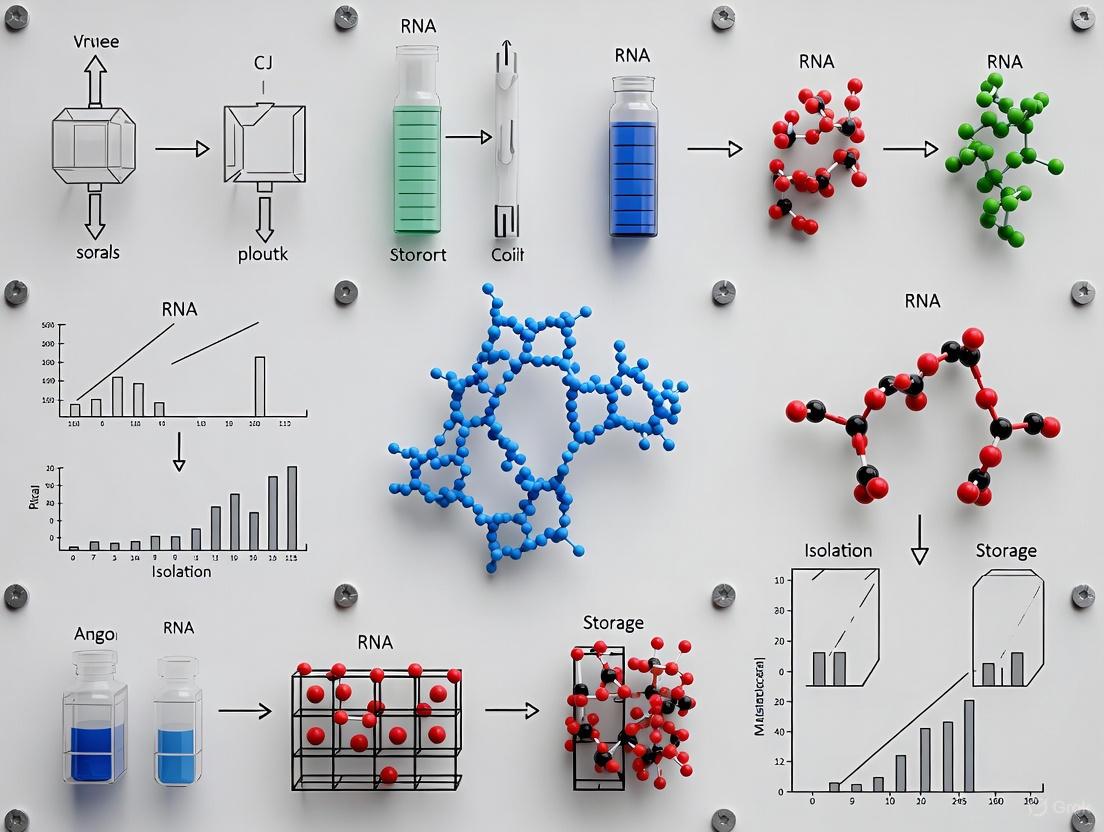
This article provides researchers, scientists, and drug development professionals with a definitive guide to safeguarding RNA integrity from sample collection to long-term storage.
Preserving RNA Integrity: A Comprehensive Guide to Preventing Degradation During Isolation and Storage
Abstract
This article provides researchers, scientists, and drug development professionals with a definitive guide to safeguarding RNA integrity from sample collection to long-term storage. It synthesizes foundational knowledge on RNA's vulnerabilities with proven methodological approaches, advanced troubleshooting strategies, and contemporary validation techniques. Covering everything from establishing an RNase-free workspace and selecting appropriate stabilization reagents to optimizing protocols for challenging samples and leveraging emerging technologies, this resource is designed to ensure the recovery of high-quality, degradation-free RNA for reliable downstream applications in transcriptomics and molecular diagnostics.
Understanding the Enemy: The Fundamental Causes and Consequences of RNA Degradation
Ribonucleic acid (RNA) serves as a crucial molecule in numerous cellular processes, from translating genetic information into proteins to regulating gene expression. However, its functional versatility is matched by its inherent chemical instability, which presents a significant challenge in laboratory settings. A primary source of this instability stems from the fundamental chemical structure of its ribose sugar. Unlike DNA, which has a hydrogen atom at the 2' position of its sugar, RNA possesses a reactive 2'-hydroxyl (2'-OH) group [1] [2]. This single structural difference makes RNA vastly more susceptible to degradation via a chemical process known as base-catalyzed hydrolysis [3].
The mechanism of this hydrolysis involves the deprotonated 2'-oxygen acting as a nucleophile, attacking the adjacent phosphorus atom in the sugar-phosphate backbone [3]. This results in the cleavage of the phosphodiester bond and the fragmentation of the RNA molecule [3]. This reaction can occur spontaneously, especially in single-stranded regions under basic conditions, and is a major contributor to RNA degradation during isolation, storage, and handling [3] [4]. Understanding this vulnerability is the first step in developing robust protocols to protect the integrity of RNA for downstream research and diagnostic applications.
Frequently Asked Questions (FAQs) on RNA Instability
Q1: What makes RNA chemically less stable than DNA? The key difference is the presence of the 2'-hydroxyl group on the ribose sugar in RNA. In DNA, this position is occupied by a hydrogen atom. The 2'-OH group in RNA is chemically reactive and can initiate an attack on the phosphodiester backbone of the same molecule, leading to chain cleavage. This process, called transesterification, is catalyzed by bases and is significantly accelerated in the presence of divalent cations like Mg²⁺ [3] [1] [5].
Q2: Besides chemical hydrolysis, what other factors degrade RNA in my samples? The primary threats to RNA integrity are:
- Ribonucleases (RNases): These enzymes, which catalyze RNA hydrolysis, are ubiquitous in the environment and are found on skin and dust. They are also endogenous to biological samples and can be rapidly released upon cell lysis [6] [5].
- Physical Factors: Multiple freeze-thaw cycles and exposure to high temperatures can greatly accelerate both enzymatic and chemical degradation pathways [6] [7].
- Metal Ions: Divalent cations such as Mg²⁺ can catalyze the cleavage of the RNA backbone [5].
Q3: How does the 2'-OH group enable RNA to have catalytic functions? The same reactivity that makes RNA labile also allows it to perform catalysis. In ribozymes (catalytic RNA molecules), the 2'-OH group can be positioned to participate in acid-base catalysis, attacking phosphodiester bonds to cleave other RNA molecules or itself [3] [2]. The ribosome, for example, uses ribosomal RNA (rRNA) in its active site, where the 2'-OH of an adenosine residue is critical for catalyzing peptide bond formation [1] [2].
Troubleshooting Guide: Common RNA Degradation Problems and Solutions
| Problem | Potential Cause | Recommended Solution |
|---|---|---|
| Low RNA Yield | Sample degradation before homogenization; Insufficient homogenization [8] [7]. | Flash-freeze samples in liquid nitrogen or use RNAlater. Ensure thorough homogenization in a denaturing lysis buffer [6] [7]. |
| RNA Degradation | RNase contamination; Improper sample storage; Repeated freeze-thaw cycles [8] [5] [7]. | Use RNase-free consumables and decontaminate surfaces with RNaseZap. Store RNA at -80°C in single-use aliquots. Avoid freeze-thaw cycles [6] [5]. |
| DNA Contamination | Inefficient separation of DNA during RNA isolation [6] [8]. | Perform an on-column or in-solution DNase I digestion step during the purification protocol [6] [8]. |
| Poor A260/A280 Ratio | Residual protein (low ratio) or chemical (e.g., guanidine salts) contamination [8]. | Ensure complete removal of the protein-containing interphase during phenol-chloroform extraction. Increase wash steps to remove salts [8] [7]. |
| Clogged Purification Column | Overloading with too much starting material; Insufficient sample disruption [8]. | Do not exceed the recommended input tissue amount. Increase homogenization time or increase the volume of lysis buffer [8]. |
Experimental Protocols for Preventing RNA Hydrolysis
Protocol for Rapid Tissue Collection and Stabilization
This protocol is designed to immediately inactivate endogenous RNases upon tissue harvesting.
- Harvest & Stabilize: Immediately upon dissection, place tissue into a pre-chilled container. For stabilization, either:
- Homogenize: Homogenize the tissue in a chaotropic lysis buffer (e.g., containing guanidinium isothiocyanate or phenol). This denatures proteins and inactivates RNases [6] [7].
- Process: Centrifuge the homogenate to pellet insoluble debris. Transfer the supernatant containing RNA to a new tube for subsequent RNA purification [7].
Protocol for Long-Term RNA Storage
Preventing degradation during storage is critical for preserving sample integrity.
- Precipitate and Wash: After isolation, precipitate RNA with ethanol or isopropanol and wash with 70% ethanol to remove salts [7].
- Resuspend: Resuspend the purified RNA pellet in a certified RNase-free buffer or nuclease-free water. Buffers containing EDTA can chelate divalent cations and reduce metal-catalyzed hydrolysis [5].
- Aliquot: Divide the RNA solution into several single-use aliquots to minimize freeze-thaw cycles [6] [5].
- Store:
- Short-term (weeks): Store at -20°C [6].
- Long-term (months/years): Store at -80°C [6] [5].
- Room temperature (emerging tech): For maximum stability, consider specialized technologies that involve drying RNA in the presence of a stabilizer under an anhydrous and anoxic atmosphere (e.g., in sealed stainless-steel minicapsules), which can prevent hydrolysis for extended periods [4].
Quantitative Data on RNA Degradation
Table 1: RNA Integrity Assessment Methods and Benchmarks
| Method | Measurement Target | Ideal Output / Acceptable Range | Interpretation |
|---|---|---|---|
| UV Spectrophotometry | Purity based on absorbance ratios [6]. | A260/A280: 1.8 - 2.0 [6]. | A260/A280 <1.8 suggests protein contamination. |
| Fluorometry (e.g., Qubit) | Accurate RNA quantity using RNA-specific dyes [6]. | N/A (provides concentration) | More accurate for quantity than UV spectroscopy, especially for low-concentration samples [6]. |
| Capillary Electrophoresis (e.g., Bioanalyzer) | RNA Integrity Number (RIN) [6]. | RIN: 7.0 - 10.0 (for most applications) [6]. | A RIN ≥7 indicates high-quality, intact RNA. Lower values indicate degradation. |
Table 2: Estimated RNA Degradation Rates Under Different Conditions
Data derived from accelerated degradation studies under controlled, anhydrous conditions. Rates are extrapolated using an Arrhenius model [4].
| Storage Condition | Key Parameter | Extrapolated Degradation Rate (at ~20°C) |
|---|---|---|
| Aqueous Solution | N/A | High and variable; not recommended for long-term storage. |
| Standard Frozen (-80°C) | N/A | Very slow, but requires continuous cold chain. |
| Anhydrous/Anoxic (Room Temp) | Activation Energy: 28.5 kcal/mol | ~1 cut per 1,000 nucleotides per century [4]. |
The Scientist's Toolkit: Key Reagents for RNA Stabilization
| Item | Function / Rationale |
|---|---|
| Chaotropic Salts (e.g., Guanidinium Isothiocyanate) | Powerful protein denaturants that rapidly inactivate RNases upon cell lysis, protecting RNA during homogenization [6] [5]. |
| RNase Decontamination Solutions (e.g., RNaseZap) | Specifically formulated to destroy RNases on surfaces, pipettors, and glassware, preventing introduction of external RNases [6]. |
| RNA Stabilization Reagents (e.g., RNAlater) | Aqueous, non-toxic solutions that rapidly permeate tissues to stabilize RNA by inactivating RNases, allowing temporary storage at room temperature [6] [5]. |
| DNase I (RNase-free) | Enzyme used to digest and remove contaminating genomic DNA from RNA preparations, crucial for sensitive applications like RT-qPCR [6] [8]. |
| Chelating Agents (e.g., EDTA) | Binds divalent cations (Mg²⁺), preventing them from catalyzing the cleavage of the RNA backbone via the 2'-OH group [5]. |
Visualizing RNA Instability and Protection Strategies
Diagram Title: RNA Instability Causes and Protection
This diagram illustrates the primary pathway of RNA degradation, initiated by the reactive 2'-OH group, and the corresponding strategies researchers can employ to mitigate it. The vulnerability of the 2'-OH group leads to chemical hydrolysis, a process catalyzed by divalent cations, and also makes RNA a target for enzymatic cleavage by RNases. The protection strategies on the right directly counter these threats, from inactivating RNases to slowing hydrolysis through proper storage.
Frequently Asked Questions (FAQs)
RNases are ubiquitous and can be introduced from multiple sources. The most common include:
- "Fingerases": RNases present in perspiration and skin cells can be transferred through ungloved hands [9].
- Laboratory Surfaces: Benchtops, pipettors, glassware, and other equipment can be contaminated by bacterial/fungal spores or dead skin cells [9] [10].
- Consumables: Laboratory plasticware such as tips and tubes can be a significant source unless certified RNase-free [9].
- Water and Buffers: Solutions can harbor RNases unless properly treated [9] [10].
- Enzymes and Reagents: Commercially purchased or laboratory-prepared enzymes (e.g., restriction enzymes) can be potential sources if not certified RNase-free [9].
What practical steps can I take to prevent RNase contamination in my experiments?
Implementing a consistent decontamination schedule is crucial. Ambion scientists recommend the following [10]:
- Daily: Use RNase-free buffers, reagents, and consumables; use ribonuclease inhibitor proteins in enzymatic reactions.
- Weekly: Thoroughly clean lab benchtops, pipettors, and tube racks with RNase decontamination solutions like RNaseZap [10].
- Monthly: Test water sources for RNase contamination.
- As Needed: Test bench-prepared reagents for RNases; clean electrophoresis equipment prior to use with RNA.
How should I handle tissue samples to prevent RNA degradation by endogenous RNases?
Endogenous RNases present in tissue samples can rapidly degrade RNA upon cell death. Three effective methods to inactivate them immediately upon harvesting are [6]:
- Chaotropic Lysis: Homogenize samples immediately in a chaotropic-based lysis solution (e.g., containing guanidinium).
- Flash Freezing: Flash-freeze samples in liquid nitrogen (ensure tissue pieces are small enough for immediate freezing).
- Stabilization Solution: Place samples in RNAlater Tissue Collection: RNA Stabilization Solution, which preserves RNA within tissues and cells [9] [6].
How can I tell if my RNA sample has been degraded?
RNA integrity can be assessed using several methods [6]:
- UV Spectroscopy: Measures A260/A280 ratio; an acceptable ratio for pure RNA is 1.8-2.0, indicating low protein contamination.
- Fluorometric Methods (e.g., Qubit Fluorometers): Provide highly sensitive RNA quantitation.
- Capillary Electrophoresis: Provides an RNA Integrity Number (RIN); a RIN value ≥7 is generally recommended for most applications, though some techniques like qRT-PCR can tolerate samples with RIN as low as 2 [6].
Troubleshooting Guides
Problem: Consistent RNA Degradation in Isolated Samples
Possible Causes and Solutions:
| Cause | Solution |
|---|---|
| Trace RNases in storage environment | Store RNA as a salt/alcohol precipitate at -20°C. The low temperature, presence of alcohol, and lower pH stabilize RNA [9] [10]. |
| Chemical strand scission | Resuspend or store RNA in a buffer containing a chelating agent (e.g., 1 mM sodium citrate in THE RNA Storage Solution) to sequester divalent cations like Mg²⁺ that catalyze RNA cleavage at high temperatures [9]. |
| RNases co-purifying with RNA | Use an RNase inhibitor (e.g., SUPERase•In) in downstream enzymatic manipulations [9]. |
Problem: Low RNA Yield or Quality from Tissue Homogenates
Possible Causes and Solutions:
| Cause | Solution |
|---|---|
| Delayed inactivation of endogenous RNases | Ensure tissue is immediately processed after harvest using one of the three recommended methods (lysis, freezing, or stabilization solution) [6]. |
| Ineffective homogenization | For difficult tissues (e.g., pancreas, brain, adipose), use a more rigorous, phenol-based method like TRIzol Reagent [6]. |
| Incorrect tissue aliquot size | Do not overload the RNA purification column. For best results, use tissue amounts recommended for your kit (e.g., ≤30 mg for many mini kits) [6] [11]. |
Experimental Protocol: Handling Cryopreserved Tissues Without Preservatives
Archival frozen tissues stored without preservatives require careful handling to maintain RNA quality during thawing [11].
Workflow for Thawing Cryopreserved Tissues:
- Add Preservative During Thawing: Add RNALater, TRIzol, or RL lysis buffer to the frozen tissue before thawing [11].
- Select Thawing Temperature Based on Sample Size:
- Minimize Processing Delay: Process the tissue for RNA extraction as quickly as possible after thawing. Delays of 120 minutes versus 7 days can significantly reduce RIN values [11].
- Avoid Repeated Freeze-Thaw Cycles: Aliquot tissues to avoid subjecting the same sample to multiple freeze-thaw cycles, which degrades RNA [11].
Experimental Protocol: Validating an RNase-Free Work Environment
Regular testing is essential to confirm that your workspace and reagents are free of RNase contamination [10].
Methodology for RNase Detection:
- Test Water and Buffers: Use a commercial RNase detection assay (e.g., RNaseAlert Kit) to test nuclease-free water and bench-prepared buffers monthly or as needed [9] [10].
- Surface Monitoring: Swab critical surfaces (benchtops, pipettors) and test the swabs with the detection assay [10].
- Positive and Negative Controls: Always include a positive control (known RNase) and a negative control (RNase-free water) in your detection assay to validate the test results [9].
The Scientist's Toolkit: Essential Reagents for RNase Control
| Item | Function | Key Examples |
|---|---|---|
| Surface Decontaminant | Inactivates RNases on benchtops, equipment, and glassware. | RNaseZap Solution/Wipes [9] [6] |
| RNase Inhibitor | Added to enzymatic reactions (e.g., RT-PCR) to inhibit common RNases. | SUPERase•In (inhibits RNases A, T1, 1), Placental Ribonuclease Inhibitor (RI) [9] [10] |
| RNA Stabilization Solution | Preserves RNA in intact, unfrozen tissues and cells after collection. | RNAlater Solution [9] [6] |
| Certified RNase-Free Consumables | Pre-sterilized tips and tubes guaranteed to be RNase-free. | Ambion certified tips and tubes [9] |
| DEPC-Treated Water | Water treated with Diethyl pyrocarbonate to inactivate RNases; used for making buffers and solutions. | DEPC-Treated Water [9] [10] |
| RNA Storage Solution | A specialized, slightly acidic buffer with chelating agents to minimize RNA degradation during storage. | THE RNA Storage Solution [9] |
Understanding the Contamination Pathways and Defense Strategies
A clear understanding of how RNases enter your experiment is the first step to building a robust defense. The sources can be categorized as exogenous (from the environment) and endogenous (from the sample itself). The following diagram illustrates the major pathways and corresponding control measures.
RNA degradation is an insidious process that can systematically bias your gene expression results, leading to misinterpreted data and flawed scientific conclusions. The vulnerability of RNA molecules to degradation stems from their fundamental chemical structure and the ubiquitous presence of ribonucleases (RNases). The single-stranded nature of RNA provides flexibility for biological functions but also makes it susceptible to enzymatic degradation by RNases and chemical hydrolysis, particularly through reactions involving the 2'-hydroxyl group in the ribose sugar [5] [12]. This degradation doesn't affect all transcripts equally, creating representation biases that distort the true biological picture you aim to capture.
When RNA degrades, it typically loses integrity from the 5' end, through decapping enzymes, or the 3' end, through deadenylation complexes, ultimately leading to complete destruction by exoribonucleases [12]. This differential degradation means transcripts with shorter half-lives or specific sequence features may be underrepresented in your analyses. For quantitative techniques like RT-qPCR and RNA-Seq, this skews expression ratios and can lead to false positives or negatives. Understanding where and how this degradation occurs is the first step toward implementing effective countermeasures throughout your experimental workflow.
Critical Checkpoints: Where Degradation Occurs and How to Prevent It
Checkpoint 1: Sample Collection and Stabilization
The Problem: RNA degradation begins immediately upon cell death or tissue harvesting. Endogenous RNases, once released from cellular compartments, rapidly digest RNA, while chemical hydrolysis can occur due to divalent cations like Mg²⁺ that catalyze RNA cleavage [5]. This is the most critical window for preserving RNA integrity.
Prevention Strategies:
- Immediate Stabilization: For tissues, either flash-freeze in liquid nitrogen (ensuring pieces are small enough to freeze instantly) or place in specialized stabilization solutions like RNAlater that permeate tissue and stabilize RNA [6] [13]. For cells, use lysis buffers containing strong denaturants immediately.
- Inhibit Destructive Elements: Use chelating agents like EDTA in buffers to sequester divalent cations that catalyze RNA hydrolysis [5].
- Proper Sizing: When using stabilization solutions, ensure tissue pieces are thin (<0.5 cm) to allow rapid penetration before RNases destroy RNA [6].
Table: Sample Stabilization Methods Comparison
| Method | Mechanism | Best For | Limitations |
|---|---|---|---|
| Flash Freezing | Instantaneously halts all enzymatic activity | Tissues that will be processed soon after collection | Does not protect during thawing; requires consistent storage at -80°C |
| RNAlater/Stabilization Solutions | Permeates tissue to inactivate RNases | Field collections; delayed processing; shipping | Tissue must be small for adequate penetration; may interfere with some extraction methods |
| Guanidine-Based Lysis | Denatures proteins including RNases | Immediate processing of cells and soft tissues | Sample must be processed immediately after lysis |
Checkpoint 2: RNA Extraction and Purification
The Problem: Even well-stabilized samples can degrade during extraction if RNases are reintroduced or denaturants are improperly used. Different sample types present unique challenges—fatty tissues (brain, adipose) require more rigorous extraction, while nuclease-rich tissues (pancreas, spleen) need rapid, complete inhibition of enzymatic activity [6].
Prevention Strategies:
- Choose Appropriate Methods: Select extraction methods matched to your sample type. Column-based methods (PureLink RNA Mini Kit) work well for most samples, while phenol-based methods (TRIzol) are better for difficult tissues high in nucleases or lipids [6].
- Maintain RNase-Free Conditions: Designate a clean workspace, regularly decontaminate surfaces with solutions like RNaseZap, use RNase-free tips and tubes, and change gloves frequently [6] [5].
- Implement DNase Treatment: Perform on-column DNase digestion (PureLink DNase Set) to remove genomic DNA contamination, which is particularly important for applications like qRT-PCR with single-exon genes [6].
- Optimize Homogenization: Homogenize sufficiently but avoid overheating. Use bursts of 30-45 seconds with 30-second rest periods to prevent heat generation [14].
Checkpoint 3: RNA Storage and Handling
The Problem: Improper storage leads to gradual RNA degradation through residual RNase activity, chemical hydrolysis, or oxidation. Freeze-thaw cycles are particularly damaging, as each cycle progressively fragments RNA molecules.
Prevention Strategies:
- Optimal Storage Conditions: Store purified RNA at -80°C in single-use aliquots to prevent freeze-thaw damage. For short-term storage (up to one month), -20°C is acceptable [6].
- Aliquot Strategy: Divide RNA into several single-use aliquots to minimize repeated freezing and thawing and reduce accidental RNase contamination [6] [5].
- Novel Storage Technologies: For room temperature storage, consider specialized technologies like anhydrous, anoxic minicapsules that protect RNA from atmospheric humidity, a major degradation factor [15].
- Appropriate Buffers: Resuspend RNA in RNase-free water or specialized storage solutions like THE RNA Storage Solution that minimize base hydrolysis [6].
Checkpoint 4: Quality Assessment and Quantification
The Problem: Without proper quality assessment, degraded RNA may be used in downstream applications, generating biased data. Traditional spectrophotometry (A260/A280) detects protein contamination but doesn't reveal RNA integrity.
Prevention Strategies:
- Multi-Parameter Assessment: Use complementary methods:
- UV Spectroscopy: Measures A260/A280 ratio (acceptable range: 1.8-2.0) for protein contamination and A260/A230 for organic compound contamination [6] [13].
- Fluorometric Methods: (Qubit RNA assays) provide accurate RNA quantification, especially for low-concentration samples [6] [16].
- Capillary Electrophoresis: (Bioanalyzer, TapeStation) provides RNA Integrity Number (RIN) and DV200 values that directly measure integrity [6] [16].
- Establish Quality Thresholds: Set minimum standards for your applications. While RIN ≥7 is recommended for most applications, qRT-PCR can tolerate samples with RIN as low as 2 [6]. For degraded samples like FFPE RNA, DV200 (percentage of fragments >200 nucleotides) may be a more appropriate metric [16].
Table: RNA Quality Metrics and Interpretation
| Metric | Ideal Value | What It Measures | Limitations |
|---|---|---|---|
| A260/A280 | 1.8-2.0 | Protein contamination | Does not indicate integrity; affected by pH |
| A260/A230 | >2.0 | Organic compound/salt contamination | Does not indicate integrity |
| RIN | 7-10 | Overall integrity based on ribosomal peaks | Less reliable for degraded samples like FFPE |
| DV200 | >70% | Percentage of RNA fragments >200 nt | Better for FFPE/degraded samples; doesn't distinguish intact vs cross-linked RNA |
| Qubit/NanoDrop Ratio | ~1.0 | Accuracy of quantification | Fluorometry more specific for RNA than UV |
Troubleshooting Guide: Common RNA Degradation Problems and Solutions
Problem: Low RNA Yield
- Causes: Insufficient sample disruption, incomplete elution from columns, too much starting material causing column overload, or degraded starting material [17] [14].
- Solutions: Increase homogenization time, incubate elution buffer on column for 5-10 minutes before centrifugation, ensure starting material falls within kit specifications, and verify proper sample storage at -80°C [17] [14].
Problem: RNA Degradation (Smeared Gel Electrophoresis)
- Causes: Improper sample storage, RNase contamination during extraction, insufficient denaturant in lysis buffer, or too many freeze-thaw cycles [17] [14].
- Solutions: Add beta-mercaptoethanol to lysis buffer (10μL of 14.3M BME per 1mL buffer) to inactivate RNases, thoroughly clean workspaces with RNase decontamination solutions, use fresh aliquots of buffers, and store RNA in single-use aliquots [14].
Problem: DNA Contamination
- Causes: Genomic DNA not removed by column, insufficient DNase treatment, or too much starting material [17] [14].
- Solutions: Perform on-column DNase treatment, increase DNase incubation time, or perform additional in-tube DNase treatment after extraction [6] [17].
Problem: Clogged Columns During Extraction
- Causes: Insufficient sample disruption, too much starting material, or particulate debris in lysate [17] [14].
- Solutions: Centrifuge sample after homogenization to pellet debris, transfer only supernatant to column, reduce amount of starting material, or use more aggressive homogenization methods for difficult tissues [17].
Special Considerations for Degraded RNA and Advanced Applications
RNA-Seq with Suboptimal RNA Samples
When working with partially degraded RNA samples (e.g., FFPE tissues, archived samples), standard poly(A) enrichment methods fail because they preferentially capture intact transcripts, creating 3' bias [18] [16]. Instead, employ these specialized approaches:
- rRNA Depletion: Use enzymatic rRNA depletion (RiboErase) rather than poly(A) selection, as it works better with degraded RNA and provides more uniform transcript coverage [16].
- Random Primer-Based Methods: Select library preparation kits that use random primers rather than oligo-dT priming. Studies show SMART-Seq performs particularly well with both low-input and degraded RNA, especially when combined with rRNA depletion [18].
- Adjust QC Metrics: For FFPE RNA, rely on DV200 values rather than RIN, as ribosomal peaks may be absent, making RIN scores unreliable [16].
Reverse Transcription and PCR Considerations
- Primer Design: For degraded samples, design amplicons closer to the 3' end of transcripts where RNA is more likely to be intact.
- Include Proper Controls: Always include "no-RT" controls for each RNA sample to confirm amplification comes from RNA rather than residual genomic DNA [6].
- DNase Treatment: Treat samples with DNase during RNA purification (on-column) or after extraction, but before reverse transcription [19].
Research Reagent Solutions: Essential Tools for RNA Integrity
Table: Key Reagents for Preventing RNA Degradation
| Reagent/Category | Specific Examples | Function | Application Notes |
|---|---|---|---|
| RNase Decontamination | RNaseZap Solution, RNaseZap Wipes, RNase Erase | Inactivates RNases on surfaces, equipment | Regular cleaning of workspaces, pipettes, electrophoresis equipment |
| Stabilization Solutions | RNAlater, RNAprotect, DNA/RNA Protection Reagent | Stabilizes RNA in tissues/cells immediately after collection | Allows delayed processing; ensure tissue pieces are small |
| Lysis Buffers | Guanidine thiocyanate-based buffers, TRIzol, PureLink Lysis Buffer | Denatures proteins including RNases upon cell disruption | Contains strong denaturants; must contact cells immediately upon disruption |
| DNase Treatment Kits | PureLink DNase Set, RQ1 RNase-free DNase | Removes genomic DNA contamination | On-column treatment more efficient; essential for sensitive applications |
| Specialized Storage | THE RNA Storage Solution, anhydrous minicapsules | Prevents RNA degradation during storage | Minimizes base hydrolysis; room temperature options available |
| RNA Isolation Kits | PureLink RNA Mini Kit (column), MagMAX (magnetic), TRIzol (phenol) | Isolate RNA while maintaining integrity | Column: easy, most samples; Magnetic: high-throughput; Phenol: difficult tissues |
| Quality Assessment | Qubit RNA assays, Bioanalyzer RNA kits, TapeStation | Accurately quantifies and assesses RNA integrity | Fluorometry more accurate than UV; electrophoresis provides integrity information |
Frequently Asked Questions (FAQs)
Q: How many freeze-thaw cycles can RNA withstand before degradation becomes significant? A: There's no safe number of freeze-thaw cycles. Each cycle progressively damages RNA. Always aliquot RNA into single-use portions and avoid repeated thawing. Store at -80°C in multiple aliquots to prevent this issue [6] [5].
Q: Can I still use RNA with a low RIN number for my experiments? A: It depends on your application. While RIN ≥7 is recommended for most applications like RNA-Seq, techniques like RT-qPCR can tolerate samples with RIN as low as 2. However, you must validate that your target regions are still detectable and consider that global transcript representation will be skewed [6].
Q: What is the difference between RIN and DV200, and when should I use each metric? A: RIN (RNA Integrity Number) evaluates the entire electrophoretic trace, emphasizing ribosomal ratios, while DV200 measures the percentage of RNA fragments longer than 200 nucleotides. Use RIN for intact RNA from fresh-frozen samples, and DV200 for partially degraded samples like FFPE RNA where ribosomal peaks may be absent [16].
Q: How can I prevent RNA degradation when working with particularly nuclease-rich tissues like pancreas or spleen? A: Use more rigorous extraction methods like phenol-based TRIzol extraction rather than column-based methods. Ensure immediate homogenization in denaturing buffer, consider increasing the amount of denaturant, process samples quickly, and use specialized RNase inhibitors. Pre-chill equipment and work quickly on ice [6] [14].
Q: Is it possible to store RNA at room temperature without degradation? A: Yes, with specialized technologies. Research shows RNA can be stored at room temperature for extended periods in anhydrous, anoxic environments like specialized minicapsules that protect against atmospheric humidity—the major factor in RNA degradation. One study extrapolated that RNA could remain intact for centuries under such ideal conditions [15].
Preventing RNA degradation requires vigilance at every stage from experimental design to data generation. By understanding the critical checkpoints where degradation occurs—sample collection, extraction, storage, and quality assessment—you can implement appropriate countermeasures. The most effective approach combines:
- Immediate stabilization of starting materials
- Appropriate extraction methods matched to sample type
- Meticulous RNase-free technique
- Proper storage with minimal freeze-thaw cycles
- Comprehensive quality assessment using multiple metrics
Remember that different downstream applications have different tolerance thresholds for RNA quality. While degraded RNA may still yield useful data for some applications, understanding the limitations and potential biases enables appropriate interpretation of your results. By implementing these systematic quality control measures, you ensure that your gene expression data accurately reflects biology rather than extraction artifacts.
Troubleshooting Guides & FAQs
FAQ: Understanding the Metrics
Q1: What do the A260/A280 and A260/A230 ratios specifically indicate about my RNA sample?
A1: These ratios are spectrophotometric assessments of sample purity.
- A260/A280 Ratio: Indicates the purity of nucleic acids relative to protein contamination. A ratio of ~2.0 is generally accepted as "pure" for RNA.
- A260/A230 Ratio: Indicates the presence of contaminants such as chaotropic salts (e.g., guanidinium thiocyanate), phenol, or carbohydrates. A ratio of 2.0-2.2 is typically considered pure.
Q2: What is the RIN number, and why is it considered a more reliable metric than spectrophotometric ratios alone?
A2: The RNA Integrity Number (RIN) is an algorithm-based score (scale 1-10) generated by an Agilent Bioanalyzer or TapeStation. It assesses the entire RNA profile, including the presence and ratio of the 18S and 28S ribosomal bands. While A260/A280 and A260/230 report on purity, the RIN reports on integrity and degradation, making it a superior predictor of performance in downstream applications like qRT-PCR and RNA-Seq.
Q3: My RNA has a good A260/A280 ratio but a low RIN. What does this mean?
A3: This is a common scenario. It means your RNA sample is pure (free of significant protein contamination) but degraded. RNases may have been introduced during or after isolation, fragmenting the RNA. The A260/A280 ratio remains unaffected because it measures total nucleic acid content, not fragment size.
Troubleshooting Guide: Poor Quality Metrics
Issue: Low A260/A280 Ratio (<1.8 for RNA)
| Symptom | Possible Cause | Solution |
|---|---|---|
| A260/A280 ~1.5-1.7 | Protein contamination from incomplete purification. | - Add an extra protein purification step (e.g., chloroform extraction).- Ensure complete removal of the aqueous phase without disturbing the interphase/organic phase. |
| A260/A280 < 1.5 | Significant protein contamination or improper measurement. | - Re-precipitate the RNA and wash the pellet thoroughly with 70-75% ethanol.- Ensure the spectrophotometer is blanked correctly with the same buffer used for elution/resuspension. |
Issue: Low A260/A230 Ratio (<2.0)
| Symptom | Possible Cause | Solution |
|---|---|---|
| A260/A230 ~1.5-1.8 | Carryover of guanidinium salts or phenol from isolation kits. | - Perform an additional 70-75% ethanol wash during the isolation protocol. Ensure all wash buffer is completely removed before elution.- Change the elution buffer or re-suspend the final pellet in nuclease-free water. |
| A260/A230 << 1.5 | High levels of carbohydrate or glycogen contamination. | - If isolating from carbohydrate-rich tissues (e.g., plants, liver), use a specialized kit designed to remove polysaccharides.- Increase centrifugation speed/time during extraction steps to pellet insoluble carbohydrates. |
Issue: Low RIN Value (<7.0)
| Symptom | Possible Cause | Solution |
|---|---|---|
| RIN 3-6 (Degraded) | RNase contamination during isolation or handling. | - Use certified RNase-free tips and tubes.- Decontaminate work surfaces and equipment with RNase decontamination solutions.- Keep samples on ice whenever possible. |
| RIN < 3 (Highly Degraded) | Tissue was not stabilized immediately or was stored improperly. | - Flash-freeze tissue in liquid nitrogen immediately after collection.- Store tissue and isolated RNA at -80°C.- Use RNA stabilization reagents (e.g., RNAlater) for tissues. |
| RIN 7-8 but smear visible | Partial degradation or repeated freeze-thaw cycles. | - Aliquot RNA to avoid multiple freeze-thaw cycles.- Store RNA at -80°C in nuclease-free buffers at a neutral pH. |
Experimental Protocols for Quality Assessment
Protocol 1: UV Spectrophotometry for RNA Purity and Concentration
Principle: Nucleic acids absorb UV light at 260 nm. Contaminants absorb at other wavelengths (e.g., proteins at 280 nm, organics/salts at 230 nm).
Methodology:
- Blank: Use the same buffer in which the RNA is dissolved (e.g., nuclease-free water, TE buffer).
- Measurement: Dilute 2 µL of RNA sample in 98 µL of nuclease-free water (1:50 dilution). Measure absorbance in a spectrophotometer using a microvolume pedestal or quartz cuvette.
- Calculation:
- Concentration (ng/µL) = A260 × Dilution Factor × 40 ng/µL
- A260/A280 Ratio = A260 / A280
- A260/A230 Ratio = A260 / A230
Protocol 2: RNA Integrity Number (RIN) Assessment via Bioanalyzer
Principle: Lab-on-a-chip technology separates RNA fragments by size via microfluidic electrophoresis, providing an electrophoretogram and gel-like image.
Methodology:
- Chip Preparation: Load the RNA Nano chip with gel-dye mix and priming station according to manufacturer instructions.
- Sample Preparation: Denature 1 µL of RNA sample (at ~50 ng/µL) at 70°C for 2 minutes with the RNA marker and dye.
- Loading: Pipette the denatured samples into the designated wells on the prepared chip.
- Run: Place the chip in the Agilent Bioanalyzer 2100 and run the "Eukaryote Total RNA Nano" assay.
- Analysis: The software automatically calculates the RIN by analyzing the entire electrophoretic trace, including the 18S and 28S ribosomal peaks and the baseline.
Visualizations
RNA Degradation Pathways & Impact on RIN
RNA Degradation & Quality Impact
RNA QC Workflow for Researchers
RNA Quality Control Workflow
The Scientist's Toolkit: Research Reagent Solutions
| Reagent / Material | Function |
|---|---|
| RNase-free Water | Used to elute or dilute RNA samples. Guaranteed to be free of RNases, which is critical for preventing degradation. |
| RNase Decontamination Spray | Used to thoroughly clean workbenches, pipettes, and other equipment to create an RNase-free environment. |
| Guanidinium Thiocyanate | A potent chaotropic agent used in lysis buffers to denature proteins and inactivate RNases immediately upon cell lysis. |
| β-Mercaptoethanol | A reducing agent added to lysis buffers to disrupt disulfide bonds in proteins, further ensuring RNase inactivation. |
| RNAlater Stabilization Solution | A tissue storage reagent that permeates tissues to stabilize and protect cellular RNA in situ, preventing degradation prior to homogenization. |
| Acid-Phenol:Chloroform | Used during extraction to separate RNA (aqueous phase) from DNA and proteins (interphase/organic phase). |
| DNase I (RNase-free) | An enzyme used to digest and remove genomic DNA contamination from an RNA preparation. |
| RNA Quality Assessment Kits (e.g., Agilent RNA Nano Kit) | Lab-on-a-chip kits containing all gels, dyes, and markers required for running RNA integrity analysis on a Bioanalyzer. |
| RNA Storage Buffer | A specialized, slightly acidic buffer (e.g., containing sodium citrate) optimized for long-term storage of RNA at -80°C, preventing base hydrolysis. |
Proven Protocols: Practical Strategies for RNA Stabilization and Extraction
Troubleshooting Guides
Troubleshooting Guide 1: Common RNA Isolation Problems
Problem: Genomic DNA Contamination The RNA elutes with genomic DNA, evidenced by high molecular weight smearing on a gel or amplification in no-RT PCR controls.
- Causes: Insufficient shearing of genomic DNA during homogenization; incorrect pH of phenol in organic extraction; pipetting of the interphase/organic layer during phenol-based methods [20].
- Solutions:
- Ensure thorough homogenization using a high-velocity bead beater or polytron rotor stator [20].
- For phenol methods, use acidic phenol and practice careful pipetting to retrieve only the aqueous phase [20].
- Perform a DNase treatment post-extraction. Use a high-activity DNase kit or an "on-column" DNase treatment during purification [21] [20].
Problem: Degraded RNA The rRNA bands appear smeared on a gel, the 28S band is less intense than the 18S band, or Bioanalyzer traces show poor RNA Integrity Number (RIN).
- Causes: Degradation can occur during sample collection, storage, extraction, or post-isolation. RNase activity is the primary culprit [20].
- Solutions:
- For sample storage: Flash-freeze samples in liquid nitrogen and store at -70°C to -80°C immediately after collection. For animal tissues, use RNAlater solution and store at -20°C or 4°C [13] [22] [20].
- During extraction: Add beta-mercaptoethanol (BME) to the lysis buffer (e.g., 10 µl of 14.3 M BME per 1 ml of lysis buffer) to inactivate RNases. Ensure complete and rapid homogenization of the tissue without letting it thaw [20].
- Post-isolation: Ensure the elution or resuspension water is RNase-free. Use DEPC-treated or certified RNase-free water [22] [20].
Problem: Inhibitors in the RNA The RNA has abnormally low 260/230 or 260/280 ratios, or it fails in downstream applications like reverse transcription.
- Causes:
- Solutions:
- For salt carryover: Perform additional wash steps with 70-80% ethanol in silica spin-column protocols. For TRIzol precipitates, wash with ethanol to desalt [20].
- For protein carryover: The sample may have overwhelmed the purification chemistry. Clean up the sample with an additional round of purification. In future preps, use less starting material to avoid column overloading [20].
Problem: Low RNA Yield The yield of RNA is lower than expected based on tissue type or cell count.
- Causes: Incomplete homogenization; inaccurate tissue weighing or cell counting; over-dilution during elution from a spin column; sample degradation [20].
- Solutions:
- Focus on thorough homogenization to ensure complete cell lysis and RNA release [20].
- Use an accurate scale for weighing small tissue pieces and ensure accurate cell counts [20].
- When using spin columns, elute with the recommended volume from the manufacturer. Using too little volume may leave RNA bound to the membrane [20].
- If the RNA is both degraded and low-yield, homogenization may have been too harsh, generating heat. Try homogenizing in short bursts with rest periods in between [20].
Troubleshooting Guide 2: RNA Quality Assessment
This guide helps interpret quality control metrics to diagnose issues.
| Quality Metric | Ideal Value | What a Deviation Indicates | Potential Cause |
|---|---|---|---|
| A260/A280 Ratio | 1.8 - 2.1 [13] [23] | Ratio < 1.8 | Protein contamination (e.g., phenol, TRIzol carryover) [23] [20] |
| A260/A230 Ratio | > 2.0 | Ratio < 2.0 | Carryover of contaminants like guanidine salts, carbohydrates, or EDTA [20] |
| RNA Integrity Number (RIN) | 8 - 10 (Intact RNA) | RIN < 7 | Significant RNA degradation, often due to RNase activity or improper sample handling/storage [23] |
| 28S:18S rRNA Ratio | ~2:1 (Mammalian RNA) | 28S peak < 18S peak | Partial RNA degradation [20] |
Frequently Asked Questions (FAQs)
FAQ 1: What is the single most important practice for successful RNA work? The most critical practice is maintaining an RNase-free environment. RNases are ubiquitous, stable enzymes found on skin, dust, and surfaces [22] [23] [24]. Always wear gloves, use certified RNase-free consumables, and regularly decontaminate your workspace with specific RNase-inactivating agents [22] [5] [25].
FAQ 2: Can't I just autoclave everything to make it RNase-free? No, autoclaving alone is not sufficient to eliminate RNases [22]. RNases are remarkably stable and can refold after denaturation [23]. While autoclaving is useful for sterilization, glassware should be baked at >180°C for several hours, and plasticware should be treated with 0.1 M NaOH/1 mM EDTA or RNase-deactivating solutions [22] [5].
FAQ 3: How should I store my purified RNA for long-term use? For long-term storage, dissolve purified RNA in RNase-free water or TE buffer (pH 7.5), aliquot it to avoid repeated freeze-thaw cycles, and store it at -70°C to -80°C [22] [23] [5]. Avoid alkaline conditions (pH > 7.5) and divalent cations like Mg²⁺, which catalyze RNA hydrolysis [23] [5].
FAQ 4: My RNA is degraded. How can I tell if it happened before or during extraction? Run control probes if using an assay like RNAscope. Successful staining with a positive control probe (e.g., PPIB) and low signal with a negative control probe (dapB) indicates the RNA was intact prior to the in-situ hybridization assay [26]. Consistent degradation across all samples, including those stabilized immediately, points to a problem during extraction or post-isolation handling.
FAQ 5: Are there any specific considerations for working with blood samples? Yes. Blood plasma is exceptionally high in RNases, which can degrade 99% of RNA in as little as 15 seconds [21]. Best practice is to collect blood directly into specialized RNA stabilization tubes like PAXgene or Tempus, which immediately inactivate RNases and preserve the in-vivo gene expression profile [21].
Experimental Protocols & Workflows
Protocol 1: Workspace and Equipment Decontamination
Maintaining an RNase-free environment is foundational. The following workflow outlines the key steps.
Diagram 1: Workspace Decontamination Workflow
Detailed Methodologies:
- Surface Decontamination: Before starting, wipe down the bench, pipettes, and other equipment with a commercial RNase decontamination solution (e.g., RNaseZap or RNase-X). Alternatively, clean with a 1% SDS solution, followed by rinses with water and absolute ethanol [22] [23] [25].
- Personal Protective Equipment (PPE): Always wear gloves. Avoid touching your face, hair, or other potentially contaminated surfaces. Change gloves frequently [22] [23] [5].
- Plasticware: Use sterile, disposable plasticware (tubes, tips) certified to be RNase-free [22] [5].
- Glassware: For reusable glassware, bake at 180°C for at least 4 hours or treat with 0.1% Diethyl Pyrocarbonate (DEPC) water (incubate at 37°C for 2 hours, then autoclave to hydrolyze unreacted DEPC) [22].
- Solutions: Use RNase-free water and reagents. Tris buffers cannot be treated with DEPC and should be dedicated for RNA work and prepared with baked spatulas and DEPC-treated water [22].
Protocol 2: Sample Collection and Stabilization Pathway
Proper handling of the biological sample at the point of collection is critical to preserving RNA integrity.
Diagram 2: Sample Stabilization Pathway
Detailed Methodologies:
- Immediate Processing: Homogenize the sample immediately in a denaturing lysis buffer (e.g., TRIzol or guanidine thiocyanate-based buffers) that contains RNase inhibitors [13] [5].
- Chemical Stabilization: For flexibility, submerge small tissue pieces (<0.5 cm) in 5-10 volumes of stabilization reagent like RNAlater. The solution permeates the tissue and stabilizes RNA. Samples can then be stored at 4°C for up to a month, at -20°C, or even shipped at room temperature for overnight delivery without significant degradation [13].
- Cryopreservation: Flash-freeze samples by immersing them in liquid nitrogen. Store the frozen samples at -70°C to -80°C until RNA extraction. When ready to process, homogenize the still-frozen tissue in lysis buffer [22] [5].
- Blood Collection: Draw blood directly into RNA stabilization tubes (e.g., PAXgene). These tubes contain proprietary reagents that lyse cells and stabilize RNA immediately upon contact, preserving the transcriptome profile at the time of draw [21].
The Scientist's Toolkit: Essential Research Reagent Solutions
This table details key reagents and materials essential for creating and maintaining an RNase-free environment and ensuring successful RNA isolation.
| Item | Function & Rationale |
|---|---|
| RNase Decontamination Solutions (e.g., RNaseZap, RNase-X) | Ready-to-use sprays or wipes that rapidly inactivate RNases on benchtops, pipettes, glassware, and other equipment [23] [24]. |
| RNase Inhibitor Proteins (e.g., Protector RNase Inhibitor, RiboGuard) | Proteins that bind non-covalently to a broad spectrum of RNases (e.g., RNase A, B). They are added to reactions like reverse transcription to protect RNA from degradation by contaminating RNases [22] [23]. |
| RNA Stabilization Reagents (e.g., RNAlater, RNAprotect) | Aqueous solutions that rapidly permeate tissues/cells to stabilize and protect cellular RNA. Allow for temporary storage of samples at higher temperatures without degradation, enabling sample shipping and batch processing [13] [5]. |
| Stabilized Blood Collection Tubes (e.g., PAXgene, Tempus) | Vacutainer tubes containing reagents that immediately lyse blood cells and stabilize RNA upon collection. Crucial for accurate gene expression profiling from blood [5] [21]. |
| DNase I, RNase-free | Enzyme used to digest contaminating genomic DNA from RNA preparations. "On-column" or post-elution treatments prevent false positives in downstream RT-PCR assays [21] [20]. |
| Guanidine Thiocyanate / Guanidine HCl | A powerful chaotropic agent used in lysis buffers (e.g., in TRIzol or silica-membrane kits) to denature proteins and inactivate RNases instantly upon cell lysis [13] [23]. |
| Certified RNase-Free Consumables | Pipette tips, microcentrifuge tubes, and spin columns certified by the manufacturer to be free of RNases and DNases. Essential for avoiding introduction of contaminants [22] [5] [24]. |
Troubleshooting Guides
Troubleshooting Guide: Poor RNA Yield and Integrity
Problem: Low RNA concentration or degraded RNA after extraction.
- Potential Cause #1: Incomplete tissue stabilization. Large tissue pieces prevent preservatives from penetrating or cause slow freezing, allowing RNase activity.
- Potential Cause #2: Improper handling of frozen tissue. Repeated freeze-thaw cycles or thawing at high temperatures degrades RNA.
- Solution: Aliquot tissues to avoid multiple freeze-thaw cycles. For cryopreserved tissues without preservatives, thawing on ice is superior to room temperature thawing. Larger tissue aliquots (250-300 mg) may benefit from thawing at -20°C [27].
- Potential Cause #3: RNase contamination during processing.
- Solution: Use RNase-free tubes, tips, and reagents. Decontaminate surfaces with solutions like RNaseZap. Change gloves frequently [6].
Troubleshooting Guide: Inconsistent Gene Expression Results
Problem: Discrepancies or biases in downstream transcriptomic analysis (e.g., RNA-seq, qRT-PCR).
- Potential Cause #1: Systematic bias from storage method. Room temperature storage in RNAlater can cause non-random gene expression changes compared to flash-freezing.
- Solution: For highly accurate gene expression studies, especially of genes with high GC content, flash-freezing is preferred [28]. If using RNAlater, keep storage times at room temperature as short as possible and standardize across all samples.
- Potential Cause #2: Variable RNA integrity between samples.
- Solution: Use the RNA Integrity Number (RIN) to objectively assess quality. For long-term storage, RNAlater more effectively preserves placenta RIN compared to flash-freezing, while decidua tissue shows similar results with both methods [29]. Choose the method best suited for your specific tissue type.
- Potential Cause #3: DNA contamination.
- Solution: Perform on-column DNase digestion during RNA purification. This is more efficient and yields higher RNA recovery than post-isolation treatments [6].
Frequently Asked Questions (FAQs)
FAQ 1: Which stabilization method is the "gold standard"? There is no universal gold standard; the best method depends on your experimental context. Flash-freezing in liquid nitrogen is often considered the benchmark for preserving the in vivo transcriptional state and is preferred for detecting subtle gene expression changes, as it avoids potential biases [28]. However, RNAlater provides an excellent alternative, especially in field or clinical settings where immediate freezing is impractical, as it effectively preserves RNA integrity [30] [31] [29].
FAQ 2: Can I use RNAlater on tissues already frozen without preservatives? Yes. Adding RNAlater during the thawing process of archival frozen tissues can help rescue RNA quality. For the best results, thaw small tissue aliquots (≤100 mg) on ice in the presence of RNAlater [27].
FAQ 3: How long can samples be stored in RNAlater at room temperature? Samples can typically be stored in RNAlater at room temperature for up to a week, at 4°C for longer periods, and at -20°C or -80°C for archival storage [28] [6]. One study found no systematic bias in RNA expression profiles for uterine myometrium stored in RNAlater at room temperature for 24 or 72 hours [30].
FAQ 4: My tissue is high in RNases or fats (e.g., pancreas, brain). What should I use? For difficult tissues rich in RNases or lipids, a more rigorous, phenol-based RNA isolation method using TRIzol Reagent is recommended [6]. TRIzol is highly effective at lysing cells and inactivating RNases.
FAQ 5: What are the key quality control metrics for isolated RNA?
- Concentration and Purity: Use UV spectroscopy (e.g., Nanodrop). An A260/A280 ratio of 1.8-2.0 indicates minimal protein contamination [6] [29].
- Integrity: Use capillary electrophoresis (e.g., Bioanalyzer) to determine the RNA Integrity Number (RIN). A RIN ≥ 7 is often the minimum for qRT-PCR, while a RIN ≥ 8 is preferred for microarray or RNA-seq analysis [27] [6] [29].
Table 1: Comparative Performance of Stabilization Methods Across Tissues
This table synthesizes key findings from multiple studies on RNA Yield and Integrity.
| Tissue Type | Flash-Freezing | RNAlater | TRIzol / RNAiso Plus | Key Findings & Experimental Context |
|---|---|---|---|---|
| Dental Pulp [31] | Lower yield (384.25 ± 160.82 ng/μl), Lower mean RIN (3.34 ± 2.87) | Superior yield (4,425.92 ± 2,299.78 ng/μl), Higher mean RIN (6.0 ± 2.07) | Intermediate yield and RIN | RNAlater established as the optimal method for this challenging, fibrous tissue. |
| Placenta (Long-Term) [29] | RIN significantly decreased after 1 and 8-10 months storage | RIN stable and consistent with baseline after 1 and 8-10 months storage | Not Tested | RNAlater more effectively and consistently preserved placental RNA over time. |
| Uterine Myometrium [30] | Reliable performance | Reliable performance | Not Tested | No systematic quantitative bias was found between Fresh, Frozen, and RNAlater (24/72h) storage. |
| Mexican Tetra Fry [28] | Considered the baseline for transcriptome state | Non-random gene expression bias; genes with higher GC content showed lower expression | Not Tested | Flash-freezing is preferred for accurate gene expression profiling to avoid storage-induced bias. |
Table 2: Protocol Optimization for Cryopreserved Tissues
Based on a 2025 study optimizing RNA quality from tissues originally frozen without preservatives [27].
| Factor | Optimal Condition (Small Aliquots ≤100 mg) | Optimal Condition (Large Aliquots 250-300 mg) | Impact on RNA Integrity (RIN) |
|---|---|---|---|
| Thawing Temperature | On ice | At -20°C | Ice-thawing led to significantly lower RIN in larger aliquots (5.25 vs. 7.13 at -20°C) |
| Adding Preservative | Add RNALater during thawing | Add RNALater during thawing | Crucial for maintaining RIN ≥ 8 in small aliquots and improving RIN in larger ones |
| Processing Delay | ≤ 120 minutes | Minimize delay before homogenization | RIN significantly higher at 120 min (9.38) vs. 7 days (8.45) in small aliquots |
| Freeze-Thaw Cycles | Minimize to 0-3 cycles | Minimize to 0-3 cycles | 3-5 cycles increased RIN variability, especially in larger aliquots |
Experimental Protocol Summaries
This is a detailed protocol for high-quality RNA isolation from cells and tissues.
- Lysis: For cells, aspirate media, wash with ice-cold PBS, and add 1 mL TRIzol. Scrape and collect the lysate. For tissues, add ~20 mg of frozen tissue to 1 mL TRIzol and homogenize on ice.
- Phase Separation: Incubate lysate for 5 minutes at room temperature. Add 250 μL chloroform, shake vigorously for 15 seconds, and incubate for 3 minutes. Centrifuge at 12,000 x g for 15 minutes at 4°C. The mixture separates into three phases: a clear aqueous (RNA), white interphase (DNA), and pink organic (protein).
- RNA Precipitation: Carefully transfer the aqueous phase to a new tube. Add 550 μL of isopropanol, mix gently, and incubate for 10 minutes at room temperature. Centrifuge at 12,000 x g for 10 minutes to form an RNA pellet.
- Wash: Remove supernatant. Wash the pellet with 1 mL of 75% ethanol prepared in DEPC-treated water. Vortex and centrifuge at 11,500 x g for 5 minutes.
- Redissolution: Air-dry the pellet briefly (avoid overdrying). Redissolve the pure RNA in 15-25 μL of DEPC-treated water or TE buffer.
DNase Treatment (On the purified RNA):
- For 2 μg of RNA, prepare a master mix containing RQ1 RNase-free DNase, 10x reaction buffer, DEPC-treated water, and RNase Out.
- Bring the RNA volume to 11 μL with DEPC-water, add 9 μL of the master mix (total volume 20 μL).
- Incubate at 37°C for 15 minutes, then at 65°C for 20 minutes to inactivate the DNase.
Reverse Transcription (To create cDNA):
- For each sample, prepare a mix containing DEPC-water, First Strand Buffer, DTT, random hexamer primers, BSA, dNTPs, and RNase Out.
- Split the mix into two tubes per sample. To one tube, add Reverse Transcriptase (RT+); to the other, add water (no-RT control).
- Add the DNase-treated RNA to each tube.
- Incubate at 37°C for 1 hour, followed by 95°C for 5 minutes to inactivate the enzyme. The cDNA is now ready for PCR analysis.
Visualized Workflows
Sample Stabilization Decision Pathway
Optimized Thawing Protocol for Archived Frozen Tissues
Visualizing the optimized workflow for handling tissues originally stored without preservatives, based on [27].
The Scientist's Toolkit: Essential Research Reagents & Materials
Table 3: Key Reagents for RNA Stabilization and Isolation
| Item | Function & Application |
|---|---|
| RNAlater Stabilization Solution | An aqueous, non-toxic reagent that rapidly permeates tissue to stabilize and protect cellular RNA by precipitating RNases. Ideal for stabilizing samples in the field or clinic before freezing [30] [6]. |
| TRIzol Reagent | A mono-phasic solution of phenol and guanidine isothiocyanate. Designed for effective cell lysis and simultaneous inhibition of RNases. The benchmark for RNA isolation from difficult tissues (high in RNases, lipids, or connective tissue) [6] [19]. |
| Liquid Nitrogen | Used for snap-freezing or flash-freezing tissue samples. Instantly halts all biochemical activity, including RNase action and new transcription, preserving the RNA profile at the moment of freezing [28] [6]. |
| Chaotropic Lysis Buffers (e.g., in PureLink Kit) | Contain guanidinium salts which denature proteins and inactivate RNases. The foundation of many column-based silica-membrane RNA purification kits, offering a good balance of ease and quality [6]. |
| RNaseZap RNase Decontamination Solution | A specially formulated solution to effectively eliminate RNases from laboratory surfaces, pipettors, glassware, and equipment, preventing sample degradation during handling [6]. |
| DNase I (RNase-free) | Enzyme that digests contaminating genomic DNA. "On-column" digestion during purification is the most efficient method to remove DNA without significant RNA loss [6] [19]. |
The isolation of high-quality, intact RNA is a foundational step in molecular biology, directly influencing the success of downstream applications such as gene expression analysis, transcriptome sequencing, and diagnostic assays. However, researchers frequently face two significant challenges: effectively isolating RNA from plant tissues rich in polysaccharides and polyphenolics, and obtaining sufficient yields from limited or low-input samples. This technical support center provides targeted troubleshooting guides and detailed protocols to address these specific issues, with all content framed within the overarching thesis of preventing RNA degradation during isolation and storage.
Troubleshooting Guide & FAQs
Frequently Asked Questions (FAQs)
Q1: Why is RNA quality particularly difficult to maintain when extracting from polysaccharide-rich plant tissues? Polysaccharides and polyphenolics often co-precipitate with RNA, leading to viscous solutions that hinder purification. These compounds can bind to RNA, making it unsuitable for downstream applications like reverse transcription and cDNA library construction [32] [33]. Furthermore, oxidized phenolic compounds can irreversibly damage RNA molecules [34].
Q2: What is the primary advantage of using magnetic bead-based technology for RNA extraction? Magnetic bead-based systems eliminate issues with filter clogging, which is particularly beneficial for samples with particulates [35]. They are highly amenable to automation, reduce hands-on time and labor, minimize cross-contamination risks by avoiding centrifugation, and allow for the processing of large sample volumes with high efficiency [36] [37].
Q3: My RNA yields are consistently low, even though the RNA appears intact. What is the most likely cause? The most common cause for low yield with intact RNA is incomplete tissue homogenization [20]. Inefficient lysis prevents the full release of RNA from cells. For polysaccharide-rich tissues, high viscosity may also prevent effective separation during liquid-phase extraction.
Q4: A Nanodrop reading indicates a low 260/230 ratio in my purified RNA. What does this signify? A low 260/230 ratio is indicative of carryover of guanidine salts from lysis buffers or contamination with organic compounds like humic acids or polysaccharides [20]. These contaminants can inhibit enzymatic reactions in downstream applications such as RT-qPCR.
Q5: How can I effectively remove genomic DNA contamination from my RNA prep? The most reliable method is a DNase treatment. You can use an "on-column" DNase digestion step during purification or a high-activity DNase treatment after isolation [20]. For tissues with high gDNA content (e.g., spleen), a robust post-isolation DNase treatment is often necessary [20].
Troubleshooting Common RNA Extraction Problems
Problem: Genomic DNA Contamination
- Symptoms: High molecular weight smearing on a gel; amplification in -RT controls during PCR [20].
- Causes: Insufficient shearing of genomic DNA during homogenization; improper phase separation in phenol-based methods [20].
- Solutions:
- Use a homogenization method that efficiently shears DNA (e.g., high-speed bead beater).
- Solutions:
Problem: Degraded RNA
- Symptoms: Smeared rRNA bands on a gel; 18S rRNA band more intense than 28S; low RNA Integrity Number (RIN) [20].
- Causes: RNase activity during sample collection, storage, or extraction; allowing samples to thaw during processing [20].
- Solutions:
- Flash-freeze samples immediately after collection in liquid nitrogen and store at -80°C.
- Add beta-mercaptoethanol (BME) to the lysis buffer (e.g., 10 µl of 14.3 M BME per 1 ml of buffer) to inactivate RNases [20] [33].
- For frozen tissue, homogenize quickly without thawing, ensuring complete lysis [20].
Problem: Inhibitors in the RNA Sample
- Symptoms: Low 260/230 ratio (e.g., below 1.8); RNA fails in reverse transcription or PCR [20].
- Causes: Carryover of guanidine salts, polysaccharides, or phenolic compounds [20].
- Solutions:
- For salt carryover: Perform additional wash steps with 70-80% ethanol (for silica columns) or wash TRIzol precipitates with ethanol [20].
- For polysaccharides/polyphenolics: Re-purify the RNA using a specialized kit with an "Inhibitor Removal" step or use a CTAB-based protocol designed for such compounds [38] [20] [35].
Problem: Low RNA Yield
- Symptoms: RNA concentration is lower than expected for a given tissue or cell type, but RNA is intact [20].
- Causes: Incomplete homogenization; using too little starting material; overloading purification columns; inefficient elution from silica membranes [20].
- Solutions:
- Optimize homogenization to ensure complete tissue disruption without generating excessive heat.
- Use the maximum recommended elution volume for your kit to maximize RNA recovery from the membrane [20].
- For magnetic bead protocols, ensure proper resuspension during washing to prevent bead loss.
Methodologies & Protocols
Modified CTAB Protocol for Polysaccharide-Rich Plant Tissues
The CTAB (cetyl trimethylammonium bromide) method is particularly effective for difficult plant tissues. The following protocol, optimized for members of the Malvaceae family and other woody plants, incorporates key modifications to handle high levels of mucilage and secondary metabolites [38] [32].
Key Modifications for Improved Performance:
- Replacement of NaCl with KCl in the extraction buffer significantly reduces sample viscosity caused by mucilage [38].
- Increased β-mercaptoethanol concentration (up to 10% v/v) more effectively neutralizes phenolic compounds and inhibits RNases [32] [33].
- An effective DNase treatment ensures the removal of genomic DNA contaminants [32].
Reagents and Solutions:
- Extraction Buffer (EB II, 100 ml): 2% (w/v) CTAB, 0.1 M Tris-HCl (pH 8.0), 2 M KCl (replaces NaCl), 20 mM EDTA (pH 8.0), 2.5% (w/v) PVP-40. Autoclave to sterilize [38].
- Chloroform:Isoamyl Alcohol (24:1)
- 8 M LiCl
- β-mercaptoethanol (10% v/v): Add to the pre-warmed extraction buffer just before use [33].
- 80% Ethanol (prepared with DEPC-treated water)
- RNase-Free DNase Set (e.g., from QIAGEN) [33]
Step-by-Step Workflow:
- Pre-heat: Pre-heat 900 µL of extraction buffer (with 10% β-mercaptoethanol) to 65°C.
- Homogenize: Grind 30-100 mg of leaf tissue to a fine powder in liquid nitrogen. Add the pre-heated buffer and grind to a homogenous slurry. Transfer to a microcentrifuge tube.
- Incubate: Incubate the mixture at 65°C for 10 minutes, inverting the tube periodically.
- First Extraction: Add an equal volume (900 µL) of chloroform:isoamyl alcohol. Vortex vigorously. Centrifuge at 13,000-15,000 rpm for 10-15 minutes at room temperature.
- Second Extraction: Transfer the upper aqueous phase to a new tube. Add an equal volume of chloroform:isoamyl alcohol, vortex, and centrifuge as before.
- RNA Precipitation: Transfer the upper aqueous phase (approx. 300 µL) to a new tube. Add an equal volume of 8 M LiCl. Mix thoroughly and incubate at -20°C for at least 1 hour or overnight.
- Pellet RNA: Centrifuge at 15,000 rpm for 45 minutes at 4°C to pellet the RNA. Carefully decant the supernatant.
- Wash: Wash the pellet with 500 µL of ice-cold 80% ethanol. Centrifuge at 15,000 rpm for 5 minutes at 4°C. Discard the supernatant and air-dry the pellet briefly.
- DNase Treatment (Critical Step): Resuspend the pellet in 175 µL RNase-free water. Add 20 µL of DNase reaction buffer and 5 µL of DNase I enzyme. Incubate at 37°C for 20 minutes, then inactivate the enzyme at 60°C for 10 minutes [33].
- Final Precipitation: Add 200 µL of isopropanol, mix, and incubate at -20°C for 1 hour. Centrifuge at 15,000 rpm for 50 minutes at 4°C. Wash the pellet with 80% ethanol, air-dry, and resuspend in 30-50 µL of nuclease-free water [33].
The following diagram illustrates the key steps of this protocol, highlighting the critical modifications for handling polysaccharide-rich tissues:
Optimized Magnetic Bead Protocol for Low-Input and Automated Applications
Magnetic bead-based RNA isolation is ideal for high-throughput and low-input scenarios. The protocol below is adapted for use with commercial kits on automated platforms like the KingFisher Flex, incorporating modifications to improve yield and purity [36].
Key Modifications for Improved Performance:
- Introduction of an additional chloroform extraction step prior to binding to the magnetic beads improves RNA purity by more effectively removing proteins and lipids [36].
- Additional ethanol wash steps help to more thoroughly remove salts and other inhibitors that can co-precipitate with the RNA [36].
Recommended Kits:
Step-by-Step Workflow:
- Lysis: Lyse cells or tissues in a guanidinium thiocyanate-based lysis buffer (e.g., TRI Reagent). For fibrous tissues, use a homogenizer.
- Optional Chloroform Extraction (Modification): Add chloroform (0.2 volumes), vortex vigorously, and centrifuge to separate phases. This step is added before binding to beads for cleaner samples [36].
- Binding: Transfer the aqueous phase to a new tube. Add magnetic beads and ethanol or isopropanol to create optimal binding conditions. Incubate with mixing to allow RNA to bind to the beads.
- Capture: Place the tube on a magnetic separator until the solution clears. Carefully aspirate and discard the supernatant.
- Wash: Wash the beads twice with 70-80% ethanol while they are captured by the magnet. Consider an additional wash (Modification) for challenging samples [36].
- Dry: Briefly air-dry the bead pellet to evaporate residual ethanol.
- Elute: Elute the purified RNA in 20-50 µL of nuclease-free water or TE buffer [35].
The workflow for this optimized protocol is summarized below:
Data & Reagent Summaries
Performance Comparison of RNA Extraction Methods
The table below summarizes key performance metrics from recent studies comparing different RNA extraction methods for challenging sample types.
Table 1: Quantitative Comparison of RNA Extraction Method Performance
| Method / Kit Name | Sample Type Tested | Reported Yield | Purity (A260/A280) | Purity (A260/A230) | Integrity (RIN) | Key Advantage |
|---|---|---|---|---|---|---|
| Modified CTAB (KCl) [38] | Hibiscus rosa-sinensis leaf | Significantly higher than conventional CTAB | 1.77 - 2.13 | 1.81 - 2.22 | 7.1 - 8.1 [32] | Effectively reduces viscosity from mucilage |
| Modified CTAB (High BME) [32] | 17 Woody plant leaves | 2.37 - 91.33 µg/µl | 1.77 - 2.13 | 1.81 - 2.22 | 7.1 - 8.1 | Robust for high polyphenolics |
| Direct-zol-96 MagBead (Modified) [36] | NHP Tissues (e.g., liver, spleen) | Increased yield post-modification | ~2.0 | Improved post-modification | N/A | Superior yield & purity in automated high-throughput |
| MagMAX (with Plant Aid) [35] | General Plant Tissues | High | Suitable for qPCR | Suitable for qPCR | N/A | Removes polyphenolics & polysaccharides; automatable |
| Modified SDS-LiCl [34] | Wheat seeds (starch-rich) | High yield | ≥ 1.8 | ≥ 2.0 | 7 - 9 | Superior for starchy tissues |
The Scientist's Toolkit: Essential Research Reagents
Table 2: Key Reagents for RNA Isolation and Their Functions
| Reagent / Kit Component | Function in RNA Isolation | Considerations for Use |
|---|---|---|
| CTAB (Cetyl Trimethylammonium Bromide) | A cationic detergent that complexes with nucleic acids and acidic polysaccharides in low-salt conditions, helping to separate RNA from polysaccharides [32]. | Concentration typically 2-4%. Must be used in a buffer with salt and a reducing agent. |
| β-Mercaptoethanol (BME) | A strong reducing agent that prevents oxidation of phenolic compounds into quinones, which can irreversibly bind to and degrade RNA [32] [33]. | Critical for plant tissues. Concentration can be increased to 10% v/v for tough samples. Add just before use. |
| Polyvinylpyrrolidone (PVP) | Binds to and co-precipitates polyphenolic compounds, preventing them from interfering with the RNA [38] [32]. | Often used at 1-4%. Essential for tissues with high tannin content. |
| Chaotropic Salts (e.g., Guanidinium Thiocyanate) | Denature proteins and nucleases, inactivate RNases, and disrupt cells. Also facilitate binding of RNA to silica surfaces [35] [34]. | The backbone of most commercial kits and TRIzol reagents. |
| Magnetic Beads (Silica-coated) | Provide a solid surface for RNA to bind to in the presence of chaotropic salts and ethanol. Enable easy magnetic separation and washing [36] [37]. | Bead size and surface chemistry affect yield and purity. Ideal for automation. |
| Lithium Chloride (LiCl) | A selective precipitant for RNA. Unlike sodium or potassium acetate, LiCl does not efficiently precipitate polysaccharides, DNA, or proteins, thus purifying RNA [32] [34]. | Use high concentration (e.g., 8M). Incubation at -20°C improves selectivity and yield. |
| Plant Isolation Aid | A proprietary additive designed to specifically remove common plant contaminants like polyphenolics and polysaccharides during magnetic bead-based extraction [35]. | Used in conjunction with MagMAX kits for optimal results with plant samples. |
| RNase-Free DNase I | Enzyme that degrades double- and single-stranded DNA contaminants, preventing false positives in downstream gene expression analyses [32] [20]. | Can be used on-column or in-solution. A critical step for applications like RNA-Seq and qRT-PCR. |
Success in RNA-based research hinges on selecting and optimizing the appropriate isolation strategy for your specific sample type and research goals. The CTAB method, with its customizable buffer composition, remains the gold standard for challenging polysaccharide-rich plant tissues. Meanwhile, magnetic bead technology offers an efficient, automatable, and robust solution for high-throughput studies and low-input samples. By adhering to the detailed protocols, troubleshooting guides, and reagent considerations provided in this document, researchers can systematically overcome common obstacles and consistently obtain high-quality RNA, thereby ensuring the reliability and reproducibility of their transcriptional analyses.
Frequently Asked Questions (FAQs)
FAQ 1: What is the single most important practice to prevent RNA degradation during storage? The most critical practice is rapid and complete inactivation of RNases immediately upon sample collection. This can be achieved by three primary methods: flash-freezing tissue samples in liquid nitrogen, homogenizing tissue immediately in a chaotropic lysis solution (e.g., guanidinium-based buffers), or immersing thin tissue pieces (≤ 0.5 cm) in a stabilization solution like RNAlater [6].
FAQ 2: At what temperature should I store purified RNA for the long term? For long-term storage, purified RNA should be stored at -80°C in single-use aliquots. This minimizes damage from multiple freeze-thaw cycles and helps prevent accidental RNase contamination. For short-term storage, -20°C is acceptable [6].
FAQ 3: How does RNAlater work and when should I use it? RNAlater is an aqueous, non-toxic reagent that permeates tissue to stabilize and protect cellular RNA. It is ideal for situations where immediately processing tissue or flash-freezing in liquid nitrogen is impractical. Tissue immersed in RNAlater can be stored at room temperature for up to a week, at 4°C for about a month, or at -20°C for over 2.5 years without degradation [39] [6].
FAQ 4: What are the acceptable metrics for assessing RNA quality and purity? Two key metrics are used:
- A260/A280 Ratio: Indicates protein contamination. An acceptable ratio for pure RNA is 1.8-2.0 [6].
- RNA Integrity Number (RIN): Indicates the overall intactness of the RNA population. While a RIN above 7 is often recommended for techniques like sequencing, methods like qRT-PCR can tolerate samples with RIN values as low as 2 [6].
FAQ 5: My RNA pellet is difficult to resuspend after extraction. What should I do? Incomplete solubilization can result from over-drying the pellet or excessive impurities. To resolve this:
- Control the drying time after the ethanol wash to avoid over-drying.
- Prolong the dissolution time or gently heat the sample at 55–60°C for 2–3 minutes.
- Increase the volume of RNase-free water [40].
Troubleshooting Guides
Problem 1: RNA Degradation
Potential Causes and Solutions:
- RNase Contamination:
- Improper Sample Storage:
- Incomplete Inactivation of Endogenous RNases:
- Solution: For tissues high in nucleases (e.g., pancreas), ensure tissue pieces are small enough (≤ 0.5 cm) for RNAlater or the lysis buffer to penetrate quickly. Consider using a more rigorous, phenol-based isolation method like TRIzol Reagent for difficult tissues [6].
Problem 2: Genomic DNA Contamination
Potential Causes and Solutions:
- Cause: Incomplete separation of DNA during RNA isolation, or high sample input [40].
- Solutions:
- Reduce the starting amount of tissue or cells.
- Perform an on-column DNase digestion during the RNA isolation procedure. This is more efficient and yields higher RNA recovery than digesting DNA after purification [6].
- Use reverse transcription reagents that include a genomic DNA removal module [40].
- When designing qRT-PCR primers, use intron-spanning primers to avoid amplification of genomic DNA [6].
Problem 3: Low RNA Yield
Potential Causes and Solutions:
- Too Much Starting Sample: Excessive sample can lead to incomplete homogenization, trapping RNA.
- Solution: Adjust the sample amount to be within the optimal range for your isolation kit or protocol [40].
- Incomplete Homogenization or Lysis:
- Solution: Optimize homogenization conditions. Ensure samples are thoroughly lysed and, if using a phenol-based method, incubate the homogenized sample at room temperature for over 5 minutes [40].
- RNA Not Precipitating:
- Solution: For small tissue quantities, ensure the volume of precipitation reagent (e.g., TRIzol) is proportional. For very low RNA content, add 1 µL of glycogen (20 mg/mL) to co-precipitate the RNA [40].
- Loss of Precipitate:
- Solution: When discarding the supernatant after precipitation, carefully aspirate rather than decant to avoid losing the often invisible pellet [40].
Experimental Protocols & Data
Protocol: Long-Term Tissue Storage in RNAlater for Microarray Analysis
This protocol is adapted from a peer-reviewed study validating RNAlater for long-term storage [39].
1. Tissue Collection and Immersion:
- Dissect tissue into pieces no larger than 0.5 cm in any dimension.
- Immediately submerge the tissue in 5 volumes of RNAlater solution (e.g., 2.5 mL for a 0.5 g sample).
- Incubate the sample at 4°C for several hours (e.g., overnight) to allow complete penetration.
2. Long-Term Storage:
- After the initial incubation, transfer the samples for long-term storage at -20°C. The solution will remain liquid, keeping the tissue accessible [39].
3. RNA Isolation and Assessment:
- Remove tissue from RNAlater and proceed with RNA isolation (e.g., using the mirVana RNA Isolation Kit).
- Assess RNA yield and quality using a method like the Agilent Bioanalyzer to determine the RNA Integrity Number (RIN). The cited study reported RINs greater than 9 after nearly 3 years of storage [39].
Quantitative Data: Tissue Storage Temperature and RNA Stability
The following table summarizes key findings from a long-term storage study comparing RNAlater at -20°C to the gold standard of flash-freezing and storage at -80°C [39].
Table 1: Comparison of Long-Term Tissue Storage Methods
| Storage Condition | Storage Duration | RNA Integrity Number (RIN) | Key Findings from Microarray Analysis |
|---|---|---|---|
| RNAlater at -20°C | 2 years, 7 months | > 9 (for all samples) | Correlation with flash-frozen samples was extremely high (R ≥ 0.994 for brain, R ≥ 0.975 for heart). No systematic bias introduced. |
| Flash-Frozen at -80°C | 2 years, 7 months | > 9 (for all samples) | Gold standard method. Correlation with RNAlater-stored samples was extremely high, demonstrating equivalence in RNA quality. |
Quantitative Data: RNA Yield Estimates by Tissue Type
Knowing the expected RNA yield from different tissues helps in experimental design and troubleshooting low yields.
Table 2: RNA Yield Guidelines for Experimental Planning [6]
| Tissue Type | Characteristics Affecting Yield | Recommended RNA Isolation Method |
|---|---|---|
| Pancreas, Spleen | High in endogenous nucleases | Phenol-based (e.g., TRIzol Reagent) |
| Brain, Adipose | High in lipid/fat content | Phenol-based (e.g., TRIzol Reagent) |
| Liver, Kidney | High RNA content; standard structure | Column-based (e.g., PureLink RNA Mini Kit) |
| Most Cell Cultures | Standard structure and RNA content | Column-based (e.g., PureLink RNA Mini Kit) |
Workflow Diagrams
RNA Sample Integrity Workflow
Troubleshooting RNA Extraction Problems
The Scientist's Toolkit: Research Reagent Solutions
Table 3: Essential Reagents and Kits for RNA Stabilization and Isolation
| Product Name/Type | Primary Function | Key Application Notes |
|---|---|---|
| RNAlater Tissue Stabilization Solution | Stabilizes RNA in fresh tissues prior to homogenization and isolation. Prevents degradation. | Ideal for field work; allows storage at room temp (1 week), 4°C (~1 month), or -20°C (years). Tissue must be in small pieces [39] [6]. |
| RNaseZap RNase Decontamination Solution/Wipes | Effectively eliminates RNase contamination from surfaces, glassware, and equipment. | Critical for maintaining an RNase-free work environment. Use to decontaminate pipettors, benchtops, and gel equipment [6]. |
| PureLink RNA Mini Kit | Column-based isolation of high-quality total RNA. | Recommended for most standard sample types (e.g., liver, cell cultures). Easy to use and allows for on-column DNase digestion [6]. |
| TRIzol Reagent | Monophasic lysis reagent containing phenol and guanidinium isothiocyanate. | Ideal for difficult tissues high in nucleases (pancreas) or fat (brain, adipose). Provides high yield and effective nuclease inhibition [6]. |
| PureLink DNase Set | Digests residual genomic DNA during the RNA purification process. | Used for on-column digestion, which is more efficient and gives higher RNA recovery than post-purification treatment. Essential for sensitive applications like qRT-PCR [6]. |
| THE RNA Storage Solution | An RNase-free buffer for resuspending and storing purified RNA. | Minimizes base hydrolysis of RNA. Preferred over RNase-free water for long-term storage of purified RNA [6]. |
Beyond the Basics: Advanced Tactics for Challenging Samples and Common Pitfalls
Frequently Asked Questions (FAQs)
FAQ 1: What is the single most critical step when thawing cryopreserved tissue for RNA extraction? The most critical step is thawing on ice for small tissue aliquots (≤100 mg). Research demonstrates that preservative-treated tissues thawed on ice present significantly greater RNA integrity compared to thawing at room temperature (p < 0.01) [11].
FAQ 2: My tissue was stored without preservatives. Can I still rescue high-quality RNA? Yes. Adding an RNA stabilization reagent like RNALater during the thawing process can significantly rescue RNA quality. One study found that frozen tissues originally stored without preservatives achieved the best RNA Integrity Number (RIN ≥ 8) when treated with RNALater upon thawing on ice [11].
FAQ 3: How does the size of my tissue aliquot affect the thawing method? Tissue aliquot size dramatically changes the optimal thawing protocol. For small aliquots (≤100 mg), thawing on ice is recommended. However, for larger samples (250-300 mg), thawing at -20°C overnight is superior, resulting in significantly higher RIN values (7.13 ± 0.69) compared to ice-thawing (5.25 ± 0.24) [11].
FAQ 4: What is an acceptable RNA Integrity Number (RIN) for downstream applications? A RIN value of ≥7 is often considered acceptable for many downstream applications. However, for the most demanding techniques like RNA sequencing, a RIN ≥8 is preferable. The exact requirement may depend on the specific application [11].
FAQ 5: How many freeze-thaw cycles can my sample tolerate? You should minimize freeze-thaw cycles as much as possible. Studies show that after 3–5 freeze-thaw cycles, tissues exhibit notably greater variability and a general decline in RIN, particularly in larger tissue aliquots [11].
Troubleshooting Guides
Problem: Low RNA Yield or Quality After Thawing
Potential Causes and Solutions:
- Cause 1: Incorrect thawing temperature for tissue size.
- Solution: Adhere to size-specific thawing protocols. For aliquots ≤100 mg, thaw on ice. For larger samples (250-300 mg), thaw at -20°C overnight [11].
- Cause 2: Multiple freeze-thaw cycles.
- Solution: Aliquot tissues into single-use portions before initial freezing. If a large archived sample must be used multiple times, aseptically dissect it while partially thawed into smaller, manageable aliquots to avoid subjecting the entire sample to repeated cycling [11].
- Cause 3: No preservative used during thawing of unprotected archival tissues.
- Solution: Add a stabilization reagent like RNALater, TRIzol, or RL lysis buffer directly to the tissue as it begins to thaw to immediately inhibit RNases [11].
- Cause 4: Processing delay is too long after thawing.
- Solution: Minimize the time between complete thaw and homogenization/lysis. While one study showed samples ≤30 mg maintained RIN ≥8 even after a 7-day delay in RNALater at 4°C, a significant difference was observed between 120-minute and 7-day processing delays. Best practice is to process as quickly as possible [11].
Problem: Inconsistent RNA Quality Between Different Tissue Types
Potential Causes and Solutions:
- Cause: Interspecies and inter-tissue variation in RNase activity and composition.
- Solution: Validate your thawing and extraction protocol on a small piece of the specific tissue type if available. Do not assume a protocol optimized for one tissue (e.g., kidney) will perform identically on another (e.g., heart or dental pulp) [11] [31] [41]. Account for inherent tissue properties; fibrous tissues may require specialized homogenization kits [31] [41].
Table 1: Impact of Thawing Conditions and Preservatives on RNA Integrity (RIN) in Cryopreserved Rabbit Kidney Tissue [11]
| Thawing Condition | Preservative | Mean RIN (±SD) | Key Finding |
|---|---|---|---|
| Ice (15 min) | RNALater | RIN ≥ 8 | Best performance for high-quality RNA |
| Ice (15 min) | TRIzol | Significantly greater than RT | Effective preservation |
| Ice (15 min) | RL Lysis Buffer | Significantly greater than RT | Effective preservation |
| Ice (15 min) | None (Neat Control) | Lower than preservative-treated | Significant degradation without preservative |
| Room Temperature (10 min) | Any Preservative | Significantly lower than ice-thawed | Rapid degradation at elevated temperature |
Table 2: Optimized Thawing Protocol Based on Tissue Aliquot Size [11]
| Tissue Aliquot Size | Recommended Thawing Protocol | Expected RNA Integrity (RIN) | Notes |
|---|---|---|---|
| ≤ 100 mg | On ice | RIN ≥ 7 | Standard protocol for small samples |
| 100 - 150 mg | On ice or at -20°C overnight | RIN ≥ 7 (marginally higher at -20°C) | Both methods are acceptable |
| 250 - 300 mg | At -20°C overnight | ~7.13 ± 0.69 | Superior to ice-thawing for large samples |
| 10 - 30 mg (Control) | Cryogenic smashing in Liquid N₂ | Highest RIN | Gold standard, but not always practical |
Table 3: Impact of Processing Delay in RNALater at 4°C on RNA Integrity [11]
| Processing Delay | Mean RIN (±SD) |
|---|---|
| 120 minutes | 9.38 ± 0.10 |
| 7 days | 8.45 ± 0.44 |
Experimental Protocols
Detailed Methodology: Evaluating Thawing Protocols for Archival Tissues
This protocol is adapted from a study optimizing RNA preservation in frozen rabbit kidney tissues stored without preservatives [11].
1. Tissue Preparation and Pretreatment
- Starting Material: Use frozen tissue archived without preservatives in vapor-phase liquid nitrogen (LN) or at -80°C.
- Cryogenic Pulverization: For large archived samples, pre-cool a mortar and pestle with LN. Submerge the frozen tissue block in LN and gently smash it into smaller fragments. Weigh the resulting fragments for specific aliquot size groups [11].
- Preservative Application: Prior to thawing, add 750 µL of the chosen preservative (e.g., RNALater, TRIzol, RL Lysis Buffer) to a sterile, RNase-free microcentrifuge tube [11].
2. Thawing and Processing
- Systematic Thawing: Transfer the frozen tissue pieces into the tube containing preservative.
- For the "on ice" subgroup: Place the tube on ice for 15 minutes or until fully thawed (confirmed by visual inspection and mechanical probing).
- For the "room temperature" subgroup: Leave the tube at room temperature for 10 minutes.
- For the "-20°C" subgroup (recommended for large aliquots): Place the tube at -20°C overnight [11].
- Homogenization: Following complete thawing, proceed immediately to homogenization according to the specific protocol for your RNA extraction kit. Mechanical homogenization prior to digestion often increases RNA yield [42].
- RNA Extraction: Use a commercial total RNA mini-prep kit, such as the Hipure Total RNA Mini Kit or equivalent, following the manufacturer's instructions. Include an on-column DNase digestion step to remove genomic DNA [11] [41].
3. RNA Quality Control
- Quantity and Purity: Use spectrophotometry (e.g., Nanodrop) to determine RNA concentration and A260/A280 purity ratios. Optimal A260/A280 ratios are typically ~1.8-2.1 [31] [43].
- Integrity Assessment: Analyze RNA integrity using a bioanalyzer system (e.g., Agilent 2100 Bioanalyzer) to generate an RNA Integrity Number (RIN). A RIN ≥ 8 is considered high-quality for most downstream applications [11] [39] [41].
The Scientist's Toolkit: Essential Research Reagents
Table 4: Key Reagents for Optimal RNA Preservation and Thawing
| Reagent / Kit | Function / Application | Example Use in Protocol |
|---|---|---|
| RNALater Stabilization Solution | Aqueous, non-toxic reagent that permeates tissue to stabilize and protect RNA immediately upon thawing, inhibiting RNases. | Add to frozen tissue pieces prior to and during thawing on ice for archival samples stored without preservatives [11] [39]. |
| TRIzol Reagent | Monophasic solution of phenol and guanidine isothiocyanate that effectively denatures proteins and inhibits RNases during homogenization. | Can be used as an alternative preservative during thawing; also serves as the initial lysis buffer for RNA extraction [11]. |
| RL Lysis Buffer | A component of many column-based RNA kits; a potent lysis buffer that inactivates RNases. | Effective as a preservative during the thawing step, especially when followed by the corresponding kit's protocol [11]. |
| RNeasy Fibrous Tissue Mini Kit (Qiagen) | Silica-membrane column kit optimized for challenging, fibrous tissues. | Used for RNA extraction from tough tissues after thawing, often with extended proteinase K digestion and mechanical homogenization [31] [41]. |
| Monarch DNA/RNA Protection Reagent (NEB) | Protects nucleic acids from degradation by nucleases in fresh or frozen tissues. | Can be mixed with frozen tissue (not previously in stabilizer) prior to homogenization as an alternative to RNALater [42]. |
| Cetyltrimethylammonium bromide (CTAB) | Detergent effective for breaking plant cell walls and separating polysaccharides and polyphenols from RNA. | Key component of optimized extraction buffers for challenging plant tissues; used with a hot extraction method [43]. |
Optimized Thawing Workflow
The following diagram illustrates the decision-making workflow for selecting the optimal thawing protocol based on your tissue sample characteristics.
Optimized Thawing Workflow
Troubleshooting Guide: Common RNA Integrity Issues in Cryopreserved Tissues
Problem: Rapid RNA Degradation During Sample Thawing
- Symptoms: Low RNA Integrity Number (RIN), smeared electrophoresis gels, poor downstream PCR performance [11]
- Root Cause: Thawing at inappropriate temperatures activates inherent RNases before preservatives can penetrate tissue [11] [23]
- Solution: For tissues ≤100 mg, thaw on ice for 15 minutes in RNALater. For larger tissues (250-300 mg), thaw at -20°C overnight, then place on ice for 30 minutes before processing [11]
Problem: Inconsistent RNA Quality Across Multiple Sample Retrievals
- Symptoms: Variable RIN scores between experiments, reduced RNA yield with each sample access [11] [44]
- Root Cause: Repeated freeze-thaw cycles degrade RNA; each cycle can reduce integrity by approximately 30% after five cycles [44]
- Solution: Aliquot original tissue into small, single-use portions (10-30 mg) before initial freezing. Use frozen sample aliquotter technology to extract cores without thawing parent sample [11] [44]
Problem: Poor RNA Yield from Large Tissue Fragments
- Symptoms: Low RNA concentration, incomplete penetration of preservation reagents [11]
- Root Cause: Standard 0.5-1g aliquots are too large for effective preservation; commercial RNA kits optimize for ≤30 mg inputs [11]
- Solution: Cryogenically smash frozen tissue under liquid nitrogen into 10-30 mg aliquots using pre-cooled mortar and pestle [11]
Frequently Asked Questions (FAQs)
Sample Handling & Preparation
What is the optimal tissue aliquot size for RNA preservation? For consistent high-quality RNA (RIN ≥8), tissue aliquots should be 10-30 mg. This size matches commercial RNA extraction kit specifications and allows rapid preservative penetration. Larger aliquots (250-300 mg) show significantly lower RIN values (5.25±0.24 with ice thawing) [11].
How many freeze-thaw cycles can tissue samples tolerate before RNA degradation occurs? RNA quality degrades with successive freeze-thaw cycles, losing approximately 30% integrity after five cycles. After 3-5 cycles, tissues thawed at -20°C show notable RIN variability, especially in larger aliquots. Best practice is to minimize cycles through proper aliquotting [11] [44].
What is the best thawing method for frozen tissues without preservatives? Optimal thawing method depends on tissue size:
- Small aliquots (≤100 mg): Thaw on ice in RNALater [11]
- Large aliquots (250-300 mg): Thaw at -20°C overnight, then 30 minutes on ice [11]
- Always add preservative before thawing [11]
Preservation & Storage
Which preservative works best for frozen tissues originally stored without preservatives? RNALater performed best in maintaining high-quality RNA (RIN≥8), though TRIzol and RL lysis buffers also showed benefits compared to untreated controls. Adding preservative during thawing significantly improves outcomes [11].
How does processing delay affect RNA quality? Significant RIN differences occur between 120-minute (9.38±0.10) and 7-day (8.45±0.44) processing delays. However, tissues ≤30 mg maintained RIN≥8 even with delays, highlighting the importance of small aliquot sizes [11].
What are the best storage conditions for isolated RNA? For long-term storage, keep RNA at -70°C to -80°C as aliquots in ethanol or isopropanol. For short-term (up to 3 weeks), RNA remains stable at 4°C or -20°C. Avoid alkaline conditions (pH>7.5) as RNA hydrolyzes faster in basic solutions [23].
Experimental Protocols & Validation Data
Methodology:
- Frozen rabbit kidney tissues cryogenically smashed into 10-30 mg aliquots
- Allocated to four treatment groups: (A) neat control, (B) RL lysis buffer, (C) RNALater, (D) TRIzol
- Each group divided into two thawing protocols: ice (15 min) vs. room temperature (10 min)
- Six biological replicates per condition (n=6)
- RNA extracted using Hipure Total RNA Mini Kit, quality assessed via RIN
Key Findings: Preservative-treated tissues showed significantly greater RNA integrity when thawed on ice versus room temperature (p<0.01). RNALater group performed best for maintaining high-quality RNA.
Methodology:
- Rabbit kidney tissues stratified into three mass groups: 70-100 mg, 100-150 mg, 250-300 mg
- Control: 10-30 mg cryogenically smashed aliquots
- Two thawing conditions: ice overnight vs. -20°C overnight + 30 min ice
- Tissues subjected to 3 (70-100 mg) or 5 (100-300 mg) freeze-thaw cycles
- Four biological replicates per condition (n=4)
Key Findings: Larger tissue aliquots (250-300 mg) showed significantly lower RINs with ice thawing versus -20°C thawing (5.25±0.24 vs. 7.13±0.69). After multiple freeze-thaw cycles, tissues thawed at -20°C showed greater RIN variability.
| Tissue Mass (mg) | Thawing Method | Average RIN | Standard Deviation | Freeze-Thaw Cycles |
|---|---|---|---|---|
| 10-30 (Control) | LN₂ Grinding | ≥8 | N/A | 0 |
| 70-100 | Ice | ≥7 | N/A | 0 |
| 70-100 | -20°C | ≥7 | N/A | 0 |
| 250-300 | Ice | 5.25 | ±0.24 | 0 |
| 250-300 | -20°C | 7.13 | ±0.69 | 0 |
| Processing Delay | Average RIN | Standard Deviation | Tissue Mass |
|---|---|---|---|
| 120 minutes | 9.38 | ±0.10 | ≤30 mg |
| 7 days | 8.45 | ±0.44 | ≤30 mg |
Experimental Workflow: Tissue Preservation and RNA Extraction
The Scientist's Toolkit: Essential Research Reagents
| Reagent / Equipment | Primary Function | Application Notes |
|---|---|---|
| RNALater Stabilization Solution | Preserves RNA integrity by inactivating RNases | Most effective for frozen tissues; add before thawing; compatible with most extraction methods [11] [13] |
| TRIzol/TRIR Reagent | Monophasic phenol/guanidine-based denaturant | Effective for fresh and frozen tissues; enables simultaneous RNA/DNA/protein extraction [11] [23] |
| Liquid Nitrogen (LN₂) | Rapid vitrification and cryogenic grinding | Essential for flash-freezing and pulverizing tissues without thawing; maintains RNA integrity [11] |
| RNase Inhibitors (e.g., Protector) | Protects RNA from degradation during processing | Effective against RNase A, B, T2; maintains activity at 25-55°C; use increased concentrations for difficult samples [22] |
| Column-Based RNA Kits (e.g., Qiagen RNeasy) | Silica-membrane purification of RNA | Optimized for ≤30 mg tissue inputs; avoids organic extraction hazards; suitable for automation [11] [13] |
| DEPC-Treated Water | RNase-free aqueous medium | For preparing RNase-free solutions; cannot be used with Tris buffers; autoclave after treatment [22] |
Frequently Asked Questions (FAQs)
FAQ 1: What is the single most critical step to prevent RNA degradation when working with challenging sample types like blood?
The most critical step is the immediate inactivation of RNases upon sample collection [21]. Blood plasma contains exceptionally high concentrations of RNases that can degrade 99% of free RNA in as little as 15 seconds [21]. Best practice is to collect blood directly into specialized RNA stabilization tubes (e.g., PAXgene or Tempus tubes) which contain reagents that lyse cells and inactivate RNases instantly, preserving the transcriptome profile at the moment of sampling [21].
FAQ 2: For fibrous tissues like dental pulp, which preservation method provides the highest RNA yield and integrity?
RNAlater storage demonstrates statistically superior performance for challenging fibrous tissues. A 2025 systematic study on human dental pulp showed RNAlater provided an 11.5-fold higher RNA yield compared to snap freezing alone (4,425.92 ± 2,299.78 vs. 384.25 ± 160.82 ng/μl) and a 1.8-fold improvement over RNAiso Plus [45]. Furthermore, 75% of RNAlater-preserved samples achieved optimal RNA quality, compared to only 33% of snap-frozen samples [45].
FAQ 3: My single-cell RNA-seq data shows contamination from blood cells. How can this be addressed computationally?
Prevalent blood cell contamination in scRNA-seq data from complex tissues can be resolved using computational tools like Originator [46]. This framework uses genetic information from sequencing reads to separate cells by genetic origin (e.g., maternal vs. fetal) and contextually distinguishes immune cells from blood contamination versus those truly resident in the tissue microenvironment [46]. This is crucial for accurate analysis of tissues like tumors or placenta.
FAQ 4: How can I effectively isolate nucleic acids from single cells or very low cell inputs without expensive commercial kits?
A novel, low-cost method using NAxtra magnetic nanoparticles has been developed for this purpose [47]. This bead-based procedure allows for the purification of total RNA and DNA from inputs as low as a single cell, without needing carrier RNA. When automated on a KingFisher system, it can process 96 samples in 12-18 minutes, offering a cost-effective and rapid alternative to column-based kits while matching or exceeding their performance in downstream applications like (RT)-qPCR [47].
Troubleshooting Guides
Problem 1: Low RNA Yield and Quality from Fibrous Tissues
Fibrous tissues (e.g., dental pulp, heart, skeletal muscle) are prone to degradation due to their dense structure and high RNase content.
- Root Cause: Inadequate or delayed RNase inactivation; inefficient homogenization.
- Solution:
- Optimal Preservation: For fresh tissue, immediately place thin sections (≤0.5 cm) into a 5-10x volume of RNAlater solution to allow rapid permeation and stabilization [6] [45].
- Robust Lysis: Use a rigorous, phenol-based isolation method (e.g., TRIzol Reagent) for tissues high in nucleases or lipids [6].
- Thawing Protocol for Frozen Tissues: If tissues were frozen without preservatives, add RNAlater during thawing. For small aliquots (≤100 mg), thaw on ice. For larger samples (250-300 mg), thaw at -20°C overnight to maintain better RNA integrity [27].
Table 1: Comparison of RNA Preservation Methods for Fibrous Tissues
| Method | Average Yield (ng/μl) | Average RIN | Key Advantage | Best For |
|---|---|---|---|---|
| RNAlater Storage | 4,425.92 ± 2,299.78 [45] | 6.0 ± 2.07 [45] | Superior yield and integrity; non-toxic | Standardized clinical sampling; long-term storage |
| RNAiso Plus | ~2,450 (estimated) [45] | Data not provided | Effective RNase inactivation | Direct homogenization; co-purification of other molecules |
| Snap Freezing | 384.25 ± 160.82 [45] | 3.34 ± 2.87 [45] | Instant temperature drop | Labs with immediate access to liquid nitrogen |
Problem 2: High Globin mRNA and Genomic DNA Contamination in Blood RNA
Globin mRNA can constitute up to 80% of mRNA in blood, starving other transcripts of sequencing reads, while gDNA causes quantification biases [21].
- Root Cause: Lack of globin depletion and DNase treatment during RNA isolation from whole blood.
- Solution:
- Collection: Draw blood directly into PAXgene or Tempus tubes for stabilization [21].
- DNase Treatment: Always treat RNA samples with DNase I during extraction to remove contaminating gDNA, which is abundant in blood cells [48] [21].
- Globin Depletion: Use a globin mRNA depletion protocol (e.g., RiboCop HMR+Globin) prior to library preparation. This dramatically increases gene detection rates by freeing up sequencing space [21].
Diagram 1: Optimized workflow for RNA-seq from whole blood, highlighting key stabilization and depletion steps.
Problem 3: High Background and Failed Amplification in Single-Cell Experiments
Working with minimal RNA from single cells or low cell inputs increases the risk of amplification failure and high technical noise.
- Root Cause: Inefficient nucleic acid capture and purification; inhibitor carryover.
- Solution:
- Sensitive Purification: Use magnetic nanoparticle-based isolation methods (e.g., NAxtra) designed for ultra-low inputs. These methods efficiently capture nucleic acids without the need for carrier RNA and can be eluted in small volumes to increase concentration [47].
- Automated Processing: Utilize high-throughput automated magnetic particle handlers (e.g., KingFisher systems) to ensure consistency and minimize sample loss across many samples [6] [47].
- Quality Control: Rigorously QC input RNA using a fluorometer (e.g., Qubit) for accurate quantification and a bioanalyzer (e.g., TapeStation) for assessing integrity, as traditional spectrophotometry is unreliable for trace amounts [6] [48].
Table 2: Comparison of Nucleic Acid Isolation Methods for Low Cell Inputs
| Method / Kit | Input Range | Throughput | Key Feature | Cost | |
|---|---|---|---|---|---|
| NAxtra Magnetic Nanoparticles | Single cell to 10,000+ cells [47] | High (96 samples in 18 min) [47] | Purifies total NA; low-cost; automatable | Low | |
| AllPrep DNA/mRNA Nano Kit | Single cell [47] | Low (3-5 h for 96 samples) [47] | Purifies mRNA and DNA; spin-column based | High | |
| PicoPure RNA Isolation Kit | Single cell [47] | Low | Spin-column based; RNA only | High | |
| Cellular Lysis (no purification) | Single cell [47] | Medium | Fast; direct use in RT reactions | Variable | Low (risk of inhibitors) |
Problem 4: Incorrect Cell-Type Assignment in scRNA-seq Due to Contamination
scRNA-seq data from complex tissues often contains a mixture of cells from different genetic origins and contexts (e.g., blood contamination), leading to misinterpretation of the tissue microenvironment [46].
- Root Cause: Lack of a computational preprocessing step to deconvolute cells by origin.
- Solution:
- Computational Deconvolution: Process your scRNA-seq data through a tool like Originator after standard quality control and clustering [46].
- Genetic Separation: The tool uses genotype information inferred from scRNA-seq reads (via freemuxlet) to separate cells into different genetic origins (e.g., maternal vs. fetal) [46].
- Contextual Separation: It further separates immune cells into those originating from blood contamination versus expected tissue-resident cells using a reference dataset [46]. This leads to cleaner data and more accurate differential expression and cell-cell communication analysis.
Diagram 2: Computational cleaning of scRNA-seq data to remove blood contamination and separate cells by genetic origin.
The Scientist's Toolkit: Essential Reagents & Kits
Table 3: Key Research Reagent Solutions for Challenging RNA Isolations
| Item | Function | Applicable Sample Type |
|---|---|---|
| RNAlater Stabilization Solution | An aqueous, non-toxic reagent that permeates tissue to stabilize RNA immediately after collection, inhibiting RNases and preserving transcriptome profiles [6] [45]. | Fibrous tissues, clinical biopsies |
| PAXgene / Tempus Blood RNA Tubes | Specialized blood collection tubes containing proprietary reagents that immediately lyse cells and inactivate RNases upon venipuncture [21]. | Whole blood |
| TRIzol Reagent | A mono-phasic solution of phenol and guanidine isothiocyanate that effectively denatures RNases and allows for simultaneous isolation of RNA, DNA, and proteins [6]. | Difficult tissues (high in fat, nucleases), general use |
| PureLink DNase Set | Allows for convenient on-column digestion of DNA during RNA isolation, ensuring more complete removal of gDNA contaminants compared to post-isolation treatment [6]. | All sample types (especially critical for blood) |
| NAxtra Magnetic Nanoparticles | Superparamagnetic, silica-coated nanoparticles that bind nucleic acids for rapid, low-cost purification in an automated workflow [47]. | Single cells, low cell inputs |
| RiboCop HMR+Globin / Globin Block | Specific depletion kits to remove globin mRNAs from human whole blood RNA samples, vastly improving sequencing depth on informative transcripts [21]. | Whole blood |
Frequently Asked Questions
Why is my RNA yield so low? Low yield often results from incomplete tissue homogenization, overloading of purification columns, insufficient lysis of starting material, or suboptimal recovery during precipitation steps. Ensuring thorough homogenization in a denaturing lysis buffer and using the correct amount of starting material is crucial [6] [23].
My RNA has a low A260/A280 ratio. What does this mean? An A260/A280 ratio below 1.8 typically indicates protein contamination. A ratio above 2.1 may suggest residual guanidine salt or other chemical contaminants from the isolation procedure. Improving sample purification and ensuring proper washing steps can address this [6] [23].
How can I prevent RNA degradation during experiments? RNA degradation is best prevented by working in an RNase-free environment, using RNase inhibitors, rapidly inactivating endogenous RNases upon cell lysis, and maintaining samples on ice whenever possible. Flash-freezing samples in liquid nitrogen or using stabilization solutions like RNAlater immediately after collection is highly effective [6] [23] [5].
What is the best method for long-term RNA storage? For long-term storage, purified RNA should be aliquoted to avoid repeated freeze-thaw cycles and stored at -70°C to -80°C in RNase-free water or TE buffer at a slightly acidic pH [6] [23] [5].
Step-by-Step Diagnostic Guide
Sample Collection & Stabilization
The foundation of high-quality RNA isolation is proper sample collection and immediate stabilization.
- Problem: Endogenous RNases begin degrading RNA immediately after sample collection.
- Solutions:
- For tissues: Immediately after dissection, place tissue in a stabilization solution like RNAlater, or flash-freeze in liquid nitrogen. Ensure tissue pieces are small (e.g., <0.5 cm) to allow rapid penetration of the stabilizer or freezing [6] [5].
- For cells: Homogenize cells directly in a chaotropic lysis buffer (e.g., containing guanidinium isothiocyanate) or TRIzol reagent to instantly denature RNases [6] [23].
- Timing is critical: A study on placenta samples recommends a cutoff of 3 hours after delivery at room temperature to ensure good RNA quality, especially for genes with complex or low expression levels [49].
RNA Isolation & Purification
Choosing the right isolation method and executing it properly is vital for yield and purity.
- Problem: Selecting an inappropriate isolation method for the sample type.
- Solutions:
- Column-based kits (e.g., PureLink RNA Mini Kit): Best and easiest for most sample types (animal tissues, mammalian cells) [6].
- Phenol-chloroform extraction (e.g., TRIzol Reagent): Ideal for difficult samples high in nucleases (e.g., pancreas) or lipids (e.g., brain, adipose tissue) [6].
- Magnetic bead-based kits (e.g., MagMAX mirVana): Excellent for high-throughput, automated RNA isolation [6] [36].
- Problem: Inefficient isolation leads to low yield or impurity.
- Solutions:
- DNase treatment: Perform on-column DNase digestion to remove genomic DNA contamination, which is essential for applications like qRT-PCR with non-intron-spanning primers [6].
- Protocol modifications: Recent research shows that modifying commercial magnetic bead-based kits with additional chloroform and ethanol purification steps can significantly improve RNA yield, purity, and extraction efficiency across various tissue types [36].
RNA Quantification & Quality Control
Accurate assessment of RNA quantity and integrity is necessary for downstream success.
- Problem: Inaccurate quantification and quality assessment.
- Solutions:
- UV Spectrophotometry (e.g., NanoDrop): Measures concentration and A260/A280 purity ratio. A ratio of 1.8–2.0 indicates pure RNA [6] [23]. This method does not distinguish between RNA and DNA.
- Fluorometry (e.g., Qubit): Provides highly accurate RNA concentration using RNA-specific dyes, even in the presence of contaminants like DNA [6] [23].
- Capillary Electrophoresis (e.g., Bioanalyzer): Provides an RNA Integrity Number (RIN). A RIN above 7 is generally recommended for most applications, though some (like qRT-PCR) can tolerate lower values [6].
Troubleshooting Data Table
The table below summarizes common problems, their causes, and solutions for quick reference.
| Problem | Potential Causes | Recommended Solutions |
|---|---|---|
| Low Yield | Incomplete homogenization, insufficient starting material, column overloading, poor ethanol precipitation recovery [6] | Optimize homogenization; use correct sample amount; do not overload column; ensure proper precipitation technique [6] |
| Poor Purity (Low A260/A280) | Protein contamination [23] | Use additional purification steps (e.g., acid-phenol extraction); ensure proper washing during column-based isolation [6] [36] |
| Poor Purity (High A260/A280) | Residual isolation reagents (e.g., guanidine) [23] | Perform additional ethanol washes; ensure complete removal of wash buffers [36] |
| RNA Degradation | RNase contamination; delayed sample processing; improper storage [6] [5] | Use RNase decontaminants (e.g., RNaseZap); stabilize samples immediately; work quickly on ice; use RNase-free materials [6] [23] |
| DNA Contamination | Inefficient DNase treatment [6] | Perform on-column DNase digestion; use dedicated DNase removal steps [6] |
Experimental Workflow for Diagnosis
The following diagram outlines a systematic workflow to diagnose issues with RNA yield and purity.
The Scientist's Toolkit: Essential Research Reagents
This table lists key reagents and materials for successful RNA isolation, as discussed in the search results.
| Item | Function | Example Use Cases |
|---|---|---|
| RNase Decontamination Solution (e.g., RNaseZap, RNase-X) | Inactivates RNases on surfaces, pipettors, and equipment to prevent introduction of external RNases [6] [23]. | Decontaminating workbench before starting; cleaning gel equipment and reusable glassware. |
| Stabilization Solution (e.g., RNAlater, RNAprotect) | Permeates tissues/cells to stabilize and protect RNA immediately after collection, inhibiting degradation and allowing temporary storage [6] [5]. | Preserving tissue samples during transport; stabilizing samples when immediate processing is not possible. |
| Chaotropic Lysis Buffer (e.g., Guanidinium salts in kits) | Denatures proteins and inactivates RNases instantly upon cell lysis, protecting RNA during the initial isolation phase [6] [13]. | Standard first step in most column-based total RNA isolation protocols. |
| Phenol-Chloroform Reagent (e.g., TRIzol) | A monophasic solution of phenol and guanidinium isothiocyanate for effective dissolution of biological material and separation of RNA from DNA and protein [6] [23]. | Isolating RNA from difficult samples (high in fat, nucleases, or polysaccharides); when highest yield is critical. |
| DNase Set (e.g., PureLink DNase Set) | Enzymatically degrades contaminating genomic DNA during the RNA purification process [6]. | Essential for applications sensitive to DNA contamination (e.g., qRT-PCR with non-intron-spanning primers). |
| RNase Inhibitor (e.g., RiboGuard) | Proteins that bind to and inhibit specific RNases, offering protection during enzymatic reactions [23]. | Adding to RNA eluates or to downstream reaction setups like RT-PCR to safeguard RNA integrity. |
Ensuring Success: Method Validation, Comparative Analysis, and Emerging Technologies
Within the context of a broader thesis on preventing RNA degradation, selecting the appropriate initial preservation method is the most critical step for ensuring the success of downstream molecular analyses. This technical support center provides a detailed, evidence-based comparison of three common preservation techniques—snap-freezing, RNAlater fixation, and ethanol-fixation—to guide researchers in making informed decisions and troubleshooting common experimental issues.
The table below summarizes the key performance characteristics of the three RNA preservation methods based on published comparative studies.
Table 1: Head-to-Head Comparison of RNA Preservation Methods
| Feature | Snap-Freezing | RNAlater | Ethanol-Fixation |
|---|---|---|---|
| RNA Quality | Consistently high quality; equivalent to or better than RNAlater [50] | High quality; effective RNA stabilization [50] [51] | Lower quality compared to snap-freezing and RNAlater [50] |
| Tissue Morphology | Slight loss in morphological quality [50] | Well-preserved [50] | Well-preserved morphology; comparable to conventional methods [52] |
| Key Logistics | Requires liquid nitrogen or dry ice on-site; complex logistics [50] | No immediate freezing needed; simplifies collection & shipping [51] | One-step 100% ethanol effective for microdissection [52] |
| Long-Term Storage | -80°C mechanical freezer or Vapor Phase Liquid Nitrogen (VPLN) [53] | Indefinite at -20°C or below [51] | Information not specified in search results |
| Biosafety Consideration | Pathogen inactivation not guaranteed | Mycobactericidal (e.g., 70% ethanol) [54] | Information not specified in search results |
Detailed Experimental Protocols
Protocol 1: Snap-Freezing for Optimal RNA Preservation
This protocol is adapted from procedures used in the cited comparative studies [50] [55] [56].
- Tissue Collection: Immediately upon dissection, place the tissue sample in a pre-chilled, labeled container.
- Snap-Freezing: Submerge the container directly into liquid nitrogen. For larger tissues, first flash-freeze by immersing the tissue itself in liquid nitrogen.
- Storage: Transfer the frozen sample to a -80°C mechanical freezer for long-term storage. Storage in Vapor Phase Liquid Nitrogen (VPLN) is also acceptable, though one study found -80°C storage provided equivalent or better RNA integrity [53].
- Processing (CRITICAL STEP): When ready for RNA extraction, keep the tissue frozen. Grind the tissue to a powder using a mortar and pestle pre-chilled with liquid nitrogen.
- Homogenization: Without allowing the powder to thaw, add the tissue powder to an appropriate RNA lysis buffer (e.g., TRIzol, guanidinium-based buffers) and homogenize thoroughly [57] [55].
Protocol 2: RNA Stabilization with RNAlater
This protocol is based on manufacturer instructions and research applications [51].
- Collection: Dissect the tissue into pieces small enough for the RNAlater to penetrate (typically <0.5 cm in one dimension).
- Immersion: Immediately submerge the tissue in 5-10 volumes of RNAlater solution.
- Initial Incubation: Incubate the sample at 4°C overnight to allow thorough penetration of the reagent.
- Long-Term Storage: After incubation, store the sample at -20°C (or lower) indefinitely. For short-term needs, samples can be stored at room temperature for up to a week or at 4°C for up to a month [51].
- RNA Isolation: Remove the tissue from RNAlater and proceed with standard RNA isolation protocols. Both RNA and intact protein can be recovered from the same stabilized sample [51].
Protocol 3: Ethanol-Fixation for Microdissection and RNA Recovery
This protocol is derived from a study on esophageal carcinoma specimens [52].
- Cryosectioning: Snap-freeze the fresh tissue and prepare cryosections using a standard cryostat.
- Fixation: Immediately after sectioning, fix the slides by one-step dehydration in 100% ethanol.
- Microdissection: Perform manual or laser microdissection of target cells. The use of a self-made T-shape plate and an "exclusion microdissection" procedure has been reported to maximize the procurement of target cells [52].
- RNA Isolation: Isolate RNA from the dissected cells using a standard lysis buffer (e.g., guanidinium-based) and purification columns. The resulting RNA is suitable for various downstream analyses, including RT-PCR [52].
Troubleshooting Guides & FAQs
Frequently Asked Questions
Q1: I accidentally let my snap-frozen tissue thaw before adding lysis buffer. How will this affect my RNA? Allowing frozen tissue to thaw is a common error that severely impacts RNA quality. The freeze-thaw process disrupts cellular compartments, releasing endogenous RNases that degrade RNA. Experiments show that RNA from thawed tissue has a lower 28S:18S rRNA ratio and clear signs of degradation on a bioanalyzer trace compared to tissue processed while frozen [57]. If a thawing event occurs, proceed with RNA isolation immediately, but be aware that the integrity will likely be compromised for sensitive applications.
Q2: For long-term storage of frozen samples, is -80°C sufficient or is Vapor Phase Liquid Nitrogen (VPLN) required? A long-term storage study found that tissue aliquots stored for 5-12 years at -80°C provided RNA yield and integrity that were at least the same as, if not better than, matched aliquots stored in VPLN [53]. No consistent differences in protein stability were found either. Therefore, -80°C mechanical freezers are a sufficient and practical choice for the long-term storage of research tissues.
Q3: Can I use a different percentage of ethanol, like 70%, for RNA preservation? Yes, but its efficacy may be context-dependent. A very recent (2025) study on mycobacterial cultures found that 70% ethanol was more efficient than a standard guanidinium thiocyanate (GTC) buffer at preserving RNA, even after multiple freeze-thaw cycles and long-term storage at -20°C [54]. However, this protocol needs further validation for clinical samples and other tissue types. For most mammalian tissues, the one-step 100% ethanol fixation protocol has been validated for preserving morphology and RNA for microdissection [52].
Q4: My downstream application requires both RNA and protein from the same rare sample. Is this possible? Yes. RNAlater solution is designed specifically for this purpose. It stabilizes cellular RNA and proteins simultaneously. After storage in RNAlater, you can use kits designed for parallel isolation (e.g., the PARIS Kit) to recover both total RNA and intact, full-length protein from the same sample for Western blot analysis [51].
Troubleshooting Common Problems
| Problem | Possible Cause | Solution |
|---|---|---|
| Poor RNA Yield & Quality from Snap-Frozen Tissue | Tissue was allowed to thaw and warm during grinding or weighing [57]. | Keep tissue fully frozen until moment of lysis. Use a pre-chilled mortar/pestle with liquid nitrogen or a homogenizer cooled with dry ice. |
| RNAlater Did Not Penetrate Tissue Core | Tissue piece was too large. | Dissect tissue into smaller pieces (≤0.5 cm thickness) before immersion to allow complete diffusion of the solution. |
| High DNA Contamination in RNA Prep | Incomplete removal of DNA during isolation. | Incorporate a DNase digestion step during the RNA purification protocol. Ensure the DNase used is RNase-free [56]. |
| Degraded RNA from Ethanol-Fixed Sample | Ethanol fixation may not inactivate RNases as effectively as other methods. | Ensure the ethanol concentration is maintained at 100% for fixation and that the time between tissue collection and fixation is minimized [50] [52]. |
The Scientist's Toolkit: Essential Research Reagents
Table 2: Key Reagents for RNA Preservation and Isolation
| Reagent | Primary Function | Example Use Case |
|---|---|---|
| RNAlater Solution | Stabilizes RNA (& protein) in fresh tissues; halts degradation without immediate freezing [51]. | Field collections; multi-site studies; when processing many samples at once. |
| TRIzol Reagent | Monophasic lysis reagent containing phenol and guanidine thiocyanate; simultaneously denatures protein and inactivates RNases [56]. | Gold-standard for total RNA isolation from various sample types; suitable for challenging, RNase-rich tissues. |
| Silica-Membrane Columns | Bind RNA under high-salt conditions; allow purification and removal of contaminants after lysis [56]. | Rapid, convenient isolation of high-quality RNA for most downstream applications (qRT-PCR, microarrays). |
| DNase I (RNase-free) | Enzymatically degrades double-stranded DNA to remove genomic DNA contamination from the RNA prep [56]. | Essential step for any RNA isolation protocol when using DNA-sensitive downstream applications like qRT-PCR. |
| Guanidine Thiocyanate (GTC) | Powerful chaotropic agent that denatures proteins and inactivates RNases [54]. | Key component of many lysis buffers; also used alone as a preservation buffer for specific organisms (e.g., mycobacteria). |
Method Selection Workflow
To aid in selecting the optimal method, use the following decision diagram. This workflow incorporates key findings from the cited literature, including the high RNA quality from snap-freezing [50], the logistical advantages of RNAlater [51], and the utility of ethanol for microdissection [52].
Frequently Asked Questions (FAQs)
Q1: What is the most critical step to prevent RNA degradation immediately after tissue collection? The most critical step is the immediate inactivation of endogenous RNases. This can be achieved by promptly homogenizing the sample in a chaotropic lysis solution (e.g., guanidinium-based buffer or TRIzol), flash-freezing in liquid nitrogen, or placing the tissue in a stabilization solution like RNAlater. For solid tissues, it is essential that pieces are small enough (e.g., <0.5 cm) to allow rapid penetration of the preservative or freezing [6].
Q2: My RNA yields are low from a difficult tissue (e.g., high in fat or nucleases). What should I do? For tissues known to be challenging, such as those high in nucleases (pancreas) or lipids (brain, adipose tissue), a more rigorous, phenol-based RNA isolation method like TRIzol Reagent is recommended over standard column-based kits. These methods more effectively denature RNases and separate RNA from other cellular components [6].
Q3: How can I check the quality of my isolated RNA, and what are the acceptable metrics? RNA quality can be assessed using several methods. UV spectroscopy can determine concentration and purity (an A260/A280 ratio of 1.8-2.0 indicates minimal protein contamination). For a more comprehensive assessment of integrity, capillary electrophoresis systems like the Bioanalyzer provide an RNA Integrity Number (RIN). While a RIN ≥7 is ideal for many applications like sequencing, techniques like qRT-PCR can tolerate samples with lower RIN values [6] [45].
Q4: I am working with archived frozen tissues stored without preservatives. How can I optimize RNA quality during extraction? For cryopreserved tissues stored without preservatives, the thawing method is crucial.
- For small tissue aliquots (≤ 100 mg), thaw the sample on ice.
- For larger tissue aliquots (250-300 mg), thawing at -20°C is more effective. Adding RNAlater during the thawing process and minimizing freeze-thaw cycles are also key strategies to maintain RNA integrity [11].
Q5: When should I use whole transcriptome sequencing versus 3' mRNA-Seq? The choice depends on your research goals.
- Choose Whole Transcriptome Sequencing if you need to discover novel isoforms, study alternative splicing, analyze fusion genes, or profile all RNA types (including non-coding RNAs).
- Choose 3' mRNA-Seq if your primary goal is accurate, cost-effective gene expression quantification across many samples, especially when working with partially degraded RNA (e.g., from FFPE samples) [58].
Troubleshooting Guides
Problem: Low RNA Yield or Purity
Potential Causes and Solutions:
- Insufficient starting material: Know the expected RNA yield from your tissue type and ensure you are processing an adequate amount. Overloading or underloading purification columns can also affect yield and purity [6].
- RNase contamination: Use RNase-free tips, tubes, and solutions. Frequently change gloves and decontaminate surfaces (pipettors, benchtops) with a solution like RNaseZap [6].
- Inefficient homogenization: Ensure tissues are thoroughly and rapidly homogenized in the lysis solution to completely disrupt cells and inactivate RNases.
- Suboptimal preservation method: Select a preservation method suited to your tissue. The following table summarizes findings from case studies:
Table 1: Comparison of RNA Preservation Method Performance in Different Tissues
| Tissue Type | Preservation Method | Reported Performance | Key Findings |
|---|---|---|---|
| Dental Pulp [45] | RNAlater | Superior | 11.5x higher yield than snap-freezing; 75% of samples achieved optimal quality. |
| RNAiso Plus | Intermediate | -- | |
| Snap Freezing (Liquid N₂) | Poor | Only 33% of samples achieved optimal quality. | |
| Rabbit Kidney (Cryopreserved) [11] | RNAlater | Superior | Best performance in maintaining high-quality RNA (RIN ≥8) upon thawing. |
| TRIzol | Intermediate | -- | |
| RL Lysis Buffer | Intermediate | -- | |
| General / Difficult Tissues [6] | TRIzol (Phenol-based) | Recommended | Ideal for tissues high in nucleases (pancreas) or lipids (brain, adipose). |
| Column-Based Kits | Standard | Best and easiest method for most standard sample types. |
Problem: Degraded RNA
Potential Causes and Solutions:
- Delay in stabilization: Minimize the time between tissue collection and immersion in preservative or freezing. For snap-freezing, ensure tissue pieces are small enough to freeze instantly in liquid nitrogen [6] [11].
- Multiple freeze-thaw cycles: Aliquot purified RNA into single-use portions for storage to avoid repeated freezing and thawing, which damages RNA [6] [11].
- Improper storage: For long-term storage, keep RNA at -80°C. Short-term storage can be at -20°C [6].
Problem: DNA Contamination in RNA Preps
Potential Causes and Solutions:
- Ineffective DNA removal during isolation: Perform an on-column DNase digestion during the RNA purification process. This is more efficient and results in higher RNA recovery than performing DNase treatment after RNA isolation [6].
- Validation: Always include a no-reverse-transcriptase (-RT) control in downstream applications like RT-qPCR to confirm that amplification is coming from RNA and not residual genomic DNA [6].
Case Studies & Detailed Protocols
Case Study 1: Transcriptome Analysis in Cervical Cancer Tissues
This study identified differential gene expression in cervical cancer (CC) tissues compared to adjacent normal tissues, validating Microtubule-associated serine/threonine kinase 1 (MAST1) as a key gene promoting invasion [59].
Experimental Protocol:
- Tissue Collection & RNA Extraction: Collected CC and adjacent normal tissues from three patients. Total RNA was extracted using Trizol reagent. RNA quality was controlled using the Agilent 4200 TapeStation, followed by purification [59].
- Transcriptome Sequencing: Libraries were prepared and sequenced. Differentially expressed genes (DEGs) were identified using a threshold of fold-change ≥2 and false discovery rate (FDR) <0.01 [59].
- Bioinformatic Analysis: Functional enrichment of DEGs was performed using Gene Ontology (GO) and Kyoto Encyclopedia of Genes and Genomes (KEGG) analyses [59].
- Validation:
- RT-qPCR: Used to verify the expression of shortlisted genes (e.g., MAST1). Conditions: 40 cycles of 94°C for 10s, 60°C for 15s, 72°C for 15s [59].
- Western Blot & Immunohistochemistry (IHC): Confirmed MAST1 protein expression levels [59].
- Functional Assay: MAST1 was knocked down in Hela cells using siRNA. Cell invasion ability was assessed via Transwell assay, and changes in pathway-related proteins (p-AKT, p-P38) were detected by Western blot [59].
Key Data Output:
Table 2: Key Findings from Cervical Cancer Transcriptome Study [59]
| Analysis Type | Result | Biological Implication |
|---|---|---|
| Differential Expression | 40 genes significantly upregulated; 62 genes significantly downregulated. | Reveals widespread transcriptomic rewiring in cervical cancer. |
| Gene Validation (MAST1) | Expression significantly higher in cancer tissues vs. normal (via RT-qPCR, WB, IHC). | MAST1 is a potential biomarker for CC. |
| Functional Knockdown | MAST1 knockdown reduced Hela cell invasion ability. | MAST1 plays a functional role in cancer cell metastasis. |
| Pathway Analysis | Knockdown downregulated p-AKT and p-P38 signaling pathways. | MAST1 exerts its pro-invasive effect via AKT and P38 MAPK pathways. |
Pathway Diagram: The experimental results demonstrate that MAST1 upregulation activates the AKT and P38 MAPK signaling pathways, leading to increased cell invasion in cervical cancer.
Case Study 2: RNA Preservation in Cryopreserved Kidney Tissues
This study systematically optimized protocols for extracting high-quality RNA from cryopreserved tissues originally stored without preservatives [11].
Experimental Protocol:
- Tissue Preparation: Rabbit kidney tissues were sectioned into fragments (50-300 mg), aliquoted, and stored in liquid nitrogen without preservatives [11].
- Variable Testing: Key variables were tested:
- Thawing Temperature: Ice vs. Room Temperature (RT) vs. -20°C.
- Preservatives: RNALater, TRIzol, RL Lysis buffer, vs. no preservative (Neat).
- Processing Delay: Time before disruption (15 min to 7 days) at 4°C.
- Tissue Aliquot Size: 70-100 mg, 100-150 mg, 250-300 mg vs. control (10-30 mg).
- Freeze-Thaw Cycles: 0, 3, or 5 cycles.
- RNA Extraction & Quality Control: RNA was extracted and quantified. RNA Integrity Number (RIN) was the primary quality metric, measured using capillary electrophoresis [11].
- Validation: The optimized protocol was validated on cryopreserved human and murine kidney tissues [11].
Key Data Output:
Table 3: Impact of Thawing Conditions and Preservatives on RNA Integrity (RIN) [11]
| Thawing Condition | Preservative | Reported RIN (Mean) | Recommendation |
|---|---|---|---|
| On Ice | RNALater | ~9.4 (after 120 min delay) | Strongly Recommended |
| On Ice | TRIzol | -- | Good Performance |
| On Ice | None (Neat) | -- | Not Recommended |
| Room Temperature | Any | Significantly lower than ice-thawing | Not Recommended |
| -20°C (for large aliquots >250mg) | RNALater | ~7.1 | Recommended for large samples |
Workflow Diagram: The optimized workflow for handling cryopreserved tissues without preservatives involves critical decisions at the thawing and preservation steps to maximize RNA quality.
Case Study 3: Virome Analysis in Cassava Plants
A cost-effective, high-throughput sequencing protocol named "Ribo-M-Seq" was developed for detecting viruses in cassava plants, combining ribodepletion and sample multiplexing [60].
Experimental Protocol:
- RNA Extraction: Total RNA was extracted from cassava leaves using the RNeasy Plus Kit [60].
- Ribodepletion: Ribosomal RNA was depleted using a pool of 273 DNA oligomers specific to cassava rRNA and the enzyme RNaseH. This step removes host RNA, enriching for viral sequences [60].
- cDNA Synthesis and Tagging: Ribodepleted RNA was converted to cDNA and tagged with unique 24-nucleotide barcodes for each sample, enabling sample multiplexing [60].
- Pooling and Sequencing: Tagged cDNAs from different samples were pooled into one library for Illumina sequencing, drastically reducing costs [60].
- Bioinformatic Analysis: After sequencing, reads were demultiplexed based on their tags, and viral genomes were identified through alignment and phylogenetic analysis [60].
The Scientist's Toolkit: Research Reagent Solutions
Table 4: Essential Reagents for RNA Isolation and Analysis
| Reagent / Kit | Primary Function | Application Context |
|---|---|---|
| TRIzol Reagent [6] | Phenol and guanidine-based lysis reagent for simultaneous isolation of RNA, DNA, and protein. | Ideal for difficult tissues (high in fat, nucleases); provides robust RNase inactivation. |
| RNAlater Stabilization Solution [6] [11] [45] | Aqueous, non-toxic solution that stabilizes cellular RNA in unfrozen tissues. | Excellent for preserving RNA during tissue collection/transport, especially for sensitive tissues like dental pulp. |
| PureLink RNA Mini Kit / Pro 96 Kit [6] | Column-based silica membrane kits for total RNA purification. | Best for most standard sample types; scalable for mid- to high-throughput needs. |
| PureLink DNase Set [6] | Enzyme mix for digesting DNA. | Used for on-column or post-purification removal of genomic DNA contamination. |
| RNaseZap Solution / Wipes [6] | Surface decontamination solution. | Essential for eliminating RNases from pipettors, benchtops, and other equipment. |
| RNAiso Plus [45] | Acidic guanidinium-phenol-chloroform-based reagent for total RNA extraction. | An effective alternative to TRIzol, commonly used for tissues like dental pulp. |
| Custom rRNA Depletion Oligomers [60] | Pool of DNA oligomers designed to hybridize with host rRNA. | Enables cost-effective, kit-free ribodepletion for transcriptome/virome studies in specific species. |
Technical FAQ: Troubleshooting NAxtra-Based Nucleic Acid Isolation
This section addresses common challenges researchers face when using NAxtra magnetic nanoparticles for nucleic acid isolation, providing solutions to ensure optimal results and integrity of RNA and DNA.
Q1: My nucleic acid yields from low-cell-number inputs are inconsistent or low. How can I improve this?
- Problem: The standard NAxtra protocol, while efficient for larger cell inputs, may not be optimized for very low cell numbers or single cells, leading to stochastic yield variations.
- Solution: Implement the high-sensitivity version of the NAxtra protocol specifically designed for low inputs. This method is validated for purification from as few as 10,000 cells down to a single cell without requiring carrier RNA.
- Key Technical Adjustment: Ensure the use of a customized lysis buffer that facilitates efficient binding of trace amounts of nucleic acids to the magnetic nanoparticles. The elution volume can be reduced to as low as 5 µL to increase the final concentration of the extracted nucleic acids, which is critical for downstream reactions like (RT-)qPCR on single-cell samples [61] [62].
Q2: I am experiencing RNA degradation in my extracts from mammalian cell lines. What are the primary causes?
- Problem: RNA integrity is compromised, which can severely impact downstream applications like transcriptomics and qPCR.
- Solution: RNA degradation is most often due to RNase activity or improper handling.
- During Extraction: The NAxtra lysis buffer contains a mixture of detergent and chaotropic salts (e.g., guanidine thiocyanate), which lyse the sample and, crucially, inactivate nucleases to protect the released RNA [63] [64].
- Best Practice: Always work in a clean, dedicated workspace and use RNase-free consumables. After cell lysis, proceed with the binding and washing steps without delay. The automated protocol on systems like KingFisher completes the entire isolation process in as little as 12-18 minutes, minimizing the window for degradation [61].
Q3: How does the performance of NAxtra compare to other commercial kits for DNA and RNA isolation?
- Problem: Researchers need to validate new methods against established kits for their specific applications.
- Solution: The NAxtra method has been benchmarked against several leading commercial kits.
- vs. QIAGEN AllPrep DNA/RNA/miRNA Universal Kit: NAxtra provides similar DNA yields but with superior DNA integrity. For RNA, while total yield might be slightly lower for some cell types, the mRNA enrichment is more efficient, leading to superior detection of specific mRNA targets (e.g., ACTB, TBX5) via RT-qPCR, especially from single cells [63] [61].
- vs. MagMAX Kits (Applied Biosystems/Invitrogen): NAxtra showed comparable performance for RNA isolation and was superior for total NA and DNA isolation from mammalian cells, yielding up to three times more DNA from HAP1 cells [63].
- Summary: NAxtra consistently matches or exceeds the performance of common commercial kits for downstream applications like (RT-)qPCR and Next-Generation Sequencing, while offering significant advantages in cost and speed [63] [64].
Performance Data & Experimental Protocols
The following table summarizes key performance data for the NAxtra method across different sample types and scales, as compared to alternative methods.
Table 1: Performance Comparison of NAxtra vs. Commercial Kits
| Sample Type | Comparison Kit | Key Finding | Reference |
|---|---|---|---|
| Viral RNA (SARS-CoV-2) | MagMAX Viral/Pathogen II (MVP II) | Performs on par in detection sensitivity. 14 min runtime vs. ~22 min for MVP II. | [64] |
| DNA from HAP1 cells | MagMAX DNA Multi-Sample Kit | Threefold higher DNA yield with NAxtra. | [63] |
| DNA from HAP1 cells | QIAGEN AllPrep DNA/RNA/miRNA | Similar DNA yields, but higher DNA integrity with NAxtra. | [63] |
| RNA from single HAP1 cells | QIAGEN AllPrep DNA/mRNA Nano | Superior detection of low-expression mRNA (e.g., TBX5) with NAxtra. | [61] |
| Mammalian cells & organoids | Various Commercial Kits | Flexible input range: 100 to 1,000,000 cells. No additional homogenization needed for organoids. | [63] |
| High-throughput processing | N/A | Automated isolation for up to 96 samples in 12-18 minutes on KingFisher systems. | [61] [62] |
Detailed Protocol: High-Sensitivity Total RNA Isolation from Low Cell Numbers
This protocol is adapted for automated systems like the KingFisher Flex but can be performed manually with a magnetic rack [61].
Principle: Cells are lysed, and released RNA is bound to silica-coated NAxtra magnetic nanoparticles in the presence of chaotropic salts and isopropanol. Contaminants are removed through washing, and high-integrity RNA is eluted in nuclease-free water.
Workflow Diagram: High-Sensitivity RNA Isolation with NAxtra Magnetic Nanoparticles
Reagents and Equipment:
- NAxtra Lysis Buffer (Customized, contains chaotropic salts) [63] [61]
- NAxtra Magnetic Nanoparticles (Silica-coated superparamagnetic iron oxide) [63]
- Wash Buffers (Typically alcohol-based) [64]
- Nuclease-free Water
- KingFisher System or magnetic rack
- RNase-free tubes and tips
Step-by-Step Procedure:
- Lysis: Transfer your cell sample (in a minimal volume) to a deep-well plate. Add an appropriate volume of the customized NAxtra Lysis Buffer to completely lyse the cells. Invert to mix. The chaotropic salts in the buffer will inactivate RNases immediately [63] [64].
- Binding: Add the NAxtra Magnetic Nanoparticles (suspended in isopropanol) to the lysate. Mix thoroughly. The chaotropic conditions promote the binding of RNA to the silica surface of the nanoparticles [63] [64].
- Magnetic Separation: Place the plate on the magnetic separator (or start the KingFisher program). After the beads have pelleted, carefully remove and discard the supernatant.
- Washing: Resuspend the magnetic nanoparticles in Wash Buffer 1. Mix well to ensure all contaminants are removed. Repeat the magnetic separation and discard the supernatant. Perform a second wash with Wash Buffer 2 [63] [64].
- Elution: After completely removing the final wash supernatant, resuspend the nanoparticles in Nuclease-free Water. Mix well and incubate for 1-2 minutes at room temperature. Perform a final magnetic separation and transfer the eluate containing the purified RNA to a new, RNase-free tube [63] [61].
- Storage: For short-term use, store RNA on ice or at -20°C. For long-term storage, aliquot and store at -70°C to prevent degradation from freeze-thaw cycles [5].
The Scientist's Toolkit: Essential Reagents for NAxtra-Based Workflows
Table 2: Key Research Reagent Solutions for NAxtra Nucleic Acid Isolation
| Item | Function | Key Feature |
|---|---|---|
| NAxtra Magnetic Nanoparticles | Silica-coated superparamagnetic iron oxide particles that bind nucleic acids. | Core technology; enables rapid magnetic separation and is scalable from single cells to millions of cells [63] [61]. |
| Customized Lysis Buffer | Lyses samples and inactivates nucleases using chaotropic salts (e.g., GITC). | Critical for preserving RNA integrity immediately upon cell disruption [63] [64]. |
| RNAstable or Similar Stabilizers | Anhydrobiosis-based matrix for room-temperature RNA storage. | Protects purified RNA from degradation at ambient temperatures by creating a thermo-stable barrier, eliminating reliance on cold chains [65] [15]. |
| Automated Purification System (e.g., KingFisher) | Magnetic particle processor for high-throughput automated nucleic acid isolation. | Enables rapid, hands-free processing of up to 96 samples in 12-18 minutes, ensuring consistency and saving time [61] [64]. |
Ensuring RNA Integrity During Storage: A Critical Post-Isolation Step
Preventing RNA degradation does not end with isolation; proper storage is paramount. Maintaining a cold chain is expensive and vulnerable to failure.
- Best Practice (Cold Storage): For purified RNA, divide it into small aliquots to avoid repeated freeze-thaw cycles. Store these aliquots in RNase-free water or TE buffer at –20°C for a few weeks or at –70°C for long-term storage [5].
- Innovative Alternative (Room-Temperature Storage): Technologies like RNAstable utilize the principle of anhydrobiosis. Purified RNA is dried down in a synthetic matrix that forms a protective shield around the RNA molecules. Studies show that RNA stored this way at room temperature in a desiccated environment for up to 5 weeks is indistinguishable from control samples stored at -80°C in terms of yield, integrity (RIN), and performance in microarray analysis [65]. Another robust method involves sealing RNA in anhydrous and anoxic stainless-steel minicapsules, which can theoretically preserve RNA for decades at room temperature by eliminating the degrading effects of atmospheric humidity and oxygen [15]. Integrating these room-temperature storage solutions with a robust extraction method like NAxtra provides a complete, cost-effective, and reliable workflow for RNA research.
Troubleshooting Guides
Troubleshooting Guide 1: AI-Enhanced Cell Sorting
| Problem | Possible Cause | Solution |
|---|---|---|
| Low Cell Viability Post-Sort | High pressure in traditional FACS; shear stress on sensitive cells (e.g., iPSCs). | Switch to a low-pressure, gentle sorting system. Single-cell dispensers that use low pressure can preserve viability and integrity for better clonal outgrowth [66]. |
| Poor Isolation of Rare Cell Populations | Static gating parameters; inability to adapt to sample variability. | Utilize AI-powered adaptive gating systems. These algorithms continuously refine sorting parameters in real-time, compensating for sample variability and improving recovery rates of rare cells [67]. |
| Inability to Isolate Cells Based on Complex Morphology | Traditional sorters rely on a limited set of fluorescent markers. | Implement AI-driven morphology-based sorting. These systems identify and sort cells based on subtle morphological features without the need for fluorescent labels, preserving cellular integrity [67]. |
| Low Transfection or Editing Efficiency in CRISPR Workflows | Inefficient identification and isolation of successfully transfected cells. | Follow best practices: include a plasmid for a fluorescent protein (e.g., eGFP) during transfection alongside Cas9 and gRNA. Use cell sorting to isolate the fluorescent population, enriching for edited cells [68] [69]. |
Troubleshooting Guide 2: RNA Degradation During Integrated Workflows
| Problem | Possible Cause | Solution |
|---|---|---|
| RNA Degradation During Sample Transport/Storage | Lack of immediate access to -80°C freezers; unstable cold chain. | Use RNA stabilization reagents. Products like RNAlater allow tissue samples to be stored at room temperature for up to a week, at 4°C for a month, or at -20°C indefinitely, preventing degradation [70] [39]. |
| RNA Degradation in Lysis Buffers at Elevated Temperatures | Samples stored in lysis buffers at high temperatures for extended periods. | Understand buffer stability. While MagMAX Lysis/Binding Solution can protect RNA at 21°C for up to 12 weeks and 32°C for up to 4 weeks, extended storage at high temperatures leads to significant degradation. Prioritize cold storage (-80°C or 4°C) for long-term stability [71]. |
| Poor Gene Expression Results from Degraded RNA | RNA has fragmented, making long amplicons impossible to amplify. | Design assays for shorter amplicons. When RNA integrity is a concern, design RT-qPCR assays to target smaller fragment sizes (75-150 base pairs) that span a single exon to ensure successful detection [71] [72]. |
| RNase Contamination | Introduction of RNases from the environment, contaminated surfaces, or reagents. | Designate a clean, RNase-free workspace and use disposable, RNase-free consumables. Regularly decontaminate surfaces with RNase-deactivating reagents and always wear gloves [5]. |
Frequently Asked Questions (FAQs)
Q1: What are the concrete benefits of using AI-enhanced sorting over traditional FACS?
AI-enhanced sorting moves beyond static protocols. Key benefits include:
- Adaptive Gating: Algorithms automatically adjust gating parameters in real-time based on the live sample, dramatically improving reproducibility and recovery rates, especially for rare populations [67].
- Predictive State Analysis: Machine learning models can analyze high-dimensional data to isolate cells based on functional states or subtle morphological features that lack specific surface markers, such as identifying neurons by dendritic complexity or cancer cells with metastatic potential [67].
- Enhanced Efficiency: In clinical applications like liquid biopsies, AI-enhanced isolation can achieve cell purity rates exceeding 95% [67].
Q2: How does CRISPR-activated cell sorting work, and what can it be used for?
CRISPR-activated cell sorting (CACS) represents a shift from sorting based on surface markers to sorting based on functional cellular states. The methodology involves:
- Introduction: A CRISPR activation system is introduced into cells.
- Activation: This system targets reporter genes (like a fluorescent protein) that are under the control of endogenous regulatory elements.
- Isolation: When a cell enters a specific functional state (e.g., activation of a particular pathway), the endogenous gene is transcribed and the CRISPR system simultaneously activates the linked reporter.
- Sorting: Cells expressing the reporter are isolated using a cell sorter [67].
This technology is currently being investigated for applications such as isolating neurons based on immediate early gene activation, identifying cancer stem cells using stemness pathways, and selecting immune cells by functional states like exhaustion [67].
Q3: My samples for RNA analysis must be transported without reliable cold storage. What are my best options?
You have two robust options, depending on your constraints:
- RNA Stabilization Reagents (e.g., RNAlater): This is ideal for stabilizing RNA in tissue samples. It allows storage at 25°C for up to a week, 4°C for a month, and -20°C indefinitely, making it highly practical for field collection and transport [70] [39].
- Lysis/Binding Solutions with Guanidinium Thiocyanate (e.g., MagMAX): These solutions inactivate RNases and many viruses, adding a safety benefit. Research shows RNA in these solutions remains stable at room temperature (21°C) for up to 12 weeks and at higher temperatures (32°C) for up to 4 weeks, providing a large window for transport without cold chain [71].
Q4: What are the key considerations for ensuring RNA integrity during cell isolation and sorting?
Maintaining RNA integrity requires a proactive approach:
- Choose Gentle Sorting Technologies: Opt for low-pressure sorters or acoustic focusing systems that minimize cellular stress, which can trigger RNA degradation [67] [66].
- Stabilize Immediately Post-Sort: Have a stabilization plan ready. As soon as sorting is complete, collect cells directly into an RNA stabilization reagent (RNAlater) or a denaturing lysis buffer [5].
- Work Quickly and on Ice: Limit the time between cell sorting and RNA extraction. Keep samples on ice throughout the process to slow down any enzymatic activity [5].
- Avoid Freeze-Thaw Cycles: Divide purified RNA into small aliquots before storage to avoid repeated freezing and thawing, which degrades RNA [5].
Experimental Workflow & Visualization
Integrated Workflow for Functional Cell Isolation and RNA Analysis
The following diagram illustrates a combined workflow for isolating cells using advanced sorting technologies and ensuring RNA integrity for downstream analysis.
Research Reagent Solutions
The following table details key reagents and materials essential for implementing the workflows described in this guide.
| Item | Function/Benefit |
|---|---|
| RNAlater Stabilization Solution | An aqueous, non-toxic reagent that rapidly permeates tissues to stabilize and protect cellular RNA immediately upon collection, eliminating the immediate need for liquid nitrogen [70] [39]. |
| MagMAX Lysis/Binding Solution | A guanidinium thiocyanate (GITC)-based lysis buffer that inactivates RNases and many viruses, allowing for room-temperature storage of samples for several weeks before RNA extraction [71]. |
| Fluorescent Reporter Plasmids (e.g., eGFP) | Co-transfected with CRISPR/Cas9 components to enable fluorescence-based identification and sorting of successfully transfected cells, dramatically enriching for edited populations [68] [69]. |
| Guanidine Isothiocyanate (GITC) | A potent chaotropic agent that denatures RNases, protecting RNA from degradation. It is the primary active component in many commercial lysis buffers [71] [5]. |
Conclusion
Preventing RNA degradation is not a single step but a holistic workflow, integrating a foundational understanding of RNA vulnerabilities with rigorous methodological execution, continuous optimization, and thorough validation. The consistent implementation of best practices—from immediate sample stabilization and maintaining an RNase-free environment to proper aliquoting and storage—is non-negotiable for obtaining reliable data. Looking forward, emerging technologies such as low-cost magnetic nanoparticle extraction, AI-driven protocols, and advanced stabilization solutions promise to further democratize and enhance access to high-quality RNA, even from the most challenging and limited samples. By adopting these comprehensive strategies, researchers can confidently preserve RNA integrity, thereby ensuring the accuracy and reproducibility of their findings in drug development and clinical research.
References
- 1. RNA [https://en.wikipedia.org/wiki/RNA]
- 2. Biochemistry, RNA Structure - StatPearls - NCBI Bookshelf - NIH [https://www.ncbi.nlm.nih.gov/books/NBK558999/]
- 3. RNA hydrolysis [https://en.wikipedia.org/wiki/RNA_hydrolysis]
- 4. An efficient method for long-term room temperature storage ... [https://pmc.ncbi.nlm.nih.gov/articles/PMC3925273/]
- 5. Best practices for RNA storage and sample handling [https://www.qiagen.com/us/knowledge-and-support/knowledge-hub/bench-guide/rna/introduction/general-remarks-on-rna-handling-storage-and-stabilization]
- 6. Top Ten Ways to Improve Your RNA Isolation [https://www.thermofisher.com/us/en/home/references/ambion-tech-support/rna-isolation/general-articles/ten-ways-to-improve-your-rna-isolation.html]
- 7. RNA Sample Collection, Protection, and Isolation Support ... [https://www.thermofisher.com/us/en/home/technical-resources/technical-reference-library/nucleic-acid-purification-analysis-support-center/rna-sample-collection-protection-isolation-support/rna-sample-collection-protection-isolation-support-troubleshooting.html]
- 8. Troubleshooting Guide for Total RNA Extraction & Purification [https://www.neb.com/en-us/tools-and-resources/troubleshooting-guides/troubleshooting-guide-for-total-rna-extraction-and-purification?srsltid=AfmBOopu9K0DUaiZaRgE5KClmyEALOeRXzxes3g4hME4UHRDN6mrwaCr]
- 9. Living with RNase: Sources & Contamination Control [https://www.thermofisher.com/us/en/home/references/ambion-tech-support/nuclease-enzymes/general-articles/ten-sources-of-rnase-contamination.html]
- 10. The Basics: RNase Control [https://www.thermofisher.com/us/en/home/references/ambion-tech-support/nuclease-enzymes/general-articles/the-basics-rnase-control.html]
- 11. Optimizing RNA quality in cryopreserved tissues without ... [https://pmc.ncbi.nlm.nih.gov/articles/PMC12584263/]
- 12. 5′ and 3′ modifications controlling RNA degradation: ... [https://pmc.ncbi.nlm.nih.gov/articles/PMC6232590/]
- 13. The Basics: RNA Isolation [https://www.thermofisher.com/us/en/home/references/ambion-tech-support/rna-isolation/general-articles/the-basics-rna-isolation.html]
- 14. Tips for RNA Extraction Troubleshooting [https://www.mpbio.com/us/tips-for-rna-extraction-troubleshooting?srsltid=AfmBOop9PCtKxonPoPS-fkF-qdDp4HV4TSD0naPSLBAZvTTlSEGVpc0O]
- 15. An efficient method for long-term room temperature storage ... [https://www.nature.com/articles/ejhg2013145]
- 16. Top tips for RNA-sequencing that involves degraded inputs [https://www.news-medical.net/whitepaper/20220802/Top-tips-for-RNA-sequencing-that-involves-degraded-inputs.aspx]
- 17. Troubleshooting Guide for Total RNA Extraction & Purification [https://www.neb.com/en-us/tools-and-resources/troubleshooting-guides/troubleshooting-guide-for-total-rna-extraction-and-purification?srsltid=AfmBOopRnAgQQOqVT2JmmqMv2btrFygmfvQncKpymSeBTiJRdRzp1tp7]
- 18. Comparison of RNA-Sequencing Methods for Degraded RNA [https://pmc.ncbi.nlm.nih.gov/articles/PMC11172666/]
- 19. RNA isolation and reverse transcription [https://www.abcam.com/en-us/technical-resources/protocols/rna-isolation-and-reverse-transcription]
- 20. Troubleshooting RNA Isolation [https://bitesizebio.com/2345/troubleshooting-rna-isolation/]
- 21. Whole Blood RNA-Seq: Best Practice [https://www.lexogen.com/blog/whole-blood-rna-seq-best-practice/]
- 22. Precautions for Handling of RNA [https://lifescience.roche.com/global/en/article-listing/article/precautions-for-handling-of-rna.html]
- 23. Tech Tip: Tips & Best Practices for Working with RNA [https://biotium.com/tech-tips-protocols/tips-best-practices-for-working-with-rna/]
- 24. RNase Contamination – Challenges & Solutions [https://www.susupport.com/blogs/knowledge/rnase-contamination-challenges-solutions]
- 25. General guidelines and tips for good scientific practice [https://www.lexogen.com/blog/general-guidelines-and-tips-for-good-scientific-practice/]
- 26. RNAscope Troubleshooting Guide and FAQ [https://acdbio.com/technical-support/solutions]
- 27. Optimizing RNA quality in cryopreserved tissues without ... [https://bmcbiotechnol.biomedcentral.com/articles/10.1186/s12896-025-01059-0]
- 28. Nonrandom RNAseq gene expression associated with ... [https://pmc.ncbi.nlm.nih.gov/articles/PMC6393184/]
- 29. Time course analysis of RNA quality in placenta preserved ... [https://pmc.ncbi.nlm.nih.gov/articles/PMC5397349/]
- 30. Comparison of frozen and RNALater solid tissue storage ... [https://bmcgenomics.biomedcentral.com/articles/10.1186/1471-2164-5-88]
- 31. RNA preservation in human dental pulp for transcriptomic ... [https://www.frontiersin.org/journals/dental-medicine/articles/10.3389/fdmed.2025.1659932/full]
- 32. A modified CTAB method for the extraction of high-quality ... [https://pmc.ncbi.nlm.nih.gov/articles/PMC11069240/]
- 33. A modified CTAB method for the extraction of high-quality ... [https://plantmethods.biomedcentral.com/articles/10.1186/s13007-024-01198-z]
- 34. A universal method for high-quality RNA extraction from ... [https://www.nature.com/articles/s41598-020-73958-5]
- 35. MagMAX Magnetic Bead-Based RNA Isolation Kits [https://www.thermofisher.com/us/en/home/references/ambion-tech-support/rna-isolation/tech-notes/high-throughput-rna-recovery-from-mammalian-plant-and-viral-samples.html]
- 36. Standardizing high-throughput RNA extraction: Modifying ... [https://www.sciencedirect.com/science/article/abs/pii/S1056871925007993]
- 37. Magnetic particles for the separation and purification of ... [https://pmc.ncbi.nlm.nih.gov/articles/PMC7080036/]
- 38. CTAB Protocol for Obtaining High-Quality Total RNA from ... [https://pmc.ncbi.nlm.nih.gov/articles/PMC11080010/]
- 39. RNA Remains Stable During Long-term Tissue Storage [https://www.thermofisher.com/us/en/home/references/ambion-tech-support/rna-isolation/tech-notes/rna-remains-stable-during-long-term-tissue-storage.html]
- 40. Troubleshooting Guide: RNA Extraction for Sequencing [https://rna.cd-genomics.com/resource/troubleshooting-rna-extraction.html]
- 41. RNA degradation patterns in cardiac tissues kept at different ... [https://journals.plos.org/plosone/article?id=10.1371/journal.pone.0323786]
- 42. Guidelines for RNA Purification from Tissues [https://www.neb.com/en-us/tools-and-resources/usage-guidelines/guidelines-for-rna-purification-from-tissues?srsltid=AfmBOoquZSonhAcWZLSVJZv-iWtIMVHi5f7F8GtR7rquZw3XFlWeRFIo]
- 43. An optimized RNA extraction protocol for polyphenol and ... [https://link.springer.com/article/10.1007/s44372-025-00338-6]
- 44. Demonstration of a Frozen Sample Aliquotter to Prepare ... [https://pmc.ncbi.nlm.nih.gov/articles/PMC4077011/]
- 45. RNA preservation in human dental pulp for transcriptomic ... [https://pmc.ncbi.nlm.nih.gov/articles/PMC12592039/]
- 46. Single-cell RNA-seq data have prevalent blood contamination ... [https://genomebiology.biomedcentral.com/articles/10.1186/s13059-025-03495-9]
- 47. Rapid DNA and RNA isolation from few or single cells ... [https://www.nature.com/articles/s41598-025-05770-y]
- 48. Evaluating Quality of Input RNA for NGS Library Preparation [https://www.zymoresearch.de/pages/technote-evaluating-quality-of-input-rna-for-ngs-library-preparation]
- 49. Optimal timing for RNA isolation [https://pubmed.ncbi.nlm.nih.gov/39908746/]
- 50. Cervical tissue collection methods for RNA preservation [https://pubmed.ncbi.nlm.nih.gov/16932069/]
- 51. RNAlater for RNA and Protein Stabilization [https://www.thermofisher.com/us/en/home/references/ambion-tech-support/rna-isolation/tech-notes/rnalater-for-rna-and-protein-stabilization.html]
- 52. Effect of One-Step 100% Ethanol Fixation and Modified ... [https://pubmed.ncbi.nlm.nih.gov/16045582/]
- 53. The effects of frozen tissue storage conditions on the integrity ... [https://pmc.ncbi.nlm.nih.gov/articles/PMC4213858/]
- 54. 70% ethanol preserves mycobacterial RNA from cultures ... [https://www.nature.com/articles/s41598-025-93699-7]
- 55. How to Isolate RNA like a Pro [https://www.promegaconnections.com/how-to-isolate-rna-like-a-pro/]
- 56. RNA Extraction from Tissue and Cells [https://www.thermofisher.com/us/en/home/life-science/dna-rna-purification-analysis/rna-extraction/rna-sample-extraction.html]
- 57. Effect of Freeze-Thawing of Tissue on RNA Integrity [https://www.thermofisher.com/us/en/home/references/ambion-tech-support/rna-isolation/tech-notes/effect-of-freeze-thawing-of-tissue-on-rna-integrity.html]
- 58. Whole Transcriptome vs 3' mRNA-Seq: How to Choose ... [https://www.lexogen.com/blog/choosing-between-whole-transcriptome-total-rna-seq-and-3-mrna-seq/]
- 59. RNA sequencing and bioinformatics analysis have ... [https://pmc.ncbi.nlm.nih.gov/articles/PMC12605539/]
- 60. A ribodepletion and tagging protocol to multiplex samples for ... [https://virologyj.biomedcentral.com/articles/10.1186/s12985-025-02634-9]
- 61. Rapid DNA and RNA isolation from few or single cells ... [https://pmc.ncbi.nlm.nih.gov/articles/PMC12214658/]
- 62. Rapid DNA and RNA isolation from few or single cells ... [https://pubmed.ncbi.nlm.nih.gov/PMC12214658]
- 63. NAxtra magnetic nanoparticles for low-cost, efficient ... [https://www.nature.com/articles/s41598-023-46868-5]
- 64. A fast, low-cost, robust and high-throughput method for ... [https://www.nature.com/articles/s41598-023-38743-0]
- 65. Assessing a novel room temperature RNA storage medium ... [https://pmc.ncbi.nlm.nih.gov/articles/PMC2763582/]
- 66. CRISPR & Cell Engineering [https://www.bio-techne.com/resources/instrument-applications/crispr-cell-engineering-single-cell-dispenser]
- 67. Cell Isolation Methods 2025: Single-Cell Technologies Guide [https://semionics.com/cell-isolation-methods-2025-guide/]
- 68. Using cell sorting to isolate cells with genes edited by ... [https://www.sonybiotechnology.com/blog/using-cell-sorting-to-isolate-cells-with-genes-edited-by-crispr-cas9]
- 69. Improved CRISPR/Cas9 gene editing by fluorescence ... [https://pubmed.ncbi.nlm.nih.gov/31208390/]
- 70. RNAlater Solutions for RNA Stabilization and Storage [https://www.thermofisher.com/us/en/home/brands/product-brand/rnalater.html]
- 71. Effect of temperature and time on RNA detection by RT ... [https://pmc.ncbi.nlm.nih.gov/articles/PMC12232495/]
- 72. Assessing the impact of storage conditions on RNA from ... [https://www.frontiersin.org/journals/molecular-biosciences/articles/10.3389/fmolb.2024.1363897/full]