Optimized ASO Transfection Protocol for In Vitro Cell Culture: A Step-by-Step Guide for Researchers
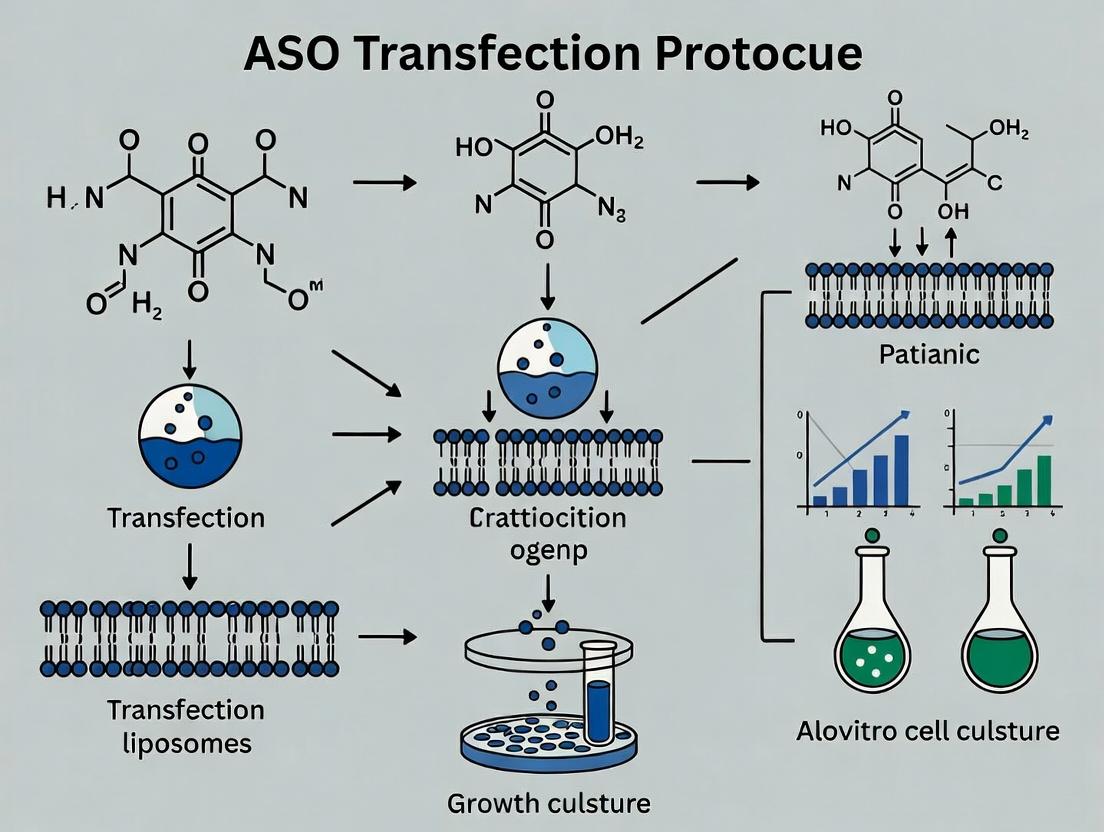
This comprehensive guide details a robust protocol for Antisense Oligonucleotide (ASO) transfection in mammalian cell culture, targeting research scientists and drug development professionals.
Optimized ASO Transfection Protocol for In Vitro Cell Culture: A Step-by-Step Guide for Researchers
Abstract
This comprehensive guide details a robust protocol for Antisense Oligonucleotide (ASO) transfection in mammalian cell culture, targeting research scientists and drug development professionals. It covers the foundational principles of ASO design and mechanisms of action (RNase H recruitment, steric blockade, splicing modulation) to provide essential context. The core of the article presents a detailed, step-by-step methodological workflow for lipid-based and electroporation transfection, complete with reagent preparation and post-transfection handling. A dedicated troubleshooting section addresses common issues like low efficiency and cytotoxicity, offering optimization strategies for cell type-specific delivery. Finally, the guide outlines critical validation techniques (qRT-PCR, Western blot, functional assays) and compares ASO transfection to siRNA and CRISPR-based methods, empowering researchers to implement and validate effective ASO experiments for functional genomics and therapeutic discovery.
Understanding ASOs: Mechanisms, Design, and Applications in Cell-Based Research
What are ASOs? Defining Antisense Oligonucleotides and Their Therapeutic Potential
Antisense oligonucleotides (ASOs) are short, synthetic, single-stranded nucleic acid polymers, typically 15–25 nucleotides in length, designed to bind to complementary RNA sequences through Watson-Crick base pairing. This binding modulates gene expression via several mechanisms, including RNase H-mediated degradation of target RNA, modulation of pre-mRNA splicing, or steric blockade of translation. This application note frames ASO technology within the context of in vitro transfection protocols for cell culture research, providing detailed methodologies, reagent toolkits, and visual workflows essential for preclinical drug development.
ASOs are chemically modified to enhance nuclease resistance, binding affinity, and pharmacokinetic properties. Common modifications include phosphorothioate (PS) backbones and 2′-O-methoxyethyl (2′-MOE) or 2′,4′-constrained ethyl (cEt) ribose modifications. Their therapeutic potential is being realized across numerous diseases, with over 10 ASO drugs currently approved by the FDA and EMA for conditions ranging from spinal muscular atrophy to hereditary transthyretin amyloidosis.
Table 1: Primary Mechanisms of Action for Therapeutic ASOs
| Mechanism | Target | Outcome | Example Drug |
|---|---|---|---|
| RNase H1-mediated cleavage | Pre-mRNA or mRNA | Degradation of target RNA | Inotersen (TTR reduction) |
| Splicing Modulation | Pre-mRNA splice sites | Inclusion/exclusion of exons | Nusinersen (SMN2 exon 7 inclusion) |
| Steric Blockade (Translation Inhibition) | 5' UTR or AUG start codon | Block of ribosome binding/translation | (Common research application) |
| Steric Blockade (miRNA Inhibition) | Mature miRNA | Inhibition of miRNA function | (Investigational) |
The Scientist's Toolkit: Key Research Reagent Solutions
Table 2: Essential Materials for ASO Transfection In Vitro
| Item | Function & Critical Notes |
|---|---|
| Chemically Modified ASO | Typically PS-backbone with 2′-MOE or LNA (locked nucleic acid) modifications for stability and affinity. Lyophilized, resuspended in nuclease-free buffer. |
| Transfection Reagent (Lipid-Based) | Cationic lipid formulations (e.g., Lipofectamine) complex with negatively charged ASO to facilitate cellular uptake. Critical for gymnotic (free uptake) studies. |
| Transfection Reagent (Gymnotic Uptake Media) | Serum-free or low-serum optimized media for "free uptake" studies where ASOs are added without transfection agents. |
| Control ASOs (Scrambled & Mismatched) | Sequences with no complementary target or with several mismatches; essential for controlling for sequence-independent effects. |
| RNase H1 Assay Kit | For validating RNase H1-dependent mechanisms; measures RNA cleavage products. |
| qRT-PCR Reagents | For quantifying target mRNA knockdown (typically 48-72 hours post-transfection). |
| Western Blotting Reagents | For quantifying protein-level knockdown (typically 72-96 hours post-transfection). |
| Cell Viability Assay (e.g., MTT) | To assess cytotoxicity of ASO/transfection complexes. |
Core Protocol: ASO Transfection in Adherent Cell Cultures
Protocol A: Lipid-Mediated Transfection (for rapid, high-efficiency delivery)
Objective: Deliver ASO into cells using cationic lipid complexes. Materials: Adherent cells, complete growth medium, Opti-MEM, transfection lipid (e.g., Lipofectamine 3000), ASO stock solution (100 µM in nuclease-free water). Method:
- Day 1: Seed cells in a 24-well plate to reach 60-80% confluence at the time of transfection (18-24 hours later).
- Day 2: Complex Formation:
- Dilute 5 µL of 100 µM ASO stock in 50 µL Opti-MEM (Solution A).
- Dilute 3.75 µL Lipofectamine reagent in 50 µL Opti-MEM (Solution B). Incubate 5 min at RT.
- Combine Solutions A & B. Mix gently. Incubate 15-20 min at RT.
- Transfection: Aspirate medium from cells. Wash with 1x PBS. Add 400 µL fresh complete medium to each well.
- Add 100 µL of ASO-lipid complex dropwise to the well. Gently swirl plate.
- Incubation: Incubate cells at 37°C, 5% CO2 for 4-6 hours.
- Media Change: Replace transfection media with 500 µL fresh complete medium.
- Harvest: Analyze mRNA (48-72 hrs) or protein (72-96 hrs) levels.
Protocol B: Free Uptake (Gymnosis) for Physiologically Relevant Delivery
Objective: Allow ASOs to enter cells without transfection reagents, mimicking clinical delivery. Materials: Adherent cells, complete growth medium, gymnosis medium (e.g., Opti-MEM with 1% FBS), ASO stock. Method:
- Day 1: Seed cells as in Protocol A.
- Day 2: ASO Application:
- Aspirate medium and wash cells with PBS.
- Add gymnosis medium containing ASO at desired concentration (typically 1-10 µM). No complex formation is required.
- Incubation: Incubate cells at 37°C, 5% CO2 for 24-48 hours.
- Media Refresh: Gently replace with fresh gymnosis medium containing the same ASO concentration.
- Long-Term Incubation: Continue incubation for up to 7-10 days, refreshing medium + ASO every 2-3 days.
- Harvest: Analyze target modulation. Note: Effects manifest slower than with lipid transfection.
Data Analysis and Validation Protocols
Quantitative RT-PCR for mRNA Knockdown:
- Isolate total RNA 72 hours post-transfection (Protocol A) or day 7 (Protocol B).
- Perform reverse transcription.
- Run qPCR with primers flanking the ASO binding site. Normalize to housekeeping genes (e.g., GAPDH, β-actin).
- Calculate % knockdown relative to untreated or control ASO-treated cells.
Western Blot for Protein Knockdown:
- Lyse cells for protein extraction at 96 hours (Protocol A) or day 10 (Protocol B).
- Perform SDS-PAGE and transfer to membrane.
- Probe with antibody against target protein and loading control.
- Quantify band intensity.
Table 3: Expected Efficacy Benchmarks for a Well-Designed ASO In Vitro
| Parameter | Lipid Transfection (1-100 nM) | Free Uptake (1-10 µM) |
|---|---|---|
| mRNA Knockdown | 70-90% | 40-80% |
| Protein Knockdown | 60-85% | 30-70% |
| Time to Maximum Effect | 48-72 hours | 7-10 days |
| Optimal Measurement Point | 72 hours (mRNA), 96 hours (protein) | Day 7 (mRNA), Day 10 (protein) |
Visual Workflows and Pathways
Title: Primary ASO Therapeutic Mechanisms of Action
Title: In Vitro ASO Transfection Experimental Workflow
Application Notes
Antisense oligonucleotides (ASOs) are short, synthetic, single-stranded nucleic acids designed to modulate gene expression through sequence-specific hybridization to target RNA. Their therapeutic and research applications are primarily driven by three core mechanisms of action, each with distinct chemical and design requirements. Understanding these mechanisms is critical for designing effective in vitro transfection protocols to assess potency, specificity, and cellular effects.
1. RNase H-Mediated Degradation: This mechanism employs DNA-like ASOs (e.g., gapmers) that recruit endogenous RNase H1 enzyme upon forming a DNA-RNA heteroduplex with the target mRNA. RNase H cleaves the RNA strand, leading to irreversible degradation of the target transcript and reduced protein expression. This is highly effective for direct knockdown. Key application: gene silencing for loss-of-function studies and targeting disease-causing mRNAs.
2. Steric Blockade (Occupancy-Only): Chemically modified ASOs (e.g., 2'-O-MOE, PMO, LNA) that do not activate RNase H bind to target RNA with high affinity and block the progression of cellular machinery. Applications include: modulation of translation (inhibition of ribosomal scanning), alteration of miRNA function (antagomirs), and prevention of protein binding to RNA.
3. Splicing Modulation: A specialized form of steric blockade where ASOs bind to pre-mRNA at specific splice sites or regulatory sequences (exonic/intronic splice enhancers or silencers). This redirects the spliceosome, leading to exclusion (exon skipping) or inclusion of specific exons in the mature mRNA. Key application: restoring functional protein frames (e.g., for Duchenne Muscular Dystrophy) or generating novel protein variants for research.
Considerations for In Vitro Transfection: The choice of mechanism dictates ASO chemistry, which in turn influences delivery and protocol parameters. RNase H-dependent ASOs require nuclear access for activity, while steric blockers may act in the cytoplasm. Transfection reagent selection, ASO concentration, and incubation time must be optimized for each mechanism to ensure robust on-target effects while minimizing off-target interactions and cytotoxicity.
Experimental Protocols
Protocol 1: Assessing RNase H-Mediated Knockdown in HeLa Cells
Objective: To quantitatively evaluate target mRNA degradation post-transfection of a DNA-gapmer ASO.
Materials: See "Research Reagent Solutions" table. Procedure:
- Cell Seeding: Seed HeLa cells in 12-well plates at 2.5 x 10^5 cells/well in 1 mL antibiotic-free growth medium. Incubate at 37°C, 5% CO2 for 18-24 h to reach ~70% confluency.
- Transfection Complex Preparation: For each well, dilute 60 pmol of ASO (or scrambled control) in 100 µL of serum-free Opti-MEM. In a separate tube, dilute 3 µL of Lipofectamine 3000 reagent in 100 µL of Opti-MEM. Incubate both for 5 min at RT. Combine the diluted ASO with the diluted Lipofectamine, mix gently, and incubate for 15-20 min at RT.
- Transfection: Add the 200 µL complex dropwise to the respective well. Gently swirl the plate.
- Incubation: Incubate cells for 24-48 h at 37°C, 5% CO2.
- Harvest & Analysis: a. qRT-PCR: Extract total RNA using a spin-column kit. Synthesize cDNA. Perform triplicate qPCR using TaqMan probes for target and housekeeping genes (e.g., GAPDH). Calculate ∆∆Ct for knockdown efficiency. b. Viability Check: Perform MTT assay on parallel wells to assess cytotoxicity.
Protocol 2: Splicing Modulation Analysis in HEPG2 Cells
Objective: To induce exon skipping via ASO targeting a pre-mRNA splice site and analyze altered mRNA isoforms.
Materials: See "Research Reagent Solutions" table. Procedure:
- Cell Seeding & Transfection: Seed HEPG2 cells as in Protocol 1. Prepare transfection complexes using 50 nM splicing-modulating ASO (2'-O-MOE chemistry) and an appropriate transfection reagent (e.g., Lipofectamine 3000). Follow steps 1-4 from Protocol 1.
- RNA Harvest: At 24 h post-transfection, harvest RNA. Ensure RNA integrity (RIN > 8.5).
- RT-PCR for Splice Variants: a. Perform reverse transcription with oligo(dT) primers. b. Design PCR primers in exons flanking the target exon. c. Run endpoint PCR with a high-fidelity polymerase. Use conditions: 95°C for 3 min; 35 cycles of (95°C for 30s, 60°C for 30s, 72°C for 45s); 72°C for 5 min.
- Analysis: Resolve PCR products on a 2-3% high-resolution agarose gel or using capillary electrophoresis (e.g., Agilent Bioanalyzer). Quantify band intensities to calculate exon skipping efficiency (% of product lacking the targeted exon).
Data Presentation
Table 1: Quantitative Outcomes of ASO Mechanisms in Standard In Vitro Models
| Mechanism | ASO Chemistry (Example) | Typical Effective Concentration (nM) | Onset of Action | Key Readout Method | Typical Efficacy (mRNA Reduction/Modulation) | Common Cell Lines |
|---|---|---|---|---|---|---|
| RNase H Degradation | DNA Gapmer (PS-backbone, LNA wings) | 10 - 100 nM | 4-6 h (mRNA), 24 h (protein) | qRT-PCR, Western Blot | 70-90% knockdown | HeLa, U87, Primary Hepatocytes |
| Steric Blockade (Translation Inhib.) | PMO, 2'-O-MOE (full chemistry) | 50 - 200 nM | 12-24 h (protein) | Reporter Assay (Luciferase), Western Blot | 50-80% inhibition | HEK293, C2C12 |
| Splicing Modulation | 2'-O-MOE PS, PMO | 20 - 100 nM | 12-48 h (altered mRNA) | RT-PCR, Capillary Electrophoresis, RNA-Seq | 30-80% exon skipping/inclusion | HEPG2, DMD patient fibroblasts |
Table 2: Transfection Protocol Parameters by ASO Chemistry
| Parameter | RNase H-Active ASOs (Gapmers) | Steric/Splicing ASOs (Fully Modified) | Notes |
|---|---|---|---|
| Optimal Transfection Reagent | Lipofectamine 3000, RNAiMAX | Lipofectamine 3000, GenMute | Fully modified ASOs may require specific reagent formulations. |
| Serum During Transfection | Antibiotic-free, low-serum or serum-free recommended | Can often tolerate up to 10% serum | Serum can inhibit complex formation; follow reagent guidelines. |
| Incubation Time Post-Transfection | 24-48 h for mRNA; 48-72 h for protein | 24-72 h, depending on target turnover | Longer incubations needed for splicing modulation to see mature protein changes. |
| Critical Control ASOs | Scrambled sequence gapmer, mismatch control | Mismatch control, non-targeting same chemistry | Controls must share the same chemical backbone and modification pattern. |
Visualizations
Title: RNase H-Mediated mRNA Degradation Pathway
Title: ASO-Mediated Splicing Modulation Workflow
Title: General ASO Transfection In Vitro Workflow
The Scientist's Toolkit: Research Reagent Solutions
Table 3: Essential Materials for ASO Transfection Experiments
| Item | Function & Importance | Example Product/Brand |
|---|---|---|
| Chemically Modified ASOs | The active research agent. Chemistry (PS-backbone, 2'-mods) determines mechanism, stability, and toxicity. | Custom synthesis from IDT, Eurogentec, or Bio-Synthesis. |
| Lipid-Based Transfection Reagent | Forms complexes with negatively charged ASOs, facilitating cellular uptake through endocytosis. Critical for efficiency. | Lipofectamine 3000, RNAiMAX (Thermo Fisher); GenMute (SignaGen). |
| Opti-MEM Reduced Serum Medium | Low-protein, serum-free medium used for diluting ASOs and transfection reagent. Improves complex formation and stability. | Opti-MEM I (Thermo Fisher). |
| Validated Control ASOs | Essential for distinguishing sequence-specific effects from non-specific or toxicity-related outcomes. | Scrambled sequence control, mismatch control (same chemistry). |
| High-Quality RNA Isolation Kit | For downstream qRT-PCR or splicing analysis. Must provide RNA free of genomic DNA and transfection reagent contaminants. | RNeasy Mini Kit (Qiagen), PureLink RNA Mini Kit (Thermo Fisher). |
| Reverse Transcription Kit | For cDNA synthesis. Use random hexamers for splicing analysis or oligo(dT) for polyA+ mRNA. | High-Capacity cDNA Reverse Transcription Kit (Thermo Fisher). |
| TaqMan Probes or SYBR Green Master Mix | For quantitative PCR (qPCR) to measure mRNA levels. TaqMan offers higher specificity for gapmer studies. | TaqMan Gene Expression Master Mix (Thermo Fisher). |
| Cell Viability Assay Kit | To monitor potential cytotoxicity of ASO/transfection complexes, ensuring effects are due to on-target activity. | CellTiter-Glo (Promega), MTT assay kit (Abcam). |
Within the context of developing an effective ASO transfection protocol for in vitro cell culture research, understanding the chemical modifications of oligonucleotides is paramount. These chemistries dictate critical properties such as binding affinity, nuclease resistance, cellular uptake, and mechanism of action. This application note details three foundational chemistries—phosphorothioate (PS) backbones, 2'-O-methoxyethyl (2'-MOE), and locked nucleic acid (LNA)—providing protocols for their evaluation in a transfection workflow.
Table 1: Key Properties of ASO Chemistries
| Property | Phosphorothioate (PS) Backbone | 2'-O-Methoxyethyl (2'-MOE) | Locked Nucleic Acid (LNA) |
|---|---|---|---|
| Primary Function | Nuclease resistance; Protein binding; Improved pharmacokinetics | Increased binding affinity (ΔTm ~1°C/mod); Nuclease resistance | Very high binding affinity (ΔTm +2 to +8°C/mod); Nuclease resistance |
| Typical Placement | Entire backbone (full or partial) | Often in "gapmer" wings | Often in "gapmer" wings or mixmers |
| Nuclease Resistance | High (vs. PO) | Very High | Very High |
| Protein Binding | High (plasma protein, etc.) | Moderate (reduced vs. full PS) | Low to Moderate |
| Common In Vitro Use | Standard for cellular delivery without transfection reagent ("gymnosis") | Gapmer designs for RNase H-mediated knockdown | Potent gapmers or steric blockers for splicing modulation |
| Potential Toxicity | Sequence-dependent; Can reduce with mixed chemistry | Generally well-tolerated | Can increase risk of hepatotoxicity at high doses; requires careful design |
Table 2: Example Design & Performance Metrics (Theoretical)
| Design | Chemistry Pattern (5' -> 3') | Target | Expected Tm Increase | Primary Mechanism |
|---|---|---|---|---|
| Gapmer | 5 LNA - 10 DNA - 5 LNA (All PS) | mRNA coding region | +40-60°C total | RNase H cleavage |
| Mixmer | Mixed LNA/DNA (All PS) | miRNA or splicing site | +20-40°C total | Steric Block |
| MOE Gapmer | 5 MOE - 10 DNA - 5 MOE (All PS) | mRNA coding region | +15-25°C total | RNase H cleavage |
| Full PS Oligo | All DNA-PS | Any | Baseline | Variable (protein sequestration, RNase H if DNA) |
Detailed Protocols
Protocol 1: Transfection of Chemically Modified ASOs in Adherent Cells
Objective: To deliver PS-backboned, 2'-MOE, or LNA-modified ASOs into mammalian cells for target knockdown or modulation. Materials: See "The Scientist's Toolkit" below. Procedure:
- Day 1: Cell Seeding: Seed adherent cells (e.g., HeLa, HepG2) in complete growth medium in a 24-well plate to reach 60-80% confluence at transfection (typically 1-2 x 10^5 cells/well). Incubate overnight at 37°C, 5% CO2.
- Day 2: Transfection Complex Preparation:
- A. Dilute ASO stock in Opti-MEM to a concentration 2x the desired final concentration (e.g., 20 nM final requires 40 nM dilution). Vortex gently.
- B. Gently mix lipofectamine reagent by inverting. Dilute in Opti-MEM (e.g., 1.5 µL in 50 µL). Incubate 5 min at RT.
- C. Combine diluted ASO and diluted lipofectamine (1:1 ratio, total 100 µL). Mix gently by pipetting. Incubate for 15-20 min at RT to form complexes.
- Transfection: Aspirate medium from cells. Wash once with PBS. Add 400 µL of fresh complete medium to each well. Add the 100 µL of ASO-lipid complexes dropwise, swirling plate gently. Final ASO concentration typically ranges from 1-100 nM.
- Incubation: Incubate cells for 4-6 hours at 37°C, 5% CO2.
- Medium Change: Replace transfection medium with 500 µL of fresh complete medium. Incubate for desired duration (e.g., 24-72 hours) before analysis.
- Analysis: Harvest cells for RNA extraction (qRT-PCR for mRNA levels) or protein analysis (Western blot).
Protocol 2: Evaluating ASO Potency via qRT-PCR
Objective: Quantify target mRNA knockdown efficiency post-transfection. Procedure:
- RNA Isolation: 24-48h post-transfection, lyse cells directly in plate using TRIzol or a column-based kit. Isolate total RNA according to manufacturer's protocol. Measure concentration by Nanodrop.
- cDNA Synthesis: Use 500 ng - 1 µg total RNA in a reverse transcription reaction with random hexamers or oligo(dT) primers and a reverse transcriptase enzyme.
- Quantitative PCR: Prepare qPCR mix with SYBR Green or TaqMan probe master mix, gene-specific primers/probe, and diluted cDNA template. Run in triplicate.
- Data Analysis: Calculate ΔΔCt values using a housekeeping gene (e.g., GAPDH, β-actin) for normalization and a control (scrambled ASO or mock-transfected) sample for comparison. Express result as % mRNA remaining.
Visualizations
Title: ASO Design & Synthesis Workflow
Title: RNase H-Mediated Target Knockdown
The Scientist's Toolkit: Key Reagents for ASO Transfection
Table 3: Essential Research Reagents & Materials
| Item | Function/Description |
|---|---|
| Chemically Modified ASO | The oligonucleotide therapeutic; PS backbone for stability, 2'-MOE/LNA for affinity. Supplied as lyophilized powder. |
| Lipofectamine 3000/RNAiMAX | Cationic lipid-based transfection reagents for efficient intracellular delivery of ASOs. |
| Opti-MEM I Reduced Serum Medium | Low-serum medium used for diluting lipids and ASOs to form complexes without interference. |
| Dulbecco's Modified Eagle Medium (DMEM) | Standard cell culture medium for maintaining mammalian cell lines pre- and post-transfection. |
| Fetal Bovine Serum (FBS) | Serum supplement for cell growth medium; often omitted during transfection complex formation. |
| Phosphate-Buffered Saline (PBS) | Used for washing cells to remove serum and antibiotics before transfection. |
| Trypsin-EDTA Solution | For detaching and passaging adherent cell lines prior to seeding for experiments. |
| TRIzol Reagent | A monophasic solution of phenol and guanidine isothiocyanate for effective total RNA isolation. |
| High-Capacity cDNA Reverse Transcription Kit | Converts isolated RNA into stable cDNA for subsequent qPCR analysis. |
| SYBR Green or TaqMan qPCR Master Mix | Contains enzymes, dNTPs, and dyes for quantitative real-time PCR amplification and detection. |
| Nuclease-Free Water | Used for resuspending ASO stocks and preparing dilutions to prevent degradation. |
Application Notes
Within the broader thesis on optimizing ASO transfection for in vitro cell culture research, the rational design of the ASO molecule itself is the foundational determinant of experimental success. This protocol details the principles for selecting target sequences and mitigating off-target effects to ensure specific and potent gene modulation.
Core Design Principles & Quantitative Parameters
Effective ASO design balances affinity, specificity, and nuclease resistance. The following table summarizes key quantitative parameters for contemporary ASO chemistries, predominantly gapmer designs utilizing 2′-O-methoxyethyl (MOE) or constrained ethyl (cEt) wings and a central phosphorothioate (PS) DNA gap.
Table 1: Key Quantitative Parameters for ASO Design
| Parameter | Optimal Range / Feature | Rationale & Impact |
|---|---|---|
| Length | 16-20 nucleotides | Shorter sequences reduce affinity; longer sequences increase risk of off-target hybridization and synthetic cost. |
| GC Content | 40-60% | Higher GC increases melting temperature (Tm) and affinity but can reduce specificity and cellular uptake. Lower GC reduces binding stability. |
| Melting Temp (Tm) | ≥ 65°C (for DNA gap) | Ensures stable binding to the RNA target under physiological conditions. |
| Target Site | Pre-mRNA: Intron/Exon junctions, start codon region. mRNA: 5' UTR, coding region, 3' UTR. | Accessibility varies; regions near splice sites or open ribosomal scanning paths are often more accessible. |
| Self-Complementarity | Minimize (especially 3′ end) | Reduces risk of dimerization or hairpin formation, which hampers target binding. |
| Specificity Check | BLAST against relevant transcriptome/human genome. ≤ 80% identity over ≥ 11 nt for potential off-targets. | Critical to avoid unintended silencing of homologous genes or non-target transcripts. |
Specificity Considerations & Off-Target Mitigation
Off-target effects arise from sequence-dependent (hybridization to non-target RNAs) and sequence-independent (protein binding, immune activation) mechanisms.
Sequence-Dependent Off-Targets: Mismatch tolerance is a function of ASO chemistry. A single mismatch in the DNA gap region of a gapmer can drastically reduce efficacy, but mismatches in the flanking regions may be tolerated. Therefore, bioinformatic screening for substrings with high homology (>80% over 11-15 contiguous bases) is mandatory.
Sequence-Independent Effects: PS backbones can bind variably to cellular proteins, influencing distribution, toxicity, and potentially causing aptamer-like effects. These are assessed empirically.
Table 2: Specificity Screening Workflow
| Step | Tool / Method | Goal |
|---|---|---|
| 1. Initial Homology Search | BLASTn (GenBank, RefSeq RNA) | Identify transcripts with high sequence similarity to the proposed ASO. |
| 2. In Silico Off-Target Prediction | Tools like RNAfold (ViennaRNA) for secondary structure; databases for SNP overlap. | Predict target site accessibility and flag ASOs spanning common SNPs. |
| 3. Empirical Validation | RNA-Seq or Microarray post-ASO treatment (Minimum 2-3 concentrations). | Genome-wide identification of unintended transcript changes. Dose-dependency helps distinguish direct from indirect effects. |
Protocols
Protocol 1:In SilicoDesign and Selection of ASO Target Sequences
This protocol is performed prior to synthesis.
Materials:
- Software: Gene sequence browser (e.g., UCSC Genome Browser, Ensembl), BLAST, Oligo design software (e.g., IDT OligoAnalyzer, mFold).
- Input: NCBI RefSeq accession number or genomic coordinates of target gene.
Method:
- Retrieve Sequence: Obtain the full pre-mRNA/mRNA sequence of the target gene, including 5' and 3' UTRs.
- Identify Target Region: For splice modulation, focus on ±25 nucleotides around the exon-intron junction of interest. For RNase H-mediated knockdown, screen across the coding region and UTRs.
- Generate Candidate Sequences: Using a sliding window, generate all possible 18-mer sequences from the target region.
- Filter by GC Content: Eliminate candidates with GC content <40% or >60%.
- Calculate Tm: For each candidate, calculate the Tm of the DNA gap/RNA duplex. Select candidates with Tm ≥ 65°C.
- Check Self-Complementarity: Analyze for dimer and hairpin formation (ΔG > -2 kcal/mol is preferable).
- Specificity BLAST: Perform BLASTn of each candidate against the appropriate transcriptome database (e.g., human transcriptome). Reject any ASO with a contiguous match of ≥11 nucleotides to any non-target transcript.
- Final Selection: Select 3-5 top candidates meeting all criteria, prioritizing those with central gap position and symmetric wings.
Protocol 2: Experimental Validation of ASO Specificity via Transcriptomics
This protocol follows in vitro transfection to confirm on-target and assess off-target effects.
Materials:
- Cell Line: Relevant in vitro cell culture model.
- Reagents: Optimized transfection reagent, candidate ASOs and appropriate negative control ASO (scrambled or mismatch), RNA extraction kit, RNA-Seq library prep kit.
- Equipment: Next-Generation Sequencer or Microarray platform.
Method:
- Cell Transfection: Seed cells in 6-well plates. At 60-80% confluency, transfert with three concentrations of the ASO (e.g., low: 5 nM, mid: 20 nM, high: 100 nM) and a negative control ASO (100 nM), in triplicate. Include a mock-transfected control.
- Incubation: Incubate cells for 24-48 hours (time-point determined by mechanism of action).
- RNA Harvest: Extract total RNA using a column-based kit with DNase I treatment. Quantify and assess integrity (RIN > 8.5 for RNA-Seq).
- Transcriptomic Analysis:
- For RNA-Seq: Prepare stranded mRNA libraries and sequence on an appropriate platform to a depth of ~30 million reads per sample.
- For Microarray: Follow manufacturer's protocol for labeling and hybridization.
- Bioinformatic Assessment:
- On-Target Efficacy: Confirm significant downregulation (for knockdown) or alteration of the intended target transcript/isoform.
- Off-Target Analysis: Identify differentially expressed genes (DEGs) (e.g., p-adj < 0.05, |log2FC| > 1) in ASO-treated vs. negative control samples.
- Specificity Scoring: An ideal candidate shows a dose-dependent on-target effect with minimal off-target DEGs, especially at low/mid concentrations. DEGs should be evaluated for shared short-sequence motifs suggesting direct hybridization.
The Scientist's Toolkit: Research Reagent Solutions
Table 3: Essential Materials for ASO Design & Specificity Screening
| Item | Function & Rationale |
|---|---|
| Phosphorothioate (PS) Backbone Modified ASOs | Increases nuclease resistance and promotes binding to serum/cellular proteins, enhancing pharmacokinetics. Standard for in vitro and in vivo applications. |
| 2′-MOE or cEt Flanking Chemistry (Gapmers) | Provides high affinity for RNA target, increases nuclease resistance, and improves pharmacokinetic profile. The central DNA gap enables RNase H recruitment. |
| Scrambled or Mismatch Control ASO | A negative control with identical chemistry but no significant complementarity to the genome. Crucial for distinguishing sequence-specific from sequence-independent effects. |
| Lipid-Based Transfection Reagent (e.g., Lipofectamine) | Forms cationic complexes with anionic PS-ASOs, facilitating cellular uptake via endocytosis in standard in vitro cell culture. |
| Gymnotic Delivery Media (for free uptake) | Serum-free media used to assess "free uptake" of ASOs in cells capable of gymnosis (e.g., certain primary cells), which is more therapeutically relevant than transfection. |
| DNase I, RNAse-Free | Critical for RNA extraction protocols to remove genomic DNA contamination, ensuring clean transcriptomic analysis. |
| Stranded mRNA-Seq Library Prep Kit | Enables accurate, genome-wide quantification of transcript abundance and identification of splicing changes with directionality. |
| Bioinformatics Pipeline (e.g., STAR, DESeq2, Salmon) | For alignment, quantification, and differential expression analysis of RNA-Seq data to rigorously quantify on-target efficacy and off-target signatures. |
Visualizations
ASO In Silico Design and Selection Workflow
Mechanisms of ASO Off-Target Effects
Experimental Validation of ASO Specificity Workflow
Application Notes
Antisense oligonucleotides (ASOs) represent a versatile platform for targeted therapeutic intervention in drug discovery. Within in vitro cell culture research, optimized transfection protocols are critical for evaluating ASO efficacy and mechanism. This document details application notes and protocols for three primary applications, framed within a broader thesis on ASO transfection.
1. Gene Knockdown Knockdown via the RNase H1 mechanism is a primary application for reducing specific mRNA expression. Gapmer ASOs, containing central DNA nucleotides flanked by modified RNA-like nucleotides, recruit RNase H1 to cleave the target RNA. This is pivotal for validating novel drug targets by assessing phenotypic consequences of reduced protein expression in disease-relevant cell models.
2. Exon Skipping Splice-switching ASOs are steric-blocking oligonucleotides that modulate pre-mRNA splicing. By binding to specific sequences at splice junctions or regulatory elements, they can promote the exclusion (skipping) of targeted exons. This application is central for developing therapies for genetic disorders like Duchenne Muscular Dystrophy (DMD), aiming to restore a truncated but functional protein.
3. miRNA Inhibition AntimiR ASOs (or 'blockmirs') are single-stranded, steric-blocking oligonucleotides designed to sequester and inhibit microRNA (miRNA) function. By binding to mature miRNA with high affinity, they prevent the miRNA from interacting with its endogenous mRNA targets, effectively de-repressing gene expression networks. This is used to study miRNA-driven pathologies and for therapeutic intervention.
Quantitative Data Summary
Table 1: Comparative Overview of Primary ASO Applications
| Application | ASO Type | Mechanism | Primary Goal | Typical Length (nt) | Common Modifications | Key Readout |
|---|---|---|---|---|---|---|
| Gene Knockdown | Gapmer | RNase H1 cleavage | Reduce target mRNA & protein | 16-20 | Central DNA; 2'-MOE/2'-F/LNA wings | mRNA (qPCR), Protein (WB) |
| Exon Skipping | Steric Blocker | Splicing modulation | Induce specific exon exclusion | 18-30 | Uniform 2'-O-MOE, PMO | cDNA sequencing, RT-PCR, Protein analysis |
| miRNA Inhibition | Steric Blocker | miRNA sequestration | Inhibit miRNA function, de-repress targets | 16-22 | Uniform 2'-MOE, LNA, PMO | miRNA level (qPCR), mRNA/protein of target genes |
Table 2: Example In Vitro Efficacy Metrics
| Application | Model System | ASO Concentration Range | Typical Treatment Duration | Expected Efficacy (Optimal Conditions) | Common Transfection Method |
|---|---|---|---|---|---|
| Gene Knockdown | HeLa cells | 10-200 nM | 24-72 hours | 70-90% mRNA reduction | Lipofection (cationic lipid) |
| Exon Skipping | DMD patient-derived myotubes | 10-100 nM | 48-96 hours | 20-60% exon-skipped transcript | Electroporation or Gymnotic delivery |
| miRNA Inhibition | HepG2 cells | 25-100 nM | 48-72 hours | 2-5 fold increase in miRNA target protein | Lipofection |
Experimental Protocols
Protocol 1: ASO Transfection for Gene Knockdown via Lipofection
Objective: To transfert gapmer ASOs into adherent mammalian cells to achieve target mRNA knockdown. Materials:
- Adherent cells (e.g., HeLa, HEK293)
- Gapmer ASO stock solution (100 µM in nuclease-free water)
- Opti-MEM Reduced Serum Medium
- Lipofectamine 3000 or equivalent cationic lipid transfection reagent
- Standard cell culture media and supplies
Procedure:
- Day 1: Cell Seeding: Seed cells in a 24-well plate at 50-70% confluency in complete growth medium without antibiotics. Incubate overnight (37°C, 5% CO₂).
- Day 2: Transfection Complex Formation: a. Dilute 3 µL of Lipofectamine 3000 reagent in 50 µL Opti-MEM. Mix gently. Incubate for 5 min at RT. b. In a separate tube, dilute the desired amount of ASO (e.g., 5 µL of 100 µM stock for 100 nM final) in 50 µL Opti-MEM. Add P3000 reagent if specified. c. Combine the diluted ASO with the diluted Lipofectamine reagent (1:1 ratio). Mix gently. Incubate for 15-20 min at RT to allow complex formation.
- Transfection: Add the 100 µL transfection complex drop-wise to each well containing 500 µL of complete medium. Gently swirl the plate.
- Incubation: Incubate cells for 24-72 hours at 37°C, 5% CO₂.
- Harvest: Harvest cells for downstream mRNA analysis (e.g., qRT-PCR) at the desired time point.
Protocol 2: Exon Skipping in Cultured Myotubes using Gymnotic Delivery
Objective: To induce exon skipping in DMD patient-derived myotubes using Phosphorodiamidate Morpholino Oligomers (PMOs) via gymnotic (free uptake) delivery. Materials:
- Differentiated DMD patient-derived myotubes in a 96-well plate
- PMO stock solution (1 mM in sterile PBS)
- Serum-free or low-serum maintenance medium
Procedure:
- Cell Preparation: Differentiate myoblasts into myotubes according to standard protocols. Use myotubes at maturity (e.g., day 5-7 of differentiation).
- ASO Treatment: Aspirate the culture medium. Replace with fresh maintenance medium containing the desired final concentration of PMO (e.g., 10-100 µM). Note: PMOs require higher concentrations for gymnotic delivery.
- Incubation: Incubate cells with the PMO for 96 hours at 37°C, 5% CO₂. Refresh the PMO-containing medium at the 48-hour mark.
- Harvest: Aspirate medium. Lyse cells directly in the well using RNA lysis buffer (for RT-PCR analysis of splicing) or protein lysis buffer.
Protocol 3: miRNA Inhibition via AntimiR Transfection
Objective: To inhibit a specific miRNA in hepatoma cells using LNA-modified antimiR ASOs. Materials:
- HepG2 cells
- LNA-antimiR ASO stock (50 µM)
- Lipofectamine RNAiMAX
- Opti-MEM
Procedure:
- Day 1: Cell Seeding: Seed HepG2 cells in a 12-well plate to reach 50-60% confluency at transfection in complete medium.
- Day 2: Complex Formation: a. Dilute 3 µL of RNAiMAX in 100 µL Opti-MEM (Solution A). b. Dilute antimiR ASO to 2x final concentration in 100 µL Opti-MEM (e.g., 2 µL of 50 µM stock in 98 µL for 50 nM final) (Solution B). c. Combine Solution A and B. Mix gently. Incubate for 10-15 min at RT.
- Transfection: Add the 200 µL complex drop-wise to cells in 800 µL of complete medium.
- Incubation: Incubate for 48-72 hours. For phenotypic analysis, a longer incubation may be required.
- Validation: Harvest RNA to measure miRNA levels by stem-loop qPCR and assess derepression of known target mRNAs/proteins.
Diagrams
Title: Workflow of ASO Applications in Drug Discovery Research
Title: Mechanism of miRNA Inhibition by AntimiR ASOs
The Scientist's Toolkit: Key Research Reagent Solutions
Table 3: Essential Materials for ASO In Vitro Research
| Reagent/Material | Function/Description | Example Vendor/Product |
|---|---|---|
| Modified ASOs | The active research compounds; chemical modifications (2'-MOE, LNA, PMO) confer nuclease resistance and binding affinity. | Custom synthesis from IDT, Sigma-Aldrich, or Sarepta. |
| Cationic Lipid Transfection Reagents | Form positively charged complexes with negatively charged ASOs for cellular delivery via endocytosis. | Lipofectamine 3000 (Thermo Fisher), RNAiMAX (Thermo Fisher). |
| Electroporation Systems | Enable delivery of ASOs (especially PMOs/PPMOs) into hard-to-transfect cells (e.g., primary cells, myotubes) via electrical pulses. | Neon System (Thermo Fisher), Nucleofector (Lonza). |
| Opti-MEM Medium | A low-serum, reduced-protein medium used for diluting transfection reagents and ASOs to form complexes without interference. | Thermo Fisher Scientific. |
| RNase H1 | The key endogenous enzyme for the gapmer knockdown mechanism; its activity can be assayed to confirm mechanism. | Available as recombinant protein for in vitro assays (e.g., from Abcam). |
| Stem-loop qPCR Assays | Specialized reverse transcription and PCR primers for accurate quantification of short mature miRNAs following antimiR treatment. | TaqMan MicroRNA Assays (Thermo Fisher). |
| Splicing-Sensitive RT-PCR Primers | Primer pairs designed to span the targeted exon to visualize both skipped and unskipped transcripts via gel electrophoresis. | Custom DNA oligos from standard vendors. |
| Control ASOs | Critical for experiment validation. Includes: scrambled sequence control, mismatch control, and positive control (e.g., against a housekeeping gene). | Designed in parallel with active ASOs. |
Step-by-Step ASO Transfection Protocol: From Cell Seeding to Analysis
This application note details the critical pre-transfection planning steps for successful in vitro antisense oligonucleotide (ASO) delivery, a foundational methodology within a broader thesis on ASO transfection protocols. The selection of an appropriate cell model, optimization of culture conditions, and proper ASO resuspension/storage are pivotal for generating reproducible and biologically relevant data in drug discovery research.
Cell Line Selection: Biological Relevance and Transfectability
The ideal cell line must balance physiological relevance for the target pathway with high transfection efficiency. Quantitative parameters for common model cell lines are summarized below.
Table 1: Common Cell Lines for ASO Transfection Research
| Cell Line | Origin | Key Application(s) | Doubling Time (hrs) | Recommended Seeding Density for 24-well plate (cells/well) | Transfection Efficiency with ASOs* | Recommended Transfection Reagent |
|---|---|---|---|---|---|---|
| HEK293 | Human Embryonic Kidney | High-throughput screening, protein overexpression | ~20-30 | 1.5-2.5 x 10⁵ | High | Lipofectamine 3000, RNAiMAX |
| HeLa | Human Cervical Carcinoma | General cell biology, oncology studies | ~24 | 1.0-2.0 x 10⁵ | High | Lipofectamine 2000/3000 |
| U2OS | Human Osteosarcoma | DNA damage response, nuclear processes | ~30 | 1.0-1.8 x 10⁵ | Moderate to High | RNAiMAX, Dharmafect 1 |
| HepG2 | Human Hepatocellular Carcinoma | Liver metabolism, toxicology, lipid studies | ~48-72 | 1.5-2.0 x 10⁵ | Moderate | Lipofectamine RNAiMAX |
| Primary Fibroblasts | Human/Mouse Dermis | Disease modeling (e.g., neurological disorders) | >48 | 2.0-3.0 x 10⁵ | Low to Moderate | Reverse Transfection, Neon Nucleofector |
| SH-SY5Y | Human Neuroblastoma | Neuroscience, neuronal differentiation studies | ~48-72 | 1.5-2.5 x 10⁵ | Low to Moderate | Lipofectamine 3000 |
*Efficiency is reagent and protocol-dependent. Ratings: High (>70% uptake), Moderate (30-70%), Low (<30%).
Protocol 1.1: Validating Cell Line Suitability for ASO Studies
- Thaw and Culture: Revive cell line of interest following standard protocols. Maintain for at least two passages in recommended medium (e.g., DMEM + 10% FBS for HEK293) prior to experimentation.
- Viability Check: Seed cells in a 96-well plate at varying densities. After 24 hrs, measure metabolic activity via MTT or CellTiter-Glo assay to confirm >95% viability.
- Transfectability Assessment: Transfect cells with a fluorescently labeled control ASO (e.g., 5'-Cy3-labeled scramble ASO at 20-50 nM) using a candidate lipid-based transfection reagent.
- Quantification: At 16-24 hours post-transfection, analyze using flow cytometry or high-content imaging. A suitable cell line should show >70% fluorescent-positive cells with uniform cytoplasmic/nuclear distribution for high-efficiency lines.
Culture Condition Optimization
Consistent cell health and proliferation rate are non-negotiable for reproducible transfection.
Table 2: Critical Culture Parameters for Pre-Transfection Health
| Parameter | Optimal Range/Value | Impact on Transfection | Monitoring Method |
|---|---|---|---|
| Passage Number | < 20 for immortalized lines; low (<8) for primary | High passage can alter genetics and reduce efficiency | Maintain detailed cell lineage log |
| Confluence at Transfection | 50-70% | Optimal for lipid complex interaction; too confluent causes contact inhibition | Brightfield microscopy |
| Serum Concentration during Transfection | 0-10% (serum-free or reduced preferred) | Serum can inhibit lipid-ASO complex formation | Use Opti-MEM or serum-free DMEM for complexing |
| Mycoplasma Contamination | Absent | Drastically alters cell physiology and gene expression | Monthly PCR or fluorochrome assay (e.g., Hoechst stain) |
| pH of Medium | 7.2-7.4 | Affects cell health and complex stability | Use bicarbonate buffer with proper CO₂ (5%) |
Protocol 2.1: Preparing Cells for Transfection
- Day -2: Split cells at an appropriate ratio to ensure they are in log-phase growth.
- Day -1 (Morning): Trypsinize, count using an automated cell counter or hemocytometer, and seed cells in complete growth medium into multi-well plates. Use Table 1 as a guide for seeding densities. The goal is to achieve 50-70% confluence at the time of transfection.
- Day -1 (Evening): Replace medium with fresh complete medium to remove any residual metabolic waste.
- Day 0 (Transfection Day): Prior to complex formation, gently replace the medium with fresh, pre-warmed complete medium, serum-free medium, or antibiotic-free medium as required by the specific transfection reagent protocol.
ASO Resuspension, Storage, and Quality Control
Proper handling of lyophilized ASOs is critical to maintain stability and activity.
Table 3: ASO Resuspension and Storage Protocol
| Step | Reagent/ Condition | Volume/ Concentration | Purpose & Rationale |
|---|---|---|---|
| 1. Centrifugation | N/A | 1-2 minutes at 2000 x g | Ensures powder is at the bottom of tube to prevent loss. |
| 2. Resuspension Buffer | Nuclease-free TE Buffer (10 mM Tris, 1 mM EDTA, pH 8.0) or sterile 1x PBS | To achieve 100-500 µM stock | TE buffer chelates Mg²⁺, inhibiting nucleases; PBS is acceptable for short-term. |
| 3. Resuspension Technique | Vortex & brief sonication | 1-2 minutes vortexing, 5 min in sonicating water bath | Ensures complete dissolution. Avoid excessive heating. |
| 4. Stock Concentration Verification | UV Spectrophotometry (NanoDrop) | Measure A260 | Calculate concentration using extinction coefficient (ε) provided by manufacturer. Purity check: A260/A280 ~1.8-2.0. |
| 5. Aliquotting | Nuclease-free LoBind tubes | 5-20 µL aliquots | Prevents repeated freeze-thaw cycles. |
| 6. Long-term Storage | -80°C | Up to 5 years | Maintains stability. |
| 7. Working Stock Storage | -20°C | 6-12 months | Avoid >3 freeze-thaw cycles. |
| 8. In-use Storage | 4°C in dark | Up to 1 month for diluted stocks | For frequently used solutions. |
Protocol 3.1: Resuspending Lyophilized ASO for a 100 µM Stock
- Preparation: Pre-warm resuspension buffer (TE or PBS) to room temperature. Work in a clean, RNase-free environment.
- Reconstitution: Add the appropriate volume of buffer directly to the lyophilized pellet to achieve a 100 µM stock. For example, for a 1 µmole synthesis scale, add 1000 µL of buffer (Concentration (µM) = nmoles of ASO / Volume of buffer (µL)).
- Mixing: Vortex vigorously for 1-2 minutes until no visible pellet remains. Place the tube in a bath sonicator for 3-5 minutes to break up any aggregates.
- Quantification: Dilute 2 µL of the stock 1:50 in nuclease-free water. Measure absorbance at 260 nm, 280 nm, and 320 nm (background) on a NanoDrop. Calculate concentration: C (µM) = (A260 - A320) x Dilution Factor / (ε x 1 cm path length). The extinction coefficient (ε) is in µM⁻¹cm⁻¹ and is provided per ASO.
- Aliquot and Store: Immediately aliquot into single-use volumes and store at -80°C.
Visualizations
Workflow for Pre-Transfection Planning in ASO Research
Decision Factors for Cell Line Selection
The Scientist's Toolkit: Key Research Reagent Solutions
Table 4: Essential Materials for ASO Pre-Transfection Planning
| Item | Function & Rationale | Example Product(s) |
|---|---|---|
| Nuclease-Free Water/TE Buffer | Resuspension of lyophilized ASOs; prevents degradation by RNases. | Ambion Nuclease-Free Water, TE Buffer, pH 8.0 (Invitrogen) |
| UV-Vis Spectrophotometer | Accurate quantification and purity assessment of ASO stock solutions. | NanoDrop One/OneC, Take3 for low volumes. |
| Lipid-Based Transfection Reagent | Forms complexes with negatively charged ASOs for cellular delivery. | Lipofectamine RNAiMAX, Lipofectamine 3000 (Thermo Fisher) |
| Fluorescently Labeled Control ASO | Validates transfection efficiency and cellular uptake visually/quantitatively. | 5'-Cy3 or FAM-labeled scramble control ASO (Integrated DNA Tech). |
| Cell Culture Medium (Serum-Free) | Used for diluting ASO and transfection reagent prior to complex formation; reduces interference. | Opti-MEM I Reduced Serum Medium (Thermo Fisher) |
| Automated Cell Counter | Provides fast, accurate, and reproducible cell counts for consistent seeding. | Countess 3 (Thermo Fisher), LUNA-II (Logos Biosystems) |
| Mycoplasma Detection Kit | Ensures cell cultures are free of contamination that confounds experimental results. | MycoAlert PLUS (Lonza), PCR-based detection kits. |
| Nuclease-Free, Low-Bind Tubes & Tips | Minimizes adsorption of ASOs to plastic surfaces, ensuring accurate concentration. | Eppendorf DNA LoBind tubes, RNase-free aerosol barrier tips. |
This Application Note details optimized protocols for preparing serum-free media (SFM) and diluting transfection agents, specifically for antisense oligonucleotide (ASO) delivery in vitro. Efficient ASO-mediated gene modulation requires precise reagent formulation to maximize cellular uptake and minimize cytotoxicity, a cornerstone of the broader thesis on standardizing ASO transfection in mammalian cell culture.
Research Reagent Solutions
The following materials are essential for ASO transfection optimization:
| Reagent / Material | Function in ASO Transfection |
|---|---|
| Opti-MEM I Reduced Serum Media | A common, low-protein SFM used to dilute transfection complexes, minimizing serum interference. |
| Lipofectamine 3000 / RNAiMAX | Cationic lipid-based transfection reagents that form complexes with ASOs for endocytic delivery. |
| Phosphorothioate-modified ASOs | Nuclease-resistant oligonucleotide analogs; the standard chemistry for cellular assays. |
| DPBS (Dulbecco’s Phosphate-Buffered Saline) | Used for washing cells prior to transfection to remove serum completely. |
| Trypsin-EDTA & Complete Growth Media | For cell passaging and for stopping the trypsinization reaction, respectively. |
| 0.4% Trypan Blue Solution | For viable cell counting prior to seeding for transfection assays. |
Protocol: Serum-Free Media Preparation for Transfection
Objective: To prepare an optimal serum-free environment for forming transfection complexes. Materials: Opti-MEM I, pre-warmed to room temperature, sterile pipettes, conical tube. Method:
- Cell Preparation: 24 hours pre-transfection, harvest and count cells using Trypan Blue exclusion. Seed appropriate density (e.g., 1-2 x 10^5 cells/mL) in complete growth media in a multi-well plate. Incubate overnight to achieve 70-90% confluency.
- Serum Removal: On the day of transfection, aspirate the complete growth media from the cells.
- Cell Washing: Gently add 1X DPBS (volume equal to original media) to each well to rinse off residual serum. Aspirate DPBS completely.
- SFM Addition: Immediately add the pre-warmed, pure Opti-MEM I to the cells. The typical volume is the same as the final transfection complex volume to be added later (e.g., 100 µL per well of a 96-well plate). The cells will remain in this SFM during complex formation and addition.
Protocol: Transfection Agent and ASO Dilution
Objective: To correctly dilute and combine cationic lipid transfection reagents with ASOs to form efficient, non-toxic complexes. Principle: Separate dilution of lipid and ASO in SFM before combining improves reproducibility and complex size control.
Detailed Method (for Lipofectamine RNAiMAX in a 24-well plate):
- Dilution Tube A (ASO):
- Calculate the required mass of ASO for a final well concentration (e.g., 10-100 nM).
- Dilute the ASO in 50 µL of Opti-MEM I. Mix gently by pipetting. Do not vortex.
- Dilution Tube B (Lipid):
- Based on the manufacturer’s recommended range (e.g., 0.5-3.0 µL per well), dilute the appropriate volume of Lipofectamine RNAiMAX in 50 µL of Opti-MEM I. Mix gently and incubate for <5 minutes at room temperature.
- Complex Formation:
- Combine the contents of Tube A and Tube B (total 100 µL).
- Mix gently by pipetting or inverting the tube.
- Incubate at room temperature for 15-20 minutes to allow lipid-ASO complex formation. The solution may appear slightly opaque.
- Transfection:
- After the incubation, add the 100 µL of complexes drop-wise to the cells already containing SFM (from Section 3, Step 4).
- Gently rock the plate to ensure even distribution.
- Incubate cells with complexes for 4-6 hours at 37°C, 5% CO2.
- Media Replacement:
- Post-incubation, carefully aspirate the transfection mix and replace with fresh, complete growth media containing serum.
- Assay for gene knockdown/expression or cytotoxicity at the appropriate timepoint (e.g., 24-72 hours).
Quantitative Optimization Data
Key parameters from recent literature (2023-2024) for ASO transfection in HEK293 cells:
Table 1: Optimized Parameters for ASO Transfection with Lipofectamine 3000
| Parameter | Tested Range | Optimal Value for Max Efficacy | Impact on Viability |
|---|---|---|---|
| ASO Concentration | 1 nM - 200 nM | 50 nM | >90% viability at ≤100 nM |
| Lipid:ASO Ratio (v/v:pmol) | 1:1 - 1:10 | 1 µL: 50 pmol (1:5) | Sharp decline >1:8 ratio |
| Complexation Time | 5 - 30 min | 15 min | No significant effect |
| Cell Confluency at Transfection | 50% - 95% | 70-80% | Reduced efficacy at >90% |
Table 2: Serum-Free Media Comparison for Complex Stability
| Media Type | Complex Size (nm) after 20 min | Zeta Potential (mV) | Relative Transfection Efficiency* |
|---|---|---|---|
| Opti-MEM I | 120 ± 15 | +12 ± 2 | 100% (Reference) |
| DMEM, no serum | 185 ± 30 | +8 ± 3 | 65% |
| PBS | >500 (aggregation) | Variable | <20% |
*Efficiency measured via qPCR of target mRNA 24h post-transfection.
Diagrams
Title: ASO Transfection Workflow in Serum-Free Conditions
Title: ASO-Lipid Complex Pathway from Uptake to Action
1.0 Introduction and Thesis Context Within the broader thesis investigating Optimization of Antisense Oligonucleotide (ASO) Delivery in In Vitro Models for Neurological Drug Development, this protocol is foundational. Lipid-based transfection represents a critical, high-efficiency method for introducing ASOs into adherent cell lines, enabling functional gene knockdown studies and preliminary efficacy assessments. This document details a standardized, optimized protocol using Lipofectamine reagents, complete with application notes and essential validation experiments.
2.0 The Scientist's Toolkit: Essential Research Reagent Solutions
| Reagent/Material | Function in ASO Transfection |
|---|---|
| Lipofectamine 3000 | A cationic lipid formulation that complexes with negatively charged ASOs to form nanoparticles, facilitating endocytic uptake and endosomal escape. |
| Opti-MEM I Reduced Serum Medium | A low-serum, bicarbonate-free medium used for diluting lipids and ASOs to prevent serum interference with complex formation. |
| Antisense Oligonucleotide (ASO) | The therapeutic molecule, typically 15-25 nucleotides, designed to hybridize to target RNA via Watson-Crick base pairing. |
| P3000 or similar enhancer reagent | A proprietary additive (for Lipofectamine 3000) that increases transfection efficiency and cellular viability, especially for oligonucleotides. |
| Complete Cell Culture Medium | Growth medium (e.g., DMEM+10% FBS) for cell maintenance pre- and post-transfection. |
| Adherent Cell Line | Target cells (e.g., HeLa, HEK293, primary neurons on coated plates) for ASO functional analysis. |
| Trypsin-EDTA Solution | For detaching and passaging adherent cells to achieve optimal confluency for transfection. |
3.0 Detailed Protocol: Lipid-Based Transfection of ASOs
3.1 Pre-Transfection Preparation
- Day 0: Cell Seeding: Seed adherent cells in complete growth medium in a multi-well plate (e.g., 24-well plate) to achieve 70-90% confluency at the time of transfection (typically 18-24 hours later). Seed appropriate control wells.
- Day 1: Transfection Complex Preparation (per well of a 24-well plate):
- Dilution Tube A: Dilute 1.5 µL of Lipofectamine 3000 reagent in 50 µL of Opti-MEM I Medium. Mix gently. Incubate for 5 minutes at room temperature.
- Dilution Tube B: Dilute 25-100 nM of ASO (e.g., 3 µL of 10 µM stock) and 1 µL of P3000 Enhancer Reagent in 50 µL of Opti-MEM I Medium. Mix gently.
- Complex Formation: Combine the contents of Tube A and Tube B (total volume ~100 µL). Mix by gentle pipetting or vortexing. Incubate at room temperature for 10-20 minutes to allow lipid-ASO complex (lipoplex) formation.
3.2 Transfection 4. Medium Exchange: Aspirate the complete growth medium from the pre-seeded cells. Gently wash once with 1X PBS or Opti-MEM. 5. Add Complexes: Add the 100 µL of lipoplex solution dropwise to each well. 6. Add Maintenance Medium: Immediately add 400 µL of pre-warmed, serum-containing complete growth medium to the well. DO NOT use antibiotic-containing medium during transfection. Gently rock the plate to ensure even distribution. 7. Incubate: Return cells to the 37°C, 5% CO₂ incubator. 8. Post-Transfection Medium Change (Optional but Recommended): After 4-6 hours of incubation, carefully replace the transfection mixture with fresh, pre-warmed complete growth medium (with antibiotics, if desired). This step enhances cell viability.
3.3 Post-Transfection Analysis
- Harvest Time: Assay cells for target RNA knockdown (e.g., via RT-qPCR) or protein downregulation (e.g., via western blot) typically 24-72 hours post-transfection.
4.0 Critical Optimization Data and Validation Experiments
4.1 ASO Transfection Efficiency vs. Cytotoxicity: The Balance Optimization requires titrating both ASO and lipid reagent to maximize delivery while minimizing cytotoxicity. The table below summarizes typical results from a 24-well plate format using HEK293 cells.
Table 1: Optimization Matrix for Lipofectamine 3000-mediated ASO Transfection
| Lipofectamine 3000 (µL/well) | ASO Concentration (nM) | Relative Transfection Efficiency* (% Positive Cells) | Relative Cell Viability (% of Untreated Control) | Recommended Use |
|---|---|---|---|---|
| 0.5 | 25 | 55% | 98% | Low-impact studies, sensitive cells |
| 1.0 | 25 | 85% | 95% | Standard starting point |
| 1.5 | 25 | 90% | 90% | High-efficiency delivery |
| 1.5 | 50 | 92% | 85% | For robust knockdown |
| 2.0 | 50 | 93% | 75% | High cytotoxicity risk |
| 2.0 | 100 | 95% | 65% | Only if essential, with viability controls |
Measured by flow cytometry using a fluorescently labeled control ASO (e.g., FAM-labeled). *Measured by MTT or CellTiter-Glo assay 24h post-transfection.
4.2 Detailed Methodology: Key Validation Experiments
Experiment A: Quantifying Transfection Efficiency via Flow Cytometry
- Transfect: Follow Section 3.0 protocol using a FAM- or Cy5-labeled negative control ASO (e.g., scrambled sequence).
- Harvest: 24 hours post-transfection, wash cells with PBS, trypsinize, and resuspend in flow cytometry buffer (PBS + 2% FBS).
- Analyze: Analyze cells using a flow cytometer with a 488 nm (FAM) or 640 nm (Cy5) laser. Gate on live cells (propidium iodide negative) and determine the percentage of fluorescent-positive cells and mean fluorescence intensity.
Experiment B: Assessing Functional Knockdown via RT-qPCR
- Transfect: Perform transfections with target-specific ASO and a negative control ASO.
- RNA Isolation: 48 hours post-transfection, lyse cells and isolate total RNA using a silica-membrane column kit. Include DNase I treatment.
- cDNA Synthesis: Use 500 ng - 1 µg of total RNA for reverse transcription with random hexamers and a reverse transcriptase.
- qPCR: Perform quantitative PCR using gene-specific primers for the target and a housekeeping gene (e.g., GAPDH, β-actin). Use a SYBR Green or TaqMan assay.
- Analyze: Calculate fold-change using the 2^(-ΔΔCt) method, normalizing target gene expression in the ASO-treated group to the control ASO group.
5.0 Visualizing the Workflow and Mechanism
5.1 Lipid-Based ASO Transfection Workflow
5.2 Mechanism of Lipid-Mediated ASO Delivery and Action
1.0 Application Notes Within the broader thesis on optimizing antisense oligonucleotide (ASO) delivery in vitro, electroporation and nucleofection represent critical physical methods for achieving efficient transfection in recalcitrant cell types, including primary cells, stem cells, and suspension lines (e.g., Jurkat, THP-1). These techniques apply controlled electrical pulses to create transient pores in the cell membrane, permitting direct cytoplasmic delivery of ASOs, thereby bypassing endocytic pathways that can lead to lysosomal degradation. This protocol details a standardized, optimized approach for high-efficiency, high-viability ASO transfection in challenging models.
2.0 Quantitative Data Summary
Table 1: Optimization Parameters for Common Hard-to-Transfect Cell Lines
| Cell Line (Type) | Recommended System | Pulse Code / Program | ASO Concentration (µM) | Cell Density (per reaction) | Typical Viability (%) | Typical Efficiency (%) |
|---|---|---|---|---|---|---|
| Jurkat (Suspension) | 4D-Nucleofector X Kit L | EH-100 | 1 - 2.5 | 1 x 10^6 | 75 - 85 | >90 |
| THP-1 (Suspension) | 4D-Nucleofector X Kit SG | FF-120 | 0.5 - 2 | 5 x 10^5 | 70 - 80 | 85 - 95 |
| Primary T Cells (Suspension) | P3 Primary Cell Kit | EO-115 | 0.5 - 1.5 | 1 x 10^6 | 65 - 75 | 80 - 90 |
| HSCs (Suspension) | Stem Cell Kit | CB-150 | 1 - 3 | 2 x 10^5 | 60 - 70 | 70 - 85 |
| Neurons (Adherent) | Rat Neuron Kit | DC-100 | 0.2 - 1 | 5 x 10^5 | 60 - 75 | 60 - 80 |
Table 2: ASO Electroporation Buffer Comparison
| Buffer/Kit Component | Key Ingredients | Primary Function | Compatible Cell Types |
|---|---|---|---|
| Cell Line Specific Kit | Salts, Carbohydrates, Antioxidants | Ionic conductivity, osmotic balance, pH stability | Standard immortalized lines |
| Primary Cell Kit | MgCl2, Non-ionic polymers, HEPES | Enhanced membrane resealing, reduced apoptosis | Sensitive primary & stem cells |
| Cytoplasm-Specific Buffer | K-glutamate, Mg-ATP, Glutathione | Mimics intracellular ionics, supports recovery | Demanding suspension cells |
| Standard Electroporation Buffer | PBS, Sucrose, MgCl2 | Low-cost, simple conductivity | Robust established lines |
3.0 Detailed Experimental Protocol
3.1 Protocol: ASO Nucleofection of Jurkat Suspension Cells Objective: To transfert ASOs into Jurkat cells for gene knockdown analysis.
Materials:
- Jurkat cells in log-phase growth.
- ASO resuspended in nuclease-free TE buffer or PBS.
- 4D-Nucleofector X Unit (Lonza) with X Kit L.
- RPMI-1640 pre-warmed complete medium.
- 24-well tissue culture plate.
Procedure:
- Harvest & Count: Centrifuge 1-2 x 10^7 Jurkat cells at 300 x g for 5 min. Resuspend in pre-warmed medium. Perform a viable cell count.
- Aliquot Cells: Pellet the required number of cells (1 x 10^6 per transfection + 20% excess). Aspirate supernatant completely.
- Prepare Nucleofection Mix: For one reaction, add 100 µL of Room Temperature (RT) Nucleofector Solution from Kit L to the cell pellet. Do not use ice-cold solution. Add 5 µL of 100 µM ASO stock (final 1-2 µM). Gently resuspend by pipetting.
- Transfer to Cuvette: Transfer entire mix to a 100 µL Nucleocuvette. Ensure no air bubbles are present.
- Nucleofection: Insert cuvette into the retainer of the 4D-Nucleofector X Unit. Select the pre-optimized program "EH-100" and run.
- Immediate Recovery: Immediately after pulse, add 500 µL of pre-warmed (37°C) complete medium to the cuvette. Using the provided pipette, gently transfer the cells to a well of a 24-well plate containing 500 µL pre-warmed medium.
- Incubation & Analysis: Place plate in a 37°C, 5% CO2 incubator. Assess viability at 4-6h post-nucleofection. Harvest cells for mRNA/protein analysis at 24-72h post-transfection.
3.2 Protocol: ASO Electroporation of Adherent Hard-to-Transfect Cells (e.g., Neurons) Objective: To transfert ASOs into primary neurons using a specialized electroporator.
Materials:
- Primary neurons (DIV 3-7).
- Rat Neuron Nucleofector Kit (Lonza) or similar.
- Amaxa Nucleofector II or 4D unit.
- Plating medium (Neurobasal + B27).
Procedure:
- Prepare Cells: Gently dissociate neurons using a mild enzyme (e.g., Papain) to create a single-cell suspension. Centrifuge at 150 x g for 5 min.
- Resuspend & Count: Resuspend pellet in pre-warmed plating medium. Perform a viable count.
- Prepare Mix: Per reaction, pellet 5 x 10^5 cells. Completely aspirate supernatant. Add 100 µL RT Rat Neuron Nucleofector Solution + 2-5 µL of 20 µM ASO stock (final 0.2-1 µM). Mix gently.
- Electroporation: Transfer to a certified cuvette. Use program "DC-100" on the Nucleofector device.
- Rapid Plating: Immediately dilute with 1 mL plating medium and plate onto pre-coated coverslips or wells.
- Culture: Return cells to incubator. Change medium carefully 4-6h later to remove debris. Analyze at desired time points.
4.0 The Scientist's Toolkit: Research Reagent Solutions
Table 3: Essential Materials for ASO Electroporation/Nucleofection
| Item | Function & Importance |
|---|---|
| 4D-Nucleofector X Unit | Device generating controlled, cell-type-specific electrical pulses for high-efficiency delivery. |
| Cell-Type Specific Nucleofector Kit | Optimized, proprietary buffer solutions critical for maintaining cell viability during/after electrical shock. |
| Fluorescently-Labeled Control ASO (e.g., FAM-labeled) | Essential control for real-time optimization of transfection efficiency via flow cytometry or microscopy. |
| Cell Viability Dye (e.g., Propidium Iodide, 7-AAD) | For assessing membrane integrity and cytotoxicity post-electroporation, crucial for dose optimization. |
| Nuclease-Free TE Buffer/PBS | For ASO resuspension and dilution to prevent degradation and ensure accurate concentration. |
| Pre-Coated Culture Ware (Poly-L-Lysine, etc.) | For adherent difficult cells, enhances post-transfection recovery and adherence. |
| Recovery Medium (Serum-rich or conditioned) | Medium supplemented with extra serum or growth factors to support cellular recovery post-shock. |
5.0 Diagrams
5.1 ASO Nucleofection Workflow for Suspension Cells
5.2 Key Pathways in ASO Delivery & Mechanism Post-Electroporation
This document details the critical post-transfection steps for in vitro cell culture experiments, specifically framed within a broader research thesis on optimizing Antisense Oligonucleotide (ASO) delivery. The period following transfection is decisive for experimental success, influencing ASO uptake, subcellular localization, and ultimate efficacy in modulating target gene expression. Proper media change protocols, precise incubation windows, and appropriate harvesting techniques are essential to minimize cytotoxicity, maximize target engagement, and ensure reproducible data for downstream analysis (e.g., qRT-PCR, Western blot, functional assays).
Standard Post-Transfection Timeline and Media Change Protocol
A typical workflow involves removing transfection complexes after a limited period to reduce cell stress, followed by an incubation period to allow for ASO action.
Protocol: Media Change Post-Transfection
- Transfection Complex Incubation: Incubate cells with ASO-lipid or ASO-polymer complexes for 4-6 hours at 37°C, 5% CO₂.
- Complex Removal: Aspirate the transfection medium containing complexes.
- Cell Washing: Gently wash cells with 1-2 mL of pre-warmed, serum-free or complete growth medium (without antibiotics) to remove residual complexes. Aspirate.
- Fresh Media Addition: Add fresh, complete growth medium (with serum and any required supplements) to the culture vessel.
- Post-Change Incubation: Return cells to the incubator for the remainder of the total incubation period (see Table 1).
Incubation Times for ASO Action
The optimal total incubation time from transfection to harvest varies based on the analytical endpoint and the biological mechanism of the ASO (e.g., RNase H1-mediated degradation vs. steric blockade).
Table 1: Guideline Incubation Times for ASO Analysis
| Analytical Endpoint | Recommended Total Incubation Time (Post-Transfection) | Rationale & Notes |
|---|---|---|
| mRNA Knockdown (qRT-PCR) | 24 - 48 hours | Allows time for ASO-mediated target mRNA degradation and clearance. Early time points (24h) may show partial knockdown. |
| Protein Knockdown (Western Blot) | 48 - 72 hours | Accounts for turnover rate of pre-existing protein. For stable proteins, 72h or longer may be needed. |
| Splicing Modulation (RT-PCR) | 24 - 48 hours | Sufficient for nascent transcripts to incorporate the modified splicing pattern. |
| Cell Viability/Phenotypic Assay | 72 - 96 hours | Allows phenotypic consequences (e.g., proliferation change) to manifest. |
| Immunofluorescence / FISH | 16 - 24 hours | Can visualize ASO cellular localization; 24-48h for observing downstream effects on target RNA/protein. |
Harvesting Protocols for Downstream Analysis
Protocol: Harvesting Cells for RNA Extraction (qRT-PCR)
- At the designated time point, aspirate media.
- Wash monolayer gently with 1x PBS.
- Lyse cells directly in the culture dish using an appropriate lysis buffer (e.g., TRIzol or commercial kit buffer).
- Scrape cells and transfer lysate to a microcentrifuge tube. Store at -80°C or proceed to RNA isolation.
Protocol: Harvesting Cells for Protein Extraction (Western Blot)
- Aspirate media and wash monolayer with ice-cold 1x PBS.
- Add an appropriate volume of ice-cold RIPA lysis buffer supplemented with protease/phosphatase inhibitors.
- Scrape cells on ice and transfer the lysate to a pre-chilled microcentrifuge tube.
- Vortex briefly, incubate on ice for 15-30 minutes with occasional mixing.
- Centrifuge at >12,000 x g for 15 minutes at 4°C.
- Transfer supernatant (protein lysate) to a new pre-chilled tube. Determine concentration and store at -80°C.
Protocol: Harvesting for Cell-Based Viability/Reporter Assays (e.g., Luminescence)
- For adherent cells, equilibrate assay substrate to room temperature.
- Aspirate media carefully.
- Add assay-specific lysis/reagent buffer directly to cells according to manufacturer instructions.
- Shake orbital gently for 10-15 minutes to ensure complete lysis.
- Transfer lysate to an assay plate for reading.
The Scientist's Toolkit: Key Reagents & Materials
Table 2: Essential Research Reagent Solutions for Post-Transfection Work
| Reagent/Material | Function & Importance in Post-Transfection Phase |
|---|---|
| Serum-Free & Complete Growth Media | Serum-free medium used for complex formation/washing; complete medium (with serum) is added post-change to support long-term cell health and gene expression. |
| Opti-MEM Reduced Serum Medium | Commonly used for diluting transfection reagents and ASOs due to low serum content, minimizing complex interference. Often used during the transfection incubation step. |
| 1x Phosphate Buffered Saline (PBS), sterile | For washing cells to remove residual transfection complexes and dead cells before adding fresh media or lysis. |
| Trypsin-EDTA (0.05%) or Non-Enzymatic Dissociators | For detaching adherent cells if harvesting requires a single-cell suspension (e.g., for FACS analysis). |
| Cell Lysis Buffers (RIPA, TRIzol, Passive Lysis Buffer) | Buffer choice dictates downstream analysis. RIPA for protein, TRIzol for RNA/DNA/protein, commercial passive buffers for reporter assays. |
| Protease & Phosphatase Inhibitor Cocktails | Added to protein lysis buffers immediately before use to prevent degradation and preserve phosphorylation states. |
| RNase Inhibitors / Nuclease-Free Water & Supplies | Critical for all steps when harvesting for RNA analysis to prevent sample degradation. |
Visualized Workflows and Pathways
Title: Post-Transfection Workflow for ASO Experiments
Title: ASO RNase H1-Mediated Knockdown Pathway
Solving Common ASO Transfection Problems: A Troubleshooting and Optimization Handbook
Within the broader thesis investigating optimal Antisense Oligonucleotide (ASO) transfection protocols for in vitro cell culture, a primary bottleneck is low transfection efficiency. This application note details a systematic diagnostic framework to identify whether poor ASO uptake or inefficient endosomal escape is the limiting factor. We provide protocols and analytical tools to enable researchers to distinguish between these barriers and implement targeted solutions.
Key Barriers & Diagnostic Indicators
The primary barriers to efficient ASO activity are sequential. First, ASOs must be internalized into cells via endocytic pathways. Second, they must escape endosomal compartments to reach their cytosolic or nuclear targets. The table below summarizes key characteristics and diagnostic markers for each barrier.
Table 1: Differentiating Uptake and Endosomal Escape Barriers
| Parameter | Low Cellular Uptake | Inefficient Endosomal Escape |
|---|---|---|
| Primary Issue | Insufficient ASO internalization. | ASOs are trapped in endo-lysosomal vesicles. |
| Quantitative Readout | Low total intracellular ASO fluorescence (≤ 20% of positive control) via flow cytometry. | High co-localization (>80%) of ASO signal with endosomal markers (e.g., Rab5, LAMP1) via imaging. |
| Functional Consequence | Minimal target engagement regardless of escape efficiency. | Adequate intracellular ASO levels but no biological activity (mRNA/protein knockdown). |
| Rescue Experiment | Efficiency increased by switching transfection reagent or method. | Efficiency increased by adding endosomolytic agents (e.g., chloroquine, patented transfection enhancers). |
Experimental Protocols
Protocol 1: Quantifying Total Cellular ASO Uptake (Flow Cytometry)
Objective: To determine if the primary barrier is insufficient internalization of ASOs. Materials: Cells, fluorescently labeled ASO (e.g., Cy5-ASO), transfection reagent, serum-free medium, complete growth medium, flow cytometer. Procedure:
- Seed cells in a 12-well plate to reach 60-70% confluence at transfection.
- Prepare transfection complexes per manufacturer's instructions using 50-100 nM Cy5-ASO in serum-free medium. Incubate 20 min.
- Replace cell medium with fresh complete medium. Add complexes dropwise. Include a negative control (no ASO).
- Incubate for 4-6 hours (for uptake assessment).
- Aspirate medium, wash cells 3x with cold PBS.
- Detach cells using a mild trypsin or non-enzymatic buffer. Quench with complete medium.
- Pellet cells (300 x g, 5 min), resuspend in PBS + 1% BSA, and filter through a 40 µm strainer.
- Analyze immediately via flow cytometry. Measure median fluorescence intensity (MFI) in the Cy5 channel for ≥10,000 single-cell events. Interpretation: MFI <20% of a high-efficiency positive control (e.g., a known working transfection reagent) indicates an uptake problem.
Protocol 2: Assessing Endosomal Escape (Confocal Microscopy)
Objective: To visualize and quantify ASO co-localization with endosomal markers. Materials: Cells on glass coverslips, fluorescent ASO (Cy5), transfection reagent, anti-Rab5 (early endosome) or anti-LAMP1 (late endosome/lysosome) antibody, fluorescent secondary antibody, fixative (4% PFA), permeabilization buffer (0.1% Triton X-100), confocal microscope. Procedure:
- Transfect cells on coverslips with Cy5-ASO as in Protocol 1, Step 3.
- At desired timepoint (4-24h post-transfection), wash cells with PBS and fix with 4% PFA for 15 min.
- Permeabilize and block with buffer containing 0.1% Triton and 5% normal serum for 1 hour.
- Incubate with primary antibody (e.g., anti-Rab5, 1:200) overnight at 4°C.
- Wash 3x, incubate with secondary antibody (e.g., Alexa Fluor 488, 1:500) for 1 hour at RT. Protect from light.
- Wash, mount coverslip with DAPI-containing mounting medium.
- Acquire z-stack images using a confocal microscope with appropriate laser lines.
- Analyze images using co-localization software (e.g., ImageJ with JACoP plugin). Calculate Mander's overlap coefficient (MOC) between the Cy5 (ASO) and 488 (endosome) channels. Interpretation: MOC >0.8 suggests high ASO retention in endosomes, indicating an escape barrier. Scattered cytosolic/nuclear ASO signal (MOC <0.4) suggests successful escape.
Pathway and Workflow Visualization
Diagram Title: Diagnostic Workflow for ASO Transfection Barriers
Diagram Title: ASO Cellular Trafficking and Key Barriers
The Scientist's Toolkit: Research Reagent Solutions
Table 2: Essential Materials for Diagnosing ASO Transfection Barriers
| Reagent/Material | Function & Role in Diagnosis |
|---|---|
| Fluorescently Labeled ASO | Enables quantitative (flow cytometry) and qualitative (microscopy) tracking of ASO internalization and localization. |
| Cationic Lipid Reagents | Common carriers to complex ASOs, promoting cellular uptake. Used as a baseline for uptake assays. |
| Endosomal Marker Antibodies | Specific markers (e.g., Rab5, EEA1, LAMP1) to identify compartments where ASOs are trapped via immunofluorescence. |
| Endosomolytic Agents | Chemical enhancers like chloroquine or Bafilomycin A1 used in rescue experiments to confirm escape limitations. |
| Polymer-based Transfection Reagents | Alternative carriers (e.g., PEI) with postulated "proton sponge" effect; used to test escape enhancement. |
| LysoTracker / pHroso Dyes | Live-cell dyes to label acidic compartments, useful for assessing ASO co-localization in live imaging. |
Application Notes
Antisense oligonucleotide (ASO) transfection in vitro is a delicate balancing act. Optimal gene silencing requires sufficient intracellular ASO delivery, which is typically facilitated by transfection reagents (e.g., lipofectamine, lipid nanoparticles). However, both high ASO concentrations and the transfection reagents themselves can induce cytotoxic effects, compromising cell health, data validity, and experimental reproducibility. This protocol, framed within a thesis on optimizing ASO transfection, provides a systematic approach to identify the synergistic cytotoxicity threshold and establish a transfection window that maximizes knockdown efficiency while maintaining robust cell viability.
Key Quantitative Data Summary
Table 1: Cytotoxicity Parameters of Common Transfection Reagents
| Transfection Reagent | Typical Working Concentration Range | Common Cytotoxic Manifestations (in vitro) | Relative Cytotoxicity Score (1-5, Low-High) |
|---|---|---|---|
| Lipofectamine 2000 | 0.5 - 5 µL/mL | Membrane disruption, reduced metabolism | 4 |
| Lipofectamine 3000 | 0.5 - 3 µL/mL | Reduced metabolism, apoptosis | 3 |
| RNAiMAX | 0.5 - 5 µL/mL | Mild metabolic stress | 2 |
| Polyethylenimine (PEI) | 0.5 - 10 µg/mL | Osmotic stress, membrane damage, apoptosis | 5 |
| Cytofectin ASO | 1 - 10 µL/mL | ASO-specific, generally lower cell stress | 2 |
Table 2: Interplay of ASO Dose & Transfection Reagent on Cell Health (Example Data)
| ASO Dose (nM) | Transfection Reagent (µL/mL) | Viability (%) @ 24h | Viability (%) @ 48h | Knockdown Efficiency (%) @ 48h | Cytotoxicity Grade |
|---|---|---|---|---|---|
| 25 | 1.0 | 95 ± 3 | 92 ± 4 | 40 ± 10 | None |
| 50 | 1.0 | 90 ± 5 | 85 ± 5 | 65 ± 8 | Low |
| 100 | 1.0 | 75 ± 6 | 68 ± 7 | 85 ± 5 | Moderate |
| 50 | 2.0 | 70 ± 8 | 60 ± 9 | 80 ± 6 | High |
| 100 | 2.0 | 55 ± 10 | 40 ± 12 | 88 ± 4 | Severe |
Experimental Protocols
Protocol 1: Preliminary Cytotoxicity Titration of Transfection Reagent Alone Objective: Determine the maximum tolerable dose (MTD) of transfection reagent in the absence of ASO. Materials: Cultured cells (e.g., HeLa, HepG2), complete growth medium, serum-free Opti-MEM, transfection reagent, cell viability assay kit (e.g., MTT, CellTiter-Glo).
- Seed cells in a 96-well plate at 70-80% confluency 24h prior.
- Prepare transfection complexes: In Opti-MEM, dilute transfection reagent to create a 2X serial dilution series (e.g., 8, 4, 2, 1, 0.5 µL/mL final). Incubate 5 min at RT.
- Replace cell medium with 50 µL fresh Opti-MEM.
- Add 50 µL of each transfection reagent dilution to respective wells. Include Opti-MEM-only controls.
- Incubate for 6h at 37°C, 5% CO₂.
- Replace medium with complete growth medium.
- Assay cell viability at 24h and 48h post-transfection per kit instructions.
- Analysis: Calculate viability relative to control. Define MTD as the concentration yielding >85% viability at 48h.
Protocol 2: ASO Dose-Response Transfection with Fixed Reagent at MTD Objective: Identify the ASO concentration yielding optimal knockdown before significant cytotoxicity. Materials: ASO (target and scrambled control), transfection reagent at MTD, qPCR reagents, viability assay.
- Seed cells as in Protocol 1.
- Prepare ASO-transfection complexes: Dilute ASO in Opti-MEM to create a 2X concentration series (e.g., 200, 100, 50, 25 nM final). In separate tubes, dilute transfection reagent to 2X MTD in Opti-MEM. Combine equal volumes, mix gently, incubate 20 min.
- Transfect cells as in Protocol 1, steps 3-5, using the complexes.
- At 48h post-transfection: a) Harvest cells for RNA isolation and qPCR analysis of target mRNA. b) Perform parallel viability assay.
- Analysis: Plot knockdown efficiency (%) and cell viability (%) against ASO dose. The optimal window is where the knockdown curve plateaus while viability remains >80%.
Protocol 3: Comprehensive Matrix Optimization (Checkerboard Assay) Objective: Systematically map the interaction between ASO dose and transfection reagent concentration.
- Design a matrix: ASO doses (e.g., 0, 25, 50, 100 nM) vs. Transfection reagent concentrations (e.g., 0.25x, 0.5x, 1x, 2x MTD).
- Prepare complexes for all combinations in a 96-well format.
- Transfect cells in triplicate for each condition.
- At 48h, measure: a) Target knockdown (qPCR or protein assay), b) Cell viability, c) Additional health markers (e.g., LDH release, caspase-3/7 activity for apoptosis).
- Analysis: Generate 3D or contour plots to visualize the "sweet spot" of high knockdown and high viability.
Diagrams
Diagram Title: Key Pathways of ASO/Reagent-Induced Cytotoxicity
Diagram Title: Workflow for ASO Transfection Optimization
The Scientist's Toolkit: Research Reagent Solutions
Table 3: Essential Materials for ASO Transfection & Cytotoxicity Assessment
| Item | Function/Benefit | Example(s) |
|---|---|---|
| Lipid-Based Transfection Reagents | Form cationic complexes with negatively charged ASOs, facilitating cellular uptake via endocytosis. Critical for efficient delivery but a major source of cytotoxicity. | Lipofectamine 3000, RNAiMAX, Cytofectin ASO |
| Gapmer ASOs (Phosphorothioate-backbone) | Standard chemistry offering nuclease resistance and improved cellular uptake via protein-mediated endocytosis. | 2'-MOE, 2'-O-Methyl, LNA gapmers |
| Serum-Free Transfection Medium | Optimized medium for complex formation; serum can interfere with complex stability and increase toxicity. | Opti-MEM I Reduced Serum Medium |
| Metabolic Viability Assay | Measures cellular metabolic activity (e.g., NAD(P)H-dependent oxidoreductase enzymes) as a proxy for viability. Sensitive to early stress. | MTT, MTS, CellTiter-Glo Luminescent |
| Membrane Integrity Assay | Quantifies release of cytoplasmic enzymes (e.g., Lactate Dehydrogenase) into culture supernatant, indicating membrane damage. | CytoTox-ONE Homogeneous Membrane Integrity Assay |
| Caspase-Glo Assay | Luminescent assay for caspase-3/7 activity, quantifying apoptosis induction by cytotoxic stressors. | Caspase-Glo 3/7 Assay System |
| qPCR Reagents for Target Validation | Gold-standard for quantifying mRNA knockdown efficiency post-ASO transfection to confirm on-target effect. | TaqMan assays, SYBR Green master mixes |
| Cell Health Multiplex Assays | Enable simultaneous measurement of viability, cytotoxicity, and apoptosis from a single well, conserving cells and reagents. | ApoTox-Glo Triplex Assay |
Within the broader thesis on establishing a robust, high-efficiency protocol for Antisense Oligonucleotide (ASO) transfection in in vitro cell culture research, systematic optimization of formulation parameters is paramount. This application note details the critical strategies for optimizing three interdependent variables: ASO concentration, lipid-based carrier-to-ASO ratio, and complexation time. Precise calibration of these factors is essential to maximize cellular uptake and efficacy while minimizing cytotoxicity, thereby generating reliable and reproducible data for downstream functional analysis in drug discovery and basic research.
Table 1: Optimization Variables and Their Impact on Transfection Outcomes
| Parameter | Typical Test Range | Primary Impact | Optimal Indicator | Risk of Sub-Optimization |
|---|---|---|---|---|
| ASO Concentration | 1 - 100 nM | Target engagement, phenotypic effect magnitude. | Dose-dependent response plateau with minimal cytotoxicity. | Off-target effects; saturation toxicity; high cost. |
| Lipid:ASO Ratio (N:P Ratio*) | 2:1 - 10:1 | Complex stability, size, zeta potential, & cellular uptake efficiency. | High transfection efficiency (>70%) & cell viability (>80%). | Low ratio: Poor complexation & uptake. High ratio: Excessive cytotoxicity. |
| Complexation Time | 10 - 60 minutes | Complex maturity, size homogeneity, & reproducibility. | Consistent particle size & maximal efficacy. | Short time: Incomplete/unstable complexes. Long time: Aggregation or degradation. |
*N:P ratio: molar ratio of positively charged (amine) groups in the lipid to negatively charged (phosphate) groups in the ASO.
Table 2: Example Optimization Matrix Results (Hypothetical Data for a Liposomal Transfection Reagent)
| ASO (nM) | N:P Ratio | Complexation Time (min) | Transfection Efficiency (%) | Cell Viability (%) | Relative Target Knockdown (%) |
|---|---|---|---|---|---|
| 10 | 3:1 | 20 | 45 | 95 | 30 |
| 10 | 5:1 | 20 | 85 | 90 | 75 |
| 10 | 7:1 | 20 | 80 | 75 | 70 |
| 25 | 5:1 | 10 | 70 | 88 | 60 |
| 25 | 5:1 | 20 | 88 | 85 | 88 |
| 25 | 5:1 | 40 | 85 | 82 | 85 |
| 50 | 5:1 | 20 | 90 | 70 | 90 |
Experimental Protocols
Protocol 1: Systematic Optimization of ASO Concentration and Lipid:ASO (N:P) Ratio Objective: To identify the optimal ASO dose and lipid carrier ratio for a specific cell line.
- Prepare ASO Stock Solution: Resuspend lyophilized ASO in nuclease-free buffer to a stock concentration of 20 µM.
- Dilute ASO: In sterile tubes, dilute ASO stock in serum-free medium to 2X the desired final concentration (e.g., for a final range of 10, 25, 50 nM, prepare 20, 50, 100 nM solutions).
- Prepare Lipid Carrier: Dilute the cationic lipid or commercial transfection reagent in serum-free medium per manufacturer's guidelines to a 2X working solution. Prepare separate dilutions to achieve the desired range of final N:P ratios.
- Form Complexes: Combine equal volumes (e.g., 50 µL each) of the 2X ASO and 2X lipid solutions. Mix by gentle pipetting or vortexing. Incubate at room temperature (RT) for a fixed time (e.g., 20 minutes).
- Transfect Cells: Add 100 µL of the complex mixture directly to cells in 100 µL of medium per well of a 96-well plate (final volume 200 µL). Swirl plate gently.
- Assay: After 24-48 hours, measure transfection efficiency (via FACS if using fluorescently tagged ASO) and cell viability (e.g., MTT, CellTiter-Glo). Quantify target modulation (qRT-PCR for mRNA knockdown).
Protocol 2: Optimization of Complexation Time Objective: To determine the incubation time required for forming stable, efficacious lipid-ASO complexes.
- Prepare Master Mixes: Prepare a single batch of 2X ASO solution and 2X lipid solution at the optimal concentration/ratio determined in Protocol 1.
- Complex Formation: Combine the solutions in a tube and mix thoroughly. Immediately aliquot equal volumes into separate tubes.
- Time-Course Incubation: Incubate each aliquot at RT for different time points (e.g., 5, 10, 20, 40, 60 minutes).
- Characterization & Transfection: For each time point:
- Measure hydrodynamic particle size and zeta potential via dynamic light scattering (DLS).
- Use an aliquot to transfect cells in a replicate plate as in Protocol 1.
- Analysis: Correlate complex size/potential with transfection efficiency and biological efficacy.
The Scientist's Toolkit: Essential Research Reagent Solutions
Table 3: Key Reagents and Materials for ASO Transfection Optimization
| Reagent/Material | Function & Importance |
|---|---|
| Validated ASO (e.g., Gapmer, PMO) | The active pharmaceutical ingredient; sequence specificity and chemical backbone dictate stability and mechanism. |
| Cationic Lipid Transfection Reagent (e.g., Lipofectamine, proprietary lipids) | Forms electrostatically stabilized nanoparticles with ASOs, facilitating endocytic cellular uptake and endosomal escape. |
| Nuclease-Free Water/Buffers | Prevents degradation of ASOs during preparation and storage. |
| Serum-Free Cell Culture Medium | Used for complex formation; serum can inhibit complex formation by interacting with lipids. |
| Opti-MEM Reduced Serum Medium | A common, low-protein medium optimized for lipofection, enhancing complex stability and uptake. |
| Viability Assay Kit (e.g., MTT, CCK-8, CellTiter-Glo) | Quantifies cytotoxicity induced by ASO or transfection complexes. Critical for therapeutic index. |
| qRT-PCR Reagents | Gold standard for quantifying mRNA-level target knockdown post-transfection. |
| Dynamic Light Scattering (DLS) Instrument | Characterizes the size distribution and zeta potential of lipid-ASO complexes, informing stability and optimization. |
Visualizations
Title: ASO Transfection Optimization Workflow
Title: From Formulation Parameters to ASO Mechanism
Within the broader thesis on optimizing Antisense Oligonucleotide (ASO) transfection for in vitro cell culture research, a central challenge is the profound variability in transfection efficiency and viability across distinct cell types. Primary cells, neurons, and immune cells each present unique biological and physiological barriers that demand tailored protocols. This application note provides detailed, current methodologies to overcome these cell-type specific challenges.
Primary Cells: Balancing Efficiency and Viability
Primary cells, being non-transformed and finite, are highly sensitive to transfection-associated stress. Standard lipid-based methods often cause cytotoxicity.
Key Challenge: Low transfection efficiency coupled with high cytotoxicity. Solution: Electroporation and specialized nanocarriers.
Protocol: Nucleofection for Primary Dermal Fibroblasts
Objective: To deliver ASOs into human primary dermal fibroblasts with maximal viability. Materials:
- Human Primary Dermal Fibroblasts (P2-P5)
- ASO resuspended in nuclease-free TE buffer or PBS
- Nucleofector Device (Lonza) & Fibroblast Nucleofector Kit
- Pre-warmed Fibroblast Growth Medium
- Amaxa Certified Cuvettes
Procedure:
- Harvest: Detach cells using trypsin-EDTA. Count and collect 5 x 10⁵ cells per condition.
- Wash: Pellet cells (90 x g, 10 min). Aspirate supernatant completely.
- Resuspend: Resuspend cell pellet in 100 µL of pre-warmed Nucleofector Solution from kit.
- Add ASO: Combine cell suspension with 2-5 µg of ASO (or 1-3 µL of 100 µM stock). Mix gently.
- Electroporate: Transfer entire mix to a cuvette. Cap and select program U-023 on the Nucleofector device. Run program.
- Immediate Recovery: Immediately add 500 µL of pre-warmed culture medium to cuvette. Gently transfer cell suspension to a pre-coated culture vessel containing 1.5 mL of pre-warmed medium.
- Incubate & Analyze: Culture at 37°C, 5% CO₂. Change medium after 4-6 hours. Assess ASO uptake (e.g., fluorescent tag) or target knockdown/ modulation at 24-72 hours post-transfection.
Neuronal Cells: Overcoming Post-Mitotic and Complex Morphology Barriers
Neurons are post-mitotic, fragile, and possess extensive processes, making plasmid DNA delivery particularly difficult. ASOs, being smaller, are more amenable but still require gentle, efficient methods.
Key Challenge: Low innate uptake and sensitivity to physical/chemical disturbance. Solution: Magnetofection and peptide-based delivery.
Protocol: Magnetofection for Primary Cortical Neurons
Objective: To enhance ASO delivery to rat primary cortical neurons using magnetic nanoparticles. Materials:
- Rat Primary Cortical Neurons (DIV 7-10)
- ASO resuspended in nuclease-free buffer
- NeuroMag transfection reagent (OZ Biosciences)
- 96-well plate with magnetic plate
- Pre-warmed Neuronal Maintenance Medium (e.g., Neurobasal + B-27)
Procedure:
- Prepare Complexes: In a sterile tube, dilute ASO (final concentration 50-100 nM) in 25 µL of maintenance medium per well.
- Add Reagent: Add 0.5-1 µL of NeuroMag reagent per 25 µL of diluted ASO. Mix by pipetting. Incubate at room temperature for 15-20 min.
- Apply to Cells: Add the complex dropwise to neurons in a 96-well plate (total volume ~100 µL/well). Immediately place the plate on the magnetic plate.
- Magnetofection: Incubate plate on magnet for 15-30 minutes at 37°C, 5% CO₂.
- Remove Magnet & Incubate: Remove the plate from the magnetic plate. Gently swirl and return to the incubator.
- Analysis: After 4-6 hours, replace medium with fresh, pre-warmed maintenance medium. Analyze ASO effects at 48-96 hours post-transfection.
Immune Cells: Addressing Hard-to-Transfect and Suspension Cell Nature
Immune cells like T cells and macrophages are notoriously hard to transfect due to their active nucleases, complex activation states, and suspension growth.
Key Challenge: Activation-induced phenotype changes and low efficiency of non-viral methods. Solution: Electroporation optimized for immune cell subsets.
Protocol: Electroporation of Primary Human T Cells for ASO Delivery
Objective: To transfert activated primary human T cells with ASOs. Materials:
- Activated primary human CD3⁺ T cells (activated for 48-72h with CD3/CD28 beads)
- ASO in nuclease-free buffer
- P3 Primary Cell 4D-Nucleofector X Kit (Lonza)
- 4D-Nucleofector Unit with 20 µL Nucleocuvette Strips
- Pre-warmed complete RPMI-1640 medium with IL-2
Procedure:
- Harvest & Count: Collect activated T cells, remove activation beads. Count and pellet 1 x 10⁶ cells per condition.
- Prepare Cell/ASO Mix: Completely aspirate supernatant. For 1 x 10⁶ cells, combine 16.4 µL of P3 Primary Cell Solution, 3.6 µL of Supplement 1, and 1-3 µg of ASO. Mix with cell pellet.
- Transfer & Electroporate: Transfer 20 µL of mix to a well of a Nucleocuvette Strip. Insert strip into the 4D-Nucleofector unit. Run program EO-115.
- Recovery: Immediately add 80 µL of pre-warmed complete medium to the cuvette. Transfer cells to a pre-coated 96-well plate containing 100 µL of pre-warmed medium.
- Culture & Analyze: Incubate at 37°C, 5% CO₂. After 4-6 hours, expand volume with medium + IL-2. Assess phenotype or target modulation at 24-48 hours.
Table 1: Comparison of Transfection Methods Across Cell Types
| Cell Type | Recommended Method | Typical ASO Efficiency (Uptake) | Typical Viability Post-Transfection | Key Optimization Parameter |
|---|---|---|---|---|
| Primary Fibroblasts | Nucleofection | 70-90% | 60-75% | Cell passage number, program selection |
| Primary Neurons | Magnetofection | 50-80% | 75-85% | ASO concentration, magnetic incubation time |
| Primary T Cells | 4D Electroporation | 60-85% | 50-70% | Cell activation state, ASO concentration, recovery medium |
Table 2: ASO Dose Range by Cell Type & Method
| Cell Type & Method | ASO Dose Range (Final Conc.) | ASO Dose (for 10⁵-10⁶ cells) | Incubation Time Before Analysis |
|---|---|---|---|
| Fibroblasts (Nucleofection) | 10-100 nM | 1-5 µg | 24-72 hours |
| Neurons (Magnetofection) | 25-100 nM | 0.5-2 µg | 48-96 hours |
| T Cells (Electroporation) | 50-500 nM | 1-5 µg | 24-48 hours |
Visualizations
Title: Decision Workflow for Cell-Type Specific ASO Transfection
Title: ASO Delivery Pathways to Functional Outcome
The Scientist's Toolkit: Research Reagent Solutions
Table 3: Essential Materials for Cell-Type Specific ASO Transfection
| Reagent/Material | Function & Role in Protocol | Cell-Type Specific Note |
|---|---|---|
| Nucleofector Device & Kits (Lonza) | Electroporation system using cell-type specific buffers and programs for high-efficiency delivery into nuclei. | Critical for primary cells. Kit selection (e.g., Fibroblast vs. Neuron kit) is paramount. |
| NeuroMag Transfection Reagent (OZ Biosciences) | Magnetic nanoparticles complexed with ASOs, pulled into cells via a magnetic field. | Ideal for sensitive neurons. Minimizes handling and toxicity. Requires a magnetic plate. |
| 4D-Nucleofector Unit & Strips (Lonza) | Next-gen electroporation for low cell numbers in a strip format, with optimized immune cell programs. | Gold-standard for immune cells. Enables high-throughput screening in activated T cells. |
| Cell-Type Specific Coating (e.g., PDL, Laminin) | Pre-coating culture vessels to enhance cell attachment, spreading, and post-transfection survival. | Essential for neurons. Also beneficial for fastidious primary epithelial cells. |
| Cell Activation Reagents (e.g., CD3/CD28 Beads) | Activate primary immune cells (T cells) to induce proliferation and make them more amenable to transfection. | Required for T cell protocols. Transfection efficiency is drastically lower in quiescent cells. |
| Nuclease-Free ASO Resuspension Buffer (TE buffer, PBS) | To dissolve and store ASOs without degradation, ensuring stability and accurate dosing. | Universal requirement. Prevents ASO degradation prior to cellular entry. |
| High-Quality Cell-Type Specific Medium | Optimized basal media and supplements (e.g., B-27 for neurons, IL-2 for T cells) for post-transfection recovery. | Directly impacts viability and experimental readout. Never use transfection medium for long-term culture. |
Application Notes
Within the broader thesis on optimizing ASO transfection protocols for in vitro cell culture, the inclusion of rigorous, multi-faceted negative controls is paramount for data integrity and interpretation. These controls are essential to isolate the specific effects of the ASO sequence from non-specific or off-target artifacts induced by the experimental process itself.
Scrambled/Control ASOs: These are non-targeting oligonucleotides designed to match the length, chemistry, and backbone of the active ASO but with a randomized or mismatched sequence. Their primary function is to control for sequence-independent effects. This includes:
- Immune Activation: Unmodified or certain modified oligonucleotides can activate innate immune receptors (e.g., TLRs, RIG-I), leading to cytokine release and downstream phenotypic changes.
- Protein Binding: Non-specific interactions with cellular proteins, which can alter their function or localization.
- Cellular Stress Responses: General nucleic acid-mediated stress.
Transfection Reagent-Only Condition: This control involves treating cells with the transfection complex (e.g., lipid nanoparticles, cationic polymers) formulated without any ASO. It is critical for identifying effects solely attributable to the transfection process, such as:
- Lipid/Chemical Toxicity: Direct cytotoxic effects from the delivery vehicle.
- Membrane Perturbation: Stress responses triggered by the breach of the plasma membrane.
- Non-specific Endosomal/Lysosomal Activation: Stress from the endocytic pathway used by most transfection reagents.
Failure to employ both controls can lead to false-positive conclusions, where observed phenotypic changes (e.g., reduced viability, altered gene expression) are erroneously attributed to target knockdown or engagement.
Summary of Quantitative Control Effects The table below synthesizes common experimental readouts and the potential artifactual contributions identified by each control.
Table 1: Artifactual Contributions Identified by Essential Negative Controls
| Experimental Readout | Potential Artifact from Transfection Reagent-Only | Potential Artifact from Scrambled ASO | Interpretation with Proper Controls |
|---|---|---|---|
| Cell Viability (MTT/WST-8) | High toxicity from reagent cytotoxicity. | Moderate toxicity from immune activation or protein binding. True effect is Active ASO viability minus Scrambled ASO viability. | |
| Target mRNA Level (qRT-PCR) | Minimal direct effect. | Potential non-specific mRNA degradation or stabilization via sequence-independent mechanisms. | Valid knockdown only if Active ASO shows significant reduction vs. Scrambled ASO. |
| Inflammatory Cytokines (IL-6, IFN-β ELISA) | Low-level induction from membrane stress. | High induction if sequence is immunostimulatory. | Specific effect is difference between Active and Scrambled ASO groups. |
| Global Gene Expression (RNA-seq) | Altered expression of stress-response pathways. | Widespread off-target transcriptome changes from immune activation or protein sequestration. | Target-specific signatures are filtered against both control datasets. |
| Phenotype (Migration, Apoptosis Assay) | Impaired function due to general cellular stress/toxicity. | Phenotypic shift due to non-specific oligonucleotide effects. | Phenotype must be specific to the active sequence. |
Experimental Protocols
Protocol 1: Co-Transfection Setup for Scrambled ASO Control
This protocol describes a standardized 96-well plate setup for comparing active and scrambled ASOs.
- Day 0: Seed cells at optimal density (e.g., 5,000-10,000 cells/well) in standard growth medium.
- Day 1: Transfection Complex Preparation.
- For each condition (per well):
- Dilute the appropriate ASO (Active, Scrambled) in 25 µL of serum-free/antibiotic-free medium (e.g., Opti-MEM).
- In separate tubes, dilute the recommended volume of transfection reagent (e.g., 0.3 µL Lipofectamine 3000) in 25 µL of the same medium.
- Incubate both solutions for 5 minutes at room temperature.
- Combine the diluted ASO with the diluted transfection reagent. Mix gently. Do not vortex.
- Incubate the complex for 15-20 minutes at room temperature.
- For each condition (per well):
- Transfection:
- Add the 50 µL complex drop-wise to the corresponding well containing 100 µL of pre-equilibrated culture medium.
- Conditions (in triplicate as minimum):
- Untreated Cells: Medium only.
- Transfection Reagent-Only: Complex prepared with nuclease-free water or buffer instead of ASO.
- Scrambled ASO Control: Complex with scrambled sequence.
- Active ASO: Complex with target-specific sequence.
- Day 1/2: Incubation & Analysis.
- Gently swirl plate and incubate at 37°C, 5% CO₂.
- After 4-6 hours, replace medium with fresh complete growth medium to reduce reagent toxicity.
- Proceed to downstream analysis (e.g., RNA extraction, viability assay) at the optimal timepoint (typically 24-72 hours post-transfection).
Protocol 2: Assessing Innate Immune Activation by Control ASOs
A key assay to profile control ASO artifacts.
- Transfection: Perform Protocol 1 in a 24-well plate format, scaling volumes appropriately.
- Sample Collection: At 6 hours (for early cytokine mRNA) and 24 hours (for protein secretion) post-transfection, collect:
- Supernatant: Centrifuge at 500 x g for 5 minutes to remove cell debris. Aliquot and store at -80°C for protein analysis.
- Cell Lysate: Lyse cells directly in the well with TRIzol or a buffer for RNA extraction.
- qRT-PCR Analysis for Immune Genes:
- Synthesize cDNA from 500 ng of total RNA using a reverse transcription kit.
- Perform qPCR using primers for IFNB1, IL6, CXCL10, and a housekeeping gene (e.g., GAPDH, HPRT1).
- Calculate fold-change using the 2^(-ΔΔCt) method, normalizing to the transfection reagent-only condition.
- Protein-Level Analysis (ELISA):
- Thaw supernatant samples on ice.
- Perform a commercial Human IL-6 or IFN-β ELISA according to the manufacturer's instructions.
- Quantify cytokine concentration using a standard curve.
The Scientist's Toolkit
Table 2: Essential Research Reagent Solutions for ASO Transfection Controls
| Reagent / Material | Function & Importance for Controls |
|---|---|
| Scrambled/Negative Control ASO | Core reagent for controlling sequence-independent effects. Must share chemistry, length, and purification grade with the active ASO. |
| Transfection-Grade Lipid/Polymer | High-purity, consistent reagent is critical. Variability here introduces noise in the reagent-only control. |
| Serum-Free Transfection Medium (e.g., Opti-MEM) | Reduces interference with complex formation, ensuring consistent delivery across all treated groups. |
| Cell Viability Assay Kit (e.g., WST-8, MTT) | Quantifies baseline toxicity of both the transfection reagent and the ASO backbone chemistry. |
| qRT-PCR Kit for Immune Genes | Directly measures off-target immunostimulatory potential of control and active ASOs. |
| Cytokine ELISA Kits (e.g., IL-6) | Confirms protein-level secretion of inflammatory markers triggered by non-specific effects. |
| High-Quality RNA Isolation Kit | Essential for obtaining intact RNA for accurate transcriptomic analysis from all control conditions. |
Visualizations
Experimental Workflow with Essential Controls
How Controls Isolate ASO Artifacts
Validating ASO Efficacy and Comparing to Alternative Gene Modulation Techniques
Within the broader thesis investigating optimized Antisense Oligonucleotide (ASO) transfection protocols in in vitro cell culture models, robust molecular validation is paramount. The primary validation of on-target efficacy is achieved through quantitative reverse transcription PCR (qRT-PCR) to measure specific mRNA knockdown. However, a comprehensive safety and specificity assessment necessitates transcriptome-wide analysis via RNA Sequencing (RNA-Seq) to identify potential off-target effects. These complementary techniques form the critical validation core for establishing the specificity and therapeutic potential of novel ASO candidates.
Application Notes
qRT-PCR for On-Target Knockdown Validation
qRT-PCR remains the gold standard for quantitative, sensitive assessment of target mRNA levels post-ASO treatment. Key application notes include:
- Timing: Optimal mRNA harvesting is typically 24-72 hours post-transfection, depending on ASO chemistry and mechanism of action (RNase H vs. Steric Block).
- Normalization: Use of multiple, validated reference genes (e.g., GAPDH, ACTB, HPRT1) is essential for accurate relative quantification.
- Specificity: Primer design must span the ASO binding site to ensure detection of only the fully complementary transcript.
- Data Interpretation: A minimum knockdown threshold of 70% is often sought for in vitro proof-of-concept, with dose-response curves providing EC50 values.
RNA-Seq for Off-Target Analysis
RNA-Seq provides an unbiased survey of the transcriptome to identify unintended gene expression changes.
- Depth & Replicates: A minimum of 30-40 million reads per sample and 3-4 biological replicates are required for robust differential expression analysis.
- Bioinformatics Pipeline: A standardized pipeline (e.g., FastQC > STAR alignment > featureCounts > DESeq2) is critical for consistency.
- Thresholds for Significance: Off-targets are typically defined as differentially expressed genes (adjusted p-value < 0.05, |log2 fold change| > 0.58) that lack perfect complementarity to the ASO seed region.
- Pathway Analysis: Gene Ontology (GO) and KEGG pathway enrichment analyses of off-target genes can reveal potential mechanistic toxicities.
Experimental Protocols
Detailed Protocol: qRT-PCR for mRNA Knockdown
Objective: Quantify reduction of target mRNA in ASO-treated cells versus negative control ASO-treated cells.
Materials:
- Cells transfected with ASO (per thesis transfection protocol)
- TRIzol Reagent
- Chloroform, Isopropanol, 75% Ethanol
- Nuclease-free water
- High-Capacity cDNA Reverse Transcription Kit
- TaqMan or SYBR Green qPCR Master Mix
- Validated primer/probe sets
- Real-Time PCR System
Procedure:
- RNA Isolation (TRIzol Method):
- Lyse cells directly in culture dish with TRIzol (1 mL per 10 cm²).
- Add 0.2 mL chloroform per 1 mL TRIzol. Shake vigorously, incubate 3 min at RT.
- Centrifuge at 12,000 × g, 15 min, 4°C. Transfer aqueous phase to new tube.
- Precipitate RNA with 0.5 mL isopropanol. Incubate 10 min at RT.
- Centrifuge at 12,000 × g, 10 min, 4°C. Wash pellet with 1 mL 75% ethanol.
- Air-dry pellet, resuspend in nuclease-free water. Quantify via Nanodrop.
cDNA Synthesis:
- Use 1 µg total RNA in 20 µL reaction with reverse transcriptase and random primers per kit instructions.
- Cycling: 25°C for 10 min, 37°C for 120 min, 85°C for 5 min. Hold at 4°C.
Quantitative PCR:
- Prepare 20 µL reactions: 10 µL master mix, 1 µL cDNA (diluted 1:10), 1 µL primer/probe mix, 8 µL nuclease-free water.
- Run in triplicate. Cycling: 95°C for 10 min, followed by 40 cycles of 95°C for 15 sec and 60°C for 1 min.
- Use the comparative Ct (ΔΔCt) method for analysis. Include no-template controls.
Detailed Protocol: RNA-Seq Library Prep & Analysis
Objective: Prepare sequencing libraries from control and ASO-treated samples for off-target discovery.
Materials:
- High-quality total RNA (RIN > 8)
- Poly(A) mRNA Magnetic Isolation Kit
- Stranded mRNA Library Prep Kit (e.g., Illumina)
- Size selection beads (e.g., SPRIselect)
- Bioanalyzer/TapeStation
- Next-generation sequencer
Procedure (Illumina Workflow):
- mRNA Enrichment: Isolate poly(A) mRNA from 1 µg total RNA using oligo-dT magnetic beads.
- Library Preparation:
- Fragment mRNA using divalent cations at elevated temperature (e.g., 94°C, 8 min).
- Synthesize first-strand cDNA with random primers and reverse transcriptase.
- Synthesize second-strand cDNA with dUTP to preserve strand information.
- Perform end repair, A-tailing, and adapter ligation.
- Clean up reactions with size selection beads.
- Library Amplification & QC:
- Amplify library via PCR (8-12 cycles) using indexed primers.
- Purify final library with beads. Quantify via fluorometry (Qubit).
- Assess size distribution (e.g., Bioanalyzer, expected peak ~350 bp).
- Sequencing & Analysis:
- Pool libraries and sequence on appropriate platform (e.g., NovaSeq, 2x150 bp).
- Follow bioinformatics pipeline for differential expression as noted.
Data Presentation
Table 1: Representative qRT-PCR Data for ASO-Mediated Knockdown
| ASO (10 nM) | Target Gene | Mean ΔCt (vs. Neg Ctrl) | % Knockdown | p-value (t-test) |
|---|---|---|---|---|
| Negative Ctrl | MYC | 0.00 ± 0.15 | 0% | - |
| ASO-1 | MYC | 3.32 ± 0.22 | 90.2% | 0.0001 |
| ASO-2 | MYC | 2.05 ± 0.18 | 76.5% | 0.0003 |
| Negative Ctrl | GAPDH (Ref) | N/A | N/A | - |
Table 2: Summary of RNA-Seq Off-Target Analysis for Lead ASO-1
| Analysis Metric | Result/Value | Threshold for Concern |
|---|---|---|
| Total DEGs (Adj. p < 0.05) | 15 | - |
| Upregulated DEGs | 7 | - |
| Downregulated DEGs | 8 | - |
| DEGs with Seed Match | 2 | Investigate |
| Most Enriched GO Term | "Mitochondrial Translation" (p=0.002) | N/A |
Diagrams
Title: ASO Validation Workflow: qRT-PCR & RNA-Seq Pathways
Title: Off-Target Categorization Logic from RNA-Seq Data
The Scientist's Toolkit
Table 3: Key Research Reagent Solutions for ASO Validation
| Reagent/Material | Function in Validation | Critical Note |
|---|---|---|
| Transfection Reagent (e.g., Lipofectamine) | Deliver ASO into cells in vitro. | Optimize ratio to ASO for max efficiency & minimal toxicity. |
| Negative Control ASO (Scrambled or Mismatch) | Control for sequence-independent effects. | Must have same length/chemistry as active ASO. |
| TRIzol / Qiazol | Monophasic solution for simultaneous RNA/DNA/protein extraction. | Use RNase-free tubes; contains phenol/guandinium. |
| DNase I (RNase-free) | Remove genomic DNA contamination from RNA preps. | Essential for accurate qRT-PCR, especially for intron-spanning assays. |
| High-Capacity RT Kit | Convert RNA to stable cDNA for PCR amplification. | Contains random hexamers and/or oligo-dT primers. |
| TaqMan Probes / SYBR Green | Detect and quantify PCR product in real-time. | TaqMan offers higher specificity; SYBR is more cost-effective. |
| Poly(A) mRNA Selection Beads | Isolate mature mRNA for RNA-Seq library prep. | Removes rRNA, the predominant RNA species. |
| Stranded mRNA Library Prep Kit | Prepare sequencing-ready, strand-specific libraries. | Preserves information on transcript direction. |
| SPRIselect Beads | Perform size selection and clean-up of DNA libraries. | Critical for removing adapter dimers and large fragments. |
| Bioanalyzer DNA HS Chip | Assess library quality, size, and concentration. | Provides electrophoretogram; essential QC step pre-sequencing. |
Within the thesis framework of developing and optimizing antisense oligonucleotide (ASO) transfection protocols for in vitro cell culture research, confirmation of on-target efficacy is a critical milestone. Successful ASO-mediated knockdown must be validated at the protein level, as mRNA reduction does not always correlate linearly with functional protein depletion due to post-transcriptional regulation and protein half-life. This document provides detailed application notes and protocols for two orthogonal, quantitative methods—Western blot (semi-quantitative) and Enzyme-Linked Immunosorbent Assay (ELISA; quantitative)—to robustly assess target protein reduction following ASO treatment.
Table 1: Representative Protein Reduction Data Post-ASO Transfection (72h)
| Target Protein | ASO Concentration (nM) | Western Blot Densitometry (% of Ctrl) | ELISA Quantification (% of Ctrl) | p-value (vs. Scramble Ctrl) |
|---|---|---|---|---|
| Protein X | 10 | 85 ± 8 | 88 ± 6 | >0.05 |
| 50 | 45 ± 12 | 40 ± 8 | <0.01 | |
| 200 | 20 ± 5 | 18 ± 4 | <0.001 | |
| Protein Y | 10 | 92 ± 7 | 90 ± 5 | >0.05 |
| 50 | 65 ± 9 | 62 ± 7 | <0.05 | |
| 200 | 30 ± 6 | 28 ± 5 | <0.001 | |
| Scramble Ctrl (200nM) | - | 98 ± 5 | 101 ± 4 | - |
Note: Data presented as mean ± SD, n=3 independent biological replicates. p-values derived from Student's t-test.
Table 2: Method Comparison: Western Blot vs. ELISA
| Parameter | Western Blot | Sandwich ELISA |
|---|---|---|
| Quantification Type | Semi-quantitative (relative) | Absolute or relative |
| Throughput | Low to medium | High |
| Sample Volume | 10-50 µg total protein (lysate) | 50-100 µL lysate/supernatant |
| Key Advantage | Visual confirmation of specificity & size | High sensitivity & dynamic range |
| Key Limitation | Non-linear signal, less quantitative | Requires specific matched antibody pair |
| Typical Duration | 1-2 days | 4-6 hours |
Detailed Experimental Protocols
Protocol 3.1: Cell Lysis and Sample Preparation Post-ASO Transfection
Materials: RIPA buffer (with protease inhibitors), BCA assay kit, microcentrifuge, heating block. Procedure:
- Harvest Cells: 72 hours post-ASO transfection, aspirate media and wash cells with ice-cold PBS.
- Lysate Preparation: Add ice-cold RIPA buffer (e.g., 150 µL per well of a 12-well plate). Scrape cells and transfer lysate to a microcentrifuge tube.
- Clarification: Incubate on ice for 15 min, then centrifuge at 14,000 x g for 15 min at 4°C.
- Supernatant Collection: Transfer supernatant (cleared lysate) to a new tube.
- Quantification: Determine protein concentration using the BCA assay according to the manufacturer's protocol.
- Sample Dilution/Aliquoting: Dilute lysates to equal concentrations in Laemmli buffer (for WB) or assay diluent (for ELISA). Store at -80°C.
Protocol 3.2: Western Blot for Target Protein Detection
Materials: SDS-PAGE gel, PVDF membrane, transfer apparatus, blocking buffer (5% non-fat milk in TBST), primary & HRP-conjugated secondary antibodies, chemiluminescent substrate, imaging system. Procedure:
- Electrophoresis: Load 20-30 µg of protein per lane. Run gel at constant voltage until dye front reaches bottom.
- Transfer: Activate PVDF membrane in methanol, then transfer proteins using wet or semi-dry transfer.
- Blocking: Incubate membrane in blocking buffer for 1h at RT.
- Primary Antibody Incubation: Incubate with target-specific antibody (diluted in blocking buffer or BSA) overnight at 4°C.
- Wash: Wash membrane 3 x 10 min with TBST.
- Secondary Antibody Incubation: Incubate with appropriate HRP-conjugated secondary antibody for 1h at RT.
- Wash: Wash 3 x 10 min with TBST.
- Detection: Apply chemiluminescent substrate and image using a digital imager.
- Stripping & Re-probing: If needed, strip membrane with mild stripping buffer and re-probe for loading control (e.g., β-actin, GAPDH).
- Analysis: Use densitometry software (e.g., ImageJ) to quantify band intensity. Normalize target band to loading control and express as % of scramble control.
Protocol 3.3: Sandwich ELISA for Target Protein Quantification
Materials: Matched antibody pair (capture & detection), high-binding 96-well plate, assay diluent, detection enzyme (e.g., HRP-streptavidin), TMB substrate, stop solution, plate reader. Procedure:
- Coating: Dilute capture antibody in coating buffer. Add 100 µL/well and incubate overnight at 4°C.
- Wash & Block: Wash plate 3x with wash buffer. Add 300 µL/well blocking buffer (e.g., 1% BSA in PBS) for 1h at RT.
- Standards & Samples: Prepare serial dilutions of recombinant target protein for standard curve. Dilute cell lysates in assay diluent. Add 100 µL/well in duplicate. Incubate 2h at RT or overnight at 4°C.
- Wash: Wash 3x.
- Detection Antibody: Add biotinylated detection antibody (100 µL/well). Incubate 1-2h at RT.
- Wash: Wash 3x.
- Enzyme Conjugate: Add HRP-streptavidin (100 µL/well). Incubate 30 min at RT, protected from light.
- Wash: Wash 3x.
- Substrate & Stop: Add TMB substrate (100 µL/well). Incubate for 10-20 min until color develops. Stop reaction with 100 µL/well stop solution.
- Read & Analyze: Read absorbance at 450 nm immediately. Generate standard curve (4-parameter logistic) and interpolate sample concentrations. Normalize to total protein input.
Diagrams and Workflows
Western Blot Confirmation Workflow
Sandwich ELISA Quantification Workflow
ASO Validation in Thesis Workflow
The Scientist's Toolkit: Key Research Reagent Solutions
Table 3: Essential Materials for Protein-Level Confirmation
| Item | Function & Application | Example/Criteria |
|---|---|---|
| ASO Transfection Reagent | Enables efficient cellular uptake of ASOs in vitro. Critical for protocol consistency. | Lipofectamine 3000, RNAiMAX. Must be optimized for cell type. |
| RIPA Lysis Buffer | Comprehensive cell lysis buffer for total protein extraction, including membrane proteins. | Must be supplemented with fresh protease/phosphatase inhibitors. |
| BCA Protein Assay Kit | Colorimetric, detergent-compatible method for accurate total protein quantification of lysates. | Essential for equal loading in WB and normalizing ELISA data. |
| Validated Primary Antibody | Binds specifically to target protein of interest. Validation for WB and/or ELISA is critical. | Check datasheet for applications. Knockout/knockdown validation preferred. |
| Matched Antibody Pair (ELISA) | Capture and detection antibodies that bind non-overlapping epitopes on the target protein. | Required for sandwich ELISA development. |
| HRP-Conjugated Secondary Antibody | Binds primary antibody and catalyzes chemiluminescent reaction for WB detection. | Must match host species of primary antibody. |
| Chemiluminescent Substrate | HRP substrate yielding light signal upon reaction for WB imaging. | Choose based on sensitivity needs (e.g., high-sensitivity substrates). |
| TMB Substrate (ELISA) | Chromogenic HRP substrate yielding blue color measurable at 450 nm. | Common for endpoint ELISA readings. |
| Recombinant Target Protein | Pure protein used to generate the standard curve for absolute quantification in ELISA. | Critical for assay calibration. Should match endogenous protein's immunoreactivity. |
| Housekeeping Protein Antibody | Binds constitutive protein (e.g., β-actin, GAPDH) for loading control in Western blot. | Must be validated for your cell type/treatment. |
Within the broader thesis on optimizing ASO (Antisense Oligonucleotide) transfection protocols for in vitro cell culture, the accurate measurement of subsequent phenotypic outcomes is critical. Functional assays move beyond simple quantification of ASO uptake or target knockdown to assess the downstream biological consequences. These assays validate the efficacy and mechanism of action of ASO therapeutics, providing essential data for preclinical drug development. This document outlines key application notes and detailed protocols for robust phenotypic assessment post-ASO treatment.
The following table summarizes common functional assays, their readouts, and typical data ranges observed post-successful ASO-mediated modulation.
Table 1: Summary of Functional Assays for Phenotypic Assessment Post-ASO Treatment
| Assay Category | Specific Assay | Measured Readout | Typical Benchmark for Effective ASO | Key Considerations |
|---|---|---|---|---|
| Viability & Cytotoxicity | MTT/WST-1 | Metabolic Activity (Absorbance) | ≥70% viability vs. control for non-toxic ASO | Distinguish on-target from off-target toxicity. |
| ATP-based Luminescence | Cellular ATP Levels (RLU) | ≥70% viability vs. control | More sensitive, linear range. | |
| Cell Proliferation | Direct Cell Counting | Cell Number | Context-dependent (e.g., 50% reduction for anti-proliferative targets) | Use with synchronization methods. |
| EdU/BrdU Incorporation | S-phase Fraction (% Positive Cells) | ≥30% reduction vs. scramble control | Measures DNA synthesis rate. | |
| Migration & Invasion | Transwell (Boyden Chamber) | Migrated/Invaded Cells per Field | 40-70% inhibition vs. control for inhibitory ASOs | Matrigel required for invasion assays. |
| Scratch/Wound Healing Assay | Wound Closure Rate (%/hour) | 50-80% reduction in rate | Simpler, but less controlled. | |
| Protein & Secretome Analysis | ELISA/MSD | Cytokine/Protein Concentration (pg/mL) | Significant change vs. control (p<0.05) | High sensitivity, multiplexing possible. |
| Western Blot | Target Protein Level (Band Densitometry) | ≥50% knockdown at protein level | Confirm on-target effect. | |
| High-Content Analysis (HCA) | Imaging (e.g., Cell Health, Morphology) | Multiple (Intensity, Area, Count) | Defined by Z'-factor >0.5 | Unbiased, multiparametric. |
Detailed Experimental Protocols
Protocol 3.1: EdU Click-iT Assay for Proliferation Measurement
Objective: To quantify the rate of DNA synthesis and cell proliferation 72 hours post-ASO transfection.
Materials:
- EdU (5-ethynyl-2’-deoxyuridine)
- Click-iT Plus EdU Alexa Fluor 488/647 Imaging Kit (Thermo Fisher)
- Hoechst 33342 or DAPI
- 4% Paraformaldehyde (PFA)
- 0.5% Triton X-100 in PBS
- PBS
- ASO-treated cells in 96-well imaging plate
Procedure:
- Labeling: 72h post-transfection, add EdU to culture medium at a final concentration of 10 µM. Incubate for 2 hours at 37°C, 5% CO₂.
- Fixation: Aspirate medium. Wash once with PBS. Fix cells with 100 µL of 4% PFA for 15 minutes at room temperature (RT). Wash twice with PBS.
- Permeabilization: Permeabilize cells with 100 µL of 0.5% Triton X-100 in PBS for 20 minutes at RT. Wash twice with 3% BSA in PBS.
- Click Reaction: Prepare Click-iT reaction cocktail per manufacturer’s instructions. Add 100 µL per well. Incubate for 30 minutes at RT, protected from light.
- Counterstaining: Wash wells twice with 3% BSA in PBS. Add Hoechst 33342 (1 µg/mL in PBS) for 10 minutes to stain nuclei. Wash twice with PBS.
- Imaging & Analysis: Image using a high-content imager or fluorescence microscope. Acquire 4-6 fields per well. Quantify the percentage of EdU-positive nuclei (green/red) relative to total nuclei (blue) using image analysis software (e.g., ImageJ, CellProfiler).
Protocol 3.2: Transwell Invasion Assay
Objective: To assess the invasive potential of cells 96-120 hours post-ASO treatment targeting metastatic or cytoskeletal regulators.
Materials:
- Matrigel (Corning), thawed at 4°C
- Transwell inserts (24-well, 8.0 µm pore size)
- Serum-free medium
- Medium with 10% FBS as chemoattractant
- 4% PFA
- 0.1% Crystal Violet in 10% ethanol
- Cotton swabs
- ASO-treated cells (e.g., MDA-MB-231)
Procedure:
- Matrigel Coating: On ice, dilute Matrigel in cold serum-free medium (1:20 to 1:40). Add 100 µL to the top chamber of each Transwell insert. Incubate at 37°C for 2 hours to gel.
- Cell Preparation: 96h post-ASO transfection, trypsinize and resuspend cells in serum-free medium. Count and adjust concentration to 5.0 x 10⁵ cells/mL.
- Seeding: Hydrate Matrigel with 200 µL serum-free medium for 30 min. Aspirate medium. Add 200 µL cell suspension to top chamber. Add 600 µL medium with 10% FBS to lower chamber.
- Invasion: Incubate for 24-48 hours at 37°C, 5% CO₂.
- Fixation & Staining: Carefully remove inserts. Swab non-invaded cells from top of membrane with cotton swab. Fix invaded cells on bottom of membrane with 4% PFA for 10 min. Stain with 0.1% Crystal Violet for 15 min.
- Quantification: Wash inserts in water, air dry. Image membranes under brightfield microscope (5 fields/membrane). Count invaded cells manually or using image analysis software.
Signaling Pathways & Experimental Workflows
Title: ASO Mechanism to Functional Readout Pathway
Title: Post-ASO Treatment Functional Assay Timeline
The Scientist's Toolkit: Research Reagent Solutions
Table 2: Essential Materials for Post-ASO Functional Assays
| Item | Supplier Examples | Function in Assay |
|---|---|---|
| Lipid-based Transfection Reagent | Lipofectamine 3000 (Thermo), RNAiMAX (Thermo) | Efficient delivery of ASOs into cultured cells with low cytotoxicity. |
| Scrambled/Negative Control ASO | IDT, Horizon Discovery | Non-targeting control to distinguish sequence-specific from non-specific effects. |
| Cell Viability Dye (Fixable) | LIVE/DEAD Fixable Viability Dyes (Thermo) | Distinguishes live from dead cells in flow cytometry or imaging assays. |
| EdU/BrdU Proliferation Kit | Click-iT EdU (Thermo), Cell Proliferation ELISA BrdU (Roche) | Sensitive, non-radioactive detection of proliferating cells. |
| Matrigel Basement Membrane Matrix | Corning | Provides a reconstituted basement membrane for invasion assays. |
| Multiplex Cytokine ELISA | V-PLEX Proinflammatory Panel 1 (MSD), Luminex Assays | Simultaneously quantifies multiple secreted proteins from limited supernatant. |
| High-Content Analysis System | ImageXpress (Molecular Devices), Opera Phenix (Revvity) | Automated imaging and analysis for multiplexed, high-throughput phenotypic screening. |
| HTS-Compatible Microplates | CellCarrier-96 Ultra (PerkinElmer), μClear (Greiner) | Optically clear, flat-bottom plates optimized for high-content imaging. |
| Automated Cell Counter | Countess 3 (Thermo), NC-200 (Chemometec | Provides accurate and rapid cell counts for standardization pre-assay. |
This Application Note provides a direct comparative analysis of two primary antisense oligonucleotide (ASO) and small interfering RNA (siRNA) modalities, framed within the critical parameters of in vitro protocol development for gene silencing. A core thesis in ASO research emphasizes optimizing delivery protocols to maximize nuclear access for ASOs while minimizing innate immune activation—a challenge distinct from the cytoplasmic activity of siRNAs. Understanding the intrinsic differences in duration of effect, specificity (on-target vs. off-target), and propensity for cytokine induction is fundamental for selecting the appropriate tool and refining transfection methodologies for target validation and therapeutic development.
Table 1: Core Characteristics of ASOs and siRNAs
| Parameter | Antisense Oligonucleotides (ASOs) | Small Interfering RNA (siRNA) |
|---|---|---|
| Chemical Backbone | DNA-based; often phosphorothioate (PS) modifications with 2'-O-methoxyethyl (2'-MOE) or LNA gaps. | RNA-based; standard or with 2'-O-methyl, 2'-fluoro modifications. |
| Mechanism of Action | RNase H1-mediated degradation of complementary mRNA or steric blockade of translation/splicing. | RISC-mediated, Ago2-catalyzed cleavage of complementary mRNA. |
| Primary Site of Action | Nucleus and cytoplasm. | Cytoplasm. |
| Typical Duration of Effect | Longer (days to weeks post-transfection). Effects can persist due to nuclear stability and slow turnover. | Shorter (typically 3-7 days). Diluted by cell division and cytoplasmic degradation. |
| Major Off-Target Effects | 1. Sequence-dependent: Partial homology leading to non-target knockdown.2. Protein-binding: PS-backbone can sequester proteins, causing non-antisense effects. | 1. Seed-region homology: miRNA-like off-targeting via RISC incorporation (major concern).2. Immune activation: Via TLRs (e.g., TLR3, TLR7/8) or cytoplasmic sensors (RIG-I/MDA5). |
| Cytokine Induction Risk | Moderate. PS-ASOs can activate TLR9 (in immune cells) and inflammasome pathways. 2'-modified "gapmers" reduce this. Pattern recognition receptor (PRR) binding is common. | High. Significant risk of activating TLR3 (dsRNA), TLR7/8 (ssRNA), RIG-I/MDA5, and PKR, leading to IFN-α/β and pro-inflammatory cytokine (IL-6, TNF-α) release. Chemical modification is critical for mitigation. |
| Delivery in vitro | Often requires transfection reagents (e.g., Lipofectamine) for efficient uptake; "gymnosis" (free uptake) possible for some chemistries. | Almost universally requires complexation with lipid-based or polymer-based transfection reagents. |
Table 2: Summary of Key Quantitative Comparisons from Recent Literature
| Metric | Typical ASO Performance | Typical siRNA Performance | Key Supporting Evidence & Notes |
|---|---|---|---|
| Knockdown Onset | 4-24 hours | 2-12 hours | siRNA/RISC action is cytoplasmic and immediate; ASO may require nuclear entry. |
| Knockdown Duration (in dividing cells) | 50% knockdown at 5-7 days post-transfection | 50% knockdown at 3-5 days post-transfection | Duration is cell-type and target dependent. ASO nuclear retention contributes to longevity. |
| IC50 for Target Knockdown | Low nM range (1-50 nM) | Sub-nM to low nM range (0.1-10 nM) | siRNA often shows higher in vitro potency in direct head-to-head comparisons. |
| IFN-α/β Induction (in immune cells) | Generally low with modern designs. | Can be significant, even at 30 nM, without modifications. | Use of 2'-O-methyl, pseudouridine, and avoiding GU-rich sequences reduces siRNA immunogenicity. |
| IL-6/TNF-α Induction | Observable with certain PS-backbone sequences; mitigated by 2'-modifications. | Common with unmodified siRNAs; design and purification are key. | Potency of cytokine induction is highly sequence- and cell-type dependent. |
Experimental Protocols
Protocol 1: Side-by-Side Evaluation of Knockdown Duration and Specificity Objective: To compare the temporal kinetics and specificity of gene silencing by an ASO gapmer and an siRNA targeting the same mRNA sequence in a cultured cell line. Materials: HeLa or A549 cells, ASO (e.g., 5-10-5 MOE gapmer), siRNA (with standard chemical modifications), Lipofectamine RNAiMAX, qPCR reagents, RNA extraction kit, NGS library prep kit for transcriptome analysis (optional). Procedure:
- Seeding: Seed cells in 12-well plates at 2.5 x 10^5 cells/well in antibiotic-free medium. Incubate 24h to reach ~70% confluency.
- Complex Formation: For each well, prepare two separate complexes in Opti-MEM: Complex A: 50 pmol ASO + 2 µL RNAiMAX. Complex B: 20 pmol siRNA + 2 µL RNAiMAX. Incubate for 15 min at RT.
- Transfection: Add complexes dropwise to designated wells. Include mock (reagent only) and untreated controls. Swirl gently.
- Time-Course Harvest: At time points post-transfection (e.g., 8h, 24h, 72h, 120h, 168h), aspirate medium, wash with PBS, and lyse cells for RNA extraction.
- Analysis: Perform qRT-PCR for the target gene and a panel of potential off-target genes (predicted by seed match analysis for siRNA and homology search for ASO). Normalize to housekeeping genes (e.g., GAPDH, HPRT1).
- Specificity Profiling (Advanced): For the 24h or 72h time point, perform RNA-seq to conduct genome-wide transcriptome analysis and identify sequence-dependent and -independent off-target effects.
Protocol 2: Assessment of Cytokine Induction Profile Objective: To measure innate immune activation elicited by ASO and siRNA transfection. Materials: Human PBMCs or THP-1 macrophage-like cells, ASO/siRNA (including a known immunostimulatory control, e.g., CpG ODN for TLR9 or poly(I:C) for TLR3), transfection reagent, ELISA kits for human IFN-α, IFN-β, IL-6, TNF-α. Procedure:
- Cell Preparation: Differentiate THP-1 cells with PMA (e.g., 100 nM for 48h) or isolate fresh PBMCs. Seed in 96-well plates.
- Transfection: Transfect with a titration of ASO or siRNA (e.g., 10, 30, 100 nM) using an appropriate reagent (e.g., Lipofectamine 2000 for harder-to-transfect immune cells). Include immunostimulatory positive controls and negative controls (mock, non-stimulatory control oligonucleotide).
- Incubation & Collection: Incubate for 6h (for early cytokine mRNA analysis) and 24h (for secreted protein analysis). Collect supernatant at 24h by centrifugation (300 x g, 5 min). Store at -80°C.
- Detection: Quantify cytokine levels in supernatants using specific ELISA kits according to manufacturer protocols.
- Data Interpretation: Compare dose-response curves for each cytokine. ASOs may show a sharper threshold for TLR-mediated cytokine release, while unmodified siRNAs often show a more linear dose-response.
Signaling Pathways in Oligonucleotide-Mediated Immune Activation
The Scientist's Toolkit: Research Reagent Solutions
Table 3: Essential Materials for Comparative ASO/siRNA Studies
| Reagent / Material | Function & Importance in Comparative Studies |
|---|---|
| Chemically Modified ASO Gapmers (e.g., 2'-MOE/LNA) | Standard for RNase H1-dependent knockdown. Provides nuclease resistance, enhanced target affinity, and reduced immunogenicity compared to early-generation ASOs. Critical for fair comparison to modern siRNAs. |
| Chemically Modified siRNAs (e.g., with 2'-O-Me, 2'-F) | Minimizes off-target seed effects and innate immune activation. Use of such "fully modified" siRNAs is now the benchmark for in vitro research, enabling analysis of specific silencing apart from immune artifacts. |
| Lipid-Based Transfection Reagents (e.g., RNAiMAX, Lipofectamine 2000/3000) | Essential for efficient intracellular delivery. RNAiMAX is optimized for siRNA but works for ASOs; Lipofectamine 2000/3000 may offer broader range. Using the same reagent across comparisons controls for delivery variable. |
| ELISA Kits for Cytokines (IFN-β, IL-6, TNF-α) | Quantifies secreted protein levels as a direct measure of innate immune activation. More reliable than mRNA for downstream functional impact. |
| RNA-seq Library Prep Kit | Gold standard for unbiased, genome-wide assessment of on-target efficacy and off-target transcriptome changes, differentiating between ASO and siRNA specificity profiles. |
| QuantiGene Plex or Branched DNA Assay | An alternative to qRT-PCR that directly detects target mRNA without reverse transcription, avoiding potential artifacts from oligonucleotide interference with reverse transcriptase or PCR. |
| 2'-O-Methyl Control Oligonucleotides | Non-targeting, chemically modified controls that control for non-antisense effects of the oligonucleotide backbone (e.g., protein binding, general immune stimulation). |
| Endotoxin-Free Water/Buffers | Critical. Trace endotoxin can synergize with oligonucleotides to massively amplify cytokine responses, confounding results. All resuspensions and dilutions must use certified endotoxin-free reagents. |
Within the context of optimizing antisense oligonucleotide (ASO) transfection protocols for in vitro cell culture research, it is critical to understand where ASOs reside within the broader landscape of gene expression inhibitors. This application note provides a comparative analysis of ASOs, CRISPR interference (CRISPRi), and small molecule inhibitors, focusing on practical implementation, key performance metrics, and integration into experimental workflows.
Comparative Analysis of Gene-Targeting Modalities
Table 1: Core Characteristics and Quantitative Performance Metrics
| Feature | Antisense Oligonucleotides (ASOs) | CRISPR Interference (CRISPRi) | Small Molecule Inhibitors |
|---|---|---|---|
| Target | RNA (pre-mRNA, mRNA, non-coding RNA) | DNA (transcription start site) | Protein (active site, allosteric site) |
| Typical Onset of Action | 4-24 hours | 24-72 hours (includes expression time) | Minutes to hours |
| Typical Duration of Effect | 2-7 days (cell division-dependent) | Sustained (weeks; stable line dependent) | Hours to days (compound half-life dependent) |
| Key Mechanism | RNase H1 degradation, steric blocking, splicing modulation | dCas9 fusion protein blocks RNA polymerase | Competitive/allosteric inhibition, degradation |
| Primary Design Requirement | Complementary nucleotide sequence | sgRNA sequence complementary to genomic DNA | Structural compatibility with protein pocket |
| Common Delivery Method | Lipid-based transfection, Gymnotic delivery | Lentiviral transduction, lipid transfection | Direct addition to media |
| Throughput Potential | High (arrayed transfections) | Medium (requires cloning/viral production) | Very High (direct addition) |
| Typical Knockdown Efficiency | 70-90% (for well-designed ASOs) | 80-95% (varies by genomic locus) | Variable (0-100%, depends on compound) |
| Major Advantage | Rapid, tunable, targets splicing; no genetic modification | Highly specific, persistent, multiplexable | Rapid, reversible, well-established screening |
| Major Limitation | Off-target hybridization potential, delivery optimization | Time-consuming stable line generation, potential off-target DNA binding | Target availability; requires known, druggable protein |
Table 2: Practical Considerations forIn VitroCell Culture
| Parameter | ASOs | CRISPRi | Small Molecules |
|---|---|---|---|
| Optimal Experiment Duration | Short to medium-term (days) | Long-term (weeks to months) | Short-term (hours to days) |
| Best Suited For | Target validation, splicing studies, rapid screening | Functional genomics, long-term phenotypic studies, multiplexed knockdown | Kinase/activity studies, acute inhibition, high-throughput screening |
| Cost per Experiment (Typical) | $$ Medium | $$$ High (initial setup) | $ Low to $$$ (compound cost) |
| Reversibility | Partially reversible (degradation/dilution) | Largely irreversible without excising integration | Usually reversible (wash-out) |
| Ease of Multiplexing | Moderate (co-transfection possible) | High (multiple sgRNAs) | High (compound combinations) |
Detailed Experimental Protocols
Protocol 1: Standard Lipid-Mediated ASO Transfection for Adherent Cells
Objective: To transiently knockdown a target mRNA in adherent mammalian cell lines.
Research Reagent Solutions:
- ASO Stock Solution: Lyophilized ASO resuspended in nuclease-free water or TE buffer. Function: Active gene-targeting agent.
- Opti-MEM Reduced Serum Medium: Serum-free medium. Function: Diluent for lipid complexes, minimizes interference.
- Lipofectamine RNAiMAX or Equivalent: Cationic lipid transfection reagent. Function: Forms complexes with ASOs for cellular delivery.
- Complete Growth Medium: Standard culture medium with serum. Function: Supports cell health during and after transfection.
- qPCR Reagents (for validation): Primers, probes, reverse transcriptase, master mix. Function: Quantify target mRNA knockdown.
- Cell Line-Specific Trypsin/EDTA: For cell detachment and passaging.
Methodology:
- Day 0: Cell Seeding. Seed adherent cells in a multi-well plate (e.g., 24-well) at 30-50% confluency in complete growth medium without antibiotics. Allow cells to adhere overnight.
- Day 1: Transfection Complex Preparation. a. Dilute ASO to 2x the final desired concentration (e.g., 20 nM final -> 40 nM working) in 50 µL of Opti-MEM per well. b. Dilute Lipofectamine RNAiMAX (0.5-3.0 µL per well, optimize for cell line) in 50 µL of Opti-MEM per well. Incubate for 5 minutes at room temperature. c. Combine the diluted ASO with the diluted lipid reagent (1:1 ratio, total 100 µL). Mix gently and incubate for 15-20 minutes at room temperature to allow complex formation.
- Transfection. Add the 100 µL complex mixture dropwise to each well containing cells and 500 µL of complete medium (final volume ~600 µL). Gently swirl the plate.
- Incubation. Incubate cells at 37°C, 5% CO₂ for 4-6 hours or overnight, then replace with fresh complete growth medium.
- Harvest & Analysis. Harvest cells 24-48 hours post-transfection for mRNA analysis (qRT-PCR) or 48-72 hours for protein analysis (Western blot).
Protocol 2: CRISPRi Knockdown via Lentiviral Transduction
Objective: To generate a stable cell line with doxycycline-inducible expression of dCas9-KRAB and an sgRNA for persistent gene repression.
Research Reagent Solutions:
- Lentiviral Vectors: Plasmids for dCas9-KRAB (inducible) and sgRNA expression. Function: Deliver genetic machinery for CRISPRi.
- Lentiviral Packaging Plasmids (psPAX2, pMD2.G): Provide viral structural proteins. Function: Produce replication-incompetent lentivirus.
- Polyethylenimine (PEI) or Lipofectamine 3000: Transfection reagent. Function: Introduce plasmids into packaging cells (HEK293T).
- Polybrene (Hexadimethrine bromide): Cationic polymer. Function: Enhances viral transduction efficiency.
- Puromycin/Blasticidin: Selection antibiotics. Function: Select for cells successfully transduced.
- Doxycycline Hyclate: Antibiotic analog. Function: Induces expression of dCas9-KRAB in inducible systems.
Methodology:
- Virus Production (Day 1-3). Co-transfect HEK293T cells with the lentiviral transfer plasmid (dCas9-KRAB or sgRNA) and packaging plasmids (psPAX2, pMD2.G) using PEI. Collect viral supernatant at 48 and 72 hours post-transfection, filter (0.45 µm), and concentrate if necessary.
- Target Cell Transduction (Day 4). Plate target cells. Add viral supernatant containing the dCas9-KRAB construct and 4-8 µg/mL Polybrene. Spinoculation (centrifugation at 600-1000 x g for 30-60 min) can enhance infection.
- Selection (Day 5-10). 24-48 hours post-transduction, begin antibiotic selection (e.g., Puromycin) to generate a polyclonal stable cell line expressing dCas9-KRAB.
- sgRNA Delivery & Second Selection. Transduce the dCas9-KRAB cell line with the sgRNA lentivirus. Select with a second antibiotic (e.g., Blasticidin) if the sgRNA vector contains a different resistance marker.
- Induction & Validation. Add doxycycline (e.g., 1 µg/mL) to the culture medium for 3-5 days to induce dCas9-KRAB expression. Validate knockdown via qPCR/Western blot.
Pathways and Workflows
Title: ASO Mechanism: RNase H1-Mediated mRNA Degradation
Title: Decision Workflow for Selecting Gene-Targeting Tool
Conclusion
Successful ASO transfection in vitro requires a synergistic understanding of oligonucleotide chemistry, a meticulously optimized cell-type-specific protocol, and rigorous validation. This guide has synthesized the journey from foundational ASO mechanisms through practical application, troubleshooting, and comparative analysis. Mastering these elements enables reliable gene target validation and robust pre-clinical data generation. Future directions hinge on developing next-generation delivery vehicles (e.g., GalNAc conjugates for hepatocytes) and novel chemistries to enhance potency and tissue specificity, bridging the gap between in vitro findings and in vivo therapeutic applications. As ASO-based therapies advance clinically, robust in vitro protocols remain the critical first step in translating genetic insights into potential treatments.