Mastering EMSA: The Definitive Protocol Guide for Transcription Factor Binding Analysis in Biomedical Research
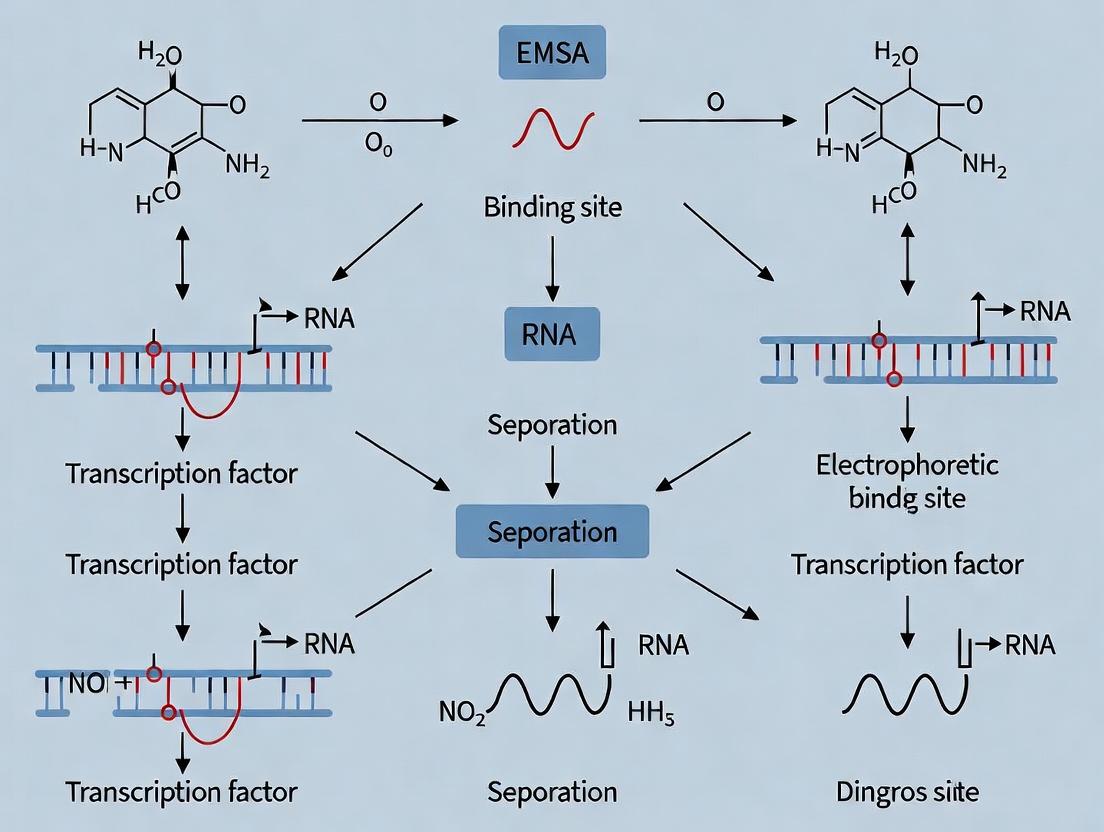
This comprehensive guide provides a detailed protocol for the Electrophoretic Mobility Shift Assay (EMSA), a fundamental technique for studying transcription factor-DNA interactions.
Mastering EMSA: The Definitive Protocol Guide for Transcription Factor Binding Analysis in Biomedical Research
Abstract
This comprehensive guide provides a detailed protocol for the Electrophoretic Mobility Shift Assay (EMSA), a fundamental technique for studying transcription factor-DNA interactions. It systematically covers the foundational principles, step-by-step methodological execution, critical troubleshooting, and advanced comparative validation strategies. Designed for researchers and drug development professionals, the article offers actionable insights to optimize EMSA for robust, reproducible results in gene regulation studies, drug screening, and biomarker discovery.
Understanding EMSA: Core Principles of Transcription Factor-DNA Interaction Analysis
What is EMSA? The Theory Behind the Electrophoretic Mobility Shift Assay.
The Electrophoretic Mobility Shift Assay (EMSA), also known as the gel shift or band shift assay, is a fundamental in vitro technique for detecting direct, sequence-specific interactions between proteins and nucleic acids (DNA or RNA). Within the context of a broader thesis on EMSA protocol for transcription factor binding research, this guide details the core theory and quantitative framework underlying the assay. It is indispensable for researchers studying gene regulation, characterizing transcription factors, validating drug targets, and screening compounds that modulate nucleic acid-protein interactions.
Core Theoretical Principles
EMSA exploits the principle that a protein-nucleic acid complex migrates more slowly through a non-denaturing polyacrylamide or agarose gel than the free nucleic acid probe due to increased molecular weight and altered charge-to-mass ratio. The assay's success hinges on the laws of equilibrium binding kinetics.
Equilibrium Binding Kinetics
The binding between a protein (P) and a labeled nucleic acid probe (N) is described by the reversible reaction: P + N ⇌ PN The dissociation constant (Kd), a critical quantitative measure of binding affinity, is defined as: Kd = [P][N] / [PN] where [P], [N], and [PN] are the equilibrium concentrations of free protein, free probe, and the protein-probe complex, respectively. A lower Kd indicates higher binding affinity. Under typical EMSA conditions, the probe concentration is kept significantly below the Kd and the protein concentration, allowing the fraction of bound probe to reflect the protein's binding affinity and concentration.
Quantitative Data from EMSA
Densitometric analysis of EMSA gel images allows for the quantification of bound and free probe bands. This data can be used to calculate key parameters.
Table 1: Key Quantitative Parameters Derived from EMSA Data
| Parameter | Formula/Description | Typical Range/Value | Significance in Transcription Factor Research |
|---|---|---|---|
| Fraction Bound (θ) | θ = Intensity(PN) / [Intensity(PN) + Intensity(N)] | 0 to 1.0 | Direct measure of complex formation under given conditions. |
| Apparent Kd | Derived from θ vs. [Protein] curve (at [N] << Kd). | 10-9 to 10-12 M for high-affinity TFs | Primary measure of binding strength. Crucial for comparing mutant proteins or drug effects. |
| Binding Specificity | % Inhibition of shift by unlabeled wild-type vs. mutant competitor. | >50-fold excess for specific competition | Validates sequence-specificity of the observed protein-DNA interaction. |
| Stoichiometry | Molar ratio of protein to DNA at which all probe is shifted. | Often 1:1 or 2:1 (dimer) | Indicates oligomeric state of the binding protein (e.g., monomer vs. dimer). |
Detailed Experimental Protocol for EMSA in Transcription Factor Research
A. Probe Preparation
- Design: Synthesize complementary oligonucleotides containing the putative transcription factor binding site (consensus sequence), with 5-10 bp flanking sequences.
- Annealing: Mix equimolar amounts of each oligonucleotide in annealing buffer (10 mM Tris, 50 mM NaCl, 1 mM EDTA, pH 7.5-8.0). Heat to 95°C for 5 min, then slowly cool to room temperature.
- End-labeling: Using T4 Polynucleotide Kinase, label 50-200 fmol of annealed dsDNA probe with [γ-32P]ATP (or a non-radioactive alternative like biotin) for 30-60 min at 37°C. Purify the labeled probe using a spin column.
B. Protein Sample Preparation
- Source: Use purified recombinant transcription factor, in vitro translated protein, or nuclear extract prepared from relevant cell lines/tissue.
- Quantification: Accurately determine protein concentration (e.g., via Bradford assay). For nuclear extracts, typical amounts range from 2-20 µg per binding reaction.
C. Binding Reaction
- Master Mix: Prepare a binding buffer on ice. A standard formulation includes: 10 mM Tris (pH 7.5), 50 mM KCl, 1 mM DTT, 2.5% glycerol, 0.05% NP-40, 5 mM MgCl2, and 0.1-1 µg/µL non-specific competitor DNA (poly(dI-dC)).
- Assemble Reaction: In a final volume of 10-20 µL, combine labeled probe (10,000-20,000 cpm), protein sample, and binding buffer. Include controls: probe-only and competition samples (with 50-200-fold molar excess of unlabeled specific or non-specific competitor DNA).
- Incubate: Incubate at room temperature or 30°C for 20-30 minutes to reach binding equilibrium.
D. Non-Denaturing Gel Electrophoresis
- Gel Casting: Prepare a 4-8% non-denaturing polyacrylamide gel (29:1 acrylamide:bis) in 0.5X Tris-Borate-EDTA (TBE) or 0.25-0.5X Tris-Glycine buffer. Pre-run the gel at 100V for 30-60 min at 4°C to stabilize temperature and ionic conditions.
- Loading & Run: Add a non-ionic loading dye (e.g., 10% glycerol with trace bromophenol blue) to the binding reactions. Load samples and run the gel at constant voltage (100-150V) at 4°C until the dye front migrates 2/3 of the way.
- Detection: Transfer gel to blotting paper, dry, and expose to a phosphorimager screen or X-ray film. For non-radioactive probes, follow specific detection protocols (e.g., chemiluminescence for biotin).
Visualization of EMSA Theory and Workflow
EMSA Workflow from Binding to Analysis
The Scientist's Toolkit: Key Research Reagent Solutions
Table 2: Essential Materials for EMSA in Transcription Factor Studies
| Item | Function & Role in Experiment | Critical Considerations for Transcription Factor Research |
|---|---|---|
| Purified Transcription Factor | The protein of interest. Source can be recombinant, in vitro translated, or from nuclear extracts. | Purity is crucial for clean shifts and accurate Kd determination. Post-translational modifications in nuclear extracts may affect binding. |
| Labeled dsDNA Probe | Contains the specific DNA sequence (binding site) for the transcription factor. Acts as the reporter molecule. | Sequence must be validated. Radioactive (32P) offers high sensitivity; non-radioactive (biotin/chemiluminescence) is safer and stable. |
| Non-Specific Competitor DNA | Blocks non-specific protein-DNA interactions (e.g., poly(dI-dC), salmon sperm DNA). | Type and amount must be optimized to suppress background without inhibiting specific binding. Critical for "dirty" samples like nuclear extracts. |
| Binding Buffer | Provides optimal ionic strength, pH, and cofactors (Mg2+, Zn2+) to support native protein structure and specific binding. | DTT is often included to keep cysteine residues reduced. Glycerol stabilizes proteins. Divalent cations can be essential for some TFs. |
| Non-Denaturing Polyacrylamide Gel | Matrix for separating complex from free probe based on size/charge, under native conditions. | Percentage (4-8%) affects resolution. Low ionic strength buffer (0.25-0.5X TBE) helps stabilize complexes during electrophoresis. |
| Cold (Unlabeled) Competitor Oligos | Used in competition experiments to demonstrate binding specificity. | Specific Competitor: Identical to probe sequence. Mutant Competitor: Contains a mutated binding site. A >50-fold molar excess of specific competitor should abolish the shift. |
| Supershift Antibody | Antibody specific to the transcription factor or an associated protein (e.g., epitope tag). | Used in "supershift" assays to confirm protein identity or detect complexes. The antibody-protein-DNA complex migrates even slower. |
This technical guide details the core components of detection methodologies within the framework of the Electrophoretic Mobility Shift Assay (EMSA) for transcription factor binding research. The evolution from radioactive to non-radioactive detection represents a critical advancement, impacting sensitivity, safety, cost, and experimental workflow in both basic research and drug discovery targeting transcription factors.
I. Radiolabeled Probes: The Traditional Standard
Radiolabeling, typically with Phosphorus-32 (³²P), has been the gold standard for EMSA due to its high sensitivity and linear quantitation range.
Common Radiolabeling Methods:
- End-Labeling with T4 Polynucleotide Kinase: Transfers the γ-phosphate of [γ-³²P]ATP to the 5'-OH end of a DNA oligonucleotide.
- Fill-in or Nick Translation with Klenow Fragment: Incorporates [α-³²P]dNTPs into recessed or nicked DNA ends.
- PCR-based Labeling: Incorporates labeled nucleotides during amplification.
Detailed Protocol: 5' End-Labeling with [γ-³²P]ATP
- Reagents: DNA oligonucleotide probe, [γ-³²P]ATP, T4 Polynucleotide Kinase (PNK), 10X PNK Buffer, Nuclease-free water.
- Procedure:
- Assemble in a microcentrifuge tube: 1–10 pmol DNA, 2 µL 10X PNK buffer, 5 µL [γ-³²P]ATP (50 µCi), 1 µL T4 PNK (10 units), bring to 20 µL with water.
- Incubate at 37°C for 30–60 minutes.
- Terminate reaction by heating to 70°C for 5 minutes.
- Purify labeled probe using a microspin G-25 or G-50 Sephadex column to remove unincorporated nucleotides.
- Safety & Handling: Require dedicated equipment, shielded workstations, strict monitoring, and specialized waste disposal.
Table 1: Comparison of Common Radiolabel Isotopes for EMSA
| Isotope | Emission Type | Half-Life | Typical Use in EMSA | Key Advantage | Key Limitation |
|---|---|---|---|---|---|
| Phosphorus-32 (³²P) | β⁻ | 14.3 days | 5'/3' end-labeling, fill-in | High sensitivity, sharp autoradiography signals | High energy, significant safety hazard |
| Phosphorus-33 (³³P) | β⁻ | 25.3 days | 5'/3' end-labeling, fill-in | Lower energy than ³²P, better resolution | Lower sensitivity, higher cost |
| Sulfur-35 (³⁵S) | β⁻ | 87.5 days | Internal labeling (e.g., thio-nucleotides) | Lower energy, safer | Not for standard DNA end-labeling |
II. Non-Radioactive Detection Methods: Modern Alternatives
These methods offer safer, more stable, and often more versatile alternatives, though sensitivity can vary.
Primary Strategies:
- Biotin-Streptavidin Systems: A biotinylated probe is detected using streptavidin conjugated to a reporter enzyme (HRP or AP).
- Digoxigenin (DIG) Systems: A DIG-labeled probe is detected with an anti-DIG antibody conjugated to HRP or AP.
- Fluorescent Probes: Direct use of fluorophore-labeled oligonucleotides (e.g., Cy5, FAM, TAMRA).
Detailed Protocol: Chemiluminescent Detection with Biotinylated Probes
- Reagents: Biotinylated DNA probe, Streptavidin-Horseradish Peroxidase (HRP), Chemiluminescent substrate (e.g., Luminol/Enhancer), Blocking buffer (e.g., 5% BSA or non-fat dry milk), Wash buffer (TBST).
- Procedure (Post-EMSA Gel Shift):
- Electrophoretic Transfer: Transfer protein-nucleic acid complexes from gel to a positively charged nylon membrane via wet or semi-dry blotting.
- Crosslinking: UV crosslink DNA to membrane (120-150 mJ/cm²).
- Blocking: Incubate membrane in blocking buffer for 1 hour at RT.
- Detection: Incubate membrane with Streptavidin-HRP (1:20,000–1:50,000 dilution in blocking buffer) for 30-60 minutes.
- Washing: Wash membrane 3 x 5 mins with TBST.
- Imaging: Incubate with chemiluminescent substrate for 5 mins, expose to X-ray film or digital imager.
- Advantages: Stable reagents (probes last years), no radiation hazard, good sensitivity (approaching ³²P).
Table 2: Quantitative Comparison of Non-Radioactive Detection Methods
| Method | Label | Detection Mode | Approx. Sensitivity (mol of probe) | Time to Result | Key Benefit | Key Drawback |
|---|---|---|---|---|---|---|
| Chemiluminescence | Biotin/DIG | Enzyme (HRP/AP) + Substrate | 10⁻¹⁵ – 10⁻¹⁸ | 2-4 hours post-EMSA | High sensitivity, stable | Multiple steps, optimization needed |
| Colorimetry | Biotin/DIG | Enzyme (HRP/AP) + Chromogen | 10⁻¹³ – 10⁻¹⁵ | 2-3 hours post-EMSA | Simple, low cost | Lower sensitivity, non-quantitative |
| Fluorescence | Fluorophore (Cy5, FAM) | Direct fluorescence scan | 10⁻¹² – 10⁻¹⁵ | Immediate (post-run) | Fastest, no development | Background fluorescence, requires scanner |
| Electrochemiluminescence | Biotin/Ruthenium | Electrical stimulation | 10⁻¹⁸ – 10⁻²⁰ | 1-2 hours post-EMSA | Ultra-high sensitivity, wide dynamic range | Specialized equipment required |
III. Visualization and Workflows
Title: Decision Tree for EMSA Detection Method Selection
Title: Chemiluminescent EMSA Workflow from Probe to Image
IV. The Scientist's Toolkit: Key Reagent Solutions
Table 3: Essential Research Reagents for EMSA Detection
| Reagent / Material | Function in EMSA | Key Considerations |
|---|---|---|
| [γ-³²P]ATP or [α-³²P]dCTP | Radioactive label for probe synthesis. | Requires radiation license, safety protocols, and short-term use due to decay. |
| T4 Polynucleotide Kinase (PNK) | Catalyzes transfer of ⁰⁰phosphate to 5'-OH of DNA for radiolabeling. | Essential for 5' end-labeling. Ensure nuclease-free. |
| Biotin- or DIG-Nucleotide Mix | For enzymatic incorporation (PCR, fill-in) or use of pre-labeled oligonucleotides. | Provides stable, non-radioactive label. Compatibility with polymerase is key. |
| Streptavidin-Horseradish Peroxidase (HRP) | High-affinity binding to biotin for chemiluminescent/colorimetric detection. | High-quality conjugates reduce background. Titrate for optimal signal. |
| Anti-DIG-Alkaline Phosphatase (AP) | Antibody conjugate for detecting DIG-labeled probes. | Used as an alternative to biotin-streptavidin. AP substrates can be very sensitive. |
| Chemiluminescent Substrate (HRP/AP) | Enzyme substrate that emits light upon catalysis. | Critical for sensitivity. Choice between enhanced (brighter) or basic substrates. |
| Positively Charged Nylon Membrane | Solid support for transferring and immobilizing nucleic acids post-EMSA. | Required for blotting-based detection. Positive charge ensures DNA binding. |
| Fluorophore-Labeled Oligonucleotide (e.g., Cy5) | Directly fluorescent probe for in-gel scanning. | Enables fastest workflow. Must match scanner/imager laser/filter sets. |
| Gel Shift Binding Buffer (10X) | Provides optimal ionic strength, pH, and carrier for binding reactions. | Often includes poly(dI:dC) to reduce non-specific protein-DNA interactions. |
| Non-Radioactive Molecular Weight Markers | For tracking electrophoresis and transfer efficiency. | Pre-stained or detectable markers (biotin/DIG/fluor) are essential. |
Electrophoretic Mobility Shift Assay (EMSA) is a cornerstone technique for studying protein-nucleic acid interactions. Within the context of a comprehensive thesis on EMSA protocol for transcription factor (TF) binding research, understanding its specific applications is crucial for effective experimental design. This guide details when and how to apply EMSA in the study of gene regulation and signaling cascades.
Core Applications of EMSA in Research
EMSA is primarily employed to resolve specific biological questions. Its use is indicated in the following scenarios, as summarized in the table below.
Table 1: Primary Applications of EMSA in Gene Regulation & Signaling Studies
| Application Scenario | Specific Research Question | Key EMSA Output |
|---|---|---|
| TF-DNA Binding Verification | Does a purified or crude nuclear protein bind to a specific DNA probe sequence? | A quantifiable "shift" or super-shift in probe migration. |
| Binding Specificity & Affinity | Is the interaction sequence-specific? What is the relative binding affinity? | Competition with unlabeled wild-type or mutant oligonucleotides; titration assays. |
| Kinetic & Thermodynamic Analysis | How does binding change over time or under different conditions (e.g., pH, salt)? | Time-course or condition-variable assays to measure complex stability. |
| Signal Transduction Monitoring | Does a signaling event (e.g., phosphorylation) alter a TF's DNA-binding activity? | Comparison of EMSA results from extracts of stimulated vs. unstimulated cells. |
| Complex Composition Analysis | What proteins are present in the DNA-bound complex? | "Supershift" using antibodies or altered mobility with protein modification enzymes. |
Detailed Experimental Protocols
Protocol 1: Standard EMSA for TF Binding Verification
- Probe Preparation: Label 20-50 fmol of a double-stranded oligonucleotide containing the suspected binding site (consensus sequence) with [γ-³²P]ATP using T4 Polynucleotide Kinase. Purify using a spin column.
- Binding Reaction: Combine 2-10 µg of nuclear extract or 10-200 ng of purified protein with 1 µg poly(dI·dC) in binding buffer (10 mM HEPES, pH 7.9, 50 mM KCl, 1 mM DTT, 2.5 mM MgCl₂, 10% glycerol, 0.05% NP-40). Incubate on ice for 10 minutes. Add labeled probe (20,000-50,000 cpm) and incubate at room temperature for 20 minutes.
- Electrophoresis: Load samples onto a pre-run, non-denaturing 4-6% polyacrylamide gel (0.5X TBE buffer, 4°C). Run at 100-150 V until the free probe has migrated 2/3 down the gel.
- Detection: Dry the gel and expose to a phosphorimager screen or X-ray film.
Protocol 2: Competition EMSA for Specificity Assay Follow the standard protocol, but include a 2-minute pre-incubation of the protein/extract with a molar excess (e.g., 10x, 50x, 100x) of unlabeled competitor DNA (wild-type or mutant) before adding the labeled probe. Loss of shift with wild-type, but not mutant, competitor confirms specificity.
Protocol 3: Supershift EMSA for Complex Identification After the standard binding reaction (step 2 above), add 1-2 µg of a specific antibody targeting the suspected TF. Incubate the mixture for an additional 30-60 minutes on ice or at 4°C before loading the gel. A further retardation ("supershift") or ablation of the complex indicates the presence of the target protein.
Visualizing EMSA's Role in Signaling Pathway Analysis
EMSA is frequently used to measure the endpoint activity of signaling pathways that converge on transcription factor activation.
Title: EMSA Measures Signaling Pathway Output via TF Activation
EMSA Experimental Workflow
Title: Core EMSA Workflow from Sample to Result
The Scientist's Toolkit: Key Research Reagent Solutions
Table 2: Essential Materials for EMSA Experiments
| Reagent/Material | Function & Importance |
|---|---|
| Nuclear Extraction Kit | Isolates nuclear proteins from cells/tissues, enriching for TFs while removing cytoplasmic contaminants. Critical for cell signaling studies. |
| Purified Recombinant TF | Positive control protein to validate probe functionality and establish baseline binding conditions. |
| Biotin- or ³²P-Labeled Oligonucleotides | Provides the target DNA probe for detection. Non-radioactive (chemiluminescent) and radioactive labels are standard. |
| Non-specific Carrier DNA (poly(dI·dC)) | Blocks non-specific protein-DNA interactions, reducing background and clarifying specific shifted bands. |
| TF-Specific Antibodies | For supershift assays to confirm the identity of a protein within the DNA-protein complex or to disrupt binding. |
| Gel Shift Binding Buffers (5X/10X) | Provides optimized ionic strength, pH, and stabilizing agents (DTT, glycerol) for consistent protein-DNA interactions. |
| Non-Denaturing Polyacrylamide Gel Kit | Formulates the matrix for separation of protein-DNA complexes from free probe based on size/charge. |
| Chemiluminescent Nucleic Acid Detection Module | For non-radioactive detection, includes streptavidin-HRP and stable peroxide/luminol reagents for imaging. |
Within the context of transcription factor (TF) binding research, the Electrophoretic Mobility Shift Assay (EMSA) remains a cornerstone technique for the direct detection and analysis of protein-nucleic acid interactions. This whitepaper serves as an in-depth technical guide to the core principles and advanced execution of EMSA, providing researchers and drug development professionals with the protocols and visual tools necessary to probe these critical molecular binding events.
Core Principle & Quantitative Data
The EMSA principle hinges on the differential migration of free nucleic acid probes and protein-bound complexes through a non-denaturing polyacrylamide or agarose gel. The bound complex, being larger and having a different charge-to-mass ratio, migrates more slowly ("shifts") than the free probe. Key quantitative parameters defining a robust EMSA are summarized below.
Table 1: Quantitative Parameters for Standard EMSA Optimization
| Parameter | Typical Range | Purpose & Impact |
|---|---|---|
| Probe Length (DNA) | 20-50 bp | Balances specificity (longer) with efficient labeling and separation (shorter). |
| Labeling Specific Activity | 10⁵ - 10⁶ cpm/µg | Ensures sufficient signal-to-noise ratio for detection. |
| Protein Amount | 0.1 - 10 µg (crude) / 1-100 fmol (pure) | Must be titrated to observe clear shift without non-specific binding. |
| Poly(dI:dC) Competitor | 0.05 - 2 µg/µL | Suppresses non-specific protein-nucleic acid interactions; optimal amount is protein-specific. |
| Electrophoresis Temperature | 4-10°C | Maintains complex stability during separation. |
| Voltage | 80-100 V (constant) | Prevents heat-induced dissociation of complexes. |
| Gel Acrylamide % | 4-10% | Lower % for larger complexes (>500 kDa), higher % for better resolution of smaller shifts. |
| Glycerol in Gel/Loading Buffer | 2-10% (v/v) | Enhances sample loading and complex stability. |
Table 2: Advanced EMSA Variants & Their Applications
| Variant | Key Feature | Primary Application |
|---|---|---|
| Supershift Assay | Inclusion of antibody specific to the protein. | Confirms protein identity within the shifted complex. |
| Competition EMSA | Addition of unlabeled ("cold") competitor DNA. | Assesses binding specificity and relative affinity. |
| Fluorescence-based EMSA | Use of fluorophore-labeled probes. | Eliminates radiation hazard; enables real-time kinetic studies in some platforms. |
| Native/Crosslinking EMSA | Use of chemical crosslinkers (e.g., glutaraldehyde). | Stabilizes weak or transient complexes for detection. |
Detailed Experimental Protocols
Core EMSA Protocol for Transcription Factor Binding
A. Probe Preparation & Labeling (End-labeling with [γ-³²P]ATP)
- Annealing: Combine complementary single-stranded oligonucleotides (1 µM each) in 10 mM Tris, 50 mM NaCl, 1 mM EDTA. Heat to 95°C for 5 min, cool slowly to room temperature.
- Phosphorylation: In a 20 µL reaction, mix:
- 1 pmol double-stranded DNA probe.
- 2 µL 10x T4 Polynucleotide Kinase (PNK) Buffer.
- 20 µCi [γ-³²P]ATP (6000 Ci/mmol).
- 10 U T4 PNK.
- Nuclease-free water to volume.
- Incubate at 37°C for 45 min.
- Purification: Remove unincorporated nucleotides using a spin column (e.g., Sephadex G-25). Determine specific activity by scintillation counting.
B. Binding Reaction
- Prepare a master mix on ice (per reaction):
- 2 µL 10x Binding Buffer (100 mM Tris, 500 mM KCl, 10 mM DTT, pH 7.5).
- 1 µL Poly(dI:dC) (1 µg/µL stock).
- 1 µL 10 mg/mL BSA.
- 1 µL 50% Glycerol.
- Nuclease-free water to 18 µL.
- Add 1-2 µL of nuclear extract or purified protein. Include a "no protein" control.
- Add 1 µL of labeled probe (~20,000 cpm).
- Incubate at room temperature (or specific temperature relevant to the protein) for 20-30 min.
C. Non-Denaturing Gel Electrophoresis
- Cast a 6% Polyacrylamide Gel (29:1 acrylamide:bis) in 0.5x TBE:
- 3.0 mL 30% Acrylamide/Bis mix.
- 2.5 mL 5x TBE.
- 19.5 mL H₂O.
- 150 µL 10% Ammonium Persulfate (APS).
- 15 µL TEMED. Pour immediately.
- Pre-run the gel in 0.5x TBE buffer at 100 V for 60 min at 4°C.
- Load samples (do not add denaturing dyes). Include a lane with bromophenol blue dye only.
- Run at 100 V in the cold room (4°C) until the dye migrates ~2/3 of the gel length.
- Transfer gel to Whatman paper, dry under vacuum, and expose to a phosphorimager screen or X-ray film.
Supershift Protocol
- Follow the standard binding reaction setup.
- After the initial 20 min protein-probe incubation, add 1-2 µL of specific antibody or control IgG.
- Incubate further for 30-60 min on ice or at room temperature.
- Proceed with gel loading and electrophoresis. A successful supershift will appear as a higher molecular weight complex ("supershifted" band) or a diminishment of the primary shifted band.
Visualizing Pathways and Workflows
Title: EMSA Core Experimental Workflow
Title: Molecular Interactions in EMSA & Supershift
The Scientist's Toolkit: Research Reagent Solutions
Table 3: Essential Materials for EMSA
| Item | Function & Rationale |
|---|---|
| T4 Polynucleotide Kinase (PNK) & [γ-³²P]ATP | Catalyzes the transfer of the radiolabeled gamma-phosphate from ATP to the 5'-OH end of DNA, creating a high-specific-activity probe. Fluorescent ATP analogs are alternatives. |
| Non-denaturing Polyacrylamide Gel Components (Acrylamide/Bis, TEMED, APS) | Forms a porous matrix that separates biomolecules based on size/shape under native conditions, preserving protein-nucleic acid interactions. |
| High-Purity Poly(dI:dC) or similar non-specific carrier DNA | A critical competitor that binds and sequesters proteins with non-sequence-specific nucleic acid affinity, dramatically reducing background and clarifying specific shifts. |
| Specific & Non-Specific Unlabeled Competitor DNA | Unlabeled version of the probe (specific) or an unrelated sequence (non-specific) used in competition assays to validate binding specificity and apparent affinity. |
| Transcription Factor-Specific Antibody | For supershift assays; binds to the protein component of the complex, further altering its mobility and providing definitive protein identity confirmation. |
| Nuclear Extraction Kit (e.g., from tissue/culture cells) | Provides a source of native, functionally active transcription factors from a biological sample, essential for studying endogenous protein activity. |
| Gel Shift Binding Buffers (10x Concentrates) | Provides optimized ionic strength (KCl/NaCl), pH (Tris), reducing agents (DTT), and stabilizers (glycerol, BSA) to promote specific binding and complex stability. |
| Phosphorimager System or Fluorescent Gel Scanner | Enables highly sensitive, quantitative detection of radiolabeled or fluorescently labeled species within the gel, surpassing traditional X-ray film. |
The Step-by-Step EMSA Protocol: From Probe Design to Gel Imaging
Within the framework of an Electrophoretic Mobility Shift Assay (EMSA) for transcription factor binding research, the probe is the critical reagent. Its precise design, effective labeling, and stringent purification dictate the assay's specificity, sensitivity, and reliability. This technical guide details the core principles and current methodologies for creating optimal probes for EMSA studies.
Probe Sequence Design
The probe is a short, double-stranded DNA or single-stranded RNA oligonucleotide containing the putative transcription factor binding site.
Core Principles:
- Length: Typically 20-50 base pairs. Longer sequences increase non-specific binding; shorter ones may lack necessary flanking sequences for stable protein interaction.
- Core Binding Site: Derived from consensus sequences (e.g., from databases like JASPAR or confirmed via ChIP-seq). It should be centered within the oligonucleotide.
- Flanking Sequences: Incorporate neutral, non-specific sequences (e.g., GC-rich) to provide adequate length for electrophoresis separation and minimal inherent secondary structure.
- Specificity Control: Design a mutant probe with 2-5 critical base substitutions within the core site to demonstrate binding specificity.
Quantitative Design Parameters: Table 1: Key Parameters for Probe Design
| Parameter | Recommended Range | Purpose & Notes |
|---|---|---|
| Length | 25-35 bp | Optimal for most TFs; balances specificity and gel resolution. |
| Tm (Binding Site) | >55°C | Ensures probe remains duplexed under experimental conditions. |
| GC Content (Flanks) | 40-60% | Provides stability while minimizing atypical structures. |
| Mutant Probe Mismatches | 3-5 central bases | Sufficient to abrogate binding for a clear negative control. |
Probe Modifications and Labeling
Labeling enables the visualization of the protein-nucleic acid complex post-electrophoresis.
Common Labeling Strategies:
- End-Labeling:
- 5'-End: Using [γ-³²P]ATP and T4 Polynucleotide Kinase (PNK). The classic, high-sensitivity method.
- 3'-End: Using [α-³²P]ddATP or Cordycepin-5'-[α-³²P]triphosphate and Terminal Deoxynucleotidyl Transferase (TdT).
- Non-Radioactive Labeling: Biotin, Digoxigenin (DIG), or Fluorescent dyes (FAM, Cy3, Cy5) are coupled via aminolinkers or directly incorporated during synthesis. Detection is via chemiluminescence or fluorescence.
Detailed Protocol: 5'-End Labeling with T4 PNK
- Annealing: Combine complementary oligonucleotides in equimolar ratio (typically 100 µM each) in 1X annealing buffer (10 mM Tris, pH 7.5, 50 mM NaCl, 1 mM EDTA). Heat to 95°C for 5 min, then slow-cool to room temperature.
- Labeling Reaction:
- 10 pmol duplexed probe
- 2 µL 10X T4 PNK Buffer
- 20 units T4 Polynucleotide Kinase
- 50 µCi [γ-³²P]ATP (~6000 Ci/mmol)
- Nuclease-free water to 20 µL.
- Incubate at 37°C for 30 min.
- Reaction Termination: Heat-inactivate at 65°C for 10 min.
Probe Purification
Removal of unincorporated nucleotides and salts is essential to reduce background.
Standard Methods:
- Size-Exclusion Chromatography (Microspin Columns): Rapid removal of small molecules. Desalting columns are effective for salt removal but less so for separating unincorporated labeled nucleotides from short probes.
- Denaturing Polyacrylamide Gel Electrophoresis (dPAGE): The gold standard for purification. Separates based on size, providing extremely pure, full-length probe.
- HPLC Purification: Ideal for commercially synthesized modified probes, ensuring high purity before labeling.
Detailed Protocol: Purification by dPAGE
- Prepare a denaturing polyacrylamide gel (typically 10-20% acrylamide/bis, 8 M urea, 1X TBE).
- Pre-run the gel in 1X TBE buffer at constant power to reach ~45-50°C.
- Mix the labeling reaction with an equal volume of 2X formamide loading dye. Denature at 95°C for 3 min, then place on ice.
- Load the sample and run the gel at sufficient voltage to separate the full-length product (visible by shadowing on a TLC plate for radioactive probes).
- Disassemble the apparatus, wrap the gel in plastic wrap, and expose to a phosphorimager screen or X-ray film for 2-5 minutes.
- Align the film with the gel, excise the band corresponding to the full-length probe.
- Elute the probe by crushing the gel slice in 400-500 µL of elution buffer (0.5 M ammonium acetate, 1 mM EDTA, 0.1% SDS) overnight at 37°C with agitation.
- Filter the supernatant and precipitate the probe with ethanol. Resuspend in TE buffer or nuclease-free water.
The Scientist's Toolkit: EMSA Probe Reagents
Table 2: Essential Reagents for Probe Design and Labeling
| Reagent / Solution | Function in EMSA Probe Preparation |
|---|---|
| Synthetic Oligonucleotides | Contains the target sequence; basis for probe generation. |
| T4 Polynucleotide Kinase (PNK) | Catalyzes the transfer of a phosphate group (³²P or cold) to the 5'-OH end of DNA/RNA. |
| [γ-³²P]ATP | Radioactive donor for 5'-end labeling; provides high sensitivity detection. |
| Biotin- or DIG-dUTP/ATP | Non-radioactive labels for 3'-end labeling or incorporation via PCR. |
| Nucleotidyl Transferase (TdT) | Adds labeled nucleotides to the 3'-end of DNA probes. |
| Microspin G-25/50 Columns | For quick removal of unincorporated nucleotides (desalting). |
| Urea & Acrylamide/Bis Solutions | For preparing denaturing PAGE gels for high-resolution probe purification. |
| Probe Elution Buffer | Recovers purified probe from excised gel fragments. |
| TE Buffer (pH 8.0) | Standard suspension/storage buffer for purified oligonucleotides. |
Visualizing EMSA Probe Workflow and Theory
Diagram 1: EMSA Probe Design and Preparation Workflow.
Diagram 2: EMSA Principle: Binding and Gel Separation.
This guide provides detailed protocols for preparing high-quality nuclear and whole-cell protein extracts, a critical first step for downstream Electrophoretic Mobility Shift Assays (EMSA) used in transcription factor binding research. Consistent and active protein extracts are foundational for generating reliable EMSA data, which informs mechanistic studies and drug discovery efforts targeting transcription factor activity.
I. Whole-Cell Extract Preparation
Whole-cell extracts contain a mixture of cytoplasmic, membrane, and nuclear proteins and are suitable for studying transcription factors that are abundant or not exclusively nuclear.
Key Buffer Recipes for Whole-Cell Extraction
Table 1: Primary Buffers for Whole-Cell Extract Preparation
| Buffer Name | Key Components (Typical Concentrations) | pH | Purpose & Notes |
|---|---|---|---|
| Whole-Cell Lysis Buffer | 20 mM HEPES, 150 mM NaCl, 1% NP-40 or Triton X-100, 1 mM EDTA, 10% glycerol, 1 mM DTT, 1x Protease Inhibitor Cocktail | 7.4 - 7.9 | Gentle, non-ionic detergent-based lysis. Maintains protein complexes. *Add fresh just before use. |
| High-Salt Extraction Buffer | 20 mM HEPES, 500 mM NaCl, 1% NP-40, 1 mM EDTA, 10% glycerol, 1 mM DTT, 1x PIC | 7.9 | Extracts chromatin-associated or loosely bound nuclear proteins. Can be used after initial low-salt lysis. |
| RIPA Buffer | 25 mM Tris-HCl, 150 mM NaCl, 1% NP-40, 0.5% Sodium Deoxycholate, 0.1% SDS | 7.6 | More stringent lysis. Effective but may disrupt some protein-protein/DNA interactions. Use with caution for EMSA. |
Detailed Protocol: Whole-Cell Extract Preparation (Adherent Cells)
- Culture & Harvest: Grow cells to 70-90% confluency. Place culture dish on ice. Aspirate medium and wash cells twice with ice-cold 1X PBS.
- Lysis: Add ice-cold Whole-Cell Lysis Buffer (e.g., 300 µL for a 60 mm dish). Rock the dish gently for 15-20 minutes on ice.
- Scrape & Transfer: Use a cold cell scraper to dislodge lysed cells. Transfer the lysate to a pre-chilled 1.5 mL microcentrifuge tube.
- Clarification: Centrifuge at 16,000 x g for 15 minutes at 4°C.
- Aliquot & Store: Carefully transfer the supernatant (the whole-cell extract) to a new pre-chilled tube. Snap-freeze in liquid nitrogen and store at -80°C. Avoid repeated freeze-thaw cycles.
Title: Whole-Cell Extract Preparation Workflow
II. Nuclear Extract Preparation
Nuclear extracts are enriched for DNA-binding proteins like transcription factors, reducing cytoplasmic contaminants that can interfere with EMSA. The method below is based on the classic Dignam protocol with common modifications.
Key Buffer Recipes for Nuclear Extraction
Table 2: Essential Buffers for Nuclear Extract Preparation (Dignam-Style)
| Buffer Name | Key Components (Typical Concentrations) | pH | Purpose & Notes |
|---|---|---|---|
| Hypotonic Buffer A | 10 mM HEPES, 1.5 mM MgCl₂, 10 mM KCl, 0.5 mM DTT, 0.2 mM PMSF | 7.9 | Swells cells, weakens cytoplasmic membrane. *Add fresh. |
| Low-Salt Buffer B | 20 mM HEPES, 1.5 mM MgCl₂, 20 mM KCl, 0.2 mM EDTA, 0.5 mM DTT, 0.2 mM PMSF, 25% Glycerol (v/v) | 7.9 | Washes nuclei to remove cytoplasmic debris. |
| High-Salt Extraction Buffer C | 20 mM HEPES, 1.5 mM MgCl₂, 420 mM NaCl, 0.2 mM EDTA, 0.5 mM DTT, 0.2 mM PMSF, 25% Glycerol (v/v) | 7.9 | Critical: Salt concentration extracts nuclear proteins. Optimize (300-500 mM) for specific TFs. |
| Dialysis Buffer D | 20 mM HEPES, 100 mM KCl, 0.2 mM EDTA, 0.5 mM DTT, 0.2 mM PMSF, 20% Glycerol (v/v) | 7.9 | Reduces salt concentration post-extraction to restore physiological conditions for protein activity. |
Detailed Protocol: Nuclear Extract Preparation
- Harvest & Swell: Harvest cells (≥10⁷). Pellet and wash with PBS. Resuspend pellet in 5x pellet volume of ice-cold Hypotonic Buffer A. Incubate on ice for 10-15 minutes (cells swell).
- Lyse Cytoplasmic Membrane: Add 10% NP-40 (IGEPAL CA-630) to a final concentration of 0.6-0.8%. Vortex vigorously for 10-15 seconds.
- Pellet Nuclei: Centrifuge at 600 x g for 5 minutes at 4°C. The pellet contains intact nuclei.
- Wash Nuclei: Carefully discard supernatant. Resuspend nuclear pellet in a small volume of Low-Salt Buffer B. Centrifuge again at 600 x g for 5 minutes at 4°C.
- High-Salt Extraction: Resuspend nuclear pellet in a minimal volume (e.g., 1.5x pellet volume) of High-Salt Buffer C. Stir gently on a rotator for 30-45 minutes at 4°C.
- Clarify Extract: Centrifuge at 16,000 x g for 30 minutes at 4°C. Retain the supernatant (crude nuclear extract).
- Dialysis/Desalting: Transfer supernatant to dialysis tubing (MWCO 6-8 kDa) and dialyze against 500x volume of Dialysis Buffer D for 4-6 hours at 4°C. Alternatively, use a desalting column.
- Clarify & Store: Centrifuge dialyzed extract briefly to remove precipitate. Aliquot, snap-freeze in liquid nitrogen, and store at -80°C. Determine protein concentration via Bradford assay.
Title: Nuclear Extract Preparation Workflow
III. The Scientist's Toolkit: Key Reagent Solutions
Table 3: Essential Materials for Protein Extract Preparation
| Reagent/Material | Function in EMSA Sample Prep | Critical Notes |
|---|---|---|
| Protease Inhibitor Cocktail (PIC) | Prevents proteolytic degradation of transcription factors. | Use broad-spectrum, EDTA-free cocktails for metal-dependent proteases. Add fresh to buffers. |
| Dithiothreitol (DTT) | Reducing agent maintaining cysteine residues in reduced state, crucial for DNA-binding activity of many TFs. | Always prepare fresh stock. Include in all extraction and dialysis buffers. |
| Phenylmethylsulfonyl fluoride (PMSF) | Serine protease inhibitor. Inexpensive addition to PIC. | Unstable in aqueous solution; add to buffers just before use. Toxic. |
| Glycerol | Stabilizes protein structure, prevents freezing damage, and increases density of extraction buffers. | Typically used at 10-25% (v/v). |
| High-Quality HEPES Buffer | Maintains stable pH during extraction procedures. Preferred over Tris for pH stability at cold temperatures. | Titrate to exact pH at room temperature for accuracy at 4°C. |
| Non-ionic Detergent (NP-40/IGEPAL) | Disrupts lipid membranes (plasma, organellar) without denaturing proteins, enabling cytoplasmic release. | Concentration is critical: ~0.6% for nuclear prep, ~1% for whole-cell. |
| Dialysis Tubing/Cassettes | Removes high salt after nuclear extraction, restoring conditions compatible with EMSA binding reactions. | Ensure correct Molecular Weight Cut-Off (MWCO). Pre-treat as instructed. |
| Bradford or BCA Assay Kit | Quantifies total protein concentration in final extract. Essential for normalizing EMSA loading. | Use BSA as standard. Avoid assays incompatible with detergents/buffer components. |
IV. Optimization Tips for EMSA-Ready Extracts
- Buffer Optimization: The salt concentration in Buffer C is the most critical variable. Test a range (300-500 mM NaCl) for optimal extraction of your target transcription factor.
- Inhibit Degradation: Work quickly on ice. Use fresh protease and phosphatase inhibitors if studying phosphorylation-dependent binding.
- Avoid Contaminants: Keep extracts free of SDS (>0.1%) and high concentrations of chelators (EDTA/EGTA >1 mM), which can disrupt protein-DNA interactions.
- Quality Control: Always run a small aliquot on a SDS-PAGE gel and Coomassie stain to check protein profile and degradation. Test extract activity in a pilot EMSA with a known positive control DNA probe.
- Storage: Small, single-use aliquots are mandatory to preserve activity. Document the number of freeze-thaw cycles.
1. Introduction & Thesis Context The Electrophoretic Mobility Shift Assay (EMSA) remains the foundational technique for the in vitro study of transcription factor (TF)-DNA interactions. While seemingly straightforward, the core "binding reaction" is the critical determinant of an EMSA's success. Its optimization for maximal specificity (minimizing non-specific binding) and affinity (detecting physiologically relevant interactions) is paramount. This whitepaper deconstructs the binding reaction, providing a technical guide to optimizing its components within the broader thesis that a rigorously optimized EMSA protocol is essential for generating reliable, publication-quality data in transcription factor research and drug discovery targeting DNA-protein interactions.
2. Core Components of the Binding Reaction: A Quantitative Analysis The equilibrium for the specific binding reaction, TF + DNA <-> TF-DNA complex, is governed by reaction conditions. Key variables are summarized below.
Table 1: Optimization Parameters for the EMSA Binding Reaction
| Parameter | Typical Range | Effect on Specificity | Effect on Affinity | Recommended Starting Point |
|---|---|---|---|---|
| Buffer Ionic Strength | 10-100 mM KCl/NaCl | Low: Increases non-specific binding. High: Decreases specific binding. | Optimal at physiological ionic strength (~50-150 mM). | 50 mM KCl |
| Mg²⁺ / Divalent Cations | 0-10 mM MgCl₂ | Often required for specific TF-DNA geometry. | Can dramatically enhance affinity for many TFs. | 2.5 mM MgCl₂ |
| Carrier Protein | 0-100 ng/μL BSA or Ficoll | Reduces non-specific adsorption to tubes. | No direct effect, stabilizes TF indirectly. | 50 ng/μL BSA |
| Non-specific Competitor DNA | 0-100 μg/mL poly(dI-dC) | Critical: Binds non-specific TF surfaces, enhancing probe specificity. | Excess can compete for specific binding. | 50 μg/mL poly(dI-dC) |
| Detergent | 0-0.1% NP-40/Tween-20 | Reduces aggregation & non-specific binding. | Mild detergent stabilizes some proteins. | 0.025% NP-40 |
| Glycerol | 0-10% (v/v) | Minimal direct effect. | Stabilizes protein, aids loading. | 2.5% (v/v) |
| Reaction Temperature & Time | 20-30°C, 10-30 min | Equilibrium must be reached. Longer times risk degradation. | Kinetics vary by TF; 20°C for 20 min is standard. | 25°C for 20 min |
3. Detailed Experimental Protocols
3.1. Protocol A: Basic Binding Reaction Setup for Titration Objective: To establish the optimal amount of nuclear extract or purified TF for a clear, specific shift. Materials: Labeled DNA probe, binding buffer (10 mM Tris pH 7.5, 50 mM KCl, 2.5 mM MgCl₂, 0.025% NP-40, 2.5% glycerol, 50 µg/mL poly(dI-dC), 50 ng/µL BSA), protein source, nuclease-free water. Procedure:
- Prepare a master mix of binding buffer, labeled probe (e.g., 20 fmol), and water for all reactions.
- Aliquot the master mix into sterile microfuge tubes.
- Add a titration of protein (e.g., 0, 2, 5, 10, 15 µg nuclear extract) to each tube. Adjust final volume uniformly with storage buffer.
- Incubate at 25°C for 20 minutes.
- Load directly onto a pre-run native polyacrylamide gel for EMSA.
3.2. Protocol B: Specificity Verification via Cold Competition Objective: To confirm the specificity of the observed protein-DNA complex. Materials: As in Protocol A, plus a 100-fold molar excess of unlabeled "cold" competitor DNA (specific or mutated). Procedure:
- Set up three binding reactions with a constant, intermediate protein amount.
- Tube 1 (Control): No competitor.
- Tube 2 (Specific Competitor): Add 100x molar excess of unlabeled identical probe DNA before adding the protein.
- Tube 3 (Non-specific Competitor): Add 100x molar excess of unlabeled, unrelated DNA (e.g., mutated probe).
- Incubate 25°C for 20 min, then add labeled probe to all tubes. Incubate another 20 min.
- Analyze by EMSA. A true specific complex is abolished only by the specific cold competitor.
4. Visualizing the Optimization Workflow & Pathways
Title: EMSA Binding Reaction Optimization Workflow
Title: Molecular Interactions in the EMSA Binding Reaction
5. The Scientist's Toolkit: Key Research Reagent Solutions
Table 2: Essential Reagents for EMSA Binding Reactions
| Reagent | Function & Role in Specificity/Affinity | Example/Catalog Considerations |
|---|---|---|
| Poly(dI-dC) | Classic non-specific competitor. Mimics DNA backbone, soaking up non-sequence-specific DNA-binding proteins. Critical for specificity. | Pharmacia or equivalent high-purity grade. Aliquot to avoid freeze-thaw. |
| Purified BSA or Recombinant Albumin | Carrier protein. Prevents adsorption of TFs to tube walls, stabilizes dilute proteins, reduces aggregation. | Fatty-acid-free BSA or recombinant versions to avoid enzyme contaminants. |
| NP-40 Alternative / Tween-20 | Non-ionic detergent. Disrupts hydrophobic non-specific interactions, reduces aggregation without denaturing most TFs. | Use at very low concentration (0.025%). |
| MagneGST or Strep-Tactin Beads | For pull-down EMSA variants. Allows rapid separation of tagged protein-DNA complexes from solution, reducing handling time. | Useful for quantitative kinetics studies. |
| Phosphatase & Protease Inhibitor Cocktails | Preserve TF integrity. Especially critical when using crude nuclear extracts. Maintains phosphorylation states critical for DNA binding. | Add fresh to binding buffer from concentrated stocks. |
| Chemiluminescent Nucleic Acid Detection Kits | High-sensitivity probe detection. Allows use of lower probe concentrations, reducing potential non-specific interference. | Superior to traditional radiolabeling for safety and stability. |
| HEPES vs. Tris Buffers | Buffer choice. HEPES has better temperature stability; Tris pH is temperature-sensitive. Match buffer to incubation conditions. | For 25°C incubations, both are suitable. For 37°C, prefer HEPES. |
Non-denaturing (native) gel electrophoresis is a foundational technique within the broader Electrophoretic Mobility Shift Assay (EMSA) protocol, a cornerstone method for investigating protein-nucleic acid interactions, particularly in transcription factor binding research. This whitepaper provides an in-depth technical guide to the critical steps of casting, running, and transferring native polyacrylamide gels, which are essential for preserving the ternary and quaternary structures of proteins and their complexes with DNA or RNA probes.
Core Principles and Thesis Context
Within the EMSA workflow, native gel electrophoresis serves as the separation and detection phase. The core thesis is that the integrity of the protein-DNA complex during electrophoresis is non-negotiable for accurate binding affinity and specificity assessment. Unlike SDS-PAGE, native gels maintain the transcription factor in its active conformation, allowing the migration shift of a radiolabeled or fluorescent DNA probe to be directly correlated with binding events. The techniques described herein are optimized to maximize complex stability during the assay.
Detailed Methodologies
Gel Casting Protocol
Objective: To prepare a homogeneous, bubble-free native polyacrylamide gel with the appropriate porosity for resolving protein-DNA complexes (typically 4-10% acrylamide).
Reagents:
- Acrylamide/Bis-acrylamide (29:1 or 37.5:1 ratio)
- Tris-HCl (pH 8.8 for resolving gel)
- Ammonium persulfate (APS, 10% w/v, fresh)
- Tetramethylethylenediamine (TEMED)
- Glycerol (optional, for increased viscosity and complex stability)
Procedure:
- Assemble glass plates and spacers (0.75-1.5 mm) securely.
- Prepare Resolving Gel Mix: For a 6% gel (10 ml volume), combine:
- 2.0 ml of 30% Acrylamide/Bis mix (29:1)
- 2.5 ml of 1.5M Tris-HCl (pH 8.8)
- 5.4 ml deionized water
- 100 µl Glycerol (10% final v/v, optional)
- Initiate Polymerization: Add 50 µl of 10% APS and 10 µl TEMED. Mix gently.
- Cast: Immediately pipette the solution between the glass plates, leaving space for the stacking gel. Carefully overlay with isopropanol or water to create a flat interface.
- Polymerize: Allow to set for 30-45 minutes at room temperature.
- Prepare and Cast Stacking Gel (4%): After removing the overlay, prepare a stacking gel mix (4 ml: 0.53 ml acrylamide mix, 0.5 ml 1.0M Tris-HCl pH 6.8, 2.92 ml water). Add 30 µl 10% APS and 5 µl TEMED, pour, and insert a clean comb. Polymerize for 20-30 minutes.
Gel Running Protocol
Objective: To electrophoretically separate bound from free probe without dissociating the transcription factor-DNA complex.
Critical Parameters:
- Buffer System: 0.5X Tris-Borate-EDTA (TBE) or 0.5X Tris-Glycine. Pre-chill to 4°C.
- Temperature: Run at 4°C (cold room or with a cooling apparatus) to minimize complex dissociation.
- Voltage: Apply a constant voltage of 80-100 V (≈10 V/cm). Higher voltages generate heat that can disrupt complexes.
- Loading: Include a native gel loading dye (without SDS or β-mercaptoethanol). Load samples gently.
Procedure:
- Pre-electrophorese: Once the gel is set in the tank with pre-chilled running buffer, pre-run the gel for 30-60 minutes at the run voltage. This establishes a uniform pH and temperature and removes persulfate radicals.
- Load Samples: After forming protein-DNA binding reactions in an appropriate buffer (typically containing Mg²⁺, KCl, DTT, glycerol, and non-specific carrier DNA like poly(dI-dC)), mix with native loading dye and load into wells.
- Electrophorese: Run the gel until the bromophenol blue dye front migrates ⅔ to ¾ of the way down. Do not run the free probe off the gel.
Transfer Techniques (for Subsequent Analysis)
Objective: To transfer separated complexes from the native gel to a membrane for downstream detection (e.g., by autoradiography or chemiluminescence if using a labeled probe).
Electroblotting Protocol:
- Post-Run: Carefully disassemble the gel cassette.
- Equilibrate: Briefly soak the gel in 0.5X TBE or transfer buffer (e.g., 0.5X TBE or Tris-Glycine) for 5-10 minutes.
- Assemble Transfer Stack: In a tray of transfer buffer, prepare the following stack (cathode to anode):
- Cathode plate
- Fiber pad / sponge
- 3 sheets of filter paper (pre-wetted)
- Native Polyacrylamide Gel
- Positively charged Nylon membrane (pre-wetted in transfer buffer)
- 3 sheets of filter paper (pre-wetted)
- Fiber pad / sponge
- Anode plate
- Transfer: Perform wet electroblotting at 4°C. For a standard 1 mm gel, use 100 mA constant current for 60-90 minutes. Alternatively, use 25-30 V constant voltage for 60 minutes.
- Crosslink: If using a radiolabeled probe, air-dry the membrane. For some applications, UV crosslinking (254 nm, 120 mJ/cm²) may be used to fix nucleic acids to the membrane.
- Detect: Proceed to autoradiography, phosphorimaging, or chemiluminescent detection.
Data Presentation
Table 1: Optimized Conditions for Native Gel Electrophoresis in EMSA
| Parameter | Typical Range | Optimal Setting for TF Studies | Rationale |
|---|---|---|---|
| Acrylamide % | 4% - 10% | 6% - 8% | Balances resolution of large complexes with gel strength and run time. |
| Crosslinker Ratio | 29:1 to 37.5:1 (Acrylamide:Bis) | 29:1 or 37.5:1 | Standard ratios provide appropriate pore size. |
| Gel Thickness | 0.75 mm - 1.5 mm | 1.0 mm | Adequate loading capacity with efficient cooling. |
| Running Buffer | 0.25X - 1X TBE; 0.5X TG | 0.5X TBE | Lower ionic strength reduces heat generation; TBE offers better buffering capacity. |
| Running Temperature | 4°C - 25°C | 4°C (Critical) | Minimizes complex dissociation during electrophoresis. |
| Running Voltage | 50 - 150 V | 80 - 100 V (~10 V/cm) | Prevents excessive joule heating. |
| Pre-run Duration | 0 - 90 min | 30 - 60 min | Establishes equilibrium, removes APS, cools the gel. |
| Electroblotting Current | 50 - 400 mA | 100 mA (constant) | Efficient transfer for a 1mm gel in 60-90 min without overheating. |
Table 2: Troubleshooting Common Issues in Native EMSA Gels
| Issue | Potential Cause | Solution |
|---|---|---|
| Smiling Bands | Uneven heating across the gel. | Run at 4°C with adequate buffer circulation; reduce voltage. |
| Vertical Streaking | Complex dissociation during run; dirty wells. | Ensure cold temperature; add glycerol to gel & sample; clean wells before loading. |
| No Shift / Poor Shift | Protein degraded; incorrect gel conditions; probe issue. | Use fresh protein extract; verify gel % and cold run; check probe labeling efficiency. |
| High Background in Blot | Incomplete transfer; non-specific probe binding. | Optimize transfer time/current; increase concentration of non-specific competitor (poly(dI-dC)) in binding reaction. |
| Bands in Control Lane | Non-specific protein binding to probe. | Titrate non-specific competitor (poly(dI-dC)); include specific unlabeled competitor to demonstrate specificity. |
Mandatory Visualization
Title: EMSA Protocol with Native Gel Electrophoresis Workflow
Title: Principle of Mobility Shift in Native EMSA Gel
The Scientist's Toolkit: Research Reagent Solutions
Table 3: Essential Materials for Native Gel EMSA
| Item | Function & Rationale | Key Considerations |
|---|---|---|
| High-Purity Acrylamide/Bis | Forms the polyacrylamide gel matrix. The ratio defines pore size. | Use electrophoresis-grade. 29:1 ratio is standard. Prepare stock solution fresh monthly or purchase stabilized solution. |
| Nuclease-Free Water | Used in all gel and binding reaction buffers. | Essential to prevent degradation of DNA/RNA probes by contaminating nucleases. |
| TEMED & APS | Catalyze acrylamide polymerization. | Use fresh 10% APS solution. TEMED is hygroscopic; store tightly sealed. |
| Pre-cast Native Gels | Provide consistency and save time. | Ensure they are truly native (no SDS) and compatible with your intended buffer system. |
| Non-Denaturing Running Buffers | Conduct current and maintain pH without disrupting complexes. | 0.5X TBE is common. Prepare from concentrated stocks, check pH. Pre-chill before use. |
| Cooling Apparatus / Cold Room | Maintains gel at 4°C during run. | Critical for complex stability. Use a recirculating chiller or run in a cold room. |
| Non-Specific Competitor DNA | Suppresses non-specific protein-probe interactions. | Poly(dI-dC) is standard. Must be titrated for each new protein extract. |
| Positively Charged Nylon Membrane | Binds nucleic acid probes after electroblotting. | Required for downstream detection. More efficient for shorter probes than neutral membrane. |
| Electroblotting System | Transfers complexes from gel to membrane. | Wet/tank blotting systems are preferred over semi-dry for native gels to prevent overheating. |
| Phosphorimager / X-ray Film | Detects radiolabeled probes. | Phosphor screens offer a wider linear dynamic range and faster detection than film. |
Within the framework of Electrophoretic Mobility Shift Assay (EMSA) protocols for transcription factor binding research, the selection of an appropriate detection method is critical for sensitivity, safety, and quantitative analysis. This guide provides an in-depth technical comparison of three core detection methodologies: Autoradiography, Chemiluminescence, and Fluorescence, each offering distinct advantages in the visualization of protein-nucleic acid complexes.
Core Detection Technologies
Autoradiography
This traditional method relies on the detection of ionizing radiation from radioisotope-labeled probes (e.g., ³²P). The separated complexes on a polyacrylamide gel are transferred to a membrane or dried and exposed to X-ray film or a phosphor imaging screen. The latent image on the film is developed chemically, or the screen is scanned with a laser photometer. While exceptionally sensitive, it involves handling hazardous materials and requires long exposure times.
Chemiluminescence
A non-radioactive method where a probe (typically biotin- or digoxigenin-labeled) is detected using an enzyme-conjugated antibody or streptavidin (e.g., Horseradish Peroxidase, HRP). Upon addition of a chemiluminescent substrate (e.g., Luminol), the enzyme catalyzes a light-emitting reaction. The emitted light is captured on X-ray film or by a CCD camera. It offers high sensitivity comparable to radioactivity without its associated hazards.
Fluorescence
This method employs fluorophore-labeled nucleic acid probes or antibodies. After electrophoresis and transfer, the complexes are visualized directly by exciting the fluorophore with an appropriate wavelength of light and detecting the emitted light using a fluorescence scanner or imager. It allows for multiplexing (detecting multiple targets simultaneously) and provides a wide dynamic range for quantification.
Quantitative Comparison of Detection Methods
Table 1: Performance Characteristics of EMSA Detection Methods
| Parameter | Autoradiography (³²P) | Chemiluminescence (HRP) | Fluorescence (Direct) |
|---|---|---|---|
| Typical Sensitivity (Limit of Detection) | 0.1-1 fmol | 1-10 fmol | 10-100 fmol |
| Dynamic Range | ~3.5 orders of magnitude | ~3-4 orders of magnitude | ~4-5 orders of magnitude |
| Exposure/Scan Time | 1 hour to several days | 1 second to 30 minutes | 1-10 minutes |
| Quantitation Ease | Moderate (requires phosphorimager) | Good | Excellent (direct digital capture) |
| Multiplexing Capability | No | Difficult | Yes (multiple fluorophores) |
| Probe Stability | Short (radioactive decay) | Long (years) | Long (years if protected from light) |
| Hazard Level | High (ionizing radiation) | Low | Very Low |
| Cost per Experiment | Low (reagents), High (waste) | Moderate | Moderate to High (labeled probes) |
Experimental Protocols for EMSA Detection
Protocol A: Autoradiographic Detection for EMSA
- Probe Labeling: Label 1-10 pmol of dsDNA oligonucleotide probe using T4 Polynucleotide Kinase and [γ-³²P]ATP (3000 Ci/mmol). Purify using a spin column.
- EMSA & Transfer: Perform standard EMSA on a native polyacrylamide gel (6%). Electrophorese at 100V for 60-90 minutes. Transfer complex to a positively charged nylon membrane via wet or semi-dry blotting.
- Crosslinking: UV-crosslink the nucleic acid to the membrane (120 mJ/cm²).
- Exposure: In a darkroom, place the membrane in a cassette with X-ray film. For higher sensitivity, use a phosphor imaging screen. Exposure times range from 1 hour (screen) to 24-48 hours (film) at -80°C.
- Development: Develop film using an automated processor. For phosphor screens, scan with a laser scanner (e.g., Typhoon, PMT setting: 500V).
Protocol B: Chemiluminescent Detection for EMSA
- Probe Labeling: Synthesize or label probe with biotin at the 3' or 5' end using terminal transferase or kinase.
- EMSA & Transfer: Perform EMSA and transfer to a positively charged nylon membrane as in Protocol A.
- Blocking: Incubate membrane in Blocking Buffer (5% non-fat dry milk in TBST) for 1 hour at room temperature (RT).
- Detection Incubation: Incubate membrane with Streptavidin-HRP Conjugate (1:20,000 dilution in Blocking Buffer) for 30 minutes at RT.
- Washing: Wash membrane 4 x 5 minutes with TBST.
- Substrate Reaction: Incubate membrane with a stabilized Luminol/H₂O₂ substrate (e.g., ECL) for 5 minutes.
- Image Capture: Drain excess substrate, wrap membrane in plastic, and expose to a CCD-based imager for 1 second to 30 minutes.
Protocol C: Fluorescent Detection for EMSA
- Probe Labeling: Use HPLC-purified oligonucleotides directly conjugated to a fluorophore (e.g., Cy3, Cy5, FAM) at the 5' end.
- EMSA: Perform EMSA on a native polyacrylamide gel. Note: Transfer to a membrane is often not required.
- Direct Scanning: After electrophoresis, place the gel directly in a fluorescence scanner (e.g., Typhoon FLA).
- Imaging: Select the appropriate excitation laser and emission filter for the fluorophore (e.g., Cy3: 532nm ex, 575nm em). Scan at a resolution of 50-100 µm.
- (Alternative) Indirect Fluorescence: If using a labeled antibody for detection, follow a blotting and incubation protocol similar to Protocol B, but with a fluorophore-conjugated secondary antibody, followed by scanning.
Visualizing EMSA Detection Pathways
Title: EMSA Detection Method Workflow Comparison
The Scientist's Toolkit: Research Reagent Solutions
Table 2: Essential Materials for EMSA Detection
| Item | Function & Application |
|---|---|
| ³²P-γ-ATP | Radioactive phosphate donor for kinase labeling of DNA probes for autoradiography. |
| Biotin-11-dUTP | Biotin-labeled nucleotide for enzymatic tailing or incorporation into probes for chemiluminescence. |
| Fluorophore-labeled dNTPs (e.g., Cy5-dCTP) | Fluorescent nucleotides for probe synthesis for direct fluorescence detection. |
| Streptavidin-HRP Conjugate | Binds biotin with high affinity; enzyme catalyzes chemiluminescent reaction. |
| Enhanced Chemiluminescence (ECL) Substrate | Luminol/peroxide solution that produces light upon oxidation by HRP. |
| Positively Charged Nylon Membrane | Binds negatively charged nucleic acids for transfer and detection in blot-based methods. |
| Phosphor Imaging Screen | Storage phosphor plate that captures and stores radiation energy for high-sensitivity autoradiography. |
| Fluorescence Gel Scanner (e.g., Typhoon) | Laser-based imager capable of exciting fluorophores and detecting emitted light at specific wavelengths. |
| Blocking Agent (e.g., Non-fat Dry Milk, BSA) | Reduces non-specific binding of detection reagents (antibodies, streptavidin) to the membrane. |
Solving Common EMSA Problems: A Troubleshooting Guide for Clean Results
Within the framework of optimizing the Electrophoretic Mobility Shift Assay (EMSA) for transcription factor binding studies, a weak or absent gel shift represents a critical failure point. This technical guide systematically diagnoses the three core culprits: compromised protein quality, inefficient probe labeling, and suboptimal binding conditions. We present current, data-driven protocols and reagent solutions to restore robust, reproducible DNA-protein complex formation.
The EMSA is a cornerstone technique for validating transcription factor (TF)-DNA interactions in vitro. A successful assay depends on the integrity of its core components: a functional, purified transcription factor; a high-specific-activity, labeled DNA probe; and a biochemical environment that promotes specific binding. The absence of a shifted complex necessitates a structured diagnostic approach, as random troubleshooting is inefficient and resource-intensive.
Diagnostic Framework & Quantitative Benchmarks
The diagnostic pathway begins with assessing the simplest variables before proceeding to more complex protein issues.
Diagram Title: EMSA No-Shift Diagnostic Decision Tree
Table 1: Key Quantitative Benchmarks for EMSA Components
| Component | Target Metric | Diagnostic Method | Acceptable Range |
|---|---|---|---|
| Protein Concentration | Accurate quantification | Bradford / BCA assay | > 100 nM final in binding |
| Protein Purity | Single band / known oligomers | Coomassie-stained SDS-PAGE | >80% purity |
| Probe Labeling Efficiency | % of probe labeled | Thin-layer chromatography (TLC) | >70% incorporation |
| Probe Specific Activity | Counts per minute per mole | Scintillation counting (³²P) | >5,000 cpm/fmol |
| Binding Affinity (Kd) | Equilibrium dissociation constant | EMSA titration curve | nM range for high-affinity sites |
| Non-specific Competitor | Optimal concentration | Titration with poly(dI•dC) | 0.05-0.2 mg/mL |
Diagnosing and Remedying Probe Labeling Issues
A poorly labeled probe is a common, often overlooked, cause of failure.
Protocol: TLC Assessment of ³²P-Labeling Efficiency
Materials: PEI-cellulose TLC plate, 0.5 M ammonium bicarbonate buffer, phosphorimager or X-ray film. Method:
- Spot 1 µL of the labeled probe reaction ~1.5 cm from the bottom of the TLC plate.
- Place the plate in a chamber with 0.5 M ammonium bicarbonate (mobile phase) below the origin.
- Allow the solvent front to migrate to the top (~30 min).
- Air-dry and expose to a phosphor screen. Free [γ-³²P]ATP migrates with the solvent front (Rf ~1), while labeled probe stays at the origin (Rf ~0).
- Calculate: % Incorporation = (Counts at Origin) / (Total Counts) * 100.
Solutions for Improved Labeling
- Kinase Aging: Use fresh T4 Polynucleotide Kinase (PNK). Aliquot and store at -80°C.
- ATP Concentration: Increase cold ATP concentration to 100 µM to drive the forward reaction.
- Probe Design: Ensure probe is dephosphorylated. Include a 5´-G to enhance PNK efficiency.
- Purification: Always purify labeled probe using spin columns or gel extraction to remove unincorporated nucleotides.
Optimizing Binding Reaction Conditions
Suboptimal conditions can prevent complex formation even with good components.
Protocol: Comprehensive Binding Condition Titration
Method:
- Prepare a master binding mix containing buffer, DTT, BSA, and non-specific competitor.
- Set up a matrix of reactions varying:
- Salt (KCl/NaCl): 0 mM, 50 mM, 100 mM, 150 mM.
- Divalent Cations (Mg²⁺/Zn²⁺): 0 mM, 1 mM, 5 mM, 10 mM.
- Polymer (PEG 8000): 0%, 2%, 5% (w/v) to reduce water volume and enhance binding.
- Non-specific Competitor [poly(dI•dC)]: 0, 0.05, 0.1, 0.2 mg/mL.
- Add constant amounts of protein and probe.
- Incubate at room temperature or 4°C for 20-30 min.
- Load immediately on a pre-run, cold native gel (4-6% acrylamide:bis, 29:1 or 37.5:1).
Table 2: Typical Optimal Ranges for Common TF Families
| Transcription Factor Family | Buffer pH | KCl (mM) | MgCl₂ (mM) | Zn²⁺/Other | Key Additive |
|---|---|---|---|---|---|
| Zinc Finger (e.g., Sp1) | 7.5-8.0 | 50-100 | 5-10 | 10-100 µM ZnCl₂ | 0.01% NP-40 |
| Leucine Zipper (e.g., c-Fos/c-Jun) | 7.9 | 75-100 | 4-6 | - | 5% Glycerol |
| Nuclear Hormone Receptors | 8.0 | 50-75 | 1-2 | - | 1 mM DTT |
| Homeodomain (e.g., Oct-1) | 7.5 | 100-150 | 5 | - | 0.2 mg/mL BSA |
Assessing Protein Quality and Activity
This is the most challenging variable. Recombinant protein may be misfolded, degraded, or lack necessary post-translational modifications.
Protocol: Functional Protein Quality Control
A. Activity Assay (Positive Control DNA): Cohort purify or purchase a well-characterized TF (e.g., AP-1/c-Jun) and its consensus probe as a positive control for your entire EMSA workflow.
B. Integrity Check via Western Blot & EMSA Supershift:
- Run purified protein on SDS-PAGE alongside a pre-stained marker. Transfer and probe with an antibody against the TF or its tag (His, FLAG, GST).
- In a parallel EMSA, include an antibody specific to the TF (supershift antibody). A further retardation of the complex confirms the presence of the specific protein in the shift.
C. Concentration & Oligomerization State: Use Size-Exclusion Chromatography (SEC) or Native PAGE to confirm the protein is in its correct oligomeric form (monomer, dimer, etc.) for DNA binding.
Diagram Title: Protein Quality Failures Link to EMSA Outcomes
The Scientist's Toolkit: Essential Research Reagents
Table 3: Key Reagent Solutions for Robust EMSA
| Reagent / Material | Function & Rationale | Example Product / Note |
|---|---|---|
| Recombinant T4 PNK (Fresh) | Catalyzes transfer of [γ-³²P] phosphate to 5´-OH of DNA probe. Critical for high-specific-activity probes. | NEB M0201S; aliquot upon receipt. |
| Non-Radioactive Probe Labeling Kits (Chemiluminescent) | Safe, stable alternative to radioactivity. Uses biotin/fluorescein tags and HRP/AP detection. | Thermo Fisher LightShift EMSA Kit. |
| Poly(dI•dC) or dAdT | Inert, synthetic DNA polymer used as non-specific competitor to absorb non-sequence-specific DNA-binding proteins. | Sigma-Aldrug P4929. Titrate for each TF. |
| Protease Inhibitor Cocktails (EDTA-free) | Essential during protein purification and in binding buffers to prevent TF degradation, especially for sensitive domains. | Roche cOmplete EDTA-free. |
| High-Purity BSA or Ficoll | Stabilizes protein, reduces non-specific binding to tubes, and adds density to loading dye. | NEB B9001S (BSA). |
| Acrylamide:Bis (29:1 or 37.5:1) | For native polyacrylamide gels. Higher bis-acrylamide ratio creates a more porous gel better for resolving large complexes. | Bio-Rad 161-0156. |
| Cold Competing Oligonucleotide | Unlabeled identical probe used in competition assays to demonstrate binding specificity. | 100-fold molar excess required. |
| TF-Specific Antibody (for Supershift) | Confirms protein identity in the shifted complex, providing definitive verification. | Santa Cruz Biotechnology, Cell Signaling Technology. |
The Electrophoretic Mobility Shift Assay (EMSA) is a cornerstone technique in transcription factor (TF) binding research, enabling the study of protein-nucleic acid interactions critical for understanding gene regulation and identifying therapeutic targets in drug development. A persistent challenge in obtaining publication-quality EMSA data is the appearance of high background or non-specific bands, which obscure the interpretation of specific protein-DNA complexes. This technical guide addresses this issue by focusing on the systematic optimization of two key parameters: the use of non-specific competitor DNA and detergent concentration in the binding reaction. These optimizations are essential for suppressing non-specific interactions while preserving the signal from the specific transcription factor-of-interest.
The Role of Competitor DNA and Detergent
Competitor DNA (e.g., poly(dI-dC), sheared salmon sperm DNA) is an inert, non-specific nucleic acid added in excess to the binding reaction. Its function is to sequester proteins that bind DNA in a sequence-independent manner, thereby reducing non-specific background and probe degradation. The type and amount are critical variables.
Detergents (e.g., Nonidet P-40, Tween-20) are mild non-ionic surfactants included in the binding buffer. Their primary role is to reduce adsorption of proteins to tubes and tips, and to minimize hydrophobic interactions that can lead to aggregate formation and non-specific complex entrapment in the gel wells. However, excessive detergent can disrupt specific protein-DNA interactions.
Quantitative Optimization Data
Recent systematic studies (2023-2024) provide quantitative guidelines for optimizing these reagents. The data below summarizes key findings.
Table 1: Optimization of Poly(dI-dC) Competitor DNA for Common TF Families
| Transcription Factor Family | Typical Optimal Range (ng/μL in reaction) | Effect of Insufficient Competitor | Effect of Excessive Competitor |
|---|---|---|---|
| Nuclear Receptors | 0.05 - 0.2 | High smearing, non-specific complexes | Reduction of specific complex signal |
| Basic Leucine Zipper (bZIP) | 0.1 - 0.5 | Multiple shifted bands, probe degradation | Specific complex diminished >50% |
| Zinc Finger (non-specific) | 0.5 - 2.0 | Severe smearing, high background | Moderate signal reduction |
| High-Mobility Group (HMG) | 0.01 - 0.1 | Significant non-specific shifting | Complete dissociation at >0.5 ng/μL |
Table 2: Effect of Nonidet P-40 Concentration on EMSA Signal Integrity
| NP-40 Concentration (% v/v) | Specific Complex Signal (Relative %) | Background Smearing (Scale 1-5) | Well Retention (Material stuck in well) |
|---|---|---|---|
| 0.0% | 100% (baseline) | 3 | Severe (5) |
| 0.05% | 98% | 2 | Moderate (3) |
| 0.1% | 95% | 1 | Minimal (1) |
| 0.25% | 75% | 1 | Minimal (1) |
| 0.5% | 40% | 2 | Minimal (1) |
Detailed Experimental Protocol for Optimization
Protocol 1: Titration of Competitor DNA to Suppress Non-Specific Bands
- Prepare Binding Reactions: Set up a master mix containing purified TF protein (or nuclear extract), binding buffer (10 mM HEPES, pH 7.9, 50 mM KCl, 1 mM DTT, 10% glycerol), and a constant amount of labeled, specific DNA probe (e.g., 20,000 cpm of ³²P-labeled duplex oligonucleotide).
- Competitor Titration: Aliquot the master mix into 6 tubes. Add poly(dI-dC) to final concentrations of 0, 0.05, 0.1, 0.25, 0.5, and 1.0 ng/μL.
- Incubate: Allow reactions to proceed at room temperature for 20 minutes.
- Electrophoresis: Load reactions onto a pre-run, native polyacrylamide gel (6% in 0.5x TBE). Run at 100 V at 4°C until the free probe migrates ~2/3 down the gel.
- Analysis: Visualize via autoradiography or phosphorimaging. The optimal concentration is the lowest amount that eliminates smearing and non-specific bands without reducing the intensity of the specific shifted complex.
Protocol 2: Co-Optimization of Detergent and Competitor
- Matrix Design: Prepare a 4x4 matrix of binding reactions. Vary poly(dI-dC) (0, 0.1, 0.25, 0.5 ng/μL) along one axis and Nonidet P-40 (0, 0.05, 0.1, 0.25% v/v) along the other.
- Execution: To each tube, add protein, binding buffer, the appropriate detergent, competitor, and finally the labeled probe. Incubate for 20 min at room temperature.
- Gel Analysis: Run on a native gel as in Protocol 1. Score each condition for: a) Specific complex intensity, b) Background smear clarity, and c) Absence of material in the well.
- Selection: Identify the condition pair that yields the highest signal-to-noise ratio. This is often a synergistic combination where moderate detergent reduces well trapping, allowing lower, less disruptive competitor levels to be effective.
Diagrams of Optimization Pathways and Workflows
Diagram Title: EMSA Optimization Decision Pathway
Diagram Title: Optimized EMSA Core Workflow
The Scientist's Toolkit: Key Research Reagent Solutions
Table 3: Essential Reagents for EMSA Optimization
| Reagent | Function in EMSA Optimization | Recommended Starting Points & Notes |
|---|---|---|
| Poly(deoxyinosinic-deoxycytidylic) acid [poly(dI-dC)] | Gold-standard non-specific competitor. Binds and neutralizes positively charged proteins with non-sequence-specific DNA affinity. | Start titration at 0.1 ng/µL final reaction concentration. Alternative for some TFs: poly(dA-dT). |
| Sheared Salmon Sperm DNA | Alternative non-specific competitor, often less potent than poly(dI-dC). Useful when poly(dI-dC) is too effective. | Use at higher mass (e.g., 0.5-2 µg/µL). Requires thorough shearing and denaturation before use. |
| Nonidet P-40 (NP-40) | Mild non-ionic detergent. Reduces protein adhesion and hydrophobic aggregation, minimizing non-specific complexes stuck in gel wells. | Titrate between 0.05% and 0.1% (v/v) in binding buffer. Avoid exceeding 0.25%. |
| Tween-20 | Alternative non-ionic detergent. Can be milder than NP-40 for some sensitive protein complexes. | Use at similar ranges to NP-40 (0.05-0.1%). |
| BSA or Non-Fat Dry Milk | Inert carrier proteins. Can further reduce non-specific binding and stabilize some transcription factors. | Add at 0.1-0.5 µg/µL if background persists after competitor/detergent optimization. |
| DTT (Dithiothreitol) | Reducing agent. Maintains cysteine residues in reduced state, critical for DNA-binding activity of many TFs. | Include at 0.5-1 mM in all binding buffers to ensure consistent activity. |
| Non-Radioactive Probe Labeling Kits (Chemiluminescent/Fluorescent) | Modern alternative to radioisotopes. Requires even cleaner optimization to achieve low background. | Follow manufacturer's protocols but apply the same competitor/detergent titration principles. Often requires more stringent optimization. |
Achieving a clean, interpretable EMSA requires moving beyond standardized buffer recipes. The systematic, quantitative optimization of non-specific competitor DNA and detergent concentration is a non-negotiable step in refining the protocol for any new transcription factor or nuclear extract preparation. This guide provides a framework for this optimization within the broader thesis of robust TF binding research. By applying this co-optimization strategy, researchers and drug developers can reliably generate high-quality data that accurately reflects specific protein-DNA interactions, forming a solid foundation for mechanistic studies and therapeutic discovery.
The Electrophoretic Mobility Shift Assay (EMSA) is a cornerstone technique in transcription factor binding research, essential for studying protein-nucleic acid interactions in drug development and basic science. A core challenge in obtaining publication-quality EMSA data is the occurrence of smearing or unclear bands, which compromises quantitative analysis and obscures critical binding events. This technical guide systematically addresses the gel and electrophoresis parameters that underpin these issues, providing a targeted troubleshooting framework within the broader thesis of optimizing EMSA for reliable transcription factor research.
Primary Causes and Systematic Diagnosis
Smearing in EMSA gels typically arises from suboptimal electrophoresis conditions, sample integrity issues, or gel composition flaws. The following diagnostic pathway outlines the logical relationship between cause and effect.
Title: EMSA Band Smearing Diagnostic Decision Tree
Quantitative Parameter Optimization Tables
Table 1: Electrophoresis Condition Optimization
| Parameter | Typical Problem Range | Optimal Range for EMSA | Effect of Deviation |
|---|---|---|---|
| Voltage | >15 V/cm gel length | 6-10 V/cm (e.g., 80-100V for 10cm gel) | High voltage causes overheating, complex dissociation, and smearing. |
| Temperature | >25°C (run buffer) | 4-10°C (cold room or cooled unit) | Increased temperature weakens binding, increases dissociation rates. |
| Buffer [Tris] | <40 mM or >100 mM | 40-50 mM Tris-acetate/borate | Low ionic strength reduces complex stability; high increases conductivity/heat. |
| Mg²⁺/DTT | Absent or excessive | 0.5-2.0 mM MgCl₂, 0.5-1.0 mM DTT | Cations stabilize complexes; DTT prevents protein oxidation. Absence causes heterogeneity. |
| Run Time | Too short/long for % gel | 1.5-2.5 hrs for 6% gel at 100V | Short run: poor resolution. Long run: band diffusion. |
Table 2: Native Polyacrylamide Gel Formulation
| Component | Standard 6% Gel (10 mL) | Purpose & Critical Notes |
|---|---|---|
| 40% Acrylamide:Bis (29:1) | 1.5 mL | Matrix formation. Ratio (29:1 to 37.5:1) affects pore size and resolution. |
| 10X TBE or TAE | 1.0 mL | Conductivity and pH buffer. 0.25-0.5X final concentration is typical. |
| Glycerol (Optional) | 0.5-1.0 mL (10% final) | Adds density for loading; may stabilize some complexes. |
| APS (10%) | 70 µL | Polymerization initiator. Fresh preparation is critical for even polymerization. |
| TEMED | 10 µL | Polymerization catalyst. Volume adjusted for ambient temperature. |
| ddH₂O | To 10 mL | Nuclease-free. |
Detailed Experimental Protocols for Troubleshooting
Protocol 4.1: Optimized Native PAGE Casting and Run
- Gel Preparation: Combine 1.5 mL 40% acrylamide/bis (29:1), 1.0 mL 10X TBE (0.5X final), 1.0 mL glycerol, and 6.4 mL dH₂O in a flask. Mix gently.
- Degas & Polymerize: Degas under vacuum for 5 min to remove O₂, which inhibits polymerization. Add 70 µL fresh 10% APS and 10 µL TEMED. Swirl and pour immediately between pre-assembled glass plates. Insert comb and allow to polymerize for 45-60 min at room temperature.
- Pre-electrophoresis: Assemble gel in a cold room (4°C) or with a cooling apparatus. Fill chambers with 0.5X TBE. Pre-run the gel at 100V for 30-60 min to remove excess persulfate and equilibrate pH.
- Sample Loading: Mix binding reaction with 1/10 volume of native loading dye (30% glycerol, 0.25% bromophenol blue). Do not use SDS or heat. Load samples immediately.
- Electrophoresis: Run at constant voltage (80-100V) for approximately 90 minutes or until dye front is ¾ down the gel. Monitor buffer temperature to ensure it remains below 20°C.
- Post-Run: Proceed to transfer (for blotting) or direct staining.
Protocol 4.2: Probe and Protein Quality Control Assay
- DNA Probe Purity: Run 20,000 cpm of your labeled probe on a denaturing polyacrylamide/urea gel. A single, sharp band should be visible via autoradiography. Smearing indicates degradation or poor labeling; re-purify via PAGE or column.
- Protein Activity & Purity: Perform a Bradford assay and a quick SDS-PAGE/Coomassie to check concentration and purity. Test a serial dilution of protein in a pilot EMSA to ensure dose-dependent complex formation.
The Scientist's Toolkit: Key EMSA Reagent Solutions
| Reagent/Material | Function & Criticality in EMSA |
|---|---|
| High-Purity Acrylamide/Bis-acrylamide | Forms the sieving matrix of the gel. Impurities (e.g., acrylic acid) cause uneven polymerization and background smearing. |
| Fresh Ammonium Persulfate (APS) | Initiates free-radical polymerization. Old or improperly stored APS leads to soft, uneven gels that cause band distortion. |
| Molecular Biology Grade Tris & EDTA | Components of TBE/TAE running buffer. Contaminants (e.g., RNase, heavy metals) can degrade samples or interfere with binding. |
| Non-specific Carrier DNA (poly(dI-dC)) | Competes for non-specific protein-DNA interactions, reducing background smear. The amount must be titrated for each protein. |
| Protease Inhibitor Cocktail | Added to protein extraction/storage buffers to prevent transcription factor degradation, which creates heterogeneous complexes and smearing. |
| High-Strength Glass Plates & Spacers | Ensure uniform gel thickness. Warped plates or uneven spacers create variable electric fields, distorting bands. |
| Pre-cast Native Gels (Commercial) | Provide consistency in gel matrix quality, useful for standardizing assays after troubleshooting. |
Integrated EMSA Workflow with Critical Control Points
Title: Optimized EMSA Protocol with Quality Control Checkpoints
Achieving sharp, interpretable bands in EMSA is fundamental to validating transcription factor interactions in research and drug discovery pipelines. By systematically controlling gel polymerization chemistry, rigorously managing electrophoresis thermal and electrical parameters, and implementing stringent quality controls for reagents, researchers can eliminate the artifacts of smearing and unclear bands. This transforms EMSA from a qualitative tool into a robust, semi-quantitative assay capable of delivering reliable data on binding affinity and specificity, thereby strengthening the foundation of conclusions drawn within transcription factor biology.
The Electrophoretic Mobility Shift Assay (EMSA) is a cornerstone technique for studying protein-nucleic acid interactions, particularly transcription factor (TF) binding to DNA. While EMSA confirms the formation of nucleoprotein complexes, the broader thesis of rigorous TF research demands unequivocal proof of specificity and identity. Non-specific protein-DNA interactions, or complexes involving related protein family members, can produce identical band shifts, leading to erroneous conclusions. This technical guide details the two critical, orthogonal assays—competition and antibody supershift—that are embedded within a complete EMSA protocol to ensure result specificity and validate protein identity.
The Competition Assay: Establishing Binding Specificity
The competition assay is a fundamental control that determines if the observed DNA-protein complex results from a sequence-specific interaction.
Core Principle
An excess of unlabeled (cold) nucleic acid competitor is added to the binding reaction. If the competitor is identical to the probe sequence (specific competitor), it will sequester the TF, leading to a dose-dependent decrease in the intensity of the shifted band. A non-specific competitor (e.g., mutated sequence or unrelated DNA like poly(dI:dC)) should not diminish the complex.
Detailed Protocol
- Prepare Binding Reactions: Set up standard EMSA reactions with a constant amount of labeled probe and nuclear extract.
- Add Competitors: Into separate reactions, include increasing molar excesses (e.g., 5x, 25x, 125x) of:
- Unlabeled Specific Competitor: Identical double-stranded oligonucleotide to the probe.
- Unlabeled Mutant/Nonspecific Competitor: Oligonucleotide with key binding site mutations or an unrelated sequence.
- Non-specific Carrier DNA: Such as poly(dI:dC) or sheared salmon sperm DNA, often used as a constant background competitor (e.g., 0.1-1 µg/reaction).
- Incubate & Electrophorese: Proceed with standard EMSA incubation and gel electrophoresis.
- Analysis: Visualize via autoradiography or phosphorimaging. Specific binding is confirmed by the disappearance of the shift only with the specific cold competitor.
Typical results from a competition assay can be quantified as percentage of bound probe remaining.
Table 1: Representative Competition Assay Data
| Competitor Type | Molar Excess (fold) | % Bound Probe Remaining (Mean ± SD) | Interpretation |
|---|---|---|---|
| None (Control) | 0x | 100% | Baseline complex formation. |
| Specific Cold | 10x | 45% ± 8% | Significant competition. |
| Specific Cold | 50x | 12% ± 5% | Near-complete competition. |
| Mutant Cold | 10x | 95% ± 7% | No competition. |
| Mutant Cold | 50x | 92% ± 6% | No competition. |
| poly(dI:dC) | 0.5 µg | 98% ± 4% | No sequence-specific competition. |
The Antibody Supershift Assay: Confirming Protein Identity
The supershift assay provides definitive identification of the protein(s) within the observed complex.
Core Principle
An antibody specific to the suspected TF is added to the binding reaction. If the correct protein is present, the antibody binds to the protein-DNA complex, creating an even larger ternary complex. This results in a further retardation of mobility ("supershift") or, sometimes, disruption of the complex ("blocking").
Detailed Protocol
- Establish Baseline Complex: Optimize a standard EMSA reaction yielding a clear shifted band.
- Integrate Antibody: Include an antibody in the binding reaction prior to or after protein-DNA complex formation. Key controls:
- Specific Antibody: Targeted against the TF of interest.
- Isotype Control Antibody: An irrelevant antibody of the same class (e.g., IgG).
- No-Antibody Control.
- Extended Incubation: Post-antibody addition, incubate the reaction mixture (typically at 4°C for 30-60 minutes) to allow antibody-protein interaction.
- Electrophoresis: Run the gel under standard, cold conditions to maintain complex stability.
- Analysis: A novel, higher molecular weight band indicates a supershift. The disappearance of the original band may also occur.
Key Considerations & Data
The success of a supershift assay depends on antibody affinity and epitope accessibility. Not all antibodies are suitable.
Table 2: Antibody Supershift Assay Outcomes & Reagents
| Reagent / Condition | Expected Outcome | Purpose/Explanation |
|---|---|---|
| Anti-TFα Antibody | Supershifted band | Confirms presence of transcription factor α in the complex. |
| Anti-TFα Monoclonal (Blocking) | Diminished original shift | Antibody binding occludes DNA-binding domain; confirms identity by disruption. |
| Isotype IgG Control | No change in shift pattern | Rules out non-specific antibody effects on complex stability or mobility. |
| Anti-Unrelated Protein | No change in shift pattern | Control for antibody specificity. |
| Pre-immune Serum | No change in shift pattern | Negative control for polyclonal antisera. |
The Scientist's Toolkit: Essential Reagents for EMSA Specificity Assays
Table 3: Research Reagent Solutions for Competition & Supershift Assays
| Reagent/Material | Function & Critical Notes |
|---|---|
| Biotin- or ³²P-End-Labeled dsDNA Probe | Detection core. Hot probe for visualization. Length typically 20-40 bp containing the putative binding site. |
| Unlabeled Specific Competitor dsDNA | Identical cold probe. For competition assays, confirming sequence specificity. Must be in high-quality double-stranded form. |
| Unlabeled Mutant/Nonspecific Competitor dsDNA | Control competitor with mutated core binding motif. Essential for demonstrating lack of competition. |
| poly(dI:dC) or poly(dA:dT) | Inert, non-specific carrier DNA. Competes for non-specific electrostatic interactions, reducing background. |
| High-Quality Nuclear Extract | Source of transcription factors. Must be prepared with protease/phosphatase inhibitors to preserve protein integrity and activity. |
| Anti-Transcription Factor Antibody | For supershift. Must be characterized for use in EMSA. Monoclonal antibodies often give cleaner results than polyclonals. |
| Isotype Control Antibody | Critical negative control for supershift assay (e.g., normal mouse IgG). |
| EMSA Gel Shift Binding Buffer (5X or 10X) | Provides optimal ionic strength, pH, and carrier protein (e.g., BSA) for complex formation. Often contains glycerol. |
| Non-denaturing Polyacrylamide Gel (4-6%) | Matrix for separation of complexes based on size/shape. Must be run in low-ionic-strength buffer (0.5X TBE) at 4°C. |
| Gel Transfer Membrane (Nylon, positively charged) | For non-radioactive (e.g., chemiluminescent) detection of biotinylated probes. |
Visualizing the Workflow and Logical Framework
EMSA Specificity Assay Decision Workflow
Integrated EMSA with Specificity Controls Protocol
Beyond the Basic Shift: Advanced Validation and Comparative Techniques
Within the broader context of establishing a robust Electrophoretic Mobility Shift Assay (EMSA) protocol for transcription factor (TF) binding research, data validation is paramount. EMSA provides direct evidence of protein-nucleic acid interactions in vitro, but it cannot confirm in vivo binding or functional transcriptional outcomes. This guide details the strategic correlation of EMSA findings with Chromatin Immunoprecipitation (ChIP) and Reporter Assays to build a comprehensive, validated model of TF activity.
The table below summarizes the core attributes and outputs of these complementary techniques.
Table 1: Key Method Comparison for TF Binding Validation
| Aspect | EMSA | ChIP / ChIP-seq | Reporter Assay (Luciferase) |
|---|---|---|---|
| Primary Readout | Protein-DNA complex mobility shift | Enrichment of DNA fragments bound by TF in vivo | Transcriptional activity (RLU/Firefly Luciferase) |
| Context | In vitro (cell-free) | In vivo (native chromatin) | In vivo (live cells) |
| Binding Info | Direct binding & specificity | Genomic binding sites | Functional consequence of binding |
| Key Quantitative Metrics | Shift intensity (% shifted probe), IC50 for competition | Fold-enrichment, p-value, peak score | Fold activation/repression vs. control |
| Limitations | Non-physiological conditions, no functional data | Correlation, not direct binding proof | Indirect measure, influenced by promiscuity |
Detailed Experimental Protocols
Chromatin Immunoprecipitation (ChIP) Protocol for EMSA Validation
This protocol validates in vivo occupancy of the TF at the target sequence identified by EMSA.
Key Reagents: Crosslinking reagent (1% formaldehyde), Cell Lysis Buffer, Sonication equipment, Protein A/G magnetic beads, specific anti-TF antibody, Isotype control IgG, Elution Buffer, Proteinase K, PCR/QPCR reagents or sequencing library prep kit.
Procedure:
- Crosslinking: Fix cells with 1% formaldehyde for 10 min at RT. Quench with 125mM glycine.
- Cell Lysis & Sonication: Lyse cells. Sonicate chromatin to shear DNA to 200-1000 bp fragments.
- Immunoprecipitation: Clear lysate. Incubate overnight at 4°C with specific anti-TF antibody or control IgG. Add Protein A/G beads for 2 hours, capture, and wash extensively.
- Reverse Crosslinking & Purification: Elute complexes, reverse crosslinks at 65°C overnight. Treat with RNase A and Proteinase K. Purify DNA.
- Analysis: Analyze target region enrichment via qPCR (Table 2) or sequence for genome-wide mapping (ChIP-seq).
Table 2: Example ChIP-qPCR Validation Data
| Sample | Ct (Target Region) | Ct (Control Region) | % Input | Fold Enrichment (vs. IgG) |
|---|---|---|---|---|
| Anti-TF Antibody | 24.5 | 28.1 | 2.1% | 12.5 |
| Control IgG | 32.8 | 29.0 | 0.17% | 1.0 |
Reporter Gene Assay Protocol for Functional Validation
This assay tests if the TF binding identified by EMSA has transcriptional regulatory function.
Key Reagents: Reporter plasmid (minimal promoter + target sequence), Expression plasmid for TF, Control Renilla luciferase plasmid, Transfection reagent, Dual-Luciferase Reporter Assay System, Luminometer.
Procedure:
- Construct Design: Clone tandem copies of the EMSA-validated DNA sequence upstream of a minimal promoter driving Firefly luciferase in a reporter plasmid.
- Cell Transfection: Co-transfect cells with:
- Reporter plasmid (experimental or control with mutated site).
- TF expression plasmid (or empty vector control).
- Renilla luciferase control plasmid for normalization.
- Luciferase Measurement: Lyse cells 24-48h post-transfection. Sequentially measure Firefly and Renilla luciferase activities using a dual-assay system.
- Data Analysis: Calculate normalized Firefly/Renilla ratio. Express data as fold-change relative to cells transfected with empty vector and control reporter.
The Scientist's Toolkit: Essential Research Reagents
Table 3: Key Reagent Solutions for Validation Workflow
| Reagent / Material | Function & Importance |
|---|---|
| High-Affinity Anti-TF Antibody (ChIP-grade) | Essential for specific immunoprecipitation of TF-DNA complexes from fixed chromatin. |
| Protein A/G Magnetic Beads | Efficient capture of antibody complexes, facilitating low-background washes. |
| Dual-Luciferase Reporter Assay System | Allows sequential, quantitative measurement of experimental and transfection control signals. |
| Validated Reporter Vector (e.g., pGL4) | Backbone with minimal promoters for specific, low-background reporter assay design. |
| Control Plasmids (Mutation, siRNA) | Critical controls to confirm binding site specificity and TF dependence of observed effects. |
| Next-Gen Sequencing Library Prep Kit | Required for converting ChIP DNA into sequencer-compatible libraries for genome-wide analysis. |
Visualizing the Validation Strategy
Title: Integrated Workflow for Validating EMSA Data
Title: Relationship Between EMSA, ChIP, and Reporter Assay Data
A standalone EMSA result is a robust starting point, but not an endpoint. Systematic correlation with ChIP (confirming in vivo binding) and reporter assays (defining transcriptional outcome) transforms an in vitro observation into a biologically validated mechanism. This multi-method approach, utilizing the protocols and controls detailed herein, is essential for high-confidence transcription factor research with implications for target identification and drug discovery.
Quantitative EMSA (qEMSA) and Fluorescence-Based Methods for Binding Affinity (Kd)
The Electrophoretic Mobility Shift Assay (EMSA) is a cornerstone technique for studying protein-nucleic acid interactions, particularly for confirming transcription factor (TF) binding to specific DNA sequences. Traditional EMSA is qualitative. However, advancing into quantitative EMSA (qEMSA) and integrating fluorescence-based methods transforms it into a powerful tool for determining binding affinity (equilibrium dissociation constant, Kd), a critical parameter in mechanistic studies and drug development targeting transcriptional regulation. This whitepaper details the core methodologies, data analysis, and integration of these quantitative approaches within a robust TF research workflow.
Core Quantitative Methodologies
Quantitative EMSA (qEMSA)
qEMSA involves titrating a constant amount of labeled DNA probe with increasing concentrations of the TF. The fraction of bound DNA is quantified from the gel, and data is fit to a binding model to extract Kd.
Detailed Protocol:
- Probe Preparation: Prepare a fluorescently (e.g., Cy5, FAM) or radioactively (³²P) end-labeled double-stranded DNA probe containing the putative TF binding site. Use a constant, low concentration (typically 0.1-1 nM) to ensure the free protein concentration approximates the total.
- Protein Titration Series: Prepare a series of binding reactions with constant probe concentration and varying TF concentrations (e.g., 0.01 nM to 1000 nM, spanning expected Kd). Include a protein-free control.
- Binding Reaction: Incubate in appropriate binding buffer (e.g., 10 mM HEPES, pH 7.5, 50 mM KCl, 1 mM DTT, 0.1 mg/mL BSA, 10% glycerol, 0.1% NP-40) for 20-30 minutes at room temperature or 4°C to reach equilibrium.
- Non-Denaturing Gel Electrophoresis: Load reactions onto a pre-run non-denaturing polyacrylamide (4-8%) or Tris-Glycine native gel in 0.5x TBE buffer at 4°C to minimize complex dissociation.
- Detection & Quantification:
- Fluorescence/Radioactivity: Image gel using a fluorescence scanner or phosphorimager.
- Quantification: For each lane, measure the intensity (I) of the bound (B) and free (F) probe bands. Calculate the fraction bound (θ) as: θ = IB / (IB + I_F).
- Kd Determination: Fit the θ vs. [TF]total data to the quadratic equation accounting for ligand depletion:
Fluorescence Anisotropy/Polarization (FA/FP)
This solution-based method measures the change in the rotational speed of a fluorescent probe upon TF binding. The bound complex tumbles more slowly, resulting in higher anisotropy.
Detailed Protocol:
- Labeling: Use a fluorescein (FAM)- or TAMRA-labeled DNA probe (5-10 nM).
- Titration: In a black 384-well plate, titrate the TF into a constant volume of probe solution. Cover to prevent photobleaching.
- Equilibration: Incubate for 15-30 minutes at assay temperature.
- Measurement: Read anisotropy (r) on a plate reader equipped with polarizers. Excitation is with plane-polarized light; emission intensity is measured parallel (I∥) and perpendicular (I⟂) to the excitation plane. r = (I∥ - GI⟂) / (I∥ + 2GI⟂), where G is an instrument correction factor.
- Data Fitting: Plot anisotropy (r) vs. [TF]total. Fit data to a 1:1 binding isotherm:
Fluorescence Resonance Energy Transfer (FRET) EMSA
FRET can be used to monitor binding indirectly or to study multi-component complexes.
Detailed Protocol (Donor Quenching EMSA):
- Probe Design: Label the DNA probe with a donor fluorophore (e.g., Cy3). Label the TF with an acceptor (e.g., Cy5) via a chemical conjugation kit.
- Binding & Electrophoresis: Perform a standard EMSA binding reaction and native gel run.
- Scanning: Scan the gel at both the donor emission wavelength (with donor excitation) and the acceptor emission wavelength (with donor excitation). Binding brings donor and acceptor close, quenching donor fluorescence and sensitizing acceptor emission via FRET.
- Quantification: The ratio of acceptor-to-donor signal in the shifted band reports on binding and complex integrity, and can be used quantitatively with titration.
Table 1: Comparison of Quantitative Methods for TF-DNA Binding Affinity
| Method | Typical Kd Range | Throughput | Key Advantage | Key Limitation | Information Gained |
|---|---|---|---|---|---|
| qEMSA | pM - nM | Low | Visual confirmation of complex; detects multiple complexes; gold standard. | Gel artifacts; slow; requires separation. | Kd, stoichiometry, complex size. |
| Fluorescence Anisotropy | nM - µM | High | Solution-based, real-time, homogenous (no separation). | Requires small probe (<~10 kDa tumbling difference); sensitive to background. | Kd, kinetics (if measured). |
| FRET-based EMSA | pM - nM | Low | Confirms direct interaction in complex; can study ternary complexes. | Requires protein labeling; complex setup. | Kd, proximity/orientation data. |
Table 2: Example qEMSA Kd Determination Data for p53 Binding to its Consensus Site
| [p53] total (nM) | Free Probe Intensity | Bound Complex Intensity | Fraction Bound (θ) |
|---|---|---|---|
| 0.0 | 10500 | 0 | 0.00 |
| 0.5 | 9800 | 1200 | 0.11 |
| 1.0 | 8200 | 2800 | 0.25 |
| 2.5 | 5500 | 5900 | 0.52 |
| 5.0 | 3200 | 8100 | 0.72 |
| 10.0 | 1500 | 9600 | 0.86 |
| 25.0 | 500 | 10200 | 0.95 |
Fitted Kd = 2.1 ± 0.3 nM, [Probe]total = 1 nM.
Experimental Workflow & Pathway Integration
Title: Quantitative TF-DNA Binding Affinity Workflow
Title: TF Activation Pathway Leading to DNA Binding
The Scientist's Toolkit: Key Research Reagent Solutions
Table 3: Essential Materials for qEMSA and Fluorescence Binding Assays
| Item | Function & Description | Example/Notes |
|---|---|---|
| Purified Transcription Factor | The protein of interest. Must be highly pure and active. | Recombinant full-length or DNA-binding domain (DBD), purified via affinity tags (His, GST). |
| Fluorescently-Labeled DNA Probe | The target DNA sequence. Fluorescent tags enable detection for qEMSA/FA. | FAM, Cy3, Cy5, or TAMRA labeled at 5' end. HPLC-purified oligonucleotides. |
| Native Gel System | For qEMSA separation. Preserves non-covalent protein-DNA complexes. | Precast 4-20% Tris-Glycine or Tris-Borate native gels. Run at 4°C. |
| Fluorescence Plate Reader | For FA/FP measurements. Requires polarizing filters. | Instruments like BMG CLARIOstar, Tecan Spark, or PerkinElmer EnVision. |
| Anisotropy Buffer Kit | Optimized buffer system to reduce non-specific binding and fluorescence quenching. | Commercial kits (e.g., Thermo Fisher FP Buffer) or in-house (HEPES, KCl, BSA, DTT). |
| Non-Specific Competitor DNA | Poly(dI-dC) or sheared salmon sperm DNA. Reduces non-sequence-specific TF-DNA binding. | Critical for EMSA specificity; titrate for optimal signal-to-noise. |
| Quantitative Imaging System | For quantifying gel band intensities. | Typhoon FLA, Amersham Imager (fluorescence), or Phosphorimager (³²P). |
| Data Analysis Software | For non-linear regression fitting of binding isotherms. | GraphPad Prism, KaleidaGraph, or custom scripts in R/Python. |
The study of transcription factor (TF)-DNA interactions is fundamental to understanding gene regulation. While the Electrophoretic Mobility Shift Assay (EMSA) has been the cornerstone protocol for validating these interactions in vitro, modern drug discovery and quantitative biochemistry demand techniques offering higher throughput, real-time kinetics, and absolute affinity measurements. This guide provides a comparative analysis of EMSA, Surface Plasmon Resonance (SPR), and Microscale Thermophoresis (MST), positioning them as complementary tools within a research thesis framework where EMSA serves as the initial, cost-effective validation step.
Core Principles and Methodologies
2.1 Electrophoretic Mobility Shift Assay (EMSA)
- Principle: Native polyacrylamide gel electrophoresis separates free nucleic acid probes from protein-bound complexes based on reduced electrophoretic mobility.
- Detailed Protocol:
- Probe Preparation: A double-stranded DNA oligonucleotide containing the predicted TF binding site is labeled (e.g., with γ-³²P-ATP or a fluorescent dye).
- Binding Reaction: The labeled probe is incubated with purified TF protein in a binding buffer (containing MgCl₂, DTT, non-specific competitor DNA like poly(dI-dC), glycerol) for 20-30 minutes at room temperature.
- Electrophoresis: The reaction mixture is loaded onto a pre-run non-denaturing polyacrylamide gel (typically 4-6%) and run in a low-ionic-strength buffer (0.5x TBE) at 4°C to maintain complexes.
- Detection: The gel is imaged using autoradiography (radioactive) or a fluorescence scanner.
2.2 Surface Plasmon Resonance (SPR)
- Principle: Measures real-time biomolecular interactions by detecting changes in the refractive index on a sensor chip surface as analyte binds to an immobilized ligand.
- Detailed Protocol (TF-DNA Example):
- Surface Preparation: A biotinylated DNA probe is immobilized on a streptavidin-coated sensor chip.
- Baseline Establishment: Running buffer is flowed over the chip to establish a stable baseline.
- Association Phase: TF protein samples at various concentrations are flowed over the chip surface. Binding is monitored in real-time (Response Units, RU).
- Dissociation Phase: Buffer alone is flowed to monitor complex dissociation.
- Regeneration: A mild acidic or high-salt buffer removes bound TF, regenerating the surface for the next cycle.
- Data Analysis: Sensoryrams are fitted to binding models to derive kinetic rates (kon, koff) and the equilibrium dissociation constant (KD).
2.3 Microscale Thermophoresis (MST)
- Principle: Quantifies binding by monitoring the directed movement of molecules along a microscopic temperature gradient, which is highly sensitive to changes in size, charge, and hydration shell.
- Detailed Protocol:
- Labeling: The TF or DNA is fluorescently labeled (e.g., with a NHS- or maleimide-dye).
- Serial Dilution: The unlabeled binding partner is serially diluted in buffer.
- Sample Preparation: A constant, low concentration of the labeled molecule is mixed with each dilution of the unlabeled partner in capillary tubes.
- Measurement: Capillaries are placed in the instrument. An IR-laser creates a localized temperature gradient, and fluorescence is monitored over time.
- Data Analysis: The change in normalized fluorescence (from thermophoresis and temperature-related intensity change) is plotted against ligand concentration to determine KD.
Table 1: Technical and Performance Comparison
| Feature | EMSA | SPR | MST |
|---|---|---|---|
| Measured Parameters | Binding confirmation, complex stoichiometry, approximate affinity. | Real-time kinetics (kon, koff), KD, specificity. | KD, stoichiometry, in solution. |
| Affinity Range (KD) | nM - µM (qualitative) | pM - mM | pM - mM |
| Sample Consumption | Low (µL volumes) | Moderate (for immobilization) | Extremely Low (< 10 µL total) |
| Throughput | Low | Medium to High (automation) | High (16 capillaries/run) |
| Label Requirement | Labeled DNA (or protein) | One immobilized component | One fluorescently labeled component |
| Key Advantage | Cost-effective, visual proof of binding. | Label-free, rich kinetic data. | Solution-phase, minimal sample prep, broad buffer compatibility. |
| Key Limitation | Non-equilibrium, low throughput, qualitative/semi-quantitative. | Surface immobilization can alter activity (mass transport limitations). | Requires fluorescent labeling; sensitive to buffer optical properties. |
| Typical Time-to-Result | 6-24 hours | 1-2 hours (after surface prep) | 30-60 minutes |
Table 2: Suitability for Transcription Factor Research Applications
| Application | EMSA | SPR | MST |
|---|---|---|---|
| Initial validation of TF binding site | Excellent | Good | Good |
| High-throughput screening of inhibitors | Poor | Excellent | Excellent |
| Measuring weak/transient interactions | Poor | Good | Excellent (solution phase) |
| Determining binding stoichiometry | Good (via supershift) | Possible | Excellent (via shape of binding curve) |
| Studying conformational changes | No | Indirectly | Yes (via thermophoresis signal) |
Visualizing Workflows and Logical Relationships
Title: Strategic Integration of EMSA, SPR, and MST in a TF Research Thesis
Title: Core Operational Principles of EMSA, SPR, and MST
The Scientist's Toolkit: Essential Research Reagent Solutions
Table 3: Key Reagents and Materials
| Item | Function | Typical Example in TF Studies |
|---|---|---|
| Purified Transcription Factor | The protein of interest whose DNA-binding properties are being studied. | Recombinant human p53 protein, purified from E. coli or mammalian expression systems. |
| Biotin- or Fluorescently-labeled DNA Probe | Allows for detection in EMSA, SPR (biotin), or MST (fluorescence). | A 20-30 bp dsDNA oligonucleotide containing the consensus binding sequence (e.g., an ARE or RE). |
| Non-specific Competitor DNA | Suppresses non-sequence-specific binding of TFs to the labeled probe in EMSA. | Poly(dI-dC), sheared salmon sperm DNA. |
| Streptavidin Sensor Chip (SPR) | Surface for immobilizing biotinylated DNA ligands. | Biacore Series S SA chip. |
| Capillaries (MST) | Vessels for holding nanoliter-scale samples during thermophoresis measurement. | Monolith NT.xx Premium Capillaries. |
| MST-Compatible Dye | Covalently labels the target molecule (TF or DNA) for MST detection. | NT-647-NHS dye for protein labeling. |
| Running Buffer (SPR/MST) | Provides the biochemical context for the interaction; must be optimized. | HEPES-buffered saline (HBS-EP) with DTT and Mg²⁺ for TF studies. |
| Native PAGE Gel System (EMSA) | Matrix for separating protein-DNA complexes from free DNA. | 4-20% TBE gel, pre-cast or hand-cast. |
| High-Sensitivity Imaging System | For detecting signals from gels (EMSA) or capillaries (MST). | Phosphorimager (³²P), Fluorescence scanner (Cy5/FAM), or dedicated MST instrument. |
1. Introduction within the EMSA Thesis Context The Electrophoretic Mobility Shift Assay (EMSA) is a cornerstone technique for studying transcription factor (TF)-DNA interactions in vitro. Within a broader thesis on EMSA protocol optimization for TF binding research, a critical application emerges: the direct screening and characterization of small-molecule inhibitors that disrupt these specific protein-nucleic acid complexes. This guide details the technical integration of EMSA into drug discovery pipelines targeting oncogenic, inflammatory, and other disease-relevant TFs.
2. Core Principles of Inhibitor Screening via EMSA The assay measures the decrease in signal intensity of the protein-DNA complex band relative to control in the presence of a test compound. Two primary screening modes exist:
- Direct Competition: The compound, TF, and labeled DNA probe are co-incubated. A successful inhibitor prevents complex formation.
- TF Pre-incubation: The compound is incubated with the TF prior to adding the DNA probe, identifying compounds that may induce conformational changes or occupy the DNA-binding domain.
Table 1: Quantitative Metrics for EMSA-based Inhibitor Screening
| Metric | Calculation/Description | Ideal Range for Hit Identification | ||
|---|---|---|---|---|
| Inhibition (%) | [1 - (Cᴵ / C⁰)] * 100 where Cᴵ=complex with inhibitor, C⁰=complex control |
>50% at screening concentration (e.g., 10 µM) | ||
| Half Maximal Inhibitory Concentration (IC₅₀) | Compound concentration causing 50% reduction in complex formation. Determined by dose-response EMSA. | Typically nM to low µM range for leads | ||
| Z'-Factor | `1 - [ (3σₚ + 3σₙ) / | µₚ - µₙ | ]`; σ=SD, µ=mean of positive (p, no TF) & negative (n, DMSO control) controls. | >0.5 for robust high-throughput screening |
| Signal-to-Noise (S/N) | (µₙ - µₚ) / σₚ |
>10 for reliable detection | ||
| K_d (TF-DNA) Perturbation | EMSA-determined K_d in presence vs. absence of inhibitor. | Significant increase in K_d indicates potency |
3. Detailed Experimental Protocol: EMSA-based Inhibitor Screening Protocol adapted from current high-throughput screening (HTS) adaptations.
A. Materials & Reagent Preparation
- Purified TF Protein: Full-length or DNA-binding domain (≥95% purity).
- Biotin- or Fluorescently-labeled DNA Probe: Double-stranded, containing consensus TF binding sequence.
- Test Compound Library: Dissolved in DMSO, final [DMSO] ≤1% in reaction.
- Binding Buffer: 10 mM HEPES, pH 7.5, 50 mM KCl, 5 mM MgCl₂, 1 mM DTT, 0.05% NP-40, 10% glycerol, 50 µg/mL poly(dI:dC).
- Electrophoresis System: Pre-cast 6% DNA retardation gels, 0.5X TBE buffer.
- Detection System: Chemiluminescent (Streptavidin-HRP) or fluorescent imager.
B. Step-by-Step Procedure
- Pre-run: Pre-run gel in 0.5X TBE at 100V for 60 min at 4°C.
- Binding Reaction (Direct Competition):
- In a 20 µL final volume, add:
- Binding Buffer: 14 µL
- Test Compound (or DMSO): 2 µL
- Purified TF Protein: 2 µL (final concentration at ~2x K_d)
- Incubate 15 min at RT.
- Labeled DNA Probe: 2 µL (final concentration at ~K_d)
- Incubate 30 min at RT.
- In a 20 µL final volume, add:
- Gel Loading & Electrophoresis: Add 5 µL loading dye (non-denaturing). Load entire sample. Run at 100V, 4°C, until dye front is ~¾ down gel.
- Detection: Transfer to nylon membrane (if biotinylated), cross-link, and develop with streptavidin-HRP/chemiluminescent substrate. For fluorescent probes, direct imaging.
- Quantification: Use image analysis software (e.g., ImageLab, ImageJ) to quantify complex band intensity. Normalize to DMSO control (0% inhibition) and no-TF control (100% inhibition).
4. Advanced HTS Adaptations and Validation For primary HTS, 96- or 384-well microfluidic capillary electrophoresis systems (e.g., Caliper/PerkinElmer LabChip) are now standard, offering superior speed and quantification.
Secondary Validation Protocol: Time-Resolved Fluorescence Resonance Energy Transfer (TR-FRET)
- Purpose: Orthogonal validation of EMSA hits in a homogenous, plate-based format.
- Protocol:
- Label TF with Eu³⁺-chelate (Donor) and DNA probe with Alexa Fluor 647 (Acceptor).
- In a 384-well plate, mix TF (5 nM), DNA (10 nM), and compound in assay buffer.
- Incubate for 60 min.
- Measure time-resolved emission at 620 nm (Donor) and 665 nm (Acceptor). Calculate FRET ratio (665/620).
- Hit Confirmation: Dose-response curves yielding IC₅₀ values correlating with EMSA data.
5. The Scientist's Toolkit: Key Research Reagent Solutions
| Reagent / Material | Function & Critical Notes |
|---|---|
| Recombinant His-/GST-tagged TF | Provides consistent, purified protein source. Tag removal may be necessary for some TFs. |
| Biotin-16-dUTP labeled probes | Sensitive, cost-effective labeling compatible with chemiluminescent detection. |
| IRDye700/800 labeled probes | Enables direct, in-gel fluorescence quantification without transfer. |
| poly(dI:dC) | Non-specific competitor DNA, critical for reducing background from non-sequence-specific binding. |
| Mobility Shift Binding Buffer Kits | Commercial, optimized buffers (e.g., from Thermo Fisher) improve reproducibility. |
| Microfluidic Capillary Electrophoresis Kits | Enable automated, high-throughput EMSA (HT-EMSA) with quantitation (e.g., PerkinElmer EZ Reader). |
| TR-FRET TF Binding Kits | Homogenous assay kits for orthogonal validation (e.g., Cisbio, Invitrogen). |
6. Visualizing Workflows and Pathways
Title: EMSA-Based Inhibitor Screening Pipeline
Title: Mechanism of TF-DNA Inhibition
Conclusion
The EMSA protocol remains a cornerstone, accessible technique for directly studying transcription factor binding, providing visual and biochemical validation of protein-DNA interactions. This guide has outlined its foundational principles, meticulous methodology, critical troubleshooting approaches, and advanced validation contexts. While EMSA excels in detecting specific complexes and offering qualitative/semi-quantitative data, researchers should integrate it with complementary techniques like ChIP-seq or SPR for a systems-level understanding. Future directions involve increasing sensitivity through novel detection chemistries, adapting the assay for high-throughput screening in drug development against pathogenic transcription factors, and standardizing quantitative protocols for clinical biomarker analysis. Mastery of EMSA empowers researchers to unravel gene regulatory networks with confidence, bridging molecular observations to broader functional and therapeutic implications.