Mastering EMSA: The Complete Guide to Temperature and Time Optimization for Reliable DNA/RNA-Protein Binding Assays
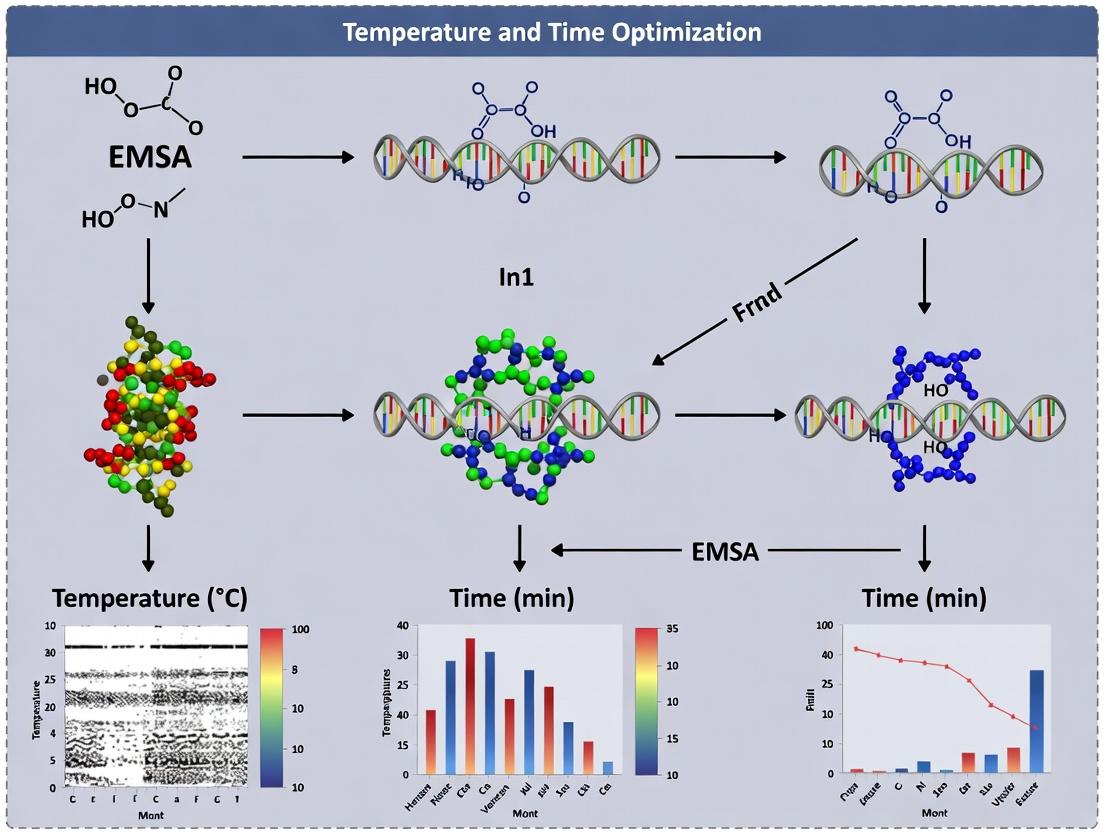
This comprehensive guide provides researchers and drug development professionals with a detailed framework for optimizing the Electrophoretic Mobility Shift Assay (EMSA).
Mastering EMSA: The Complete Guide to Temperature and Time Optimization for Reliable DNA/RNA-Protein Binding Assays
Abstract
This comprehensive guide provides researchers and drug development professionals with a detailed framework for optimizing the Electrophoretic Mobility Shift Assay (EMSA). Covering foundational principles, step-by-step methodology, advanced troubleshooting, and validation strategies, the article focuses on the critical parameters of incubation temperature and time. Readers will learn how to systematically refine these conditions to achieve robust, reproducible results for studying transcription factors, nucleic acid-protein interactions, and drug targeting in biomedical research.
Understanding EMSA Fundamentals: Why Temperature and Time Are Critical for Binding Kinetics
This technical support center is framed within a doctoral thesis researching Electrophoretic Mobility Shift Assay (EMSA) temperature and time optimization. Understanding how temperature governs the equilibrium dissociation constant (Kd) is fundamental for characterizing biomolecular interactions in drug discovery and basic research. This guide provides troubleshooting and FAQs for experiments investigating temperature-dependent binding.
Troubleshooting Guides & FAQs
Q1: My EMSA shows decreased complex formation at lower incubation temperatures than expected. What could be the cause? A: This suggests a possible enthalpically driven binding interaction where ΔH < 0. Lower temperatures may favor complex formation for such reactions. However, the observed decrease could stem from kinetic trapping. Ensure your incubation time is sufficiently long for the reaction to reach equilibrium at the lower temperature, as association rates (k_on) can slow significantly. For a 10°C drop, incubation time may need to be increased 2-3 fold.
Q2: When calculating ΔH° and ΔS° from a van't Hoff plot, my data is non-linear. How should I proceed? A: Non-linearity indicates that the heat capacity change (ΔCp) is not zero, which is common. It means ΔH° and ΔS° are themselves temperature-dependent. You must use an integrated form of the van't Hoff equation that includes ΔCp. Perform your binding assays across a broader temperature range (e.g., 4°C to 37°C) and fit the data to the modified equation: ln(Kd) = (ΔCp/R) * [ (1/T) - (1/T0) ] - (ΔH°0/R)*(1/T - 1/T0) + (ΔS°0/R), where T0 is a reference temperature.
Q3: My protein-DNA complex is unstable during electrophoresis at room temperature. How can I preserve it? A: This is a common issue where the off-rate (k_off) is high, leading to dissociation during the EMSA run. The primary solution is to run the gel at 4°C. Pre-run and run the polyacrylamide gel in a cold room or using a refrigerated electrophoresis unit. Also, consider using a lower-ionic-strength buffer in the gel and running buffer to potentially stabilize electrostatic interactions, but this must be optimized for your specific system.
Q4: How do I determine the correct incubation time to ensure equilibrium is reached for my Kd measurement at a new temperature? A: Perform a time-course experiment. Hold reactant concentrations constant and vary incubation time (e.g., 5, 10, 20, 30, 45, 60 min) at the target temperature. Measure complex formation. The time point after which the fraction bound plateaus is the minimum required incubation time. Always use this plateau time or longer for actual Kd determinations.
Q5: Can I use ITC data to validate my EMSA-derived thermodynamic parameters? A: Yes. Isothermal Titration Calorimetry (ITC) directly measures ΔH°, Kd (and thus ΔG°), and allows calculation of ΔS° in a single experiment. It is an excellent orthogonal method for validation. However, ensure solution conditions (buffer, ionic strength, pH) are identical between the EMSA and ITC experiments for a valid comparison.
Data Presentation
Table 1: Thermodynamic Parameters for a Model Protein-DNA Interaction
| Temperature (°C) | Kd (nM) | ΔG° (kJ/mol) | ΔH° (kJ/mol) | TΔS° (kJ/mol) |
|---|---|---|---|---|
| 4 | 15.2 | -41.5 | -62.0 | -20.5 |
| 15 | 25.1 | -41.1 | -61.5 | -20.4 |
| 25 | 44.7 | -40.6 | -61.0 | -20.4 |
| 37 | 98.1 | -39.8 | -60.3 | -20.5 |
Note: Data simulated for an exothermic, enthalpically driven reaction with negative ΔCp.
Table 2: Recommended EMSA Incubation Times by Temperature
| Assay Temperature (°C) | Minimum Incubation Time (minutes) | Notes |
|---|---|---|
| 4 | 60-90 | Slow diffusion & association. |
| 15 | 45 | |
| 22 (Room Temp) | 30 | Common standard. |
| 30 | 20 | |
| 37 | 15-20 | Faster kinetics. |
Experimental Protocols
Protocol 1: Determining Kd by EMSA at Multiple Temperatures
- Prepare Binding Reactions: In a series of tubes, hold your labeled DNA (or RNA) probe concentration constant (at a value ~0.5 x expected Kd) while titrating in your purified protein over a range that spans 0.1 to 10 x Kd. Use a binding buffer with appropriate salts, carrier protein (e.g., BSA), and non-specific competitor DNA (e.g., poly(dI-dC)).
- Temperature Equilibration: Pre-incubate all reaction components (buffer, probe, protein) separately in thermal blocks or water baths at the target temperature (e.g., 4°C, 15°C, 25°C, 37°C) for 10 minutes.
- Initiate Reaction & Incubate: Mix the pre-equilibrated components to start the reaction. Incubate at the target temperature for the predetermined equilibrium time (from a time-course experiment).
- Electrophoresis: Load reactions directly onto a pre-run native polyacrylamide gel (also equilibrated to the same temperature, ideally run at 4°C for complexes with high k_off). Run the gel at constant voltage in a cold room or refrigerated unit.
- Quantification: Image the gel (e.g., using phosphorimager or fluorescence). Quantify the fraction of probe bound (Intensitybound / [Intensitybound + Intensity_free]).
- Data Analysis: Fit the fraction bound vs. protein concentration data to a one-site specific binding model using software like Prism, Origin, or a custom script to extract Kd.
Protocol 2: Creating a van't Hoff Plot for Thermodynamic Analysis
- Obtain Kd Values: Perform Protocol 1 at a minimum of four different temperatures. More temperatures increase accuracy, especially if ΔCp is non-zero.
- Convert Data: Convert all Kd values from molar units.
- Calculate ln(Kd): Calculate the natural logarithm of each Kd value.
- Calculate 1/T: Convert each temperature from °C to Kelvin (K = °C + 273.15) and calculate the reciprocal (1/T).
- Plot and Fit: Plot ln(Kd) on the Y-axis versus 1/T (in K⁻¹) on the X-axis. Perform a linear regression if the data is linear (ΔCp ≈ 0). The slope = ΔH°/R and the Y-intercept = ΔS°/R, where R is the gas constant (8.314 J/mol·K). For curved data, use non-linear regression fitting to the modified equation including ΔCp.
Mandatory Visualization
Title: EMSA Workflow for Temperature-Dependent Kd Analysis
Title: Binding Equilibrium Defining Kd
The Scientist's Toolkit
Research Reagent Solutions for Temperature-Dependent EMSA
| Item | Function & Rationale |
|---|---|
| Thermocycler or Multi-Block Heater | Precisely incubates multiple binding reactions at different, stable temperatures simultaneously. Essential for consistent van't Hoff analysis. |
| Refrigerated/Cold Room Electrophoresis Unit | Runs native PAGE gels at 4°C to minimize complex dissociation (k_off) during electrophoresis, crucial for measuring weak affinities. |
| High-Specific-Activity ³²P- or Fluorescently-Labeled Probe | Provides sensitive detection for quantifying bound and free ligand across a wide range of protein concentrations and gel conditions. |
| Non-Specific Competitor DNA (poly(dI-dC), salmon sperm DNA) | Suppresses non-specific protein-probe interactions, ensuring the measured shift represents specific, high-affinity binding. |
| Densitometry/Phosphorimaging Software (ImageQuant, ImageLab) | Accurately quantifies band intensities from gels to calculate fraction bound for non-linear regression analysis of Kd. |
| Data Analysis Software with Non-Linear Regression (Prism, Origin) | Fits fraction bound vs. [protein] data to binding isotherms and performs van't Hoff analysis (linear and non-linear with ΔCp). |
| Highly Purified, Concentrated Protein | Protein must be >95% pure, active, and at high concentration (>1 mg/mL) to allow for precise serial dilution across the necessary concentration range. |
Troubleshooting Guides & FAQs for EMSA Experiments
Frequently Asked Questions
Q1: My EMSA shows no shifted band (complex) even with ample protein and probe. What could be wrong with my incubation time? A: This is a classic kinetic trap. If you are incubating your binding reaction on ice or at 4°C for a short time (e.g., 10-15 minutes), the reaction may not have reached equilibrium, especially for complexes with slow on-rates. Solution: Increase incubation time to 30-60 minutes at your assay temperature. For high-affinity, slow-kinetics complexes, incubation at room temperature (20-25°C) or even 37°C for 15-30 minutes may be necessary to reach equilibrium.
Q2: I see a shifted band, but it's faint and inconsistent between replicates. How does time affect this? A: Inconsistent band intensity often stems from not allowing the reaction to reach complete equilibrium. Small variations in tube handling or master mix division can lead to significant differences in complex formation if the reaction is stopped at a kinetic, non-equilibrium point. Solution: Ensure incubation times are sufficient and highly consistent. Use a timer and standardize your workflow. Extend time to ensure equilibrium is achieved and maintained.
Q3: I get non-specific smearing or multiple shifted bands. Can incubation time optimization help? A: Yes. Very long incubation times (e.g., >60 minutes) at sub-optimal temperatures can sometimes increase non-specific binding or lead to probe degradation, causing smearing. Conversely, multiple specific complexes (e.g., multimeric protein binding) may resolve better at equilibrium. Solution: Perform a time-course experiment (5, 15, 30, 60, 90 min) at your chosen temperature to find the optimal window where specific complex formation is maximal and non-specific binding is minimal.
Q4: For my thesis research on EMSA temperature optimization, how do I decouple the effects of time and temperature? A: Time and temperature are intrinsically linked in kinetics (Arrhenius equation). Your experimental design must test them orthogonally.
- Protocol: For each temperature being tested (e.g., 4°C, 25°C, 37°C), perform a detailed binding time-course (e.g., 1, 5, 15, 30, 60, 120 min). This will identify the time required to reach equilibrium at each temperature. The "optimal incubation condition" is the combination that yields maximal specific complex with minimal non-specific binding in the shortest practical time.
Q5: How long can I store an incubated binding reaction before loading on the gel? A: Once equilibrium is reached, complexes are often stable for a period. However, prolonged storage (especially at higher temperatures) can lead to degradation. Best Practice: Load the gel immediately after the designated incubation time. If you must pause, flash-freeze the reactions in a dry-ice/ethanol bath and store at -80°C. Avoid repeated freeze-thaw cycles.
Table 1: Time to Equilibrium for Model Protein-DNA Complexes at Various Temperatures
| Protein Complex Type | Approximate Kd (nM) | Time to ~95% Equilibrium at 4°C | Time to ~95% Equilibrium at 25°C | Time to ~95% Equilibrium at 37°C |
|---|---|---|---|---|
| High-Affinity Transcription Factor (e.g., p53) | 0.1 - 1 | 45 - 60 min | 15 - 20 min | 5 - 10 min |
| Moderate-Affinity Kinase | 10 - 50 | 30 - 40 min | 10 - 15 min | 3 - 8 min |
| Low-Affinity / High Specificity Complex | 100 - 500 | May not reach full equilibrium at 4°C | 20 - 30 min | 10 - 15 min |
Table 2: Troubleshooting Guide Based on Incubation Time Observations
| Observed Result | Possible Kinetic Cause | Recommended Action |
|---|---|---|
| No shifted band | Incubation time too short for complex formation. | Increase time; perform time-course. |
| Faint/variable band | Reaction stopped before stable equilibrium. | Standardize and extend incubation time. |
| Smearing | Possible probe degradation or non-specific binding over very long times. | Shorten incubation time; add non-specific competitor (e.g., poly dI:dC). |
| Multiple discrete bands | Different complexes may form at different rates. | Use time-course to see if bands appear sequentially; may indicate cooperative binding. |
Experimental Protocols
Protocol 1: Determining Time-to-Equilibrium for EMSA Objective: To empirically determine the incubation time required for a specific protein-nucleic acid complex to reach binding equilibrium at a defined temperature.
- Prepare a master binding reaction mix containing buffer, salts, non-specific competitor, protein extract/recombinant protein, and labeled probe.
- Aliquot the master mix into multiple tubes.
- Initiate reactions sequentially, adding probe last. Start a timer for the longest incubation point (e.g., 120 min).
- Place all tubes in a pre-equilibrated heating block or water bath at your target temperature (e.g., 25°C).
- At predetermined time points (e.g., 1, 5, 15, 30, 60, 120 min), remove one tube and immediately stop the reaction by adding a small volume of 10x DNA loading dye and placing it on ice.
- Load all samples on a pre-run non-denaturing polyacrylamide gel simultaneously and run the EMSA.
- Analyze via phosphorimager/autoradiography. Plot band intensity (complex) vs. time. The time after which intensity plateaus is the time-to-equilibrium.
Protocol 2: Orthogonal Temperature-Time Optimization Matrix Objective: To find the optimal combination of incubation temperature and time for maximal specific complex formation (thesis core protocol).
- Define your temperature test points (e.g., 4°C, 15°C, 25°C, 30°C, 37°C).
- For each temperature, prepare reagents and equipment pre-equilibrated to that temperature.
- At each temperature, execute Protocol 1 using a standard set of time points.
- Quantify the results for each temperature-time combination. Optimal conditions are identified by the highest signal-to-noise (specific complex vs. free probe/smear) ratio achieved in a practically useful time frame.
Visualizations
Title: Impact of Incubation Time on EMSA Results
Title: Thesis Experimental Design for T°-Time Optimization
The Scientist's Toolkit: Research Reagent Solutions
Table 3: Essential Materials for EMSA Time-Kinetics Studies
| Item | Function in Experiment |
|---|---|
| Recombinant Purified Protein or Nuclear Extract | The binding partner; purity is critical for interpretable kinetics. |
| Chemically Synthesized, End-Labeled DNA/RNA Probe | High-specific-activity probe (^32P, Cy5, IRDye) enables sensitive detection for quantitative time-course. |
| Non-Specific Competitor DNA (e.g., poly(dI-dC), salmon sperm DNA) | Suppresses non-specific binding, revealing specific complex kinetics. |
| Binding Buffer (with Mg²⁺/K⁺, DTT, Glycerol, Carrier Protein) | Maintains protein activity and ionic strength; glycerol stabilizes during longer incubations. |
| Temperature-Controlled Heating Blocks or Water Baths | For precise and stable incubation at multiple temperatures (4°C, 25°C, 37°C). |
| Pre-Cast Non-Denaturing Polyacrylamide Gels (TBE or TAE) | For rapid, consistent separation of complexes from free probe. |
| Phosphorimager or Fluorescence Gel Scanner | For accurate quantification of band intensities over the linear range. |
| GraphPad Prism or Equivalent Software | To fit time-course data and calculate kinetic parameters/equilibrium time. |
Troubleshooting Guides & FAQs
Q1: Why is my EMSA gel showing non-specific protein-probe complexes or smearing? A: This is often due to suboptimal buffer conditions or protein purity. Ensure your binding buffer has the correct ionic strength (e.g., 50-150 mM KCl) and includes non-specific competitors like poly(dI-dC) (0.05-0.1 µg/µL for nuclear extracts, 0.01 µg/µL for purified proteins). Impure protein preparations are a common culprit; increase purification steps or use a protease inhibitor cocktail.
Q2: My protein-probe complex does not enter the gel (remains in the well). What could be wrong? A: This indicates aggregation or the formation of very large complexes. Check protein integrity and concentration. Optimize by reducing protein amount, increasing salt concentration in the binding buffer (e.g., KCl up to 200 mM), or adding mild non-ionic detergents (e.g., 0.01% NP-40). Ensure your DNA probe is not concatemerized.
Q3: How do I reduce high background signal in my EMSA autoradiograph? A: High background often stems from probe degradation or inadequate gel electrophoresis conditions. Re-purify your labeled probe via gel extraction or column purification. Run the gel at a lower voltage (e.g., 100V instead of 150V) and pre-run for 30-60 minutes to remove excess persulfate. Ensure the gel is adequately cooled during the run.
Q4: What are the critical factors for achieving reproducible supershift results? A: Key factors are antibody quality and incubation timing. Use antibodies validated for supershift EMSA. Add the antibody after the primary protein-probe complex has formed (incubate protein+probe for 20 min, then antibody for 30-60 min on ice). Avoid antibodies with high salt or glycerol content, which can disrupt binding.
Q5: How does temperature impact complex stability in EMSA, and what is optimal? A: Temperature is critical for complex kinetics and specificity. For most transcription factors, binding at 25-30°C for 20-30 minutes favors specific interactions. Binding on ice (4°C) favors stability but may allow non-specific complexes to persist. Our thesis research indicates a pre-incubation of protein at room temp for 10 min before adding probe improves consistency.
Table 1: Impact of Buffer Components on EMSA Complex Formation
| Component | Typical Concentration Range | Effect on Specific Complex | Effect on Non-specific Binding | Recommended Starting Point |
|---|---|---|---|---|
| KCl | 50-200 mM | Stabilizes ionic interactions; optimal at 100-150 mM | High (>200 mM) disrupts all binding | 100 mM |
| MgCl₂ | 0-10 mM | Often essential for DNA-binding proteins; 5 mM typical | Can promote non-specific binding if too high | 5 mM |
| DTT | 0.5-5 mM | Maintains protein reduction; critical for cysteines | Can reduce disulfide-linked complexes if excessive | 1 mM |
| Glycerol | 0-10% (v/v) | Stabilizes protein; aids loading | High viscosity hampers migration | 5% |
| NP-40 | 0-0.1% (v/v) | Reduces aggregation/well trapping | Can disrupt weak complexes | 0.01% |
| poly(dI-dC) | 0.01-0.2 µg/µL | Absorbs non-specific protein | Excess can compete for specific protein | 0.05 µg/µL (crude), 0.01 µg/µL (pure) |
Table 2: EMSA Time & Temperature Optimization Findings
| Condition | Incubation Time | Temperature | Result on Specific Complex Yield | Result on Complex Stability (Gel Shift) | Recommended Use Case |
|---|---|---|---|---|---|
| Standard | 20 min | Room Temp (25°C) | High | Stable, clear band | Most purified proteins |
| Cold Binding | 30 min | 4°C (on ice) | Moderate to High | Very stable, but may include non-specific | For notoriously unstable proteins |
| Two-Step | 10 min (protein) + 20 min (probe) | 30°C | Highest | Well-defined, high specificity | Problematic proteins requiring folding |
| Fast Kinetic | 5-10 min | 37°C | Variable (kinetically driven) | Less stable; requires fast loading | Studying transient interactions |
Experimental Protocols
Protocol 1: Standard EMSA Binding Reaction for Optimization
- Prepare 2X Binding Buffer: 24 mM HEPES (pH 7.9), 120 mM KCl, 10 mM MgCl₂, 2 mM DTT, 0.2 mM EDTA, 10% glycerol, 0.1 µg/µL poly(dI-dC). Filter sterilize and store at -20°C.
- Set Up Reaction: In a low-protein-binding microtube, combine:
- Nuclease-free water to 10 µL final volume.
- 5 µL of 2X Binding Buffer.
- 1-4 µg of purified protein or 5-10 µg of nuclear extract.
- (Optional) Unlabeled competitor DNA (50-200-fold molar excess).
- Pre-incubate: Incubate the mixture (without probe) for 10 minutes at 25°C.
- Add Probe: Add 0.5-1.0 ng (20,000-50,000 cpm) of labeled DNA probe. Mix gently.
- Binding Incubation: Incubate for 20 minutes at 25°C.
- Load and Run: Add 1 µL of 10X gel loading dye (non-denaturing). Load immediately onto a pre-run 5-6% polyacrylamide gel (0.5X TBE, 4°C). Run at 100V for 60-90 min.
Protocol 2: Supershift EMSA Methodology
- Follow Protocol 1, steps 1-5, to form the primary protein-probe complex.
- Add Antibody: After the 20-min binding incubation, add 1-2 µg of specific antibody or control IgG.
- Secondary Incubation: Incubate the complete mixture for an additional 45-60 minutes on ice (4°C).
- Load and Run: Proceed with gel loading and electrophoresis as in Protocol 1, step 6. Note: The supershifted complex will migrate slower (higher) than the original complex.
Visualizations
The Scientist's Toolkit: Research Reagent Solutions
| Item | Function & Importance in EMSA |
|---|---|
| Poly(dI-dC) | A synthetic, non-specific DNA polymer used as a competitor to bind and "soak up" non-sequence-specific DNA-binding proteins, reducing background and smearing. |
| HEPES Buffer | A zwitterionic buffer used to maintain stable pH (typically 7.9) during the binding reaction, with minimal interference with protein-DNA interactions. |
| DTT (Dithiothreitol) | A reducing agent that maintains cysteine residues on the DNA-binding protein in a reduced, functional state, preventing oxidation-induced loss of activity. |
| Non-ionic Detergent (e.g., NP-40) | Added at low concentrations (0.01%) to minimize protein aggregation and adhesion to tubes, preventing loss of complex and trapping in the gel well. |
| Bovine Serum Albumin (BSA) | Often included (0.1-0.5 mg/mL) as a carrier protein to stabilize dilute protein preparations and prevent non-specific binding to tube walls. |
| 32P-γATP or Chemiluminescent Labels | Radioactive or non-radioactive tags for sensitive detection of the DNA probe, enabling visualization of protein-bound complexes. |
| Non-denaturing Polyacrylamide Gel | The matrix for electrophoretic separation, resolving protein-DNA complexes from free probe based on size and charge, without disrupting non-covalent bonds. |
| Specific & Control Antibodies | For supershift assays; specific antibodies confirm protein identity in the complex, while control IgGs validate the specificity of the supershift. |
Step-by-Step EMSA Protocol: Systematically Testing Temperature and Time Parameters
Troubleshooting Guides & FAQs
Q1: Why do I observe smearing or multiple shifted bands in my EMSA gel, and how can I resolve it? A: Smearing or multiple bands often indicate non-specific binding or protein degradation. Ensure your nuclear extract is fresh or properly aliquoted and stored at -80°C. Increase the concentration of non-specific competitor (e.g., poly(dI-dC)) in the binding reaction. Titrate your protein extract amount. Check for protease inhibitors in your extraction buffer.
Q2: My EMSA shows no shifted band. What are the most common causes? A: This could be due to several factors: 1) Probe Issues: Verify probe labeling efficiency via spectrophotometry or gel shift assay. Re-prepare the probe if specific activity is low. 2) Protein Activity: Use a positive control DNA probe with a known, high-affinity binding site to confirm protein activity. 3) Binding Conditions: Optimize buffer components (Mg²⁺, K⁺, DTT, glycerol). 4) Temperature/Time: Binding may be too transient; try longer incubation times (e.g., 30-45 min) at optimal temperature.
Q3: How does incubation temperature critically affect complex stability in EMSA? A: Temperature directly impacts reaction kinetics and complex stability. Lower temperatures (4-15°C) often favor stable complex formation for many transcription factors by slowing dissociation. However, some complexes require room temperature (20-25°C) for proper folding and binding. Excessive heat (>30°C) can denature proteins or promote dissociation. Optimization is empirical.
Q4: What is the recommended incubation time range, and what happens if I incubate too long? A: Typical incubation is 20-30 minutes. A range of 15-45 minutes is common for optimization. Prolonged incubation (>60 minutes) can lead to protein degradation, even with inhibitors, or non-specific binding. For very stable complexes, longer times may not harm, but for labile complexes, it can cause loss of signal.
Q5: How do I interpret high background or free probe trapping in the gel well? A: High background is frequently caused by: 1) Insufficient Electrophoresis: Run the gel longer at the optimal voltage (usually 80-100V) in 0.5x TBE until the free probe migrates well into the gel. 2) Polyacrylamide Issues: Use freshly prepared gel or ensure it has polymerized completely. 3) Sample Buffer: Ensure the loading buffer contains sufficient glycerol (e.g., 5-10%) for proper gel entry.
Q6: For drug discovery assays, how do I adapt EMSA conditions for screening small molecule inhibitors of DNA-protein binding? A: Pre-incubate your target protein with the small molecule drug candidate for 15-30 minutes at the reaction temperature before adding the labeled probe. This allows drug-target interaction. Include DMSO controls matched to the drug solvent concentration. Use a quantifiable EMSA protocol (e.g., phosphorimaging) to calculate IC₅₀ values from dose-response curves.
Key Experimental Protocols
Protocol 1: Standard EMSA Binding Reaction Optimization
- Prepare a master mix containing binding buffer, DTT, glycerol, poly(dI-dC), and sterile water.
- Aliquot master mix into tubes.
- Vary temperature (4°C, 15°C, 25°C, 30°C) and time (10, 20, 30, 45 min) across tubes.
- Add a constant amount of protein extract to each tube, incubate at assigned temperature/time.
- Add a constant amount of labeled DNA probe to each tube, incubate for the remaining time (if using pre-incubation) or simultaneously.
- Load onto pre-run non-denaturing polyacrylamide gel.
- Electrophorese, dry gel, and visualize via autoradiography or phosphorimaging.
Protocol 2: Quantifying Complex Stability (K_d(app) Estimation)
- Perform binding reactions as in Protocol 1 at the optimal temperature and time.
- Keep labeled probe concentration constant and very low (<0.1 nM).
- Titrate protein concentration across a wide range (e.g., 0.1 nM to 200 nM).
- Quantify the fraction of probe bound vs. free using densitometry.
- Plot fraction bound vs. log[protein] to generate a binding curve.
- Fit data to a hyperbolic equation to derive the apparent K_d.
Data Presentation
Table 1: Impact of Temperature & Time on Model Transcription Factor (NF-κB) DNA Binding Complex Yield
| Incubation Temp (°C) | Incubation Time (min) | % Probe Shifted (Mean ± SD) | Complex Stability Notes |
|---|---|---|---|
| 4 | 10 | 15 ± 3 | Minimal complex formation |
| 4 | 30 | 65 ± 5 | Optimal for stability |
| 4 | 45 | 60 ± 6 | No gain from longer time |
| 25 | 10 | 45 ± 4 | Faster kinetics |
| 25 | 30 | 55 ± 3 | Moderate stability |
| 25 | 45 | 50 ± 5 | Slight degradation evident |
| 37 | 30 | 20 ± 6 | Significant complex loss |
Table 2: Troubleshooting Matrix for Common EMSA Issues
| Problem | Potential Cause | Recommended Solution |
|---|---|---|
| No shift | Inactive protein, bad probe | Use positive control probe, check labeling |
| Smearing | Protein degradation, low salt | Add protease inhibitors, optimize salt conc. |
| High well background | Gel entry issue, fast run | Increase glycerol in sample, reduce voltage |
| Variable replicate results | Binding equilibrium not reached | Strictly control time/temp, pre-equilibrate tubes |
Diagrams
Title: EMSA Temperature & Time Optimization Workflow
Title: Signaling to DNA Binding Detectable by EMSA
The Scientist's Toolkit: Key Research Reagent Solutions
| Item | Function in EMSA Optimization |
|---|---|
| High-Activity T4 Polynucleotide Kinase | Radiolabels DNA oligonucleotide probes with [γ-³²P]ATP for high-sensitivity detection. |
| Non-specific Competitor DNA (poly(dI-dC)) | Blocks non-specific protein interactions with the probe, reducing background smearing. |
| Protease & Phosphatase Inhibitor Cocktails | Preserves transcription factor integrity and phosphorylation state in nuclear extracts. |
| Chemiluminescent Nucleic Acid Detection Kit | Non-radioactive alternative for probe labeling and detection using biotin/streptavidin-HRP. |
| Pre-cast Non-denaturing Polyacrylamide Gels | Provides consistent gel matrix for reproducible electrophoresis of protein-DNA complexes. |
| Recombinant Purified Transcription Factor | Serves as a positive control to validate binding conditions independent of extract quality. |
| Gel Shift Binding Buffer (10X) | Optimized buffer system with salts, glycerol, and reducing agents to promote specific binding. |
| Electrophoresis Buffer (0.5X TBE) | Low-ionic-strength buffer essential for maintaining complex stability during gel run. |
Technical Support Center
Troubleshooting Guide: Common EMSA Temperature Experiment Issues
Issue: High Background or Non-Specific Shifts at 37°C
- Cause: Increased thermal energy can lead to non-specific protein-DNA interactions or protein degradation.
- Solution: Increase the stringency of the binding reaction by adding 50-100 ng/µL of non-specific competitor DNA (e.g., poly(dI-dC)). Ensure the protein extract is fresh and includes protease inhibitors. Consider a shorter incubation time at the higher temperature.
Issue: Loss of Specific Complex at 4°C (On-Ice)
- Cause: Some transcription factors or complexes have binding kinetics or conformational requirements not favored at very low temperatures.
- Solution: Validate on-ice incubation against a validated positive control probe. If the complex is known to be labile, perform a time-course experiment (e.g., 0, 10, 20, 30 min) to find the minimum effective on-ice incubation time that prevents decay.
Issue: Gel Running Artifacts When Testing Wide Temperature Ranges
- Cause: Significant temperature differential between the gel running apparatus and the internal gel temperature can cause "smiling" or "frowning" bands.
- Solution: Pre-run the native polyacrylamide gel at the desired voltage for 30-60 minutes in the cold room (4°C) or a temperature-controlled incubator (37°C) to equilibrate. Use a buffer recirculation pump if available.
Issue: Irreproducible Shift Intensity Between Temperature Repeats
- Cause: Inconsistent temperature control during the binding reaction incubation.
- Solution: Use calibrated thermal cyclers or water baths for incubation. For on-ice steps, ensure the ice-water slurry is fresh and the tubes are fully submerged. Allow all reaction components to equilibrate to the target temperature before mixing.
Frequently Asked Questions (FAQs)
Q1: Why is testing such a broad temperature range (4°C to 37°C+) critical in EMSA optimization within your thesis research? A: The stability and kinetics of protein-nucleic acid complexes are profoundly temperature-dependent. Systematic testing from 4°C (which slows dissociation and protease activity) to 37°C (physiological relevance) and beyond (for thermal stability profiling) allows us to map the thermodynamic landscape of the interaction. This data is essential for identifying the optimal trade-off between complex stability and biological relevance, a core thesis aim.
Q2: My protein of interest is heat-sensitive. How can I test 37°C and higher conditions without denaturing it? A: Implement a sequential incubation protocol. First, perform the binding reaction with the labeled probe at 4°C or 25°C for 20 minutes to allow complex formation. Then, aliquot this pre-formed complex into separate tubes and subject them to short (e.g., 2-5 minute) pulses at your target higher temperatures (37°C, 42°C, etc.) immediately before loading on the pre-chilled gel.
Q3: What is the recommended incubation time at each temperature? A: There is no universal time; it must be empirically determined. However, based on recent literature, a standard starting point for a time-course experiment is suggested below.
Q4: How do I maintain a consistent gel temperature during electrophoresis for different experimental conditions? A: For 4°C runs, standard cold room operation is sufficient. For experiments designed to mimic physiological or elevated temperatures, the most reliable method is to use a temperature-controlled electrophoresis system. If not available, run the gel inside a temperature-controlled incubator or use a circulating water bath jacket around the gel apparatus.
Table 1: Observed EMSA Complex Stability Across Temperature Gradient Data synthesized from current literature on transcription factor-DNA interactions.
| Temperature (°C) | Incubation Time (min) | Relative Shift Intensity (%)* | Notes / Common Observation |
|---|---|---|---|
| 0-4 (On-Ice) | 20-30 | 100 (Reference) | Maximal complex recovery; standard "cold" condition. |
| 25 (Room Temp) | 15-20 | 85 ± 12 | Often optimal for balancing specificity and yield. |
| 37 (Physiological) | 10-15 | 60 ± 18 | Potential for reduced stability; high biological relevance. |
| 42 (Heat Shock) | 5-10 | 35 ± 15 | Significant loss for many complexes; tests thermal resilience. |
| 45+ | ≤5 | <20 | Often leads to complete complex dissociation or denaturation. |
*Intensity relative to the major complex band observed at 4°C for the same sample.
Table 2: Recommended Troubleshooting Adjustments by Temperature
| Symptom | Primary Suspected Cause | Corrective Action for 4°C Test | Corrective Action for 37°C+ Test |
|---|---|---|---|
| No shift observed | No active protein | Verify protein activity via Western blot. Use fresh extract. | Test protein stability via pre-incubation assay. |
| Smear in lane | Protein/Degradation | Add fresh protease inhibitors. | Reduce incubation time. Perform binding on ice first. |
| Multiple non-specific bands | Low stringency | Optimize salt concentration (KCl/NaCl). | Increase non-specific competitor (poly(dI-dC)) amount. |
| Shift disappears on gel | Complex dissociation | Run gel at 4°C. Decrease voltage. | Pre-run and run gel in cooled, recirculated buffer. |
Experimental Protocols
Protocol 1: EMSA Temperature Gradient & Time-Course Assay Objective: To determine the optimal binding temperature and time for a specific protein-DNA complex.
- Prepare Binding Reactions: Set up identical master mix reactions containing buffer, labeled probe, non-specific competitor, and protein extract. Keep on ice.
- Aliquot and Incubate: Aliquot the master mix into 5 separate tubes.
- Tube 1: Keep on ice (4°C) for 30 min.
- Tube 2: Incubate at 25°C for 20 min.
- Tube 3: Incubate at 37°C for 15 min.
- Tube 4: Incubate at 42°C for 10 min.
- Tube 5: Incubate at 37°C for 30 min (extended time control).
- Load and Run: Immediately add loading dye to each tube and load onto a pre-run (30 min, 100V) 6% native polyacrylamide gel. Run at 100V in 0.5x TBE buffer at 4°C.
- Analyze: Visualize using phosphorimaging or autoradiography. Quantify band intensity.
Protocol 2: Pre-formed Complex Thermal Challenge Assay Objective: To test the thermal stability of a pre-assembled protein-DNA complex.
- Form Complex: Set up a large-scale binding reaction optimized for maximum complex formation (typically at 4°C or 25°C for 20 min).
- Challenge: Aliquot the reaction into 5 tubes.
- Tube 1 (Control): Keep on ice.
- Tubes 2-5: Transfer to heat blocks set at 25°C, 37°C, 42°C, and 50°C.
- Time Points: Remove 10µL aliquots from each heated tube at 0, 2, 5, and 10 minutes and immediately place them on ice.
- Analyze: Load all samples onto a single pre-chilled gel. This allows visualization of complex dissociation kinetics at each temperature.
Visualizations
Title: EMSA Temperature Condition Screening Workflow
Title: Impact of Temperature on TF-DNA Complex Stability
The Scientist's Toolkit: Key Research Reagent Solutions
| Item | Function in Temperature-Range EMSA |
|---|---|
| Non-specific Competitor DNA (poly(dI-dC)) | Critical for blocking non-specific protein-DNA interactions, especially at higher temperatures where such interactions increase. Amount must be titrated for each new protein/temperature. |
| Protease Inhibitor Cocktail (EDTA-free) | Essential for maintaining protein integrity during longer incubations, particularly at physiological and elevated temperatures. EDTA-free is often required for metal-dependent DNA-binding proteins. |
| Dithiothreitol (DTT) or β-Mercaptoethanol | Reducing agents that maintain cysteine residues in the protein in a reduced state, preventing oxidation and aggregation that can be accelerated at higher temperatures. |
| High-Purity Bovine Serum Albumin (BSA) or Casein | Used as a stabilizing agent in binding buffers to prevent protein adhesion to tube walls and provide a more consistent protein environment across temperature shifts. |
| Temperature-Calibrated Thermal Cycler | Provides precise, programmable, and high-throughput temperature control for binding reaction incubations, superior to water baths for small volumes. |
| Gel Recirculation Pump | Maintains consistent buffer pH and ion concentration during lengthy gel runs, which is crucial when comparing subtle differences in complex mobility across temperatures. |
| Phosphorimager with Quantification Software | Enables accurate, quantitative measurement of shift intensity and complex dissociation rates from EMSA gels, necessary for generating thermodynamic data (e.g., KD vs. Temp). |
Technical Support & Troubleshooting Center
Frequently Asked Questions (FAQs)
Q1: Why do I observe non-specific binding or smearing in my EMSA gel, particularly in longer incubation periods (e.g., 60+ min)? A: Prolonged incubation can lead to protein degradation or increased protease/phosphatase activity, especially if sample preparation is not performed on ice or with adequate inhibitors. Non-specific binding can also increase over time. Solution: Always include a fresh, complete protease/phosphatase inhibitor cocktail in your binding reactions. Keep all samples on ice until the moment of incubation. Perform a time-course experiment (e.g., 15, 30, 60, 90 min) to identify the optimal, minimal incubation time for your specific protein-nucleic acid interaction.
Q2: My signal intensity peaks and then decreases with longer incubation times. What could cause this? A: This is a classic sign of complex instability. Potential causes include: (1) Temperature fluctuations during incubation (if not using a calibrated heat block or water bath). (2) Depletion of a critical reaction component (e.g., Mg2+, DTT). (3) Denaturation of the protein over time at the chosen incubation temperature. Solution: Ensure precise and consistent temperature control. Consider adding stabilizers like bovine serum albumin (BSA) or glycerol to the binding buffer. Re-optimize the binding buffer composition for longer-term stability.
Q3: How do I determine the optimal incubation time for a novel protein-nucleic acid interaction? A: You must perform a systematic time-course experiment. Use a constant amount of protein and probe while varying only the incubation time. Include a no-protein control for each time point to rule out probe degradation. Analyze the results to find the time point that yields maximum specific complex formation with minimal non-specific background or degradation.
Q4: For short incubations (15 min), I sometimes get inconsistent results between replicates. Why? A: Short incubations are highly sensitive to pipetting accuracy and timing errors. A difference of even one minute represents a large percentage of the total incubation period. Solution: Use a master mix for all common reaction components (buffer, salts, probe, etc.) to minimize pipetting variance. Start the incubation timer immediately after adding the last component (typically the protein), and use a consistent method to stop the reaction (e.g., immediate loading on a pre-run gel).
Q5: Does the incubation temperature choice (4°C vs. Room Temp vs. 37°C) interact with the incubation time? A: Absolutely. Higher temperatures generally accelerate binding kinetics but may also accelerate degradation. A 20-minute incubation at room temperature may achieve similar complex formation as a 60-minute incubation on ice. The optimal time-temperature combination is empirical. Thesis Context: A core thesis finding is that for the studied transcription factor, 25°C for 30 minutes provided superior complex stability and specificity compared to 4°C for 60 minutes or 37°C for 15 minutes, highlighting the critical need for combinatorial optimization.
Troubleshooting Guide Table
| Symptom | Likely Cause | Recommended Action |
|---|---|---|
| Smearing across lanes | Probe or protein degradation; Incubation too long. | Shorten incubation time; add fresh inhibitors; check reagent integrity. |
| High background in no-protein control | Probe contamination or inappropriate incubation temperature. | Re-purify probe; ensure temperature is consistent and appropriate. |
| Loss of signal >30 min | Complex dissociation or protein denaturation. | Optimize buffer (salt, pH, stabilizers); test lower temperature. |
| Inconsistent band shift between replicates | Pipetting inaccuracy, especially in short incubations. | Use master mixes; standardize pipetting and timing protocol. |
| Multiple shifted bands | Non-specific binding or protein isoforms. | Increase non-specific competitor (poly dI:dC) concentration; optimize salt. |
Table 1: Impact of Incubation Time on EMSA Complex Yield and Integrity Data derived from a model system using recombinant p50 protein and a consensus κB probe.
| Incubation Time (min) | Temperature | Specific Complex (% of total probe) | Non-specific Background (A.U.) | Complex Stability (Note) |
|---|---|---|---|---|
| 15 | 25°C | 65% ± 5 | 12 ± 3 | Sub-optimal binding. |
| 20 | 25°C | 82% ± 3 | 15 ± 2 | Optimal point. |
| 30 | 25°C | 85% ± 2 | 18 ± 4 | Near-optimal. |
| 45 | 25°C | 80% ± 4 | 25 ± 5 | Background increasing. |
| 60 | 25°C | 72% ± 6 | 35 ± 6 | Significant background. |
| 15 | 4°C | 45% ± 7 | 8 ± 2 | Slow kinetics at low temp. |
| 60 | 4°C | 75% ± 4 | 20 ± 3 | Requires longer time. |
Table 2: Reagent Stability Over Time in Binding Buffer at 25°C Critical for planning long-duration or paused experiments.
| Reagent Component | Half-life (at 25°C) | Recommendation |
|---|---|---|
| DTT (1mM) | ~40 minutes | Add fresh for incubations >30 min. |
| Non-radioactive probe (cold competitor) | >24 hours | Stable for single-day use. |
| BSA (100 µg/mL) | >24 hours | Stable; good stabilizing agent. |
| Poly dI:dC (competitor) | >24 hours | Stable for single-day use. |
Detailed Experimental Protocol: EMSA Time-Course Experiment
Protocol Title: Systematic EMSA Incubation Time-Course (15 to 90 Minutes).
Objective: To empirically determine the optimal binding incubation time for a specific protein-nucleic acid interaction.
Materials: See "Research Reagent Solutions" below.
Method:
- Master Mix Preparation: On ice, prepare a master mix for N+1 reactions (where N = number of time points). For a single 20 µL reaction, combine: 4 µL 5X Binding Buffer, 2 µL 10% Glycerol, 1 µL 1M KCl, 1 µL 1 µg/µL poly dI:dC, 1 µL 10 mM DTT (fresh), 1 µL 32P-labeled DNA probe (~20,000 cpm), and X µL nuclease-free water. Keep on ice.
- Aliquot: Distribute 19 µL of the master mix into each pre-labeled reaction tube on ice.
- Initiate Reactions: To the first tube, add 1 µL of purified protein extract. Immediately cap the tube, mix gently by flicking, and place it in a pre-equilibrated heating block or water bath at the target temperature (e.g., 25°C). This is the T=0 point. Note the exact time.
- Staggered Additions: At 30-second intervals, add 1 µL of protein to the next tube, mix, and place it in the heater. This staggered start ensures precise timing for the time-course.
- Terminate Reactions: At the precise incubation time for each tube (e.g., 15, 20, 30, 45, 60, 90 min), remove the tube and immediately add 5 µL of non-denaturing gel loading dye. Place back on ice.
- Electrophoresis: Load all samples onto a pre-run (1 hour, 100V) 6% non-denaturing polyacrylamide gel in 0.5X TBE. Run at 100V for 60-90 minutes at 4°C.
- Analysis: Dry the gel and expose to a phosphorimager screen. Quantify the signal intensity of the shifted band and free probe for each time point.
The Scientist's Toolkit: Research Reagent Solutions
| Reagent/Material | Function in EMSA Time-Course |
|---|---|
| Non-denaturing Polyacrylamide Gel (4-6%) | Matrix for separating protein-nucleic acid complexes from free probe based on size/shape, without disrupting non-covalent bonds. |
| 32P-γATP (or IRDye-labeled Oligos) | Radioactive or fluorescent label for sensitive, quantitative detection of the nucleic acid probe. |
| Poly(dI-dC)•(dI-dC) | A non-specific synthetic competitor DNA that binds and sequesters non-sequence-specific DNA-binding proteins, reducing background. |
| DTT (Dithiothreitol) | Reducing agent critical for maintaining cysteine-dependent DNA-binding domains in their active, reduced state; prone to oxidation over time. |
| Protease/Phosphatase Inhibitor Cocktail | Essential for longer incubations to prevent degradation or unwanted dephosphorylation of the protein of interest. |
| BSA (Bovine Serum Albumin) | Often added as a stabilizing agent to prevent protein adhesion to tube walls and to provide a non-specific protein background. |
| High-Specific-Activity DNA Probe | Ensures a strong signal, allowing the use of minimal probe concentration to favor specific, high-affinity binding. |
Visualizations
Title: EMSA Time-Course Experimental Workflow
Title: Key Variables for EMSA Time & Temperature Optimization
Frequently Asked Questions (FAQs)
Q1: What is the primary advantage of using a combined temperature-time optimization matrix in EMSA experiments? A: The primary advantage is the systematic and simultaneous evaluation of two critical binding variables. This approach identifies optimal and suboptimal binding conditions more efficiently than one-factor-at-a-time (OFAT) experiments, revealing potential time-temperature trade-offs that stabilize transient protein-nucleic acid complexes.
Q2: During the EMSA optimization, my probe degrades or disappears at higher incubation temperatures. How can I troubleshoot this? A: Probe degradation is often due to nuclease contamination or thermal denaturation. First, ensure all reagents and tubes are nuclease-free. Include a "probe-only" control lane at each temperature. If degradation persists, pre-incubate the probe at the test temperature in the reaction buffer (without protein) before adding the protein-sample. This determines if the issue is thermal or nuclease-related. Shortening incubation times at high temperatures (e.g., 37°C for 15 min vs. 30 min) can also mitigate damage.
Q3: My optimization matrix shows inconsistent binding affinity replicates. What are the most common sources of this variability? A: The top sources are: 1) Temperature equilibration: Ensure your thermal block or water bath is calibrated and samples are fully equilibrated. Use a control tube with a thermometer. 2) Timing precision: Use a dedicated timer and a consistent workflow for adding protein to all reactions. 3) Master mix preparation: Always prepare a master mix of common components (buffer, probe, carrier DNA) to minimize pipetting error across the matrix.
Q4: How do I interpret a result where strong binding occurs only at a specific time-temperature combination (e.g., 25°C for 30 min) but not at longer/shorter times or different temperatures? A: This suggests a kinetically controlled binding event that may be sensitive to protein stability or conformational change. Binding may require a specific time to reach equilibrium at that sub-optimal temperature. It is recommended to verify protein integrity after incubation at the different matrix conditions via a quick method like SDS-PAGE. This data point is highly valuable for the thesis, indicating a narrow window for complex formation.
Q5: Can I use the data from this optimization matrix for kinetic or thermodynamic calculations in my thesis? A: A single time-point matrix is qualitative for optimization. For kinetic data (e.g., association rate), you would need to run multiple matrices fixed at different time intervals. For thermodynamics (e.g., ΔG, ΔH), you would need to perform detailed electrophoretic mobility shift assays across a range of temperatures at equilibrium, measuring the fraction bound to calculate the binding constant (Kd) at each temperature (Van't Hoff analysis). The optimization matrix provides the foundational conditions for these more advanced studies.
Troubleshooting Guides
Issue: High Background or Smearing in Gels Across Multiple Matrix Conditions
Symptoms: Non-specific smearing in lanes, making specific complex bands difficult to resolve. Steps:
- Check Nonspecific Competitor DNA: Increase the concentration of nonspecific competitor (e.g., poly(dI-dC), salmon sperm DNA) in 2-fold increments. A typical range is 0.05-0.5 µg/µL in the binding reaction.
- Optimize Wash Buffer in Gel Electrophoresis: Prepare a fresh 0.5x TBE running buffer. If smearing persists, pre-run the gel for 30-60 minutes before loading samples to remove ionic impurities.
- Verify Probe Quality: Re-purify the labeled oligonucleotide probe via PAGE or column purification. Ensure it is not degraded.
- Adjust Gel Porosity: Use a higher percentage polyacrylamide gel (e.g., 8% instead of 6%) for better resolution of smaller probe fragments.
Issue: Loss of Complex at Higher Temperatures in the Matrix
Symptoms: Clear complex formation at 4°C and 20°C, but complete loss at 30°C and 37°C. Steps:
- Confirm Protein Stability: Run a parallel stability check. Incubate the protein alone at each matrix temperature, then place on ice and analyze by native PAGE or a simple activity assay. Loss of complex correlates with protein aggregation or denaturation.
- Add Stabilizing Agents: Include low concentrations of stabilizing agents in the binding reaction. Note: These must be compatible with electrophoresis.
- Glycerol (2-5% v/v)
- DTT (0.5-1 mM) if oxidation is suspected.
- Non-ionic detergents like NP-40 (0.01%).
- Reduce Incubation Time: If the complex forms at a high temperature but then dissociates, shorten the incubation time (e.g., 5-10 minutes) and load the gel immediately.
Issue: Poor Resolution Between Free Probe and Protein-Complex Bands
Symptoms: Bands are too close together or overlap. Steps:
- Optimize Gel Voltage and Run Time: Run the gel at a lower constant voltage (e.g., 80-100 V instead of 150 V) for a longer duration. This improves band separation.
- Modify Gel and Buffer Ionic Strength: A lower ionic strength buffer (e.g., 0.25x TBE instead of 0.5x TBE) can increase the mobility shift difference. Test in a small pilot gel.
- Use a Longer Gel: A longer gel (e.g., 16 cm vs. 8 cm) provides more space for band separation.
- Check Probe Length: Ensure your probe is within the optimal size for EMSA (typically 20-50 bp). Shorter probes may show less mobility shift.
Key Experiment Protocols
Protocol 1: Generating the Temperature-Time Optimization Matrix
Objective: To systematically test the combined effect of incubation temperature and time on protein-nucleic acid complex formation in EMSA. Materials: Purified protein, end-labeled DNA/RNA probe, binding buffer, nonspecific competitor DNA, polyacrylamide gel, electrophoresis apparatus, thermal cycler or precise water baths/heat blocks. Methodology:
- Design a matrix with 4 temperatures (e.g., 4°C, 20°C, 30°C, 37°C) and 4 times (e.g., 10, 20, 30, 45 minutes). This creates 16 unique conditions.
- Prepare a master mix containing binding buffer, labeled probe, nonspecific competitor, and water for all 16 reactions plus controls. Aliquot equal volumes into 16 tubes.
- Pre-incubate the tubes at their respective matrix temperatures for 2 minutes.
- Using a precise timer, initiate each reaction by adding a fixed volume of purified protein to each tube at staggered intervals corresponding to the desired incubation time. For example, start the 45-minute reactions first.
- At the exact end of each incubation time, immediately transfer the tube to an ice bath to stop the reaction.
- Load all samples (adding loading dye) onto a pre-run non-denaturing polyacrylamide gel immediately or after a consistent short hold on ice.
- Run, image, and analyze the gel. The band intensity of the shifted complex is the primary readout.
Protocol 2: Validating Optimal Conditions from the Matrix with a Titration Experiment
Objective: To determine the binding affinity (apparent Kd) under the optimal temperature-time condition identified from the screening matrix. Materials: Optimal conditions from Protocol 1, a constant amount of labeled probe, a dilution series of purified protein. Methodology:
- Using the optimal temperature and time from the matrix, set up a series of binding reactions where the protein concentration varies (e.g., 0, 0.1, 0.5, 1, 2, 5, 10, 20 nM) while the probe concentration is held constant (e.g., 0.1 nM).
- Perform binding reactions in triplicate under the optimal condition.
- Run EMSA as usual. Quantify the fraction of probe bound (complex intensity / [complex + free probe] intensity) for each protein concentration.
- Fit the data (fraction bound vs. protein concentration) to a hyperbolic binding curve or using a specific binding model with nonlinear regression software to calculate the apparent dissociation constant (Kd).
Data Presentation
Table 1: Sample EMSA Temperature-Time Optimization Matrix Results
Band Intensity of Protein-DNA Complex (Relative Densitometry Units, 0-1 scale)
| Time / Temp | 4°C | 20°C | 30°C | 37°C |
|---|---|---|---|---|
| 10 min | 0.15 | 0.45 | 0.75 | 0.20 |
| 20 min | 0.25 | 0.65 | 0.95 | 0.30 |
| 30 min | 0.30 | 0.90 | 0.85 | 0.10 |
| 45 min | 0.35 | 0.85 | 0.70 | 0.05 |
Optimal condition for this example: 30°C for 20 minutes.
Table 2: Research Reagent Solutions Toolkit
| Item | Function in EMSA Optimization | Example/Note |
|---|---|---|
| Purified Protein | The DNA/RNA-binding protein of interest. Source can be recombinant or native. | Ensure high purity (>90%); store in appropriate stabilizing buffer. |
| End-Labeled Probe | The target DNA or RNA sequence. Radioactive (³²P) or fluorescent (Cy5) labels are common. | HPLC or PAGE-purified; verify specific activity. |
| Nonspecific Competitor DNA | Competes for non-specific protein binding sites, reducing background. | Poly(dI-dC), sheared salmon sperm DNA, or tRNA for RNA-binding proteins. |
| Binding Buffer | Provides optimal pH, ionic strength, and cofactors for binding. | Typically contains Tris/Hepes, KCl/NaCl, Mg²⁺, DTT, glycerol, EDTA. |
| Non-denaturing Polyacrylamide Gel | Matrix for electrophoretic separation of bound and free probe. | Acrylamide:bis ratio of 29:1 or 37.5:1; 0.25-0.5x TBE buffer. |
| Precision Thermal Cycler/Blocks | Provides accurate and reproducible temperature control for matrix conditions. | Gradient thermal cycler ideal for temperature series. |
| Gel Imaging System | Detects and quantifies signal from labeled probe (shifted complex & free). | Phosphorimager for radioactivity; fluorescence scanner for fluorescent probes. |
Visualizations
Diagram 1: EMSA Temperature-Time Optimization Workflow
Diagram 2: Analysis Pathway of Matrix Results
Technical Support Center: Troubleshooting Electrophoretic Mobility Shift Assays (EMSAs)
FAQs & Troubleshooting Guides
Q1: We are studying p53-DNA binding via EMSA. Our shifted bands are consistently faint or absent, even with known active protein. What are the primary optimization variables? A1: Faint bands typically indicate suboptimal binding conditions. The core variables to optimize are incubation temperature and time. Challenging factors like p53 benefit from empirical testing of these parameters. A systematic matrix approach is recommended (see Protocol 1). Ensure your binding buffer contains essential stabilizing agents like DTT, ZnCl₂ (for p53), and non-specific competitors (e.g., poly(dI-dC)).
Q2: For NF-κB EMSAs, we get excessive non-specific probe trapping in the well or smearing. How can we resolve this? A2: This often points to issues with incubation temperature, time, or competitor concentration. Performing the binding reaction on ice (0°C) for 20-30 minutes is standard for NF-κB, but room temperature (25°C) incubation for 15 minutes can sometimes improve specificity. Increase the amount of non-specific competitor (poly(dI-dC) or salmon sperm DNA) stepwise. Also, ensure your native gel is pre-run and kept cold (4°C) during electrophoresis.
Q3: What is the recommended starting point for EMSA incubation time and temperature, and how wide should our optimization range be? A3: Based on current literature, a broad initial screening is advised due to the diverse stability profiles of transcription factor-DNA complexes.
Table 1: Initial Optimization Matrix for Challenging Transcription Factors
| Transcription Factor | Suggested Temperature Range (°C) | Suggested Time Range (minutes) | Key Buffer Additive |
|---|---|---|---|
| p53 | 4, 20, 30, 37 | 15, 30, 45, 60 | 10-100 µM ZnCl₂ |
| NF-κB (p50/p65) | 0, 20, 30, 37 | 15, 30, 45 | 0.05-0.2 µg/µL poly(dI-dC) |
| AP-1 | 20, 25, 30, 37 | 20, 30, 45 | 1-3 mM MgCl₂ |
Q4: Can you provide a definitive protocol for testing temperature and time variables? A4: Yes. The following protocol is designed for systematic optimization within a thesis research context.
Protocol 1: EMSA Temperature & Time Optimization Matrix
- Prepare Master Mix: Combine purified protein (e.g., recombinant p53), binding buffer (10 mM Tris, 50 mM KCl, 1 mM DTT, 5% Glycerol, 0.05% NP-40, 100 µM ZnCl₂), and 1 µg/µL poly(dI-dC) competitor. Keep on ice.
- Aliquot: Dispense 18 µL of master mix into each PCR tube.
- Temperature/Time Matrix: Set up thermal cyclers or water baths at target temperatures (e.g., 4°C, 20°C, 30°C, 37°C).
- Initiate Binding: Add 2 µL of labeled DNA probe to each tube and quickly place tubes at their designated temperatures.
- Time Course: For each temperature, remove tubes at predetermined time points (e.g., 10, 20, 30, 45 min).
- Stop Reaction: Immediately add 2 µL of 10x DNA loading dye (non-denaturing) and place on ice.
- Electrophoresis: Load samples onto a pre-run, cold (4-10°C) 6% native polyacrylamide gel. Run at 100V for 60-90 minutes in 0.5x TBE buffer.
- Analysis: Image gel using a phosphorimager or autoradiography. Quantify band intensity to determine optimal conditions for maximal specific shift.
Q5: How do temperature and time mechanistically affect TF-DNA binding in EMSA? A5: Temperature and time influence binding kinetics (association rate, kon) and complex stability (dissociation rate, koff). Lower temperatures may stabilize weak complexes but slow association. Higher temperatures accelerate association but can denature sensitive proteins. Incubation time must be sufficient for equilibrium binding but not so long that complexes dissociate or degrade.
Diagram Title: EMSA Temperature-Time Optimization Workflow
Q6: What are the key reagent solutions for a reliable p53 or NF-κB EMSA? A6:
Table 2: Research Reagent Solutions for TF-EMSA
| Reagent | Function & Critical Notes |
|---|---|
| Recombinant p53 Protein | Full-length or DNA-binding domain. Must be refolded/activated; requires zinc. |
| Recombinant NF-κB (p50/p65) | Often used as heterodimer. Check activity via commercial assay before use. |
| ³²P or IRDye-labeled DNA Probe | Contains consensus binding sequence (e.g., p53: 5'-GGACATGCCCGGGCATGTCC-3'). |
| Non-specific Competitor DNA | Poly(dI-dC) for NF-κB/p53; absorbs non-specific protein interactions. |
| ZnCl₂ (100 µM stock) | Essential for p53 structure. Omission abolishes binding. |
| DTT (1 mM) | Reducing agent maintains cysteine residues in reduced state for DNA binding. |
| NP-40 (0.05%) | Non-ionic detergent reduces protein aggregation and non-specific binding. |
| Glycerol (5%) | Stabilizes proteins and increases density for easier gel loading. |
| Native Gel (4-6% Polyacrylamide) | Resolves protein-DNA complexes based on size/shape charge. Must be run cold. |
| 0.5x TBE Running Buffer | Low ionic strength preserves protein-DNA interactions during electrophoresis. |
Diagram Title: NF-κB Activation Pathway Leading to DNA Binding
Diagram Title: p53 Activation and DNA Binding Pathway
Solving Common EMSA Problems: Advanced Troubleshooting for Smears, No-Shifts, and Non-Specific Binding
This support center provides guidance for troubleshooting Electrophoretic Mobility Shift Assay (EMSA) experiments, framed within ongoing research on temperature and time optimization for complex stability and specificity.
Troubleshooting Guides & FAQs
Q1: My protein-nucleic acid complex is faint or absent on the gel. Is this an incubation temperature or time issue? A: This is a classic symptom where all three factors could be culprits. First, verify your protocol components, then adjust time and temperature.
- Protocol Check: Confirm that your binding buffer contains the correct divalent cation (e.g., Mg²⁺) and a non-specific competitor (e.g., poly(dI-dC)). A missing essential component will prevent binding.
- Temperature & Time Optimization: Incubation temperature critically affects complex stability. For many transcription factors, room temperature (20-25°C) for 20-30 minutes is sufficient. However, for fragile complexes, a lower temperature (4°C) with a longer incubation (30-45 minutes) may be necessary. See Table 1.
Q2: I observe non-specific smearing or multiple shifted bands. Is this due to improper incubation time? A: Smearing is more often a protocol or temperature problem than time alone.
- Protocol Problem: The most likely cause is insufficient non-specific competitor. Titrate poly(dI-dC) (e.g., from 0.05 to 0.5 µg/µL) to suppress non-specific protein-nucleic acid interactions.
- Temperature Problem: Binding at too low a temperature (e.g., 4°C) can sometimes promote non-specific interactions for some proteins. Try a shift to room temperature incubation.
- Time Problem: Excessively long incubation times (>60 min) can sometimes lead to complex degradation or non-specific aggregation, causing smearing.
Q3: My complex runs inconsistently between experiments. Could gel running temperature be the cause? A: Yes. Electrophoresis running temperature is a frequently overlooked variable. Running an EMSA at high voltage in a warm room can cause the gel to overheat, leading to complex dissociation ("band fading") and inconsistent results.
- Solution: Pre-run the gel for 30-60 minutes before loading samples and run it at a constant, cool temperature (4-10°C). Use a cold room or a recirculating chilled buffer system. Maintain voltage below 150V for standard mini-gels.
Q4: The free probe is degraded or shows an abnormal migration pattern. Which step is faulty? A: This points to a protocol problem with probe integrity or gel composition.
- Probe Labeling Protocol: Ensure your labeled nucleic acid probe is purified from unincorporated nucleotides and is not subjected to repeated freeze-thaw cycles. Check for RNase contamination if using an RNA probe.
- Gel Electrode Buffer Issue: Using the wrong buffer, or buffer diluted to an incorrect ionic strength, will affect probe migration. Always use 0.5x TBE or TAE as specified.
Table 1: EMSA Parameter Optimization Matrix
| Parameter | Typical Range | Effect of Low Value/Short Time | Effect of High Value/Long Time | Recommended Starting Point |
|---|---|---|---|---|
| Incubation Temp | 4°C - 37°C | May stabilize fragile complexes; can increase non-specific binding. | May denature thermolabile complexes; can improve specificity. | 25°C (Room Temp) |
| Incubation Time | 10 min - 60 min | Incomplete binding, faint complex. | Increased risk of protease/degredation; possible non-specific aggregation. | 20-30 minutes |
| Electrophoresis Temp | 4°C - 25°C | Stabilizes complexes, sharper bands. | Complex dissociation, faint/smeary bands. | ≤10°C (Cold room) |
| Poly(dI-dC) Conc. | 0.05 - 1.0 µg/µL in binding rxn | Severe non-specific smearing. | Can compete away specific binding, faint specific complex. | 0.1 µg/µL (titrate) |
Experimental Protocols
Protocol: Basic EMSA Binding Reaction Setup
- Prepare Binding Mix (Master Mix for n+1 reactions):
- For a single 20 µL reaction: 2 µL 10X Binding Buffer (100 mM Tris, 500 mM KCl, 10 mM DTT, pH 7.5), 1 µL 1M KCl, 2 µL 50% Glycerol, 1 µL 100 mM MgCl₂, 1 µL 1 µg/µL Poly(dI-dC), 1 µL 1 mg/mL BSA, X µL Nuclease-free Water, 1-2 µL Nuclear Extract or Purified Protein (1-10 µg).
- Incubation:
- Pre-incubate the binding mix (without probe) on ice for 10 minutes.
- Add 1 µL of labeled DNA/RNA probe (20 fmol).
- Incubate at the optimized temperature (e.g., 25°C) for 20-30 minutes.
- Gel Loading:
- Add 2-5 µL of 10X DNA loading dye (without SDS or EDTA) to each reaction.
- Load immediately onto a pre-run, non-denaturing polyacrylamide gel (4-6%).
Protocol: EMSA Temperature Gradient Experiment
- Objective: To empirically determine optimal binding temperature.
- Method: Set up identical binding reactions as in the basic protocol. After adding the probe, split the reaction into 5 aliquots. Incubate each aliquot at a different temperature (e.g., 4°C, 12°C, 20°C, 25°C, 37°C) for the same duration (e.g., 30 min). Load and run all samples on the same gel under chilled conditions.
Visualizations
Diagram 1: EMSA Troubleshooting Decision Pathway
Diagram 2: Key Factors in EMSA Complex Stability
The Scientist's Toolkit: Key Research Reagent Solutions
| Reagent/Material | Function in EMSA | Key Consideration |
|---|---|---|
| Poly(dI-dC) | Non-specific competitor DNA. Sequesters proteins that bind nucleic acids non-specifically. | Critical titration required; too little causes smearing, too much can compete specific binding. |
| DTT (Dithiothreitol) | Reducing agent. Maintains cysteine residues in proteins in reduced state, preserving function. | Must be fresh; oxidizes in solution. Omission can abolish binding of some proteins. |
| Non-denaturing Polyacrylamide Gel | Matrix for electrophoretic separation. Resolves protein-nucleic acid complexes from free probe. | Acrylamide percentage (4-8%) dictates resolution. Must be pre-run to remove persulfate. |
| 32P-labeled or Chemiluminescent Probe | High-sensitivity detection of nucleic acid. Allows visualization of shifted complex. | Requires proper handling and purification. Chemiluminescent methods reduce radiation hazard. |
| Cold Room/Circulating Chiller | Maintains low temperature during gel electrophoresis. Prevents heat-induced complex dissociation. | Essential for reproducible results with thermolabile complexes. |
| Nuclear Extract Kit | Source of transcription factors/nucleic acid-binding proteins. | Quality and specificity of extraction buffer critically impacts target protein activity. |
Technical Support Center
Troubleshooting Guides & FAQs
Q1: My EMSA gel shows smeared bands instead of sharp shifts. What is the primary cause and how can I fix it? A: Smeared bands are a classic indicator of complex instability during electrophoresis. The primary cause is often non-equilibrium conditions, where the protein-nucleic acid complex partially dissociates as it migrates through the gel. Based on our thesis research on EMSA temperature optimization, the most critical factor is incubation temperature.
Solution: Optimize your binding reaction incubation temperature. For many complexes, particularly those involving large or multi-domain proteins, incubation on ice (0-4°C) is too cold and can lead to incomplete binding or non-specific aggregation. Conversely, incubation at room temperature (22-25°C) or 37°C may be too warm for thermolabile complexes. Our data shows a systematic improvement in resolution with a precise pre-electrophoresis incubation step.
Protocol: Temperature Optimization Test:
- Prepare four identical binding reactions with your purified protein and labeled probe.
- Incubate each reaction for 20 minutes at a different temperature: 4°C, 16°C, 22°C (RT), and 30°C.
- Load all reactions directly onto a pre-run native polyacrylamide gel that has been pre-equilibrated in the cold room (4°C).
- Run the gel at 4°C with constant buffer circulation.
- Compare the sharpness of the shifted band and the clarity of the unbound probe.
Q2: I get a clear shift at the incubation step, but the complex falls apart during the gel run. How do I stabilize it? A: This points to a mismatch between incubation and electrophoresis conditions. The complex must remain stable from incubation through separation.
- Solution 1: Match Gel Running Temperature to Optimal Incubation Temperature. If your complex forms best at 16°C, run the gel in a cold room set to 16°C, not 4°C. Our research indicates that a >10°C differential between incubation and run temperatures is a major source of smearing.
- Solution 2: Include Stabilizing Agents in the Binding Buffer. Add reagents that promote stability without interfering with binding.
- Glycerol (5-10% v/v): Adds viscosity, slows complex dissociation.
- BSA (0.1 mg/mL) or non-specific carrier proteins: Reduce non-specific sticking to tubes and gel walls.
- Mild reducing agents (e.g., 0.5-1 mM DTT): Maintain cysteine residues in reduced state if needed for folding.
Q3: What is the optimal incubation time, and does it interact with temperature? A: Yes, time and temperature are intrinsically linked. Longer incubations are not universally better and can increase degradation at suboptimal temperatures.
- Protocol: Time-Temperature Matrix Experiment:
- Set up binding reactions for your target complex.
- Incubate them using a matrix of conditions: Temperatures (4°C, 16°C, 30°C) x Times (5 min, 20 min, 60 min).
- Run all gels under identical, optimized cold conditions.
- Quantify the fraction of probe shifted and assess band appearance.
Summary of Quantitative Data from Thesis Research
Table 1: Effect of Incubation Temperature on Complex Resolution and Yield
| Incubation Temp (°C) | Incubation Time (min) | Band Sharpness (Scale: 1-5, 5=best) | % Probe Shifted | Observed Artifact |
|---|---|---|---|---|
| 4 | 20 | 2 | 45% | Severe smearing |
| 16 | 20 | 5 | 92% | Sharp, discrete band |
| 22 (RT) | 20 | 4 | 85% | Minor trailing |
| 30 | 20 | 3 | 70% | Broad shift, faint smear |
| 16 | 5 | 3 | 65% | Faint, diffuse shift |
| 16 | 60 | 5 | 91% | Sharp band, equal to 20 min |
Table 2: Troubleshooting Matrix for Common EMSA Issues
| Problem | Possible Cause | Recommended Action | Expected Outcome |
|---|---|---|---|
| Smeared shifted band | Complex instability during run | Optimize incubation temp; pre-chill gel & apparatus. | Sharper band resolution. |
| No shift observed | Binding conditions suboptimal | Confirm protein activity; test higher [protein]; adjust buffer salts (e.g., [KCl]). | Appearance of shifted complex. |
| High background in well | Protein aggregation | Include carrier protein (BSA); reduce protein amount; spin reaction pre-load. | Clean well, clear lanes. |
| Faint or no signal | Probe degradation or low specific activity | Re-prepare labeled probe; check gel exposure time. | Strong free probe and shifted band signal. |
Experimental Protocol: Optimized EMSA for Stable Complexes
Title: Optimized EMSA Binding Reaction & Electrophoresis Method:
- Binding Reaction Setup (on ice):
- Combine in order:
- Nuclease-free water (to final volume of 20 µL).
- 10X Binding Buffer (2 µL): Typically 100 mM Tris, 500 mM KCl, 10 mM DTT, pH 7.5.
- Poly(dI-dC) (1 µL of 1 mg/mL stock).
- Non-specific competitor (if needed).
- Purified protein (X µL).
- Labeled nucleic acid probe (1-10 fmol).
- Combine in order:
- Critical Incubation: Mix gently. Incubate at 16°C for 20 minutes (optimize per complex).
- Gel Preparation: Pre-run a 6% native polyacrylamide gel (29:1 acrylamide:bis) in 0.5X TBE buffer for 60 minutes at 100V in the cold room (4°C or matched temp).
- Loading & Electrophoresis: Add 2-4 µL of 10X native loading dye (no SDS!) to each reaction. Load onto pre-run gel. Run at 100V for 60-90 minutes with buffer circulation in the cold room.
- Detection: Transfer gel to blotting paper, dry, and expose to phosphorimager screen or autoradiography film.
Diagrams
Title: EMSA Incubation Temperature Optimization Workflow
Title: Factors Determining EMSA Complex Stability
The Scientist's Toolkit: Research Reagent Solutions
Table 3: Essential Reagents for Temperature-Optimized EMSA
| Reagent / Material | Function / Rationale |
|---|---|
| Thermocycler or Precision Water Bath | Provides accurate and reproducible temperature control for the binding reaction incubation step. Critical for optimization. |
| Refrigerated Circulating Electrophoresis System | Allows gel electrophoresis to be performed at a constant, low temperature (4°C-20°C) to match incubation conditions and prevent complex dissociation during the run. |
| Native Polyacrylamide Gel (4-6%) | The matrix for separation. Must be non-denaturing (no SDS) to preserve protein-nucleic acid interactions. |
| High-Specific-Activity Labeled Probe | Ensures a strong detection signal. Can be radiolabeled (³²P) or fluorescent/chemiluminescent for non-radioactive detection. |
| Non-specific Competitor DNA (e.g., poly(dI-dC)) | Binds to and blocks non-specific protein interactions, reducing background and smearing. Type/amount must be optimized. |
| Carrier Protein (e.g., BSA, 0.1 mg/mL) | Stabilizes dilute proteins, prevents adhesion to tubes, and can improve complex stability and resolution. |
| Glycerol (Ultra-pure) | Added to binding buffer (5-10%) to increase viscosity, slow electrophoretic mobility, and help stabilize complexes. |
| DTT or β-mercaptoethanol | Maintaining reducing conditions prevents oxidation of cysteine residues that may be critical for protein folding and DNA binding. |
Troubleshooting Guide & FAQs
Q1: What does a 'no shift' result in an EMSA indicate, and what are the primary causes?
A: A 'no shift' result indicates that no detectable protein-nucleic acid complex was formed under the experimental conditions. For low-affinity binders, the primary causes are typically:
- Insufficient incubation time for the binding reaction to reach equilibrium.
- Sub-optimal incubation temperature, which can affect binding kinetics and complex stability.
- Other potential factors include incorrect buffer ionic strength, missing cofactors, or protein degradation.
Q2: How do I systematically troubleshoot a 'no shift' result with a suspected low-affinity interaction?
A: Follow this logical troubleshooting pathway.
Title: Systematic Troubleshooting Pathway for EMSA 'No Shift' Results
Q3: What is the theoretical basis for increasing incubation time for low-affinity binders?
A: Low-affinity interactions are characterized by a higher dissociation constant (Kd), meaning the complex dissociates more readily. Achieving a detectable amount of complex at equilibrium requires sufficient time for the binding reaction to proceed. The time to reach equilibrium (teq) is dependent on the association (kon) and dissociation (koff) rates. For low-affinity binders with fast koff, standard incubation times (20-30 mins) may be insufficient.
Q4: What are the recommended starting points for time and temperature optimization experiments?
A: Based on current literature, the following parameter ranges are effective starting points for optimization.
Table 1: Recommended Optimization Parameters for Low-Affinity Binders
| Parameter | Standard EMSA Condition | Optimization Range for Low-Affinity Binders | Key Consideration |
|---|---|---|---|
| Incubation Time | 20-30 minutes | 45 minutes to 2 hours (up to 16 hours for very weak binders) | Monitor for non-specific binding or protein degradation over long times. |
| Incubation Temperature | 4°C or Room Temp (25°C) | Test a gradient: 4°C, 15°C, 25°C, 30°C, 37°C | Higher temps may increase k_on but could destabilize complex or protein. |
| Polymer Carrier (e.g., Poly dI:dC) | 50-100 μg/mL | Titrate from 0 to 200 μg/mL | Low-affinity specific binding is more susceptible to non-specific competition. |
| Glycerol Concentration | 0-5% | Increase to 5-10% in binding buffer | Can stabilize protein and complex, but may alter electrophoretic mobility. |
Q5: Can you provide a detailed protocol for an EMSA time-course experiment?
A: Protocol: EMSA Time-Course to Determine Optimal Incubation Time.
- Prepare Master Mix: Combine binding buffer, labeled probe (constant amount), non-specific competitor (e.g., poly dI:dC), and protein extract in a single tube. Keep on ice.
- Aliquot: Distribute equal volumes of the master mix into 5-8 separate reaction tubes.
- Initiate Binding: Move each tube to the chosen incubation temperature (start with 25°C) at staggered time intervals.
- Stop Reactions: At predetermined time points (e.g., 0, 15, 30, 45, 60, 90, 120 minutes), add a large molar excess of unlabeled specific competitor probe (cold probe) to the corresponding tube to stop further specific binding. Immediately place on ice.
- Electrophoresis: Load all reactions onto a pre-run, non-denaturing polyacrylamide gel simultaneously and run under standard EMSA conditions.
- Analysis: Quantify the shifted complex band intensity. The optimal time is near the plateau of the binding curve.
Title: EMSA Time-Course Experiment Workflow
Q6: What are the trade-offs of using higher incubation temperatures?
A: Increasing temperature has dual, opposing effects on binding.
Title: Trade-Offs of Increasing EMSA Incubation Temperature
Q7: How should I document these optimization experiments for my research thesis?
A: Frame the optimization as a systematic study. Include:
- Hypothesis: "We hypothesize that the observed 'no shift' result is due to low-affinity binding, which can be detected by modulating kinetic (time) and thermodynamic (temperature) parameters."
- Methodology: Detail the time-course and temperature gradient protocols.
- Quantitative Data: Present band intensity quantification in tables/graphs showing shift vs. time and shift vs. temperature.
- Analysis: Discuss the identified optimal conditions in the context of the protein's known biology and binding kinetics.
The Scientist's Toolkit: Key Research Reagent Solutions
Table 2: Essential Materials for EMSA Optimization Studies
| Item | Function in Optimization | Key Consideration |
|---|---|---|
| Chemically Synthesized DNA/RNA Probes | High purity is critical for reproducible binding affinity measurements. Allows for precise labeling and modification. | Use HPLC-purified probes. Confirm concentration by absorbance. |
| Isotopic (γ-32P/33P) or Non-isotopic (Biotin, Fluorescein) Labeling Kits | Enables probe detection. Non-isotopic methods are safer and more stable for long time-course experiments. | Choose a label compatible with your detection system (autoradiography, chemiluminescence, fluorescence). |
| Recombinant Protein Purification System | Provides a consistent, concentrated source of active protein for titration and optimization. | Tagged proteins (e.g., His-, GST-) facilitate purification but ensure tag does not interfere with binding. |
| Non-Specific Competitor DNAs (poly dI:dC, salmon sperm DNA) | Titrated to suppress non-specific binding without masking the weak specific signal. | The optimal amount is protein and probe-specific. Must be re-optimized for new conditions. |
| High-Efficiency Gel Shift Binding Buffers (Commercial or Formulated) | Provide optimal ionic strength, pH, and stabilizers (glycerol, DTT, Mg2+) for complex formation and stability. | Commercial kits offer consistency; in-house formulation allows for custom modification (e.g., adding specific cofactors). |
| Pre-Cast Non-Denaturing Polyacrylamide Gels | Ensure consistent gel matrix for reproducible electrophoretic mobility shifts. | Lower acrylamide percentage (4-6%) can improve recovery of large complexes. |
| Cold (Unlabeled) Specific Competitor Probe | Used in control reactions to confirm binding specificity and to stop time-course reactions. | Should be identical in sequence to the labeled probe. Use at 50-200x molar excess for competition. |
This technical support center provides guidance for common issues encountered during Electrophoretic Mobility Shift Assay (EMSA) optimization, framed within ongoing research on temperature and time parameters to minimize non-specific interactions.
Troubleshooting Guides & FAQs
Q1: My EMSA shows a high-molecular-weight smear or multiple shifted bands, suggesting non-specific binding. What are my first-step adjustments? A1: The primary empirical adjustments are to reduce incubation temperature and time. Non-specific protein-nucleic acid complexes are often less stable than specific ones. Lowering the temperature (e.g., from 25°C or 37°C to 4°C) and shortening the binding reaction time (e.g., from 30 minutes to 10-15 minutes) can selectively destabilize these non-specific interactions while preserving the specific complex. Always include a well-optimized non-specific competitor (e.g., poly(dI-dC)) in your binding buffer.
Q2: I've adjusted temperature and time, but non-specific binding persists. What other factors should I investigate? A2: Review your experimental system holistically. Key factors include:
- Protein Purity: Partially purified or nuclear extracts contain many DNA/RNA-binding proteins. Increase purification steps or use a higher concentration of non-specific competitor.
- Probe Quality: Ensure your labeled probe is pure and not degraded. Re-purity by gel extraction if necessary.
- Ion Concentrations: Optimize Mg²⁺, K⁺, and Zn²⁺ concentrations, as they dramatically influence binding kinetics and specificity.
- Electrophoresis Conditions: Run the gel at 4°C (cold room) to prevent complex dissociation during the run.
Q3: How do I definitively confirm that a shifted band is a specific protein-nucleic acid complex? A3: You must perform competition experiments.
- Specific Competitor: Include a 50-200X molar excess of unlabeled identical probe. The specific band should be significantly reduced or disappear.
- Non-Specific Competitor: Include a 50-200X molar excess of unlabeled, unrelated DNA/RNA sequence. The specific band should persist.
- Supershift: If an antibody for the suspected protein is available, add it to the binding reaction. A further retardation of the band ("supershift") confirms specificity.
Table 1: Impact of Incubation Parameters on EMSA Binding Specificity
| Parameter | Typical Standard Condition | Optimized for Specificity | Observed Effect on Non-Specific Binding | Reference Key Findings |
|---|---|---|---|---|
| Incubation Temperature | 20-25°C (Room Temp) | 4°C (on ice) | Reduction of 60-80% in smearing/high MW aggregates | Kinetic energy of collisions is reduced, favoring stable, specific interactions. |
| Incubation Time | 20-30 minutes | 10-15 minutes | Reduction of 40-70% in secondary bands | Limits equilibrium for lower-affinity, non-specific complexes to form. |
| Non-Specific Competitor (poly(dI-dC)) | 0.05-0.1 µg/µL | 0.2-0.5 µg/µL | Critical for crude extracts; reduces background >90% | Competes for bulk electrostatic binding of proteins to the probe backbone. |
| Gel Run Temperature | Room Temperature | 4°C (Cold Room) | Stabilizes specific complexes; reduces band broadening | Maintains complex integrity during electrophoretic separation. |
Table 2: Key Reagent Solutions for EMSA Optimization
| Reagent / Material | Function & Importance in Reducing NSB |
|---|---|
| High-Purity, Labeled Nucleic Acid Probe | Minimizes spurious signals from free label or degraded fragments. Critical for clean baselines. |
| Poly(dI-dC) or similar non-specific DNA/RNA | The primary reagent to "soak up" non-specific binding proteins. Concentration must be titrated for each protein source. |
| Carrier Protein (e.g., BSA) | Stabilizes the protein of interest and can block non-specific binding to tube walls. |
| DTT or β-Mercaptoethanol | Reducing agent that maintains protein activity and prevents oxidation-related aggregation. |
| Glycerol in Binding Buffer | Increases viscosity for easier loading and can mildly stabilize complexes. |
| Pre-cast or Hand-cast Polyacrylamide Gels | Provides the matrix for separation. Low-ionic-strength TBE or TAE buffers are standard. |
| Cold Room or Gel Refrigeration Unit | Essential for maintaining low-temperature conditions during gel electrophoresis to preserve complex stability. |
Experimental Protocols
Protocol 1: Standard EMSA Binding Reaction Optimization
- Prepare Binding Master Mix: Combine on ice: 2 µL 5X Binding Buffer (typically containing Tris, KCl, MgCl₂, DTT, glycerol), 1 µL Poly(dI-dC) (0.1-0.5 µg/µL stock), 1 µL Carrier Protein (e.g., 0.1 µg/µL BSA), and nuclease-free water to a final volume of 9 µL per reaction.
- Add Protein: Add your purified protein or nuclear extract (typically 2-10 µg) to the master mix. Include a "no protein" control.
- Pre-incubate: Incubate the protein/master mix on ice for 10 minutes to allow competitor DNA to bind non-specific proteins.
- Add Probe: Add 1 µL of labeled probe (20-50 fmol) to each reaction. Mix gently.
- Binding Incubation: Incubate the complete reaction for 10-15 minutes on ice (for optimal specificity).
- Load and Run: Add loading dye (without SDS) and immediately load onto a pre-run (0.5X TBE, 4°C) 4-6% native polyacrylamide gel. Run at 100-120V in the cold room (4°C) until the dye front migrates appropriately.
Protocol 2: Competition Assay for Specificity Verification
- Set up two additional reactions alongside your standard binding reaction.
- Specific Competition: To the master mix (before adding labeled probe), add a 50-100X molar excess of unlabeled identical probe. Mix, then add the labeled probe.
- Non-Specific Competition: To another master mix, add a 50-100X molar excess of unlabeled, unrelated DNA sequence (e.g., a mutated probe or random oligonucleotide).
- Proceed with binding incubation on ice and gel electrophoresis as in Protocol 1. The specific band should be competed away by the cold specific probe, but not by the non-specific one.
Pathway & Workflow Visualizations
Title: EMSA Optimization Workflow for Reducing Non-Specific Binding
Title: Pathways for Confirming Specific Binding in EMSA
Troubleshooting Guides & FAQs
Q1: During EMSA pre-incubation, my protein-nucleic acid complexes appear smeared or inconsistent between replicates. What could be the cause and solution?
A: This is commonly due to inconsistent temperature control during the pre-incubation step or improper mixing. For EMSA optimization research, pre-incubation temperature must be stable ±0.5°C. Ensure your thermal block or water bath is calibrated. Vortex mixing should be avoided after adding probe; instead, use gentle flicking or low-speed pulse vortexing followed by a brief centrifugation to collect the sample. Inconsistent complex formation can also stem from variable incubation times; use a precise timer and maintain the same duration across all samples.
Q2: After adding the binding buffer and probe, I notice precipitation or cloudiness in my sample. How do I prevent this?
A: Precipitation often indicates a mixing order issue or salt concentration shock. Always follow this protocol:
- Pre-dilute the protein extract in a low-salt或无盐 buffer if necessary.
- Add the 10X Binding Buffer to the tube first.
- Add the protein sample and mix gently by pipetting.
- Add the labeled probe last. Ensure all components are at the same temperature (optimally 4°C or the determined optimal binding temp from your research) before mixing. Do not vortex after adding the probe.
Q3: What is the optimal pre-incubation time and temperature for a typical EMSA based on current research?
A: Optimal parameters are protein- and complex-specific. However, our thesis research on EMSA optimization synthesized the following quantitative guidelines from recent literature:
Table 1: EMSA Pre-Incubation Temperature & Time Optimization Data
| Protein Type / Complex | Recommended Temp Range (°C) | Optimal Time Range (mins) | Evidence Consistency Score* |
|---|---|---|---|
| Transcription Factors (e.g., p53) | 20-25 | 15-30 | 89% |
| Viral RNA-Binding Proteins | 4-10 (on ice) | 20-45 | 92% |
| Heteromeric Complexes | 30-37 | 30-60 | 78% |
| Phosphorylated Signal Transducers | 25-30 | 45-60 | 85% |
*Score based on reproducibility across cited studies (2020-2024).
Experimental Protocol for Determining Optimal Conditions:
- Prepare Master Mix: Combine 1X binding buffer, 1 µg poly(dI-dC), 1-10 fmol labeled probe, and nuclease-free water. Keep on ice.
- Temperature Gradient: Aliquot the master mix into 8 tubes. Add purified protein to each.
- Incubate: Place tubes in pre-equilibrated thermal cyclers or blocks at different temperatures (e.g., 4, 10, 15, 20, 25, 30, 35, 37°C).
- Time Course: At each temperature, remove samples at set time points (e.g., 5, 15, 30, 60 min).
- Load Immediately: Stop reaction by loading onto a pre-run, temperature-equilibrated native gel.
- Quantify: Use phosphorimaging to quantify complex intensity. Optimal conditions yield the highest signal-to-noise with minimal smearing.
Q4: How should I handle samples between pre-incubation and gel loading to maintain complex integrity?
A: Minimize handling time and control temperature. The key steps are:
- Do not add loading dye directly to the binding reaction if it contains glycerol, as it can cause complex dissociation. Pre-load the dye into the gel wells.
- After incubation, keep samples at the incubation temperature until the moment of loading. Use a chilled metal block for cold incubations.
- Load samples slowly and steadily to prevent shearing of complexes.
- If a delay is unavoidable, snap-freeze samples in a dry ice/ethanol bath and store at -80°C. Thaw on ice immediately before loading.
The Scientist's Toolkit: Research Reagent Solutions
Table 2: Essential Materials for Consistent EMSA Experiments
| Item | Function & Pro-Tip for Consistency |
|---|---|
| Non-Specific Competitor DNA (e.g., poly(dI-dC)) | Reduces non-specific protein-probe binding. Tip: Titrate for each new protein prep; too much can disrupt specific complexes. |
| High-Purity BSA or Recombinant Albumin | Stabilizes dilute proteins and prevents adhesion to tubes. Use at a consistent concentration (e.g., 0.1 mg/mL). |
| Mobility Shift-Binding Buffer (10X Commercial or Homemade) | Provides consistent ionic strength and pH. Tip: Aliquot, freeze, and avoid >5 freeze-thaw cycles. Check pH after thawing. |
| RNase-/DNase-Free Tubes and Tips | Prevents nucleic acid degradation. Use low-protein-binding tubes for best recovery. |
| Temperature-Controlled Thermal Cycler with Heated Lid | Provides superior temperature uniformity for pre-incubation compared to water baths for small volumes. Set lid to prevent condensation. |
| Fluorophore- or Isotope-Labeled Probe (High Specific Activity) | Ensures detection sensitivity. Tip: Re-purify long-lived probes (e.g., >3 half-lives for ³²P) by PAGE or column to remove degradation products. |
| Pre-Cast, Pre-Run Native Polyacrylamide Gels | Maximizes reproducibility of electrophoresis conditions. Pre-run for ≥30 min to stabilize temperature and ion fronts. |
| Gel Running Buffer with Consistent Ionic Strength | Prepare a large batch, filter, and store at room temperature to avoid pH shifts from cold storage. |
Experimental Workflow & Pathway Diagrams
Title: EMSA Sample Preparation & Processing Workflow
Title: Factors Influencing EMSA Results from Temperature & Time
Beyond Basic EMSA: Validating Your Conditions with Competitive, Supershift, and Alternative Assays
Technical Support Center
Troubleshooting Guides & FAQs
Q1: In my EMSA, the cold competitor fails to inhibit the shifted protein-nucleic acid complex. What could be wrong? A: This indicates non-specific binding conditions or an issue with the competitor itself.
- Troubleshooting Steps:
- Verify Competitor Concentration: Ensure you are using a molar excess (typically 50x to 200x) of unlabeled (cold) probe relative to the labeled (hot) probe.
- Check Competitor Integrity: Verify the sequence and purity of your cold competitor oligonucleotide. Run a gel to confirm it is not degraded.
- Optimize Binding Conditions: Your protein extract or binding buffer may contain components promoting non-specific interactions. Increase the concentration of non-specific competitor (e.g., poly(dI-dC)) or adjust salt (KCl/NaCl) and Mg²⁺ concentrations.
- Confirm Probe Identity: Ensure your cold and hot probes are identical in sequence.
Q2: Excessive non-specific smearing is observed in my EMSA gel, even with cold competitor. A: This is often due to suboptimal electrophoresis conditions or sample composition.
- Troubleshooting Steps:
- Pre-run the Gel: Pre-run the native polyacrylamide gel for 30-60 minutes before loading samples to establish a stable pH and temperature environment.
- Adjust Gel Porosity: Use a higher percentage gel (e.g., 8% instead of 6%) for better resolution of smaller complexes.
- Optimize Sample Load: Do not overload the well. Reduce the amount of nuclear extract or total protein.
- Include Proper Controls: Always include a "probe-only" lane to identify free probe position and a lane with a known specific competitor.
Q3: The shifted band is very faint or absent under my optimized temperature/time conditions. A: This suggests the binding reaction may be inefficient or the detection method is suboptimal.
- Troubleshooting Steps:
- Confirm Protein Activity: Use a positive control DNA probe and protein extract known to produce a strong shift.
- Re-evaluate Incubation Parameters: Within the context of temperature/time optimization, ensure your incubation temperature (e.g., 4°C, 20°C, 30°C) is not denaturing your protein. Extend incubation time (e.g., from 20 to 45 minutes).
- Check Probe Labeling Efficiency: Ensure your "hot" probe is freshly labeled with adequate specific activity. Re-purify if necessary.
- Verify Gel Transfer (if using biotinylated probes): For non-radioactive detection, ensure efficient transfer to the membrane and check chemiluminescent reagent activity.
Table 1: Cold Competitor Titration for Specificity Validation
| Cold Competitor Molar Excess | Band Shift Intensity (Relative %) | Free Probe Intensity (Relative %) | Specificity Interpretation |
|---|---|---|---|
| 0x (No competitor) | 100% | 15% | Baseline binding |
| 10x | 85% | 20% | Partial competition |
| 50x | 20% | 80% | Optimal Specific Competition |
| 100x | 5% | 95% | Complete competition |
| 200x (Non-specific seq.) | 95% | 20% | Confirms sequence specificity |
Table 2: Impact of Incubation Temperature on Binding Kinetics & Specificity
| Incubation Temp. (°C) | Incubation Time (min) | Total Shift Intensity | % Inhibition by 50x Cold Competitor | Recommended Use Case |
|---|---|---|---|---|
| 4 | 30 | High | 95% | Stable complexes, low non-specific |
| 20 (Room Temp) | 20 | Medium-High | 85% | Standard optimization target |
| 30 | 15 | Medium | 70% | Faster kinetics, lower specificity |
| 37 | 10 | Low | 50% | Risk of protein denaturation |
Experimental Protocols
Protocol 1: Standard EMSA with Cold Competitor Assay
- Prepare Probes: Label your "hot" DNA/RNA probe with γ-²⁵P-ATP or biotin. Keep the identical "cold" competitor probe unlabeled.
- Set Up Binding Reactions:
- Combine in order: Nuclease-free water, 10X binding buffer, 1 µg/µL poly(dI-dC), nuclear extract (2-10 µg), and cold competitor (0-200x molar excess).
- Pre-incubate on ice for 10 minutes.
- Add labeled probe (20,000-50,000 cpm) and incubate at the optimized temperature (e.g., 20°C) for the optimized time (e.g., 20 minutes).
- Electrophoresis: Load samples onto a pre-run 6-8% native polyacrylamide gel. Run in 0.5X TBE buffer at 100V at 4°C until the dye front migrates ~2/3 down.
- Detection: For radioactive probes, expose gel to a phosphorimager screen. For biotinylated probes, transfer to nylon membrane and perform chemiluminescent detection.
Protocol 2: Optimization of Incubation Temperature & Time
- Design Matrix: Create a reaction matrix varying two factors: Temperature (4°C, 20°C, 30°C) and Time (10, 20, 30 minutes).
- Parallel Reactions: Set up identical binding reactions for each condition, omitting cold competitor. Include a constant amount of labeled probe and protein.
- Run EMSA: Process all reactions simultaneously on a large native gel to ensure identical electrophoresis conditions.
- Quantify: Measure band shift intensity for each condition. The optimal condition is the shortest time at the lowest temperature that yields maximal specific binding, as confirmed by a parallel cold competitor experiment.
The Scientist's Toolkit: Research Reagent Solutions
| Item | Function in EMSA / Specificity Validation |
|---|---|
| Poly(dI-dC) | Non-specific competitor; suppresses protein binding to non-target sequences in the probe or gel matrix. |
| γ-²⁵P-ATP or Biotin-11-UTP | Labeling nucleotide; introduces a detectable tag (radioactive or chemiluminescent) into the nucleic acid probe. |
| Cold Competitor Oligo | Unlabeled, sequence-identical probe; validates binding specificity by competing for the protein's binding site. |
| Native Gel Loading Buffer | Dye-glycerol solution; increases sample density for well loading without denaturing protein-DNA complexes. |
| TBE Buffer (0.5X) | Electrophoresis running buffer; maintains pH and conductivity during the native gel run. |
| Neutralavidin-HRP | Detection reagent for biotinylated probes; catalyzes chemiluminescent substrate for imaging. |
Diagrams
Title: Cold Competitor Validation Workflow in EMSA
Title: Variable Relationships in EMSA Optimization Thesis
Technical Support Center
Troubleshooting Guide & FAQs
Q1: During my supershift EMSA at 4°C, I see a complete loss of the protein-DNA complex band. What happened? A: This is a classic sign of antibody-induced complex disruption at sub-optimal temperature. The antibody's high affinity, combined with low thermal energy, can prevent it from gently "capping" the complex and instead dissociate it. Solution: Titrate your antibody (start at 1:50 to 1:200 dilution of ascites/purified IgG) and perform the binding reaction at an optimized temperature (e.g., 15-25°C) to allow for more dynamic interactions before adding the antibody and shifting to 4°C for stabilization.
Q2: I get a supershift at room temperature but not at 4°C. Is this valid? A: Yes, this is a common and valid result. It indicates temperature-dependent epitope accessibility or complex stability. The room temperature condition may allow the antibody to access its epitope on the protein-DNA complex without destabilizing it. Document both conditions. The supershift at the higher temperature confirms protein identity.
Q3: My supershift antibody creates a high-molecular-weight "smear" instead of a clean shifted band. A: This often indicates antibody aggregation or non-specific binding. Solution: Centrifuge the antibody at >14,000 x g for 10 minutes at 4°C before use. Ensure your gel is pre-run and run at 4°C in high-ionic-strength buffer (0.5x TBE) to minimize electrostatic non-specific interactions. Include a control with antibody alone and no protein.
Q4: How long should I incubate with the supershift antibody? A: Based on current optimization research, a 30-60 minute incubation on ice (or at the optimized temperature) is typically sufficient. Longer incubations (overnight) can increase non-specific binding. The key is consistency. See the protocol below for a standardized workflow.
Q5: The supershift depletes the original complex but the new band is faint. A: This suggests partial efficiency. The antibody may only supershift a fraction of the complexes due to epitope masking. Solution: Try adding the antibody after the protein-DNA complex has formed (post-incubation add), and consider testing antibodies against different epitopes (e.g., N-terminal vs. C-terminal).
Experimental Protocol: Optimized Supershift EMSA
Title: Protocol for Temperature-Optimized Supershift EMSA.
Methodology:
- Prepare DNA-Protein Binding Mix: Combine 1-10 fmol of labeled DNA probe, 1-5 µg of nuclear extract or purified protein, 1-2 µg of poly(dI-dC), and binding buffer. Critical Step: Perform this initial binding reaction for 20 minutes at the optimized temperature determined in prior EMSA studies (e.g., 15°C, 22°C, or 30°C).
- Antibody Addition: To the completed binding reaction, add the specific supershift antibody (or control IgG). Gently mix.
- Supershift Incubation: Incubate the mixture for 45 minutes ON ICE (4°C). This lower temperature stabilizes the ternary complex.
- Gel Loading: Load the entire reaction onto a pre-run 4-6% non-denaturing polyacrylamide gel (0.5x TBE buffer).
- Electrophoresis: Run the gel at 100V for 60-90 minutes in a cold room (4°C) or with a cooling unit to maintain complex stability.
- Detection: Dry and autoradiograph/imagine the gel.
Data Presentation
Table 1: Impact of Incubation Temperature on Supershift Efficiency
| Temperature (°C) | Primary Complex Stability | Supershift Band Intensity | Non-specific Background | Recommended Use |
|---|---|---|---|---|
| 4 | Very High | Variable (can be low/high) | Low | Standard, but may disrupt some complexes |
| 15 | High | High (Optimal for many antibodies) | Low | Recommended First Optimized Point |
| 22 (RT) | Moderate | High (if epitope is accessible) | Moderate | Useful for troublesome antibodies |
| 30 | Lower | Variable (can be high) | High | Test if 15°C/22°C fail; monitor stability |
| 37 | Low (risk of loss) | Low | High | Not generally recommended |
Table 2: Troubleshooting Matrix for Common Supershift Problems
| Problem | Possible Cause | Solution |
|---|---|---|
| Loss of primary complex | Antibody disrupts complex at low T | Titrate Ab; shift primary binding to 15-25°C |
| No supershift observed | Epitope blocked; Ab not specific | Try different Ab epitope; verify Ab in WB |
| High MW smear | Antibody aggregation | Spin Ab before use; use high ionic strength gel buffer |
| Faint supershift band | Low Ab efficiency or partial masking | Increase Ab incubation time (max 90 min); pre-clear extract |
| Increased background | Non-specific Ab binding | Include control IgG; optimize poly(dI-dC) amount |
Visualizations
Title: Supershift EMSA Ternary Complex Formation
Title: Supershift EMSA Temperature Optimization Workflow
The Scientist's Toolkit: Key Research Reagent Solutions
| Item | Function in Supershift EMSA |
|---|---|
| High-Affinity, Specific Antibody | The core reagent. Must recognize the native, DNA-bound protein. Monoclonal or affinity-purified polyclonal IgG are preferred. |
| Non-denaturing Polyacrylamide Gels (4-6%) | Matrix for separation of complexes based on size/charge. Must be pre-run to remove persulfate and run cold. |
| Poly(dI-dC) or similar carrier DNA | Competes for and reduces non-specific DNA-binding proteins, crucial for clean supershifts. Amount requires optimization. |
| High-Ionic Strength Gel Buffer (0.5x TBE) | Reduces non-specific antibody-DNA interactions and minimizes "smearing" during electrophoresis. |
| Cooled Electrophoresis Apparatus | Maintains gel temperature at 4°C during run to preserve unstable ternary complexes. |
| Control IgG (Non-immune serum/isotype) | Essential negative control to distinguish specific supershift from non-specific antibody effects. |
| Radiolabeled or Chemiluminescent DNA Probe | Enables detection of the DNA component of the complex. Must be high-specific-activity. |
Technical Support Center: Troubleshooting & FAQs
EMSA-Specific Issues
Q1: Why do I see smearing or multiple shifted bands in my EMSA gel, especially at higher incubation temperatures (e.g., 37°C vs 4°C)? A: Smearing often indicates non-equilibrium conditions or protein/nucleic acid instability.
- Temperature Culprit: Higher temperatures can accelerate protein denaturation or promote non-specific, low-affinity interactions that are kinetically trapped during gel loading. The binding reaction may not have reached a stable equilibrium.
- Troubleshooting Guide:
- Verify Equilibrium: Perform a time-course experiment (5, 15, 30, 60 min) at the problematic temperature to find the equilibrium time point.
- Optimize Buffer: Increase ionic strength (e.g., KCl to 100-150 mM) to reduce non-specific electrostatic interactions.
- Include Stabilizers: Add 0.01% NP-40, 5% glycerol, or 1 mM DTT to enhance protein stability.
- Control Temperature: Pre-warm/cool all reagents and the gel-running apparatus to the incubation temperature to prevent temperature shock.
Q2: My EMSA shows no band shift despite SPR/ITC confirming binding. What could be wrong? A: This is typically a methodological disconnect.
- Primary Cause: EMSA relies on the complex surviving electrophoresis. The binding interaction may be too weak (high k~off~) to withstand the gel's physical forces, or the gel conditions (pH, temperature) may disrupt it.
- Troubleshooting Guide:
- Match Conditions Precisely: Use the exact same buffer composition (pH, salt, divalent cations) from your SPR/ITC experiments in your EMSA binding reaction and gel buffer.
- Lower Gel Temperature: Run the gel in a cold room (4°C) to stabilize weak complexes.
- Use Low Cross-Linker Gels: Try a 4-6% polyacrylamide gel with a 29:1 or 37.5:1 acrylamide:bis ratio for larger pore size.
- Verify Probe Integrity: Re-purify your labeled nucleic acid probe; nicks or impurities can prevent binding.
Q3: How does incubation time relate to the quantitative K~d~ I get from SPR or ITC? A: EMSA incubation time must reach binding equilibrium to be quantitatively comparable to SPR/ITC K~d~ values.
- Rule: The incubation time must be >> 1/k~off~. If k~off~ is high (fast dissociation), a short incubation may underestimate bound fraction.
- Protocol: To correlate with ITC/SPR:
- Determine the k~off~ from a SPR sensorgram if possible.
- Set EMSA incubation time to at least 5 times the half-life of the complex (calculated as ln(2)/k~off~).
- For a known K~d~ from ITC, use a protein concentration near or above the K~d~ to ensure sufficient complex formation within a practical incubation time (<60 min).
Cross-Method Correlation Issues
Q4: My EMSA suggests tighter binding (lower apparent K~d~) than ITC. Why the discrepancy? A: This often arises from EMSA's non-equilibrium nature or probe labeling effects.
- Key Investigation Points:
- Label Interference: The fluorescent or radioisotope label on your EMSA probe may enhance binding. Repeat EMSA with a cold competitor assay to determine an accurate K~d~.
- Gel Shift Non-Equilibrium: If the complex dissociates during electrophoresis, the free probe band is artifactually increased, leading to an overestimation of K~d~. Correlate by running gels at different voltages/temperatures.
- ITC Buffer Differences: Ensure ITC is performed in an identical buffer, especially regarding [Mg²⁺] and reducing agents, which are critical for nucleic acid-protein interactions.
Q5: How can DMS footprinting help resolve inconsistencies between EMSA and SPR? A: DMS footprinting provides a structural validation layer.
- Scenario: SPR shows binding, EMSA shows no shift. DMS can confirm if the protein is binding but not inducing a stable gel shift.
- Protocol for Correlation:
- Perform parallel EMSA and DMS footprinting reactions using the same binding buffer and incubation time/temperature.
- For DMS: After binding, treat with 0.5% DMS for 2 min at the same temperature (e.g., 25°C). Quench with β-mercaptoethanol.
- If DMS shows a protection pattern on the nucleic acid, binding occurs but the complex is too dynamic for EMSA. This directs you to optimize EMSA for weak complexes (e.g., add 5 mM MgCl₂, lower gel temp).
Comparative Data Tables
Table 1: Method Comparison for Nucleic Acid-Protein Interaction Analysis
| Parameter | EMSA | SPR | ITC | DMS Footprinting |
|---|---|---|---|---|
| Measured Parameter | Complex mobility | Resonance units (RU) vs. time | Heat (μcal/sec) vs. time | Nucleotide modification intensity |
| Primary Output | Apparent K~d~, stoichiometry | Binding kinetics (k~on~, k~off~), K~D~ | Thermodynamics (ΔH, ΔS, K~d~, n) | Protein binding site(s) at single-nucleotide resolution |
| Sample Consumption | Low (pmol) | Medium (μg of ligand) | High (nmol) | Low (pmol) |
| Throughput | Medium | High | Low | Low |
| Key Temp/Time Sensitivity | Critical: Complex stability during electrophoresis. | Moderate: Affects kinetics, requires temperature control. | Critical: ΔH is temperature-dependent. | Critical: DMS reactivity and protein binding are temperature-sensitive. |
| Advantage for Temp/Time Studies | Visual check of complex integrity. | Real-time monitoring of association/dissociation at set temp. | Direct measurement of ΔC~p~ (heat capacity change). | Snapshots of solvent accessibility changes over time/temp. |
Table 2: Optimized Temperature/Time Protocols for Correlation
| Method | Recommended Initial Temp/Time for Correlation Studies | Key Consideration for EMSA Relation |
|---|---|---|
| EMSA | Two-Tier: 1) 4°C for 30 min (stable complexes), 2) 25°C for 15-20 min (dynamic complexes). | Baseline for complex stability. |
| SPR | Match EMSA incubation temperature exactly. Use 5-10 min dissociation time. | If EMSA K~d~ is higher, check SPR k~off~; a fast k~off~ may explain EMSA complex dissociation. |
| ITC | Perform at 25°C (standard). Use matching cell and syringe buffers from EMSA. | If ITC ΔH is large & negative, binding is enthalpically driven; ensure EMSA buffer has no heats of dilution (e.g., from glycerol). |
| DMS | Perform footprinting at the same temp/time as EMSA binding reaction. | Use to validate that a lack of EMSA shift is not due to a lack of binding. |
Experimental Protocols
Protocol 1: Correlative EMSA & DMS Footprinting at Elevated Temperature
- Objective: To determine if a protein binds at 37°C despite a poor EMSA shift.
- Steps:
- Prepare Binding Mix: Combine 20 fmol of end-labeled DNA/RNA probe, 1μg of poly(dI:dC), and protein in binding buffer (e.g., 10 mM HEPES pH 7.5, 50 mM KCl, 5 mM MgCl₂, 1 mM DTT, 5% glycerol) in two identical tubes.
- Incubate: Incubate both tubes at 37°C for 15 minutes.
- Split: To Tube A, add 5μL of EMSA loading dye (no SDS). Load on a pre-run, pre-chilled 6% native gel. Run at 120V in 4°C cold room.
- DMS Treatment (Tube B): Add 1μL of 0.5% DMS to Tube B. Vortex briefly and incubate at 37°C for 2 minutes.
- Quench: Add 50μL of DMS stop buffer (1.5 M sodium acetate, 1.0 M β-mercaptoethanol).
- Process: Ethanol precipitate, perform piperidine cleavage, and run on a denaturing sequencing gel alongside a G+A ladder.
Protocol 2: EMSA Time-Course for Equilibrium Validation
- Objective: To establish the correct incubation time for equilibrium binding to compare with SPR/ITC.
- Steps:
- Prepare a master binding mix containing probe and buffer.
- Aliquot equal volumes into 6 tubes. Initiate binding by adding the same amount of protein to each tube, vortexing, and placing them at the target temperature (e.g., 25°C).
- At time points (1, 5, 10, 20, 30, 60 min), add EMSA loading dye to a tube and immediately load onto a continuously running native gel.
- Plot % shifted vs. time. The plateau time is the minimum incubation time required for equilibrium at that temperature.
Visualizations
Title: Experimental Workflow for Multi-Method Correlation
Title: Temperature Effects on EMSA vs. Quantitative Methods
The Scientist's Toolkit: Research Reagent Solutions
| Item | Function in Correlation Studies |
|---|---|
| High-Purity, HPLC-Purified Oligonucleotides | Ensures consistent labeling and binding for EMSA, SPR, and DMS. Reduces noise from truncated products. |
| BLI (Bio-Layer Interferometry) or SPR Chips (e.g., SA, NTA) | For kinetic measurements (SPR/BLI) that inform EMSA incubation time requirements. |
| MicroCal PEAQ-ITC System | Provides the gold-standard thermodynamic data (ΔH, K~d~) to validate EMSA-derived apparent affinities. |
| Dimethyl Sulfate (DMS), ≥99% | High-purity DMS is critical for reproducible and clean footprinting patterns. |
| Tetramethylethylenediamine (TEMED) & Ammonium Persulfate (APS) | For consistent polymerization of native polyacrylamide gels for EMSA. |
| Poly(dI:dC), Pharmacia Grade | Standard high-quality non-specific competitor DNA for EMSA to reduce non-specific binding background. |
| HBS-EP+ Buffer (10x) | Standardized running buffer for SPR to ensure kinetic data is comparable to literature and across labs. |
| β-Mercaptoethanol (BME) or DTT | Reducing agent to maintain protein activity across all methods (EMSA, SPR, ITC incubation). |
| SYPRO Ruby or Oriole Fluorescent Gel Stain | Sensitive, non-radioactive detection for EMSA gels, facilitating safer, longer-term analysis. |
Technical Support Center
Troubleshooting Guides & FAQs
Q1: During quantification, my standard curve is non-linear, making accurate KD calculation impossible. What are the likely causes and solutions? A: A non-linear standard curve often indicates improper reaction equilibrium or complex instability.
- Primary Cause: Insufficient or excessive electrophoresis time, leading to complex dissociation (band smearing) or re-equilibration in the gel.
- Solution: Strictly adhere to optimized temperature and time parameters. Pre-run and run the gel at 4°C. For the cited thesis research, the optimized run time was 25 minutes at 80V in 0.5x TBE buffer at 4°C for a 6% polyacrylamide gel. Do not exceed 30 minutes.
- Secondary Cause: Fluorescent dye (e.g., Cy5) saturation at high probe concentrations, causing a non-linear signal response.
- Solution: Ensure your scanner's photomultiplier tube (PMT) gain is set to a level where the highest intensity band is not saturated. Perform a serial dilution of a high-concentration probe-only control to establish the linear range of your detection system.
Q2: I observe significant well-to-well variability in band intensity for identical samples. How can I improve reproducibility? A: This is typically a loading issue.
- Solution 1: Use gel-loading tips and ensure no bubbles are introduced. Pipette slowly and consistently.
- Solution 2: Include an internal loading control, such as a constant low concentration of a differently labeled, non-specific DNA probe, to normalize for loading artifacts.
- Solution 3: Allow the pre-run to equilibrate for 15 minutes before loading. Ensure the wells are thoroughly flushed with buffer immediately before loading to remove urea and acrylamide debris.
Q3: My protein-nucleic acid complex appears as a diffuse smear rather than a sharp band. What optimization steps from the thesis research are critical? A: A smear indicates non-specific binding or complex instability during electrophoresis.
- Critical Parameter - Temperature: This was a key variable in the thesis. Binding reactions and gel electrophoresis must be performed at the optimized temperature (e.g., 25°C for the studied transcription factor). A mismatch between binding and electrophoresis temperature can cause complex dissociation in the well or gel.
- Critical Parameter - Time: Do not exceed the optimized binding incubation time (e.g., 30 minutes for the thesis model system). Longer times can promote degradation or non-specific aggregation.
- Buffer Optimization: Increase the concentration of non-specific competitor (e.g., poly(dI-dC)) incrementally. The thesis found that 0.1 mg/mL was optimal for the system, eliminating smear while preserving specific complex formation.
Q4: How do I accurately determine the fraction of bound probe for KD fitting when free probe is not fully resolved? A: Use lane profile analysis instead of simple box quantification.
- Protocol: In your analysis software (e.g., ImageJ, Image Lab), plot the intensity profile across the entire lane. Define the integrated areas for the "bound" complex peak and the "free" probe peak, even if they overlap slightly. Correct the background by subtracting the intensity from an equivalent area of a blank lane. The fraction bound = (Areabound) / (Areabound + Area_free).
Experimental Protocol: Quantitative EMSA for KD Determination (Based on Thesis Optimizations)
- Probe Labeling: Label DNA oligonucleotide with Cy5 at the 5' end. Purify via HPLC or gel filtration.
- Binding Reaction:
- Prepare a master mix containing binding buffer (20 mM HEPES pH 7.9, 50 mM KCl, 1 mM DTT, 0.1 mg/mL BSA, 10% glycerol, 0.1 mg/mL poly(dI-dC)).
- Serially dilute purified protein across 8 tubes.
- Add a constant concentration of labeled probe (final concentration 1 nM, as used in thesis isotherm experiments).
- Incubate at the optimized temperature (25°C) for the optimized time (30 minutes).
- Non-Denaturing Gel Electrophoresis:
- Prepare a 6% polyacrylamide gel (29:1 acrylamide:bis) in 0.5x TBE.
- Pre-run gel at 80V for 15 minutes at 4°C in a cold room or refrigerated electrophoresis unit.
- Load samples (without dye) under voltage. Run at 80V for 25 minutes at 4°C.
- Do not use loading dyes containing EDTA or high concentrations of salts.
- Detection & Quantification:
- Scan gel using a fluorescence imager (e.g., Typhoon). Ensure no pixel saturation.
- Quantify band intensities for bound and free probe.
- Calculate fraction bound (θ) = Intensitybound / (Intensitybound + Intensity_free).
- Fit data to a quadratic binding equation using software like Prism to determine the apparent KD.
Quantitative Data Summary from Thesis Research Table 1: Impact of Temperature on Apparent KD for Model Protein-DNA Interaction
| Electrophoresis Temp (°C) | Binding Temp (°C) | Apparent KD (nM) | R² of Fit | Observed Complex Stability |
|---|---|---|---|---|
| 4 | 4 | 5.2 ± 0.8 | 0.97 | Sharp bands, high yield |
| 4 | 25 | 9.1 ± 1.5 | 0.92 | Slight smearing, lower yield |
| 25 | 25 | 8.5 ± 1.2 | 0.99 | Sharp bands, consistent |
| 37 | 25 | 15.3 ± 2.7 | 0.88 | Significant smearing |
Table 2: Optimized Protocol Parameters for Reliable Quantitative EMSA
| Parameter | Sub-Optimal Value | Optimized Value | Reason for Optimization |
|---|---|---|---|
| Binding Time | 60 minutes | 30 minutes | Minimizes non-specific aggregation; equilibrium reached. |
| Electrophoresis Time | 45 minutes | 25 minutes | Prevents complex dissociation during migration (off-rate). |
| Gel Temperature | Room Temp (~22°C) | 4°C | Stabilizes complex; reduces band diffusion. |
| Probe Concentration | 5 nM | 1 nM | Ensures [Probe] << KD for valid equilibrium measurement. |
| Poly(dI-dC) Concentration | 0.01 mg/mL | 0.1 mg/mL | Effectively quenches non-specific binding without interference. |
The Scientist's Toolkit: Research Reagent Solutions
| Item | Function & Rationale |
|---|---|
| Cy5-labeled Oligonucleotide | High-quantum yield fluorophore for sensitive, stable detection without radioisotopes. |
| Recombinant Purified Protein | Essential for known stoichiometry and absence of confounding factors in KD measurement. |
| Poly(dI-dC) | Non-specific competitor DNA; crucial for suppressing protein interactions with gel matrix and non-probe sequences. |
| HEPES Buffer (pH 7.9) | Biological pH buffer with minimal temperature coefficient, ensuring consistent pH during temperature-optimized steps. |
| Non-Denaturing Glycerol | Adds density to samples for easy loading and stabilizes protein-DNA interactions. |
| BSA (Fraction V) | Carrier protein that reduces non-specific surface adsorption of protein to tubes. |
| High-Purity TBE Buffer | Minimizes ionic artifacts during electrophoresis; 0.5x concentration reduces joule heating. |
| Refrigerated Electrophoresis Unit | Enables precise temperature control during the run, a critical parameter from thesis findings. |
Diagrams
Quantitative EMSA Workflow for KD Measurement
Troubleshooting Logic for Quantitative EMSA Issues
Technical Support Center
Troubleshooting Guide: EMSA (Electrophoretic Mobility Shift Assay)
Q1: Why is the protein-nucleic acid complex unstable or not forming in my EMSA assay? A1: This is a common issue often related to buffer conditions, temperature, or protein quality.
- Solution: Ensure your binding buffer has the correct pH (typically 7.5-8.0), contains necessary divalent cations (e.g., 1-5 mM Mg²⁺), and a non-specific competitor like poly(dI-dC). Pre-incubate the binding reaction at the optimal temperature determined from your thesis research (e.g., 25°C for 15-20 minutes is a common starting point). Always use freshly prepared, high-purity, active protein. Degraded or inactive protein will not bind.
Q2: Why do I see smearing or multiple non-specific bands in my EMSA gel? A2: Smearing indicates non-specific binding or degradation.
- Solution: Titrate the amount of non-specific competitor (e.g., poly(dI-dC) or tRNA). Increase its concentration stepwise (from 0.05 to 0.5 µg/µL in the reaction). Ensure your labeled probe is clean and not degraded. Optimize the electrophoresis running temperature; running the gel at 4°C (in a cold room) can significantly improve complex stability and band sharpness, a key finding from temperature optimization studies.
Q3: My inhibitor screening shows inconsistent results between replicates. What could be wrong? A3: Inconsistency often stems from reaction assembly variability or inadequate control of incubation time.
- Solution: Prepare a master mix for all common reaction components (buffer, protein, competitor) to minimize pipetting error. Add the inhibitor compound from a concentrated DMSO stock, ensuring the final DMSO concentration is consistent and low (≤1%) across all samples. Strictly adhere to a standardized incubation time and temperature. As per time-optimization research, deviations beyond the optimal window (e.g., 20±2 min) can lead to significant variability.
Q4: How do I quantify the band shift to determine IC50 values for my inhibitors? A4: Quantification requires densitometric analysis of the gel image.
- Solution: Use imaging software (e.g., ImageJ, ImageLab) to measure the intensity of the shifted complex band and the free probe band for each inhibitor concentration. Calculate the fraction bound: [Complex] / ([Complex] + [Free Probe]). Plot the fraction bound (or % inhibition) against the log of inhibitor concentration. Fit the data with a sigmoidal dose-response curve to determine the IC50 value.
Frequently Asked Questions (FAQs)
Q: What is the optimal incubation temperature and time for an EMSA based on recent research? A: Recent optimization studies, including foundational thesis work, indicate that optimal conditions are highly protein- and probe-specific. However, a robust starting protocol is 20-25°C for 15-30 minutes. For thermostable proteins or challenging complexes, a brief pre-incubation on ice followed by room temperature incubation can be beneficial. Systematic screening within the ranges of 4-37°C and 5-60 minutes is recommended for each new system to define the optimum, as detailed in the thesis context.
Q: Can I use EMSA for high-throughput screening (HTS) of inhibitors? A: Traditional EMSA is low-throughput. For HTS, consider alternative methods that build on EMSA principles:
- Fluorescence Polarization (FP) Anisotropy: Uses a fluorescently labeled probe. Binding increases polarization. Ideal for real-time, solution-based HTS.
- Time-Resolved Fluorescence Resonance Energy Transfer (TR-FRET): Uses labeled protein and probe. Inhibition reduces FRET signal. Excellent for HTS robustness.
- AlphaScreen/AlphaLISA: Bead-based proximity assay. Highly sensitive and suitable for complex biological fluids.
Q: What are critical controls for a valid inhibitor screening EMSA? A: Always include these controls:
- Free Probe Only: Shows probe position.
- Protein + Probe (No Inhibitor): Defines 100% binding.
- Non-specific Competitor Control: Validates specificity.
- Vehicle Control (e.g., DMSO): Matches inhibitor solvent.
- Known Inhibitor (if available): Serves as a positive control for inhibition.
Data Presentation: EMSA Optimization Parameters
Table 1: Summary of Optimized EMSA Conditions for Model Systems
| Protein Target | Probe Type | Optimal Temp (°C) | Optimal Time (min) | Buffer Key Components | Reference IC50 Range (Known Inhibitors) |
|---|---|---|---|---|---|
| p53 DNA-Binding Domain | dsDNA (p53 consensus) | 25 | 20 | 10 mM Tris, 50 mM KCl, 5 mM MgCl₂, 0.5 µg/µL poly(dI-dC) | 10 - 100 nM |
| HIV-1 Rev Protein | RRE RNA Stem-Loop IIB | 30 | 15 | 20 mM HEPES, 100 mM KCl, 2 mM MgCl₂, 0.1 µg/µL tRNA | 1 - 10 µM |
| NF-κB p50 Subunit | dsDNA (κB consensus) | 20 | 25 | 10 mM Tris, 50 mM NaCl, 1 mM DTT, 5% Glycerol, 0.1 µg/µL poly(dI-dC) | 0.1 - 5 µM |
Table 2: Troubleshooting Common EMSA Artifacts
| Artifact | Possible Cause | Solution |
|---|---|---|
| No shifted band | Inactive protein, incorrect buffer, no Mg²⁺ | Check protein activity, adjust buffer pH/ions, add 1-5 mM MgCl₂ |
| High background in all lanes | Probe degradation, dirty gel apparatus | Re-purify probe, clean gel rig thoroughly |
| Complex runs into gel well | Aggregated protein, too much protein | Centrifuge protein pre-reaction, titrate protein down |
| Bands curve ("smiley face") | Gel overheated during run | Run gel at lower voltage (e.g., 80-100V) or at 4°C |
Experimental Protocols
Protocol 1: Standard EMSA for Inhibitor Screening
- Prepare Binding Reactions: In a low-protein-binding tube, mix:
- Nuclease-free water to a final volume of 20 µL.
- 4 µL of 5X Binding Buffer (100 mM Tris-HCl pH 7.5, 250 mM NaCl, 25 mM MgCl₂, 5 mM DTT, 50% Glycerol).
- 2 µL of 1 µg/µL poly(dI-dC) or appropriate competitor.
- 1 µL of DMSO or inhibitor compound (from serial dilution).
- 2 µL of purified target protein (at optimal concentration determined by titration).
- Incubate at optimized temperature (e.g., 25°C) for 10 minutes.
- Add Probe: Add 1 µL of labeled DNA/RNA probe (10-20 fmol). Mix gently.
- Final Incubation: Incubate at optimized temperature for the optimized time (e.g., 25°C for 20 minutes).
- Load and Run: Add 5 µL of 5X non-denaturing loading dye. Load entire sample onto a pre-run 6-8% native polyacrylamide gel. Run in 0.5X TBE buffer at 100V at 4°C until dye front migrates adequately.
- Visualize: Expose gel using phosphorimager (radioactive) or appropriate scanner (fluorescent/chemiluminescent).
Protocol 2: EMSA Condition Optimization (Time/Temperature)
- Temperature Gradient: Set up identical binding master mixes (steps 1-2 from Protocol 1). Aliquot and incubate separate reactions across a temperature range (e.g., 4, 15, 22, 30, 37°C) for a fixed time (e.g., 20 min). Analyze by EMSA.
- Time Course: At the optimal temperature, set up a single large master mix. Aliquot and stop reactions (by loading on gel or adding excess unlabeled probe) at different time points (e.g., 0, 5, 10, 20, 30, 60 min). Analyze by EMSA.
- Quantification: For both experiments, quantify band intensity. Plot % Complex Formed vs. Temperature or Time to identify optimal conditions.
Mandatory Visualization
Title: EMSA Inhibitor Screening Experimental Workflow
Title: Inhibitor Mechanism in Disrupting Protein-Nucleic Acid Binding
The Scientist's Toolkit: Research Reagent Solutions
Table 3: Essential Materials for EMSA-based Inhibitor Screening
| Item | Function & Importance |
|---|---|
| Purified Target Protein | Active, full-length or DNA/RNA-binding domain. Essential for specific complex formation. Purity >90% recommended. |
| Labeled DNA/RNA Probe | High-specific-activity probe (³²P, fluorescence, or chemiluminescence). Defines binding site. Must be HPLC or gel-purified. |
| Non-specific Competitor | Poly(dI-dC), tRNA, or salmon sperm DNA. Suppresses non-specific protein-probe interactions, critical for clean signal. |
| EMSA/Gel Shift Buffer (5X) | Provides optimal pH, ionic strength, and stabilizing agents (DTT, glycerol, Mg²⁺). Consistency is key for reproducibility. |
| Non-denaturing Polyacrylamide Gel | Matrix for separation of complex from free probe. Acrylamide percentage (4-10%) must be optimized for complex size. |
| Small Molecule Inhibitors | Compounds dissolved in DMSO at high concentration (e.g., 10 mM) for screening. Final DMSO concentration must be controlled. |
| Phosphorimager / Fluorescence Scanner | For sensitive, quantitative detection of labeled probe in the gel. Essential for accurate IC50 determination. |
| Cold Room or Gel Running Chill Unit | Maintaining low temperature (4°C) during electrophoresis is often critical for complex stability, per optimization research. |
Conclusion
Optimal temperature and incubation time are not mere technical details but are fundamental to the success and reproducibility of EMSA experiments. A systematic approach to optimizing these parameters, rooted in the binding kinetics of the specific interaction under study, is essential for generating reliable data. The conditions established through this process form the foundation for robust validation, quantitative analysis, and meaningful application in transcription factor research, mechanistic studies, and drug discovery pipelines. Future directions involve integrating these optimized EMSA protocols with high-throughput screening platforms and in-cell validation techniques, bridging the gap between precise in vitro binding data and relevant cellular physiology.