Mastering EMSA Competitor DNA Titration: A Step-by-Step Protocol for Quantifying Protein-DNA Binding Specificity
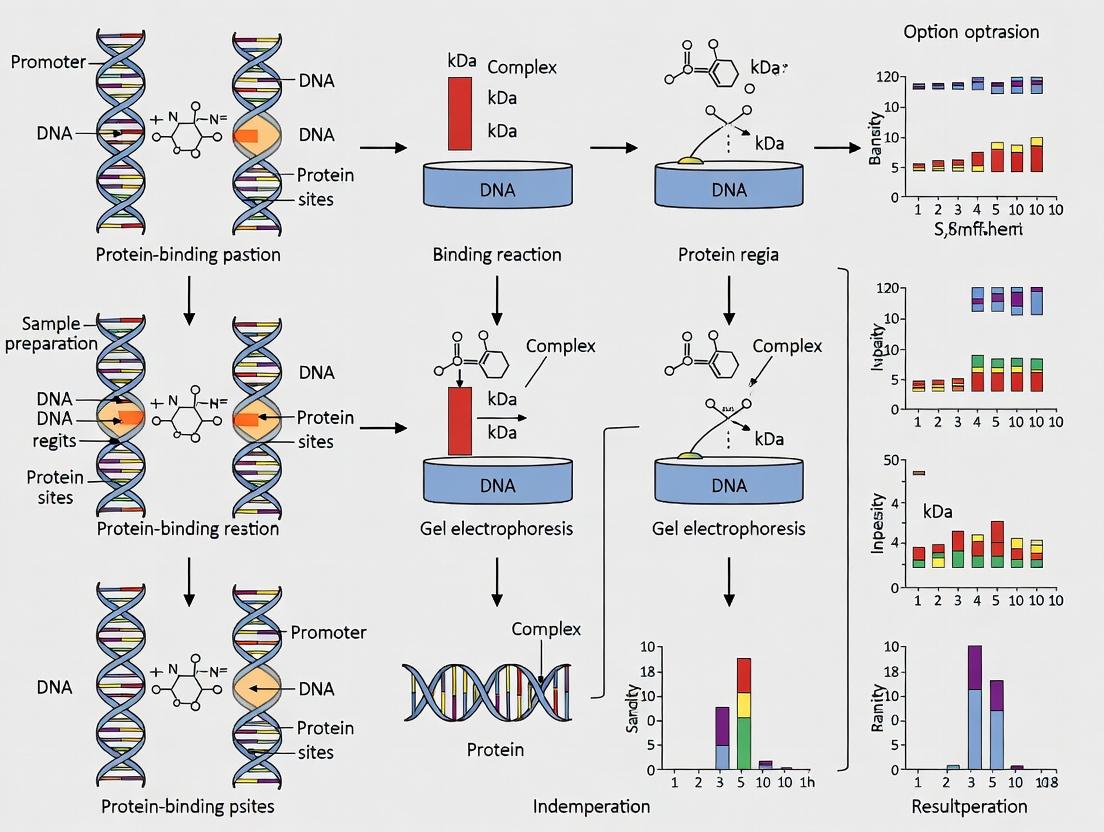
This comprehensive guide provides researchers and drug development professionals with a detailed protocol and framework for performing Electrophoretic Mobility Shift Assay (EMSA) competitor DNA titration experiments.
Mastering EMSA Competitor DNA Titration: A Step-by-Step Protocol for Quantifying Protein-DNA Binding Specificity
Abstract
This comprehensive guide provides researchers and drug development professionals with a detailed protocol and framework for performing Electrophoretic Mobility Shift Assay (EMSA) competitor DNA titration experiments. Covering foundational principles through advanced applications, the article explains how to design and execute titrations to differentiate specific from non-specific protein-DNA interactions, calculate binding constants, and validate transcription factor targets. We include best practices for optimization, troubleshooting common issues like smearing or no-shift, and compare EMSA titration with modern techniques like SPR and MST. This protocol is essential for robust characterization of DNA-binding proteins in mechanistic studies and therapeutic development.
Understanding EMSA Competitor DNA Titration: Principles and Purpose in Binding Studies
Competitor DNA titration is a critical control and optimization experiment within the Electrophoretic Mobility Shift Assay (EMSA) protocol. Its core concept involves the systematic addition of increasing amounts of unlabeled DNA, identical or similar to the labeled probe, to a binding reaction. The primary objective is to demonstrate the specificity of the observed protein-nucleic acid complex. As the concentration of unlabeled competitor increases, it successfully competes for the protein's binding site, leading to a decrease in the intensity of the shifted (bound) probe band. This "cold competition" confirms that complex formation is sequence-specific and not due to non-specific electrostatic interactions.
FAQs & Troubleshooting
Q: My shifted band does not disappear even at the highest competitor DNA concentration. What does this mean? A: This indicates potential non-specific binding. The protein may be binding to DNA in a sequence-independent manner. Troubleshooting steps include:
- Verify competitor identity: Ensure the competitor DNA sequence is identical to your probe.
- Increase competitor range: Titrate up to a 200-fold molar excess over the labeled probe.
- Use non-specific competitor: Include a non-specific DNA (e.g., poly(dI-dC)) in your base reaction buffer to absorb non-specific interactions.
- Optimize binding conditions: Re-evaluate salt concentration, pH, and protein extract quality.
Q: Both my specific and non-specific competitor DNA eliminate the shifted band with similar efficiency. How should I interpret this? A: This result suggests the binding activity is not sequence-specific. The protein of interest may be binding based on DNA structure (e.g., bent DNA) or general charge. You must verify the protein's known binding sequence and consider using a mutated sequence competitor in your titration to define specificity.
Q: What is an appropriate molar excess range for the competitor DNA titration? A: A standard titration series uses a 0 to 100- or 200-fold molar excess of unlabeled competitor over the labeled probe. The table below outlines a typical setup for a probe at 0.1 pmol per reaction.
Table 1: Standard Competitor DNA Titration Series
| Fold Molar Excess | Amount of Unlabeled Competitor (pmol) | Objective |
|---|---|---|
| 0 | 0 | No competition control. |
| 1x | 0.1 | Initial competition point. |
| 5x | 0.5 | Clear competition should be visible. |
| 25x | 2.5 | Significant reduction of shifted band. |
| 100x | 10.0 | Shifted band should be nearly or completely absent. |
Experimental Protocol: Competitor DNA Titration for EMSA
- Prepare Competitor Stock: Dilute your unlabeled, double-stranded DNA oligonucleotide (identical to probe sequence) to a working concentration of 1 pmol/µL.
- Set Up Reactions: In a series of microcentrifuge tubes, prepare the following binding reactions on ice:
- Constant: Labeled probe (e.g., 0.1 pmol), binding buffer, nuclear extract/protein, and non-specific competitor (e.g., 1 µg poly(dI-dC)).
- Variable: Add unlabeled competitor DNA according to Table 1.
- Incubate: Allow reactions to incubate at room temperature for 20-30 minutes.
- Load and Run: Add loading dye to each reaction, load onto a pre-run non-denaturing polyacrylamide gel, and run in 0.5x TBE buffer at 100V at 4°C until the dye front migrates sufficiently.
- Visualize: Dry the gel and expose to a phosphorimager screen or X-ray film to visualize the signal.
Competitor DNA Titration Experimental Workflow
Key Signaling Pathway: Competitive Binding in EMSA
The Scientist's Toolkit: EMSA Competitor Titration Reagents
| Item | Function in Experiment |
|---|---|
| Unlabeled Competitor DNA | Double-stranded oligonucleotide identical to probe; used to demonstrate binding specificity by competition. |
| Labeled DNA Probe | Radioactively or fluorescently labeled dsDNA containing the protein's putative binding site; the target for binding. |
| Non-specific Competitor (e.g., poly(dI-dC)) | Inert DNA added to all reactions to sequester non-specific DNA-binding proteins. |
| Nuclear Extract or Purified Protein | Source of the DNA-binding protein of interest. |
| EMSA Binding Buffer | Provides optimal pH, ionic strength, and co-factors (e.g., DTT, glycerol) for protein-DNA interactions. |
| Non-denaturing Polyacrylamide Gel | Matrix for separating protein-bound (shifted) from free DNA probe based on size/charge. |
The Critical Role in Distinguishing Specific vs. Non-Specific Binding
Troubleshooting Guides & FAQs
Q1: In my EMSA competitor DNA titration, I see that the protein-DNA complex band disappears equally with both unlabeled specific and non-specific (e.g., poly(dI-dC)) competitors. What does this mean? A1: This indicates a failure to distinguish specific from non-specific binding. The most common cause is an insufficient concentration of non-specific competitor in the initial binding reaction. Non-specific competitors like poly(dI-dC) are meant to "soak up" protein that binds to DNA in a sequence-independent manner. If underused, your labeled probe will bind both specific and non-specific protein, and both will be competed away by any DNA. Solution: Titrate the non-specific competitor (e.g., from 0.1 to 5 µg/µL) in the absence of specific competitor to find a concentration where the non-specific smearing/bands are minimized but the specific complex remains.
Q2: My specific competitor DNA fails to compete for the protein-DNA complex band, even at high molar excess, while the complex is strong. What is wrong? A2: This suggests the competitor DNA may not contain the correct, high-affinity binding sequence. Verify the sequence of your unlabeled specific competitor oligonucleotide. Ensure it is an exact match to the probe sequence or the known consensus sequence for your protein of interest. A related issue is competitor DNA that is not properly annealed into a double-stranded state; always verify annealing.
Q3: High background smearing persists even after titrating non-specific competitor. How can I resolve this? A3: Persistent smearing often points to protein quality or reaction conditions.
- Protein Source: Crude nuclear extracts contain many non-specific DNA-binding proteins. Consider using a purified or partially purified protein fraction.
- Reaction Conditions: Optimize buffer components. Increase ionic strength (e.g., KCl concentration from 50 mM to 100-150 mM) to weaken electrostatic non-specific interactions. Ensure the presence of carrier protein (e.g., BSA) and non-ionic detergent.
- Probe Quality: Ensure your labeled probe is clean and not degraded. Run the probe on a gel to check for integrity.
Q4: How do I quantitatively determine the binding affinity (Kd) from a competitor titration, and what are common pitfalls? A4: The Kd can be estimated by quantifying the fraction of probe bound (F) vs. competitor concentration [C] using the Cold Competitor EMSA method. A common pitfall is using a competitor concentration range that is too narrow. You must span from no competition to complete competition. Incorrectly assuming the competitor and probe have identical affinity is another issue; the competitor's Kd must be known or determined separately for precise calculation.
Data Presentation: Competitor DNA Titration Results
Table 1: Example Data from a Successful Specific vs. Non-Specific Distinction Experiment
| Competitor Type | Concentration (Molar Excess vs. Probe) | % Specific Complex Remaining (Densitometry) | Observation |
|---|---|---|---|
| None | 0x | 100% | Baseline complex. |
| Poly(dI-dC) | 50x | 95% | Specific complex stable; background smear reduced. |
| Poly(dI-dC) | 200x | 90% | Specific complex largely intact. |
| Unlabeled Specific | 10x | 60% | Specific complex partially competed. |
| Unlabeled Specific | 50x | 10% | Specific complex nearly abolished. |
| Unlabeled Mutant | 50x | 98% | Complex unaffected, confirming specificity. |
Table 2: Troubleshooting Matrix for Common EMSA Binding Issues
| Symptom | Potential Cause | Diagnostic Experiment | Solution |
|---|---|---|---|
| All binding competed by non-specific DNA | Insufficient non-specific competitor | Titrate poly(dI-dC) (0-5 µg/reaction) | Increase non-specific competitor concentration. |
| No competition by specific DNA | Incorrect competitor sequence | Use a known consensus sequence competitor. | Verify/redesign specific competitor oligo. |
| Weak or no complex | Low protein activity or poor probe labeling | Check probe specific activity; vary protein amount. | Fresh protein prep, re-label probe. |
| Multiple shifted bands | Multiple specific proteins or proteolysis | Use antibody for supershift (if available). | Add protease inhibitors; purify protein further. |
Experimental Protocols
Protocol 1: Optimized EMSA Binding Reaction for Specificity
- Prepare Reaction Mix (on ice):
- 1-2 µL 10X Binding Buffer (100 mM Tris, 500 mM KCl, 10 mM DTT, pH 7.5).
- 1 µL Poly(dI-dC) (1 µg/µL stock, concentration requires titration).
- 1 µL BSA (10 µg/µL).
- 1 µL Labeled Probe (10-20 fmol).
- X µL Nuclear Extract or Purified Protein (amount titrated).
- Nuclease-free water to 9 µL.
- Pre-incubate: Mix and incubate at room temperature for 10 minutes to allow non-specific competitor to bind irrelevant proteins.
- Add Competitor: For competition assays, add 1 µL of unlabeled specific or mutant competitor DNA at varying molar excess (e.g., 1x, 10x, 50x, 100x). For no-competitor control, add 1 µL water.
- Initiate Binding: Add the competitor or water, mix gently, and incubate at room temperature for 20 minutes.
- Load Gel: Add 1 µL of 10X loading dye (non-denaturing), load onto a pre-run 6% native polyacrylamide gel in 0.5X TBE.
- Electrophoresis: Run at 100V at 4°C until dye migrates appropriately.
- Visualize: Expose gel to phosphorimager screen or autoradiography film.
Protocol 2: Cold Competitor EMSA for Apparent Kd Estimation
- Perform Protocol 1, using a constant, optimized amount of protein and labeled probe.
- Include a series of reactions with increasing concentrations of unlabeled specific competitor DNA (spanning a 0-200x molar excess range).
- Quantify the intensity of the protein-DNA complex band using densitometry.
- Calculate fraction bound (F) for each point: F = Intensity(competed) / Intensity(uncompeted).
- Plot F vs. log[Competitor]. The competitor concentration at which F=0.5 is related to the Kd, assuming the competitor and probe have identical affinity and the system is at equilibrium.
Mandatory Visualization
EMSA Competitor Assay Core Workflow
Differentiating Specific vs. Non-Specific Binding
The Scientist's Toolkit: Research Reagent Solutions
| Item | Function in EMSA/Competitor Titration |
|---|---|
| Poly(dI-dC) | A synthetic, non-specific DNA polymer used as a carrier to bind and "quench" proteins that interact with DNA backbone or sequences non-specifically. Critical for reducing background. |
| Purified Target Protein | Recombinant protein or highly purified fraction containing the DNA-binding protein of interest. Reduces confounding signals from non-specific proteins present in crude extracts. |
| γ-32P ATP (or Chemiluminescent Labels) | Radioisotope used by T4 Polynucleotide Kinase to label oligonucleotide probes at the 5' end, enabling detection of protein-DNA complexes. Non-radioactive alternatives are available. |
| Double-Stranded Specific Competitor Oligo | An unlabeled DNA oligonucleotide duplex containing the exact, high-affinity binding site for the target protein. Used to confirm binding specificity and estimate affinity. |
| Mutant/Scrambled Competitor Oligo | An unlabeled DNA duplex with a mutated or scrambled binding sequence. Serves as a negative control to demonstrate the sequence-dependence of the protein-DNA interaction. |
| Native Gel Electrophoresis System | A non-denaturing polyacrylamide gel and buffer system (often 0.5X TBE) that separates protein-DNA complexes based on charge and size without disrupting non-covalent interactions. |
| Non-Ionic Detergent (e.g., NP-40) | Added to binding buffers (typically at 0.01-0.1%) to reduce non-specific protein-protein and protein-probe interactions by minimizing hydrophobic aggregation. |
| DTT (Dithiothreitol) | A reducing agent included in binding buffers to maintain cysteine residues in the DNA-binding domain of proteins in a reduced, functional state. |
Technical Support Center
Troubleshooting Guide & FAQs for EMSA Competitor DNA Titration Protocol
Q1: During EMSA, I observe a non-specific shift or smearing even with the correct protein and probe. What could be the cause and how do I resolve it? A: This is often due to suboptimal binding buffer conditions or protein degradation.
- Solution: First, perform a competitor DNA titration. Include reactions with a 50x and 100x molar excess of unlabeled non-specific (e.g., poly(dI-dC)) and specific (unlabeled identical probe) competitors. If the shift is eliminated only by the specific competitor, it is specific. If smearing persists, titrate MgCl₂ (1-10 mM) and KCl (0-100 mM) concentrations. Ensure fresh protease inhibitors are used in all protein extraction buffers.
Q2: My competitor DNA titration does not effectively dissociate the protein-DNA complex, even at high molar excess. What protocol adjustments should I make? A: The apparent affinity may be very high, or the competitor DNA may not be identical.
- Solution: Verify the sequence and purity of your unlabeled specific competitor. It must be identical to your labeled probe. Extend your titration range. Use a logarithmic scale (e.g., 0x, 1x, 2x, 5x, 10x, 50x, 100x, 200x molar excess). Increase incubation time with competitor DNA to 30 minutes before adding the labeled probe.
Q3: How do I calculate the IC50 from a competitor DNA titration experiment, and what does it signify for drug screening? A: The IC50 represents the concentration of competitor DNA needed to reduce complex formation by 50%. It quantifies binding affinity.
- Solution:
- Quantify the intensity of the shifted band using densitometry software.
- Plot % bound probe (or % complex remaining) vs. log[competitor] molar excess.
- Fit the data with a sigmoidal dose-response curve. The competitor concentration at 50% is the IC50.
- In drug discovery, this protocol is adapted to screen small molecules; a compound that increases the IC50 (requires more competitor to dissociate) may be stabilizing the protein-DNA interaction, while one that decreases IC50 could be an inhibitor.
Q4: For a drug discovery screen adapted from EMSA, what are the critical positive and negative controls? A: Robust controls are essential for high-throughput screening (HTS) validity.
- Solution:
- Positive Control: A known high-affinity unlabeled DNA competitor. It should consistently produce >80% inhibition of shift.
- Negative Control (Vehicle): The solvent used to dissolve candidate drugs (e.g., DMSO). It establishes baseline binding.
- Background Control: Labeled probe only (no protein) to detect any non-migrating artifacts.
- Reference Control: Protein + probe with no competitor (100% binding reference).
Experimental Protocol: Core EMSA with Competitor DNA Titration for Binding Affinity Assessment
Objective: To determine the specificity and relative binding affinity of a transcription factor for its target DNA sequence via competitive dissociation.
Materials: Purified protein/nuclear extract, IRDye700/800 or ³²P-end-labeled DNA probe, unlabeled specific competitor (identical sequence), unlabeled non-specific competitor (e.g., poly(dI-dC)), binding buffer (10 mM HEPES, 50 mM KCl, 1 mM DTT, 2.5 mM MgCl₂, 0.05% NP-40, pH 7.9), 6% non-denaturing polyacrylamide gel, 0.5x TBE running buffer.
Methodology:
- Prepare Competitor Dilutions: Prepare a stock of unlabeled specific competitor DNA. Serially dilute to achieve molar excesses of 0x, 1x, 2x, 5x, 10x, 50x, and 100x relative to the fixed concentration of labeled probe.
- Binding Reaction:
- For each titration point, pre-incubate 5 µg of nuclear extract/protein with the appropriate amount of unlabeled competitor DNA in binding buffer (total volume 18 µL) for 20 minutes at room temperature.
- Add 2 µL of labeled DNA probe (~20 fmol) to each tube. Mix gently.
- Incubate for 30 minutes at room temperature.
- Electrophoresis:
- Pre-run the polyacrylamide gel in 0.5x TBE for 60 minutes at 100V.
- Load each reaction (20 µL) alongside a free probe control.
- Run the gel at 100V (constant) for 90-120 minutes at 4°C, maintaining buffer circulation.
- Visualization & Analysis:
- If using fluorescent probes, scan the gel directly using an appropriate imaging system. For radioactive probes, expose to a phosphorimager screen.
- Quantify band intensity. Plot data as described in FAQ Q3.
Table 1: Example Competitor DNA Titration Data for Transcription Factor p53
| Molar Excess of Competitor (x-fold) | % Protein-DNA Complex Remaining | SD (±) |
|---|---|---|
| 0 | 100.0 | 3.5 |
| 1 | 95.2 | 4.1 |
| 2 | 87.8 | 3.8 |
| 5 | 62.4 | 5.2 |
| 10 | 41.5 | 4.7 |
| 50 | 10.8 | 2.9 |
| 100 | 4.3 | 1.5 |
| Calculated IC₅₀ | ~7.5x molar excess | N/A |
Table 2: Key Reagents for EMSA-Based Drug Screening Assay
| Reagent / Solution | Function & Importance |
|---|---|
| Biotin-Labeled DNA Probe | Allows shift detection via streptavidin-HRP/chemiluminescence, suitable for HTS plate readers. |
| Recombinant Target Transcription Factor | Provides a consistent, purified protein source for screening; reduces non-specific interactions from crude extracts. |
| Poly(dI-dC) | Non-specific competitor DNA that reduces protein binding to non-target sequences, lowering background. |
| 384-Well Low-Volume Assay Plates | Enables high-throughput screening with minimal consumption of valuable protein and compound libraries. |
| Chemiluminescence Detection Kit | For sensitive, non-radioactive quantification of protein-DNA complex formation in a plate format. |
| DMSO-Tolerant Binding Buffer | Maintains protein-DNA binding integrity in the presence of compound solvent (typically DMSO). |
Visualizations
Title: EMSA Competitor Titration Experimental Workflow
Title: From EMSA Titration to HTS Drug Screening Pipeline
Troubleshooting Guide & FAQs for EMSA Competitor DNA Titration
This technical support center addresses common issues encountered during Electrophoretic Mobility Shift Assay (EMSA) experiments, specifically within the framework of competitor DNA titration protocols used to assess protein-DNA binding specificity and affinity. The information supports ongoing thesis research on optimizing quantitative EMSA methodologies.
FAQ 1: Why is there no visible shift in my EMSA gel, even with high protein concentration?
- Answer: This indicates a failure in protein-DNA complex formation. Potential causes and solutions include:
- Non-functional protein: Verify protein activity with an alternative assay. Ensure the protein aliquot has not been degraded or denatured.
- Incorrect probe labeling: Confirm specific activity of your labeled probe via scintillation counting (radioactive) or spectrophotometry (fluorescent/chemiluminescent). The label may have degraded.
- Missing essential buffer component: Ensure your binding buffer contains necessary co-factors (e.g., Mg2+, Zn2+), reducing agents (e.g., DTT), or non-specific competitors (e.g., poly(dI-dC)).
- Insufficient incubation time/temperature: Follow established protocol for your specific protein-probe pair.
FAQ 2: During competitor titration, both the specific complex and free probe are diminished by unlabeled competitor. What does this mean?
- Answer: This suggests your unlabeled competitor DNA is not specific. It may be binding your protein with equal or higher affinity than your labeled probe, or it may be contaminated with sequences that bind non-specifically. Re-design and re-purify the competitor DNA fragment to ensure it matches only the specific binding site.
FAQ 3: How do I calculate the dissociation constant (Kd) from my competitor titration data?
- Answer: The Kd can be derived by analyzing the competitor titration curve. The concentration of unlabeled competitor that reduces the bound labeled probe by 50% (IC50) is used in the Cheng-Prusoff equation for competitive binding: Kd = IC50 / (1 + [L]/KdL), where [L] is the concentration of labeled probe and KdL is its dissociation constant. Accurate quantification of band intensity from the gel is essential.
FAQ 4: What is an appropriate molar excess range for unlabeled competitor DNA in a titration experiment?
- Answer: A typical range is from 0-fold to 100-fold (or 200-fold) molar excess relative to the labeled probe. The goal is to span from no competition to complete competition of the specific complex. See Table 1 for a standard scheme.
Table 1: Standard Unlabeled Competitor DNA Titration Scheme
| Tube # | Labeled Probe (fmol) | Unlabeled Competitor (fold molar excess) | Protein (amount) | Purpose |
|---|---|---|---|---|
| 1 | 10 | 0 | - | Free probe control |
| 2 | 10 | 0 | + | Total binding control (no competition) |
| 3 | 10 | 1x | + | Low competition |
| 4 | 10 | 5x | + | |
| 5 | 10 | 25x | + | Mid-range competition |
| 6 | 10 | 50x | + | |
| 7 | 10 | 100x | + | High competition |
Experimental Protocol: Core EMSA Competitor DNA Titration
- Prepare Binding Reactions: In a nuclease-free microtube, assemble 20 µL reactions on ice in the following order: Binding buffer, Non-specific competitor (e.g., 1 µg poly(dI-dC)), Unlabeled competitor DNA (variable, per titration scheme), Purified protein, Labeled probe (10-20 fmol). Include controls (see Table 1).
- Incubate: Incubate at room temperature or 4°C (as optimized) for 20-30 minutes.
- Load Gel: Add 5 µL of non-denaturing loading dye to each reaction. Load entire sample onto a pre-run 4-6% non-denaturing polyacrylamide gel in 0.5x TBE buffer.
- Electrophorese: Run gel at 100V (constant voltage) in a cold room or with cooling until the dye front migrates adequately (typically 60-90 min).
- Visualize: Expose gel based on label type (phosphorimager for 32P, appropriate scanner for fluorescence/chemiluminescence).
- Quantify: Use image analysis software (e.g., ImageQuant, ImageJ) to quantify band intensities for bound and free probe. Plot fraction bound vs. competitor concentration to generate a competition curve.
Diagram 1: EMSA Competitive Binding Workflow
Diagram 2: Competitor DNA Titration Logic
The Scientist's Toolkit: Research Reagent Solutions
| Reagent / Material | Function in EMSA Competitor Titration |
|---|---|
| Purified Target Protein | The DNA-binding protein of interest. Must be active and in a native or near-native state. Source can be recombinant or native purification. |
| End-Labeled DNA Probe | Short, double-stranded DNA fragment containing the putative protein binding site. Labeled (32P, fluorescence, biotin) for sensitive detection. Serves as the binding target. |
| Unlabeled Competitor DNA | Identical in sequence to the labeled probe. Used in titration to compete for protein binding, proving specificity and allowing affinity calculation. |
| Non-Specific Competitor DNA | Polymers like poly(dI-dC) or sheared salmon sperm DNA. Added in excess to absorb non-specific DNA-binding proteins. |
| Non-Denaturing Polyacrylamide Gel | Matrix for separating protein-DNA complexes (shifted) from free DNA probe (unshifted) based on size/charge, without disrupting weak interactions. |
| Electrophoresis Buffer (0.5x TBE) | Provides ionic strength and pH for electrophoresis while maintaining complex stability. Often run at low ionic strength and cooled. |
| Binding Buffer | Optimized buffer containing salts, buffering agents, reducing agents, and carrier protein to maintain protein stability and promote specific binding during incubation. |
| Gel Imaging System | Phosphorimager (for 32P), fluorescence scanner, or chemiluminescence imager for detecting and quantifying the gel bands. |
Technical Support Center
FAQs & Troubleshooting Guides
Q1: In my competition EMSA, the "cold" competitor DNA does not reduce the intensity of the shifted band. What could be wrong? A: This indicates the competitor DNA may not contain the specific protein-binding sequence. Verify the sequence of your competitor oligo against your probe sequence using an alignment tool. Ensure you are using an unlabeled version of the exact same oligonucleotide as your probe for a specific competition control. Non-specific competitor DNA (e.g., poly(dI-dC)) is used to reduce non-specific binding but will not compete for the specific protein-DNA interaction.
Q2: During competitor titration, the shifted band disappears, but so does the free probe. What does this mean? A: This suggests potential nuclease contamination in your protein extract or reaction buffer, degrading all DNA. Include a "probe-only" control (no protein) in your experiment. If the free probe degrades in this control, prepare fresh buffers and use nuclease-free reagents. Consider adding a nuclease inhibitor to your extract preparation protocol.
Q3: My competition experiment shows a "supershift" with the cold competitor, not just competition. Is this possible? A: While rare, this can occur if the competitor DNA sequence binds the protein of interest and an additional protein in the extract, leading to a more complex, higher molecular weight complex. Characterize the new complex with antibody supershift assays. Re-evaluate the specificity of your competitor sequence.
Q4: What is an appropriate molar excess of cold competitor to use in a titration experiment? A: A typical titration range is from 1x to 100x molar excess of cold competitor relative to the labeled probe. A successful specific competitor should show significant reduction of the shifted band between 10x and 50x excess.
Table 1: Quantitative Analysis of Cold Competitor Titration
| Molar Excess of Cold Competitor (x-fold) | Shifted Band Intensity (% of Control) | Free Probe Intensity (% of Control) | Interpretation |
|---|---|---|---|
| 0 (Control) | 100% | 100% | Baseline binding |
| 1 | 85-95% | 100-105% | Minimal competition |
| 5 | 60-80% | 100-110% | Moderate competition |
| 10 | 30-50% | 100-115% | Significant competition |
| 50 | 5-20% | 100-120% | Effective competition |
| 100 | 0-10% | 100-120% | Complete competition |
Detailed Competitor Titration Protocol Materials: Purified protein or nuclear extract, labeled DNA probe, unlabeled specific competitor DNA, unlabeled non-specific competitor DNA, binding buffer (10 mM HEPES, 50 mM KCl, 1 mM DTT, 2.5% glycerol, 0.05% NP-40, pH 7.9), poly(dI-dC).
Method:
- Prepare Competitor Dilutions: Serially dilute unlabeled specific competitor DNA to achieve 1x, 5x, 10x, 50x, and 100x molar excess relative to your constant labeled probe concentration.
- Set Up Binding Reactions: For each reaction, pre-incubate the protein extract with the appropriate amount of cold competitor DNA and 1 µg of poly(dI-dC) in binding buffer for 10 minutes on ice. This allows competitor binding prior to probe addition.
- Add Labeled Probe: Add a constant amount (typically 0.1-1 pmol) of labeled probe to each tube. Incubate for 20-30 minutes at room temperature.
- Load and Run Gel: Immediately load samples onto a pre-run, native polyacrylamide gel (4-6%). Run in 0.5x TBE buffer at 4°C at 100V until the dye front migrates appropriately.
- Visualize: Dry gel and expose to a phosphorimager screen or X-ray film.
The Scientist's Toolkit: Key Research Reagent Solutions
| Item | Function & Rationale |
|---|---|
| Specific "Cold" Competitor Oligo | Unlabeled double-stranded DNA identical to the probe. Serves as the definitive control for sequence-specific binding by competitively inhibiting labeled probe-protein complex formation. |
| Non-specific Competitor DNA (poly(dI-dC)) | A synthetic polymer used to "soak up" non-sequence-specific DNA-binding proteins in the extract, reducing background and clarifying specific shifted bands. |
| DTT (Dithiothreitol) | A reducing agent kept in binding buffer to prevent oxidation of cysteine residues in the DNA-binding protein, maintaining its activity and binding capability. |
| Non-ionic Detergent (NP-40) | Added to binding buffer at low concentration (e.g., 0.05%) to reduce non-specific protein-protein and protein-probe interactions without disrupting specific binding. |
| Native Polyacrylamide Gel | A non-denaturing gel matrix that separates protein-DNA complexes based on charge and size/shape without dissociating them, allowing visualization of "shifted" complexes. |
| Phosphorimager Screen | A digital detection method superior to X-ray film for quantitative analysis of EMSA results, offering a wider linear dynamic range for accurate band intensity measurement. |
EMSA Competition Assay Experimental Workflow
Molecular Mechanism of Competitive DNA Binding
This technical support center is framed within a thesis on EMSA (Electrophoretic Mobility Shift Assay) competitor DNA titration protocol research. Titration is a critical method for quantitatively analyzing biomolecular interactions, particularly in characterizing binding specificity, affinity, and stoichiometry. The following FAQs and guides address common experimental issues.
Troubleshooting Guides & FAQs
Q1: In an EMSA, my protein-DNA complex band does not diminish even with high concentrations of unlabeled competitor DNA. What is wrong? A: This indicates a potential lack of binding specificity or an issue with the competitor DNA.
- Troubleshooting Steps:
- Verify Competitor Identity: Ensure the unlabeled competitor DNA sequence is identical to the labeled probe's binding site. A mutated or irrelevant sequence will not compete.
- Check Protein Purity: Impure protein preparations may contain non-specific nucleases degrading the probe, or other DNA-binding proteins.
- Titration Range: Extend the range of your competitor titration. Use a logarithmic scale (e.g., 0x, 10x, 50x, 100x, 200x, 500x molar excess). See Table 1 for a standard protocol.
- Confirm Binding Activity: Run a positive control with a known specific competitor.
Q2: How do I determine the appropriate molar excess range for competitor DNA titration in EMSA? A: The range is empirically determined but based on expected binding affinity (Kd).
- Protocol: Start with a broad range from 0x to 500x molar excess of competitor over the labeled probe. Use a constant concentration of labeled probe and protein. Prepare competitor DNA stock solutions serially diluted in the same buffer as the binding reaction. Pre-incubate protein with competitor for 10-15 minutes before adding the labeled probe.
Q3: My titration data is inconsistent between replicates. How can I improve reproducibility? A: Inconsistency often stems from pipetting errors and solution instability.
- Troubleshooting Steps:
- Master Mixes: Prepare a master mix for all common reaction components (buffer, labeled probe, protein dilution buffer, etc.) and aliquot it to each tube.
- Competitor DNA Stability: Aliquot competitor DNA stocks to avoid freeze-thaw cycles. Verify concentrations spectrophotometrically before each titration series.
- Binding Reaction Order: Standardize the order of addition. The recommended order is: buffer, competitor DNA, protein, then labeled probe.
Data Presentation
Table 1: Standard EMSA Competitor DNA Titration Protocol & Expected Outcomes
| Component | Final Concentration / Amount | Purpose & Notes |
|---|---|---|
| Labeled Probe | 0.1-1 nM (e.g., 1 fmol/μL) | Trace component for visualization. Must be constant across all reactions. |
| Unlabeled Competitor DNA | 0x to 500x molar excess over probe | Titrated component. E.g., 0, 1, 5, 25, 125, 250, 500 nM if probe is 1 nM. |
| Target Protein | Constant, near estimated Kd | Sufficient to shift ~50-80% of probe in the "0x competitor" lane. |
| Binding Buffer | 1X | Provides optimal pH, ionic strength, and carrier (e.g., BSA, tRNA). |
| Poly(dI:dC) | 0.05-0.1 μg/μL | Non-specific competitor to reduce non-specific protein-DNA interactions. |
| Incubation | 20-30 min at RT/4°C | Allow binding equilibrium to be reached. |
| Expected Result | Gradual decrease in complex band intensity with increasing competitor. | Complete dissociation indicates specific binding. Residual shift suggests non-specific component. |
Table 2: Quantitative Analysis of a Model EMSA Titration Experiment
| Molar Excess of Competitor (x-fold) | Bound Fraction (Relative Band Intensity) | Free Probe Fraction | Interpretation |
|---|---|---|---|
| 0 | 1.00 | 0.05 | Baseline binding. |
| 5 | 0.85 | 0.10 | Slight competition begins. |
| 25 | 0.50 | 0.30 | IC50 estimated point. |
| 100 | 0.20 | 0.75 | Significant competition. |
| 250 | 0.10 | 0.85 | Near-complete competition. |
| 500 | 0.05 | 0.90 | Specific binding fully competed. |
Experimental Protocol: EMSA Competitor DNA Titration
Detailed Methodology:
- Prepare Reaction Master Mix (for n reactions + 10% extra): Combine calculated volumes of nuclease-free water, 10X binding buffer, poly(dI:dC) stock, and labeled DNA probe. Mix gently.
- Set Up Competitor Dilutions: Perform serial dilutions of the unlabeled competitor DNA stock in binding buffer or water to achieve the desired range of concentrations (see Table 1).
- Assemble Reactions: Aliquot the master mix into labeled tubes. Add the calculated volume of each competitor dilution to respective tubes. For the "0" competitor lane, add buffer/water.
- Add Protein: Add a constant volume of purified protein to each tube. Vortex gently and centrifuge briefly.
- Pre-incubate: Incubate for 15 minutes at the optimal temperature (e.g., room temperature) to allow competitor binding.
- Initiate Reaction: Add the constant volume of labeled probe to each tube. Mix gently. Incubate for 20-30 minutes.
- Load Gel: Add loading dye (non-denaturing) to each reaction and load immediately onto a pre-run native polyacrylamide gel.
- Electrophoresis & Detection: Run gel in cold 0.5X TBE buffer at constant voltage (e.g., 100 V) until adequate separation is achieved. Visualize using appropriate method (autoradiography, phosphorimaging, or fluorescence).
Visualizations
Title: EMSA Competitor Titration Experimental Workflow
Title: When Titration Answers Specificity Questions
The Scientist's Toolkit: EMSA Titration Reagents
Table 3: Essential Research Reagent Solutions for EMSA Competitor Titration
| Reagent / Material | Function & Purpose | Critical Notes |
|---|---|---|
| Chemically Synthesized Oligonucleotides | Source for labeled probe and unlabeled competitor DNA. Must be HPLC-purified. | Competitor sequence must match probe binding site exactly for valid competition. |
| [γ-³²P] ATP or Fluorescent Dyes | For end-labeling DNA probes via T4 Polynucleotide Kinase. Enables detection. | Fluorescent dyes reduce safety hazards and are stable longer than radioisotopes. |
| Purified DNA-Binding Protein | The target of study. Can be full-length protein, recombinant domain, or nuclear extract. | Purity is critical. Use fresh aliquots with stabilized buffers (e.g., with glycerol, DTT). |
| Poly(dI:dC) | A non-specific polymeric competitor DNA. | Quenches non-specific protein-DNA interactions. Optimal concentration must be titrated. |
| Native Gel Electrophoresis System | For separation of protein-DNA complexes from free DNA. | Requires cooling. Gel percentage (4-10%) depends on complex size. |
| Phosphorimager or Fluorescence Scanner | For quantitative detection of gel bands. | Essential for quantifying bound vs. free fractions for analysis. |
| Data Analysis Software (e.g., ImageQuant, Prism) | To quantify band intensities and fit titration curves to determine IC50. | Allows transformation of qualitative gel data into quantitative binding parameters. |
Step-by-Step EMSA Competitor Titration Protocol: From Design to Data Acquisition
Technical Support Center: Troubleshooting & FAQs
Q1: My prepared non-radiolabeled competitor DNA appears degraded on a gel. What are the primary causes and solutions? A: Degradation is commonly due to nuclease contamination or improper storage.
- Solution: Ensure all tubes, tips, and buffers are autoclaved or filter-sterilized. Use molecular biology-grade water. Prepare aliquots of the DNA stock and store at -20°C or -80°C. Avoid repeated freeze-thaw cycles. Always include a fresh, high-quality DNA ladder as a control.
Q2: How do I calculate the correct molar excess of unlabeled competitor DNA for my titration series? A: The titration series should span a wide range to accurately determine the 50% inhibitory concentration (IC50) for the specific protein-DNA interaction. A typical protocol uses a constant amount of labeled probe and protein while varying the competitor. See Table 1 for a standard series.
Table 1: Standard Competitor DNA Titration Series
| Tube # | Molar Excess (Competitor:Labeled Probe) | Purpose in Experiment |
|---|---|---|
| 1 | 0x | Control for maximum protein-probe binding. |
| 2 | 1x | Near-equilibrium competition. |
| 3 | 5x | Initial significant competition. |
| 4 | 25x | Moderate to strong competition. |
| 5 | 125x | Near-complete displacement. |
| 6 | 625x | Control for complete competition. |
Q3: What is the recommended protocol for preparing the poly(dI:dC) nonspecific competitor carrier? A:
- Preparation: Dissolve poly(dI:dC) in TE buffer or nuclease-free water to a stock concentration of 1 µg/µL.
- Storage: Store at -20°C in small, single-use aliquots.
- Usage: In a standard 20 µL EMSA binding reaction, 1-2 µL of a 1 µg/µL stock (final 50-100 ng/µL) is typical. The optimal amount must be determined empirically to suppress nonspecific binding without affecting the specific interaction.
Q4: My binding buffer consistently precipitates. How can I fix this? A: Precipitation is often caused by divalent cations (like Mg²⁺) combined with high concentrations of phosphate or dithiothreitol (DTT).
- Solution: Prepare the buffer without DTT and MgCl₂ first. Adjust the pH, then add filter-sterilized stock solutions of DTT and MgCl₂ last. Store the complete buffer at 4°C for short-term use and re-check for precipitation before each experiment.
The Scientist's Toolkit: EMSA Competitor Titration Key Reagents
| Reagent | Function & Critical Notes |
|---|---|
| Double-stranded Oligonucleotide Probe (Labeled) | Contains the specific protein-binding sequence. Radioactive (³²P) or fluorescent labels are used for detection. |
| Double-stranded Competitor DNA (Unlabeled) | Identical sequence to the labeled probe. Used in titration to determine binding specificity and affinity. Must be highly pure. |
| Poly(dI:dC) | A nonspecific synthetic DNA polymer. Acts as a carrier to bind and sequester proteins that interact with DNA non-specifically. |
| Purified Protein Extract | Nuclear extract or purified recombinant protein. Activity and concentration are critical for clear results. |
| 5X EMSA Binding Buffer | Provides optimal ionic strength, pH, and cofactors (e.g., Mg²⁺, DTT, glycerol) for the protein-DNA interaction. |
| Non-denaturing Polyacrylamide Gel | Matrix for separating protein-DNA complexes from free probe based on size and charge. Must be pre-run for consistent conditions. |
Experimental Workflow for EMSA Competitor DNA Titration
Title: EMSA Competitor Titration Experimental Workflow
Competitor DNA Mechanism of Action in EMSA
Title: Competitive Displacement of Probe by Competitor DNA
Troubleshooting Guides & FAQs
Q1: My EMSA shows no "supershift" with my specific competitor, even at high concentrations. What could be wrong? A: This often indicates poor competitor design. The specific competitor must have a perfect, high-affinity match to the protein's binding site. Verify your competitor sequence by comparing it to the consensus sequence from a database like JASPAR or TRANSFAC. Ensure it is double-stranded and properly annealed. Titrate from a 10x to a 200x molar excess relative to the labeled probe.
Q2: The non-specific competitor (e.g., poly(dI-dC)) is eliminating all binding, including my protein-DNA complex. How do I fix this? A: You are likely using too much non-specific competitor. Titrate it carefully. A typical starting range is 0.05 μg/μL to 0.5 μg/μL in the binding reaction. The optimal amount varies by nuclear extract and target protein. Perform a separate optimization experiment where only the amount of poly(dI-dC) is varied.
Q3: My mutant competitor still competes for binding. What does this mean? A: This suggests your mutations did not sufficiently disrupt the protein-binding site. The mutant competitor should contain 3-5 core consensus bases mutated. It must be tested alongside the specific competitor. If both compete similarly, redesign the mutant with more critical base changes, targeting residues shown by crystal structures or deep mutational scanning to be essential for contact.
Q4: How do I quantify the effectiveness of my competitor DNA titration? A: Quantify the intensity of the free probe and protein-DNA complex bands from your EMSA gel using densitometry software. Plot the percentage of bound probe (or fraction of binding) against the molar excess of competitor. An effective specific competitor will reduce binding significantly (e.g., >80%) at 50-100x excess, while a good mutant control will show little competition (<20%) even at high excess.
Q5: What are the critical quality controls for competitor oligonucleotides? A: 1) Purity: Use HPLC- or PAGE-purified oligonucleotides. 2) Annealing: Confirm double-stranded formation by native PAGE or melting temperature analysis. 3) Concentration: Accurately measure concentration using a spectrophotometer (A260) and calculate the molar concentration. 4) Sequence Verification: Validate by Sanger sequencing for cloned competitors or mass spec for synthesized oligos.
Table 1: Recommended Competitor DNA Types and Properties
| Competitor Type | Sequence Design | Purpose | Expected Outcome in EMSA |
|---|---|---|---|
| Specific | Exact match to probe binding site. | Demonstrates sequence-specific binding. | Dose-dependent abolition of the protein-probe complex. |
| Mutant | 3-5 bp mutation in core consensus. | Controls for specificity of competition. | Minimal competition even at high molar excess. |
| Non-Specific | Random sequence or polymer (poly(dI-dC)). | Binds non-specific proteins (e.g., histones). | Reduces smearing; should not affect specific complex. |
Table 2: Typical Titration Ranges for Competitor DNA in a 20 μL EMSA Binding Reaction
| Competitor Type | Stock Conc. | Molar Excess Range (vs. Labeled Probe) | Volume to Add (Example) |
|---|---|---|---|
| Unlabeled Specific Probe | 1 μM | 0x, 10x, 25x, 50x, 100x, 200x | 0 μL, 0.2 μL, 0.5 μL, 1.0 μL, 2.0 μL, 4.0 μL |
| Unlabeled Mutant Probe | 1 μM | 0x, 50x, 100x, 200x | 0 μL, 1.0 μL, 2.0 μL, 4.0 μL |
| poly(dI-dC) | 1 μg/μL | 0.05 - 0.5 μg total per reaction | 0.5 μL - 5.0 μL |
Detailed Experimental Protocol: Competitor DNA Titration for EMSA
Objective: To validate the sequence specificity of a DNA-protein interaction observed in an EMSA by competing with unlabeled DNA fragments.
Materials:
- Purified protein or nuclear extract.
- End-labeled DNA probe (specific sequence).
- Unlabeled competitor DNAs: Specific, Mutant, Non-specific (e.g., poly(dI-dC)).
- EMSA binding buffer (10 mM HEPES, pH 7.9, 50 mM KCl, 1 mM DTT, 5% glycerol, 0.05% NP-40).
- Native polyacrylamide gel and electrophoresis equipment.
Methodology:
- Prepare Competitor Dilutions: Serially dilute unlabeled specific and mutant competitor stocks to achieve the desired molar excess amounts (see Table 2).
- Set Up Binding Reactions:
- To a series of tubes, add binding buffer, a constant amount of poly(dI-dC) (optimized beforehand), and the varying amount of unlabeled competitor DNA.
- Add a constant amount of protein/extract to each tube. Pre-incubate for 10 minutes on ice. This allows competitor to bind first.
- Add a constant amount of the labeled probe to all tubes.
- Incubate the complete reaction for 20-30 minutes at room temperature.
- Electrophoresis: Load reactions onto a pre-run, native polyacrylamide gel (typically 4-6%). Run in 0.5x TBE buffer at 100-150 V at 4°C until the free probe migrates near the bottom.
- Visualization & Analysis: Dry gel and expose to a phosphorimager screen or X-ray film. Quantify band intensities.
Visualizations
Title: EMSA Competitor Titration Experimental Workflow
Title: Troubleshooting Logic for Competitor Design
The Scientist's Toolkit: Research Reagent Solutions
Table 3: Essential Materials for Competitor DNA EMSA Experiments
| Reagent/Material | Function & Importance | Example/Notes |
|---|---|---|
| HPLC/PAGE-purified Oligonucleotides | Ensures high sequence fidelity and eliminates truncated oligos that can affect competition kinetics. | Order from reputable suppliers (IDT, Sigma). |
| Poly(dI-dC) | A synthetic, non-specific DNA polymer used to titrate out non-sequence-specific DNA-binding proteins. | Critical for clean EMSA backgrounds; requires optimization. |
| T4 Polynucleotide Kinase (PNK) | For end-labeling the probe with [γ-³²P] ATP. Essential for creating the hot probe for detection. | Include in-house positive control for activity. |
| Micro Bio-Spin Columns (P-30) | For purifying the labeled probe from unincorporated radioactive nucleotides post-labeling. | Reduces background radiation in gels. |
| Electrophoretic Mobility Shift Assay (EMSA) Kit | Provides optimized buffers, positive control extracts, and probe for protocol validation. | Good for beginners (e.g., from Thermo Fisher, Roche). |
| Phosphorimager & Screen | For sensitive, quantitative detection of radioactive signals from the EMSA gel. | Superior to X-ray film for quantitation. |
| Densitometry Software | To quantify the intensity of shifted complexes and free probe for calculating % competition. | ImageJ, ImageQuant, or Bio-Rad Image Lab. |
Technical Support Center & FAQs
FAQ 1: Why is a pilot EMSA to determine the protein-probe ratio necessary? Within the context of optimizing a competitor DNA titration protocol, establishing the correct initial protein-probe ratio is critical. This pilot experiment ensures you are in the appropriate binding regime (i.e., having measurable but non-saturating complex formation) before adding competitor. Starting with a saturated or barely detectable complex will invalidate your competition data.
FAQ 2: My pilot EMSA shows no shifted band. What should I troubleshoot?
- Verify Protein Activity: Confirm protein functionality via an alternative assay.
- Check Probe Integrity: Ensure your labeled DNA probe is undegraded and properly purified. Run the probe alone on the gel.
- Review Binding Buffer: Confirm the presence of essential co-factors (e.g., Mg2+, Zn2+), appropriate pH, salt concentration, and carrier protein (e.g., BSA).
- Optimize Incubation Time/Temperature: Binding reactions are typically incubated for 20-30 minutes at room temperature or 4°C.
- Increase Protein Amount: In your pilot, test a wider, higher range of protein concentrations.
FAQ 3: My pilot EMSA shows all probe shifted (smear at well). What is the issue?
- Too Much Protein: You are using a protein concentration far in excess of what is needed. This leads to non-specific binding and aggregation. Significantly reduce the protein amount in your series.
- Probe Concentration Too Low: Your probe concentration may be below the Kd, causing complete depletion. Ensure a constant, appropriate probe concentration (typically 0.1-1 nM for labeled probe).
- Non-specific Binding: The buffer may lack sufficient non-specific competitor (e.g., poly(dI:dC), tRNA, salmon sperm DNA). Include 0.1-1 µg/µL of non-specific competitor.
FAQ 4: How do I quantitatively select the optimal ratio from the pilot EMSA? The optimal ratio for a competition experiment is where approximately 50-80% of the probe is shifted. This provides a clear signal while leaving room to observe both decreases (with specific competitor) and potential increases (with non-specific competitor titration) in complex formation. Quantify the free and bound probe bands using densitometry software.
Experimental Protocol: Pilot EMSA for Protein-Probe Ratio Determination
Objective: To determine the optimal amount of protein to use with a fixed amount of labeled DNA probe for subsequent competitor DNA titration experiments.
Materials:
- Purified protein of interest.
- End-labeled, double-stranded DNA probe (e.g., 32P, IRDye, or Biotin-labeled).
- EMSA Binding Buffer (10 mM HEPES, pH 7.5, 50 mM KCl, 1 mM DTT, 2.5% Glycerol, 0.1 mM EDTA, 0.1 mg/mL BSA).
- Non-specific competitor DNA (e.g., poly(dI:dC) at 0.1 µg/µL).
- Native gel (4-6% polyacrylamide in 0.5X TBE).
- Gel electrophoresis and visualization system (phosphorimager, fluorescence scanner, or chemiluminescence).
Methodology:
- Prepare a 2X master mix containing binding buffer, labeled probe (final concentration ~0.2 nM), and non-specific competitor (final concentration 0.1 µg/µL).
- Set up a series of 20 µL reactions. Keep the volume from the master mix constant. Aliquot into separate tubes.
- Add serially diluted protein to each tube. A typical range is 0, 1, 2, 5, 10, 20, 50, 100 nM final concentration. Include a probe-only control.
- Incubate at room temperature for 25 minutes.
- Load samples onto a pre-run native polyacrylamide gel in 0.5X TBE at 4°C.
- Run gel at 100V (constant voltage) until the dye front migrates sufficiently.
- Visualize and quantify the free and protein-DNA complex bands.
Quantitative Data Summary
Table 1: Example Results from a Pilot EMSA for Determining Initial Protein-Probe Ratio
| Protein Concentration (nM) | % Free Probe | % Bound Probe | Observations & Suitability for Competition EMSA |
|---|---|---|---|
| 0.0 | 100 | 0 | Negative control. |
| 1.0 | 95 | 5 | Signal too weak. Not suitable. |
| 2.5 | 80 | 20 | Signal low. Competition effect may be hard to quantify. |
| 5.0 | 55 | 45 | Optimal Range. Clear signal, probe not exhausted. |
| 10.0 | 25 | 75 | Optimal Range. Strong signal for quantification. |
| 25.0 | 5 | 95 | Near saturation. Less dynamic range for competition. |
| 50.0 | <2 | >98 | Saturated. Not suitable for competition studies. |
The Scientist's Toolkit: Research Reagent Solutions
Table 2: Essential Materials for the Pilot EMSA Experiment
| Item | Function & Importance |
|---|---|
| Purified Recombinant Protein | The DNA-binding factor of interest. Must be active and in a suitable storage buffer. |
| Labeled DNA Probe | Contains the specific protein-binding sequence. Label (radioactive or non-radioactive) enables detection. |
| Non-specific Competitor (poly(dI:dC)) | Suppresses weak, non-specific protein-DNA interactions, sharpening the specific band. |
| Carrier Protein (BSA) | Stabilizes the protein, prevents loss via adsorption to tube walls. |
| DTT or β-Mercaptoethanol | Reducing agent that maintains protein sulfhydryl groups in reduced state, preserving activity. |
| Native Gel System | Non-denaturing polyacrylamide gel that separates protein-DNA complexes based on size/charge. |
| Gel Visualization System | Phosphorimager (32P), fluorescence scanner (Cy dyes), or chemiluminescence imager (biotin). |
Visualizations
Title: Pilot EMSA Experiment Workflow
Title: Interpreting Pilot EMSA Results
Troubleshooting Guides & FAQs
Q1: How do I determine the starting concentration for my unlabeled competitor DNA? A: The starting concentration should be based on the apparent Kd of your protein-DNA complex and the concentration of the labeled probe used in your EMSA. A common rule is to begin at a concentration equal to your labeled probe concentration. For a typical experiment with a probe concentration of 0.1 nM and a protein with nanomolar affinity, start your competitor titration in the range of 0.1 nM to 1000 nM. Always include a no-competitor control.
Q2: What spacing (intervals) should I use between competitor concentrations in my series? A: Use a logarithmic (geometric) progression rather than a linear one. This efficiently characterizes the binding curve. A 2-fold or 3-fold serial dilution series is standard. For a high-resolution Kd determination, a 1.5-fold series may be used. See the table below for common schemes.
Q3: My competition curve plateaus, and I cannot achieve 100% competition. What is wrong? A: This indicates your highest competitor concentration is insufficient. The maximum competitor concentration should be at least 100- to 1000-fold above the estimated Kd. Ensure you are using a specific competitor (e.g., unlabeled identical sequence) and not a nonspecific DNA (e.g., poly(dI-dC)). Verify the integrity and concentration of your competitor stock.
Q4: The competition curve is too steep; all binding is lost between two consecutive points. A: Your dilution intervals are too wide. Use a finer dilution series (e.g., 1.5-fold increments) around the point where competition becomes apparent (usually around the IC50). This will provide better resolution for curve fitting.
Q5: How many data points are necessary for a reliable titration? A: A minimum of 8-10 distinct competitor concentrations, spanning from no competition to complete competition, is recommended for robust nonlinear regression analysis. Always perform replicates (n≥3) for each concentration.
Data Presentation: Competitor Titration Series Design
Table 1: Example Competitor DNA Titration Series for EMSA
| Tube # | Dilution Factor | Competitor Concentration (nM) | Volume of Stock (µL) | Volume of Buffer (µL) | Expected Outcome |
|---|---|---|---|---|---|
| 1 | 0 (Control) | 0 | 0 | 20 | No competition |
| 2 | - | 0.1 | 2 of 1 nM | 18 | Trace competition |
| 3 | 2-fold | 0.5 | 10 of Tube 2 | 10 | Partial competition |
| 4 | 2-fold | 1.0 | 10 of Tube 3 | 10 | ~IC50 point |
| 5 | 2-fold | 2.0 | 10 of Tube 4 | 10 | Partial competition |
| 6 | 2-fold | 4.0 | 10 of Tube 5 | 10 | Strong competition |
| 7 | 2-fold | 8.0 | 10 of Tube 6 | 10 | Near-complete competition |
| 8 | 2-fold | 16.0 | 10 of Tube 7 | 10 | Complete competition |
Note: This table assumes a labeled probe at 0.1 nM and a competitor stock at 100 nM. Buffer is the appropriate binding buffer. Volumes are for a 20 µL binding reaction after competitor addition.
Experimental Protocols
Protocol: Preparing a 2-Fold Serial Dilution Competitor Series
Objective: To create a competitor DNA concentration series for EMSA. Materials: Purified unlabeled competitor DNA stock (e.g., 100 nM in TE buffer), microcentrifuge tubes, appropriate binding buffer, pipettes. Method:
- Label 8 microcentrifuge tubes (1-8).
- Add 20 µL of binding buffer to Tube 1 (0 nM competitor control).
- Add 18 µL of binding buffer to Tubes 2-8.
- Add 2 µL of the 100 nM competitor stock to Tube 2 and mix thoroughly. This creates a 10 nM working stock.
- Serially transfer 10 µL from Tube 2 to Tube 3, mix thoroughly.
- Continue this 10 µL serial transfer from Tube 3 to Tube 4, and so on, through Tube 8. Discard 10 µL from Tube 8 after mixing.
- Use 2 µL from each tube to spike your standardized EMSA binding reactions, resulting in the final concentrations listed in Table 1.
Protocol: EMSA Binding Reaction with Competitor Titration
Objective: To assess protein-DNA binding specificity and apparent affinity via competition EMSA. Method:
- Prepare Master Mix: For n reactions, combine in order:
- (n+1) * 13 µL of Binding Buffer
- (n+1) * 4 µL of 5X Binding Buffer (if different)
- (n+1) * 1 µL of Poly(dI-dC) or other nonspecific competitor (e.g., 1 µg/µL)
- (n+1) * 1 µL of Radiolabeled/fluorescent Probe (0.1 nM final)
- (n+1) * 1 µL of Purified Protein (amount determined from prior optimization)
- Aliquot 20 µL of Master Mix into each n reaction tube.
- Add 2 µL of the corresponding competitor dilution (from the series above) to each tube. Add 2 µL of buffer to the "no competitor" control.
- Incubate at room temperature or 4°C for 20-30 minutes.
- Load directly onto a pre-run native polyacrylamide gel for electrophoresis.
Mandatory Visualization
Title: Workflow for Designing a Competitor Titration Series
Title: Logical Relationships in EMSA Competition Pathway
The Scientist's Toolkit
Table 2: Essential Research Reagent Solutions for EMSA Competitor Titration
| Reagent / Material | Function & Importance | Typical Specification / Notes |
|---|---|---|
| Unlabeled Competitor DNA | The titrant; identical in sequence to the labeled probe. Used to determine binding specificity and apparent affinity. | HPLC-purified, resuspended in TE buffer, concentration verified by A260. |
| Labeled DNA Probe | The reporter molecule; allows visualization of the protein-DNA complex. | Radiolabeled (γ-32P-ATP) or fluorescently end-labeled. High specific activity. |
| Purified Protein | The target of study; a transcription factor or DNA-binding protein. | Recombinantly expressed, purified, concentration accurately determined. |
| Poly(dI-dC)•(dI-dC) | Nonspecific competitor DNA. Reduces non-sequence-specific protein-DNA interactions. | Stock at 1 µg/µL. Concentration optimized in preliminary EMSA. |
| 5X EMSA Binding Buffer | Provides optimal ionic strength, pH, and cofactors for specific protein-DNA binding. | Typically contains HEPES/KOH, KCl, DTT, MgCl2, EDTA, glycerol. |
| Native PAGE Gel | Matrix for electrophoretic separation of protein-DNA complexes from free probe. | 4-10% polyacrylamide, 0.5X TBE buffer, pre-run at 4°C. |
| Electrophoresis Buffer | Conducts current and maintains pH during separation. | 0.5X TBE (Tris-Borate-EDTA), kept cold. |
| Gel Imaging System | For detection and quantification of shifted complexes. | Phosphorimager (radioactive) or fluorescence scanner. |
Troubleshooting & FAQ
Q1: After setting up the binding reaction, I see no shifted band in my EMSA gel. What could be wrong? A: This is often due to inactive protein, lack of a required cofactor, or an incorrect buffer. First, verify protein activity via a positive control assay. Ensure your binding buffer contains necessary divalent cations (e.g., Mg²⁺) and reducing agents (e.g., DTT). Check the pH of your reaction buffer—nuclear protein binding can be highly pH-sensitive.
Q2: I observe excessive non-specific binding or smearing in the gel. How can I improve specificity? A: Non-specific binding is commonly mitigated by adding a non-specific competitor (e.g., poly(dI·dC)) and optimizing its concentration. Increase the concentration of your non-specific competitor incrementally. If the problem persists, consider titrating a mild non-ionic detergent (e.g., NP-40) at 0.01-0.1% into the reaction mix.
Q3: My shifted band appears faint, and signal-to-noise is poor. A: This typically indicates suboptimal reaction conditions. Ensure your labeled probe is fresh and of high specific activity. Increase the amount of protein extract, but avoid overloading. Perform a time-course experiment to determine the optimal incubation time for complex formation, typically between 20-30 minutes at room temperature.
Research Reagent Solutions
| Reagent / Material | Function in Core Binding Reaction |
|---|---|
| Purified Protein or Nuclear Extract | Source of the DNA-binding protein of interest. |
| ³²P or Fluorescently end-labeled DNA Probe | Contains the specific binding sequence; allows detection of the protein-DNA complex. |
| Poly(dI·dC) or sheared salmon sperm DNA | Non-specific competitor DNA; quenches non-specific protein-DNA interactions. |
| Specific Unlabeled Competitor DNA | Unlabeled identical probe; used in titration experiments to confirm binding specificity. |
| Binding Buffer (10X stock) | Provides optimal pH, ionic strength, and cofactors (DTT, MgCl₂, glycerol) for the interaction. |
| Non-ionic Detergent (e.g., NP-40) | Reduces non-specific binding and aggregation. |
| Non-specific Protein (e.g., BSA) | Stabilizes some proteins and blocks adhesion to tube walls. |
Table 1: Typical Reaction Components for a 20 µL EMSA Binding Reaction
| Component | Volume (µL) | Final Amount/Concentration | Notes |
|---|---|---|---|
| 10X Binding Buffer | 2.0 | 1X | Contains Tris, KCl, MgCl₂, DTT, glycerol |
| Poly(dI·dC) (1 µg/µL) | 1.0 | 50 ng/µL | Critical for reducing non-specific bands |
| Labeled Probe | 1.0 | 0.5-2.0 fmol | ~20,000 cpm recommended |
| Specific Competitor (Variable) | X | 5x to 100x molar excess | For specificity controls/titration |
| Nuclear Extract/Protein | 2.0-5.0 | 2-10 µg | Must be determined empirically |
| Nuclease-free Water | to 20 µL | - | - |
Table 2: Troubleshooting Guide for Common Signal Issues
| Observation | Possible Cause | Recommended Action |
|---|---|---|
| No shifted complex | Protein degraded, missing cofactor | Test protein activity, add fresh DTT/Mg²⁺ |
| High background smear | Insufficient non-specific competitor | Titrate poly(dI·dC) from 0 to 100 ng/µL |
| Multiple shifted bands | Related proteins binding, proteolysis | Use specific competitor to identify correct band |
| Signal in well bottom | Protein aggregation | Add NP-40 to 0.1%; spin sample pre-loading |
Experimental Protocol: Competitor DNA Titration for Specificity Confirmation
Objective: To confirm the specificity of the observed protein-DNA complex by competitive displacement with unlabeled DNA probes.
Method:
- Prepare Reaction Master Mix: For N reactions (including no-competitor control), combine in order:
- N x 2.0 µL 10X Binding Buffer
- N x 1.0 µL Poly(dI·dC) (1 µg/µL)
- N x 1.0 µL Labeled Probe
- N x X µL Nuclease-free Water (account for protein/competitor volume).
- Aliquot 4 µL of master mix into each pre-labeled tube.
- Add Unlabeled Competitor: Add varying amounts of the specific unlabeled competitor DNA (e.g., 0, 5x, 25x, 100x, 200x molar excess over labeled probe) and/or a non-specific unlabeled DNA (e.g., mutated sequence) to the appropriate tubes. Adjust volume with water to keep constant.
- Initiate Reaction: Add a constant amount of protein extract to each tube. Mix gently by pipetting.
- Incubate at room temperature (20-25°C) for 20-30 minutes.
- Load directly onto a pre-run non-denaturing polyacrylamide gel for EMSA analysis.
Interpretation: Specific binding is demonstrated by dose-dependent displacement of the labeled complex by the specific, but not the non-specific, unlabeled competitor.
Visualizations
Competitor DNA Titration Experimental Workflow
Mechanism of Competitive Displacement in EMSA
Master Mix Strategy for Consistency Across Competitor Concentrations
Troubleshooting Guides and FAQs
Q1: In my EMSA competitor DNA titration, my supershift signal disappears at high competitor concentrations, even in the protein-specific lanes. What might be happening?
A: This is a common issue stemming from an imbalanced Master Mix. The key is to keep the protein concentration constant. When you titrate in unlabeled competitor DNA (e.g., from 0x to 200x molar excess), its volume changes. If you add competitor separately, the final buffer and salt conditions in each reaction become variable, which can denature the protein or alter binding kinetics at high competitor volumes. Solution: Use a Master Mix strategy where the competitor DNA is diluted in the same buffer used for the binding reaction, and this mixture is used as the variable component, ensuring the total volume and buffer consistency across all tubes.
Q2: My band intensities for the protein-DNA complex are inconsistent across the competitor titration series. How can I improve reproducibility?
A: Inconsistent mixing is the likely culprit. Vortexing and centrifuging all Master Mix components before aliquoting is crucial. Follow this protocol:
- Prepare a single Master Mix A containing: buffer, glycerol, non-specific carrier DNA (e.g., poly(dI-dC)), distilled water, and the labeled probe. Vortex gently and spin down.
- Prepare a serial dilution of your unlabeled specific competitor DNA in the identical EMSA binding buffer.
- For each reaction, combine a fixed volume of Master Mix A with a fixed volume of the respective competitor dilution. Vortex gently.
- Finally, initiate all reactions by adding a fixed volume of your protein/nuclear extract to each tube. This sequential, consistent mixing ensures every reaction sees the same components in the same order.
Q3: How do I calculate the molar excess of competitor accurately for my tables?
A: You must calculate based on the molarity of the labeled probe. Use this formula for each reaction:
(Moles of competitor DNA) / (Moles of labeled probe) = X-fold molar excess.
Present your data in a clear table like the one below, which is essential for analyzing binding affinity (Kd) within your thesis research.
Table 1: Competitor DNA Titration Series Setup Using Master Mix Strategy
| Tube # | Labeled Probe (fmol) | Unlabeled Competitor (fmol) | Molar Excess (X) | Master Mix A (µL) | Competitor Dilution (µL) | Protein/Extract (µL) | Total Vol (µL) |
|---|---|---|---|---|---|---|---|
| 1 (No comp) | 1 | 0 | 0 | 18 | 0 (Buffer) | 2 | 20 |
| 2 | 1 | 5 | 5x | 18 | 2 (2.5 fmol/µL) | 2 | 20 |
| 3 | 1 | 25 | 25x | 18 | 2 (12.5 fmol/µL) | 2 | 20 |
| 4 | 1 | 100 | 100x | 18 | 2 (50 fmol/µL) | 2 | 20 |
| 5 | 1 | 250 | 250x | 18 | 2 (125 fmol/µL) | 2 | 20 |
Q4: What is the detailed protocol for the EMSA competitor titration experiment using the Master Mix strategy?
A: Experimental Protocol: EMSA Competitor DNA Titration for Specificity & Affinity Analysis
Objective: To determine the specificity and apparent affinity of a protein for its target DNA sequence by competition with unlabeled oligonucleotides.
I. Reagent Preparation
- 10X Binding Buffer: 100 mM Tris, 500 mM KCl, 10 mM DTT; pH 7.5.
- Labeled Probe: 5' end-labeled double-stranded oligonucleotide (10 fmol/µL).
- Specific Competitor: Identical unlabeled double-stranded oligonucleotide. Prepare a 125 fmol/µL stock in TE buffer.
- Non-specific Competitor: poly(dI-dC) at 1 µg/µL.
- Protein: Purified protein or nuclear extract in storage buffer.
II. Master Mix and Dilution Setup
- Master Mix A (per reaction): 2 µL 10X Binding Buffer, 1 µL 50% Glycerol, 1 µL poly(dI-dC) (1 µg/µL), 1 µL Labeled Probe (10 fmol/µL), 13 µL distilled water. Multiply volumes by (n+1) for total reactions.
- Competitor Serial Dilution: Dilute the 125 fmol/µL competitor stock in 1X Binding Buffer to create the concentrations needed for the molar excess series (e.g., 2.5, 12.5, 50, 125 fmol/µL).
III. Binding Reaction Assembly
- Label 5 microcentrifuge tubes (1-5).
- To each tube, add 18 µL of Master Mix A.
- Add 2 µL of the corresponding competitor dilution (or buffer for Tube 1) to each tube. Pipette mix.
- Initiate reactions by adding 2 µL of protein to each tube. Pipette mix gently. Do not vortex after adding protein.
- Incubate at room temperature for 20-30 minutes.
- Load samples onto a pre-run 6% native polyacrylamide gel and run in 0.5X TBE buffer at 100V for 60-90 minutes.
- Dry gel and expose to a phosphorimager screen.
The Scientist's Toolkit: Key Research Reagent Solutions
| Reagent/Solution | Function in EMSA Competitor Titration |
|---|---|
| Native Polyacrylamide Gel (4-6%) | Matrix for separating protein-DNA complexes from free probe based on size/charge, preserving non-covalent interactions. |
| End-Labeled DNA Probe (^32P or Chemiluminescent) | Visualizes the target DNA sequence; allows quantification of bound vs. free probe. |
| Unlabeled Specific Competitor DNA | Determines binding specificity and allows estimation of relative binding affinity by competitive displacement. |
| Non-specific Competitor (poly(dI-dC)) | Binds and "absorbs" proteins with non-sequence-specific DNA affinity, reducing background shift. |
| EMSARNA-Binding Buffer (with DTT/Glycerol) | Maintains protein activity and stability; glycerol increases density for gel loading. |
| Purified Recombinant Protein or Nuclear Extract | Source of the DNA-binding protein of interest. Purity affects interpretability of shifts. |
Diagram: EMSA Master Mix Workflow for Consistent Titration
Diagram: Logical Decision Tree for EMSA Competitor Results
Troubleshooting Guides & FAQs
Q1: In our EMSA competitor DNA titration, the protein-DNA complex appears faint or absent in all lanes, including the no-competitor control. What could be wrong with the incubation conditions?
A1: This often points to suboptimal binding incubation. First, verify the incubation temperature and time. Standard EMSA binding is typically performed at 20-25°C for 20-30 minutes. Prolonged incubation (>60 min) at room temperature can lead to protein degradation or complex destabilization. If using a sensitive protein, consider incubating at 4°C for 30-45 minutes. Ensure your thermal cycler or water bath is calibrated. Second, review your buffer composition. The absence of critical co-factors like Mg²⁺ or Zn²⁺, or the presence of excessive salt (>150 mM KCl), can prevent binding.
Q2: We observe high levels of non-specific binding and smearing in the gel, even with specific competitor DNA. How can we optimize the buffer to reduce this?
A2: Non-specific binding is frequently a buffer issue. Optimize the following components in your binding buffer:
- Increase non-ionic detergent: Add NP-40 or Tween-20 to a final concentration of 0.01-0.1%.
- Optimize salt concentration: Titrate KCl or NaCl between 50-100 mM. Higher salt reduces non-specific electrostatic interactions but may also weaken specific binding.
- Add non-specific competitors: Include poly(dI-dC)•poly(dI-dC) at 0.05-0.1 µg/µL in the binding reaction to sequester proteins that bind DNA non-specifically.
- Include carrier protein: BSA (0.1 mg/mL) can stabilize the protein and reduce adhesion to tubes.
Q3: During titration with unlabeled competitor DNA, the specific complex disappears, but a non-specific band remains constant. What does this indicate, and how should we adjust the protocol?
A3: This confirms the specificity of the disappearing complex. The persistent band is likely a non-specific protein-DNA interaction. To improve the assay, increase the stringency of the binding buffer incrementally. You can:
- Gradually increase KCl concentration in 10 mM steps.
- Add a mild competitor like salmon sperm DNA (0.01 µg/µL) alongside poly(dI-dC).
- Reduce incubation time to the minimum required for complex formation (e.g., 15 min), as non-specific complexes often form faster than specific ones.
Q4: Our complex migration is inconsistent between replicates, making quantification difficult. Could this be related to temperature?
A4: Yes. Fluctuations in electrophoresis temperature are a common culprit. Running the gel at too high a temperature (>25°C) can cause complex dissociation and "band smiling." Always pre-run and run the native gel in a cold room (4°C) or using a refrigerated circulation system. Maintain a constant voltage (typically 80-100 V) rather than constant current. Also, ensure your binding incubation is consistent in time and temperature between replicates.
Q5: How critical is the post-incubation handling step before gel loading, and what is the optimal procedure?
A5: Critical. After the binding reaction, keep samples on ice to stabilize complexes. Load the gel immediately and consistently. Do not add loading dye containing EDTA if your protein requires divalent cations for binding. Use a dye with minimal ionic strength, such as 6X DNA loading dye without SDS/EDTA, and do not heat the samples.
Key Experimental Protocols
Protocol 1: Standard EMSA Binding Reaction Incubation
- Prepare Binding Master Mix on ice: For a 20 µL reaction, combine:
- 2 µL 10X Binding Buffer (100 mM Tris, 500 mM KCl, 10 mM DTT, pH 7.5).
- 1 µL Poly(dI-dC) (1 µg/µL stock).
- 1 µL BSA (2 mg/mL stock).
- X µL Nuclease-free water.
- 1-5 µL Nuclear extract or purified protein (ensure salt compatibility).
- Add Labeled Probe: Add 1 µL of 32P/IR700-labeled DNA probe (10-20 fmol).
- Competitor Titration: For competitor assays, add unlabeled specific competitor DNA (0.5-100x molar excess) before adding the labeled probe.
- Incubate: Mix gently and incubate at 25°C for 25 minutes in a thermal cycler with a heated lid to prevent condensation.
- Load: Add 2 µL of 10X native loading dye, mix, and load immediately onto a pre-run (30 min, 100V, 4°C) 6% non-denaturing polyacrylamide gel.
Protocol 2: Optimization of Incubation Temperature
A comparative methodology to determine optimal binding kinetics.
- Set up identical binding reactions as in Protocol 1, step 1-3.
- Aliquot reactions into four separate tubes.
- Incubate each tube at a different temperature: 4°C, 15°C, 25°C, 37°C.
- Remove samples at time points: 10, 20, 30, and 45 minutes for each temperature.
- Immediately place on ice and load onto a cold gel.
- Analyze band intensity to plot "Complex Stability vs. Time & Temperature."
Table 1: Effect of Incubation Temperature on Complex Yield and Stability
| Temperature (°C) | Optimal Time (min) | Relative Complex Yield (%)* | Notes |
|---|---|---|---|
| 4 | 40-60 | 100 | Maximum yield but slow kinetics; best for unstable proteins. |
| 15 | 25-35 | 95-98 | Good compromise between yield and speed. |
| 25 | 20-30 | 100 | Standard condition; fast equilibrium. |
| 37 | 10-15 | 60-75 | Risk of protein denaturation; faster dissociation. |
*Yield relative to the maximum observed for that protein-probe pair.
Table 2: Buffer Component Optimization for Signal-to-Noise Ratio
| Component | Typical Range | Optimal for Specificity | Function & Optimization Tip |
|---|---|---|---|
| KCl/NaCl | 50-150 mM | 75-100 mM | Modulates ionic strength. Titrate to reduce non-specific binding. |
| MgCl₂ | 0-10 mM | 1-5 mM | Often essential for DNA-binding proteins. Omit for AP-1/NF-κB. |
| DTT/β-ME | 1-5 mM | 1 mM | Maintains protein redux state. Higher [ ] can inhibit some proteins. |
| Non-ionic Detergent | 0.01-0.1% | 0.05% (v/v) | Reduces adhesion. Use Igepal CA-630 or Tween-20. |
| Poly(dI-dC) | 0.05-0.2 µg/µL | 0.1 µg/µL | Non-specific DNA competitor. Titrate for each protein. |
| Glycerol | 0-10% | 5% (v/v) | Stabilizes protein; aids gel loading. |
Visualizations
EMSA Competitor Titration and Incubation Workflow
EMSA Incubation Condition Troubleshooting Logic
The Scientist's Toolkit: Key Research Reagent Solutions
| Item | Function in EMSA Incubation Optimization |
|---|---|
| Poly(dI-dC)•poly(dI-dC) | Synthetic double-stranded DNA polymer used as a non-specific competitor to absorb proteins that bind DNA in a sequence-independent manner, reducing background. |
| Non-ionic Detergent (Igepal CA-630) | Reduces non-specific binding of protein to reaction tubes and helps prevent protein aggregation. Preferable to NP-40 for EMSA. |
| Dithiothreitol (DTT) | Reducing agent critical for maintaining cysteine-dependent transcription factors in their active, reduced state during incubation. |
| Carrier Protein (BSA or milk proteins) | Stabilizes low-concentration proteins, blocks non-specific adsorption to surfaces, and can improve complex formation. |
| High-Purity Competitor DNA | Unlabeled double-stranded DNA identical to the probe (specific) or containing a mutant site (control). Essential for titration experiments to prove binding specificity. |
| Glycerol (Molecular Biology Grade) | Added to binding buffer to increase density for easier gel loading and to mildly stabilize protein-DNA interactions. |
| 10X Binding Buffer Concentrate | A pre-mixed, pH-optimized stock solution of Tris, KCl, MgCl₂, and DTT to ensure reaction consistency and reduce pipetting error. |
Troubleshooting Guides & FAQs
Q1: Why do I see smeared or fuzzy bands in my EMSA gel instead of sharp, discrete shifts? A: This is commonly due to issues with gel composition or electrophoresis conditions. Ensure you are using a high-purity, nuclease-free polyacrylamide gel (typically 4-10%). The most frequent causes are:
- Gel Polymerization Issues: Insufficient polymerization leads to uneven pore size. Use fresh ammonium persulfate (APS) and TEMED.
- Electrophoresis Buffer Issues: Using old or incorrectly diluted TBE (or TAE) buffer can cause aberrant migration. Prepare fresh 0.5x TBE from a concentrated stock.
- Overloading the Gel: Too much protein or DNA can overwhelm the separation capacity. Titrate your sample load.
- Electrophoresis Temperature: Running the gel at too high a temperature (>30°C) can cause band smearing. Run at 4°C or use a cooling apparatus.
Q2: The shifted band (protein-DNA complex) is very faint or absent, but the free probe is strong. What went wrong? A: This suggests a failure in complex formation or stability. Key troubleshooting steps:
- Protein Activity: Verify your protein extract or purified protein is active and not degraded. Perform a positive control with a known active protein.
- Binding Buffer: Ensure your binding reaction contains the necessary components (e.g., Mg²⁺, DTT, poly(dI-dC), glycerol). Omission of divalent cations or carrier DNA can prevent binding.
- Electrophoresis Conditions: The complex may be dissociating during the run. Ensure you use a low ionic strength buffer (0.5x TBE) and pre-run the gel to reach a low, consistent temperature (4°C). Load samples immediately after adding loading dye—do not heat the samples.
Q3: I observe non-specific bands or high background in the gel. How can I reduce this? A: Non-specific binding is a common challenge.
- Increase Competitor DNA: The poly(dI-dC) or other non-specific competitor DNA (e.g., salmon sperm DNA) concentration may be too low. Titrate this empirically (see table below).
- Optimize Salt Concentration: Slightly increasing the KCl or NaCl concentration in the binding reaction (e.g., from 50 mM to 100 mM) can reduce non-specific electrostatic interactions without disrupting specific binding.
- Wash Steps (for in-gel detection): If using a labeled probe for detection (e.g., chemiluminescent), increase the rigor or number of post-electrophoresis wash steps to remove unbound probe.
Q4: During the detection phase, my chemiluminescent signal is weak or absent. What are the potential causes? A: This points to issues with probe labeling, transfer, or detection chemistry.
- Probe Labeling Efficiency: Verify the labeling efficiency of your biotin- or digoxigenin-modified DNA probe via a dot blot assay. Low incorporation yields weak signal.
- Membrane Transfer Efficiency: Ensure complete capillary or electrophoretic transfer of DNA from the gel to the nylon membrane. Stain the gel post-transfer with SYBR Green to confirm transfer.
- Detection Reagents: Check the expiration dates of your substrate solution (e.g., Luminol/Peroxide for HRP). Ensure the membrane stays moist during the substrate application step.
Table 1: Effect of Non-Specific Competitor (poly(dI-dC)) on EMSA Signal-to-Noise Ratio
| Competitor Amount (ng/20µL reaction) | Specific Shift Band Intensity (Relative Units) | Non-Specific Background Intensity (Relative Units) | Signal-to-Noise Ratio | Recommended For |
|---|---|---|---|---|
| 0 | 95 | 90 | 1.06 | Not recommended |
| 50 | 92 | 45 | 2.04 | Crude nuclear extracts |
| 100 | 90 | 20 | 4.50 | Standard purified protein |
| 250 | 85 | 10 | 8.50 | Extracts with high nuclease activity |
| 500 | 70 | 8 | 8.75 | Very "sticky" extracts |
| 1000 | 30 | 5 | 6.00 | Risk of specific competition |
Note: Intensities derived from densitometry analysis of three independent EMSA experiments using a purified transcription factor. The optimal range (highlighted) maximizes specific complex detection while minimizing background.
Experimental Protocols
Protocol 1: Non-Denaturing Polyacrylamide Gel Electrophoresis for EMSA
- Gel Preparation: Clean glass plates thoroughly. For a 6% gel, mix 3.0 mL of 30% acrylamide/bis (29:1), 3.0 mL of 5x TBE, 13.8 mL of nuclease-free water, 150 µL of 10% APS, and 15 µL of TEMED. Pour immediately between plates, insert a well comb, and allow to polymerize for 45-60 minutes.
- Pre-electrophoresis: Assemble the gel apparatus in a cold room (4°C) or with a cooling unit. Fill tanks with 0.5x TBE running buffer. Pre-run the gel at 100V for 60 minutes to equilibrate temperature and remove persulfate.
- Sample Loading: Mix binding reactions with 2-3 µL of non-denaturing loading dye (containing glycerol and xylene cyanol/bromophenol blue). Do not heat. Rinse wells with buffer, then load samples carefully.
- Electrophoresis: Run the gel at 80-100V (constant voltage) for 1.5-2 hours, until the dye front has migrated ~2/3 down the gel. Maintain temperature at 4°C.
Protocol 2: Capillary Transfer for Biotinylated Probe Detection
- Post-Run: Carefully separate the glass plates and remove the gel.
- Equilibration: Place the gel in 0.5x TBE for 5 minutes.
- Transfer Setup: On a glass plate, create a wick from 3 sheets of Whatman paper soaked in 0.5x TBE. Place the gel on the wick. Place a pre-wetted positively charged nylon membrane on the gel. Remove all air bubbles by rolling a glass pipette over the surface. Layer 3 more wet filter papers on top, then a stack of paper towels (5-7 cm), a glass plate, and a 500g weight.
- Transfer: Allow capillary transfer to proceed for 1 hour.
- Crosslinking: Disassemble the stack. UV-crosslink the DNA to the membrane using the "auto-crosslink" setting (~1200 Joules) or bake at 80°C for 1 hour.
Diagrams
Title: EMSA Gel Electrophoresis & Detection Workflow
The Scientist's Toolkit: Research Reagent Solutions
Table 2: Essential Materials for EMSA Gel Electrophoresis & Detection
| Item | Function & Rationale |
|---|---|
| High-Purity Acrylamide/Bis (29:1) | Forms the matrix of the native polyacrylamide gel. Consistent cross-linking ratio is critical for reproducible pore size and complex separation. |
| Nuclease-Free Water & Buffers | Prevents degradation of the sensitive protein-DNA complexes and the labeled DNA probe during all steps. |
| 10% Ammonium Persulfate (APS) | Initiator for acrylamide polymerization. Must be prepared fresh weekly for optimal gel polymerization. |
| TEMED | Catalyst for acrylamide polymerization. Works with APS to form free radicals for cross-linking. |
| 0.5x TBE Running Buffer | Provides ions for conductivity during electrophoresis. Low ionic strength (0.5x) helps stabilize protein-DNA interactions during the run. |
| Non-Specific Competitor DNA (poly(dI-dC)) | Binds to non-sequence-specific DNA binding proteins in the extract, reducing background and non-specific shifts. Amount must be titrated. |
| Non-Denaturing Loading Dye | Contains glycerol (for easy loading) and inert dyes (e.g., bromophenol blue) to monitor migration front without disrupting complexes. |
| Positively Charged Nylon Membrane | For detection of biotin/digoxigenin probes. Positively charged surface binds negatively charged DNA efficiently after capillary transfer. |
| Chemiluminescent Substrate (e.g., HRP) | Enzyme substrate that produces light upon reaction with Horseradish Peroxidase conjugated to streptavidin or an antibody, enabling sensitive film/CCD imaging. |
Native Polyacrylamide Gel Setup and Running Parameters
Technical Support Center & Troubleshooting Guides
FAQs & Troubleshooting
Q1: Why is my protein-DNA complex running as a smear instead of a sharp band in my EMSA gel? A: Smearing is often caused by improper gel electrophoresis conditions. Ensure the gel is pre-run for 30-60 minutes at 100V in 0.5X TBE at 4°C to establish a constant pH and remove excess APS. Running the gel at too high a voltage can generate excessive heat, leading to complex dissociation and smearing. Maintain the temperature at 4°C throughout the run.
Q2: I see multiple shifted bands. Does this indicate multiple protein-DNA complexes? A: Not necessarily. Multiple bands can arise from protein degradation, partial phosphorylation states, or the presence of oligomeric forms. Include a protease inhibitor cocktail and phosphatase inhibitors in your binding reaction. A control with protein alone (no probe) can confirm if bands are probe-specific. True specific complexes will be competitively displaced by unlabeled competitor DNA.
Q3: My shifted complex is very faint, even with sufficient protein. What could be wrong? A: Common causes include:
- Probe Issues: The labeled DNA probe may be degraded or have low specific activity. Re-purify the probe and check labeling efficiency.
- Binding Buffer: The ionic strength may be too high. Optimize salt concentration (KCl/NaCl) in the binding reaction, typically between 50-100 mM.
- Polymer Contamination: Polyacrylamide gels can contain residual acrylic monomers that interfere. Use high-purity reagents and consider a longer pre-electrophoresis step.
Q4: How do I optimize the amount of non-specific competitor (e.g., poly(dI-dC)) in my EMSA for a competitor DNA titration thesis project? A: The optimal amount must be determined empirically. Perform a titration series (e.g., 0, 0.5, 1, 2, 4 µg) of poly(dI-dC) in your binding reactions. The goal is to use the minimum amount that eliminates non-specific probe retardation without affecting the intensity of the specific protein-DNA complex. Document this optimization thoroughly for your thesis methodology.
Q5: What are the critical parameters for preparing a native polyacrylamide gel for EMSA? A: See the table below for standard formulations and parameters.
Table 1: Native Polyacrylamide Gel Formulations for EMSA
| Gel Percentage | Acrylamide:Bis Ratio | 30% Acrylamide/Bis Solution | 10X TBE | dH₂O | Recommended Use |
|---|---|---|---|---|---|
| 4% | 29:1 | 2.67 mL | 1.5 mL | 25.83 mL | Large complexes (>500 kDa) |
| 6% | 37.5:1 | 4.0 mL | 1.5 mL | 24.5 mL | Standard EMSA (50-300 kDa complexes) |
| 8% | 37.5:1 | 5.33 mL | 1.5 mL | 23.17 mL | Small complexes/proteins |
Table 2: Standard EMSA Running Parameters
| Parameter | Standard Condition | Optimization Range | Notes |
|---|---|---|---|
| Buffer | 0.5X TBE | 0.25X - 0.5X TBE | Lower ionic strength improves sharpness. |
| Voltage | 100 V (constant) | 80 - 120 V | Run at 4°C to minimize heat. |
| Run Time | ~1.5 hours | Until dye front is 2/3 down gel | Time varies with gel %. |
| Temperature | 4°C | 4°C - 10°C | Critical. Pre-chill buffer and apparatus. |
Detailed Experimental Protocols
Protocol 1: Casting a Native Polyacrylamide Gel
- Assemble glass plates and spacer cassette.
- In a beaker, mix the desired volumes of 30% acrylamide/bis solution, 10X TBE, and dH₂O as per Table 1.
- Add 225 µL of 10% ammonium persulfate (APS) and 22.5 µL of TEMED for a 30 mL gel mix. Swirl gently to mix. Do not vortex.
- Immediately pour the gel between the plates. Insert a well-forming comb.
- Allow to polymerize completely for 45-60 minutes at room temperature.
Protocol 2: Pre-Run and Sample Loading for EMSA
- After polymerization, place the gel in the electrophoresis tank filled with pre-chilled 0.5X TBE.
- Carefully remove the comb. Flush wells with running buffer using a syringe.
- Pre-run the gel at 100V for 30-60 minutes at 4°C.
- During the pre-run, prepare your protein-DNA binding reactions per your titration protocol.
- Stop pre-run. Load each binding reaction mixed with native gel loading dye (no SDS, no heat) into the wells.
- Run the gel at 100V constant voltage in the cold room (4°C) until the bromophenol blue dye is near the bottom.
Visualizations
The Scientist's Toolkit: Key Research Reagent Solutions
Table 3: Essential Materials for Native EMSA
| Reagent/Material | Function & Brief Explanation |
|---|---|
| Acrylamide/Bis-acrylamide (29:1 or 37.5:1) | Forms the porous gel matrix. The ratio determines pore size and gel sieving properties. |
| 10X TBE Buffer (Tris-Borate-EDTA) | Provides conducting ions and maintains pH. Diluted to 0.5X for low ionic strength runs. |
| TEMED & Ammonium Persulfate (APS) | Catalyzes acrylamide polymerization. Fresh APS is critical for complete gel formation. |
| Non-specific Competitor DNA (poly(dI-dC)) | Binds non-specific DNA-binding proteins to reduce background. Amount requires titration. |
| Unlabeled Specific Competitor DNA | The core reagent for titration studies. Competes with labeled probe for protein binding to demonstrate specificity. |
| Radioactive (γ-32P-ATP) or Fluorescently-labeled Nucleotide | For probe labeling via end-labeling. Enables detection of the protein-DNA complex. |
| Native Gel Loading Dye (Glycerol, Bromophenol Blue) | Increases sample density for loading, provides a visible dye front. Contains no SDS or denaturants. |
| Cold Room or Gel Cooling System | Essential. Maintains gel at 4°C during run to prevent complex dissociation due to heat. |
Technical Support Center: Troubleshooting & FAQs
Q1: Why are my EMSA bands smeared instead of sharp? A: Smearing is commonly caused by:
- Overloading: Too much protein or probe in the reaction.
- Sample Impurities: Contaminants like salts, detergents, or degraded nucleic acids. Re-precipitate and purify your DNA probe.
- Incorrect Gel Running Conditions: Running the gel too fast generates heat, causing band dissociation and smearing. Run at 4°C and use pre-chilled buffer.
- Probe Degradation: Use fresh, high-activity γ-P32 ATP for labeling and purify labeled probes promptly.
Q2: My shifted band is faint, and the free probe band is very intense. What can I do? A: This indicates a low signal-to-noise ratio.
- Increase Protein Concentration: Titrate your protein extract in the binding reaction.
- Optimize Incubation Time/Temp: Ensure binding reaches equilibrium (typically 20-30 min on ice).
- Check Probe Specific Activity: Ensure efficient end-labeling of your DNA probe. Run a labeling efficiency check via TLC or column.
- Verify Competitor Design: In a titration experiment, ensure your unlabeled competitor is specific and homologous to the probe sequence.
Q3: I see unexpected higher molecular weight complexes ("supershifts") without adding antibody. What are they? A: These can be non-specific complexes.
- Increase Non-Specific Competitor: Add more poly(dI:dC) or non-specific competitor DNA (e.g., salmon sperm DNA) to the binding reaction.
- Optimize Buffer: Increase salt concentration (KCl or NaCl) to reduce low-affinity, non-specific protein-DNA interactions.
Q4: During quantification, the software cannot accurately separate adjacent bands. How do I resolve this? A: This requires optimization of both the experiment and analysis.
- Improve Gel Resolution: Increase gel percentage, ensure complete polymerization, and load samples in adjacent lanes with adequate spacing.
- Adjust Imaging: Avoid overexposure which causes band blooming. Acquire multiple exposures.
- Manual Lane/Band Detection: Use software tools to manually define lane and band boundaries rather than relying solely on auto-detection. Draw rectangular regions of interest (ROIs) of consistent size for each band.
Q5: How do I normalize quantified band intensities in a competitor DNA titration experiment? A: Normalization is critical for calculating percentage bound and determining IC50.
- Background Subtraction: Subtract local background intensity for each band (free and bound).
- Calculate Fraction Bound: For each reaction lane:
Fraction Bound = (Intensity of Bound Complex) / (Intensity of Bound Complex + Intensity of Free Probe). - Reference to Control: Express data as a percentage of the "no competitor" control lane:
% Bound = (Fraction Bound with competitor / Fraction Bound without competitor) * 100. - Plot & Analyze: Plot
% Boundvs.Log[Competitor]concentration to generate a titration curve.
Data Presentation: Band Quantification Software Comparison
Table 1: Comparison of Common Post-Electrophoresis Imaging and Quantification Platforms
| Platform/Software | Primary Imaging Method | Key Quantification Features | Best For | Cost Consideration |
|---|---|---|---|---|
| Phosphor Storage Screens & Scanner | Radioactivity (32P, 33P) | High dynamic range, linear quantification over 5 orders of magnitude. | Quantitative EMSA, especially for weak signals/low abundance complexes. | High initial investment. |
| CCD-based Gel Documentation | Chemiluminescence, Fluorescence, Colorimetric | Good sensitivity, rapid imaging. Software often includes lane/band tools. | Routine non-radioactive EMSA with chemifluorescent substrates (e.g., IRDye probes). | Moderate cost. |
| ImageJ / Fiji | Any digital image file (TIFF, PNG) | Free, powerful. Requires manual setup of lanes and ROIs. Excellent background subtraction tools. | Researchers needing a flexible, no-cost solution. | Free, open-source. |
| Licensed Software (e.g., ImageQuant, Quantity One) | Integrated with specific imagers or standalone. | Automated lane/band detection, comprehensive background correction, curve-fitting for kinetics/titrations. | High-throughput labs requiring workflow standardization and GLP compliance. | Annual licensing fees. |
Experimental Protocols
Protocol 1: Imaging EMSA Gels Using a Phosphor Imager
This protocol is central to the thesis for acquiring quantitative data from radioactively labeled EMSA competitor titration gels.
- Preparation: After electrophoresis, carefully transfer the gel (on its glass plate or backing) to a dry, flat surface.
- Drying (Optional): For thin polyacrylamide gels (<1 mm), dry using a gel dryer under vacuum at 80°C for 1 hour. Thicker gels or native gels are often imaged wet.
- Exposure: In a darkroom, place the gel or dried gel in a phosphor screen cassette. Ensure close contact. For wet gels, seal in a plastic wrap without bubbles. Expose at room temperature. Exposure time varies (30 min to overnight) based on probe activity.
- Scanning: Place the exposed phosphor screen in the scanner. Set the pixel resolution to 50-100 μm. Choose the appropriate scan area.
- Image Acquisition: Scan the screen. The software will generate a digital image file (usually .gel or .tif) where pixel intensity is proportional to radioactivity.
Protocol 2: Quantifying Band Intensities in ImageJ/Fiji
A standardized method for analysis within the thesis framework.
- Open Image: File → Open. Convert to 32-bit if necessary (Image → Type → 32-bit).
- Define Lanes: Use the rectangular selection tool. Draw a box around the first band (free probe) in the first lane, extending from top to bottom of all bands in that lane.
- Plot Lanes: Analyze → Gels → Select First Lane. The lane will be numbered. Move the selection to the next lane and click "Next Lane." Repeat for all lanes. Click "OK."
- Define Bands: The software generates lane profiles. Use the line selection tool to draw straight lines across the peaks corresponding to "Bound" and "Free" bands. Ensure consistency across all lanes.
- Measure: Analyze → Gels → Label Peaks. The software will list the intensity (volume) for each band.
- Export Data: Copy the results table for processing in spreadsheet software (e.g., Excel, Prism) for normalization and titration curve plotting.
Mandatory Visualization
Title: EMSA Band Quantification and Titration Analysis Workflow
Title: DNA Competitor Titration Logical Principle
The Scientist's Toolkit: Research Reagent Solutions
Table 2: Essential Materials for Post-EMSA Imaging & Quantification
| Item | Function in Experiment | Key Considerations |
|---|---|---|
| Phosphor Storage Screen | Stores latent image from radioactive emissions (32P). | Superior dynamic range and sensitivity for quantitative work. Must be regularly erased. |
| Phosphor Imager Scanner | Reads the latent image from the phosphor screen, converting it to a digital file. | Pixel resolution and linear range are critical specifications. |
| Polyacrylamide Gel Dryer | Dries gels onto filter paper for handling and storage. | Prevents cracking; essential for exposing thin gels to phosphor screens. |
| Image Analysis Software (e.g., ImageQuant TL, ImageJ) | Defines lanes/bands, subtracts background, and quantifies pixel intensity/volume. | Software choice impacts reproducibility. Must allow data export. |
| Non-Fluorescent Intensifying Screen | Used with X-ray film to enhance signal from weak radioactive samples via fluorescence. | Largely superseded by phosphor imaging for quantification. |
| Chemiluminescent Substrate (e.g., ECL) | For non-radioactive detection of horseradish peroxidase (HRP)-conjugated probes/antibodies. | Used with CCD-based imagers. Requires optimization to stay in linear range. |
| High-Purity Glycogen or tRNA | Carrier for ethanol precipitation of labeled DNA probes. | Increases yield; must be RNase-free if working with RNA probes. |
| Microcentrifuge Tubes, Low-Adhesion | For preparing binding reactions and sample loading. | Minimizes adsorption of protein/DNA to tube walls. |
Solving Common EMSA Titration Problems: Optimization for Robust Results
Within the framework of a broader thesis investigating EMSA competitor DNA titration protocols, a recurring challenge is the interpretation of experiments where the addition of unlabeled competitor DNA fails to abolish the observed protein-nucleic acid complex. This guide addresses the specific troubleshooting steps to determine if your binding is specific under these conditions.
Troubleshooting Guides & FAQs
Q1: I have performed an EMSA with a 100-fold molar excess of unlabeled specific competitor, but my shifted band remains strong. Does this mean my protein-nucleic acid interaction is non-specific? A1: Not necessarily. A lack of competition can indicate non-specific binding, but it can also result from experimental artifacts. Key considerations include:
- Competitor Potency: The unlabeled DNA must be identical to the probe sequence. Verify the competitor's sequence and ensure it is in double-stranded form.
- Protein Concentration: Excessively high protein concentration can saturate both specific and non-specific sites, making competition inefficient. Titrate your protein.
- Competitor Addition Order: For some high-affinity interactions, adding the protein to the labeled probe before the competitor can create a kinetic trap. Pre-incubate protein with the unlabeled competitor for 15-30 minutes on ice before adding the labeled probe.
Q2: What is the recommended starting point for a competitor DNA titration protocol? A2: A robust titration should span a wide range of concentrations. The following table summarizes a standard protocol.
Table 1: Competitor DNA Titration Protocol Parameters
| Parameter | Recommended Starting Condition | Purpose & Notes |
|---|---|---|
| Molar Excess (Fold) | 0, 5x, 10x, 25x, 50x, 100x, 200x | To observe complete competition curve. |
| Pre-incubation | Protein + unlabeled competitor, 15-30 min on ice. | Allows competitor to equilibrate with protein. |
| Probe Addition | After pre-incubation, add labeled probe, incubate 20-30 min. | |
| Cold Competitor Type | Specific: Identical to probe. Non-specific: Unrelated sequence (e.g., poly(dI-dC)). | Controls for sequence specificity. |
| Non-specific DNA Carrier | Constant amount (e.g., 0.1 µg/µL poly(dI-dC)). | Reduces low-affinity non-specific binding. |
Q3: What if my specific competitor reduces the shifted band, but a non-specific competitor also reduces it? A3: This suggests your binding reaction conditions lack sufficient stringency. You must optimize your binding buffer to favor specific interactions.
- Increase Ionic Strength: Gradually increase KCl or NaCl concentration (e.g., from 50 mM to 150 mM). This disrupts weaker electrostatic interactions common in non-specific binding.
- Add Non-specific Carrier: Include a constant amount of a non-specific competitor like poly(dI-dC) or sheared salmon sperm DNA (see Table 2) to absorb proteins that bind DNA backbone generally.
- Reduce Protein Concentration: Titrate to use the minimum amount of protein that gives a clear shift.
Q4: How do I systematically diagnose a "no competition" result? A4: Follow the logical decision pathway below.
Diagram 1: Decision pathway for diagnosing a 'no competition' result.
The Scientist's Toolkit: EMSA Competition Assay Essentials
Table 2: Key Research Reagent Solutions
| Reagent | Function in Competition EMSA | Critical Notes |
|---|---|---|
| Purified Target Protein | The DNA-binding protein of interest. | Use minimal purified protein; high concentration masks competition. |
| 32P or Fluorescently Labeled DNA Probe | The reporter for complex formation. | Verify labeling efficiency and specific activity. |
| Unlabeled Specific Competitor DNA | Identical in sequence to the probe. Must be double-stranded. | The key diagnostic reagent. Confirm sequence and concentration. |
| Non-specific Competitor DNA | Unrelated sequence (e.g., mutant probe, poly(dI-dC)). | Control for sequence specificity. Poly(dI-dC) is common for transcription factors. |
| Non-specific Carrier DNA | Inert DNA (e.g., sheared salmon sperm DNA). | Added to all reactions to absorb promiscuous DNA-binding proteins. Keep amount constant. |
| Binding Buffer (10X Stock) | Provides optimal pH, ions, and cofactors. | Often contains Mg²⁺, KCl, DTT, glycerol, and non-ionic detergent. |
| Polyacrylamide Gel (4-6%) | Matrix for electrophoretic separation of protein-DNA complexes. | Use 0.5X TBE for native conditions; pre-run and run at 4°C. |
Detailed Experimental Protocol: EMSA Competitor Titration
Protocol: Competitive EMSA with Titrated Unlabeled DNA Objective: To assess the sequence specificity of an observed protein-DNA complex.
Materials: As listed in Table 2.
Method:
- Prepare Competitor Stocks: Dilute your unlabeled, double-stranded specific competitor DNA to a concentration 100x the molar concentration of your labeled probe. Prepare a similar stock for a non-specific control DNA.
- Master Mix: Create a master mix for all reactions containing: Nuclease-free water, 10X binding buffer, non-ionic detergent (if needed), 1 µg/µL non-specific carrier DNA (e.g., poly(dI-dC)), and a constant amount of your protein extract. Keep on ice.
- Pre-incubation: Aliquot the master mix into separate tubes. Add the appropriate volume of unlabeled competitor DNA to each tube to achieve the desired molar excess (e.g., 0x, 5x, 10x, 25x, 50x, 100x, 200x). Incubate for 20 minutes on ice.
- Initiate Binding: Add a constant amount of your labeled DNA probe to each tube. Mix gently. Incubate for an additional 25 minutes at room temperature or as optimized.
- Load and Run: Add non-denaturing loading dye. Load samples onto a pre-run, native polyacrylamide gel (4-6% in 0.5X TBE). Run at 100-150V at 4°C until the dye front migrates sufficiently.
- Analyze: Visualize using autoradiography, phosphorimaging, or fluorescence. A specific interaction will show a dose-dependent decrease in the shifted band intensity only with the specific competitor.
Diagram 2: Workflow for EMSA competitor titration experiment.
Resolving Excessive Probe Depletion or Complete Abolition of Shift
Troubleshooting Guides
Q1: Why is my EMSA gel showing no protein-DNA complexes (free probe only), even with active protein? A: This indicates excessive probe depletion. The primary cause is a competitor DNA concentration that is too high, outcompeting the labeled probe for protein binding.
- Immediate Action: Repeat the EMSA with a titration of the competitor DNA (e.g., 0x, 0.5x, 1x, 2x, 5x, 10x, 50x, 100x molar excess). This will identify the optimal range.
- Protocol Adjustment: Ensure the incubation order is correct: pre-incubate protein with specific/unlabeled competitor DNA for 10-15 minutes before adding the labeled probe. This allows equilibrium to be established.
- Quantitative Check: Use the following table to diagnose based on competitor type:
| Competitor DNA Type | Typical Working Molar Excess | Symptom: No Shift | Likely Culprit |
|---|---|---|---|
| Non-specific (e.g., poly(dI:dC)) | 50x - 200x | Excess is too high, depleting protein | Reduce to 50x and titrate down. |
| Specific Unlabeled (Cold Probe) | 10x - 100x | Specific binding is fully competed away | Titrate from 0x to 10x to confirm specificity. |
| Mutant Competitor | 50x - 200x | Protein has non-specific affinity for sequence | May require higher amounts; validate with mutant probe control. |
Q2: What if my shift is abolished even at very low competitor concentrations? A: This suggests issues beyond standard competition.
- Troubleshooting Steps:
- Verify Probe Integrity: Re-run the labeled probe on a gel to check for degradation.
- Check Protein Activity: Perform an EMSA without any competitor to confirm protein creates a shift.
- Review Buffer Conditions: Ensure DTT is fresh (for reducing environment) and that Mg²⁺/K⁺ concentrations are optimal for your protein.
- Assess Protein:Probe Ratio: Fix a sub-saturating amount of probe and titrate protein to ensure binding is occurring.
Frequently Asked Questions (FAQs)
Q: How do I systematically determine the correct competitor DNA concentration? A: Follow this integrated protocol within a competitor DNA titration thesis:
- Set Up Binding Reactions: Keep protein and labeled probe constant.
- Titrate Competitor: Prepare a 2-fold serial dilution series of unlabeled specific competitor DNA across a wide range (e.g., 0 to 500x molar excess over probe).
- Quantify: Use phosphorimaging or densitometry to plot % shifted probe vs. competitor concentration (log scale).
- Analyze: The IC₅₀ (concentration inhibiting 50% of binding) provides a quantitative measure of binding affinity relative to the probe.
Q: What are critical controls for a definitive competitor EMSA experiment? A: A complete experiment requires these lanes:
- Labeled probe only.
- Probe + protein (no competitor).
- Probe + protein + non-specific competitor (e.g., poly(dI:dC)).
- Probe + protein + specific unlabeled competitor (titration series).
- Probe + protein + mutant unlabeled competitor (titration series).
- Super-shift or antibody control lane (if applicable).
Q: Could probe depletion be caused by something other than competitor DNA? A: Yes. Consider:
- Probe Over-labeling: Excessive radioactivity can cause radiolysis and damage the probe.
- Incorrect Probe Concentration: Too little probe relative to protein.
- Nuclease Contamination: Degrades the labeled probe. Use fresh, high-purity reagents.
Experimental Protocol: EMSA Competitor DNA Titration
Objective: To determine the binding specificity and apparent affinity of a protein for its target DNA sequence.
Materials:
- Purified protein sample.
- End-labeled, double-stranded DNA probe containing the target sequence.
- Unlabeled competitor DNAs: specific (wild-type) and non-specific (mutant or poly(dI:dC)).
- 5X EMSA Binding Buffer (e.g., 50 mM Tris-HCl pH 7.5, 250 mM NaCl, 5 mM DTT, 25% glycerol, 0.25 mg/mL BSA).
- Polyacrylamide gel (4-6%) and 0.5X TBE running buffer.
Method:
- Prepare a master mix containing buffer, water, protein, and (if used) a constant amount of non-specific competitor.
- Aliquot the master mix into separate tubes for each competitor concentration.
- Add the appropriate volume of each unlabeled competitor DNA to its tube. Pre-incubate for 15 minutes at room temperature.
- Add a constant amount of labeled probe to each tube. Incubate for 20-30 minutes.
- Load samples onto the pre-run polyacrylamide gel. Run at 100-150V in 0.5X TBE at 4°C until dye front migrates sufficiently.
- Dry gel and expose to a phosphorimager screen or film.
Visualizations
Diagram 1: EMSA Competitor Titration Workflow
Diagram 2: Diagnosis Logic for Absent Shift
The Scientist's Toolkit: Key EMSA Reagents
| Reagent | Function & Rationale |
|---|---|
| Purified Target Protein | Active transcription factor or DNA-binding protein. Source: recombinant expression or nuclear extract. |
| ³²P or Chemiluminescent Labeled Probe | Double-stranded DNA containing the cognate binding site. Provides detection signal for the complex. |
| Specific "Cold" Competitor | Identical unlabeled DNA probe. Quantitatively competes for binding, establishing specificity and affinity (IC₅₀). |
| Non-specific Competitor (e.g., poly(dI:dC)) | Synthetic polymer that binds non-specific charged interactions, reducing background smearing. |
| Mutant Competitor DNA | Unlabeled DNA with mutations in the binding site. Critical control to confirm sequence-specific binding. |
| EMSA Binding Buffer (with BSA/ Carrier) | Provides optimal ionic strength, pH, and reducing environment. BSA stabilizes protein and reduces non-specific stickiness. |
| Native Polyacrylamide Gel (4-6%) | Matrix that separates protein-DNA complexes from free probe based on size/charge ratio under non-denaturing conditions. |
Fixing Smearing, High Background, or Poor Band Resolution.
Troubleshooting Guides & FAQs
Q1: My EMSA gel shows smeared bands instead of sharp shifts. What are the primary causes and solutions? A: Smearing is often caused by improper gel electrophoresis conditions or sample quality.
- Low Ionic Strength in Gel/Buffer: Running the gel in low-ionic-strength buffer can cause protein-DNA complexes to dissociate during electrophoresis, creating a smear. Solution: Ensure the correct ionic strength (typically 0.5X TBE) in both the gel and running buffer. Do not use distilled water.
- Gel Polymerization Issues: Incompletely polymerized polyacrylamide gels can cause smearing. Solution: Ensure fresh ammonium persulfate (APS) and tetramethylethylenediamine (TEMED) are used. Allow the gel to polymerize completely (30-45 min) before use.
- Excessive Protein or Incubation Time: Too much protein or over-long incubation can lead to non-specific binding and smearing. Solution: Titrate the protein amount and strictly control incubation time (20-30 mins on ice is standard).
Q2: I have a high background signal across the gel lane. How can I reduce it? A: High background is typically due to non-specific binding or probe issues.
- Insufficient Non-Specific Competitor: The most common cause in competitor DNA titration protocols is an insufficient amount of non-specific carrier DNA (e.g., poly(dI-dC)). Solution: Titrate the amount of poly(dI-dC) in the binding reaction. Increase it incrementally.
- Impure or Over-labeled Probe: A probe with too high specific activity or contaminated with unincorporated nucleotides increases background. Solution: Purify the labeled probe using a spin column (e.g., G-25 Sephadex) after the labeling reaction. Reduce the amount of labeled probe per reaction.
- Inadequate Washing of Membrane: If using a non-radioactive detection method, insufficient washing after transfer and during detection can cause high background. Solution: Follow stringent wash protocols, ensuring correct buffer composition and wash times.
Q3: My band resolution is poor; shifted and free probe bands are blurry and close together. How do I improve resolution? A: Poor resolution affects the accuracy of quantitation in competitor titration experiments.
- Gel Percentage and Composition: Using the wrong acrylamide percentage can compromise complex separation. Solution: For most protein-DNA complexes, a 4-6% native polyacrylamide gel is optimal. Increase percentage for smaller complexes.
- Electrophoresis Conditions: Running the gel too fast generates heat, causing band broadening. Running it too slowly can lead to complex dissociation. Solution: Pre-run the gel for 30-60 mins at 100V in a cold room (4°C). Run the experiment at a constant 100-150V, maintaining a temperature of 4°C.
- Loading Buffer without Glycerol: The loading buffer must contain glycerol (or sucrose) to increase sample density for clean well loading. Solution: Ensure your loading dye contains 10-20% glycerol. Load carefully to avoid spillover into adjacent lanes.
Q4: During my competitor DNA titration, the specific complex disappears even at low competitor concentrations. What's wrong? A: This indicates potential issues with competitor DNA stock or binding conditions.
- Competitor DNA Concentration Error: The stock concentration of the unlabeled specific competitor DNA may be overestimated. Solution: Re-measure the competitor DNA concentration spectrophotometrically (A260) and prepare a fresh, accurately diluted stock series.
- Binding Buffer Mg²⁺ Deficiency: Some DNA-binding proteins require Mg²⁺ for stable complex formation. Its absence weakens specific binding. Solution: Include 2.5-5 mM MgCl₂ in your binding buffer, if compatible with your protein.
- Protein Degradation or Instability: The protein extract may have lost activity. Solution: Use fresh extract, include protease inhibitors, and perform binding reactions on ice.
Experimental Protocol: Systematic EMSA Troubleshooting & Optimization
Objective: To diagnose and resolve smearing, high background, and poor resolution through a controlled, stepwise experiment.
Materials: As per "The Scientist's Toolkit" below.
Methodology:
- Prepare a Master Binding Mix (for 10 reactions): 10 µL 10X Binding Buffer, 1 µL 1M KCl, 2 µL 1M DTT, 5 µL 100 ng/µL poly(dI-dC), 1 µL labeled probe (20 fmol), 20 µL nuclear extract (or purified protein), and nuclease-free water to 90 µL. Keep on ice.
- Aliquot 9 µL of the master mix into 9 separate tubes.
- Titration Series: To the tubes, add 1 µL of:
- Tube 1-3: Increasing poly(dI-dC) (0, 50, 100, 200 ng).
- Tube 4-6: Increasing unlabeled specific competitor (0x, 10x, 50x, 100x molar excess).
- Tube 7: 1 µL of unlabeled, non-specific DNA (e.g., scrambled sequence).
- Tube 8: 1 µL water (no-protein control).
- Tube 9: 1 µL of a different batch of running buffer (10X stock).
- Incubate all tubes at room temperature for 20 minutes.
- Load 10 µL from each tube onto two identical pre-run (1 hr, 100V, 4°C) native polyacrylamide gels (4% and 6%).
- Run gels at 120V constant voltage in 0.5X TBE at 4°C until the dye front is 2/3 down.
- Transfer one gel to a membrane for detection. Expose the second gel directly via autoradiography/phosphorimager to assess in-gel issues.
- Compare results across conditions and gel percentages.
Quantitative Data Summary: EMSA Troubleshooting Parameters
| Parameter | Typical Optimal Range | Effect of Low Value | Effect of High Value | Recommended Adjustment |
|---|---|---|---|---|
| poly(dI-dC) | 25-100 ng/µL in reaction | High background, non-specific shifts | Non-specific competition, loss of specific signal | Titrate in 25 ng increments |
| Labeled Probe | 10-20 fmol per reaction | Weak signal | High background, smearing | Purify probe; reduce amount |
| Protein Amount | 2-10 µg nuclear extract | Weak or no shift | Non-specific shifts, smearing | Titrate in 2 µg steps |
| Gel Percentage | 4-6% acrylamide (29:1) | Poor resolution of large complexes | Poor entry/migration of large complexes | Test 4% and 6% in parallel |
| MgCl₂ in Buffer | 0-5 mM (protein-dependent) | Unstable complexes for some proteins | May promote non-specific binding | Test 2.5 mM if complexes weak |
| Electrophoresis Temp | 4°C | Band broadening, smearing | – | Always run in cold room |
| Voltage | 100-150 V | Long run, possible dissociation | Heat generation, band blurring | Pre-run at 100V, run at 120V |
The Scientist's Toolkit: Key EMSA Reagent Solutions
| Reagent/Material | Function & Critical Notes |
|---|---|
| poly(dI-dC)•poly(dI-dC) | Non-specific competitor DNA. Quenches non-specific protein binding to the probe. Must be titrated for each new protein/extract. |
| Unlabeled Specific Competitor DNA | Identical sequence to the probe. Validates binding specificity in competition experiments. Stock concentration must be accurate. |
| 10X Binding Buffer | Typically contains: 100 mM Tris, 500 mM KCl, 10 mM DTT, 10 mM EDTA, 50% Glycerol (pH 7.5). Provides optimal ionic conditions for protein-DNA interaction. |
| 10X TBE Running Buffer | (Tris-Borate-EDTA). Used at 0.5X final concentration. Provides essential ions for conductivity and buffer capacity. Do not dilute with pure water. |
| Native Gel Loading Dye | Contains bromophenol blue/xylene cyanol, 30% glycerol. Increases sample density for clean loading; dyes visualize migration. |
| High-Binding Nylon Membrane | For wet/tank transfer of nucleic acids. Positively charged for probe retention. Critical for chemiluminescent detection. |
| Chemiluminescent Substrate (e.g., ECL) | For non-radioactive detection. Enzyme-conjugated streptavidin reacts with biotinylated probe. Provides high sensitivity. |
Diagram: EMSA Troubleshooting Decision Pathway
Diagram: Competitor DNA Titration Logic
Optimizing Competitor DNA Length and Purity for Effective Competition
Troubleshooting Guides & FAQs
This technical support center addresses common issues encountered when optimizing unlabeled competitor DNA for use in Electrophoretic Mobility Shift Assays (EMSAs) within the context of thesis research on titration protocols.
Q1: What is the optimal length range for competitor DNA, and why does length matter? A: The optimal length is typically 20-35 base pairs. Shorter oligonucleotides (<15 bp) may not bind with sufficient affinity, while longer ones (>50 bp) can increase non-specific binding or form secondary structures that interfere with the specific protein-DNA interaction.
Q2: My competition is inefficient even with a large molar excess. What could be wrong with the competitor DNA's purity? A: Inefficient competition often stems from impurities. The primary contaminants are truncated oligonucleotides from incomplete synthesis and salts from the desalting process. Truncated sequences bind with lower affinity, effectively reducing the concentration of effective competitor. We recommend purification by HPLC or PAGE.
Q3: How do I calculate the correct molar excess of competitor to use in my titration? A: The required excess depends on the relative affinities of the protein for the probe versus the competitor. A standard titration series should span a broad range (e.g., 1x to 200x molar excess). Use the following table as a starting guideline:
Table 1: Competitor DNA Titration Series Guidelines
| Competitor:Probe Molar Ratio | Typical Use Case |
|---|---|
| 1x, 5x, 10x | Testing very high-affinity competitors or initial titration. |
| 10x, 50x, 100x | Standard range for most consensus sequence competitors. |
| 50x, 100x, 200x | For competitors with slightly mismatched ("cold mutant") sequences. |
Q4: What experimental protocol can I use to verify competitor DNA purity and effectiveness? A: Follow this two-part protocol:
Protocol 1: Assessing Purity via Denaturing PAGE.
- Labeling: Phosphorylate 100-200 ng of the competitor oligonucleotide using T4 PNK and [γ-³²P]ATP.
- Electrophoresis: Run the labeled oligonucleotide on a denaturing 15-20% polyacrylamide/urea gel alongside a labeled size marker.
- Analysis: Visualize via autoradiography. A single, tight band indicates high purity. Multiple lower bands indicate problematic truncation products.
Protocol 2: Testing Effectiveness in a Pre-incubation EMSA.
- Prepare Reactions: Set up a series of standard EMSA binding reactions containing your labeled probe and protein.
- Pre-incubate: Add your unlabeled competitor DNA to the protein master mix before adding the labeled probe. Use the molar ratios from Table 1.
- Incubate: Add the labeled probe and allow the binding reaction to proceed.
- Analyze: Run EMSA as usual. An effective competitor will show a dose-dependent decrease in the intensity of the protein-probe complex band.
Q5: How does salt concentration in the binding buffer affect competition efficiency? A: Salt concentration critically impacts binding kinetics and specificity. Higher salt (>150 mM KCl) weakens non-specific electrostatic interactions. If competition is incomplete at high salt, it suggests very high-specificity binding. Titrate salt (50-200 mM KCl) to optimize your specific system.
Table 2: Impact of Common Issues & Solutions
| Problem | Root Cause | Solution |
|---|---|---|
| No competition | Severe truncation/mutation; wrong sequence. | Re-synthesize and PAGE purify; verify sequence. |
| Partial competition | Moderate impurity; suboptimal length/buffer. | HPLC purify; adjust length to 25-30 bp; optimize salt. |
| Non-specific competition | Competitor too long; buffer salt too low. | Shorten competitor DNA; increase KCl concentration. |
Diagrams
Title: Competitor DNA Optimization Troubleshooting Workflow
Title: EMSA Competitor Titration Lane Results Diagram
The Scientist's Toolkit
Table 3: Key Research Reagent Solutions for Competitor EMSA
| Item | Function & Importance |
|---|---|
| HPLC/PAGE Purified Oligonucleotides | Ensures high sequence fidelity and full-length product, crucial for accurate molar concentration and binding affinity. |
| T4 Polynucleotide Kinase (T4 PNK) | For 5'-end labeling of oligonucleotides with ³²P to create probes or to check competitor purity on gels. |
| Non-specific Carrier DNA (poly(dI:dC)) | Blocks non-specific protein binding to the probe. Its concentration must be optimized alongside competitor titration. |
| Radioisotope [γ-³²P]ATP | Traditional high-sensitivity label for detecting EMSA probes and assessing DNA purity/yield. |
| EMSA Gel Shift Binding Buffer (10X) | Provides consistent ionic strength (KCl), pH, and co-factors (DTT, Mg²⁺, glycerol) for reproducible protein-DNA binding. |
| DNase-free BSA or Casein | Stabilizes the protein, prevents adhesion to tubes, and can reduce non-specific background in the assay. |
Adjusting Protein and Probe Concentrations for Ideal Signal Dynamic Range
This technical support center provides guidance for optimizing Electrophoretic Mobility Shift Assay (EMSA) experiments, specifically within the context of a broader thesis investigating competitor DNA titration protocols. Achieving an ideal signal dynamic range is critical for accurate quantification of protein-nucleic acid interactions in drug development and basic research.
Troubleshooting Guides & FAQs
Q1: My EMSA shows a very weak shifted band (protein-DNA complex), even with high protein concentration. What should I adjust? A: This typically indicates low binding affinity or inactive protein. First, verify protein activity with a positive control. Then, systematically adjust:
- Increase probe concentration: Start with a range of 0.1-10 nM labeled probe. A weak signal may require more probe.
- Optimize binding buffer: Ensure correct pH, salt (KCl/NaCl), divalent cations (Mg²⁺), and carrier agents (BSA, glycerol).
- Check probe labeling efficiency: Use a fresh batch of probe and confirm specific activity.
- Reduce competitor DNA: If using non-specific competitor (e.g., poly(dI-dC)), titrate it downwards as it may be competing too effectively.
Q2: I observe a strong shifted band, but no free probe remains in the well. How do I recover my dynamic range? A: This "complete shift" scenario eliminates the critical free-probe reference point.
- Decrease protein concentration: Perform a protein titration (e.g., 0, 0.5, 1, 2, 5 µg) to find the range where partial shifting occurs.
- Increase labeled probe concentration: If protein is in excess, adding more probe will restore the free probe signal.
- Shorten incubation time: Reduce protein-probe binding time to prevent equilibrium from shifting too far towards complex formation.
Q3: How do I determine the optimal amount of non-specific competitor DNA (e.g., poly(dI-dC)) to use? A: This is a core aspect of competitor DNA titration protocol research. Perform a competitor titration side-by-side with your specific protein-probe reaction.
- Protocol: Hold protein and probe constant. Include reactions with 0, 0.1, 0.5, 1, 2, and 5 µg of poly(dI-dC).
- Optimal Signal: The ideal amount is the lowest concentration that eliminates non-specific shifting or smearing without diminishing the intensity of your specific shifted band. Excessive competitor will quench your specific signal.
Q4: What are the ideal molar ratios of protein to probe to start my optimization? A: Start with the following empirical ranges, assuming a probe of 20-30 bp:
| Target Interaction Affinity | Labeled Probe Concentration | Protein Concentration Range (to titrate) | Expected Shifted Band Intensity |
|---|---|---|---|
| High (nM Kd) | 0.1 - 0.5 nM | 0.1 - 10 nM | Strong signal at low protein |
| Medium (µM Kd) | 0.5 - 2 nM | 10 - 500 nM | Signal increases with titration |
| Low/Unknown | 2 - 5 nM | 50 - 1000 nM | Weak signal, requires optimization |
Q5: My gel shows high background or smearing. How can I improve the clarity? A: Background often stems from non-specific binding or gel-running conditions.
- Titrate non-specific competitor: As in Q3.
- Increase salt in binding buffer: Add NaCl in 20 mM increments (from 50 to 100 mM) to reduce electrostatic non-specific binding.
- Optimize gel electrophoresis: Pre-run the gel for 30-60 min at 100V in 0.5x TBE to equilibrate pH and temperature. Ensure the running buffer is fresh.
- Include a mild detergent: Add 0.01% NP-40 to the binding buffer to prevent protein aggregation.
Key Experimental Protocol: Protein & Probe Titration for Dynamic Range
Objective: To establish protein and probe concentrations that yield a clear shifted band with ample free probe for reference.
Materials:
- Purified protein sample.
- End-labeled DNA probe.
- EMSA binding buffer (10 mM HEPES pH 7.5, 50 mM KCl, 1 mM DTT, 2.5 mM MgCl₂, 10% glycerol, 0.1 µg/µL BSA).
- Non-specific competitor DNA (e.g., poly(dI-dC)).
- 6x DNA loading dye (non-bromophenol blue).
- 6% non-denaturing polyacrylamide gel.
- 0.5x TBE running buffer.
Method:
- Probe Constant Series: Prepare a master mix containing a fixed amount of labeled probe (e.g., 2 fmol), binding buffer, and a constant, low amount of competitor (e.g., 0.5 µg poly(dI-dC)). Aliquot this mix into 6 tubes.
- Protein Titration: Add increasing amounts of protein to each tube (e.g., 0, 0.1, 0.25, 0.5, 1.0, 2.0 µg). Adjust the total volume with storage buffer or water. Include a probe-only control (0 protein).
- Incubate: Allow binding for 20-30 minutes at room temperature.
- Load and Run: Add loading dye, load samples onto the pre-run gel, and run at 100V in 0.5x TBE at 4°C until the dye front migrates appropriately.
- Visualize: Expose the gel to a phosphorimager screen or autoradiography film.
- Analysis: The optimal protein concentration is typically in the middle of the range where the free probe band is still clearly visible, and the shifted band intensity is sub-saturating.
Visualizations
EMSA Optimization Decision Tree
EMSA Signal Outcome Scenarios
The Scientist's Toolkit: Essential Research Reagent Solutions
| Reagent/Material | Primary Function in EMSA Optimization |
|---|---|
| Purified Recombinant Protein | The DNA-binding factor of interest. Must be active and in a suitable buffer (low salt, no competing ions like EDTA). |
| End-Labeled DNA Probe | The target DNA sequence, typically labeled with ³²P, biotin, or fluorescein for detection. High specific activity is crucial. |
| Non-Specific Competitor DNA (poly(dI-dC)) | A synthetic polymer used to bind and sequester non-sequence-specific DNA-binding proteins, reducing background. |
| Specific Unlabeled Competitor DNA | An unlabeled identical probe used in competition experiments to confirm binding specificity. |
| EMSA Binding Buffer (10X Stock) | Provides optimal pH, ionic strength, and co-factors (Mg²⁺, DTT) for the protein-DNA interaction. Includes stabilizers like BSA and glycerol. |
| Non-Denaturing Polyacrylamide Gel (4-6%) | The matrix that separates protein-DNA complexes (shifted) from free probe based on size and charge. |
| High-Sensitivity Detection System | Phosphorimager (for radioisotopes) or CCD-based systems (for chemiluminescence/fluorescence) to quantify band intensity. |
| Non-Interfering Loading Dye | A dye solution (often without bromophenol blue, which can compete for binding) to add density to samples for gel loading. |
Technical Support Center: Troubleshooting EMSA Competitor DNA Titration
This support center addresses common issues encountered during Electrophoretic Mobility Shift Assay (EMSA) experiments, specifically within the context of optimizing competitor DNA titration protocols for research into protein-DNA interactions.
Frequently Asked Questions (FAQs) & Troubleshooting Guides
Q1: My EMSA shows non-specific protein-DNA complexes or smearing. How can buffer optimization with salt and pH resolve this? A: Non-specific binding or smearing often indicates suboptimal binding stringency. This is a core buffer optimization challenge in establishing a reliable competitor DNA titration protocol.
- Troubleshooting Steps:
- Increase Salt Concentration: Gradually increase the KCl or NaCl concentration in your binding buffer (e.g., from 50 mM to 100-150 mM). This shields non-specific electrostatic interactions between the protein and DNA.
- Optimize pH: Adjust your buffer pH (typically within 7.5-8.5 for most nuclear proteins) using HEPES or Tris. A shift of 0.5 pH units can significantly alter binding specificity.
- Titrate Competitor DNA: Use a non-specific competitor (like poly(dI-dC)) to quench non-specific binding. Start with 0.05 μg/μL and titrate up until non-specific complexes are minimized but the specific complex remains.
- Protocol - Competitive Binding Optimization: Prepare a master binding reaction with your labeled probe and protein. Aliquot into tubes containing increasing concentrations of unlabeled specific competitor DNA (e.g., 0x, 10x, 50x, 100x, 200x molar excess). Run EMSA. A successful titration shows a progressive decrease in the intensity of the specific shifted band.
Q2: Why is the signal for my specific protein-DNA complex weak or inconsistent, even with apparent high protein activity? A: Weak signal can stem from protein instability or adhesion to tubes, which is mitigated by carrier proteins and pH control.
- Troubleshooting Steps:
- Introduce a Carrier Protein: Add Bovine Serum Albumin (BSA) or non-fat dry milk to your binding buffer at a final concentration of 0.1-0.2 mg/mL. This stabilizes the protein and prevents its loss on surfaces.
- Verify Buffer pH: Use a calibrated pH meter to ensure consistency. Protein-DNA binding affinity can be highly pH-sensitive.
- Check Reducing Agents: Ensure fresh DTT (0.5-1 mM) is present if your protein requires a reduced state.
- Protocol - Carrier Protein & Stability Test: Set up duplicate binding reactions with and without BSA (0.2 mg/mL). Include controls without protein (probe only) and with a non-specific competitor. Incubate for 20-30 minutes at the optimal temperature before loading the gel. Compare band intensity and clarity.
Q3: During competitor DNA titration, both specific and non-specific complexes disappear at the same competitor concentration. What does this indicate? A: This suggests your binding conditions lack sufficient stringency to distinguish the specific interaction. Optimization of all three parameters (salt, pH, carrier) is required.
- Troubleshooting Steps:
- Systematic Buffer Screening: Create a matrix testing different KCl concentrations (e.g., 50, 100, 150 mM) against different pH values (e.g., 7.5, 8.0, 8.5).
- Refine Competitor Type: Use a combination of non-specific (poly(dI-dC)) and unlabeled specific competitor. The specific complex should be competed more efficiently by the specific competitor.
- Re-evaluate Carrier Concentration: Excess carrier protein can sometimes interfere. Titrate BSA from 0 to 0.5 mg/mL.
Table 1: Effect of Buffer Components on EMSA Complex Formation
| Buffer Component | Typical Range | Optimal Starting Point | Primary Impact | Effect if Too Low | Effect if Too High |
|---|---|---|---|---|---|
| KCl/NaCl | 0 - 200 mM | 50-100 mM | Binding Stringency | Non-specific binding, smearing | Loss of specific complex |
| pH (Tris/HEPES) | 7.0 - 9.0 | 7.5 - 8.5 | Binding Affinity/Specificity | Altered protein conformation, weak binding | Loss of binding, protein precipitation |
| MgCl₂ | 0 - 10 mM | 1-5 mM | DNA-protein interaction stability | Reduced complex stability | Non-specific aggregation |
| Carrier (BSA) | 0 - 0.5 mg/mL | 0.1 mg/mL | Protein stability, reduces adhesion | Protein loss, inconsistent results | May interfere with binding at very high conc. |
| Non-specific Competitor (poly(dI-dC)) | 0 - 0.2 μg/μL | 0.05 μg/μL | Suppresses non-specific binding | Background, smearing | Masks specific complex |
Table 2: Expected Outcomes in Competitor DNA Titration Experiments
| Molar Excess of Specific Competitor | Specific Complex Signal | Non-specific Complex Signal | Interpretation |
|---|---|---|---|
| None (0x) | Strong | Variable (depends on buffer) | Baseline binding |
| Low (5x - 25x) | Slightly Reduced | Unchanged | Specific competition begins |
| Mid (50x - 100x) | Significantly Reduced | Minimized (if buffer optimal) | Effective specific competition |
| High (>200x) | Absent or Very Weak | Absent | Successful displacement |
| All levels | Proportional Reduction | Unaffected | Ideal Buffer Conditions |
The Scientist's Toolkit: Research Reagent Solutions
| Reagent/Material | Function in EMSA Competitor Titration |
|---|---|
| HEPES-KOH or Tris-HCl Buffer (10x Stock) | Maintains consistent pH to ensure reproducible protein-DNA interactions. |
| KCl or NaCl (1M Stock) | Controls ionic strength to modulate binding stringency and specificity. |
| MgCl₂ (100mM Stock) | Divalent cation that often stabilizes specific protein-DNA complexes. |
| Non-specific Competitor DNA (poly(dI-dC), 1 μg/μL) | Competes for non-specific DNA-binding sites on the protein, reducing background. |
| Unlabeled Specific Competitor DNA (Cold Probe) | Identical sequence to labeled probe; used in titration to confirm binding specificity. |
| BSA or Non-fat Dry Milk | Carrier protein that minimizes protein loss on tube walls and stabilizes the protein. |
| DTT (1M Stock) | Reducing agent that maintains sulfhydryl groups in proteins, preventing oxidation. |
| Non-denaturing Polyacrylamide Gel (4-6%) | Matrix for separation of protein-DNA complexes from free probe based on mobility shift. |
| 32P or Chemiluminescent-labeled DNA Probe | Allows for detection of the protein-DNA complex after gel electrophoresis. |
Experimental Protocol: Comprehensive EMSA Buffer Optimization & Competitor Titration
Methodology:
- Prepare 5x Binding Buffers: Create variants differing in salt (KCl: 250 mM, 500 mM, 750 mM) and pH (7.5, 8.0, 8.5). Keep other components constant (20% Glycerol, 5 mM MgCl₂, 1 mM DTT, 0.1 mg/mL BSA).
- Set Up Binding Reactions: For each buffer condition, mix 4 μL of 5x buffer, 1 μL of poly(dI-dC) (0.5 μg/μL), 1 μL of purified protein, and nuclease-free water to 18 μL. Incubate 10 min on ice.
- Add Probe: Add 2 μL of labeled DNA probe (10 fmol). Incubate 20 min at room temperature.
- Competitor Titration Series: In your optimal buffer, set up reactions containing increasing molar excesses (0x, 10x, 50x, 100x, 200x) of unlabeled specific competitor DNA. Add competitor before the labeled probe.
- Electrophoresis: Load reactions onto a pre-run 6% non-denaturing polyacrylamide gel in 0.5x TBE. Run at 100V at 4°C until the dye front is near the bottom.
- Analysis: Visualize using autoradiography or chemiluminescence. Analyze the intensity of shifted bands.
Visualizations
Troubleshooting Path to Reliable EMSA Titration
EMSA Competitor Titration Workflow
Best Practices for Reproducurable Quantification and Curve Fitting
Troubleshooting Guides and FAQs
Q1: My EMSA gel bands show inconsistent intensity between replicates, affecting my quantification. What could be the cause? A: Inconsistent band intensity is often due to pipetting errors or uneven electrophoresis conditions. Ensure you use calibrated pipettes and master mixes for reagent addition. For the gel, pre-run it for 30-60 minutes before loading samples to establish uniform temperature and buffer ion fronts. Always include an internal control lane with a known amount of probe-protein complex.
Q2: After background subtraction, my densitometry data yields negative values for some competitor DNA concentrations. How should I proceed? A: Negative values indicate your background correction is too aggressive. Avoid using a global background value. Instead, use a local background correction for each lane. If using analysis software (e.g., ImageJ), define a rectangular area immediately above and below each band of interest and use the average of these regions. Re-process your data. If negatives persist, it suggests the signal for those points is indistinguishable from noise; treat them as non-detectable and exclude from the final fitted curve.
Q3: When fitting my competitor titration data to a binding model, the fit is poor at high competitor concentrations. What's wrong? A: This typically indicates model mismatch. The standard competitive binding equation assumes the competitor is identical and non-cooperative. In EMSA, the unlabeled competitor DNA is often a short fragment. Issues can arise if: (1) The protein concentration is too high, not fulfilling the "trace labeled probe" assumption. Re-analyze with protein concentration included as a fitting parameter. (2) The competitor DNA has different binding affinity or stoichiometry than the probe. Consider using a more complex model (e.g., two-site competitive binding) or validate competitor equivalence in a separate experiment.
Q4: How do I determine which binding model (e.g., one-site vs. two-site) best fits my quantification data? A: Use a model comparison approach. Fit your data (Fraction Bound vs. Competitor Concentration) to both models. Use the corrected Akaike Information Criterion (AICc) or an F-test to compare the fits. The model with the lower AICc is preferred. Always visually inspect the residuals; they should be randomly scattered. A systematic pattern in residuals indicates a poor fit.
Q5: My fitted IC50 value varies widely between experimental repeats. How can I improve precision? A: Key steps are: 1) Normalize Data: Express band intensity as a fraction of the bound probe in the absence of competitor (set to 1.0). 2) Replicate Design: Perform at least three independent biological replicates (separate protein purifications/experimental days), each with technical triplicates. 3) Constrain Fits: Globally fit data from all replicates simultaneously, sharing the IC50 parameter across datasets while allowing the maximum and minimum plateau values to vary per replicate. This leverages all data to estimate a single, more robust IC50.
Table 1: Common Binding Models for EMSA Competitor Titration Analysis
| Model Name | Equation | Key Parameters | Assumptions | Best For |
|---|---|---|---|---|
| One-Site Competitive | Y=Bottom + (Top-Bottom)/(1+10^(X-LogIC50)) | Top, Bottom, IC50 | Single binding site, identical competitor & probe affinity. | Simple protein-DNA interactions. |
| Two-Site Competitive | Y=Bottom + (Frac1(Top-Bottom)/(1+10^(X-LogIC50_1))) + ((1-Frac1)(Top-Bottom)/(1+10^(X-LogIC50_2))) | Top, Bottom, IC501, IC502, Frac1 (fraction of site 1). | Two independent, non-interacting sites with different affinities. | Proteins with multiple DNA-binding domains. |
| Hill Competitive | Y=Bottom + (Top-Bottom)/(1+10^(HillSlope*(X-LogIC50))) | Top, Bottom, IC50, HillSlope (nH). | Cooperativity in binding. | Cooperative binding of protein complexes. |
Table 2: Troubleshooting Common Quantification Errors
| Symptom | Likely Cause | Diagnostic Check | Solution |
|---|---|---|---|
| Poor curve fit (R² < 0.9) | Incorrect model or poor data range. | Plot data on a semi-log scale. Check if plateaus are defined. | Extend competitor concentration range. Try alternative model. |
| High replicate variance in IC50 | Inconsistent sample preparation or imaging. | Calculate CV of band intensity for no-competitor control lane across replicates. | Implement master mixes, control gel running conditions, use phosphorimager instead of film. |
| "Bottom" plateau > 0 | Non-specific binding not competed away. | Inspect gel for high-molecular weight smears. | Increase competitor concentration range, add non-specific competitor (e.g., poly dI:dC) to binding reaction. |
Experimental Protocols
Protocol 1: Densitometric Quantification of EMSA Gels
- Image Acquisition: Use a phosphorimager or a high-dynamic-range CCD camera. Avoid film saturation. Save image in a lossless format (TIFF, 16-bit).
- Background Subtraction: Open image in analysis software (e.g., ImageJ/Fiji). Define lanes. For each lane, plot the intensity profile. Use a rolling ball background subtraction (radius ~50 pixels) or manually subtract local background from areas adjacent to each band.
- Measure Intensity: Define regions of interest (ROIs) for bound complex, free probe, and any super-shifted complexes. Record integrated density for each.
- Calculate Fraction Bound: For each lane: Fraction Bound = (Intensity of Bound Complex) / (Intensity of Bound Complex + Intensity of Free Probe).
Protocol 2: Global Curve Fitting for Replicate Data
- Data Preparation: Collate Fraction Bound (Y) and Competitor Concentration (X, in nM or M, log-transformed) from all replicates into a single table. Include a column identifying the replicate ID.
- Software: Use a specialized tool like GraphPad Prism, R (
drcpackage), or Python (lmfit/scipy). - Global Fit: Fit the chosen competitive binding model to all datasets simultaneously. Constrain the parameter of interest (LogIC50) to be shared across all replicates. Allow the "Top" and "Bottom" plateau parameters to vary between replicates to account for inter-experiment scaling differences.
- Validation: Examine the global fit curve overlaid on all data points. Check residual plots for randomness. Report the globally fitted IC50 with its 95% confidence interval.
Visualizations
Diagram Title: EMSA Titration Data Analysis Workflow
Diagram Title: Competitive Binding Equilibrium for EMSA
The Scientist's Toolkit
Table 3: Key Research Reagent Solutions for EMSA Competitor Titration
| Item | Function in Experiment | Key Considerations |
|---|---|---|
| Purified Target Protein | The DNA-binding protein of interest. | Must be >90% pure, functionally active. Store in aliquots at -80°C with stabilizing buffer (glycerol, DTT). |
| 32P or Fluorescently Labeled DNA Probe | The reporter for binding. Contains the specific protein-binding sequence. | Verify labeling efficiency (specific activity). Use consistent molar amount across reactions (0.1-1 nM typical). |
| Unlabeled Competitor DNA | The titrated agent to determine binding affinity. Identical in sequence to the probe. | Must be highly pure (HPLC-purified). Prepare a concentrated stock, verify concentration by A260, serially dilute in low-binding tubes. |
| Non-Specific Competitor (e.g., poly dI:dC) | Competes for non-specific protein-DNA interactions, reducing background. | Titrate in pilot experiments; too much can inhibit specific binding. |
| Electrophoresis Mobility Shift Buffer (EMSA Buffer) | Provides optimal ionic strength and pH for binding during electrophoresis. | Typically contains Tris, glycine, EDTA, glycerol. Pre-chill before use. |
| Phosphor Storage Screen / Imager | Detects and quantifies radioisotopic signal from the gel. | Superior linear dynamic range vs. film. Essential for accurate quantification. |
| Curve Fitting Software (e.g., GraphPad Prism, R) | Analyzes fraction bound vs. competitor concentration data to extract IC50/Kd. | Must support non-linear regression, model comparison, and global fitting across replicates. |
Validating EMSA Titration Data and Comparing to Advanced Binding Assays
Frequently Asked Questions (FAQs) & Troubleshooting
Q1: In my EMSA competition assay, why does my best-fit competition curve plateau above 0% or below 100% bound, preventing accurate IC50 calculation? A: This indicates an insufficient concentration range of the unlabeled competitor. The curve must span from no competitor (100% bound complex) to a large excess where binding is fully inhibited (~0% bound). Extend your titration series to higher competitor concentrations (e.g., 1000-fold molar excess). Ensure your "no competitor" control is correctly quantified. Also, verify that your hot probe concentration ([L]) is truly << Kd; if [L] is too high, you cannot achieve full competition.
Q2: How do I determine whether to use a sigmoidal dose-response (variable slope) or a one-site fit model for my competition data? A: The one-site fit (logIC50) model assumes a Hill slope of -1, which is theoretically correct for simple, single-site competitive binding. The variable slope (four-parameter logistic, 4PL) model is empirical and fits the Hill slope. Always fit with the variable slope model first. If the fitted slope is not statistically different from -1 (e.g., -1.0 ± 0.2), you can use the simpler one-site fit. The variable slope model is more robust for non-ideal data.
Q3: My calculated apparent Kd from the IC50 (Cheng-Prusoff equation) seems unreasonable compared to direct titration. What went wrong? A: The classic Cheng-Prusoff equation, Kd_app = IC50 / (1 + [L]/Kd_hot), requires knowing the true Kd of the labeled probe (Kdhot). Common errors are: 1) Using an incorrect or poorly determined Kdhot. 2. The [L] (concentration of free labeled probe) is not accurately known; in EMSA, the free probe concentration is often approximated by the total hot probe added. 3. The system does not meet the assumptions of the model (at equilibrium, ligand depletion, no allosteric effects). Re-derive your Kd_hot via a direct saturation binding experiment under identical conditions.
Q4: What is the most reliable method to calculate IC50 from nonlinear regression of competition data? A: Use a normalized Y-axis (% Bound or % Inhibition) and fit to a log(inhibitor) vs. response model. Normalize your data: set the "no competitor" control to 100% (or 0% inhibition) and the "no protein" or "high excess competitor" control to 0% (or 100% inhibition). Perform nonlinear regression (e.g., in GraphPad Prism, SigmaPlot) using the equation for a sigmoidal dose-response curve. The IC50 is the X-value when the response is halfway between the top and bottom plateaus. Always inspect the fitted curve visually over your data points.
Q5: How do I handle non-specific competition that prevents the curve from reaching full inhibition? A: This is common. First, include a large excess of a non-specific competitor (e.g., poly(dI-dC)) in all binding reactions to suppress non-specific binding to the probe. If non-specific binding of your specific competitor persists, your model must account for it. In your curve-fitting software, do not constrain the "Bottom" plateau to 0%. Allow it to float and be fitted by the model. The reported IC50 will then be the competitor concentration that displaces 50% of the specifically bound probe.
Experimental Protocols
Protocol 1: EMSA Competitor DNA Titration for IC50 Determination
Purpose: To determine the half-maximal inhibitory concentration (IC50) of an unlabeled DNA competitor for a protein-DNA complex.
- Prepare Reactions: Set up a series of 20 μL EMSA binding reactions containing constant amounts of purified protein, radiolabeled or fluorescently-labeled probe (at a concentration << its Kd), and binding buffer. Include a constant excess of non-specific carrier DNA.
- Competitor Titration: Add increasing concentrations of unlabeled, identical competitor DNA across the series (e.g., 0, 0.1x, 0.3x, 1x, 3x, 10x, 30x, 100x, 300x, 1000x molar excess relative to the hot probe). Perform each point in duplicate or triplicate.
- Electrophoresis: Incubate to equilibrium (typically 20-30 min at room temp), load reactions onto a pre-run non-denaturing polyacrylamide gel, and run at appropriate voltage in 0.5x TBE buffer at 4°C.
- Quantification: Expose gel and quantify the signal intensity of the protein-bound complex for each lane using a phosphorimager or fluorescence scanner.
- Data Normalization: Normalize bound complex intensities: (Intensity with competitor / Average Intensity without competitor) * 100%.
Protocol 2: Nonlinear Regression Analysis of Competition Data
Purpose: To fit normalized competition data and extract the IC50 and Hill slope.
- Data Input: In analysis software (e.g., GraphPad Prism), create an XY table. X = log10(concentration of competitor) (use molar concentration). Y = normalized % Bound (or % Inhibition).
- Model Selection: Choose "Nonlinear regression (curve fit)". Select the "log(inhibitor) vs. response -- Variable slope (four parameters)" model.
- Equation: Y = Bottom + (Top-Bottom) / (1 + 10^((X - LogIC50) * HillSlope))
- Where Top and Bottom are the plateaus.
- Constraints: Set no constraints for initial fitting. If the data clearly reaches 0 and 100%, you may constrain Top=100 and Bottom=0 later.
- Fitting: Perform the fit. The software outputs the LogIC50, IC50 (10^LogIC50), HillSlope, and the 95% confidence intervals for each.
- Validation: Visually assess the goodness of fit. The curve should run through the data points with residuals randomly scattered.
Data Presentation
Table 1: Example Output from Nonlinear Regression of EMSA Competition Data
| Parameter | Value | 95% Confidence Interval | Unit |
|---|---|---|---|
| Top Plateau | 98.7 | (96.2, 101.2) | % Bound |
| Bottom Plateau | 2.5 | (0.1, 4.9) | % Bound |
| Log IC50 | -8.15 | (-8.27, -8.03) | log(M) |
| IC50 | 7.08 | (6.76, 7.41) | nM |
| Hill Slope | -1.08 | (-1.21, -0.95) |
Table 2: Comparison of Apparent Kd Calculated via Different Methods
| Method | Formula | Required Inputs | Calculated Apparent Kd (nM) | Notes |
|---|---|---|---|---|
| Direct Saturation | Nonlinear fit of [L] vs. Bound | Hot probe concentration | 5.2 ± 0.6 | Gold standard |
| Cheng-Prusoff (Classic) | IC50 / (1 + [L]/Kd_hot) | IC50, [L], Kd_hot | 6.1 | Assumes [L] is free, not total. |
| Cheng-Prusoff (Modified) | (IC50 - [L]) / (1 + [L]/Kd_hot) | IC50, [L], Kd_hot | 4.9 | Accounts for competitor binding to free protein. |
| Competitive Binding Fit | Global fit of competition curves | Full competition data at multiple [L] | 5.5 | Most rigorous for competition data. |
The Scientist's Toolkit
Table 3: Key Research Reagent Solutions for EMSA Competition Assays
| Reagent / Material | Function / Explanation |
|---|---|
| Purified DNA-Binding Protein | The target of study; purity is critical for accurate quantification of specific binding. |
| 32P- or Fluorescently-end-labeled DNA Probe | The "hot" ligand for tracking the specific protein-DNA complex during electrophoresis. |
| Unlabeled Specific Competitor DNA | Identical in sequence to the labeled probe; used to titrate and compete for binding to determine affinity. |
| Poly(dI-dC) or other non-specific DNA | Carrier DNA added in excess to bind and sequester non-specific DNA-binding proteins. |
| Non-denaturing Polyacrylamide Gel | Matrix for electrophoretic mobility shift assay (EMSA) to separate protein-bound from free DNA. |
| Electrophoresis Buffer (0.5x TBE) | Provides conductivity and pH stability during EMSA; low ionic strength helps maintain complexes. |
| Phosphorimaging Screen / Fluorescence Scanner | For sensitive detection and quantification of the signal from the separated complexes. |
| Nonlinear Regression Software (e.g., Prism) | Essential for robust curve fitting to calculate IC50, Hill slope, and derived Kd values. |
Diagrams
Title: EMSA Competition Assay Workflow
Title: Logic Flow for Deriving Apparent Kd from IC50
Statistical Validation and Assessing Replicate Consistency
Troubleshooting Guides & FAQs
Q1: My EMSA gels show inconsistent band shift patterns between replicates. How do I statistically validate if my competitor DNA titration is working? A1: Inconsistent band shifts often stem from protein degradation or pipetting errors. Statistical validation requires analyzing replicate data (n≥3) from each titration point. Perform a one-way ANOVA on the quantified bound fraction (% shift) across replicates for each competitor concentration. A significant p-value (<0.05) indicates variance between groups (concentrations) exceeds variance within groups (replicates), validating the titration's effect. Calculate the Coefficient of Variation (CV) for each point; a CV > 15-20% suggests poor replicate consistency. For the titration curve itself, use nonlinear regression (e.g., log[inhibitor] vs. response model) and report the R² and the confidence intervals of the derived IC50/KD.
Q2: How many experimental replicates are sufficient for a statistically sound EMSA titration? A2: The number is determined by a power analysis. For typical EMSA studies, a minimum of three independent biological replicates is standard. To formally calculate, you need the expected effect size (e.g., the difference in bound fraction between 0nM and 100nM competitor), the acceptable Type I error rate (α, usually 0.05), and the desired power (1-β, typically 0.8). Based on recent literature (e.g., J. Biol. Chem., 2023), for competitor titrations aiming to calculate an IC50, 3-4 replicates often yield a power >0.8 when the expected effect is large and technical variability is minimized.
Q3: What statistical test should I use to compare the KD/IC50 values from two different protein mutants? A3: Use an extra sum-of-squares F-test when comparing fitted models. Do not directly compare point estimates. Fit your nonlinear regression (e.g., specific binding with Hill slope) to all replicate data points for Mutant A and Mutant B separately. Then, fit a global model where the KD/IC50 parameter is shared between the two datasets. The F-test compares the goodness-of-fit of the separate vs. global models. A significant p-value (<0.05) indicates the KD/IC50 values are statistically different. Always report the best-fit value with its 95% confidence interval for each mutant.
Q4: My negative control (no protein) sometimes shows faint, non-specific shifts. How does this impact validation? A4: This background signal must be accounted for. Quantify the signal intensity in the shifted region for your no-protein control lane across all replicates and gels. Calculate the mean and standard deviation of this background. During analysis of experimental lanes, subtract the mean background signal. More rigorously, apply a detection limit criterion: any shift signal must be greater than the mean background + 3*SD to be considered valid for quantification. This minimizes false positives and improves the consistency of your quantitative dataset.
Q5: How do I assess inter-gel variability when my titration experiment spans multiple EMSA gels? A5: Use a reference standard. On every gel, include a complete titration series of a control protein-DNA complex (or at minimum, a single specific competitor concentration point). Normalize the bound fraction values from different gels to this reference. Assess variability by calculating the CV of the normalized bound fraction for the reference point across all gels. If the inter-gel CV is high (>15%), consider batch re-analysis or using a within-gel design. Statistical mixed-effects models can also be used, with "Gel" as a random factor, to account for this variability in the final analysis.
Data Presentation
Table 1: Statistical Metrics for Assessing EMSA Replicate Consistency
| Metric | Formula/Purpose | Acceptable Threshold | Calculation Example |
|---|---|---|---|
| Coefficient of Variation (CV) | (Standard Deviation / Mean) * 100 | Typically < 15-20% | Mean bound % = 65%, SD = 4.55%, CV = 7% |
| Intra-class Correlation (ICC) | Measures consistency between replicates. ICC = (Between-group Variance) / (Total Variance) | > 0.7 indicates good reliability | ICC of 0.85 for triplicate measurements at 10nM competitor. |
| R² of Fit | Goodness-of-fit for the titration curve. | > 0.90 for a reliable model | Four-parameter logistic fit yields R² = 0.97. |
| IC50/KD 95% CI Width | Precision of the estimated parameter. | Narrow relative to value (e.g., < 50% of value) | IC50 = 25nM, 95% CI = 22nM - 28nM (width = 6nM). |
Table 2: Example Competitor DNA Titration Data (Hypothetical Protein-X)
| Competitor (nM) | Replicate 1 (% Bound) | Replicate 2 (% Bound) | Replicate 3 (% Bound) | Mean (% Bound) | SD | CV (%) |
|---|---|---|---|---|---|---|
| 0 | 98.2 | 96.5 | 97.8 | 97.5 | 0.87 | 0.9 |
| 1 | 85.4 | 82.1 | 84.7 | 84.1 | 1.68 | 2.0 |
| 10 | 52.3 | 48.9 | 54.1 | 51.8 | 2.63 | 5.1 |
| 100 | 10.5 | 12.8 | 9.7 | 11.0 | 1.55 | 14.1 |
| 1000 | 2.1 | 3.0 | 2.5 | 2.5 | 0.45 | 18.0 |
Experimental Protocols
Protocol 1: EMSA Competitor Titration with Statistical Replication
- Probe & Competitor Preparation: Prepare a constant concentration of labeled DNA probe (e.g., 0.1 nM Cy5-end-labeled). Prepare a serial dilution (e.g., 1:10) of unlabeled specific competitor DNA in binding buffer, spanning a range typically from 0.1x to 1000x the expected KD.
- Binding Reaction Setup (for n=3 replicates): For each competitor concentration, set up three separate 20 μL reactions. Combine protein extract, binding buffer, poly(dI:dC), and the specific competitor at the target concentration. Pre-incubate for 10 min at room temperature. Then, add the labeled probe to each tube. Include control reactions: no protein (background), no competitor (max shift).
- Electrophoresis & Imaging: Load reactions on a pre-run 6% non-denaturing polyacrylamide gel in 0.5x TBE. Run at 100V for 60-90 min at 4°C. Image using a fluorescence or phosphorimager with consistent settings.
- Quantification: Using image analysis software (e.g., ImageJ, ImageQuant), quantify the signal intensity for the bound and free probe bands in each lane.
- Data Analysis: Calculate % Bound = (Bound Signal / (Bound + Free Signal)) * 100. Subtract the mean % Bound from the no-protein control. Input the mean values from replicates into nonlinear regression software (e.g., GraphPad Prism) to fit a dose-response curve and determine the IC50.
Protocol 2: Power Analysis for Determining Replicate Number
- Pilot Experiment: Conduct a small-scale EMSA titration with n=2 replicates.
- Estimate Variability: Calculate the pooled standard deviation (SD) of the % Bound measurements across titration points.
- Define Effect Size: Determine the critical difference you need to detect (Δ). For a titration, this could be the difference in % Bound between two key competitor concentrations (e.g., 0 nM vs. 10 nM).
- Calculate: Use software (G*Power, Prism) or the formula for a two-group t-test: n = 2 * (SD/Δ)² * f(α, β). Set α=0.05, Power (1-β)=0.8. The calculated 'n' is the number of replicates needed per titration point.
Mandatory Visualization
Title: EMSA Data Analysis & Validation Workflow
Title: Replicate Consistency Assessment Logic Tree
The Scientist's Toolkit
Table 3: Key Research Reagent Solutions for EMSA Titration Studies
| Item | Function in Experiment | Key Consideration for Consistency |
|---|---|---|
| Purified Protein / Nuclear Extract | The DNA-binding factor of interest. Source and purity drastically impact binding specificity and reproducibility. | Use aliquots from a single preparation batch for a full titration study. Confirm concentration and activity. |
| Cy5 or 32P-End-Labeled DNA Probe | The detectable target DNA sequence for binding. | Use the same probe preparation batch. Ensure specific activity is consistent (for radiolabel). |
| Unlabeled Specific Competitor DNA | Identical sequence to probe; used in titration to determine binding specificity and affinity (IC50/KD). | Precisely quantify concentration (e.g., Nanodrop, Qubit). Prepare a single, large master stock for serial dilution. |
| Non-specific Competitor (e.g., poly(dI:dC)) | Blocks non-specific protein-DNA interactions to reduce background. | Optimize amount in pilot experiments. Use the same stock and concentration across all reactions. |
| EMSA Gel Buffers (TBE/TGE) | Provides the pH and ionic environment for electrophoresis and complex stability. | Prepare large batches (e.g., 10X stock) to ensure identical conditions across gels and replicates. |
| Binding Buffer (with DTT, BSA, etc.) | Maintains protein activity and provides optimal binding conditions. | Prepare a single large master mix containing all common components for a full experiment to minimize pipetting error. |
| Fluorescent/Phosphor Imager & Analysis Software | For detecting and quantifying shifted vs. free probe bands. | Use consistent exposure times and analysis settings (e.g., lane/background detection parameters) for all gels. |
| Statistical Software (e.g., Prism, R) | For nonlinear regression, ANOVA, CV, and power calculations. | Use established, validated analysis packages. Document all fitting parameters and statistical tests applied. |
Cross-Validation with Mutational Analysis (e.g., Site-Directed Mutagenesis)
Troubleshooting Guides & FAQs
Q1: During cross-validation, my mutated protein shows no DNA binding in EMSA, despite predictions suggesting otherwise. What could be wrong? A: This is a common issue. First, verify protein integrity via SDS-PAGE and a functional assay with a wild-type control. The mutation may have caused misfolding. Consider using circular dichroism to check secondary structure. Second, confirm the mutation was successfully introduced by sequencing the entire expression plasmid. Third, optimize binding buffer conditions (e.g., salt concentration, pH, presence of non-specific carriers like BSA) specifically for the mutant, as its electrostatic properties may differ.
Q2: How do I statistically validate that a change in EMSA binding affinity (Kd) from a mutagenesis experiment is significant? A: Perform at least three independent EMSA experiments with triplicate lanes for each protein concentration. Quantify the bound/unbound DNA ratio using densitometry. Fit the data to a hyperbolic binding curve (or more complex models if cooperative) to derive Kd. Use an F-test to compare the fits of the wild-type and mutant data, or perform an unpaired t-test on the log-transformed Kd values from the independent experiments. A p-value < 0.05 is typically considered significant.
Q3: My EMSA competitor DNA titration, used to validate binding specificity for mutant proteins, shows inconsistent results between replicates. A: Inconsistency often stems from competitor DNA preparation. Ensure the competitor DNA (e.g., poly(dI-dC)) is:
- Freshly prepared or properly aliquoted and stored at -20°C to avoid degradation.
- Accurately quantified using UV spectrophotometry (A260).
- Thoroughly mixed into the reaction mixture, as its viscosity can lead to pipetting errors. Use a master mix for the competitor to ensure even distribution across replicates.
Q4: When performing cross-validation between computational prediction and mutagenesis/EMSA, what are the key quantitative metrics to report? A: Report the metrics in a comparative table. Essential metrics include:
- Dissociation constant (Kd) for wild-type and mutant.
- Fold-change in Kd (mutant Kd / wild-type Kd).
- Standard Error/Deviation of the Kd from curve fitting.
- Statistical significance (p-value) of the difference.
- Computational prediction scores (e.g., ΔΔG, pathogenicity score, conservation score).
Table 1: Example Cross-Validation Data for EMSA Mutational Analysis
| Protein Variant | Predicted ΔΔG (kcal/mol) | Experimental Kd (nM) ± SEM | Fold-Change in Kd | p-value vs. WT |
|---|---|---|---|---|
| Wild-Type | 0.0 | 10.2 ± 1.5 | 1.0 | - |
| Mutant A | +2.1 | 105.3 ± 12.7 | 10.3 | <0.001 |
| Mutant B | -0.5 | 8.9 ± 1.2 | 0.87 | 0.32 |
| Mutant C | +4.8 | No binding detected | N/A | <0.001 |
Table 2: Competitor DNA Titration Results for Specificity Validation
| Competitor [poly(dI-dC)] (ng) | % Bound DNA (WT) ± SD | % Bound DNA (Mutant A) ± SD | Interpretation |
|---|---|---|---|
| 0 | 100 ± 3.2 | 100 ± 5.1 | Baseline binding |
| 50 | 85 ± 4.1 | 88 ± 6.0 | Specific binding persists |
| 200 | 22 ± 3.8 | 90 ± 4.8 | WT binding is specific; Mutant A binding may be non-specific |
| 500 | 5 ± 1.5 | 85 ± 5.2 | Confirms non-specific binding for Mutant A |
Experimental Protocols
Protocol 1: Site-Directed Mutagenesis via PCR-Based Method
- Design: Design two complementary primers containing the desired mutation, 15-20 bp flanking sequence, and appropriate melting temperature.
- PCR Reaction: Set up a 50 µL reaction using a high-fidelity DNA polymerase:
- Template plasmid DNA (10-50 ng)
- Forward and reverse mutagenic primers (0.2 µM each)
- dNTP mix (200 µM each)
- Polymerase buffer (1X)
- Polymerase enzyme (1-2 units)
- Thermocycling: Denature at 95°C for 2 min; then 18 cycles of: 95°C for 30 sec, 55-65°C (primer-specific) for 60 sec, 68°C for 2-6 min/kb of plasmid length.
- DpnI Digestion: Add 10 U of DpnI directly to the PCR product. Incubate at 37°C for 1-2 hours to digest methylated parental template DNA.
- Transformation: Transform 5 µL of the digested product into competent E. coli. Select colonies on appropriate antibiotic plates.
- Validation: Sequence the entire gene to confirm the mutation and rule off-target errors.
Protocol 2: EMSA Competitor DNA Titration for Specificity Assessment
- Prepare Reactions: In a series of 6 tubes, prepare a constant amount of purified protein (e.g., an amount that gives ~80% binding in initial assays) and radiolabeled or fluorescently labeled probe DNA.
- Titrate Competitor: Add increasing amounts of unlabeled, non-specific competitor DNA (e.g., poly(dI-dC), sheared salmon sperm DNA) across the tubes. A typical range is 0, 25, 50, 100, 200, 500 ng per 20 µL reaction.
- Binding Reaction: Add binding buffer (e.g., 10 mM Tris, 50 mM KCl, 1 mM DTT, 5% glycerol, 0.1 mg/mL BSA, pH 7.5). Incubate at room temperature for 20-30 minutes.
- Electrophoresis: Load reactions onto a pre-run, non-denaturing polyacrylamide gel (6-8%) in 0.5X TBE buffer. Run at 100 V at 4°C until the dye front migrates adequately.
- Analysis: Visualize and quantify the bands. Specific binding is efficiently competed away at high competitor levels, while non-specific binding is not.
Diagrams
Title: Mutational Cross-Validation Workflow
Title: Competitor DNA Logic in EMSA
The Scientist's Toolkit: Research Reagent Solutions
Table 3: Essential Materials for Mutational Analysis Cross-Validation
| Item | Function & Application in Thesis Context |
|---|---|
| High-Fidelity DNA Polymerase (e.g., PfuUltra, Q5) | Critical for accurate PCR during site-directed mutagenesis to avoid introducing undesired secondary mutations that could confound EMSA results. |
| DpnI Restriction Enzyme | Selectively digests the methylated parental DNA template post-PCR, enriching for the newly synthesized mutant plasmid. |
| Competent E. coli Cells (High-Efficiency) | For transformation and amplification of the mutant plasmid after mutagenesis. |
| DNA Gel Extraction Kit | To purify linearized vectors or PCR fragments for cloning steps in mutagenesis protocols. |
| Non-Denaturing Polyacrylamide Gel (6-10%) | Matrix for EMSA to separate protein-DNA complexes from free probe based on size/charge. |
| Chemiluminescent/ Fluorescent EMSA Labeling Kit | For sensitive, non-radioactive detection of DNA probes in EMSA competitor titration experiments. |
| Poly(dI-dC) | The canonical non-specific competitor DNA used in EMSA titrations to assess binding specificity of wild-type and mutant proteins. |
| Bradford or BCA Protein Assay Kit | Essential for accurately quantifying protein concentrations before EMSA to ensure consistent molar amounts across wild-type and mutant comparisons. |
| Densitometry Software (e.g., ImageJ, ImageLab) | For quantitative analysis of EMSA gel images to calculate percent bound/unbound DNA for Kd determination. |
| Curve Fitting Software (e.g., Prism, R) | To fit binding data from EMSA to models and derive statistically robust Kd values for cross-validation. |
Comparison with Surface Plasmon Resonance (SPR) for Kinetics
Troubleshooting Guides & FAQs
Q1: In our EMSA competitor DNA titration protocol, we obtain binding affinity (Kd) values. How do these compare to kinetics (ka, kd) from SPR, and which is more reliable for drug development?
A1: EMSA provides equilibrium dissociation constants (Kd) from titration curves, offering a snapshot of binding affinity under specific conditions. SPR provides real-time association (ka) and dissociation (kd) rate constants, from which the equilibrium Kd (kd/ka) is derived. For drug development, SPR kinetics are generally more informative as they reveal the on/off rates critical for understanding drug residence time and efficacy. Discrepancies often arise due to EMSA's gel-based, non-equilibrium nature versus SPR's solution-phase, real-time measurement. Always validate with orthogonal methods.
Q2: Our EMSA-derived Kd for a protein-DNA complex is 10 nM, but SPR reports a Kd of 50 nM. What are the primary experimental causes of this discrepancy?
A2: Common causes include:
| Potential Cause | EMSA Artifact | SPR Consideration |
|---|---|---|
| System State | Trapped complex on gel; may overestimate affinity. | Measures solution-phase equilibrium. |
| Buffer/Ions | Often uses non-physiological buffers & carrier DNA (e.g., poly(dI:dC)). | Can use physiological buffers; sensitive to immobilization chemistry. |
| Temperature | Typically run at 4°C to preserve complexes. | Often run at 25°C or 37°C; kinetics are temperature-sensitive. |
| Protein Labeling | Usually unlabeled; may use radio/fluor labels. | Requires one binding partner (usually protein) to be immobilized, which can affect activity. |
Protocol: Cross-Validation Experiment
- Prepare Samples: Use identical protein purification batches and DNA sequences for both assays.
- Buffer Matching: Perform EMSA in HBS-EP buffer (10 mM HEPES, 150 mM NaCl, 3 mM EDTA, 0.005% v/v Surfactant P20, pH 7.4) commonly used in SPR.
- Temperature Control: Run EMSA at 25°C using a temperature-controlled electrophoresis unit.
- Data Analysis: Fit EMSA data with a rigorous binding model (e.g., Hill equation) and compare to the equilibrium Kd calculated from SPR kinetic constants.
Q3: When transitioning from EMSA competitor titrations to SPR for kinetics, what are the key considerations for experimental design?
A3:
- Immobilization Strategy: For protein-DNA studies, immobilize the biotinylated DNA oligonucleotide on a streptavidin (SA) sensor chip. Ensure a low density (~50-100 RU) to minimize mass transport effects.
- Ligand Purity: Protein must be highly pure and monodisperse. Run SDS-PAGE and analytical size-exclusion chromatography before SPR.
- Running Buffer: Include a non-ionic detergent (e.g., 0.005% P20) and a carrier protein (e.g., 0.1 mg/mL BSA) to reduce non-specific binding.
- Regeneration: Develop a stringent but gentle regeneration step (e.g., 1M NaCl, 50 mM NaOH for 10-30 sec) to remove bound protein without damaging the DNA surface.
Q4: In SPR, we get a poor fit for the kinetic data when analyzing our protein-DNA interaction. How can we troubleshoot this?
A4: Follow this diagnostic flowchart:
SPR Kinetic Fit Troubleshooting Guide
Protocol: Diagnostic Steps for Poor Fits
- Double Referencing: Subtract both the signal from a reference flow cell (no ligand) and the signal from buffer-only injections.
- Test for Mass Transport: Inject the same analyte concentration at different flow rates (e.g., 30 µL/min vs. 100 µL/min). If binding rates increase with flow rate, mass transport is limiting.
- Analyte Serial Dilution: Use at least a 5-point, 3-fold dilution series. Inconsistent fitting across concentrations suggests complex binding.
- Model Selection: Start with the simplest model (1:1 Langmuir). If residuals are systematic, try a two-state reaction (conformational change) or heterogeneous ligand model.
The Scientist's Toolkit: Key Research Reagent Solutions
| Item | Function in EMSA/SPR Context |
|---|---|
| Biotinylated DNA Oligo | For immobilization on SPR SA chip. EMSA competitor DNA can be identical but non-biotinylated. |
| Streptavidin Sensor Chip (e.g., Series S SA) | SPR gold standard for capturing biotinylated DNA ligand. |
| HBS-EP+ Buffer | Standard SPR running buffer (low non-specific binding). Use for cross-validation EMSA. |
| Poly(dI:dC) | Non-specific competitor DNA in EMSA to reduce non-specific protein binding. Omit in SPR. |
| High-Purity Recombinant Protein | Essential for both; SPR is more sensitive to aggregates. Requires SEC purification. |
| Regeneration Solution (e.g., 1M NaCl, 50 mM NaOH) | Critical SPR reagent to refresh the DNA surface between protein injections. |
| Non-ionic Detergent (P20/Tween-20) | Reduces non-specific binding in SPR. Can be added to EMSA binding buffer. |
Comparison with Microscale Thermophoresis (MST) and Fluorescence Anisotropy
Troubleshooting Guides & FAQs for EMSA Competitor DNA Titration Protocol Research
This technical support center addresses common issues encountered when comparing or transitioning from Electrophoretic Mobility Shift Assay (EMSA) to Microscale Thermophoresis (MST) or Fluorescence Anisotropy (FA) within competitor DNA titration research. The focus is on troubleshooting specific experimental challenges.
FAQ 1: Why is my competitor DNA titration curve in FA or MST inconsistent with my EMSA results? Answer: Inconsistencies often arise from buffer differences. EMSA is typically performed in low-ionic-strength buffers to maintain complex integrity during electrophoresis, while MST and FA require optimized buffers for fluorescence and stability. A competitor that works in EMSA may not show expected potency in homogeneous solution assays if the binding reaction is salt-sensitive.
- Solution: Perform the MST/FA experiment in an EMSA-mimicking buffer first, then gradually adapt to a standard assay buffer, monitoring for changes in Kd. Ensure the fluorescent label does not interfere with competitor binding.
FAQ 2: During MST measurements for competitor titrations, I observe excessive noise or unstable fluorescence. What could be the cause? Answer: This is commonly due to:
- Protein/ligand aggregation: Induced by the capillary heating laser.
- Fluorescent dye issues: Photobleaching or inadequate labeling.
- Buffer mismatches: Evaporation or bubbles in the capillary.
- Solution:
- Include a non-ionic detergent (e.g., 0.05% Tween-20) to prevent aggregation.
- Optimize labeling stoichiometry. Use a dye stable to infrared lasers (e.g., DY-547, Alexa 647).
- Ensure all samples are in identical buffer and centrifuged before loading. Use standard-treated capillaries.
FAQ 3: In Fluorescence Anisotropy competitor titrations, the signal change (Δr) is very low, making data unreliable. How can I improve it? Answer: Low Δr indicates either a small change in molecular volume upon binding or suboptimal instrument settings.
- Solution:
- Increase probe size: Use a protein tag (e.g., GFP) or a larger fluorescent dye on your DNA probe to amplify the hydrodynamic volume change.
- Verify instrument calibration: Use a standard fluorophore (e.g., fluorescein) to check G-factor.
- Optimize concentrations: Keep the fluorescent probe concentration well below the expected Kd to ensure sensitive detection of binding displacement.
FAQ 4: How do I convert a competitor IC50 value from an MST or FA displacement experiment into a Ki (inhibition constant) for direct comparison with EMSA? Answer: The Cheng-Prusoff equation is used, but its application depends on the assay type.
- Solution: Use the appropriate form of the equation. For a competitive binding experiment:
- Ki = IC50 / (1 + [L] / Kd(L))
- Where [L] is the concentration of the labeled probe, and Kd(L) is its dissociation constant for the protein. You must first determine the Kd of the labeled probe (the "tracer") under your assay conditions via a direct titration in MST or FA.
Quantitative Data Comparison: EMSA vs. MST vs. FA
Table 1: Technical Comparison of Methods for Competitor DNA Titration
| Parameter | EMSA | Microscale Thermophoresis (MST) | Fluorescence Anisotropy (FA) |
|---|---|---|---|
| Key Measurement | Mobility shift of protein-DNA complex in gel. | Thermophoretic movement of a fluorescent molecule in a temperature gradient. | Change in polarized fluorescence of a rotating molecule. |
| Throughput | Low (manual gel-based). | Medium to High (capillary-based, automated). | High (plate reader, 96/384-well). |
| Sample Consumption | High (µg of protein). | Very Low (nL volumes, pM-nM protein). | Low (µL volumes, nM protein). |
| Assay Time | Long (hours, incl. electrophoresis). | Fast (minutes per titration). | Fast (minutes per titration). |
| Native Conditions | Semi-native (electrophoresis buffer). | Yes (in solution). | Yes (in solution). |
| Primary Output for Competitor | Apparent IC50 from band intensity. | Direct Kd of competitor (via displacement). | Direct Kd of competitor (via displacement). |
| Key Artifact Source | Complex stability during electrophoresis. | Heating-induced aggregation or buffer effects. | Inner filter effect, light scattering, non-specific binding. |
| Ideal for | Qualitative complex visualization, very tight binders. | Label-free or labeled target, crude samples, broad affinity range. | Small molecule & DNA competitors, moderate affinity. |
Table 2: Reagent Solutions for a Standard FA Competitor Displacement Assay
| Research Reagent Solution | Function |
|---|---|
| Fluorescently-Labeled DNA Tracer | The high-affinity DNA probe whose binding is displaced; labeled with a fluorophore (e.g., FAM, TAMRA). |
| Purified Target Protein | The DNA-binding protein (transcription factor) of interest. |
| Unlabeled Competitor DNA | The DNA sequence used in the titration to determine its relative binding affinity (Ki). |
| Anisotropy Assay Buffer | Optimized buffer (often with salts, DTT, carrier protein like BSA, detergent) to maintain protein activity and minimize non-specific binding. |
| Black, Flat-Bottom 384-Well Plate | Low-volume, low-fluorescence background plate for measurements. |
| Polarization-Compatible Plate Reader | Instrument capable of exciting with polarized light and detecting parallel and perpendicular emission intensities. |
Experimental Protocols
Protocol 1: Determining Competitor Ki via Fluorescence Anisotropy Displacement
- Prepare Stock Solutions: Dilute fluorescent tracer DNA to 2x final concentration (typically ~2-10 nM, below its Kd). Prepare a serial dilution of unlabeled competitor DNA (e.g., 1 nM to 100 µM) in assay buffer.
- Prepare Protein Solution: Dilute target protein to a concentration that gives ~80% bound tracer in the absence of competitor. This is typically [Protein] ≈ 4 * Kd of the tracer-protein complex.
- Mix in Plate: In each well, mix equal volumes (e.g., 10 µL) of competitor dilution and tracer stock. Add equal volume (e.g., 10 µL) of protein solution to start the reaction. Include controls: tracer only (free), tracer + protein (bound).
- Incubate: Incubate plate at assay temperature (e.g., 25°C) for 15-30 mins to reach equilibrium.
- Measure: Read anisotropy (mP units) on a plate reader using appropriate filters for your fluorophore.
- Analyze: Fit the anisotropy vs. log[competitor] data to a sigmoidal dose-response curve to obtain IC50. Calculate Ki using the Cheng-Prusoff equation (see FAQ 4).
Protocol 2: Validating EMSA Findings with MST (Direct Kd Measurement)
- Labeling: Label your target protein or DNA ligand with a suitable red/NIR dye using an NHS-ester chemistry kit. Purify using desalting columns.
- Sample Preparation: Prepare a constant concentration of labeled molecule (e.g., 20 nM fluorescent protein) in binding buffer. Prepare a 1:1 serial dilution of the unlabeled binding partner (competitor DNA) in the same buffer, typically covering a range from pM to µM.
- Loading Capillaries: Mix each dilution 1:1 with the constant labeled molecule solution. Incubate for 10-15 min. Load each sample into a monolith capillary.
- MST Measurement: Place capillaries in the instrument. Set instrument parameters (LED power, MST power, measurement time). Run the temperature jump assay.
- Data Analysis: Using the instrument software, plot the normalized fluorescence (Fnorm) or thermophoresis (ΔFnorm) vs. ligand concentration. Fit the data to a binding model (e.g., Kd model) to obtain the direct dissociation constant.
Method Selection & Relationship Diagram
Technical Support Center: EMSA Competitor DNA Titration Protocol
FAQs & Troubleshooting Guides
Q1: During competitor DNA titration, I observe a decrease in my protein-DNA complex signal, but it never completely disappears, even at very high competitor concentrations. What does this indicate? A: This is a common observation and points to specific binding. The protein has a higher affinity for the labeled probe than for the unlabeled competitor DNA. The residual complex indicates the specific interaction. To verify, include a mutant/unrelated DNA sequence as a negative control competitor; it should not effectively compete for binding. Ensure your competitor DNA is in vast molar excess (e.g., 50-200x fold over the probe).
Q2: My quantification shows that 50% competition occurs at a competitor concentration much higher than my probe concentration. How do I interpret this for binding affinity comparisons? A: This is expected and is the basis for determining relative binding affinity. The concentration of unlabeled competitor DNA needed for 50% displacement (IC₅₀) is related to the dissociation constant (Kd). Use the following table to guide interpretation:
| Observation | Probable Interpretation | Recommended Action |
|---|---|---|
| IC₅₀(Competitor) ≈ Probe Kd | Competitor and probe have similar affinity. | Ideal scenario for validation. |
| IC₅₀(Competitor) >> Probe Kd | Probe has higher affinity than competitor. | Expected for a specific, high-affinity site. |
| IC₅₀(Competitor) << Probe Kd | Competitor has higher affinity. | Check competitor sequence design; it may contain a more optimal binding site. |
| No displacement with specific competitor | Binding may be non-specific. | Test with non-specific competitor (e.g., poly(dI-dC)); if it competes, binding is non-specific. |
Q3: I get high background smearing in my titration gels. What are the primary causes and fixes? A: Smearing is often related to sample preparation or gel conditions.
- Cause 1: Protein degradation or overloading.
- Fix: Use fresh protease inhibitors, check protein purity on SDS-PAGE, and reduce the amount of nuclear extract or protein.
- Cause 2: Non-optimal electrophoresis conditions.
- Fix: Pre-run the gel for 30-60 min at 100V in 0.5x TBE at 4°C to remove excess ammonium persulfate and stabilize pH. Ensure the running buffer is fresh and cold.
- Cause 3: Probe quality.
- Fix: Re-purify the labeled oligonucleotide probe using a native polyacrylamide gel or a dedicated purification column.
Q4: How do I design and prepare the unlabeled competitor DNA for a titration experiment? A: Follow this detailed protocol:
Protocol: Competitor DNA Preparation for EMSA Titration
- Design: Use the same double-stranded oligonucleotide sequence as your labeled probe. For a negative control, design a version with mutations in the core protein-binding motif.
- Synthesis & Annealing: Order complementary single-stranded oligonucleotides. Resuspend in TE buffer to 100 µM.
- Annealing Reaction:
- Mix equal volumes of each oligonucleotide stock (e.g., 50 µL each).
- Heat to 95°C for 5 minutes in a thermal cycler or heat block.
- Slowly cool to room temperature (over 60-90 minutes).
- Dilute the annealed double-stranded DNA to a working stock of 1 µM (or 100 ng/µL) in TE buffer.
- Titration Series: Prepare a 2-fold or 5-fold serial dilution series of the competitor in binding buffer or nuclease-free water. A typical range is from 0.1 nM to 200 nM final concentration in the binding reaction, relative to a 0.02-0.1 nM labeled probe.
The Scientist's Toolkit: Key Research Reagent Solutions
| Item | Function & Specification |
|---|---|
| Double-Stranded Oligonucleotide Probe | Contains the putative protein-binding site. 5'-end labeled with γ-³²P-ATP or a fluorescent dye for detection. |
| Specific Unlabeled Competitor | Identical sequence to the probe. Used in titration to determine binding specificity and relative affinity. |
| Non-Specific Competitor DNA | Poly(dI-dC), sheared salmon sperm DNA, or unrelated oligonucleotide. Quenches non-specific protein-DNA interactions. |
| Binding Buffer (10X Stock) | Typically contains Tris, KCl, NaCl, DTT, glycerol, and MgCl₂. Provides optimal ionic and pH conditions for the protein-DNA interaction. |
| Non-Denaturing Polyacrylamide Gel | Typically 4-10% acrylamide-bisacrylamide (29:1 or 37.5:1) in 0.5x TBE. Resolves protein-DNA complexes from free probe without denaturing the complexes. |
| Electrophoresis Running Buffer | 0.5x Tris-Borate-EDTA (TBE). Maintains pH and conductivity during separation. Must be kept cold (4°C) for many protocols. |
Visualization: EMSA Competitor Titration Workflow & Analysis
Title: EMSA Competitor Titration Experimental Workflow
Title: EMSA Titration Data Analysis Logic
FAQs & Troubleshooting Guides
Q1: During the competitor DNA titration in my EMSA experiment, I see no change in band shift intensity even at high competitor concentrations. What could be wrong? A1: This typically indicates a non-specific binding issue or an incorrect competitor. First, verify the identity and purity of your competitor DNA. It must be an unlabeled DNA fragment containing the exact consensus sequence for your target transcription factor. If using a mutant competitor, confirm the mutations disrupt the known binding motif. Second, ensure your protein extract is active and contains the transcription factor. Run a positive control with a known functional probe. Third, optimize your binding reaction conditions (ionic strength, pH, poly dI:dC concentration) to favor specific interactions.
Q2: My titration shows decreased specificity binding, but the supershift control band also disappears with competitor. Is this expected? A2: Yes, this is a critical validation. A true specific competitor will titrate away all protein complexes that bind the specific site, including those identified by a supershift with an antibody. If the supershifted complex remains while the main shift disappears, it suggests the antibody may be recognizing a different protein in the complex or inhibiting binding nonspecifically. The concurrent loss of both confirms the competitor is effectively outcompeting the specific interaction.
Q3: How do I quantify the data from my titration gel to determine binding affinity (Kd)? A3: Quantification requires densitometry analysis of gel images. Measure the pixel intensity of the shifted band (Bound) and the free probe band (Free) for each competitor concentration. Calculate the fraction bound (Bound / (Bound + Free)). Plot fraction bound versus log competitor concentration. The data should fit a sigmoidal curve. The IC50 (concentration of competitor that displaces 50% of the protein) can be derived from this curve and used to approximate relative Kd, especially when using cold probe as competitor.
Table 1: Example Competitor DNA Titration Data & Analysis
| Competitor DNA (nM) | Free Probe Intensity (AU) | Shifted Band Intensity (AU) | Fraction Bound | % Specific Displacement |
|---|---|---|---|---|
| 0 (No competitor) | 1050 | 2950 | 0.74 | 0% |
| 1 | 1250 | 2750 | 0.69 | 6.8% |
| 5 | 1850 | 2150 | 0.54 | 27.0% |
| 25 | 2650 | 1350 | 0.34 | 54.1% |
| 125 | 3250 | 550 | 0.14 | 81.1% |
| 625 | 3550 | 150 | 0.04 | 94.6% |
AU = Arbitrary Units from densitometry. IC50 estimated from curve fit: ~15 nM.
Experimental Protocol: EMSA Competitor DNA Titration for Site Validation
Objective: To validate the specificity of a novel transcription factor binding site by competing with unlabeled DNA fragments.
Materials (The Scientist's Toolkit):
- Radioactive or Chemiluminescent Labeled Probe: DNA fragment containing the putative novel binding site.
- Specific Competitor DNA: Unlabeled DNA fragment with the identical sequence as the labeled probe.
- Non-specific Competitor DNA: Unlabeled DNA fragment with a scrambled or mutated binding site (e.g., poly dI:dC or unrelated sequence).
- Nuclear Extract: Containing the transcription factor of interest.
- EMSA Binding Buffer: Typically contains HEPES, KCl, MgCl2, DTT, glycerol, and non-specific carrier (poly dI:dC).
- Non-denaturing Polyacrylamide Gel: Pre-run in 0.5x TBE buffer.
- Gel Electrophoresis & Imaging System.
Method:
- Prepare Competitor Dilutions: Serially dilute the specific and non-specific competitor DNA stocks (e.g., 0, 1x, 5x, 25x, 125x, 625x molar excess relative to labeled probe).
- Set Up Binding Reactions: For each titration point, combine:
- EMSA Binding Buffer (with poly dI:dC)
- Varying amounts of competitor DNA from your dilution series.
- Constant amount of nuclear extract.
- Constant amount of labeled probe.
- Add nuclease-free water to a final volume (e.g., 20 µL).
- Incubate: Mix and incubate at room temperature for 20-30 minutes.
- Load and Run: Load reactions onto the pre-run gel. Run at constant voltage (100-150V) in 0.5x TBE until the dye front migrates sufficiently.
- Visualize: Transfer gel and visualize using autoradiography, phosphorimaging, or chemiluminescence.
- Analyze: Quantify band intensities as described in FAQ A3.
Title: EMSA Competitor DNA Titration Experimental Workflow
Title: Interpreting EMSA Titration Results for Site Validation
Table 2: Key Research Reagent Solutions for EMSA Titration
| Reagent | Function in Experiment | Critical Notes |
|---|---|---|
| Labeled DNA Probe | The detectable molecule that reports on protein binding via gel shift. | Must be high specific activity; HPLC purified. Can use 32P, biotin, or fluorophores. |
| Specific Cold Competitor | Unlabeled DNA with the target sequence; competes for binding to validate specificity. | The key reagent for titration. Must be identical to probe sequence for valid Kd approximation. |
| Non-specific Competitor (e.g., poly dI:dC) | Binds non-specific proteins to reduce background smear. | Concentration must be optimized; too much can disrupt specific binding. |
| Nuclear Extraction Buffer | Maintains transcription factor activity and integrity during isolation. | Contains protease inhibitors, DTT, and salts (e.g., KCl) to preserve protein function. |
| EMSA Binding Buffer (10X) | Provides optimal ionic strength, pH, and carrier to facilitate specific protein-DNA interactions. | Typically contains glycerol for loading, Mg2+ as cofactor, and non-ionic detergent. |
| Non-denaturing Gel (4-6% Acrylamide) | Matrix that separates protein-DNA complexes from free probe based on size/charge. | Must be pre-run to remove APS and heated evenly during run to maintain complexes. |
Conclusion
The EMSA competitor DNA titration protocol remains a cornerstone technique for rigorously assessing the specificity and affinity of protein-DNA interactions. By systematically exploring foundational concepts, executing a meticulous methodological workflow, applying targeted troubleshooting, and validating results through comparative analysis, researchers can generate robust, quantitative data. This approach is indispensable for confirming transcription factor targets, characterizing mutant protein behavior, and screening potential inhibitory compounds in drug discovery. While newer biophysical methods offer complementary insights, the simplicity, direct visualization, and quantitative power of a well-optimized EMSA titration ensure its continued relevance. Future directions include integrating EMSA data with high-throughput sequencing (e.g., SELEX-seq) and computational modeling to build comprehensive predictive models of gene regulatory networks, ultimately accelerating the translation of basic molecular insights into clinical therapeutics.