Harnessing the Double Helix: DNA/RNA Interaction Systems as Next-Generation Therapeutics
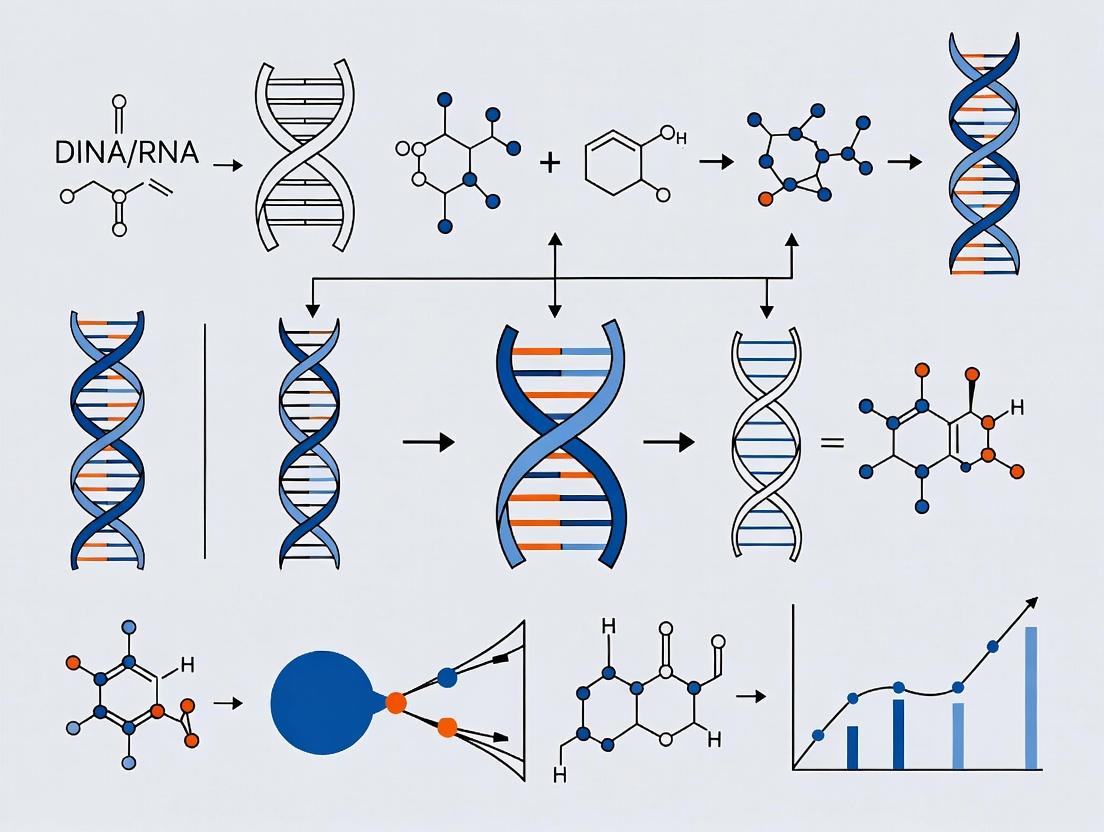
This article provides a comprehensive review for researchers, scientists, and drug development professionals on the cutting-edge field of DNA/RNA interaction systems in therapeutics.
Harnessing the Double Helix: DNA/RNA Interaction Systems as Next-Generation Therapeutics
Abstract
This article provides a comprehensive review for researchers, scientists, and drug development professionals on the cutting-edge field of DNA/RNA interaction systems in therapeutics. It begins by establishing the foundational biology of nucleic acid interactions, exploring mechanisms like antisense oligonucleotides, RNA interference, and CRISPR-Cas systems. The article then details key methodological approaches, delivery platforms, and current clinical applications. It addresses critical challenges in optimization, including off-target effects, delivery hurdles, and immunogenicity. Finally, it evaluates the validation strategies and comparative advantages of different systems, offering a holistic view of their transformative potential and pathways toward clinical translation.
The Blueprint of Life as a Drug: Core Principles of DNA/RNA Therapeutics
Nucleic acid therapeutics represent a paradigm shift, directly targeting the central dogma's information flow (DNA→RNA→protein) to treat disease. Within the broader thesis of DNA/RNA interaction systems, this field leverages programmable oligonucleotides to modulate gene expression, correct genetic errors, and harness cellular machinery for therapeutic protein production. This whitepaper details the core principles, modalities, experimental approaches, and clinical translation of these agents.
Core Modalities and Mechanisms of Action
Nucleic acid therapeutics are broadly classified by their target within the central dogma and their mechanism.
DNA-Targeting Systems
- Gene Therapy (Viral Vectors): Delivery of functional transgenes to complement a defective gene (e.g., AAV vectors for RPE65 mutation).
- Gene Editing (CRISPR-Cas): Precise, nuclease-mediated DNA double-strand breaks followed by repair via Non-Homologous End Joining (NHEJ) or Homology-Directed Repair (HDR).
RNA-Targeting Systems
- Antisense Oligonucleotides (ASOs): Single-stranded DNA/RNA analogs that induce RNase H-mediated degradation of complementary mRNA or modulate splicing.
- RNA Interference (siRNA, shRNA): Small interfering RNA (siRNA) duplexes guide the RISC complex to cleave complementary mRNA.
- miRNA Mimics & Inhibitors: Modulate the function of endogenous microRNAs.
- mRNA Therapeutics: In vitro transcribed, modified mRNA delivered to cells to serve as a template for transient therapeutic protein production (e.g., vaccines, protein replacement).
Aptamers
- Nucleic Acid Aptamers: Structured single-stranded DNA or RNA oligonucleotides that bind specific molecular targets (proteins, cells) with high affinity, functioning as chemical antibodies.
Table 1: Comparison of Major Nucleic Acid Therapeutic Modalities
| Modality | Typical Size (nt) | Primary Mechanism | Key Delivery Challenge | Clinical Example (FDA Approved) |
|---|---|---|---|---|
| ASO | 16-20 | RNase H cleavage, Splicing modulation | Nuclease degradation, Off-target effects | Nusinersen (Spinraza) |
| siRNA | 19-21 | RISC-mediated mRNA cleavage | Endosomal escape | Patisiran (Onpattro) |
| mRNA | 500-5000 | Translational protein production | Immunogenicity, In vivo stability | COVID-19 Vaccines |
| Gene Therapy (AAV) | ~4700 bp | Transgene expression | Immune response, Capsid tropism | Voretigene neparvovec (Luxturna) |
| CRISPR-Cas9 | gRNA: ~20 | DNA cleavage & repair | Off-target edits, Delivery efficiency | Casgevy (exa-cel) [Approved 2023] |
Table 2: Common Chemical Modifications for Oligonucleotide Stability and Efficacy
| Modification | Position | Key Benefit | Trade-off |
|---|---|---|---|
| Phosphorothioate (PS) | Backbone | Increases nuclease resistance, protein binding | Can increase toxicity |
| 2'-O-Methyl (2'-OMe) | Sugar | Increases nuclease resistance, reduces immunogenicity | Can reduce binding affinity |
| 2'-O-Methoxyethyl (2'-MOE) | Sugar | Greatly increases nuclease resistance & binding affinity | Increased synthetic complexity |
| Locked Nucleic Acid (LNA) | Sugar | Very high binding affinity, nuclease resistance | Risk of hepatotoxicity |
| N-Acetylgalactosamine (GalNAc) | Conjugate (3' end) | Targets asialoglycoprotein receptor for hepatocyte delivery | Liver-specific |
Experimental Protocols
Protocol: In Vitro Screening of siRNA Efficacy
Objective: To identify potent siRNA sequences targeting a gene of interest (GOI) in a cell culture model. Materials: See "Scientist's Toolkit" below. Method:
- Design & Acquisition: Design 3-5 siRNAs targeting different regions of the GOI mRNA using established algorithms. Include a non-targeting negative control (NC) and a positive control (e.g., GAPDH siRNA).
- Cell Seeding: Seed adherent cells (e.g., HeLa, HEK293) in a 96-well plate at 30-50% confluence in antibiotic-free growth medium. Incubate 24h.
- Transfection Complex Formation: For each well, dilute 5 pmol siRNA in 25 µL Opti-MEM. Dilute 0.3 µL lipofectamine RNAiMAX in 25 µL Opti-MEM in a separate tube. Incubate both 5 min. Combine siRNA and lipofectamine dilutions, mix gently, incubate 20 min at RT.
- Transfection: Add 50 µL of complex dropwise to cells. Gently swirl plate.
- Incubation: Incubate cells for 48-72h at 37°C, 5% CO2.
- Analysis:
- mRNA Knockdown (qRT-PCR): Lyse cells, isolate RNA, reverse transcribe to cDNA, perform qPCR for GOI normalized to housekeeping gene (e.g., β-actin).
- Protein Knockdown (Western Blot): Lyse cells in RIPA buffer, run SDS-PAGE, transfer, probe with anti-GOI and anti-β-actin antibodies.
- Data Analysis: Calculate % GOI expression relative to NC siRNA.
Protocol: Lipid Nanoparticle (LNP) Formulation for mRNA Delivery
Objective: Formulate ionizable lipid-based LNPs encapsulating mRNA via microfluidic mixing. Materials: mRNA (clean, modified), ionizable lipid (e.g., DLin-MC3-DMA), phospholipid (DSPC), cholesterol, PEG-lipid (DMG-PEG2000), ethanol, citrate buffer (pH 4.0), microfluidic mixer (e.g., NanoAssemblr), dialysis cassettes. Method:
- Prepare Lipid Stock: Dissolve ionizable lipid, DSPC, cholesterol, and PEG-lipid in ethanol at a molar ratio (e.g., 50:10:38.5:1.5). Total lipid concentration ~12.5 mM.
- Prepare Aqueous Phase: Dilute mRNA in citrate buffer (pH 4.0) to ~0.2 mg/mL.
- Microfluidic Mixing: Load lipid-ethanol and mRNA-buffer solutions into separate syringes. Pump both streams into a mixing chamber at a fixed total flow rate (e.g., 12 mL/min) and a 3:1 aqueous:ethanol volumetric ratio. Collect effluent.
- Buffer Exchange & Dialysis: Immediately dilute the LNP formulation 1:5 in PBS. Transfer to a dialysis cassette (MWCO 10kDa) and dialyze against PBS for 18-24h at 4°C to remove ethanol and adjust pH.
- Characterization: Measure particle size and PDI via DLS, mRNA encapsulation efficiency using a Ribogreen assay, and sterile filter (0.22 µm).
Visualizations
Central Dogma and Therapeutic Intervention Points
Title: Therapeutic Targeting of the Central Dogma
siRNA Mechanism and Endosomal Escape Challenge
Title: siRNA Delivery Pathway and Key Barrier
The Scientist's Toolkit: Key Research Reagents & Materials
Table 3: Essential Reagents for Nucleic Acid Therapeutics Research
| Item | Function/Application | Example Product/Brand |
|---|---|---|
| Chemically Modified Oligonucleotides | ASO/siRNA with PS, 2'-MOE, LNA modifications for stability & activity. | Custom synthesis (IDT, Horizon Discovery) |
| In Vitro Transcription Kit | High-yield synthesis of research-grade mRNA with cap analog incorporation. | MEGAscript (Thermo Fisher) |
| Transfection Reagent (RNAi) | Lipid-based carrier for efficient siRNA/ASO delivery in vitro. | Lipofectamine RNAiMAX (Thermo Fisher) |
| Ionizable Cationic Lipid | Critical component of LNPs for encapsulating and delivering mRNA/siRNA. | DLin-MC3-DMA (MedKoo) |
| GalNAc Conjugation Reagent | Enables targeted delivery of oligonucleotides to hepatocytes. | GalNAc-NHS Ester (BroadPharm) |
| Ribogreen Assay Kit | Quantifies free vs. encapsulated nucleic acid in LNP formulations. | Quant-iT RiboGreen (Thermo Fisher) |
| RNase H Activity Assay | Measures ASO activity via enzymatic cleavage of RNA-DNA duplex. | Commercial ELISA/Spectrophotometric kits |
| CRISPR-Cas9 Nuclease | Wildtype or modified Cas9 protein for in vitro or ex vivo gene editing. | S. pyogenes Cas9 (NEB, Integrated DNA Tech) |
This whitepaper details the core mechanistic paradigms of DNA/RNA interaction systems currently revolutionizing therapeutic research. ASOs, RNA interference (RNAi), and CRISPR-Cas represent distinct, yet complementary, approaches for precise gene modulation. Understanding their operational mechanisms, experimental workflows, and comparative attributes is essential for advancing targeted therapeutic development.
Antisense Oligonucleotides (ASOs): Single-stranded, synthetically modified DNA/RNA molecules (typically 16-22 nucleotides) that hybridize to complementary target RNA via Watson-Crick base pairing. This binding can induce target degradation via RNase H1 recruitment (gapmer design), modulate splicing (splice-switching ASOs), or sterically block translation/RNA-protein interactions.
RNA Interference (RNAi):
- siRNA (small interfering RNA): Synthetic 21-23 bp duplexes. One strand (guide) is loaded into the RNA-induced silencing complex (RISC), directing it to complementary mRNA for endonucleolytic cleavage by Ago2.
- shRNA (short hairpin RNA): DNA-encoded RNA molecules expressed from viral vectors. They are processed in the nucleus by Drosha and in the cytoplasm by Dicer into functional siRNAs, enabling long-term gene knockdown.
CRISPR-Cas Systems: DNA-targeting platforms. The most common, CRISPR-Cas9, uses a single guide RNA (sgRNA) to direct the Cas9 nuclease to a complementary genomic locus, where it generates a double-strand break (DSB). This is repaired by error-prone non-homologous end joining (NHEJ), causing insertions/deletions (indels) and gene disruption, or by homology-directed repair (HDR) for precise gene editing.
Table 1: Core Quantitative Comparison of Modalities
| Feature | ASOs | siRNA | shRNA | CRISPR-Cas9 (Nuclease) |
|---|---|---|---|---|
| Target Molecule | RNA (Nuclear/Cytoplasmic) | Cytoplasmic mRNA | Cytoplasmic mRNA | Genomic DNA |
| Primary Mechanism | RNase H1 deg., Steric Block, Splicing Mod. | RISC-mediated cleavage | RISC-mediated cleavage (after processing) | DSB induction & repair |
| Typical Size (nt/bp) | 16-22 nt (single-stranded) | 21-23 bp (duplex) | ~50-70 nt (transcript) | sgRNA: ~100 nt |
| Delivery Format | Chemically synthesized; Some conjugated | Chemically synthesized; LNP/formulated | Viral vector (e.g., LV, AAV) encoded | RNP, or plasmid/viral encoded |
| Duration of Effect | Days to weeks (transient) | 1-4 weeks (transient) | Weeks to months (stable expression) | Permanent (in dividing cells) |
| Primary Off-Target Risk | RNA-Seq predicted hybridization-dependent | Seed-region mediated (RISC) | Seed-region mediated (RISC) | sgRNA-dependent; DNA mismatch tolerance |
| Key Regulatory Enzyme | RNase H1 | Argonaute 2 (Ago2) | Drosha, Dicer, Ago2 | Cas9 nuclease |
Table 2: Common Chemical Modifications for Stability & Delivery
| Modality | Common Modifications (Backbone/Sugar) | Purpose |
|---|---|---|
| ASOs | Phosphorothioate (PS) backbone, 2'-O-Methyl (2'-OMe), 2'-O-Methoxyethyl (2'-MOE), Locked Nucleic Acid (LNA) | Nuclease resistance, improved binding affinity (Tm), tissue distribution, protein binding. |
| siRNA | PS backbone, 2'-OMe, 2'-Fluoro (2'-F) | Stabilization against nucleases, reduced immunogenicity, improved RISC loading specificity. |
Detailed Experimental Protocols
Protocol 1: In Vitro Knockdown Using Lipid Nanoparticle (LNP)-delivered siRNA Objective: To assess gene silencing efficiency of a candidate siRNA in a mammalian cell line.
- Cell Seeding: Seed adherent cells (e.g., HeLa, HepG2) in a 24-well plate at 70-80% confluency in complete growth medium without antibiotics 24h prior.
- LNP/siRNA Complex Formation: For each well, dilute 5 pmol of siRNA in 50 µL of serum-free Opt-MEM. Dilute 1-2 µL of a commercial transfection lipid (e.g., Lipofectamine RNAiMAX) in 50 µL Opt-MEM. Incubate separately for 5 min. Combine diluted siRNA and lipid, mix gently, incubate 15-20 min at RT.
- Transfection: Add the 100 µL complex dropwise to cells in 400 µL of complete medium. Include a non-targeting siRNA control and an untreated control.
- Incubation: Incubate cells at 37°C, 5% CO₂ for 48-72h.
- Analysis: Harvest cells for total RNA isolation. Perform reverse transcription and quantitative PCR (RT-qPCR) using primers for the target gene and a housekeeping gene (e.g., GAPDH). Calculate knockdown efficiency via the 2^(-ΔΔCt) method.
Protocol 2: CRISPR-Cas9-Mediated Gene Knockout via NHEJ Objective: To generate a frameshift mutation and disrupt a gene of interest.
- sgRNA Design & Cloning: Design a 20-nt sgRNA sequence targeting an early coding exon of the target gene. Clone the sequence into a Cas9/sgRNA expression plasmid (e.g., pSpCas9(BB)-2A-Puro).
- Cell Transfection: Seed HEK293T or relevant cell line in a 6-well plate. At 80% confluency, transfect with 2 µg of the sgRNA plasmid using a suitable transfection reagent (e.g., PEI). Include a plasmid expressing a non-targeting sgRNA as control.
- Selection/Pooling: 48h post-transfection, begin puromycin selection (e.g., 1-2 µg/mL) for 3-5 days to enrich transfected cells.
- Screening:
- Genomic DNA Extraction: Harvest pooled cells, extract gDNA.
- T7 Endonuclease I (T7EI) Assay: PCR-amplify the target region (~500 bp). Denature and reanneal the PCR products to form heteroduplexes if indels are present. Digest with T7EI and analyze fragments by gel electrophoresis. Cleavage indicates mutation.
- Sequence Verification: Clone PCR products from the pool into a TA vector. Sanger sequence 10-20 clones to determine the spectrum of indels.
Visualizations: Pathways and Workflows
Title: ASO Mechanism via RNase H1 Recruitment
Title: siRNA Pathway and RISC Activation
Title: CRISPR-Cas9 Gene Editing Experimental Workflow
The Scientist's Toolkit: Essential Research Reagents
Table 3: Key Reagent Solutions for Featured Experiments
| Reagent / Material | Function / Application | Example (Commercial) |
|---|---|---|
| Lipofectamine RNAiMAX | Cationic lipid reagent for efficient siRNA/miRNA delivery into a wide range of mammalian cell lines. | Thermo Fisher Scientific |
| Opti-MEM I Reduced Serum Medium | Serum-free medium used to dilute lipids and nucleic acids during transfection complex formation, minimizing interference. | Thermo Fisher Scientific |
| Dharmacon ON-TARGETplus siRNA | A library of pre-designed, chemically modified siRNAs with verified high potency and reduced off-target effects. | Horizon Discovery |
| pSpCas9(BB)-2A-Puro (PX459) V2.0 | All-in-one plasmid expressing S. pyogenes Cas9, a cloning site for sgRNA, and a puromycin resistance gene for selection. | Addgene #62988 |
| T7 Endonuclease I | Surveyor nuclease used to detect small indels by cleaving mismatched heteroduplex DNA formed from mutant and wild-type PCR products. | New England Biolabs |
| Alt-R S.p. Cas9 Nuclease V3 | High-purity, recombinant Cas9 protein for formation of ribonucleoprotein (RNP) complexes with synthetic sgRNA, enabling rapid editing. | Integrated DNA Technologies |
| Polyethylenimine (PEI) MAX | High-efficiency, linear polycationic polymer for transient plasmid DNA transfection, including CRISPR vectors. | Polysciences, Inc. |
| RNeasy Mini Kit | For rapid, high-quality total RNA isolation from animal cells and tissues, essential for post-knockdown RT-qPCR analysis. | QIAGEN |
| TruCut Cas9 SmartNuclease | A cell line engineered to stably express Cas9, allowing gene editing with transfection of sgRNA alone, improving consistency. | Horizon Discovery |
The therapeutic modulation of genetic information flow represents a frontier in precision medicine. This guide details the core biological targets—mRNAs, non-coding RNAs (ncRNAs), and genomic DNA—within the conceptual framework of DNA/RNA interaction systems. These systems encompass the complex, dynamic interplay between genetic code, its transcriptional output, and regulatory networks. Modern therapeutic strategies aim to intercept, correct, or rewrite components of these systems to treat genetic disorders, cancers, and infectious diseases. The advent of CRISPR-based technologies, antisense oligonucleotides (ASOs), and RNA interference (RNAi) has transformed these targets from subjects of study into addressable therapeutic endpoints.
Table 1: Comparative Profile of Key Biological Targets in Therapeutics
| Target Class | Primary Function | Key Therapeutic Modalities | Example Delivery Systems | Approx. Clinical Stage Candidates (as of 2024)* |
|---|---|---|---|---|
| mRNA | Protein-coding template; transient expression. | mRNA vaccines, ASOs, siRNA, RNAi (RISC-mediated degradation). | Lipid Nanoparticles (LNPs), GalNAc conjugates, polymeric nanoparticles. | >500 (Incl. approved vaccines & Onpattro) |
| Non-Coding RNAs | Regulatory (miRNA, lncRNA, snoRNA). | ASOs (antagomirs), siRNA, CRISPRi/a, small molecule inhibitors. | LNPs, viral vectors (AAV), GalNAc conjugates. | ~150 (e.g., miR-122 antagonist for hepatitis) |
| Genomic DNA | Permanent genetic blueprint. | CRISPR-Cas9/12 for knockout/knock-in, Base/Prime Editing, ZFNs, TALENs. | Viral vectors (AAV, Lentivirus), LNPs, electroporation. | >80 (In vivo & ex vivo CRISPR trials) |
*Data compiled from recent clinicaltrials.gov analytics and industry reports.
Table 2: Key Quantitative Metrics for Major Gene Editing Platforms
| Platform | Typical Editing Efficiency (in vitro) | Key Off-Target Risk | Primary Repair Pathway Harnessed | Common Readout Method |
|---|---|---|---|---|
| CRISPR-Cas9 (NHEJ) | 40-80% | Moderate-High (dsDNA breaks) | Non-Homologous End Joining (NHEJ) | T7E1 assay, NGS |
| CRISPR-Cas9 (HDR) | 5-30% | Moderate-High (dsDNA breaks) | Homology-Directed Repair (HDR) | NGS, Flow Cytometry |
| Base Editors (BE) | 10-50% | Low-Moderate (single-strand nick) | Mismatch Repair/Base Excision | NGS, RFLP Analysis |
| Prime Editors (PE) | 10-40% | Very Low | DNA Gap Repair/Synthesis | NGS, Digital PCR |
Experimental Protocols for Target Engagement & Validation
Protocol: siRNA/miRNA Transfection and Knockdown Validation
Objective: To silence a target mRNA using siRNA and quantify knockdown efficacy. Materials: Target-specific siRNA, scrambled negative control siRNA, lipofectamine/transfection reagent, cells in culture, qRT-PCR reagents, western blot materials. Procedure:
- Seed cells in a 12-well plate at 70% confluency 24h pre-transfection.
- Prepare complexes: Dilute 5 pmol siRNA in 100 µL serum-free medium. Dilute 2 µL lipofectamine in 100 µL serum-free medium. Incubate 5 min. Combine solutions, incubate 20 min at RT.
- Transfect: Add complexes dropwise to cells with 800 µL complete medium.
- Incubate for 48-72h at 37°C, 5% CO₂.
- Harvest: Lyse cells for RNA extraction (TRIzol) and protein extraction (RIPA buffer).
- Validate:
- qRT-PCR: Synthesize cDNA, run TaqMan or SYBR Green assay for target mRNA. Normalize to GAPDH/β-actin. Calculate % knockdown via 2^(-ΔΔCt) method.
- Western Blot: Probe for target protein, normalize to loading control (e.g., β-actin).
Protocol: CRISPR-Cas9 Knockout via NHEJ and Genotypic Validation
Objective: To generate a frameshift knockout in a target gene and validate editing. Materials: sgRNA (cloned into Cas9 plasmid or as synthetic crRNA:tracrRNA duplex), Cas9 protein or expression plasmid, delivery system (electroporation/lipofection), target cells, surveyor/T7E1 assay kit, NGS primers. Procedure:
- Design sgRNA using tools like CHOPCHOP or Broad Institute's design resource.
- Deliver CRISPR components:
- Ribonucleoprotein (RNP): Complex 3 µg Cas9 protein with 1 µg sgRNA (or crRNA:tracrRNA duplex), incubate 10 min, electroporate into cells.
- Plasmid: Co-transfect 1 µg Cas9 expression plasmid + 0.5 µg sgRNA plasmid.
- Culture cells for 5-7 days to allow editing and protein turnover.
- Validate Editing:
- Genomic DNA Extraction: Use a column-based kit.
- PCR Amplification: Amplify 300-500bp region flanking the target site.
- T7E1 Assay: Hybridize PCR products, digest with T7 Endonuclease I (cleaves mismatches from indels). Run on agarose gel. % editing estimated from band intensities.
- Sanger Sequencing & Deconvolution: Sequence PCR product, analyze trace files with ICE (Inference of CRISPR Edits) or TIDE software.
- NGS Validation: Amplify target locus with barcoded primers, sequence on Illumina platform, analyze with CRISPResso2.
Visualizing Key Pathways & Workflows
Title: mRNA Targeting via ASO and siRNA Mechanisms
Title: CRISPR-Cas9 Gene Editing Experimental Workflow
Title: LncRNA Regulatory Mechanisms as Therapeutic Targets
The Scientist's Toolkit: Research Reagent Solutions
Table 3: Essential Reagents for DNA/RNA Target Research
| Reagent Category | Specific Example(s) | Function & Application | Key Considerations |
|---|---|---|---|
| sgRNA Synthesis | Synthetic crRNA:tracrRNA; sgRNA expression plasmids (e.g., pSpCas9). | Provides targeting specificity for CRISPR-Cas systems. Chemical synthesis vs. in vitro transcription vs. plasmid-based. | Off-target scores, chemical modifications (e.g., 2'-O-methyl), delivery format. |
| Cas9 Delivery | Recombinant Cas9 protein; Cas9 mRNA; AAV-Cas9 vectors. | The effector enzyme for DNA cleavage. RNP delivery is fast, reduces off-targets & immunogenicity. | Size constraints for AAV (~4.7kb), immunogenicity of bacterial Cas9. |
| Nucleic Acid Delivery | Lipid Nanoparticles (LNPs); GalNAc conjugates; Electroporation systems (Neon, Amaxa). | Enables intracellular delivery of ASOs, siRNA, RNP, mRNA. | Cell type-specific toxicity, efficiency, scalability (in vitro vs. in vivo). |
| Editing Detection | T7E1/Surveyor Nuclease; ICE/TIDE analysis software; NGS kits (Illumina). | Validates genomic editing efficiency and characterizes indel profiles. | T7E1 sensitivity (~5%); NGS is gold standard but costly; software choice critical. |
| RNA Analysis | Locked Nucleic Acid (LNA) probes; RNAscope kits; qRT-PCR assays (TaqMan). | Detects and quantifies mRNA and ncRNA expression with high sensitivity and specificity. | LNA increases probe affinity; RNAscope allows spatial transcriptomics in situ. |
| Base/Prime Editors | BE4max plasmid; PE2 plasmid; pegRNA design tools. | Enables precise point mutations or small insertions/deletions without DSBs. | pegRNA design is complex; efficiency varies by locus and cell type. |
| Control Reagents | Scrambled siRNA; Non-targeting sgRNA; Mock delivery reagents. | Essential negative controls to distinguish sequence-specific effects from delivery artifacts. | Must use same chemistry and delivery method as active reagent. |
This whitepaper examines the evolution of therapeutic modalities, with a specific focus on the disruptive impact of DNA/RNA interaction systems. It provides a technical guide to the current market and the experimental paradigms driving this field, contextualized within the broader thesis that programmable nucleic acid technologies represent a fundamental shift in therapeutic intervention.
Historical Evolution of Therapeutic Modalities
The therapeutic landscape has progressed through distinct epochs, each defined by a core mechanistic paradigm.
Table 1: Historical Epochs of Therapeutics
| Epoch | Time Period | Core Modality | Key Limitation | Exemplar |
|---|---|---|---|---|
| Empirical Small Molecules | Pre-20th Century | Plant-derived compounds, synthetic chemicals | Lack of target specificity, off-target toxicity | Aspirin, Digoxin |
| Targeted Small Molecules & Proteins | Late 20th Century | Engineered inhibitors, recombinant proteins | Druggability of targets, immunogenicity, production cost | Imatinib, Insulin |
| Biologics & Monoclonal Antibodies | 1990s-2010s | Protein-based targeting of extracellular targets | Complexity of intracellular targets, cold storage | Adalimumab, Trastuzumab |
| Nucleic Acid Therapeutics | 2010s-Present | DNA/RNA-based gene regulation, editing, and protein replacement | Delivery, durability, potential immunogenicity | Nusinersen, COVID-19 mRNA vaccines |
Live search data confirms the accelerating financial and pipeline growth of nucleic acid therapies. The market is segmented into several technology platforms.
Table 2: Current Market Overview of Key Nucleic Acid Therapeutic Platforms (2023-2024)
| Platform | Mechanism of Action | Approved Examples | Global Market Size (2023) | Projected CAGR (2024-2030) | Pipeline Count (Phase II/III) |
|---|---|---|---|---|---|
| Antisense Oligonucleotides (ASOs) | RNase H-mediated degradation or splicing modulation of pre-mRNA | Nusinersen, Inotersen | ~$4.5 Billion | ~9% | 45+ |
| siRNA | RNA-induced silencing complex (RISC)-mediated mRNA degradation | Patisiran, Inclisiran | ~$6 Billion | ~22% | 60+ |
| mRNA | Direct in vivo production of therapeutic/prophylactic proteins | COVID-19 vaccines (BNT162b2, mRNA-1273) | ~$55 Billion* | ~10%* | 80+ |
| Gene Therapy (viral vector) | Permanent genomic integration or episomal DNA delivery | Voretigene neparvovec, Onasemnogene abeparvovec | ~$7 Billion | ~18% | 120+ |
| CRISPR/Cas Systems | Targeted genomic DNA editing (knock-out, knock-in, correction) | Casgevy (exa-cel), Lyfgenia | Recently Launched | ~30% | 25+ |
Note: mRNA market size heavily influenced by COVID-19 vaccines; therapeutic mRNA CAGR is significantly higher. Data synthesized from recent industry reports (Nature Reviews Drug Discovery, GlobalData, PubMed search).
Core Experimental Protocols for DNA/RNA Therapeutic Development
Protocol: In Vitro Screening of siRNA/ASO Candidates Using Reporter Assays
Objective: To rapidly screen and identify potent siRNA or ASO sequences targeting a gene of interest (GOI) in a cellular model.
Detailed Methodology:
- Design & Synthesis: Design a library of 50-200 siRNA (19-21 bp duplex) or ASO (16-20 bp, chemistries: MOE, PS, LNA) candidates targeting various regions of the GOI mRNA, including the coding region and 3' UTR. Include negative control (scrambled sequence) and positive control (targeting a housekeeping gene) oligonucleotides.
- Reporter Construct Cloning: Clone the 3' UTR (or full cDNA) of the GOI downstream of a luciferase (e.g., Firefly) reporter gene in a plasmid vector.
- Cell Transfection:
- Plate HEK293 or other relevant cells in 96-well plates at 10,000 cells/well.
- After 24 hours, co-transfect cells using a lipid nanoparticle (LNP) or polymer-based transfection reagent.
- Group A: 50 ng reporter plasmid + 5 nM candidate siRNA/ASO (in triplicate).
- Group B: 50 ng reporter plasmid + 5 nM negative control oligonucleotide.
- Group C: 50 ng reporter plasmid + 5 nM positive control oligonucleotide.
- Include a control plasmid expressing Renilla luciferase for normalization.
- Incubation & Harvest: Incubate cells for 48-72 hours post-transfection.
- Dual-Luciferase Assay: Lyse cells and measure Firefly and Renilla luminescence using a plate reader. Normalize Firefly signal to Renilla signal for each well.
- Data Analysis: Calculate percentage inhibition for each candidate:
[1 - (Avg. Normalized Signal_Candidate / Avg. Normalized Signal_Negative Control)] * 100%. Select top 3-5 candidates with >70% inhibition for downstream validation via qRT-PCR of endogenous mRNA.
Protocol: In Vivo Efficacy Assessment of LNP-formulated mRNA
Objective: To evaluate the protein expression kinetics and therapeutic effect of an LNP-formulated mRNA in a murine disease model.
Detailed Methodology:
- mRNA & LNP Preparation: Synthesize mRNA encoding the therapeutic protein (e.g., human factor IX for hemophilia B) via in vitro transcription (IVT) with 5' capping and nucleotide modification (e.g., N1-methylpseudouridine). Purify mRNA using HPLC or cellulose-based methods. Formulate mRNA into LNPs using a microfluidic mixer, incorporating an ionizable lipid (e.g., DLin-MC3-DMA), cholesterol, DSPC, and PEG-lipid.
- Animal Dosing: Use C57BL/6 mice (n=8 per group). Administer a single intravenous injection via the tail vein:
- Treatment Group: LNP-formulated therapeutic mRNA (e.g., 0.5 mg/kg).
- Control Group: LNP-formulated non-coding mRNA (same dose).
- Blank Control: PBS alone.
- Pharmacokinetic/Pharmacodynamic Sampling:
- At pre-determined timepoints (e.g., 3h, 6h, 12h, 1d, 2d, 4d, 7d), collect retro-orbital blood samples (≈50 µL) from each mouse under anesthesia.
- Isolate serum via centrifugation.
- Analysis:
- Protein Quantification: Measure serum levels of the human therapeutic protein using a specific ELISA.
- Functional Assay: Perform a coagulation assay (e.g., aPTT for factor IX) to confirm protein activity.
- Tissue Analysis (Terminal): At 48 hours and 7 days, euthanize subsets of mice. Harvest liver, spleen, and target tissue for RNA extraction (qRT-PCR for transgene expression) and histology (IHC for protein localization).
- Statistical Analysis: Compare protein levels and functional activity between groups using two-way ANOVA. A sustained, significant elevation in the treatment group indicates successful in vivo delivery and expression.
Visualization of Key Systems and Workflows
Title: Nucleic Acid Therapeutic Development Pipeline
Title: ASO vs. siRNA Mechanism of Action
The Scientist's Toolkit: Key Research Reagent Solutions
Table 3: Essential Reagents for DNA/RNA Therapeutic Research
| Reagent Category | Specific Example(s) | Function in Research | Key Consideration |
|---|---|---|---|
| Modified Nucleotides | N1-methylpseudouridine (m1Ψ), 5-methylcytidine, Phosphorothioate (PS) backbone | Reduces immunogenicity of synthetic RNA (m1Ψ); increases nuclease resistance and plasma half-life (PS). | Optimization required for balance of efficacy, stability, and low toxicity. |
| Ionizable Lipids | DLin-MC3-DMA, SM-102, ALC-0315 | Critical component of LNPs; protonates in endosome to enable mRNA release into cytosol. | Structure determines efficacy, biodistribution, and tolerability. Patent landscape is complex. |
| GalNAc Conjugation Reagents | Tris(GalNAc) ligand, NHS-PEG4-Maleimide | Enables targeted delivery of ASOs/siRNA to hepatocytes via asialoglycoprotein receptor (ASGPR) mediated endocytosis. | Liver-specific. Dramatically increases potency, allowing sub-mg/kg dosing. |
| CRISPR/Cas Components | Cas9 mRNA, sgRNA, AAV vectors (for DNA template) | Enables permanent genomic editing (knock-out, correction, knock-in). | Delivery efficiency, off-target editing analysis, and immunogenicity to bacterial Cas9 are critical hurdles. |
| In Vitro Transcription Kits | T7 ARCA or co-transcriptional capping systems (CleanCap) | High-yield synthesis of research-grade capped mRNA. Critical for preclinical proof-of-concept. | Cap1 structure is essential for reduced immunogenicity and high translation. |
Design, Delivery, and Deployment: Practical Strategies for Nucleic Acid Drugs
In Silico Design and Sequence Optimization for Specificity and Efficacy
This whitepaper provides a technical guide for the in silico design and optimization of nucleic acid-based therapeutics, framed within a broader thesis on DNA/RNA interaction systems. As these systems—including ASOs, siRNAs, and CRISPR-Cas guides—move to the forefront of therapeutic research, computational approaches are indispensable for achieving the requisite specificity and efficacy while minimizing off-target effects.
The therapeutic application of designed nucleic acids hinges on two pillars: the specificity of target recognition and the efficacy of the intended modulation (e.g., knockdown, editing, splicing). Empirical screening is costly and low-throughput. In silico methodologies provide a rational, high-throughput framework for pre-validating designs, modeling interactions, and predicting biological behavior, thereby de-risking early-stage research and accelerating development.
Foundational Principles forIn SilicoDesign
Thermodynamic Stability & Specificity
The binding energy (ΔG) between a therapeutic oligonucleotide and its target is a primary determinant of potency. However, favorable ΔG with off-target sequences must be minimized. Key parameters include:
- Melting Temperature (Tm): Predicts stable binding under physiological conditions.
- ΔΔG (Target vs. Off-Target): Quantifies binding specificity.
- Seed Region Analysis: Critical for siRNA and miRNA; complementarity in the "seed" region (nucleotides 2-8 from the 5' end of the guide strand) is a major driver of off-target effects.
Sequence Homology & Off-Target Prediction
Algorithms (e.g., BLAST, Smith-Waterman) are used to scan genomic and transcriptomic databases for potential off-target sites with partial complementarity. Stringency is adjusted based on the mechanism of action (e.g., RNAse H-dependent ASOs require shorter stretches of complementarity for cleavage than CRISPR-Cas9 for indel formation).
Secondary Structure Considerations
Both the target RNA (accessibility) and the therapeutic oligonucleotide itself must be analyzed for intramolecular folding that could impede hybridization. Tools predict Minimum Free Energy (MFE) structures and partition functions to identify open loops in the target.
Chemical Modification Integration
Modern designs incorporate backbone (e.g., phosphorothioate), sugar (e.g., 2'-O-Methyl, 2'-F, LNA), and base modifications. In silico models must account for how these alter Tm, nuclease resistance, and protein-binding properties.
Table 1: Key Computational Parameters for Different Modalities
| Parameter | siRNA/shRNA | Antisense Oligonucleotides (ASOs) | CRISPR-Cas gRNA | Primary Influence |
|---|---|---|---|---|
| Optimal Length | 21-23 bp duplex | 16-20 nt (gapmer) | 20 nt (SpCas9) | Specificity, Efficacy |
| GC Content Range | 30-55% | 40-60% | 40-70% | Stability, Specificity |
| Tm Optimal Range | 60-80°C | 45-65°C (DNA/RNA hybrid) | N/A (DNA binding) | Binding Affinity |
| Off-Target Mismatch Tolerance | Low (esp. seed region) | Moderate (cluster tolerated) | High (PAM-distal) | Specificity |
| Critical Search Region | Seed region (pos 2-8) | Gapmer: Central DNA gap | PAM-proximal 8-12 nt | Off-Target Prediction |
| Primary Algorithm | Smith-Waterman for transcriptome | BLAST for genome/transcriptome | CFD (Cutting Frequency Determination) | Off-Target Scoring |
Table 2: Common Chemical Modifications & In Silico Adjustments
| Modification | Typical Use | In Silico Adjustment to Tm (ΔTm per mod) | Primary Rationale |
|---|---|---|---|
| 2'-O-Methyl (2'-OMe) | siRNA, ASO (flanks) | +0.5 to +1.5 °C | Increased nuclease resistance, reduced immunostimulation |
| Locked Nucleic Acid (LNA) | ASO, siRNA (seed block) | +2 to +8 °C | Dramatically increased affinity & stability |
| Phosphorothioate (PS) | Backbone (all modalities) | -0.5 °C per link | Nuclease resistance, protein binding (tissue distribution) |
| 2'-Fluoro (2'-F) | siRNA, ASO | +1.0 to +2.5 °C | Stability, affinity, nuclease resistance |
| Morpholino | Splice-switching ASO | N/A (not a hybrid) | Complete nuclease resistance, steric blockade |
Experimental Protocols forIn Silico-Guided Validation
Protocol: ComprehensiveIn SilicoDesign Workflow for an siRNA Therapeutic
Objective: Design a siRNA with maximal on-target knockdown and minimal off-target transcriptome perturbation.
- Target Site Selection: Input full mRNA sequence. Use algorithms (e.g., from BIOPREDsi, DSIR) to score all possible 21-nt guide strands based on sequence features (e.g., AA dinucleotide start, 30-55% GC, internal stability profile).
- Specificity Filtering: Perform genome-wide alignment for each candidate guide. Score potential off-targets using weighted algorithms that heavily penalize mismatches in the seed region (positions 2-8). Apply a cut-off (e.g., ≤3 mismatches in seed region disqualifies candidate).
- Accessibility Assessment: Predict secondary structure of target mRNA (e.g., using RNAfold). Prioritize guide strands targeting regions with low MFE (open loops) over highly structured regions.
- Final Ranking & Selection: Rank candidates by a composite score balancing predicted efficacy (from Step 1) and specificity (from Step 2/3). Select top 3-5 candidates for in vitro synthesis and validation.
Protocol: Off-Target Prediction for a CRISPR-Cas9 gRNA
Objective: Identify and rank potential off-target genomic loci for a given SpCas9 gRNA.
- PAM Identification: For the 20-nt guide sequence, identify all occurrences of the NGG PAM in the reference genome.
- Genomic Locus Retrieval: Extract the 20-nt genomic sequence upstream of each PAM.
- Alignment & Scoring: Align each genomic sequence to the guide RNA. Score using the Cutting Frequency Determination (CFD) score, which assigns mismatch-specific weights, with higher penalties for mismatches in the PAM-proximal region.
- Ranking & Filtering: Rank all loci by CFD score (0-1). Manually inspect top candidates (e.g., CFD > 0.05) for gene coding regions or regulatory elements. Designs for therapeutic use often require zero predicted off-targets with CFD > 0.2.
The Scientist's Toolkit: Research Reagent Solutions
Table 3: Essential Resources for In Silico Design & Validation
| Item / Resource | Function & Explanation | Example/Provider |
|---|---|---|
| Nucleic Acid Design Suites | Integrated platforms for algorithm-driven design, specificity checking, and modification integration. | IDT's siRNA & gRNA design tools, Horizon's Dharmacon siDESIGN |
| Off-Target Prediction Software | Specialized tools for genome-wide mismatch tolerance analysis and scoring. | Cas-OFFinder (CRISPR), BLAST+ with custom scripts (ASO/siRNA) |
| Thermodynamic Prediction Tools | Calculate Tm, ΔG, and secondary structure stability for RNA/RNA or RNA/DNA hybrids. | mfold/UNAFold, RNAfold (ViennaRNA Package), DINAMelt |
| Transcriptomic/Genomic Databases | Curated reference sequences for human and model organisms are essential for homology searches. | NCBI RefSeq, ENSEMBL, UCSC Genome Browser |
| Chemical Modification Libraries | Commercial libraries of pre-modified nucleotides for screening optimal modification patterns. | Trilink BioTechnologies' CleanGels, Sigma's modified oligonucleotides |
| In Vitro Transcription/Translation Kits | For rapid experimental validation of designed sequences in cell-free systems. | Promega's TnT Systems, Thermo Fisher's PureLink |
| High-Throughput Sequencing Services | Essential for unbiased experimental off-target profiling (e.g., GUIDE-seq for CRISPR). | Illumina NGS, Azenta for amplicon sequencing |
Visualizations
DOT Diagram: siRNA Design & Off-Target Analysis Workflow
DOT Diagram: Key Design Parameters for Therapeutic Oligos
In silico design and sequence optimization represent a non-negotiable first step in the development of specific and efficacious nucleic acid therapeutics. By rigorously applying the principles, protocols, and tools outlined in this guide, researchers can systematically navigate the complex trade-offs between stability, affinity, and specificity. This computational foundation dramatically increases the probability of successful experimental validation and clinical translation, solidifying the role of rational design in the future of DNA/RNA-based medicine.
The clinical application of exogenous oligonucleotides—including antisense oligonucleotides (ASOs), small interfering RNAs (siRNAs), and antisense morpholinos—is fundamentally constrained by their inherent physicochemical and biological instability. Within the broader thesis of developing robust DNA/RNA interaction systems for therapeutics, chemical modification serves as the principal engineering strategy to overcome these limitations. Unmodified phosphodiester (PO) oligonucleotides are rapidly degraded by ubiquitous nucleases, exhibit poor cellular uptake, and can provoke unwanted immune responses. Strategic chemical modifications to the phosphate backbone and the ribose sugar ring are therefore indispensable to confer nuclease resistance, improve binding affinity to target RNA, modulate pharmacokinetic profiles, and ultimately achieve meaningful therapeutic efficacy. This whitepaper provides an in-depth technical analysis of these critical modifications, focusing on their mechanisms, quantitative impacts, and experimental validation.
Backbone Modifications
Phosphorothioate (PS)
The PS backbone modification, where a non-bridging oxygen atom in the phosphate group is replaced with sulfur, represents the first and most widely used stabilization strategy.
Mechanism: The substitution introduces chirality at phosphorus and increases oligonucleotide hydrophobicity. The primary role is to confer nuclease resistance by altering the substrate's electronic and steric properties, making it a poor fit for endo- and exonucleases. Additionally, PS modifications enhance plasma protein binding, primarily to albumin, which reduces renal clearance and facilitates tissue distribution.
Quantitative Impact: Data from recent pharmacokinetic studies are summarized in Table 1.
Table 1: Quantitative Impact of Phosphorothioate (PS) Backbone Modification
| Parameter | Unmodified PO Oligo | PS-Modified Oligo (Fully substituted) | Measurement Context |
|---|---|---|---|
| Plasma Half-life (iv, mouse) | < 5 minutes | 30 - 60 minutes | 20-mer ASO, single dose |
| Nuclease Resistance (S1 nuclease) | 100% degradation in <1 min | <10% degradation in 60 min | In vitro assay, 37°C |
| Protein Binding (Human Serum) | <10% bound | >80% bound (Albumin) | Ultrafiltration assay |
| Renal Clearance Rate | Very High | Reduced by ~90% | Rat model |
Experimental Protocol for Assessing Nuclease Resistance:
- Reagents: PS-modified and PO control oligonucleotides (20-mer), 10x S1 Nuclease Buffer (200 mM NaCl, 50 mM Sodium Acetate, 10 mM ZnSO₄, pH 4.5), S1 Nuclease (Thermofisher), Polyacrylamide Gel Electrophoresis (PAGE) loading dye, 15% Denaturing Urea-PAGE gel.
- Procedure:
- Prepare a 20 µL reaction mixture containing 1 µM oligonucleotide, 1x S1 Nuclease Buffer, and 5 units of S1 Nuclease.
- Incubate at 37°C.
- Withdraw 5 µL aliquots at time points: 0, 1, 5, 15, 30, and 60 minutes.
- Immediately quench each aliquot by adding 5 µL of PAGE loading dye containing 50 mM EDTA.
- Heat samples to 95°C for 2 minutes and load onto a 15% denaturing urea-PAGE gel.
- Run gel at constant power, stain with SYBR Gold, and visualize using a gel imager.
- Quantify intact band intensity relative to time-zero control to determine percentage of intact oligonucleotide remaining.
Phosphorodiamidate Morpholino Oligomers (PMOs)
PMOs replace the entire ribose sugar-phosphate backbone with a morpholine ring linked by phosphorodiamidate groups.
Mechanism: This neutrally charged, non-ionic structure is completely resistant to enzymatic degradation by nucleases. PMOs do not activate RNase H but sterically block translation or pre-mRNA splicing via sequence-specific binding. Their neutral nature reduces non-specific protein interactions but can limit cellular uptake without delivery agents.
Sugar (2') Modifications
2'-O-Methoxyethyl (2'-MOE)
2'-MOE adds a methoxyethyl group to the 2' oxygen of the ribose sugar.
Mechanism: The bulkier 2' substituent introduces a conformational shift towards the C3'-endo sugar pucker, which pre-organizes the oligonucleotide into an A-form helix geometry, dramatically increasing affinity for complementary RNA (thermal stability, ΔTm). It also provides significant steric hindrance against nucleases. 2'-MOE modifications are typically deployed in a "gapmer" design for RNase H-activating ASOs, with a central DNA "gap" flanked by 2'-MOE "wings."
Quantitative Impact: Data on binding affinity and stability are summarized in Table 2.
Table 2: Quantitative Impact of 2'-Sugar Modifications on Model Oligonucleotides
| Modification (per monomer) | Average ΔTm Increase (°C per mod) | Nuclease Resistance (Relative to PO) | RNase H Compatibility |
|---|---|---|---|
| 2'-O-Methyl (2'-OMe) | +1.0 to +1.5 | High | No (Steric block) |
| 2'-O-Methoxyethyl (2'-MOE) | +1.5 to +2.5 | Very High | No (Used in flanking regions) |
| Locked Nucleic Acid (LNA) | +2.0 to +8.0 | Extremely High | No (Used in flanking regions) |
| 2'-Fluoro (2'-F) | +1.5 to +2.5 | High | Yes (in specific contexts) |
Note: ΔTm is the increase in melting temperature per modification relative to a DNA:RNA duplex. Nuclease resistance is a qualitative assessment based on serum stability assays.
Experimental Protocol for Determining Melting Temperature (Tm):
- Reagents: Modified oligonucleotide, complementary RNA strand, 1x Tm Buffer (e.g., 10 mM Sodium Phosphate, 100 mM NaCl, 0.1 mM EDTA, pH 7.0), UV-Vis spectrophotometer with temperature controller and high-resolution melting capability.
- Procedure:
- Prepare a duplex solution containing 2 µM of each oligonucleotide strand in 1x Tm Buffer.
- Place solution in a quartz cuvette with a 1-cm path length in the spectrophotometer.
- Denature the duplex by heating to 95°C for 5 minutes, then cool slowly to 20°C.
- Set the spectrophotometer to monitor absorbance at 260 nm.
- Program a thermal ramp from 20°C to 95°C at a slow, constant rate (e.g., 0.5°C/minute).
- The instrument will generate a melting curve (A260 vs. Temperature). The Tm is defined as the temperature at which half of the duplexes are dissociated, calculated from the first derivative (dA/dT) peak maximum.
- Compare Tm values of modified vs. unmodified control duplexes.
Locked Nucleic Acid (LNA)
LNA "locks" the ribose sugar in the C3'-endo conformation via a 2'-O, 4'-C methylene bridge.
Mechanism: This conformational restriction provides the greatest increase in thermal stability and nuclease resistance among common 2' modifications. The dramatic ΔTm enhancement allows for the design of much shorter oligonucleotides. Similar to 2'-MOE, LNAs are used in gapmer or mixmer designs and are not compatible with the RNase H mechanism when incorporated.
Visualizing Modification Strategies and Effects
Oligonucleotide Modification Strategy Map
Nuclease Stability Assay Workflow
The Scientist's Toolkit: Key Research Reagent Solutions
Table 3: Essential Reagents for Oligonucleotide Stability and Binding Research
| Reagent / Material | Supplier Examples | Function in Experiment |
|---|---|---|
| Phosphorothioate-modified Oligonucleotides | IDT, Eurofins Genomics, Horizon Discovery | Substrates for testing nuclease resistance and pharmacokinetic properties. |
| 2'-MOE & LNA-modified Oligonucleotides | Thermo Fisher (Exiqon), Sigma-Aldrich, Biosearch Technologies | Testing binding affinity (Tm) and designing high-affinity gapmer constructs. |
| S1 Nuclease (from Aspergillus oryzae) | Thermo Fisher, Promega, New England Biolabs (NEB) | Enzyme for in vitro nuclease resistance assays; cleaves single-stranded DNA/RNA. |
| RNase A/T1 Cocktail | Thermo Fisher, Ambion | Used in serum stability assays to model ribonuclease activity. |
| SYBR Gold Nucleic Acid Gel Stain | Thermo Fisher, Invitrogen | High-sensitivity fluorescent stain for visualizing oligonucleotides in gels post-electrophoresis. |
| High-Resolution Melting (HRM) Buffer Kits | LGC Biosearch Technologies, IDT | Optimized buffers for accurate determination of oligonucleotide duplex melting temperature (Tm). |
| Human Serum (Charcoal-stripped) | Sigma-Aldrich, Gibco | Matrix for ex vivo stability studies to model degradation in a biologically relevant fluid. |
| Denaturing Urea-PAGE Gel System | National Diagnostics, Thermo Fisher (Novex) | For high-resolution separation of intact oligonucleotides from their shorter degradation fragments. |
| Solid-Phase Extraction (SPE) Cartridges (C18 or Oasis HLB) | Waters, Phenomenex | Desalting and purification of oligonucleotides from biological matrices (e.g., plasma) prior to LC-MS analysis. |
| LC-MS/MS Systems (Q-TOF or Triple Quadrupole) | Agilent, Sciex, Waters | Gold-standard for quantitative analysis of oligonucleotide concentration and metabolite identification in vivo. |
The clinical success of nucleic acid therapeutics is intrinsically tied to the efficacy of its delivery systems. The broad thesis of modern gene and oligonucleotide therapy posits that overcoming systemic, cellular, and intracellular barriers is as critical as the design of the active pharmaceutical ingredient (API) itself. This whitepaper provides an in-depth technical analysis of four leading delivery platforms: Lipid Nanoparticles (LNPs), GalNAc conjugates, viral vectors, and polymeric systems. Each represents a distinct engineering solution to the central problem of delivering fragile, large, and charged nucleic acids to specific target cells.
Core Delivery Platforms: Technical Analysis
Lipid Nanoparticles (LNPs)
LNPs are the dominant non-viral platform for systemic delivery of mRNA and siRNA, famously enabling COVID-19 vaccines. They are multi-component, ionizable lipid-based vesicles.
Mechanism: The ionizable lipid is cationic at low pH (endosomal) but neutral at physiological pH, minimizing toxicity. It facilitates endosomal escape via the "proton sponge" effect or membrane destabilization.
Key Experiment: Formulation & In Vivo Efficacy Evaluation of siRNA-LNPs
Protocol:
- Lipid Component Dissolution: Dissolve ionizable lipid (e.g., DLin-MC3-DMA), DSPC (helper lipid), cholesterol, and PEG-lipid (e.g., DMG-PEG2000) in ethanol at a defined molar ratio (e.g., 50:10:38.5:1.5).
- Aqueous Phase Preparation: Dissolve siRNA in citrate buffer (pH 4.0).
- Microfluidic Mixing: Using a staggered herringbone or T-mixer microfluidic device, rapidly mix the ethanolic lipid stream with the aqueous siRNA stream at a fixed flow rate ratio (typically 3:1, aqueous:ethanol). Total flow rate ~12 mL/min.
- Buffer Exchange & Dialysis: Dilute the formed LNP suspension immediately in PBS (pH 7.4). Dialyze against PBS for >18 hours at 4°C to remove ethanol and raise pH.
- Characterization: Measure particle size (Z-average, PDI) via DLS, siRNA encapsulation efficiency (EE%) using RiboGreen assay, and zeta potential.
- In Vivo Testing: Administer siRNA-LNPs (e.g., 0.5 mg/kg siRNA dose) intravenously to mice. Harvest target tissue (e.g., liver) at 48h post-injection. Quantify target mRNA knockdown via qRT-PCR and protein reduction via Western blot.
Diagram Title: LNP Formulation & Intracellular Delivery Workflow
Table 1: Representative Quantitative Data for LNP Formulations
| Parameter | siRNA-LNP (Liver) | mRNA-LNP (Spleen DCs) | Measurement Technique |
|---|---|---|---|
| Avg. Size (nm) | 70-100 | 80-120 | Dynamic Light Scattering |
| PDI | <0.15 | <0.2 | Dynamic Light Scattering |
| Encapsulation Efficiency | >95% | >90% | RiboGreen/RIBE Assay |
| Zeta Potential | -5 to -15 mV | -2 to -10 mV | Phase Analysis Light Scattering |
| In Vivo Efficacy (mRNA KD) | 80-95% (liver) | N/A | qRT-PCR (48h post-dose) |
| In Vivo Protein Expression | N/A | High, peak 6-24h | Luminescence/ELISA |
GalNAc Conjugates
N-Acetylgalactosamine (GalNAc) conjugates represent a ligand-targeting approach for hepatic delivery of siRNA, ASOs, and other oligonucleotides.
Mechanism: GalNAc binds with high affinity to the asialoglycoprotein receptor (ASGPR), which is highly expressed on hepatocytes. The conjugate undergoes receptor-mediated endocytosis.
Key Experiment: Subcutaneous Efficacy of GalNAc-siRNA Conjugate
Protocol:
- Conjugate Synthesis: Chemically synthesize a trivalent GalNAc ligand. Conjugate it to the 3'-end of the sense strand of an siRNA via a stable linker (e.g., triantennary GalNAc-NHS ester reacted with amino-modified siRNA).
- Purification & QC: Purify conjugate by HPLC. Confirm identity via MS. Ensure nuclease resistance via phosphorothioate/2'-modifications.
- In Vitro Binding Assay: Perform surface plasmon resonance (SPR) to measure binding affinity (KD) of conjugate to recombinant ASGPR.
- In Vivo Dosing: Administer GalNAc-siRNA conjugate subcutaneously to mice (dose range 1-10 mg/kg). Include unconjugated siRNA control.
- Pharmacokinetics/Pharmacodynamics: Collect plasma at timepoints (5min-24h) to measure oligonucleotide concentration (hybridization ELISA). Harvest liver at 48h-1week. Analyze target mRNA knockdown (qRT-PCR) and duration of effect.
Diagram Title: GalNAc-siRNA Hepatic Delivery Pathway
Viral Vectors
Viral vectors (AAV, Lentivirus, Adenovirus) are engineered viruses for high-efficiency, long-term gene delivery.
Mechanism: Exploits viral natural tropism and machinery for cell entry, uncoating, and (for some) genomic integration.
Key Experiment: AAV-mediated Gene Therapy in Mouse Model
Protocol:
- Vector Production: Transfect HEK293 cells with AAV rep/cap plasmid, adenoviral helper plasmid, and ITR-flanked transgene plasmid. Harvest cells/medium at 72h.
- Purification: Lyse cells, clarify lysate, and purify AAV via iodixanol gradient ultracentrifugation or affinity chromatography.
- Titration: Quantify viral genome titer (vg/mL) via ddPCR.
- In Vivo Administration: Inject AAV (e.g., AAV9, 1e11 - 1e13 vg/mouse) intravenously, intramuscularly, or directly into the CNS.
- Efficacy & Safety Assessment: Monitor transgene expression via bioluminescence or fluorescence over months. Quantify functional protein (ELISA, activity assay). Assess potential immune response (ELISpot for IFN-γ) and vector biodistribution (qPCR on tissue DNA).
Table 2: Comparison of Viral Vector Platforms
| Parameter | Adeno-Associated Virus (AAV) | Lentivirus (LV) | Adenovirus (AdV) |
|---|---|---|---|
| Max Capacity | ~4.7 kb | ~8 kb | ~8-36 kb |
| Integration | Mostly episomal (long-term) | Random integration | Episomal (transient) |
| Immunogenicity | Low | Moderate | Very High |
| Duration | Long-term (years) | Long-term (stable) | Short-term (weeks) |
| Titer Challenge | High yields possible | Moderate | Very High |
| Primary Use | In vivo gene therapy | Ex vivo cell engineering, immunotherapy | Vaccines, oncolytics |
Polymeric Vectors
Cationic polymers (e.g., PEI, PBAEs) complex nucleic acids via electrostatic interactions into polyplexes.
Mechanism: "Proton sponge" effect for endosomal escape; polymer structure can be tuned for biodegradability and targeting.
Key Experiment: Polymer Library Screening for mRNA Delivery
Protocol:
- Polymer Synthesis: Synthesize a library of degradable poly(beta-amino esters) (PBAEs) via Michael addition of amines to diacrylates.
- Polyplex Formation: Mix polymer (in DMSO or buffer) with mRNA at varying N:P (nitrogen:phosphate) ratios. Incubate 20 min at RT.
- In Vitro Screening: Add polyplexes (encoding luciferase or GFP) to cells in 96-well plate. Measure transfection efficiency (luminescence/flow cytometry) and cytotoxicity (MTS assay) at 24-48h.
- Lead Optimization: Characterize lead polyplex size/zeta. Test in primary cells or complex media. Add targeting ligands (e.g., peptides) via conjugation.
- In Vivo Validation: Administer lead mRNA polyplex via relevant route (IV, IT, IM). Measure transgene expression in target tissue.
The Scientist's Toolkit: Research Reagent Solutions
Table 3: Essential Materials for Nucleic Acid Delivery Research
| Reagent/Material | Supplier Examples | Function & Application |
|---|---|---|
| Ionizable Lipids (DLin-MC3-DMA, SM-102) | MedKoo, Avanti, BroadPharm | Core functional lipid for LNP formulation; enables encapsulation and endosomal escape. |
| DMG-PEG2000 & DSG-PEG2000 | Avanti Polar Lipids | PEG-lipid for LNP surface stabilization, modulating pharmacokinetics and biodistribution. |
| Trivalent GalNAc-NHS Ester | Bio-Techne, Thermo Fisher | Ligand for chemical conjugation to oligonucleotides for targeted hepatocyte delivery. |
| AAV Rep/Cap & Helper Plasmids | Addgene, Vigene | Essential components for recombinant AAV production in helper-free systems. |
| Linear PEI (25kDa), JetPEI | Polysciences, Polyplus | Gold-standard cationic polymer for in vitro and in vivo polyplex formation. |
| RiboGreen Assay Kit | Thermo Fisher | Quantifies both encapsulated and free RNA to determine LNP/polyplex encapsulation efficiency. |
| Microfluidic Mixers (NanoAssemblr, iLiNP) | Precision NanoSystems | Enables reproducible, scalable, and rapid mixing for LNP formation. |
| ddPCR Supermix for AAV Titering | Bio-Rad | Digital PCR provides absolute quantification of viral genome titer with high accuracy. |
This whitepaper examines three paradigm-shifting therapies for spinal muscular atrophy (SMA), transthyretin amyloidosis (ATTR), and hypercholesterolemia, framed within the thesis that modern therapeutic success is increasingly predicated on the precise targeting of DNA/RNA interaction systems. These modalities—antisense oligonucleotides (ASOs), small interfering RNA (siRNA), and mRNA-based gene silencing—represent the translation of nucleic acid chemistry into clinically validated medicines, underscoring a fundamental shift towards sequence-specific intervention in the central dogma of molecular biology.
Spinal Muscular Atrophy (SMA): Nusinersen (ASO) and Onasemnogene Abeparvovec (Gene Therapy)
Nusinersen (Spinraza): An Antisense Oligonucleotide Modulator of RNA Splicing
Nusinersen is a 2′-O-methoxyethyl phosphorothioate antisense oligonucleotide that targets the SMN2 pre-mRNA to promote inclusion of exon 7, thereby increasing production of functional survival motor neuron (SMN) protein.
Key Quantitative Data: Table 1: Clinical Efficacy of Nusinersen (ENDEAR Trial)
| Parameter | Nusinersen Group | Control (Sham) | Statistical Significance |
|---|---|---|---|
| Motor Milestone Responders | 41% | 0% | p<0.001 |
| Median Event-free Survival | Not reached | 22.6 weeks | HR: 0.53; p=0.005 |
| Permanent Ventilation/Death | 39% | 68% | HR: 0.47; p=0.005 |
Experimental Protocol: In Vitro Splicing Assay Validation
- Cell Culture: Seed SMA patient-derived fibroblasts in 6-well plates.
- Transfection: Treat cells with 10 µM nusinersen or scramble ASO control using lipid transfection reagent for 24h.
- RNA Extraction: Harvest cells, isolate total RNA using guanidinium thiocyanate-phenol-chloroform extraction.
- RT-PCR: Perform reverse transcription with oligo-dT primers. Amplify SMN2 cDNA using primers flanking exon 7.
- Gel Electrophoresis: Resolve PCR products on 2% agarose gel. Quantify band intensity for transcripts with (full-length) and without (∆7) exon 7.
- Western Blot: Confirm increased SMN protein levels using anti-SMN antibody.
Diagram 1: Nusinersen Mechanism: Exon 7 Inclusion in SMN2
Onasemnogene Abeparvovec (Zolgensma): An AAV9-Delivered SMN1 Gene
This gene therapy utilizes an adeno-associated virus serotype 9 (AAV9) vector to deliver a functional copy of the human SMN1 gene cDNA to motor neuron cells.
The Scientist's Toolkit: Key Research Reagents for ASO & AAV Studies Table 2: Essential Research Reagents
| Reagent/Material | Function | Example/Catalog |
|---|---|---|
| Locked Nucleic Acid (LNA) Probes | High-affinity in situ hybridization to detect SMN mRNA distribution in tissue sections. | Exiqon/IDT LNA probes |
| Phosphorothioate-Modified ASO Controls | Scrambled or mismatch sequence controls for nusinersen experiments. | Custom synthesis from Eurogentec, etc. |
| AAV9 Empty Capsid Standard | Quantification of full vs. empty capsids in AAV preps via ELISA or HPLC. | Progen AAV9 Empty Capsids |
| Anti-AAV9 Neutralizing Antibody Assay | Measure pre-existing immunity to AAV9 in serum samples. | ELISA-based kits (e.g., ThermoFisher) |
| SMN Delta7 Mouse Model | The gold-standard SMA model (FVB.Cg-Tg(SMN2)2Hung Smn1tm1Hung). | Jackson Laboratory, Stock #005025 |
Transthyretin Amyloidosis (ATTR): siRNA and ASO Therapies
Patisiran (Onpattro) and Vutrisiran (Amvuttra): siRNA-Mediated Gene Silencing
These therapies employ siRNA encapsulated in lipid nanoparticles (LNP) or conjugated to GalNAc to target and degrade hepatic TTR mRNA.
Key Quantitative Data: Table 3: Efficacy of TTR-Directed Therapies (APOLLO & HELIOS-A Trials)
| Therapy (Mechanism) | Mean TTR Reduction | Clinical Endpoint (mNIS+7) | Trial |
|---|---|---|---|
| Patisiran (LNP-siRNA) | 81% at 18 months | Improved vs. placebo (p<0.001) | APOLLO |
| Vutrisiran (GalNAc-siRNA) | 83% at 9 months | Improved vs. external placebo (p<0.001) | HELIOS-A |
Experimental Protocol: In Vivo siRNA Efficacy & Biodistribution
- Animal Model: Administer patisiran (0.5 mg/kg) or control siRNA to hTTR transgenic mice via tail vein injection.
- Biodistribution: At 24h post-dose, harvest liver, spleen, and dorsal root ganglia. Homogenize tissues.
- TTR Quantification: Measure serum TTR levels by ELISA. Quantify hepatic TTR mRNA via qRT-PCR using TaqMan probes.
- Imaging: Use fluorescently labeled siRNA (e.g., Cy5) and perform live animal imaging or ex vivo tissue fluorescence analysis to confirm hepatocyte uptake.
Diagram 2: siRNA Mechanism for TTR Gene Silencing
Hypercholesterolemia: Inclisiran (siRNA) Targeting PCSK9
Inclisiran (Leqvio): A GalNAc-conjugated siRNA for Hepatic PCSK9 Silencing
Inclisiran uses triantennary N-acetylgalactosamine (GalNAc) conjugation for hepatocyte-specific delivery via the asialoglycoprotein receptor (ASGPR), reducing PCSK9 to increase LDL receptor recycling.
Key Quantitative Data: Table 4: Efficacy of Inclisiran (ORION-10 & ORION-11 Trials)
| Parameter | Day 510 Results (Inclisiran) | Placebo | P-value |
|---|---|---|---|
| LDL-C Reduction | 50.2% (mean) | 1.2% increase | p<0.001 |
| Time-Averaged LDL-C Reduction | 51.8% | 1.8% | p<0.001 |
| PCSK9 Reduction | ~70% (mean) | -- | p<0.001 |
Experimental Protocol: ASGPR-Mediated Uptake Assay
- Cell Culture: Plate HepG2 cells (high ASGPR expression) in 24-well plates.
- Competition Assay: Pre-treat cells with 10 mM free GalNAc (competitive inhibitor) for 1h.
- Dosing: Add Cy3-labeled inclisiran (50 nM) with or without inhibitor.
- Flow Cytometry: After 4h, trypsinize cells, wash, and analyze Cy3 fluorescence intensity via flow cytometry. Compare mean fluorescence intensity (MFI) between groups.
- Functional Readout: In parallel wells, measure PCSK9 mRNA 48h post-dosing via qPCR and PCSK9 protein in supernatant via ELISA.
Diagram 3: Inclisiran Uptake via ASGPR Pathway
The clinical validation of nusinersen, patisiran/vutrisiran, and inclisiran epitomizes the maturation of DNA/RNA interaction systems as a therapeutic pillar. From splice modulation to catalytic mRNA degradation, these agents demonstrate that the programmable recognition of nucleic acid sequences is a powerful and generalizable strategy for treating monogenic and complex diseases. Their success paves the way for next-generation modalities, including CRISPR-based editing and tRNA-targeted therapies, further entrenching the central dogma as a direct interface for drug discovery.
Overcoming the Hurdles: Challenges and Optimization in Nucleic Acid Therapy Development
Navigating Off-Target Effects and Ensuring Sequence-Specific Targeting
Within the accelerating field of DNA/RNA interaction systems for therapeutics—encompassing CRISPR-Cas gene editing, antisense oligonucleotides (ASOs), RNA interference (RNAi), and emerging platforms like base editing—achieving precise, sequence-specific targeting is the foundational challenge. Off-target effects, defined as unintended interactions with genomic DNA, RNA transcripts, or cellular proteins, pose significant risks, including genotoxicity, altered gene expression, and confounding experimental results. This technical guide details current strategies and protocols to quantify, mitigate, and ensure specificity in therapeutic nucleic acid systems, framed within the broader thesis that the future of genetic medicine hinges on absolute fidelity of targeting.
CRISPR-Cas Systems
- Cas9 and Cas12a Nucleases: Off-target cleavage can occur via toleration of mismatches, bulges, or RNA/DNA base-pairing in the guide RNA (gRNA) spacer sequence. The tolerance is influenced by mismatch position (distal PAM vs. proximal), type, and number.
- Base and Prime Editors: While avoiding double-strand breaks, these systems can suffer from bystander editing (editing of non-targeted bases within the activity window) and off-target sgRNA-independent DNA/RNA editing due to transient, unguided activity of the editor complex.
RNA-Targeting Modalities (RNAi, ASOs)
- Seed-Based Off-Targeting (RNAi): The "seed region" (nucleotides 2-8) of the siRNA guide strand can mediate partial hybridization and repression of transcripts with complementary seed sequences.
- ASO Hybridization-Dependent: Non-fully complementary binding can lead to RNase H1-mediated degradation of unintended transcripts or steric blocking of splicing/translation.
Quantitative Landscape of Off-Target Effects
The table below summarizes key quantitative findings from recent studies (2023-2024) on off-target rates across platforms.
Table 1: Comparative Off-Target Profiles of Therapeutic Nucleic Acid Systems
| System | Primary Off-Target Mechanism | Typical Reported Off-Target Rate (High-Fidelity Variants) | Key Determinant Factors |
|---|---|---|---|
| SpCas9 Nuclease | gRNA-dependent DNA cleavage | 1-50 sites/genome (wild-type); <1-5 sites (HiFi Cas9) | Mismatch number/position, gRNA length, chromatin state |
| Cas12a Nuclease | gRNA-dependent DNA cleavage | Generally lower than SpCas9; ~1-10 sites/genome | TTTV PAM specificity, shorter seed region |
| Adenine Base Editor (ABE8e) | sgRNA-independent DNA deamination | Up to 20x background C>U edits in transcriptome; DNA off-targets rare with HiFi variants | Editor protein expression level, duration of exposure |
| Cytosine Base Editor (CBE) | sgRNA-independent RNA deamination | Significant RNA off-targets (e.g., 10^3-10^4 sites); DNA off-targets with non-HiFi versions | Use of engineered rAPOBEC1 vs. hAID domains |
| siRNA (RNAi) | Seed-sequence-mediated transcript repression | Can repress 10s-100s of transcripts (computational prediction) | Seed region sequence (nucleotide 2-8 complementarity) |
| Gapmer ASOs | RNase H1-mediated degradation | Varies widely; 100s of transcript perturbations possible | Hybridization energy, chemical modification pattern |
Experimental Protocols for Detection and Validation
Protocol:In VitroOff-Target Cleavage Assay (CIRCLE-seq)
Purpose: Genome-wide, biochemical identification of potential CRISPR-Cas nuclease off-target sites. Reagents: Genomic DNA, Cas9/gRNA RNP, Circligase, Phi29 polymerase, NGS adapters. Workflow:
- Circularization: Isolate genomic DNA and shear. Ligate ends with Circligase to form circles. Cas9 on-target cleavage linearizes circles containing target sites.
- Exonuclease Digestion: Digest remaining linear DNA (background), leaving only circularized DNA and newly linearized circles from off-target cleavage.
- Rolling Circle Amplification: Use Phi29 polymerase to amplify off-target linearized DNA.
- NGS Library Prep & Sequencing: Fragment amplified DNA, add NGS adapters, and sequence.
- Bioinformatic Analysis: Map reads to reference genome to identify loci cleaved in vitro. These are high-confidence candidate off-target sites for in vivo validation.
Protocol:In VivoOff-Target Analysis (GUIDE-seq)
Purpose: Unbiased detection of nuclease-induced double-strand breaks in living cells. Reagents: GUIDE-seq oligonucleotide (dsODN), transfection reagent, PCR primers, NGS kit. Workflow:
- Co-delivery: Transfect cells with Cas9/gRNA RNP and the blunt-ended, double-stranded GUIDE-seq dsODN tag.
- Tag Integration: Upon Cas9 cleavage (on- or off-target), the dsODN is integrated into the break site via NHEJ.
- Genomic DNA Extraction & Enrichment: Extract gDNA. Perform PCR to amplify regions flanking the integrated tag.
- NGS & Analysis: Sequence amplicons. Tags identify precise genomic locations of Cas9-induced breaks.
Diagram Title: GUIDE-seq Workflow for In Vivo Off-Target Detection
Protocol: Transcriptome-Wide RNA Off-Target Analysis for Base Editors
Purpose: Quantify RNA deamination caused by cytosine or adenine base editors. Reagents: Cells expressing base editor, RNA extraction kit, poly-dT beads, reverse transcriptase, NGS kit. Workflow:
- Treatment & RNA-Seq: Express base editor (e.g., BE4max-ABE8e) in cells with a targeted gRNA. Perform total RNA-seq with high depth (>100M reads) and strand-specific library prep.
- Variant Calling: Use RNA-seq aligners (STAR) and variant callers (GATK) to call A>G or C>U edits in RNA.
- Background Subtraction: Compare edit rates in treated vs. untreated (or catalytically dead editor) controls.
- Motif Analysis: Identify sequence motifs enriched around off-target RNA edits to infer editor promiscuity.
Mitigation Strategies for Sequence-Specific Targeting
CRISPR-Cas Engineering
- High-Fidelity (HiFi) Variants: e.g., SpCas9-HF1, eSpCas9(1.1), HypaCas9 (mutations reduce non-specific DNA contacts).
- PAM Engineering: Developing variants with longer or more restrictive PAMs (e.g., SpCas9-NG, SpRY) to reduce genome-wide targetable sites.
- Allosteric Inhibition: "Anti-CRISPR" proteins can be conditionally deployed to limit activity duration.
gRNA/sgRNA Design Optimization
- Truncated gRNAs (tru-gRNAs): Using 17-18nt spacers instead of 20nt increases specificity but may reduce on-target activity.
- Chemical Modifications: 2'-O-methyl, phosphorothioate modifications at guide RNA termini can enhance stability and specificity.
- Computational Prediction: Use tools like CRISPRoff, DeepCRISPR, and CHOPCHOP with up-to-date algorithms to score and select gRNAs with minimal predicted off-targets.
Delivery and Dosage Control
- RNP Delivery: Transient delivery of pre-formed Ribonucleoprotein (RNP) complexes reduces exposure time versus plasmid or viral delivery.
- Dose Titration: Using the minimal effective dose of editor/gRNA limits off-target events, which are often dose-dependent.
RNA-Targeting Specificity
- siRNA Design: Avoid perfect complementarity in the seed region to non-targeted transcripts; use chemical modifications (e.g., 2'-O-methyl) at position 2 of the guide strand.
- ASO Design: Employ Gapmer designs with locked nucleic acid (LNA) or 2'-MOE wings to increase binding affinity, allowing shorter, more specific central DNA gaps.
Diagram Title: Multi-Layered Strategy for Specific Targeting
The Scientist's Toolkit: Research Reagent Solutions
Table 2: Essential Reagents for Off-Target Analysis and Specific Targeting
| Item | Function/Description | Example Vendor/Catalog |
|---|---|---|
| HiFi Cas9 Nuclease | Engineered SpCas9 variant with reduced non-specific DNA binding for cleaner editing. | IDT (Alt-R S.p. HiFi Cas9 Nuclease V3) |
| Synthetic crRNA & tracrRNA | Two-part guide RNA system for RNP formation; allows for chemical modification. | Dharmacon (Edit-R CRISPR-Cas9 Synthetic RNA) |
| GUIDE-seq dsODN Tag | Double-stranded oligonucleotide for integration into in vivo double-strand breaks. | Synthego (Custom GUIDE-seq dsODN) |
| CIRCLE-seq Kit | Optimized reagent kit for performing sensitive in vitro off-target identification. | Vazyme (CIRCLE-seq Kit V2) |
| Anti-CRISPR Proteins (AcrIIA4) | Allosteric inhibitors of Cas9 for temporal control of editing activity. | Sigma-Aldrich (Recombinant AcrIIA4) |
| Chemically Modified siRNA (ss-siRNA) | Single-stranded, fully chemically modified siRNAs with reduced seed-based off-targets. | Silence Therapeutics (Custom Design) |
| LNA-MOE Gapmer ASOs | ASOs with high-affinity wings for increased potency and specificity. | Qiagen (Custom LNA Gapmers) |
| Next-Gen Sequencing Kit | For high-depth, strand-specific RNA-seq or amplicon sequencing of off-target loci. | Illumina (DNA Prep) / NEB (Ultra II RNA) |
Navigating off-target effects is not a singular task but a continuous process integrated into the therapeutic development pipeline for DNA/RNA systems. It requires a layered strategy: predictive computational design, engineered high-fidelity effectors, empirical off-target profiling using the most sensitive assays (e.g., GUIDE-seq, RNA-seq), and controlled delivery. As the field evolves towards in vivo applications, the thesis that therapeutic safety is contingent on absolute specificity becomes paramount. The protocols and strategies outlined here provide a framework for researchers to rigorously validate and enhance the precision of their targeting systems, ensuring that the promise of genetic medicine is realized with the highest fidelity.
The therapeutic potential of nucleic acid-based drugs—encompassing siRNA, mRNA, and gene editing systems—is constrained by a series of formidable biological barriers. This whitepaper addresses these core delivery challenges within the broader thesis that the evolution of DNA/RNA interaction systems in therapeutics is fundamentally an engineering problem of biological navigation. Success hinges on the rational design of delivery vectors to sequentially achieve: (1) Tissue Tropism (targeting specific organs or cell types), (2) Cellular Uptake (efficient internalization), and (3) Endosomal Escape (cytoplasmic release to engage the therapeutic machinery). The failure at any step renders the entire system inactive.
Table 1: Comparative Performance of Major Delivery Platforms Across Key Barriers
| Delivery Platform | Common Targeting Ligand (Tropism) | Typical Uptake Efficiency (In Vitro) | Endosomal Escape Efficiency | Primary Mechanism of Escape |
|---|---|---|---|---|
| Lipid Nanoparticles (LNPs) | ApoE-mediated (Liver); Ligand-functionalized | 70-95% (HeLa) | ~1-4% of internalized dose | pH-dependent membrane destabilization ("Proton Sponge" or ionizable lipid fusion) |
| Viral Vectors (AAV) | Native serotype capsid determinants (e.g., AAV9 for muscle, CNS) | High for permissive cells | High (inherent to viral pathway) | Endosomal trafficking disruption by viral capsid proteins. |
| Polymeric Nanoparticles (e.g., PEI) | Conjugated antibodies, peptides | 60-80% (HeLa) | ~2-8% of internalized dose | Proton sponge effect leading to osmotic lysis. |
| GalNAc-siRNA Conjugates | Asialoglycoprotein Receptor (ASGPR) on hepatocytes | Receptor-mediated (Highly efficient in liver) | ~10-15% of internalized dose | Unknown; likely linked to receptor trafficking pathway. |
Table 2: Impact of Physicochemical Properties on Delivery Outcomes
| Particle Property | Optimal Range for Systemic Delivery | Primary Influence | Key Trade-off |
|---|---|---|---|
| Hydrodynamic Size | 50-150 nm | Biodistribution, vascular extravasation, RES clearance. | Larger: faster clearance. Smaller: possible renal filtration. |
| Surface Charge (Zeta Potential) | Slightly negative to neutral (-10 to +10 mV) | Serum stability, non-specific cellular uptake, toxicity. | Positive: enhances uptake but increases toxicity and aggregation. |
| PEGylation Density | 5-15 mol% (of lipid surface) | Opsonization, circulation half-life, "PEG dilemma" for uptake. | Higher: longer circulation but can inhibit cellular internalization. |
Detailed Experimental Protocols
Protocol 1: In Vitro Quantification of Cellular Uptake and Endosomal Escape using Fluorescence Quenching. This protocol distinguishes total internalization from cytosolic release.
- Labeling: Complex fluorescently labeled nucleic acid payload (e.g., Cy5-siRNA) with the delivery vector (e.g., LNP) per standard protocols.
- Quencher Preparation: Prepare a membrane-impermeable fluorescence quencher solution (e.g., Trypan Blue at 0.2 mg/mL in PBS).
- Cell Seeding & Treatment: Seed appropriate cells (e.g., HeLa or HepG2) in a 24-well plate. At 70-80% confluency, treat with the fluorescently labeled complex. Incubate (e.g., 37°C, 4 hours).
- Total Uptake Measurement (Plate Reader): a. Wash cells 3x with cold PBS. b. Lyse cells with 1% Triton X-100 in PBS. c. Transfer lysate to a black-walled plate and measure fluorescence (Cy5: Ex/Em ~650/670 nm). This is Total Cell-Associated Fluorescence.
- Cytosolic Release Measurement (Quenched Assay): a. In parallel wells after incubation, wash cells 3x with PBS. b. Add the Trypan Blue quencher solution for 1 minute. Trypan Blue quenches extracellular and endosomal fluorescence but cannot access cytosol. c. Immediately image using a fluorescence microscope with a live-cell chamber or rapidly measure lysate fluorescence as in Step 4. This is Cytosolic (Quench-Resistant) Fluorescence.
- Calculation: % Endosomal Escape = (Cytosolic Fluorescence / Total Fluorescence) x 100.
Protocol 2: Evaluating Tropism via In Vivo Biodistribution using Bioluminescence Imaging.
- Vector Preparation: Formulate delivery vector (e.g., LNP) encapsulating a luciferase-encoding mRNA or plasmid DNA.
- Animal Administration: Inject cohorts of mice (n=5) intravenously with the formulated vector.
- Imaging Time Course: At predetermined time points (e.g., 1, 4, 12, 24, 48 hours) post-injection: a. Inject D-luciferin substrate (150 mg/kg, i.p.). b. After 10 minutes, anesthetize mice and acquire bioluminescence images using an IVIS or equivalent system.
- Analysis: Quantify total flux (photons/sec) in defined regions of interest (ROIs) over major organs (liver, spleen, lungs, kidneys, tumor). Plot signal intensity over time to assess tissue tropism and persistence.
Visualized Pathways and Workflows
Title: The Sequential Biological Barriers to Nucleic Acid Delivery
Title: Experimental Workflow for Quantifying Endosomal Escape
The Scientist's Toolkit: Essential Research Reagent Solutions
Table 3: Key Reagents and Materials for Delivery Research
| Reagent/Material | Supplier Examples | Primary Function in Delivery Research |
|---|---|---|
| Ionizable Cationic Lipids (e.g., DLin-MC3-DMA, SM-102) | Avanti Polar Lipids, MedChemExpress | Core component of modern LNPs; enables complex formation and pH-dependent endosomal escape. |
| PEGylated Lipids (e.g., DMG-PEG2000, ALC-0159) | Avanti Polar Lipids, BroadPharm | Provides steric stabilization to nanoparticles, reducing opsonization and improving circulation time. |
| Fluorescent Dye-Labeled Nucleic Acids (Cy5-siRNA, FAM-mRNA) | Horizon Discovery, Trilink Biotech | Direct tracing of nanoparticle uptake, intracellular trafficking, and quantification of delivery efficiency. |
| Endosomal Markers (e.g., Anti-EEA1, Anti-LAMP1 Antibodies) | Abcam, Cell Signaling Tech | Immunofluorescence staining to co-localize delivered payloads with early or late endosomes/lysosomes. |
| pH-Sensitive Dyes (e.g., LysoTracker, pHrodo) | Thermo Fisher Scientific | Fluorescent probes that accumulate in acidic compartments, allowing visualization of endosomal entrapment vs. escape. |
| Membrane-Impermeable Quenchers (Trypan Blue, DAB) | Sigma-Aldrich | Used in quantitative assays to quench extracellular/internalized-but-not-escaped fluorescence, isolating cytosolic signal. |
| In Vivo Imaging Substrates (D-Luciferin) | PerkinElmer, GoldBio | Critical for non-invasive, longitudinal tracking of biodistribution and functional delivery of luciferase-encoding nucleic acids. |
| GalNAc Conjugation Reagents | BroadPharm, Sigma-Aldrich | Enables site-specific chemical conjugation of N-Acetylgalactosamine to oligonucleotides for hepatocyte-specific targeting. |
Within the paradigm of DNA/RNA interaction systems for therapeutics, the unintended activation of innate immune sensors by exogenous nucleic acids remains a primary translational hurdle. This guide details the mechanisms of immunogenic recognition and provides a technical framework for its mitigation in drug development.
Core Innate Immune Sensing Pathways
Nucleic acid therapeutics are recognized by specialized Pattern Recognition Receptors (PRRs). The key sensors, their ligands, and downstream signaling adaptors are summarized below.
Table 1: Major Nucleic Acid-Sensing Pathways
| Sensor (PRR) | Location | Ligand | Adaptor Protein | Key Effector Output |
|---|---|---|---|---|
| TLR9 | Endosome | CpG DNA | MyD88 | NF-κB, IRF7 activation |
| TLR7/8 | Endosome | ssRNA | MyD88 | NF-κB, IRF7 activation |
| TLR3 | Endosome | dsRNA | TRIF | NF-κB, IRF3 activation |
| cGAS | Cytosol | dsDNA | STING | IRF3, NF-κB activation |
| RIG-I (DDX58) | Cytosol | short dsRNA with 5'PPP | MAVS | IRF3, NF-κB activation |
| MDA5 (IFIH1) | Cytosol | long dsRNA | MAVS | IRF3, NF-κB activation |
| AIM2 | Cytosol | dsDNA | ASC | Inflammasome (Caspase-1) |
Diagram 1: Innate immune sensing pathways for nucleic acids.
Quantifying Immune Activation: Key Readouts
Immune activation is measured through cytokine secretion, reporter assays, and gene expression profiling. Representative quantitative data from recent studies is consolidated below.
Table 2: Representative Cytokine Induction by Nucleic Acid Therapeutics
| Therapeutic Class | Modification/Vector | PRR Engaged | [IFN-α] (pg/mL) | [IL-6] (pg/mL) | Cell Type/Model |
|---|---|---|---|---|---|
| Unmodified siRNA | None (2'-OH) | TLR7, RIG-I | 1250 ± 320 | 850 ± 210 | Human PBMC |
| 2'-O-Methyl siRNA | 2'-O-Methyl | Low/None | 45 ± 15 | 60 ± 25 | Human PBMC |
| Plasmid DNA (pDNA) | Unmodified | cGAS, TLR9 | 320 ± 110 | 1200 ± 450 | Mouse Myeloid DCs |
| pDNA with CpG depletion | CpG-free sequence | cGAS only | 280 ± 95 | 150 ± 50 | Mouse Myeloid DCs |
| mRNA (unmodified) | Canonical NTPs | TLR7/8, RIG-I | 980 ± 250 | 1100 ± 300 | Human Monocyte-Derived DC |
| Nucleoside-modified mRNA | N1-methylpseudouridine | None detected | <20 (LLOQ) | <15 (LLOQ) | Human Monocyte-Derived DC |
| LNP-formulated saRNA | Unmodified, Replicon | MDA5, RIG-I | 5400 ± 1200 | 2200 ± 600 | Mouse Serum (in vivo) |
Experimental Protocols for Immunogenicity Assessment
Protocol: HEK-Blue TLR Reporter Assay
Purpose: To specifically quantify TLR activation by a nucleic acid construct.
- Seed Cells: Plate HEK-Blue cells (InvivoGen) engineered to express a specific human TLR (e.g., TLR7, TLR8, TLR9) and a SEAP reporter in a 96-well plate at 5 x 10^4 cells/well in DMEM + 10% FBS.
- Treat: After 24 hours, replace medium with fresh medium containing serial dilutions of the nucleic acid test article (e.g., 0.1, 1, 10 µg/mL). Include controls: media-only (negative), known ligand (e.g., CpG ODN 2006 for TLR9, positive).
- Incubate: Incubate cells for 20-24 hours at 37°C, 5% CO2.
- Develop: Transfer 20 µL of supernatant to a new plate. Add 180 µL of QUANTI-Blue detection reagent. Incubate for 1-3 hours at 37°C.
- Readout: Measure absorbance at 620-655 nm. SEAP activity correlates directly with TLR activation.
Protocol: cGAS-STING Activity Assay (THP1-Lucia ISG)
Purpose: To measure cytosolic DNA sensing via the cGAS-STING-IRF pathway.
- Cell Preparation: Culture THP1-Lucia ISG cells (InvivoGen), which express a Lucia luciferase gene under an ISG promoter, in RPMI-1640 + 10% FBS.
- Transfection: Seed cells in a 96-well plate at 2 x 10^5 cells/well. Transfect with test DNA (e.g., plasmid, PCR fragment) using a transfection reagent like Lipofectamine 3000 (0.5-2 µg DNA/well) to ensure cytosolic delivery. Use herring testes DNA (HT-DNA) as a positive control.
- Incubate: Incubate for 16-24 hours.
- Readout: Add 20 µL of QUANTI-Luc substrate to 50 µL of supernatant. Measure luminescence immediately. Luminescent signal is proportional to IRF activation via STING.
Protocol: Multiplex Cytokine Profiling (Luminex/MSD)
Purpose: To comprehensively evaluate the cytokine secretion profile post-treatment.
- Stimulate Immune Cells: Treat primary human PBMCs or dendritic cells with the nucleic acid therapeutic in a 96-well U-bottom plate (1 x 10^6 cells/mL, 200 µL/well) for 18-48 hours.
- Collect Supernatant: Centrifuge plate at 300 x g for 5 min. Carefully transfer supernatant to a new plate.
- Assay Setup: Following manufacturer's protocol (e.g., Bio-Plex Pro Human Cytokine 27-plex or MSD U-PLEX), add standards, controls, and samples to the assay plate.
- Detection: Add detection antibody cocktail, followed by streptavidin-conjugated reporter (PE for Luminex, SULFO-TAG for MSD). Read on appropriate analyzer.
- Analysis: Calculate cytokine concentrations from standard curves. Key analytes: IFN-α, IFN-β, TNF-α, IL-6, IL-12p70, IP-10.
Diagram 2: Workflow for assessing nucleic acid immunogenicity.
Mitigation Strategies and Technical Implementation
Table 3: Chemical and Engineering Mitigation Approaches
| Strategy | Mechanism | Example Implementation | Residual Challenge |
|---|---|---|---|
| Nucleoside Modification | Alters molecular pattern to evade sensor binding. | N1-methylpseudouridine in mRNA; 2'-O-Methyl, 2'-F in siRNA. | Potential impact on translation fidelity or efficacy. |
| Sequence Engineering | Removal of immunostimulatory motifs. | CpG depletion in DNA vectors; U/A content reduction in mRNA. | Not all stimulatory motifs are fully defined. |
| Delivery System Design | Controls subcellular localization to avoid PRRs. | Ionizable LNPs favoring endosomal escape over TLR engagement. | Lipid components themselves can be immunogenic. |
| Molecular Packaging | Shields nucleic acid from early recognition. | High-density PEGylation; protein capsid engineering (AAVs). | Can hinder cellular uptake or endosomal release. |
| Pharmacologic Inhibition | Co-administration of PRR inhibitors. | Hydroxychloroquine (TLR inhibitor); Acriflavine (cGAS inhibitor). | Risk of broad immune suppression and off-target effects. |
Diagram 3: Strategies to mitigate innate immune sensing.
The Scientist's Toolkit: Key Research Reagent Solutions
Table 4: Essential Reagents for Immunogenicity Research
| Reagent/Kit | Provider Examples | Primary Function |
|---|---|---|
| HEK-Blue TLR Reporter Cells | InvivoGen | Specific, sensitive detection of TLR7/8/9 activation via SEAP reporter. |
| THP1-Lucia ISG Cells | InvivoGen | Robust, quantifiable readout of cGAS-STING and cytosolic RNA sensor pathway activity. |
| Human IFN Alpha All Subtype ELISA | PBL Assay Science | Gold-standard quantification of bioactive human Type I IFN. |
| U-PLEX Biomarker Assays | Meso Scale Discovery (MSD) | High-sensitivity, multiplex quantification of cytokines/chemokines from small volumes. |
| Lipofectamine 3000 | Thermo Fisher | Standardized reagent for cytosolic delivery of nucleic acids in vitro. |
| Poly(I:C) HMW/LMW | InvivoGen | Defined molecular weight analogs of dsRNA as positive controls for TLR3/MDA5/RIG-I. |
| 2'3'-cGAMP ELISA | Cayman Chemical | Direct detection of the cGAS product, confirming cGAS activation. |
| Selective PRR Inhibitors | (e.g., ODN TTAGGG for TLR9 antagonism, InvivoGen) | Mechanistic tools to dissect contribution of specific pathways. |
Within the accelerating field of therapeutics research focused on DNA/RNA interaction systems, the translation of promising candidates into viable medicines presents a formidable challenge. This guide examines the core manufacturing and regulatory hurdles encountered when scaling up complex biologics, such as viral vectors, lipid nanoparticles (LNPs) for nucleic acid delivery, and gene-editing components, which are central to this thesis.
Key Manufacturing Challenges
The production of biologics based on DNA/RNA systems involves multi-step processes with inherent variability. Scaling these processes introduces specific technical obstacles.
Upstream Process Scalability
The transition from laboratory-scale cell culture (e.g., HEK293, Sf9) to large-volume bioreactors for producing viral vectors or recombinant proteins is non-linear. Key issues include:
- Shear Stress: Agitation and sparging in large bioreactors can damage sensitive host cells.
- Metabolic Waste Accumulation: Larger volumes lead to increased concentrations of inhibitory by-products like lactate and ammonia.
- Oxygen Mass Transfer: Ensuring uniform and adequate dissolved oxygen throughout the reactor becomes complex.
Complexity of Purification
These products often require high purity and specific activity, making downstream processing a bottleneck.
- Harvest and Clarification: Lysate from large-scale viral vector production contains high levels of host cell DNA, proteins, and debris.
- Chromatography Challenges: Traditional resin-based chromatography faces limitations with large biomolecular complexes (e.g., AAV capsids) due to pore size and binding capacity constraints. Achieving separation of empty, partial, and full capsids is critical for potency and safety.
Analytical Characterization
Robust, scalable analytical methods are required for in-process control and final product release. The complexity of the products demands a multi-attribute approach.
Table 1: Key Analytical Methods for Complex Biologics
| Attribute | Analytical Method | Scale-Up Challenge |
|---|---|---|
| Titer/Potency | qPCR/ddPCR (genomic titer), TCID50, Cell-based bioassays | Assay transfer and validation; maintaining cell line sensitivity. |
| Product Purity | Capillary Electrophoresis (CE-SDS), HPLC, AUC | Method robustness for lot-to-lot comparison; throughput. |
| Capsid Full/Empty Ratio | Analytical Ultracentrifugation (AUC), TEM, Charge-based Methods (cIEF) | AUC is low-throughput and expertise-intensive; developing high-throughput surrogates. |
| Impurities (HCP, DNA) | ELISA, qPCR/ddPCR | Reagent lot variability; establishing acceptable limits. |
| Structure & Identity | Mass Spectrometry, CD Spectroscopy, SEC-MALS | High capital cost; data interpretation complexity. |
Formulation and Stability
Nucleic acids and their delivery vehicles (e.g., LNPs) are inherently unstable. Scalable formulation processes like tangential flow filtration (TFF) and microfluidic mixing for LNPs must be carefully controlled to ensure particle size, polydispersity, and encapsulation efficiency are maintained. Long-term stability data under intended storage conditions is critical.
Regulatory Considerations
Regulatory pathways for these advanced therapies are evolving. Agencies like the FDA and EMA emphasize a "quality by design" (QbD) approach.
Chemistry, Manufacturing, and Controls (CMC)
The CMC section of regulatory submissions must provide exhaustive detail on the manufacturing process and controls.
- Critical Quality Attributes (CQAs): Defining product characteristics (e.g., potency, purity, identity) that impact safety/efficacy.
- Critical Process Parameters (CPPs): Identifying process variables (e.g., pH, temperature, shear rate) that affect CQAs.
- Control Strategy: Implementing in-process testing, release assays, and process validation to ensure consistent quality.
Comparability Protocols
Any change in scale or manufacturing site requires a comparability study to demonstrate the product's CQAs are unaffected. This is data-intensive, requiring side-by-side analytical and, potentially, non-clinical testing.
Starting Materials and Supply Chain
Regulators scrutinize the origin and quality of plasmid DNA, cell banks, and raw materials. A fully traceable, audited supply chain with stringent qualification of vendors is mandatory.
Featured Experiment: Assessing Capsid Full/Empty Ratio in AAV Vector Batches
Objective: To quantify the percentage of genome-containing (full) versus empty adeno-associated virus (AAV) capsids in a purified lot, a critical CQA affecting therapeutic potency and immunogenicity.
Protocol: Analytical Ultracentrifugation (AUC) – Sedimentation Velocity
- Sample Preparation: Dilute the purified AAV sample in formulation buffer to an absorbance of ~0.5-1.0 at 260 nm. Include a reference buffer blank.
- Cell Assembly: Load ~400 μL of sample and reference into a double-sector centerpiece. Assemble the cell with quartz windows.
- Instrument Setup: Place cells in an 8-hole rotor. Equilibrate at 20°C in the ultracentrifuge. Set detection to UV absorbance at 260 nm.
- Centrifugation: Run at a high speed (e.g., 20,000-30,000 rpm). Data is collected continuously via the optical system.
- Data Analysis: Use software (e.g., SEDFIT) to model the sedimentation coefficient distribution (c(s)). Distinct peaks for empty capsids (~65 S) and full capsids (~110 S) will be resolved.
- Quantification: Integrate the area under each peak to calculate the relative percentage of full and empty capsid populations.
Diagram 1: AAV Capsid Analysis Workflow
Diagram 2: Critical Quality Attributes (CQAs) in Biologics Manufacturing
The Scientist's Toolkit: Research Reagent Solutions
Table 2: Essential Materials for Nucleic Acid Therapeutic R&D
| Item | Function |
|---|---|
| GMP-Grade Plasmid Kits | Large-scale, endotoxin-free plasmid preparation for transfection or as starting material for IVT. |
| Suspension-Capable Cell Lines | Engineered HEK293 or Sf9 cells adapted for serum-free suspension culture in bioreactors. |
| Lipid Mixtures for LNP Formulation | Defined ratios of ionizable cationic lipids, phospholipids, cholesterol, and PEG-lipids for reproducible nanoparticle formulation. |
| Anion-Exchange Chromatography Resins | For purification of negatively charged nucleic acids (mRNA, pDNA) and separation of AAV capsid variants. |
| ddPCR Master Mixes | Absolute quantification of vector genome titer and residual host cell DNA without a standard curve, essential for release testing. |
| Standardized Reference Materials | Well-characterized physical standards (e.g., AAV reference material) for assay calibration and cross-laboratory comparability. |
| Host Cell Protein (HCP) ELISA Kits | Quantification of process-related protein impurities specific to the manufacturing cell line. |
Scaling the manufacturing of complex biologics derived from DNA/RNA interaction systems requires a holistic integration of advanced process engineering, multifaceted analytics, and proactive regulatory strategy. Success hinges on implementing QbD principles early in development, establishing robust control strategies for defined CQAs, and maintaining flexibility to adapt to an evolving regulatory landscape. The future of these transformative therapies depends on overcoming these scaling challenges to ensure safe, effective, and accessible medicines.
Bench to Bedside: Validation, Comparison, and Future Trajectories
The development of DNA/RNA-based therapeutics—including antisense oligonucleotides (ASOs), small interfering RNAs (siRNAs), mRNA vaccines, and CRISPR-Cas gene editors—represents a paradigm shift in modern medicine. This whitepaper details the preclinical validation models essential for advancing these modalities from concept to clinic. Within the broader thesis on DNA/RNA interaction systems, preclinical models serve as the critical bridge between in silico design and first-in-human trials. They must be meticulously chosen to reflect the unique mechanisms of action, delivery challenges, and potential off-target effects inherent to nucleic acid therapeutics. The integration of sophisticated in vitro assays with biologically relevant animal models is paramount for de-risking clinical translation.
In VitroAssays for Efficacy and Mechanism
Cell-Based Efficacy Assays
In vitro models provide controlled systems for initial proof-of-concept, mechanism of action (MoA) validation, and potency assessment.
Key Methodologies:
- Dose-Response in Relevant Cell Lines: Primary cells or engineered cell lines expressing the target gene/product are treated with serial dilutions of the therapeutic. Efficacy is measured via:
- qRT-PCR: Quantification of target mRNA knockdown (for silencing approaches).
- Western Blot / ELISA: Quantification of target protein reduction.
- Reporter Gene Assays (e.g., Luciferase): For CRISPR-based transcriptional modulation or splice-switching ASOs.
- Next-Generation Sequencing (NGS): For comprehensive transcriptome analysis (RNA-seq) or verification of on-target gene editing (amplicon-seq).
- Protocol for siRNA/ASO Transfection and qRT-PCR Analysis:
- Day 1: Seed cells (e.g., HepG2 for liver target) in 96-well plates at optimal density.
- Day 2: Prepare transfection complexes. For lipofection: Dilute siRNA/ASO in serum-free medium. In a separate tube, dilute lipid-based transfection reagent (e.g., Lipofectamine RNAiMAX). Combine dilutions, incubate 15-20 min, and add to cells. Include negative control (scramble oligonucleotide) and positive control (e.g., siRNA against GAPDH).
- Day 3 or 4 (48-72h post-transfection): Lyse cells and extract total RNA using a column-based kit. Synthesize cDNA via reverse transcription.
- qPCR: Prepare reaction mix with target-specific TaqMan probes or SYBR Green. Run on a real-time PCR system. Calculate % target mRNA remaining using the ΔΔCt method relative to scramble control and a housekeeping gene (e.g., RPLP0).
Predictive Toxicity and Off-Target Screening
In vitro toxicity assays mitigate later-stage attrition.
Key Assays:
- Cytotoxicity (MTT/XTT/CellTiter-Glo): Measures metabolic activity as a proxy for cell health.
- Immunogenicity Potential (PBMC Assay): Co-culture therapeutic with human peripheral blood mononuclear cells to assess cytokine release (e.g., IFN-α, IL-6).
- hERG Channel Binding Assay: Predicts cardiac arrhythmia risk.
- Micronucleus or γ-H2AX Assay: Screens for genotoxic potential.
- Off-Target Analysis for Gene Editors: Utilize GUIDE-seq or CIRCLE-seq in vitro to identify potential off-target genomic cleavage sites.
Table 1: Quantitative Endpoints from Common In Vitro Assays
| Assay Type | Primary Readout | Typical Data Output | Relevance to DNA/RNA Therapeutics |
|---|---|---|---|
| qRT-PCR | Target mRNA Level | IC₅₀ (nM), % Knockdown | Potency of silencers/splice-switchers |
| Western Blot | Target Protein Level | IC₅₀ (nM), % Reduction | Functional protein knockdown, duration of effect |
| Reporter Assay | Luminescence/Fluorescence | Fold Change vs. Control | Confirmation of splicing correction or promoter activity |
| Cell Viability | Metabolic Activity / ATP | CC₅₀ (nM), % Viability | Carrier/oligo-induced cytotoxicity |
| hERG Binding | % Inhibition | IC₅₀ (μM) | Cardiac safety liability of chemical modifications |
| Cytokine Release | [Cytokine] in supernatant | pg/mL, Fold Increase | Risk of innate immune activation (e.g., by dsRNA) |
In VivoAnimal Models for Efficacy and Toxicity
Model Selection and Justification
Animal models must be chosen based on biological relevance to the disease, similarity to human physiology for the target organ, and cross-reactivity of the therapeutic sequence.
Common Models:
- Rodents (Mice, Rats): Ubiquitous for PK/PD, initial efficacy, and acute toxicity. Transgenic, humanized, or disease-induced models are critical.
- Non-Human Primates (NHPs, e.g., Cynomolgus Macaque): Gold standard for advanced toxicology and pharmacokinetics due to high phylogenetic similarity. Essential for assessing immune responses and target sequence homology.
- Specialized Models: Disease-specific models (e.g., DMDmdx mice, AAV-transduced models for gene therapy).
Experimental Protocols for Key Studies
Protocol: Subchronic Toxicity Study of an LNP-formulated siRNA in Rats (Repeat-Dose, 4-Week)
- Test System: Sprague-Dawley rats (n=10/sex/group).
- Dose Groups: Vehicle control, Low dose (pharmacologically active), Mid dose, High dose (exaggerated exposure).
- Administration: Weekly intravenous bolus injection via tail vein.
- In-life Observations: Daily clinical signs, weekly body weight, food consumption.
- Clinical Pathology: Terminal blood collection for hematology, clinical chemistry, and coagulation panels.
- Gross Necropsy & Histopathology: Full tissue examination of ~40 organs (focus: liver, spleen, kidney, injection site). Tissues preserved in 10% NBF, processed, and stained with H&E.
- Data Analysis: Statistical comparison (ANOVA) of dose groups to control. Identification of adverse effect level (NOAEL).
Protocol: Efficacy Study of an ASO in a Humanized Mouse Model
- Model: Knock-in mouse expressing the human target gene sequence.
- Dosing: Subcutaneous administration, twice weekly for 4 weeks.
- Efficacy Biomarkers: Target mRNA reduction in tissue (qRT-PCR), plasma protein reduction (ELISA).
- PK/PD Correlation: Serial plasma/tissue collection to measure ASO concentration (hybridization ELISA) alongside biomarker change.
Table 2: Key Parameters in Preclinical Animal Studies for Nucleic Acid Therapeutics
| Study Type | Species | Typical Duration | Primary Efficacy Endpoint | Primary Toxicity Endpoints |
|---|---|---|---|---|
| Proof-of-Concept | Mouse (Transgenic) | 2-4 weeks | Target reduction in tissue (>50%) | Body weight, clinical signs |
| Pharmacokinetics | Mouse, Rat, NHP | Single dose to 2 weeks | Plasma/Tissue t½, AUC, Cmax | Acute clinical observation |
| Dose-Range Finding | Rat | 1-2 weeks | PD biomarker EC₅₀ | Clinical pathology, organ weight |
| GLP Toxicology | Rat & NHP | 4 weeks - 6 months | Not primary focus | Clinical pathology, histopathology, immunogenicity, NOAEL |
The Scientist's Toolkit: Research Reagent Solutions
Table 3: Essential Reagents for DNA/RNA Therapeutic Preclinical Research
| Item | Function & Application | Example Product(s) |
|---|---|---|
| Lipid Nanoparticles (LNPs) | In vivo delivery vehicle for siRNA/mRNA. Encapsulates nucleic acids, facilitates endosomal escape. | Custom formulations, GenVoy-ILM, SM-102 |
| GalNAc Conjugation Kit | Enables hepatic targeting of oligonucleotides via asialoglycoprotein receptor binding. | GalNAc-NHS Ester, GalNAc Phosphoramidite |
| Transfection Reagent (in vitro) | Delivers oligonucleotides/mRNA into cultured cells. | Lipofectamine RNAiMAX, MessengerMAX |
| RNase-free Labware | Prevents degradation of RNA-based therapeutics and samples during handling. | Diethylpyrocarbonate (DEPC)-treated water, certified tubes/tips |
| TaqMan Probes | Sequence-specific detection and quantification of target mRNA knockdown in qRT-PCR. | Custom Assays-by-Design |
| Anti-dsRNA Antibody | Detects immunogenic double-stranded RNA impurities in mRNA preps via ELISA or dot blot. | J2 antibody |
| hERG Channel Membrane Prep | In vitro screening for cardiac liability in binding assays. | hERG Inhibitor Screening Assay Kit |
| Cytokine Detection Multiplex Assay | Measures a panel of pro-inflammatory cytokines from cell culture or serum to assess immunogenicity. | Luminex or MSD multi-array kits |
Visualization of Pathways and Workflows
Title: siRNA Mechanism of Action Pathway
Title: Preclinical Validation Workflow
This whitepaper provides a detailed comparative analysis of three principal DNA/RNA interaction platforms for therapeutic research: Antisense Oligonucleotides (ASOs), RNA interference (RNAi), and Clustered Regularly Interspaced Short Palindromic Repeats (CRISPR). Framed within the broader thesis of genetic and epigenetic modulation, this analysis examines their mechanisms, applications, and technical challenges to inform therapeutic development.
Mechanism of Action
Antisense Oligonucleotides (ASOs)
ASOs are single-stranded, synthetic DNA or RNA analogs (typically 16-22 nucleotides) that modulate gene expression through sequence-specific binding to target RNA via Watson-Crick base pairing. Mechanisms include:
- RNase H1-mediated degradation: Recruitment of RNase H1 enzyme (in nucleus/cytoplasm) cleaves the target RNA.
- Steric Blockade: Modifies RNA processing (e.g., splicing modulation, translation inhibition, miRNA blocking) without degradation, often using chemistry like 2'-O-Methoxyethyl (MOE) or Peptide Nucleic Acids (PNA).
RNA Interference (RNAi)
RNAi utilizes small interfering RNA (siRNA, ~21-23 bp duplex) or microRNA (miRNA) to guide the RNA-induced silencing complex (RISC) to complementary mRNA. The Argonaute 2 (Ago2) protein within RISC cleaves the target mRNA, leading to post-transcriptional gene silencing. Therapeutic siRNAs are typically chemically modified for stability and delivery.
CRISPR-Cas Platforms
CRISPR-Cas systems are programmable nucleases or modulators. The most common is CRISPR-Cas9, where a single guide RNA (sgRNA, ~100 nt) directs the Cas9 nuclease to a genomic DNA target (~20 nt) adjacent to a Protospacer Adjacent Motif (PAM). Cas9 creates a double-strand break (DSB), repaired by non-homologous end joining (NHEJ, causing insertions/deletions) or homology-directed repair (HDR, for precise edits). CRISPR-Cas13 targets RNA, and catalytically dead Cas (dCas) systems enable transcriptional regulation (CRISPRi/a) or base editing.
Comparative Analysis: Strengths and Weaknesses
Table 1: Core Platform Comparison
| Feature | ASO | RNAi (siRNA) | CRISPR-Cas9 |
|---|---|---|---|
| Target Molecule | RNA (nuclear/cytoplasmic) | Cytoplasmic mRNA | Genomic DNA (or RNA with Cas13) |
| Mechanism | RNase H cleavage or Steric Blockade | RISC-mediated mRNA cleavage | Nuclease-induced DSB; Gene knockout or precise edit |
| Therapeutic Durability | Transient (weeks-months, repeated dosing) | Transient (weeks-months, repeated dosing) | Potentially permanent (single or few doses) |
| Development Speed (Target to Candidate) | Fastest (chemical synthesis, rapid screening) | Fast (chemical synthesis, established design rules) | Slower (requires careful sgRNA design & off-target analysis) |
| Delivery Challenge | Moderate (chemical modifications aid stability; CNS delivery viable) | High (requires delivery to cytoplasm; lipid nanoparticles common) | Highest (requires delivery of large Cas9 protein/RNA/DNA to nucleus) |
| Primary Risk | Off-target binding, immune stimulation (e.g., TLR activation) | Off-target silencing, immune stimulation, saturation of endogenous RNAi machinery | Off-target genomic edits, potential for chromosomal rearrangements, immunogenicity to bacterial Cas9 |
| Key Advantage | Splicing modulation capability, established chemistry, CNS activity | High catalytic potency (RISC recycling), mature LNP delivery | Permanent correction, multi-gene targeting, versatile platforms (editing, regulation, imaging) |
| Key Disadvantage | Limited to RNA targets, protein binding can cause non-antisense effects | Cytoplasmic action only, difficult to target nuclear non-coding RNA | Permanent risk, complex IP landscape, ethical concerns for germline editing |
Table 2: Quantitative Performance Metrics (Representative Data)
| Metric | ASO | RNAi (siRNA) | CRISPR-Cas9 |
|---|---|---|---|
| Typical Knockdown Efficiency (in vitro) | 70-90% (RNase H1) | 80-95% | 70-95% (knockout) |
| Onset of Action | Hours to days | Hours to days | Days (edits manifest post-replication) |
| Duration of Effect (In Vivo) | 2-8 weeks (tissue dependent) | 3-6 weeks (hepatocytes with GalNAc conjugate) | >12 months (persistent in dividing cells) |
| Common Delivery Vehicle | Chemically modified (e.g., PS backbone, MOE, GalNAc for liver) | Lipid Nanoparticles (LNP), GalNAc conjugates | AAV, LNP, Electroporation (ex vivo) |
| Clinical Approvals (as of 2025) | ~10+ (e.g., Nusinersen, Inotersen) | ~6+ (e.g., Patisiran, Givosiran) | 0 (multiple in Phase I/II) |
Experimental Protocols
Protocol: Evaluating ASO-Mediated RNase H1 Cleavage In Vitro
Objective: To assess the efficacy and specificity of a candidate ASO in cleaving its target RNA via RNase H1. Materials: See "Scientist's Toolkit" (Section 6). Method:
- In Vitro Transcription: Generate a radiolabeled (e.g., α-³²P-UTP) or fluorescently-labeled target RNA transcript containing the ASO-binding site.
- Annealing: Incubate target RNA (50 nM) with increasing concentrations of ASO (0-200 nM) in annealing buffer (10 mM Tris-HCl, pH 7.5, 50 mM KCl) by heating to 85°C for 5 min and slow-cooling to 37°C.
- RNase H1 Cleavage Reaction: To each annealed sample, add recombinant human RNase H1 (1-5 units) in reaction buffer (20 mM Tris-HCl, pH 7.5, 20 mM KCl, 8 mM MgCl₂, 1 mM DTT, 4% glycerol). Incubate at 37°C for 30 min.
- Reaction Stop: Add 2 volumes of Gel Loading Buffer II (95% formamide, 18 mM EDTA, dyes).
- Analysis: Denature samples at 95°C for 5 min and resolve cleavage products by denaturing polyacrylamide gel electrophoresis (8-10% PAGE, 7M Urea). Visualize via autoradiography (radiolabel) or fluorescence imaging.
Protocol: Lipid Nanoparticle (LNP) Delivery of siRNA for In Vivo Knockdown
Objective: To achieve hepatocyte-specific gene silencing in a mouse model. Materials: See "Scientist's Toolkit" (Section 6). Method:
- LNP Formulation: Prepare siRNA-loaded LNPs using a microfluidic mixer. Combine an ethanolic lipid phase (ionizable lipid, DOPE, cholesterol, DMG-PEG) with an aqueous phase containing siRNA (in citrate buffer, pH 4.0) at a fixed flow rate ratio (typically 3:1 aqueous:ethanol). The resulting suspension is dialyzed against PBS (pH 7.4) overnight to remove ethanol and raise pH.
- Characterization: Measure LNP particle size and polydispersity index (PDI) via dynamic light scattering (DLS). Determine encapsulation efficiency using a Ribogreen assay.
- Animal Dosing: Adminify formulated LNPs (dose: 1-3 mg siRNA/kg) to mice via intravenous tail vein injection. Include a control group receiving PBS or non-targeting siRNA-LNPs.
- Tissue Harvest & Analysis: At desired timepoints (e.g., 48-72 hours), harvest liver tissue.
- Extract total RNA and perform qRT-PCR to quantify target mRNA knockdown.
- Extract protein for Western blot analysis to confirm reduction in target protein.
Protocol: CRISPR-Cas9 Knockout and Off-Target Analysis (CELL-Seq)
Objective: To generate a clonal knockout cell line and assess off-target editing. Materials: See "Scientist's Toolkit" (Section 6). Method:
- sgRNA Design & Cloning: Design two sgRNAs flanking a critical exon of the target gene. Clone each sgRNA sequence into a plasmid encoding SpCas9 and a puromycin resistance gene.
- Cell Transfection: Transfect target cells (e.g., HEK293T) with the two sgRNA/Cas9 plasmids using a suitable reagent (e.g., Lipofectamine 3000). Select with puromycin (1-2 µg/mL) for 48 hours.
- Clonal Isolation: 72 hours post-transfection, trypsinize and serially dilute cells to ~0.5 cells/well in a 96-well plate. Expand clonal populations for 2-3 weeks.
- Genotyping: Isolate genomic DNA from clones. Perform PCR across the targeted region. Analyze PCR products by agarose gel electrophoresis (large deletion expected) and Sanger sequencing for confirmation.
- Off-Target Analysis (CELL-Seq):
- Identify potential off-target sites using algorithms (e.g., CAS-OFFinder).
- Design primers to amplify top 10-20 predicted off-target loci plus the on-target site from genomic DNA of the edited clone and a control clone.
- Prepare sequencing libraries from these amplicons and perform deep sequencing (Illumina MiSeq).
- Analyze sequencing data with CRISPResso2 or similar tool to quantify insertion/deletion (indel) frequencies at each locus.
Visualizations
Diagram 1: ASO RNase H1 Degradation Pathway
Diagram 2: RNAi RISC-Mediated Silencing Pathway
Diagram 3: CRISPR-Cas9 Gene Editing Workflow
The Scientist's Toolkit
Table 3: Essential Research Reagents & Materials
| Platform | Reagent/Material | Function & Explanation |
|---|---|---|
| ASO | Phosphorothioate (PS) Backbone Oligos | Increases nuclease resistance and plasma protein binding, improving pharmacokinetics. |
| Locked Nucleic Acid (LNA) or MOE monomers | Enhances binding affinity (Tm) and stability of the ASO:RNA duplex. | |
| Recombinant Human RNase H1 Enzyme | Critical for in vitro assays to confirm the RNase H1-dependent cleavage mechanism. | |
| RNAi | GalNAc-conjugated siRNA | Enables targeted delivery to hepatocytes via the asialoglycoprotein receptor (ASGPR). |
| Ionizable Cationic Lipid (e.g., DLin-MC3-DMA) | Key component of LNPs; positively charged at low pH for siRNA encapsulation, neutral in blood for reduced toxicity. | |
| Ribogreen Assay Kit | Fluorescent nucleic acid stain used to quantify total vs. encapsulated/free siRNA in LNP formulations. | |
| CRISPR | SpCas9 Expression Plasmid (e.g., pSpCas9(BB)) | Common backbone for cloning sgRNA sequences and expressing S. pyogenes Cas9 nuclease. |
| Synthetic sgRNA or crRNA/tracrRNA Duplex | Chemically synthesized guide RNA; offers high purity, rapid use, and reduced DNA integration risk vs. plasmid encoding sgRNA. | |
| T7 Endonuclease I or Surveyor Nuclease | Mismatch-cleavage enzymes used for initial, rapid detection of indel mutations at the target site (low-throughput). | |
| AAV Serotype Vectors (e.g., AAV9) | Commonly used viral delivery vehicle for in vivo CRISPR-Cas9 components, offering broad tropism and long-term expression. | |
| General | Lipofectamine 3000/CRISPRMAX | Lipid-based transfection reagents optimized for nucleic acid delivery (plasmids, RNAs) into mammalian cells. |
| Next-Generation Sequencing (NGS) Library Prep Kit | Essential for comprehensive off-target analysis (e.g., GUIDE-seq, CIRCLE-seq) and deep sequencing of edited loci. |
Biomarkers and Clinical Trial Endpoints for Demonstrating Target Engagement
Within the transformative thesis of DNA/RNA interaction systems in therapeutics—spanning antisense oligonucleotides (ASOs), siRNA, mRNA, and gene therapies—demonstrating target engagement (TE) is the critical linchpin of translational success. TE refers to direct evidence that a therapeutic agent interacts with and modulates its intended molecular target in vivo. For modalities designed to interact with nucleic acids, this presents unique challenges and opportunities. This guide details the biomarker strategies and clinical endpoint frameworks essential for conclusively proving TE, thereby de-risking clinical development and establishing definitive proof-of-mechanism.
Biomarker Classes for Target Engagement in Nucleic Acid Therapies
Biomarkers for TE in this field are stratified by their proximity to the direct drug-target interaction.
Table 1: Hierarchy of Target Engagement Biomarkers for DNA/RNA Therapeutics
| Biomarker Tier | Definition & Examples | Utility & Interpretation | Temporal Relationship to Dosing |
|---|---|---|---|
| Direct | Quantitative measurement of the drug-target complex. e.g., In situ hybridization for oligonucleotide localization, PCR-based detection of CRISPR-induced DNA breaks. | Gold-standard proof. Confirms binding but not necessarily functional effect. | Immediate, can be transient. |
| Pharmacodynamic (PD) - Proximal | Downstream molecular consequences directly linked to target modulation. e.g., Target mRNA knockdown (RT-qPCR), reduction in mutant protein (immunoassay), splice-switching (RNA-seq). | Strong, functional evidence of TE. Directly validates the mechanism of action. | Delayed, sustained. |
| Pharmacodynamic (PD) - Distal | Measurable biological or physiological changes further downstream. e.g., Reduction in pathogenic protein aggregates (neurofilament light chain in CNS), changes in metabolic panels, imaging biomarkers (MRI, PET). | Demonstrates functional downstream consequence. Links TE to potential clinical benefit. | Further delayed, variable. |
| Surrogate Endpoint | A biomarker intended to substitute for a clinical endpoint. e.g., Hemoglobin A1c for diabetes, LDL cholesterol for cardiovascular disease, minimal residual disease (MRD) in oncology. | Can support accelerated approval. Requires extensive validation. | Long-term. |
Clinical Trial Endpoints: Correlating Engagement with Clinical Outcome
Demonstrating TE is necessary but insufficient; its connection to clinical benefit must be established.
- Phase I Trials: Focus on safety and PD biomarkers (Proximal & Distal). Establishing a dose-dependent relationship between drug exposure and PD biomarker response is the primary evidence for TE.
- Phase II Trials: Explore the relationship between PD biomarker modulation and early clinical activity signals. This phase tests the hypothesis that TE leads to clinical effect.
- Phase III Trials: Use validated clinical endpoints or surrogate endpoints to confirm that TE-driven biological effect translates to patient benefit.
Table 2: Endpoint Alignment Across Development Phases for an ASO Targeting a Mutant mRNA
| Trial Phase | Primary Objective | Key TE Biomarker (Example) | Clinical Endpoint (Example) |
|---|---|---|---|
| Phase I | Safety, Tolerability, PK/PD | % Reduction of mutant mRNA in serum/cSF | Incidence of Adverse Events |
| Phase II | Efficacy Signal, Dose Optimization | % Reduction of pathogenic protein in target tissue | Functional Rating Scale (e.g., 6-minute walk test) |
| Phase III | Confirm Efficacy & Safety | Pre-specified biomarker responder analysis | Time to Clinical Event or Approved Composite Functional Scale |
Experimental Protocols for Key TE Assessments
Protocol 4.1: Quantitative RT-qPCR for mRNA Knockdown (Proximal PD Biomarker)
- Objective: Quantify reduction in target mRNA levels following siRNA or ASO treatment.
- Sample Preparation: Isolate total RNA from target tissue or surrogate cells (e.g., PBMCs) using a column-based kit with DNase I treatment. Assess RNA integrity (RIN > 7).
- Reverse Transcription: Use a high-fidelity reverse transcriptase with random hexamers and oligo-dT primers for cDNA synthesis.
- qPCR: Perform triplicate reactions using TaqMan probes specific for the target mRNA and a stable reference gene (e.g., GAPDH, β-actin). Use a standard curve or ΔΔCt method for relative quantification.
- Data Analysis: Express data as fold-change or percentage change relative to vehicle-treated controls. Statistical analysis via t-test or ANOVA.
Protocol 4.2: Digital Droplet PCR (ddPCR) for Low-Abundance Splice Variant Detection
- Objective: Quantify exon inclusion/skipping events from splice-switching ASOs.
- Sample Preparation: As per Protocol 4.1.
- Assay Design: Design two primer/probe sets: one specific for the exon-targeted isoform and one for a constitutive exon as a total transcript control.
- Droplet Generation & PCR: Partition each sample into ~20,000 nanodroplets. Perform endpoint PCR within each droplet.
- Quantification: Use a droplet reader to count positive (fluorescent) and negative droplets. Absolute copy numbers are determined via Poisson statistics. Report as % of target splice variant.
Protocol 4.3: Immunoassay for Pathogenic Protein Reduction (Distal PD Biomarker)
- Objective: Measure decrease in disease-associated protein in plasma or CSF.
- Platform: Use a validated Single Molecule Array (Simoa) or Electrochemiluminescence (ECL) assay for ultra-sensitive detection.
- Procedure: Coat plates with capture antibody. Incubate with sample and biotinylated detection antibody. Add streptavidin-labeled enzyme or bead. Measure signal (chemiluminescence). Fit to a standard curve from recombinant protein.
- Normalization: Correct for sample matrix effects using internal controls.
Visualizing Pathways and Workflows
Title: Hierarchy of Evidence from Target Engagement to Outcome
Title: Biomarker Utilization Across Clinical Trial Phases
The Scientist's Toolkit: Essential Research Reagents & Solutions
Table 3: Key Reagents for Target Engagement Studies in Nucleic Acid Therapeutics
| Item | Function & Application | Key Considerations |
|---|---|---|
| Locked Nucleic Acid (LNA) Probes | High-affinity in situ hybridization probes for visualizing oligonucleotide therapeutic distribution and co-localization with target RNA in tissue sections. | Superior nuclease resistance and binding affinity vs. DNA probes. Critical for spatial TE. |
| TaqMan Assays (FAM/MGB) | Fluorogenic probes for allele-specific RT-qPCR to quantify wild-type vs. mutant mRNA levels or specific splice variants. | Requires careful design for specificity. ddPCR variants offer absolute quantification. |
| Simoa / ECL Reagent Kits | Ultra-sensitive immunoassay platforms for quantifying low-abundance pathogenic proteins in biofluids (e.g., CSF, plasma) as distal PD biomarkers. | 100-1000x more sensitive than ELISA. Essential for biomarkers like NFL, GFAP, tau. |
| Next-Generation Sequencing (NGS) Library Prep Kits | For RNA-Seq to comprehensively assess on-target (splicing, expression) and off-target transcriptional changes. | Provides unbiased PD profiling. Requires robust bioinformatics pipeline. |
| CRISPR Guide RNA & HDR Templates | For in vitro and in vivo TE studies of gene editing therapies. Controls include inactive guides and sequencing controls. | Verification of editing efficiency (NGS) and functional protein correction is key. |
| Stable Isotope Labeled Peptides (SIL) | Internal standards for mass spectrometry-based targeted proteomics to quantify specific protein isoforms post-treatment. | Gold standard for protein quantification, especially for isoforms not distinguishable by immunoassay. |
The central thesis governing modern therapeutic genome and transcriptome engineering posits that precise, programmable modulation of nucleic acid information flow—from DNA to RNA to protein—represents a paradigm shift in treating genetic and acquired diseases. This whitepaper explores three interconnected pillars of this thesis: DNA correction via base and prime editing, transient transcriptome manipulation via RNA-targeting CRISPR systems, and the nuanced regulation of gene expression via epitranscriptomic modulators. Together, they form a comprehensive toolkit for addressing pathogenic variants, dysregulated RNA, and aberrant epigenetic marks.
Base and Prime Editing: Precision DNA Correction
Base editors (BEs) and prime editors (PEs) enable precise genome editing without requiring double-stranded DNA breaks (DSBs) or donor DNA templates in some cases.
Core Mechanism:
- Base Editors: Fuse a catalytically impaired CRISPR-Cas nuclease (e.g., Cas9 nickase) to a nucleobase deaminase enzyme. They mediate direct, irreversible chemical conversion of one base pair to another (C•G to T•A, or A•T to G•C) within a narrow editing window.
- Prime Editors: Employ a Cas9 nickase fused to a reverse transcriptase (RT) programmed with a prime editing guide RNA (pegRNA). The pegRNA specifies the target site and encodes the desired edit. The system "copies" the edit from the pegRNA into the genomic DNA via reverse transcription and flap resolution.
Quantitative Comparison of Editing Platforms:
Table 1: Key Quantitative Metrics for Genome Editing Systems
| Platform | Theoretical Edit Types | Editing Window | Typical Efficiency (in vitro) | Indel Byproduct Rate |
|---|---|---|---|---|
| Cas9 + HDR | All substitutions, insertions, deletions | N/A | 5-20% (HDR-dependent) | High (>10%) |
| Cytosine Base Editor (CBE) | C•G to T•A | ~5 nt (positions 4-8) | 30-60% | Low (typically <1%) |
| Adenine Base Editor (ABE) | A•T to G•C | ~5 nt (positions 4-8) | 20-50% | Very Low (<0.1%) |
| Prime Editor (PE) | All 12 base-to-base conversions, small insertions/deletions | ~10-15 nt (flexible) | 10-40% (varies by edit) | Very Low (<0.1%) |
Detailed Protocol: Prime Editing in Cultured Mammalian Cells
- pegRNA Design: Use algorithms (e.g., PE-Designer) to design pegRNA. The 3' extension must contain: a primer binding site (PBS, ~13 nt) complementary to the nicked strand, and the reverse transcription template (RTT, ~10-20 nt) encoding the desired edit.
- Construct Assembly: Clone the pegRNA sequence into an appropriate expression vector. Co-transfect this with a plasmid expressing the prime editor protein (PE2).
- Delivery: Transfect HEK293T or target cell line using a high-efficiency transfection reagent (e.g., PEI-Max or Lipofectamine 3000). Include a GFP marker plasmid to assess transfection efficiency.
- Harvest & Analysis: Harvest cells 72-96 hours post-transfection. Extract genomic DNA from the cell pool. Amplify the target locus by PCR and perform next-generation sequencing (NGS) to quantify editing efficiency and purity.
Diagram 1: Prime Editor Mechanism from Complex Formation to DNA Repair
RNA-Targeting CRISPR: Transient Transcriptome Modulation
RNA-targeting CRISPR systems, primarily using Cas13 enzymes (e.g., Cas13d), bind and cleave specific RNA transcripts, offering reversible gene knockdown, splicing modulation, and live RNA imaging without altering the genome.
Core Mechanism: The Cas13-gRNA complex binds complementary target single-stranded RNA. Upon recognition, it activates non-specific collateral RNase activity (for Type VI systems) which can be engineered out for non-cleavage applications. Catalytically dead Cas13 (dCas13) fused to effectors enables RNA base editing (e.g., REPAIR, RESCUE) or tracking.
Quantitative Data on Cas13 Platforms:
Table 2: Comparison of RNA-Targeting CRISPR-Cas Systems
| System | Origin | Size (aa) | Key Activity | Primary Application | Knockdown Efficiency |
|---|---|---|---|---|---|
| Cas13a (C2c2) | Leptotrichia shahii | ~1250 | Target RNA cleavage, collateral activity | RNA knockdown, viral inhibition | 60-95% |
| Cas13d (CasRx) | Ruminococcus flavefaciens | ~930 | Target RNA cleavage, high specificity | Transcript knockdown in vivo, splicing modulation | 70-98% |
| dCas13-ADAR2 | Engineered Fusion | ~1600+ | Adenosine (A) to Inosine (I) deamination | RNA base editing (REPAIR) | Up to 80% editing (transient) |
| dCas13-APOBEC1 | Engineered Fusion | ~1500+ | Cytidine (C) to Uridine (U) deamination | RNA base editing (RESCUE) | Up to 60% editing (transient) |
Detailed Protocol: Cas13d-mediated Transcript Knockdown in Primary Cells
- gRNA Design: Design 2-3 gRNAs targeting different exonic regions of the mature mRNA transcript using online predictors. Cloning into an AAV-compatible U6-gRNA expression vector.
- Vector Production: Package the Cas13d expression construct (e.g., RfxCas13d) and gRNA construct into a single AAV vector (serotype chosen for target cell tropism, e.g., AAV9 for liver).
- Transduction: Transduce primary cells (e.g., hepatocytes or neurons) with the recombinant AAV at an empirically determined multiplicity of infection (MOI, e.g., 1e5 vg/cell).
- Validation: Harvest cells 7 days post-transduction. Perform RT-qPCR on the target transcript normalized to housekeeping genes. Confirm at protein level via western blot. Assess off-targets by RNA-seq.
Diagram 2: RNA Knockdown via Cas13d Binding, Cleavage, and Decay
Epitranscriptomic Modulators: Writing, Reading, and Erasing RNA Modifications
The epitranscriptome encompasses chemical modifications to RNA (e.g., m⁶A, m¹A, Ψ) that dynamically regulate splicing, stability, localization, and translation. Modulators are tools to manipulate these marks.
Core Mechanism: "Writers" (methyltransferases like METTL3/14), "Erasers" (demethylases like FTO, ALKBH5), and "Readers" (YTHDF proteins) control the m⁶A mark. Small molecule inhibitors or activators of these proteins, or direct RNA modification using engineered enzymes (e.g., m⁶A-LAMP), allow for precise epitranscriptomic control.
Quantitative Overview of Key m⁶A Modulators:
Table 3: Key Epitranscriptomic Modulators and Their Tools
| Modulator Class | Example Target | Tool Type | Effect on m⁶A | Primary Use |
|---|---|---|---|---|
| Writer Inhibitor | METTL3 catalytic site | Small Molecule (STM2457) | Global reduction | Probe m⁶A function, anti-cancer |
| Eraser Inhibitor | FTO (demethylase) | Small Molecule (FB23-2) | Local/Global increase | Anti-leukemic, study m⁶A dynamics |
| Reader Binder | YTHDF reader domain | Small Molecule | Blocks m⁶A-protein interaction | Disrupt m⁶A-mediated decay |
| Direct Writer | Fused METTL3-dCas13 | CRISPR-dCas13 Effector | Site-specific deposition (m⁶A-LAMP) | Precise transcript modulation |
Detailed Protocol: Assessing Global m⁶A Changes via LC-MS/MS
- Treatment & RNA Extraction: Treat cells with an epitranscriptomic modulator (e.g., 10µM STM2457 for 72 hrs). Extract total RNA using a TRIzol-based method. Perform poly(A)+ RNA selection.
- RNA Digestion: Digest 1 µg of purified RNA to nucleosides using a cocktail of nucleases (e.g., Nuclease P1, Alkaline Phosphatase) in a 20 µL reaction at 37°C for 2 hours.
- LC-MS/MS Analysis: Separate nucleosides on a reverse-phase C18 column coupled to a triple-quadrupole mass spectrometer. Use multiple reaction monitoring (MRM) for quantification.
- Quantification: Calculate the m⁶A/A ratio by integrating the peak areas for m⁶A and adenosine (A). Normalize to the control sample to determine fold-change.
Diagram 3: The Dynamic m⁶A Modification Cycle: Write, Read, Erase
The Scientist's Toolkit: Key Research Reagent Solutions
Table 4: Essential Reagents and Materials for Featured Experiments
| Reagent/Material | Supplier Examples | Function in Research |
|---|---|---|
| High-Fidelity DNA Assembly Master Mix | NEB, Thermo Fisher | Cloning large prime editing pegRNA or Cas13 expression constructs with high efficiency. |
| Chemically Competent Cells (NEB Stable) | New England Biolabs | Propagation of plasmids containing toxic or repetitive sequences (e.g., gRNA arrays, RT templates). |
| Lipofectamine 3000 / CRISPRMAX | Thermo Fisher | High-efficiency, low-toxicity transfection of editing RNPs or plasmids into mammalian cell lines. |
| AAVpro Helper Free System | Takara Bio | Production of high-titer, pure recombinant AAV for in vivo or primary cell delivery of CRISPR components. |
| NEBNext Ultra II Directional RNA Library Prep Kit | New England Biolabs | Preparation of RNA-seq libraries for comprehensive on- and off-target transcriptome analysis after editing. |
| m⁶A-Specific Antibody (for MeRIP) | Synaptic Systems, Abcam | Immunoprecipitation of m⁶A-modified RNA fragments for sequencing (MeRIP-seq) to map modifications. |
| TruSeq Small RNA Library Prep Kit | Illumina | Preparation of NGS libraries from small RNAs or to analyze editing outcomes at the RNA/DNA level. |
| Recombinant METTL3/METTL14/WTAP Complex | Active Motif, BPS Bioscience | In vitro methylation assays to validate writer activity or screen for inhibitor compounds. |
Conclusion
DNA/RNA interaction systems represent a paradigm shift in therapeutics, moving from protein-targeting to direct genetic and transcriptional modulation. The foundational principles of Watson-Crick base pairing provide exquisite specificity, while advances in chemical biology and delivery have begun to overcome historical pharmacokinetic barriers. Methodologically, the field has matured from a singular approach to a versatile toolkit encompassing ASOs, RNAi, and CRISPR, each with distinct applications. However, successful translation hinges on rigorous troubleshooting of delivery, specificity, and immune activation. Validation strategies must be robust, and the choice of platform must be informed by a comparative understanding of the disease target. The future lies in next-generation platforms like base editing, expanded delivery modalities for extrahepatic tissues, and combination therapies. For researchers and drug developers, mastering this interplay of biology, chemistry, and technology is key to unlocking a new era of precise, durable, and potentially curative medicines for a vast array of genetic and acquired diseases.