G-Quadruplex-Protein Interactions: Mechanisms, Methods, and Therapeutic Targeting in Gene Regulation
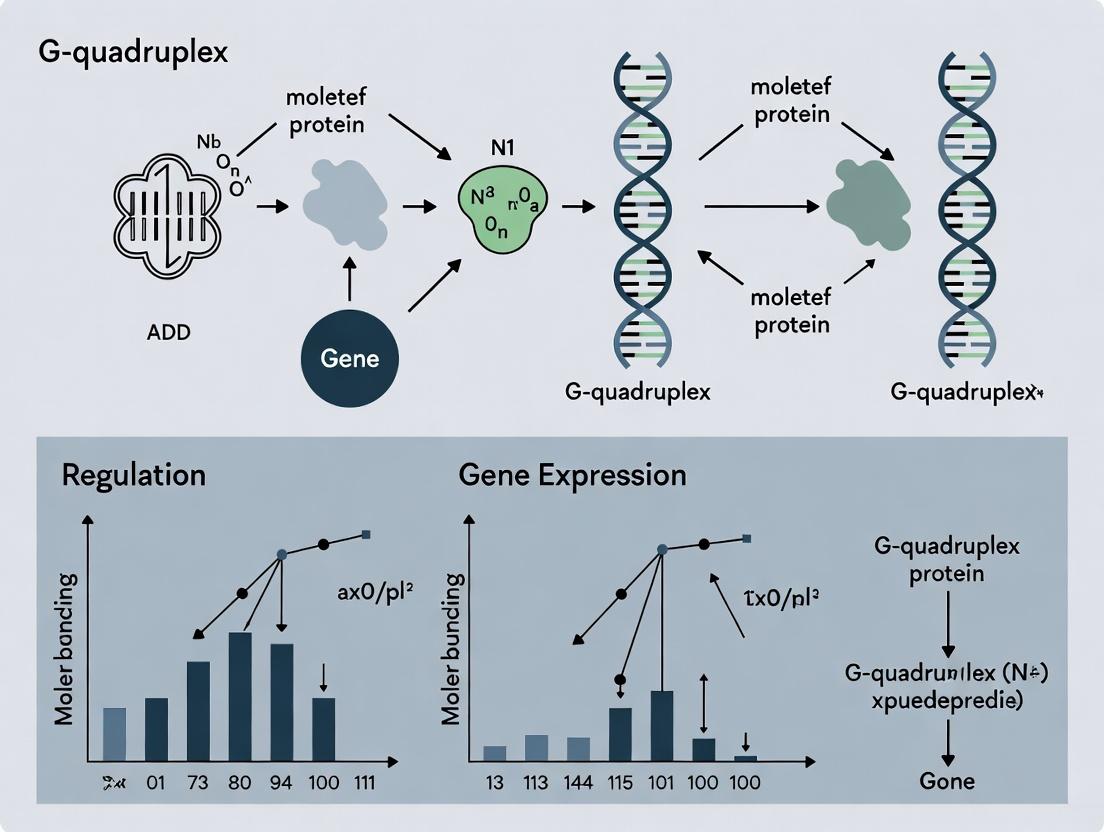
This article provides a comprehensive review for researchers and drug development professionals on the critical roles of G-quadruplex (G4)-protein interactions in gene regulation.
G-Quadruplex-Protein Interactions: Mechanisms, Methods, and Therapeutic Targeting in Gene Regulation
Abstract
This article provides a comprehensive review for researchers and drug development professionals on the critical roles of G-quadruplex (G4)-protein interactions in gene regulation. We explore the foundational biology of G4 structures and their interacting proteome, detail cutting-edge methodological approaches for studying these complexes, address common experimental challenges and optimization strategies, and evaluate validation techniques and comparative analyses across biological contexts. The synthesis offers a roadmap for leveraging G4-protein interactions in novel therapeutic and diagnostic development.
Decoding the G-Quadruplex Interactome: From Structure to Biological Function
What Are G-Quadruplexes? Defining Non-Canonical DNA/RNA Secondary Structures
G-quadruplexes (G4s) are higher-order nucleic acid secondary structures that form in guanine-rich sequences of DNA and RNA. Their formation and stabilization play critical roles in transcriptional regulation, genomic stability, and translation, primarily through interactions with specific proteins. This whitepaper provides a technical guide to G4 biology, focusing on structure, experimental characterization, and their implications in gene regulation within the context of protein interaction research.
Structural Definition and Biophysical Properties
G-quadruplexes are non-canonical structures formed by stacking planar arrays of four guanines (G-quartets) stabilized by Hoogsteen hydrogen bonding and monovalent cations (typically K⁺ or Na⁺). They are classified based on strand polarity (parallel, antiparallel, hybrid), loop configuration, and molecularity (intramolecular, bimolecular, tetramolecular).
Table 1: Core Biophysical Properties of G-Quadruplexes
| Property | DNA G-Quadruplex | RNA G-Quadruplex |
|---|---|---|
| Strand Polarity | Parallel, Antiparallel, Hybrid | Predominantly Parallel |
| Stabilizing Cation | K⁺ > Na⁺ (K⁺ provides higher stability) | K⁺ > Na⁺ |
| Thermal Stability (Tm) | Typically 50-90°C in 100 mM K⁺ | Often >20°C higher than DNA counterpart |
| In-vivo Prevalence | Predicted in ~50% of human gene promoters | Enriched in 5'UTRs and untranslated regions of mRNA |
| Key Structural Driver | G-richness (>4 runs of 2-4 guanines) | Same, but often more stable due to 2'-OH |
Experimental Protocols for Detection and Validation
In-vitro Detection via Circular Dichroism (CD) Spectroscopy
Purpose: Determine G4 topology based on signature spectra. Protocol:
- Sample Preparation: Synthesize oligonucleotide containing putative G4 sequence. Dilute to 4 µM in 10 mM Lithium Cacodylate buffer (pH 7.4) with 100 mM KCl or NaCl.
- Annealing: Heat sample to 95°C for 10 minutes, then cool slowly to room temperature over 2 hours to promote folding.
- Data Acquisition: Load sample into a 1 mm pathlength quartz cuvette. Acquire CD spectrum from 220-320 nm at 25°C, 100 nm/min scan speed, 1 nm data pitch.
- Analysis: Parallel topology shows a positive peak at ~265 nm and negative at ~240 nm. Antiparallel shows positive at ~295 nm and negative at ~260 nm.
In-vivo Mapping via G4-Seq
Purpose: Genome-wide mapping of G4 structures. Protocol:
- Genomic DNA Isolation & Shearing: Extract high-molecular-weight DNA and shear to ~300 bp fragments.
- K⁺ vs. Li⁺ Treatment: Divide sample. Treat one with 100 mM KCl (permissive for G4 folding) and the other with LiCl (non-permissive).
- G4 Stabilization & Protection: Add pyridostatin (G4-stabilizing ligand) to K⁺ sample. Both samples are treated with DMS or DNase I. G4 structures resist cleavage/modification.
- Sequencing Library Prep: Process samples for next-generation sequencing (end-repair, adaptor ligation, PCR).
- Bioinformatic Analysis: Identify sites with significant protection signal in K⁺/pyridostatin sample versus Li⁺ control.
G-Quadruplex-Protein Interactions in Gene Regulation
A core thesis in modern G4 research posits that these structures function as cis-regulatory elements by recruiting or repelling specific protein factors, thereby modulating chromatin status, transcription, and RNA processing.
Title: G-Quadruplex Protein Interactions Regulate Gene Expression
Table 2: Key G4-Binding Proteins and Their Functions
| Protein | Class | Binding Effect on G4 | Primary Regulatory Role |
|---|---|---|---|
| DHX36 (RHAU) | Helicase | Unwinds/Resolves | Resolves G4s to permit replication/transcription. |
| Nucleolin | Nucleolar Protein | Stabilizes (DNA), Unwinds (RNA) | Transcriptional repression of oncogenes; modulates rRNA processing. |
| CNBP | Zinc-Finger Protein | Binds/Binds and unfolds? | Promotes transcription by resolving G4s in promoters. |
| BLM | Helicase | Unwinds | Maintains genomic stability at G4-prone regions. |
| HLR | Helicase-like | Binds/Stabilizes? | Transcriptional activation of specific genes. |
Research Toolkit: Essential Reagents and Materials
Table 3: Research Reagent Solutions for G-Quadruplex Studies
| Item | Function/Application | Example Product/Catalog |
|---|---|---|
| G4-Stabilizing Ligands | Chemical probes to stabilize G4s in vitro and in cells; used to perturb function. | Pyridostatin (PDS), PhenDC3, TMPyP4 |
| G4-Specific Antibodies | Immunofluorescence (IF) & ChIP for in-situ and genomic mapping. | BG4 antibody (single-chain, for DNA G4s). |
| Cation Solutions | Critical for folding buffers. K⁺ promotes folding, Li⁺ is used as a negative control. | Potassium Chloride (Molecular Biology Grade), Lithium Chloride |
| DMS (Dimethyl Sulfate) | Chemical probe for G4-Seq; methylates exposed guanines, G4s show protection. | DMS, ≥97% purity |
| Fluorescent Probes | For in-gel visualization or FRET-based melting assays. | NMM (N-Methyl Mesoporphyrin IX), Thioflavin T |
| Positive Control Oligos | Validated G4-forming sequences for assay calibration. | Human Telomeric (HTelo) sequence (d[AGGG(TTAGGG)₃]), c-MYC promoter G4 |
| Reverse Transcriptase Variants | For detecting RNA G4s; some enzymes are sensitive to G4-mediated stalling. | SuperScript IV (low processivity at stalls), AMV RT (higher processivity) |
Therapeutic Targeting and Drug Development
G4s, particularly in oncogene promoters (e.g., MYC, KRAS, BCL2), are validated targets for small-molecule cancer therapeutics. Ligands like CX-5461 (in clinical trials) selectively stabilize promoter G4s, inhibiting transcription by blocking Pol II elongation or recruiting repressive proteins.
Title: Mechanism of G4-Targeting Anti-Cancer Drugs
G-quadruplexes are pivotal non-canonical structures at the nexus of nucleic acid biology and gene regulation. Future research within the thesis of protein interaction networks will focus on elucidating the dynamic "G4 interactome," determining the structural basis of protein-G4 recognition, and exploiting these mechanisms for next-generation therapeutics with improved specificity. Advanced techniques like cryo-EM and single-molecule imaging will be critical in this endeavor.
G-quadruplexes (G4s) are non-canonical nucleic acid secondary structures formed in guanine-rich sequences. Their biological significance extends across DNA replication, transcription, telomere maintenance, and genomic instability. The interaction between G4 structures and specific proteins—the G4-binding proteome—is a critical nexus for gene regulation. This guide situates this proteome within the broader thesis that protein-G4 interactions constitute a fundamental, yet complex, layer of epigenetic and transcriptional control, with direct implications for therapeutic intervention in cancer and neurodegeneration.
The G4-Binding Proteome: Core Components
The G4-binding proteome is categorized into three primary functional classes: helicases that resolve G4s, transcription factors (TFs) that are recruited or repelled by G4s, and chromatin regulators that modulate the chromatin landscape around G4 motifs.
G4-Resolving Helicases
These enzymes utilize ATP hydrolysis to unwind G4 structures, preventing replication stress and genomic instability.
Table 1: Major G4-Resolving Helicases
| Protein | Primary Function | Consequences of Loss/Dysfunction | Evidence Type |
|---|---|---|---|
| PIF1 | Replication fork progression, telomere maintenance | Replication stress, telomere elongation | In vitro unwinding, KO mouse models |
| BLM (RecQ) | Resolution of recombination intermediates, G4 unwinding | Bloom syndrome (genomic instability, cancer predisposition) | Co-localization with G4 probes, in vitro assays |
| WRN (RecQ) | DNA repair, replication, telomere maintenance | Werner syndrome (premature aging, cancer) | In vitro unwinding, interaction with G4-stabilizing ligands |
| FANCJ | Replication-coupled repair, G4 resolution | Fanconi anemia, replication stress | Genetic interactions with G4-stabilizing compounds |
| DHX36 (RHAU) | RNA and DNA G4 resolution, transcriptional regulation | Altered gene expression, developmental defects | High-affinity binding, in cellulo CLIP-seq |
Transcription Factors Binding G4s
G4 structures can serve as cis-regulatory elements, either enhancing or inhibiting the binding of specific TFs.
Table 2: Selected Transcription Factors Interacting with G4 Structures
| Transcription Factor | G4 Context | Effect on Binding/Activity | Regulatory Outcome |
|---|---|---|---|
| SP1 | Promoter G4s (e.g., MYC, KRAS) | Recruitment enhanced by G4 stabilization | Transcriptional activation |
| MAZ | MYC promoter G4 | Binds to and stabilizes the G4 structure | Transcriptional activation |
| HIF-1α | Hypoxia-response element G4s | Binding modulated by G4 conformation | Altered hypoxia response |
| p53 | G4s in target gene promoters | Binding can be inhibited by G4 structures | Context-dependent repression/activation |
Chromatin Regulators
G4s influence and are influenced by the local chromatin architecture, interacting with histones and chromatin remodelers.
Table 3: Chromatin Regulators Associated with G4s
| Protein/Complex | Association with G4s | Proposed Role |
|---|---|---|
| Histone H1 | Binds and stabilizes DNA G4s | Chromatin compaction, G4 protection |
| ACF (ATP-dependent chromatin assembly factor) | Remodels nucleosomes near G4 sequences | Facilitates G4 formation/accessibility |
| HMGB1/2 | Binds and may distort G4 structures | Chromatin decompaction, transcriptional regulation |
Diagram 1: The G4-Binding Proteome Regulatory Network
Core Experimental Methodologies
In VitroG4-Protein Interaction Assays
Protocol 1: Electrophoretic Mobility Shift Assay (EMSA) for G4-Binding
- Purpose: To detect and quantify direct protein binding to a G4 oligonucleotide.
- Reagents:
- G4 Oligonucleotide: 5'-end labeled with [γ-³²P] ATP using T4 polynucleotide kinase.
- Folding Buffer: Typically 20 mM Tris-HCl (pH 7.4), 100 mM KCl (to stabilize G4), 0.1% BSA.
- Purified Recombinant Protein: Serial dilutions in storage buffer.
- Non-specific Competitor: Poly(dI-dC) to suppress non-specific binding.
- Native Polyacrylamide Gel: 4-10% acrylamide in 0.5x TBE with KCl.
- Procedure:
- Fold the labeled oligonucleotide (1 nM) in folding buffer by heating to 95°C for 5 min, then slowly cooling to room temp.
- Incubate folded G4 with increasing protein concentrations (0-500 nM) in binding buffer (20-30 min, RT).
- Load samples onto a pre-run native PAGE gel (4°C, 80-120V).
- Run until dye front migrates sufficiently. Dry gel and expose to a phosphorimager screen.
- Analyze band shift intensity to calculate dissociation constant (Kd).
Protocol 2: Fluorescence Resonance Energy Transfer (FRET) Melting Assay
- Purpose: To assess protein's ability to bind and stabilize a G4 structure.
- Reagents:
- Dual-Labeled G4 Probe: Oligo labeled with 5'-FAM (donor) and 3'-TAMRA (acceptor).
- Protein of Interest: Purified in appropriate buffer.
- Real-Time PCR Instrument: Capable of measuring FAM fluorescence with a ROX/TAMRA filter.
- Procedure:
- Prepare probe (0.2 µM) in buffer with 100 mM KCl ± protein.
- Heat samples from 25°C to 95°C with incremental fluorescence readings.
- Plot fluorescence vs. temperature. The melting temperature (Tm) is the inflection point.
- ΔTm (Tm with protein - Tm without) indicates stabilization potency.
In Cellulo/In VivoMapping
Protocol 3: G4-Specific Chromatin Immunoprecipitation (G4-ChIP)
- Purpose: To map genome-wide binding sites of a G4-binding protein.
- Procedure:
- Crosslink cells with 1% formaldehyde.
- Lyse cells and sonicate chromatin to 200-500 bp fragments.
- Immunoprecipitate with antibody against target protein (e.g., anti-BLM) or IgG control.
- Reverse crosslinks, purify DNA, and prepare libraries for sequencing.
- Analysis: Align sequences, call peaks. Overlap peaks with known G4-seq predictions (e.g., from hg38). Motif analysis can confirm G4-enrichment.
Protocol 4: CUT&Tag with G4 Ligand Competition
- Purpose: To map protein-G4 interactions in a more sensitive, low-background manner.
- Procedure:
- Permeabilize intact nuclei from live cells.
- Incubate with primary antibody against G4-binding protein.
- Bind secondary antibody conjugated to Protein A-Tn5 transposase.
- Critical Step: Add a G4-stabilizing ligand (e.g., pyridostatin, PhenDC3) to a parallel sample as a competition control.
- Activate transposase to insert sequencing adapters directly at binding sites.
- Purify DNA, amplify, and sequence. Signal loss upon ligand competition confirms G4-dependent binding.
Diagram 2: G4-Protein Interaction Validation Workflow
Table 4: Essential Research Reagent Solutions for G4-Protein Studies
| Item | Function/Application | Example/Supplier Note |
|---|---|---|
| Biotinylated G4 Oligonucleotides | Pull-down assays, EMSA, surface plasmon resonance (SPR). | Custom synthesis (IDT, Sigma). Include proper G4-forming sequence controls (mutant, linear). |
| G4-Stabilizing Ligands (Competitors) | Validate specificity of interaction in vitro and in cellulo. | Pyridostatin (Tocris), PhenDC3, BRACO-19, TMPyP4. |
| G4-Specific Antibodies | Immunofluorescence, ChIP, Western blot. | Anti-BG4 (single-chain antibody, Millipore) for direct G4 staining. |
| Recombinant G4-Binding Proteins | In vitro biochemical and biophysical assays. | Purify from E. coli or insect cells, or source from active vendors (e.g., Abcam, BPS Bioscience). |
| G4-Seq/Prediction Datasets | Bioinformatics analysis of binding sites. | Reference G4-seq data (e.g., from human, mouse genomes) available in public repositories (GEO). |
| Cell Lines with G4-Helicase KO | Functional studies on replication stress and transcription. | Isogenic pairs (WT vs. BLM⁻/⁻, FANCJ⁻/⁻) from ATCC or generated via CRISPR. |
The intricate mechanisms of molecular interaction—recognition, binding, and structural modulation—form the cornerstone of cellular function. Within the context of gene regulation, these mechanisms are paramount, particularly in the study of non-canonical nucleic acid structures and their protein partners. This whitepaper focuses on the interplay between G-quadruplex (G4) DNA/RNA structures and associated proteins, a rapidly advancing frontier in epigenetics and transcriptional control. The specific recognition of G4 topologies by proteins, their subsequent binding affinities, and the resultant allosteric modulations in both partners govern critical processes such as telomere maintenance, replication, and the expression of oncogenes. A detailed understanding of these interactions provides a vital framework for therapeutic intervention in cancers and neurodegenerative diseases.
G-Quadruplex Recognition: Structural Basis and Specificity
G-quadruplexes are four-stranded nucleic acid structures formed by stacks of G-tetrads, stabilized by monovalent cations (e.g., K⁺, Na⁺). Their structural polymorphism (parallel, antiparallel, hybrid) presents diverse surfaces for protein recognition. Proteins interact with G4s through specialized domains.
Key Recognition Domains:
- RGG/RG Motifs: Arginine-rich regions common in RNA-binding proteins (e.g., FMRP, hnRNP A1) facilitate cation-π and π-π interactions with G4 quartets.
- Zinc Fingers: Specific subsets, like the recognition helix of Zic family proteins, can bind G4 grooves.
- OB-Folds: As seen in telomere-end protection proteins (e.g., POT1), accommodate single-stranded termini adjacent to G4s.
- Homeodomains: Certain transcription factors (e.g., HOXA9) have evolved to bind promoter G4s.
Quantitative Data on Recognition Specificity:
Table 1: Representative G4-Binding Proteins and Their Recognized Targets
| Protein | Recognition Domain | Preferred G4 Topology | Target Gene/Region | Binding Affinity (Kd) | Method |
|---|---|---|---|---|---|
| DHX36 (RHAU) | DHX-specific motif | Parallel DNA & RNA G4 | Telomeres, MYC promoter | ~2-10 nM | SPR, FP |
| hnRNP A1 | RGG, RRM | Antiparallel RNA G4 | TERRA, BCL2 | ~50 nM | EMSA, ITC |
| Nucleolin | RGG, RRM | Parallel DNA G4 | c-MYC, KRAS | ~5-20 nM | BLI, FP |
| FMRP | RGG, KH2 | Parallel RNA G4 | MAP1B mRNA | ~30 nM | EMSA |
| Cytoplasmic MYCBP | OB-fold | Parallel DNA G4 | MYC NHE III₁ | ~15 nM | SPR |
Experimental Protocol: Surface Plasmon Resonance (SPR) for Binding Kinetics
- Immobilization: A biotinylated G4 oligonucleotide is captured on a streptavidin-coated (SA) sensor chip in HEPES buffer (pH 7.4, 100 mM KCl).
- Ligand Preparation: Serial dilutions of the purified protein (0.1 nM - 1 µM) are prepared in running buffer (20 mM HEPES, 150 mM KCl, 0.005% Tween-20).
- Binding Analysis: Protein solutions are flowed over the chip at 30 µL/min. Association is monitored for 180s, dissociation for 300s.
- Regeneration: The surface is regenerated with a 30s pulse of 2M KCl.
- Data Processing: Double-reference subtracted sensorgrams are fit to a 1:1 Langmuir binding model using the instrument's software (e.g., Biacore Evaluation Software) to derive association (kₐ), dissociation (kₑ), and equilibrium (Kd) constants.
Binding Dynamics and Energetics
Binding is driven by electrostatic interactions (with DNA backbone), hydrogen bonding, van der Waals forces, and hydrophobic contacts. Isothermal Titration Calorimetry (ITC) provides a full thermodynamic profile.
Quantitative Thermodynamic Data:
Table 2: Thermodynamic Parameters of Selected G4-Protein Interactions
| Protein:G4 Complex | ΔG (kcal/mol) | ΔH (kcal/mol) | -TΔS (kcal/mol) | Stoichiometry (N) | Conditions |
|---|---|---|---|---|---|
| DHX36 : c-MYC G4 | -12.5 ± 0.3 | -18.2 ± 1.1 | 5.7 ± 1.0 | 0.95 ± 0.05 | 20 mM Tris, 100 mM KCl |
| Nucleolin : KRAS G4 | -11.2 ± 0.4 | -8.5 ± 0.7 | -2.7 ± 0.5 | 1.1 ± 0.1 | 10 mM NaPi, 100 mM KCl |
| FMRP : MAP1B RNA G4 | -10.8 ± 0.5 | -15.1 ± 0.9 | 4.3 ± 0.8 | 1.0 ± 0.1 | 25 mM HEPES, 150 mM KCl |
Experimental Protocol: Isothermal Titration Calorimetry (ITC)
- Sample Preparation: The G4 DNA (200 µM in strand concentration) is folded by heating to 95°C in buffer with 100 mM KCl, then slowly cooling. Protein is dialyzed extensively into the identical buffer.
- Instrument Setup: The G4 solution is loaded into the sample cell (1.4 mL). The protein solution (20-30 µM) is loaded into the stirring syringe.
- Titration: The titration consists of 19 injections of 2 µL each (first injection of 0.4 µL) at 25°C with 150s spacing.
- Data Analysis: The integrated heat peaks per injection are fit to a single-site binding model using MicroCal PEAQ-ITC analysis software to extract ΔH, K (thus ΔG), and N.
Structural Modulation: Conformational Changes Upon Interaction
Binding induces reciprocal conformational changes. Proteins may undergo disorder-to-order transitions in flexible domains. Conversely, protein binding can stabilize, destabilize, or remodel G4 structures.
Key Modulation Mechanisms:
- G4 Stabilization: Tight binding by ligands or proteins can inhibit helicase unwinding, a strategy exploited for telomerase inhibition.
- G4 Resolution/Unwinding: Helicases (e.g., DHX36, BLM, WRN) actively unwind G4s using ATP hydrolysis, modulating their regulatory impact.
- Allosteric Control: Protein binding at a distal G4 can loop DNA, bringing transcription factors into proximity with promoters.
Experimental Protocol: Circular Dichroism (CD) Spectroscopy for G4 Conformation
- Sample Prep: Fold G4 oligonucleotide (5 µM) in 10 mM Tris-HCl, 100 mM KCl or NaCl.
- Baseline Scan: Scan buffer alone from 320 to 220 nm to establish baseline.
- G4 Scan: Scan the folded G4 sample (path length 1 mm).
- Protein Addition: Incubate G4 with protein (at 1:1 or 2:1 protein:G4 ratio) for 15 min, then re-scan.
- Analysis: Compare spectra. A positive peak ~260 nm and negative ~240 nm indicates parallel topology. A positive ~295 nm peak indicates antiparallel/hybrid. Spectral shifts upon protein addition indicate conformational modulation.
Title: G-Quadruplex-Mediated Gene Regulation Pathway
The Scientist's Toolkit: Research Reagent Solutions
Table 3: Essential Reagents and Materials for G4-Protein Interaction Studies
| Reagent/Material | Function & Application | Example Product/Catalog |
|---|---|---|
| Biotinylated G4 Oligonucleotides | For immobilization in SPR, BLI, or pull-down assays. 5'- or 3'-biotin tag crucial. | IDT DNA Oligos, Eurofins Genomics |
| Streptavidin Sensor Chips (SA) | Gold standard surface for capturing biotinylated G4s in SPR kinetics. | Cytiva Series S SA Chip |
| His-Tag Purification Resin | Affinity purification of recombinant His-tagged G4-binding proteins. | Ni-NTA Agarose (Qiagen) |
| BRACO-19 / PhenDC3 | Small molecule G4-stabilizing ligands; used as positive controls or competitors. | Tocris Bioscience |
| Anti-G4 Antibody (BG4) | Immunodetection of G4 structures in cells (IF, ChIP). | Absolute Antibody, Sigma-Aldrich |
| HEPES Buffer w/ KCl | Standard folding/binding buffer; K⁺ is critical for G4 stability. | Thermo Fisher Scientific |
| SYBR Gold Nucleic Acid Stain | High-sensitivity staining for EMSAs with G4 structures. | Invitrogen S11494 |
| Recombinant DHX36/Nucleolin | Positive control proteins for G4-binding assays. | Active Motif, Abcam |
| ATP, Helicase Assay Buffer | Essential for studying G4-resolving helicase activity. | New England Biolabs |
Title: Core Experimental Workflow for G4-Protein Studies
The precise mechanisms governing G-quadruplex recognition, binding, and structural modulation represent a master regulatory code within the genome and transcriptome. Deciphering this code—through the integrated application of biophysical, structural, and cellular methodologies outlined herein—is fundamental to advancing the thesis that G4-protein interactions are pivotal nodes in gene regulatory networks. For the drug development professional, these interactions offer high-value, structurally distinct targets. The future lies in designing bifunctional molecules that not only stabilize specific G4s but also selectively recruit or block effector proteins, enabling unprecedented precision in modulating oncogene expression and tackling diseases of dysregulated translation and genomic instability.
Within the framework of G-quadruplex (G4) protein interaction research, the central thesis posits that protein complexes recognizing nucleic acid secondary structures are pivotal, direct regulators of gene expression. This whitepaper details the governance of three critical genomic loci—telomeres, promoters, and enhancers—by specific G4-protein complexes. These interactions are fundamental to maintaining genomic stability and regulating transcriptional programs, presenting novel targets for therapeutic intervention in cancer and aging-related diseases.
Quantitative Data on Key G4-Protein Complexes
Table 1: G4-Binding Proteins and Their Genomic Loci Roles
| Protein Complex / Factor | Primary Genomic Locus | Binding Affinity (Kd, nM)* | Functional Outcome | Associated Diseases |
|---|---|---|---|---|
| Shelterin (POT1-TPP1) | Telomere | 0.5 - 5.0 (for POT1) | Telomere length maintenance & capping | Cancer, Dyskeratosis Congenita |
| Transcription Factor SP1 | Gene Promoters (GC-rich) | 10 - 50 | Transcriptional activation | Various Cancers |
| Bromodomain Protein BRD4 | Enhancers & Super-enhancers | 20 - 100 | Epigenetic reader, recruits Mediator/PTEFb | Cancer, Inflammatory Diseases |
| Helicases (WRN, BLM, FANCJ) | All G4 loci | ATP-dependent | G4 resolution & genomic stability | Werner/Bloom Syndromes, Cancer |
| Nucleolin (NCL) | rDNA Promoters, Telomeres | 5 - 25 | rRNA transcription, telomere homeostasis | Cancer, Viral Infection |
| RNA Polymerase II | Gene Promoters | N/A | Transcription initiation/elongation | Broadly applicable |
Note: Kd values are approximate and depend on specific sequence context and experimental conditions.
Table 2: Prevalence of G4 Motifs in Human Genomic Loci
| Genomic Locus | Estimated G4-Forming Motifs (Bioinformatic) | Experimentally Validated (e.g., G4-seq, ChIP-seq) | Key Regulatory Function |
|---|---|---|---|
| Telomeric Repeat (TTAGGG)n | Highly prevalent at 3' overhang | Confirmed (e.g., by NMR, FRET) | Telomere end-protection, cellular senescence |
| Gene Promoters | ~40% of human gene promoters (esp. oncogenes like MYC, KRAS) | >10,000 sites via G4 ChIP-seq | Transcription initiation rate control |
| Enhancers/Super-enhancers | ~30% of active enhancers | Validated in specific loci (e.g., MYC SE) | Long-range transcriptional enhancement |
| Replication Origins | High density | Confirmed in early firing origins | Replication timing and fidelity |
Experimental Protocols for Key G4-Protein Studies
Protocol: Electrophoretic Mobility Shift Assay (EMSA) for G4-Protein Binding
Objective: To validate direct binding of a protein (e.g., BRD4) to a defined G4-forming oligonucleotide. Materials:
- Purified Protein: Recombinant BRD4 bromodomain.
- Oligonucleotides: 5'-Cy5-labeled DNA strand containing a predicted G4 motif from the MYC promoter (e.g., Pu27). Scrambled control sequence.
- Buffer: 20 mM Tris-HCl (pH 7.5), 50 mM KCl, 1 mM DTT, 0.1 mg/mL BSA, 5% glycerol, 100 μM ZnCl₂. KCl promotes G4 stability.
- G4 Stabilizer: 50 μM PhenDC3 (optional, to confirm G4-dependent binding).
- Non-specific Competitor: Poly(dI-dC). Procedure:
- Annealing: Dilute labeled oligonucleotide to 1 μM in folding buffer (10 mM Tris pH 7.5, 100 mM KCl). Heat to 95°C for 5 min, then cool slowly to room temperature overnight.
- Binding Reaction: In a 20 μL volume, mix 20 fmol of folded Cy5-DNA, 1 μg of poly(dI-dC), and increasing amounts of BRD4 protein (0, 10, 50, 100, 200 nM) in binding buffer. Incubate at 25°C for 30 min.
- Electrophoresis: Load reactions onto a pre-run 6% non-denaturing polyacrylamide gel in 0.5x TBE buffer at 4°C. Run at 80V for ~90 min.
- Detection: Visualize Cy5 fluorescence using a gel imager. A mobility shift (band retardation) indicates complex formation.
- Competition: Include reactions with a 50x molar excess of unlabeled G4 or non-G4 competitor DNA to test specificity.
Protocol: G4-Specific Chromatin Immunoprecipitation (G4 ChIP-seq)
Objective: To map genome-wide occupancy of a G4-binding protein or G4 structures themselves. Materials:
- Cells: Cultured cells (e.g., HEK293, HeLa).
- Crosslinker: 1% formaldehyde.
- Antibody: Validated antibody against target protein (e.g., anti-BRD4) or G4-specific antibody (BG4 single-chain variable fragment).
- Sonication: Covaris or Bioruptor for chromatin shearing (~200-500 bp fragments).
- Magnetic Beads: Protein A/G beads.
- Elution & Decrosslinking Buffer: 1% SDS, 0.1 M NaHCO₃.
- DNA Purification: Phenol-chloroform or spin columns.
- Library Prep & Sequencing Kit: For Illumina platforms. Procedure:
- Crosslinking & Lysis: Fix 10⁷ cells with 1% formaldehyde for 10 min at room temp. Quench with glycine. Lyse cells, isolate nuclei.
- Chromatin Shearing: Sonicate chromatin to desired fragment size. Verify by gel electrophoresis.
- Immunoprecipitation: Pre-clear lysate with beads. Incubate supernatant with target antibody or BG4 overnight at 4°C. Add beads, incubate, then wash extensively.
- Elution & Reverse Crosslinking: Elute complexes, add NaCl to 200 mM, and heat at 65°C overnight.
- DNA Recovery: Treat with RNase A and Proteinase K. Purify DNA.
- Sequencing & Analysis: Prepare sequencing library and perform 75bp paired-end sequencing on Illumina platform. Align reads to reference genome (hg38) and call peaks (e.g., using MACS2). Overlap peaks with known genomic features (promoters, enhancers).
Visualizations of G4-Protein Regulatory Networks
Diagram 1: G4-Protein Regulation at Telomeres
Diagram 2: G4-Mediated Transcription at Promoters & Enhancers
The Scientist's Toolkit: Key Research Reagent Solutions
Table 3: Essential Reagents for G4-Protein Interaction Research
| Reagent Category | Specific Item / Example | Function & Application | Key Considerations |
|---|---|---|---|
| G4-Stabilizing Ligands | PhenDC3, TMPyP4, CX-5461 | Chemical probes to stabilize G4 structures in vitro and in cells; used to test functional consequences of G4 formation. | Varying selectivity; potential off-target effects. CX-5461 is in clinical trials. |
| G4-Destabilizing Agents | PDS (Pyridostatin) inhibitors, G4-resolving helicases | Used to dissect necessity of G4 structures in observed phenotypes. | Specificity and delivery efficiency in cellular models. |
| Antibodies for Detection | BG4 (scFv), hf2 (mouse monoclonal) | Immunofluorescence, DNA-FISH, ChIP-seq for direct visualization and genomic mapping of G4 structures. | BG4 requires careful validation for specific fixation conditions. |
| Recombinant Proteins | Purified BRD4, Nucleolin, POT1, FANCJ | For in vitro binding assays (EMSA, SPR), structural studies, and biochemical characterization of interactions. | Ensure proper folding and post-translational modifications when relevant. |
| Control Oligonucleotides | G4-forming (e.g., MYC Pu27), Mutant G4, Duplex DNA | Essential controls for binding specificity in EMSA and pull-down experiments. | Design mutant with G-to-T substitutions that disrupt G4 folding. |
| Cell Lines with Perturbations | WRN/BLM KO, CRISPRi for G4-binding proteins | Model systems to study functional outcomes of disrupted G4-protein interactions. | Use isogenic controls and validate protein loss/knockdown. |
| Specialized Kits | G4-Seq Library Prep, CUT&Tag for BG4 | Optimized protocols for high-throughput mapping of G4 structures or G4-protein occupancy. | Follow manufacturer's protocols closely for best results. |
Within the broader thesis on G-quadruplex (G4)-protein interactions in gene regulation research, it is established that nucleic acid secondary structures, particularly G4s, are not mere in vitro curiosities. Their formation in vivo has profound and multifaceted biological consequences, directly impacting core genomic processes. This whitepaper provides an in-depth technical analysis of how G4s influence transcription, DNA replication, and epigenetic regulation, detailing the mechanisms, key experimental evidence, and methodologies for their study.
Impact on Transcription
G4s can function as dynamic regulatory elements in transcription, with consequences dependent on their genomic context.
Mechanisms:
- Promoter Proximal G4s: Often found in oncogene promoters (e.g., MYC, KRAS, BCL2), they can act as repressive elements by sterically hindering RNA polymerase II recruitment or transcription factor binding. Alternatively, they can be bound by specific transcription factors (e.g., SP1) to activate transcription.
- Template vs. Non-Template Strand: G4s on the non-template strand typically repress transcription, while those on the template strand can cause polymerase stalling and truncation.
Key Quantitative Evidence: Table 1: Quantified Impact of G4s on Transcription
| Gene/Target | G4 Location | Effect on Expression | Quantified Change | Experimental Method | Reference (Example) |
|---|---|---|---|---|---|
| MYC | NHE III1 Promoter | Repression | ~80% reduction upon stabilization | Luciferase Reporter Assay | Siddiqui-Jain et al., 2002 |
| KRAS | Proximal Promoter | Repression | ~70% reduction with G4 ligand | qRT-PCR | Cogoi & Xodo, 2006 |
| HIV-1 | LTR Promoter | Activation/Repression | 3-5 fold modulation | Viral Titer Assay | Amrane et al., 2014 |
| VEGF | Core Promoter | Repression | ~60% reduction | In vitro Transcription | Sun & Hurley, 2009 |
Diagram 1: G4s Modulate Transcription via Multiple Mechanisms.
Experimental Protocol: Luciferase Reporter Assay for G4-Dependent Transcriptional Regulation
- Cloning: Insert the genomic sequence of interest (containing the putative G4) into a promoterless luciferase reporter vector (e.g., pGL3-Basic) upstream of the Firefly luciferase gene.
- Mutagenesis: Generate a control mutant where G4-forming potential is disrupted via site-directed mutagenesis (e.g., G-to-A changes in G-tracts).
- Transfection: Co-transfect the G4-wild-type and G4-mutant reporter plasmids, along with a Renilla luciferase control plasmid (for normalization), into relevant cell lines.
- Ligand Treatment (Optional): Treat cells with a G4-stabilizing ligand (e.g., Pyridostatin, TMPyP4) or vehicle control.
- Measurement: Harvest cells 24-48h post-transfection. Measure Firefly and Renilla luciferase activities using a dual-luciferase assay system.
- Analysis: Normalize Firefly luminescence to Renilla luminescence. Compare activity between wild-type and mutant constructs, and between treated and untreated samples.
Impact on DNA Replication
G4s are potent impediments to replication fork progression, posing a threat to genomic integrity.
Mechanisms:
- Fork Stalling: The structured DNA poses a physical barrier for replicative helicases (e.g., MCM) and polymerases.
- Genomic Instability: Persistent fork stalling at G4s can lead to DNA double-strand breaks, fork collapse, and mutagenesis, particularly in regions prone to rearrangements (e.g., common fragile sites, telomeres).
- Regulatory Role: Specific G4s in origins of replication may regulate replication timing and efficiency.
Key Quantitative Evidence: Table 2: Replication Consequences of G4s
| Genomic Context | Consequence | Quantified Effect | Experimental Method | Reference (Example) |
|---|---|---|---|---|
| Common Fragile Sites | Fork Stalling & Breaks | 3-4 fold increase in breakage with G4 ligand | DNA Fiber Assay, SMARD | De & Michor, 2011 |
| Telomeres | Replication Stress | Increased telomere loss & fragility | Telomere-FISH, CO-FISH | Paeschke et al., 2013 |
| Genome-wide | Mutation Hotspots | ~40% of somatic deletions in cancer linked to G4 motifs | Whole Genome Sequencing Analysis | De Nicola et al., 2022 |
| Oncogene Loci | Replication Timing Delay | Up to 60 min delay in S phase | Repli-Seq, Single-Molecule Imaging | Valton et al., 2014 |
Diagram 2: G4s Cause Replication Fork Stalling and Potential Collapse.
Experimental Protocol: DNA Fiber Assay for Replication Fork Progression
- Pulse-Labeling: Asynchronously growing cells are pulsed with nucleotide analogs: first with Chlorodeoxyuridine (CldU, 30-60 min), then with Iododeoxyuridine (IdU, 30-60 min).
- Harvesting & Spreading: Cells are harvested, lysed on glass slides, and DNA fibers are spread by gravity/tilting.
- Immunostaining: Fibers are fixed and immunostained with rat anti-BrdU/CldU (detects first pulse, e.g., red) and mouse anti-BrdU/IdU (detects second pulse, e.g., green) antibodies.
- Imaging & Analysis: Visualize via fluorescence microscopy. Measure the lengths of red (CldU) and green (IdU) tracks. Fork progression rate (kb/min) is calculated from IdU track length. Compare rates between cells treated with G4-stabilizing ligands and controls.
Impact on Epigenetic Regulation
G4s are integrated into the epigenetic landscape, influencing and being influenced by chromatin state.
Mechanisms:
- Recruitment of Chromatin Modifiers: Specific proteins (e.g., ATRX, RCF1) bind to G4s and recruit histone modifiers or chromatin remodelers.
- Nucleosome Positioning: G4s can exclude nucleosomes, creating nucleosome-depleted regions (NDRs) that are accessible to regulatory factors.
- Histone Modification Crosstalk: G4 formation is associated with specific histone marks (e.g., H3K4me3, H3K9ac for active promoters; H3K9me3 for repression).
Key Quantitative Evidence: Table 3: Epigenetic Associations of G4s
| Epigenetic Feature | Association with G4 | Quantified Correlation | Experimental Method | Reference (Example) |
|---|---|---|---|---|
| Nucleosome Depletion | G4s often occupy NDRs | >2-fold depletion vs. flanking DNA | MNase-Seq, ChIP-seq | Shen et al., 2021 |
| Histone Mark H3K4me3 | Co-localizes at active promoters | ~70% overlap in ChIP-seq peaks | CUT&Tag, ChIP-seq | Hansel-Hertsch et al., 2016 |
| DNA Hypomethylation | G4s in gene bodies correlate with low methylation | Significant inverse correlation (p<0.001) | Whole Genome Bisulfite Sequencing | Mao et al., 2018 |
| Chromatin Remodeler ATRX | Direct G4 binding modulates H3.3 deposition | ChIP-seq peak enrichment ~5-fold | ATRX ChIP-seq | Law et al., 2010 |
Diagram 3: G4s Interact Bidirectionally with Epigenetic Landscapes.
Experimental Protocol: G4-Specific Chromatin Immunoprecipitation (G4-ChIP)
- Crosslinking & Shearing: Crosslink cells with 1% formaldehyde. Lyse cells and sonicate chromatin to ~200-500 bp fragments.
- Immunoprecipitation: Incubate chromatin with an anti-G4 antibody (e.g., BG4) or IgG control. Use protein A/G beads to capture antibody-bound chromatin complexes.
- Washing & Elution: Wash beads stringently. Elute and reverse crosslinks.
- DNA Purification: Treat with Proteinase K and RNase A, then purify DNA.
- Analysis: Analyze by qPCR (for specific loci) or next-generation sequencing (G4-ChIP-seq) for genome-wide mapping. Peak calling identifies genomic G4 sites bound in vivo.
The Scientist's Toolkit: Research Reagent Solutions
Table 4: Essential Reagents for G4 Biology Research
| Reagent/Material | Function & Application | Example Product/Catalog |
|---|---|---|
| G4-Stabilizing Ligands | Chemical probes to study consequences of G4 stabilization in cellulo and in vivo. | Pyridostatin (PDS), TMPyP4, PhenDC3, BRACO-19 |
| G4-Disrupting Ligands/Molecules | Compounds or proteins (e.g., G4-resolving helicases) used to perturb G4 function. | PDS control isomers, Recombinant Pif1, BLM helicase |
| BG4 Single-Chain Antibody | Recombinant antibody for immunodetection and mapping of genomic G4 structures in vitro and in situ. | Sigma-Aldrich MABE917 |
| CldU & IdU Nucleotide Analogs | For pulse-labeling DNA in replication fork progression assays (DNA Fiber, SMARD). | Sigma-Aldrich C6891 & I7125 |
| Dual-Luciferase Reporter Assay System | Gold-standard for quantifying transcriptional activity from G4-containing promoters. | Promega E1910 |
| G4-Forming Oligonucleotides | Custom synthetic DNA/RNA sequences for in vitro biophysical studies (CD, FRET, EMSA). | IDT, Eurofins Genomics |
| Anti-BrdU/CldU/IdU Antibodies | Critical for detecting pulse-labeled DNA in replication and repair assays. | Abcam ab6326 (Rat anti-BrdU), BD Biosciences 347580 (Mouse anti-BrdU) |
| Chromatin Shearing Enzymes | For consistent chromatin fragmentation prior to G4-ChIP or other ChIP assays. | Covaris microTUBES & Shearer, MNase |
| Next-Generation Sequencing Kits | For genome-wide analysis of G4 locations (G4-ChIP-seq), associated proteins, or epigenetic features. | Illumina TruSeq, NEBNext Ultra II |
Evolutionary Conservation and Prevalence Across Eukaryotes
Within the broader thesis on G-quadruplex (G4)-protein interactions in gene regulation, understanding the evolutionary conservation and prevalence of these elements and their cognate binding proteins is foundational. This whitepaper provides a technical guide to the distribution, sequence signatures, and experimental interrogation of G4s and G4-binding proteins across eukaryotic lineages, emphasizing their role as conserved regulatory modules.
Core Concepts: G4 Structures and Protein Interactors
G-quadruplexes are non-canonical nucleic acid secondary structures formed in guanine-rich sequences. Their formation and regulatory functions are mediated by specific protein binders, including helicases (e.g., DHX36, FANCJ), transcription factors (e.g., SP1), and epigenetic readers.
Prevalence and Quantitative Conservation Metrics
Current data (2023-2024) from genome-wide analyses, including G4-seq and ChIP-seq studies, reveal the following quantitative landscape.
Table 1: Prevalence of Predicted Genomic G4 Sequences Across Model Eukaryotes
| Organism/Clade | Estimated Number of Potential G4 (PQS) Sequences | Density (PQS per Mb) | Conservation Rate vs. Mammals* | Primary Genomic Contexts |
|---|---|---|---|---|
| Homo sapiens (Human) | ~716,000 | ~23.5 | Reference (100%) | Promoters, 5'UTRs, Telomeres |
| Mus musculus (Mouse) | ~442,000 | ~16.8 | ~70% (in orthologous promoters) | Promoters, Replication Origins |
| Drosophila melanogaster (Fruit Fly) | ~31,500 | ~21.0 | ~25% (positionally conserved) | Promoters, Introns |
| Saccharomyces cerevisiae (Yeast) | ~1,200 | ~1.0 | <5% (sequence-level) | Telomeres, Ribosomal DNA |
| Arabidopsis thaliana (Plant) | ~106,000 | ~8.9 | ~15% (in regulatory regions) | Gene Bodies, Telomeres |
| Tetrahymena thermophila (Ciliate) | High in macronucleus | N/A | N/A | Telomeres |
Note: Conservation rate refers to the approximate percentage of promoter-associated PQS in the listed organism that are positionally conserved in orthologous mammalian promoter regions. Data synthesized from recent G4-seq, comparative genomics, and NGS studies.
Table 2: Evolutionary Conservation of Key G4-Binding Proteins
| Protein Name (Human) | Core Domain Responsible for G4 Binding | Conservation Across Eukaryotes (Presence of Ortholog) | Demonstrated In Vivo G4-Related Role |
|---|---|---|---|
| DHX36 (RHAU) | DHX-specific motif (DSM) | Vertebrates, Drosophila, C. elegans | Helicase, RNA/DNA G4 resolvase |
| FANCJ (BRIP1) | Helicase domain (7q motif) | Metazoans, some fungi | DNA replication, G4 unwinding |
| Nucleolin (NCL) | RNA Recognition Motifs (RRM) | Animals, plants, fungi | rDNA transcription, ribosome biogenesis |
| CNBP (ZNF9) | Zinc-finger domains | Vertebrates, Drosophila | Transcriptional regulation |
| RHAU/DHX36 | See DHX36 | High in deuterostomes | mRNA stability, translation |
| SUB1/PC4 | Single-stranded DNA binding domain | Animals, yeast, plants | Transcriptional coactivator |
Experimental Protocols for Assessing Conservation & Prevalence
In SilicoIdentification and Cross-Species Alignment
Protocol Title: Comparative Phylogenetic Footprinting of Putative G-Quadruplex Sequences (PQS)
- Sequence Retrieval: Obtain genomic sequences for regions of interest (e.g., promoter regions -2kb to +500bp from TSS) for multiple eukaryotic species from Ensembl or UCSC Genome Browser.
- PQS Scanning: Use the canonical quadruplex-forming sequence motif
G{3,5}N{1,7}G{3,5}N{1,7}G{3,5}N{1,7}G{3,5}(or refined variant) with a tool likepqsfinderor Quadparser. - Multiple Sequence Alignment: Align orthologous genomic regions using a program like MUSCLE or MAFFT.
- Conservation Scoring: Map identified PQS coordinates onto the alignment. Calculate conservation score as the fraction of species in the alignment where a PQS is found in the syntenic position.
- Statistical Validation: Compare observed PQS conservation against a background model of shuffled sequences or random genomic regions using a Fisher's exact test.
Experimental Validation: G4-Seq Across Species
Protocol Title: G4-Seq for Genome-Wide G4 Mapping in Non-Human Genomes Principle: G4 structures cause polymerase stalling during sequencing in the presence of stabilizing K+ ions, which is suppressed by Li+ ions. Comparative analysis identifies G4 forming sequences.
- DNA Library Preparation: Extract high-molecular-weight genomic DNA from target organism. Fragment and prepare sequencing libraries following standard Illumina protocols.
- K+ Condition Treatment: Divide library. For the +G4 condition, denature and renature DNA in a buffer containing 100mM KCl to permit G4 formation. For the -G4 (control) condition, use 100mM LiCl.
- Sequencing & Alignment: Sequence both libraries on a high-throughput platform. Align reads to the reference genome of the target organism.
- Stalling Site Detection: Identify positions with a significant excess of 5' read ends in the K+ condition compared to the Li+ condition (using statistical models like Poisson distribution).
- Cross-Species Comparison: Overlap detected G4 sites with orthologous regions from other species (see Protocol 4.1) to assess structural conservation.
Assessing Protein-G4 Interaction Conservation: EMSA-Supershift
Protocol Title: Electrophoretic Mobility Shift Assay (EMSA) with Recombinant Orthologs
- Protein Expression: Clone and express the G4-binding domain orthologs (e.g., from human, mouse, and chicken) with a common tag (e.g., GST) in E. coli. Purify using affinity chromatography.
- Probe Preparation: Radiolabel (γ-32P ATP) synthetic oligonucleotides containing a conserved G4 sequence and a mutant control (G-to-T) by T4 polynucleotide kinase. Fold into G4 structures by heating in buffer with 100mM KCl and slowly cooling.
- Binding Reaction: Incubate folded probe (5 fmol) with increasing concentrations (0-200 nM) of purified recombinant protein in binding buffer (20mM HEPES, 50mM KCl, 1mM DTT, 0.1mg/mL BSA, 10% glycerol) for 30 min at 25°C.
- Electrophoresis: Resolve complexes on a pre-run, non-denaturing 6% polyacrylamide gel in 0.5X TBE at 4°C. Run at 10V/cm for 1.5 hours.
- Analysis: Visualize via autoradiography. Compare the equilibrium dissociation constant (Kd, estimated as protein concentration at half-maximal shift) across orthologs to infer binding affinity conservation.
Visualizations
Diagram 1: Logic flow for identifying evolutionarily conserved G4s
Diagram 2: EMSA workflow for assessing G4-protein interaction conservation
The Scientist's Toolkit: Key Research Reagent Solutions
Table 3: Essential Reagents for Evolutionary G4 Research
| Reagent/Material | Function & Rationale | Example Product/Catalog |
|---|---|---|
| G4-Stabilizing Ligands (e.g., PDS, PhenDC3) | Used in competition EMSA and cellular assays to probe functional conservation of G4-protein interactions by specific disruption. | Pyridostatin (PDS, Sigma-Aldrich, SML2608); PhenDC3 (Custom synthesis). |
| G4-Seq Kit (K+/Li+) | Standardized library preparation buffers for consistent genome-wide G4 structure mapping across different species' genomes. | Custom protocol; key components: Klenow Fragment (3'→5' exo–), Biotin-dUTP, Streptavidin beads. |
| Recombinant G4BP Orthologs | Purified proteins from various species for comparative in vitro binding and unwinding assays. | e.g., Recombinant Human/Mouse/Drosophila DHX36 GST-tag (Abcam, ab154197; or custom clone). |
| Stable G4-Forming Control Oligos | Positive controls for EMSA, CD, and fluorescence assays (e.g., c-MYC, TERC). Mutant controls (G-to-T) are essential. | HPLC-purified, e.g., "c-MYC G4" (5'-TGGGGAGGGTGGGGAGGGTGGGGAAGG-3') & mutant. |
| Anti-BrdU Antibody | Critical for G4-ChIP-seq (BG4-ChIP) to immunoprecipitate G4 structures, allowing cross-species comparison of in vivo occupancy. | Anti-BrdU Antibody (clone BU1/75, Sigma-Aldrich, B8434). |
| G4-Specific Single-Chain Variable Fragment (scFv) BG4 | Gold-standard tool for immunofluorescence and immunoprecipitation of DNA and RNA G4s in cells/tissues from diverse eukaryotes. | Produced from hybridoma (ATCC, HB-11930) or recombinant (Sigma-Aldrich, MABE917). |
| Circular Dichroism (CD) Spectrophotometer | To confirm the formation and topology (parallel/antiparallel) of G4 structures formed by conserved sequences under physiological ionic conditions. | Instrument: Jasco J-1500. Cuvettes: Starna Cells, 1 mm path length. |
Tools and Techniques: Mapping and Manipulating G4-Protein Interactions
Abstract This technical guide details the application of three cornerstone in vitro biophysical techniques—Electrophoretic Mobility Shift Assay (EMSA), Surface Plasmon Resonance (SPR), and fluorescence-based binding assays—for the quantitative analysis of protein interactions with G-quadruplex (G4) DNA structures. Framed within gene regulation research, precise profiling of these interactions is critical for understanding G4-mediated transcriptional control and for developing targeted therapeutic strategies. This whitepaper provides current methodologies, data interpretation, and a comparative toolkit for researchers.
1. Introduction G-quadruplexes are non-canonical nucleic acid secondary structures formed in guanine-rich sequences. Their role as regulatory elements in gene promoters and telomeres is governed by interactions with specific proteins (e.g., nucleolin, DHX36, CNBP). Dysregulation of these interactions is implicated in cancer and neurodegeneration. In vitro binding profiling establishes foundational kinetic, thermodynamic, and stoichiometric parameters, informing mechanistic models and drug discovery campaigns aimed at modulating these interactions.
2. Electrophoretic Mobility Shift Assay (EMSA) EMSA is a gel-based technique to detect protein-nucleic acid complex formation based on reduced electrophoretic mobility.
2.1 Detailed Protocol
- G4 Probe Preparation: Synthesize and purify a 20-30 nt guanine-rich oligonucleotide. Dilute to 100 µM in appropriate buffer (e.g., 10 mM Tris-HCl, pH 7.5, 100 mM KCl). Heat to 95°C for 5 min, then slowly cool to room temperature (over 60-90 min) to promote G4 folding. Verify folding via CD spectroscopy or native PAGE.
- Labeling: End-label the folded G4 probe with [γ-³²P] ATP using T4 Polynucleotide Kinase or use a 5'-fluorophore (e.g., FAM, Cy5) for chemiluminescent/fluorescence detection.
- Binding Reaction: Combine:
- Labeled G4 probe (final ~1-10 nM)
- Purified protein (serial dilution across 0-1 µM range)
- Binding Buffer (e.g., 10 mM Tris pH 7.5, 100 mM KCl, 2.5 mM MgCl₂, 0.1 mg/mL BSA, 5% glycerol, 1 mM DTT)
- Include non-specific competitor (e.g., 1-5 µg poly(dI-dC))
- Total volume: 10-20 µL Incubate at 25°C for 20-30 min.
- Electrophoresis: Load samples onto a pre-run (60-90 min) non-denaturing polyacrylamide gel (4-8%, depending on complex size) in 0.5X TBE buffer at 4°C. Run at constant voltage (80-150 V) until adequate separation is achieved.
- Detection & Analysis: For radioactive probes, expose gel to a phosphorimager screen. For fluorescent probes, use a fluorescence gel scanner. Quantify band intensity for free and bound probe. Fit data to a binding isotherm (e.g., Hill equation) to determine apparent equilibrium dissociation constant (Kd).
3. Surface Plasmon Resonance (SPR) SPR provides real-time, label-free measurement of binding kinetics (association/dissociation rates, kon, koff) and equilibrium affinity (KD).
3.1 Detailed Protocol (Biacore Series)
- Surface Immobilization: Dilute a 5'-biotinylated, pre-folded G4 oligonucleotide to 0.1-1 µM in running buffer (e.g., 10 mM HEPES pH 7.4, 100 mM KCl, 2 mM MgCl₂, 0.005% surfactant P20). Capture onto a Streptavidin (SA) sensor chip flow cell to achieve a desired immobilization level (~50-200 Response Units, RU).
- Ligand Preparation: Serial dilute the purified protein analyte in running buffer (typically 6-8 concentrations spanning a range from 0.1 x KD to 10 x KD, estimated).
- Binding Kinetics: Using a multicycle or single-cycle kinetics method, inject analyte samples over the G4 surface and a reference surface at a constant flow rate (30-50 µL/min). Typical association phase: 60-180 s; dissociation phase: 120-600 s in buffer.
- Regeneration: Remove tightly bound protein with a short (30-60 s) pulse of regeneration solution (e.g., 1-2 M KCl, 10 mM NaOH, or 0.1% SDS). Identify optimal conditions to maintain G4 integrity.
- Data Analysis: Subtract reference cell and blank buffer injection signals. Fit the resulting sensorgrams globally to a 1:1 Langmuir binding model (or more complex models if warranted) using the instrument's software to extract ka (kon), kd (koff), and KD (kd/ka).
4. Fluorescence-Based Binding Assays These solution-based assays monitor changes in fluorescence upon binding, offering high sensitivity and suitability for high-throughput screening.
4.1 Fluorescence Anisotropy/Polarization (FA/FP) Protocol
- Probe Preparation: Use a 5'- or 3'-fluorophore-labeled, pre-folded G4 probe (e.g., FAM). Dilute to a low concentration (< 10 nM) to minimize signal from free probe.
- Titration: In a black 384-well plate, prepare serial dilutions of protein in assay buffer. Add a constant concentration of fluorescent G4 probe. Final volume: 20-50 µL.
- Measurement: Incubate for equilibrium (15-30 min). Measure anisotropy/polarization using a plate reader equipped with appropriate filters (e.g., excitation 485 nm, emission 535 nm for FAM).
- Analysis: Plot anisotropy vs. protein concentration. Fit data to a quadratic binding equation to account for ligand depletion (as probe concentration is near KD) to determine Kd.
4.2 FRET-Based Melting Assay Protocol
- Dual-Labeled Probe: Use a G4 oligonucleotide labeled with a FRET pair (e.g., FAM at one end, TAMRA at the other). Fold as described.
- Setup: Combine probe (0.2-0.5 µM) with and without protein in buffer with an inert reference dye (e.g., ROX) for instrument calibration. Load into a real-time PCR instrument.
- Melting: Heat samples from 25°C to 95°C with a slow ramp (0.5-1°C/min) while monitoring fluorescence of the donor (FAM) channel. Protein binding stabilizes the G4, increasing its melting temperature (Tm).
- Analysis: Derive Tm from the first derivative of the melting curve. The ΔTm between free and bound G4 indicates binding strength.
5. Comparative Data Summary
Table 1: Comparative Analysis of G4-Protein Binding Assays
| Parameter | EMSA | SPR | Fluorescence Anisotropy | FRET-Melting |
|---|---|---|---|---|
| Primary Output | Apparent Kd, complex stoichiometry | Real-time kinetics (kon, koff), KD | Equilibrium Kd | Relative binding strength (ΔTm) |
| Sample Throughput | Low (gel-based) | Medium | High (plate-based) | Medium-High |
| Label Requirement | Radioactive or fluorescent probe | Label-free (ligand immobilized) | Fluorescent probe | Dual-labeled FRET probe |
| Key Advantage | Visual confirmation of complex; native state | Direct kinetic measurements; label-free | Solution equilibrium; HTS compatible | Measures thermodynamic stabilization |
| Key Limitation | Non-equilibrium conditions; low throughput | Immobilization may alter G4 structure | Requires fluorescent labeling | Does not provide direct Kd |
| Typical Kd Range | nM – µM | pM – µM | nM – µM | N/A (Qualitative/Comparative) |
| Sample Consumption | Low | Low-Medium | Very Low | Low |
Table 2: Exemplary Kinetic Data for G4-Protein Interactions (Hypothetical Data)
| Protein Target | G4 Sequence (Gene) | Technique | KD (nM) | kon (M-1s-1) | koff (s-1) | Reference Context |
|---|---|---|---|---|---|---|
| Nucleolin | c-MYC promoter | SPR | 2.5 ± 0.3 | 1.2 x 10⁶ | 3.0 x 10⁻³ | Transcriptional repression |
| DHX36 | Telomeric G4 | FA | 15 ± 2 | N/A | N/A | Telomere maintenance |
| CNBP | KRAS promoter | EMSA | 120 ± 20 | N/A | N/A | Oncogene regulation |
6. The Scientist's Toolkit: Research Reagent Solutions
Table 3: Essential Reagents for G4-Protein Binding Studies
| Reagent/Material | Function & Importance |
|---|---|
| 5'-Biotinylated G4 Oligonucleotides | For stable immobilization on SPR streptavidin chips, enabling kinetic studies. |
| Fluorophore-Labeled Probes (FAM, Cy5, TAMRA) | Essential for EMSA (fluorescence), FA, and FRET-melting assays. FAM is most common for FA. |
| High-Purity Recombinant Protein | Protein purity (>95%) is critical to avoid non-specific binding and artifacts in all assays. |
| Poly(dI-dC) or tRNA | Non-specific nucleic acid competitor used in EMSA and FA to reduce non-specific protein binding. |
| Stabilizing Buffers (KCl, LiCl, PEG) | KCl promotes G4 stability; LiCl is used as a control for cation effects; PEG mimics molecular crowding. |
| Streptavidin (SA) Sensor Chip (e.g., Series S) | The gold-standard SPR biosensor surface for capturing biotinylated G4 ligands. |
| Low-Binding Microplates (384-well) | Minimizes adsorptive loss of protein and probe in fluorescence-based assays. |
| Real-Time PCR Instrument | Required for precise temperature control and fluorescence monitoring in FRET-melting assays. |
7. Experimental Workflows and Conceptual Diagrams
Within the broader thesis on G-quadruplex (G4)-protein interactions in gene regulation, the in vivo detection and mapping of these non-canonical nucleic acid structures and their associated protein partners is paramount. G4s are four-stranded secondary structures formed in guanine-rich regions of DNA and RNA, implicated in transcriptional regulation, replication, and genomic instability. Understanding their precise genomic locations and the protein factors that stabilize, resolve, or bind them is critical for elucidating their role in health and disease, and for informing drug development targeting these structures. This technical guide details three core genome-wide mapping technologies—ChIP-seq, CUT&Tag, and G4-seq—that form the cornerstone of in vivo G4 research.
Core Technologies: Principles and Applications
Chromatin Immunoprecipitation Sequencing (ChIP-seq)
ChIP-seq identifies the genomic binding sites of DNA-associated proteins, such as transcription factors or histone modifications, by combining chromatin immunoprecipitation with next-generation sequencing.
Key Application in G4 Research: Mapping the occupancy of G4-binding proteins (e.g., DHX36, CNBP, RHAU) or histone marks associated with G4-rich regions.
Cleavage Under Targets and Tagmentation (CUT&Tag)
CUT&Tag is a recent, sensitive alternative to ChIP-seq that profiles protein-DNA interactions in situ. It uses a protein A-Tn5 transposase fusion protein tethered by an antibody to target a chromatin protein of interest, simultaneously cleaving and tagging genomic sites for adapter insertion.
Key Application in G4 Research: High-resolution, low-input mapping of G4-interacting proteins, especially for rare cell populations or fragile samples where native chromatin context is crucial.
G4-Seq
G4-seq directly maps the formation of DNA G-quadruplex structures across the genome in vitro. It involves sequencing under conditions that promote G4 formation (K+ or K+ + PDS) versus denaturing conditions (Li+), allowing detection of polymerase stalls indicative of stable G4 structures.
Key Application in G4 Research: Providing a reference map of potential G4-forming sequences (PQS) and their stability under different ionic conditions, which serves as a foundation for interpreting in vivo binding data.
Table 1: Comparative Analysis of Genome-Wide Mapping Techniques for G4 Research
| Feature | ChIP-seq | CUT&Tag | G4-seq |
|---|---|---|---|
| Primary Target | Protein-DNA interaction | Protein-DNA interaction | DNA secondary structure |
| Assay Context | In vivo / Crosslinked | In vivo / Native | In vitro |
| Typical Input | 0.1-10 million cells | 10 - 100,000 cells | High-purity genomic DNA (μg) |
| Resolution | 100-300 bp | Single-nucleotide (in theory) | Single-nucleotide |
| Key Advantage | Well-established, broad antibody panels | High signal-to-noise, low input, fast protocol | Direct detection of G4 structure propensity |
| Key Limitation | High background, requires crosslinking | Antibody-dependent, requires permeabilization | Does not reflect in vivo protein modulation |
| Primary Use in G4 Thesis | Mapping genomic occupancy of G4-binding proteins | Mapping G4-protein interactions in native chromatin | Defining a genome-wide landscape of potential G4 structures |
Table 2: Representative Quantitative Outputs from Recent Studies (2022-2024)
| Study Focus | Technique | Key Quantitative Finding | Implication for G4 Regulation |
|---|---|---|---|
| DHX36 Helicase | CUT&Tag | Identified ~15,000 high-confidence DHX36 binding sites in mESCs, 92% colocalized with PQS. | Demonstrates highly specific targeting of G4 structures by a major resolvase. |
| Transcriptional Start Sites | ChIP-seq (H3K4me3) + G4-seq | 40% of active gene promoters harbor a stable G4 structure within -1kb to +100bp. | Supports a direct role for G4s in regulating transcription initiation. |
| Oncogene Mapping | G4-seq (K+ + PDS) | Found a 5.7-fold enrichment of highly stable G4s in oncogene promoters (e.g., MYC, KRAS) vs. non-oncogenes. | Highlights G4s as potential therapeutic targets in cancer. |
| CNBP Binding | ChIP-seq | CNBP binds ~12,000 genomic loci; 70% overlap with G4-seq predicted structures, but often in single-stranded form. | Suggests a role for this protein in modulating G4 folding/unfolding. |
Detailed Experimental Protocols
Protocol 1: CUT&Tag for a G4-Binding Protein
Goal: Map the genomic binding sites of a G4-binding protein (e.g., DHX36) in native chromatin.
- Cell Preparation: Harvest 100,000 live cells. Wash with Wash Buffer (20 mM HEPES pH 7.5, 150 mM NaCl, 0.5 mM Spermidine, 1x protease inhibitors).
- Permeabilization: Resuspend cells in Dig-wash Buffer (Wash Buffer + 0.05% Digitonin). Incubate 10 minutes on ice.
- Primary Antibody Incubation: Add specific anti-target protein antibody (e.g., anti-DHX36). Incubate overnight at 4°C with rotation.
- Secondary Antibody Incubation: Wash cells. Add anti-host species secondary antibody. Incubate for 1 hour at room temperature (RT).
- pA-Tn5 Assembly: Wash cells. Dilute commercially available pA-Tn5 adapter complex in Dig-wash Buffer. Add to cells and incubate for 1 hour at RT.
- Tagmentation: Wash cells to remove unbound pA-Tn5. Resuspend in Tagmentation Buffer (Dig-wash Buffer with 10 mM MgCl2). Incubate at 37°C for 1 hour.
- DNA Extraction & PCR: Stop reaction with EDTA, SDS, and Proteinase K. Extract DNA using a standard column-based kit. Amplify tagmented DNA with indexed PCR primers for 12-15 cycles.
- Sequencing: Purify PCR product and sequence on an Illumina platform (≥ 5 million read pairs recommended).
Protocol 2: G4-Seq (Two-Condition)
Goal: Identify genomic regions capable of forming G-quadruplexes under stabilizing conditions.
- DNA Library Preparation: Fragment high-quality genomic DNA (≥ 1 μg) to an average size of 400 bp via sonication. Prepare sequencing libraries using a standard kit (end-repair, A-tailing, adapter ligation). Perform limited-cycle PCR (4-6 cycles).
- Conditional Sequencing Reaction Preparation:
- G4-Stabilizing Condition: Divide library. Set up sequencing reaction with DNA polymerase and a K+-containing buffer (e.g., 100 mM KCl). Optional: Add G4-stabilizing ligand (e.g., 1 μM Pyridostatin).
- Denaturing Condition (Control): Set up parallel reaction with Li+-containing buffer (100 mM LiCl), which denatures G4s.
- Sequencing-by-Synthesis: Load both reactions on a sequencing platform (e.g., PacBio or Illumina in "polymerase kinetics" mode). Monitor polymerase progression in real-time.
- Stall Detection: Align sequencing reads from both conditions to the reference genome. Identify sites where polymerase stalls (increased inter-pulse duration) specifically in the K+ condition but not in the Li+ condition. These stalls indicate G4-induced obstruction.
- Bioinformatic Analysis: Aggregate stall sites across the genome to generate a G4 landscape map. Compare with PQS predictions (e.g., using Quadron or G4Hunter algorithms).
Diagrams of Experimental Workflows
G4-seq Workflow: From DNA to G4 Map
CUT&Tag Workflow for Protein-DNA Interaction Mapping
Integration of Mapping Data in a G4-Protein Thesis
The Scientist's Toolkit: Research Reagent Solutions
Table 3: Essential Reagents and Kits for Featured Techniques
| Item | Primary Function | Example Product/Supplier | Key Consideration for G4 Research |
|---|---|---|---|
| Anti-G4-Binding Protein Antibody | Immunoprecipitation or tethering of target protein for ChIP-seq/CUT&Tag. | e.g., Anti-DHX36 (Abcam), Anti-CNBP (Sigma). | Validated for ChIP/CUT&Tag application is critical. Check species reactivity. |
| pA-Tn5 Adapter Complex | Engineered transposase for antibody-directed tagmentation in CUT&Tag. | EpiCypher (CUTANA), homemade preparation. | Ensure lot-to-lot consistency for reproducible low-input mapping. |
| Digitonin | Cell permeabilization agent for CUT&Tag. | Sigma-Aldrich, high-purity grade. | Concentration must be optimized for each cell type to balance access and viability. |
| Klenow Fragment (exo-) | Polymerase for G4-seq reaction, chosen for consistent processivity. | NEB. | Use a high-fidelity, stable polymerase for consistent stall detection. |
| Pyridostatin (PDS) | High-affinity G4-stabilizing ligand. | Tocris Bioscience. | Used in G4-seq to enhance detection of "stable" G4s, mimicking in vivo stabilization. |
| Magnetic Beads (Protein A/G) | Capture antibody-bound chromatin complexes in ChIP-seq. | Dynabeads (Thermo Fisher). | Critical for reducing non-specific background in traditional ChIP. |
| Library Prep Kit for Illumina | End-prep, adapter ligation, and PCR amplification of DNA libraries. | NEBNext Ultra II DNA Library Prep. | For G4-seq, perform minimal PCR cycles to avoid skewing representation. |
| Cell Fixative (e.g., Formaldehyde) | Crosslinks proteins to DNA for ChIP-seq. | Thermo Fisher (UltraPure). | For ChIP, crosslinking time must be optimized to balance signal and antigen masking. |
The structural elucidation of macromolecular complexes is foundational to understanding gene regulation mechanisms. Within this realm, the study of G-quadruplex (G4) DNA and RNA structures and their interactions with regulatory proteins (e.g., nucleolin, RHAU, CNBP) represents a critical frontier. These non-canonical nucleic acid structures, prevalent in promoter regions and telomeres, influence transcription, replication, and genomic stability. Deciphering the precise atomic details of these complexes through X-ray Crystallography and Cryo-Electron Microscopy (Cryo-EM) is pivotal for revealing the biophysical principles of recognition and function. This guide details the core methodologies, their comparative application to G4-protein systems, and provides actionable protocols for researchers aiming to derive mechanistic insights relevant to therapeutic intervention in cancer and neurodegenerative diseases.
Core Methodologies: Principles and Comparative Analysis
X-ray Crystallography
- Principle: A crystallized sample is exposed to an X-ray beam, producing a diffraction pattern. The electron density map is reconstructed via Fourier transform, enabling atomic model building.
- Key Requirement: High-quality, ordered crystals of the complex.
- Optimal for: High-resolution (often <2.0 Å) structures of stable, rigid complexes under 300 kDa. Ideal for capturing discrete conformational states.
Cryo-Electron Microscopy (Single-Particle Analysis)
- Principle: Macromolecules in solution are flash-frozen in vitreous ice and imaged in an electron microscope. Thousands of 2D particle images are computationally aligned and averaged to reconstruct a 3D density map.
- Key Requirement: Sample integrity in a near-native state and structural heterogeneity management.
- Optimal for: Large, flexible, or dynamic complexes (>50 kDa), membrane proteins, and complexes with multiple conformations. Resolution now routinely reaches 2-3 Å.
Table 1: Quantitative Comparison of X-ray Crystallography and Cryo-EM for G4-Protein Complexes
| Parameter | X-ray Crystallography | Cryo-EM (Single-Particle) |
|---|---|---|
| Typical Resolution Range | 1.5 – 3.0 Å | 2.5 – 4.0 Å (High-end: 1.8 – 2.5 Å) |
| Optimal Complex Size | < 300 kDa | > 50 kDa (No strict upper limit) |
| Sample Requirement | Highly ordered, large single crystals (~>50 μm) | ~3 μL at 0.5-2 mg/mL, vitrified in ice |
| Sample State | Crystalline lattice | Near-native, solution state |
| Data Collection Time | Minutes to hours per dataset | Hours to days for a full dataset |
| Key Limitation | Crystal packing artifacts, conformational trapping | Small target size, preferred orientation, computational demand |
| Advantage for G4 Studies | Atomic detail of G4 topology (loop geometry, ion coordination) and precise protein side-chain interactions. | Ability to capture dynamics of G4 recognition, view multiple binding modes, study large RNP complexes like telomerase. |
Experimental Protocols for G-Quadruplex-Protein Complexes
Protocol: Crystallization of a G4 DNA-Protein Complex
Objective: Obtain diffraction-quality crystals for X-ray analysis. Materials: Purified protein, synthetic G4 oligonucleotide (often with modified termini for stability), crystallization screen kits (e.g., Hampton Research), sitting-drop vapor diffusion plates.
- Complex Preparation: Anneal the DNA G4 oligonucleotide in appropriate buffer (e.g., 20 mM KCl, 10 mM cacodylate pH 7.0). Incubate with purified protein at a defined molar ratio (typically 1:1 to 1:1.2 protein:DNA). Confirm complex formation via EMSA or native PAGE.
- Initial Screening: Using a robotic or manual setup, mix 100 nL of complex with 100 nL of reservoir solution from a sparse-matrix screen (e.g., JCSG+, Morpheus) in a sitting-drop format. Incubate at constant temperature (4°C, 20°C).
- Optimization: Identify hit conditions. Systematically vary pH, precipitant (PEG, salt) concentration, and additive (divalent cations, small molecule ligands) around the hit using grid screens. Additive screens are crucial for G4 complexes.
- Harvesting: Flash-cool crystal in liquid N2 using reservoir solution supplemented with 20-25% cryoprotectant (e.g., glycerol, ethylene glycol).
Protocol: Cryo-EM Grid Preparation and Data Collection for a Dynamic Complex
Objective: Prepare a homogenous, thin layer of vitrified complex particles for high-resolution data collection. Materials: Quantifoil or UltraAufoil holey carbon grids (Au, 300 mesh, R1.2/1.3), glow discharger, vitrification robot (e.g., Vitrobot Mark IV), 200+ kV Cryo-Transmission Electron Microscope with direct electron detector.
- Grid Preparation: Glow discharge grids to create a hydrophilic surface. Maintain complex sample at 4°C.
- Vitrification: Apply 3 μL of sample (0.5-2 mg/mL) to the grid. Blot for 2-6 seconds with blot force -5 to 5 (optimized) at 100% humidity, then plunge freeze into liquid ethane cooled by liquid nitrogen.
- Screening & Data Collection: Initially screen grids at low magnification (e.g., 100x) to assess ice thickness and particle distribution. For high-resolution collection, use a nominal magnification of 81,000x or higher (pixel size ~1.0 Å). Collect a dose-fractionated movie series (40-50 frames) with a total dose of 40-60 e⁻/Ų using a defocus range of -0.8 to -2.5 μm.
Protocol: Cryo-EM Single-Particle Data Processing Workflow (Simplified Outline)
- Pre-processing: Motion correct movie frames using RELION or cryoSPARC’s implementation. Estimate and correct for CTF parameters (CTFFIND4, Gctf).
- Particle Picking: Use template-based (from initial 2D classes) or neural-network picking (Topaz, crYOLO) to extract ~1-2 million particle images.
- 2D Classification: Remove junk particles (ice, carbon, denatured aggregates) by iterative 2D classification.
- Ab-initio Reconstruction & 3D Classification: Generate an initial low-resolution model de novo. Perform multiple rounds of 3D classification without alignment to separate conformational states or binding modes—critical for heterogeneous G4-protein samples.
- High-Resolution Refinement: Pool homogeneous particles from the best class(es) and perform 3D auto-refinement with per-particle CTF and Bayesian polishing.
- Model Building: For a known atomic model, rigid-body fit into the density (Chimera). For de novo building, use iterative cycles in Coot and real-space refinement in Phenix or ISOLDE.
Diagram Title: Cryo-EM Single-Particle Analysis Workflow for G4 Complexes
The Scientist's Toolkit: Key Research Reagent Solutions
Table 2: Essential Materials for Structural Studies of G-Quadruplex-Protein Complexes
| Item | Function & Relevance |
|---|---|
| Modified G4 Oligonucleotides | Chemically stabilized (e.g., LNA, 2'-F-Ribo) or fluorescently labeled G4 sequences for crystallization trials and complex validation (e.g., via FRET). |
| Crystallization Screen Kits (e.g., Hampton Index, Mol. Dimensions Morpheus) | Sparse-matrix screens containing diverse conditions to identify initial crystal hits for novel complexes. Morpheus kits contain nucleotides/nucleosides beneficial for nucleic acid complexes. |
| Holey Carbon Grids (Quantifoil R1.2/1.3, UltraAufoil) | The support film for cryo-EM samples. Au grids offer better thermal conductivity. Different hole sizes optimize for particle size. |
| Glow Discharger (e.g., PELCO easiGlow) | Creates a hydrophilic grid surface for even sample spreading, crucial for high-quality ice. |
| Vitrification Robot (e.g., Thermo Fisher Vitrobot) | Standardizes and optimizes the blotting and freezing process for reproducible cryo-EM grid preparation. |
| Direct Electron Detector (e.g., Gatan K3, Falcon 4) | Essential hardware for high-resolution Cryo-EM, enabling dose-fractionated movie recording with high sensitivity. |
| Cryo-EM Data Processing Software (cryoSPARC, RELION, EMAN2) | Integrated software suites for the entire computational pipeline from micrograph processing to 3D reconstruction and refinement. |
| Molecular Visualization & Modeling (UCSP Chimera/X, Coot, Phenix) | Software for fitting, building, and refining atomic models into electron density maps and analyzing interfaces. |
G-quadruplexes (G4s) are non-canonical, four-stranded nucleic acid secondary structures formed in guanine-rich sequences. Their formation and stabilization are intricately linked to critical cellular processes, including transcription, replication, translation, and epigenetic regulation. This guide situates G4-stabilizing ligands within the broader thesis that G4-protein interactions are central nodes in gene regulatory networks. By modulating these interactions, ligands serve as both powerful chemical probes for fundamental research and as promising scaffolds for therapeutics targeting cancer and genetic diseases.
Quantitative Landscape of G4-Ligand Interactions
Table 1: Core Biophysical Parameters of Representative G4-Stabilizing Ligands
| Ligand (Class) | Target G4 (Example) | ΔTm (°C)* | Kd (nM)* | Selectivity (G4 vs. dsDNA) | Primary Biological Effect (Observed) |
|---|---|---|---|---|---|
| PhenDC3 (Bis-quinolinium) | c-MYC promoter | +20-25 | 1-10 | >100-fold | Transcriptional repression, telomere dysfunction |
| Pyridostatin (PDS) | Telomeric (h-Telo) | +15-20 | ~10 | ~50-fold | DNA damage response (γH2AX), replication stress |
| BRACO-19 (Acridine) | Telomeric (h-Telo) | +10-15 | 30-100 | ~30-fold | Telomere uncapping, senescence |
| CX-5461 (PIP derivative) | rDNA G4 | +>20 | <10 | High | Inhibition of RNA Pol I transcription, p53 activation |
| Quarfloxin (CX-3543) | c-MYC / rDNA | N/A | ~10 | High | Disruption of nucleolin-G4 interaction, apoptosis |
*ΔTm = increase in G4 melting temperature; Kd = dissociation constant; values are representative and context-dependent.
Table 2: Key G4-Protein Interactions Modulated by Ligands
| Protein | Interaction Type with G4 | Effect of G4 Stabilization by Ligands | Functional Outcome |
|---|---|---|---|
| Helicases (WRN, BLM, FANCJ) | Unwinding/Resolution | Inhibition of unwinding | Replication fork stalling, DNA damage |
| Transcription Factors (SP1, MAZ) | Binding at promoter G4s | Occlusion or displacement | Altered gene expression (e.g., c-MYC downregulation) |
| Nucleolin | Stabilization/Binding | Enhanced or trapped interaction | Disrupted ribosome biogenesis, nucleolar stress |
| DNA Polymerases | Processivity barrier | Enhanced stalling | Replication inhibition, genome instability |
| TERT (Telomerase) | Access to telomeric substrate | Inhibition of elongation | Telomere maintenance defect |
Core Methodologies and Experimental Protocols
Protocol: FRET-Melting Assay for Ligand Stabilization Screening
Objective: Quantify ligand-induced thermal stabilization of a specific G4 structure. Reagents:
- Dual-labeled G4 oligonucleotide: 5'-FAM and 3'-TAMRA labeled (e.g., c-MYC Pu22).
- Test ligand solution (serial dilutions in appropriate buffer/DMSO).
- Reference dsDNA oligonucleotide (for selectivity assessment).
- FRET buffer: 10 mM Lithium Cacodylate, 100 mM KCl, pH 7.4. Procedure:
- Anneal oligonucleotides (2 µM) in FRET buffer by heating to 95°C for 5 min, then slowly cooling.
- In a 96-well qPCR plate, mix 100 µL of annealed oligonucleotide with ligand (final [ligand] typically 0-5 µM, ≤1% DMSO).
- Perform melt on a real-time PCR instrument: monitor FAM signal (excitation 492 nm, emission 516 nm) while ramping temperature from 25°C to 95°C at 1°C/min.
- Data Analysis: Determine melting temperature (Tm) as the inflection point of the melt curve. Calculate ΔTm = Tm(with ligand) - Tm(no ligand). Plot ΔTm vs. [ligand] to assess potency and selectivity (G4 vs. dsDNA control).
Protocol: G4-Seq with Ligand Treatment (in vitro)
Objective: Map genome-wide G4-forming sequences and assess ligand-induced stabilization. Reagents:
- Genomic DNA (human, purified).
- G4-stabilizing ligand (e.g., PDS) and control (DMSO).
- K⁺-based sequencing buffer.
- P1 nuclease (or G4-cleaving enzyme/drug like pyridostatin-Cu).
- Next-generation sequencing library prep kit. Procedure:
- Digest genomic DNA (2 µg) with a frequent 4-cutter restriction enzyme (e.g., MboI). Purify.
- Divide DNA into two aliquots. Treat one with ligand (e.g., 5 µM PDS) and the other with vehicle for 1 hour at 20°C in K⁺ buffer.
- Treat both samples with P1 nuclease (single-strand specific) to cleave at unfolded/unprotected regions. G4s stabilized by ligand will resist cleavage.
- Purify DNA, repair ends, and prepare sequencing libraries. Sequence on an Illumina platform.
- Bioinformatic Analysis: Align reads to reference genome. Identify cleavage stop sites/protected regions. Compare ligand-treated vs. control to identify ligand-enriched G4 loci.
The Scientist's Toolkit: Research Reagent Solutions
Table 3: Essential Reagents for G4-Ligand Research
| Reagent / Material | Function & Application | Key Considerations |
|---|---|---|
| Fluorophore-Labeled G4 Oligonucleotides (e.g., FAM/TAMRA) | FRET-based melting, folding, and binding assays. | Ensure labeling does not alter G4 topology. Use HPLC-purified. |
| G4-Stabilizing Ligand Library (e.g., PDS, PhenDC3, TmPyP4, BRACO-19) | Positive controls for stabilization, competition assays, mechanistic studies. | Verify solubility and prepare fresh DMSO stocks; control for off-target effects. |
| G4-Specific Antibodies (e.g., BG4 scFv) | Immunofluorescence (IF), chromatin immunoprecipitation (ChIP) to visualize/genome-map endogenous G4s. | Requires specific fixation (e.g., paraformaldehyde + G4 ligand) to preserve structures. |
| Recombinant G4-Interacting Proteins (e.g., WRN, BLM helicase domains) | In vitro unwinding assays, SPR/ITC for binding kinetics with/without ligands. | Check activity on known G4 substrates before ligand studies. |
| Cell Lines with Reporter Constructs (e.g., c-MYC promoter-GFP) | Cellular screening for ligand activity on specific G4-driven transcription. | Include mutated, non-G4-forming promoter controls. |
| Chemical Probes for Downstream Pathways (e.g., γH2AX, p53 antibodies, CellTiter-Glo) | Assess DNA damage response, cell viability, and phenotypic outcomes of ligand treatment. | Use in combination with G4 ligands to establish mechanistic links. |
Visualizing Pathways and Workflows
G-quadruplexes (G4s) are non-canonical nucleic acid secondary structures formed in guanine-rich sequences. They function as critical cis-regulatory elements, influencing transcription, replication, and genomic stability. Their biological impact is mediated by a diverse class of G4-binding proteins (G4BPs or G4-proteins), including helicases (e.g., DHX36, WRN), transcription factors (e.g., SP1), and nucleolytic enzymes. Disruption of these protein interactions can lead to profound phenotypic consequences, from altered gene expression to disease pathogenesis, particularly in cancer and neurodegeneration. Functional genomics, specifically pooled CRISPR-Cas9 screening, provides a powerful, unbiased platform to systematically identify the phenotypic outcomes of disrupting specific G4-protein interactions on a genome-wide scale, thereby mapping the functional landscape of the G4 interactome.
Core Principle: Pooled CRISPR Screening for G4-Protein Phenotypes
A typical screen involves creating a library of single-guide RNAs (sgRNAs) targeting a set of genes of interest—here, known or putative G4BPs. This library is transduced into a population of cells stably expressing Cas9 at a low multiplicity of infection to ensure one integration per cell. Following selection and expansion, cells are subjected to a selective pressure relevant to G4 biology (e.g., treatment with a G4-stabilizing ligand like pyridostatin, replication stress inducers, or oncogenic challenge). Deep sequencing of sgRNA barcodes from pre- and post-selection populations identifies genes whose knockout confers a fitness advantage (enriched sgRNAs) or disadvantage (depleted sgRNAs), revealing G4-proteins essential under specific conditions.
Experimental Workflow Diagram:
Title: CRISPR Screen Workflow for G4-Protein Phenotyping
Key Experimental Protocols
Protocol: Designing a G4-Protein Focused sgRNA Library
- Gene List Curation: Compile genes from databases (G4IPDB, G4Atlas) and literature (e.g., DHX36, FANCJ, BLM, HNRNPF, NPM1, RHAU). Include positive (essential genes) and negative (non-targeting) controls.
- sgRNA Design: Use established algorithms (CRISPick, Brunello library design rules). Select 4-6 sgRNAs per gene, targeting early constitutive exons. Ensure minimal off-target potential.
- Library Synthesis: Order as an oligo pool synthesis. Clone into a lentiviral sgRNA expression backbone (e.g., lentiGuide-Puro) via Golden Gate assembly.
- Library Validation: Transform into E. coli, ensure >200x coverage. Isolve plasmid DNA and sequence to confirm representation.
Protocol: Conducting the Screen with G4-Stabilizing Challenge
- Cell Line Preparation: Maintain a Cas9-expressing cell line (e.g., HEK293T-Cas9, HCT116-Cas9) in appropriate media. Ensure >90% Cas9 activity via GFP reporter disruption assay.
- Lentiviral Transduction: Package library sgRNAs into lentivirus in HEK293FT cells using psPAX2 and pMD2.G. Titer virus. Infect target cells at MOI=0.3-0.4 to ensure >90% cells receive ≤1 sgRNA. Include 500x library coverage.
- Selection and Expansion: Add puromycin (1-2 µg/mL) 48h post-transduction for 3-7 days. Harvest 50 million cells as T0 reference. Expand remaining cells for 14-21 population doublings.
- Application of Selective Pressure: Split cells into control and treatment arms. Treat with G4-stabilizer (e.g., 5-10 µM Pyridostatin) or vehicle (DMSO) for 10-14 days. Maintain 500x coverage throughout.
- Harvest and Sequencing: Harvest ~50 million cells from each arm (T1). Extract gDNA (Qiagen Maxi Prep). Perform a two-step PCR: i) Amplify sgRNA region with indexed primers; ii) Add Illumina adaptors and barcodes. Pool and sequence on an Illumina HiSeq (50-100 reads per sgRNA).
Protocol: Bioinformatic Analysis of Screen Data
- Read Alignment & Counting: Demultiplex reads. Align to the reference sgRNA library using
Bowtie2. Count reads per sgRNA per sample. - Statistical Analysis: Use Model-based Analysis of Genome-wide CRISPR/Cas9 Knockout (MAGeCK) or
DESeq2.mageck test -k count_table.txt -t treatment_sample.txt -c control_sample.txt -n output_name --norm-method median- This generates beta scores (log2 fold-change) and p-values for each gene. Negative beta = essential/depleted; Positive beta = enriched.
- Hit Calling: Genes with FDR < 0.1 (or 0.05) and strong phenotype (|beta| > 1) are considered high-confidence hits. Compare hits between treatment and control to identify G4-stabilizer specific synthetic lethal interactions.
Representative Quantitative Data from Recent Studies
Table 1: Example Hits from a Hypothetical CRISPR Screen in Cancer Cells Treated with G4-Stabilizer (Pyridostatin).
| Gene Symbol (G4-Protein) | Known G4 Function | Beta Score (PDS vs Ctrl) | FDR | Phenotype Interpretation |
|---|---|---|---|---|
| DHX36 (RHAU) | Helicase, resolves G4s | -2.35 | 1.2e-08 | Essential upon G4 stabilization; synthetic lethal |
| FANCJ (BRIP1) | Helicase, G4 traversal | -1.98 | 5.5e-06 | Essential upon G4 stabilization; synthetic lethal |
| BLM | Helicase, resolves G4s | -1.72 | 3.1e-04 | Essential upon G4 stabilization |
| HNRNPF | Binds & stabilizes G4s | +0.45 | 0.32 | Not a strong hit in this context |
| PCNA | Replication processivity | -1.21 | 2.0e-03 | General replication stress response |
| Non-Targeting Ctrl | N/A | +0.08 | 0.65 | Validates screen noise |
Table 2: Comparison of Screening Outcomes Across Different Selective Pressures.
| Selective Pressure | Top Hit G4-Proteins (Phenotype) | Proposed Mechanism |
|---|---|---|
| G4-Stabilizer (Pyridostatin) | DHX36, FANCJ, BLM (Synthetic Lethal) | Loss of G4-resolving helicases is lethal when G4s are stabilized. |
| Ionizing Radiation | XRCC1, XRCC4, DHX9 (Sensitive) | Impaired DNA repair combined with G4-related genomic instability. |
| Oncogene (MYC) Overexpression | NPM1, Nucleolin (Synthetic Lethal) | Disruption of G4-mediated MYC transcription/translation regulation. |
| Standard Culture | DHX36, FANCJ (Mildly Essential) | Baseline essentiality for genome integrity. |
Pathway Diagram: Phenotypic Consequences of G4-Protein Disruption
Title: Pathway from G4-Protein Knockout to Phenotype
The Scientist's Toolkit: Key Research Reagent Solutions
Table 3: Essential Materials for CRISPR Screens on G4-Proteins.
| Item | Example Product/Catalog # | Function in Experiment |
|---|---|---|
| Focused sgRNA Library | Custom synthesized oligo pool (Twist Bioscience) | Targets the curated list of G4-protein genes for knockout. |
| Lentiviral Backbone | lentiGuide-Puro (Addgene #52963) | Vector for sgRNA expression and puromycin selection. |
| Packaging Plasmids | psPAX2 (Addgene #12260), pMD2.G (Addgene #12259) | For production of VSV-G pseudotyped lentiviral particles. |
| Cas9-Expressing Cell Line | HEK293T-Cas9 (In-house generated or commercial) | Provides constitutive Cas9 for genomic cleavage. |
| G4-Stabilizing Ligand | Pyridostatin (PDS) (Sigma-Aldrich, SML3028) | Selective pressure agent to challenge G4 homeostasis. |
| Puromycin | Puromycin dihydrochloride (Gibco, A1113803) | Selects for cells successfully transduced with the sgRNA library. |
| gDNA Extraction Kit | Qiagen Blood & Cell Culture DNA Maxi Kit (Qiagen, 13362) | High-quality, high-yield genomic DNA for sgPCR amplification. |
| High-Fidelity PCR Mix | KAPA HiFi HotStart ReadyMix (Roche, KK2602) | Accurate amplification of sgRNA regions from genomic DNA. |
| Sequencing Platform | Illumina NextSeq 500/550 High Output Kit (300 cycles) | High-throughput sequencing of sgRNA amplicons. |
| Analysis Software | MAGeCK (Li et al., 2014) | Statistical tool for identifying essential genes from screen data. |
Within the broader thesis that G-quadruplex (G4)-protein interactions represent a master regulatory layer of genome function and stability, this guide focuses on the direct therapeutic targeting of these interfaces. G4s are non-canonical nucleic acid secondary structures formed in guanine-rich sequences. Their biological functions—including transcriptional regulation, replication, and telomere maintenance—are governed by a diverse proteome of readers, writers, and erasers. Dysregulation of these interactions is increasingly implicated in oncogenesis and neurodegeneration. This whitepaper provides a technical guide on the mechanisms, experimental interrogation, and therapeutic targeting of these critical interfaces.
G4-Protein Interfaces in Disease Pathology
Cancer
In oncology, G4-protein interactions often promote proliferative and pro-survival pathways. For example, the transcription factor MYC oncogene contains a G4 in its promoter that is stabilized by interactions with nucleolin and CNBP, driving overexpression. Conversely, tumor suppressors like TP53 can be downregulated by G4-binding proteins that impede transcription.
Neurodegeneration
In contrast, neurodegenerative diseases like amyotrophic lateral sclerosis (ALS) and frontotemporal dementia (FTD) are linked to loss-of-function or toxic gain-of-function at G4-protein interfaces. The C9orf72 hexanucleotide repeat expansion forms RNA G4s that sequester essential RNA-binding proteins (e.g., hnRNP H, ADARB2), disrupting RNA metabolism and nucleocytoplasmic transport.
Quantitative Data on Key G4-Protein Interactions
Table 1: Key G4-Protein Interactions and Therapeutic Implications
| Protein Name | G4 Type (DNA/RNA) | Associated Disease(s) | Binding Affinity (Kd, nM)* | Functional Outcome | Therapeutic Approach |
|---|---|---|---|---|---|
| Nucleolin | DNA G4 (e.g., MYC, KRAS) | Various Cancers (Breast, Glioblastoma) | 10-50 (for MYC G4) | Transcriptional activation of oncogenes | G4-stabilizing ligands to disrupt interaction |
| FMRP | RNA G4 | Fragile X Syndrome, Alzheimer's | 20-100 | Regulates translation of synaptic proteins | Small molecules to modulate FMRP-G4 engagement |
| DHX36 | DNA/RNA G4 | Cancers, Aging | ~5 (for telomeric G4) | Unwinds G4s, resolves replication blocks | Inhibitors to induce replication stress in cancer |
| TARDBP (TDP-43) | RNA G4 | ALS, FTD | 100-500 | Loss of function in RNA processing; cytoplasmic aggregation | Ligands to prevent pathologic sequestration |
| Cellular Nucleolin | RNA G4 (C9orf72) | ALS/FTD | N/A | Sequestration, nucleolar stress | G4-binding molecules to release sequestered proteins |
Note: Kd values are representative and can vary based on sequence context and experimental conditions.
Experimental Protocols for Investigating G4-Protein Interfaces
Protocol: Electrophoretic Mobility Shift Assay (EMSA) for G4-Protein Binding
Objective: To qualitatively and quantitatively assess protein binding to a defined G4 structure.
- G4 Probe Preparation: Synthesize and HPLC-purify the DNA or RNA oligonucleotide. Anneal in appropriate buffer (e.g., 100 mM KCl, 10 mM Tris-HCl pH 7.5) by heating to 95°C for 5 min and slowly cooling to room temperature.
- Labeling: 3'- or 5'-end-label the G4 probe with [γ-32P]ATP using T4 polynucleotide kinase. Remove unincorporated nucleotides using a spin column.
- Binding Reaction: Incubate labeled G4 probe (1-10 fmol) with purified recombinant protein (0-500 nM) in binding buffer (20 mM HEPES pH 7.9, 50-100 mM KCl, 2 mM DTT, 0.1 mg/mL BSA, 10% glycerol, 1 μg poly(dI-dC)) for 20-30 min at 4°C.
- Electrophoresis: Load reactions onto a pre-run 4-6% non-denaturing polyacrylamide gel in 0.5x TBE at 4°C. Run at 80-120 V for 1.5-2 hours.
- Analysis: Dry gel and visualize shifted protein-G4 complexes via phosphorimaging. Calculate Kd using quantification of bound vs. free probe.
Protocol: G4-Specific Chromatin Immunoprecipitation (G4-ChIP) followed by Sequencing
Objective: To map genome-wide interactions of a G4-binding protein with genomic G4s in cells.
- Crosslinking & Sonication: Crosslink cells (e.g., 10^7) with 1% formaldehyde for 10 min. Quench with glycine. Lyse cells and sonicate chromatin to an average fragment size of 200-500 bp.
- Immunoprecipitation: Pre-clear lysate with protein A/G beads. Incubate with antibody against the target G4-binding protein (or IgG control) overnight at 4°C. Capture immune complexes with beads.
- Washing & Elution: Wash beads sequentially with low salt, high salt, LiCl, and TE buffers. Elute complexes in elution buffer (1% SDS, 0.1M NaHCO3). Reverse crosslinks at 65°C overnight.
- DNA Recovery & G4 Enrichment: Treat with RNase A and Proteinase K. Purify DNA. To enrich for G4-containing fragments, incubate the ChIP DNA with a G4-stabilizing ligand (e.g., Pyridostatin) bound to beads, or use a BG4 (G4-specific antibody) pull-down.
- Sequencing & Analysis: Prepare library from enriched DNA for high-throughput sequencing. Align reads to reference genome and call peaks. Co-localize with known G4-forming sequences (G4-seq/PDS sites).
Visualizing Key Pathways and Workflows
Title: G4-Protein Driven Oncogene Activation Pathway
Title: RNA G4-Mediated Toxicity in C9orf72 ALS/FTD
Title: Integrated G4-ChIP-Seq Experimental Workflow
The Scientist's Toolkit: Key Research Reagent Solutions
Table 2: Essential Reagents for G4-Protein Interface Research
| Reagent Name | Type | Key Function/Application | Example Product/Catalog |
|---|---|---|---|
| BG4 Single-Chain Variable Fragment | Recombinant Antibody | Gold-standard for immunodetection and pull-down of DNA/RNA G4 structures in vitro and in cells. | Sigma-Aldrich (MABE1125) |
| Pyridostatin (PDS) | Small Molecule Ligand | A widely used, cell-permeable G4-stabilizing ligand. Used to perturb G4-protein interactions in cellular assays. | Tocris Bioscience (5755) |
| CX-5461 (Pidnarulex) | Small Molecule Ligand | A G4-stabilizer in clinical trials; inhibits RNA Pol I transcription. Tool for studying G4-mediated transcription stress. | Selleckchem (S2683) |
| Biotinylated TMPyP4 | Chemical Probe | A porphyrin-based G4 ligand conjugated to biotin for affinity purification (pull-down) of G4 structures and interacting proteins. | Provided by custom synthesis vendors. |
| Recombinant DHX36 (RHAU) | Recombinant Protein | Key G4 helicase for studying G4 unwinding and resolution mechanisms in biochemical assays. | Origene (TP760002) |
| C9orf72 Repeat RNA Oligo | Synthetic RNA Oligonucleotide | Contains (GGGGCC)n repeats to form pathogenic RNA G4s for in vitro binding and sequestration studies. | IDT, Dharmacon (Custom synthesis) |
| G4-Specific Dye (e.g., N-TASQ) | Fluorescent Probe | Cell-permeable probe for visualizing G4 structures in live or fixed cells via fluorescence microscopy. | Provided by academic labs/commercial partners. |
Overcoming Challenges: Pitfalls and Best Practices in G4-Protein Research
Abstract Within G-quadruplex (G4)-mediated gene regulation, defining biologically significant protein interactions requires moving beyond in vitro binding assays. This whitepaper provides a technical framework for distinguishing specific, physiologically relevant G4-protein interactions from promiscuous, non-functional binding. We detail orthogonal validation strategies, quantitative benchmarks, and essential protocols to bridge biochemical discovery with functional genomics and therapeutic targeting.
1. Introduction: The G4-Protein Interaction Landscape in Gene Regulation G-quadruplexes are non-canonical nucleic acid structures implicated in transcriptional control, replication, and telomere maintenance. Their regulatory potential is executed through interactions with a diverse array of proteins, including helicases (e.g., DHX36, BLM), transcription factors (e.g., SP1, MAZ), and epigenetic modifiers. A central challenge is that many proteins exhibit in vitro G4-binding "promiscuity" due to electrostatic interactions with the polyanionic phosphate backbone, which lacks physiological specificity. Validating which interactions are specific and functionally consequential is critical for elucidating gene regulatory mechanisms and identifying druggable nodes.
2. Quantitative Metrics for Specificity Assessment Key quantitative parameters must be evaluated to rank interaction specificity. The following table summarizes core metrics derived from live search data on recent studies.
Table 1: Quantitative Metrics for G4-Protein Interaction Specificity
| Metric | Description | Specificity Indicator (High Value) | Promiscuity Indicator (Low Value) |
|---|---|---|---|
| Kd (G4) vs. Kd (dsDNA/ssDNA) | Dissociation constant comparison. | Kd(G4) << Kd(control). >10-100 fold difference. | Minimal difference (<5 fold). |
| ΔΔG (G4 - control) | Difference in binding free energy. | Large negative ΔΔG (more favorable for G4). | Small or positive ΔΔG. |
| Binding Site Occupancy (in vivo, e.g., ChIP) | Fraction of genomic G4 loci bound vs. non-G4 regions. | High occupancy at validated G4s; low background. | Widespread, non-selective genomic binding. |
| Structural Disruption EC50 | Concentration of G4-ligand needed to disrupt protein co-localization in cells. | Low EC50, correlating with G4 stabilization. | High EC50, no correlation. |
3. Core Experimental Protocols for Validation
3.1. Orthogonal Binding Assay: Biolayer Interferometry (BLI) with Competition
- Objective: Measure kinetic parameters (kon, koff, Kd) in the presence of competitor DNA.
- Protocol:
- Biotinylation: Label 5'-biotinylated G4-forming oligonucleotide and control sequences (mutant G4, dsDNA hairpin).
- Immobilization: Load oligonucleotides onto streptavidin-coated BLI biosensors.
- Baseline: Establish baseline in assay buffer.
- Association: Measure binding in protein solution (serial dilutions) supplemented with 100-1000-fold molar excess of non-biotinylated competitor DNA (e.g., salmon sperm DNA, poly(dI:dC)).
- Dissociation: Transfer to buffer-only for dissociation measurement.
- Analysis: Fit data to a 1:1 binding model. Specific interactions retain measurable kinetics under competition.
3.2. Functional Genomics Validation: CUT&RUN-qPCR on G4 Loci
- Objective: Map in vivo protein occupancy at specific genomic G4 loci.
- Protocol:
- Cell Permeabilization: Permeabilize intact nuclei from target cells with digitonin.
- Antibody Binding: Incubate with antibody against the target protein.
- pA-MNase Cleavage: Add protein A-Micrococcal Nuclease fusion protein to cleave DNA around antibody-bound sites.
- DNA Extraction & Purification: Release and purify cleaved DNA fragments.
- Quantitative PCR: Perform qPCR using primers flanking putative genomic G4 loci (identified by G4-seq/Cut&Tag) and control non-G4 regions.
- Analysis: Calculate enrichment (ΔΔCq) of G4 sites versus controls.
4. Visualization of Validation Workflows and Pathways
Diagram 1: Specificity Validation Cascade (Max 760px)
Diagram 2: G4-Protein Impact on Gene Expression (Max 760px)
5. The Scientist's Toolkit: Key Research Reagent Solutions
Table 2: Essential Reagents for Validating G4-Protein Interactions
| Reagent / Solution | Function & Rationale |
|---|---|
| Biotinylated G4 Oligonucleotides (with appropriate controls) | For immobilization in label-free binding assays (BLI, SPR). Controls include scrambled sequences and mutated G4s. |
| G4-Stabilizing Ligands (e.g., Pyridostatin, PhenDC3) | Chemical probes to perturb G4 structures in cells. Used in functional assays to link protein binding to G4 integrity. |
| G4-Destabilizing Reagents (e.g., G4-specific helicases) | Recombinant proteins (DHX36, BLM) used in vitro to demonstrate dependency on intact G4 structure for binding. |
| High-Strength Competitor DNA (e.g., poly(dI:dC), salmon sperm DNA) | To mimic the crowded cellular nucleic acid environment and assess binding specificity under competitive conditions. |
| Validated Antibodies for CUT&RUN/ChIP | High-specificity antibodies for in vivo occupancy mapping. Validation via knockout/knockdown cells is critical. |
| CRISPRi sgRNAs targeting Genomic G4 loci | To deplete or perturb specific G4 structures in their native genomic context and assess impact on protein recruitment. |
The study of G-quadruplex (G4) structures and their interactions with proteins is a cornerstone of modern gene regulation and drug discovery research. A central thesis in this field posits that specific G4-protein interactions are critical regulatory mechanisms, influencing transcription, replication, and genomic stability. However, experimental validation of these interactions in vitro and the subsequent analysis of G4 landscapes in vivo are profoundly confounded by technical artifacts. The most significant of these is the non-physiological formation or stabilization of G4 structures during the critical stages of nucleic acid extraction and processing. This guide provides a detailed technical framework for mitigating these artifacts, ensuring that observed G4s and their protein binding partners reflect biological reality rather than procedural introduction.
The Artifact Problem: Spurious G4 Formation
G4s are four-stranded structures formed in guanine-rich nucleic acid sequences. Their formation in vivo is dynamic and regulated by torsional stress, transcription, and specific protein facilitators or chaperones. Standard molecular biology techniques, however, create conditions highly favorable for G4 formation:
- Cell Lysis: Releases nucleic acids into an environment devoid of natural G4-unwinding helicases (e.g., DHX36, BLM) and chaperones.
- Extraction Conditions: Low water activity, high monovalent cation concentrations (K⁺, Na⁺), and pH shifts in common phenol-chloroform or silica-column methods promote and lock G4 structures.
- Temperature & Storage: Slow cooling and long-term storage at 4°C or -20°C in cation-containing buffers allow kinetic trapping of G4s.
- PCR & Reverse Transcription: These processes can stall at G4s, creating biases in sequencing and quantification libraries.
Failure to manage these artifacts leads to false positives in G4-seq, ChIP-seq, and biochemical pull-down assays, corrupting the data underpinning the thesis on native G4-protein interplay.
Core Principles for Artifact Mitigation
The following principles guide all procedural recommendations:
- Maintain a G4-Denaturing Environment: Use conditions that disfavor G4 stability during extraction and handling.
- Minimize Residence Time in Ambiguous Conditions: Process samples rapidly through steps where G4s can form.
- Employ Specific Chemical and Enzymatic Tools: Utilize G4-stabilizing ligands as controls and G4-resolving enzymes.
- Validate with Orthogonal Methods: Correlate findings from extraction-sensitive techniques with in-cell assays.
Detailed Experimental Protocols for Artifact Mitigation
DNA Extraction with G4 Artifact Suppression
Objective: Isolate genomic DNA while preventing spurious intramolecular G4 formation. Key Reagents: Lithium Chloride (LiCl), Lithium Heparin, EDTA, 7-deaza-dGTP, Betaine. Protocol:
- Lysis: Resuspend cell pellets in LiCl-based lysis buffer (e.g., 100 mM Tris-HCl pH 8.0, 500 mM LiCl, 10 mM EDTA, 1% SDS, 2 mg/mL Proteinase K). Li⁺ is a poor facilitator of G4 stability compared to K⁺ or Na⁺.
- Incubation: Incubate at 56°C for 2 hours. High temperature and SDS denature proteins and destabilize secondary structures.
- Precipitation: Add 0.7 volumes of isopropanol and precipitate at room temperature (25°C). Avoid cold temperatures which favor G4 formation.
- Wash: Wash DNA pellet twice with 70% Ethanol (containing 10 mM EDTA).
- Resuspension: Resuspend in TE buffer (pH 8.0) containing 1 mM EDTA. Do not use Tris-KCl buffers. Store at -20°C in this buffer for short term; for long term, consider storage in 10% DMSO to prevent secondary structure formation.
- PCR Considerations: For amplifying G-rich regions, use Betaine (1-1.5 M) and 7-deaza-dGTP (partial substitution for dGTP) in the PCR mix to reduce secondary structure and polymerase stalling.
RNA Extraction Preserving Native G4 Landscapes
Objective: Isolate RNA without inducing G4s in G-rich transcripts (e.g., in 5' UTRs of oncogenes). Key Reagents: LiCl, 1,2-hexanediol, G4-stabilizing ligand (TMPyP4/BG4) as a control. Protocol:
- Lysis: Use a commercial guanidinium thiocyanate-phenol-based lysis reagent (e.g., TRIzol), which is a strong denaturant. Immediately add 100 mM 1,2-hexanediol, a known G4-destabilizing aliphatic alcohol.
- Phase Separation: Perform as per manufacturer's instructions.
- Precipitation: Precipitate the aqueous RNA phase with isopropanol at room temperature. Add 1/10 volume of 3 M Sodium Acetate (pH 5.2) and 1 mM final concentration of EDTA.
- Wash: Wash pellet with 75% ethanol.
- Resuspension: Resuspend in nuclease-free water or Li-EDTA buffer. Avoid buffers with K⁺.
- DNase Treatment: Perform DNase I treatment in the presence of 1-2 mM EDTA.
- Control Experiment: Process a parallel sample with the addition of a G4-stabilizing ligand (e.g., 20 µM TMPyP4) during lysis to intentionally induce artifacts and identify sensitive regions.
qRT-PCR & cDNA Synthesis Across G4 Motifs
Objective: Accurately quantify transcripts with G-rich regions without RT-stalling biases. Key Reagents: Thermostable group II intron reverse transcriptase (TGIRT), Betaine, DMSO. Protocol:
- Reverse Transcription:
- Use a TGIRT enzyme, which has superior strand-displacement and G4-unwinding activity compared to conventional Moloney Murine Leukemia Virus (M-MLV) variants.
- RT Mix: 1x TGIRT buffer, 1 mM dNTPs, 5 mM DTT, 2 µM primer (gene-specific or oligo-dT), 1 µg RNA, 1 M Betaine, 5% DMSO, 200 U TGIRT enzyme.
- Thermocycling: 55°C for 30 min (for gene-specific priming) or 60 min (for oligo-dT), followed by enzyme inactivation at 85°C for 5 min.
- qPCR: Perform using a master mix containing 1 M Betaine. Design amplicons to flank, not encompass, the predicted G4 motif if possible.
Table 1: Impact of Cations on G4 Thermal Stability (ΔTm)
| Cation | Concentration | Average ΔTm vs. No Cation | Relative Stabilization Potential |
|---|---|---|---|
| K⁺ | 100 mM | +25°C to +35°C | Very High |
| Na⁺ | 100 mM | +15°C to +20°C | High |
| Li⁺ | 100 mM | +2°C to +5°C | Low |
| NH₄⁺ | 100 mM | +10°C to +15°C | Moderate |
| EDTA | 10 mM | -5°C to -10°C | Destabilizing |
Table 2: Efficacy of G4-Destabilizing Additives in PCR/RT
| Additive | Recommended Concentration | Application | Key Effect |
|---|---|---|---|
| Betaine | 1.0 - 1.5 M | PCR, RT | Reduces secondary structure formation; equalizes DNA melting temps. |
| DMSO | 5 - 10% | PCR, RT | Disrupts base pairing, helps unwind stable structures. |
| 7-deaza-dGTP | 50% substitution for dGTP | PCR of G-rich DNA | Reduces Hoogsteen hydrogen bonding, impairing G4 formation. |
| 1,2-Hexanediol | 50 - 100 mM | Cell Lysis / Extraction | Disrupts weak hydrophobic interactions in G4 core. |
| TGIRT Enzyme | N/A | Reverse Transcription | High processivity through secondary structures. |
Visualization of Workflows and Pathways
Title: G4 Artifact Mitigation Workflow
Title: Factors Affecting G4 Formation In Vitro
The Scientist's Toolkit: Key Research Reagent Solutions
Table 3: Essential Reagents for G4 Artifact Management
| Reagent / Material | Function / Rationale | Example Product / Note |
|---|---|---|
| Lithium Chloride (LiCl) | Substitute for KCl/NaCl in lysis & buffers. Li⁺ poorly coordinates G4 carbonyls, reducing stability. | Molecular biology grade powder. Make fresh 3M stock. |
| EDTA (0.1-10 mM) | Chelates divalent cations and weakens G4 stability by general electrostatic effects. | Add to all wash and resuspension buffers. |
| 1,2-Hexanediol | Aliphatic alcohol that disrupts the hydrophobic core of G4 structures. Critical for RNA work. | Add directly to lysis reagent (100mM final). |
| Betaine | Chemical chaperone that equalizes nucleic acid melting temps and destabilizes secondary structures. | Use at 1.0-1.5M in PCR/RT mixes. |
| 7-deaza-2'-deoxyguanosine | dGTP analog that replaces N7 with C-H, preventing Hoogsteen hydrogen bonding essential for G4s. | Use at 50:50 ratio with dGTP in PCR. |
| TGIRT Enzyme | Group II intron-derived reverse transcriptase with high processivity through stable structures. | InGex TGIRT-III or equivalent. |
| G4-Stabilizing Ligand | Positive control for artifacts. Induces G4 formation during processing to identify "at-risk" loci. | TMPyP4, PhenDC3, or biotinylated BG4 antibody. |
| G4-Resolving Enzyme | Negative control. Treatment post-extraction can resolve artifacts. | Pif1 helicase, DHX36 recombinant protein. |
| Silica Columns with Li⁺ Wash | DNA/RNA binding in high [Li⁺] and elution in low-salt, EDTA-containing buffer. | Some commercial kits offer Li⁺-based wash buffers. |
Antibody and Probe Limitations for In Vivo G4 Detection
Within the broader thesis of G-quadruplex (G4)-protein interactions in gene regulation, the direct detection of these non-canonical nucleic acid structures in vivo remains a fundamental challenge. While in vitro and fixed-cell studies have revealed crucial roles for G4s in transcription, replication, and genomic stability, validating their existence and dynamics in living cellular environments is critical for establishing their physiological relevance. This technical guide examines the core limitations of the two primary tools—antibodies and small-molecule probes—for in vivo G4 detection, providing a framework for researchers to critically evaluate and design experiments.
Core Limitations of Anti-G4 Antibodies
Antibodies, particularly the widely used BG4 (single-chain variable fragment), have been instrumental in mapping G4 landscapes via chromatin immunoprecipitation sequencing (ChIP-seq) and immunofluorescence (IF). However, their application in live cells is severely constrained.
Key Limitations:
- Cell Impermeability: Full-length immunoglobulins and most scFvs do not passively cross the plasma membrane. Microinjection or electroporation is required, which is invasive, low-throughput, and perturbs cellular physiology.
- Stabilization Effect: High-affinity antibodies can stabilize G4 structures, potentially creating artifacts by prolonging the lifetime of transient G4s or inducing their formation.
- Large Size: Their substantial molecular weight (~15 kDa for scFv, ~150 kDa for IgG) can hinder access to densely packed genomic regions or specific subcellular compartments.
- No Real-Time Dynamics: They are unsuitable for tracking rapid G4 folding/unfolding kinetics due to delivery challenges and slow binding kinetics.
Table 1: Characteristics of Primary Anti-G4 Antibodies
| Antibody | Type | Target Specificity | Primary In Vivo Application | Key Limitation for Live-Cell Use |
|---|---|---|---|---|
| BG4 | scFv | Broad-spectrum G4 | ChIP-seq, IF on fixed cells | Cell impermeability; requires fixation. |
| 1H6 | IgG | Predominantly parallel G4 | IF, Dot Blot | Large size; cannot enter live nuclei. |
| D1 | IgG | Structured nucleic acids | IF (often with S9.6 antibody) | Cross-reactivity with dsRNA; impermeable. |
Core Limitations of Small-Molecule Fluorescent Probes
Small-molecule probes offer the advantage of cell permeability and are designed for real-time imaging. Their limitations are primarily related to specificity, signal-to-noise ratio, and perturbative effects.
Key Limitations:
- G4 Stabilization: Nearly all G4-binding ligands stabilize the structure, altering the very biological process being observed (e.g., inhibiting replication or transcription).
- Sequence/Structure Bias: Most probes favor certain G4 topologies (e.g., parallel over hybrid/antiparallel), leading to a biased view of the cellular G4 landscape.
- Off-Target Binding: Binding to dsDNA, single-stranded DNA, RNA, or cellular proteins is common, resulting in high background signal.
- Limited Brightness & Photostability: Many probes suffer from low quantum yield or rapid photobleaching, hindering long-term live-cell imaging.
- Lack of Turn-On Response: Constantly fluorescent probes generate high background from unbound fractions, reducing contrast.
Table 2: Characteristics of Select Small-Molecule G4 Probes
| Probe Name | Chemical Class | Excitation/Emission (nm) | G4 Topology Preference | Major Limitation for In Vivo Use |
|---|---|---|---|---|
| PDS (Pyridostatin) | Quinolinium | ~360/~470 | Broad, some parallel bias | Strong stabilizer; cytotoxic at high doses. |
| N-TASQ | Quindoline | ~515/~580 | Broad | Requires cellular targeting modules; complex synthesis. |
| SiR-PyPDS | Silicon-Rhodamine conjugate | ~652/~670 | Parallel | Stabilizer; can have residual off-target binding. |
| DAOTA-M2 | Azonia aromatic | ~500/~550 & ~620 | Broad, FID-based | Ratiometric but requires complex analysis; moderate brightness. |
| Cyanine Derivatives (e.g., BMVC) | Carbazole | ~575/~610 | Parallel, mitochondrial DNA | High background; organelle accumulation. |
Detailed Experimental Protocols for Key Assays
Protocol: BG4 Immunostaining for Fixed-Cell G4 Detection (Reference Method)
Purpose: To visualize nuclear G4 structures in fixed cells. Workflow Diagram Title: BG4 Immunostaining Workflow
Materials:
- Cells grown on glass coverslips.
- 4% Paraformaldehyde (PFA) in PBS: Crosslinks proteins and preserves cellular structure.
- 0.5% Triton X-100 in PBS: Detergent for membrane permeabilization.
- Blocking Buffer (5% BSA in PBS): Reduces non-specific antibody binding.
- Primary Antibody: Anti-G4 BG4 (commercially available).
- Fluorophore-conjugated Secondary Antibody: Targets the scFv constant region.
- DAPI (4',6-diamidino-2-phenylindole): DNA counterstain for nucleus visualization.
- Antifade Mounting Medium: Preserves fluorescence.
- Confocal Microscope: For high-resolution imaging.
Procedure:
- Culture and seed cells onto sterile glass coverslips in a multi-well plate.
- Aspirate media and wash cells gently with 1x PBS.
- Fix cells with 4% PFA for 10 minutes at room temperature (RT).
- Wash 3 times with PBS.
- Permeabilize cells with 0.5% Triton X-100 for 10 minutes at RT.
- Wash 3 times with PBS.
- Incubate with blocking buffer for 1 hour at RT.
- Incubate with BG4 antibody diluted in blocking buffer overnight at 4°C in a humid chamber.
- Wash 3 times with PBS.
- Incubate with fluorophore-conjugated secondary antibody diluted in blocking buffer for 1 hour at RT in the dark.
- Wash 3 times with PBS in the dark.
- Incubate with DAPI (diluted in PBS) for 5 minutes.
- Wash with PBS.
- Mount coverslip onto a glass slide using antifade mounting medium.
- Image using a confocal microscope with appropriate laser lines and filters.
Protocol: Live-Cell Imaging with a G4 Fluorescent Probe (e.g., SiR-PyPDS)
Purpose: To monitor G4 dynamics in living cells. Workflow Diagram Title: Live-Cell G4 Imaging with Probe
Materials:
- G4 Probe (e.g., SiR-PyPDS): Cell-permeable, fluorescent G4 ligand.
- Dimethyl Sulfoxide (DMSO): High-quality solvent for stock solutions.
- Live-Cell Imaging Medium: Phenol-red-free medium with serum.
- Live-Cell Imaging Dish: Glass-bottom dish for optimal microscopy.
- Confocal or Spinning Disk Microscope with environmental chamber (37°C, 5% CO₂).
- Appropriate Filter Set/Laser Line: Matched to probe excitation/emission.
Procedure:
- Prepare a mM stock solution of the probe in DMSO. Aliquot and store at -20°C, protected from light.
- Culture cells in a glass-bottom imaging dish to 60-70% confluence.
- Prior to imaging, prepare a working solution by diluting the probe stock in pre-warmed, phenol-red-free imaging medium to a final concentration (typically 50-500 nM). Ensure final DMSO concentration is ≤0.1%.
- Remove culture medium from cells and replace with the probe-containing working solution.
- Incubate cells for 30 minutes to 2 hours at 37°C, 5% CO₂, in the dark.
- Carefully remove the probe solution and wash cells twice with warm, probe-free imaging medium.
- Add fresh, pre-warmed imaging medium.
- Place the dish on the microscope stage with environmental control set to 37°C and 5% CO₂.
- Using minimal laser power to avoid phototoxicity/bleaching, acquire time-lapse images. A 633 nm laser is suitable for SiR-PyPDS.
- Analyze fluorescence intensity and localization over time using image analysis software (e.g., ImageJ, FIJI).
The Scientist's Toolkit: Research Reagent Solutions
Table 3: Essential Materials for In Vivo G4 Detection Studies
| Item | Function & Relevance to G4 Detection | Example/Note |
|---|---|---|
| Anti-G4 BG4 (scFv) | Gold-standard antibody for detecting a wide range of G4 structures in fixed samples via IF, ChIP-seq. | Commercial sources available (e.g., MilliporeSigma). |
| Phen-DC3 | High-affinity, chemically stable G4 ligand. Used as a competitive inhibitor to validate probe specificity in live-cell assays. | Often used at 1-5 µM for pre-treatment controls. |
| G4-Seq / G4-Chip Control Oligos | Synthetic DNA/RNA oligonucleotides with known G4-forming sequences (e.g., c-MYC, TERC). Essential for validating probe/antibody binding in vitro. | Use as positive controls in dot blots or EMSA. |
| Nuclease (e.g., DNase I, RNase A) | To confirm the nucleic acid nature of the detected signal. RNase treatment distinguishes DNA G4s from RNA G4s. | Critical control experiment for imaging. |
| Live-Cell DNA Stain (e.g., Hoechst 33342) | Permeant nuclear counterstain for live-cell imaging. Allows co-localization analysis with G4 probes. | Use at low concentration to minimize toxicity. |
| Verdanco IMT (Inverted Microscope Tool) | Not a reagent, but a crucial instrument. Spinning disk confocal system with environmental chamber for high-quality, low-phototoxicity live-cell imaging. | Enables the capture of G4 dynamics. |
| CRM (Cellular Repair Mechanism) Inhibitors | Inhibitors of transcription (e.g., Actinomycin D) or replication. Used to probe the relationship between G4 formation and genomic processes. | Helps establish functional context. |
The limitations of current antibodies and probes for in vivo G4 detection are significant but not insurmountable. Antibodies provide high specificity in fixed endpoints, while probes offer dynamic potential in live cells, albeit with trade-offs in perturbation and specificity. The future of this field lies in the development of genetically encoded sensors (e.g., G4-binding protein domains fused to fluorescent proteins) and turn-on probes with minimal stabilization effects. Within the thesis of G4-protein interactions, overcoming these detection limitations is paramount to moving from correlative mapping to causal understanding of G4 dynamics in gene regulation, paving the way for novel therapeutic strategies targeting G4-associated diseases.
Optimizing Buffer Conditions for Stabilizing Transient G4-Protein Complexes
G-quadruplexes (G4s) are non-canonical nucleic acid secondary structures formed in guanine-rich sequences. Their formation and stabilization in promoter regions, telomeres, and 5'-UTRs are increasingly recognized as critical epigenetic regulatory elements in gene expression, replication, and genomic stability. The biological functions of G4s are predominantly mediated through interactions with specific proteins (e.g., helicases, transcription factors, chromatin remodelers). However, many G4-protein interactions are inherently transient and low-affinity, presenting a significant challenge for biochemical and structural characterization. This guide, situated within the broader thesis that precise mapping of G4-protein interactomes is fundamental to understanding gene regulatory networks, provides a technical framework for optimizing buffer conditions to capture and stabilize these elusive complexes for downstream analysis.
Critical Buffer Parameters for G4-Protein Complex Stabilization
The stability of a G4-protein complex is influenced by a delicate balance of factors affecting both the G4 structure itself and the protein's binding interface. The following parameters must be systematically optimized.
Table 1: Core Buffer Components and Their Optimization Targets
| Component | Concentration Range Tested | Primary Effect on G4 | Primary Effect on Protein | Recommended Starting Point |
|---|---|---|---|---|
| Monovalent Cations (K⁺) | 0-150 mM | Critical for G4 folding & stability. K⁺ is physiological and promotes parallel/anti-parallel topologies. | Can affect electrostatic protein-DNA interactions. | 100 mM KCl |
| Divalent Cations (Mg²⁺) | 0-10 mM | Can stabilize certain G4 topologies; high concentrations may promote aggregation. | Often essential for protein folding/activity; can compete for binding. | 2 mM MgCl₂ |
| pH | 6.0-8.5 | Impacts G-tetrad protonation; extreme pH denatures G4. | Affects protein charge, solubility, and active site chemistry. | 7.5 (HEPES or Tris) |
| Molecular Crowding (PEG-8000) | 0-25% w/v | Mimics cellular environment, dramatically stabilizes G4 structures. | Can induce macromolecular crowding, affecting complex association. | 10-15% |
| Reducing Agent (DTT/TCEP) | 0-5 mM | No direct effect. | Prevents oxidation of cysteine residues in protein. | 1 mM TCEP |
| Non-Ionic Detergent (NP-40/Tween-20) | 0-0.1% v/v | No direct effect. | Reduces non-specific binding and surface adsorption. | 0.05% Tween-20 |
| G4-Stabilizing Ligands (PhenDC3, Pyridostatin) | 0-1 µM | Exogenously stabilizes G4 structure, can "lock" it for protein capture. | Potential for direct interference with protein binding site. | 0.2 µM (titrate carefully) |
| Glycerol/Ethylene Glycol | 0-20% v/v | Minor stabilization effect. | Prevents protein aggregation, improves solubility. | 5% Glycerol |
Table 2: Quantitative Impact of Key Parameters on Complex Half-Life (Model System: DHX36/RHAU and c-MYC G4)
| Condition Variant | Measured Complex Half-Life (t₁/₂) | Method of Assessment | Relative Stabilization vs. Baseline |
|---|---|---|---|
| Baseline (50 mM KCl, no additives) | ~2.3 min | Surface Plasmon Resonance (SPR) | 1.0x |
| +100 mM KCl | ~8.7 min | SPR | 3.8x |
| +10% PEG-8000 | ~21.5 min | SPR | 9.3x |
| +2 mM MgCl₂ + 100 mM KCl | ~6.1 min | SPR | 2.7x |
| +0.2 µM PhenDC3 | >60 min | Native Gel Shift | >26x |
| +15% PEG + 0.05% Tween-20 | ~25.0 min | SPR | 10.9x |
Detailed Experimental Protocols
Protocol 1: Buffer Matrix Screening via Electrophoretic Mobility Shift Assay (EMSA)
Objective: To rapidly compare the efficacy of multiple buffer conditions in stabilizing a G4-protein complex. Materials:
- Purified target protein (e.g., recombinant DHX36, Nucleolin).
- Fluorescently end-labeled (e.g., FAM, Cy5) G4-forming oligonucleotide.
- 10X stock solutions of buffers varying in [KCl], [MgCl₂], pH, and crowding agents.
- Non-denaturing polyacrylamide gel (4-12%, 0.5X TBE).
- Gel imaging system (fluorescence capable).
Procedure:
- Pre-fold G4 DNA: Heat labeled oligonucleotide (1 µM) in 10 mM Tris-HCl (pH 7.5), 100 mM KCl at 95°C for 5 min, then cool slowly to room temperature (~90 min).
- Prepare Binding Reactions: In a 20 µL final volume, combine:
- 2 µL 10X test buffer
- 1 µL folded G4 DNA (final ~50 nM)
- Protein (across a dilution series, e.g., 0-500 nM)
- 1 µL 50% glycerol (loading aid)
- Nuclease-free water to volume.
- Incubate: Incubate at 25°C for 20 minutes.
- Electrophoresis: Load onto pre-run non-denaturing gel. Run in chilled 0.5X TBE at 80V for ~90 min (optimize for complex retention).
- Analysis: Image gel. The intensity of the shifted band quantifies complex formation. Compare band intensity across buffer conditions at a fixed protein concentration.
Protocol 2: Quantitative Kinetics & Affinity Measurement by Surface Plasmon Resonance (SPR)
Objective: To derive precise kinetic (kₐ, kḍ) and equilibrium (K_D) parameters for the interaction under optimized buffer. Materials:
- SPR instrument (e.g., Biacore, Nicoya).
- Streptavidin (SA) sensor chip.
- Biotinylated G4 oligonucleotide (pre-folded).
- Optimized running buffer (from EMSA screen).
- Regeneration solution (e.g., 2M KCl, 1 mM EDTA).
Procedure:
- G4 Immobilization: Dilute biotinylated, pre-folded G4 DNA to 0.1-1 nM in running buffer. Inject over an SA chip channel to capture ~50-100 Response Units (RU).
- Binding Analysis: Perform a series of injections (2-3 min association, 5-10 min dissociation) of protein at 5-6 concentrations spanning 0.1x to 10x the estimated K_D. Use a reference flow cell for subtraction.
- Regeneration: A 30-second injection of 2M KCl/1mM EDTA removes bound protein without stripping the G4.
- Data Fitting: Fit the resulting sensorgrams globally to a 1:1 binding model using the instrument's software to extract kₐ (association rate), kḍ (dissociation rate), and K_D (kḍ/kₐ).
Visualization of Workflows and Pathways
Diagram 1 Title: G4-Protein Complex Optimization & Validation Workflow
Diagram 2 Title: G4-Protein Interactions in Gene Regulatory Pathways
The Scientist's Toolkit: Research Reagent Solutions
Table 3: Essential Materials for G4-Protein Complex Studies
| Reagent/Material | Supplier Examples | Function in Experiment | Critical Notes |
|---|---|---|---|
| Chemically Stable G4 Ligands (PhenDC3, BRACO-19) | Sigma-Aldrich, Tocris | Exogenous stabilization of G4 DNA for trapping protein complexes. | Use at low µM/nM concentrations; validate no direct protein inhibition. |
| Molecular Crowders (PEG-8000, Ficoll PM-70) | Sigma-Aldrich | Mimic intracellular crowded environment, stabilizing higher-order structures. | Filter sterilize; viscosity affects pipetting and assay kinetics. |
| Nuclease-Free, Monovalent Salt Solutions (KCl, LiClO₄) | Thermo Fisher, MilliporeSigma | Provide cations for G4 folding. K⁺ is physiological; Li⁺ can denature G4s as a control. | Use high-purity stocks to avoid RNase/DNase contamination. |
| Low-Binding Microtubes & Plates | Eppendorf LoBind, Axygen | Minimize loss of protein and nucleic acid via surface adsorption. | Essential for working with low-concentration, transient complexes. |
| Biotin-/Fluorophore-Labeled G4 Oligonucleotides | IDT, Eurofins Genomics | Enable detection in EMSA, SPR, and fluorescence-based assays (MST, FRET). | HPLC purification is mandatory. Include a non-G4 mutant control sequence. |
| High-Affinity Streptavidin Biosensors | ForteBio, Cytiva | For immobilizing biotinylated G4s in label-free interaction analysis (SPR, BLI). | Pre-wet according to protocol to prevent drying and noise. |
| TCEP-HCl (vs. DTT) | Thermo Fisher | Reducing agent; more stable than DTT across a wider pH range, less odorous. | Prepare fresh stock solutions frequently. |
| Non-Denaturing Gel Electrophoresis Systems | Bio-Rad, Invitrogen | For EMSA analysis of native complexes. | Pre-run and run gels at 4°C to maintain complex integrity. |
Distinguishing Direct from Indirect Interactions in Pull-Down Assays
The functional characterization of non-canonical nucleic acid structures, particularly G-quadruplexes (G4s), represents a frontier in gene regulation research. G4s are four-stranded structures forming in guanine-rich sequences, playing critical roles in transcriptional control, replication, and genomic stability. A primary research objective is to identify and validate the complete repertoire of proteins that interact with these structures to modulate their biological functions. Pull-down assays, wherein an immobilized G4 oligonucleotide is used as "bait" to capture interacting proteins from a cellular lysate, are a cornerstone of this discovery process. However, a fundamental and persistent challenge is the inability of a standard pull-down to distinguish between proteins that bind directly to the G4 bait and those that are recruited indirectly via intermediary proteins. This distinction is not merely technical; it is essential for constructing accurate regulatory networks, understanding disease mechanisms (e.g., in cancer and neurodegeneration where G4s are implicated), and for the rational design of targeted therapeutics aimed at modulating specific protein-G4 interactions.
The Core Problem: Direct vs. Indirect Interactions
A positive signal in a standard pull-down experiment indicates an association but does not elucidate the nature of that association. An indirectly recruited protein may be several interactions removed from the bait. Misinterpreting an indirect interactor as a direct one can lead to erroneous conclusions about binding specificity, affinity, and functional consequence. For example, a transcription factor pulled down with a G4 structure from a promoter region could bind the DNA directly, or it could be tethered via a direct-binding chromatin remodeler. Validating direct physical contact is therefore a critical secondary step following any discovery pull-down screen.
Complementary Experimental Strategies for Validation
OrthogonalIn VitroBinding Assays
Following a pull-down identification, candidate proteins must be tested using purified components to confirm direct binding.
Protocol: Electrophoretic Mobility Shift Assay (EMSA)
- Objective: To visualize the formation of a protein-G4 DNA complex based on its reduced electrophoretic mobility.
- Materials: Purified recombinant protein, fluorescently labeled (e.g., Cy5) G4 oligonucleotide, non-specific competitor DNA (e.g., poly(dI-dC)), appropriate binding buffer.
- Method:
- Anneal the labeled G4 oligonucleotide in appropriate buffer (e.g., 100 mM KCl) to promote G4 formation.
- Set up binding reactions (20 µL) containing binding buffer, labeled G4 DNA (~10-20 fmol), increasing amounts of purified protein (e.g., 0, 10, 50, 100, 500 nM), and non-specific competitor.
- Incubate at relevant temperature (often 20-25°C) for 20-30 minutes.
- Load reactions onto a non-denaturing polyacrylamide gel (typically 4-6%) pre-run in low-ionic-strength buffer (0.5x TBE) at 4°C to maintain complex stability.
- Run gel, then visualize using a fluorescence imager.
- Interpretation: A concentration-dependent shift of the G4 DNA band to a higher molecular weight position indicates direct complex formation. Specificity can be tested by competition with unlabeled G4 or mutant oligonucleotides.
Protocol: Bio-Layer Interferometry (BLI) or Surface Plasmon Resonance (SPR)
- Objective: To measure the real-time kinetics (association/dissociation rates) and affinity (KD) of a direct protein-G4 interaction.
- Method Overview (BLI):
- Biotinylated G4 oligonucleotide is immobilized on a streptavidin-coated biosensor tip.
- The tip is dipped into wells containing a range of protein concentrations.
- An interference pattern shift (in nm) is measured in real-time as protein binds to and dissociates from the immobilized G4.
- Data is fit to a binding model (e.g., 1:1) to derive kinetic and affinity constants.
Crosslinking-Based Strategies in Complex Mixtures
For probing interactions within a more native context, crosslinking can "freeze" direct interactions before lysis.
Protocol: UV Crosslinking (for Nucleoprotein Complexes)
- Objective: To covalently link proteins directly contacting nucleic acids upon UV irradiation.
- Materials: Bromodeoxyuridine (BrdU)-substituted G4 oligonucleotide, UV light source (254 nm).
- Method:
- Synthesize a G4 bait oligonucleotide with BrdU substituting for thymidine. BrdU enhances crosslinking efficiency.
- Perform the standard pull-down with the BrdU-G4 bait and cell lysate.
- While the complex is still on the beads, expose the sample to UV light (254 nm, typically 0.5-1 J/cm² on ice).
- Elute proteins and analyze by SDS-PAGE and western blot or mass spectrometry.
- Interpretation: Only proteins in direct physical contact with the DNA will be crosslinked. Subsequent stringent denaturation (SDS-PAGE) will disrupt all non-covalent interactions, leaving only crosslinked species.
Protocol: Proximity Labeling (e.g., BioID, APEX)
- Objective: To biotinylate proteins in the immediate vicinity (~10 nm) of a bait protein, providing spatial resolution.
- Application: While typically used for protein-protein proximity, this can be adapted by fusing a promiscuous biotin ligase (BirA) or peroxidase (APEX2) to a validated direct G4-binding protein.
- Express the bait-G4-binding-protein-fused-to-BirA in cells.
- Upon addition of biotin, proteins that are in very close proximity to the bait (including potential indirect interactors) become biotinylated.
- Biotinylated proteins are captured on streptavidin beads and identified by mass spectrometry.
- Interpretation: This method helps map the indirect interaction network surrounding a confirmed direct binder, effectively reversing the discovery pipeline.
Competitive and Mutagenesis Controls in Pull-Downs
These are essential controls within the pull-down experiment itself.
Protocol: Competitor Elution Assay
- Objective: To assess binding specificity and infer direct interaction.
- Method: After the standard pull-down and wash steps, the beads are divided into aliquots for elution.
- Non-specific elution: Standard Laemmli buffer.
- Specific elution: Incubation with an excess (e.g., 100-1000x molar excess) of the soluble, identical G4 oligonucleotide.
- Control elution: Incubation with an excess of a non-G4 control oligonucleotide (e.g., mutant, double-stranded).
- Interpretation: Proteins that are eluted specifically by the soluble G4 competitor (and not the mutant) are likely to be direct or high-affinity interactors. Proteins remaining on the beads are likely part of large, stable complexes or indirectly bound.
Integrated Experimental Workflow
The following diagram outlines a logical pathway from initial discovery to validation of direct G4-protein interactions.
Title: G4 Protein Interaction Validation Workflow
Table 1: Comparison of Key Direct Interaction Validation Methods
| Method | Direct Interaction Readout | Typical Resolution / Range | Key Quantitative Outputs | Primary Advantage | Primary Limitation |
|---|---|---|---|---|---|
| EMSA | Visualization of shifted nucleoprotein complex. | Molecular complex size. | Apparent KD from band intensity quantification. | Simple, accessible, tests specificity via competition. | Low throughput, may miss weak/transient interactions. |
| BLI/SPR | Real-time binding response on immobilized bait. | ~Ångstrom-level proximity. | ka (Association rate), kd (Dissociation rate), KD (Affinity). | Provides precise kinetics and affinity. | Requires purified components and optimized immobilization. |
| UV Crosslinking | Covalent protein-nucleic acid adduct formation. | Atomic contact (within bond length). | Identification of crosslinked peptides/proteins by MS. | "Freezes" direct contacts in complex mixtures. | Low efficiency; can be biased by crosslinkable residues. |
| Competitor Elution | Specific displacement from beads by soluble bait. | Binding site competition. | Fold-enrichment in specific vs. control elution. | Simple control integrated into standard pull-down. | Does not definitively prove direct contact (could be cooperative). |
The Scientist's Toolkit: Research Reagent Solutions
Table 2: Essential Reagents for G4 Pull-Down and Validation Studies
| Reagent / Material | Function and Role in Distinguishing Interactions | Key Considerations |
|---|---|---|
| Biotinylated G4 Oligonucleotides | Serve as the immobilized "bait." Chemical 5' or 3' biotin modification allows coupling to streptavidin beads. | Critical: Include sequence-matched scrambled or mutant controls to assess G4-specific binding. Verify G4 formation by CD spectroscopy. |
| Streptavidin Magnetic Beads | Solid support for immobilizing biotinylated bait. Magnetic separation facilitates wash steps. | High binding capacity and low non-specific protein binding are essential. Use blocked beads (e.g., with BSA, tRNA). |
| Non-G4 Competitor DNA | Suppresses non-specific binding of nucleic acid-binding proteins. Commonly sonicated salmon sperm DNA or poly(dI-dC). | Titration is required to suppress background without abolishing specific interactions. |
| Specific Competitor Oligos | For elution assays: soluble wild-type G4, mutant G4, and double-stranded DNA oligos. | Used to compete proteins off the bead-bound bait, indicating specificity and hinting at direct binding. |
| BrdU-Substituted Oligos | Contains the photosensitive nucleoside BrdU for efficient UV-induced crosslinking to bound proteins. | Enables covalent trapping of direct interactors prior to denaturing analysis. |
| Purified Recombinant Proteins | For orthogonal in vitro validation (EMSA, BLI). Enables confirmation of a direct, binary interaction. | Requires expression and purification, often with a tag (GST, His). Confirm protein is properly folded and functional. |
| Proximity Labeling Enzymes | Engineered biotin ligase (BirA*) or peroxidase (APEX2). Fused to a confirmed direct binder to label proximal proteins. | Maps the indirect interaction network around a direct node. Requires genetic engineering and cell line generation. |
This whitepaper examines the critical challenge of extrapolating quantitative in vitro biophysical measurements of protein-G-quadruplex (G4) affinity to functional outcomes in cellular gene regulation. Framed within the broader thesis that G4-protein interactions are pivotal, dynamic regulators of transcription and translation, we provide a technical guide for validating in vitro observations in live-cell contexts. The focus is on experimental design, data integration, and interpretation for researchers and drug discovery professionals targeting G4-mediated pathways.
The binding affinity (Kd) of a protein for a G-quadruplex structure, measured in vitro (e.g., via Surface Plasmon Resonance or ITC), is a foundational metric. However, this value alone is insufficient to predict its cellular function. The discrepancy arises from the complex cellular milieu: competing nucleic acids, post-translational modifications, localization, co-factor requirements, and the kinetic landscape of G4 formation. This guide outlines a systematic approach to bridge this gap, ensuring research on G4-protein interactions drives meaningful biological insight and therapeutic discovery.
Core Quantitative Data:In Vitrovs. Cellular Metrics
The table below summarizes key quantitative parameters that must be measured and compared to establish a correlative framework.
Table 1: Comparative Metrics for G4-Protein Interaction Analysis
| Metric | In Vitro Assay (Purified System) | Cellular/Functional Assay | Correlation Goal & Notes |
|---|---|---|---|
| Binding Affinity | Kd (nM) via SPR, ITC, EMSA. | Not directly measurable. | Base reference value. Cellular effective concentration may differ. |
| Binding Specificity | Selectivity ratio (Kd(G4) / Kd(duplex or mutant)). | CLIP-seq, CUT&Tag peaks co-localizing with G4-seq loci. | High in vitro specificity should map to specific genomic loci. |
| Binding Kinetics | kon, koff (via SPR). | FRAP Recovery Half-time at G4 foci. | Slow koff in vitro may correlate with stable chromatin residence. |
| Functional Outcome | N/A. | mRNA expression change (RNA-seq, qPCR) or protein output (western). | Target gene modulation should align with binding affinity/specificity. |
| Cellular EC50 | N/A. | Dose-response for phenotypic change (e.g., proliferation) or reporter signal. | Correlates with Kd only if compound/protein access is unhindered. |
Experimental Protocols for Correlation
Protocol: IntegratedIn Vitroto Cellular Validation Workflow
Step 1: In Vitro Characterization.
- Method: Use a biotinylated, chemically stabilized G4 oligonucleotide in a Streptavidin-coated SPR chip.
- Procedure: Inject purified protein over a range of concentrations. Fit sensorgrams to a 1:1 binding model to obtain Kd, kon, koff.
- Control: Run parallel with a duplex DNA control to calculate specificity ratio.
Step 2: Cellular Localization & Occupancy.
- Method: Endogenously tag the protein (e.g., CRISPR-Cas9 with HALO tag) and perform immunofluorescence with a G4-specific antibody (BG4).
- Procedure: Quantify co-localization coefficients (e.g., Pearson's R) at sites of known G4 structures.
- Follow-up: Perform CUT&Tag using the tagged protein to identify genome-wide binding sites. Overlap with known G4 maps (from G4-seq/CUT&Tag).
Step 3: Functional Perturbation & Readout.
- Method: Knockdown (siRNA) or knockout (CRISPR) the protein of interest.
- Procedure: Perform RNA-seq on isogenic cell lines with and without the protein. Analyze differential expression of genes proximal to validated G4-protein binding sites.
- Validation: Use a luciferase reporter system where the gene's promoter containing the wild-type or mutant G4 sequence drives expression.
Protocol: Cellular Kinetic Assay via FRAP
- Objective: Measure protein mobility at G4 foci to infer binding stability in vivo.
- Procedure: Perform Fluorescence Recovery After Photobleaching (FRAP) on cells expressing the fluorescently tagged G4-binding protein.
- Bleach a region containing a G4 focus (visualized by BG4 stain).
- Monitor recovery every 0.5 seconds for 60 seconds.
- Fit recovery curve to obtain the mobile fraction and recovery half-time. A slow recovery half-time suggests high-affinity, stable binding consistent with a slow koff measured in vitro.
Visualization of Pathways and Workflows
Diagram 1: G4-Protein Function in Gene Regulation
Diagram 2: Experimental Correlation Workflow
The Scientist's Toolkit: Research Reagent Solutions
Table 2: Essential Reagents for G4-Protein Correlation Studies
| Item | Function & Application | Example/Note |
|---|---|---|
| Stabilized G4 Oligonucleotides | Biotinylated or fluorescent probes for in vitro assays (SPR, EMSA). Chemically locked (e.g., LNA-modified) for high stability. | Commercially synthesized with defined topology (parallel/antiparallel). |
| BG4 Single-Chain Antibody | Immunofluorescence detection of endogenous G4 structures in fixed cells. Critical for co-localization studies. | Available as recombinant protein for staining. |
| HALO/CLIP-Tag Systems | For endogenous, fluorescent tagging of G4-binding proteins via CRISPR. Enables live-cell imaging (FRAP) and pull-down. | Enables specific labeling with fluorescent ligands. |
| CUT&Tag Kit | Mapping genome-wide protein binding sites with low cell input. Identifies overlap between protein occupancy and G4 loci. | Use with validated antibodies against the target protein or tag. |
| G4-Specific Small Molecules | Positive control tools (e.g., PhenDC3, Pyridostatin) to perturb G4-protein interactions and validate functional assays. | Induce G4 formation and compete with protein binding. |
| Luciferase Reporter Vectors | Containing wild-type/mutant G4 sequences to functionally validate regulatory impact in a controlled context. | Allows quantification of transcriptional output. |
| SPR Chip (SA) | Surface Plasmon Resonance sensor chip for real-time, label-free affinity and kinetic measurements. | Streptavidin (SA) chip captures biotinylated G4 probes. |
Correlating in vitro affinity with cellular function requires a multi-parametric approach that integrates quantitative biophysics, cellular imaging, genomics, and functional genomics. By systematically applying the protocols and interpreting data within the framework provided, researchers can build predictive models for how G4-protein interactions govern gene regulation, thereby de-risking the progression of therapeutic targets that modulate these critical structures.
Validation Frameworks and Comparative Analysis Across Systems
Within the rigorous field of G-quadruplex (G4)-protein interaction research, establishing causality in gene regulation is paramount. The formation of non-canonical nucleic acid structures, particularly G4s, is implicated in transcriptional control, replication, and genomic instability. To move beyond correlation and define precise mechanistic roles, gold-standard validation strategies—specifically orthogonal assays and genetic knockout/rescue—are indispensable. This guide details the implementation of these techniques to unequivocally link specific protein-G4 interactions to functional regulatory outcomes.
The Validation Imperative in G4-Protein Research
Initial discovery often relies on techniques like pull-down assays, EMSA, or ChIP-seq, which may yield false positives or lack functional context. Gold-standard validation provides a multi-layered verification framework:
- Orthogonal Assays: Confirming an interaction or phenotype using fundamentally different methodological principles.
- Genetic Perturbation: Disrupting the gene encoding the protein of interest (knockout/KO, knockdown/KD) and observing the consequent loss-of-function phenotype.
- Genetic Rescue: Reintroducing a functional version of the gene to restore the wild-type phenotype, confirming specificity.
Orthogonal Assay Strategies
Employ at least two independent methods to validate protein-G4 interactions and their functional consequences.
Validating the Physical Interaction
Primary Method: Electrophoretic Mobility Shift Assay (EMSA).
- Principle: Measures protein-nucleic acid complex formation via reduced electrophoretic mobility.
- Protocol (Basic):
- Labeling: End-label a synthetic G4-forming oligonucleotide (e.g., 5'-FAM).
- Folding: Incubate oligonucleotide in appropriate buffer (e.g., KCl for G4 stability) to induce G4 formation.
- Binding Reaction: Mix folded G4 with purified protein. Include controls (mutant G4, linear DNA, competitor oligonucleotides).
- Electrophoresis: Run on a non-denaturing polyacrylamide gel at 4°C.
- Detection: Visualize using a fluorescence gel imager.
Orthogonal Confirmation: Bio-Layer Interferometry (BLI) or Surface Plasmon Resonance (SPR).
- Principle: Real-time, label-free measurement of binding kinetics (ka, kd, KD).
- Protocol Outline:
- Immobilize biotinylated G4 oligonucleotide on a streptavidin biosensor (BLI) or chip (SPR).
- Dip sensor into solutions of purified protein at increasing concentrations.
- Monitor association and dissociation phases.
- Fit sensorgram data to calculate kinetic and affinity constants.
Quantitative Data Summary: Table 1: Orthogonal Methods for Validating Protein-G4 Interactions
| Method | Measured Parameter | Advantages | Typical Output (Example) |
|---|---|---|---|
| EMSA | Complex formation | Visual confirmation, specificity testing | Band shift indicating binding; KD in nM range (e.g., 50 nM) via titration. |
| BLI/SPR | Kinetics (ka, kd), Affinity (KD) | Label-free, quantitative, real-time | ka = 1.5 x 10^5 M^-1s^-1; kd = 0.01 s^-1; KD = 67 nM. |
| Fluorescence Polarization (FP) | Binding affinity | Homogeneous solution assay, high-throughput | Increase in milli-polarization (mP) units; KD = 120 nM. |
| NMR/X-ray Crystallography | Structural details | Atomic-level resolution | Precise intermolecular contacts and G4 topology. |
Validating Functional Consequences in Cells
Primary Method: ChIP-qPCR at a candidate G4 locus.
- Protocol: Chromatin immunoprecipitation using an antibody against the protein of interest, followed by qPCR with primers flanking a putative G4 site.
Orthogonal Confirmation: CRISPR/dCas9-Based Recruitment or Disruption.
- Principle: Artificially tether a protein to a specific genomic G4 site (using dCas9 fused to the protein) to observe gain-of-function, or use CRISPRi to repress the gene and measure loss-of-function at the locus.
- Protocol Outline:
- Design sgRNA to target dCas9-fusion protein near the G4 locus.
- Transfect cells with dCas9-protein fusion and sgRNA constructs.
- Measure downstream gene expression (RT-qPCR, RNA-seq) and compare to control (dCas9 alone).
Genetic Knockout and Rescue: The Definitive Test
This approach provides the most compelling evidence for the specific role of a protein in mediating G4-dependent regulation.
Experimental Workflow
Diagram Title: Genetic KO/Rescue Workflow for G4-Protein Function
Detailed Protocols
Step 1: CRISPR-Cas9 Knockout Generation
- Design: Design two sgRNAs targeting early exons of the gene of interest.
- Delivery: Co-transfect cells with plasmids expressing Cas9 and sgRNAs.
- Selection & Cloning: Apply selection (e.g., puromycin). Single-cell clone and expand.
- Validation: Screen clones by genomic PCR, Sanger sequencing (Indel detection), and western blot to confirm protein ablation.
Step 2: Rescue Experiment Design
- Constructs:
- pRescue-WT: Mammalian expression vector with cDNA for the wild-type protein, under a constitutive promoter. Tag (e.g., FLAG) for detection.
- pRescue-Mut: Same vector, but with point mutations in the G4-binding domain (e.g., in RGG, RRM, or Zn-finger domains).
- pControl: Empty vector.
- Stable Line Generation: Transfect KO cells with each construct, select with appropriate antibiotic, and pool or clone.
Phenotypic Readouts for G4-Related Function
Assess the following in Parental, KO, KO+WT, and KO+Mutant cell lines:
Table 2: Key Phenotypic Assays for G4-Protein KO/Rescue Studies
| Assay Category | Specific Readout | Method | Expected Result if Hypothesis Correct |
|---|---|---|---|
| Gene Expression | Target Gene Y mRNA | RT-qPCR | ↓ in KO, restored in KO+WT, not in KO+MUT. |
| Gene Expression (Global) | Genome-wide expression changes | RNA-seq | Pathway analysis shows specific dysregulation of G4-associated genes. |
| Chromatin Occupancy | Protein binding at specific G4 locus | ChIP-qPCR | Loss of signal in KO, restored in KO+WT. |
| G4 Landscape | Genomic G4 stability/abundance | G4-specific antibody (BG4) ChIP-seq | Altered BG4 signal at target loci in KO. |
| Cellular Phenotype | Proliferation, DNA damage (γH2AX), apoptosis | Flow cytometry, immunofluorescence | Phenotype (e.g., growth defect) rescued only by WT. |
The Scientist's Toolkit: Key Research Reagents
Table 3: Essential Reagents for G4-Protein Validation Studies
| Reagent / Solution | Function / Purpose | Example Product / Note |
|---|---|---|
| Stabilized G4 Oligonucleotides | Binding assays (EMSA, BLI). Defined G4 topology. | Synthesized with 5' modification (biotin, FAM) in K+ buffer. |
| G4-Stabilizing Small Molecules | Positive controls for cellular G4 perturbation. | TMPyP4, PhenDC3, CX-5461. |
| G4-Specific Antibodies (e.g., BG4) | Immuno-detection of genomic G4 structures. | Single-chain antibody for IF or ChIP. |
| CRISPR-Cas9 Knockout Kit | Generation of isogenic KO cell lines. | Lentiviral Cas9 + sgRNA constructs. |
| Mammalian Expression Vectors | For rescue and dCas9 recruitment experiments. | pcDNA3.1, pLenti, dCas9-p300/MS2 systems. |
| ChIP-Grade Antibody | Immunoprecipitation of endogenous protein. | Validated for ChIP against target protein. |
| BLI/SPR Biosensors | Label-free interaction kinetics. | Streptavidin (SA) biosensors for biotinylated G4s. |
| Cell Viability/Proliferation Assay | Measuring phenotypic consequences. | MTT, CellTiter-Glo. |
In G4-protein interaction research, robust validation is non-negotiable. The sequential application of orthogonal biophysical and cellular assays, culminating in a definitive genetic knockout/rescue experiment, constructs an irrefutable chain of evidence. This gold-standard approach transforms observational links into mechanistic understanding, a critical foundation for subsequent translational efforts, including the rational design of therapeutics targeting G4-mediated gene regulation pathways in cancer and other diseases.
Abstract: This whitepaper provides an in-depth technical guide to the comparative analysis of G-quadruplex (G4) proteomes across different cellular contexts. Framed within the broader thesis that G4-protein interactions are central, dynamic regulators of gene expression networks, this document details methodologies for mapping these interactions, presents comparative quantitative data, and outlines the implications for disease mechanisms and therapeutic targeting.
G-quadruplexes are non-canonical nucleic acid secondary structures formed in guanine-rich sequences. They function as critical cis-regulatory elements, whose biological activity is mediated by a diverse array of interacting proteins (the "G4 interactome"). The central thesis of modern G4 research posits that the cell-type and state-specific recruitment of proteins to G4 structures orchestrates fundamental processes including transcription, replication, and DNA repair. Comparative interactomics—the systematic comparison of these protein networks—is therefore essential to understand their role in development, homeostasis, and disease.
Core Methodologies for G4-Protein Interactome Mapping
In Vitro Pull-Down with Synthetic G4 Oligonucleotides
This protocol isolates proteins with inherent affinity for a defined G4 structure.
Detailed Protocol:
- Bait Design: Synthesize biotinylated oligonucleotides containing a canonical G4-forming sequence (e.g., from the MYC or TERT promoter) and a scrambled control sequence. Anneal in appropriate buffer (e.g., 100 mM KCl, 20 mM Tris-HCl pH 7.5) to promote G4 folding.
- Validation: Confirm G4 formation via circular dichroism (CD) spectroscopy (characteristic peak at ~265 nm for parallel G4) or native gel electrophoresis.
- Pull-Down: Incubate folded baits (2-5 nmol) with pre-cleared nuclear extract (500-1000 µg) from target cells (e.g., HeLa, MCF-7, primary fibroblasts) for 1 hour at 4°C in binding buffer.
- Capture: Add high-capacity streptavidin magnetic beads, incubate 1 hour, and wash stringently (e.g., with buffer containing 0.1% NP-40 and 300 mM KCl).
- Elution & Analysis: Elute bound proteins with Laemmli buffer for western blotting (for candidates) or on-bead trypsin digestion for identification by liquid chromatography-tandem mass spectrometry (LC-MS/MS).
In Vivo Crosslinking with G4-Specific Small Molecules (G4-Ligand Affinity Purification)
This method captures proteins associated with genomic G4s in their native chromatin context.
Detailed Protocol:
- Ligate Probe Conjugation: Covalently conjugate a G4-stabilizing small molecule (e.g., Pyridostatin derivative) to a solid support (e.g., NHS-activated Sepharose) or a photo-activatable crosslinker (e.g., diazirine).
- Cell Treatment & Crosslinking: Treat live cells with the soluble ligand-probe to allow binding to endogenous G4s. For photo-probes, irradiate with UV (365 nm) to crosslink proximal proteins.
- Cell Lysis & Pulldown: Lyse cells in nuclease-containing buffer to shear chromatin. Incubate lysate with the immobilized ligand (or capture the crosslinked complex with streptavidin if biotinylated).
- Wash & Elution: Wash beads under native and high-salt conditions. Elute proteins competitively with excess free ligand or via cleavage of a chemical linker.
- Proteomic Analysis: Process eluates for LC-MS/MS. Compare against control pull-downs with a non-G4-binding ligand.
Proximity-Dependent Biotinylation (BioID) at G4 Loci
This technique identifies proteins proximal to a specific genomic G4 locus.
Detailed Protocol:
- CRISPR/dCas9-BirA* Fusion: Stably express a catalytically inactive Cas9 (dCas9) fused to a promiscuous biotin ligase (BirA*) in the cell line of interest.
- sgRNA Design: Design and express single-guide RNAs (sgRNAs) targeting the dCas9-BirA* fusion to a specific genomic locus containing a validated G4 (e.g., in the KRAS promoter). Use a non-targeting sgRNA as control.
- Biotinylation: Incubate cells with biotin (50 µM) for 18-24 hours, allowing BirA* to biotinylate proximal proteins within ~10 nm radius.
- Streptavidin Affinity Purification: Lyse cells, digest DNA/RNA, and capture biotinylated proteins on streptavidin beads under denaturing conditions (e.g., 1% SDS).
- On-Bead Digestion & MS: Wash, reduce, alkylate, and digest proteins on beads with trypsin. Identify peptides by LC-MS/MS.
Data Analysis Pipeline for Comparative Interactomics
- MS Data Processing: Identify and quantify proteins using software (e.g., MaxQuant, Proteome Discoverer) against a human UniProt database.
- Statistical Filtering: Apply significance thresholds (e.g., fold-change >2, adjusted p-value <0.05, SAINTexpress probability >0.9) to define high-confidence interactors.
- Comparative Analysis: Use Venn diagrams and clustering (heatmaps, PCA) to compare interactomes across cell types (e.g., normal vs. cancer) or states (e.g., cycling vs. senescent).
- Bioinformatic Validation: Enrichment analysis (GO, KEGG) and comparison with published G4-protein databases (e.g., G4IPDB).
Quantitative Data: Comparative G4 Interactomes
Table 1: Core G4-Binding Proteins Across Cell Types
| Protein | Function | HeLa (Enrichment Score) | MCF-7 (Enrichment Score) | Primary Fibroblast (Enrichment Score) | Reference |
|---|---|---|---|---|---|
| HNRNPF/H | RNA Splicing, G4 Resolution | 12.5 | 8.7 | 3.2 | [1,2] |
| Nucleolin (NCL) | rDNA Transcription, G4 Stabilization | 15.2 | 18.9 | 5.1 | [1,3] |
| DHX36 | Helicase, G4 Unwinding | 9.8 | 7.5 | 9.1 | [1,4] |
| PARP1 | DNA Repair, G4 Binder | 6.4 | 11.3 | 4.8 | [5] |
| CK2α | Kinase, G4-Dependent Phosphorylation | 5.1 | 4.5 | 1.9 | [6] |
Table 2: State-Specific G4 Interactome Changes (Senescence vs. Proliferation)
| Pathway | Up-regulated Interactors in Senescence | Down-regulated Interactors in Senescence | Proposed Functional Impact |
|---|---|---|---|
| DNA Damage Response | PARP1, BLM, WRN | --- | Enhanced G4 stabilization & repair at telomeres |
| Transcription | --- | MAZ, SP1 | Suppression of proliferation-promoting genes (e.g., MYC) |
| Chromatin Remodeling | ATRX | HMGB1/2 | Altered chromatin accessibility at G4 loci |
Visualizing G4-Protein Network Dynamics
Title: Core G4-Protein Interaction Pathways
Title: Comparative G4 Interactomics Workflow
The Scientist's Toolkit: Key Research Reagents
Table 3: Essential Reagents for G4 Interactome Studies
| Reagent | Function & Application | Example Product/Catalog |
|---|---|---|
| Biotinylated G4 Oligonucleotides | In vitro pull-down bait; must be validated for structure formation. | Custom synthesis (e.g., IDT, Sigma). Sequence example: MYC G4: 5'-[Biotin]-TGGGGAGGGTGGGGAGGGT-3' |
| G4-Stabilizing Ligands (Probe-Conjugated) | For in vivo capture; crosslinkable or immobilizable versions (e.g., Pyridostatin-Biotin). | Tocris (e.g., Pteryxin-α), custom synthesis. |
| dCas9-BirA* Expression Vector | For proximity biotinylation at specific genomic G4 loci. | Addgene (e.g., plasmid #107598). |
| Streptavidin Magnetic Beads | High-affinity capture of biotinylated baits or biotinylated proteins. | Pierce Streptavidin Magnetic Beads (Thermo 88817). |
| Mass Spectrometry-Grade Trypsin | For on-bead digestion of captured protein complexes prior to LC-MS/MS. | Trypsin Platinum, MS Grade (Promega). |
| G4-Structure Specific Antibodies | Validation via immunofluorescence or ChIP (e.g., BG4 scFv). | MilliporeSigma (MABE917 - anti-BG4). |
| PARP Inhibitor (Control) | Tool to dissect role of DDR proteins in G4 interactome. | Olaparib (Selleckchem S1060). |
Aberrant Interactions in Oncology vs. Neurological Disorders
This whitepaper examines aberrant biomolecular interactions in oncology and neurological disorders through the unifying lens of G-quadruplex (G4)-protein interactions. The core thesis posits that dysregulated interactions between specific proteins and nucleic acid G4 structures represent a fundamental, yet context-dependent, mechanism of pathogenesis. In oncology, these interactions often drive proliferative gene expression, while in neurological disorders, they contribute to toxic gain-of-function or loss-of neuroprotective regulation.
G4-Protein Interactions: A Dual-Role Paradigm
G-quadruplexes are non-canonical nucleic acid secondary structures formed in guanine-rich sequences. Their biological functions are governed by interactions with a repertoire of proteins, including writers, readers, erasers, and helicases.
Table 1: Core G4-Protein Interactors and Their Pathogenic Roles
| Protein | Normal Function | Aberrant Role in Oncology | Aberrant Role in Neurology |
|---|---|---|---|
| FUS/TLS | RNA processing, transport. | Gene fusion oncoproteins drive transcription. | Cytoplasmic mislocalization & aggregation in ALS/FTD. |
| HNRNPA1 | Pre-mRNA splicing regulation. | Stabilizes oncogenic transcripts (e.g., MYC, KRAS). | Pathogenic aggregation in MSP, ALS. |
| DHX36 (RHAU) | Resolves DNA/RNA G4s. | Overexpressed, promotes replication & transcription. | Mutations linked to ALS; unresolved G4s impair translation. |
| Nucleolin | Ribosome biogenesis, rRNA binding. | Binds G4s in oncogene promoters (e.g., BCL2, MYC). | Reduced levels linked to neuronal apoptosis; interacts with pathological G4s in repeat expansions. |
| WRN | DNA helicase, genome stability. | Loss leads to genomic instability (WS). | Accumulation of DNA damage in neurodegeneration. |
Quantitative Data: Expression & Binding Metrics
Current research quantifies these aberrant interactions through binding affinities and expression changes.
Table 2: Quantitative Data on Aberrant G4-Protein Interactions
| Metric / System | Oncology Context (Example) | Neurology Context (Example) |
|---|---|---|
| Protein Upregulation | Nucleolin: 3-5 fold increase in glioblastoma vs. normal tissue. | FUS: >70% cellular mislocalization in ALS patient neurons. |
| Binding Affinity (Kd) | HNRNPA1 to c-MYC promoter G4: ~120 nM. | FUS to C9orf72 GGGGCC repeat G4: <50 nM. |
| Target Gene Effect | MYC transcriptional activation: 200-300% increase upon stabilization. | C9orf72 repeat translation (RAN): 5-10 fold increase upon G4 stabilization. |
| Cellular Outcome | Cell proliferation rate: Increase of 40-60%. | Neuronal cytotoxicity: 30-50% cell death in models. |
Experimental Protocols for Key Assays
Protocol: Electrophoretic Mobility Shift Assay (EMSA) for G4-Protein Binding
Objective: Determine binding affinity (Kd) of a protein to a labeled G4 oligonucleotide.
- G4 Probe Preparation: Synthesize a 5'-FAM-labeled oligonucleotide containing a G4-forming sequence. Anneal in appropriate buffer (e.g., 100 mM KCl, 10 mM Tris-HCl pH 7.4) by heating to 95°C for 5 min and slow cooling.
- Protein Purification: Express and purify recombinant protein of interest (e.g., FUS, HNRNPA1).
- Binding Reaction: Incubate a constant amount of labeled G4 probe (e.g., 10 nM) with a titration series of purified protein (0-500 nM) in binding buffer (10 mM Tris, 100 mM KCl, 1 mM DTT, 0.1 mg/mL BSA, 5% glycerol) for 30 min at 4°C.
- Electrophoresis: Load reactions on a pre-run, native 6% polyacrylamide gel in 0.5x TBE with 100 mM KCl. Run at 100V for 60-90 min at 4°C.
- Detection & Analysis: Visualize using a fluorescence gel scanner. Quantify bound/unbound probe to calculate Kd using nonlinear regression.
Protocol: CUT&Tag for G4-Protein Genomic Localization
Objective: Map genome-wide binding sites of a G4-interacting protein.
- Cell Preparation: Fix ~500,000 cells with 0.1% Digitonin in Buffer A for permeabilization.
- Antibody Incubation: Incubate with primary antibody against target protein (e.g., anti-Nucleolin) overnight at 4°C, followed by a secondary antibody.
- pA-Tn5 Adapter Assembly: Incubate with Concanavalin A-coated beads, then with a protein A-Tn5 transposase complex pre-loaded with sequencing adapters.
- Tagmentation: Activate Tn5 by adding MgCl₂ to a final concentration of 10 mM; incubate at 37°C for 1 hour.
- DNA Extraction & PCR: Extract DNA, amplify with indexed primers for Illumina sequencing.
- Bioinformatics: Align sequences; call peaks relative to control (IgG). Overlap peaks with predicted G4 sequencing maps (e.g., from Quadron or G4-seq algorithms).
Pathway & Workflow Visualizations
Diagram 1: G4-Driven Oncogenic Signaling Pathway
Diagram 2: G4-Mediated Neurodegenerative Pathway
Diagram 3: G4-Protein Interaction Research Workflow
The Scientist's Toolkit: Research Reagent Solutions
Table 3: Essential Reagents for G4-Protein Interaction Research
| Reagent / Material | Function in Research | Example & Notes |
|---|---|---|
| Biotin- or FAM-labeled G4 Oligonucleotides | Probe for in vitro binding assays (EMSA, SPR). | Custom synthesis with defined G4-forming sequence (e.g., MYC Pu27). Control scrambled sequences are mandatory. |
| Recombinant G4-Binding Proteins | Provide pure protein for biochemical assays. | N-terminally tagged (His, GST) FUS, HNRNPA1, Nucleolin. Ensure proper refolding if expressed in E. coli. |
| G4-Specific Small Molecule Ligands | Chemical tools to stabilize (e.g., Pyridostatin) or destabilize G4s. | Used as positive controls and to probe functional consequences in cellulo. |
| CUT&Tag Assay Kit | For low-input, high-resolution mapping of protein-DNA interactions. | Commercial kits (e.g., from EpiCypher) streamline genomic localization of G4-binding proteins. |
| G4-Specific Antibodies | Detect G4 structures in situ (Immunofluorescence). | Antibodies like BG4 (single-chain variable fragment) require careful validation and KCl control for specificity. |
| Live-Cell G4 Probes | Visualize dynamic G4 formation in living cells. | Fluorescent probes (e.g., SiR-PyPDS) enable real-time tracking of G4 dynamics upon perturbation. |
| CRISPR/dCas9-G4 Binder Fusions | Target specific genomic loci to manipulate G4 status. | Fuse dCas9 to a G4-stabilizing protein domain to study locus-specific effects on transcription. |
The study of G-quadruplex (G4) structures and their interactions with specific proteins (e.g., DHX36, FANCJ, Nucleolin) is central to understanding their role in gene regulation, DNA replication, and genomic stability. Advancing this field requires precise detection and quantification of G4 formation and protein binding. This whitepaper provides an in-depth technical guide for benchmarking the sensitivity and specificity of detection platforms critical for this research, from classical biophysical assays to next-generation sequencing (NGS) and microscopy techniques. The selection and validation of an appropriate platform directly impact the reliability of data used to formulate therapeutic hypotheses in drug development.
Core Detection Platforms: Principles and Applications
Spectroscopic & Biophysical Platforms
- Circular Dichroism (CD) Spectroscopy: Distinguishes G4 topologies (parallel, anti-parallel, hybrid) by their characteristic spectral signatures.
- Surface Plasmon Resonance (SPR) & Bio-Layer Interferometry (BLI): Label-free, real-time kinetic analysis of protein-G4 interactions (association/dissociation rates, equilibrium constants).
- Fluorescence-Based Assays: Utilizes G4-specific fluorescent probes (e.g., Thioflavin T, NMM) or Förster Resonance Energy Transfer (FRET) to monitor folding/unfolding kinetics and binding events.
Electrophoretic & Chromatographic Platforms
- Electrophoretic Mobility Shift Assay (EMSA): The gold standard for detecting protein-nucleic acid complex formation, providing qualitative and semi-quantitative data.
- Size-Exclusion Chromatography (SEC) & Analytical Ultracentrifugation (AUC): Assess stoichiometry and size of complexes in solution.
Genomic & Imaging Platforms
- G4-Sequencing (G4-Seq) & CUT&Tag for G4s: High-throughput mapping of putative G4 structures genome-wide or assessing protein occupancy at G4 loci.
- Super-Resolution Microscopy (STORM/PALM): Visualizes sub-diffraction-limit spatial organization of G4s and associated proteins in fixed cells.
Quantitative Benchmarking Data: Sensitivity and Specificity
Table 1: Benchmarking Core Detection Platforms for G4-Protein Studies
| Platform | Typical Sensitivity Range (Kd/Dissociation Constant) | Specificity Determinants | Throughput | Key Advantage for G4 Research |
|---|---|---|---|---|
| CD Spectroscopy | Low µM range | Spectral signature matching | Low | Direct topological identification. |
| SPR/BLI | pM - nM range | Reference surface subtraction; ligand purity | Medium | Label-free, real-time kinetics. |
| Fluorescence (FRET) | nM range | Probe selection (e.g., PDS vs. PhenDC3) | Medium-High | High temporal resolution for kinetics. |
| EMSA | nM range | Competition with mutant/unlabeled DNA | Low | Direct visualization of complex. |
| G4-Seq (BG4-based) | N/A (mapping) | Antibody specificity (e.g., BG4); sequencing depth | Very High | Genome-wide G4 landscape. |
| Super-Resolution Microscopy | Single-molecule | Probe/antibody specificity & labeling efficiency | Low | Nanoscale spatial context in cells. |
Table 2: Example Benchmarking Outcomes for Specific G4-Protein Pairs
| Protein Target | G4 Structure | Primary Platform | Benchmark Sensitivity (Kd) | Key Specificity Control Used |
|---|---|---|---|---|
| DHX36 (RHAU) | c-MYC promoter G4 | SPR | 50 pM | Mutant G4 (G-to-T) & ssDNA control. |
| FANCJ (BACH1) | Telomeric G4 | EMSA & BLI | 5 nM | ATPase-deficient mutant protein control. |
| Nucleolin | Pre-miRNA-92b G4 | Fluorescence Anisotropy | 15 nM | RNase treatment & competition with G4 ligand. |
Detailed Experimental Protocols
Protocol: BLI for Kinetic Analysis of G4-Protein Binding
Objective: Determine the kinetic rate constants (ka, kd) and affinity (KD) for a recombinant G4-binding protein interacting with an immobilized biotinylated G4 oligonucleotide.
- Sensor Preparation: Hydrate Streptavidin (SA) biosensors in assay buffer (e.g., 20 mM HEPES, 150 mM KCl, 0.005% Tween-20).
- G4 Immobilization:
- Baseline (60s): Immerse sensors in assay buffer.
- Loading (300s): Immerse in solution of 5-50 nM biotinylated G4 DNA (pre-annealed in relevant buffer) to achieve ~1 nm shift.
- Second Baseline (60s): Return to assay buffer.
- Association & Dissociation:
- Association (180-300s): Dip sensors into wells containing serially diluted protein (0.5 nM - 200 nM).
- Dissociation (300-600s): Return to assay buffer to monitor complex dissociation.
- Data Analysis: Reference sensor (loaded with mutant G4 or ssDNA) data is subtracted. Data is fit to a 1:1 binding model using the instrument's software to extract kon, koff, and KD (koff/kon).
Protocol: G4-Specific EMSA with Supershift
Objective: Confirm direct binding and assess complex specificity.
- Sample Preparation: Incubate 5-20 fmol of Cy5-labeled G4 DNA (pre-folded) with purified protein (0-500 nM) in binding buffer (+ 50 mM KCl, 1 mM DTT, 0.1 mg/mL BSA, 5% glycerol) for 30 min at 4°C.
- Supershift (Optional): Add 1 µL of specific antibody (or non-specific IgG control) and incubate further 20 min.
- Electrophoresis: Load samples onto a pre-run 4-8% native polyacrylamide gel (0.5x TBE, + KCl in gel and running buffer). Run at 4°C, 80-100 V for 60-90 min.
- Imaging & Analysis: Visualize using a fluorescence gel imager (Cy5 channel). A reduction in free probe and/or a "supershifted" band indicates specific complex formation.
Visualizations: Pathways and Workflows
G4-Protein Binding Regulates Gene Expression
Detection Platform Selection Workflow
The Scientist's Toolkit: Key Research Reagent Solutions
Table 3: Essential Reagents and Materials for G4-Protein Interaction Studies
| Item | Function/Description | Example Product/Catalog |
|---|---|---|
| Biotinylated G4 Oligonucleotides | For immobilization in SPR/BLI or pull-down assays. Chemically synthesized with 5' or 3' biotin. | IDT DNA (Biotin-TEG modification) |
| G4-Stabilizing Fluorescent Probes | Report on G4 formation and competition with proteins. Specificity varies. | Thioflavin T (Sigma, T3516), PhenDC3 (Custom synthesis) |
| Recombinant G4-Binding Proteins | Purified, full-length or domain-specific proteins for in vitro assays. Activity must be verified. | Active Motif, abcam (recombinant services) |
| Anti-G4 Antibody (BG4) | For immunodetection of G4 structures in sequencing (G4-ChIP/CUT&Tag) and microscopy. | MilliporeSigma (MABE917) |
| Native Gel Systems | For EMSA. Requires careful buffer formulation (K+/Na+). | Bio-Rad, Mini-PROTEAN Tetra Cell |
| High-Affinity Streptavidin Biosensors | For capturing biotinylated G4s in BLI kinetic assays. | FortéBio (Octet SA biosensors) |
| Positive Control G4 DNA | Well-characterized G4s (e.g., human telomeric, c-MYC) for assay validation. | For example: 5'-TAGGGTTAGGGTTAGGGTTAGGG-3' |
| Negative Control DNA | Mutant (G-to-T) or scrambled sequences to establish binding specificity. | Custom-designed from any oligo supplier. |
Within the broader thesis on G-quadruplex (G4)-protein interactions and their role in gene regulation, cross-species model comparisons are indispensable. Yeast (Saccharomyces cerevisiae), mouse (Mus musculus), and human systems provide complementary insights into the conservation, mechanisms, and therapeutic potential of G4 biology. This whitepaper synthesizes current data and methodologies, providing a technical guide for researchers and drug development professionals.
Core Comparative Biology of G4-Protein Systems
Table 1: Conservation of Key G4-Binding Proteins Across Species
| Protein/Helicase | Yeast Ortholog | Mouse Ortholog | Human Protein | Primary Function in G4 Biology | Conservation Level |
|---|---|---|---|---|---|
| DHX36 | Dhh1 (partial) | Dhx36 | DHX36/RHAU | G4 resolvase, unwinding | High (Core domain) |
| BLM | Sgs1 | Blm | BLM | RecQ helicase, G4 resolution | High |
| FANCJ | Chl1 (partial) | Brip1 | FANCJ/BRIP1 | DNA repair, G4 translocation | Moderate |
| hnRNP A1 | Hrp1 (partial) | Hnrnpa1 | hnRNP A1 | RNA G4 binding, splicing | Moderate |
| RHAU/DHX36 | Dhh1 | Dhx36 | RHAU/DHX36 | RNA/DNA G4 resolution | High |
| Nucleolin | No direct ortholog | Ncl | NCL | rDNA transcription, G4 binding | Low (Functional analogs) |
Table 2: Quantitative G4 Landscape Metrics Across Genomes
| Metric | Yeast (S. cerevisiae) | Mouse (M. musculus) | Human (H. sapiens) | Measurement Method (Typical) |
|---|---|---|---|---|
| Predicted DNA G4 motifs (PQS) per 1 Mb | ~50 | ~10,000 | ~15,000 | Bioinformatic (G4Hunter, Quadron) |
| Experimentally mapped G4s (e.g., G4-seq) | ~1,000 | ~700,000 (cell type specific) | ~1,000,000+ | G4-seq, ChIP-seq, BG4-antibody |
| Enrichment in promoter regions (%) | ~15% | ~40% | ~40% | Overlap with annotated TSS |
| Enrichment in telomeres | High | Very High | Very High | Specific pull-down assays |
| Typical G4-protein interactors identified | ~50 | ~300 | ~500+ | Affinity purification-MS |
Experimental Protocols for Cross-Species G4-Protein Analysis
Protocol 1: Comparative G4-Immunoprecipitation (G4-IP) with BG4 Antibody
Objective: To map genomic G4 structures and associated proteins in chromatin from different species. Materials: Cross-linked cells (Yeast, Mouse ES cells, Human HEK293), BG4 antibody (scFv), Protein A/G magnetic beads, sonicator, elution buffer (TE + 1% SDS), protease/RNase inhibitors. Procedure:
- Cross-link & Harvest: Cross-link cells with 1% formaldehyde for 10 min. Quench with glycine. Harvest and lyse.
- Chromatin Shearing: Sonicate lysate to achieve 200-500 bp fragments. Centrifuge to clear debris.
- Immunoprecipitation: Incubate chromatin with BG4 antibody (or control IgG) overnight at 4°C. Add beads for 2 hrs. Wash stringently.
- Elution & Decrosslinking: Elute complexes. Reverse crosslinks at 65°C overnight.
- Analysis: For DNA: Purify and sequence (G4-ChIP-seq). For Proteins: Process for mass spectrometry (IP-MS).
Protocol 2: In vitro G4 Unwinding Assay for Conserved Helicases
Objective: Measure and compare unwinding kinetics of orthologous helicases (e.g., Sgs1, BLM, BLM) on defined G4 substrates. Materials: Purified recombinant proteins (yeast Sgs1, mouse Blm, human BLM), fluorescently labeled (FAM) G4 oligonucleotide (e.g., c-Myc promoter), quencher-labeled complementary strand, reaction buffer (ATP, Mg2+), real-time PCR machine or plate reader. Procedure:
- Substrate Annealing: Anneal FAM-G4 oligo to quencher-complementary strand to create a duplex-quenched G4 substrate.
- Reaction Setup: In a 96-well plate, mix substrate with helicase in reaction buffer. Include no-ATP and no-protein controls.
- Kinetic Measurement: Inject ATP (final 2 mM) and immediately monitor FAM fluorescence (ex/em 492/518 nm) every 30 sec for 60 min. Fluorescence increase indicates G4 unwinding and strand separation.
- Data Analysis: Calculate initial velocities (V0) and compare kcat/Km across species' proteins.
Protocol 3: Cross-Species Reporter Assay for G4-Mediated Regulation
Objective: Test the functionality of a G4 sequence from one species in the cellular context of another. Materials: Reporter plasmid (e.g., pGL3 with minimal promoter), G4 inserts (human KRAS, mouse Myc, yeast SUP35), host cells (yeast, mouse 3T3, human HeLa), transfection reagents, luciferase assay kit. Procedure:
- Cloning: Clone G4 sequences (and mutated, non-G4 controls) into the 5' UTR of the reporter gene.
- Transfection: Introduce plasmids into respective host cells using optimized methods (yeast: transformation; mammalian: lipofection).
- Assay & Perturbation: Measure baseline luciferase activity. Co-transfect with G4-stabilizing ligands (e.g., PhenDC3) or siRNA against conserved helicases (e.g., DHX36).
- Normalization: Use co-transfected Renilla or endogenous protein assays. Compare fold-change relative to mutant control.
The Scientist's Toolkit: Key Research Reagent Solutions
Table 3: Essential Reagents for G4-Protein Interaction Research
| Reagent / Material | Function & Application | Example Vendor / Catalog |
|---|---|---|
| Recombinant BG4 scFv (anti-G4 antibody) | Immunoprecipitation and imaging of DNA/RNA G4 structures in vitro and in vivo. | Absolute Antibody, Sigma |
| G4-stabilizing Ligands (PhenDC3, TMPyP4, CX-5461) | Chemical probes to perturb G4 structures; used in functional assays to study G4-mediated effects. | Tocris Bioscience |
| G4-specific NMM (N-Methyl Mesoporphyrin IX) | Fluorescent dye for in-gel visualization (G4-Gel Shift) or cellular staining of G4 structures. | Frontier Scientific |
| siRNAs/shRNAs targeting G4 helicases (DHX36, BLM) | Knockdown tools to study functional consequences of G4-protein loss in mammalian cells. | Dharmacon, Sigma |
| Defined G4 Oligonucleotide Libraries | Biotinylated or fluorescently labeled substrates for in vitro binding, unfolding, or SELEX assays. | IDT, Eurogentec |
| CRISPR/Cas9 knock-in kits for G4 reporters | Tools to tag endogenous G4 loci (e.g., with GFP) for live-cell imaging of G4 dynamics. | Synthego, ToolGen |
Diagrams of Core Concepts and Workflows
Discussion and Future Perspectives
The integration of yeast genetics, mouse models, and human cellular systems continues to be foundational for dissecting the mechanistic roles of G4s in transcription, replication, and genome instability. Key lessons include the high conservation of core helicase functions, the expansion of G4 regulatory networks in higher eukaryotes, and the species-specific contexts that must be considered when modeling human disease. These cross-species insights directly inform the rational design of G4-targeting therapeutics within oncology and neurology, highlighting the need for model-specific validation in pre-clinical drug development pipelines.
The study of G-quadruplex (G4)-protein interactions represents a pivotal frontier in gene regulation research. The central thesis posits that G4 structures are not merely cis-regulatory elements but function as dynamic scaffolds that recruit specific protein hubs to coordinate transcription, replication, DNA repair, and telomere maintenance. Isolated studies have identified numerous G4-binding proteins (G4BPs), but a fragmented understanding persists. This whitepaper details a methodological framework for integrating heterogeneous datasets to construct consensus maps of functional G4-protein hubs, moving from catalogues of interactions to predictive, mechanistic models of regulatory networks.
Core Datasets for Integration
Building a consensus map requires the synthesis of data from complementary experimental and computational approaches.
Table 1: Primary Data Types for G4-Protein Hub Mapping
| Data Type | Description | Key Metrics | Example Techniques |
|---|---|---|---|
| Genomic G4 Maps | Genome-wide locations of putative or validated G4 structures. | ChIP-seq peak count, G4-seq probability score, G4 density per gene/region. | G4-seq, G4-ChIP-seq (BG4 antibody), bioinformatic prediction (G4Hunter, Quadron). |
| Protein Interactome | Direct physical interactions between proteins and G4 structures. | Binding affinity (Kd), specificity score, enrichment over background. | Massively Parallel Reporter Assays (MPRA) with G4 motifs, Fluorescent Anisotropy, NMR, SPR. |
| Functional Genomics | Transcriptional or epigenetic outcomes of G4-protein binding. | Log2 fold change in expression, histone modification signal (e.g., H3K4me3). | CRISPRi/a of G4BPs, RNA-seq after G4 ligand treatment, CUT&Tag for G4BP binding. |
| Structural Biology | Atomic-resolution details of interaction interfaces. | Resolution (Å), hydrogen bond count, binding surface area. | X-ray Crystallography, Cryo-EM, NMR of protein-G4 complexes. |
| Proteomic Screens | Unbiased identification of proteins binding to G4 oligonucleotides. | Spectral count, fold enrichment over control (e.g., mutant G4 or ssDNA). | Pulldown-MS (using biotinylated G4 probes), Protein Microarray. |
Experimental Protocols for Key Data Generation
Protocol: Quantitative G4-Protein Binding via Fluorescence Anisotropy
Objective: Measure dissociation constant (Kd) for a purified protein binding to a fluorescently labeled G4 oligonucleotide.
- Probe Preparation: Synthesize a FAM-labeled DNA oligonucleotide containing a canonical G4 sequence (e.g., from the MYC promoter). Anneal in appropriate buffer (e.g., 100 mM KCl, 10 mM Tris-HCl pH 7.5) to form G4. Verify structure via CD spectroscopy.
- Protein Purification: Express recombinant G4BP (e.g., DHX36, Nucleolin) with an affinity tag. Purify using Ni-NTA or GST columns. Dialyze into anisotropy buffer (20 mM HEPES pH 7.5, 100 mM KCl, 0.01% Triton X-100, 1 mM DTT).
- Titration: In a black 384-well plate, hold FAM-G4 probe constant at 2 nM. Titrate protein across a 12-point dilution series (e.g., 0.1 nM to 1 µM). Incubate 30 min at 25°C in the dark.
- Measurement: Read anisotropy on a plate reader (ex: 485 nm, em: 520 nm). Perform in triplicate.
- Analysis: Fit data (anisotropy vs. [protein]) to a 1:1 binding model using non-linear regression (e.g., in GraphPad Prism) to derive Kd.
Protocol: Functional Validation via CRISPRi and MPRA
Objective: Assess the cooperative effect of a G4 motif and its predicted binding protein on gene expression.
- Library Design: Synthesize an MPRA library containing minimal promoters coupled to: a) Wild-type G4 sequence, b) G4-disrupting mutants (G-to-T), c) Scrambled control. Each variant is associated with a unique 20 bp barcode.
- Cell Engineering: Generate a stable cell line (e.g., HEK293T) with dCas9-KRAB (CRISPRi) targeted to the promoter of the G4BP of interest (e.g., HNRNPF).
- Transfection & Sequencing: Transfect the MPRA library into the engineered cell line and a control (non-targeting sgRNA) line. After 48h, extract total RNA, reverse transcribe, and PCR-amplify barcodes. Perform high-throughput sequencing of barcodes from both RNA (output) and plasmid DNA (input).
- Analysis: Calculate expression = log2(Output RNA barcode count / Input DNA barcode count). Compare expression of each G4 variant between the G4BP-knockdown and control conditions. A significant interaction term (G4 variant * KD condition) indicates a functional G4-protein hub.
Data Integration and Consensus Mapping Workflow
The integration pipeline moves from raw data to a validated network model.
Diagram Title: G4-Protein Hub Consensus Mapping Pipeline
The Scientist's Toolkit: Research Reagent Solutions
Table 2: Essential Reagents for G4-Protein Hub Research
| Reagent / Material | Function & Application | Key Considerations |
|---|---|---|
| Biotinylated G4 Oligonucleotides | Probes for affinity pulldown-MS experiments to identify novel G4BPs. | Crucial to include matched mutant (G4-disrupting) and ss/dsDNA controls for specificity. |
| BG4 Single-Chain Antibody | Immunoprecipitation of genomic G4 structures for G4-ChIP-seq mapping. | Batch variability exists; validate performance via known G4-positive controls (e.g., MYC). |
| Recombinant G4BP Proteins | For in vitro binding assays (anisotropy, SPR, NMR). | Ensure proper folding and post-translational modifications; tags may affect binding. |
| Stabilized G4-Forming Ligands (e.g., Pyridostatin, PhenDC3) | Chemical probes to perturb G4-protein interactions in cellulo for functional studies. | Use at controlled, low concentrations to avoid non-specific aggregation and toxicity. |
| CRISPRi/a Knockdown/Knock-in Cell Lines | Isogenic models for functional validation of specific G4BPs. | Verify knockdown efficiency (qPCR) and monitor for compensatory effects. |
| Multiplexed Reporter Assay Libraries (MPRA) | High-throughput measurement of G4 sequence variant activity with/without protein perturbation. | Requires deep sequencing capacity and robust bioinformatic pipelines for analysis. |
Visualizing a Consensus Hub: The MYC Promoter Example
A validated hub integrates multiple data types into a coherent model.
Diagram Title: Consensus Functional Hub at the MYC G4
The construction of consensus maps transforms isolated G4-protein interactions into testable models of regulatory hubs. For drug development professionals, these maps identify critical nodal points—such as a specific G4BP binding to a cluster of G4s in oncogene promoters—that represent high-value, potentially druggable targets. The integrated approach moves the field beyond correlative observations towards a mechanistic understanding where small molecules can be designed to disrupt (or stabilize) specific nodes within a G4-protein hub, offering a path to precise modulation of gene regulatory networks in disease.
Conclusion
G-quadruplex-protein interactions represent a sophisticated layer of gene regulatory control with immense therapeutic potential. From foundational understanding to methodological application, this field requires careful navigation of technical challenges and robust validation. The convergence of improved mapping technologies, selective chemical probes, and genetic tools is poised to translate mechanistic insights into clinical strategies. Future directions must focus on defining the dynamic, context-specific G4 interactome in disease, developing high-specificity modulators, and moving from cellular models to in vivo validation, ultimately paving the way for a new class of drugs targeting nucleic acid-protein interfaces.