Genetic Architecture of Complex Traits and Diseases: From Foundational Concepts to Clinical Applications
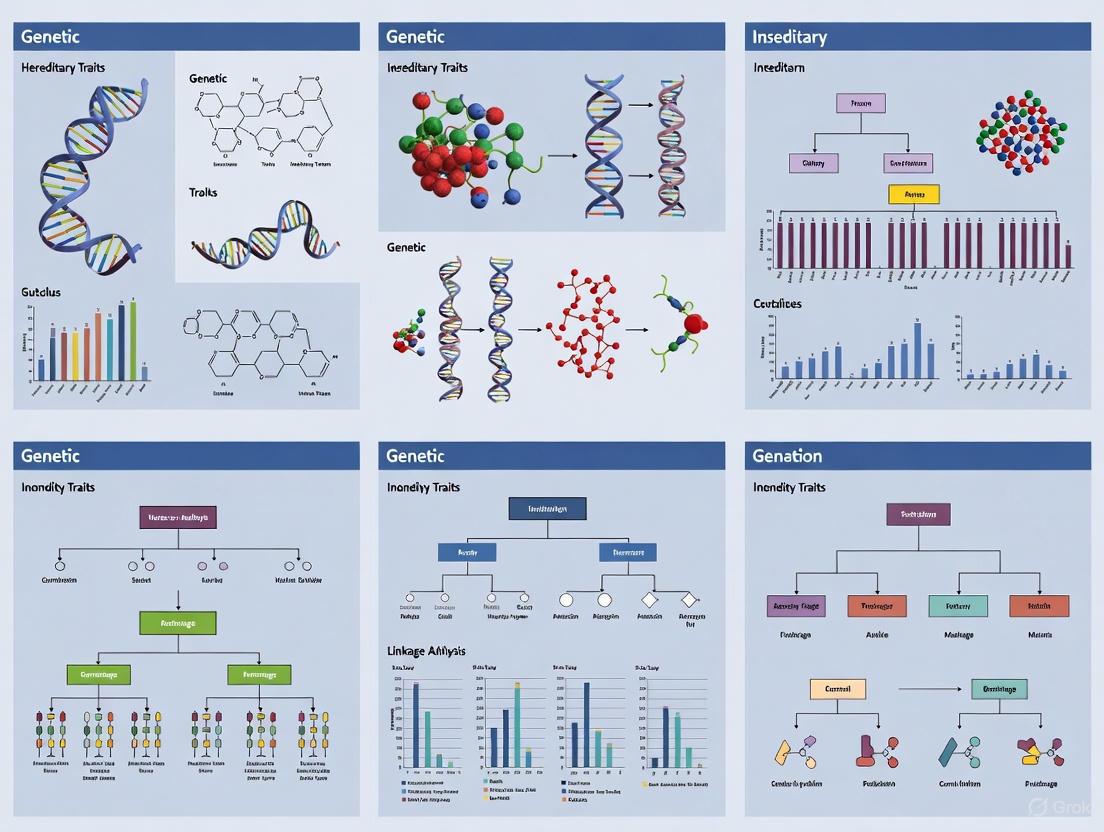
This article provides a comprehensive analysis of the genetic basis of traits and diseases for researchers and drug development professionals.
Genetic Architecture of Complex Traits and Diseases: From Foundational Concepts to Clinical Applications
Abstract
This article provides a comprehensive analysis of the genetic basis of traits and diseases for researchers and drug development professionals. It explores foundational genetic concepts and the shift from monogenic to polygenic disease models. The content details advanced methodologies including Genome-Wide Association Studies (GWAS), transcriptome-wide association studies (TWAS), and novel computational approaches like biclustering and gene-based algorithms for uncovering gene-trait relationships. It addresses key challenges in the field, such as data interpretation, population diversity, and the limitations of polygenic scores, while offering optimization strategies. Finally, it examines validation techniques and comparative analyses that connect genetic findings to biological mechanisms and clinical outcomes, synthesizing insights to outline future directions for biomedical research and therapeutic development.
From DNA to Disease: Unraveling the Fundamental Principles of Genetic Inheritance
The foundation of modern genetic research lies in understanding the intricate relationships between cells, genomes, and genes. These fundamental units of heredity not only dictate cellular function but also form the basis for understanding complex traits and disease pathogenesis. The field of evolutionary cell biology has emerged as a critical discipline, integrating evolutionary biology with cell biology to explore the origins and diversity of cellular complexity [1]. This integrated perspective allows researchers to retrace the evolutionary origins of proteins, protein complexes, and corresponding cellular phenotypes, providing invaluable insights into the genetic architecture of human diseases [1]. Contemporary research approaches have evolved from merely observing genetic associations to experimentally validating them through sophisticated laboratory techniques, with the ultimate goal of improving diagnostic accuracy and therapeutic interventions for genetic disorders.
Core Concepts: From Sequence to Phenotype
The Central Dogma in the Context of Heredity
The flow of genetic information from DNA to RNA to protein represents the fundamental framework through which genes influence cellular phenotype and, consequently, organismal traits. Genes, as specific sequences within the genome, provide the instructional code for proteins that execute cellular functions. The genome, comprising the entire complement of DNA within a cell, serves as the stable repository of this information, while the cell represents the functional unit where these genetic instructions are implemented and where heredity manifests physically.
High-Throughput Measurement Technologies
Modern genomics employs high-throughput experimental techniques to measure biological phenomena on a genome-wide scale, enabling comprehensive analysis of the relationships between genotype and phenotype. These methods share common procedural steps despite their diverse applications [2].
Table 1: High-Throughput Methods for Genomic Analysis
| Measurable Feature | Technique | Primary Application |
|---|---|---|
| Gene Expression | RNA Sequencing (RNA-Seq) | Quantifies which genes are expressed and their abundance [2] |
| Transcription Factor Binding | Chromatin Immunoprecipitation Sequencing (ChIP-seq) | Identifies genome-wide binding sites for transcription factors [2] |
| DNA Methylation | Whole-Genome Bisulfite Sequencing | Maps methylated bases in the genome [2] |
| Protein-Coding mRNA Enrichment | RNA-seq Library Prep | Enriches for fragments from protein-coding genes [2] |
| Genomic Variation | Whole-Genome Sequencing | Identifies mutations across the genome without enrichment [2] |
The general workflow for these technologies typically involves: (1) Extraction of the relevant genetic material (DNA or RNA); (2) Enrichment for the biological feature of interest (e.g., protein-binding sites or mRNA molecules); and (3) Quantification, where the enriched material is sequenced and the reads are aligned to a reference genome for analysis [2]. The advent of single-cell sequencing has further revolutionized the field by revealing cell-to-cell variation previously masked in population-level studies [2].
Visualizing the High-Throughput Workflow
The following diagram illustrates the generalized workflow for high-throughput sequencing experiments, from sample preparation to data analysis:
Methodologies: Investigating the Genetic Basis of Traits
Experimental Evolution in Cellular Systems
Experimental evolution provides a powerful prospective approach for studying how genetic changes drive phenotypic adaptation in real-time, complementing retrospective comparative phylogenetic analyses [1]. In this paradigm, cells or organisms are propagated under defined selective pressures, allowing lineages with beneficial mutations to outcompete others. This methodology has been successfully applied to understand evolutionary dynamics, epistasis, and the cell biological mechanisms underlying adaptation.
Several innovative experimental designs fall under the category of "evolutionary repair" experiments:
- Defective Allele Evolution: Budding yeast cells with a defective beta-tubulin allele that impairs microtubule polymerization were evolved for 150 generations. The resulting populations showed restored microtubule function primarily through missense mutations in tubulin genes themselves, revealing adaptive mechanisms at the protein structure level [1].
- Paralog Replacement: Researchers replaced the mitotic kleisin Scc1 in S. cerevisiae with its meiotic paralog Rec8. After evolving these strains for approximately 1,750 generations, they identified mutations that improved chromosome cohesion and normalized replication timing, leading to the hypothesis that replication dynamics directly impact sister chromatid cohesion [1].
- Gene Deletion Studies: Contrasting the evolution of E. coli strains lacking one of five different core metabolic genes revealed that each deletion followed a distinct adaptive path, with cell biological explanations uncovered through measurements of gene expression, intracellular metabolite levels, and metabolic fluxes [1].
Integrating GWAS with Functional Genomics
Genome-wide association studies have identified numerous genetic variants associated with complex traits and diseases. However, translating these SNP-based associations into mechanistic insights remains challenging. Gene-based approaches that integrate GWAS with expression quantitative trait loci data have emerged as powerful solutions.
The Sherlock-II algorithm represents a sophisticated method for this integration [3]. It translates SNP-phenotype association profiles into gene-phenotype association profiles by leveraging the collective information of all SNPs that influence a gene's expression, including both cis and trans eSNPs. The underlying assumption is that if a gene is causal for a phenotype, SNPs influencing that gene's expression should also influence the phenotype. Sherlock-II uses a statistical approach that sums the log(p-value) of GWAS peaks aligned to eQTL peaks, with the background distribution calculated empirically from all p-values of GWAS SNPs aligned to tagged eSNPs in independent LD blocks [3].
This gene-based approach enables the quantification of genetic overlap between traits by calculating a normalized distance between their gene-phenotype association profiles, generating a "genetic overlap score" with associated statistical significance [3]. This method has revealed significant genetic overlaps between seemingly unrelated traits, such as cancer and Alzheimer's disease, and rheumatoid arthritis and Crohn's disease, providing new mechanistic hypotheses for their epidemiological correlations [3].
Visualizing Genetic Overlap Analysis
The following diagram outlines the workflow for analyzing genetic overlap between complex traits using gene-based approaches:
Current Research and Data Integration
Key Findings in Complex Trait Genetics
Recent advances in genetic research have yielded significant insights into the architecture of complex traits and diseases. The integration of multiple omics technologies and large-scale association studies has been particularly productive.
Table 2: Selected Recent Genetic Discoveries (2025)
| Research Focus | Key Finding | Technique Used | Biological Significance |
|---|---|---|---|
| Rare Variant Meta-analysis | Meta-SAIGE enables accurate rare variant association meta-analysis across cohorts with power similar to pooled individual-level data [4]. | Meta-analysis method development | Computationally efficient rare variant analysis while controlling type I error [4]. |
| Mitochondrial RNA in Cancer | Hotspot mutations in mitochondrial ribosomal RNA genes are under strong purifying selection in germline but recur in cancers [4]. | Analysis of 14,106 tumor genomes | Reveals functionally dominant mutations in mitochondrial genome contributing to oncogenesis [4]. |
| Pancreatic Cancer Subtypes | Cancer progression involves a switch from HNF4G-driven transcription in primary disease to FOXA1-mediated transcription in metastasis [4]. | Transcriptomic analysis | Identifies transcription factor switching as a driver of subtype-specific pancreatic cancer [4]. |
| Chromatin Loop Control | A natural RCN2 variant enhances rice yield by restricting chromatin loop extrusion and interacting with OsSPL14–SLR1 module [4]. | Chromatin conformation analysis | Demonstrates how precise control of 3D genome architecture can enhance agronomic traits [4]. |
| Polygenic Risk Prediction | Liability threshold phenotypic integration combines genetic relatedness with EHR data to improve disease risk prediction [4]. | Algorithm development | Enhances GWAS power and prediction accuracy by leveraging electronic health records [4]. |
Complementary Approaches in Genetic Association Studies
Understanding how different genetic association methods prioritize genes is crucial for interpreting research findings. Genome-wide association studies and rare-variant burden tests, the two main tools for discovering gene-trait links, systematically rank genes differently due to distinct underlying drivers [5]. Models explaining these differences highlight that both methods are complementary, each illuminating unique aspects of trait biology and together providing a more comprehensive understanding of the genetic architecture of complex diseases [5].
Essential Research Reagents and Tools
The Scientist's Toolkit
Contemporary genetic research relies on a sophisticated array of reagents and computational tools designed to interrogate the relationships between cells, genomes, and genes.
Table 3: Essential Research Reagents and Solutions
| Reagent/Tool | Function | Application Context |
|---|---|---|
| OmicsEV R Package | Comprehensive quality evaluation of RNA-Seq and proteomics data tables [6]. | Assesses data depth, normalization, batch effects, biological signal strength, and multi-omics concordance [6]. |
| CRISPR/Cas9 System | Precision genome editing through targeted DNA cleavage. | Enables gene knockout, knock-in, and perturbation studies in experimental evolution and functional validation [1]. |
| Sherlock-II Algorithm | Integrates GWAS with eQTL data to derive gene-phenotype associations [3]. | Translates SNP-level signals to gene-level signals by leveraging collective information from all SNPs influencing a gene's expression [3]. |
| Single-Cell Sequencing Reagents | Enable analysis of genetic material from individual cells. | Reveals cell-to-cell variation in gene expression, chromatin accessibility, and genetic heterogeneity [2]. |
| Meta-SAIGE | Computationally efficient method for rare variant meta-analysis across cohorts [4]. | Controls type I error rates while maintaining power similar to pooled individual-level data analysis [4]. |
The integrated study of cells, genomes, and genes as the basic units of heredity has fundamentally advanced our understanding of the genetic basis of traits and diseases. Methodologies ranging from experimental evolution to gene-based association studies provide complementary approaches for linking genetic variation to phenotypic outcomes. As high-throughput technologies continue to evolve and computational methods become increasingly sophisticated, the research community is positioned to unravel ever more complex relationships between genotype and phenotype, ultimately enabling more precise diagnostic and therapeutic strategies for human genetic disorders.
Understanding the genetic basis of human disease is fundamental to advancing precision medicine and therapeutic development. Genetic disorders are systematically categorized into three primary classes based on their underlying molecular mechanisms: single-gene, chromosomal, and multifactorial disorders. Single-gene disorders, also known as Mendelian disorders, result from mutations in specific individual genes and typically follow clear inheritance patterns. Chromosomal disorders arise from macroscopic abnormalities in chromosome structure or number, leading to the simultaneous disruption of multiple genes. Multifactorial disorders, which represent the most prevalent category of complex human diseases, stem from the combined effects of variations in multiple genes alongside environmental factors, creating a complex web of interactions that challenge both diagnosis and treatment.
This classification framework provides researchers and drug development professionals with a structured approach to investigating disease etiology, with each category demanding distinct methodological strategies for gene discovery, mechanistic elucidation, and therapeutic intervention. Contemporary genetic research has increasingly focused on unraveling the complex interplay between these genetic factors across the spectrum of human disease, from rare monogenic conditions to common complex traits. The integration of advanced genomic technologies, including single-cell sequencing and multi-omics approaches, is refining our understanding of disease mechanisms and creating new opportunities for targeted therapies across all three categories of genetic disorders.
Single-Gene Disorders
Molecular Basis and Inheritance Patterns
Single-gene disorders result from pathogenic mutations in individual genes and follow predictable Mendelian inheritance patterns: autosomal dominant, autosomal recessive, X-linked dominant, and X-linked recessive. These disorders are characterized by high penetrance and significant functional impact on the encoded protein, leading to distinct clinical phenotypes. Examples include Angelman syndrome, a neurogenetic condition affecting approximately 1 in 15,000 live births caused by disruption of the UBE3A gene on chromosome 15, and Megoconial Muscular Dystrophy, an extremely rare progressive disease resulting from mutations in the CHKB gene [7].
The identification of single-gene disorders has been revolutionized by next-generation sequencing technologies. Whole Exome Sequencing (WES) examines the DNA sequence of over 180,000 exons across 22,000 genes, screening for more than 4,000 monogenic diseases [7]. This approach enables comprehensive genetic profiling even for extremely rare conditions, providing families with diagnostic clarity after years of uncertainty. For clinical applications, WES demonstrates particular utility in cases with nonspecific presentations where traditional targeted testing would be insufficient.
Experimental Approaches and Research Methodologies
Gene Identification and Functional Validation
The investigation of single-gene disorders employs a systematic pipeline from gene discovery to mechanistic elucidation (Figure 1). Initial gene identification typically involves linkage analysis in affected families or trio-based whole-exome sequencing to identify de novo mutations. Following candidate gene identification, functional validation is essential to establish pathogenicity.
Key methodologies for functional validation include:
Induced Pluripotent Stem Cell (iPSC) Models: Patient-derived iPSCs differentiated into relevant cell types (e.g., neurons, cardiomyocytes) enable in vitro study of disease mechanisms in human cells [8]. For example, iPSC models of MED13L syndrome have revealed that MED13L deficiency shapes cortical neurogenesis through a transcriptional priming effect on key developmental genes [9].
Organoid Disease Modeling: Three-dimensional organoid systems recapitulate tissue-level organization and function, providing more physiologically relevant models than two-dimensional cultures. Research on rare kidney diseases has utilized kidney organoids to model disease pathology and screen therapeutic compounds [8].
Genome Editing: CRISPR-Cas9 mediated genome editing allows for introduction of specific mutations into control cell lines or correction of patient-derived iPSCs to create isogenic controls, enabling definitive establishment of genotype-phenotype relationships [8].
Research Reagent Solutions for Single-Gene Disorder Investigation
Table 1: Essential research reagents for single-gene disorder studies
| Research Reagent | Specific Function | Application Example |
|---|---|---|
| Whole Exome Sequencing Kits | Targets >180,000 exons across 22,000 genes for comprehensive variant detection | Clinical WES (e.g., XOME) screens for >4,000 monogenic diseases [7] |
| iPSC Reprogramming Vectors | Introduction of pluripotency factors (OCT4, SOX2, KLF4, c-MYC) into somatic cells | Generation of patient-specific iPSCs for disease modeling [8] |
| CRISPR-Cas9 Systems | Precise genome editing through RNA-guided DNA cleavage | Creation of isogenic control lines; introduction of specific mutations [8] |
| Differentiation Kits | Direct iPSC differentiation into specific cell lineages (neuronal, cardiac, hepatic) | Cell-type specific phenotypic assays [9] [8] |
| Organoid Culture Matrices | Three-dimensional scaffolds supporting self-organization of stem cells | Generation of tissue-like structures for disease modeling [8] |
Chromosomal Disorders
Cytogenetic Abnormalities and Disease Mechanisms
Chromosomal disorders involve abnormalities in chromosome number or structure that are microscopically visible or detectable by chromosomal microarray analysis (CMA). According to MeSH definitions, chromosome aberrations represent "abnormal number or structure of chromosomes" that "may result in chromosome disorders" [10]. These abnormalities can be categorized as numerical anomalies (aneuploidies such as trisomy 21 in Down syndrome) or structural anomalies (deletions, duplications, translocations, inversions, and rings).
The pathogenicity of chromosomal disorders stems from the simultaneous disruption of multiple genes within the affected genomic region, often leading to syndromic presentations with multiple congenital anomalies. Chromosomal microarray (CMA) platforms are specifically designed for genome-wide detection of DNA copy number variations (CNVs)—copy number gains and losses associated with unbalanced chromosomal aberrations [11]. The clinical utility of CMA includes better definition and characterization of abnormalities detected by standard chromosomal studies and the ability to detect copy neutral absence of heterozygosity when single nucleotide polymorphism (SNP) probes are incorporated.
Diagnostic Approaches and Clinical Applications
Chromosomal microarray analysis has emerged as a first-line diagnostic test for multiple clinical indications in both prenatal and postnatal settings (Table 2). The technology offers significant advantages over conventional karyotyping, including higher resolution and the ability to detect submicroscopic deletions and duplications.
Table 2: Clinical indications for chromosomal microarray analysis
| Clinical Scenario | CMA Application | Diagnostic Yield |
|---|---|---|
| Prenatal Diagnosis | Structural fetal anomaly on ultrasound; fetal demise/stillbirth | Identification of pathogenic CNVs explaining structural anomalies [11] |
| Postnatal/ Pediatric Diagnosis | Multiple congenital anomalies without established diagnosis | 15-20% diagnostic yield for unexplained multiple anomalies [11] |
| Neurodevelopmental Disorders | Autism spectrum disorder (idiopathic); developmental delay/intellectual disability | 10-15% diagnostic yield for unexplained neurodevelopmental disorders [11] |
| Reproductive Context | History of ≥2 miscarriages; early neonatal death (up to 7 days) | Identification of unbalanced chromosomal rearrangements [11] |
Current clinical guidelines recommend CMA as a first-line test in the initial postnatal evaluation of individuals with multiple congenital anomalies, congenital or early-onset epilepsy (before age 3 years) without suspected environmental causes, idiopathic autism spectrum disorder, developmental delay or intellectual disability without identifiable cause, and early neonatal death up to 7 days after birth [11]. In prenatal settings, CMA is medically necessary when structural fetal anomalies are detected on ultrasound or in cases of fetal demise.
Critical to the implementation of CMA is appropriate genetic counseling, which should include interpretation of personal and family medical histories, education about inheritance patterns and genetic testing, counseling regarding the psychological aspects of genetic testing, and discussion of test limitations—including the possibility of identifying variants of uncertain significance (VUS) or incidental findings [11].
Multifactorial Disorders
Complex Interplay of Genetic and Environmental Factors
Multifactorial disorders, also known as complex diseases, arise from the combined effects of multiple genetic variants and environmental factors, representing the most common category of human disease. Unlike single-gene disorders, multifactorial conditions do not follow simple Mendelian inheritance patterns, with individual genetic variants typically conferring modest disease risk. These disorders include most common chronic conditions such as cardiovascular diseases, type 2 diabetes, psychiatric disorders, and autoimmune diseases.
The genetic architecture of multifactorial disorders is characterized by polygenicity (many genetic variants contributing to disease risk) and pleiotropy (individual variants influencing multiple traits or disorders). A groundbreaking study of eight psychiatric disorders revealed substantial genetic sharing, with 109 of 136 genetic "hot spots" associated with multiple disorders [12]. Pleiotropic variants demonstrate distinct biological properties—they are more active and sensitive to change during brain development compared to disorder-specific variants, suggesting they may be optimal therapeutic targets due to their extended roles in neurodevelopment [12].
Advanced Methodologies for Elucidating Complex Disease Genetics
Genome-Wide Association Studies and Beyond
Genome-wide association studies (GWAS) have been instrumental in identifying genetic variants associated with multifactorial disorders. However, translating GWAS findings into biological mechanisms requires advanced functional genomics approaches (Figure 2).
The tissue-gene fine-mapping (TGFM) method represents a significant methodological advance, inferring the posterior inclusion probability (PIP) for each gene-tissue pair to mediate a disease locus by analyzing GWAS summary statistics and eQTL data [13]. Applied to 45 UK Biobank traits using eQTL data from 38 Genotype-Tissue Expression (GTEx) tissues, TGFM identified an average of 147 causal genetic elements per disease, 11% of which were gene-tissue pairs [13]. This approach successfully recapitulated known biology (e.g., TPO-thyroid for hypothyroidism) and identified biologically plausible findings (e.g., SLC20A2-artery aorta for diastolic blood pressure).
Single-Cell Genomics and Cell Type-Specific Mechanisms
Recent advances in single-cell genomics have revolutionized our understanding of cell type-specific mechanisms in multifactorial disorders. A landmark study leveraging single-cell eQTL (sc-eQTL) mapping in the TenK10K project—comprising 154,932 common variant sc-eQTLs across 28 immune cell types derived from over 5 million peripheral blood mononuclear cells (PBMCs) from 1,925 individuals—demonstrated that genetic effects on gene expression are profoundly cell type-specific [14].
This comprehensive analysis identified:
- 58,058 causal associations across 8,672 genes and 28 cell types for 53 diseases
- 681,480 causal associations across 16,085 genes and 28 cell types for 31 biomarker traits
- Differential polygenic enrichment patterns for Crohn's disease and COVID-19 among dendritic cell subtypes
- High activity of B cell interferon II response in systemic lupus erythematosus (SLE)
Notably, therapeutic compounds targeting gene-trait associations identified through this single-cell genetics approach were three times more likely to have secured regulatory approval, highlighting the translational potential of cell type-specific genetic discovery [14].
Multimorbidity and Genetic Pleiotropy
The study of multimorbidity—the co-occurrence of multiple long-term health conditions in the same individual—has revealed extensive genetic sharing across diverse disease domains. The GEMINI study, which analyzed both genetics and clinical information from more than three million people in the UK and Spain, identified genetic overlaps in 72 long-term health conditions associated with aging [15]. This research provides a platform for understanding the genetic architecture of disease co-occurrence and identifying potential targets for intervention that might address multiple conditions simultaneously.
The implications for drug development are substantial, as understanding these shared genetic pathways enables drug repurposing opportunities and the development of novel therapeutics targeting shared biological mechanisms across multiple conditions. This approach represents a shift from traditional single-disease paradigms toward more holistic, person-centered therapeutic strategies.
Research Reagent Solutions for Multifactorial Disorder Investigation
Table 3: Essential research reagents for multifactorial disorder studies
| Research Reagent | Specific Function | Application Example |
|---|---|---|
| Single-cell RNA Sequencing Kits | Barcoding and library preparation for transcriptome profiling of individual cells | Identification of cell type-specific eQTLs in PBMCs from 1,925 individuals [14] |
| Massively Parallel Reporter Assays | High-throughput functional screening of thousands of genetic variants | Testing 17,841 variants from 136 psychiatric disorder "hot spots" [12] |
| TGFM Software | Bayesian fine-mapping of causal gene-tissue pairs from GWAS and eQTL data | Identifying causal gene-tissue pairs for 45 UK Biobank traits [13] |
| PBMC Isolation Kits | Isolation of peripheral blood mononuclear cells for immune cell studies | sc-eQTL mapping across 28 immune cell types [14] |
| Cell Type-Specific Antibodies | Isolation or characterization of specific cell populations | Cell sorting for cell type-specific functional studies [14] |
The systematic classification of genetic disorders into single-gene, chromosomal, and multifactorial categories provides an essential framework for both basic research and clinical translation. While each category exhibits distinct genetic architectures and inheritance patterns, advancing technologies are revealing unexpected connections across these domains. Single-gene disorders offer clearly interpretable genotype-phenotype relationships that illuminate fundamental biological pathways. Chromosomal disorders demonstrate the profound consequences of genomic structural variation. Multifactorial disorders present the greatest challenge with their complex interplay of polygenic inheritance and environmental influences, yet also represent the most significant opportunity for public health impact due to their population prevalence.
The integration of emerging technologies—particularly single-cell genomics, tissue-specific fine-mapping, and functional validation using iPSCs and organoids—is transforming our understanding of disease mechanisms across all categories of genetic disorders. These approaches are revealing the cell type-specific contexts in which genetic variants operate, providing unprecedented resolution for understanding pathophysiology. For drug development professionals, these advances create new opportunities for target identification, particularly through the discovery of pleiotropic genes influencing multiple disorders and cell type-specific mechanisms that may enable more precise therapeutic interventions with reduced side effects.
As genetic research continues to evolve, the distinction between these categories may become increasingly blurred, with discoveries of oligogenic inheritance (a few genes contributing to disease) and complex modifiers of monogenic conditions. What remains clear is that comprehensive genetic analysis, coupled with functional validation in relevant cellular contexts, will continue to drive therapeutic innovation across the spectrum of human genetic disease.
Laws of Inheritance and Patterns of Disease Transmission
The study of inheritance patterns forms the cornerstone of human genetics research, providing the fundamental principles for understanding the etiology of both rare single-gene disorders and complex multifactorial diseases. Framed within the broader context of the genetic basis of traits and diseases, these patterns enable researchers and drug development professionals to trace the transmission of genetic variants through families and populations, elucidate molecular mechanisms, and identify potential therapeutic targets. Gregor Mendel's principles of inheritance, first observed in pea plants in the 1860s, established the conceptual framework for predicting how traits are passed between generations [16]. Today, this Mendelian foundation has evolved to encompass sophisticated models that account for polygenic inheritance, gene-environment interactions, and complex molecular pathways underlying human disease.
While single-gene disorders follow predictable inheritance patterns, most common diseases exhibit more complex transmission resulting from the combined effects of multiple genetic variants and environmental factors [3]. Understanding both simple and complex inheritance is crucial for advancing personalized medicine, as it informs risk prediction, diagnostic strategies, and the development of targeted therapies. This technical guide examines the core patterns of disease transmission and the experimental methodologies driving discovery in modern genetic research.
Core Patterns of Mendelian Inheritance
Mendelian inheritance patterns describe the transmission of single-gene disorders caused by mutations in specific genes on autosomes or sex chromosomes. These patterns are characterized by their predictable recurrence risks within families and distinct pedigree features [17] [18].
Autosomal Dominant Inheritance
- Characteristics: Each affected person typically has an affected parent (unless a de novo mutation occurs), and the disorder appears in every generation. Both males and females are equally likely to inherit and transmit the mutation [18].
- Molecular Mechanism: A single mutated copy of the gene is sufficient to cause the disease phenotype. This often occurs when the mutation results in a toxic gain-of-function, dominant-negative effect, or haploinsufficiency [17].
- Recurrence Risk: An affected heterozygote has a 50% chance of passing the mutated allele to each offspring [16].
Autosomal Recessive Inheritance
- Characteristics: Typically not seen in every generation. Both parents of an affected individual are asymptomatic carriers. Males and females are equally affected [18].
- Molecular Mechanism: Two mutated copies of the gene are required for disease manifestation. The parents are heterozygous carriers with one functional copy sufficient to maintain normal function [17].
- Recurrence Risk: Two carrier parents have a 25% chance with each pregnancy of having an affected child [18].
X-Linked Inheritance
- X-Linked Recessive: Primarily affects males, who are hemizygous for the X chromosome. Affected males cannot transmit the disorder to their sons but will pass the mutation to all daughters, who become carriers. Carrier females are typically unaffected but may show variable expression due to X-chromosome inactivation [18].
- X-Linked Dominant: Affects both males and females, though often with different severity. Females may be more frequently affected but with milder expression. Affected males pass the mutation to all daughters but no sons. Affected females have a 50% chance of passing the mutation to any child [17].
Mitochondrial Inheritance
- Characteristics: Affects both males and females, but only females transmit the trait to their offspring. Can appear in every generation [17].
- Molecular Mechanism: Mitochondrial DNA is maternally inherited. All children of an affected female may inherit the mutation but express variable symptoms due to heteroplasmy (mixture of mutant and wild-type mitochondrial DNA) [18].
Table 1: Mendelian Inheritance Patterns and Representative Diseases
| Inheritance Pattern | Key Characteristics | Disease Examples |
|---|---|---|
| Autosomal Dominant | Vertical transmission; affects both sexes equally; 50% recurrence risk | Huntington's disease, neurofibromatosis, achondroplasia, familial hypercholesterolemia [17] |
| Autosomal Recessive | Horizontal transmission; affects both sexes equally; 25% recurrence risk for carrier parents | Tay-Sachs disease, sickle cell anemia, cystic fibrosis, phenylketonuria (PKU) [18] |
| X-Linked Recessive | Primarily affects males; no male-to-male transmission | Hemophilia A, Duchenne muscular dystrophy [17] |
| X-Linked Dominant | Affects both sexes; often lethal in males; no male-to-male transmission | Hypophosphatemic rickets (vitamin D-resistant rickets), ornithine transcarbamylase deficiency [18] |
| Mitochondrial | Maternal inheritance; variable expression due to heteroplasmy | Leber's hereditary optic neuropathy, Kearns-Sayre syndrome [17] |
Beyond Mendel: Complex Inheritance and Disease Transmission
Most common human diseases, including schizophrenia, type 2 diabetes, and many autoimmune disorders, do not follow simple Mendelian patterns. These complex traits involve the combined effects of multiple genetic variants, environmental factors, and their interactions [3].
The Quantitative Genetics Framework
Complex traits typically exhibit continuous variation and are influenced by numerous genetic and environmental factors:
- Polygenic Inheritance: Multiple genes, each with small additive effects, contribute to the phenotype [19].
- Genetic Architecture: The number of variants, their effect sizes, and allele frequencies determine the genetic architecture of complex traits [3].
- Heritability: The proportion of phenotypic variance attributable to genetic factors, which can be estimated through family, twin, and adoption studies [19].
Gene-Environment Interplay
Environmental factors can modify disease risk through various mechanisms:
- Gene-Environment Interactions: Genetic effects may depend on specific environmental exposures.
- Epigenetic Modifications: Environmental factors can induce chemical modifications to DNA and histones that alter gene expression without changing the DNA sequence.
Modern Analytical Frameworks for Genetic Analysis
Gene-Based Approaches for Complex Traits
Advanced computational methods have been developed to detect genetic overlap between complex traits and delineate shared genes and pathways:
- Sherlock-II Algorithm: Translates SNP-phenotype associations to gene-phenotype associations by integrating GWAS with eQTL data. This approach uses collective information from all SNPs regulating a gene's expression, including both cis and trans eSNPs, to derive a p-value of association between the gene and phenotype [3].
- Genetic Overlap Score (Sg): Measures similarity between gene-phenotype association profiles of two traits. A normalized distance metric calculates statistical significance of genetic overlap, enabling detection of relationships not apparent at the SNP level [3].
- Applications: This approach has identified significant genetic overlap between seemingly unrelated traits, such as an inverse correlation between Cancer and Alzheimer's Disease, with shared genes involved in hypoxia response and P53/apoptosis pathways [3].
Experimental Protocol: Gene-Based Genetic Overlap Analysis
Objective: To identify significant genetic overlap between complex human traits using GWAS and eQTL data integration.
Methodology:
Data Acquisition:
- Collect GWAS summary statistics for traits of interest.
- Obtain eQTL data from relevant tissues (e.g., GTEx database) [3].
Gene-Phenotype Association:
- Apply Sherlock-II algorithm to translate SNP-phenotype associations to gene-phenotype associations.
- For each gene, compute association p-value by evaluating alignment between GWAS signals and eQTL profiles [3].
Genetic Similarity Assessment:
- Represent each phenotype as a gene association vector of dimension N (number of genes).
- Calculate genetic overlap score (Sg) between trait pairs based on similarity of their gene association profiles.
- Determine statistical significance using background distribution from random GWAS ensembles [3].
Functional Annotation:
- Identify shared genes and pathways contributing to significant overlaps using methods like Partial Pearson Correlation Analysis (PPCA).
- Generate hypotheses about common physiological processes connecting the traits [3].
Diagram 1: Gene-based genetic overlap analysis workflow
Emerging Experimental Paradigms
Novel Procedure for Identifying Disease Gene Loci
A proposed experimental procedure overcomes limitations of human genetics research by using induced pluripotent stem cells (iPS cells) and parthenogenesis to identify disease gene loci:
Protocol Overview:
- iPS Cell Generation: Reprogram patient somatic cells to induced pluripotent stem (iPS) cells using non-integrating methods (plasmid vectors, transposons, recombinant proteins) [20].
- Phenotypic Assay Development: Establish in vitro assay systems to distinguish affected iPS cells from normal controls after differentiation into relevant cell types [20].
- Meiotic Induction: Induce oogenesis in patient-derived iPS cells through in vitro differentiation or transplantation into embryonic environments [20].
- Parthenogenetic Activation: Activate oocytes arrested at second meiotic metaphase in the presence of cytochalasin to prevent polar body extrusion, producing diploid parthenogenetic embryonic stem (pES) cells with recombined chromosomes [20].
- Phenotyping and Genotyping: Differentiate pES clones and assess cellular functions. Genotype each clone and identify disease loci by correlating genotype with phenotype [20].
Diagram 2: Experimental identification of disease gene loci
Research Reagent Solutions
Table 2: Essential Research Reagents and Materials
| Research Reagent | Function/Application |
|---|---|
| Induced Pluripotent Stem (iPS) Cells | Patient-specific pluripotent cells for disease modeling and differentiation into affected cell types [20] |
| Reprogramming Factors (OCT4, SOX2, KLF4, c-MYC) | Transcription factors used to reprogram somatic cells to pluripotent state; delivered via non-integrating methods [20] |
| Bone Morphogenetic Proteins (BMPs) | Signaling molecules used to induce primordial germ cell differentiation from human pluripotent stem cells [20] |
| Cytochalasin | Inhibitor of actin polymerization that prevents polar body extrusion during parthenogenetic activation, maintaining diploidy [20] |
| GTEx eQTL Database | Reference dataset of expression quantitative trait loci across multiple human tissues for gene-based analysis [3] |
| GWAS Summary Statistics | Genome-wide association study data providing SNP-phenotype associations for multiple complex traits [3] |
The field of inheritance and disease transmission has evolved dramatically from Mendel's pea plants to contemporary multi-omics approaches. While Mendelian patterns provide the foundational framework for understanding single-gene disorders, complex diseases require sophisticated analytical methods that account for polygenic architecture, gene-environment interactions, and molecular networks. The integration of GWAS with functional genomics data through gene-based approaches, coupled with innovative experimental systems like iPS cell-based models, continues to advance our understanding of disease etiology. These methodologies enable researchers to unravel the genetic complexity of human diseases, accelerating the development of targeted therapies and personalized treatment strategies. As genetic technologies advance, the integration of diverse data types and experimental approaches will further refine our models of inheritance and enhance our ability to predict, prevent, and treat genetic disorders.
The human genome, a complete set of hereditary information, exhibits remarkable sequence variation between individuals. These genetic differences are fundamental to understanding the diversity of human traits, susceptibility to diseases, and responses to pharmaceuticals. Genetic variations range in scale from single nucleotide changes to large, complex structural rearrangements of chromosomes. The study of these variations provides crucial insights into the molecular basis of phenotypes and drives advances in personalized medicine, drug discovery, and clinical diagnostics. Within this spectrum, single-nucleotide polymorphisms (SNPs) represent the most frequent type of genetic variation, serving as powerful tools for genome-wide association studies (GWAS) and functional genetic research [21] [22]. This technical guide delineates the core concepts of mutations, polymorphisms, and SNPs, framing them within the context of contemporary genetic research on the heritable basis of traits and diseases.
The completion of the human genome project and subsequent advances in sequencing technologies have enabled researchers to characterize genetic variation with unprecedented resolution. Recent research has sequenced 65 diverse human genomes to build 130 haplotype-resolved assemblies, closing 92% of previous assembly gaps and achieving telomere-to-telomere (T2T) status for 39% of chromosomes [23]. Such efforts highlight the extensive complexity of human genetic variation and provide critical resources for associating structural variants with disease phenotypes. Understanding the types, frequencies, and functional consequences of genetic variants is therefore paramount for dissecting the architecture of complex traits and diseases.
Fundamental Concepts and Definitions
Mutations vs. Polymorphisms
In genetic terminology, a mutation refers to any permanent alteration in the DNA sequence that constitutes a genome. While all genetic variations originate as mutations, the term "polymorphism" is typically applied to variations that are present at a frequency of at least 1% in the population [21] [24]. This frequency threshold distinguishes common variations (polymorphisms) from rare mutations, though this nomenclature is not applied consistently across all fields [22]. The term single-nucleotide variant (SNV) has emerged as a more general term for any single nucleotide change, encompassing both common SNPs and rare mutations, whether germline or somatic [22].
Single-Nucleotide Polymorphisms (SNPs)
Single-nucleotide polymorphisms (SNPs) are defined as germline substitutions of a single nucleotide at a specific position in the genome [22]. For example, a cytosine (C) nucleotide in the reference genome might be replaced by a thymine (T) in a significant fraction of the population. The two possible nucleotide variations at a SNP position are called alleles [22]. SNPs occur normally throughout a person's DNA, approximately once in every 1,000 nucleotides, which translates to roughly 4 to 5 million SNPs in an individual's genome [21]. Scientists have identified more than 600 million SNPs across diverse human populations worldwide [21] [22].
Table 1: Classification and Characteristics of Genetic Variants
| Variant Type | Definition | Population Frequency | Functional Impact |
|---|---|---|---|
| Mutation | Any change in DNA sequence | Typically <1% | Can be neutral, deleterious, or beneficial |
| Polymorphism | Genetic variation in a population | ≥1% | Typically neutral, but can influence disease risk |
| SNP (Single-Nucleotide Polymorphism) | Single base substitution | ≥1% | Varies by genomic location; most are neutral |
| SNV (Single-Nucleotide Variant) | Any single nucleotide change | Any frequency | General term encompassing both SNPs and mutations |
Types of SNPs and Their Functional Consequences
Genomic Distribution of SNPs
SNPs are distributed throughout the human genome, though their distribution is not homogeneous. They occur more frequently in non-coding regions than in coding regions, largely due to selective pressures that conserve functional elements [22]. SNP density can be predicted by the presence of microsatellites, with long (AT)n repeat tracts tending to be found in regions of significantly reduced SNP density and low GC content [22].
- Coding Region SNPs: SNPs located within protein-coding sequences are categorized as either synonymous or nonsynonymous. Synonymous SNPs do not change the encoded amino acid due to the degeneracy of the genetic code. While historically considered "silent," they can affect mRNA structure, stability, or translation efficiency [22]. Nonsynonymous SNPs alter the amino acid sequence and are further subdivided into missense (amino acid substitution) and nonsense (introduction of a premature stop codon) variants [22].
- Non-coding Region SNPs: SNPs in non-coding regions can influence gene regulation by affecting transcription factor binding, chromatin structure, or the sequence of non-coding RNAs. Those affecting gene expression are termed expression SNPs (eSNPs) [22]. Recent research has highlighted that genetic variants affecting RNA stability represent a critical, yet understudied, mechanism linking genetic variation to complex traits and disease risk [25].
Functional Mechanisms of SNPs
The functional consequences of SNPs depend largely on their genomic context:
- Regulatory SNPs: Located in promoter, enhancer, or other regulatory elements, these SNPs can alter transcription factor binding affinity and consequently modulate gene expression levels [26].
- RNA-Stability SNPs: A 2025 study identified over 5,000 allele-specific RNA stability (asRS) variants across 665 genes in human cell lines. These variants directly overlap conserved microRNA target regions and allele-specific RNA-binding protein sites, illuminating mechanisms through which mRNA half-life is mediated [25].
- Splicing SNPs: SNPs at splice donor, acceptor, or regulatory sites can disrupt normal pre-mRNA splicing, leading to aberrant transcript isoforms with potential functional consequences.
Table 2: Functional Classification of SNPs and Their Potential Impacts
| SNP Category | Genomic Location | Potential Molecular Consequences | Disease Examples |
|---|---|---|---|
| Synonymous | Coding exons | Altered mRNA stability/structure; translation efficiency | Altered drug response in MDR1 gene [22] |
| Non-synonymous | Coding exons | Altered protein function, stability, or folding | LMNA mutations causing progeria [22] |
| Regulatory | Promoters, enhancers | Altered transcription factor binding; changed gene expression | Association with cancer risk [22] [27] |
| Splicing | Splice sites | Aberrant mRNA splicing; truncated proteins | Cystic fibrosis (G542X mutation) [22] [23] |
| RNA-Stability | 3'UTRs | Changed mRNA half-life; altered protein levels | Immune system diseases [25] |
Research Applications in Traits and Diseases
Genome-Wide Association Studies (GWAS)
Genome-wide association studies (GWAS) represent the primary application of SNP technology for identifying genetic variants linked to human diseases and traits [22]. These comprehensive analyses examine hundreds of thousands to millions of genetic markers simultaneously across the genome to detect statistical associations between specific SNPs and phenotypic characteristics [22]. As of 2021, the NHGRI-EBI GWAS Catalog had documented 246,178 genome-wide significant associations of SNPs with 868 complex traits and diseases [26].
GWAS have successfully uncovered genetic contributors to complex disorders including cardiovascular disease, diabetes, neurological conditions, and many others [22]. For example, a common SNP in the CFH gene is associated with increased risk of age-related macular degeneration, while two common SNPs in the APOE gene (rs429358 and rs7412) define alleles with different risks for Alzheimer's disease [22]. The majority of variants identified through GWAS are common in the population (minor allele frequency >5%) and exert low to modest effects (odds ratios ~1.05-1.20) [26].
Tag SNPs and Haplotype Mapping
The development of tag SNP methodology has significantly enhanced the efficiency of genomic studies by exploiting patterns of linkage disequilibrium (LD) across the human genome [22]. Tag SNPs function as representative markers that capture genetic variation within specific chromosomal regions, allowing researchers to survey large genomic areas without genotyping every individual variant [22]. This approach reduces both the financial cost and computational burden of large-scale genetic studies while maintaining sufficient power to detect disease-associated loci.
Haplotype reconstruction represents another fundamental application where SNPs enable the characterization of inherited genetic blocks. Researchers utilize dense SNP maps to identify and analyze haplotype structures, which consist of sets of closely linked alleles that tend to be transmitted together through generations [22]. The International HapMap Project exemplified this application by creating comprehensive maps of common haplotype patterns across diverse human populations, providing a valuable resource for designing efficient genetic association studies [22].
Functional Mapping and Annotation
Platforms like FUMA (Functional Mapping and Annotation of Genome-Wide Association Studies) have been developed to annotate, prioritize, visualize, and interpret GWAS results [28]. The SNP2GENE module within FUMA provides extensive functional annotation for all SNPs in genomic areas identified by lead SNPs, while the GENE2FUNC module annotates genes in biological contexts [28]. Such bioinformatics tools are essential for moving from statistical associations to biological insights.
Quantitative Genetics of Complex Traits
The Infinitesimal Model
Quantitative genetics, or the genetics of complex traits, studies characters that are not affected by the action of just a few major genes but rather by many genes and environmental factors [29]. The foundation of quantitative genetics rests on statistical models, particularly the infinitesimal model, which assumes infinitely many unlinked genes each of infinitesimally small additive effect [29]. Under this model, selection produces negligible changes in gene frequency and variance at each locus, allowing prediction of selection response from estimable base population parameters.
Key parameters in quantitative genetics include:
- Breeding Value (A): The expected performance of offspring
- Heritability (h²): The ratio of additive genetic variance (VA) to phenotypic variance (VP), or h² = VA/VP
- Selection Response: Predicted by the breeder's equation: Response = h² × selection differential [29]
Statistical Approaches
The animal model (also known as the "individual animal model" or "individual model") represents an important generalization in quantitative genetics, where the phenotype of each individual is defined in terms of fixed and random effects, with the genetic structure incorporated through the variances and covariances of these effects [29]. The basic model is:
y = Xβ + Za + e
where y is the vector of phenotypic observations, X and Z are design matrices, β is a vector of fixed effects, a is a vector of random effects (breeding values), and e is a vector of random errors [29]. The variance structure is defined as var(y) = ZAZ'VA + IVE, where A is the additive relationship matrix [29].
These models are typically analyzed using REML (Restricted Maximum Likelihood) or Bayesian methods, facilitated by specialized computer packages that can handle complex pedigrees and unbalanced data structures commonly encountered in field studies [29].
Experimental Approaches and Methodologies
General Framework for Functional Dissection
Following the identification of variants associated with a complex trait or disease, a multi-step framework is employed for functional dissection (Fig. 1) [26]:
- Region Identification and Visualization: GWAS results are used to identify disease-associated genomic regions, typically visualized using tools like LocusZoom [26].
- Variant Prioritization: Multiple variants in linkage disequilibrium with causal variants are evaluated using functional genomic annotations (chromatin accessibility, TF binding, epigenetic modifications) to prioritize likely functional variants [26].
- Target Gene Mapping: Regulatory elements may affect gene transcription over extended distances through chromatin looping, requiring eQTL/sQTL analyses or chromatin conformation methods to connect variants to target genes [26].
- Functional Validation: Laboratory experiments assess the functional consequences of prioritized variants and their effects on molecular, cellular, and physiological phenotypes [26].
Figure 1: Workflow for Functional Dissection of GWAS Loci
Protein Binding Assays
Multiple experimental approaches are available for characterizing the functional effects of non-coding variants:
- ChIP-Seq (Chromatin Immunoprecipitation Sequencing): Determines TF binding by analyzing allelic ratios of sequencing reads covering the variant in heterozygous cell lines or tissues [26].
- EMSAs (Electrophoretic Mobility Shift Assays): Incubate DNA probes surrounding candidate variants with purified TFs or nuclear extracts; differences in electrophoretic mobility indicate differential TF binding affinity [26].
- DNA-Affinity Pulldown with Mass Spectrometry: Unbiased approach to identify proteins specifically binding to risk versus protective alleles [26].
- FREP (Flanking Restriction Enhanced Pulldown): Novel method leveraging distinct restriction enzyme sites to reduce non-specific binding in DNA pulldown assays [26].
- SNP-seq: High-throughput screen to identify functional SNPs that allelically modulate regulatory protein binding using type IIS restriction enzymes [26].
Genome Editing for Functional Validation
Genome editing technologies, particularly CRISPR/Cas systems, have revolutionized functional studies of GWAS-identified variants [26]. These approaches enable precise modification of genomic sequences in relevant cellular models to demonstrate causal relationships between variants and molecular phenotypes. Key applications include:
- Allele-Swapping: Replacing risk alleles with protective alleles (or vice versa) in cellular models to assess effects on gene expression and cellular phenotypes [26].
- High-Throughput Screens: Using pooled CRISPR screens to simultaneously evaluate multiple candidate variants and their target genes [26].
- Prime Editing: More precise genome editing approach that enables specific nucleotide conversions without double-strand breaks, allowing more accurate recapitulation of human variants [25].
Table 3: Experimental Methods for Functional Characterization of Genetic Variants
| Method Category | Specific Techniques | Key Applications | Considerations |
|---|---|---|---|
| Protein Binding | ChIP-Seq, EMSA, FREP-MS | Determine allele-specific TF binding | May miss subtle affinity changes; requires heterozygous cells |
| Chromatin Conformation | Hi-C, ChIA-PET, 4C | Connect regulatory elements to target genes | Captures long-range interactions; cell-type specific |
| Genome Editing | CRISPR/Cas, Prime Editing | Establish causality; model human variants | Precise genetic modification; enables high-throughput screens |
| High-Throughput Functional | MPRA, STARR-seq, CRISPRa/i | Test thousands of variants simultaneously | Scalable; can survey non-coding regions systematically |
Figure 2: Genome Editing Workflow for Variant Functionalization
Research Reagents and Tools
The following table details essential research reagents and computational tools utilized in genetic variation studies:
Table 4: Essential Research Reagents and Tools for Genetic Variation Studies
| Reagent/Tool | Category | Function/Application | Examples/References |
|---|---|---|---|
| SNP Arrays | Genotyping Platform | High-throughput SNP genotyping | Illumina Infinium, Affymetrix Axiom |
| Long-Read Sequencing | Sequencing Technology | Resolve complex structural variants | PacBio HiFi, Oxford Nanopore [23] |
| FUMA | Bioinformatics Platform | Functional mapping & annotation of GWAS | SNP2GENE, GENE2FUNC [28] |
| CRISPR/Cas Systems | Genome Editing | Precise genetic modification; functional validation | Cas9, Prime Editors [26] |
| RNAtracker | Computational Pipeline | Identify allele-specific RNA stability events | Analysis of asRS variants [25] |
| Verkko | Assembly Software | Haplotype-resolved genome assembly | Used in HGSVC study [23] |
| Mass Spectrometry | Protein Analysis | Identify protein-DNA interactions | FREP-MS [26] |
Advancements and Future Directions
Complete Genome Assemblies
Recent advancements in long-read sequencing technologies have enabled the production of highly continuous, nearly complete human genome assemblies. The Human Genome Structural Variation Consortium (HGSVC) has sequenced 65 diverse human genomes, generating 130 haplotype-resolved assemblies with a median continuity of 130 Mb [23]. This resource closes 92% of previous assembly gaps and reaches telomere-to-telomere status for 39% of chromosomes, enabling complete sequence continuity of complex loci including the major histocompatibility complex (MHC), SMN1/SMN2, and centromeric regions [23].
These complete assemblies have dramatically improved the detection and characterization of structural variants (SVs). Combining this data with the draft pangenome reference significantly enhances genotyping accuracy from short-read data, enabling detection of 26,115 structural variants per individual - a substantial increase that makes many more SVs amenable to downstream disease association studies [23].
Emerging Research Areas
- RNA Stability Mechanisms: Research in 2025 has highlighted RNA stability as a critical mechanism linking genetic variation to complex traits and disease. Allele-specific RNA stability (asRS) variants are significantly enriched in immune-related pathways and contribute to the risk of several immune system diseases [25].
- Machine Learning Approaches: Novel computational methods are being developed to predict both the pathogenicity of missense mutations and their association with specific diseases or severity levels. These approaches apply machine learning to features extracted from molecular dynamics simulations [27].
- Therapeutic Genome Editing: As knowledge of functional genetics accumulates, therapeutic genome editing based on GWAS discoveries is becoming increasingly feasible, potentially enabling more effective strategies for disease prevention and treatment [26].
Understanding genetic variation - from single nucleotide polymorphisms to complex structural variants - provides the foundation for deciphering the genetic architecture of human traits and diseases. SNPs serve as powerful molecular markers that enable genome-wide association studies, haplotype mapping, and population genetic analyses. The functional characterization of associated variants through sophisticated experimental approaches, including genome editing technologies, is transforming statistical associations into biological insights. As sequencing technologies advance and functional genomics datasets expand, researchers are increasingly able to move beyond correlation to causation, accelerating the translation of genetic discoveries into clinical applications and therapeutic interventions. The integration of comprehensive variant catalogs, functional annotations, and experimental validations will continue to drive advances in personalized medicine and drug development.
The Polygenic Nature of Complex Traits and the Omnigenic Model
For over a century, the understanding of how genetic variation contributes to phenotypic variation has evolved significantly. The early debate between Mendelians, who focused on discrete, monogenic phenotypes, and biometricians, who studied continuous traits, was largely resolved by R.A. Fisher's 1918 seminal paper demonstrating that many genes with small effects could produce normally distributed trait variation [30]. This established the foundation for the infinitesimal model of complex traits, which has particularly influenced plant and animal breeding [30]. Throughout the 20th century, however, human geneticists predominantly expected that complex traits would be driven by a handful of moderate-effect loci, leading to underpowered mapping studies [30].
The advent of genome-wide association studies (GWAS) around 2006 fundamentally transformed this understanding, revealing that typical complex traits are influenced by thousands of genetic variants with predominantly small effect sizes [30]. Early GWAS findings presented two major surprises: first, that even the strongest genetic associations explained only a small fraction of heritability (creating the "missing heritability" problem); and second, that unlike Mendelian diseases driven primarily by protein-coding changes, complex traits are mainly influenced by noncoding variants affecting gene regulation [30]. These observations have culminated in the omnigenic model, which proposes that essentially any gene expressed in disease-relevant cells can affect disease risk through highly interconnected regulatory networks [30] [31].
This whitepaper examines the polygenic nature of complex traits and the conceptual framework of the omnigenic model, focusing on implications for research methodologies and therapeutic development. We provide comprehensive quantitative data, experimental protocols, and analytical tools to facilitate advanced research in this evolving paradigm.
The Polygenic Architecture of Complex Traits
Fundamental Principles and Evidence
Polygenic traits exhibit a continuous distribution in populations resulting from the combined effects of numerous genetic variants, each contributing minimally to the overall phenotype. The infinitesimal model, formalized by Fisher, posits that traits are influenced by a large number of loci with effects so small that they cannot be individually detected in typical family studies [30]. Modern GWAS have validated this model across diverse traits and diseases, demonstrating that heritability is spread across most of the genome rather than concentrated in a few key pathways [30].
Evidence from height genetics illustrates this extreme polygenicity. A GIANT consortium meta-analysis identified 697 genome-wide significant loci explaining only 16% of phenotypic variance for height, despite common variants collectively accounting for approximately 86% of heritability [30]. Sophisticated modeling suggests that about 62% of all common SNPs show non-zero associations with height (primarily through linkage disequilibrium with causal variants), with an estimated 3.8% of SNPs having direct causal effects [30]. This translates to more than 100,000 independent causal variants influencing human height, each with minuscule effect sizes [30].
Quantitative Assessments of Polygenicity
Table 1: Measures of Polygenicity for Representative Complex Traits
| Trait/Disease | Sample Size | Significant Loci | SNP-Based Heritability | Estimated Causal Variants | Key References |
|---|---|---|---|---|---|
| Height | ~700,000 | 697 | ~86% | >100,000 | [30] |
| Schizophrenia | ~150,000 | 287 | 45-65% | 71-100% of 1MB windows contribute | [30] |
| Maize Nutritional Traits | Multiple populations | 308 QTLs | N/A | 34 stable meta-QTLs | [32] |
| Amyotrophic Lateral Sclerosis | 10,405 | >40 known risk loci | ~50% (40% missing) | Non-additive genes identified | [33] |
Table 2: Comparison of Genetic Architecture Across Species
| Organism | Trait Category | Mapping Approach | Genetic Resolution | Key Findings | |
|---|---|---|---|---|---|
| Human | Height, Schizophrenia | GWAS | 100kb-1Mb windows | Heritability proportional to chromosome length [30] | |
| Maize | Yield-related traits | QTL mapping | 4.59 cM (average for MQTLs) | 59.5% of QTLs show overdominance effect [34] | |
| Maize | Nutritional traits | Meta-QTL analysis | 4.86-fold refinement | 14 candidate genes with known functions [32] | |
| Drosophila | Embryo size | Experimental evolution + GWAS | Gene-level | Investigating polygenic adaptation | [35] |
The distribution of genetic effects follows a characteristic pattern where a few variants achieve genome-wide significance, while the majority contribute infinitesimally small effects. For height, the median effect size across all SNPs is approximately 0.14 mm, roughly one-tenth the effect size of genome-wide significant SNPs (1.43 mm) [30]. This highly polygenic architecture appears to be the rule rather than the exception, observed across diverse traits including schizophrenia, educational attainment, and various metabolic diseases [30] [36].
The Omnigenic Model: A Paradigm Shift
Core Principles and Definitions
The omnigenic model represents a conceptual framework for interpreting the findings from modern GWAS. It proposes that: (1) essentially any gene with regulatory variants in disease-relevant tissues can affect disease risk; (2) core genes with direct biological relevance to the disease are vastly outnumbered by peripheral genes that indirectly influence risk through regulatory networks; and (3) the majority of heritability stems from peripheral genes rather than core pathways [30] [31].
The model introduces specific terminology to describe these relationships. Core genes are defined as those with direct involvement in disease-relevant biological pathways—the minimal set of genes such that "conditional on the genotype and expression levels of all core genes, the genotypes and expression levels of peripheral genes no longer matter" [31]. In contrast, peripheral genes affect disease risk indirectly through network connections to core genes, despite having no obvious direct relationship to disease pathogenesis [30] [31].
Mechanisms and Evidence Base
The omnigenic model hypothesizes that highly interconnected gene regulatory networks allow perturbation of virtually any expressed gene to propagate through the network and ultimately influence core disease-related genes [30] [31]. This network effect explains several key observations: the enrichment of GWAS signals in active chromatin regions regardless of cell-type specificity, the minimal difference between specifically active and generically active chromatin, and the surprisingly weak enrichment of heritability in putatively relevant gene functions [30] [31].
Evidence from expression quantitative trait loci (eQTL) studies supports this framework. While cis-eQTLs are readily detectable, trans-eQTLs are far more challenging to identify despite accounting for most heritability in gene expression, suggesting enormous numbers of trans-eQTLs each with minimal effects [31]. This pattern parallels the architecture of complex traits and likely reflects the same network properties [31].
Diagram 1: The Omnigenic Model Framework. Peripheral genes influence disease phenotypes indirectly through highly interconnected regulatory networks that modulate core gene function. The majority of heritability derives from peripheral genes, which vastly outnumber core genes.
Alternative Interpretations and Critiques
The omnigenic model has stimulated vigorous discussion within the genetics community. Some researchers question whether a new term was necessary, suggesting that "polygenic" already encompasses the extreme scenario where essentially every expressed gene contributes to a trait [31]. Others propose alternative mechanisms, such as variants affecting cellular states directly rather than exclusively through core genes [31].
Diagnostic heterogeneity has also been suggested as a potential explanation for widespread polygenicity—if clinical diagnoses encompass multiple etiologically distinct diseases, the combined genetic signal would appear more polygenic [31]. However, simulations suggest that merging a small number of discrete traits cannot fully account for the genomic ubiquity of GWAS signals observed for conditions like schizophrenia [31].
Methodological Approaches and Experimental Protocols
Genome-Wide Association Studies
Protocol: Standard GWAS Workflow
- Genotype Quality Control: Filter samples and variants based on call rate, minor allele frequency, Hardy-Weinberg equilibrium, and relatedness [36].
- Population Stratification: Apply principal component analysis to identify genetically homogeneous subgroups and control for confounding [36].
- Association Testing: Perform linear or logistic regression for each SNP with appropriate covariates (age, sex, principal components) [30] [36].
- Multiple Testing Correction: Apply genome-wide significance threshold (typically p < 5×10^-8) to account for millions of tests [30].
- Heritability Estimation: Use methods like LD Score regression to quantify SNP-based heritability and assess genomic inflation [30].
Diagram 2: GWAS Workflow. Standard protocol for genome-wide association studies showing key steps from study design through biological interpretation.
Advanced Analytical Methods
Polygenic Risk Scores (PRS): PRS aggregate the effects of numerous variants across the genome to predict individual disease risk. The basic PRS calculation is:
[ \text{PRS}i = \sum{j=1}^{M} wj \times G{ij} ]
where ( \text{PRS}i ) is the polygenic risk score for individual ( i ), ( wj ) is the weight of SNP ( j ) (typically the effect size from GWAS), ( G_{ij} ) is the genotype of individual ( i ) at SNP ( j ), and ( M ) is the number of SNPs included [37] [36].
Recent methodological advances include mr.mash-rss, which leverages summary statistics and patterns of effect sharing across multiple phenotypes to improve prediction accuracy [37]. This approach is particularly valuable for biobank-scale data where individual-level data may be inaccessible [37].
Meta-QTL Analysis in Plants: For complex agricultural traits, meta-analysis of quantitative trait loci (QTL) across multiple studies enhances detection power and mapping resolution [32]. The protocol involves:
- Literature Search and Data Collection: Compile all published QTL studies for the target traits [32].
- Map Integration: Project QTL confidence intervals onto a consensus map [32].
- Meta-Analysis: Identify genomic regions with significant QTL clustering across studies [32].
- Candidate Gene Identification: Annotate meta-QTL regions with gene functions and expression data [32] [34].
Machine Learning Approaches
Non-linear machine learning methods have emerged to capture the complex interactions implied by the omnigenic model. DiseaseCapsule represents a novel approach using capsule networks to model whole-genome non-additive interactions [33]. The methodology employs:
- Gene-Based Dimensionality Reduction: Apply PCA within individual genes to preserve non-linear relationships across genes [33].
- Capsule Network Architecture: Model hierarchical relationships between genetic variants and disease status [33].
- Non-Linear Integration: Capture epistatic interactions across the entire genome [33].
This approach has demonstrated superior performance for complex traits like amyotrophic lateral sclerosis (ALS), achieving 86.9% accuracy in hold-out tests compared to 81.9% for standard linear methods [33].
Research Reagent Solutions and Tools
Table 3: Essential Research Resources for Polygenic and Omnigenic Research
| Resource Type | Specific Examples | Applications | Key Features |
|---|---|---|---|
| GWAS Datasets | UK Biobank [38] [36], 1000 Genomes [39], GTEx [39] | Discovery, replication, cross-trait analysis | Large sample sizes, diverse phenotypes, multi-omics data |
| Analysis Software | gact R package [38], mr.mash-rss [37], PLINK, LD Score regression | Summary statistics analysis, polygenic prediction, fine-mapping | Integration with genomic annotations, efficient computation |
| Experimental Populations | Recombinant Inbred Lines (RILs) [34], Immortalized Backcross Populations [34], Drosophila panels [35] | Controlled genetic studies, QTL mapping, experimental evolution | Fixed genetic backgrounds, replication across environments |
| Functional Validation Tools | RNA-seq, CRISPR screens, eQTL mapping [32] [34] | Candidate gene prioritization, mechanism investigation | High-throughput, precise targeting, tissue-specific resolution |
Implications for Drug Development and Therapeutic Strategy
The omnigenic model has profound implications for therapeutic development. While some have interpreted the model as pessimistic for drug target discovery, proponents note that top GWAS hits often do implicate core genes with direct relevance to disease mechanisms [31]. However, the model necessitates more sophisticated approaches to target identification and validation.
Target Prioritization: Focus on genes with both genetic association evidence and network centrality to core biological pathways. The combination of GWAS data with protein-protein interaction networks can help distinguish core from peripheral genes [31] [33].
Pleiotropy Considerations: Genes with effects across multiple traits (e.g., TCF7L2 and HNF1B for both CAD and T2D) may offer broader therapeutic opportunities but require careful safety evaluation [38].
Precision Medicine Applications: Partitioned polygenic risk scores can identify disease subtypes with distinct molecular mechanisms, enabling targeted prevention strategies [38]. For type 2 diabetes, this approach has successfully separated inflammatory from metabolic risk profiles [38].
Future Directions and Conceptual Challenges
Several fundamental questions remain unresolved in polygenic and omnigenic research. The precise definition of "core genes" requires further refinement, potentially varying across different traits and diseases [31]. The nature of network connectivity and how perturbations propagate through biological systems demands empirical investigation using high-throughput functional screens [31].
Methodologically, improved approaches for detecting trans-eQTLs and modeling network effects will be crucial for validating the omnigenic model [31]. The integration of single-cell multi-omics data should provide unprecedented resolution for mapping gene regulatory networks in disease-relevant cell types [39].
From a philosophical perspective, the omnigenic model challenges the fundamental assumption from classical genetics that mutations cause disease through straightforward mechanistic pathways [31]. Instead, it suggests that genetic effects percolate through complex cellular systems in ways that we are only beginning to understand [31]. This conceptual shift represents both a challenge and an opportunity for unraveling the genetic basis of complex traits and diseases.
The progression from monogenic to polygenic to omnigenic models reflects an evolving understanding of genetic architecture driven by empirical data from genome-wide association studies. The omnigenic model provides a conceptual framework for interpreting the surprising findings of the past decade—that heritability is distributed across most of the genome, with weak enrichment in obviously relevant pathways. This model emphasizes the importance of highly interconnected regulatory networks through which peripheral genes indirectly influence disease risk.
For researchers and drug development professionals, these insights necessitate more sophisticated approaches to genetic analysis, target identification, and therapeutic strategy. While core genes remain valuable therapeutic targets, understanding their network context becomes essential for predicting efficacy and side effects. Methodological advances in polygenic prediction, functional genomics, and network biology will continue to enhance our ability to translate genetic discoveries into clinical applications amidst the complexity of omnigenic architecture.
The Role of Ancestry, Population History, and Environment in Complex Trait Variation
Understanding the genetic basis of complex traits and diseases requires a nuanced framework that integrates the contributions of genetic ancestry, population history, and environmental exposures. Complex traits are influenced by numerous genetic variants and environmental factors, and their expression and heritability can vary considerably across different ancestral backgrounds and ecological contexts [40] [41]. Research has demonstrated that individuals with recent African genetic ancestry possess more extensive genetic variation, yet they are significantly underrepresented in large-scale genomics studies, limiting the accuracy of genetic risk prediction and the development of effective personalized therapeutics for non-European populations [42]. Furthermore, environmental factors, from seasonal nutritional fluctuations to traumatic experiences, can induce epigenetic modifications that alter gene expression and may be transmitted across generations, adding a historical dimension to individual disease risk [43]. This whitepaper provides an in-depth technical guide for researchers and drug development professionals, synthesizing current findings and methodologies to elucidate how these intertwined factors shape complex trait variation.
Foundational Concepts and Genetic Architecture
The Polygenic Nature of Complex Traits
Complex traits are typically polygenic, influenced by hundreds to thousands of genetic loci, each with small effects [44]. Recent analyses comparing sex-stratified genome-wide association studies (GWAS) reveal strong concordance in the direction of allelic effects between males and females, even for variants failing to reach conventional genome-wide significance thresholds. This suggests that many more loci contribute to trait architecture than are typically reported, with hundreds of loci influencing mouse metabolic traits and thousands affecting human traits such as height and body mass index (BMI) [44].
Heritability and Genetic Correlations
Heritability, the proportion of phenotypic variance attributable to genetic factors, is a foundational concept in complex trait genetics. It is crucial to note that heritability is not a fixed property but is population-specific and can vary with environmental context [45]. For example, heritabilities for metabolic traits like adiposity and body weight differ between male and female mice, and genetic correlations between the same trait measured in different sexes can be surprisingly low (e.g., HDL correlation between sexes: 0.17) [44]. This indicates that the genetic underpinnings of a trait can differ substantially across biological contexts.
Table 1: Key Concepts in Complex Trait Architecture
| Concept | Description | Research Implication |
|---|---|---|
| Polygenicity | Traits influenced by many genetic variants of small effect. | GWAS requires very large sample sizes; most associated variants have small effects [44]. |
| Heritability (h²) | Proportion of phenotypic variance due to genetic differences in a specific population and environment. | Population-specific; can change with environment, age, or cohort [41] [45]. |
| Genetic Correlation (rG) | Degree to which two traits share genetic influences. | Can reveal shared biology between traits or differences in genetic architecture across groups [44] [45]. |
| Phenotypic Plasticity | Ability of a single genotype to produce different phenotypes in different environments. | Can be adaptive; complicates the distinction between genetic and environmental effects [40] [41]. |
Genomic and Epigenomic Profiling
Modern studies leverage a suite of high-throughput technologies to link genotype to phenotype.
- Genome-Wide Association Studies (GWAS): GWAS test for associations between millions of common single nucleotide polymorphisms (SNPs) and a trait across the genome. The standard significance threshold is p < 5×10⁻⁸ to account for multiple testing [45]. Newer tools like TGVIS (Tissue-Gene pairs, direct causal Variants, and Infinitesimal Effects Selector) integrate GWAS summary statistics with functional genomic data (e.g., from 31 body tissues) to improve gene prioritization and identify causal variants and genes, even for cardiometabolic traits with complex genetics [46].
- Expression Quantitative Trait Loci (eQTL) Mapping: This method identifies genetic variants that influence gene expression levels. Cross-ancestry eQTL studies are vital for fine-mapping causal variants and understanding ancestry-specific gene regulation [42].
- Epigenomic Profiling: Techniques like whole-genome bisulfite sequencing (WGBS) and array-based methods measure DNA methylation, a key epigenetic mark. These are used to investigate how environmental exposures alter the epigenome and regulate gene expression [43] [42].
- RNA-seq: Sequencing of transcriptomes allows for the identification of differentially expressed genes (DEGs) and isoforms between ancestral groups or in response to environmental factors [42].
Study Designs for Environmental and Ancestral Effects
- Field vs. Laboratory Studies: Controlled laboratory environments often overestimate heritability and fail to capture the complexity of natural selection. Field experiments in native habitats are critical for identifying the true genetic targets of selection and quantifying genuine genotype-by-environment interactions [40] [41].
- Admixed Population Designs: Studying individuals with mixed ancestry (e.g., African/Black Americans) allows researchers to examine the association between continuous estimates of genetic ancestry (global or local) and molecular phenotypes like gene expression, while partially controlling for systematic environmental differences between racially defined groups [42].
- Cross-Ancestry Comparisons: Analyzing differences between populations with distinct genetic backgrounds (e.g., Black Americans with high African ancestry and White Americans with high European ancestry) helps confirm ancestry-associated molecular signals and highlights the role of environmental differences correlated with ancestry [42].
- Intergenerational Cohorts: Long-term studies, such as the Alpha Project which follows couples from pre-pregnancy through their child's development, collect longitudinal epigenetic, genetic, and phenotypic data to directly measure how parental environment and genetics shape offspring outcomes [43].
The following workflow diagram illustrates the integration of these methodologies in a comprehensive study of complex traits.
Key Research Findings and Data Synthesis
Ancestral Differences in Gene Regulation
Recent molecular studies of postmortem brain tissue from admixed Black Americans have identified thousands of genes whose expression is associated with African versus European genetic ancestry. These ancestry-associated differentially expressed genes (DEGs) are not random; they are significantly enriched for immune response and vascular tissue functions and explain a substantial portion of the heritability for certain neurological diseases (e.g., up to 30% for Alzheimer's disease) [42]. Notably, the direction of effect can vary by brain region, with the caudate showing upregulation of immune-related DEGs with higher African ancestry, while the dorsolateral prefrontal cortex (DLPFC) and hippocampus show the opposite pattern [42].
Table 2: Ancestry-Associated Gene Expression in the Human Brain (from [42])
| Brain Region | Number of DEGs (Global Ancestry) | Key Enriched Biological Pathways | Direction of Effect for Immune Pathways |
|---|---|---|---|
| Caudate | 1,273 | Immune Response, Vascular Function | Upregulated with African Ancestry |
| Dentate Gyrus | 997 | Immune Response, Virus Response | Upregulated with European Ancestry |
| DLPFC | 1,075 | Innate/Adaptive Immune Response | Upregulated with European Ancestry |
| Hippocampus | 1,025 | Immune Response, Virus Response | Upregulated with European Ancestry |
Environmental Programming and Epigenetic Inheritance
Historical and contemporary environments can leave molecular scars that influence trait variation across generations.
- Famine and Nutrition: Studies of the Dutch Hunger Winter and the Chinese Famine show that in utero exposure to famine leads to altered DNA methylation patterns in offspring, which are associated with higher rates of obesity, diabetes, and schizophrenia. These epigenetic effects can persist into the second and third generations [43].
- Intergenerational Trauma: Holocaust survivors and their adult children exhibit altered DNA methylation in stress-related genes like FKBP5. This provides a molecular correlate for the transmission of trauma-related psychological vulnerability and resilience across generations [43].
- Seasonal Variation: Research in rural Gambia, where nutrition fluctuates dramatically by season, shows that a child's season of conception can influence their DNA methylation patterns at metastable epialleles, linking parental nutrition to the offspring's epigenetic state [43].
These findings underscore that the epigenome serves as a dynamic interface between the environment and the genome, enabling the rapid acquisition and potential transmission of traits without changes to the DNA sequence itself [43].
The Ecology of Evolution and Phenotypic Plasticity
In natural populations, ecological heterogeneity strongly influences how quantitative traits evolve. The breeder's equation (R = h²S), which predicts a population's evolutionary response to selection, often fails in wild settings because it oversimplifies ecological complexities [41]. A review found that in only 12 out of 35 studies did traits change in the predicted direction, while 8 changed in the opposite direction [41]. Key ecological confounders include:
- Counter-Gradient Variation: Genetic and environmental influences on a trait can act in opposite directions, masking evolutionary potential. For instance, a genotype for fast growth might be expressed in a poor environment, obscuring the underlying genetic cline [41].
- Environmentally Induced Covariances: Plastic responses to the environment can create covariances between traits that confound estimates of genetic correlation [41].
- Fluctuating Environments: Temporal environmental variation can promote the evolution of adaptive phenotypic plasticity, where a single genotype adjusts its phenotype to suit different conditions. This is favored when individuals experience multiple environments during their lifetime or when gene flow disperses progeny into habitats different from their parents [40].
Practical Implementation and Research Toolkit
This section outlines essential reagents, resources, and methodological considerations for designing studies on ancestry, history, and environment.
The Scientist's Toolkit
Table 3: Essential Research Reagents and Resources
| Item / Resource | Function / Application | Technical Notes |
|---|---|---|
| Hybrid Mouse Diversity Panel (HMDP) | A collection of inbred and recombinant inbred mouse strains for high-resolution mapping of complex traits in a controlled genetic background [44]. | Provides an order of magnitude greater mapping resolution than traditional linkage studies; useful for sex-stratified analyses. |
| UK Biobank | A large-scale biomedical database containing genetic, phenotypic, and health data from ~500,000 UK participants [44]. | A primary resource for conducting GWAS on complex traits and diseases in human populations. |
| GTEx & BrainSeq Consortia Datasets | Provide RNA-seq, genotype, and methylation data from multiple human tissues, including brain regions [42]. | Critical for eQTL mapping and studying gene regulation; note GTEx has limited non-European samples. |
| TGVIS Tool | A computational tool that integrates GWAS with functional genomic data to prioritize causal genes and variants [46]. | Increases efficiency in moving from genetic association to biological mechanism, especially for cardiometabolic traits. |
| qSVA Framework | A statistical method (quality Surrogate Variable Analysis) to account for RNA degradation, batch effects, and cell composition in transcriptomic studies [42]. | Essential for improving differential expression analysis in complex tissues like brain. |
| mash Method | Multivariate Adaptive Shrinkage; a statistical tool for analyzing shared patterns of effects across multiple conditions (e.g., brain regions) [42]. | Increases power for detection and improves effect size estimates in multi-context studies. |
Methodological Workflow for Ancestry-Aware Transcriptomics
The following diagram details a protocol for analyzing ancestry-related gene expression, as implemented in recent brain studies [42].
Key Considerations for Experimental Design
- Power and Sample Size: Given the polygenic nature of most traits and the small effect sizes of individual variants, large sample sizes (often in the tens of thousands) are required for well-powered GWAS. For sex-stratified or ancestry-stratified analyses, ensure sufficient sample size within each subgroup [44] [45].
- Controlling for Confounding: In genetic association studies, it is critical to control for population stratification—systematic differences in allele frequencies between subpopulations due to non-genetic reasons. This is typically done using genetic principal components or mixed linear models [45].
- Defining the Environment: Precisely characterize and measure relevant environmental variables. Laboratory studies should strive to incorporate ecologically relevant conditions, while field studies must diligently record abiotic and biotic factors to avoid misinterpreting plastic responses as evolutionary change [40] [41].
- Validation: Genetic findings should be replicated in independent cohorts. Functional validation, for example using transgenic animal models for loci identified in the HMDP, is the gold standard for confirming causal genes [44].
The intricate interplay of ancestry, population history, and environment fundamentally shapes the architecture of complex traits. Disregarding any of these factors leads to an incomplete and potentially misleading understanding of disease etiology and individual risk. Future research must prioritize diverse, multi-ancestry cohorts, deeply phenotyped environmental exposures, and integrative analytical models that bridge genomics, epigenomics, and ecology. For the drug development community, this integrated perspective is not merely academic; it is essential for developing equitable and effective precision medicines. Therapies based on genetic targets discovered in one ancestral group may not translate effectively to others due to differences in genetic background, gene regulation, and environmental context. Therefore, embracing this complexity is paramount for advancing both fundamental science and clinical application.
Advanced Genomic Technologies and Analytical Methods in Trait Discovery
Genome-wide association studies (GWAS) test hundreds of thousands of genetic variants across many genomes to identify those statistically associated with specific traits or diseases. This technical guide examines GWAS methodology, statistical power considerations, and analytical approaches, with particular emphasis on applications in ancestrally diverse populations. We detail experimental protocols, sample size requirements, and key methodological challenges, providing a comprehensive resource for researchers investigating the genetic architecture of complex traits. The continued evolution of GWAS underscores its critical role in elucidating the genetic basis of human diseases and traits, informing drug development pipelines, and advancing precision medicine initiatives across global populations.
Genome-wide association studies (GWAS) represent a foundational approach in human genetics that tests hundreds of thousands of genetic variants across many genomes to identify those statistically associated with a specific trait or disease [47]. This hypothesis-free methodology has generated a myriad of robust associations for diverse traits and diseases, revolutionizing our understanding of the genetic architecture of complex human characteristics. The fundamental principle underlying GWAS is the systematic scanning of genetic markers, primarily single nucleotide polymorphisms (SNPs), throughout the genome to identify variants that occur more frequently in individuals with a particular trait or disease compared to controls [48].
The development of GWAS methodology was enabled by several major scientific initiatives, including the International HapMap Project and the 1000 Genomes Project, which provided comprehensive maps of human genetic variation and linkage disequilibrium (LD) patterns [48]. These resources facilitated the design of high-throughput genotyping arrays and analytical frameworks for large-scale genetic association studies. GWAS has demonstrated that most complex traits are highly polygenic, influenced by numerous genetic variants each with small effect sizes, which has driven continual increases in sample sizes to achieve sufficient statistical power [47] [49].
Beyond initial variant discovery, GWAS results have diverse applications including gaining biological insights into disease mechanisms, estimating trait heritability, calculating genetic correlations between traits, making clinical risk predictions, informing drug development programs, and inferring potential causal relationships through Mendelian randomization [47]. The ongoing refinement of GWAS methodologies and expansion to diverse ancestral populations represents a critical frontier in human genetics with profound implications for understanding disease etiology and advancing therapeutic development.
GWAS Design and Statistical Considerations
Fundamental Principles and Terminology
GWAS operates by testing for statistical associations between genetic variants and phenotypes across the genome. Key concepts include:
- Single Nucleotide Polymorphisms (SNPs): Variations at single nucleotide positions in the DNA sequence that usually exist as two different alleles (forms) [48]. These serve as the primary genetic markers in GWAS.
- Linkage Disequilibrium (LD): The non-random association of alleles at different loci on the same chromosome, resulting in correlations between nearby SNPs [48]. LD enables GWAS to detect associations through tag SNPs that are correlated with causal variants.
- Minor Allele Frequency (MAF): The frequency of the least common allele at a specific genomic location [48]. Most GWAS are underpowered to detect associations with rare variants (typically MAF < 1-5%).
- Effect Size: Typically reported as an odds ratio (for case-control studies) or beta coefficient (for quantitative traits), representing the magnitude of association between a genetic variant and a trait [49].
- Hardy-Weinberg Equilibrium (HWE): The expected balance of genotype frequencies within a population assuming random mating [48]. Significant deviations from HWE may indicate genotyping errors or biological phenomena.
Sample Size and Statistical Power
Statistical power is a critical consideration in GWAS design, with sample size requirements dependent on multiple factors including genetic effect size, allele frequency, disease prevalence, linkage disequilibrium, and inheritance model [49]. The massive multiple testing burden in GWAS (typically testing 1-10 million variants) necessitates stringent significance thresholds, usually set at p < 5 × 10⁻⁸ for genome-wide significance [49].
Table 1: Sample Size Requirements for 80% Power in Case-Control GWAS (α = 5×10⁻⁸)
| Odds Ratio | MAF | Disease Prevalence | Cases Required | Controls Required |
|---|---|---|---|---|
| 1.3 | 5% | 5% | 1,974 | 1,974 |
| 1.5 | 5% | 5% | 812 | 812 |
| 2.0 | 5% | 5% | 248 | 248 |
| 2.5 | 5% | 5% | 134 | 134 |
| 1.3 | 30% | 5% | 545 | 545 |
| 2.0 | 30% | 5% | 90 | 90 |
Note: Assumes complete linkage disequilibrium (D'=1), 1:1 case-control ratio, and allelic test. MAF = minor allele frequency. Data adapted from [49].
Several factors influence statistical power in GWAS:
- Genetic Model: Dominant models generally require smaller sample sizes compared to recessive or additive models [49]. For example, testing a single SNP under a dominant model may require only 90 cases to achieve 80% power, compared to 1,536 cases under a recessive model for the same effect size.
- Allele Frequency: Common variants (higher MAF) require smaller sample sizes than rare variants to detect associations with equivalent effect sizes [49].
- Case-Control Ratio: Optimizing the ratio of cases to controls can improve power. A 1:4 case-control ratio often provides the most statistically efficient design when cases are limited [49].
- Linkage Disequilibrium: Stronger LD between tested SNPs and causal variants increases power to detect associations [49]. As LD increases from 0.4 to 1.0, statistical power can more than triple for the same sample size.
GWAS Analysis Workflow: Core steps from study design to significance testing
Multiple Testing Correction
The substantial multiple testing burden in GWAS arises from testing hundreds of thousands to millions of genetic variants simultaneously. Without appropriate correction, this would yield an unacceptably high false positive rate. The standard Bonferroni correction for 1 million independent tests yields a significance threshold of p < 5 × 10⁻⁸, which has become the conventional genome-wide significance threshold [49]. However, less stringent thresholds are sometimes applied for suggestive associations or in hypothesis-generating analyses.
Methodological Approaches and Protocols
Standard GWAS Workflow
The typical GWAS workflow consists of several standardized steps:
1. Study Design and Cohort Selection: GWAS requires carefully characterized cohorts with precise phenotype definitions. Case-control designs are common for binary traits, while quantitative trait analyses are used for continuous measures. Larger sample sizes provide greater power to detect variants with small effect sizes [49] [50].
2. Genotyping and Quality Control: DNA samples are genotyped using microarray technology, followed by rigorous quality control procedures:
- Individual-level QC: Removing samples with excessive missingness (>2-5%), abnormal heterozygosity, sex discrepancies, or unexpected relatedness [48] [50].
- Variant-level QC: Excluding SNPs with high missingness (>2-5%), low minor allele frequency (MAF < 1%), or significant deviation from Hardy-Weinberg equilibrium (HWE p < 1×10⁻⁶) [48] [50].
- Population stratification: Assessing genetic ancestry using principal components analysis (PCA) to identify and account for population structure [47] [48].
3. Genotype Imputation: This critical step increases genomic coverage by inferring ungenotyped variants using reference panels (e.g., 1000 Genomes, Haplotype Reference Consortium). Imputation accuracy depends on reference panel size and diversity, marker density, and LD patterns [51].
4. Association Testing: For each genetic variant, statistical tests assess the null hypothesis of no association between genotype and phenotype:
- Linear regression for quantitative traits
- Logistic regression for case-control studies
- Covariate adjustment for age, sex, genetic principal components, and other potential confounders [48] [50]
5. Results Interpretation and Validation: Significant associations require replication in independent cohorts, followed by functional characterization to identify potential causal variants and genes [50].
Table 2: Key Software Tools for GWAS Implementation
| Tool Category | Software | Primary Function | Reference |
|---|---|---|---|
| GWAS Analysis | PLINK | Whole-genome association analysis | [48] [50] |
| Imputation | IMPUTE2, Minimac3, Beagle | Genotype imputation using reference panels | [51] |
| Meta-analysis | METAL | Combining results across multiple studies | [47] |
| Quality Control | RICOPILI | Quality control pipeline for consortium data | [47] |
| Family-based GWAS | snipar | Family-based association analysis | [52] |
Advanced GWAS Designs
Family-based GWAS: Traditional GWAS assumes unrelated individuals, but family-based designs offer advantages by controlling for population structure and genetic confounding. Recent methodological advances include:
- Unified Estimator: Combines individuals with and without genotyped relatives, increasing power for direct genetic effect estimation by up to 106.5% compared to sibling-difference methods [52].
- Robust Estimator: Provides unbiased estimates in structured and admixed populations, addressing limitations of standard approaches [52].
- Imputation Methods: Treat missing parental genotypes as missing data and impute them according to Mendelian laws, enabling inclusion of samples with various family structures [52].
Beyond SNP Analysis: While most GWAS focus on single nucleotide polymorphisms, there is growing interest in other forms of genetic variation:
- Copy Number Variants (CNVs): Larger structural variations (deletions, duplications) that can have substantial effects on complex traits [53].
- Rare Variant Association: Methods like sequence kernel association test (SKAT) aggregate rare variants within genes or pathways to increase power [47].
- Gene-Environment Interactions (G×E): Examining how genetic effects vary across environmental exposures [51].
Diversity in GWAS and Cross-Population Applications
The Imperative for Diverse Populations
Historically, GWAS have predominantly included individuals of European ancestry (>78% of participants), limiting the generalizability of findings and perpetuating health disparities [51]. This Eurocentric bias has scientific and ethical implications:
- Scientific Limitations: Genetic architecture varies across populations due to differences in allele frequencies, LD patterns, and environmental exposures [51].
- Health Equity: Polygenic risk scores and clinical genetic interpretations perform poorly in underrepresented populations, exacerbating disparities in precision medicine applications [51].
- Biological Insights: Studying diverse populations enhances fine-mapping resolution and improves causal variant identification due to variation in LD patterns across ancestries [51].
Methodological Considerations for Diverse Cohorts
Analyzing genetically diverse cohorts requires specific methodological approaches:
- Ancestry Representation: Major population groups (e.g., African, Admixed American, East Asian, South Asian) have distinct genetic characteristics that must be accounted for in analysis [51].
- Genetic Ancestry vs. Sociocultural Constructs: Carefully distinguish between genetic ancestry (shared demographic history) and race/ethnicity (socio-cultural constructs) in study design and interpretation [51].
- Population Stratification: Use genetic principal components, linear mixed models, and other methods to control for confounding due to systematic ancestry differences [47] [51].
- Trans-ancestry Meta-analysis: Combining results across ancestry groups improves fine-mapping resolution and polygenic prediction accuracy [51].
Cross-Ancestry GWAS Approach: Integrating diverse cohorts enhances discovery and generalizability
Several initiatives are addressing representation gaps in genetic studies:
- All of Us Research Program: NIH initiative collecting genomic data from >1 million participants, focusing on underrepresented populations [50].
- Biobank Japan: Genetic and clinical data for >200,000 individuals of Japanese ancestry [50].
- H3Africa: Promoting genomic research across diverse African populations [50].
- Peruvian and Mexican Genome Projects: Expanding representation of Latin American populations [50].
Post-GWAS Analysis and Applications
Functional Annotation and Fine-Mapping
GWAS identifies associated genomic regions, but determining causal variants and genes requires additional approaches:
- Fine-mapping: Refines association signals to identify likely causal variants using LD information, functional annotations, and statistical methods [51] [50]. Cross-ancestry fine-mapping leverages differences in LD patterns across populations to improve resolution [51].
- Functional Genomics: Integrates GWAS results with functional genomic data (e.g., epigenomic marks, chromatin conformation, expression quantitative trait loci [eQTLs]) to prioritize candidate genes and mechanisms [54] [50].
- Colocalization Analysis: Determines whether multiple association signals in the same genomic region share causal variants, integrating GWAS with molecular QTL data [54].
Polygenic Risk Scores
Polygenic risk scores (PRS) aggregate the effects of many genetic variants to estimate an individual's genetic predisposition for a trait or disease:
- Construction: PRS are calculated as weighted sums of risk alleles, with weights derived from GWAS effect size estimates [48].
- Applications: Used for risk prediction, understanding shared genetic architecture between traits, and identifying high-risk individuals for targeted interventions [47] [48].
- Ancestry Considerations: PRS trained in one population show reduced predictive accuracy in other populations due to differences in LD patterns, allele frequencies, and effect sizes [51]. Cross-ancestry modeling improves portability [51].
Mendelian Randomization and Causal Inference
Mendelian randomization uses genetic variants as instrumental variables to assess causal relationships between modifiable risk factors and health outcomes:
- Principle: Genetic variants are randomly assigned at conception and not subject to reverse causation or confounding in the same way as environmental exposures [47] [54].
- Applications: Testing causal effects of biomarkers, lifestyle factors, and environmental exposures on disease risk [47].
- Limitations: Requires careful consideration of assumptions (relevance, independence, exclusion restriction) and potential biases (pleiotropy, LD, population stratification) [47].
Drug Target Validation and Development
GWAS results have growing applications in pharmaceutical development:
- Target Identification: Genetically validated targets have approximately twice the success rate in clinical development [47].
- Mendelian Randomization: Provides evidence for efficacy and potential adverse effects of drug targets [47].
- Repurposing Opportunities: Genetic associations can reveal new therapeutic indications for existing targets [47].
GWAS summary statistics (variant identifiers, effect sizes, standard errors, p-values) enable diverse downstream analyses without sharing individual-level data. Standardized formats address challenges in data harmonization:
- GWAS-VCF Format: Adapted variant call format specifically for GWAS summary statistics, providing efficient storage, unambiguous effect allele encoding, and comprehensive metadata [55].
- Advantages: Includes reference allele information, ensures consistent effect directions, supports indexing for rapid querying, and enables integration of multiple traits in a single file [55].
- Resources: Platforms like the GWAS Catalog and open-source tools (e.g., Gwas2VCF) facilitate conversion and sharing of summary statistics [54] [55].
Software Tools for Analysis
The expanding ecosystem of GWAS software includes 305+ specialized tools for summary statistic analysis [54]:
- Single-trait Analysis: Heritability estimation, gene-based tests, gene set analysis, fine-mapping [54].
- Multiple-trait Analysis: Genetic correlation, pleiotropy, Mendelian randomization, colocalization [54].
- Implementation: Most tools (56.4%) are implemented in R, with others in Python (12.5%), C/C++ (8.2%), and as web servers (6.95%) [54].
Emerging Methodological Frontiers
GWAS methodology continues to evolve in several key directions:
- Integration of Diverse Data Types: Combining GWAS with functional genomics, proteomics, and other molecular phenotypes to elucidate biological mechanisms [54] [53].
- Advanced Study Designs: Family-based methods, admixed population approaches, and gene-environment interaction studies addressing limitations of standard GWAS [51] [52].
- Beyond Common SNPs: Expanding to structural variation, rare variants, and non-autosomal regions to capture broader genetic contributions to complex traits [53].
- Scalable Computational Methods: Developing efficient algorithms for increasingly large datasets (millions of samples) while maintaining statistical rigor [47] [54].
The Researcher's Toolkit
Table 3: Essential Research Reagents and Resources for GWAS
| Resource Type | Examples | Application | Key Features |
|---|---|---|---|
| Genotyping Arrays | Global Screening Array, UK Biobank Axiom Array | Genome-wide variant profiling | Optimized content for different ancestral groups |
| Reference Panels | 1000 Genomes, gnomAD, HapMap | Imputation, frequency reference | Diverse population representation |
| Analysis Software | PLINK, SNPTEST, BOLT-LMM | Association testing | Efficient handling of large datasets |
| Summary Statistics Databases | GWAS Catalog, IEUGWAS, PGS Catalog | Access to published results | Standardized formats, metadata |
| Functional Annotation Resources | ANNOVAR, VEP, FUMA | Variant annotation | Integration with regulatory genomics |
GWAS has fundamentally transformed our understanding of the genetic architecture of complex traits and diseases. As methodology continues to advance, key challenges remain: increasing ancestral diversity to ensure equitable benefits of genetic research, improving functional interpretation of association signals, and integrating GWAS findings with other biological data to elucidate mechanisms. The future of GWAS lies not only in ever-larger sample sizes but also in sophisticated analytical approaches, diverse population representation, and multidisciplinary integration across genomics, statistics, and biology. These advances will continue to drive discoveries in basic biology, drug development, and precision medicine, ultimately enhancing our ability to understand and treat human disease across global populations.
Genome-wide association studies (GWAS) have successfully identified thousands of genetic variants associated with complex traits and diseases. However, a significant challenge remains: the majority of these variants reside in non-coding regions of the genome, making their functional consequences and their connection to target genes difficult to interpret [56] [57]. This gap between statistical association and biological mechanism limits our ability to develop targeted therapies and understand disease pathogenesis.
Transcriptome-wide association studies (TWAS) have emerged as a powerful computational framework that addresses this fundamental limitation. By integrating expression quantitative trait loci (eQTL) data with GWAS findings, TWAS enables researchers to identify trait-associated genes whose expression is regulated by disease-associated variants, thereby providing functional context for GWAS discoveries [56] [57]. This approach has become instrumental in translating genetic associations into actionable biological insights for drug development and therapeutic targeting.
Fundamental Concepts and Technical Foundation
Core Principles of TWAS Methodology
TWAS operates on the fundamental premise that genetic variants regulate gene expression, and this regulation mediates their impact on complex traits. The method detects gene-trait associations by focusing on the relationship between genetically regulated gene expression and phenotypes of interest [56]. Unlike GWAS, which identifies variant-trait associations, TWAS identifies gene-trait associations, providing more biologically interpretable units for understanding disease mechanisms [57].
The key advantage of TWAS lies in its ability to infer the functional consequences of non-coding variants by connecting them to the expression of genes they regulate. This is particularly valuable for understanding the mechanisms of complex diseases where regulatory variation plays a crucial role [58]. TWAS achieves higher gene-based interpretability than GWAS alone, provides tissue specificity, offers higher statistical power by reducing multiple testing burden, and leverages collective genetic regulation information from multiple variants [56] [57].
Key Technical Components
Expression Quantitative Trait Loci (eQTLs) represent genetic variants associated with the expression levels of specific genes. These can be categorized as:
- cis-eQTLs: Variants located near the gene they regulate (typically within 1 megabase)
- trans-eQTLs: Variants located far from the target gene, often on different chromosomes [3]
Genetic Prediction Models form the computational core of TWAS, estimating how genetic variants collectively influence gene expression. These models employ various statistical approaches including penalized regression, Bayesian methods, and machine learning techniques to handle the high-dimensional nature of genetic data where the number of potential predictors (SNPs) often exceeds sample sizes [57].
TWAS Workflow and Methodological Approaches
Core TWAS Framework: A Three-Stage Process
The standard TWAS workflow comprises three sequential stages that transform genetic data into gene-trait associations [56] [57]:
Stage 1: Training - This initial stage estimates regulatory effect sizes of multiple single nucleotide polymorphisms (SNPs) on gene expression levels using a reference panel with both genotype and expression data. For a given gene (g), the relationship is formulated as:
[E_g = \mu + X\beta + \varepsilon]
Where (E_g) is a vector of expression levels, (X) is the genotype matrix, (\beta) represents SNP effect sizes, and (\varepsilon) denotes the error term [56] [57]. Due to the high dimensionality (many SNPs, limited samples), penalized regression methods like lasso and elastic net are typically employed to prevent overfitting.
Stage 2: Imputation - The trained prediction models are applied to larger GWAS cohorts to impute gene expression levels using only genotype data. This stage enables the inference of transcriptomic profiles for thousands of individuals where only genetic data exists.
Stage 3: Association - Statistical tests are performed between imputed gene expression and the trait of interest to identify significant gene-trait associations. Multiple testing corrections are applied to control false discovery rates [56].
Advanced Methodological Extensions
EXPRESSO (EXpression PREdiction with Summary Statistics Only) represents a recent advancement that enables TWAS using only eQTL summary statistics rather than individual-level data. This method incorporates epigenomic annotations (H3K27ac, H3K4me3, DNase hypersensitivity, CTCF binding) and 3D genomic information to prioritize putative functional cis-regulatory variants [58]. The model uses a hybrid L₁ and L₂ penalty with differential weighting for essential versus non-essential variants:
[L(\beta; \lambda, \phi, w) = ||y - Xe\betae + X{ne}\beta{ne}||2^2 + \frac{1}{2} \times \frac{\lambda}{2}(\phi||\betae||2^2 + ||\beta{ne}||2^2) + \frac{\lambda}{2}(\phi||\betae||1^1 + ||\beta{ne}||_1^1)]
Where (Xe) and (X{ne}) represent genotypes of essential and non-essential variants, with mitigation parameter (\phi) reducing shrinkage for essential predictors [58].
Single-Cell TWAS represents the cutting edge of methodology, moving beyond bulk tissue analysis to cell-type specific resolution. This approach recognizes that gene regulatory mechanisms are often cell-type specific, and causal variants may function only in specific cell types [58]. By utilizing single-cell eQTL (sc-eQTL) data, researchers can identify cell-type specific target genes that would be masked in bulk tissue analyses.
Practical Implementation and Research Applications
Successful TWAS implementation requires high-quality eQTL reference data. The table below summarizes key publicly available datasets:
Table 1: Essential eQTL Data Resources for TWAS
| Dataset | Tissues | Samples | Ancestry | Key Features | Access |
|---|---|---|---|---|---|
| GTEx | 54 tissues | 15,201 | Diverse (White, AA, AS, Others) | Comprehensive tissue coverage | https://gtexportal.org/ |
| eQTLGen Consortium | Blood, PBMC | 31,684 | Primarily European | Large sample size, blood-specific | https://www.eqtlgen.org/ |
| TCGA | 67 cancer tissues | 8,094 | Diverse | Cancer-focused, tumor-normal pairs | https://portal.gdc.cancer.gov/ |
| PsychENCODE | Brain | 2,198 | Diverse | Brain-specific, neuropsychiatric focus | https://psychencode.synapse.org/ |
| DGN | Whole Blood | 922 | European | Depression-focused, network data | https://explorer.nimhgenetics.org/ |
AA = African American, AS = Asian, PBMC = Peripheral Blood Mononuclear Cell Data compiled from multiple sources [56] [58]
Computational Tools and Method Selection
Researchers have access to multiple TWAS implementation tools, each with distinct strengths:
Table 2: Comparison of Major TWAS Methods and Applications
| Method | Core Algorithm | Data Requirements | Key Advantages | Application Examples |
|---|---|---|---|---|
| PrediXcan | Penalized regression (Elastic Net) | Individual-level genotype & expression | Established, user-friendly | Neurological disorders, autoimmune diseases [57] |
| FUSION | Bayesian sparse linear mixed model (BSLMM) | Individual-level genotype & expression | Adapts to effect size distribution | Body mass index, schizophrenia [57] |
| TIGAR | Dirichlet process regression | Individual-level or summary statistics | Robust to effect size prior assumptions | Cancer risk genes [57] |
| EXPRESSO | Summary-statistics with epigenomic priors | eQTL summary statistics only | Integrates functional annotations, cell-type specific | Autoimmune diseases, drug repurposing [58] |
| Sherlock-II | Bayesian integration of GWAS and eQTL | GWAS and eQTL summary statistics | Detects trans-eQTL effects, pathway analysis | Phenotypic correlation analysis [3] |
Application to Complex Disease Research
TWAS has demonstrated particular utility in elucidating the genetic architecture of complex diseases. In autoimmune diseases, EXPRESSO applied to multi-ancestry GWAS datasets identified 958 novel gene-trait associations, 492 of which were unique to cell-type level analysis and missed by bulk tissue TWAS [58]. This highlights the importance of cellular resolution in understanding disease mechanisms.
For neurological disorders like Alzheimer's disease, TWAS has revealed inverse genetic relationships with cancer, mediated by shared genes involved in hypoxia response and P53/apoptosis pathways [3]. Similarly, analysis of rheumatoid arthritis and Crohn's disease has uncovered shared genetic mechanisms that explain their frequent co-occurrence.
The method has also enabled cell-type aware drug repurposing pipelines that leverage TWAS results to identify compounds that can reverse disease gene expression patterns in relevant cell types. This approach has pointed to metformin for type 1 diabetes and vitamin K for ulcerative colitis as potential therapeutic strategies [58].
Experimental Protocols and Analytical Frameworks
Standard TWAS Implementation Protocol
Phase 1: Data Preparation and Quality Control
- Obtain eQTL reference data from relevant tissues/cell types
- Perform standard GWAS QC on both reference and target datasets
- Ensure ancestry matching between reference and target populations
- Harmonize genotype data to the same build and reference allele
Phase 2: Expression Model Training
- Select appropriate training method based on data availability and research question
- For PrediXcan: Use elastic net regularization with α = 0.5 and λ determined by cross-validation
- For FUSION: Run BSLMM with recommended default parameters
- Validate prediction accuracy using cross-validation within reference data
Phase 3: Association Testing and Interpretation
- Impute gene expression into GWAS sample
- Perform association between imputed expression and trait
- Apply multiple testing correction (Bonferroni or Benjamini-Hochberg)
- Conduct sensitivity analyses including colocalization to rule out confounding by linkage disequilibrium
Advanced Single-Cell TWAS Protocol
Cell-Type Specific Expression Prediction
- Process sc-eQTL summary statistics from consortia like sc-eQTLGen
- Utilize EXPRESSO or similar summary-statistics compatible methods
- Incorporate cell-type specific epigenomic annotations
- Define regulatory regions using promoter capture Hi-C (pcHi-C) or other 3D genomic data
Cell-Type Aware Association Testing
- Test associations within each cell type separately
- Develop heterogeneity statistics to assess effect size differences between cell types
- Integrate results across cell types using meta-analytic approaches
- Prioritize genes showing cell-type specific effects in biologically relevant contexts
The Scientist's Toolkit: Essential Research Reagents
Table 3: Key Research Reagents and Computational Tools for TWAS
| Resource Category | Specific Tools/Resources | Primary Function | Application Context |
|---|---|---|---|
| eQTL Reference Data | GTEx, eQTLGen, TCGA, PsychENCODE | Provide expression prediction weights | Foundation for all TWAS analyses |
| TWAS Software | PrediXcan, FUSION, TIGAR, EXPRESSO | Implement core TWAS algorithms | Method-specific analyses depending on data availability |
| Epigenomic Annotations | ENCODE, ROADMAP Epigenomics | Identify functional genomic regions | Variant prioritization in advanced methods |
| 3D Genomic Data | Promoter capture Hi-C, HiChIP | Define chromatin interactions | Refining regulatory domain definitions |
| LD Reference | 1000 Genomes, UK Biobank | Estimate linkage disequilibrium | Summary statistics methods, colocalization |
| Pathway Databases | GO, KEGG, Reactome | Functional interpretation of results | Biological mechanism elucidation |
Future Directions and Conceptual Advances
The field of TWAS continues to evolve with several promising directions. Multi-ancestry methods that integrate eQTL data from diverse populations are improving cross-ethnic portability and increasing sample sizes for enhanced power [56]. Temporal TWAS approaches that incorporate longitudinal expression data are beginning to capture dynamic regulatory effects across development and disease progression.
Integration with other functional genomics modalities represents another frontier. Combining TWAS with proteomic (pQTL) and metabolomic (mQTL) data creates opportunities for multi-omic causal inference. Similarly, incorporating chromatin accessibility (caQTL) and methylation (meQTL) data provides additional layers of regulatory context.
From a therapeutic perspective, TWAS is increasingly informing drug discovery through Mendelian randomization frameworks that assess putative drug targets and drug repurposing opportunities. The ability to prioritize genes with causal evidence for complex diseases makes TWAS particularly valuable for target identification in pharmaceutical development.
As single-cell technologies mature and sample sizes increase, cell-state specific TWAS will provide unprecedented resolution into disease mechanisms, potentially revealing rare cell population effects that drive pathogenesis. These advances promise to further solidify TWAS as an indispensable tool in the post-GWAS functional genomics landscape.
The transition from genome-wide association studies (GWAS) to biologically interpretable mechanisms represents a significant challenge in complex trait and disease research. While GWAS successfully identify single nucleotide polymorphisms (SNPs) associated with phenotypes, the majority of these variants reside in non-coding regions, complicating the identification of their target genes and functional consequences. This whitepaper examines the Sherlock-II algorithm, a advanced computational framework designed to bridge this interpretation gap by systematically integrating GWAS summary statistics with expression quantitative trait loci (eQTL) data. Sherlock-II translates SNP-level associations into gene-level associations by leveraging the collective information from both cis- and trans-acting regulatory variants, enabling researchers to identify disease-relevant genes and pathways that often remain undetected through conventional GWAS analysis alone. This approach provides a powerful strategy for elucidating the genetic architecture of complex traits and diseases, facilitating the identification of novel therapeutic targets and biological mechanisms.
Genome-wide association studies have revolutionized our understanding of the genetic underpinnings of complex traits and diseases, identifying thousands of statistically significant associations between genetic variants and phenotypes. However, several fundamental challenges limit the biological interpretation of these findings:
- Non-coding Variants: An estimated 88% of disease-associated variants from GWAS are located in non-coding sequences, potentially affecting gene regulation rather than protein function [59].
- Missing Heritability: Standard GWAS approaches often fail to account for the collective effects of modest SNPs/genes, contributing to the problem of "missing heritability" [60].
- Trans-acting Regulation: Existing analysis paradigms largely ignore information from trans-acting variants due to difficulties in assigning them to target genes [59].
These limitations underscore the critical need for advanced computational methods that can translate SNP-phenotype associations into meaningful biological insights. Gene-based approaches address these challenges by aggregating signals from multiple SNPs that converge on the same gene, providing a more powerful framework for identifying causal genes and pathways.
The Evolution from Sherlock to Sherlock-II
Original Sherlock Framework
The original Sherlock algorithm introduced a Bayesian statistical framework for detecting gene-disease associations by matching genetic signatures between eQTL and GWAS data [59]. Its core premise was that if a gene's expression level influences disease risk, then genetic variations perturbing its expression (eQTLs) should also show association with the disease. Sherlock analyzed the overlap between a gene's eQTL profile (its "genetic signature") and GWAS association signals to implicate causal genes [61].
The Bayesian implementation calculated a posterior ratio comparing the probability of the observed eQTL and GWAS data under causal versus non-causal hypotheses [59]. While innovative, this approach presented limitations: difficulty computing p-values, sensitivity to inflation in input data, and computational challenges for large-scale analyses [3].
Sherlock-II Advancements
Sherlock-II represents a significant methodological evolution, employing a different statistical approach that overcomes these limitations while maintaining the core conceptual framework. The key improvements include:
- Enhanced Robustness: By deriving background distributions empirically from all p-values of GWAS SNPs aligned to tagged eSNPs, Sherlock-II automatically accounts for inflation that may exist in the original GWAS data [3].
- Accurate P-value Calculation: The new approach enables more precise and efficient p-value calculation through empirical derivation of background distributions [3].
- Computational Efficiency: Sherlock-II's refined algorithm supports the analysis of larger datasets, facilitating comprehensive genetic overlap studies across multiple traits [3].
Table 1: Comparative Analysis of Sherlock and Sherlock-II Algorithms
| Feature | Sherlock (Original) | Sherlock-II |
|---|---|---|
| Statistical Framework | Bayesian | Empirical p-value based |
| P-value Calculation | Estimated via randomization | Directly calculated |
| Inflation Handling | Sensitive to inflation | Automatically accounts for inflation |
| Output | Bayes Factor | Empirical p-value |
| Computational Efficiency | Moderate | High |
Sherlock-II Methodology and Statistical Framework
Core Conceptual Principle
Sherlock-II operates on the fundamental premise that if a gene's expression level causally influences a phenotype, then genetic variants regulating that gene's expression (eSNPs) should be enriched for associations with the phenotype in GWAS data [3]. The algorithm tests whether the set of eSNPs for a given gene shows statistically significant overlap with SNPs associated with a trait of interest, using independent eQTL and GWAS datasets.
Algorithm Workflow and Statistical Approach
The Sherlock-II methodology involves several key computational stages:
eSNP Identification: For each gene, Sherlock-II identifies all SNPs significantly associated with its expression level (eSNPs) from eQTL data, considering both cis- and trans-acting variants.
GWAS p-value Extraction: The algorithm extracts association p-values for these eSNPs from the GWAS summary statistics.
Test Statistic Calculation: Sherlock-II computes a test statistic (S) that aggregates the evidence across all eSNPs for a gene. Unlike the original Sherlock, this statistic is based on the sum of log(p-values) of the GWAS peaks aligned to eQTL peaks.
Background Distribution Estimation: The null distribution of the test statistic is derived empirically through convolution of the distribution of log(p-values) for all independent GWAS peaks aligned to tagged eSNPs.
Significance Assessment: The observed test statistic is compared against the empirical null distribution to calculate a p-value representing the significance of the gene-phenotype association.
The following diagram illustrates the key logical relationships and workflow of the Sherlock-II approach:
Key Technical Innovations
Sherlock-II introduces several critical innovations that enhance its performance:
- Trans-eQTL Utilization: Unlike methods that only consider cis-acting variants, Sherlock-II incorporates trans-eQTLs, enabling the detection of genes influenced by distal regulatory mechanisms [59].
- Collective Signal Integration: The algorithm aggregates signals from multiple modest-effect SNPs that collectively point to the same gene, overcoming power limitations of single-SNP analyses [3].
- LD-aware Processing: Sherlock-II accounts for linkage disequilibrium by processing SNPs in independent LD blocks, preventing overcounting of correlated signals.
Experimental Protocols and Implementation
Input Data Requirements
Successful application of Sherlock-II requires carefully curated input data:
- GWAS Summary Statistics: A comprehensive set of SNP associations with p-values for the phenotype of interest, including non-significant associations, as restricting to only genome-wide significant SNPs substantially reduces power [61].
- eQTL Data: Tissue-relevant eQTL datasets from appropriate reference panels (e.g., GTEx, lymphoblastoid cell lines). Tissue selection should reflect the biological context of the studied phenotype.
Table 2: Essential Research Reagents and Computational Resources
| Resource Type | Specific Examples | Function in Analysis |
|---|---|---|
| eQTL Datasets | GTEx, lymphoblastoid cell line eQTL data [3] | Provides genetic signatures of gene expression regulation |
| GWAS Summary Statistics | Phenotype-specific association p-values for all SNPs [61] | Contains genetic signature of the complex trait |
| Genomic Annotations | GRCh37/GRCh38 genome builds, LD reference panels | Enables accurate genomic positioning and LD handling |
| Computational Tools | Sherlock-II software, R/Python environments [3] | Implements the analytical framework |
| LD Reference | 1000 Genomes Project, population-specific panels [60] | Accounts for correlation between SNPs |
Step-by-Step Implementation Protocol
Data Preprocessing
- Format GWAS summary statistics to include SNP identifiers (RS numbers), chromosomal positions, and association p-values
- Harmonize eQTL and GWAS datasets to the same genome build
- Apply quality control filters to remove low-quality variants
Parameter Configuration
- Set significance thresholds for eSNP inclusion (typically using a liberal p-value threshold to capture weak trans signals)
- Define LD parameters for independent SNP selection
- Specify multiple testing correction method (e.g., Bonferroni, FDR)
Analysis Execution
- Run Sherlock-II algorithm to test each gene for association with the phenotype
- Generate empirical null distributions for accurate p-value calculation
- Apply multiple testing corrections to control false discovery rates
Result Interpretation
- Identify genes with significant associations after multiple testing correction
- Prioritize genes based on strength of evidence and biological plausibility
- Conduct pathway enrichment analyses on significant gene sets
Validation and Quality Control
To ensure robust findings, implement the following validation procedures:
- Reproducibility Analysis: Apply Sherlock-II to independent GWAS and eQTL datasets to verify consistency of findings
- Sensitivity Analysis: Test different eSNP p-value thresholds and LD parameters to ensure results are not dependent on specific parameter choices
- Functional Validation: Prioritize genes with supporting evidence from complementary approaches (colocalization, functional studies)
The following workflow diagram illustrates the complete Sherlock-II analytical process from data input to biological interpretation:
Applications in Disease Research
Case Study: Gout Disease Susceptibility
Sherlock analysis applied to gout GWAS data identified three genes significantly associated with disease risk: PKD2, NUDT9, and NAP1L5 [60]. This investigation integrated lymphoblastoid eQTL data with gout GWAS from Han Chinese populations, demonstrating Sherlock's ability to identify susceptibility genes with regulatory functions in relevant cell types.
Notably, these findings complemented standard GWAS results, which identified genome-wide significant SNPs in or near ABCG2, PKD2, and NUDT9 [60]. The Sherlock analysis provided additional evidence supporting the potential functional relevance of these genes in gout pathogenesis.
Case Study: Genetic Overlap Between Complex Traits
Sherlock-II enables systematic analysis of genetic overlap between different complex traits by comparing their gene-phenotype association profiles. Application to 59 human traits revealed previously unrecognized genetic relationships, including:
- Cancer and Alzheimer's Disease: Inverse correlation mediated by genes involved in hypoxia response and P53/apoptosis pathways [3]
- Rheumatoid Arthritis and Crohn's Disease: Shared genetic components despite different clinical manifestations [3]
- Longevity and Fasting Glucose: Genetic connections suggesting metabolic regulation of lifespan [3]
These analyses demonstrate how Sherlock-II can detect genetic relationships between seemingly unrelated phenotypes, generating novel hypotheses about shared biological mechanisms.
Comparison with Alternative Gene-Based Approaches
Several other computational approaches exist for integrating eQTL and GWAS data, each with distinct strengths and limitations:
- Colocalization Methods: Test whether the same causal variant underlies both eQTL and GWAS signals, offering high specificity but requiring strong association signals at individual loci [3]
- Transcriptome-Wide Association Studies (TWAS): Predict gene expression from genetic data and test associations between predicted expression and phenotypes, powerful but limited to cis-regulation [3]
- Mendelian Randomization: Use genetic variants as instrumental variables to infer causal relationships between gene expression and traits, requiring specific assumptions about instrument validity
Sherlock-II's unique advantage lies in its ability to harness both cis- and trans-eQTL information without requiring strong individual association signals, providing complementary insights to these alternative approaches.
Implications for Drug Development
The application of Sherlock-II to complex trait genetics has significant implications for therapeutic development:
Target Identification and Prioritization
By translating SNP associations into gene-level hypotheses, Sherlock-II provides a powerful approach for identifying novel drug targets:
- Causal Gene Resolution: Distinguishes which genes in GWAS loci are most likely to be causally involved in disease pathogenesis
- Pathway Elucidation: Identifies biological pathways enriched for disease-associated genes, suggesting modular therapeutic strategies
- Tissue Specificity: When applied to tissue-specific eQTL data, can implicate relevant tissues and cell types for therapeutic intervention
Drug Repurposing Opportunities
The ability of Sherlock-II to detect genetic overlap between different phenotypes enables identification of drug repurposing opportunities:
- Cross-Disease Mechanisms: Reveals shared genetic architecture between diseases, suggesting that therapies effective for one condition may benefit another
- Pleiotropy Assessment: Identifies genes influencing multiple traits, informing about potential on-target side effects during drug development
Biomarker Development
Sherlock-II analyses can contribute to biomarker development through:
- Polygenic Risk Scores: Gene-level associations can inform the development of improved polygenic risk scores for disease prediction
- Pharmacogenomics: Identification of genetic variants influencing gene expression in relevant tissues can predict individual responses to medications
Limitations and Future Directions
Current Limitations
Despite its advantages, Sherlock-II has several important limitations:
- eQTL Availability: Performance depends on the availability of high-quality eQTL data in disease-relevant tissues and cell types
- Cell Type Specificity: Bulk tissue eQTL may miss important regulatory effects specific to rare cell populations
- Causal Inference: While suggestive of causality, Sherlock-II associations primarily indicate correlation and require functional validation
- Population Specificity: Most available eQTL datasets are from European ancestry populations, limiting generalizability to other ancestral groups
Emerging Enhancements
Future developments in gene-based approaches will likely address these limitations through:
- Single-cell eQTL Integration: Incorporating eQTL data from single-cell RNA sequencing to capture cell-type-specific regulatory effects
- Multi-omic Data Integration: Expanding beyond transcriptomic data to include epigenomic, proteomic, and metabolomic QTLs
- Causal Network Inference: Developing methods to infer directional relationships between genes and phenotypes within associated networks
- Ancestry-Aware Analyses: Increasing diversity in reference datasets to improve equity in genetic discovery across populations
Sherlock-II represents a significant advancement in gene-based approaches for translating SNP associations into biologically meaningful insights about complex traits and diseases. By leveraging collective information from both cis- and trans-acting eQTLs, it enables researchers to identify disease-relevant genes that often escape detection through conventional GWAS analysis alone. The algorithm's ability to detect genetic overlap between seemingly unrelated phenotypes further enhances its utility for generating novel biological hypotheses and identifying therapeutic opportunities.
As genomic datasets continue to expand in size and diversity, and as multi-omic technologies become increasingly accessible, gene-based approaches like Sherlock-II will play an increasingly crucial role in elucidating the genetic architecture of complex traits and translating these insights into improved human health outcomes.
The growing availability of large-scale biobanks and genome-wide association studies (GWAS) has created unprecedented opportunities for exploring the genetic architecture of complex traits and diseases. However, traditional clustering methods often fail to capture the localized, overlapping associations inherent to polygenic and pleiotropic phenomena. This technical guide examines biclustering as an advanced analytical framework to address these limitations, with specific focus on the BiBit algorithm. We demonstrate how simultaneous grouping of traits and genes reveals biologically interpretable patterns within biobank-scale datasets, offering novel insights into trait comorbidities, disease mechanisms, and the genetic basis of complex phenotypes.
The Biobank Revolution and Its Analytical Challenges
Large-scale biobanks, such as the UK Biobank, have revolutionized genetic research by providing extensive genomic and phenotypic data for hundreds of thousands of individuals [62]. These resources enable researchers to identify genetic loci associated with diverse traits, offering a broad view of genetic influences on disease susceptibility. However, the immense scale of GWAS data from diverse populations and phenotypes presents significant challenges for interpretation and synthesis [62]. As more GWAS findings accumulate, understanding how genetic variants contribute to the polygenic and pleiotropic nature of complex traits becomes increasingly critical.
Limitations of Traditional Clustering Methods
Traditional clustering methods, such as k-means or hierarchical clustering, have been widely applied to biological data to group traits or genes based on global patterns [62]. While effective for identifying broad patterns across entire datasets, these methods possess inherent limitations for analyzing complex biological systems:
- Inability to capture local patterns: Complex traits and diseases often exhibit polygenic architectures where specific genes interact with multiple traits, and certain traits share overlapping genetic influences
- Exclusive assignment: Each gene or experimental condition is assigned to only one cluster, despite biological evidence that genes often participate in multiple pathways
- Global perspective: They lack the resolution to capture associations relevant only to specific subsets of traits or genes [62] [63]
These limitations necessitate more sophisticated approaches capable of revealing the local, biologically meaningful patterns essential for understanding trait comorbidities and gene-trait interactions.
Biclustering Fundamentals: Principles and Algorithms
Conceptual Framework of Biclustering
Biclustering techniques simultaneously cluster both rows and columns of a data matrix to identify homogeneous submatrices [63]. In the context of genetic data, this allows for the identification of subsets of genes that exhibit similar association patterns with subsets of traits. Unlike traditional clustering, biclustering allows genes and traits to participate in multiple biclusters, reflecting the biological reality that genes often contribute to multiple biological processes and traits may share genetic influences with various other traits.
Key advantages of biclustering include:
- Local pattern detection: Identification of associations specific to subsets of genes and traits
- Overlap accommodation: Genes and traits can belong to multiple biclusters
- Enhanced biological relevance: Captures the complex, overlapping nature of biological systems
Algorithmic Approaches to Biclustering
Biclustering algorithms can be broadly categorized based on their methodological approaches:
Table 1: Categories of Biclustering Algorithms
| Category | Principle | Examples | Applications |
|---|---|---|---|
| Greedy Algorithms | Perform best local decision at each iteration hoping for global optimal solution | Cheng and Church's Algorithm (CCA), OPSM, ISA | Identifying biclusters with minimal mean squared residue |
| Divide-and-Conquer | Split problem into smaller instances, solve recursively | Bimax | Binary data biclustering using recursive division |
| Exhaustive Enumeration | Generate all possible row and column combinations | SAMBA, BiBit, DeBi | Maximal bicluster identification in binary datasets |
| Distribution Parameter Identification | Assume statistical model and adapt parameters iteratively | Plaid | Modeling bicluster structure with statistical frameworks |
The BiBit Algorithm: Technical Specification
BiBit is a biclustering algorithm specifically designed for binary data that follows an exhaustive enumeration approach [62] [64]. The algorithm operates on a binarized data matrix and searches for maximal biclusters by applying the logical AND operator over all possible gene pairs [63].
Key technical characteristics:
- Input requirements: Binary data matrix (values 0 or 1)
- Core operation: Logical AND operations on row pairs
- Output: Maximal biclusters where all gene-trait pairs meet significance threshold
- Efficiency: Utilizes bit-pattern processing for computational efficiency
The BiBit algorithm has demonstrated significant computational advantages, performing similarly to the Bimax method but with substantially less computation time [65]. This efficiency makes it particularly suitable for analyzing large-scale biobank datasets containing thousands of traits and genes.
Application to Biobank Data: Methodological Framework
Data Preprocessing and Binarization
The application of BiBit to biobank data requires careful preprocessing to transform gene-trait associations into a binary matrix suitable for analysis:
Critical steps in binarization:
- Transcriptome-wide association study (TWAS): Integration of gene-trait associations across tissues using methods like S-MultiXcan [62]
- Association matrix construction: Compilation of p-values for gene-trait associations (e.g., 4,091 traits × 22,515 genes) [62]
- Significance thresholding: Application of Bonferroni-corrected p-value threshold (e.g., 5.49 × 10^−10) to create binary matrix where 1 indicates significant association [62]
BiBit Implementation Protocol
The execution of BiBit follows a structured protocol for bicluster identification:
Implementation details:
- Minimum size parameters: Setting thresholds for minimal number of rows (genes) and columns (traits) in biclusters
- Maximal bicluster identification: Ensuring identified biclusters cannot be extended without losing the all-ones property
- Overlap handling: Allowing biclusters to share genes and traits, reflecting biological reality
Post-processing and Biological Validation
Following bicluster identification, several post-processing steps enhance biological interpretability:
- Meta-bicluster formation: Grouping similar biclusters based on gene overlap using Jaccard similarity coefficient [62]
- Functional enrichment analysis: Identification of over-represented Gene Ontology terms and biological pathways
- Trait coherence analysis: Examination of Disease Ontology terms and clinical relationships among co-clustered traits
- Visualization and interpretation: Development of interactive tools for exploring bicluster results (e.g., https://pivlab.github.io/biclustering-twas/) [62]
Case Study: Biclustering Analysis of UK Biobank Data
Experimental Framework and Dataset
A comprehensive analysis applying BiBit to UK Biobank data utilized the PhenomeXcan resource, which incorporates 4,091 GWAS summary statistics from publicly available data and the UK Biobank [62]. The study employed S-MultiXcan to aggregate gene-trait associations across tissues, resulting in an association matrix containing p-values for 4,091 traits and 22,515 genes [62].
Table 2: Key Experimental Parameters for UK Biobank Analysis
| Parameter | Specification | Biological Rationale |
|---|---|---|
| Traits Analyzed | 4,091 traits | Comprehensive phenome coverage |
| Genes Analyzed | 22,515 genes | Transcriptome-wide coverage |
| Significance Threshold | Bonferroni-corrected p < 5.49 × 10^−10 | Control for multiple testing |
| Biclusters Identified | 20,494 biclusters | Extensive local pattern discovery |
| Minimum Bicluster Size | At least 2 genes × 2 traits | Balance between specificity and discovery |
Biological Insights from Bicluster Analysis
The application of BiBit to UK Biobank data revealed several biologically meaningful patterns:
Asthma-Related Biclusters and Immune Function
Analysis of asthma-related biclusters demonstrated distinct biological pathways:
- Meta-bicluster diversification: Identification of 10 distinct meta-biclusters from asthma-related traits, each with unique GO enrichment [62]
- Autoimmune connections: Meta-bicluster C6 included traits such as celiac disease, systemic lupus erythematosus, and type 1 diabetes with genes localized to the HLA region on chromosome 6 [62]
- Early-onset asthma loci: Meta-bicluster C8 associated with allergic diseases and age of asthma onset, with strong links to the 17q12-21 locus [62]
Eye Traits and Blood Pressure Associations
Bicluster analysis revealed unexpected connections between ocular measurements and cardiovascular traits:
- Keratometry and blood pressure: Identification of biclusters connecting "Age started wearing glasses" and keratometry measurements with blood pressure [62]
- Muscle function genes: Involvement of TXLNB gene in these associations, aligning with research linking blood pressure with eye health [62]
Dietary Traits and Cholesterol Metabolism
Analysis identified biclusters connecting high cholesterol with dietary and metabolic traits:
- Gene-dense region on chromosome 19: Association of high cholesterol, cholelithiasis, and dietary traits with genes including RASIP1, FUT1, FUT2, and IZUMO1 [62]
- Macronutrient intake connections: Links to genes like FGF21, previously associated with macronutrient intake [62]
Comparative Algorithm Performance
Evaluation of Biclustering Algorithms
A systematic comparative evaluation of biclustering techniques assessed seventeen algorithms across synthetic and real datasets [63]. The study employed recommended evaluation measures (Clustering Error and Campello Soft Index) that satisfy desirable theoretical properties, avoiding misleading evaluations present in earlier studies [63].
Table 3: Performance Characteristics of Biclustering Algorithms
| Algorithm | Type | Strengths | Limitations |
|---|---|---|---|
| BiBit | Exhaustive enumeration | Efficient bit-pattern processing, suitable for binary data | Limited to binary input data |
| Bimax | Divide-and-conquer | Fast performance, useful as preprocessing step | Primarily for binary data |
| CCA | Greedy | Minimizes mean squared residue | May miss overlapping biclusters |
| ISA | Greedy | Effective for conserved expression patterns | Sensitive to initial parameters |
| QUBIC | Greedy | Works on discretized data, identifies coherent patterns | Computational demands on large datasets |
| MOEBA-BIO | Evolutionary | Self-determines number of biclusters, domain-specific objectives | Complex implementation |
Emerging Algorithms and Improvements
Recent algorithmic developments address limitations of earlier approaches:
- RUBic (Rapid Unsupervised Biclustering): Features novel encoding and search strategy that significantly reduces computational overhead while maintaining biological relevance [64]
- AMBB (Adjacency Difference Matrix Binary Biclustering): Constructs adjacency matrices based on difference values, offering improved balance between running time and performance [66]
- MOEBA-BIO: Evolutionary framework with self-configuration capabilities that adapts objectives and parameters based on contextual domain knowledge [67]
Research Toolkit: Essential Materials and Reagents
Table 4: Essential Research Reagents and Computational Tools for Biclustering Analysis
| Resource Category | Specific Tools/Resources | Function/Purpose |
|---|---|---|
| Data Resources | UK Biobank, PhenomeXcan | Source of genotype-phenotype association data |
| Biclustering Algorithms | BiBit, Bimax, QUBIC, RUBic | Identification of local gene-trait patterns |
| Binary Conversion Tools | Custom preprocessing scripts | Transformation of association p-values to binary matrices |
| Enrichment Analysis | Gene Ontology, Disease Ontology | Functional interpretation of biclusters |
| Visualization Platforms | BicOverlapper, Interactive web tools | Exploration and interpretation of bicluster results |
Advancing Biclustering in Genetic Research
The application of biclustering to biobank data represents a promising approach for unraveling the complex genetic architecture of human traits and diseases. Future directions include:
- Integration of multi-omics data: Combining GWAS, transcriptomic, epigenomic, and proteomic data within biclustering frameworks
- Temporal dynamics: Developing methods to capture changing gene-trait relationships across developmental stages or disease progression
- Network-based approaches: Integrating bicluster results with biological network analysis to identify regulatory modules
- Clinical translation: Applying biclustering to identify patient subgroups with shared genetic determinants for precision medicine approaches
Biclustering approaches, particularly the BiBit algorithm, provide a powerful framework for uncovering local, biologically meaningful patterns in biobank-scale genetic datasets. By enabling simultaneous grouping of traits and genes, these methods reveal intricate relationships that remain obscured by traditional global clustering techniques. The identification of biologically interpretable biclusters connecting immune function, ocular traits, cardiovascular measures, and metabolic traits demonstrates the potential of biclustering to advance our understanding of pleiotropy, trait comorbidities, and the fundamental genetic architecture of complex human diseases.
Analyzing Polygenic Risk and the Genetic Architecture of Hematopoiesis as a Model System
Hematopoiesis, the process of blood cell production, represents one of the most well-characterized models of cellular differentiation and polygenic inheritance in human biology [68]. This dynamic system produces millions of diverse blood cells hourly through a tightly regulated cascade from self-renewing hematopoietic stem cells to committed progenitors across erythroid, megakaryocytic, granulocytic, monocytic, and lymphoid lineages [68]. The clinically measured quantitative traits of this system—including erythrocyte, leukocyte, and platelet counts—exhibit extensive variation and are highly heritable, underscoring the importance of genetic variation in these processes [68]. Within the context of broader research on the genetic basis of traits and diseases, hematopoiesis offers a powerful model system for elucidating how common genetic variants with small individual effects collectively influence complex biological processes and disease risk through polygenic architectures.
The study of hematopoiesis has been revolutionized by two complementary genetic approaches: rare variant studies of inherited blood disorders that reveal major perturbations, and common variant association studies that refine our understanding of quantitative modulation [68] [69]. This dual approach provides unique insights into the spectrum of human genetic variation, from large-effect monogenic mutations to subtle polygenic tuning of biological pathways. As a result, hematopoiesis serves as an ideal model for developing and validating polygenic risk scores (PRS) that quantify cumulative genetic risk for complex traits, with applications spanning basic research, clinical prognostication, and drug development.
Genetic Architecture of Hematopoietic Traits
Biological Framework of Hematopoiesis
Hematopoiesis originates from multipotent stem cells that undergo progressive lineage commitment through progenitor stages, ultimately generating all mature blood cell types [68]. This hierarchical process is regulated by transcription factors, cytokines, and other signaling molecules that determine cell fate decisions [68]. The genetic regulation of these processes occurs at multiple levels, including:
- Transcriptional control through transcription factors like GATA1, which is critical for erythropoiesis [68]
- Cytokine signaling through receptors such as the erythropoietin receptor (EpoR) and granulocyte colony-stimulating factor receptor (Csf3r) [68]
- Epigenetic modifications that influence chromatin accessibility and gene expression [69]
- Post-transcriptional regulation by non-coding RNAs and RNA-binding proteins [69]
The mature blood cells produced through this process constitute readily measurable quantitative traits that serve as proxies for underlying hematopoietic function, including hemoglobin concentration, hematocrit, erythrocyte count, mean corpuscular volume, leukocyte differential counts, and platelet indices [68].
Approaches to Genetic Discovery
Our understanding of hematopoietic genetics stems from two primary research paradigms, each with distinct methodologies and insights:
Table 1: Genetic Approaches to Studying Hematopoiesis
| Approach | Methodology | Variant Frequency | Study Population | Key Insights |
|---|---|---|---|---|
| Rare Variant Association Studies (RVAS) | Targeted sequencing, whole-exome sequencing (WES), whole-genome sequencing (WES); burden tests [68] | <1% allele frequency [68] | Smaller cohorts enriched for disease cases [68] | Large-effect mutations causing Mendelian disorders; novel roles for regulators of hematopoiesis [68] |
| Common Variant Association Studies (CVAS) | Genome-wide association studies (GWAS) with SNP arrays and imputation [68] | >1% allele frequency [68] | Large populations including healthy individuals [68] | Numerous variants with small effects modulating normal variation; polygenic architecture of blood traits [68] |
Rare variant studies have identified mutations underlying disorders such as Diamond-Blackfan anemia (caused by GATA1, RPS19, and other ribosomal gene mutations) [69], congenital dyserythropoietic anemia type II (SEC23B mutations) [69], and familial platelet disorder with predisposition to myeloid leukemia (RUNX1 mutations) [68]. These large-effect mutations establish non-redundant biological pathways essential for normal hematopoietic development.
In contrast, common variant studies through GWAS have identified hundreds of loci associated with normal variation in blood cell parameters, revealing the complex polygenic architecture of hematopoietic traits. These studies typically employ array-based genotyping of millions of single nucleotide polymorphisms (SNPs) followed by imputation to a reference panel, then test for associations with quantitative blood parameters in large population cohorts [68].
Polygenic Risk Scores: Methodology and Applications
PRS Construction and Validation
Polygenic risk scores quantify an individual's genetic predisposition for a trait by aggregating the effects of many genetic variants identified through GWAS. The construction and application of PRS involves multiple methodological steps:
Table 2: Polygenic Risk Score Development Workflow
| Stage | Key Procedures | Considerations | Validation Approaches |
|---|---|---|---|
| Variant Discovery | GWAS on large discovery cohort; quality control; association testing [68] | Sample size; population structure; multiple testing correction [68] | Independent replication cohorts; functional validation [68] |
| Variant Selection | Clumping; p-value thresholding; pruning [70] | Balancing signal vs. noise; linkage disequilibrium [70] | Predictive performance in held-out data [70] |
| Weight Estimation | Effect size (beta) estimation from GWAS summary statistics [70] | Accounting for sample overlap; effect size shrinkage | Comparison with known biological effects [70] |
| Score Calculation | Sum of risk alleles weighted by effect sizes: $PRS = \sum{i=1}^{n} βi * G_i$ [70] | Genotyping platform differences; imputation quality [70] | Association with trait in independent cohort [70] |
| Clinical Validation | Assessment of reclassification metrics; clinical impact [71] | Net Reclassification Improvement (NRI); calibration [71] | Randomized trials; prospective cohort studies [71] |
The fundamental formula for PRS calculation is:
$$PRS = \sum{i=1}^{n} βi \times G_i$$
Where $βi$ represents the effect size (typically the log odds ratio or beta coefficient) of the $i$-th variant, and $Gi$ represents the individual's genotype (typically coded as 0, 1, or 2 risk alleles) at that variant [70]. This aggregated score represents the cumulative burden of risk alleles an individual carries for a particular trait or disease.
Recent methodological advances have improved PRS performance, including Bayesian polygenic modeling methods that incorporate prior biological knowledge, functional annotation-weighted approaches that prioritize variants in regulatory regions, and cross-ancestry methods that improve portability across diverse populations.
Applications in Cardiovascular Disease Risk Prediction
The integration of PRS with clinical risk assessment tools demonstrates the translational potential of polygenic risk quantification. A recent large-scale study presented at the American Heart Association Conference 2025 evaluated the addition of PRS to the PREVENT cardiovascular disease risk calculator [71]. Key findings included:
- Improved reclassification: Integration of PRS with PREVENT resulted in a Net Reclassification Improvement (NRI) of 6% for atherosclerotic cardiovascular disease (ASCVD) [71]
- Enhanced risk stratification: Among individuals with intermediate PREVENT scores (5-7.5%), those with high PRS had nearly double the risk of ASCVD compared to those with low PRS (odds ratio 1.9) [71]
- Population health impact: Researchers estimated that over 3 million people aged 40-70 in the U.S. are at high CVD risk but undetected by current non-genetic tools [71]
- Therapeutic implications: Statins demonstrated enhanced effectiveness in individuals with high PRS, suggesting that targeted intervention in this genetically-defined subgroup could prevent approximately 100,000 CVD events over a decade [71]
This study exemplifies how PRS can refine risk prediction beyond traditional factors and identify individuals who may derive particular benefit from preventive therapies.
Experimental Protocols for Genetic Studies of Hematopoiesis
Genome-Wide Association Study Protocol
GWAS represents the foundational method for identifying common genetic variants associated with hematopoietic traits. The standard protocol involves:
Sample Collection and Processing:
- Collect peripheral blood samples from study participants
- Extract genomic DNA using standardized kits (e.g., Qiagen DNeasy Blood & Tissue Kit)
- Quantify DNA concentration and quality using spectrophotometry (e.g., Nanodrop) and fluorometry (e.g., Qubit)
- Perform whole-genome genotyping using SNP arrays (e.g., Illumina Global Screening Array, UK Biobank Axiom Array)
Genotype Quality Control:
- Apply sample-level filters: call rate <98%, sex mismatch, excessive heterozygosity, relatedness (PI_HAT >0.2), population outliers
- Apply variant-level filters: call rate <98%, Hardy-Weinberg equilibrium p<1×10⁻⁶, minor allele frequency <1%
- Perform population stratification analysis using principal components analysis
Phenotype Processing:
- Obtain complete blood count measurements using automated hematology analyzers
- Apply inverse normal transformation to quantitative traits to address outliers and non-normality
- Adjust for relevant covariates (age, sex, technical factors) in regression models
Association Testing:
- Perform genome-wide association testing using linear or logistic regression assuming an additive genetic model
- Account for population structure using principal components or mixed models
- Apply genome-wide significance threshold of p<5×10⁻⁸
- Conduct conditional analysis to identify independent association signals
Post-GWAS Analysis:
- Perform linkage disequilibrium score regression to estimate heritability and genetic correlations
- Conduct functional mapping and annotation using tools like FUMA [70]
- Identify candidate genes through positional mapping, expression quantitative trait locus (eQTL) colocalization, and chromatin interaction mapping
Functional Validation Using Model Systems
Following genetic discovery, functional studies are essential to establish causal genes and mechanisms:
In Vitro Hematopoietic Differentiation:
- Culture human CD34+ hematopoietic stem and progenitor cells in cytokine cocktails supporting erythroid, myeloid, or megakaryocytic differentiation
- Perform CRISPR/Cas9 genome editing to introduce candidate variants
- Assess differentiation efficiency using flow cytometry for lineage-specific surface markers
- Conduct functional assays including colony-forming unit assays in methylcellulose
Molecular Phenotyping:
- Perform RNA sequencing to transcriptome-wide expression changes
- Conduct chromatin immunoprecipitation sequencing (ChIP-seq) for transcription factor binding and histone modifications
- Use assay for transposase-accessible chromatin with sequencing (ATAC-seq) to assess chromatin accessibility
- Employ mass cytometry (CyTOF) for high-dimensional immunophenotyping
In Vivo Validation:
- Generate transgenic mouse models carrying human risk variants
- Perform competitive bone marrow transplantation assays to assess hematopoietic reconstitution capacity
- Challenge with stressors including blood loss, inflammation, or infection to reveal functional deficits
Visualization of Genetic Architecture and Workflows
Genetic Analysis Workflow
Table 3: Essential Research Reagents and Resources for Hematopoietic Genetic Studies
| Category | Specific Examples | Application/Function |
|---|---|---|
| Genotyping Platforms | Illumina Global Screening Array, Affymetrix UK Biobank Axiom Array | High-throughput genotyping of common variants; foundation for GWAS [68] |
| Sequencing Technologies | Whole-genome sequencing (WGS), whole-exome sequencing (WES), targeted sequencing panels | Comprehensive variant discovery; rare variant identification [68] |
| Cell Isolation | CD34+ magnetic-activated cell sorting (MACS), fluorescence-activated cell sorting (FACS) | Isolation of hematopoietic stem and progenitor cells for functional studies [69] |
| Cell Culture Systems | MethoCult for colony-forming unit assays, StemSpan for expansion | In vitro modeling of hematopoietic differentiation [69] |
| Gene Editing Tools | CRISPR/Cas9 systems, TALENs, ZFNs | Introduction or correction of genetic variants in cellular models [69] |
| Functional Assays | Luciferase reporter assays, electrophoretic mobility shift assays (EMSA) | Testing variant effects on gene regulation and protein binding [69] |
| Bioinformatics Tools | FUMA, PLINK, GCTA, LD Score Regression | GWAS analysis, functional mapping, heritability estimation [70] |
The study of hematopoiesis has provided fundamental insights into the polygenic architecture of complex traits and demonstrated the clinical utility of polygenic risk scores for disease prediction. As a model system, hematopoiesis offers unique advantages including readily measurable quantitative traits, well-characterized biological pathways, and established experimental models for functional validation.
Future directions in this field include developing ancestry-aware PRS with improved portability across diverse populations, integrating multi-omics data (epigenomics, transcriptomics, proteomics) to enhance functional interpretation, and implementing PRS in clinical workflows for targeted prevention strategies. The continued investigation of hematopoietic genetics will not only advance our understanding of blood cell production but also serve as a blueprint for elucidating the genetic architecture of complex traits and diseases across biomedical research.
The integration of large-scale biobanks with deep phenotypic data, advances in functional genomics, and sophisticated statistical methods will further accelerate discovery. As these tools mature, hematopoiesis will continue to serve as a paradigm for translating genetic discoveries into biological insights and clinical applications.
Understanding the genetic basis of human traits and diseases provides the fundamental roadmap for modern drug development. The human genome, comprising roughly 3 billion base pairs and encoding approximately 20,000 protein-coding genes, contains numerous variants that contribute to disease susceptibility and treatment response [72]. While single-gene disorders follow clear inheritance patterns, most common diseases such as diabetes, cancer, and Alzheimer's disease are complex and polygenic, influenced by numerous genetic variants acting in concert with environmental factors [72]. Genome-wide association studies (GWAS) have revolutionized our ability to identify these genetic variants by testing thousands of genetic markers across the genome for association with traits and diseases [73]. The translation of these genetic discoveries into viable drug targets requires sophisticated computational and experimental approaches that form the core of contemporary drug development pipelines. This guide details the methodologies and applications for moving from genetic association signals to validated therapeutic targets, providing researchers with practical frameworks for accelerating drug discovery.
From Genetic Associations to Biological Mechanisms
The initial discovery phase in genetic research typically yields summary statistics from GWAS, which have become essential tools for various downstream analyses. These statistics generally include chromosome and base-pair location, p-values of association, risk alleles, allele frequencies, and effect sizes with standard errors [73]. The accumulation of GWAS summary data across numerous traits and diseases has motivated the development of specialized bioinformatics tools for their analysis. A recent systematic review identified 305 functioning software tools and databases dedicated to GWAS summary statistics analysis, categorized into data management, single-trait analysis, and multiple-trait analysis tools [73].
Table 1: Key Categories of Tools for GWAS Summary Statistics Analysis
| Category | Sub-category | Number of Tools | Primary Function |
|---|---|---|---|
| Data | Quality Control | 16 | Standardize and validate summary data formats |
| Data Repositories | 12 | Publicly accessible databases of GWAS results | |
| Imputation/Reconstruction | 5 | Estimate missing genotypes or effect sizes | |
| Single-Trait Analysis | Heritability Estimation | 19 | Partition trait heritability to genetic variants |
| Gene-Based Tests | 41 | Aggregate SNP effects to gene-level associations | |
| Gene Set/Pathway Analysis | 46 | Identify enriched biological pathways | |
| Fine-mapping | 27 | Identify causal variants from correlated SNPs | |
| Multiple-Trait Analysis | Pleiotropy Analysis | 67 | Detect variants influencing multiple traits |
| Genetic Correlation | 39 | Estimate genetic overlap between traits | |
| Mendelian Randomization | 34 | Infer causal relationships between traits | |
| Colocalization | 28 | Determine shared causal variants across traits |
Gene-Based Association Methods
A significant limitation of SNP-based analysis is the difficulty in identifying genetic similarity between traits when different SNPs in the same gene are associated with each trait. To address this, gene-based approaches translate SNP-phenotype associations into gene-phenotype associations by integrating GWAS with expression quantitative trait loci (eQTL) data [3]. The Sherlock-II algorithm represents an advanced method for this integration, using a statistical approach that sums the log(p-value) of GWAS peaks aligned to eQTL peaks, with background distribution calculated by convolution of the distribution of log(p-values) for all independent GWAS peaks [3]. This method is more robust against inflation in GWAS data and provides more accurate p-value calculation compared to earlier approaches.
Diagram 1: Gene-Based Association Workflow
This gene-based approach has revealed significant genetic overlaps between seemingly unrelated traits, such as an inverse correlation between Cancer and Alzheimer's Disease, which are co-associated with genes involved in hypoxia response and P53/apoptosis pathways [3]. Similarly, connections between Rheumatoid Arthritis and Crohn's disease, and between Longevity and Fasting Glucose, have been identified through these methods when SNP-based approaches failed to detect relationships [3].
Experimental Protocol: Genetic Overlap Analysis Using Sherlock-II
Objective: Identify significant genetic overlap between two complex traits and delineate shared genes and pathways.
Input Requirements:
- GWAS summary statistics for both traits (minimum information: chromosome, base-pair position, p-value, effect allele, effect size/OR, standard error)
- eQTL data from relevant tissues (e.g., GTEx database)
- Reference panel for linkage disequilibrium (e.g., 1000 Genomes Project)
Methodology:
- Data Preprocessing: Harmonize GWAS summary statistics and eQTL data using tools like GWAS-SSF format standardization [73].
- Gene-Phenotype Association Calculation: For each gene, compute association p-value using Sherlock-II algorithm:
- Collect all SNPs associated with the gene (both cis and trans eQTLs)
- Calculate test statistic as sum of log(p-values) of GWAS peaks aligned to eQTL peaks
- Derive empirical background distribution from all GWAS p-values aligned to tagged eSNPs
- Compute significance of the profile alignment [3]
- Genetic Overlap Scoring: Calculate normalized distance (Sg) between the two gene-phenotype association profiles.
- Significance Assessment: Generate z-score (ZS) and associated p-value using background distribution from random GWAS ensembles with equivalent power.
- Pathway Identification: Apply Partial Pearson Correlation Analysis (PPCA) to identify functionally related gene groups (GO terms, KEGG pathways) contributing to the overlap.
Interpretation: Significant genetic overlap suggests shared biological mechanisms between traits, enabling hypothesis generation for further experimental validation.
Advanced Computational Approaches for Target Identification
Integrative Methods for Druggable Target Prediction
The transition from genetic associations to druggable targets requires sophisticated computational approaches that integrate multiple data types. Machine learning and deep learning models have shown remarkable success in predicting drug-target interactions and classifying druggable proteins. Recent advances include stacked autoencoder networks optimized with evolutionary algorithms, which have achieved up to 95.52% accuracy in drug classification and target identification tasks [74]. These models process complex pharmaceutical datasets from sources like DrugBank and Swiss-Prot, significantly outperforming traditional methods like support vector machines and XGBoost in both accuracy and computational efficiency [74].
Table 2: Performance Comparison of Target Identification Methods
| Method | Accuracy | Computational Efficiency | Key Advantages | Limitations |
|---|---|---|---|---|
| optSAE + HSAPSO | 95.52% | 0.010 s/sample | Adaptive parameter optimization, high stability | Dependent on training data quality |
| SVM-based (DrugMiner) | 89.98% | Moderate | Interpretable results, works with limited data | Struggles with high-dimensional data |
| XGB-DrugPred | 94.86% | High | Handles complex feature interactions | Requires extensive feature engineering |
| 3D CNN Approaches | 92-94% | Low | Captures spatial molecular structures | Computationally intensive |
| Graph-based DL | ~95% | Moderate | Models complex molecular relationships | Black-box nature, limited interpretability |
Network-Based Prioritization Strategies
Biological systems operate through complex networks of interactions, making network-based approaches particularly valuable for target prioritization. The minimum dominating set (MDS) algorithm represents an innovative graph theoretical approach that maximizes coverage across biological association graphs while minimizing resource expenditure [75]. In this method, heterogeneous biological information is modeled as an association graph where vertices represent genes and edges represent functional similarities derived from Gene Ontology, GeneWeaver, and STRING databases [75].
Diagram 2: Network-Based Gene Prioritization
Experimental Protocol: MDS-Based Gene Prioritization
Objective: Identify a minimal set of genes that maximizes coverage of functional space for experimental targeting.
Input Requirements:
- Gene functional annotation data (GO, GeneWeaver, STRING)
- Existing knowledge about gene characterization (e.g., null allele counts)
- Target size for gene set (e.g., ~1500 genes for IMPC)
Methodology:
- Graph Construction: Create gene-similarity graph using random walk with restart (NESS algorithm) with restart parameter of 0.35 and convergence threshold of 10⁻⁸ [75].
- Edge Weighting: Assign similarity probabilities between gene pairs as edge weights.
- Knowledge Integration: Incorporate prior knowledge by weighting vertices based on existing characterization (e.g., number of null alleles).
- MDS Calculation: Formulate as integer linear programming problem:
- Minimize Σxᵢ ∀ i ∈ V
- Subject to Σxᵢ ≥ 1 ∀ i ∈ N[v] (closed neighborhood)
- And Σxᵢ < 1 ∀ i ∈ R (genes with sufficient existing data) [75]
- Threshold Optimization: Apply edge weight thresholds (0.01-0.99) to produce unweighted graphs of appropriate density.
- Solution Refinement: Implement vertex swapping to identify alternative genes while preserving MDS size.
Application: The International Mouse Phenotyping Consortium utilizes this approach to select approximately 1500 genes for knockout generation, focusing on poorly characterized genes to maximize functional annotation coverage [75].
Model-Informed Drug Development (MIDD) Applications
Quantitative Framework for Drug Development
Model-Informed Drug Development (MIDD) provides a quantitative framework that integrates genetic discoveries into the drug development pipeline, from early discovery to post-market surveillance. MIDD plays a pivotal role in leveraging genetic and transcriptomic data to improve decision-making, reduce late-stage failures, and accelerate market access [76]. The "fit-for-purpose" approach aligns MIDD tools with specific questions of interest and contexts of use across development stages, ensuring appropriate application of quantitative methods [76].
Table 3: MIDD Tools Across Drug Development Stages
| Development Stage | Key MIDD Tools | Application in Target Identification | Regulatory Considerations |
|---|---|---|---|
| Discovery | QSAR, AI/ML Classification | Predict biological activity of compounds against identified targets | Preliminary assessment of target druggability |
| Preclinical Research | PBPK, QSP/T | Mechanistic understanding of target-physiology interplay | Evidence for first-in-human dosing |
| Clinical Research | PPK/ER, Semi-mechanistic PK/PD | Characterize variability in drug exposure and response | Dose optimization based on genetic subgroups |
| Regulatory Review | Model-Based Meta-Analysis | Integrative analysis of all available evidence | Support for labeling claims |
| Post-Market Monitoring | Virtual Population Simulation | Detect safety signals in genetic subpopulations | Support for post-market studies |
Gene Expression Signatures in Development Decision-Making
Gene expression technologies provide powerful tools for translating genetic discoveries into clinical applications. Strategic analysis of gene expression signatures enables depiction of drug actions at the molecular level, identification of common pathways across multiple diseases, and avoidance of toxicological pathways [77]. The "inflammatome" signature represents one successful example—a set of approximately 2,500 genes identified across 12 expression profiling datasets from 9 different tissues in rodent inflammatory disease models [77]. This signature significantly overlaps with known drug targets and contains co-expressed genes linked to metabolic disorders, infectious diseases, and cancers, enabling identification of master regulator genes that may serve as high-value therapeutic targets.
Experimental Protocol: Development of Gene Expression Signatures
Objective: Create clinically applicable gene expression signatures for target engagement assessment and patient stratification.
Input Requirements:
- Genome-wide expression data from relevant disease models or patient tissues
- Clinical outcome data for validation
- Pathway databases for functional interpretation
Methodology:
- Data Collection: Obtain expression profiles from multiple independent cohorts (both animal models and human tissues).
- Signature Identification: Apply clustering algorithms to group genes into functional categories and identify co-expression patterns.
- Network Analysis: Construct Bayesian networks to identify key regulator genes and causal relationships.
- Validation: Test signature in independent datasets and correlate with clinical outcomes.
- Implementation: Develop targeted assays (e.g., RT-PCR panels) for clinical application.
Application: Gene expression signatures have been used to repurpose existing drugs (e.g., connecting cimetidine to small-cell lung cancer and topiramate to inflammatory bowel disease) and to identify novel targets like hematopoietic cell kinase (Hck) and Tyrobp/Dap12 [77].
The Scientist's Toolkit: Research Reagent Solutions
Table 4: Essential Research Reagents for Genetic Target Identification
| Reagent Category | Specific Examples | Function in Target ID | Considerations |
|---|---|---|---|
| GWAS Summary Statistics | NHGRI-EBI GWAS Catalog, UK Biobank data | Discovery of genetic associations with traits and diseases | Standardize using GWAS-SSF format; ensure proper QC |
| eQTL Resources | GTEx, eQTLGen | Connect genetic variants to gene expression changes | Tissue-specificity critical for interpretation |
| Gene Perturbation Tools | CRISPR/Cas9 kits, siRNA libraries | Functional validation of candidate targets | Optimize delivery systems for specific cell types |
| Pathway Databases | KEGG, GO, Reactome | Biological context for identified targets | Inconsistencies in annotation between sources |
| Cell Line Panels | Cancer Cell Line Encyclopedia, LINCS | Assess target relevance across genetic backgrounds | Limited representation of human diversity |
| Animal Models | IMPC knockout mice, PDX models | In vivo target validation | Species-specific differences in biology |
| AI/ML Platforms | TensorFlow, PyTorch with biological extensions | Prediction of druggability and interactions | Require large, high-quality training datasets |
The pathway from genetic discovery to target identification represents a sophisticated integration of computational biology, experimental validation, and quantitative modeling. Gene-based association methods like Sherlock-II that integrate GWAS and eQTL data reveal genetic relationships invisible to SNP-based approaches, while network-based prioritization strategies like minimum dominating set algorithms optimize experimental resource allocation. The application of advanced machine learning models, particularly deep learning architectures optimized with evolutionary algorithms, has dramatically improved the accuracy and efficiency of druggable target classification. When embedded within the Model-Informed Drug Development framework and informed by gene expression signatures, these approaches create a powerful pipeline for translating genetic insights into therapeutic candidates, ultimately accelerating drug development and improving success rates in clinical trials. As these methodologies continue to evolve, they promise to further bridge the gap between genetic discovery and clinical application, enabling more precise targeting of the molecular mechanisms underlying human disease.
Navigating Challenges and Enhancing Robustness in Genetic Research
Addressing Stratification and Power in Trans-ethnic and Admixed Population Studies
A primary goal of modern human genetics is to decompose the sources of trait variation into their constituent causal factors, seeking to better understand the evolutionary forces that have shaped them and to identify potential levers for intervention [78]. Research into the genetic basis of traits and diseases now increasingly focuses on diverse, admixed populations. These populations, formed from the mixing of previously separated ancestral groups, present both unique opportunities and significant challenges for genetic association studies. Failure to properly address these challenges—primarily population stratification (PS) and inadequate statistical power—can lead to both confounding, causing studies to fail for lack of significant results, and wasted resources from following false positive signals [79]. This technical guide provides an in-depth examination of the sources of bias and power limitations in trans-ethnic and admixed population studies, and details the methodologies required to produce reliable, reproducible genetic associations.
Understanding Population Stratification: Causes and Consequences
Definition and Genetic Causes
Population stratification (PS) is a state where populations are distinguishable by observable genotypes, arising primarily from non-random mating due to geographic isolation or socio-cultural barriers [79]. As human populations expanded and migrated, groups separated and experienced novel environments, leading to geographic isolation. This isolation, combined with interbreeding and local adaptation, differentiated human populations from each other. The reduced gene flow between these groups allows for divergent random genetic drift, causing allele frequencies to change randomly over time as independent processes in each population isolate [79]. This creates observable differences in the frequency of many alleles after several generations of separation.
In recently admixed populations like those across the Americas, this process is further constrained by socioeconomic and cultural barriers that limit interaction between groups. In these populations, the structure driven by culture and socioeconomic differences becomes associated with differences in the proportions of genetic ancestry, leading to ancestry-related assortative mating where the proportion of genetic ancestry between mates becomes correlated [80].
Confounding in Genetic Association Studies
PS may confound associations between genotype and the trait of interest in a genetic study. When PS exists, false positive or negative associations between genotype and trait may arise from differences in local ancestry that are unrelated to disease risk or trait variance [79]. A classic empirical example of this confounding is the spurious association between the LCT gene and height in a case-control study of a European American population. A single nucleotide polymorphism (SNP) in LCT showed strong association (p-value < 10⁻⁶) with height without addressing PS, but no significant association was detected after correcting for PS [79].
Table 1: Measures of Genetic Differentiation for Assessing Population Stratification
| Measure | Calculation | Interpretation | Application |
|---|---|---|---|
| Fixation Index (Fst) | Fst = (Ht - Hs)/Ht, where Ht is total expected heterozygosity and Hs is subpopulation heterozygosity | 0-0.05: Little differentiation; 0.05-0.15: Moderate; 0.15-0.25: Great; >0.25: Very great differentiation | Estimating migration rates, inferring demographic history, identifying genomic regions under selection [79] |
| Allele Sharing Distance (ASD) | ASD = (1/L) × Σdl, where dl=0 (2 alleles shared), 1 (1 allele shared), or 2 (no alleles shared) at locus l | Larger values indicate greater genetic distance between individuals | Pair-wise measure among subjects across a large set of markers [79] |
The magnitude of bias introduced by PS was quantified in simulations where study populations consist of multiple ethnicities. Under a model assuming no genotype effect on disease (OR=1), the range of observed OR estimates ignoring ethnicity was 0.64-1.55 for 2 ethnicities, 0.72-1.33 for 5 ethnicities, and 0.81-1.22 for 10 ethnicities. This indicates that bias due to PS decreases as the number of admixed ethnicities increases, and may be small when baseline risk differences are small within major categories of admixed ethnicity [81].
Methodological Approaches for Detecting and Quantifying Stratification
Global and Local Ancestry Methods
Approaches for detecting and addressing PS can be broadly categorized into global and local ancestry methods. Global ancestry methods estimate the overall proportion of ancestry from each founding population in an individual's genome. These are often estimated using Ancestry Informative Markers (AIMs)—genetic markers, frequently SNPs, with large frequency differences among the parental populations [79]. Maximum ability to differentiate populations comes from these AIMs, which are frequently incorporated into genotyping experiments when PS is suspected for downstream conditioning on inferred ancestral information in association modeling.
Local ancestry methods, in contrast, determine the ancestry origin of each specific genomic segment. The length of continuous ancestry tracts is widely used to infer the time since admixture, as during gametogenesis in admixed individuals, recombination breaks down continuous ancestry tracts inherited from each source population into smaller alternate fragments at each generation [80]. Newer methods like HAMSTA (heritability estimation from admixture mapping summary statistics) use summary statistics from admixture mapping to infer heritability explained by local ancestry while adjusting for biases due to ancestral stratification [82].
Advanced Modeling of Social Stratification
Recent research has developed sophisticated models that account for how social structures shape genetic architecture. One innovative approach defines a mating model where individual proportions of the genome inherited from Native American, European, and sub-Saharan African ancestral populations constrain mating probabilities through ancestry-related assortative mating and sex bias parameters [80]. By training a deep neural network on simulated genomic data under this model, researchers can infer non-random mating parameters, revealing how social stratification, shaped by socially constructed racial and gender hierarchies, has constrained admixture processes in the Americas since European colonization and the subsequent Atlantic slave trade [80].
Diagram 1: Social and genetic factors in population stratification
Statistical Power Considerations in Admixed Populations
Factors Affecting Power in Association Studies
Statistical power is the probability to reject a null hypothesis when the alternative hypothesis is true, and it is critically important in genetic association studies to avoid false negative results. For case-control association studies, statistical power is known to be highly affected by multiple factors [49]:
- Disease prevalence and case-to-control ratio
- Disease allele frequency and linkage disequilibrium (LD) between markers
- Inheritance models (additive, dominant, recessive, multiplicative)
- Effect size of genetic variants (odds ratio, relative risk)
- Number of markers analyzed and multiple testing correction
In admixed populations, additional considerations include the admixture timing, number of founding populations, and ancestry distribution across the genome. Larger, more ancient gene pools, such as African ancestry, have a greater amount of overall variation and a finer LD structure between markers, which can impact both power and resolution [79].
Sample Size Requirements for Adequate Power
Sample size calculations reveal the substantial resources needed for well-powered genetic association studies. Testing a single SNP marker requires approximately 248 cases to achieve 80% power, while testing 500,000 SNPs (typical for GWAS) requires 1,206 cases, and 1 million markers requires 1,255 cases, under the assumption of an odds ratio of 2, 5% disease prevalence, 5% minor allele frequency, complete LD, 1:1 case/control ratio, and a 5% error rate in an allelic test [49].
Table 2: Sample Size Requirements for 80% Power in Case-Control Studies (Single SNP)
| Genetic Model | ORhet=1.3 | ORhet=1.5 | ORhet=2.0 | ORhet=2.5 |
|---|---|---|---|---|
| Allelic | 1,974 cases | 722 cases | 248 cases | 152 cases |
| Dominant | 1,380 cases | 514 cases | 90 cases | 54 cases |
| Recessive | >2,000 cases | >2,000 cases | 1,536 cases | 618 cases |
Assumptions: 5% minor allele frequency, 5% disease prevalence, complete linkage disequilibrium (D'=1), 1:1 case-control ratio, and 5% type I error rates for single marker analyses. Adapted from [49].
The dominant model requires the smallest sample size to achieve 80% power compared to other genetic models, while the effective sample size to test a single SNP under the recessive model is substantially larger, revealing the difficulty in detecting disease alleles that follow a recessive mode of inheritance with moderate sample sizes [49].
Analytical Frameworks for Robust Association Testing
Accounting for PS in Association Analyses
Several statistical approaches have been developed to account for PS when calculating association statistics, ensuring that measures of association are not confounded [79]:
Structured Association Testing: Methods that explicitly incorporate ancestry information into association models, either as covariates or through stratified analysis.
Principal Component Analysis (PCA): Using principal components derived from genome-wide data as covariates to control for continuous population structure.
Mixed Models: Approaches that account for relatedness and population structure through a genetic relationship matrix.
Local Ancestry Adjustment: Incorporating local ancestry estimates as covariates in association testing to account for fine-scale population structure.
Each method has strengths and limitations, and the choice depends on the specific study design, population characteristics, and available genomic data.
Heritability Estimation in Admixed Populations
The heritability explained by local ancestry markers in an admixed population (hγ²) provides crucial insight into the genetic architecture of a complex disease or trait [82]. However, estimation of hγ² can be susceptible to biases due to population structure in ancestral populations. The HAMSTA approach uses summary statistics from admixture mapping to infer heritability explained by local ancestry while adjusting for these biases. Applied to 20 quantitative phenotypes of up to 15,988 self-reported African American individuals, hγ² estimates ranged from 0.0025 to 0.033 (mean hγ² = 0.012), which translates to h² ranging from 0.062 to 0.85 (mean h² = 0.30) [82].
Diagram 2: HAMSTA workflow for heritability estimation
Gene-Based Association Approaches
SNP-based association approaches can miss genetic signals distributed across multiple variants in a gene. Gene-based approaches measure genetic overlap between traits by translating SNP-phenotype association profiles to gene-phenotype association profiles. Methods like Sherlock-II integrate GWAS with eQTL data using the collective information of all SNPs, both in cis and trans, to derive a p-value of association between the gene and the phenotype [3]. This approach can detect yet unknown relationships between complex traits and generate mechanistic hypotheses, potentially improving diagnosis and treatment by transferring knowledge from one disease to another.
Research Reagent Solutions Toolkit
Table 3: Essential Analytical Tools for Admixed Population Studies
| Tool/Resource | Type | Primary Function | Application Context |
|---|---|---|---|
| Genetic Power Calculator [83] | Software | Power and sample size calculation for case-control genetic association analyses | Study design phase for determining required sample sizes |
| PGA [83] | Software Package | Power calculation under various genetic models and statistical constraints | Decision making for case-control studies, fine-mapping, and whole-genome scans |
| Ancestry Informative Markers (AIMs) [79] | Marker Panel | SNPs with large frequency differences among parental populations | Differentiating populations in genotyping experiments |
| HAMSTA [82] | Statistical Method | Heritability estimation from admixture mapping summary statistics | Inferring heritability explained by local ancestry, adjusting for ancestral stratification |
| Sherlock-II [3] | Computational Algorithm | Integrating GWAS with eQTL data using collective SNP information | Translating SNP-phenotype association profiles to gene-phenotype association profiles |
| Deep Neural Networks for Ancestry [80] | Modeling Framework | Predicting mating parameters from genomic data | Inferring ancestry-related assortative mating and sex bias in admixed populations |
Addressing stratification and power in trans-ethnic and admixed population studies requires sophisticated methodological approaches that account for both the genetic and social dimensions of population structure. The field is moving beyond simple adjustment for global ancestry to models that incorporate local ancestry, social stratification, and their interactions. Proper study design—including adequate sample sizes informed by power calculations, careful selection of ancestry informative markers, and application of robust statistical methods that account for population structure—is essential for generating reliable and interpretable results in admixed populations. As genetic studies continue to expand into more diverse populations, these methodological considerations will become increasingly central to advancing our understanding of the genetic architecture of human traits and diseases.
Considerations and Limitations of Polygenic Scores and Their Generalizability
Polygenic scores (PGS), also known as polygenic risk scores (PRS), have emerged as powerful tools in human genetics, capable of predicting an individual's genetic risk for complex traits and diseases by aggregating the effects of many genetic variants [84]. Their integration into clinical risk tools, such as the American Heart Association's PREVENT tool for cardiovascular disease, has demonstrated significant potential for improving risk stratification and guiding preventative treatments like statins [71] [85]. Within the broader context of research on the genetic basis of traits and diseases, PGS represent a methodological bridge between genome-wide association studies (GWAS) and practical clinical applications, enabling more personalized approaches to healthcare and drug development [86] [84].
However, the translation of PGS from research settings into clinical practice and therapeutic development is fraught with methodological challenges and limitations. A critical barrier is their limited generalizability across diverse genetic ancestries and populations, which risks exacerbating health disparities if not adequately addressed [87]. Furthermore, PGS calculations typically capture only a fraction of the heritability explained by traditional family-based studies, as they are largely confined to the additive effects of common single-nucleotide polymorphisms (SNPs), omitting contributions from rare variants, non-additive genetic effects, and structural variations [88]. This technical guide provides an in-depth examination of these considerations, offering researchers, scientists, and drug development professionals a framework for critically evaluating and applying PGS within their respective fields.
Technical Limitations of Polygenic Scores
The construction and interpretation of PGS are subject to several fundamental technical constraints that can impact their predictive accuracy and biological interpretability.
Incomplete Capture of Heritability
A primary limitation of current PGS methodologies is their reliance on SNP-based heritability (ℎ²ₛₙₚ), which constitutes only a portion of the total narrow-sense heritability (ℎ²) estimated from twin and family studies. Traditional twin studies often estimate the proportion of variance in a trait explained by all genetic factors, whereas PGS derived from GWAS summary statistics typically explain a smaller fraction of variance [88]. For instance, in the context of executive function, PGS produced only modest evidence for genetic confounding that was inconsistent with the stronger effects detected by twin and adoption studies [88]. This discrepancy arises because PGS methodologies often fail to account for rare genetic variants, non-additive genetic effects such as dominance and epistasis, and other structural genetic variations [88]. Consequently, PGS should be viewed as an incomplete genetic control, with residual correlations potentially remaining confounded by unmeasured genetic factors [88].
Statistical Power and Predictive Performance
The predictive power of a PGS is intrinsically linked to the sample size and statistical power of the underlying GWAS from which it is derived [88]. While PGS for traits with very large GWAS (e.g., educational attainment) can explain between 12% and 16% of the variance in the trait, most traits are limited to weaker PGS capable of predicting only a small percentage of the trait variance [88]. This limitation is particularly acute for psychiatric disorders, where even advanced deep learning-based PGS models show only modest improvements in predictive performance [89]. The table below summarizes the predictive performance of different PGS models across various traits and diseases.
Table 1: Predictive Performance of Polygenic Scores Across Different Traits and Methodologies
| Trait or Disease | PGS Methodology | Performance Metric | Result | Notes |
|---|---|---|---|---|
| Executive Function [88] | Linear PGS (from GWAS) | Variance Explained | Modest, inconsistent with twin studies | Failed to fully replicate genetic confounding findings from twin/adoption studies |
| Atherosclerotic CVD [71] [85] | Linear PGS integrated with PREVENT tool | Net Reclassification Improvement (NRI) | 6% | Improved accuracy across ancestries |
| Psychiatric Disorders [89] | Deep Learning (Genome-Local-Net) | Average AUROC Gain | +0.026 | Out-of-sample replication for ADHD, ASD, MDD |
| 13 Common Diseases [87] | EHR-based Score (PheRS) vs. PGS | C-index Improvement | Significant for 8 of 13 diseases | PheRS and PGS were moderately correlated, offering additive benefits |
Confounding by Indirect Genetic Effects
PGS are susceptible to confounding from indirect genetic effects, such as genetic nurture, where the parental genotype influences the offspring's environment and, consequently, their phenotype [88]. It is estimated that approximately half the predictive effect of the PGS for educational attainment can be explained by genetic nurture rather than direct genetic effects [88]. Furthermore, population structure can induce spurious correlations between genetics and environment if not properly controlled for, and residual stratification may persist even after standard adjustments like principal component analysis [88]. Methodologies to detect and adjust for these indirect effects typically require genotyped parents or siblings, which undercuts a key advantage of PGS—their applicability in general population samples without specialized family structures [88].
Challenges in Generalizability and Transferability
The utility of PGS diminishes when applied to populations that are genetically or environmentally distinct from the discovery cohort, posing a significant challenge for global health applications.
Ancestry and Population Specificity
A well-documented limitation of PGS is their poor transferability across ancestries, which risks widening existing health disparities [87]. This poor generalizability stems from several factors, including differences in linkage disequilibrium (LD) patterns, allele frequencies, and causal variants across populations. The majority of GWAS participants are of European ancestry, resulting in PGS that are optimized for and perform best in that specific population [87]. While recent studies, such as one integrating PGS with the PREVENT tool for cardiovascular disease, have shown improved risk prediction across ancestries, the broader challenge of ensuring equitable performance remains a central focus of the field [71] [85].
Portability Across Healthcare Systems and Data Modalities
Generalizability is not solely a genetic challenge. The performance of risk models can also vary when applied to different healthcare systems or when integrating different types of data. Electronic Health Record (EHR)-based phenotype risk scores (PheRS), which leverage an individual's health trajectory, can capture information independent of genetics. One study found that PheRS generalized well across three different biobanks in Finland, the UK, and Estonia without retraining [87]. Furthermore, models combining both PheRS and PGS improved disease onset prediction for 8 out of 13 diseases compared to using PGS alone, indicating that these scores capture complementary aspects of disease risk [87]. This suggests that multi-modal approaches may enhance the robustness and generalizability of risk prediction.
Table 2: Comparing Generalizability of Genetic and EHR-Based Risk Scores
| Risk Score Type | Basis of Prediction | Key Strengths | Key Limitations for Generalizability |
|---|---|---|---|
| Polygenic Score (PGS) [87] [84] | Common genetic variants from GWAS | Fixed at birth, not modifiable by environment | Poor transferability across diverse genetic ancestries |
| EHR-Based Score (PheRS) [87] | Longitudinal diagnostic codes from health records | Reflects manifested health status, readily available in many systems | Varies with healthcare access, clinical/recording practices across systems |
Methodological Advances and Experimental Protocols
To address the limitations of standard PGS, researchers are developing more sophisticated computational and biological approaches.
Advanced Modeling Techniques
A. Deep Learning and Non-Linear Models
Non-linear deep learning models, such as the Genome-Local-Net (GLN), have been developed to capture complex genetic architectures. In a study of five psychiatric disorders, while GLN performed similarly to linear models (bigstatsr) in-sample, it demonstrated better generalization on an out-of-sample replication set for ADHD, autism spectrum disorder (ASD), and major depressive disorder (MDD), with an average AUROC gain of 0.026 [89]. This suggests that deep learning may offer advantages for traits with non-additive genetic structures or heterogeneous genetic underpinnings.
B. Single-Cell Polygenic Scoring (scPRS)
The scPRS framework represents a paradigm shift by moving from organism-level to cell-level genetic risk assessment [84]. This method uses a graph neural network (GNN) to compute single-cell-resolved PGS by integrating reference single-cell chromatin accessibility profiles (e.g., from scATAC-seq data). The experimental workflow involves:
- Input: GWAS summary statistics for a disease and a reference scATAC-seq dataset from a relevant healthy tissue.
- Conditional PRS Calculation: A conditioned PRS is computed for each individual and each reference cell, masking genetic variants located outside open chromatin regions specific to that cell.
- Graph Neural Network Processing: The sparse, single-cell-level PRS features are refined using a GNN, which denoises the data and captures non-linear relationships.
- Aggregation and Interpretation: The smoothed single-cell PRSs are aggregated into a final disease risk score. The learned model weights are used to prioritize disease-critical cell types [84].
This protocol not only enhances prediction but also enables the fine-mapping of causal cell types and cell-type-specific regulatory variants, bridging genetic risk with cellular biology [84].
Diagram 1: scPRS Workflow for Single-Cell Genetic Risk
C. Gene-Based and Functional Annotation Approaches
To overcome the challenges of SNP-based analysis, gene-based approaches like Sherlock-II have been developed. This algorithm translates SNP-phenotype associations into gene-phenotype associations by integrating GWAS data with expression quantitative trait locus (eQTL) data [3]. The protocol involves:
- Using eQTL data to identify all SNPs that influence the expression of a given gene (both cis and trans).
- Assessing the collective overlap between the GWAS profile and the eQTL profile for each gene.
- Assigning a p-value of association for each gene with the phenotype, creating a gene-phenotype association profile. This method facilitates the detection of genetic overlap between traits that may be obscured at the SNP level and helps pinpoint shared genes and pathways for mechanistic insights [3].
Integration with Clinical and Biomarker Data
A promising direction for improving generalizability is the integration of PGS with other data types. The most effective risk models often combine PGS with traditional clinical risk factors, biomarkers, or EHR-based scores [71] [87]. For example, the protocol for validating the integration of PGS with the PREVENT tool involved:
- Cohort: Using the Kaiser Permanente Research Bank.
- Analysis: Measuring the improvement in prediction accuracy using Net Reclassification Improvement (NRI).
- Outcome: Demonstrating an NRI of 6%, meaning a significant portion of individuals were correctly reclassified into higher or lower risk categories when PGS was added to the clinical model [71] [85].
The Scientist's Toolkit: Essential Research Reagents and Materials
Successfully implementing PGS research requires a suite of key resources, from genetic data to computational tools.
Table 3: Key Research Reagent Solutions for PGS Studies
| Tool or Resource | Function/Purpose | Example Use Case |
|---|---|---|
| GWAS Summary Statistics [88] [84] | Effect size estimates for genetic variants associated with a trait; the foundational data for PGS calculation. | Used as input for all PGS methods, from basic clumping+thresholding to advanced deep learning models. |
| eQTL Datasets (e.g., GTEx) [3] | Provide information on which genetic variants regulate gene expression in specific tissues. | Integrated via tools like Sherlock-II to translate SNP signals into gene-based associations. |
| Reference scATAC-seq Datasets [84] | Maps open chromatin regions at single-cell resolution, indicating active regulatory elements. | Serves as a healthy-tissue reference for the scPRS framework to compute cell-type-specific genetic risk. |
| Biobank Data with EHR linkage [87] | Large-scale collections of genetic and health data for validating and comparing PGS with clinical risk scores. | Used to train and test EHR-based PheRS and assess their additive value to PGS. |
| Computational Tools (e.g., bigstatsr, TGVIS) [89] [46] | Software and algorithms for performing large-scale genetic calculations and prioritising causal genes. | bigstatsr is used for efficient linear PGS calculation; TGVIS helps prioritise causal genes from GWAS loci. |
Polygenic scores represent a transformative tool for decoding the genetic architecture of complex traits and diseases, with significant implications for basic research, drug development, and clinical care. However, their current application is constrained by substantial limitations, including incomplete heritability capture, susceptibility to confounding by indirect genetic effects, and critically, limited generalizability across diverse populations. Addressing these challenges requires a multi-faceted strategy. Methodological advances—such as deep learning models, single-cell PGS frameworks, and gene-based approaches—hold promise for enhancing predictive power and biological interpretability. Furthermore, the integration of PGS with independent data sources, such as EHR-based phenotypes and clinical risk factors, can create more robust and generalizable models. For researchers and drug development professionals, a critical and nuanced understanding of these considerations is paramount. The future of PGS lies not in treating them as standalone diagnostic tools, but in leveraging them as one component within a broader, integrated, and equitable framework for understanding and predicting human health and disease.
The era of genome-wide association studies (GWAS) has fundamentally transformed our understanding of the genetic architecture of complex traits and diseases. Researchers have now identified thousands of genetic variants associated with hundreds of human complex traits, revealing two dominant characteristics: polygenicity, where most traits are influenced by thousands of genetic variants, and pleiotropy, where individual genetic variants frequently affect multiple, sometimes seemingly unrelated, traits [90]. These phenomena present both challenges and opportunities for researchers and drug development professionals. The central challenge lies in overcoming data overload—extracting meaningful biological insights and therapeutic targets from the vast datasets generated by contemporary genetic studies. This technical guide provides a comprehensive framework for interpreting pleiotropy and polygenicity, offering structured analytical approaches, visualization strategies, and experimental methodologies to navigate this complexity within the broader context of genetic basis of traits and diseases research.
Defining the Framework: Pleiotropy and Its Complexities
Conceptual Foundations and Classification
Pleiotropy occurs when a single genetic locus influences multiple phenotypic traits. Understanding its nuances requires distinguishing between different types of pleiotropic effects [90]:
- Biological Pleiotropy: A genetic variant directly influences multiple traits through shared biological pathways or mechanisms. For example, variants in the PTPN22 gene affect susceptibility to multiple immune-related disorders including rheumatoid arthritis, Crohn's disease, and type 1 diabetes [90].
- Mediated Pleiotropy: A variant influences one trait, which in turn causally affects a second trait. For instance, a genetic variant associated with increased LDL cholesterol may subsequently increase coronary artery disease risk [91].
- Spurious Pleiotropy: Apparent pleiotropic effects arise from methodological artifacts such as linkage disequilibrium between distinct causal variants, population stratification, or biased sampling [90].
A further critical distinction exists between variant-level pleiotropy (where the same nucleotide polymorphism affects multiple traits) and gene-level pleiotropy (where different variants within the same gene affect different traits) [91]. This distinction has profound implications for understanding molecular mechanisms and developing targeted therapeutic interventions.
Prevalence and Impact on Disease Architecture
Systematic analyses reveal that pleiotropic effects are widespread throughout the genome. Early evaluations found that approximately 4.6% of SNPs and 16.9% of genes in the NHGRI GWAS catalog demonstrate cross-phenotype associations—likely substantial underestimates due to conservative detection criteria [90]. In autoimmune diseases, estimates suggest at least 44% of SNPs associated with one disease are associated with another [90]. This extensive sharing of genetic architecture underscores the interconnected nature of biological systems and highlights potential opportunities for drug repurposing and understanding comorbidity patterns in clinical populations.
Table 1: Documented Examples of Pleiotropy in Human Complex Traits
| Locus | Phenotypes | Observation | Type |
|---|---|---|---|
| PTPN22 | Rheumatoid arthritis, Crohn's disease, SLE, Type 1 diabetes | Same risk variant across immune disorders [90] | Biological |
| FTO | Body mass index, Melanoma risk | Different SNPs in same gene associated with different traits [90] | Gene-level |
| CACNA1C | Bipolar disorder, Schizophrenia | Shared psychiatric risk variant [90] | Biological |
| TYK2 | Crohn's disease, Psoriasis | Opposite effect directions (risk/protective) [90] | Biological |
| 16p2.11 duplication | Schizophrenia, Autism, Intellectual disability | Copy number variant affecting neurodevelopment [90] | Biological |
Analytical Methodologies for Detecting and Interpreting Pleiotropy
Statistical Framework for Pleiotropy Detection
Robust detection of pleiotropy requires specialized analytical approaches that move beyond single-trait association testing. Several methodological frameworks have been developed:
Multi-trait GWAS Meta-analysis: Approaches like CPASSOC test for associations between a genetic variant and multiple traits simultaneously, increasing power to detect pleiotropic effects compared to single-trait analyses [90]. These methods can distinguish between variants affecting all traits versus subsets of traits.
Genetic Correlation Estimation: LD Score regression (LDSC) and related techniques estimate the genetic covariance between traits using GWAS summary statistics, providing insights into shared genetic architectures even when individual variant effects are too small to detect [90] [91].
Conditional and Colocalization Analysis: Methods like COLOC determine whether associations for different traits at the same locus share a common causal variant, helping distinguish true biological pleiotropy from coincidental co-localization of distinct signals [90].
Gene-Based Integration Approaches
Gene-based methods address limitations of SNP-based analyses by integrating functional genomic data:
Sherlock-II Algorithm: This computational approach translates SNP-phenotype associations into gene-phenotype associations by integrating GWAS data with expression quantitative trait loci (eQTL) data [3]. The method detects gene-phenotype associations by assessing whether SNPs influencing a gene's expression (eQTLs) are enriched among SNPs associated with a trait, capturing both cis and trans regulatory effects.
Multi-Phenotype Prediction Models: Methods like mr.mash jointly model multiple phenotypes to leverage effect sharing across traits, improving polygenic prediction accuracy [37]. The recently developed mr.mash-rss extension operates on summary statistics, increasing applicability to datasets with restricted access [37].
Table 2: Analytical Tools for Pleiotropy and Polygenicity Analysis
| Tool/Method | Primary Function | Data Requirements | Key Advantage |
|---|---|---|---|
| CPASSOC | Cross-phenotype association testing | GWAS summary statistics for multiple traits | Detects variants affecting multiple traits |
| LD Score Regression | Genetic correlation estimation | GWAS summary statistics with LD reference | Quantifies shared genetic architecture |
| COLOC | Colocalization analysis | GWAS summary statistics for two traits | Determines shared causal variants |
| Sherlock-II | Gene-based association | GWAS + eQTL data | Identifies trait-associated genes |
| mr.mash-rss | Multi-phenotype prediction | GWAS summary statistics + LD reference | Leverages pleiotropy for prediction |
Experimental Workflow for Genetic Overlap Analysis
The following workflow outlines a systematic approach for detecting and interpreting genetic overlap between complex traits:
Advanced Computational Strategies for Polygenic Data
Addressing Polygenicity Through Powerful Methods
Polygenicity—the phenomenon whereby traits are influenced by many genetic variants with small effects—presents significant analytical challenges. Several advanced strategies have emerged to address these challenges:
Polygenic Risk Scores (PRS): PRS aggregate the effects of many variants across the genome to quantify genetic predisposition to diseases. Recent methods improve prediction accuracy by incorporating functional annotations, modeling linkage disequilibrium, and accounting for non-infinitesimal genetic architectures [92].
Fine-Mapping Causal Variants: As GWAS sample sizes increase, identifying causal variants becomes more feasible. Integrating genomic annotations (e.g., chromatin states, conservation scores) helps prioritize likely causal variants from among many correlated signals in association loci [92].
Cross-Population Polygenic Prediction: Methods are being developed to improve prediction accuracy across diverse populations by accounting for differences in linkage disequilibrium and allele frequency distributions [37].
The Scientist's Toolkit: Essential Research Reagent Solutions
Table 3: Key Research Reagents and Computational Tools
| Reagent/Tool | Function | Application in Pleiotropy Research |
|---|---|---|
| GWAS Summary Statistics | Base association data | Primary input for pleiotropy detection methods |
| eQTL Catalogues | Tissue-specific gene expression regulation | Connecting non-coding variants to target genes |
| LD Reference Panels | Linkage disequilibrium estimation | Essential for summary statistic-based methods |
| Functional Genomic Annotations | Genomic element characterization | Prioritizing causal variants and genes |
| CRISPR Screening Libraries | High-throughput gene perturbation | Functional validation of pleiotropic genes |
| mr.mash-rss Software | Multi-phenotype prediction | Leveraging pleiotropy for improved risk prediction |
Visualization Strategies for Complex Genetic Data
Effective Data Presentation Frameworks
Visualization is critical for interpreting high-dimensional genetic data. The following strategies enhance comprehension and communication of complex relationships:
Multi-phenotype Association Plots: Visualize association signals across multiple traits at a locus to identify patterns of pleiotropy. Lollipop plots effectively display effect sizes and directions across traits, while clustered heatmaps reveal shared association patterns [93].
Genetic Correlation Networks: Network diagrams represent traits as nodes and genetic correlations as edges, revealing clusters of interconnected phenotypes and highlighting potential shared biological pathways [3].
Venn and Upset Diagrams: Illustrate overlapping associated genes or variants between multiple traits, with UpSet diagrams particularly effective for visualizing complex overlap patterns beyond three sets [93].
Pathway Relationship Visualization
The following diagram illustrates analytical approaches for delineating shared mechanisms between pleiotropically related traits:
Translational Applications and Future Directions
Therapeutic Implications and Drug Development
Understanding pleiotropy and polygenicity has profound implications for therapeutic development:
Drug Repurposing Opportunities: Shared genetic architecture between diseases suggests potential efficacy of existing therapeutics across indications. For example, genetic overlap between autoimmune diseases has supported the repurposing of immune-modulating therapies [90].
Pleiotropy-Aware Target Validation: Assessing the full spectrum of phenotypic consequences associated with modulating a drug target helps anticipate both therapeutic effects and potential adverse events [92].
Polygenic Editing Approaches: Emerging technologies aim to modulate polygenic traits through multiplex genome editing. Theoretical models suggest editing even a relatively small number of variants could substantially reduce disease risk for conditions like coronary artery disease and Alzheimer's disease [92].
Emerging Technologies and Methodological Frontiers
Several cutting-edge approaches promise to further advance the interpretation of pleiotropy and polygenicity:
Single-Cell Multi-omics: Technologies enabling simultaneous measurement of genomic, transcriptomic, and epigenomic features in individual cells provide unprecedented resolution for mapping variant effects across cell types and states [94].
Deep Phenotyping Platforms: High-throughput phenotyping in model organisms enables systematic assessment of pleiotropic effects across diverse trait domains [91].
AI-Enhanced Predictive Modeling: Machine learning approaches integrating multimodal data (genomic, clinical, environmental) show promise for deciphering complex genotype-phenotype relationships and predicting pleiotropic effects [46].
The challenges posed by data overload in pleiotropy and polygenicity research are substantial but not insurmountable. By employing the structured analytical frameworks, visualization strategies, and experimental methodologies outlined in this technical guide, researchers can transform overwhelming genetic datasets into meaningful biological insights. The integration of advanced computational methods with functional validation approaches will continue to advance our understanding of the genetic architecture of complex traits and diseases, ultimately enabling more effective therapeutic development and personalized medicine strategies. As the field progresses, maintaining a focus on the biological mechanisms underlying genetic correlations will be essential for translating statistical associations into clinical applications.
Handling Rare Variant Association Studies in Isolated Populations
Isolated populations present powerful opportunities for advancing the genetic basis of traits and diseases through rare variant research. These populations, characterized by founder events, genetic drift, and reduced genetic diversity, exhibit unique genetic architectures that enhance the detection of association signals for both monogenic and complex disorders. This technical guide examines the methodological framework for leveraging population isolates in rare variant association studies, detailing strategic advantages, analytical approaches, and experimental protocols. Within the broader thesis of genetic disease research, we demonstrate how isolates facilitate the discovery of pathogenic variants, improve imputation accuracy, and enable detailed reconstruction of variant transmission histories, thereby accelerating therapeutic target identification and drug development pipelines.
Isolated populations, also termed founder populations, are subpopulations derived from a small number of individuals who became separated from their parent population due to founding events such as migration, geographical barriers, or cultural practices [95]. These populations have remained genetically distinct over many generations through endogamy and limited gene flow, resulting in specific genetic characteristics highly advantageous for genetic association studies.
The genetic consequences of isolation include reduced haplotype complexity, extended linkage disequilibrium (LD), and reduced allelic diversity compared to outbred populations [95]. From a research perspective, this translates to enhanced power for gene mapping as longer LD blocks facilitate imputation and haplotype-based analyses. The phenomenon of genetic drift causes certain rare alleles from the parent population to rise in frequency within the isolate, while others are lost [95]. This frequency enrichment makes otherwise rare variants tractable for association studies with feasible sample sizes. For instance, a null mutation in APOC3 that rose in frequency in an Amish founder population was associated with a favorable plasma lipid profile—a finding that would have required approximately 67,000 individuals in a general European population to achieve equivalent statistical power [95].
Strategic Advantages of Isolated Populations
Enhanced Statistical Power and Resolution
The unique demographic history of isolates profoundly impacts the power and resolution of genetic studies, as summarized in Table 1.
Table 1: Characteristics of Isolated Populations Enhancing Genetic Studies
| Characteristic | Effect on Genetic Architecture | Research Advantage |
|---|---|---|
| Founder Bottlenecks | Reduction in overall genetic diversity; random drift of specific alleles | Enrichment of particular rare disease variants; reduced background heterogeneity |
| Extended Linkage Disequilibrium (LD) | Longer haplotypes shared among individuals | Improved imputation accuracy; more powerful haplotype-based tests |
| Cultural/Geographical Isolation | Limited gene flow; increased homozygosity | Easier detection of recessive disorders; reduced population stratification |
| Recent Rapid Expansion | Proliferation of founder haplotypes | Enhanced sharing of identical-by-descent segments |
| Comprehensive Genealogical Records | Documented transmission paths of alleles | Direct validation of inheritance patterns and co-segregation with disease |
The Quebec founder population exemplifies these advantages. Settlement by approximately 8,500 migrants followed by rapid expansion and linguistic isolation created a genetic substrate where rare variants reach higher frequencies in specific regions [96]. For example, hereditary tyrosinemia type I, autosomal-recessive spastic ataxia of Charlevoix-Saguenay, and Leigh syndrome French-Canadian type all show elevated prevalence in the Saguenay-Lac-Saint-Jean region due to founder effects [96]. Research in such populations enables the study of variants that would be prohibitively rare in heterogeneous populations.
Environmental and Phenotypic Homogeneity
Beyond genetic advantages, isolated populations often share similar environmental exposures, lifestyles, and cultural practices [95]. This environmental homogeneity reduces non-genetic phenotypic variance, thereby increasing the signal-to-noise ratio in association analyses. Furthermore, phenotype definition and diagnosis standardization can be more readily achieved through centralized healthcare systems and researcher-clinician collaboration, as demonstrated in the Finnish healthcare model [95].
Methodological Approaches for Rare Variant Analysis
Study Design Considerations
Choosing an appropriate isolated population requires evaluating factors such as the number of founding haplotypes, time since divergence from the parent population, effective population size, and degree of recent admixture [95]. For initial gene discovery, younger founder populations with recent expansions (e.g., late-settlement regions of Finland) are particularly powerful due to their higher LD and reduced genetic diversity [95]. The research question should guide population selection—studies motivated by a known increased disease prevalence in a specific isolate naturally leverage that population's unique allele frequency spectrum.
Table 2: Comparison of Analytical Methods for Rare Variants
| Method Type | Key Principle | Best Use Case | Software Examples |
|---|---|---|---|
| Single-Variant Tests | Tests each variant individually using regression | High-frequency rare variants with large effect sizes | PLINK, REGENIE |
| Burden Tests | Collapses variants into a single aggregate score | Genes where most variants have effects in the same direction | SKAT, BRVA |
| Variance Component Tests | Tests for overdispersion of association signals | Genes with variants having bidirectional effects | SKAT, C-alpha |
| Combined Tests | Optimally weights burden and variance components | Unknown architecture of variant effects | SKAT-O |
| Pathway-Centric Analyses | Aggregates variants across functional pathways | Polygenic effects distributed across gene networks | Pathway-SKAT |
Analytical Framework and Statistical Methods
Rare variant analysis requires specialized statistical approaches due to the low frequency of individual variants. The general framework involves aggregating multiple rare variants within functional units and testing their collective association with phenotypes.
Burden Tests
Burden tests operate by collapsing genotypes of rare variants within a predefined genetic region (e.g., a gene) into a single burden score per individual [97]. The general form of the burden score ( B_i ) for individual ( i ) is:
[ Bi = \sum{m=1}^{M} G{i,m} wm ]
where ( G{i,m} ) is the genotype coding for individual ( i ) and variant ( m ), ( wm ) is the weight for variant ( m ), and ( M ) is the total number of variants in the region [97]. This burden score is then tested for association with the phenotype in a regression framework:
[ f(\mu) = \gamma_0 + \gamma'X + \beta B ]
where ( f(\mu) ) is the link function, ( \gamma_0 ) is the intercept, ( \gamma' ) represents covariate parameters, and ( \beta ) is the regression parameter for the burden score [97]. Burden tests are most powerful when most variants in a region influence the trait in the same direction [97].
Variance Component Tests
Variance component tests, such as the Sequence Kernel Association Test (SKAT), evaluate the similarity of variant distributions among individuals with similar phenotypes [97]. Unlike burden tests, they allow for bidirectional effects of variants within the same gene. The SKAT statistic takes the form:
[ U{VC} = \sum{m=1}^{M} wm Sm^2 ]
where ( S_m ) is the marginal score statistic for variant ( m ) [97]. This approach follows a mixture of chi-square distributions under the null hypothesis.
Accounting for Relatedness
Isolated populations often contain cryptic relatedness that violates the independence assumption of standard statistical tests. Linear mixed models (LMM) effectively address this by incorporating a genetic relationship matrix [95]. Tools such as EMMAX, GEMMA, and FaST-LMM implement efficient algorithms for rare variant association testing while accounting for population structure and relatedness [95].
Figure 1: Workflow for Rare Variant Association Analysis. The diagram outlines key decision points in analytical strategy, particularly the choice between burden, variance component, or combined tests based on the expected architecture of variant effects.
Imputation and Sequencing Strategies
Genotype imputation plays a crucial role in boosting power for rare variant association studies. Using large-scale sequencing reference panels like TOPMed, imputation quality for extremely rare variants (minor allele count ≤ 5) can reach an average R² of 0.6 [98]. This enables well-powered association tests for variants that would otherwise require direct sequencing of all study participants.
For sequencing study design, low-coverage whole-genome sequencing (WGS) of many individuals often provides better variant detection power than high-coverage sequencing of fewer individuals [95]. When comprehensive sequencing is impractical, sequencing a subset followed by imputation into the remaining cohort provides a cost-effective alternative. The UK10K project demonstrated this approach by using WGS of 4,030 individuals to create a reference panel that improved imputation accuracy in larger genome-wide association study (GWAS) datasets [99].
Experimental Protocols and Applications
Protocol 1: Gene-Level Rare Variant Association in Isolates
This protocol outlines the steps for conducting gene-based rare variant association analysis in isolated populations, integrating methods from recent studies [96] [99] [97].
Sample Selection and QC: Select unrelated individuals from the isolated population based on genetic principal components analysis and relatedness estimation. Apply standard genotype quality control filters: call rate >95%, Hardy-Weinberg equilibrium P > 1×10⁻⁶, and minor allele frequency >0.1%.
Variant Annotation and Filtering: Annotate variants using functional prediction tools like Combined Annotation Dependent Depletion (CADD). Prioritize potentially functional variants (e.g., nonsynonymous, splice-site, loss-of-function, or CADD score >20) for inclusion in association tests [99].
Gene-Based Collapsing: Aggregate qualifying rare variants (typically MAF <0.01) within each gene. Calculate burden scores using weights based on allele frequency (e.g., Madsen-Browning weights) or functional impact [97].
Association Testing: Apply appropriate gene-based tests using software such as SKAT or SKAT-O. Include principal components and other relevant covariates (age, sex) to control for confounding. For related individuals, use family-aware methods like famSKAT or mixed models [95].
Multiple Testing Correction: Adjust for multiple comparisons across genes using Bonferroni correction or false discovery rate control.
Replication and Validation: Seek replication in independent cohorts where possible. For population-specific variants, perform functional validation or confirm segregation within pedigrees if genealogical data exist [96].
Protocol 2: Pathway-Centric Rare Variant Analysis
Pathway-based approaches aggregate signals across functionally related genes, increasing power for detecting polygenic effects [99].
Pathway Definition: Select biologically relevant pathway definitions from databases such as KEGG or Reactome.
Variant Aggregation: Collapse rare variants across all genes within each pathway. Consider including potentially functional non-coding variants using CADD or similar annotation schemes [99].
Pathway-Level Association Test: Test the aggregated variant set for association using variance component tests like SKAT, which are sensitive to distributed signals across multiple genes.
Signal Decomposition: For significant pathways, decompose the signal to identify primary contributor genes through conditional analyses or by examining individual gene results.
Replication: Attempt to replicate pathway-level associations in independent datasets. The UK10K study successfully replicated association of rare variants in the arginine and proline metabolism pathway with systolic blood pressure (P = 3.32×10⁻⁵ discovery, P = 0.02 replication) [99].
Protocol 3: Ancestral Recombination Graph (ARG)-Based Analysis
The ARG provides a unified representation of shared haplotype structure across the genome, offering powerful applications in founder populations [96].
ARG Inference: Infer the ARG for the study population using software such as ARG-needle, which can scale to biobank-sized datasets [96].
Variant Imputation and Dating: Use the inferred ARG to improve rare variant imputation and estimate the time to most recent common ancestor (TMRCA) for haplotypes carrying specific variants.
Founder Variant Validation: For putative founder pathogenic variants, validate the single-founder hypothesis by demonstrating that all carriers share a recent common ancestor and that the variant has low frequency in source populations [96].
Transmission History Reconstruction: In populations with genealogical records (e.g., the Quebec BALSAC database), integrate ARG inferences with documented pedigrees to reconstruct variant transmission histories across generations [96].
Figure 2: Causal Pathway of Rare Variant Enrichment in Isolates. This diagram illustrates the demographic and evolutionary processes through which rare variants become enriched and more detectable in isolated populations.
Table 3: Key Research Reagents and Computational Tools
| Resource Category | Specific Tools/Databases | Primary Function | Application Context |
|---|---|---|---|
| ARG Inference | ARG-needle | Large-scale ancestral recombination graph inference | Haplotype structure analysis, imputation improvement [96] |
| Variant Annotation | CADD (Combined Annotation Dependent Depletion) | Functional impact prediction for coding and non-coding variants | Variant prioritization in pathway analyses [99] |
| Gene-Based Association | SKAT, SKAT-O | Burden and variance component tests for rare variants | Gene-level and pathway-based association testing [99] [97] |
| Population Reference | BALSAC (Quebec Genealogy) | Documented genealogical records spanning generations | Validation of founder variants and transmission histories [96] |
| Imputation Reference | TOPMed, HRC+UK10K | Large-scale sequencing reference panels | Improved rare variant imputation from genotyping arrays [98] |
| Cohort Data | CARTaGENE, UK Biobank | Genotype-phenotype databases with rare variant information | Association discovery and replication [96] |
Isolated populations provide a powerful resource for elucidating the genetic architecture of complex traits and diseases through rare variant analysis. Their unique demographic histories create genetic signatures—including enriched allele frequencies, extended haplotype sharing, and reduced diversity—that significantly enhance association power. Methodological approaches leveraging gene-based collapsing tests, pathway analyses, and ancestral recombination graphs have demonstrated success in identifying novel disease associations and reconstructing variant histories. As biobank-scale genetic resources continue to expand, integrating these specialized methods with advanced imputation and functional annotation will further accelerate the translation of rare variant discoveries into biological insights and therapeutic targets, ultimately advancing the broader thesis of precision medicine in genetic disease research.
Ethical Considerations for Sampling in Diverse and Understudied Populations
The advancement of the genetic basis of traits and diseases is fundamentally linked to the diversity of the populations studied. Research has demonstrated that over 80% of rare disorders are genetic in origin, collectively affecting approximately 1 in 17 individuals [72]. Despite this, genomic databases remain predominantly composed of individuals of European ancestry, creating critical blind spots in our understanding of disease mechanisms and therapeutic responses across the full spectrum of human diversity [100]. This whitepaper examines the ethical imperatives, methodological frameworks, and practical protocols for conducting genetically-informed research with diverse and understudied populations. By integrating principles of justice, inclusivity, and participatory engagement, researchers can generate more scientifically valid findings while upholding the highest ethical standards for vulnerable communities. The guidance provided addresses contemporary challenges in biobanking, informed consent, community partnership, and data governance specifically within the context of genetic and biomedical research.
The foundational principle of justice in research ethics requires the equitable distribution of both the burdens and benefits of research participation [101]. In genetic research, this principle is violated when certain populations bear the risks of participation while being excluded from resulting medical advances. The scientific consequences of this exclusion are profound: polygenic risk scores developed from European-ancestry populations show significantly reduced accuracy—by approximately two to five times—when applied to South/East Asian and Black populations, respectively [100]. This accuracy gap directly impacts clinical utility and may exacerbate existing health disparities.
Digital research methodologies and biobanks—critical resources for precision medicine—often rely on convenience samples that disproportionately represent White, wealthy, young, and healthy individuals [101] [102]. This sampling bias propagates through the research pipeline, affecting the development of algorithms, diagnostics, and therapeutics. For example, the inadequate representation of diverse populations in training data has been implicated in differential measurement bias, such as reduced accuracy of wearables for users with dark skin tones [101]. Consequently, the ethical imperative for diverse sampling is not merely about inclusion but about producing genetically-informed research that is scientifically valid and clinically applicable across all human populations.
Ethical Frameworks and Foundational Principles
Defining Populations and Vulnerabilities
- Marginalized Populations: Wholly or mostly comprised of people from communities historically exposed to special risks (socioeconomic, health threats) or to which researchers have special obligations due to differential power dynamics or historical exploitation [101].
- Diverse Research Populations: Include participants of different ages, genders, races, ethnicities, religions, incomes, literacies, educational backgrounds, languages, cultural norms, and disabilities [101].
- Understudied Populations: Groups inadequately represented in current research datasets despite bearing significant disease burdens, often including racial and ethnic minorities, indigenous communities, and those with rare genetic disorders.
The historical context of research exploitation, including the Tuskegee Study and the Havasupai Tribe case, where DNA samples were reused for unauthorized research, has created justifiable skepticism among many communities [100]. These historical incidents, coupled with contemporary concerns about data commercialization and misuse, necessitate enhanced ethical protections and community-centered approaches.
Regulatory Frameworks and Their Limitations
Current research ethics frameworks primarily rely on individualistic and autonomy-focused models that may offer inadequate protection in diverse research contexts [101]. The Belmont Report's principles of respect for persons, beneficence, and justice provide a foundation, but the justice principle has often been neglected [101]. Regulatory implementations like the U.S. Common Rule enshrine additional protections for specific vulnerable populations (children, pregnant persons, prisoners) but offer limited guidance for engaging structurally marginalized communities [101].
Canada's Tri-Council Policy Statement offers more explicit direction, stating that "researchers should be inclusive in selecting participants" and shall not exclude individuals based on attributes like culture, language, religion, or race unless there is a valid reason [101]. Emerging frameworks like the First Nations principles of OCAP (Ownership, Control, Access, and Possession) and the CARE Principles of Indigenous Data Governance emphasize collective rights and community-level oversight [101].
Table: Key Ethical Principles for Genetic Research with Diverse Populations
| Ethical Principle | Traditional Application | Enhanced Approach for Diversity |
|---|---|---|
| Justice | Fair subject selection at individual level | Equitable inclusion across populations; fair distribution of benefits |
| Respect for Persons | Individual autonomy in informed consent | Incorporation of community and cultural values; collective consent where appropriate |
| Beneficence | Risk-benefit analysis for individual participants | Assessment of community-level risks and benefits; capacity building |
| Privacy | Protection of individual identity | Safeguards against group harm and stigmatization |
Methodological Challenges and Solutions
Recruitment and Representation Challenges
Genetic research with diverse populations faces several interconnected challenges that can compromise both ethical standards and scientific validity if not properly addressed.
Table: Methodological Challenges and Ethical Solutions
| Challenge Domain | Specific Challenges | Potential Solutions |
|---|---|---|
| Recruitment | Different access to technology; Distinct social networks; Size and cost of studies | Follow "Nothing about us without us" principle [101]; Form community advisory boards; Conduct recruitment alongside capacity building |
| Informed Consent | Different understandings of technology; Varied disclosure practices; Language and literacy barriers | Multi-lingual materials (including ASL, braille) [101]; Prior engagement and co-creation of knowledge; Tiered and dynamic consent models [102] |
| Data Reuse | Heightened concerns given historical exploitation; Different expectations by age and culture | Explicit notification before deidentification; Community representation on decision-making bodies [101]; Withdrawal options for sensitive research |
| Privacy | Group harm potential; Re-identification risks in small populations | Advanced statistical privacy protections; Community review of data sharing plans |
Community Engagement and Participatory Practices
Effective engagement requires moving beyond transactional relationships to establish genuine partnerships. This includes:
- Community Advisory Boards: Establishing representative community groups that provide ongoing input on research design, implementation, and dissemination [101].
- Cultural Competency Training: Ensuring research teams understand the historical, cultural, and social contexts of participant communities.
- Capacity Building: Investing in local research infrastructure and training community members in research methodologies to promote equitable partnerships [101].
- Benefit Sharing: Ensuring communities receive tangible benefits from participation, including access to resulting therapies, return of individual results, and contributions to local health initiatives.
The "Nothing about us without us" principle emphasizes that research should not be conducted on communities without their meaningful involvement throughout the research process [101].
Experimental Protocols for Ethical Genetic Research
Protocol 1: Establishing a Diverse Biobank
Biobanks are essential resources for genetic research, enabling studies on the molecular, cellular, and genetic basis of human disease [102]. The following protocol outlines ethical considerations for establishing biobanks serving diverse populations:
1. Pre-Collection Community Engagement
- Identify and consult with community leaders, cultural brokers, and existing governance structures.
- Discuss community concerns, expectations, and potential benefits of participation.
- Co-develop governance structures that include community representation.
2. Informed Consent Design
- Implement tiered consent models allowing donors to set specific boundaries on data use [102].
- Utilize dynamic consent approaches enabling ongoing permission adjustments as research evolves [102].
- Ensure consent covers both physical biospecimens and data generated from them.
- Clearly explain limitations of sample destruction once data is shared or integrated into research.
3. Sample and Data Management
- Establish transparent policies for data access, sharing, and commercialization.
- Implement systems to prioritize research that addresses community health concerns.
- Develop protocols for returning individual and aggregate research results to participants.
4. Ongoing Governance and Monitoring
- Maintain community advisory boards with real decision-making authority.
- Conduct regular ethical reviews of biobank operations and research use.
- Establish clear procedures for handling incidental findings and new research directions.
Table: Essential Research Reagents and Solutions for Genetic Studies
| Research Reagent | Function in Genetic Research | Ethical Considerations for Diverse Populations |
|---|---|---|
| Biological Samples (blood, saliva, tissue) | Source of DNA/RNA for genetic analysis | Ensure culturally appropriate collection procedures; address cultural concerns about bodily materials |
| Electronic Health Records | Provide phenotypic data and health outcomes | Implement robust privacy protections; consider differential data quality across populations |
| Genotyping Arrays | Identify genetic variants across the genome | Ensure arrays capture variation relevant to diverse populations; avoid bias toward European-ancestry variants |
| Bioinformatic Tools (e.g., Sherlock-II) | Integrate GWAS with eQTL data to translate SNP associations to gene-level associations [3] | Validate tools in diverse populations; address potential algorithmic biases |
| Polygenic Risk Score Calculators | Estimate genetic susceptibility to complex traits | Acknowledge limited transferability across ancestries; avoid clinical use in underrepresented populations |
Protocol 2: Genome-Wide Association Studies (GWAS) in Diverse Populations
GWAS methodologies require specific adaptations to ensure ethical conduct and scientifically valid results in diverse populations:
1. Study Design Phase
- Conduct power calculations specific to the genetic architecture of the target population.
- Engage community stakeholders in defining research questions and phenotypes.
- Plan for sufficient sample size to enable ancestry-specific analyses without pooling diverse groups.
2. Population Stratification Control
- Implement genetic methods to account for population structure that could create spurious associations.
- Use ancestry-informative markers specifically validated for the populations studied.
- Avoid oversimplified racial categorization that does not reflect genetic diversity.
3. Data Analysis and Interpretation
- Apply methods like the Sherlock-II algorithm that integrates GWAS with eQTL data to translate SNP associations to gene-level associations [3].
- Conduct trans-ancestry comparative analyses to identify shared and unique genetic factors.
- Interpret findings within socioenvironmental contexts to avoid genetic determinism.
4. Results Dissemination
- Return aggregate results to communities in accessible formats.
- Provide individual results when clinically actionable, with appropriate genetic counseling.
- Publish findings in ways that minimize potential for stigmatization of entire communities.
Case Studies and Applications
Successful Implementation: Mexico Biobank Project
The Mexico Biobank Project (MXB) demonstrates the scientific benefits of diverse biobanking. Researchers were able to make better predictions for 22 complex traits in Mexican populations using MXB data compared to using the UK Biobank, which has predominantly European participants [102]. This highlights how population-specific biobanks can improve the accuracy of genetic risk prediction and enhance the utility of precision medicine for underrepresented groups.
Ethical Challenges: The San Indigenous Community
In 2009, research published in Nature included DNA from San indigenous men from Namibia. While intended to increase visibility of southern Africans in genetic research, the study faced criticism for inadequate consent procedures, specifically the failure to obtain collective consent from the community [100]. This case illustrates the limitations of individual consent alone when working with communities that view genetic information as collective property.
Distinct Genetic Architectures: Early vs. Late-Onset Depression
A Nordic study of over 150,000 individuals with depression revealed distinct genetic architectures for early-onset and late-onset forms [103]. Early-onset depression showed higher heritability (11.2% vs. 6%) and stronger genetic correlation with suicide attempts [103]. This research, leveraging comprehensive national registries, demonstrates how accounting for clinical diversity within disorders can reveal biologically distinct subgroups—a consideration particularly important when studying diverse populations where disease manifestations may vary.
Implementation Tools and Governance Frameworks
Consent Models for Genetic Research
Traditional one-time consent is often inadequate for genetic research where data may be reused indefinitely. Alternative models include:
- Tiered Consent: Allows participants to choose among specific research uses of their samples and data [102].
- Dynamic Consent: Maintains ongoing communication with participants, enabling permission updates as research evolves [102].
- Community Consent: Complements individual consent with community-level authorization, particularly important for indigenous populations [100].
Data Sharing and Governance
Genetic data requires careful governance to balance research utility with participant protection. Key considerations include:
- Data Access Committees: Including community representatives in decisions about data access requests.
- Indigenous Data Sovereignty: Adhering to frameworks like CARE and OCAP that recognize indigenous rights over data [101].
- Secure Data Platforms: Implementing technical safeguards against misuse and unauthorized re-identification.
Ethical sampling in diverse and understudied populations is both a scientific necessity and an ethical imperative for advancing our understanding of the genetic basis of traits and diseases. By moving beyond individualistic ethics frameworks to embrace community-engaged, participatory approaches, researchers can generate more comprehensive and applicable genetic insights while respecting the rights, values, and interests of all populations. The protocols and frameworks outlined in this whitepaper provide a roadmap for conducting genetically-informed research that upholds the principles of justice, beneficence, and respect for persons in their fullest expression. As genetic research continues to evolve toward more precise and personalized applications, ensuring equitable inclusion and benefit-sharing will be essential for realizing the promise of precision medicine for all human populations.
Optimizing Computational Pipelines for Large-Scale Biobank Data Analysis
Biobanks have emerged as indispensable pillars in biomedical research, serving as centralized repositories for a vast range of biological specimens and associated data [104]. These resources hold immense potential to revolutionize our understanding of the genetic basis of traits and diseases by providing researchers with invaluable materials for studying genetic, molecular, and environmental factors that influence human health [104]. The foundation of biobanking lies in the collection, storage, and management of diverse biospecimens, ranging from tissue samples and blood specimens to genetic data and clinical information [104]. The value of these resources is exemplified by large-scale initiatives like the UK Biobank, which has recently completed whole-genome sequencing of 490,640 participants, providing an unprecedented view of human genetic variation [105].
The scale of modern biobank data presents both extraordinary opportunities and significant computational challenges. The UK Biobank whole-genome sequencing effort alone identified approximately 1.5 billion variants—a 42-fold increase compared to previous whole-exome sequencing efforts [105]. This massive scale, coupled with the multi-modal nature of biobank data encompassing genomics, transcriptomics, proteomics, metabolomics, and clinical information, demands sophisticated computational pipelines that can efficiently process, store, and analyze these data resources [104]. Optimizing these pipelines is not merely a technical concern but a fundamental requirement for advancing our understanding of the genetic architecture of complex diseases and traits, ultimately accelerating drug discovery and development efforts.
Quantitative Landscape of Biobank Data
Scale and Complexity of Modern Biobank Data
The computational challenges in biobank research stem directly from the enormous volume and complexity of the data generated. The following table summarizes key quantitative metrics from recent large-scale biobanking initiatives, illustrating the processing requirements researchers must address:
Table 1: Quantitative Metrics from Large-Scale Biobank Sequencing Initiatives
| Metric | UK Biobank WGS (2025) | Comparison to WES | Research Implications |
|---|---|---|---|
| Sample Size | 490,640 participants | - | Enables discovery of rare variants with large effect sizes |
| Average Coverage | 32.5× per genome | - | Ensures high variant calling accuracy |
| Total Variants | ~1.5 billion (SNPs, indels, SVs) | 42× more than WES | Vastly expanded discovery space [105] |
| Structural Variants | 1,926,132 reliably called | Not efficiently captured by WES | Reveals complex genomic alterations [105] |
| Variants per Individual | ~13,102 SVs per individual | Limited detection in WES | Enables personal genome interpretation [105] |
| Non-European Ancestry | 31,785 individuals | Significant increase in diversity | Improves translatability across populations [105] |
The data complexity extends beyond mere volume. Biobanks now routinely incorporate diverse data types that require integrated analysis approaches:
Table 2: Multi-Modal Data Types in Modern Biobanks
| Data Category | Specific Data Types | Research Applications |
|---|---|---|
| Clinical Data | Demographic information, medical histories, disease status, treatment outcomes, lifestyle factors | Phenotype definition, cohort selection, clinical correlation [104] |
| Image Data | Histopathological images, MRI, CT scans, microscopy images | Disease subtyping, spatial biology, quantitative pathology [104] |
| Genomics | Whole-genome sequencing, whole-exome sequencing, genotyping arrays | GWAS, rare variant association, variant discovery [105] [104] |
| Transcriptomics | RNA sequencing, gene expression microarrays | Expression QTL studies, pathway analysis, regulatory mechanisms [104] |
| Proteomics | Mass spectrometry, protein arrays | Biomarker discovery, therapeutic target identification [104] |
| Metabolomics | NMR spectroscopy, LC-MS | Metabolic pathway analysis, biomarker validation [104] |
Analytical Challenges Posed by Biobank Data Scale
The quantitative dimensions outlined above translate into specific computational challenges that pipeline optimization must address. The UK Biobank WGS data demonstrated that even at maximum sample size, the number of rare variants (≤0.001% frequency) continues to increase substantially, indicating that valuable discoveries await even larger sequencing efforts [105]. This expanding variant space creates persistent challenges for data storage, processing, and association testing. Furthermore, the inclusion of diverse ancestral populations, while scientifically valuable, introduces analytical complexities related to population structure and heterogeneity that must be accounted for in computational workflows [105] [106].
Pipeline Architecture Foundations
Evolution of Data Pipeline Architectures
Modern biobank data processing has evolved through several architectural paradigms, each with distinct advantages for specific research applications:
Table 3: Evolution of Data Pipeline Architectures for Biobank-Scale Data
| Architecture | Time Period | Key Characteristics | Biobank Applications |
|---|---|---|---|
| ETL (Extract-Transform-Load) | ~2011-2017 | Hardcoded pipelines; transformation before loading; optimized for constrained compute/storage | Production pipelines with defined data contracts; standardized processing [107] |
| ELT (Extract-Load-Transform) | ~2017-present | Extraction and loading prior to transformation; cloud-based; decoupled storage/compute | Exploratory analysis; agile research workflows; multi-omic integration [107] |
| Streaming | Emerging | Near-real-time processing; parallel to batch pipelines; direct source to application | Real-time clinical applications; dynamic data ingestion; IoT sensor integration [107] |
| Zero-ETL | Emerging | Cleaning/normalization prior to load; tight database-warehouse integration | Automated reporting; simplified architectures; vendor-integrated platforms [107] |
| Data Sharing | Emerging | No data movement; expanded access permissions; secure data sharing | Collaborative consortia; privacy-preserving analysis; meta-analysis initiatives [107] |
Modern Data Stack Components
Contemporary pipelines for biobank data analysis typically leverage a modular ecosystem of specialized tools often described as the "modern data stack." These components work together to form an integrated processing environment:
- Data Storage and Processing: Snowflake, Google BigQuery, Amazon Redshift, Databricks, and Amazon S3 provide scalable repositories for biobank data, with separate pricing for storage and compute enabling cost-effective scaling [107].
- Data Ingestion: Batch ingestion tools like Fivetran, Airbyte, and Stitch facilitate movement of data from sources to analytical environments, while streaming solutions like Apache Kafka and Amazon Kinesis enable real-time data processing [107].
- Data Orchestration: Apache Airflow, Prefect, and Dagster provide workflow scheduling and monitoring capabilities essential for managing complex multi-step analytical pipelines [107].
- Data Transformation: dbt (data build tool), Dataform, and custom Python code enable transformation of raw data into analysis-ready formats, implementing quality checks and analytical modeling [107].
Visualization Pipeline Architecture
The functional model for biobank data visualization follows a structured pipeline approach where data undergoes sequential transformations from its raw state to actionable insights. The following diagram illustrates this conceptual workflow:
Diagram 1: Biobank Data Visualization Pipeline
This visualization pipeline follows the established functional model where data flows through a series of transformations [108]. The process begins with raw biobank data, progresses through computational processing and statistical analysis, and culminates in visualization mapping that generates research insights. This pipeline architecture can be implemented using various process objects: source objects that interface with biobank databases, filter objects that perform specific analytical operations, and mapper objects that terminate the pipeline by generating visualizations or reports [108].
Experimental Protocols for Biobank Data Analysis
Standardized Processing Workflow for Whole Genome Sequencing Data
Based on the UK Biobank's whole-genome sequencing initiative, the following experimental protocol provides a robust framework for processing large-scale genomic data:
Sample Processing Protocol:
- Sequencing: Utilize Illumina NovaSeq 6000 sequencing platforms to achieve minimum coverage of 23.5× per individual (average 32.5×) to ensure variant calling accuracy [105].
- Variant Calling: Implement multiple calling approaches including:
- Joint calling across all individuals using GraphTyper
- Single-sample calling with DRAGEN 3.7.8
- Multi-sample aggregated DRAGEN 3.7.8 dataset
- Quality Control: Apply rigorous filtering including:
- AAscore >0.5 for GraphTyper variants
- <5 duplicate inconsistencies
- Genome in a Bottle benchmark validation
- Variant Annotation: Categorize variants by genomic context (coding, non-coding, regulatory regions) and functional impact using standardized annotation pipelines.
Quality Metrics:
- SNP sensitivity: >98.95% in high-confidence regions
- Indel sensitivity: >97.43% in high-confidence regions
- Genotype inconsistency: <0.03% in high-confidence regions [105]
Cross-Biobank Meta-Analysis Methodology
The Global Biobank Meta-analysis Initiative (GBMI) has established robust protocols for cross-biobank analysis that enable researchers to combine data across international resources while addressing heterogeneity challenges:
Harmonization Protocol:
- Phenotype Harmonization: Apply consistent case-control definitions across biobanks using clinical criteria, medication codes, and diagnosis patterns [109].
- Genomic Data Processing: Implement uniform quality control metrics including:
- Sample call rate >98%
- Variant call rate >95%
- Hardy-Weinberg equilibrium p-value >1×10⁻⁶
- Population structure analysis and adjustment
- Association Testing: Perform stratified analysis within each biobank followed by meta-analysis using fixed-effects or random-effects models based on heterogeneity metrics.
Technical Considerations:
- Utilize privacy-preserving analysis platforms when individual-level data cannot be shared
- Implement federated analysis approaches for sensitive data
- Apply cross-biobank ancestry projection to ensure consistent population stratification control [106]
Optimized Computational Workflows
Modular Pipeline Architecture for Biobank-Scale Analysis
An optimized computational pipeline for biobank data should follow a modular architecture that separates concerns and enables parallel processing. The following diagram illustrates this modular approach:
Diagram 2: Modular Biobank Analysis Pipeline
This modular architecture separates the pipeline into distinct operational units that can be optimized independently [107]. The data sources layer handles diverse data inputs from genomic, clinical, imaging, and other omics sources. The processing layer performs essential quality control, imputation, and data harmonization tasks. The analytical layer encapsulates specific analysis types such as genome-wide association studies (GWAS), polygenic risk scoring (PRS), phenome-wide association studies (PheWAS), and Mendelian randomization (MR). Finally, the output layer manages result generation and visualization.
Cross-Biobank Federated Analysis Workflow
For collaborative projects that must respect data sovereignty concerns, federated analysis approaches enable cross-biobank research without sharing individual-level data. The following workflow illustrates this privacy-preserving approach:
Diagram 3: Federated Cross-Biobank Analysis
This federated approach enables powerful cross-biobank analyses while maintaining data privacy and security [106]. Each participating biobank performs local quality control and association analysis according to standardized protocols. Only summary statistics are shared with a central meta-analysis facility, which combines results across biobanks using appropriate statistical models. This approach has been successfully implemented by initiatives such as the Global Biobank Meta-analysis Initiative (GBMI), which has demonstrated increased power to discover genetic associations across diverse populations and healthcare systems [109].
Essential Research Reagents and Computational Tools
The Scientist's Toolkit for Biobank Data Analysis
Successful analysis of biobank-scale data requires a comprehensive toolkit of computational frameworks, analytical packages, and platform solutions. The following table details essential "research reagents" for optimized biobank data analysis:
Table 4: Essential Computational Tools for Biobank Data Analysis
| Tool Category | Specific Solutions | Function in Biobank Analysis |
|---|---|---|
| Variant Calling | DRAGEN, GraphTyper | Identify SNPs, indels, and structural variants from sequencing data [105] |
| Data Storage & Warehousing | Snowflake, Google BigQuery, Amazon Redshift, Databricks | Scalable storage and processing of biobank-scale datasets [107] |
| Data Orchestration | Apache Airflow, Prefect, Dagster | Workflow scheduling, monitoring, and management of complex analytical pipelines [107] |
| Data Transformation | dbt (data build tool), Dataform, custom Python | Transform raw data into analysis-ready formats; implement quality checks [107] |
| Genomic Analysis | REGENIE, SAIGE, PLINK, Hail | Perform association testing, quality control, and population genetics analyses [106] |
| Cross-Biobank Meta-Analysis | METAL, GWAMA, MR-MEGA | Combine summary statistics across biobanks; address heterogeneity [109] |
| Visualization | R/ggplot2, Python/Matplotlib, VTK | Create publication-quality visualizations; explore data relationships [108] |
| Containerization | Docker, Singularity | Ensure computational reproducibility across environments |
Optimizing computational pipelines for large-scale biobank data analysis requires a holistic approach that addresses data volume, complexity, and diversity. The strategies outlined in this technical guide—from modular pipeline architectures and standardized processing protocols to federated analysis approaches—provide a framework for maximizing the scientific value of biobank resources. As biobanks continue to grow in scale and diversity, embracing these optimized computational approaches will be essential for unlocking the genetic basis of complex diseases and traits, ultimately accelerating the development of novel therapeutic strategies and precision medicine approaches.
The future of biobank informatics will likely see increased adoption of AI and machine learning methods for data integration and pattern recognition, expanded use of privacy-preserving technologies for collaborative research, and continued development of scalable computational infrastructure to handle the ever-increasing volume of multi-omic data. By implementing the optimized pipeline strategies described here, researchers can position themselves to take full advantage of these technological advances while maximizing the scientific return from invaluable biobank resources.
Validating Genetic Links and Comparing Architectures Across Traits
Assessing Genetic Overlap and Correlation Between Seemingly Unrelated Traits
The human body is a complex, integrated system, leading to many observed phenotypic correlations between traits and diseases. Understanding the genetic basis of these connections is crucial for unraveling biological mechanisms, improving polygenic risk prediction, and identifying new therapeutic targets [3]. Traditionally, genome-wide association studies (GWAS) have been used to identify individual genetic variants associated with specific traits. However, a more holistic understanding requires methods that can detect shared genetic architecture across seemingly unrelated phenotypes, even when this overlap is not apparent at the level of individual single-nucleotide polymorphisms (SNPs) [3]. This guide details the core methodologies and tools enabling researchers to systematically discover and interpret these genetic relationships.
Core Methodologies for Detecting Genetic Overlap
Several advanced statistical methods have been developed to detect genetic overlap and pleiotropy using GWAS summary statistics. The table below summarizes three key approaches.
Table 1: Key Methodologies for Assessing Genetic Overlap
| Method Name | Level of Analysis | Core Principle | Key Advantage |
|---|---|---|---|
| Sherlock-II [3] | Gene-based | Translates SNP-phenotype associations into gene-phenotype associations by integrating GWAS with eQTL data. | Detects overlap mediated by genes, even when different SNPs in the same gene are associated with each trait. |
| PLACO+ [110] | Variant-level | Tests the composite null hypothesis that a variant is associated with at most one trait against the alternative that it is associated with both. | Robustly controls type I error for correlated traits or those with sample overlap; genome-wide scalable. |
| TGVIS [46] | Tissue-Gene Pairs | Integrates GWAS data with functional genomic data (e.g., from 31 tissues) to pinpoint causal genes and variants. | Prioritizes causal genes and variants within a locus, expanding the list of candidate genes. |
Sherlock-II: A Gene-Based Integration Workflow
The Sherlock-II approach formulates the search for genetic similarity as a problem analogous to a BLAST search, where a "query" GWAS is compared against a database of "hit" GWASs based on their gene-phenotype association profiles [3].
Experimental Protocol:
- Input Data Preparation: Obtain GWAS summary statistics (p-values for each SNP) for the traits of interest. Acquire matched expression quantitative trait loci (eQTL) data from relevant tissues (e.g., from the GTEx consortium) [3].
- Gene-Phenotype Association Scoring: For each gene, the Sherlock-II algorithm calculates a p-value of association with the phenotype. It does this by evaluating the collective alignment of all SNPs in the GWAS that influence that gene's expression (both in cis and trans). The underlying assumption is that if a gene is causal for the trait, then SNPs affecting its expression (eQTLs) should be enriched for association signals in the GWAS [3].
- Genetic Overlap Measurement: Each phenotype is represented as a vector of gene-based p-values. The similarity between two phenotypic profiles is calculated using a normalized distance metric, the "genetic overlap score" (Sg) [3].
- Significance Assessment: The statistical significance of the Sg score is evaluated against a background distribution generated from an ensemble of random GWASs with equivalent statistical power, yielding a z-score (ZS) and an associated p-value [3].
- Biological Interpretation: For pairs of traits with significant genetic overlap, methods like Partial Pearson Correlation Analysis (PPCA) can be applied to identify specific genes, Gene Ontology (GO) terms, or KEGG pathways that drive the observed overlap, generating testable mechanistic hypotheses [3].
PLACO+: A Robust Framework for Variant-Level Pleiotropy
PLACO+ is designed to test for variant-level pleiotropy, which occurs when a single genetic variant influences two different traits [110].
Experimental Protocol:
- Hypothesis Formulation: The method tests a composite null hypothesis (H0) that a variant is associated with at most one of the two traits. The alternative hypothesis (Ha) is that the variant is associated with both traits [110].
- Input Data: GWAS summary statistics for two traits are required, specifically the estimated effect sizes (( \hat{\beta}1, \hat{\beta}2 )) and their standard errors (( \hat{\sigma}1, \hat{\sigma}2 )) for each variant, which are used to compute Z-scores [110].
- Statistical Testing: PLACO+ uses a test statistic based on the product of the Z-scores from the two traits. The significance of this statistic is computed analytically as a weighted sum of extreme tail probabilities of a bivariate normal product distribution. This approach inherently accounts for the correlation between the two Z-scores, which may arise from sample overlap or trait correlation [110].
- Application: The method is applied genome-wide. Simulations have demonstrated that PLACO+ maintains well-calibrated type I error rates even at stringent significance levels and offers improved power over conventional approaches like the "maxP" method (which uses the maximum of the two trait-specific p-values) [110].
Diagram: Workflow for Genetic Overlap Analysis
The Scientist's Toolkit: Essential Research Reagents and Data
Successful analysis requires specific data inputs and computational tools. The table below lists the essential "research reagents" for this field.
Table 2: Essential Research Reagents and Resources
| Item Name/Type | Function in Analysis | Key Features & Examples |
|---|---|---|
| GWAS Summary Statistics | The foundational data for all analyses; contains association p-values and effect sizes for genetic variants across the genome. | Source: Public repositories like the GWAS Catalog. Format: Includes SNP ID, p-value, effect size (β), standard error, allele frequency. |
| eQTL Datasets | Provides the link between genetic variation and gene expression, crucial for gene-based methods like Sherlock-II. | Example: GTEx (Genotype-Tissue Expression) project. Use: Maps SNPs to genes they regulate in specific tissues. |
| Functional Genomic Annotations | Helps prioritize causal genes and interpret results in the context of biological pathways. | Types: Chromatin state, transcription factor binding sites, conserved regions. Use: Integrated by tools like TGVIS [46]. |
| Computational Algorithms | The software that performs the statistical integration and testing. | Examples: Sherlock-II [3], PLACO+ [110], TGVIS [46]. Feature: Typically use R, Python, or command-line implementations. |
| Pathway & Ontology Databases | Enables biological interpretation of results by identifying enriched functional categories among shared genes. | Examples: Gene Ontology (GO), KEGG Pathways. Use: Applied after overlap detection to generate hypotheses [3]. |
Diagram: Data to Insight Pipeline
Discussion and Future Directions
The application of these methods has uncovered biologically plausible genetic overlaps between seemingly unrelated traits. For instance, the inverse epidemiological correlation between Cancer and Alzheimer's disease has been linked to shared genetic involvement in the hypoxia response and P53/apoptosis pathways [3]. Similarly, PLACO+ has revealed novel pleiotropic regions between correlated lipid traits like HDL and triglycerides that were missed by conventional analyses [110].
These findings underscore the power of gene-based and robust variant-level methods to detect shared genetics that SNP-based approaches can overlook. As the field progresses, the integration of these tools with other omics data (e.g., proteomics, single-cell sequencing) and their application in diverse populations and to a wider range of traits will further refine our understanding of the complex interconnectedness of human biology. This knowledge is invaluable for developing new therapeutic strategies and repurposing existing ones across disease boundaries.
Advances in genomics and molecular biology have revealed that seemingly disparate diseases often share common genetic pathways and biological mechanisms. This whitepaper examines the genetic parallels between Alzheimer's disease, cancer, and autoimmune disorders through an analysis of shared risk genes, convergent pathological processes, and overlapping therapeutic targets. We identify specific genes and pathways—including APOE, immune checkpoint molecules, and inflammatory regulators—that operate across traditional disease boundaries, challenging conventional classification systems and revealing opportunities for cross-disciplinary therapeutic strategies. Our analysis integrates recent findings from genome-wide association studies, functional genomics, and clinical trials to provide researchers with a comprehensive framework for understanding disease interconnectivity and developing novel intervention approaches.
The traditional classification of diseases by organ system or clinical specialty has increasingly shown limitations in the genomic era. The completion of the Human Genome Project and subsequent large-scale sequencing initiatives have demonstrated that complex diseases often share unexpected genetic architecture. This paper explores the thesis that fundamental genetic programs and evolutionarily conserved pathways recur across pathological states, creating meaningful biological connections between neurodegenerative, neoplastic, and autoimmune conditions.
Alzheimer's disease, cancer, and autoimmune disorders represent three major categories of human disease with apparently distinct pathophysiologies. However, emerging evidence reveals surprising convergences in their genetic underpinnings. By examining shared genetic susceptibility factors, common molecular pathways, and overlapping mechanisms of immune dysregulation, we can identify unifying biological principles that transcend conventional disease categories. This approach has profound implications for drug development, as therapeutic strategies successful in one disease domain may be repurposed for others.
Genetic Overlap: Key Genes and Shared Pathways
Analysis of large-scale genomic data has identified numerous genetic loci that influence risk for multiple disease categories. These shared genetic factors often cluster in specific biological pathways, revealing common mechanistic bases for seemingly distinct disorders.
Cross-Disease Genetic Risk Factors
Table 1: Key Genes with Demonstrated Roles in Multiple Disease Categories
| Gene | Alzheimer's Role | Cancer Role | Autoimmune Role | Primary Function |
|---|---|---|---|---|
| APOE | Major genetic risk factor (APOE4 allele); influences amyloid deposition [111] [112] | Modifies risk for various cancers; lipid metabolism | Associated with autoimmune disease activity; immune modulation | Lipid transport, immune regulation, synaptic maintenance |
| FOXP3 | Potential role in neuroinflammation | Critical for Treg function in tumor microenvironment | Master regulator of Tregs; mutations cause IPEX syndrome [113] | Transcription factor defining regulatory T cell lineage |
| TIM-3 | Checkpoint molecule on microglia; regulates plaque clearance [114] | Immune checkpoint on T cells; target in cancer immunotherapy | Checkpoint molecule; dysregulated in autoimmunity | Inhibitory receptor regulating immune activation |
| TREM2 | Microglial function; amyloid pathology | Tumor-associated macrophages; cancer progression | Modulates inflammation in autoimmune conditions | Regulator of myeloid cell function and phagocytosis |
Quantitative Genetic Epidemiology
Table 2: Population Impact of Shared Genetic Architecture
| Genetic Factor | Population Frequency | Disease Association Strength (Odds Ratio) | Clinical Implications |
|---|---|---|---|
| APOE4 allele (heterozygous) | 20-25% (varies by ancestry) [112] | AD: 2-3x risk [112]; Cardiovascular: Increased risk | Ancestry-dependent risk modulation; affects therapeutic response |
| APOE4 allele (homozygous) | 2-3% of U.S. population [115] | AD: ~10x risk [112] [115]; Earlier onset by 5-10 years | High-risk population for targeted prevention |
| FOXP3 mutations | Rare (X-linked) | IPEX syndrome (lethal autoimmunity) [113] | Definitive monogenic autoimmune disease model |
| TIM-3 polymorphisms | Varied across populations | Alzheimer's risk; Cancer immunotherapy response [114] | Emerging therapeutic target across diseases |
Alzheimer's Disease: Genetic Architecture and Overlap Mechanisms
Established Genetic Risk Factors
Alzheimer's disease demonstrates a complex genetic architecture encompassing both highly penetrant rare mutations and common risk variants. The amyloid precursor protein (APP) and presenilin genes represent early-onset autosomal dominant forms, while the APOE ε4 allele remains the strongest genetic risk factor for late-onset sporadic Alzheimer's, present in an estimated 50-60% of all cases [111]. Recent evidence indicates that APOE4 is not merely a risk marker but functions as a toxic gain-of-function variant, with studies showing that complete absence of APOE4 production may be protective against Alzheimer's pathology [112].
The public health impact is substantial, with approximately 7.2 million Americans aged 65 and older currently living with Alzheimer's dementia, a figure projected to rise to 13.8 million by 2060 barring medical breakthroughs [111]. Beyond APOE, genome-wide association studies have identified numerous additional risk loci, many of which implicate immune and inflammatory pathways, revealing unexpected connections with autoimmune and cancer biology.
Emerging Genetic Insights
Recent genetic discoveries have fundamentally reshaped our understanding of Alzheimer's pathogenesis:
Figure 1: APOE4 and TIM-3 pathways in Alzheimer's disease. The APOE4 variant activates microglia while impairing plaque clearance. TIM-3, an immune checkpoint molecule, inhibits both plaque clearance and synaptic pruning, contributing to disease pathology.
The APOE4 variant demonstrates ancestry-dependent effects, with differential risk profiles across populations. Individuals of European descent with one APOE4 copy face 2-3 times the Alzheimer's risk compared to those with two APOE3 copies, while Japanese individuals with the same genotype face approximately 5 times the risk [112]. This ancestry-specific risk gradient suggests the presence of genetic modifiers that remain to be fully characterized.
Beyond APOE, the immune checkpoint molecule TIM-3 (encoded by HAVCR2) has emerged as a significant genetic risk factor for late-onset Alzheimer's. TIM-3 is highly expressed on microglia—the brain's resident immune cells—where it regulates their functional state. In Alzheimer's patients with TIM-3 polymorphisms, microglia demonstrate impaired clearance of amyloid plaques, directly linking immune checkpoint biology to neurodegenerative processes [114].
Cancer Genetics: From Somatic Mutations to Inherited Risk
Evolving Understanding of Cancer Genetics
The traditional "genetic paradigm" of cancer—which posits that cancer originates from a single cell that accumulates driver mutations—has been challenged by recent sequencing data revealing substantial genetic heterogeneity both between and within tumors [116]. While somatic mutations undoubtedly contribute to carcinogenesis, their role as sole determinants of cancer origin has been questioned.
Large-scale sequencing efforts like The Cancer Genome Atlas have identified hundreds of recurrent mutational signatures across cancer types, yet many canonical oncogenic mutations appear in normal tissues without causing cancer, and some cancers lack consistent driver mutations altogether [116]. This has led to a reconceptualization of cancer as a disorder of cellular state dynamics and tissue organization rather than purely a genetic disease.
Inherited Predisposition and Shared Pathways
Despite limitations of the somatic mutation theory, inherited genetic factors substantially influence cancer risk. A recent functional screen of 4,000 inherited variants identified 380 single nucleotide variants that control the expression of cancer-associated genes through regulatory regions rather than protein-coding sequences [117]. These variants cluster in several key pathways:
- DNA repair mechanisms
- Cellular energy production and mitochondrial function
- Immune and inflammatory signaling
- Cell-extracellular matrix interactions
Notably, the inflammatory pathway genes identified in cancer risk overlap significantly with inflammatory processes in Alzheimer's disease, suggesting convergent mechanisms across these conditions. The cross-talk between cancer cells and the immune system appears to drive chronic inflammation that increases cancer risk while simultaneously contributing to neurodegenerative processes [117].
Autoimmune Disorders: Genetic Regulation of Immune Tolerance
Genetic Architecture of Autoimmunity
Autoimmune diseases affect an estimated 23.5 to 50 million Americans and demonstrate strong genetic predisposition, particularly through the major histocompatibility complex (MHC) loci [118] [119]. Genome-wide association studies have identified hundreds of risk loci across autoimmune conditions, with extensive genetic overlap between different autoimmune diseases suggesting shared pathogenic mechanisms.
The FOXP3 gene represents a paradigmatic example of a single gene with profound effects on immune tolerance. Mutations in FOXP3 cause IPEX syndrome, a severe autoimmune disorder characterized by multisystem autoimmunity [113]. FOXP3 serves as the master regulator of regulatory T cells (Tregs), which are essential for maintaining self-tolerance. Notably, FOXP3-mediated Treg dysfunction contributes to pathology in both cancer (by permitting tumor escape from immune surveillance) and autoimmune disease (through loss of self-tolerance).
Convergence with Other Disease Pathways
Autoimmune pathways demonstrate surprising overlap with neurodegenerative and cancer processes:
Figure 2: FOXP3 and regulatory T cell (Treg) function across diseases. FOXP3 is the master regulator of Treg development and function. Tregs maintain immune tolerance, preventing autoimmunity while simultaneously modulating cancer surveillance and regulating neuroinflammation.
Beyond FOXP3, immune checkpoint molecules like TIM-3 regulate T cell exhaustion in cancer, autoimmunity, and—as recently discovered—microglial function in Alzheimer's disease [114]. This represents a striking example of a single molecular pathway operating across traditional disease boundaries. The shared genetic architecture suggests that therapeutic approaches targeting these pathways may have applications across multiple disease domains.
Experimental Approaches and Methodologies
Genomic and Functional Screening Methods
Advanced genomic techniques have been instrumental in identifying shared genetic factors across diseases:
Massively Parallel Reporter Assays (MPRAs):
- Purpose: Functionally validate non-coding regulatory variants identified through GWAS
- Methodology: Clone thousands of candidate regulatory sequences with unique barcodes into plasmid vectors; transfer into relevant cell types; quantify barcode expression via RNA sequencing to assess regulatory activity [117]
- Application: Identified 380 functional non-coding variants from 4,000 candidates associated with cancer risk
CRISPR-Based Functional Screening:
- Purpose: Determine whether identified risk variants are essential for maintaining cancer growth
- Methodology: Use gene editing in laboratory-grown cancer cells to systematically knockout risk-associated variants; assess impact on cell viability and proliferation [117]
- Findings: Approximately half of cancer risk variants support ongoing cancer growth
Disease Modeling and Target Validation
Transgenic Mouse Models:
- TIM-3 Deletion in Alzheimer's Models: Genetic deletion of HAVCR2 (TIM-3) in Alzheimer's mouse models resulted in enhanced microglial plaque clearance, reduced plaque burden, and improved cognitive performance in behavioral tests including maze navigation and threat avoidance assays [114]
- Study Duration: Approximately 8-9 months per experimental cohort
Humanized Mouse Models:
- Purpose: Test therapeutic antibodies against human targets
- Methodology: Engineer mice expressing human TIM-3 gene; treat with anti-TIM-3 antibodies to assess impact on plaque pathology [114]
- Application: Preclinical testing of immunotherapies repurposed from cancer to Alzheimer's disease
Therapeutic Implications and Cross-Disease Applications
Repurposed Therapeutic Strategies
The genetic similarities between diseases create opportunities for therapeutic repurposing:
Immune Checkpoint Inhibition:
- Cancer Origin: Anti-TIM-3 antibodies developed for cancer immunotherapy
- Alzheimer's Application: Preclinical studies demonstrate that TIM-3 blockade enhances microglial clearance of amyloid plaques and improves cognition in mouse models [114]
- Advantage: Compared to direct amyloid-targeting antibodies, TIM-3 inhibition may avoid treatment-related vascular complications by targeting plaque clearance mechanisms rather than amyloid directly
Targeted Protein Modulation:
- APOE4-Targeted Approaches: Emerging strategies aim to selectively inhibit toxic APOE4 production while preserving beneficial APOE functions, based on findings that complete absence of APOE4 may be protective [112]
- FOXP3-Based Therapies: Cell therapies leveraging FOXP3+ regulatory T cells are in development for autoimmunity and transplantation; may have applications in chronic inflammatory aspects of neurodegeneration
Research Reagents and Tools
Table 3: Essential Research Reagents for Cross-Disease Genetic Studies
| Reagent/Tool | Specific Example | Research Application | Disease Relevance |
|---|---|---|---|
| FOXP3 Antibodies | PrecisA Monoclonal Anti-FOXP3 (AMAB92051) [113] | Identify and quantify Tregs via IHC, ICC, WB | Autoimmunity, Cancer, Neuroinflammation |
| APOE Genotyping Assays | APOE ε4 allele screening | Stratify genetic risk in clinical trials | Alzheimer's, Cardiovascular disease |
| TIM-3 Blocking Antibodies | Anti-HAVCR2 therapeutic clones | Modulate microglial and T cell function | Cancer, Alzheimer's, Autoimmunity |
| GWAS Datasets | NIH AD Sequencing Project, TCGA | Identify shared risk loci across diseases | All complex diseases |
| Massively Parallel Reporter Assays | Custom plasmid libraries with barcoded regulatory elements | Functional validation of non-coding variants | Cancer, Autoimmunity, Neurodegeneration |
The genetic boundaries between Alzheimer's disease, cancer, and autoimmune disorders are increasingly permeable, with overlapping genes, pathways, and mechanisms emerging across these conditions. The APOE, FOXP3, and TIM-3 genes represent paradigmatic examples of molecules operating across traditional disease categories, revealing shared biological themes in immune regulation, inflammatory control, and cellular homeostasis.
Future research should prioritize cross-disciplinary genetic studies that systematically analyze shared risk factors across disease boundaries, functional validation of non-coding regulatory variants in multiple disease contexts, and therapeutic repurposing initiatives that leverage existing targeted therapies across different conditions. The development of multi-disease biobanks and integrated datasets will accelerate discovery of additional shared pathways.
As our understanding of the shared genetic architecture of human disease deepens, a new classification system based on molecular pathways rather than clinical phenotypes may emerge, ultimately enabling more precise and effective therapeutics for multiple conditions simultaneously. The genetic similarities between Alzheimer's, cancer, and autoimmune disorders represent not merely academic curiosities but meaningful biological connections with profound implications for disease understanding and treatment.
Delineating Shared Genes and Pathways Using Functional and Enrichment Analysis
Functional and enrichment analysis provides a powerful computational framework for interpreting genome-scale data by identifying biologically relevant patterns in lists of genes. This technical guide details the methodologies and visualization techniques essential for delineating shared genes and pathways, with direct applications in understanding the genetic basis of complex diseases and traits. By translating complex omics data into mechanistically interpretable results, these approaches enable researchers to uncover key pathological pathways and identify potential therapeutic targets, thereby accelerating discovery in genetic medicine and drug development.
Enrichment analysis represents a cornerstone of modern bioinformatics, providing statistical methods to determine whether predefined sets of genes (pathways) appear more frequently in a gene list of interest than would be expected by chance [120]. This approach helps researchers overcome the challenge of interpreting long lists of genes derived from genome-scale experiments—such as RNA sequencing, genome-wide association studies (GWAS), or proteomic analyses—by summarizing them as a smaller collection of biologically meaningful pathways [120]. In the context of disease research, this method has proven invaluable for identifying shared molecular mechanisms between seemingly distinct pathological conditions, as demonstrated by recent work exploring common genetic features between Crohn's disease and rheumatoid arthritis [121].
The fundamental principle underlying enrichment analysis is that while individual gene changes may have modest effects, the concerted alteration of functionally related genes within specific biological pathways often drives disease phenotypes [120]. This approach has led to significant therapeutic insights, including the identification of histone and DNA methylation by the polycomb repressive complex as a rational therapeutic target for ependymoma, one of the most prevalent childhood brain cancers [120].
Theoretical Foundations and Key Concepts
Types of Enrichment Analysis
Several specialized forms of enrichment analysis have been developed to address different biological questions and data types:
Gene Set Enrichment Analysis (GSEA): This method assesses whether predefined gene sets are statistically enriched at the top or bottom of a ranked list of genes based on their differential expression between experimental conditions [122]. Unlike methods that require arbitrary significance thresholds, GSEA utilizes all genes in the experiment, making it particularly sensitive to subtle but coordinated expression changes across biological pathways [120].
Pathway Enrichment Analysis: This approach specifically evaluates whether genes in an experimental set are overrepresented in established biological pathways from databases such as KEGG, Reactome, or WikiPathways [123]. The result identifies which cellular processes and signaling cascades are significantly perturbed in the experimental condition.
Gene Ontology (GO) Enrichment Analysis: The Gene Ontology framework provides structured vocabularies organized into three domains: Molecular Function (MF), Cellular Component (CC), and Biological Process (BP) [123]. GO enrichment analysis identifies which ontological terms are significantly overrepresented in a gene list, providing insights into the functional roles, cellular locations, and biological processes involving the genes of interest.
Disease Enrichment Analysis: This method analyzes whether gene sets correlated with specific diseases or disease categories show overrepresentation in experimental data, helping to establish clinical relevance and identify potential disease mechanisms [123].
Statistical Frameworks
The statistical foundation of enrichment analysis primarily relies on two approaches:
Over-Representation Analysis (ORA) uses methods like Fisher's exact test or hypergeometric distribution to evaluate whether a higher proportion of genes from a particular pathway appear in the experimental gene list than expected by chance [122] [123]. The key parameters for this analysis include:
- n: The total number of differentially expressed genes in the experiment
- k: The number of differentially expressed genes belonging to the pathway of interest
- M: The total number of genes in the background dataset (typically the whole genome)
- N: The total number of genes belonging to the pathway of interest
The fold enrichment or enrichment score is calculated as (k/n)/(N/M), representing the magnitude of overrepresentation [123]. Statistical significance is determined using the hypergeometric distribution or Fisher's exact test, with subsequent multiple testing correction to control false discovery rates [120].
Rank-Based Methods like GSEA employ a different approach, analyzing the distribution of genes from a predefined set across a ranked list of all genes measured in the experiment [122]. This method calculates an enrichment score (ES) representing the degree to which a gene set is overrepresented at the extremes (top or bottom) of the ranked list [120]. The statistical significance is determined by permutation testing, which creates a null distribution by repeatedly shuffling the gene labels.
Table 1: Key Statistical Methods for Enrichment Analysis
| Method | Input Requirements | Statistical Approach | Strengths |
|---|---|---|---|
| Fisher's Exact Test | Gene list (significant/non-significant) | Hypergeometric distribution | Fast, intuitive, works with thresholded lists |
| GSEA | Ranked gene list (all genes) | Kolmogorov-Smirnov statistic with permutation testing | Uses all data, no arbitrary thresholds, detects subtle coordinated changes |
| CAMERA | Gene expression matrix | Competitive test accounting for inter-gene correlation | Adjusts for gene correlation structure, reduced false positives |
| GSVA/ssGSEA | Gene expression matrix | Sample-level enrichment scores | Enables pathway analysis of single samples, useful for clinical datasets |
Experimental Protocols and Workflows
Stage 1: Data Preparation and Gene List Definition
The initial stage involves processing raw omics data to generate a gene list suitable for enrichment analysis. The specific protocols vary by data type:
For RNA-seq Data:
- Perform quality control on raw sequencing reads using FastQC
- Align reads to reference genome using STAR or HISAT2
- Generate count matrices using featureCounts or HTSeq
- Conduct differential expression analysis with DESeq2 or edgeR
- Extract differentially expressed genes using appropriate thresholds (e.g., FDR-adjusted p-value < 0.05 and absolute fold-change > 2) [120]
For GWAS Data:
- Perform quality control of genotype data
- Conduct association analysis between genetic variants and traits
- Annotate significant variants with nearby genes using genomic proximity (e.g., ±500kb from gene boundaries) [46]
- Apply gene-based aggregation methods like MAGMA if needed
The output is typically either a categorical gene list (for ORA) containing significantly altered genes, or a ranked gene list (for GSEA) where genes are sorted by a statistical measure such as fold-change or association strength [120].
Stage 2: Pathway Enrichment Analysis
Using g:Profiler for Over-Representation Analysis
g:Profiler provides a user-friendly interface for ORA that is particularly suitable for researchers without extensive bioinformatics training [120]:
- Input Preparation: Prepare a list of gene identifiers (e.g., Ensembl IDs, Entrez IDs, or gene symbols)
- Background Specification: Define an appropriate background set (default is all genes in the genome)
- Data Source Selection: Select relevant data sources including:
- Gene Ontology (biological process, molecular function, cellular component)
- KEGG pathways
- Reactome pathways
- WikiPathways
- TRANSFAC transcription factor binding sites
- miRTarBase microRNA targets
- Statistical Thresholds: Set significance thresholds (typically FDR-adjusted p-value < 0.05)
- Execution: Run the analysis and download results in tabular format
Using GSEA for Rank-Based Analysis
The Gene Set Enrichment Analysis protocol requires more specialized tools but provides enhanced sensitivity [120]:
- Input Preparation: Create a ranked list of genes based on a metric of differential expression (e.g., signal-to-noise ratio, fold-change, or t-statistic)
- Gene Set Selection: Choose appropriate gene set collections from MSigDB, such as:
- Hallmark gene sets (curated, non-redundant pathways)
- Canonical pathways (KEGG, Reactome, BioCarta)
- GO terms
- Oncogenic signatures
- Immunologic signatures
- Parameter Configuration:
- Set number of permutations (typically 1000)
- Choose permutation type (gene set or phenotype)
- Define enrichment statistic (weighted or classic)
- Execution: Run GSEA algorithm to compute enrichment scores and significance values
- Leading Edge Analysis: Identify subset of genes driving the enrichment signal for significant gene sets
Stage 3: Visualization and Interpretation
Effective visualization is critical for interpreting enrichment results, especially when analyzing shared pathways across multiple conditions:
Network Visualization with EnrichmentMap:
- Install EnrichmentMap plugin in Cytoscape [120]
- Import GSEA results or gene set files
- Configure similarity threshold (typically Jaccard coefficient or overlap coefficient > 0.375)
- Generate network where nodes represent enriched gene sets and edges represent gene overlap
- Annotate clusters with AutoAnnotate plugin to identify biological themes
Enhanced Visualization with enrichplot: The enrichplot R package provides multiple specialized visualization methods [124]:
barplot(): Displays enrichment scores and gene counts as bar height and colordotplot(): Encodes additional score as dot size alongside enrichment significancecnetplot(): Depicts linkages between genes and biological concepts as networksemapplot(): Organizes enriched terms into networks with edges connecting overlapping gene setsheatplot(): Simplifies complex gene-concept relationships as heatmapstreeplot(): Performs hierarchical clustering of enriched terms to reduce redundancy
A critical component of successful enrichment analysis is the selection of appropriate gene set databases. These resources provide the biological context against which experimental gene lists are evaluated.
Table 2: Essential Gene Set Databases for Enrichment Analysis
| Database | Scope | Content Highlights | Update Frequency |
|---|---|---|---|
| Gene Ontology (GO) | Comprehensive functional annotation | Biological Process, Molecular Function, Cellular Component terms | Continuous |
| MSigDB | Curated gene set collection | Hallmark gene sets, canonical pathways, regulatory targets | Regular updates |
| Reactome | Detailed pathway database | 2,825 human pathways, 16,002 reactions, 11,630 proteins [125] | Quarterly |
| KEGG | Pathway and disease maps | Metabolism, Genetic Information Processing, Human Diseases | Regular |
| WikiPathways | Community-curated pathways | species-specific pathways, open curation model | Continuous |
| Enrichr | Meta-database | 100+ libraries, 100M+ gene set queries processed [126] | Frequent updates |
The Molecular Signatures Database (MSigDB) is particularly valuable as it provides several curated collections, with the "hallmark" gene sets representing a gold standard for non-redundant, well-defined biological states and processes [120]. Reactome offers exceptionally detailed biochemical pathway information with extensive manual curation, making it ideal for mechanistic studies [125]. Enrichr serves as a meta-resource that integrates multiple databases and provides a user-friendly web interface, processing over 100 million gene set queries from more than a million unique users worldwide [126].
Case Study: Shared Pathways in Crohn's Disease and Rheumatoid Arthritis
A recent study exemplifies the application of enrichment analysis to identify shared genetic mechanisms between comorbid autoimmune conditions [121]. The investigation sought to explain the clinical association between Crohn's disease (CD) and rheumatoid arthritis (RA) by identifying common genetic features and molecular pathways.
Experimental Approach
The research employed an integrated bioinformatics workflow:
- Downloaded CD and RA microarray datasets from Gene Expression Omnibus (GEO)
- Identified co-expression modules using Weighted Gene Coexpression Network Analysis (WGCNA)
- Extracted shared genes existing in both CD and RA modules
- Performed functional enrichment analysis using GO and KEGG databases
- Validated findings through differential expression analysis
- Explored therapeutic targets based on shared pathogenic genes
Key Findings
The enrichment analysis revealed significant pathway sharing between CD and RA:
- Shared Inflammatory Pathways: Multiple immune-related pathways were enriched in both conditions, including T-cell receptor signaling, cytokine-cytokine receptor interaction, and NF-kappa B signaling
- Key Hub Genes: Identification of S100P and IL2RB as critical shared pathogenic genes
- Therapeutic Implications: Proposed development of gene-antibody coupled targeted drugs for dual treatment of CD and RA
This case demonstrates how enrichment analysis can transcend mere list interpretation to provide mechanistic insights into disease comorbidity and reveal potential therapeutic strategies targeting shared pathways.
Successful implementation of enrichment analysis requires both computational tools and biological resources. The following table summarizes key reagents and their applications in functional genomics research.
Table 3: Essential Research Reagents and Computational Tools
| Resource Type | Specific Tools/Reagents | Application/Function |
|---|---|---|
| Enrichment Analysis Software | clusterProfiler, GSEA, Enrichr | Perform statistical enrichment analysis and visualization |
| Pathway Databases | Reactome, KEGG, WikiPathways | Provide curated biological pathway information |
| Visualization Tools | Cytoscape with EnrichmentMap, enrichplot R package | Create publication-quality visualizations of enriched pathways |
| Gene Expression Data | RNA-seq alignment tools (STAR, HISAT2), differential expression packages (DESeq2, edgeR) | Generate input gene lists from raw omics data |
| Computational Environments | R/Bioconductor, Python (scipy, pandas), Galaxy | Provide programming frameworks for analysis implementation |
| Validation Reagents | CRISPR libraries, antibodies for Western blot, qPCR primers | Experimentally validate bioinformatics predictions |
Advanced Visualization Techniques
Effective visualization is essential for interpreting complex enrichment results and communicating findings. Several specialized plots address different interpretation challenges:
Gene-Concept Network (cnetplot)
The gene-concept network visualization simultaneously displays relationships between genes and enriched categories, revealing biological complexities where genes may belong to multiple annotation categories [124]. Key features include:
- Circular Layout: Arranges genes and concepts to minimize edge crossing
- Category Sizing: Scales node size by p-value or gene number
- Fold Change Encoding: Colors genes by expression direction and magnitude
- Label Customization: Selective labeling of categories, genes, or both
Enrichment Map (emapplot)
Enrichment maps organize enriched terms into networks where edges connect overlapping gene sets, making it easier to identify functional modules [124]. This approach effectively addresses the problem of redundant and overlapping gene sets by clustering related terms. The visualization can be enhanced by:
- Layout Algorithms: Using "kk" (Kamada-Kawai) or other force-directed layouts
- Cluster Annotation: Automatically labeling clusters with high-frequency words
- Pie Chart Nodes: Representing comparative enrichment across multiple conditions
Tree Plot (treeplot)
The treeplot performs hierarchical clustering of enriched terms based on semantic similarity, then cuts the tree into subtrees labeled with high-frequency words [124]. This approach significantly reduces redundancy in enrichment results and improves interpretation by:
- Similarity Calculation: Using Jaccard's similarity index or semantic similarity measures
- Cluster Identification: Automatically determining optimal number of clusters
- Theme Extraction: Labeling clusters with representative terms
Emerging Trends and Future Directions
The field of functional enrichment analysis continues to evolve with several emerging trends:
Integration with Single-Cell Technologies: New methods like single-cell Enrichr (scEnrichr) enable enrichment analysis at cellular resolution, allowing researchers to identify pathway activities in specific cell types within complex tissues [126].
Artificial Intelligence Enhancements: AI-powered tools are being integrated into platforms like QIAGEN's Ingenuity Pathway Analysis (IPA) to generate hypothesis and identify novel connections in enrichment results [127]. These systems can process millions of curated biological findings to provide deeper mechanistic insights.
Advanced Computational Methods: Tools like TGVIS (Tissue-Gene pairs, direct causal Variants, and Infinitesimal Effects Selector) represent next-generation approaches that integrate GWAS data with functional genomics to pinpoint causal genes and variants [46]. These methods help overcome limitations of traditional association studies by identifying which specific gene in a locus is driving the disease association.
Expanded Knowledge Bases: Resources like Enrichr continually incorporate new gene set libraries, recently adding collections from NIH Common Fund programs including MoTrPAC, LINCS, GTEx, and Bridge2AI [126]. These expansions increase the coverage and specificity of enrichment analysis across diverse biological domains.
As these innovations mature, they will further enhance our ability to extract meaningful biological insights from complex genomic datasets and accelerate the translation of genomic discoveries into clinical applications.
Comparative Analysis of Genetic Architecture Across Diverse Human Populations
The genetic architecture of a trait—encompassing the number, frequency, and effect sizes of underlying genetic variants, their interactions with each other (epistasis), and with environmental factors—is fundamental to understanding phenotypic variation and disease etiology in humans [128] [129]. Historically, genetic studies have been conducted predominantly in populations of European ancestry, creating a significant gap in our understanding of global genetic diversity [130]. This narrow focus limits the generalizability of genetic findings and hinders the development of equitable genomic medicine. A comparative analysis of genetic architecture across diverse human populations is therefore not merely an academic exercise but a critical endeavor to unravel the full spectrum of human genetic variation, the evolutionary forces that have shaped it, and its implications for health and disease in all populations [130]. This review synthesizes current methodologies, findings, and challenges in this field, providing a technical guide for researchers and drug development professionals.
Fundamentals of Genetic Architecture
Defining Genetic Architecture
Genetic architecture refers to the complete genetic underpinning of a heritable trait, including:
- The number of loci involved: Traits can range from monogenic (controlled by a single gene) to highly polygenic (influenced by thousands of genetic variants) [128] [131].
- The effect sizes of associated variants: The magnitude of a variant's contribution to phenotypic variation, typically categorized as large, moderate, or small effects [128].
- The allele frequency spectrum: The population frequencies of risk alleles, which can be common (minor allele frequency > 1%) or rare (< 1%) [72] [130].
- Interactions between loci (epistasis) and with environmental factors (GxE): Non-additive interactions that complicate the relationship between genotype and phenotype [129].
- The role of structural variants: Contributions from copy number variations (CNVs), insertions, deletions, and other structural changes [128].
The spectrum of genetic architectures is illustrated in the diagram below, highlighting the continuum from Mendelian to complex polygenic traits.
Evolutionary Forces Shaping Architecture
The genetic architecture of traits is not static but evolves under various population genetic forces. Theoretical models predict a non-monotonic relationship between selection strength and the number of loci controlling a trait [128]. Traits under moderate selection tend to be encoded by many loci with highly variable effects, whereas those under very strong or weak selection are controlled by relatively few loci [128]. This evolutionary framework is crucial for interpreting differences in architecture observed across populations with distinct demographic histories, including:
- Natural Selection (positive, negative, balancing): Adaptations to local environments (e.g., pathogen exposure, diet, altitude) that can alter variant frequencies and effect sizes [130].
- Demographic History: Population bottlenecks, expansions, migrations, and admixture that reshape the allele frequency spectrum and linkage disequilibrium (LD) patterns [130].
- Mutation and Recombination: Fundamental processes that generate variation and rearrange haplotypes, respectively, influencing the correlation structure of the genome.
Table 1: Impact of Evolutionary and Demographic Forces on Genetic Architecture
| Evolutionary Force | Impact on Genetic Architecture | Example in Human Populations |
|---|---|---|
| Positive Selection | Increases frequency of adaptive alleles; can create large effect loci | Lactase persistence in European and African pastoralists |
| Population Bottleneck | Reduces genetic diversity; increases rare variant load; extends LD | Higher load of rare variants in Finnish and Ashkenazi Jewish populations |
| Admixture | Creates novel haplotype combinations; can break down LD | Mosaic African, European, and Native American ancestry in Latin American populations altering disease risk |
| Genetic Drift | Random fluctuations in allele frequency; stronger in small populations | Differential frequency of disease variants in isolated populations |
Methodological Framework for Comparative Analysis
Core Experimental and Analytical Workflows
The comparative analysis of genetic architecture relies on a suite of genomic technologies and statistical methods. The following diagram outlines a standardized workflow for conducting such studies, from study design through to interpretation.
Key Research Reagents and Solutions
Cut-edge research in this field depends on a standardized set of reagents, computational tools, and data resources.
Table 2: Essential Research Reagents and Resources for Genetic Architecture Studies
| Category | Specific Resource/Reagent | Function/Application |
|---|---|---|
| Genotyping Arrays | Global Screening Array (Illumina); Multi-Ethnic Genotyping Array | Cost-effective genome-wide variant profiling; optimized for diverse populations. |
| Sequencing Kits | Whole Genome Sequencing kits (Illumina, PacBio) | Comprehensive variant discovery, including rare variants and structural variation. |
| Bioinformatics Tools | PLINK; GCTA; REGENIE; BOLT-LMM; SAIGE | Performs GWAS, heritability estimation, and genetic correlation in diverse cohorts. |
| Variant Annotation | ANNOVAR; VEP; FUNSEQ | Functional annotation of non-coding and coding variants. |
| Reference Panels | 1000 Genomes Project; gnomAD; HGDP; Allele Frequency Database (ALFA) | Provides global allele frequency spectra; improves imputation accuracy. |
| Analysis Consortia | Biobanks (UK Biobank, All of Us); GWAS meta-analysis consortia | Large sample sizes for well-powered discovery and comparative analysis. |
Detailed Methodological Protocols
Protocol for Trans-ethnic Genome-Wide Association Meta-Analysis
Objective: To identify genetic loci associated with a trait across multiple populations and assess heterogeneity of effect sizes.
Cohort-Level Analysis: For each participating study, perform GWAS using a unified pipeline.
- Quality Control (QC): Apply standard filters per ancestry: sample call rate >98%, variant call rate >95%, Hardy-Weinberg equilibrium P > 1x10⁻⁶, minor allele count (MAC) > 20.
- Association Testing: Fit genetic additive models (e.g., linear or logistic regression) adjusting for age, sex, and principal components (PCs) to control for population stratification.
- PC Calculation: Compute PCs within each ancestral group using LD-pruned, high-quality common variants to avoid bias.
Meta-Analysis: Combine summary statistics from all cohorts using an inverse-variance weighted fixed-effects or random-effects model (e.g., with METAL software).
- Heterogeneity Testing: Calculate Cochran's Q and I² statistics to quantify between-population heterogeneity at each associated locus.
Population-Specific Discovery: Report loci that reach genome-wide significance (P < 5x10⁻⁸) in the trans-ethnic meta-analysis, as well as those specific to individual ancestral groups.
Protocol for Partitioned Heritability Estimation by Ancestry
Objective: To quantify the contribution of genomic regions to trait heritability and compare across populations.
LD Score Regression (LDSC): Apply LDSC software using population-specific LD reference panels.
- Input: GWAS summary statistics from each population.
- Reference Panels: Use 1000 Genomes Project data (e.g., EUR, AFR, EAS, SAS subsets) matched to the analysis population.
Partitioning: Estimate heritability enrichment for functional genomic annotations (e.g., coding exons, conserved regions, enhancers) to infer if the genetic architecture is concentrated in similar functional categories across populations.
Comparison: Statistically compare the total heritability estimates and partitioning results across populations, accounting for differences in sample size and LD structure.
Current Findings and Comparative Insights
Differences in Allelic Architecture and Heritability
Empirical studies have revealed systematic differences in the genetic architecture of complex traits across populations.
Table 3: Comparative Genetic Architecture Findings for Selected Complex Traits
| Trait/Disease | Architecture in European Populations | Key Findings in Underrepresented Populations | Implications |
|---|---|---|---|
| Type 2 Diabetes | Highly polygenic; >400 loci identified | Fewer loci discovered in single-population GWAS; effect size heterogeneity for established loci; novel loci discovered in trans-ethnic meta-analysis (e.g., G6PC2) | PRS transferability is poor; need for population-specific discovery. |
| Height | Highly polygenic; >10,000 common variants explain ~40% of variance | Lower SNP-based heritability estimated in some non-European populations; differences in discovered variant effect sizes. | Cautions against assuming uniform architecture; differences in LD and allele frequency crucial. |
| Schizophrenia | Polygenic; >200 risk loci | Significant heterogeneity in PRS performance across ancestries; novel risk loci identified in East Asian GWAS. | Clinical application of PRS requires diverse training data. |
| Prostate Cancer | >200 risk loci known | Higher risk heritability in men of African ancestry; discovery of population-specific rare risk variants with large effects (e.g., HOXB13). | Highlights value of studying high-risk populations for biological insight. |
Challenges in Polygenic Risk Prediction
A direct consequence of architectural heterogeneity is the limited portability of Polygenic Risk Scores (PRSs). PRS constructed from GWAS in one population typically explains less phenotypic variance when applied to another population. This reduction in predictive performance is primarily driven by:
- Divergent Linkage Disequilibrium (LD) Patterns: Causal variants tagged by proxy SNPs in the discovery population may not be in LD with the same proxies in the target population.
- Allele Frequency Differences: Causal variants common in one population may be rare or absent in another.
- Effect Size Heterogeneity: The phenotypic impact of a risk variant can differ across populations due to gene-environment interactions or differences in genetic background.
Future Directions and Research Agendas
Overcoming the current challenges requires a concerted effort towards inclusivity and methodological innovation. Key priorities include:
- Massive Diversification of Genomic Datasets: Prioritize funding and infrastructure for large-scale biobanks and cohort studies in currently underrepresented populations across Africa, Asia, the Americas, and Oceania [130].
- Development of Trans-ethnic Analytical Methods: Create and refine statistical models that explicitly account for cross-population differences in LD and allele frequency to improve fine-mapping resolution and PRS portability [130].
- Integration of Functional Genomics and Multi-omics Data: Combine GWAS findings with data from epigenomics, transcriptomics, and proteomics across diverse tissues and populations to bridge the gap from association to biological mechanism [130].
- Ethical, Legal, and Social Implications (ELSI) Research: Develop and implement robust ethical frameworks for engaging with globally diverse communities, ensuring equitable partnerships, and navigating issues of data sovereignty and benefit sharing [130].
A comprehensive understanding of the genetic architecture of human traits and diseases is irrevocably tied to the study of genomic diversity across the globe. Comparative analyses have decisively shown that genetic architecture is not uniform but is shaped by population-specific demographic history and local adaptation. The systematic underrepresentation of non-European populations in genetic studies has created critical gaps in knowledge and perpetuates health disparities. Future research must prioritize the inclusion of diverse populations, not as an afterthought but as a fundamental principle. This will require sustained global collaboration, methodological innovation, and a deep commitment to ethical engagement. Success in this endeavor will be essential for realizing the full promise of precision medicine for all of humanity.
In the pursuit of understanding the genetic basis of traits and diseases, researchers increasingly face the challenge of moving beyond mere statistical associations to establishing true causal relationships. Genome-wide association studies (GWAS) have successfully identified thousands of genetic variants correlated with complex diseases, but these associations frequently implicate large genomic regions where multiple variants are correlated through linkage disequilibrium (LD), making it difficult to identify the true causal variants [132]. This fundamental limitation has driven the development of two powerful methodological approaches: fine-mapping, which refines association signals to pinpoint causal variants, and randomization techniques, which provide a framework for causal inference through experimental design and analytical methods.
The integration of these approaches represents a paradigm shift in genetic epidemiology, enabling researchers to transition from observing correlations to demonstrating causation. Fine-mapping addresses the "which" question—identifying the specific genetic variants responsible for observed associations—while Mendelian randomization addresses the "so what" question—determining the causal effect of modifiable risk factors on disease outcomes using genetic instruments [133]. Together, these methodologies form a robust framework for elucidating the biological mechanisms underlying complex traits and diseases, ultimately accelerating the development of targeted therapeutic interventions.
Fine-Mapping: From Associations to Causal Variants
Principles and Challenges of Genetic Fine-Mapping
Fine-mapping is the process of identifying the specific causal variant(s) within a locus that drives an association signal detected in GWAS [134]. The fundamental challenge stems from the correlation structure of the genome: nearby genetic variants are often inherited together due to LD, meaning multiple variants in a region can show statistically significant associations with a trait even if only one is biologically causal [132]. This correlation means that the variant with the strongest association (the "lead SNP") is not necessarily the causal variant, and simply assigning causality to the nearest gene represents an oversimplification that can misdirect functional validation efforts [132].
Successful fine-mapping requires three essential components: (1) complete information on all common single nucleotide polymorphisms (SNPs) in the region through genotyping or imputation with high confidence, (2) stringent quality control procedures, and (3) large sample sizes with sufficient statistical power to differentiate between correlated SNPs [132]. The development of dense genotyping arrays such as the Immunochip and Metabochip, specifically designed for fine-mapping previously discovered GWAS regions, has been instrumental in advancing this field by enabling large-scale collaborative efforts where all samples are genotyped on the same platform [132].
Statistical Frameworks for Fine-Mapping
Bayesian Approaches and Credible Sets
Bayesian methods have emerged as powerful tools for fine-mapping, assigning posterior probabilities of causality to each variant within an associated region [132]. In this framework, the evidence for association at each variant is measured using a Bayes Factor, which, with certain assumptions, calculates the posterior probability for each variant being causal for the association [132]. These probabilities enable the construction of "credible sets"—the minimum set of variants that contains all causal SNPs with a specified probability (typically 95%) [134]. Under the single-causal-variant assumption, the credible set is calculated by ranking variants based on their posterior probabilities and summing these until the cumulative probability exceeds the threshold [134].
The key advantage of Bayesian posteriors is their direct comparability between variants, either within the same study or across different studies, which is particularly valuable in large international collaborations [132]. Compared to approaches based on P-values, Bayesian analysis readily incorporates prior knowledge of functional annotation or consequence to weight evidence for specific variants [132].
Table 1: Statistical Fine-Mapping Approaches
| Method Type | Key Principle | Advantages | Limitations |
|---|---|---|---|
| P-value Thresholding | Considers all SNPs with P-value < threshold (e.g., 5×10⁻⁸) as causal candidates | Simple to implement | Influenced by study-specific factors like power; not comparable across studies |
| LD-based Selection | Considers all SNPs above an LD threshold with lead SNP as potentially causal | Less arbitrary than P-value thresholds | Still ignores properties of study or locus; higher power can differentiate SNPs in higher LD |
| Bayesian Methods | Assigns posterior probability of causality to each SNP using Bayes Factors | Enables direct comparison between variants; incorporates prior knowledge | Requires specification of prior distributions; computational complexity |
Advanced Fine-Mapping Methods
Recent methodological advances have addressed limitations of earlier fine-mapping approaches. Traditional fine-mapping typically follows a two-stage process: first, genome-wide association studies identify significant regions, then fine-mapping is applied to these regions. This approach often fails to identify causal variants with smaller effect sizes and does not properly correct for multiple comparisons across the genome, leading to high false discovery rates (FDR) [135].
The GINA-X (Genome-wide Iterative fiNe-mApping) method represents a novel approach that iterates a screening step and a variable selection step in an integrated Bayesian framework [135]. This method efficiently handles non-Gaussian phenotypes (such as binary outcomes and counts) and accounts for relatedness among subjects through generalized linear mixed models (GLMMs) with kinship random effects [135]. Simulation studies demonstrate that GINA-X reduces FDR and increases recall of true causal genetic variants compared to state-of-the-art methods like SuSiE-RSS [135].
Another recent innovation, flashfmZero, leverages latent factors derived from high-dimensional traits to improve fine-mapping resolution [136]. By analyzing GWAS summary statistics of latent factors that capture common underlying biological mechanisms, this approach enhances power for discovery and fine-mapping. In applications to blood cell traits, flashfmZero produced credible sets that were equal to or smaller than those from univariate fine-mapping in 87% of comparisons [136].
Table 2: Modern Fine-Mapping Tools and Their Applications
| Tool | Methodology | Data Requirements | Best Use Cases |
|---|---|---|---|
| SuSiE/SuSiE-RSS | Sum of Single Effects model; accounts for multiple causal variants | Individual or summary data with LD matrix | Fine-mapping complex loci with multiple causal variants |
| GINA-X | Integrated Bayesian framework with screening and variable selection steps | Individual-level data for non-Gaussian phenotypes | Binary, count, or time-to-event phenotypes with related subjects |
| flashfmZero | Latent-factor-based multi-trait fine-mapping | GWAS summary statistics for multiple related traits | High-dimensional traits with shared biological mechanisms |
| PAINTOR | Bayesian approach incorporating functional annotations | Summary statistics with functional priors | Leveraging epigenetic annotations to prioritize variants |
| fGWAS | Bayesian method integrating functional annotations | Summary statistics with functional data | Modeling functional categories to improve fine-mapping |
Experimental Workflow for Statistical Fine-Mapping
The following diagram illustrates a generalized fine-mapping workflow that integrates both statistical and functional approaches:
Fine-Mapping Analysis Workflow
This workflow begins with a significant GWAS association signal, followed by stringent quality control to ensure genotype accuracy [132]. Variant imputation using reference panels such as the 1000 Genomes Project fills in gaps for variants not directly genotyped, providing a more complete picture of genetic variation in the region [132]. Conditional and joint analysis identifies independent association signals within the region, which is crucial as multiple causal variants can interfere with fine-mapping if not properly accounted for [132]. Bayesian methods then construct credible sets of putative causal variants, which are integrated with functional genomic annotations to prioritize variants for experimental validation [132].
Randomization Techniques for Causal Inference
Principles of Randomization in Experimental Design
Randomization serves as a cornerstone of experimental design across biological and clinical research, providing a powerful mechanism to minimize biases and establish causal relationships. In randomized experiments, a study sample is divided into groups that receive an intervention (treatment group) and those that do not (control group) through a random assignment process [137]. This ensures that each participant has an equal chance of being assigned to any given group, thereby distributing both known and unknown confounding factors equally across groups [138] [137].
The advantages of randomization are multifold: it eliminates selection bias, insures against accidental bias, produces comparable groups, and provides a foundation for the use of probability theory in expressing the likelihood that observed differences are due to chance [138]. Perhaps most importantly, random assignment controls for both known and unknown variables that could confound analyses with other selection processes [137]. In clinical trials, for example, without randomization, researchers might inadvertently assign healthier participants to a treatment group and less healthy participants to a control group, leading to misleading conclusions about treatment efficacy [139].
Types of Randomization in Experimental Research
Random Assignment Methods
Table 3: Randomization Techniques in Experimental Design
| Method | Procedure | Advantages | Limitations |
|---|---|---|---|
| Simple Randomization | Assigns subjects using a single sequence of random assignments (coin flip, random number generator) | Easy to implement; complete randomness | Can lead to imbalanced group sizes, especially with small samples |
| Block Randomization | Divides participants into blocks with predetermined group assignments; randomizes within blocks | Maintains balance in group sizes throughout recruitment | Does not control for covariates unless combined with stratification |
| Stratified Randomization | Divides participants into strata based on covariates; randomizes within strata | Controls for known confounders; ensures balance across important covariates | Requires knowledge of key covariates beforehand; more complex implementation |
| Covariate Adaptive Randomization | Adjusts assignment based on participant covariates to minimize imbalance | Dynamically maintains balance on multiple covariates | Requires real-time covariate data; computationally intensive |
Implementation Considerations
Implementing randomization requires careful planning to maintain the integrity of the experimental design. Researchers must generate reproducible randomization schedules, typically using computer programs with random number generators rather than haphazard or casual selection methods [138] [137]. Online tools such as GraphPad QuickCalcs and Randomization.com can generate randomization plans, though these may have limitations in handling complex designs or reproducing exactly the same schedule [138].
Critical to successful randomization is allocation concealment—ensuring that researchers and participants have no a priori knowledge of group assignment, as such knowledge can introduce selection bias that may taint the data [138]. Trials with inadequate or unclear randomization have been shown to overestimate treatment effects by up to 40% compared to those using proper randomization [138]. Additional considerations include the use of blinding to prevent bias in outcome assessment and adequate sample size to ensure that randomization can effectively balance group characteristics [139].
Mendelian Randomization: Genetic Instrumental Variable Analysis
Mendelian randomization (MR) represents a special application of randomization principles that uses genetic variants as instrumental variables to make causal inferences about the effect of a risk factor on an outcome [133]. The method leverages the random assignment of genetic alleles during meiosis, which mimics a randomized experiment at conception [133]. Since genetic variants are fixed at conception and generally cannot be modified by disease processes, MR estimates are less susceptible to reverse causation and confounding than conventional observational studies.
With fine-mapped genetic data, MR analyses may involve hundreds of genetic variants in a single gene region, creating analytical challenges. Using too many correlated variants can lead to spurious estimates and inflated Type 1 error rates, while using too few variants ignores valuable data and makes estimates sensitive to the particular choice of instruments [133]. Methods such as principal components analysis of the genetic correlation matrix have been developed to utilize the totality of data while avoiding numerical instabilities [133].
The two-stage least squares (2SLS) method provides the most efficient estimate of the causal effect when individual-level data are available on genetic variants, risk factors, and outcomes [133]. With summarized data, the inverse-variance weighted (IVW) method can be extended to account for correlations between genetic variants, producing estimates equivalent to the 2SLS approach [133].
The following diagram illustrates the logical framework and assumptions of Mendelian randomization:
Mendelian Randomization Framework
This diagram illustrates the core assumptions of Mendelian randomization: (1) the genetic variant is associated with the risk factor; (2) the genetic variant affects the outcome only through the risk factor (no horizontal pleiotropy); and (3) the genetic variant is not associated with confounders of the risk factor-outcome relationship [133].
Integration and Applications in Genetic Research
Synergistic Applications in Complex Disease Research
The integration of fine-mapping and randomization techniques has enabled significant advances in understanding the genetic architecture of complex diseases. In cardiometabolic disease research, for example, novel computational methods like TGVIS (Tissue-Gene pairs, direct casual Variants, and Infinitesimal Effects Selector) combine information from GWAS with functional genomic data to identify causal genes and DNA changes that previous studies missed [46]. This approach has helped researchers prioritize genes for further functional study, accelerating the pace of scientific discovery toward therapeutic development [46].
In cancer research, particularly for breast cancer, improved fine-mapping methods have identified more focused lists of candidate causal genetic variants with better predictive performance compared to conventional approaches [135]. Similarly, in psychiatric genetics, researchers are integrating electronic health records with DNA samples to investigate genetic risk factors for suicidal behavior, where both fine-mapping of risk loci and Mendelian randomization approaches help disentangle the complex interplay between neuropsychiatric conditions and physical health factors such as inflammation and chronic pain [94].
Practical Implementation Guide
Table 4: Key Resources for Fine-Mapping and Randomization Analyses
| Resource Category | Specific Tools/Databases | Primary Function | Access |
|---|---|---|---|
| Reference Panels | 1000 Genomes Project | Provides reference haplotypes for imputation and LD estimation | http://www.1000genomes.org |
| Functional Annotation | ENCODE, Roadmap Epigenomics, RegulomeDB | Annotates non-coding variants with regulatory information | https://www.encodeproject.org |
| eQTL Resources | GTEx Portal | Identifies expression quantitative trait loci across tissues | https://gtexportal.org |
| Fine-Mapping Software | SuSiE, FINEMAP, PAINTOR, GINA-X | Implements statistical fine-mapping methods | Various GitHub repositories |
| Randomization Tools | GraphPad QuickCalcs, Randomization.com | Generates randomization schedules for experimental design | Online platforms |
Methodological Protocol: Integrated Fine-Mapping and Mendelian Randomization
For researchers seeking to implement these approaches, the following step-by-step protocol outlines an integrated analysis:
Stage 1: Regional Fine-Mapping
- Locus Definition: Define genomic regions based on GWAS significant hits, typically ±500 kb from lead variants [134].
- Variant Imputation: Impute ungenotyped variants using reference panels (e.g., 1000 Genomes Project) to ensure complete variant coverage [132].
- Conditional Analysis: Perform stepwise conditional analysis to identify independent association signals within each region [132].
- Credible Set Construction: Apply Bayesian fine-mapping methods (e.g., SuSiE, FINEMAP) to calculate posterior inclusion probabilities and construct 95% credible sets [134].
- Functional Prioritization: Integrate functional annotations from resources like ENCODE, Roadmap Epigenomics, and GTEx to prioritize putative causal variants [132].
Stage 2: Mendelian Randomization
- Instrument Selection: Select genetic instruments from fine-mapped credible sets, prioritizing variants with strong evidence for causality [133].
- Effect Size Estimation: Obtain genetic association estimates with risk factor and outcome from relevant studies or consortia [133].
- Correlation Accounting: Estimate correlations between variants using reference panels and account for these in the analysis [133].
- MR Analysis Implementation: Apply appropriate MR methods (IVW, MR-Egger, weighted median) based on instrument strength and potential pleiotropy [133]. 5.Sensitivity Analyses: Conduct sensitivity analyses to assess robustness of causal estimates to violations of key assumptions [133].
The fields of fine-mapping and randomization continue to evolve rapidly, with several promising directions emerging. Cross-ancestry fine-mapping approaches that leverage genetic data from diverse populations are improving resolution by capitalizing on differences in LD patterns across populations [134]. Methods that integrate multiple related traits through latent factor approaches are enhancing power to detect and fine-map signals that would be missed in univariate analyses [136]. Additionally, the development of specialized fine-mapping tools for non-Gaussian phenotypes, such as GINA-X for binary and count data, addresses important gaps in the current methodological landscape [135].
In the clinical translational domain, researchers are already applying these advanced methods to enable earlier diagnosis of rare diseases through rapid whole-genome sequencing [94], develop personalized treatment approaches for conditions like pediatric brain tumors through single-cell analysis [94], and repurpose existing therapies for new indications through improved understanding of causal risk factors [94]. As these methodologies mature and integrate with functional genomic technologies, they will increasingly bridge the gap between statistical association and biological mechanism, ultimately fulfilling the promise of genetics to transform our understanding and treatment of complex diseases.
The progression from correlation to causation in genetics research represents a fundamental shift in how we approach biological discovery. Through the sophisticated application of fine-mapping techniques to identify causal variants and randomization methods to establish causal relationships, researchers are moving beyond mere observation to genuine understanding of disease mechanisms. This methodological foundation supports the continued advancement of precision medicine, enabling the development of targeted interventions based on a causal understanding of disease biology.
Blood cell traits serve as a powerful model for dissecting the genetic architecture of human diseases, bridging the gap between Mendelian inheritance and complex polygenic patterns. This review synthesizes recent advances in genomics that leverage blood traits to elucidate biological mechanisms, enhance disease prediction, and identify therapeutic targets. We explore insights from genome-wide association studies (GWAS), variance quantitative trait loci (vQTL) mapping, perturbational phenotyping, and polygenic scoring methodologies. The integration of these approaches demonstrates how blood-based biomarkers provide a critical window into the genetic basis of diverse pathological conditions, from cardiometabolic disorders to cancer, offering a roadmap for precision medicine applications in research and clinical practice.
Blood cell traits represent an ideal model system for genetic investigation due to their high heritability, precise measurability in clinical settings, and fundamental role in physiological and pathological processes. The complete blood count is among the most routinely ordered clinical tests globally, providing rich phenotypic data for genetic analyses [140]. These traits display substantial genetic determination, with studies suggesting that between 18% and 30% of the variance in erythrocyte counts and morphology can be explained by common autosomal variants [141]. Blood cells play crucial roles in oxygen transport, iron homeostasis, and pathogen clearance, serving as key biological conduits for interactions between an individual and their environment [140].
The genetic architecture of blood traits spans the spectrum from Mendelian to complex inheritance patterns. Monogenic blood disorders such as hemoglobinopathies have provided fundamental insights into gene function, while the polygenic nature of quantitative blood cell parameters offers a window into complex trait biology. This dual nature positions blood traits uniquely to bridge the historical divide between Mendelian and complex genetics. Furthermore, peripheral blood may offer a diagnostic window into multiple organ systems and integrative physiology, as dysregulation of hematopoietic processes can result in disease progression through mechanisms such as inflammation in atherosclerosis and insulin resistance [142].
Methodological Approaches and Experimental Protocols
Genome-Wide Association Studies and Variance QTL Mapping
Standard GWAS Protocol: Conventional genome-wide association studies for blood cell traits typically employ the following methodology: (1) Sample Collection: Large-scale biobanks such as UK Biobank provide blood samples from hundreds of thousands of participants; (2) Phenotyping: Automated hematology analyzers quantify cellular parameters including counts, volumes, and morphological features; (3) Genotyping and Imputation: DNA extraction followed by array-based genotyping with subsequent imputation to reference panels increases the number of testable variants; (4) Quality Control: Exclusion of individuals with high missingness, heterozygosity outliers, and non-European ancestry (in ancestry-specific analyses); variant-level filtering based on call rate, Hardy-Weinberg equilibrium, and minor allele frequency; (5) Association Testing: Linear or logistic regression models testing genotype-phenotype associations with appropriate covariates (age, sex, principal components) [141] [143].
vQTL Mapping Protocol: Variance quantitative trait loci mapping introduces an additional dimension to genetic analysis by identifying loci associated with trait variability rather than mean values: (1) Phenotype Normalization: Apply stringent quality control and normalisation procedures to blood cell measurements; (2) Variance Testing: Implement Levene's test for equality of variances across genotype groups using tools such as OSCA; (3) Significance Thresholding: Apply study-wide significance thresholds (e.g., p < 4.6 × 10⁻⁹) to account for multiple testing; (4) Clumping: Identify independent vQTLs using linkage disequilibrium clumping (r² < 0.01); (5) Conditional Analysis: Test whether vQTL effects are independent of mean effects by conditioning on trait level [140].
Table 1: Key Methodologies for Blood Trait Genetic Analysis
| Method | Primary Application | Sample Size Requirements | Key Tools/Software |
|---|---|---|---|
| Standard GWAS | Identifying mean trait associations | 10,000+ individuals | PLINK, SAIGE, REGENIE |
| vQTL Mapping | Detecting variance associations | 100,000+ individuals | OSCA, DRM |
| Mendelian Randomization | Inferring causal relationships | Large GWAS summary statistics | TwoSampleMR, MR-PRESSO |
| Perturbational Phenotyping | Revealing latent cellular processes | 2,000+ donors | Custom flow cytometry workflows |
| Polygenic Scoring | Predicting trait risk | Discovery + validation cohorts | LDpred2, PRSice2, elastic net |
Mendelian Randomization for Causal Inference
Two-Sample MR Protocol: Mendelian randomization uses genetic variants as instrumental variables to infer causal relationships between blood traits and disease outcomes: (1) Instrument Selection: Identify genetic variants strongly associated (p < 5 × 10⁻⁸) with the exposure (blood trait) from GWAS summary statistics; (2) Harmonization: Align effect alleles between exposure and outcome datasets; (3) Primary Analysis: Apply inverse-variance weighted method to estimate causal effect; (4) Sensitivity Analyses: Conduct MR-Egger, weighted median, and MR-PRESSO to assess pleiotropy and heterogeneity; (5) Validation: Replicate findings in independent cohorts where possible [143].
Perturbational Phenotyping Framework
The perturbational phenotyping approach exposes blood cells to controlled stimuli to reveal latent genetic effects: (1) Donor Recruitment: Enroll thousands of participants with appropriate consent for genetic studies; (2) Whole Blood Collection: Draw peripheral blood using standardized collection tubes; (3) Ex Vivo Perturbation: Apply 36+ distinct perturbations including simulated physiological stressors, chemical stressors, gut microbiome metabolites, and drugs with known mechanisms of action; (4) High-Throughput Cytometry: Analyze samples using adapted clinical cytometry analyzers (e.g., Sysmex XN-1000) recording side scatter, forward scatter, and fluorescence parameters; (5) Data Extraction: Quantify cell populations, median fluorescence intensities, and distribution variations; (6) GWAS Integration: Perform association testing between genetic variants and perturbation responses [142].
Diagram 1: Perturbational Phenotyping Workflow. This framework exposes blood cells to diverse stimuli to reveal latent genetic associations.
Key Genetic Findings and Biological Insights
Variance QTLs and Their Clinical Implications
Recent genome-wide analyses of variance in blood cell phenotypes have revealed 176 independent vQTLs, of which 147 were not identified through conventional additive QTL mapping [140]. These vQTLs display significantly stronger negative selection (1.8-fold stronger) than additive QTLs, highlighting that selective pressure acts to reduce extreme blood cell phenotypes in human populations. This finding suggests that stabilizing selection maintains optimal ranges for blood parameters, with deviations potentially conferring disease risk.
vQTLs demonstrate distinctive properties compared to mean-effect QTLs. They show an average genetic correlation of 0.328 with trait levels, but this correlation is not significant for 21 out of 29 blood traits after multiple testing correction [140]. Notably, red cell distribution width (RDW) and neutrophil percentage of white cells (neutp) exhibit significant negative genetic correlations between their levels and variances, indicating genetic control mechanisms that reduce variability at high trait levels. This is clinically relevant as high RDW indicates iron or other nutrient deficiencies, while high neutp signals microbial or inflammatory stress.
Table 2: Selected Blood Cell vQTL Discoveries and Characteristics
| Lead vQTL | Blood Cell Trait(s) | Annotation | Selection Coefficient | Pleiotropy |
|---|---|---|---|---|
| rs572454376 | Platelet crit (pct) | Proximal to ALDH2 | -0.79 | 1 trait |
| HBM locus | Red blood cell count, MCV, MCH, MCHC | Hemoglobin subunit mu | -0.85 | 4 traits |
| LINC02768 | Monocyte %, basophil count, basophil % | Long non-coding RNA | -0.82 | 3 traits |
| rs191673261 | Platelet crit | In LD with ALDH2 | -0.81 | 1 trait |
The integration of variance polygenic scores (vPGS) with conventional PGS significantly improves genetic prediction of blood cell traits by approximately 10% on average [140]. Furthermore, vPGS can stratify individuals by their inherent trait variability, with the genetically most variable individuals showing 19% increased conventional PGS accuracy compared to the genetically least variable individuals. Through Mendelian randomization and vPGS association analyses, environmental factors such as alcohol consumption have been shown to significantly increase blood cell trait variances, demonstrating how vQTL analyses can reveal gene-environment interactions [140].
Polygenic Score Optimization and Applications
Machine learning approaches have substantially improved polygenic score construction for blood cell traits. Comparative analyses of six PGS methods revealed that elastic net (EN) and Bayesian ridge (BR) consistently outperform traditional pruning and thresholding (P+T) approaches, as well as more complex methods like convolutional neural networks [141]. These machine learning-optimized PGSs showed increases in correlation with directly measured traits of 10-23% in external validation.
Key advantages of EN and BR methods include their ability to: (1) Jointly model correlated variants without arbitrary LD pruning thresholds; (2) Appropriately shrink effect sizes of low minor allele frequency variants that have noisy effect estimates in univariate analysis; (3) Capture subtle interaction effects through multivariate modeling [141]. The improved PGSs have enabled more precise stratification of age-dependent blood cell trajectories and revealed significant interactions with sex for ten blood cell parameters.
Diagram 2: Machine Learning-Optimized Polygenic Scoring. EN and BR methods outperform traditional approaches for blood trait prediction.
Transcriptional and Translational Control Mechanisms
Molecular QTL studies have demonstrated that genetic variants regulating gene expression (eQTLs), RNA splicing (sQTLs), and protein abundance (pQTLs) in blood contribute significantly to complex trait heritability. These molecular QTLs, covering only ~1% of all SNPs, capture on average 20% of SNP-based heritability and 34% of prediction accuracy across 27 complex traits, with particularly strong contributions for blood-related traits [144]. After adjusting for sample size and genome coverage differences, sQTLs and pQTLs show importance comparable to or exceeding eQTLs, underscoring the critical role of post-transcriptional regulation.
In pig models, which provide valuable comparative insights, eGWAS analysis of the blood transcriptome identified 9,930 expression QTLs associated with 6,051 genes, with over 36% representing cis-regulatory variants [145]. Transcriptional hotspots were observed where single variants regulated multiple genes, including immunity-related genes such as ARNT, CSF3R, JAK2, SOCS3, and STAT5B. Colocalization analyses revealed shared causal variants between immune cell proportions and candidate genes including KLRC1, KLRD1, and ZAP70, highlighting conserved genetic architectures across species [145].
Blood Traits in Disease Risk and Prediction
Mendelian randomization studies have established causal relationships between blood cell traits and cancer risk. Comprehensive analyses of 36 blood cell traits on 28 major cancer outcomes revealed that increased eosinophil count is associated with reduced risk of colorectal malignancies (OR = 0.7702 per 1 SD higher level, 95% CI = 0.6852 to 0.8658; P = 1.22E-05) [143]. Similarly, elevated hematocrit levels were associated with reduced ovarian cancer risk (OR = 0.5857 per 1 SD higher level, 95% CI = 0.4443 to 0.7721; P = 1.47E-04).
Perturbational phenotyping has identified specific blood response profiles associated with disease subsets. For instance, a population of pro-inflammatory anti-apoptotic neutrophils was found to be prevalent in individuals with specific cardiometabolic disease subsets [142]. Multigenic models based on this trait successfully predicted the risk of developing chronic kidney disease in type 2 diabetes patients, demonstrating the clinical utility of evoked blood phenotypes. Chemical stressors significantly increased response differences among donors, enabling robust genetic associations with smaller sample sizes than conventional GWAS.
Table 3: Mendelian Randomization Findings for Blood Cell Traits and Cancer Risk
| Blood Trait | Cancer Outcome | Effect Size (OR per 1 SD) | P-Value | Confidence Interval |
|---|---|---|---|---|
| Eosinophil Count | Colorectal Malignancies | 0.7702 | 1.22E-05 | 0.6852-0.8658 |
| Total Eosinophil/Basophil Count | Colorectal Malignancies | 0.7798 | 6.30E-05 | 0.6904-0.8808 |
| Hematocrit | Ovarian Cancer | 0.5857 | 1.47E-04 | 0.4443-0.7721 |
The Scientist's Toolkit: Research Reagent Solutions
Table 4: Essential Research Reagents and Platforms for Blood Trait Genetics
| Reagent/Platform | Application | Specific Function | Example Use Case |
|---|---|---|---|
| Sysmex XN-1000 Cytometry Analyzer | Perturbational phenotyping | Multi-parameter blood cell analysis with adapted perturbation protocols | High-throughput screening of donor blood under 36+ perturbation conditions [142] |
| OSCA (OMIC Sparse Co-variance Analysis) | vQTL mapping | Implementation of Levene's test for variance heterogeneity | Genome-wide identification of variance quantitative trait loci [140] |
| TGVIS (Tissue-Gene Pairs, Variants Selector) | Causal gene prioritization | Integrates GWAS with functional genomic data to pinpoint causal genes | Identification of novel genes for cardiometabolic traits from blood QTL data [46] |
| LDpred2 | Polygenic scoring | Bayesian method for PRS calculation using summary statistics | Machine learning-optimized polygenic prediction of blood cell traits [141] |
| SBayesRC | Functional partitioning | Integrates functional annotations to partition heritability | Estimating contribution of molecular QTLs to blood trait heritability [144] |
| TwoSampleMR | Mendelian randomization | R package for causal inference using GWAS summary data | Analyzing causal effects of blood traits on cancer risk [143] |
The study of blood traits has created an indispensable bridge between Mendelian and complex genetics, revealing how discrete genetic effects and polygenic architectures combine to influence disease risk. Methodological innovations including vQTL mapping, perturbational phenotyping, and machine learning-optimized polygenic scoring have dramatically expanded our understanding of blood-related biology and its clinical implications.
Future research directions will likely focus on: (1) Integration of multi-omic data (genomics, transcriptomics, proteomics) to create comprehensive blood trait models; (2) Development of advanced perturbation paradigms that better reflect human pathophysiology; (3) Application of blood genetic insights to drug target identification and validation; (4) Extension of findings across diverse ancestral populations to ensure equitable benefit from genetic discoveries. As these efforts progress, blood traits will continue to serve as a foundational model system for deciphering the genetic architecture of human diseases and advancing precision medicine approaches.
Conclusion
The study of the genetic basis of traits and diseases has evolved from a focus on single genes to a nuanced understanding of highly polygenic and pleiotropic architectures. The integration of massive biobanks, advanced computational methods like biclustering and gene-based algorithms, and a growing emphasis on population diversity is steadily uncovering the complex mechanisms underlying human health and disease. Future research must prioritize the development of more inclusive and powerful polygenic models, the functional validation of discovered associations, and the effective translation of these findings into clinically actionable insights. This progress holds the promise of revolutionizing personalized medicine, improving disease risk prediction, and accelerating the development of novel therapeutics based on a deeper understanding of our genetic blueprint.
References
- 1. Experimental evolution for cell biology - PMC [https://pmc.ncbi.nlm.nih.gov/articles/PMC10592577/]
- 2. 1.4 High-throughput experimental methods in genomics [https://compgenomr.github.io/book/high-throughput-experimental-methods-in-genomics.html]
- 3. Identifying the genetic basis and molecular mechanisms ... [https://elifesciences.org/reviewed-preprints/107957]
- 4. Articles in 2025 | Nature Genetics [https://www.nature.com/ng/articles?type=article&year=2025]
- 5. How do genetic association studies rank genes? [https://www.nature.com/articles/d41586-025-03651-y]
- 6. a tool for comprehensive quality evaluation of omics data ... [https://pmc.ncbi.nlm.nih.gov/articles/PMC9750102/]
- 7. Genetic Testing Uncover Hidden Causes of Rare ... [https://www.bgi.com/global/news/genetic-testing-uncover-hidden-causes-of-rare-chromosomal-disorder]
- 8. From disease-causing gene identification to mechanism ... [https://www.sciencedirect.com/science/article/pii/S2667325822003636]
- 9. Biology of rare genetic disorders [https://www.nature.com/collections/bffcdaacba]
- 10. Chromosome Aberrations MeSH Descriptor Data 2025 [https://meshb.nlm.nih.gov/record/ui?ui=D002869]
- 11. Chromosomal Microarray Analysis 2025-07-26 [https://guidelines.carelonmedicalbenefitsmanagement.com/chromosomal-microarray-analysis-2025-07-26/]
- 12. Eight Psychiatric Disorders Share the Same Genetic ... [https://www.med.unc.edu/genetics/eight-psychiatric-disorders-share-the-same-genetic-causes-study-says/]
- 13. Fine-mapping causal tissues and genes at disease ... - PubMed [https://pubmed.ncbi.nlm.nih.gov/39747598/]
- 14. Single-cell genetics identifies cell type-specific causal ... [https://www.medrxiv.org/content/10.1101/2025.08.28.25334614v1]
- 15. Genetic research unlocks new ways to prevent and treat ... [https://www.sciencedaily.com/releases/2025/02/250207122617.htm]
- 16. Gregor Mendel and the Principles of Inheritance [http://www.nature.com/scitable/topicpage/gregor-mendel-and-the-principles-of-inheritance-593]
- 17. Classic Mendelian Genetics (Patterns of Inheritance) - NCBI [https://www.ncbi.nlm.nih.gov/books/NBK132145/]
- 18. INHERITANCE PATTERNS - Understanding Genetics - NCBI [https://www.ncbi.nlm.nih.gov/books/NBK115561/]
- 19. THE QUANTITATIVE GENETICS OF HUMAN DISEASE [https://pmc.ncbi.nlm.nih.gov/articles/PMC10491316/]
- 20. A proposal of a novel experimental procedure to ... [https://pmc.ncbi.nlm.nih.gov/articles/PMC3066544/]
- 21. What are single nucleotide polymorphisms (SNPs)? [https://medlineplus.gov/genetics/understanding/genomicresearch/snp/]
- 22. Single-nucleotide polymorphism [https://en.wikipedia.org/wiki/Single-nucleotide_polymorphism]
- 23. Complex genetic variation in nearly complete human ... [https://www.nature.com/articles/s41586-025-09140-6]
- 24. Genetics, Mutations, and Polymorphisms - NCBI - NIH [https://www.ncbi.nlm.nih.gov/books/NBK6475/]
- 25. Genetic variants affecting RNA stability influence complex ... [https://pubmed.ncbi.nlm.nih.gov/40913182/]
- 26. Editing GWAS: experimental approaches to dissect and ... [https://pmc.ncbi.nlm.nih.gov/articles/PMC7948363/]
- 27. Predicting Genetic Variation Severity Using Machine ... [https://www.sciencedirect.com/science/article/pii/S0006349520332033]
- 28. Functional Mapping and Annotation of Genome-wide ... [https://fuma.ctglab.nl/]
- 29. Understanding and using quantitative genetic variation - PMC [https://pmc.ncbi.nlm.nih.gov/articles/PMC2842708/]
- 30. An expanded view of complex traits: from polygenic to ... [https://pmc.ncbi.nlm.nih.gov/articles/PMC5536862/]
- 31. The Omnigenic Model: Response from the Authors [https://jpbs.hapres.com/htmls/JPBS_923_Detail.html]
- 32. Dissecting the genetic architecture of polygenic nutritional ... [https://pubmed.ncbi.nlm.nih.gov/40336954/]
- 33. Predicting the prevalence of complex genetic diseases ... [https://www.nature.com/articles/s42256-022-00604-2]
- 34. Dissecting the genetic architecture of yield-related traits by ... [https://www.frontiersin.org/journals/plant-science/articles/10.3389/fpls.2025.1624954/full]
- 35. Postdoctoral position (m/f/d) | Evolution of Polygenic Traits [https://www.mpg.de/25758802/postdoc-in-evolution-of-polygenic-traits-research]
- 36. Polygenic basis of complex traits and diseases [https://www.ukbiobank.ac.uk/projects/polygenic-basis-of-complex-traits-and-diseases/]
- 37. Improving polygenic prediction from summary data by learning ... [https://pubmed.ncbi.nlm.nih.gov/39775068/]
- 38. A versatile data repository for GWAS summary statistics ... [https://www.medrxiv.org/content/10.1101/2025.10.01.25337099v1]
- 39. Genomic privacy risks in GWAS summary statistics [https://elifesciences.org/reviewed-preprints/108844]
- 40. The evolution of quantitative traits in complex environments [https://www.nature.com/articles/hdy201333]
- 41. Evolution of quantitative traits in the wild: mind the ecology [https://pmc.ncbi.nlm.nih.gov/articles/PMC2935108/]
- 42. Genetic and environmental contributions to ancestry ... [https://pmc.ncbi.nlm.nih.gov/articles/PMC10081196/]
- 43. Epigenetics and Ancestry: How Our History Shapes Who ... [https://frontlinegenomics.com/epigenetics-and-ancestry-how-our-history-shapes-who-we-are/]
- 44. Concordance between male- and female-specific GWAS ... [https://www.nature.com/articles/s41467-025-63763-x]
- 45. Twin studies to GWAS: There and back again - PMC [https://pmc.ncbi.nlm.nih.gov/articles/PMC8446317/]
- 46. New gene tool leads to better treatments for complex ... [https://case.edu/news/new-gene-tool-leads-better-treatments-complex-diseases]
- 47. Genome-wide association studies [https://www.nature.com/articles/s43586-021-00056-9]
- 48. A tutorial on conducting genome‐wide association studies [https://pmc.ncbi.nlm.nih.gov/articles/PMC6001694/]
- 49. Sample Size and Statistical Power Calculation in Genetic ... [https://pmc.ncbi.nlm.nih.gov/articles/PMC3480678/]
- 50. How-to: perform a genome-wide association study (GWAS) [https://frontlinegenomics.com/how-to-perform-a-genome-wide-association-study-gwas/]
- 51. Genome-wide association studies in ancestrally diverse ... [https://pmc.ncbi.nlm.nih.gov/articles/PMC6939869/]
- 52. Family-based genome-wide association study designs for ... [https://www.nature.com/articles/s41588-025-02118-0]
- 53. Genome-wide association testing beyond SNPs - PMC [https://pmc.ncbi.nlm.nih.gov/articles/PMC12329314/]
- 54. The goldmine of GWAS summary statistics: a systematic ... [https://pmc.ncbi.nlm.nih.gov/articles/PMC11375927/]
- 55. The variant call format provides efficient and robust storage of ... [https://genomebiology.biomedcentral.com/articles/10.1186/s13059-020-02248-0]
- 56. Transcriptome-wide association studies: recent advances in ... [https://pmc.ncbi.nlm.nih.gov/articles/PMC10474133/]
- 57. Transcriptome-wide association studies: recent advances ... [https://www.nature.com/articles/s42003-023-05279-y]
- 58. Integrating single cell expression quantitative trait loci ... [https://www.nature.com/articles/s41467-024-48143-1]
- 59. Sherlock: Detecting Gene-Disease Associations by Matching ... [https://pmc.ncbi.nlm.nih.gov/articles/PMC3644637/]
- 60. Integrative Genome-Wide Association Studies of eQTL and ... [https://www.nature.com/articles/s41598-019-41434-4]
- 61. Sherlock [http://sherlock.ucsf.edu/]
- 62. Uncovering hidden gene-trait patterns through biclustering ... [https://pmc.ncbi.nlm.nih.gov/articles/PMC11601405/]
- 63. A systematic comparative evaluation of biclustering techniques [https://bmcbioinformatics.biomedcentral.com/articles/10.1186/s12859-017-1487-1]
- 64. RUBic: rapid unsupervised biclustering - BMC Bioinformatics [https://bmcbioinformatics.biomedcentral.com/articles/10.1186/s12859-023-05534-3]
- 65. Identification of Bicluster Regions in a Binary Matrix and Its ... [https://pmc.ncbi.nlm.nih.gov/articles/PMC3733970/]
- 66. A binary biclustering algorithm based on the adjacency ... [https://bmcbioinformatics.biomedcentral.com/articles/10.1186/s12859-022-04842-4]
- 67. Exhaustive biclustering driven by self-learning evolutionary ... [https://www.sciencedirect.com/science/article/pii/S0169260725002639]
- 68. The genetics of human hematopoiesis and its disruption in ... [https://pmc.ncbi.nlm.nih.gov/articles/PMC6685084/]
- 69. genetics of human hematopoiesis—what patients can ... [https://www.nature.com/articles/pr2015245]
- 70. Genetic architecture of bone marrow fat fraction implies its ... [https://www.nature.com/articles/s41467-025-62826-3]
- 71. AHA 2025: New study from Genomics shows polygenic risk ... [https://www.genomics.com/newsroom/aha-2025-new-study-from-genomics-shows-polygenic-risk-scores-improve-the-accuracy-of-cardiovascular-disease-risk-prediction]
- 72. The genetic basis of disease - PMC - PubMed Central - NIH [https://pmc.ncbi.nlm.nih.gov/articles/PMC6279436/]
- 73. The goldmine of GWAS summary statistics: a systematic ... [https://biodatamining.biomedcentral.com/articles/10.1186/s13040-024-00385-x]
- 74. Automated drug design for druggable target identification ... [https://www.nature.com/articles/s41598-025-18091-x]
- 75. A graph theoretical approach to experimental prioritization ... [https://pmc.ncbi.nlm.nih.gov/articles/PMC11522061/]
- 76. Advancing drug development with “Fit-for-Purpose” modeling ... [https://pmc.ncbi.nlm.nih.gov/articles/PMC12436579/]
- 77. Strategic Applications of Gene Expression: From Drug ... [https://pmc.ncbi.nlm.nih.gov/articles/PMC3675744/]
- 78. Genetic Architecture of Complex Traits [https://www.genome.gov/Funded-Programs-Projects/Genetic-Architecture-of-Complex-Traits]
- 79. Population Stratification in Genetic Association Studies [https://pmc.ncbi.nlm.nih.gov/articles/PMC6007879/]
- 80. The genomic footprint of social stratification in admixing ... [https://elifesciences.org/articles/84429]
- 81. Evaluating bias due to population stratification in case ... [https://pubmed.ncbi.nlm.nih.gov/15185399/]
- 82. Article Estimating heritability explained by local ancestry ... [https://www.sciencedirect.com/science/article/pii/S0002929723003257]
- 83. Power for Genetic Association Analyses (PGA) tool - NCI [https://dceg.cancer.gov/tools/design/pga]
- 84. Single-cell polygenic risk scores dissect cellular and ... [https://www.nature.com/articles/s41587-025-02725-6]
- 85. AHA 2025: New study from Genomics shows polygenic risk ... [https://www.prnewswire.com/news-releases/aha-2025-new-study-from-genomics-shows-polygenic-risk-scores-improve-the-accuracy-of-cardiovascular-disease-risk-prediction-302610009.html]
- 86. Utilization of polygenic risk scores in drug development ... [https://pubmed.ncbi.nlm.nih.gov/40200755/]
- 87. Cross-biobank generalizability and accuracy of electronic ... [https://www.nature.com/articles/s41588-025-02298-9]
- 88. Polygenic Scores of Executive Function Provide Limited ... [https://pmc.ncbi.nlm.nih.gov/articles/PMC12284378/]
- 89. Deep learning-based polygenic scores enhance ... [https://www.medrxiv.org/content/10.1101/2025.05.05.25326794v1]
- 90. Pleiotropy in complex traits: challenges and strategies - PMC [https://pmc.ncbi.nlm.nih.gov/articles/PMC4104202/]
- 91. Pleiotropy, epistasis and the genetic architecture of ... [https://pmc.ncbi.nlm.nih.gov/articles/PMC11330371/]
- 92. Heritable polygenic editing: the next frontier in genomic ... [https://www.nature.com/articles/s41586-024-08300-4]
- 93. 80 types of charts & graphs for data visualization (with ... [https://www.datylon.com/blog/types-of-charts-graphs-examples-data-visualization]
- 94. Researchers Expand Medical Frontiers at 2025 Genomic ... [https://uofuhealth.utah.edu/newsroom/news/2025/08/researchers-expand-medical-frontiers-2025-genomic-medicine-symposium]
- 95. Using population isolates in genetic association studies - PMC [https://pmc.ncbi.nlm.nih.gov/articles/PMC4168662/]
- 96. Using the ancestral recombination graph to study ... [https://www.sciencedirect.com/science/article/abs/pii/S0002929725003969]
- 97. Progress in methods for rare variant association [https://bmcgenomdata.biomedcentral.com/articles/10.1186/s12863-015-0316-7]
- 98. Boosting the Power of Rare Variant Association Studies by ... [https://pubmed.ncbi.nlm.nih.gov/40973091/]
- 99. A pathway-centric approach to rare variant association ... [https://www.nature.com/articles/ejhg2016113]
- 100. For Vulnerable Populations, the Thorny Ethics of Genetic ... [https://undark.org/2019/09/30/vulnerable-populations-ethics-genetic-data-collection/]
- 101. Ethical Imperatives for Working With Diverse Populations in ... [https://pmc.ncbi.nlm.nih.gov/articles/PMC10546274/]
- 102. Ethical considerations for biobanks serving ... [https://pmc.ncbi.nlm.nih.gov/articles/PMC11831713/]
- 103. Study uncovers distinct genetic blueprints for early [https://www.psypost.org/study-uncovers-distinct-genetic-blueprints-for-early-and-late-onset-depression/]
- 104. Data Management in Biobanking: Strategies, Challenges, and ... [https://pmc.ncbi.nlm.nih.gov/articles/PMC11417763/]
- 105. Whole-genome sequencing of 490640 UK Biobank ... [https://www.nature.com/articles/s41586-025-09272-9]
- 106. 2025 Education Workshop [https://www.geneticepi.org/2025-education-workshop]
- 107. Data Pipeline Architecture Explained: 6 Diagrams And Best ... [https://www.montecarlodata.com/blog-data-pipeline-architecture-explained/]
- 108. Chapter 4 - The Visualization Pipeline [https://book.vtk.org/en/latest/VTKBook/04Chapter4.html]
- 109. Global Biobank Meta-analysis Initiative: Powering genetic ... [https://www.sciencedirect.com/science/article/pii/S2666979X22001410]
- 110. A robust pleiotropy method with applications to lipid traits ... [https://pmc.ncbi.nlm.nih.gov/articles/PMC12547305/]
- 111. 2025 Alzheimer's disease facts and figures - PMC [https://pmc.ncbi.nlm.nih.gov/articles/PMC12040760/]
- 112. Rethinking Alzheimer's: Why this common gene variant is bad ... [https://med.stanford.edu/news/insights/2025/09/rethinking-alzheimers-gene-variant-apoe4.html]
- 113. The 2025 Nobel Prize: How a Single Gene, FOXP3 ... [https://www.atlasantibodies.com/knowledge-hub/blog/blog2025-nobel-prize-foxp3-ipex-syndrome-antibodies/]
- 114. Immune-system strategy used to treat cancer may help with ... [https://news.harvard.edu/gazette/story/2025/04/immune-system-strategy-used-to-treat-cancer-may-help-with-alzheimers/]
- 115. These scientists found Alzheimer's in their genes. Here's ... [https://www.npr.org/sections/shots-health-news/2025/09/02/nx-s1-5522371/alzheimers-risk-apoe4-genes-scientists-treatment-advocacy]
- 116. The end of the genetic paradigm of cancer | PLOS Biology [https://journals.plos.org/plosbiology/article?id=10.1371/journal.pbio.3003052]
- 117. Researchers identify DNA changes, biological pathways ... [https://med.stanford.edu/news/all-news/2025/02/dna-cancer-risk.html]
- 118. NIH Unveils Inaugural NIH-Wide Strategic Plan for ... [http://orwh.od.nih.gov/in-the-spotlight/nih-unveils-inaugural-nih-wide-strategic-plan-for-autoimmune-disease-research]
- 119. Autoimmune disease: genetic susceptibility, environmental ... [https://www.frontiersin.org/journals/immunology/articles/10.3389/fimmu.2025.1626082/full]
- 120. Pathway enrichment analysis and visualization of omics data ... [https://pmc.ncbi.nlm.nih.gov/articles/PMC6607905/]
- 121. Exploring the molecular mechanism of Crohn's disease ... [https://pubmed.ncbi.nlm.nih.gov/40929681/]
- 122. GSEA Analysis Tutorial: Gene Set Collections and Best ... [https://bigomics.ch/blog/a-short-guide-to-gene-set-and-pathway-enrichment-analysis/]
- 123. Fundamentals and Visualization of Enrichment Analysis in ... [https://www.protocols.io/view/enrichment-analysis-fundamentals-and-visualization-c5rxy57n.html]
- 124. Chapter 15 Visualization of functional enrichment result [https://yulab-smu.top/biomedical-knowledge-mining-book/enrichplot.html]
- 125. Reactome Pathway Database: Home [https://reactome.org/]
- 126. Enrichr - Ma'ayan Laboratory, Computational Systems Biology [https://maayanlab.cloud/enrichr/]
- 127. QIAGEN Ingenuity Pathway Analysis (IPA) [https://digitalinsights.qiagen.com/products-overview/discovery-insights-portfolio/analysis-and-visualization/qiagen-ipa/]
- 128. The evolution of genetic architectures underlying ... [https://pmc.ncbi.nlm.nih.gov/articles/PMC3768309/]
- 129. Complex Diseases: Research and Applications [http://www.nature.com/scitable/topicpage/complex-diseases-research-and-applications-748]
- 130. Genetic Architecture and Evolution of Complex Traits ... [https://www.frontiersin.org/research-topics/13474/genetic-architecture-and-evolution-of-complex-traits-and-diseases-in-diverse-human-populations/magazine]
- 131. Genetic Disorders: What Are They, Types, Symptoms & ... [https://my.clevelandclinic.org/health/diseases/21751-genetic-disorders]
- 132. Strategies for fine-mapping complex traits - PMC [https://pmc.ncbi.nlm.nih.gov/articles/PMC4572002/]
- 133. Mendelian randomization with fine‐mapped genetic data [https://pmc.ncbi.nlm.nih.gov/articles/PMC5725678/]
- 134. Fine-mapping Basics - GWASTutorial [https://cloufield.github.io/GWASTutorial/12_fine_mapping/]
- 135. Genome-wide iterative fine-mapping for non-Gaussian ... [https://www.nature.com/articles/s41598-025-09270-x]
- 136. Improved genetic discovery and fine-mapping resolution ... [https://www.sciencedirect.com/science/article/pii/S2666979X2500103X]
- 137. Why randomize? - Institution for Social and Policy Studies [https://isps.yale.edu/research/field-experiments-initiative/why-randomize]
- 138. An overview of randomization techniques [https://pmc.ncbi.nlm.nih.gov/articles/PMC3136079/]
- 139. Impact of Randomization in Experimental Design ... [https://sawtoothsoftware.com/resources/blog/posts/randomization-in-experimental-designs]
- 140. Genome-wide analyses of variance in blood cell ... [https://www.nature.com/articles/s41467-025-59525-4]
- 141. Machine learning optimized polygenic scores for blood cell ... [https://pmc.ncbi.nlm.nih.gov/articles/PMC8758502/]
- 142. Perturbational phenotyping of human blood cells reveals ... [https://www.nature.com/articles/s41588-023-01600-x]
- 143. Prospective study on the association between 36 human blood cell... [https://bmccancer.biomedcentral.com/articles/10.1186/s12885-024-13133-5]
- 144. Transcriptional and translational genetic control in blood ... [https://www.medrxiv.org/content/10.1101/2025.05.24.25328265v1]
- 145. Unveiling regulatory variants in the blood transcriptome ... [https://pubmed.ncbi.nlm.nih.gov/40539042/]