Gene Expression and Regulation: From Fundamental Mechanisms to Clinical Applications in Drug Development
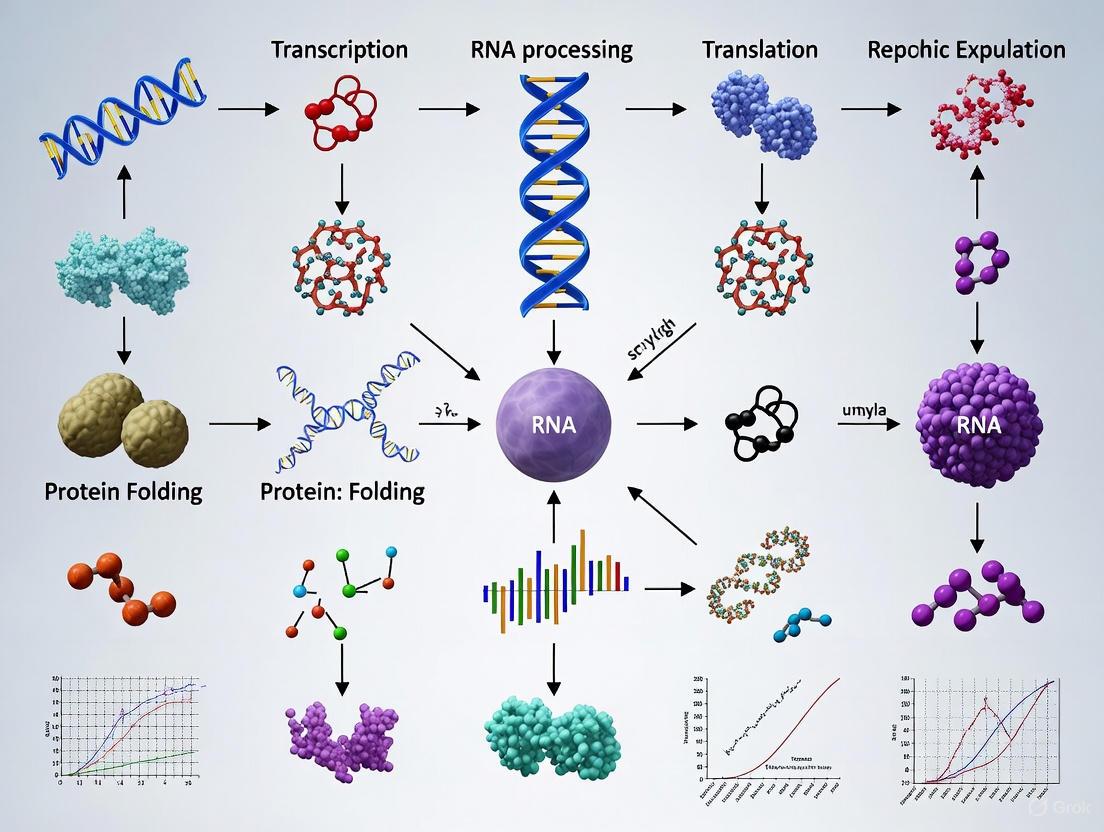
This article provides a comprehensive exploration of gene expression and regulation, tailored for researchers, scientists, and drug development professionals.
Gene Expression and Regulation: From Fundamental Mechanisms to Clinical Applications in Drug Development
Abstract
This article provides a comprehensive exploration of gene expression and regulation, tailored for researchers, scientists, and drug development professionals. It begins by establishing the fundamental principles of transcriptional and post-transcriptional control, including the roles of transcription factors, enhancers, and chromatin structure. The scope then progresses to cover state-of-the-art methodological approaches for profiling gene expression, such as RNA-Seq and single-cell analysis, and their application in identifying disease biomarkers and therapeutic targets. The content further addresses common challenges in data interpretation and analysis optimization, including the integration of multi-omics data. Finally, it offers a comparative evaluation of computational tools for pathway enrichment and network analysis, validating findings through case studies in cancer and infectious disease. This resource synthesizes foundational knowledge with cutting-edge applications to bridge the gap between basic research and clinical translation.
The Core Machinery: Unraveling Fundamental Mechanisms of Gene Control
The Central Dogma and Fundamental Principles
Gene expression represents the fundamental process by which the genetic code stored in DNA is decoded to direct the synthesis of functional proteins that execute cellular functions. This process involves two principal stages: transcription, where a DNA sequence is copied into messenger RNA (mRNA), and translation, where the mRNA template is read by ribosomes to assemble a specific polypeptide chain. The regulation of these processes determines cellular identity, function, and response to environmental cues, with disruptions frequently leading to disease states [1].
The orchestration of gene expression extends beyond the simple protein-coding sequence to include complex regulatory elements that control the timing, location, and rate of expression. Whereas the amino acid code of proteins has been understood for decades, the principles governing the expression of genes—the cis-regulatory code of the genome—have proven more complex to decipher [1]. Recent technological advances have transformed our understanding from a "murky appreciation to a much more sophisticated grasp of the regulatory mechanisms that orchestrate cellular identity, development, and disease" [1].
Molecular Mechanisms of Transcription and Translation
Transcription: DNA to RNA
Transcription initiates when RNA polymerase binds to a specific promoter region upstream of a gene, unwinding the DNA double helix and synthesizing a complementary RNA strand using one DNA strand as a template. In eukaryotic cells, this primary transcript (pre-mRNA) undergoes extensive processing including 5' capping, 3' polyadenylation, and RNA splicing to remove introns and join exons, resulting in mature mRNA that is exported to the cytoplasm [2].
The splicing process represents a critical layer of regulation, where alternative splicing of the same pre-mRNA can generate multiple protein isoforms with distinct functions from a single gene. Post-transcriptional regulation has emerged as a key layer of gene expression control, with methodological advances now enabling researchers to differentiate co-transcriptional from post-transcriptional splicing events [3].
Translation: RNA to Protein
Translation occurs on ribosomes where transfer RNA (tRNA) molecules deliver specific amino acids corresponding to three-nucleotide codons on the mRNA template. The ribosome catalyzes the formation of peptide bonds between adjacent amino acids, generating a polypeptide chain that folds into a functional three-dimensional protein structure. Translation efficiency is influenced by multiple factors including mRNA stability, codon usage bias, and regulatory RNA molecules.
Regulatory Mechanisms Governing Gene Expression
Gene expression is regulated at multiple levels through sophisticated mechanisms that ensure precise spatiotemporal control:
Transcriptional Regulation
Cis-regulatory elements, including promoters, enhancers, silencers, and insulators, control transcription initiation by serving as binding platforms for transcription factors. Enhancer elements can be located great distances from their target genes, with communication facilitated through three-dimensional genome organization that brings distant regulatory elements into proximity with promoters [3]. The development of technologies such as ChIP-seq (chromatin immunoprecipitation followed by sequencing) has enabled genome-wide mapping of transcription factor binding sites, revealing the complexity of transcriptional networks [2].
Post-Transcriptional Regulation
After transcription, gene expression can be modulated through RNA editing, transport from nucleus to cytoplasm, subcellular localization, stability, and translation efficiency. MicroRNAs and other non-coding RNAs can bind to complementary sequences on target mRNAs, leading to translational repression or mRNA degradation. Recent attention has focused on the potential of circular RNAs as stable regulatory molecules with therapeutic potential [3].
Epigenetic Mechanisms
DNA methylation and histone modifications create an epigenetic layer that regulates chromatin accessibility and gene expression without altering the underlying DNA sequence. These heritable modifications can be influenced by environmental factors and play crucial roles in development, cellular differentiation, and disease pathogenesis [3].
Table 1: Key Levels of Gene Expression Regulation
| Regulatory Level | Key Mechanisms | Biological Significance |
|---|---|---|
| Transcriptional | Transcription factor binding, chromatin remodeling, DNA methylation, 3D genome organization | Determines which genes are accessible for transcription and initial transcription rates |
| Post-transcriptional | RNA splicing, editing, export, localization, and stability | Generates diversity from limited genes and fine-tunes expression timing and location |
| Translational | Initiation factor regulation, miRNA targeting, codon optimization | Controls protein synthesis rate and efficiency in response to cellular needs |
| Post-translational | Protein folding, modification, trafficking, and degradation | Determines final protein activity, localization, and half-life |
Advanced Research Methodologies and Technologies
Sequencing-Based Approaches
Single-cell RNA-sequencing (scRNA-seq) has revolutionized transcriptomic analysis by enabling researchers to examine individual cells with unprecedented resolution, revealing previously uncharacterized cell types, transient regulatory states, and lineage-specific transcriptional programs [1] [4]. Different scRNA-seq protocols offer distinct advantages: full-length transcript methods (Smart-Seq2, MATQ-Seq) excel in isoform usage analysis and detection of low-abundance genes, while 3' end counting methods (Drop-Seq, inDrop) enable higher throughput at lower cost per cell [4].
Long-read sequencing technologies have transformed genomics by illuminating previously inaccessible repetitive genomic regions and enabling comprehensive characterization of full-length RNA isoforms, revealing the complexity of alternative splicing and transcript diversity [1]. The development of nascent transcription quantification methods like scFLUENT-seq provides quantitative, genome-wide analysis of transcription initiation in single cells [3].
Computational and Machine Learning Approaches
Deep learning and artificial intelligence are playing a pivotal role in decoding the regulatory genome, with models trained on large-scale datasets to identify complex DNA sequence patterns and dependencies that govern gene regulation [1]. Sequence-to-expression models can predict gene expression levels directly from DNA sequence, providing new insights into the combinatorial logic underlying cis-regulatory control [3]. Benchmarking platforms like PEREGGRN enable systematic evaluation of expression forecasting methods across diverse cellular contexts and perturbation conditions [5].
Table 2: Comparative Analysis of scRNA-seq Technologies
| Protocol | Isolation Strategy | Transcript Coverage | UMI | Amplification Method | Unique Features |
|---|---|---|---|---|---|
| Smart-Seq2 | FACS | Full-length | No | PCR | Enhanced sensitivity for detecting low-abundance transcripts |
| Drop-Seq | Droplet-based | 3'-end | Yes | PCR | High-throughput, low cost per cell, scalable to thousands of cells |
| inDrop | Droplet-based | 3'-end | Yes | IVT | Uses hydrogel beads, low cost per cell |
| MATQ-Seq | Droplet-based | Full-length | Yes | PCR | Increased accuracy in quantifying transcripts |
| SPLiT-Seq | Not required | 3'-only | Yes | PCR | Combinatorial indexing without physical separation, highly scalable |
Experimental Workflows and Technical Protocols
RNA Sequencing Analysis Pipeline
Comprehensive gene expression analysis requires integrated bioinformatics workflows. The exvar R package exemplifies such an integrated approach, providing functions for Fastq file preprocessing, gene expression analysis, and genetic variant calling from RNA sequencing data [6]. The standard workflow begins with quality control using tools like rfastp, followed by alignment to a reference genome, gene counting using packages like GenomicAlignments, and differential expression analysis with DESeq2 [6].
For functional interpretation, gene ontology enrichment analysis can be performed using AnnotationDbi and ClusterProfiler packages, with results visualized in barplots, dotplots, and concept network plots [6]. Integrated analysis platforms increasingly support multiple species including Homo sapiens, Mus musculus, Arabidopsis thaliana, and other model organisms, though limitations exist due to the availability of species-specific annotation packages [6].
Perturbation Studies and Functional Validation
CRISPR-based screening approaches enable systematic functional characterization of regulatory elements. Tools like Variant-EFFECTS combine prime editing, flow cytometry, sequencing, and computational analysis to quantify the effects of regulatory variants at scale [1] [3]. In vivo CRISPR screening methods have advanced to allow functional validation of regulatory elements in their native contexts [1].
Perturbation-seq technologies (e.g., Perturb-seq) enable coupled genetic perturbation and transcriptomic readout, generating training data for models that forecast expression changes in response to novel genetic perturbations [5]. Benchmarking studies indicate that performance varies significantly across cellular contexts, with integration of prior knowledge (e.g., TF binding from ChIP-seq) often improving prediction accuracy [5].
Research Reagent Solutions and Essential Materials
Table 3: Essential Research Reagents for Gene Expression Studies
| Reagent/Material | Function | Application Examples |
|---|---|---|
| Poly[T] primers | Selective capture of polyadenylated mRNA | scRNA-seq protocols to minimize ribosomal RNA contamination |
| Unique Molecular Identifiers (UMIs) | Barcoding individual mRNA molecules | Accurate quantification of transcript abundance in high-throughput scRNA-seq |
| Reverse transcriptase | Synthesis of complementary DNA (cDNA) from RNA templates | First step in most RNA-seq protocols |
| Cas9 ribonucleoproteins (RNPs) | Precise genome editing | CRISPR-based perturbation studies in primary cells |
| Prime editing systems | Precise genome editing without double-strand breaks | Functional characterization of regulatory variants |
| dCas9-effector fusions | Targeted transcriptional activation/repression | CRISPRa/CRISPRi perturbation studies without altering DNA sequence |
| Chromatin immunoprecipitation (ChIP) grade antibodies | Enrichment of DNA bound by specific proteins | Mapping transcription factor binding sites and histone modifications |
| Transposase (Tn5) | Tagmentation of chromatin | ATAC-seq for mapping accessible chromatin regions |
Signaling Pathways and Regulatory Networks
Gene expression programs are embedded within complex regulatory networks that respond to extracellular signals, intracellular cues, and environmental challenges. Signaling pathways such as Wnt, Notch, Hedgehog, and receptor tyrosine kinase pathways ultimately converge on transcription factors that modulate gene expression patterns. These networks exhibit properties of robustness, feedback control, and context-specificity, enabling appropriate cellular responses to diverse stimuli.
Transcriptional condensates have emerged as potential temporal signal integrators—membleneless organelles that concentrate molecules involved in gene regulation and may serve as decoding mechanisms that transmit information through gene regulatory networks governing cellular responses [3]. The interplay between signaling pathways, transcriptional regulation, and post-transcriptional processing creates multi-layered control systems that enable complex cellular behaviors.
Visualizing Gene Expression Workflows
Central Pathway of Gene Expression
Single-Cell RNA Sequencing Workflow
Future Directions and Clinical Applications
The field of gene expression research is rapidly evolving toward more predictive, quantitative models. Explainable artificial intelligence (XAI) approaches are being integrated with mutational and clinical features to identify genomic signatures for disease prognosis and treatment response [2]. Large-scale biobank resources are enabling regulatory genomics at unprecedented scales, revealing how variation in gene regulation shapes human traits and disease susceptibility [3].
In personalized medicine, gene expression profiling identifies potential biomarkers and therapeutic targets, as exemplified by studies on the ACE2 receptor and prostate cancer [6]. Spatial transcriptomics technologies are advancing to localize gene expression patterns within tissue architecture, with ongoing developments aiming to integrate microRNA detection into spatial biology [3].
The integration of multi-omics datasets—including genomics, epigenomics, transcriptomics, and proteomics—promises more comprehensive models of gene regulatory networks. As these technologies mature, they will continue to transform our understanding of basic biology and accelerate the development of novel therapeutic strategies for human disease.
Gene expression is the fundamental process by which functional gene products are synthesized from the information stored in DNA, with transcription serving as the first and most heavily regulated step [7]. The precise control of when, where, and to what extent genes are transcribed is governed by the intricate interplay between cis-regulatory elements (such as promoters and enhancers) and trans-regulatory factors (including transcription factors and RNA polymerase) [7] [8]. For researchers and drug development professionals, understanding these mechanisms is not merely an academic exercise; it provides a foundation for identifying novel therapeutic targets, understanding disease pathogenesis, and developing drugs that can modulate gene expression patterns with high specificity [9] [10]. This whitepaper provides an in-depth technical overview of the core components of the transcriptional machinery, recent advances in our understanding of regulatory mechanisms such as RNA polymerase pausing and transcriptional bursting, and the experimental approaches driving discovery in this field.
Core Components of the Transcriptional Machinery
Promoters and Enhancers: The Genomic Control Elements
Promoters are DNA sequences typically located proximal to the transcription start site (TSS) of a gene. They serve as the primary platform for assembling the transcription pre-initiation complex (PIC). While core promoter elements are conserved, their specific sequence and architecture contribute significantly to the variable transcriptional output of different genes [11].
Enhancers are distal regulatory elements that can be located thousands of base pairs away from the genes they control. They function to amplify transcriptional signals through looping interactions that bring them into physical proximity with their target promoters. This enhancer-promoter communication is a critical, often rate-limiting step in gene activation and is facilitated by transcription factors, coactivators, and architectural proteins that mediate chromatin looping [11] [8].
RNA Polymerase II: The Enzymatic Core
RNA Polymerase II (RNAPII) is the multi-subunit enzyme responsible for synthesizing messenger RNA (mRNA) and most non-coding RNAs in eukaryotes. The journey of RNAPII through a gene is a multi-stage process:
- Recruitment and Initiation: RNAPII is recruited to the promoter region, where it assembles into the PIC.
- Promoter-Proximal Pausing: After initiating transcription and synthesizing a short RNA transcript (20–60 nucleotides), RNAPII frequently pauses. This pausing is a major regulatory checkpoint for ~30–50% of genes [12].
- Elongation and Termination: Upon receiving the appropriate signals, RNAPII is released into productive elongation, transcribing the full length of the gene before terminating [11] [12].
Transcription Factors and Coactivators: The Regulators
Transcription Factors (TFs) are sequence-specific DNA-binding proteins that recognize and bind to enhancer and promoter elements. They function as activators or repressors and can be classified by their DNA-binding domains (e.g., zinc fingers, helix-turn-helix). The binding of TFs to their cognate motifs is influenced by motif strength, chromatin accessibility, and the cellular concentration of the TFs themselves [12] [13].
Coactivators are multi-protein complexes that do not bind DNA directly but are recruited by TFs to execute regulatory functions. Key coactivators include the Mediator complex, which facilitates interactions between TFs and RNAPII, and chromatin-modifying enzymes like the BAF complex, which remodels nucleosomes to create accessible chromatin [11] [12].
Table 1: Core Components of the Eukaryotic Transcriptional Machinery
| Component | Molecular Function | Key Features | Regulatory Role |
|---|---|---|---|
| Promoter | DNA sequence for PIC assembly | Located near TSS; contains core elements (e.g., TATA box) | Determines transcription start site and basal transcription level |
| Enhancer | Distal transcriptional regulator | Binds TFs; can be located >1Mb from target gene; loops to promoter | Amplifies transcriptional signal; confers cell-type specificity |
| RNA Polymerase II | mRNA synthesis enzyme | Multi-subunit complex; undergoes phosphorylation during cycle | Catalytic core; its pausing and release are major regulatory steps |
| Transcription Factors | Sequence-specific DNA-binding proteins | Recognize 6-12 bp motifs; can be activators or repressors | Interpret regulatory signals and recruit co-regulators |
| Mediator Complex | Coactivator; molecular bridge | Large multi-subunit complex; interacts with TFs and RNAPII | Integrates signals from multiple TFs to facilitate PIC assembly |
Quantitative Models of Transcriptional Regulation
The regulation of gene expression is increasingly understood in quantitative terms. Thermodynamic models provide a framework for predicting transcription levels based on the equilibrium binding of proteins to DNA. The central tenet is that the level of gene expression is proportional to the probability that RNAP is bound to its promoter ((p_{bound})) [13].
This probability is calculated using statistical mechanics, considering all possible microstates of the system—specifically, the distribution of RNAP molecules between a specific promoter and a large number of non-specific genomic sites. The fold-change in expression due to a regulator is derived from the ratio of (p_{bound}) in the presence and absence of that regulator. This modeling reveals that the regulatory outcome depends not only on the binding affinities of TFs and RNAP for their specific sites but also on their concentrations and their affinity for the non-specific genomic background [13].
Advanced Regulatory Concepts
RNA Polymerase II Pausing and Release
A critical discovery in the past decade is that RNAPII frequently enters a promoter-proximal paused state after transcribing only 20–60 nucleotides. This pausing, stabilized by complexes like NELF and DSIF, creates a checkpoint that allows for the integration of multiple signals before a gene commits to full activation [11] [12].
Recent research illustrates the functional significance of pausing. A 2025 study on the estrogen receptor-alpha (ERα) demonstrated that paused RNAPII can prime promoters for stronger activation. The paused polymerase recruits chromatin remodelers that create nucleosome-free regions (NFRs), exposing additional TF binding sites. Furthermore, the short, nascent RNAs transcribed by the paused polymerase can physically interact with and stabilize TFs like ERα on chromatin, leading to the formation of larger transcriptional condensates and a more robust transcriptional response upon release [12].
Transcriptional Bursting and Re-initiation
Live-cell imaging and single-cell transcriptomics have revealed that transcription is not a continuous process but occurs in stochastic bursts—short periods of high activity interspersed with longer periods of quiescence. Two key parameters define this phenomenon:
- Burst Frequency: How often a gene transitions from an inactive to an active state; often linked to enhancer-promoter communication and TF binding dynamics.
- Burst Size: The number of mRNA molecules produced per burst; largely determined by the number of RNAPII molecules that successfully re-initiate transcription from a promoter that is already in an active, "open" configuration [11].
RNAPII re-initiation is a process where multiple polymerases initiate from the same promoter in rapid succession during a single burst, significantly amplifying transcriptional output without the need to reassemble the entire pre-initiation complex for each round [11].
Table 2: Key Quantitative Parameters in Transcriptional Regulation
| Parameter | Definition | Biological Influence | Experimental Measurement |
|---|---|---|---|
| Burst Frequency | Rate of gene activation events | Controlled by enhancer strength, TF activation, chromatin accessibility | Live-cell imaging, single-cell RNA-seq |
| Burst Size | Number of transcription events per burst | Governed by re-initiation efficiency and pause-release dynamics | Live-cell imaging, single-cell RNA-seq |
| Polymerase Dwell Time | Duration TF remains bound to DNA | Impacts stability of transcriptional condensates and duration of bursts | Single Molecule Tracking (SPT/SPT) |
| Fold-Change | Ratio of expression with/without a regulator | Measures the regulatory effect of a TF (activation or repression) | RNA-seq, qPCR, thermodynamic modeling |
| Paused Index | Ratio of Pol II at promoter vs. gene body | Indicator of the prevalence of polymerase pausing for a given gene | ChIP-seq against Pol II (e.g., Pol IIS5P) |
Experimental Methods for Studying Transcription
Core Methodologies
A suite of powerful technologies enables researchers to dissect transcriptional mechanisms.
- RNA-seq (RNA Sequencing): A cornerstone method for transcriptome analysis. It involves converting a population of RNA (e.g., total, poly-A+) into a library of cDNA fragments, which are then sequenced en masse using high-throughput platforms. This allows for the genome-wide quantification of transcript levels, discovery of novel splice variants, and identification of differentially expressed genes (DEGs) [7] [8].
- ChIP-seq (Chromatin Immunoprecipitation followed by Sequencing): This technique identifies the genomic binding sites for TFs, histone modifications, or RNAPII itself. It involves cross-linking proteins to DNA, shearing the chromatin, immunoprecipitating the protein-DNA complexes with a specific antibody, and then sequencing the bound DNA fragments [8] [12].
- Single Molecule Tracking (SMT): SMT, a form of live-cell imaging, allows researchers to track the movement and binding dynamics of individual TFs in real time within the nucleus. It provides quantitative data on the bound fraction and residence time (dwell time) of TFs, parameters that are altered in different transcriptional states [12].
Integrated Experimental Workflows
The most powerful insights often come from integrating complementary methods. For instance, RNA-seq can first be used to identify a set of transcription factors and target genes that are differentially expressed in response to a stimulus (e.g., a drug or hormone). Subsequently, ChIP-seq for a specific TF from that list can directly map its binding sites to the promoters or enhancers of the responsive genes, thereby validating a putative regulatory network [8]. This integrated approach is crucial for distinguishing direct targets from indirect consequences in a gene regulatory cascade.
Diagram 1: Integrated RNA-seq and ChIP-seq Workflow. This pipeline shows how RNA-seq is used for gene discovery, followed by ChIP-seq for direct target validation, culminating in an integrated regulatory model.
The Scientist's Toolkit: Essential Research Reagents and Solutions
Table 3: Key Reagents and Materials for Transcriptional Regulation Research
| Reagent / Material | Critical Function | Application Examples |
|---|---|---|
| TF-specific Antibodies | High-specificity immunoprecipitation of target transcription factors or chromatin marks. | Chromatin Immunoprecipitation (ChIP-seq, ChIP-qPCR) [8] [12] |
| Crosslinking Agents (e.g., Formaldehyde) | Covalently stabilizes protein-DNA interactions in living cells. | Preservation of in vivo binding events for ChIP-seq [8] |
| Polymerase Inhibitors (e.g., DRB, Triptolide) | DRB inhibits CDK9/pTEFb to block pause-release; Triptolide causes Pol II degradation. | Probing the functional role of Pol II pausing and elongation [12] |
| HaloTag / GFP Tagging Systems | Enables fluorescent labeling of proteins for live-cell imaging. | Single Molecule Tracking (SPT) and visualization of transcriptional condensates [12] |
| Stable Cell Lines | Genetically engineered lines with tagged proteins (e.g., ERα-GFP) or reporter constructs. | Consistent, reproducible models for imaging and functional studies [12] |
| High-Fidelity DNA Polymerases | Accurate amplification of cDNA and immunoprecipitated DNA fragments. | cDNA library construction for RNA-seq; amplification of ChIP-seq libraries [8] |
Applications in Drug Discovery and Development
The ability to modulate gene expression with small molecules represents a paradigm shift in pharmacology. Transcription-based pharmaceuticals offer several advantages over traditional drugs and recombinant proteins: they can be administered orally, are less expensive to produce, can target intracellular proteins, and have the potential for tissue-specific effects due to the unique regulatory landscape of different cell types [10].
Several approved drugs already work through transcriptional mechanisms. Tamoxifen acts as an antagonist of the estrogen receptor (a ligand-dependent TF) in breast tissue. The immunosuppressants Cyclosporine A and FK506 inhibit the TF NF-AT, preventing the expression of interleukin-2 and other genes required for T-cell activation. Even aspirin has been shown to exert anti-inflammatory effects by inhibiting NF-κB-mediated transcription [10].
Gene expression signatures are also used to guide drug development. The Connectivity Map database contains gene expression profiles from human cells treated with various drugs, allowing researchers to discover novel therapeutic applications for existing drugs or to predict mechanisms of action for new compounds based on signature matching [9].
The field of transcriptional regulation continues to evolve rapidly. Emerging areas of focus include understanding the role of biomolecular condensates—phase-separated, membraneless organelles that concentrate transcription machinery—in enhancing gene activation [12] [14]. Furthermore, the integration of artificial intelligence with functional genomics is poised to revolutionize our ability to predict regulatory outcomes from DNA sequence and to design synthetic regulatory elements for therapeutic purposes [15].
In conclusion, the core machinery of transcription—promoters, RNA polymerase, and transcription factors—operates not as a simple on-off switch, but as a sophisticated, quantitative control system. The discovery of regulated pausing, bursting, and re-initiation has added layers of complexity to our understanding of how genes are controlled. For researchers and drug developers, mastering these mechanisms provides a powerful toolkit for interrogating biology and designing the next generation of therapeutics that act at the most fundamental level of cellular control.
The central dogma of molecular biology has long recognized transcription as the first step in gene expression. However, the journey from DNA to functional protein involves sophisticated layers of regulation that occur after an RNA molecule is synthesized. RNA splicing, editing, and maturation represent critical post-transcriptional processes that dramatically expand the coding potential of genomes and enable precise control over gene expression outputs. These mechanisms allow single genes to produce multiple functionally distinct proteins and provide cells with rapid response capabilities without requiring new transcription events. Recent technological advances have revealed that these processes are not merely constitutive steps in RNA processing but are dynamically regulated across tissues, during development, and in response to cellular signals [16]. Furthermore, growing evidence establishes that dysregulation of these post-transcriptional mechanisms contributes significantly to human diseases, making them promising targets for therapeutic intervention [17] [18]. This whitepaper provides a comprehensive technical overview of the mechanisms, regulation, and experimental approaches for studying RNA splicing, editing, and maturation, framing these processes within the broader context of gene expression regulation research.
RNA Splicing: Mechanisms and Regulation
Core Splicing Machinery
RNA splicing is the process by which non-coding introns are removed from precursor messenger RNA (pre-mRNA) and coding exons are joined together. This process is executed by the spliceosome, a dynamic ribonucleoprotein complex composed of five small nuclear RNAs (snRNAs) and numerous associated proteins [16]. The spliceosome recognizes conserved sequence motifs at exon-intron boundaries and carries out a two-step transesterification reaction to remove introns and ligate exons [16]. Recent cryo-electron microscopy (cryo-EM) studies have yielded high-resolution structures of several conformational states of the spliceosome, revealing the dynamic rearrangements that drive intron removal and exon ligation [16].
The timing of splicing relative to transcription has substantial impact on gene expression outcomes. Splicing can occur either co-transcriptionally, as the pre-mRNA is being synthesized, or post-transcriptionally, after transcription is completed [16] [19]. Recent advances in long-read sequencing and imaging methods have provided insights into the timing and regulation of splicing, revealing its dynamic interplay with transcription and RNA processing [16]. Notably, recent analyses have revealed that up to 40% of mammalian introns are retained after transcription termination and are subsequently removed largely while transcripts remain chromatin-associated [19].
Alternative Splicing and Regulatory Mechanisms
Alternative splicing greatly expands the coding potential of the genome; more than 95% of human multi-intron genes undergo alternative splicing, producing mRNA isoforms that can differ in coding sequence, regulatory elements, or untranslated regions [16]. These isoforms can influence mRNA stability, localization, and translation output, thereby modulating cellular function [16]. There are seven major types of alternative splicing events: exon skipping, alternative 3' splice sites, alternative 5' splice sites, intron retention, mutually exclusive exons, alternative first exons, and alternative last exons [20].
Table: Major Types of Alternative Splicing Events
| Splicing Type | Description | Functional Impact |
|---|---|---|
| Exon Skipping | An exon is spliced out of the transcript | Can remove protein domains or regulatory regions |
| Alternative 3' Splice Sites | Selection of different 3' splice sites | Can alter C-terminal protein sequences |
| Alternative 5' Splice Sites | Selection of different 5' splice sites | Can alter N-terminal protein sequences |
| Intron Retention | An intron remains in the mature transcript | May introduce premature stop codons or alter reading frames |
| Mutually Exclusive Exons | One of two exons is selected, but not both | Can swap functionally distinct protein domains |
| Alternative First Exons | Selection of different transcription start sites | Can alter promoters and N-terminal coding sequences |
| Alternative Last Exons | Selection of different transcription end sites | Can alter C-terminal coding sequences and 3'UTRs |
Recent research has uncovered novel regulatory mechanisms controlling splicing decisions. MIT biologists recently discovered that a family of proteins called LUC7 helps determine whether splicing will occur for approximately 50% of human introns [21]. The research team found that two LUC7 proteins interact specifically with one type of 5' splice site ("right-handed"), while a third LUC7 protein interacts with a different type ("left-handed") [21]. This regulatory system adds another layer of complexity that helps remove specific introns more efficiently and allows for more complex types of gene regulation [21].
Experimental Approaches for Splicing Analysis
The advent of high-throughput RNA sequencing has revolutionized the ability to detect transcriptome-wide splicing events. Both bulk RNA-seq and single-cell RNA-seq (scRNA-seq) enable high-resolution profiling of transcriptomes, uncovering the complexity of RNA processing at both population and single-cell levels [20]. Computational methods have been developed to identify and quantify alternative splicing events, with specialized tools designed for different data types and experimental questions.
Table: Computational Methods for Splicing Analysis
| Method Category | Examples | Key Features |
|---|---|---|
| Bulk RNA-seq Analysis | Roar, rMATS, MAJIQ | Identify differential splicing between conditions |
| Single-cell Analysis | Sierra, BAST | Resolve splicing heterogeneity at single-cell level |
| de novo Transcript Assembly | Cufflinks, StringTie | Reconstruct transcripts without reference annotation |
| Splicing Code Models | various deep learning approaches | Predict splicing patterns from sequence features |
For researchers investigating splicing mechanisms, several key experimental protocols provide insights into splicing regulation:
Protocol 1: Analysis of Splicing Kinetics Using Metabolic Labeling
- Incubate cells with 4-thiouridine (4sU) or 5-ethynyluridine (5-EU) to label newly transcribed RNA
- Harvest RNA at multiple time points after labeling (e.g., 15min, 30min, 1h, 2h, 4h)
- Separate labeled (new) from unlabeled (pre-existing) RNA using biotin conjugation and streptavidin pulldown
- Prepare sequencing libraries from both fractions
- Map sequencing reads to reference genome and quantify intron retention levels
- Calculate splicing kinetics based on appearance of spliced isoforms in labeled fraction over time [19]
Protocol 2: Splicing-Focused CRISPR Screening
- Design sgRNA library targeting splicing factors, RNA-binding proteins, and regulatory elements
- Transduce cells with lentiviral sgRNA library at low MOI to ensure single integration events
- Apply selective pressure or specific cellular stressors relevant to research question
- Harvest genomic DNA at multiple time points
- Amplify sgRNA regions and sequence with high coverage
- Identify enriched/depleted sgRNAs using specialized analysis tools (e.g., MAGeCK)
- Validate hits using individual sgRNAs and RT-PCR splicing assays [21]
RNA Editing: Mechanisms and Functions
Types and Mechanisms of RNA Editing
RNA editing encompasses biochemical processes that alter the RNA sequence relative to the DNA template. The most common type of RNA editing in mammals is adenosine-to-inosine (A-to-I) editing, catalyzed by adenosine deaminase acting on RNA (ADAR) enzymes [17]. Inosine is interpreted as guanosine by cellular machinery, effectively resulting in A-to-G changes in the RNA sequence. This process can alter coding potential, splice sites, microRNA target sites, and secondary structures of RNAs [18].
Another significant editing mechanism is cytosine-to-uracil (C-to-U) editing, mediated by the APOBEC family of enzymes, though this is less common in mammals than A-to-I editing [17]. In plants, C-to-U editing directed by pentatricopeptide repeat (PPR) proteins contributes to environmental adaptability [17].
Biological Roles and Disease Associations
RNA editing serves diverse biological functions, including regulation of neurotransmitter receptor function, modulation of immune responses, and maintenance of cellular homeostasis [17]. Recent comprehensive analyses have revealed the importance of RNA editing in human diseases, particularly neurological disorders. A 2025 study characterized the RNA editing landscape in the human aging brains with Alzheimer's disease, identifying 127 genes with significant RNA editing loci [18]. The study found that Alzheimer's disease exhibits elevated RNA editing in specific brain regions (parahippocampal gyrus and cerebellar cortex) and discovered 147 colocalized genome-wide association studies (GWAS) and cis-edQTL signals in 48 likely causal genes including CLU, BIN1, and GRIN3B [18]. These findings suggest that RNA editing plays a crucial role in Alzheimer's pathophysiology, primarily allied to amyloid and tau pathology, and neuroinflammation [18].
Experimental Approaches for Editing Analysis
Protocol 3: Genome-Wide RNA Editing Detection
- Isolate high-quality RNA and DNA from the same tissue or cell sample
- Perform paired-end RNA sequencing (≥100M reads) and whole-genome sequencing (≥30x coverage)
- Align RNA-seq reads to reference genome using splice-aware aligners (e.g., STAR)
- Identify potential editing sites using variant callers specialized for RNA editing (e.g., REDItools, JACUSA)
- Filter sites against common SNPs (using dbSNP and matched DNA-seq data)
- Remove sites with potential mapping biases or alignment artifacts
- Annotate remaining high-confidence editing sites with genomic features
- Perform differential editing analysis between conditions using statistical methods (e.g., beta-binomial tests) [18]
Protocol 4: Targeted RNA Editing Using CRISPR-Based Systems
- Design guide RNAs targeting specific adenosine residues for A-to-I editing
- Clone guide RNA sequences into appropriate expression vectors
- Co-transfect cells with vectors expressing:
- Catalytically inactive Cas13 (dCas13) fused to ADAR deaminase domain (for REPAIR system)
- Or engineer endogenous ADAR enzymes using circular RNAs (LEAPER 2.0 technology)
- Include appropriate nuclear localization signals for targeting nuclear transcripts
- Harvest RNA 48-72 hours post-transfection
- Analyze editing efficiency by RT-PCR and Sanger sequencing or amplicon sequencing
- Validate functional consequences through Western blot or functional assays [17]
RNA Editing Mechanism and Consequences
Integration with Other RNA Maturation Processes
Connections with Alternative Polyadenylation
RNA splicing coordinates with other RNA maturation processes, particularly alternative polyadenylation (APA). APA modifies transcript stability, localization, and translation efficiency by generating mRNA isoforms with distinct 3' untranslated regions (UTRs) or coding sequences [20]. There are two primary types of APA: 3'-UTR APA (UTR-APA), which generates mRNAs with truncated 3' UTRs and typically promotes protein synthesis, and intronic APA (IPA), which occurs within a gene's intron and results in mRNA truncation within the coding region [20]. Approximately 50% (~12,500 genes) of annotated human genes harbor at least one IPA event [20].
The integration of splicing and polyadenylation decisions creates complex regulatory networks that expand transcriptome diversity. Computational methods have been developed to jointly analyze these processes, with tools like APAtrap, TAPAS, and APAlyzer capable of detecting both UTR-APA and IPA events from RNA-seq data [20].
RNA Modification Landscapes
Beyond editing, RNAs undergo numerous chemical modifications that constitute the "epitranscriptome." The most frequent RNA epitranscriptomic marks are methylations either on RNA bases or on the 2'-OH group of the ribose, catalyzed mainly by S-adenosyl-L-methionine (SAM)-dependent methyltransferases (MTases) [22]. TRMT112 is a small protein acting as an allosteric regulator of several MTases, serving as a master activator of methyltransferases that modify factors involved in RNA maturation and translation [22]. Growing evidence supports the importance of these MTases in cancer and correct brain development [22].
Protocol 5: Transcriptome-Wide Mapping of RNA Modifications
- Isolate RNA under conditions that preserve modifications (avoid harsh purification methods)
- For m⁶A mapping: Perform immunoprecipitation with anti-m⁶A antibodies (meRIP-seq)
- Alternatively, use antibody-independent methods such as Mazter-seq or DART-seq
- For pseudouridine mapping: Use CMC modification followed by reverse transcription
- Sequence enriched fractions and input controls
- Call modification peaks using specialized peak-calling algorithms
- Integrate with splicing and expression data to identify coordinated regulation
- Validate key findings using mass spectrometry or site-specific assays [22]
Therapeutic Targeting and Future Directions
RNA-Targeted Therapeutics
RNA splicing and editing have emerged as promising therapeutic targets for various diseases. Targeting RNA splicing with therapeutics, such as antisense oligonucleotides or small molecules, has become a powerful and increasingly validated strategy to treat genetic disorders, neurodegenerative diseases, and certain cancers [16] [17]. Splicing modulation has emerged as the most clinically validated strategy, exemplified by FDA-approved drugs like risdiplam for spinal muscular atrophy [23].
RNA-targeting small molecules represent a transformative frontier in drug discovery, offering novel therapeutic avenues for diseases traditionally deemed undruggable [23]. Recent advances include the development of RNA degraders and modulators of RNA-protein interactions, expanding the toolkit for therapeutic intervention [23]. As of 2025, RNA editing therapeutics have entered clinical trials, with Wave Therapeutics announcing positive proof-of-mechanism data for their RNA editing platform [24].
Technological Advances
Technological innovations continue to drive discoveries in RNA biology. Machine learning models are improving our ability to predict the effects of genetic variants on splicing, with the potential to guide drug development and clinical diagnostics [16]. Computational approaches that integrate with experimental validation are increasingly critical for advancing RNA-targeted therapeutics [23].
The field of RNA structure determination has seen significant advances, with methods ranging from X-ray crystallography and nuclear magnetic resonance (NMR) spectroscopy to cryo-electron microscopy (cryo-EM) [23]. Computational prediction of RNA structures has recently emerged as a complementary approach, with machine learning algorithms now capable of predicting secondary and tertiary structures with remarkable accuracy [23].
Table: Research Reagent Solutions for RNA Processing Studies
| Reagent/Category | Specific Examples | Function/Application |
|---|---|---|
| Splicing Modulators | Risdiplam, Branaplam | Small molecules that modulate splice site selection |
| CRISPR-Based Editing Tools | REPAIR system, LEAPER 2.0 | Precision RNA editing using dCas13-ADAR fusions or endogenous ADAR recruitment |
| Metabolic Labeling Reagents | 4-thiouridine (4sU), 5-ethynyluridine (5-EU) | Pulse-chase analysis of RNA processing kinetics |
| Computational Tools | QAPA, APAtrap, MAJIQ, REDItools | Detection and quantification of splicing, polyadenylation, and editing events |
| Antibodies for RNA Modifications | anti-m⁶A, anti-m⁵C, anti-Ψ | Immunoprecipitation-based mapping of epitranscriptomic marks |
| Library Preparation Kits | SMARTer smRNA-seq, DIRECT-RNA | Specialized protocols for sequencing different RNA fractions |
Therapeutic Approaches Targeting RNA Processing
The processes of RNA splicing, editing, and maturation represent central layers of gene regulation that expand genomic coding potential and enable precise control over gene expression outputs. Once considered mere intermediate steps between transcription and translation, these processes are now recognized as sophisticated regulatory mechanisms that contribute to normal development, cellular homeostasis, and disease pathogenesis when dysregulated. Advances in sequencing technologies, structural biology, and computational methods have revealed unprecedented complexity in these post-transcriptional regulatory networks. The growing understanding of these mechanisms has opened new therapeutic avenues, with RNA-targeted therapies emerging as promising treatments for previously untreatable conditions. As research continues to decipher the intricate relationships between splicing, editing, and other RNA maturation processes, and as technologies for measuring and manipulating these processes evolve, our ability to understand and therapeutically modulate gene expression will continue to expand, reshaping both basic biological understanding and clinical practice.
Post-translational modifications (PTMs) represent a crucial regulatory layer that expands the functional diversity of the proteome and serves as a fundamental mechanism governing gene expression and cellular physiology. This technical review provides an in-depth analysis of three central PTMs—phosphorylation, glycosylation, and ubiquitination—focusing on their molecular mechanisms, regulatory functions in signal transduction, and experimental methodologies for their investigation. Within the framework of gene expression regulation, we examine how these PTMs precisely control transcription factor activity, mRNA stability, and protein turnover, thereby enabling cells to dynamically respond to environmental cues and maintain homeostasis. The content is structured to equip researchers with both theoretical knowledge and practical experimental approaches, including detailed protocols, reagent solutions, and data visualization tools, to advance investigation in this rapidly evolving field.
The human proteome's complexity vastly exceeds that of the genome, with an estimated 1 million proteins compared to approximately 20,000-25,000 genes [25]. This diversity arises substantially through post-translational modifications (PTMs), covalent alterations to proteins that occur after translation. PTMs regulate virtually all aspects of normal cell biology and pathogenesis by influencing protein activity, localization, stability, and interactions with other cellular molecules [25]. As a cornerstone of functional proteomics, PTMs represent a critical interface between cellular signaling and gene expression outcomes, enabling precise spatiotemporal control of physiological processes.
In the specific context of gene expression regulation, PTMs serve as key mechanistic links that translate extracellular signals into altered transcriptional programs and protein abundance. Transcription factors, the direct gatekeepers of gene expression, are themselves heavily modified by PTMs that orchestrate their entire functional lifespan—from subcellular localization and DNA-binding affinity to protein-protein interactions and stability [26]. Beyond transcription, PTMs directly regulate mRNA processing, stability, and translation, adding further layers of control to gene expression outputs. This review focuses on phosphorylation, glycosylation, and ubiquitination as three central PTMs that exemplify the sophisticated regulatory capacity of protein modifications in shaping cellular responses through gene regulatory networks.
Phosphorylation
Molecular Mechanisms and Biological Functions
Protein phosphorylation, the reversible addition of a phosphate group to serine, threonine, or tyrosine residues, constitutes one of the most extensively studied PTMs [25]. This modification is catalyzed by kinases and reversed by phosphatases, creating dynamic regulatory switches that control numerous cellular processes including cell cycle progression, apoptosis, and signal transduction pathways [25]. The negative charge introduced by phosphorylation can induce conformational changes that alter protein function, create docking sites for protein interactions, or regulate catalytic activity.
In gene expression regulation, phosphorylation exerts multifaceted control over transcription factors. It can regulate transcription factor stability, subcellular localization, DNA-binding affinity, and transcriptional activation capacity [26]. Multiple phosphorylation sites within a single transcription factor can function as coincidence detectors, tunable signal regulators, or cooperative signaling response elements. For instance, the MSN2 transcription factor in yeast processes different stress responses through "tunable" nuclear accumulation governed by phosphorylation at eight serine residues within distinct regulatory domains, generating differentially tuned responses to various stressors [26].
A recently elucidated mechanism demonstrates phosphorylation-dependent tuning of mRNA deadenylation rates, directly connecting this PTM to post-transcriptional regulation. Phosphorylation modulates interactions between the intrinsically disordered regions (IDRs) of RNA adaptors like Puf3 and the Ccr4-Not deadenylase complex, altering deadenylation kinetics in a continuously tunable manner rather than as a simple binary switch [27]. This graded mechanism enables fine-tuning of post-transcriptional gene expression through phosphorylation-dependent regulation of mRNA decay.
Experimental Methods and Reagent Solutions
Western blot analysis using phospho-specific antibodies represents a cornerstone technique for investigating protein phosphorylation. The Thermo Scientific Pierce Phosphoprotein Enrichment Kit enables highly pure phosphoprotein enrichment from complex biological samples, as validated through experiments with serum-starved HeLa and NIH/3T3 cell lines stimulated with epidermal growth factor (EGF) and platelet-derived growth factor (PDGF), respectively [25]. Critical controls in such experiments include cytochrome C (pI 9.6) and p15Ink4b (pI 5.5) as negative controls for nonspecific binding of non-phosphorylated proteins [25].
Table 1: Essential Research Reagents for Phosphorylation Studies
| Reagent/Kit | Specific Function | Experimental Application |
|---|---|---|
| Phospho-specific Antibodies | Recognize phosphorylated amino acid residues | Western blot detection of specific phosphoproteins |
| Pierce Phosphoprotein Enrichment Kit | Enriches phosphorylated proteins from complex lysates | Reduction of sample complexity prior to phosphoprotein analysis |
| Phosphatase Inhibitor Cocktails | Prevent undesired dephosphorylation during lysis | Preservation of endogenous phosphorylation states |
| Kinase Assay Kits | Measure kinase activity in vitro | Screening kinase inhibitors or characterizing kinase substrates |
Figure 1: Phosphorylation-Dependent Gene Regulation. Extracellular signals trigger kinase cascades that phosphorylate transcription factors, influencing their nuclear localization and ability to regulate target gene expression.
Glycosylation
Molecular Mechanisms and Biological Functions
Glycosylation involves the enzymatic addition of carbohydrate structures to proteins and is one of the most prevalent and complex PTMs [28]. The two primary forms are N-linked glycosylation (attachment to asparagine residues) and O-linked glycosylation (attachment to serine or threonine residues) [25]. Glycosylation significantly influences protein folding, conformation, distribution, stability, and activity [25] [28]. The process begins in the endoplasmic reticulum and continues in the Golgi apparatus, involving numerous glycosyltransferases and glycosidases that generate remarkable structural diversity [28].
In gene regulation, glycosylation modulates transcription factor activity through several mechanisms. O-GlcNAcylation, the addition of β-D-N-acetylglucosamine to serine/threonine residues, occurs on numerous transcription factors and transcriptional regulatory proteins, with effects ranging from protein stabilization to inhibition of transcriptional activation [26]. This modification competes with phosphorylation at the same or adjacent sites, creating reciprocal regulatory switches that integrate metabolic information into gene regulatory programs. The enzymes responsible for O-GlcNAcylation—O-GlcNAc transferase (OGT) and O-GlcNAcase (OGA)—respond to nutrient availability (glucose), insulin, and cellular stress, positioning this PTM as a key sensor linking metabolic status to gene expression [26].
Emerging evidence reveals novel roles for glycosylation in epitranscriptomic regulation. Recent research has identified 5'-terminal glycosylation of protein-coding transcripts in Escherichia coli, where glucose caps on U-initiated mRNAs prolong transcript lifetime by impeding 5'-end-dependent degradation [29]. This previously unrecognized form of epitranscriptomic modification expands the functional repertoire of glycosylation in gene expression regulation and may selectively enhance synthesis of proteins encoded by U-initiated transcripts.
Experimental Methods and Reagent Solutions
Multiple methodological approaches are required to comprehensively analyze protein glycosylation due to its structural complexity. Mass spectrometry-based glycomics and glycoproteomics enable system-wide characterization of glycan structures and their attachment sites. The biotin switch assay, originally developed for detecting S-nitrosylation, has been adapted for various PTM studies and can be modified for glycosylation investigation [25]. Lectin-based affinity enrichment provides a complementary approach for isolating specific glycoforms prior to analytical separation.
Table 2: Glycosylation Research Reagents and Their Applications
| Reagent/Method | Principle | Experimental Utility |
|---|---|---|
| Lectin Affinity Columns | Carbohydrate-binding proteins isolate glycoproteins | Enrichment of specific glycoforms from complex mixtures |
| Glycosidase Enzymes | Enzymatic removal of specific glycan structures | Characterization of glycosylation type and complexity |
| Metabolic Labeling with Sugar Analogs | Incorporation of modified sugars into glycoconjugates | Detection, identification and tracking of newly synthesized glycoproteins |
| Anti-Glycan Antibodies | Immunorecognition of specific carbohydrate epitopes | Western blot, immunohistochemistry, and flow cytometry applications |
Figure 2: O-GlcNAcylation in Gene Regulation. Nutrient status influences UDP-GlcNAc availability through the hexosamine biosynthesis pathway, modulating transcription factor O-GlcNAcylation via the opposing actions of OGT and OGA, ultimately affecting gene expression.
Ubiquitination
Molecular Mechanisms and Biological Functions
Ubiquitination involves the covalent attachment of ubiquitin, a 76-amino acid polypeptide, to lysine residues on target proteins [25]. This process occurs through a sequential enzymatic cascade involving E1 activating enzymes, E2 conjugating enzymes, and E3 ubiquitin ligases that confer substrate specificity [30]. Following initial monoubiquitination, subsequent ubiquitin molecules can form polyubiquitin chains with distinct functional consequences depending on the linkage type. While K48-linked ubiquitin chains typically target proteins for proteasomal degradation, K63-linked chains primarily regulate signal transduction, protein trafficking, and DNA repair [31] [30].
In gene expression regulation, ubiquitination controls the stability and activity of numerous transcription factors and core clock proteins. The ubiquitin-proteasome system (UPS) ensures precise temporal degradation of transcriptional regulators, enabling dynamic gene expression patterns in processes such as circadian rhythms [30]. Core clock proteins like PERIOD and CRYPTOCHROME undergo ubiquitin-mediated degradation at specific times within the circadian cycle, which is essential for maintaining proper oscillation and resetting the molecular clock [30].
Beyond protein degradation, ubiquitination activates specific signaling cascades that directly impact gene expression. Recent research has elucidated a ubiquitination-activated TAB-TAK1-IKK-NF-κB axis that modulates gene expression for cell survival in the lysosomal damage response [31]. K63-linked ubiquitin chains accumulating on damaged lysosomes activate this signaling pathway, leading to expression of transcription factors and cytokines that promote anti-apoptosis and intercellular communication [31]. This mechanism demonstrates how ubiquitination serves as a critical signaling platform coordinating organelle homeostasis with gene expression programs.
Experimental Methods and Reagent Solutions
The Thermo Scientific Pierce Ubiquitin Enrichment Kit provides effective isolation of ubiquitinated proteins from complex cell lysates, as demonstrated in comparative studies with HeLa cell lysates where it yielded superior enrichment of ubiquitinated proteins compared to alternative methods [25]. Western blot analysis remains a fundamental detection method, while mass spectrometry-based proteomics enables system-wide identification of ubiquitination sites and linkage types. Dominant-negative ubiquitin mutants (e.g., K48R or K63R) help determine the functional consequences of specific ubiquitin linkages.
Table 3: Key Reagents for Ubiquitination Research
| Reagent/Assay | Mechanism | Research Application |
|---|---|---|
| Ubiquitin Enrichment Kits | Affinity-based purification of ubiquitinated proteins | Isolation of ubiquitinated proteins prior to detection or analysis |
| Proteasome Inhibitors (e.g., MG132) | Block proteasomal degradation | Stabilization of ubiquitinated proteins to enhance detection |
| Deubiquitinase (DUB) Inhibitors | Prevent removal of ubiquitin chains | Preservation of endogenous ubiquitination states |
| Ubiquitin Variant Sensors | Selective recognition of specific ubiquitin linkages | Determination of polyubiquitin chain topology in cells |
Figure 3: Ubiquitination in Gene Regulation. The E1-E2-E3 enzymatic cascade conjugates ubiquitin to target proteins. Polyubiquitination can target transcription factors for proteasomal degradation or activate signaling pathways, both leading to altered gene expression.
Interconnected PTMs in Gene Regulatory Networks
Cross-Regulation and Hierarchical Modifications
PTMs rarely function in isolation; rather, they form intricate networks of interdependent modifications that collectively determine protein function. These interconnected PTMs can occur as sequential events where one modification promotes or inhibits the establishment of another modification within the same protein [26]. This phenomenon, often described as "PTM crosstalk," enables sophisticated signal integration and fine-tuning of transcriptional responses.
A prominent example of PTM crosstalk in gene regulation is the reciprocal relationship between phosphorylation and O-GlcNAcylation. These modifications frequently target the same or adjacent serine/threonine residues, creating molecular switches that integrate metabolic information with signaling pathways [26]. The enzymes governing these modifications themselves undergo reciprocal regulation—kinases are overrepresented among O-GlcNAcylation substrates, while O-GlcNAc transferase is phosphoactivated by kinases that are themselves regulated by O-GlcNAcylation [26]. This creates complex regulatory circuits that enable precise tuning of transcriptional responses to changing cellular conditions.
The functional consequences of interconnected PTMs are exemplified by the regulation of transcription factor stability. Multisite phosphorylation can create degradation signals (degrons) that promote subsequent ubiquitination and proteasomal degradation of transcription factors like ATF4, allowing dose-dependent regulation of target genes in processes such as neurogenesis [26]. Similarly, phosphorylation of the PERIOD clock protein creates binding sites for E3 ubiquitin ligases, linking the circadian timing mechanism to controlled protein turnover [30].
Experimental Approaches for Studying PTM Crosstalk
Investigating interconnected PTMs requires methodological approaches capable of capturing multiple modification types simultaneously. Advanced mass spectrometry-based proteomics now enables system-wide profiling of various PTMs, revealing co-occurrence patterns and potential regulatory hierarchies. The PTMcode database (http://ptmcode.embl.de) provides a valuable resource for exploring sequentially linked PTMs in proteins [26]. Functional validation typically involves mutagenesis of modification sites combined with pharmacological inhibition of specific modifying enzymes to dissect hierarchical relationships.
Concluding Perspectives and Therapeutic Implications
The pervasive influence of phosphorylation, glycosylation, and ubiquitination on gene regulation extends to numerous pathological conditions, making these PTMs attractive therapeutic targets. In cancer immunotherapy, PTMs extensively regulate immune checkpoint molecules such as PD-1, CTLA-4, and others, influencing immunotherapy efficacy and treatment resistance [32]. Targeting the PTMs of these checkpoints represents a promising strategy for improving cancer immunotherapy outcomes.
The expanding toolkit for investigating PTMs includes increasingly sophisticated chemical biology approaches. For glycosylation studies, temporary glycosylation scaffold strategies offer reversible approaches to guide protein folding without permanent modifications, holding significant potential for producing therapeutic proteins and developing synthetic proteins with precise structural requirements [33]. Similarly, small molecules that modulate ubiquitin-mediated degradation of core clock proteins offer potential strategies for resetting circadian clocks disrupted in various disorders [30].
Future research directions will likely focus on developing technologies capable of capturing the dynamic, combinatorial nature of PTM networks in living cells and understanding how specific patterns of modifications generate distinct functional outputs. As our knowledge of the PTM "code" deepens, so too will opportunities for therapeutic intervention in the myriad diseases characterized by dysregulated gene expression, from cancer to metabolic and neurodegenerative disorders.
Epigenetic regulation provides a critical layer of control over gene expression programs without altering the underlying DNA sequence, serving as a fundamental interface between the genome and cellular environment. This regulatory domain works synergistically with DNA-encoded information to support essential biological processes including phenotypic determination, proliferation, growth control, metabolic regulation, and cell survival [34]. Within this framework, two interconnected mechanisms—DNA methylation and chromatin remodeling—stand as pillars of epigenetic control. DNA methylation involves the covalent addition of a methyl group to cytosine bases, predominantly at CpG dinucleotides, leading to transcriptional repression through chromatin compaction and obstruction of transcription factor binding [35]. Chromatin remodeling, an ATP-dependent process, dynamically reconfigures nucleosome positioning and composition through enzymatic complexes that slide, evict, or restructure nucleosomes [36]. Together, these systems establish and maintain cell-type-specific gene expression patterns that define cellular identity and function. The intricate interplay between these epigenetic layers enables precise spatiotemporal control of genomic information, with profound implications for development, disease pathogenesis, and therapeutic interventions.
DNA Methylation: Mechanisms and Biological Functions
Molecular Machinery of DNA Methylation
DNA methylation represents a fundamental epigenetic mark involving the covalent transfer of a methyl group from S-adenosylmethionine (SAM) to the fifth carbon of cytosine residues, primarily within CpG dinucleotides [35]. This reaction is catalyzed by DNA methyltransferases (DNMTs), which constitute a family of enzymes with specialized functions. The DNMT family includes DNMT1, responsible for maintaining methylation patterns during DNA replication by recognizing hemi-methylated sites, and the de novo methyltransferases DNMT3A and DNMT3B, which establish new methylation patterns during embryonic development and cellular differentiation [35]. DNMT3L, a catalytically inactive cofactor, enhances the activity of DNMT3A/B, while DNMT3C, found specifically in male germ cells, ensures meiotic silencing [35].
The distribution of DNA methylation across the genome is non-random, with approximately 70-90% of CpG sites methylated in mammalian cells [35]. CpG islands—genomic regions with high G+C content and dense CpG clustering—remain largely unmethylated, particularly when located near promoter regions or transcriptional start sites. This distribution reflects the dual functionality of DNA methylation in transcriptional regulation: promoter methylation typically suppresses gene expression, while gene body methylation exhibits more complex regulatory roles including facilitation of transcription elongation and alternative splicing [37].
The reading and interpretation of DNA methylation marks is mediated by methyl-CpG-binding domain proteins (MBDs), including MBD1-4 and MeCP2 [35]. These proteins recognize methylated DNA and recruit additional complexes containing histone deacetylases (HDACs) and other chromatin modifiers, establishing a repressive chromatin state. This connection demonstrates the functional integration between DNA methylation and histone modifications in gene silencing.
DNA demethylation occurs through both passive and active mechanisms. Passive demethylation involves the dilution of methylation marks during DNA replication in the absence of DNMT1 activity. Active demethylation is catalyzed by Ten-Eleven Translocation (TET) enzymes, which iteratively oxidize 5-methylcytosine (5mC) to 5-hydroxymethylcytosine (5hmC), 5-formylcytosine (5fC), and 5-carboxylcytosine (5caC), ultimately leading to base excision repair and replacement with an unmodified cytosine [35] [38].
Metabolic Regulation of DNA Methylation
The DNA methylation process is intrinsically linked to cellular metabolism, with key metabolites serving as essential cofactors and substrates. S-adenosylmethionine (SAM) functions as the universal methyl donor for DNMTs and histone methyltransferases, directly linking one-carbon metabolism to epigenetic regulation [38]. SAM production depends on methionine availability and folate cycle activity, creating a direct conduit through which nutritional status influences the epigenome. Following methyl group transfer, SAM is converted to S-adenosylhomocysteine (SAH), a potent competitive inhibitor of DNMTs and histone methyltransferases. The SAM:SAH ratio therefore serves as a critical metabolic indicator of cellular methylation capacity [38].
In cancer cells, metabolic reprogramming frequently upregulates one-carbon metabolism to support rapid proliferation, resulting in elevated SAM levels that drive hypermethylation of tumor suppressor genes [38]. Conversely, SAM depletion can lead to DNA hypomethylation and oncogene activation. This metabolic-epigenetic nexus extends to therapeutic applications, as demonstrated in gastric cancer where SAM treatment induced hypermethylation of the VEGF-C promoter, suppressing its expression and inhibiting tumor growth both in vitro and in vivo [38].
DNA Methylation in Development and Disease
DNA methylation undergoes dynamic reprogramming during embryonic development and gametogenesis. In mammalian primordial germ cells, genome-wide DNA demethylation occurs, erasing most methylation marks, including those at imprinted loci [35]. This is followed by de novo methylation during prospermatogonial development, establishing sex-specific methylation patterns [35]. Similarly, during spermatogenesis, DNA methylation levels fluctuate dynamically, with increasing methylation during the transition from undifferentiated spermatogonia to differentiating spermatogonia, followed by demethylation in preleptotene spermatocytes and subsequent remethylation during meiotic stages [35].
Dysregulation of DNA methylation patterns is implicated in various pathologies, including male infertility and cancer. Comparative analyses of testicular biopsies from patients with obstructive azoospermia (OA) and non-obstructive azoospermia (NOA) reveal differential DNMT expression profiles, underscoring the importance of proper methylation control for normal spermatogenesis [35]. In hepatocellular carcinoma (HCC), sophisticated computational approaches like Methylation Signature Analysis with Independent Component Analysis (MethICA) have identified distinct methylation signatures associated with specific driver mutations, including CTNNB1 mutations and ARID1A alterations [39]. These signatures provide insights into the molecular mechanisms underlying hepatocarcinogenesis and highlight the potential of methylation patterns as diagnostic and prognostic biomarkers.
Chromatin Remodeling: Complex Composition and Biological Functions
ATP-Dependent Chromatin Remodeling Complexes
Chromatin remodeling represents an ATP-dependent process mediated by specialized enzymes that alter histone-DNA interactions, thereby modulating chromatin accessibility and functionality. These remodelers utilize energy derived from ATP hydrolysis to catalyze nucleosome sliding, eviction, assembly, and histone variant exchange [36]. Based on sequence homology and functional characteristics, chromatin remodelers are classified into several major families, each with distinct mechanistic properties and biological functions.
The SWI/SNF (Switching Defective/Sucrose Non-Fermenting) family remodelers facilitate chromatin opening through nucleosome sliding, histone octamer eviction, and dimer displacement, primarily promoting transcriptional activation [36]. In Arabidopsis thaliana, the SWI/SNF subfamily includes four ATPase chromatin remodelers: BRM, SYD, MINU1, and MINU2, with BRM exhibiting conserved domains similar to yeast and mammalian counterparts, while SYD and MINU1/2 display plant-specific domain organization [36].
The ISWI (Imitation SWI) and CHD (Chromodomain Helicase DNA-binding) families specialize in nucleosome assembly and spacing, utilizing DNA-binding domains that function as molecular rulers to measure linker DNA segments between nucleosomes [36]. This spacing function is crucial for establishing regular nucleosome arrays and maintaining chromatin structure.
The INO80 (Inositol-requiring protein 80) and SWR1 (SWI2/SNF2-Related 1) families mediate nucleosome editing through incorporation or exclusion of histone variants, particularly the H2A variant H2A.Z [36]. While SWR1 specifically replaces H2A-H2B dimers with H2A.Z-H2B variants, INO80 exhibits broader functionality including nucleosome sliding and both eviction and deposition of H2A.Z-H2B dimers [36]. In Arabidopsis, ISWI remodelers CHR11 and CHR17 can function as components of the SWR1 complex, illustrating a plant-specific mechanism that couples nucleosome positioning with H2A.Z deposition [36].
Several additional SNF2-family chromatin remodelers, including DDM1 (Decrease in DNA Methylation 1), DRD1 (Defective in Meristem Silencing 1), and CLASSYs, regulate DNA methylation and transcriptional silencing in plants [36]. These specialized remodelers highlight the functional integration between nucleosome positioning and DNA methylation in epigenetic regulation.
Chromatin Remodeling in Transcriptional Regulation and Development
Chromatin remodeling complexes play pivotal roles in diverse biological processes including transcriptional regulation, DNA replication, DNA damage repair, and the establishment of epigenetic marks. By modulating chromatin accessibility, these complexes govern the precise spatiotemporal patterns of gene expression that guide developmental programs and cellular differentiation.
In plants, which as sessile organisms must adapt to fluctuating environmental conditions, chromatin remodeling has evolved unique regulatory specializations that enable response to ecological challenges [36]. Forward genetic screens in Arabidopsis thaliana have revealed that CLASSY proteins regulate DNA methylation patterns, with recent research identifying RIM proteins (REPRODUCTIVE MERISTEM transcription factors) that collaborate with CLASSY3 to establish DNA methylation at specific genomic targets in reproductive tissues [40]. This discovery represents a paradigm shift in understanding methylation regulation, revealing that genetic sequences—not just pre-existing epigenetic marks—can direct new methylation patterns [40].
The compositional complexity of chromatin remodeling complexes contributes to their functional diversity. In mammals, SWI/SNF remodelers form three distinct subcomplexes—cBAF (canonical BRG1/BRM-associated factor), pBAF (polybromo-associated BAF), and ncBAF (non-canonical BAF)—each with specialized roles in gene regulation [36]. Similarly, Drosophila possesses two SWI/SNF subcomplexes (BAP and PBAP), while yeast contains SWI/SNF and RSC complexes. Recent advances in proteomics and biochemical characterization have enabled comprehensive identification of plant SWI/SNF complex subunits, revealing both conserved and plant-specific components [36].
Experimental Approaches for Epigenetic Analysis
DNA Methylation Profiling Technologies
Accurate assessment of DNA methylation patterns is essential for understanding its functional significance in development and disease. Multiple technologies have been developed for genome-wide methylation profiling, each with distinct strengths, limitations, and applications. The following table summarizes the key characteristics of major DNA methylation detection methods:
Table 1: Comparison of Genome-Wide DNA Methylation Profiling Methods
| Method | Resolution | Genomic Coverage | Advantages | Limitations |
|---|---|---|---|---|
| Illumina EPIC Array | Single CpG site | ~935,000 CpG sites [37] | Cost-effective, standardized processing, high throughput [37] | Limited to predefined CpG sites, bias toward gene regulatory regions [37] |
| Whole-Genome Bisulfite Sequencing (WGBS) | Single-base | ~80% of CpG sites [37] | Comprehensive coverage, reveals sequence context, absolute methylation levels [37] | DNA degradation from bisulfite treatment, high computational requirements [37] |
| Enzymatic Methyl-Sequencing (EM-seq) | Single-base | Comparable to WGBS [37] | Preserves DNA integrity, reduces sequencing bias, improved CpG detection [37] | Newer method with less established analytical pipelines |
| Oxford Nanopore Technologies (ONT) | Single-base | Long contiguous regions | Long-read sequencing, detects methylation in challenging regions, no conversion needed [37] | High DNA input requirements, lower agreement with bisulfite-based methods [37] |
Bisulfite conversion-based methods remain widely used, with the Infinium MethylationEPIC BeadChip array assessing over 935,000 methylation sites covering 99% of RefSeq genes [37]. This technology provides a balanced approach for large-scale epidemiological studies, though it is limited to predefined CpG sites. WGBS offers truly comprehensive coverage but involves substantial DNA degradation due to harsh bisulfite treatment conditions, which can introduce artifacts through incomplete cytosine conversion [37].
Emerging technologies address these limitations through alternative approaches. EM-seq utilizes TET2 enzyme-mediated conversion combined with APOBEC deamination to detect methylation states while preserving DNA integrity [37]. This method demonstrates high concordance with WGBS while reducing sequencing bias. Oxford Nanopore Technologies enables direct detection of DNA methylation without chemical conversion or enzymatic treatment, instead relying on electrical signal deviations as DNA passes through protein nanopores [37]. This approach facilitates long-read sequencing that can resolve complex genomic regions and haplotypes.
Table 2: Practical Considerations for DNA Methylation Method Selection
| Parameter | EPIC Array | WGBS | EM-seq | ONT |
|---|---|---|---|---|
| DNA Input | 500 ng [37] | 1 μg [37] | Lower input possible [37] | ~1 μg of 8 kb fragments [37] |
| Cost Effectiveness | High for large cohorts [37] | Lower for genome-wide coverage [37] | Moderate | Higher for specialized applications |
| Data Complexity | Standardized analysis [37] | Computational intensive [37] | Similar to WGBS | Specialized bioinformatics needed |
| Best Applications | Large cohort studies, clinical screening [37] | Discovery research, novel biomarker identification [37] | High-resolution mapping, sensitive detection | Complex genomic regions, haplotype resolution |
Computational Analysis of DNA Methylation Patterns
Advanced computational methods have been developed to decipher the complex patterns embedded in DNA methylation data. The MethICA (Methylation Signature Analysis with Independent Component Analysis) framework leverages blind source separation algorithms to disentangle independent biological processes contributing to methylation changes in cancer genomes [39]. Applied to hepatocellular carcinoma, this approach identified 13 stable methylation components associated with specific chromatin states, sequence contexts, and replication timings, revealing signatures of driver mutations and molecular subgroups [39].
For array-based methylation data, comprehensive analysis pipelines like ChAMP (Chip Analysis Methylation Pipeline) facilitate quality control, normalization, and differential methylation analysis [41] [37]. These tools incorporate probe filtering to remove non-CpG probes, cross-reactive probes, and probes overlapping known single nucleotide polymorphisms, ensuring data quality and reliability [41].
The expanding volume of epigenetic data has prompted the development of specialized databases and resources. MethAgingDB represents a comprehensive DNA methylation database for aging biology, containing 93 datasets with 11,474 profiles from 13 distinct human tissues and 1,361 profiles from 9 mouse tissues [41]. This resource provides preprocessed DNA methylation data in consistent matrix formats, along with tissue-specific differentially methylated sites (DMSs) and regions (DMRs), gene-centric aging insights, and epigenetic clocks [41]. Such databases streamline aging-related epigenetic research by addressing challenges associated with data location, format inconsistency, and metadata annotation.
The Scientist's Toolkit: Research Reagent Solutions
Table 3: Essential Research Reagents for Epigenetic Studies
| Reagent/Category | Specific Examples | Function/Application |
|---|---|---|
| DNA Methylation Inhibitors | 5-aza-2'-deoxycytidine (Decitabine) | DNMT inhibition, DNA hypomethylation [38] |
| Methyl Donor Compounds | S-adenosylmethionine (SAM) | Methyl group donor for in vitro methylation assays [38] |
| Bisulfite Conversion Kits | EZ DNA Methylation Kit (Zymo Research) [37] | Chemical conversion of cytosine to uracil for methylation detection |
| DNA Methylation Arrays | Infinium MethylationEPIC BeadChip [41] [37] | Genome-wide methylation profiling at predefined CpG sites |
| Chromatin Remodeling Antibodies | Anti-BRM, Anti-ARID1A, Anti-SNF5 | Immunoprecipitation and localization of remodeling complexes |
| HDAC Inhibitors | Trichostatin A, Vorinostat | Histone deacetylase inhibition for chromatin structure studies |
| TET Enzyme Assays | Recombinant TET1/2/3 proteins | 5mC oxidation for demethylation studies [35] [38] |
| ATPase Activity Assays | NADH-coupled assay systems | Measurement of chromatin remodeler ATP hydrolysis [36] |
| Methylated DNA Binding Proteins | Recombinant MBD2, MeCP2 [35] | Pull-down of methylated DNA for MeDIP experiments |
| SNF2 Family Recombinant Proteins | Recombinant BRG1, ISWI, CHD ATPases [36] | In vitro chromatin remodeling assays |
Integration and Cross-Regulation of Epigenetic Layers
The regulatory systems of DNA methylation and chromatin remodeling do not operate in isolation but rather engage in extensive cross-communication that establishes a coherent epigenetic landscape. DNA methylation patterns influence chromatin structure by recruiting MBD proteins that associate with HDACs and histone methyltransferases, promoting repressive chromatin states [35]. Conversely, chromatin remodeling complexes can modulate DNA methylation by regulating access of DNMTs to genomic targets, as demonstrated by DDM1 in plants and LSH in mammals [36].
This functional integration extends to transcriptional regulation, where SWI/SNF complexes can oppose polycomb-mediated silencing and facilitate a permissive chromatin environment [36]. In hepatocellular carcinoma, a hypermethylation signature targeting polycomb-repressed chromatin domains was identified in the G1 molecular subgroup with progenitor features, illustrating the coordinated action of epigenetic systems in maintaining cellular identity [39].
Metabolic regulation provides another layer of integration, with metabolites such as SAM, acetyl-CoA, and α-ketoglutarate serving as cofactors for both DNA and histone modifications [38]. The compartmentalization and flux of these metabolites create a dynamic interface through which cellular physiological status communicates with the epigenetic machinery, enabling adaptive responses to nutritional and environmental cues.
Visualizing Epigenetic Pathways and Workflows
Diagram 1: Integrated Epigenetic Regulation Network. This diagram illustrates the interconnected relationships between DNA methylation, chromatin remodeling, histone modifications, and cellular metabolism in regulating gene expression. Analytical methods for investigating each component are shown in the dashed box.
Diagram 2: DNA Methylation Profiling Method Comparison. This workflow illustrates the key characteristics and optimal applications of major DNA methylation detection technologies, highlighting their comparative performance relationships.
The intricate interplay between DNA methylation and chromatin remodeling represents a sophisticated regulatory system that extends the information potential of the genome. These epigenetic layers work in concert to establish and maintain cell-type-specific gene expression patterns that guide development, enable cellular adaptation, and when dysregulated, contribute to disease pathogenesis. The evolving methodological landscape—from bisulfite-based detection to enzymatic conversion and long-read sequencing—continues to enhance our resolution of epigenetic features, while computational approaches like MethICA enable deconvolution of complex methylation signatures. As our understanding of epigenetic regulation deepens, particularly regarding its metabolic integration and disease associations, new therapeutic opportunities emerge targeting the writers, readers, and erasers of the epigenetic code. The continued elucidation of these epigenetic layers promises not only fundamental biological insights but also novel diagnostic and therapeutic strategies for cancer, developmental disorders, and other diseases marked by epigenetic dysregulation.
The classical central dogma of molecular biology has been substantially expanded with the discovery of diverse non-coding RNAs (ncRNAs), which regulate gene expression without being translated into proteins. These molecules represent a critical layer of control in cellular processes, influencing transcriptional, post-transcriptional, and epigenetic pathways [42]. In recent years, ncRNAs have emerged as pivotal regulators in development, homeostasis, and disease, forming complex regulatory networks that fine-tune gene expression with remarkable specificity [43]. This whitepaper provides an in-depth technical examination of ncRNA classes, their mechanistic roles in regulatory networks, experimental methodologies for their study, and their growing importance in therapeutic development for research scientists and drug development professionals.
Molecular Classification of Non-Coding RNAs
Non-coding RNAs are broadly categorized based on molecular size, structure, and functional characteristics. The major classes include small non-coding RNAs (such as miRNAs, siRNAs, piRNAs, and snoRNAs) and long non-coding RNAs, each with distinct biogenesis pathways and mechanisms of action [43] [44].
Table 1: Major Classes of Non-Coding RNAs and Their Characteristics
| Class | Size Range | Primary Functions | Key Characteristics |
|---|---|---|---|
| miRNA | 20-24 nt | Post-transcriptional gene regulation via mRNA degradation/translational repression [42] | Highly conserved, tissue-specific expression, stable in biofluids [42] |
| siRNA | 21-25 nt | Sequence-specific gene silencing through mRNA degradation [43] | High sequence specificity, requires RISC complex, exogenous or endogenous origins [43] |
| piRNA | 26-31 nt | Transposon silencing, genome defense, gene regulation [43] | Binds PIWI proteins, particularly abundant in germ cells [43] |
| snoRNA | 65-300 nt | rRNA modification (2'-O-methylation, pseudouridylation) [43] | Processed from intronic regions, classified as C/D box or H/ACA box [43] |
| lncRNA | >200 nt | Transcriptional, post-transcriptional, and epigenetic regulation [42] | Diverse mechanisms including molecular scaffolding, decoy, and guide functions [42] |
| circRNA | Variable | miRNA sponging, protein sequestration, regulatory functions [42] | Covalently closed circular structure, exonuclease-resistant [42] |
Regulatory Networks and Mechanisms
Non-coding RNAs orchestrate complex regulatory networks through multiple mechanisms that impact gene expression at various levels. The following diagram illustrates the integrated regulatory networks mediated by different ncRNA classes:
Transcriptional and Epigenetic Regulation
Long non-coding RNAs exert significant control at the transcriptional level through multiple mechanisms. In the nucleus, lncRNAs can directly interact with DNA sequences and recruit chromatin-modifying complexes to specific genomic loci, establishing repressive or active chromatin states [42]. For instance, the lncRNA ZFAS1 demonstrates a unique coordinated regulation mechanism, where it not only promotes transcription of the DICER1 gene but also protects its mRNA from degradation, creating a tightly coupled regulatory circuit [45]. Advanced computational tools like BigHorn using machine learning have revealed that such dual-function lncRNAs are more common than previously recognized, particularly in disease contexts like cancer [45].
Post-Transcriptional Control
Small non-coding RNAs, particularly miRNAs and siRNAs, primarily function at the post-transcriptional level. miRNAs incorporate into the RNA-induced silencing complex (RISC) and guide it to complementary sequences in the 3' untranslated regions of target mRNAs. Upon binding, the CCR4-NOT complex is recruited to deadenylate and decap the transcript, leading to mRNA destabilization and translational inhibition [42]. A single miRNA can target hundreds of mRNAs, enabling coordinated regulation of entire biological pathways. siRNAs operate through similar RISC mechanisms but typically exhibit perfect complementarity to their targets, resulting in direct mRNA cleavage [43].
Integrated Regulatory Circuits
ncRNAs frequently participate in sophisticated regulatory networks where different ncRNA classes interact to form complex circuits. Competing endogenous RNAs (ceRNAs) represent one such network where lncRNAs, circRNAs, and mRNAs communicate by competing for shared miRNA binding sites [42]. These networks create buffering systems that maintain homeostasis and can be disrupted in disease states. The exceptional stability of circRNAs, due to their covalently closed circular structure, makes them particularly effective as miRNA sponges that can titrate miRNA availability and indirectly influence the expression of miRNA target genes [42].
Experimental Methodologies and Workflows
The study of ncRNAs requires specialized experimental approaches ranging from computational prediction to functional validation. The following workflow outlines a comprehensive pipeline for ncRNA identification and characterization:
Computational Prediction and Identification
Initial ncRNA identification often begins with computational approaches that leverage sequence conservation and structural features. For example, in Streptomyces species, researchers have successfully predicted sRNAs by analyzing conservation in intergenic regions (IGRs) between related species, followed by detection of co-localized transcription terminators and examination of genomic context [46]. Tools like TransTermHP predict Rho-independent terminators based on hairpin stability scores, while advanced machine learning approaches like BigHorn use more flexible "elastic" pattern recognition to predict lncRNA-DNA interactions with higher accuracy [45] [46]. These computational methods typically apply stringent E-value cutoffs (e.g., 1×10⁻²⁰) to identify significantly conserved sequences with potential regulatory functions [46].
Experimental Validation Techniques
Following computational prediction, candidate ncRNAs require experimental validation using multiple complementary approaches:
- Microarray Analysis: Provides high-throughput expression profiling of predicted ncRNAs across different conditions or tissues [46].
- Quantitative RT-PCR: Enables precise quantification of ncRNA expression levels with high sensitivity, often using stem-loop primers for small RNAs [46].
- Northern Blotting: Confirms ncRNA size and processing, particularly valuable for distinguishing between similar isoforms [46].
- Single-Cell RNA Sequencing: Resolves ncRNA expression patterns at cellular resolution, revealing cell-type-specific regulatory networks in complex tissues [42].
- Spatial Transcriptomics: Maps ncRNA expression within tissue architecture, connecting regulatory functions to anatomical context [42].
Functional Characterization Methods
Defining ncRNA mechanisms requires rigorous functional assays:
- Loss-of-Function Approaches: Antisense oligonucleotides (ASOs), CRISPR-based knockout, or RNAi-mediated knockdown to assess phenotypic consequences [42].
- Interaction Mapping: RNA immunoprecipitation (RIP), CLIP-seq, and related methods to identify protein binding partners [42].
- Mechanistic Studies: Luciferase reporter assays for validating direct targets, fluorescence in situ hybridization (FISH) for subcellular localization, and cross-linking approaches for determining RNA-RNA interactions [42].
Research Reagents and Experimental Tools
Table 2: Essential Research Reagents for Non-Coding RNA Studies
| Reagent/Tool | Function | Application Examples |
|---|---|---|
| BigHorn | Machine learning tool predicting lncRNA-DNA interactions using elastic pattern recognition [45] | Identification of lncRNA target genes and regulatory networks in cancer [45] |
| TransTermHP | Predicts Rho-independent transcription terminators based on hairpin stability [46] | Computational identification of bacterial sRNAs in intergenic regions [46] |
| Anti-miR Oligonucleotides | Chemically modified ASOs for targeted inhibition of specific miRNAs [42] | Therapeutic inhibition of pathogenic miRNAs (e.g., lademirsen for miR-21) [42] |
| miRNA Mimics | Synthetic double-stranded RNA molecules that mimic endogenous miRNAs [42] | Functional restoration of tumor-suppressor miRNAs in cancer models [42] |
| RNAcentral Database | Comprehensive database of ncRNA sequences with functional annotations [47] | Reference resource for ncRNA sequence retrieval and annotation [47] |
| NoncoRNA Database | Manually curated database of experimentally supported ncRNA-drug targets in cancer [48] | Identification of ncRNAs associated with drug sensitivity and resistance [48] |
| Single-Cell RNA-seq Platforms | High-resolution transcriptomic profiling at individual cell level [42] | Cell-type-specific ncRNA expression mapping in complex tissues [42] |
| Nanoparticle Delivery Systems | Efficient intracellular delivery of RNA-based therapeutics [43] | Targeted delivery of siRNA and miRNA modulators to specific tissues [43] |
Therapeutic Applications and Clinical Translation
The regulatory functions of ncRNAs make them attractive therapeutic targets and biomarkers for various diseases, particularly cancer and metabolic disorders. Several ncRNA-based therapeutic approaches have advanced to clinical development:
miRNA-Targeted Therapies: Anti-miR oligonucleotides (e.g., lademirsen targeting miR-21) have shown promise in preclinical models of kidney fibrosis, while miRNA mimics (e.g., miR-29 mimics) are being explored for their anti-fibrotic effects [42]. These oligonucleotides typically incorporate chemical modifications (2'-O-methyl, 2'-fluoro, or phosphorothioate linkages) to enhance stability and cellular uptake.
siRNA-Based Therapeutics: Lipid nanoparticle-formulated siRNAs have entered clinical trials for cancer treatment, including BMS-986263 (targeting HSP47 for fibrosis) and NBF-006 (for non-small cell lung cancer) [43]. These approaches leverage the inherent specificity of RNA interference while overcoming delivery challenges through advanced formulation technologies.
LncRNA Modulation: Strategies for lncRNA targeting include ASOs for degradation of pathogenic lncRNAs and CRISPR-based approaches for transcriptional modulation [42]. For example, targeting the lncRNA MALAT1 has shown potential for inhibiting metastasis in osteosarcoma and breast cancer models [47].
Biomarker Development: The exceptional stability of ncRNAs in biofluids (plasma, urine, exosomes) positions them as promising minimally invasive biomarkers [42]. Specific ncRNA signatures have demonstrated diagnostic and prognostic value in major kidney diseases, cancer, and neurodevelopmental disorders [42] [44]. For instance, piR-1245 shows promise as a biomarker for colorectal cancer staging and metastasis [43].
Despite these advances, significant challenges remain in ncRNA therapeutics, including delivery efficiency, tissue specificity, and potential off-target effects. Emerging technologies such as AI-assisted sequence design, organ-on-a-chip models, and advanced nanoparticle systems present promising opportunities to overcome these limitations [43].
The cis-regulatory code represents the complex genomic language that governs when, where, and to what extent genes are expressed throughout development and cellular differentiation. Whereas the amino acid code of proteins has been known for several decades, the principles governing the expression of genes and other functional DNA sequence elements—the cis-regulatory code of the genome—has lagged behind, presenting a central challenge in genetics [1]. Cis-regulatory elements (CREs), including enhancers and promoters, are regions of non-coding DNA that regulate the transcription of neighboring genes through the binding of transcription factors and other regulatory proteins [49]. These elements typically range from 100–1000 base pairs in length and function as critical information processing nodes within gene regulatory networks [49].
Our understanding of the non-coding genome has evolved from what was once a murky appreciation to a much more sophisticated grasp of the regulatory mechanisms that orchestrate cellular identity, development, and disease [1]. The 25th anniversary of Nature Reviews Genetics coincides with a time when the quest to decode the regulatory genome and its mechanisms has entered a new era defined by increased resolution, scale, and precision, driven by interdisciplinary research [1]. Deciphering this regulatory lexicon is particularly crucial given that over 90% of disease-associated variants occur in non-coding regions, underscoring the clinical importance of understanding cis-regulatory grammar [50].
Fundamental Concepts and Definitions
The Cis-Regulatory Lexicon
Cis-regulatory elements function as modular components that integrate spatial and temporal information to control gene expression patterns. The primary classes of CREs include:
- Promoters: Relatively short DNA sequences including the transcription initiation site and approximately 35 base pairs upstream or downstream [49]. Eukaryotic promoters typically contain core elements such as the TATA box, TFIIB recognition site, initiator, and downstream promoter element [49].
- Enhancers: Elements that enhance transcription of genes on the same DNA molecule, position-independent relative to their target genes [49]. They can be located upstream, downstream, within introns, or at considerable distances from the genes they regulate [49].
- Silencers: Elements that bind repressor proteins to prevent transcription [49].
- Insulators: Elements that work indirectly by interacting with other nearby cis-regulatory modules to establish boundaries [1].
Table 1: Classification of Major Cis-Regulatory Elements
| Element Type | Size Range | Primary Function | Position Relative to Gene |
|---|---|---|---|
| Promoter | 50-100 bp | Transcription initiation | Directly upstream of transcription start site |
| Enhancer | 200-500 bp | Enhance transcription rate | Variable (upstream, downstream, intragenic) |
| Silencer | 100-300 bp | Repress transcription | Variable |
| Insulator | 100-2000 bp | Establish chromatin boundaries | Flanking regulatory domains |
Information Processing Logic
The regulatory logic encoded within CREs operates through complex combinations of transcription factor binding sites that process developmental information. While often conceptualized using Boolean logic frameworks, detailed studies show that gene regulation generally does not follow strict Boolean logic [49]. Common operational principles include:
- AND Gates: Require two different regulatory factors for transcriptional activation
- OR Gates: Generate output when either input is present
- Toggle Switches: Transcription factors act as dominant repressors until signal ligands are present
- Feedforward and Feedback Loops: Generate dynamic temporal expression patterns
The gene-regulation function (GRF) provides a unique characteristic of a cis-regulatory module, relating transcription factor concentrations (input) to promoter activities (output). These functions can be classified into different architectural types:
- Enhanceosomes: Highly cooperative and coordinated modules where transcription factor binding site arrangement is critical [49]
- Billboards: Functional flexible modules where transcriptional output represents the summation effect of bound transcription factors [49]
- Binary Response: Acts as an on/off switch affecting the probability of transcription without altering rate [49]
- Rheostatic Response: Regulates the initiation rate of transcription [49]
Advanced Methodologies for Decoding Regulatory Logic
High-Throughput Functional Characterization
Traditional approaches using reporter assays to test individual CRE activities have been revolutionized by scalable technologies that can evaluate thousands of regulatory sequences in parallel:
Diagram 1: MPRA Experimental Workflow
Massively Parallel Reporter Assays (MPRAs) represent a transformative approach for functional characterization. The seminal 2012 studies by Melnikov et al. and Patwardhan et al. leveraged two key advances: the synthesis of large, complex oligonucleotide pools and measurement of thousands of CRE variants in parallel using high-throughput sequencing [51]. These approaches enabled systematic dissection and characterization of inducible enhancers in human cells, fundamentally changing how CREs are studied [51].
Single-Cell Quantitative Expression Reporters (scQers) represent a recent innovation that decouples reporter detection and quantification through a dual RNA cassette [52]. This system employs:
- Detection Barcode: Highly expressed RNA polymerase III-transcribed barcode using the "Tornado" circularization system for stability, enabling near-complete recovery of reporter identity [52]
- Quantification Barcode: RNA polymerase II-expressed mRNA barcoded in its 3' UTR to measure CRE activity [52]
This architecture provides accurate measurement over multiple orders of magnitude (<10⁻¹ to >10³ unique molecular identifiers per cell) with precision approaching the limit set by Poisson counting noise [52].
Table 2: Quantitative Performance of CRE Characterization Methods
| Method | Throughput | Dynamic Range | Cell Type Resolution | Key Applications |
|---|---|---|---|---|
| Traditional Reporter Assays | Low (1-10 elements) | ~2 orders of magnitude | Bulk populations | Mechanistic studies of individual elements |
| MPRA | High (1,000-100,000 elements) | ~3 orders of magnitude | Bulk populations | Sequence-function mapping, variant effect prediction |
| scQers | Medium (100-1,000 elements) | >4 orders of magnitude | Single-cell resolution | Multicellular systems, developmental contexts |
| ENGRAM | High (dozens to hundreds) | Dependent on editing efficiency | Single-cell resolution (via sequencing) | Temporal dynamics, signaling pathway activity |
Mapping Transcriptional Activity in Chromatin Context
KAS-ATAC-seq (Kethoxal-Assisted Single-stranded DNA Assay for Transposase-Accessible Chromatin with Sequencing) represents an innovative approach that simultaneously reveals chromatin accessibility and transcriptional activity of CREs [53]. This method integrates:
- Optimized KAS-seq: Enhanced ssDNA capture efficiency through cell permeabilization, improving genomic coverage and signal-to-background ratio [53]
- ATAC-seq: Transposase-accessible chromatin profiling to identify open regulatory regions [53]
The power of KAS-ATAC-seq lies in its precise measurement of ssDNA levels within both proximal and distal ATAC-seq peaks, enabling identification of Single-Stranded Transcribing Enhancers (SSTEs) as a subset of actively transcribed CREs [53]. This approach can distinguish between three distinct patterns at CREs: (1) fully single-stranded (transcriptionally active), (2) partially single-stranded, and (3) fully double-stranded (accessible but not actively transcribed) [53].
Genomic Recording of Regulatory Activity
The ENGRAM (Enhancer-driven Genomic Recording of Transcriptional Activity in Multiplex) system represents a paradigm shift from conventional measurement approaches by stably recording transcriptional activity to the genome [54]. This technology leverages:
- Signal-Dependent pegRNA Production: CRE activity drives production of prime editing guide RNAs through RNA polymerase II transcription with Csy4-mediated liberation of functional pegRNAs [54]
- DNA Tape Recording: pegRNAs mediate insertion of signal-specific barcodes into a genomically encoded recording unit [54]
- Multiplexing Capacity: Multiple ENGRAM recorders share a common spacer while encoding different insertions, enabling parallel recording of numerous biological signals [54]
ENGRAM has demonstrated applications in recording the temporal dynamics of orthogonal signaling pathways (WNT, NF-κB, Tet-On) and nearly 100 transcription factor consensus motifs across mouse embryonic stem cell differentiation [54].
Computational Approaches and Deep Learning
Sequence-to-Expression Models
Deep learning and artificial intelligence are playing a pivotal role in decoding the regulatory genome [1]. These models learn from large-scale datasets to identify complex DNA sequence patterns and dependencies that govern gene regulation [1]. Sequence-to-expression models represent a particularly powerful class of algorithms that predict gene expression levels solely from DNA sequence, providing insights into the complex combinatorial logic underlying cis-regulatory control [55].
The development of these models faces several challenges:
- Long-Range Dependencies: Regulatory interactions can occur over hundreds of kilobases
- Context Dependence: TF binding specificity varies by cell type and condition
- Sparse Training Data: Experimentally validated CRE sequences remain limited relative to sequence space
Recent models have begun incorporating multiple modalities, including chromatin accessibility, histone modifications, and three-dimensional genome architecture to improve predictive accuracy [1].
Gene Regulatory Network Inference
Gene regulatory networks (GRNs) represent transcriptional regulation through network models where nodes represent genes and edges connect transcription factors to their target genes [50]. Construction methods include:
- Expression-Based Approaches: Correlation metrics, mutual information, probabilistic methods, and regression algorithms using transcriptome data [50]
- Sequence-Based Approaches: Motif analysis combined with chromatin accessibility data to model binding specificity [50]
- Single-Cell Methods: Leveraging thousands of individual cells as data points to infer networks at unprecedented resolution [50]
Table 3: Computational Methods for Regulatory Network Inference
| Method Category | Key Algorithms | Data Requirements | Strengths | Limitations |
|---|---|---|---|---|
| Correlation-based | WGCNA, hdWGCNA | Gene expression matrices | Intuitive, identifies co-expression modules | Cannot establish directionality or distinguish direct vs. indirect interactions |
| Information-theoretic | Mutual information, ARACNE | Discretized expression data | Captures non-linear dependencies | Computationally intensive, requires discretization |
| Regression-based | LASSO, ridge regression | Expression + prior knowledge | Handles many variables, provides directionality | Sensitive to parameter tuning |
| Machine learning | SVM, decision trees, gradient boosting | Diverse feature sets | High accuracy, handles complex patterns | Risk of overfitting, limited interpretability |
Experimental Validation and Functional Assessment
Protocol: KAS-ATAC-seq for Transcriptional Activity Mapping
Principle: Simultaneously profile chromatin accessibility and transcriptional activity by capturing single-stranded DNA within accessible chromatin regions [53].
Procedure:
- Cell Permeabilization: Treat cells with optimized permeabilization buffer to allow N3-kethoxal diffusion
- ssDNA Labeling: Incubate with N3-kethoxal to label single-stranded DNA regions generated by transcription bubbles
- Tagmentation: Perform Tn5 transposase-mediated tagmentation to fragment accessible chromatin regions
- Click Chemistry: Conjugate biotin to labeled ssDNA using copper-free click chemistry
- Streptavidin Pulldown: Enrich ssDNA fragments using streptavidin beads
- Library Preparation and Sequencing: Construct sequencing libraries and perform high-throughput sequencing
Applications: Identification of Single-Stranded Transcribing Enhancers (SSTEs); analysis of immediate-early activated CREs in response to stimuli; characterization of functional CRE subtypes during differentiation [53].
Protocol: scQers for Single-Cell CRE Profiling
Principle: Quantify CRE activity at single-cell resolution using dual RNA reporters that decouple detection and quantification [52].
Procedure:
- Library Construction: Clone CRE candidates upstream of minimal promoter in scQers vector containing:
- Pol III-driven Tornado barcode (oBC) for detection
- Pol II-driven mRNA barcode (mBC) for quantification
- Delivery System: Integrate reporter library via piggyBac transposition at high multiplicity of infection
- Cell Culture: Differentiate or culture cells in desired conditions
- Single-Cell RNA Sequencing: Profile using 10x Genomics platform with feature barcoding
- Data Analysis:
- Identify reporter-containing cells using oBC expression
- Quantify CRE activity using normalized mBC counts in positive cells
Quality Control: Verify <2% dropout rate at 1% FDR; confirm minimal correlation between oBC expression and apoptosis markers [52].
The Scientist's Toolkit: Essential Research Reagents
Table 4: Key Research Reagents for Cis-Regulatory Studies
| Reagent / Tool | Function | Key Features | Applications |
|---|---|---|---|
| N3-kethoxal | Chemical labeling of ssDNA | Cell-permeant; specific reaction with unpaired G residues | KAS-ATAC-seq; mapping transcriptional bubbles |
| Tn5 Transposase | Chromatin tagmentation | Simultaneous fragmentation and adapter incorporation | ATAC-seq; KAS-ATAC-seq; chromatin accessibility profiling |
| Tornado RNA System | RNA circularization | Dramatically improves RNA stability (>150-fold) | scQers detection barcodes; stable reporter identification |
| Prime Editors | Genome editing | Precise insertions without double-strand breaks | ENGRAM recording; targeted integration |
| Csy4 Endoribonuclease | RNA processing | Cleaves specific 17-bp RNA hairpin structure | ENGRAM pegRNA liberation; Pol II-driven guide expression |
| piggyBac Transposon | DNA integration | High efficiency; broad species compatibility | Stable reporter integration; synthetic DNA tape delivery |
Biological Insights and Applications
Evolutionary Perspectives
Comparative studies across species reveal that cis-regulatory elements play a disproportionate role in evolutionary innovation compared to protein-coding changes [56]. In Heliconius butterflies, for example, the cortex gene contains cis-regulatory switches that establish scale colour identity and pattern diversity through modular elements controlling discrete phenotypic switches [56]. Remarkably, in the H. melpomene/timareta lineage, the candidate CRE from yellow-barred phenotype morphs is interrupted by a transposable element, suggesting that cis-regulatory structural variation underlies these mimetic adaptations [56].
CRMs can be divided into distinct modules that control gene expression in specific spatial domains during development [49]. This modular organization enables evolutionary tinkering with body plans without disrupting essential gene functions, as mutations in specific modules affect only particular aspects of a gene's expression pattern.
Disease Implications and Therapeutic Opportunities
Understanding cis-regulatory logic has profound implications for human health and disease. Large-scale expression quantitative trait locus (eQTL) studies are leveraging biobank-scale resources to detect rare variants and achieve finer resolution of tissue-specific regulatory effects [1]. These data contribute to personalized therapies based on genomic information and improved interpretation of disease-associated non-coding variants [1].
The expansion of functional genomics datasets enables more accurate prediction of variant effects, with applications in:
- Variant Interpretation: Differentiating pathogenic from benign non-coding variants
- Drug Target Identification: Identifying master regulator transcription factors in disease states
- Gene Therapy: Designing synthetic promoters and enhancers with specific activity profiles
- Diagnostic Development: Creating transcriptional reporters for disease classification
Future Directions and Challenges
Despite significant advances, numerous challenges remain in fully deciphering the cis-regulatory code. Key frontiers include:
- Predictive Modeling: Developing models that accurately predict expression from sequence across cellular contexts and developmental timepoints
- Single-Cell Dynamics: Capturing the temporal dynamics of regulatory element activity in complex tissues
- Structural Regulation: Integrating 3D genome architecture into regulatory predictions
- Cross-Species Conservation: Understanding evolutionary constraints on regulatory logic
- Synthetic Biology: Applying regulatory principles to design synthetic elements with predetermined functions
The field continues to evolve rapidly, with Nature Reviews Genetics remaining committed to bringing together diverse perspectives and fostering the crosstalk that has proven essential to solving the unknowns of genetics and genomics [1]. As technological innovations in single-cell sequencing, long-read technologies, genome editing, and artificial intelligence converge, we are approaching an era where the regulatory genome may finally yield its deepest secrets, with far-reaching implications for basic biology and medicine.
Within a complex multicellular organism, every cell shares an identical genetic blueprint. Yet, this same genome gives rise to a remarkable diversity of cell types, each with distinct morphological characteristics and specialized functions. This fundamental biological paradox finds its resolution in the precise, cell-type-specific regulation of gene expression. The transcriptional identity of a cell—the specific subset of genes it expresses—is the primary determinant of its cellular identity and function. Differential gene expression enables a neuron to fire action potentials, a hepatocyte to detoxify blood, and an immune cell to mount a defense against pathogens, all while operating from the same DNA sequence. Contemporary research has moved beyond simply cataloging which genes are expressed in different cell types; it now seeks to unravel the complex causal mechanisms that govern this specificity and its profound implications for health and disease. For researchers and drug development professionals, understanding these mechanisms is not merely an academic exercise but a critical pathway for identifying novel therapeutic targets and developing precision medicines that operate within specific cellular contexts.
Foundational Concepts and Key Technological Frameworks
Core Principles of Cell-Type Specificity
The establishment and maintenance of cellular identity rest on several interconnected pillars of genomic regulation. First, transcriptional diversity arises from a tightly controlled, multi-layered regulatory system. While all cell types possess the full complement of genes, only a specific fraction is actively transcribed in any given type. This active transcriptome defines the cell's proteomic landscape and, consequently, its function. Second, this specificity is orchestrated by regulatory genomics, where non-coding regions of the genome, such as enhancers and promoters, play a decisive role. These elements act as computational units, integrating signals to determine when and where a gene is turned on or off. Their activity is often exquisitely cell-type-specific, driven by the unique combination of transcription factors present in a cell. Finally, epigenetic programming provides a stable, heritable layer of control that reinforces cellular identity across cell divisions. Chromatin accessibility, histone modifications, and DNA methylation patterns collectively create a landscape that makes certain genes readily available for transcription while locking others away in inaccessible heterochromatin.
Enabling Single-Cell and Spatial Genomics Technologies
The advent of high-resolution genomic technologies has been instrumental in dissecting the mechanisms of cellular identity. Single-cell RNA sequencing (scRNA-seq) allows for the unbiased profiling of gene expression across thousands of individual cells within a heterogeneous tissue sample. This enables researchers to classify cell types based on transcriptional profiles, discover novel subtypes, and characterize rare populations without prior knowledge of their markers. Single-nucleus ATAC-seq (snATAC-seq) probes the chromatin accessibility landscape at the single-cell level, revealing the active regulatory elements that control gene expression programs specific to each cell type. The emergence of spatial transcriptomics technologies, such as MERFISH and 10x Visium, has added a crucial dimension by mapping gene expression data directly onto its original tissue context. This preserves spatial relationships and microenvironmental interactions that are essential for understanding tissue architecture and cellular function. These technologies are complemented by advanced computational methods for data integration and analysis, such as the exvar R package, which provides an integrated environment for analyzing gene expression and genetic variation data from multiple species [6].
Table 1: Key Genomic Technologies for Studying Cell-Type Specificity
| Technology | Primary Measurement | Key Application in Cell Identity Research | Resolution |
|---|---|---|---|
| scRNA-seq | Gene expression levels | Cataloging cell types/states; identifying marker genes | Single-Cell |
| snATAC-seq | Chromatin accessibility | Mapping active regulatory elements (enhancers, promoters) | Single-Cell |
| Spatial Transcriptomics | Gene expression with spatial context | Understanding tissue organization; cell-cell communication | Single-Cell / Spot |
| Single-cell eQTL Mapping | Genotype-driven expression variation | Identifying genetic variants that affect gene expression in specific cell types | Single-Cell |
Advanced Methodologies for Deconvolution of Cellular Identity
Single-cell Expression Quantitative Trait Loci (eQTL) Mapping
The integration of genetics with single-cell transcriptomics has given rise to a powerful methodology for identifying causal mechanisms: single-cell expression Quantitative Trait Loci (sc-eQTL) mapping. This approach identifies genetic variants that are associated with changes in gene expression levels, specifically within individual cell types. A landmark application of this method is demonstrated in the TenK10K project, which analyzed over 5 million peripheral blood mononuclear cells (PBMCs) from 1,925 individuals [57]. The experimental protocol for such a study is rigorous and multi-staged. It begins with the collection of patient samples and the preparation of single-cell suspensions. Each cell is then subjected to matched whole-genome sequencing (WGS) and single-cell RNA-sequencing (scRNA-seq), typically using droplet-based platforms. After sequencing, raw data is processed through an alignment and quantification pipeline to generate a count matrix for each cell. Crucially, cells are then clustered based on their gene expression profiles and annotated into specific immune cell types (e.g., T cells, B cells, dendritic cell subtypes) using known marker genes. Finally, for each cell type, a statistical association is tested between each genetic variant (typically single nucleotide polymorphisms, or SNPs) and the expression level of each gene, while controlling for technical covariates and population structure. This process successfully identified 154,932 common variant sc-eQTLs across 28 immune cell types, providing an unprecedented map of cell-type-specific genetic regulation [57].
Identification of Cell Type-Specific Spatially Variable Genes (ct-SVGs)
While scRNA-seq reveals cell identities, it loses native spatial context. Spatial transcriptomics addresses this, but a key challenge has been distinguishing genes that are simply markers for a cell's presence from those whose expression varies within that cell type across the tissue landscape. The latter, known as cell type-specific Spatially Variable Genes (ct-SVGs), can reveal how microenvironment influences a cell's state. A dedicated statistical method named Celina has been developed to systematically identify these ct-SVGs [58]. The Celina workflow processes data from either single-cell resolution (e.g., MERFISH) or spot-resolution (e.g., 10x Visium) spatial transcriptomics platforms. For spot-based data, the first step often involves cell type deconvolution using tools like RCTD or CARD to estimate the proportion of different cell types within each spot. Celina then employs a spatially varying coefficient model to explicitly model a gene's expression pattern in relation to the underlying cell type distribution across tissue locations. The model tests the null hypothesis that a gene's expression does not vary spatially within a specific cell type. Genes that reject this hypothesis are classified as ct-SVGs. This method has proven effective in identifying genes associated with tumor progression in lung cancer and gene expression patterns near amyloid-β plaques in Alzheimer's disease models [58].
Diagram 1: Celina ct-SVG identification workflow.
Multi-Omic Integration for Sex-Biased Gene Regulation
Understanding how cellular identity differs between biological sexes requires a multi-omic approach. A comprehensive study of 281 human skeletal muscle biopsies integrated data from bulk RNA-seq, single-nucleus RNA-seq (snRNA-seq), and single-nucleus ATAC-seq (snATAC-seq) to characterize sex-differential regulation [59] [60]. The experimental protocol involves the collection and homogenization of muscle tissue, followed by nuclei isolation. The nuclei suspension is then split for parallel snRNA-seq and snATAC-seq library preparation and sequencing. For the snRNA-seq arm, the data is processed to quantify gene expression and to classify nuclei into the three major muscle fiber types. For the snATAC-seq arm, data is processed to identify peaks of chromatin accessibility. Differential expression and accessibility analyses are then performed between sexes, separately for each fiber type in the single-nucleus data and for the bulk tissue. This integrated design allowed the researchers to discover that over 2,100 genes exhibit consistent sex-biased expression across fiber types, with male-biased genes enriching in mitochondrial energy pathways and female-biased genes in signal transduction pathways. Furthermore, they found widespread sex-biased chromatin accessibility at gene promoters, providing a regulatory explanation for the observed expression differences [59] [60].
Data Interpretation and Application in Disease Research
Quantitative Insights from Large-Scale Studies
The application of these advanced methodologies has generated substantial quantitative data, revealing the scale and complexity of cell-type-specific gene regulation. The following table summarizes key findings from recent large-scale studies:
Table 2: Quantitative Findings on Cell-Type-Specific Gene Regulation
| Study & Focus | Dataset Scale | Key Quantitative Finding | Implication |
|---|---|---|---|
| TenK10K sc-eQTL (Immune) [57] | 5M+ cells from 1,925 individuals | 154,932 sc-eQTLs across 28 immune cell types; 58,058 causal gene-trait associations for 53 diseases. | Provides a massive resource linking genetic variation to cell-type-specific regulation and disease risk. |
| Skeletal Muscle Sex Differences [59] [60] | 281 muscle biopsies (snRNA-seq, snATAC-seq, bulk) | >2,100 genes with sex-biased expression; widespread sex-biased chromatin accessibility. | Reveals molecular basis for sex differences in muscle physiology and disease susceptibility. |
| Celina ct-SVG Detection [58] | 5 spatial transcriptomics datasets | Superior statistical power (avg. 96% for gradient patterns) vs. adapted methods (SPARKextract: 77%, SPARK-Xextract: 73%). | Validates a specialized tool for discovering spatially driven functional heterogeneity within cell types. |
From Gene Expression to Therapeutic Discovery
The ultimate translational value of understanding cell-type-specific gene expression lies in its power to elucidate disease mechanisms and pinpoint therapeutic targets. The sc-eQTL mapping in the TenK10K project, for instance, was not merely descriptive but was leveraged for Mendelian Randomization (MR) analysis to infer causal relationships between gene expression in specific cell types and complex disease outcomes [57]. This analysis identified cell-type-specific causal effects for 53 diseases and 31 biomarker traits. A striking finding was that therapeutic compounds targeting the gene-trait associations identified in this study were three times more likely to have secured regulatory approval [57], validating the approach for drug discovery. Furthermore, the study demonstrated how this resource can deconstruct the genetic architecture of complex immune diseases, showing differential polygenic enrichment for Crohn's disease and COVID-19 among dendritic cell subtypes, and highlighting the role of B cell interferon II response in systemic lupus erythematosus (SLE) [57]. Similarly, the identification of ct-SVGs in cancer and Alzheimer's disease models using Celina provides a new class of spatial biomarkers and potential targets that reflect the influence of the tissue microenvironment on cellular function [58].
Table 3: Key Research Reagents and Solutions for Cell-Type Specificity Studies
| Item / Resource | Function / Application | Example / Note |
|---|---|---|
| Single-Cell Isolation Kits | Generation of single-cell/nucleus suspensions from tissue. | Enzymatic digestion kits (e.g., collagenase) and mechanical dissociation devices. Critical for sample prep for 10x Genomics. |
| Chromium Controller (10x Genomics) | Automated partitioning of single cells into nanoliter-scale droplets for barcoding. | Standard platform for high-throughput scRNA-seq and multi-ome library generation. |
| Validated Antibodies for Cell Sorting | Isolation of pure cell populations via FACS for downstream bulk or single-cell assays. | Essential for validating findings from heterogeneous samples. e.g., CD19+ for B cells. |
| spatial transcriptomics slides | Capture of mRNA directly from tissue sections while preserving location data. | 10x Visium slides are a widely used platform for spot-based spatial genomics. |
| Reference Genomes & Annotations | Essential for aligning sequencing reads and assigning them to genomic features. | GCA_000001405.15 (GRCh38) for human; specific versions are critical for reproducibility [61]. |
exvar R Package [6] |
Integrated analysis of gene expression and genetic variation from RNA-seq data. | Streamlines workflow from Fastq to DEGs, SNPs, Indels, and CNVs with visualization apps. |
| Celina Software [58] | Statistical identification of cell type-specific spatially variable genes (ct-SVGs). | Key for analyzing spatial transcriptomics data to find within-cell-type spatial patterning. |
| DESeq2 / edgeR | Statistical analysis for differential gene expression from bulk and single-cell data. | Standard Bioconductor packages used in exvar and many other analysis pipelines [6]. |
The precise definition of cellular identity through differential gene expression is a cornerstone of biology with profound implications for medicine. The methodologies detailed herein—from single-cell multi-omics and spatial transcriptomics to advanced genetic association mapping—provide an increasingly powerful and refined toolkit for deconstructing this complexity. They move beyond static catalogs of cell types to reveal the dynamic regulatory logic and the causal genetic variants that operate in a cell-type-specific manner. For researchers and drug developers, this paradigm is indispensable. It enables the transition from associating genetic variants with disease risk to understanding the specific cellular context, effector genes, and regulatory mechanisms through which they act. As these tools become more accessible and integrated, they pave the way for a new era of targeted therapeutics that are informed not just by the gene, but by the specific cell type in which it functions, ultimately leading to more precise and effective treatments for complex diseases.
Gene regulatory networks (GRNs) function as the fundamental wiring diagrams of the cell, providing systems-level explanations for how cells process signals and adapt to stress [62]. These networks translate extracellular cues into precise transcriptional programs that determine cellular fate and function. The hierarchical structure of GRNs establishes clear directionality, with each regulatory state depending on the previous one, creating a logical sequence of gene activation and repression events that ultimately dictate cellular responses to stimuli [62]. Understanding these complex networks requires integrating large-scale 'omics data with targeted experimental validation to build predictive models that can illuminate novel regulatory mechanisms and identify key control nodes for therapeutic intervention [63].
Recent technological advances have transformed our ability to dissect these regulatory mechanisms, moving from bulk population measurements to single-cell resolution that reveals remarkable heterogeneity in stress responses [64]. This whitepaper provides an in-depth technical guide to contemporary methodologies for analyzing gene regulatory responses to cellular signaling and stress, framed within the broader context of gene expression and regulation research for scientific and drug development professionals.
Methodological Approaches for Gene Regulatory Analysis
Environment and Gene Regulatory Influence Networks (EGRINs)
Overview and Applications: EGRIN models represent a powerful computational framework for predicting gene expression changes under novel environmental conditions [63]. These models are reconstructed from large-scale public transcriptomic data sets and can accurately predict regulatory mechanisms when cells are exposed to completely novel environments, making them particularly valuable for predicting cellular responses to unfamiliar stressors or drug compounds [63]. The EGRIN approach has been successfully applied to model peroxisome biogenesis in yeast, identifying five novel regulators confirmed through subsequent gene deletion studies [63].
Technical Implementation: EGRIN construction employs a two-stage process. First, biclustering algorithms (e.g., cMonkey) identify conditionally coherently expressed gene subsets that form putatively coregulated modules across specific environmental conditions [63]. These modules are often associated with specific cellular functions through Gene Ontology (GO) term enrichment analysis [63]. Second, regulatory inference methods (e.g., Inferelator) use linear regression to predict gene expression levels based on transcription factor mRNA expression data, identifying direct regulatory influences within each module [63]. For eukaryotic systems, this approach must also consider post-translational control mechanisms, including kinases and other modifiers that influence mRNA expression [63].
Table 1: Key Computational Tools for Gene Regulatory Network Construction
| Tool | Function | Application Context |
|---|---|---|
| cMonkey | Biclustering of gene expression data | Identifies co-regulated gene modules across conditions [63] |
| Inferelator | Linear regression modeling | Predicts regulatory influences on target gene expression [63] |
| Elastic Net | Regularized regression | Selects regulators without predefining parameter numbers [63] |
| R/Bioconductor | Statistical programming environment | Implements algorithms for network reconstruction and analysis [63] |
| Cytoscape | Network visualization | Generates regulatory diagrams from network data [63] |
Single-Cell Transcriptional Dynamics
Revealing Response Heterogeneity: Single-cell RNA sequencing (scRNA-seq) has uncovered extensive heterogeneity in stress-responsive gene expression, even within isogenic populations exposed to identical stimuli [64]. Longitudinal scRNA-seq profiling during osmoadaptation in yeast revealed that the osmoresponsive program organizes into combinatorial patterns that generate distinct cellular programs, with only a small subset of genes (less than 25%) expressed in most cells (>75%) during stress response peaks [64]. This transcriptional heterogeneity creates cell-specific "fingerprints" that influence adaptive potential, with cells displaying basal expression of stress-responsive programs demonstrating hyper-responsiveness and increased stress resistance [64].
Technical Considerations: Effective scRNA-seq study design requires careful attention to quality metrics. Recent benchmarks recommend sequencing at least 500 cells per cell type per individual to achieve reliable quantification, with precision and accuracy being generally low at the single-cell level but improving with increased cell counts and RNA quality [65]. The signal-to-noise ratio serves as a key metric for identifying reproducible differentially expressed genes, and tools like VICE (Variability In single-Cell gene Expression) can evaluate data quality and estimate true positive rates for differential expression based on sample size, observed noise levels, and expected effect size [65].
Synergy-Driven Gene Expression Analysis
Framework for Complex Interactions: Combinatorial perturbation studies with synergistic expression analysis resolve distinct additive and synergistic transcriptomic effects following manipulation of genetic variants and/or chemical perturbagens [66]. This approach specifically queries interactions between two or more perturbagens, quantifying the extent of non-additive interactions that may underlie complex genetic disorders or drug combination effects [66]. The methodology has been applied to CRISPR-based perturbation studies of isogenic human induced pluripotent stem cell-derived neurons, revealing synergistic effects between common schizophrenia risk variants [66].
Experimental Design: Proper synergy analysis requires carefully controlled experiments where each perturbagen is tested individually and in combination, with sufficient statistical power to detect interaction effects [66]. The computational pipeline is implemented in R and does not require supercomputing support, making it accessible to most research laboratories [66].
Experimental Protocols for GRN Construction
Vertebrate GRN Construction Using Chick Model System
System Selection Rationale: The chick embryo offers distinct advantages for GRN construction, including a fully sequenced and relatively compact genome, well-described embryology similar to human development, easy experimental accessibility, and relatively slow development that enables precise resolution of specific cell states [62]. These characteristics facilitate GRN construction without resorting to cell culture approaches that may not fully recapitulate in vivo contexts.
Stepwise Workflow:
- Biological Process Definition: Comprehensive understanding of the biological process under investigation, including fate maps at different stages, cell lineage, and inductive interactions that promote or repress cell fates [62].
- Regulatory State Mapping: Unbiased transcriptome analysis via microarrays or RNA sequencing to identify all transcription factors, signals, and effectors defining the regulatory state at each process step [62].
- Epistatic Relationship Determination: Functional perturbation experiments (e.g., knockdown, overexpression) to establish genetic hierarchies and regulatory relationships [62].
- Cis-Regulatory Analysis: Verification of direct transcription factor binding to regulatory elements through chromatin immunoprecipitation (ChIP) and enhancer validation [62].
Table 2: Essential Research Reagents and Solutions for GRN Construction
| Reagent/Solution | Function | Application Example |
|---|---|---|
| scRNA-seq Library Prep Kits (NEBNext Ultra II) | Prepare sequencing libraries from limited RNA input | Transcriptome analysis from small tissue amounts [67] |
| Cell Differentiation Cocktails (PMA, cytokines) | Differentiate precursor cells into specialized types | THP-1 to dendritic cells; U937 to macrophages [67] |
| Chromatin Immunoprecipitation (ChIP) | Identify direct transcription factor-DNA interactions | Verify predicted regulator binding to target genes [62] |
| CRISPR Perturbation Tools | Combinatorial gene manipulation | Test synergistic effects of risk gene variants [66] |
| 3D Multi-Cell Culture Systems | Mimic tissue microenvironment | PET Transwell membranes for lung compartment modeling [67] |
Pathway Analysis for Biomarker Identification
Multi-Database Approach: Comparative analysis using multiple bioinformatics databases (e.g., Gene Ontology and KEGG) identifies more perturbed genes than single-database approaches, providing a more comprehensive understanding of pathway activation in response to stimuli [67]. In studies of respiratory sensitizers, this approach revealed 43 upregulated genes in GO and 52 in KEGG, with only 18 common to both databases, highlighting the importance of multi-database analysis for comprehensive pathway mapping [67].
Technical Implementation: Differentially expressed genes (L2FC >1, p-value <0.05) are input into GO and KEGG databases, with impacted terms and pathways extracted for analysis [67]. Chord diagrams with hierarchical distance from the root biological process of five effectively visualize relationships between top terms/pathways and their associated genes [67].
Quantitative Data Synthesis
Table 3: Quantitative Benchmarks for scRNA-seq Experimental Design
| Parameter | Recommended Threshold | Impact on Data Quality |
|---|---|---|
| Cells per Cell Type | ≥500 cells per type per individual | Achieves reliable quantification for differential expression [65] |
| RNA Quality | RIN >8 (or equivalent metric) | Improves accuracy of expression measures [65] |
| Sequencing Depth | Varies by protocol | Affects gene detection sensitivity; must be optimized for system |
| Technical Replicates | Minimum of 3 | Enables precision assessment through pseudo-bulk subsampling [65] |
| Signal-to-Noise Ratio | Situation-dependent | Key metric for identifying reproducible differentially expressed genes [65] |
Table 4: Stress-Response Heterogeneity Metrics in Yeast Osmostress
| Heterogeneity Measure | Observation | Functional Significance |
|---|---|---|
| Gene Usage Percentage | <25% of osmoresponsive genes expressed in >75% of cells | Differential gene usage creates cell-specific expression fingerprints [64] |
| Population Coverage | Wild-type cells expressed 93 of 200 genes (46.5%) | Selective induction generates unique expression profiles across cells [64] |
| Cluster Identification | 5 distinct expression pattern subtypes identified | Modular activation of functional genes enables diverse adaptive strategies [64] |
| Hog1 Dependence | Similar percentage of expressing cells in WT/hog1 mutant, but diminished output strength in mutant | Gene usage inherent to transcription unit, output strength regulated by SAPK [64] |
Visualization of Signaling Pathways and Workflows
EGRIN Construction and Validation Pipeline
Single-Cell Stimulus-Response Trajectory Analysis
Vertebrate Gene Regulatory Network Construction Workflow
From Sequence to Function: Analytical Techniques and Their Biomedical Applications
Within the framework of investigating mechanisms of gene expression and regulation, the selection of a transcriptomic profiling technology is a critical strategic decision that influences the scope, resolution, and biological validity of research outcomes. RNA Sequencing (RNA-Seq), microarrays, and quantitative real-time PCR (qRT-PCR) constitute the primary technological pillars for gene expression analysis, each with distinct operational principles and applications in basic research and drug development [68]. While RNA-Seq has emerged as a powerful discovery tool, recent evidence suggests that microarrays remain highly competitive for specific applications like quantitative toxicogenomics, demonstrating equivalent performance in identifying impacted functions and pathways and yielding transcriptomic point of departure (tPoD) values on the same levels as RNA-seq for concentration-response studies [69]. This technical guide provides an in-depth comparison of these three core technologies, detailing their methodologies, performance characteristics, and strategic use cases to inform researchers and drug development professionals.
Technology Comparison: Capabilities and Performance
The following table summarizes the fundamental characteristics and performance metrics of RNA-Seq, microarrays, and qRT-PCR, providing a structured comparison to guide technology selection.
Table 1: Comparative analysis of transcriptomic profiling technologies
| Feature | RNA-Seq | Microarrays | qRT-PCR |
|---|---|---|---|
| Fundamental Principle | Sequencing-based read counting [69] | Hybridization-based fluorescence detection [69] | Fluorescence-based amplification monitoring [70] |
| Throughput | High (entire transcriptomes) [68] | High (predefined probesets) [69] | Low (typically 1-20 targets) |
| Dynamic Range | Wide (>10⁵-fold) [69] | Limited (~10³-fold) [69] | Very Wide (>10⁶-fold for qPCR) [68] |
| Sensitivity & Precision | High precision and sensitivity [68] | Lower precision, high background noise [69] | Excellent sensitivity and specificity [71] |
| Key Applications | Novel transcript discovery, splice variants, non-coding RNA [69] | Targeted expression profiling, large cohort studies [69] [72] | Target validation, low-throughput quantification, diagnostic assays [70] [73] |
| Quantification | Absolute (counts) or relative | Relative (intensity) | Absolute or relative (using Ct values) [70] [71] |
| Dependency on Prior Genome Annotation | Not required | Required for probe design | Required for primer/probe design |
| Typical Sample Requirement | 100 ng total RNA [69] | 100 ng total RNA [69] | <100 ng total RNA |
| Primary Data Output | Read counts (FASTQ, BAM) [74] | Fluorescence intensity (CEL) [69] | Cycle threshold (Ct) [70] |
| Best For | Unbiased discovery, novel isoform detection, non-coding RNA analysis | Cost-effective targeted profiling, large-scale studies with budget constraints [69] | High-precision, low-throughput target validation, and clinical diagnostics [68] |
Experimental Protocols and Methodologies
RNA Sequencing (RNA-Seq) Workflow
The typical RNA-Seq workflow involves multiple steps from sample preparation to data analysis, requiring careful experimental design and specialized bioinformatics tools [75] [74].
Library Preparation: The process begins with isolating total RNA. For messenger RNA (mRNA) sequencing, polyA-tailed RNAs are typically purified using oligo(dT) magnetic beads [69]. The RNA is then fragmented and denatured. First-strand cDNA is synthesized by reverse transcription of the hexamer-primed RNA fragments, followed by second-strand synthesis to create blunt-ended, double-stranded cDNA [69]. During this step, deoxyuridine triphosphate (dUTP) is often incorporated in place of dTTP for strand-specific library generation. Adapters containing sequencing primer binding sites are ligated to the cDNA fragments, which are then amplified to create the final sequencing library [69]. Alternative 3'-end counting methods like QuantSeq offer more cost-effective approaches for large-scale gene expression studies, enabling library preparation directly from cell lysates and omitting RNA extraction [75].
Sequencing and Data Processing: Libraries are sequenced on platforms such as Illumina, generating millions of short paired-end reads (e.g., 2x150 bp) [76]. The raw sequencing data (FASTQ files) undergoes quality control using tools like FastQC [74]. Reads are then trimmed to remove adapter sequences and low-quality bases using tools like Trimmomatic [74]. The high-quality reads are aligned to a reference genome using splice-aware aligners such as STAR or HISAT2 [76] [74]. The alignment files (BAM) are used to generate count matrices, quantifying expression levels for each gene across all samples. Pseudo-alignment tools like Salmon can also be used for rapid transcript quantification, generating count matrices that serve as input for differential expression analysis [76].
Differential Expression Analysis: The count matrix is imported into R or similar environments for statistical analysis. The
limmapackage provides a robust linear modeling framework for identifying differentially expressed genes (DEGs) between experimental conditions [76]. This analysis typically results in lists of significant DEGs, which are often visualized using heatmaps and volcano plots to represent genes and gene sets of interest [74].
Microarray Workflow
Microarrays provide a well-established, cost-effective alternative for transcriptomic profiling, particularly suited for targeted expression studies [69].
Sample Preparation and Hybridization: Total RNA is extracted, and complementary RNA (cRNA) is synthesized through in vitro transcription (IVT) with biotinylated nucleotides, using the double-stranded cDNA as a template [69]. The biotin-labeled cRNA is fragmented and hybridized onto microarray chips (e.g., Affymetrix GeneChip arrays) for 16 hours. After hybridization, the chips are stained and washed using a fluidics station to remove non-specifically bound material [69].
Data Acquisition and Processing: The hybridized arrays are scanned to produce image files (DAT), which are converted to cell intensity files (CEL) [69]. These files undergo background adjustment, quantile normalization, and summarization using algorithms like the Robust Multi-chip Average (RMA) to generate normalized expression values for each probe set. The normalized data is then analyzed to identify differentially expressed genes, often using the same linear modeling approaches (e.g.,
limma) applied to RNA-Seq data [69] [76].
qRT-PCR Methodology
qRT-PCR remains the gold standard for targeted gene expression analysis due to its exceptional sensitivity and dynamic range [71].
Assay Design and Validation: The process begins with designing sequence-specific primers and, for TaqMan assays, fluorescently-labeled probes [71]. The assay must be validated through a standard curve experiment using serial dilutions (generally at least six 10-fold or 3-fold dilutions) of a known template [70] [73]. The Cycle threshold (Ct) values from these dilutions are plotted against the logarithm of the concentrations to generate a standard curve. The linear quantifiable range, Limit of Detection (LoD), and Limit of Quantification (LoQ) are determined during validation [70].
Amplification Efficiency Calculation: The amplification efficiency (E) is a critical parameter calculated from the slope of the standard curve using the formula:
E = [(10^(-1/slope)) - 1] × 100[70]. Efficiencies between 90% and 110% (corresponding to slopes between -3.3 and -3.6) are generally considered acceptable [70]. Recent studies emphasize that standard curves should be included in every experiment to account for inter-assay variability and ensure reliable quantification [73].Data Analysis: For relative quantification, the Livak (2^(-ΔΔCT)) method is commonly used when amplification efficiencies are close to 100% [71]. When efficiencies differ between target and reference genes, the Pfaffl method provides a more accurate calculation of fold change:
FC = (E_target)^(-ΔCT_target) / (E_ref)^(-ΔCT_ref)[71]. Statistical analysis of qPCR data, including t-tests, ANOVA, and visualization, can be performed using specialized R packages likertpcr[71].
Visualizing Experimental Workflows
The following diagrams illustrate the core workflows for each technology, highlighting key steps and decision points.
Diagram 1: RNA-seq analysis workflow from sample to results.
Diagram 2: Microarray processing workflow for gene expression.
Diagram 3: qRT-PCR workflow for gene expression quantification.
Essential Research Reagents and Materials
Successful implementation of transcriptomic technologies requires specific reagent solutions tailored to each platform.
Table 2: Essential research reagents and materials for transcriptomic profiling
| Reagent/Material | Function | Technology |
|---|---|---|
| Oligo(dT) Magnetic Beads | Purification of polyA-tailed mRNA from total RNA | RNA-Seq, Microarrays |
| Biotin-labeled UTP/CTP | Incorporation into cRNA during IVT for detection | Microarrays |
| Stranded mRNA Prep Kit | Library preparation preserving strand information | RNA-Seq (Illumina) |
| TaqMan Fast Virus 1-Step Master Mix | Integrated reverse transcription and qPCR | qRT-PCR [73] |
| SYBR Green Master Mix | Fluorescent dye binding dsDNA for detection | qRT-PCR [71] |
| SIRV Spike-in Controls | Artificial RNA controls for normalization and QC | RNA-Seq [75] |
| Quantitative Synthetic RNA | Known copy number standard for curve generation | qRT-PCR [73] |
| GeneChip PrimeView Array | Predefined probeset for human gene expression | Microarrays [69] |
| TRIzol/RLT Buffer | Reagent for total RNA isolation and cell lysis | All Technologies [69] |
| DNase I | Enzyme for genomic DNA removal | RNA-Seq, Microarrays, qRT-PCR |
Strategic Application in Drug Discovery and Development
Transcriptomic technologies play distinct but complementary roles throughout the drug discovery and development pipeline, from target identification to safety assessment.
Target Identification and Validation: RNA-Seq's unbiased nature makes it ideal for initial target discovery, as it can identify novel transcripts, splice variants, and non-coding RNAs without prior sequence information [69] [68]. For target validation, qRT-PCR provides the gold standard for confirming expression changes in specific genes of interest with high precision and sensitivity [68] [71]. Microarrays offer a balanced approach for profiling expression patterns across known gene sets in response to compound treatment during early discovery phases [75].
Mechanism of Action and Biomarker Studies: RNA-Seq enables comprehensive mode-of-action studies by providing a global view of biological perturbations resulting from compound exposure [69] [75]. For large-scale biomarker discovery and analysis, microarrays provide a cost-effective solution, especially when analyzing precious patient samples from biobanks where sample availability is limited [75] [72]. The inclusion of spike-in controls, such as SIRVs, in RNA-Seq experiments enables researchers to measure assay performance, including dynamic range, sensitivity, and reproducibility, which is crucial for reliable biomarker identification [75].
Toxicogenomics and Concentration-Response Modeling: In regulatory toxicology, transcriptomic concentration-response studies provide quantitative information for risk assessment of data-poor chemicals [69]. Recent comparative studies demonstrate that both RNA-Seq and microarrays show equivalent performance in identifying functions and pathways impacted by compound exposure through gene set enrichment analysis (GSEA), and yield transcriptomic point of departure (tPoD) values at comparable levels [69]. This suggests that microarrays remain a viable choice for traditional transcriptomic applications like mechanistic pathway identification and concentration-response modeling, particularly considering their lower cost, smaller data size, and better availability of software and public databases for analysis and interpretation [69].
RNA-Seq, microarrays, and qRT-PCR each occupy a strategic position in the gene expression analysis toolkit, offering complementary strengths for research on gene expression mechanisms and drug development. RNA-Seq provides unparalleled discovery power for novel transcript identification, microarrays offer cost-effective solutions for targeted profiling in large-scale studies, and qRT-PCR delivers unmatched precision for target validation and diagnostic applications. The choice between these technologies should be guided by specific research objectives, considering factors such as the need for discovery versus targeted analysis, sample availability, budget constraints, and bioinformatics capabilities. As the field advances, the integration of data from these complementary platforms, coupled with careful experimental design and appropriate statistical analysis, will continue to drive discoveries in gene expression regulation and accelerate the development of novel therapeutics.
Pathway enrichment analysis represents a cornerstone methodology in genomics and systems biology, enabling researchers to extract meaningful biological insights from high-throughput omics data by identifying overrepresented biological pathways. This in-depth technical guide examines the core principles and applications of pathway enrichment analysis, focusing on the integrated use of the Gene Ontology (GO) and Kyoto Encyclopedia of Genes and Genomes (KEGG) databases. Framed within the broader context of gene expression and regulation research, this whitepaper provides drug development professionals and researchers with advanced methodologies for functional interpretation of genomic data. We present comprehensive experimental protocols, quantitative comparisons of database resources, and specialized visualization techniques to facilitate the study of molecular interactions, reaction networks, and regulatory mechanisms in disease contexts, with particular emphasis on their application to drug target identification and mechanistic investigation of pathological conditions.
Pathway enrichment analysis has emerged as an indispensable computational approach for interpreting large-scale genomic datasets, including those generated by transcriptomic, proteomic, and metabolomic studies. By systematically identifying biological pathways that are statistically overrepresented in a set of differentially expressed genes or proteins, researchers can translate lists of significant molecules into coherent biological narratives that illuminate underlying regulatory mechanisms [77]. This methodology is particularly crucial for investigating the complex networks that govern gene expression and regulation, as it moves beyond single-molecule analysis to provide a systems-level understanding of cellular processes.
The fundamental premise of pathway analysis rests on the observation that functionally related genes often exhibit coordinated expression changes in response to biological stimuli, pathological conditions, or experimental manipulations. Rather than occurring in isolation, differentially expressed genes typically participate in interconnected pathways that collectively contribute to phenotypic outcomes. Within the framework of gene expression research, pathway enrichment analysis enables scientists to determine whether certain biological processes, molecular functions, cellular components, or signaling cascades are disproportionately affected in their experimental system, thereby generating testable hypotheses about regulatory mechanisms [77] [78].
The statistical foundation of enrichment analysis typically employs the hypergeometric distribution or similar statistical models to calculate the probability that the observed overlap between a set of differentially expressed genes and a predefined biological pathway would occur by random chance alone [79] [78]. This probability, often expressed as a p-value and adjusted for multiple testing, provides a quantitative measure of pathway relevance that guides biological interpretation. The continued evolution of this field has yielded increasingly sophisticated analytical approaches, including Gene Set Enrichment Analysis (GSEA), which considers the distribution of all genes in an experiment rather than relying on arbitrary significance thresholds [80].
Biological Databases for Pathway Analysis
The Gene Ontology (GO) Database
The Gene Ontology resource provides a structured, controlled vocabulary for describing gene products across all species, representing one of the most comprehensive resources for functional annotation in biological research [77]. Developed as a collaborative effort to unify biological knowledge, GO consists of three orthogonal ontologies that describe attributes of gene products in terms of their associated biological processes, molecular functions, and cellular components [81].
- Biological Process: Terms describe larger processes or "biological programs" accomplished by multiple molecular activities, such as "cellular respiration" or "signal transduction"
- Molecular Function: Terms describe elemental activities at the molecular level, such as "catalytic activity" or "transporter activity"
- Cellular Component: Terms describe locations within cells, such as "mitochondrion" or "nucleus"
GO terms are related to each other through parent-child relationships in a directed acyclic graph structure, where more specific terms (children) are connected to more general terms (parents) through "isa" or "partof" relationships [81]. This hierarchical organization enables analyses at different levels of specificity and supports sophisticated algorithms that account for the structure of the ontology during statistical testing. The organism-independent nature of the GO framework permits comparative analyses across species, with gene product associations typically established through direct experimentation or sequence homology with experimentally characterized genes from other organisms.
The KEGG Pathway Database
The Kyoto Encyclopedia of Genes and Genomes represents a comprehensive knowledge base for interpreting higher-order functional meanings from genomic information [79] [82]. Originally developed in 1995, KEGG has evolved into an integrated resource consisting of approximately 15 databases broadly categorized into system information, genome information, chemical information, and health information [79]. The most biologically relevant components for pathway analysis include:
- KEGG PATHWAY: Manually curated pathway maps representing molecular interaction and reaction networks
- KEGG ORTHOLOGY (KO): Functional ortholog groups used to link genes from different organisms to pathway maps
- KEGG COMPOUND: Chemical compounds in metabolic pathways
- KEGG ENZYME: Enzyme nomenclature
KEGG PATHWAY is further organized into seven major categories: Metabolism, Genetic Information Processing, Environmental Information Processing, Cellular Processes, Organismal Systems, Human Diseases, and Drug Development [79] [82]. Each pathway map is identified by a unique identifier consisting of a 2-4 letter prefix code and a 5-digit number, with organism-specific pathways generated by converting KOs to organism-specific gene identifiers [82]. The KEGG pathway visualization represents genes/enzymes as rectangular boxes and metabolites as circles, with color-coding available to indicate expression changes in experimental datasets [79].
Table 1: Comparative Analysis of GO and KEGG Databases
| Feature | Gene Ontology (GO) | KEGG Pathway |
|---|---|---|
| Primary Focus | Functional annotation of genes | Pathway networks and modules |
| Organization | Directed acyclic graph (DAG) | Manually drawn pathway maps |
| Coverage | Biological Process, Molecular Function, Cellular Component | Metabolism, Signaling, Disease, Cellular Processes |
| Species Scope | Organism-independent | Organism-specific and reference pathways |
| Annotation Method | Automated and manual curation | Primarily manual curation |
| Statistical Approach | Over-representation analysis, Kolmogorov-Smirnov testing | Over-representation analysis, topology-based methods |
| Visualization | Graph-based hierarchy | Pathway maps with molecular interactions |
While GO and KEGG represent the most widely used resources for pathway enrichment analysis, several complementary databases offer additional valuable perspectives:
- Reactome: A free, open-source, curated knowledgebase of biomolecular pathways that provides high-performance in-memory analysis tools with interactive response times for genome-wide datasets [83] [84]. Reactome employs sophisticated data structures including radix trees for identifier mapping and graph structures for representing molecular relationships.
- Molecular Signatures Database (MSigDB): A collection of annotated gene sets for use with GSEA software, including the recently introduced Mouse M7 collection of immunologic signature gene sets comprising 787 sets curated from the Mouse Immune Dictionary [80].
- MetaboAnalyst: A web-based platform specifically designed for metabolomics data analysis and interpretation, supporting metabolic pathway analysis for over 120 species and joint pathway analysis for gene-metabolite integration [85].
Methodological Approaches and Experimental Protocols
Over-Representation Analysis (ORA)
Over-representation analysis represents the most straightforward and widely implemented approach to pathway enrichment analysis. ORA examines whether genes from a predefined set (typically differentially expressed genes) are overrepresented in a particular biological pathway compared to what would be expected by random chance [77] [78]. The statistical foundation of ORA relies on the hypergeometric distribution, which calculates the probability of observing at least k genes from a pathway in a sample of size n genes drawn without replacement from a population of N total genes, where K genes in the population belong to the pathway [79] [78].
The probability mass function for the hypergeometric distribution is expressed as:
[ P(X = k) = \frac{{\binom{K}{k} \binom{N-K}{n-k}}}{{\binom{N}{n}}} ]
where:
- N = total number of genes in the background population
- K = number of genes in the background population associated with a specific pathway
- n = number of genes in the input list (differentially expressed genes)
- k = number of genes in the input list associated with the specific pathway
The following DOT script illustrates the complete ORA workflow:
Step-by-Step ORA Protocol:
Data Preparation: Begin with a list of differentially expressed genes identified through appropriate statistical testing of omics data. Ensure gene identifiers are in the correct format (e.g., Ensembl IDs, Entrez IDs, or official gene symbols) and convert as necessary using resources like BioMart [79].
Background Definition: Define an appropriate background gene set representing the population from which differentially expressed genes were drawn. This typically consists of all genes detected in the experiment or all genes on the measurement platform [78].
Functional Annotation: Annotate both the differentially expressed genes and background genes with GO terms and KEGG pathways using appropriate mapping resources such as org.At.tair.db for Arabidopsis or org.Hs.eg.db for human studies [81].
Statistical Testing: For each pathway, perform a hypergeometric test or Fisher's exact test to calculate the probability of observing the observed number of differentially expressed genes in the pathway by chance alone [79] [78].
Multiple Testing Correction: Apply appropriate multiple testing corrections such as Bonferroni, Holm, or Benjamini-Hochberg False Discovery Rate (FDR) to account for the thousands of hypotheses tested simultaneously [86].
Results Interpretation: Identify significantly enriched pathways (typically using a threshold of p < 0.05 or FDR < 0.05) and interpret these in the context of the biological system under investigation [86].
Gene Set Enrichment Analysis (GSEA)
Gene Set Enrichment Analysis represents a more sophisticated approach that considers the distribution of all genes in an experiment rather than relying on arbitrary significance thresholds to define differentially expressed genes [80]. GSEA operates on a ranked list of genes (typically by expression fold change or correlation with a phenotype) and determines whether members of a predefined gene set are randomly distributed throughout the ranked list or concentrated at the top or bottom [80].
The key advantages of GSEA include:
- No arbitrary cutoffs: Utilizes information from all genes in the experiment
- Sensitivity to subtle changes: Can detect coordinated subtle changes in expression across multiple genes in a pathway
- Directional information: Can distinguish between pathways that are upregulated versus downregulated
The GSEA algorithm involves three key steps:
- Calculation of an enrichment score (ES) that reflects the degree to which a gene set is overrepresented at the extremes of the entire ranked list
- Estimation of the statistical significance of the ES through permutation testing
- Adjustment for multiple hypothesis testing to control the false discovery rate
Topological Pathway Analysis (TPA)
Topological Pathway Analysis extends beyond simple overrepresentation approaches by incorporating information about the positions and roles of molecules within pathway networks [78]. TPA converts metabolic networks into graph representations where nodes represent metabolites and edges represent reactions, then calculates pathway impact through various centrality measures, with betweenness centrality being particularly informative [78].
The betweenness centrality of a node v in a directed graph is calculated as:
[ BC(v) = \sum{a \neq v \neq b} \frac{\sigma{ab}(v)}{\sigma_{ab}(N-1)(N-2)} ]
where:
- (\sigma_{ab}) = total number of shortest paths connecting nodes a and b
- (\sigma_{ab}(v)) = subset of these paths that pass through node v
- N = total number of nodes in the graph
The impact score for a pathway in TPA is then calculated as:
[ Impact = \frac{\sum{i=1}^{w} BCi}{\sum{j=1}^{W} BCj} ]
where W is the number of total compounds within the pathway, w is the number of statistically significant compounds within the pathway, and BC is the betweenness centrality score of the compound [78].
Practical Implementation Using Bioinformatics Tools
R/Bioconductor Ecosystem
The R/Bioconductor ecosystem provides comprehensive tools for pathway enrichment analysis, with clusterProfiler, topGO, and DOSE being among the most widely used packages [77]. These tools support both ORA and GSEA approaches and facilitate the visualization of enrichment results.
Protocol for GO Enrichment Analysis using topGO:
- Install and load required packages:
- Prepare gene list and create topGOdata object:
- Run enrichment testing:
- Generate results table:
Protocol for KEGG Pathway Analysis using clusterProfiler:
- Install and load clusterProfiler:
- Convert gene identifiers and perform KEGG enrichment:
- Visualize results:
Web-Based Platforms
For researchers without programming expertise, several web-based platforms provide user-friendly interfaces for pathway enrichment analysis:
- MetaboAnalyst: Offers comprehensive pathway analysis for metabolomics data, supporting both pathway enrichment analysis and metabolite set enrichment analysis (MSEA) with visualization capabilities [85].
- Metascape: Provides automated GO and KEGG enrichment analysis with publication-quality visualization, using a p-value cutoff of <0.01 as statistically significant [86].
- GSEA Web Portal: Allows users to perform Gene Set Enrichment Analysis through a web interface or the GenePattern platform, including both classical GSEA and single-sample GSEA (ssGSEA) [80].
Table 2: Bioinformatics Tools for Pathway Enrichment Analysis
| Tool/Platform | Primary Method | Key Features | Input Requirements |
|---|---|---|---|
| clusterProfiler | ORA, GSEA | Integrated GO and KEGG analysis, visualization | Gene list with identifiers |
| topGO | ORA with topology | GO hierarchy-aware algorithms | Gene list with p-values |
| GSEA | GSEA | Pre-ranked gene sets, permutation testing | Ranked gene list |
| MetaboAnalyst | ORA, TPA | Multi-omics integration, metabolomics focus | Metabolite concentrations or peaks |
| Reactome | ORA | High-performance analysis, pathway browser | Protein/chemical identifiers |
Advanced Concepts and Technical Considerations
Statistical Considerations and Pitfalls
Pathway enrichment analysis presents several statistical challenges that researchers must address to ensure valid biological interpretations:
- Multiple Testing Problem: When evaluating thousands of pathways simultaneously, the probability of false positives increases dramatically. Appropriate correction methods such as False Discovery Rate (FDR) control must be applied [78].
- Gene Length Bias: In RNA-seq experiments, longer genes are more likely to be detected as differentially expressed, potentially skewing enrichment results toward pathways enriched for long genes.
- Inter-gene Correlation: Traditional statistical tests assume independence between genes, which violates the biological reality of coregulated gene sets, potentially leading to inflated significance.
- Pathway Size Effects: Very small pathways may lack statistical power, while very large pathways may achieve significance with minimal biological relevance.
Data Integration and Multi-Omics Approaches
Advanced pathway analysis increasingly focuses on integrating multiple types of omics data to provide a more comprehensive understanding of biological systems. MetaboAnalyst supports joint pathway analysis by allowing researchers to upload both gene lists and metabolite/peak lists for common model organisms, facilitating the identification of coherent biological stories across molecular levels [85]. Similarly, the integration of metabolomics-based genome-wide association studies (mGWAS) with Mendelian randomization approaches enables the inference of causal relationships between genetically influenced metabolites and disease outcomes [85].
The consideration of connectivity between pathways represents another important advancement, as traditional approaches evaluate each pathway in isolation. Research has demonstrated that considering connectivity between pathways leads to better emphasis of certain central metabolites in the network, though it may occasionally overemphasize hub compounds [78]. Penalization schemes have been proposed to diminish the effect of such hub compounds in pathway evaluation.
Common Mistakes and Troubleshooting
Based on analysis of common errors in KEGG pathway interpretation [79], researchers should be vigilant for the following issues:
Table 3: Common Errors in Pathway Analysis and Recommended Solutions
| Error Type | Description | Recommended Solution |
|---|---|---|
| Wrong Gene ID Format | Using gene symbols instead of standard identifiers | Convert IDs using BioMart or similar tools |
| Species Mismatch | Selected species doesn't match gene list | Verify species and genome version compatibility |
| Improper Background | Incorrect reference set leading to biased results | Use all detected genes as background |
| Version Issues | Ensembl IDs with version numbers causing failures | Remove version suffixes from identifiers |
| Irrelevant Pathways | Inclusion of non-relevant organism pathways | Filter by organism before visualization |
| Mixed Regulation | Red/green boxes in KEGG maps confusing interpretation | Indicates mixed regulation in gene families |
Applications in Gene Expression and Regulation Research
Case Study: Viral Infection Response Analysis
Pathway enrichment analysis has proven particularly valuable for investigating host responses to viral infections, including SARS-CoV-2. By analyzing differentially expressed genes in SARS-CoV-2-infected patients compared to healthy controls, researchers can identify key biological pathways involved in viral pathogenesis and host defense mechanisms [77]. Typical findings include enrichment in:
- Inflammatory response pathways (e.g., cytokine signaling, NF-κB activation)
- Antiviral defense mechanisms (e.g., interferon signaling, pattern recognition receptors)
- Cell death and survival pathways (e.g., apoptosis, pyroptosis)
- Metabolic reprogramming (e.g., glycolysis, oxidative phosphorylation)
The visualization of these enriched pathways within tools like KEGG PATHWAY enables researchers to identify critical checkpoints in the host-pathogen interaction network, potentially revealing novel therapeutic targets for intervention.
Drug Target Identification and Mechanism of Action Studies
In pharmaceutical research, pathway enrichment analysis facilitates both target identification and mechanism of action studies for drug candidates. By comparing gene expression profiles from treated versus untreated systems, researchers can:
- Identify biological pathways modulated by the drug treatment
- Predict potential on-target and off-target effects based on pathway membership
- Understand compensatory mechanisms that might limit drug efficacy
- Identify biomarker signatures for patient stratification
The KEGG DRUG database provides particular value in this context by linking drug information to pathway knowledge, enabling researchers to place pharmacological interventions within the context of comprehensive biological networks [82].
Integration with Expression Quantitative Trait Loci (eQTL) Studies
The integration of pathway enrichment analysis with expression quantitative trait loci (eQTL) mapping represents a powerful approach for understanding the functional consequences of genetic variants associated with disease risk. By examining whether genes near GWAS-identified variants are enriched in specific biological pathways, researchers can prioritize likely causal mechanisms and identify therapeutic opportunities. This approach has been successfully applied to diverse conditions including cancer, neurological disorders, and autoimmune diseases.
Table 4: Essential Research Reagents and Computational Tools for Pathway Analysis
| Resource Type | Specific Examples | Function/Purpose |
|---|---|---|
| Annotation Databases | org.Hs.eg.db, org.Mm.eg.db | Species-specific gene annotation for ID mapping |
| Pathway Databases | GO, KEGG, Reactome, WikiPathways | Curated biological pathways for enrichment testing |
| Statistical Software | R, Bioconductor, Python | Statistical computing and algorithm implementation |
| Enrichment Tools | clusterProfiler, topGO, GSEA | Perform enrichment analysis with various algorithms |
| Visualization Platforms | Cytoscape, Pathview, Rgraphviz | Visualize enriched pathways and network relationships |
| ID Conversion Tools | BioMart, bridgeDb, PICR | Convert between different gene identifier formats |
| Web Servers | MetaboAnalyst, Metascape, Enrichr | User-friendly web interfaces for enrichment analysis |
Pathway enrichment analysis using GO and KEGG databases has evolved into an indispensable methodology for extracting biological meaning from high-throughput genomic data. By moving beyond individual genes to consider systems-level interactions, this approach provides critical insights into the regulatory mechanisms governing gene expression in health and disease. The continued refinement of statistical methods, development of more sophisticated tools that account for pathway topology, and advancement of multi-omics integration approaches promise to further enhance the biological relevance and translational potential of pathway enrichment analysis.
As the field progresses, several emerging trends are likely to shape future developments: (1) increased incorporation of single-cell resolution data to address cellular heterogeneity, (2) development of temporal pathway analysis methods to capture dynamic biological processes, (3) enhanced integration of pharmacological and chemical information to bridge basic research and drug discovery, and (4) implementation of machine learning approaches to identify novel pathway relationships beyond curated knowledge bases. By maintaining awareness of both the capabilities and limitations of current pathway analysis methodologies, researchers can most effectively leverage these powerful approaches to advance our understanding of gene regulation and identify novel therapeutic opportunities.
Even within a homogeneous population of cells, cell-to-cell variability in gene expression exists. Dissecting this cellular heterogeneity is a prerequisite for understanding how biological systems develop, maintain homeostasis, and respond to external perturbations [87]. The fundamental insight that cells harboring identical genomes can exhibit a wide variety of behaviors has driven the development of technologies capable of characterizing this diversity at molecular resolution [88]. Single-cell RNA sequencing (scRNA-seq) and spatial transcriptomics (ST) have emerged as complementary technologies that provide an unbiased characterization of this heterogeneity by delivering genome-wide molecular profiles from tens of thousands of individual cells while preserving their spatial context [87] [89].
These technologies have transformed our understanding of cellular identity in development, cancer, immunology, and neuroscience. While scRNA-seq efficiently analyzes the transcriptome of single cells, it traditionally loses spatial information during tissue dissociation. Conversely, ST preserves the spatial context of cells by measuring gene expression in intact tissue sections, though often with limitations in resolution and gene coverage [90]. Together, they enable researchers to resolve the regulatory programs specific to disease-associated cell types and states, facilitating the mapping of disease-associated variants to affected cell types and opening new avenues for therapeutic intervention [88].
Technological Foundations of Single-Cell Transcriptomics
Core Methodological Principles
The feasibility of profiling transcriptomes of individual cells was first demonstrated in 2009, one year after the introduction of bulk RNA-seq [87]. Early protocols suffered from high technical noise due to inefficient reverse transcription and amplification, but innovative barcoding approaches have largely mitigated these limitations. Two barcoding strategies have become standard: cellular barcoding, which labels all cDNAs from individual cells with unique cell barcodes (CBs), and molecular barcoding, which uses unique molecular identifiers (UMIs) to label individual mRNA molecules, enabling accurate transcript counting by correcting for amplification bias [87] [91].
Platforms for scRNA-seq have evolved through two main approaches: plate-based and droplet-based systems. Plate-based platforms sort individual cells into wells of microplates using fluorescence-activated cell sorting (FACS), with each well containing well-specific barcoded reagents [87]. Droplet-based platforms markedly increase throughput to tens of thousands of cells in a single run by encapsulating single cells in nanoliter emulsion droplets containing lysis buffer and barcoded beads [87]. Recent innovations include combinatorial cell barcoding through multiple rounds of split-pool barcoding, allowing multiplexing of multiple samples while minimizing technical batch effects [87].
Key Experimental Protocols and Workflows
A standard scRNA-seq workflow involves several critical steps. First, highly viable single-cell suspensions must be generated from tissue, requiring optimized protocols for different tissue types to maintain cell integrity and viability [92]. Following cell isolation, the key steps include:
- Cell lysis and reverse transcription with barcoded primers
- cDNA amplification and library preparation
- Sequencing and subsequent bioinformatic analysis
Sensitivity remains a challenge, with most protocols recovering only 3-20% of mRNA molecules present in a single cell, primarily due to inefficient reverse transcription [87]. Protocol optimization has focused on improving cDNA yield through enhanced RT enzymes, buffer conditions, primers, amplification steps, and reduced reaction volumes. The most effective sensitivity improvements come from reducing effective reaction volume, either through nanoliter reactors in microfluidics devices or by adding macromolecular crowding agents [87].
Table: Key scRNA-seq Protocol Variations and Characteristics
| Platform Type | Throughput | Sensitivity | Key Applications | Technical Considerations |
|---|---|---|---|---|
| Plate-based | 96-384 cells | Moderate | Targeted populations, rare cells | Requires FACS, lower throughput |
| Droplet-based | 1,000-10,000 cells | Variable | Large cell populations, discovery | Doublet formation, partitioning noise |
| Combinatorial barcoding | 10,000+ cells | High | Multiple samples, fixed cells/nuclei | Applicable only to permeabilized fixed cells |
Spatial Transcriptomics: Integrating Location and Function
Principles and Platform Comparisons
Spatial transcriptomics technologies preserve the spatial context that informs analyses of cell identity and function, capturing information about a cell's position relative to its neighbors and non-cellular structures [89]. This spatial organization determines the signals to which cells are exposed, including cell-cell interactions and soluble signals acting in the vicinity [89]. ST methods can be broadly categorized into imaging-based approaches that record locations of hybridized mRNA molecules, and spatial array-based methods that employ ordered arrays of mRNA probes [89].
Recent comprehensive comparisons of commercial ST platforms using formalin-fixed paraffin-embedded (FFPE) tumor samples have revealed platform-specific strengths and limitations. A 2025 study compared CosMx (NanoString), MERFISH (Vizgen), and Xenium (10x Genomics) platforms using serial sections of lung adenocarcinoma and pleural mesothelioma samples [93]. The study found significant differences in performance metrics:
Table: Performance Comparison of Commercial Spatial Transcriptomics Platforms
| Platform | Panel Size | Transcripts/Cell | Unique Genes/Cell | Tissue Coverage | Key Limitations |
|---|---|---|---|---|---|
| CosMx | 1,000-plex | Highest | Highest | Limited (545μm × 545μm FOV) | Multiple target genes expressed same as negative controls |
| MERFISH | 500-plex | Variable (lower in older tissues) | Variable (lower in older tissues) | Whole tissue | Lack of negative control probes |
| Xenium (Unimodal) | 339-plex | Moderate | Moderate | Whole tissue | Few target genes with low expression |
| Xenium (Multimodal) | 339-plex | Lower than unimodal | Lower than unimodal | Whole tissue | Few target genes with low expression |
The study also highlighted the impact of tissue age on data quality, with more recently constructed TMAs exhibiting higher numbers of transcripts and uniquely expressed genes per cell across platforms [93]. CosMx detected the highest transcript counts and uniquely expressed gene counts per cell among all platforms, though it also displayed multiple target gene probes that expressed at the same level as negative control probes, affecting genes important for cell type annotation such as CD3D, CD40LG, and FOXP3 [93].
Integrated Analysis with scRNA-seq Data
A major challenge in ST analysis is the limitation in resolution, sensitivity, and gene coverage. Computational deconvolution methods have been developed to combine the advantages of scRNA-seq and ST by deconvolving ST spots into proportions of different cell types [90]. These methods include:
- Regression-based approaches: RCTD (robust cell type decomposition), Tangram (linear optimization), and SpatialDWLS (weighted least squares)
- Bayesian methods: Cell2location (Bayesian inference framework), Stereoscope (generative model), DestVI (variational inference)
- Matrix decomposition: Seurat (cell type labeling and cluster analysis), SPOTlight (non-negative matrix factorization)
- Deep learning approaches: DSTG (graph convolutional networks), STRIDE (multi-layer perceptron), SpaOTsc (optimal transport theory) [90]
Recent innovations like KanCell utilize Kolmogorov-Arnold networks (KAN) to achieve breakthrough feature representation and accurately capture complex multidimensional relationships in spatial data [90]. This approach reduces sensitivity to initial parameters and provides stable, reliable results through a variational autoencoder-based framework that embeds KAN to deconvolve cell types from scRNA-seq data to spatial locations in ST data [90].
Analytical Frameworks for Gene Regulatory Networks
Network Inference from Single-Cell Data
Single-cell network biology represents an emerging approach that utilizes scRNA-seq data to reconstruct cell-type-specific gene regulatory networks (GRNs) [88]. While conventional differential expression analysis of scRNA-seq data identifies genes specific to cell types and states, understanding cellular identity simply from gene lists remains challenging because functional effects depend on gene relationships [88]. GRNs provide intuitive graph models that represent functional organizations of key regulators involved in operational pathways of each cell state.
A significant advantage of single-cell network biology is its ability to reconstruct transcriptional regulatory programs specific to each cell type, which represents the core element governing cellular identity [88]. Furthermore, this approach requires only small amounts of tissue sample for network modeling and can infer regulatory networks at various levels of cellular identity: major types, subtypes, or states [88].
Various algorithms have been developed for inferring regulatory interactions from single-cell transcriptome data:
- Boolean models: Represent genes with binary states (activated or repressed)
- Ordinary differential equations: Model continuous changes in gene expression
- Information-theoretic approaches: Measure information transfer between genes
- Trajectory-based methods: Utilize pseudotemporal ordering of cells [88]
However, a recent benchmarking study concluded that most currently available methods for regulatory network inference are not highly effective for single-cell transcriptome data, with high proportions of false-positive network links attributable to intrinsic sparsity and high technical variation [88].
Advanced Multiomics Integration with LINGER
The recent development of LINGER (Lifelong neural network for gene regulation) represents a significant advancement in GRN inference, achieving a fourfold to sevenfold relative increase in accuracy over existing methods [94]. LINGER addresses three major challenges in GRN inference: (1) learning complex mechanisms from limited data points, (2) incorporating prior knowledge such as motif matching into non-linear models, and (3) improving inference accuracy beyond random prediction [94].
LINGER employs a lifelong learning approach that incorporates large-scale external bulk data, mitigating the challenge of limited data but extensive parameters. The method integrates TF-RE motif matching knowledge through manifold regularization and enables estimation of transcription factor activity solely from gene expression data [94]. The framework infers three types of interactions: trans-regulation (TF-TG), cis-regulation (RE-TG), and TF-binding (TF-RE), providing cell population GRNs, cell type-specific GRNs, and cell-level GRNs [94].
Experimental Design and Workflow Integration
Technical Workflows and Pathway Diagrams
The experimental workflow for integrated single-cell and spatial transcriptomics involves coordinated sample processing, data generation, and computational analysis. Key steps include tissue collection and preservation, single-cell suspension preparation or tissue sectioning, library preparation using platform-specific protocols, sequencing, and integrated bioinformatic analysis.
The Scientist's Toolkit: Essential Research Reagents and Platforms
Table: Essential Research Solutions for Single-Cell and Spatial Transcriptomics
| Reagent/Platform | Function | Application Context |
|---|---|---|
| Cellular Barcodes | Label all cDNAs from individual cells | scRNA-seq, multiplexed experiments |
| Unique Molecular Identifiers (UMIs) | Label individual mRNA molecules for accurate counting | Quantitative scRNA-seq, eliminating amplification bias |
| Reverse Transcription Primers | Initiate cDNA synthesis from mRNA templates | All scRNA-seq protocols |
| Macromolecular Crowding Agents | Increase reaction efficiency and sensitivity | Protocol optimization (e.g., mcSCRB-seq) |
| Fixation and Permeabilization Reagents | Preserve tissue architecture and enable probe access | Spatial transcriptomics, fixed tissue workflows |
| Fluorescently Labeled Probes | Hybridize to target mRNAs for detection | Imaging-based spatial transcriptomics (MERFISH, CosMx) |
| Microfluidic Devices | Partition individual cells for processing | Droplet-based scRNA-seq (10x Genomics) |
| Cell Segmentation Markers | Identify cell boundaries in tissue sections | Spatial transcriptomics with cell morphology |
Applications in Disease Mechanism Elucidation
Spatial transcriptomics has enabled significant advances in understanding disease mechanisms by preserving the spatial context of pathological processes. In neuroscience, ST has revealed gene modules expressed in the local vicinity of amyloid plaques in murine Alzheimer's disease models, indicating that proximity to amyloid plaques induces gene expression programs for inflammation, endocytosis, and lysosomal degradation [89]. Contrary to earlier reports, these studies observed upregulated myelination genes in oligodendrocytes and differential regulation of immune genes, particularly complement genes near amyloid plaques, suggesting novel disease mechanisms [89].
In cancer research, spatial transcriptomics has uncovered highly localized immunosuppressive niches containing PDL1-expressing myeloid cells in contact with PD1-expressing T cells in primary cutaneous melanoma [89]. Similar analyses of tumor microenvironments in lung adenocarcinoma and pleural mesothelioma have demonstrated how spatial context influences cellular phenotypes and therapeutic responses [93]. The ability to map these interactions within intact tissue architecture provides insights into resistance mechanisms and potential combination therapies.
Single-cell network biology further enables the identification of disease-associated cell types and states by linking GWAS variants to specific regulatory networks [88] [94]. By constructing personal or patient-specific gene networks, researchers can identify key regulatory factors and circuits affected in individual patients, advancing the goals of precision medicine [88].
Future Directions and Computational Challenges
The field of single-cell and spatial transcriptomics continues to evolve rapidly, with several emerging trends shaping future research directions. Multiomics integration represents a major frontier, with methods now combining transcriptomics with genomic, epigenomic, and proteomic measurements from the same single cells [87]. Techniques such as scTrio-seq profile genomic copy number variation, DNA methylation, and transcriptomes simultaneously, while scNMT-seq combines DNA methylation, chromatin accessibility, and transcriptome profiling [87].
Computational method development remains crucial as data complexity and volume increase. Current challenges include improving gene regulatory network inference accuracy, developing better spatial deconvolution algorithms, and creating unified frameworks for multiomics data integration [88] [94] [90]. Methods like LINGER that leverage external data sources and prior knowledge represent promising approaches for enhancing inference from limited single-cell data [94].
As these technologies mature, standardization of experimental protocols and analytical pipelines will be essential for reproducibility and clinical translation. The integration of single-cell and spatial transcriptomics into large-scale atlas projects like the Human Cell Atlas and the BRAIN Initiative Cell Census Network will further establish these methods as fundamental tools for understanding cellular heterogeneity in health and disease [89].
Identifying Disease-Associated Genes and Biomarkers
The identification of disease-associated genes and biomarkers is a cornerstone of molecular biology and precision medicine, enabling early diagnosis, prognostic stratification, and targeted therapeutic development. This process is fundamentally rooted in the mechanisms of gene expression and its regulation, which encompass transcriptional control, epigenetic modifications, and post-transcriptional events. Disruptions in these regulatory networks can lead to pathogenic gene expression signatures, which serve as the basis for biomarker discovery. This whitepaper provides an in-depth technical guide to the methodologies, experimental protocols, and analytical frameworks used to identify and validate these critical molecular targets, with a focus on integrating high-throughput data and functional validation.
Gene expression is a complex, multi-layered process that converts genetic information into functional proteins. The regulation of this process—through transcription factor binding, epigenetic modifications such as DNA methylation and histone acetylation, and non-coding RNA interactions—determines cellular identity and function [40]. In disease states, these regulatory mechanisms are often dysregulated, leading to aberrant expression of genes that drive pathology. The goal of identifying disease-associated genes and biomarkers is to systematically pinpoint these dysregulated elements, thereby revealing the molecular underpinnings of disease and potential points of therapeutic intervention. This guide details the contemporary pipelines for this discovery process, from initial high-throughput screening to functional validation.
Core Methodologies and Workflows
The discovery pipeline for disease-associated genes and biomarkers typically involves a phased approach, integrating computational analyses of large-scale datasets with targeted experimental validation.
Computational Discovery and Prioritization
Weighted Gene Co-expression Network Analysis (WGCNA) is a powerful systematic biology method used to identify clusters (modules) of highly correlated genes across samples. These modules can be associated with specific disease traits or clinical outcomes. In a recent study on Metabolic Associated Steatotic Liver Disease (MASLD), WGCNA was applied to clinical datasets from the GEO database to identify gene modules correlated with disease progression from simple steatosis (MAFL) to steatohepatitis (MASH). This analysis identified 23 genes related to inflammation [95].
Machine Learning for Biomarker Refinement techniques are then employed to prioritize the most promising biomarker candidates from a broader gene list. In the aforementioned MASLD study, three machine learning algorithms—Support Vector Machine-Recursive Feature Elimination (SVM-RFE), LASSO (Least Absolute Shrinkage and Selection Operator), and RandomForest—were used to refine 23 inflammation-related genes down to five hub genes: UBD/FAT10, STMN2, LYZ, DUSP8, and GPR88 [95]. These hub genes demonstrated strong diagnostic potential for MASLD progression.
A Representative Workflow: From Data to Biomarkers
The following diagram illustrates a generalized, integrated workflow for identifying and validating disease-associated genes and biomarkers, incorporating the key steps discussed.
Quantitative Data Synthesis
The results from computational analyses must be synthesized to evaluate the diagnostic potential of candidate biomarkers.
Table 1: Diagnostic Potential of Hub Genes in MASLD Progression
| Hub Gene | Protein Name | Primary Function | AUC-ROC Value | Key Regulatory Mechanism |
|---|---|---|---|---|
| UBD/FAT10 | Ubiquitin D | Protein degradation via ubiquitination, immune response | Strong diagnostic potential [95] | Involvement in inflammatory signaling pathways |
| STMN2 | Stathmin-2 | Regulation of microtubule dynamics, neuronal regeneration | Strong diagnostic potential [95] | Not specified in source |
| LYZ | Lysozyme | Bacterial cell wall degradation, innate immunity | Strong diagnostic potential [95] | Not specified in source |
| DUSP8 | Dual Specificity Phosphatase 8 | Deactivation of MAP kinases, regulation of cellular signaling | Strong diagnostic potential [95] | Not specified in source |
| GPR88 | G-protein coupled receptor 88 | Neurotransmission, neuronal function | Strong diagnostic potential [95] | Not specified in source |
Note: The study indicated these five hub genes, both individually and in combination, exhibited strong diagnostic potential for MASLD, as evaluated by Receiver Operating Characteristic (ROC) curves [95].
Table 2: Common Machine Learning Algorithms for Biomarker Prioritization
| Algorithm | Acronym Expansion | Primary Function in Biomarker Discovery |
|---|---|---|
| SVM-RFE | Support Vector Machine-Recursive Feature Elimination | Ranks and selects features (genes) by recursively considering smaller feature sets based on model weights [95]. |
| LASSO | Least Absolute Shrinkage and Selection Operator | Performs both variable selection and regularization to enhance prediction accuracy and interpretability [95]. |
| RandomForest | --- | An ensemble method that uses multiple decision trees to rank the importance of features [95]. |
Experimental Protocols and Validation
After computational identification, candidate biomarkers require rigorous experimental validation.
Protocol: In Vivo Validation Using Animal Models
This protocol outlines the key steps for validating candidate biomarkers in a disease model, such as the MASLD animal model used in the cited study [95].
- Animal Model Generation:
- Induce the disease phenotype (e.g., MASLD) in laboratory animals (e.g., mice) using a specific diet (e.g., high-fat, high-sucrose diet) or genetic manipulation.
- Maintain a control group on a standard diet.
- Tissue Collection and Histological Analysis:
- At a predetermined time point, euthanize the animals and collect target tissue (e.g., liver).
- Fix a portion of the tissue in formalin and embed it in paraffin for sectioning.
- Stain tissue sections (e.g., with Hematoxylin and Eosin (H&E), Sirius Red) to assess disease pathology, such as steatosis, inflammation, and fibrosis. This provides a phenotypic correlation.
- RNA Isolation and Transcriptomic Analysis:
- Homogenize another portion of the collected tissue.
- Extract total RNA using a commercial kit, ensuring RNA integrity (e.g., RIN > 8.0).
- Perform quantitative Reverse Transcription PCR (qRT-PCR) to measure the expression levels of the candidate hub genes.
- Alternatively, for a broader profile, prepare RNA-Seq libraries and perform sequencing.
- Data Correlation and Statistical Analysis:
- Correlate the gene expression data from qRT-PCR or RNA-Seq with the histological scoring of disease severity.
- Perform statistical tests (e.g., t-test, ANOVA) to confirm significant differential expression of the candidate genes between disease and control groups.
Protocol: Functional Enrichment and Interaction Analysis
This bioinformatic protocol is used to infer the biological roles of candidate genes.
- Protein-Protein Interaction (PPI) Network Construction:
- Input the list of candidate genes into a PPI database (e.g., STRING, BioGRID).
- Generate a network to visualize interactions between the proteins encoded by the candidate genes.
- Identify highly interconnected nodes (proteins) that may represent key functional hubs.
- Functional Enrichment Analysis:
- Use tools like DAVID, Enrichr, or clusterProfiler to perform Gene Ontology (GO) enrichment and Kyoto Encyclopedia of Genes and Genomes (KEGG) pathway analysis.
- Identify significantly over-represented biological processes, molecular functions, cellular components, and signaling pathways among the candidate genes.
- Immune Infiltration Analysis (for relevant diseases):
- Use algorithms (e.g., CIBERSORT, EPIC) on transcriptomic data to estimate the abundance of different immune cell types in the disease tissue.
- Correlate the expression levels of candidate biomarkers with the inferred levels of specific immune cell populations.
The Scientist's Toolkit: Research Reagent Solutions
Successful execution of the described protocols relies on specific, high-quality research reagents and materials.
Table 3: Essential Research Reagents and Materials for Biomarker Discovery
| Reagent / Material | Function / Application |
|---|---|
| GEO Database (Gene Expression Omnibus) | A public repository of high-throughput gene expression data; used for initial data mining and discovery [95]. |
| Animal Disease Models (e.g., MASLD mouse model) | An in vivo system that recapitulates human disease pathology for functional validation of candidate biomarkers [95]. |
| RNA Extraction Kit | For the isolation of high-quality, intact total RNA from tissue or cell samples for downstream transcriptomic analysis [95]. |
| qRT-PCR Reagents | For sensitive and quantitative measurement of the expression levels of candidate biomarker genes. |
| Next-Generation Sequencing (NGS) Platform | For performing RNA-Seq to obtain a comprehensive, unbiased profile of the transcriptome. |
| CLASSY and RIM Proteins (in plants) | Specific proteins identified in plant models (e.g., Arabidopsis thaliana) that are involved in targeting DNA methylation machinery to specific genetic sequences, representing a paradigm for epigenetic regulation [40]. |
Signaling and Regulatory Pathways
Understanding the regulatory context of biomarker genes is critical. A prominent mechanism is epigenetic regulation, such as DNA methylation. Recent research has uncovered a paradigm shift in how this process can be initiated.
The following diagram illustrates a newly discovered genetic mechanism for directing epigenetic changes, specifically DNA methylation, in plants. This challenges the previous model where only pre-existing epigenetic marks could guide new methylation.
This genetic targeting of epigenetics, as demonstrated in plants, provides a model for how specific DNA sequences can directly instruct new epigenetic patterns during development and in response to environmental stresses [40]. While the specifics may differ, this principle enhances our understanding of the origins of epigenetic diversity, which is a key mechanism in gene regulation and disease.
Cancer is a family of highly diverse and complex diseases characterized by step-wise accumulation of genetic and epigenetic changes directly manifested as alterations in transcript and protein expression profiles [96]. The pathogenesis of cancer is complicated, with different types of cancer exhibiting distinct gene mutations resulting in different omics profiles [96]. In the era of precision oncology, understanding molecular mechanisms governing tumor classification and oncogenic pathways has become fundamental to improving diagnostic accuracy and therapeutic outcomes. The integration of high-throughput technologies, computational biology, and molecular profiling has profoundly transformed our approach to cancer research, enabling the identification of essential molecular targets for personalized treatment [97].
This technical guide explores contemporary frameworks for tumor classification and oncogenic pathway analysis, emphasizing their foundational role in advancing precision oncology. We examine how innovative computational approaches that integrate multi-omics data—spanning miRNA, mRNA, lncRNA interactions, genomic variations, and proteomic profiles—are providing unprecedented insights into cancer biology [98] [97] [96]. By elucidating the complex regulatory networks that drive carcinogenesis, researchers can develop more accurate diagnostic tools and targeted therapeutic strategies tailored to individual molecular profiles.
Molecular Frameworks for Tumor Classification
Non-Coding RNA Networks in Tissue-of-Origin Classification
MicroRNAs (miRNAs), small non-coding RNAs typically 17–25 nucleotides long, have gained prominence as cancer biomarkers due to their role as oncogenes or tumor suppressors [98]. These molecules regulate gene expression through complex interactions with messenger RNAs (mRNAs) and long non-coding RNAs (lncRNAs), forming intricate regulatory networks that significantly influence carcinogenesis [98]. The application of miRNA interaction networks for tumor tissue-of-origin (TOO) classification represents a cutting-edge approach in cancer diagnostics.
Experimental Protocol: miRNA-mRNA-lncRNA Network Construction
Data Collection and Preprocessing: Obtain transcriptomic profiles (miRNA-Seq and RNA-Seq data) from The Cancer Genome Atlas (TCGA) via the Genomics Data Commons portal (GDC) using the TCGAbiolinks R package (v2.32.0) [98]. Select cancer types with at least 10 patient samples per cancer type, including both tumor and corresponding normal tissues. Utilize only primary tumor samples for analysis.
Differential Expression Analysis: Conduct differential expression analysis between tumor and normal tissue using the R package DESeq2 (v1.44.0) for miRNA-Seq data [98]. Apply variance stabilizing transformation (VST) to visualize data using t-SNE plots. Similarly, extract expression matrices for protein-coding genes and lncRNAs from RNA-Seq datasets for differential expression analysis using DESeq2.
Network Construction: Identify common patient samples shared between miRNA-Seq and RNA-Seq datasets. Construct co-expression networks based on statistically significant interactions between differentially expressed miRNAs, mRNAs, and lncRNAs [98]. Utilize tools like TargetScan and miRanda to predict interactions between miRNAs and mRNAs/lncRNAs [98].
Feature Selection and Machine Learning: Apply multiple feature selection techniques including recursive feature elimination (RFE), random forest (RF), Boruta, and linear discriminant analysis (LDA) to identify a minimal yet informative subset of miRNA features [98]. Train ensemble machine learning algorithms with stratified five-fold cross-validation for robust performance assessment across class distributions.
This integrated framework has demonstrated remarkable efficacy, achieving 99% classification accuracy in distinguishing 14 cancer types using a minimal set of 150 miRNAs selected via RFE [98]. Top-performing miRNAs including miR-21-5p, miR-93-5p, and miR-10b-5p were not only highly central in the network but also correlated with patient survival and drug response [98].
Multimodal Integration of Genomic and Pathological Features
The integration of genomic characteristics with pathological image information represents a powerful approach for enhancing prognostic precision in oncology. This multimodal strategy is particularly valuable in advanced non-small cell lung cancer (NSCLC), where traditional biomarkers like tumor mutation burden (TMB) and PD-L1 expression show limited predictive value for immunotherapy combined with chemotherapy (ICT) outcomes [99].
Experimental Protocol: Prognostic Multimodal Classifier Construction
Sample Processing and Sequencing: Perform next-generation sequencing of tumor samples using targeted gene panels (e.g., 1123-gene panel) [99]. Process pathological images through deep learning algorithms to recognize different cell types from hematoxylin and eosin (H&E)-stained slides.
Mutation Signature Analysis: Identify mutational signatures using non-negative matrix factorization (NMF) and compute cosine similarity against Catalogue of Somatic Mutations in Cancer (COSMIC) signatures [99]. Classify signatures based on known etiologies (APOBEC, smoking, POLE activity).
Cohort Stratification: Define response groups based on RECIST criteria—'Response' group (complete response and partial response) and 'nonResponse' group (progressive disease or stable disease) [99]. Compare TMB and PD-L1 expression between groups.
Classifier Development: Integrate genomic features with cellular composition data from pathological images to construct a Prognostic Multimodal Classifier for Progression (PMCP) [99]. Validate the classifier using progression-free survival (PFS) and overall survival (OS) endpoints.
This multimodal approach has demonstrated significant improvements in prognostic accuracy, with the PMCP classifier achieving an area under curve (AUC) of 0.807 for predicting PFS in advanced NSCLC patients receiving first-line ICT [99]. The integration of genomic and pathological data enables more precise risk stratification and personalized treatment planning.
Table 1: Performance Metrics of Tumor Classification Approaches
| Classification Method | Cancer Types | Accuracy/ AUC | Key Features | Advantages |
|---|---|---|---|---|
| miRNA-mRNA-lncRNA Networks [98] | 14 cancer types | 99% accuracy | 150 miRNA features | Biologically grounded, interpretable, high translational potential |
| Multimodal Genomic-Pathological Classifier [99] | Advanced NSCLC | 0.807 AUC | Genomic mutations + pathological image features | Improved prognostic accuracy, guides ICT treatment decisions |
| Quantitative Ultrasonography + Serum Biomarkers [100] | Breast cancer | 0.919 AUC | PI, WIS, Grad, mTTI, TTP + CA15-3, HER-2, sE-cad | Non-invasive, clinically accessible, high sensitivity and specificity |
Oncogenic Pathway Analysis in Cancer Systems Biology
Multi-Omics Integration for Pathway Identification
Integrative analysis of transcriptomics and proteomics data provides a comprehensive understanding of biological behaviors at both transcriptional and translational levels, revealing new mechanisms of pathogenesis and drug targets for cancer [96]. Systematic identification of cancer-specific biological pathways enables researchers to deconvolute the complex underlying mechanisms of human cancer and prioritize drugs for repurposing as anti-cancer therapies.
Experimental Protocol: Cancer-Specific Pathway Identification
Data Collection: Collect cancer cell line data from resources like the Cancer Cell Line Encyclopedia (CCLE), including RNA-Seq transcriptomics data and tandem mass tag (TMT)-based quantitative proteomics data [96]. Include diverse cancer types such as AML, breast cancer, colorectal cancer, and NSCLC.
Significance Analysis: Identify significant transcripts and proteins for each cancer type using statistical approaches that optimize Gini purity and false discovery rate (FDR) adjusted P-values [96]. Define significance based on differential expression in a specific cancer type compared to all other cancer types.
Pathway Enrichment Analysis: Analyze significant transcripts and proteins for enrichment of biological pathways using established pathway databases [96]. Identify overlapping pathways derived from both transcripts and proteins as characteristic of each cancer type.
Drug-Pathway Mapping: Retrieve potential anti-cancer drugs that target identified pathways from pharmacological databases [96]. Prioritize drugs based on pathway specificity and clinical relevance.
This integrative approach has revealed that the number of significant pathways linked to each cancer type ranges from 4 (stomach cancer) to 112 (acute myeloid leukemia), with corresponding therapeutic drugs that can target these cancer-related pathways ranging from 1 (ovarian cancer) to 97 (AML and NSCLC) [96]. The olfactory transduction pathway was identified as a significant pathway across multiple cancer types including AML, breast cancer, colorectal cancer, and NSCLC, while signaling by the GPCR pathway was significant for breast cancer, colorectal cancer, kidney cancer, and melanoma [96].
Table 2: Characteristic Pathways and Targeted Therapeutics Across Cancer Types
| Cancer Type | Characteristic Pathways | Targeting Drugs | Pathway Specificity |
|---|---|---|---|
| Acute Myeloid Leukemia [96] | Olfactory transduction, DNA repair | 97 drugs including targeted therapies | Multiple pathways |
| Breast Cancer [96] | Olfactory transduction, Signaling by GPCR | Selective therapeutics based on subtype | Shared across multiple cancers |
| Colorectal Cancer [96] | Olfactory transduction, Signaling by GPCR | Pathway-specific inhibitors | Shared across gastrointestinal cancers |
| Glioma [96] | Olfactory transduction, mRNA processing | Targeted molecular therapies | CNS-specific pathways |
| Urinary Tract Cancer [96] | Alpha-6 beta-1 and alpha-6 beta-4 integrin signaling | Integrin-targeted agents | Unique to urinary tract cancer |
Functional Enrichment Analysis of miRNA Networks
Functional enrichment analyses of miRNA networks in tumor classification studies have revealed significant involvement in key cancer-related pathways. These analyses provide biological context for the strong classification performance of miRNA-based models and highlight potential mechanisms through which these miRNAs influence oncogenesis.
Experimental Protocol: Functional Enrichment Analysis
Pathway Analysis: Input significant miRNA targets into pathway analysis tools such as Enrichr, GSEA, or DAVID to identify overrepresented biological pathways [98].
Network Visualization: Utilize network visualization platforms like Cytoscape to map interactions between miRNAs, their target genes, and enriched pathways [98] [97].
Clinical Correlation: Correlate miRNA expression patterns with clinical outcomes including patient survival, drug response, and therapeutic resistance using statistical methods such as Cox proportional hazards models [98].
Validation: Perform experimental validation of key pathways using in vitro and in vivo models to confirm functional significance [98].
Studies implementing this approach have identified significant involvement of miRNA networks in pathways such as TGF-beta signaling, epithelial-mesenchymal transition, and immune modulation [98]. These findings not only validate the biological relevance of classification biomarkers but also reveal potential therapeutic targets for intervention.
Table 3: Key Research Reagent Solutions for Cancer Pathway Analysis
| Resource Category | Specific Tools/Platforms | Function | Application Context |
|---|---|---|---|
| Data Repositories | TCGA [98], cBioPortal [97], CCLE [96] | Provide comprehensive multi-omics datasets | Access to curated cancer genomic, transcriptomic, and proteomic data |
| Bioinformatics Tools | DESeq2 [98], EdgeR [97], GATK [97] | Differential expression analysis, variant calling | Identify significantly expressed genes, mutations across cancer types |
| Pathway Analysis | STRING [97], Cytoscape [97], Enrichr | Molecular interaction mapping, pathway enrichment | Map biological pathways, construct interaction networks |
| Machine Learning | scikit-learn [97], TensorFlow [97], Random Forest [98] | Predictive modeling, feature selection | Develop classification models, identify biomarker signatures |
| Experimental Validation | ChosenOne Panels [99], Electrochemiluminescence Immunoassay [100] | Target validation, biomarker quantification | Confirm genomic findings, measure protein biomarkers |
Visualizing Experimental Workflows and Molecular Pathways
Workflow for Multimodal Tumor Classification
Multimodal Tumor Classification Workflow
Oncogenic Pathway Identification Process
Oncogenic Pathway Identification Process
The integration of multidimensional data—spanning miRNA networks, genomic variations, proteomic profiles, and pathological images—is revolutionizing tumor classification and oncogenic pathway analysis. The approaches detailed in this technical guide demonstrate how computational biology and machine learning are extracting meaningful biological insights from complex datasets, enabling more accurate cancer classification, prognosis prediction, and therapeutic target identification [98] [97] [96].
As the field advances, several key priorities emerge: First, standardization of analytical frameworks across institutions to ensure reproducibility; second, development of more sophisticated algorithms capable of modeling dynamic pathway interactions; and third, creation of unified platforms that seamlessly integrate diverse data modalities. Furthermore, the translation of these research tools into clinically applicable diagnostics requires rigorous validation in prospective studies and demonstration of utility in guiding treatment decisions [101].
The convergence of molecular biology, computational science, and clinical oncology promises to accelerate the development of increasingly precise cancer classifications and targeted therapies. By leveraging the frameworks and methodologies outlined in this guide, researchers and clinicians can contribute to the ongoing transformation of cancer from a generically treated disease to a precisely characterized and personally targeted condition, ultimately improving outcomes for cancer patients worldwide.
The discovery of susceptible pathways and drug targets in complex diseases represents a pivotal frontier in modern biomedical research. Moving beyond the traditional "one drug, one target" paradigm, contemporary approaches recognize that diseases such as cancer, neurodegenerative disorders, and diabetes are characterized by multifactorial etiologies requiring innovative therapeutic strategies [102]. This evolution aligns with a broader thesis on gene expression and regulation, as the functional output of disease pathways is fundamentally governed by precise spatiotemporal control of genetic networks. The integration of systems-level analyses with molecular profiling has enabled researchers to deconvolute the complex interplay between genetic susceptibility, epigenetic modifications, and environmental influences that drive disease pathogenesis [102] [40]. This guide provides a comprehensive technical framework for uncovering and validating susceptible pathways in complex diseases, with emphasis on mechanistic insights into gene regulatory networks.
The challenge in target discovery for complex diseases stems from their polygenic nature, where multiple genetic variants with moderate effect sizes interact with environmental factors to produce disease phenotypes. Furthermore, the same clinical manifestation may arise from distinct molecular mechanisms in different patient subsets, necessitating stratification approaches that align specific pathway vulnerabilities with particular patient biomarkers [103]. Understanding these complexities requires methodologies that simultaneously capture information across multiple biological layers—genomic, transcriptomic, proteomic, and epigenomic—to build comprehensive network models of disease pathophysiology.
Table 1: Key Characteristics of Complex Diseases Influencing Target Discovery
| Characteristic | Impact on Target Discovery | Technical Approach |
|---|---|---|
| Multifactorial Etiology | Multiple interacting pathways contribute to disease | Systems biology network analysis |
| Genetic Heterogeneity | Different molecular mechanisms across patient subgroups | Genomic stratification and biomarker identification |
| Non-Linear Pathway Dynamics | Simple inhibition may cause compensatory activation | Multi-target modulation and network pharmacology |
| Epigenetic Regulation | Reversible modifications influence gene expression without DNA sequence changes | Epigenetic profiling and chromatin analysis |
Emerging Paradigms and Conceptual Frameworks
Multi-Target Drug Discovery
The limitations of single-target approaches have become increasingly apparent in complex diseases, where pathway redundancies and compensatory mechanisms often undermine therapeutic efficacy. Multi-target drug discovery represents a paradigm shift that aims to simultaneously modulate multiple biological targets within disease-associated networks [102]. This approach enhances therapeutic efficacy while reducing side effects and toxicity through controlled polypharmacology [102]. The conceptual foundation rests on the understanding that complex diseases emerge from perturbations in interconnected biological networks rather than isolated molecular defects.
A critical distinction exists between "multi-target drugs" specifically designed to engage multiple predefined therapeutic targets and "multi-activity drugs" that exhibit broad pharmacological effects nonspecifically [102]. The former approach requires deep understanding of disease pathways to rationally select target combinations that produce synergistic therapeutic effects while minimizing off-target consequences. Natural products have been a rich source of multi-activity compounds, with numerous studies demonstrating their intrinsic ability to modulate multiple targets [102]. For example, various strategies including structural optimization through chemical synthesis have been employed to enhance the targeting capabilities of natural and synthetic products [102].
Systems Pharmacology and Network-Based Approaches
Systems pharmacology represents a quantitative framework for understanding the interactions between drugs and biological systems at network levels, integrating chemical, molecular, and systematic information to design small molecules with controlled toxicity and minimized side effects [104]. This approach utilizes ligand-based drug discovery and target identification methods to map complex drug-target-disease relationships [104]. The emerging field of "network poly-pharmacology" employs bipartite networks to analyze complex drug-gene interactions, moving beyond the one drug-one target hypothesis to multiple drugs-multiple targets hypothesis [104].
Structural poly-pharmacology has gained substantial attention due to the possibility of correlating structural variations to clinical side effects [104]. Approaches such as CSNAP3D use 3D ligand structure similarity to identify simplified scaffold hopping compounds of complex natural products to suggest new drugs with improved pharmacokinetic properties [104]. These network-based methods enable researchers to identify critical nodes in disease networks whose modulation would produce maximal therapeutic benefit with minimal network disruption.
Computational and AI-Driven Approaches
Ligand-Based Target Prediction
Ligand-based drug design extracts essential chemical features from known active compounds to construct predictive models for drug properties and potential targets. The underlying principle assumes that structural similarity often correlates with biological similarity, enabling prediction of molecular targets for uncharacterized compounds [104]. The standard workflow begins with a target molecule serving as query for chemical similarity searches, identification of similar ligands with known biological properties, and structural modification to suggest new molecules with improved activities [104].
The chemical structure is mathematically represented as graphs where atoms represent vertices and edges represent chemical bonds [104]. Various chemoinformatics algorithms extract characteristics from these molecular graphs, including path-based fingerprints (Daylight fingerprints, Obabel FP2) that capture potential paths at different bond lengths, and substructure-based fingerprints (MACCS keys) that use predefined substructures in a binary array [104]. The Tanimoto index quantifies chemical similarity between two fingerprints in the range of 0-1, with values of 0.7-0.8 commonly adapted as similarity thresholds [104].
Structure-Based Drug Design
Structure-based drug design utilizes detailed structural knowledge of protein targets to rationally design synthetic compounds that interact with specific active sites [104]. This approach integrates biomolecular spectroscopic methods including X-ray crystallography and nuclear magnetic resonance (NMR) with computer modeling of molecular structure and protein biophysical chemistry [104]. The fundamental premise is that identifying the target protein in advance and elucidating its chemical and molecular structure enables design of more optimal drugs to interact with the protein [104].
Structure-based methods are particularly valuable for identifying molecular targets based on receptor binding sites. Panel docking represents a common structure-based approach to identify the most probable target based on docking scores [104]. Alternatively, binding site similarity methods compare the receptor environment of the target ligand to a database of receptor pockets, proving effective for target prediction [104]. These methods have been enhanced by advances in molecular cloning techniques, X-ray crystallography, robotics, and computational aided technology that enable rational drug design [104].
AI-Powered Hypothesis Generation
Artificial intelligence is transforming target discovery by enabling researchers to comprehend the entire volume of biomedical literature in seconds, extracting relevant evidence from millions of documents [103]. AI platforms with multi-hop reasoning capabilities can uncover hidden relationships in biomedical data, connecting seemingly unrelated concepts to form testable hypotheses [103]. For example, in Graves' disease research, AI systems identified over 500 genes and proteins affecting the disease, with approximately 20% reported in preclinical studies [103].
Advanced filtering can refine results to focus on recent discoveries, with deeper analysis revealing which findings were reported in primary data [103]. Further prioritization by evidence strength enables identification and subsequent exploration of potential mediators. The multi-hop module can reveal indirect connections; for instance, more than 30 genes were shown to indirectly link PTX3 with Graves' disease, with Toll-like receptor 4 (TLR4) emerging as a potential mediator [103]. This capability for connecting disparate biological entities through intermediate nodes represents a powerful approach for generating novel target hypotheses.
Table 2: Quantitative Methods in System-Based Drug Discovery
| Method Category | Specific Techniques | Key Applications | Performance Metrics |
|---|---|---|---|
| Ligand-Based | Chemical similarity search, QSAR, Pharmacophore modeling | Target prediction, Lead optimization, Toxicity assessment | Tanimoto index (>0.7-0.8), ROC curves, Precision-Recall |
| Structure-Based | Molecular docking, Binding site similarity, MD simulations | Virtual screening, Binding affinity prediction, Off-target identification | Docking scores, RMSD, Binding energy calculations |
| Network-Based | Drug-target networks, Chemical similarity networks, Polypharmacology modeling | Multi-target drug design, Side effect prediction, Drug repurposing | Network centrality measures, Cluster coefficients, Enrichment statistics |
| AI-Driven | Deep learning, Natural language processing, Multi-hop reasoning | Literature mining, Hypothesis generation, Target-disease association | F1 scores, Accuracy, AUC, Evidence strength prioritization |
Experimental Methodologies and Validation
Genetic Association and Mendelian Randomization
Genetic association studies represent a powerful methodology for identifying potential therapeutic targets by leveraging natural genetic variation to implicate genes in disease pathogenesis. An impactful study on ankylosing spondylitis (AS) leveraged genetic association, Mendelian randomization, and protein-protein interaction analyses to identify key proteins, such as MAPK14, as potential therapeutic targets [102]. The integration of genetic data with molecular docking exemplifies the synergy between computational and biological methods, providing a robust framework for prioritizing targets with genetic support [102].
Mendelian randomization strengthens causal inference in target identification by using genetic variants as instrumental variables to assess the causal relationship between modifiable risk factors and disease outcomes. This approach minimizes confounding and reverse causation issues that plague observational studies. When applied to drug target validation, Mendelian randomization can provide evidence supporting the causal role of specific genes or biomarkers in disease pathogenesis, thereby increasing confidence in their therapeutic relevance before embarking on costly clinical development.
Epigenetic Regulation Analysis
Epigenetic modifications represent a crucial layer of gene regulation that influences susceptibility to complex diseases. Recent research has revealed that DNA methylation patterns can be regulated by genetic mechanisms, demonstrating a bidirectional relationship between genetics and epigenetics [40]. In Arabidopsis thaliana, a model organism for epigenetic studies, scientists discovered that specific DNA sequences can direct new DNA methylation patterns through proteins called CLASSYs and RIMs (REPRODUCTIVE MERISTEM transcription factors) [40]. This finding represents a paradigm shift in understanding how novel epigenetic patterns are generated during development and in response to environmental cues.
The experimental approach for elucidating these mechanisms involved forward genetic screens in Arabidopsis reproductive tissues, identifying several RIM proteins that act with CLASSY3 to establish DNA methylation at specific genomic targets [40]. When researchers disrupted these indispensable stretches of DNA where RIMs dock, the entire methylation pathway failed [40]. This methodology demonstrates how genetic sequences can drive the epigenetic process of DNA methylation, opening possibilities for precisely correcting epigenetic defects to improve human health.
Network Pharmacology and Multi-Target Validation
Network pharmacology provides an experimental framework for validating multi-target approaches by systematically analyzing drug-gene interactions across biological networks. This approach goes beyond the one drug-one target hypothesis to address the complexity of multiple drugs interacting with multiple targets [104]. The drug-target network utilizes a bipartite network to analyze these complex interactions, while drug-drug networks or chemical similarity networks cluster compounds based on structural similarity [104].
The experimental workflow for network pharmacology involves several key steps: (1) construction of comprehensive drug-target interaction networks from bioactivity databases; (2) identification of network modules and communities associated with specific therapeutic effects or side effects; (3) experimental validation of predicted multi-target activities using in vitro binding assays; and (4) functional validation in cellular and animal models of disease. This approach has proven particularly valuable for understanding the mechanisms of traditional herbal formulations, such as YinChen WuLing Powder (YCWLP) for non-alcoholic steatohepatitis (NASH), which target multiple pathway components simultaneously [102].
Advanced Technologies and Future Directions
Emerging Therapeutic Modalities
Several emerging technologies are expanding the toolkit for drug target discovery and validation. PROteolysis TArgeting Chimeras (PROTACs) represent an innovative approach that drives protein degradation by bringing together the target protein with an E3 ligase [105]. To date, more than 80 PROTAC drugs are in the development pipeline, and over 100 commercial organizations are involved in this field [105]. While most designed PROTACs act via one of four E3 ligases (cereblon, VHL, MDM2 and IAP), efforts are underway to identify new ligases including DCAF16, DCAF15, DCAF11, KEAP1, and FEM1B [105].
Radiopharmaceutical conjugates represent another advanced modality, combining targeting molecules (antibodies, peptides, or small molecules) with radioactive isotopes for imaging or therapy [105]. These conjugates offer dual benefits—real-time imaging of drug distribution and highly localized radiation therapy—enabling theranostic approaches that can reduce off-target effects and improve efficacy through better tumor targeting [105]. Similarly, CAR-T therapy platforms are evolving with allogeneic (donor-derived) and armored (cytokine-secreting) variants that overcome limitations of cost, scale, and efficacy in solid tumors [105].
AI-Powered Clinical Trial Simulations
Artificial intelligence is transforming clinical development through quantitative systems pharmacology (QSP) models and "virtual patient" platforms that simulate thousands of individual disease trajectories [105]. These AI-powered trial simulations allow researchers to test dosing regimens and refine inclusion criteria before a single patient is dosed [105]. Digital twin technology has validated digital twin-based control arms in Alzheimer's trials, demonstrating that AI-augmented virtual cohorts can reduce placebo group sizes considerably, ensuring faster timelines and more confident data without losing statistical power [105].
These computational approaches are particularly valuable for complex diseases with heterogeneous patient populations, where traditional clinical trials often fail to identify efficacy in specific patient subgroups. By simulating diverse patient populations and their potential responses to intervention, AI models can optimize trial design to maximize the likelihood of detecting meaningful therapeutic effects while minimizing exposure of non-responding patients to experimental therapies.
Table 3: Research Reagent Solutions for Target Discovery
| Reagent Category | Specific Examples | Experimental Function | Application Context |
|---|---|---|---|
| Epigenetic Tools | CLASSY proteins, RIM transcription factors, DNA methyltransferases | Establish DNA methylation patterns, Study epigenetic regulation | Plant and mammalian model systems, Reproductive tissues |
| Multi-Target Assays | PROTAC complexes, E3 ligases (cereblon, VHL, MDM2, IAP) | Targeted protein degradation, Multi-target engagement validation | Cancer, neurodegenerative diseases, Platform development |
| Network Biology Reagents | Phosphorylated tau biomarkers, TLR4 pathway components, Cytokine panels | Pathway activity monitoring, Network perturbation analysis | Neurodegenerative disease, Autoimmune conditions, Inflammation |
| AI-Validation Tools | Digital twin platforms, Virtual patient simulators, QSP model parameters | Clinical trial simulation, Dosing optimization, Cohort stratification | Alzheimer's disease, Oncology, Protocol design |
The field of drug target discovery for complex diseases is undergoing rapid transformation, driven by advances in multi-target approaches, epigenetic understanding, and artificial intelligence. The integration of genetic data with multi-omics profiling and computational modeling has enabled more comprehensive mapping of susceptible pathways in complex diseases [102] [40] [103]. These approaches recognize that therapeutic interventions must account for the network properties of biological systems, where modulation of critical nodes can produce cascading effects through interconnected pathways.
Future directions will likely focus on increasing the precision of epigenetic engineering, expanding the repertoire of therapeutic modalities like PROTACs and radiopharmaceutical conjugates, and enhancing AI-driven discovery platforms [40] [105]. The ability to use DNA sequences to target methylation has broad implications for correcting epigenetic defects with high precision [40]. Similarly, the expansion of E3 ligase tools for PROTAC development may enable targeting of previously inaccessible proteins [105]. As these technologies mature, they will continue to reshape our approach to identifying and validating susceptible pathways in complex diseases, ultimately enabling more effective and personalized therapeutic interventions.
The study of infectious diseases has been fundamentally transformed by advanced models that probe the intricate molecular dialogues between host and pathogen. Framed within the broader thesis of gene expression and regulation research, this guide delves into the mechanisms through which pathogens like SARS-CoV-2 hijack host cellular machinery and how host gene expression heterogeneity serves as a critical determinant of infection outcome. The emergence of sophisticated computational models, coupled with traditional experimental approaches, allows researchers to dissect these interactions at an unprecedented scale and depth, revealing regulatory networks that dictate viral pathogenesis and host susceptibility. This whitepaper provides an in-depth technical overview of the core models and methodologies driving this field, with a specific focus on the regulation of host factors vital for viral replication.
Computational Framework: Predicting Host Factors with TransFactor
A significant challenge in managing pandemics is the rapid identification of key host proteins that viruses depend to replicate—so-called pro-viral host factors. Traditional experimental methods are resource-intensive and heterogeneous, creating a need for computational approaches that can prioritize candidates for further investigation.
The TransFactor Model
TransFactor is a state-of-the-art computational framework designed to predict pro-viral host factors using only protein sequence data [106]. Its development is a direct application of a thesis focused on how sequence information encodes regulatory potential.
- Core Architecture: TransFactor leverages a pre-trained ESMA protein language model [106]. This model understands the "language" of proteins based on evolutionary patterns found in vast sequence databases.
- Fine-Tuning: The model is subsequently fine-tuned on a limited set of experimentally validated host factors aggregated from 33 independent SARS-CoV-2 studies [106]. This teaches the model the specific features of proteins that SARS-CoV-2 exploits.
- Interpretability: A key feature is its interpretability through a computational alanine scan, which enables the identification of specific pro-viral protein domains (such as COMM, PX, and RRM) that may be critical for the virus's life cycle [106].
Experimental Protocol for Computational Validation
The following workflow outlines the steps for developing and validating a predictive model like TransFactor [106]:
- Data Aggregation: Compile a positive set of known pro-viral host factors from public databases and scientific literature. A negative set of non-host factors must also be defined.
- Model Selection and Fine-Tuning: Select a pre-trained protein language model (e.g., ESM-2). Fine-tune this model on the curated dataset of host and non-host factors.
- Prediction and Prioritization: Run the fine-tuned model on the entire human proteome to generate a ranked list of candidate host factors based on their predicted pro-viral score.
- Experimental Validation: The top-ranked candidates are selected for downstream experimental validation (e.g., gene knockout/knockdown studies in cell culture infected with SARS-CoV-2 to measure the impact on viral replication).
Quantitative Performance Metrics
TransFactor has demonstrated superior performance compared to other machine and deep learning baseline models [106]. The table below summarizes key quantitative metrics that a researcher might expect from such a model.
Table 1: Performance Metrics for Host Factor Prediction Models
| Model Name | AUC-ROC | Precision | Recall | Key Advantage |
|---|---|---|---|---|
| TransFactor | Outperforms baselines [106] | Outperforms baselines [106] | Outperforms baselines [106] | Uses only sequence data; identifies key domains |
| Machine Learning Baseline | Lower than TransFactor [106] | Lower than TransFactor [106] | Lower than TransFactor [106] | May rely on non-sequence features |
| Deep Learning Baseline | Lower than TransFactor [106] | Lower than TransFactor [106] | Lower than TransFactor [106] | May require more heterogeneous data |
Diagram 1: TransFactor Prediction Workflow
Experimental Models: Gene Expression Heterogeneity in Host-Pathogen Interactions
While computational models predict key players, experimental models are essential for understanding the dynamic and often heterogeneous nature of host gene expression during infection. This heterogeneity can be a critical driver of phenotypic outcomes, such as antibiotic resistance in bacteria and potentially variable cellular responses to viral infection.
Linking Metabolism and Acquired Resistance in Bacteria
A 2025 study on bacterial pathogens provides a seminal example of how promoter region variability and gene expression heterogeneity create a link between bacterial metabolism and acquired antimicrobial resistance [107].
- Promoter Variability: Analysis of promoter regions of acquired resistance genes (e.g.,
qnrB1,aac(6')-Ib-cr,blaOXA-48) in clinical isolates revealed multiple sequence variants, each with different regulatory boxes (e.g.,phoB,lexA,fur,argR) tied to metabolic states [107]. - Nutrient-Dependent Expression: Using fluorescent transcriptional reporters, the study showed that expression of specific promoter variants was significantly conditioned by nutrient abundance, with lower expression levels in a poor nutrient medium (M9) compared to rich media (LB and MHB) [107].
- Regulatory Mechanisms: The research identified specific regulatory circuits; for example,
qnrB1was regulated byphoB(responding to environmental phosphate) andlexA(part of the SOS response to DNA damage), while one variant ofblaOXA-48was regulated byfnrandarcA(involved in anaerobic regulation) [107].
Experimental Protocol: Fluorescent Reporter Assay for Promoter Activity
The following detailed methodology was used to characterize promoter activity and its heterogeneity [107]:
- Genetic Characterization: Isolate and sequence the promoter region (250–300 bp upstream of the start codon) of the resistance gene of interest from clinical bacterial isolates.
- Clone into Reporter Vector: Clone the most prevalent promoter variants into a pUA66 vector containing a GFP (Green Fluorescent Protein) reporter gene.
- Cell Culture and Induction: Transform the constructed plasmid into a model organism (e.g., E. coli). Grow the bacteria in different culture media (rich: LB, MHB; poor: M9) and under different conditions (e.g., with/without sub-inhibitory concentrations of antimicrobials like tetracycline, quinolones, or beta-lactams).
- Fluorescence Measurement: Measure fluorescence intensity at specific time points corresponding to the exponential and stationary growth phases. This quantifies promoter activity.
- Data Analysis: Compare fluorescence levels across media, conditions, and promoter variants. Statistical analysis (e.g., p-value calculation) determines the significance of observed differences.
Table 2: Quantitative Gene Expression under Different Nutrient Conditions
| Gene Promoter Variant | Regulatory Boxes Identified | Relative Expression in Poor (M9) vs. Rich Media | Key Metabolic Link |
|---|---|---|---|
| aac(6')-Ib-cr-1 | crp (cyclic AMP receptor) |
Significantly lower (p < 0.0001) [107] | Cell signaling & carbon metabolism |
| aac(6')-Ib-cr-2 | fur (ferric uptake regulator) |
Significantly lower (p < 0.0001) [107] | Iron homeostasis |
| qnrB1 | phoB, lexA |
Significantly lower (p < 0.0001) [107] | Phosphate limitation & DNA damage |
| blaOXA-48 (Variant 2) | fnr, arcA |
Significantly lower (p < 0.0001) [107] | Anaerobic regulation |
Diagram 2: Gene Expression Workflow
Quantitative Data Analysis and Visualization
Translating raw experimental and computational data into actionable insights requires robust quantitative analysis and effective visualization.
Core Quantitative Analysis Methods
- Descriptive Statistics: Used to summarize the characteristics of a dataset, employing measures of central tendency (mean, median, mode) and dispersion (range, variance, standard deviation) to provide a clear snapshot of data [108].
- Inferential Statistics: Allows for making generalizations and predictions about a larger population from sample data. Key techniques include [108]:
- Hypothesis Testing (e.g., T-Tests, ANOVA): Determines if there are significant differences between groups (e.g., gene expression in treated vs. control cells).
- Regression Analysis: Examines relationships between dependent and independent variables to predict outcomes.
- Correlation Analysis: Measures the strength and direction of relationships between two variables (e.g., correlation between host factor expression and viral titer).
Data Visualization for Quantitative Data
Choosing the right visualization is critical for communicating complex data [109].
- Bar/Column Charts: Ideal for comparing values across different categories. Use bar charts for longer category labels and column charts when categories have a natural order [109].
- Scatter Plots: Used to identify relationships or correlations between two continuous variables. In biology, they are often used to compare gene expression under two different conditions (e.g., healthy vs. infected), where each point represents a gene [110].
- Line Graphs: Excellent for displaying trends over time, such as the progression of viral load or the growth of a bacterial population under selective pressure [110].
- Heatmaps: Effectively visualize large matrix-style data, showing patterns using color intensity. Common applications include gene expression patterns across multiple samples or time points, and geographic data like COVID-19 case rates by region [110].
The Scientist's Toolkit: Essential Research Reagents & Materials
The following table details key reagents and computational tools essential for research in host-pathogen interactions, as derived from the cited studies.
Table 3: Key Research Reagent Solutions for Host-Pathogen Studies
| Reagent / Tool Name | Function / Application | Example Use-Case |
|---|---|---|
| pUA66 Vector | A plasmid-based fluorescent reporter vector for measuring promoter activity. | Studying heterogeneity in promoter activity of bacterial resistance genes under different metabolic conditions [107]. |
| ESM-2 Model | A pre-trained protein language model that understands evolutionary patterns in protein sequences. | Fine-tuning for de novo prediction of pro-viral host factors from sequence data alone, as in TransFactor [106]. |
| Fluorescent Transcriptional Reporters | Molecular tools (e.g., GFP) that fuse a promoter to a reporter gene to visualize and quantify gene expression. | Characterizing promoter region variability and its impact on resistance gene expression in clinical isolates [107]. |
| Public Transcriptomic Datasets | Large, publicly available repositories of gene expression data (e.g., from RNA sequencing). | Re-analysis to confirm global mechanisms of gene expression regulation, such as the role of nucleobase supply [111]. |
Integrated Host-Pathogen Interaction Network
The insights from computational and experimental models converge into a more complete understanding of the host-pathogen interface. A broader 2025 study revealed that a mechanism of global gene expression regulation, driven by nucleobase availability and the A + U:C + G composition of mRNAs, is disrupted by multiple disease states, including viral infection, and by treatment with many commonly prescribed drugs [111]. This provides a new perspective on gene-by-environment (GxE) interactions and pharmacological responses.
Diagram 3: Host-Pathogen Interaction Network
Immunotoxicity refers to the adverse effects on the immune system resulting from exposure to xenobiotic chemicals, encompassing outcomes such as hypersensitivity, immunosuppression, immunostimulation, and autoimmunity [112]. Understanding the mechanisms by which chemicals cause these effects is critical for drug development and chemical safety assessment. A pivotal concept in this field is chemical sensitization, a process where initial exposure to a chemical alters the immune system, leading to a heightened, often detrimental response upon re-exposure [113]. The integration of advanced methodologies—including multi-omics analyses, single-cell sequencing, and machine learning—within the framework of gene expression and regulation research is revolutionizing our ability to predict these effects and decipher their underlying molecular mechanisms [114] [115].
Fundamental Mechanisms of Chemical Sensitization
Molecular Initiating Events and Key Characteristics
The journey of a chemical to become an immunotoxicant often begins with a Molecular Initiating Event (MIE). For many sensitizers, this is haptenization, where a low-molecular-weight chemical (a hapten) covalently binds to a carrier protein, forming a novel antigen that the immune system recognizes as foreign [116] [117].
Research has systematically identified the Key Characteristics (KCs) of Immunotoxic Agents that outline the subsequent biological processes leading to adverse outcomes [117]. These KCs provide a framework for hazard identification and mechanistic understanding.
Table 1: Key Characteristics of Immunotoxic Agents
| Key Characteristic Number | Description of Key Characteristic |
|---|---|
| KC1 | Covalently binds to proteins to form novel antigens |
| KC2 | Affects antigen processing and presentation |
| KC3 | Alters immune cell signaling |
| KC4 | Alters immune cell proliferation |
| KC5 | Modifies cellular differentiation |
| KC6 | Alters immune cell–cell communication |
| KC7 | Alters effector function of specific cell types |
| KC8 | Alters immune cell trafficking |
| KC9 | Alters cell death processes |
| KC10 | Breaks down immune tolerance |
These KCs can manifest as different adverse outcomes. For instance, KC1 (covalent binding to form novel antigens) is central to hypersensitivity reactions, including respiratory sensitization and allergic contact dermatitis. In contrast, KCs like altered immune cell signaling (KC3) and proliferation (KC4) are frequently associated with immunosuppression or autoimmunity [117].
Signaling Pathways in Sensitization
The Aryl Hydrocarbon Receptor (AhR) signaling pathway is a quintexample of how chemical exposure (KC3) translates into immunotoxicity. AhR is a ligand-activated transcription factor that acts as an environmental sensor [112].
Figure 1: AhR Pathway in Immunotoxicity. The binding of an immunotoxic chemical to the Aryl Hydrocarbon Receptor (AhR) initiates a signaling cascade that culminates in the regulation of immune genes and adverse outcomes. MIE: Molecular Initiating Event.
Advanced Methodologies for Prediction and Analysis
Data-Driven Computational Modeling
Traditional animal testing for immunotoxicity is increasingly being supplemented by New Approach Methodologies (NAMs) that are more efficient and mechanistic [112]. Quantitative Structure-Activity Relationship (QSAR) modeling is a prominent NAM that correlates the structural features of chemicals with their biological activities.
Table 2: Machine Learning Workflow for QSAR Model Construction
| Step | Action | Purpose/Rationale |
|---|---|---|
| 1. Probe Data Curation | Obtain ~6,000 chemicals tested for a key event (e.g., AhR activation). Remove duplicates/inorganics. | Creates a robust training set with known immunotoxicity-related activity [112]. |
| 2. Assay Selection & Profiling | Programmatically search PubChem via PUG-REST; select ~100 assays correlated with the probe. | Identifies related Key Events (KEs) to expand training data and cover broader immunotoxicity mechanisms [112]. |
| 3. Feature Generation | Encode chemicals using molecular fingerprints (e.g., ECFP, MACCS). | Quantifies chemical structures as machine-readable features for model training [112]. |
| 4. Model Training & Validation | Apply multiple algorithms (e.g., LASSO, RF, SVM) with 5- or 10-fold cross-validation. | Builds and validates multiple predictive models; average CCR >0.73 indicates good predictivity [112]. |
| 5. Model Selection & Application | Select top-performing models based on C-index or CCR; predict immunotoxicity of external chemicals. | Provides a final, validated tool for prioritizing chemicals with high immunotoxicity potential [112]. |
A study demonstrated this approach by using AhR activation as a probe, ultimately building 100 QSAR models with good predictivity (average cross-validation concordance correlation coefficient of 0.73). These models successfully predicted potential immunotoxicants from external data sets [112].
Multi-Omics and Single-Cell Analysis in Hazard Identification
Bulk and single-cell multi-omics technologies allow researchers to directly observe the interplay between chemical exposure, gene expression regulation, and immune cell function. A network toxicology study on hepatocellular carcinoma (HCC) exemplified this by identifying Air Pollutant-related Immune Genes (APIGs) [114].
Experimental Protocol 1: Identification of Prognostic Immune Signatures via Multi-Omics
- Data Collection: Obtain HCC RNA-seq, single-cell RNA-seq (scRNA-seq), and clinical data from public repositories (TCGA, GEO, ICGC). Acquire immune-related genes from GeneCards and air pollutant (AP) target genes from chemical databases (PubChem, SuperPred, Swiss Target Prediction) [114].
- Identification of APIGs:
- Perform Weighted Gene Co-expression Network Analysis (WGCNA) on immune-related genes to identify modules associated with HCC.
- Conduct differential gene expression analysis (|log₂FC| > 1, FDR < 0.05) to find dysregulated immune genes.
- Intersect the results of WGCNA, differential expression, and the list of AP target genes to define APIGs [114].
- Construction of a Prognostic Signature (APIGPS):
- Use univariate Cox analysis to select APIGs significantly associated with overall survival.
- Apply 101 combinations of 10 machine learning algorithms (e.g., LASSO, Ridge, Random Survival Forest) with 10-fold cross-validation.
- Select the optimal model based on the highest average C-index. Calculate a risk score for each patient as a linear combination of the expression levels of the signature genes weighted by their regression coefficients [114].
- Validation: Validate the prognostic power of the signature in an independent external cohort (e.g., ICGC) using Kaplan-Meier survival analysis and time-dependent ROC curves [114].
This protocol led to a robust prognostic signature (APIGPS) based on 7 APIGs (CDC25C, MELK, ATG4B, SLC2A1, CDC25B, APEX1, GLS), which was an independent predictor of patient survival and was linked to specific immune and oncogenic pathways [114].
Another study provided a granular view of gene regulation by mapping expression Quantitative Trait Loci (eQTLs) during CD4+ T cell activation using single-cell RNA sequencing (scRNA-seq) [115].
Experimental Protocol 2: Single-Cell eQTL Mapping in Immune Activation
- Cell Preparation and Stimulation: Isolate naive and memory CD4+ T cells from 119 healthy donors. Culture cells and profile them at multiple time points: resting state (0h), early activation (16h), after first division (40h), and late effector stage (5 days) [115].
- scRNA-seq Library Preparation and Sequencing: Perform single-cell RNA sequencing on the 655,349 cells that pass quality control. This includes steps for cell viability assessment, single-cell partitioning, barcoding, reverse transcription, cDNA amplification, and library construction for sequencing [115].
- Bioinformatic Analysis:
- Preprocessing & Clustering: Perform read alignment, gene counting, quality control (mitochondrial read percentage, number of genes/cell), normalization, and batch effect correction. Use Uniform Manifold Approximation and Projection (UMAP) for dimensionality reduction and graph-based clustering to identify cell populations [115].
- Pseudobulk Creation: Reconstruct average transcriptional profiles (pseudobulk transcriptomes) for each cell type (e.g., naive, memory) and each individual at each stimulation time point [115].
- cis-eQTL Mapping: For each pseudobulk profile, perform cis-eQTL mapping by testing for associations between genetic variants (SNPs) and the expression levels of genes within a 1 Mb window. Use a linear model and correct for multiple testing (FDR < 0.05) to identify significant eGenes [115].
This study identified 6,407 genes with genetic effects on their expression (eGenes), 35% of which were dynamically regulated during T cell activation. Furthermore, it revealed that 127 eGenes were colocalized with immune disease risk loci, highlighting the importance of studying gene regulation in specific cellular contexts to understand disease etiology [115].
Figure 2: Single-Cell eQTL Mapping Workflow. This diagram outlines the process of identifying genetic variants that regulate gene expression during T cell activation using scRNA-seq.
Table 3: Essential Research Reagents and Computational Tools
| Reagent / Resource | Function / Application in Immunotoxicity Research |
|---|---|
| CD4+ T Cells (Human) | Primary cell type for studying adaptive immune responses, T cell activation dynamics, and context-specific eQTLs [115]. |
| AhR Agonist Assay | High-throughput in vitro screen (e.g., Tox21) used as a key event probe for data-driven immunotoxicity modeling [112]. |
| Cytokine Release Assays | Measure the secretion of pro-inflammatory and anti-inflammatory mediators (e.g., IL-6, TNF-α) as a marker of immune cell activation and potential immunostimulation [112]. |
| PubChem BioAssay Database | Public repository of chemical screening data against biomolecular targets; essential for retrieving training data for QSAR models [112]. |
| CIBERSORT Algorithm | Computational tool that uses deconvolution to infer immune cell type abundances from bulk tissue gene expression data, used for immune infiltration analysis [114]. |
| GeneMANIA | Web tool used for functional network-based enrichment analysis, helping to predict gene function and identify interacting partners [114]. |
| Adverse Outcome Pathway (AOP) Wiki | Framework for organizing knowledge on the sequence of events from a molecular initiating event to an adverse outcome; AOP 39 (under development) focuses on respiratory sensitization [116]. |
The prediction of chemical effects on the immune response is rapidly evolving from a descriptive science to a quantitative, mechanistic one. The convergence of key characteristic frameworks, multi-omics technologies, and sophisticated computational models provides an powerful paradigm for deconstructing the complex mechanisms of immunotoxicity and sensitization. By grounding this research in the detailed analysis of gene expression dynamics—from the population level in scRNA-seq to the individual risk level in prognostic signatures—scientists and drug developers are now better equipped than ever to identify hazardous chemicals, understand their mechanisms of action, and prioritize safer compounds, thereby reducing the risk of immune-mediated diseases.
Biomarker Profile Development for Diagnostic and Prognostic Use
The development of robust biomarker profiles represents a cornerstone of modern precision medicine, enabling a more nuanced approach to diagnosis, prognosis, and therapeutic monitoring. Within the broader context of gene expression and regulation research, biomarkers serve as the critical measurable output connecting genomic instructions, epigenetic modifications, and transcriptional activity to phenotypic disease states. The regulatory genome, comprising non-coding DNA sequences that orchestrate gene expression, is now understood to be a rich source for biomarker discovery [1]. As our capacity to decode this regulatory genome improves through advanced sequencing and computational tools, so does our potential to identify novel, mechanistic biomarkers that reflect the underlying dynamics of health and disease [1]. This technical guide provides a comprehensive framework for developing these biomarker profiles, from initial discovery through clinical validation, with a specific focus on integrating this process with contemporary research on gene regulatory mechanisms.
Biomarker Classes and Pathophysiological Correlations
Biomarkers can be systematically categorized based on their association with core pathogenetic processes. This classification is vital for constructing multidimensional profiles that accurately reflect disease complexity. The following table summarizes key biomarker classes, their representative molecules, and their primary biological significance.
Table 1: Classification of Key Biomarker Types and Their Pathophysiological Roles
| Biomarker Category | Representative Examples | Primary Pathophysiological Role |
|---|---|---|
| Inflammatory Biomarkers | IL-6, TNF-alpha, hs-CRP, IL-1 beta [118] | Signal immune system activation and systemic inflammation; levels often correlate with disease severity [118]. |
| Cardiac Remodeling & Congestion Biomarkers | NT-proBNP, sST2, GDF-15, Galectin-3, Endothelin-1 [118] | Reflect stress, fibrosis, and structural changes in the heart; crucial for volume status assessment. |
| Myocardial Injury Biomarkers | High-sensitivity Troponin I (hs-TnI), High-sensitivity Troponin T (hs-TnT) [118] | Indicate cardiomyocyte damage and necrosis; gold standard for acute injury assessment. |
| Neurodegeneration Biomarkers | Amyloid-Beta (Aβ42, Aβ40), phosphorylated Tau (pTau181, pTau217), Neurofilament Light (NfL), GFAP [119] | Core and non-core biomarkers for Alzheimer's disease and other neurological disorders, reflecting amyloid plaques, tau tangles, axonal injury, and astrocyte activation. |
Foundational Concepts: From Biomarker Qualification to Regulatory Validation
The journey of a biomarker from discovery to clinical use requires rigorous validation. The historical development of biomarker science reveals a critical learning curve, particularly the understanding that a biomarker's response to treatment must faithfully predict the patient's clinical outcome. A pivotal example is the Cardiac Arrhythmia Suppression Trial (CAST), which demonstrated that successfully suppressing a ventricular arrhythmia biomarker with antiarrhythmic drugs was associated with increased, rather than decreased, patient mortality [120]. This failure underscored the perils of surrogate endpoints that are not in the causal pathway of the disease. This history informs modern regulatory frameworks, such as the FDA's "accelerated approval" pathway, which allows for drug approval based on the effect on a surrogate endpoint "reasonably likely to predict clinical benefit," but requires post-marketing studies to verify the anticipated clinical benefit [120]. A robust biomarker profile must therefore be grounded in a deep understanding of the disease's pathogenetic mechanisms.
Technical Protocols for Biomarker Development and Analysis
Standardized Sample Handling Protocol
The reliability of any biomarker profile is contingent on the pre-analytical handling of specimens. An evidence-based protocol is essential to mitigate variability. The following workflow, developed for neurological blood-based biomarkers but widely applicable, details the critical steps from collection to storage [119].
Diagram 1: Sample handling workflow for reliable biomarker analysis.
Critical Protocol Steps and Variations [119]:
- Primary Collection Tube: The choice of collection tube (e.g., K₂EDTA) can cause variations of over 10% in the measured levels of all assessed biomarkers.
- Centrifugation Delays: Delays in processing whole blood before centrifugation lead to biomarker degradation. This is most pronounced for Aβ peptides at room temperature compared to 2-8°C.
- Freezing Delays: Delays in transferring plasma aliquots to -80°C storage significantly affect stability. Aβ levels decline, while NfL and GFAP levels may increase by more than 10% when stored at room temperature or -20°C.
- Analyte Sensitivity: Aβ42 and Aβ40 are among the most sensitive biomarkers to pre-analytical variations, whereas pTau isoforms (especially pTau217) demonstrate high stability across most handling variations.
Analytical Methodologies for Biomarker Quantification
The quantification of biomarkers relies on a suite of highly sensitive analytical platforms. The choice of technology depends on the required sensitivity, specificity, and throughput.
Table 2: Key Analytical Platforms for Biomarker Measurement
| Technology Platform | Principle of Operation | Example Biomarkers Measured |
|---|---|---|
| Immunoassay Platforms (Simoa, Lumipulse) | Utilizes enzyme-linked immunosorbent assay (ELISA) principles with high sensitivity, often in a digital or automated format. | Aβ42, Aβ40, GFAP, NfL, pTau181, pTau217 [119]. |
| MesoScale Discovery (MSD) | Electrochemiluminescence detection using labels that emit light upon electrochemical stimulation, offering a broad dynamic range. | pTau217 [119]. |
| Immunoprecipitation - Mass Spectrometry (IP-MS) | Antibody-based purification of target analytes followed by precise mass-based quantification; excellent specificity. | pTau217, non-phosphorylated Tau [119]. |
The Scientist's Toolkit: Essential Research Reagents and Materials
Table 3: Essential Research Reagents and Materials for Biomarker Studies
| Item | Function / Application |
|---|---|
| K₂EDTA Blood Collection Tubes | Standard tube for plasma collection; preserves biomarker integrity by chelating calcium and preventing coagulation [119]. |
| Polypropylene Storage Tubes | Inert material for plasma aliquoting; prevents biomarker adsorption to tube walls during long-term storage [119]. |
| High-Sensitivity Assay Kits | Ready-to-use reagent kits for platforms like Simoa or Lumipulse for precise quantification of low-abundance biomarkers [118] [119]. |
| Monoclonal/Polyclonal Antibodies | Key reagents for immunoassays and IP-MS; provide the specificity required to distinguish between closely related protein isoforms (e.g., pTau vs. non-pTau) [119]. |
| CRISPR-based Screening Tools | Functional genomics tools for high-throughput experimentation to test the regulatory activity of genomic elements and their variants in vivo [1]. |
| Long-Read Sequencers | Technologies (e.g., PacBio, Oxford Nanopore) that characterize full-length RNA isoforms and illuminate repetitive regulatory DNA sequences [1]. |
Integrating Regulatory Genomics into Biomarker Discovery
The discovery of novel biomarkers is being transformed by advances in our understanding of the regulatory genome. The following diagram illustrates how genetic and epigenetic mechanisms converge to regulate gene expression, thereby creating measurable biomarker signatures.
Diagram 2: Gene regulation mechanisms that drive biomarker expression.
- Genetic Targeting of Epigenetics: A paradigm shift in plant biology shows that specific DNA sequences can direct DNA methylation machinery (via proteins like CLASSY and RIMs) to establish new epigenetic patterns. This principle suggests that genetic variation can directly shape the epigenome and, consequently, biomarker expression profiles [40].
- Distal Enhancer-Promoter Communication: Three-dimensional genome organization brings distal regulatory elements into contact with gene promoters. Understanding these interactions is critical for linking non-coding genetic variants to the expression of genes that encode protein biomarkers [1].
- Expression Quantitative Trait Loci (eQTL) Studies: Population-scale eQTL studies leverage natural genetic variation to uncover how regulatory variation contributes to disease by linking specific genotypes to gene expression levels, providing a powerful source for candidate biomarker genes [1].
Multi-Biomarker Phenotypic Profiling: A Case Study in Heart Failure
The power of a multi-biomarker approach is evident in complex syndromes like heart failure (HF), where distinct phenotypes, such as heart failure with reduced ejection fraction (HFrEF) and preserved ejection fraction (HFpEF), share symptoms but have different underlying mechanisms. A systematic review integrating 78 studies and over 58,000 subjects demonstrates this approach [118].
Key Findings from the Meta-Analysis [118]:
- Inflammatory Signatures: Inflammatory biomarkers like IL-6, TNF-alpha, and hs-CRP are significantly elevated in HF compared to controls. While they universally increase with disease severity, their utility in differentiating between HFrEF and HFpEF is limited due to substantial overlap and a significant influence from comorbidity burden.
- Phenotypic Differentiation: Meta-analysis showed no statistically significant difference in IL-6 levels between HFrEF and HFpEF phenotypes (Standardized Mean Difference: 0.14, 95% CI: -0.22 to 0.50, p=0.45), highlighting the challenge of using single biomarkers [118].
- Complementary Value: Biomarkers such as NT-proBNP, sST2, GDF-15, and cardiac troponins demonstrate complementary value when combined with inflammatory markers. This multi-biomarker approach is essential for achieving more precise phenotypic classification and prognostic stratification.
The development of diagnostic and prognostic biomarker profiles is an interdisciplinary endeavor that integrates foundational pathology with cutting-edge research in regulatory genomics. A successful profile relies on several pillars: a multi-biomarker strategy that captures the complexity of disease pathogenesis, a rigorously standardized pre-analytical and analytical protocol to ensure data reliability, and a deep mechanistic understanding of how genetic and epigenetic regulation drives the expression of these biomarkers. As single-cell sequencing, long-read technologies, and deep learning models continue to decode the regulatory genome [1], the next generation of biomarker profiles will become increasingly predictive, mechanistic, and integral to the realization of personalized medicine.
Navigating Complexity: Strategies for Data Interpretation and Workflow Enhancement
Single-cell RNA sequencing (scRNA-seq) has revolutionized our understanding of gene expression and regulation by enabling the examination of transcriptional profiles at individual cell resolution. This technology has shifted the paradigm from bulk tissue analysis to precise cellular dissection, revealing novel cell types, dynamic states, and regulatory mechanisms governing cellular identity and function. However, the high-dimensional nature and technical noise inherent in scRNA-seq data present significant analytical challenges. Two critical steps—gene selection and cell type annotation—fundamentally influence the biological insights derived from these experiments. This technical guide examines current methodologies and best practices for addressing these challenges within the broader context of gene expression regulation research, providing researchers and drug development professionals with frameworks for generating robust, interpretable single-cell data.
The Critical Role of Gene Selection in scRNA-seq Analysis
Gene selection, or feature selection, is a crucial preprocessing step that identifies informative genes for downstream analysis while reducing computational complexity and technical noise. The selection of appropriate features directly impacts the ability to resolve biological signals from technical variation, ultimately affecting all subsequent analyses including clustering, trajectory inference, and differential expression.
Benchmarking Feature Selection Methods
Recent comprehensive benchmarking studies have evaluated over 20 feature selection methods using metrics beyond batch correction to assess preservation of biological variation, query mapping, label transfer, and detection of unseen populations [121]. These studies reinforce that highly variable feature selection effectively produces high-quality integrations but provide further guidance on optimal implementation strategies.
Table 1: Key Metrics for Evaluating Feature Selection Methods in scRNA-seq
| Metric Category | Specific Metrics | Measurement Focus |
|---|---|---|
| Integration (Batch) | Batch PCR, CMS, iLISI | Effectiveness of technical batch effect removal |
| Integration (Biological) | bNMI, cLISI, ldfDiff, Graph connectivity | Preservation of biological variation |
| Query Mapping | Cell distance, Label distance, mLISI, qLISI | Quality of new sample mapping to reference |
| Classification | F1 (Macro), F1 (Micro), F1 (Rarity) | Accuracy of cell label transfer |
| Unseen Populations | Milo, Unseen cell distance | Detection of novel cell states/types |
Performance evaluation reveals that metric selection is critical for reliable benchmarking. Ideal metrics should return scores across their entire output range, be independent of technical features of the data, and be orthogonal to other metrics in the study [121]. Notably, most metrics show positive correlation with the number of selected features (mean correlation ~0.5), while mapping metrics are generally negatively correlated, possibly because smaller feature sets produce noisier integrations where cell populations are mixed, requiring less precise query mapping.
Experimental Protocols for Feature Selection Evaluation
To systematically evaluate feature selection methods, researchers have developed robust benchmarking pipelines:
Dataset Selection and Preparation: Curate diverse scRNA-seq datasets representing various tissues, technologies, and biological conditions to ensure generalizable conclusions.
Method Application: Apply feature selection variants including:
- Highly variable genes (HVG) selection using common approaches (e.g., Seurat, Scanpy)
- Batch-aware feature selection methods
- Lineage-specific feature selection
- Random feature sets (as negative controls)
- Stably expressed features (as negative controls) [121]
Downstream Analysis: Process selected features through integration algorithms (e.g., scVI, Harmony, Seurat CCA) followed by comprehensive evaluation using the metrics outlined in Table 1.
Performance Scaling: Scale metric scores relative to baseline methods (all features, 2000 HVGs, 500 random features, 200 stable genes) to establish comparable ranges across datasets [121].
The effectiveness of this protocol relies on using crafted experiments—an approach based on perturbing signals in real datasets to compare analysis methods under controlled conditions [122].
Diagram 1: Feature selection evaluation workflow for scRNA-seq data
Practical Implementation Guidelines
Based on comprehensive benchmarking, the following recommendations emerge for gene selection in scRNA-seq studies:
Highly Variable Gene Selection: HVG selection remains the most effective approach for producing high-quality integrations, particularly using 2,000-3,000 features as a starting point [121] [123].
Batch-Aware Methods: When integrating datasets with significant technical variation, batch-aware feature selection methods outperform standard HVG approaches by accounting for dataset-specific biases.
Context-Specific Adaptation: The optimal number of features depends on biological context; complex tissues with numerous cell types may benefit from larger feature sets, while simpler systems may achieve better performance with more stringent selection.
Validation Framework: Employ multiple metrics across different categories (Table 1) rather than relying on a single performance measure, as different feature selection methods may excel in different aspects.
Advanced Approaches to Cell Type Annotation
Cell type annotation transforms clusters of gene expression data into biologically meaningful identities—a central challenge in interpreting single-cell data. This process has evolved from traditional morphology-based classification to sophisticated computational approaches leveraging transcriptional signatures [124].
Defining Cell Identity in the Single-Cell Era
The concept of "cell type identity" is continuously evolving in single-cell biology. While traditional definitions relied on morphology and physiology, contemporary approaches incorporate:
- Established cell types: Identifiable through reference datasets and distinct markers (e.g., PECAM1 for endothelial cells)
- Novel cell types: Biologically distinct clusters requiring differential expression analysis and functional validation
- Cell states and disease stages: Transient conditions detectable through enrichment or co-expression analysis
- Developmental stages: Progression trajectories reconstructed through pseudotime analysis [124]
Integrated Annotation Workflow
Robust cell type annotation requires a combinatorial approach that integrates multiple evidence sources:
In-depth Preprocessing: Rigorous quality control, batch effect correction, and preliminary clustering form the foundation for reliable annotation [124].
Reference-Based Annotation: Alignment with established references using tools like SingleR or Azimuth provides preliminary labels at various resolution levels [124].
Manual Refinement: Expert curation of marker genes, differential expression patterns, and literature context fine-tunes automated annotations [124].
This integrated approach ensures annotations are both computationally sound and biologically meaningful, with researcher expertise playing a crucial role in interpreting ambiguous cases or novel populations.
Diagram 2: Comprehensive cell type annotation workflow for scRNA-seq data
Table 2: Key Research Reagent Solutions for scRNA-seq Experiments
| Resource Category | Specific Tools/Platforms | Function in Analysis |
|---|---|---|
| Computational Frameworks | Seurat, Scanpy, SingleR | Data integration, normalization, and basic analysis |
| Reference Databases | Human Cell Atlas, Azimuth, Tabula Muris | Ground truth for cell type annotation |
| Batch Correction Algorithms | Harmony, LIGER, Seurat CCA, scVI | Removal of technical variation across datasets |
| Quality Control Tools | Cell Ranger, SoupX, CellBender | Data filtering, ambient RNA removal, and QC metrics |
| Visualization Platforms | Loupe Browser, UCSC Cell Browser | Interactive data exploration and validation |
Integration of Gene Selection and Annotation in Experimental Design
Effective scRNA-seq experimental design requires forward consideration of both gene selection and annotation strategies. The interdependence between these steps means that choices made during feature selection directly impact annotation accuracy and resolution.
Data Integration Considerations
When designing integration experiments, researchers must choose between label-centric and cross-dataset normalization approaches:
Label-centric approaches: Focus on identifying equivalent cell types across datasets by comparing individual cells or groups, ideal for mapping to references like the Human Cell Atlas [125].
Cross-dataset normalization: Computationally removes experiment-specific effects to enable joint analysis, facilitating identification of rare cell types but assuming significant biological overlap between datasets [125].
Benchmark studies indicate that Harmony, LIGER, and Seurat v3 generally perform best for integration tasks, though optimal method selection depends on specific data characteristics and research questions [125].
Quality Control as a Foundation
Both gene selection and annotation rely on stringent quality control implemented before analysis:
Cell-level Filtering: Remove barcodes with extreme UMI counts (potential multiplets or ambient RNA) and high mitochondrial read percentages (broken or dying cells) [123].
Ambient RNA Correction: Employ tools like SoupX or CellBender to estimate and subtract background noise, particularly important for detecting subtle expression patterns or rare cell types [123].
Batch Effect Assessment: Evaluate technical variation early to determine appropriate correction strategies and avoid conflating biological and technical signals.
Future Directions and Concluding Remarks
The fields of gene selection and cell type annotation continue to evolve with emerging technologies and computational approaches. Future developments will likely focus on:
- Multimodal Integration: Combining scRNA-seq with epigenetic, proteomic, and spatial data to refine cell identity definitions
- Dynamic State Mapping: Improved trajectory inference to capture transitional states and continuous biological processes
- Automated Annotation Systems: Machine learning approaches that maintain accuracy while reducing manual curation burden
- Standardization Efforts: Community-wide initiatives to establish consistent annotation frameworks across studies and platforms
In conclusion, overcoming challenges in scRNA-seq data analysis requires thoughtful implementation of both gene selection and cell type annotation strategies. By following benchmarked best practices, employing appropriate computational tools, and maintaining biological context throughout the analytical process, researchers can extract robust insights into gene expression mechanisms. The integration of computational expertise with domain knowledge remains essential for advancing our understanding of cellular identity and function in health and disease, ultimately supporting more targeted therapeutic development.
Pathway analysis serves as a fundamental bridge between raw genomic data and biological understanding, allowing researchers to interpret gene expression patterns within functional contexts. This approach has become indispensable for contextualizing -omics data, enabling scientists to move beyond simple lists of differentially expressed genes to uncover higher-order biological processes affected in disease states or experimental conditions [126]. The proliferation of pathway databases, however, presents both an opportunity and a challenge. While these resources encapsulate decades of biological knowledge, they contain different representations of the same biological pathways, leading to potential inconsistencies in analysis outcomes [126]. This whitepaper examines the impact of pathway database selection on analytical results and advocates for the adoption of multi-database approaches to enhance the robustness and biological relevance of findings in gene expression and regulation research.
The fundamental challenge stems from how biological knowledge is curated and represented across different resources. Major pathway databases differ significantly in the number of pathways they contain, the average number of proteins per pathway, the types of biochemical interactions they incorporate, and their subcategorical organization [126]. Furthermore, pathways are often described at varying levels of detail, with diverse data types and loosely defined boundaries, creating a landscape where the choice of database can directly influence research outcomes and subsequent scientific conclusions [126].
The Database Dilemma: Disparate Representations and Their Analytical Consequences
Comparative Landscape of Major Pathway Databases
The pathway analysis ecosystem is dominated by several well-established databases, each with distinct characteristics and curation approaches. KEGG (Kyoto Encyclopedia of Genes and Genomes), Reactome, and WikiPathways represent three major open-source, well-established resources that are highly cited in studies investigating pathways associated with variable gene expression patterns [126]. Despite covering similar biological territory, these databases exhibit substantial structural and content variations that directly impact analytical outcomes.
Benchmarking studies have revealed that equivalent pathways from different databases yield disparate results in statistical enrichment analysis [126]. These differences extend beyond simple content variations to encompass structural representations of biological knowledge. For instance, the same biological process might be represented with different gene memberships, alternative pathway boundaries, or varying interaction details across databases, creating a source of analytical variability that is often overlooked in single-database studies.
Table 1: Key Characteristics of Major Pathway Databases
| Database | Pathway Count | Proteins/Pathway | Curation Approach | Primary Focus |
|---|---|---|---|---|
| KEGG | 238 | Variable | Manual curation | Metabolic and signaling pathways |
| Reactome | 2,119 | Variable | Manual curation | Detailed human biological processes |
| WikiPathways | 409 | Variable | Community curation | Diverse biological pathways |
| MPath (Integrative) | 2,896 | Variable | Automated integration | Combined knowledge from multiple sources |
Quantitative Evidence of Database-Induced Variability
The impact of database selection extends beyond theoretical concerns to measurable differences in analytical outcomes. Research has demonstrated that the choice of pathway database significantly affects results in both statistical enrichment analysis and predictive modeling [126]. In one comprehensive benchmarking study analyzing five cancer datasets from The Cancer Genome Atlas (TCGA), researchers observed that the same analytical methods applied to the same genomic datasets produced different results when using different pathway databases [126].
Perhaps more critically, the performance of machine learning models for patient classification and survival analysis demonstrated significant dataset-dependent variation based on the pathway resource employed [126]. This finding has profound implications for precision medicine applications, where predictive model performance directly influences clinical decision-making. The variability introduced by database choice can affect the reproducibility of research findings across studies and institutions, potentially hampering translational efforts.
Table 2: Impact of Database Choice on Analytical Outcomes
| Analysis Type | Impact of Database Choice | Statistical Evidence | Potential Consequence |
|---|---|---|---|
| Statistical Enrichment Analysis | Disparate results for equivalent pathways | Significant variation in p-values and pathway rankings | Inconsistent biological interpretations |
| Predictive Modeling | Dataset-dependent performance variation | Significant differences in model accuracy metrics | Reduced clinical translation reliability |
| Patient Stratification | Different subgroup identifications | Changes in survival analysis significance | Variable treatment response predictions |
Methodological Approaches: From Single to Multi-Database Strategies
Pathway Analysis Method Categories and Their Assumptions
Understanding how different pathway analysis methods interact with database choice is essential for optimizing analytical strategies. These methods generally fall into three primary categories, each with distinct statistical approaches and underlying assumptions [127] [128]:
Over-Representation Analysis (ORA): This first-generation approach tests whether genes in a predefined set (e.g., differentially expressed genes) are over-represented in a pathway more than would be expected by chance. Common implementations use Fisher's exact test, hypergeometric test, or chi-squared test [128]. While straightforward, ORA methods depend heavily on arbitrary significance cutoffs for gene selection and assume gene independence.
Functional Class Scoring (FCS): These second-generation methods eliminate strict dependency on gene selection criteria by considering all measured genes. They transform gene-level statistics into pathway-level scores, with popular implementations including Gene Set Enrichment Analysis (GSEA) and single-sample GSEA (ssGSEA) [126] [128]. FCS approaches generally offer improved sensitivity compared to ORA methods.
Topology-Based (TB) Methods: This third generation incorporates information about pathway structure and gene interactions, aiming to capture more biological context. Methods like SPIA (Signaling Pathway Impact Analysis) and CePa integrate topological measures such as node centrality and interaction types into their analytical frameworks [128]. While potentially more biologically insightful, these methods face challenges in standardizing topological representations across databases.
Integrative Database Strategies: The MPath Approach
To address the limitations of single-database approaches, researchers have developed integrative strategies that combine knowledge from multiple resources. One such approach, termed MPath, creates an integrative resource by identifying and merging equivalent pathways across KEGG, Reactome, and WikiPathways [126]. This process involves several methodical steps:
First, pathway analogs or equivalent pathways across different databases are identified using manual curation and semantic mapping approaches [126]. These mappings establish biological equivalence between differently named but functionally similar pathways across resources. Next, equivalent pathways are merged by taking the graph union with respect to contained genes and interactions, creating a more comprehensive representation of the biological process [126]. Finally, the set union of all databases is taken while accounting for pathway equivalence, resulting in a consolidated resource that contains fewer redundant pathways than the simple sum of all pathways from all primary resources [126].
The analytical benefits of this approach have been demonstrated in benchmarking studies. In some cases, MPath significantly improved prediction performance and reduced the variance of prediction performances across datasets [126]. Furthermore, the integrative approach yielded more consistent and biologically plausible results in statistical enrichment analyses compared to single-database methods [126].
MPath Integration Workflow
Experimental Protocols and Benchmarking Frameworks
Standardized Benchmarking Methodology
To objectively evaluate the impact of database choice and the performance of integrative approaches, researchers have developed standardized benchmarking protocols. These methodologies typically involve analyzing multiple genomic datasets with identical analytical parameters while varying only the pathway database used. A representative benchmarking framework includes the following components [126]:
Data Collection and Processing:
- Selection of multiple independent genomic datasets (e.g., five TCGA cancer datasets)
- Uniform preprocessing and normalization of gene expression data
- Retrieval of pathway data from multiple databases in consistent formats (e.g., GMT files)
- Identification of equivalent pathways across resources using established mapping approaches
Analytical Pipeline Implementation:
- Application of multiple enrichment methods (hypergeometric test, GSEA, SPIA) to each dataset
- Calculation of pathway activities using methods like single-sample GSEA
- Development of predictive models for clinical endpoints using pathway-level features
- Assessment of result stability and biological consistency across database resources
Performance Evaluation Metrics:
- Statistical significance and consistency of enriched pathways
- Predictive accuracy of machine learning models on clinical endpoints
- Biological plausibility of identified pathways in disease context
- Variance in results across different database resources
Implementation Considerations for Multi-Database Analysis
Implementing robust multi-database analyses requires attention to several technical considerations. First, researchers must address potential biases introduced by pathway overlaps within and between databases, which can affect multiple testing corrections that assume statistical independence [126]. Second, careful mapping of gene identifiers across different nomenclature systems is essential for accurate cross-database integration. Third, computational efficiency must be considered when scaling analyses to incorporate multiple large pathway resources.
Several software tools facilitate multi-database pathway analysis. The pathway_forte Python package provides a reusable implementation of benchmarking pipelines [126]. Other available resources include ActivePathways for integrative enrichment analysis and multiGSEA for multi-omics gene set enrichment analysis [127]. These tools help standardize analytical approaches and promote reproducibility in multi-database studies.
Table 3: Essential Resources for Multi-Database Pathway Analysis
| Resource Name | Type | Key Function | Implementation |
|---|---|---|---|
| Pathway Commons | Integrative Meta-database | Aggregates pathway information from multiple sources | Web interface, API access |
| MSigDB | Curated Gene Set Collection | Includes pathways from multiple databases with standardized formats | R/Bioconductor, GSEA software |
| ConsensusPathDB | Integrative Meta-database | Integrates interaction networks and pathways from diverse sources | Web interface, downloadable data |
| ReactomeGSA | Integrated Analysis Tool | Enables multi-omics pathway analysis with Reactome pathways | Web interface, R/Bioconductor |
| clusterProfiler | Analysis Software | Supports ORA and GSEA with multiple database sources | R/Bioconductor package |
| PathMe | Integration Platform | Harmonizes pathway representations across databases | Python implementation |
Visualization and Interpretation Guidelines
Effective visualization of pathway analysis results requires careful consideration of color and design principles to ensure accurate interpretation. The following guidelines, adapted from general biological data visualization best practices, apply particularly to pathway analysis results [129]:
Color Selection Principles:
- Use perceptually uniform color spaces (CIE Luv or CIE Lab) rather than standard RGB for analytical visualizations
- Ensure sufficient color contrast between adjacent elements in pathway diagrams
- Consider color deficiency prevalence when selecting palettes
- Test visualizations in grayscale to confirm information is conveyed without color dependence
Visualization Best Practices:
- For pathway enrichment results, use consistent color coding across different database comparisons
- In heatmap representations of pathway activities, select color gradients with clear perceptual progression
- When displaying multiple result types, employ both color and pattern differentiation (e.g., dashed lines) for accessibility
- Always include clear legends that define color mappings and significance thresholds
Multi-Database Analysis Pipeline
Future Directions and Emerging Applications
The field of pathway analysis continues to evolve with advancements in both biological knowledge and computational methods. Several emerging trends are particularly relevant for multi-database approaches. First, the integration of multi-omics data (transcriptomics, proteomics, epigenomics) within pathway contexts requires more sophisticated analytical frameworks that can handle diverse data types and their interactions [127]. Methods like ReactomeGSA and pathwayMultiomics represent initial steps in this direction [127].
Second, the growing understanding of epigenetic regulation mechanisms, including how genetic sequences can direct DNA methylation patterns, opens new possibilities for incorporating regulatory context into pathway analyses [40]. Similarly, research on non-coding RNAs and their roles in gene regulation suggests additional layers of complexity that future pathway models may need to incorporate [130].
Third, technological innovations in optogenetic regulation of gene expression demonstrate the potential for unprecedented temporal and spatial precision in perturbing and studying pathway activities [131]. As these experimental approaches generate more dynamic pathway data, analytical methods will need to evolve beyond static representations to capture the temporal dimension of pathway regulation.
For researchers implementing pathway analyses in the context of gene expression and regulation studies, we recommend the following best practices:
- Always use multiple pathway databases or integrative meta-databases to ensure robust findings
- Explicitly report which database versions and pathway definitions were used in analyses
- Perform sensitivity analyses to determine how database choice affects key conclusions
- Utilize standardized benchmarking pipelines when comparing new methods to existing approaches
- Consider biological context when interpreting results, as certain databases may have strengths in specific domains
By adopting these practices and embracing multi-database approaches, researchers can enhance the reliability, reproducibility, and biological relevance of their pathway analyses, ultimately advancing our understanding of gene expression mechanisms and their dysregulation in disease.
Addressing Technical Noise and Batch Effects in Expression Studies
In the field of gene expression and regulation research, technical noise and batch effects represent significant challenges that can compromise data integrity and biological interpretation. Batch effects are systematic, non-biological variations introduced during sample processing and sequencing, while technical noise includes stochastic fluctuations such as dropout events in single-cell data. These artifacts can obscure true biological signals, leading to misleading conclusions and reduced reproducibility [132]. The profound negative impact of these technical variations is evidenced by cases where batch effects have led to incorrect patient classifications in clinical trials and have been responsible for irreproducibility in high-profile studies, sometimes resulting in retracted publications [132].
The fundamental challenge lies in the basic assumption of quantitative omics profiling, where instrument readouts are used as surrogates for analyte concentration. In practice, the relationship between actual concentration and measured intensity fluctuates due to variations in experimental conditions, leading to inevitable batch effects [132]. These issues are particularly pronounced in single-cell technologies, which suffer from higher technical variations due to lower RNA input, higher dropout rates, and increased cell-to-cell variability compared to bulk methods [132]. Understanding and addressing these technical artifacts is therefore crucial for advancing our knowledge of gene expression mechanisms and ensuring the reliability of regulatory inferences.
Origins of Technical Noise and Batch Effects
Technical artifacts in expression studies arise from multiple sources throughout the experimental workflow. During study design, flawed or confounded arrangements can introduce systematic biases, particularly when samples are not randomized properly or when batch effects correlate with biological outcomes of interest [132]. Sample preparation and storage variables, including protocol variations, reagent lots, and storage conditions, further contribute to technical variability [132].
In single-cell RNA sequencing (scRNA-seq), technical noise manifests prominently as "dropout" events, where mRNA molecules fail to be detected despite being present in the cell. This noise arises from the entire data generation process, from cell lysis through sequencing, and follows a general probability distribution, often modeled using negative binomial distributions [133]. The high dimensionality of single-cell data exacerbates these issues through the "curse of dimensionality," where accumulated technical noise obfuscates the true biological structure [133].
Consequences for Data Interpretation and Biological Discovery
The ramifications of uncorrected technical artifacts extend across multiple aspects of expression studies. In differential expression analysis, batch effects can dramatically increase false positive rates or mask genuine biological signals, leading to both spurious discoveries and missed findings [134]. Dimensionality reduction techniques like PCA and UMAP often reveal these issues by showing samples clustering primarily by batch rather than biological condition [134] [135].
In more severe cases, batch effects correlated with biological outcomes can drive completely erroneous conclusions. A striking example comes from an analysis reporting greater cross-species than cross-tissue differences in gene expression between humans and mice. Subsequent reanalysis revealed that batch effects, not biological reality, were responsible for this pattern, as the human and mouse data came from different experimental designs and were generated three years apart. After proper batch correction, the data clustered by tissue type rather than species [132].
Table 1: Major Sources of Batch Effects in Expression Studies
| Experimental Stage | Specific Sources | Impacted Technologies |
|---|---|---|
| Study Design | Non-randomized samples, confounded batch and biological variables | All omics technologies |
| Sample Preparation | Protocol variations, technician differences, enzyme efficiency | Bulk & single-cell RNA-seq |
| Sequencing Platform | Machine type, calibration differences, flow cell variation | Bulk & single-cell RNA-seq |
| Reagent Batches | Different lot numbers, chemical purity variations | All types |
| Library Preparation | Reverse transcription efficiency, amplification cycles | Mostly bulk RNA-seq |
| Single-cell Specific | Barcoding methods, tissue dissociation, capture efficiency | scRNA-seq & spatial transcriptomics |
Computational Methodologies for Noise Reduction and Batch Correction
Advanced Algorithms for Dual Noise Reduction
The RECODE platform represents a significant advancement in addressing both technical noise and batch effects simultaneously. This high-dimensional statistics-based tool models technical noise as a general probability distribution and reduces it using eigenvalue modification theory. The recently upgraded iRECODE (integrative RECODE) synergizes this approach with batch correction methods by integrating batch correction within an "essential space" after noise variance-stabilizing normalization (NVSN) and singular value decomposition [133]. This strategy minimizes the accuracy degradation and computational cost increases that typically plague high-dimensional calculations, enabling effective dual noise reduction with preserved data dimensions [133].
ComBat-ref offers another sophisticated approach specifically designed for RNA-seq count data. Building on the established ComBat-seq framework, it employs a negative binomial model but innovates by selecting the batch with the smallest dispersion as a reference. The method then preserves the count data for this reference batch while adjusting other batches toward it, significantly improving sensitivity and specificity in differential expression analysis compared to existing methods [136] [137].
Correction Strategies Across Omics Modalities
The optimal stage for batch effect correction varies across different omics technologies. In mass spectrometry-based proteomics, comprehensive benchmarking has revealed that protein-level correction represents the most robust strategy. This approach outperforms precursor- or peptide-level corrections across multiple quantification methods (MaxLFQ, TopPep3, and iBAQ) and batch-effect correction algorithms (ComBat, Median centering, Ratio, and others) [138].
For single-cell epigenomics data, including single-cell Hi-C (scHi-C), RECODE has demonstrated remarkable versatility. When applied to scHi-C contact maps, it effectively mitigates data sparsity and aligns topologically associating domains (TADs) with their bulk Hi-C counterparts, enabling more reliable detection of differential interactions that define cell-specific chromatin architecture [133].
Table 2: Comparison of Batch Effect Correction Methods
| Method | Underlying Principle | Strengths | Limitations |
|---|---|---|---|
| iRECODE | High-dimensional statistics with batch integration in essential space | Simultaneous technical and batch noise reduction; preserves full-dimensional data | Greater computational load due to dimension preservation |
| ComBat-ref | Negative binomial model with reference batch selection | High statistical power; preserves count data structure | Requires known batch information |
| Harmony | Iterative clustering in PCA space with correction factors | Effective for single-cell data; preserves biological variation | Primarily designed for dimensionality-reduced data |
| SVA | Surrogate variable estimation | Captures hidden batch effects; suitable for unknown batch variables | Risk of removing biological signal with overcorrection |
| limma removeBatchEffect | Linear modeling | Efficient; integrates well with differential expression workflows | Assumes known, additive batch effects |
Experimental Design and Quality Control Strategies
Proactive Experimental Design to Minimize Batch Effects
The most effective approach to managing batch effects begins with strategic experimental design. Researchers should randomize samples across batches to ensure that each biological condition is represented within each processing batch [134]. Balancing biological groups across time, operators, and sequencing runs prevents confounding between technical and biological variables. Using consistent reagents and protocols throughout the study, while avoiding processing all samples of one condition together, further reduces batch-related artifacts [134].
Incorporating appropriate controls is equally crucial. Pooled quality control (QC) samples and technical replicates distributed across batches provide valuable anchors for subsequent computational correction and validation [138] [134]. In large-scale proteomics studies, for instance, ratio-based methods using intensities from universal reference materials have demonstrated particular effectiveness, especially when batch effects are confounded with biological groups of interest [138].
Quality Assessment and Validation Metrics
Rigorous validation of batch correction is essential to ensure successful noise mitigation without removing biological signal. Visual inspection through dimensionality reduction techniques like PCA and UMAP remains a fundamental first step, where successful correction should show samples grouping by biological identity rather than batch [134] [135].
Quantitative metrics provide objective measures of correction quality. These include:
- Average Silhouette Width (ASW): Measures clustering tightness and separation
- Adjusted Rand Index (ARI): Quantifies similarity between clustering results
- Local Inverse Simpson's Index (LISI): Evaluates batch mixing while preserving biological identity
- k-nearest neighbor Batch Effect Test (kBET): Tests for residual batch effects [134]
Combining multiple visualization approaches and quantitative metrics offers the most robust validation strategy, protecting against both under-correction and over-correction that might remove genuine biological variation [134].
Integration with Gene Expression and Regulation Research
Connecting Technical Artifacts to Regulatory Mechanisms
Technical noise and batch effects directly impact the study of gene expression regulation by obscuring the subtle regulatory dynamics that underlie cellular identity and function. The recent development of the gene homeostasis Z-index highlights how stability metrics can reveal genes under active regulation in specific cell subsets, patterns that traditional mean-based approaches often miss [139]. This method identifies "regulatory genes" whose expression patterns deviate from negative binomial distributions due to precise regulation within limited cell populations, providing insights into cellular adaptation mechanisms that would be masked by technical artifacts [139].
Epigenetic regulation represents another area where technical considerations profoundly impact biological interpretation. A paradigm-shifting study in plants revealed that genetic sequences can directly instruct DNA methylation patterns, challenging the previous understanding that epigenetic changes were solely regulated by pre-existing epigenetic features [40]. Such fundamental discoveries about gene regulation mechanisms underscore the importance of technical rigor in experimental design and analysis.
Implications for Disease Mechanism Studies
In Alzheimer's disease research, a multimodal atlas combining gene expression and regulation across 3.5 million cells revealed that disease progression involves a systematic erosion of epigenomic information and compromised nuclear compartmentalization [140]. Vulnerable cells in affected brain regions lose their grip on the unique patterns of gene regulation that define their cellular identity, with clear implications for cognitive function. This erosion of epigenomic stability directly correlates with cognitive decline, highlighting how maintaining proper gene regulatory circuits is essential for cellular resilience [140]. Such findings demonstrate how proper technical handling of expression data is crucial for understanding disease mechanisms and identifying potential therapeutic targets.
Experimental Protocols and Research Toolkit
Detailed Methodology for Integrated Noise Reduction
The iRECODE protocol for simultaneous technical noise and batch effect reduction involves these key steps:
Data Preparation: Map gene expression data to an essential space using noise variance-stabilizing normalization (NVSN). This step stabilizes the technical noise variance across the expression range [133].
Singular Value Decomposition: Apply SVD to decompose the normalized data into orthogonal components representing the major axes of variation [133].
Batch Correction in Essential Space: Integrate batch correction within the essential space using a compatible algorithm (Harmony has demonstrated optimal performance in benchmarking studies). This approach bypasses high-dimensional calculations that typically degrade accuracy and increase computational costs [133].
Principal Component Variance Modification: Apply principal-component variance modification and elimination to reduce technical noise while preserving biological signal [133].
Validation: Assess correction quality using both visual (UMAP/PCA) and quantitative metrics (LISI, ASW), comparing pre- and post-correction distributions [133] [134].
Research Reagent Solutions for Expression Studies
Table 3: Essential Research Reagents and Materials
| Reagent/Material | Function | Considerations |
|---|---|---|
| Universal Reference Materials | Quality control across batches; enables ratio-based correction | Use consistent lots throughout study; include in every batch |
| Single-cell Barcoding Reagents | Cell-specific labeling in scRNA-seq | Test multiple lots for consistency; avoid inter-batch variability |
| Library Preparation Kits | cDNA synthesis, adapter ligation, amplification | Use same kit lots across batches; document lot numbers meticulously |
| Chromatin Modification Enzymes | Epigenetic profiling studies (e.g., ChIP-seq, ATAC-seq) | Enzyme efficiency varies between lots; perform quality checks |
| Quality Control Samples | Monitoring technical variation across batches | Use pooled samples representing all conditions; include in each run |
Visualizing Experimental Workflows and Analytical Approaches
Workflow for Comprehensive Noise Addressing
Diagram 1: Integrated workflow for addressing technical noise and batch effects
Decision Framework for Batch Correction Strategy
Diagram 2: Decision framework for selecting batch correction methods
Addressing technical noise and batch effects is not merely a preprocessing step but a fundamental requirement for valid inference in gene expression and regulation research. The integrated approaches discussed in this guide, combining proactive experimental design with advanced computational correction, provide powerful strategies for extracting biological truth from technically complex datasets. As single-cell and spatial technologies continue to evolve, producing increasingly detailed views of gene regulatory networks, maintaining rigor in technical variance management will remain essential for reliable discovery.
Future directions in this field will likely focus on the development of unified correction frameworks that simultaneously address multiple omics modalities, enhanced by machine learning approaches that can better distinguish technical artifacts from biological signals without requiring explicit batch information. Furthermore, as demonstrated by the Alzheimer's disease atlas [140] and plant epigenetic targeting studies [40], understanding the technical dimensions of expression data directly enables deeper insights into gene regulatory mechanisms themselves, creating a virtuous cycle between methodological advancement and biological discovery.
The study of gene expression and regulation has evolved from examining individual molecular layers to a more holistic multiomics approach. The integration of genomics, epigenomics, and transcriptomics provides a comprehensive view of the complex mechanisms governing cellular behavior, development, and disease pathogenesis. This integrated framework enables researchers to move beyond correlation to causality by connecting genetic blueprints with regulatory elements and their functional outputs. For researchers and drug development professionals, this approach is transforming our understanding of disease mechanisms and creating new opportunities for therapeutic intervention [141].
Biological systems are inherently complex, with disease states often originating from dysregulations across different molecular layers—from genetic variants to altered transcript and protein levels. Multiomics research addresses this complexity by simultaneously analyzing multiple biological data layers, allowing researchers to pinpoint biological dysregulation with greater precision than single-omics approaches. When samples are analyzed using multiple omics technologies and the resulting data are integrated prior to processing, statistical analyses become more powerful, enabling clearer separation of sample groups such as responders versus non-responders, diseased versus healthy, or treated versus untreated [142]. The integration of these disparate data types has been facilitated by phenomenal advancements in bioinformatics, data sciences, and artificial intelligence, making it possible to layer multiple omics datasets to understand human health and disease more completely than any single approach could achieve separately [143].
Fundamental Components of the Regulatory Genome
Genomic Elements and Their Functions
Understanding the multiomics landscape begins with characterizing the fundamental genomic components that regulate gene expression. The non-protein coding genome contains most of the regulatory information that controls when, where, and how genes are expressed. These regulatory elements work in concert to fine-tune gene expression in response to developmental cues, environmental signals, and cellular stress [141].
Table 1: Core Genomic Regulatory Elements
| Element Type | Primary Function | Key Identifying Features | Experimental Assays |
|---|---|---|---|
| Promoters | Initiation of transcription; RNA polymerase binding | Transcription start sites, specific sequence motifs (e.g., TATA box), H3K4me3 marks | CAGE, RNA-seq, ChIP-seq |
| Enhancers | Enhance transcription of target genes; often cell-type specific | Cluster of transcription factor binding sites, H3K4me1/H3K27ac marks, DNase I hypersensitive sites | ChIP-seq, ATAC-seq, DNase-seq, reporter assays |
| Insulators | Define chromatin domains; prevent inappropriate enhancer-promoter interactions | CTCF binding sites, specific chromatin modifications | CTCF ChIP-seq, Hi-C |
| Transcription Factor Binding Sites | Protein-DNA interactions that regulate transcription | 8-10 nucleotide specific sequences | ChIP-seq, SELEX, protein-binding microarrays |
Enhancers represent particularly important regulatory elements, functioning as non-protein coding cis-regulatory elements typically between 100 and 1,000 nucleotides in length that physically interact with gene promoters to drive expression. These elements are composed of clusters of transcription factor binding sites and require coactivators such as histone methyltransferases, acetyltransferases, and chromatin modifiers for proper function. Active enhancers can be identified through specific histone modifications including H3K4me1 and H3K27ac, their presence in DNase I hypersensitivity regions, and the transcription of enhancer-derived RNAs (eRNAs) [141].
Transcriptomic Profiling Technologies
Transcriptomics technologies have evolved substantially, with RNA sequencing (RNA-seq) emerging as a powerful tool for comprehensive analysis of gene expression. Unlike microarray technologies, which require prior sequence knowledge and have limited dynamic range, RNA-seq provides high-quality quantitative measurement across a extensive dynamic range while enabling transcript discovery and genome annotation [144]. The development of single-cell RNA sequencing (scRNA-seq) has further revolutionized the field by allowing researchers to examine transcriptional heterogeneity at cellular resolution, revealing cell-to-cell variations that are masked in bulk sequencing approaches [145].
For differential gene expression analysis, several computational tools have been developed to address the specific characteristics of transcriptomic data. scRNA-seq data presents particular challenges due to its high heterogeneity, abundance of zero counts (dropout events), and complex multimodal distributions. Tools such as MAST and SCDE employ two-part joint models to distinguish between technical zeros (dropouts) and biological zeros, while nonparametric methods like SigEMD use distance metrics between expression distributions across conditions without assuming specific parametric forms [145].
Table 2: Transcriptomics Technologies and Analytical Approaches
| Technology | Key Applications | Advantages | Limitations |
|---|---|---|---|
| Microarrays | Gene expression profiling, genotyping | Mature technology, cost-effective for large studies | Limited dynamic range, requires prior sequence knowledge |
| Bulk RNA-seq | Transcriptome-wide expression quantification, differential expression analysis | Broad dynamic range, discovery of novel transcripts | Masks cellular heterogeneity |
| Single-cell RNA-seq | Cellular heterogeneity analysis, rare cell population identification, developmental tracing | Resolution of cellular diversity, identification of novel cell types | Technical noise (dropouts), higher cost per cell, computational complexity |
| Spatial Transcriptomics | Tissue context preservation, spatial gene expression patterns | Maintains architectural context, bridges histology and molecular profiling | Lower resolution than scRNA-seq, specialized platforms required |
Methodologies for Multiomics Data Integration
Experimental Workflows for Multiomics Data Generation
Generating high-quality multiomics data requires carefully designed experimental workflows that preserve molecular relationships while enabling comprehensive profiling. A typical integrated multiomics workflow begins with sample preparation that maintains the integrity of multiple analyte types, followed by parallel processing for genomic, epigenomic, and transcriptomic analyses.
Diagram 1: Multiomics experimental workflow
For transcriptomic analysis, the process of quantifying gene expression begins with calculating gene expression rates from experimental data. For RNA-seq, short reads generated by next-generation sequencing are mapped to a set of known reference genes using reference mapping tools that generate results in Sequence Alignment/Map (SAM) or Binary Alignment/Map (BAM) formats. The expression rate for each gene is determined by calculating the average coverage rate from these mapping results [144]. Normalization is then critical to eliminate technical variations between experiments. For RNA-seq data, the most commonly used normalization method is Reads Per Kilobase per Million mapped reads (RPKM), which accounts for both gene length variations and total sequencing throughput [144].
Computational Frameworks for Data Integration
From a computational perspective, data integration strategies in biological research fall into two main theoretical categories: "eager" and "lazy" approaches. In the eager approach (warehousing), data are copied to a global schema and stored in a central data warehouse. In contrast, the lazy approach maintains data in distributed sources and integrates them on demand using a global schema to map data between sources. Each approach presents distinct challenges—eager approaches must maintain data currency and consistency while protecting against corrupted data, while lazy approaches focus on optimizing query processes and addressing source completeness [146].
Table 3: Data Integration Approaches in Biological Research
| Integration Model | Description | Examples | Advantages | Challenges |
|---|---|---|---|---|
| Data Warehousing | Data copied to central repository | UniProt, GenBank | Fast query performance, data consistency | Maintaining updates, storage requirements |
| Federated Databases | Data queried at source with unified view | Distributed Annotation System (DAS) | No data duplication, source autonomy | Query optimization, network dependency |
| Linked Data | Semantic web principles with hyperlinked data | BIO2RDF | Flexible integration, decentralized approach | Complex implementation, standardization needs |
| Dataset Integration | In-house workflows accessing distributed sources | Custom analysis pipelines | Customization to specific research needs | Requires computational expertise, maintenance |
Successful data integration depends critically on the existence and adoption of standards, shared formats, and mechanisms that enable researchers to submit and annotate data in ways that make it easily searchable and conveniently linkable. Key enabling resources include controlled vocabularies and ontologies such as those provided by the Open Biological and Biomedical Ontologies (OBO) foundry, the National Center for Biomedical Ontology (NCBO) BioPortal, and the Ontology Lookup Service [146].
Visualization and Analysis of Integrated Multiomics Data
Pathway and Network Integration Approaches
Network integration represents a particularly powerful approach for multiomics data analysis, where multiple omics datasets are mapped onto shared biochemical networks to improve mechanistic understanding. In this approach, analytes (genes, transcripts, proteins, and metabolites) are connected based on known interactions—for example, mapping transcription factors to the transcripts they regulate or metabolic enzymes to their associated metabolite substrates and products [142]. This network-based framework enables researchers to move beyond simple correlations to identify functional modules and regulatory circuits that drive phenotypic outcomes.
Visualization of integrated multiomics data often combines pathway mapping with temporal expression patterns. One effective approach involves graphically displaying gene expression levels in different color shades within designed temporal pathways, allowing researchers to observe how expression dynamics correlate with functional pathways across multiple conditions [144]. For functional annotation, methods such as over-representation analysis of Gene Ontology (GO) terms can be applied to compare different gene groups with differential expression, with major variations displayed using novel visualization approaches like GO tag clouds that provide intuitive representations of how molecular function changes correlate with transcriptomic differences [144].
Diagram 2: Network integration approach
Quantitative Data Analysis and Visualization Methods
Quantitative analysis of integrated multiomics data employs both descriptive and inferential statistical approaches. Descriptive statistics summarize dataset characteristics using measures of central tendency (mean, median, mode) and dispersion (range, variance, standard deviation), providing researchers with an initial snapshot of their data. Inferential statistics extend these analyses by using sample data to make generalizations, predictions, or decisions about larger populations through techniques such as hypothesis testing, t-tests, ANOVA, regression analysis, and correlation analysis [108].
For the visualization of quantitative multiomics data, several approaches have proven particularly effective:
Cross-tabulation: Analyzes relationships between two or more categorical variables by arranging data in tabular format to display frequency of various variable combinations, useful for identifying connections between variables in survey data, market research, and consumer behavior studies.
MaxDiff analysis: A market research technique adapted for multiomics that identifies the most preferred items from a set of options based on the principle of maximum difference, valuable for understanding customer preferences and prioritizing features in product or service development.
Gap analysis: Compares actual performance to potential performance, identifying improvement areas by measuring current performance against established goals and revealing performance gaps that inform strategy development.
Effective visualization tools transform raw multiomics data into interpretable visual representations that highlight trends, patterns, and relationships. These include specialized bioinformatics tools as well as general data visualization platforms like ChartExpo that create advanced visualizations without coding, making insights more accessible to domain experts with varying computational backgrounds [108].
Successful multiomics research requires both wet-lab reagents for data generation and computational tools for data integration and analysis. The selection of appropriate reagents and platforms is critical for generating high-quality, reproducible data that can be effectively integrated across omics layers.
Table 4: Essential Research Reagent Solutions for Multiomics Studies
| Category | Specific Reagents/Resources | Primary Function | Application Notes |
|---|---|---|---|
| Sequencing Reagents | NGS library prep kits, bisulfite conversion reagents, ATAC-seq kits | Nucleic acid library preparation for sequencing | Platform-specific compatibility (Illumina, PacBio, Oxford Nanopore) |
| Epigenomic Tools | Antibodies for ChIP-seq (H3K4me3, H3K27ac, etc.), DNase I, Tn5 transposase | Mapping regulatory elements, chromatin accessibility | Validation using positive controls essential |
| Single-cell Platforms | 10x Genomics kits, BD Rhapsody reagents, partitioning systems | Single-cell partitioning and barcoding | Consider cell throughput and multiplexing capabilities |
| Computational Resources | R/Bioconductor, Python libraries, cloud computing platforms | Data processing, analysis, and integration | Scalability for large datasets essential |
| Reference Databases | KEGG, GO, Ensembl, NCBI databases, pathway commons | Functional annotation and pathway analysis | Regular updates required for current annotations |
For computational analysis, the growing emphasis on multiomics has driven development of purpose-built analytical tools. While most analytical pipelines work best for a single data type, there is increasing need for—and development of—versatile models that can ingest, interrogate, and integrate various omics data types simultaneously. These tools are essential for realizing the full potential of multiomics approaches, as they enable researchers to discover patterns and relationships that remain invisible when analyzing each data type in isolation [142].
Advanced computational methods, particularly artificial intelligence and machine learning, are increasingly being deployed to extract meaningful insights from multiomics data. These technologies can detect intricate patterns and interdependencies across genomics, transcriptomics, proteomics, and metabolomics datasets, providing insights that would be impossible to derive from single-analyte studies. As these algorithms evolve, their ability to integrate diverse data modalities into predictive and actionable models will become increasingly indispensable for diagnostic accuracy and personalized treatment strategies [142].
Future Perspectives and Concluding Remarks
The field of multiomics integration is rapidly evolving, with several emerging trends shaping its future trajectory. The move toward single-cell multiomics represents a particularly significant advancement, allowing investigators to correlate specific genomic, transcriptomic, and epigenomic changes within the same cells. Similar to the evolution of bulk sequencing, where technologies progressed from targeting specific regions to comprehensive genome-wide analysis, single-cell multiomics is now advancing to examine larger fractions of each cell's molecular content while simultaneously increasing the number of cells analyzed [142]. The integration of both extracellular and intracellular protein measurements, including cell signaling activity, will provide additional layers for understanding tissue biology in health and disease.
The clinical application of multiomics represents another transformative trend, particularly in precision medicine. By integrating molecular data with clinical measurements, multiomics approaches enhance patient stratification, improve prediction of disease progression, and optimize treatment planning. Liquid biopsies exemplify this clinical impact, analyzing biomarkers like cell-free DNA (cfDNA), RNA, proteins, and metabolites non-invasively. While initially focused on oncology, these applications are expanding into other medical domains, further solidifying the role of multiomics in personalized medicine [142].
However, several challenges must be addressed to sustain progress in multiomics research. Standardizing methodologies and establishing robust protocols for data integration are crucial for ensuring reproducibility and reliability. The massive data output of multiomics studies requires scalable computational tools and collaborative efforts to improve interpretation. Additionally, engaging diverse patient populations is vital for addressing health disparities and ensuring that biomarker discoveries have broad applicability [142]. Looking ahead, collaboration among academia, industry, and regulatory bodies will be essential to drive innovation, establish standards, and create frameworks that support the clinical application of multiomics discoveries.
In conclusion, the integration of genomics, epigenomics, and transcriptomics provides researchers and drug development professionals with unprecedented insights into the mechanisms of gene expression and regulation. By combining these complementary data types through sophisticated computational approaches, we can now reconstruct comprehensive models of regulatory networks that drive development, physiology, and disease. As these technologies continue to mature and analytical methods become more accessible, multiomics integration will undoubtedly play an increasingly central role in both basic research and translational applications, ultimately enabling more precise diagnostics and targeted therapeutics across a wide spectrum of human diseases.
Within the broader thesis on mechanisms of gene expression and regulation, benchmarking computational methods is not merely an academic exercise but a fundamental prerequisite for robust biological discovery. The rapid development of high-throughput technologies, from next-generation sequencing (NGS) to spatially resolved transcriptomics (SRT), has generated unprecedented volumes of data [147] [148]. Consequently, a corresponding proliferation of computational tools has emerged to interpret this data, promising insights into gene regulatory networks (GRNs), spatial gene expression patterns, and perturbation responses [5] [149]. However, the effectiveness of these tools varies considerably, and their unexamined application poses significant risks to the validity of scientific conclusions. This whitepaper synthesizes findings from recent, comprehensive benchmarking studies to delineate the critical gaps and limitations inherent in current computational methodologies for gene expression and regulation research. Our analysis is directed at researchers, scientists, and drug development professionals who rely on these tools for target identification, biomarker discovery, and understanding fundamental biological processes.
Critical Gaps in Benchmarking Methodologies
The Absence of Robust Ground Truth and Realistic Simulation
A foundational challenge in benchmarking computational methods for gene expression is the general lack of experimentally validated ground truth. In its absence, the field heavily relies on simulated data, which often fails to capture the full complexity of biological systems [149].
- Limited Pattern Diversity: Many simulation frameworks generate data using pre-defined spatial clusters or a limited set of expression patterns (e.g., circular or linear gradients), which do not reflect the rich diversity of spatial patterns observed in real tissues, such as tumor microenvironments or developing organs [149].
- Biological Realism: Simplified models that skip critical biological steps, such as the mRNA stage in GRN inference, can dramatically overestimate method performance, providing a false sense of accuracy when applied to real experimental data [150].
To address these issues, more advanced simulation strategies are being developed. For instance, the scDesign3 framework uses Gaussian Process (GP) models trained on real data to generate more biologically realistic and representative simulated datasets, thereby improving the rigor of benchmarking exercises [149].
Inconsistent Evaluation Frameworks and Metrics
The lack of standardized, independent evaluation frameworks leads to performance assessments that are often incomparable and sometimes overly optimistic.
- Researcher Degrees of Freedom: Iteration between testing and method tuning by tool developers can lead to overfitting on specific test datasets and overoptimistic results [5].
- Fragmented Evaluation: Different methods are frequently assessed using distinct evaluation frameworks, datasets, and metrics, making direct comparisons difficult. This is evident in fields ranging from GRN inference [150] to spatial gene expression prediction [151].
- Neglect of Translational Impact: Many benchmarking studies focus solely on technical metrics (e.g., prediction correlation) while overlooking critical translational metrics, such as a method's ability to predict patient survival or identify known pathological regions from its outputs [151].
Initiatives like PEREGGRN for perturbation response forecasting and SpatialSimBench for spatial transcriptomics simulation represent concerted efforts to establish neutral, reusable, and extensible benchmarking platforms that mitigate these inconsistencies [5] [152].
Poor Statistical Calibration and Scalability
Benchmarking studies frequently reveal that methods are poorly calibrated for statistical inference and cannot handle the growing scale of biological data.
- Statistical Calibration: A systematic evaluation of 14 methods for identifying spatially variable genes (SVGs) found that nearly all produced statistically inflated p-values, with SPARK-X and SPARK being notable exceptions. This poor calibration means that reported significance values cannot be trusted, leading to an excess of false discoveries [149].
- Computational Scalability: As the size and resolution of datasets increase, the computational demands of many algorithms become prohibitive. For example, in SVG detection, SOMDE demonstrated superior performance in terms of memory usage and running time, while methods based on Gaussian Processes often struggle with large datasets [149]. Similarly, benchmarking spatial simulation methods requires dedicated metrics for time and memory usage at different scales [152].
Table 1: Key Performance Metrics from Recent Benchmarking Studies
| Field / Task | Top-Performing Method(s) | Key Performance Metrics | Identified Limitations |
|---|---|---|---|
| Spatially Variable Gene (SVG) Identification [149] | SPARK-X, Moran's I | Ranking/classification accuracy, statistical calibration, scalability | Most methods produce inflated p-values; scalability issues with kernel-based methods |
| Spatial Gene Expression Prediction from Histology [151] | EGNv2, DeepPT, Hist2ST | Pearson Correlation (PCC), Mutual Information (MI), Structural Similarity Index (SSIM) | Low average correlation (e.g., PCC=0.28 for EGNv2); limited generalizability across tissue types |
| Expression Forecasting from Genetic Perturbations [5] | Varies by context | Accuracy in predicting transcriptome-wide changes | Methods often fail to outperform simple baselines; performance is highly context-dependent |
| Gene Regulatory Network (GRN) Inference [150] | Moderate accuracy across methods | Area Under ROC Curve (AUROC), Area Under Precision-Recall Curve (AUPR) | Performance is moderate; methods effective on bulk data may fail on single-cell data |
Domain-Specific Limitations and Performance
Gene Regulatory Network Inference
Inferring GRNs from transcriptomic data remains a formidable challenge. Benchmarking on single-cell E. coli data has shown that even the best methods achieve only a moderate level of accuracy, significantly better than random chance but far from perfect [150]. A critical insight is that methods which performed well on older microarray or bulk RNA-seq data did not necessarily maintain their performance when applied to single-cell data, highlighting the need for benchmarks tailored to specific data types [150]. Furthermore, the reliance on transcriptomic data itself may be a fundamental limitation, as predictions based on proteomic data—if it were as readily available—could be substantially more accurate [150].
Spatially Resolved Transcriptomics Analysis
The analysis of SRT data involves several complex tasks, and benchmarking has uncovered specific weaknesses in the corresponding computational tools.
- Spatial Gene Expression Prediction: Several deep learning models can predict spatial gene expression from histology images (H&E), capturing biologically relevant patterns. However, the predictive performance is generally low, with the best method (EGNv2) achieving an average Pearson correlation of just 0.28 on benchmark datasets. Moreover, methods that excel in prediction accuracy (e.g., EGNv2, DeepPT) often show limitations in distinguishing survival risk groups, indicating a gap between technical and clinical utility [151].
- Identification of Spatially Variable Genes: While many methods exist, their performance varies. SPARK-X and the classic Moran's I statistic are strong performers, but transitioning to new data types remains a problem. For instance, most SVG methods perform poorly in identifying spatially variable peaks (SVPs) from spatial ATAC-seq data, indicating a need for more specialized algorithms for multi-omics spatial data [149].
Expression Forecasting and Perturbation Response
Computational methods that forecast gene expression changes in response to genetic perturbations (e.g., CRISPR knockouts) offer an in-silico alternative to costly screens. However, benchmarking reveals that it is uncommon for these methods to consistently outperform simple baseline predictors [5]. Performance is highly context-dependent, varying with the cell type, genes perturbed, and perturbation technology (e.g., CRISPRi vs. overexpression). This suggests that current models have not yet captured a generalizable "grammar" of gene regulatory networks that applies across diverse biological contexts [5].
Essential Experimental Protocols for Benchmarking
To ensure robust and reproducible benchmarking, the following methodological details, synthesized from the cited studies, should be adhered to.
Protocol for Benchmarking SVG Detection Methods
This protocol is adapted from the comprehensive study by [149].
- Data Curation and Simulation: Collect a diverse set of real SRT datasets from multiple technologies (e.g., 10x Visium, MERFISH) and tissue types. Use a realistic simulation framework like scDesign3 to generate synthetic datasets with known ground truth SVGs, ensuring the simulated data captures a wide array of biological spatial patterns.
- Method Execution: Apply the suite of SVG detection methods (e.g., SPARK-X, SpatialDE, Moran's I) to both the real and simulated datasets using consistent pre-processing and input data formats.
- Performance Evaluation: Calculate a comprehensive set of metrics for each method, including:
- Ranking/Classification Accuracy: Assess the ability to rank true SVGs higher than non-SVGs using the Area Under the Precision-Recall Curve (AUPR).
- Statistical Calibration: Evaluate the distribution of p-values for non-SVGs; a uniform distribution indicates proper calibration.
- Scalability: Record the running time and memory usage for each method on datasets of varying sizes (spots and genes).
- Downstream Impact: Test how the identified SVGs affect the performance of a downstream task, such as spatial domain detection, using clustering metrics like the Adjusted Rand Index (ARI).
Protocol for Benchmarking Expression Forecasting Methods
This protocol is based on the PEREGGRN framework [5].
- Dataset Preparation: Compile a panel of large-scale perturbation transcriptomics datasets (e.g., Perturb-seq). Uniformly process and format these datasets, ensuring clear annotation of the perturbed gene and the resulting expression changes.
- Training and Prediction: For a given forecasting method (e.g., a GRN-based approach), train the model on a subset of perturbations. Then, forecast the expression changes for a held-out set of novel perturbations.
- Evaluation Against Baselines: Compare the method's predictions to the ground truth experimental data. Crucially, compare its performance to simple baselines, such as predicting the mean expression or the median change. Use metrics like Pearson correlation or mean squared error at the level of individual genes and global transcriptome-wide patterns.
Visualization of Workflows and Relationships
Generalized Benchmarking Workflow
The following diagram illustrates a standardized workflow for rigorous computational method benchmarking, integrating principles from multiple studies [151] [5] [149].
Spatial Gene Expression Prediction and Analysis Pipeline
This diagram outlines the key steps and methods involved in predicting and analyzing spatial gene expression from histology images, a domain with several identified performance gaps [151] [149].
The Scientist's Toolkit: Key Research Reagent Solutions
Table 2: Essential Computational Tools and Resources for Benchmarking Studies
| Tool/Resource Name | Type | Primary Function in Research | Relevant Context of Use |
|---|---|---|---|
| PEREGGRN [5] | Software & Benchmark Platform | Provides a unified framework for benchmarking gene expression forecasting methods in response to genetic perturbations. | Evaluating the accuracy of in-silico perturbation predictions against held-out experimental data. |
| SpatialSimBench [152] | Software & Benchmark Framework | Systematically evaluates simulation methods for generating spatially resolved transcriptomics data. | Assessing the realism of simulated spatial data used to validate analytical tools (e.g., for cell type deconvolution). |
| scDesign3 [149] | Simulation Tool | Generates realistic single-cell and spatial transcriptomic data with known ground truth by modeling gene expression as a function of spatial location. | Creating benchmark datasets with realistic spatial patterns for evaluating SVG detection methods. |
| GGRN (Grammar of Gene Regulatory Networks) [5] | Software Engine | A modular supervised learning tool for forecasting gene expression based on candidate regulators; allows head-to-head comparison of GRN components. | Building and testing models of gene regulatory networks for expression forecasting. |
| simAdaptor [152] | Computational Tool | Extends existing single-cell RNA-seq simulators to incorporate spatial variables, enabling them to simulate spatial data. | Leveraging established single-cell simulators for spatial benchmarking without developing new methods from scratch. |
| OpenProblems [149] | Online Platform | A living, extensible platform for hosting and visualizing results from ongoing benchmarking studies in single-cell and spatial genomics. | Accessing up-to-date performance metrics for various methods on standardized tasks. |
The systematic benchmarking of computational methods is indispensable for advancing the study of gene expression and regulation. Current tools, while powerful, are consistently shown to have significant limitations, including poor statistical calibration, limited generalizability, and a frequent inability to outperform simple baselines. Closing these gaps requires a community-wide shift towards more rigorous, independent, and standardized evaluation practices. Future development must prioritize the creation of biologically realistic benchmarks, the integration of multi-omics data, and a stronger focus on clinical and translational utility. For the research and drug development community, the imperative is clear: the selection and application of computational tools must be guided by evidence from comprehensive, neutral benchmarks rather than anecdotal success or methodological novelty. Only through such a disciplined approach can computational biology fully realize its potential in elucidating the mechanisms of gene expression and delivering robust, actionable insights.
Experimental Design Considerations for Robust Gene Expression Findings
In the study of gene expression regulation, the molecular journey from DNA to protein is governed by a complex regulatory code embedded in the nucleotide sequence [153]. Deciphering this code through experiments such as RNA sequencing (RNA-seq) is fundamental to advancing molecular biology, understanding human disease, and developing new biotechnologies [153]. However, the inherent complexity and high-dimensional nature of transcriptomic data mean that the biological signals of interest are often obscured by unwanted technical variation [154] [155] [156]. A well-considered experimental design is not merely a preliminary step but the very foundation upon which reliable, reproducible, and biologically meaningful findings are built. It ensures that observed changes in gene expression can be confidently attributed to the experimental conditions rather than to technical confounders, thereby accurately illuminating the mechanisms of gene expression and regulation.
Core Principles of Robust Experimental Design
Addressing Technical Variability and Bias
Technical artifacts and batch effects are introduced from various sources, including donor demographics, sample processing, and sequencing runs [156]. These confounders can distort multi-tissue analyses and obscure genuine biological signals. Furthermore, the high interindividual variability in human studies presents a significant challenge, often limiting the evidence for specific genes as responsive targets [155]. Robust design must proactively account for and mitigate these sources of variation.
Statistical Foundations: Randomization, Replication, and Blinding
A critical appraisal of human nutrigenomic studies reveals that many lack the rigorous design needed for reliable results [155]. To overcome this, researchers should adopt principles from randomized controlled trials (RCTs). A review of 75 human intervention trials found that 76% were randomized, with about 65% of those also blinded (most commonly double-blinded) [155]. This approach is one of the most powerful tools for evaluating the effectiveness of an intervention [155].
- Randomization: Assigning samples or subjects to experimental groups randomly helps to ensure that known and unknown confounders are distributed evenly across groups.
- Replication: Adequate biological replicates (samples from different biological entities) are essential to capture biological variation and provide the statistical power to detect true differential expression. The use of technical replicates (repeated measurements of the same biological sample) can help assess technical noise.
- Blinding: Where possible, personnel conducting the experiment and analyzing the data should be blinded to the group assignments to prevent conscious or unconscious bias.
Pre-Analytical Phase: Sample Preparation and Data Generation
Sample Size Considerations and Subject Selection
The selection and characterization of the biological sample population are crucial. Studies should be designed with a sample size that provides sufficient statistical power to detect effect sizes of biological relevance. Participant metadata, including sex, health status, and relevant clinical parameters, must be carefully recorded, as these factors can be major sources of variation [155] [156]. Nearly 60% of the reviewed human studies were in healthy volunteers, with the rest in patient groups like those with metabolic syndrome, cancer, or inflammatory diseases [155].
RNA Sequencing: From Raw Reads to Count Matrix
Transforming raw sequencing output into a gene expression count matrix is a critical multi-step process with inherent uncertainties. The following workflow, which leverages the nf-core RNA-seq pipeline, represents a best-practice approach for data preparation [76].
The process involves two key levels of uncertainty [76]:
- Read Assignment: Identifying the most likely transcript of origin for each RNA-seq read. Using a splice-aware aligner like STAR is computationally intensive but provides valuable data for quality checks.
- Quantification: Converting read assignments into a count matrix while modeling the uncertainty inherent in many read assignments. Pseudo-alignment tools like Salmon are faster and can handle this uncertainty effectively.
A hybrid approach, using STAR for alignment and Salmon for alignment-based quantification, balances comprehensive quality control with robust expression estimation [76]. It is also recommended to use paired-end sequencing layouts for more robust expression estimates compared to single-end data [76].
Analytical Phase: Normalization and Statistical Analysis
Data Normalization and Batch Effect Correction
Normalization is essential to account for systematic technical differences between samples, such as sequencing depth and compositional biases [154] [156]. Without it, comparisons across samples are invalid. The Trimmed Mean of M-values (TMM) method is a robust normalization technique that corrects for these factors, enabling accurate comparisons [154] [156]. Following TMM, scaling by Counts Per Million (CPM) makes expression values comparable across samples [156].
Even after normalization, batch effects—unwanted variation from technical sources—can persist. Methods like Surrogate Variable Analysis (SVA) are designed to identify and correct for these latent sources of variation, significantly improving the reliability of downstream analysis [156]. The impact of a robust preprocessing pipeline integrating TMM, CPM, and SVA is demonstrated by enhanced separation of tissue-specific clusters in principal component analysis and reduced variability in expression values for tissue-specific genes [156].
Table 1: Common Normalization and Batch Effect Correction Methods
| Method | Purpose | Key Principle | Considerations |
|---|---|---|---|
| TMM (Trimmed Mean of M-values) [154] [156] | Normalization | Corrects for library size differences and compositional biases by using a weighted trimmed mean of log expression ratios. | Implemented in the edgeR package. Assumes most genes are not differentially expressed. |
| CPM (Counts Per Million) [156] | Scaling | Scales normalized counts to a per-million basis for cross-sample comparability. | Typically applied after a normalization method like TMM. |
| SVA (Surrogate Variable Analysis) [156] | Batch Effect Correction | Identifies and estimates latent sources of variation (e.g., batch effects) to improve downstream analysis. | Effective at removing technical artifacts while preserving biological signal. |
| Quantile Normalization [156] | Normalization | Forces the distribution of expression values to be identical across samples. | Can be overly aggressive and may remove biological signal; SVA often outperforms it [156]. |
Differential Expression Analysis
The final stage is the statistical identification of differentially expressed genes (DEGs) using the normalized and corrected count data. Several robust statistical methods are available, each with its own strengths. Benchmarking studies evaluate methods like dearseq, voom-limma, edgeR, and DESeq2 on their performance, particularly with small sample sizes [154]. The choice of tool depends on the experimental design and data characteristics. The limma package, for instance, uses a linear modeling framework with empirical Bayes moderation to handle the mean-variance relationship in the data [154] [76].
Common Experimental Pitfalls and How to Avoid Them
A critical review of human intervention studies highlights recurring drawbacks and gaps in experimental strategies [155]:
- Inappropriate Study Design and Sampling: Failure to randomize, blind, or include adequate replicates.
- Poorly Characterized Interventions: Inadequate description, preparation, and characterization of the administered bioactive compounds or treatments.
- Suboptimal Molecular Methods: Failure to follow established guidelines for RNA isolation, characterization, and data normalization. The MIQE guidelines are critical for quantitative RT-PCR studies, and similar principles apply to RNA-seq [155].
- Inadequate Data Reporting: Omitting key methodological details and normalization strategies.
Table 2: Essential Research Reagents and Tools for RNA-seq Experiments
| Item / Reagent | Function / Purpose | Example(s) |
|---|---|---|
| Quality Control Tool | Assesses quality of raw sequencing reads, identifying sequencing artifacts and biases. | FastQC [154] |
| Read Trimming Tool | Trims low-quality bases and adapter sequences from raw reads. | Trimmomatic [154] |
| Splice-aware Aligner | Aligns RNA-seq reads to a reference genome, accounting for introns. | STAR [76] |
| Quantification Tool | Estimates transcript abundance, handling uncertainty in read assignment. | Salmon, kallisto [154] [76] |
| Normalization Method | Corrects for technical variability to enable accurate cross-sample comparison. | TMM, CPM [154] [156] |
| Batch Effect Correction | Removes unwanted technical variation not accounted for by normalization. | SVA [156] |
| Differential Expression Tool | Statistically identifies genes with significant expression changes between conditions. | DESeq2, edgeR, limma, dearseq [154] |
Robust findings in gene expression research are not a product of chance but of meticulous, forward-looking experimental design. This involves a comprehensive approach that spans from the initial selection and randomization of subjects to the final statistical analysis with methods that account for multiple testing and batch effects. By integrating rigorous quality control, effective normalization, and robust batch effect handling, researchers can ensure that their results are reliable and reproducible [154]. Adhering to these principles and learning from the pitfalls of past studies is paramount for generating biologically meaningful insights into the regulatory code of gene expression and for building a solid foundation for subsequent clinical and pharmaceutical applications.
Interpreting Pleiotropic Enhancers and Complex Regulatory Networks
The precise spatiotemporal control of gene expression is fundamental to cellular identity, organismal development, and physiological adaptation. Central to this control is the regulatory genome - the vast non-coding landscape that orchestrates complex transcriptional programs through intricate biochemical interactions [1]. Within this landscape, pleiotropic enhancers have emerged as critical regulatory elements capable of influencing multiple, often disparate, target genes and biological processes. These enhancers represent a paradigm of genomic efficiency, enabling coordinated gene regulation across different cellular contexts, developmental stages, and environmental conditions.
The mechanistic understanding of how enhancers encode regulatory information and communicate with their target genes has evolved dramatically. Initially conceptualized as simple DNA elements that activate transcription, enhancers are now recognized as forming complex, dynamic interaction networks that operate in three-dimensional nuclear space [157]. The decoding of these regulatory networks represents one of the most significant challenges in modern genetics, with profound implications for understanding evolutionary processes, developmental biology, and disease mechanisms [1]. Recent technological advances in single-cell multi-omics, long-read sequencing, and artificial intelligence are now providing unprecedented insights into the organizational principles and functional dynamics of these regulatory systems.
Technical Approaches for Mapping Regulatory Networks
Experimental Methodologies for Enhancer-Promoter Interaction Mapping
SCOPE-C: Simultaneous Conformation and Open-Chromatin Capture
The SCOPE-C methodology represents a significant advancement in capturing spatial contacts between cis-regulatory elements (CREs) with high efficiency and resolution, particularly valuable for low-input primary tissue samples [157].
Experimental Workflow:
- Cell Preparation and Cross-linking: Cells are fixed with formaldehyde to preserve chromatin conformations.
- Proximity Ligation: Cross-linked DNA fragments are digested with a restriction enzyme, followed by ligation under dilute conditions to favor intramolecular ligation events.
- DNase I Digestion: Chromatin is fragmented using DNase I instead of sonication. The comparatively smaller size of DNase I facilitates enhanced penetration and more precise cleavage in cross-linked cell nuclei.
- Biotinylation and Pull-down: Biotinylated nucleotides are incorporated, and open chromatin fragments are isolated using streptavidin beads.
- Library Preparation and Sequencing: DNA is purified and processed for high-throughput sequencing to identify open chromatin regions and their spatial interactions.
This protocol efficiently enriches promoter-enhancer and enhancer-enhancer interactions, requiring as few as 1,000 input cells, making it particularly suitable for rare cell populations and clinical samples [157].
Table 1: Key Research Reagent Solutions for SCOPE-C and Functional Validation
| Reagent/Resource | Function | Application Context |
|---|---|---|
| DNase I | Chromatin fragmentation enzyme | Precisely cleaves open chromatin regions in cross-linked nuclei for interaction mapping [157] |
| Formaldehyde | Cross-linking agent | Preserves three-dimensional chromatin architecture prior to proximity ligation [157] |
| Biotin-dNTPs | Nucleotide labeling | Labels open chromatin fragments for streptavidin-based enrichment [157] |
| Streptavidin Beads | Affinity capture | Isolates biotinylated open chromatin fragments for downstream sequencing [157] |
| Fluorescence-labeled DNA FISH Probes | Nucleic acid detection | Validates long-range enhancer-promoter interactions in single cells [157] |
Functional Validation of Enhancer Activity
Following the identification of putative enhancer elements and their target genes through methods like SCOPE-C, functional validation is essential. Prime editing-based approaches enable precise modification of enhancer sequences in their endogenous genomic context to assess the functional impact on target gene expression [1]. Additionally, CRISPR-based screening methods allow for high-throughput functional characterization of enhancer elements and their variants in vivo [1].
Computational Frameworks for Network Inference
GRLGRN: Graph Representation-Based Learning for GRN Inference
Complementing experimental approaches, computational methods have been developed to infer gene regulatory networks (GRNs) from transcriptional data. GRLGRN is a deep learning model designed to infer latent regulatory dependencies between genes based on prior network information and single-cell RNA sequencing (scRNA-seq) data [158].
GRLGRN Computational Pipeline
The model employs a graph transformer network to extract implicit links from prior GRN knowledge, overcoming limitations of using only explicit regulatory relationships. These implicit links, combined with gene expression profiles, are processed through a graph convolutional network to generate gene embeddings. A convolutional block attention module (CBAM) then refines these features before final regulatory relationship prediction [158].
Gene Homeostasis Z-Index: Detecting Regulatory Genes
Beyond network topology, understanding dynamic regulatory states requires metrics that capture gene expression stability. The gene homeostasis Z-index is a statistical measure that identifies genes undergoing active regulation within specific cell subsets by detecting deviations from negative binomial expression distributions [139].
Table 2: Performance Comparison of GRN Inference Methods on Benchmark Datasets
| Method | Approach | Average AUROC | Average AUPRC | Key Advantages |
|---|---|---|---|---|
| GRLGRN [158] | Graph transformer + GCN | 7.3% improvement | 30.7% improvement | Captures implicit links; prevents feature smoothing |
| GENIE3 [158] | Tree-based ensemble | Baseline | Baseline | Established benchmark; robust performance |
| GRNBoost2 [158] | Gradient boosting | Comparable to GENIE3 | Comparable to GENIE3 | Scalable to large datasets |
| CNNC [158] | Convolutional neural network | Lower than GRLGRN | Lower than GRLGRN | Image-based representation of expression |
| GCNG [158] | Graph convolutional network | Lower than GRLGRN | Lower than GRLGRN | Incorporates prior network information |
The Z-index quantifies the percentage of cells with expression levels below a value determined by the mean gene expression (k-proportion). Regulatory genes appear as outliers in "wave plot" visualizations, exhibiting higher k-proportions than expected under homeostatic conditions due to skewed expression distributions caused by upregulated expression in small cell subsets [139].
Biological Insights from Enhanced Regulatory Mapping
Species-Specific Regulatory Networks in Cortical Development
Application of SCOPE-C to human, macaque, and mouse fetal cortical tissues has revealed species-specific enhancer networks that may underlie human-specific brain evolution. These analyses identified long-range enhancer networks in human cortical development that span megabase-scale genomic distances, frequently interacting across topologically associated domain (TAD) boundaries [157]. These networks appear to be human-accelerated and are enriched for genetic risk variants associated with neurodevelopmental disorders, suggesting their critical role in establishing human-specific cortical features.
The technology enabled researchers to map over 1.5 million CRE spatial interactions across the three species, revealing that human-specific interactions frequently involve genes associated with neural differentiation and synaptic function. This suggests that human brain evolution has involved the rewiring of enhancer-promoter connectivity rather than solely the creation of new protein-coding genes [157].
Dynamic Network Reorganization in Cellular Differentiation
Single-cell analyses of hematopoietic systems using the gene homeostasis Z-index have revealed distinct regulatory states within seemingly homogeneous cell populations. In CD34+ progenitor cells, the Z-index identified actively regulated genes in specific subpopulations that were masked in bulk analyses, including:
- Oxidant detoxification genes (GSTO1, CLIC1) in megakaryocyte progenitors
- Digestive enzyme genes (PRSS1, PRSS3) in antigen-presenting cell progenitors
- Cell-killing activity genes (NKG7, GNLY) in early T-cell progenitors [139]
These findings demonstrate how pleiotropic regulatory elements may orchestrate distinct transcriptional programs in different cellular contexts by interacting with specific sets of target genes, highlighting the dynamic nature of enhancer networks during differentiation processes.
Implications for Disease and Therapeutics
Decoding pleiotropic enhancers and their regulatory networks provides crucial insights into human disease mechanisms. Non-coding genetic variants associated with complex diseases are significantly enriched within enhancer elements, particularly those with pleiotropic functions [1] [157]. In neurodevelopmental disorders specifically, risk variants are frequently located within long-range enhancer elements that regulate cortical development genes [157].
The network properties of regulatory systems also have important therapeutic implications. Genes targeted by multiple enhancers (super-enhanced genes) tend to exhibit increased expression stability but may also represent vulnerabilities in cancer and other diseases. Understanding the hierarchical organization of these networks may reveal new therapeutic targets for manipulating pathological gene expression states while minimizing off-target effects on pleiotropic functions.
Future Directions and Concluding Remarks
The integration of advanced experimental methods like SCOPE-C with sophisticated computational approaches like GRLGRN represents a powerful framework for deciphering the complex logic of gene regulatory networks. Future efforts will likely focus on:
- Increasing the resolution and scalability of multi-omic technologies
- Developing more sophisticated deep learning models that incorporate three-dimensional genomic architecture
- Creating unified reference maps of regulatory networks across human tissues and developmental stages
- Engineering precise genome editing tools to functionally validate network predictions
As these technologies mature, we anticipate a more comprehensive understanding of how pleiotropic enhancers encode regulatory information and how their dysregulation contributes to human disease. This knowledge will be essential for realizing the promise of personalized medicine through the interpretation of non-coding genetic variation and the development of novel therapeutic strategies that target the regulatory genome.
Best Practices for Validating Transcriptomic Signatures from In Vitro to In Vivo
Transcriptomic technologies provide a powerful means to evaluate cellular response to chemical stressors, offering a potential to decrease dependence on traditional long-term animal studies. [159] However, a significant challenge remains in effectively extrapolating these in vitro findings to in vivo contexts for risk assessment and therapeutic development. Systematic inconsistencies between model systems have been documented, revealing that model-specific, chemical-independent differences can significantly impact pathway responses. [159] This technical guide outlines a framework for validating transcriptomic signatures across this critical translational divide, providing researchers with methodological approaches to enhance the reliability and predictive power of their transcriptomic data within the broader context of gene expression and regulation research.
Core Principles and Challenges in In Vitro to In Vivo Extrapolation (IVIVE)
The transition from in vitro observations to in vivo predictions involves navigating several technical challenges. Biological complexity presents the primary hurdle, as simplified cell cultures cannot fully recapitulate the multicellular interactions, systemic circulation, and organ-level physiology of a whole organism. Furthermore, exposure conditions differ substantially; controlled in vitro dosing often doesn't account for in vivo absorption, distribution, metabolism, and excretion (ADME) processes. [160] Analytical consistency is another key consideration, as identification of mode of action from transcriptomics has historically lacked a systematic framework comparable to that used for dose-response modeling. [159]
Addressing these challenges requires a multifaceted strategy. Research indicates that accounting for model-specific, but chemical-independent, differences can improve pathway concordance between in vivo and in vitro models by as much as 36%. [159] Furthermore, the implementation of In Vitro to In Vivo Extrapolation (IVIVE) modeling, coupled with high-throughput toxicokinetics, allows for the translation of in vitro transcriptomic points of departure (tPODs) to human-relevant administered equivalent doses (AEDs), enabling more accurate risk assessment. [160]
Methodological Framework for Validation
Establishing Robust In Vitro Signatures
The foundation of successful extrapolation begins with the development of robust and biologically relevant in vitro transcriptomic signatures. This involves:
- Concentration-Response Modeling: Utilize benchmark dose (BMD) modeling to derive transcriptomic points of departure (tPODs) from in vitro data. This approach provides a quantitative potency measure analogous to traditional apical endpoints. [160]
- Pathway-Based Analysis: Move beyond individual gene-level comparisons to analyze perturbed pathways. Tools like the MoAviz browser allow for visualization of perturbed pathways and quantitative assessment of pathway similarity using indices like the Modified Jaccard Index (MJI). [159]
- Signature Specificity: Ensure that identified signatures reflect specific biological mechanisms rather than general stress responses. Clustering analysis can identify groups of chemicals with similar modes of action, such as PPARα agonists (median MJI = 0.315) and NSAIDs (median MJI = 0.322), validating the biological relevance of the signatures. [159]
Quantitative Similarity Assessment
A critical step in validation is quantifying the relationship between in vitro and in vivo transcriptional responses. The Modified Jaccard Index (MJI) provides a quantitative description of genomic pathway similarity, offering significant advantages over simple gene-level comparisons. [159] This metric facilitates the identification of compounds with similar modes of action and enables objective assessment of concordance between experimental systems.
Table 1: Key Metrics for Assessing Transcriptomic Signature Concordance
| Metric | Description | Application | Interpretation |
|---|---|---|---|
| Modified Jaccard Index (MJI) [159] | Quantitative measure of pathway similarity | Compare pathway perturbations between systems | Higher values indicate greater similarity (e.g., PPARα agonists: MJI=0.315) |
| Benchmark Dose (BMD) [160] | Dose that produces a predefined change in response | Derive transcriptomic points of departure (tPODs) | Enables potency-based comparison across systems |
| Area Under Curve (AUC) [161] | Classifier performance assessment | Evaluate predictive accuracy of signatures | Values >0.8 indicate strong predictive power |
Experimental Design Considerations
The experimental design significantly influences the quality and translatability of transcriptomic data:
- Exposure Duration: Longer exposure durations and more complex cell culture systems (e.g., 3D vs. 2D) often lead to decreased tPOD values, indicating increased chemical potency and potentially more physiologically relevant responses. [160]
- Cell Model Selection: Choose cell models that express relevant biological pathways for the endpoint of interest. For example, MCF7 cells have proven effective for characterizing estrogen receptor activity. [162]
- Dosage Range: Implement wide concentration ranges (e.g., eight-point dilution series with 1/2 log10 spacing) to adequately characterize concentration-response relationships. [162]
Technical Approaches and Workflows
Transcriptomic-Causal Network Analysis
Advanced network-based approaches enhance the interpretability and predictive value of transcriptomic signatures. The construction of transcriptomic-causal networks—Bayesian networks augmented with Mendelian randomization principles—enables researchers to estimate the effect of gene expression on outcomes while controlling for confounding genes. [163] This approach integrates germline genotype and tumor RNA-seq data to identify functionally related gene signatures that can stratify patients for targeted therapies, as demonstrated in metastatic colorectal cancer. [163]
IVIVE and Toxicokinetic Modeling
Implementing IVIVE with high-throughput toxicokinetic (httk) modeling is essential for translating in vitro findings to in vivo relevance:
- In Vitro tPOD to AED Conversion: Use httk modeling (e.g., httk R-package) to convert in vitro tPODs (µM) to human-relevant administered equivalent doses (AEDs, mg/kg-bw/day). [160]
- Protective Thresholds: Studies show that tPODs from most chemicals have AEDs that are lower (more conservative) than apical PODs from traditional studies, suggesting in vitro tPODs would be protective of potential effects on human health. [160]
- Outlier Identification: The ratio of tPOD to traditional POD can help identify chemicals requiring further assessment to better understand their hazard potential. [160]
Validation Techniques for Predictive Signatures
Rigorous validation is essential for establishing the predictive power of transcriptomic signatures:
- Internal Validation Methods: For high-dimensional time-to-event data, k-fold cross-validation and nested cross-validation are recommended over train-test or bootstrap approaches, as they offer greater stability and reliability, particularly with sufficient sample sizes. [164]
- External Validation: Always test signatures in independent cohorts to assess generalizability. For example, a three-gene peripheral blood classifier (CD83, ATP1B2, DAAM2) for COVID-19 mortality maintained performance (AUC 0.74-0.80) in an independent, vaccinated cohort. [161]
- Functional Validation: Complement statistical validation with functional assays. In endometrial cancer research, transcriptomic findings were validated through drug repurposing experiments on three cell lines, measuring effects on caspase activity and metabolic fluxes. [165]
Experimental Protocols
Protocol: High-Throughput Transcriptomics (HTTr) Screening
This protocol outlines the key steps for generating robust transcriptomic data suitable for IVIVE, adapted from large-scale screening initiatives. [162]
Table 2: Key Research Reagents and Platforms for Transcriptomic Signature Workflows
| Reagent/Platform | Specific Example | Function in Workflow |
|---|---|---|
| Transcriptomic Platform | TempO-Seq Human Whole Transcriptome Assay [162] | Targeted RNA sequencing for gene expression profiling |
| Cell Culture System | MCF7 Breast Adenocarcinoma Cells [162] | In vitro model system for chemical screening |
| Bioinformatic Tool | DESeq2 [162] | Differential expression analysis |
| Pathway Analysis | Single Sample GSEA (ssGSEA) [162] | Gene set enrichment analysis |
| Concentration-Response Modeling | tcplfit2 [162] | Benchmark concentration modeling |
Materials and Reagents:
- Human-derived cell models (e.g., MCF7 breast adenocarcinoma cells, ATCC HTB-22)
- DMSO-solubilized chemical stock solutions
- Appropriate cell culture media and supplements
- TempO-Seq library preparation reagents
- RNA sequencing platforms
Procedure:
- Cell Culture and Seeding: Culture cells under uniform conditions, maintaining consistent passage numbers. Seed cells into 384-well plates at standardized densities (e.g., 10,000 live cells per well) using automated dispensers.
- Chemical Treatment Preparation: Prepare eight-point dilution series (1/2 log10 spacing) of test chemicals in 384-well low dead volume plates at 200X the desired nominal test concentration.
- Exposure and Incubation: Expose cells to test chemicals for specified durations (e.g., 6 hours), including appropriate vehicle controls and reference chemicals (e.g., sirolimus, trichostatin A, genistein) for quality control.
- RNA Sequencing: Lysed cells and process using the TempO-Seq platform according to manufacturer's instructions.
- Bioinformatic Analysis:
- Align raw sequencing data to reference transcriptome
- Perform quality control to flag and remove underperforming samples
- Calculate moderated log2 fold-change values using DESeq2
- Assess normalized enrichment scores via single sample GSEA
- Perform concentration-response modeling of signature scores using tcplfit2 to determine biological pathway altering concentrations
Protocol: Transcriptomic-Causal Network Construction
This protocol enables the identification of robust gene signatures through integration of genotype and expression data. [163]
Materials and Reagents:
- Germline genotyped data from peripheral blood
- Tumor RNA-seq data from pre-treatment samples
- Computational resources for large-scale data analysis
Procedure:
- Data Preprocessing: Perform rigorous quality control on genotyping and RNA-seq data, including removal of low-expression genes, normalization, and correction for batch effects and population stratification.
- Expression Quantitative Trait Loci (eQTL) Analysis: Identify genetic variants associated with gene expression levels using genetic instruments from peripheral blood.
- Network Construction: Build transcriptomic-causal networks using Bayesian networks augmented with Mendelian randomization principles to infer causal relationships among genes.
- Subnetwork Identification: Define gene signatures as sets of genes associated with clinical outcomes within subnetworks.
- Validation: Replicate network edges using independent patient cohorts and protein-protein interaction databases (e.g., STRING) to confirm biological relevance.
Visualization of Workflows
IVIVE Validation Workflow
Diagram 1: IVIVE validation workflow for transcriptomic signatures showing the iterative process from in vitro data generation to in vivo prediction and validation.
Transcriptomic-Causal Network Analysis
Diagram 2: Transcriptomic-causal network analysis workflow integrating genotype and expression data to identify robust gene signatures.
The successful validation of transcriptomic signatures from in vitro to in vivo contexts requires a comprehensive approach that addresses biological complexity, analytical consistency, and experimental relevance. By implementing robust similarity metrics like the Modified Jaccard Index, applying rigorous IVIVE modeling with toxicokinetic conversion, and utilizing advanced network-based signature development, researchers can significantly enhance the predictive power and translational value of transcriptomic data. The frameworks and protocols outlined in this guide provide a pathway for researchers to bridge the in vitro-in vivo gap, ultimately advancing the application of transcriptomics in both toxicological risk assessment and therapeutic development. As the field evolves, continued refinement of these approaches will further strengthen their utility in understanding gene expression mechanisms and their regulation in complex biological systems.
Ensuring Rigor: Evaluating Analytical Tools and Translating Findings
Functional enrichment analysis represents a cornerstone methodology in genomics and transcriptomics for translating lists of genes into actionable biological insights. Within the broader context of gene expression and regulation research, these tools enable researchers to decipher the complex molecular mechanisms underlying physiological and pathological states. This whitepaper provides an in-depth technical comparison of three prominent enrichment analysis tools—clusterProfiler, topGO, and DOSE—evaluating their algorithmic approaches, implementation specifics, and applications in drug discovery and basic research. By presenting structured comparisons, detailed experimental protocols, and visual workflows, this guide aims to equip researchers with the knowledge to select and implement the most appropriate enrichment methodology for their specific gene expression studies.
Gene expression studies consistently generate massive datasets of differentially expressed genes, creating an analytical challenge in extracting meaningful biological understanding from these lists. Enrichment analysis addresses this challenge by statistically identifying functional categories, pathways, or disease associations that are overrepresented in a gene set relative to chance expectation. This approach transforms gene-level expression data into systems-level biological insights, revealing regulated processes, pathways, and networks [77].
The fundamental principle underlying enrichment analysis is that coordinated changes in functionally related genes often indicate biologically meaningful events. While Gene Ontology (GO) describes gene functions in terms of molecular functions, cellular components, and biological processes, the Disease Ontology (DO) and Kyoto Encyclopedia of Genes and Genomes (KEGG) pathway databases provide complementary frameworks for understanding disease associations and pathway interactions [77] [166]. The statistical foundation typically involves overrepresentation analysis using hypergeometric tests or gene set enrichment analysis (GSEA) that considers expression ranking across entire datasets [167].
Within this landscape, clusterProfiler, topGO, and DOSE have emerged as powerful tools implemented in the R/Bioconductor environment, each with distinctive strengths and methodological approaches. Their proper application and integration are essential for comprehensive functional interpretation of gene expression data in diverse contexts from basic molecular biology to drug target discovery [77].
Tool Origins and Specializations
clusterProfiler: A comprehensive enrichment analysis tool that supports multiple organisms and ontology databases including GO, KEGG, DO, and Reactome. It provides both over-representation analysis (ORA) and gene set enrichment analysis (GSEA) methods, with extensive visualization capabilities for result interpretation [167] [168].
topGO: Specializes in GO enrichment analysis with advanced algorithms that address the dependency structure between GO terms caused by the ontology's directed acyclic graph (DAG) structure. It implements distinctive statistical methods including elim, weight, weight01, and parentchild algorithms that improve specificity by considering GO topology [77].
DOSE: Disease Ontology Semantic and Enrichment analysis (DOSE) focuses specifically on disease ontology enrichment analysis, enabling researchers to identify disease associations in gene sets. It supports hypergeometric test and GSEA methods for DO terms and incorporates semantic similarity measures to quantify disease relationships [166].
Comprehensive Feature Comparison
Table 1: Technical Specification Comparison of clusterProfiler, topGO, and DOSE
| Feature | clusterProfiler | topGO | DOSE |
|---|---|---|---|
| Primary Focus | General-purpose enrichment analysis | GO-specific analysis | Disease ontology analysis |
| Supported Ontologies | GO, KEGG, DO, Reactome, MSigDB | Gene Ontology only | Disease Ontology |
| Enrichment Methods | ORA, GSEA | ORA with topology-aware algorithms | ORA, GSEA |
| Topology Awareness | Basic | Advanced (elim, weight, parent-child) | Moderate |
| Visualization Capabilities | Extensive (dotplots, barplots, emaplots) | Limited | Moderate |
| Semantic Similarity | Supported for multiple ontologies | GO-specific | DO-specific |
| Integration with Other Tools | High (works with DOSE, enrichPlot) | Standalone | High (works with clusterProfiler) |
Algorithmic Approaches and Statistical Foundations
The statistical foundation of enrichment analysis varies significantly between tools, impacting sensitivity and specificity. clusterProfiler primarily employs traditional overrepresentation analysis based on hypergeometric distribution or Fisher's exact test, complemented by GSEA for ranked gene lists [167]. topGO implements more sophisticated algorithms including the "elim" method, which removes genes annotated to significant terms from more general parent terms, and the "weight" algorithm that distribles evidence across the GO graph [77]. DOSE utilizes similar statistical foundations as clusterProfiler but applies them specifically to disease-gene associations, with additional capabilities for semantic similarity calculation between DO terms [166].
A critical methodological consideration is how each tool handles the inheritance problem in ontological analyses. The "true-path" rule in both GO and DO means that genes annotated to a specific term are automatically annotated to all its parent terms, creating dependencies that can lead to over-enrichment of broader terms [166]. topGO specifically addresses this through its topology-aware algorithms, while clusterProfiler and DOSE offer more general multiple testing corrections but lack specialized handling of ontological dependencies.
Experimental Protocols and Implementation
Standard Enrichment Analysis Workflow
The following diagram illustrates the core workflow for functional enrichment analysis, common to all three tools with specific variations in implementation:
clusterProfiler Implementation Protocol
3.2.1 Environment Setup and Installation
3.2.2 Gene Ontology Enrichment Analysis
3.2.3 KEGG Pathway Enrichment Analysis
3.2.4 Gene Set Enrichment Analysis (GSEA)
topGO Implementation Protocol
3.3.1 Specialized GO Analysis Setup
3.3.2 Topology-Aware Enrichment Testing
DOSE Implementation Protocol
3.4.1 Disease Ontology Enrichment Analysis
3.4.2 Disease-Gene Set Enrichment Analysis
Advanced Applications in Gene Expression Research
Comparative Analysis Across Multiple Gene Clusters
clusterProfiler provides specialized functions for comparing enrichment patterns across multiple gene sets, such as those derived from different experimental conditions or time points:
Integration with Novel Gene Expression Stability Metrics
Recent advances in gene expression analysis have highlighted the importance of expression stability metrics beyond mean expression levels. The gene homeostasis Z-index represents a novel approach that identifies genes under active regulation in specific cell subsets by measuring deviations from negative binomial distribution expectations [139]. This metric can enhance enrichment analysis by prioritizing genes with regulatory significance:
Addressing LLM Hallucinations in Functional Annotation
The emergence of AI tools like GeneAgent demonstrates how large language models can generate functional descriptions for novel gene sets, with self-verification mechanisms that reduce factual inaccuracies by autonomously querying biological databases [169]. This approach shows particular promise for gene sets with marginal overlap with known functions in existing databases.
Table 2: Essential Computational Tools and Databases for Enrichment Analysis
| Resource Category | Specific Examples | Function and Application |
|---|---|---|
| Organism Annotation Databases | org.Hs.eg.db, org.Mm.eg.db | Species-specific gene annotation for ID conversion and functional mapping |
| Ontology Databases | Gene Ontology (GO), Disease Ontology (DO) | Structured vocabularies and relationships for functional annotation |
| Pathway Databases | KEGG, Reactome | Curated pathway information for pathway enrichment analysis |
| Gene Set Collections | MSigDB, GO gene sets | Predefined gene sets for enrichment testing |
| Visualization Packages | enrichPlot, ggplot2 | Visualization of enrichment results for interpretation and publication |
| Semantic Similarity Tools | GOSemSim, DOSE | Quantification of functional similarities between terms and genes |
Performance Benchmarking and Method Selection Guidelines
Tool Performance Characteristics
Benchmarking studies indicate that tool performance varies based on analysis goals and data characteristics. clusterProfiler demonstrates excellent general-purpose performance with robust statistical methods and comprehensive visualization capabilities [167] [168]. topGO shows superior specificity for GO analysis due to its topology-aware algorithms that reduce false positives caused by term dependencies [77]. DOSE provides specialized capabilities for disease association discovery with integrated semantic similarity measurements [166].
Recent evaluations of novel enrichment methods like EnrichDO, which implements a double-weighted model addressing the "true-path" rule in DO analysis, demonstrate ongoing methodological improvements in the field [166]. Similarly, the gdGSE algorithm proposes discretization of gene expression values as an alternative approach for pathway activity assessment that shows robust performance across diverse datasets [170].
Selection Guidelines for Specific Research Scenarios
The following diagram illustrates the tool selection process based on research objectives and data characteristics:
The comparative analysis of clusterProfiler, topGO, and DOSE reveals a sophisticated ecosystem of enrichment tools with complementary strengths and specialized applications. clusterProfiler emerges as the most versatile solution for general-purpose enrichment analysis with extensive visualization capabilities. topGO provides specialized algorithms that specifically address ontological dependencies in GO analysis, offering superior specificity for deep GO annotation. DOSE fills a critical niche in disease association analysis with integrated semantic similarity measurements.
Future directions in enrichment analysis include the integration of novel stability metrics like the gene homeostasis Z-index [139], improved handling of ontological dependencies through global weighted models as implemented in EnrichDO [166], and the incorporation of AI-assisted annotation with verification mechanisms to reduce hallucinations [169]. Additionally, methods like gdGSE that utilize discretized expression values suggest alternative approaches for robust pathway activity assessment [170].
For researchers investigating gene expression mechanisms, the selection of appropriate enrichment tools should be guided by specific research questions, with clusterProfiler serving as an excellent starting point for comprehensive analysis, topGO for deep GO-specific investigations, and DOSE for disease-focused studies. The integration of multiple approaches and emerging methodologies will continue to enhance our ability to extract meaningful biological insights from complex gene expression data.
Respiratory sensitization is an adverse immunological outcome in the lungs, driven by exposure to inhaled low molecular weight chemicals known as respiratory sensitizers. This process involves an initial induction phase, where immune cells are primed for an exacerbated response, followed by an elicitation phase upon secondary exposure, where allergic reactions manifest [171]. Unlike simple irritants, sensitizers can lead to long-term chronic conditions, including allergic asthma, through complex molecular mechanisms that involve gene expression changes and signaling pathway disruptions [67] [171]. Understanding the precise transcriptomic and molecular alterations induced by these sensitizers is critical for developing predictive models and safer chemicals. This case study examines the mechanisms of gene regulation and signaling pathway perturbations underlying this process, providing a framework for identification and assessment within toxicological research and drug development.
The challenge in identifying respiratory sensitizers lies in the complexity of the underlying biological mechanisms and the lack of universally validated, high-throughput assays [67] [171]. Traditional methods, such as the local lymph node assay (LLNA) in rodents, are resource-intensive, not ideally suited for high-throughput screening, and may not always accurately translate to human responses [171]. Consequently, there is a push to develop in vitro models using human-derived cells that can mimic key aspects of the human alveolar compartment, allowing for cost-effective, rapid, and species-specific assessment of sensitization potential [67] [171]. By leveraging transcriptomic analyses, researchers can begin to decode the specific gene expression signatures and pathway disruptions characteristic of respiratory sensitization.
Molecular Mechanisms and Signaling Pathways
The molecular pathogenesis of respiratory sensitization involves a complex interplay of multiple signaling pathways and epigenetic regulators that control gene expression in lung and immune cells. Recent systems biology analyses have identified several key proteins as potential molecular triggers, including AKT1, MAPK13, STAT1, and TLR4, which are candidate regulators of asthma-associated signaling pathways [172]. A study validating these targets found that their gene expression was significantly reduced in the peripheral blood mononuclear cells (PBMCs) of allergic and nonallergic asthma patients compared to healthy controls, with the most marked downregulation observed in nonallergic asthma patients [172]. At the protein level, MAPK13 (a p38δ MAPK) and TLR4 showed significant differential expression, suggesting their pivotal roles in the pathogenesis [172].
Key Signaling Pathways in Respiratory Sensitization
- AKT1 Pathway: AKT1 is a serine/threonine kinase that regulates cell growth, survival, and metabolism. It has been associated with airway hyperreactivity, inflammation, and remodeling. Its dysregulation can alter the balance of cellular responses to environmental insults, contributing to the chronicity of asthmatic symptoms [172].
- MAPK13/p38δ Pathway: As part of the p38 MAPK family, MAPK13 responds to inflammatory and environmental physical stressors. The p38 MAPK pathway is crucial in inflammation, cell death, and proliferation, making it a key player in asthma pathophysiology and a potential target for therapeutic intervention [172].
- JAK/STAT Pathway: STAT1 acts as a signal transducer and activator of transcription, regulating processes like cell proliferation, differentiation, apoptosis, and immune function in response to cytokines and growth factors. Dysregulation of the JAK/STAT pathway is implicated in aberrant immune responses in asthma [172].
- TLR4 Pathway: Toll-like receptor 4 (TLR4) is critical for the activation of innate immunity. It recognizes pathogen-associated molecular patterns (PAMPs) and plays an essential role in maintaining immune homeostasis. Its dysregulation can lead to improper activation of adaptive immune responses, contributing to sensitization [172].
Table 1: Key Molecular Triggers in Asthma and Respiratory Sensitization Pathogenesis
| Protein | Full Name | Primary Function | Role in Respiratory Sensitization |
|---|---|---|---|
| AKT1 | Serine/threonine kinase 1 | Regulator of cell growth, survival, and metabolism | Associated with airway hyperreactivity, inflammation, and remodeling [172] |
| MAPK13 | Mitogen-activated protein kinase 13 (p38δ) | Stress-activated kinase, responds to inflammatory signals | Key player in inflammation, cell death, and proliferation; proposed candidate for asthma treatment [172] |
| STAT1 | Signal transducer and activator of transcription 1 | Regulates gene expression in response to cytokines (JAK/STAT pathway) | Implicated in immune function dysregulation; expression is reduced in asthmatic patients [172] |
| TLR4 | Toll-like receptor 4 | Transmembrane receptor for innate immunity activation | Critical for initiating adaptive immune responses; maintains immune homeostasis [172] |
Epigenetic Regulation in Lung Inflammation
Beyond direct protein signaling, epigenetic mechanisms serve as critical regulators of gene expression during lung development and in response to environmental insults, contributing to diseases such as asthma. These mechanisms include DNA methylation, histone modifications, and the action of non-coding RNAs (ncRNAs) [173]. During both lung development and remodeling in response to disease or injury, these epigenetic mechanisms ensure precise spatiotemporal gene expression [173]. For instance, DNA methylation, facilitated by DNA methyltransferases (DNMT1, DNMT3A, DNMT3B), is essential for repressing gene transcription, maintaining genomic imprinting, and suppressing transposable elements [173].
Research has shown that DNMT1 is crucial for early branching morphogenesis of the lungs and the regulation of epithelial fate specification. Its deficiency leads to branching defects, loss of epithelial polarity, and improper differentiation of proximal endodermal cells [173]. Furthermore, exposure to environmental triggers like PM2.5 can induce cell-specific transcriptomic alterations, disrupting immune homeostasis. Single-cell RNA sequencing has revealed that PM2.5 exposure leads to significant dysregulation in alveolar macrophages, dendritic cells, and lymphocytes, notably upregulating oxidative phosphorylation (OXPHOS) pathways and downregulating antibacterial defense mechanisms [174]. This epigenetic and transcriptomic reshuffling underscores the profound impact of environmental sensitizers on lung cell function.
Experimental Models for Studying Respiratory Sensitization
In Vitro 3D Human Lung Models
The development of sophisticated in vitro models that mimic the human pulmonary environment is a significant advancement for screening respiratory sensitizers. One such model employs a 3D co-culture system comprising human epithelial cells (A549), macrophages (differentiated U937), and dendritic cells (differentiated THP-1) cultured on polyethylene terephthalate (PET) Transwell membranes [67] [171]. This setup architecturally replicates the alveolar compartment, allowing for the study of cell-specific responses and cell-cell interactions following exposure to test substances. Transcriptomic analysis of this model after exposure to known sensitizers like isophorone diisocyanate (IPDI) and ethylenediamine (ED), compared to non-sensitizers like chlorobenzene (CB) and dimethylformamide (DF), has proven effective in distinguishing their profiles [171].
Principal component analysis of RNA sequencing data readily differentiates sensitizers from non-sensitizers, highlighting distinct global transcriptomic patterns [171]. While few differentially expressed genes are common across all comparisons, consistent upregulated genes in response to sensitizers include SOX9, UACA, CCDC88A, FOSL1, and KIF20B [171]. Pathway analyses using databases like Gene Ontology (GO) and the Kyoto Encyclopedia of Genes and Genomes (KEGG) reveal that sensitizers induce pathways related to cell differentiation and proliferation while simultaneously inhibiting immune defense and functionality [67] [171]. This model demonstrates the utility of in vitro systems for hazard assessment, though further studies are required to robustly identify all critical pathways inducing respiratory sensitization.
In Vivo and Ex Vivo Models
While in vitro models are valuable for screening, in vivo and ex vivo models remain essential for understanding integrated physiological responses. Animal models, particularly those involving guinea pigs and mice, are used to study airway hyperresponsiveness (AHR), a key clinical feature of asthma [175] [176]. These models assess bronchoconstriction in response to direct stimuli (e.g., methacholine, histamine) or indirect stimuli (e.g., mannitol, exercise) [177] [175]. For instance, the mannitol challenge test is an indirect method to assess AHR, which has been shown to involve significant changes in the peripheral airways, as measured by respiratory oscillometry [177].
These models have revealed that neural changes significantly underlie hyperresponsiveness. Chronic inflammation and prenatal exposures can lead to increased airway innervation and structural changes [176]. For example, biopsies from patients with severe eosinophilic asthma show increased epithelial nerve length and branching [176]. Furthermore, studies in mice demonstrate that fetal exposure to interleukin-5 (IL-5) can permanently alter neural supply to the lung, leading to hyperinnervation and hyperresponsiveness in adulthood [176]. These models highlight the complexity of AHR and the involvement of multiple biological systems, from immunology to neurology.
Table 2: Common Experimental Models in Respiratory Sensitization Research
| Model Type | Examples | Key Readouts | Applications and Insights |
|---|---|---|---|
| In Vitro 3D Co-culture | Co-culture of A549 epithelial cells, U937-derived macrophages, THP-1-derived dendritic cells [67] [171] | Transcriptomics (RNA-seq), cytokine secretion, cell morphology | Differentiates sensitizers from non-sensitizers; identifies cell-specific responses and pathway disruptions (e.g., SOX9 upregulation) [67] [171] |
| In Vivo Animal Models | Guinea pig bronchospasm models, murine inflammatory airway models [175] | Airway hyperresponsiveness (AHR) to methacholine/histamine, inflammatory cell infiltration | Studies integrated physiological responses, bronchoconstriction, and efficacy of anti-asthmatic drugs [175] |
| Human Challenge Studies | Mannitol challenge test [177] | Spirometry (FEV1), respiratory oscillometry (resistance R5, reactance X5) | Assesses indirect AHR; reveals involvement of peripheral airways; links AHR to inflammation [177] |
| Genetic/Genomic Studies | Genome-Wide Association Studies (GWAS) [178] | Identification of genetic polymorphisms (e.g., for allergic sensitization) | Discovers genetic loci associated with susceptibility (e.g., Japanese-specific sensitization loci) [178] |
Detailed Experimental Protocols
Protocol 1: Transcriptomic Analysis Using a 3D In Vitro Alveolar Model
This protocol outlines the methodology for assessing the sensitizing potential of chemicals using a human 3D lung co-culture system and transcriptomic profiling [67] [171].
Model Assembly and Cell Culture
- Cell Lines and Culture: Use epithelial cells (A549), monocytic cells for macrophages (U937), and monocytic cells for dendritic cells (THP-1). Culture all cells in complete RPMI 1640 (cRPMI) supplemented with 10% FBS and 1% penicillin-streptomycin at 37°C in a humidified 5% CO2 atmosphere. For dendritic cell differentiation, supplement culture medium with 2-mercaptoethanol (0.05 mM final concentration) [171].
- Macrophage Differentiation: Differentiate U937 monocytes into macrophages by incubating with 100 ng/mL phorbol 12-myristate-13-acetate (PMA) for 24-48 hours. Wash cells twice with sterile 1X PBS, replenish with fresh media, and rest for 72 hours before trypsinization and plating [67] [171].
- Dendritic Cell Differentiation: Differentiate THP-1 monocytes into dendritic cells by centrifuging and resuspending at 2×10^5 cells/mL in serum-free medium supplemented with rhIL-4 (200 ng/mL), rhGM-CSF (100 ng/mL), rhTNFa (20 ng/mL), and ionomycin (200 ng/mL). Culture for 48 hours [67] [171].
- Co-culture Assembly:
- Plate epithelial cells on the apical surface of a 12-well PET Transwell insert at a seeding density of 28×10^4 cells/cm². Allow to adhere for 72 hours until confluent.
- Invert the insert and plate dendritic cells on the basal surface of the membrane at 7×10^4 cells/cm². Allow to adhere for 4 hours.
- Revert the insert and seed macrophages at a 1:9 ratio (U937:A549) onto the apical side. Add media supplemented with 2-mercaptoethanol to the basolateral chamber. Incubate the assembled model for 24 hours before exposure [67] [171].
Chemical Exposure and RNA Sequencing
- Chemical Exposure: Prepare known respiratory sensitizers (e.g., Isophorone diisocyanate (IPDI) at 25 µM, Ethylenediamine (ED) at 500 µM) and non-sensitizers (e.g., Chlorobenzene (CB) at 98 µM, Dimethylformamide (DF) at 500 µM). Use a vehicle control (e.g., DMSO) if needed. Introduce chemicals only to the apical compartment and expose for 24 hours [67] [171].
- RNA Extraction and Sequencing: After exposure, extract total RNA using a kit such as the RNeasy Plus Universal mini kit. Quantify RNA using a fluorometer (e.g., Qubit 2.0) and check integrity with a system like Agilent TapeStation. Prepare sequencing libraries using a dedicated kit (e.g., NEBNext Ultra II RNA Library Prep for Illumina). Perform sequencing on a platform such as Illumina HiSeq with a 2x150 bp paired-end configuration [67].
Data Analysis
- Bioinformatics Processing: Process raw sequencing data (.bcl files) to fastq files and demultiplex using Illumina's bcl2fastq software. Check raw reads for quality, trim adaptor sequences, and map to the reference genome (e.g., ENSEMBL) using a aligner such as STAR aligner v.2.5.2b. Calculate unique gene hit counts using feature counts of exonic region reads [67].
- Differential Expression and Pathway Analysis: Perform differential expression analysis in R. Calculate Log-2-fold-change (L2FC) for all treatments normalized to untreated controls and for all sensitizers normalized to non-sensitizers. Consider genes with L2FC > 1 and p-value < 0.05 (Wald test) as differentially expressed. Input differentially expressed genes into GO and KEGG databases for pathway enrichment analysis. Visualize top perturbed terms and pathways using chord diagrams [67].
Protocol 2: Protein Validation in Human Peripheral Blood Mononuclear Cells (PBMCs)
This protocol describes a method to validate the expression of key protein triggers (AKT1, MAPK13, STAT1, TLR4) in patient-derived samples [172].
Subject Recruitment and PBMC Isolation
- Cohort Definition: Recruit subjects categorized into three groups: Allergic Asthmatic (AA) patients, Nonallergic Asthmatic (NA) patients, and Healthy Control (HC) subjects. Diagnosis should adhere to established guidelines (e.g., GINA). Record demographic and clinical parameters, including lung function (FEV1, FVC), FeNO, IgE levels, and eosinophil counts [172].
- PBMC Collection: Collect blood samples from participants. Isolate PBMCs using standard density gradient centrifugation (e.g., using Ficoll-Paque) [172].
Gene and Protein Expression Quantification
- Gene Expression Analysis (RT-qPCR): Extract total RNA from PBMCs. Synthesize cDNA using a reverse transcription kit (e.g., HiScript II Reverse Transcriptase). Perform quantitative PCR using SYBR Green Master Mix. Calculate gene expression levels using the 2^–ΔΔCT method, with a housekeeping gene (e.g., β-actin) as an internal reference [172].
- Protein Expression Analysis (Western Blotting): Lyse PBMCs to extract total protein. Separate proteins by SDS-PAGE and transfer to a membrane. Probe the membrane with specific primary antibodies against AKT1, MAPK13, STAT1, and TLR4, followed by appropriate secondary antibodies. Detect signals using a chemiluminescence system and quantify band intensities [172].
Data Analysis and Correlation
- Statistical Analysis: Compare gene and protein expression patterns across the AA, NA, and HC groups using appropriate statistical tests (e.g., ANOVA). Stratify analyses by disease severity.
- Clinical Correlation: Perform correlation analyses between the expression levels of the target genes/proteins and clinical parameters (e.g., FEV1, FeNO, eosinophil count) to explore potential biomarker utility [172].
Signaling Pathway and Experimental Workflow Diagrams
Signaling Pathways in Respiratory Sensitization
The diagram below illustrates the core signaling pathways involved in respiratory sensitization, highlighting the key molecular triggers and their interactions.
Transcriptomic Analysis Workflow
This diagram outlines the key steps in the experimental workflow for transcriptomic analysis of respiratory sensitizers using an in vitro 3D lung model.
The Scientist's Toolkit: Essential Research Reagents
Table 3: Key Research Reagent Solutions for Respiratory Sensitization Studies
| Reagent/Cell Line | Function/Application | Example Use in Context |
|---|---|---|
| A549 Cell Line | Human alveolar epithelial cell line; forms the structural barrier in alveolar models. | Serves as the epithelial layer in 3D co-culture systems to study barrier function and epithelial-specific transcriptomic responses [67] [171]. |
| THP-1 Cell Line | Human monocytic cell line; can be differentiated into dendritic cells. | Differentiated into dendritic cells using cytokines (IL-4, GM-CSF, TNFα) to study antigen presentation and immune activation in co-culture [67] [171]. |
| U937 Cell Line | Human monocytic cell line; can be differentiated into macrophages. | Differentiated using PMA to create macrophages for co-culture, modeling innate immune responses in the alveoli [67] [171]. |
| PET Transwell Inserts | Permeable supports for culturing cells at air-liquid interface and building layered co-cultures. | Used to physically separate and co-culture different cell types (epithelial, dendritic) in the 3D alveolar model, mimicking the in vivo architecture [67] [171]. |
| Isophorone Diisocyanate (IPDI) | Known respiratory sensitizer; positive control substance. | Used in exposure experiments to elicit a characteristic sensitization transcriptomic signature for comparison with test substances [67] [171]. |
| Ethylenediamine (ED) | Known respiratory sensitizer; positive control substance. | Serves as a second positive control to help identify a robust, generalizable sensitization signature [171]. |
| RNA-seq Library Prep Kit | Prepares cDNA libraries from RNA for high-throughput sequencing. | Essential for transcriptomic analysis after chemical exposure (e.g., NEBNext Ultra II RNA Library Prep for Illumina) [67]. |
| Antibodies for AKT1, MAPK13, STAT1, TLR4 | Validate protein expression and signaling pathway activation in patient samples or cell lines. | Used in Western blotting to confirm differential protein expression of key asthma triggers identified by systems biology [172]. |
Gene co-expression network (GCN) analysis represents a powerful systems biology approach for extracting meaningful biological insights from high-throughput transcriptomic data. By modeling pairwise relationships between genes based on their expression patterns across multiple samples, GCNs enable researchers to infer functional relationships, identify novel pathway associations, and prioritize candidate genes for further investigation [179]. The advent of single-cell RNA sequencing (scRNA-seq) technologies has revolutionized this field, allowing the construction of cell-type-specific co-expression networks and the investigation of transcriptional dynamics at unprecedented resolution [180]. Within this context, two methodological approaches—OTVelo and scPNMF—offer distinct computational frameworks for network inference from single-cell data. This technical guide provides an in-depth examination of these methods within the broader thesis of gene expression regulation, addressing the needs of researchers, scientists, and drug development professionals seeking to implement these approaches in their investigative workflows.
Theoretical Foundations of Gene Co-expression Networks
Network Construction Principles
Gene co-expression networks are typically represented as undirected graphs where nodes correspond to genes and edges represent the strength of co-expression relationships between them [181]. The fundamental process of GCN construction involves three critical steps: (1) calculation of a similarity matrix between all gene pairs using correlation measures or mutual information, (2) transformation of the similarity matrix into an adjacency matrix defining connection strengths, and (3) identification of network modules (groups of highly interconnected genes) through clustering techniques [179].
A key consideration in network construction is the choice between signed and unsigned networks. In unsigned networks, both positive and negative correlations are treated as evidence of co-expression by using absolute correlation values, while signed networks preserve the directionality of relationships by scaling correlation values between 0 and 1, where values below 0.5 indicate negative correlation and values above 0.5 indicate positive correlation [179] [181]. For most biological applications, signed networks are preferred as they better separate biologically meaningful modules [179].
Weighted versus Unweighted Networks
GCNs can be constructed as either weighted or unweighted networks. In unweighted networks, edges are binary (either present or absent), typically determined by applying a correlation threshold. In contrast, weighted networks maintain continuous connection strengths between all genes, which has been shown to produce more robust biological results [179]. The weighted approach preserves more information from the original expression data and is implemented in popular frameworks like WGCNA (Weighted Gene Co-expression Network Analysis) [182].
Table 1: Key Similarity Measures for GCN Construction
| Similarity Measure | Calculation Method | Relationship Type Detected | Advantages | Limitations |
|---|---|---|---|---|
| Pearson Correlation | Covariance normalized by product of standard deviations | Linear relationships | Simple calculation, handles continuous data | Sensitive to outliers |
| Spearman Correlation | Rank-based correlation | Monotonic relationships | Robust to outliers, non-parametric | Less powerful for linear relationships |
| Mutual Information | Information-theoretic measure | Linear and non-linear relationships | Captures complex dependencies | Requires data discretization |
Geometric Interpretation of Co-expression Networks
An intuitive geometric framework for understanding correlation-based GCNs utilizes the concept of a hypersphere, where each scaled gene expression profile corresponds to a point on this sphere [183]. In this interpretation, the correlation between two genes can be understood as the cosine of the angle between their vectors, and network adjacency becomes a function of the geodesic distance between points on the hypersphere [183]. This perspective provides valuable insights into network concepts and their relationships, particularly when incorporating gene significance measures based on microarray sample traits [183].
Methodological Approaches
The scPNMF Framework
Algorithmic Foundations
Single-cell Projective Non-negative Matrix Factorization (scPNMF) is an unsupervised method designed to select informative genes from scRNA-seq data while simultaneously projecting the data into an interpretable low-dimensional space [184]. The algorithm modifies the Projective Non-negative Matrix Factorization (PNMF) approach by incorporating specialized initialization and an additional basis selection step that identifies informative bases to distinguish cell types [184].
The core optimization problem addressed by scPNMF can be formalized as:
$$\min{W \in \mathbb{R}^{p \times K}{\ge 0}} ||X - WW^TX||$$
where (X) represents the log-transformed gene-by-cell count matrix, (W) is the non-negative weight matrix, and (K) is the number of dimensions for the low-dimensional projection [184]. The solution (W) serves as a sparse encoding of genes into new low-dimensional representations, with each column corresponding to a basis representing a group of co-expressed genes [184].
Basis Selection Strategy
A distinctive feature of scPNMF is its basis selection step, which employs correlation screening and multimodality testing to remove bases that cannot reveal potential cell clusters in the input scRNA-seq data [184]. This process enhances the biological interpretability of the results by ensuring that the selected bases correspond to functionally relevant gene groups. The output includes both a sparse weight matrix for gene selection and a score matrix containing low-dimensional embeddings of cells [184].
Applications in Targeted Gene Profiling
scPNMF is particularly valuable for designing targeted gene profiling experiments, which measure only a predefined set of genes in individual cells [184]. Unlike standard scRNA-seq, targeted approaches (including spatial technologies like MERFISH and smFISH) are limited to measuring hundreds of genes, creating a need for optimized gene selection strategies [184]. scPNMF addresses this by selecting highly informative genes that maximize discrimination between cell types while maintaining functional coherence.
The OTVelo Framework
While comprehensive technical details for OTVelo were not available in the searched literature, it can be contextualized within the broader landscape of single-cell network inference methods. Based on the naming convention, OTVelo appears to integrate optimal transport theory with RNA velocity analysis to model transcriptional dynamics and gene regulatory relationships.
Comparative Analysis of Network Inference Methods
Performance Considerations
Recent systematic evaluations of GCN methods applied to single-cell data have revealed that the choice of network analysis strategy has a stronger impact on biological interpretations than the specific network modeling approach [180]. Specifically, the largest differences in biological interpretation emerge between node-based and community-based network analysis methods rather than between different correlation measures or pruning algorithms [180].
Table 2: Comparison of GCN Methodologies for Single-Cell Data
| Method Category | Representative Methods | Data Input | Key Features | Optimal Use Cases |
|---|---|---|---|---|
| Correlation-based | WGCNA, HdWGCNA | Pseudobulk (metacells) | Weighted networks, scale-free topology | Large sample sizes, module detection |
| Information-theoretic | ARACNE, CLR | Single-cell or pseudobulk | Mutual information, DPI pruning | Non-linear relationships, regulatory networks |
| Matrix Factorization | scPNMF | Single-cell | Gene selection, low-dimensional projection | Targeted profiling, cell type discrimination |
| Cell-specific | locCSN | Single-cell | Cell-specific networks | Cellular heterogeneity, trajectory inference |
Data Processing Considerations
The construction of GCNs from single-cell data requires careful consideration of data processing pipelines. A critical decision involves whether to analyze single cells directly or to create pseudobulk representations (e.g., metacells) by aggregating cells with similar expression profiles [180]. Methods like HdWGCNA and locCSN recommend using metacells to reduce sparsity and computational complexity [180]. Additionally, gene selection strategies—such as selecting highly variable, highly expressed, or differentially expressed genes—significantly impact network topology and interpretation [180].
Experimental Protocols
Protocol 1: scPNMF Implementation for Gene Selection
Input Data Preparation
- Begin with a raw count matrix from scRNA-seq data, with genes as rows and cells as columns.
- Apply quality control filters to remove low-quality cells and genes with excessive zeros.
- Normalize the data using standard scRNA-seq methods (e.g., SCTransform or log-normalization).
- Log-transform the normalized count matrix to obtain the input matrix (X).
Parameter Selection and Optimization
- Determine the optimal latent dimension (K) using cross-validation or heuristic methods.
- Set convergence criteria for the PNMF algorithm (typically based on relative change in reconstruction error).
- Initialize the weight matrix (W) using non-negative singular value decomposition.
Algorithm Execution
- Iteratively update (W) using multiplicative update rules until convergence.
- Perform basis selection by calculating correlations and testing for multimodality.
- Remove bases that fail to meet significance thresholds for revealing cell clusters.
- Extract informative genes by selecting those with highest weights in the retained bases.
Downstream Applications
- Use the selected genes for cell clustering and cell type annotation.
- Project targeted gene profiling data into the same low-dimensional space for integration.
- Perform functional enrichment analysis on gene groups corresponding to each basis.
Protocol 2: Comparative Network Analysis Using Contrast Subgraphs
Network Construction for Multiple Conditions
- Construct separate GCNs for each biological condition (e.g., disease states, treatments, time points) using a consistent methodology.
- Apply the same correlation metric (e.g., Spearman correlation) and network pruning approach across all conditions.
- Ensure comparable network density or scale-free topology fit across networks.
Contrast Subgraph Extraction
- Identify sets of nodes whose induced subgraphs are densely connected in one network but sparsely connected in the other [185].
- Apply statistical thresholds to select the most differentially connected modules.
- Generate a hierarchical list of contrast subgraphs ordered by differential connectivity significance.
Biological Interpretation
- Perform functional enrichment analysis on each contrast subgraph using Gene Ontology, KEGG, or other relevant databases.
- Identify hub genes within differential modules that may represent key regulatory elements.
- Validate findings using orthogonal datasets or experimental approaches.
Visualization and Data Integration
Workflow Diagram: scPNMF for Targeted Gene Profiling
Network Comparison Framework
The Scientist's Toolkit
Table 3: Essential Research Reagents and Computational Tools for GCN Analysis
| Resource Category | Specific Tools/Reagents | Function/Purpose | Implementation Considerations |
|---|---|---|---|
| Network Construction | WGCNA, GWENA | Weighted co-expression network analysis | Requires minimum of 20 samples (100 recommended) [182] |
| Differential Analysis | Contrast Subgraphs | Identifies differentially connected modules between conditions | Effective for both homogeneous and heterogeneous network comparisons [185] |
| Gene Selection | scPNMF, Seurat (vst), scran | Identifies informative genes for downstream analysis | scPNMF optimized for small gene sets (<200 genes) for targeted profiling [184] |
| Visualization | Cytoscape, Gephi, Custom DOT scripts | Network visualization and exploration | DOT language enables reproducible workflow diagrams |
| Functional Annotation | ClusterProfiler, enrichR | Functional enrichment analysis of network modules | Integrates with multiple databases (GO, KEGG, Reactome) [182] |
Gene co-expression network inference represents a powerful methodology for elucidating the complex regulatory mechanisms governing gene expression. The scPNMF framework offers a robust approach for informative gene selection, particularly valuable for designing targeted gene profiling experiments and analyzing single-cell transcriptomic data [184]. When combined with comparative network analysis techniques such as contrast subgraphs, researchers can identify key differential connectivity patterns associated with disease states, developmental processes, or treatment responses [185]. As single-cell technologies continue to evolve, these computational approaches will play an increasingly critical role in advancing our understanding of gene regulatory mechanisms and facilitating drug development pipelines. Future methodological developments will likely focus on integrating multi-omics data, improving computational efficiency for large-scale datasets, and enhancing interpretability of network-based findings for translational applications.
Within the broader study of gene expression and regulation, the selection of a transcriptional profiling platform is a fundamental decision that shapes the scope and validity of research outcomes. For nearly two decades, gene expression microarrays served as the cornerstone for transcriptomic analysis [186]. The advent of next-generation sequencing (NGS) introduced RNA sequencing (RNA-Seq), which has progressively become a mainstream methodology [187]. This technical guide provides an in-depth comparison of these two platforms, evaluating their performance in generating quantitative toxicogenomic information, predicting clinical endpoints, and elucidating biological pathways. The central thesis is that while RNA-Seq offers distinct technological advantages, microarray remains a viable and valuable platform for specific, well-defined applications, especially within drug development and regulatory toxicology [187] [186]. The choice between them should be guided by the specific research questions, budgetary constraints, and the desired balance between discovery power and analytical simplicity.
Technological Foundations and Comparative Advantages
The core difference between these platforms lies in their principle of operation: microarrays are a hybridization-based technology, while RNA-Seq is based on sequencing.
Microarray Technology
Microarrays profile gene expression by measuring the fluorescence intensity of labeled complementary RNA (cRNA) transcripts hybridizing to predefined, species-specific probes on a solid surface [187] [186]. The process involves reverse transcribing RNA into cDNA, followed by in vitro transcription to produce biotin-labeled cRNA. After hybridization and washing, the array is scanned to generate raw image files, which are processed into gene expression values using algorithms like the Robust Multi-chip Average (RMA) for background adjustment, normalization, and summarization [187] [188].
RNA-Seq Technology
RNA-Seq provides a digital, quantitative measure of transcript abundance by sequencing cDNA libraries [189]. The standard workflow involves converting RNA into a library of cDNA fragments, followed by high-throughput sequencing to generate short reads. These reads are then aligned to a reference genome or transcriptome, and the number of reads mapped to each gene is counted [190]. Expression levels are normalized using methods such as RSEM (RNA-Seq by Expectation-Maximization) or TPM (Transcripts Per Million) to enable cross-sample comparisons [188] [186].
Direct Comparison of Capabilities
The fundamental technological differences translate into distinct practical advantages and limitations for each platform.
Table 1: Core Technological Comparison between Microarray and RNA-Seq
| Feature | Microarray | RNA-Seq |
|---|---|---|
| Principle | Hybridization to predefined probes | Sequencing and counting of cDNA reads |
| Dynamic Range | Limited (~10³), constrained by background noise and signal saturation [189] | Wide (>10⁵), digital counts enable precise quantification across a vast range [189] [191] |
| Transcript Discovery | Restricted to known, pre-designed probes; cannot detect novel transcripts, splice variants, or gene fusions [187] [189] | Unbiased; capable of discovering novel genes, splice variants, fusion transcripts, and non-coding RNAs [187] [189] |
| Sensitivity & Specificity | Lower sensitivity for genes with low expression; prone to cross-hybridization and background noise [189] | Higher sensitivity and specificity; can detect rare and low-abundance transcripts more reliably [189] [191] |
| Input Material & Cost | Well-established, simple protocols; generally lower per-sample cost [187] | More complex library preparation; typically higher per-sample cost and computational expenses [191] |
| Data Analysis & Infrastructure | Smaller data size; well-established, user-friendly software and public databases [187] | Large, complex data files; requires extensive bioinformatics infrastructure and expertise [191] |
Performance Benchmarking in Research Applications
Empirical studies directly comparing data from the same samples run on both platforms provide critical insights into their relative performance for key research applications.
Concordance in Gene Expression and Functional Analysis
Multiple studies report a high correlation in gene expression profiles between the two platforms. One analysis of human whole blood samples found a median Pearson correlation coefficient of 0.76 between microarray and RNA-Seq data [186]. Similarly, a toxicogenomic study on rat liver showed that approximately 78% of differentially expressed genes (DEGs) identified by microarrays overlapped with those from RNA-Seq, with Spearman’s correlation values ranging from 0.7 to 0.83 [191].
Despite identifying a larger number of DEGs with a wider dynamic range, RNA-Seq often yields highly concordant functional and pathway-level insights with microarrays. In studies on cannabinoids (CBC and CBN), both platforms identified equivalent functions and pathways through gene set enrichment analysis (GSEA) and produced transcriptomic point of departure (tPoD) values at comparable levels via benchmark concentration (BMC) modeling [187]. This suggests that for traditional applications like mechanistic pathway identification, microarrays remain effective.
Prediction of Protein Expression and Clinical Endpoints
The correlation between mRNA and protein expression is a critical consideration. A 2024 study using The Cancer Genome Atlas (TCGA) data compared the ability of both platforms to predict protein expression measured by reverse phase protein array (RPPA) [188] [192]. For most genes, the correlation coefficients with protein expression were not significantly different between RNA-Seq and microarrays. However, 16 genes, including BAX and PIK3CA, showed significant differences, indicating that the optimal platform can be gene- and context-specific [188] [192].
In survival prediction modeling for cancer patients, the performance was mixed. Models built on microarray data outperformed RNA-Seq models in colorectal, renal, and lung cancer, whereas RNA-seq models were superior in ovarian and endometrial cancer [188] [192]. These controversial results underscore that technological superiority does not always directly translate to better predictive performance in all clinical scenarios.
Table 2: Summary of Key Performance Metrics from Comparative Studies
| Application / Metric | Microarray Performance | RNA-Seq Performance | Key Study Findings |
|---|---|---|---|
| DEG Detection | Identifies fewer DEGs; limited dynamic range [191] | Identifies more protein-coding and non-coding DEGs; wider dynamic range [187] [191] | RNA-Seq provides deeper insight but ~78% overlap in DEGs with microarrays [191] |
| Pathway Enrichment | Effectively identifies impacted functions and pathways (e.g., Nrf2, cholesterol biosynthesis) [191] | Confirms pathways found by microarray and may reveal additional relevant pathways [191] | High functional concordance; both platforms yield similar pathway insights and tPoD values [187] [191] |
| Protein Expression Correlation | Good correlation with RPPA for most genes [188] [192] | Comparable correlation with RPPA for most genes [188] [192] | 16 genes showed significantly different correlations; platform choice can be gene-specific [188] [192] |
| Survival Prediction | Better predictive performance in certain cancers (e.g., COAD, KIRC, LUSC) [188] [192] | Better predictive performance in other cancers (e.g., UCEC, OV) [188] [192] | Performance is cancer-type dependent, not universally superior for either platform [188] [192] |
Experimental Protocols for Cross-Platform Validation
For researchers undertaking a direct comparison, standardizing the experimental workflow from sample preparation to data analysis is paramount.
Sample Preparation and RNA Isolation
- Cell Culture & Treatment: Use a homogeneous cell population (e.g., iPSC-derived hepatocytes or a specific cell line) treated with compounds of interest and appropriate vehicle controls in biological triplicate [187].
- RNA Extraction: Isolate total RNA using a commercial kit (e.g., Qiagen RNeasy kits) with an on-column DNase digestion step to remove genomic DNA contamination [187] [191].
- RNA Quality Control: Assess RNA concentration and purity (260/280 ratio) using a spectrophotometer (e.g., NanoDrop). Determine the RNA Integrity Number (RIN) using an instrument like the Agilent 2100 Bioanalyzer; only samples with high RIN (e.g., >9.0) should be used for downstream applications [187] [191].
Data Generation on Both Platforms
- Microarray Processing: Use a standardized kit (e.g., Affymetrix GeneChip 3' IVT PLUS Reagent Kit) to convert RNA into biotin-labeled cRNA, which is then fragmented and hybridized to the array (e.g., GeneChip PrimeView Human Gene Expression Array). After washing and staining, scan the array to generate CEL files [187].
- RNA-Seq Library Preparation and Sequencing: Use a kit such as the Illumina Stranded mRNA Prep to create sequencing libraries. This involves mRNA enrichment via poly-A selection, cDNA synthesis, adapter ligation, and PCR amplification. Sequence the libraries on an Illumina platform (e.g., HiSeq 3000) to a depth of at least 20-50 million paired-end reads per sample [187] [186].
Data Processing and Analysis Workflow
A standardized workflow for processing data from both platforms is essential for a fair comparison. The diagram below outlines the key steps for a cross-platform validation study.
The Scientist's Toolkit: Essential Research Reagents and Materials
The following table details key reagents and kits used in the featured comparative studies for reliable data generation on both platforms.
Table 3: Essential Research Reagents and Kits for Cross-Platform Studies
| Item | Function / Application | Specific Example(s) |
|---|---|---|
| Total RNA Extraction Kit | Isolation of high-quality, genomic DNA-free total RNA from cell cultures. | QIAGEN RNeasy Kit [187] [191] |
| RNA Quality Control Instrument | Assessment of RNA integrity (RIN) prior to library preparation or labeling. | Agilent 2100 Bioanalyzer with RNA Nano Kit [187] [186] |
| Microarray Labeling & Hybridization Kit | Conversion of total RNA into biotin-labeled, fragmented cRNA for hybridization. | Affymetrix GeneChip 3' IVT PLUS Reagent Kit [187] [186] |
| Gene Expression Microarray | Platform for hybridization-based transcriptome profiling. | Affymetrix GeneChip PrimeView Human Gene Expression Array [187] |
| RNA-Seq Library Prep Kit | Construction of strand-specific cDNA libraries for sequencing from total RNA. | Illumina Stranded mRNA Prep Kit [187] |
| Poly-A Selection Beads | Enrichment of messenger RNA (mRNA) from total RNA for standard RNA-Seq. | Poly(A) mRNA Magnetic Isolation Module [186] |
| NGS Platform | High-throughput sequencing of cDNA libraries to generate digital expression data. | Illumina HiSeq or NextSeq series [187] [191] |
Future Directions in Gene Expression Analysis
The field of transcriptomics is continuously evolving. While this guide focuses on microarray and bulk RNA-Seq, new technologies are pushing the boundaries of gene expression regulation research. Single-cell RNA sequencing (scRNA-seq) has revolutionized the field by enabling researchers to examine gene expression at the resolution of individual cells, uncovering previously uncharacterized cell types and transient regulatory states [1]. Furthermore, long-read sequencing technologies (e.g., from PacBio or Oxford Nanopore) are transforming the ability to characterize full-length RNA isoforms, revealing the immense complexity of alternative splicing and transcript diversity that is largely inaccessible to both microarrays and short-read RNA-Seq [1]. The integration of artificial intelligence and deep learning models is also playing an increasing role in decoding the regulatory genome by predicting gene expression from DNA sequence and multi-modal data [1]. These advancements promise a future where transcriptional profiling offers even deeper insights into cellular identity, development, and disease.
Inverse Gene-for-Gene Associations in Plant-Pathogen Systems
The gene-for-gene hypothesis has long been a foundational concept in plant pathology, describing interactions where for every dominant resistance gene (R) in the host plant, there is a corresponding dominant avirulence (Avr) gene in the pathogen [193] [194]. Recognition between specific R and Avr gene products typically triggers a strong defense response, often characterized by a hypersensitive reaction, which effectively confines biotrophic pathogens that require living host tissue [193].
In contrast, inverse gene-for-gene relationships represent a paradigm shift in this genetic interplay. This model, prevalent in interactions with necrotrophic pathogens, operates on a fundamentally different principle: disease susceptibility, not resistance, is the outcome of a specific recognition event [193]. In these systems, a dominant host gene product recognizes a corresponding pathogen molecule, leading to the activation of programmed cell death. Since necrotrophs derive nutrients from dead or dying tissue, this recognition inadvertently promotes disease rather than preventing it [193]. Consequently, resistance in inverse gene-for-gene systems arises from the lack of recognition of the pathogen molecule by the host, which prevents the pathogen from exploiting the host's defense machinery.
Understanding these contrasting genetic interactions is crucial for elucidating the broader mechanisms of gene expression and regulation during plant immune responses. This whitepaper provides a technical guide to the molecular mechanisms, experimental methodologies, and research tools essential for investigating inverse gene-for-gene associations.
Molecular Mechanisms and Signaling Pathways
Comparative Genetic Architectures
The table below summarizes the fundamental differences between the classical and inverse gene-for-gene models.
Table 1: Comparison of Classical and Inverse Gene-for-Gene Models
| Feature | Classical Gene-for-Gene | Inverse Gene-for-Gene |
|---|---|---|
| Pathogen Lifestyle | Biotrophic (e.g., rusts, mildews) [193] | Necrotrophic (e.g., tan spot, Septoria nodurum blotch) [193] |
| Host Recognition Outcome | Effector-Triggered Immunity (ETI) [193] | Susceptibility (promotion of disease) [193] |
| Host Resistance Outcome | Presence of dominant R gene recognition [193] | Lack of dominant host recognition [193] |
| Genetic Interaction | Dominant R gene Dominant Avr gene [194] | Dominant host susceptibility gene Pathogen factor [193] |
| Cellular Response | Hypersensitive Response (HR) / Programmed Cell Death [195] | Pathogen-exploited programmed cell death [193] |
Pathogen Effector Mechanisms and Host Targets
Necrotrophic pathogens deploy a diverse arsenal of effectors to manipulate host processes. Hemibiotrophic pathogens, such as Zymoseptoria tritici and Fusarium graminearum, which have an initial biotrophic phase followed by a necrotrophic phase, utilize effectors to facilitate the transition to necrotrophy [196]. These effectors can be proteinaceous or non-proteinaceous molecules that target conserved host pathways [196]. Key manipulation strategies include:
- Direct manipulation of host nuclear gene transcription [196]
- Disruption of reactive oxygen species (ROS) signaling [196] [195]
- Interference with host protein stability [196]
- Undermining of host structural integrity [196]
Recognition of these pathogen effectors by dominant host immune receptors, which would typically confer resistance in a classical gene-for-gene interaction, is instead exploited by the pathogen to trigger programmed cell death, providing a nutrient-rich environment for the necrotroph.
Host Biochemical Defense Responses
Plants activate a complex biochemical defense cascade upon pathogen challenge. In the context of inverse gene-for-gene interactions, the regulation of this response is critical to avoid triggering a harmful hypersensitive response.
Table 2: Key Biochemical and Molecular Components in Plant Defense
| Component | Category | Function in Defense | Example Changes Post-Infestation |
|---|---|---|---|
| Reactive Oxygen Species (ROS) [195] | Signaling Molecule | Triggers defense gene expression and hypersensitive response [195] | Rapid, transient increase (Oxidative burst) [195] |
| Superoxide Dismutase (SOD) [195] [197] | Antioxidant Enzyme | First line of defense; dismutates superoxide radical (O₂•⁻) to H₂O₂ [195] | Increased activity in ginger, brinjal; decreased in cabbage [197] |
| Peroxidase (PO) [195] [197] | Antioxidant Enzyme | Scavenges H₂O₂, involved in phenol oxidation and cell wall lignification [195] | Significantly increased in ginger, cabbage, maize, rice [197] |
| Catalase (CAT) [195] [197] | Antioxidant Enzyme | Breaks down H₂O₂ into water and oxygen [195] | Increased activity in brinjal and rice [197] |
| Phenols [195] [197] | Secondary Metabolite | Antimicrobial compounds, substrates for defensive enzymes [195] | Increased in cabbage and rice [197] |
| Pathogenesis-Related (PR) Proteins [195] | Defense Protein | e.g., Chitinases, glucanases; directly target pathogen structures [195] | - |
| DNA Methylation [40] | Epigenetic Mark | Regulates gene expression without altering DNA sequence; can silence transposons and genes [40] | Patterns can be altered by genetic sequences and environmental stress [40] |
Experimental Workflow and Methodologies
Genetic Mapping of Host-Pathogen Interactions
Diagram 1: Genetic Workflow for Identifying Inverse Gene-for-Gene Interactions
Step 1: Select Host and Pathogen Populations
- Host Selection: Use near-isogenic lines (NILs) of the host plant to minimize background genetic variation and focus on the trait of interest [193]. For quantitative studies, employ large, diverse populations like Multiparent Advanced Generation Inter-Cross (MAGIC) or Nested Association Mapping (NAM) populations to capture polygenic architecture [198].
- Pathogen Selection: Utilize pure inbred lines of the pathogen. For fungi like Zymoseptoria tritici, select isolates based on genetic diversity and virulence spectrum to ensure phenotypic variation for association mapping [199].
Step 2: Generate Mapping Populations
- Perform successive full-sib matings of the pathogen on host lines containing specific resistance genes to homogenize and fix virulent alleles in the population [193]. This creates genetically defined isolates for controlled infection studies.
Step 3: High-Throughput Phenotyping
- Inoculate host panels with pathogen isolates and quantitatively assess disease progression. Key metrics include:
- Necrotic Lesion Size: Measures the extent of tissue death.
- Sporulation Rate: Quantifies pathogen reproduction.
- Latency Period: Time from inoculation to symptom appearance.
- For Z. tritici, phenotypes like pycnidia coverage (PLACN) and necrosis (PLACP) are standard quantitative measures [199].
Step 4: Genotype-by-Sequencing
- Sequence genomes of host and pathogen populations. For a fungal GWAS, aim for high coverage (e.g., ~60x) to generate a high-density SNP map [199].
- Variant Calling: Identify Single Nucleotide Polymorphisms (SNPs) and analyze their functional effects (e.g., missense mutations, premature stop codons) [199].
Step 5: Genetic/Linkage Analysis
- Perform Genome-Wide Association Studies (GWAS) using mixed linear models to identify marker-trait associations, accounting for population structure [199].
- Analyze linkage disequilibrium (LD) decay; rapid LD decay (e.g., r² < 0.2 over ~0.5 kb in Z. tritici) allows for high-resolution mapping to individual genes [199].
Step 6: Identify Candidate Genes
- Prioritize genes containing or physically linked to significant SNPs.
- Integrate transcriptomics data from infected vs. healthy tissues to identify differentially expressed genes within associated genomic regions [199].
- For necrotrophs, focus not only on small secreted proteins (SSPs) but also on other genetic factors like cell wall–degrading enzymes, protease inhibitors, and methyltransferases [199].
Step 7: Functional Validation
- Use reverse genetics approaches (e.g., CRISPR-Cas9, RNAi) to knock out candidate genes in the pathogen or host.
- In planta infection assays with knockout mutants compared to wild-type strains determine the gene's role in pathogenicity or susceptibility [199].
Step 8: Confirm Causal Gene
- Validate gene function by fulfilling molecular Koch's postulates. Re-introduce the wild-type allele into the mutant to restore the phenotype, confirming the gene is causative [199].
Biochemical Profiling of Defense Responses
The following protocol outlines the key steps for quantifying defensive biochemical compounds and enzyme activities in plant tissues following pathogen or herbivore challenge, as demonstrated in host-Spodoptera frugiperda interactions [197].
Table 3: Protocol for Biochemical Profiling of Plant Defense Responses
| Step | Parameter Analyzed | Detailed Methodology | Key Reagents & Equipment |
|---|---|---|---|
| 1. Sample Preparation | Leaf Tissue Collection | Collect leaf samples from control (healthy) and infested plants at predetermined time points (e.g., 7 days post-infestation). Flash-freeze in liquid N₂ and homogenize to a fine powder. | Liquid nitrogen, Mortar and pestle or mechanical grinder, -80°C freezer |
| 2. Protein Extraction | Soluble Protein | Homogenize 0.5 g fresh leaf powder in 10 ml sodium phosphate buffer (pH 6.8). Centrifuge at 5000 rpm for 10 min; collect supernatant [197]. | Sodium phosphate buffer, Refrigerated centrifuge |
| 3. Protein Quantification | Protein Content (mg/g) | Use Lowry's method. Mix 0.2 ml extract with 5 ml Reagent C (2% Na₂CO₃ in 0.1N NaOH + 0.5% CuSO₄ in 1% potassium sodium tartrate). Incubate 10 min, add 0.5 ml diluted Folin-Ciocalteu reagent, incubate 30 min in dark. Measure absorbance at 660 nm [197]. | Folin-Ciocalteu reagent, Bovine Serum Albumin (BSA) for standard curve, Spectrophotometer |
| 4. Phenol Extraction & Quantification | Total Phenols (mg GAE/g) | Macerate 1 g leaf powder in 10 ml of 80% ethanol. Centrifuge at 10,000 rpm for 20 min. Repeat extraction 5x, pool supernatants, evaporate to dryness, and redissolve in distilled water. Use Folin-Ciocalteu method with gallic acid standard [197]. | 80% Ethanol, Gallic acid for standard curve, Hot air oven/evaporator |
| 5. Carbohydrate Quantification | Total Carbohydrates (mg/100mg) | Use the Anthrone method. Hydrolyze 100 mg leaf material with 2.5 N HCl in a boiling water bath for 3 hours. Cool, neutralize with solid Na₂CO₃, make up to volume, and centrifuge. Use anthrone reagent for colorimetric estimation [197]. | 2.5 N HCl, Anthrone reagent, Boiling water bath |
| 6. Antioxidant Enzyme Assays | SOD, CAT, PO Activity | Extract enzyme from leaf powder using appropriate buffer (e.g., phosphate buffer). Assay activities spectrophotometrically:- SOD: Inhibition of photochemical reduction of nitroblue tetrazolium (NBT) [195].- CAT: Decomposition of H₂O₂ at 240 nm [195].- PO: Oxidation of a suitable substrate (e.g., guaiacol) in the presence of H₂O₂ [195]. | Specific assay buffers (e.g., phosphate), Substrates (NBT, H₂O₂, guaiacol), UV-Spectrophotometer |
The Scientist's Toolkit: Research Reagent Solutions
Table 4: Essential Research Reagents and Materials for Investigating Inverse Gene-for-Gene Systems
| Item | Function/Application | Specific Examples/Considerations |
|---|---|---|
| Near-Isogenic Lines (NILs) [193] | Host genetic material to study the effect of a single gene by minimizing background genetic variation. | NILs in wheat for powdery mildew (Pm3) or rust (Lr10) resistance genes [193]. |
| Pathogen Pure Inbred Lines [193] | Genetically uniform pathogen strains for controlled infection assays and genetic crossing. | Successive full-sib matings on selected host varieties to fix virulence alleles [193]. |
| Folin-Ciocalteu Reagent [197] | Colorimetric quantification of total protein content (Lowry's method) and total phenolic compounds. | Must be diluted before use; preparation of a standard curve with BSA (protein) or gallic acid (phenols) is essential [197]. |
| Anthrone Reagent [197] | Colorimetric quantification of total carbohydrates in plant tissue extracts. | Reaction involves heating with the sample hydrolysate; measurement at 620 nm [197]. |
| Enzyme Assay Kits/Reagents [195] [197] | Standardized measurement of antioxidant enzyme activities (SOD, CAT, PO/POX). | Kits are commercially available. Alternatively, prepare reagents in-lab: NBT for SOD, H₂O₂ for CAT and PO [195]. |
| DNA Methylation Inhibitors/Agonists [40] | To manipulate the plant's epigenome and test the role of DNA methylation in regulating defense gene expression. | Compounds like zebularine or genetic mutants (e.g., ddm1) can be used to alter genome-wide methylation patterns [40]. |
| CLASSY and RIM Protein Family Tools [40] | To investigate the novel genetic regulation of DNA methylation targeting. | In Arabidopsis, CLASSY proteins recruit methylation machinery; RIMs (REM transcription factors) dock at specific DNA sequences to guide them [40]. |
| GWAS Bioinformatics Pipeline [199] | Software for processing genotyping data, performing association analysis, and identifying candidate genes. | Tools for variant calling (GATK), population structure analysis (STRUCTURE), LD decay, and Mixed Linear Model (MLM) GWAS (e.g., GAPIT, GEMMA) [199]. |
The study of inverse gene-for-gene associations reveals a sophisticated evolutionary arms race where pathogens exploit the host's own defense signaling. Unlike classical interactions, resistance in these systems is achieved through the absence of recognition, preventing the pathogen from triggering a detrimental hypersensitive response. A comprehensive research approach—integrating classical genetics, genomic association studies, biochemical profiling, and functional validation—is essential to unravel these complex mechanisms. A deep understanding of these pathways, including the emerging roles of epigenetic regulation, provides valuable targets for strategic breeding and biotechnological interventions. The ultimate goal is to develop durable resistance in crops by engineering plants that evade the recognition strategies of necrotrophic pathogens, thereby turning the pathogen's virulence mechanism against itself.
Leveraging 3D Chromatin Organization for Validating Regulatory Interactions
The three-dimensional (3D) organization of chromatin inside the cell nucleus represents a crucial regulatory layer for gene expression, enabling precise spatiotemporal control of genetic programs during development, cellular differentiation, and disease states. Physical interactions between genomic elements, particularly between enhancers and promoters, are now recognized as fundamental mechanisms for transcriptional regulation, yet validating these functional interactions presents significant methodological challenges. Recent technological advances have demonstrated that the meter-long human genome is extensively folded into a sophisticated 3D architecture where regulatory elements sometimes positioned megabases apart along the linear DNA sequence are brought into close physical proximity through specific folding patterns [200] [201]. This spatial organization creates a framework within which gene regulatory networks operate, with disruptions potentially leading to various developmental disorders and cancers [202].
The central thesis of this technical guide is that the 3D chromatin architecture provides a physical blueprint for identifying and validating functional regulatory interactions. By mapping this architecture, researchers can move beyond correlation to establish causal relationships between non-coding regulatory elements and their target genes. This approach is particularly valuable for interpreting non-coding genetic variants associated with disease, understanding cell-type-specific gene regulation, and elucidating mechanisms of transcriptional control during cellular differentiation [203] [204]. The following sections provide a comprehensive technical framework for leveraging 3D genome organization data to validate regulatory interactions, including experimental methodologies, computational approaches, and practical implementation guidelines for researchers in genomics and drug development.
Fundamental Concepts: Architectural Units of the 3D Genome
The mammalian genome is organized into a hierarchy of structural units that facilitate and constrain regulatory interactions. Understanding these units is essential for designing appropriate validation strategies.
Topologically Associating Domains (TADs) and Their Boundaries
Topologically Associating Domains (TADs) are fundamental structural units observed as consecutive genomic regions (tens to hundreds of kilobases) with clearly enriched chromatin interactions within them compared to background distributions [203] [205]. These domains are formed through a process called loop extrusion, where loop-extruding factors such as the cohesin complex form progressively larger loops until stalled by boundary proteins, particularly CTCF with its characteristic convergent binding orientation [203] [206]. While TADs are readily identifiable in bulk cell populations, single-cell imaging studies reveal that these domains exist as TAD-like chromatin domains in individual cells with substantial cell-to-cell variability in their precise boundaries [203].
The insulation properties of TAD boundaries are functionally critical, as they help ensure that enhancers primarily interact with promoters within the same domain. However, this insulation is incomplete, with approximately 30-40% of regulatory interactions potentially occurring across domain boundaries [203]. Recent research has revealed that the 3D structure of chromatin domains in individual cells contributes to this incomplete insulation, with regions on the domain surface being more permissive to external interactions than those buried in the domain core [203]. This core-periphery organization creates a structural basis for understanding interaction probabilities that cannot be captured by one-dimensional genomic distance alone.
Chromatin Compartments and Higher-Order Organization
At a megabase scale, chromatin is segregated into A and B compartments associated with functionally distinct nuclear environments. The A compartments generally correspond to open, transcriptionally active euchromatin, while B compartments represent closed, transcriptionally repressed heterochromatin [205] [206]. Unlike TAD boundaries, which are largely invariant across cell types, A/B compartments demonstrate remarkable dynamism during cellular differentiation and in response to environmental signals [206] [204].
During neural differentiation, for instance, global compaction occurs with a decrease in interactions within the A compartment and an increase in interactions within the B compartment [206]. The size of the A compartment also decreases during this process, reflecting the specialization of gene expression programs. These compartmental changes are driven by multiple mechanisms, including association with the nuclear lamina and liquid-liquid phase separation mediated by heterochromatin protein 1 (HP1) [206]. Importantly, A/B compartmentalization occurs independently of TAD formation, as evidenced by the persistence of compartments after acute depletion of CTCF or cohesin [206].
Table 1: Key Architectural Features of the 3D Genome
| Architectural Unit | Genomic Scale | Main Molecular Regulators | Functional Role in Gene Regulation |
|---|---|---|---|
| TADs | 10s-100s of kilobases | CTCF, cohesin complex | Insulate regulatory interactions; facilitate enhancer-promoter communication |
| A/B Compartments | Megabases | HP1, lamin-associated domains | Segregate active and inactive chromatin; create transcriptionally permissive or repressive environments |
| Chromatin Loops | <100 kilobases | Tissue-specific transcription factors, cohesin | Bring specific regulatory elements into direct physical proximity with target promoters |
| Meta-TADs | Multiple TADs | Unknown | Organize TADs hierarchically; rearrange during differentiation processes |
Methodological Approaches for Mapping 3D Genome Architecture
Sequencing-Based Chromatin Conformation Capture Technologies
Chromatin Conformation Capture (3C) and its derivatives have revolutionized our ability to map genome architecture by combining proximity ligation with high-throughput sequencing. The fundamental principle involves crosslinking chromatin with formaldehyde, digesting with restriction enzymes, ligating crosslinked fragments, and sequencing the resulting chimeric molecules to identify spatially proximal genomic regions [205] [202].
Hi-C represents the genome-wide implementation of this approach, enabling unbiased mapping of chromatin interactions across the entire genome [202]. However, traditional Hi-C has limitations including sequence bias from restriction enzymes and nonspecific protein-DNA crosslinking that can reduce resolution. Recent derivatives have addressed these limitations:
- Micro-C utilizes micrococcal nuclease (MNase) instead of restriction enzymes, cleaving DNA in nucleosome linker regions to achieve nucleosome-resolution contact maps [207] [202]. This approach has revealed self-associating domains in budding yeast that were previously undetectable due to resolution limitations.
- CAP-C (chemical-crosslinking assisted proximity capture) employs multifunctional poly(amidoamine) dendrimers and UV irradiation to covalently bind dendrimers to DNA fragments, facilitating removal of DNA-bound proteins and resulting in consistent 50-200 base pair fragments that reduce background noise [202].
- ChIA-Drop is a ligation-free technique that combines chromatin immunoprecipitation with DNA barcoding to detect complex multiplex chromatin interactions involving specific proteins [202].
- SPRITE (split-pool recognition of interactions by tag extension) forgoes ligation in favor of repeated split-pool tagging, where each molecule in an interacting complex contains a unique series of concatenated barcodes, enabling capture of a broad spectrum of interactions from consecutive loops to interchromosomal interactions [202].
Table 2: Advanced Chromatin Conformation Capture Methods
| Method | Resolution | Key Innovation | Best Applications |
|---|---|---|---|
| Hi-C | 1kb-100kb | Genome-wide proximity ligation | Mapping TADs, A/B compartments at population level |
| Micro-C | Nucleosome-level (~200bp) | MNase digestion | High-resolution domain mapping, nucleosome-level interactions |
| ChIA-PET | 1kb-10kb | Chromatin immunoprecipitation combined with proximity ligation | Protein-centric interactions (e.g., transcription factors) |
| ChIA-Drop | Single-molecule | DNA barcoding without ligation | Multiplex chromatin interactions, complex interactomes |
| SPRITE | Genome-wide | Split-pool barcoding | RNA-chromatin interactions, interchromosomal contacts |
| CAP-C | <1kb | Dendrimer-based crosslinking | Transcription-dependent chromatin conformation changes |
Imaging-Based Approaches for Visualizing 3D Chromatin Structure
Imaging technologies provide complementary approaches to sequencing-based methods by offering direct visualization of spatial genome organization in individual cells. While traditional fluorescence in situ hybridization (FISH) has been invaluable for studying specific genomic loci, recent advances have dramatically improved resolution and multiplexing capabilities.
Super-resolution fluorescence microscopy (20×20nm in xy dimensions, 50nm in z dimension) with sequence-specific DNA probes has enabled visualization of specific chromatin folding structures for target genomic regions ranging from 10-500kb in Drosophila cells to 1.2-2.5Mb in human cells [200]. However, this method has limitations in z-dimension image depth (up to 3μm), potentially truncating larger 3D chromatin structures.
The innovative 3D-EMISH (electron microscopic in situ hybridization) method combines advanced in situ hybridization using biotinylated DNA probes with silver staining and serial block-face scanning electron microscopy (SBF-SEM) [200]. This approach achieves ultra-resolution (5×5×30nm in xyz dimensions) that surpasses super-resolution fluorescence light microscopy. Critical protocol optimization included omitting dextran sulfate from the hybridization buffer despite its common use to increase probe concentration, as it caused significant distortion to chromatin ultrastructure [200]. The method involves:
- 3D preservation of nuclei with 4% paraformaldehyde and embedding in thrombin-fibrinogen clots
- In situ hybridization on 40-μm-thick sections with biotinylated DNA probes
- Signal detection with streptavidin-conjugated fluoronanogold particles and silver enhancement
- Serial sectioning and imaging with SBF-SEM at 30-50nm intervals
- Computational reconstruction of 3D chromatin structures using multilayer connectivity algorithms to filter background noise [200]
This methodology has revealed a high level of heterogeneity in chromatin folding ultrastructures across individual nuclei, suggesting extensive dynamic fluidity in 3D chromatin states that would be averaged out in population-based sequencing approaches [200].
Multimodal Integration for Comprehensive Analysis
Establishing robust structure-function relationships in genome biology requires integrating 3D chromatin architecture data with complementary genomic information. Multimodal approaches simultaneously capture multiple data types from the same cells, enabling direct correlation between chromatin structure, epigenetic states, and transcriptional output [202].
Sequencing-based multiomics methods now enable concurrent mapping of:
- Chromatin accessibility (ATAC-seq)
- Histone modifications (ChIP-seq)
- DNA methylation
- Transcriptome (RNA-seq)
- Transcription factor binding [202]
Imaging-based technologies have particularly strong potential for multimodal integration, as they can simultaneously capture spatial information about proteins, RNA, DNA, and chromatin modifications within the structural context of individual nuclei [202]. For example, multiplexed error-robust FISH (MERFISH) enables genome-scale imaging of chromatin organization together with RNA transcription, while electron microscopy methods can visualize chromatin ultrastructure in relation to nuclear bodies and other architectural features.
Analytical Framework: From 3D Maps to Validated Regulatory Interactions
Computational Methods for Comparing Chromatin Contact Maps
Comparing chromatin contact maps across different biological conditions is an essential step in quantifying how 3D genome organization shapes development, evolution, and disease. A comprehensive evaluation of 25 comparison methods revealed that different algorithms prioritize distinct features of contact maps and exhibit varying sensitivities to technical artifacts [207].
Global comparison methods such as Mean Squared Error (MSE) and Spearman's correlation coefficient are suitable for initial screening but may miss biologically meaningful changes. For instance, correlation is agnostic to intensity changes but sensitive to structural rearrangements, while MSE is sensitive to intensity differences but may overlook structural similarities [207]. More sophisticated contact map methods transform two-dimensional contact matrices into one-dimensional tracks capturing specific features relevant to genome folding:
- Insulation scores measure interaction insulation across neighboring loci to identify TAD boundaries
- Eigenvector methods adapted from compartment-calling algorithms compare principal components of contact matrices
- Contact Directionality evaluates differences in whether a region interacts more with up- or downstream regions
- Distance Enrichment quantifies differences in contact decay plots between maps [207]
For focal features like chromatin loops, methods such as CHESS, HiCcompare, and Loops specifically target these structures by first calling features and then counting differences between conditions [207]. The choice of comparison method should be guided by the specific biological question and the type of structural differences expected.
Diagram 1: Analytical workflow for identifying regulatory interactions from 3D genome data
Statistical Framework for Reconstructing Enhancer-Target Interactions
A rigorous statistical framework that incorporates 3D chromatin architecture data significantly improves the reconstruction of enhancer-target gene regulatory interactions compared to methods relying solely on linear genomic proximity or correlation [201]. This approach leverages the physical principle that functional regulatory interactions require spatial proximity, though not all spatial proximities necessarily indicate functional interactions.
The core analytical strategy involves:
- Identifying spatially proximal elements from chromatin interaction data
- Correlating interaction frequency with epigenetic signatures of activity (H3K27ac, ATAC-seq)
- Integrating transcriptional output to identify associations between interaction strength and gene expression
- Applying statistical models to distinguish functional interactions from incidental spatial proximities
This framework has been successfully applied to characterize genetic mutations or functional alterations of DNA regulatory elements in cancer and genetic diseases, providing a principled approach for prioritizing non-coding variants for functional validation [201].
Experimental Validation: From Computational Predictions to Biological Confirmation
The Scientist's Toolkit: Essential Research Reagents and Solutions
Table 3: Essential Research Reagents for 3D Genomics Studies
| Reagent Category | Specific Examples | Function in Experimental Workflow |
|---|---|---|
| Crosslinkers | Formaldehyde, DSG | Preserve protein-DNA and protein-protein interactions in their native state |
| Restriction Enzymes | HindIII, DpnII, MboI | Digest chromatin into manageable fragments for proximity ligation |
| Nucleases | Micrococcal nuclease (MNase) | Achieve nucleosome-resolution fragmentation (Micro-C) |
| DNA Modifying Enzymes | DNA polymerases, ligases, biotin-dNTPs | Fill in ends, ligate junctions, and label fragments for pull-down |
| Affinity Reagents | Streptavidin beads, protein A/G beads, specific antibodies | Enrich for specific protein-bound complexes (ChIA-PET, HiChIP) |
| Probe Systems | Biotinylated DNA probes, fluoronanogold particles | Detect specific genomic loci in imaging approaches (FISH, 3D-EMISH) |
| Barcoding Systems | Unique molecular identifiers (UMIs), split-pool barcodes | Enable multiplexing and single-cell resolution |
| Epigenetic Markers | Antibodies against H3K27ac, H3K4me3, CTCF | Characterize functional states of interacting regions |
Core Protocol: Hi-C for Genome-Wide Interaction Mapping
The standard Hi-C protocol involves the following key steps [205] [202]:
- Crosslinking: Cells are treated with formaldehyde (1-3%) to crosslink protein-DNA and protein-protein complexes, preserving spatial relationships.
- Digestion: Chromatin is digested with a restriction enzyme (typically 6-cutter like HindIII or 4-cutter like MboI/DpnII) to generate cohesive ends.
- End repair and biotinylation: Digested ends are filled in with biotinylated nucleotides, labeling potential junction points.
- Proximity ligation: Diluted chromatin is subjected to ligation under conditions that favor intramolecular ligation of crosslinked fragments.
- Reverse crosslinking and purification: Protein-DNA crosslinks are reversed, and DNA is purified away from proteins.
- Biotin removal and library preparation: Biotin is removed from unligated ends, and libraries are prepared for sequencing with enrichment for chimeric fragments.
- Sequencing and data processing: Paired-end sequencing is performed, followed by alignment to reference genome and filtering of valid interaction pairs.
Critical quality control metrics include:
- Valid interaction rate (typically 70-90% of aligned read pairs)
- Library complexity (number of unique valid pairs)
- Contact decay profile (decreasing interaction frequency with genomic distance)
- Reproducibility between replicates (Pearson correlation >0.9 for high-quality data)
Targeted Approaches for Specific Genomic Regions
For focused studies on specific genomic loci, targeted methods offer enhanced resolution and cost-effectiveness:
Capture-C and related approaches (NG Capture-C, HiCap) utilize oligonucleotide probes to enrich for interactions involving specific regions of interest (e.g., promoters or enhancers) [201]. The core workflow involves:
- Performing standard Hi-C library preparation
- Hybridizing biotinylated RNA or DNA baits to regions of interest
- Pulling down bait-associated fragments with streptavidin beads
- Amplifying and sequencing captured interactions
This approach typically achieves 100-1000x enrichment at target loci, enabling high-resolution interaction mapping with significantly reduced sequencing costs compared to genome-wide Hi-C.
Applications in Disease Research and Drug Development
Linking Non-Coding Variants to Target Genes
The enrichment of disease-associated non-coding variants on domain surfaces highlights the importance of 3D chromatin organization for understanding disease mechanisms [203]. By mapping the 3D interactome of disease-associated loci, researchers can identify the specific genes through which non-coding variants likely exert their effects.
In neuropsychiatric disorders, for example, integration of 3D chromatin maps from developing human brain regions with GWAS data has identified hundreds of SNP-linked genes, shedding light on critical molecules in various neuropsychiatric disorders [204]. Similar approaches have been applied to cardiovascular disease, autoimmune disorders, and cancer, demonstrating the broad utility of 3D genome information for functional interpretation of non-coding genome.
Tracking 3D Genome Dynamics in Development and Disease
During neural development, the 3D architecture of chromatin undergoes programmed reorganization that parallels changes in transcriptional programs. Studies of developing human brain regions including prefrontal cortex, primary visual cortex, cerebellum, striatum, thalamus, and hippocampus have revealed that spatial and temporal dynamics of 3D chromatin organization play key roles in regulating brain region development [204].
Notably, H3K27ac-marked super-enhancers have been identified as key contributors to shaping brain region-specific 3D chromatin structures and gene expression patterns [204]. Similar developmental reorganizations occur during cardiac differentiation, hematopoiesis, and other lineage specification processes, suggesting a general mechanism for establishing cell-type-specific gene regulatory programs.
Diagram 2: Integrating 3D chromatin data with GWAS to identify disease mechanisms
Future Perspectives and Concluding Remarks
The field of 3D genomics is rapidly evolving toward higher resolution, single-cell analyses, and multimodal integration. Emerging technologies such as single-cell Hi-C and multiplexed imaging are revealing the remarkable heterogeneity of chromatin organization across individual cells, moving beyond population averages to understand the dynamic nature of genome architecture [203] [202]. The integration of 3D chromatin data with CRISPR-based functional screens is creating powerful frameworks for systematically validating regulatory interactions and their functional consequences.
For drug development professionals, 3D chromatin organization provides a valuable framework for understanding how non-coding variants influence disease risk and treatment response. As we continue to map the 3D genome in diverse cell types and disease states, this information will increasingly inform target identification, biomarker development, and patient stratification strategies. The methodologies outlined in this technical guide provide a foundation for incorporating 3D genome information into functional genomics pipelines, enabling more accurate reconstruction of gene regulatory networks and their perturbations in disease.
The Role of Model Organisms in Conserving Regulatory Mechanisms
Model organisms are indispensable tools in biological research, enabling the systematic study of gene regulatory mechanisms that are often conserved across vast evolutionary distances. By leveraging the experimental advantages of diverse species—from yeast and flies to mice—scientists can decipher fundamental principles of gene expression control that underpin both normal physiology and disease. This whitepaper synthesizes current research to elucidate how comparative studies in model organisms reveal conserved regulatory pathways, details the quantitative metrics for selecting appropriate models, and provides standardized experimental methodologies for cross-species investigation of gene regulatory mechanisms.
The central challenge in molecular biology lies in understanding the complex mechanisms that regulate gene expression across different biological contexts and disease states. Model organisms serve as powerful experimental proxies for addressing this challenge, founded on the evolutionary principle that critical gene regulatory mechanisms are conserved from simple eukaryotes to humans [208]. The selection of these organisms is driven by a balance between representation (how well the model represents the biological phenomenon of interest) and manipulation (the ease and diversity of experimental interventions possible) [209].
Eukaryotic model organisms have been at the forefront of discoveries in gene transcription regulation. More recently, non-model organisms have emerged as powerful experimental systems to interrogate both the conservation and diversity of gene regulatory transcription mechanisms [208]. While the phylogenetic conservation of factors controlling transcription regulation, including local chromatin organization, is remarkable, there is also significant functional divergence that provides insights into evolutionary adaptations. Modern research leverages a variety of approaches including genomics, single molecule/cell analyses, structural biology, systems analyses, and computational modeling to bridge findings across various biological systems [208].
Quantitative Analysis of Model Organisms in Regulatory Research
Proteomic Characterization and Annotation Completeness
The utility of a model organism depends significantly on how well its proteome is characterized. Genomic and post-genomic data for more primitive species, such as bacteria and fungi, are often more comprehensively characterized compared to other organisms due to their experimental accessibility and simplicity [210]. This comprehensive annotation enables more detailed analysis of complex processes like aging, revealing a greater number of orthologous genes related to the process being studied.
Table 1: Proteome Annotation Metrics for Key Model Organisms
| Species | Taxon ID | Number of Genes (Ensembl) | Protein-Coding Genes (UniProtKB/Swiss-Prot) | Percentage of Annotated Genes | Group |
|---|---|---|---|---|---|
| Homo sapiens | 9606 | 19,846 | 20,429 | 103%* | Animal |
| Mus musculus (Mouse) | 10,090 | 21,700 | 17,228 | 82% | Animal |
| Saccharomyces cerevisiae (Yeast) | 559,292 | 6,600 | 6,727 | 101%* | Fungi |
| Drosophila melanogaster (Fruit fly) | 7227 | 13,986 | 3,796 | 27% | Animal |
| Caenorhabditis elegans (Nematode) | 6239 | 19,985 | 4,487 | 22% | Animal |
| Arabidopsis thaliana (Mouse-ear cress) | 3702 | 27,655 | 16,389 | 59% | Plant |
| Danio rerio (Zebrafish) | 7955 | 30,153 | 3,343 | 11% | Animal |
*Species annotated redundantly compared to Ensembl [210]
Orthology Conservation of Aging-Related Genes
The conservation of aging-related genes across model organisms provides a compelling case study of regulatory mechanism preservation. Research has demonstrated that the most studied model organisms allow for detailed analysis of the aging process, revealing a greater number of orthologous genes related to aging [210]. This orthology enables researchers to investigate conserved lifespan-regulating mechanisms, such as the insulin-like signaling pathway and autophagy pathways, in more experimentally tractable systems.
Table 2: Ortholog Conservation for Human Aging Genes Across Model Organisms
| Model Organism | Number of Orthologs to Human Aging Genes | Key Conserved Pathways | Research Applications |
|---|---|---|---|
| Mouse (Mus musculus) | High | Insulin signaling, DNA repair, oxidative stress response | Pharmacological testing, genetic disease models |
| Fruit fly (Drosophila melanogaster) | Moderate-High | Insulin/IGF-1 signaling, circadian regulation, apoptosis | Genetic screens, developmental biology |
| Nematode (Caenorhabditis elegans) | Moderate | Insulin signaling, dietary restriction response, mitochondrial function | Lifespan studies, RNAi screens |
| Yeast (Saccharomyces cerevisiae) | Moderate | Nutrient sensing, stress response, protein homeostasis | Cell cycle studies, high-throughput screening |
| Zebrafish (Danio rerio) | Moderate | DNA repair, oxidative stress response, telomere maintenance | Developmental genetics, toxicology |
Experimental Frameworks for Studying Regulatory Conservation
Foundational Principles of Experimental Design
Robust experimental design is paramount when extrapolating findings from model organisms to general biological principles. Several key considerations must be addressed:
Biological vs. Technical Replication: It is primarily the number of biological replicates—independently selected representatives of a larger population—that enables valid statistical inference, not the depth of molecular measurements per replicate [211]. Pseudoreplication, which occurs when the incorrect unit of replication is used, artificially inflates sample size and leads to false positives [211].
Power Analysis: Before initiating experiments, researchers should conduct power analysis to determine adequate sample sizes. This method calculates how many biological replicates are needed to detect a certain effect with a given probability, incorporating five components: sample size, expected effect size, within-group variance, false discovery rate, and statistical power [211].
Blocking and Randomization: Implementing blocking strategies minimizes variation caused by extraneous factors, while proper randomization prevents the influence of confounding variables and enables rigorous testing of interactions between variables [211].
Standardized Protocol for Cross-Species Regulatory Element Analysis
Objective: Identify and characterize conserved regulatory mechanisms across diverse model organisms.
Materials and Reagents:
- High-quality genomic DNA from target organisms
- Cross-species hybridization probes or sequencing primers
- Chromatin immunoprecipitation (ChIP)-grade antibodies against conserved transcriptional regulators
- Reverse transcription and quantitative PCR reagents
- Cell culture media appropriate for each organism
Methodology:
Ortholog Identification:
- Using protein sequence data from databases such as UniProtKB and Ensembl [210], perform multiple sequence alignments of regulatory proteins of interest.
- Apply phylogenetic analysis tools to identify orthologous sequences across species.
- Verify conserved functional domains using domain architecture analysis tools.
Expression Pattern Analysis:
- Isolate RNA from equivalent developmental stages or tissues across model organisms.
- Perform reverse transcription followed by quantitative PCR (RT-qPCR) using standardized protocols.
- Compare spatial and temporal expression patterns using in situ hybridization or reporter gene constructs.
Functional Conservation Assays:
- Implement cross-species transgenesis by introducing regulatory elements from one species into another.
- Assess rescue capabilities of orthologous genes in mutant backgrounds.
- Perform chromatin accessibility assays (ATAC-seq, DNase-seq) to identify conserved regulatory regions.
Computational Integration:
- Utilize comparative genomics platforms to align non-coding regulatory regions.
- Apply motif discovery algorithms to identify conserved transcription factor binding sites.
- Integrate multi-omics data to build conserved regulatory networks.
Visualizing Conserved Regulatory Pathways and Experimental Workflows
Workflow for Comparative Analysis of Regulatory Mechanisms
Experimental Validation Pipeline for Regulatory Conservation
Table 3: Essential Research Reagents for Studying Regulatory Conservation
| Reagent/Resource | Function | Application Examples |
|---|---|---|
| Cross-reactive Antibodies | Recognize conserved epitopes of regulatory proteins across species | Chromatin immunoprecipitation (ChIP), western blotting, immunofluorescence |
| Ortholog-Specific Primers | Amplify conserved gene sequences from different organisms | RT-qPCR, sequencing, genotyping |
| Reporter Constructs | Assess regulatory element activity across species | Promoter-reporter assays, enhancer testing |
| CRISPR/Cas9 Systems | Targeted genome editing in diverse model organisms | Gene knockout, knock-in, regulatory element modification |
| Chromatin Accessibility Kits | Map open chromatin regions across species | ATAC-seq, DNase-seq, MNase-seq |
| Bioinformatics Databases | Provide comparative genomic data | Ortholog identification, conserved motif discovery, pathway analysis |
Model organisms continue to provide unparalleled insights into the conservation of gene regulatory mechanisms across eukaryotes. The strategic selection of appropriate models, coupled with rigorous experimental design and comprehensive comparative analyses, enables researchers to distinguish universally conserved regulatory principles from lineage-specific adaptations. As annotation of less-studied species improves and technologies for cross-species experimental manipulation advance, our understanding of the fundamental rules governing gene expression will continue to deepen, with significant implications for understanding disease mechanisms and developing novel therapeutic strategies. Future research should focus on integrating data across diverse model systems to build more comprehensive models of regulatory network evolution and function.
The paradigm of functional validation in genomics has undergone a profound transformation, evolving from simple correlation studies to a sophisticated integration of computational prediction and experimental confirmation. This evolution is crucial for dissecting the mechanisms of gene expression and regulation, a cornerstone of modern molecular biology and precision medicine. The classical approach of associating genetic variants with phenotypic outcomes is often insufficient to establish causative mechanisms. Contemporary research now demands a cyclical workflow: leveraging advanced computational models to generate actionable hypotheses from genomic data, followed by rigorous experimental testing using single-cell and gene-editing technologies to yield definitive mechanistic insight. This in-depth technical guide explores the core methodologies, experimental protocols, and reagent solutions that underpin this integrated framework, providing researchers and drug development professionals with the tools to confidently bridge the gap between sequence prediction and biological function.
Computational Prediction: Generating Functional Hypotheses
The first step in the modern functional validation pipeline involves using sophisticated computational models to sift through vast genomic datasets and identify candidate elements for further study. These methods have moved beyond simple sequence alignment to leverage contextual genomic information and patterns of biochemical activity.
Genomic Language Models for In-Context Design
A transformative development in computational genomics is the advent of generative genomic language models, such as Evo, which learn the semantic relationships between genes across prokaryotic genomes [212]. These models operate on a distributional hypothesis analogous to natural language processing: "you shall know a gene by the company it keeps" [212]. By training on billions of base pairs of genomic sequence, these models learn to predict the sequence of a gene based on its genomic context, such as neighboring genes in an operon.
The semantic design approach uses these models for function-guided sequence generation. By providing a genomic "prompt" containing sequences of known function, the model can generate novel, functionally related sequences in its response. This method has been successfully applied to design de novo anti-CRISPR proteins and toxin-antitoxin systems, some with no significant sequence similarity to natural proteins, demonstrating the model's capacity to explore novel functional sequence space beyond natural evolutionary constraints [212].
Identifying Functional Non-Coding Elements
For non-coding regions, including long non-coding RNAs (lncRNAs), sequence conservation is often insufficient for identifying functional elements. The lncRNA Homology Explorer (lncHOME) pipeline addresses this by identifying lncRNAs with conserved genomic locations and patterns of RNA-binding protein (RBP) binding sites (coPARSE-lncRNAs) [213].
This method involves a two-step predictive process:
- Synteny Analysis: A random forest model identifies candidate lncRNA homologs across species based on conserved genomic positioning relative to protein-coding genes.
- Motif-Pattern Similarity Scoring (MPSS): Homologous lncRNAs are further refined by scoring the similarity in the order and spacing of RBP-binding motifs, under the hypothesis that functional conservation relies on these interaction sites despite low overall sequence similarity [213].
This approach identified 570 human coPARSE-lncRNAs with predicted zebrafish homologs, only 17 of which had detectable sequence similarity, dramatically expanding the repertoire of potentially functional conserved non-coding RNAs [213].
Table 1: Computational Methods for Functional Prediction
| Method | Core Principle | Application | Key Output |
|---|---|---|---|
| Genomic Language Model (Evo) [212] | Distributional semantics; learning gene-gene relationships from genomic context | Generation of novel protein-coding sequences and non-coding RNAs with specified functions | De novo sequences for anti-CRISPRs, toxin-antitoxin systems |
| lncHOME Pipeline [213] | Conserved synteny and RNA-binding protein (RBP) motif patterns | Identification of functionally conserved long non-coding RNAs (lncRNAs) across distant species | coPARSE-lncRNAs (e.g., 570 human-zebrafish homolog pairs) |
| SDR-seq Analysis [214] | Joint genotyping and transcriptome profiling in single cells | Linking noncoding variants to gene expression changes in their endogenous context | Variant-to-gene maps in primary cell samples (e.g., B cell lymphoma) |
Experimental Validation: From Sequence to Mechanism
Computational predictions remain hypotheses until confirmed experimentally. The gold standard for validation involves perturbing the identified sequence element and observing the functional consequence, ideally at single-cell resolution to capture cellular heterogeneity and complex mechanistic phenotypes.
Single-Cell DNA–RNA Sequencing (SDR-seq)
Purpose: SDR-seq was developed to confidently link precise endogenous genotypes (including both coding and noncoding variants) to transcriptional phenotypes in thousands of single cells simultaneously [214]. This overcomes a major limitation of previous technologies: the high allelic dropout rates that made determining variant zygosity at single-cell resolution impossible.
Detailed Protocol:
- Cell Preparation: Cells are dissociated into a single-cell suspension, fixed, and permeabilized. Glyoxal is recommended over paraformaldehyde (PFA) as a fixative due to reduced nucleic acid cross-linking, which improves RNA detection sensitivity [214].
- In Situ Reverse Transcription (RT): Fixed cells undergo in situ RT using custom poly(dT) primers. This step adds a unique molecular identifier (UMI), a sample barcode, and a capture sequence to each cDNA molecule.
- Droplet-Based Partitioning and Lysis: Cells containing cDNA and gDNA are loaded onto the Tapestri platform (Mission Bio). A first droplet is generated, within which cells are lysed and treated with proteinase K.
- Multiplexed PCR in Droplets: During the generation of a second droplet, the cell lysate is mixed with reverse primers for each gDNA or RNA target, forward primers with a capture sequence overhang, PCR reagents, and a barcoding bead containing distinct cell barcode oligonucleotides.
- Library Preparation and Sequencing: A multiplexed PCR amplifies both gDNA and RNA targets within each droplet. After breaking the emulsions, gDNA and RNA amplicons are separated using distinct overhangs on reverse primers (R2N for gDNA, R2 for RNA) for optimized NGS library generation [214].
Application: In a proof-of-principle experiment, SDR-seq was used to amplify 28 gDNA and 30 RNA targets in human induced pluripotent stem (iPS) cells, achieving high coverage for over 80% of targets. The technology was scaled to 480 genomic DNA loci and genes simultaneously, demonstrating its power for linking mutational burden to elevated B cell receptor signaling and tumorigenic gene expression in primary B cell lymphoma samples [214].
CRISPR-Cas Functional Assays
Purpose: CRISPR-Cas systems provide the means for precise perturbation of computationally identified sequences, enabling direct tests of their function through knockout, inhibition, or activation.
Detailed Protocol for Knockout/Rescue Assay:
- CRISPR-Cas12a Knockout: Design guide RNAs (gRNAs) targeting the candidate human coPARSE-lncRNA. Transfer the gRNAs and Cas12a protein into a relevant cell line (e.g., a cancer cell line) via nucleofection to generate a knockout model [213].
- Phenotypic Screening: Assess the knockout cells for functional defects. For example, a cell proliferation assay can be performed using high-throughput microscopy or metabolic activity dyes to quantify growth defects [213].
- Rescue with Homolog: To test functional conservation, synthesize the sequence of the predicted zebrafish lncRNA homolog and clone it into an expression vector. Transfer this vector into the human knockout cells.
- Functional Validation: Repeat the phenotypic assay (e.g., proliferation). A successful rescue of the wild-type phenotype by the zebrafish homolog confirms the functional conservation of the lncRNA, despite low sequence similarity [213].
- Mechanistic Validation via Mutagenesis: As a critical control, generate a rescue construct where the conserved RBP-binding sites in the lncRNA are mutated. The failure of this mutated construct to rescue the phenotype provides direct mechanistic evidence that interaction with the specific RBP is essential for the lncRNA's function [213].
Application: This protocol validated the function of coPARSE-lncRNAs, where knocking out a human lncRNA led to cell proliferation defects that were subsequently rescued by its predicted zebrafish homolog. Furthermore, it was demonstrated that the conserved function relies on specific RBP-binding sites [213].
Table 2: Key Experimental Validation Platforms
| Platform | Core Function | Measured Readout | Key Advantage |
|---|---|---|---|
| SDR-seq [214] | Joint single-cell DNA and RNA sequencing | Genotype (coding/noncoding variants) and transcriptome from the same cell | Directly links endogenous genetic variation to gene expression changes without inferring genotype from expression. |
| CRISPR-Cas12a Knockout/Rescue [213] | Gene disruption and functional complementation | Phenotypic rescue (e.g., cell proliferation) by homologous sequence | Demonstrates functional conservation, even in the absence of significant primary sequence similarity. |
| CRISPRa/i with single-cell readout [215] | Precise gene activation or repression | Single-cell transcriptome (scRNA-seq) post-perturbation | Reveals gene regulatory networks and causal relationships in heterogeneous cell populations. |
The Scientist's Toolkit: Research Reagent Solutions
The integrated workflow of computational prediction and experimental validation relies on a suite of core reagents and platforms. The following table details essential materials and their functions in the featured experiments.
Table 3: Research Reagent Solutions for Functional Genomics
| Reagent / Platform | Function | Example Use Case |
|---|---|---|
| Evo Genomic Language Model [212] | Generative AI for function-guided DNA sequence design | Semantic design of novel anti-CRISPR proteins and toxin-antitoxin systems. |
| lncHOME Software Pipeline [213] | Identifies functionally conserved lncRNAs based on synteny and RBP-motif patterns | Discovery of 570 human-zebrafish lncRNA homologs with conserved function. |
| Mission Bio Tapestri Platform [214] | Microfluidics system for targeted single-cell DNA and/or RNA sequencing | Performing SDR-seq to link genomic variants to transcriptomic changes in thousands of single cells. |
| CRISPR-Cas12a System [213] | RNA-guided nuclease for efficient gene knockout | Generating knockout cell lines to assess the functional impact of a candidate lncRNA. |
| dCas9-KRAB (CRISPRi) [215] | Nuclease-dead Cas9 fused to a transcriptional repressor domain | Precise epigenetic silencing of gene regulatory elements to study their function. |
| dCas9-VP64 (CRISPRa) [215] | Nuclease-dead Cas9 fused to a transcriptional activator domain | Targeted gene activation to study gain-of-function effects and gene regulatory networks. |
Application in Drug Discovery and Development
The transition from computational prediction to mechanistic insight is not merely an academic exercise; it is fundamental to the drug development process. Evidence for biological mechanisms plays a central role in all key tasks, from target identification and validation to assessing efficacy, harms, and external validity [216].
In the target discovery phase, computational methods like genomic language models and lncHOME can identify novel drug targets, such as functionally conserved non-coding RNAs or de novo generated proteins. The subsequent target validation relies heavily on the experimental platforms described herein, particularly CRISPR-based perturbation in relevant cellular models. For example, a knockout/rescue assay provides strong evidence of a target's essential role in a disease-related phenotype, de-risking it for further investment [213] [216].
Furthermore, mechanistic evidence is critical for interpreting clinical trial results. Understanding the mechanism of action (MoA) aids in identifying patient stratification biomarkers, explaining heterogeneous treatment effects, and predicting potential adverse outcomes. This integrated "learn-confirm" cycle, where mechanistic learning informs clinical trial design and clinical findings prompt further mechanistic investigation, ensures that drug development is a scientifically grounded and efficient process [216].
The journey from computational prediction to mechanistic insight defines the cutting edge of functional genomics. This guide has detailed the integrated workflow that makes this journey possible: leveraging AI-driven models like Evo to generate functional hypotheses from genomic context, using pipelines like lncHOME to find conserved functional elements, and deploying advanced experimental validations like SDR-seq and CRISPR-based assays to establish causative mechanisms in single cells. This framework provides the empirical evidence required to move beyond correlation and truly understand the regulatory logic of the genome. For researchers and drug developers, mastering this integrated approach is paramount for unlocking the functional genome, enabling the discovery of novel therapeutic targets, and ultimately advancing the field of precision medicine.
Conclusion
The intricate landscape of gene expression and regulation is now being decoded with unprecedented resolution, thanks to advances in both experimental and computational biology. A comprehensive understanding, spanning from fundamental cis-regulatory codes to complex, cell-type-specific networks, is paramount for elucidating disease mechanisms. The integration of multi-omics data and robust bioinformatics tools like pathway enrichment analysis provides a powerful framework for identifying novel drug targets and biomarkers. Future efforts must focus on developing more generalizable models of gene regulation that can predict patient-specific responses, thereby paving the way for personalized therapeutics. The convergence of spatial transcriptomics, single-cell technologies, and deep learning promises to unlock the next frontier: precisely engineering gene expression programs to correct pathological states and advance transformative clinical applications.
References
- 1. Making sense of the regulatory genome [https://www.nature.com/articles/s41576-025-00894-3]
- 2. Special Issue “25 Anniversary of Bioinformatics of Genome ... [https://pmc.ncbi.nlm.nih.gov/articles/PMC12249764/]
- 3. Gene regulation | Nature Reviews Genetics [https://www.nature.com/subjects/gene-regulation/nrg]
- 4. Navigating single-cell RNA-sequencing: protocols, tools ... [https://pmc.ncbi.nlm.nih.gov/articles/PMC12085826/]
- 5. A comparison of computational methods for expression ... [https://pmc.ncbi.nlm.nih.gov/articles/PMC12621394/]
- 6. Efficient and easy gene expression and genetic variation ... [https://www.nature.com/articles/s41598-025-93067-5]
- 7. Mechanisms and Measurement of Changes in Gene Expression [https://pmc.ncbi.nlm.nih.gov/articles/PMC6346310/]
- 8. RNA-seq and ChIP-seq as Complementary Approaches for ... [https://pmc.ncbi.nlm.nih.gov/articles/PMC6981605/]
- 9. Strategic Applications of Gene Expression: From Drug ... [https://pmc.ncbi.nlm.nih.gov/articles/PMC3675744/]
- 10. Gene Expression as a Target for New Drug Discovery - PMC [https://pmc.ncbi.nlm.nih.gov/articles/PMC6134365/]
- 11. Regulation of RNA polymerase II transcription through re ... [https://pubmed.ncbi.nlm.nih.gov/40378829/]
- 12. Paused RNA polymerase primes promoters via ... [https://www.nature.com/articles/s41467-025-64569-7]
- 13. Transcriptional regulation by the numbers: models - PMC - NIH [https://pmc.ncbi.nlm.nih.gov/articles/PMC3482385/]
- 14. Mechanisms of Eukaryotic Transcription 2025 - CSHL Meetings [https://meetings.cshl.edu/meetings.aspx?meet=MOET]
- 15. The Rise of Commercial Gene Synthesis [https://synbio-tech.com/the-evolution-of-commercial-gene-synthesis-history-of-trends-ai-innovations]
- 16. RNA splicing — a central layer of gene regulation [https://www.nature.com/articles/s41576-025-00846-x]
- 17. Gene and RNA Editing: Revolutionary Approaches to Treating ... [https://pmc.ncbi.nlm.nih.gov/articles/PMC12516091/]
- 18. Comprehensive characterization of the RNA editing ... [https://pubmed.ncbi.nlm.nih.gov/40631452/]
- 19. The regulation and function of post-transcriptional RNA ... [https://pubmed.ncbi.nlm.nih.gov/40217094/]
- 20. Computational methods for alternative polyadenylation and ... [https://pmc.ncbi.nlm.nih.gov/articles/PMC12411624/]
- 21. MIT biologists discover a new type of control over RNA ... [https://news.mit.edu/2025/mit-biologists-discover-new-type-control-over-rna-splicing-0220]
- 22. Frontiers | TRMT112, a master activator of several methyltransferases... [https://www.frontiersin.org/journals/rna-research/articles/10.3389/frnar.2025.1556979/full]
- 23. Discovery of RNA‐Targeting Small Molecules - PubMed Central [https://pmc.ncbi.nlm.nih.gov/articles/PMC12375692/]
- 24. RNA therapeutic development and manufacturing in 2025 [https://www.europeanpharmaceuticalreview.com/article/240554/the-year-ahead-for-rna-therapeutic-development-and-manufacturing/]
- 25. Overview of Post-Translational Modification | Thermo Fisher Scientific - US [https://www.thermofisher.com/us/en/home/life-science/protein-biology/protein-biology-learning-center/protein-biology-resource-library/pierce-protein-methods/overview-post-translational-modification.html]
- 26. Regulation of transcription factor activity by interconnected, post-translational modifications - PMC [https://pmc.ncbi.nlm.nih.gov/articles/PMC3954851/]
- 27. Phosphorylation-dependent tuning of mRNA ... [https://pubmed.ncbi.nlm.nih.gov/41184513/]
- 28. Glycosylation: mechanisms, biological functions and ... [https://www.nature.com/articles/s41392-024-01886-1]
- 29. 5'-terminal glycosylation of protein-coding transcripts - PubMed [https://pubmed.ncbi.nlm.nih.gov/41055992/]
- 30. The ubiquitin-proteasome system in circadian regulation [https://www.frontiersin.org/journals/neuroscience/articles/10.3389/fnins.2025.1632905/full]
- 31. Ubiquitination-activated TAB-TAK1-IKK-NF-κB axis ... [https://pubmed.ncbi.nlm.nih.gov/40990917/]
- 32. Post-translational modifications of cancer immune checkpoints: mechanisms and therapeutic strategies | Molecular Cancer | Full Text [https://molecular-cancer.biomedcentral.com/articles/10.1186/s12943-025-02397-5]
- 33. Effect of glycosylation on protein folding: From biological ... [https://www.sciencedirect.com/science/article/pii/S2589004225008661]
- 34. An Epigenetic Perspective of Gene Expression [https://pubmed.ncbi.nlm.nih.gov/40972094/]
- 35. Epigenetic regulation by DNA methylation, histone ... [https://pmc.ncbi.nlm.nih.gov/articles/PMC12500515/]
- 36. Chromatin remodeling in plants: Complex composition ... [https://www.sciencedirect.com/science/article/pii/S1674205225002709]
- 37. Comparison of current methods for genome-wide DNA ... [https://epigeneticsandchromatin.biomedcentral.com/articles/10.1186/s13072-025-00616-3]
- 38. The emerging intertwined activities of metabolism and ... [https://www.nature.com/articles/s12276-025-01537-7]
- 39. DNA Methylation Signatures Reveal the Diversity of ... [https://pmc.ncbi.nlm.nih.gov/articles/PMC12452108/]
- 40. Epigenetic changes regulate gene expression, but what ... [https://www.salk.edu/news-release/epigenetic-changes-regulate-gene-expression-but-what-regulates-epigenetics/]
- 41. a comprehensive DNA methylation database for aging ... [https://www.nature.com/articles/s41597-025-05538-z]
- 42. Non-Coding RNAs as Emerging Regulators in Kidney Pathophysiology: From Molecular Mechanisms to Therapeutic Potential [https://www.mdpi.com/2073-4425/16/11/1328]
- 43. Frontiers | Small non-coding RNAs: key regulatory factors and potential therapeutic targets in tumor immunity [https://www.frontiersin.org/journals/immunology/articles/10.3389/fimmu.2025.1639763/full]
- 44. Non-Coding RNAs in Neurodevelopmental Disorders—From ... [https://pmc.ncbi.nlm.nih.gov/articles/PMC12384018/]
- 45. Long non-coding RNAs reveal an unexpected way to ... [https://blogs.bcm.edu/2025/08/05/from-the-labs-long-non-coding-rnas-reveal-an-unexpected-way-to-regulate-gene-expression/]
- 46. Biocomputational prediction of small non-coding RNAs in ... [https://pmc.ncbi.nlm.nih.gov/articles/PMC2422843/]
- 47. RNAcentral: The non-coding RNA sequence database [https://rnacentral.org/]
- 48. a database of experimentally supported non-coding RNAs ... [https://jhoonline.biomedcentral.com/articles/10.1186/s13045-020-00849-7]
- 49. Cis-regulatory element [https://en.wikipedia.org/wiki/Cis-regulatory_element]
- 50. Understanding the roles of cis-regulatory elements ... [https://pmc.ncbi.nlm.nih.gov/articles/PMC11444527/]
- 51. Understanding the logic and grammar of cis-regulatory ... [https://www.nature.com/articles/s41576-025-00847-w]
- 52. Multiplex profiling of developmental cis-regulatory ... [https://www.nature.com/articles/s41592-024-02260-3]
- 53. Quantitative analysis of cis-regulatory elements in ... [https://www.nature.com/articles/s41467-024-50680-8]
- 54. Symbolic recording of signalling and cis-regulatory ... [https://pmc.ncbi.nlm.nih.gov/articles/PMC11357993/]
- 55. Transcriptional regulatory elements | Nature Reviews ... [https://www.nature.com/subjects/transcriptional-regulatory-elements/nrg]
- 56. Cortex cis-regulatory switches establish scale colour identity ... [https://pmc.ncbi.nlm.nih.gov/articles/PMC8289415/]
- 57. Single-cell genetics identifies cell type-specific causal ... [https://www.medrxiv.org/content/10.1101/2025.08.28.25334614v1]
- 58. Statistical identification of cell type-specific spatially ... [https://www.nature.com/articles/s41467-025-56280-4]
- 59. Extensive differential gene expression and regulation by sex ... [https://pubmed.ncbi.nlm.nih.gov/40480217/]
- 60. Extensive differential gene expression and regulation by ... [https://www.sciencedirect.com/science/article/pii/S2666979X25001715]
- 61. NCBI-generated RNA-seq count dataBETA - GEO - NIH [https://www.ncbi.nlm.nih.gov/geo/info/rnaseqcounts.html]
- 62. Experimental approaches for gene regulatory network ... [https://pmc.ncbi.nlm.nih.gov/articles/PMC3626748/]
- 63. Molecular mechanisms of system responses to novel ... [https://pmc.ncbi.nlm.nih.gov/articles/PMC3919619/]
- 64. Transcriptional heterogeneity shapes stress-adaptive ... [https://www.nature.com/articles/s41467-025-57911-6]
- 65. Precision and Accuracy in Quantitative Measurement of ... [https://pubmed.ncbi.nlm.nih.gov/40857558/]
- 66. Analysis framework and experimental design for evaluating ... [https://www.nature.com/articles/s41596-020-00436-7]
- 67. Gene regulation and signaling pathways in immune ... [https://www.frontiersin.org/journals/immunology/articles/10.3389/fimmu.2025.1470602/full]
- 68. Next-Generation Sequencing versus qPCR and Microarrays [https://www.rna-seqblog.com/next-generation-sequencing-versus-qpcr-and-microarrays/]
- 69. An updated comparison of microarray and RNA-seq for ... [https://bmcgenomics.biomedcentral.com/articles/10.1186/s12864-025-11548-3]
- 70. The mathematics of qRT-PCR in virology [https://virologyresearchservices.com/2025/01/13/the-mathematics-of-qrt-pcr-in-virology/]
- 71. rtpcr: a package for statistical analysis and graphical ... [https://pmc.ncbi.nlm.nih.gov/articles/PMC12530193/]
- 72. Bioinformatics analysis based on microarray data reveals ... [https://pubmed.ncbi.nlm.nih.gov/40523542/]
- 73. The Impact of the Variability of RT-qPCR Standard Curves ... [https://pmc.ncbi.nlm.nih.gov/articles/PMC12029521/]
- 74. A Guide to Basic RNA Sequencing Data Processing and ... [https://pubmed.ncbi.nlm.nih.gov/40364982/]
- 75. RNA-Seq Experimental Design Guide for Drug Discovery [https://www.lexogen.com/blog/planning-for-success-a-strategic-design-guide-for-rna-seq-experiments-in-drug-discovery/]
- 76. [Tutorial] Bulk RNA-seq DE analysis [https://informatics.fas.harvard.edu/resources/tutorials/differential-expression-analysis/]
- 77. Functional Insights Through Gene Ontology, Disease ... [https://pubmed.ncbi.nlm.nih.gov/40455152/]
- 78. Metabolic Pathway Analysis: Advantages and Pitfalls for the ... [https://pmc.ncbi.nlm.nih.gov/articles/PMC9953275/]
- 79. Beginner for KEGG Pathway Analysis: The Complete Guide [https://www.metwarebio.com/kegg-pathway-analysis-complete-guide/]
- 80. GSEA [https://www.gsea-msigdb.org/]
- 81. Gene Ontology and KEGG Enrichment Analysis [https://ucdavis-bioinformatics-training.github.io/2018-June-RNA-Seq-Workshop/friday/enrichment.html]
- 82. KEGG PATHWAY Database [https://www.genome.jp/kegg/pathway.html]
- 83. Reactome Pathway Database: Home [https://reactome.org/]
- 84. Reactome pathway analysis: a high-performance in-memory ... [https://bmcbioinformatics.biomedcentral.com/articles/10.1186/s12859-017-1559-2]
- 85. MetaboAnalyst [https://www.metaboanalyst.ca/]
- 86. 2.3. GO and KEGG Pathway Enrichment Analysis [https://bio-protocol.org/exchange/minidetail?id=10788115&type=30]
- 87. Dissecting Cellular Heterogeneity Using Single-Cell RNA ... [https://pmc.ncbi.nlm.nih.gov/articles/PMC6449718/]
- 88. Single-cell network biology for resolving cellular ... [https://www.nature.com/articles/s12276-020-00528-0]
- 89. An introduction to spatial transcriptomics for biomedical research [https://genomemedicine.biomedcentral.com/articles/10.1186/s13073-022-01075-1]
- 90. KanCell: dissecting cellular heterogeneity in biological ... [https://www.sciencedirect.com/science/article/abs/pii/S1673852724003102]
- 91. Quantitative single-cell transcriptomics [https://pubmed.ncbi.nlm.nih.gov/29579145/]
- 92. Protocol for single-cell RNA sequencing and spatial ... [https://www.sciencedirect.com/science/article/pii/S2666166725000930]
- 93. Comparison of imaging based single-cell resolution spatial ... [https://www.nature.com/articles/s41467-025-63414-1]
- 94. Inferring gene regulatory networks from single-cell ... [https://www.nature.com/articles/s41587-024-02182-7]
- 95. Identifying disease progression biomarkers in metabolic ... [https://pubmed.ncbi.nlm.nih.gov/40275274/]
- 96. Systematic identification of cancer pathways and potential ... [https://pmc.ncbi.nlm.nih.gov/articles/PMC11839471/]
- 97. Current Bioinformatics Tools in Precision Oncology - PMC [https://pmc.ncbi.nlm.nih.gov/articles/PMC12238682/]
- 98. Frontiers | Tumor tissue-of-origin classification using... [https://www.frontiersin.org/journals/bioinformatics/articles/10.3389/fbinf.2025.1571476/full]
- 99. Integrating genomic and pathological characteristics to ... [https://www.nature.com/articles/s41698-025-01056-8]
- 100. Clinical utility of quantitative ultrasonography parameters ... [https://www.spandidos-publications.com/10.3892/ol.2025.14879]
- 101. Harnessing Innovation in Oncology: Insights from ASCO ... [https://premier-research.com/perspectives/harnessing-innovation-in-oncology-insights-from-asco-2025/]
- 102. Multi-target drug discovery and design for complex health ... [https://pmc.ncbi.nlm.nih.gov/articles/PMC12202662/]
- 103. Target-Based Drug Discovery Begins with Understanding ... [https://www.causaly.com/blog/target-based-drug-discovery-begins-with-understanding-disease-pathophysiology]
- 104. Quantitative Methods in System-Based Drug Discovery [https://www.intechopen.com/chapters/53186]
- 105. The latest trends in drug discovery [https://www.cas.org/resources/cas-insights/2025-drug-discovery-trends]
- 106. TransFactor-prediction of pro-viral SARS-CoV-2 host ... [https://pubmed.ncbi.nlm.nih.gov/40929136/]
- 107. Implications of gene expression heterogeneity in the ... [https://www.nature.com/articles/s41598-025-10760-1]
- 108. Top 6 Visualizations for Quantitative Data Analysis Methods [https://chartexpo.com/blog/quantitative-data-analysis-methods]
- 109. 80 types of charts & graphs for data visualization (with ... [https://www.datylon.com/blog/types-of-charts-graphs-examples-data-visualization]
- 110. 332. Examples of scientific data visualization with ... [https://medium.com/@ilakk2023/examples-of-scientific-data-visualization-with-quantitative-components-77ec53b7ce43]
- 111. A mechanism of global gene expression regulation is ... [https://pubmed.ncbi.nlm.nih.gov/40341320/]
- 112. Predicting Chemical Immunotoxicity through Data-Driven ... [https://pmc.ncbi.nlm.nih.gov/articles/PMC11264268/]
- 113. Key Concepts: Chemical Sensitization - NCBI - NIH [https://www.ncbi.nlm.nih.gov/books/NBK234810/]
- 114. Frontiers | Air pollution-related immune prognostic signature for... gene [https://www.frontiersin.org/journals/immunology/articles/10.3389/fimmu.2025.1638445/full]
- 115. disease risk variants Immune dynamics... regulate gene expression [https://www.nature.com/articles/s41588-022-01066-3?error=cookies_not_supported&code=eaf24cc9-dd11-4193-86cc-dd9f7cd94e94]
- 116. Chemical respiratory sensitization—Current status of ... [https://www.frontiersin.org/journals/toxicology/articles/10.3389/ftox.2024.1331803/full]
- 117. Consensus on the Key Characteristics of Immunotoxic Agents ... [https://pmc.ncbi.nlm.nih.gov/articles/PMC9536493/]
- 118. Frontiers | Diagnostic and prognostic value of circulating biomarkers ... [https://www.frontiersin.org/journals/cardiovascular-medicine/articles/10.3389/fcvm.2025.1633164/full]
- 119. Evidence‐based standardized sample handling protocol ... [https://pmc.ncbi.nlm.nih.gov/articles/PMC12481164/]
- 120. Table of Papers About Biomarker Qualification - NCBI - NIH [https://www.ncbi.nlm.nih.gov/books/NBK220295/]
- 121. Feature selection methods affect the performance of ... [https://www.nature.com/articles/s41592-025-02624-3]
- 122. Crafted experiments to evaluate feature selection methods ... [https://pubmed.ncbi.nlm.nih.gov/40109353/]
- 123. Best Practices for Analysis of 10x Genomics Single Cell ... [https://www.10xgenomics.com/analysis-guides/best-practices-analysis-10x-single-cell-rnaseq-data]
- 124. How we tackle cell type annotation [https://www.scdiscoveries.com/blog/featured/how-we-tackle-cell-type-annotation/]
- 125. 9 scRNA-seq Dataset Integration [https://www.singlecellcourse.org/scrna-seq-dataset-integration.html]
- 126. The Impact of Pathway Database Choice on Statistical Enrichment Analysis and Predictive Modeling - PMC [https://pmc.ncbi.nlm.nih.gov/articles/PMC6883970/]
- 127. A comprehensive survey of the approaches for pathway analysis using multi-omics data integration - PMC [https://www.ncbi.nlm.nih.gov/pmc/articles/PMC9677478/]
- 128. Comparative study on gene set and pathway topology-based ... [https://bmcbioinformatics.biomedcentral.com/articles/10.1186/s12859-015-0751-5]
- 129. Ten simple rules to colorize biological data visualization - PMC [https://pmc.ncbi.nlm.nih.gov/articles/PMC7561171/]
- 130. Exploring the Role of Non-Coding RNA in Gene Regulation [https://news.feinberg.northwestern.edu/2025/08/25/exploring-the-role-of-non-coding-rna-in-gene-regulation/]
- 131. Potent optogenetic regulation of gene expression in ... [https://pubmed.ncbi.nlm.nih.gov/40586302/]
- 132. Assessing and mitigating batch effects in large-scale omics ... [https://genomebiology.biomedcentral.com/articles/10.1186/s13059-024-03401-9]
- 133. Comprehensive noise reduction in single-cell data with the ... [https://pmc.ncbi.nlm.nih.gov/articles/PMC12570323/]
- 134. Why You Must Correct Batch Effects in Transcriptomics Data? [https://www.metwarebio.com/transcriptomics-batch-effect-correction/]
- 135. Chapter 1 Correcting batch effects | Multi-Sample Single- ... [https://bioconductor.org/books/3.15/OSCA.multisample/integrating-datasets.html]
- 136. Highly effective batch effect correction method for RNA-seq ... [https://pmc.ncbi.nlm.nih.gov/articles/PMC11718288/]
- 137. Highly effective batch effect correction method for RNA-seq ... [https://www.sciencedirect.com/science/article/pii/S200103702400432X]
- 138. Protein-level batch-effect correction enhances robustness ... [https://www.nature.com/articles/s41467-025-64718-y]
- 139. A novel gene expression stability metric to unveil homeostasis ... [https://pmc.ncbi.nlm.nih.gov/articles/PMC12512952/]
- 140. Alzheimer's erodes brain cells' control of gene expression ... [https://news.mit.edu/2025/alzheimers-erodes-brain-cells-control-gene-expression-undermining-function-cognition-0908]
- 141. Expanded Insights Into Mechanisms of Gene Expression ... [https://www.frontiersin.org/journals/molecular-biosciences/articles/10.3389/fmolb.2018.00101/full]
- 142. 2025 Trends: Multiomics [https://www.genengnews.com/topics/omics/2025-trends-multiomics/]
- 143. Genomics and multiomics in the age of precision medicine [https://pubmed.ncbi.nlm.nih.gov/40185865/]
- 144. Gene expression rate comparison for multiple high ... [https://pmc.ncbi.nlm.nih.gov/articles/PMC8687397/]
- 145. Comparative analysis of differential gene expression analysis ... [https://bmcbioinformatics.biomedcentral.com/articles/10.1186/s12859-019-2599-6]
- 146. Data integration in biological research: an overview - PMC - NIH [https://pmc.ncbi.nlm.nih.gov/articles/PMC4557916/]
- 147. Bioinformatics and Computational Tools for Next- ... [https://pmc.ncbi.nlm.nih.gov/articles/PMC7019349/]
- 148. Advances in experimental and computational ... [https://pmc.ncbi.nlm.nih.gov/articles/PMC9744117/]
- 149. Systematic benchmarking of computational methods to identify ... [https://genomebiology.biomedcentral.com/articles/10.1186/s13059-025-03731-2]
- 150. Benchmarking Gene Regulatory Network Inference Methods ... [https://pmc.ncbi.nlm.nih.gov/articles/PMC10197678/]
- 151. Benchmarking the translational potential of spatial gene ... [https://www.nature.com/articles/s41467-025-56618-y]
- 152. Multi-task benchmarking of spatially resolved gene expression ... [https://genomebiology.biomedcentral.com/articles/10.1186/s13059-025-03505-w]
- 153. Learning the Regulatory Code of Gene Expression [https://www.frontiersin.org/journals/molecular-biosciences/articles/10.3389/fmolb.2021.673363/full]
- 154. A robust pipeline for RNA-seq data and a benchmark ... [https://www.sciencedirect.com/science/article/pii/S2950433325002034]
- 155. Critical Evaluation of Gene Expression Changes in Human ... [https://pmc.ncbi.nlm.nih.gov/articles/PMC6073419/]
- 156. GTEx pro enables accurate multi-tissue gene expression ... [https://www.nature.com/articles/s41598-025-20697-0]
- 157. SCOPE-C reveals long-range enhancer networks ... [https://www.sciencedirect.com/science/article/abs/pii/S0896627325006968]
- 158. GRLGRN: graph representation-based learning to infer gene ... [https://bmcbioinformatics.biomedcentral.com/articles/10.1186/s12859-025-06116-1]
- 159. Addressing systematic inconsistencies between in vitro ... [https://www.sciencedirect.com/science/article/pii/S088723331830328X]
- 160. Evaluating in vitro transcriptomic points of departure for ... [https://pmc.ncbi.nlm.nih.gov/articles/PMC10242042/]
- 161. Minimalistic Transcriptomic Signatures Permit Accurate ... [https://www.medrxiv.org/content/10.1101/2025.05.18.25327658v1]
- 162. Signature Analysis of High-Throughput Transcriptomics ... [https://pmc.ncbi.nlm.nih.gov/articles/PMC12261139/]
- 163. Gene signatures derived from transcriptomic-causal ... [https://www.nature.com/articles/s43856-024-00728-z]
- 164. Internal validation strategy for high dimensional prognosis ... [https://pmc.ncbi.nlm.nih.gov/articles/PMC12451366/]
- 165. Identification and subsequent validation of transcriptomic ... [https://www.nature.com/articles/s41598-023-40994-w]
- 166. EnrichDO: a global weighted model for Disease Ontology ... [https://pmc.ncbi.nlm.nih.gov/articles/PMC11945307/]
- 167. clusterProfiler - Karobben [https://karobben.github.io/2020/06/14/R/clusterProfiler/]
- 168. GSA Central—A web platform to perform, learn, and ... [https://www.frontiersin.org/journals/medicine/articles/10.3389/fmed.2022.965908/full]
- 169. GeneAgent: self-verification language agent for gene-set ... [https://www.nature.com/articles/s41592-025-02748-6]
- 170. gdGSE: An algorithm to evaluate pathway enrichment by ... [https://www.sciencedirect.com/science/article/pii/S200103702500159X]
- 171. The transcriptomic signature of respiratory sensitizers ... [https://link.springer.com/article/10.1007/s10565-024-09860-x]
- 172. Molecular Study from the Signaling Pathways of Four ... [https://www.mdpi.com/1422-0067/26/13/6240]
- 173. Emerging roles of epigenetic regulators during lung ... [https://www.nature.com/articles/s41419-025-07823-6]
- 174. PM2.5 Induces Cell-Specific Transcriptomic Alterations in the ... [https://pmc.ncbi.nlm.nih.gov/articles/PMC12306541/]
- 175. A current review on animal models of anti-asthmatic drugs ... [https://www.frontiersin.org/journals/pharmacology/articles/10.3389/fphar.2025.1508460/full]
- 176. Neural Mechanisms Underlying Airway Hyperresponsiveness [https://pmc.ncbi.nlm.nih.gov/articles/PMC8068501/]
- 177. Airway hyperresponsiveness to mannitol in relation to ... [https://pmc.ncbi.nlm.nih.gov/articles/PMC12372479/]
- 178. Discovery of genetic loci associated with allergic sensitization [https://www.sciencedaily.com/releases/2025/01/250121125925.htm]
- 179. Gene co-expression analysis for functional classification and ... [https://pmc.ncbi.nlm.nih.gov/articles/PMC6054162/]
- 180. Comparing gene-gene co-expression network approaches for ... [https://pmc.ncbi.nlm.nih.gov/articles/PMC12266514/]
- 181. Comparative Analyses of Gene Co-expression Networks [https://www.frontiersin.org/journals/genetics/articles/10.3389/fgene.2021.695399/full]
- 182. GWENA: gene co-expression networks analysis and extended ... [https://bmcbioinformatics.biomedcentral.com/articles/10.1186/s12859-021-04179-4]
- 183. Geometric Interpretation of Gene Coexpression Network ... [https://journals.plos.org/ploscompbiol/article?id=10.1371/journal.pcbi.1000117]
- 184. scPNMF: sparse gene encoding of single cells to facilitate ... [https://pmc.ncbi.nlm.nih.gov/articles/PMC8275345/]
- 185. Contrast subgraphs allow comparing homogeneous and ... [https://pmc.ncbi.nlm.nih.gov/articles/PMC9972522/]
- 186. The Role of Microarray in Modern Sequencing [https://www.mdpi.com/2673-6284/14/3/55]
- 187. An updated comparison of microarray and RNA-seq for ... [https://pmc.ncbi.nlm.nih.gov/articles/PMC12016467/]
- 188. Comparison of RNA-Seq and microarray in the prediction of ... [https://pmc.ncbi.nlm.nih.gov/articles/PMC10920353/]
- 189. RNA-Seq vs Microarrays | Compare technologies [https://www.illumina.com/science/technology/next-generation-sequencing/beginners/advantages/rna-seq-vs-arrays.html]
- 190. Systematic comparison and assessment of RNA-seq ... [https://www.nature.com/articles/s41598-020-76881-x]
- 191. Comparison of RNA-Seq and Microarray Gene Expression ... [https://www.frontiersin.org/journals/genetics/articles/10.3389/fgene.2018.00636/full]
- 192. Comparison of RNA-Seq and microarray in the prediction ... [https://www.frontiersin.org/journals/genetics/articles/10.3389/fgene.2024.1342021/full]
- 193. Disease Resistance | SpringerLink [https://link.springer.com/chapter/10.1007/978-3-030-90673-3_19]
- 194. Gene-for-Gene Relationship - ScienceDirect.com [https://www.sciencedirect.com/topics/agricultural-and-biological-sciences/gene-for-gene-relationship]
- 195. How do plants defend themselves against pathogens ... [https://pmc.ncbi.nlm.nih.gov/articles/PMC8943088/]
- 196. How Global Fungal Rice and Wheat Pathogens Utilize ... [https://pubmed.ncbi.nlm.nih.gov/39807944/]
- 197. Biochemical profiling of plant defense mechanisms against ... [https://www.nature.com/articles/s41598-025-15512-9]
- 198. Quantitative Resistance: More Than Just Perception of a ... [https://pmc.ncbi.nlm.nih.gov/articles/PMC5435431/]
- 199. Quantitative pathogenicity and host adaptation in a fungal ... [https://www.nature.com/articles/s41467-024-46191-1]
- 200. Ultrastructural visualization of 3D chromatin folding using ... [https://pmc.ncbi.nlm.nih.gov/articles/PMC7195386/]
- 201. From 3 structure to D | Consiglio Nazionale... chromatin gene regulation [https://www.cnr.it/en/focus/040-53/from-3d-chromatin-structure-to-gene-regulation]
- 202. Advances in the multimodal analysis of the 3D chromatin ... [https://www.nature.com/articles/s12276-024-01246-7]
- 203. Regulatory roles of three-dimensional structures ... [https://pmc.ncbi.nlm.nih.gov/articles/PMC12203726/]
- 204. Spatiotemporal 3D chromatin organization across multiple ... [https://pmc.ncbi.nlm.nih.gov/articles/PMC12081887/]
- 205. Understanding 3 Organization and Its Effect on... D Genome [https://pmc.ncbi.nlm.nih.gov/articles/PMC8692796/]
- 206. Frontiers | Regulation of Chromatin Structure During Neural... [https://www.frontiersin.org/journals/neuroscience/articles/10.3389/fnins.2018.00874/full]
- 207. Comparing chromatin contact maps at scale - nature methods [https://www.nature.com/articles/s41592-025-02630-5]
- 208. FEBS Workshop 2025 – Conservation and diversity of gene ... [https://generegulatorymechanisms2025.febsevents.org/]
- 209. Developmental Biology > Model Organisms and Manipulation ... [https://plato.stanford.edu/archives/fall2025/entries/biology-developmental/supplement.html]
- 210. Model Organisms in Aging Research: Evolution of ... [https://pmc.ncbi.nlm.nih.gov/articles/PMC11765380/]
- 211. How thoughtful experimental design can empower ... [https://www.nature.com/articles/s41467-025-62616-x]
- 212. Semantic design of functional de novo genes from a genomic language model | Nature [https://www.nature.com/articles/s41586-025-09749-7]
- 213. Computational prediction and experimental validation ... [https://www.nature.com/articles/s41588-023-01620-7]
- 214. Functional phenotyping of genomic variants using joint multiomic single-cell DNA–RNA sequencing | Nature Methods [https://www.nature.com/articles/s41592-025-02805-0]
- 215. Frontiers | Unraveling the future of genomics: CRISPR, single-cell omics, and the applications in cancer and immunology [https://www.frontiersin.org/journals/genome-editing/articles/10.3389/fgeed.2025.1565387/full]
- 216. The use of mechanistic evidence in drug approval - PMC [https://pmc.ncbi.nlm.nih.gov/articles/PMC6175306/]