GalNAc-siRNA Conjugate Synthesis: A Comprehensive Guide to Design, Production, and Therapeutic Applications
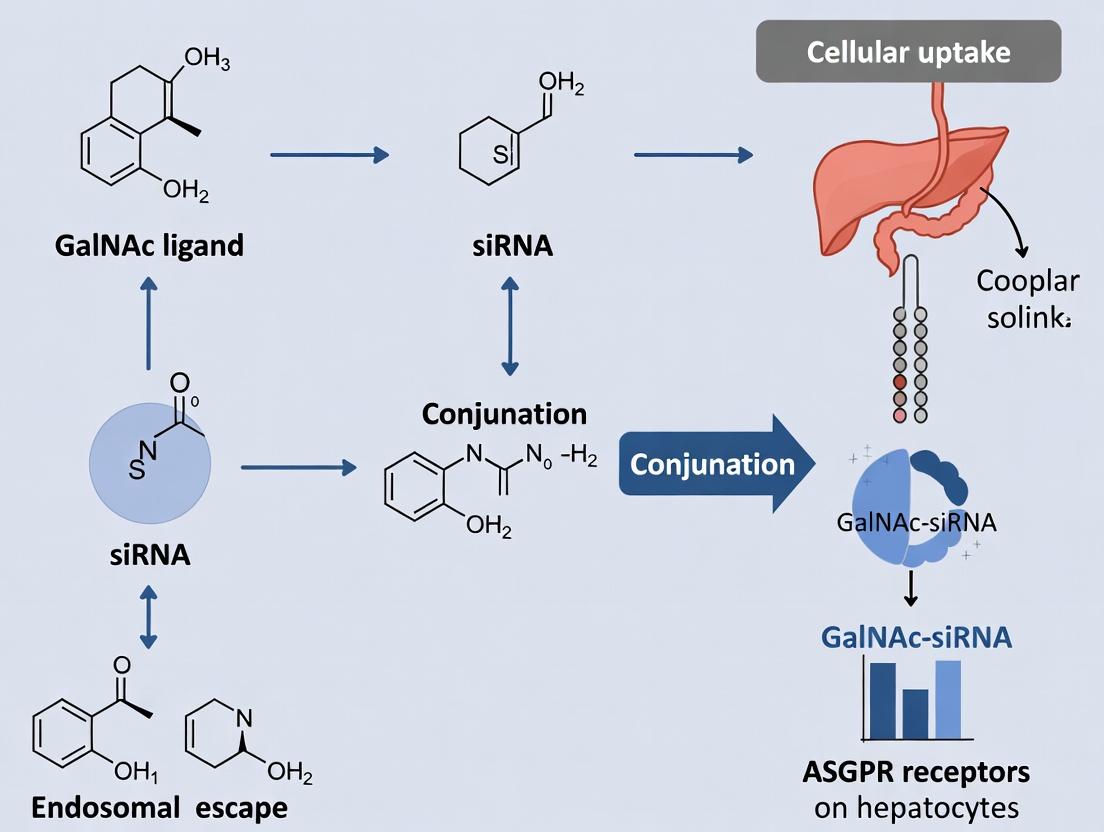
This article provides a detailed overview of the synthesis and application of N-acetylgalactosamine (GalNAc)-siRNA conjugates, a groundbreaking platform for targeted RNAi therapeutics.
GalNAc-siRNA Conjugate Synthesis: A Comprehensive Guide to Design, Production, and Therapeutic Applications
Abstract
This article provides a detailed overview of the synthesis and application of N-acetylgalactosamine (GalNAc)-siRNA conjugates, a groundbreaking platform for targeted RNAi therapeutics. Aimed at researchers and drug development professionals, the content explores the foundational biology of the asialoglycoprotein receptor (ASGPR), step-by-step methodologies for chemical synthesis and purification, common troubleshooting and optimization strategies, and rigorous validation and comparative analysis with other delivery modalities. The synthesis of key learnings across these four intents offers a practical resource for advancing oligonucleotide-based drug discovery.
The ASGPR Pathway: Unveiling the Biological Blueprint for GalNAc-siRNA Targeting
RNA interference (RNAi) therapeutics represent a transformative class of medicines that silence disease-causing genes with high specificity. This approach utilizes small interfering RNA (siRNA) or microRNA (miRNA) to guide the RNA-induced silencing complex (RISC) to complementary messenger RNA (mRNA) sequences, leading to their cleavage and degradation, thereby inhibiting the production of pathogenic proteins. The potency and selectivity of RNAi offer a direct strategy for treating diseases with a known genetic basis, including rare genetic disorders, cancers, and viral infections.
However, the inherent challenges of siRNA delivery have historically limited clinical translation. Naked siRNA molecules are rapidly cleared by renal filtration, susceptible to nuclease degradation, and unable to cross cellular membranes due to their large size and negative charge. Furthermore, systemic administration can lead to off-target effects and immune stimulation. Therefore, targeted delivery is not an enhancement but a fundamental requirement for effective, safe, and systemic RNAi therapeutics. This necessity has driven the development of sophisticated delivery platforms, with N-Acetylgalactosamine (GalNAc)-siRNA conjugates emerging as a breakthrough for hepatocyte-specific delivery.
Key Quantitative Data on Delivery Challenges and Solutions
Table 1: Pharmacokinetic & Stability Challenges of Unmodified siRNA
| Parameter | Naked/Unmodified siRNA | Implication for Therapy |
|---|---|---|
| Plasma Half-life | < 5 minutes | Rapid clearance necessitates high, frequent dosing. |
| Renal Clearance | Molecular weight ~13 kDa (~2 nm hydrodynamic diameter) | Quickly filtered by kidneys, reducing bioavailability. |
| Nuclease Degradation | Susceptible to serum endo- and exonucleases | Loss of active compound before reaching target cell. |
| Cellular Uptake | Negligible without carrier | Cannot passively cross anionic cell membranes. |
| Immune Activation | Can trigger TLR7/8, PKR, RIG-I pathways | Unwanted inflammatory responses and toxicity. |
Table 2: Comparison of Major siRNA Delivery Platforms
| Delivery Platform | Targeting Mechanism | Key Advantages | Key Limitations | Clinical Status |
|---|---|---|---|---|
| GalNAc-siRNA Conjugate | ASGPR-mediated endocytosis in hepatocytes | Excellent hepatocyte specificity, simple chemistry, subcutaneous administration, long duration. | Liver-restricted; limited to liver-expressed targets. | Multiple approved drugs (e.g., givosiran, lumasiran). |
| Lipid Nanoparticles (LNPs) | Endocytosis via ApoE coating & LDL receptor uptake (hepatocytes) | High payload capacity, potent for hepatocytes, can target other tissues with re-engineering. | Complex formulation, potential reactogenicity, primarily hepatic tropism without targeting ligands. | Approved (patisiran), extensive clinical use. |
| Polymeric Nanoparticles | Electrostatic complexation; can be PEGylated/ligand-functionalized. | Tunable design, potential for controlled release. | Variability, potential polymer toxicity, complex characterization. | Preclinical/early clinical. |
| Antibody-Drug Conjugates | Antibody binding to cell-surface antigen. | High specificity for extrahepatic targets. | Complex synthesis, lower siRNA payload, immunogenicity risk. | Early clinical development. |
Core Protocol: In Vitro Assessment of GalNAc-siRNA Conjugate Activity
This protocol details the evaluation of gene silencing efficacy for GalNAc-siRNA conjugates in a relevant hepatocyte model.
Protocol Title: In Vitro Gene Silencing Assay for GalNAc-siRNA Conjugates in ASGPR-Expressing Cells
Objective: To quantify target mRNA knockdown following treatment with GalNAc-siRNA conjugates in vitro.
Materials (The Scientist's Toolkit):
Table 3: Key Research Reagent Solutions
| Item | Function/Description | Example Product/Catalog |
|---|---|---|
| Huh-7 or HepG2 Cells | Human hepatoma cell lines expressing functional ASGPR. | ATCC HTB-32, HB-8065 |
| GalNAc-siRNA Conjugate | Test article; siRNA targeting gene of interest, conjugated to triantennary GalNAc ligand. | Synthesized in-house per thesis methods. |
| Scrambled siRNA Control | siRNA with no perfect complement in the transcriptome, controls for sequence-independent effects. | Silencer Select Negative Control |
| Transfection Reagent (Lipofectamine) | Positive control for bulk cellular uptake (non-targeted delivery). | Lipofectamine RNAiMAX |
| qRT-PCR Kit | For quantification of target mRNA levels post-treatment. | TaqMan RNA-to-Ct 1-Step Kit |
| Cell Culture Medium | Supports growth of hepatocyte lines. | DMEM, high glucose, 10% FBS |
| TRIzol Reagent | For total RNA isolation from cultured cells. | TRIzol LS Reagent |
| ASGPR Competitor (e.g., Asialofetuin) | Competes for GalNAc binding, confirms ASGPR-mediated uptake. | Sigma A4781 |
Procedure:
- Cell Seeding: Seed Huh-7 cells in a 96-well plate at 1.5 x 10^4 cells/well in complete medium. Incubate for 24 hours to achieve ~70% confluence.
- Compound Treatment:
- Prepare serial dilutions of the GalNAc-siRNA conjugate (e.g., 1 nM to 100 nM final concentration) in serum-free medium.
- For the competition assay, pre-incubate cells with 50 µg/mL asialofetuin in serum-free medium for 1 hour before adding the conjugate.
- Aspirate medium from cells and add 100 µL of conjugate solution per well. Include controls: untreated cells, scrambled siRNA conjugate, and a Lipofectamine-complexed siRNA positive control.
- Incubation: Incubate cells with conjugates for 48-72 hours at 37°C, 5% CO₂.
- RNA Isolation & qRT-PCR:
- Lyse cells directly in the plate using TRIzol. Isolate total RNA according to the manufacturer's protocol.
- Quantify RNA concentration and integrity.
- Perform one-step qRT-PCR using gene-specific TaqMan probes for the target mRNA and a housekeeping gene (e.g., GAPDH).
- Data Analysis: Calculate relative gene expression using the 2^(-ΔΔCt) method. Normalize data to the untreated control. Report results as mean % mRNA remaining ± SD from at least three independent experiments. Calculate IC₅₀ values using non-linear regression analysis.
Visualization of Key Concepts
GalNAc-siRNA Targeted Delivery Pathway
In Vitro Screening Protocol Workflow
This application note details the structure and function of the Asialoglycoprotein Receptor (ASGPR), a critical target for liver-specific drug delivery. Within the broader thesis on GalNAc-siRNA conjugate synthesis and application, understanding ASGPR biology is paramount for rational design, efficacy optimization, and safety profiling of targeted oligonucleotide therapeutics.
Structure and Expression of ASGPR
Table 1: Human ASGPR Subunit Characteristics
| Subunit | Gene Name | Chromosomal Locus | Amino Acids (Human) | Key Structural Domains | Predominant Oligomerization State |
|---|---|---|---|---|---|
| H1 (Major) | ASGR1 | 17p13.2 | 291 | CTLD, transmembrane, cytoplasmic tail | Hetero-oligomer (H1:H2 = 4:2) |
| H2 (Minor) | ASGR2 | 17p13.2 | 327 | CTLD, transmembrane, cytoplasmic tail | Hetero-oligomer (H1:H2 = 4:2) |
Table 2: ASGPR Expression Profile
| Characteristic | Detail | Quantitative Measure / Specificity |
|---|---|---|
| Primary Cell Type | Hepatocytes | >99% of total liver receptor expression |
| Subcellular Distribution | Clathrin-coated pits, early endosomes, cell surface | ~70% intracellular pool; ~30% surface at steady state |
| Species Expression | Human, primate, rat, mouse (functional) | High conservation of ligand-binding specificity |
| Ligand Affinity (Kd) | Triantennary GalNAc (high affinity) | ~1-10 nM |
| Mono-GalNAc (low affinity) | ~1-10 µM |
Protocol: Immunofluorescence for ASGPR Localization in Primary Hepatocytes
Objective: Visualize subcellular distribution of ASGPR in cultured primary hepatocytes. Materials: Primary rat or human hepatocytes, poly-D-lysine coated coverslips, anti-ASGR1 antibody (clone 8D7), anti-clathrin heavy chain antibody, fluorescent secondary antibodies (e.g., Alexa Fluor 488, 555), DAPI, 4% PFA, 0.1% Triton X-100, mounting medium. Procedure:
- Cell Seeding & Fixation: Plate primary hepatocytes on coverslips in William's E medium + supplements. At 48h, wash with PBS and fix with 4% PFA for 15 min at RT.
- Permeabilization & Blocking: Permeabilize with 0.1% Triton X-100 for 10 min. Block with 5% BSA/PBS for 1h.
- Primary Antibody Incubation: Incubate with anti-ASGR1 (1:200) and anti-clathrin (1:500) in blocking buffer overnight at 4°C.
- Secondary Incubation: Wash 3x with PBS. Incubate with species-matched fluorescent secondary antibodies (1:1000) for 1h at RT in dark.
- Mounting & Imaging: Wash, counterstain nuclei with DAPI (1 µg/mL) for 5 min. Mount with antifade medium. Image using a confocal microscope with 60x oil objective. Colocalization analysis can be performed using software like ImageJ (Coloc2 plugin).
Function and Ligand Internalization Pathway
Pathway Diagram: ASGPR-Mediated Endocytosis
Title: ASGPR Endocytic Pathway for GalNAc-siRNA Delivery
Protocol: Quantifying ASGPR-Mediated Internalization Kinetics
Objective: Measure the rate of fluorescent GalNAc ligand uptake in hepatoma cells (e.g., HepG2). Materials: HepG2 cells, Cy5-labeled GalNAc ligand (e.g., Cy5-GalNAc3), culture medium, acid wash buffer (150 mM NaCl, 50 mM Glycine, pH 3.0), fluorescence plate reader or flow cytometer. Procedure:
- Cell Preparation: Seed HepG2 cells in a 24-well plate at 2x10^5 cells/well. Culture for 48h to reach 80% confluency.
- Ligand Binding (4°C): Cool cells on ice. Wash with cold PBS. Add 200 µL of cold medium containing 100 nM Cy5-GalNAc3 ligand. Incubate on ice for 60 min to allow surface binding without internalization.
- Internalization Initiation: Wash cells 2x with cold PBS to remove unbound ligand. Add 500 µL of pre-warmed (37°C) medium to each well to initiate synchronized internalization. Place plate in 37°C incubator.
- Time-Course Sampling: At defined time points (e.g., 0, 2.5, 5, 10, 20, 30 min), remove a well from the incubator. Place on ice and immediately wash 2x with cold PBS.
- Acid Stripping: Add 300 µL of ice-cold acid wash buffer to each well. Incubate on ice for 5 min with gentle shaking to strip surface-bound ligand. Collect acid wash (surface fraction). Neutralize with 30 µL 1M Tris pH 8.0.
- Cell Lysis (Internalized Fraction): Wash cells once with cold PBS. Lyse cells with 300 µL RIPA buffer (with protease inhibitors) on ice for 15 min. Collect lysate.
- Quantification: Measure Cy5 fluorescence in acid wash (surface) and lysate (internalized) fractions using a plate reader (Ex/Em ~650/670 nm). Calculate: % Internalized = (Internalized Fluorescence / (Surface + Internalized Fluorescence)) * 100 at each time point. Plot % internalized vs. time to derive kinetic parameters.
Application in GalNAc-siRNA Therapeutics
The Scientist's Toolkit: Key Reagents for ASGPR Research
Table 3: Essential Research Reagent Solutions
| Reagent / Material | Function / Application in Thesis Research | Example Product/Source |
|---|---|---|
| Recombinant Human ASGR1/ASGR2 Proteins | Surface plasmon resonance (SPR) or ITC to measure binding affinity/kinetics of novel GalNAc conjugates. | R&D Systems, Sino Biological |
| Anti-Human ASGR1 Antibody (Blocking) | Validates ASGPR-specific uptake in cellular assays; negative control for competitive inhibition. | Clone 8D7 (MilliporeSigma) |
| ASGPR-Knockout Hepatoma Cell Line | CRISPR-generated (e.g., HepG2 ASGR1-/-) to confirm target-specific delivery and functional effects. | Available from academic repositories or generate in-house. |
| Fluorescent GalNAc Standards (Mono-, Tri-) | Control ligands for internalization assays; calibration for receptor occupancy studies. | Tri-GalNAc-Cy5 (e.g., from Carbosynth) |
| Primary Human Hepatocytes (Cryopreserved) | Gold standard for in vitro evaluation of conjugate uptake, efficacy, and toxicity in a physiologically relevant model. | Lonza, BioIVT, Triangle Research Labs |
| GalNAc-Conjugated siRNA (Positive Control) | Benchmark for in vitro and in vivo activity (e.g., targeting TTR or ApoC3). | Alnylam Pharmaceuticals' published sequences. |
Workflow Diagram: Evaluating GalNAc-siRNA Conjugates
Title: GalNAc-siRNA Conjugate Evaluation Workflow
Protocol:In VitroGene Silencing in Primary Hepatocytes
Objective: Assess potency of GalNAc-siRNA conjugates in primary human hepatocytes. Materials: Cryopreserved primary human hepatocytes, hepatocyte thawing/maintenance medium (e.g., InVitroGRO CP Medium), collagen-coated plates, GalNAc-siRNA conjugate (lyophilized), transfection reagent control (e.g., Lipofectamine RNAiMAX), qRT-PCR reagents for target gene. Procedure:
- Cell Thawing & Plating: Rapidly thaw hepatocytes in a 37°C water bath. Transfer to pre-warmed medium, centrifuge at 100xg for 10 min. Resuspend in complete medium, count viable cells (trypan blue). Plate at 1.2x10^5 cells/well in a collagen-coated 96-well plate for RNA. Maintain at 37°C, 5% CO2.
- Conjugate Treatment (24h post-plating): Prepare serial dilutions of GalNAc-siRNA conjugate in plain maintenance medium (no serum). Typical concentration range: 0.1 nM to 100 nM. Aspirate medium from hepatocytes and add 100 µL/well of conjugate-containing medium. Include untreated and scrambled siRNA conjugate controls. For a transfection reagent control, complex a non-conjugated siRNA with RNAiMAX per manufacturer's protocol.
- Incubation & Harvest: Incubate cells with conjugate for 72-96h, refreshing medium at 48h if needed. Lyse cells directly in the well using a lysis buffer (e.g., from a Qiagen RNeasy kit).
- RNA Isolation & qRT-PCR: Isolate total RNA according to kit protocol. Synthesize cDNA using a high-capacity reverse transcription kit. Perform quantitative PCR using TaqMan probes specific for the target mRNA and a housekeeping gene (e.g., GAPDH, HPRT1).
- Data Analysis: Calculate ∆∆Ct values relative to untreated control. Plot % target mRNA remaining vs. log10(conjugate concentration). Determine IC50 using a four-parameter logistic curve fit (e.g., in GraphPad Prism).
This Application Note details the principles and protocols for utilizing N-Acetylgalactosamine (GalNAc) as a targeting ligand for hepatic delivery of siRNA therapeutics. The efficacy stems from high-affinity binding to the Asialoglycoprotein Receptor (ASGPR), a C-type lectin abundantly and selectively expressed on hepatocyte surfaces, followed by efficient clathrin-mediated endocytosis (CME). This forms the foundational delivery strategy for modern GalNAc-siRNA conjugates.
Mechanism of Action & Quantitative Binding Data
ASGPR Binding Affinity
The ASGPR demonstrates high affinity for terminal GalNAc residues. Multivalent presentation (typically tri-antennary) enhances avidity through the "cluster effect."
Table 1: Binding Affinity of GalNAc Ligands to ASGPR
| Ligand Valency | Apparent Kd (nM) | Relative Binding Avidity | Key Reference (Concept) |
|---|---|---|---|
| Monovalent GalNAc | 50,000 - 100,000 | 1x (Baseline) | Baenziger & Fiete, 1980 |
| Tri-antennary GalNAc | 1 - 10 | ~10,000x | Biessen et al., 1995 |
| TetRA-antennary GalNAc | ~0.5 - 2 | ~50,000x | Lee et al., 1984 |
Clathrin-Mediated Endocytosis Kinetics
Following ASGPR engagement, the receptor-ligand complex is rapidly internalized via CME.
Table 2: Key Kinetic Parameters for GalNAc-ASGPR Endocytosis
| Parameter | Typical Value | Measurement Method |
|---|---|---|
| ASGPR Surface Density | 200,000 - 500,000 receptors/cell | Radioligand binding |
| Internalization Rate Constant (kint) | 0.2 - 0.4 min-1 | Surface biotinylation assay |
| Recycling Half-life (T1/2) of ASGPR | 10 - 15 minutes | Fluorescent antibody chase |
| Endosomal Escape Timeframe | 15 - 30 minutes post-internalization | LysoTracker/fluorescence quenching assays |
Core Experimental Protocols
Protocol 1: Surface Plasmon Resonance (SPR) for Determining Binding Kinetics of GalNAc Ligands
Objective: Measure the real-time association/dissociation rates (kon, koff) and equilibrium dissociation constant (KD) of GalNAc-conjugates to immobilized ASGPR.
Materials:
- SPR instrument (e.g., Biacore series, Sartorius)
- CMS sensor chip
- Recombinant human ASGPR (H1/H2 subunits)
- Amine coupling kit (EDC/NHS)
- Running Buffer: HBS-EP+ (10 mM HEPES, 150 mM NaCl, 3 mM EDTA, 0.05% v/v Surfactant P20, pH 7.4)
- GalNAc-conjugate analytes in serial dilutions (0.1 nM - 1 µM)
- Regeneration solution: 10 mM Glycine-HCl, pH 2.0
Procedure:
- Sensor Chip Preparation: Dock a new CMS chip. Prime the system with running buffer.
- ASGPR Immobilization: Activate the dextran matrix on flow cell 2 (Fc2) with a 7-minute injection of EDC/NHS mixture. Inject recombinant ASGPR in 10 mM sodium acetate (pH 5.0) at 10 µg/mL for 5-7 minutes to achieve ~5000-8000 Response Units (RU). Deactivate with 7-minute injection of 1 M ethanolamine-HCl (pH 8.5). Use Fc1 as a reference surface (activated/deactivated only).
- Binding Analysis: Dilute GalNAc-conjugate in running buffer. Inject over Fc1 and Fc2 at 30 µL/min for 3 minutes (association), followed by dissociation in buffer for 5-10 minutes.
- Regeneration: Inject regeneration solution for 30 seconds to strip bound analyte.
- Data Processing: Subtract reference cell (Fc1) data from ligand cell (Fc2). Fit the resulting sensograms to a 1:1 Langmuir binding model using the instrument software to derive kon, koff, and KD (KD = koff/kon).
Protocol 2: Flow Cytometry Analysis of Cellular Uptake & Internalization
Objective: Quantify specific, ASGPR-mediated cellular uptake of fluorescently labeled GalNAc-siRNA conjugates in hepatocyte models (e.g., HepG2, primary hepatocytes).
Materials:
- HepG2 cells or primary mouse/human hepatocytes
- Cy5- or FAM-labeled GalNAc-siRNA conjugate
- Competitive inhibitor: 10 mM free Tri-antennary GalNAc (e.g., Tris-GalNAc)
- Flow cytometry buffer (PBS + 1% BSA)
- Trypsin-EDTA (0.25%)
- Flow cytometer with 488 nm (FAM) or 640 nm (Cy5) laser
Procedure:
- Cell Preparation: Seed cells in 24-well plates at 2.5 x 10⁵ cells/well and culture for 48h.
- Competition (Specificity Control): Pre-treat one set of wells with 100 µL of 10 mM Tris-GalNAc in serum-free medium for 30 min at 37°C.
- Conjugate Incubation: Add fluorescent GalNAc-siRNA conjugate to all wells (final conc. 100 nM) in serum-free medium. Incubate at 37°C, 5% CO2 for desired time points (e.g., 15, 30, 60, 120 min).
- Surface Stripping (Optional, for internalized fraction): At each time point, place cells on ice. Wash with ice-cold PBS. Treat with trypsin-EDTA for 5 min at 37°C to remove surface-bound conjugate. Neutralize with complete medium.
- Cell Harvesting & Analysis: Wash cells twice with flow cytometry buffer. Resuspend in buffer and analyze by flow cytometry (≥10,000 events). Gate on live cells. Measure median fluorescence intensity (MFI).
- Data Interpretation: Specific uptake = MFI (test) - MFI (competition control). Plot MFI vs. time.
Protocol 3: siRNA Activity Assay (Dual-Luciferase Reporter Knockdown)
Objective: Validate functional gene silencing of GalNAc-siRNA conjugates in a controlled cellular system.
Materials:
- HepG2 cells stably expressing a Firefly luciferase reporter (e.g., under a constitutive promoter)
- GalNAc-siRNA targeting Firefly luciferase (siFLuc) and a non-targeting control (siNTC)
- Dual-Luciferase Reporter Assay System (Promega)
- 96-well white-walled assay plates
- Microplate luminometer
Procedure:
- Cell Seeding: Plate siFLuc-reporter HepG2 cells in 96-well plates at 8,000 cells/well in complete medium. Incubate 24h.
- Transfection/Treatment: Prepare serial dilutions of GalNAc-siFLuc and GalNAc-siNTC (e.g., 0.1 nM - 100 nM) in serum-free medium. Aspirate medium from cells and add 100 µL of conjugate solution per well. Include untreated cells as a control. Incubate for 48-72h.
- Luciferase Assay: Aspirate medium. Lyse cells with 1X Passive Lysis Buffer (20 µL/well) for 15 min on orbital shaker.
- Measurement: Program the luminometer to inject 50 µL of Luciferase Assay Reagent II, measure Firefly luminescence (10s), then inject 50 µL of Stop & Glo Reagent, and measure Renilla luminescence (10s). Use Renilla (or co-transfected Renilla) for normalization if applicable.
- Analysis: Calculate normalized luminescence (Firefly/Renilla). Express data as % of siNTC control. Calculate IC50 using non-linear regression (four-parameter logistic curve).
Visualization Diagrams
Diagram Title: GalNAc-siRNA Cellular Uptake and Trafficking Pathway
Diagram Title: SPR Binding Kinetics Experimental Workflow
The Scientist's Toolkit: Key Research Reagent Solutions
Table 3: Essential Materials for GalNAc-ASGPR Research
| Item Name | Supplier Examples (Non-exhaustive) | Function in Research |
|---|---|---|
| Recombinant Human ASGPR (H1/H2) | R&D Systems, Sino Biological | Target protein for in vitro binding assays (SPR, ELISA). |
| Tri-antennary GalNAc (Tris-GalNAc) | Carbosynth, Dextra Laboratories | High-affinity ASGPR ligand; used as a standard, competitor, or synthetic precursor. |
| Fluorescent GalNAc-siRNA Conjugates | Custom synthesis (e.g., Alnylam, Axolabs) | Direct visualization and quantification of cellular uptake and trafficking. |
| ASGPR-Specific Antibodies | Santa Cruz Biotechnology, Abcam | Detection and visualization of ASGPR expression via WB, IHC, or flow cytometry. |
| Clathrin Inhibitors (Pitstop 2) | Abcam, Sigma-Aldrich | Pharmacological tool to confirm clathrin-mediated endocytosis pathway involvement. |
| Dual-Luciferase Reporter System | Promega | Gold-standard for quantifying siRNA-mediated gene silencing activity in cells. |
| LysoTracker Dyes | Thermo Fisher Scientific | Fluorescent probes to track endosomal/lysosomal compartments and escape. |
| HepG2 Cell Line | ATCC, ECACC | Well-characterized human hepatoma cell line expressing functional ASGPR. |
| Primary Hepatocytes | Thermo Fisher, Lonza | Gold-standard in vitro model for human or mouse hepatocyte biology. |
Application Notes
The translation of fundamental carbohydrate biology into approved GalNAc-siRNA conjugate therapeutics represents a paradigm shift in precision medicine. The core innovation lies in exploiting the asialoglycoprotein receptor (ASGPR), a lectin primarily expressed on hepatocytes, for targeted hepatic delivery. This section details key application notes derived from the synthesis, characterization, and in vivo application of these conjugates.
Note 1: Conjugate Design & ASGPR Binding Affinity Optimal binding to ASGPR requires a triantennary GalNAc cluster with precise linkage and spacing. Monovalent GalNAc exhibits low affinity (Kd ~ μM), while trivalent conjugates achieve high-affinity binding (Kd ~ nM range). This multivalency is critical for efficient receptor-mediated endocytosis. The siRNA payload is typically attached via a stable, biodegradable linker at the 3’-end of the sense strand.
Note 2: Pharmacokinetic & Pharmacodynamic (PK/PD) Advantages Subcutaneous administration of GalNAc-siRNA conjugates results in rapid ASGPR-mediated hepatocyte uptake, with plasma half-lives of conjugates typically <4 hours but intracellular half-lives of the active siRNA moiety extending to weeks. This enables infrequent dosing regimens (quarterly or biannually), as exemplified by inclisiran. Table 1 summarizes key PK/PD parameters for approved agents.
Table 1: Quantitative PK/PD Parameters of Approved GalNAc-siRNA Therapeutics
| Parameter | Givosiran (Givlaari) | Inclisiran (Leqvio) | Lumasiran (Oxlumo) |
|---|---|---|---|
| Target | ALAS1 | PCSK9 | HAO1 |
| Indication | Acute Hepatic Porphyria | Hypercholesterolemia | Primary Hyperoxaluria Type 1 |
| Dose & Regimen | 2.5 mg/kg monthly | 284 mg, Day 1, 90, then 6-monthly | 3 mg/kg monthly (weight-based) |
| Tmax (approx.) | 1-4 hours | 4-6 hours | 4-6 hours |
| Major Elimination Route | Metabolism (nuclease) | Metabolism (nuclease) | Metabolism (nuclease) |
| Onset of Action | ~1 month | ~14 days | ~1 month |
| Max Target Reduction | ~75% (urinary ALA) | ~50% (LDL-C) | ~65% (urinary oxalate) |
Note 3: In Vivo Efficacy and Potency Potency is dramatically enhanced compared to untargeted siRNA. GalNAc conjugation can improve in vivo potency by >100-fold. Efficacy is durable; a single dose sustains target gene silencing for months due to the catalytic nature of RNAi and the stability of the siRNA in the RNA-induced silencing complex (RISC).
Note 4: Safety Profile The hepatocyte-specific targeting minimizes off-target effects in other tissues. The most common adverse events are mild, injection-site reactions. The immunostimulatory risk associated with earlier siRNA platforms is mitigated by using extensive chemical modifications (e.g., 2’-F, 2’-O-methyl).
Protocols
Protocol 1: Synthesis of a Triantennary GalNAc-Cluster Ligand
Objective: To synthesize the tris-GalNAc amine ligand for subsequent conjugation to siRNA. Materials: Azido-GalNAc building blocks, tripropargyl amine core, CuSO₄, sodium ascorbate, HPLC system, C18 column. Procedure:
- Dissolve tripropargyl amine core (1 eq) and azido-GalNAc monomer (3.3 eq) in DMF:tert-BuOH:H₂O (3:1:1).
- Add CuSO₄ (0.3 eq) and sodium ascorbate (1.5 eq). Purge with N₂.
- React at 40°C for 16-24 hours with stirring.
- Monitor reaction completion by LC-MS.
- Purify the crude product via reverse-phase HPLC. Lyophilize to obtain the tris-GalNAc ligand as a white solid.
- Confirm identity and purity by
¹H NMRandMALDI-TOF MS.
Protocol 2: Conjugation of GalNAc Ligand to siRNA Sense Strand
Objective: To attach the GalNAc ligand to the 3’-end of the siRNA sense strand via a stable linker. Materials: siRNA sense strand with a 3’-terminal DBCO modification, tris-GalNAc-azide ligand, PBS (pH 7.4), PBS with 0.1% SDS, HPLC system with anion-exchange column. Procedure:
- Dissolve the DBCO-modified sense strand (1 eq) and tris-GalNAc-azide ligand (5 eq) in sterile PBS, pH 7.4.
- Incubate the reaction at 25°C for 2 hours without agitation (strain-promoted azide-alkyne cycloaddition occurs spontaneously).
- Quench the reaction by adding an equal volume of PBS with 0.1% SDS.
- Purify the conjugate using anion-exchange HPLC to separate conjugate from unreacted ligand and siRNA.
- Desalt the purified product into nuclease-free water, quantify by UV absorbance, and confirm by
LC-MS.
Protocol 3:In VivoEvaluation in a Mouse Model
Objective: To assess hepatic target gene knockdown following subcutaneous administration. Materials: C57BL/6 mice (n=5/group), GalNAc-siRNA conjugate in PBS, control siRNA, tissue homogenizer, RNA extraction kit, qRT-PCR system. Procedure:
- Randomize mice into treatment and control groups.
- Administer a single subcutaneous dose (e.g., 3 mg/kg) of GalNAc-siRNA conjugate or control to conscious, gently restrained mice.
- At predetermined timepoints (e.g., Day 7, 14, 28), euthanize mice and harvest liver tissue.
- Homogenize a section of liver and extract total RNA.
- Synthesize cDNA and perform
qRT-PCRfor the target mRNA and a stable housekeeping gene (e.g., Gapdh, Hprt). - Calculate fold-change using the 2^(-ΔΔCt) method relative to the control group. Express data as mean % reduction ± SEM.
Visualization
Title: ASGPR-Mediated Delivery Pathway for GalNAc-siRNA Conjugates
Title: GalNAc-siRNA Conjugate Synthesis & QC Workflow
The Scientist's Toolkit
Table 2: Key Research Reagent Solutions for GalNAc-siRNA Research
| Item | Function & Application |
|---|---|
| Triantennary GalNAc-Amine Ligand | Core targeting moiety for chemical conjugation to siRNA; enables high-affinity ASGPR binding. |
| DBCO-/Azide-Modified siRNA | Chemically modified siRNA strands enabling bioorthogonal, copper-free click chemistry for precise ligand attachment. |
| ASGPR-Expressing Cell Line (e.g., HepG2) | In vitro model for evaluating conjugate uptake, potency, and mechanism via receptor competition assays. |
| Stable, Nuclease-Free siRNA Modifications (2'-F, 2'-O-Me) | Ribose modifications that enhance siRNA stability in serum and reduce immunostimulation, essential for in vivo efficacy. |
| Anion-Exchange HPLC Columns | Critical for purifying the negatively charged siRNA-conjugate from reaction mixtures based on charge differences. |
| LC-MS for Intact Mass Analysis | Essential analytical tool for confirming the identity and purity of the final conjugate product. |
| Rodent Formulation Buffer (e.g., PBS, pH 7.4) | Standard vehicle for in vivo subcutaneous dosing studies to ensure solubility and stability of the conjugate. |
Application Notes
The trivalent N-acetylgalactosamine (GalNAc) conjugation platform for small interfering RNA (siRNA) delivery represents a transformative advancement in targeted therapeutic oligonucleotide development. By exploiting high-affinity binding to the asialoglycoprotein receptor (ASGPR) selectively expressed on hepatocytes, this technology enables efficient, subcutaneous, and infrequent dosing for treating liver-associated diseases. The core advantages are intrinsic to the platform's design and its interaction with the biological target.
1. Potency: The high-affinity GalNAc ligand (typically KD ~1-5 nM for the trivalent conjugate) ensures rapid and near-quantitative uptake into hepatocytes post-subcutaneous administration. ASGPR-mediated endocytosis delivers the siRNA conjugate directly into the endosomal pathway, facilitating endosomal escape and loading into the RNA-induced silencing complex (RISC). This efficient targeting allows for therapeutic siRNA doses in the range of 1-10 mg/kg, a significant reduction compared to earlier lipid nanoparticle (LNP) formulations.
2. Durability: The platform leverages the catalytic nature of RISC and the stability of the chemically modified siRNA backbone. Once loaded into RISC, a single siRNA molecule can mediate the cleavage of multiple target mRNA transcripts over an extended period. Combined with the slow turnover of target proteins in hepatocytes (e.g., weeks for TTR, AT3), this results in a pharmacological effect lasting several months from a single dose, enabling quarterly or even bi-annual dosing regimens.
3. Safety Profile: The specificity of GalNAc-ASGPR interaction minimizes off-target accumulation. The siRNA itself incorporates extensive chemical modifications (2'-O-methyl, 2'-fluoro, phosphorothioate) to enhance nuclease stability and reduce immunogenicity. The well-characterized and naturally occurring ASGPR recycling pathway, along with the sub-therapeutic dose levels required, contributes to an excellent tolerability profile with minimal injection site reactions as the most common adverse event.
Quantitative Data Summary
Table 1: Comparison of GalNAc-siRNA Platform Key Metrics
| Parameter | Typical Range/Value | Notes & Comparative Context |
|---|---|---|
| ASGPR Binding Affinity (KD) | 1 - 5 nM | For trivalent conjugate; ensures >90% hepatocyte uptake. |
| Therapeutic Dose (Subcutaneous) | 1 - 10 mg/kg | ~10-100x lower dose than early LNP-siRNA systems. |
| Onset of Action | 24 - 48 hours | Significant mRNA knockdown observable. |
| Maximal Effect | 7 - 14 days | Peak protein level reduction achieved. |
| Duration of Action | 3 - 9 months | Dependent on target protein turnover rate. |
| Tissue Distribution (%ID/g, Liver) | >80% | Percentage of Injected Dose per gram of tissue. |
| Common AE Incidence | <20% | Mostly mild, transient injection site reactions. |
Table 2: Approved GalNAc-siRNA Therapeutics (Representative Examples)
| Drug (INN) | Target Gene | Indication | Dosing Regimen | Efficacy (Protein Reduction) |
|---|---|---|---|---|
| Givosiran | ALAS1 | Acute Hepatic Porphyria | Monthly, 2.5 mg/kg | ~75% sustained reduction in ALA/PBG |
| Inclisiran | PCSK9 | Hypercholesterolemia | Day 1, Day 90, then 6-monthly | ~50% sustained LDL-C reduction |
| Vutrisiran | TTR | hATTR Amyloidosis | Quarterly, 25 mg | >80% sustained TTR reduction |
Experimental Protocols
Protocol 1:In VitroUptake and Potency Assay in ASGPR-Expressing Cells
Purpose: To evaluate the cellular uptake and gene silencing potency of a novel GalNAc-siRNA conjugate. Materials: HepG2 or primary human hepatocytes, GalNAc-siRNA conjugate, control siRNA (non-conjugated), transfection reagent (positive control), cell culture media, qRT-PCR reagents, flow cytometry buffer. Procedure:
- Cell Seeding: Seed HepG2 cells in a 96-well plate at 20,000 cells/well in complete media. Incubate for 24h.
- Compound Treatment: Prepare serial dilutions of the GalNAc-siRNA conjugate and controls in serum-free media. Aspirate media from cells and add 100 µL of compound solution per well. For the positive control, use a transfection reagent complexed with siRNA per manufacturer's protocol. Include untreated cells as a baseline control.
- Incubation: Incubate cells for 48h at 37°C, 5% CO₂.
- mRNA Analysis (qRT-PCR): a. Lyse cells directly in the well using an appropriate lysis buffer. b. Extract total RNA and synthesize cDNA. c. Perform qPCR with primers specific to the target gene and a housekeeping gene (e.g., GAPDH). d. Calculate % target mRNA knockdown relative to untreated control using the 2^(-ΔΔCt) method.
- Uptake Analysis (Flow Cytometry): If using a fluorescently labeled (e.g., Cy5) GalNAc-siRNA, trypsinize cells at a designated earlier timepoint (e.g., 4-24h), wash with PBS, and resuspend in flow buffer. Analyze fluorescence intensity via flow cytometry to quantify cellular uptake.
Protocol 2:In VivoPharmacokinetics/Pharmacodynamics (PK/PD) in a Murine Model
Purpose: To assess the liver exposure, durability of effect, and potency of a GalNAc-siRNA conjugate in vivo. Materials: C57BL/6 mice (n=5-6 per group), GalNAc-siRNA test article, saline vehicle, dosing supplies (insulin syringes), tissue collection tools, RNA stabilization reagent, homogenizer, protein assay reagents. Procedure:
- Dosing: Administer a single subcutaneous injection of the GalNAc-siRNA conjugate (e.g., 3 mg/kg) or vehicle to mice. Dose volume is typically 5-10 mL/kg.
- Sample Collection: At predetermined timepoints (e.g., 1, 7, 14, 28, 56 days post-dose), euthanize a cohort of animals. Collect blood via cardiac puncture for potential plasma exposure analysis. Perfuse the liver with cold PBS via the portal vein. Excise the liver, snap-freeze a portion in liquid N₂ for mRNA/protein analysis, and preserve another portion in formalin for histology (IHC/ISH).
- Target Engagement Analysis: a. mRNA: Homogenize liver tissue, extract RNA, and perform qRT-PCR as in Protocol 1 to determine the time course of mRNA knockdown. b. Protein: Homogenize tissue in RIPA buffer, quantify protein concentration, and analyze target protein levels by ELISA or Western Blot.
- Non-Target Tissue Analysis: Process other tissues (e.g., kidney, spleen) similarly to assess off-target distribution and silencing.
Protocol 3: ASGPR Competition Binding Assay
Purpose: To confirm the ASGPR-dependent mechanism of uptake. Materials: HepG2 cells, GalNAc-siRNA conjugate (labeled), excess free GalNAc ligand (e.g., 10mM asialofetuin or simple GalNAc sugar), serum-free media. Procedure:
- Pre-incubation: Pre-treat HepG2 cells with serum-free media containing a 100-1000 fold molar excess of free GalNAc ligand for 30 minutes at 37°C.
- Co-incubation: Add the fluorescently labeled GalNAc-siRNA conjugate directly to the same wells without washing.
- Incubation & Analysis: Incubate for 2-4h. Wash cells thoroughly with PBS and analyze fluorescence via microscopy or flow cytometry. A significant reduction in fluorescence signal in pre-treated wells confirms ASGPR-specific uptake.
Visualizations
Diagram Title: GalNAc-siRNA Uptake and Mechanism of Action Pathway
Diagram Title: GalNAc-siRNA Candidate Development Workflow
The Scientist's Toolkit
Table 3: Key Research Reagent Solutions for GalNAc-siRNA Research
| Reagent / Material | Provider Examples | Function in Research |
|---|---|---|
| Trivalent GalNAc Phosphoramidite | Sigma-Aldrich, ChemGenes, BroadPharm | Key building block for solid-phase synthesis of GalNAc-conjugated oligonucleotides. |
| Stabilized siRNA (2'-F/2'-OMe/PS) | Custom synthesis from Dharmacon, IDT, Axolabs | Provides nuclease resistance, reduces immunogenicity, and improves pharmacokinetics. |
| ASGPR Binding Assay Kit | Corning, BPS Bioscience | Measures binding affinity (KD) of GalNAc conjugates to recombinant ASGPR. |
| Primary Human Hepatocytes | Lonza, BioIVT | Gold-standard in vitro model for human-relevant uptake and potency studies. |
| HepG2 Cell Line | ATCC | Common ASGPR-expressing cell line for initial screening assays. |
| In Vivo Formulation Buffer | PBS, pH 7.4 | Standard vehicle for subcutaneous administration of GalNAc-siRNAs in preclinical studies. |
| Locked Nucleic Acid (LNA) qPCR Probes | Qiagen, Roche | Enable sensitive and specific quantification of low-abundance target mRNA from tissue lysates. |
| Tissue Homogenization Kits | Qiagen (RNeasy), Thermo Fisher | For simultaneous stabilization and efficient lysis of tissues for RNA/protein extraction. |
From Bench to Bedside: A Step-by-Step Guide to GalNAc-siRNA Synthesis and In Vivo Application
Application Notes
Within the broader thesis of GalNAc-siRNA conjugate synthesis, the rational design of the siRNA duplex and the efficient chemical synthesis of its targeting ligand are foundational. The siRNA's potency and specificity are dictated by strand selection and chemical modification patterns, while the triantennary GalNAc ligand enables targeted delivery to hepatocytes via the asialoglycoprotein receptor (ASGPR). This synergistic approach is the cornerstone of current subcutaneously administered RNAi therapeutics.
siRNA Strand Design and Chemical Modification
Effective siRNA design requires selecting the antisense (guide) strand for RISC loading and incorporating modifications to enhance stability, reduce off-target effects, and mitigate immunogenicity.
Table 1: Key Design Rules for Therapeutic siRNA Strands
| Design Parameter | Sense Strand (Passenger) | Antisense Strand (Guide) | Rationale & Common Modifications |
|---|---|---|---|
| Thermodynamic Profile | Weaker 5' end stability | Stronger 5' end stability | Ensures preferential RISC loading of the antisense strand. |
| Seed Region (Pos. 2-8) | -- | Critical for target recognition; limited modification. | 2'-F or 2'-OMe modifications may be used sparingly to reduce seed-based off-targets. |
| Catalytic Core | -- | Minimally modified. | Positions 9-11 often left unmodified to maintain cleavage activity. |
| Stability Modifications | Extensive 2'-modifications (e.g., 2'-F, 2'-OMe). | Extensive 2'-modifications (e.g., 2'-F, 2'-OMe) on 3' half. | Prevents nuclease degradation. 2'-F is common for A and U; 2'-OMe for C and G. |
| Phosphate Backbone | Phosphorothioate (PS) linkages at terminal positions. | PS linkages at 5' end and/or terminal positions. | Enhances pharmacokinetics, prevents exonuclease cleavage. |
| Overhangs | Typically 2-nt (dTdT or other) at 3' end. | Typically 2-nt at 3' end. | Aids RISC loading and stability; often use stabilized nucleotides (e.g., 2'-OMe). |
Triantennary GalNAc Ligand Synthesis
The high-affinity triantennary GalNAc motif is synthesized via solution or solid-phase peptide chemistry, utilizing a scaffold (e.g., tris(2-aminoethoxy)ethane, or a lysine dendrimer) to present three GalNAc sugars in optimal geometry for ASGPR binding (KD ~1 nM).
Table 2: Common Building Blocks for Triantennary GalNAc Synthesis
| Component | Function | Typical Structure/Example |
|---|---|---|
| Scaffold | Provides branching points for ligand attachment. | Tris(2-aminoethoxy)ethane, Lysine-Lysine dendrimer, TRIS-based linkers. |
| Linker/Spacer | Connects scaffold to GalNAc or siRNA; impacts conjugate stability & cleavage. | PEG units, alkyl chains, or cleavable linkers (e.g., succinate, disulfide). |
| Activated GalNAc | Enables efficient coupling to the scaffold amines. | GalNAc pentenyl, GalNAc N-hydroxysuccinimide (NHS) ester, GalNAc phosphoramidite. |
| siRNA Attachment Handle | Reactive group for conjugation to the siRNA sense strand 3' or 5' end. | Maleimide, dibenzocyclooctyne (DBCO), azide, thiol, activated ester. |
Detailed Protocols
Protocol 1: Design and In Silico Selection of siRNA Sequences
- Input: Full-length target mRNA sequence (RefSeq ID).
- Step 1: Use established algorithms (e.g., from Dharmacon, Ambion, or DSIR) to generate a list of 21-nt target sites with AA(N19)TT or NA(N19)NN motifs.
- Step 2: Apply asymmetry rule: Calculate ΔG for the first 4-5 base pairs at each 5' end using nearest-neighbor parameters. Select duplexes where ΔG (5' Antisense) > ΔG (5' Sense).
- Step 3: Perform BLAST analysis against the appropriate transcriptome to ensure minimal off-target potential (≤16-17 nt contiguous homology to other genes).
- Step 4: Incorporate chemical modification pattern as per Table 1. Favor 2'-F for all A and U; 2'-OMe for C and G. Place two PS linkages at 5' end of antisense strand and 3' end of sense strand. Cap 3' overhangs with 2'-OMe nucleotides.
- Output: Chemically modified sense and antisense strand sequences for solid-phase synthesis.
Protocol 2: Solution-Phase Synthesis of a Triantennary GalNAc-NAD Ligand (Maleimide Handle)
- Materials: Tris(2-aminoethoxy)ethane scaffold, Fmoc-GalNAc-OSu, HATU, DIPEA, DMF, Maleimido-propionic acid NHS ester, TFA, Diethyl ether, HPLC system (C18 column).
- Step 1 - Scaffold Preparation: Dissolve tris(2-aminoethoxy)ethane (1 eq) in anhydrous DMF under argon.
- Step 2 - GalNAc Coupling: Add Fmoc-GalNAc-OSu (3.3 eq) and DIPEA (10 eq). React overnight at room temperature (RT). Monitor by LC-MS.
- Step 3 - Fmoc Deprotection: Precipitate product in cold diethyl ether, redissolve in DMF, add piperidine (20% v/v) for 30 min at RT. Repeat precipitation.
- Step 4 - Handle Attachment: Dissolve tri-GalNAc amine (1 eq) in DMF. Add Maleimido-propionic acid NHS ester (1.2 eq) and DIPEA (3 eq). React for 4 hours at RT.
- Step 5 - Purification: Quench reaction, purify via reverse-phase HPLC. Lyophilize to obtain final ligand as a white solid. Confirm by mass spectrometry.
Protocol 3: Conjugation of Triantennary GalNAc Ligand to siRNA Sense Strand
- Materials: siRNA sense strand with 3' or 5' C6-disulfide modified Thiol (SS-Py), Tri-GalNAc-Maleimide ligand, TCEP-HCl, EDTA, 0.1 M Sodium Phosphate Buffer (pH 7.0), NAP-5 column.
- Step 1 - Thiol Activation: Dissolve thiol-modified sense strand (1 eq) in degassed phosphate buffer with 50 mM EDTA. Add fresh TCEP solution (50 eq). Incubate 1 hour at 37°C to reduce disulfide.
- Step 2 - Desalting: Pass reduction mixture through a NAP-5 column equilibrated with degassed conjugation buffer (0.1 M phosphate, pH 7.0, 1 mM EDTA) to remove TCEP and exchange buffer.
- Step 3 - Conjugation: Immediately add the Tri-GalNAc-Maleimide ligand (3 eq in DMSO) to the eluted sense strand. React for 2-3 hours at RT under argon, protected from light.
- Step 4 - Purification & Annealing: Purify conjugate by anion-exchange HPLC. Anneal with complementary antisense strand in equimolar ratio in annealing buffer (e.g., 100 mM KCl, 30 mM HEPES pH 7.5) by heating to 95°C for 2 min and slowly cooling to RT.
- Validation: Analyze by LC-MS for conjugate confirmation and native PAGE for duplex formation.
The Scientist's Toolkit
Table 3: Key Research Reagent Solutions for GalNAc-siRNA Conjugate Research
| Item | Function | Example/Supplier |
|---|---|---|
| 2'-F/2'-OMe/PS RNA Phosphoramidites | Building blocks for solid-phase synthesis of modified siRNA strands. | ChemGenes, Glen Research, Hongene. |
| Tri-GalNAc Ligand Building Blocks | Pre-synthesized scaffolds or activated GalNAc for ligand construction. | BOC Sciences, BroadPharm, Sigma-Aldrich. |
| Tris(2-aminoethoxy)ethane | A common small-molecule scaffold for triantennary ligand synthesis. | TCI Chemicals, Sigma-Aldrich. |
| HATU / DIPEA | Peptide coupling reagents for amide bond formation. | Sigma-Aldrich, Fisher Scientific. |
| TCEP-HCl | Reducing agent for activating thiol-modified oligonucleotides. | Thermo Fisher Scientific. |
| Anion-Exchange HPLC Columns | Critical for purifying charged oligonucleotides and conjugates. | Dionex DNAPac, Thermo Fisher Scientific. |
| MALDI-TOF or LC-MS System | For confirming molecular weight of ligands, strands, and final conjugates. | Bruker, Sciex, Agilent. |
Visualization Diagrams
GalNAc-siRNA Conjugate Mechanism of Action
Triantennary GalNAc Ligand Assembly
This document provides Application Notes and Protocols for the synthesis of GalNAc-siRNA conjugates, a critical technology for targeted delivery of therapeutic oligonucleotides to hepatocytes. Within the broader thesis research on optimizing conjugate potency and manufacturability, a direct comparison of solid-phase synthesis (SPS) and solution-phase coupling strategies is essential. This note details methodologies, quantitative outcomes, and reagent toolkits for both approaches.
Table 1: Quantitative Comparison of Conjugation Strategies for GalNAc-siRNA
| Parameter | Solid-Phase Synthesis (Phosphoramidite) | Solution-Phase Coupling (Click Chemistry) |
|---|---|---|
| Typical Conjugation Yield | >98% per step (on-support) | 85-95% (isolated, post-purification) |
| Process Time (for tri-GalNAc) | ~4-6 hours (fully automated) | 8-24 hours (including purification) |
| Key Advantage | High efficiency, automation-compatible, no intermediate isolation | Flexibility, can use complex/pre-formed GalNAc ligands, milder conditions |
| Key Limitation | Requires specialized phosphoramidite derivatives, limited to stable RNA sequences during deprotection. | Requires orthogonal protection/deprotection, additional purification steps post-conjugation. |
| Scale Suitability | Ideal for discovery & pre-clinical (mg-g scale) | Suitable for pre-clinical to early clinical (g scale) |
| Overall Purity (HPLC) | Typically >90% (crude), >98% after purification | Typically requires purification to achieve >95% |
Experimental Protocols
Protocol 3.1: Solid-Phase Synthesis Using GalNAc Phosphoramidite
Objective: On-machine synthesis of a triantennary GalNAc conjugate at the 5’-end of an siRNA sense strand.
Materials:
- Controlled-pore glass (CPG) solid support bearing the initial siRNA nucleotide.
- Standard RNA phosphoramidites (2’-O-TBDMS or 2’-O-TOM).
- 5’-GalNAc Phosphoramidite (e.g., DMT-6-N-(GalNAc-triantennary)-hexyl-phosphoramidite).
- Standard RNA synthesis reagents: Activator (0.25M 5-benzylthio-1H-tetrazole in ACN), Oxidizer (0.02M I2 in THF/Pyridine/H2O), Cap A & B, Deblock (3% DCA in Toluene).
- DNA/RNA synthesizer (e.g., Bioautomation MerMade).
Procedure:
- Sequence Assembly: Synthesize the full siRNA sense strand sequence up to the final 5’-nucleotide using standard RNA phosphoramidite chemistry.
- Final DMT Removal: After the last nucleotide coupling, perform a standard deblocking step (DCA) to remove the 5’-DMT group. Wash thoroughly with ACN.
- GalNAc Coupling:
- Introduce the GalNAc phosphoramidite solution (0.1M in anhydrous ACN) to the synthesis column.
- Deliver the activator solution and allow the coupling to proceed for 12-15 minutes (extended time due to steric bulk).
- Wash with ACN.
- Capping & Oxidation: Perform standard capping (Ac2O) and oxidation (I2) steps.
- Cleavage & Deprotection: Cleave the oligonucleotide from the support and fully deprotect using standard conditions (e.g., aqueous methylamine for 2’-O-TBDMS removal and base cleavage, followed by TBAF for desilylation). Note: Verify stability of the GalNAc-sugar linkage to deprotection conditions.
- Purification: Purify the crude conjugate by anion-exchange HPLC or RP-HPLC. Desalt via ultrafiltration or ethanol precipitation.
Protocol 3.2: Solution-Phase Conjugation via Strain-Promoted Azide-Alkyne Cycloaddition (SPAAC)
Objective: Postsynthetic conjugation of a triantennary GalNAc ligand to an siRNA sense strand bearing a cyclooctyne moiety.
Materials:
- siRNA sense strand modified with a 5’- or 3’-terminal DBCO (dibenzocyclooctyne) or BCN (bicyclononyne) modifier.
- Azide-functionalized triantennary GalNAc ligand (N3-GalNAc).
- Reaction Buffer: 0.1M Sodium Phosphate, pH 7.5, or 1X PBS, pH 7.4.
- DMSO (anhydrous).
- HPLC system with appropriate column (e.g., C18 or anion-exchange).
- Ultracentrifugal filters (MWCO 3kDa).
Procedure:
- Preparation: Dissolve the DBCO/BCN-modified siRNA in nuclease-free water to a concentration of 1-2 mM. Dissolve the N3-GalNAc ligand in a minimal volume of DMSO (final DMSO in reaction <10%).
- Conjugation Reaction:
- In a microcentrifuge tube, combine:
- 10 µL siRNA (1 mM, 10 nmol)
- 15 µL N3-GalNAc ligand (20 mM in DMSO, 300 nmol – 30 eq.)
- 75 µL 0.1M Sodium Phosphate buffer, pH 7.5.
- Mix thoroughly by vortexing and pulse-spinning.
- Incubate the reaction at 25-37°C for 4-16 hours with gentle shaking.
- In a microcentrifuge tube, combine:
- Purification:
- Dilute the reaction mixture with 0.1M TEAA buffer (pH 7.0) to a DMSO concentration <5%.
- Purify by semi-preparative RP-HPLC (C18 column), using a gradient of ACN in 0.1M TEAA.
- Collect the peak corresponding to the conjugate (later retention time than starting siRNA).
- Desalt the pooled fractions using ultracentrifugal filters (MWCO 3kDa) with water, followed by lyophilization.
- Analysis: Confirm identity and purity by LC-MS (ESI or MALDI-TOF).
Visualizations
Diagram 1: GalNAc-siRNA Conjugation Workflow Comparison
Diagram 2: ASGPR-Mediated siRNA Uptake Pathway
The Scientist's Toolkit: Research Reagent Solutions
Table 2: Essential Materials for GalNAc-siRNA Conjugate Synthesis
| Item | Function/Benefit | Example (Vendor-Non Specific) |
|---|---|---|
| GalNAc Phosphoramidite | Enables automated, on-support conjugation during oligonucleotide synthesis. Critical for SPS. | 5’-DMT-6-N-(Triantennary-GalNAc)-hexyl phosphoramidite |
| DBCO/BCN-Modified RNA | Provides bioorthogonal handle (cyclooctyne) for solution-phase click chemistry with azide ligands. | 5’- or 3’-DBCO-C6-modified RNA oligonucleotide |
| Azide-Functionalized GalNAc Ligand | Complementary click chemistry partner. Allows conjugation of pre-synthesized, complex ligand libraries. | N3-PEG2-Tri-GalNAc (MW ~1500 Da) |
| Anhydrous Solvents (ACN, DMSO) | Essential for moisture-sensitive phosphoramidite coupling and stable reagent storage. | Anhydrous Acetonitrile (< 30 ppm H2O) |
| HPLC Systems & Columns | For critical analysis and purification of conjugates (purity >95% required). | Semi-prep Anion-Exchange (Dionex DNAPac) or RP-C18 columns |
| Ultrafiltration Devices | For rapid buffer exchange and desalting of conjugated oligonucleotides post-purification. | 3kDa MWCO centrifugal filters |
| LC-MS Instrumentation | Gold-standard for confirming conjugate identity, monitoring reaction completion, and assessing purity. | High-resolution ESI-TOF or Q-TOF mass spectrometer |
Within a thesis focused on GalNAc-siRNA conjugate synthesis and application, the critical evaluation of purity and stability is paramount for therapeutic efficacy and safety. This document provides detailed application notes and protocols for the purification and analytical characterization of these advanced therapeutic entities, employing High-Performance Liquid Chromatography (HPLC) and Mass Spectrometry (MS).
Application Notes: Key Analytical Challenges
The triantennary GalNAc ligand conjugated to siRNA introduces complexity, requiring orthogonal methods to assess:
- Conjugate Purity: Separation from unconjugated siRNA, excess GalNAc ligand, and synthesis side-products.
- Stability: Assessment of chemical and physical stability under storage and in vitro conditions, monitoring siRNA integrity and conjugate linkage.
- Identity Confirmation: Accurate mass verification of the synthesized conjugate.
Experimental Protocols
Protocol: Analytical and Preparative RP-HPLC for GalNAc-siRNA Purification
Objective: To separate and purify the target GalNAc-siRNA conjugate from reaction mixtures. Materials: See "Research Reagent Solutions" (Section 6). Method:
- Column Equilibration: Equilibrate a C18 or C4 RP-HPLC column (e.g., 4.6 x 250 mm for analytical, 21.2 x 250 mm for preparative) with 95% Mobile Phase A (0.1 M TEAA, pH 7.0) and 5% Mobile Phase B (Acetonitrile) at a flow rate of 1.0 mL/min (analytical) or 10 mL/min (preparative).
- Sample Preparation: Dilute the synthesis reaction mixture in nuclease-free water to ~1 mg/mL siRNA concentration. Filter through a 0.22 µm PVDF membrane.
- Injection & Elution: Inject 50-100 µL (analytical) or 1-5 mL (preparative). Run a linear gradient from 5% to 30% Mobile Phase B over 30 minutes.
- Detection: Monitor absorbance at 260 nm (siRNA) and 280 nm (GalNAc ligand).
- Fraction Collection: Collect the major peak corresponding to the conjugate (typically eluting later than unconjugated siRNA). Pool fractions from multiple runs.
- Desalting/Buffer Exchange: Desalt pooled fractions using centrifugal filters (MWCO 10 kDa) or dialysis into 1x PBS or ammonium acetate buffer. Lyophilize if needed. Note: Ion-Pairing RP-HPLC using hexafluoroisopropanol (HFIP) and triethylamine can offer superior resolution for oligonucleotides.
Protocol: LC-ESI-MS for Conjugate Identity and Purity
Objective: To confirm the molecular weight of the conjugate and assess purity at the molecular level. Materials: See "Research Reagent Solutions" (Section 6). Method:
- LC Conditions: Use a narrow-bore RP-HPLC column (e.g., 2.1 x 50 mm) interfaced directly with the ESI-MS. A fast gradient (5-25% B in 10 min) is suitable.
- MS Parameters (Negative Ion Mode):
- Capillary Voltage: 3000 V
- Source Temperature: 150°C
- Desolvation Temperature: 350°C
- Cone Voltage: Optimize between 80-120 V for oligonucleotide backbone integrity.
- Mass Range: m/z 800-2000 for multiply charged ions.
- Data Analysis: Deconvolute the multiply charged envelope using instrument software to obtain the intact molecular weight. Compare with theoretical mass.
Protocol: Assessment of Conjugate Stability
Objective: To evaluate chemical and physical stability under storage and simulated physiological conditions. Method A: Thermal Stability in Serum.
- Prepare a 5 µM solution of the purified GalNAc-siRNA conjugate in 90% PBS / 10% mouse serum.
- Aliquot into PCR tubes.
- Incubate aliquots at 37°C in a thermal cycler or incubator. Remove samples at T=0, 1, 2, 4, 8, 24, and 48 hours.
- Immediately flash-freeze samples in liquid nitrogen and store at -80°C until analysis.
- Analyze by denaturing Ion-Pair RP-HPLC or capillary gel electrophoresis (CGE). Integrate peak areas for full-length conjugate and degradation products.
Method B: Forced Degradation Study.
- Prepare separate conjugate solutions (~1 mg/mL) in the following conditions: acidic (pH 4.0 buffer), basic (pH 9.0 buffer), and oxidative (0.1% H₂O₂).
- Incubate at 25°C for 24 hours.
- Quench reactions and analyze by analytical HPLC and LC-MS to identify degradation pathways (e.g., siRNA depurination, linker hydrolysis).
Data Presentation
Table 1: Typical RP-HPLC Purification Yield and Purity of GalNAc-siRNA Conjugate
| Parameter | Preparative Scale | Analytical Scale |
|---|---|---|
| Column | Waters XBridge OST C18, 21.2 x 250 mm, 5 µm | Waters XBridge OST C18, 4.6 x 250 mm, 2.5 µm |
| Loading | 5-10 mg siRNA-mass | 50 µg siRNA-mass |
| Gradient Time | 30 min | 25 min |
| Retention Time | ~18.5 min | ~17.8 min |
| % Recovery (A260) | 65-75% | N/A |
| Purity (A260) | >90% | >95% |
Table 2: LC-ESI-MS Results for a Model GalNAc-siRNA Conjugate
| Species | Theoretical Mass (Da) | Observed Mass (Da) | Mass Error (ppm) | Key Ions (m/z) |
|---|---|---|---|---|
| Unconjugated siRNA | 13,456.2 | 13,455.8 | -29.7 | [M-8H]⁸⁻ = 1680.5 |
| GalNAc Ligand | 1,878.6 | 1,878.4 | -106.5 | [M-2H]²⁻ = 938.2 |
| Final Conjugate | 15,334.8 | 15,334.2 | -39.1 | [M-10H]¹⁰⁻ = 1532.4 |
Table 3: Stability Profile of GalNAc-siRNA in 10% Serum at 37°C
| Time Point (h) | % Full-Length Conjugate (HPLC) | % Intact siRNA Strand (CGE) | Primary Degradation Product |
|---|---|---|---|
| 0 | 100.0 | 100.0 | None |
| 4 | 98.5 ± 0.5 | 99.1 ± 0.3 | <2% ligand cleavage |
| 24 | 92.3 ± 1.2 | 96.8 ± 0.9 | Ligand cleavage, nicked siRNA |
| 48 | 85.7 ± 2.1 | 90.5 ± 1.5 | Ligand cleavage, nicked siRNA |
Diagrams
The Scientist's Toolkit: Research Reagent Solutions
Table 4: Essential Materials for Conjugate Analysis
| Item / Reagent | Function / Role | Example Product / Specification |
|---|---|---|
| Ion-Pair RP-HPLC Columns | High-resolution separation of oligonucleotides and conjugates based on hydrophobicity. | Waters XBridge OST C18 or C4, 2.5 µm or 5 µm particles. |
| Triethylammonium Acetate (TEAA) Buffer | Volatile ion-pairing agent for HPLC, compatible with ESI-MS. | 0.1 M, pH 7.0, HPLC grade. |
| Hexafluoroisopropanol (HFIP) | Ion-pairing modifier that improves oligonucleotide HPLC peak shape. | ≥99.5%, HPLC grade. |
| LC-ESI-MS System | Online separation and accurate mass determination of intact conjugates. | System with high-mass capability (e.g., Q-TOF, Orbitrap). |
| Centrifugal Filters (MWCO) | Rapid desalting and buffer exchange of purified conjugate solutions. | 10 kDa molecular weight cut-off, low nucleic acid binding. |
| Capillary Gel Electrophoresis (CGE) | High-sensitivity analysis of siRNA strand integrity and size variants. | System with laser-induced fluorescence (LIF) detection. |
| Nuclease-Free Water/Buffers | Prevents enzymatic degradation during sample preparation and analysis. | Certified nuclease-free, molecular biology grade. |
| Ammonium Acetate Buffer | Volatile buffer for final conjugate formulation prior to lyophilization or MS analysis. | 100 mM, pH 6.5-7.5. |
Formulation Considerations for Preclinical and Clinical Studies
Within the broader thesis on GalNAc-siRNA conjugate research, formulation is a critical bridge between in vitro synthesis and in vivo efficacy. The transition from lead candidate to investigational new drug (IND) requires meticulous design of formulation strategies to ensure stability, pharmacokinetics (PK), pharmacodynamics (PD), and safety are adequately evaluated. This document outlines the core formulation considerations, application notes, and protocols for preclinical and clinical development of GalNAc-siRNA therapeutics.
Key Formulation Parameters and Quantitative Data
Formulation development focuses on parameters that impact drug product stability, delivery, and bioanalytical measurements. The following table summarizes critical attributes for preclinical (non-GLP/GLP) and clinical phase-appropriate formulations.
Table 1: Phase-Appropriate Formulation Requirements for GalNAc-siRNA Conjugates
| Parameter | Preclinical (Toxicology) | Clinical (Phase 1/2) | Analytical Method |
|---|---|---|---|
| State | Liquid (buffer) or Lyophilized | Typically sterile, lyophilized cake | Visual inspection |
| Concentration | 1 - 10 mg/mL (dose-dependent) | 20 - 100 mg/mL (for high-dose SC) | UV-Vis Spectrophotometry |
| Buffer/ pH | PBS, pH 7.0-7.4 | Phosphate or citrate, pH 6.5-7.5 | Potentiometry |
| Osmolality | ~300 mOsm/kg (isotonic) | 280-350 mOsm/kg | Osmometry |
| Excipients | Simple buffer ± sterile water | Tonicity agents (e.g., NaCl), stabilizers | Compendial methods (USP) |
| Sterility | Not required (non-GLP); Required (GLP) | Mandatory (Sterile filtration/ aseptic process) | Sterility test, Bioburden |
| Endotoxin | < 0.5 EU/mL for parenteral | < 0.17 EU/kg/hr (LAL test) | LAL Chromogenic Assay |
| Impurity Profile | Identified major impurities | Fully qualified, ICH Q3B guidelines | IP-HPLC, CE, LC-MS |
| Stability | 1-3 months for study duration | 18-24 months at 2-8°C recommended | Real-time/ accelerated stability |
Table 2: Bioanalytical Data from a Typical Rat PK/PD Study (Single SC Dose)
| siRNA Payload (mg/kg) | C~max~ (μg/mL) | T~max~ (hr) | AUC~0-inf~ (hr*μg/mL) | TARGET Gene Knockdown (Liver, % at Day 7) | Duration of Effect (Days) |
|---|---|---|---|---|---|
| 1 | 2.5 ± 0.3 | 0.5 | 15.2 ± 2.1 | 55 ± 8 | 21 |
| 3 | 8.1 ± 1.2 | 0.5 | 48.7 ± 5.6 | 78 ± 5 | 35 |
| 10 | 25.4 ± 3.5 | 1.0 | 165.3 ± 20.1 | 92 ± 3 | >56 |
Detailed Experimental Protocols
Protocol 1: Formulation of a Clinical-Grade Lyophilized Drug Product
Objective: To prepare a stable, sterile, lyophilized formulation of a GalNAc-siRNA conjugate for Phase 1 clinical trials.
Materials: See "The Scientist's Toolkit" below. Procedure:
- Buffer Preparation: Prepare 10 mM sodium phosphate buffer, pH 7.0, containing 1% (w/v) sucrose. Filter through a 0.22 μm PVDF membrane.
- Drug Substance Solution: Dissolve the GalNAc-siRNA conjugate drug substance in the prepared buffer to a target concentration of 50 mg/mL. Gently mix by inversion; avoid vortexing.
- Sterile Filtration: Aseptically filter the solution through a second 0.22 μm sterile PVDF syringe filter into a sterile vial.
- Fill and Load: Aseptically fill 1.0 mL aliquots into sterile 3R Type I glass vials. Partially insert sterile lyo stoppers.
- Lyophilization:
- Freezing: Load vials onto a pre-cooled shelf (-40°C). Hold for 2 hours.
- Primary Drying: Reduce chamber pressure to 100 mTorr. Ramp shelf temperature to -20°C over 2 hours and hold for 40 hours.
- Secondary Drying: Ramp shelf temperature to +20°C over 5 hours and hold for 10 hours at 100 mTorr.
- Stoppering: Under partial vacuum, fully seat the stoppers.
- Capping and Storage: Apply aluminum crimp seals. Store drug product vials at 2-8°C protected from light.
Protocol 2: Bioanalytical Method for siRNA Quantification in Plasma (LC-MS/MS)
Objective: To quantify total (conjugated) siRNA concentration in rodent or non-human primate plasma.
Procedure:
- Sample Preparation: Thaw plasma samples on ice. Aliquot 50 μL into a microcentrifuge tube.
- Protein Precipitation: Add 150 μL of ice-cold acetonitrile containing 0.1% formic acid and a known concentration of stable isotope-labeled internal standard (IS). Vortex vigorously for 1 min.
- Centrifugation: Centrifuge at 16,000 x g for 10 min at 4°C.
- Solid-Phase Extraction (SPE): Load supernatant onto a pre-conditioned (MeOH, then H~2~O) weak anion-exchange (WAX) SPE plate. Wash with 5% NH~4~OH in water.
- Elution: Elute the siRNA and IS with 200 μL of 60:40 MeOH:Water with 2% formic acid.
- LC-MS/MS Analysis:
- Column: Ion-pairing (e.g., triethylammonium acetate) C18 column, 2.1 x 50 mm, 1.7 μm.
- Gradient: 5-95% B over 8 min (A: 0.1% HFIP in water; B: 0.1% HFIP in MeOH).
- MS: Negative ion mode ESI, MRM transition monitoring for the siRNA parent strand and IS.
- Data Analysis: Calculate peak area ratios (analyte/IS) and interpolate from a linear calibration curve (1-1000 ng/mL).
Signaling Pathway and Workflow Diagrams
Diagram Title: Formulation Development Workflow from Preclinical to Clinical
Diagram Title: GalNAc-siRNA Mechanism of Action & Formulation Role
The Scientist's Toolkit
Table 3: Key Research Reagent Solutions for GalNAc-siRNA Formulation & Analysis
| Item | Function & Rationale | Example/Supplier |
|---|---|---|
| Nuclease-Free Buffers (PBS, Phosphate) | Provides physiological pH and ionic strength for in vivo studies; nuclease-free prevents siRNA degradation during handling. | Ambion PBS, Thermo Fisher |
| Ion-Pairing Reagents (HFIP, TEAA) | Essential for reverse-phase LC-MS analysis of oligonucleotides; enhances chromatographic separation and MS ionization efficiency. | Hexafluoroisopropanol (HFIP), Sigma-Aldrich |
| Weak Anion Exchange (WAX) SPE Plates | Selective purification and concentration of siRNA from complex biological matrices (plasma, tissue homogenates) prior to analysis. | Waters Oasis WAX µElution Plate |
| Stable Isotope-Labeled siRNA Internal Standard | Critical for accurate bioanalytical quantification by LC-MS/MS; corrects for variability in extraction and ionization. | Custom synthesis (e.g., from ATDBio) |
| Lyoprotectants (Sucrose, Trehalose) | Stabilizes siRNA during lyophilization by forming an amorphous glassy matrix, preventing degradation and ensuring rapid reconstitution. | Pharmaceutical Grade, MilliporeSigma |
| Sterile PVDF 0.22 µm Filters | Removes microbial contamination and particulates for aseptic formulation of parenteral solutions. | Millex-GV, MilliporeSigma |
| Endotoxin Detection Assay (LAL) | Quantifies bacterial endotoxin levels to ensure parenteral formulations meet safety specifications. | PyroGene Recombinant Factor C Assay, Lonza |
This application note details experimental protocols for the development and evaluation of GalNAc-siRNA conjugates targeting hepatic genes, framed within a thesis on oligonucleotide therapeutics. The liver represents an ideal target for siRNA-based silencing due to its role in protein synthesis and metabolism. GalNAc conjugation facilitates robust hepatic uptake via the asialoglycoprotein receptor (ASGPR). Three key pipeline case studies are presented: Transthyretin (TTR) for hereditary ATTR amyloidosis, Proprotein Convertase Subtilisin/Kexin Type 9 (PCSK9) for hypercholesterolemia, and mutant TTR for ATTR cardiomyopathy/polyneuropathy.
Table 1: Summary of Key GalNAc-siRNA Pipeline Candidates
| Target Gene | Indication | Lead Candidate (Company) | Key Clinical Trial Phase & Result | Key Quantitative Efficacy Metric |
|---|---|---|---|---|
| TTR | Hereditary ATTR Amyloidosis | Vutrisiran (Alnylam) | Phase 3 HELIOS-A; Approved (AMVUTTRA) | ~83% mean serum TTR reduction at 18 months. |
| PCSK9 | Hypercholesterolemia | Inclisiran (Novartis/Alnylam) | Phase 3 ORION; Approved (LEQVIO) | ~50% PCSK9 reduction; ~50% LDL-C reduction. |
| TTR (ATTR) | ATTR-CM/PN | Revusiran (Alnylam) | Phase 3 ENDEAVOUR (halted) | >80% TTR knockdown (Phase 2). |
Detailed Experimental Protocols
Protocol:In VitroScreening of GalNAc-siRNA Conjugates for Gene Silencing
Objective: To evaluate the potency and specificity of novel GalNAc-siRNA conjugates in ASGPR-expressing hepatocytes.
Materials:
- Huh-7 or HepG2 cells (human hepatoma cell lines expressing ASGPR).
- GalNAc-siRNA conjugates (test articles) and unconjugated siRNA controls.
- Transfection reagent (for non-conjugated siRNA uptake control).
- qRT-PCR reagents (TaqMan probes/primers for target gene and housekeeping gene, e.g., GAPDH).
- Cell lysis buffer and RNA extraction kit.
Procedure:
- Seed cells in 96-well plates at 70% confluence in complete medium.
- Treatment: For GalNAc-siRNAs, dilute in serum-free medium and add directly to cells. For free siRNAs, use lipid transfection reagent per manufacturer's protocol. Include untreated and negative control siRNA (scrambled sequence) groups.
- Incubate for 48-72 hours at 37°C, 5% CO₂.
- Harvest: Lyse cells and extract total RNA.
- Quantification: Perform reverse transcription followed by qPCR using target-specific assays.
- Analysis: Calculate % target mRNA knockdown using the 2^(-ΔΔCt) method relative to untreated control. Perform dose-response curves (typical range: 0.1 nM - 100 nM) to determine IC₅₀.
Protocol:In VivoPharmacodynamic Evaluation in a Murine Model
Objective: To assess hepatic gene silencing and duration of action following subcutaneous administration.
Materials:
- C57BL/6 mice (or transgenic mice expressing human target gene).
- GalNAc-siRNA conjugate in sterile PBS.
- Scrambled sequence GalNAc-conjugate (negative control).
- Equipment for subcutaneous injection and tail vein/blood collection.
- ELISA kits for target protein (e.g., serum TTR or PCSK9).
Procedure:
- Dosing: Randomize mice into groups (n=5-8). Administer a single subcutaneous dose (e.g., 1-10 mg/kg) of conjugate or vehicle/PBS control.
- Serum Collection: Collect blood via tail vein at pre-dose, day 3, 7, 14, 21, and 28. Isolate serum.
- Protein Analysis: Quantify circulating target protein levels using ELISA per kit instructions.
- Tissue Harvest: At endpoint, euthanize animals and perfuse livers with PBS. Snap-freeze a lobe in liquid N₂ for mRNA analysis (see Protocol 3.1).
- Data Analysis: Plot serum protein reduction (%) over time. Calculate maximal knockdown (Emax) and duration of effect (e.g., time to return to 50% of Emax).
Visualizing Pathways and Workflows
Diagram 1: GalNAc-siRNA Hepatic Delivery Pathway
Diagram 2: In Vivo Screening Workflow
The Scientist's Toolkit: Research Reagent Solutions
Table 2: Essential Materials for GalNAc-siRNA Research
| Item | Function/Application | Example/Note |
|---|---|---|
| GalNAc-Conjugation Reagents | Enables synthesis of triantennary GalNAc ligands for siRNA coupling. | Trivalent GalNAc-NHS ester. Critical for ASGPR targeting. |
| Stabilized siRNA Scaffold | Provides nuclease resistance and mitigates immune stimulation. | Use of 2'-OMe, 2'-F, and phosphorothioate backbone modifications. |
| ASGPR-Expressing Cell Line | In vitro model for screening conjugate uptake and potency. | Huh-7, HepG2, or primary hepatocytes. |
| Target-Specific qPCR Assay | Quantifies mRNA knockdown efficiency. | TaqMan Gene Expression Assay for human TTR, PCSK9. |
| Protein-Specific ELISA Kit | Measures pharmacodynamic effect in serum. | Human TTR/PCSK9 ELISA Kit (for murine studies with humanized targets). |
| In Vivo Formulation Buffer | Vehicle for subcutaneous administration in animals. | Sterile, nuclease-free PBS (pH 7.4). |
Overcoming Synthesis Hurdles: Troubleshooting and Optimizing GalNAc-siRNA Conjugate Yield and Efficacy
Within the broader research on GalNAc-siRNA conjugate synthesis and its therapeutic application, the final product's efficacy and safety are directly dictated by synthesis quality. This application note details three critical and interconnected synthesis pitfalls: low coupling efficiency during solid-phase oligonucleotide synthesis (SPOS), complex impurity profiles, and inadequate strand separation of the duplex. These issues compromise conjugate integrity, potency, and pharmacokinetics, necessitating rigorous analytical and preparative protocols.
Low Coupling Efficiency in SPOS
Low coupling efficiency (<98.5% per step) leads to truncated sequences and target product loss. For GalNAc conjugates, this is especially critical during the incorporation of the triantennary GalNAc ligand and modified nucleotides (2'-F, 2'-O-Methyl).
Table 1: Impact of Coupling Efficiency on Full-Length Product Yield
| Average Coupling Efficiency | Probability of 21-mer Full-Length Product | Primary Impurity Species |
|---|---|---|
| 99.5% | 90.0% | n-1 Deletion |
| 99.0% | 81.0% | n-1, n-2 Deletions |
| 98.5% | 73.0% | Multiple Deletions |
| 98.0% | 65.0% | Multiple Deletions |
Protocol 1.1: Real-Time Monitoring via Trityl Assay Objective: Quantify coupling efficiency for each synthesis cycle. Materials: Dichloroacetic acid (DCA) in toluene (3:97 v/v), Acetonitrile (HPLC grade), UV-Vis spectrophotometer. Procedure:
- After the detritylation step of cycle n, collect the acid effluent.
- Dilute an aliquot 1:10 in the DCA/toluene solution.
- Measure absorbance at 498 nm.
- Calculate the trityl cation yield using the molar extinction coefficient (ε≈70,000 M⁻¹cm⁻¹).
- Coupling efficiency for cycle n = (Trityl yield cycle n) / (Trityl yield cycle n-1).
Protocol 1.2: Optimization of Phosphoramidite Activation Objective: Maximize coupling efficiency for sterically hindered residues (e.g., GalNAc-phosphoramidite). Procedure:
- Prepare a fresh solution of 5-Benzylthio-1H-tetrazole (BTT, 0.25 M in anhydrous acetonitrile) as the activator. Alternative: 5-Ethylthio-1H-tetrazole (ETT) for standard couplings.
- Extend coupling time: Standard nucleotides (25-30 s), 2'-OMe/2'-F (45-60 s), GalNAc ligand (120-180 s).
- Use a double-coupling protocol for the GalNAc cluster incorporation step.
Impurity Profiles: Identification and Control
Impurities arise from side reactions (e.g., depurination, phosphorothioate isomerization, incomplete capping) and modify the impurity profile.
Table 2: Common siRNA Impurities and Their Origins
| Impurity Class | Cause | Detection Method |
|---|---|---|
| (n-x) Deletion Sequences | Incomplete coupling | IP-RP-HPLC, ESI-MS |
| Phosphorothioate (PS) Diastereomers | Non-stereospecific synthesis | IP-RP-HPLC, CE |
| Depurination Products (Abut) | Acidic detritylation conditions | IP-RP-HPLC, MS |
| Modified Base Adducts | Oxidizing agents, reagent impurities | LC-MS/MS |
| GalNAc Cluster Isomers | Incomplete ligand conjugation | HILIC, Anion-Exchange HPLC |
Protocol 2.1: Analytical IP-RP-HPLC for Impurity Profiling Objective: Separate siRNA strands and key impurities. Column: Agilent PLRP-S, 1000Å, 4.6 x 50 mm, 3 μm. Mobile Phase A: 100 mM Hexafluoroisopropanol (HFIP), 8.6 mM Triethylamine (TEA) in water. Mobile Phase B: Methanol. Gradient: 10-30% B over 25 min, flow rate 0.5 mL/min. Detection: UV at 260 nm and 290 nm (for tetrazole adducts). Note: This method separates PS diastereomers and full-length from deletion products.
Strand Separation and Duplex Annealing
Imperfect annealing leads to heterogeneous duplexes, asymmetric strand loading, and off-target effects.
Protocol 3.1: Preparative Anion-Exchange Chromatography for Sense Strand Purification Objective: Isolate the fully conjugated GalNAc sense strand from failure sequences. Column: Source 15Q, 10/100 mm. Buffer A: 20 mM Tris-HCl, pH 7.5, in 10% CH3CN. Buffer B: Buffer A + 1.5 M NaCl. Gradient: 30-55% B over 20 column volumes. Collection: Monitor at 260 nm; collect the main peak corresponding to the full-length sense strand. Desalting: Use size-exclusion chromatography or tangential flow filtration into final buffer.
Protocol 3.2: Controlled Duplex Annealing Objective: Form homogeneous, correctly paired siRNA duplex. Procedure:
- Dissolve purified sense (GalNAc-conjugated) and antisense strands in annealing buffer (100 mM KOAc, 30 mM HEPES, pH 7.4) at equimolar concentrations.
- Combine strands in a thin-walled tube.
- Heat mixture to 85°C for 5 min in a thermal cycler.
- Cool gradually to 25°C at a rate of -0.1°C per minute.
- Analyze duplex formation by Native PAGE (15%) or Analytical SEC (TSKgel G3000SW).
The Scientist's Toolkit: Key Research Reagent Solutions
| Item | Function & Rationale |
|---|---|
| 5'-GalNAc Phosphoramidite | Enables site-specific solid-phase addition of the targeting ligand to the sense strand. |
| 2'-F/2'-O-Methyl RNA Phosphoramidites | Provides nuclease resistance and modulates siRNA thermodynamic stability. |
| 0.25 M BTT in MeCN | Activator for efficient coupling of sterically hindered phosphoramidites. |
| Cap Mix A (Acetic Anhydride) & B (N-Methylimidazole) | Blocks unreacted 5'-OH after coupling to prevent extension of failure sequences. |
| 0.02 M Iodine in Pyridine/THF/Water | Oxidizer for phosphite triester to form phosphorothioate (PS) linkage. |
| HFIP/TEA Buffer (for IP-RP-HPLC) | Ion-pairing agents that enable high-resolution separation of oligonucleotides based on hydrophobicity. |
| Annealing Buffer (KOAc/HEPES) | Provides optimal ionic strength and pH for stable siRNA duplex formation without aggregation. |
| Desalting NAP-5 Columns | Rapid buffer exchange or removal of salts post-synthesis/purification. |
Visualizations
Title: siRNA Synthesis and Purification Workflow
Title: siRNA Duplex Function and Pathway
Within the development of GalNAc-siRNA therapeutics, the conjugation chemistry linking the targeting ligand (GalNAc) to the oligonucleotide payload is a critical determinant of efficacy and safety. This application note, framed within a broader thesis on GalNAc-siRNA conjugate synthesis, details the strategic selection of linkers—spanning spacers (PEG, alkyl) and cleavable (disulfide, dipeptide) versus stable (non-cleavable) chemistries—and their profound impact on pharmacokinetic (PK) and pharmacodynamic (PD) profiles. Optimizing this junction balances cellular uptake, endosomal release, metabolic stability, and ultimately, potency and duration of action.
Linker Chemistry Classification and Properties
Linkers serve distinct functions: spacers modulate distance and hydrophilicity; cleavable linkers facilitate intracellular payload release; stable linkers maintain covalent attachment, often relying on biodegradable oligonucleotide backbones.
Table 1: Quantitative Comparison of Common Linker Chemistries in GalNAc-siRNA Conjugates
| Linker Type | Example Chemistry | Cleavage Trigger | Typical in vivo t₁/₂ (Cleavage) | Key Impact on PK | Key Impact on PD (Potency/Duration) |
|---|---|---|---|---|---|
| Spacer (Non-cleavable) | PEGₙ (n=3-24), Alkyl chains | N/A (Stable) | N/A | Increases solubility; reduces aggregation; modulates plasma protein binding. | Optimizes ligand-receptor engagement; potency hinges on siRNA backbone degradation. |
| Cleavable - Reductive | Disulfide (S-S) | Glutathione (GSH) in cytosol | Minutes to hours (intracellular) | Rapid plasma clearance if reduced extracellularly; conjugate stability depends on redox environment. | High potency due to efficient cytosolic release; duration may be shorter if cleavage is rapid. |
| Cleavable - Enzymatic | Valine-Citrulline (Val-Cit) dipeptide | Lysosomal cathepsins | Hours (within endo/lysosome) | Stable in circulation; cleavage contingent on endosomal trafficking. | High, specific release in target hepatocytes; proven for prolonged activity. |
| Stable / Non-cleavable | Thioether, Maleimide-thiol adduct | N/A (Stable) | N/A | Extended conjugate circulation time; clearance follows oligonucleotide metabolism. | Requires siRNA degradation for activity; can offer very prolonged duration of effect. |
Experimental Protocols
Protocol 2.1: Synthesis of GalNAc-siRNA Conjugates with Varied Linkers
Objective: Attach a trivalent GalNAc ligand to the 3’-end of an siRNA sense strand via a defined linker chemistry.
Materials:
- siRNA sense strand with 5’-thiol or 5’-DBCO modification.
- GalNAc ligand derivative (e.g., with maleimide, azide, or activated ester).
- Linker building blocks: NHS-PEGₙ-Maleimide, SPDB (disulfide), Val-Cit-PABC linker reagent.
- Reaction Buffer: 0.1 M phosphate, 1 mM EDTA, pH 7.2 (for thiol-maleimide); or PBS, pH 7.4.
- Purification: HPLC system with C18 or anion-exchange column.
Procedure:
- Linker-Ligand Preparation: For a cleavable dipeptide linker, react the GalNAc amine with Val-Cit-PABC-NHS ester (2:1 molar ratio) in DMF with 1% DIEA for 2 hours at RT. Purify by RP-HPLC.
- Conjugation: a. For Disulfide: Combine thiol-modified siRNA (1 nmol) with GalNAc-pyridyldithiol (3 nmol) in reaction buffer. React for 16 hours at 4°C under argon. b. For Stable/Thioether: Combine thiol-modified siRNA with GalNAc-maleimide-PEG₈ (5 nmol) in reaction buffer. React for 2 hours at RT. c. For Click Chemistry: Combine DBCO-modified siRNA with azido-GalNAc-PEG₈ (4 nmol) in PBS overnight at RT.
- Purification: Quench reaction with 10 mM DTT (for maleimide control only). Purify conjugate using anion-exchange HPLC (gradient: 0-100% 2M NaCl in 25 mM Tris, pH 8.0 over 30 min). Desalt using a NAP-5 column.
- Analysis: Confirm identity and purity by LC-MS (ESI-negative mode) and analytical PAGE.
Protocol 2.2:In VitroCleavage and Release Assay
Objective: Quantify linker cleavage kinetics under biologically relevant conditions.
Materials:
- Synthesized GalNAc-siRNA conjugates.
- Cleavage Buffers: Simulated Cytosolic Buffer (SCB: 5 mM GSH, 0.5 mM GSSG, pH 7.4); Simulated Lysosomal Buffer (SLB: 50 mM citrate, 1 mM EDTA, 2 mM DTT, pH 5.0); Human plasma.
- Cathepsin B enzyme (for enzymatic linker validation).
- Analytical RP-HPLC or CE system.
Procedure:
- Incubate 5 µM conjugate in respective buffers (SCB for disulfide; SLB ± 0.1 U cathepsin B for dipeptide; plasma for stability) at 37°C.
- At time points (0, 0.5, 2, 6, 24, 48 h), remove 20 µL aliquot and quench with 80 µL of 1% TFA in acetonitrile (for HPLC) or stop solution for CE.
- Analyze samples by RP-HPLC (C18, water/acetonitrile gradient with 0.1% TFA). Quantify peak areas corresponding to intact conjugate and released siRNA.
- Calculate % intact conjugate vs. time. Fit data to a first-order decay model to determine half-life (t₁/₂) for cleavage.
Protocol 2.3:In VivoPK/PD Study in Mouse Model
Objective: Evaluate linker impact on plasma/tissue exposure and target gene silencing.
Materials:
- C57BL/6 mice (n=5 per group).
- Conjugates (1-3 mg/kg dose in PBS).
- EDTA plasma collection tubes, tissue homogenizer.
- qRT-PCR reagents for target mRNA (e.g., Ttr).
Procedure:
- Administer conjugate via subcutaneous injection.
- PK Sampling: Collect serial blood samples at 5 min, 15 min, 1h, 4h, 24h, 72h, 168h post-dose. Isolate plasma. Quantify total siRNA concentration using a hybridization ELISA (capture probe complementary to antisense strand).
- Tissue Distribution: Euthanize animals at 24h and 168h. Harvest liver, kidney, spleen. Homogenize tissues. Extract oligonucleotides and quantify by LC-MS/MS.
- PD Assessment: Isolve total liver RNA at 168h. Perform cDNA synthesis and qRT-PCR for target gene (e.g., Ttr) and housekeeping gene (e.g., Gapdh). Calculate % mRNA knockdown relative to PBS control.
- Data Analysis: Calculate PK parameters (AUC, Cmax, t₁/₂) using non-compartmental analysis. Correlate liver AUC with % mRNA knockdown.
Visualizations
Title: Decision Flowchart for Linker Selection in GalNAc-siRNA Design
Title: Intracellular Fate of GalNAc-siRNA with Different Linkers
The Scientist's Toolkit: Research Reagent Solutions
Table 2: Essential Materials for Linker Optimization Studies
| Reagent/Material | Supplier Examples | Function in Research |
|---|---|---|
| 5’-Thiol-modified siRNA | Horizon Discovery, Sigma-Aldrich | Provides reactive handle for maleimide/disulfide conjugation chemistry. |
| DBCO-modified siRNA | Trilink Biotechnologies | Enables copper-free click chemistry with azide-functionalized linkers/ligands. |
| GalNAc-NHS Ester (Trivalent) | BroadPharm, Iris Biotech | Allows direct amine coupling to linker spacers containing an amine group. |
| Heterobifunctional Linker Kits | Thermo Fisher (SM(PEG)ₙ), Quanta BioDesign | Pre-activated PEG spacers (e.g., NHS-PEG-Maleimide) for controlled conjugate assembly. |
| SPDB (N-Succinimidyl 3-(2-pyridyldithio)butyrate) | Tokyo Chemical Industry | A key disulfide linker reagent for introducing cleavable S-S bonds. |
| Val-Cit-PABC-MMAE linker | MedChemExpress (Analog usable) | Model dipeptide linker; PABC spacer can be adapted for siRNA conjugation. |
| Cathepsin B, Human Recombinant | R&D Systems | Enzyme for validating enzymatic linker cleavage in vitro. |
| Hybridization ELISA Kit for siRNA | Alpha Labs, Custom Probes | Enables sensitive quantification of total siRNA conjugate in biological matrices for PK. |
| Anion-Exchange HPLC Column | Thermo Scientific DNAPac PA200 | Critical for purifying and analyzing negatively charged siRNA conjugates. |
Within the context of GalNAc-siRNA conjugate therapeutic development, chemical modification is indispensable to confer metabolic stability, prevent immune activation, and maintain potent RNAi activity in vivo. The strategic incorporation of 2'-O-Methyl (2'-OMe), 2'-Fluoro (2'-F) ribose modifications, and phosphorothioate (PS) backbone linkages represents the cornerstone of modern siRNA design. These modifications directly address the key challenges of nuclease degradation and rapid renal clearance, thereby enabling durable target gene silencing with subcutaneous dosing regimens.
Application Notes: Quantitative Impact of Modifications
The efficacy of modifications is quantified through key pharmacokinetic (PK) and pharmacodynamic (PD) parameters. The following tables synthesize critical data from recent literature and internal studies on GalNAc-siRNAs.
Table 1: Relative Stability and RNAi Activity of Ribose Modifications
| Modification | Nuclease Resistance (Relative to Unmodified) | RNAi Potency (Relative IC50) | Thermal Stability (ΔTm °C) | Key Application |
|---|---|---|---|---|
| 2'-Fluoro (2'-F) | > 100x | 0.9 - 1.2x | +2.0 to +2.5 | High-stability regions (e.g., seed region, nuclease hotspots). |
| 2'-O-Methyl (2'-OMe) | ~50x | 0.8 - 1.5x | +1.0 to +1.5 | Passenger strand, specific guide positions to reduce off-targets. |
| Unmodified RNA | 1x (Reference) | 1x (Reference) | 0 (Reference) | Baseline for comparison. |
Table 2: Impact of Phosphorothioate (PS) Linkages on PK Properties
| PS Placement (# per strand) | Plasma Half-Life (hr) | Tissue Accumulation | Protein Binding (HSA, %) | Apical Side-Effect Risk |
|---|---|---|---|---|
| 0 (All PO) | < 0.25 | Very Low | <10% | Negligible |
| 2-3 (3' ends) | ~2-4 | Moderate | ~40-60% | Low |
| Full Alternating (e.g., 8-10) | > 6 | High | >85% | Moderate (Potential for transient AP elevation) |
Table 3: Standard Modification Pattern for GalNAc-siRNA Conjugates (Exemplar Guide Strand)
| Position (5' → 3') | Standard Modification | Rationale |
|---|---|---|
| 1-2 | PS linkage | Nuclease protection, enhance protein binding. |
| 2 (Nucleotide) | 2'-F or 2'-OMe | Stability. |
| Overhang (e.g., pos 21) | dT or 2'-F-dT | Terminus protection. |
| Internal positions (e.g., 7, 10-14) | 2'-F | Maintain A-form helix & potency. |
| Specific positions (e.g., 6, 9) | 2'-OMe | Mitigate immune sensing (e.g., TLRs). |
Protocols
Protocol 1: Assessing siRNA Serum Stability
Objective: Quantify the degradation kinetics of modified siRNA variants in biological matrices. Materials: Test siRNA (0.5-1 nmol), mouse/human/human serum, 2x formamide loading buffer, 15% denaturing urea-PAGE gel, SYBR Gold stain. Procedure:
- Incubation: Combine 2 µg of siRNA with 90% (v/v) serum in a final volume of 20 µL. Inculate at 37°C.
- Sampling: Remove 2 µL aliquots at t=0, 0.5, 1, 2, 4, 8, and 24 hours. Immediately mix with 8 µL of formamide buffer and freeze on dry ice.
- Analysis: Heat samples at 95°C for 3 min, chill on ice. Load onto a pre-run 15% urea-PAGE gel (1x TBE, 180V for 45 min).
- Visualization & Quantification: Stain with SYBR Gold (1:10,000 in 1x TBE), image with a gel documentation system. Quantify intact band intensity relative to t=0 using ImageJ software.
- Data Fitting: Plot ln(% intact) vs. time. The slope (k) represents the degradation rate constant. Half-life (t1/2) = ln(2)/k.
Protocol 2: Evaluating Gene Silencing in Hepatocyte Models
Objective: Determine the in vitro potency of modified GalNAc-siRNA conjugates. Materials: GalNAc-siRNA conjugates, HepG2 or primary hepatocytes, lipid-free medium, transfection reagent (e.g., Lipofectamine RNAiMAX for non-conjugate controls), qRT-PCR reagents, target gene-specific primers. Procedure:
- Cell Seeding: Seed hepatocytes in 96-well plates at 80% confluence in standard growth medium. Incubate overnight.
- Treatment (GalNAc Conjugates): For GalNAc-siRNAs, prepare dilutions in lipid-free medium (e.g., 0.1 nM to 100 nM). Aspirate cell medium, add conjugate solutions, and incubate for 4-6 hours before replacing with complete medium.
- Treatment (Transfection Control): For unmodified siRNA or non-conjugate controls, use RNAiMAX per manufacturer's protocol.
- Harvest: Incubate cells for 48-72 hours post-treatment. Lyse cells directly in the well for RNA extraction.
- Quantification: Perform qRT-PCR for the target gene mRNA. Normalize data to a housekeeping gene (e.g., GAPDH).
- Analysis: Calculate % mRNA remaining relative to untreated control. Fit dose-response curves using a 4-parameter logistic model to determine IC50 values.
Visualizations
Diagram 1: Modifications to Therapeutic Outcomes Logic Flow
Diagram 2: Serum Stability Assay Workflow
The Scientist's Toolkit: Essential Reagents & Materials
| Item | Function in Research | Key Consideration |
|---|---|---|
| 2'-F & 2'-OMe NTPs | Building blocks for in vitro transcription of modified RNA. | Ensure high purity (>99%) to prevent truncated products. |
| PS-Ready Phosphoramidites | Solid-phase synthesis of PS-modified oligonucleotides. | Use for controlled, site-specific PS incorporation (e.g., 3' ends). |
| GalNAc Phosphoramidite | Synthesis of triantennary GalNAc ligand for hepatocyte targeting. | Critical for final conjugate step; purity impacts binding to ASGPR. |
| Nuclease-Free Serum | Stability assays in biologically relevant matrix. | Use pooled, complement-inactivated serum for reproducible results. |
| SYBR Gold Nucleic Acid Stain | High-sensitivity detection of siRNA in gels. | ~10x more sensitive than ethidium bromide for ss/dsRNA. |
| Hepatocyte Cell Lines (e.g., HepG2, Hep3B) | In vitro model for evaluating GalNAc-siRNA potency. | Express functional ASGPR receptor for conjugate uptake. |
| Lipid-Free Cell Culture Medium | Essential for testing GalNAc-conjugate activity. | Prevents nonspecific lipid/serum protein interference with ASGPR binding. |
| RNAiMAX Transfection Reagent | Positive control for non-conjugated siRNA delivery. | Benchmark for maximal in vitro silencing potential. |
| Denaturing Urea-PAGE System | Separation of intact and degraded siRNA fragments. | Required for high-resolution analysis of stability assay products. |
Addressing Off-Target Effects and Immune Stimulation (e.g., Minimizing Innate Immune Recognition)
Within the broader thesis on GalNAc-siRNA conjugate R&D, a critical challenge is ensuring therapeutic specificity and tolerability. This document provides application notes and protocols for mitigating two major hurdles: (1) sequence-dependent off-target gene silencing, and (2) sequence/structure-dependent innate immune stimulation, primarily via Toll-like Receptor (TLR) 7/8 and RIG-I pathways. Effective chemical and design strategies are essential for advancing lead candidates into preclinical and clinical development.
Table 1: Impact of Chemical Modifications on siRNA Properties
| Modification Type | Example (Position) | Reduction in Off-Targeting* (% vs. unmodified) | Reduction in Immune Stimulation* (Cytokine Level % vs. unmodified) | Key Trade-off/Note |
|---|---|---|---|---|
| 2'-O-Methyl (2'-OMe) | Guide strand, seed region (pos. 2-8) | 70-90% | 80-95% (TLR7/8) | Minimal impact on potency. Gold standard. |
| 2'-Fluoro (2'-F) | Pyrimidines in both strands | 30-50% | 60-80% (TLR7/8) | Enhances nuclease stability. |
| 2'-O-Methoxyethyl (2'-MOE) | 3' Overhangs | 60-80% | >90% (TLR7/8) | Can increase duplex stability (Tm). |
| Phosphorothioate (PS) | Backbone linkage (terminal) | 10-30% | 40-60% (Multiple pathways) | Improves pharmacokinetics. Can introduce non-specific effects at high % |
| Base Modification (e.g., 5-Methyl-Uridine, 2,6-Diaminopurine) | Uridine, Adenosine | 40-70% | 70-90% (TLR7/8) | Can alter seed region binding affinity. |
| Combination (e.g., 2'-OMe + 2'-F + PS) | Full chemical modification pattern | >95% | >99% | Modern therapeutic siRNA standard (e.g., givosiran, inclisiran). |
*Representative ranges from literature; actual values depend on sequence context and cell type.
Table 2: Innate Immune Receptor Agonism by siRNA Features
| siRNA Feature | Primary Sensor | Assay Readout (Typical) | Effective Mitigation Strategy |
|---|---|---|---|
| GU-rich sequence (ssRNA) | TLR7/8 (Endosomal) | IFN-α, TNF-α, IL-6 from pDC/PBMCs | 2'-OMe modification of guide strand, especially uridines. |
| 5'-triphosphate (5'-ppp) blunt end | RIG-I (Cytosolic) | IFN-β, ISG expression | Enzymatic dephosphorylation or avoiding in vitro transcription. Use of synthetic, modified RNA. |
| Long dsRNA (>30 bp) | PKR, MDA5 | Phospho-eIF2α, IFN-β | Ensure siRNA is 19-21 bp. Purify to remove longer byproducts. |
| Complex secondary structure (impurities) | TLR3, MDA5 | IFN-β, IL-12 | HPLC purification, stringent QC. |
Experimental Protocols
Protocol 3.1: In Vitro Assessment of TLR7/8 Activation Objective: Quantify cytokine induction by siRNA in human peripheral blood mononuclear cells (PBMCs). Materials: See "Research Reagent Solutions" (Section 5). Procedure:
- Isolate PBMCs from healthy donor buffy coats using Ficoll density gradient centrifugation. Resuspend at 2x10^6 cells/mL in RPMI-1640 + 10% FBS (no antibiotics).
- Plate 500 µL cell suspension per well in a 48-well plate.
- Prepare siRNA samples: Dilute GalNAc-siRNA conjugates or unformulated siRNA in nuclease-free PBS. Include controls: media only (negative), R848 (1 µg/mL, positive TLR7/8), and a canonical immunostimulatory RNA (e.g., ssRNA40).
- Transfer 50 µL of siRNA sample to cells (final typical concentration range: 0.1-5 µg/mL). Perform in triplicate.
- Incubate plate at 37°C, 5% CO2 for 18-24 hours.
- Centrifuge plate at 300 x g for 10 min. Collect 200 µL of supernatant per well.
- Quantify secreted IFN-α and/or TNF-α using commercial ELISA kits per manufacturer's instructions.
- Data Analysis: Plot cytokine concentration vs. siRNA dose. Compare modified siRNA leads to unmodified sequence and positive controls.
Protocol 3.2: High-Throughput Sequencing for Off-Target Analysis Objective: Identify transcriptome-wide off-target effects mediated by siRNA seed region binding. Materials: See Section 5. TRANSIT siRNA Transfection Reagent, RNeasy Kit, Poly-A selection beads, next-generation sequencer. Procedure:
- Cell Seeding: Seed Hep3B or relevant hepatocyte-derived cells in 6-well plates at 60% confluency in appropriate medium.
- Transfection: At 24h, transfect cells with 10 nM experimental siRNA (modified/unmodified) using TRANSIT reagent. Include a non-targeting siRNA control (scrambled sequence) and mock transfection control.
- Harvest: 48 hours post-transfection, wash cells with PBS and lyse directly in the well using RLT buffer (RNeasy Kit). Isolate total RNA according to the kit protocol, including a DNase I digest step. Assess RNA integrity (RIN > 9.0).
- Library Prep: Use 1 µg total RNA for poly-A selection and standard mRNA-seq library preparation (e.g., Illumina TruSeq). Amplify with 10-12 PCR cycles.
- Sequencing & Bioinformatic Analysis:
- Sequence on a NextSeq 500 system (75 bp single-end).
- Align reads to the human reference genome (GRCh38) using STAR aligner.
- Quantify gene expression with featureCounts.
- Perform differential expression analysis (DESeq2). Identify significantly downregulated genes (adjusted p-value < 0.05, log2 fold change < -0.5) in the experimental siRNA sample vs. the non-targeting siRNA control.
- Seed Match Analysis: Extract positions 2-8 of the siRNA guide strand. Use tools like TargetScan or custom scripts to search the 3'UTRs of significantly downregulated genes for perfect (or 1 G:U wobble) complementarity to this seed sequence.
Visualizations
Pathway: siRNA-Mediated Immune Activation via TLR7/8
Workflow: siRNA Safety Optimization Pipeline
The Scientist's Toolkit: Research Reagent Solutions
Table 3: Essential Materials for Key Experiments
| Item/Reagent | Function/Application | Example (Supplier) |
|---|---|---|
| 2'-OMe, 2'-F, PS Phosphoramidites | Chemical synthesis of modified siRNA strands. Essential for stability and tolerability. | Glen Research, ChemGenes |
| HPLC System (RP/AX) | Purification of synthetic siRNA to >95% purity, removing immunostimulatory impurities. | Agilent, Waters |
| Human PBMCs, Fresh or Cryo | Primary immune cells for evaluating TLR7/8 activation. | STEMCELL Tech, AllCells |
| TLR7/8 Agonist (R848) | Positive control for PBMC cytokine induction assays. | InvivoGen |
| Cytokine ELISA Kits (IFN-α, TNF-α) | Quantification of immune stimulation from cell supernatants. | R&D Systems, BioLegend |
| TRANSIT-siQUEST | Lipid-based transfection reagent for efficient siRNA delivery in vitro for off-target studies. | Mirus Bio |
| RNeasy Mini Kit | High-quality total RNA isolation for downstream RNA-seq. | Qiagen |
| Stranded mRNA-seq Library Prep Kit | Preparation of sequencing libraries for off-target transcriptome analysis. | Illumina TruSeq |
| DESeq2 R Package | Statistical software for identifying differentially expressed genes from RNA-seq data. | Bioconductor |
| GalNAc Conjugation Reagents (e.g., 5'-Hexynyl) | For synthesis of triantennary GalNAc ligand for hepatocyte targeting. | Solulink, BroadPharm |
Within the broader thesis on GalNAc-siRNA conjugate synthesis and application research, the transition from lab-scale synthesis to Good Manufacturing Practice (GMP) manufacturing represents the most critical and high-risk phase of therapeutic development. This process involves not merely increasing volumes but fundamentally re-engineering processes for robustness, reproducibility, and regulatory compliance. The unique challenges of oligonucleotide chemistry, conjugation precision, and stringent purity requirements for GalNAc-siRNA conjugates make this scale-up particularly complex.
Key Scale-Up Challenges: A Quantitative Analysis
The following table summarizes the primary differences and challenges encountered when moving from milligram lab synthesis to kilogram-scale GMP production.
Table 1: Comparative Analysis of Lab-Scale vs. GMP-Scale Synthesis for GalNAc-siRNA Conjugates
| Parameter | Lab-Scale (Research) | GMP-Scale (Commercial) | Primary Scale-Up Challenge |
|---|---|---|---|
| Batch Size | 10 mg - 1 g | 1 kg - 10 kg | Reaction kinetics, heat transfer, and mixing efficiency change non-linearly. |
| Purity Specification | ≥ 90% (Analytical) | ≥ 98.0% (Full QC release) | Impurity profiling and removal must be rigorously validated. |
| Solvent Use | HPLC-grade, varied sources | GMP-grade, fixed supply chain, recovery/reuse protocols | Cost, waste management, and residual solvent limits (ICH Q3C). |
| Process Control | Manual monitoring, adjustable parameters | Fully validated, fixed operational ranges (proven acceptable ranges). | Defining critical process parameters (CPPs) and critical quality attributes (CQAs). |
| Analytical Testing | In-process checks, final LC-MS | In-process testing (IPC), full QC release per ICH guidelines. | Method transfer and validation (specificity, accuracy, precision). |
| Documentation | Lab notebook entries | Electronic Batch Record (EBR), full traceability. | Data integrity (ALCOA+ principles) and real-time documentation. |
| Critical Step: GalNAc Conjugation | Solution-phase or on-support, ~70-85% yield | Typically solution-phase for control, requires ≥ 90% yield. | Maintaining stoichiometric precision and consistency in coupling efficiency at large scale. |
Application Notes & Detailed Protocols
Application Note AN-001: Establishing a Scalable GalNAc Conjugation Protocol
Objective: To translate a lab-scale solution-phase GalNAc ligand conjugation to the 5'-end of an siRNA strand into a scalable GMP-ready process.
Background: The triantennary GalNAc moiety is typically attached via a phosphoramidite or activated ester coupling to a terminal amine or thiol modifier on the siRNA. Lab-scale reactions use high excesses of expensive GalNAc reagent. Scale-up requires optimization for reagent efficiency, solvent volume, and reaction time to control cost of goods (COGs).
Protocol: Pilot-Scale Conjugation (10-gram batch) This protocol bridges lab and GMP scale, designed for a technology transfer batch.
I. Materials & Reagents
- siRNA-Amine (Pre-purified): 10 g, lyophilized, in a sterile container.
- GalNAc-NHS Ester (GMP-grade): Molar equivalent of 1.5 (calculated based on siRNA assay).
- Reaction Buffer (0.1 M Sodium Phosphate, 0.5 M NaCl, pH 8.5): Prepared with WFI (Water for Injection) and filtered through a 0.22 µm membrane.
- Quenching Solution (1.0 M Tris-HCl, pH 7.0): GMP-grade.
- Ultrafiltration/Diafiltration (UF/DF) System: 1 kDa molecular weight cut-off (MWCO) Pellicon cassette system.
- In-Process Control (IPC) Vials: For sampling.
II. Procedure
- Dissolution: Charge a validated stainless-steel reactor with reaction buffer (20 L). Under controlled stirring (60 rpm), slowly add the 10 g of siRNA-Amine. Maintain temperature at 20±2°C. Sample for concentration assay (UV A260).
- Conjugation Reaction: a. Dissolve the calculated mass of GalNAc-NHS Ester in 2 L of reaction buffer in a separate vessel. b. Transfer the GalNAc solution to the main reactor over 15 minutes. Increase stirring to 120 rpm. c. Record initial pH (acceptance criteria: 8.3-8.7). Allow reaction to proceed for 6 hours at 20±2°C. Monitor pH hourly.
- Quenching: a. After 6 hours, add 1.0 L of Quenching Solution to the reactor. Stir for 30 minutes to consume any unreacted NHS ester. b. Sample for IPC-1: Analytical RP-HPLC to assess reaction completion (target: ≤5% remaining siRNA-Amine).
- Initial Purification via Tangential Flow Filtration (TFF): a. Transfer reaction mixture to the feed tank of the UF/DF system. b. Perform a 10x diavolume exchange with WFI (pH 7.0) to remove salts, excess reagent, and reaction by-products. c. Concentrate the retentate to a final volume of approximately 5 L. d. Sample for IPC-2: Total oligonucleotide concentration and purity by ion-exchange HPLC.
- Final Formulation: Transfer the concentrated conjugate solution to a mixing vessel. Adjust to final target concentration with formulation buffer (e.g., PBS). Perform sterile filtration through two redundant 0.22 µm filters into a sterile bulk container. Sample for final release testing.
Application Note AN-002: Validation of a Critical Purification Step (Anion-Exchange Chromatography)
Objective: To provide a protocol for validating the column purification step that removes failure sequences and unconjugated siRNA, a Critical Unit Operation.
Protocol: Column Performance Qualification (PQ) Run
- Column: Preparative-scale strong anion-exchange (SAX) column (e.g., 10 cm x 25 cm).
- Load Material: Partially purified GalNAc-siRNA from Protocol AN-001, Step 4.
- Method:
- Equilibration: 5 column volumes (CV) of Buffer A (20 mM Tris, 10% EtOH, pH 7.5).
- Load: Apply sample at ≤ 5 mg oligonucleotide per mL of resin.
- Wash: 5 CV of Buffer A to remove unbound impurities.
- Elution: Execute a validated shallow linear gradient from 0% to 60% Buffer B (20 mM Tris, 1.5 M NaCl, 10% EtOH, pH 7.5) over 20 CV. Collect fractions based on UV trigger.
- Strip & Regeneration: 5 CV of 2.0 M NaCl, followed by 5 CV of WFI and 5 CV of 20% EtOH for storage.
- Monitoring: Online UV (260 nm), pH, and conductivity. Collect fractions for IPC analysis (HPLC for purity). The PQ run is successful if the pooled elution fraction meets pre-defined purity (≥98.0%) and yield (≥80%) specifications.
The Scientist's Toolkit: Key Research Reagent Solutions
Table 2: Essential Materials for GalNAc-siRNA Process Development & Scale-Up
| Item | Function in Scale-Up | Critical GMP Consideration |
|---|---|---|
| GMP-Grade Phosphoramidites | Building blocks for solid-phase oligonucleotide synthesis (SPOS). | Certificate of Analysis (CoA) must include genotoxic impurity profiling (e.g., N-nitrosamines). |
| GalNAc Ligand, Activated Ester | Precise conjugation to siRNA scaffold. | High stoichiometric purity is required to avoid side reactions and difficult-to-remove impurities. |
| Ultra-Pure Water (WFI) | Solvent for all buffer and solution preparation. | Must be produced on-site via a validated distillation or reverse osmosis unit; tested for endotoxins. |
| Process Chromatography Resins | Purification of full-length siRNA and final conjugate (SAX, RP). | Require resin lifetime validation (number of cycles) and cleaning validation to prevent carryover. |
| Single-Use Bioprocess Assemblies | Fluid transfer, mixing, and storage (bags, tubing). | Extractables & Leachables (E&L) testing must be conducted on the final product contact configuration. |
| Process Analytical Technology (PAT) | In-line monitoring (e.g., FTIR, UV). | Used for real-time release testing (RTRT); must be calibrated and validated per GMP guidelines. |
Process Visualization: Pathways and Workflows
Diagram 1: From Lab POC to GMP Manufacturing Pathway
Diagram 2: GalNAc-siRNA Mechanism & Scale-Up Critical Points
GalNAc-siRNA Conjugates vs. Alternatives: A Rigorous Validation and Comparative Analysis
Within the thesis research on GalNAc-siRNA conjugate synthesis and application, validating target engagement is a critical step. It confirms that the designed siRNA, delivered via the GalNAc ligand to hepatocytes, effectively silences the intended mRNA target. This document provides detailed application notes and protocols for in vitro cell-based assays and in vivo rodent models to comprehensively assess this engagement.
Key Research Reagent Solutions
| Reagent / Material | Function in Validation |
|---|---|
| GalNAc-siRNA Conjugate | The test article; enables hepatocyte-specific delivery via ASGPR-mediated endocytosis. |
| Huh-7 or HepG2 Cells | Human hepatoma cell lines expressing ASGPR; standard for in vitro target engagement studies. |
| Primary Mouse/Human Hepatocytes | More physiologically relevant in vitro system for human target translation. |
| Luciferase Reporter Plasmid | Contains target sequence fused to luciferase gene; allows rapid, high-throughput readout of silencing. |
| Dual-Luciferase Reporter Assay System | Quantifies firefly (experimental) and Renilla (control) luciferase activity for normalized data. |
| SYBR Green or TaqMan qPCR Master Mix | For quantitative reverse transcription PCR (RT-qPCR) to measure endogenous mRNA knockdown. |
| C57BL/6 Mice or Sprague-Dawley Rats | Standard rodent models for in vivo pharmacokinetic and pharmacodynamic studies. |
| Organ Homogenization Buffer (e.g., Qiazol) | For lysing liver tissue to isolate total RNA for downstream qPCR analysis. |
| Control siRNA (scrambled or non-targeting) | Essential negative control to distinguish sequence-specific effects from non-specific or immune responses. |
| Positive Control siRNA (e.g., against Ppib or Ttr) | Well-characterized siRNA to validate experimental system performance. |
Part I: In Vitro Target Engagement Assays
Protocol 1: Cell-Based Luciferase Reporter Assay
Principle: A plasmid expressing firefly luciferase fused to a portion of the target mRNA's 3'UTR is co-transfected with the GalNAc-siRNA conjugate into hepatocytes. Successful RNAi-mediated degradation of the reporter mRNA reduces luminescence.
Detailed Methodology:
- Cell Seeding: Seed Huh-7 cells in 96-well plates at 1.5 x 10⁴ cells/well in complete growth medium. Incubate for 24h to reach ~70% confluence.
- Complex Formation (for co-transfection): Dilute GalNAc-siRNA conjugate and the luciferase reporter plasmid (e.g., 10 ng/well) in serum-free medium. Mix with a transfection reagent (e.g., Lipofectamine RNAiMAX) according to manufacturer's instructions. Incubate for 15-20 min at RT.
- Treatment: Replace cell medium with fresh complete medium. Add the siRNA/plasmid complexes directly to cells. Include controls: untreated cells, cells with non-targeting siRNA, and cells with transfection reagent only.
- Incubation: Incubate cells for 48-72 hours at 37°C, 5% CO₂.
- Luciferase Measurement: Aspirate medium. Lyse cells with 1X Passive Lysis Buffer (from Dual-Luciferase Kit). Add Luciferase Assay Reagent II, measure firefly luminescence. Subsequently, add Stop & Glo Reagent, measure Renilla luminescence.
- Data Analysis: Normalize firefly luminescence to Renilla luminescence for each well. Express data as percentage of activity relative to the non-targeting siRNA control.
Diagram 1: Workflow for Luciferase Reporter Assay
Protocol 2: Quantitative PCR (qPCR) for Endogenous mRNA Knockdown
Principle: Measures the direct reduction of endogenous target mRNA levels in cells treated with GalNAc-siRNA conjugate, providing a direct readout of target engagement.
Detailed Methodology:
- Cell Treatment: Seed hepatocytes in 24-well plates (e.g., 8 x 10⁴ cells/well). After 24h, treat with GalNAc-siRNA conjugate across a dose range (e.g., 1 nM – 100 nM) in triplicate. Use non-targeting siRNA as control.
- Incubation: Incubate for 72-96 hours to allow for mRNA turnover and maximal knockdown.
- RNA Isolation: Lyse cells directly in the well using Qiazol or similar TRIzol reagent. Perform phase separation with chloroform. Precipitate RNA with isopropanol, wash with 75% ethanol, and resuspend in RNase-free water.
- cDNA Synthesis: Quantify RNA (Nanodrop). Use 500 ng – 1 µg total RNA for reverse transcription with a high-capacity cDNA reverse transcription kit using random hexamers.
- Quantitative PCR: Prepare qPCR reactions using SYBR Green master mix. Use 10 ng cDNA equivalent per reaction. Run in technical duplicates.
- Primers: Design primers spanning an exon-exon junction to avoid genomic DNA amplification. Include a validated reference gene (e.g., GAPDH, HPRT1, β-actin).
- Cycling Conditions: 95°C for 10 min; 40 cycles of 95°C for 15s, 60°C for 1 min; followed by melt curve analysis.
- Data Analysis: Calculate ΔΔCt values. Normalize target gene Ct to reference gene Ct (ΔCt). Compare ΔCt of treated samples to the non-targeting control (ΔΔCt). Calculate fold-change as 2^(-ΔΔCt).
Table 1: Example In Vitro qPCR Data (Hypothetical Target Gene X)
| GalNAc-siRNA Dose (nM) | Mean ΔCt (Target – Ref) | ΔΔCt | % mRNA Remaining (2^(-ΔΔCt)*100) | SD (%) |
|---|---|---|---|---|
| Non-Targeting Ctrl (10 nM) | 5.2 | 0.0 | 100.0 | 5.1 |
| 1 nM | 6.1 | 0.9 | 53.6 | 6.8 |
| 10 nM | 8.3 | 3.1 | 11.6 | 2.4 |
| 50 nM | 9.8 | 4.6 | 4.1 | 1.7 |
| 100 nM | 10.5 | 5.3 | 2.5 | 1.2 |
Part II: In Vivo Rodent Model for Target Engagement
Protocol 3: Subcutaneous Dosing and Tissue Analysis in Mice
Principle: GalNAc-siRNA conjugate is administered to rodents, typically mice. After a suitable period, liver tissue is harvested to quantify reduction of the target mRNA, confirming in vivo engagement.
Detailed Methodology:
- Animal Model: Use 8-10 week old C57BL/6 mice (n=5 per group). House under standard conditions.
- Dosing Formulation: Dilute GalNAc-siRNA conjugate in sterile 1X PBS. A typical dose range is 1-10 mg/kg.
- Dosing & Groups: Administer a single subcutaneous (s.c.) injection in the dorsal region. Groups: Vehicle (PBS), Non-targeting siRNA control (e.g., 5 mg/kg), GalNAc-siRNA test article at multiple doses.
- Tissue Harvest: At the study endpoint (e.g., Day 7 or 10 post-dose), euthanize animals. Perfuse livers with cold PBS via the portal vein. Excise the liver, snap-freeze a section (~30 mg) in liquid nitrogen, and store at -80°C.
- RNA Isolation from Tissue: Homogenize frozen liver tissue in Qiazol using a bead mill. Follow the same RNA isolation protocol as in Protocol 2, Step 3.
- cDNA Synthesis & qPCR: Follow Protocol 2, Steps 4-6.
- Data Analysis: Perform statistical analysis (e.g., one-way ANOVA with Dunnett's post-test) comparing test article groups to the non-targeting control group.
Diagram 2: In Vivo Target Engagement Workflow
Table 2: Example In Vivo qPCR Data in Mouse Liver (Hypothetical Target Gene Y)
| Treatment Group (3 mg/kg, s.c.) | Mean % mRNA Remaining | Standard Error (SE) | p-value vs. Non-Targeting Ctrl |
|---|---|---|---|
| Vehicle (PBS) | 102.5 | 4.8 | 0.87 |
| Non-Targeting siRNA Ctrl | 100.0 (set) | 3.2 | -- |
| GalNAc-siRNA Candidate A | 22.4 | 2.1 | <0.0001 |
| GalNAc-siRNA Candidate B | 45.7 | 3.9 | <0.001 |
Within the broader thesis on GalNAc-siRNA conjugate synthesis and application research, the critical assessment of pharmacokinetics (PK), pharmacodynamics (PD), and exposure-response (E-R) relationships is paramount for successful therapeutic development. This document provides detailed application notes and protocols for evaluating the key attributes of GalNAc-conjugated siRNAs: their highly efficient liver uptake, prolonged duration of action, and the quantitative relationships linking systemic exposure to pharmacodynamic effects. These methodologies are essential for lead candidate selection, dose regimen prediction, and clinical translation.
Application Notes: Key Parameters and Data
Quantitative PK/PD Parameters for GalNAc-siRNAs
The following table summarizes core quantitative metrics derived from preclinical and clinical studies of GalNAc-siRNA therapeutics, such as inclisiran, vutrisiran, and nedosiran.
Table 1: Representative PK/PD Parameters for GalNAc-siRNA Therapeutics
| Parameter | Typical Value/Range (Preclinical - Mouse/Non-Human Primate) | Typical Value/Range (Clinical) | Interpretation & Significance |
|---|---|---|---|
| Liver Uptake (% of Dose) | 40-60% (mouse, NHP) | N/A (inferred) | Reflects high efficiency of ASGPR-mediated endocytosis. |
| Plasma T1/2 | 0.5 - 3 hours (rapid distribution) | ~4 - 8 hours (e.g., Inclisiran) | Rapid clearance from plasma due to tissue uptake. |
| Tissue (Liver) T1/2 | Weeks to months | Months (e.g., >3 months for Inclisiran) | Reflects metabolic stability and prolonged intracellular residence of the active siRNA moiety. |
| Time to Max PD Effect (Tmax,PD) | 5-10 days (mRNA knockdown) | 14-30 days (e.g., protein/clinical endpoint reduction) | Lag due to RISC loading, mRNA degradation, and turnover of pre-existing protein. |
| Duration of Action | 4-12 weeks (single dose) | 3-6 months or longer (single dose) | Enables infrequent subcutaneous dosing regimens. |
| EC50 (Liver Exposure) | ~1-10 nM (siRNA in tissue) | Estimated from modeling | Potency metric for designing effective and safe dosing levels. |
Exposure-Response Relationship Modeling
E-R analysis integrates PK parameters (e.g., liver concentration over time) with PD endpoints (e.g., target mRNA reduction, protein reduction, clinical biomarkers). A direct, sigmoidal Emax model often describes the relationship between cumulative liver exposure and maximal effect.
Table 2: Key Variables in Exposure-Response Modeling
| Variable | Description | Measurement Method |
|---|---|---|
| AUCLiver | Area under the concentration-time curve for siRNA in liver tissue. | Bioanalysis of liver homogenates (LC-MS/MS or hybridization ELISA). |
| Cavg, Liver | Average liver concentration over a defined period. | Calculated from AUCLiver. |
| Emax | Maximum possible pharmacodynamic effect (e.g., 100% mRNA knockdown). | Defined by the system's biology. |
| EC50 | Liver exposure producing 50% of Emax. | Derived from nonlinear regression fitting of in vivo data. |
Experimental Protocols
Protocol: Quantitative Assessment of Liver Uptake Using Radiolabeled GalNAc-siRNA
Objective: To determine the percentage of administered dose localized to the liver over time. Materials: See "The Scientist's Toolkit" (Section 4). Procedure:
- Conjugate Preparation: Synthesize GalNAc-siRNA with a terminal 3H or 32P label on the sense strand using standard enzymatic or chemical methods. Purify via HPLC.
- Dosing: Administer a single subcutaneous or intravenous bolus of the radiolabeled conjugate (e.g., 3 mg/kg) to groups of mice (n=5-6 per time point).
- Sample Collection: Euthanize animals at pre-defined time points (e.g., 0.25, 0.5, 1, 2, 4, 8, 24, 72 hours). Collect whole blood (centrifuge for plasma), liver, kidneys, spleen, and other tissues of interest.
- Sample Processing: Weigh tissue samples. Homogenize in PBS. Digest aliquots of tissue homogenate and plasma with proteinase K.
- Quantification: Mix digested samples with liquid scintillation cocktail. Measure radioactivity using a scintillation counter. Calculate concentration (ng-equivalent/g) using specific activity.
- Data Analysis: Express liver concentration over time. Calculate % of injected dose per gram (%ID/g) and total %ID in the liver (using organ weight).
Protocol: Evaluating Duration of Action via Longitudinal mRNA/Protein Measurement
Objective: To characterize the onset and duration of target gene silencing following a single dose. Procedure:
- Study Design: Administer a single dose of GalNAc-siRNA (multiple dose levels) or vehicle to animals (e.g., transgenic mice expressing human target). Include a positive control (e.g., benchmark GalNAc-siRNA).
- Longitudinal Sampling: At scheduled intervals (e.g., Day 3, 7, 14, 28, 56, 84), collect a liver lobe biopsy via minimally invasive surgery or sacrifice a cohort. Collect plasma for biomarker analysis.
- mRNA Quantification (qRT-PCR): Isolate total liver RNA. Perform reverse transcription. Use TaqMan assays specific for the target mRNA and a housekeeping gene (e.g., GAPDH). Calculate % knockdown relative to vehicle.
- Protein Quantification: Optionally, measure target protein levels in liver lysates by Western blot or ELISA, and/or relevant soluble protein biomarkers in plasma (e.g., PCSK9, TTR, AT).
- PK/PD Linking: Plot % knockdown vs. time for each dose. Determine Tmax,PD and duration for which knockdown remains >50% of maximum.
Protocol: Establishing Exposure-Response Relationships
Objective: To model the relationship between liver siRNA exposure and pharmacological effect. Procedure:
- Integrated PK/PD Study: Conduct a study where animals (n=4-6 per group) receive a range of single doses (e.g., 0.1, 0.3, 1, 3, 10 mg/kg).
- PK Sample Collection: Collect plasma at multiple early time points (e.g., 5 min to 24h) from all animals for bioanalysis to inform population PK model.
- PD Endpoint Collection: At the predetermined Tmax,PD, sacrifice animals, collect liver for both target mRNA quantification (see Protocol 2.2) and total siRNA concentration measurement.
- Bioanalysis of Liver siRNA: Quantify total siRNA (guide strand) concentration in liver homogenates using a validated hybridization ELISA or LC-MS/MS method.
- Modeling: Fit the liver concentration (CLiver) vs. effect (% knockdown) data to a sigmoidal Emax model using software (e.g., Phoenix WinNonlin, Prism):
Effect = E₀ + (E<sub>max</sub> × C<sub>Liver</sub>ᵞ) / (EC<sub>50</sub>ᵞ + C<sub>Liver</sub>ᵞ)where E₀ is baseline, Emax is max effect, EC50 is potency, and γ is the Hill coefficient.
Visualizations
GalNAc-siRNA PK/PD Pathway from Injection to Effect
Integration of PK, PD, and Exposure-Response Modeling
The Scientist's Toolkit: Key Research Reagents & Materials
Table 3: Essential Reagents for GalNAc-siRNA PK/PD Studies
| Item | Function & Application |
|---|---|
| Chemically Synthesized GalNAc-siRNA (with optional site-specific radiolabel) | The test article for PK distribution and efficacy studies. Radiolabel enables definitive mass balance and tissue quantification. |
| Stable, FITC/Cy5-labeled GalNAc-siRNA | For qualitative/quantitative visualization of cellular uptake and subcellular localization via fluorescence microscopy or flow cytometry. |
| ASGPR Blocking Agents (e.g., Arabinogalactan, Asialofetuin) | Negative controls to confirm receptor-specific uptake in in vitro and in vivo studies. |
| Proteinase K | Essential for digesting tissue matrices to liberate siRNA for accurate bioanalytical quantification. |
| Hybridization ELISA Kits (siRNA-specific) | Sensitive, sequence-specific quantification of guide strand siRNA in biological matrices (plasma, tissue homogenates). |
| TaqMan qRT-PCR Assays | Gold standard for precise quantification of target mRNA knockdown in liver tissue. |
| LC-MS/MS System with Solid Phase Extraction | For absolute quantification of siRNA, providing specificity and multiplexing capability. |
| Phoenix WinNonlin / NONMEM | Industry-standard software for non-compartmental analysis (NCA) and population PK/PD modeling. |
This application note is framed within a thesis focused on the synthesis and therapeutic application of N-Acetylgalactosamine (GalNAc)-conjugated small interfering RNA (siRNA). The targeted delivery of oligonucleotides to hepatocytes remains a central challenge and opportunity in modern therapeutics. Two dominant platform technologies have emerged: GalNAc-siRNA conjugates, which exploit the asialoglycoprotein receptor (ASGPR), and lipid nanoparticles (LNPs). This document provides a comparative efficacy analysis, supported by current data, detailed protocols, and essential research tools for investigators in this field.
Table 1: Key Parameter Comparison of Delivery Platforms
| Parameter | GalNAc-siRNA Conjugates | LNP-formulated siRNA |
|---|---|---|
| Primary Targeting Mechanism | Receptor-mediated endocytosis (ASGPR) | Endocytosis & membrane fusion |
| Typical Size | ~7-10 nm (molecular conjugate) | 70-100 nm (particulate) |
| Dosing Route | Subcutaneous (predominant) | Intravenous (predominant) |
| Dosing Frequency | Quarterly to biannual | Often requires more frequent dosing (e.g., monthly) |
| Onset of Action | ~24-48 hours | Within hours |
| Duration of Effect | Very long (weeks to months) | Moderate (weeks) |
| Immunogenicity Potential | Generally low | Moderate (complement activation, PEG immunogenicity) |
| Manufacturing Complexity | Lower (chemical conjugation) | Higher (nanoparticle formulation) |
| Key Commercial Examples | Givosiran, Inclisiran, Lumasiran | Patisiran, Onpattro |
Table 2: Quantitative Efficacy Metrics from Recent Preclinical/Clinical Studies
| Metric | GalNAc-siRNA | LNP-siRNA | Notes & References |
|---|---|---|---|
| Hepatocyte Uptake Efficiency | >90% of injected dose to liver | ~60-80% of injected dose to liver | Data from rodent models; GalNAc leverages high ASGPR expression. |
| Gene Knockdown EC50 (in vivo) | 0.5 - 2 mg/kg | 0.1 - 0.5 mg/kg | LNPs often show potent in vitro and in vivo potency per dose. |
| Duration of >50% Knockdown | 4 - 8 weeks (single dose) | 2 - 4 weeks (single dose) | GalNAc conjugates exhibit prolonged pharmacology due to trafficking to RNA-induced silencing complex (RISC). |
| Volume of Distribution (Vd) | ~0.2 L/kg (confined to plasma & liver) | ~0.05 - 0.1 L/kg (highly confined to plasma) | Both show highly favorable pharmacokinetics for liver targeting. |
| Clinical Dose (e.g., TTR) | ~25-50 mg monthly (loading), then quarterly | 0.3 mg/kg every 3 weeks (~24 mg avg) | Inclisiran vs. Patisiran dosing regimens. |
Experimental Protocols
Protocol 1:In VivoEfficacy Comparison in a Murine Model
Objective: To compare the potency and duration of target gene knockdown in mouse liver following administration of GalNAc-siRNA vs. LNP-siRNA.
Materials:
- C57BL/6 mice (n=8-10 per group).
- GalNAc-conjugated siRNA targeting murine Ttr or ApoB.
- LNP-formulated siRNA with identical sequence (e.g., using ionizable lipid DLin-MC3-DMA).
- Saline (vehicle control).
- Equipment for subcutaneous (SC) and intravenous (IV) injection.
Procedure:
- Formulation: Prepare GalNAc-siRNA in sterile PBS for SC injection. Prepare LNP-siRNA in sterile, pyrogen-free buffer per standard extrusion protocols for IV injection.
- Dosing: Administer a single dose at 3 mg/kg (siRNA mass) via SC route (GalNAc) or IV route (LNP). Include vehicle control groups.
- Sample Collection: At pre-determined timepoints (e.g., Day 3, 7, 14, 28, 56), euthanize animals and perfuse livers with cold PBS. Collect liver lobes, snap-freeze in liquid N2, and store at -80°C.
- RNA Analysis: Homogenize liver tissue. Isolate total RNA. Quantify target mRNA levels using RT-qPCR with normalization to a housekeeping gene (e.g., Gapdh).
- Protein Analysis (Optional): Prepare liver lysates for Western blot or ELISA to assess knockdown at the protein level.
- Data Analysis: Express mRNA levels as % of vehicle control. Plot mean ± SEM. Compare AUC for duration of response and calculate ED50 if multiple doses are used.
Protocol 2: Cellular Uptake and TraffickingIn Vitro
Objective: To visualize and quantify hepatocyte uptake and subcellular localization of both delivery platforms.
Materials:
- HepG2 or primary hepatocytes.
- Fluorescently labeled (Cy3/Cy5) GalNAc-siRNA and LNP-siRNA.
- Confocal microscope with live-cell capability.
- Inhibitors: Chlorpromazine (clathrin), Dynasore (dynamin), Filipin (caveolae), Free GalNAc (ASGPR competitor).
Procedure:
- Cell Seeding: Plate cells on glass-bottom dishes.
- Inhibition Assay: Pre-treat cells with endocytic inhibitors for 30 min.
- Dosing: Incubate cells with fluorescent conjugates/LNPs (50 nM) for 1-4 hours at 37°C. Include 4°C condition to confirm energy-dependent uptake.
- Wash & Stain: Wash cells extensively. Stain late endosomes/lysosomes (LysoTracker) and nuclei (Hoechst).
- Imaging & Quantification: Acquire z-stack images via confocal microscopy. Use image analysis software to quantify co-localization coefficients (Manders' or Pearson's) and total cellular fluorescence.
- Interpretation: GalNAc-siRNA uptake should be significantly inhibited by free GalNAc and dynasore. LNP uptake may be broadly inhibited by multiple pathways.
Visualizations
Diagram 1: GalNAc vs LNP Uptake & Trafficking Pathways
Title: siRNA Delivery Pathways: GalNAc vs LNP
Diagram 2: Experimental Workflow for In Vivo Comparison
Title: In Vivo Efficacy Study Workflow
The Scientist's Toolkit: Research Reagent Solutions
Table 3: Essential Materials for GalNAc-siRNA vs. LNP Research
| Reagent/Material | Function/Description | Example Vendor/Catalog |
|---|---|---|
| Ionizable Cationic Lipid (e.g., DLin-MC3-DMA) | Core component of LNPs for siRNA encapsulation and endosomal escape. | MedChemExpress, Avanti Polar Lipids |
| Cholesterol, DSPC, DMG-PEG2000 | Helper lipids for LNP structure and stability. | Avanti Polar Lipids |
| Microfluidic Mixer (e.g., NanoAssemblr) | For reproducible, scalable LNP formulation. | Precision NanoSystems |
| GalNAc Phosphoramidite | For solid-phase synthesis of GalNAc-conjugated siRNA. | Merck, ChemGenes |
| Fluorescent Dye (Cy3/Cy5) Phosphoramidite | To label siRNA for uptake and trafficking studies. | Lumiprobe |
| ASGPR Ligand (e.g., N-Acetylgalactosamine) | Competitor for binding studies and control experiments. | Sigma-Aldrich |
| Hepatocyte Cell Line (HepG2, Huh-7) | In vitro model for hepatocyte uptake and efficacy. | ATCC |
| Endocytic Pathway Inhibitors | To dissect uptake mechanisms (Chlorpromazine, Dynasore). | Tocris Bioscience |
| LysoTracker Dyes | To stain acidic endosomes/lysosomes for co-localization. | Thermo Fisher Scientific |
| Rodent Ttr or ApoB siRNA Sequence | Common target genes for proof-of-concept liver studies. | IDT, Dharmacon |
This document provides application notes and protocols within a broader research thesis on GalNAc-siRNA conjugate development. It focuses on comparative safety analyses, specifically evaluating the immunogenicity and toxicity profiles of GalNAc-conjugated siRNAs against other oligonucleotide platforms, notably Antisense Oligonucleotides (ASOs). The objective is to establish standardized experimental frameworks for head-to-head preclinical safety assessments to inform candidate selection and de-risking strategies.
Table 1: Key Safety Parameters Across Oligonucleotide Platforms
| Parameter | GalNAc-siRNA Conjugates | Naked siRNA | 2'-MOE ASOs (Gapmer) | PS-Backbone ASOs |
|---|---|---|---|---|
| Primary Mechanism | RISC-mediated mRNA cleavage | RISC-mediated mRNA cleavage | RNase H1-mediated mRNA cleavage | Steric Blocking/RNase H1 |
| Typical Dose (Preclinical) | 1-10 mg/kg, subcutaneous | 5-50 mg/kg, various | 10-100 mg/kg, intraperitoneal | 10-100 mg/kg, various |
| Pro-inflammatory Cytokine Induction (in vitro PBMC assay) | Low/Moderate (TLR7/8 mediated) | High (TLR7/8 mediated) | Low (Class effect minimal) | High (TLR9 mediated for CpG motifs) |
| Complement Activation (in vivo, % change vs control) | < 10% | 10-30% | 40-70% (C3a, Bb elevation) | 20-50% |
| Hepatotoxicity (ALT/AST Elevation) | Low incidence (dose-dependent) | Variable | High incidence (dose-limiting, RNase H1 on-target) | Moderate |
| Renal Tubular Toxicity (Histopathology) | Rare | Possible | Common (proximal tubule accumulation) | Common |
| Thrombocytopenia Risk | Low | Low | High (platelet factor 4 binding) | Moderate |
| Hybridization-Dependent Off-Target (Predicted Sites) | Low (seed region driven) | Low (seed region driven) | Moderate | High (shorter motifs) |
| Protein Binding (Plasma, % bound) | High (>90%, albumin) | Moderate | Very High (>95%, plasma proteins) | Very High (>95%, plasma proteins) |
| TLR-Mediated Immunogenicity Risk | Moderate (endosomal delivery) | High | Low | High (CpG motifs) |
Experimental Protocols
Protocol 1: In Vitro Immunogenicity Profiling (Human PBMC Assay)
Objective: To quantitatively compare innate immune activation (cytokine release) induced by GalNAc-siRNAs versus ASOs. Materials: See "Research Reagent Solutions" table. Procedure:
- Isolate PBMCs from healthy donor leukopaks using Ficoll-Paque density gradient centrifugation. Wash cells twice with PBS.
- Resuspend PBMCs at 1x10⁶ cells/mL in complete RPMI-1640 medium (10% FBS, 1% Pen/Strep).
- Plate 100 µL cell suspension per well in a 96-well tissue culture plate.
- Prepare oligonucleotide (ON) stocks in sterile, endotoxin-free 1x PBS. Test a concentration range (0.1, 1.0, 10.0 µg/mL). Include LPS (1 µg/mL) as positive control and PBS as negative control.
- Add 100 µL of each ON dilution to designated wells (n=4 per condition). Final volume 200 µL/well.
- Incubate plate at 37°C, 5% CO₂ for 24 hours.
- Centrifuge plate at 300 x g for 5 min. Collect 150 µL supernatant per well without disturbing cell pellet.
- Analyze supernatants using a multiplex Luminex or ELISA assay for IFN-α, TNF-α, IL-6, and IP-10.
- Data Analysis: Calculate mean cytokine concentration ± SEM. Compare dose-response curves. Statistical analysis via one-way ANOVA with post-hoc test.
Protocol 2: In Vivo Comparative Toxicology Study in Rodents
Objective: To assess and compare acute toxicity profiles (hepatotoxicity, complement activation, renal toxicity) following single-dose administration. Materials: C57BL/6 mice or Sprague-Dawley rats, test articles (GalNAc-siRNA, ASO control), clinical chemistry analyzer, EDTA plasma collection tubes, histopathology equipment. Procedure:
- Animal Grouping: Randomize animals (n=8/group) into: Vehicle, GalNAc-siRNA (low/high dose), ASO control (low/high dose). Use species-relevant doses (e.g., 3 mg/kg and 30 mg/kg for siRNA; 30 mg/kg and 100 mg/kg for ASO).
- Administration: Administer single subcutaneous (GalNAc-siRNA) or intraperitoneal (ASO) dose. Record clinical observations daily.
- Terminal Blood Collection: At 48 hours post-dose, anesthetize animals and collect blood via cardiac puncture into EDTA tubes.
- Clinical Pathology: a. Centrifuge blood at 2000 x g for 10 min to isolate plasma. b. Analyze plasma for: ALT, AST (liver), BUN, creatinine (kidney), and complement factors (C3a, Bb).
- Histopathology: Harvest liver and kidney. Fix in 10% neutral buffered formalin for 48h, process, embed in paraffin, section (5 µm), and stain with H&E. Score lesions blinded.
- Data Analysis: Compare group means ± SD. Use two-way ANOVA with Tukey's multiple comparisons test.
Protocol 3: Assessment of Oligonucleotide-Protein Interactions (SPR/BLI)
Objective: To quantify plasma protein binding kinetics as a proxy for distribution and potential toxicity. Materials: Biacore or Octet system, streptavidin sensor chips, biotinylated oligonucleotides, human serum albumin (HSA), complement factor H. Procedure:
- Immobilize biotinylated ONs (GalNAc-siRNA sense strand, ASO sequence) onto streptavidin sensor chip/capsule to a density of ~1 nm.
- Prepare serial dilutions of HSA and factor H in running buffer (HBS-EP+).
- Prime system with running buffer. Flow analytes over immobilized ON surfaces at 30 µL/min. Use a reference surface for subtraction.
- Measure association (120s) and dissociation (180s) phases. Regenerate surface with 10 mM glycine, pH 2.0.
- Data Analysis: Fit sensograms to a 1:1 binding model. Compare equilibrium dissociation constants (KD) and association rates (ka) between platforms.
Visualizations
Title: Innate Immune Activation Pathways by Oligonucleotides
Title: Comparative Safety Assessment Workflow
The Scientist's Toolkit: Research Reagent Solutions
Table 2: Essential Materials for Safety Profiling Experiments
| Item | Function/Description | Example Vendor/Cat. No. (Illustrative) |
|---|---|---|
| Human PBMCs, isolated | Primary cells for in vitro immunogenicity cytokine release assays. | STEMCELL Tech, #70025 |
| Luminex Human Cytokine Panel | Multiplex quantification of IFN-α, TNF-α, IL-6, IP-10 from cell supernatants. | R&D Systems, LXSAHM |
| Endotoxin-Free ON Dilution Buffer | Sterile, nuclease-free PBS for preparing oligonucleotide dosing solutions to avoid TLR4 activation. | Teknova, S0199 |
| Mouse/Rat Complement C3a ELISA Kit | Quantifies complement activation, a key ASO-related toxicity. | Abcam, ab193697 |
| Clinical Chemistry Analyzer Cartridges | For high-throughput measurement of ALT, AST, BUN, Creatinine in small-volume plasma. | IDEXX, VetTest |
| Neutral Buffered Formalin (10%) | Tissue fixation for preservation of morphology prior to histopathology processing. | Sigma-Aldrich, HT501128 |
| Biotinylated Oligonucleotides | For surface immobilization in SPR/BLI protein binding studies. | Custom synthesis (e.g., IDT) |
| Streptavidin Biosensors (BLI) | For label-free, real-time kinetic analysis of protein-ON interactions. | Sartorius, 18-5019 |
| HSA (Human Serum Albumin) | Key plasma protein for assessing binding and pharmacokinetic properties. | Sigma-Aldrich, A3782 |
| RNase-Free Water & Tubes | Prevents oligonucleotide degradation during handling and storage. | Ambion, AM9937 |
Within the broader thesis on GalNAc-siRNA conjugate synthesis and application research, the clinical translation of these therapeutics represents the critical juncture between preclinical promise and patient impact. This application note reviews efficacy and safety outcomes from pivotal Phase 3 trials of approved GalNAc-siRNA drugs, focusing on their mechanism-driven efficacy and safety profiles. The data underscore the transformative potential of targeted RNAi therapeutics.
Efficacy Data from Key Phase 3 Trials
The following table summarizes primary efficacy endpoints from landmark Phase 3 trials of approved GalNAc-siRNA conjugates.
Table 1: Summary of Primary Efficacy Endpoints from Key Phase 3 GalNAc-siRNA Trials
| Drug (Brand Name) | Target / Indication | Trial Name(s) | Primary Endpoint | Result (Treatment vs. Placebo) | Key Quantitative Outcome |
|---|---|---|---|---|---|
| Inclisiran (Leqvio) | PCSK9 / HeFH or established ASCVD | ORION-10, ORION-11 | % change in LDL-C from baseline to Day 510 | Met | LDL-C reduction: ~50% (sustained with biannual dosing) |
| Vutrisiran (Amvuttra) | TTR / hATTR Amyloidosis with Polyneuropathy | HELIOS-A | Change from baseline in mNIS+7 at 9 months | Met | Mean change: -2.2 vs +14.8 (historical placebo); p<0.001 |
| Givosiran (Givlaari) | ALAS1 / Acute Hepatic Porphyria | ENVISION | Annualized rate of composite porphyria attacks | Met | Rate ratio: 0.16 (84% reduction); p<0.001 |
| Lumasiran (Oxlumo) | HAO1 / Primary Hyperoxaluria Type 1 | ILLUMINATE-A | Percent change in 24-hr urinary oxalate from baseline to Month 6 | Met | Mean reduction: 65% vs 12% (placebo); p<0.001 |
Safety and Tolerability Review
The consistent safety profile across trials highlights the advantage of the GalNAc platform’s hepatocyte-specific targeting.
Table 2: Summary of Key Safety Signals from Phase 3 Trials
| Drug | Most Common AEs (≥10% more frequent than placebo) | Serious AE Rates (Treatment vs. Placebo) | Notable Safety Findings & Monitoring |
|---|---|---|---|
| Inclisiran | Injection site reaction, arthralgia, URTI | Comparable | Low immunogenicity; minimal hepatic or renal safety signals. |
| Vutrisiran | Pain in extremity, URTI | Lower than historical placebo | Reduced rates of mortality and cardiac events vs. historical external placebo. |
| Givosiran | Nausea, injection site reaction, rash, elevated liver enzymes | Higher (driven by underlying disease) | Monitor liver function; manage nausea/vomiting supportively. |
| Lumasiran | Injection site reaction, abdominal pain | Comparable | Generally well-tolerated in both pediatric and adult patients. |
Experimental Protocols for Key Translational Assessments
Protocol 1: Quantification of Target Gene Knockdown and Protein Reduction in Clinical Trials
Objective: To measure the pharmacodynamic effect of a GalNAc-siRNA conjugate on mRNA and protein levels in human subjects. Materials: See The Scientist's Toolkit below. Procedure:
- Serial Blood Sampling: Collect blood samples at pre-defined intervals (e.g., baseline, Day 30, 90, 180) post-administration.
- Plasma/Serum Separation: Centrifuge samples at 2,000 x g for 10 min at 4°C. Aliquot and store at -80°C for protein analysis (e.g., PCSK9, TTR).
- RNA Isolation from Whole Blood: Use PAXgene RNA tubes or equivalent. Isolate total RNA using a column-based kit with DNase I treatment.
- Quantitative RT-PCR (qRT-PCR): Reverse transcribe 500 ng RNA. Perform TaqMan qPCR using primers/probes specific for the target gene (e.g., PCSK9) and a reference gene (e.g., GAPDH). Calculate ΔΔCt values for relative mRNA quantification.
- Protein Assay: Use a validated ELISA or immunoturbidimetric assay to quantify target protein concentration in serum/plasma.
- Data Correlation: Correlate mRNA knockdown with protein reduction and clinical efficacy endpoints (e.g., LDL-C levels).
Protocol 2: Assessment of Off-Target RNAi Effects
Objective: To evaluate sequence-specificity and potential seed region-mediated off-target activity in patient-derived samples. Procedure:
- Transcriptome Profiling: Perform RNA-Seq on total RNA isolated from patient PBMCs or (theoretically) from liver biopsy samples when ethically and clinically justified.
- Library Preparation & Sequencing: Use a stranded mRNA-seq library prep kit. Sequence on a platform like Illumina NovaSeq to a depth of ~30 million paired-end reads per sample.
- Bioinformatic Analysis: a. Align reads to the human reference genome (GRCh38) using STAR aligner. b. Quantify gene expression with featureCounts. c. Perform differential expression analysis (treatment vs. placebo) using DESeq2. Focus on genes with ≥2-fold change and adjusted p-value <0.05. d. Use tools like miRanda or TargetScan to analyze the 7-mer seed region (positions 2-8) of the siRNA guide strand against downregulated genes.
- Validation: Confirm potential off-target hits via qRT-PCR in an independent sample set.
Pathway and Workflow Visualizations
Title: GalNAc-siRNA Hepatic Delivery and RNAi Mechanism
Title: Phase 3 Trial Efficacy & Safety Assessment Workflow
The Scientist's Toolkit: Key Research Reagent Solutions
Table 3: Essential Materials for GalNAc-siRNA Translational Research
| Item | Function in Research | Example/Supplier Note |
|---|---|---|
| GalNAc-Conjugated siRNA | The active pharmaceutical ingredient; enables hepatocyte-specific delivery. | Synthesized via solid-phase with triantennary GalNAc ligand. |
| Human ASGPR-Expressing Cells | In vitro model for uptake and potency studies (e.g., HepG2, primary hepatocytes). | Essential for screening conjugate activity. |
| Target-Specific qPCR Assay | Quantifies mRNA knockdown in preclinical models and clinical samples. | TaqMan Gene Expression Assays (Thermo Fisher). |
| Validated Target Protein ELISA | Measures pharmacodynamic protein reduction in serum/plasma. | e.g., Human PCSK9 Quantikine ELISA (R&D Systems). |
| PAXgene Blood RNA Tubes | Stabilizes intracellular RNA profile in clinical blood samples for transcriptomics. | PreAnalytiX (QIAGEN/BD). |
| Stranded mRNA-Seq Kit | For profiling on-target and potential off-target transcriptional effects. | Illumina TruSeq Stranded mRNA Kit. |
| Anti-drug Antibody (ADA) Assay | Detects immune responses against the GalNAc-siRNA conjugate. | Meso Scale Discovery (MSD) or ELISA-based immunogenicity assays. |
| Liver Function Test Reagents | Monitors clinical safety (ALT, AST, Bilirubin). | Standard clinical chemistry analyzers. |
Conclusion
The development of GalNAc-siRNA conjugates represents a paradigm shift in RNAi therapeutics, successfully addressing the critical challenge of targeted delivery. This article has synthesized the journey from foundational receptor biology through precise chemical synthesis, optimization of critical parameters, and rigorous validation against other modalities. The proven clinical success of GalNAc-conjugated drugs validates the platform's robustness, offering exceptional hepatocyte specificity, potent and durable gene silencing, and a favorable safety profile. Future directions are poised to expand this platform beyond classic liver targets, exploring branched conjugates for extrahepatic delivery, combination therapies, and next-generation ligands with altered receptor kinetics. For researchers, mastering the integrated principles of chemistry, biology, and pharmacology outlined across the four intents is essential for innovating the next wave of precision genetic medicines.