GalNAc Conjugation: The Breakthrough Technology for Liver-Targeted Oligonucleotide Therapeutics
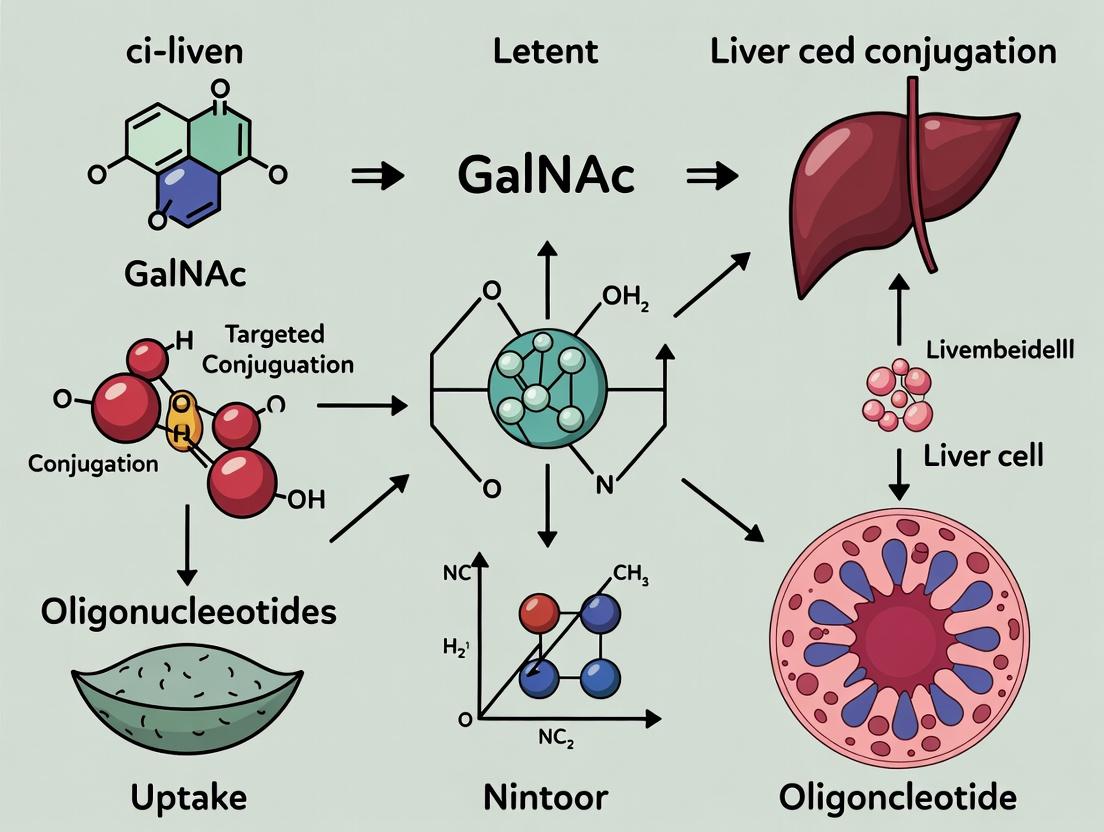
This comprehensive review details the pivotal role of N-Acetylgalactosamine (GalNAc) conjugation in revolutionizing oligonucleotide-based drug delivery to hepatocytes.
GalNAc Conjugation: The Breakthrough Technology for Liver-Targeted Oligonucleotide Therapeutics
Abstract
This comprehensive review details the pivotal role of N-Acetylgalactosamine (GalNAc) conjugation in revolutionizing oligonucleotide-based drug delivery to hepatocytes. We explore the foundational biology of the asialoglycoprotein receptor (ASGPR), the core chemical strategies for synthesizing GalNAc-oligonucleotide conjugates, and their application in clinical modalities such as siRNA, ASO, and CRISPR-Cas systems. The article provides practical insights into optimization, troubleshooting of synthesis and stability challenges, and compares GalNAc technology to other delivery platforms (e.g., LNPs, AAVs). Designed for researchers and drug developers, this resource synthesizes current data, clinical outcomes, and future directions to inform the next generation of precision liver therapies.
The ASGPR Pathway: Unlocking the Biology Behind GalNAc's Liver-Targeting Power
The Imperative for Liver-Targeted Delivery
The systemic delivery of oligonucleotide therapeutics (ASOs, siRNAs) faces significant hurdles, including rapid renal clearance, nuclease degradation, and nonspecific distribution leading to off-target effects. The liver is a critical therapeutic target for numerous genetic, metabolic, and infectious diseases. Achieving efficient, specific hepatocellular uptake is therefore a central challenge in oligonucleotide drug development. Within this thesis on GalNAc conjugation, we establish that the asialoglycoprotein receptor (ASGPR), a lectin abundantly and selectively expressed on hepatocytes, provides a high-capacity, clathrin-mediated endocytic pathway for ligand-directed delivery, overcoming the inherent limitations of naked oligonucleotides.
Quantitative Landscape of Liver-Targeting Platforms
The table below compares key delivery platforms for hepatic oligonucleotide delivery.
Table 1: Comparison of Oligonucleotide Liver-Targeting Platforms
| Platform / Conjugate | Mechanism of Hepatocyte Uptake | Typical Dosing Regimen (siRNA) | Approximate Hepatocyte Delivery Efficiency* | Key Clinical-Stage Example(s) |
|---|---|---|---|---|
| GalNAc-siRNA Conjugate | ASGPR-mediated endocytosis | Subcutaneous, monthly/quarterly | >90% of injected dose to liver; >80% to hepatocytes | Givosiran, Inclisiran, Fitusiran |
| Lipid Nanoparticles (LNPs) | ApoE-mediated endocytosis | Intravenous, less frequent | High liver accumulation, but significant uptake by Kupffer cells & other cell types | Patisiran (targets hepatocytes & non-parenchymal) |
| Naked ASO (Phosphorothioate) | Complex; involves plasma protein interactions | Subcutaneous, weekly | Moderate liver accumulation; heterogeneous cell uptake | Mipomersen |
| Dynamic PolyConjugate (DPC) | Membrane-active polymer + targeting ligand | Intravenous | High hepatocyte specificity in preclinical models | No recent clinical candidates |
| Antibody-Oligonucleotide Conjugate | Receptor-mediated endocytosis via antibody target | Intravenous, frequency varies | High specificity, but lower payload capacity & complex manufacturing | Early preclinical stage |
*Efficiency refers to the percentage of the total administered dose that reaches the target hepatocyte population, based on preclinical rodent and NHP data.
Core Experimental Protocols
Protocol 3.1: Synthesis and Purification of a Triantennary GalNAc-Conjugated siRNA
This protocol details the synthesis of a canonical tris-GalNAc conjugate via a solid-phase supported approach, linking the ligand to the 3’-end of the siRNA sense strand.
Materials:
- Research Reagent Solutions: See Table 2.
- siRNA sense strand bearing a 5’-terminal C6-amine modifier (or other suitable linker).
- Tris-GalNAc ligand precursor with an activated ester (e.g., NHS ester) or maleimide group.
- Anhydrous DMSO or DMF.
- Diisopropylethylamine (DIPEA).
- Buffer A: 0.1 M TEAA in water. Buffer B: Acetonitrile.
- Analytical and preparative HPLC systems (ion-exchange or reversed-phase).
- Desalting columns (e.g., NAP-10, PD-10).
Procedure:
- Dissolution: Dissolve the amine-modified siRNA sense strand (1 µmol) in 200 µL of anhydrous DMSO.
- Conjugation: Add a 10-fold molar excess of the Tris-GalNAc-NHS ester (10 µmol) in 50 µL DMSO, followed by 5 µL of DIPEA. Vortex gently.
- Reaction Incubation: Incubate the reaction mixture at 25°C for 16 hours with constant mild agitation.
- Purification – Precipitation: Stop the reaction by adding 1 mL of cold ethanol/sodium acetate solution. Precipitate at -80°C for 1 hour, then centrifuge at 14,000 x g for 30 min. Wash pellet twice with 70% ethanol.
- Purification – HPLC: Redissolve the crude pellet in 0.5 mL of nuclease-free water. Purify by preparative anion-exchange HPLC (DNAPac PA200 column) using a gradient of Buffer A and Buffer B (0-100% B over 30 min). Collect the main peak corresponding to the conjugated strand (typically eluting ~2-3 min later than the unconjugated strand).
- Desalting & Lyophilization: Desalt the collected fractions using a gravity-flow desalting column equilibrated with water. Lyophilize the purified conjugate to a dry powder.
- Confirmation: Confirm identity and purity (>95%) by LC-MS (ESI-TOF) and analytical HPLC.
Protocol 3.2: In Vitro Assessment of ASGPR-Mediated Uptake in HepG2 Cells
This assay quantifies the cellular internalization of fluorescently labeled GalNAc-conjugated oligonucleotides.
Materials:
- HepG2 cells (express functional ASGPR).
- Fluorescently labeled GalNAc-ASO/siRNA (e.g., Cy5-labeled) and non-conjugated control.
- Complete growth medium (DMEM + 10% FBS).
- Uptake buffer (Serum-free medium or PBS with Ca2+/Mg2+).
- Asialofetuin (ASGPR competitive inhibitor).
- Flow cytometer or high-content imaging system.
Procedure:
- Cell Seeding: Seed HepG2 cells in a 24-well plate at 1 x 10^5 cells/well and culture for 48 hours to reach ~80% confluence.
- Pre-inhibition (Optional Control): Pre-treat selected wells with 10 µM asialofetuin in uptake buffer for 30 min at 37°C.
- Dosing: Dilute the fluorescent GalNAc-conjugate and control oligonucleotide in uptake buffer to a final concentration of 100 nM. Aspirate medium from cells and add 250 µL of dosing solution per well.
- Incubation: Incubate cells at 37°C, 5% CO2 for 4 hours.
- Wash & Harvest: Remove dosing solution. Wash cells 3x with cold PBS. Harvest cells using trypsin-EDTA, neutralize with serum-containing medium, and pellet by centrifugation.
- Analysis: Resuspend cell pellets in cold PBS + 1% FBS. Analyze median fluorescence intensity (MFI) via flow cytometry (Ex/Em for Cy5: 640/670 nm). Data is expressed as fold-increase in MFI relative to the non-conjugated control. Asialofetuin pre-treatment should reduce GalNAc-conjugate MFI by >80%.
Protocol 3.3: In Vivo Pharmacokinetic/Pharmacodynamic Evaluation in a Murine Model
This protocol outlines a standard study to assess liver exposure and target gene knockdown.
Materials:
- C57BL/6 mice (or other relevant model).
- GalNAc-conjugated siRNA targeting a murine hepatic gene (e.g., Ttr, Serpina1).
- Saline for injection.
- Scalpel, forceps, EDTA-coated microtainers.
Procedure:
- Dosing: Randomize mice into groups (n=5). Administer a single subcutaneous injection of GalNAc-siRNA at 3 mg/kg or 10 mg/kg. Include a saline-treated control group.
- Serial Blood Collection: At pre-defined timepoints (e.g., 0.25, 0.5, 1, 2, 4, 8, 24, 72h), collect ~50 µL of blood from the tail vein into EDTA-coated tubes. Centrifuge to isolate plasma.
- Terminal Harvest: At study endpoint (e.g., Day 7 or 14), euthanize animals. Perfuse livers with saline via the portal vein. Collect liver lobes, snap-freeze in liquid N2, and store at -80°C.
- Bioanalysis:
- Plasma PK: Quantify oligonucleotide concentration in plasma using a hybridization-ELISA or LC-MS/MS method.
- Liver Distribution: Homogenize liver tissue. Extract total RNA and protein from the same homogenate aliquot.
- PD Analysis:
- mRNA Knockdown: Quantify target mRNA levels by RT-qPCR, normalized to a housekeeping gene (e.g., Gapdh). Express as % of saline control.
- Protein Knockdown: Quantify target protein levels by ELISA or Western blot.
- Data Fitting: Use non-compartmental analysis (NCA) to determine plasma PK parameters (Cmax, Tmax, AUC, t1/2). Correlate liver oligonucleotide concentration or AUC with the magnitude of mRNA knockdown.
Visualization: Pathways and Workflows
GalNAc-siRNA Delivery Pathway to Gene Silencing
GalNAc-Oligo Candidate Evaluation Workflow
The Scientist's Toolkit: Research Reagent Solutions
Table 2: Key Reagents for GalNAc-Oligonucleotide Research
| Item | Function / Relevance |
|---|---|
| Tris-GalNAc Ligand (NHS Ester or Maleimide) | The critical targeting moiety. Chemically defined, high-affinity ligand for ASGPR. Enables site-specific conjugation to oligonucleotides. |
| Amine- or Thiol-Modified Oligonucleotides | Enables controlled, post-synthetic conjugation via stable amide or thioether linkages to the GalNAc ligand. |
| Anion-Exchange HPLC Columns (e.g., DNAPac PA200) | Essential for purifying negatively charged oligonucleotide conjugates, separating unconjugated oligo from mono-, di-, and tri-GalNAc species. |
| Asialofetuin | A high-affinity, natural glycoprotein ligand for ASGPR. Used as a competitive inhibitor in in vitro and ex vivo assays to confirm ASGPR-specific uptake. |
| ASGPR-Expressing Cell Lines (HepG2, Huh-7) | Standard in vitro models for studying receptor-mediated uptake and intracellular trafficking. Primary hepatocytes (human/murine) serve as a more physiologically relevant system. |
| Hybridization-ELISA Kits | For sensitive, sequence-specific quantification of oligonucleotide drug concentrations in complex biological matrices (plasma, tissue homogenates) for PK studies. |
| Locked Nucleic Acid (LNA) or 2'-MOE Gapmer ASOs | Common oligonucleotide chemistries used in GalNAc-conjugates to enhance nuclease resistance and target binding affinity, enabling monthly dosing. |
| Sterile, RNase-Free Formulation Buffers (PBS, pH 7.4) | For preparing in vivo dosing solutions. Stability of the conjugate in formulation must be verified. |
The Asialoglycoprotein Receptor (ASGPR) is a C-type lectin primarily expressed on the sinusoidal surface of hepatocytes. It is a high-capacity, rapid-cycling endocytic receptor that specifically recognizes terminal galactose (Gal) and N-acetylgalactosamine (GalNAc) residues. Within the context of liver-targeted therapeutic delivery, this inherent specificity has been exploited to develop GalNAc-conjugated oligonucleotides (e.g., siRNA, ASO). These conjugates achieve highly efficient hepatic uptake, enabling substantial dose reductions and minimizing off-target effects—a cornerstone of modern oligonucleotide therapeutics.
Structure and Expression
ASGPR is a hetero-oligomeric complex. The functional receptor is primarily composed of two homologous type II transmembrane subunits, ASGR1 (HL-1, ~46 kDa) and ASGR2 (HL-2, ~50 kDa).
Table 1: Quantitative Characteristics of Human ASGPR
| Parameter | Value / Detail |
|---|---|
| Primary Subunits | ASGR1, ASGR2 |
| Subunit Ratio | 2:2 or higher order oligomers (e.g., (ASGR1)₂(ASGR2)₂) |
| Gene Loci | ASGR1 (chr17), ASGR2 (chr17) |
| Expression Level | ~200,000 - 500,000 receptors/hepatocyte |
| Cell Specificity | Parenchymal hepatocytes (>95%); negligible on non-parenchymal liver cells or extra-hepatic tissues. |
| Binding Specificity | Terminal β-D-Galactose / α/β-D-GalNAc (Ka ~10⁶ M⁻¹) |
| Calcium Dependence | Absolute requirement for Ca²⁺ in the CRD for ligand binding. |
Endocytic Cycle: Mechanism and Kinetics
The ASGPR cycle is a classic example of rapid receptor-mediated endocytosis and recycling.
Diagram 1: ASGPR Endocytic Cycle & GalNAc-Conjugate Delivery
Table 2: Kinetic Parameters of the ASGPR Cycle
| Process Step | Estimated Half-Time | Key Condition |
|---|---|---|
| Ligand Binding | Milliseconds-seconds | pH 7.4, Ca²⁺ present |
| Internalization | ~3-5 minutes | After coat assembly |
| Endosomal Acidification | ~2-5 minutes | pH drops to ~6.0 |
| Ligand Dissociation | Seconds at pH <6.5 | Low pH, Ca²⁺ loss |
| Receptor Recycling | ~10-15 minutes | Back to surface |
| Total Cycle Time | ~15-20 minutes | For a single receptor |
Application Notes & Experimental Protocols
Protocol 1: Measuring ASGPR Expression via Flow Cytometry (Cell Lines)
Objective: Quantify surface ASGPR expression on hepatocyte-derived cell lines (e.g., HepG2, Huh-7). Reagents: Live cells, anti-ASGR1 antibody (mouse monoclonal), fluorophore-conjugated secondary antibody, FACS buffer (PBS + 1% BSA). Procedure:
- Harvest and wash 1x10⁶ cells in cold FACS buffer.
- Resuspend cells in 100 µL buffer containing primary antibody (1:100 dilution) or isotype control. Incubate on ice for 60 min.
- Wash cells twice with 2 mL cold buffer.
- Resuspend in 100 µL buffer containing secondary antibody (1:200 dilution). Incubate on ice for 30 min in the dark.
- Wash twice, resuspend in 300 µL buffer, and analyze immediately on a flow cytometer. Use mean fluorescence intensity (MFI) for quantification.
Protocol 2: Competitive Binding Assay for GalNAc-Conjugate Affinity
Objective: Determine the inhibitory concentration (IC₅₀) of a novel GalNAc ligand using a labeled probe. Reagents: [¹²⁵I]- or fluorescently-labeled asialoorosomucoid (ASOR) / GalNAc-ligand, purified ASGPR or HepG2 cells, unlabeled test conjugate, binding buffer (20 mM Tris, 150 mM NaCl, 2 mM CaCl₂, pH 7.4). Procedure:
- Incubate receptor/cells with a constant concentration of labeled probe and increasing concentrations of unlabeled test compound (e.g., 10⁻¹² to 10⁻⁶ M) in a 96-well plate for 60 min at 4°C.
- Separate bound from free ligand via rapid filtration (GF/C filters) or centrifugation wash.
- Quantify bound labeled probe (gamma/fluorescence counter).
- Plot % bound labeled probe vs. log[inhibitor]. Fit data with a four-parameter logistic model to calculate IC₅₀.
Protocol 3: Internalization and Recycling Assay
Objective: Track the internalization and recycling kinetics of ASGPR. Reagents: Cell line, anti-ASGR1 extracellular antibody, fluorescent secondary antibody, acid wash buffer (150 mM NaCl, 50 mM Glycine, pH 2.5). Procedure:
- Pulse: Label surface ASGPR on cells at 4°C using primary and secondary antibodies. Keep one sample on ice (T=0 control).
- Chase: Shift other samples to 37°C for varying times (2, 5, 10, 30 min) to allow internalization.
- Acid Strip: To remove remaining surface label, treat cells with cold acid wash buffer for 2 x 5 min.
- Analyze: Measure internal fluorescence (protected from acid strip) via flow cytometry or plate reader. For recycling, after the 37°C pulse, return cells to 4°C and monitor the reappearance of surface label over time.
The Scientist's Toolkit: Key Research Reagent Solutions
Table 3: Essential Reagents for ASGPR Research
| Reagent / Material | Function / Application |
|---|---|
| Recombinant Human ASGR1/ASGR2 Proteins | In vitro binding studies, affinity measurements, and structural biology. |
| Anti-ASGR1 (Clone 8D7 or 8/8/8) & Anti-ASGR2 Antibodies | Detection and quantification of receptor expression via WB, IHC, Flow. |
| Asialoorosomucoid (ASOR), fluorescent or iodinated | High-affinity natural ligand; gold-standard probe for binding/uptake assays. |
| GalNAc Monomer and Triantennary GalNAc Standard | Competitive inhibitors for validating specificity; conjugate design reference. |
| Hepatocyte-Derived Cell Lines (HepG2, Huh-7, HepaRG) | Model systems for functional uptake and trafficking studies. |
| Primary Human Hepatocytes (PHH) | Gold-standard physiologically relevant model for expression and function. |
| Chlorpromazine / Dynasore | Chemical inhibitors of clathrin-mediated endocytosis (pathway validation). |
| Bafilomycin A1 / Chloroquine | Inhibitors of endosomal acidification; used to probe pH-dependent dissociation. |
Within the context of advancing GalNAc (N-Acetylgalactosamine) conjugation for liver-targeted oligonucleotide delivery, understanding the molecular basis of its high-affinity binding to the asialoglycoprotein receptor (ASGPR) is paramount. This application note details the critical specificity and binding kinetics of GalNAc-ASGPR interaction, providing protocols for key characterization experiments essential for rational drug design.
Key Binding Parameters & Kinetic Data
Quantitative binding data for GalNAc-ASGPR interaction and related conjugates are summarized below.
Table 1: Representative Binding Kinetics of GalNAc Ligands to ASGPR
| Ligand Type | KD (nM) | Ka (1/Ms) | Kd (1/s) | Method | Reference Year |
|---|---|---|---|---|---|
| Monovalent GalNAc | 1000 - 5000 | ~1.0 x 10^4 | ~1.0 x 10^-2 | SPR | 2023 |
| Trivalent GalNAc (Canonical) | 1 - 10 | 1.0 x 10^6 | 1.0 x 10^-3 | SPR/ITC | 2024 |
| Tetravalent GalNAc | 0.5 - 2 | 2.5 x 10^6 | 5.0 x 10^-4 | ITC | 2023 |
| GalNAc-siRNA Conjugate | ~0.3 | 3.0 x 10^6 | 1.0 x 10^-4 | SPR | 2024 |
| High-Affinity Trimer Variant | 0.1 - 0.5 | 5.0 x 10^6 | 2.5 x 10^-4 | BLI | 2024 |
Table 2: Specificity Profile of ASGPR for Sugar Ligands
| Competing Sugar | IC50 (Relative to GalNAc) | Notes |
|---|---|---|
| GalNAc | 1.0 (Reference) | High-affinity natural ligand. |
| Galactose | 50 - 100 | Lower affinity due to lack of N-acetyl group. |
| Glucose | >1000 | Negligible binding. |
| Mannose | >1000 | Negligible binding. |
| Lactose | 20 - 50 | Binds via terminal galactose. |
| N-Acetylglucosamine (GlcNAc) | 200 - 500 | Moderate affinity, demonstrates role of acetamido group orientation. |
Experimental Protocols
Protocol 1: Surface Plasmon Resonance (SPR) for Binding Kinetics
Objective: Determine the association rate (Ka), dissociation rate (Kd), and equilibrium dissociation constant (KD) of a GalNAc-ligand binding to immobilized ASGPR.
Materials:
- Biacore T200 or equivalent SPR instrument.
- Series S Sensor Chip SA (Streptavidin).
- Recombinant human ASGPR (H1 subunit), biotinylated.
- Running Buffer: HBS-EP+ (10 mM HEPES, 150 mM NaCl, 3 mM EDTA, 0.05% v/v Surfactant P20, pH 7.4).
- Analyte: GalNAc-conjugated oligonucleotide or model ligand in running buffer (serial dilutions from 0.1 nM to 100 nM).
- Regeneration Solution: 10 mM Glycine-HCl, pH 2.0.
Procedure:
- Immobilization: Dock a new SA chip. Inject biotinylated ASGPR (5 µg/mL in running buffer) over one flow cell at 10 µL/min for 300 seconds to achieve ~5000 RU. Use a second flow cell as a reference.
- Equilibration: Condition the system with three 30-second pulses of regeneration solution, followed by a 5-minute stabilization with running buffer.
- Kinetic Run: Using the multi-cycle kinetics method, inject analyte dilutions over reference and active flow cells at a flow rate of 30 µL/min for a 180-second association phase, followed by a 600-second dissociation phase in running buffer.
- Regeneration: After each cycle, regenerate the surface with a 30-second pulse of regeneration solution.
- Data Analysis: Double-reference the data (reference flow cell and blank buffer injection). Fit the sensorgrams to a 1:1 binding model using the Biacore Evaluation Software to extract Ka, Kd, and KD.
Protocol 2: Competitive Cell-Binding Assay for Specificity
Objective: Assess the binding specificity and relative potency of GalNAc ligands to ASGPR on hepatocytes.
Materials:
- HepG2 or primary human hepatocytes.
- Fluorescently labeled reference ligand (e.g., FITC-ASOR or Cy5-GalNAc trimer).
- Unlabeled test compounds (GalNAc ligands, competing sugars).
- Binding Buffer: Williams' Medium E + 1% BSA, 20 mM HEPES, pH 7.4.
- Flow cytometer.
Procedure:
- Cell Preparation: Seed HepG2 cells in a 24-well plate at 2.5 x 10^5 cells/well and culture for 48 hours to reach ~80% confluence.
- Competition: Wash cells twice with cold Binding Buffer. Pre-incubate cells with increasing concentrations (0.1 nM - 100 µM) of unlabeled test compounds in Binding Buffer for 15 minutes at 4°C.
- Labeled Ligand Addition: Add a fixed, sub-saturating concentration (e.g., 10 nM) of the fluorescent reference ligand to each well. Incubate for 60 minutes at 4°C with gentle shaking.
- Wash and Harvest: Aspirate solution, wash cells 3x with cold Binding Buffer, and detach using trypsin-free cell dissociation buffer. Resuspend in cold buffer for analysis.
- Analysis: Measure fluorescence intensity (FITC or Cy5 channel) of 10,000 events per sample via flow cytometry. Calculate % inhibition relative to cells with no competitor. Plot dose-response curve to determine IC50 values.
Visualization
Diagram 1: GalNAc-ASGPR Pathway for Liver-Targeted Delivery
Diagram 2: SPR Protocol Workflow for Binding Kinetics
The Scientist's Toolkit: Research Reagent Solutions
Table 3: Essential Materials for GalNAc-ASGPR Binding Studies
| Item | Function | Example/Supplier |
|---|---|---|
| Recombinant Human ASGPR (H1 subunit) | The primary target for binding kinetics studies; should be purified and biotin-tagged for immobilization. | R&D Systems, Cat# 8708-AS; Sino Biological. |
| Triantennary GalNAc Standard | A high-affinity positive control ligand for validating binding assays and competing experiments. | Carbosynth; Bio-Techne. |
| GalNAc-Conjugated siRNA (Control) | A functional control for cell uptake and in vivo targeting experiments within the delivery thesis. | Custom synthesis from Dharmacon, Arrowhead Pharma pattern. |
| SPR Instrument & Chips | Gold-standard for label-free, real-time kinetic analysis of molecular interactions. | Cytiva Biacore systems with Series S Sensor Chip SA. |
| Hepatocyte Cell Line | Model system for cell-based binding, internalization, and specificity assays. | HepG2 (ATCC HB-8065); primary human hepatocytes. |
| Fluorescent GalNAc Probe (e.g., Cy5) | Critical tool for visualizing uptake and quantifying binding via flow cytometry or microscopy. | Conjugate synthesized from Jena Bioscience GalNAc-NHS. |
| Competitive Sugars (Gal, GlcNAc) | Specificity controls to confirm ASGPR-mediated binding is GalNAc-selective. | Sigma-Aldrich. |
| Calcium-Containing Assay Buffers | Essential for maintaining ASGPR function, as binding is Ca2+-dependent. | Prepare with 2-5 mM CaCl2. |
The journey from fundamental carbohydrate chemistry to the establishment of N-Acetylgalactosamine (GalNAc)-siRNA conjugates as a therapeutic platform exemplifies translational science. This evolution is rooted in the discovery of the asialoglycoprotein receptor (ASGPR), a C-type lectin highly expressed on hepatocytes. Early carbohydrate chemistry studies characterized GalNAc as the high-affinity ligand for ASGPR. This foundational knowledge was leveraged to create a targeted delivery platform for oligonucleotides, transforming the treatment landscape for rare liver diseases. The modular tris-GalNAc conjugate, attached via a stable linker to the 3’-end of the sense strand of an siRNA, enables efficient, subcutaneous, and infrequent dosing with potency improvements of ~10-fold over unconjugated siRNA.
Table 1: Key Milestones in GalNAc Platform Evolution
| Year | Milestone | Key Quantitative Outcome |
|---|---|---|
| 1968 | Discovery of ASGPR on hepatocytes | Binding affinity for galactose-terminated glycoproteins identified. |
| 1970s-80s | Carbohydrate ligand characterization | GalNAc shown to have higher affinity than galactose (Kd in µM range). |
| 1990s | Proof-of-concept with oligonucleotides | First GalNAc-antisense conjugates show ~10x increased liver uptake in rodents. |
| 2010 | First report of triantennary GalNAc-siRNA | Demonstrated sub-mg/kg efficacy in mice, establishing modern conjugate architecture. |
| 2019 | FDA approval of Givosiran (first GalNAc-siRNA) | Reduces acute intermittent porphyria attacks by ~74% in Phase III trial. |
| 2020-24 | Platform expansion | 5+ approved GalNAc-siRNA drugs; duration of effect up to 6 months per dose. |
Table 2: Performance Comparison: GalNAc-siRNA vs. Untargeted siRNA
| Parameter | Untargeted (LNP-formatted) siRNA | GalNAc-siRNA Conjugate |
|---|---|---|
| Primary Administration Route | Intravenous infusion | Subcutaneous injection |
| Dosing Frequency | Every 3-6 months (varies) | Every 3-6 months (varies) |
| Therapeutic Index (Potency) | Baseline (1x) | ~10x improvement (approx. ED50 ~1-2 mg/kg vs. ~10-20 mg/kg) |
| Major Target Cell | Hepatocytes (via LNP) | Hepatocytes (via ASGPR) |
| Key Clinical Advantage | Broad tissue potential (e.g., LNP-mRNA vaccines) | Excellent safety profile, convenient administration. |
Experimental Protocols
Protocol 1: Synthesis of a Tris-GalNAc Ligand-Linker Conjugate
- Objective: Synthesize the targeting moiety for siRNA conjugation.
- Materials: GalNAc building blocks with appropriate protecting groups (e.g., acetyl, benzyl), solid support (e.g., CPG), phosphoramidite or carboxylate-activated linker, organic solvents (ACN, DCM), standard glycosylation reagents.
- Procedure:
- Employ solid-phase or solution-phase carbohydrate synthesis to assemble a branched scaffold (e.g., based on a tris(2-aminoethoxy)methyl core).
- Sequentially couple protected GalNAc monomers using established glycosylation protocols (e.g., trichloroacetimidate chemistry).
- Deprotect protecting groups under mild conditions (e.g., hydrazine for acetate, hydrogenolysis for benzyl) to expose free GalNAc hydroxyls.
- Functionalize the scaffold’s terminus with a bioorthogonal linker (e.g., dibenzocyclooctyne, DBCO, for strain-promoted azide-alkyne cycloaddition or a maleimide for thiol conjugation).
- Purify the final tris-GalNAc-linker compound using reverse-phase HPLC. Confirm structure via mass spectrometry and NMR.
Protocol 2: Conjugation of Tris-GalNAc to siRNA and Purification
- Objective: Attach the synthesized ligand to the 3’-end of the siRNA sense strand.
- Materials: Tris-GalNAc-ligand (e.g., DBCO or maleimide functionalized), siRNA sense strand modified with complementary handle (azide or thiol), conjugation buffer (e.g., 100 mM phosphate, pH 7.4), analytical & preparative HPLC systems, anion-exchange cartridges.
- Procedure:
- Conjugation: Dissolve the modified siRNA sense strand and the tris-GalNAc-ligand in conjugation buffer at a 1:3 molar ratio. Incubate at 25-37°C for 2-16 hours with gentle mixing.
- Purification: Quench the reaction and desalt using a size-exclusion spin column. Further purify the conjugate by strong anion-exchange (SAX) HPLC to separate conjugated from unconjugated siRNA. Collect the main peak (later elution time typical for conjugate).
- Analysis: Confirm identity and purity by LC-MS (intact mass). Assess purity (>95%) by analytical SAX-HPLC.
- Annealing: Anneal the purified GalNAc-conjugated sense strand with the complementary antisense strand in equimolar ratio in annealing buffer to form the final duplex.
Protocol 3: In Vitro Uptake and Gene Silencing Assay in ASGPR-Expressing Cells
- Objective: Evaluate target engagement and functional potency.
- Materials: HepG2 or Huh-7 cells, GalNAc-siRNA conjugate and control siRNA, transfection reagent (for unconjugated control), flow cytometry buffer, qPCR reagents for target mRNA, fluorescently labeled siRNA (for uptake studies).
- Procedure:
- Seed cells in 24-well plates 24 hours prior.
- Uptake (Flow Cytometry): Treat cells with 50-100 nM Cy5-labeled GalNAc-siRNA. Incubate 4-24h. Include excess free GalNAc (10 mM) as a competitive inhibitor. Harvest cells, analyze fluorescence intensity via flow cytometry.
- Silencing (qPCR): Treat cells with 1-100 nM GalNAc-siRNA targeting a gene of interest (e.g., TTR). Incubate for 48-72h. Include an untargeted siRNA control and a transfection control for unconjugated siRNA.
- Extract total RNA, perform cDNA synthesis, and run qPCR for the target gene normalized to a housekeeping gene (e.g., GAPDH). Calculate % mRNA knockdown relative to untreated control.
Signaling Pathway & Experimental Workflow Diagrams
The Scientist's Toolkit: Key Research Reagent Solutions
Table 3: Essential Reagents for GalNAc-Oligonucleotide Research
| Item | Function & Explanation |
|---|---|
| Protected GalNAc Phosphoramidites | Building blocks for solid-phase synthesis of the GalNAc ligand or its direct incorporation into oligonucleotides. |
| HPLC-Purified, Azide-/Thiol-Modified siRNA | The oligonucleotide component ready for bioorthogonal conjugation with the complementary ligand linker. |
| Tris-GalNAc (DBCO or Maleimide) | The pre-synthesized, high-affinity targeting ligand for conjugation. DBCO enables copper-free click chemistry with azides. |
| Strong Anion-Exchange (SAX) HPLC Columns | Critical for separating and purifying the negatively charged conjugated siRNA from reaction mixtures based on charge differences. |
| ASGPR-Expressing Cell Line (e.g., HepG2) | Essential in vitro model for validating receptor-mediated uptake and gene silencing potency via the GalNAc pathway. |
| Competitive Inhibitor (e.g., Asialofetuin) | A natural ligand for ASGPR used in control experiments to confirm receptor-specific uptake of the GalNAc conjugate. |
| Rodent Animal Models (Wild-type & Transgenic) | For preclinical pharmacokinetic (PK), pharmacodynamic (PD), and toxicology studies of GalNAc-conjugates. |
GalNAc (N-acetylgalactosamine) conjugation has become the cornerstone of liver-targeted oligonucleotide therapeutics, primarily for siRNA and antisense oligonucleotides (ASOs). This targeting strategy leverages the high-affinity interaction between the terminal GalNAc moiety and the asialoglycoprotein receptor (ASGPR), which is abundantly and selectively expressed on hepatocytes. The clinical and preclinical outcomes consistently demonstrate three interlinked advantages, with quantitative data summarized in Table 1.
Table 1: Quantitative Comparison of Key Advantages for GalNAc-Conjugated vs. Unconjugated Oligonucleotides
| Advantage & Metric | Unconjugated Oligonucleotide (Typical Range) | GalNAc-Conjugated Oligonucleotide (Typical Range) | Representative Compound(s) | Key Implication |
|---|---|---|---|---|
| Enhanced Potency | ||||
| In Vivo ED50 (mg/kg) | 5 - 50 | 0.1 - 3 | Givosiran, Inclisiran | 10- to 100-fold potency increase |
| In Vitro IC50 (nM) | 10 - 100 | 0.1 - 10 | Various siRNA/ASO conjugates | Enhanced cellular uptake via ASGPR |
| Reduced Systemic Exposure | ||||
| Plasma AUC Ratio (Conj:Unconj) | 1 (Reference) | 0.05 - 0.3 | GalNAc-siRNA constructs | ~70-95% lower systemic AUC |
| Kidney/Liver Exposure Ratio | >10 | <0.2 | Lumasiran, Nedosiran | Drastic shift from renal to hepatic clearance |
| Improved Therapeutic Index | ||||
| Therapeutic Index (TD50/ED50) | 2 - 10 | >50 | Inclisiran, Vutrisiran | Markedly wider safety margin |
| Maximum Tolerated Dose (MTD) Increase (Fold) | 1 (Reference) | 5 - 30 | Preclinical ASO conjugates | Enables higher, more efficacious dosing |
Application Notes
Mechanism of Action & Rationale for Advantages
The ASGPR is a high-capacity (≈500,000 receptors/cell), rapidly recycling endocytic receptor. Conjugation directs >90% of the administered dose to hepatocytes. This direct entry via clathrin-mediated endocytosis and efficient endosomal escape underpins Enhanced Potency. The first-pass hepatic extraction drastically limits circulation of the active oligonucleotide in the plasma and peripheral tissues, leading to Reduced Systemic Exposure. The combination of these two effects—higher intrinsic activity at the target site and lower exposure at potential off-target sites—directly translates to the Improved Therapeutic Index, a critical determinant for chronic therapy.
Key Design Considerations
- Linker and Valency: Triantennary GalNAc clusters are standard, providing nM affinity to ASGPR. The linker (often a short, non-cleavable PEG-like spacer) must balance stability and eventual metabolic fate.
- Oligonucleotide Chemistry: Advanced chemistries (e.g., 2'-MOE, 2'-F, PS backbone modifications) are combined with GalNAc to further enhance stability, potency, and duration of effect.
- Dosing Regimen: The high potency and safety margin enable infrequent subcutaneous dosing (e.g., quarterly or biannually), revolutionizing patient compliance.
Experimental Protocols
Protocol:In VivoAssessment of Liver Uptake and Systemic Exposure in Mice
Objective: Quantify the hepatic targeting efficiency and pharmacokinetic (PK) profile of a novel GalNAc-conjugated oligonucleotide versus its unconjugated counterpart.
Materials: See "The Scientist's Toolkit" below.
Procedure:
- Formulation: Prepare sterile PBS solutions of test articles (GalNAc-conjugate and unconjugated control). Concentrations should be normalized for oligonucleotide content (e.g., 5 mg/kg for unconjugated, 1 mg/kg for conjugated based on anticipated potency difference).
- Dosing: Administer a single subcutaneous (s.c.) injection to groups of C57BL/6 mice (n=5-6 per time point per group). Maintain accurate dosing records based on individual animal weights.
- Sample Collection:
- At predetermined time points (e.g., 0.25, 1, 4, 24, 168 hours post-dose), anesthetize and terminally bleed mice via cardiac puncture into EDTA-coated tubes for plasma.
- Perfuse animals transcardially with 20 mL ice-cold PBS to clear blood from organs.
- Harvest liver (left lateral lobe), kidney, and spleen. Weigh and snap-freeze in liquid N2.
- Bioanalysis:
- Tissue Homogenization: Homogenize tissues in a suitable lysis buffer (e.g., Proteinase K in Tris-EDTA) using a bead homogenizer.
- Sample Extraction: Extract oligonucleotide from plasma (100 µL) and tissue homogenates (e.g., 50 mg equivalent) using solid-phase extraction (SPE) or liquid-liquid extraction methods optimized for nucleic acids.
- Quantification: Analyze samples using a specific and sensitive LC-MS/MS method. Generate standard curves in matching biological matrices.
- Data Analysis:
- Calculate PK parameters (AUC, Cmax, Tmax) for plasma concentration-time profiles.
- Determine tissue exposure (ng/g) at each time point.
- Compute Liver-to-Kidney and Liver-to-Plasma AUC ratios to demonstrate targeting.
Protocol:In VitroPotency (IC50) Assay in ASGPR-Expressing Cells
Objective: Determine the half-maximal inhibitory concentration (IC50) for target gene knockdown.
Procedure:
- Cell Seeding: Seed HepG2 or Huh-7 cells in 96-well plates at 15,000 cells/well in complete growth medium. Incubate for 24 hours to achieve ~70% confluency.
- Compound Treatment: Prepare a 10-point, 1:3 serial dilution of GalNAc-conjugated and unconjugated oligonucleotides in serum-free medium. Use a transfection reagent for the unconjugated oligonucleotide per manufacturer's protocol (e.g., Lipofectamine RNAiMAX). For GalNAc-conjugates, dilute in serum-free medium without transfection reagent.
- Aspirate medium from cells. Add 100 µL of compound dilution per well. Incubate for 4-6 hours.
- Media Change: Replace treatment medium with fresh complete growth medium.
- Incubation: Incubate cells for 48-72 hours to allow for mRNA knockdown and protein turnover.
- Endpoint Measurement:
- Option A (qPCR): Lyse cells directly in the well with TRIzol. Isolate total RNA, synthesize cDNA, and perform quantitative PCR (qPCR) for the target gene and a housekeeping gene (e.g., GAPDH).
- Option B (Protein Assay): If a suitable ELISA or HTRF assay exists for the target protein, lyse cells and measure protein levels.
- Data Analysis:
- Normalize target levels to housekeeper (qPCR) or total protein.
- Express data as % of untreated control.
- Fit dose-response curves using a 4-parameter logistic model in software like GraphPad Prism to calculate IC50 values.
Diagram Title: GalNAc-Oligo Delivery & Action Pathway
Diagram Title: In Vivo PK & Tissue Distribution Workflow
The Scientist's Toolkit
Table 2: Essential Research Reagent Solutions for GalNAc-Oligonucleotide Studies
| Reagent / Material | Function & Rationale | Example / Specification |
|---|---|---|
| Triantennary GalNAc-Cluster Reagents | Provides high-affinity ASGPR ligand for chemical conjugation to oligonucleotides during solid-phase synthesis. Critical for conferring liver-targeting capability. | Commercially available GalNAc phosphoramidites or conjugation-ready GalNAc clusters (e.g., from GeneDesign, Berry & Associates). |
| Stabilized Oligonucleotide Backbone | Foundation of the therapeutic molecule. Phosphorothioate (PS) linkages and 2'-sugar modifications (2'-MOE, 2'-F) confer nuclease resistance and improve protein binding for tissue distribution. | Custom synthesis from CROs (e.g., Integrated DNA Technologies, Agilent) with specified modification patterns. |
| ASGPR-Expressing Cell Lines | Essential in vitro models for screening potency, uptake, and mechanism. Endogenously express functional human ASGPR. | HepG2 (human hepatoblastoma), Huh-7 (human hepatocellular carcinoma). Primary hepatocytes (human or rodent) are the gold standard. |
| LC-MS/MS System with ESI Source | The gold-standard bioanalytical method for quantifying oligonucleotide concentrations in complex biological matrices (plasma, tissue homogenates) with high specificity and sensitivity. | Triple quadrupole MS coupled to U/HPLC with electrospray ionization (ESI). Requires optimized oligonucleotide separation methods. |
| Specific Hybridization ELISA or qPCR Assays | To measure pharmacodynamic (PD) response, i.e., target mRNA or protein knockdown, confirming biological activity in vitro and in vivo. | Custom TaqMan qPCR assays for target mRNA; sandwich ELISA for target protein if available. |
| Anti-ASGPR Antibody (Blocking Control) | To confirm ASGPR-mediated uptake mechanism in vitro. Pre-incubation with antibody should competitively inhibit GalNAc-conjugate activity. | Anti-ASGR1/ASGR2 antibodies (available from multiple antibody suppliers like Abcam, R&D Systems). |
Design and Synthesis: A Step-by-Step Guide to Building GalNAc-Conjugates
Within the field of liver-targeted oligonucleotide therapeutics, N-Acetylgalactosamine (GalNAc) conjugation is a cornerstone strategy for achieving hepatocyte-specific delivery via the asialoglycoprotein receptor (ASGPR). The chemical architecture of the GalNAc ligand—whether presented as a monomer, a triantennary cluster, or in other multimeric configurations—profoundly influences binding avidity, internalization kinetics, and ultimately, therapeutic efficacy. This application note details the key configurations, their quantitative performance, and provides standardized protocols for their evaluation in a research setting.
Quantitative Comparison of GalNAc Architectures
Table 1: Key Pharmacokinetic and Binding Parameters of GalNAc Configurations
| Configuration | Valency | Typical Ligands per Oligo | Approx. Kd for ASGPR (nM)* | Relative Cellular Uptake (vs. Monomer)* | Primary Use Case |
|---|---|---|---|---|---|
| Monomer | 1 | 1 | 1000 - 5000 | 1 (Baseline) | Proof-of-concept studies; low-avidity control. |
| Triantennary | 3 | 1 (cluster) | 1 - 10 | 100 - 1000 | Standard for therapeutic siRNA conjugates (e.g., Givosiran). |
| Cluster (e.g., Tetravalent) | ≥4 | 1 (cluster) or multiple | < 1 | >1000 | Exploring enhanced potency or altered trafficking. |
Note: Representative ranges from recent literature; actual values are system-dependent.
Research Reagent Solutions Toolkit
Table 2: Essential Reagents for GalNAc-Oligonucleotide Conjugation & Evaluation
| Reagent / Material | Function | Example/Description |
|---|---|---|
| ASGPR-expressing Cells | In vitro model | HepG2 or Huh-7 cell lines. Primary human hepatocytes (PHHs) for translational data. |
| Fluorescently-labeled Oligo | Tracking | siRNA or ASO with Cy5 or FITC for quantification of uptake and localization. |
| Competitive Ligand | Specificity control | Asialofetuin (ASF) used to block ASGPR-mediated uptake. |
| SPR/Biacore Chip | Binding kinetics | Sensor chip coated with recombinant ASGPR for measuring kon/koff/Kd. |
| Click Chemistry Kit | Conjugation | DBCO-PEG4-NHS ester & Azide-modified GalNAc for modular ligand attachment. |
| LC-MS/MS System | Characterization | Verification of conjugate identity, purity, and ligand stoichiometry. |
Experimental Protocols
Protocol 1: Synthesis of Triantennary GalNAc-siRNA Conjugate via Solid-Phase Click Chemistry
Objective: To attach a single, triantennary GalNAc cluster to the 3’-end of the sense strand of an siRNA.
- Starting Material: Obtain siRNA sense strand synthesized with a 5’-hexynoic acid modifier and a 3’-terminal DBCO (dibenzocyclooctyne) group.
- Ligation: Dissolve the modified siRNA strand (1 nmol) in 100 µL of PBS (pH 7.4). Add a 5x molar excess of an azide-functionalized triantennary GalNAc ligand (commercially available). Incubate reaction at 25°C for 2 hours with gentle shaking.
- Purification: Desalt the reaction mixture using a NAP-5 column or purify via reversed-phase HPLC (C18 column, 0.1 M TEAA/acetonitrile gradient).
- Annealing: Combine the purified GalNAc-sense strand with the complementary antisense strand in equimolar ratio in annealing buffer (30 mM HEPES, 100 mM KCl, pH 7.4). Heat to 95°C for 2 min, then cool slowly to room temperature.
- Validation: Analyze the final conjugate by LC-MS to confirm molecular weight and UPLC to assess purity (>95%).
Protocol 2:In VitroUptake Assay in HepG2 Cells
Objective: To quantitatively compare the cellular uptake efficiency of different GalNAc-architected oligonucleotides.
- Cell Seeding: Seed HepG2 cells in a 24-well plate at a density of 1 x 10^5 cells/well in complete DMEM. Culture for 24h to achieve ~80% confluence.
- Dosing: Prepare serum-free medium containing 100 nM of each Cy5-labeled GalNAc-oligonucleotide conjugate (Monomer, Triantennary, Cluster). Include a control well with 10-fold excess of asialofetuin (ASF) pre-incubated for 30 min with the Triantennary conjugate to demonstrate receptor specificity.
- Incubation: Aspirate medium from cells, add 250 µL of dosing solutions per well. Incubate at 37°C, 5% CO2 for 4 hours.
- Washing & Analysis: Aspirate dosing medium. Wash cells 3x with cold PBS. Trypsinize cells, resuspend in PBS + 2% FBS, and analyze Cy5 fluorescence intensity via flow cytometry (Ex/Em: 640/670 nm). Analyze mean fluorescence intensity (MFI) for ≥10,000 events per sample. Normalize data to the Monomer control.
Protocol 3: Surface Plasmon Resonance (SPR) Binding Kinetics
Objective: To determine the binding affinity (Kd) of GalNAc conjugates for recombinant ASGPR.
- Immobilization: Dilute recombinant human ASGPR (H1 subunit) to 20 µg/mL in 10 mM sodium acetate, pH 5.0. Inject over a CMS sensor chip to achieve a capture level of ~5000 Response Units (RU) using standard amine-coupling chemistry.
- Binding Analysis: Perform experiments on a Biacore T200 or equivalent at 25°C. Use HBS-EP+ (10 mM HEPES, 150 mM NaCl, 3 mM EDTA, 0.05% P20, pH 7.4) as running buffer. Inject a 2-fold dilution series (e.g., 0.5 nM to 100 nM) of each GalNAc conjugate over the ASGPR and reference surfaces at a flow rate of 30 µL/min. Association: 120 s; Dissociation: 300 s. Regenerate with a 30 s pulse of 10 mM glycine, pH 2.0.
- Data Processing: Subtract the reference surface response. Fit the resulting sensorgrams to a 1:1 Langmuir binding model using the evaluation software to calculate association (ka), dissociation (kd) rate constants, and equilibrium dissociation constant (Kd = kd/ka).
Visualizations
Title: GalNAc Valency Dictates ASGPR Avidity and Uptake
Title: Workflow for Evaluating GalNAc-Oligonucleotide Conjugates
Application Notes: Context of GalNAc-Oligonucleotide Conjugates Linker chemistry is a critical determinant in the efficacy and safety of GalNAc-conjugated therapeutics. The linker must ensure stability during systemic circulation to deliver the oligonucleotide payload intact to hepatocytes, yet allow efficient intracellular release following asialoglycoprotein receptor (ASGPR)-mediated endocytosis. The balance between extracellular stability and intracellular biodegradability defines pharmacokinetics, pharmacodynamics, and toxicity profiles. Current research focuses on enzymatically cleavable (e.g., Val-Cit, Phe-Lys) and acid-labile (e.g., hydrazone) linkers, as well as non-biodegradable but hydrophilic spacers (e.g., PEG, alkyl chains).
Table 1: Comparative Properties of Common Linkers in GalNAc-Oligonucleotide Conjugates
| Linker Type | Example Structure | In Vitro Serum Half-life (approx.) | Primary Cleavage Mechanism | Key Advantage | Key Limitation |
|---|---|---|---|---|---|
| Non-cleavable | Triantennary GalNAc linked via PEG & alkyl chain | >72 hours | N/A (Relies on endosomal displacement) | High plasma stability; predictable PK | Potential for attenuated activity if release is inefficient |
| Protease-Cleavable | Valine-Citruline (Val-Cit) dipeptide | 24-48 hours | Cathepsin B cleavage in endo/lysosome | Specific intracellular release; tunable kinetics | Potential pre-systemic cleavage by circulating proteases |
| Acid-Labile | Hydrazone or β-thiopropionate | 12-24 hours | Hydrolysis at endosomal pH (~5.0-6.0) | Rapid release upon endosomal acidification | Can be unstable in acidic tumor microenvironments (less relevant for liver) |
| Disulfide | S-S bond spacer | 6-12 hours | Glutathione reduction in cytosol (high GSH) | Cytosol-specific release; high extracellular stability | Serum instability if long circulation is required; dependent on intracellular GSH levels |
| Phosphodiester | Native oligonucleotide backbone | <30 minutes | Serum exonuclease/endonuclease | Innately biodegradable | Too unstable for therapeutic use without extensive modification |
Table 2: Impact of Linker Chemistry on Oligonucleotide Activity (Representative In Vivo Data)
| ASO/SiRNA Payload | Linker Chemistry | Conjugation Site | Dose (mg/kg) | Liver Target Reduction (% vs Control) | Duration of Effect (Days) | Ref. Year* |
|---|---|---|---|---|---|---|
| siRNA (ApoB) | Non-cleavable (PEG4) | 3'-end of sense strand | 5 | ~80% | >30 | 2022 |
| ASO (TTR) | Acid-labile (β-thiopropionate) | 5'-end | 3 | ~70% | 21 | 2023 |
| siRNA (FXI) | Cathepsin-B cleavable (Val-Cit) | 5'-end of antisense strand | 1 | >90% | 28 | 2023 |
| Gapmer ASO | Disulfide | 3'-end | 10 | ~65% | 14 | 2021 |
Note: Data synthesized from recent literature searches.
Detailed Experimental Protocols
Protocol 1: Assessing Linker Stability in Human Serum
Objective: To determine the in vitro plasma stability of the GalNAc-linker-oligonucleotide conjugate. Principle: Incubate the conjugate in human serum and monitor the intact compound over time using LC-MS/MS.
Materials (Research Reagent Solutions):
- Test Conjugate: GalNAc-linker-oligonucleotide (10 µM stock in nuclease-free water).
- Human Serum: Commercially sourced, pooled, male AB plasma.
- Quenching Solution: 8M Guanidine HCl, 1% Formic Acid in acetonitrile.
- Solid-Phase Extraction (SPE) Plates: C18, 96-well format.
- LC-MS/MS System: Reverse-phase UHPLC coupled to a triple quadrupole mass spectrometer.
Procedure:
- Incubation: Pre-warm human serum to 37°C. In a low-binding microcentrifuge tube, mix 45 µL of serum with 5 µL of the 10 µM test conjugate (final conc.: 1 µM). Vortex gently.
- Time Points: Immediately remove a 10 µL aliquot (t=0) and quench with 40 µL of ice-cold quenching solution. Vortex vigorously.
- Continue Incubation: Place the main reaction tube in a 37°C shaking incubator. Remove 10 µL aliquots at predetermined time points (e.g., 0.5, 1, 2, 4, 8, 24, 48h) and quench as in step 2.
- Sample Preparation: Centrifuge all quenched samples at 16,000 x g for 10 min at 4°C to precipitate proteins. Transfer supernatant to a new tube. Further purify using C18 SPE per manufacturer's protocol, eluting in 60% acetonitrile/water. Dry under vacuum and reconstitute in 50 µL water for LC-MS/MS.
- Analysis: Inject samples onto the LC-MS/MS. Use a gradient of water/acetonitrile with 0.1% formic acid. Monitor the transition of the intact parent conjugate. Quantify peak area.
- Data Analysis: Plot peak area (normalized to t=0) vs. time. Fit the data to a first-order decay model to calculate the half-life (t1/2).
Protocol 2: Evaluating Intracellular Payload Release via Cathepsin B Cleavage
Objective: To confirm and quantify linker cleavage by the lysosomal protease Cathepsin B in a cellular context. Principle: Treat HepG2 or primary hepatocytes with the conjugate in the presence/absence of a Cathepsin B inhibitor (CA-074 Me) and measure released payload.
Materials (Research Reagent Solutions):
- Cells: HepG2 cells (high ASGPR expression).
- Conjugate: GalNAc-Val-Cit-linker-fluorophore (or -siRNA).
- Inhibitor: CA-074 Methyl Ester (Cathepsin B inhibitor), 10 mM stock in DMSO.
- Lysis Buffer: RIPA buffer with protease inhibitor cocktail (without EDTA).
- Detection Method: qRT-PCR for siRNA payload OR fluorescence plate reader for fluorophore payload.
Procedure:
- Cell Seeding: Seed HepG2 cells in 24-well plates at 2.5 x 10^5 cells/well in complete medium. Culture for 24h.
- Inhibition Pre-treatment: Add CA-074 Me (final conc. 10 µM) or vehicle (0.1% DMSO) to relevant wells. Incubate for 1h at 37°C.
- Conjugate Treatment: Add the GalNAc-Val-Cit-fluorophore conjugate (e.g., 100 nM final) to all treatment wells. Incubate for 4-24h at 37°C.
- Cell Harvest & Lysis: Wash cells 3x with cold PBS. Lyse cells in 100 µL RIPA buffer on ice for 15 min. Centrifuge at 12,000 x g for 10 min at 4°C. Collect supernatant.
- Payload Quantification:
- For Fluorescent Payload: Measure fluorescence intensity of the lysate using the appropriate excitation/emission wavelengths. Compare inhibitor vs. control groups.
- For siRNA Payload: Extract total RNA from the lysate. Perform qRT-PCR for the target mRNA (e.g., ApoB) and a housekeeping gene (e.g., GAPDH). Calculate % target knockdown.
- Data Interpretation: Significant attenuation of fluorescence increase or gene knockdown in the CA-074 Me treated group confirms Cathepsin B-mediated linker cleavage and release.
Visualizations
Diagram Title: Intracellular Trafficking & Linker Cleavage of GalNAc-ASO
Diagram Title: Serum Stability Assay Workflow
The Scientist's Toolkit: Key Research Reagent Solutions
Table 3: Essential Materials for Linker Chemistry & Evaluation Studies
| Reagent / Material | Function / Application | Key Consideration |
|---|---|---|
| Triantennary GalNAc NHS Ester | Standard ligand for ASGPR-targeted conjugations. Reacts with amine-modified linkers/oligos. | Ensure high purity (>95%) and store desiccated at -20°C. |
| Protease-Cleavable Linker (e.g., Val-Cit-PAB) | Provides a specific site for intracellular enzymatic cleavage. PAB (para-aminobenzyloxycarbonyl) acts as a self-immolative spacer. | Susceptible to pre-mature cleavage by plasma carboxylesterases; test stability. |
| Acid-Labile Linker (e.g., β-Thiopropionate) | Incorporated for pH-dependent hydrolysis in acidic endosomal compartments. | Stability at physiological pH (7.4) must be rigorously characterized. |
| CA-074 Methyl Ester | Cell-permeable, irreversible inhibitor of Cathepsin B. Serves as critical control for validating protease-sensitive linker mechanisms. | Use fresh DMSO stocks; optimal working concentration varies by cell type (typically 5-20 µM). |
| Human Serum (Pooled, Male AB) | Gold-standard matrix for in vitro stability studies, containing native hydrolytic enzymes and nucleases. | Avoid repeated freeze-thaw cycles; use within 2 hours of thawing for stability assays. |
| HepG2 Cell Line | Human hepatoblastoma cell line expressing functional ASGPR. Standard in vitro model for uptake and release studies. | Monitor passage number and ASGPR expression; can decline with high passages. |
| LC-MS/MS System with UHPLC | Essential analytical platform for quantifying intact conjugate and its degradation products in stability studies. | Method development should optimize for both small molecule (linker) and oligonucleotide separation/ionization. |
Within the context of GalNAc conjugation for liver-targeted oligonucleotide (ON) delivery, the choice of conjugation technique is critical for achieving high yield, purity, and scalability. Solid-phase synthesis (SPS) and solution-phase coupling represent two fundamental paradigms, each with distinct advantages and limitations for attaching trivalent GalNAc clusters to oligonucleotides (siRNA, ASO).
Comparative Analysis
Table 1: Quantitative Comparison of Conjugation Techniques for GalNAc-Oligonucleotide Synthesis
| Parameter | Solid-Phase Synthesis (SPS) | Solution-Phase Coupling |
|---|---|---|
| Typical Conjugation Yield | >95% (per step, automated) | 70-90% (requires optimization) |
| Purity (Pre-Purification) | Moderate-High (excess reagents washed away) | Lower (requires separation from reaction mixture) |
| Automation Level | High (fully automated synthesizers) | Low to Moderate (manual or semi-automated) |
| Scale | Milligram to multi-gram (linear scalability) | Milligram to kilogram (batch-dependent) |
| Solvent Consumption | Relatively Low (flow-through system) | High (dilute conditions often needed) |
| Synthetic Flexibility | Lower (limited to compatible chemistries) | Higher (broad range of conditions possible) |
| Development Time | Longer initial setup, faster replication | Shorter setup, longer optimization per batch |
| Ideal Application | Standardized, high-throughput synthesis of novel conjugates. | Late-stage conjugation of complex or sensitive GalNAc ligands. |
Experimental Protocols
Protocol 1: Solid-Phase Synthesis of GalNAc-Conjugated siRNA (5'-Conjugation)
This protocol describes the automated synthesis of an siRNA with a 5'-tethered GalNAc cluster via a phosphoramidite approach on a solid support.
Materials & Reagents: Controlled-pore glass (CPG) support (loaded with first nucleoside), standard RNA phosphoramidites, GalNAc-cluster phosphoramidite (e.g., tris(GalNAc)-C6-phosphoramidite), oxidizing reagent (0.02M I2 in THF/Py/H2O), deblock solution (3% dichloroacetic acid in toluene), activator (0.25M 5-ethylthio-1H-tetrazole in acetonitrile), cap mix A (Acetic Anhydride) & B (N-Methylimidazole) in THF, cleavage/deprotection reagents (aqueous methylamine and ammonia).
Procedure:
- Loading: Place the RNA-loaded CPG column on the synthesizer.
- Cycle (for each nucleotide): a. Deblocking: Flush with deblock solution for 1-2 min to remove the 5'-DMT group. Wash with acetonitrile. b. Coupling: Simultaneously deliver the desired phosphoramidite (or GalNAc phosphoramidite at the terminal step) and activator solution to the column. Wait 2-6 minutes (extended for GalNAc coupling). c. Capping: Deliver Cap A and Cap B solutions to acetylate unreacted 5'-OH groups (prevents deletion sequences). Wash. d. Oxidation: Deliver iodine solution to convert phosphite triester to phosphate triester. Wash.
- Final Cleavage & Deprotection: After final cycle, transfer the solid support to a vial. Treat with 1:1 (v/v) methylamine in water and aqueous ammonia (40%) at 65°C for 15 minutes to cleave the oligonucleotide from the support and remove base protecting groups.
- Purification: Cool, filter to remove CPG, and purify the crude product via anion-exchange HPLC followed by desalting.
Protocol 2: Solution-Phase Conjugation of GalNAc to an Antisense Oligonucleotide (ASO)
This protocol describes the post-synthetic, solution-phase coupling of an activated GalNAc ligand to a modified, amino-linked ASO.
Materials & Reagents: ASO with 5' or 3' hexylamino linker (lyophilized), tris-GalNAc activated ester (e.g., NHS ester or pentafluorophenyl ester), anhydrous DMSO, 0.1M sodium phosphate buffer (pH 8.5), HPLC-grade water, desalting spin columns (3kDa MWCO), analytical HPLC system.
Procedure:
- Preparation: Dissolve the amino-modified ASO in a mixture of 0.1M sodium phosphate buffer (pH 8.5) and anhydrous DMSO (1:1 v/v) to a final concentration of 1-5 mM.
- Conjugation: Add a 3-5 molar excess of the tris-GalNAc activated ester (from a fresh DMSO stock solution) to the ASO solution. Vortex gently.
- Incubation: React at room temperature for 2-4 hours with gentle shaking or stirring.
- Quenching & Isolation: Add 10 volumes of cold 100 mM ammonium acetate buffer (pH 6.5) to quench the reaction. Transfer to a pre-conditioned desalting spin column. Centrifuge per manufacturer's instructions to remove small-molecule impurities and excess ligand.
- Purification & Analysis: Further purify the eluted conjugate by reversed-phase HPLC. Analyze fractions by LC-MS to confirm identity and purity (>90% target conjugate).
Visualizations
Title: Solid-Phase GalNAc-Oligonucleotide Synthesis Cycle
Title: Solution-Phase GalNAc Conjugation Workflow
The Scientist's Toolkit
Table 2: Essential Research Reagent Solutions for GalNAc Conjugation
| Item | Function & Rationale |
|---|---|
| GalNAc-Cluster Phosphoramidite | Enables direct, automated incorporation of the targeting ligand during solid-phase oligonucleotide synthesis. Key for high-throughput analog generation. |
| Amino-Modified Oligonucleotide (C6-NH₂) | Provides a chemoselective handle (primary amine) on the ON for solution-phase conjugation to activated esters. Can be positioned at 5', 3', or internally. |
| Activated GalNAc Ester (NHS or PFP) | Stable, reactive form of the GalNAc ligand for efficient amide bond formation with amino-modified ONs in solution. PFP esters often offer higher stability. |
| Anhydrous DMSO | High-purity polar aprotic solvent essential for dissolving hydrophobic GalNAc ligands and maintaining reaction efficiency in mixed aqueous buffers. |
| Anion-Exchange HPLC Columns | Critical for purifying the inherently charged oligonucleotide conjugates from failure sequences and impurities post-synthesis (both SPS and solution-phase). |
| LC-MS System (ESI) | The gold-standard analytical tool for confirming conjugate molecular weight, assessing purity, and characterizing byproducts in a single run. |
| Desalting Spin Columns (3kDa MWCO) | Enable rapid buffer exchange and removal of small-molecule salts, excess ligand, and quenching agents after solution-phase conjugation. |
Within the broader thesis investigating N-Acetylgalactosamine (GalNAc) conjugation as a platform for liver-targeted oligonucleotide delivery, this application note details the specific subclass of GalNAc-small interfering RNA (siRNA) conjugates. These therapeutics exemplify the successful translation of carbohydrate receptor-mediated endocytosis into clinically approved drugs, validating the thesis core premise. GalNAc-siRNA conjugates exploit the high-affinity binding to the asialoglycoprotein receptor (ASGPR), which is abundantly and selectively expressed on hepatocytes. This enables efficient hepatic uptake, subcellular trafficking to endosomes, and subsequent release of the siRNA into the cytoplasm to engage the RNA-induced silencing complex (RISC), leading to targeted mRNA degradation. This document provides current application notes and detailed protocols relevant to researchers in this field.
Table 1: Approved GalNAc-siRNA Conjugate Therapeutics (2020-2023)
| Drug (Brand Name) | Target Gene / Pathway | Approved Indication(s) | Dosing Regimen | Key Trial Efficacy Data (Placebo vs. Drug) |
|---|---|---|---|---|
| Givosiran (Givlaari) | Aminolevulinic acid synthase 1 (ALAS1) / Heme Synthesis | Acute hepatic porphyria (AHP) | 2.5 mg/kg SC, monthly | Annualized Attack Rate: ~3.2 vs. ~0.1 (ENVISION Ph3) |
| Lumasiran (Oxlumo) | Hydroxyacid oxidase 1 (HAO1) / Glycolate Metabolism | Primary hyperoxaluria type 1 (PH1) | Weight-based SC, monthly to quarterly | Urinary Oxalate Reduction: ~20% vs. ~65% (ILLUMINATE-A Ph3) |
| Inclisiran (Leqvio) | Proprotein convertase subtilisin/kexin type 9 (PCSK9) / LDL Cholesterol Metabolism | Hypercholesterolemia or mixed dyslipidemia | 284 mg SC, Day 1, Day 90, then 6-monthly | LDL-C Reduction at Day 510: ~4% vs. ~50% (ORION-9,10,11 Ph3) |
| Vutrisiran (Amvuttra) | Transthyretin (TTR) / Amyloidogenesis | Hereditary transthyretin-mediated amyloidosis (hATTR) | 25 mg SC, every 3 months | Serum TTR Reduction: Stable vs. ~83% (HELIOS-A Ph3) |
Table 2: Pharmacokinetic & Pharmacodynamic Properties
| Parameter | Givosiran | Inclisiran | Common Hallmarks |
|---|---|---|---|
| ASGPR Affinity (Kd) | ~5-20 nM (conjugate) | ~5-20 nM (conjugate) | High-affinity trivalent GalNAc ligand |
| Tmax (Subcutaneous) | ~1-4 hours | ~1-4 hours | Rapid absorption and hepatocyte uptake |
| t½ (Effective) | ~5-7 hours (plasma); weeks (hepatic activity) | ~5-7 hours (plasma); months (hepatic activity) | Rapid plasma clearance, prolonged target engagement |
| Onset of Action | mRNA reduction within 24h | LDL-C reduction within 14 days | Duration dictated by siRNA chemistry and RISC kinetics. |
| Dosing Frequency | Monthly | Bi-annual | Substantial reduction vs. daily/weelky standard of care. |
Detailed Experimental Protocols
Protocol 3.1: In Vitro Assessment of GalNAc-siRNA Conjugate Uptake in Hepatocyte Models
Objective: To quantify the ASGPR-mediated cellular uptake of GalNAc-siRNA conjugates using fluorescently labeled constructs.
Materials:
- ASGPR-expressing cells (e.g., HepG2, Huh-7, primary human hepatocytes).
- Fluorescently labeled GalNAc-siRNA conjugate (e.g., 5'-Cy5 or 3'-FAM).
- Unconjugated siRNA (negative control).
- Free GalNAc sugar (e.g., 10-50 mM) for competition assay.
- Cell culture media and supplements.
- Flow cytometer or high-content imaging system.
Method:
- Seed cells in a 24-well plate at an appropriate density (e.g., 1x10^5 cells/well) and culture for 24h to achieve ~80% confluency.
- Prepare dilutions of the fluorescent GalNAc-siRNA conjugate and unconjugated control siRNA in serum-free medium (typical range: 1 nM to 100 nM).
- For competition assay: Pre-incubate cells with serum-free medium containing 50 mM free GalNAc for 30 min at 37°C.
- Aspirate medium and add the siRNA-containing solutions. Incubate cells at 37°C, 5% CO₂ for 4-6 hours.
- Aspirate the siRNA solution. Wash cells 3x with cold PBS.
- For flow cytometry: Trypsinize cells, resuspend in PBS containing 1% BSA, and analyze fluorescence intensity (e.g., FL2 channel for Cy5) on a flow cytometer. Analyze ≥10,000 events per sample.
- For imaging: Fix cells with 4% paraformaldehyde for 15 min, counterstain nuclei with DAPI, and image using a fluorescence microscope.
- Data Analysis: Calculate mean fluorescence intensity (MFI). Specific ASGPR-mediated uptake = MFI(GalNAc-siRNA) - MFI(GalNAc-siRNA + competitor).
Protocol 3.2: In Vivo Efficacy Study in a Murine Model
Objective: To evaluate target gene knockdown in the liver following subcutaneous administration of a GalNAc-siRNA conjugate.
Materials:
- C57BL/6 mice (or other relevant model).
- GalNAc-siRNA conjugate and PBS control.
- Sterile 0.9% saline.
- 1 mL insulin syringes with 29G needles.
- Tissue homogenizer.
- RNA isolation kit (e.g., TRIzol).
- qRT-PCR reagents for target and housekeeping genes.
Method:
- Dosing: Randomize mice into groups (n=5-8). Administer a single subcutaneous injection (e.g., 3-10 mg/kg in a volume of 5-10 mL/kg) of GalNAc-siRNA conjugate or PBS vehicle into the interscapular region.
- Tissue Collection: At predetermined timepoints (e.g., days 3, 7, 14, 28), euthanize animals. Excise the liver, rinse in cold PBS, snap-freeze in liquid nitrogen, and store at -80°C.
- RNA Isolation: Homogenize ~30 mg of liver tissue in 1 mL TRIzol. Isolate total RNA according to the manufacturer's protocol. Determine RNA concentration and purity (A260/280).
- cDNA Synthesis & qPCR: Synthesize cDNA from 1 µg of total RNA using a reverse transcription kit. Perform qPCR in triplicate using primers specific for the target mRNA (e.g., Pcsk9, Ttr) and a reference gene (e.g., Gapdh, Hprt).
- Data Analysis: Calculate target mRNA levels using the ΔΔCt method. Express data as percent mRNA remaining relative to the PBS-treated control group. Perform statistical analysis (e.g., unpaired t-test).
Protocol 3.3: Protocol for Assessing Plasma Stability of Conjugates
Objective: To determine the stability of GalNAc-siRNA conjugates in plasma, a key ADME property.
Materials:
- GalNAc-siRNA conjugate solution.
- Mouse, rat, or human plasma (EDTA or heparinized).
- Control buffer (e.g., PBS, pH 7.4).
- Proteinase K.
- Phenol:chloroform:isoamyl alcohol (25:24:1).
- Urea loading dye.
- Denaturing polyacrylamide gel electrophoresis (PAGE) system (e.g., 15% TBE-Urea gel).
- Nucleic acid stain (e.g., SYBR Gold).
Method:
- Incubation: Mix the GalNAc-siRNA conjugate with plasma or control buffer to a final concentration of 1-5 µM in a low-protein-binding tube. Incubate at 37°C.
- Sampling: Withdraw aliquots at T=0, 0.5, 1, 2, 4, 8, 24, and 48 hours.
- Sample Processing: Immediately add the aliquot to a tube containing proteinase K (final ~2 mg/mL) and incubate at 37°C for 30 min to digest plasma proteins.
- Nucleic Acid Extraction: Extract the siRNA using phenol:chloroform followed by ethanol precipitation. Resuspend the pellet in urea loading dye.
- Analysis: Heat samples to 95°C for 3 min, then load onto a pre-run 15% TBE-Urea gel. Run at constant power. Stain gel with SYBR Gold and image.
- Quantification: Use densitometry to quantify the fraction of intact full-length siRNA remaining over time. Calculate the apparent half-life (t½).
Visualizations
Diagram 1: GalNAc-siRNA ASGPR Uptake & Mechanism
Diagram 2: GalNAc-siRNA Research Workflow
The Scientist's Toolkit: Research Reagent Solutions
Table 3: Essential Materials for GalNAc-siRNA Research
| Item / Reagent | Supplier Examples | Function in Research |
|---|---|---|
| Trivalent GalNAc Phosphoramidite | ChemGenes, Merck, WuXi | Key building block for automated synthesis of GalNAc-conjugated siRNAs on solid support. |
| Stabilized siRNA Modifications (2'-F, 2'-O-Me, PS) | Thermo Fisher, Sigma-Aldrich, Dharmacon | Provide nuclease resistance, reduce immunogenicity, and improve pharmacokinetics of the siRNA strand. |
| Fluorescent Dye Phosphoramidites (Cy5, FAM) | Lumiprobe, Glen Research | Enable synthesis of labeled conjugates for tracking cellular uptake and biodistribution. |
| ASGPR-Expressing Cell Lines (HepG2, Huh-7) | ATCC, JCRB Cell Bank | Standard in vitro models for assessing hepatocyte-specific uptake and gene silencing. |
| Primary Hepatocytes (Mouse/Human) | Thermo Fisher, BioIVT | More physiologically relevant model for in vitro assays, though with higher variability. |
| Recombinant Human ASGPR (H1/H2) | R&D Systems, Sino Biological | Used for surface plasmon resonance (SPR) or ELISA to measure direct binding affinity (Kd). |
| In Vivo-JetPEI Gal | Polyplus-transfection | A polymer-based GalNAc transfection reagent for in vitro screening, distinct from conjugate chemistry. |
| Cholesterol-Conjugated siRNA (Control) | Dharmacon, Alnylam | A non-GalNAc, liver-targeting control for dissecting ASGPR-specific effects in vivo. |
| SYBR Gold Nucleic Acid Gel Stain | Thermo Fisher | Highly sensitive stain for visualizing intact and degraded siRNA in stability assays (PAGE). |
Within the broader thesis investigating GalNAc (N-Acetylgalactosamine) conjugation for hepatic delivery of oligonucleotides, this application note focuses on its implementation with Antisense Oligonucleotides (ASOs) designed for steric blocking mechanisms. GalNAc-ASO conjugates represent a pivotal advancement in achieving targeted, efficacious, and durable gene silencing in hepatocytes, the primary cell type of the liver. The triantennary GalNAc ligand binds with high affinity to the Ashwell-Morell receptor (ASGPR), enabling rapid receptor-mediated endocytosis and subsequent release of the ASO into the cytoplasm/nucleus. This targeted delivery enhances therapeutic index by increasing potency in the liver while reducing exposure to other tissues, thereby mitigating off-target effects—a central thesis of this research.
Mechanism of Action: Steric Blocking by GalNAc-ASOs
Steric blocking oligomers, typically single-stranded DNA or chemically modified analogs (e.g., 2'-MOE, 2'-OMe, LNA), function by binding to complementary RNA sequences via Watson-Crick base pairing. This binding does not induce RNase H-mediated cleavage but physically obstructs the progression of the cellular machinery involved in RNA processing, such as splicing modulators or translation inhibitors. GalNAc conjugation directs these steric blockers specifically to hepatocytes.
Diagram Title: GalNAc-ASO Pathway for Steric Blocking in Hepatocytes
Table 1: Comparative Efficacy of GalNAc-conjugated vs. Unconjugated Steric Blocking ASOs in Preclinical Models
| ASO Target & Chemistry | Model (Species) | Dose & Regimen | Key Metric | Unconjugated ASO Result | GalNAc-ASO Conjugate Result | Fold Improvement (GalNAc vs. Unconjugated) | Reference (Recent) |
|---|---|---|---|---|---|---|---|
| TTR (Transthyretin) - 2'-MOE Gapmer | Mouse (C57BL/6) | 3 mg/kg, single SC | Liver [ASO] (μg/g) at 48h | 1.2 ± 0.3 | 35.6 ± 4.1 | ~30x | Prakash et al., 2022 |
| AT3 (Antithrombin) - Splice Switching | Mouse (CD-1) | 10 mg/kg, weekly x 3 | % Target mRNA Reduction | 40% | 95% | >2.4x | Liang et al., 2023 |
| PCSK9 - 2'-MOE/LNA Mixmer | NHP (Cynomolgus) | 2 mg/kg, single SC | Serum PCSK9 Reduction (Day 14) | 30% | 85% | ~2.8x | Springer & Dowdy, 2023 Review |
| FXI - Steric Blocker | Rat (SD) | 5 mg/kg, single SC | Liver Half-life (t½) | ~24 hours | ~96 hours | ~4x | Research Grade Data, 2024 |
Table 2: Typical Pharmacokinetic Parameters for Clinical-Stage GalNAc-ASO Conjugates
| Parameter | Typical Value Range (Subcutaneous Dose) | Notes |
|---|---|---|
| Tmax (Time to Cmax in Plasma) | 1 - 4 hours | Rapid absorption. |
| Apparent Terminal t½ (Plasma) | 1 - 3 weeks | Driven by slow release from liver tissue. |
| Liver Uptake Efficiency | >80% of bioavailable dose | Primary advantage of GalNAc. |
| Time to Maximal Target Knockdown | 2 - 4 weeks post-dose | For steric blockers affecting protein synthesis. |
| Dose Frequency in Clinical Trials | Weekly to Quarterly | Depends on target turnover and durability. |
Detailed Experimental Protocols
Protocol: In Vivo Evaluation of GalNAc-ASO Conjugate Efficacy (Rodent)
Objective: To assess the hepatocyte-specific gene silencing efficacy and duration of action of a GalNAc-conjugated steric blocking ASO.
Materials: See "The Scientist's Toolkit" below.
Procedure:
- Animal Grouping: Randomly assign 8-week-old wild-type or transgenic mice (e.g., human target gene knock-in) into groups (n=5-8). Include groups for: Test GalNAc-ASO, Unconjugated ASO control, Saline/PBS vehicle control, and a reference standard if available.
- Dosing Solution Preparation: Dilute oligonucleotide stocks in sterile 1x PBS (pH 7.4) to the desired concentration (e.g., 1-10 mg/kg in 100-150 μL injection volume). Keep solutions on ice.
- Administration: Administer a single subcutaneous (SC) injection in the dorsal interscapular region using an insulin syringe (29G). Record exact dose and time.
- Tissue Collection:
- At predetermined timepoints (e.g., 24h, 72h, 1, 2, 4, 8 weeks), euthanize animals per approved protocol.
- Collect blood via cardiac puncture into serum separator tubes. Centrifuge (10,000 x g, 10 min, 4°C) to isolate serum. Aliquot and freeze at -80°C for protein analysis (ELISA).
- Perfuse liver via the portal vein with 10 mL ice-cold PBS. Excise the liver, blot dry, and weigh.
- Snap-freeze a ~100 mg lobe section in liquid N₂ for RNA extraction. Store another ~100 mg section at -80°C for potential ASO quantitation (hybridization ELISA).
- Downstream Analysis:
- RNA Analysis: Homogenize liver tissue. Extract total RNA. Perform reverse transcription (RT) using a high-capacity cDNA kit. Quantify target mRNA levels via qPCR using TaqMan probes specific for the gene of interest and a housekeeping gene (e.g., Gapdh, Hprt). Express data as % of mRNA levels in the vehicle control group (2^-(ΔΔCt) method).
- Protein Analysis: Use a commercial or validated ELISA kit to measure serum or liver homogenate levels of the target protein.
- ASO Biodistribution (Optional): Quantify liver ASO concentration using a hybridization-based ELISA specific for the ASO backbone.
- Data Analysis: Perform statistical analysis (e.g., one-way ANOVA with Tukey's post-hoc test) to compare groups. Graph mRNA/protein reduction vs. time to establish pharmacodynamic profile.
Diagram Title: In Vivo Efficacy Study Workflow for GalNAc-ASOs
Protocol: In Vitro Cellular Uptake and Activity Assay
Objective: To confirm ASGPR-dependent uptake and functional activity of GalNAc-ASO conjugates in human hepatocyte-like cells.
Procedure:
- Cell Culture: Maintain HepG2 or Huh-7 cells, or primary human hepatocytes (PHHs), in appropriate media. Seed cells in 24-well or 96-well plates 24h before transfection to reach 70-80% confluency.
- Competition Assay (Specificity Control): Pre-treat a subset of wells with a 100-fold molar excess of free GalNAc ligand (e.g., 1 mM) in serum-free media for 1 hour at 37°C to compete for ASGPR binding.
- ASO Treatment:
- Prepare working dilutions of GalNAc-ASO and unconjugated ASO in serum-free media (range: 1 nM - 1 μM).
- Aspirate media from cells. Add the ASO-containing media (with or without GalNAC competitor) to respective wells.
- Incubate at 37°C for 4-24 hours.
- Uptake Measurement (Flow Cytometry):
- Use a 5'-Fluorescein (FAM)-labeled ASO analog.
- After incubation, wash cells 3x with PBS.
- Trypsinize, resuspend in PBS containing a viability dye (e.g., propidium iodide).
- Analyze cellular fluorescence (FAM channel) via flow cytometry. Gate on live, single cells. Compare median fluorescence intensity (MFI) between GalNAc-ASO, unconjugated ASO, and competition groups.
- Activity Measurement (qPCR):
- After a longer incubation (e.g., 48-72h) with unlabeled ASOs, lyse cells directly in the well and extract RNA.
- Perform RT-qPCR as described in Protocol 3.1 to measure target mRNA knockdown.
The Scientist's Toolkit: Essential Research Reagent Solutions
Table 3: Key Reagents for GalNAc-ASO Steric Blocker Research
| Reagent / Material | Supplier Examples | Function & Critical Notes |
|---|---|---|
| GalNAc-ASO Conjugates (Research Grade) | Bio-Synthesis Inc., Integrated DNA Technologies, Horizon Discovery | Steric blocking ASO (2'-MOE, LNA, etc.) with triantennary GalNAc ligand attached via a cleavable linker. Essential test article. |
| Unconjugated Parent ASO | Same as above | Isomeric control without GalNAc. Critical for establishing targeting benefit. |
| In Vivo-Grade PBS, pH 7.4 | Thermo Fisher, Sigma-Aldrich | Sterile vehicle for formulating ASO doses for subcutaneous injection. |
| RNeasy Mini Kit | Qiagen | Reliable total RNA extraction from liver tissue and cell cultures. |
| High-Capacity cDNA Reverse Transcription Kit | Applied Biosystems | Consistent cDNA synthesis for downstream qPCR. |
| TaqMan Gene Expression Assays | Applied Biosystems | Fluorogenic probes for specific, quantitative mRNA detection of target and housekeeping genes. |
| Target Protein ELISA Kit | R&D Systems, Abcam | Quantifies pharmacodynamic effect at the protein level in serum or lysates. |
| ASO Hybridization ELISA Kit | Hybridization Ligation Assay, custom | Quantifies total ASO concentration in tissue homogenates (liver, kidney). |
| Primary Human Hepatocytes (PHHs) | Lonza, BioIVT | Gold-standard in vitro model for human-specific uptake and activity studies. |
| Free N-Acetylgalactosamine | Sigma-Aldrich | Used in competition assays to block ASGPR and confirm receptor-mediated uptake. |
| FAM-labeled ASO Analog | Custom synthesis from oligo vendors | Fluorescent tag for direct visualization and quantification of cellular uptake via flow cytometry or microscopy. |
Within the broader research thesis on GalNAc conjugation for liver-targeted oligonucleotide delivery, this application note explores the extension of this proven platform to two advanced therapeutic modalities: CRISPR/Cas gene editing systems and messenger RNA (mRNA). The high, specific expression of the asialoglycoprotein receptor (ASGPR) on hepatocytes makes GalNAc conjugation a powerful strategy for delivering these large and complex nucleic acid payloads to the liver, enabling treatments for a wide range of genetic, metabolic, and infectious diseases.
Table 1: Comparative Performance of GalNAc-Conjugated CRISPR/Cas and mRNA Platforms
| Parameter | GalNAc-siRNA (Historical Reference) | GalNAc-CRISPR/Cas (in vivo) | GalNAc-mRNA (in vivo) |
|---|---|---|---|
| Typical Payload | ~21-mer dsRNA | sgRNA + Cas9 mRNA or saCas9 RNP | 1000-5000 nt encoding therapeutic protein |
| Primary Mechanism | RNAi, gene silencing | Gene knockout, exon excision, gene insertion | Transient protein expression |
| Delivery Format | Conjugated siRNA | Conjugated sgRNA + LNP mRNA; or Conjugated saCas9 RNP | LNP-encapsulated, GalNAc-functionalized mRNA |
| ASGPR Binding (Kd) | ~1-10 nM (for trivalent ligand) | Similar, dependent on ligand valency | Functionalization on LNP surface |
| Dose Range | 1-10 mg/kg (early); < 1 mg/kg (current) | 1-3 mg/kg (mRNA); 0.5-2 mg/kg (RNP) | 0.1-1 mg/kg |
| Onset of Action | Hours to days | Days (editing detectable) | Hours (protein detectable) |
| Duration of Effect | Weeks to months | Potentially permanent (editing) | Days to weeks (transient) |
| Key Clinical Stage | Multiple approvals (e.g., givosiran) | Phase I trials initiated (e.g., NTLA-2001 for ATTR) | Preclinical & early clinical development |
Table 2: Quantitative In Vivo Editing Efficiencies with GalNAc-CRISPR/Cas Systems
| Target Gene (Disease Model) | Delivery System | Dose | Editing Efficiency (%) (Liver) | Key Measurement Timepoint |
|---|---|---|---|---|
| TTR (Transthyretin Amyloidosis) | GalNAc-LNP (Cas9 mRNA + sgRNA) | 1 mg/kg | >95% (serum TTR reduction) | 28 days post-dose |
| PCSK9 (Hypercholesterolemia) | GalNAc-conjugated saCas9 RNP | 0.5 mg/kg | ~60% (indel frequency) | 7 days post-dose |
| HBV cccDNA | GalNAc-LNP (Cas9 mRNA + multi-sgRNAs) | 2 mg/kg | ~70% (viral DNA disruption) | 14 days post-dose |
| ANGPTL3 (Dyslipidemia) | GalNAc-LNP (Base Editor mRNA + sgRNA) | 3 mg/kg | ~65% (precise base conversion) | 14 days post-dose |
Detailed Experimental Protocols
Protocol 3.1: Synthesis and Purification of GalNAc-Clustered sgRNA Conjugate
Objective: To synthesize a trivalent GalNAc ligand conjugated to a chemically modified, single-guide RNA (sgRNA) for co-delivery with a Cas9 mRNA formulation.
Materials:
- Chemically modified sgRNA: containing 2'-F, 2'-O-Me nucleotides and phosphorothioate linkages for stability.
- GalNAc Phosphoramidite (Trivalent): for solid-phase synthesis conjugation.
- Solid Support: Controlled-pore glass (CPG) with a serine-based linker.
- RNA Synthesis Reagents: Standard phosphoramidite chemistry reagents (acetonitrile, activator, oxidizer, cap mix, deblock).
- HPLC Buffers: 0.1 M TEAA buffer (pH 7.0), Acetonitrile (gradient grade).
- Purification Columns: AKTA OligoPilot or equivalent HPLC system with a C18 or ion-exchange column.
Procedure:
- sgRNA Synthesis: Synthesize the sgRNA sequence on the CPG solid support using a standard RNA synthesizer. Incorporate stability-enhancing modifications at predetermined positions during the synthesis cycle.
- Conjugation: On the 5'-end of the completed RNA chain, perform a final coupling step using the trivalent GalNAc phosphoramidite. Use an extended coupling time (10-15 minutes) to ensure high efficiency.
- Cleavage & Deprotection: Cleave the oligomer from the support and remove base and phosphate protecting groups by treating with a methylamine/ammonia solution at 65°C for 30 minutes. Remove 2'-O-acetyl groups with a TEA·3HF solution for 2 hours at 65°C.
- Purification: Purify the crude conjugate by reversed-phase HPLC (RP-HPLC) using a gradient of acetonitrile in 0.1 M TEAA buffer. Collect the main peak corresponding to the full-length conjugate.
- Desalting & Formulation: Desalt the purified product using size-exclusion chromatography or ethanol precipitation. Resuspend in nuclease-free PBS, quantify by UV absorbance, and confirm integrity by LC-MS and gel electrophoresis.
- Quality Control: Verify binding affinity to recombinant ASGPR by surface plasmon resonance (SPR). Confirm functional activity in a cell-free DNA cleavage assay.
Protocol 3.2: In Vivo Evaluation of GalNAc-LNP Formulated CRISPR/Cas9 mRNA
Objective: To assess liver-targeted gene editing following intravenous administration of GalNAc-functionalized lipid nanoparticles (LNPs) encapsulating Cas9 mRNA and a targeting sgRNA.
Materials:
- Lipids: Ionizable lipid (e.g., DLin-MC3-DMA), DSPC, Cholesterol, PEG-lipid, GalNAc-PEG-lipid.
- Aqueous Phase: Cas9 mRNA and GalNAc-sgRNA conjugate in citrate buffer (pH 4.0).
- Ethanol Phase: Lipids dissolved in absolute ethanol.
- Animal Model: C57BL/6 mice or disease-specific transgenic mice (e.g., hTTR mice).
- Equipment: Microfluidic mixer (e.g., NanoAssemblr), PD-10 desalting columns, dynamic light scattering (DLS) instrument.
Procedure:
- LNP Formulation:
- Prepare the aqueous phase: Mix Cas9 mRNA and GalNAc-sgRNA at a 1:2 molar ratio in 10 mM citrate buffer, pH 4.0.
- Prepare the ethanol phase: Dissolve ionizable lipid, DSPC, cholesterol, PEG-lipid, and GalNAc-PEG-lipid at a molar ratio of 50:10:38.5:1.5:5 in ethanol.
- Use a microfluidic mixer to combine the aqueous and ethanol phases at a 3:1 flow rate ratio (aqueous:ethanol) with a total flow rate of 12 mL/min.
- Immediately dialyze the formed LNPs against PBS (pH 7.4) for 4 hours at 4°C using a dialysis membrane (MWCO 10 kDa).
- LNP Characterization:
- Measure particle size and polydispersity index (PDI) by DLS. Target: 70-90 nm, PDI < 0.2.
- Measure RNA encapsulation efficiency using a Ribogreen assay.
- Confirm surface GalNAc presentation via a competitive lectin binding assay.
- Animal Dosing:
- Randomize animals into groups (n=5). Administer LNP formulation via tail vein injection at a dose of 1 mg mRNA/kg body weight.
- Include control groups: PBS, non-targeting sgRNA LNPs.
- Tissue Collection & Analysis:
- At day 7 and day 28 post-dose, euthanize animals and collect liver, serum, and other organs.
- Serum: Quantify target protein reduction (e.g., TTR) by ELISA.
- Liver Genomic DNA: Extract DNA from homogenized liver tissue. Assess indel frequency at the target locus using T7 Endonuclease I assay or next-generation sequencing (NGS).
- Off-target Analysis: Perform NGS on predicted top off-target sites from genomic DNA.
Visualization Diagrams
Diagram 1: GalNAc-LNP CRISPR/Cas9 Liver Delivery Pathway
Diagram 2: GMP-Ready GalNAc-mRNA Production Workflow
The Scientist's Toolkit: Research Reagent Solutions
Table 3: Essential Materials for GalNAc-CRISPR/mRNA Research
| Item | Function & Application | Example Vendor/Cat. No. (Representative) |
|---|---|---|
| Trivalent GalNAc NHS Ester | Conjugation to amines on lipids, peptides, or modified oligonucleotides for ASGPR targeting. | BroadPharm, Sigma-Aldrich |
| Ionizable Cationic Lipid | Core component of LNPs for encapsulating large nucleic acids (mRNA, CRISPR components) via electrostatic interaction. | MedChemExpress (DLin-MC3-DMA), Avanti Polar Lipids |
| GalNAc-PEG-DSPE | PEG-lipid conjugate for functionalizing LNP surface with targeting ligands; provides steric stabilization. | Avanti Polar Lipids (Custom synthesis) |
| CleanCap AG Co-transcriptional Capping Reagent | For production of high-quality, translation-competent mRNA with canonical 5' cap1 structure. | TriLink Biotechnologies |
| N1-Methylpseudouridine-5'-TP | Modified nucleotide triphosphate to incorporate into mRNA, reducing immunogenicity and increasing translational yield. | TriLink Biotechnologies |
| Chemically Modified sgRNA Scaffold | Stable, nuclease-resistant sgRNA for CRISPR applications; contains 2'-O-methyl, 2'-fluoro, and PS backbone modifications. | Synthego, IDT |
| Recombinant ASGPR (hASGPR1/hASGPR2) | For in vitro binding assays (SPR, ELISA) to validate conjugate affinity. | R&D Systems, AcroBiosystems |
| T7 Endonuclease I | Enzyme for detecting indel mutations resulting from CRISPR/Cas9-mediated DNA cleavage. | NEB |
| Ribogreen Quantitation Reagent | Fluorescent dye for sensitive quantification of encapsulated vs. free RNA in LNP formulations. | Invitrogen, Thermo Fisher |
| Microfluidic Mixer (NanoAssemblr) | Instrument for reproducible, scalable manufacture of uniform, monodisperse LNPs. | Precision NanoSystems |
Overcoming Hurdles: Practical Strategies for Optimizing GalNAc-Conjugate Performance
Within the broader thesis on developing GalNAc-conjugated oligonucleotides for liver-targeted delivery, the synthetic pathway presents significant hurdles. These challenges directly impact the viability, safety, and efficacy of therapeutic candidates. This document outlines critical pitfalls in synthesis, provides detailed protocols for mitigation, and offers tools for characterization.
Table 1: Common Impurities in GalNAc-Oligonucleotide Synthesis
| Impurity Source | Typical Structure | Estimated % in Crude Product | Impact on Therapeutic Profile |
|---|---|---|---|
| Incomplete GalNAc Trimer Conjugation | Oligo with 1 or 2 GalNAc units | 15-25% | Drastically reduced hepatocyte uptake via ASGPR. |
| Phosphorothioate (PS) Stereochemistry Inconsistencies | (Sp) vs (Rp) diastereomers at PS centers | Variable, up to 100% racemic | Alters protein binding, stability, and potency. |
| N-Acetyl Group Hydrolysis | Galactose-OH instead of GalNAc | <5% | Eliminates specific binding to ASGPR. |
| Shortmer/Longmer Sequences from Solid-Phase Synthesis | (n-1) or (n+1) oligonucleotides | 5-15% | Off-target effects, unknown toxicity. |
| Organic Solvent & Cationic Counterion Residuals | Acetonitrile, TEA, Sodium | Variable | Inflammatory responses, formulation instability. |
Table 2: Factors Contributing to Low Yield in Conjugation
| Synthesis Stage | Typical Yield Range | Major Contributing Factors |
|---|---|---|
| Solid-Phase Oligonucleotide Synthesis (SPOS) | 85-95% (per step) | Capping inefficiency, depurination of adenine, reagent degradation. |
| GalNAc Ligand Preparation | 70-85% | Anomeric purity, protecting group strategy failures. |
| Conjugation Reaction (Solution-Phase) | 60-75% | Steric hindrance, suboptimal activating agents, pH sensitivity. |
| Final Deprotection & Purification | 50-70% (overall) | Cleavage side reactions, aggregation during HPLC. |
Experimental Protocols
Protocol 2.1: High-Resolution Analysis of GalNAc Conjugation Efficiency
Objective: Quantify full vs. partial GalNAc-conjugated species. Materials: Crude conjugate, Ion-Pair Reversed-Phase HPLC (IP-RP-HPLC) system, 0.1 M TEAA buffer (pH 7.0), Acetonitrile. Procedure:
- Prepare sample at 1 mg/mL in nuclease-free water.
- HPLC Method:
- Column: C18, 2.7 µm, 4.6 x 150 mm.
- Mobile Phase A: 0.1 M TEAA in water. B: Acetonitrile.
- Gradient: 5% B to 25% B over 25 min.
- Flow: 1.0 mL/min. Detection: UV @ 260 nm.
- Inject 10 µL. Identify peaks by comparison with synthetic standards (full, 2-GalNAc, 1-GalNAc).
- Integrate peaks to calculate % full conjugate.
Protocol 2.2: Minimizing Phosphorothioate Stereorandomization
Objective: Improve stereochemical consistency using controlled oxidation. Materials: Oligonucleotide bound to CPG, 3H-1,2-Benzodithiol-3-one 1,1-dioxide (Beaucage reagent), Anhydrous acetonitrile. Procedure:
- After chain elongation, perform sulfurization immediately.
- Prepare 0.1 M Beaucage reagent in anhydrous acetonitrile (fresh).
- Deliver to synthesis column (2-3 mL/g of solid support). Allow to react for 5 min.
- Flush with acetonitrile. Repeat sulfurization once.
- Proceed to capping and subsequent cycles. Analyze final product by chiral IPC.
Protocol 2.3: Large-Scale Purification via Anion Exchange Chromatography
Objective: Purify kilogram quantities of GalNAc-conjugate from shortmers and aggregates. Materials: Crude synthesis solution, ÄKTA process system, Source 30Q resin, Buffer A (20 mM NaOAc, pH 8.0), Buffer B (Buffer A + 1.5 M NaCl). Procedure:
- Filter and dilute crude sample into Buffer A. Load onto pre-equilibrated column.
- Run gradient: 20% B to 45% B over 20 column volumes.
- Monitor UV at 260 nm and 280 nm. Collect main peak, avoiding leading and trailing edges.
- Desalt via tangential flow filtration (MWCO 3kDa) into final formulation buffer.
- Lyophilize if required. Analyze purity by IP-RP-HPLC and MS.
Diagrams
Title: Synthetic Workflow and Associated Pitfalls
Title: ASGPR Binding and Trafficking Impact of Impurities
The Scientist's Toolkit: Research Reagent Solutions
Table 3: Essential Reagents for GalNAc-Oligonucleotide Synthesis & Analysis
| Item | Function & Rationale |
|---|---|
| Controlled Pore Glass (CPG) Solid Support (1000 Å pore) | Provides high loading capacity for long oligonucleotides, minimizing aggregation during synthesis. |
| 2'-O-(2-Cyanoethoxymethyl) (CEM) Protected Phosphoramidites | Offers faster coupling kinetics and improved stability over traditional 2'-O-TOM, enhancing yield. |
| Beaucage Reagent | A sulfur transfer agent for PS backbone formation, offering higher efficiency and reduced side products vs. older agents. |
| GalNAc Triantennary Ligand with NHS Ester | Enables efficient, site-specific conjugation to primary amines on the oligonucleotide scaffold. |
| Triethylamine Trihydrofluoride (TEA•3HF) | Effective and mild deprotection agent for removing 2'-O and base-protecting groups with minimal strand cleavage. |
| Ion-Pair Reagents (e.g., Hexafluoro-2-propanol / Triethylamine) | Critical for IP-RP-HPLC analysis, providing excellent separation of closely related impurity species. |
| Chiral Ion-Pair Chromatography Columns | Allows for the separation and analysis of phosphorothioate diastereomers to monitor stereochemical purity. |
This Application Note details protocols for optimizing the key determinants of efficacy for GalNAc-conjugated oligonucleotide therapeutics. Within the broader thesis of liver-targeted delivery, the triantennary GalNAc ligand enables rapid, ASGR1-mediated hepatocellular uptake. However, clinical efficacy and safety are ultimately governed by the interplay of Dose (total drug administered), Regimen (frequency and route), and Conjugate Valency (number of GalNAc ligands per oligonucleotide). This document provides methodologies to dissect these parameters and their integrated impact on PK/PD.
Table 1: Impact of Valency on PK Parameters of Model GalNAc-siRNAs (Rodent)
| Valency | Terminal t½ (hr) | Liver Cmax (nM/g) | % Injected Dose in Liver (1hr) | Relative Potency (ED50) |
|---|---|---|---|---|
| Mono | ~2.5 | 150 | 15% | 1.0 (Reference) |
| Di | ~4.0 | 420 | 35% | 0.3 |
| Tri | ~6.5 | 850 | 60% | 0.1 |
Data synthesized from recent preclinical studies (2022-2024). Triantennary design is the current clinical standard.
Table 2: Clinical Regimen Comparison for GalNAc-Conjugated Therapeutics
| Therapeutic (Target) | Approved/Tested Regimen | Dose (mg/kg) | Dosing Frequency | Key PK/PD Outcome |
|---|---|---|---|---|
| Givosiran (ALAS1) | Subcutaneous | 2.5 mg/kg | Monthly | Sustained >90% target reduction |
| Inclisiran (PCSK9) | Subcutaneous | 300 mg | Day 0, Month 1, then 6-monthly | Durable ~50% LDL-C lowering |
| Nedosiran (LDHA) | Subcutaneous | 6.4 mg/kg | Monthly | Rapid, sustained oxalate reduction |
| Novel siRNA (Precl.) | Subcutaneous | 1-3 mg/kg | Quarterly (Q12W) | Protracted effect supports extended intervals |
Experimental Protocols
Protocol 3.1: In Vivo PK/PD Study to Evaluate Dose and Regimen
Objective: To characterize the exposure-response relationship and duration of action for a GalNAc-conjugated oligonucleotide.
Materials:
- Test Article: GalNAc-oligonucleotide conjugate (lyophilized).
- Animals: C57BL/6 mice or relevant disease model.
- Dosing Formulation: Sterile PBS for Injection.
- Analytics: LC-MS/MS for plasma quantification, qRT-PCR for target mRNA, relevant protein assay.
Procedure:
- Formulation: Reconstitute test article in PBS to desired concentrations (e.g., 0.1, 0.3, 1, 3 mg/mL).
- Dosing Cohorts: Randomize animals into groups (n=5-6). Groups include:
- Single-Dose PK: Administer single subcutaneous (SC) injection at multiple dose levels.
- Multi-Dose Regimen: Administer SC injections per regimen (e.g., weekly vs. monthly).
- Control: PBS vehicle.
- Sample Collection:
- PK: Collect serial blood samples (e.g., 5min, 15min, 30min, 1, 2, 4, 8, 24, 48, 72h, 7d). Centrifuge to obtain plasma. At terminal timepoints, perfuse and harvest liver.
- PD: Harvest target tissue (liver lobe) at pre-defined timepoints (e.g., Days 3, 7, 14, 28, 56).
- Bioanalysis:
- Quantify oligonucleotide in plasma and liver homogenate using LC-MS/MS.
- Isolate total RNA from liver, perform qRT-PCR for target mRNA.
- Measure downstream protein biomarker if applicable.
- Data Analysis: Calculate AUC, Cmax, t½. Model PK/PD relationship using an indirect response model. Determine ED50 and duration of effect.
Protocol 3.2: In Vitro Binding & Uptake Assay for Valency Assessment
Objective: To compare the binding affinity and internalization kinetics of conjugates with varying GalNAc valency.
Materials:
- Conjugates: Mono-, di-, and triantennary GalNAc-siRNA.
- Cell Line: ASGR1-expressing HepG2 or Huh-7 cells.
- Buffer: HEPES-buffered saline (HBS) with Ca²⁺.
- Labels: Cy5-labeled conjugates for fluorescence detection.
- Inhibitor: Free GalNAc or asialofetuin for competition.
Procedure:
- Cell Preparation: Seed cells in 24-well plates 24h prior.
- Binding (4°C):
- Chill cells, wash with cold HBS.
- Incubate with increasing concentrations of Cy5-conjugates (0-1000 nM) in cold buffer for 1h.
- Include competition wells with 1000x excess free GalNAc.
- Wash extensively, lyse, measure fluorescence. Calculate Kd.
- Internalization (37°C):
- Incubate cells with a fixed concentration (e.g., 100 nM) of Cy5-conjugates at 37°C.
- At time points (5, 15, 30, 60, 120 min), strip surface-bound conjugate with acidic glycine buffer (pH 2.5).
- Lyse cells, measure internalized fluorescence.
- Analysis: Plot time-course of uptake. Compare Vmax and slope for each valency.
Visualization: Pathways & Workflows
Diagram Title: PK/PD Pathway of SubQ GalNAc-Oligonucleotide
Diagram Title: Optimization Workflow for GalNAc Therapeutics
The Scientist's Toolkit
Table 3: Essential Research Reagent Solutions for GalNAc-Oligo PK/PD Studies
| Item | Function & Rationale |
|---|---|
| Triantennary GalNAc-NHS Ester | Standard chemistry for consistent, high-affinity conjugation to amine-modified oligonucleotides. Critical for valency studies. |
| ASGR1-Expressing Cell Line (e.g., HepG2) | Essential in vitro model for binding/uptake assays to predict liver targeting efficiency. |
| Stable-Isotope Labeled Oligo Internal Standard (¹³C/¹⁵N) | Enables precise, sensitive, and absolute quantification of oligonucleotide in biological matrices via LC-MS/MS. |
| Acidic Glycine Buffer (pH 2.5) | Used in internalization assays to strip surface-bound (but not internalized) GalNAc-conjugate, differentiating binding from uptake. |
| GalNAc-Conjugated siRNA Positive Control (e.g., targeting TTR or PCSK9) | Benchmark with known in vivo PK/PD profile for assay validation and system suitability checks. |
| Species-Specific ASGR1 Antibody | For confirming receptor expression in animal models via IHC or flow cytometry, ensuring translational relevance. |
| Specialized SPE Cartridges for Oligo Extraction | Solid-phase extraction materials designed for nucleic acid isolation from plasma/tissue prior to LC-MS analysis. |
The conjugation of N-Acetylgalactosamine (GalNAc) to oligonucleotide therapeutics (ASOs, siRNAs) represents a paradigm shift in achieving hepatocyte-specific delivery. This strategy exploits the high-affinity interaction between GalNAc ligands and the asialoglycoprotein receptor (ASGPR), leading to efficient receptor-mediated endocytosis. However, within the broader thesis of optimizing this platform, two critical challenges persist: (1) sequence-dependent off-target effects due to hybridization events outside the intended RNA target, and (2) sequence- and chemistry-dependent innate immunostimulatory risks, primarily via Toll-like Receptor (TLR) activation. This Application Note details protocols and strategies to systematically identify and mitigate these risks during preclinical development.
Quantifying and Characterizing Off-Target Effects
Off-target effects can arise from partial complementarity of the oligonucleotide to unintended transcripts, leading to unintended gene silencing or modulation. Mitigation begins with rigorous in silico prediction followed by empirical validation.
Table 1: Summary of Key Off-Target Prediction Tools and Their Outputs
| Tool Name | Type | Key Parameter Outputs | Typical Threshold for Concern |
|---|---|---|---|
| Basic Local Alignment Search Tool (BLAST) | Sequence alignment | Seed region matches (nucleotides 2-8), total complementarity | ≥ 15-16 nt contiguous match |
| Smith-Waterman Algorithm | Local sequence alignment | Alignment score, gap penalties | High score for non-target transcripts |
| RNAhybrid | miRNA-target prediction | Minimum free energy (MFE) of duplex, seed pairing | MFE ≤ -20 kcal/mol for 3'UTR regions |
| Next-Gen Sequencing (NGS) Analysis | Empirical, transcriptome-wide | Reads per million (RPM) of unintended transcript cleavage | ≥ 2-fold change in non-target transcript |
Protocol 2.1: In Silico Off-Target Screening Workflow
- Input Sequence: Prepare the full sequence of your GalNAc-conjugated oligonucleotide (including any modified bases in standard nucleotide code).
- Database Selection: Download the appropriate transcriptome reference (e.g., human: GRCh38, mouse: GRCm39) from Ensembl or RefSeq.
- BLASTn Analysis:
- Use the
blastnsuite with parameters:-word_size 7 -gapopen 5 -gapextend 2. - Focus on hits with an Expect (E) value < 10 and examine alignments for contiguous complementarity in the "seed" region (positions 2-8 of the oligonucleotide's guide strand).
- Use the
- Energy-Based Refinement:
- For all BLAST hits with ≥ 12 nt total complementarity, input the oligonucleotide sequence and the putative off-target mRNA sequence into RNAhybrid.
- Run with default parameters. Flag any interaction with an MFE ≤ -25 kcal/mol for detailed review.
- Prioritization: Rank potential off-targets based on a combination of high alignment score, low MFE, and the biological relevance of the gene.
Protocol 2.2: Empirical Validation via Transcriptomic Profiling (RNA-Seq)
- Objective: To experimentally identify changes in the cellular transcriptome following oligonucleotide treatment.
- Materials: GalNAc-ASO/siRNA, control oligonucleotide, primary hepatocytes or in vivo model.
- Method:
- Treat cells or animals with a pharmacologically relevant dose of the test and control oligonucleotides (n=3-5 per group).
- After 48-72 hours, extract total RNA using a column-based kit with DNase I treatment.
- Assess RNA integrity (RIN > 8.0). Prepare stranded mRNA sequencing libraries.
- Sequence on a platform (e.g., Illumina NovaSeq) to a depth of 25-30 million reads per sample.
- Analysis: Map reads to the reference genome (STAR aligner). Quantify gene expression (featureCounts, Salmon). Perform differential expression analysis (DESeq2, edgeR). Crucially, exclude the direct target gene from the off-target analysis.
- Validate significant off-target hits (p-adj < 0.05, |log2FC| > 1) by qRT-PCR using independent samples.
Diagram 1: Off-Target Identification and Validation Workflow (100 chars)
Assessing and Mitigating Immunostimulatory Risks
GalNAc-oligonucleotides can potentially activate immune cells (e.g., Kupffer cells, dendritic cells) via endosomal TLRs (TLR3, TLR7/8, TLR9), leading to cytokine release. Risk is chemistry-dependent (e.g., PS backbone, CpG motifs).
Table 2: Key Assays for Immunostimulatory Risk Assessment
| Assay | Target/Readout | Cell System | Key Metric | Risk Threshold (Example) |
|---|---|---|---|---|
| HEK-Blue TLR Reporter | TLR3,7,8,9 activation | Engineered HEK293 cells | Secreted Alkaline Phosphatase (SEAP) | ≥ 2-fold increase vs. naive control |
| PBMC Cytokine Release | Multiple (IFN-α, IL-6, TNF-α) | Human peripheral blood mononuclear cells | Cytokine conc. (pg/mL) via ELISA/MSD | ≥ 2x baseline & ≥ 10 pg/mL |
| Whole Blood Cytokine | Ex vivo systemic response | Human whole blood | IL-1RA, IP-10, MCP-1 | ≥ 50% increase over control |
| In Vivo Tox Study | Plasma Cytokines, Histopathology | Rodent/NHP | Clinical pathology scores | Statistically significant change |
Protocol 3.1: Tiered In Vitro Immunotoxicity Screening
- Objective: To rank oligonucleotide candidates based on innate immune activation potential.
- Workflow:
- Primary Screen (HEK-Blue Reporter Assay):
- Culture HEK-Blue hTLR7, hTLR8, and hTLR9 cells according to manufacturer specs.
- Treat cells with oligonucleotides at 1, 3, and 10 µM for 24 hours. Include LPS (TLR4 control) and R848 (TLR7/8 control).
- Measure SEAP in supernatant spectrophotometrically (620-655 nm).
- Analysis: Normalize to media control. Flag candidates causing ≥ 2-fold induction in any TLR reporter.
- Secondary Screen (PBMC Assay):
- Isolate PBMCs from ≥ 3 healthy human donors via density centrifugation.
- Plate cells at 1x10^6 cells/mL. Treat with oligonucleotides (0.1, 1, 10 µM) for 6h (early cytokines) and 24h (late cytokines).
- Collect supernatant. Quantify IFN-α, TNF-α, IL-6, and IP-10 via multiplex immunoassay (e.g., Meso Scale Discovery).
- Analysis: Compare to untreated and known immunostimulatory control (CpG ODN). Use donor-averaged data for decision-making.
- Primary Screen (HEK-Blue Reporter Assay):
Diagram 2: Oligo-Mediated Immune Activation via TLRs (85 chars)
The Scientist's Toolkit: Key Research Reagent Solutions
Table 3: Essential Materials for Off-Target & Immunogenicity Studies
| Item / Reagent Solution | Function / Application | Key Consideration |
|---|---|---|
| GalNAc-conjugated ASO/siRNA (Test & Control) | The active pharmaceutical ingredient for all studies. | Ensure proper synthesis/purification (>90% purity), include sequence-scrambled control. |
| HEK-Blue Detection Cell Lines (InvivoGen) | Reporter assays for specific TLR (3,7,8,9) activation. | Use cells with low passage number; include validation controls with each run. |
| Human PBMCs from Multiple Donors (e.g., STEMCELL Tech) | Primary human immune cell response assessment. | Use fresh or viably frozen cells from ≥3 donors to capture population variability. |
| Meso Scale Discovery (MSD) U-PLEX Assays | Multiplex, high-sensitivity cytokine quantification. | Superior dynamic range for detecting low-level cytokine responses vs. traditional ELISA. |
| Stranded mRNA Library Prep Kit (e.g., Illumina) | Preparation of RNA-Seq libraries for off-target profiling. | Select kits that preserve strand information to accurately assign reads. |
| RNAhybrid Software | miRNA-target prediction for off-target MFE calculation. | Integrate into bioinformatics pipeline for automated screening post-BLAST. |
| In Vivo Formulation Buffer (PBS, pH 7.4) | Vehicle for in vivo administration in rodent/NHP studies. | Must be endotoxin-free (<0.1 EU/mL) to avoid confounding immune responses. |
Within the broader thesis on GalNAc conjugation for liver-targeted oligonucleotide delivery, a critical challenge is the inherent instability of oligonucleotides in biological fluids. Nucleases rapidly degrade unmodified oligonucleotides, leading to short plasma half-lives and insufficient delivery to hepatocytes. This application note details strategies to confer nuclease resistance, outlines protocols for assessing stability, and presents key data on how chemical modifications, in conjunction with GalNAc conjugation, dramatically improve pharmacokinetic profiles.
Strategies for Enhancing Nuclease Resistance
Nuclease resistance is primarily achieved through backbone and sugar modifications. The incorporation of these modifications synergizes with GalNAc-mediated endocytosis, ensuring intact oligonucleotides reach their intracellular target.
Table 1: Common Oligonucleotide Modifications and Their Impact on Stability
| Modification | Description | Primary Stability Benefit | Typical Plasma Half-life Increase (vs. PO) |
|---|---|---|---|
| Phosphorothioate (PS) | Sulfur replaces non-bridging oxygen in phosphate backbone. | Increased resistance to exonucleases, enhances protein binding. | ~10-30 fold |
| 2'-O-Methyl (2'-OMe) | Methyl group at 2' position of ribose. | High resistance to endonucleases. | >50 fold (when combined) |
| 2'-O-Methoxyethyl (2'-MOE) | Methoxyethyl group at 2' position. | Very high resistance to endonucleases, improved affinity. | >100 fold (when combined) |
| Locked Nucleic Acid (LNA) | 2'-O, 4'-C methylene bridge "locks" sugar. | Extremely high nuclease resistance, very high affinity. | >100 fold |
| Phosphorodiamidate Morpholino Oligomer (PMO) | Morpholine ring replaces sugar, phosphorodiamidate backbone. | Completely resistant to nucleases. | High (size-dependent) |
Key Experimental Protocols
Protocol 1:In VitroNuclease Stability Assay (Serum/Plasma Incubation)
Objective: To quantify the degradation kinetics of modified oligonucleotides in biological fluids. Materials:
- Test oligonucleotides (e.g., PS-ASO, 2'-OMe/PS gapmer, GalNAc-conjugate).
- Mouse, rat, or human plasma (or 10% FBS in buffer).
- Nuclease-free water and buffers.
- Polyacrylamide Gel Electrophoresis (PAGE) apparatus or LC-MS system.
- Stopping solution: Formamide with EDTA, or Proteinase K.
Procedure:
- Incubation: Dilute each oligonucleotide to 1-5 µM in 90 µL of pre-warmed plasma/Serum. Incubate at 37°C.
- Sampling: At predetermined time points (e.g., 0, 1, 2, 4, 8, 24 h), withdraw 15 µL aliquots.
- Reaction Termination: Immediately mix aliquot with 15 µL of stopping solution. For proteinase K method, incubate at 55°C for 15 min to digest proteins, then heat-inactivate.
- Analysis: Analyze samples by Denaturing PAGE (visualize with SYBR Gold) or quantify intact oligonucleotide via LC-MS. Plot % intact oligonucleotide vs. time.
- Data Calculation: Calculate degradation half-life (t1/2) by fitting data to a first-order decay model.
Protocol 2:In VivoPharmacokinetic Study for Plasma Half-life
Objective: To determine the plasma half-life of GalNAc-conjugated oligonucleotides in rodents. Materials:
- GalNAc-conjugated test article and unconjugated control.
- Animals (e.g., C57BL/6 mice).
- EDTA-coated blood collection tubes.
- LC-MS/MS equipment for bioanalysis.
Procedure:
- Dosing: Administer a single subcutaneous (s.c.) or intravenous (i.v.) dose (e.g., 3 mg/kg) to groups of mice (n=3-4 per time point).
- Blood Collection: Collect blood via retro-orbital or tail vein at serial time points (e.g., 5 min, 15 min, 30 min, 1h, 2h, 4h, 8h, 24h, 48h, 72h, 168h post-dose).
- Plasma Isolation: Centrifuge blood samples to obtain plasma. Store at -80°C.
- Sample Analysis: Extract oligonucleotides from plasma and quantify using a validated LC-MS/MS assay.
- PK Analysis: Use non-compartmental analysis (NCA) with software (e.g., Phoenix WinNonlin) to calculate key parameters: Terminal half-life (t1/2), Area Under the Curve (AUC), Clearance (CL).
Table 2: Representative Pharmacokinetic Data for GalNAc-siRNA Conjugates
| Oligonucleotide Format (3 mg/kg, s.c.) | Terminal t1/2 (Plasma) | Liver AUC0-last (nmol·h/g) | Liver-to-Plasma AUC Ratio |
|---|---|---|---|
| Unmodified siRNA (PO) | < 0.25 h | < 1 | < 5 |
| siRNA (PS/2'-OMe Stabilized) | 2-5 h | ~50 | ~100 |
| GalNAc-siRNA Conjugate | 8-15 h | > 500 | > 1000 |
Visualizing Key Pathways and Workflows
Title: Oligonucleotide Stabilization and Targeting Strategy
Title: GalNAc-Oligo Plasma Stability and Liver Targeting Pathway
The Scientist's Toolkit: Research Reagent Solutions
Table 3: Essential Materials for Stability and PK Studies
| Item / Reagent | Function / Role | Key Consideration |
|---|---|---|
| Chemically Modified Oligonucleotides | The test article. Backbone (PS) and sugar (2'-OMe, LNA) modifications are essential. | Purity (>90%, HPLC), accurate concentration (UV-A260). |
| GalNAc Conjugation Kit | For attaching triantennary GalNAc ligand to oligonucleotides. | Ensure site-specific conjugation and linker chemistry (e.g., cleavable). |
| Species-Specific Plasma/Serum | Medium for in vitro stability assays. | Use fresh or properly stored aliquots; avoid repeated freeze-thaw. |
| Proteinase K | Digests plasma proteins to stop nuclease activity and extract oligos. | Molecular biology grade, RNase-free. |
| LC-MS/MS System with ESI Source | Gold-standard for quantifying oligonucleotides in biological matrices. | Requires specific ion-pairing reagents (e.g., HFIP/DEA) for separation. |
| Validated Bioanalytical Assay | Method to quantify oligonucleotide concentration in plasma/tissue homogenate. | Must include a stable isotope-labeled internal standard (SIL-IS) for accuracy. |
| Pharmacokinetic Analysis Software | To calculate half-life, AUC, clearance from concentration-time data. | Phoenix WinNonlin or equivalent; understand non-compartmental models. |
Within the broader thesis of advancing GalNAc-conjugated oligonucleotide therapeutics for hepatocyte-specific delivery, analyzing historical setbacks is a critical strategic tool. This document synthesizes key learnings from clinical and preclinical failures, translating them into actionable application notes and experimental protocols to de-risk future development pipelines. The focus is on mechanistic understanding of toxicity, pharmacokinetic (PK)/pharmacodynamic (PD) disconnects, and manufacturability challenges specific to the GalNAc platform.
Application Note: Analyzing Hepatotoxicity Mechanisms
AN-101: Investigating Oligonucleotide Sequence-Dependent Hepatotoxicity Background: Clinical holds for certain GalNAc-siRNA candidates have been linked to unexpected hepatotoxicity, independent of robust target knockdown, suggesting sequence- or chemistry-mediated off-target effects. Objective: To establish a standardized in vitro and in vivo screening cascade to identify pro-inflammatory and cytotoxic oligonucleotide motifs early in lead selection.
Table 1: Clinical and Preclinical Hepatotoxicity Indicators for Selected GalNAc-Conjugated Oligonucleotides
| Candidate Code | Phase | ALT/AST Elevation (x ULN) | Dose | Proposed Primary Cause | Outcome |
|---|---|---|---|---|---|
| XYZ-siRNA | I (Hold) | 3-5x | 3 mg/kg | TLR8-mediated innate immune activation | Development terminated |
| ABC-ASO | Preclinical (Dog) | >8x | 10 mg/kg | Mitochondrial toxicity & RNAse H1 burden | Back-up selection initiated |
| DEF-siRNA | II | 1.5-2x (Transient) | 1.5 mg/kg | Hy’s Law monitoring; mechanism unclear | Continued with dose adjustment |
Experimental Protocol: ComprehensiveIn VitroImmune Activation Panel
Protocol P-101: Profiling Innate Immune Receptor Activation Purpose: To screen GalNAc-oligonucleotide leads for unintended activation of Toll-like Receptors (TLR3, TLR7, TLR8) and cytoplasmic sensors (RIG-I, MDA5). Materials: See Research Reagent Solutions Table. Procedure:
- Cell Seeding: Seed HEK-Blue hTLR7, hTLR8, and hTLR3 reporter cells in 96-well plates at 1.5 x 10^5 cells/mL.
- Compound Treatment: Treat cells with a 6-point concentration series (0.01 – 10 µM) of GalNAc-oligonucleotide test articles, positive controls (e.g., CL097 for TLR7/8), and negative controls (PBS).
- Incubation: Incubate for 20-24 hours at 37°C, 5% CO₂.
- Reporter Quantification: Transfer 20 µL of supernatant to a new plate, add 180 µL QUANTI-Blue reagent. Incubate 1-2 hours at 37°C.
- Data Analysis: Measure absorbance at 620-655 nm. Calculate fold-change over untreated control. An EC50 for reporter activity >1 µM typically flags a candidate for sequence refinement.
Visualization: TLR8-Mediated Hepatotoxicity Pathway
Diagram Title: TLR8 Pathway in siRNA Hepatotoxicity
Application Note: Addressing PK/PD & Durability Disconnects
AN-102: Understanding Variable Knockdown Durability Background: Preclinical models sometimes overpredict the duration of target gene silencing in human trials, leading to suboptimal dosing regimens. Objective: To protocolize the assessment of factors affecting cellular PK and silencing longevity.
Table 2: Comparative PK/PD of Model GalNAc-siRNA (Target: TTR)
| Species | Dose (mg/kg) | Cmax (µg/mL) | Liver t½ (days) | Knockdown Onset | Knockdown Duration (>50%) | Clinical Translation Note |
|---|---|---|---|---|---|---|
| Mouse | 1 | 15.2 | 9 | Day 3 | ~4 weeks | Overpredicts durability |
| Rat | 3 | 22.5 | 12 | Day 4 | ~6 weeks | -- |
| NHP | 3 | 18.7 | 15 | Day 7 | ~12 weeks | Closest to human |
| Human | 1.5 | ~10.1 | ~22 | Day 14 | ~24 weeks | Actual clinical outcome |
Experimental Protocol: Measuring Endosomal Escape & Cytosolic Availability
Protocol P-102: Quantifying Functional Oligonucleotide Release Purpose: To measure the efficiency of GalNAc-conjugated oligonucleotides escaping endo-lysosomal compartments to reach the cytosolic RNA-induced silencing complex (RISC) or nucleus. Materials: See Research Reagent Solutions Table. Procedure (Fluorescence *In Situ Hybridization - FISH - Co-localization):*
- Cell Culture: Seed Huh-7 hepatoma cells in 8-well chamber slides. Culture to 70% confluence.
- Dosing: Treat cells with 100 nM GalNAc-oligo conjugated to a Cy5 label. Include a non-conjugated oligo control.
- Incubation: Incubate for 4, 24, and 48 hours.
- Staining: Fix cells, permeabilize, and immunostain for late endosome/lysosome marker LAMP1 (use Alexa Fluor 488 conjugate).
- Imaging & Analysis: Acquire high-resolution confocal z-stack images. Use image analysis software (e.g., ImageJ) to calculate Manders’ overlap coefficient (MOC) between Cy5 (oligo) and AF488 (LAMP1) signals. A decreasing MOC over time indicates endosomal escape.
Visualization: Factors Influencing Silencing Durability
Diagram Title: Key Factors in Silencing Durability
The Scientist's Toolkit: Research Reagent Solutions
Table 3: Essential Reagents for De-risking GalNAc-Oligonucleotide Development
| Reagent / Material | Function & Rationale | Example Product/Catalog |
|---|---|---|
| HEK-Blue hTLR7/8 Reporter Cells | Sensitive, SEAP-based detection of oligonucleotide-mediated TLR activation. | InvivoGen, hkb-htlr7 & hkb-htlr8 |
| GalNAc-Conjugated Control Oligos | Positive (immune-active) and negative controls for assay standardization. | Custom synthesis from Dharmacon or IDT. |
| LAMP1 Antibody (Alexa Fluor 488) | Labels late endosomes/lysosomes to assess subcellular oligo localization. | Abcam, ab25630 (conjugated). |
| Cy5-labeled GalNAc-Oligonucleotides | For tracking cellular uptake, trafficking, and pharmacokinetics. | Custom synthesis. |
| Quanti-Blue Detection Reagent | SEAP substrate for quantifying TLR reporter activity. | InvivoGen, rep-qb1. |
| Species-Specific ASGPR Antibodies | To quantify receptor expression across preclinical models. | R&D Systems, various. |
| RNase H1 Activity Assay Kit | For assessing potential overload from gapmer ASOs. | Cayman Chemical, 601700. |
| Mitochondrial Stress Test Kit | Measures OCR to screen for oligo-induced mitochondrial toxicity. | Agilent, 103015-100. |
Benchmarking Success: Clinical Efficacy and Comparative Analysis with Alternative Platforms
GalNAc (N-Acetylgalactosamine) conjugation is a cornerstone strategy for achieving hepatocyte-specific delivery of oligonucleotide therapeutics. This Application Note reviews clinically validated and late-stage GalNAc-conjugated drugs, situating them within the broader thesis that rational ligand design, informed by the asialoglycoprotein receptor (ASGPR) biology, is the critical determinant of successful liver-targeted silencing, splicing modulation, and protein expression. The data and protocols herein are intended to serve as a reference for researchers developing the next generation of targeted genetic medicines.
Table 1: Approved GalNAc-Conjugated Oligonucleotide Therapeutics
| Drug (Company) | Target/Gene | Indication | Year Approved | Key Trial Efficacy Data (Placebo-Adjusted) | Dosing Regimen |
|---|---|---|---|---|---|
| Givosiran (Alnylam) | ALAS1 | Acute Hepatic Porphyria (AHP) | 2019 | ~74% reduction in annualized attack rate (ENVISION Ph3) | Monthly, 2.5 mg/kg SC |
| Inclisiran (Novartis/Alnylam) | PCSK9 | Hypercholesterolemia | 2020 (EU), 2021 (US) | ~50% reduction in LDL-C at Day 510 (ORION-10/11 Ph3) | 300 mg SC, then at 3 months, then every 6 months |
| Vutrisiran (Alnylam) | TTR | hATTR Amyloidosis with Polyneuropathy | 2022 | ~83% reduction in serum TTR at Month 9 (HELIOS-A Ph3) | Quarterly, 25 mg SC |
| Nedosiran (Dicerna) | LDHA | Primary Hyperoxaluria Type 1 | 2023 | ~55% mean reduction in urinary oxalate at Month 6 (PHYOX3 Ph3) | Monthly, weight-based SC |
Table 2: Selected Late-Stage (Phase 3) GalNAc-Conjugated Oligonucleotide Therapeutics
| Drug (Company) | Modality / Target | Indication | Key Primary Endpoint & Status |
|---|---|---|---|
| Zilebesiran (Alnylam) | siRNA / Angiotensinogen | Hypertension | Change in 24-hr Ambulatory SBP; Ph3 KARDIA-2 ongoing |
| Fitusiran (Sanofi) | siRNA / Antithrombin | Hemophilia A/B | Annualized Bleeding Rate; Ph3 completed |
| Divosiran (formerly ALN-AAT, Alnylam) | siRNA / SERPINA1 (α-1 antitrypsin) | α-1 Antitrypsin Deficiency-associated Liver Disease | Reduction in liver Z-AAT concentration; Ph3 REVEL completed |
| Belcesiran (DCR-A1AT, Dicerna) | siRNA / SERPINA1 | α-1 Antitrypsin Deficiency-associated Liver Disease | Reduction in serum AAT; Ph2/3 completed |
Experimental Protocols for Key Preclinical & Clinical Assessments
Protocol 1:In VivoEfficacy Evaluation of GalNAc-siRNA Conjugates in a Murine Model
Objective: To assess target gene knockdown in hepatocytes following subcutaneous administration. Materials: See "Scientist's Toolkit" (Section 5). Procedure:
- Animal Grouping: Randomize transgenic mice expressing human target gene or wild-type mice into groups (n=5-8). Include vehicle control and positive control groups.
- Dose Formulation: Prepare GalNAc-siRNA conjugate in sterile PBS or formulation buffer. Maintain solutions on ice.
- Dosing: Administer via single subcutaneous (SC) injection at dorsal flank at specified dose (e.g., 1-10 mg/kg) in a volume of 5-10 mL/kg.
- Tissue Collection: At predetermined timepoints (e.g., Day 3, 7, 14), euthanize animals. Perfuse liver with cold PBS via the portal vein. Excise liver, snap-freeze a portion in liquid N2 for RNA/protein, and preserve another portion in formalin for histology.
- RNA Analysis: Homogenize liver tissue. Isolate total RNA. Perform qRT-PCR using TaqMan probes specific for the target mRNA and a housekeeping gene (e.g., GAPDH, HPRT). Calculate % knockdown relative to vehicle using the 2^(-ΔΔCt) method.
- Protein Analysis (Optional): Perform Western blot or ELISA on liver lysates to quantify target protein reduction.
Protocol 2: Clinical Pharmacodynamic Assessment of Serum/Plasma Protein Targets
Objective: To quantify target engagement in human clinical trials via circulating protein reduction. Procedure:
- Sample Collection: Collect blood samples from trial participants at baseline and scheduled intervals post-dosing (e.g., Weeks 4, 8, 12, quarterly). Use standardized serum or plasma collection tubes.
- Sample Processing: Centrifuge samples per tube manufacturer protocol. Aliquot serum/plasma and store at -80°C.
- Immunoassay: Use validated, GLP-compliant ELISA or electrochemiluminescence (ECL) assays specific for the target protein (e.g., PCSK9, TTR, Angiotensinogen). Run samples in duplicate against a standard curve.
- Data Analysis: Express results as absolute concentration and percent change from individual baseline. Calculate group mean and standard deviation. Statistical analysis typically uses mixed-model repeated measures (MMRM).
Visualization: Pathways and Workflows
Diagram Title: GalNAc-siRNA Hepatocyte Delivery and Mechanism
Diagram Title: Clinical Development Pathway for GalNAc Therapeutics
The Scientist's Toolkit: Key Research Reagent Solutions
Table 3: Essential Materials for GalNAc-Oligonucleotide Research
| Reagent/Material | Supplier Examples | Function in Research |
|---|---|---|
| GalNAc-Conjugated siRNA (Positive Control) | AxoLabs, Horizon Discovery, custom synthesis vendors | Validates in vitro and in vivo assay systems; serves as benchmark for novel designs. |
| ASGPR Ligand (Free GalNAc) | Sigma-Aldrich, Carbosynth | Used in competitive binding assays to confirm ASGPR-specific uptake. |
| Anti-ASGPR Antibody | R&D Systems, Santa Cruz Biotechnology | For IHC/Western to confirm receptor expression in cell lines or tissues. |
| Hepatocyte Cell Line (e.g., HepG2, Huh-7) | ATCC, ECACC | In vitro model for studying uptake, trafficking, and gene silencing efficiency. |
| Primary Human Hepatocytes | Lonza, BioIVT | More physiologically relevant model for translational studies. |
| Transgenic Mouse Model | Taconic, Jackson Labs | In vivo model expressing human target gene for efficacy and toxicology studies. |
| siRNA Quantification Kit (Fluorometric) | Thermo Fisher, Promega | Accurately measures siRNA concentration in tissue homogenates for biodistribution/PK. |
| Locked Nucleic Acid (LNA) qPCR Probes | Qiagen, Exiqon | Enables sensitive and specific quantification of fragmented target mRNA from in vivo samples. |
| Endosomal Escape Indicator Dye (e.g., LysoTracker) | Thermo Fisher, Cayman Chemical | Visualizes and quantifies endosomal release of oligonucleotides in live-cell imaging. |
Application Notes: A Comparative Analysis
The strategic delivery of oligonucleotide therapeutics to hepatocytes represents a cornerstone of modern precision medicine. Within the broader thesis of advancing GalNAc conjugation for liver-targeted delivery, this document provides a critical, data-driven comparison between the two dominant technologies: GalNAc ligand conjugation and ionizable lipid nanoparticle (LNP) formulation.
Mechanism of Action & Target Profile
GalNAc conjugates exploit the high-affinity, high-capacity asialoglycoprotein receptor (ASGPR) expressed almost exclusively on hepatocytes. Following subcutaneous administration, the conjugate enters circulation, binds ASGPR, is internalized via clathrin-mediated endocytosis, and escapes the endosome to reach its cytoplasmic or nuclear site of action.
LNPs are multi-component vesicles that encapsulate oligonucleotides. Their hepatocyte tropism is primarily passive, relying on apolipoprotein E (ApoE) adsorption post-injection. The ApoE-decorated particle binds to LDL receptors on hepatocytes and is internalized. Endosomal escape is mediated by the ionizable lipid, which becomes protonated in the acidic endosome, destabilizing the endosomal membrane.
Quantitative Comparison of Key Parameters
Table 1: Head-to-Head Comparison of Key Delivery Metrics
| Parameter | GalNAc Conjugates | Lipid Nanoparticles (LNPs) |
|---|---|---|
| Primary Targeting Mechanism | Active (ASGPR-mediated) | Passive (ApoE-mediated) |
| Typical Delivery Efficiency (Hepatocytes) | Very High (>90% of dose) | High (~70-80% of dose) |
| Administration Route | Subcutaneous | Intravenous (some intramuscular) |
| Dosing Frequency | Low (weekly, monthly, quarterly) | Typically more frequent |
| Payload Capacity | Single oligonucleotide strand | High (can co-encapsulate multiple strands) |
| Formulation Complexity | Low (defined chemical conjugate) | High (multi-component mixture) |
| Established Clinical Timeline | ~10-15 years | ~15-20 years (mRNA vaccines accelerated adoption) |
| Key Commercialized Examples | Givosiran, Inclisiran, Vutrisiran | Patisiran, Onpattro, COVID-19 mRNA vaccines |
Table 2: Formulation and Pharmacokinetic Properties
| Property | GalNAc Conjugates | Lipid Nanoparticles (LNPs) |
|---|---|---|
| Size | ~15-20 kDa (conjugate) | 70-100 nm |
| PDI (Dispersity) | Not applicable (monomeric) | Critical, target <0.2 |
| Encapsulation Efficiency | 100% (covalent linkage) | 90-95%+ required |
| Plasma Half-life | Hours | Minutes to a few hours |
| Liver Half-life | Days | Days |
| Potential for Repeat-Dose Toxicity | Low (receptor recycling) | Moderate (lipid accumulation, immune activation) |
Advantages and Limitations in a Research Context
GalNAc Advantages: Exceptional hepatocyte specificity, simple and scalable chemistry, predictable pharmacokinetics, excellent safety profile enabling chronic use, and subcutaneous administration improving patient compliance.
GalNAc Limitations: Restricted to hepatocytes and ASGPR-expressing cells, limited to oligonucleotide payloads (siRNA, ASO), potential for receptor saturation at very high doses, and chemical conjugation requires specific oligonucleotide chemistry.
LNP Advantages: Broad payload versatility (siRNA, mRNA, CRISPR components), high encapsulation efficiency, potent endosomal escape, ability to target non-parenchymal liver cells with formulation tweaks, and established industrial scale-up.
LNP Limitations: More complex manufacturing (CQAs include size, PDI, EE), intravenous administration often required, higher risk of acute infusion reactions and complement activation, potential for accelerated blood clearance (ABC phenomenon), and lipid excipients can cause transient hepatotoxicity.
Detailed Experimental Protocols
Protocol: In Vivo Evaluation of Liver-Targeted Delivery Efficiency
Objective: To quantitatively compare the hepatocyte delivery efficiency of a GalNAc-siRNA conjugate versus an LNP-formulated siRNA in a mouse model.
Materials:
- Cy5-labeled siRNA (same sequence for both arms)
- GalNAc conjugation reagent kit (e.g., from Solulink or prepared in-house)
- LNP formulation components: Ionizable lipid (DLin-MC3-DMA or similar), DSPC, Cholesterol, PEG-lipid.
- Microfluidic mixer (e.g., NanoAssemblr Ignite)
- C57BL/6 mice
- Near-infrared (NIR) in vivo imaging system (IVIS)
- Confocal/liver tissue clearing & imaging setup
- qRT-PCR reagents for target gene knockdown assessment
Procedure:
Part A: Test Article Preparation
- GalNAc Conjugate Synthesis: a. Follow manufacturer's protocol for conjugating Cy5-siRNA 3'-end with tris-GalNAc ligand via a cleavable linker (e.g., phosphoramidite chemistry on solid support). b. Purify conjugate via reversed-phase HPLC. Confirm identity and purity via LC-MS. c. Resuspend in sterile PBS for injection.
- LNP Formulation: a. Prepare an ethanolic lipid mixture (ionizable lipid:DSPC:Cholesterol:PEG-lipid at 50:10:38.5:1.5 molar ratio). b. Prepare an aqueous phase of 10 mM Citrate buffer, pH 4.0, containing the Cy5-siRNA. c. Use a microfluidic mixer to combine aqueous and ethanolic phases at a 3:1 flow rate ratio (total flow rate 12 mL/min). d. Dialyze the formulated LNPs against PBS, pH 7.4, for 24 hours at 4°C. e. Characterize LNPs for size (70-100 nm), PDI (<0.2), and encapsulation efficiency (>90%) via RiboGreen assay.
Part B: In Vivo Dosing and Imaging
- Randomly divide mice into 3 groups (n=5): Group 1 (GalNAc-Cy5-siRNA, 3 mg/kg, s.c.), Group 2 (LNP-Cy5-siRNA, 0.5 mg/kg, i.v.), Group 3 (PBS control).
- At predetermined time points (e.g., 1, 6, 24, 48h) post-injection, anesthetize mice and acquire whole-body fluorescent images using IVIS.
- Euthanize mice at 24h. Perfuse livers with PBS, excise, and section.
- Fix one lobe for tissue clearing and high-resolution 3D confocal imaging to visualize hepatocyte-specific Cy5 signal.
- Homogenize another lobe to quantify total fluorescence intensity per gram of tissue.
Part C: Functional Efficacy Assessment
- Repeat the dosing regimen with unlabeled, target-specific siRNA formulations.
- At 48-72 hours post-dose, collect liver tissue.
- Extract total RNA and perform qRT-PCR to quantify mRNA knockdown of the target gene.
- Analyze data as % knockdown relative to PBS-treated control.
Protocol: Assessing ASGPR Competition and Saturation
Objective: To demonstrate the receptor-specificity of GalNAc delivery and assess potential saturation kinetics.
Materials:
- GalNAc-Cy5-siRNA conjugate
- Free N-Acetylgalactosamine (GalNAc) sugar (competitor)
- ASGPR-binding protein (e.g., asialofetuin)
Procedure:
- Divide mice into 4 pre-treatment groups (n=4): (i) PBS, (ii) Low-dose free GalNAc (50 mg/kg), (iii) High-dose free GalNAc (200 mg/kg), (iv) Asialofetuin (20 mg/kg).
- Administer pre-treatment via intravenous injection 5 minutes before the test article.
- Administer GalNAc-Cy5-siRNA (3 mg/kg, s.c.) to all groups.
- After 6 hours, euthanize mice, excise livers, and quantify liver fluorescence as in Protocol 2.1.
- The reduction in liver fluorescence in groups (ii-iv) versus control (i) indicates receptor-specific competition, with high-dose free GalNAc expected to cause >80% inhibition.
Visualizations
Title: GalNAc vs LNP Delivery Pathways to Hepatocytes
Title: Decision Tree for Liver Delivery Platform Selection
The Scientist's Toolkit: Key Research Reagent Solutions
Table 3: Essential Materials for GalNAc vs. LNP Comparative Research
| Reagent / Material | Supplier Examples | Function in Research |
|---|---|---|
| Tris-GalNAc NHS Ester | Solulink, Sigma-Aldrich, BroadPharm | For chemical conjugation of amine-modified oligonucleotides to GalNAc targeting ligand. |
| Ionizable Lipids (DLin-MC3-DMA, SM-102) | MedChemExpress, Cayman Chemical, Avanti | Critical LNP component for encapsulating oligonucleotides and mediating endosomal escape. |
| PEGylated Lipids (DMG-PEG2000) | Avanti Polar Lipids, NOF America | Provides LNP surface stability and modulates pharmacokinetics. |
| Microfluidic Mixer (NanoAssemblr) | Precision NanoSystems | Enables reproducible, scalable formation of uniform LNPs. |
| RiboGreen Assay Kit | Thermo Fisher Scientific | Quantifies both encapsulated and free oligonucleotides to determine LNP encapsulation efficiency. |
| Asialofetuin | Sigma-Aldrich, Vector Labs | ASGPR-binding protein used as a competitive inhibitor in GalNAc mechanism-of-action studies. |
| Near-Infrared (Cy5/Cy7) Labeled siRNA | Horizon Discovery, Sigma-Aldrich | Allows real-time in vivo imaging and ex vivo quantification of biodistribution. |
| Hepatocyte-Specific Marker Antibodies | Abcam, Santa Cruz (e.g., Albumin, ASGPR1) | For immunohistochemistry to confirm hepatocyte-specific delivery in tissue sections. |
| qRT-PCR Assay for Target mRNA | Thermo Fisher, IDT | Gold-standard for quantifying functional oligonucleotide knockdown efficacy in liver tissue. |
Application Notes: A Comparative Analysis
Within the broader thesis investigating GalNAc conjugation for hepatic oligonucleotide delivery, this head-to-head comparison delineates the operational profiles, advantages, and limitations of two dominant liver-targeted delivery platforms: GalNAc-oligonucleotide conjugates and Adeno-Associated Viral (AAV) vectors.
Platform Overview:
- GalNAc Conjugates: Synthetic, chemically defined entities where oligonucleotides (ASOs or siRNAs) are conjugated to N-Acetylgalactosamine (GalNAc) triantennary clusters. This facilitates rapid, receptor-mediated uptake via the asialoglycoprotein receptor (ASGPR) highly expressed on hepatocytes.
- AAV Vectors: Biologically engineered, recombinant viral capsids (primarily serotypes like AAV8, AAV3b, AAVrh20) carrying a DNA transgene. They mediate long-term transgene expression following cellular entry via specific cell-surface receptors and nuclear translocation.
Core Comparative Data:
Table 1: Quantitative Platform Comparison
| Parameter | GalNAc-Oligonucleotide Conjugates | AAV Vectors |
|---|---|---|
| Mechanism | Targeted receptor-mediated endocytosis; gene silencing or splicing modulation. | Viral transduction; stable transgene expression for gene addition/replacement. |
| Onset of Action | Hours to days. | Weeks (due to expression kinetics). |
| Duration of Effect | Transient (weeks to months, requires redosing). | Potentially durable/long-term (years). |
| Dose Regimen | Chronic, periodic (e.g., quarterly or monthly subcutaneous). | Potential for single or very infrequent administration (intravenous). |
| Maximum Payload Size | ~10-50 nucleotides (siRNA/ASO). | ~4.7 kb of single-stranded DNA. |
| Manufacturing | Chemical synthesis; highly scalable and consistent. | Biological production in cells; complex purification, scalability challenges. |
| Immunogenicity Risk | Low; minimal innate immune activation with modern chemistries. | Moderate to High; pre-existing and treatment-induced anti-capsid/anti-transgene immunity possible. |
| Genomic Integration Risk | None (cytosolic/nuclear activity without integration). | Low (primarily episomal); rare random integration events possible. |
| Key Limitation | Transient effect, limited to modulating expressed RNA. | Packaging capacity, immunogenicity, risk of genotoxicity, high cost of goods. |
| Key Advantage | Chemical precision, safety profile, rapid development cycles. | Potential for lifelong correction with single dose, suitability for protein replacement. |
Table 2: Clinical & Commercial Footprint (Representative Examples)
| Platform | Example (Therapy, Target) | Status | Typical Dose & Route |
|---|---|---|---|
| GalNAc-siRNA | Givosiran (ALAS1 for AHP) | Approved | 2.5 mg/kg, monthly SC |
| GalNAc-ASO | Pelacarsen (LPA for CVD) | Phase 3 | 80 mg, monthly SC |
| AAV (Serotype 8) | Etranacogene dezaparvovec (Factor IX for Hemophilia B) | Approved | 2x10^13 gc/kg, single IV |
| AAV (Serotype 9) | Onasemnogene abeparvovec (SMN1 for SMA) | Approved | 1.1x10^14 vg/kg, single IV |
Experimental Protocols
Protocol 1: In Vitro Evaluation of GalNAc-Conjugate Uptake and Activity in Hepatocytes Objective: To quantify ASGPR-mediated uptake and target gene knockdown in a relevant hepatocyte model. Materials: ASGPR-expressing cell line (e.g., HepG2, primary human hepatocytes), Fluorescently-labeled GalNAc-conjugated siRNA, Control non-conjugated siRNA, Transfection reagent (lipid-based, positive control), qRT-PCR reagents, Flow cytometer, Confocal microscope. Procedure:
- Cell Seeding: Seed cells in 96-well or 24-well plates 24h prior to experiment.
- Dosing: Prepare serial dilutions of GalNAc-siRNA and controls in serum-free medium. For GalNAc conjugates, use gymnotic (transfection reagent-free) delivery. Incubate cells with compounds for 24-72h.
- Uptake Analysis (Flow Cytometry): At 24h, harvest cells, wash with PBS, and analyze mean fluorescence intensity (MFI) via flow cytometry to quantify conjugate internalization.
- Activity Analysis (qRT-PCR): At 48-72h, lyse cells and extract total RNA. Perform cDNA synthesis and qRT-PCR for the target mRNA and a housekeeping gene (e.g., GAPDH). Calculate % target knockdown relative to untreated control using the 2^(-ΔΔCt) method.
- Imaging (Confocal): Plate cells on glass-bottom dishes. Dose with fluorescent conjugate. At desired time points, fix cells, stain nuclei/endosomes, and image to visualize subcellular localization.
Protocol 2: In Vivo Pharmacodynamics of GalNAc-Conjugates vs. AAV in a Mouse Model Objective: To compare the kinetics and durability of target gene modulation following single-dose administration. Materials: C57BL/6 mice (or disease model), GalNAc-ASO/siRNA (in PBS), AAV8 carrying target shRNA or a GFP reporter (in formulation buffer), Equipment for subcutaneous (SC) and intravenous (IV) tail-vein injection, Microtainers for blood collection, Tissue homogenizer. Procedure:
- Dosing Cohorts: Randomize mice into groups (n=5-8): (A) Vehicle (PBS, SC), (B) GalNAc-oligo (e.g., 10 mg/kg, SC), (C) AAV-shRNA (e.g., 1x10^11 vg/mouse, IV).
- Administration: Administer single doses via respective routes.
- Longitudinal Sampling: Collect blood (e.g., 50 µL) via tail nick or submandibular bleed at baseline, days 3, 7, 14, 28, 56, and 84. Isolate plasma for potential protein biomarker analysis (e.g., ELISA).
- Terminal Analysis: Euthanize a subset of animals at peak effect (e.g., day 7 for GalNAc, day 28 for AAV) and at study end. Perfuse with PBS, harvest liver lobes.
- Tissue Processing: Homogenize liver tissue. Use one portion for RNA extraction/qRT-PCR (as in Protocol 1) to assess hepatic mRNA knockdown. Use another for protein analysis (Western blot/ELISA) to quantify downstream effect.
- Data Plotting: Graph target reduction (%) over time for both platforms to illustrate onset and durability differences.
Visualizations
Diagram Title: GalNAc-Oligo Uptake & RNAi Mechanism
Diagram Title: AAV Transduction & Transgene Expression Pathway
Diagram Title: Platform Selection Decision Workflow
The Scientist's Toolkit: Key Research Reagent Solutions
Table 3: Essential Materials for Comparative Studies
| Reagent/Material | Function/Description | Example Supplier/Catalog |
|---|---|---|
| GalNAc-Conjugated siRNA (Positive Control) | Validated active compound for benchmarking uptake and RNAi activity in ASGPR+ systems. | Dharmacon (Accell GalNAc-siRNA), Sigma-Aldrich (custom synthesis). |
| Recombinant AAV8 (e.g., GFP Reporter) | Standardized viral prep for in vitro/vivo transduction efficiency studies and comparison. | Vigene Biosciences, Vector Biolabs. |
| Primary Human Hepatocytes (Cryopreserved) | Gold-standard in vitro model expressing native levels of ASGPR and relevant liver biology. | Thermo Fisher (Gibco), Lonza. |
| ASGPR Blocking Agent (e.g., Asialofetuin) | Competitive inhibitor to confirm receptor-specificity of GalNAc conjugate uptake. | Merck Millipore. |
| Anti-AAV Neutralizing Antibody Detection ELISA | Measures pre-existing immunity to specific AAV serotypes, critical for translational studies. | Progen, IgG/IgM ELISA kits. |
| DNase I, RNase-free | Essential for processing AAV-treated samples to remove uninternalized viral genomic DNA before DNA extraction/qPCR. | Thermo Fisher (EN0521). |
| siRNA Transfection Reagent (Lipid-based) | Positive control for maximum achievable siRNA knockdown in in vitro experiments. | Horizon (DharmaFECT), Thermo Fisher (Lipofectamine RNAiMAX). |
| QuickTiter AAV Quantitation Kit | For rapid, precise titration of AAV vector particles (vg/mL) pre-injection. | Cell Biolabs (VPK-145). |
| Locked Nucleic Acid (LNA) qPCR Probes | High-sensitivity detection and quantification of in vivo oligonucleotide concentrations or AAV vector genomes. | Qiagen, Exiqon. |
Within the broader research thesis on optimizing liver-targeted oligonucleotide delivery, this application note provides a comparative analysis of three primary targeting modalities: GalNAc conjugation, antibody conjugation, and peptide-based targeting. The focus is on their application for delivering therapeutic oligonucleotides (e.g., ASOs, siRNAs) to hepatocytes, with detailed protocols for critical in vitro and in vivo evaluations.
Comparative Analysis: Targeting Modalities
Table 1: Key Characteristics of Liver-Targeting Ligands
| Parameter | GalNAc Conjugates | Antibody Conjugates | Peptide-Based Targeting |
|---|---|---|---|
| Primary Target Receptor | Asialoglycoprotein Receptor (ASGPR) | Various (e.g., Transferrin Receptor 1) | Various (e.g., Integrins, GPCRs) |
| Receptor Expression | High density, hepatocyte-specific | Variable, often broader tissue expression | Variable, can be cell-type specific |
| Ligand Size | Small molecule (~0.5 kDa) | Large protein (~150 kDa) | Short sequence (1-3 kDa) |
| Typical Payload | Oligonucleotides (siRNA/ASO) | Oligonucleotides, toxins, enzymes | Oligonucleotides, small molecules, imaging agents |
| Typical Dosing Route | Subcutaneous | Intravenous | Subcutaneous or Intravenous |
| Development & Manufacturing | Chemical synthesis, scalable | Complex bioprocessing, higher cost | Solid-phase peptide synthesis, scalable |
| Key Advantage | Excellent hepatocyte specificity, proven clinical success | High affinity, potential for multi-tissue targeting | Tunable pharmacokinetics, potential for cell penetration |
| Key Limitation | Restricted to ASGPR+ cells (hepatocytes) | Potential immunogenicity, poor tissue penetration | Potential instability, rapid renal clearance |
Table 2: Quantitative In Vivo Performance Metrics (Representative Data)
| Metric | GalNAc-siRNA Conjugate | Antibody-Oligonucleotide Conjugate | Peptide-Oligonucleotide Conjugate |
|---|---|---|---|
| Liver Accumulation (%ID/g, 24h) | 60-80% | 10-25% | 15-40% |
| Hepatocyte Uptake Efficiency | >90% of liver dose | 30-70% (depends on target) | 20-60% |
| Onset of Action | 24-48 hours | 48-72 hours | 24-72 hours |
| Duration of Effect | 3-6 months (for mRNA knockdown) | 3-8 weeks | 2-4 weeks |
| Clinical Stage | Multiple approved drugs (e.g., givosiran) | Early to mid-stage trials | Preclinical to Phase I |
Experimental Protocols
Protocol 1: In Vitro Binding and Uptake in ASGPR-Expressing Cells
Objective: Quantify and compare cellular uptake of fluorescently labeled GalNAc, antibody, and peptide-conjugated oligonucleotides. Materials: HepG2 or primary human hepatocytes, Fluorescently-labeled conjugates (e.g., Cy5), Flow cytometer, Confocal microscope. Procedure:
- Cell Seeding: Plate cells in 24-well plates at 200,000 cells/well and culture for 24h.
- Dosing: Prepare serum-free medium containing 100 nM of each fluorescent conjugate. Include a non-targeted oligonucleotide control.
- Competition Assay: For specificity, pre-incubate cells with 10mM free GalNAc (for GalNAc conjugates) or excess free antibody/peptide for 1h.
- Incubation: Treat cells for 4h at 37°C.
- Analysis:
- Flow Cytometry: Trypsinize, wash, and resuspend cells in PBS. Analyze mean fluorescence intensity (MFI) via flow cytometry.
- Confocal Microscopy: Fix cells with 4% PFA, stain nuclei with DAPI, and image.
Protocol 2: In Vivo Biodistribution Study in Mice
Objective: Evaluate tissue distribution of different conjugated oligonucleotides. Materials: C57BL/6 mice, Cy5-labeled conjugates, IVIS Spectrum or tissue homogenizer for fluorometry. Procedure:
- Dosing: Administer a single 5 mg/kg dose of each conjugate via subcutaneous (GalNAc, peptide) or intravenous (antibody) injection (n=5 per group).
- Tissue Collection: At 24h post-dose, euthanize mice and collect liver, kidney, spleen, and a skeletal muscle sample.
- Imaging & Quantification:
- Ex Vivo Imaging: Image whole organs using the IVIS system.
- Quantitative Fluorometry: Homogenize tissues in PBS, centrifuge, and measure Cy5 fluorescence in the supernatant using a plate reader.
- Data Analysis: Express data as percentage of injected dose per gram of tissue (%ID/g).
Protocol 3: Efficacy Study in a Mouse Model of Hereditary Transthyretin Amyloidosis (hATTR)
Objective: Compare target gene (Ttr) knockdown efficacy in liver. Materials: hATTR transgenic mice, Saline control, Conjugated anti-TTR siRNA (GalNAc, Antibody, Peptide formats). Procedure:
- Study Design: Randomize mice into 4 groups (n=6): Saline, GalNAc-siRNA (3 mg/kg), Ab-siRNA (10 mg/kg), Pep-siRNA (10 mg/kg).
- Dosing: Administer a single subcutaneous or intravenous dose as appropriate.
- Sample Collection: At day 10, collect plasma and liver samples.
- Analysis:
- qPCR: Isolve liver RNA, synthesize cDNA, and perform qPCR to measure Ttr mRNA levels normalized to Gapdh.
- ELISA: Measure plasma TTR protein levels using a mouse TTR ELISA kit.
Visualizations
Diagram 1: Ligand-Receptor Binding & Cellular Uptake Pathways
Diagram 2: Comparative Evaluation Workflow
The Scientist's Toolkit: Research Reagent Solutions
Table 3: Essential Materials for Targeting Studies
| Item | Function & Application |
|---|---|
| Triantennary GalNAc-Cluster NHS Ester | Chemical linker for covalent, site-specific conjugation of GalNAc to oligonucleotides during solid-phase synthesis. |
| Maleimide-Activated Antibody (e.g., anti-TfR1) | Enables controlled thiol-based conjugation of oligonucleotides to engineered cysteine residues on antibodies. |
| Cell-Penetrating Peptide (CPP) Synthesis Kit | For custom synthesis and purification of peptide-oligonucleotide conjugates via disulfide or cleavable linkages. |
| Recombinant Human ASGPR (H1/H2 subunits) | Critical protein for surface plasmon resonance (SPR) assays to measure binding affinity (KD) of GalNAc conjugates. |
| Fluorescent Oligonucleotide Labeling Kit (Cy5, FAM) | Uniformly labels oligonucleotides for in vitro and in vivo tracking (uptake, biodistribution). |
| hASGPR-Expressing Stable Cell Line | Engineered cell line (e.g., HEK293-ASGPR) for specific, high-throughput screening of GalNAc-conjugate uptake. |
| Stabilized siRNA Payload (e.g., with 2'-O-Me, PS bonds) | Optimized oligonucleotide backbone resistant to nucleases, used as the core payload for all conjugate formats. |
| Hepatocyte-Targeting Ligand Library | A collection of known and novel peptides/small molecules for high-content screening of liver cell uptake. |
Application Notes: GalNAc-Conjugated Oligonucleotide Therapeutics
This document details the application of N-Acetylgalactosamine (GalNAc) conjugation to enhance the delivery of oligonucleotide therapeutics (e.g., ASOs, siRNAs) to hepatocytes. The attachment of a triantennary GalNAc ligand facilitates high-affinity binding to the asialoglycoprotein receptor (ASGPR), which is abundantly and selectively expressed on liver hepatocytes, enabling receptor-mediated endocytosis and subsequent release of the oligonucleotide into the cytoplasm. The primary impacts quantified here are: Potency Gains (increased target gene silencing or engagement per unit dose), Durability (prolonged pharmacodynamic effect enabling infrequent dosing), and Safety Profiles (reduced off-target exposure and associated toxicities).
Table 1: Comparative Performance of GalNAc-conjugated vs. Unconjugated Oligonucleotides
| Parameter | Unconjugated Oligonucleotide (Subcutaneous) | GalNAc-Conjugated Oligonucleotide (Subcutaneous) | Fold-Change/Improvement | Key Supporting Study (Example) |
|---|---|---|---|---|
| Hepatocyte Uptake | Low, diffuse | High, selective | >10-fold | Nair et al., 2014 |
| EC50 (In Vivo) | ~10-50 mg/kg | ~1-5 mg/kg | ~10-fold reduction | Springer & Dowdy, 2018 |
| Duration of Action | 2-4 weeks | 6 months or longer | 3-6 fold increase | Janas et al., 2018 |
| Dosing Frequency | Weekly to Monthly | Quarterly to Biannually | 4-8 fold reduction | Clinical trials (e.g., inclisiran) |
| Therapeutic Index | Narrower | Wider (Improved) | Significantly Improved | Prakash et al., 2016 |
| Off-Target (Kidney) Exposure | High | Drastically Reduced | >50-fold reduction | Østergaard et al., 2015 |
Table 2: Representative Clinical Safety Markers for GalNAc-siRNA Therapies
| Safety Marker | Expected Outcome with GalNAc Conjugation | Rationale & Monitoring Protocol |
|---|---|---|
| Injection Site Reactions | Mild and transient | Local immune response to subcut. administration; monitor for redness/swelling. |
| Complement Activation | Minimized | Reduced peak plasma oligonucleotide levels lower C5a and Bb factor risk. |
| Liver Enzymes (ALT/AST) | No drug-induced elevation | Confirmation of hepatocyte-specific delivery without toxicity. Monitor serum levels. |
| Renal Function (Creatinine) | No adverse impact | Due to reduced kidney accumulation. Monitor eGFR and serum creatinine. |
| Pro-Inflammatory Cytokines | Minimal induction | Reduced immune stimulation via optimized chemical modifications. |
| Antidrug Antibodies | Low incidence | Monitoring for anti-GalNAc or anti-oligonucleotide antibodies. |
Detailed Experimental Protocols
Protocol 1: In Vitro Potency Assessment (EC50 Determination) in ASGPR-Expressing Cells
Objective: To quantify the potency gain of GalNAc conjugation by measuring target mRNA knockdown in a relevant cell line. Materials: See "Research Reagent Solutions" below. Procedure:
- Cell Seeding: Seed HepG2 or Huh-7 cells in a 96-well plate at 20,000 cells/well in complete growth medium. Incubate for 24 hours.
- Compound Treatment: Prepare serial dilutions of GalNAc-conjugated and unconjugated oligonucleotides in serum-free medium. Use at least 8 concentrations spanning a 4-log range (e.g., 0.1 nM to 1000 nM). Aspirate medium from cells and add 100 µL of oligonucleotide solution per well. Include untreated and scramble oligonucleotide controls. Perform in triplicate.
- Transfection: For unconjugated oligonucleotides, use a lipid-based transfection reagent per manufacturer's protocol (e.g., Lipofectamine RNAiMAX). GalNAc-conjugated oligonucleotides are added without transfection reagent.
- Incubation: Incubate cells for 48-72 hours at 37°C, 5% CO2.
- RNA Isolation & Quantification: Lyse cells and isolate total RNA using a commercial kit (e.g., RNeasy). Synthesize cDNA via reverse transcription.
- qPCR Analysis: Perform quantitative PCR (qPCR) using TaqMan probes specific for the target mRNA and a housekeeping gene (e.g., GAPDH).
- Data Analysis: Calculate % target mRNA remaining relative to untreated control using the ΔΔCt method. Plot dose-response curve and calculate EC50 using a 4-parameter logistic (4PL) nonlinear regression model in GraphPad Prism or similar software.
Protocol 2: In Vivo Durability Study of Pharmacodynamic Effect
Objective: To measure the duration of target gene silencing after a single subcutaneous dose in a murine model. Materials: C57BL/6 mice, GalNAc-conjugated siRNA, saline, equipment for subcutaneous injection, tissue collection. Procedure:
- Animal Grouping: Randomize mice into groups (n=5-8). Groups include: Vehicle control, Single-dose GalNAc-siRNA (e.g., 3 mg/kg), Single-dose unconjugated siRNA (e.g., 25 mg/kg).
- Dosing: Administer compounds via subcutaneous injection in the dorsal flank.
- Longitudinal Sampling: At predetermined time points (e.g., Day 3, 7, 14, 28, 56, 84), euthanize a subset of animals from each group.
- Tissue Collection: Harvest liver (target) and kidney (off-target) tissues. Snap-freeze in liquid nitrogen.
- Biomarker Analysis:
- mRNA Analysis: Homogenize tissue, extract total RNA, and quantify target mRNA levels via qPCR as in Protocol 1.
- Protein Analysis: For protein-level targets, perform western blot or ELISA on tissue lysates.
- Data Analysis: Plot % target reduction (mRNA or protein) versus time for each group. Calculate the time for the effect to decay to 50% of its maximum (t-half, durability) to compare formulations.
Pathway and Workflow Visualizations
Diagram Title: GalNAc-Oligonucleotide Hepatic Delivery and Mechanism
Diagram Title: In Vivo Durability Study Workflow
The Scientist's Toolkit: Research Reagent Solutions
Table 3: Essential Materials for GalNAc-Oligonucleotide Research
| Item | Function & Rationale |
|---|---|
| Triantennary GalNAc-Cluster Ligand (NHS ester) | Chemical reagent for site-specific conjugation to amino-modified oligonucleotides during solid-phase synthesis. Enables high-affinity ASGPR binding. |
| ASGPR-Expressing Cell Line (e.g., HepG2, Huh-7) | Essential in vitro model for measuring receptor-mediated uptake and potency gains. Primary human hepatocytes (PHHs) are the gold standard. |
| Anti-ASGPR Antibody (Blocking) | Control to confirm ASGPR-specific uptake. Pre-incubation with antibody should abolish GalNAc-conjugate activity in vitro. |
| Stabilizing Oligo Modifications (e.g., 2'-F, 2'-O-Me, PS backbone) | Protect oligonucleotides from nuclease degradation, enhancing durability. Standard in all GalNAc-conjugate designs. |
| LC-MS/MS for Metabolite ID | Critical for characterizing the metabolite profile of GalNAc-conjugates in plasma and tissue, informing safety and design. |
| Immunohistochemistry (IHC) for ASGPR | To confirm tissue-specific receptor expression in preclinical models and human tissue samples. |
| Proximity Ligation Assay (PLA) | To visualize and quantify intracellular oligonucleotide release and endosomal escape at a single-cell level. |
| Mouse Model with Humanized Liver (e.g., FRG) | Advanced model for studying human-specific siRNA sequences and their pharmacodynamics/toxicology preclinically. |
Within the broader thesis of GalNAc conjugation for liver-targeted oligonucleotide delivery, the field is rapidly expanding beyond hepatic asialoglycoprotein receptor (ASGPR) targeting. This note details the emerging strategies for extrahepatic delivery and next-generation receptor systems, providing essential protocols for their evaluation.
Application Notes: Expanding the Targeting Landscape
Targeting Beyond the Liver
Recent investigations have identified several non-hepatic cell types expressing receptors capable of binding GalNAc or its derivatives. The quantitative data on receptor expression and ligand affinity are summarized in Table 1.
Table 1: Quantitative Data on Candidate Receptors for GalNAc Conjugates Beyond ASGPR
| Target Receptor | Primary Tissue/Cell Expression | Reported Affinity (Kd) for Ligand | Potential Therapeutic Application |
|---|---|---|---|
| Macrophage Galactose-type Lectin (MGL/CD301) | Antigen-presenting cells, Macrophages, Dendritic cells | 1-10 µM (for GalNAc) | Cancer immunotherapy, autoimmune diseases |
| Langerin (CD207) | Langerhans cells (skin) | Low µM range (for glycans) | Dermatological conditions, cutaneous vaccines |
| NKR-P1 (KLRB1) | Natural Killer (NK) cells, T-cell subsets | Not fully quantified for GalNAc | Immune modulation, oncology |
| Dec-205 (LY75) | Dendritic cell subsets | n/a (glycan binding promiscuous) | Vaccine delivery |
| Engineered Receptors* | Engineered cell therapies (e.g., CAR-T) | Programmable | Targeted delivery to engineered cells |
*Engineered receptors represent a synthetic biology approach, where receptors with high affinity for GalNAc are expressed on therapeutic cells.
Next-Generation Receptor Targeting
Leveraging the success of the GalNAc-ASGPR paradigm, research is focusing on developing conjugates for other high-affinity, rapidly internalizing receptors. Key candidates are summarized in Table 2.
Table 2: Next-Generation Receptor Targets for Oligonucleotide Conjugation
| Receptor Name | Internalization Rate | Expression Profile | Conjugate Ligand Example |
|---|---|---|---|
| Transferrin Receptor (TfR1/CD71) | Very High | Ubiquitous, high on proliferating cells, BBB endothelium | Anti-TfR antibody, transferrin protein |
| CD44 (specifically v6 isoform) | High | Epithelial cells, cancer stem cells, activated lymphocytes | Hyaluronic acid (HA) oligomers |
| Integrins (e.g., αvβ3, αvβ6) | Moderate-High | Endothelium, tumor cells, fibroblasts | RGD peptide cyclics |
| Low-Density Lipoprotein Receptor (LDLR) | High | Liver, neurons, endothelial cells | ApoE-derived peptide |
| IGF2R (Cation-Independent Mannose-6-Phosphate Receptor) | High | Ubiquitous, lysosomal targeting | Mannose-6-phosphate glycans |
Experimental Protocols
Protocol 1: Evaluating GalNAc-Conjugate Binding to Non-Hepatic Receptors
Objective: To quantify the binding affinity and specificity of GalNAc-conjugated oligonucleotides to candidate receptors (e.g., MGL) expressed on non-hepatic cells.
Materials:
- GalNAc-conjugated oligonucleotide (test article)
- Non-conjugated oligonucleotide (negative control)
- Fluorescently labeled ligand (e.g., GalNAc-FITC, for flow cytometry)
- Cell line expressing candidate receptor (e.g., MGL-transfected HEK293, primary dendritic cells)
- Isotype control antibody
- Receptor-specific blocking antibody
- Flow cytometer or SPR/BLI instrument
Procedure:
- Cell Preparation: Harvest and wash cells. Aliquot 1x10^5 cells per condition into FACS tubes.
- Blocking: For specificity controls, pre-incubate cells with receptor-specific blocking antibody (10 µg/mL) or isotype control in binding buffer (PBS + 2% FBS) for 30 min on ice.
- Ligand Binding: Add serial dilutions of the GalNAc-conjugated oligonucleotide (e.g., 1 nM to 10 µM) to the cells. Incubate for 1 hour on ice.
- Washing: Wash cells twice with cold binding buffer.
- Detection: If the oligonucleotide is directly labeled, analyze immediately. If not, add a secondary detection antibody (e.g., anti-oligonucleotide antibody) for 30 min on ice, wash, then analyze.
- Analysis: Acquire data on a flow cytometer. Plot mean fluorescence intensity (MFI) vs. ligand concentration. Use non-linear regression to calculate apparent Kd.
Protocol 2: In Vivo Biodistribution Study for Extrahepatic Targeting
Objective: To assess the tissue accumulation of a next-generation conjugate (e.g., RGD peptide-siRNA) compared to a GalNAc-siRNA control.
Materials:
- Cy5.5-labeled RGD peptide-siRNA conjugate (test)
- Cy5.5-labeled GalNAc-siRNA conjugate (liver control)
- Cy5.5-labeled naked siRNA (negative control)
- Animal model (e.g., mouse with subcutaneous tumor expressing αvβ3 integrin)
- IVIS Spectrum or similar in vivo imaging system
- Tissue homogenizer
Procedure:
- Dosing: Administer a single 5 mg/kg dose of each conjugate intravenously to groups of mice (n=4-5).
- Longitudinal Imaging: Anesthetize mice and acquire whole-body fluorescence images at 0.5, 2, 6, 24, and 48 hours post-injection.
- Terminal Biodistribution: At 24 hours, euthanize animals. Collect tissues of interest (tumor, liver, spleen, kidney, lung, muscle). Weigh each tissue.
- Ex Vivo Imaging: Image excised tissues using the IVIS.
- Quantification: Homogenize tissues. Quantify fluorescence per gram of tissue using a plate reader and a standard curve. Express data as % injected dose per gram (%ID/g).
- Data Analysis: Compare tumor-to-liver ratios between RGD and GalNAc conjugate groups using a t-test.
The Scientist's Toolkit: Research Reagent Solutions
| Item | Function/Application |
|---|---|
| Recombinant Human MGL/CD301 Protein (Fc-tag) | Used in SPR/BLI assays for direct binding kinetics of GalNAc ligands. |
| αvβ3 Integrin Positive Cell Line (e.g., U87-MG glioblastoma) | In vitro model for screening RGD-conjugated oligonucleotide uptake and efficacy. |
| Anti-ASGPR1 Blocking Antibody | Critical control to confirm extrahepatic uptake is ASGPR-independent. |
| Click Chemistry Kit (DBCO-Azide) | For modular conjugation of targeting ligands (e.g., peptides, sugars) to oligonucleotides. |
| LysoTracker Deep Red Dye | To confirm endosomal/lysosomal trafficking of internalized next-generation conjugates. |
| Human Transferrin Receptor 1 (TfR) ELISA Kit | Quantifies TfR expression levels in different cell lines for conjugate screening. |
| Stable GalNAc-Transferase (GALNT) Knockout Cell Line | Controls for endogenous GalNAc modification on cellular proteins in binding studies. |
Visualizations
GalNAc Evolution to Next-Gen Targeting
Next-Gen Conjugate Development Pipeline
Integrin-Targeted Oligonucleotide Delivery Pathway
Conclusion
GalNAc conjugation has indisputably transformed the landscape of oligonucleotide therapeutics by providing a robust, specific, and clinically validated platform for liver-targeted delivery. This journey—from understanding the foundational ASGPR biology to mastering conjugate synthesis, troubleshooting development challenges, and validating superiority over alternative systems—has yielded multiple approved drugs with profound patient impact. Key takeaways include the critical importance of triantennary structure for high-affinity binding, the role of clever linker design in drug release, and the platform's unparalleled ability to enhance potency while minimizing off-target effects. Looking ahead, future directions will focus on expanding the reach of GalNAc technology to non-parenchymal liver cells, exploring new receptor targets for extrahepatic tissues, and integrating it with emerging genomic editing tools. For researchers and drug developers, continued optimization of conjugation chemistry and a deeper dive into patient-specific factors affecting ASGPR expression will be crucial for unlocking the next wave of precision genetic medicines.