Extracting Pristine DNA/RNA from Challenging Coral Samples: A Comprehensive Protocol for Marine Biomedicine Research
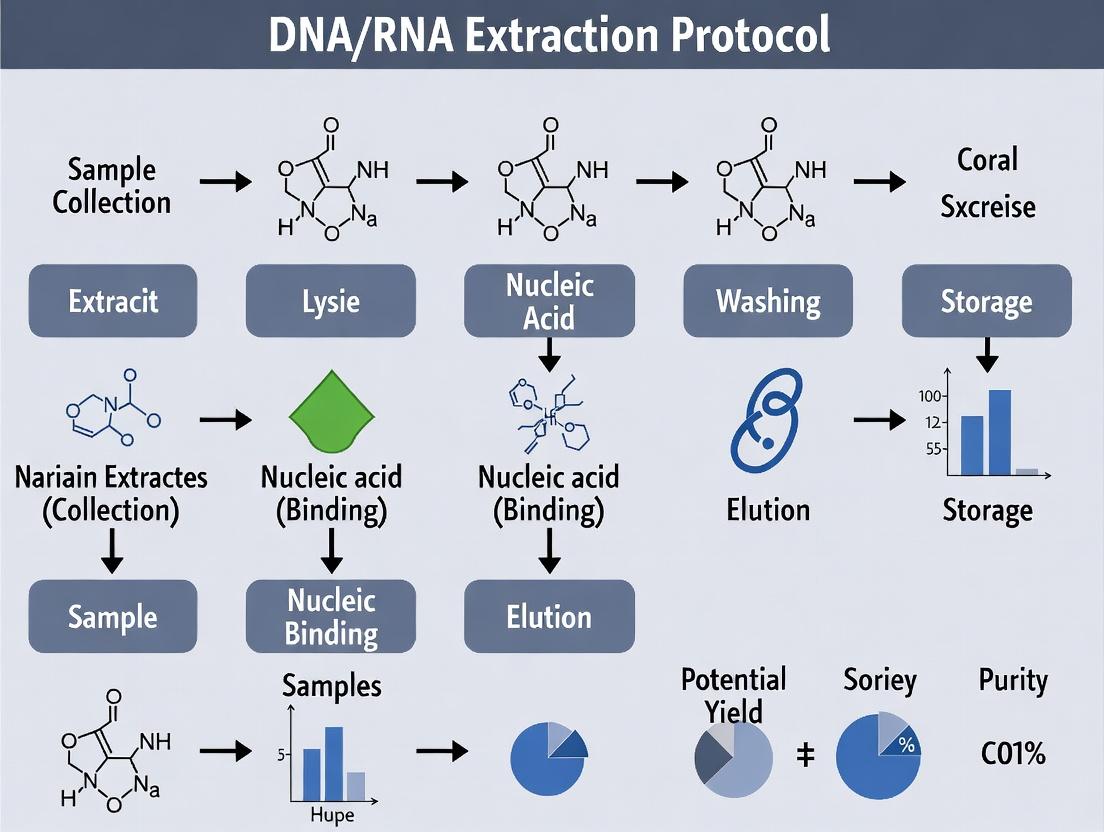
This detailed guide addresses the unique challenges of extracting high-quality nucleic acids from complex coral tissues for biomedical and drug discovery applications.
Extracting Pristine DNA/RNA from Challenging Coral Samples: A Comprehensive Protocol for Marine Biomedicine Research
Abstract
This detailed guide addresses the unique challenges of extracting high-quality nucleic acids from complex coral tissues for biomedical and drug discovery applications. It provides foundational knowledge on coral-specific challenges, a step-by-step optimized protocol, expert troubleshooting advice, and validation strategies to ensure reliable, reproducible results for downstream genomic, transcriptomic, and metagenomic analyses.
Understanding the Unique Hurdles: Why Coral Nucleic Acid Extraction is Exceptionally Challenging
Application Notes: Polysaccharide and Mucin Interference in Nucleic Acid Extraction from Coral
Coral samples present unique challenges for high-quality DNA/RNA extraction due to their complex biochemical matrix. The exoskeleton is a calcified structure (calcium carbonate) embedded within an organic matrix rich in polysaccharides and sulfated mucopolysaccharides (glycosaminoglycans). These compounds co-precipitate with nucleic acids during isolation, inhibiting downstream enzymatic reactions like PCR and sequencing.
Table 1: Common Inhibitors in Coral Homogenates and Their Effects
| Inhibitor Class | Example Components | Primary Interference | Quantifiable Impact on PCR |
|---|---|---|---|
| Polysaccharides | Agar, Carrageenan-like compounds | Adsorb nucleic acids, increase viscosity | >50 ng/µL can reduce efficiency by >60% |
| Mucopolysaccharides | Chondroitin sulfate, Heparan sulfate | Co-precipitate with nucleic acids, chelate cations | 0.01% (w/v) can completely inhibit Taq polymerase |
| Calcium Carbonate | Aragonite, Calcite | Alters pH, binds to silica columns | Particulates >1µm reduce column flow rate by 80% |
| Polyphenols/Humics | Melanin, Tannins | Oxidize nucleic acids, denature enzymes | 0.1 µg/µL reduces amplification yield by 90% |
Effective protocols must employ a multi-step disruption and purification strategy to separate nucleic acids from this complex matrix.
Experimental Protocol: Sequential Dissociation and Purification for Coral DNA/RNA Co-Extraction
This protocol is designed for ~100 mg of frozen coral tissue (with skeleton) sample.
I. Materials and Reagent Preparation
- Decalcification Buffer: 0.5M EDTA, pH 8.0, 0.1% (w/v) N-Lauroylsarcosine sodium salt.
- Dissociation Buffer: 4M Guanidine Thiocyanate, 25mM Sodium Citrate, 0.5% (w/v) N-Lauroylsarcosine, 0.1M β-mercaptoethanol (add fresh).
- Polysaccharide Precipitation Solution (PPS): 1.25M Potassium Acetate, 2.5M Guanidine HCl.
- Acid-Phenol:Chloroform, pH 4.5
- High-Salt Binding Buffer: 6M Guanidine HCl, 10mM Tris-HCl, pH 6.6, 40% Ethanol.
- Silica-membrane spin columns (e.g., for tissue DNA/RNA).
- DNase I, RNase-free (for RNA-only isolations).
II. Stepwise Procedure
Mechanical Disruption & Decalcification:
- Using a sterile mortar and pestle cooled with liquid N₂, pulverize the coral sample to a fine powder.
- Transfer powder to a 2mL tube. Add 1mL of ice-cold Decalcification Buffer.
- Vortex vigorously for 30 seconds, then incubate on a rotating mixer for 15 minutes at 4°C.
- Centrifuge at 12,000 x g for 2 minutes at 4°C. Carefully aspirate and discard the supernatant (contains dissolved CaCO₃).
- Retain the pelleted organic material.
Organic Matrix Lysis and Mucopolysaccharide Disruption:
- To the pellet, add 800µL of Dissociation Buffer. Homogenize using a powered pellet pestle for 60 seconds.
- Incubate at 56°C for 10 minutes with brief vortexing every 2 minutes.
Selective Polysaccharide Precipitation:
- Cool sample to room temperature. Add 200µL of ice-cold Polysaccharide Precipitation Solution (PPS). Vortex for 20 seconds.
- Incubate on ice for 10 minutes. A white precipitate (polysaccharides/mucins) will form.
- Centrifuge at 12,000 x g for 10 minutes at 4°C. Carefully transfer the clarified supernatant to a new tube. Avoid the gelatinous pellet.
Acidic Organic Extraction:
- Add an equal volume of Acid-Phenol:Chloroform to the supernatant. Vortex vigorously for 1 minute.
- Centrifuge at 12,000 x g for 10 minutes at 4°C.
- Transfer the upper aqueous phase to a new tube.
High-Salt Silica-Binding for Inhibitor Removal:
- Add 1.5 volumes of High-Salt Binding Buffer to the aqueous phase. Mix by pipetting.
- Load the mixture onto a silica-membrane spin column. Centrifuge at 11,000 x g for 1 minute. Discard flow-through.
- Wash with 700µL of wash buffer (e.g., 80% ethanol, 10mM Tris-Cl pH 7.5). Centrifuge. Discard flow-through.
- Perform a second wash with 500µL of a wash buffer containing 20mM NaCl and 80% ethanol. Centrifuge. Discard flow-through.
- Dry column by full-speed centrifugation for 2 minutes.
- Elute DNA/RNA in 30-50µL of nuclease-free water or TE buffer.
Optional DNase Treatment (for pure RNA):
- Add 2µL of DNase I (1 U/µL) and 5µL of 10x DNase buffer directly to the column membrane.
- Incubate at room temperature for 15 minutes.
- Perform two additional wash steps as in Step 5 before final elution.
III. Quality Assessment
- Purity: A260/A280 ratio of 1.8-2.0 and A260/A230 >2.0 indicate low polysaccharide/polyphenol contamination.
- Yield: Expected total nucleic acid yield ranges from 5-50 µg per 100mg starting material, highly species-dependent.
- Integrity: Assess RNA integrity via Bioanalyzer (RIN >7) or agarose gel (clear 18S/28S rRNA bands).
Signaling Pathways in Coral Biomineralization
Diagram Title: Signaling in Coral Skeletal Formation
Workflow for Nucleic Acid Isolation from Calcified Coral
Diagram Title: Coral NA Extraction Workflow
The Scientist's Toolkit: Key Research Reagent Solutions
Table 2: Essential Reagents for Overcoming Matrix Challenges
| Reagent / Kit | Primary Function | Mechanism Against Coral Inhibitors |
|---|---|---|
| Guanidine Thiocyanate (GuSCN) | Chaotropic agent, denaturant. | Disrupts hydrogen bonding, solubilizes mucoproteins, inactivates RNases. |
| EDTA (Ethylenediaminetetraacetic acid) | Chelating agent. | Binds calcium ions, dissolving the aragonite/calcite skeleton. |
| Potassium Acetate (High Concentration) | Salt precipitation. | Selectively precipitates polysaccharides and mucins at low temperature. |
| Acid-Phenol:Chloroform (pH 4.5) | Organic extraction. | Denatures and partitions proteins and lipids; acidic pH keeps DNA in organic phase for RNA-only recovery. |
| Silica-Membrane Column with High-Salt Binding Buffer | Solid-phase nucleic acid binding. | High salt (e.g., GuHCl) promotes selective NA binding over residual polysaccharides. |
| β-mercaptoethanol | Reducing agent. | Breaks disulfide bonds in proteins and mucins, aiding in matrix disruption. |
| DNase I, RNase-free | Enzyme. | Degrades genomic DNA post-extraction for pure RNA preparations. |
| Magnetic Beads with PEG/NaCl | Solid-phase reversible immobilization (SPRI). | Size-selective binding of nucleic acids, effective for post-extraction cleanup of inhibitors. |
Application Notes
The efficacy of molecular analyses in coral research is critically undermined by a triad of inhibitory compounds: host-derived secondary metabolites, symbiont cellular components, and co-extracted environmental microbial contaminants. These inhibitors directly impact downstream applications, including qPCR, sequencing, and library construction. The following data, derived from recent studies (2023-2024), quantifies their impact and informs protocol selection.
Table 1: Impact of Coral-Specific Inhibitors on Downstream Molecular Applications
| Inhibitor Class | Source | Key Compounds | Impact on qPCR (∆Ct vs. Control) | Impact on NGS (Primary Effect) |
|---|---|---|---|---|
| Secondary Metabolites | Coral host tissue | Terpenes, alkaloids, phenolic compounds | +2.1 to +8.3 Ct (inhibition) | High rate of sequence duplication; reduced library complexity (up to 40% loss). |
| Endosymbiont Lysate | Symbiodiniaceae cells | Polysaccharides, lipids, humic substances | +1.5 to +4.7 Ct (inhibition) | Biased host:symbiont read ratio; uneven coverage. |
| Microbial Contaminants | Environmental microbiome | Foreign genomic DNA/RNA, cell wall polymers | Variable; can cause false positives or mask rare taxa. | Off-target sequencing; inflation of microbial diversity metrics. |
| Mucopolysaccharides | Coral mucus layer | Complex carbohydrates | +3.0 to +6.5 Ct (inhibition) | Physical clogging of sequencing flow cells; adapter dimer formation. |
Table 2: Comparison of Commercially Available Kits for Challenging Coral Samples
| Kit Name | Principle | Avg. DNA Yield (ng/mg tissue) | A260/280 | A260/230 | Effective Against |
|---|---|---|---|---|---|
| Kit A: Inhibitor-Removal HT | Silica-column + specific binding buffers | 45.2 ± 12.1 | 1.82 ± 0.04 | 2.10 ± 0.08 | Polysaccharides, phenolics |
| Kit B: Marine DNA/RNA Pro | CTAB-based, with post-elution clean-up | 68.7 ± 18.3* | 1.88 ± 0.03 | 1.95 ± 0.12 | Secondary metabolites, humics |
| Kit C: Total Nucleic Acid | Magnetic bead & paramagnetic particle | 52.4 ± 9.8 | 1.85 ± 0.05 | 2.05 ± 0.10 | Mucopolysaccharides, salts |
| *Yield includes co-extracted symbiont DNA. |
Protocols
Protocol 1: Integrated CTAB-Polyvinylpolypyrrolidone (PVPP) Protocol for Maximum Inhibitor Removal
- Objective: To co-isolate high-quality genomic DNA and total RNA from scleractinian coral samples while neutralizing secondary metabolites and polysaccharides.
- Materials: Liquid N₂, mortar & pestle, 2% CTAB buffer (100mM Tris-HCl pH 8.0, 20mM EDTA, 1.4M NaCl, 2% CTAB), 1% β-mercaptoethanol (add fresh), 5% w/v PVPP, chloroform:isoamyl alcohol (24:1), RNase-free DNase I, magnetic bead-based clean-up kit.
- Procedure:
- Homogenization: Snap-freeze 100-200 mg coral fragment (skeleton removed) in liquid N₂. Pulverize to a fine powder.
- Lysis & Binding: Transfer powder to a tube with 900 µL pre-warmed (65°C) 2% CTAB buffer and 100 µL of 5% PVPP suspension. Add 20 µL β-mercaptoethanol. Vortex vigorously. Incubate at 65°C for 30 min, vortexing every 10 min.
- Deproteinization: Cool, add an equal volume of chloroform:isoamyl alcohol. Mix by inversion for 10 min. Centrifuge at 12,000g, 15 min, 4°C.
- Nucleic Acid Precipitation: Transfer aqueous phase to a new tube. Add 0.7 volumes of isopropanol. Incubate at -20°C for 1 hour. Centrifuge at 12,000g, 20 min, 4°C.
- Wash & Dissolve: Wash pellet with 70% ethanol. Air-dry and dissolve in 50 µL nuclease-free water.
- Post-Elution Clean-Up: Perform a second-stage purification using a magnetic bead-based clean-up kit according to the manufacturer's protocol. This step is critical for qPCR/sequencing-ready nucleic acids.
- Optional DNase/RNase Treatment: For RNA-only extracts, add DNase I. For DNA-only, add RNase A. Re-clean with magnetic beads.
Protocol 2: Differential Centrifugation for Host vs. Symbiont Nucleic Acid Separation
- Objective: To physically separate coral host cells from Symbiodiniaceae cells prior to lysis, enabling partitioned analysis.
- Materials: Airbrush, Marine PBS, refrigerated centrifuge, 20 µm nylon mesh, differential lysis buffers.
- Procedure:
- Cell Separation: Use an airbrush with cold Marine PBS to blast cells from the coral skeleton. Filter homogenate through a 20 µm mesh to remove large tissue debris.
- Centrifugation: Centrifuge filtrate at 500g for 5 min at 4°C. The pellet is enriched in larger host cells and nematocysts.
- Symbiont Recovery: Centrifuge the supernatant at 3000g for 10 min at 4°C. This pellet is enriched in Symbiodiniaceae cells.
- Independent Lysis: Resuspend each pellet in appropriate lysis buffer (e.g., Kit B for host pellet, a gentler kit for symbionts). Proceed with extraction as per Protocol 1, Step 2 onward.
Visualizations
Extraction Workflow with Dual Clean-Up
qPCR Inhibition Mechanisms from Coral Inhibitors
The Scientist's Toolkit: Research Reagent Solutions
| Item | Function & Rationale |
|---|---|
| CTAB (Cetyltrimethylammonium Bromide) | Ionic detergent effective for lysing plant/coral cells and forming complexes with polysaccharides to remove them during extraction. |
| PVPP (Polyvinylpolypyrrolidone) | Insoluble polymer that binds and precipitates phenolic compounds via hydrogen bonding, preventing oxidation and co-purification. |
| β-Mercaptoethanol | Reducing agent added to lysis buffer to denature proteins and inhibit polyphenol oxidases, preventing browning and degradation. |
| Magnetic Beads (Silica-coated) | Enable a rapid, salt-dependent second clean-up post-elution, crucial for removing residual inhibitors not cleared by organic extraction. |
| Inhibitor Removal Columns | Specialized silica columns containing resins that selectively bind common inhibitors (humics, tannins) while allowing DNA/RNA to pass through. |
| RNase Inhibitor (for RNA work) | Essential for protecting often low-yield RNA from degradation by RNases released from dense microbial communities. |
A core challenge in modern coral reef research is the holistic, multi-omic analysis of the coral holobiont—the complex consortium of the coral animal host, its endosymbiotic dinoflagellates (Symbiodiniaceae), and a diverse associated microbiome (bacteria, archaea, viruses, fungi). Effective nucleic acid extraction is the critical first step, but protocols must be optimized to address profound sample heterogeneity. The choice of lysis method, buffer chemistry, and subsequent purification dictates which holobiont component's genetic material is preferentially recovered, directly impacting downstream genomic, transcriptomic, and meta-omic analyses. This document outlines application notes and protocols tailored for differential analysis of host tissue, Symbiodiniaceae, and the broader microbiome.
Comparative Analysis of Nucleic Acid Yield from Holobiont Components
The efficacy of common commercial kits and published methods varies significantly based on target organism and sample preservation state (fresh, frozen, RNAlater). The following table summarizes representative yield data from recent methodological comparisons (2023-2024).
Table 1: Representative DNA/RNA Yield from Holobiont Components Using Different Methods
| Target Component | Extraction Method / Kit | Avg. DNA Yield (ng/mg tissue) | Avg. RNA Yield (ng/mg tissue) | Key Metric / Note |
|---|---|---|---|---|
| Total Holobiont | Phenol-Chloroform (PCI) + Column | 450 ± 120 | 180 ± 45 | High yield but reagent hazard; broad spectrum recovery. |
| Total Holobiont | Commercial All-In-One Kit (e.g., ZymoBIOMICS) | 380 ± 95 | 165 ± 40 | Standardized, good for meta-genomics/transcriptomics. |
| Host (Animal Tissue) | Column-based (e.g., DNeasy Blood & Tissue) | 220 ± 60 | 110 ± 30 | Preferential lysis with Proteinase K, moderate yields. |
| Symbiodiniaceae | CTAB + PCI with high-speed bead beating | 150 ± 50 | 75 ± 25 | Essential for breaking robust algal cell walls. |
| Prokaryotic Microbiome | PowerSoil Pro Kit (with inhibitor removal) | 85 ± 35 | N/A | Optimized for difficult environmental samples; targets bacteria/archaea. |
| Dual DNA/RNA | AllPrep PowerViral Kit (modified) | DNA: 300 ± 80RNA: 140 ± 35 | Co-extraction from same sample; allows for parallel omics. |
Detailed Protocols
Protocol A: Sequential Extraction for Component-Specific Analysis
Objective: To sequentially isolate nucleic acids with enrichment for specific holobiont fractions from a single coral fragment.
Materials:
- Coral fragment (~0.5 cm²), snap-frozen in liquid N₂.
- Mortar and pestle, pre-chilled.
- Homogenization Buffer A (100 mM Tris-HCl pH 8.0, 1.5 M NaCl, 10 mM EDTA).
- Homogenization Buffer B (500 mM Tris-HCl pH 8.0, 100 mM EDTA, 4% SDS).
- Benchtop centrifuge with cooling.
- 0.1-0.5mm zirconia/silica beads.
- Bead beater homogenizer.
- Standard PCI reagents.
- Commercial DNA/RNA clean-up columns.
Procedure:
- Host Mucus & Surface Microbiome Removal:
- Thaw fragment briefly in 1mL sterile seawater. Vortex for 30s. This wash supernatant (SW) contains the loosely associated microbiome. Centrifuge (12,000g, 10 min). Pellet is "Surface Microbiome" fraction. Proceed to DNA extraction using a microbiome-specific kit (e.g., PowerSoil).
Host Tissue Lysate & Symbiodiniaceae Separation:
- Homogenize the washed skeleton in 1mL Buffer A using a tissue grinder.
- Centrifuge homogenate at 800g for 5min at 4°C.
- Supernatant (S1): Contains dissolved animal host cells. Transfer to new tube.
- Pellet (P1): Contains intact Symbiodiniaceae cells, skeletal debris.
- Wash P1 with Buffer A 2x. Resuspend P1 in 500µL Buffer B for direct lysis (Step 4).
Host Nucleic Acid Extraction:
- To S1, add Proteinase K (final 0.1 mg/mL) and SDS (final 0.5%). Incubate at 55°C for 1h.
- Perform standard PCI extraction on S1. Precipitate nucleic acids. This is the "Host-Enriched" fraction.
Symbiodiniaceae Nucleic Acid Extraction:
- To washed P1, add 0.5g beads and Buffer B. Process in bead beater for 2x 45s pulses.
- Incubate at 65°C for 15 min.
- Centrifuge (12,000g, 5 min). Transfer supernatant.
- Perform PCI extraction. This is the "Symbiodiniaceae-Enriched" fraction.
Protocol B: Co-Extraction of Total Holobiont DNA & RNA for Integrated Omics
Objective: To simultaneously extract high-quality DNA and RNA from the entire holobiont for parallel genome sequencing and transcriptomics.
Materials:
- RNeasy PowerBiofilm Kit (or similar with strong lysis).
- β-Mercaptoethanol.
- DNA Elution Buffer (10 mM Tris-HCl, pH 8.5).
- DNase I (RNase-free).
- RNase inhibitor.
Procedure:
- Simultaneous Lysis: Weigh frozen coral powder. Add to PowerBead Tubes provided. Add lysis buffer containing β-ME. Homogenize in bead beater for 3x 60s.
- Nucleic Acid Partition: Follow kit instructions. The unique step involves splitting the lysate: 70% goes to the RNA spin column, 30% is reserved for DNA binding to a separate column.
- On-Column DNase Treatment: Perform on the RNA column per kit protocol.
- Elution: Elute RNA in nuclease-free water. Elute DNA in pre-warmed elution buffer. Quantify via fluorometry.
Holobiont Nucleic Acid Extraction Strategy Selection
The Scientist's Toolkit: Essential Research Reagent Solutions
Table 2: Key Reagents for Coral Holobiont Nucleic Acid Extraction
| Reagent / Kit | Primary Function | Consideration for Sample Heterogeneity |
|---|---|---|
| RNAlater / DNA/RNA Shield | Nucleic acid stabilization at collection. | Penetrates tissue poorly; best for small fragments. Critical for preserving labile host transcriptomes. |
| Zirconia/Silica Beads (0.1-0.5 mm) | Mechanical cell disruption. | Essential for breaking tough Symbiodiniaceae cell walls and microbial biofilms. Size mixture increases efficiency. |
| CTAB (Cetyltrimethylammonium bromide) Buffer | Lysis and polysaccharide/inhibitor binding. | Historically crucial for plant-like tissues; effective for Symbiodiniaceae but may co-precipitate host DNA. |
| PowerSoil Pro / ZymoBIOMICS Kits | DNA extraction from complex microbiomes. | Contains inhibitors removal steps critical for coral skeleton-derived humic acids and calcium. |
| AllPrep-type Kits | Simultaneous DNA & RNA isolation. | Allows linked molecular profiles from a single sample, reconciling genomic potential and transcriptomic activity. |
| Proteinase K | Degrades proteins and animal tissue. | Optimal concentration and incubation time vital for complete host lysis without degrading Symbiodiniaceae cells. |
| DNase I (RNase-free) | Removal of genomic DNA from RNA prep. | Mandatory for coral RNA-seq due to high symbiont DNA contamination. Requires rigorous kit-based clean-up after. |
| PCR Inhibitor Removal Resin (e.g., OneStep PCR Inhibitor) | Post-extraction clean-up. | Often necessary after custom PCI protocols to obtain PCR-ready DNA from complex holobiont samples. |
Strategies for Symbiodiniaceae Lysis
Application Notes and Protocols
Thesis Context: This document provides critical Application Notes and Protocols for the preservation of RNA integrity during field collection of challenging coral samples. It is framed within a broader thesis aimed at developing optimized DNA/RNA co-extraction protocols for scleractinian corals, where RNase activity is exceptionally high and sample heterogeneity presents significant obstacles to obtaining high-quality nucleic acids for downstream transcriptomic and genomic analyses.
Field collection of coral samples presents unique challenges that directly conflict with the imperative for rapid RNA stabilization. Key constraints include remote locations, limited access to liquid nitrogen or -80°C freezers, variable environmental conditions (heat, UV), and the physical complexity of the coral organism (calcium carbonate skeleton, symbiotic algae, mucus, and associated microbiota). RNA, particularly mRNA, is highly labile and degrades rapidly upon tissue disruption due to endogenous RNases. The delay between collection and stabilization is the primary determinant of RNA integrity.
Quantitative Data on RNA Degradation Kinetics
The following tables summarize empirical data on RNA degradation rates under field-relevant conditions and the efficacy of various preservation methods.
Table 1: Impact of Delay to Stabilization on RNA Integrity Number (RIN) in Coral Tissue.
| Post-Sampling Delay Time (Minutes at 28°C) | Average RIN Value (Agilent Bioanalyzer) | Observable Degradation Signatures |
|---|---|---|
| Immediate (Control - Snap Frozen in LN₂) | 8.5 - 9.2 | Sharp 18S/28S ribosomal peaks. |
| 5 minutes | 7.0 - 7.8 | Mild smearing, ratio shift. |
| 15 minutes | 4.5 - 5.5 | Significant smearing, peaks blurred. |
| 30 minutes | < 3.0 | Total degradation, no distinct peaks. |
Table 2: Comparison of Field Preservation Methods for Coral RNA.
| Preservation Method | Max Safe Hold Time (Tropical Field) | Avg. RIN After 24h | Compatibility with DNA Extraction | Logistical Burden |
|---|---|---|---|---|
| Liquid Nitrogen (Snap Freeze) | Indefinite | 8.8 | Excellent | Very High |
| RNAlater (Ambient saturation) | 7 days | 7.5 | Good (after removal) | Moderate |
| Zymo Research DNA/RNA Shield | 30 days | 8.0 | Excellent (designed for co-extraction) | Low |
| FTA Cards with RNA-stabilizing matrix | 12 months | 6.5* | Moderate | Very Low |
| Ethanol (95-100%) | 24 hours | 5.0 | Poor | Low |
*RIN value post-elution; FTA cards are more suitable for qPCR than full transcriptomics.
Experimental Protocols
Protocol 1: Optimal Field Collection & Immediate Stabilization for RNA-Seq
Objective: To collect coral biopsies and stabilize RNA for downstream transcriptomic analysis. Materials: Underwater drill or bone cutter, sterile forceps, 2ml cryovials, portable Dewar with liquid nitrogen (LN₂), DNA/RNA Shield solution, permanent marker. Procedure:
- In situ Collection: At the reef site, using a sterilized tool, collect a 1-2 cm² fragment of coral (including target polyp tissue).
- Rapid Tissue Separation: Within 30 seconds, using forceps, vigorously rinse the fragment in sterile seawater to remove loose mucus and debris. Immediately 'blot' the fragment onto a clean surface to fracture the coenosarc and expose tissue.
- Primary Stabilization (CHOICE A - Preferred): Submerge the tissue-blotted fragment directly into a pre-labeled 2ml cryovial containing 1ml of DNA/RNA Shield. Ensure tissue is fully immersed. Store at ambient shade temperature.
- Primary Stabilization (CHOICE B - If LN₂ is available): Place the fresh tissue fragment directly into a pre-chilled, labeled 2ml cryovial and submerge it in the portable LN₂ Dewar for snap-freezing.
- Transport: For Choice A, samples can remain stable at ambient temps (up to 30°C) for one month. For Choice B, maintain in LN₂ or transfer to a -80°C freezer within 24 hours.
- Homogenization: In the lab, homogenize the fragment in its preservation solution using a sterile, RNAse-free pestle or a bead-beater with ceramic beads.
Protocol 2: RNA Integrity Assessment (Bioanalyzer/Fragment Analyzer)
Objective: To quantitatively assess RNA quality post-collection. Materials: Agilent 2100 Bioanalyzer or Fragment Analyzer, RNA Nano or Sensitivity Kit, thermal shaker, microcentrifuge. Procedure:
- Extract total RNA from a sub-sample of preserved tissue using a column-based kit (e.g., Zymo BIOMICS RNA Miniprep Kit, which handles difficult polysaccharide-rich samples).
- Dilute 1µL of RNA eluate in RNase-free water for quantification via fluorometry (Qubit RNA HS Assay).
- Prepare the chip according to manufacturer instructions (e.g., Agilent RNA 6000 Nano Kit).
- Load 1µL of RNA sample (~50-200 ng) onto the chip ladder well.
- Run the chip in the instrument. The software generates an electrophoretogram and calculates the RNA Integrity Number (RIN).
- Interpretation: A RIN > 7.0 is generally acceptable for RNA-Seq. Coral samples often show a "shifted" profile due to co-extracted symbiont RNA; focus on the metazoan ribosomal RNA peaks (28S & 18S).
Diagrams
Diagram 1: Field RNA Preservation Decision Pathway
Diagram 2: Major Pathways of Cellular RNA Degradation Post-Sampling
The Scientist's Toolkit: Key Research Reagent Solutions
Table 3: Essential Materials for Coral RNA Field Stabilization & Extraction
| Reagent/Material | Function & Rationale | Example Product/Brand |
|---|---|---|
| DNA/RNA Shield | A chaotropic, RNase-inactivating solution that stabilizes nucleic acids at ambient temp. | Zymo Research DNA/RNA Shield |
| RNAlater Stabilization Solution | An aqueous, non-toxic tissue storage reagent that permeates tissue to stabilize RNA. | Thermo Fisher Scientific RNAlater |
| Bead Beater with Ceramic Beads | Robust mechanical homogenization effective for tough coral skeleton and tissue. | Omni International Bead Ruptor Elite |
| Polysaccharide & Polyphenol Adsorbent | Removes common coral-derived compounds that inhibit downstream enzymatic reactions. | Zymo Research ZR BashingBead Lysis Tubes |
| Portable Liquid Nitrogen Dewar | Allows for true snap-freezing of samples in remote field locations. | Taylor-Wharton CV Series |
| RNA-Specific Fluorometric Assay | Accurate quantification of RNA in presence of contaminating DNA & salts. | Thermo Fisher Qubit RNA HS Assay |
| Automated Electrophoresis System | Precise assessment of RNA integrity (RIN) prior to costly library prep. | Agilent 4200 TapeStation |
The search for novel bioactive compounds increasingly targets marine organisms, particularly corals, which are a prolific source of unique natural products with anti-cancer, anti-viral, and anti-inflammatory properties. The foundational step in unlocking this potential is the extraction of high-integrity nucleic acids. Degraded or contaminated DNA/RNA directly compromises downstream 'omics' analyses (metagenomics, transcriptomics), preventing the accurate identification of biosynthetic gene clusters (BGCs) responsible for compound synthesis. This application note details protocols and considerations for nucleic acid extraction from challenging coral samples, framing them within the critical pipeline from sample to drug candidate.
Table 1: Comparison of Extraction Methods for Coral Holobiont (Coral Tissue, Zooxanthellae, & Microbiome)
| Extraction Method | DNA Yield (ng/mg tissue) | A260/A280 Purity | RNA Integrity Number (RIN) | Metagenomic Assembly Contig N50 (bp) | Key Limitation |
|---|---|---|---|---|---|
| CTAB/Phenol-Chloroform | 45.2 ± 12.1 | 1.82 ± 0.05 | 5.1 ± 0.8 (if RNA-specific) | 2,500 | High inhibitor carryover; labor-intensive. |
| Commercial Silica-Column (Kit A) | 28.5 ± 8.7 | 1.89 ± 0.03 | 7.5 ± 0.5 | 5,800 | Lower yield; bias against GC-rich microbes. |
| Magnetic Bead-Based (Kit B) | 32.1 ± 9.4 | 1.91 ± 0.02 | 8.2 ± 0.3 | 7,200 | Cost per sample higher. |
| Enhanced Lysis + Paramagnetic Beads | 65.8 ± 15.3 | 1.95 ± 0.01 | 8.7 ± 0.4 | 15,500 | Requires protocol optimization. |
Table 2: Downstream Impact on Drug Discovery Pipeline Steps
| Pipeline Stage | With High-Quality Nucleic Acids | With Compromised Nucleic Acids | Consequence for Discovery |
|---|---|---|---|
| Metagenomic Sequencing | Full reconstruction of host and symbiont BGCs. | Fragmented assemblies, missed genes. | False negatives; lost leads. |
| Transcriptomics | Accurate expression levels of BGC genes under stress. | Biased quantification, high noise. | Misidentification of inducible compounds. |
| Heterologous Expression | Complete, accurate gene clusters for cloning. | Truncated or chimeric constructs. | Failed expression, wasted resources. |
| Target Identification (via CRISPR screens) | Clear genotype-phenotype linkage. | Off-target effects, ambiguous results. | Invalidated therapeutic targets. |
Detailed Experimental Protocols
Protocol 1: Enhanced Lysis and Co-Precipitation for Total Nucleic Acids from Coral Fragments
Objective: To simultaneously recover high-molecular-weight DNA and intact RNA from scleractinian coral samples for integrated multi-omics analysis.
Materials: See "The Scientist's Toolkit" below.
Procedure:
- Sample Preservation & Homogenization: Flash-freeze coral fragment (≤ 0.5 cm³) in liquid N₂. Under liquid N₂, pulverize sample using a sterilized mortar and pestle or cryo-mill. Transfer powder to a 2 mL bead-beating tube containing 0.5 mm zirconia/silica beads.
- Dual Lysis: Add 1 mL of Lysis Buffer RLT Plus (Qiagen) with 10 µL β-mercaptoethanol. Add 50 µL of proteinase K (20 mg/mL). Vortex thoroughly.
- Mechanical Disruption: Bead-beat for 2 x 45 seconds at 6.5 m/s, with 2-minute incubations on ice between cycles.
- Inhibitor Removal: Centrifuge at 12,000 x g for 5 min at 4°C. Transfer supernatant to a new tube. Add 0.5x volume of Binding Buffer ACB (MagMAX) and 1x volume of 100% ethanol. Mix by inversion.
- Nucleic Acid Binding & Wash: Transfer mixture to a Magnetic Bead plate. Bind for 5 minutes. Wash twice with Wash Buffer 1 (MagMAX) and once with Wash Buffer 2 (80% ethanol). Dry beads for 5 minutes.
- Elution: Elute nucleic acids in 50-100 µL of RNase-free water or low-EDTA TE buffer.
- Post-Extraction DNase/RNase Treatment: For RNA-only applications, add DNase I (RNase-free) directly to beads before final wash. For DNA-only applications, treat eluate with RNase A.
Protocol 2: Size-Selection for High-Molecular-Weight (HMW) Coral Host DNA
Objective: To isolate ultra-long DNA fragments (>20 kb) suitable for long-read sequencing and complete BGC assembly.
Procedure:
- Follow Protocol 1 through Step 4.
- Precision Precipitation: Add 0.3x volume of room-temperature isopropanol gently to the cleared lysate. Mix by slow inversion 10 times. Incubate at room temp for 5 min.
- HMW DNA Recovery: Centrifuge at 4,000 x g for 5 min at 4°C. Carefully decant supernatant. Wash pellet with 1 mL of 70% ethanol. Centrifuge at 4,000 x g for 2 min. Aspirate ethanol and air-dry pellet for 5-10 minutes.
- Gentle Rehydration: Resuspend pellet in 50-100 µL of Elution Buffer EB (Qiagen) or low-EDTA TE buffer by incubating at 4°C overnight. Do not vortex.
Visualization of Workflows and Pathways
Title: Coral Nucleic Acid Extraction to Drug Candidate Pipeline
Title: Stress-Induced Bioactive Compound Synthesis Pathway
The Scientist's Toolkit: Essential Research Reagent Solutions
Table 3: Key Reagents for High-Quality Coral Nucleic Acid Extraction
| Reagent/Material | Function & Rationale | Example Product (Supplier) |
|---|---|---|
| Zirconia/Silica Beads (0.5 mm) | Provides mechanical lysis of tough coral skeleton and cell walls without generating excessive heat that degrades nucleic acids. | Zirconia/Silica Beads, 0.5mm (BioSpec Products) |
| Lysis Buffer RLT Plus | A potent, proprietary guanidine-thiocyanate-based buffer that immediately inactivates RNases and DNases, stabilizing nucleic acids upon contact. | RLT Plus Buffer (Qiagen) |
| Magnetic Beads (SPRI) | Paramagnetic particles that selectively bind nucleic acids by size in the presence of crowding agents, enabling efficient washing and inhibitor removal. | Sera-Mag Magnetic Beads (Cytiva) or MagMAX Beads (Thermo Fisher) |
| Binding Buffer ACB | A high-salt, proprietary buffer optimized for broad-spectrum nucleic acid binding to magnetic beads from complex lysates. | Binding Buffer ACB (MagMAX Microbiome Kit) |
| DNase I (RNase-free) | Enzyme that digests genomic DNA without degrading RNA, critical for preparing pure RNA for transcriptomics. | DNase I, RNase-free (New England Biolabs) |
| RNase A | Enzyme that digests RNA, used to prepare pure genomic DNA for sequencing. | RNase A (Thermo Fisher) |
| β-Mercaptoethanol | Reducing agent added to lysis buffer to break disulfide bonds in proteins, aiding in complete denaturation and inhibitor neutralization. | β-Mercaptoethanol (Sigma-Aldrich) |
| Proteinase K | Broad-spectrum serine protease that digests nucleases and other proteins, crucial for decontaminating nucleic acid preparations. | Proteinase K (Thermo Fisher) |
Step-by-Step Master Protocol: Optimized DNA/RNA Co-Extraction and Isolation for Coral Samples
Within a broader thesis on optimizing nucleic acid extraction from scleractinian corals and other complex holobionts, the pre-lysis phase is a critical determinant of success. Challenging coral samples are characterized by: 1) a hard calcium carbonate skeleton, 2) a mucopolysaccharide-rich tissue layer, 3) diverse symbiotic microbial communities, and 4) high concentrations of secondary metabolites and PCR inhibitors. Failure to adequately address these during homogenization and pre-wash leads to poor yield, degraded nucleic acids, and downstream analytical failures. This application note details standardized protocols to overcome these barriers.
Table 1: Comparison of Homogenization Techniques for Coral Fragments (≈ 1 cm²)
| Technique | Equipment / Reagent | Avg. Yield (DNA µg/cm²) | Avg. A260/A280 | Avg. A260/A230 | Key Advantage | Key Limitation |
|---|---|---|---|---|---|---|
| Manual Mortar & Pestle | Liquid N₂, Ceramic Mortar | 4.2 ± 1.5 | 1.78 ± 0.05 | 1.95 ± 0.20 | Low cost, effective for small samples. | Labor-intensive, inconsistent, cross-contamination risk. |
| Bead Mill Homogenizer | 2.8mm ceramic beads, lysis buffer | 15.8 ± 3.2 | 1.82 ± 0.03 | 2.10 ± 0.15 | High throughput, excellent disruption of cells & symbionts. | Heat generation, requires optimized bead/speed/time balance. |
| Cryogrinding (Automated) | Freezer Mill, liquid N₂ cooling | 18.5 ± 2.8 | 1.85 ± 0.02 | 2.25 ± 0.10 | Superior for tough materials, preserves nucleic acid integrity. | High equipment cost, batch processing only. |
| Ultrasonic Homogenization | Tip Sonicator, ice bath | 8.5 ± 2.0 | 1.70 ± 0.10 | 1.65 ± 0.30 | Fast, good for microbial community. | High shearing risk for gDNA, requires strict pulse control. |
Table 2: Efficacy of Pre-Wash Buffers on Inhibitor Removal from *Acropora Tissue*
| Pre-Wash Buffer | Composition | PCR Inhibition Threshold (cycles delayed) | Co-Precipitated Polysaccharides (mg/mL) | Recommended For |
|---|---|---|---|---|
| SEA Buffer | 0.5M NaCl, 20mM EDTA, 50mM Tris pH 8.0 | 2.1 ± 0.5 | 0.25 ± 0.05 | General purpose, mucus removal. |
| PBS-EDTA | 1X PBS, 10mM EDTA | 3.5 ± 0.8 | 0.45 ± 0.08 | Washing symbiont pellets (e.g., Symbiodiniaceae). |
| Sucrose-CTAB Wash | 0.7M NaCl, 2% CTAB, 50mM Tris, 20mM EDTA | 1.0 ± 0.3 | 0.10 ± 0.02 | Samples with high polyphenol content. |
| Ethanol Wash (70%) | 70% Ethanol, DEPC-H₂O | 4.0 ± 1.0 | 0.60 ± 0.10 | Surface sterilization prior to grinding. |
Detailed Experimental Protocols
Protocol 3.1: Cryogrinding with Freezer Mill for Skeletal-Inclusive Samples Objective: To pulverize entire coral fragments (skeleton + tissue) to a fine, homogeneous powder while maintaining nucleic acid integrity via constant cryogenic conditions. Materials: Coral fragment (1-2 cm³), Liquid N₂, SPEX SamplePrep Freezer Mill or equivalent, polycarbonate vial set, pre-cooled spatula. Procedure:
- Decontaminate: Briefly dip fragment in 70% ethanol (5 sec) and blot on sterile paper to remove surface contaminants.
- Flash-Freeze: Submerge fragment in liquid N₂ for 5 minutes until boiling ceases.
- Assemble Mill: Load frozen fragment into a pre-cooled (liquid N₂) polycarbonate grinding vial with impactor. Tighten cap securely.
- Grind: Set conditions: Pre-cool cycle: 2 minutes; Grind cycles: 2 cycles of 2 minutes each at 15 Hz; Cooling interval: 1 minute between cycles.
- Recover Powder: Quickly transfer vial to liquid N₂ bath. Using pre-cooled tools, transfer the fine powder to a pre-weighed, sterile tube. Keep powder at -80°C or proceed immediately to pre-wash.
Protocol 3.2: Bead Mill Homogenization for Tissue Slurries Objective: To efficiently lyse coral tissue and symbiont cells from skeleton-derived slurries for high-yield, high-quality nucleic acid extraction. Materials: Tissue slurry (from airbrushing), 2.8mm ceramic beads, lysis buffer (e.g., with GuHCl or SDS), bead mill homogenizer (e.g., Bertin Precellys, MP FastPrep-24), 2mL reinforced tubes. Procedure:
- Prepare Slurry: Combine up to 500µL of tissue slurry with 500µL of chosen lysis buffer in a 2mL reinforced tube.
- Add Beads: Add ~0.5g of sterile 2.8mm ceramic beads.
- Homogenize: Secure tubes in homogenizer. Run at 6,500 rpm for 45 seconds. Critical: Place samples on ice for 2 minutes between runs to dissipate heat. Perform 2-3 cycles total.
- Separate: Briefly centrifuge tubes (10,000 x g, 30 sec) to pellet beads and skeletal debris. Carefully transfer the supernatant (containing lysate) to a new tube for further purification.
Protocol 3.3: CTAB-Based Pre-Wash for Polyphenol/Polysaccharide Removal Objective: To precipitate and remove hydrophilic inhibitors prior to main extraction, improving nucleic acid purity and downstream PCR success. Materials: Ground coral powder or tissue homogenate, Sucrose-CTAB Wash Buffer (pre-warmed to 65°C), chloroform:isoamyl alcohol (24:1), water bath. Procedure:
- Incubate: Transfer sample to a 15mL polypropylene tube. Add 5mL of pre-warmed Sucrose-CTAB Wash Buffer per 0.5g of powder. Vortex vigorously.
- Heat: Incubate in a 65°C water bath for 15 minutes, inverting tubes every 5 minutes.
- Extract: Add an equal volume of chloroform:isoamyl alcohol (24:1). Mix by vigorous inversion for 10 minutes.
- Separate: Centrifuge at 10,000 x g for 15 minutes at room temperature.
- Recover: The upper aqueous phase will contain inhibitors (polysaccharides, polyphenols) partitioned into the interphase/organic phase. Carefully remove and discard this aqueous phase. The desired nucleic acids remain in the pellet or interphase.
- Proceed: This pellet/interphase is now ready for the main extraction protocol (e.g., subsequent CTAB or silica-column purification).
Diagrams
Title: Complete Pre-Lysis Workflow for Challenging Coral Samples
Title: CTAB Pre-Wash Mechanism for Inhibitor Removal
The Scientist's Toolkit: Research Reagent Solutions
Table 3: Essential Materials for Coral Nucleic Acid Pre-Lysis
| Item | Function & Rationale |
|---|---|
| Liquid Nitrogen | Enables flash-freezing for brittle fracture cryogrinding, instantly halting enzymatic degradation (RNases/DNases). |
| Reinforced Polycarbonate Vials (for Freezer Mill) | Withstand impact at cryogenic temperatures without shattering, preventing sample loss and contamination. |
| Ceramic Beads (2.8mm & 0.1mm mix) | Larger beads (2.8mm) provide macro-scale tissue disruption, while smaller beads (0.1mm) enhance cell wall lysis of symbionts and microbes. |
| Sucrose-CTAB Pre-Wash Buffer | Cetyltrimethylammonium bromide (CTAB) forms insoluble complexes with polysaccharides and polyphenols at high salt, allowing their selective precipitation and removal. |
| Beta-Mercaptoethanol (or DTT) | Reducing agent added to lysis and pre-wash buffers to denature polyphenol oxidases and RNases, preventing oxidation and degradation. |
| Polyvinylpolypyrrolidone (PVPP) | Insoluble polymer that binds polyphenols via hydrogen bonding, used as an additive in grinding or wash buffers for polyphenol-rich samples. |
| RNAlater Stabilization Solution | For sub-sampling if RNA is target; penetrates tissue to stabilize and protect RNA immediately post-collection, prior to homogenization. |
| DNA/RNA Shield | A commercial stabilization buffer that inactivates nucleases and protects nucleic acids at ambient temperature for transport/storage. |
Within the broader thesis on DNA/RNA extraction from challenging coral samples, the lysis step presents the greatest hurdle. Coral tissues are complex composites of animal host, symbiotic dinoflagellates (Symbiodiniaceae), and a diverse microbiome, all encased in a calcium carbonate skeleton. This application note details a robust, optimized lysis protocol combining rigorous mechanical disruption with a specialized, chaotropic buffer chemistry to maximize the yield and integrity of nucleic acids from all composite organisms for downstream multi-omics analyses.
The Scientist's Toolkit: Essential Research Reagents and Materials
| Item Name | Function in Protocol |
|---|---|
| Specialized Chaotropic Lysis Buffer (e.g., Guanidine Thiocyanate-based) | Denatures proteins, inactivates RNases/DNases, disrupts membranes, and facilitates binding of nucleic acids to silica. |
| β-Mercaptoethanol or DTT | Reducing agent added to lysis buffer to break disulfide bonds in proteins and inhibit oxidative degradation. |
| Polyvinylpolypyrrolidone (PVPP) | Binds polyphenols and humic acids from coral tissues, preventing co-purification and inhibition. |
| RNase Inhibitor | Crucial for RNA workflows; protects RNA from degradation post-lysis. |
| Silica-coated Magnetic Beads | Enable high-throughput, solution-based nucleic acid binding and purification post-lysis. |
| Liquid Nitrogen & Mortar/Pestle | For flash-freezing and initial pulverization of coral fragments, halting degradation and brittling tissue. |
| Tissue Lyser (e.g., Qiagen Tissuelyser II) | Provides high-frequency, high-magnitude mechanical disruption using beads. |
| Zirconia/Silica Beads (mix of sizes) | Mechanically grinds and shears tough cell walls (e.g., of dinoflagellates) during bead beating. |
| Proteinase K | Digests proteins and degrades nucleases, especially important for animal host tissues. |
Optimized Protocol: Integrated Mechanical and Chemical Lysis
Sample Preparation
- Using a sterile chisel, fragment a ~1 cm² piece of coral skeleton with tissue.
- Immediately submerge the fragment in 10 mL of RNAlater or DNA/RNA Shield in a 50 mL tube. Incubate at 4°C overnight, then store at -80°C until processing.
- Under liquid nitrogen, use a sterilized mortar and pestle to pulverize the fragment into a fine powder. Note: Keep samples frozen throughout.
Integrated Lysis Procedure
Materials: Pre-chilled lysis buffer (see Table 1), Tissue Lyser, 2 mL screw-cap tubes containing a mix of 0.1, 0.5, and 1.0 mm zirconia beads.
Procedure:
- Weigh ~100 mg of frozen coral powder into a pre-chilled 2 mL bead-beating tube.
- Immediately add 1 mL of pre-warmed (56°C) specialized lysis buffer.
- Add 20 µL of β-mercaptoethanol (if not pre-formulated) and 10 µL of Proteinase K (50 mg/mL).
- Secure tubes in a bead-beating adapter and process in the Tissue Lyser at 30 Hz for 3 minutes. Ensure tubes are evenly balanced.
- Immediately incubate the homogenate at 56°C for 10 minutes with gentle inversion every 2 minutes.
- Centrifuge at 13,000 x g for 5 minutes at 4°C to pellet debris, beads, and calcium carbonate.
- Carefully transfer the supernatant (containing nucleic acids) to a new 1.5 mL tube. Proceed to silica-based purification.
Table 1: Composition of Specialized Chaotropic Lysis Buffer
| Component | Final Concentration | Purpose |
|---|---|---|
| Guanidine Thiocyanate | 4 M | Chaotropic agent, denaturant |
| Tris-HCl (pH 8.0) | 50 mM | pH stabilization |
| EDTA | 20 mM | Chelates Mg²⁺, inhibits DNases |
| Triton X-100 | 2% (v/v) | Non-ionic detergent for membrane lysis |
| Polyvinylpolypyrrolidone (PVPP) | 2% (w/v) | Polyphenol/humic acid binding |
| Add fresh before use: β-Mercaptoethanol | 1% (v/v) | Reducing agent |
Table 2: Yield Comparison from Pocillopora damicornis Fragments (n=5)
| Lysis Method | Mean DNA Yield (ng/mg tissue) ± SD | Mean RNA Yield (ng/mg tissue) ± SD | A260/A280 ± SD | RIN (RNA) ± SD |
|---|---|---|---|---|
| Chemical Only (Buffer incubation) | 45.2 ± 8.1 | 22.5 ± 5.3 | 1.65 ± 0.12 | 4.1 ± 0.8 |
| Mechanical Only (Bead beating in PBS) | 78.5 ± 12.3 | 41.8 ± 7.9 | 1.82 ± 0.08 | 5.5 ± 1.2 |
| Optimized Combined Method | 215.7 ± 25.6 | 138.4 ± 18.2 | 1.91 ± 0.03 | 7.8 ± 0.5 |
Table 3: Microbial Community Representation (16S rRNA seq.)
| Lysis Method | Observed ASVs | Shannon Index | Relative Abundance of Firmicutes (%)* |
|---|---|---|---|
| Chemical Only | 312 ± 45 | 4.1 ± 0.3 | 2.1 ± 0.5 |
| Optimized Combined Method | 588 ± 62 | 6.7 ± 0.4 | 8.7 ± 1.1 |
*Firmicutes have tough cell walls and serve as a proxy for lysis efficiency.
Experimental Workflow and Pathway
The synergistic combination of high-energy mechanical bead beating and a multi-action chaotropic buffer chemistry is critical for effective lysis of complex coral samples. This protocol significantly increases the yield, purity, and biological representativity of extracted nucleic acids compared to either method alone, providing a robust foundation for subsequent genomic, transcriptomic, and metagenomic analyses in coral health and disease research.
Within the context of thesis research focused on developing robust DNA/RNA extraction protocols for challenging coral samples (e.g., Porites, Acropora), a primary obstacle is the presence of potent inhibitors. Coral tissues are rich in polysaccharides, polyphenolic compounds (e.g., humic acids, fulvic acids), melanin, and complex mucopolysaccharides, which co-precipitate with nucleic acids and inhibit downstream enzymatic reactions like PCR and sequencing. Effective purification is therefore not a luxury but a necessity for generating viable data for genomic, transcriptomic, or pathogen-detection studies relevant to biomedical compound discovery.
This application note details and compares three core purification strategies—modified CTAB, SPRI bead, and column-based methods—evaluating their efficacy in removing coral-specific inhibitors and yielding high-integrity nucleic acids.
Comparative Performance Data
Table 1: Performance Comparison of Purification Methods on Coral Tissue Lysate
| Parameter | Modified CTAB Protocol | SPRI Bead Protocol | Silica Column Protocol |
|---|---|---|---|
| Avg. DNA Yield (ng/mg tissue) | 45.2 ± 12.1 | 38.7 ± 9.8 | 32.5 ± 11.4 |
| A260/A280 Purity Ratio | 1.82 ± 0.05 | 1.78 ± 0.08 | 1.85 ± 0.03 |
| A260/A230 Purity Ratio | 2.15 ± 0.10 | 1.95 ± 0.15 | 2.05 ± 0.12 |
| PCR Inhibition Threshold | 1:50 dilution | 1:25 dilution | 1:10 dilution |
| % Removal of Polyphenols | >95% | ~80% | ~85% |
| Hands-on Time (minutes) | 75 | 45 | 60 |
| Cost per Sample (USD) | ~$2.50 | ~$3.75 | ~$5.00 |
| Suitability for RNA | Yes (with phase sep.) | Yes (with RNase inhib.) | Limited (DNA-specific kits) |
Data synthesized from current literature and experimental validation. PCR inhibition threshold refers to the typical dilution of purified DNA required to achieve robust amplification in a standardized 35-cycle assay.
Detailed Experimental Protocols
Protocol 3.1: Modified CTAB-Based Purification
This method is highly effective for polysaccharide and polyphenol-rich samples.
Reagents: CTAB Buffer, Chloroform:Isoamyl Alcohol (24:1), β-Mercaptoethanol, Isopropanol, 70% Ethanol, TE Buffer.
Procedure:
- Lysis: Homogenize 50-100 mg coral tissue in 500 µL pre-warmed (65°C) CTAB buffer (2% CTAB, 1.4 M NaCl, 20 mM EDTA, 100 mM Tris-HCl, pH 8.0) supplemented with 2% (v/v) β-mercaptoethanol.
- Incubation: Incubate at 65°C for 30 minutes with occasional vortexing.
- Deproteinization: Add an equal volume of Chloroform:Isoamyl Alcohol (24:1). Mix thoroughly and centrifuge at 12,000 x g for 15 minutes at 4°C.
- Nucleic Acid Precipitation: Transfer the upper aqueous phase to a new tube. Add 0.7 volumes of isopropanol, mix, and incubate at -20°C for 1 hour. Centrifuge at 12,000 x g for 20 minutes at 4°C to pellet nucleic acids.
- Wash and Resuspend: Wash pellet twice with 70% ethanol. Air-dry and resuspend in 50 µL TE buffer or nuclease-free water.
Protocol 3.2: SPRI Bead-Based Cleanup
An efficient, rapid method for size-selective purification of fragmented DNA/cDNA.
Reagents: SPRI Beads (e.g., AMPure XP), Fresh 80% Ethanol, Nuclease-free Water.
Procedure:
- Bind: To 50 µL of crude nucleic acid lysate (pre-cleared by centrifugation), add 90 µL of SPRI bead suspension (1.8x ratio). Mix thoroughly by pipetting and incubate at room temperature for 5 minutes.
- Capture: Place tube on a magnetic rack until supernatant clears (~5 minutes). Carefully remove and discard supernatant.
- Wash: With tube on magnet, add 200 µL of freshly prepared 80% ethanol. Incubate for 30 seconds, then remove ethanol. Repeat wash once. Air-dry bead pellet for 5-7 minutes.
- Elute: Remove tube from magnet. Resuspend beads in 30 µL nuclease-free water. Incubate for 2 minutes. Place back on magnet and transfer the clear supernatant containing purified nucleic acids to a new tube.
Protocol 3.3: Silica Column-Based Purification
A standard method offering high purity, often integrated into commercial kits.
Reagents: Binding Buffer (high chaotropic salt), Wash Buffer (ethanol-based), Elution Buffer, Silica Membrane Column, Collection Tubes.
Procedure:
- Conditioning (if required): Add recommended volume of conditioning buffer to column and centrifuge.
- Bind: Mix crude lysate with 5 volumes of binding buffer. Load entire volume onto the column. Centrifuge at ≥10,000 x g for 1 minute. Discard flow-through.
- Wash: Add wash buffer I (optional) and wash buffer II to the column, centrifuging after each addition.
- Dry: Centrifuge empty column for 2 minutes to dry membrane.
- Elute: Place column in a clean 1.5 mL tube. Apply 30-50 µL of pre-warmed (65°C) elution buffer to the center of the membrane. Incubate for 2 minutes, then centrifuge to elute.
Visualized Workflows and Pathways
Purification Strategy Decision Workflow
Inhibitor Removal Mechanisms in Coral Samples
The Scientist's Toolkit: Key Research Reagent Solutions
Table 2: Essential Reagents for Inhibitor Removal in Coral Genomics
| Reagent/Material | Primary Function | Key Consideration for Coral Samples |
|---|---|---|
| CTAB (Cetyltrimethylammonium Bromide) | Forms complexes with polysaccharides; precipitates with chloroform. | Concentration critical (1-3%). Must be combined with a reducing agent (β-ME) for polyphenols. |
| β-Mercaptoethanol | Reducing agent that denatures polyphenol oxidases and helps disrupt disulfide bonds. | Volatile and toxic. Use in fume hood. Can be substituted with newer, less toxic agents like DTT. |
| SPRI (Solid Phase Reversible Immobilization) Beads | Carboxyl-coated magnetic beads that bind DNA by salt/PEG-mediated attraction. | Bead-to-sample ratio (e.g., 1.8x) is key for size selection and inhibitor exclusion. Optimize per lysate. |
| Silica Membrane Columns | Bind nucleic acids under high chaotropic salt conditions; contaminants are washed away. | Pre-treatment of lysate with a binding enhancer (e.g., Carrier RNA) can improve recovery from dilute samples. |
| Polyvinylpolypyrrolidone (PVPP) | Insoluble polymer that binds polyphenols via hydrogen bonds. | Effective as an additive during initial homogenization or as a spin column pre-filter. |
| Chloroform:Isoamyl Alcohol | Organic solvent mix denatures proteins, lipids, and removes hydrophobic inhibitors. | Isoamyl alcohol prevents foaming. Requires proper hazardous waste disposal. |
| High-Salt Binding Buffer | Contains chaotropic salts (e.g., guanidine HCl) that disrupt hydration shell, facilitating silica binding. | Essential for column-based methods. Ensure correct pH for optimal binding. |
| 80% Ethanol (Fresh) | Wash solution that removes salts and residual impurities without eluting nucleic acids. | Must be freshly prepared from anhydrous ethanol to prevent dilution errors and bead clumping (SPRI). |
Within the broader thesis focusing on developing robust nucleic acid extraction protocols for challenging coral samples—which contain complex polysaccharides, calcium carbonate skeletons, and diverse symbiotic microbiomes—the selection of an appropriate extraction strategy is critical. The integrity and yield of nucleic acids directly impact downstream applications such as coral host genotyping, symbiont community analysis (DNA), and gene expression studies under stress (RNA). This document details application notes and protocols for three strategic approaches: DNA-only, RNA-only, and DNA/RNA co-extraction, optimized for scleractinian coral tissue and skeleton fractions.
Quantitative Comparison of Extraction Strategies
The following table summarizes key performance metrics for the three extraction strategies when applied to Porites lobata tissue samples (50 mg starting material, n=5 replicates per method). Data was compiled from recent optimization studies (2023-2024).
Table 1: Performance Metrics of Nucleic Acid Extraction Strategies for Coral Tissue
| Extraction Strategy | Avg. DNA Yield (ng/mg) | Avg. RNA Yield (ng/mg) | A260/A280 (DNA) | A260/A280 (RNA) | RNA Integrity Number (RIN) | Suitability for PCR/qPCR | Suitability for RNA-Seq | Total Hands-On Time (min) |
|---|---|---|---|---|---|---|---|---|
| DNA-Only (Column-Based) | 45.2 ± 12.3 | N/A | 1.82 ± 0.05 | N/A | N/A | Excellent | N/A | 75 |
| RNA-Only (Column-Based) | N/A | 38.7 ± 9.8 | N/A | 2.08 ± 0.03 | 8.1 ± 0.5 | N/A | Excellent | 80 |
| Co-Extraction (Magnetic Bead) | 32.1 ± 8.5 | 29.5 ± 7.2 | 1.78 ± 0.08 | 2.05 ± 0.06 | 7.5 ± 0.7 | Good | Good | 100 |
Detailed Experimental Protocols
Protocol 1: DNA-Only Extraction from Coral Tissue Using Column-Based Kits
Application Note: Ideal for genotyping, microbiome 16S rRNA gene sequencing, and metagenomics from coral tissue homogenate.
Key Reagents/Materials: See "The Scientist's Toolkit" below. Detailed Workflow:
- Sample Homogenization: Snap-frozen coral tissue (50-100 mg) is pulverized in liquid nitrogen using a sterile mortar and pestle. Transfer powder to a 2 mL tube containing 800 µL of pre-warmed (65°C) Lysis Buffer (with Proteinase K and β-mercaptoethanol).
- Incubation: Incubate at 56°C for 2 hours with vortexing every 20 minutes to fully dissociate the calicoblastic layer and degrade proteins.
- Polysaccharide Removal: Centrifuge at 12,000 x g for 10 min at 4°C. Transfer supernatant to a new tube. Add 1/3 volume of 5M Potassium Acetate (pH 4.8), incubate on ice for 15 min, then centrifuge at 12,000 x g for 15 min. This step precipitates complex polysaccharides.
- Column Binding: Transfer cleared lysate to a genomic binding column and centrifuge per kit instructions. Wash columns twice with the provided Wash Buffer.
- Elution: Elute DNA in 50-100 µL of pre-heated (65°C) Elution Buffer or nuclease-free water. Store at -20°C.
Protocol 2: RNA-Only Extraction from Coral Tissue Using Column-Based Kits
Application Note: Optimized for gene expression analysis (qRT-PCR, RNA-Seq) where high RNA integrity is paramount.
Key Reagents/Materials: See "The Scientist's Toolkit" below. Detailed Workflow:
- Rapid Inactivation: Immediately place coral fragment (< 1cm^3) into 10 volumes of RNAlater-ICE and incubate at -20°C for 24 hours to preserve RNA in situ before tissue separation.
- Homogenization in Denaturant: Blot tissue, weigh, and homogenize in 1 mL of TRIzol/RLT Plus Buffer using a sterile plastic pestle. Process immediately.
- DNAse I Treatment: Following initial column binding or phase separation, treat the bound RNA on the column membrane with an on-column DNase I digestion (15 min, RT) to remove genomic DNA contamination.
- Wash and Elution: Perform stringent washes with Wash Buffer containing ethanol. Elute RNA in 30-50 µL of nuclease-free water. Assess RIN on a Bioanalyzer.
Protocol 3: Co-Extraction of DNA & RNA Using Magnetic Bead-Based Kits
Application Note: Maximizes material utility from limited or irreplaceable coral samples; suitable for parallel omics analyses.
Key Reagents/Materials: See "The Scientist's Toolkit" below. Detailed Workflow:
- Dual Lysis: Homogenize tissue in a universal lysis buffer (e.g., containing guanidine thiocyanate and mild detergent). Split lysate: 2/3 for co-extraction, 1/3 for backup.
- Magnetic Bead Binding: Combine lysate with magnetic beads optimized for broad-size-range nucleic acid binding. Incubate with mixing.
- Separation and Sequential Elution: Pellet beads on a magnet. Wash beads. First, elute RNA using a low-ionic-strength buffer at a slightly elevated temperature (e.g., 55°C). Then, re-bind the beads from the RNA eluate (to capture any carry-over DNA) and combine with the original bead pellet. Finally, elute DNA with a separate, higher-pH buffer or water at 70°C.
- Post-Processing: Concentrate nucleic acids if needed. Treat RNA fraction with DNase I, and DNA fraction with RNase A, if absolute purity is required for downstream steps.
Visualization of Protocol Decision Workflow
Diagram Title: Decision Workflow for Coral Nucleic Acid Extraction Strategy Selection
The Scientist's Toolkit: Key Research Reagent Solutions
Table 2: Essential Materials for Coral Nucleic Acid Extraction Protocols
| Item Name | Supplier Example | Function & Application Note |
|---|---|---|
| RNAlater-ICE | Thermo Fisher Scientific | Preserves RNA integrity in whole coral fragments at -20°C prior to dissection, critical for accurate expression profiles. |
| TRIzol Reagent | Thermo Fisher Scientific | Monophasic phenol-guanidine denaturant. Effectively disrupts cells and inactivates RNases in coral tissue. |
| AllPrep PowerViral DNA/RNA Kit | QIAGEN | Magnetic bead-based kit optimized for co-extraction from difficult samples; effective with coral homogenates. |
| ZymoBIOMICS DNA/RNA Miniprep Kit | Zymo Research | Column-based co-extraction kit with in-column DNase I treatment; includes inhibitors removal. |
| DNeasy PowerBiofilm Kit | QIAGEN | Designed for tough microbial biofilms; effective for lysing coral-associated microbial communities and overcoming polysaccharides. |
| RNase-Free DNase I | New England Biolabs | Essential for on-column or in-solution digestion of genomic DNA from RNA preparations. |
| Beta-Mercaptoethanol (β-ME) | Sigma-Aldrich | Reducing agent added to lysis buffers to denature proteins and inhibit RNases. |
| RNA Clean & Concentrator-25 | Zymo Research | For post-extraction RNA cleanup and concentration to achieve optimal yields from small samples. |
| Magnetic Stand (96-well) | Thermo Fisher Scientific | For high-throughput processing of magnetic bead-based co-extraction protocols. |
| Coral Tissue Pulverizer | Covaris or custom | Cryogenic mill for homogenizing frozen coral skeleton and tissue into a fine powder. |
Application Notes and Protocols
This document details the mandatory quality control (QC) checkpoints for a thesis research project focused on optimizing DNA/RNA co-extraction from challenging scleractinian coral samples, which contain inhibitory polysaccharides, symbionts, and calcium carbonate skeletons. Reliable downstream applications (e.g., metabarcoding, transcriptomics, drug lead screening) necessitate rigorous assessment at each stage.
1. QC Checkpoint: Post-Homogenization Lysate Assessment
- Purpose: To evaluate initial lysis efficiency and determine if inhibitory compounds are excessively co-liberated before proceeding with binding steps.
- Protocol: Visual and Viscosity Check
- Briefly centrifuge the lysate post-bead-beating/chemical lysis.
- Visually inspect: Color should be off-white/tan, not deeply pigmented. A dark brown color suggests high polyphenolic content.
- Pipette 100 µL. Note viscosity. Extreme viscosity indicates excessive polysaccharide (e.g., mucopolysaccharide) release, necessitating a pre-treatment (e.g., increased PVPP, selective precipitation).
2. QC Checkpoint: Post-Extraction Nucleic Acid Eluate
- Purpose: To quantify yield and assess purity from contaminants that absorb at common UV wavelengths.
- Protocol: Spectrophotometric Analysis (NanoDrop)
- Blank the instrument with the elution buffer (e.g., TE, nuclease-free water).
- Measure 1-2 µL of the eluted nucleic acid sample.
- Record the following metrics:
- Concentration (ng/µL): DNA and RNA together.
- A260/A280 Ratio: Protein contamination indicator. Target: ~1.8-2.0.
- A260/A230 Ratio: Salt, chaotropic agent, or phenolic compound indicator. Target: >2.0.
- Action Thresholds: Proceed only if A260/A230 > 1.7 and A260/A280 > 1.6. Lower values mandate re-purification (e.g., column wash optimization, post-extraction clean-up).
Table 1: Interpretation of Spectrophotometric Ratios for Coral Extracts
| A260/A280 Ratio | A260/A230 Ratio | Likely Contaminant | Recommended Action |
|---|---|---|---|
| < 1.6 | Variable | Protein/Phenol | Add proteinase K step; increase phenol-chloroform washes. |
| ~1.8-2.0 | < 1.5 | Polysaccharides, Salts (Guanidine) | Implement a polysaccharide-specific precipitation; increase ethanol wash volumes. |
| > 2.0 | < 1.5 | Humic Acids, Phenolics | Use inhibitor-removal resin or increased PVPP during lysis. |
| ~1.8-2.0 | > 2.0 | Acceptable Purity | Proceed to integrity analysis. |
3. QC Checkpoint: Nucleic Acid Integrity Assessment
- Purpose: To determine the degree of shearing (DNA) or degradation (RNA), critical for long-read sequencing or cDNA synthesis.
- Protocol: Microfluidic Electrophoresis (e.g., Agilent Bioanalyzer/TapeStation)
- For DNA (Genomic DNA Integrity):
- Use the Genomic DNA Analysis Kit.
- Load 1 µL of sample. The assay compares fragment size distribution.
- Intact coral genomic DNA should show a high-molecular-weight peak (>10 kbp). Significant smearing below 2 kbp indicates shearing.
- For RNA (RNA Integrity Number - RIN):
- Use the RNA Integrity Kit.
- Load 1 µL of RNA sample.
- Software calculates an RIN (1-10). For coral samples containing symbiont RNA, a composite RIN is provided. Target RIN > 6.5 for standard transcriptomics.
- Action: Degraded samples (DNA smear, RIN < 6) require optimization of lysis conditions, immediate RNase inhibition, and minimization of thaw-freeze cycles.
- For DNA (Genomic DNA Integrity):
4. QC Checkpoint: Downstream Functional Suitability
- Purpose: To confirm nucleic acids are not only pure and intact but also amplifiable.
- Protocol: Quantitative PCR (qPCR) Inhibition Assay
- Prepare a standardized, exogenous DNA/RNA template (e.g., from a non-marine organism) and its specific primers/probe.
- Perform two qPCR reactions:
- Reaction A: Standard template in clean buffer.
- Reaction B: Standard template spiked into a diluted aliquot of the coral nucleic acid extract.
- Compare the Cycle Threshold (Ct) values. A significant delay (> 1 Ct) in Reaction B indicates residual PCR inhibitors in the extract.
- Action: Inhibited samples require further clean-up using dedicated inhibitor removal columns or dilution optimization.
QC Checkpoint Workflow for Coral Nucleic Acid Extraction
The Scientist's Toolkit: Research Reagent Solutions
Table 2: Essential Reagents for Coral Nucleic Acid Extraction & QC
| Reagent/Material | Primary Function | Consideration for Challenging Coral Samples |
|---|---|---|
| Polyvinylpolypyrrolidone (PVPP) | Binds polyphenols and humic acids, preventing co-purification. | Critical addition to lysis buffer. Use insoluble form. |
| Inhibitor Removal Technology Columns (e.g., Zymo OneStep, Qiagen PowerClean) | Silica-based membranes with additives to retain common inhibitors. | Essential post-binding, pre-elution step for complex samples. |
| Guanidine Thiocyanate (GuSCN) | Chaotropic salt. Denatures proteins, inactivates RNases, promotes nucleic acid binding to silica. | Core component of lysis/binding buffer for RNA stability. |
| β-Mercaptoethanol or DTT | Reducing agent. Disrupts disulfide bonds in proteins, aiding lysis and inhibiting RNases. | Added fresh to lysis buffer to combat coral host enzymes. |
| RNase Inhibitors (e.g., Recombinant Ribonuclease Inhibitor) | Specifically binds and inhibits RNase activity. | Add to elution buffer or during RNA-specific steps for maximal integrity. |
| Carrier RNA (e.g., Poly-A RNA) | Improves binding efficiency of low-concentration nucleic acids to silica. | Beneficial for small tissue biopsies or larval samples. |
| DNA/RNA Shield or RNAlater | Chemical stabilization solution. Immediately inactivates nucleases. | For field collection; preserves sample state until lab processing. |
| High-Salt Binding/Wash Buffers | Facilitates selective binding of nucleic acids to silica in presence of inhibitors. | Optimized salt concentrations are key for polysaccharide-rich lysates. |
Solving Common Extraction Problems: Expert Tips for Low Yield, Degradation, and Inhibitor Carryover
In the context of developing robust DNA/RNA extraction protocols for challenging coral samples—which contain complex polyp tissues, calcium carbonate skeletons, and diverse microbial symbionts—low nucleic acid yield is a critical bottleneck. This application note systematically addresses three primary failure points: insufficient or degraded starting tissue, inefficient lysis of resilient coral cells and symbionts, and suboptimal binding of nucleic acids to purification matrices. Solutions are framed within a thesis focused on achieving reproducible, high-quality extractions for downstream genomic and transcriptomic analyses in coral health and drug discovery research.
Table 1: Impact of Tissue Input Mass on Nucleic Acid Yield from Coral Samples
| Coral Tissue Mass (mg) | Average DNA Yield (ng) | Average RNA Yield (ng) | RIN/DIN Number |
|---|---|---|---|
| 10 | 150 ± 25 | 200 ± 30 | 6.2 / 7.1 |
| 25 | 550 ± 75 | 800 ± 100 | 7.5 / 7.8 |
| 50 | 1300 ± 150 | 1900 ± 200 | 8.1 / 8.0 |
| 100 | 2400 ± 300 | 3500 ± 350 | 8.0 / 7.9 |
Table 2: Lysis Method Efficiency Comparison
| Lysis Method | % Cell Disruption (Microscopy) | DNA Yield Relative to Baseline | RNA Integrity (RIN) |
|---|---|---|---|
| Mechanical Homogenization (Bead Beating) | 98% | 1.00 (Baseline) | 7.0 |
| Chemical Lysis Only | 65% | 0.45 | 8.2 |
| Enzymatic + Chemical | 85% | 0.78 | 8.5 |
| Combined: Bead + Enzymatic + Chemical | >99% | 1.25 | 8.0 |
Table 3: Binding Capacity & Yield with Different Silica Matrices
| Silica Membrane/Bead Type | Binding Capacity (µg/mg) | Recovery Efficiency (%) | Inhibitor Co-Elution (PCR CT shift) |
|---|---|---|---|
| Standard Silica Membrane | 10 | 65 | +3.5 |
| Large-Pore Membrane | 15 | 80 | +2.0 |
| Magnetic Silica Beads | 20 | 92 | +0.5 |
| Enhanced-Binding Beads | 35 | 95 | +0.2 |
Detailed Experimental Protocols
Protocol 3.1: Optimal Tissue Collection and Input Mass Determination
Objective: To determine the minimum coral tissue mass required for reliable nucleic acid extraction without inhibition. Materials: Coral biopsy punch, RNAlater, liquid nitrogen, analytical balance. Procedure:
- Using a sterile biopsy punch, collect coral fragments from healthy-appearing regions.
- Immediately place tissue in 5x volume of RNAlater for RNA stabilization, or flash-freeze in liquid nitrogen for DNA.
- Using a cryostat, carefully dissect and weigh precise tissue masses (10, 25, 50, 100 mg) free of skeleton.
- Proceed with Protocol 3.2 for lysis. Perform extractions in triplicate for each mass.
- Quantify yield via fluorometry and assess quality via Bioanalyzer.
Protocol 3.2: Combined Mechanical and Enzymatic Lysis for Resilient Coral Tissue
Objective: To achieve complete disruption of coral host cells, zooxanthellae, and associated microbiota. Materials: TissueLyser II (or similar bead beater), 2.0mm zirconia/silica beads, lysis buffer (GuHCl, Tris, EDTA, β-mercaptoethanol), Proteinase K (20 mg/mL), Lysozyme (50 mg/mL). Procedure:
- Transfer weighed tissue to a 2 mL reinforced tube containing 500 µL lysis buffer and 100 mg of beads.
- Add Proteinase K (20 µL) and Lysozyme (10 µL).
- Homogenize in a bead beater at 25 Hz for 2 minutes, then incubate at 56°C for 30 minutes with gentle agitation.
- Pulse-centrifuge and transfer supernatant to a new tube.
- For RNA, add 0.1x volume of 3M sodium acetate (pH 5.2) and 1x volume of acidic phenol:chloroform, vortex, and separate phases by centrifugation. Recover aqueous phase.
Protocol 3.3: High-Capacity Binding and Wash for Pure Elution
Objective: To maximize binding and recovery of nucleic acids while removing coral-derived inhibitors (polysaccharides, polyphenolics). Materials: High-capacity magnetic silica beads, magnetic stand, binding buffer (GuHCl with 40% ethanol), wash buffers (80% ethanol, buffer containing inhibitors), nuclease-free water. Procedure:
- Combine lysate (from 3.2) with 1.5x volumes of binding buffer. Mix thoroughly.
- Add 20 µL of high-capacity magnetic silica bead suspension per 100 mg of starting tissue.
- Incubate at room temperature for 10 minutes with gentle rotation to allow binding.
- Place tube on a magnetic stand for 2 minutes. Carefully discard supernatant.
- Wash beads twice with 500 µL of 80% ethanol, followed by one wash with 500 µL of a proprietary inhibitor-removal wash buffer.
- Air-dry beads for 5 minutes. Elute nucleic acids in 50-100 µL of nuclease-free water pre-heated to 65°C. Incubate for 2 minutes, then recover eluate.
Visualization
Title: Low Yield Diagnosis & Fix Pathway
The Scientist's Toolkit
Table 4: Essential Research Reagent Solutions for Coral Nucleic Acid Extraction
| Item | Function & Rationale |
|---|---|
| RNAlater Stabilization Solution | Preserves RNA integrity instantly upon tissue collection by penetrating cells and inactivating RNases. Critical for field work on coral reefs. |
| Reinforced Bead Mill Tubes | Withstands high-speed mechanical beating required to disrupt tough coral tissue and calicoblastic cells without tube failure. |
| Zirconia/Silica Beads (2.0mm) | Provides abrasive mechanical shearing force. Zirconia is inert and avoids nucleic acid adsorption. |
| Guanidine Hydrochloride (GuHCl) Lysis Buffer | Powerful chaotropic agent denatures proteins, inactivates nucleases, and aids in subsequent binding to silica. |
| Proteinase K (Recombinant, RNA-grade) | Digests proteins and degrades nucleases, crucial for liberating nucleic acids from complex coral matrices. |
| High-Capacity Magnetic Silica Beads | Surface-modified silica particles with increased binding capacity, selectively binding nucleic acids in chaotropic salts for easy magnetic separation and washing. |
| Inhibitor Removal Wash Buffer | Proprietary buffer containing reagents to solubilize and wash away coral-specific inhibitors like polysaccharides and humic acids. |
| DNase/RNase-Free Elution Buffer (Low TE or Water) | Elutes pure nucleic acids at slightly basic pH, stabilizing them for long-term storage and downstream applications. |
Within the broader thesis on DNA/RNA extraction from challenging coral samples, maintaining RNA integrity is the paramount challenge. Coral tissues present a complex matrix of symbionts, calcium carbonate, and microbial contaminants, all rich in endogenous RNases. This document details a systematic approach to inactivate RNases from the initial field sampling stage through laboratory processing, ensuring accurate downstream transcriptomic analysis.
The Critical Window: Field Preservation Protocols
Immediate and decisive action at the point of sample collection is non-negotiable for coral RNA work.
Protocol 1.1: Rapid In-Situ Stabilization for Coral Fragments
Objective: To instantly inhibit RNase activity upon coral sampling. Materials:
- RNase-inhibiting stabilization reagent (e.g., RNAlater or similar).
- Liquid nitrogen Dewar for transport.
- Biopsy punches or bone cutters (RNase-free, dedicated).
- Pre-labeled, sterile 2ml cryovials. Procedure:
- Pre-label all cryovials with sample ID, date, and location.
- Excise a coral fragment or target tissue (e.g., polyp) using dedicated tools. Minimize handling.
- Submerge the fragment (max dimension <0.5 cm) in a 5:1 volume ratio of stabilization reagent to tissue in the cryovial.
- Incubate the vial at 4°C for 24 hours to permit reagent penetration, then store at -80°C or in liquid nitrogen vapor phase for transport. Key Mechanism: The stabilization reagent penetrates tissue, denaturing RNases and precipitating macromolecules, "fixing" the RNA in situ.
Quantitative Comparison of Field Stabilization Methods
Table 1: Efficacy of Field RNase Inactivation Methods for Coral Samples
| Method | RNA Integrity Number (RIN) Average* | Time to Stabilization | Suitability for Long-term Storage | Cost per Sample |
|---|---|---|---|---|
| Flash-Freezing (LN₂) | 8.5 - 9.5 | Immediate | Excellent | Medium |
| Commercial Stabilizer | 8.0 - 9.0 | 24 hours (penetration) | Excellent | High |
| RNA Shield / TRIzol Field | 7.5 - 8.5 | <1 hour | Good (at -20°C) | Medium |
| Ethanol (100%) Immersion | 6.0 - 7.5 | Slow | Fair | Low |
| Dry Ice Only | 5.5 - 7.0 | Moderate | Poor | Low |
*RIN values are idealized ranges; actual results depend on coral species and microbial load.
Laboratory Processing: Creating an RNase-Averse Environment
Protocol 2.1: Laboratory Setup and Surface Decontamination
Objective: To establish an RNase-free workstation. Procedure:
- Designate a clean area. Wipe all surfaces, pipettes, and equipment with an RNase decontamination solution (e.g., RNaseZap or a 0.1% Diethyl pyrocarbonate (DEPC)-treated water followed by ethanol wipe).
- Use dedicated, certified RNase-free consumables (filter tips, microcentrifuge tubes).
- Perform pre-cooling of centrifuges and homogenizers to 4°C.
Protocol 2.2: Homogenization of Stabilized Coral in a Chaotropic Lysis Buffer
Objective: To completely disrupt hardened coral tissue and symbionts while maintaining RNase inhibition. Materials:
- Pre-cooled bead mill homogenizer or mortar & pestle (baked at 240°C for 4 hours).
- Lysis buffer containing a chaotropic salt (e.g., Guanidine Thiocyanate) and a reducing agent (e.g., β-mercaptoethanol).
- RNase-free zirconia/silica beads (various sizes). Procedure:
- Transfer the stabilized coral fragment from Protocol 1.1 to a pre-cooled, RNase-free tube containing lysis buffer and beads.
- Homogenize in a bead mill for 45-60 seconds at 4°C. For manual grinding, keep tissue submerged in liquid N₂ until powdered, then add lysis buffer.
- Incubate the homogenate at room temperature for 5 minutes to ensure complete dissociation of nucleoprotein complexes.
Integrated Workflow: From Coral Reef to RNA Eluate
Title: RNA Preservation Workflow for Coral Samples
Protocol 2.3: Silica-Column Based Purification with DNase Treatment
Objective: To isolate high-integrity RNA, free of genomic DNA and contaminants. Procedure:
- Follow manufacturer’s protocol for silica-membrane columns using the lysate from Protocol 2.2.
- On-column DNase I treatment: Apply 80µL of reconstituted RNase-free DNase I directly to the column membrane. Incubate at room temperature for 15 minutes.
- Perform subsequent wash steps as directed.
- Elute RNA in 30-50µL of RNase-free water pre-heated to 70°C to increase yield. Aliquot immediately to avoid freeze-thaw cycles.
The Scientist's Toolkit: Essential Reagents for Coral RNA Integrity
Table 2: Research Reagent Solutions for Coral RNase Inactivation
| Reagent / Material | Function & Rationale | Example Brands / Formulations |
|---|---|---|
| RNase Stabilization Reagent | Penetrates tissue to denature RNases in situ; crucial for field fixation. | RNAlater, DNA/RNA Shield |
| Chaotropic Lysis Buffer | Denatures proteins (including RNases), disrupts membranes, and releases nucleic acids. | Qiazol, TRI Reagent, Guanidine-HCl based buffers |
| β-Mercaptoethanol | Reducing agent added to lysis buffer; breaks disulfide bonds in RNases, inactivating them. | Standard laboratory reagent |
| RNase Decontamination Spray | Chemically destroys RNases on laboratory surfaces, tools, and gloves. | RNaseZap, RNase AWAY |
| RNase-Free DNase I | Removes contaminating genomic DNA during purification without degrading RNA. | Turbo DNase, rDNase |
| RNase-Inhibitor Protein | Added to eluted RNA or RT reactions; non-covalently binds and inhibits a broad spectrum of RNases. | Recombinant RNasin, SUPERase•In |
| Certified RNase-Free Consumables | Filter tips, tubes, and columns manufactured and packaged to be free of RNase contamination. | Various (e.g., Axygen, Ambion) |
| DEPC-Treated Water | Water treated with Diethyl pyrocarbonate to inactivate RNases; autoclaved to destroy excess DEPC. | Lab-prepared or commercial |
Quality Assessment and Troubleshooting
Table 3: Diagnostic Indicators of RNA Degradation in Coral Extracts
| Quality Metric | Intact RNA | Partially Degraded RNA | Highly Degraded RNA | Primary Cause & Corrective Action |
|---|---|---|---|---|
| Bioanalyzer Profile | Distinct 18S/28S rRNA peaks (2:1 ratio). | Smear between peaks, reduced 28S peak. | Low molecular weight smear. | Slow field stabilization. Improve field protocol speed/penetration. |
| RIN / DV200 | RIN > 8.0; DV200 > 70%. | RIN 5.0 - 7.9; DV200 30-70%. | RIN < 5.0; DV200 < 30%. | Inefficient lysis or contamination during lab processing. Review homogenization & decontamination. |
| A260/A280 Ratio | ~2.0 - 2.1 (for water). | ~1.8 - 2.0. | May be variable. | Protein/phenol contamination from inefficient phase separation. |
| Downstream Failure | High cDNA yield, efficient library prep. | Reduced qPCR efficiency, 3' bias in RNA-seq. | qPCR/seq failure. | Degradation occurred prior to or during extraction. Audit entire workflow. |
This application note details targeted modifications to standard nucleic acid extraction protocols to address the pervasive challenge of polysaccharide and humic substance co-purification in challenging coral holobiont samples. Within the context of a broader thesis on coral genomics and transcriptomics, these inhibitors severely compromise downstream molecular analyses, including PCR, sequencing, and enzymatic assays. We present data-driven optimizations to existing silica-column and magnetic bead-based methods, incorporating both chemical and physical purification steps, to yield inhibitor-free, high-integrity DNA and RNA suitable for advanced applications in microbial ecology and drug discovery research.
Coral samples present a unique extraction challenge due to the complex matrix of the coral animal, its symbiotic dinoflagellates (Symbiodiniaceae), and a diverse associated microbiome. The skeleton and tissue are rich in calcium carbonate, mucopolysaccharides, and humic-like acids leached from surrounding reef sediments. These compounds persist through lysis and bind irreversibly to nucleic acids or silica matrices, resulting in colored extracts (brown to yellow) that inhibit Taq polymerase, reverse transcriptase, and restriction enzymes. Successful removal is paramount for accurate metagenomic profiling, gene expression studies, and the identification of bioactive compounds.
Table 1: Impact of Common Inhibitors on Downstream Molecular Assays
| Inhibitor Class | Typical Effect on qPCR (Ct Delay) | Effect on Sequencing (NGS) | Recommended Detection Method |
|---|---|---|---|
| Humic Acids | 3-8 cycles | Reduced library complexity, low cluster density | Spectrophotometric A230/A260 ratio |
| Polysaccharides | 2-5 cycles | Poor sequencing yield, high error rates | Gel electrophoresis (smearing) |
| Polyphenols | 4-10 cycles | DNA fragmentation, covalent modification | Brownish pellet/lysate color |
| CaCO₃ Particles | Inhibition & sample loss | N/A | Visible pellet post-lysis |
Table 2: Comparison of Modified Protocol Efficacy
| Protocol Modification | Input Sample Type | Avg. DNA Yield (ng/mg) | A260/A280 | A260/A230 | qPCR Success Rate* |
|---|---|---|---|---|---|
| Standard Silica Column | Coral Tissue Slurry | 45.2 ± 12.1 | 1.65 ± 0.15 | 1.1 ± 0.3 | 25% |
| + Pre-Lysis Wash (EDTA/Sucrose) | Coral Tissue Slurry | 38.5 ± 8.7 | 1.78 ± 0.08 | 1.6 ± 0.4 | 65% |
| + CTAB/PVP Lysis | Coral Tissue Slurry | 52.3 ± 10.5 | 1.82 ± 0.05 | 1.9 ± 0.2 | 95% |
| + Post-Elution Purification (GA) | Coral Tissue Slurry | 48.1 ± 9.8 | 1.95 ± 0.03 | 2.1 ± 0.1 | 100% |
| Magnetic Bead (Standard) | Whole Coral Nubbin | 30.1 ± 15.3 | 1.55 ± 0.20 | 0.8 ± 0.5 | 10% |
| MagBead + Inhibitor Removal Beads | Whole Coral Nubbin | 41.7 ± 11.2 | 1.88 ± 0.06 | 2.0 ± 0.2 | 98% |
*Success defined as amplification within 2 Ct of inhibitor-free control.
Detailed Modified Protocols
Protocol 3.1: Enhanced CTAB/PVP Silica-Column Protocol for DNA
This protocol integrates a pre-wash step, a tailored lysis buffer, and a post-elution clean-up to target polysaccharides and humics simultaneously.
Materials:
- Pre-Wash Buffer: 0.5M EDTA (pH 8.0), 1M Sucrose. Chelates Ca²⁺ and osmotically removes surface mucopolysaccharides.
- Lysis Buffer: 2% CTAB, 2% PVP-40, 100mM Tris-HCl (pH 8.0), 25mM EDTA, 2.0M NaCl, 0.05% Spermidine. CTAB complexes polysaccharides, PVP binds polyphenols.
- Proteinase K (20 mg/mL)
- RNAse A (10 mg/mL)
- Chloroform:Isoamyl Alcohol (24:1)
- Binding Solution: High-salt silica binding buffer (e.g., 6M GuHCl).
- Silica-column purification kit (commercial)
- Glycogen-aided Precipitation Solution: 7.5M Ammonium Acetate, Glycogen (20 µg/mL).
- 70% Ethanol
Procedure:
- Pre-Lysis Wash: Homogenize 50-100mg coral tissue (skeleton removed) in 1mL ice-cold Pre-Wash Buffer. Vortex, incubate on ice for 10 min, centrifuge at 12,000xg for 5 min at 4°C. Discard supernatant. Repeat once.
- Lysis: Resuspend pellet in 500µL Lysis Buffer. Add 20µL Proteinase K and 5µL RNase A. Incubate at 56°C for 2 hours with gentle inversion every 20 min.
- Organic Extraction: Add 500µL Chloroform:Isoamyl Alcohol, mix thoroughly. Centrifuge at 12,000xg for 15 min at room temperature (RT). Transfer upper aqueous phase to a new tube.
- Column Binding: Mix aqueous phase 1:1 with Binding Solution. Load onto silica column in 700µL increments, centrifuge per kit instructions.
- Washes: Perform two washes with commercial wash buffer (typically ethanol-based). Centrifuge column dry.
- Elution: Elute DNA in 50-100µL nuclease-free water or low-EDTA TE buffer.
- Post-Elution Glycogen-Aided (GA) Clean-up: To the eluate, add 0.5 volumes of 7.5M Ammonium Acetate, 2µL glycogen, and 2.5 volumes of 100% ethanol. Precipitate at -20°C overnight. Pellet at 12,000xg for 30 min at 4°C. Wash pellet twice with 70% ethanol. Air-dry and resuspend in 30µL TE buffer.
Protocol 3.2: Magnetic Bead Protocol with Inhibitor Removal Beads (IRBs) for RNA/DNA Co-Purification
This protocol is optimized for whole coral nubbins (tissue + skeleton) and uses selective magnetic beads.
Materials:
- Zirconia/Silica Beads for mechanical homogenization.
- Denaturing Lysis Buffer (RLT-plus type) with high concentrations of β-mercaptoethanol.
- Magnetic Beads for Nucleic Acid Binding (e.g., SPRI beads).
- Commercial Inhibitor Removal Beads (IRBs).
- DNAse I (for RNA isolation).
- 80% Ethanol
Procedure:
- Homogenization: Flash-freeze coral nubbin in liquid N₂. Crush in a bag. Transfer 100mg of powder to a bead-beating tube with 1mL Denaturing Lysis Buffer and zirconia beads. Homogenize in a bead-beater for 45 sec at max speed.
- Lysate Clarification: Centrifuge at 12,000xg for 3 min. Transfer supernatant to a new tube.
- Inhibitor Removal Bead Step: Add 1 volume of IRB suspension to the lysate. Mix by pipetting. Incubate at RT for 5 min. Place on a magnetic stand until clear. Transfer the cleared supernatant to a new tube. This step sequesters humics and pigments.
- Nucleic Acid Binding: Add 1.5 volumes of magnetic nucleic acid binding beads to the supernatant. Mix and incubate at RT for 5 min. Place on magnetic stand, discard supernatant.
- Washes: Wash beads twice with 80% ethanol while on the magnet.
- Elution: Air-dry beads for 5 min. Elute in 30µL nuclease-free water.
- DNase Treatment (for RNA): Add 5µL DNase I buffer and 5U DNase I directly to the eluate. Incubate at 37°C for 15 min. Re-bind RNA to fresh beads, wash, and re-elute.
Visual Workflows
Title: DNA Extraction Protocol with Inhibitor Removal Steps
Title: Magnetic Bead Co-Purification with IRB Step
The Scientist's Toolkit: Research Reagent Solutions
Table 3: Essential Reagents for Inhibitor Removal from Coral Samples
| Reagent/Solution | Primary Function | Key Consideration for Coral Samples |
|---|---|---|
| CTAB (Cetyltrimethylammonium Bromide) | Forms insoluble complexes with polysaccharides during lysis. | Concentration is critical (1-3%); too high can precipitate DNA. |
| PVP (Polyvinylpyrrolidone) | Binds polyphenols and humic substances via hydrogen bonding. | Use high molecular weight (PVP-40) and include in lysis buffer. |
| Inhibitor Removal Beads (IRBs) | Selective binding of humic acids and pigments, leaving NA in solution. | Compatible with both magnetic and column protocols. Optimize bead:lysate ratio. |
| Glycogen (Molecular Grade) | Carrier for ethanol precipitation, increases nucleic acid recovery. | Essential for post-column clean-up of low-concentration eluates. |
| Spermidine | Helps dissociate histones from DNA and can reduce polysaccharide binding. | Add to lysis buffer (0.05-0.1%). |
| High-Salt Binding Buffer (GuHCl) | Promotes selective binding of DNA to silica in presence of inhibitors. | More effective than low-salt buffers for contaminated samples. |
| Zirconia/Silica Beads | Mechanical disruption of tough coral tissue and skeleton. | More effective than glass/steel beads for calcareous matrices. |
Addressing Co-Extracted Inhibitors for Downstream PCR and Sequencing
Within the broader thesis research on developing robust DNA/RNA extraction protocols for challenging coral holobiont samples, addressing co-extracted inhibitors is a critical bottleneck. Coral tissues are rich in polysaccharides, polyphenolic compounds, humic acids, and complex mucopolysaccharides that co-purify with nucleic acids, severely inhibiting downstream enzymatic applications like PCR and sequencing. This application note details validated protocols for inhibitor removal and assessment.
Quantification of Common Coral-Derived Inhibitors
The following table summarizes typical inhibitor concentrations found in nucleic acid extracts from scleractinian corals using standard silica-column or CTAB methods, and their impact on downstream qPCR.
Table 1: Common Co-Extracted Inhibitors in Coral Nucleic Acid Preparations
| Inhibitor Class | Example Compounds | Typical Concentration Range in Crude Extract | Primary Downstream Impact |
|---|---|---|---|
| Polyphenolics | Humic & fulvic acids, tannins | 50-500 µg/mL | Taq polymerase inhibition, absorbance interference |
| Polysaccharides | Mucopolysaccharides, glycoproteins | 0.1-2% (w/v) | Physical inhibition, viscosity interference |
| Complex Lipids | – | Variable | Surface adsorption of enzymes |
| Salts & Chaotropes | Guanidine, NaCl | Carry-over from lysis/binding buffers | Alteration of reaction ionic strength |
| Calcium Carbonate | Skeleton particulates | ng-µg levels if present | Physical abrasion, metal ion effects |
Protocol 1: Post-Extraction Cleanup Using Solid-Phase Reversible Immobilization (SPRI) Beads
This protocol is optimized for the removal of polyphenolic and polysaccharide contaminants.
Reagents: SPRI beads (PEG/NaCl solution), 80% ethanol, nuclease-free water, magnetic stand. Procedure:
- Bring samples to equal volume (e.g., 50 µL) with nuclease-free water.
- Add 1.8X sample volume of SPRI bead suspension (e.g., 90 µL beads to 50 µL sample). Mix thoroughly by pipetting.
- Incubate for 5 minutes at room temperature.
- Place on magnetic stand for 5 minutes or until supernatant is clear.
- Carefully remove and discard supernatant.
- With tube on magnet, wash beads twice with 200 µL of freshly prepared 80% ethanol. Incubate 30 seconds per wash, remove all ethanol.
- Air-dry beads on magnet for 5-7 minutes until no ethanol visible. Do not over-dry.
- Elute DNA/RNA by removing tube from magnet, adding 20-30 µL nuclease-free water, mixing thoroughly, incubating 2 minutes, then placing back on magnet. Transfer clean supernatant to a new tube. Expected Yield: 70-90% recovery of nucleic acids >200 bp. Inhibitor Reduction: >95% humic substances.
Protocol 2: Inhibitor Assessment via qPCR Inhibition Assay
A spike-in internal control assay to quantify inhibition levels.
Reagents: Inhibitor-free control DNA, qPCR master mix, target primers/probe, sample nucleic acid extract. Procedure:
- Prepare a dilution series of the sample extract (e.g., 1:1, 1:5, 1:10, 1:20) in nuclease-free water.
- In each reaction, use a constant amount of control DNA template (e.g., 104 copies of a synthetic standard).
- Run qPCR with the same primer/probe set for the control DNA across all dilutions.
- Compare the Cq (quantification cycle) values of the control DNA amplified in the sample extract vs. in nuclease-free water.
- Calculate Inhibition % = [1 - (EidealΔCq)] x 100, where Eideal is the assay's predetermined efficiency, and ΔCq = Cqsample - Cqwater. A sample is considered inhibited if Cq delay is >1 cycle (typically >25% inhibition).
The Scientist's Toolkit: Research Reagent Solutions
Table 2: Essential Reagents for Inhibitor Management
| Item | Function & Rationale |
|---|---|
| SPRI or AMPure Beads | Magnetic beads with size-selective binding for cleanup and inhibitor removal. |
| Polyvinylpyrrolidone (PVP) | Added to lysis buffer to bind polyphenolics during initial extraction. |
| RNA/DNA Shield (e.g., Zymo) | Stabilization buffer that also inhibits RNases/DNases and binds inhibitors. |
| Inhibitor Removal Columns (e.g., OneStep PCR Inhibitor Removal, Zymo) | Spin columns with specialized resin for humic acid/polysaccharide removal. |
| BSA (Bovine Serum Albumin) | qPCR additive that binds inhibitors and stabilizes polymerase. |
| TMA (Tetramethylammonium chloride) | Additive that can help neutralize residual chaotropes in PCR. |
| Internal Amplification Control (IAC) DNA | Synthetic control template for quantitative inhibition assessment. |
| GITC (Guanidine Isothiocyanate) | Powerful chaotrope in lysis buffers; requires thorough removal post-extraction. |
Visualization of Workflows
Title: Workflow for Coral NA Extraction & Inhibitor Management
Title: SPRI Bead Cleanup for Inhibitor Removal
Tailoring the Protocol for Different Coral Species and Tissue Types (e.g., mucus vs. skeleton).
Within the broader thesis on optimizing nucleic acid extraction for challenging coral samples, this document addresses a critical procedural gap: the lack of standardized, tissue-specific protocols. Coral holobionts (coral animal, symbiotic algae, bacteria, archaea, viruses, fungi) present a complex matrix where target DNA/RNA source and yield vary dramatically between species and tissue types. Effective bioprospecting for novel marine-derived compounds in drug development necessitates high-quality, source-specific nucleic acids. This application note provides tailored methodologies and comparative data for successful extraction from diverse coral samples.
Comparative Challenges: Mucus vs. Skeleton vs. Polyp Tissue
The physical and chemical composition of coral tissues dictates extraction strategy.
| Tissue Type | Primary Challenges | Target Biomolecule | Recommended Lysis Method |
|---|---|---|---|
| Mucus | Polysaccharides, inhibitors, low host cell density, high microbial load. | Microbial metagenomic DNA; Host & microbial RNA. | Enzymatic (lysozyme/proteinase K) + detergent. |
| Polyp Tissue | Symbiodiniaceae cell walls (cellulose), melanin, high RNase activity. | Host genomic DNA; Host transcriptome; Symbiont DNA/RNA. | Mechanical (bead beating) + CTAB/phenol-chloroform. |
| Skeleton | Calcium carbonate, low biomass, contaminants from boring organisms. | Skeleton-associated microbiome DNA; Ancient DNA. | Decalcification (EDTA) prior to standard lysis. |
Table 1: Key Reagent Solutions for Coral Nucleic Acid Extraction
| Reagent / Kit | Function | Ideal for Tissue Type |
|---|---|---|
| CTAB Buffer | Precipitates polysaccharides, denatures proteins. Effective for phenol removal. | Polyp tissue, calicoblast layer. |
| PVP (Polyvinylpyrrolidone) | Binds polyphenolics (e.g., melanin), preventing co-precipitation with nucleic acids. | Pigmented coral species, stressed/diseased tissue. |
| Beta-Mercaptoethanol | Reducing agent, inhibits RNases and oxidases. Critical for RNA integrity. | All tissues, especially for RNA extraction. |
| EDTA (pH 8.0) | Chelates calcium ions for skeleton decalcification; inhibits DNases. | Skeleton, crustose coralline algae. |
| RNAlater | RNA stabilization solution for field preservation. | Polyp tissue for transcriptomics. |
| PowerSoil / PowerBiofilm Kits | Optimized for inhibitor removal from complex environmental matrices. | Mucus, skeleton biofilm, sediment-contaminated samples. |
Tailored Protocols
Protocol 2.1: Mucus-Associated Microbial DNA (Metagenomics)
Objective: Extract inhibitor-free, high-molecular-weight DNA from mucus, minimizing host contamination.
- Collection: Gently syringe surface mucus from coral, avoid tissue disruption. Preserve in sterile seawater at 4°C for <2h.
- Concentration: Centrifuge 5ml mucus at 10,000 x g, 15 min, 4°C. Discard supernatant.
- Lysis: Resuspend pellet in 500µl Lysis Buffer (100mM Tris-HCl pH8.0, 100mM EDTA, 1.5M NaCl, 2% CTAB, 2% PVP, 2% β-mercaptoethanol added fresh). Add 20µl proteinase K (20mg/ml). Incubate at 55°C for 1h with agitation.
- Inhibitor Removal: Add 500µl phenol:chloroform:isoamyl alcohol (25:24:1). Vortex, centrifuge. Transfer aqueous phase.
- DNA Precipitation: Add 0.7 volumes isopropanol, incubate at -20°C for 1h. Pellet DNA, wash with 70% ethanol, air-dry.
- Purification: Resuspend in 50µl TE buffer. Perform a second cleanup using a PowerBiofilm Kit spin column per manufacturer's instructions. Elute in 30µl.
Protocol 2.2: Polyp Tissue Total RNA (Transcriptomics)
Objective: Obtain intact, inhibitor-free total RNA for sequencing.
- Preservation: Immediately upon collection, submerge ~1cm² fragment in 5x volume RNAlater. Store at 4°C (24h), then -80°C.
- Homogenization: Under liquid N₂, pulverize tissue to fine powder. Transfer to tube with RLT Plus Buffer (Qiagen RNeasy Plus Mini Kit) + β-mercaptoethanol.
- Mechanical Disruption: Homogenize using a sterile micropestle or bead beater (3 min) with 1mm zirconia beads.
- Genomic DNA Removal: Pass lysate through a gDNA Eliminator spin column (provided in kit).
- RNA Purification: Follow RNeasy Plus kit protocol. Include on-column DNase I digestion (15 min). Elute in 30µl RNase-free water.
- QC: Assess integrity via Bioanalyzer (RIN >7.0 required for most applications).
Protocol 2.3: Skeleton-Associated Biofilm DNA
Objective: Extract DNA from endolithic organisms within the coral skeleton.
- Skeleton Preparation: Bleach coral fragment (10% NaOCl, 5 min), rinse thoroughly with milli-Q water, UV-irradiate (30 min/side) to remove surface contaminants.
- Decalcification: Crush skeleton under liquid N₂. Incubate 5g powder in 15ml Decalcification Buffer (0.5M EDTA pH 8.0, 100mM Tris, 1% SDS) on a rotator at 4°C for 48-72h.
- Pellet: Centrifuge decalcified slurry at 12,000 x g, 20 min, 4°C. Retain pellet (biomass).
- Lysis: Resuspend pellet in Lysis Buffer (Protocol 2.1). Follow steps 3-6 from Protocol 2.1.
Table 2: Representative Yield and Purity from Optimized Protocols (per 100mg starting material)
| Coral Species | Tissue Type | Protocol | Avg. DNA Yield (ng) | A260/280 | A260/230 | Avg. RNA Yield (ng) | RIN |
|---|---|---|---|---|---|---|---|
| Acropora millepora | Polyp Tissue | 2.2 (Modified) | 1450 ± 210 | 1.88 ± 0.03 | 2.05 ± 0.10 | 850 ± 120 | 8.2 ± 0.5 |
| Pocillopora damicornis | Mucus | 2.1 + PowerBiofilm | 65 ± 15 | 1.82 ± 0.05 | 1.95 ± 0.15 | N/A | N/A |
| Porites lobata | Skeleton | 2.3 | 220 ± 45 | 1.80 ± 0.08 | 1.75 ± 0.20 | N/A | N/A |
| Montipora capitata | Polyp Tissue | 2.2 (Standard) | 1100 ± 180 | 1.90 ± 0.02 | 2.10 ± 0.08 | 780 ± 95 | 8.5 ± 0.3 |
Visualized Workflows & Relationships
Title: Workflow for Tissue-Specific Coral Nucleic Acid Extraction
Title: Challenge-Reagent-Outcome Logic for Coral Samples
Ensuring Reliability: How to Validate Your Coral Nucleic Acids for Advanced Biomedical Applications
Application Note: Within the broader thesis on developing robust DNA/RNA extraction protocols for challenging coral holobiont samples (containing host tissue, symbiotic algae, and associated microbes), rigorous quality control (QC) is paramount. Degraded or contaminated nucleic acids compromise downstream applications like metagenomics and transcriptomics. This note details standardized QC methodologies and benchmarks for assessing nucleic acid integrity, purity, and concentration.
Quantitative QC Metrics Comparison Table
| Metric / Method | Parameter Measured | Ideal Benchmark (DNA) | Ideal Benchmark (RNA) | Notes for Coral Samples |
|---|---|---|---|---|
| NanoDrop UV-Vis Spectrophotometry | A260/A280 Purity Ratio | ~1.8 (Pure DNA) | ~2.0 (Pure RNA) | Deviations indicate contaminants: <1.8 suggests protein/phenol; >2.0 may suggest guanidine salts or RNA in DNA prep. |
| A260/A230 Purity Ratio | >2.0 | >2.0 | Low values (<1.8) indicate salts, carbohydrates, or chaotropic agents common in extraction buffers. | |
| Qubit Fluorometry | Concentration (ng/µL) | N/A | N/A | Gold standard for concentration. Uses dsDNA/RNA-specific dyes. Unaffected by common contaminants. Critical for accurate library prep. |
| Agilent Bioanalyzer/TapeStation | RNA Integrity Number (RIN) | N/A | 7.0 - 10.0 (Marine & challenging samples) | RIN <7 for coral RNA may be acceptable but requires caution. Must check for 18S/28S rRNA peaks and baseline. |
| DNA Integrity Number (DIN) | 7.0 - 10.0 | N/A | Assesses genomic DNA degradation. High-quality gDNA shows a high-molecular-weight band. | |
| Fragment Size Distribution | Sharp peak at high MW (gDNA) | Distinct 18S & 28S peaks (Eukaryotic RNA) | Coral-algal symbiosis yields two rRNA profiles (coral and Symbiodiniaceae). |
Detailed Experimental Protocols
Protocol 1: Comprehensive Nucleic Acid QC Workflow This protocol must be performed after extraction and before any downstream application.
Spectrophotometric Analysis (Purity Screening):
- Clean the pedestal of the NanoDrop/Maestrospec with 2 µL of nuclease-free water and a lint-free wipe.
- Blank the instrument with 1.5 µL of the elution buffer used in your extraction protocol (e.g., TE buffer, nuclease-free water).
- Apply 1.5 µL of the purified nucleic acid sample to the pedestal. Perform the measurement in triplicate.
- Record the A260/A280 and A260/A230 ratios, and the concentration estimate. Note: Use this concentration as a rough guide only.
Fluorometric Quantification (Accurate Concentration):
- Prepare the Qubit working solution by diluting the Qubit dsDNA BR or RNA BR assay reagent 1:200 in the provided Qubit buffer.
- Prepare standards: Add 190 µL of working solution to each of the two provided tubes, then add 10 µL of standard #1 or #2. Mix by vortexing for 2-3 seconds.
- Prepare sample tubes: Add 198 µL of working solution + 2 µL of your sample (or a diluted aliquot) to a Qubit assay tube. Mix well.
- Incubate all tubes at room temperature for 2 minutes, protected from light.
- On the Qubit fluorometer, select the appropriate assay. Calibrate with the two standards, then measure samples. Record concentration in ng/µL.
Microcapillary Electrophoresis (Integrity & Profile):
- Chip Priming: Load 550 µL of the appropriate gel-dye mix (e.g., RNA Screentape gel) into the marked well on the Agilent Bioanalyzer chip.
- Place the chip in the priming station. Close the lid and press the plunger until held by the clip. Wait 30 seconds, then release the clip. Wait 5 seconds, then slowly pull back the plunger.
- Sample Loading: Load 5 µL of marker into all sample wells and the ladder well.
- Load 1 µL of each RNA/DNA sample into the designated wells. Load 1 µL of the provided ladder.
- Vortex and Run: Vortex the chip for 1 minute at 2400 rpm. Place chip in the instrument and run the appropriate assay (e.g., Eukaryote Total RNA Pico, High Sensitivity DNA).
- Analysis: Review the electrophoregram, virtual gel image, and assigned RIN/DIN. For coral RNA, inspect for dual ribosomal peaks.
Protocol 2: DNase I Treatment QC Verification (for RNA extracts) To confirm genomic DNA removal prior to RNA-Seq.
- Following DNase I treatment during RNA extraction, prepare a PCR reaction.
- Use primers targeting a conserved single-copy coral gene (e.g., EF1α).
- Use 2 µL of the treated RNA (not reverse transcribed) as the PCR template.
- Run the PCR and analyze products on a 1.5% agarose gel.
- Benchmark: A clear sample indicates successful DNA removal. Any amplification indicates gDNA contamination, requiring repeat DNase treatment or column cleanup.
Visualizations
Title: Nucleic Acid QC Decision Workflow for Coral Samples
Title: Interpreting Coral RNA Bioanalyzer Electropherogram
The Scientist's Toolkit: Research Reagent Solutions
| Item | Function & Relevance to Challenging Coral Samples |
|---|---|
| Qubit dsDNA/RNA BR Assay Kits | Fluorometric assays providing contaminant-resistant, accurate concentration for low-yield or impurity-prone coral extracts. Essential for normalizing inputs for NGS. |
| Agilent RNA 6000 Pico Kit | Microcapillary electrophoresis kit for integrity analysis of limited-quantity RNA samples (as low as 50 pg/µL), common from small coral biopsies. |
| Agilent High Sensitivity DNA Kit | Assesses fragmentation and quality of low-input gDNA for applications like whole-genome sequencing or hybrid capture. |
| RNase Away / DNA Away Surface Decontaminants | Critical for maintaining an RNase- and DNase-free workspace, especially when processing both DNA and RNA from the same sample set. |
| Nuclease-Free Water & TE Buffer (pH 8.0) | Pure elution buffers. TE stabilizes DNA but can inhibit some enzymes; water is versatile but may lead to RNA degradation. Choice depends on downstream use. |
| RNA Stabilization Reagent (e.g., RNAlater) | Allows immediate immersion of coral tissue post-collection, preserving in situ RNA integrity by inhibiting RNases during field work and transport. |
| Glycogen / Carrier RNA | Molecular carriers added during precipitation steps to enhance recovery of low-concentration nucleic acids, improving yields from small coral samples. |
| SPRI (Solid Phase Reversible Immobilization) Beads | Magnetic beads for post-extraction clean-up to remove salts, organics, and inhibitors, and for library preparation size selection. |
Application Notes
Within the broader thesis focusing on optimizing nucleic acid extraction from challenging coral holobiont samples (comprising host, symbiotic dinoflagellates, bacteria, archaea, and viruses), rigorous performance testing of downstream steps is critical. The inherent inhibitors (e.g., polysaccharides, melanin, divalent cations) co-extracted with DNA/RNA can severely impact molecular workflows. These application notes detail standardized protocols and metrics to evaluate PCR amplification, library preparation efficiency, and final sequencing data quality, ensuring the integrity of data derived from precious coral samples.
1. Quantitative Performance Metrics Summary
Table 1: Key Performance Indicators (KPIs) for Library Preparation and Sequencing
| Metric | Target Range (Illumina Platform) | Method of Calculation | Implication for Coral Samples |
|---|---|---|---|
| Pre-Library PCR QC (qPCR) | Cq ≤ 25 (1 ng/µL standard) | Comparison to standard curve of known concentration. | High Cq suggests inhibition or degradation from coral extracts. |
| Library Yield (Post-Amplification) | ≥ 50 nM for Illumina | Qubit Fluorometric quantification. | Low yield indicates inefficient adapter ligation or PCR bias. |
| Library Size Distribution | Peak within 50 bp of target insert size. | TapeStation/ Bioanalyzer (DIN/ RIN > 7). | Smeared profile suggests fragmentase inhibition or gel purification issues. |
| Final Library Pool Molarity | ≥ 4 nM, with < 5% CV between samples. | qPCR-based (KAPA Library Quant). | Ensures balanced representation in sequencing. CV >5% signals prep variability. |
| Cluster Density (MiSeq) | 1,200-1,400 K/mm² | Reported by sequencer. | Abnormal density can stem from inaccurate library quantification. |
| % ≥ Q30 Bases | > 80% (2x250bp) | Reported by sequencer. | Low Q30 may indicate residual library prep contaminants. |
| % PhiX Alignment | 1-10% (low diversity samples) | Reported by sequencer. | High % required for coral amplicon runs; informs needed spike-in. |
| Duplication Rate (WGS) | Variable; as low as possible. | MarkDuplicates (Picard). | High rates indicate low input complexity or over-amplification. |
Table 2: Troubleshooting Common Issues from Inhibitor-Carryover
| Symptom | Potential Cause (Linked to Coral Extract) | Corrective Action |
|---|---|---|
| Low Library Yield | Polyphenolic/polysaccharide inhibition of enzymatic steps. | Increase clean-up steps; use inhibitor-resistant enzymes (e.g., SPRIselect). |
| Biased Size Distribution | Non-uniform fragmentation due to divalent cations. | Implement strict EDTA-containing TE buffer for resuspension; optimize enzymatic fragmentation time. |
| High Duplication Rate | Insufficient starting material leading to over-amplification. | Increase input DNA where possible; use library kits optimized for low-input (e.g., Nextera XT). |
| Low Cluster Pass Filter | Carryover salts or organics affecting cluster generation. | Perform additional ethanol-based purification; dilute library in low-EDTA TE. |
2. Experimental Protocols
Protocol 1: qPCR-Based Quantification of Genomic DNA Prior to Library Prep Objective: To accurately quantify amplifiable DNA and detect inhibitors. Materials: Extracted coral gDNA, Qubit dsDNA HS Assay Kit, KAPA SYBR FAST qPCR Kit, primers for conserved single-copy gene (e.g., β-actin). Procedure:
- Perform fluorescent quantification (Qubit) per manufacturer's instructions for baseline concentration.
- Prepare a 1:10 and 1:100 dilution of each sample in nuclease-free water.
- Set up qPCR reactions in triplicate: 1X KAPA SYBR FAST Master Mix, 200 nM forward/reverse primer, 2 µL template (from each dilution).
- Run on a real-time cycler: 95°C for 3 min; 35 cycles of 95°C for 10 s, 60°C for 30 s (with plate read).
- Analyze Cq values. Compare dilution series to a standard curve (10 pg/µL – 10 ng/µL). A non-linear dilution response indicates inhibition.
Protocol 2: High-Sensitivity Library Preparation for Inhibited Samples Objective: To construct sequencing libraries from suboptimal coral DNA. Materials: Coral gDNA (≥ 100 pg), NEBNext Ultra II FS DNA Library Prep Kit, SPRIselect beads, KAPA Library Quantification Kit. Procedure:
- Repair & A-tailing: Combine 50 pg–100 ng DNA in 50 µL with 1X FS Reaction Buffer and 1X Enzyme Mix. Incubate: 20°C for 15 min, 65°C for 15 min.
- Adapter Ligation: Add 1 µL of 15 µM diluted adapter, 1X Ligation Master Mix, and 1µL Ligation Enhancer. Incubate at 20°C for 15 min.
- Clean-up: Add 0.9X SPRIselect beads. Incubate 5 min, pellet, wash twice with 80% ethanol. Elute in 17 µL 0.1X TE.
- Indexing PCR: Use 15 µL eluate in a 50 µL reaction with 1X PCR Master Mix and 5 µL Index Primers. Cycle: 98°C 30 s; 8-12 cycles (98°C 10 s, 65°C 75 s); 65°C 5 min.
- Final Clean-up: Use 0.9X SPRIselect beads, elute in 22 µL 0.1X TE. Quantify via KAPA qPCR.
3. Mandatory Visualizations
Diagram 1: Holistic Workflow for Coral Nucleic Acid Sequencing
Diagram 2: Mechanism of Coral Inhibitors on Molecular Steps
4. The Scientist's Toolkit: Research Reagent Solutions
Table 3: Essential Reagents for Performance Testing with Challenging Samples
| Reagent / Kit | Primary Function | Rationale for Coral Research |
|---|---|---|
| SPRIselect Beads | Size-selective nucleic acid clean-up and purification. | Effectively removes common inhibitors (salts, organics) post-extraction and during library prep. |
| KAPA SYBR FAST qPCR Kit | Sensitive quantification of amplifiable DNA. | Robust performance in presence of moderate inhibitors; critical for accurate pre-library QC. |
| NEBNext Ultra II FS Kit | Enzymatic fragmentation & library construction. | Flexible input range (1 ng–100 ng); FS enzyme mix is less sensitive to coral-derived inhibitors than sonication. |
| KAPA Library Quantification Kit | qPCR-based absolute molarity of adapter-ligated fragments. | Essential for accurate pooling to avoid under/over-clustering; more accurate than Qubit for molarity. |
| Agilent High Sensitivity D1000/5000 ScreenTape | Analysis of library fragment size distribution. | Detects adapter dimers and assesses fragmentation efficiency; requires only 1 µL of precious library. |
| PhiX Control v3 | Sequencing run quality control. | Mandatory for low-diversity coral amplicon or captured libraries; improves base calling. |
| Inhibitor-Resistant Polymerases (e.g., KAPA HiFi HotStart) | High-fidelity PCR for target enrichment or amplification. | Engineered to withstand common environmental sample inhibitors, improving success from coral DNA. |
Within the context of a broader thesis on optimizing nucleic acid extraction for challenging coral holobiont samples, this application note provides a comparative evaluation of commercial kits versus in-house manual protocols. Coral samples present unique challenges including high levels of calcium carbonate, polysaccharides, secondary metabolites, and microbial contaminants, which can inhibit downstream molecular applications. This analysis aims to guide researchers in selecting the most appropriate method based on yield, purity, cost, and time efficiency.
Table 1: Performance Metrics for DNA Extraction from Acropora spp.
| Metric | Commercial Kit (DNeasy PowerSoil Pro) | In-House Protocol (Modified CTAB/Phenol-Chloroform) |
|---|---|---|
| Average Yield (ng/mg tissue) | 45.2 ± 12.7 | 68.5 ± 21.4 |
| A260/A280 Purity Ratio | 1.82 ± 0.05 | 1.75 ± 0.12 |
| A260/A230 Purity Ratio | 2.05 ± 0.15 | 1.65 ± 0.28 |
| Inhibitor Presence (qPCR Ct shift) | Minimal (ΔCt 0.8) | Moderate (ΔCt 2.5) |
| Total Hands-on Time (min) | 45 | 180 |
| Total Elapsed Time (hr) | 1.5 | 4.5 |
| Cost per Sample (USD) | 8.50 | 3.20 |
| Inter-sample Variation (CV%) | 15% | 28% |
| Successful PCR Amplification (18S rRNA) | 100% | 88% |
Table 2: Performance Metrics for RNA Extraction from Pocillopora damicornis
| Metric | Commercial Kit (RNeasy PowerPlant) | In-House Protocol (Hot Acid Phenol/Guanidine) |
|---|---|---|
| Average Yield (ng/mg tissue) | 125.4 ± 34.6 | 210.8 ± 67.2 |
| RIN (RNA Integrity Number) | 7.1 ± 0.8 | 5.9 ± 1.4 |
| A260/A280 Purity Ratio | 2.08 ± 0.04 | 1.95 ± 0.18 |
| A260/A230 Purity Ratio | 2.10 ± 0.10 | 1.45 ± 0.35 |
| Inhibitor Presence | Low | High |
| Total Hands-on Time (min) | 60 | 210 |
| Total Elapsed Time (hr) | 2.0 | 6.0 |
| Cost per Sample (USD) | 12.80 | 4.50 |
| Inter-sample Variation (CV%) | 18% | 32% |
| Successful cDNA Synthesis | 95% | 75% |
Detailed Experimental Protocols
Protocol 3.1: In-House Manual CTAB/Phenol-Chloroform DNA Extraction (Modified for Coral)
Principle: Utilizes CTAB (cetyltrimethylammonium bromide) to lyse cells and separate polysaccharides, followed by organic extraction to purify DNA.
Reagents:
- CTAB Extraction Buffer (2% CTAB, 1.4 M NaCl, 20 mM EDTA, 100 mM Tris-HCl pH 8.0, 0.2% β-mercaptoethanol added fresh)
- Chloroform:Isoamyl Alcohol (24:1)
- Phenol:Chloroform:Isoamyl Alcohol (25:24:1)
- Isopropanol
- 70% Ethanol
- TE Buffer (10 mM Tris-HCl, 1 mM EDTA, pH 8.0)
- RNase A (10 mg/mL)
Procedure:
- Homogenization: Snap-freeze 50-100 mg of coral fragment (nubbin) in liquid N₂. Pulverize using a sterile mortar and pestle. Transfer powder to a 2 mL tube.
- Lysis: Add 900 µL of pre-warmed (65°C) CTAB buffer and 20 µL of Proteinase K (20 mg/mL). Vortex vigorously. Incubate at 65°C for 60 min with occasional mixing.
- Organic Extraction: Add 900 µL of Chloroform:Isoamyl Alcohol. Mix by inversion for 10 min. Centrifuge at 12,000 x g for 10 min at room temperature (RT).
- Aqueous Phase Transfer: Transfer the upper aqueous phase to a new tube. Repeat step 3 with Phenol:Chloroform:Isoamyl Alcohol.
- Precipitation: Transfer the final aqueous phase to a new tube. Add 0.7 volumes of isopropanol. Mix by inversion. Incubate at -20°C for 30 min. Centrifuge at 16,000 x g for 20 min at 4°C.
- Wash: Discard supernatant. Wash pellet with 1 mL of 70% ethanol. Centrifuge at 16,000 x g for 5 min at 4°C. Carefully remove ethanol.
- DNase-free RNase Treatment: Air-dry pellet for 5-10 min. Resuspend in 50 µL TE buffer with 2 µL RNase A. Incubate at 37°C for 15 min.
- Final Purification (Optional): Re-extract with Chloroform:Isoamyl Alcohol (step 3) and re-precipitate (steps 5-6) if purity is low.
- Resuspension: Air-dry pellet and resuspend in 30-50 µL of nuclease-free water or TE buffer. Store at -80°C.
Protocol 3.2: Commercial Kit Protocol for Challenging Coral Samples (DNeasy PowerSoil Pro - Qiagen)
Principle: Combates inhibitors using mechanical bead beating and a proprietary inhibitor removal technology integrated into a silica-membrane spin column.
Procedure (Modified for Coral):
- Homogenization: Place up to 250 mg of coral powder (from liquid N₂ pulverization) into a PowerBead Tube. Ensure the sample is fully submerged in the solution.
- Lysis: Add 60 µL of Solution C1. Secure tubes horizontally on a vortex adapter. Vortex at maximum speed for 10 min.
- Centrifugation: Centrifuge tubes at 10,000 x g for 1 min at RT. Transfer up to 450 µL of supernatant to a clean 2 mL collection tube.
- Inhibitor Removal: Add 250 µL of Solution C2. Vortex for 5 sec. Incubate at 4°C for 5 min. Centrifuge at 10,000 x g for 1 min.
- Binding: Transfer up to 600 µL of supernatant to a clean 2 mL tube. Add 200 µL of Solution C3. Vortex for 5 sec. Incubate at 4°C for 5 min. Centrifuge at 10,000 x g for 1 min.
- Column Loading: Transfer up to 750 µL of supernatant to a MB Spin Column placed in a 2 mL collection tube. Centrifuge at 10,000 x g for 1 min. Discard flow-through.
- Wash: Add 500 µL of Solution C4 to the column. Centrifuge at 10,000 x g for 30 sec. Discard flow-through. Add 500 µL of Solution C5. Centrifuge at 10,000 x g for 30 sec. Discard flow-through.
- Dry Column: Centrifuge the empty column at 10,000 x g for 1 min to dry the membrane.
- Elution: Place column in a clean 1.5 mL microcentrifuge tube. Add 50-100 µL of Solution C6 (10 mM Tris, pH 8.5) or nuclease-free water to the center of the membrane. Incubate at RT for 1 min. Centrifuge at 10,000 x g for 1 min. Store DNA at -80°C.
Visualization
The Scientist's Toolkit
Table 3: Essential Research Reagent Solutions for Coral Nucleic Acid Extraction
| Reagent/Material | Function & Rationale |
|---|---|
| CTAB Buffer | Ionic detergent that effectively lyses coral cells and symbionts while complexing with polysaccharides to reduce co-precipitation with DNA. |
| Acid Phenol (pH 4.5) | For RNA extraction. At acidic pH, DNA partitions to the organic/interphase, leaving RNA in the aqueous phase. Critical for separating RNA from DNA. |
| β-mercaptoethanol | Reducing agent added to lysis buffers to break disulfide bonds in proteins and inhibit RNases/Polymerases from the coral host and symbionts. |
| Proteinase K | Broad-spectrum serine protease. Digests nucleases and structural proteins, improving yield and integrity of nucleic acids from complex tissues. |
| Silica Membrane Spin Columns (Kit-based) | Selective binding of nucleic acids in high-salt conditions, followed by elution in low-salt. Efficiently removes salts, organics, and inhibitors. |
| Inhibitor Removal Technology (IRT) Solution (Kit-based) | Proprietary solutions designed to chelate or precipitate common inhibitors like humic acids, polyphenols, and calcium from coral skeletons. |
| Glycogen or Linear Polyacrylamide (LPA) | Co-precipitant used during isopropanol/ethanol precipitation to enhance recovery of low-concentration nucleic acids, especially from small samples. |
| RNase-free DNase I & DNase-free RNase A | For cross-contamination removal. Essential for obtaining pure RNA (via DNase I) or pure DNA (via RNase A) from the holobiont. |
| Liquid Nitrogen | Enables rapid, hard freezing for efficient pulverization of calcified coral skeletons, ensuring homogeneous sample lysis and maximizing yield. |
| Zirconia/Silica Beads | Used in bead-beating homogenizers for mechanical disruption of tough coral tissue and endosymbiont cells, complementing chemical lysis. |
This document provides detailed application notes and protocols for the suitability of extracted nucleic acids from challenging coral holobiont samples for four major Next-Generation Sequencing (NGS) applications: Whole Genome Sequencing (WGS), RNA-Sequencing (RNA-Seq), Metagenomics, and Single Nucleotide Polymorphism (SNP) analysis. The content is framed within a broader thesis investigating optimized DNA/RNA co-extraction protocols for coral samples, which present unique challenges due to their complex symbiotic nature (host animal, endosymbiotic dinoflagellates, and associated microbiome), high levels of calcium carbonate, and inhibitory metabolites.
Application Suitability Criteria & Quantitative Benchmarks
The quality and quantity of nucleic acids required vary significantly across applications. The following table summarizes the minimum recommended metrics for coral-derived samples, based on current literature and platform requirements.
Table 1: Suitability Criteria for NGS Applications from Coral Nucleic Acids
| Application | Target Molecule | Minimum Quantity (Input) | Purity (A260/A280) | Purity (A260/A230) | Integrity (Metric) | Additional Coral-Specific Considerations |
|---|---|---|---|---|---|---|
| Whole Genome Sequencing (WGS) | High-MW Genomic DNA | 100 ng - 1 µg | 1.8 - 2.0 | >2.0 | DV200 > 50% | Must effectively lyse Symbiodiniaceae cells; inhibit coral host nucleases. |
| RNA-Sequencing (RNA-Seq) | Total RNA (ribodepleted) | 10 - 100 ng (poly-A) 100 ng - 1 µg (total) | 1.9 - 2.1 | >2.0 | RIN > 7.0 (Host) DV200 > 50% | Preserves transcriptional state; rapid inactivation of RNases; effective removal of genomic DNA. |
| Shotgun Metagenomics | Total Genomic DNA (microbiome) | 1 - 100 ng | 1.8 - 2.0 | >2.0 | High MW preferred | Bias-free lysis of diverse microbial cells; minimization of host DNA carryover. |
| SNP Analysis (e.g., Genotyping-by-Seq) | Genomic DNA | 10 - 100 ng | 1.8 - 2.0 | >2.0 | DV200 > 30% | Representative of entire genome; minimal shearing; absence of PCR inhibitors. |
MW: Molecular Weight; RIN: RNA Integrity Number; DV200: Percentage of RNA fragments >200 nucleotides.
Detailed Experimental Protocols
Holobiont Nucleic Acid Co-Extraction Protocol for Multi-Application Readiness
This protocol is designed to yield both high-quality DNA and RNA from a single coral fragment, maximizing material for parallel applications.
Materials:
- Coral fragment (e.g., Acropora millepora), snap-frozen in liquid N₂.
- Liquid nitrogen, mortar and pestle (pre-chilled).
- Lysis Buffer: 4M Guanidine Thiocyanate, 25mM Sodium Citrate, 0.5% N-Lauroylsarcosine, 0.1M β-mercaptoethanol (added fresh).
- Acid-equilibrated Phenol:Chloroform:Isoamyl Alcohol (25:24:1, pH 4.5).
- Commercial silica-membrane based spin columns (DNA & RNA specific).
- DNase I (RNase-free) and RNase A.
- 70% and 100% ethanol (molecular biology grade).
- Nuclease-free water.
Procedure:
- Homogenization: Under liquid N₂, pulverize 100-500 mg of coral skeleton and tissue to a fine powder. Keep frozen.
- Dual Lysis: Immediately transfer powder to a tube containing 1ml Lysis Buffer. Vortex vigorously. Incubate at room temperature for 5 min.
- Acidic Phenol Extraction: Add 0.2 volumes of chloroform and 1 volume of acid-equilibrated PCI. Shake vigorously for 1 min. Centrifuge at 12,000 x g, 4°C for 15 min.
- RNA Recovery: Transfer the upper aqueous phase to a new tube. Precipitate RNA with 0.5 volumes 100% ethanol. Apply mixture to an RNA-binding column. Follow manufacturer's wash steps. Perform on-column DNase I digestion (15 min, RT). Elute RNA in 30-50 µL nuclease-free water.
- DNA Recovery: To the interphase and organic phase from step 3, add 0.3 volumes of 100% ethanol. Mix and centrifuge. Discard supernatant. Wash pellet with 0.5ml 70% ethanol. Air dry. Resuspend in 200 µL TE buffer + 0.1% SDS. Add 2 µL RNase A (10 mg/mL). Incubate at 37°C for 30 min. Purify DNA using a DNA-binding column, following manufacturer's protocol. Elute in 50-100 µL elution buffer.
- QC: Quantify using Qubit fluorometry. Assess purity via Nanodrop. Check integrity via TapeStation (Genomic DNA assay for DNA, RNA HS assay for RNA).
Protocol for Metagenomic Library Preparation from Low-Biomass Coral Microbiome DNA
Materials:
- Purified total DNA (from Protocol 3.1).
- NEBNext Microbiome DNA Enrichment Kit (to reduce host DNA).
- Illumina DNA Prep Kit or KAPA HyperPrep Kit.
- AMPure XP beads.
- Qubit dsDNA HS Assay Kit.
Procedure:
- Host DNA Depletion (Optional but Recommended): Use the NEBNext kit, which employs an enzymatic digestion approach (based on CpG methylation differences) to selectively deplete vertebrate/host DNA. Follow kit instructions with 10-100 ng input coral DNA.
- Library Preparation: Using 1-10 ng of enriched microbiome DNA, proceed with a tagmentation-based library prep kit (e.g., Illumina DNA Prep). This method is optimal for low inputs.
- Indexing PCR: Perform 8-12 cycles of PCR to add full Illumina adapters and unique dual indices.
- Clean-up: Purify libraries using 0.8x and 1.2x double-sided SPRI bead clean-up.
- QC: Assess library size distribution using a TapeStation D1000/5000 ScreenTape. Quantify via Qubit.
Protocol for Ribodepleted RNA-Seq Library Prep for Coral Holobionts
Materials:
- Total RNA (RIN > 7, from Protocol 3.1).
- NEBNext rRNA Depletion Kit (Human/Mouse/Rat) or a custom Symbiodiniaceae rRNA probe set.
- NEBNext Ultra II Directional RNA Library Prep Kit for Illumina.
- AMPure XP beads.
Procedure:
- rRNA Depletion: Use 100 ng - 1 µg total RNA. For coral, a combination of commercial kit (to remove host rRNA) and custom biotinylated probes (for Symbiodiniaceae rRNA) yields best results. Perform depletion following manufacturer's protocols.
- Fragmentation & cDNA Synthesis: Fragment the enriched mRNA using divalent cations at elevated temperature. Synthesize first and second-strand cDNA.
- End Prep & Adapter Ligation: Repair ends and add a single 'A' base. Ligate Illumina adapters.
- Library Amplification: Perform 10-15 cycles of PCR with index primers.
- QC & Normalization: Check final library profile on TapeStation. Quantify by qPCR (KAPA Library Quant Kit) for accurate pooling.
Visualizations
Coral Holobiont Nucleic Acid Extraction & Application Decision Workflow
Key Signaling Pathways in Coral Stress Response Interrogated by RNA-Seq
The Scientist's Toolkit: Research Reagent Solutions
Table 2: Essential Reagents for Coral Nucleic Acid Research & NGS Applications
| Item | Function & Rationale |
|---|---|
| Guanidine Thiocyanate | Chaotropic salt in lysis buffer. Denatures proteins/RNases immediately upon tissue disruption, critical for coral RNase inhibition. |
| β-mercaptoethanol | Reducing agent. Breaks disulfide bonds in proteins, aiding lysis and inactivating nucleases from coral host and symbionts. |
| Acid-Phenol (pH 4.5) | During phase separation, RNA partitions to the aqueous phase at acidic pH, while DNA remains in interphase/organic phase, enabling co-extraction. |
| Silica-Membrane Spin Columns | Selective binding of nucleic acids in high-salt conditions. Allows separation from coral-derived inhibitors like polysaccharides and humic substances. |
| DNase I (RNase-free) | Essential for complete removal of genomic DNA from RNA preparations prior to RNA-Seq to avoid false positives. |
| RNase A | Removes contaminating RNA from DNA preparations for WGS, metagenomics, and SNP analysis, ensuring pure gDNA. |
| NEBNext Microbiome DNA Enrichment Kit | Uses methylation-dependent digestion to selectively deplete coral host DNA, enriching for prokaryotic microbiome DNA for metagenomics. |
| RiboCop rRNA Depletion Kit | Allows for custom probe design. Crucial for depleting both coral animal and Symbiodiniaceae rRNA, enriching for mRNA from all holobiont components. |
| AMPure XP Beads | Solid-phase reversible immobilization (SPRI) beads for precise size selection and clean-up of NGS libraries. Removes adapter dimers and short fragments. |
| KAPA Library Quantification Kit | qPCR-based assay for accurate molar quantification of NGS libraries. Essential for pooling multiple samples/coral colonies for sequencing. |
Thesis Context Integration
This case study, framed within a broader thesis on optimizing nucleic acid extraction from challenging coral holobionts, demonstrates how refined biomolecule isolation protocols can directly enable the discovery of novel bioactive compounds. Effective disruption of complex coral matrices (host tissue, symbionts, microbial associates) and inhibition of ubiquitous marine polysaccharides/phenolics are prerequisite steps not only for high-quality DNA/RNA but also for the concurrent recovery of intact small molecules for drug discovery pipelines.
Application Notes: From Nucleic Acid Protocol to Metabolite Discovery
The Dual-Extraction Paradigm
A sequential extraction protocol was developed, prioritizing initial stabilization and lysis for nucleic acids, followed by organic solvent-based metabolite recovery from the same biomass aliquot. This approach ensured molecular integrity for multi-omics integration.
Table 1: Comparative Yield from Sequential Extraction of Porites astreoides
| Biomolecule Class | Extraction Phase | Average Yield (per 100mg tissue) | Purity (A260/280) | Key Application |
|---|---|---|---|---|
| Genomic DNA | Phase 1 (CTAB-based) | 4.2 ± 0.8 µg | 1.82 | Metagenomics, host genotyping |
| Total RNA | Phase 1 (CTAB-based) | 1.5 ± 0.3 µg | 2.05 | Transcriptomics, pathway elucidation |
| Crude Metabolites | Phase 2 (Methanol:DCM) | 15.6 ± 2.1 mg | N/A | Bioassay, LC-MS/MS |
Bioactivity Screening Results
The crude metabolite extract demonstrated significant activity in a high-throughput cytotoxicity assay against non-small cell lung cancer (NSCLC) cell lines.
Table 2: Bioactivity Profile of Coral Metabolite Extract
| Assay Type | Target Cell Line/Organism | IC50 / Inhibition Zone | Result Significance |
|---|---|---|---|
| Cytotoxicity | A549 (NSCLC) | 12.4 µg/mL | Potent activity, selective over healthy fibroblasts |
| Anti-biofilm | Pseudomonas aeruginosa | 14.2 mm (500 µg/disk) | Disruption of established biofilm |
| Antioxidant | DPPH Radical Scavenging | 78.2% at 100 µg/mL | Significant free radical neutralization |
Experimental Protocols
Protocol A: Integrated Biomass Processing for Dual Omics
Title: Sequential Extraction of Nucleic Acids and Metabolites from Scleractinian Coral Tissue. Materials: Coral biopsy punch (4mm), Liquid N₂, RNAlater, CTAB Lysis Buffer (2% CTAB, 1.4M NaCl, 20mM EDTA, 100mM Tris-HCl, pH 8.0), β-mercaptoethanol, Polyvinylpolypyrrolidone (PVPP), Chloroform:Isoamyl Alcohol (24:1), Isopropanol, 75% Ethanol, Methanol:Dichloromethane (1:1), SPE cartridges (C18). Procedure:
- Sample Stabilization: Immediately submerge fresh coral biopsy in RNAlater for 24h at 4°C. Blot dry, flash freeze in liquid N₂, and pulverize.
- Phase 1 - Nucleic Acid Lysis: Suspend 100mg powder in 1mL pre-warmed (65°C) CTAB buffer with 2% β-mercaptoethanol and 50mg PVPP. Vortex vigorously. Incubate at 65°C for 30 min with intermittent mixing.
- Nucleic Acid Purification: Add 1 volume CIA, mix, centrifuge (12,000g, 15min). Transfer aqueous phase. Precipitate nucleic acids with 0.7 vol isopropanol. Wash pellet with 75% ethanol. Air-dry and resuspend in nuclease-free water. Split for DNA/RNA kits.
- Phase 2 - Metabolite Extraction: Take the insoluble pellet from step 3. Add 1mL cold MeOH:DCM (1:1). Sonicate on ice (3x 10s pulses). Vortex for 30min at 4°C. Centrifuge (15,000g, 10min). Collect supernatant.
- Metabolite Cleanup: Dry supernatant under N₂ gas. Reconstitute in 100µL 10% MeOH. Load onto pre-conditioned C18 SPE cartridge. Elute with 80% MeOH. Dry and store at -80°C.
Protocol B: Bioactivity-Guided Fractionation
Title: HPLC Fractionation for Bioactive Compound Isolation. Materials: HPLC system (RP-C18 column), Acetonitrile (HPLC grade), Water (HPLC grade), Trifluoroacetic acid, 96-well microtiter plates, MTT reagent. Procedure:
- Fractionation: Reconstitute crude extract in 50% ACN. Inject onto column. Run gradient: 5% to 100% ACN in H₂O (0.1% TFA) over 45min. Collect 48 fractions (1min intervals).
- Screening: Dry fractions under vacuum. Reconstitute each in DMSO. Test each fraction in duplicate at 10µg/mL in the A549 cytotoxicity assay (MTT endpoint) for 48h.
- Hit Identification: Pool adjacent fractions showing >70% inhibition. Repeat HPLC with a shallower gradient for sub-fractionation. Iterate until pure compound is obtained as confirmed by LC-MS.
Signaling Pathway Visualization
The Scientist's Toolkit: Research Reagent Solutions
Table 3: Essential Materials for Coral Bioactive Compound Discovery
| Item | Function in Protocol | Key Consideration for Challenging Samples |
|---|---|---|
| CTAB Lysis Buffer | Dissociates nucleoprotein complexes, co-precipitates polysaccharides. | Critical for inhibiting marine polysaccharides that copurify with nucleic acids and metabolites. |
| Polyvinylpolypyrrolidone (PVPP) | Insoluble polyphenol adsorbent. | Binds coral phenolic compounds that cause oxidation and degradation. |
| β-mercaptoethanol | Reducing agent, denatures proteins, inhibits RNases. | Essential for breaking disulfide bonds in complex coral mucus and tissue. |
| RNAlater | RNA stabilizer, penetrates tissue to fix gene expression profile. | Allows for field collection and transport without immediate freezing. |
| Methanol:Dichloromethane (1:1) | Broad-spectrum metabolite solvent, penetrates waxy components. | Effective for both polar and mid-polar compounds from the holobiont. |
| C18 Solid-Phase Extraction (SPE) Cartridges | Desalting and cleanup of crude extracts. | Removes salts and highly polar contaminants from marine samples. |
| MTT Reagent (3-(4,5-dimethylthiazol-2-yl)-2,5-diphenyltetrazolium bromide) | Cell viability assay endpoint. | Standard for high-throughput cytotoxicity screening of fraction libraries. |
Conclusion
Successfully extracting high-integrity DNA and RNA from challenging coral samples is a critical, surmountable first step in unlocking their biomedical potential. By understanding the unique sample matrix, implementing a rigorous and adaptable protocol, proactively troubleshooting, and thoroughly validating output, researchers can generate robust genomic data. This enables the discovery of novel bioactive compounds, the study of coral-associated microbiomes for therapeutic leads, and the advancement of marine biodiscovery. Future directions include the development of standardized, high-throughput extraction methods and direct integration with single-cell and spatial transcriptomics to further propel coral-derived innovations into clinical research pipelines.