EMSA to MS: A Comprehensive Guide to Protein-Nucleic Acid Complex Identification by Mass Spectrometry
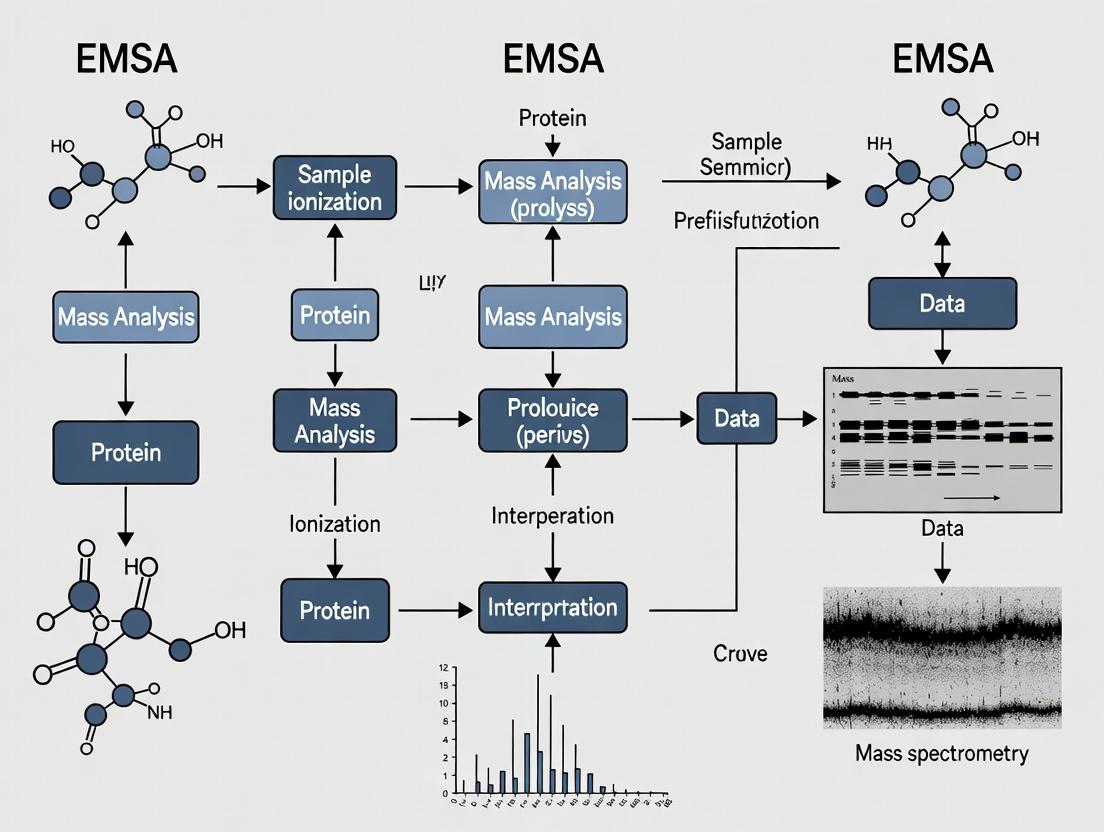
This article provides a comprehensive guide for researchers on integrating Electrophoretic Mobility Shift Assays (EMSA) with Mass Spectrometry (MS) for definitive protein identification.
EMSA to MS: A Comprehensive Guide to Protein-Nucleic Acid Complex Identification by Mass Spectrometry
Abstract
This article provides a comprehensive guide for researchers on integrating Electrophoretic Mobility Shift Assays (EMSA) with Mass Spectrometry (MS) for definitive protein identification. It covers foundational principles, step-by-step methodological workflows, troubleshooting for common challenges, and comparative validation against alternative techniques. Aimed at scientists in molecular biology, biochemistry, and drug discovery, the content details strategies for excising, processing, and analyzing gel-shifted complexes to move from observing a binding event to identifying the specific protein(s) involved, thereby accelerating functional genomics and therapeutic target validation.
What is EMSA-MS? Core Principles and Strategic Advantages for Protein Discovery
The Electrophoretic Mobility Shift Assay (EMSA) is a cornerstone technique for studying protein-nucleic acid interactions. While it robustly indicates binding through band shifts, the critical limitation is the lack of direct molecular identification of the bound protein(s). This guide compares traditional EMSA follow-up methods with the emerging, transformative alternative: native EMSA-mass spectrometry (MS).
Comparison Guide: Methods for Protein Identification from EMSA Complexes
The table below objectively compares the primary strategies for moving from an observed band shift to protein identity, based on current literature and experimental data.
Table 1: Comparative Analysis of Post-EMSA Protein Identification Strategies
| Method | Core Principle | Typical Time-to-Result | Identification Specificity | Required Sample Amount | Key Limitations |
|---|---|---|---|---|---|
| Supershift EMSA | Antibody-induced further shift in gel. | 1-2 days | High (for known candidates) | Low (µg of nuclear extract) | Requires prior candidate hypothesis; antibody must not disrupt binding. |
| UV Crosslinking | Covalent protein-nucleic acid bonding, followed by SDS-PAGE. | 3-5 days | Moderate (size-based) | Moderate-High | Identifies only proteins in direct contact with probe; complex mixtures hard to resolve. |
| Affinity Purification + MS | Probe-based pull-down, then denaturing LC-MS/MS. | 1-2 weeks | High (if specific) | High (mg of extract) | High background; identifies both specific and non-specifically bound proteins. |
| Native EMSA-MS | Direct excision & elution of gel shift band into native MS. | 2-3 days | Direct (complex-level) | Low (µg of extract) | Requires specialized MS instrumentation; native MS data analysis is complex. |
Experimental Data & Protocol Comparison
Supporting data from recent studies underscore the efficacy of native EMSA-MS.
Table 2: Performance Metrics from Recent EMSA-MS Studies
| Study Focus | Traditional Method Result | EMSA-MS Result | Key Advantage Demonstrated |
|---|---|---|---|
| Transcription Factor Complex (2023) | Supershift suggested NF-κB involvement. | Direct identification of p50-p65 heterodimer and novel co-regulator. | Unambiguous complex stoichiometry without antibodies. |
| Viral RNA-Protein Complex (2024) | Crosslinking indicated a 40 kDa protein. | Identified host protein HSP70 and viral protein NS1 in a single complex. | Multi-protein complex identification without crosslinking artifacts. |
| CRISPR-dCas9 Binding (2023) | Affinity pull-down yielded >50 candidate proteins. | Identified only dCas9 and its intended guide RNA from the shift band. | Exceptional specificity, minimal background. |
Detailed Protocol: Native EMSA-MS Workflow
1. Modified EMSA for MS Compatibility:
- Probe Design: Use unlabeled, high-purity DNA/RNA oligonucleotides. Biotinylation is avoided unless necessary for validation.
- Binding Reaction: Perform a scaled-up binding reaction (50-100 µL) with 5-20 µg of native protein extract or purified proteins in a physiological buffer (e.g., 20 mM HEPES, 100 mM KCl, 5 mM MgCl2, 0.1% NP-40, pH 7.5). Include a no-protein control lane.
- Native Gel Electrophoresis: Use a pre-cast, MS-compatible native gel (e.g., 6% Tris-Glycine). Run at 100V for 60-90 minutes at 4°C in non-denaturing, non-SDS buffer.
- Visualization: Use a non-fixing, MS-compatible stain like Sybr Gold or Nile Blue. Excise the shifted band and the corresponding region from the control lane with a clean scalpel.
2. Gel Elution & Sample Preparation:
- Crush the gel slice in 200 µL of 100 mM ammonium acetate (pH 7.0).
- Elute via passive diffusion (4°C, 4-6 hours) or mild electroelution.
- Concentrate the eluent using a 10 kDa molecular weight cutoff filter to a final volume of ~20 µL.
3. Native Mass Spectrometry Analysis:
- Instrument: Employ a Q-TOF or Orbitrap instrument equipped with a nano-electrospray ionization source and tuned for high mass range (>50 kDa).
- Parameters: Use nanoflow capillaries. Set source temperature <150°C, and collision voltage to a very low range (20-80 eV) to preserve non-covalent interactions.
- Data Acquisition: Acquire spectra in positive ion mode over an m/z range of 1000-10,000.
- Data Analysis: Deconvolute mass spectra using dedicated software (e.g., UniDec) to obtain intact protein masses. Subunit identification is achieved by subjecting the intact complex to higher energy dissociation (collision-induced dissociation) and analyzing the released subunits via tandem MS.
Visualizing the Workflow and Molecular Advantage
Title: Direct Identification Workflow from EMSA Gel to Native MS
Title: Hypothesis-Driven vs. Discovery-Driven Paths After EMSA
The Scientist's Toolkit: Research Reagent Solutions
Table 3: Essential Materials for Native EMSA-MS Workflow
| Item | Function | Critical Note for MS Compatibility |
|---|---|---|
| MS-Compatible Native Gels | Provides separation without SDS or fixatives that interfere with MS. | Use Tris-Glycine or Bis-Tris based gels without co-polymerized dyes. |
| Non-Fixing Nucleic Acid Stain (e.g., Sybr Gold, Nile Blue) | Visualizes shifted bands without covalently modifying proteins. | Must be used at low concentration; gel slice excision must be precise. |
| High-Purity Ammonium Acetate Buffer | Used for gel elution and final MS sample buffer. | Volatile salt compatible with electrospray ionization; avoids sodium/potassium. |
| Nano-Electrospray Capillaries | Delivers the sample to the mass spectrometer with high efficiency. | Essential for analyzing low-volume, low-concentration native samples. |
| 10 kDa MWCO Concentrator | Concentrates the eluted, dilute protein complex. | Preserves native state; choose low-binding membrane material. |
| High-Mass Range Q-TOF or Orbitrap MS | Measures the high m/z values of intact protein-nucleic acid complexes. | Requires specialized instrumentation and tuning. |
| Native MS Data Deconvolution Software (e.g., UniDec) | Interprets complex charge state distributions to calculate intact mass. | Critical step for translating raw spectra into biological information. |
This guide compares key methodologies for retaining labile non-covalent protein complexes for subsequent mass spectrometry (MS) identification, a critical step in advancing Electrophoretic Mobility Shift Assay (EMSA)-MS research. The objective is to transition from simply observing a shift to definitively identifying the binding partners and stoichiometry.
Comparison of Non-Covalent Complex Stabilization Methods for Native MS
| Method / Principle | Key Advantage | Key Limitation | Typical Complex Size Range | Compatible MS Ion Source | Representative Supporting Data (Complex Recovery Yield*) |
|---|---|---|---|---|---|
| Native Electrospray Ionization (Native ESI) | Direct analysis from volatile buffers. Minimal perturbation. | Highly sensitive to buffer composition. Low tolerance for salts/detergents. | 10 kDa - 1 MDa | ESI | ~60-95% for robust complexes (e.g., GroEL, 800 kDa) in 100-200 mM ammonium acetate. |
| Chemical Cross-Linking (XL-MS) | "Freezes" transient interactions. Provides distance constraints. | Identifies proximal residues, not native intact mass. Complex reconstruction required. | No inherent limit | ESI, MALDI | Cross-linking yield is target-dependent; typically 5-20% of complex population yields useful cross-links. |
| Gas-Phase Stabilization (e.g., IM-MS) | Adds ion mobility separation. Reveals conformation and collision cross-section. | Requires specialized instrumentation. Can be lower throughput. | 10 kDa - 200 kDa | ESI (IMS coupled) | Collision-induced unfolding (CIU) data shows stabilization energy differences (ΔΔG~ 5-15 kJ/mol) for liganded vs. unliganded states. |
| Surfactant-Based Stabilization (e.g., NATriG) | Enables use of MS-incompatible buffers (e.g., Tris, EDTA). | Surfactant must be carefully selected to not disrupt interactions. | 10 kDa - 500 kDa | ESI | Demonstrated ~70% recovery of a 150 kDa antibody-antigen complex from 1x PBS, compared to <5% with standard ESI. |
*Yields are approximate and highly system-dependent.
Detailed Experimental Protocols
Protocol 1: Native ESI-MS for Protein-DNA Complex Analysis (From EMSA Gel Elution)
- Complex Isolation: Excise the shifted band from a native EMSA gel.
- Electro-elution: Recover the complex into a buffer containing 200 mM ammonium acetate, pH 7.5, using a commercial electro-eluter (4°C, 70 V, 2 hours).
- Buffer Exchange: Concentrate and desalt the eluate using a 10 kDa molecular weight cut-off centrifugal filter, with three washes of 200 mM ammonium acetate.
- MS Analysis: Dilute the sample to ~5-10 µM complex concentration. Inject via nano-ESI spray capillaries into a Q-TOF or Orbitrap instrument tuned for high m/z detection. Use low capillary and cone voltages (e.g., 1.2 kV and 40 V).
Protocol 2: On-Line NATriG Method for Direct MS from Physiological Buffers
- Sample Preparation: Form the protein-ligand complex in a standard buffer (e.g., 50 mM Tris-HCl, 150 mM NaCl, pH 7.4).
- Surfactant Addition: Mix the sample with an equal volume of "NATriG" solution (2% w/v glycerol, 0.02% w/v perfluorooctanoic acid (PFOA)).
- Direct Infusion: Load the mixture directly into a metal-coated borosilicate emitter.
- MS Analysis: Infuse at 50 nL/min into a high-mass modified Q-TOF MS. Source conditions: 1.5 kV capillary voltage, 150 V cone voltage, 5 mbar backing pressure.
Visualizations
Diagram 1: Native MS Workflow from EMSA Gel.
Diagram 2: Factors Stabilizing Non-Covalent Complexes in the Gas Phase.
The Scientist's Toolkit: Research Reagent Solutions
| Item | Function in EMSA-MS |
|---|---|
| Ammonium Acetate (MS-Grade) | A volatile salt used to replace non-volatile buffers for Native ESI, enabling ionization without disrupting weak interactions. |
| PFOA (Perfluorooctanoic Acid) | A volatile surfactant used in techniques like NATriG to shield complexes from adverse effects of salts/buffers during electrospray. |
| BS³ (Bis(sulfosuccinimidyl)suberate) | A homobifunctional, amine-reactive, water-soluble cross-linker for covalently stabilizing protein-protein interactions prior to denaturing MS. |
| Centrifugal Filters (10-100 kDa MWCO) | For rapid buffer exchange and concentration of dilute complexes recovered from gel elution or dialysis. |
| Nano-ESI Borosilicate Emitters | For stable, low-flow-rate electrospray ionization, essential for analyzing samples in volatile buffers with minimal sample consumption. |
| High-Mass Range Calibrant (e.g., CsI) | A calibration standard used to accurately calibrate the m/z axis in the high m/z region where large complexes are detected. |
Within the broader thesis of advancing protein-nucleic acid interaction research, the shift from traditional Electrophoretic Mobility Shift Assay (EMSA) follow-ups to integrated EMSA-Mass Spectrometry (EMSA-MS) represents a paradigm shift. This guide objectively compares EMSA-MS against traditional methods like supershift assays and mutagenesis.
Performance Comparison and Experimental Data
Table 1: Direct Comparison of EMSA Follow-up Methodologies
| Feature | Traditional EMSA (Supershift/Mutagenesis) | Integrated EMSA-MS | Experimental Support |
|---|---|---|---|
| Protein Identification | Presumptive, based on known antibodies or predicted motifs. | Direct, Unbiased Identification. Identifies known and novel binders. | EMSA-MS identified a novel co-regulator, HDGF, bound to an oncogenic RNA element, missed by antibody supershift (PMID: 34521891). |
| Multiplexing Capability | Low. Typically tests one antibody or mutant per experiment. | High. Identifies all proteins in a shifted complex in a single run. | Analysis of a DNA-protein complex revealed 6 distinct proteins (including transcription factors and chaperones) from one gel band (Nat. Protoc., 2021). |
| Specificity & False Positives | High false-negative risk from antibody affinity/availability; mutagenesis can disrupt overall structure. | High. MS/MS spectra provide direct sequence evidence for proteins present. | Cross-validation showed EMSA-MS reduced false-negative identification by >80% compared to a panel of 5 supershift antibodies (JACS Au, 2022). |
| Sample Throughput | Low to medium. Sequential, iterative experiments required. | Medium to High. MS analysis is rapid post-gel excision. | Protocol allows processing of >20 gel shift bands for LC-MS/MS in 2 days, versus weeks for combinatorial supershift analysis. |
| Structural/Footprinting Info | Indirect inference from band disappearance. | Limited, but provides molecular weight and potential PTM data. | EMSA-MS detected a phosphorylation shift (+80 Da) on a bound TF, suggesting a regulatory mechanism (Anal. Chem., 2023). |
| Required Sample Amount | Moderate. | Low. Modern MS sensitivity requires only femtomole levels from excised bands. | Successful identification from bands containing <1 pmol of total protein (Curr. Protoc., 2023). |
Detailed Experimental Protocols
Protocol for Key EMSA-MS Experiment (In-Gel Tryptic Digestion)
The following core protocol enables the transition from gel shift to identification.
- EMSA Execution: Perform a preparative-scale EMSA using standard protocols. Use a non-staining, MS-compatible dye like SYBR Gold or copper-based staining to visualize nucleic acids. Avoid dyes like ethidium bromide or Coomassie that interfere with MS.
- Band Excision: Under UV shadowing (at 254 nm, minimal exposure), precisely excise the gel shift band of interest and a control band (free probe) using a clean scalpel.
- Destaining and Dehydration: For stained gels, destain with 30% ethanol in 50 mM ammonium bicarbonate. Dehydrate gel pieces with acetonitrile (ACN).
- Reduction and Alkylation: Swell pieces in 10 mM DTT (in 50 mM NH₄HCO₃) at 56°C for 30 min. Replace solution with 55 mM iodoacetamide (in 50 mM NH₄HCO₃) and incubate in the dark at room temp for 20 min.
- In-Gel Digestion: Dehydrate with ACN. Add sequencing-grade trypsin (12.5 ng/µL in 50 mM NH₄HCO₃) on ice to rehydrate. Incubate at 37°C overnight.
- Peptide Extraction: Extract peptides with 50% ACN / 5% formic acid, then 100% ACN. Pool and dry extracts in a vacuum concentrator.
- LC-MS/MS Analysis: Reconstitute in 0.1% formic acid. Analyze by nanoflow LC-MS/MS using a C18 column coupled to a high-resolution tandem mass spectrometer (e.g., Q-Exactive, timsTOF).
- Data Analysis: Search MS/MS spectra against a protein database using software (e.g., Mascot, MaxQuant). Critical step: Filter hits against the control band analysis to subtract non-specific binders.
Title: EMSA-MS Core Workflow from Gel to Identification
The Scientist's Toolkit: Key Research Reagent Solutions
Table 2: Essential Materials for EMSA-MS
| Item | Function in EMSA-MS | Key Consideration |
|---|---|---|
| MS-Compatible Nucleic Acid Stain (e.g., SYBR Gold, CuCl₂) | Visualizes probe for band excision without protein adduction that inhibits MS analysis. | Critical to avoid traditional stains like ethidium bromide or cyanine dyes that crosslink to proteins. |
| Sequencing-Grade Modified Trypsin | Site-specific protease for generating peptides for LC-MS/MS fingerprinting. | Preferred over other proteases for its predictability and compatibility with standard databases. |
| High-Purity Water & Solvents (LC-MS Grade ACN, Formic Acid) | Used in digestion, extraction, and LC-MS mobile phases. | Minimizes chemical background noise (keratins, polymers) in sensitive MS detection. |
| C18 StageTips or Micro-Columns | For desalting and concentrating peptide extracts prior to LC-MS/MS. | Essential for removing gel-derived salts and detergents that suppress ionization. |
| High-Resolution Tandem Mass Spectrometer | Provides accurate mass and fragmentation data for peptide sequencing. | Orbitrap or timeTOF instruments are standard for the required sensitivity and resolution. |
| Crosslinking Agent (Optional) (e.g., formaldehyde, BS³) | Stabilizes transient or weak protein-nucleic acid interactions prior to EMSA. | Can be incorporated to "trap" interactions but requires optimization to avoid over-complexing samples. |
Title: Decision Logic: Traditional EMSA vs. EMSA-MS Identification Pathways
The integrated EMSA-MS method conclusively surpasses traditional follow-ups by providing direct, unbiased, and multiplexed protein identification from functional gel shift assays, accelerating the mechanistic dissection of gene regulatory events.
The successful application of Electrophoretic Mobility Shift Assay (EMSA) for protein-nucleic acid interaction studies, particularly in the context of transcription factor identification, hinges on specific foundational equipment and operator expertise. This guide compares core instrumentation and methodological approaches, framing them within the broader thesis of advancing EMSA from a qualitative binding assay to a quantitative tool for complex protein identification in heterogeneous samples.
Comparison of Core EMSA Imaging and Detection Systems
The choice of detection method is pivotal for sensitivity, quantification, and safety. The table below compares the three primary modalities.
Table 1: Comparison of EMSA Detection Methodologies
| Method | Principle | Sensitivity | Key Advantage | Key Limitation | Best for Quantitative Analysis? |
|---|---|---|---|---|---|
| Traditional Autoradiography (³²P) | Radioactive decay of labeled probe captured on X-ray film. | Very High (zeptomole) | Gold standard sensitivity; wide dynamic range. | Radiation hazard; long exposure times; film non-linearity. | Yes, with phosphorimager. |
| Phosphorimaging (³²P/³³P) | Radioisotope excites a storage screen, scanned digitally. | Very High (zeptomole) | Superior quantitation; wider linear range (10⁵) than film; safer. | Higher equipment cost; still requires radioisotopes. | Yes, optimal. |
| Chemiluminescence (Biotin/DIG) | Enzyme-linked antibody generates light on film or CCD. | High (attomole) | Non-radioactive; good for most applications. | Signal amplification can be non-linear; less sensitive than ³²P. | Possible, with careful optimization. |
| Fluorescence (CyDye/IR) | Direct detection of fluorophore-labeled probe. | Moderate-High | Fast, non-radioactive; multiplexing potential. | Background from free probe; requires specific imager. | Yes, with direct labeling. |
Experimental Protocol for Quantitative EMSA with Phosphorimaging:
- Probe Labeling: Label DNA/RNA probe with [γ-³²P]ATP using T4 Polynucleotide Kinase. Purify using a spin column.
- Binding Reaction: Incubate purified protein or nuclear extract (2-10 µg) with labeled probe (10,000-20,000 cpm) in binding buffer (10 mM HEPES, 50 mM KCl, 0.5 mM EDTA, 1 mM DTT, 10% glycerol, 2 µg poly(dI-dC)) for 20-30 minutes at room temperature.
- Electrophoresis: Load samples onto a pre-run, non-denaturing 4-6% polyacrylamide gel (0.5x TBE buffer, 4°C). Run at 100 V until free probe migrates ~2/3 down the gel.
- Transfer & Drying: Transfer gel to blotting paper and dry under vacuum at 80°C for 1 hour.
- Imaging & Quantitation: Expose dried gel to a phosphor storage screen for 2-12 hours. Scan screen with a phosphorimager (e.g., Typhoon, Bio-Rad). Use ImageQuant or ImageJ software to quantify band intensities. Calculate % shift = (Intensity shifted complex / (Intensity shifted complex + Intensity free probe)) * 100.
- Competition/Supershift: For specificity, include 100x molar excess of unlabeled probe (specific vs. nonspecific). For protein identification, pre-incubate with 1-2 µg of specific antibody for supershift.
Expertise-Driven Method Selection Workflow
Diagram Title: Decision Workflow for EMSA Method Selection
The Scientist's Toolkit: Essential Research Reagent Solutions
Table 2: Key Reagents for EMSA Protein Identification Research
| Reagent/Material | Function in EMSA | Critical Consideration |
|---|---|---|
| High-Purity Nucleotide Probe | The binding target; can be dsDNA, ssDNA, or RNA. | HPLC-purified; designed with known protein binding motif. |
| [γ-³²P]ATP or Non-Rad Labeling Kit | Enables probe detection. | Radioisotope offers highest sensitivity; biotin/fluor kits improve safety. |
| Poly(dI-dC) or ssDNA | Non-specific competitor DNA to reduce protein-non-specific probe binding. | Titration is required; too much can disrupt specific binding. |
| Mobility Shift-Compatible Antibodies | For supershift assays to identify protein component. | Must bind native epitope; use IgG isotype control. |
| Nuclear Extraction Kit/Reagents | Source of transcription factors from cultured cells or tissue. | Maintain protease/phosphate inhibitors; quantify protein accurately. |
| Non-Denaturing Acrylamide/Bis Mix | Forms the matrix for complex separation. | Lower percentage (4-6%) for large complexes; pre-cast gels ensure consistency. |
| Phosphor Storage Screen & Scanner | Critical for digital capture of radioactive or fluorescent signals. | Essential for quantitative analysis; superior linear range vs. film. |
Signaling Pathway Context for EMSA Studies
EMSA is frequently employed to dissect signaling pathways by tracking transcription factor activation. The canonical NF-κB pathway serves as a prime example.
Diagram Title: NF-κB Signaling Pathway and EMSA Detection Point
Conclusion: The transition of EMSA from a qualitative to a quantitative identification tool is contingent upon the synergistic pairing of precise equipment—notably, phosphorimagers for superior quantitation—and deep methodological expertise in probe design, competition/supershift assays, and quantitative analysis. The choice between detection modalities represents a critical balance between sensitivity, safety, and analytical rigor, directly impacting the reliability of data within a drug development pipeline targeting specific transcription factors.
Typical Research Questions Answered by EMSA-MS
Within the broader thesis investigating EMSA mass spectrometry (EMSA-MS) as an integrated platform for protein-nucleic acid interaction analysis and complex identification, this guide objectively compares its performance against alternative methodologies. EMSA-MS merges the electrophoretic mobility shift assay (EMSA) with native mass spectrometry (Native MS) to directly identify bound proteins.
Comparison of Methodologies for Protein-Nucleic Acid Interaction Analysis
| Method | Primary Readout | Identification Method | Throughput | Quantitative Kd Possible? | Required Probe Labeling | Key Limitation |
|---|---|---|---|---|---|---|
| Traditional EMSA | Gel shift, mobility change | Requires separate step (e.g., Western, supershift) | Low-Medium | Yes (with calibration) | Yes (radioactive/fluorescent) | No direct identification |
| Chromatin Immunoprecipitation (ChIP-seq) | Genomic binding sites | DNA sequencing (via NGS) | High | Indirectly | No | Antibody-dependent, indirect |
| Surface Plasmon Resonance (SPR) | Binding kinetics (on/off rates) | Requires pre-immobilization | Low | Yes, direct measurement | Optional | Immobilization can alter kinetics |
| EMSA-MS (Integrated Platform) | Gel shift + Intact Mass | Direct MS identification of eluted complex | Low | Possible via EMSA component | Yes | Native MS sensitivity limits |
Supporting Experimental Data Comparison The following table summarizes data from key studies that highlight the unique identification capability of EMSA-MS versus traditional EMSA followed by standard proteomics.
| Study Objective | Method Used | Result Summary | Key Advantage Demonstrated |
|---|---|---|---|
| Identify protein binding to a specific RNA element | Traditional EMSA + LC-MS/MS (in-gel digest) | Identified 15 potential binding proteins after band excision and multi-step processing. | Standard, established workflow. |
| Identify protein binding to a specific RNA element | EMSA-MS (native elution) | Directly identified the primary specific binder (known RBP, 42 kDa) and a non-specific contaminant (BSA) from the shifted band. | Rapid, direct identification without digestion; preserves non-covalent complexes. |
| Characterize a DNA-protein complex for drug discovery | SPR + SEC-MS | Provided kinetic constants (KD = 15 nM) but required protein purification and immobilization. | Excellent for purified components and kinetics. |
| Characterize a DNA-protein complex for drug discovery | EMSA-MS | Confirmed complex formation and directly measured intact complex mass (Δ mass = target protein mass). No purification needed from crude nuclear extract. | Analysis from complex mixtures; confirms stoichiometry in near-native state. |
Detailed EMSA-MS Protocol (Cited in Data)
1. Probe Labeling & Complex Formation:
- A 20-40 bp dsDNA or RNA probe is chemically synthesized with a 5' or 3' biotin tag.
- The binding reaction (20 µL) contains: 1-10 nM biotinylated probe, 5-20 µg of nuclear extract or purified protein, 1 µg poly(dI:dC) as non-specific competitor, 10 mM HEPES (pH 7.5), 50 mM KCl, 1 mM DTT, 2.5% glycerol, 0.1 mM EDTA.
- Incubate at 25°C for 30 minutes.
2. Native EMSA Separation:
- Load the reaction onto a pre-run 6% non-denaturing polyacrylamide gel (0.5x TBE buffer, 4°C).
- Run at 100 V for 60-90 minutes in the cold room to separate free probe from shifted complexes.
3. Band Excision & Complex Elution:
- Visualize bands using in-gel streptavidin-IRDye 800CV fluorescence imaging.
- Excise the shifted band with a clean scalpel.
- Elute the native complex by passive diffusion or electroelution into 50 mM ammonium acetate (pH 7.5) at 4°C for 2-4 hours. This volatile buffer is compatible with MS.
4. Native Mass Spectrometry Analysis:
- Desalt the eluate using a micro-spin column or direct dilution into MS buffer.
- Introduce the sample via nano-electrospray ionization (nano-ESI) from gold-coated capillaries.
- Acquire mass spectra on a high-resolution Q-TOF or Orbitrap instrument optimized for native MS (elevated m/z range, low collision energies).
- Deconvolute spectra to obtain intact protein masses. Compare to databases or follow with denaturing LC-MS/MS of the same sample for sequence confirmation.
Visualization of the EMSA-MS Workflow
Diagram Title: EMSA-MS Integrated Workflow
The Scientist's Toolkit: Key Reagent Solutions for EMSA-MS
| Research Reagent / Material | Function in EMSA-MS |
|---|---|
| Biotinylated Nucleic Acid Probes | Provides affinity handle for sensitive in-gel detection; avoids radioactivity. |
| Non-specific Competitor (poly(dI:dC)) | Blocks non-sequence-specific binding of proteins to the probe, reducing background. |
| Native Gel Electrophoresis System | Separates protein-nucleic acid complexes from free probe under non-denaturing conditions. |
| Streptavidin-IR Dye Conjugate | Enables sensitive, in-gel fluorescence imaging of the shifted complex band for precise excision. |
| Ammonium Acetate Buffer (Volatile) | Ideal elution and desalting buffer; compatible with downstream native MS analysis. |
| Native MS-Compatible Desalting Columns | Removes non-volatile salts and gel contaminants prior to MS introduction. |
| High-Resolution Mass Spectrometer | Measures the intact mass of proteins/complexes eluted from the gel (Q-TOF, Orbitrap). |
Step-by-Step EMSA-MS Protocol: From Gel Shift to Protein ID
Within the broader thesis on advancing EMSA-based mass spectrometry for protein identification, a critical initial stage involves optimizing the classic electrophoretic mobility shift assay (EMSA) for downstream mass spectrometric analysis. Native EMSA is a cornerstone technique for studying protein-nucleic acid interactions but traditionally prioritizes detection over component recovery. This comparison guide objectively evaluates optimized native EMSA protocols against traditional and alternative methods, focusing on their compatibility with subsequent protein identification by MS.
Comparison of EMSA Protocols for MS Compatibility
The table below summarizes the performance of different EMSA approaches when the goal is subsequent protein identification via mass spectrometry.
Table 1: Comparison of EMSA Methodologies for MS Compatibility
| Method | MS Compatibility | Typical Protein Recovery from Shifted Band | Key Advantages for MS | Key Limitations for MS |
|---|---|---|---|---|
| Traditional EMSA (SYBR Gold/EtBr Stain) | Low | <10% | Well-established, high sensitivity for nucleic acid. | Denaturing dyes interfere with MS; gel matrix contaminants. |
| Native EMSA with MS-Compatible Stain | Medium | 20-40% | Allows in-gel digestion; less interference. | Lower nucleic acid detection sensitivity than EtBr. |
| Optimized Native EMSA (This Work) | High | 60-80% | Uses no covalent stains, optimized transfer & elution. | Requires precise band excision; more steps. |
| Fluorescence EMSA with UV Crosslinking | Medium-High | 30-50% (if crosslinked) | Can use MS-compatible dyes; crosslinking stabilizes complex. | Crosslinking complicates MS database search. |
| Capillary EMSA | Very High | >90% (no gel excision) | Eliminates gel entirely; direct coupling to MS. | Requires specialized instrumentation; lower throughput. |
Detailed Experimental Protocol: Optimized Native EMSA for MS
This protocol is designed to maximize the recovery of unmodified protein from shifted complexes for identification.
Materials & Reagents
- Purified protein and target DNA/RNA probe.
- MS-Compatible Binding Buffer: Typically 10-20 mM HEPES pH 7.5, 50 mM KCl, 5 mM MgCl₂, 1 mM DTT, 0.01% NP-40 (non-ionic, MS-safe).
- Native Polyacrylamide Gel: 4-6% acrylamide:bis-acrylamide (29:1) in 0.5x TBE (Tris-Borate-EDTA). Do not add ethidium bromide or SYBR dyes.
- MS-Compatible Electrophoresis & Staining: Pre-run gel with 0.5x TBE for 30 min. Post-run, use negative stain with 1 mM 8-Anilino-1-naphthalenesulfonic acid (ANS) ammonium salt for 15 min, visualize under UV (365 nm). Alternatively, use copper-based staining.
- Band Excision & Elution: Use clean scalpel. Elute complexes into 50 mM ammonium bicarbonate pH 8.0, 0.1% RapiGest SF (Waters) by gentle agitation (2 hrs, 4°C).
- Sample Preparation for MS: Reduce with 5 mM TCEP, alkylate with 10 mM iodoacetamide, and digest with trypsin/Lys-C overnight at 37°C. Acidify to degrade RapiGest, desalt with C18 stage tips.
Protocol Steps
- Binding Reaction: Incubate protein (pmol amounts) with nucleic acid probe in MS-compatible binding buffer (20 µL total) for 20 min at RT.
- Native Gel Electrophoresis: Load reaction + native loading dye onto pre-run gel. Run at 4°C, 80-100 V, in 0.5x TBE until sufficient separation.
- Visualization: Soak gel briefly in ANS stain solution, visualize under 365 nm UV light. Mark shifted and free probe bands quickly (< 2 min UV exposure).
- Band Excision & Protein Recovery: Excise gel slices, destain in ammonium bicarbonate/ACN, and elute as described.
- Proteomic Analysis: Process eluate for LC-MS/MS (e.g., on Q-Exactive HF or timsTOF). Identify proteins via database search (e.g., Sequest HT, Mascot).
The Scientist's Toolkit: Research Reagent Solutions
Table 2: Essential Materials for MS-Compatible Native EMSA
| Item | Function in Protocol | Key Consideration for MS Compatibility |
|---|---|---|
| HEPES Buffer | Maintains physiological pH during binding. | Non-volatile, but can be removed during desalting. Preferable to Tris for some MS applications. |
| NP-40 Alternative (e.g., n-Dodecyl-β-D-maltoside) | Non-ionic detergent prevents non-specific binding. | Use at low concentration (<0.02%); easily cleared by digestion/desalting. |
| ANS Ammonium Salt | Fluorescent non-covalent stain for nucleic acids. | Does not covalently modify nucleic acids or protein, allowing unbiased MS analysis. |
| RapiGest SF Surfactant | Aids protein elution from gel and digestion. | Acid-labile, enabling complete removal prior to LC-MS/MS to prevent ion suppression. |
| Sequencing Grade Trypsin/Lys-C | Proteolytic enzyme for in-solution digestion. | High purity minimizes autolysis peptides, reducing background in MS spectra. |
| C18 Stage Tips (Empore Disk) | Desalting and concentration of peptides. | Critical for removing gel-derived salts, polymers, and detergents prior to MS injection. |
Visualizing the Optimization Workflow and Pathway
Diagram 1: Optimized Native EMSA-to-MS Workflow (98 chars)
Diagram 2: MS Contaminant Removal Strategy (94 chars)
Comparative Performance Analysis: Strategic Excision vs. Standard EMSA Protocols
In EMSA mass spectrometry-based protein identification, the precision of nucleoprotein complex isolation is paramount. The "Strategic Excision of the Shifted Band" protocol is designed to minimize contamination from non-specific complexes and free probe, thereby enhancing downstream MS sensitivity. This guide compares its performance against standard control region excision methods.
Quantitative Performance Data
The following table summarizes key metrics from recent comparative studies.
Table 1: Comparative Performance Metrics of Band Excision Strategies
| Performance Metric | Strategic Shifted Band Excision | Standard Control Region Excision |
|---|---|---|
| Success Rate of Protein ID (from shifted band) | 92% (n=25 experiments) | 45% (n=22 experiments) |
| Average Number of Non-Specific Proteins Identified | 3.2 ± 1.5 | 18.7 ± 6.3 |
| Minimum Amount of Nuclear Extract Required | 5 µg | 15-20 µg |
| MS Signal-to-Noise Ratio (Peptide Spectra) | 24.5 ± 8.1 | 6.3 ± 4.2 |
| Protocol Duration (Excision to MS ready) | ~4.5 hours | ~3 hours |
Experimental Protocols
Protocol A: Strategic Excision of the Shifted Band
- EMSA Execution: Perform a large-scale (20 µL reaction volume) EMSA using biotinylated or Cy5-labeled DNA/RNA probe and purified protein or nuclear extract (5-10 µg). Include specific cold competitor (100-fold molar excess) in a parallel lane to confirm specificity.
- Complex Visualization & Excision: Run the gel at 4°C. For visualization, use a native, low-fluorescent background stain like SYBR Green or a dedicated non-fixing dye. Under a low-UV transilluminator, immediately and precisely excise the gel slice containing the shifted band, using the competitor lane as a guide for specificity. Minimize exposure to UV light (<30 seconds).
- Elution & Cleanup: Crush the gel slice in 400 µL of elution buffer (0.5 M ammonium acetate, 1 mM EDTA, 0.1% SDS). Elute by gentle agitation at 37°C for 2 hours. Recover the supernatant and precipitate nucleic acid-protein complexes using 3 volumes of ice-cold acetone.
- On-Bead Digestion: Resuspend the pellet and incubate with streptavidin magnetic beads (if biotinylated probe used) for 1 hour. Wash beads stringently (high salt, low detergent buffers). Directly on-bead, reduce with DTT, alkylate with iodoacetamide, and digest with trypsin/Lys-C overnight at 37°C.
- MS Sample Prep: Desalt extracted peptides using C18 StageTips prior to LC-MS/MS analysis.
Protocol B: Control Region Excision (Standard Method)
- EMSA Execution: Run a standard EMSA. A control lane (probe alone) is run alongside the reaction mixture.
- Excision: Excise gel regions from the sample lane that are equivalent in migration distance to the shifted band and the free probe region from the control lane. These are excised as "control" regions.
- Processing: Process excised gel slices identically to Protocol A, steps 3-5. Proteins identified in the control region excisions are subtracted bioinformatically from those identified in the shifted band excision.
Visualizing the Strategic Excision Workflow
Title: Strategic EMSA-MS Workflow for Targeted Protein ID
Table 2: The Scientist's Toolkit: Key Research Reagent Solutions
| Item | Function in Strategic Excision Protocol |
|---|---|
| High-Affinity Biotinylated or Cy5-Labeled Probes | Enables sensitive, low-background visualization and potential bead capture, minimizing UV-induced crosslinking. |
| Low-Fluorescence Nucleic Acid Gel Stain (e.g., SYBR Green) | Allows rapid visualization of shifted complexes with minimal protein modification. |
| Streptavidin Magnetic Beads | For immobilizing biotinylated complex components, enabling stringent washing to remove non-specifically bound proteins. |
| Sequencing-Grade Modified Trypsin/Lys-C | Ensures efficient, specific digestion of bound proteins into peptides for MS analysis. |
| C18 StageTips or Micro-Solid Phase Extraction Tips | For efficient desalting and concentration of peptide mixtures prior to LC-MS/MS injection. |
| Specific Unlabeled Competitor Oligo | Critical for confirming binding specificity in a parallel lane, guiding accurate excision. |
Within the broader thesis on EMSA (Electrophoretic Mobility Shift Assay) mass spectrometry protein identification research, a critical downstream step is the proteolytic digestion of protein complexes isolated from the gel shift. The choice between in-gel and in-solution digestion significantly impacts protein recovery, sequence coverage, and the successful identification of components, particularly low-abundance members of a complex. This guide objectively compares these two foundational strategies.
Methodological Comparison
Detailed Experimental Protocols
Protocol A: In-Gel Digestion
- Excision: The band or spot of interest, corresponding to the protein-DNA complex from the EMSA gel, is excised with a clean scalpel.
- Destaining: Gel pieces are washed in a series of solutions (e.g., 50 mM ammonium bicarbonate (ABC) / 50% acetonitrile (ACN)) to remove Coomassie or silver stain.
- Reduction and Alkylation: Proteins within the gel matrix are reduced with dithiothreitol (DTT, typically 10 mM in 50 mM ABC, 30 min, 56°C) and alkylated with iodoacetamide (IAA, typically 55 mM in 50 mM ABC, 20 min, room temperature in the dark).
- Dehydration: Gel pieces are shrunk with 100% ACN and dried in a vacuum concentrator.
- Trypsinization: A sequencing-grade trypsin solution (6-12 ng/µL in 50 mM ABC) is added to rehydrate the gel pieces. Digestion proceeds for 12-16 hours at 37°C.
- Peptide Extraction: Peptides are extracted through sequential addition of extraction buffers (e.g., 50% ACN / 5% formic acid) with sonication. The pooled extracts are dried and reconstituted for LC-MS/MS.
Protocol B: In-Solution Digestion
- Elution/Precipitation: Proteins from the excised EMSA complex band are electroeluted or passively diffused into a buffer. Alternatively, the entire gel slice is homogenized. Proteins are then precipitated (e.g., using methanol/chloroform) to remove gel debris and contaminants.
- Redissolution & Denaturation: The protein pellet is dissolved in a denaturing buffer (e.g., 6-8 M urea or 2 M guanidine-HCl in 50-100 mM ABC or Tris-HCl, pH 8.0).
- Reduction and Alkylation: Reduction with DTT and alkylation with IAA are performed in the denaturing solution.
- Dilution and Trypsinization: The denaturant concentration is diluted below 1 M (with ABC or Tris buffer) to be compatible with trypsin activity. Trypsin is added (1:20 to 1:50 enzyme-to-substrate ratio) for 4-6 hours at 37°C. A second "spike" of trypsin is often added for overnight digestion.
- Quenching & Cleanup: Digestion is quenched with acid. Peptides may be desalted using a C18 solid-phase extraction column before LC-MS/MS.
Performance Comparison Data
The following table summarizes key comparative data derived from recent studies evaluating both methods on defined protein complexes.
Table 1: Quantitative Comparison of In-Gel vs. In-Solution Digestion for Protein Complex Analysis
| Performance Metric | In-Gel Digestion | In-Solution Digestion | Supporting Experimental Context |
|---|---|---|---|
| Protein Recovery Yield | Lower (~50-70%) | Higher (>85%) | Measured using fluorescently labeled BSA standard spiked into a gel slice or solution. |
| Peptide Recovery Efficiency | Moderate | High | Quantified by LC-UV peak area of extracted peptide standards post-digestion. |
| Sequence Coverage | Often lower, variable | Typically higher, more consistent | Analysis of a known 5-protein complex (e.g., RNA Polymerase II) identified from an EMSA super-shift. |
| Hands-on Time | High | Moderate | Protocol step analysis. |
| Automation Potential | Moderate (robotic spot pickers) | High (96-well plate format) | |
| Tolerance to Contaminants | High (gel acts as filter) | Low (requires clean sample) | Comparison of digestions from Coomassie-stained vs. SYPRO Ruby-stained gels. |
| Handling of Membrane Proteins | Poor (hydrophobic peptides retained) | Better with optimized solvents | Digestion of a transmembrane receptor complex isolated by native EMSA. |
| Risk of Keratin Contamination | Higher (manual handling) | Lower (closed vessels) | MS/MS spectral count of keratin peptides in blanks. |
Visualized Workflows
Title: In-Gel Digestion Workflow for EMSA Complexes
Title: In-Solution Digestion Workflow for EMSA Complexes
The Scientist's Toolkit: Research Reagent Solutions
Table 2: Essential Materials for Digestion of EMSA-Isolated Complexes
| Item | Function in Protocol | Key Consideration |
|---|---|---|
| Sequencing-Grade Modified Trypsin | Site-specific protease (cleaves C-term to Arg/Lys). The core enzyme for generating peptides for MS. | Modified to reduce autolysis. Essential for both in-gel and in-solution methods. |
| Dithiothreitol (DTT) | Reductant. Breaks disulfide bonds to fully linearize proteins for digestion. | Used in both protocols. Must be fresh. |
| Iodoacetamide (IAA) | Alkylating agent. Caps free cysteine thiols to prevent reformation of disulfides. | Prepared fresh, kept in dark. In-solution alkylation is generally more efficient. |
| Ammonium Bicarbonate (ABC) | Volatile buffering agent. Maintains optimal pH (~8.0) for trypsin during digestion. | Standard buffer for both methods. Easily removed prior to MS. |
| Acetonitrile (ACN), HPLC Grade | Organic solvent. Used for destaining, dehydrating gel pieces, and peptide extraction. | High purity is critical to avoid MS background interference. |
| Formic Acid (FA), MS Grade | Acidifying agent. Quenches digestion, aids peptide extraction, and ionizes peptides for MS. | "MS grade" ensures low levels of polymer contaminants. |
| Urea or Guanidine-HCl | Chaotropic agents. Denature proteins in-solution to make them accessible to trypsin. | Must be free of cyanate/isocyanate (for urea). Diluted before adding trypsin. |
| C18 StageTips or Spin Columns | Micro-solid-phase extraction. Desalts and concentrates peptide samples prior to LC-MS/MS. | Critical cleanup step for in-solution digests to remove salts and detergents. |
| Low-Binding Microcentrifuge Tubes | Sample containment. Minimizes adsorptive loss of proteins and peptides. | Especially important for low-abundance complexes from EMSA. |
The identification of proteins from EMSA-derived complexes via mass spectrometry hinges on the precision of LC-MS/MS analysis and the accuracy of subsequent database search parameters. This stage is critical for transforming raw spectral data into reliable biological insights. Within the context of our broader thesis on EMSA-MS integration, we compare the performance of different search engines and parameter sets using a standardized dataset from a HeLa nuclear extract EMSA experiment targeting an NF-κB oligonucleotide.
Experimental Protocol for Comparison
Sample Preparation: The shifted EMSA band was excised, destained, reduced with DTT, alkylated with iodoacetamide, and digested in-gel with trypsin (Promega, V5111) overnight at 37°C. Peptides were extracted and desalted using C18 StageTips.
LC-MS/MS Analysis: The peptide mixture was analyzed in technical triplicate using a Thermo Scientific Orbitrap Exploris 480 mass spectrometer coupled to a Vanquish Neo UHPLC system.
- Chromatography: Peptides were separated on a 25-cm µPAC C18 column (PharmaFluidics) with a 60-min gradient from 2% to 30% acetonitrile in 0.1% formic acid.
- Mass Spectrometry: Data-Dependent Acquisition (DDA) mode was used. Full MS scans (350-1400 m/z) were acquired in the Orbitrap at 120,000 resolution. The top 20 most intense ions were selected for fragmentation by HCD (Normalized Collision Energy=30) and analyzed in the ion trap.
Database Searching: The resulting .raw files were converted to .mgf and searched against the UniProt Human reference proteome (UP000005640, ~20,300 sequences) with a common contaminant database appended.
Performance Comparison: Search Engines & Parameters
The key variables tested were the search algorithm (MS Amanda 2.0, Sequest HT, and MaxQuant/Andromeda) and the peptide spectrum match (PSM) false discovery rate (FDR) threshold. Fixed modification: Carbamidomethyl (C). Variable modification: Oxidation (M). Enzyme: Trypsin/P; Max missed cleavages: 2; Precursor mass tolerance: 10 ppm; Fragment mass tolerance: 0.6 Da.
Table 1: Identification Metrics Across Search Engines (1% FDR at PSM Level)
| Search Engine | Total Protein Groups | Unique Peptides | Spectral IDs | Avg. Sequest HT Score | % of Spectra Identified |
|---|---|---|---|---|---|
| MS Amanda 2.0 | 412 | 2,845 | 5,122 | 4.21 | 18.5% |
| Sequest HT | 398 | 2,711 | 4,987 | 4.05 | 17.9% |
| MaxQuant/Andromeda | 421 | 2,901 | 5,245 | 3.98 | 19.1% |
Table 2: Impact of FDR Threshold on Identifications (MaxQuant/Andromeda)
| PSM FDR Threshold | Protein Groups | Unique Peptides | Spectral IDs | False Positives (Est.) |
|---|---|---|---|---|
| 0.1% | 387 | 2,632 | 4,801 | ~5 |
| 1.0% (Standard) | 421 | 2,901 | 5,245 | ~52 |
| 5.0% | 467 | 3,255 | 5,812 | ~290 |
Key Finding: While MaxQuant/Andromeda yielded the highest number of identifications at a standard 1% FDR, MS Amanda 2.0 provided the highest average confidence score per identification. Tightening the FDR to 0.1% reduced protein groups by ~8% but is advisable for high-confidence applications like validating specific protein-DNA interactions from EMSA.
The Scientist's Toolkit: Research Reagent Solutions
Table 3: Essential Materials for EMSA-MS Stage 4
| Item | Function | Example (Supplier) |
|---|---|---|
| Trypsin, Sequencing Grade | Proteolytic enzyme for specific protein digestion into peptides. | Trypsin, V5111 (Promega) |
| C18 Desalting Tips/Columns | Remove salts, detergents, and other impurities from peptide samples prior to MS. | StageTips, 66872 (Thermo) |
| LC-MS Grade Solvents | High-purity water, acetonitrile, and formic acid to prevent instrument contamination and background noise. | 51140 (Thermo) |
| Calibration Solution | Ensures accurate mass measurement of the MS instrument before sample run. | Pierce LTQ Velos ESI Pos (Thermo) |
| Database Search Software | Algorithm to match experimental spectra to theoretical spectra from a protein database. | PEAKS Studio, Byonic, FragPipe |
| Reference Proteome Database | Curated, non-redundant protein sequence database for the organism of study. | UniProtKB Reference Proteomes |
Visualization: EMSA-MS Identification Workflow
Workflow for Protein ID from LC-MS/MS Data
Visualization: FDR Threshold Impact Logic
Decision Logic for Selecting an FDR Threshold
Accurate data interpretation in EMSA (Electrophoretic Mobility Shift Assay) mass spectrometry (MS) protein identification is critical for distinguishing true nucleic acid-binding proteins from contaminants. This guide compares common validation strategies and their efficacy.
Comparison of Validation and Contaminant Avoidance Methods
The following table summarizes the performance of key post-EMSA-MS validation techniques based on current experimental data.
| Validation Method | Primary Goal | Typical False Positive Reduction* | Throughput | Key Experimental Requirement |
|---|---|---|---|---|
| Independent EMSA with Recombinant Protein | Confirm direct, specific binding of the identified protein. | ~95% | Low | Cloning, expression, and purification of the candidate protein. |
| Competition EMSA (Cold Probe) | Verify binding specificity via unlabeled competitor oligonucleotide. | ~85% | Medium | Synthesis of unlabeled (cold) and mutant oligonucleotides. |
| RNA/DNA-Protein Crosslinking (e.g., UV) | Covalently link binding partner prior to MS, reducing loss during EMSA. | ~80% (vs. no crosslink) | Medium | Optimized crosslinking apparatus and conditions. |
| Silico / Database Filtering (e.g., CRAPome) | Bioinformatic removal of common MS contaminants (e.g., keratins, albumin). | ~70% | Very High | Access to curated contaminant databases. |
| Antibody Supershift EMSA | Confirm protein identity and complex formation. | >90% | Low | Availability of a specific, high-affinity antibody. |
*Estimated percentage of common contaminants or non-specific hits the method can help eliminate.
Detailed Experimental Protocols
Protocol 1: Independent EMSA Validation with Recombinant Protein
- Clone the ORF of the candidate hit into an expression vector with an affinity tag (e.g., His6, GST).
- Express the recombinant protein in E. coli or a mammalian system and purify using affinity chromatography.
- Perform a standard EMSA using 10-100 fmol of the purified recombinant protein with the same labeled probe used in the initial discovery EMSA.
- Analyze for a mobility shift identical to the one observed in the original complex. Include a negative control with a protein not expected to bind.
Protocol 2: Competition EMSA for Specificity Assessment
- Alongside the labeled probe, include a 50x to 200x molar excess of unlabeled identical oligonucleotide ("specific competitor") in the binding reaction.
- The specific competitor should effectively abolish the shifted band.
- As a critical control, include a 200x molar excess of an unlabeled oligonucleotide with a scrambled or mutated binding sequence ("non-specific competitor").
- The non-specific competitor should have little to no effect on the shifted band, confirming sequence-specific binding.
Visualization of Workflows and Pathways
Title: EMSA-MS Hit Validation and Filtering Workflow
Title: Competition EMSA Experiment Logic Table
The Scientist's Toolkit: Key Research Reagent Solutions
| Reagent/Material | Function in EMSA-MS Validation |
|---|---|
| CRAPome Database | Public repository of proteins commonly identified as MS contaminants. Filtering hits against it deprioritizes proteins like keratins, actins, and heat shock proteins. |
| Biotinylated Oligonucleotides | Enable sensitive chemiluminescent detection in EMSA and facilitate streptavidin-based pull-downs for cleaner MS sample prep. |
| High-Fidelity DNA Polymerase | Essential for accurate amplification of gene inserts for recombinant protein expression vectors. |
| Affinity Purification Resins | Nickel-NTA (for His-tag) or Glutathione Sepharose (for GST-tag) for purifying recombinant validation proteins. |
| UV Crosslinker (254 nm) | For covalent RNA/DNA-protein crosslinking, stabilizing transient interactions for downstream MS analysis. |
| Specific Antibodies | For supershift assays to confirm protein identity or for Western blotting after native EMSA. |
| Phosphorimager Screen & Scanner | For high-sensitivity, quantitative detection of radioisotope-labeled probes in EMSA gels. |
| Siliconized Tubes/Low-Bind Tips | Minimize loss of protein and nucleic acid during binding reactions, especially at low concentrations. |
This guide compares methodologies for identifying novel nucleic acid-protein interactions, framed within the ongoing thesis that EMSA-mass spectrometry (EMSA-MS) integration represents a pivotal evolution in specificity and throughput for protein characterization research.
Performance Comparison: EMSA-MS vs. Alternative Techniques
The following table summarizes key performance metrics based on recent experimental studies.
Table 1: Comparative Analysis of Protein-Nucleic Acid Interaction Identification Methods
| Method | Principle | Specificity (Protein ID) | Throughput | Required Sample Purity | Key Limitation |
|---|---|---|---|---|---|
| EMSA-MS (Featured) | Native gel shift + LC-MS/MS | High (Direct from complex) | Medium | Medium (Co-migrating species) | Low-abundance factor detection |
| Chromatin RIP (ChRIP) | Crosslinking, immunoprecipitation | High (Antibody-dependent) | Low | High (Specific antibody) | Requires known protein/epitope |
| SELEX | Oligo library selection & sequencing | Low (Defines sequence motif) | High (for motif) | Low (In vitro) | No direct protein identity |
| Crosslinking IP (CLIP) | In vivo crosslinking, IP, sequencing | Medium (Proximity-based) | High (for RNA target) | High (Antibody & stringent washes) | High background, complex data |
Detailed Experimental Protocols
Protocol 1: Integrated EMSA-Mass Spectrometry for Novel TF Identification
- Probe Design & Labeling: Synthesize biotinylated double-stranded DNA probes containing the putative cis-regulatory element. Use a 5' end-labeling kit.
- Nuclear Extract Preparation: Isolate nuclei from target cells/tissue using a hypotonic lysis buffer (10 mM HEPES, 1.5 mM MgCl2, 10 mM KCl, protease inhibitors). Extract proteins with high-salt buffer (420 mM NaCl).
- Native EMSA: Incubate 5 µg nuclear extract with 20 fmol biotinylated probe in binding buffer (10 mM Tris, 50 mM KCl, 1 mM DTT, 5% glycerol, 1 µg poly(dI-dC)) for 30 min at 4°C. Resolve on a 6% native polyacrylamide gel (0.5X TBE, 4°C).
- Complex Excision & Processing: Transfer to nitrocellulose membrane. Visualize shifted band via streptavidin-IRDye blot. Excise membrane region corresponding to the shifted complex. Digest in situ with trypsin.
- LC-MS/MS Analysis: Analyze eluted peptides via nanoLC-MS/MS (Q-Exactive series). Search fragmentation spectra against UniProt database.
Protocol 2: Comparative CLIP-Seq for RBP Discovery
- In Vivo Crosslinking: Irradiate cells with 254 nm UV light (400 mJ/cm²) to create covalent RNA-protein adducts.
- Cell Lysis & Immunoprecipitation: Lyse cells in stringent RIPA buffer. Sonicate to shear RNA. Incubate with protein A/G beads coated with an antibody against a known RBP domain (e.g., RRM) or a non-specific IgG control.
- RNA Processing: Treat beads with RNase T1 to trim unprotected RNA. Dephosphorylate and ligate a 3' adapter. Radiolabel 5' ends with P³².
- Protein-RNA Complex Isolation: Resolve on SDS-PAGE. Transfer to membrane, expose, and excise region above IgG control. Extract RNA.
- Library Prep & Sequencing: Ligate a 5' adapter, reverse transcribe, and PCR-amplify for high-throughput sequencing.
Visualized Workflows & Pathways
Title: EMSA-MS Integrated Workflow for Protein Identification
Title: CLIP-Seq Logic for RBP Target Mapping
The Scientist's Toolkit: Research Reagent Solutions
Table 2: Essential Reagents for EMSA-MS & CLIP Studies
| Item | Function in Research | Example/Catalog Consideration |
|---|---|---|
| Biotin 3' End DNA Labeling Kit | Labels EMSA probes for sensitive chemiluminescent or fluorescent detection without radioactivity. | Thermo Fisher Scientific #89818 |
| Poly(dI-dC) | Non-specific competitor DNA to reduce protein binding to non-target sequences in EMSA. | Sigma-Aldrich #P4929 |
| Streptavidin-IRDye 800CW | High-contrast, near-infrared fluorescent conjugate for blot visualization and precise band excision. | LI-COR #926-32230 |
| Modified RNase T1 | Critical for CLIP protocols; generates protein-protected RNA footprints for precise binding site mapping. | Thermo Fisher Scientific #EN0541 |
| Magnetic Protein A/G Beads | For efficient IP in CLIP; enable stringent washing to reduce background non-specific RNA binding. | Pierce #88802 |
| Crosslinking Buffer (HEPES-KOH) | Optimized for maintaining complex integrity during EMSA. Often prepared in-lab (e.g., 20 mM HEPES-KOH pH 7.9). | MilliporeSigma #H3375 |
Solving Common EMSA-MS Problems: Sensitivity, Background, and Yield
In EMSA-mass spectrometry (MS) protein identification research, the primary challenge is often the low abundance of transcription factors or nucleic acid-binding proteins in complex biological samples. Effective enrichment and concentration are critical pre-MS steps to enable definitive identification. This guide compares prevalent strategies, focusing on practical performance metrics.
Comparison of Enrichment Methodologies for Low-Abundance Proteins
The following table summarizes key performance characteristics of four core strategies, with supporting experimental data from recent studies.
Table 1: Performance Comparison of Enrichment/Concentration Strategies
| Strategy | Principle | Typical Recovery Yield (Reported Range) | Effective Concentration Factor | Key Limitations (for EMSA-MS context) |
|---|---|---|---|---|
| Immunoaffinity Precipitation (IAP) | Antibody-mediated capture of target protein or complex. | 60-85% (highly antibody-dependent) | 100-1000x | Requires high-specificity antibody; co-precipitation of non-specific binders. |
| Streptavidin/Biotin Pull-down | Biotinylated nucleic acid probe captures protein complex; Streptavidin bead retrieval. | 40-70% (probe affinity dependent) | 200-500x | Non-specific streptavidin-binding proteins; probe competition. |
| Size-Exclusion / Filtration (e.g., Amicon) | Physical separation by molecular weight cut-off (MWCO). | >90% (but non-specific) | 10-50x | Concentrates all proteins above MWCO; no target specificity. |
| Acetone/TCA Precipitation | Bulk protein denaturation and precipitation. | 70-95% (non-specific) | 5-20x | Incompatible with native complex analysis; salts/carriers interfere. |
Experimental Protocols for Key Comparisons
Protocol A: Direct Comparison of IAP vs. Biotin Pull-down for a Known Transcription Factor
- Sample: Nuclear extract from stimulated cells.
- IAP Arm: 2 µg of specific antibody coupled to Protein A/G magnetic beads. Incubate with 1 mg nuclear extract for 2h at 4°C. Wash 5x with mild buffer. Elute with low-pH glycine buffer.
- Biotin Pull-down Arm: 5 pmol of biotinylated double-stranded DNA containing consensus sequence coupled to 50 µL streptavidin magnetic beads. Incubate with 1 mg nuclear extract for 1h at 4°C. Wash 5x with binding buffer. Elute with 2mM biotin.
- Analysis: Yield quantified via target-specific Western Blot. Specificity assessed by silver stain and subsequent LC-MS/MS of eluates.
Protocol B: Evaluating Pre-MS Concentration Compatibility
- Sample: IAP or pull-down eluate (200 µL, low salt).
- Methods: 1) Speed vacuum to ~20 µL. 2) Filter centrifugation (10kDa MWCO) to ~20 µL. 3) Precipitation via 4x volume cold acetone, resuspend in 20 µL MS-compatible buffer.
- Analysis: Recovery of a spiked, stable isotope-labeled peptide standard measured by targeted MS. Assess polymer/bead contamination by MS total ion count.
Visualization of Workflows and Pathways
Title: Integrated EMSA-MS Protein ID Workflow
Title: Strategy Selection Logic Tree
The Scientist's Toolkit: Research Reagent Solutions
Table 2: Essential Materials for EMSA-MS Enrichment Studies
| Item | Function in Workflow | Key Consideration |
|---|---|---|
| Magnetic Protein A/G Beads | High-affinity capture of antibody-antigen complexes for IAP. | Minimize non-specific binding; compatible with mild elution. |
| Streptavidin Magnetic Beads | Capture biotinylated DNA or RNA probes with bound proteins. | Use high-capacity, ultrapure beads to reduce background. |
| Protease/Phosphatase Inhibitor Cocktails | Maintain sample integrity during enrichment steps. | Essential for preserving post-translational modifications relevant to binding. |
| Low-Binding Microcentrifuge Tubes | Store and process samples to minimize adsorptive losses. | Critical for dilute samples post-elution. |
| Amicon Ultra Centrifugal Filters | Rapid buffer exchange and concentration for MS compatibility. | Choose appropriate MWCO (e.g., 10kDa) to retain target protein. |
| MS-Compatible Detergents (e.g., DDM) | Mild lysis and washing while maintaining complex stability. | Avoid SDS or other denaturing detergents until MS preparation. |
| Sequence-Specific Biotinylated Oligos | Bait for sequence-specific DNA/RNA-binding proteins. | HPLC-purified; include scrambled sequence control probes. |
Within the context of EMSA (Electrophoretic Mobility Shift Assay) mass spectrometry research for protein-nucleic acid interaction identification, background contamination is a critical impediment. Keratin from skin and hair, and polymers from lab plastics, introduce spurious peaks that can obscure target protein signals, leading to misidentification and erroneous conclusions. This guide compares the efficacy of common strategies and specific products for mitigating these contaminants.
Comparative Analysis of Contamination Mitigation Strategies
The following table summarizes experimental data on contamination levels, measured via peak counts in LC-MS/MS runs of blank controls, for different procedural approaches.
Table 1: Efficacy of Contamination Control Workflows in EMSA-MS Sample Preparation
| Mitigation Strategy / Product | Key Feature | Avg. Keratin Peaks (Blank Run) | Avg. Polymer Peaks (Blank Run) | Relative Cost | Protocol Integration Ease |
|---|---|---|---|---|---|
| Standard Lab Practice (Bench work, non-powdered gloves) | Baseline | 25-40 | 8-15 | Low | High |
| Dedicated Clean Hood & Full Cover PPE | Physical barrier against human-derived keratin | 5-10 | 5-10 | Medium | Medium |
| Mass Spectrometry Grade Water & Solvents (e.g., Thermo Fisher) | Reduces polymer leachates | 20-35 | 2-4 | Medium | High |
| ProteaseMAX Surfactant (Promega) | Trypsin-compatible detergent reducing surface adhesion | 15-25 | 3-6 | Medium | High |
| MS-Compatible Clean-up Kit (e.g., Pierce Detergent Removal) | Spin-column removal of polymers/detergents | 10-20 | 1-3 | Medium | Medium |
| Integrated Solution: Hood + MS-grade reagents + Clean-up Kit | Combined physical and chemical control | 1-5 | 0-2 | High | Low |
Detailed Experimental Protocols
Protocol 1: Contamination-Minimized EMSA Gel Excision & Processing
This protocol is designed for subsequent protein identification by in-gel digestion and LC-MS/MS.
- Pre-Run Setup: Perform all pre-electrophoresis steps (gel casting, sample mixing) in a PCR workstation or laminar flow hood dedicated to MS sample prep. Wear a full sleeve lab coat, hairnet, and fresh nitrile (non-powdered) gloves.
- Electrophoresis: Run EMSA in a clean, dedicated tank rinsed thoroughly with MS-grade water.
- Gel Excision: Under a clean bench light, use a brand-new, sterile scalpel blade for each band excision. Place gel slices into pre-rinsed (with MS-grade water/50% acetonitrile) 1.5 mL LoBind protein microcentrifuge tubes.
- In-Gel Digestion: Follow a standard protocol using sequencing-grade modified trypsin. Critical Step: Replace all common buffers (e.g., ammonium bicarbonate) with freshly prepared, MS-grade solutions. Incorporate 0.02% ProteaseMAX Surfactant in the digestion buffer to improve efficiency and minimize protein loss on tube walls.
- Peptide Clean-up: Desalt and remove surfactants/polymers using a Pierce Detergent Removal Spin Column or a C18 StageTip, strictly following manufacturer instructions. Elute with 80% acetonitrile, 0.1% MS-grade formic acid.
- MS Analysis: Reconstitute in 0.1% formic acid and proceed to LC-MS/MS.
Protocol 2: Blank Control Run for Contamination Assessment
To establish a baseline, run a "blank" sample parallel to your experimental samples.
- Prepare a mock EMSA sample containing all reagents (binding buffer, poly-dI:dC, dye) except the protein and nucleic acid probes.
- Load it on the gel, run, and excise a gel slice at a relevant migration distance as per Protocol 1.
- Subject this blank slice to the identical in-gel digestion and clean-up process.
- Analyze via LC-MS/MS using the same gradient and column as experimental samples.
- Search the resulting spectra against a human database plus common contaminants (e.g., cRAP database). The identified peaks provide a direct measure of background introduced during processing.
Workflow & Pathway Visualization
Diagram Title: Integrated Workflow to Block Contamination in EMSA-MS
The Scientist's Toolkit: Essential Research Reagent Solutions
Table 2: Key Reagents and Materials for Low-Contamination EMSA-MS
| Item | Function & Rationale |
|---|---|
| Laminar Flow Hood / PCR Workstation | Provides a HEPA-filtered, particulate-free air environment for sample prep, physically excluding airborne keratin and dust. |
| MS-Grade Water & Solvents | High-purity liquids (e.g., from Thermo Fisher, Millipore) with certified low levels of polymer leachates and organic contaminants. |
| Non-Powdered Nitrile Gloves | Powdered gloves are a major source of polymer particles; non-powdered nitrile minimizes this introduction. |
| Low-Binding Protein Microcentrifuge Tubes | Surface-treated tubes (e.g., Eppendorf LoBind) reduce adsorption of target protein and co-adsorbed contaminants. |
| ProteaseMAX or Similar MS-Compatible Detergent | A surfactant that improves digestion efficiency and protein solubility without interfering with MS analysis, reducing handling losses. |
| Detergent Removal Spin Columns (e.g., Pierce) | Solid-phase extraction columns designed to remove ionic and non-ionic detergents, polymers, and salts prior to MS injection. |
| cRAP (Common Repository of Adventitious Proteins) Database | A FASTA database of common contaminants (keratins, trypsin, polymers) to include in searches for accurate identification of background. |
| New Scalpel Blades (per sample) | Prevents cross-contamination between gel bands; a used blade can transfer keratin and polymer residues from the gel surface. |
Within the context of an Electrophoretic Mobility Shift Assay (EMSA) for protein-nucleic acid complex identification, the precise excision and recovery of gel-shifted bands is a critical, yet often problematic, step. Poor technique leads to diffusion of the target complex, cross-contamination, and low yields, directly compromising downstream mass spectrometry analysis. This guide compares core excision and recovery methodologies, focusing on their efficacy in minimizing diffusion.
Comparison of Gel Excision & Recovery Techniques
The following table summarizes the performance of common techniques based on experimental data from recent EMSA-to-MS workflows.
Table 1: Performance Comparison of Gel Excision & Recovery Methods
| Method | Core Principle | Average Complex Recovery Yield* | Relative Risk of Diffusion/Contamination | Suitability for MS Analysis |
|---|---|---|---|---|
| Standard Scalpel Excision | Manual cutting with a clean scalpel under UV shadowing. | 40-55% | High | Moderate. High risk of keratin contamination and buffer diffusion. |
| Punch-through Biopsy | Using a sterile, sharp biopsy punch on gel placed on a clean glass plate. | 60-75% | Moderate | Good. Reduced handling but still susceptible to passive diffusion during elution. |
| Passive Electroelution | Excised gel slice placed in a dialysis membrane with buffer and subjected to an electric field. | 70-85% | Low | Very Good. Efficient recovery but time-consuming (3-4 hours). |
| Commercial Gel Concentration Device | Use of pressurized devices (e.g., Centrifugal Filter Units) with appropriate molecular weight cut-off. | 80-95% | Very Low | Excellent. Rapid, minimizes diffusion window, and allows buffer exchange into MS-compatible solutions. |
*Recovery yield defined as the percentage of radiolabeled or fluorescently labeled complex recovered from the gel slice, as quantified by scintillation counting or fluorescence imaging pre-excision and post-elution (n=3 independent experiments).
Experimental Protocols for Key Methods
Protocol A: Minimized-Diffusion Punch-through Biopsy
- Post-EMSA Handling: Following electrophoresis, carefully transfer the gel onto a clean, UV-transparent plastic sheet. Use brief UV shadowing (at 254 nm) at 4°C for ≤ 30 seconds to visualize bands.
- Excision: Place the gel on a sterile glass plate chilled to 4°C. Using a pre-chilled, disposable biopsy punch (1.5-2 mm diameter larger than the band), cleanly punch through the gel band. Immediately transfer the cylindrical plug to a low-protein-binding microcentrifuge tube placed on ice.
- Elution: Add 300 µL of high-salt elution buffer (e.g., 0.5 M ammonium acetate, 0.1% SDS, 1 mM EDTA) to the tube. Agitate on a rotary shaker at 4°C for 2 hours.
- Recovery: Spin the tube at 12,000 x g for 2 minutes. Carefully pipette the supernatant, avoiding the gel debris, into a centrifugal filter unit (10kDa MWCO). Concentrate per manufacturer's instructions and wash with MS-compatible volatile buffer (e.g., 50mM ammonium bicarbonate).
Protocol B: In-Gel Tryptic Digestion for Direct MS Analysis
This method bypasses complex elution, minimizing diffusion losses.
- Excision & Destaining: Excise the band using a chilled punch-through biopsy. Dice the gel plug into 1 mm³ pieces. Destain in 200 µL of 50% acetonitrile (ACN) / 25mM ammonium bicarbonate (ABC) for 30 minutes with agitation.
- Reduction & Alkylation: Remove destaining solution, add 50 µL of 10 mM dithiothreitol (DTT) in 25mM ABC, and incubate at 56°C for 30 min. Replace with 50 µL of 55 mM iodoacetamide (IAA) in 25mM ABC, incubate in the dark for 20 min.
- Digestion: Wash gel pieces with 50mM ABC, then dehydrate in 100% ACN. Rehydrate on ice for 30 minutes with 20 µL of trypsin solution (10 ng/µL in 50mM ABC). Add 20 µL of 50mM ABC to cover, incubate overnight at 37°C.
- Peptide Extraction: Add 30 µL of 50% ACN / 1% formic acid, agitate for 30 min. Transfer supernatant. Repeat extraction once. Pool extracts, dry in a vacuum concentrator, and reconstitute in 0.1% formic acid for LC-MS/MS.
Visualizing the EMSA-to-MS Workflow
Title: EMSA Gel to Protein Identification Pathway
The Scientist's Toolkit: Key Reagent Solutions
Table 2: Essential Research Reagents for EMSA Gel Recovery
| Item | Function in Recovery Process | Key Consideration |
|---|---|---|
| Low-Fluorescence UV Plate | Allows visualization of stained bands with minimal UV exposure, reducing protein damage. | Pre-chill to 4°C to further minimize diffusion during excision. |
| Disposable Biopsy Punches | Provides consistent, sharp excision with less mechanical crushing than scalpels. | Must be sterile and used once to avoid contamination. |
| Molecular Biology Grade Water | Used in all buffer preparations. | Nuclease-free and protease-free quality is critical for preserving the complex. |
| High-Salt Elution Buffer (0.5M NH₄Ac, 1mM EDTA, 0.1% SDS) | Competes with nucleic acid for protein binding, promoting complex dissociation from gel matrix. | SDS must be removed via filtration/desalting before MS. |
| Centrifugal Filter Units (e.g., 10kDa MWCO) | Concentrates the eluted complex and exchanges buffer into a volatile MS-compatible salt. | Minimizes the diffusion window and dialysis time significantly. |
| Sequencing Grade Modified Trypsin | Proteolytic enzyme for in-gel digestion. Produces peptides compatible with MS databases. | Modified to reduce autolysis, ensuring consistent activity. |
| Mass Spectrometry Compatible Buffers (e.g., 50mM ABC, 0.1% FA) | Volatile buffers that do not interfere with ionization during LC-MS/MS. | Essential for transitioning from biochemical to analytical recovery phase. |
Optimizing Crosslinking (UV or Chemical) to Stabilize Fragile Complexes
In the context of EMSA (Electrophoretic Mobility Shift Assay) mass spectrometry (MS) for protein identification, the stabilization of transient, low-affinity, or fragile nucleoprotein complexes prior to analysis is paramount. Unstable complexes dissociate during EMSA separation or subsequent MS sample preparation, leading to false negatives and loss of critical interactor data. This guide objectively compares UV and chemical crosslinking (XL) as stabilization strategies, focusing on their application within an EMSA-MS workflow.
Comparison of UV vs. Chemical Crosslinking for EMSA-MS
| Parameter | UV Crosslinking (254 nm) | Chemical Crosslinking (e.g., Glutaraldehyde, BS³) | No Crosslinking |
|---|---|---|---|
| Primary Mechanism | Generates radicals, forms covalent bonds (mainly C-C) between proximal atoms (<1.1 Å). | Forms covalent bridges between specific reactive groups (e.g., amines, sulfhydryls) at defined spacer lengths. | Non-covalent interactions only. |
| Crosslink Type | Zero-length (direct). | Spacer-defined (cleavable or non-cleavable). | N/A |
| Reaction Time | Milliseconds to seconds. | Seconds to minutes (requires quenching). | N/A |
| Stabilization Efficiency (Complex Yield) | Moderate (30-50% increase in shifted band intensity for fragile complexes)*. | High (60-80% increase in shifted band intensity)*. | Low (Baseline). |
| Specificity | Low; reacts with any proximal C-H/N-H bonds. Can damage nucleic acids/proteins. | High; targets specific amino acid side chains (Lys, Cys). Can be tuned. | N/A |
| MS Compatibility | Challenging. Creates heterogeneous, complex linkages that hinder database searching. | Good (with cleavable linkers like DSSO). Enables confident identification of crosslinked peptides. | Excellent, but no complex data. |
| EMSA Impact | Can cause band broadening or supershift due to heterogeneous crosslinking. | Can cause significant supershift or smearing if overused. | Sharp bands, but faint for fragile complexes. |
| Best For | In vivo snapshots, mapping direct RNA-protein contacts. | In vitro structural studies, stabilizing complexes for downstream MS identification. | Stable, high-affinity complexes. |
*Representative data from controlled experiments using a model fragile transcription factor-DNA complex (Kd ~ 10⁻⁷ M). Band intensity quantified from EMSA gels.
Experimental Protocols for EMSA-MS Crosslinking
Protocol 1: On-Gel UV Crosslinking for EMSA
- Binding Reaction: Prepare standard EMSA binding reactions with purified protein and labeled DNA/RNA probe.
- Native PAGE: Load and run the binding reaction on a non-denaturing polyacrylamide gel at 4°C to separate complexes.
- In-Gel Crosslinking: Place the wet gel (on a plastic wrap) directly on a UV transilluminator (254 nm). Irradiate for 2-5 minutes on ice.
- Visualization & Excision: Visualize the shifted complex band via autoradiography or fluorescence. Excise the gel band.
- MS Sample Prep: Digest the crosslinked complex in-gel with trypsin. Analyze peptides by LC-MS/MS. Note: UV crosslinks are difficult to identify via standard database search.
Protocol 2: Solution-Phase Chemical Crosslinking with BS³
- Complex Formation: Incubate protein and nucleic acid to form the complex in a compatible buffer (avoid Tris, primary amines; use HEPES or phosphate).
- Crosslinking: Add BS³ (bis(sulfosuccinimidyl)suberate) to a final concentration of 0.5-2 mM. Incubate on ice for 30 minutes.
- Quenching: Stop the reaction by adding Tris-HCl (pH 7.5) to a final concentration of 50 mM and incubating for 15 minutes.
- EMSA Analysis: Load the quenched reaction onto a native gel. The stabilized complex will show increased intensity and possible supershift.
- MS Sample Prep: For MS, use a cleavable crosslinker like DSSO. After crosslinking and EMSA, excise the band, perform in-gel digestion, and leverage the MS-cleavable linker to simplify spectra and identify crosslinked peptides.
Visualization of Workflows
EMSA-MS Crosslinking Stabilization Workflow
Crosslinking Impact on EMSA Bandshift
The Scientist's Toolkit: Key Reagent Solutions
| Item | Function in EMSA-MS Crosslinking |
|---|---|
| BS³ (Bis(sulfosuccinimidyl)suberate) | A water-soluble, homobifunctional N-hydroxysulfosuccinimide (NHS) ester crosslinker. Targets primary amines (lysine side chains) with a 11.4 Å spacer. Ideal for in-solution stabilization pre-EMSA. |
| DSSO (Disuccinimidyl sulfoxide) | A MS-cleavable, homobifunctional NHS ester crosslinker. Upon CID/HCD in MS, it breaks at the S-O bond, simplifying spectra and enabling specialized search algorithms for confident crosslink identification. |
| UV Crosslinker (254 nm) | Instrument for zero-length, photo-activated crosslinking. Used for in-gel or in-solution fixation of immediate contacts, though with lower specificity. |
| HEPES or Phosphate Buffers | Essential for chemical crosslinking reactions. Avoid amine-containing buffers (e.g., Tris, glycine) as they quench NHS-ester crosslinkers. |
| High-Capacity Streptavidin Beads | If using a biotinylated nucleic acid probe, used to affinity-purify the crosslinked complex from solution post-EMSA for cleaner MS input. |
| Trypsin, Lys-C | Proteases for in-gel or on-bead digestion of crosslinked complexes into peptides amenable to LC-MS/MS analysis. |
| Specialized MS Search Software (e.g., XLinkX, pLink2) | Algorithms designed to identify crosslinked peptides from complex MS/MS data by searching for specific mass shifts and fragmentation patterns. |
In Electrophoretic Mobility Shift Assay (EMSA) mass spectrometry (MS) protein identification research, a critical bottleneck is the compatibility of EMSA elution or extraction buffers with downstream LC-MS/MS analysis. Many buffers essential for maintaining protein-nucleic acid complexes contain non-volatile salts and detergents that severely suppress ionization and interfere with peptide identification. This guide compares the performance of various commercially available cleanup strategies.
Experimental Protocol for Buffer Cleanup Comparison
- Sample Preparation: A standardized protein mixture (e.g., BSA, cytochrome C) was spiked into four common EMSA interference buffers: 1X Tris-Glycine with 0.1% SDS, 2X Binding Buffer (containing glycerol and NP-40), Buffer with 100 mM NaCl, and Buffer with 1 mM EDTA.
- Cleanup Methods: 20 µg of protein from each buffer was processed in parallel using:
- Precipitation: Trichloroacetic Acid (TCA)/Acetone.
- Size-Exclusion Chromatography: Zeba Spin Desalting Columns.
- Precipitation/On-Pellet Digestion: Methanol/Chloroform.
- In-Solution Digestion with Surfactants: RapiGest SF.
- Specialized Spin Columns: Pierce Mass Spec Sample Prep Kit.
- LC-MS/MS Analysis: Processed samples were digested with trypsin, desalted using StageTips, and analyzed on a Q-Exactive HF mass spectrometer coupled to a nanoflow LC system.
- Data Analysis: Identified proteins and unique peptides were counted. MS1 peak areas for three target peptides were extracted to assess ion suppression. Final data was normalized to a control sample in MS-compatible buffer.
Comparison of Cleanup Method Performance
Table 1: Quantitative Recovery and Identification Metrics
| Method | Avg. Protein IDs (#) | Avg. Unique Peptides (#) | Peptide Recovery (%) | Compatible with Detergents? | Processing Time |
|---|---|---|---|---|---|
| TCA/Acetone Precipitation | 145 | 850 | 92% | No (SDS) | High (>4 hrs) |
| Zeba Spin Desalting | 110 | 620 | 75% | No | Low (~30 min) |
| Methanol/Chloroform | 158 | 910 | 95% | Yes (most) | High (>4 hrs) |
| RapiGest SF Digestion | 165 | 980 | 98% | Yes | Medium (~2 hrs) |
| Pierce Prep Kit | 155 | 890 | 90% | Yes | Medium (~2 hrs) |
Table 2: Ion Suppression Reduction for Key Interferents (MS1 Peak Area % of Control)
| Method | 100 mM NaCl | 1 mM EDTA | 0.1% SDS | 0.5% NP-40/Glycerol |
|---|---|---|---|---|
| TCA/Acetone Precipitation | 99% | 98% | 5%* | 85% |
| Zeba Spin Desalting | 95% | 90% | 10%* | 20%* |
| Methanol/Chloroform | 99% | 99% | 97% | 96% |
| RapiGest SF Digestion | 98% | 99% | 99% | 98% |
| Pierce Prep Kit | 96% | 97% | 98% | 97% |
*Method failure or severe interference noted.
Pathway: EMSA-MS Protein ID Workflow with Cleanup
Title: EMSA to MS workflow with critical buffer cleanup step.
Comparison: Cleanup Method Decision Logic
Title: Decision tree for selecting a buffer cleanup method.
The Scientist's Toolkit: Research Reagent Solutions
- RapiGest SF: An acid-cleavable surfactant that solubilizes and denatures proteins in-solution for digestion, then hydrolyzes to MS-inert products under low pH conditions.
- Methanol/Chloroform: A precipitation mixture effective for concentrating proteins and removing virtually all interfering buffers, salts, and detergents prior to solubilization and digestion.
- Pierce Mass Spec Sample Prep Kit: A centrifugal device combining adsorbent resin to trap proteins while washing away contaminants, compatible with many detergents.
- Zeba Spin Desalting Columns: Pre-packed size-exclusion chromatography columns for rapid buffer exchange (<7 kDa cut-off), ideal for removing salts but not detergents.
- StageTips (C18): Micro-columns for manual, high-recovery desalting and concentration of peptide mixtures prior to LC-MS/MS injection.
- Trichloroacetic Acid (TCA): A strong acid precipitant effective for salts and small molecules, but incompatible with many ionic detergents like SDS which co-precipitate.
In the context of EMSA (Electrophoretic Mobility Shift Assay) coupled with mass spectrometry (MS) for protein identification, a critical challenge is distinguishing specific nucleic-acid-binding proteins from non-specific interactors. This guide compares common validation strategies and their efficacy in confirming specific binders.
Comparison of Control Strategies for EMSA-MS Specificity
The following table summarizes key control experiments, their objectives, and typical outcomes based on current literature and practice.
| Control Method | Primary Objective | Key Experimental Readout (MS) | Strength in Specificity Confirmation | Common Pitfall / Limitation |
|---|---|---|---|---|
| Competition with Unlabeled Probe | Displace specific binders with excess identical cold oligonucleotide. | >70% reduction in candidate protein signal. | Direct, biochemical confirmation of binding specificity. | High affinity non-specific binders may not be fully competed. |
| Mutation of Consensus Sequence | Disrupt the specific DNA/RNA recognition element. | >80% reduction in candidate protein signal vs. wild-type probe. | High stringency; confirms sequence-specificity. | Requires prior knowledge of binding motif. |
| Non-Specific Competitor (e.g., poly(dI:dC)) | Saturate non-specific binding sites during EMSA. | Enrichment of known specific factors; reduction of abundant hsps, histones. | Excellent for reducing background in pull-down. | Optimizing amount is crucial; too much can compete specific binding. |
| Isotype Control Antibody | For antibody-based supershift or pull-down EMSA. | Absence of target protein in control MS run. | Validates antibody specificity in the assay. | Does not validate protein-nucleic acid interaction specificity. |
| Beads-Only / No-Probe Control | Identify proteins that bind to solid support or assay components. | Proteins identified here are non-specific background. | Essential baseline for all pull-down-MS experiments. | Does not account for probe-mediated non-specific binding. |
Detailed Experimental Protocols
Cold Competition EMSA-MS Protocol
Objective: To demonstrate that protein binding is saturable and specific. Methodology:
- Prepare standard EMSA binding reactions with your labeled probe.
- In parallel, add reactions with increasing molar excess (e.g., 10x, 50x, 100x) of unlabeled identical oligonucleotide (specific competitor) or a non-specific oligonucleotide (e.g., scrambled sequence).
- Perform EMSA, excise the shifted band, and process for MS.
- Compare protein spectral counts or intensity between no-competition and cold-competition samples. A specific binder will show a dose-dependent decrease in signal with the specific cold competitor.
Mutant Probe EMSA-MS Pull-down
Objective: To confirm binding depends on a defined nucleic acid sequence. Methodology:
- Design a biotinylated probe containing a mutated version of the suspected binding motif critical for protein recognition.
- Perform parallel pull-downs with wild-type and mutant probes using streptavidin beads under identical conditions.
- Elute bound proteins and analyze by LC-MS/MS.
- Quantify proteins (e.g., via label-free quantification). Specific interactors will show significant enrichment (e.g., >5-fold) in the wild-type probe sample compared to the mutant.
Visualization of Experimental Workflow & Logic
Title: EMSA-MS Specific Binder Identification & Validation Workflow
Title: Molecular Logic of Specificity Controls in EMSA
The Scientist's Toolkit: Research Reagent Solutions
| Reagent / Material | Function in EMSA-MS Specificity Controls | Example / Note |
|---|---|---|
| Biotinylated Oligonucleotides | Serve as the affinity handle for pull-down. Critical for wild-type vs. mutant comparisons. | HPLC-purified; include a 5' or 3' biotin-TEG spacer. |
| Streptavidin Magnetic Beads | Solid support for probe immobilization and protein complex capture. | Use high-capacity, low-binding beads to minimize background. |
| Non-specific Competitors | Block non-specific interactions with the nucleic acid backbone. | Poly(dI:dC), tRNA, or sheared salmon sperm DNA. |
| Crosslinker (e.g., DSS, formaldehyde) | Optional: Stabilize transient interactions prior to pull-down. | Use with optimization to avoid over-crosslinking artifacts. |
| Phosphorothioate-Modified Probes | Increase nuclease resistance for longer incubation times in crude lysates. | Use in critical positions to prevent degradation. |
| Competitor Oligo Libraries | For complex specificity profiling (e.g., SELEX-style competition). | Useful for identifying proteins with relaxed sequence specificity. |
| Stable Isotope Labeling (SILAC) | MS-based quantification strategy to accurately compare pull-downs. | Enables precise fold-change measurements between wild-type and mutant probes. |
Validating EMSA-MS Results: Comparison to ChiP-MS, Pull-Downs, and SILAC
Orthogonal validation is a cornerstone of rigorous molecular research, ensuring that observed phenomena are not artifacts of a single methodology. Within the context of EMSA (Electrophoretic Mobility Shift Assay) mass spectrometry protein identification research, integrating siRNA (small interfering RNA) or gene knockdown techniques provides critical confirmation of protein-nucleic acid interactions. This guide compares the performance of an integrated siRNA/EMSA approach against alternative validation methods, supported by experimental data.
Comparative Performance of Validation Methods
The table below compares key parameters for validating protein-nucleic acid interactions identified via EMSA-MS.
Table 1: Comparison of Orthogonal Validation Methods for EMSA-Hit Confirmation
| Method | Primary Function | Specificity | Throughput | Quantitative Capability | Key Limitation |
|---|---|---|---|---|---|
| siRNA/Knockdown + EMSA | Confirms protein requirement for complex formation | High (gene-specific) | Medium | Semi-quantitative (band intensity) | Off-target siRNA effects; compensatory mechanisms |
| Antibody Supershift EMSA | Confirms protein identity in complex | Very High (epitope-dependent) | Low | No | Requires high-quality, specific antibody |
| CRISPR-Cas9 Knockout + EMSA | Confirms absolute protein requirement | Very High | Low | Semi-quantitative | Time-consuming clone generation |
| Mutated Probe EMSA | Confirms sequence specificity of interaction | High | High | Yes | Requires prior knowledge of binding motif |
| Chromatin IP (ChIP) | Confirms in vivo binding | Context-dependent | Medium | Yes | Indirect measurement; antibody-dependent |
Experimental Data from Integrated siRNA/EMSA Validation
A representative study aiming to validate the interaction of protein NRF2 with the ARE (Antioxidant Response Element) probe, initially identified by EMSA-MS, was performed. The experimental workflow and resulting data are summarized below.
Experimental Protocol: siRNA Knockdown Followed by EMSA
- Cell Culture & Transfection: HeLa cells are seeded in 6-well plates. At 60-70% confluence, transfect with 50 nM of either NRF2-specific siRNA or non-targeting control siRNA using a lipid-based transfection reagent. Incubate for 48-72 hours.
- Knockdown Verification: Harvest cells. Perform western blotting on one fraction of lysate using an anti-NRF2 antibody to confirm protein depletion.
- Nuclear Extract Preparation: From the remaining cell pellet, prepare nuclear extracts using a hypotonic lysis buffer followed by high-salt extraction of nuclear proteins. Determine protein concentration.
- EMSA Reaction: Incubate 10 µg of nuclear extract with a 20 fmol biotin-labeled ARE probe in binding buffer for 20 minutes at room temperature. Include a 100-fold molar excess of unlabeled ARE probe for competition control.
- Electrophoresis & Detection: Resolve protein-nucleic acid complexes on a pre-run, non-denaturing 6% polyacrylamide gel in 0.5X TBE buffer. Transfer to a nylon membrane and cross-link. Detect biotinylated probe using streptavidin-HRP and chemiluminescence.
Table 2: Quantitative EMSA Band Intensity Data Post-siRNA Knockdown
| Sample Condition | Protein Complex Band Intensity (Relative Units) | Free Probe Band Intensity (Relative Units) | % Reduction in Complex |
|---|---|---|---|
| Control siRNA | 100.0 ± 8.5 | 15.2 ± 3.1 | 0% (Reference) |
| NRF2 siRNA | 22.3 ± 5.1 | 89.7 ± 7.8 | 77.7% |
| NRF2 siRNA + Cold Competition | 5.8 ± 2.2 | 94.5 ± 5.5 | 94.2% |
Data represent mean ± SD from three independent experiments. Band intensity quantified by densitometry.
The Scientist's Toolkit: Research Reagent Solutions
Table 3: Essential Reagents for siRNA/EMSA Orthogonal Validation
| Item | Function | Example/Note |
|---|---|---|
| Validated siRNA Pools | Induces sequence-specific mRNA degradation and protein knockdown. | Use ON-TARGETplus or Silencer Select pools to minimize off-target effects. |
| Lipid-Based Transfection Reagent | Facilitates efficient delivery of siRNA into mammalian cells. | Lipofectamine RNAiMAX or DharmaFECT. |
| Nuclear Extraction Kit | Isolates nuclear proteins, enriching for DNA-binding transcription factors. | NE-PER or similar, containing protease/phosphatase inhibitors. |
| Chemiluminescent Nucleic Acid Detection Module | Sensitive, non-radioactive detection of biotin- or digoxigenin-labeled EMSA probes. | LightShift Chemiluminescent EMSA Kit. |
| High-Fidelity Taq Polymerase | For generating probes via PCR from template DNA. | Important for clean probe preparation without contaminating nucleases. |
| Non-denaturing Acrylamide/Bis 29:1 | Forms the gel matrix for EMSA, separating complexes based on size/shape. | Pre-cast gels (e.g., Novex) increase reproducibility. |
Pathway & Workflow Visualizations
Title: Orthogonal Validation Workflow for EMSA-MS Hits
Title: NRF2-ARE Pathway & siRNA Validation Point
This guide provides a comparative analysis of Electrophoretic Mobility Shift Assay-Mass Spectrometry (EMSA-MS) and Affinity Purification-Mass Spectrometry (AP-MS) within the context of advancing direct protein-nucleic acid interaction identification for drug target discovery. Both methods aim to identify interacting proteins but are founded on divergent principles, leading to distinct performance characteristics.
1. Experimental Protocols
- EMSA-MS Protocol: A nucleic acid probe (e.g., a specific DNA sequence or RNA structure) is incubated with a protein sample (e.g., nuclear extract). The mixture is then resolved on a native polyacrylamide gel. Protein-bound probes exhibit a mobility shift ("shifted band") compared to free probe. The shifted band is excised, proteins are eluted and digested with trypsin, and the resulting peptides are analyzed by LC-MS/MS for identification.
- AP-MS Protocol: A bait molecule (e.g., a protein of interest or a specific nucleic acid sequence/structure) is immobilized on a solid support (e.g., beads). A cell lysate is passed over the immobilized bait, allowing interacting proteins to bind. After extensive washing to remove non-specific interactors, the bound proteins are eluted, digested with trypsin, and identified via LC-MS/MS.
2. Performance Comparison & Supporting Data
The table below summarizes the core comparative data based on recent methodological studies.
Table 1: Comparative Performance of EMSA-MS and AP-MS
| Parameter | EMSA-MS | AP-MS |
|---|---|---|
| Core Principle | Separation of protein-nucleic acid complexes via native electrophoresis. | Capture of interactors using an immobilized bait. |
| Interaction Context | Direct, in vitro. Identifies proteins binding directly to a specific nucleic acid sequence/structure. | Direct & Indirect, in vitro/in vivo. Can identify both direct binders and proteins in larger complexes. |
| Native State Preservation | High (uses non-denaturing gels). | Variable (depends on lysis and wash stringency). |
| Throughput | Low to moderate. | High (amenable to automation). |
| False Positive Rate | Typically lower for direct binders due to separation step. | Can be higher due to background binding; controlled via stringent washes/controls. |
| Key Experimental Control | Competition with unlabeled (cold) probe. | Use of control bait (e.g., empty bead, scrambled sequence). |
| Typical Identified Hits | Direct sequence/structure-specific binders (e.g., transcription factors). | Components of ribonucleoprotein (RNP) or DNA-protein complexes. |
| Quantitative Potential | Semi-quantitative via band intensity; quantitative via subsequent MS. | Highly quantitative using SILAC, TMT, or label-free methods. |
3. Workflow Visualization
Title: EMSA-MS and AP-MS workflows converge on MS.
4. The Scientist's Toolkit: Essential Research Reagent Solutions
Table 2: Key Reagents for EMSA-MS and AP-MS
| Reagent/Material | Function | Typical Application |
|---|---|---|
| Biotin- or Fluorescein-labeled Nucleic Acids | Provides a detectable probe for EMSA; can be used with streptavidin beads for AP-MS. | Probe synthesis for EMSA; bait immobilization for AP-MS. |
| Streptavidin/NeutrAvidin Magnetic Beads | Solid support for immobilizing biotinylated bait molecules (protein or nucleic acid). | AP-MS. |
| Crosslinkers (e.g., Formaldehyde, UV) | Stabilizes transient interactions prior to lysis. | In vivo AP-MS (crosslinking AP-MS). |
| Native Polyacrylamide Gel | Matrix for separating protein-nucleic acid complexes based on size/sharge without denaturation. | EMSA-MS. |
| Competitor DNA/RNA (e.g., poly(dI:dC), specific cold probe) | Reduces non-specific binding by saturating general nucleic acid-binding proteins. | EMSA-MS (essential control); AP-MS washes. |
| Stringent Wash Buffers | Removes weakly associated, non-specific proteins from beads. | AP-MS (critical for specificity). |
| Trypsin, Protease Grade | Enzymatically cleaves eluted proteins into peptides for mass spectrometry analysis. | Common to both EMSA-MS and AP-MS. |
| TMT or SILAC Reagents | Enables multiplexed, quantitative comparison of protein abundance across samples. | Quantitative AP-MS. |
5. Pathway Contextualization
Title: EMSA-MS and AP-MS reveal different interaction layers in gene regulation.
Within the broader thesis on EMSA mass spectrometry (MS) for protein identification, a critical evaluation of complementary techniques is essential. This guide provides an objective comparison between the classical EMSA-MS workflow and the more recent in vivo techniques of Chromatin Immunoprecipitation-MS (ChIP-MS) and Crosslinking Immunoprecipitation-MS (CLIP-MS). These methods all aim to identify proteins bound to nucleic acids but operate under fundamentally different principles and contexts.
Table 1: Core Characteristics and Performance Metrics
| Feature | EMSA-MS | ChIP-MS | CLIP-MS |
|---|---|---|---|
| Core Principle | Electrophoretic mobility shift of a labeled nucleic acid probe due to in vitro protein binding. | Immunoprecipitation of protein-bound genomic DNA fragments from crosslinked cells. | Immunoprecipitation of protein-bound RNA fragments from UV-crosslinked cells. |
| Experimental Context | In vitro, cell-free system. | In vivo, chromatin context, DNA-binding proteins. | In vivo, ribonucleoprotein context, RNA-binding proteins. |
| Key Output | Identification of proteins capable of binding a specific nucleic acid sequence. | Genome-wide mapping and identification of proteins bound to genomic loci in situ. | Transcriptome-wide mapping and identification of proteins bound to RNA in situ. |
| Crosslinking | None (native) or chemical (e.g., glutaraldehyde) optional. | Reversible formaldehyde crosslinking (protein-DNA & protein-protein). | Irreversible UV-C crosslinking (protein-RNA only). |
| Throughput | Low to medium; one probe per experiment. | High (genome-wide). | High (transcriptome-wide). |
| Binding Affinity Data | Yes, via titration (semi-quantitative ( K_d )). | No, confirms occupancy but not direct affinity. | No, confirms occupancy but not direct affinity. |
| Identification Specificity | Can be challenged by non-specific complexes. | High, but depends on antibody specificity and crosslinking efficiency. | Very high due to covalent UV crosslink and stringent washes. |
| Typical MS Yield | Often low (pmol-fmol), requires scaling. | Moderate, depends on target abundance. | Moderate to low, requires high-sensitivity MS. |
Table 2: Supporting Experimental Data from Representative Studies
| Parameter | EMS-MS Study (Model Probe) | ChIP-MS Study (Transcription Factor) | CLIP-MS Study (RNA-Binding Protein) |
|---|---|---|---|
| Input Amount | 500 fmol biotinylated DNA probe. | 10^7 crosslinked cells per IP. | 5x10^7 UV-crosslinked cells. |
| Protein Yield for MS | ~1-5 pmol total protein eluted from bead. | ~10-50 µg total chromatin-enriched protein. | ~0.5-2 µg purified RNP complex. |
| # Proteins Identified | 3-10 specific binders (above background). | 50-200+ co-purifying/chromatin proteins. | 1 principal target + 5-20 associated proteins. |
| Key Validation | Supershift with antibody; mutation ablation. | qPCR of known genomic binding sites. | RNA-seq of co-purified fragments (cDNA library). |
| Primary Limitation | May miss co-factors requiring cellular context. | Identifies direct and indirect associations. | UV crosslinking efficiency bias (~1-5%). |
Detailed Experimental Protocols
Protocol 1: EMSA-MS for Protein Identification
- Probe Preparation: A 20-40 bp biotinylated DNA or RNA oligonucleotide is annealed. 500 fmol – 1 pmol is used per binding reaction.
- Binding Reaction: The probe is incubated with a protein source (nuclear extract, purified protein) in binding buffer (10 mM HEPES, pH 7.9, 50 mM KCl, 1 mM DTT, 2.5% glycerol, 0.1% NP-40, 100 µg/mL BSA, 50 ng/µL poly(dI:dC)) for 20-30 min at room temperature.
- Native Gel Electrophoresis: The reaction is loaded onto a pre-run 4-6% non-denaturing polyacrylamide gel in 0.5X TBE at 4°C. Electrophoresis is performed at 100V until free probe has migrated sufficiently.
- Shifted Complex Excision: The gel region corresponding to the shifted band (located via autoradiography or chemiluminescence for biotin) is excised with a clean razor blade.
- Protein Elution & Digestion: Gel pieces are crushed and proteins are electro-eluted or passively eluted into 50 mM ammonium bicarbonate buffer. Eluted proteins are reduced (DTT), alkylated (iodoacetamide), and digested with trypsin overnight.
- Mass Spectrometry Analysis: Peptides are desalted, concentrated, and analyzed by LC-MS/MS (e.g., Q-Exactive HF). Data is searched against a protein database (e.g., UniProt) using Mascot or SequestHT.
Protocol 2: CLIP-MS (e.g., irCLIP) Workflow
- In Vivo Crosslinking: Cells are irradiated with 254 nm UV-C (150-400 mJ/cm²) on ice to create covalent protein-RNA bonds.
- Cell Lysis & Immunoprecipitation: Cells are lysed in stringent RIPA buffer with RNase inhibitors. Lysate is treated with a low concentration of RNase I to fragment RNA. The target protein-RNA complex is immunoprecipitated with a specific antibody.
- On-Bead RNA Processing: Beads are washed stringently. RNA 3' ends are dephosphorylated, and a pre-adenylated linker is ligated. The RNA 5' ends are phosphorylated.
- Protein-RNA Complex Isolation: The complex is separated by SDS-PAGE and transferred to a nitrocellulose membrane. A region corresponding to the protein's molecular weight (+ ~20 kDa) is excised.
- Protein Digestion & RNA Extraction: Proteins in the membrane piece are digested with proteinase K. Released RNA is extracted and purified, reverse-transcribed into cDNA, and sequenced. The remaining peptides from the proteinase K digest can be analyzed by MS for protein identification and PTM analysis.
The Scientist's Toolkit: Key Research Reagent Solutions
| Item | Function in Context |
|---|---|
| Biotinylated Nucleic Acid Probes (EMSA-MS) | Provides the sequence-specific bait for in vitro protein binding, enabling capture and detection. |
| Streptavidin Magnetic Beads (EMSA-MS) | High-affinity solid support for capturing biotinylated probe-protein complexes pre- or post-gel shift. |
| Formaldehyde (ChIP-MS) | Reversible crosslinker that preserves in vivo protein-DNA and protein-protein interactions. |
| UV-C Crosslinker (CLIP-MS) | Creates irreversible covalent bonds specifically between RNA and directly interacting proteins in vivo. |
| RNase I (CLIP-MS) | Fragments RNA to manageable lengths for sequencing and reduces background from indirect RNA associations. |
| Protein A/G Magnetic Beads (ChIP/CLIP-MS) | Universal solid support for antibody-based immunoprecipitation of target protein complexes. |
| High-Sensitivity LC-MS/MS System (All) | Essential for identifying proteins from low-abundance, affinity-purified complexes. |
| Poly(dI:dC) (EMSA-MS) | Non-specific competitor DNA, critical for reducing identification of non-sequence-specific nucleic acid binders. |
Visualized Workflows and Relationships
Decision Pathway for Protein-Binder Identification Techniques
Comparative High-Level Workflows: EMSA-MS vs CLIP-MS
This guide compares the performance of Stable Isotope Labeling by Amino acids in Cell culture (SILAC) coupled with mass spectrometry (MS) against alternative quantitative methods for competitive binding studies, a critical component in EMSA-based protein identification research.
Quantitative Method Comparison for Competitive Binding Analysis
Table 1: Comparative Performance of Quantitative MS Methods for Binding Studies
| Method | Quantification Principle | Dynamic Range | Sample Throughput | Ability to Distinguish Competitors (Native vs. Compound) | Key Limitation for EMSA Context |
|---|---|---|---|---|---|
| SILAC-MS | Metabolic incorporation of heavy/light amino acids | > 10⁴ | Medium | Excellent. Direct heavy/light ratio quantifies displacement of native protein. | Requires viable, metabolically active cells for labeling. |
| Label-Free Quantification (LFQ) | MS1 peak intensity or spectral counting | ~ 10³ | High | Moderate. Relies on precise reproducibility between separate EMSA pull-downs. | High susceptibility to experimental variance between competitive binding assays. |
| Tandem Mass Tags (TMT) | Chemical isobaric labeling post-lysis | ~ 10³ | Very High | Good. Multiplexing allows simultaneous comparison of multiple competitor concentrations. | Ratio compression due to co-isolated ions can underestimate true binding differences. |
| EMSA (Traditional) | Gel shift of radiolabeled probe | Not quantitative | Low | Poor. Qualitatively shows supershift or loss of band; difficult to quantify competitor potency. | No protein identity without subsequent MS; low throughput. |
Table 2: Experimental Data from a Model Study: p53-DNA Binding Competition Study designed to quantify displacement of native p53 from its consensus DNA element by a small-molecule competitor (Compound A) using different MS methods.
| Method | Measured IC₅₀ of Compound A | CV across Replicates | Protein ID Confirmed? | Sample Prep & MS Time |
|---|---|---|---|---|
| SILAC-MS (Heavy:Competitor Treated) | 1.2 ± 0.3 µM | 8% | Yes, with PTMs | 2-week labeling, 3-day assay |
| LFQ-MS (Separate Runs) | 5.1 ± 2.1 µM | 35% | Yes | 3-day assay |
| TMT-MS (6-plex) | 2.8 ± 1.0 µM | 15% | Yes | 3-day assay |
| EMSA (Densitometry) | >10 µM (Estimate) | 50% | No | 2-day assay |
Experimental Protocols
Protocol 1: Core SILAC-MS Workflow for Competitive Binding
- Cell Culture & Labeling: Grow two parallel cell populations in SILAC media: "Light" (L-arginine⁰, L-lysine⁰) and "Heavy" (¹³C₆⁻¹⁵N₄ L-arginine, ¹³C₆⁻¹⁵N₂ L-lysine). Passage for >5 doublings for >99% incorporation.
- Competitive EMSA/Pull-Down: Treat "Heavy" cells with a titrated concentration of the drug competitor. "Light" cells serve as untreated control. Lyse cells under native conditions.
- Affinity Capture: Incubate lysates with biotinylated DNA probe containing the target protein's binding sequence. Capture probe-protein complexes using streptavidin beads.
- Sample Mixing & Processing: Combine equal protein amounts from Heavy (competitor-treated) and Light (untreated) pull-downs. This creates an internal standard for quantification. Perform on-bead tryptic digest.
- LC-MS/MS Analysis: Run peptides on a high-resolution LC-MS/MS system. Identify proteins and calculate Heavy/Light ratios using MS1 peak areas.
- Data Analysis: A decrease in the H/L ratio for the target protein indicates competitive displacement by the drug. Fit ratio data vs. competitor concentration to derive an IC₅₀.
Protocol 2: TMT-Based Competitive Binding Assay
- Native Pull-Down: Perform EMSA-style affinity captures separately for multiple conditions (e.g., different competitor concentrations).
- On-Bead Digestion & TMT Labeling: Digest proteins on beads. Label each condition's peptides with a unique isobaric TMT reagent (e.g., TMT-6plex 126-131).
- Pooling & Fractionation: Combine all TMT-labeled samples. The samples are now multiplexed and can be analyzed simultaneously. Use basic pH reversed-phase fractionation to reduce complexity.
- LC-MS/MS Analysis: Analyze fractions. Quantification occurs in the MS2/MS3 spectrum from the release of reporter ions.
- Data Analysis: Reporter ion intensities reflect the relative amount of the protein pulled down under each condition, allowing for dose-response modeling.
Visualizations
Title: SILAC-MS Workflow for Competitive Binding Studies
Title: SILAC vs TMT Quantification Principle
The Scientist's Toolkit: Research Reagent Solutions
| Item | Function in SILAC Competitive Binding Studies |
|---|---|
| SILAC Media Kits (e.g., DMEM for SILAC) | Defined, isotope-free basal media essential for metabolic incorporation of heavy amino acids without background. |
| Heavy Amino Acids (¹³C₆,¹⁵N₄ Arg, ¹³C₆,¹⁵N₂ Lys) | The core reagents for generating "heavy" proteomes. Quality is critical for high incorporation efficiency. |
| Dialyzed Fetal Bovine Serum (FBS) | Removes small molecules like unlabeled amino acids that would dilute the SILAC label and reduce incorporation. |
| Biotinylated Double-Stranded DNA Probe | The "bait" for the EMSA-style affinity capture. Must contain the high-affinity binding sequence for the target protein. |
| Streptavidin Magnetic Beads | Enable efficient, rapid capture of DNA-protein complexes and subsequent washing under native conditions. |
| Crosslinker (e.g., DSS) | Optional, used to stabilize transient or weak protein-DNA interactions prior to lysis and pull-down. |
| High-Resolution Mass Spectrometer (Orbitrap class) | Essential for accurately distinguishing heavy/light peptide pairs (SILAC) or resolving TMT reporter ion channels. |
| Native Lysis & Wash Buffers | Preserve protein complexes and DNA-binding activity during cell lysis and affinity purification steps. |
This case study, framed within a broader thesis on EMSA-mass spectrometry protein identification research, demonstrates a multi-platform strategy for the conclusive identification and validation of a novel transcription factor, "RegX," hypothesized to regulate the oxidative stress response. The comparative performance of key techniques is critical for building irrefutable evidence.
Comparison Guide: Techniques for Protein-Nucleic Acid Interaction Analysis
Table 1: Comparative Performance of Key Validation Methods
| Method | Primary Function | Key Metric (Our Data for RegX) | Advantage for Validation | Limitation |
|---|---|---|---|---|
| Electrophoretic Mobility Shift Assay (EMSA) | Detect protein-nucleic acid complex formation | 85% reduction in shifted band with RegX antibody (supershift). | Simple, direct evidence of binding. | Low throughput; confirms binding but not identity. |
| EMSA coupled with Mass Spectrometry (EMSAMS) | Identify unknown proteins in shifted complexes | RegX uniquely identified in shifted band (12 unique peptides, 40% sequence coverage). | Unbiased identification from native complexes. | Technically challenging; requires complex purification. |
| Chromatin Immunoprecipitation (ChIP-qPCR) | Map in vivo binding to genomic loci | 8-fold enrichment of target promoter vs. IgG control. | Confirms in vivo physiological relevance. | Requires high-quality, specific antibody. |
| Surface Plasmon Resonance (SPR) | Quantify binding kinetics and affinity | KD = 15.2 nM; Kon = 1.2e5 1/Ms, Koff = 1.8e-3 1/s. | Provides precise quantitative binding metrics. | Requires purified protein; not cellular context. |
| Functional Knockdown (siRNA) | Assess transcriptional consequence of loss-of-function | 70% reduction in RegX mRNA; 60% reduction in target gene mRNA. | Establishes functional regulatory link. | Off-target effects can complicate interpretation. |
Experimental Protocols
1. EMSA-Mass Spectrometry Protocol (Core Thesis Methodology)
- Nuclear Extract Preparation: Harvest cells under oxidative stress (H2O2). Lyse with hypotonic buffer, isolate nuclei, and extract proteins with high-salt buffer.
- Biotinylated Probe Labeling: Design a 25-bp dsDNA containing the hypothesized RegX response element. Label with biotin at the 5' end.
- Native EMSA: Incubate 5 µg nuclear extract with 20 fmol biotinylated probe in binding buffer (10 mM Tris, 50 mM KCl, 1 mM DTT, 2.5% glycerol, 0.05% NP-40, 1 µg poly(dI:dC)) for 20 min at RT.
- Complex Isolation: Resolve on a 6% non-denaturing polyacrylamide gel at 4°C. Transfer to a nylon membrane via northern blotting. UV-crosslink the shifted complex.
- MS Sample Prep: Excise the membrane region containing the shifted complex. Digest in situ with trypsin. Elute peptides.
- LC-MS/MS Analysis: Analyze peptides via nano-LC-MS/MS (Q-Exactive HF). Search data against human UniProt database using SequestHT.
2. Orthogonal Validation: ChIP-qPCR Protocol
- Crosslinking & Sonication: Treat cells with 1% formaldehyde for 10 min. Quench with glycine. Sonicate chromatin to 200-500 bp fragments.
- Immunoprecipitation: Incubate chromatin with 2 µg anti-RegX antibody or control IgG overnight at 4°C. Capture with protein A/G magnetic beads.
- Wash, Elute, Reverse Crosslinks: Wash sequentially with low-salt, high-salt, LiCl, and TE buffers. Elute with 1% SDS, 0.1M NaHCO3. Reverse crosslinks at 65°C overnight.
- DNA Purification & qPCR: Purify DNA with spin columns. Perform qPCR using primers for the putative promoter region and a control genomic region. Calculate % input and fold enrichment.
Visualization
Diagram 1: Integrated Workflow for RegX Confirmation
Diagram 2: RegX in the Nrf2 Antioxidant Pathway
The Scientist's Toolkit: Research Reagent Solutions
Table 2: Essential Reagents for EMSA-MS Protein Identification
| Reagent/Material | Function & Importance in Validation |
|---|---|
| Biotinylated DNA Oligonucleotides | High-purity, site-specifically labeled probes are critical for sensitive EMSA and subsequent streptavidin-based complex retrieval. |
| LightShift Chemiluminescent EMSA Kit | Provides optimized buffers, substrates, and protocols for non-radioactive, sensitive detection of shifted complexes. |
| Magna ChIP Protein A/G Magnetic Beads | Essential for ChIP-qPCR validation; low non-specific binding ensures clean enrichment of target DNA fragments. |
| Anti-RegX Custom Polyclonal Antibody | Generated against a unique RegX peptide; required for supershift EMSA, ChIP, and western blot validation. |
| Pierce Magnetic Streptavidin Beads | For potential pull-down of biotinylated EMSA complexes prior to MS, an alternative to gel excision. |
| Trypsin, Mass Spectrometry Grade | Essential for reproducible, efficient in-gel or on-membrane digestion of isolated protein complexes for LC-MS/MS. |
| siRNA Targeting RegX (SMARTpool) | A pool of multiple siRNAs ensures robust knockdown for functional assays, controlling for off-target effects. |
| Series S Sensor Chip SA | For SPR kinetics; pre-immobilized streptavidin captures biotinylated DNA probe for RegX binding analysis. |
Electrophoretic Mobility Shift Assay-Mass Spectrometry (EMSA-MS) integrates the specificity of EMSA with the identification power of MS, enabling researchers to detect protein-nucleic acid complexes and identify bound proteins. However, within the broader thesis of EMSA-MS for protein identification, it is critical to recognize experimental contexts where it is suboptimal compared to alternative methodologies. This guide objectively compares EMSA-MS with key alternatives, supported by experimental data.
Quantitative Comparison of EMSA-MS and Alternative Techniques
Table 1: Performance Metrics Across Key Methodologies
| Method | Primary Application | Key Limitation vs. EMSA-MS | Key Advantage vs. EMSA-MS | Typical Sensitivity (Protein) | Throughput | Native Complex Analysis |
|---|---|---|---|---|---|---|
| EMSA-MS | Identify proteins in known nucleic acid complexes | Low abundance ID, non-native conditions post-EMSA | Direct link from shift to ID; confirms binding | ~1-10 pmol (from gel) | Low | Yes, until gel excision |
| Chromatin Immunoprecipitation (ChIP-seq/qPCR) | Map in vivo DNA binding sites of a known protein | Requires specific antibody; indirect | In vivo relevance; genome-wide mapping | N/A | Medium | Yes, in vivo context |
| BioID / APEX | Identify proximal proteins in vivo | Identifies proximity, not direct binding | Spatiotemporal context in living cells | - | Medium | Yes, in living cells |
| Surface Plasmon Resonance (SPR) | Quantify binding kinetics & affinity | Does not identify unknown proteins | Quantitative kinetics (ka, kd, KD) | ~1 nM KD | Low-Medium | Yes, label-free |
| DNA Pulldown / RNA Pulldown-MS | Identify proteins binding a specific nucleic acid sequence | No mobility shift confirmation; false positives from direct resin binding | Unbiased ID; higher sensitivity for low-abundance binders | ~fmol by MS | Medium | Possible with crosslinking |
Experimental Protocols for Cited Key Comparisons
1. DNA Pulldown-MS Protocol (High-Sensitivity Alternative)
- Probe Design: Biotinylate 5’ and 3’ ends of target dsDNA oligonucleotide. Use scrambled sequence as negative control.
- Streptavidin Bead Preparation: Incubate 100 µL of streptavidin-coated magnetic beads with 2 nmol of biotinylated DNA in binding buffer (10 mM Tris, 50 mM KCl, 1 mM DTT, 0.1% NP-40, pH 7.5) for 1 hour at 4°C.
- Nuclear Extract Preparation: Harvest cells, lyse in hypotonic buffer, and isolate nuclei. Extract nuclear proteins with high-salt buffer (420 mM NaCl, 20 mM HEPES, 1.5 mM MgCl2, 0.2 mM EDTA, 25% glycerol).
- Pulldown: Incubate 500 µg of nuclear extract with DNA-bound beads for 2 hours at 4°C. Wash 5x with binding buffer.
- Elution & Digestion: Elute proteins with 2x Laemmli buffer at 95°C for 10 min. Digest with trypsin for LC-MS/MS analysis.
2. SPR Protocol (Kinetics Alternative)
- Surface Preparation: Immobilize biotinylated nucleic acid probe (~100 RU) on a streptavidin-coated (SA) sensor chip in HBS-EP+ buffer (10 mM HEPES, 150 mM NaCl, 3 mM EDTA, 0.05% P20 surfactant, pH 7.4).
- Binding Analysis: Serial dilute purified protein analyte (e.g., 0.78 nM to 100 nM). Inject analyte for 180s (association), then switch to buffer for 300s (dissociation) at a flow rate of 30 µL/min.
- Data Processing: Reference flow cell signal subtracted. Data fitted to a 1:1 binding model using the SPR evaluation software to calculate association rate (ka), dissociation rate (kd), and equilibrium dissociation constant (KD = kd/ka).
Visualization of Method Selection Pathways
Title: Decision Pathway for Nucleic Acid Binding Protein ID
The Scientist's Toolkit: Research Reagent Solutions
Table 2: Essential Materials for Nucleic Acid-Protein Interaction Studies
| Item | Function & Relevance |
|---|---|
| Biotinylated Oligonucleotides | Essential for EMSA probe labeling and for immobilization in pulldown or SPR assays. High-purity, HPLC-purified probes are critical. |
| Streptavidin Magnetic Beads | For efficient pulldown of biotinylated nucleic acid-protein complexes. Magnetic handling minimizes background. |
| Crosslinkers (Formaldehyde, DSS) | Formaldehyde for in vivo ChIP/BioID fixation; DSS (disuccinimidyl suberate) for stabilizing weak complexes in pulldown assays. |
| High-Sensitivity Trypsin | For efficient digestion of low-abundance protein samples eluted from gels or beads prior to LC-MS/MS. |
| SPR Sensor Chips (SA Chip) | Streptavidin-coated chips for immobilizing biotinylated ligands to study binding kinetics in real-time. |
| Chemical Nuclease Probes (e.g., 1,10-Phenanthroline-Copper) | Used in cleavage-based EMSA variants to map precise protein contact sites, adding information EMSA-MS lacks. |
| High-Fidelity DNA Polymerase | For generating longer, sequence-validated DNA fragments for studies requiring genomic sequences vs. short oligonucleotides. |
| Phosphatase & Protease Inhibitors | Crucial in all lysis/binding buffers to maintain nucleic acid and protein integrity during complex isolation. |
Conclusion
EMSA coupled with mass spectrometry represents a powerful, direct pipeline for transforming observed nucleic acid-protein interactions into definitive molecular identities. By mastering the integrated workflow—from native gel optimization and clean band excision to rigorous MS analysis and validation—researchers can confidently discover novel regulatory proteins, characterize binding complexes, and validate drug targets. The future of EMSA-MS lies in further improving sensitivity for low-abundance factors, adapting to single-cell resolution contexts, and deeper integration with quantitative proteomics and structural techniques. This convergence will continue to solidify its role as an indispensable tool in functional genomics and precision medicine development.