Duplex Sequencing Protocol: Achieving Ultra-High Accuracy for Detecting Rare Mutations in Research and Drug Development
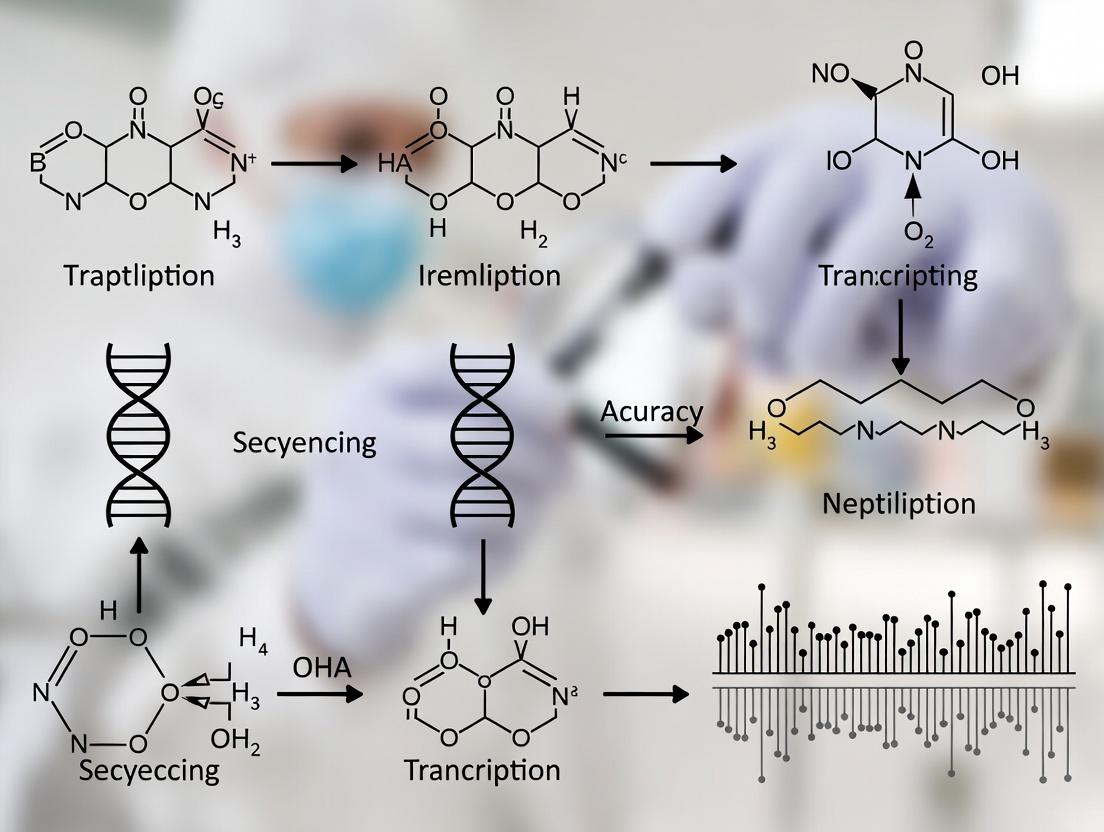
This comprehensive guide details the Duplex Sequencing (Duplex Seq) protocol, a revolutionary next-generation sequencing (NGS) method that achieves an error rate as low as one per 10^7-10^8 bases.
Duplex Sequencing Protocol: Achieving Ultra-High Accuracy for Detecting Rare Mutations in Research and Drug Development
Abstract
This comprehensive guide details the Duplex Sequencing (Duplex Seq) protocol, a revolutionary next-generation sequencing (NGS) method that achieves an error rate as low as one per 10^7-10^8 bases. Tailored for researchers, scientists, and drug development professionals, the article covers the foundational principles of leveraging double-stranded DNA molecule tags to distinguish true mutations from PCR and sequencing artifacts. It provides a step-by-step methodological workflow, key applications in cancer genomics, liquid biopsy, and microbial research, common troubleshooting and optimization strategies, and a comparative analysis against other error-corrected NGS methods. This resource empowers laboratories to implement this powerful technique for unparalleled accuracy in variant detection.
What is Duplex Sequencing? Core Principles for Unprecedented Accuracy
Standard Next-Generation Sequencing (NGS) has revolutionized genomics but suffers from a fundamental limitation: the inability to reliably distinguish true low-frequency mutations from sequencing errors. These errors, arising during library preparation, amplification, and sequencing itself, create a background noise floor that obscures rare variants. This limitation is critical in fields like cancer early detection, monitoring minimal residual disease, and studying mitochondrial heteroplasmy.
Quantitative Comparison of Error Rates:
| Sequencing Method | Raw Error Rate (per base) | Effective Error Rate (post-processing) | Detection Limit for Rare Variants | Primary Error Sources |
|---|---|---|---|---|
| Standard NGS (Illumina) | ~0.1 - 1% | ~10^-3 - 10^-4 | 1% - 5% allele frequency | Polymerase mis-incorporation, oxidation damage, PCR duplicates |
| Sanger Sequencing | ~0.1% | ~0.1% | ~15-20% | Capillary electrophoresis artifacts |
| Duplex Sequencing | < 0.001% | ~10^-7 - 10^-8 | < 0.001% allele frequency | Requires complementary strand consensus |
Protocol: Standard NGS Library Preparation and Variant Calling
This protocol highlights steps where errors are introduced, against which Duplex Sequencing is contrasted.
Materials & Reagents
- Fragmentation: Covaris ultrasonicator or NEBNext dsDNA Fragmentase.
- End-Repair & A-Tailing: NEBNext Ultra II End Repair/dA-Tailing Module.
- Adapter Ligation: Illumina-compatible adapters, T4 DNA Ligase.
- PCR Amplification: KAPA HiFi HotStart ReadyMix (low error polymerase), index primers.
- Clean-up: AMPure XP beads.
- Sequencing: Illumina sequencing platform with appropriate v3/v4 chemistry.
- Analysis: BWA-MEM aligner, GATK variant caller, standard filters.
Detailed Procedure
- DNA Fragmentation: Fragment 100ng-1µg genomic DNA to 300-500bp via ultrasonication or enzymatic digestion.
- Library Construction: Perform end-repair, A-tailing, and adapter ligation per manufacturer protocols. Clean up with 0.8x AMPure beads.
- Limited-Cycle PCR: Amplify library with 4-8 cycles of PCR using a high-fidelity polymerase. Clean up with 1.0x AMPure beads.
- Sequencing: Pool and sequence on an Illumina platform to desired coverage (e.g., 100x).
- Bioinformatic Analysis:
- Align reads to reference genome (hg38) using BWA-MEM.
- Mark duplicates using Picard Tools.
- Call variants using GATK HaplotypeCaller in single-sample mode.
- Apply standard hard filters (QD < 2.0, FS > 60.0, MQ < 40.0).
Limitations Observed
This workflow introduces errors at multiple points: oxidative damage (e.g., 8-oxoguanine causing G>T), polymerase mis-incorporation during PCR, and sequencing errors from phasing/pre-phasing. Duplicate reads obscure error identification.
Duplex Sequencing: A Solution for Ultra-High Accuracy
Duplex Sequencing (Duplex Seq) tags and sequences both strands of each original DNA molecule independently. A true mutation must be present in both complementary strands, while errors appear in only one.
Core Protocol: Duplex Sequencing Library Preparation
Research Reagent Solutions Toolkit
| Item | Function in Duplex Seq | Key Feature |
|---|---|---|
| Duplex Seq Adapters | Contain unique double-stranded molecular tags (barcodes) for each strand of a DNA duplex. | 12+ bp random sequence, complementary strands are uniquely tagged. |
| KAPA HiFi HotStart Uracil+ | Performs PCR after adapter ligation. Incorporates dUTP to enable enzymatic removal of PCR duplicates. | High fidelity, uracil incorporation for strand-specific degradation. |
| USER Enzyme (NEB) | Excises uracil bases, breaking strands from PCR duplicates prior to final amplification. | Critical for removing consensus-blind artifacts. |
| T4 DNA Ligase (HC) | Ligates bulky duplex adapters to both ends of damaged/ fragmented DNA. | High concentration ensures efficient ligation. |
| Accel-NGS Methyl-Seq DNA Library Kit | Optional for bisulfite-converted DNA; demonstrates protocol flexibility. | Maintains duplex tagging despite harsh bisulfite treatment. |
Detailed Workflow
- DNA Input & Fragmentation: Use 10ng-100ng of input DNA. Fragment gDNA mechanically or enzymatically.
- Duplex Adapter Ligation:
- Phosphorylate and A-tail DNA using standard protocols.
- Ligate Duplex Seq adapters using high-concentration T4 DNA Ligase at 20°C for 2 hours. Each adapter carries a unique random double-stranded barcode.
- Clean up with 0.9x AMPure beads.
- Uracil-Incorporating PCR:
- Amplify library for 12-14 cycles using KAPA HiFi Uracil+ mix (dUTP substituted for dTTP).
- Clean up with 1.0x AMPure beads.
- Single-Stranded Library Isolation:
- Denature PCR products to single strands.
- Isolate strands carrying the "sense" adapter sequence using biotin-streptavidin pulldown.
- USER Enzyme Treatment & Final Enrichment:
- Treat with USER enzyme to cleave at dUTP sites, destroying PCR-amplified copies.
- Perform a final 8-10 cycle PCR with Illumina-indexed primers.
- Sequence on an Illumina platform (2x150bp recommended).
Duplex Sequencing Bioinformatics Analysis
- Consensus Building:
- Group reads originating from the same original double-stranded molecule using the complementary adapter barcodes.
- For each single-strand family, create a consensus sequence (requiring ≥3 reads).
- Compare the consensus sequences from the two complementary strands. A Duplex Consensus Sequence (DCS) is called only if a variant is present in both strand consensuses.
- Variant Calling: Variants in the DCS are considered true mutations. All others (Single-Strand Consensus Sequences errors) are discarded as technical artifacts.
Diagram 1: Duplex Sequencing Consensus Workflow (100 chars)
Application Note: Detecting Ultra-Rare Variants in Cell-Free DNA
Experimental Design
- Objective: Detect tumor-derived mutations in cell-free DNA (cfDNA) from early-stage cancer patients.
- Sample: 10mL plasma from NSCLC patients and healthy controls.
- Methods: cfDNA extraction. Parallel library prep with (A) Standard NGS (1000x coverage) and (B) Duplex Sequencing (10,000x raw coverage per strand).
- Target: 100-gene cancer panel.
| Metric | Standard NGS | Duplex Sequencing |
|---|---|---|
| Mean Unique Molecular Depth | ~500x | ~3,000x (per strand) |
| Background Error Rate | 5 x 10^-4 | 2 x 10^-7 |
| Candidate Variants (AF < 0.5%) | 125 ± 45 (per sample) | 8 ± 3 (per sample) |
| Validated True Positives | 12% (by ddPCR) | 94% (by ddPCR) |
| Limit of Detection (95% CI) | ~0.5% AF | ~0.01% AF |
Protocol for Validation by ddPCR
- Design: Design ddPCR assays for 3-5 candidate variants from each method.
- Reaction Setup: Use 10ng cfDNA, Bio-Rad ddPCR Supermix, mutant and wild-type probes (FAM/HEX). Generate droplets.
- PCR: Thermocycle: 95°C (10min); 40 cycles of 94°C (30s), 55-60°C (1min); 98°C (10min).
- Reading: Read droplets on QX200 Droplet Reader.
- Analysis: Use QuantaSoft to calculate mutant fractional abundance. Confirm variants called by Duplex Seq show clear positive clusters; many from standard NGS do not.
Diagram 2: Comparative cfDNA Analysis Workflow (94 chars)
Standard NGS is intrinsically limited by its error profile, capping its sensitivity for rare variant detection at ~1% allele frequency. Duplex Sequencing overcomes this by using molecular tagging and complementary strand consensus, achieving error rates below 10^-7. This protocol enables applications requiring ultra-high accuracy, including liquid biopsy, somatic mosaicism detection, and ultra-deep mutagenesis studies. While more complex and costly, it is the current gold standard for distinguishing true mutations from technical artifacts.
Thesis Context: Within the broader Duplex Sequencing protocol for ultra-high accuracy research, the foundational innovation is the ability to tag and track individual double-stranded DNA (dsDNA) duplex molecules. This enables the independent sequencing of each original complementary strand, allowing bioinformatic subtraction of PCR and sequencing errors that occur randomly on only one strand. True mutations are present in both strands. This application note details the protocols for implementing this core step.
Protocol 1: Duplex-Tagging of Genomic DNA
Objective: To uniquely label each individual dsDNA molecule in a sample with a duplex-specific barcode pair prior to PCR amplification.
Detailed Methodology:
- DNA Fragmentation & End-Repair: Starting genomic DNA (≥100 ng) is fragmented to a target size of 300-500 bp via sonication or enzymatic fragmentation. Fragments are end-repaired and A-tailed using a standard polishing enzyme mix to generate 5’-phosphorylated, dA-tailed blunt ends.
- Adapter Ligation: A master mix is prepared containing:
- End-repaired/A-tailed DNA fragments.
- T4 DNA Ligase Buffer (1X final).
- T4 DNA Ligase (5 U/µL final).
- Duplex Tagging Adapters (DTAs) (10 µM final).
- Critical Reagent - Duplex Tagging Adapters (DTAs): These are partially double-stranded, Y-shaped adapters with the following structure:
- A constant 3’ dT-overhang for ligation to dA-tailed fragments.
- A fully double-stranded region containing a unique random molecular identifier (rMID) of 12-16 bases. This sequence is the Duplex Tag.
- Two distinct single-stranded 5’ overhangs that contain universal PCR priming sites (P5, P7). Importantly, the two strands of the adapter are synthesized separately and annealed. The rMID sequence is synthesized as a random degenerate base region (e.g., NNNNNN) during oligo synthesis, ensuring each adapter molecule has a near-unique sequence.
- Ligation Reaction: Incubate the ligation mix at 20°C for 15-60 minutes. The reaction is then purified using SPRI bead-based cleanup (0.8X ratio).
- Post-Ligation QC: Assess the ligation product size distribution (expected shift of ~100 bp) using a Bioanalyzer or TapeStation.
Key Principle: Because each dsDNA adapter molecule carries a unique rMID sequence, when it ligates to a dsDNA fragment, it tags both strands of that original duplex with the same unique identifier. This creates a Duplex Tag Family.
Protocol 2: Library Amplification & Data Processing Workflow
Objective: To amplify the tagged library and outline the bioinformatic pipeline for consensus generation.
Detailed Methodology:
- Limited-Cycle PCR: Amplify the purified ligation product using high-fidelity polymerase and primers complementary to the universal P5/P7 sites introduced by the DTAs. Use the minimum number of cycles (typically 8-12) required for adequate library yield to minimize PCR jackpotting.
- Sequencing: Sequence the library on a platform of choice (e.g., Illumina) with paired-end reads, ensuring sequencing reads cover the rMID region.
- Bioinformatic Sorting by Duplex Tag:
- Demultiplexing: Sort reads by sample-level barcodes.
- Family Formation: Cluster all reads that share an identical rMID sequence (Duplex Tag) and map to the same genomic location. This cluster represents all PCR progeny derived from a single original dsDNA molecule.
- Strand Separation: Within each family, separate reads into two groups based on the original Watson or Crick strand of the fragment (determined by mapping orientation and start/stop positions).
- Single-Strand Consensus Sequence (SSCS) Generation: For each strand group within a family, generate a consensus sequence. A base call is made only if a high percentage (e.g., ≥90%) of reads from that strand agree. Errors occurring during the first PCR cycle or early sequencing cycles are eliminated here.
- Duplex Consensus Sequence (DCS) Generation: Compare the two SSCSs (one from the Watson strand, one from the Crick strand) from the same original duplex. A final high-confidence base call is made only if both SSCSs agree. This is the Duplex Sequencing step. True mutations are present in both SSCSs; technical errors are present in only one.
Data Presentation
Table 1: Comparative Error Rates of Sequencing Methods
| Method | Typical Background Error Rate | Principle | Detects Ultra-Rare Variants? |
|---|---|---|---|
| Standard NGS | ~1 x 10⁻³ | Single-strand sequencing | No |
| Single-Strand Consensus (SSCS) | ~1 x 10⁻⁵ | Error correction within one strand | Limited |
| Duplex Consensus (DCS) | ~1 x 10⁻⁷ to <5 x 10⁻⁸ | Independent agreement of two complementary strands | Yes (down to ~1 variant per 10⁸ bases) |
Table 2: Key Parameters for Duplex Tagging Protocol
| Parameter | Recommended Specification | Purpose/Rationale |
|---|---|---|
| rMID Length | 12-16 random bases | Provides >10⁹ unique combinations, ensuring high probability each duplex gets a unique tag. |
| Adapter:Insert Molar Ratio | 10:1 to 20:1 | Ensures high efficiency of tagging while minimizing adapter dimer formation. |
| PCR Cycles Post-Ligation | ≤12 cycles | Limits PCR duplicates, preserves family diversity for accurate consensus. |
| Minimum Read Depth per Family | ≥3 reads per strand | Required for robust SSCS generation. Optimal is ≥10. |
Diagrams
Title: Duplex Sequencing Experimental Workflow
Title: Duplex Consensus Decision Logic
The Scientist's Toolkit: Key Research Reagent Solutions
| Item | Function in Duplex Tagging & Sequencing |
|---|---|
| Duplex Tagging Adapters (DTAs) | Core reagent. Y-shaped adapters containing a unique random molecular identifier (rMID) sequence to label each individual dsDNA molecule. |
| High-Fidelity DNA Ligase | Ensures efficient and accurate ligation of DTAs to A-tailed DNA fragments, minimizing junction errors. |
| High-Fidelity PCR Polymerase | Used for limited-cycle amplification post-ligation. Essential for maintaining sequence fidelity and minimizing PCR-introduced errors during library prep. |
| SPRI Magnetic Beads | For size selection and cleanup after fragmentation, end-repair, ligation, and PCR. Critical for removing adapter dimers and controlling library fragment size. |
| Duplex Sequencing Analysis Software (e.g., duplex_tools, Picard) | Specialized bioinformatics tools to perform the critical steps of family clustering by rMID, SSCS/DCS generation, and variant calling with ultra-high accuracy. |
How Molecular Barcodes and Strand Consensus Enable Error Correction
Within the thesis context of developing a robust Duplex Sequencing protocol for ultra-high accuracy research, this application note details the core biochemical and bioinformatic principles that enable true error correction. Duplex Sequencing achieves error rates as low as <1 error per 10^9 bases, far beyond conventional next-generation sequencing (NGS). This accuracy is foundational for detecting ultra-rare mutations in cancer genomics, monitoring minimal residual disease, and validating low-frequency variants in drug development. The mechanism relies on two independent innovations: Molecular Barcodes (or Unique Molecular Identifiers, UMIs) and Strand Consensus Sequencing.
Core Principles
Molecular Barcodes (UMIs): Tagging Individual Molecules
Prior to PCR amplification, each original DNA molecule is tagged with a unique, random oligonucleotide sequence (the barcode). All descendant amplicons from that original molecule inherit the same barcode, allowing bioinformatic grouping into "families."
Strand Consensus: Leveraging Complementary Strand Information
In Duplex Sequencing, both strands of the original double-stranded DNA molecule are independently barcoded, amplified, and sequenced. True mutations are present in the original molecule and must therefore appear in the sequencing reads derived from both complementary strands. Errors introduced during library preparation, PCR, or sequencing will appear in reads from only one strand.
The Error Correction Workflow
The combination of these principles creates a powerful error filter. Reads sharing a barcode are grouped into single-stranded families. A consensus sequence is generated for each family to eliminate single-strand errors. Finally, the complementary strand consensus sequences are compared. Only variants appearing in both are considered true mutations.
Table 1: Error Rate Comparison of Sequencing Methods
| Method | Typical Error Rate | Primary Error Sources Mitigated by Duplex Seq |
|---|---|---|
| Conventional NGS (e.g., Illumina) | ~10^-3 (1/1,000) | Sequencing errors, some PCR errors. |
| PCR Duplex Sequencing | ~10^-5 to 10^-6 | Most PCR errors, sequencing errors. |
| Circulome/Duplex Sequencing | ~10^-7 to <10^-9 | Nearly all PCR errors, sequencing errors, DNA damage artifacts. |
Table 2: Impact of Consensus Depth on Accuracy
| Single-Strand Family Depth | Strand Consensus Depth | Expected False Positive Rate (per base) | Key Limitation |
|---|---|---|---|
| ≥3 | ≥3 (each strand) | < 10^-6 | Requires high input, can mask true subclonal variants. |
| ≥10 | ≥10 (each strand) | < 10^-9 | Very high input/material required; may not be feasible for all samples. |
Detailed Experimental Protocols
Protocol 4.1: Duplex Sequencing Library Preparation with In-Line Barcodes
This protocol outlines a standard method for generating duplex-seq ready libraries.
Materials: See "The Scientist's Toolkit" section. Procedure:
- DNA Input: Use 50-500ng of high-quality genomic DNA. Fragment DNA to desired size (e.g., 200-300bp) via sonication or enzymatic fragmentation.
- End Repair & A-tailing: Perform standard blunt-end repair and 3' adenylation using a commercial kit (e.g., NEBNext Ultra II).
- Adapter Ligation: Ligate double-stranded adapters containing the following key features:
- A standard Illumina P5/P7 sequence for flow cell binding.
- A random molecular barcode sequence (e.g., 12-16nt) positioned immediately adjacent to the insert.
- A staggered double-strand break to ensure the two complementary strands of the original molecule receive different barcodes.
- Purification: Clean up ligation product using SPRI beads.
- Limited-Cycle PCR: Amplify the library with 6-10 PCR cycles using primers complementary to the adapter ends. Use a high-fidelity polymerase.
- Final Purification & QC: Purify PCR product with SPRI beads. Quantify by qPCR and check size distribution by Bioanalyzer.
Protocol 4.2: Bioinformatics Pipeline for Duplex Error Correction
This protocol describes the core computational steps.
Input: Paired-end FASTQ files from the Duplex Sequencing library.
Software: Custom scripts or pipelines (e.g., dsbmm or Du Novo).
Procedure:
- Preprocessing & Alignment: Trim standard adapter sequences. Align reads to a reference genome (e.g., using BWA-MEM).
- Family Grouping: For each set of aligned read pairs, extract the molecular barcode sequence from the adapter region. Group all read pairs sharing the same genomic start/end coordinates and identical molecular barcode into a Single-Strand Family (SSF).
- Single-Strand Consensus: For each SSF:
- Require a minimum family size (e.g., ≥3 reads).
- At each position in the aligned read, call a consensus base. A common rule is: base call requires ≥90% agreement within the family.
- Generate one consensus sequence per SSF.
- Duplex Pairing: Identify the two complementary SSFs derived from the same original double-stranded molecule. This is done by matching their genomic coordinates (complementary strands, offset by fragment length).
- Double-Strand Consensus:
- Compare the two complementary single-strand consensus sequences.
- A variant (substitution, indel) is called as a true mutation only if it is present in both strand consensus sequences.
- Variants appearing in only one strand are discarded as technical artifacts.
- Output: Generate a final VCF file containing only duplex-supported variants.
Visualization of Workflows
Diagram 1: Duplex Sequencing Error Correction Workflow
Diagram 2: Molecular Barcode Assignment to DNA Strands
The Scientist's Toolkit
Table 3: Essential Research Reagent Solutions for Duplex Sequencing
| Item | Function & Importance | Example Product/Type |
|---|---|---|
| Duplex Sequencing Adapters | Double-stranded adapters containing random barcode regions and compatible overhangs for ligation. Critical for initial strand tagging. | Custom-synthesized oligos with phosphorothioate bonds. |
| Ultra-High Fidelity DNA Polymerase | Amplifies library with minimal PCR errors, preventing artifact introduction before consensus. | Q5 High-Fidelity (NEB), KAPA HiFi. |
| Solid-Phase Reversible Immobilization (SPRI) Beads | For size selection and clean-up post-ligation and post-PCR. Maintains library complexity. | AMPure XP, Sera-Mag Select. |
| High-Sensitivity DNA Assay | Accurate quantification of low-input and low-concentration libraries prior to sequencing. Critical for loading optimization. | Qubit dsDNA HS, Fragment Analyzer. |
| Bioinformatics Pipeline Software | Specialized tools to perform family grouping, consensus calling, and duplex comparison. Core of error correction. | dsbmm, Du Novo, fastp + custom scripts. |
| Fragmentation Enzyme/System | Creates uniformly sized DNA fragments, ensuring efficient adapter ligation and even coverage. | NEBNext dsDNA Fragmentase, Covaris sonicator. |
Key Milestones and Development of the Duplex Sequencing Methodology
This Application Note details the development and protocol for Duplex Sequencing (DuplexSeq), a foundational ultra-high accuracy Next-Generation Sequencing (NGS) method. It is framed within a thesis advancing a refined Duplex Sequencing protocol for detecting ultra-rare mutations in cancer research and therapeutic development. The method independently sequences each strand of a DNA duplex, allowing for the identification and elimination of errors introduced during PCR and sequencing by requiring mutations to be present on both strands.
Key Milestones and Quantitative Advancements
The evolution of Duplex Sequencing is marked by significant methodological improvements, as summarized in the table below.
Table 1: Key Milestones in Duplex Sequencing Development
| Milestone (Year) | Core Innovation | Reported Error Rate | Key Improvement Over Prior Method |
|---|---|---|---|
| Original Description (2012) | Use of double-stranded DNA tags to create uniquely identifiable families. | ~1×10⁻⁸ | Reduced errors by >10,000-fold compared to conventional NGS. |
| Duplex Sequencing (2014) | Formalization of the pairwise comparison of complementary strands for true variant calling. | ~5×10⁻⁸ | Introduced the consensus requirement from both strands, defining the method. |
| UDG-Enhanced DuplexSeq (2020) | Incorporation of Uracil-DNA Glycosylase (UDG) treatment to mitigate cytosine deamination artifacts. | <7×10⁻⁹ | Significantly reduced C>T/G>A false positives from ancient/damaged DNA. |
| Single-Molecule Circular DuplexSeq (2023) | Circular consensus sequencing of individual duplex-tagged molecules. | ~3×10⁻⁹ | Improved efficiency and reduced input DNA requirements while maintaining ultra-high accuracy. |
Detailed Core Protocol: UDG-Enhanced Duplex Sequencing
This protocol is optimized for formalin-fixed paraffin-embedded (FFPE) or other damaged DNA samples.
Library Preparation with Duplex Tags
- Materials: Genomic DNA (≥10 ng), Duplex Seq Adapters (containing double-stranded random molecular tags), End Repair/dA-Tailing Mix, UDG, USER Enzyme, DNA Ligase, SPRI Beads.
- Procedure:
- Fragmentation & End Prep: Fragment DNA to desired size (e.g., 200-300bp) via sonication or enzymatic means. Perform end-repair and dA-tailing using standard kits.
- Adapter Ligation: Ligate double-stranded Duplex Seq Adapters to DNA fragments. These adapters contain a unique random sequence (e.g., 12bp) on each strand, marking the original duplex molecule.
- Post-Ligation Cleanup: Purify the ligated product using SPRI beads (0.9x ratio) to remove excess adapters.
UDG Treatment for Damage Reduction
- Reaction Setup: Combine purified library (45 µL), UDG (1 µL, 2 units/µL), USER Enzyme (1 µL, 1 unit/µL), and 10x Reaction Buffer (5 µL). Total volume: 52 µL.
- Incubation: Incubate at 37°C for 30 minutes to excise uracils arising from cytosine deamination.
- Cleanup: Purify with SPRI beads (1.0x ratio) and elute in 25 µL EB buffer.
PCR Amplification & Indexing
- Use a high-fidelity polymerase (≤5 cycles) to amplify the library and add sample indices. Minimize PCR cycles to avoid generating spurious mutations.
Sequencing & Data Analysis
- Sequence on an Illumina platform (2x150bp recommended).
- Bioinformatics Workflow:
- Tag Reconciliation: Group reads sharing the same original duplex tag into families.
- Strand-Specific Consensus: Generate a single-strand consensus sequence (SSCS) for all reads from each individual strand.
- Duplex Consensus: Align complementary SSCS pairs. A true variant is called only if it is present in both SSCS pairs from the original duplex.
- Variant Calling: Output high-confidence variant calls.
Diagram Title: UDG-Enhanced Duplex Sequencing Workflow
Diagram Title: Error Correction Principle: Duplex vs. Conventional NGS
The Scientist's Toolkit: Essential Reagent Solutions
Table 2: Key Research Reagents for Duplex Sequencing
| Reagent/Material | Function in Protocol | Critical Specification |
|---|---|---|
| Duplex Seq Adapters | Provides unique double-stranded molecular identifier to track each original DNA molecule through PCR/sequencing. | Must contain fully double-stranded, degenerate randommer region (e.g., 12N) for unique tagging. |
| High-Fidelity DNA Polymerase | Amplifies tagged library with minimal introduction of polymerase errors during limited-cycle PCR. | Ultra-low error rate (e.g., ≤ 2.0 x 10⁻⁶ mutations/bp). |
| UDG/USER Enzyme Mix | Pre-treatment to excise uracil bases, converting common cytosine deamination damage (C→U) to abasic sites, preventing C>T artifactual calls. | Essential for working with FFPE, ancient, or otherwise damaged DNA samples. |
| Solid Phase Reversible Immobilization (SPRI) Beads | Performs size selection and cleanup steps (post-ligation, post-UDG, post-PCR) to purify DNA fragments. | Ratios (e.g., 0.9x vs 1.0x) are critical for optimal yield and purity. |
| Duplex Sequencing Bioinformatics Pipeline (e.g., duplex_tools, fgbio) | Specialized software to group tagged reads, generate SSCS and duplex consensus sequences, and call variants. | Must be compatible with your adapter structure and sequencing platform output. |
Application Notes
Duplex Sequencing (DS) is a next-generation sequencing library preparation method that achieves theoretical error rates as low as 1 x 10⁻⁷ to 1 x 10⁻⁸ by independently tagging and analyzing both strands of each DNA duplex. This ultra-high accuracy is critical for detecting ultra-rare somatic mutations in cancer, monitoring minimal residual disease, and characterizing low-frequency variants in heterogeneous populations (e.g., tumors, microbial communities).
| Quantitative Performance Metric | Standard NGS | Duplex Sequencing |
|---|---|---|
| Theoretical Error Rate | ~1 x 10⁻³ (per base) | 1 x 10⁻⁷ - 1 x 10⁻⁸ |
| Effective Error Rate (Typical) | 1 x 10⁻³ - 1 x 10⁻⁴ | 5 x 10⁻⁷ - 2 x 10⁻⁷ |
| Required Sequencing Depth (for variant calling) | 100x - 1000x | 1000x - 10,000x (per strand) |
| Minimum Variant Frequency Detectable | ~1% (0.01) | <0.001% (<1 x 10⁻⁵) |
| Library Input DNA | 1 ng - 1 µg | 10 ng - 1 µg (recommended) |
| Family Consensus Size | N/A | 2 (complementary strands) |
| Comparison of Error Sources | Impact on Standard NGS | Mitigation in Duplex Sequencing |
|---|---|---|
| PCR Errors | High; early errors propagated | Tagged separately; corrected by consensus |
| Oxidative Damage (8-oxoG) | Misreads as C>A/G>T | Strand complementary rules reject artifact |
| Deamination (C>U) | Misreads as C>T/G>A | Strand complementary rules reject artifact |
| Sequencing Cycle Errors | Primary source of background | Requires complementary strand agreement |
| Cross-talk/Phasing | Contributes to background noise | Filtered via single-strand consensus (SSCS) |
Detailed Experimental Protocols
Protocol 1: Duplex Sequencing Library Construction
Objective: To generate a sequencing library where each original DNA molecule is uniquely tagged on both strands.
Materials: See "The Scientist's Toolkit" below.
Procedure:
- DNA Preparation & Shearing: Start with high-quality, high molecular weight genomic DNA (10 ng - 1 µg). Fragment DNA to desired size (e.g., 200-300 bp) via sonication or enzymatic fragmentation. Purify using SPRI beads.
- End Repair & A-Tailing: Perform standard blunt-ending and 3' A-tailing reactions to prepare fragments for adapter ligation. Purify.
- Duplex Adapter Ligation:
- Use double-stranded, partially single-stranded (Y-shaped) adapters. Critical: Each adapter must contain a uniquely random, degenerate molecular identifier (e.g., 12-16 nt random sequence) at its blunt end.
- Ligate adapters to both ends of the DNA fragment. The random tag on the top strand adapter is independent of the tag on the bottom strand adapter.
- Purify ligation product.
- Library Amplification (Limited-Cycle PCR):
- Amplify the adapter-ligated library using primers complementary to the constant regions of the adapters.
- Use as few PCR cycles as possible (typically 8-12 cycles) to minimize PCR error introduction. Include sample-indexing barcodes in the PCR primers for multiplexing.
- Purify final library. Quantify via qPCR for accurate sequencing loading.
Protocol 2: Bioinformatics Analysis for Duplex Consensus
Objective: To process raw sequencing reads, group families derived from the same original duplex molecule, and generate an ultra-high-accuracy consensus sequence.
Procedure:
- Demultiplexing & Basic QC: Separate reads by sample barcode. Perform standard quality filtering (e.g., trim low-quality bases).
- Single-Strand Family Formation: For each genomic position, group reads that share the same combination of (1) sample index, (2) genomic start/end coordinate, and (3) the unique random tag sequence from one strand's adapter. This forms a "single-strand family."
- Single-Strand Consensus Sequence (SSCS) Generation: Align reads within each single-strand family. For each base position, call a consensus nucleotide. Requires a user-defined threshold (e.g., ≥90% of reads must agree). This eliminates most sequencing cycle errors.
- Duplex Family Formation: Pair complementary SSCS reads. These are two SSCSs that have genomic coordinates indicating they are derived from opposite strands of the same original duplex molecule. They are identified by complementary start/stop coordinates and different random tag sequences.
- Duplex Consensus Sequence (DCS) Generation: Compare the two complementary SSCSs. A final base call for the original duplex molecule is made only if the two SSCSs agree at that position. Disagreements are discarded as potential artifacts (e.g., damage, early PCR errors). The resulting DCS has the theoretical error rate of ~(errorrateSSCS)2.
Diagrams
Duplex Sequencing Wet-Lab to Analysis Workflow
Duplex Consensus Building Eliminates Errors
The Scientist's Toolkit
| Research Reagent / Material | Function in Duplex Sequencing |
|---|---|
| Duplex Sequencing Adapters (dsDNA, Y-shaped) | Contain unique molecular identifiers (UMIs) as double-stranded random tags. Critically, the tag on one strand is independent of the tag on the complementary strand. |
| High-Fidelity DNA Polymerase (e.g., Q5, KAPA HiFi) | Essential for library amplification with the lowest possible PCR error rate during limited-cycle PCR. |
| Solid Phase Reversible Immobilization (SPRI) Beads | Used for size selection and clean-up after shearing, end-repair, ligation, and PCR. Maintains high recovery of low-input material. |
| Phusion or Taq Polymerase (for older protocols) | Sometimes used in an initial "fill-in" reaction to convert the partially single-stranded adapter to fully double-stranded after ligation. |
| Uracil-DNA Glycosylase (UDG) | Optional enzyme used in some protocols to treat libraries pre-sequencing, removing uracils arising from cytosine deamination, a common source of C>T artifacts. |
| Bioinformatics Pipeline (e.g., doc'k, Du Novo) | Specialized software to perform the complex grouping of reads by dual-strand tags, consensus building, and variant calling at ultra-high stringency. |
Step-by-Step Duplex Sequencing Protocol and Key Research Applications
This application note details the comprehensive workflow for ultra-high accuracy variant detection, specifically contextualized within a broader thesis on Duplex Sequencing (DS) protocols. DS is a next-generation sequencing (NGS) method that leverages unique molecular identifiers (UMIs) on both strands of a DNA duplex to achieve error rates as low as 10^-7 to 10^-8, enabling the detection of ultrarare somatic variants. This document provides detailed protocols and curated resources for researchers, scientists, and drug development professionals working on cancer genomics, monitoring minimal residual disease, or studying low-frequency variants in heterogeneous populations.
The Core Workflow: From Sample to Variant Call
The DS workflow involves several critical steps beyond standard NGS to achieve its exceptional accuracy. The following diagram illustrates the complete logical pathway.
Title: Duplex Sequencing Workflow Logic
Detailed Experimental Protocols
Protocol 3.1: Duplex Adapter Ligation and Library Preparation
Objective: Attach double-stranded, uniquely barcoded adapters to each individual DNA molecule, tagging both strands.
Materials: See "The Scientist's Toolkit" (Section 6). Procedure:
- DNA Shearing & End-Repair: Fragment genomic DNA (100-300ng) via sonication or enzymatic fragmentation to a target size of 200-400bp. Repair ends using a commercial end-repair/A-tailing kit.
- Adapter Ligation: Ligate double-stranded Duplex Sequencing adapters (containing random 12-mer UMIs) to the A-tailed fragments using a high-fidelity, low-bias ligase. Use a 10:1 molar ratio of adapter to insert.
- Purification: Clean up the ligation reaction using AMPure XP beads at a 1.8x bead-to-sample ratio. Elute in 10-20 µL of nuclease-free water or EB buffer.
- Limited-Cycle PCR Amplification: Amplify the library with 8-12 PCR cycles using a high-fidelity polymerase and P5/P7 primers complementary to the adapter constant regions. Include sample-indexing barcodes in the primers.
- Final Library Clean-up: Perform a double-sided size selection (e.g., 0.5x left-side, then 0.8x right-side with AMPure XP beads) to remove adapter dimers and large fragments. Quantify via qPCR for accurate molarity.
Protocol 3.2: Sequencing & Primary Data Processing
Objective: Generate raw sequencing reads containing UMI information.
Procedure:
- Sequencing: Pool libraries and sequence on an Illumina platform (e.g., NovaSeq 6000) using a 2x150bp paired-end run to ensure overlap for consensus building. Aim for a minimum depth of 1000x raw reads per genomic position of interest.
- Demultiplexing: Use
bcl2fastqorIllumina DRAGENto demultiplex samples based on sample-index barcodes, generating FASTQ files.
Protocol 3.3: Bioinformatics Pipeline for Duplex Analysis
Objective: Process raw reads to generate strand-specific consensus sequences and call ultra-high-fidelity variants.
Software Requirements: fastp, bwa-mem2, custom Duplex Sequencing tools (Du Novo, DS-Call), GATK.
Procedure:
- Read Sorting into Tag Families: Use a DS-specific tool (e.g.,
Du Novo) to sort all reads into "Single-Stranded Tag Families" (SSTFs) based on their unique molecular identifier (UMI) and genomic coordinate.- Command example:
du_novo group --input sample.bam --output sample.grouped.bam
- Command example:
- Generate Single-Stranded Consensuses (SSCs): Within each SSTF, align reads and generate a consensus sequence for that strand. Positions with a quality score < Q30 or read support < 3 are masked.
- Generate Duplex Consensus Sequences (DCSs): For each original DNA molecule, identify the two complementary SSCs (Watson and Crick strands). A true variant is only called if it is present in both complementary SSCs. This step eliminates nearly all PCR and sequencing errors.
- Variant Calling: Map final DCS reads to the reference genome (e.g.,
bwa-mem2). Call variants using a caller sensitive to low-frequency variants (e.g.,Mutect2in tumor-normal mode, orLoFreq), but apply a significantly lower frequency threshold (e.g., 0.1%) due to the inherent high accuracy of DCS data.
Quantitative Performance Data
Table 1: Comparison of Sequencing Error Rates Across Methods
| Method | Typical Error Rate | Key Error Source | Effective for Variant Frequency |
|---|---|---|---|
| Standard NGS | ~10^-3 | PCR, Sequencing | >5% |
| UMI-Based (Single Strand) | ~10^-5 | Pre-PCR Damage, Strand Bias | >0.1% |
| Duplex Sequencing | 10^-7 - 10^-8 | Endogenous DNA Damage* | >0.001% (1 in 100,000) |
Note: DS is robust to most errors but remains sensitive to biologically relevant processes like *in vivo cytosine deamination.
Table 2: Typical Duplex Sequencing Yield Metrics
| Metric | Typical Value | Notes |
|---|---|---|
| Raw Reads to DCS Conversion | 10-20% | Due to stringent duplex pairing requirement. |
| Mean Family Depth (SSTF) | 5-20 reads | Critical for robust SSC generation. |
| Minimum Input DNA | 100 ng | Can be optimized down to 10ng with modified protocols. |
| Duplex Tag Collision Rate | <1% | With 12-mer random UMIs, ensures unique tagging. |
Critical Quality Control Checkpoints
The following diagram outlines the key decision points and quality filters applied throughout the DS workflow.
Title: DS Quality Control Checkpoints
The Scientist's Toolkit: Research Reagent Solutions
Table 3: Essential Materials for Duplex Sequencing Workflow
| Item | Function | Example Product/Kit |
|---|---|---|
| Duplex Sequencing Adapters | Double-stranded adapters containing random 12-mer UMIs to tag both strands of a DNA molecule uniquely. | Custom synthesized (HPLC-purified). |
| High-Fidelity DNA Ligase | Minimizes bias during adapter ligation to ensure even representation. | NEB Quick T4 DNA Ligase, Blunt/TA Master Mix. |
| High-Fidelity PCR Polymerase | Reduces PCR errors during limited-cycle library amplification. | KAPA HiFi HotStart ReadyMix, Q5 High-Fidelity. |
| SPRI Beads | For size selection and clean-up; critical for removing adapter dimers. | Beckman Coulter AMPure XP. |
| DNA Quantitation Kit (qPCR-based) | Accurately quantifies amplifiable library molecules for precise pooling. | KAPA Library Quantification Kit. |
| Uracil-DNA Glycosylase (UDG) | Optional but recommended. Redances C>G artifacts from in vivo cytosine deamination by removing uracils. | NEB UDG. |
| Duplex-Specific Bioinformatics Tools | Essential for grouping reads by UMI and generating consensus sequences. | Du Novo, DS-Call, picard DuplexSeq. |
This protocol details the first critical stage of the Duplex Sequencing workflow, a method for achieving ultra-high accuracy (>10⁻⁷ error rate) in next-generation sequencing (NGS). By employing double-stranded molecular barcodes (also called Duplex Tags), this approach enables the bioinformatic identification and validation of original DNA molecules, distinguishing true mutations from PCR and sequencing artifacts. This stage is foundational for applications in low-frequency variant detection, such as circulating tumor DNA analysis, mitochondrial DNA mutagenesis, and clonal hematopoiesis studies in drug development.
Core Principles and Reagents
The Scientist's Toolkit: Essential Research Reagent Solutions
| Item | Function in Duplex-Seq Library Prep |
|---|---|
| Duplex-Seq Specific Adapters | Y-shaped adapters containing a double-stranded unique molecular identifier (ds-UMI) region. Each strand of the dsDNA insert receives a complementary, yet unique, barcode pair, enabling bioinformatic pairing. |
| High-Fidelity DNA Polymerase | Enzyme with ultra-low error rate (e.g., Q5, KAPA HiFi) for PCR amplification post-ligation to minimize introduction of novel errors during library construction. |
| Solid Phase Reversible Immobilization (SPRI) Beads | Magnetic beads for size selection and clean-up of enzymatic reactions, crucial for removing adapter dimers and controlling insert size. |
| T4 DNA Ligase | Enzyme for covalently attaching duplex sequencing adapters to blunt-ended, repaired DNA fragments. |
| End Repair & A-Tailing Mix | Converts sheared DNA (with potential 5' overhangs or 3' recessed ends) to blunt-ended, 5'-phosphorylated fragments with a single 3'-dA overhang for TA-ligation to adapters. |
| Low-EDTA TE Buffer | Elution and storage buffer that preserves DNA integrity while being compatible with enzymatic steps. |
| dsDNA High-Sensitivity Assay Kits | Fluorometric (e.g., Qubit) or spectrophotometric (e.g., Fragment Analyzer, Bioanalyzer) methods for precise quantification of library yield and size distribution. |
Detailed Protocol
Input DNA Preparation
- DNA Shearing/Fragmentation: Using covaris ultrasonication or enzymatic fragmentation, prepare input genomic DNA to a target peak size of 200-350bp. Verify size distribution using a microcapillary electrophoresis system.
- End Repair & A-Tailing:
- Combine 1 µg of fragmented DNA with end repair/A-tailing enzyme mix in a 100 µL reaction.
- Incubate at 20°C for 30 minutes, then 65°C for 30 minutes.
- Purify using 1.8X volume of SPRI beads. Elute in 32 µL Low-EDTA TE Buffer.
Adapter Ligation
- Ligation Reaction Setup:
- To the 32 µL eluate, add 10 µL of Blunt/TA Ligase Master Mix, 3 µL of Duplex-Seq Specific Adapters (15 µM stock), and 5 µL of nuclease-free water.
- Mix thoroughly and incubate at 20°C for 15 minutes.
- Post-Ligation Cleanup:
- Add 50 µL of SPRI beads (1.0X volume) to bind adapter-ligated fragments. Incubate for 5 minutes at room temperature.
- Wash twice with 80% ethanol.
- Elute in 22 µL of Low-EDTA TE Buffer. This step removes excess unligated adapters.
Size Selection and PCR Amplification
- Double-Sided SPRI Size Selection:
- Perform a dual-SPRI bead cleanup to select for fragments of the desired insert size (e.g., 200-400bp). Typical ratios are 0.5X (discard supernatant containing small fragments) followed by 0.8X (binding desired fragments from the 0.5X supernatant).
- Elute in 23 µL of Buffer.
- Library Amplification:
- Set up a 50 µL PCR reaction: 23 µL eluted DNA, 25 µL High-Fidelity PCR Master Mix, 2 µL of PCR Primer Mix (indexed primers).
- Cycle using a minimal program (e.g., 98°C for 30s; 8-10 cycles of [98°C for 10s, 65°C for 30s, 72°C for 30s]; final extension at 72°C for 5 minutes). Minimize cycles to reduce PCR duplicates and errors.
Final Quality Control and Quantification
- Final Cleanup: Purify the PCR reaction with 1.0X volume of SPRI beads. Elute in 25 µL of Low-EDTA TE Buffer.
- QC Assessment:
- Quantify library yield using a dsDNA HS assay (see Table 1).
- Assess library size profile using a High Sensitivity DNA chip.
- Validate library complexity via qPCR with a library quantification kit if needed.
Table 1: Expected Yield and Size Metrics for Duplex-Seq Library Prep
| Step | Typical Yield (from 1 µg input) | Target Size Profile (Peak) | QC Method |
|---|---|---|---|
| Fragmented DNA | >90% recovery | 200-350 bp | Fragment Analyzer |
| Post-Ligation Cleanup | 50-70% recovery | Shift + ~60 bp (adapter) | Fluorometry |
| Final Amplified Library | 100-500 nM total | 300-450 bp (incl. adapters) | Fluorometry & Fragment Analyzer |
Workflow and Data Flow Visualization
Diagram Title: Duplex-Seq Library Preparation Workflow
Diagram Title: Duplex Molecular Barcoding and Consensus Strategy
Achieving maximum data yield in Duplex Sequencing is critical for cost-effective, high-sensitivity variant detection. This stage focuses on the sequencing phase, where library preparation is complete, and the goal is to generate the highest possible yield of high-fidelity duplex consensus sequences from the sequencer.
Key Quantitative Parameters for Yield Optimization
The following parameters, when optimized, directly impact the final duplex data yield.
Table 1: Key Sequencing Parameters and Their Impact on Duplex Yield
| Parameter | Typical Range | Optimal Target for Duplex Sequencing | Impact on Duplex Yield |
|---|---|---|---|
| Cluster Density | 180-280 K/mm² (NovaSeq) | 200-220 K/mm² | Too high: Increased overlapping clusters & index misassignment. Too low: Poor output. |
| % of Bases ≥ Q30 | >75% | >85% | Higher quality reduces erroneous base incorporation in consensus building. |
| PhiX Spike-in | 1-5% | 1% (for calibration) | Ensures optimal cluster focusing and phasing/prephasing correction without wasting read capacity. |
| Read Length | 2x150 bp | As per library insert size (e.g., 2x150 bp) | Must be sufficient to cover entire duplex tag + target region. Shorter reads truncate data. |
| Cluster Passing Filter (%) | >80% | >90% | Directly correlates with usable sequence output. |
| Duplex Conversion Rate | Varies by library | >25% of reads forming duplex families | The fraction of reads that can be paired into single-strand families and then consensus duplex reads. |
Table 2: Common Yield Loss Points and Mitigations
| Yield Loss Point | Cause | Mitigation Strategy | Expected Yield Improvement |
|---|---|---|---|
| Index Hopping | Acoustic shearing, cluster proximity | Use unique dual indices (UDIs), reduce cluster density. | Can recover 5-15% of otherwise lost/misassigned reads. |
| Low Complexity Libraries | PCR over-amplification, limited input | Optimize PCR cycles, use unique molecular identifiers (UMIs) accurately. | Prevents massive data loss from excluded clusters. |
| Poor Cluster Generation | Library quality, flow cell defects | Accurate library QC (fragment analyzer), optimal loading concentration. | Increases PF clusters by 10-20%. |
| High Duplicate Rate | Insufficient library complexity | Increase input DNA, reduce amplification bias. | Maximizes unique coverage per gigabase sequenced. |
Core Experimental Protocol: Sequencing Run Setup for Duplex Yield
Protocol 3.1: Illumina NovaSeq S4 Flow Cell Loading for Duplex Sequencing
- Objective: To load a Duplex Sequencing library onto a NovaSeq S4 flow cell with parameters optimized for maximum yield of high-consensus-quality data.
- Materials: QC-passed Duplex Sequencing library (pooled, indexed), NovaSeq S4 Reagent Kit, 1% PhiX Control v3, NaOH, HT1 buffer, microcentrifuge tubes.
- Procedure:
- Denaturation & Dilution: Denature 50-100 pmol of the final pooled library with fresh 0.1N NaOH for 5 minutes at room temperature. Neutralize with pre-chilled HT1.
- Loading Concentration Titration: Perform a preliminary dilution to 400 pM. Further dilute to a final loading concentration of 225 pM. Note: This is ~10% lower than standard recommendations to reduce cluster density.
- PhiX Addition: Add 1% (by volume) of the 1% PhiX control to the denatured, diluted library. Mix thoroughly by pipetting.
- Sequencer Setup: Prime the NovaSeq instrument. Load the library mixture into the assigned well.
- Run Parameter Selection:
- Select "Generate FASTQ only" (if no on-instrument basecalling is needed).
- Ensure "Index Reads" is set according to your UDI length (e.g., 10 bp, 10 bp).
- Confirm Read Lengths match your library design.
- Initiate Run: Start the sequencing run. Monitor the "Cluster Density" and "% PF" metrics in real-time. Target cluster density: 200-220 K/mm².
The Scientist's Toolkit: Research Reagent Solutions
Table 3: Essential Materials for Duplex Sequencing Yield Optimization
| Item | Function in Duplex Sequencing Yield | Example Product(s) |
|---|---|---|
| Unique Dual Index (UDI) Kits | Uniquely tags each sample with two distinct indices, virtually eliminating index hopping artifacts and preserving sample integrity and yield. | Illumina IDT for Illumina UDIs, Twist Unique Dual Indexes. |
| High-Fidelity DNA Polymerase | Used in final library amplification to minimize PCR errors introduced during sequencing library prep, reducing noise. | KAPA HiFi HotStart ReadyMix, Q5 High-Fidelity DNA Polymerase. |
| Library Quantification Kit | Accurate absolute quantification of library concentration is critical for optimal flow cell loading and cluster density. | KAPA Library Quantification Kit (qPCR), Qubit dsDNA HS Assay. |
| Fragment Analyzer / Bioanalyzer | Assesses library fragment size distribution and detects adapter dimers, which consume sequencing capacity without yielding data. | Agilent 2100 Bioanalyzer (High Sensitivity DNA kit), FEMTO Pulse. |
| PhiX Control v3 | Provides a random, high-complexity control for calibrating sequencing intensity, phasing/prephasing, and focus; used at low concentration. | Illumina PhiX Control v3. |
| Duplex-Specific Analysis Software | Converts raw reads into duplex consensus sequences, calculating yield and conversion metrics. | custom pipelines, - (commercial in development). |
Workflow and Decision Pathway Diagrams
Title: Duplex Sequencing Run Optimization Workflow
Title: Diagnosing and Solving Duplex Yield Loss
Within the broader thesis on the Duplex Sequencing protocol for ultra-high accuracy research, Stage 3 is the critical computational phase. It transforms raw sequencing data from uniquely tagged duplex DNA molecules into error-corrected consensus sequences. This stage enables the detection of true ultra-rare somatic mutations by bioinformatically eliminating nearly all technical artifacts introduced during library preparation and sequencing.
Core Pipeline Workflow & Logic
Title: Duplex Consensus Sequence Assembly Workflow
Detailed Application Notes & Protocols
Tag Clustering and Single-Strand Family Assembly
Protocol:
- Input: Demultiplexed, paired-end FASTQ files.
- Parse Tags: Extract the random duplex tag sequences (typically 12-24nt) from the predefined positions in Read 1 and Read 2. Concatenate tags to form a unique molecule identifier.
- Cluster Reads: Group all reads (including PCR duplicates) that share an identical tag combination into a "single-stranded family."
- Quality Filtering: Discard families with fewer than a threshold number of reads (e.g., <3). Discard reads with low-quality base calls (
- Output: A file or data structure grouping reads by their molecular tag.
Key Consideration: The accuracy of tag extraction is paramount. Mismatches in the constant flanking regions can cause misassignment.
Strand Alignment and Single-Strand Consensus (SSC) Generation
Protocol:
- Align Family Members: Perform a multiple sequence alignment (MSA) for all reads within a single-stranded family. Tools like MAFFT or simple pairwise alignment to the first read can be used.
- Generate SSC: For each position in the alignment, apply a consensus caller:
- Simple Majority: The base with the highest count is chosen.
- Quality-weighted: Base calls are weighted by their Phred quality scores.
- Minimum Support: A base must be present in >50% (typically 67-90%) of the reads in the family.
- Build SSC Sequence: Assemble the consensus base calls into the Single-Strand Consensus (SSC) sequence. Assign a consensus quality score derived from the supporting reads' qualities.
Duplex Pairing and Duplex Consensus Sequence (DCS) Generation
Protocol:
- Pair SSCs: Identify complementary SSC pairs derived from the original Watson (W) and Crick (C) strands of the same double-stranded DNA molecule. This is achieved by matching their genomic coordinates and verifying that their tag sequences are complementary.
- Generate DCS: Perform a pairwise alignment of the W-SSC and C-SSC.
- High-Confidence Call: A position is included in the final DCS only if the base is identical in both SSC sequences.
- Discordant Position: If SSCs disagree at a position, the position in the DCS is recorded as an
Nor the site is masked. This discordance usually represents a PCR or sequencing error in one family.
- Output: The final, error-corrected DCS for each original duplex molecule, with a theoretical error rate near 10⁻⁸ or less.
Variant Calling and Final Filtering
Protocol:
- Align DCSs: Map all DCS sequences to the reference genome using a standard aligner (e.g., BWA-MEM, Bowtie2).
- Call Variants: Use a sensitive variant caller (e.g., GATK HaplotypeCaller in single-sample mode) on the pileup of DCS alignments. Alternatively, perform a simple pileup inspection with custom filters.
- Apply Duplex Filters:
- Strand-Confirmation Filter: Keep only variants where the alternate allele is observed in both strands of at least one duplex molecule.
- Duplicate Molecule Filter: Count variant-supporting molecules, not reads. Collapse variants supported by the same duplex molecule.
- Background Model: Filter out variants that match known sequencing artifact profiles (e.g., oxidation, FFPE damage).
- Generate VCF: Produce a final Variant Call Format (VCF) file containing ultra-high-confidence somatic mutations.
Table 1: Impact of Bioinformatics Filtering on Artifact Suppression
| Processing Stage | Approximate Error Rate | Key Filtering Action | Data Reduction (Typical) |
|---|---|---|---|
| Raw Sequencing Data | ~10⁻² - 10⁻³ (0.1-1%) | None (Baseline) | N/A |
| After SSC Generation | ~10⁻⁴ - 10⁻⁵ | Removes stochastic sequencing errors | ~90% of initial errors removed |
| After DCS Generation | ~10⁻⁷ - 10⁻⁹ | Requires strand concordance | >99.99% of initial errors removed |
| Final Called Variants | <10⁻⁸ (Context-dependent) | Strand confirmation, background model | Retains only true biological variants |
Table 2: Recommended Thresholds for Pipeline Parameters
| Parameter | Typical Value | Purpose & Rationale |
|---|---|---|
| Minimum Family Size | 3-10 reads | Ensures sufficient data for a reliable SSC; balances yield and accuracy. |
| SSC Consensus Threshold | 67-90% | Must be >50% to call a base; higher values increase stringency. |
| Minimum Base Quality (Tag) | Q20-Q30 | Prevents tag misassignment due to sequencing errors. |
| Minimum Mapping Quality | Q20 | Ensures DCSs are aligned to correct genomic location. |
| Minimum Duplex Depth | 1-3 DCSs | Final variant must be seen in at least N independent duplex molecules. |
The Scientist's Toolkit: Research Reagent Solutions
Table 3: Essential Computational Tools & Resources for the Pipeline
| Item | Function/Description | Example/Note |
|---|---|---|
| Duplex-Seq Specific Tools | Pre-configured pipelines for DCS assembly. | Du Novo (Kennedy et al.), DSAP (Duplex Sequencing Analysis Pipeline). |
| General Alignment Suite | Maps consensus sequences to a reference genome. | BWA-MEM, Bowtie2. Optimized for short, accurate reads. |
| Variant Caller | Identifies mutations from aligned DCSs. | GATK, LoFreq, or custom scripts with duplex filters. |
| Molecular Tag Extractor | Script to parse random tags from FASTQ headers/sequences. | Custom Python/Perl scripts or integrated into pipeline tools. |
| High-Performance Computing (HPC) Cluster | Essential for processing large volumes of sequencing data. | Local cluster or cloud computing (AWS, Google Cloud). |
| Reference Genome & Index | The genome build for alignment and variant calling. | Human (GRCh38/hg38), Mouse (GRCm39/mm39), with BWA index. |
| Mutation Annotation Database | To filter common artifacts and annotate biological relevance. | dbSNP, COSMIC, ClinVar. |
| Visualization Software | Inspects alignments and variant calls visually. | IGV (Integrative Genomics Viewer) for BAM/VCF file review. |
Title: How DCS Generation Filters Technical Errors
Application Notes
The comprehensive characterization of somatic mutations and intratumor heterogeneity is a cornerstone of modern cancer research and precision oncology. Traditional next-generation sequencing (NGS) methods are limited by high error rates (>0.1%), obscuring low-frequency variants (<1% allele frequency) that are critical for understanding tumor evolution, minimal residual disease, and therapy resistance. Duplex Sequencing (Duplex Seq), an error-corrected NGS technology, addresses this by achieving ultra-high accuracy with error rates as low as ~1×10⁻⁷ to 1×10⁻⁸, enabling the detection of somatic mutations at frequencies of 0.001% and below.
Key Advantages:
- Ultra-High Accuracy: By independently tagging and sequencing each of the two complementary strands of a DNA molecule and requiring consensus between them, sequencing errors are effectively filtered out.
- Detection of Rare Variants: Enables reliable identification of ultra-rare somatic mutations, providing a clear window into subclonal tumor architecture.
- Quantitative Precision: Offers highly accurate variant allele frequency (VAF) measurements, essential for tracking clonal dynamics over time or in response to treatment.
- Application Breadth: Indispensable for liquid biopsy analysis (circulating tumor DNA), early cancer detection, mutagenesis studies, and mitochondrial DNA mutation analysis.
Core Duplex Sequencing Protocol Workflow
This protocol outlines the key steps for generating Duplex Sequencing libraries from fragmented genomic DNA.
1. DNA Input and End Repair
- Input: 10-100 ng of formalin-fixed paraffin-embedded (FFPE) or fresh-frozen tissue-derived DNA, or 1-10 ng of circulating cell-free DNA.
- Procedure: Use a bead-based cleanup system to size-select for 100-300 bp fragments. Perform end-repair and A-tailing using a standard NGS library preparation kit. Purify with magnetic beads.
2. Duplex Sequencing Adapter Ligation
- Critical Reagent: Double-stranded, uniquely barcoded Duplex Seq adapters. Each adapter contains a random molecular tag (e.g., 12-16 nt) for unique identification of each original DNA duplex.
- Procedure: Ligate the barcoded adapters to the A-tailed DNA fragments using a high-efficiency DNA ligase. Perform a post-ligation cleanup to remove excess adapters.
3. Target Enrichment (Optional) and Amplification
- Procedure: For targeted panels, perform hybrid capture or amplicon-based enrichment. Follow with limited-cycle PCR (6-12 cycles) to amplify the adapter-ligated library using primers complementary to the constant regions of the Duplex Seq adapters. Excessive PCR cycles should be avoided to prevent jackpot amplification bias.
4. Sequencing and Data Processing
- Sequencing: Run on a high-throughput sequencer (Illumina platforms) with paired-end reads to capture both strands.
- Bioinformatics: Process data through a dedicated Duplex Seq pipeline:
- Consensus Building: Group reads derived from the same original DNA molecule using the unique molecular barcodes.
- Duplex Consensus Sequence (DCS) Formation: Compare the single-strand consensus sequences (SSCS) from complementary strands. A true mutation is reported only if it is present in both SSCSs.
- Variant Calling: Align DCS reads to a reference genome and call variants using statistical models that account for remaining technical artifacts.
Table 1: Comparison of Sequencing Method Error Rates and Detection Limits
| Method | Typical Error Rate | Practical VAF Detection Limit | Key Limitation for Heterogeneity Studies |
|---|---|---|---|
| Standard NGS | ~1×10⁻² to 10⁻³ | ~1-5% | High background obscures subclonal variants. |
| PCR-Enriched NGS | ~1×10⁻³ to 10⁻⁴ | ~0.1-1% | PCR errors and amplification bias limit sensitivity. |
| Duplex Sequencing | ~1×10⁻⁷ to 10⁻⁸ | <0.001% | Requires higher input DNA; computationally intensive. |
Table 2: Key Applications and Demonstrated Sensitivities
| Application | Sample Type | Target | Demonstrated Detection Sensitivity |
|---|---|---|---|
| Liquid Biopsy | Plasma ctDNA | Panel of cancer genes | VAFs down to 0.001% for SNVs. |
| Tumor Heterogeneity | Bulk Tumor DNA | Whole exome / Panel | Reliable detection of subclones at 0.01% VAF. |
| Mutational Signatures | Cell Lines / Tissues | Genome-wide | Accurate spectrum from ultra-rare mutations. |
| Mitochondrial DNA | Any Tissue | mtGenome | Detection of single mutational events. |
Detailed Experimental Protocol: Duplex Seq Library Preparation for ctDNA
Objective: To detect ultra-rare somatic mutations in circulating tumor DNA (ctDNA) from patient plasma.
Materials & Reagents:
- Sample: 1-10 mL of EDTA or Streck cell-free DNA blood collection tube plasma.
- Extraction Kit: Circulating nucleic acid extraction kit (e.g., QIAamp Circulating Nucleic Acid Kit).
- Duplex Seq Adapter Kit: Commercially available or custom-synthesized barcoded adapters.
- Library Prep Master Mix: Enzymatic mix for end repair, A-tailing, and ligation.
- Magnetic Beads: SPRIselect or equivalent for size selection and cleanup.
- PCR Master Mix: High-fidelity polymerase.
- Target Capture Kit (if targeted): Biotinylated probes and hybridization reagents.
Procedure:
- ctDNA Isolation: Extract ctDNA from 2-5 mL of plasma per manufacturer's protocol. Elute in 20-50 µL of low-EDTA TE buffer. Quantify using a sensitive fluorescence assay (e.g., Qubit dsDNA HS Assay).
- Library Construction:
- Input: Use 1-10 ng of isolated ctDNA.
- End Prep: Combine ctDNA with end repair/A-tailing master mix. Incubate at 20°C for 30 min, then 65°C for 30 min.
- Adapter Ligation: Add uniquely barcoded Duplex Seq adapters and DNA ligase. Incubate at 20°C for 15-60 min.
- Cleanup: Purify with magnetic beads at a 1.0x ratio to remove unligated adapters. Elute in 22 µL.
- Target Enrichment (for Panel Sequencing):
- Perform a limited-cycle (6-cycle) PCR to add universal primer sites.
- Hybridize the library to biotinylated probes for 16-24 hours. Capture with streptavidin beads, wash, and perform a second limited-cycle (10-cycle) PCR with indexing primers.
- Sequencing: Pool libraries and sequence on an Illumina NovaSeq or HiSeq system using a 2x150 bp paired-end run to achieve a minimum duplex depth of 10,000x over each target region.
Visualization
Diagram 1: Duplex Sequencing Error Correction Principle
Diagram 2: ctDNA Analysis Workflow for Ultra-Sensitive Detection
The Scientist's Toolkit: Essential Reagent Solutions
| Item | Function in Duplex Sequencing |
|---|---|
| Uniquely Barcoded Duplex Adapters | Double-stranded adapters containing random molecular barcodes to uniquely tag each original DNA strand; the core reagent for error correction. |
| High-Fidelity DNA Ligase | Ensures efficient and unbiased ligation of barcoded adapters to sample DNA fragments, critical for library complexity. |
| SPRIselect Magnetic Beads | For precise size selection and cleanup of libraries, removing adapter dimers and controlling fragment size distribution. |
| High-Fidelity PCR Polymerase | Used for minimal-cycle amplification to prevent introduction of polymerase errors and maintain quantitative accuracy. |
| Biotinylated Target Capture Probes | For hybrid capture-based enrichment of specific genomic regions (e.g., cancer gene panels) from complex Duplex Seq libraries. |
| Duplex Seq Bioinformatics Pipeline | Specialized software (e.g., duplex_tools, fgbio) for consensus building, error correction, and variant calling. Not a wet-lab reagent but essential. |
Critical Use in Liquid Biopsy for Early Cancer Detection and MRD Monitoring
Liquid biopsy, the analysis of circulating tumor DNA (ctDNA) and other analytes in blood, represents a paradigm shift in oncology. Its clinical utility hinges on detecting extremely low allele frequency variants, a challenge compounded by high error rates in conventional next-generation sequencing (NGS). This application note is framed within a broader thesis advocating for Duplex Sequencing (DuplexSeq) as the foundational protocol for ultra-high accuracy research in this field. DuplexSeq, by tagging and independently sequencing both strands of a DNA molecule, reduces sequencing errors to ~1 error per 10^7 bases, enabling the reliable detection of variants at frequencies as low as 0.01%. This level of accuracy is critical for two principal applications: the early detection of cancer, where ctDNA burden is minimal, and the monitoring of Minimal Residual Disease (MRD) and recurrence, where distinguishing true tumor-derived variants from technical artifacts is paramount.
Table 1: Performance Metrics of ctDNA Assays in Early Cancer Detection
| Cancer Type | Study (Year) | Assay Technology | Sensitivity (Stage I/II) | Specificity | Key ctDNA Marker(s) | Limit of Detection (VAF*) |
|---|---|---|---|---|---|---|
| Colorectal | IMPACT (2023) | DuplexSeq-targeted | 85% (II) | 99.5% | KRAS, APC, TP53 | 0.02% |
| Lung (NSCLC) | NILE (2023) | NGS (Guardant360) | 76% (I) | 100% | EGFR, KRAS, BRAF | 0.1% |
| Breast | DETECT-A (2022) | Whole-Genome Seq + Methylation | 52% (I) | 99.6% | Somatic SNVs, Copy Number, Methylation | 0.03% |
| Pancreatic | PANDA (2024) | DuplexSeq + Machine Learning | 92% (I/II) | 98.8% | KRAS G12D/V/R, Clonal Hematopoiesis Filter | 0.01% |
| Multi-Cancer | GRAIL (2023) | Targeted Methylation (Galleri) | 43% (Stage I) Overall | 99.5% | Methylation Patterns (100,000+ CpGs) | N/A |
*VAF: Variant Allele Frequency
Table 2: ctDNA for MRD Monitoring and Recurrence Prediction
| Clinical Scenario | Timing of Test | Technology | Lead Time vs. Imaging | Hazard Ratio for Recurrence | Key Clinical Utility |
|---|---|---|---|---|---|
| Colorectal (Post-Resection) | 4 weeks post-op, then q3mos | DuplexSeq (Signatera) | 8.7 months median | 18.0 (ctDNA+ vs ctDNA-) | Guides adjuvant chemo; predicts recurrence |
| Breast (Early-Stage, Post-Tx) | Post-treatment completion | Tumor-Informed NGS | 10.4 months median | 25.1 (ctDNA+ vs ctDNA-) | Identifies patients for salvage therapy |
| Bladder (Post-Cystectomy) | 3-4 weeks post-op | Ultra-deep NGS (TERT, etc.) | 5.6 months median | 12.8 (ctDNA+ vs ctDNA-) | Early detection of metastatic disease |
| Lung (NSCLC, Post-Surgery) | Post-op, pre-adjuvant | DuplexSeq | 4.8 months median | 21.8 (ctDNA+ vs ctDNA-) | Stratifies adjuvant immunotherapy benefit |
Detailed Experimental Protocols
Protocol 3.1: Duplex Sequencing Library Preparation for ctDNA Analysis (Critical Modifications)
Principle: Generate uniquely tagged duplex adapters to independently identify and sequence both strands of each original DNA molecule, enabling error suppression.
Materials: See "Scientist's Toolkit" (Section 6).
Procedure:
- Plasma Processing & DNA Extraction:
- Isolate plasma from 10-20 mL of whole blood within 2 hours of draw (EDTA or Streck tubes).
- Extract cell-free DNA using a silica-membrane column or magnetic bead-based kit optimized for fragments <200bp. Elute in 20-30 µL low-EDTA TE buffer.
- Quantify using a fluorescent dsDNA assay specific for low concentration (e.g., Qubit). Expect 5-30 ng total cfDNA.
End Repair and A-Tailing (On-beads recommended):
- Use a commercial end-prep enzyme mix. Perform reaction in a thermocycler: 20°C for 30 min, 65°C for 30 min.
- Clean up using 1.8X volume of magnetic beads. Elute in 22 µL nuclease-free water.
Ligation of Duplex Adapters (Critical Step):
- Prepare a master mix containing T4 DNA Ligase Buffer, PEG-4000, T4 DNA Ligase, and ATP.
- Add DuplexSeq Adapters (1-10 µM final). These are double-stranded adapters with unique molecular identifiers (UMIs) and overhangs complementary to A-tailed DNA.
- Incubate at 20°C for 15-60 minutes. Use a high-fidelity ligase to minimize adapter-dimer formation.
Post-Ligation Cleanup & Size Selection:
- Clean up with 0.9X volume of magnetic beads to remove large adapter complexes. Retain supernatant.
- Add an additional 0.15X volume of beads to the supernatant to selectively bind DNA >150bp, removing small adapter artifacts. Elute in 25 µL.
Limited-Cycle PCR Amplification:
- Use a high-fidelity polymerase. Perform 12-18 cycles of amplification.
- Include sample-indexing barcodes in the PCR primers for multiplexing.
- Clean up final library with 0.9X beads. Validate on a Bioanalyzer (peak ~320-350bp).
Sequencing:
- Sequence on an Illumina platform with paired-end 150bp reads to cover entire fragments.
- Target a minimum sequencing depth of 10,000X unique duplex tags per genomic region of interest.
Protocol 3.2: Bioinformatic Analysis for Duplex Sequencing Data
Duplex Consensus Sequence (DCS) Generation:
- Raw Read Processing: Demultiplex using sample barcodes. Trim adapter sequences.
- Family Grouping: Group reads sharing the same duplex adapter UMI (identifying both strands of the original molecule).
- Single-Strand Consensus (SSC): For each strand family, generate an SSC by aligning reads and calling bases where >90% agree. Filter SSC bases with Q-score <30.
- Duplex Consensus: Align forward and reverse SSC pairs. A variant is called for the Duplex Consensus Sequence (DCS) only if it is present in both complementary SSC strands. This step eliminates >99% of PCR and sequencing errors.
Variant Calling and Annotation:
- Align DCS reads to the reference genome (e.g., hg38) using BWA-MEM or similar.
- Call somatic variants using a DuplexSeq-aware caller (e.g.,
duplex). Set a minimum threshold (e.g., 2 supporting DCS families, VAF >0.02%). - Annotate variants against COSMIC, dbSNP, and clinVar databases.
- Clonal Hematopoiesis (CH) Filtering: Subtract variants found in a matched peripheral blood mononuclear cell (PBMC) sample or filter against common CH genes (e.g., DNMT3A, TET2, ASXL1).
Pathway and Workflow Visualizations
Diagram 1: Duplex Seq Wet-Lab and Bioinformatic Workflow
Diagram 2: ctDNA Clinical Decision Pathway
The Scientist's Toolkit: Essential Research Reagent Solutions
Table 3: Key Reagents and Materials for DuplexSeq-based Liquid Biopsy
| Item | Function | Critical Feature/Consideration |
|---|---|---|
| Cell-Free DNA Blood Collection Tubes (e.g., Streck Cell-Free DNA BCT, PAXgene) | Stabilizes nucleated blood cells to prevent genomic DNA contamination of plasma. | Allows for sample transport over 24-72 hours; essential for multi-center trials. |
| Magnetic Beads for cfDNA Cleanup (e.g., AMPure XP, SPRIselect) | Size selection and purification of cfDNA and NGS libraries. | Optimized bead:buffer ratios are critical for recovering short (160-180bp) ctDNA fragments. |
| DuplexSeq-Specific Adapter Kits (e.g., from TwinStrand Biosciences or custom synthesis) | Provides double-stranded adapters containing unique dual-strand identifiers (UMIs). | Adapter design is proprietary and core to the DuplexSeq method; requires high purity. |
| Ultra-High Fidelity Polymerase (e.g., Q5, KAPA HiFi) | PCR amplification of low-input cfDNA libraries with minimal error introduction. | Error rates < 5×10^-7 are mandatory to not confound ultra-deep sequencing. |
| Hybridization Capture Probes (e.g., xGen Lockdown, SureSelect) | For targeted enrichment of cancer-associated gene panels (50-200 genes). | High specificity and uniformity of coverage reduce off-target sequencing costs. |
| PBMC Isolation Kit (e.g., Ficoll-Paque, Lymphoprep) | Isolation of white blood cells from matched whole blood. | Provides germline and clonal hematopoiesis control DNA for variant filtering. |
| Digital PCR Assay (e.g., ddPCR for KRAS G12D) | Orthogonal validation of low-VAF variants called by DuplexSeq. | Provides absolute quantification and confirmation of critical mutations. |
Applications in Mitochondrial DNA Mutation Analysis and Microbial Population Genomics
Application Note 1: Ultra-Sensitive Detection of Heteroplasmic mtDNA Mutations
Duplex Sequencing (DS) enables the detection of mitochondrial DNA (mtDNA) mutations with a false positive rate below 1 in 10⁷, far surpassing conventional next-generation sequencing (NGS). This is critical for studying low-level heteroplasmy (<1%) associated with aging, mitochondrial diseases, and cancer. A recent study (2023) applied DS to skeletal muscle biopsies from healthy individuals across age groups, quantifying the accumulation of somatic mtDNA mutations. Key quantitative findings are summarized below:
Table 1: Quantitative Summary of mtDNA Mutation Analysis via Duplex Sequencing
| Metric | Standard NGS (Typical) | Duplex Sequencing | Observed Value in Aged Tissue (>70 yrs) |
|---|---|---|---|
| Error Rate | ~10⁻³ | <1 x 10⁻⁷ | Not Applicable |
| Detection Limit (Heteroplasmy) | ~2-5% | <0.1% | <0.1% |
| Singleton Variants | High Background | Background ~0 | 15-40 variants per 10kb |
| Transition/Transversion Ratio (Ti/Tv) | Skewed by artifacts | ~20 (Reflects true biology) | ~18.5 |
| C→T / G→A Mutations (per 10kb) | Unreliable at low frequency | Accurately Quantified | 8.2 ± 3.1 |
Protocol 1.1: DS for mtDNA from Human Tissue Biopsies
- DNA Extraction: Isolate total genomic DNA from ~25 mg frozen tissue using a silica-membrane column kit with optional RNase A treatment. Elute in 30 µL TE buffer.
- Target Enrichment: Perform long-range PCR (e.g., using Q5 High-Fidelity DNA Polymerase) with primers flanking the entire 16.6 kb human mtDNA genome. Amplify 50 ng of total gDNA. Verify amplicon size by agarose gel electrophoresis.
- Duplex Sequencing Library Prep: Shear 500 ng of purified mtDNA amplicon to ~300 bp via focused ultrasonication. Construct libraries using a commercial DS-compatible kit (e.g., from TwinStrand Biosciences or Integrated DNA Technologies). The core steps are:
- End-repair and dA-tailing.
- Ligation of DS adapters containing unique molecular barcodes (UMIs).
- Clean-up via bead-based purification.
- Critical Step: Perform a single-strand extension reaction to ensure each original duplex molecule yields two uniquely tagged single-stranded libraries.
- Sequencing: Pool libraries and sequence on an Illumina platform (e.g., NovaSeq) to achieve a minimum final Duplex depth of 1,000x (equivalent to ~4,000x raw single-strand reads).
- Data Analysis: Process data through a DS-specific bioinformatics pipeline (e.g.,
duplex-tools). Key steps include:- Grouping reads into families based on UMI and genomic coordinate.
- Constructing consensus sequences for each single-strand family.
- Comparing the two complementary strand consensuses to call a final Duplex base call, eliminating errors not present in both original strands.
- Variant calling and heteroplasmy calculation using tools like
mutect2with stringent filtering.
Diagram 1: DS Workflow for mtDNA Mutation Analysis
Application Note 2: Characterizing Complex Microbial Population Dynamics
In microbial genomics, DS resolves rare sub-populations and authentic low-frequency mutations within complex consortia, such as the gut microbiome or antibiotic-resistant infections. A 2024 study utilized DS to track mutation acquisition in Pseudomonas aeruginosa populations under sub-inhibitory antibiotic exposure, revealing resistance pathways emerging at frequencies as low as 0.001%.
Table 2: Quantitative Summary of Microbial Population Genomics via Duplex Sequencing
| Metric | Standard Metagenomic NGS | Duplex Sequencing | Value in P. aeruginosa Challenge Study |
|---|---|---|---|
| Variant Detection Threshold | ~1-2% allele frequency | 0.001% - 0.01% | 0.001% |
| True Mutation Rate (per bp/generation) | Obscured by sequencing error | Accurately Measurable | 5.6 x 10⁻¹⁰ |
| Detection of Rare Antibiotic Resistance Variants | Limited | High-Fidelity | 3 log increase in sensitivity |
| False Positive SNPs (per Mb) | 100 - 1000 | < 0.5 | 0.2 |
| Tracking of Minority Strains | Approximate, error-prone | Precise quantification | Identified at 0.05% abundance |
Protocol 2.1: DS for In Vitro Microbial Population Evolution
- Culture & Challenge: Inoculate 10 mL of bacterial culture (e.g., P. aeruginosa PAO1). Grow to mid-log phase. Split culture; treat one with sub-MIC antibiotic (e.g., 1/4 MIC ciprofloxacin) and maintain one as untreated control. Passage cultures for 7-10 generations.
- DNA Extraction: Harvest 1 mL of culture at multiple time points. Extract genomic DNA using a enzymatic lysis (lysozyme/proteinase K) followed by phenol-chloroform purification to ensure high molecular weight.
- Duplex Sequencing Library Prep (Whole Genome): Use 100 ng of gDNA. Proceed with shearing and DS library preparation as in Protocol 1.1, steps 3-4, but without the mtDNA-enrichment PCR step. Use adapters compatible with the target organism's GC content.
- Sequencing: Sequence to a minimum Duplex depth of 5,000x across the genome to ensure power for detecting ultra-rare variants.
- Data Analysis: Map reads to the reference genome. Use DS pipelines to call variants. For population analysis:
- Calculate allele frequencies for each variant across time points.
- Construct mutation spectrum plots (e.g., C>A, G>T, etc.).
- Perform phylogenetic reconstruction on detected mutations to infer clonal dynamics.
Diagram 2: DS Logic for Microbial Population Analysis
The Scientist's Toolkit: Key Reagent Solutions
Table 3: Essential Research Reagents for Duplex Sequencing Applications
| Reagent/Material | Function in Protocol | Example Product/Note |
|---|---|---|
| High-Fidelity DNA Polymerase | Accurate amplification of mtDNA or microbial genomes for enrichment, minimizing PCR errors. | Q5 Hot Start (NEB), PrimeSTAR GXL (Takara). |
| Duplex Sequencing Adapter Kit | Provides uniquely barcoded adapters for tagging each original DNA strand, enabling downstream consensus building. | TwinStrand Duplex Seq Adapters, xGen Duplex Seq Adapters (IDT). |
| Solid Phase Reversible Immobilization (SPRI) Beads | For consistent size selection and clean-up of DNA fragments during library preparation. | AMPure XP Beads (Beckman Coulter). |
| Ultra-pure DNA Elution Buffer | Eluting DNA in low-EDTA or EDTA-free TE buffer to prevent inhibition of downstream enzymatic steps. | 10 mM Tris-HCl, pH 8.0-8.5. |
| Targeted Hybridization Capture Kit (Optional) | For enriching specific genomic regions (e.g., mtDNA, resistance genes) from complex background without PCR. | xGen Hybridization Capture (IDT), SureSelect (Agilent). |
| Duplex-Seq Specific Bioinformatics Pipeline | Essential software for processing raw reads, generating single-strand families, and making final Duplex calls. | duplex-tools (TwinStrand), fgbio. |
Troubleshooting Common Duplex Seq Challenges and Optimizing Your Protocol
Within the broader thesis on optimizing Duplex Sequencing (Duplex Seq) for ultra-high accuracy genomic research, a critical bottleneck is the frequent challenge of low final duplex yield and library complexity. This severely limits the statistical power to detect rare mutations, increases sequencing costs per usable duplex read, and compromises the robustness of variant calling. This application note details the sources of these inefficiencies and provides validated protocols to maximize the recovery of high-complexity, duplex-tagged libraries.
The Duplex Seq workflow involves multiple enzymatic and purification steps where material is inherently lost. The compounding effect results in a final library that is often orders of magnitude less than the initial input DNA. The primary points of loss are quantified in Table 1.
Table 1: Primary Points of Yield Loss in Duplex Sequencing
| Workflow Stage | Typical Yield Range | Main Contributing Factors |
|---|---|---|
| Initial DNA Fragmentation & End Repair | 60-80% of input | DNA adsorption to tube walls, size selection post-shearing. |
| Duplex Adapter Ligation | 20-40% of ligated product | Inefficient ligation of double-stranded adapters, purification bead cleanup losses. |
| UDP/SSD Enrichment & PCR | 5-20% of ligated product | Incomplete digestion of single-stranded adapter-ligated fragments, PCR bias, and inhibition. |
| Final Duplex Family Formation | <1-10% of initial molecules | Stringent requirement for complementary strand pair recovery, data processing filters. |
Optimized Protocols to Maximize Yield and Complexity
Protocol 1: High-Efficiency Duplex Adapter Ligation
Objective: To maximize the fraction of input DNA fragments that successfully receive complementary duplex adapters on both ends.
Reagents:
- DNA Samples (100-500ng sheared, repaired, and A-tailed)
- Duplex Seq Adapters (Double-stranded, with phosphorothioate bonds, 10µM)
- High-Concentration T4 DNA Ligase (e.g., 40 U/µL)
- 5X Polyethylene Glycol (PEG)-based Ligation Buffer
- SPRIselect Beads
Method:
- Prepare ligation mix on ice:
- 50µL DNA (in Elution Buffer)
- 30µL 5X PEG Ligation Buffer
- 10µL Duplex Adapter (10µM)
- 10µL T4 DNA Ligase (40 U/µL)
- Total: 100µL
- Mix thoroughly by pipetting. Incubate at 20°C for 2 hours.
- Purify immediately using a 1.0X bead cleanup with SPRIselect beads to remove excess adapters. Elute in 22µL Elution Buffer. Critical Note: Do not use excessive bead ratios, as large adapter-ligated fragments are easily lost.
Protocol 2: Optimized UDP/SSD Separation and PCR Amplification
Objective: To efficiently remove single-stranded adapter-ligated fragments (SSDs) and amplify the desired undigested duplex products (UDPs) with minimal bias.
Reagents:
- Adapter-Ligated DNA from Protocol 1
- USER Enzyme (or UDG/Endonuclease VIII mix)
- 5X USER Buffer
- High-Fidelity PCR Master Mix (e.g., KAPA HiFi HotStart ReadyMix)
- Duplex Seq P5/P7 PCR Primers with Illumina indexes
- Thermocycler
Method:
- USER Digestion: Combine 20µL purified ligation product, 6µL 5X USER Buffer, and 4µL USER Enzyme. Incubate at 37°C for 60 minutes.
- Post-USER Cleanup: Perform a 0.9X bead cleanup to remove digested SSD fragments. Elute in 25µL.
- Limited-Cycle PCR:
- Set up PCR on ice: 25µL eluted UDPs, 25µL 2X HiFi Master Mix, 5µL P5 primer mix, 5µL P7 index primer.
- Thermocycling:
- 98°C for 45s
- Cycle 8-12 times: 98°C for 15s, 65°C for 30s, 72°C for 60s.
- 72°C for 5 min.
- Hold at 4°C. Critical Note: Use the minimum number of PCR cycles (determined by qPCR or pilot run) to maintain complexity.
- Purify final library with a 0.8X bead cleanup. Quantify via qPCR and profile on a Bioanalyzer.
Visualization of Workflow and Critical Bottlenecks
Diagram Title: Duplex Seq Yield Loss Bottlenecks
The Scientist's Toolkit: Essential Research Reagents
Table 2: Key Reagent Solutions for Duplex Seq Optimization
| Reagent / Material | Function & Rationale |
|---|---|
| Phosphorothioate-Modified Duplex Adapters | Prevents exonuclease degradation of adapter ends, increasing ligation efficiency and final duplex molecule recovery. |
| PEG-Enhanced Ligation Buffer | Increases macromolecular crowding, dramatically improving the kinetics and efficiency of adapter ligation to DNA fragments. |
| High-Concentration T4 DNA Ligase | Ensures sufficient enzyme activity for ligation of high-molecular-weight adapter complexes, critical for yield. |
| SPRIselect Magnetic Beads | Provides consistent, size-selective purification with minimal dsDNA loss. Adjustable ratios are crucial for adapter removal and size selection. |
| High-Fidelity PCR Polymerase | Minimizes PCR-induced errors during the necessary amplification step, preserving sequence accuracy. Low bias helps maintain library complexity. |
| USER Enzyme Mix | A precise blend of UDG and Endonuclease VIII for clean, efficient excision of uracil-containing SSD fragments, reducing background. |
| qPCR Library Quantification Kit | Enables accurate, amplification-based quantification of the usable library, essential for determining minimal PCR cycles and loading stoichiometry. |
Optimizing Input DNA Quality, Quantity, and Fragmentation
Within the context of Duplex Sequencing (DS)—a next-generation sequencing (NGS) method for detecting ultra-rare mutations with unprecedented accuracy—the quality of input DNA is the foundational determinant of success. DS relies on the independent tagging and sequencing of each strand of a DNA duplex, enabling the bioinformatic elimination of errors introduced during PCR and sequencing. Suboptimal input DNA compromises library complexity, adapter ligation efficiency, and the fidelity of the duplex consensus, ultimately obscuring true biological variants. This Application Note details protocols and considerations for optimizing DNA input to maximize the sensitivity and specificity of Duplex Sequencing assays in research and drug development.
Critical Input DNA Parameters
The three inter-related parameters—Quality, Quantity, and Fragmentation—must be collectively optimized.
Table 1: Target Specifications for Input DNA in Duplex Sequencing
| Parameter | Ideal Specification | Impact on Duplex Sequencing |
|---|---|---|
| Quantity | 100 ng – 1 µg (for mammalian genomic DNA) | Ensures sufficient library complexity and coverage. Low yield increases stochastic sampling noise. |
| Purity (A260/A280) | 1.8 – 2.0 | Ratios outside range indicate protein or chemical contamination, inhibiting enzymatic steps. |
| Purity (A260/A230) | 2.0 – 2.2 | Low ratios indicate carryover of chaotropic salts, EDTA, or organics. |
| Integrity (DV200) | > 70% for FFPE; > 80% for high-molecular-weight (HMW) | Measures proportion of fragments >200bp. Critical for efficient library construction and representing target regions. |
| Fragment Size Distribution | Tunable: 200-500bp (standard), up to 1kb for custom captures | Must be compatible with NGS platform. Overly short fragments reduce mappability; long fragments may impede cluster generation. |
| Inhibitor-Free | Passes qPCR/spike-in assay | Residual inhibitors from extraction (e.g., heparin, xylene) suppress library amplification. |
Protocols for Assessment and Optimization
Protocol 3.1: Quantitative and Qualitative DNA Assessment
Objective: Precisely quantify double-stranded DNA (dsDNA) and assess purity. Materials: Fluorometric dsDNA assay kit (e.g., Qubit dsDNA HS/BR Assay), microvolume spectrophotometer (e.g., NanoDrop), fragment analyzer (e.g., Agilent TapeStation, Bioanalyzer). Procedure:
- Fluorometric Quantification:
- Prepare standards and working solution as per kit instructions.
- Add 1-20 µL of DNA sample to assay tubes, bringing volume to 20 µL with buffer.
- Add 200 µL of working solution, vortex, incubate 2 minutes at RT.
- Measure fluorescence on appropriate instrument. Use standard curve for ng/µL calculation.
- Purity Assessment:
- Blank spectrophotometer with DNA elution buffer.
- Apply 1-2 µL of sample to pedestal. Measure A260/A280 and A260/A230 ratios.
- Interpretation: A260/A280 ~1.8 indicates pure DNA; ~2.0 indicates potential RNA contamination. A260/A230 <2.0 suggests contaminant carryover.
- Integrity and Size Profiling (Fragment Analyzer/TapeStation):
- Load gel matrix and priming solution into appropriate wells.
- Pipette 5 µL of marker into ladder and sample wells.
- Add 1 µL of DNA sample (concentration ~5-100 ng/µL) to sample wells.
- Run electrophoresis. Software will generate a size distribution profile and calculate metrics like DV200.
Protocol 3.2: DNA Fragmentation Optimization (Acoustic Shearing)
Objective: Generate a tight, reproducible distribution of DNA fragments centered on a target size (e.g., 350bp) for efficient library construction. Materials: Covaris ultrasonicator (e.g., E220/E220 Evolution), microTUBEs/AFA fiber snap-cap tubes, pre-cooled water bath or chiller. Procedure:
- System Setup:
- Fill water bath with distilled, deionized water. Degas for 30 minutes. Ensure temperature is maintained at 4-7°C.
- Place the appropriate tube holder (e.g., microTUBE holder) into the water bath.
- Sample Preparation:
- Dilute 100 ng - 1 µg of HMW genomic DNA in 50-130 µL of low TE buffer (10 mM Tris-HCl, 0.1 mM EDTA, pH 8.0). Avoid high EDTA concentrations.
- Transfer sample to a clean, labeled microTUBE. Ensure no bubbles are present at the bottom.
- Shearing Parameters (Example for 350bp fragments on Covaris E220):
- Peak Incident Power (W): 175
- Duty Factor: 10%
- Cycles per Burst: 200
- Treatment Time (seconds): 55-65 seconds (adjust empirically)
- Run and Recovery:
- Securely place the microTUBE in the holder. Start the run.
- Post-shearing, immediately recover sample. Analyze 1 µL on a fragment analyzer to verify size distribution.
- Note: Parameters are sample and equipment-specific. Perform a small titration (e.g., +/- 10 seconds) to optimize.
Protocol 3.3: DNA Repair and Size Selection (SPRI Bead-Based)
Objective: Repair sheared DNA ends and isolate fragments within a specific size range to ensure library uniformity. Materials: DNA end-repair and A-tailing enzyme mix, SPRIselect beads, fresh 80% ethanol, magnetic stand, low EDTA TE buffer. Procedure:
- End Repair & A-Tailing:
- Combine in a PCR tube: 50-100 ng sheared DNA, 7 µL end-prep buffer, 3 µL end-prep enzyme mix. Adjust total volume to 50 µL with nuclease-free water.
- Thermocycle: 20 minutes at 20°C, then 20 minutes at 65°C. Hold at 4°C.
- SPRI Bead Cleanup (1X for post-repair cleanup):
- Vortex SPRIselect beads to resuspend. Add 90 µL of beads (1.8X ratio) to the 50 µL reaction. Mix thoroughly by pipetting 10 times.
- Incubate for 5 minutes at RT. Place on magnetic stand for 5 minutes until supernatant clears.
- Carefully remove and discard supernatant.
- With tube on magnet, wash beads twice with 200 µL freshly prepared 80% ethanol.
- Air-dry beads for 3-5 minutes. Remove from magnet, resuspend in 22 µL low TE buffer. Incubate 2 minutes.
- Place on magnet, transfer 20 µL of cleaned supernatant to a new tube.
- Dual-Size Selection (To achieve tight fragment distribution):
- To the 20 µL sample, add 14 µL of SPRI beads (0.7X ratio). Mix, incubate 5 min. This step removes large fragments.
- Place on magnet. Transfer supernatant (~34 µL) to a new tube.
- To the supernatant, add 20.4 µL of SPRI beads (0.6X ratio of original supernatant volume). Mix, incubate 5 min. This step binds desired fragments and removes small fragments.
- Place on magnet, discard supernatant. Wash twice with 80% ethanol.
- Elute in 17 µL low TE buffer. Quantify yield via fluorometry.
Diagram Title: DNA Input Optimization Workflow for Duplex Sequencing
Diagram Title: Interplay of Input DNA Parameters on Duplex Seq Outcome
The Scientist's Toolkit: Essential Research Reagent Solutions
Table 2: Key Reagents and Materials for Input DNA Optimization
| Item | Function & Importance in Duplex Sequencing Context |
|---|---|
| Fluorometric dsDNA Assay Kit (Qubit) | Provides accurate quantification of dsDNA, essential for calculating precise input amounts into the library prep. Critical for reproducibility. |
| Microvolume Spectrophotometer (NanoDrop) | Rapid assessment of DNA purity via A260/A280 and A260/A230 ratios. Identifies samples contaminated with proteins, phenol, or salts. |
| Capillary Electrophoresis System (Agilent TapeStation/ Bioanalyzer) | Gold-standard for assessing DNA integrity (DV200) and exact fragment size distribution post-shearing or extraction. |
| Acoustic Shearing Instrument (Covaris) | Provides highly reproducible, tunable, and enzyme-free fragmentation via focused ultrasonication. Minimes DNA damage and bias. |
| SPRIselect Magnetic Beads | Enable precise, automatable size selection and cleanup. Dual-size selection creates tight insert libraries, reducing data waste. |
| DNA End Repair & A-Tailing Module | Converts sheared or fragmented DNA into blunt-ended, 5'-phosphorylated, 3'-dA-tailed fragments, mandatory for ligation of standard adapters. |
| Low EDTA TE Buffer (10 mM Tris, 0.1 mM EDTA) | Optimal storage/dilution buffer. Standard 1 mM EDTA can inhibit downstream enzymatic reactions at high DNA concentrations. |
| PCR Inhibitor Removal Kit (e.g., Zymo OneStep) | For challenging samples (FFPE, plasma, soil). Removes humic acids, heparin, melanin, etc., which can dramatically suppress library amplification. |
Addressing PCR Duplication Artifacts and Improving Amplification Efficiency
Within the framework of developing a robust Duplex Sequencing protocol for ultra-high accuracy genomic research, addressing PCR-derived errors is paramount. Duplex Sequencing, by tracking both strands of DNA, can distinguish true mutations from amplification artifacts. However, PCR duplication artifacts—where identical copies of a single original molecule dominate the final sequencing library—compromise molecular complexity and quantitative accuracy. Simultaneously, uneven or low amplification efficiency can reduce library yield and coverage. This Application Note details current methodologies to identify, mitigate, and quantify these issues to ensure data integrity in sensitive applications such as rare variant detection in cancer genomics and drug development.
Table 1: Comparison of PCR Duplication Rate Mitigation Strategies
| Strategy | Typical Duplication Rate Reduction | Key Advantage | Potential Drawback |
|---|---|---|---|
| Molecular Barcodes (UMIs) | 70-90% | Enables precise deduplication at the molecule level | Increased cost and complexity of library prep |
| Limited Cycle PCR | 30-50% | Simple, cost-effective | Risk of low library yield |
| High Input DNA Mass | 40-60% | Maintains molecular complexity | Not feasible with low-yield samples |
| Optimized Polymerase Mixes | 20-40% | Improves uniformity and efficiency | Enzyme-specific optimization required |
| Duplex Sequencing Protocol | >95% (for artifact removal) | Eliminates single-strand artifacts; gold standard for accuracy | Technically demanding; lower final yield |
Table 2: Impact of Polymerase and Additives on Amplification Efficiency
| Polymerase/Additive | Reported Efficiency Gain* | Uniformity Improvement (CV Reduction) | Best Suited For |
|---|---|---|---|
| High-Fidelity Polymerase A | Baseline | Baseline | Standard NGS libraries |
| High-Fidelity Polymerase B (with booster) | 15-25% | 10-15% | GC-rich regions |
| Additive: 1M Betaine | 10-20% | 5-10% | High secondary structure |
| Additive: 5% DMSO | 5-15% | Variable | Mixed templates |
| Commercial "GC Enhancer" | 20-40% | 15-20% | Challenging genomic loci |
*Efficiency gain measured as increase in library yield under standardized cycling conditions.
Experimental Protocols
Protocol 3.1: Identification and Quantification of PCR Duplicates Using UMIs
Objective: To accurately determine the rate of PCR duplication artifacts in a sequencing library using Unique Molecular Identifiers (UMIs).
Materials:
- Purified DNA library constructed with UMI adapters.
- Bioinformatics pipeline (e.g., fgbio, umi_tools).
- High-performance computing cluster or server.
Methodology:
- Sequence Data Processing: After standard base calling and demultiplexing, group reads by their associated UMI sequence and genomic start coordinate.
- Consensus Building: For each group of reads sharing a UMI/coordinate, create a single consensus sequence. This step corrects for random PCR errors.
- Deduplication: Identify and collapse consensus reads that originate from the same original molecule (same UMI, similar coordinates).
- Calculation: Compute the Duplication Rate as:
[1 - (Deduplicated Reads / Total Reads)] * 100%. - Visualization: Plot the distribution of family sizes (number of reads per UMI). An ideal library shows a high proportion of UMIs with low family sizes (1-3).
Protocol 3.2: Optimization of PCR Amplification for Uniformity
Objective: To empirically determine the optimal number of PCR cycles and enzyme mixture for maximal yield while minimizing duplication.
Materials:
- Fragmented and end-repaired DNA sample.
- Multiple high-fidelity PCR master mixes (e.g., KAPA HiFi, Q5, PrimeSTAR GXL).
- PCR enhancers (Betaine, DMSO, commercial GC buffer).
- 0.2 mL PCR tubes and thermal cycler.
- Bioanalyzer/TapeStation and Qubit fluorometer.
Methodology:
- Setup Reactions: Prepare identical library prep reactions up to the adapter ligation step. Purify the ligated product.
- Cycle Gradient: Aliquot the purified product. Amplify aliquots using the same polymerase but with a gradient of final PCR cycles (e.g., 6, 8, 10, 12, 14).
- Enzyme/Additive Test: In parallel, amplify aliquots at a fixed mid-range cycle number (e.g., 10 cycles) using different polymerase/enhancer combinations.
- Quantification and QC: Purify all reactions. Measure DNA concentration (Qubit) and profile fragment size distribution (Bioanalyzer).
- Sequencing and Analysis: Pool and sequence the libraries shallowly. Analyze the resulting data for duplication rates (with or without UMIs) and coverage uniformity across a panel of target regions.
- Determine Optimal Conditions: Select the condition that yields sufficient library mass (>50 nM) with the lowest duplication rate and most uniform coverage profile.
Visualization Diagrams
Diagram Title: UMI-Based Deduplication Workflow
Diagram Title: Strategies to Improve PCR and Reduce Duplicates
The Scientist's Toolkit: Research Reagent Solutions
Table 3: Essential Materials for Addressing PCR Artifacts
| Item | Function & Rationale |
|---|---|
| Unique Molecular Index (UMI) Adapters | Provides a unique barcode to each original DNA molecule prior to PCR, enabling bioinformatic identification and removal of duplicate reads derived from amplification. |
| High-Fidelity DNA Polymerase (e.g., KAPA HiFi, Q5) | Engineered for low error rates and superior performance on complex templates, reducing both point mutations and amplification bias. |
| PCR Enhancers (Betaine, DMSO) | Destabilize DNA secondary structures, improving the uniformity of amplification across regions of high GC content or complex topology. |
| SPRI Beads (e.g., AMPure XP) | For consistent size selection and clean-up between enzymatic steps, removing primer dimers and controlling library fragment size distribution. |
| Duplex Sequencing Bioinformatic Pipeline | Specialized software (e.g., duplex-tools) to analyze strand-derived complementary tags, rejecting mutations not present on both strands, achieving ultra-high accuracy. |
| Digital PCR System | Allows absolute quantification of input DNA molecules and final library molecules, critical for calculating precise duplication rates and optimization. |
This application note provides a detailed protocol and framework for calculating the required sequencing depth to achieve target sensitivity in Duplex Sequencing (Duplex Seq) applications. Duplex Seq is an ultra-high accuracy method that reduces sequencing error rates to ~1 error per 10⁷ bases by independently tagging and sequencing each strand of a DNA duplex and requiring consensus between complementary strands. A core challenge in experimental design is balancing the high coverage requirements for detecting low-frequency variants with the significant cost of deep sequencing. This document, framed within a broader thesis on optimizing Duplex Sequencing protocols for ultra-high accuracy research, provides researchers, scientists, and drug development professionals with the tools to perform these calculations and implement cost-effective studies.
Theoretical Foundation: Calculating Required Duplex Depth
The sensitivity of Duplex Sequencing—the ability to detect a variant at a given allele frequency—is a function of the Duplex Depth (the number of independent, error-corrected duplex molecules sampled). The basic statistical principle follows the Poisson binomial distribution. To detect a variant with a confidence level C (probability of detecting the variant at least once) and a target variant allele frequency (VAF) f, the minimum required number of duplex molecules (N) is:
N ≥ log(1 - C) / log(1 - f)
For high sensitivity at low VAFs, this necessitates very high N. However, the raw sequencing coverage required to achieve this duplex depth is substantially higher due to several efficiency factors encapsulated in the Duplex Sequencing Yield:
Required Total Raw Coverage (R) = N / (Yd * Yc * Y_u)
Where:
- Y_d = Duplex conversion efficiency (fraction of reads that form a complementary pair)
- Y_c = Consensus efficiency (fraction of duplex tags that pass consensus calling)
- Y_u = Unique molecule efficiency (fraction of consensus reads derived from unique original molecules, avoiding PCR duplicates)
Quantitative Model Parameters (Current as of 2024)
The following table summarizes typical efficiency parameters based on current literature and commercial Duplex Seq protocols. These values are critical for accurate calculations.
Table 1: Typical Duplex Sequencing Efficiency Parameters
| Parameter | Symbol | Typical Range | Description/Impact |
|---|---|---|---|
| Duplex Conversion Efficiency | Y_d | 0.4 - 0.7 | Depends on library prep success and sequencing of both strands. |
| Consensus Efficiency | Y_c | 0.6 - 0.85 | Affected by sequencing quality, alignment, and the consensus algorithm stringency. |
| Unique Molecule Efficiency | Y_u | 0.3 - 0.6 | Highly dependent on input DNA mass and PCR amplification cycles. Lower input leads to more duplication. |
| Aggregate Yield (Product Yd*Yc*Y_u) | Y_total | 0.072 - 0.357 | Overall efficiency: 7% to 36%. This is the key multiplier for converting raw reads to usable duplex depth. |
Table 2: Required Raw Coverage for Target Sensitivity Assumptions: Aggregate Yield (Y_total) = 0.20 (20%), a mid-range realistic estimate.
| Target VAF | Confidence Level | Required Duplex Depth (N) | Required Total Raw Coverage (R) |
|---|---|---|---|
| 1% (1e-2) | 95% | 299 | ~1,495 reads |
| 0.1% (1e-3) | 95% | 2,995 | ~14,975 reads |
| 0.01% (1e-4) | 95% | 29,956 | ~149,780 reads |
| 0.001% (1e-5) | 95% | 299,573 | ~1,497,865 reads |
| 0.1% (1e-3) | 99% | 4,603 | ~23,015 reads |
| 0.01% (1e-4) | 99% | 46,050 | ~230,250 reads |
Experimental Protocol: Determining Project-Specific Efficiency
To calculate cost-effective coverage, lab-specific yield parameters must be determined via a pilot experiment.
Protocol 1: Pilot Study for Efficiency Calibration
Objective: Empirically determine Yd, Yc, and Y_u for your specific sample type, laboratory protocol, and bioinformatics pipeline.
Materials: See "The Scientist's Toolkit" below.
Procedure:
- Sample Selection: Use a well-characterized control DNA sample (e.g., cell line DNA, synthetic spike-in controls with known low-frequency variants).
- Library Preparation: Perform Duplex Sequencing library construction according to your standard protocol (e.g., using UMI adapters). Record the exact input DNA mass (ng).
- Sequencing: Sequence the library on a flow cell lane or chip appropriate for your platform (e.g., Illumina NovaSeq, PacBio HiFi). Aim for a moderate initial depth (e.g., ~50,000x raw coverage per base in a target region).
- Bioinformatics Processing:
- Step A: Raw Read Processing. Demultiplex reads. Align reads to the reference genome.
- Step B: Single-Strand Consensus Sequence (SSCS) Creation. Group reads by their unique molecular identifier (UMI) and genomic coordinate. Generate an SSCS for each family of reads derived from the same original strand. Discard families below a quality threshold (e.g., < 3 reads).
- Step C: Duplex Consensus Sequence (DCS) Creation. Pair complementary SSCS reads (originating from opposite strands of the same duplex molecule). Generate a final DCS only if both strands agree at a position. Output: The number of raw reads, SSCS families, and final DCS calls.
- Efficiency Calculation:
- Yd (Duplex Conversion Efficiency): = (2 * Number of DCS) / Number of raw reads used in SSCS families. (Factor of 2 because each DCS uses two SSCS reads).
- Yc (Consensus Efficiency): = Number of DCS / Number of potential duplex pairs (SSCS pairs identified).
- Y_u (Unique Molecule Efficiency): = Number of DCS / (Input DNA molecules in target region). Input molecules = (Input mass in g * Avogadro's number) / (Average fragment length * molecular weight per bp). This estimates the theoretical maximum duplex molecules.
- Ytotal: = Yd * Yc * Yu.
Protocol 2: Calculation of Required Coverage & Cost
Objective: Use pilot data to design a cost-effective main experiment.
Procedure:
- Define Sensitivity Goals: Determine your target VAF (e.g., 0.01%) and desired confidence level (e.g., 95%).
- Apply Formula: Use the formula N ≥ log(1 - C) / log(1 - f) to calculate the required Duplex Depth (N).
- Scale to Raw Coverage: Calculate the Required Total Raw Coverage: R = N / Ytotal, where Ytotal is from your Pilot Study (Protocol 1).
- Factor in Target Region Size: If targeting a panel or exome, calculate total reads needed: Total Reads = R * Size of Target Region (in bases).
- Cost Analysis: Divide Total Reads by the output (reads per lane/chip) of your chosen sequencing platform. Multiply by the cost per lane/chip to estimate total sequencing cost. Iterate calculations with different Y_total or confidence values to explore cost-sensitivity trade-offs.
Visualizations
Diagram 1: Duplex Sequencing Workflow & Yield Bottlenecks
Diagram 2: Coverage Calculation Decision Pathway
The Scientist's Toolkit: Research Reagent Solutions
Table 3: Essential Materials for Duplex Sequencing & Coverage Analysis
| Item | Function in Protocol | Key Considerations |
|---|---|---|
| Duplex Sequencing Adapter Kits (e.g., from TwinStrand Biosciences, QIAGEN UMI kits) | Provide unique molecular identifiers (UMIs) ligated to each DNA strand, enabling consensus building. | Ensure adapters are dual-stranded with unique, random UMIs. Compatibility with your sequencer. |
| High-Fidelity DNA Polymerase (e.g., KAPA HiFi, Q5) | For limited-cycle PCR amplification of adapter-ligated libraries. Minimizes PCR errors introduced before sequencing. | Ultra-low error rate is critical to not confound true variants. |
| Quantitative DNA Standards & Spike-ins (e.g., Seraseq, Horizon Discovery) | Control DNA with known low-frequency variants. Essential for validating sensitivity and calculating efficiency (Protocol 1). | Choose variants and VAFs relevant to your study (e.g., 0.1%, 0.01%). |
| High-Sensitivity DNA Assay Kits (e.g., Agilent Bioanalyzer/TapeStation, Qubit) | Accurate quantification of input DNA and final library. Critical for calculating Y_u and ensuring proper loading. | Fluorometric assays (Qubit) are preferred over spectrophotometry for library quant. |
| Duplex-Seq Bioinformatics Pipeline (e.g., duplex-tools, fgbio, custom scripts) | Software to perform UMI grouping, SSCS/DCS generation, variant calling, and efficiency metric calculation. | Must be configured for your specific UMI structure and sequencing platform. |
| Coverage Calculation Software/Tool (e.g., R, Python script, online calculator) | To implement the statistical models in Protocols 1 & 2 for experimental design. | Should allow input of custom Y_total, f, and C values. |
Within the broader thesis on optimizing Duplex Sequencing for ultra-high fidelity mutation detection, a critical sub-challenge is the bioinformatic consensus calling step. The Duplex method sequences both strands of a DNA duplex independently; true mutations are identified only when they are present in the complementary single-strand consensus sequences (SSCS) derived from both original strands. The accuracy of these SSCS and the final duplex consensus sequence (DCS) is wholly dependent on the parameters used to call them from the raw read "family." This document details the application notes and protocols for systematically evaluating and fine-tuning the two most impactful parameters: Minimum Family Size and Quality Score (Q-score) Threshold.
The following tables summarize the trade-offs observed when adjusting key consensus parameters, based on simulated and empirical data from duplex sequencing of clonal controls and reference standards.
Table 1: Impact of Minimum Family Size on Consensus Metrics
| Min Family Size | % Reads Used | % Families Formed | Estimated Error Rate (per 10^6 bases) | Theoretical Duplex Yield |
|---|---|---|---|---|
| 3 | 98.5 | 100.0 | 1.5 x 10^-5 | 100% (Baseline) |
| 5 | 92.1 | 85.4 | 7.8 x 10^-6 | ~73% |
| 8 | 81.7 | 65.2 | 1.2 x 10^-6 | ~42% |
| 12 | 65.4 | 42.1 | <1.0 x 10^-7 | ~18% |
Table 2: Effect of Q-score Threshold on Consensus Accuracy
| Q-score Threshold | Consensus Basecall Accuracy | False Positive Variant Rate | False Negative Variant Rate |
|---|---|---|---|
| Q20 (99%) | 99.5% | 5 x 10^-4 | <0.01% |
| Q30 (99.9%) | 99.97% | 3 x 10^-5 | 0.1% |
| Q35 (99.97%) | 99.995% | <1 x 10^-6 | 0.8% |
| Q40 (99.99%) | 99.999% | <1 x 10^-7 | 2.5% |
Experimental Protocols
Protocol 1: Determining Optimal Minimum Family Size
Objective: To empirically determine the minimum number of reads required to form a reliable single-strand consensus sequence (SSCS) for a given sequencing error profile. Materials: See "The Scientist's Toolkit" below. Procedure:
- Data Generation: Sequence a clonal amplicon or synthetic DNA standard with a known sequence (zero expected mutations) using your standard Duplex Sequencing library preparation protocol.
- Family Tagging & Alignment: Process raw FASTQ files using a molecule tag-aware aligner (e.g.,
fgbioorpicard). Group reads by their unique molecular identifiers (UMIs) and genomic coordinates. - Parameter Sweep: For each candidate minimum family size (e.g., 3, 5, 8, 10, 12), generate SSCS reads.
- Command Example (using fgbio):
- Error Rate Calculation: Align SSCS reads to the reference genome. Using a tool like
samtoolsandbcftools, call variants against the known reference sequence. Every mismatch in the SSCS set is a consensus error.- Calculate error rate:
(Total mismatches / Total bases called in SSCS)
- Calculate error rate:
- Yield Calculation: Calculate the percentage of original raw read families that passed the minimum size filter and were converted into an SSCS read.
- Plot & Determine Threshold: Plot error rate and yield against minimum family size. The optimal threshold is typically at the "knee" of the error rate curve, balancing a steep drop in error with acceptable loss of yield.
Protocol 2: Optimizing the Consensus Q-score Threshold
Objective: To establish the quality score threshold that maximizes true variant detection while minimizing technical false positives. Materials: See "The Scientist's Toolkit" below. Procedure:
- Reference Standard Preparation: Use a validated reference standard (e.g., from Horizon Discovery, Seracare) containing known low-frequency mutations (0.1%-1% allele frequency).
- Duplex Sequencing & Initial Consensus: Perform Duplex Sequencing. Generate DCS data using a permissive Q-score threshold (e.g., Q20) and a conservative minimum family size (from Protocol 1).
- Variant Calling: Call variants from the DCS BAM file using a sensitive caller (e.g.,
mutect2,varscan2) with very low stringency to capture all candidates. - Q-score Stratification: For each candidate variant position, extract the consensus Q-score of the basecall from the DCS BAM.
- Performance Analysis: Categorize variants as:
- True Positive (TP): Known variant in the reference standard.
- False Positive (FP): Variant not in the reference standard.
- False Negative (FN): Known variant not called. Calculate for different Q-score thresholds (Q20, Q25, Q30, Q35, Q40):
- Sensitivity (Recall) = TP / (TP + FN)
- Precision (Positive Predictive Value) = TP / (TP + FP)
- F1-Score = 2 * (Precision * Sensitivity) / (Precision + Sensitivity)
- Threshold Selection: Plot Precision, Sensitivity, and F1-Score against the Q-score threshold. The optimal threshold maximizes the F1-Score for your desired balance. For ultra-high accuracy studies (e.g., detecting ultra-rare mutations), a higher threshold (Q35-Q40) favoring precision is typically chosen.
Visualizations
Title: Duplex Consensus Workflow & Parameter Impact
The Scientist's Toolkit: Research Reagent Solutions
| Item | Function in Parameter Optimization |
|---|---|
| Synthetic DNA Reference Standard (e.g., Horizon HDx) | Provides a genome with precisely known low-frequency mutations for benchmarking false positive/negative rates. |
| Clonal Amplicon Control | A PCR amplicon from a single plasmid. Provides a "zero mutation" background for measuring baseline consensus error rates. |
| Duplex Seq NGS Library Prep Kit | Contains optimized adapters, enzymes, and buffers for incorporating duplex UMIs and preparing sequencing libraries. |
fgbio (Functional Genomics Bioinformatic Toolkit) |
Key software suite for grouping reads by UMI, calling molecular consensus sequences, and generating DCS reads. |
samtools & bcftools |
Essential for manipulating BAM/VCF files, calculating coverage, and performing basic variant calling for error analysis. |
| High-Fidelity DNA Polymerase (e.g., Q5, KAPA HiFi) | Minimizes PCR errors during library amplification, preventing artifactual mutations that confound consensus accuracy. |
| Bioanalyzer/TapeStation System | For precise quality control and quantification of library fragment sizes before sequencing, ensuring even coverage. |
Validating Duplex Sequencing Data and Comparative Analysis with Other Methods
Within the development and validation of a Duplex Sequencing (DuplexSeq) protocol for ultra-high accuracy mutation detection in cancer research and therapy response monitoring, rigorous validation is paramount. DuplexSeq reduces error rates to ~10⁻⁷, but to trust its rare variant calls, one must validate both its limit of detection and the absence of systematic bias. This application note details two core validation strategies: the use of synthetic spike-in controls to construct standard curves and assess accuracy, and orthogonal confirmation of candidate mutations using digital droplet PCR (ddPCR) and pyrosequencing.
Spike-In Controls for Duplex Sequencing Validation
Concept and Application
Spike-in controls are synthetically engineered DNA fragments containing known mutations at known, low variant allele frequencies (VAFs). They are added to a background of wild-type genomic DNA (gDNA) prior to library preparation for DuplexSeq. This creates a built-in standard curve to quantify assay performance metrics.
Key Metrics Assessed
- Limit of Detection (LoD): The lowest VAF at which a mutation is reliably detected.
- Accuracy and Precision: Measured by comparing the observed VAF from DuplexSeq to the expected VAF of the spike-in.
- Linear Dynamic Range: Assesses the assay's quantitative capability across VAFs.
Protocol: Generating a Standard Curve with Multiplex Spike-Ins
Research Reagent Solutions:
| Item | Function in Protocol |
|---|---|
| Commercial or Custom Spike-in Panels (e.g., Horizon Discovery Multiplex I, SeraSeq) | Provides a mix of synthetic DNA fragments with known mutations across a range of low VAFs (e.g., 1%, 0.1%, 0.01%, 0.001%). |
| High-Quality Reference Wild-Type gDNA (e.g., NA12878, Coriell) | Provides the "patient background" for spiking, ensuring realistic sequencing context. |
| DuplexSeq-Specific Adapters & Master Mix | Enables the tagging of each original DNA strand and its complementary strand for downstream consensus building. |
| High-Fidelity Polymerase (e.g., KAPA HiFi, Q5) | Critical for minimizing PCR errors during initial library amplification. |
Detailed Methodology:
- Spike-in Dilution Series Preparation: Serially dilute the commercial multiplex spike-in stock to create working solutions. Calculate the required volume to spike into 100 ng of wild-type gDNA to achieve the final target VAFs (e.g., 1%, 0.5%, 0.1%, 0.05%, 0.01%).
- Sample Mixture: Combine 100 ng of wild-type gDNA with the calculated volume of each spike-in dilution in separate tubes. Include a no-spike-in (0% VAF) negative control.
- DuplexSeq Library Preparation: Process each spiked sample and control through the standard DuplexSeq protocol:
- Fragment DNA (if required).
- Repair ends and adenylate 3' ends.
- Ligate DuplexSeq adapters containing random double-stranded molecular barcodes.
- Perform limited-cycle PCR with a high-fidelity polymerase.
- Purify the final library.
- Sequencing & Bioinformatics: Sequence on an appropriate platform (e.g., Illumina NovaSeq). Process data through the DuplexSeq bioinformatics pipeline:
- Group reads by original DNA molecule using molecular barcodes.
- Generate single-strand consensus sequences (SSCS).
- Generate duplex consensus sequences (DCS) by requiring agreement between SSCS pairs.
- Call variants from DCS data.
- Data Analysis: For each known spike-in mutation locus, extract the observed VAF from the DuplexSeq output.
Table 1: Example Spike-In Validation Data for a KRAS G12D Mutation
| Expected VAF (%) | DuplexSeq Observed VAF (%) | Absolute Difference | CV (%) (n=3) | DuplexSeq Reads Supporting Variant |
|---|---|---|---|---|
| 1.000 | 0.98 | 0.02 | 5.2 | 9,804 |
| 0.500 | 0.49 | 0.01 | 6.8 | 4,851 |
| 0.100 | 0.097 | 0.003 | 8.1 | 955 |
| 0.050 | 0.048 | 0.002 | 10.5 | 472 |
| 0.010 | 0.0095 | 0.0005 | 15.3 | 93 |
| 0.005 | 0.0048 | 0.0002 | 22.0 | 47 |
| 0.001 | 0.0007 | 0.0003 | 35.0 | 7 (Not Reliable) |
Conclusion from Table 1: The LoD for this DuplexSeq assay is confidently established at 0.01% VAF, with high accuracy and precision down to 0.05% VAF.
Diagram: Spike-In Validation Workflow for DuplexSeq
Diagram 1: Spike-In Validation for DuplexSeq Workflow
Orthogonal Confirmation with ddPCR and Pyrosequencing
Rationale
To confirm rare, clinically relevant mutations discovered by DuplexSeq, orthogonal methods with independent chemistries and detection principles are essential. ddPCR provides absolute quantification without a standard curve. Pyrosequencing offers quantitative, sequence-based detection.
Protocol A: Digital Droplet PCR (ddPCR) Confirmation
Research Reagent Solutions:
| Item | Function in Protocol |
|---|---|
| ddPCR Supermix for Probes (No dUTP) | Provides optimized reagents for droplet generation and PCR. |
| Mutation-Specific FAM Probe/Assay | Fluorescent probe designed to bind specifically to the mutant sequence. |
| Reference HEX/VIC Probe/Assay | Binds to a wild-type sequence in the same amplicon for normalization. |
| Droplet Generation Oil & Cartridges | Creates the water-in-oil emulsion partitions. |
| Droplet Reader | Quantifies fluorescence in each droplet. |
Detailed Methodology:
- Template DNA: Use the same pre-amplification gDNA sample that was input into DuplexSeq.
- Reaction Setup: In a 20 µL reaction, combine:
- 10 µL ddPCR Supermix.
- 1 µL of each primer/probe assay (FAM-mutant, HEX-wild-type).
- ~50-100 ng of template gDNA.
- Nuclease-free water to volume.
- Droplet Generation: Transfer the reaction mix to a DG8 cartridge with 70 µL of droplet generation oil. Generate droplets using a droplet generator.
- PCR Amplification: Transfer droplets to a 96-well PCR plate. Seal and run thermocycling: 95°C for 10 min, followed by 40 cycles of 94°C for 30s and annealing/extension at assay-specific Tm for 1 min, then 98°C for 10 min (ramp rate: 2°C/s).
- Droplet Reading: Read the plate on a droplet reader. Analyze using vendor software.
- VAF Calculation: Software identifies droplets as mutant (FAM+), wild-type (HEX+), both, or negative. VAF = (Nmutant / (Nmutant + N_wild-type)).
Protocol B: Pyrosequencing Confirmation
Research Reagent Solutions:
| Item | Function in Protocol |
|---|---|
| Biotinylated PCR Primer | Allows immobilization of the PCR product on streptavidin-coated beads. |
| Streptavidin Sepharose Beads | Binds biotinylated PCR amplicons for purification and denaturation. |
| Pyrosequencing Primer | Designed to anneal adjacent to the mutation site. |
| Pyrosequencing Enzyme & Substrate Mix (ATP sulfurylase, luciferase, apyrase, APS, luciferin) | Enzymatic cascade that generates light proportional to nucleotide incorporation. |
| Nucleotide Dispensation Order | Pre-programmed sequence of dNTP additions specific to the assay. |
Detailed Methodology:
- PCR Amplification: Perform a standard PCR using one biotinylated primer. Purify the PCR product.
- Template Preparation:
- Bind biotinylated amplicon to streptavidin beads.
- Denature with NaOH to obtain single-stranded template.
- Anneal the sequencing primer to the immobilized strand.
- Pyrosequencing Run: Load the beads into a Pyrosequencing plate. Place the plate in the instrument.
- The instrument sequentially dispenses dNTPs according to a pre-defined order.
- Incorporation of a complementary nucleotide releases pyrophosphate (PPi), triggering a light reaction.
- Light peaks are recorded in a pyrogram.
- Quantitative Analysis: The relative height of peaks corresponding to mutant and wild-type bases at the dispensation position determines the VAF. Software (e.g., PyroMark Q24) calculates the percentage.
Table 2: Orthogonal Confirmation of DuplexSeq Calls (Example Data)
| Sample ID | DuplexSeq VAF (%) | Mutation (Gene) | ddPCR VAF (%) | Pyrosequencing VAF (%) | Concordance? |
|---|---|---|---|---|---|
| PT-01 | 0.12 | EGFR T790M | 0.09 | 0.11 | Yes |
| PT-02 | 0.07 | KRAS G12V | 0.05 | 0.08 | Yes |
| PT-03 | 0.25 | PIK3CA H1047R | 0.28 | 0.26 | Yes |
| PT-04 | 0.008 | BRAF V600E | 0.006 | Below Reportable Range | Borderline |
| PT-05 | 0.00 (Negative) | EGFR L858R | 0.00 | 0.00 | Yes (Neg) |
Conclusion from Table 2: High concordance between DuplexSeq and orthogonal methods validates the DuplexSeq calls down to ~0.1% VAF. Discrepancies near the LoD of each method are expected.
Diagram: Orthogonal Validation Strategy Logic
Diagram 2: Orthogonal Validation Logic Flow
Integrated Validation Protocol for DuplexSeq
For a comprehensive validation of a new DuplexSeq panel, implement a combined workflow:
- Phase 1 - Spike-In Characterization: Run the multiplex spike-in dilution series in triplicate to define LoD, linearity, and precision.
- Phase 2 - Orthogonal Benchmarking: Select a subset of clinical samples with mutations across the VAF range. Perform DuplexSeq, ddPCR, and pyrosequencing in parallel.
- Phase 3 - Data Integration: Use spike-in data to establish quality thresholds. Apply orthogonal confirmation to validate true positives, especially those near the LoD.
Quantifying Sensitivity and Specificity for Variant Allele Frequency (VAF) Detection
This application note details protocols for quantifying the sensitivity and specificity of Variant Allele Frequency (VAF) detection, specifically within the framework of Duplex Sequencing (DS). DS is an ultra-high-accuracy next-generation sequencing method that achieves exceptional error correction by leveraging complementary strands of DNA. Accurate determination of sensitivity (true positive rate) and specificity (true negative rate) across a range of VAFs is critical for applications in cancer genomics, minimal residual disease monitoring, and somatic variant discovery in research and drug development.
Duplex Sequencing provides a powerful framework for quantifying detection limits. It tags and sequences both strands of a DNA duplex independently. True mutations are present in both strands, while PCR or sequencing errors appear in only one. This inherent validation allows for the precise estimation of background error rates, which is foundational for calculating sensitivity and specificity at low VAFs.
Key Performance Metrics: Definitions & Calculations
- Sensitivity (Recall): The probability that a true variant is correctly identified.
- Formula: Sensitivity = TP / (TP + FN)
- Specificity: The probability that a true negative (reference) site is correctly identified.
- Formula: Specificity = TN / (TN + FP)
- Limit of Detection (LoD): The lowest VAF at which a variant can be reliably detected with a defined sensitivity and specificity (e.g., ≥95%).
- Variant Allele Frequency (VAF): The percentage of sequencing reads harboring a specific variant at a given genomic locus.
Table 1: Performance Metrics Across Sequencing Methods
| Method | Theoretical LoD (VAF) | Typical Sensitivity at 0.1% VAF | Typical Specificity | Key Limiting Factor |
|---|---|---|---|---|
| Standard NGS | ~1-5% | <10% | Moderate (~99.9%) | PCR/Sequencing Errors |
| PCR-Error Suppressed NGS | ~0.1-1% | ~50-80% | High (~99.99%) | Incomplete Error Correction |
| Duplex Sequencing | ~0.01-0.1% | ≥95%* | Very High (~99.9999%) | Duplex Tagging Efficiency |
| Digital PCR (dPCR) | ~0.01-0.1% | ≥95% | ≥99.99% | Multiplexibility & Throughput |
*Performance is dependent on optimized protocol and read depth as detailed below.
Core Protocol: Quantifying Sensitivity & Specificity Using Spike-in Controls
This protocol uses synthetic DNA controls with known variants at defined VAFs to empirically measure assay performance.
Part A: Preparation of Spike-in Reference Standards
Objective: Create a dilution series of variant alleles in a wild-type background.
Materials:
- Synthetic DNA Constructs: Wild-type and mutant (e.g., single nucleotide variant) double-stranded DNA molecules for a target locus.
- Digital PCR (dPCR) System: For absolute quantification of DNA copy number and precise VAF calibration of the stock mixture.
- TE Buffer: For accurate serial dilution.
Procedure:
- Quantify the concentration of wild-type and mutant DNA stocks using dPCR.
- Mix the mutant and wild-type stocks to create a primary spike-in control with a target VAF (e.g., 1%).
- Perform a serial dilution of the primary control into wild-type background DNA to generate a standard curve spanning the VAF range of interest (e.g., 1%, 0.5%, 0.1%, 0.05%, 0.01%).
- Re-quantify the VAF of each dilution point using dPCR to establish the "ground truth" VAF.
Part B: Duplex Sequencing Library Preparation & Analysis
Objective: Process spike-in samples through DS to determine observed variant calls.
Procedure:
- Duplex Tagging: Use a DS-compatible adapter (e.g., Twin-Strand Adapter) containing random double-stranded molecular tags. Ligate to the spike-in and test sample DNA.
- PCR Amplification: Amplify the tagged library. Each original duplex molecule is now represented by a family of reads sharing a unique tag pair.
- Sequencing: Perform paired-end sequencing on an Illumina platform to sufficient depth (see Table 2 for depth requirements).
- Bioinformatic Analysis:
- Consensus Building: Group reads by their unique tag pairs. Generate a single-strand consensus sequence (SSCS) for each original strand.
- Duplex Consensus: Align complementary SSCS to form a Duplex Consensus Sequence (DCS). Only mutations present in both complementary SSCS are considered true variants for downstream analysis.
- Variant Calling: Call variants from DCS reads using a standard caller (e.g., GATK Mutect2, but with stringent filtering).
- Background Subtraction: Use the error profile from clonal wild-type control regions to estimate a locus-specific false-positive rate.
Part C: Performance Calculation
Objective: Calculate sensitivity and specificity at each VAF point.
- For each spike-in dilution (known VAF), compare the list of called variants against the expected variant list.
- Classify calls as True Positive (TP), False Positive (FP), True Negative (TN), or False Negative (FN) at each genomic position assessed.
- Calculate per-dilution:
- Sensitivity = TP variants detected / Total expected variants spiked-in.
- False Positive Rate (FPR) = FP calls / Total reference bases assayed.
- Specificity = 1 - FPR.
- Plot Sensitivity and FPR against the ground truth VAF to generate a receiver operating characteristic (ROC)-style curve and determine the LoD.
Experimental Considerations & Data Requirements
Table 2: Recommended Sequencing Depth for Target LoD
| Desired LoD (VAF) | Minimum Total Reads per Locus | Minimum DCS Depth per Locus | Rationale |
|---|---|---|---|
| 1% | 10,000x | ~500x | Provides robust statistical power for detection. |
| 0.1% | 100,000x | ~5,000x | Depth scales inversely with VAF for constant confidence. |
| 0.01% | 1,000,000x | ~50,000x | Extremely high depth required to capture rare mutant molecules. |
Visualizing the Duplex Sequencing Workflow and Performance Logic
Diagram Title: Duplex Sequencing Protocol and Performance Assessment Workflow
Diagram Title: Conceptual Sensitivity vs. VAF Curves for Methods
The Scientist's Toolkit: Research Reagent Solutions
Table 3: Essential Materials for Duplex Sequencing Performance Validation
| Item | Function in Protocol | Example Product/Note |
|---|---|---|
| Duplex Sequencing Adapters | Contains random molecular barcodes for tagging both strands of DNA duplex. Essential for error correction. | Custom synthesized or kits from specialized providers (e.g., Twist Bioscience). |
| Quantified Spike-in DNA Controls | Provides ground truth for sensitivity/specificity calculations at defined, low VAFs. | Seraseq FFPE Tumor Mutation, Horizon Discovery multiplex reference standards. |
| High-Fidelity DNA Polymerase | Minimizes PCR errors during library amplification, reducing background noise. | KAPA HiFi, Q5 Hot Start. |
| Digital PCR (dPCR) System | Accurately quantifies input DNA and validates the VAF of spike-in dilutions. | Bio-Rad QX200, Thermo Fisher QuantStudio. |
| Duplex-Seq Bioinformatic Pipeline | Processes raw reads, builds consensus sequences, and calls variants with ultra-high specificity. | Available open-source tools (e.g., duplex-tools, fgbio). |
| Ultra-pure Water & TE Buffer | Used for critical serial dilutions of spike-in controls to prevent DNA loss/contamination. | Nuclease-free, molecular biology grade. |
| Paramagnetic Beads (SPRI) | For precise size selection and clean-up of sequencing libraries. | AMPure XP, KAPA Pure Beads. |
Within the broader thesis on the Duplex Sequencing protocol for ultra-high accuracy research, this document provides critical Application Notes and Protocols for comparing the current gold-standard Duplex Seq method against the foundational single-strand consensus sequencing (SSCS) method, Safe-SeqS. This comparison is essential for researchers selecting appropriate error-correction strategies for detecting ultra-rare mutations in cancer, aging, and drug development.
Quantitative Data Comparison
Table 1: Head-to-Head Performance Metrics of Duplex Seq vs. Safe-SeqS
| Metric | Duplex Sequencing | Safe-SeqS (SSCS) |
|---|---|---|
| Theoretical Error Rate | ~10^-8 to 10^-10 | ~10^-6 |
| Practical Achievable Error Rate | ~1 false mutation per 10^7 bp | ~1 false mutation per 10^5 bp |
| Minimum Variant Allele Frequency (VAF) Detectable | <0.0001% (<1 in 10^6) | ~0.1% (1 in 10^3) |
| Required Sequencing Depth for Rare Variant Detection | Lower (due to higher fidelity) | Significantly Higher |
| DNA Input Requirement | Higher (ng to μg) | Can be lower (pg to ng) |
| Computational Complexity | High (dual-strand alignment & comparison) | Moderate (single-strand consensus building) |
| Primary Artifact Source | Clonal amplification (PCR), damage-induced errors | PCR/amplification errors on single strand |
| Key Advantage | Near-elimination of polymerase & damage errors | Simplicity, established protocols |
Table 2: Applicability in Research & Drug Development Contexts
| Application Scenario | Recommended Method | Rationale |
|---|---|---|
| Ultra-rare somatic mutation detection (e.g., pre-cancer) | Duplex Seq | Unmatched false-positive suppression is critical. |
| Circulating Tumor DNA (ctDNA) monitoring for minimal residual disease | Duplex Seq | Required sensitivity exceeds SSCS capability. |
| High-throughput screening for moderate-frequency variants (>0.5% VAF) | Safe-SeqS | Cost-effective and sufficient accuracy. |
| Studies with severely limited DNA input (e.g., single cell) | Safe-SeqS | Duplex tag loss issues with very low input. |
| Quantifying mutation signatures in endogenous or drug-induced processes | Duplex Seq | Accurate low-VAF signature assignment. |
| Pharmacodynamic biomarker assessment in early-phase trials | Duplex Seq | Detects early, rare cellular responses. |
Experimental Protocols
Protocol 3.1: Core Duplex Sequencing Workflow for Comparative Studies
Objective: To prepare a DNA sample for ultra-accurate sequencing using Duplex Sequencing tags.
Materials: See "Scientist's Toolkit" (Section 5).
Procedure:
- DNA Shearing & End-Repair: Fragment genomic DNA (e.g., 100-300bp) via acoustic shearing. Repair ends using a blend of T4 DNA polymerase, Klenow fragment, and T4 PNK.
- Duplex Adapter Ligation:
- Phosphorylate and anneal complementary oligonucleotides to form double-stranded, Y-shaped adapters with unique molecular identifier (UMI) sequences.
- Ligate adapters to both ends of each DNA fragment using a high-efficiency ligase. Purify to remove excess adapters.
- First-Strand PCR Amplification (Limited Cycles):
- Amplify adapter-ligated library using a high-fidelity polymerase (e.g., Q5) for 8-12 cycles.
- Use a primer complementary to the constant region of the adapter.
- Single-Molecule Sequencing: Dilute the PCR product and load onto a sequencer (e.g., Illumina) to generate paired-end reads where each read pair originates from a single DNA molecule.
- Bioinformatic Analysis (Duplex Consensus Making):
- Grouping: Cluster all reads derived from the same original double-stranded molecule using the UMI and mapping coordinates.
- Single-Strand Consensus (SSCS): For reads from each individual strand, create a consensus sequence. This corrects for stochastic sequencing errors.
- Duplex Consensus (DCS): Compare the two SSCS sequences from complementary strands. A true mutation is called only if it is present in both SSCS sequences. Discrepancies are discarded as technical artifacts.
Protocol 3.2: Safe-SeqS (SSCS) Workflow for Comparison
Objective: To prepare a DNA sample using a single-strand consensus approach for mutation detection.
Procedure:
- Adapter Ligation: Ligate adapters containing a unique molecular barcode (UID) to both ends of sheared DNA fragments.
- Amplification & Sequencing: Amplify the library via emulsion or bridge PCR so that each molecule is clonally amplified within a physical partition (bead or cluster). Sequence to generate read families sharing a UID.
- Bioinformatic Analysis (Single-Strand Consensus Making):
- Grouping: Cluster all reads sharing an identical UID.
- Consensus Calling: Generate a single consensus sequence from the read family by majority rule. This corrects for sequencing errors but not for polymerase errors introduced during the first few rounds of PCR amplification.
Visualizations
Title: Duplex Seq vs Safe-SeqS Workflow Comparison
Title: How Duplex Seq Filters More Error Sources Than SSCS
The Scientist's Toolkit
Table 3: Essential Research Reagent Solutions for Duplex Sequencing Protocols
| Item | Function in Protocol | Key Considerations for Ultra-Accuracy |
|---|---|---|
| High-Fidelity DNA Polymerase (e.g., Q5, KAPA HiFi) | PCR amplification of adapter-ligated libraries. | Extremely low intrinsic error rate is critical to prevent introduction of artifacts during early cycles. |
| Duplex-Seq Specific Adapters (Double-stranded, Y-shaped with UMIs) | Uniquely tag individual DNA duplex molecules. | Must be HPLC-purified. UMI design should minimize synthesis errors and allow for sequencing primer binding. |
| High-Efficiency DNA Ligase (e.g., T4 DNA Ligase, commercial high-conc. variants) | Ligation of duplex adapters to target DNA. | High efficiency minimizes un-ligated fragments and required input material. |
| Solid Phase Reversible Immobilization (SPRI) Beads | Size selection and purification post-ligation & PCR. | Consistent bead-to-sample ratio is vital for reproducible library yield and fragment size distribution. |
| Uracil-DNA Glycosylase (UDG) | Optional: In protocols using dUTP marking, removes carryover contamination from previous PCRs. | Critical for preventing cross-contamination in high-sensitivity applications. |
Computational Pipeline (e.g., duplex-tools, fgbio) |
Bioinformatic processing from raw reads to duplex consensus sequences. | Must be validated for accurate UMI handling, family grouping, and consensus calling with low false-positive rates. |
Within the broader thesis on Duplex Sequencing for ultra-high accuracy research, this analysis compares two cornerstone methods for error-corrected, next-generation sequencing (NGS). Both Duplex Sequencing and UMI-based approaches aim to suppress sequencing errors and pinpoint true biological variants, but they diverge fundamentally in mechanism, application, and performance. This document provides detailed application notes, protocols, and comparative data to guide researchers in selecting and implementing the optimal strategy for their needs in fields like low-frequency mutation detection, ctDNA analysis, and somatic variant discovery.
Table 1: Core Methodological Comparison
| Feature | Duplex Sequencing | Standard UMI-Based Approach |
|---|---|---|
| Molecular Tagging | Uses a double-stranded tag. Each original double-stranded DNA molecule is uniquely tagged on both strands. | Uses single-stranded tags. Each original single-stranded DNA molecule receives a unique identifier. |
| Error Correction Principle | Strand Consensus. A true mutation must be found in the complementary sequences from both strands of the original molecule. | Consensus from PCR Duplicates. A true mutation must be present in the majority of reads derived from a single-stranded original molecule. |
| Theoretical Error Rate | ~10⁻⁸ to 10⁻¹⁰ (Approaches the PCR error rate). | ~10⁻⁶ to 10⁻⁷ (Limited by PCR and pre-amplification errors). |
| Optimal Variant Allele Frequency (VAF) Range | <0.1% to as low as 0.001% (1e-5). | ~0.1% to 1%. |
| Input DNA Requirement | Higher (ng to µg), as both strands are sequenced. | Lower (ng amounts). |
| Complexity & Cost | Higher. More complex library prep, lower final deduplicated yield. | Lower. Simpler, widely adopted workflow, higher final yield. |
| Primary Application | Ultra-deep detection of ultra-rare mutations (e.g., mitochondrial DNA, early cancer detection). | Quantitative NGS, reducing PCR and sequencing noise for moderate-depth applications (e.g., gene expression, target panels). |
Table 2: Performance Metrics in a Model System (Spike-in Variants)
| Metric | Duplex Sequencing | Standard UMI-Based Approach |
|---|---|---|
| Background Error Rate | 2.5 x 10⁻⁹ | 7.1 x 10⁻⁷ |
| Sensitivity at 0.1% VAF | >99.9% | ~95% |
| Sensitivity at 0.01% VAF | >99% | <50% |
| Specificity | >99.9999% | >99.99% |
| Data Utilization Efficiency | Lower (~10-20% of reads form complete duplex pairs) | Higher (>80% of reads form consensus families) |
Experimental Protocols
Protocol A: Duplex Sequencing Library Preparation (Adapted from Kennedy et al.)
Objective: Generate an NGS library where each original double-stranded DNA molecule can be identified and independently validated via its complementary strands.
Key Reagents & Materials: See "The Scientist's Toolkit" below.
Procedure:
- DNA Input & End Repair: Start with 100ng - 1µg of high-quality genomic DNA. Perform standard end-repair and A-tailing.
- Duplex Adapter Ligation: Ligate specially designed double-stranded adapters containing a random double-stranded tag (e.g., a 12bp random sequence on each strand) to the DNA fragments. This step uniquely tags each individual molecule.
- First-Strand Synthesis (Optional but recommended): Perform a limited extension reaction to ensure the tag sequence is copied onto the synthesized strand.
- Initial PCR Amplification: Perform 10-12 cycles of PCR using primers complementary to the constant regions of the adapters to generate sufficient material for sequencing.
- Target Enrichment (If needed): Perform hybrid capture or amplicon-based enrichment for target regions.
- Final Library Amplification: Perform 10-12 additional PCR cycles with indexing primers.
- Sequencing: Sequence on an Illumina platform with paired-end reads long enough to cover the target and the tag region.
Bioinformatic Workflow: Raw reads are grouped by their shared double-stranded tag. Only mutations present on both forward and reverse strands derived from the same original molecule are called as true variants.
Protocol B: Standard UMI-Based Error-Corrected Sequencing
Objective: Reduce technical noise by grouping reads originating from the same original single-stranded molecule.
Procedure:
- DNA Input & Fragmentation: Fragment 10-100ng of input DNA (mechanically or enzymatically).
- UMI Adapter Ligation/Extension: Attach adapters containing a random UMI (8-12bp) to each fragment. This can be done during initial adapter ligation or incorporated via a primer in an early amplification step.
- Library Amplification: Perform 12-18 cycles of PCR to generate the final sequencing library.
- Target Enrichment (If needed): Perform hybrid capture or amplicon PCR.
- Sequencing: Sequence on an appropriate platform.
- Bioinformatic Consensus Calling: Reads are clustered by their genomic start position and UMI sequence. A consensus sequence (e.g., majority or quality-weighted) is generated for each unique molecule family. Variants not supported by the consensus are filtered out.
Visualized Workflows
Diagram 1: Duplex Sequencing Workflow (100 chars)
Diagram 2: UMI-Based Error Correction Workflow (99 chars)
Diagram 3: Error Suppression Mechanism (99 chars)
The Scientist's Toolkit: Essential Research Reagents & Materials
| Item | Function in Protocol | Example/Catalog Consideration |
|---|---|---|
| Duplex Sequencing Adapters | Contains the double-stranded random molecular tag. Critical for unique identification of original dsDNA. | Custom synthesized, HPLC-purified oligos with double-stranded random region. |
| High-Fidelity DNA Polymerase | Minimizes PCR errors introduced during library amplification, crucial for both methods. | KAPA HiFi, Q5, or Phusion. |
| Solid Phase Reversible Immobilization (SPRI) Beads | For size selection and cleanup during library preparation. | AMPure XP or equivalent. |
| UMI-Adapter Kits | Pre-made kits for streamlined UMI library construction for various applications. | Illumina TruSeq Unique Dual Indexes, IDT xGEN UDI adapters. |
| Hybrid Capture Probes | For target enrichment in cancer gene panels or exome studies. | IDT xGen or Twist Bioscience panels. |
| Low-Bind Tubes and Tips | To minimize DNA loss, especially critical for low-input Duplex Seq protocols. | DNA LoBind tubes (Eppendorf). |
| Bioinformatics Pipelines | Software for consensus building, variant calling, and error correction. | Duplex Seq: duplex-tools, fgbio. UMI: fgbio, GATK Picard, UMI-tools. |
Duplex Sequencing (DS) is an ultra-accurate, next-generation sequencing (NGS) method that achieves an error rate as low as ~1 error per 10⁹ nucleotides by independently tagging and sequencing both strands of each DNA molecule. This application note provides a cost-benefit framework and detailed protocols for implementing DS, contextualized within a thesis on optimizing ultra-high accuracy research workflows.
Table 1: Cost-Benefit Analysis of Duplex Sequencing vs. Standard NGS Methods
| Parameter | Standard NGS (e.g., Illumina) | Duplex Sequencing | Notes |
|---|---|---|---|
| Theoretical Error Rate | ~10⁻³ to 10⁻⁴ | ~10⁻⁷ to 10⁻⁹ | DS reduces errors by >10,000x. |
| True Cost per Gb (Reagents + Labor) | $5 - $50 | $200 - $1000+ | DS cost is highly sample/scale dependent. |
| Optimal Variant Allele Frequency (VAF) Detection | ~1-5% | <0.1% (down to 0.001%) | Essential for ultra-rare variant detection. |
| Minimum Input DNA | Low (ng) | High (μg often required) | Due to library complexity losses. |
| Primary Applications | Variant discovery (high-VAF), genotyping, expression. | Ultra-sensitive detection: ctDNA, somatic mosaicism, ultra-deep mutational profiling, low-biomass microbiome. | |
| Key Decision Metric (Cost per True Mutation Found) | Low for high-VAF variants. | Can be lower for ultra-rare variants where standard NGS yields mostly false positives. | Justifies use in minimal residual disease (MRD) monitoring. |
Table 2: When is Duplex Sequencing the Necessary Gold Standard?
| Scenario | Recommendation | Rationale |
|---|---|---|
| Detecting somatic mutations <0.1% VAF in background of normal DNA. | Necessary. | Standard NGS error rate obscures true signal. |
| Characterizing mutation spectra in healthy tissues or after low-dose mutagen exposure. | Necessary. | Requires distinguishing true ultra-rare mutations from PCR/sequencing artifacts. |
| Tumor genotyping from high-purity biopsies (>10% VAF). | Not Necessary. | Standard NGS is accurate and cost-effective. |
| Population genetics or germline variant calling. | Not Necessary. | Standard NGS provides sufficient accuracy. |
| Longitudinal monitoring of MRD or circulating tumor DNA (ctDNA). | Context-Dependent. | Necessary if predicted VAF is <1%; otherwise, error-corrected NGS may suffice. |
Detailed Experimental Protocols
Protocol 3.1: Duplex Sequencing Library Preparation (Adapted from Kennedy et al.)
Objective: Generate a sequencing library where each original double-stranded DNA molecule is uniquely tagged on both strands.
Materials: See "Scientist's Toolkit" (Section 5).
Procedure:
- DNA Input & Fragmentation: Use 0.1-1 µg of high-quality genomic DNA. Fragment to desired size (e.g., 200-300 bp) via sonication or enzymatic methods. Purify.
- End Repair & A-Tailing: Perform standard end-repair and dA-tailing reactions to prepare fragments for adapter ligation. Clean up with SPRI beads.
- Duplex Adapter Ligation:
- Ligate double-stranded, partially double-stranded (Y-shaped), or single-stranded adapters containing a random double-stranded unique molecular identifier (ds-UMI). The key is that the two strands of the adapter are complementary and each carries a random sequence, forming a unique tag pair.
- Excess adapters must be rigorously removed to prevent cross-linking molecules. Use multiple rounds of SPRI bead cleanup or size-selective purification.
- Amplification & Cleanup: Perform limited-cycle PCR (4-12 cycles) to amplify the library. Use a polymerase with high fidelity. Purify final library with SPRI beads.
- Quality Control: Quantify by qPCR (for accurate molarity) and analyze fragment size distribution by Bioanalyzer/TapeStation.
Protocol 3.2: Bioinformatics Analysis for Duplex Consensus Calling
Objective: Process raw sequencing reads to generate error-corrected duplex consensus sequences (DCS).
Workflow Overview:
- Raw Read Processing: Demultiplex samples. Trim adapter sequences.
- Single-Strand Consensus Making (SSCS):
- Group reads originating from the same original single strand using the UMI and genomic start position.
- Align these reads. Call a consensus base for each position if it meets quality thresholds (e.g., >90% agreement). This creates an SSCS read, eliminating most single-strand errors.
- Duplex Consensus Making (DCS):
- Pair complementary SSCS reads derived from the two original Watson and Crick strands of the same DNA molecule using their complementary ds-UMI tags.
- Compare the two SSCS sequences. A true mutation is only called if it is present in both complementary SSCS reads. Discrepancies are discarded as technical artifacts.
- Variant Calling: Align DCS reads to a reference genome. Use a standard variant caller (e.g., GATK Mutect2, VarScan2) with stringent parameters optimized for high-fidelity data.
Visualizations
Diagram Title: Duplex vs Standard NGS Workflow Comparison
Diagram Title: Decision Framework for Duplex Sequencing Use
The Scientist's Toolkit
Table 3: Essential Research Reagent Solutions for Duplex Sequencing
| Item | Function & Critical Features | Example Vendor/Product |
|---|---|---|
| Duplex Adapters | Contains double-stranded random molecular barcodes. Critical: Must be HPLC-purified to prevent synthesis errors that create artifactual "families." | Custom synthesis (IDT, Twist Bioscience). Commercial kits (e.g., Duplex Seq from TwinStrand Biosciences). |
| High-Fidelity DNA Polymerase | For limited-cycle library PCR. Minimizes PCR errors during amplification. | KAPA HiFi, Q5 High-Fidelity DNA Polymerase (NEB). |
| SPRI Magnetic Beads | For size selection and cleanups. Essential for rigorous adapter removal post-ligation. | AMPure/SPRIselect (Beckman Coulter), Sera-Mag beads. |
| Fragmentation System | To generate DNA fragments of optimal size (200-500 bp). | Covaris sonicator, NEBNext Enzymatic Fragmentation Module. |
| High-Sensitivity DNA QC Assay | Accurate quantification of low-concentration libraries is crucial for pooling and sequencing. | Qubit dsDNA HS Assay, TapeStation High Sensitivity D1000. |
| Duplex-Seq Specific Bioinformatics Pipeline | Software to perform SSCS/DCS generation and variant calling. | duplex-tools, fgbio, umi_tools, or commercial analysis suites. |
Conclusion
Duplex Sequencing represents a paradigm shift in genomic accuracy, providing researchers and drug developers with a powerful tool to explore biological landscapes at an unprecedented resolution. By mastering its foundational principles, meticulous protocol, and optimization strategies outlined across the four intents, laboratories can reliably detect ultra-rare mutations critical for understanding cancer evolution, monitoring treatment response, and discovering early disease biomarkers. While considerations of cost and complexity remain, the method's unparalleled error correction establishes it as the gold standard for validation in critical applications. Future directions point towards increasing automation, reduced input requirements, and broader integration into clinical trial frameworks, promising to accelerate precision medicine by revealing the true, low-frequency genomic signals hidden beneath technical noise.