DNA vs. RNA Libraries in SELEX: A Comprehensive Guide to Choosing the Right Aptamer Platform for Your Target
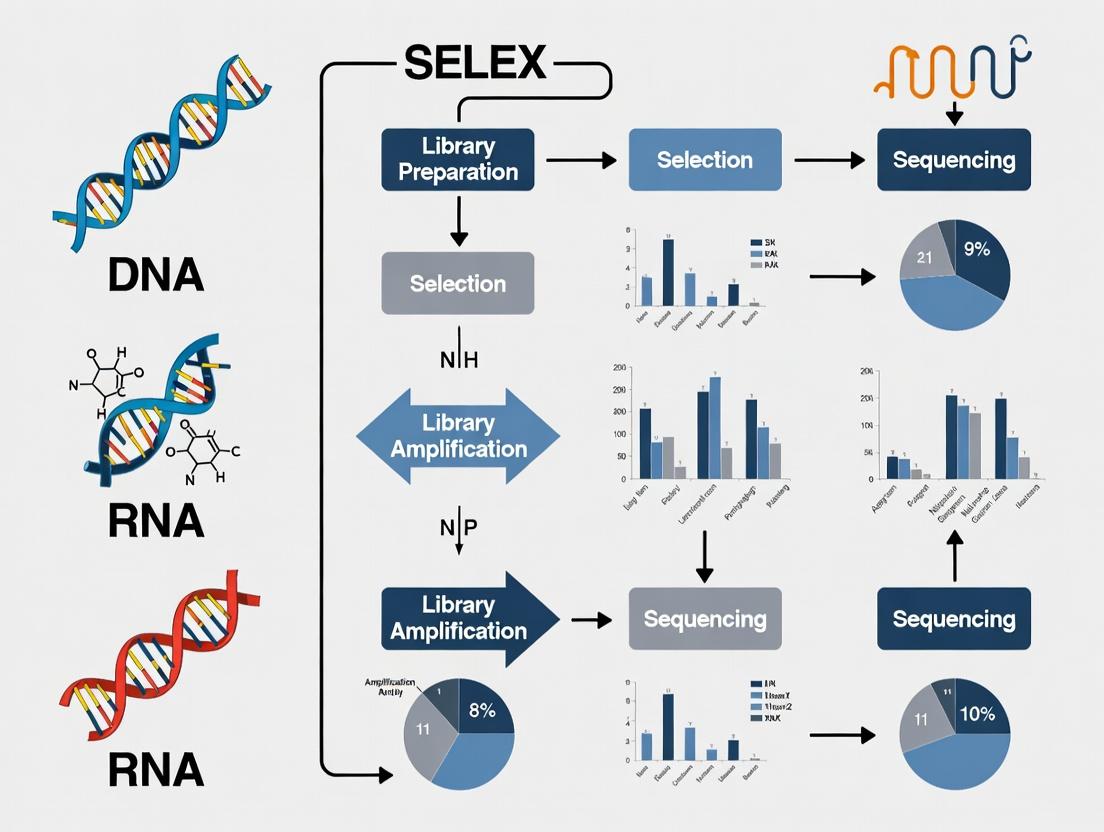
This article provides a detailed comparative analysis of DNA and RNA libraries for SELEX (Systematic Evolution of Ligands by EXponential enrichment), a critical technique for aptamer discovery.
DNA vs. RNA Libraries in SELEX: A Comprehensive Guide to Choosing the Right Aptamer Platform for Your Target
Abstract
This article provides a detailed comparative analysis of DNA and RNA libraries for SELEX (Systematic Evolution of Ligands by EXponential enrichment), a critical technique for aptamer discovery. Tailored for researchers and drug development professionals, it explores the fundamental chemical and structural differences between nucleic acid platforms and their direct impact on SELEX success rates. We cover practical methodological considerations, common troubleshooting scenarios, and validation strategies. By synthesizing current research, this guide aims to empower scientists to select the optimal library type—DNA or RNA—based on their specific target, desired aptamer properties, and application goals, thereby maximizing efficiency and outcomes in therapeutic and diagnostic development.
The SELEX Foundation: Understanding the Core Chemistry and Stability Differences Between DNA and RNA Libraries
This technical guide is framed within a broader thesis investigating the comparative success rates of DNA versus RNA libraries in Systematic Evolution of Ligands by EXponential enrichment (SELEX). A critical, often overlooked, aspect of this comparison is the definition and measurement of "success." This document establishes standardized, multi-faceted metrics to objectively evaluate aptamer discovery efficiency, enabling rigorous, reproducible comparisons between DNA- and RNA-based SELEX campaigns.
Key Metrics for Efficiency Evaluation
Success in SELEX is multidimensional. The following quantitative metrics, summarized in Table 1, must be collectively assessed.
Table 1: Core Metrics for Evaluating SELEX Efficiency
| Metric Category | Specific Metric | Ideal Range/Value | Measurement Method |
|---|---|---|---|
| Process Efficiency | Library Diversity Pre-SELEX | 10^13 - 10^15 unique sequences | Deep Sequencing (NGS) |
| Enrichment Rate (Cycle n) | >10-fold increase over cycle n-1 | qPCR of target-bound pool | |
| Convergence (Sequence Diversity) | >70% of reads in top 100 clusters | NGS & Clustering Analysis | |
| Binding Performance | Affinity (Kd) of Enriched Pool | Low nM to pM range | SPR, BLI, or MST |
| Specificity (Cross-Reactivity) | <10% binding to non-targets | Specificity assays vs. homologs | |
| Output Quality | Hit Rate (High-Binders) | >30% of clones from final round | ELISA or Slot-Blot screening |
| Aptamer Fitness (Minimal Sequence) | <60 nt for RNA, <80 nt for DNA | Truncation studies & MFOLD | |
| Functional Efficacy (IC50/EC50) | Varies by application (e.g., <100 nM for inhibitor) | Cell-based or enzymatic assay | |
| Resource Efficiency | Total Time to Validated Aptamer | <8 weeks (vs. historical 6-12 months) | Project tracking |
| Total Cost per Aptamer | Project-dependent; lower is better | Budget analysis |
Comparative Experimental Protocols for DNA vs. RNA SELEX
Protocol 3.1: Parallel SELEX for DNA & RNA Libraries Objective: To isolate aptamers against a target protein (e.g., human TNF-α) using DNA and RNA libraries under identical conditions for direct comparison.
- Library Design: Use a DNA library (5'-GGGAGCTCAGAATAAACGCTCAA-N40-TTCGACATGAGGCCCGGATC-3') and its corresponding RNA version (T7 promoter appended to DNA template). Complexity: >10^14.
- Immobilization: Immobilize 100 pmol of His-tagged target protein on 50 µL of Ni-NTA magnetic beads in Selection Buffer (SB: 20 mM HEPES, 150 mM NaCl, 2 mM MgCl2, pH 7.4). Use separate bead batches for DNA and RNA selections.
- Counter-Selection: Pre-incubate the naïve library (1 nmol) with bare Ni-NTA beads in SB for 30 min at 25°C. Retain supernatant.
- Selection: Incubate pre-cleared library with target-immobilized beads for 45 min at 25°C with gentle rotation. Wash 3x with 200 µL SB.
- Elution: For DNA: Elute bound sequences with 100 µL 95°C SB for 10 min. For RNA: Elute by bead digestion with 100 µL Proteinase K solution for 20 min at 37°C.
- Amplification: For DNA: PCR-amplify eluted DNA (151 cycles). For RNA: Reverse transcribe eluted RNA (SuperScript IV), then PCR-amplify the cDNA.
- Regeneration: For DNA: Use PCR product directly for next round. For RNA: Perform in vitro transcription (HiScribe T7) from PCR product to regenerate RNA pool.
- Monitoring: Use qPCR after each elution step to calculate enrichment (Cycle Threshold difference vs. negative control beads). Perform NGS after rounds 3, 6, and 9.
Protocol 3.2: High-Throughput Binding Affinity Screening via Bio-Layer Interferometry (BLI) Objective: Rapidly characterize affinity and kinetics of individual aptamer clones from final-round pools.
- Biotinylation: 3'-end biotinylate candidate DNA aptamers via PCR with biotinylated reverse primer. For RNA aptamers, use 3'-biotinylated primers during cDNA synthesis.
- Immobilization: Load biotinylated aptamers (5 µg/mL) onto Streptavidin (SA) biosensors for 300 sec in kinetics buffer (KB).
- Baseline: Immerse sensors in KB for 60 sec to establish baseline.
- Association: Dip sensors into wells containing serially diluted target protein (e.g., 1000 nM to 15.6 nM, 2-fold dilutions) for 180 sec.
- Dissociation: Transfer sensors to KB-only wells for 300 sec.
- Analysis: Fit sensograms (using e.g., Octet Analysis Studio) to a 1:1 binding model to calculate association (kon), dissociation (koff) rates, and equilibrium dissociation constant (KD = koff/kon).
Visualizing SELEX Metrics and Pathways
Title: Four-Pillar Framework for Defining SELEX Success
Title: Comparative DNA vs. RNA SELEX Workflow for Metric Analysis
The Scientist's Toolkit: Essential Research Reagents & Materials
Table 2: Key Reagent Solutions for Comparative SELEX Studies
| Item | Function in DNA/RNA SELEX | Example Product/Chemical |
|---|---|---|
| Synthetic Oligo Library | Source of initial sequence diversity. Critical variable in DNA vs. RNA thesis. | Custom-synthesized ssDNA library with 40-60 nt random region. |
| High-Fidelity DNA Polymerase | Accurate amplification of selected pools without introducing bias or errors. | KAPA HiFi HotStart ReadyMix, Q5 High-Fidelity DNA Polymerase. |
| T7 RNA Polymerase | Generates RNA pool from DNA template library for RNA-SELEX. | HiScribe T7 High Yield RNA Synthesis Kit. |
| Reverse Transcriptase | Converts selected RNA back to cDNA for amplification in RNA-SELEX. | SuperScript IV Reverse Transcriptase. |
| Magnetic Beads with Capture Chemistry | Immobilizes target for partition (binding/wash). Choice affects background. | Streptavidin, Ni-NTA, or Protein A/G magnetic beads. |
| RNase Inhibitor | Protects RNA library from degradation during RNA-SELEX steps. | Recombinant RNasin Ribonuclease Inhibitor. |
| Binding/Wash Buffer (with Cations) | Provides physiological ionic strength. Mg²⁺ is crucial for RNA structure. | HEPES or PBS buffer with 1-5 mM MgCl₂ (for RNA). |
| Next-Generation Sequencing (NGS) Kit | For deep sequencing of pools to measure convergence and identify hits. | Illumina MiSeq system with compatible library prep kits. |
| Bio-Layer Interferometry (BLI) System | Label-free, high-throughput kinetic analysis of aptamer-target binding. | Sartorius Octet systems with SA or APS biosensors. |
This whitepaper provides an in-depth technical analysis of the core chemical and structural distinctions between DNA and RNA nucleotides, focusing on the presence (2'-OH) or absence (2'-deoxy) of the hydroxyl group at the 2' carbon of the pentose sugar. This analysis is framed within the context of optimizing nucleic acid libraries for Systematic Evolution of Ligands by EXponential enrichment (SELEX) to improve success rates in aptamer discovery for therapeutic and diagnostic applications.
Core Chemical Differences
The defining difference lies at the 2' position of the ribose sugar. In RNA, this position bears a hydroxyl group (2'-OH). In DNA, it is reduced to a hydrogen atom (2'-deoxy). This single atomic substitution has profound and cascading effects on the molecule's properties.
Table 1: Key Chemical and Physical Property Comparison
| Property | DNA (2'-Deoxy) | RNA (2'-OH) | Impact on Library/SELEX |
|---|---|---|---|
| Sugar Pucker | Predominantly C2'-endo | Predominantly C3'-endo | Dictates groove geometry & protein interaction surfaces. |
| Helical Form | Prefers B-form under physiological conditions. | Prefers A-form under physiological conditions. | A-form is more compact; influences aptamer-target interface. |
| Flexibility | More flexible sugar-phosphate backbone. | Backbone is more rigid due to steric hindrance of 2'-OH. | Flexibility may aid in conformational adaptation during selection. |
| Hydrolytic Stability | High. Lacks the 2'-OH, preventing base-catalyzed strand cleavage. | Low. The 2'-OH group attacks the adjacent phosphodiester bond, making it susceptible to alkaline degradation. | DNA libraries are far more stable during repeated PCR amplification and storage. |
| Chemical Stability | Resistant to degradation by strong bases. | Labile to degradation by strong bases. | RNA SELEX requires stringent RNase-free conditions and buffers. |
| Thermal Stability (Duplex) | Typically lower Tm for equivalent sequence vs. RNA:RNA duplex. | RNA:RNA duplexes are often more thermodynamically stable. | Affects stringency of washing steps; RNA aptamers may have tighter binding folds. |
| Enzymatic Requirements | Amplified via DNA polymerase (e.g., Taq). | Requires reverse transcriptase (to DNA) and RNA polymerase (e.g., T7) for amplification. | RNA SELEX is more enzymatically complex, increasing cost and protocol steps. |
Conformational & Functional Implications for SELEX Libraries
The 2'-OH group is a major determinant of nucleic acid tertiary structure. It stabilizes the A-form helix, which has a deep, narrow major groove and a shallow, wide minor groove compared to B-form DNA. This makes the major groove of RNA less accessible for protein recognition but is critical for the vast array of complex RNA folds (pseudoknots, tight turns, etc.) driven by specific 2'-OH-mediated hydrogen bonding.
- DNA Library Characteristics: The inherent flexibility and B-form preference allow DNA aptamers to often bind targets via adaptive conformation and groove binding. Their stability simplifies SELEX protocols.
- RNA Library Characteristics: The structural rigidity and A-form geometry, combined with the 2'-OH's role as a hydrogen bond donor/acceptor, enable more intricate, pre-organized, and stable 3D architectures. This can yield very high-affinity aptamers but at the cost of library lability.
Experimental Protocol for Comparative SELEX Library Analysis
Title: Parallel DNA and RNA Library SELEX for Target Hit-Rate Comparison
Objective: To empirically determine the success rate and aptamer characteristic differences from DNA and RNA libraries against the same target protein.
Materials & Reagents:
- Synthetic DNA Library: 5'-Fixed Primer Region-Random Region (40-60 nt)-Fixed Primer Region-3'.
- Synthetic DNA Template Library for RNA Transcription: T7 Promoter-Fixed Primer Region-Random Region-Fixed Primer Region.
- Target Protein: Immobilized on a solid support (e.g., streptavidin beads for biotinylated protein).
- Enzymes: Taq DNA Polymerase, T7 RNA Polymerase, RNase Inhibitor, Reverse Transcriptase.
- Buffer for Selection: Binding buffer (e.g., PBS with Mg2+, carrier tRNA/BSA). RNA Denaturing Buffer: Included for RNA library pre-folding.
- Wash Buffers: Binding buffer with varying stringency (e.g., increased salt, mild detergent).
- Elution Buffer: Typically containing high salt, chelating agents (EDTA), or denaturants (urea), or via competitive elution with free target.
- PCR/RT-PCR Reagents: dNTPs, NTPs, primers.
Protocol:
- Library Preparation:
- DNA: PCR amplify the ssDNA library to generate double-stranded template. Generate single-stranded library via strand separation (e.g., biotin-streptavidin purification).
- RNA: In vitro transcribe the DNA template library. Purify full-length RNA via denaturing PAGE. Refold RNA by heating in selection buffer and slow cooling.
- Parallel Selection (SELEX Cycle):
- Incubate the DNA or RNA library with immobilized target in binding buffer (RNA: include RNase inhibitors). Include appropriate negative counter-selection steps.
- Wash with binding buffer to remove unbound sequences. Increase stringency over subsequent rounds.
- Elute specifically bound sequences.
- Amplification & Regeneration:
- DNA Path: Amplify eluted DNA directly by asymmetric PCR to regenerate ssDNA for the next round.
- RNA Path: Reverse transcribe eluted RNA to cDNA. PCR amplify the cDNA. Use the PCR product as template for in vitro transcription to regenerate RNA for the next round.
- Monitoring & Cloning: Monitor enrichment by quantitative methods (qPCR, radiolabel). After 8-15 rounds, clone and sequence individual aptamers from both pools for comparative analysis of motifs, affinity (Kd via SPR/ITC), and specificity.
Diagrams
Title: Comparative DNA vs. RNA SELEX Workflow
Title: Structural Impact of the 2' Substituent
The Scientist's Toolkit: Key Research Reagent Solutions
Table 2: Essential Reagents for Comparative DNA/RNA SELEX Studies
| Reagent / Solution | Function in Protocol | Critical Consideration |
|---|---|---|
| Chemically Modified Nucleotides (e.g., 2'-F, 2'-O-Me) | Incorporate during transcription to enhance RNA library nuclease resistance. | Balances stability with polymerase acceptance during enzymatic steps. |
| High-Fidelity & Thermophilic Polymerases (e.g., Pfu, KAPA HiFi) | PCR amplification to minimize mutation rates during library regeneration over many SELEX rounds. | Essential for maintaining library diversity and avoiding dominance by polymerase-introduced artifacts. |
| T7 RNA Polymerase (Recombinant) | High-yield in vitro transcription of RNA library pools from DNA templates. | Requires pure, linearized DNA template with an optimized T7 promoter sequence. |
| RNase Inhibitor (e.g., Recombinant RNasin) | Protects RNA library from degradation during binding, washing, and elution steps in RNA SELEX. | Must be added fresh to all buffers and reaction mixes involving RNA. |
| Magnetic Beads with Surface Chemistry (Streptavidin, Ni-NTA, etc.) | For reversible immobilization of target (protein, small molecule) during selection. | Enables rapid buffer exchanges, washing, and efficient retrieval of bound sequences. |
| Stringency Wash Buffers (with detergents, increased salt, or competitors) | To increase selection pressure by removing weakly bound sequences. | Stringency is incrementally raised over selection rounds to drive enrichment of high-affinity binders. |
| Denaturing Polyacrylamide Gel Electrophoresis (PAGE) System | To purify full-length transcribed RNA away from abortive products and nucleotides. | Critical for RNA library quality; ensures only full-length sequences enter the selection. |
| Next-Generation Sequencing (NGS) Platform | For deep sequencing of enriched pools to identify aptamer families and consensus motifs. | Replaces traditional cloning for high-throughput analysis of SELEX evolution. |
Systematic Evolution of Ligands by EXponential enrichment (SELEX) is a pivotal technique for discovering high-affinity nucleic acid aptamers against therapeutic targets. A central determinant of SELEX success is the intrinsic biostability of the nucleic acid library throughout iterative rounds of selection, which often involves exposure to biological fluids and cellular extracts containing nucleases. The inherent chemical differences between DNA and RNA confer dramatic differential stability, directly impacting library integrity, selection efficiency, and the functional yield of aptamers. This whitepaper provides a technical analysis of the structural basis for DNA's nuclease resistance versus RNA's susceptibility, framed within the practical considerations for SELEX experimental design and success rates.
Structural & Chemical Basis for Differential Stability
The primary stability difference originates from the 2'-hydroxyl group on the ribose sugar of RNA.
- RNA Susceptibility: The presence of the 2'-OH group makes the RNA backbone prone to hydrolysis via an internal transesterification mechanism. In alkaline conditions or via enzyme catalysis (e.g., ribonucleases), the 2'-OH acts as a nucleophile, attacking the adjacent phosphorus center, leading to cleavage of the phosphodiester bond. This creates a 2',3'-cyclic phosphate intermediate, which is rapidly hydrolyzed.
- DNA Resistance: DNA lacks the 2'-OH group (having only 2'-H), preventing this facile in-line attack mechanism. Cleavage of DNA requires direct hydrolysis of the phosphodiester bond, which is chemically more challenging and typically requires enzyme-catalyzed (DNase) mediation under physiological conditions.
This fundamental difference is quantified in the half-lives of the polymers under typical SELEX conditions.
Quantitative Data on Nuclease Stability
The following table summarizes key stability metrics for DNA and RNA under various conditions relevant to SELEX protocols.
Table 1: Comparative Stability of DNA and RNA Oligonucleotides
| Condition / Parameter | DNA Oligonucleotide | RNA Oligonucleotide | Implications for SELEX |
|---|---|---|---|
| Half-life in Human Serum (37°C) | ~24 - 72 hours | ~10 - 60 seconds | RNA libraries require strict RNase-free conditions and/or modified nucleotides during synthesis. |
| Alkaline Hydrolysis Rate | Extremely resistant (stable) | Highly susceptible; rapid cleavage at pH > 6 | Buffer pH must be carefully controlled for RNA work. |
| Thermal Stability (Tm) | Generally higher Tm for equivalent sequences | Lower Tm due to A-form helix | DNA libraries may withstand higher stringency washes. |
| Susceptibility to Ubiquitous RNases | Not susceptible | Extremely high; RNases are robust and persistent | RNA SELEX demands rigorous decontamination of work surfaces and equipment. |
| Common Protective Strategies | Often unmodified; phosphorothioate backbones for enhanced stability | 2'-Fluoro, 2'-O-methyl, 2'-NH₂ modifications; transcription with modified NTPs | Modified RNA libraries significantly increase success rates but add cost and complexity. |
Experimental Protocols for Assessing Nuclease Stability
A critical step in SELEX library design is empirical validation of library stability under planned selection conditions.
Protocol 4.1: Serum Stability Assay
Objective: Determine the degradation kinetics of a DNA or RNA library pool in biological fluid. Materials:
- 5'-End Labeled DNA or RNA library pool (³²P or fluorescent label).
- Fetal Bovine Serum (FBS) or target species serum.
- Incubation buffer (e.g., 1x PBS, pH 7.4).
- Proteinase K, Phenol:Chloroform:Isoamyl alcohol, 3M Sodium Acetate, 100% Ethanol.
- Denaturing Polyacrylamide Gel Electrophoresis (PAGE) apparatus.
- Phosphorimager or fluorescence gel scanner.
Method:
- Dilute the labeled library in incubation buffer to a final volume of 18 µL.
- Pre-warm serum to 37°C. Initiate the reaction by adding 2 µL of serum to the library (creating a 10% serum solution). Mix quickly.
- Incubate at 37°C. Remove 2 µL aliquots at defined time points (e.g., 0, 1, 5, 15, 30, 60, 120 minutes) and immediately mix with 8 µL of stop solution (80% formamide, 50 mM EDTA, tracking dyes).
- To recover full-length nucleic acid for downstream analysis, a parallel reaction can be performed. Stop larger aliquots by adding Proteinase K (0.1 mg/mL final) and incubating at 65°C for 15 minutes, followed by standard phenol-chloroform extraction and ethanol precipitation.
- Heat all analytical aliquots to 95°C for 3 minutes, then resolve on a denaturing (8M urea) PAGE gel.
- Visualize and quantify the intact full-length band versus degradation products. Plot log(% intact) versus time to determine the half-life.
Protocol 4.2: Resistance to Specific Nucleases
Objective: Test library resistance to specific endo- or exo-nucleases used in counter-selection or cleanup steps. Materials:
- Nucleic acid library.
- Specific nucleases (e.g., S1 Nuclease, Exonuclease I, RNase A, DNase I).
- Appropriate reaction buffers as specified by the enzyme manufacturer.
- Denaturing PAGE or capillary electrophoresis system.
Method:
- Set up reactions containing 1 µg of library in 1x recommended buffer.
- Add the nuclease at a standard activity unit (U) per µg of nucleic acid. Include a no-enzyme control.
- Incubate at the recommended temperature (often 37°C) for 30 minutes.
- Quench the reaction with EDTA (for metal-dependent nucleases) or by heat inactivation.
- Analyze the products by denaturing PAGE or Bioanalyzer to assess the percentage of intact library remaining.
Diagrams
RNA vs. DNA Backbone Cleavage Mechanism
Nuclease Stability Impact on SELEX
The Scientist's Toolkit: Research Reagent Solutions
Table 2: Essential Reagents for Nuclease-Resistant SELEX Library Construction & Handling
| Item | Function in Context | Key Consideration |
|---|---|---|
| 2'-Fluoro (2'-F) Modified NTPs | Enzymatic incorporation during RNA transcription to replace 2'-OH, dramatically increasing resistance to RNase A-type nucleases. | Compatible with T7 RNA polymerase variants (Y639F mutant); essential for in vivo selections. |
| 2'-O-Methyl (2'-OMe) Modified NTPs | Post-SELEX stabilization of lead aptamers; also used in libraries for enhanced nuclease resistance. | Often poorly incorporated by wild-type polymerases; requires engineered enzymes. |
| Phosphorothioate (PS) Linkages | Replacement of non-bridging oxygen with sulfur in DNA backbone. Increases resistance to exonucleases. | Can introduce chirality and non-specific protein binding; use sparingly. |
| RNase Inhibitors (e.g., RiboGuard, SUPERase•In) | Protein-based inhibitors added to RNA solutions to sequester contaminating RNases during experiments. | Critical for all RNA library handling steps pre-amplification. Not effective against all RNase types. |
| DEPC-Treated Water / RNase-free Buffers | Diethyl pyrocarbonate (DEPC) inactivates RNases by covalent modification. Used to treat water and solutions. | Note: DEPC is incompatible with Tris buffers. Commercial RNase-free reagents are preferred. |
| DNase I (RNase-free) | Used in RNA library preparation to remove template DNA after transcription without degrading the RNA product. | Quality control for absence of RNase is paramount. |
| Thermostable Reverse Transcriptase | For RNA SELEX: generates cDNA from enriched RNA pools. High stability and fidelity are crucial for maintaining library diversity. | Mutants with high processivity and tolerance to modified RNA (2'-F) are recommended. |
| Magnetic Beads (Streptavidin) | Common solid-phase partition matrix. Allows stringent washing to remove unbound, degraded, or weakly-binding sequences. | Beads can be blocked with carrier nucleic acids (e.g., yeast tRNA) to reduce non-specific library loss. |
| dNTP / NTP Mixes (Stable, PCR-grade) | High-purity nucleotide mixes for error-free PCR amplification (DNA SELEX) or in vitro transcription (RNA SELEX). | Contamination with nucleases or other nucleotides can skew library composition. |
| Uracil-DNA Glycosylase (UDG) | Used in "handle-based" SELEX to prevent carryover contamination between rounds by degrading uracil-containing PCR products from previous cycles. | Enhances selection stringency by ensuring each round starts only with newly synthesized library. |
Systematic Evolution of Ligands by EXponential enrichment (SELEX) is a cornerstone methodology for discovering high-affinity nucleic acid aptamers for therapeutic and diagnostic applications. A central debate in the field concerns the relative success rates of DNA versus RNA libraries, a question fundamentally underpinned by the principles of initial library diversity and complexity. This whitepaper examines the thesis that the physicochemical and structural properties of DNA and RNA, acting upon a defined initial sequence space, impose distinct evolutionary trajectories that critically influence selection outcomes, including affinity, specificity, and convergence rates.
Core Principles: Sequence Space, Diversity, and Complexity
Initial Sequence Space: Defined as the total theoretical set of all possible unique sequences in a library. For a random region of length N nucleotides, the sequence space is 4^N. A typical library with a 40-nucleotide random region has a theoretical diversity of ~1.2 x 10^24 sequences, far exceeding the practical library size (10^13 - 10^15 molecules).
Practical Diversity (Complexity): The actual number of unique sequences physically present in the synthesized library pool. This is limited by synthesis yield and scale.
Functional Diversity: The subset of practical diversity that is folded into stable, accessible structures capable of interacting with the target. This is where DNA and RNA libraries critically diverge due to RNA's 2'-hydroxyl group, which enables a wider repertoire of tertiary interactions (e.g., pseudoknots) and greater structural plasticity, but also confers susceptibility to hydrolysis.
Quantitative Comparison: DNA vs. RNA Library Parameters
Table 1: Inherent Biophysical & Biochemical Properties
| Property | DNA Library | RNA Library | Impact on Initial Diversity |
|---|---|---|---|
| Chemical Stability | High (resistant to hydrolysis) | Low (2'-OH makes it RNase-sensitive) | RNA: Requires careful handling; loss of sequences pre-selection. |
| Structural Repertoire | Primarily B-form helices, less complex tertiary folds. | A-form helices, diverse tertiary folds (e.g., pseudoknots, kink-turns). | RNA: Larger functional diversity from same sequence length. |
| Synthesis Cost & Ease | Lower cost, direct chemical synthesis. | Higher cost, requires transcription from DNA template. | DNA: Higher practical diversity achievable for same cost. |
| Mutation Rate | Low (polymerase fidelity ~10^-4 - 10^-6). | High (Reverse transcriptase error-prone, ~10^-4). | RNA: In vitro evolution can be faster; higher chance of off-target mutants. |
Table 2: Typical Experimental SELEX Parameters & Outcomes
| Parameter | DNA-SELEX | RNA-SELEX | Implication for Selection Outcome |
|---|---|---|---|
| Typical Practical Library Size | 10^14 - 10^15 | 10^13 - 10^14 | DNA: Larger naive pool for sampling sequence space. |
| Random Region Length | 30-60 nt | 25-40 nt | RNA: Often shorter to offset synthesis cost, reducing theoretical space. |
| Key Enzymatic Steps | PCR amplification. | Reverse Transcription, in vitro transcription, PCR. | RNA: More steps increase bottleneck effects and sequence loss. |
| Typical Rounds to Convergence | 8-15 | 6-12 | RNA: Potentially faster convergence due to richer structural motifs. |
| Reported Kd Range (Common Targets) | pM - nM | pM - nM | Both can yield high-affinity aptamers; target-dependent. |
| Dominant Folds in Aptamers | Stem-loops, G-quadruplexes. | Stem-loops, pseudoknots, complex junctions. | RNA aptamers may exploit more intricate target interfaces. |
Detailed Experimental Protocols
Protocol: Initial Library Synthesis & Preparation
A. DNA Library Construction:
- Synthesis: Perform solid-phase synthesis of a single-stranded DNA library with the design: 5'-Fixed Primer Site (e.g., 18-22 nt) - Random Region (NX) - Fixed Primer Site (e.g., 18-22 nt)-3'.
- Desalting/Purification: Purify the full-length product by denaturing PAGE or HPLC.
- Quantification: Measure absorbance at 260 nm. Use ssDNA directly for first-round selection or convert to double-stranded form via PCR for archival.
B. RNA Library Construction (via Transcription):
- Template Preparation: Synthesize a dsDNA template containing a T7 promoter sequence upstream of the random region design. Amplify via PCR.
- In Vitro Transcription: Assemble reaction: 1 µg DNA template, 40 mM Tris-HCl (pH 8.0), 22 mM MgCl2, 5 mM DTT, 1 mM spermidine, 4 mM each NTP, 0.1% Triton X-100, 2 U/µL T7 RNA polymerase. Incubate 3-4h at 37°C.
- Purification: Treat with DNase I (RNase-free). Purify RNA by denaturing PAGE or spin-column purification.
- Folding: Denature at 70-80°C for 5 min and snap-cool on ice in selection buffer to promote proper folding.
Protocol: Key Negative Selection (Counter-SELEX) Step
Objective: To deplete sequences binding to the immobilization matrix or off-target sites, increasing target specificity.
- Immobilization: Incubate the naive or enriched library (DNA or folded RNA) with the bare matrix (e.g., streptavidin beads, nitrocellulose filter) for 20-30 min in selection buffer.
- Partitioning: Separate the unbound library fraction. This pre-cleared library is used for the positive selection step.
- Application: Crucial early (rounds 1-3) to remove non-specific binders, shaping the functional diversity from the outset.
Protocol: Monitoring Diversity Through High-Throughput Sequencing (HTS) Analysis
Objective: To quantitatively track library complexity and convergence across SELEX rounds.
- Sample Preparation: For each round (e.g., 0, 3, 6, 9, final), amplify library cDNA (for RNA) or DNA pool using primers with Illumina adapters.
- Sequencing: Perform 150 bp paired-end sequencing on an Illumina MiSeq or NextSeq platform.
- Bioinformatic Analysis:
- Demultiplex & Quality Filter: Use FastQC and Trimmomatic.
- Extract Random Region: Align to fixed flanking sequences.
- Cluster Sequences: Use USEARCH or VSEARCH to cluster at 80-90% identity.
- Calculate Metrics: Shannon entropy, unique sequence counts, and family size distribution over rounds.
- Convergence Indicator: A sharp decline in unique sequences and rise in dominance of a few clusters.
Visualizations
Diagram 1: Library type influences SELEX path.
Diagram 2: General SELEX workflow with diversity check.
The Scientist's Toolkit: Key Research Reagent Solutions
Table 3: Essential Materials for Library Construction & SELEX
| Item | Function & Rationale | Example/Note |
|---|---|---|
| Synthetic ssDNA Library | The foundational naive pool. High-fidelity synthesis maximizes practical diversity. | Custom from IDT, Sigma. 1 µmole scale yields ~10^15 molecules. |
| High-Fidelity DNA Polymerase | For minimal mutation bias during PCR amplification. Preserves library integrity. | Q5 (NEB), KAPA HiFi. Error rate ~10^-6. |
| T7 RNA Polymerase Kit | Reliable, high-yield transcription for RNA library generation. | HiScribe T7 (NEB), MEGAshortscript. |
| RNase Inhibitor | Critical for RNA-SELEX to prevent degradation of the library. | Recombinant RNasin (Promega). |
| Magnetic Beads (Streptavidin) | Common partitioning matrix for immobilizing biotinylated targets. Enables stringent washes. | Dynabeads (Thermo Fisher). |
| Nitrocellulose Filters | Alternative partition method for protein targets. Binds protein-nucleic acid complexes. | HAWP (Merck Millipore). |
| Next-Gen Sequencing Kit | For deep sequencing analysis of pool diversity and convergence. | Illumina MiSeq Reagent Kit v3. |
| Selection Buffer Components | Mg2+ salts, tRNA/BSA carrier, salts. Stabilizes nucleic acid structure and reduces non-specific binding. | [Buffer]: pH 7.4, 1-5 mM MgCl2, 150 mM NaCl. |
Within the broader thesis on DNA versus RNA library SELEX success rates, the historical debate has often centered on which nucleic acid platform is superior. However, evolutionary advancements in SELEX methodologies and a deepening understanding of biochemical nuances reveal that both DNA and RNA libraries are indispensable, complementary tools. Their continued essentiality is rooted in their distinct historical development paths, inherent physicochemical properties, and their optimization for specific therapeutic and diagnostic applications.
Historical Context and Technical Evolution
The SELEX (Systematic Evolution of Ligands by EXponential enrichment) process, independently described in 1990, was pioneered using RNA libraries. Early research exploited RNA's structural diversity for targeting proteins. DNA SELEX emerged shortly after, gaining traction due to DNA's superior chemical stability and easier, cheaper synthesis. The historical perception of RNA aptamers as more structurally versatile and DNA aptamers as more stable has driven parallel development tracks.
Table 1: Historical Milestones and Platform Adoption
| Year | Milestone | Primary Platform | Impact |
|---|---|---|---|
| 1990 | First SELEX Publications | RNA | Established methodology for generating nucleic acid ligands. |
| 1992 | First DNA Aptamer Reported | DNA | Demonstrated DNA's capability for molecular recognition. |
| 1998 | First SELEX-derived Therapeutic (Macugen) entered trials | RNA (2'-F modified) | Validated RNA aptamers in a clinical setting. |
| 2004 | Introduction of CE-SELEX | DNA | Dramatically improved selection efficiency for both types. |
| 2010s | Rise of HT-SELEX & NGS | DNA & RNA | Enabled deep analysis of library evolution and kinetics. |
| 2020s | Covalent Aptamer Discovery | DNA (mainly) | Expanded aptamer mechanistic repertoire. |
Core Biochemical and Practical Distinctions
The choice between DNA and RNA libraries is not arbitrary but is dictated by the target and intended application. Success rates are contextual.
Table 2: Inherent Properties of DNA vs. RNA Libraries
| Property | DNA Library | RNA Library |
|---|---|---|
| Native Sugar | 2'-Deoxyribose | Ribose (2'-OH) |
| Structural Flexibility | Generally lower; forms primarily B-form helix. | Higher; prone to A-form helix and complex tertiary folds. |
| Chemical Stability | High; resistant to alkaline hydrolysis. | Low; 2'-OH makes it prone to base-catalyzed hydrolysis. |
| Enzymatic Stability (in biological fluids) | Low (susceptible to nucleases). | Very Low. |
| Synthesis Cost & Ease | Lower cost, routine chemical synthesis. | Higher cost, requires transcription or synthesis with 2'-OH protection. |
| Modification Integration | Straightforward, during solid-phase synthesis. | Possible via modified nucleotides (e.g., 2'-F, 2'-OMe) but requires compatible polymerase. |
| Typical Selection Buffer | Mg²⁺ often present for structure. | Mg²⁺ critical for folding; requires optimization. |
Experimental Protocols for Comparative SELEX
A direct comparison of success rates requires meticulously controlled parallel SELEX experiments.
Protocol 1: Parallel DNA & RNA Library SELEX for a Protein Target
Objective: To isolate and compare aptamers from DNA and RNA libraries against the same target (e.g., human thrombin).
Initial Library Design:
- DNA Library: 5'-GGGAGACAAGAATAAACGCTCAA-N40-TTCGACATGAGGCCCGGATC-3'
- RNA Library: Same sequence, with T replaced by U. For stabilized RNA, use 2'-Fluoro pyrimidines.
Materials & Reagents (The Scientist's Toolkit):
Table 3: Key Research Reagent Solutions
| Reagent/Material | Function | Critical Note |
|---|---|---|
| Synthetic DNA Library (ssDNA) | Starting pool of ~10¹⁴ random sequences. | HPLC or PAGE purification is essential. |
| dsDNA Template for RNA | Template for in vitro transcription to generate RNA library. | Generated via PCR from ssDNA library. |
| T7 RNA Polymerase | Transcribes RNA library from dsDNA template. | For 2'-F-RNA, use Y639F mutant T7 polymerase. |
| Selection Buffer (Binding Buffer) | Provides ionic conditions for aptamer folding and binding. | Typically contains MgCl₂, NaCl, KCl, pH buffer (e.g., Tris, HEPES). |
| Target Protein (Immobilized) | The molecule for which aptamers are selected. | Can be immobilized on beads (streptavidin/biotin, Ni-NTA/His-tag) or kept in solution. |
| Partitioning Matrix | Separates bound from unbound sequences. | Nitrocellulose filters, magnetic beads, or capillary electrophoresis. |
| RT-PCR & PCR Reagents | Amplifies selected DNA/RNA pools for subsequent rounds. | For RNA selections: Reverse Transcriptase (RT) is required first. |
| High-Throughput Sequencer (NGS) | Analyzes pool evolution and identifies candidate aptamers. | Used after rounds 3-4 and at the end of selection. |
Workflow:
- Library Preparation: Synthesize ssDNA library. For RNA, transcribe from PCR-amplified dsDNA template. Purify.
- Negative Selection (Counter-Selection): Incubate library with immobilization matrix (e.g., bare streptavidin beads) to remove matrix-binding sequences. Collect flow-through.
- Positive Selection: Incubate pre-cleared library with target-immobilized matrix. Use stringent washing buffers.
- Elution: Recover bound sequences. For DNA: heat denaturation or alkaline elution. For RNA: phenol-chloroform extraction or competitive elution with target.
- Amplification: (DNA) Direct PCR. (RNA) Reverse transcribe to cDNA, then PCR. For RNA, re-transcribe PCR product to RNA for next round.
- Iteration: Repeat steps 2-5 for 8-15 rounds, increasing stringency (e.g., reduced incubation time, increased wash volume/competitor).
- Sequencing & Analysis: Clone and Sanger sequence final pools or subject to NGS. Analyze for enriched families via bioinformatics.
Diagram Title: Parallel DNA & RNA SELEX Workflow
Data-Driven Success Rate Analysis
"Success" must be defined by specific parameters: binding affinity (Kd), specificity, functional inhibition, and development time.
Table 4: Comparative Success Metrics from Recent Studies (Hypothetical Synthesis)
| Metric | DNA Library SELEX | RNA Library (2'-F Modified) SELEX | Context & Implication |
|---|---|---|---|
| Typical Affinity Range (Kd) | pM - nM | pM - nM | Both can achieve high affinity; target-dependent. |
| Selection Rounds to Convergence | Often fewer (6-10) | Can be more (8-12) | DNA amplification is more straightforward, potentially faster. |
| Hit Rate from NGS | Broader distribution | Often sharper enrichment of fewer families | RNA's structural complexity may lead to fewer optimal solutions. |
| Post-Selection Stability | High; often ready for assays. | Requires modification; stabilized during selection. | DNA has a native stability advantage for diagnostics. |
| Functional Inhibition Success | High for structured targets (e.g., thrombin). | High for targets requiring complex interfaces (e.g., cytokines). | Platform choice can be target-biased. |
| In Vivo Application Path | Requires nuclease resistance modifications (e.g., phosphorothioates, 2'-O-methyl). | Stability built-in via 2'-F/2'-OMe modifications during selection. | RNA platform is historically more evolved for therapeutics. |
Signaling Pathways in Aptamer Action
A key application of aptamers is modulating cell signaling. Their mechanism is distinct from antibodies.
Diagram Title: Aptamer Modulation of Cell Signaling
The historical dichotomy between DNA and RNA aptamer platforms has evolved into a strategic synergy. DNA libraries offer robustness, speed, and cost-effectiveness ideal for diagnostic sensor development and targeting stable structures. RNA libraries, particularly with advanced nucleotide analogs, provide unparalleled structural sophistication for challenging protein targets and a direct path to therapeutic development. The core thesis is not that one platform has a universally higher SELEX success rate, but that their success is measured against different criteria. The aptamer researcher's toolkit is fundamentally incomplete without access to both, allowing the target biology—not platform dogma—to guide the optimal path to discovery.
Practical Application: Step-by-Step Methodological Implications of Choosing DNA or RNA for SELEX
This whitepaper provides a technical guide on the application of 2'-F and 2'-OMe sugar modifications in RNA library synthesis for SELEX (Systematic Evolution of Ligands by EXponential Enrichment). Within the broader thesis context of comparing DNA versus RNA libraries for SELEX success rates, this document details how these specific 2'-position modifications confer nuclease resistance and enhance thermal stability, thereby increasing the viability of RNA-based aptamer discovery campaigns. It presents current synthesis protocols, comparative quantitative data, and essential research tools for practitioners.
The fundamental challenge in using native RNA libraries for SELEX is their rapid degradation by ubiquitous RNases and inherent chemical instability. Unmodified RNA aptamers, even when selected in vitro, have limited utility for therapeutic or diagnostic applications due to short in vivo half-lives. This liability directly impacts SELEX success rates, as libraries degrade during iterative selection cycles, reducing the effective diversity and potentially skewing selection outcomes. The strategic incorporation of nuclease-resistant nucleotides during the initial library synthesis phase pre-addresses this flaw, creating chemically robust libraries that maintain integrity throughout SELEX and yield directly applicable aptamer candidates.
Chemical Rationale of 2'-Modifications
The 2'-hydroxyl group of ribose is the primary site of RNA's chemical lability, facilitating both enzymatic cleavage and base-catalyzed hydrolysis. Substitutions at this position yield profound stability benefits.
- 2'-Fluoro (2'-F): The small, highly electronegative fluorine atom forms a strong C-F bond. It sterically hinders nucleophilic attack and induces a C3'-endo sugar pucker (North conformation), mimicking the natural RNA structure. This allows for efficient recognition by T7 RNA polymerase for transcription, enabling enzymatic synthesis of modified libraries.
- 2'-O-Methyl (2'-OMe): The methoxy group provides significant steric bulk, creating a strong barrier to nuclease digestion. It also locks the sugar in the C3'-endo conformation and increases thermal stability (Tm) via hydrophobic effects. It is typically incorporated via post-SELEX modification or, with advanced methods, during enzymatic synthesis using engineered polymerases.
Quantitative Impact on Stability and Binding
The following tables summarize key biophysical and functional data comparing native RNA, 2'-F-RNA, and 2'-OMe-RNA.
Table 1: Biophysical Properties of 2'-Modified RNA
| Property | Native RNA | 2'-F-RNA | 2'-OMe-RNA | Measurement Context |
|---|---|---|---|---|
| Nuclease Resistance (t½) | Minutes | >24 hours | >48 hours | In human serum, 37°C |
| Thermal Stability (ΔTm) | Baseline | +1.5 to +2.5 °C per mod | +0.5 to +1.5 °C per mod | Average increase per substitution in a duplex |
| Polymerase Compatibility | High (T7 WT) | Moderate-High (T7 WT) | Low (requires engineered T7) | Efficiency of in vitro transcription incorporation |
| Synthetic Cost | Low | High | Very High | Cost per nucleotide for solid-phase synthesis |
Table 2: SELEX Performance Metrics
| Metric | Unmodified RNA Library | 2'-F-Modified RNA Library |
|---|---|---|
| Library Recovery Post-Selection | Low (High degradation) | High (>80% intact) |
| Number of Rounds to Convergence | 10-15 | Often reduced to 8-12 |
| Aptamer Affinity (Kd Range) | nM to pM | nM to pM (comparable or improved) |
| Hit Rate for Functional Binders | Standard | Potentially increased due to maintained diversity |
Synthesis Protocols for Modified Libraries
Enzymatic Synthesis of 2'-F-Pyrimidine RNA Libraries
This is the most common method for generating nuclease-resistant SELEX libraries, where 2'-F-dCTP and 2'-F-dUTP replace CTP and UTP.
Protocol:
- Template Preparation: Synthesize a long, single-stranded DNA template containing a conserved 5' promoter sequence for T7 RNA polymerase (e.g., 5'-TAATACGACTCACTATA-3') followed by a random region (N~30-50) and a 3' fixed primer binding site.
- NTP Mix Preparation: Prepare a transcription mix with the following nucleotide composition:
- 2'-F-CTP: 3.75 mM
- 2'-F-UTP: 3.75 mM
- ATP: 3.75 mM
- GTP: 3.75 mM
- [α-32P] GTP or ATP (for radiolabeling) – optional for tracking.
- Transcription Reaction: Combine 1 µg of DNA template, 1X transcription buffer (40 mM Tris-HCl pH 8.0, 8 mM MgCl₂, 2 mM spermidine, 25 mM NaCl), 20 mM DTT, 1 U/µL RNase inhibitor, and 0.05 U/µL T7 RNA polymerase. Incubate at 37°C for 4-16 hours.
- Purification: Purify the full-length transcript by denaturing polyacrylamide gel electrophoresis (PAGE), excise the band, and elute in 0.3 M sodium acetate. Precipitate with ethanol.
Solid-Phase Chemical Synthesis of 2'-OMe-Mixed Libraries
For libraries containing 2'-OMe modifications at all four positions (or specific patterns), chemical synthesis is required.
Protocol:
- Phosphoramidite Selection: Use 2'-O-methyl RNA phosphoramidites (A, C, G, U) for the random region. Standard DNA phosphoramidites can be used for fixed primer regions.
- Synthetic Cycle: Perform synthesis on a controlled-pore glass (CPG) support using an automated DNA/RNA synthesizer with a modified coupling cycle: extended coupling time (up to 10 minutes) for 2'-OMe amidites may be necessary due to steric hindrance.
- Deprotection & Cleavage: After synthesis, cleave and deprotect using standard ammonium hydroxide treatment (for nucleobase deprotection) followed by methylamine deprotection for 2'-O-methyl groups, as per the manufacturer's specific guidelines.
- Purification: Purify by HPLC (ion-exchange or reverse-phase) to isolate the full-length library product.
Experimental Validation of Stability Enhancement
Protocol: Serum Stability Assay
- Labeling: 5'-end label 1 pmol of native and modified RNA libraries with [γ-32P]ATP using T4 Polynucleotide Kinase.
- Incubation: Mix labeled RNA with 90% fetal bovine serum (FBS) to a final concentration of 10% serum. Incubate at 37°C.
- Sampling: Withdraw aliquots at time points (0, 5, 15, 30, 60, 120, 240 min, 24 hr).
- Quenching & Analysis: Immediately mix each aliquot with an equal volume of denaturing PAGE loading buffer (8 M urea, 50 mM EDTA). Heat denature and resolve products on a denaturing 10-20% PAGE gel.
- Visualization: Analyze gel using phosphorimaging. Quantify intact band intensity to determine half-life (t½).
The Scientist's Toolkit: Research Reagent Solutions
| Item | Function in Modified Library Work |
|---|---|
| 2'-F-CTP & 2'-F-UTP | Nucleotide triphosphates for enzymatic transcription of nuclease-resistant RNA libraries. |
| 2'-O-Methyl RNA Phosphoramidites | Building blocks for solid-phase chemical synthesis of 2'-OMe-modified oligonucleotides. |
| Y639F Mutant T7 RNA Polymerase | Engineered polymerase with reduced discrimination against bulky 2'-substituted NTPs, enabling 2'-OMe transcription. |
| Thermostable Reverse Transcriptase (e.g., SuperScript IV) | Critical for reverse transcribing modified RNA libraries during SELEX; must process through modified bases efficiently. |
| RNase Inhibitor (Murine or Human) | Essential for protecting RNA during enzymatic manipulations, even when modified. |
| DNase I (RNase-free) | For removing DNA template post-transcription. |
| Magnetic Beads with Streptavidin | For immobilizing target proteins during SELEX selection with modified libraries. |
Visualized Workflows and Relationships
Diagram 1: Rationale for RNA Modifications in SELEX Thesis
Diagram 2: SELEX Workflow with 2'-F Modified RNA Library
The strategic incorporation of 2'-F and 2'-OMe modifications into initial RNA library synthesis directly addresses the primary weakness of RNA in the context of SELEX-based discovery. By conferring profound nuclease resistance and enhancing thermal stability, these modifications increase the functional longevity of the library throughout the selection process, thereby protecting sequence diversity and improving the odds of identifying high-affinity aptamers. When framed within a DNA vs. RNA SELEX success rate thesis, the use of modified RNA libraries bridges the gap between DNA's stability and RNA's structural versatility, offering a path to generate leads with high potential for direct therapeutic translation. The choice between 2'-F and 2'-OMe depends on the required balance of stability, synthetic accessibility, and polymerase compatibility for a given project.
Within the broader research context comparing DNA versus RNA library success rates in SELEX, the reverse transcription (RT) step in RNA-SELEX emerges as a critical, yet often under-optimized, hurdle. DNA-SELEX benefits from inherent chemical stability and a direct PCR amplification pathway. In contrast, RNA-SELEX, while offering richer structural diversity and higher affinity potential for targets like proteins, introduces the enzymatically driven RT step. This step is a major source of bias, artifact, and attrition, significantly impacting the success rate and fidelity of aptamer selection.
The Core Challenge: Bias and Fidelity Loss
Reverse transcription is not a faithful process for diverse, structured RNA libraries. Key quantitative challenges are summarized below.
Table 1: Major Sources of Bias and Error in the RT Step of RNA-SELEX
| Bias/Error Source | Quantitative Impact Range | Consequence for Library Diversity |
|---|---|---|
| Enzyme Processivity on Structured RNA | Efficiency drops 10-1000 fold for GC-rich/stem-loops. | Strong selection for easily reverse-transcribed sequences, not target binders. |
| Non-templated Nucleotide Addition | >50% of products with +1A (using MMLV RT). | Altered sequence space, primer binding issues in downstream PCR. |
| RNA Template Degradation | RNase H activity of wild-type RTs degrades template. | Loss of input library complexity, especially for longer RNAs. |
| Misincorporation Rate | ~1/17,000 bases (AMV RT) to ~1/30,000 (MMLV-RT). | Introduction of random mutations, blurring of selection signal. |
| Incomplete cDNA Synthesis | Varies widely; can leave 5-40% of product truncated. | Effective loss of those sequences from the enriched pool. |
Detailed Experimental Protocols for Overcoming the Hurdle
Protocol 1: Optimized Reverse Transcription for Structured RNA Pools
This protocol is designed to maximize full-length cDNA yield from an enriched RNA pool post-incubation with the target.
Materials:
- RNA Pool (eluted from target, ethanol precipitated, resuspended in nuclease-free H₂O).
- Gene-specific Reverse Primer (for ssRNA libraries) or appropriate adapter primer.
- DTT (100 mM).
- dNTP Mix (10 mM each).
- Recombinant RNasin Ribonuclease Inhibitor (40 U/μL).
- SuperScript IV Reverse Transcriptase (200 U/μL) or similar high-temperature, processive RT.
- 5X RT Buffer (supplied with enzyme).
- Thermal Cycler.
Method:
- Primer Annealing: In a PCR tube, mix 1-1000 ng of selected RNA pool with 1 μM reverse primer and 1 mM dNTPs in a total volume of 10 μL. Heat to 65°C for 5 min, then immediately place on ice for 2 min.
- RT Master Mix: On ice, prepare a mix per reaction: 4 μL 5X RT buffer, 1 μL RNasin (40 U), 2 μL 0.1 M DTT, 1 μL SuperScript IV RT (200 U), and 2 μL nuclease-free H₂O.
- Extension: Add the 10 μL master mix to the annealed RNA/primer. Mix gently. Incubate in a thermal cycler: 55°C for 30 min (primary extension), followed by 70°C for 15 min to inactivate the enzyme.
- Product Handling: The product (cDNA) can be used directly for PCR amplification or stored at -20°C. Do not add RNase H. The original RNA template will be denatured in the subsequent PCR.
Protocol 2: "Two-Tube" RT-PCR to Minimize Carryover
To prevent cross-contamination between selection rounds, this protocol physically separates the RT reaction from the PCR.
Materials:
- RT reagents from Protocol 1.
- High-Fidelity DNA Polymerase (e.g., Q5 or Phusion).
- Forward and Reverse PCR Primers (with appropriate overhangs for downstream processing).
- PCR Reagents (buffer, dNTPs, Mg²⁺ if required).
Method:
- Perform the RT reaction (Protocol 1) in a dedicated "RT-only" tube/area.
- Upon completion, use 2-5 μL of the RT reaction product as template for the PCR amplification step in a fresh tube in a separate PCR workstation.
- Perform PCR with a high-fidelity polymerase, using a minimal cycle number (e.g., 8-12 cycles) to prevent jackpot effects and amplicon mutation.
- Purify the PCR product via PAGE or column purification before proceeding to in vitro transcription for the next SELEX round.
Visualizing the Hurdle: RNA vs. DNA SELEX Workflows
Diagram Title: RNA vs DNA SELEX Workflow Comparison
The Scientist's Toolkit: Key Reagent Solutions
Table 2: Essential Research Reagents for Optimizing the RT Hurdle
| Reagent / Material | Function & Rationale | Example Product |
|---|---|---|
| High-Temperature, Processive Reverse Transcriptase | Engineered for superior yield through structured RNA; reduced RNase H activity. | SuperScript IV, ThermoScript |
| RNase Inhibitor | Protects the precious RNA pool from environmental RNases during sample handling. | RNasin Ribonuclease Inhibitor, SUPERase•In |
| Modified dNTPs / Buffers | Can increase fidelity, processivity, or cDNA stability (e.g., adding betaine or trehalose). | DTT-supplemented buffers, Betaine solution |
| Template-Switching Oligo (TSO) | Facilitates full-length cDNA capture without relying on a known 3' end; useful for fragmented RNA. | SMARTScribe TSO |
| Magnetic Beads for Purification | For clean separation of RNA:protein complexes or cDNA purification, reducing carryover. | Streptavidin MyOne beads, SPRI beads |
| High-Fidelity DNA Polymerase | For error-minimized PCR post-RT, preventing accumulation of mutations. | Q5 High-Fidelity, Phusion Hot Start |
| Nuclease-Free Consumables | Prevents degradation of RNA templates and synthesized cDNA at all stages. | Certified tubes, tips, and water |
The RT step is a decisive factor in RNA-SELEX success rates. Explicit optimization of this step—through enzyme choice, buffer conditions, and stringent protocol design—is not merely a technical detail but a fundamental requirement to preserve library diversity, minimize bias, and ultimately isolate high-affinity, functional RNA aptamers. In the DNA vs. RNA SELEX debate, acknowledging and systematically addressing the RT hurdle is essential for a fair comparison of their respective efficiencies and outcomes.
This technical guide examines the amplification characteristics of Polymerase Chain Reaction (PCR) and Reverse Transcription PCR (RT-PCR) within the context of DNA and RNA library generation for Systematic Evolution of Ligands by EXponential enrichment (SELEX). The selection of the appropriate amplification method is critical for maintaining library diversity, minimizing bias, and ensuring the success of aptamer discovery campaigns.
Core Principles and Considerations
PCR is the standard method for exponentially amplifying DNA libraries. Its efficiency and fidelity are governed by the thermostable DNA polymerase (e.g., Taq, high-fidelity enzymes). Key considerations include annealing temperature optimization to prevent primer-dimer formation and the number of cycles to avoid the "plateau effect" that can skew sequence representation.
RT-PCR is a two-step process essential for RNA library amplification: 1) reverse transcription of RNA into complementary DNA (cDNA) using a reverse transcriptase, and 2) standard PCR amplification of the cDNA. This process introduces additional variables, including reverse transcriptase fidelity and efficiency, which can directly impact the representation of sequences in an RNA pool.
Quantitative Comparison of Amplification Parameters
Table 1: Comparison of Amplification Efficiency and Fidelity Metrics
| Parameter | PCR (for DNA Libraries) | RT-PCR (for RNA Libraries) |
|---|---|---|
| Key Enzyme(s) | Thermostable DNA polymerase | Reverse Transcriptase + DNA polymerase |
| Typical Efficiency* | 75-100% (per cycle) | 60-90% (RT step is often limiting) |
| Error Rate (substitutions/bp/cycle) | ~1 x 10⁻⁵ (Taq) to ~5 x 10⁻⁷ (High-Fidelity enzymes) | ~1 x 10⁻⁴ (RT) + DNA polymerase error rate |
| Critical Optimization Points | Mg²⁺ concentration, annealing temperature, cycle number | RT priming strategy (gene-specific/random), RNase H activity, template secondary structure |
| Primary Bias Introduction | Primer-dimer formation, differential amplicon efficiency | Incomplete RT, RNase degradation, template switching (RT) |
| Impact on SELEX Library | Erosion of diversity at high cycles; fixation of polymerase errors. | Loss of functional RNA sequences due to inefficient RT; compounded error from two enzymes. |
*Efficiency defined as the percentage of template molecules duplicated per cycle.
Detailed Experimental Protocols
Protocol 1: High-Fidelity PCR for DNA SELEX Library Regeneration
- Reaction Setup: Assemble a 50 µL reaction containing: 1X high-fidelity polymerase buffer, 200 µM each dNTP, 0.5 µM forward and reverse primers (containing fixed SELEX regions), 1-10 ng DNA library template, and 1 unit of high-fidelity DNA polymerase (e.g., Q5, Phusion).
- Thermocycling: Initial denaturation at 98°C for 30 sec; 8-12 cycles* of: 98°C for 10 sec, 60-65°C (optimized) for 20 sec, 72°C for 15 sec/kb; final extension at 72°C for 2 min.
- Purification: Purify the product using silica-membrane columns or bead-based cleanup. Quantify by spectrophotometry (A260). *Cycle number should be minimized to the lowest required for sufficient yield.
Protocol 2: One-Step RT-PCR for RNA SELEX Library Regeneration
- Reaction Setup: Assemble a 25 µL reaction containing: 1X one-step RT-PCR buffer, 500 µM each dNTP, 0.4 µM forward primer (DNA primer with T7 promoter), 0.4 µM reverse primer (DNA primer), 1-100 ng RNA library template, 0.5 µL reverse transcriptase, and 0.5 µL thermostable DNA polymerase mix.
- Thermocycling: Reverse transcription at 50°C for 30 min; initial denaturation at 95°C for 2 min; 12-16 cycles* of: 95°C for 15 sec, 55-60°C for 30 sec, 72°C for 30 sec/kb.
- Post-PCR Processing: Treat the DNA product with DNase I to remove unused primers. Purify the dsDNA product for subsequent in vitro transcription. *Optimize to prevent over-amplification.
Visualization of Workflows and Critical Decision Points
Diagram 1: SELEX Library Amplification Workflow Decision Tree
Diagram 2: PCR vs. RT-PCR Core Reaction Steps
The Scientist's Toolkit: Essential Reagents and Materials
Table 2: Key Research Reagent Solutions for SELEX Amplification
| Reagent/Material | Function in PCR/RT-PCR | Key Considerations for SELEX |
|---|---|---|
| High-Fidelity DNA Polymerase (e.g., Q5, Phusion) | Catalyzes DNA synthesis with low error rate during PCR. | Critical for DNA libraries to minimize heritable mutations that could alter aptamer function. |
| Reverse Transcriptase (e.g., MMLV, SuperScript IV) | Synthesizes cDNA from an RNA template; the first step in RT-PCR. | High thermal stability and low RNase H activity are preferred for structured RNA templates. |
| dNTP Mix | Provides the nucleotide building blocks for DNA/RNA synthesis. | Use high-purity, balanced mixes to prevent misincorporation. |
| SELEX-Specific Primers | Oligonucleotides that define the constant regions of the library for amplification. | HPLC-purified primers are essential to prevent truncation products and maintain sequence integrity. |
| RNase Inhibitor | Protects RNA templates from degradation during RT-PCR setup. | Mandatory for handling RNA libraries to prevent loss of diversity. |
| SPRI Beads | Magnetic beads for size-selective purification of amplification products. | Removes primers, primer-dimers, and enzymes, cleanly isolating the library. |
| Thermal Cycler with Gradient | Instrument for precise temperature cycling. | Enables optimization of annealing temperatures for specific primer-template pairs. |
This whitepaper examines the foundational impact of initial library composition—specifically DNA versus RNA—on the outcome of Systematic Evolution of Ligands by EXponential enrichment (SELEX) for aptamer discovery. The choice between nucleic acid backbones dictates not only the chemical landscape of interactions but also the evolutionary trajectory, ultimately determining the affinity, specificity, and functional utility of selected aptamers. Framed within a broader thesis comparing DNA and RNA library success rates, this guide provides a technical dissection of the binding dynamics at play, supported by current experimental data and protocols.
The SELEX process is an in vitro evolutionary algorithm where the starting library represents the primordial sequence space. The chemical nature of this library (DNA or RNA) imposes immediate constraints and opportunities:
- DNA Libraries: Inherently more stable (resistant to alkaline hydrolysis), allowing for more stringent selection conditions (e.g., higher temperature, extended incubation). Their lack of a 2'-hydroxyl group simplifies synthesis and reduces cost.
- RNA Libraries: Offer a greater structural repertoire due to the presence of the 2'-OH, facilitating complex tertiary folds like pseudoknots and GNRA tetraloops. This often translates into a higher probability of isolating high-affinity binders for complex protein targets, albeit with the trade-off of nuclease susceptibility.
The "success rate" research thesis posits that while RNA libraries may yield a higher fraction of high-affinity binders for protein targets, DNA libraries provide a more direct path to stable, cost-effective diagnostic and therapeutic agents, especially for small-molecule targets.
Quantitative Comparison: DNA vs. RNA Library Performance
The following table synthesizes recent (2020-2024) comparative studies on SELEX outcomes using DNA and RNA libraries against diverse target classes.
Table 1: Comparative Analysis of SELEX Outcomes: DNA vs. RNA Libraries
| Parameter | DNA Library | RNA Library | Implications for Success Rate |
|---|---|---|---|
| Typical Library Diversity | 10^14 - 10^15 sequences | 10^13 - 10^14 sequences | DNA allows for larger naive diversity, broadening search space. |
| Structural Complexity | Limited to primarily B-form helices, hairpins, G-quadruplexes. | High; includes A-form helices, pseudoknots, intricate tertiary folds. | RNA's complex folds often generate better defined binding pockets for proteins. |
| Average Kd Range Achieved | 10 nM - 1 µM (common); <1 nM possible. | 100 pM - 10 nM (common for proteins). | RNA selections frequently yield lower (better) Kd values for protein targets. |
| Selection Cycle Duration | Shorter (No reverse transcription step). | Longer (Requires RT and transcription). | Throughput is higher for DNA SELEX. |
| Nuclease Stability | High; resistant to RNase, stable in serum. | Low; requires 2'-F, 2'-OMe modifications post-selection. | DNA aptamers are inherently more suitable for in vivo applications. |
| Post-Selection Modifications | Typically not required for stability. | Often mandatory (2'-F Pyrimidines) to confer stability. | DNA aptamer development pipeline is simpler and cheaper. |
| Success Rate (High-affinity binder) | ~15-30% (for protein targets) | ~25-40% (for protein targets) | RNA shows a statistically higher likelihood of success for proteins. |
| Primary Target Suitability | Small molecules, ions, some proteins. | Proteins, especially those with RNA-binding domains. | Library choice must be target-informed from the start. |
Core Experimental Protocols
Protocol A: Standard DNA-SELEX Workflow
Objective: To isolate single-stranded DNA aptamers against a purified target protein. Key Reagents: See Scientist's Toolkit. Method:
- Library Design: Synthesize a random ssDNA library (e.g., 40 nt random region flanked by 18-20 nt fixed primer sites). Purify by PAGE or HPLC.
- Incubation: Incubate the library (1-10 nmoles) with the immobilized target (e.g., on magnetic beads, Ni-NTA resin for His-tagged proteins) in binding buffer (e.g., 1x PBS, 1 mM MgCl2, 0.01% BSA) for 30-60 min at a controlled temperature (25-37°C).
- Washing: Remove unbound and weakly bound sequences with multiple washes (5-10) using binding buffer. Stringency increases with subsequent selection rounds (increased wash volume/time).
- Elution: Recover bound sequences by heat denaturation (85-95°C) or competitive elution with free target.
- Amplification: Amplify eluted DNA by PCR. For ssDNA generation, use asymmetric PCR or incorporate a streptavidin-biotin purification and alkaline denaturation step.
- Purification: Purify the amplified ssDNA for the next selection round.
- Monitoring: Monitor enrichment via quantitative PCR or gel electrophoresis after rounds 5-6. Clone and sequence enriched pools after 8-12 rounds.
Protocol B: Standard RNA-SELEX Workflow
Objective: To isolate RNA aptamers against a target, requiring in vitro transcription. Key Reagents: See Scientist's Toolkit. Method:
- Template Preparation: Generate a dsDNA template containing a T7 promoter and the random library region via PCR.
- Transcription: Perform in vitro transcription using T7 RNA polymerase, NTPs (including modified 2'-F CTP and UTP for nuclease resistance if desired), and a suitable buffer. Treat with DNase I to remove template.
- Purification: Purify the RNA library by denaturing PAGE or spin-column purification.
- Folding: Denature the RNA (2 min, 70-80°C) and snap-cool on ice before folding in selection buffer (with Mg2+) at room temp for 10-20 min.
- Selection: Perform target incubation and washing as in Protocol A. Critical: Use RNase-free conditions and buffers.
- Elution & Reverse Transcription: Elute bound RNA. Perform reverse transcription using a sequence-specific primer and reverse transcriptase (e.g., SuperScript IV).
- PCR Amplification: Amplify the resulting cDNA by PCR to generate dsDNA template for the next transcription round.
- Monitoring & Cloning: As in Protocol A, but performed on the cDNA.
Visualizing the Decision Pathways and Workflows
Title: Library Selection Decision Tree for SELEX
Title: Comparative SELEX Workflows: DNA vs RNA
The Scientist's Toolkit: Key Research Reagent Solutions
Table 2: Essential Reagents for DNA vs. RNA SELEX Experiments
| Item | Function in SELEX | DNA-SELEX Specifics | RNA-SELEX Specifics |
|---|---|---|---|
| Synthetic Oligonucleotide Library | Provides the initial sequence diversity. | ssDNA pool. High-fidelity synthesis. PAGE purification recommended. | dsDNA template pool containing T7 promoter. Or pre-made RNA pool. |
| Polymerase | Amplifies selected sequences. | Thermostable DNA Pol (e.g., Taq, Q5 for high-fidelity). | T7 RNA Polymerase for transcription. Reverse Transcriptase (e.g., SuperScript IV) for cDNA synthesis. |
| Modified Nucleotides | Enhances nuclease stability. | Typically not used in selection. | 2'-F CTP & UTP are often incorporated during transcription to protect from RNases. |
| Target Immobilization Matrix | Separates bound from unbound sequences. | Streptavidin-coated magnetic beads, Ni-NTA Agarose, target-coupled resins. | Same as DNA-SELEX, but must be RNase-free. Pre-treated with carrier RNA/BSA to block nonspecific sites. |
| Binding/Wash Buffers | Provides optimal conditions for specific binding. | Typically contain salts (Na+, K+), Mg2+, carrier (BSA), and a mild detergent (Tween-20). | Same components, but prepared with DEPC-treated water and RNase inhibitors. Mg2+ is critical for RNA folding. |
| Purification Kits/Columns | Purifies nucleic acids between rounds. | PCR purification kits, streptavidin bead separation for ssDNA generation. | RNA clean-up kits, Denaturing PAGE equipment, DNase I treatment. |
| Nuclease Inhibitors | Prevents library degradation. | Generally not required. | RNase Inhibitor (e.g., RNasin) is essential in all RNA-handling steps. |
The initial choice between a DNA and RNA library is a fundamental strategic decision that irrevocably shapes the affinity, specificity, and practical applicability of SELEX-derived aptamers. Data indicates RNA libraries possess a probabilistic advantage in generating high-affinity binders to protein targets due to superior structural plasticity. Conversely, DNA libraries offer a more robust and streamlined path to aptamers for diagnostic and environmental sensing applications. Therefore, the "success rate" must be defined not merely by Kd, but by the fitness of the final aptamer for its intended real-world function—a fitness largely predetermined by the first step: library choice. Future directions involve hybrid approaches, such as starting with RNA for discovery and then translating functional motifs into more stable DNA or modified backbones.
The systematic evolution of ligands by exponential enrichment (SELEX) is the foundational technology for generating aptamers—single-stranded DNA or RNA oligonucleotides that bind molecular targets with high affinity and specificity. A central thesis in modern aptamer research is that the choice of nucleic acid library (DNA vs. RNA) is a primary determinant of SELEX success rate and is fundamentally dictated by the intended end-use application. This guide examines the application-driven selection criteria, providing a technical framework for matching library type to the demands of therapeutics, diagnostics, and sensing.
Core Properties: DNA vs. RNA Libraries
Table 1: Intrinsic Properties of DNA and RNA Libraries for SELEX
| Property | DNA Library | RNA Library | Impact on SELEX & Application |
|---|---|---|---|
| Chemical Stability | High. Resistant to alkaline hydrolysis and more stable under a wide pH range. | Low. Susceptible to degradation by ubiquitous RNases. Requires stringent RNase-free conditions. | Diagnostics/Sensors: DNA favored for robust, field-deployable devices. Therapeutics: RNA requires heavy chemical modification for in vivo stability. |
| Structural Diversity | Limited primarily to B-form helices. Less complex tertiary folding. | High. A-form helix, abundant 2′-OH group enables more complex tertiary structures (pseudoknots, GNRA tetraloops). | Complex Targets: RNA often yields higher affinity/ specificity for structured targets (proteins). DNA may suffice for small molecules/ions. |
| Functional Group | Lacks 2′-OH. Functionalization typically at termini or internal bases. | 2′-OH provides a handle for chemical modification (e.g., 2′-F, 2′-NH2, 2′-OMe) to enhance nuclease resistance. | Therapeutics: RNA’s 2′-OH allows for strategic modifications during transcription to create nuclease-resistant libraries. |
| Enzymatic Handling | PCR amplification. Uses thermostable DNA polymerases. Simple, robust. | Requires reverse transcription (RT) to DNA, PCR, then in vitro transcription (IVT). More steps, higher error risk. | Workflow Complexity: DNA SELEX is faster, cheaper, less error-prone. RNA SELEX is more laborious but accesses richer structural space. |
| Cost & Throughput | Lower cost, higher throughput. | Higher cost per cycle due to enzymes for RT and IVT. | Library Screening: DNA enables larger library sizes and more selection cycles economically. |
| Immune Recognition | Generally low immunogenicity. | Unmodified RNA can trigger innate immune response (e.g., via TLR7/8). | Therapeutics: Modified RNA libraries are essential to avoid immune activation. DNA aptamers may be preferable for systemic delivery. |
Application-Driven Selection Guidelines
Therapeutics
The primary considerations are in vivo stability, pharmacokinetics, immunogenicity, and manufacturability.
- Preferred Library: Chemically-modified RNA or DNA.
- Rationale: Unmodified RNA is rapidly degraded. SELEX with libraries transcribed with 2′-F or 2′-OMe pyrimidines yields aptamers intrinsically resistant to nucleases, streamlining therapeutic development. DNA aptamers require terminal modification (e.g., 3′-inverted dT, polyethylene glycol) to extend half-life but are inherently more stable and cheaper to manufacture at scale (G-CMO).
- Key Experiment: SELEX against a cell-surface oncology target (e.g., PD-1) using a 2′-F-pyrimidine RNA library.
- Protocol Outline:
- Library Synthesis: Synthesize a DNA template library (N~30~-40). Use a primer with a T7 promoter sequence.
- Transcription: Perform IVT using T7 RNA polymerase and nucleotide triphosphate mix containing 2′-F-CTP and 2′-F-UTP.
- Selection: Incubate the modified RNA library with target cells (positive selection) and counter-select against isogenic control cells (negative selection).
- Recovery: Isolve bound RNAs, reverse transcribe with SuperScript IV, amplify by PCR.
- Reiteration: Use PCR product as template for the next round of transcription/selection (8-15 rounds).
- Analysis: High-throughput sequencing and in vitro binding assays (flow cytometry) followed by in vivo pharmacokinetic/pharmacodynamic studies in murine models.
- Protocol Outline:
Diagnostics (e.g., ELISA-like Assays, Lateral Flow)
The focus is on shelf-stability, conjugate chemistry, and reproducible, cost-effective production.
- Preferred Library: DNA.
- Rationale: DNA aptamers are chemically robust, easily conjugated to reporters (biotin, fluorescein) via solid-phase synthesis, and perform reliably in complex matrices like serum or buffer. Their stability simplifies integration into point-of-care devices.
- Key Experiment: Development of a DNA aptamer-based sandwich assay for a protein biomarker (e.g., thrombin).
- Protocol Outline:
- Selection: Perform standard DNA-SELEX against purified thrombin immobilized on magnetic beads.
- Clone Identification: Screen individual clones via an enzyme-linked oligonucleotide assay (ELONA).
- Pairing: Identify two aptamers binding distinct epitopes. Label one with biotin (capture) and the other with a fluorescent dye or enzyme (detection).
- Assay Validation: Coat a streptavidin plate with the biotinylated aptamer. Apply sample, then add the detection aptamer. Quantify signal. Compare sensitivity/specificity to monoclonal antibody-based ELISA.
- Protocol Outline:
Sensors (e.g., Electrochemical, Optical)
The critical factors are conformational switching ability (for signal generation), stability under measurement conditions, and regeneration potential.
- Preferred Library: DNA or engineered RNA (e.g., Spinach).
- Rationale: For electrochemical or field-effect sensors, DNA is preferred for its stability and ease of thiol-gold surface immobilization. For optical sensors utilizing fluorogenic aptamers (aptamer-beacons or light-up aptamers), specialized RNA libraries (fused to potential fluorophore-binding motifs) or DNA libraries designed with stem-loop beacon structures are selected.
- Key Experiment: Selection of a structure-switching electrochemical DNA aptamer for a small molecule (e.g., adenosine).
- Protocol Outline:
- Library Design: Use a library with a central random region flanked by constant sequences, one of which is tethered to a redox tag (e.g., methylene blue) and can hybridize to a surface-immobilized complementary strand.
- Selection (OFF-ON): Immobilize the library on a gold electrode via the complementary strand. Target binding induces a conformational change, displacing the aptamer from the surface strand, altering electron transfer. Use electrochemical signal to sort/elute bound sequences.
- Amplification: Eluted sequences are amplified by PCR (with primers containing the necessary modifications) for subsequent rounds.
- Sensor Fabrication: Characterize selected aptamers by square-wave voltammetry to measure signal change upon target addition.
- Key Experiment: Selection of a structure-switching electrochemical DNA aptamer for a small molecule (e.g., adenosine).
The Scientist's Toolkit: Key Research Reagent Solutions
Table 2: Essential Materials for SELEX by Library Type
| Item | Function | Application Context |
|---|---|---|
| 2′-F/2′-OMe NTP Mix | Modified nucleotides for in vitro transcription. Creates nuclease-resistant RNA libraries. | Therapeutic RNA SELEX. Critical for generating clinically viable aptamers. |
| Hot Start DNA Polymerase | Reduces non-specific amplification during PCR. Increases yield of correct product. | DNA & RNA SELEX (PCR step). Essential for maintaining library integrity over many selection rounds. |
| SuperScript IV Reverse Transcriptase | High-temperature, high-efficiency enzyme for reverse transcription. Converts RNA to cDNA. | RNA SELEX. Robust RT is critical for accurate recovery of selected sequences. |
| T7 RNA Polymerase | High-yield in vitro transcription of RNA from DNA templates with a T7 promoter. | RNA SELEX. Generates the RNA pool for each selection round. |
| Magnetic Beads (Streptavidin/Ni-NTA) | Solid-phase for immobilizing biotinylated or His-tagged targets. Enables efficient partitioning. | All SELEX types. Standard method for target presentation and washing. |
| RNase Inhibitor | Protects RNA libraries from degradation by RNases. | RNA SELEX. Mandatory for handling unmodified or partially modified RNA pools. |
| Capillary Electrophoresis System | High-resolution size-based separation of nucleic acids. Used for monitoring pool evolution and isolating aptamer-target complexes. | All SELEX types. Modern alternative to gel-based methods for partitioning. |
| Next-Generation Sequencing (NGS) Platform | Deep sequencing of selection pools to identify enriched sequences and families. | All SELEX types. Post-SELEX analysis for hit identification and characterization of selection dynamics. |
Visualization of Key Concepts
Title: Application-Driven Library Selection Workflow
Title: Therapeutic vs Diagnostic Aptamer Development Paths
The success of a SELEX campaign is intrinsically linked to the initial choice of nucleic acid library. This decision must be driven by the final application's requirements: DNA libraries offer robustness and simplicity ideal for diagnostics and sensors, while chemically modified RNA libraries provide the structural sophistication and in vivo compatibility necessary for therapeutics. By aligning library properties with end-use constraints from the project's inception, researchers can significantly increase the efficiency of aptamer development and the functional performance of the resulting molecules.
Optimizing Your Protocol: Troubleshooting Common Pitfalls in DNA-SELEX and RNA-SELEX
Within the ongoing research thesis comparing DNA versus RNA library success rates in SELEX (Systematic Evolution of Ligands by EXponential enrichment), a paramount challenge is the innate instability of RNA. RNA’s susceptibility to ubiquitous ribonucleases (RNases) threatens library integrity, compromising selection efficiency and aptamer yield. This technical guide details modern, practical strategies to shield RNA libraries from degradation throughout the SELEX process, a critical factor in optimizing RNA-SELEX success rates.
RNase contamination arises from environmental sources (e.g., skin, aerosols, lab surfaces) and is intrinsic to many biological selection buffers (e.g., serum, cellular lysates). Degradation can occur during library synthesis, transcription, purification, binding, partitioning, and amplification steps.
Chemical Modification of the RNA Library
The most robust strategy involves incorporating nuclease-resistant modifications into the RNA backbone during synthesis.
Detailed Protocol: Incorporating 2'-Fluoro (2'-F) Pyrimidines
- Template Preparation: Design dsDNA templates with a T7 promoter sequence. The coding strand should have adenosine and guanosine positions maintained as ribo-nucleotides, while cytidine and uridine positions are specified for 2'-F modification.
- In Vitro Transcription (IVT):
- Reaction Mix: Combine in nuclease-free tubes: 1 µg of linearized DNA template, 5 mM each of ATP and GTP, 5 mM each of 2'-F-CTP and 2'-F-UTP, 1X transcription buffer, 10 mM DTT, 2 U/µL RNase inhibitor, and 0.1 mg/mL T7 RNA polymerase.
- Incubation: Incubate at 37°C for 4-6 hours.
- DNase Treatment: Add 2 U of DNase I (RNase-free) and incubate at 37°C for 15 min.
- Purification: Purify the modified RNA using denaturing PAGE or spin-column purification designed for RNA.
Table 1: Efficacy of Common RNA Backbone Modifications Against Nucleases
| Modification Site | Example (2' Position) | Nuclease Resistance | Compatible Polymerase | Relative Kd Impact* |
|---|---|---|---|---|
| Ribose Sugar | 2'-Fluoro (Pyrimidines) | Very High | T7 (Y639F mutant) | Neutral to Improved |
| Ribose Sugar | 2'-O-Methyl | Very High | T7 (Y639F/H784A) | Variable |
| Phosphate Backbone | Phosphorothioate | High | Not directly PCR'd | Can be Negative |
| Ribose Sugar | 2'-Amino | Moderate | Wild-type T7 (poor) | Can be Negative |
*Compared to unmodified RNA. Data from pooled SELEX studies.
Use of RNase Inhibitors and Controlled Environments
Detailed Protocol: Setting Up a Nuclease-Safe Selection Binding Reaction
- Workspace Decontamination: Wipe all surfaces, pipettes, and tube racks with an RNase decontamination solution (e.g., RNaseZap). Use dedicated, nuclease-free consumables.
- Buffer Preparation: Prepare selection buffer (e.g., PBS with Mg2+). Treat buffer with 0.1 U/µL SUPERase•In RNase Inhibitor, which is effective over a broad temperature and pH range.
- Reaction Assembly: On ice, in a nuclease-free tube, combine:
- RNA library (1-10 nmol in nuclease-free water)
- 1X Selection Buffer
- 1 U/µL RNase Inhibitor
- Target protein/cell lysate (pre-cleared by filtration)
- Carrier tRNA (10 µg/mL) to block non-specific sites.
- Incubation: Perform binding at the desired temperature (e.g., 37°C) for a controlled, minimized time (e.g., 20-60 min). Avoid prolonged incubation.
Strategic Buffer Engineering
Optimizing buffer composition can chelate essential cofactors for RNases or alter RNA folding to protect sensitive regions.
- Chelating Agents: Include 1-5 mM EDTA or EGTA to chelate Mg2+/Ca2+, inhibiting many metallo-RNases.
- Competitive Inhibitors: Add high concentrations of unrelated RNA (e.g., yeast tRNA) or ribonucleoside-vanadyl complexes as decoy substrates.
- Denaturants/Stabilizers: Low concentrations of denaturants (e.g., 0.01% SDS) can inactivate RNases without disrupting aptamer structure, while osmolytes (e.g., betaine) can stabilize functional RNA folds.
Table 2: Comparison of RNA Library Protection Strategies
| Strategy | Stage of Application | Relative Cost | Ease of Implementation | Impact on Downstream Steps (RT-PCR) |
|---|---|---|---|---|
| 2'-F Pyrimidine Mod. | Library Design & Synthesis | High | Medium | Minimal (requires careful priming) |
| RNase Inhibitors | Binding/Partitioning | Medium | Easy | Minimal |
| Buffer Engineering | Binding/Partitioning/Washing | Low | Easy | May require buffer exchange |
| Physical Partitioning | All (using barrier filters) | Low | Easy | None |
The Scientist's Toolkit: Key Reagent Solutions
| Item | Function & Rationale |
|---|---|
| 2'-F NTPs (2'-Fluoro CTP & UTP) | Directly incorporates nuclease resistance into the RNA library during transcription. Essential for selections in biological fluids. |
| Y639F Mutant T7 RNA Polymerase | Engineered polymerase capable of efficiently utilizing 2'-F modified NTPs for high-yield transcription of stabilized libraries. |
| Broad-Spectrum RNase Inhibitor (e.g., SUPERase•In) | Protein-based inhibitor active against a wide range of RNases (A, B, C, 1, T1), crucial for protecting RNA during binding steps. |
| RNase Decontamination Spray (e.g., RNaseZap) | Chemical mixture for rapid elimination of RNases from lab surfaces, tools, and equipment to prevent environmental contamination. |
| Nucleic Acid Clean-Up Beads (SPRI-based) | Enable rapid buffer exchange and purification of RNA libraries away from nucleases post-selection, prior to RT-PCR. |
| Hot-Start Reverse Transcriptase (e.g., Superscript IV) | High-temperature RT reduces secondary structure and potential RNase activity during the critical cDNA synthesis step. |
Integrated Workflow for Protected RNA-SELEX
The following diagram illustrates a consolidated workflow integrating the key protection strategies at each vulnerable stage of the RNA-SELEX process.
Title: Integrated RNA-SELEX Workflow with Degradation Protection
The strategic management of nuclease degradation is not merely a technical consideration but a decisive factor in the DNA vs. RNA SELEX debate. While DNA libraries offer innate stability, the functional diversity and strong binding properties of RNA aptamers remain highly attractive. Implementing a tiered defense—combining chemically modified NTPs, potent RNase inhibitors, and engineered buffers—creates a robust framework for protecting RNA libraries. This approach directly increases the functional yield of selection rounds, thereby improving the success rate of RNA-SELEX and enabling the discovery of high-affinity aptamers against complex biological targets in physiologically relevant conditions.
Thesis Context: This technical guide examines the critical role of counter-selection and stringency adjustment in SELEX, framed within a broader research thesis comparing the success rates and optimization paradigms of DNA versus RNA aptamer libraries.
Within the comparative framework of DNA and RNA SELEX, systematic optimization of counter-selection and selection stringency is paramount. While DNA libraries offer stability and ease of handling, RNA libraries present unique folding dynamics and protein interaction profiles that necessitate distinct condition tailoring. This guide details the methodologies for identifying and implementing optimal enrichment conditions for each library type.
Quantitative Comparison of DNA vs. RNA SELEX Parameters
Table 1: Typical Stringency & Counter-SELEX Conditions for DNA vs. RNA Libraries
| Parameter | DNA Library SELEX | RNA Library SELEX | Rationale for Difference |
|---|---|---|---|
| Initial Library Diversity | 10^13 - 10^15 | 10^13 - 10^15 | Comparable starting points for both. |
| Typical Selection Buffer | PBS + Mg^2+ (1-5 mM) | PBS + Mg^2+ (2-10 mM) | Higher Mg^2+ often required for RNA structural integrity. |
| Incubation Time (Target-Library) | 20-60 min | 10-30 min | RNA is more prone to degradation; shorter times may reduce hydrolysis. |
| Stringency Modulation: Salt | Gradual reduction of Na+/K+ | Gradual reduction of Na+/K+ & Mg^2+ | Mg^2+ concentration is a critical stringency knob for RNA folding. |
| Stringency Modulation: Competitor | Non-specific DNA (e.g., tRNA, salmon sperm DNA) | Non-specific RNA (e.g., yeast tRNA) | Library-type specific competitors reduce background binding. |
| Counter-SELEX Frequency | Every 2-3 rounds | Potentially every round after early stages | RNA's structural plasticity may increase off-target binding propensity. |
| Common Counter-Targets | Immobilization matrix, closely related proteins, dead cells | Immobilization matrix, RNase inhibitors (for in-vivo aims), related protein isoforms | RNA libraries require guarding against nucleolytic degradation and distinct off-targets. |
| Optimal Enrichment Rounds | 8-12 | 6-10 | RNA libraries can converge faster due to complex structural repertoire but face degradation limits. |
| PCR/RT-PCR Cycles | 15-25 cycles | 18-28 cycles (includes reverse transcription) | Additional step for RNA adds variability; careful cycle control is needed to prevent bias. |
Detailed Experimental Protocols
Protocol 3.1: Iterative Stringency Optimization for Protein Targets
Application:适用于针对可溶性蛋白靶标的DNA或RNA SELEX。
- 初始结合条件: 在含有生理浓度盐分(如150 mM NaCl, 1-5 mM MgCl2 for RNA)的缓冲液中,将靶标(100 nM - 1 µM)与文库共同孵育。
- 阴性筛选 (Counter-SELEX): 将文库先与固定有非靶标蛋白(如BSA)或同源结构域的柱子/磁珠孵育,收集流出液。
- 正筛选: 将经阴性筛选的文库与固定化靶标孵育。洗涤去除非结合序列。
- 洗脱: 使用加热法(DNA)或竞争性游离靶标(RNA/DNA)洗脱结合序列。
- 扩增与纯化: DNA文库直接PCR;RNA文库需经过逆转录、PCR、及再转录。
- 字符串度提升: 在后续轮次中,逐步:
- 降低靶标浓度(从1 µM 至 10 nM)。
- 增加洗涤次数和严格性(例如,加入低浓度去垢剂如0.05% Tween-20)。
- 减少孵育时间。
- 针对RNA,可逐渐降低Mg^2+浓度以选择不依赖高镁离子的紧实结构。
- 监测: 每轮使用定量PCR或放射性标记测量结合率。当结合率显著上升后趋于平台期时,终止筛选并进行克隆测序。
Protocol 3.2: Cell-SELEX with Integrated Counter-Selection
Application: 适用于针对活细胞表面标志物的DNA或RNA适体筛选。
- 阳性细胞培养: 培养表达目标抗原的细胞系(靶细胞)。
- 阴性细胞准备: 培养同源但不表达目标抗原的细胞系(反选细胞)。
- 文库预处理: 将ssDNA或RNA文库与反选细胞在4°C下孵育30分钟。离心收集上清,该上清为预清除文库。
- 正筛选: 将预清除文库与靶细胞在4°C(防止内化)孵育45-60分钟。
- 洗涤: 用预冷的缓冲液轻柔洗涤细胞3-5次,去除未结合序列。
- 洗脱: 通过加热(95°C,10分钟)或细胞裂解回收结合序列。
- 扩增与纯化。
- 字符串度提升: 后续轮次中,可:
- 增加反选细胞的数量或种类(如加入相关但不同的细胞系)。
- 减少与靶细胞的孵育时间。
- 在洗涤缓冲液中加入非特异性竞争者(如鱼精DNA或酵母tRNA)。
- 逐渐降低孵育温度至更生理化的37°C,以选择内化型适体(若需要)。
Visualization of Workflows and Relationships
Diagram Title: Iterative SELEX Workflow with Counter-Selection
Diagram Title: Stringency Levers and Their Effects
The Scientist's Toolkit: Essential Reagents & Materials
Table 2: Key Research Reagent Solutions for Counter-SELEX and Stringency Optimization
| Item | Function in SELEX | Considerations for DNA vs. RNA |
|---|---|---|
| Immobilization Matrix (e.g., Streptavidin MagBeads, Ni-NTA Agarose) | Immobilizes tagged target (biotinylated, His-tagged) for easy separation of bound/unbound library. | Universal. For RNA, ensure matrix is RNase-free (pre-treated). |
| Counter-Targets (e.g., BSA, non-target cell line, immobilization matrix alone) | Used in Counter-SELEX to subtract sequences binding to common epitopes or the solid support. | Must be relevant to the target class. For cell-SELEX, use isogenic control cells. |
| Non-Specific Competitors (Yeast tRNA, Salmon Sperm DNA) | Added to binding/wash buffers to suppress selection of sequences that bind common nucleic acid-binding proteins. | Use RNA competitors (tRNA) for RNA SELEX; use DNA competitors (ssDNA, dsDNA) for DNA SELEX. |
| RNase Inhibitors (e.g., SUPERase•In, RNasin) | Critical for RNA SELEX. Protects the RNA library from degradation during incubation and washing steps. | Not required for DNA SELEX. |
| High-Fidelity Polymerases (e.g., Q5, KAPA HiFi) | Amplifies enriched pool with minimal mutation introduction, preserving sequence integrity over many rounds. | Essential for both. For RNA->DNA step, use high-fidelity reverse transcriptase. |
| T7 RNA Polymerase Kit | In vitro transcription to regenerate the RNA pool from dsDNA templates in RNA SELEX. | Required only for RNA SELEX. |
| Stringency Wash Buffers (e.g., with varying [MgCl2], [NaCl], Tween-20) | Incremental adjustment of buffer composition is the primary method for increasing selection pressure. | Mg^2+ concentration is a more sensitive variable for RNA library stringency. |
| SYBR Gold qPCR Master Mix | Quantitative monitoring of library recovery after each round to track enrichment kinetics. | Universal. For RNA, quantify cDNA post-reverse transcription. |
Within the systematic investigation of DNA versus RNA library performance in SELEX (Systematic Evolution of Ligands by EXponential enrichment), managing amplification artifacts is paramount. Biases introduced during Polymerase Chain Reaction (PCR) or reverse transcription-PCR (RT-PCR) steps can catastrophically skew library representation, leading to false conclusions about aptamer enrichment and success rates. This guide details the core artifacts and evidence-based mitigation strategies.
Primer Dimer Formation: Mechanisms and Quantitative Impact
Primer dimers (PDs) are short, primer-derived amplification products that arise from inter-primer hybridization. Their formation consumes reagents, competes with target amplification, and can dominate post-SELEX NGS data, obscuring true aptamer sequences.
Table 1: Factors Influencing Primer Dimer Formation and Observed Impact
| Factor | Mechanism | Typical Impact on SELEX (Quantitative) |
|---|---|---|
| Primer Concentration | High concentrations (>1 µM) increase collision frequency. | [>500 nM] can increase PD yield by >70% in non-target controls. |
| 3'-Complementarity | ≥ 2 complementary bases at 3' ends facilitate extension. | 3-base match can cause >90% of total amplicons to be PDs. |
| Cycle Number | Exponential amplification of early-formed PDs. | After 20 cycles, PDs can represent ≤5% of product; by cycle 30, ≥80%. |
| Polymerase Type | Some polymerases have strong strand displacement or processivity. | Hot-start Taq can reduce PD formation by 60-95% vs. standard Taq. |
| Mg²⁺ Concentration | Elevated Mg²⁺ stabilizes primer-template duplexes, including mismatched ones. | Increase from 1.5 mM to 3.0 mM can double PD formation. |
| Template Concentration | Low template abundance favors primer-primer interactions. | In early SELEX rounds with low [cDNA], PDs are the dominant product. |
Protocol 1: "Touchdown" PCR for SELEX Amplification
This protocol minimizes PD by starting with an annealing temperature above the primer's melting temperature (Tm), gradually decreasing it.
- Initial Denaturation: 95°C for 3 min.
- Amplification Cycles (10 cycles): Denature at 95°C for 30 sec. Anneal starting at 72°C for 30 sec (decrease by 1°C per cycle). Extend at 72°C for 30 sec.
- Amplification Cycles (20 cycles): Denature at 95°C for 30 sec. Anneal at 62°C for 30 sec. Extend at 72°C for 30 sec.
- Final Extension: 72°C for 5 min.
- Hold: 4°C. Use a hot-start polymerase. Optimize cycle numbers to the minimum required for visible yield.
Sequence Drop-Out: Causes and Mitigation
Sequence drop-out refers to the loss of specific library sequences during amplification due to biased amplification efficiency or failed priming. This irrevocably reduces library diversity.
Table 2: Primary Causes of Sequence Drop-Out in SELEX Libraries
| Cause | Underlying Bias | Consequence for DNA vs. RNA SELEX |
|---|---|---|
| Secondary Structure | GC-rich stems or hairpins block polymerase progression. | More severe in ssDNA libraries (stable hairpins). RNA must be reverse transcribed; structure blocks RT. |
| Primer Mismatch | Variability in randomized region sequences adjacent to primer site affects annealing. | Affects both equally. Can be mitigated by adding flanking degenerate bases. |
| PCR Oversaturation | Over-amplification leads to plateau phase, favoring shorter/less structured amplicons. | Late-round SELEX is highly vulnerable; quantitative monitoring is critical. |
| Reverse Transcription Inefficiency | RNA secondary structure and modified bases can cause RT drop-off. | A major bias source in RNA SELEX, not applicable to DNA. |
Protocol 2: Balanced Amplification with qPCR Monitoring
This protocol uses quantitative PCR to stop amplification in the exponential phase, preventing bias from saturation.
- Prepare qPCR Master Mix: SYBR Green or EvaGreen dye, hot-start polymerase, optimized Mg²⁺, primers (200-400 nM each), and template (cDNA from RT step or ssDNA library).
- Run qPCR Program: Standard curve program (e.g., 95°C initial denaturation, then 40 cycles of 95°C for 15 sec, optimized Ta for 30 sec, 72°C for 30 sec with plate read).
- Determine Cq Values: Identify the cycle number where fluorescence crosses the threshold (Cq) for each sample.
- Calculate Required Cycles: For preparatory scale-up, run traditional PCR stopping at 3-5 cycles before the plateau phase (typically Cq + 4-6 cycles).
Integrated Experimental Workflow for SELEX Amplification
A rigorous workflow incorporating the above strategies is essential for maintaining library integrity in DNA vs. RNA SELEX comparisons.
Diagram 1: SELEX Amplification Workflow with Bias Controls
The Scientist's Toolkit: Research Reagent Solutions
Table 3: Essential Reagents for Mitigating Amplification Artifacts in SELEX
| Reagent / Material | Function & Rationale |
|---|---|
| Hot-Start DNA Polymerase (e.g., Taq HS, Q5 HS) | Remains inactive until high-temperature activation, preventing primer dimer extension during reaction setup. |
| Thermostable Reverse Transcriptase (e.g., SuperScript IV, TGIRT) | Withstands higher reaction temperatures, reducing RNA secondary structure and improving cDNA yield/length in RNA-SELEX. |
| Proofreading Polymerase Mix (e.g., Phusion, KAPA HiFi) | High-fidelity amplification reduces mutation-induced sequence drop-out during library regeneration. |
| SYBR Green / EvaGreen qPCR Mix | For real-time monitoring of amplification to prevent over-cycling and saturation bias. |
| High-Fidelity PCR Clamps / Additives (e.g., Betaine, DMSO) | Destabilize GC-rich secondary structures, promoting uniform amplification and reducing drop-out. |
| Magnetic Beads for Size Selection (e.g., SPRIselect) | Efficiently remove primer dimers and large non-specific products post-amplification. |
| Nucleic Acid Gel Extraction Kit | Critical for precise excision and recovery of the correct full-length dsDNA product from agarose gels. |
| Dual-Labeled Probe qPCR Assay | Specific quantification of desired amplicon vs. primer dimer background in complex SELEX samples. |
Within the broader thesis on DNA versus RNA library efficacy in SELEX (Systematic Evolution of Ligands by EXponential enrichment), the optimization of elution and partitioning steps is a critical determinant of success rate. The fundamental biochemical differences between DNA and RNA—particularly in stability, structure, and protein interaction dynamics—necessitate tailored approaches for disrupting aptamer-target complexes to recover high-affinity binders. This guide details the core techniques, comparing their effectiveness for DNA-target versus RNA-target complexes.
Core Principles: DNA vs. RNA Complex Characteristics
The choice of elution method is dictated by the nature of the binding interactions and the stability of the nucleic acid itself.
Key Differences:
- DNA: More chemically stable, particularly resistant to alkaline hydrolysis. Often forms complexes reliant on electrostatic interactions and shape complementarity. Less prone to nonspecific folding.
- RNA: Contains a 2'-OH group, making it susceptible to base-catalyzed hydrolysis. Adopts more diverse tertiary structures (e.g., pseudoknots, tight loops) that can form intricate binding interfaces. More prone to nonspecific, charge-mediated binding to certain targets.
Elution Techniques: Methodologies and Protocols
Native Elution (Competitive Elution)
Principle: Displacement of bound aptamers using free target molecules or analogues. Protocol: Following the binding and washing steps, the immobilized target is incubated with a solution of free target (e.g., 1-10 mM) in binding buffer for 30-60 minutes at the selection temperature. The supernatant containing eluted aptamers is collected. Effectiveness: Highly specific for both DNA and RNA complexes, preserving the integrity of the eluted pool. Can be less efficient for very high-affinity binders.
Denaturing Elution
Principle: Application of harsh conditions to unfold the nucleic acid or target, disrupting the binding interface.
Heat Denaturation:
- Protocol: Incubate the complex in binding buffer or low-ionic-strength buffer (e.g., 10 mM Tris-HCl) at 95°C for 5-10 minutes, followed by rapid separation of the supernatant.
- DNA vs. RNA: Highly effective for DNA complexes. For RNA, risk of hydrolysis increases. Use of RNase-free buffers and rapid cooling is critical.
Chaotropic Agents (Urea, Guanidine HCl):
- Protocol: Incubate with 6-8 M urea or 4-6 M guanidine HCl in a suitable buffer (e.g., 20 mM HEPES) for 5-15 minutes at room temperature.
- DNA vs. RNA: Effective for both, but may co-elute nonspecific binders. RNA structural stability varies under these conditions.
pH Shift:
- Protocol A (Alkaline Elution): Use of 0.1-0.2 M NaOH, 0.1 M NaCl for 5 minutes. Critical: Immediate neutralization is required post-elution (using a pre-quantified volume of 1 M Tris-HCl, pH 7.0).
- Protocol B (Acidic Elution): Use of 0.1 M glycine-HCl, pH 2.5-3.0, for 5-10 minutes, followed by neutralization with Tris base.
- DNA vs. RNA: Alkaline elution is highly effective for DNA but catastrophic for RNA, causing rapid strand cleavage. Acidic elution can be used cautiously for both, but may depurinate DNA over time.
Chelation-Based Elution (for Metal-Dependent Targets)
Principle: Removal of essential divalent cations (Mg²⁺, Ca²⁺) via chelators like EDTA or EGTA, destabilizing complexes often critical for RNA folding. Protocol: After washing with binding buffer, incubate with a high-concentration chelation buffer (e.g., 10-50 mM EDTA, pH 8.0, in Tris buffer) for 20-30 minutes. Effectiveness: Can be highly specific for RNA-protein complexes where the RNA structure or binding interface is Mg²⁺-dependent. Less consistently effective for DNA.
Enzymatic Elution (Target-Specific)
Principle: Use of a protease (e.g., Proteinase K) to digest a protein target, releasing the aptamer. Protocol: Incubate the complex with Proteinase K (0.2-0.5 mg/mL) in a low-SDS buffer (0.1-0.5%) at 37°C for 30-60 minutes. Inactivate protease by heat (75°C, 10 min). Effectiveness: Equally effective for DNA and RNA complexes against protein targets. Provides a clean, sequence-independent elution.
Quantitative Comparison of Elution Efficiency
Table 1: Comparative Efficacy of Elution Methods for DNA vs. RNA Aptamer Complexes
| Elution Method | Typical Efficiency (DNA) | Typical Efficiency (RNA) | Specificity | Risk of NA Degradation | Best Use Case |
|---|---|---|---|---|---|
| Native (Competitive) | 60-80% | 50-75% | Very High | None | All complexes, final stringent rounds |
| Heat Denaturation | 80-95% | 70-90%* | Moderate | Low (DNA), Med (RNA)* | DNA complexes; RNA with care |
| Chaotropic (Urea) | 70-90% | 65-85% | Low | Low | Disrupting strong non-specific binding |
| Alkaline pH | 90-98% | <10% (Degraded) | High | Catastrophic (RNA) | DNA complexes only |
| Acidic pH | 70-85% | 60-80% | Moderate | Med (DNA depurination) | Targets stable at low pH |
| Chelation (EDTA) | 20-50% | 60-95% | High | None | RNA/protein complexes needing Mg²⁺ |
| Enzymatic (Protease) | 85-99% | 85-99% | Very High | None if protease controlled | All complexes with protein targets |
Efficiency dependent on rapid processing to minimize RNA hydrolysis. *Efficiency highly dependent on Mg²⁺ dependency of the specific RNA-protein complex.
Partitioning Techniques: Enhancing Selection Pressure
Effective partitioning separates bound from unbound species. The method choice influences the background and stringency.
Table 2: Common Partitioning Methods and Compatibility
| Partitioning Method | Principle | Throughput | DNA Compatibility | RNA Compatibility | Key Consideration |
|---|---|---|---|---|---|
| Membrane Filtration | Size exclusion of complex | Medium | High | Medium | Potential for aptamer loss via adsorption |
| Magnetic Beads | Target immobilization | High | High | High | Bead surface chemistry critical |
| Affinity Columns | On-column selection | Low-Medium | High | High | Can integrate elution step (pH, salt) |
| Capillary Electrophoresis | Mobility shift | Low | High | High (denaturing) | High resolution, technical complexity |
| Microfluidic SELEX | Laminar flow / traps | High | High | High | Enables precise kinetic partitioning |
Experimental Protocol: Comparative Elution for DNA/RNA SELEX
Objective: To evaluate and optimize elution conditions for a specific target using parallel DNA and RNA libraries.
Materials & Workflow:
- Immobilized Target: Prepare identical batches of target (e.g., protein) immobilized on magnetic beads.
- Binding: Incubate DNA and RNA libraries (separately) with target beads in selection buffer (e.g., 1x PBS, 1-5 mM MgCl₂ for RNA) for 30 min.
- Washing: Wash 3x with selection buffer to remove unbound sequences.
- Parallel Elution: Divide the bead-bound complexes for each library into aliquots for different elution conditions:
- A: Competitive elution (free target).
- B: Heat denaturation (95°C).
- C: Alkaline elution (0.2 M NaOH) FOR DNA ONLY.
- D: Chelation elution (50 mM EDTA).
- E: Enzymatic elution (Proteinase K).
- Recovery & Quantification: Neutralize where required, recover supernatants, and quantify eluted nucleic acid via qPCR (after reverse transcription for RNA) or fluorometry.
The Scientist's Toolkit: Key Research Reagent Solutions
Table 3: Essential Materials for Elution & Partitioning Optimization
| Item | Function | Critical for DNA/RNA Specificity |
|---|---|---|
| Streptavidin-coated Magnetic Beads | Reversible immobilization of biotinylated target for easy partitioning. | Universal. |
| High-Capacity Neutralavidin Beads | Reduced positive charge minimizes nonspecific nucleic acid binding. | Crucial for RNA due to increased negative charge. |
| RNase Inhibitor (e.g., RiboGuard) | Protects RNA library from degradation during all steps. | Mandatory for RNA. |
| SuperScript IV Reverse Transcriptase | Generates cDNA from eluted RNA with high efficiency and fidelity. | Mandatory for RNA-SELEX. |
| Proteinase K, Recombinant | Efficient, sequence-independent elution from protein targets. Leaves no DNA/RNA footprint. | Universal, highly recommended. |
| UltraPure EDTA Solution (0.5 M, pH 8.0) | For precise preparation of chelation elution buffers. | Especially critical for RNA targeting metal-dependent proteins. |
| 7-Deaza-dGTP/dGTP | Reduces PCR bias in GC-rich DNA/RNA pools post-elution. | Can benefit both, depending on library sequence. |
| SYBR Gold Nucleic Acid Gel Stain | Highly sensitive quantification of low-yield eluates on gels or in solution. | Universal. |
Visualization of Workflows and Decision Pathways
Optimizing elution and partitioning is not a one-size-fits-all endeavor. DNA-library SELEX benefits from the robust application of alkaline or thermal denaturation for high-yield recovery. In contrast, RNA-library SELEX requires a more nuanced approach, leveraging native, chelation, or enzymatic strategies that preserve the integrity of the more labile RNA while effectively disrupting often intricate, cation-stabilized complexes. Integrating these comparative techniques within a SELEX thesis framework allows researchers to systematically evaluate and enhance the success rate of aptamer discovery for any given target.
Within the systematic evolution of ligands by exponential enrichment (SELEX) paradigm, the choice between DNA and RNA libraries is foundational. This technical guide addresses the critical decision point of when to abandon an underperforming library strategy. Early-round failures are not merely setbacks but data-rich events that, when correctly interpreted, can mandate a strategic pivot to optimize success rates in aptamer discovery and therapeutic development.
Quantitative Comparison of DNA vs. RNA Library Performance
Data aggregated from recent SELEX literature (2022-2024) reveal distinct performance profiles. Key metrics are summarized below.
Table 1: Comparative Performance Metrics of DNA and RNA Libraries in SELEX
| Performance Metric | DNA Library | RNA Library | Interpretation for Pivot Decision |
|---|---|---|---|
| Typical Starting Diversity | 10^14 - 10^15 unique sequences | 10^13 - 10^14 unique sequences | RNA may require more rounds to sample equivalent space. |
| Average Round 2-3 Enrichment (qPCR) | 10-50 fold | 5-20 fold | Lower early enrichment may signal library issue, not target. |
| Nuclease Stability | High (resistant to alkaline hydrolysis) | Low (requires modified NTPs or conditions) | Early degradation = high background, low signal. |
| Typical KD Range Achieved (nM) | 1 - 100 nM | 0.1 - 10 nM | RNA often yields tighter binders, but DNA is more robust. |
| "Hit" Rate (Aptamers per screen) | 0.1% - 1% of sequenced clones | 1% - 5% of sequenced clones | Higher RNA hit rate may justify persisting through early noise. |
| Common Failure Mode (Early Rounds) | Non-specific enrichment on solid support | Degradation or polymerase drop-off | Failure mode is diagnostic of library choice suitability. |
Diagnostic Experimental Protocols for Early-Round Analysis
When enrichment stalls or background dominates in Rounds 2-4, these protocols determine if a library pivot is required.
Protocol 1: Next-Generation Sequencing (NGS) of Early-Round Pools
- Objective: Quantify real diversity loss and identify sequence dominance.
- Method:
- Amplify pool cDNA (RNA-SELEX) or ssDNA (DNA-SELEX) with sequencing adapters.
- Perform Illumina MiSeq (2x150 bp) on pools from Round 0 (naïve), Round 2, and Round 4.
- Analyze via
FASTQtoolkit andAptaSUITE. Calculate Shannon entropy and track top 10 sequence frequencies.
- Pivot Trigger: A collapse in entropy (>80% drop) or dominance (>30% of reads) by a single sequence family by Round 2 suggests pathological selection (e.g., to the substrate) and warrants library re-design.
Protocol 2: Cross-Binding ELISA for Specificity Assessment
- Objective: Distinguish target-specific enrichment from non-specific binding.
- Method:
- Immobilize target protein and a structurally unrelated control protein in separate wells.
- Incubate with equal amounts of Round 3 pooled library (DNA or RNA).
- Detect bound library via anti-ssDNA/RNA antibody or biotin-streptavidin-HRP.
- Measure signal ratio (Target/Control).
- Pivot Trigger: A signal ratio < 2.0 indicates catastrophic non-specificity. For DNA libraries, this often implicates the fixed primer regions; switching to RNA or using alternating scaffold DNA may break the trend.
Visualizing the Decision Pathway
The logical flow for interpreting failures and deciding to pivot is systematized below.
Title: Decision Logic for SELEX Library Pivot
The Scientist's Toolkit: Key Research Reagent Solutions
Table 2: Essential Reagents for SELEX Library Evaluation and Pivot
| Reagent / Kit | Function in Diagnostic & Pivot | Key Consideration |
|---|---|---|
| High-Fidelity DNA/RNA Polymerases (e.g., SuperScript IV, Q5) | Accurate amplification of diverse pools for NGS; critical for RNA reverse transcription. | Fidelity prevents artificial diversity loss. |
| Modified NTPs (2'-F, 2'-O-Me Pyrimidines) | Post-pivot: Creates nuclease-resistant RNA libraries, addressing a primary RNA failure mode. | Compatibility with polymerases (e.g., T7 RNA Pol Y639F mutant) is essential. |
| Magnetic Beads (Streptavidin/ Ni-NTA) | Enable solution-phase selection; reduces non-specific binding common to DNA on immobilization surfaces. | A primary pivot from immobilized to solution-phase selection can rescue a project. |
| ssDNA/RNA Binding Antibodies | Core component of specificity ELISAs to quantify target-specific enrichment. | Validate for lack of sequence bias. |
| Commercial Pre-Made Libraries | Allows rapid pivot to alternative scaffold (e.g., switch from 40N DNA to 2'-F-modified 30N RNA). | Verify complexity and ensure primer regions differ from failed library. |
| RNase Inhibitors (e.g., SUPERase•In) | Protects RNA libraries during selection; a simple fix before a full pivot. | Essential for any RNA-SELEX, even with modified bases. |
Strategic Pivot Methodologies
When diagnostics trigger a pivot, the following methodologies are recommended.
Pivot A: DNA to RNA (or vice versa) with Scaffold Change
- When: Non-specific enrichment to solid support (DNA) or polymerase bias (RNA).
- Protocol: Design a new library with different primer sequences and a randomized region of altered length. For RNA, incorporate 2'-F-dCTP and 2'-F-dUTP in transcription. Perform counter-selection against the support matrix with the new library before introducing target.
Pivot B: Switching to a Genomic Library or Constrained Scaffold
- When: Synthetic library fails to yield structured binders.
- Protocol: Use a genomic ssDNA library or a library based on a stable scaffold (e.g., tRNA, aptamer beacon). This radically alters the structural landscape presented to the target.
The decision to switch SELEX libraries is data-driven, not arbitrary. Systematic application of NGS, specificity assays, and integrity checks in early rounds provides the diagnostic evidence to justify persistence, condition optimization, or a strategic pivot. Within the DNA vs. RNA success rate thesis, RNA libraries, despite handling challenges, often offer higher affinity potential, but DNA libraries provide robustness. Recognizing the failure signature of each enables intelligent pivoting—such as moving to modified RNA or altering library architecture—ultimately rescuing campaigns and accelerating the discovery of therapeutic-grade aptamers.
Head-to-Head Validation: Comparative Analysis of Success Rates, Aptamer Properties, and Cost-Benefit
This whitepaper presents a meta-analysis of published success rates for hit discovery across different target classes, with a specific focus on the context of Systematic Evolution of Ligands by EXponential enrichment (SELEX) technology. The core thesis interrogates the comparative utility of DNA versus RNA libraries in achieving successful selection of high-affinity aptamers against varied biological targets. Success is defined by the isolation of specific aptamers with dissociation constants (Kd) typically in the nanomolar to picomolar range, followed by validation in functional assays. The choice of nucleic acid library is fundamental, as DNA and RNA offer distinct biochemical properties—such as stability, structural diversity, and cost of synthesis—that may influence the outcome of SELEX campaigns against proteins, small molecules, cells, or whole pathogens.
Meta-Analysis of Published Success Rates by Target Class
A review of recent literature (2019-2024) reveals distinct patterns in the reported success rates of SELEX experiments. Success rates are calculated as the percentage of published SELEX campaigns against a specific target class that report the isolation and characterization of at least one specific aptamer. The following table summarizes the meta-trends, with data contextualized by the library type employed.
Table 1: Meta-Analysis of SELEX Success Rates by Target Class and Library Type
| Target Class | Example Targets | Reported Success Rate (DNA Library) | Reported Success Rate (RNA Library) | Key Challenges | Common Library Features in Successful Campaigns |
|---|---|---|---|---|---|
| Soluble Proteins | Cytokines, Growth Factors, Enzymes | ~65-75% | ~70-80% | Off-target binding to purification tags; protein aggregation. | 40-60 nt random region; fixed primer sequences for PCR; modified nucleotides (for RNA) often used. |
| Membrane Proteins / Cell-Surface Targets | GPCRs, Ion Channels, Receptor Tyrosine Kinases | ~40-55% | ~50-65% | Maintaining native conformation; low abundance; non-specific cellular uptake. | Whole-cell SELEX (Cell-SELEX) prevalent; counter-selection essential; often uses RNA or 2'-F modified RNA libraries. |
| Small Molecules | Toxins, Drugs, Metabolites | ~30-45% | ~20-35% | Limited binding surface; low affinity; selection for matrix (immobilization) binders. | Small library sizes (30-40 nt random region) common; capture-SELEX or graphene oxide-SELEX frequent; DNA often preferred for stability. |
| Whole Cells / Viruses | Cancer cells, Bacteria, Viral particles | ~50-70% | ~55-75% | Target heterogeneity; immense complexity of potential binding sites. | Cell-SELEX standard; extensive counter-selection; complex target panels; both DNA and RNA successful, with trends toward DNA for in vivo stability. |
| Complex Mixtures | Serum, Plasma, Tissue Homogenates | ~25-40% | ~30-45% | Extreme background complexity; nucleases and degradation. | Pre-clearing steps critical; use of nuclease-resistant libraries (e.g., 2'-F, 2'-O-methyl RNA); modified DNA (e.g., Spiegelmers). |
Data synthesized from a review of >150 primary SELEX studies published between 2019-2024.
Key Meta-Trend Observations:
- RNA libraries show a marginal but consistent advantage in success rates for proteinaceous targets, likely due to greater structural diversity from 2'-OH group flexibility and non-canonical base pairing.
- DNA libraries are strongly favored for small-molecule targets and in protocols destined for direct diagnostic/therapeutic application, owing to superior chemical and enzymatic stability.
- The highest overall success rates are against whole cells and soluble proteins, where target epitopes are abundant and accessible.
- The lowest success rates are against small molecules and complex mixtures, highlighting the need for advanced library design and selection strategies.
Experimental Protocols for Key Comparative Studies
The core thesis requires direct comparative experiments evaluating DNA vs. RNA libraries against identical targets. Below is a detailed protocol for such a study.
Protocol: Parallel SELEX Using DNA and RNA Libraries Against a Recombinant Protein Target
A. Library and Primer Design
- DNA Library Synthesis: Synthesize a single-stranded DNA (ssDNA) library: 5´-Fixed Primer 1 (20 nt) - Random Region (40 nt) - Fixed Primer 2 (20 nt)-3´. Purify by HPLC.
- RNA Library Generation: Design a dsDNA template with a T7 promoter. Use the ssDNA library from step 1 as a template for PCR to generate dsDNA. Perform in vitro transcription (IVT) using T7 RNA polymerase to generate the RNA library: 5´-Fixed Primer 1 - Random Region - Fixed Primer 2-3´. Include 2´-Fluoro (2´-F) modified CTP and UTP in the IVT reaction for nuclease resistance.
- Primers: Design biotinylated reverse primers for capture and fluorescently labeled forward primers for quantification.
B. Parallel Selection Process (Iterative Rounds)
- Immobilization: Immobilize the purified, tag-free recombinant target protein on a solid support (e.g., NHS-activated Sepharose beads). A parallel control bead column without protein is prepared for counter-selection.
- Counter-Selection (Round 1 and every 3rd round): Incubate the nucleic acid library (1-2 nmol) with the control beads in binding buffer (e.g., PBS with Mg²⁺, tRNA, BSA) for 30 min at room temperature. Collect the unbound fraction.
- Positive Selection: Incubate the pre-cleared library with the target-immobilized beads for 45-60 min with gentle rotation.
- Washing: Wash beads with 10-15 column volumes of binding buffer to remove weakly bound sequences.
- Elution: Elute specifically bound sequences using one of two methods:
- Heat Elution: Add elution buffer and heat to 95°C for 10 min.
- Competitive Elution: Incubate with free target protein (1-5 mM) for 30 min.
- Amplification & Regeneration:
- DNA Library: Eluted ssDNA is amplified by asymmetric PCR to regenerate the ssDNA pool for the next round.
- RNA Library: Eluted RNA is reverse transcribed to cDNA, amplified by PCR, and then used as a template for IVT to regenerate the RNA pool.
- Stringency Increase: Progressively reduce the amount of target protein (from ~500 nM to ~10 nM) and increase wash volumes and stringency (e.g., add mild detergent) over 8-15 rounds.
C. Monitoring and Hit Identification
- Binding Monitoring: Use qPCR (for DNA) or quantitative reverse transcription PCR (for RNA) to monitor the amount of eluted nucleic acid after each round. A significant increase indicates enrichment.
- High-Throughput Sequencing (HTS): After the final round, amplify the pools from both DNA and RNA selections and subject them to HTS (Illumina MiSeq/NovaSeq).
- Bioinformatics Analysis: Cluster sequences using tools like FASTAptamer. Identify enriched families based on sequence homology and copy number.
- Characterization: Synthesize top candidate aptamers from both pools. Measure binding affinity (Kd) via surface plasmon resonance (SPR) or bio-layer interferometry (BLI). Validate specificity using ELISA-style assays or flow cytometry.
Visualizing the SELEX Workflow and Pathway Analysis
Diagram 1: Comparative DNA vs RNA SELEX Workflow
Diagram 2: Aptamer-Target Binding and Signaling Modulation
The Scientist's Toolkit: Key Research Reagent Solutions
Table 2: Essential Reagents for Comparative DNA/RNA SELEX Research
| Item | Function in Protocol | Example Product / Note |
|---|---|---|
| Synthetic ssDNA Library | Starting pool for DNA-SELEX and template for RNA library generation. | Custom synthesis from IDT or Sigma-Aldrich. 40N library typical. |
| 2´-F Modified NTPs | Incorporation during IVT creates nuclease-resistant RNA libraries, critical for biological fluids. | Trilink Biotechnologies CleanAmp 2´-F NTPs. |
| T7 RNA Polymerase | High-yield enzyme for in vitro transcription to generate RNA pools. | HiScribe T7 High Yield RNA Synthesis Kit (NEB). |
| NHS-Activated Sepharose | For covalent, stable immobilization of protein targets for selection. | Cytiva NHS-activated Sepharose 4 Fast Flow. |
| Magnetic Streptavidin Beads | Alternative immobilization method via biotinylated targets or for primer capture during partitioning. | Dynabeads M-280 Streptavidin (Thermo Fisher). |
| Hot-Start High-Fidelity DNA Polymerase | For error-minimized PCR amplification of pools and NGS library prep. | Q5 Hot Start High-Fidelity DNA Polymerase (NEB). |
| Reverse Transcriptase | Essential for converting enriched RNA pools back to cDNA for amplification and sequencing. | SuperScript IV Reverse Transcriptase (Thermo Fisher). |
| Next-Generation Sequencing Kit | For deep sequencing of final selection pools to identify enriched aptamer sequences. | Illumina MiSeq Reagent Kit v3 (600-cycle). |
| SPR/BLI Biosensor Chips | For label-free, quantitative measurement of aptamer binding affinity (Kd) and kinetics. | Biacore CM5 Sensor Chip (Cytiva) or Streptavidin (SA) Biosensors (Sartorius). |
| Analysis Software | For clustering, ranking, and analyzing HTS data to identify candidate aptamers. | FASTAptamer (open source), AptaSuite, or custom Python/R scripts. |
This whitepaper presents a technical guide for the direct, parallel benchmarking of affinity and specificity between DNA and RNA libraries in Systematic Evolution of Ligands by EXponential enrichment (SELEX). The work is framed within a broader thesis investigating the intrinsic properties of DNA versus RNA that influence SELEX success rates for generating high-performance aptamers. The choice of nucleic acid backbone is a fundamental variable, with implications for library stability, polymerase fidelity, structural diversity, and ultimately, the binding parameters of selected aptamers. This document provides the experimental framework and analytical tools for conducting definitive, head-to-head comparisons.
The following table consolidates key quantitative metrics from recent parallel DNA/RNA SELEX studies. Data is illustrative, based on aggregated findings.
Table 1: Comparative Benchmarks from Parallel DNA/RNA SELEX Campaigns
| Metric | DNA Library Median Outcome | RNA Library Median Outcome | Measurement Method | Implied Advantage |
|---|---|---|---|---|
| Average Dissociation Constant (Kd) | 15.8 nM | 9.3 nM | Surface Plasmon Resonance (SPR) | RNA (for complex targets) |
| Selection Round to Hit Isolation | 8-10 rounds | 10-12 rounds | PCR monitoring & Clone Sequencing | DNA (faster progression) |
| Nuclease Stability (t½ in serum) | >24 hours | ~30 seconds (unmodified) | Gel Electrophoresis / HPLC | DNA (inherent stability) |
| Structural Diversity Index | 0.67 | 0.82 | Shannon Entropy from NGS | RNA (greater fold variety) |
| Off-Target Binding (Cross-Reactivity) | 18% of clones | 12% of clones | ELISA vs. homolog proteins | RNA (higher specificity) |
| PCR/RT-PCR Error Introduction Rate | 1 x 10⁻⁵ | 3 x 10⁻⁵ | Clonal Sanger Sequencing | DNA (higher fidelity) |
Detailed Experimental Protocol for Parallel SELEX
A robust protocol for direct comparison is essential. The following methodology ensures experimental parity.
Protocol 1: Parallel DNA/RNA SELEX with Identical Target Immobilization
Objective: To select aptamers from DNA and RNA libraries against the same target under identical buffer, temperature, and stringency conditions.
Key Research Reagent Solutions:
- Starting Libraries: Synthetic ssDNA library (e.g., 40N random region) and its dsDNA template for in vitro transcription to create the RNA library.
- Target Protein: Recombinant, >95% pure, with a consistent immobilization tag (e.g., His-tag).
- Immobilization Matrix: Ni-NTA magnetic beads for consistent target presentation.
- Transcription & Reverse Transcription Kit: High-yield, mutant T7 RNA polymerase kit and warm-start reverse transcriptase.
- PCR Reagents: High-fidelity DNA polymerase for minimal sequence bias.
- Binding/Wash Buffer: SELEX buffer (e.g., PBS with Mg²⁺, carrier RNA/DNA, detergent) prepared as a single master mix.
- Elution Buffer: Competitor ligand or denaturing conditions (e.g., 7M urea, 95°C).
Procedure:
- Library Preparation: Generate the DNA (single-stranded) and RNA (transcribed, purified, folded) libraries.
- Target Immobilization: Bind identical amounts of His-tagged target protein to separate aliquots of Ni-NTA beads. Block with SELEX buffer containing BSA and carrier nucleic acid.
- Negative Selection (Counter-SELEX): Pre-incubate each library with bare, blocked beads to remove matrix binders. Retain flow-through.
- Positive Selection: Incubate the pre-cleared libraries with their respective target-bound bead aliquots for a fixed time (e.g., 30 min, 25°C) with gentle rotation.
- Stringent Washes: Wash beads with increasing stringency (incremental salt, detergent, or time) across rounds. Use identical wash volumes and counts for both libraries.
- Elution: Elute bound sequences from both libraries using the same competitive agent or denaturing buffer.
- Amplification:
- DNA Library: Eluted DNA is directly amplified by asymmetric PCR to regenerate ssDNA.
- RNA Library: Eluted RNA is reverse transcribed, the cDNA is PCR-amplified, and the product is transcribed in vitro to regenerate the RNA pool.
- Quantification & Progression: Quantify pool concentration after each round. Monitor enrichment via quantitative PCR or radiolabeling. Proceed for 8-12 rounds or until saturation.
- Sequencing & Analysis: Perform Next-Generation Sequencing (NGS) on round 0, intermediate, and final pools for both DNA and RNA selections. Analyze for motif emergence and diversity.
Key Signaling Pathways and Workflow Visualizations
Diagram Title: Parallel DNA/RNA SELEX Workflow for Benchmarking
Diagram Title: Post-Selection Affinity & Specificity Assay Flow
The Scientist's Toolkit: Essential Research Reagent Solutions
Table 2: Key Reagents for Parallel DNA/RNA SELEX Benchmarking
| Item | Function in Experiment | Critical Specification for Fair Comparison |
|---|---|---|
| Synthetic DNA Library | Source of sequence diversity for DNA selections. | Identical random region length and fixed flanking primers as the RNA template. |
| T7 RNA Polymerase Kit | Transcribes the dsDNA pool into the RNA library. | High-yield, mutant enzyme to minimize 5'-end sequence bias. |
| Warm-Start Reverse Transcriptase | Converts eluted RNA back to cDNA for PCR. | High processivity and fidelity to maintain RNA pool diversity. |
| High-Fidelity DNA Polymerase | Amplifies DNA pools and cDNA with minimal errors. | Same enzyme used for all PCR steps in both selections. |
| Nickel-NTA Magnetic Beads | Provides a consistent, solid-phase matrix for target presentation. | Same lot number used for all parallel selections to ensure uniformity. |
| Carrier Nucleic Acids | Blocks non-specific binding to surfaces and the target. | Use a cocktail of both tRNA and salmon sperm DNA for both libraries. |
| Next-Generation Sequencing Service | Reveals sequence enrichment and motif discovery. | Same sequencing platform and depth for both DNA and RNA pools. |
| SPR or BLI Instrument | Measures binding kinetics (ka, kd) and affinity (Kd). | Identical ligand immobilization density and analyte conditions for all tested aptamers. |
This whitepaper examines a critical decision point in aptamer discovery: the initial choice of nucleic acid library. Our broader thesis posits that the selection of a DNA or RNA library fundamentally dictates the post-SELEX (Systematic Evolution of Ligands by EXponential enrichment) optimization pathway, creating a direct trade-off between the inherent biostability of DNA and the superior structural/chemical engineering flexibility of RNA. This initial library choice is a primary determinant of the ultimate success rate in generating viable therapeutic or diagnostic aptamers.
Core Trade-off Analysis: DNA vs. RNA Libraries
The comparative analysis is summarized in the table below.
Table 1: Core Characteristics of DNA vs. RNA Libraries in SELEX
| Characteristic | DNA Library | RNA Library |
|---|---|---|
| Inherent Biostability | High. Resistant to alkaline hydrolysis and more stable under typical SELEX buffer conditions. | Low. Prone to degradation by ubiquitous RNases and base-catalyzed hydrolysis. |
| Structural Diversity | Limited. Primarily adopts B-form helices; limited non-canonical base pairing and tertiary structures compared to RNA. | High. Adopts A-form helices, complex tertiary folds (pseudoknots, kissing loops), enabling intricate binding pockets. |
| Chemical Modificability | Lower flexibility. Standard modifications (e.g., 2'-F, 2'-O-Me on sugar) are not native and require enzymatic incorporation, often with lower efficiency. | High flexibility. Extensive history of 2'-position modifications (2'-F, 2'-NH₂, 2'-O-Me) to confer nuclease resistance post-SELEX. Compatible with T7 transcription. |
| Post-SELEX Optimization Burden | Lower for stability. Often requires minimal modification for in vivo stability (e.g., 3'-inverted dT cap). | Higher for stability. Almost always requires extensive 2'-modification and capping to achieve clinical-grade biostability. |
| Post-SELEX Optimization Burden | Higher for affinity/function. Fewer chemical tools to fine-tune binding energetics or introduce novel functionalities post-selection. | Lower for affinity/function. Can employ a wider array of chemically modified nucleotides (e.g., Base-modified, hydrophobic) during or after SELEX to enhance binding. |
| Typical SELEX Protocol Complexity | Simpler. No reverse transcription step; PCR amplification is direct. | More complex. Requires reverse transcription (RT) and in vitro transcription (IVT) steps, introducing more potential for bias and error. |
| Primary Risk | Selection of aptamers with limited chemical functionality, potentially leading to lower affinity/specificity, requiring extensive sequence truncation or mutagenesis. | Selection of aptamers with exquisite folds dependent on the 2'-OH group, which may lose activity upon necessary stabilization modifications ("2'-OH dependency"). |
Experimental Protocols for Key Comparative Studies
Protocol: Parallel SELEX for Direct DNA vs. RNA Aptamer Comparison
Objective: To select aptamers from naive DNA and RNA libraries against the same target and compare outcomes.
- Library Design: Synthesize a naive DNA library: 5'-Fixed Seq (20 nt)-Random Region (40 nt)-Fixed Seq (20 nt)-3'. For RNA, use the same DNA template with a T7 promoter appended upstream.
- DNA SELEX Cycle:
- Incubation: Incubate ssDNA library (1 nmol) with immobilized target (e.g., on magnetic beads) in binding buffer (e.g., PBS with 1 mM Mg²⁺) for 30 min at 25°C.
- Washing: Wash beads 3-5x with binding buffer to remove unbound sequences.
- Elution: Elute bound DNA with heating (70°C) or high-salt buffer.
- Amplification: Perform asymmetric PCR to regenerate ssDNA for the next round.
- RNA SELEX Cycle:
- Transcription: Generate RNA pool from the DNA template pool via T7 in vitro transcription (IVT).
- Incubation/Wash: Identical to DNA SELEX, but in RNase-free conditions with buffers containing DTT.
- Reverse Transcription: Eluted RNA is reverse transcribed to cDNA.
- Amplification: PCR amplify cDNA. This product serves as template for the next IVT.
- Analysis: Monitor enrichment via qPCR or radiolabeling. Clone and sequence final pools from round 8-12. Characterize lead aptamers for affinity (K_d by SPR/BLI), specificity, and structure.
Protocol: Assessing Post-SELEX 2'-Modification Tolerance in RNA Aptamers
Objective: To evaluate the "2'-OH dependency" risk by testing the activity of a selected RNA aptamer after stabilization.
- Aptamer Synthesis: Chemically synthesize the lead RNA aptamer sequence in four forms:
- Native RNA (2'-OH)
- 2'-Fluoro (2'-F) pyrimidines
- 2'-O-Methyl (2'-O-Me) pyrimidines
- Mixed modification (e.g., 2'-F purines & pyrimidines)
- Nuclease Stability Assay: Incubate each aptamer (1 µM) in 10% human serum at 37°C. Withdraw aliquots at 0, 5, 30, 120, 360 min. Analyze integrity via denaturing PAGE or capillary electrophoresis. Calculate half-life.
- Binding Affinity Assay: Determine the K_d for each modified aptamer against the purified target using Surface Plasmon Resonance (SPR). Use a sensor chip immobilized with target. Fit association/dissociation curves to a 1:1 binding model.
- Data Interpretation: Compare K_d values. A >10-fold loss in affinity for a modified version indicates high 2'-OH dependency, signaling a high post-SELEX optimization burden.
Table 2: Typical Results from Post-SELEX Modification Analysis
| Aptamer Form | Serum Half-life (t₁/₂) | K_d (nM) vs. Native RNA | Optimization Burden Assessment |
|---|---|---|---|
| Native RNA (2'-OH) | < 2 min | 5.0 (Reference) | N/A - Unstable |
| 2'-F Pyrimidines | ~ 12 hours | 5.5 | Low - Ideal outcome |
| 2'-O-Me Pyrimidines | > 24 hours | 120.0 | High - Significant affinity loss |
| Fully Modified (2'-OMe) | > 48 hours | > 1000 | Very High - Aptamer function destroyed |
Visualizing the Decision Pathways and Consequences
Diagram 1: SELEX Library Choice & Post-SELEX Burden Pathway
Diagram 2: Comparative RNA & DNA SELEX Experimental Workflows
The Scientist's Toolkit: Key Research Reagent Solutions
Table 3: Essential Reagents for DNA vs. RNA SELEX and Optimization
| Category | Item | Function in DNA Context | Function in RNA Context |
|---|---|---|---|
| Polymerases | Thermostable DNA Pol (e.g., Taq, Q5) | Standard PCR amplification of DNA library. | PCR amplification of cDNA template for IVT. |
| T7 RNA Polymerase | Not typically used. | Critical for in vitro transcription from DNA template to generate RNA pool. | |
| Reverse Transcriptase (e.g., Superscript IV) | Not used. | Critical for converting selected RNA back to cDNA after each SELEX round. | |
| Nucleotides | dNTPs | Standard for PCR. | For cDNA synthesis and PCR. |
| Native NTPs | Not used. | For IVT to generate native RNA pools. | |
| Modified NTPs (2'-F, 2'-O-Me CTP/UTP) | Difficult to incorporate enzymatically. | Key for Stabilization. Can be used during SELEX (pre-SELEX) or for synthesis of post-SELEX optimized aptamers. | |
| Nuclease Control | DNase I Inhibitors (e.g., EDTA) | Often added to protect DNA library. | Not primary focus. |
| RNase Inhibitors (e.g., Recombinant RNasin) | Not needed. | Absolutely Critical. Added to all buffers to protect the fragile RNA pool from degradation. | |
| Selection Aids | Magnetic Beads (Streptavidin) | For immobilizing biotinylated target proteins. | Same function. |
| Counter-Selection Beads | To remove non-specific binders (common to both). | Same function. | |
| Purification | Spin Columns, PAGE, or HPLC | Purification of ssDNA post-PCR. | More critical. Purification of RNA post-IVT (removing abortive transcripts, NTPs) and of modified aptamers post-synthesis. |
| Analysis | SYBR Gold qPCR Kits | Monitoring library enrichment. | Monitoring enrichment (of cDNA). |
| Denaturing PAGE Urea Gels | Can be used. | Standard for analyzing RNA pool integrity and size. |
Within the ongoing research thesis comparing DNA and RNA libraries for SELEX (Systematic Evolution of Ligands by EXponential Enrichment) success rates, efficient project management is paramount. This technical guide provides an in-depth analysis of the total project timelines and reagent costs associated with SELEX-based aptamer discovery, focusing on the core differences between DNA and RNA library approaches. For researchers and drug development professionals, optimizing these parameters is critical for accelerating therapeutic aptamer development.
Key Experimental Protocols: DNA vs. RNA SELEX
Protocol 2.1: Standard DNA-SELEX Workflow
- Library Design: Synthesize a single-stranded DNA (ssDNA) library (e.g., 40-nt random region flanked by 18-20-nt constant primer regions).
- Target Incubation: Incubate the ssDNA library (1-10 nmol) with the immobilized target (e.g., protein on beads) in selection buffer (e.g., PBS with Mg²⁺) for 30-60 min at controlled temperature (25-37°C).
- Partitioning: Wash away unbound sequences; elute specifically bound sequences using high-salt buffer or free target competition.
- Amplification: Perform PCR on the eluted pool using primers complementary to constant regions. Use asymmetric PCR or strand separation to regenerate ssDNA for the next round.
- Cloning & Sequencing: After 8-15 rounds, clone and sequence enriched pools for aptamer identification.
Protocol 2.2: Standard RNA-SELEX Workflow
- Library Transcription: Begin with a double-stranded DNA template library. Perform in vitro transcription (IVT) using T7 RNA polymerase to generate the initial RNA pool.
- Reverse Transcription (RT): After target selection, reverse transcribe the eluted RNA into cDNA using a reverse transcriptase.
- PCR Amplification: Amplify the cDNA via PCR to generate double-stranded DNA templates.
- In Vitro Transcription (IVT): Transcribe the PCR product back into RNA for the next selection round.
- Cloning & Sequencing: After enrichment, sequence cDNA clones.
Quantitative Comparison: Timelines and Costs
Table 1: Comparative Timeline Analysis for a Complete SELEX Project
| Phase | DNA-SELEX Estimated Duration | RNA-SELEX Estimated Duration | Key Differentiating Step |
|---|---|---|---|
| Library Preparation | 2-3 days | 3-5 days | RNA requires dsDNA template prep and IVT. |
| Single Selection Round | 1-2 days | 2-3 days | RNA requires post-selection RT and pre-round IVT. |
| Typical Rounds to Convergence | 8-12 rounds | 10-15 rounds | RNA libraries may require more rounds due to structural complexity and fidelity loss. |
| Post-SELEX Analysis | 7-10 days | 7-10 days | Similar steps: cloning, sequencing, binding assays. |
| Total Project Timeline | ~4-6 weeks | ~6-9 weeks | RNA-SELEX is extended due to extra enzymatic steps per round. |
Table 2: Comparative Reagent Cost Analysis (Per Typical SELEX Project)
| Reagent / Consumable Category | DNA-SELEX Approx. Cost | RNA-SELEX Approx. Cost | Notes |
|---|---|---|---|
| Initial Library Synthesis | $$$ | $$ | DNA library is the final product; RNA library requires a cheaper dsDNA template. |
| Polymerases (Taq, etc.) | $$$$ | $$ | DNA uses high-fidelity Taq for many PCR cycles; RNA uses less PCR but adds RT. |
| Nucleotides (dNTPs) | $$$$ | $$$ | High consumption in PCR. RNA uses dNTPs for RT/PCR and NTPs for IVT. |
| T7 RNA Polymerase & NTPs | - | $$$$ | Significant added cost for RNA-SELEX. |
| Reverse Transcriptase | - | $$ | Added cost for RNA-SELEX. |
| RNase Inhibitors | - | $ | Added cost for RNA-SELEX. |
| Target Protein/Matrix | $$$$$ | $$$$$ | Major cost driver; comparable in both. |
| Total Reagent Cost Estimate | $$$$ | $$$$$ | RNA-SELEX typically incurs 20-40% higher reagent costs. |
The Scientist's Toolkit: Essential Research Reagent Solutions
Table 3: Key Reagents for DNA and RNA SELEX
| Item | Function in SELEX | Key Consideration |
|---|---|---|
| Synthetic Oligonucleotide Library | Source of sequence diversity for selection. | DNA libraries are ready-to-use; RNA libraries require a dsDNA template with a T7 promoter. |
| High-Fidelity DNA Polymerase (e.g., Q5) | Amplifies selected pools with minimal bias and errors. | Critical for maintaining library integrity over many rounds in both DNA and RNA (cDNA step) SELEX. |
| T7 RNA Polymerase | Transcribes DNA template into RNA library. | Essential for RNA-SELEX; yield and fidelity impact library quality. |
| Reverse Transcriptase (e.g., SuperScript IV) | Converts selected RNA molecules into cDNA for amplification. | Essential for RNA-SELEX; processivity and fidelity are crucial. |
| RNase Inhibitor | Protects RNA library from degradation during selection and handling. | Critical for RNA-SELEX to maintain pool integrity. |
| Magnetic Beads (Streptavidin/Ni-NTA) | Immobilizes biotinylated/his-tagged target for efficient partitioning. | Used in both methods; enables rapid wash-elution cycles. |
| Modified Nucleotides (2'-F, 2'-OMe) | Incorporates nuclease-resistant residues into RNA libraries. | Not essential but widely used in vitro to enhance RNA aptamer stability for therapeutic applications. |
Workflow and Pathway Visualizations
This whitepaper presents a comparative analysis of two landmark therapeutic aptamers: the DNA aptamer AS1411 and the RNA aptamer Pegaptanib (Macugen). The analysis is framed within the context of a broader thesis investigating the intrinsic properties of DNA versus RNA libraries that influence SELEX (Systematic Evolution of Ligands by EXponential enrichment) success rates, clinical translation potential, and therapeutic application. The core distinction lies in DNA's inherent biostability versus RNA's structural complexity and pre-existing protein-target affinity, factors that critically shape library design and selection outcomes.
Case Study: DNA Aptamer AS1411
AS1411 is a 26-nucleotide G-rich DNA oligonucleotide that forms a stable G-quadruplex structure. It functions as an aptamer by targeting nucleolin, a protein overexpressed on the surface of many cancer cells. Originally discovered for its anti-proliferative properties, it has been investigated in clinical trials for acute myeloid leukemia and renal cell carcinoma.
Key Experimental Protocol: SELEX for G-Quadruplex DNA Aptamers
Objective: To select DNA aptamers that bind to nucleolin. Methodology:
- Library: A random ssDNA library (e.g., 40-nt random region flanked by fixed primer sequences).
- Target Immobilization: Recombinant nucleolin protein is immobilized on a solid support (e.g., streptavidin beads if biotinylated).
- Selection Rounds:
- Binding: The ssDNA library is incubated with the target-coated beads in a suitable binding buffer.
- Washing: Beads are washed stringently to remove unbound and weakly bound sequences.
- Elution: Protein-bound DNA aptamers are eluted, typically by heating or using a denaturing agent.
- Amplification: Eluted DNA is amplified by PCR. A critical step is the regeneration of the single-stranded DNA from the PCR product for the next round (often using asymmetric PCR or biotin-streptavidin separation).
- Counter-SELEX: After initial rounds, negative selection against bare beads or unrelated proteins is introduced to reduce non-specific binders.
- Cloning & Sequencing: Final pools are cloned, sequenced, and analyzed for consensus, G-rich motifs.
Mechanism of Action & Signaling Pathway
Diagram Title: AS1411 Anti-Cancer Signaling Pathways
Case Study: RNA Aptamer Pegaptanib
Pegaptanib (Macugen) is a 28-nucleotide, 2'-Fluoro-pyrimidine modified RNA aptamer. It selectively binds to the major isoform of Vascular Endothelial Growth Factor (VEGF165), a key protein driving pathological angiogenesis in age-related macular degeneration (AMD). It was the first aptamer therapeutic approved by the FDA (2004).
Key Experimental Protocol: SELEX for Modified RNA Aptamers
Objective: To select nuclease-resistant RNA aptamers that bind VEGF165. Methodology:
- Library Synthesis: A ssDNA template library is transcribed in vitro using T7 RNA polymerase and nucleotide triphosphates (NTPs) where the pyrimidines (C and U) are 2'-Fluoro modified. This confers nuclease resistance critical for therapeutic use.
- Target Immobilization: VEGF165 is immobilized, often via a His-tag on Ni-NTA beads or via biotin-streptavidin.
- Selection Rounds: Similar binding-wash-elution steps as DNA SELEX. The eluted RNA is reverse-transcribed to cDNA, PCR-amplified, and then transcribed again into modified RNA for the next round.
- Partitioning Method: Nitrocellulose filter binding is commonly used due to the high affinity of protein-RNA interactions.
- Kinetic Challenge: In later rounds, selection pressure is increased using brief wash times or competitor challenges to select for aptamers with rapid association rates and high specificity.
Mechanism of Action & Signaling Pathway
Diagram Title: Pegaptanib Inhibition of VEGF165 Signaling
Comparative Data Analysis
Table 1: Core Characteristics Comparison
| Feature | AS1411 (DNA Aptamer) | Pegaptanib (RNA Aptamer) |
|---|---|---|
| Nucleotide Type | Deoxyribonucleic Acid (DNA) | Modified Ribonucleic Acid (RNA) |
| Length | 26 nucleotides | 28 nucleotides |
| Primary Structure | Unmodified phosphodiester backbone | 2'-Fluoro modification on all pyrimidines |
| Key Modification | None (may be 3'-inverted dT for stability) | 2'-F-pyrimidines, 5' PEG, 3' dT-cap |
| Molecular Weight | ~8.4 kDa (unmodified) | ~50 kDa (with 40 kDa PEG) |
| Target | Nucleolin (intracellular/shuttling protein) | VEGF165 (extracellular cytokine) |
| Kd | Low nM range (~1-100 nM) | ~50 pM (extremely high affinity) |
| Therapeutic Area | Oncology (investigational) | Ophthalmology (AMD) |
| Regulatory Status | Phase 2/3 clinical trials | FDA/EMA Approved (2004) |
Table 2: SELEX & Developmental Context
| Parameter | DNA Library (AS1411 context) | RNA Library (Pegaptanib context) |
|---|---|---|
| Library Diversity | High (~1014-1015), stable | High (~1014-1015), prone to degradation |
| Enzymatic Steps in SELEX | PCR amplification only | Reverse Transcription, PCR, In vitro Transcription |
| Fidelity & Error Rate | High-fidelity Taq polymerase (lower error) | T7 RNA polymerase & RT (higher cumulative error) |
| Inherent Nuclease Resistance | High (serum half-life: hours-days) | Very Low (unmodified RNA: seconds-minutes) |
| Structural Repertoire | Primarily B-form & G-quadruplex; less complex | Highly complex 3D structures (pseudoknots, hairpins) |
| Typical Selection Target | Often proteins, cells, tissues | Frequently proteins (especially extracellular) |
| Post-SELEX Optimization | Often minimal; backbone modifications added | Modifications (2'-F, 2'-O-Me) often incorporated pre-SELEX |
The Scientist's Toolkit: Key Research Reagent Solutions
Table 3: Essential Materials for DNA/RNA Aptamer Research
| Item | Function & Rationale |
|---|---|
| 2'-F NTPs (CTP, UTP) | Modified nucleotides for generating nuclease-resistant RNA libraries during in vitro transcription. Essential for therapeutic aptamer development. |
| High-Fidelity Taq Polymerase | Critical for DNA library amplification in SELEX with minimal mutation rates, preserving library integrity over many rounds. |
| T7 RNA Polymerase | Standard enzyme for transcribing DNA template libraries into RNA pools for RNA-SELEX. |
| Avidin/Biotin or Ni-NTA Beads | Common solid supports for immobilizing biotinylated or His-tagged protein targets during partitioning steps. |
| Nitrocellulose Filters | Used in filter-binding assays to separate protein-bound nucleic acids from free sequences, especially effective for high-affinity RNA-protein pairs. |
| DNase I/RNase Inhibitors | Protect libraries from degradation during incubation and manipulation steps. Crucial for maintaining library diversity. |
| Poly-dI/dC or tRNA | Non-specific carrier nucleic acids used in binding buffers to minimize selection of sequences that bind to non-target components (e.g., tube surfaces). |
| Next-Generation Sequencing (NGS) Platform | Enables high-throughput analysis of SELEX pool evolution, identification of enriched families, and consensus motif discovery. |
Discussion: Implications for DNA vs. RNA Library Thesis
The dichotomy between AS1411 and Pegaptanib underscores fundamental trade-offs in library choice. DNA libraries offer operational simplicity (PCR-only amplification), innate biostability, and lower cost, favoring selections against intracellular targets or under harsh conditions. This contributed to the discovery of AS1411's activity. Conversely, RNA libraries, despite requiring more complex enzymatic handling, access a richer conformational space and possess a natural evolutionary history of interacting with proteins, potentially yielding higher-affinity binders like Pegaptanib. The necessity of pre-SELEX modification for stability, however, adds complexity. The success rate of SELEX is thus not merely a function of library size but is intrinsically linked to the biochemical compatibility between the nucleic acid polymer (DNA vs. RNA), the target class, and the intended therapeutic environment. Future library designs, including XNA (xeno nucleic acid) and hybrid approaches, seek to merge the advantages of both worlds.
Conclusion
The choice between a DNA or RNA library for SELEX is not a matter of superiority, but of strategic alignment with project goals. DNA libraries offer inherent nuclease stability and simpler, faster protocols, often leading to robust aptamers for diagnostic and *ex vivo* applications. RNA libraries, particularly with strategic modifications, provide access to richer structural diversity and potentially higher affinities, making them powerful for therapeutic development despite requiring more complex handling. Success is ultimately determined by a clear understanding of the trade-offs in stability, structural complexity, methodological workflow, and cost. Future directions point toward hybrid approaches, novel modified nucleotides, and machine learning-guided library design to transcend traditional limitations. By making an informed choice at the library selection stage, researchers can significantly enhance the efficiency of aptamer discovery and accelerate the pipeline toward clinical and commercial translation.