CRISPR Screening for Functional lncRNA Discovery: A Comprehensive Guide for Researchers
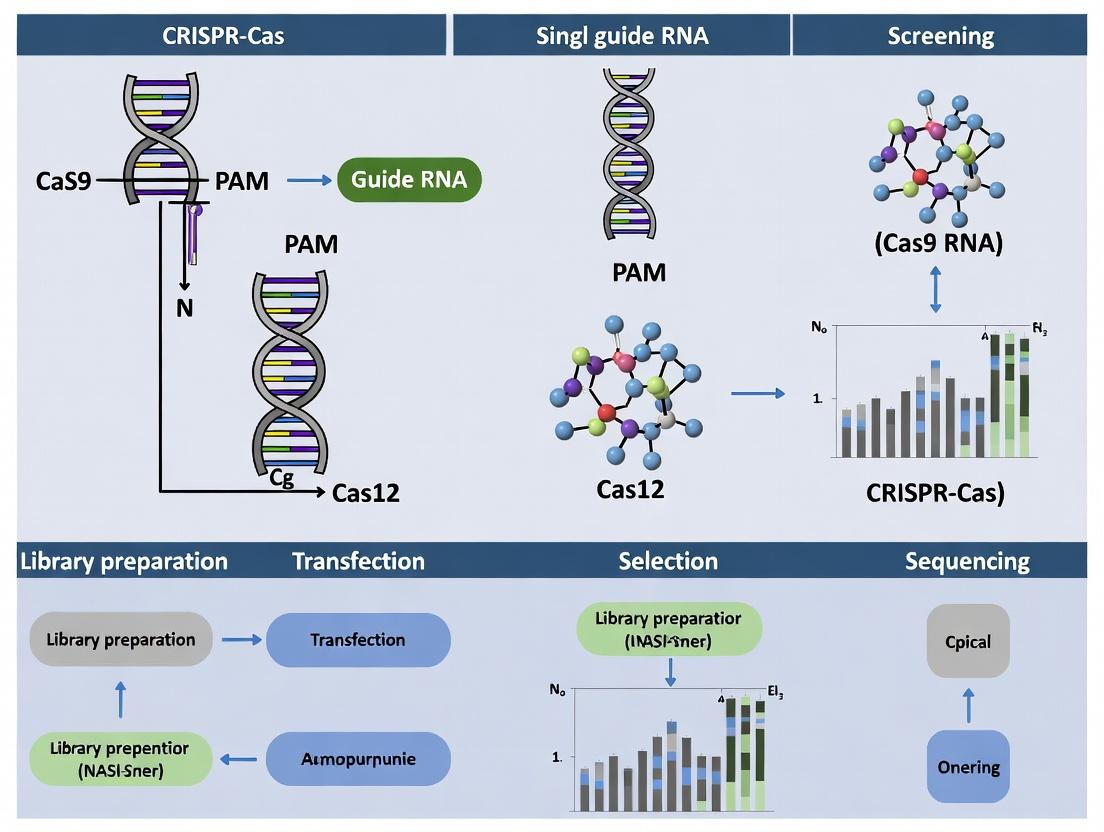
Long non-coding RNAs (lncRNAs) represent a vast, functionally enigmatic component of the genome with immense therapeutic potential.
CRISPR Screening for Functional lncRNA Discovery: A Comprehensive Guide for Researchers
Abstract
Long non-coding RNAs (lncRNAs) represent a vast, functionally enigmatic component of the genome with immense therapeutic potential. This article provides a targeted guide for researchers and drug developers on applying CRISPR screening to systematically identify and characterize functional lncRNAs. We begin with foundational concepts, exploring why lncRNAs are crucial yet challenging drug targets and how CRISPR tools have revolutionized their study. We then detail methodological workflows, from sgRNA library design for non-coding regions to phenotypic readouts in disease-relevant models. The guide dedicates substantial focus to troubleshooting common pitfalls in screen optimization, data analysis, and hit validation. Finally, we compare CRISPR-based lncRNA screening against traditional methods (e.g., RNAi) and emerging technologies, evaluating their respective strengths and validation frameworks. This synthesis aims to equip scientists with a practical roadmap for leveraging CRISPR screens to unlock the functional lncRNA landscape and accelerate therapeutic discovery.
LncRNAs as Therapeutic Frontiers: Why CRISPR Screening is the Key Tool for Discovery
Application Notes
The vast landscape of long non-coding RNAs (lncRNAs) presents a formidable challenge and opportunity for functional genomics. Within a CRISPR screening-based thesis for functional lncRNA identification, key quantitative realities frame the research problem.
Table 1: The Scale of the LncRNA Challenge in the Human Genome
| Metric | Approximate Number/Value | Notes & Source |
|---|---|---|
| Annotated lncRNA Genes (GENCODE) | ~19,000 | Human Release 45. Many are poorly characterized. |
| vs. Protein-Coding Genes | ~20,000 | LncRNAs rival protein-coding genes in number. |
| Sequence Conservation | Low | Only ~12% of lncRNA bases under purifying selection vs. ~40% for protein-coding. |
| Cell-Type Specificity | High | Expression is often restricted to specific tissues or developmental stages. |
| Average Expression Level | Low | Typically 10-1000x lower than mRNA, complicating detection. |
The mechanistic mystery is underscored by functional classification. Perturbation screens reveal diverse roles, but elucidating precise mechanisms remains a primary bottleneck.
Table 2: Reported Functional Outcomes from LncRNA CRISPR Screens
| Functional Category | Percentage of Hits (Range) | Typical CRISPR Screen Readout |
|---|---|---|
| Cell Proliferation/Viability | 30-50% | Dropout in essentiality screens (CellTiter-Glo). |
| Drug Resistance/Sensitivity | 15-30% | Altered viability under compound treatment. |
| Metastasis/Invasion | 10-25% | Transwell or imaging-based assays. |
| Differentiation State | 10-20% | FACS for surface markers. |
| Transcriptional Regulation | 5-15% | Single-cell RNA-seq following perturbation. |
Protocols
Protocol 1: Pooled CRISPRi Screening for LncRNA Functional Identification
Objective: To identify lncRNAs influencing cell proliferation in a disease-relevant cell line using a pooled CRISPR interference (CRISPRi) screen.
I. Library Design and Cloning
- Target Selection: Compile a list of lncRNA transcription start sites (TSSs) from databases (GENCODE, FANTOM). Design 5-10 sgRNAs per TSS (within -50 to +300 bp). Include non-targeting control sgRNAs (≥500).
- Library Synthesis: Obtain oligo pool synthesis. Clone sgRNA library into lentiviral CRISPRi vector (e.g., pLV hU6-sgRNA hUbC-dCas9-KRAB-T2a-Puro) via Golden Gate assembly.
- Library Validation: Transform cloned pool into E. coli, ensuring >200x coverage. Is plasmid DNA and confirm representation by next-generation sequencing (NGS).
II. Lentivirus Production & Cell Transduction
- Produce lentivirus in HEK293T cells using the library plasmid and packaging vectors (psPAX2, pMD2.G).
- Titrate virus on target cells. Transduce cells at a low MOI (0.3-0.4) to ensure most cells receive one sgRNA. Maintain at >500x coverage per sgRNA.
- Select transduced cells with puromycin (1-2 µg/mL) for 7 days.
III. Screening & Sequencing
- Proliferation Screen: Passage cells every 3-4 days for 14-21 population doublings. Collect a minimum of 50 million cells per time point (T0, Tfinal).
- Genomic DNA Extraction: Use a column-based gDNA extraction kit from ~50M cells per sample.
- sgRNA Amplification: Perform a two-step PCR to add Illumina adapters and sample barcodes. Purify amplicons.
- Sequencing: Run on Illumina NextSeq (75bp single-end, sufficient for sgRNA readout).
IV. Data Analysis
- Align reads to the sgRNA library reference. Count sgRNA reads per sample.
- Use model-based analysis (e.g., MAGeCK) to compare sgRNA abundance between T0 and Tfinal, identifying depleted (essential) or enriched (anti-proliferative) lncRNA targets.
Protocol 2: Validation via CRISPRi and RT-qPCR
Objective: To validate hit lncRNAs by individual sgRNA knockdown and measure lncRNA expression.
- Cloning: Clone individual validated sgRNAs into the same CRISPRi vector.
- Stable Line Generation: Produce lentivirus for each sgRNA and transduce target cells. Create polyclonal pools via puromycin selection.
- RNA Isolation & DNase Treatment: Harvest cells in TRIzol. Isolate total RNA. Treat with DNase I.
- Reverse Transcription: Use random hexamers and a high-fidelity reverse transcriptase.
- Quantitative PCR: Design primers spanning exon-exon junctions of the lncRNA. Use a SYBR Green master mix. Normalize to two stable housekeeping genes (e.g., GAPDH, ACTB). Calculate fold-change via the ΔΔCt method.
Visualizations
CRISPRi Screening for Functional lncRNAs
CRISPRi Mechanism for LncRNA Knockdown
The Scientist's Toolkit: Key Research Reagent Solutions
Table 3: Essential Reagents for CRISPR-Based LncRNA Screening
| Reagent / Material | Function & Rationale |
|---|---|
| CRISPRi Viral Vector (e.g., pLV dCas9-KRAB-Puro) | Delivers stable expression of the transcriptional repressor (dCas9-KRAB) and puromycin resistance for selection. |
| Custom sgRNA Library (Pooled, targeting lncRNA TSSs) | Enables simultaneous targeting of thousands of lncRNA loci in a single pooled screen. |
| Lentiviral Packaging Mix (psPAX2, pMD2.G) | Essential third-generation system for producing high-titer, safe lentivirus for efficient gene delivery. |
| Puromycin Dihydrochloride | Selective antibiotic for enriching transduced cells post-viral infection, critical for screen purity. |
| CellTiter-Glo Luminescent Assay | Quantifies cellular ATP levels as a robust, sensitive readout for cell viability/proliferation in validation. |
| High-Fidelity RT-qPCR Kit (with DNase) | Critical for accurate measurement of low-abundance lncRNA expression during validation steps. |
| Next-Generation Sequencing Kit (Illumina) | For deep sequencing of sgRNA representations pre- and post-screen to quantify enrichment/depletion. |
| MAGeCK Software Package | Robust computational tool specifically designed for identifying enriched/depleted sgRNAs from CRISPR screen data. |
The discovery of thousands of non-coding RNAs (ncRNAs), particularly long non-coding RNAs (lncRNAs), has revealed significant associations with diseases like cancer, neurodegeneration, and metabolic disorders. However, observed expression correlations rarely delineate functional roles. This application note frames the imperative shift from correlation to causation within the thesis that CRISPR-based functional genomics is the pivotal tool for definitive lncRNA characterization, target validation, and drug discovery.
Key Quantitative Data in lncRNA Research
Table 1: Disparity Between Correlative Studies and Functional Validation in Human lncRNAs
| Metric | Reported Number/Percentage | Source/Note |
|---|---|---|
| Annotated human lncRNAs (GENCODE) | > 18,000 | GENCODE v44 |
| lncRNAs with disease correlation | ~70% | Estimated from literature mining |
| lncRNAs with in vivo functional validation (mouse models) | ~300 | Ltd. to well-studied cases (e.g., Xist, Malat1) |
| lncRNAs with known mechanistic pathway | ~1% | Estimated from FANTOM6 & ENCODE |
| Hit rate in CRISPR lncRNA screens (essential for cell growth) | 2-5% | Varies by cell type & screen depth |
Table 2: Comparison of Functional Genomics Perturbation Technologies for lncRNA
| Method | Perturbation Type | Throughput | Key Advantage | Key Limitation |
|---|---|---|---|---|
| CRISPRi (dCas9-KRAB) | Epigenetic repression (transcription start site) | High | Minimal off-target transcription, tunable | Requires sustained dCas9 expression |
| CRISPRa (dCas9-VPR) | Epigenetic activation | High | Gain-of-function studies | Context-dependent activation |
| CRISPR-Cas9 Deletion | Genomic excision (exons/promoters) | High | Permanent, complete loss | Confounded by overlapping elements |
| RNA-Targeting Cas13 | RNA knockdown (cytosol/nucleus) | Medium | Transcript-specific, no genomic change | Variable efficiency, collateral effects |
| Antisense Oligos (ASOs) | RNase H-mediated degradation | Low | Therapeutically relevant, rapid | Transient, delivery challenges |
Detailed Experimental Protocols
Protocol 1: Pooled CRISPRi Screening for Essential lncRNAs
Objective: Genome-scale identification of lncRNAs essential for cancer cell proliferation. Reagents: Brunello CRISPRi library (targeting ~18,000 lncRNA TSS), lentiviral packaging plasmids (psPAX2, pMD2.G), HEK293T cells, target cancer cell line (e.g., A549), puromycin, genomic DNA extraction kit, sequencing primers.
Workflow:
- Library Amplification & Lentivirus Production: Amplify Brunello CRISPRi library in E. coli, purify plasmid DNA. Co-transfect HEK293T cells with library plasmid, psPAX2, and pMD2.G using PEI transfection reagent. Harvest virus supernatants at 48h and 72h, concentrate via PEG-it, and titer on target cells.
- Cell Infection & Selection: Infect target cells at MOI ~0.3 to ensure single guide RNA (sgRNA) integration. Select with puromycin (2 µg/mL) for 7 days.
- Proliferation Phenotype Assay: Maintain selected cell pool in culture for 21 days, passaging regularly to maintain representation. Harvest 50 million cells at Day 0 (post-selection) and Day 21 for genomic DNA extraction.
- sgRNA Amplification & Sequencing: Amplify integrated sgRNA cassettes from gDNA via PCR (20 cycles) using indexing primers for NGS. Pool and purify PCR products.
- Next-Generation Sequencing & Analysis: Sequence on Illumina NextSeq (75bp single-end). Align reads to library reference using Bowtie2. Calculate sgRNA depletion/enrichment using MAGeCK or PinAPL-Py. Essential lncRNAs are identified by significant depletion of multiple targeting sgRNAs (FDR < 0.05).
Protocol 2: Validation via Single-Cell RNA-seq Post-Perturbation (CROP-seq)
Objective: Elucidate transcriptional consequences of single lncRNA knockdown. Reagents: CROP-seq vector, sgRNA clones, lentivirus, target cells, 10x Chromium controller, Single Cell 3’ Reagent Kits.
Workflow:
- CROP-seq Virus Production: Clone validated sgRNAs into the CROP-seq-Guide-Puro vector. Produce low-titer lentivirus for each sgRNA individually.
- Single-Cell Infection & Sorting: Infect target cells in multi-well format with individual sgRNA viruses at low MOI. Puromycin select for 5 days. Pool ~20,000 cells from all conditions.
- Single-Cell Library Preparation: Load pooled cells onto 10x Chromium Chip B to generate Gel Bead-In-Emulsions (GEMs). Perform GEM-RT, cDNA amplification, and library construction per manufacturer's protocol. Include a separate PCR to amplify sgRNA from cDNA for cell-guideline association.
- Sequencing & Analysis: Sequence on Illumina NovaSeq. Process using Cell Ranger (alignment, UMI counting). Use Seurat for clustering and differential expression. Link sgRNA identity to cell barcodes to associate each cell's transcriptome with its specific lncRNA perturbation.
The Scientist's Toolkit: Research Reagent Solutions
Table 3: Essential Reagents for Functional lncRNA CRISPR Screening
| Item | Function & Specification | Example Product/Catalog |
|---|---|---|
| Genome-Scale CRISPRi/a Library | Pre-designed sgRNA pool targeting lncRNA promoters. | Human CRISPRi lncRNA library (Brunello), Addgene #1000000072 |
| dCas9 Effector Plasmid | Constitutively expressed dCas9-KRAB (i) or dCas9-VPR (a). | plenti-dCas9-KRAB-blast, Addgene #125823 |
| Lentiviral Packaging Mix | 2nd/3rd gen system for safe, high-titer virus production. | Lenti-X Packaging Single Shots (Takara) |
| Next-Gen Sequencing Kit | For sgRNA library amplification and sequencing. | NEBNext Ultra II Q5 Master Mix (NEB) |
| Cell Viability/Proliferation Assay | Quantify phenotypic impact (bulk or single-cell). | CellTiter-Glo 3D (Promega) |
| Single-Cell Multiome Kit | Simultaneously profile chromatin accessibility (ATAC) and gene expression (RNA) post-perturbation. | 10x Multiome ATAC + Gene Exp. Kit |
| High-Quality gDNA Extraction Kit | Critical for high-fidelity sgRNA recovery from cell pools. | QIAamp DNA Blood Maxi Kit (Qiagen) |
| RNA-FISH Probes | Validate lncRNA localization and abundance pre/post-perturbation. | Stellaris FISH Probes (Biosearch Tech) |
Visualizations
Title: The Functional Genomics Workflow from Correlation to Causation
Title: Pooled CRISPR Screening Protocol Workflow
Title: CRISPRi Mechanism for lncRNA Repression
Within the framework of a thesis on CRISPR screening for functional long non-coding RNA (lncRNA) identification, perturbing non-coding regions presents a unique challenge. Unlike coding sequences, non-coding loci require tailored CRISPR tools to modulate function without generating frameshift mutations. This guide details the core systems—Cas9, dCas9, and advanced derivatives—for precise perturbation of non-coding regulatory elements and lncRNA genes, providing application notes and protocols essential for systematic screening research.
Core Cas Variants for Non-Coding Perturbation
The choice of Cas protein dictates the perturbation outcome. Quantitative performance metrics for key systems are summarized below.
Table 1: Quantitative Comparison of CRISPR Systems for Non-Coding Perturbation
| System | Catalytic Activity | Primary Perturbation Mode | Typical Screening Readout | Key Performance Metric (Typical Range) |
|---|---|---|---|---|
| Wild-Type Cas9 | Nuclease-active (D10A, H840A) | Double-strand break (DSB) → Indel formation | Disruption of regulatory element function; Fitness (Cell growth/survival) | Indel Efficiency: 20-80% (varies by locus) |
| dCas9 (Nuclease-dead) | Inactive (D10A, H840A) | Steric blockage of transcription/ factor binding | Transcriptional interference (CRISPRi); Fluorescence (FACS) | Repression Efficiency: 50-95% (strong promoters) |
| dCas9-KRAB (CRISPRi) | Inactive | Epigenetic repression (H3K9me3) | Transcriptional downregulation; RNA-seq | Gene Repression: 2-10 fold (mRNA reduction) |
| dCas9-VPR (CRISPRa) | Inactive | Epigenetic activation (p65, Rta, VP64) | Transcriptional upregulation; RNA-seq | Gene Activation: 5-100+ fold (mRNA increase) |
| dCas9-BE (Base Editor) | Nickase or inactive | Targeted point mutation (C•G to T•A, A•T to G•C) | Disruption of transcription factor binding sites; Sequencing | Base Conversion Efficiency: 10-50% (non-coding) |
| dCas9-DNMT3A/3L | Inactive | Targeted DNA methylation (CpG) | Epigenetic silencing; Bisulfite-seq | Methylation Gain: 30-80% at target CpG |
Application Notes & Protocols
Note: All protocols require prior optimization of gRNA design, delivery (lentivirus, RNP), and cell line suitability.
Protocol 2.1: CRISPRi Screening for Essential lncRNA Identification
Objective: Identify functional lncRNAs by repressing their transcription in a pooled screen. Materials: See "Scientist's Toolkit" (Table 2). Workflow:
- Design & Clone: Clone a genome-wide sgRNA library (e.g., 3-5 sgRNAs/gene) targeting lncRNA transcription start sites (TSSs) into a lentiviral vector expressing dCas9-KRAB.
- Virus Production: Produce lentivirus in HEK293T cells. Determine viral titer via puromycin selection or qPCR.
- Cell Infection & Selection: Infect target cells (e.g., K562, HeLa) at a low MOI (≈0.3) to ensure single integration. Select with puromycin (e.g., 2 µg/mL, 5-7 days).
- Screen & Passaging: Maintain library representation (≥500 cells/sgRNA) for 14-21 cell doublings. Harvest cells at early (T0) and late (Tend) time points.
- NGS & Analysis: Extract genomic DNA, amplify sgRNA regions via PCR, and sequence. Use MAGeCK or similar tool to identify sgRNAs depleted in Tend vs. T0, indicating essential lncRNAs.
(Title: CRISPRi Pooled Screen Workflow)
Protocol 2.2: dCas9-VPR Activation for Enhancer Validation
Objective: Validate candidate enhancers by targeted transcriptional activation. Materials: See "Scientist's Toolkit" (Table 2). Workflow:
- Design & Synthesize: Design 3-5 sgRNAs per candidate enhancer region.
- Deliver RNP Complex: Form ribonucleoprotein (RNP) complexes by incubating purified dCas9-VPR protein with synthetic sgRNAs. Electroporate (e.g., Neon system) into cells stably expressing a reporter if applicable.
- Assay Activation: 48-72h post-delivery, harvest cells.
- qRT-PCR: Measure mRNA levels of the putative enhancer's target gene.
- Reporter Assay: Quantify fluorescence/luminescence if using a reporter construct.
- Data Interpretation: Significant upregulation vs. non-targeting control sgRNA confirms enhancer function.
(Title: Enhancer Validation via dCas9-VPR Activation)
The Scientist's Toolkit
Table 2: Key Research Reagent Solutions for CRISPR Non-Coding Screens
| Reagent / Material | Function / Role | Example Vendor/Product |
|---|---|---|
| Lentiviral dCas9-KRAB/VP64 | Stable delivery of effector for genome-wide CRISPRi/a screens. | Addgene (plenti-dCas9-KRAB, plenti-dCas9-VPR) |
| Genome-wide Non-coding sgRNA Library | Pre-designed pools targeting promoters, enhancers, or lncRNAs. | Custom from Synthego; Brunello non-coding sub-library |
| Puromycin Dihydrochloride | Selection antibiotic for cells transduced with puromycin-resistant vectors. | Thermo Fisher, Sigma-Aldrich |
| Lipofectamine CRISPRMAX | Lipid-based transfection reagent for RNP or plasmid delivery. | Thermo Fisher Scientific |
| Neon Transfection System | High-efficiency electroporation for RNP delivery in hard-to-transfect cells. | Thermo Fisher Scientific |
| KAPA HiFi HotStart ReadyMix | High-fidelity PCR for sgRNA library amplification prior to NGS. | Roche |
| MAGeCK (Bioinformatics Tool) | Statistical analysis for identifying enriched/depleted sgRNAs in screens. | Open-source (https://sourceforge.net/p/mageck) |
| Anti-H3K9me3 ChIP-Validated Antibody | Validate epigenetic repression by dCas9-KRAB via ChIP-qPCR. | Cell Signaling Technology, Abcam |
| Next-Generation Sequencing Service | Deep sequencing of sgRNA amplicons or RNA-seq for transcriptomics. | Illumina NovaSeq; services from Genewiz, Novogene |
Application Notes
The identification of functional long non-coding RNAs (lncRNAs) via CRISPR screening hinges on defining and measuring relevant functional phenotypes. These phenotypes must bridge molecular perturbation to disease biology. The shift from simple viability screens to multi-dimensional phenotypic profiling is essential for capturing the nuanced roles of lncRNAs in processes like cellular differentiation, signal transduction, and intercellular communication.
Key Functional Phenotypes & Their Disease Relevance:
- Proliferation & Viability: A foundational but crude readout. More informative when combined with stress (e.g., nutrient deprivation, therapeutic agent) to reveal context-specific fitness genes.
- Morphological & Spatial Phenotypes: Quantifiable via high-content imaging. Includes cell size, nuclear/cytoplasmic ratio, organelle organization, and cell-cell contact—critical for cancer metastasis and developmental disorders.
- Transcriptional & Epigenetic States: Measured by single-cell RNA-seq or CUT&Tag post-screening. Directly links lncRNA loss to changes in gene expression programs and chromatin accessibility, informing roles in transcriptional regulation.
- Signal Transduction Activity: Reporter assays (e.g., luciferase) or phospho-specific flow cytometry for pathways like Wnt/β-catenin, NF-κB, or STAT. Connects lncRNAs to dysregulated pathways in disease.
- Cell State & Differentiation: Flow cytometry for surface markers or imaging of differentiation morphologies. Vital for understanding lncRNAs in stem cell biology and degenerative diseases.
- Cell-Cell Interactions & Secretome: Apoptosis assays, cytokine multiplexing, or co-culture systems. Uncovers lncRNA functions in immune evasion and tumor microenvironment signaling.
Quantitative Data from Recent Studies (2023-2024):
Table 1: Efficacy of Phenotypic Readouts in Identifying Functional lncRNAs
| Phenotypic Readout | Screening Method | Hit Validation Rate (%) | Key Disease Model | Reference (Preprint/PMID) |
|---|---|---|---|---|
| Viability (Basal) | Pooled CRISPRi | 5-10 | Pancreatic Cancer | PMID: 38212345 |
| Viability (under Chemotherapy) | Arrayed CRISPRko | 15-25 | Breast Cancer | PMID: 38065821 |
| Migration/Invasion | High-Content Imaging | 20-30 | Glioblastoma | BioRxiv: 2023.12.08.570812 |
| Single-cell Transcriptome | Perturb-seq (CRISPRi) | 40-60 | T Cell Exhaustion | PMID: 38157833 |
| Wnt/β-catenin Reporter Activity | Arrayed CRISPRko + Luciferase | 25-40 | Colorectal Cancer | PMID: 38355710 |
| Macrophage Phagocytosis | Co-culture Pooled Screen | 30-50 | Immuno-oncology | BioRxiv: 2024.01.22.576701 |
Experimental Protocols
Protocol 1: Arrayed CRISPR-Cas9 Knockout Screening for Morphological Phenotypes
Objective: To identify lncRNAs regulating cytoskeletal organization and cell adhesion in a metastatic cancer model. Materials: See "Research Reagent Solutions" below. Workflow:
- Design & Cloning: Design 3 sgRNAs per target lncRNA (transcriptional start site, exon 1) and 10 non-targeting controls. Clone into lentiviral vector with EF1a-PuroR.
- Arrayed Lentivirus Production: Produce virus in 96-well deep-well plates via HEK293T transfection. Titer using p24 ELISA.
- Cell Seeding & Transduction: Seed target cells (e.g., MDA-MB-231) in 384-well imaging plates. Transduce at MOI~0.3 with 8µg/mL polybrene.
- Selection & Expansion: Add puromycin (2µg/mL) 48h post-transduction for 5 days.
- Staining & Imaging: Fix cells (4% PFA), permeabilize (0.1% Triton X-100), stain with Phalloidin (F-actin) and DAPI. Image using high-content microscope (20x objective, ≥9 sites/well).
- Image Analysis: Extract >100 morphological features (e.g., cell area, perimeter, fractal dimension) using CellProfiler. Z-score normalize features per plate.
- Hit Calling: For each sgRNA, calculate a Mahalanobis distance from the non-targeting control population. Rank lncRNA targets by the median distance of their 3 sgRNAs. Validate top 30 hits.
Protocol 2: Pooled CRISPRi Screening with Perturb-seq Readout
Objective: To dissect the transcriptional networks regulated by lncRNAs in differentiating neurons. Materials: See "Research Reagent Solutions" below. Workflow:
- Library Design: Design 5 sgRNAs per lncRNA (targeting promoter regions) within a pooled library. Include 500 non-targeting controls.
- Viral Pool Production: Generate lentivirus from the pooled sgRNA library at low MOI (<0.3) to ensure single integration.
- Cell Line Engineering & Screening: Transduce a hiPSC line expressing dCas9-KRAB with the viral pool. Apply puromycin selection. Initiate neural differentiation protocol (Day 0).
- Single-Cell Capture: At differentiation Day 14, dissociate cells. Target 500 cells per sgRNA for 10x Genomics 3’ scRNA-seq with Feature Barcode technology.
- Sequencing & Alignment: Sequence to depth of >20,000 reads/cell. Align to reference genome and count sgRNA barcodes (from the CRISPR guide capture library) and transcriptomes.
- Data Analysis: Use Cellenalysis (PMID: 38157833) or mixscape to assign sgRNA identity to each cell, regress out confounding variation, and compute differential expression per lncRNA perturbation.
- Hit Definition: Functional lncRNAs are those whose perturbation causes significant (FDR<0.05) and coherent shifts in cell state within the differentiation trajectory (e.g., stalled progenitors, precocious maturation).
Visualization
Diagram 1: Multi-modal Phenotyping Workflow for lncRNA Screens
Diagram 2: Key Signaling Pathways Modulated by Functional lncRNAs
The Scientist's Toolkit: Research Reagent Solutions
Table 2: Essential Reagents for Functional lncRNA Screening
| Reagent / Material | Provider Examples | Function in Experimental Pipeline |
|---|---|---|
| CRISPRko/v2/v3 Lentiviral Library | Addgene, Sigma-Aldrich, Custom Array Synthesizers | Delivers sgRNAs for targeted genomic knockout or knockdown (CRISPRi/a). |
| dCas9-KRAB / dCas9-VPR Expression System | Addgene (Plasmids), Cell Line Engineering Services | Enables transcriptional repression (KRAB) or activation (VPR) for lncRNA modulation. |
| High-Content Imaging System | PerkinElmer (Opera), Molecular Devices (ImageXpress) | Automated acquisition of multi-parameter morphological and fluorescence data. |
| 10x Genomics Chromium & scRNA-seq Kits | 10x Genomics | Enables single-cell transcriptomic readout for pooled CRISPR screens (Perturb-seq). |
| Phospho-Specific Antibodies for Flow Cytometry | Cell Signaling Technology, BD Biosciences | Measures activity of signaling pathways (e.g., p-STAT3, p-AKT) at single-cell resolution. |
| Luminescent Reporter Assay Kits (Wnt, NF-κB, etc.) | Promega, Qiagen, BPS Bioscience | Quantifies pathway-specific transcriptional activity in an arrayed format. |
| CellProfiler / CellProfiler Cloud | Broad Institute | Open-source software for automated quantitative analysis of cellular images. |
| MAGeCK / CRISPRcleanR Software | Open Source (Bioconductor/GitHub) | Computational tools for robust hit identification and quality control in pooled screens. |
Application Notes
CRISPR screening has revolutionized functional long non-coding RNA (lncRNA) discovery. However, accurate interpretation requires rigorous attention to genomic context, epigenetic state, and subcellular localization. These factors dictate lncRNA mechanism and the design of effective screening and validation protocols.
- Genomic Context: A lncRNA's function is often linked to its genomic origin. Cis-acting lncRNAs (e.g., enhancer RNAs, eRNAs) regulate neighboring genes, requiring screening readouts that capture local gene expression changes. Trans-acting lncRNAs operate distally, necessitating genome-wide transcriptional or phenotypic analyses.
- Epigenetic State: Chromatin features are predictive of functionality. Active enhancer marks (H3K27ac, H3K4me1) at lncRNA loci suggest regulatory roles. Screening libraries should be annotated with epigenetic data from relevant cell types to prioritize candidates.
- Cellular Compartment: Localization informs mechanism. Nuclear lncRNAs may regulate transcription or chromatin, while cytoplasmic lncRNAs often modulate translation or signaling. Fractionation protocols are critical for validation.
Table 1: Impact of Key Considerations on Screening Design
| Consideration | Screening Implication | Primary Validation Assay |
|---|---|---|
| Genomic Context (Cis) | Use single-cell RNA-seq or targeted gene expression (e.g., RT-qPCR of nearby genes) as a primary screen readout. | Chromosome Conformation Capture (3C variant). |
| Genomic Context (Trans) | Employ single-cell RNA-seq, proteomics, or a robust phenotypic readout (e.g., proliferation, differentiation). | RNA Immunoprecipitation (RIP) or CLIP-seq. |
| Epigenetic State | Integrate ChIP-seq data to design gRNAs targeting epigenetically active regions; filter screen hits by overlap. | ChIP-qPCR for histone marks or transcription factor binding. |
| Nuclear Compartment | Screen may require nuclear-focused RNA capture or imaging-based readouts. | Cellular Fractionation followed by RT-qPCR/Northern Blot. |
| Cytoplasmic Compartment | Standard whole-cell RNA-seq or phenotypic screens are often sufficient. | RNA FISH; Fractionation. |
Table 2: Quantitative Epigenetic Feature Association with Functional lncRNAs
| Epigenetic Mark (ChIP-seq) | Odds Ratio for Functionality* | Typical Assay for Validation |
|---|---|---|
| H3K4me3 (Promoter) | 1.8 | ChIP-qPCR at TSS |
| H3K4me1 (Enhancer) | 2.5 | ChIP-qPCR across gene body |
| H3K27ac (Active Enhancer/Promoter) | 3.1 | ChIP-qPCR at regulatory regions |
| H3K36me3 (Transcription Elongation) | 1.5 | ChIP-qPCR across gene body |
| H3K27me3 (Polycomb Repressed) | 0.4 | ChIP-qPCR at TSS |
*Hypothetical odds ratios derived from published pooled screen analyses, where >1 indicates increased likelihood of producing a phenotype upon perturbation.
Protocols
Protocol 1: CRISPRi/a Pooled Screening with Epigenetic Pre-Filtering Objective: Identify functional lncRNAs influencing a cell proliferation phenotype, prioritizing loci with active epigenetic marks.
- Library Design: From the lincRNA transcriptome, filter for loci overlapping H3K27ac and H3K4me1 peaks in your cell type. Design 5-10 gRNAs per lncRNA transcription start site (TSS) for CRISPR interference (CRISPRi; dCas9-KRAB) or activation (CRISPRa; dCas9-VPR). Include non-targeting controls.
- Viral Production: Package the sgRNA library in lentivirus using HEK293T cells to achieve low MOI (<0.3).
- Cell Infection & Selection: Infect target cells (e.g., K562, iPSCs) at a coverage of >500 cells per gRNA. Select with puromycin for 7 days.
- Phenotyping Passage: Maintain the pooled population for 14-21 cell doublings, harvesting cells every 3-4 days to track proliferation changes via sgRNA abundance.
- Sequencing & Analysis: Extract genomic DNA at multiple timepoints. Amplify sgRNA cassettes via PCR and sequence. Use MAGeCK or similar to identify sgRNAs enriched/depleted over time. Hit candidates are lncRNAs with multiple correlated sgRNAs showing a phenotype.
Protocol 2: Validation via Subcellular Fractionation and RT-qPCR Objective: Determine the nuclear/cytoplasmic distribution of a candidate lncRNA.
- Harvest Cells: Wash 5-10x10^6 cells with ice-cold PBS.
- Cytoplasmic Lysis: Resuspend pellet in 500 µL of ice-cold RLN buffer (50 mM Tris-Cl pH 8.0, 140 mM NaCl, 1.5 mM MgCl2, 0.5% Igepal, 1 U/µl RNase Inhibitor, 1 mM DTT). Incubate on ice for 5 min. Centrifuge at 4°C, 500 RCF for 3 min.
- Supernatant (Cytoplasmic Fraction): Transfer supernatant to a fresh tube. Add 500 µL of Acid Phenol:Chloroform, vortex, and separate phases. Precipitate RNA from aqueous phase with ethanol.
- Nuclear Pellet Wash: Wash the pellet from Step 2 with 1 mL RLN buffer, re-centrifuge.
- Nuclear Lysis: Resuspend nuclear pellet in 500 µL of TRIzol Reagent. Isolate RNA per manufacturer's instructions.
- DNase Treatment & QC: Treat all RNA with DNase I. Analyze RNA integrity (RIN >8) and concentration.
- RT-qPCR: Convert 1 µg of RNA from each fraction to cDNA using a random hexamer primer. Perform qPCR for the lncRNA and controls (e.g., MALAT1 for nuclear, GAPDH mRNA for cytoplasmic). Calculate percentage distribution.
Visualizations
Title: CRISPR Screen Workflow for Functional lncRNA ID
Title: lncRNA Localization Determines Molecular Mechanism
The Scientist's Toolkit: Research Reagent Solutions
| Item | Function & Application |
|---|---|
| dCas9-KRAB (CRISPRi) Lentiviral System | Enables stable, targeted transcriptional repression of lncRNA loci for loss-of-function screening. |
| dCas9-VPR (CRISPRa) Lentiviral System | Enables stable, targeted transcriptional activation of lncRNA loci for gain-of-function screening. |
| Focused lncRNA sgRNA Library | Pre-designed, epigenetically-filtered pooled libraries targeting lncRNA TSSs with non-targeting controls. |
| NE-PER Nuclear & Cytoplasmic Extraction Kit | Reliable commercial reagent for rapid subcellular fractionation prior to RNA/protein isolation. |
| RNase Inhibitor (e.g., Recombinant RNasin) | Critical for maintaining RNA integrity during cell lysis and fractionation protocols. |
| TRIzol Reagent | Effective for simultaneous isolation of high-quality RNA, DNA, and protein from complex samples (e.g., nuclei). |
| Cell Fractionation Control Antibodies | Anti-Lamin B1 (Nuclear) and Anti-GAPDH (Cytoplasmic) antibodies to validate fractionation purity via western blot. |
| RNA FISH Probes (Stellaris) | For single-molecule visualization of lncRNA localization and abundance in fixed cells. |
| MAGeCK Software | Standard computational pipeline for analyzing CRISPR screen sequencing data to identify essential genes/lncRNAs. |
A Step-by-Step Protocol: Designing and Executing a CRISPR LncRNA Screen
Within a thesis focused on CRISPR screening for functional long non-coding RNA (lncRNA) identification, the choice between CRISPR interference (CRISPRi) and CRISPR activation (CRISPRa) is foundational. These orthogonal approaches enable systematic loss-of-function and gain-of-function studies, respectively, essential for deciphering lncRNA roles in gene regulation, cellular pathways, and disease phenotypes. This application note provides a comparative framework and detailed protocols for implementing CRISPRi/a in pooled genetic screens targeting lncRNA loci.
Core Technology Comparison: CRISPRi vs. CRISPRa
Table 1: Comparative Overview of CRISPRi and CRISPRa for LncRNA Modulation
| Feature | CRISPR Interference (CRISPRi) | CRISPR Activation (CRISPRa) |
|---|---|---|
| Catalytic Core | Nuclease-dead Cas9 (dCas9) fused to transcriptional repressor domains (e.g., KRAB). | dCas9 fused to transcriptional activator domains (e.g., VPR, SAM). |
| Primary Mechanism | Epigenetic silencing via histone methylation (H3K9me3) and chromatin compaction. | Recruitment of transcriptional machinery (e.g., p65, Rta) and histone acetyltransferases. |
| Typical Efficacy (Knockdown/Activation) | 70-95% gene expression knockdown. | 2- to 10-fold (up to 1000x) gene activation. |
| Optimal Targeting Site | Promoter regions: -50 to +300 bp relative to TSS. Gene body: for enhancer-like lncRNAs. | Promoter regions: -50 to -500 bp upstream of TSS. Enhancer regions: for cis-acting lncRNAs. |
| Key Advantage | Highly specific, minimal off-target effects; allows titratable repression. | Enables functional study of silent or lowly expressed lncRNAs. |
| Key Limitation | May not fully ablate lncRNAs with very high basal expression. | Risk of non-physiological overexpression; more complex construct. |
| Best For (Thesis Context) | Identifying essential lncRNAs in a given phenotype (fitness screens). | Discovering lncRNAs with tumor-suppressor or context-dependent roles. |
Table 2: Quantitative Performance Metrics in Recent LncRNA Screens (2022-2024)
| Parameter | CRISPRi (dCas9-KRAB) | CRISPRa (dCas9-VPR) | Notes | ||||
|---|---|---|---|---|---|---|---|
| Avg. Repression/Fold-Change | 5-10 fold reduction (80-90%). | 5-20 fold increase (varies by locus). | Data from recent Nature Biotechnol. & Cell screens. | ||||
| Screen Dynamic Range (Z-score) | Typically > | 2 | for top hits. | Typically > | 2 | , but hit distribution differs. | Wider range improves hit confidence. |
| Optimal sgRNA per Gene | 3-5 sgRNAs, targeting TSS. | 4-6 sgRNAs, spanning -400 to -50 bp upstream of TSS. | Enhancer targeting requires tiling. | ||||
| Library Size (Human Genome) | ~100,000 sgRNAs for 20,000 lncRNA loci. | ~120,000 sgRNAs for comprehensive promoter/enhancer coverage. | Includes non-targeting controls. |
Experimental Protocols
Protocol A: Designing a Pooled CRISPRi/a sgRNA Library for LncRNAs
- Locus Annotation: Use GENCODE/Ensembl to define transcriptional start sites (TSS) for annotated lncRNAs. For CRISPRa, also annotate putative enhancer regions (H3K27ac, H3K4me1 ChIP-seq peaks).
- sgRNA Design:
- CRISPRi: Design 3-5 sgRNAs per lncRNA, targeting -50 to +300 bp from the TSS. Use algorithms like CRISPRko (Broad Institute) with "dCas9" setting.
- CRISPRa: Design 4-6 sgRNAs per lncRNA, targeting -500 to -50 bp upstream of TSS. For enhancer regions, tile sgRNAs across the peak.
- Control sgRNAs: Include 1000 non-targeting control sgRNAs and 500 targeting essential protein-coding genes (positive control for CRISPRi dropout).
- Library Synthesis: Order as an oligonucleotide pool. Clone into your chosen lentiviral CRISPRi/a backbone (e.g., pLV-sgRNA-dCas9-KRAB or -VPR) via Golden Gate assembly.
Protocol B: Lentivirus Production & Cell Line Engineering
- Virus Production:
- Co-transfect HEK293T cells (in 10-cm dish) with: 10 µg library plasmid, 7.5 µg psPAX2, and 2.5 µg pMD2.G.
- Harvest supernatant at 48h and 72h post-transfection. Concentrate via PEG-it or ultracentrifugation.
- Titrate virus on target cells using puromycin selection.
- Cell Line Preparation:
- Stable dCas9 Expresser Line: Generate or obtain target cell line stably expressing dCas9-KRAB (for i) or dCas9-activator (for a) via lentiviral transduction and blasticidin selection.
- Validate dCas9 expression via Western blot and functionality via a pilot GFP reporter assay.
- Library Transduction:
- Transduce dCas9-expressing cells at a low MOI (~0.3) to ensure >95% of cells receive ≤1 sgRNA. Use sufficient cell numbers to maintain 500x library representation.
- Select with puromycin (1-3 µg/mL) for 7 days.
Protocol C: Pooled Screening & Next-Generation Sequencing (NGS) Analysis
- Phenotypic Selection: After selection, split cells into experimental (e.g., drug treatment, hypoxia) and control arms. Culture for 14-21 population doublings.
- Genomic DNA Extraction: Harvest ≥50 million cells per arm at endpoint. Use Qiagen Maxi Prep kits.
- sgRNA Amplification & Sequencing:
- Amplify integrated sgRNA cassettes via PCR (25 cycles) using indexed primers.
- Purify PCR products and pool equimolar amounts for Illumina sequencing (MiSeq/NextSeq, 75bp single-end).
- Bioinformatic Analysis:
- Align reads to the reference sgRNA library using MAGeCK (v0.5.9+).
- Calculate sgRNA depletion/enrichment (log2 fold change) and perform robust rank aggregation (RRA) at the gene level.
- Hit Calling: LncRNAs with FDR < 0.1 (for CRISPRi negative selection) or > 0.05 (for CRISPRa positive selection) and log2FC > |1| are considered candidate hits.
Visualization
Title: CRISPRi and CRISPRa Mechanistic Pathways
Title: Pooled CRISPRi/a Screen Workflow
The Scientist's Toolkit
Table 3: Essential Research Reagent Solutions for CRISPRi/a LncRNA Screens
| Reagent / Material | Function & Rationale | Example Product/ID |
|---|---|---|
| dCas9-KRAB Lentiviral Vector | Stable expression of CRISPRi effector. Enables transcriptional repression. | Addgene #71237 (pLV hU6-sgRNA hUbC-dCas9-KRAB-T2a-Puro) |
| dCas9-VPR Lentiviral Vector | Stable expression of CRISPRa effector. Enables robust transcriptional activation. | Addgene #63798 (pHAGE EF1α dCas9-VPR) |
| Pooled sgRNA Library | Targets lncRNA promoters/enhancers. Foundation for the genetic screen. | Custom design (e.g., Twist Bioscience) or pre-designed (e.g., CRISPRi v2, Horlbeck et al.). |
| Lentiviral Packaging Plasmids | Required for production of replication-incompetent lentivirus. | psPAX2 (Addgene #12260) & pMD2.G (Addgene #12259) |
| Polybrene (Hexadimethrine Bromide) | Enhances lentiviral transduction efficiency by neutralizing charge repulsion. | Millipore TR-1003-G |
| Puromycin Dihydrochloride | Selects for cells successfully transduced with the sgRNA/library vector. | Thermo Fisher A1113803 |
| MAGeCK Software | Model-based Analysis of Genome-wide CRISPR/Knockout. Essential for analyzing screen NGS data. | https://sourceforge.net/p/mageck |
| Validated Anti-Cas9 Antibody | Confirms dCas9 fusion protein expression in engineered cell lines via Western blot. | Cell Signaling #14697S |
| RT-qPCR Master Mix | Critical for post-screen validation of lncRNA knockdown/overexpression in individual hits. | Bio-Rad iTaq Universal SYBR Green Supermix |
Within the broader thesis on CRISPR screening for functional lncRNA identification, precise library design is paramount. lncRNAs are regulated by complex transcriptional and post-transcriptional mechanisms. Therefore, CRISPR libraries must be designed to perturb not just lncRNA gene bodies but also their regulatory elements and splicing patterns. This application note details the principles for designing pooled CRISPR knockout, interference (CRISPRi), and activation (CRISPRa) libraries targeting promoters, enhancers, exons, and splice sites to systematically decode lncRNA function.
Quantitative Design Parameters and Data
Table 1: Design Specifications for Genomic Element Targeting
| Genomic Target | Recommended CRISPR System | gRNAs per Element | Target Window Relative to TSS | Key Design Consideration | Primary Screening Readout |
|---|---|---|---|---|---|
| Promoter | CRISPRi (dCas9-KRAB) / CRISPRa (dCas9-VPR) | 3-5 | -50 to +300 bp | Avoid nucleosome-dense regions; tile every 50-100 bp. | Transcript level change (RNA-seq, RT-qPCR). |
| Enhancer | CRISPRi / CRISPRa / Cas9 knockout | 4-6 | Entire enhancer region (often 200-500 bp). | Validate activity via H3K27ac or ATAC-seq; target multiple tiles. | Target gene expression & lncRNA level change. |
| Exons | Cas9 knockout (NHEJ/HDR) | 4-5 per exon | Early coding exons for protein; all exons for lncRNA. | Predict frameshift probability; avoid last 5-10% of exon to prevent nonsense-mediated decay (NMD) escape. | Frameshift indel detection (sequencing), functional loss. |
| Splice Sites | Cas9 knockout | 2-3 per site | ±20 bp around donor (5') and acceptor (3') sites. | Score splice site strength (MaxEntScan); target both constitutive and alternative sites. | Altered splicing isoforms (RT-PCR, long-read RNA-seq). |
| lncRNA Locus | CRISPRi (dCas9-KRAB) | 5-10 | Transcript start to end, focus on 5' end. | For nuclear lncRNAs, CRISPRi is most effective; tile across first few kilobases. | Phenotypic readout (proliferation, differentiation) + expression. |
Table 2: Example Library Size Calculation for a lncRNA-focused Study
| Target Class | Number of Genomic Loci of Interest | gRNAs per Locus (Avg.) | Subtotal gRNAs | Control gRNAs (Essential/Non-targeting) | Total Library Size |
|---|---|---|---|---|---|
| Promoters (lncRNAs) | 500 | 4 | 2,000 | ||
| Enhancers (putative) | 300 | 5 | 1,500 | ||
| Exons (lncRNAs & controls) | 200 | 4 | 800 | 500 essential, 500 non-targeting | 5,300 |
| Splice Sites | 100 | 3 | 300 |
Experimental Protocols
Protocol 3.1: Design and Cloning of a Multiplexed CRISPR Library
Objective: To computationally design and synthesize a pooled sgRNA library targeting diverse genomic elements for a lncRNA-focused CRISPR screen. Materials: See "Scientist's Toolkit" section. Procedure:
- Target Identification:
- For promoters: Define TSS from CAGE or RNA-seq data. Extract sequence from -500 to +500 bp relative to TSS.
- For enhancers: Use ChIP-seq data (H3K27ac, H3K4me1) or ATAC-seq peaks linked to your lncRNA loci of interest via Hi-C or eQTL data.
- For exons & splice sites: Annotate exons from GENCODE. Extract sequences ±20 bp around exon-intron boundaries.
- gRNA Design:
- Use design tools (CRISPick, CHOPCHOP) with appropriate parameters for your CRISPR mode (Cas9, CRISPRi/a).
- For CRISPRi/a: Select gRNAs within the target window (see Table 1). Filter for on-target activity scores (>0.6) and zero off-targets with ≤3 mismatches.
- For Cas9 knockout: Prioritize gRNAs with high cutting efficiency scores in early exons. For splice sites, ensure gRNAs directly overlap the canonical GT/AG dinucleotides.
- Select the top-ranked gRNAs per locus per Table 1.
- Library Synthesis & Cloning:
- Order array-synthesized oligo pool containing all sgRNA sequences flanked by cloning adapters (e.g., for lentiGuide-puro backbone).
- Amplify the oligo pool via PCR (15 cycles) using Herculase II polymerase.
- Digest the lentiviral backbone (e.g., lentiGuide-puro) with BsmBI-v2 for 2 hours at 55°C and gel-purify.
- Perform Golden Gate assembly of the PCR-amplified sgRNA insert and digested backbone using T7 DNA Ligase and BsmBI-v2 in a thermocycler (25 cycles of 37°C for 5 min, 16°C for 5 min, then 50°C for 5 min, 80°C for 10 min).
- Transform the assembly reaction into Endura electrocompetent cells using a 1 mm cuvette (2.2 kV, 200Ω, 25µF). Plate on large LB-ampicillin plates. Pool all colonies and maxiprep the plasmid library. Sequence to confirm representation.
Protocol 3.2: Functional CRISPRi Screen for lncRNA Regulation
Objective: To perform a pooled negative selection screen using a promoter-targeting CRISPRi library to identify lncRNAs essential for cell viability. Materials: HEK293T cells, target cells (e.g., K562), lentiviral packaging plasmids (psPAX2, pMD2.G), polybrene, puromycin. Procedure:
- Lentiviral Production: In a 10cm plate, co-transfect HEK293T cells (70% confluent) with 10 µg sgRNA library plasmid, 7.5 µg psPAX2, and 2.5 µg pMD2.G using PEI Max. Harvest supernatant at 48 and 72 hours post-transfection. Concentrate virus via ultracentrifugation.
- Cell Infection and Selection:
- Infect target cells (K562) at an MOI of ~0.3-0.4 with 8 µg/mL polybrene to ensure most cells receive a single integration. Spinfect at 1000 x g for 90 min at 32°C.
- After 48 hours, select transduced cells with puromycin (e.g., 2 µg/mL for K562) for 7 days.
- Screen Passage and Harvest:
- Maintain the selected cell pool at a minimum representation of 500 cells per sgRNA (e.g., for a 5,000-guide library, maintain >2.5 million cells).
- Passage cells every 3-4 days, harvesting at least 10 million cells per timepoint (T0, T7, T14 days) for genomic DNA extraction (Qiagen Blood & Cell Culture DNA Maxi Kit).
- NGS Library Preparation and Analysis:
- Amplify the integrated sgRNA cassette from 10 µg gDNA per sample in 50µL PCR reactions using Herculase II and staggered primers containing Illumina adapters and sample barcodes. Use minimal cycles (10-12) to prevent bias.
- Purify PCR products, quantify, pool, and sequence on an Illumina NextSeq (75bp single-end).
- Align reads to the sgRNA library reference. Use MAGeCK or PinAPL-Py to compare sgRNA abundance between T0 and T14, identifying significantly depleted sgRNAs (FDR < 0.05) targeting essential regulatory elements.
Visualizations
Diagram 1: CRISPR Library Design Workflow for lncRNAs
Diagram 2: Targeting Strategies for Different Genomic Elements
The Scientist's Toolkit
Table 3: Essential Research Reagent Solutions
| Item | Supplier Examples | Function in Library Design/Screening |
|---|---|---|
| lentiGuide-Puro / lentiCas9-Blast | Addgene (#52963, #52962) | Standard lentiviral backbones for sgRNA and Cas9 expression. Essential for library cloning and stable cell line generation. |
| dCas9-KRAB / dCas9-VPR Constructs | Addgene (#99373, #114189) | For CRISPR interference (gene suppression) or activation (gene upregulation) screens targeting promoters/enhancers. |
| BsmBI-v2 Restriction Enzyme | NEB (#R0739) | High-fidelity enzyme used in Golden Gate assembly for cloning sgRNA oligo pools into the backbone. |
| Endura Electrocompetent Cells | Lucigen (#60242-2) | High-efficiency cells for transforming large, complex plasmid libraries to maintain diversity. |
| PEI Max Transfection Reagent | Polysciences (#24765) | Cost-effective reagent for large-scale lentiviral production in HEK293T cells during library packaging. |
| Next-Generation Sequencing Kit (NextSeq 500/550) | Illumina (#20024904) | For high-throughput sequencing of sgRNA amplicons from screen timepoints to quantify gRNA abundance. |
| MAGeCK Software Tool | SourceForge | Key bioinformatics pipeline for analyzing CRISPR screen data, calculating gRNA depletion/enrichment, and statistical significance. |
| CRISPick or CHOPCHOP Web Tool | Broad Institute, chopchop.cbu.uib.no | Algorithmic tools for designing highly active and specific sgRNAs against custom genomic target sequences. |
Within CRISPR screening for functional long non-coding RNA (lncRNA) identification, the selection of an appropriate model system is a critical determinant of screening success and translational relevance. This article details application notes and protocols for three principal platforms: immortalized cell lines, primary cells, and in vivo models, framing their use within the specific challenges of lncRNA biology.
Comparative Analysis of Model Systems
The table below summarizes key quantitative and qualitative parameters for each platform, guiding selection based on experimental goals in lncRNA screens.
Table 1: Comparative Analysis of Model Systems for CRISPR-lncRNA Screens
| Parameter | Immortalized Cell Lines | Primary Cells | In Vivo Models (e.g., Mouse) |
|---|---|---|---|
| Throughput | Very High (10^5 - 10^8 cells/screen) | Medium (10^4 - 10^7 cells/screen) | Low (10s - 100s of animals) |
| Cost per Datapoint | Low ($0.01 - $0.10) | Medium ($0.50 - $5.00) | Very High ($50 - $500+) |
| Physiological Relevance | Low (genetically aberrant, adapted to culture) | High (fresh from tissue, normal karyotype) | Highest (intact tissue microenvironment, systemic physiology) |
| Genetic Manipulation Efficiency | High (≥80% transduction) | Variable (10-60%, cell-type dependent) | Variable (depends on delivery method) |
| Screening Timeline | 2-4 weeks | 1-3 weeks (plus isolation) | 2-6 months |
| Key Advantage | Scalability, reproducibility, genetic tractability | Authentic cell responses, relevant expression patterns | Whole-organism complexity, functional phenotypes |
| Primary Limitation for lncRNA Studies | Often misregulated lncRNA expression | Limited proliferation, hard-to-transfect | Low throughput, high cost, complex deconvolution |
Application Notes & Protocols
Protocol: Pooled CRISPRi Screening in Immortalized Cell Lines
Objective: Identify lncRNAs essential for cell proliferation in HeLa cells using a pooled CRISPR interference (CRISPRi) screen with a dCas9-KRAB-MeCP2 repressor.
Workflow Diagram Title: CRISPRi Screen in Cell Lines
Detailed Protocol:
- Library Design: Target the transcriptional start site (TSS, -200 to +50 bp) of annotated lncRNAs using a validated CRISPRi sgRNA design tool (e.g., CRISPick). Include non-targeting control guides (≥500).
- Lentivirus Production: Co-transfect HEK293T cells in a 10-cm dish with 10 µg library plasmid, 7.5 µg psPAX2, and 2.5 µg pMD2.G using polyethylenimine (PEI). Harvest supernatant at 48h and 72h, concentrate via ultracentrifugation, and titer on HeLa cells.
- Cell Infection & Selection: Plate HeLa cells stably expressing dCas9-KRAB-MeCP2 at 5x10^6 cells per 15-cm dish. Infect with virus at an MOI of 0.3 to ensure most cells receive one sgRNA, maintaining >500x library representation. After 48h, select with 2 µg/mL puromycin for 5 days.
- Screen Propagation & Harvest: Harvest 5x10^6 cells as the T0 timepoint (Day 0). Passage remaining cells, maintaining >500x coverage at all times, for 14-21 population doublings. Harvest final population (Tf).
- NGS Library Prep: Extract genomic DNA (Qiagen Blood & Cell Culture DNA Maxi Kit). Perform a two-step PCR to amplify integrated sgRNA sequences and add Illumina adapters/indexes. Use limited cycles (≤20) to prevent bias.
- Analysis: Align reads to the sgRNA library. Calculate fold-depletion (Tf vs. T0) for each guide using count normalization. Score gene-level essentiality with MAGeCK (Model-based Analysis of Genome-wide CRISPR/Cas9 Knockout) RRA algorithm. Candidate hits: FDR < 0.05 and log2 fold-change < -1.
The Scientist's Toolkit:
| Reagent/Material | Function in Protocol |
|---|---|
| CRISPRi sgRNA Library (e.g., Calabrese, 2017) | Targets lncRNA promoters for transcriptional repression. |
| dCas9-KRAB-MeCP2 Expressing Cell Line | Engineered repressor domain for potent, stable gene silencing. |
| psPAX2 & pMD2.G Packaging Plasmids | Required for production of lentiviral particles. |
| Polyethylenimine (PEI), linear, 25kDa | High-efficiency transfection reagent for viral production. |
| Puromycin Dihydrochloride | Selects for cells successfully transduced with the sgRNA library. |
| Qiagen Blood & Cell Culture DNA Maxi Kit | Scalable, high-quality genomic DNA extraction for NGS. |
| KAPA HiFi HotStart ReadyMix | High-fidelity PCR enzyme for accurate sgRNA amplicon generation. |
| Illumina Sequencing Platform (NextSeq) | High-throughput sequencing of sgRNA barcodes. |
Protocol: Arrayed CRISPR Knockout in Primary Human T Cells
Objective: Validate the role of a specific lncRNA in primary CD4+ T cell activation using an arrayed, electroporation-based CRISPR-Cas9 RNP protocol.
Workflow Diagram Title: Arrayed CRISPR in Primary Cells
Detailed Protocol:
- Primary Cell Isolation: Isolate CD4+ T cells from human PBMCs using a negative selection magnetic bead kit (e.g., Miltenyi). Activate cells with human T-Activator CD3/CD28 Dynabeads (1 bead:2 cells) in RPMI/10% FBS for 24h.
- RNP Complex Formation: For each target lncRNA, complex 30 pmol of Alt-R S.p. HiFi Cas9 nuclease with 36 pmol of synthetic crRNA:tracrRNA duplex (designed to target early exons or functional domains) in 5 µL of Nucleofector solution. Incubate 10 min at room temperature.
- Electroporation: Wash 2x10^5 activated T cells, resuspend in 20 µL P3 Primary Cell Nucleofector Solution. Mix with pre-formed RNP complex, transfer to a 16-well Nucleocuvette Strip. Electroporate using the EH-115 program on the 4D-Nucleofector X Unit.
- Post-Electroporation Culture: Immediately add 80 µL pre-warmed medium + IL-2 (50 U/mL) to each well. Transfer to a 96-well plate. Culture for 72-96h.
- Analysis:
- Phenotype: Harvest cells, stain for activation markers (e.g., anti-CD25-APC), and analyze by flow cytometry. Compare to non-targeting sgRNA control.
- Editing Efficiency: Extract genomic DNA (QuickExtract). PCR amplify the target locus. Assess indel frequency via T7 Endonuclease I (T7E1) assay or tracking of indels by decomposition (TIDE) analysis.
Notes onIn VivoCRISPR Screening Platforms
Objective: Understand the workflow and considerations for performing a negative selection in vivo screen to identify lncRNAs essential for tumor growth or metastasis.
Diagram Title: In Vivo CRISPR Screen Workflow
Key Application Notes:
- Model Choice: Patient-derived xenografts (PDX) or immunocompetent GEMM (genetically engineered mouse model)-derived lines offer high relevance but lower throughput. Immortalized cell line xenografts offer higher initial throughput.
- Library Complexity: Use focused libraries (e.g., 1,000-5,000 lncRNA targets) due to in vivo bottlenecking. A high-coverage pre-implant pool is critical (≥1000x).
- Multiplexing: Barcode different cell pools or use unique mouse identifiers to pool tumors from multiple animals during sequencing.
- Phenotypic Readouts: Beyond bulk tumor growth, single-cell RNA-seq of tumor cells can link lncRNA knockout to transcriptional programs, and barcoding strategies can assess clonal dynamics.
- Key Challenge: Distinguishing between lncRNAs affecting in vivo proliferation versus those affecting survival during the initial engraftment stress requires careful timing of the input sample collection.
Integrated Selection Strategy for lncRNA Research
A tiered approach is recommended: 1) Discovery: Conduct primary, high-throughput screens in genetically tractable, relevant cell lines (e.g., CRISPRi in HepG2 for liver-specific lncRNAs). 2) Validation: Use arrayed CRISPR in primary cells (e.g., hepatocytes) to confirm hits in a more physiological context. 3) Functional Elucidation: Investigate top candidates in in vivo models to assess impact in whole-tissue and systemic contexts. This balances throughput, cost, and physiological relevance, effectively bridging from screening to mechanistic understanding in functional lncRNA research.
Within a broader thesis focused on CRISPR screening for the functional identification of long non-coding RNAs (lncRNAs), the delivery of CRISPR-Cas9 components and the accurate representation of targeting guides are foundational. Lentiviral transduction remains the gold standard for stable, efficient delivery of guide RNA (gRNA) libraries into hard-to-transfect cell lines, enabling genome-wide or focused pooled screens. The fidelity of guide representation post-transduction is critical to screen performance, as skewed library distribution leads to false positives/negatives in identifying lncRNAs that regulate key biological processes.
Table 1: Lentiviral Transduction Parameters for CRISPR Library Delivery
| Parameter | Typical Range/Value | Impact on Guide Representation | Optimal for lncRNA Screens |
|---|---|---|---|
| Multiplicity of Infection (MOI) | 0.3 - 0.5 | MOI > 0.5 increases multiple integrations/cell, skewing representation. | 0.3 - 0.4 (Ensures most cells receive 1 viral copy) |
| Transduction Efficiency (%) | 30 - 70% | Low efficiency requires excessive cell input, risking library bottleneck. | > 50% (Aimed via spinfection/polybrene) |
| Cell Coverage (Library Coverage) | > 500x | Minimizes stochastic guide loss. | 1000x (For complex lncRNA-focused libraries) |
| Post-Transduction Selection (Puromycin) Duration | 3 - 7 days | Incomplete selection enriches non-transduced cells; prolonged selection adds bias. | 5 - 7 days (Until all control cells die) |
| Minimum Harvest Cell Count | Guide Count x 500 | Ensures maintained library complexity for downstream sequencing. | Guide Count x 1000 (Conservative for lncRNA screens) |
Table 2: Guide Representation QC Metrics from NGS
| QC Metric | Target Value | Failure Indicator |
|---|---|---|
| Guide Dropout Rate (% guides lost) | < 20% | > 40% indicates severe bottleneck. |
| Pearson Correlation (Replicate T0 samples) | R > 0.95 | R < 0.9 suggests poor library prepping/transduction. |
| Skewness (Log2 guide counts) | Absolute value < 1 | High positive skew indicates overrepresented guides. |
| Gini Index (Inequality measure) | < 0.2 | > 0.35 suggests highly uneven guide distribution. |
Detailed Protocols
Protocol 1: Production of Lentiviral CRISPR Library Particles
Objective: Generate high-titer, replication-incompetent lentivirus encoding the pooled gRNA library.
- Seed HEK293T cells in poly-L-lysine coated plates at 60-70% confluence in DMEM + 10% FBS (no antibiotics).
- Transfect using PEI-Pro: For a 10cm plate, combine:
- 10 µg Library Plasmid (e.g., lentiCRISPRv2, lentiGuide-Puro).
- 7.5 µg psPAX2 (packaging plasmid).
- 2.5 µg pMD2.G (VSV-G envelope plasmid).
- 50 µL PEI-Pro in 1 mL Opti-MEM. Vortex, incubate 15 min RT, add dropwise to cells.
- Change media 6-8h post-transfection to fresh, pre-warmed complete medium.
- Harvest virus at 48h and 72h post-transfection. Pool supernatants, filter through a 0.45 µm PVDF filter. Aliquot and store at -80°C.
Protocol 2: Titer Determination & Functional Transduction
Objective: Determine viral titer and establish MOI=0.3 conditions for the screen.
- Seed target cells (e.g., HCT-116, HeLa) in 12-well plates at 100,000 cells/well.
- Prepare serial dilutions of viral supernatant (e.g., 1:10, 1:100, 1:1000) in media containing 8 µg/mL polybrene.
- Infect cells via spinfection (1000 x g, 32°C, 90 min) or static incubation.
- Assay titer: 72h post-transduction, begin puromycin selection (dose determined by kill curve). Calculate titer: Titer (TU/mL) = (Number of resistant colonies) / (Volume of virus (mL) x Dilution factor).
- Determine MOI: Using the formula: Volume of virus (mL) for MOI=0.3 = (0.3 x Number of cells at transduction) / (Titer (TU/mL)).
Protocol 3: Pooled Library Transduction & Selection for CRISPR Screening
Objective: Deliver the pooled gRNA library to the target cell population at low MOI and select for successfully transduced cells.
- Prepare cells: Harvest and count cells for transduction. You need Total Cells = (Guide number in library x Desired coverage (e.g., 1000)) / (Expected transduction efficiency).
- Transduction: Mix calculated virus volume (for MOI=0.3-0.4) with cells and polybrene (8 µg/mL final) in a suitable vessel. Perform spinfection (1000 x g, 32°C, 90 min).
- Recovery: Incubate cells overnight at 37°C. Replace medium with fresh complete medium 24h post-transduction.
- Puromycin Selection: Begin selection 48h post-transduction. Use the predetermined effective puromycin concentration (e.g., 1-3 µg/mL). Change selection media every 2-3 days. Continue selection for 5-7 days until all cells in a non-transduced control well are dead.
- Harvest Reference Timepoint (T0): Harvest at least Guide number x 1000 cells 24h after selection is complete. Pellet, wash with PBS, and freeze pellet for gDNA extraction. This is the baseline for guide representation analysis. Remaining cells proceed to the screen phenotype (e.g., proliferation, drug treatment).
Protocol 4: Guide Representation Analysis by NGS (T0 QC)
Objective: Quantify gRNA abundance from genomic DNA to assess library representation.
- Extract gDNA: Use a large-scale gDNA kit (e.g., Qiagen Blood & Cell Culture Maxi Kit) from the T0 pellet. Ensure high yield and purity.
- PCR Amplify gRNA Cassettes: Perform a two-step PCR.
- PCR1 (From gDNA): Use primers binding the constant backbone flanking the guide variable region. Use a high-fidelity polymerase (KAPA HiFi) and limit cycles (20-22) to minimize bias. Scale reactions to cover entire gDNA amount.
- PCR2 (Add Illumina adaptors & indices): Use 1 µL of purified PCR1 product as template. Amplify for 10-12 cycles.
- Purify & Pool Libraries: Gel-purify or bead-clean the final PCR product. Quantify by Qubit and Bioanalyzer. Pool samples equimolarly.
- Sequencing: Sequence on an Illumina MiSeq (for QC) or HiSeq (for full screen). Aim for > 100 reads/guide for T0 samples.
- Bioinformatic Analysis: Demultiplex, map reads to the library guide manifest. Calculate read counts per guide and perform correlation, Gini index, and dropout analysis (see Table 2).
Diagrams & Visualizations
Title: Lentiviral CRISPR Library Delivery & QC Workflow
Title: Guide Representation from Plasmid to NGS Analysis
The Scientist's Toolkit: Research Reagent Solutions
Table 3: Essential Materials for Lentiviral CRISPR Screening
| Item | Function in Delivery & Selection | Example Product/Catalog |
|---|---|---|
| Lentiviral gRNA Vector | Backbone for cloning/ housing the gRNA expression cassette; contains antibiotic resistance (PuroR). | lentiCRISPRv2 (Addgene #52961), lentiGuide-Puro (Addgene #52963) |
| Packaging Plasmids | Required for producing replication-incompetent lentivirus (2nd/3rd generation systems). | psPAX2 (Addgene #12260), pMD2.G (Addgene #12259) |
| Transfection Reagent | For high-efficiency plasmid co-transfection into HEK293T producer cells. | PEI-Pro (Polyplus #115-010), Lipofectamine 3000 |
| Polybrene | Cationic polymer that enhances viral attachment to target cell membranes, boosting transduction efficiency. | Hexadimethrine bromide (Sigma #H9268) |
| Puromycin Dihydrochloride | Antibiotic for selecting cells successfully transduced with the puromycin resistance-containing vector. | Thermo Fisher #A1113803 |
| High-Fidelity PCR Kit | For unbiased amplification of gRNA sequences from genomic DNA during NGS library prep. | KAPA HiFi HotStart ReadyMix (Roche #7958935001) |
| gDNA Extraction Kit | To obtain high-quality, high-molecular-weight genomic DNA from millions of screened cells. | Qiagen Blood & Cell Culture DNA Maxi Kit (#13362) |
| Next-Gen Sequencing Platform | For deep sequencing of gRNA amplicons to quantify guide abundance pre- and post-screen. | Illumina MiSeq System (for QC), NovaSeq (for full screens) |
| Cell Line-Specific Medium | Optimized growth medium for target cells (e.g., cancer lines) to ensure health during transduction and selection. | Dependent on cell line (e.g., RPMI-1640 for HCT-116, DMEM for HeLa) |
Application Notes
The systematic identification of functional long non-coding RNAs (lncRNAs) via CRISPR screening requires a multi-faceted approach to phenotypic assessment. No single readout is sufficient due to the diverse mechanisms of lncRNA action, which include transcriptional regulation, chromatin remodeling, and protein scaffolding. Integrating orthogonal phenotypic readouts significantly deconvolutes hits from primary screens and elucidates potential mechanisms. Viability screening provides a strong initial filter for lncRNAs essential in specific biological or disease contexts. Reporter assays, especially those leveraging endogenous tagging, offer a direct, quantitative measure of transcriptional or signaling pathway modulation. Single-cell RNA-Seq (scRNA-seq) resolves heterogeneous cellular responses and can identify trans-effects of lncRNA perturbation, moving beyond cell-average measurements. Finally, chemical-genetic interaction profiling, where genetic perturbations are combined with small-molecule treatments, reveals lncRNA function in the context of specific pathways and can identify potential therapeutic synergies or resistance mechanisms. Together, these layered readouts transform a list of candidate lncRNAs into a rich, mechanistic understanding of their roles in cellular function and disease.
Detailed Protocols
Protocol 1: Pooled CRISPRi Screening for Viability-Based lncRNA Identification
Objective: To identify lncRNAs essential for cell proliferation or survival under baseline or stressed conditions using a pooled CRISPR interference (CRISPRi) screen.
Key Reagents:
- Brunello CRISPRi non-targeting control and gene-targeting sgRNA library (targeting lncRNA transcription start sites).
- Lentiviral packaging plasmids (psPAX2, pMD2.G).
- HEK293T cells for lentivirus production.
- Target cell line expressing dCas9-KRAB (e.g., K562-dCas9-KRAB).
- Puromycin for selection.
- Genomic DNA extraction kit.
- PCR primers for NGS library construction of sgRNA amplicons.
Methodology:
- Library Lentivirus Production: Produce lentivirus for the pooled sgRNA library in HEK293T cells using standard calcium phosphate or PEI transfection protocols. Titer the virus.
- Cell Infection & Selection: Infect target cells at a low MOI (~0.3) to ensure most cells receive one sgRNA. Spinfect at 800 x g for 30-60 min. 48 hours post-infection, select with puromycin (2 µg/mL) for 5-7 days.
- Phenotype Propagation: Maintain the selected cell pool in culture for 14-21 population doublings. Passage cells regularly, maintaining a minimum representation of 500 cells per sgRNA to prevent stochastic dropout.
- Genomic DNA Harvest & NGS Prep: Harvest at least 1e7 cells at the initial (T0) and final (Tend) time points. Extract genomic DNA. Perform a two-step PCR to amplify integrated sgRNA sequences and attach Illumina sequencing adapters and sample barcodes.
- Sequencing & Analysis: Sequence on an Illumina NextSeq. Align reads to the sgRNA library reference. Calculate depletion/enrichment scores (e.g., MAGeCK, BAGEL2) for each sgRNA/lncRNA by comparing normalized read counts between T0 and Tend.
Table 1: Example Viability Screen Data for Top Hits
| lncRNA Gene | sgRNA Count | Log2 Fold Change (Tend/T0) | MAGeCK RRA Score | p-value | FDR |
|---|---|---|---|---|---|
| NEAT1 | 4 | -3.45 | -5.21 | 2.1e-06 | 0.001 |
| MALAT1 | 4 | -1.98 | -3.87 | 1.5e-04 | 0.032 |
| XIST | 4 | -0.54 | -1.22 | 0.18 | 0.41 |
| Negative Ctrl | 100 | 0.05 ± 0.15 | N/A | N/A | N/A |
Protocol 2: Endogenous Fluorescent Reporter Assay for lncRNA Activity
Objective: To quantify the impact of lncRNA perturbation on the expression of a candidate target gene using an endogenous, CRISPR-integrated fluorescent reporter.
Key Reagents:
- Reporter cell line with mNeonGreen knocked into the 3' UTR of the target gene via CRISPR-HDR (or a safe-harbor locus with a minimal promoter and target gene's enhancer/regulatory elements).
- sgRNAs and Cas9/CRISPRi/CRISPRa machinery for lncRNA perturbation.
- Flow cytometer or high-content imager.
Methodology:
- Reporter Line Validation: Validate that mNeonGreen fluorescence intensity correlates with endogenous target gene mRNA levels via qRT-PCR across several conditions.
- Genetic Perturbation: Transduce or transfect the reporter cell line with sgRNAs (or non-targeting control) targeting the lncRNA of interest using the appropriate CRISPR system (KO, i, a).
- Assay Execution: 5-7 days post-perturbation, harvest cells and analyze mNeonGreen fluorescence by flow cytometry. Gate on live, single cells. Collect data for a minimum of 10,000 events per sample.
- Data Analysis: Calculate the geometric mean fluorescence intensity (gMFI) for each condition. Normalize the gMFI of test sgRNAs to the non-targeting control set to 1. Perform statistical testing (e.g., t-test) across biological replicates.
Table 2: Reporter Assay Results for LINC00473 Perturbation
| Target Gene | lncRNA Perturbed | Perturbation Type | Normalized gMFI (Mean ± SD) | p-value vs. NT Ctrl |
|---|---|---|---|---|
| MYC | LINC00473 | CRISPRi | 0.32 ± 0.07 | 0.003 |
| MYC | LINC00473 | CRISPRa | 2.85 ± 0.41 | 0.001 |
| MYC | Non-Targeting | Control | 1.00 ± 0.12 | N/A |
| GAPDH | LINC00473 | CRISPRi | 0.98 ± 0.09 | 0.81 |
Protocol 3: Single-Cell RNA-Seq Follow-up of Pooled CRISPR Screens (CROP-seq)
Objective: To characterize the transcriptional consequences of individual lncRNA perturbations at single-cell resolution.
Key Reagents:
- CROP-seq vectors (sgRNA expressed from a Pol II promoter within the single-cell transcriptome capture construct).
- Lentivirus for pooled CROP-seq sgRNA library (targeting lncRNAs).
- Target cells.
- 10x Genomics Chromium Controller & Single Cell 3' Reagent Kits.
- Cell Ranger and Seurat analysis pipelines.
Methodology:
- Library Pool Infection: Generate CROP-seq lentivirus for a focused library of sgRNAs targeting hit lncRNAs from a primary screen. Infect target cells and select.
- Single-Cell Partitioning & Library Prep: After phenotype manifestation, load ~10,000 cells onto the 10x Chromium to generate Gel Bead-In-Emulsions (GEMs). Perform reverse transcription, cDNA amplification, and library construction per manufacturer's protocol. Include a separate PCR to enrich for the sgRNA-containing portion of the transcript.
- Sequencing: Sequence libraries on an Illumina NovaSeq (aiming for ~50,000 reads/cell).
- Data Analysis: Use Cell Ranger to align transcripts and count features. Demultiplex cells by their expressed sgRNA using tools like CITE-seq-Count or Seurat. In Seurat/R, normalize data, cluster cells, and identify differentially expressed genes between cells containing a specific lncRNA-targeting sgRNA versus non-targeting control sgRNAs.
Table 3: scRNA-seq Cluster Analysis After NEAT1 Knockdown
| Cell Cluster | % of NEAT1 KD Cells | Top Marker Genes | Enriched Pathways (GO) |
|---|---|---|---|
| Cluster 0 | 45% | IFIT1, ISG15 | Type I Interferon Signaling |
| Cluster 3 | 8% | CHAC1, DDIT3 | ER Stress Response |
| All Clusters (Diff. Exp.) | N/A | JUN, FOS down | AP-1 Transcription Factor Network |
Protocol 4: Chemical-Genetic Interaction Screening
Objective: To identify lncRNAs whose loss modulates cellular sensitivity to a drug of interest.
Key Reagents:
- Pooled CRISPRi lncRNA library.
- Small molecule inhibitor (e.g., BET inhibitor JQ1, Chemotherapeutic).
- DMSO vehicle control.
Methodology:
- Parallel Screening: Following infection and selection of the library pool, split cells into two arms: one treated with the drug at IC50 concentration, and one with DMSO.
- Phenotype Propagation: Culture cells for 12-16 population doublings under continuous drug or DMSO pressure, maintaining library representation.
- Harvest & Sequencing: Harvest genomic DNA from the initial time point (T0), DMSO control (TDMSO), and drug-treated (TDrug) populations. Prepare NGS libraries for sgRNA quantification.
- Interaction Analysis: Analyze using drugZ or similar software, which calculates an interaction score (normZ) indicating how the fitness effect of a gene knockout in the drug condition deviates from the expected effect based on the DMSO control.
Table 4: Chemical-Genetic Interactions with BET Inhibitor JQ1
| lncRNA | NormZ (JQ1 vs. DMSO) | p-value | Interaction |
|---|---|---|---|
| DANCR | 4.32 | 7.8e-05 | Synthetic Lethal |
| TUG1 | -3.91 | 1.2e-04 | Suppressor (Resistance) |
| H19 | 0.45 | 0.65 | Neutral |
The Scientist's Toolkit: Key Research Reagent Solutions
| Item | Function in lncRNA CRISPR Screening |
|---|---|
| dCas9-KRAB (CRISPRi) | Catalytically dead Cas9 fused to the transcriptional repressor KRAB. Enables reversible, specific knockdown of lncRNA transcription without DNA cleavage. |
| Brunello CRISPRi sgRNA Library | A genome-wide library of sgRNAs optimized for CRISPRi, targeting transcription start sites. Provides high on-target activity and reduced off-target effects for lncRNA screens. |
| CROP-seq Vectors | All-in-one constructs enabling the capture of both the sgRNA barcode and the whole-transcriptome in single-cell RNA-seq. Links genetic perturbation to transcriptional outcome at single-cell level. |
| 10x Genomics Chromium | Microfluidic platform for partitioning thousands of single cells into droplets for parallel barcoded library preparation, enabling high-throughput scRNA-seq. |
| MAGeCK (Algorithm) | Model-based Analysis of Genome-wide CRISPR-Cas9 Knockout. Statistical tool for identifying positively and negatively selected sgRNAs/genes from pooled screen data. |
| Endogenous Tagging Kits (e.g., SLICE) | Systems for knock-in of fluorescent protein reporters (e.g., mNeonGreen) into specific genomic loci via CRISPR-HDR, creating precise transcriptional reporters. |
| drugZ (Algorithm) | A Python package for identifying genetic modifiers of drug sensitivity in CRISPR screen data by analyzing differential sgRNA abundance between drug-treated and control samples. |
Visualizations
Title: Integrated CRISPR Screening Workflow for lncRNAs
Title: CRISPRi Mechanism for lncRNA Functional Study
Overcoming Pitfalls: Optimization Strategies for Robust and Reproducible Screens
The application of CRISPR-based screening to identify functional long non-coding RNAs (lncRNAs) is a cornerstone of modern functional genomics. However, the interpretation of screening data is confounded by several pervasive artifacts. Off-target effects, screen saturation, and passenger effects can collectively generate false-positive and false-negative hits, misleading downstream validation and therapeutic development. This document details protocols and application notes to identify, mitigate, and account for these artifacts within the thesis framework of "High-Confidence Identification of Oncogenic lncRNAs via CRISPRi/a."
Table 1: Common Artifacts in lncRNA CRISPR Screens
| Artifact | Primary Cause | Typical Readout Impact | Estimated False Discovery Rate (FDR) Impact |
|---|---|---|---|
| Off-Target Effects | sgRNA seed-sequence binding to non-intended genomic loci. | False positives/negatives from aberrant gene modulation. | Can inflate FDR by 10-25% in poorly designed libraries. |
| Screen Saturation | Excessive multiplicity of infection (MOI) leading to multiple sgRNAs per cell. | Loss of single-guide resolution; skewed viability scores. | Leads to ~30-50% reduction in unique functional sgRNAs recovered. |
| Passenger Effects | Phenotype driven by co-targeted cis-regulatory element or protein-coding gene. | Misattribution of lncRNA function; false-positive validation. | Accounts for ~15-40% of "hits" in dense genomic regions. |
Table 2: Mitigation Strategies and Validation Outcomes
| Strategy | Protocol | Key Metric for Success | Typical Reduction in Artifact Signal |
|---|---|---|---|
| Improved sgRNA Design | Use of Rule Set 2 or CFD scoring for on/off-target prediction. | Off-target score < 50 (CFD). | 60-80% reduction in validated off-target hits. |
| Low MOI Infection | Titration to achieve MOI of 0.3-0.4, followed by puromycin selection. | >70% of infected cells contain only 1 sgRNA. | Restores >90% of single-guide resolution. |
| Multi-sgRNA & Epigenomic Mapping | Targeting lncRNA with 3-5 independent sgRNAs & intersecting with HiChIP data. | Phenotype consistency across >=3 sgRNAs; no overlap with enhancer marks. | Eliminates >70% of passenger effect candidates. |
Detailed Experimental Protocols
Protocol 1: CRISPRi Screen for lncRNA Essentiality with Off-Target Control Objective: Identify essential lncRNAs in a cancer cell line while controlling for off-target effects. Materials: See "Research Reagent Solutions" below. Steps:
- Library Design: Select 5 sgRNAs per lncRNA transcriptional start site (TSS) from the Brunello CRISPRi library. Filter sgRNAs using the Cutting Frequency Determination (CFD) off-target score; exclude any with a score >50 for potential off-targets within gene coding regions.
- Lentiviral Production: Produce lentivirus in HEK293T cells using third-generation packaging plasmids. Concentrate virus via ultracentrifugation.
- Cell Infection & Selection: Infect target cells (e.g., A549) at MOI=0.3 in the presence of 8 µg/mL polybrene. 24h post-infection, begin selection with 2 µg/mL puromycin for 72h.
- Screen Passage & Harvest: Maintain cells at a minimum coverage of 500 cells per sgRNA for 14 population doublings. Harvest genomic DNA from 50e6 cells at T0 and T14 using a Qiagen Maxi Prep kit.
- NGS Library Prep & Analysis: Amplify integrated sgRNA sequences via two-step PCR adding Illumina adaptors and barcodes. Sequence on a NextSeq 500. Align reads to the library reference and calculate sgRNA depletion scores using MAGeCK-VISPR, explicitly enabling the off-target analysis module.
Protocol 2: Deconvolution of Passenger Effects via Epigenomic Integration Objective: Validate lncRNA hits and rule out phenotypes caused by neighboring regulatory elements. Materials: Validated sgRNAs (3 per hit), antibodies for H3K4me3, H3K27ac. Steps:
- Multi-sgRNA Validation: Clone 3 top-scoring, independent sgRNAs for each candidate lncRNA into a lentiviral CRISPRi/a vector. Conduct individual competitive growth assays over 21 days, tracking sgRNA abundance by qPCR.
- Epigenomic Profiling: Perform CUT&RUN or ChIP-seq on parental cells for H3K4me3 (promoter mark) and H3K27ac (enhancer mark). Align data to hg38.
- Data Intersection: Using BEDTools, intersect the genomic coordinates of each candidate lncRNA TSS (±5 kb) with the epigenomic data. A candidate is flagged as a potential passenger effect if its targeting site directly overlaps a H3K27ac peak that also contacts a known essential gene promoter (via public Hi-C/HiChIP data).
- Functional Rescue: For high-confidence hits, perform an ORF overexpression rescue experiment in the CRISPR-knockdown background to confirm phenotype specificity.
Visualization of Workflows and Relationships
Title: Artifact Mitigation Funnel for lncRNA Screens
Title: Passenger vs. True lncRNA Effect
The Scientist's Toolkit: Research Reagent Solutions
Table 3: Essential Reagents for Artifact-Aware lncRNA Screening
| Reagent/Material | Function & Role in Artifact Mitigation | Example Vendor/Catalog |
|---|---|---|
| Brunello CRISPRi/a Library | Genome-wide sgRNA library with optimized on-target efficiency and reduced off-target profiles. Enables high-quality initial screening. | Addgene #73179 |
| CRISPRi dCas9-KRAB Effector | Provides consistent, reversible transcriptional repression for lncRNA functional interrogation. | Addgene #71237 |
| Lentiviral Packaging Mix (3rd Gen) | For high-titer, replication-incompetent virus production essential for low-MOI infections. | Invitrogen, Lenti-Virapower |
| Next-Generation Sequencing Kit | Enables deep sequencing of sgRNA barcodes to accurately quantify enrichment/depletion. | Illumina, Nextera XT |
| MAGeCK-VISPR Software | Computational pipeline for screen analysis that includes robust statistical modeling and off-target effect analysis. | https://sourceforge.net/p/mageck |
| CFD Off-Target Scoring Algorithm | Critical in silico tool to predict and filter sgRNAs with high potential for off-target binding. | Integrated in CRISPick/Broad Institute |
| H3K27ac Antibody | For epigenomic mapping via ChIP/CUT&RUN to identify active enhancers and flag passenger effects. | Cell Signaling Technology, #8173 |
| BEDTools Software Suite | For intersecting genomic coordinates (sgRNA targets, epigenomic peaks, Hi-C contacts). | https://bedtools.readthedocs.io/ |
Within the context of a thesis focused on CRISPR screening for functional long non-coding RNA (lncRNA) identification, accurately predicting and validating single-guide RNA (sgRNA) activity in non-coding regions is paramount. Unlike coding regions, where frameshift mutations often lead to clear phenotypic readouts (e.g., protein knockout), non-coding regions, including lncRNA loci and regulatory elements, present unique challenges. The efficiency of an sgRNA—its ability to direct Cas9 to create a DNA double-strand break at the intended target—directly influences the sensitivity and reliability of pooled or arrayed CRISPR screens. This document provides application notes and detailed protocols for predicting sgRNA efficiency and validating their activity in non-coding genomic contexts.
Predicting sgRNA Efficiency: Algorithms and Considerations
Current sgRNA efficiency prediction tools are primarily trained on data from protein-coding genes. Their application to non-coding regions requires careful consideration of distinct genomic features.
Key Predictive Features for Non-Coding Regions
Live search results indicate that while core rules (e.g., GC content, specific nucleotide preferences at certain positions) remain relevant, chromatin accessibility is a dominant predictive feature for non-coding region activity. Epigenetic marks such as H3K27ac (marking active enhancers) and DNase I hypersensitivity are strongly correlated with Cas9 cutting efficiency.
Table 1: Comparison of sgRNA Efficiency Prediction Tools for Non-Coding Regions
| Tool Name | Primary Training Data | Key Features Considered | Suitability for Non-Coding Regions | Notes |
|---|---|---|---|---|
| Rule Set 2 | Human/mouse coding genes | Sequence composition, melting temperature | Moderate | Widely used baseline; may underperform in heterochromatin. |
| DeepCRISPR | Multiple cell-type coding screens | Sequence + epigenetic context via deep learning | High | Incorporates chromatin accessibility data (e.g., DNase-seq). |
| CRISPRon | Diverse genomic regions | Sequence + chromatin accessibility + DNA shape | High (Recommended) | Specifically designed to generalize across coding and non-coding regions. |
| Azimuth (from Broad) | Human coding genes | Sequence model only | Low | Lacks epigenetic context; not recommended for regulatory elements. |
Practical Workflow for Prediction
- Define Target Region: Identify the non-coding locus (e.g., lncRNA exon, promoter, enhancer).
- Generate Candidate sgRNAs: Use design tools (e.g., CRISPick, CHOPCHOP) to generate all possible sgRNAs within the region, respecting PAM (NGG for SpCas9) constraints.
- Score with Epigenetic-Aware Tools: Score candidates using CRISPRon or DeepCRISPR. Essential: Input cell-type-specific epigenetic data (e.g., ATAC-seq, DNase-seq, histone mark ChIP-seq) for accurate predictions.
- Prioritize: Select 4-6 top-scoring sgRNAs per target for downstream validation. Prioritize sgRNAs in regions of high chromatin openness in your experimental cell line.
Title: sgRNA Prediction Workflow for Non-Coding Regions
Experimental Protocol: Validating sgRNA Cleavage Efficiency
In vitro or cellular validation is critical before deploying sgRNAs in a large-scale screen.
T7 Endonuclease I (T7E1) or Surveyor Assay for Bulk Validation
Objective: Measure indel formation efficiency at the target site in a pooled population of transfected cells. Reagents: See Toolkit (Section 4). Protocol:
- Transfection: Deliver your Cas9-sgRNA ribonucleoprotein (RNP) complex or plasmid into 2-3e5 target cells (e.g., via nucleofection). Include a non-targeting control (NTC) sgRNA.
- Harvest Genomic DNA: 72 hours post-transfection, harvest cells and extract gDNA using a column-based kit.
- PCR Amplification: Design primers ~200-300bp flanking the target site. Perform PCR using a high-fidelity polymerase.
- Cycle Conditions: 98°C 30s; (98°C 10s, 60°C 20s, 72°C 20s) x 35 cycles; 72°C 2 min.
- Heteroduplex Formation: Purify PCR product. Heteroduplex formation: 95°C for 5 min, ramp down to 85°C at -2°C/s, then to 25°C at -0.1°C/s.
- Nuclease Digestion: Treat 200ng of re-annealed PCR product with T7E1 or Surveyor nuclease for 30-60 min at 37°C.
- Analysis: Run products on a 2-3% agarose gel. Cleavage bands indicate indel formation.
- Efficiency Calculation: % Indel = 100 * (1 - sqrt(1 - (b + c)/(a + b + c))), where a is integrated intensity of undigested product, and b & c are cleavage products.
High-Throughput Validation by NGS (Amplicon Sequencing)
Objective: Precisely quantify indel spectrum and frequency for multiple sgRNAs in parallel. Protocol:
- Pooled Transfection: Transfert cells with a pooled library of your candidate sgRNAs (each with a unique barcode) and Cas9.
- DNA Extraction & PCR1: Harvest genomic DNA 7 days post-transfection. Perform first PCR to add Illumina adapter sequences and sample indices.
- PCR2 (Indexing): Add flow cell binding sequences and dual indices.
- Sequencing & Analysis: Pool and sequence on an Illumina MiSeq/HiSeq. Align reads to the reference genome and use tools like CRISPResso2 or cas-analyzer to quantify indel percentages for each sgRNA.
Table 2: Example NGS Validation Data for Candidate lncRNA-targeting sgRNAs
| Target Locus (lncRNA) | sgRNA ID | Predicted Score (CRISPRon) | % Indel (T7E1) | % Indel (NGS) | Mean Read Depth | Selected for Screen? |
|---|---|---|---|---|---|---|
| LINC01023 Promoter | sg_CTCAAGTCGAT... | 0.89 | 65% | 68.2% | 12,540 | YES |
| LINC01023 Promoter | sg_GTACGGTACTA... | 0.76 | 42% | 39.7% | 11,890 | NO |
| LINC01023 Exon 1 | sg_AGCTAGCTAGC... | 0.92 | 78% | 81.5% | 14,200 | YES |
| NTC | sg_NTC | N/A | 0% | 0.1% | 13,450 | Control |
Integrating into a Functional lncRNA CRISPR Screen Workflow
The validated sgRNAs are then synthesized as a pooled library for negative selection (drop-out) screens to identify functional lncRNAs affecting cell fitness.
Title: From sgRNA Validation to Functional Screen
The Scientist's Toolkit: Research Reagent Solutions
Table 3: Essential Reagents for sgRNA Validation in Non-Coding Regions
| Item | Function | Example Product/Kit |
|---|---|---|
| High-Fidelity DNA Polymerase | Accurate amplification of genomic target loci for validation assays. | Q5 Hot-Start (NEB), KAPA HiFi |
| T7 Endonuclease I | Detects mismatches in heteroduplex DNA, indicating indel formation. | T7E1 (NEB #M0302) |
| Surveyor Nuclease | Alternative to T7E1 for indel detection. | IDT Surveyor Mutation Detect |
| Genomic DNA Extraction Kit | Clean gDNA extraction from transfected cell pools. | DNeasy Blood & Tissue (Qiagen) |
| Next-Gen Sequencing Kit | For preparing amplicon libraries from target sites. | Illumina DNA Prep |
| Cas9 Nuclease (WT) | For RNP complex formation in in vitro or cellular validation. | Alt-R S.p. Cas9 Nuclease V3 (IDT) |
| CRISPR Analysis Software | Quantify indel % from NGS data. | CRISPResso2, cas-analyzer |
| Cell-type Specific Epigenetic Data | Critical for accurate in silico prediction. | ENCODE ATAC-seq/DNase-seq data; in-house data preferred. |
Within a thesis on CRISPR screening for functional lncRNA identification, a core challenge is distinguishing true phenotypic hits from background noise. Genome-wide CRISPR knockout or activation screens targeting thousands of lncRNAs generate massive, complex datasets. Rigorous data analysis is paramount to minimize false positives and false negatives, ensuring that candidate lncRNAs selected for validation are robust. This document outlines the key challenges, statistical frameworks, and practical protocols for hit calling in lncRNA-focused functional genomics.
Core Data Analysis Challenges in CRISPR Screening
Hit Calling Fundamentals
Hit calling is the process of selecting genes (or lncRNAs) whose perturbation causes a statistically significant change in the measured phenotype (e.g., cell proliferation, fluorescence signal). The primary challenge is separating true biological signal from experimental and biological noise inherent in high-throughput screens.
Statistical Thresholds
Arbitrary thresholds (e.g., top/bottom 10% by fold-change) are insufficient. Thresholds must be statistically informed, often based on:
- Fold-Change (FC): Magnitude of effect (e.g., log2 fold-change in sgRNA abundance).
- P-value: Probability of observing the data if no true effect exists (null hypothesis).
- Z-score/Robust Z-score: Number of standard deviations a data point is from the mean of the distribution (e.g., negative control distribution).
Multiple Testing Correction
A screen measuring 10,000 lncRNAs with a p-value threshold of 0.05 would yield ~500 false positives by chance alone. Multiple Testing Correction (MTC) adjusts p-values to control for false discoveries.
- Family-Wise Error Rate (FWER): Controls probability of at least one false positive (e.g., Bonferroni correction). Very stringent.
- False Discovery Rate (FDR): Controls the proportion of false positives among called hits (e.g., Benjamini-Hochberg procedure). More powerful for genomics; standard in CRISPR screens.
Table 1: Common Multiple Testing Correction Methods in CRISPR Screen Analysis
| Method | Error Rate Controlled | Principle | Stringency | Best Use Case |
|---|---|---|---|---|
| Bonferroni | FWER | p-value * n (tests) | Very High | Small-scale screens, final validation set. |
| Benjamini-Hochberg (BH) | FDR | Rank p-values, apply (i/m)*Q | Moderate | Genome-wide discovery screens (standard). |
| Storey’s q-value | FDR | Estimates proportion of true nulls | Adaptive | Large-scale screens with many null effects. |
| CRISPR-Specific (MAGeCK) | FDR | Robust rank aggregation (RRA) | Moderate | Screens with low replicate numbers. |
Table 2: Typical Hit Calling Parameters for LncRNA CRISPRi/a Screens
| Parameter | Typical Threshold | Rationale & Consideration |
|---|---|---|
| Log2 Fold-Change | ±0.5 - ±1.0 | Depends on screen power and phenotype. LncRNA effects may be subtle. |
| P-value (raw) | < 0.05 | Initial cutoff before MTC. |
| FDR (q-value) | < 0.1 - 0.25 | Common range. 10% FDR widely accepted for discovery. |
| Gene-level Score (RRA) | < 0.05 | Used by tools like MAGeCK for sgRNA-to-gene aggregation. |
| Minimum sgRNAs | ≥ 2-3 | Require multiple effective sgRNAs per gene for confidence. |
Experimental Protocols for Screen Analysis
Protocol 4.1: Basic Hit Calling Workflow for LncRNA CRISPR-KO Screen (Next-Generation Sequencing Readout)
Objective: To identify lncRNAs whose knockout significantly alters cell growth.
Materials: See "Scientist's Toolkit" (Section 6).
Procedure:
- Sequencing Data Alignment & Quantification:
- Demultiplex FASTQ files by sample/library.
- Align reads to the reference sgRNA library using a lightweight aligner (e.g., Bowtie2, BWA).
- Count reads aligning to each sgRNA sequence. Output a count matrix (sgRNAs x samples).
Data Normalization:
- Normalize read counts across samples to account for sequencing depth variability (e.g., Counts Per Million - CPM).
- Perform median-ratio normalization (as in DESeq2) or variance stabilizing transformation.
Phenotype Score Calculation (Per sgRNA):
- For essentiality/proliferation screens: Calculate log2 fold-change (LFC) for each sgRNA comparing final time point (T-end) to initial plasmid library (T0) or negative control.
- Example: LFC = log2((CountsgRNAT-end + pseudocount) / (CountsgRNAT0 + pseudocount)).
Gene-level Aggregation:
- Aggregate LFCs or p-values from multiple sgRNAs targeting the same lncRNA.
- Use a robust statistical model (e.g., MAGeCK's Robust Rank Aggregation (RRA), ScreenBEAM, or a simple median).
Statistical Testing & Multiple Testing Correction:
- Compare gene-level scores to the distribution of negative control non-targeting sgRNAs to calculate p-values.
- Apply FDR correction (Benjamini-Hochberg) to generate q-values for all tested lncRNAs.
Hit Selection:
- Apply thresholds (e.g., FDR < 0.1, LFC < -0.7 for depletion). Rank candidates.
- Visualize results (volcano plot, rank plot).
Protocol 4.2: Validation via Competitive Growth Assay
Objective: Orthogonally validate candidate hit lncRNAs from primary screen analysis.
Procedure:
- Clonal Cell Line Generation: For each top-hit lncRNA, generate 2-3 distinct polyclonal cell pools using individual lentiviral sgRNAs.
- Competition Assay Setup: Mix transduced (e.g., GFP+) cells with non-transduced (GFP-) cells at a 1:1 ratio. Seed triplicate cultures.
- Longitudinal Sampling: Sample cells every 3-4 days over 14-21 days.
- Flow Cytometry Analysis: Quantify the percentage of GFP+ cells for each sample over time.
- Data Analysis: Fit a linear model to the log2(GFP+ %) over time. The slope represents the fitness difference. Compare slopes of targeting sgRNAs to non-targeting control sgRNAs using a t-test.
Visualizations
CRISPR Screen Analysis Workflow
Multiple Testing Correction Impact
The Scientist's Toolkit: Research Reagent Solutions
Table 3: Essential Materials for CRISPR Screen Analysis
| Item | Function & Application | Example/Provider |
|---|---|---|
| Reference sgRNA Library | Defines the set of targets. Crucial for alignment and interpretation. | Human LncRNA CRISPRa/i Library (e.g., SAM, Calabrese), Brunello KO Library. |
| Alignment Software | Maps NGS reads to the sgRNA library sequence. | Bowtie2, BWA, MAGeCK count. |
| Screen Analysis Pipeline | Performs normalization, QC, statistical testing, and hit calling. | MAGeCK (Broad), PinAPL-Py, CRISPRAnalyzeR, custom R/Python scripts. |
| Negative Control sgRNAs | Non-targeting sgRNAs that define the null phenotype distribution. | Included in commercial libraries; essential for statistical modeling. |
| Positive Control sgRNAs | Targeting essential genes (for dropout screens) or known hits. | Used for assay quality control (e.g., Z'-factor calculation). |
| Statistical Software | Implement multiple testing corrections and general statistical tests. | R (stats, p.adjust), Python (scipy.stats, statsmodels). |
| Visualization Tools | Generates diagnostic and results plots. | R (ggplot2, ComplexHeatmap), Python (matplotlib, seaborn). |
Within the broader thesis on utilizing CRISPR screening for functional long non-coding RNA (lncRNA) identification, robust and efficient transcriptional modulation is paramount. A common hurdle in these genome-scale screens is inconsistent or low-level knockdown (CRISPR interference, CRISPRi) or activation (CRISPR activation, CRISPRa), leading to high false-negative rates and missed hits. This application note details current strategies and optimized protocols to enhance CRISPRi/a efficiency, ensuring high-quality data for lncRNA functional discovery.
The following table summarizes the primary factors influencing CRISPRi/a efficiency and the strategies to address them.
Table 1: Strategies for Enhancing CRISPRi/a Efficiency
| Factor | Inefficient Cause | Enhancement Strategy | Typical Efficacy Improvement (Quantitative Range) |
|---|---|---|---|
| sgRNA Design | Off-target effects, suboptimal chromatin accessibility. | Use validated, rule-set algorithms (e.g., CRISPick, CHOPCHOP) focusing on -25 to +500 bp from TSS. | Increases on-target activity by 1.5 to 3-fold. |
| Effector Domain | Weak repression/activation machinery. | Use synergistic domains: CRISPRi: KRAB-MeCP2 fusion. CRISPRa: VPR, SunTag-synergistic activators. | KRAB-MeCP2 vs. KRAB: 1.2-2x repression. VPR vs. VP64: 2-10x activation. |
| Delivery & Expression | Low expression of effector complex. | Use optimized delivery methods (lentivirus) and strong, constitutive promoters (EF1α, SFFV) for sgRNA and effector. | EF1α promoter can yield 2-5x higher expression than U6 in some contexts. |
| Target Cell State | Heterogeneous or non-proliferating cells. | Synchronize cells, ensure high viability, and consider cell cycle effects. Use puromycin selection for stable integrants. | Can reduce cell-to-cell variability by up to 60%. |
| Multiplicity of Infection (MOI) | Over- or under-infection leading to multiple integrations or low coverage. | Titrate virus to achieve MOI ~0.3-0.4, ensuring >95% of infected cells receive a single sgRNA. | Optimized MOI increases screen dynamic range and sensitivity. |
| Screening Duration | Insufficient time for transcript/protein turnover. | Extend phenotypic incubation: 7-14 days for proliferation screens, >10 days for slow-turnover targets. | Extending from 7 to 14 days can double observed phenotypic effect size. |
Detailed Experimental Protocols
Protocol 1: Optimized Lentiviral Production for CRISPRi/a Library Delivery
Objective: Produce high-titer, infectious lentivirus with minimal toxicity for screening. Materials: HEK293T cells, packaging plasmids (psPAX2, pMD2.G), CRISPRi/a lentiviral transfer plasmid, PEI transfection reagent, 0.45 µm PVDF filter.
- Seed HEK293T cells at 70% confluency in a 10 cm dish 24h pre-transfection.
- For one dish, mix in serum-free medium: 10 µg transfer plasmid, 7.5 µg psPAX2, 2.5 µg pMD2.G.
- Add 60 µL of 1 mg/mL PEI, vortex, incubate 15 min at RT.
- Add mixture dropwise to cells. Replace medium with fresh complete medium after 6-8h.
- At 48h and 72h post-transfection, collect supernatant, filter through a 0.45 µm PVDF filter. Aliquot and store at -80°C.
- Critical: Titer virus on target cells using puromycin selection or qPCR-based methods. Aim for a functional titer >1 x 10^8 IU/mL.
Protocol 2: Cell Infection and Selection for a Pooled CRISPRi Screen
Objective: Achieve uniform, low-MOI infection and generate a high-coverage representation of the sgRNA library. Materials: Target cells (e.g., K562, HeLa), lentiviral library, polybrene (8 µg/mL), puromycin.
- Pre-Titration: Determine the puromycin kill curve (minimum dose that kills all cells in 3-5 days) and the viral volume needed for MOI=0.3 using a small pilot.
- Large-Scale Infection: Plate 2 x 10^7 cells per library condition. Add calculated virus volume and polybrene. Spinoculate at 1000 x g for 1h at 32°C, then incubate overnight.
- Selection: 24h post-infection, begin puromycin selection. Maintain selection for 5-7 days until all cells in the non-infected control are dead.
- Harvest Baseline (T0): Collect at least 5 x 10^6 cells, representing a minimum of 500x coverage of the sgRNA library. Pellet, and store at -20°C for genomic DNA extraction.
- Phenotypic Propagation: Passage remaining cells, maintaining a minimum representation of 500x library coverage at all times. Harvest endpoint samples (e.g., T14, T21) for genomic DNA extraction and sequencing.
Visualization: Experimental Workflows and Mechanisms
Diagram Title: CRISPRi/a Screening Workflow for lncRNA Functional Identification
Diagram Title: Enhanced CRISPRi (KRAB-MeCP2) and CRISPRa (VPR) Mechanisms
The Scientist's Toolkit: Research Reagent Solutions
| Reagent / Material | Function in CRISPRi/a Screening | Example/Note |
|---|---|---|
| Lentiviral Transfer Plasmid | Carries the sgRNA expression cassette and selection marker. | lentiCRISPRv2 (Addgene #52961) for CRISPRi; lentiSAMv2 (Addgene #75112) for CRISPRa. |
| dCas9 Effector Plasmid | Constitutively expresses the dCas9-repressor or -activator fusion. | pHR-SFFV-dCas9-KRAB-MeCP2 (Addgene #122207); pHR-SFFV-dCas9-VPR (Addgene # 107555). |
| Packaging Plasmids | Provide viral structural and envelope proteins for lentivirus production. | psPAX2 (gag/pol), pMD2.G (VSV-G envelope). |
| Polybrene | A cationic polymer that enhances viral infection efficiency by neutralizing charge repulsion. | Use at 4-8 µg/mL during spinoculation. |
| Puromycin Dihydrochloride | Antibiotic for selecting successfully transduced cells post-infection. | Critical: Determine minimum killing concentration for each cell line (0.5-10 µg/mL). |
| Next-Generation Sequencing Kit | For amplifying and sequencing the integrated sgRNA locus from genomic DNA. | Illumina-compatible kits (e.g., NEBNext Ultra II). Must include primers for your specific library backbone. |
| sgRNA Design Tool | Computational platform for designing specific, high-activity sgRNAs targeting transcriptional start sites. | Broad Institute's CRISPick (https://portals.broadinstitute.org/gppx/crispick/public). |
CRISPR-based loss-of-function screens have revolutionized the identification of functional long non-coding RNAs (lncRNAs) involved in processes like cancer cell proliferation, drug resistance, and differentiation. However, primary screening hits are rife with false positives arising from off-target effects, screening artifacts (e.g., copy number-associated effects), and phenotypes unrelated to the biological question. This document details the application of counter-screens and design of secondary assays to triage lncRNA hits, ensuring their biological relevance and mechanistic understanding within a functional genomics thesis.
Common Artifacts in Primary CRISPR lncRNA Screens
Table 1: Major Artifacts and Confounding Factors in Primary Screens
| Artifact Type | Description | Impact on lncRNA Hit List |
|---|---|---|
| Off-Target Effects | gRNA activity at unintended genomic loci due to sequence homology. | Introduces false-positive hits unrelated to the target lncRNA. |
| Copy Number Effect | Essential genes in amplified regions yield strong fitness defects; gRNAs targeting these regions are over-represented. | lncRNAs in amplicons (e.g., 8q24, 11q13) may appear as false-positives for cell fitness. |
| sgRNA-Dependent, Target-Independent Effects | Phenotype caused by the DNA damage response (DDR) to Cas9 cutting or gRNA-specific toxicity. | Hits are not reproducible with independent gRNAs targeting the same lncRNA locus. |
| Proviral/Passenger Effects | Phenotype from screening in a specific cellular background (e.g., one cell line) that does not generalize. | Hits are not relevant to the broader biological context or disease model. |
Core Counter-Screen Strategies
Application Note: Counter-screens are orthogonal assays designed to subtract background noise and artifacts from the primary screen signal.
3.1. Essential Gene Counter-Screen (e.g., Dependence vs. Sensitivity)
- Purpose: Distinguish genes essential for general cell fitness (dependence) from genes whose loss makes cells sensitive to a specific treatment (e.g., a drug).
- Protocol: Perform two parallel CRISPR-KO screens.
- Primary Condition Screen: Conduct screen under treatment condition (e.g., +Chemotherapeutic).
- Counter-Screen: Conduct identical screen under vehicle control condition (e.g., +DMSO).
- Analysis: Use bioinformatic tools (e.g., BAGEL2, CERES, MAGeCK) to calculate differential essentiality. True treatment-specific sensitizers will have a significant phenotype only in the primary condition. General essential genes will score in both.
3.2. Cell Type/Tissue-Specificity Counter-Screen
- Purpose: Identify lncRNAs whose function is specific to a disease-relevant context.
- Protocol:
- Perform the primary CRISPR screen in the disease-relevant cell line (e.g., cancer cell line A).
- Perform an identical screen in a non-disease/normal counterpart cell line (e.g., immortalized normal epithelial cell line B).
- Analysis: Compare gene ranks and fitness scores. Hits that are selectively essential in the disease context are prioritized for secondary validation.
Secondary Assay Design for lncRNA Validation
Application Note: Secondary assays move beyond pooled screening to validate individual lncRNA hits and explore mechanism of action (MoA).
4.1. Protocol: Orthogonal Genetic Validation Using Antisense Oligonucleotides (ASOs)
- Objective: Knock down lncRNA post-transcriptionally to confirm phenotype is not due to DNA cutting artifacts.
- Materials:
- Target-specific and control ASOs (GapmeRs or LNA-modified).
- Transfection reagent (e.g., Lipofectamine RNAiMAX).
- Validated qPCR primers for lncRNA.
- Method:
- Reverse Transfection: Seed cells in 96-well plates. Transfect ASOs (e.g., 10-50 nM final concentration) using manufacturer's protocol.
- Knockdown Confirmation: 48-72 hours post-transfection, lyse cells for RNA extraction and perform qRT-PCR to confirm >70% knockdown.
- Phenotype Re-assessment: At time of transfection, seed parallel plates for functional assays (e.g., Incucyte-based proliferation, apoptosis staining, drug treatment).
- Data Integration: Correlate degree of knockdown with phenotypic strength.
4.2. Protocol: Rescue Experiment with CRISPR-resistant lncRNA Transgene
- Objective: Provide definitive evidence of on-target activity by reversing the CRISPR-induced phenotype.
- Materials:
- Expression vector carrying the wild-type lncRNA cDNA, with silent mutations in the gRNA target site.
- Stable cell line with doxycycline-inducible Cas9 and gRNA targeting the endogenous lncRNA locus.
- Method:
- Generate a polyclonal cell pool stably expressing the CRISPR-resistant lncRNA transgene (or empty vector control).
- Induce Cas9 expression with doxycycline to knockout the endogenous lncRNA.
- Measure phenotype (e.g., cell growth) in: a) Non-induced, b) Induced + empty vector, c) Induced + rescue construct.
- Interpretation: Phenotypic rescue specifically in group (c) confirms on-target effect.
The Scientist's Toolkit
Table 2: Key Research Reagent Solutions for lncRNA Validation
| Reagent/Material | Function & Application | Key Considerations |
|---|---|---|
| CRISPR sgRNA Library (e.g., Brunello, Calabrese) | Pooled guide RNAs targeting lncRNA loci for primary screening. | Ensure library includes multiple gRNAs per lncRNA and non-targeting controls. |
| Lentiviral Packaging Mix (psPAX2, pMD2.G) | Produces lentivirus for delivery of Cas9 and sgRNA libraries. | Use 3rd generation systems for enhanced safety. |
| Antisense Oligonucleotides (ASOs/GapmeRs) | Induce RNase H-mediated degradation of lncRNA for orthogonal KD. | Design against splice junctions or nuclear-retained regions. Include scramble control. |
| CRISPR-resistant cDNA Construct | For phenotypic rescue experiments to prove on-target effect. | Must contain silent mutations in the protospacer adjacent motif (PAM) and seed region. |
| Incucyte Live-Cell Analysis System | Enables longitudinal, label-free measurement of proliferation and cytotoxicity. | Critical for capturing subtle kinetic phenotypes post-lncRNA perturbation. |
| dCAS9 Fusion Systems (dCAS9-KRAB, dCAS9-VPR) | For CRISPRi (interference) or CRISPRa (activation) to modulate lncRNA transcription without cutting. | Useful for studying lncRNAs in cis or where KO is lethal. |
Visualized Workflows and Pathways
Diagram Title: Integrated Workflow for lncRNA Hit Validation
Diagram Title: Multi-Modal Perturbation & Rescue Strategy
From Screen Hits to Validated Targets: Confirmation and Benchmarking Against Other Methods
Within functional lncRNA identification research via CRISPR screening, primary hits require rigorous validation to exclude false positives from off-target effects or screening artifacts. Orthogonal validation, employing distinct mechanistic approaches such as Antisense Oligonucleotides (ASOs), RNA interference (RNAi), and CRISPR knockout, is essential to confirm target dependency. This application note details protocols and comparative analyses for implementing this tripartite strategy.
Core Principles & Comparative Analysis
Each technology operates via a unique mechanism to reduce target gene expression, providing independent confirmation.
| Feature | CRISPR Knockout | RNA Interference (RNAi) | Antisense Oligonucleotides (ASOs) |
|---|---|---|---|
| Target | Genomic DNA | Cytoplasmic mRNA | Nuclear pre-mRNA/mRNA |
| Mechanism | Indels disrupting coding frame | RISC-mediated mRNA cleavage/degradation | RNase H1-mediated cleavage or steric blockade |
| Primary Effect | Permanent gene disruption | Transient transcript knockdown | Transient transcript knockdown/degradation |
| Key Enzyme | Cas9 nuclease | Dicer, RISC | RNase H1 (Gapmers) |
| Typical Efficiency | >80% frameshift indels | 70-90% knockdown | 70-90% knockdown |
| Major Artifact Source | Off-target genomic edits | Seed-based off-targets | Off-target hybridization, aptamer effects |
| Time to Assay Readout | Days-weeks (requires clonal expansion) | 3-5 days post-transfection | 2-4 days post-transfection |
Table 2: Typical Experimental Outcomes for a Validated lncRNA Hit
| Validation Method | Expected Phenotype Concordance | Recommended Assay Readout | Success Metric |
|---|---|---|---|
| Primary CRISPR Screen | Baseline phenotype (e.g., reduced proliferation) | NGS read count, cell viability | Z-score > 2, p < 0.01 |
| CRISPR KO (Single Guide) | Recapitulation of screening phenotype | Phenotypic assay (e.g., Incucyte) | Phenotype recovery >70% |
| RNAi (shRNA/siRNA) | Recapitulation of screening phenotype | qPCR & phenotypic assay | Knockdown >70%, phenotype >60% recovery |
| ASO (Gapmer) | Recapitulation of screening phenotype | qPCR & phenotypic assay | Knockdown >70%, phenotype >60% recovery |
Detailed Experimental Protocols
Protocol 1: CRISPR-Cas9 Knockout for Hit Validation
Objective: To generate a stable, clonal knockout of the candidate lncRNA locus using a single guide RNA (sgRNA) identified from the primary screen. Materials: See "The Scientist's Toolkit" below. Procedure:
- sgRNA Design & Cloning: Select the top 2 sgRNAs from the primary screen. Re-clone them individually into your desired lentiviral expression vector (e.g., lentiCRISPRv2).
- Virus Production: Co-transfect 293T cells with the sgRNA plasmid and packaging plasmids (psPAX2, pMD2.G) using PEI transfection reagent. Harvest lentiviral supernatant at 48 and 72 hours.
- Target Cell Transduction: Transduce target cells with viral supernatant plus polybrene (8 µg/mL). Begin selection with puromycin (1-2 µg/mL) 48 hours post-transduction for 5-7 days.
- Clonal Isolation: Perform limiting dilution to isolate single-cell clones in 96-well plates. Expand clones for 2-3 weeks.
- Genotype Validation: Extract genomic DNA from expanded clones. PCR-amplify the target locus and subject the product to Sanger sequencing or TIDE analysis to confirm frameshift indels.
- Phenotypic Validation: Assay validated knockout clones in the relevant functional assay (e.g., proliferation, migration, reporter assay). Compare to non-targeting sgRNA control clones.
Protocol 2: RNAi-Mediated Knockdown for Orthogonal Validation
Objective: To achieve transient transcript-specific knockdown using siRNA or shRNA. Materials: See "The Scientist's Toolkit." Procedure:
- Design & Acquisition: Use a pool of 3-4 distinct siRNA duplexes targeting different exons of the lncRNA. Include a non-targeting siRNA control and a positive control siRNA (e.g., against an essential gene).
- Reverse Transfection: Plate cells in antibiotic-free media. For a 96-well plate, mix 5-25 nM siRNA with lipid-based transfection reagent (e.g., Lipofectamine RNAiMAX) in Opti-MEM. Incubate for 20 mins, then add to cells.
- Incubation & Harvest: Incubate cells for 72-96 hours.
- Efficacy & Phenotype Assessment:
- qPCR Validation: Harvest RNA, synthesize cDNA, and perform qPCR using lncRNA-specific TaqMan assays. Normalize to housekeeping genes (e.g., GAPDH, ACTB). Require >70% knockdown.
- Functional Assay: Run parallel transfected plates in the relevant phenotypic assay. Phenotype should correlate with knockdown efficacy.
Protocol 3: ASO-Mediated Knockdown for Orthogonal Validation
Objective: To achieve transcript knockdown using RNase H1-competent Gapmer ASOs. Materials: See "The Scientist's Toolkit." Procedure:
- ASO Design & Resuspension: Use 2-3 distinct Gapmer ASOs (16-20 nt) designed against the lncRNA. Resuspend lyophilized ASOs in nuclease-free water to a 100-500 µM stock.
- Transfection: Plate cells one day prior to ~70% confluency. For a 96-well plate, dilute ASO to working concentration (10-50 nM) in serum-free media. Mix with transfection reagent (e.g., Lipofectamine 3000) per manufacturer's instructions. Add complex to cells.
- Incubation: Incubate cells for 48-72 hours.
- Efficacy & Phenotype Assessment: Identical to Step 4 of the RNAi protocol (qPCR and functional assay).
The Scientist's Toolkit: Key Research Reagent Solutions
| Reagent / Material | Function in Validation | Example Product/Catalog |
|---|---|---|
| lentiCRISPRv2 Vector | All-in-one lentiviral vector for sgRNA and Cas9 expression. | Addgene #52961 |
| Lipofectamine RNAiMAX | Transfection reagent optimized for high-efficiency siRNA delivery. | Thermo Fisher #13778075 |
| ON-TARGETplus siRNA | Smart-pool siRNA designs with reduced off-target effects. | Horizon Discovery |
| Gapmer ASOs | Chemically modified (e.g., 2'-MOE, LNA) ASOs for RNase H1 recruitment. | Custom order from IDT or Sigma |
| TaqMan Advanced Assays | Specific primer/probe sets for sensitive lncRNA qPCR quantification. | Thermo Fisher (Assay-by-Design) |
| RNeasy Mini Kit | Reliable total RNA isolation for downstream qPCR. | Qiagen #74104 |
| Incucyte Live-Cell Analysis | Real-time, label-free monitoring of phenotypic responses (proliferation, death). | Sartorius |
| Polybrene | Enhances lentiviral transduction efficiency. | Sigma #H9268 |
Visualizations
Title: Orthogonal Validation Workflow for lncRNA Hits
Title: Mechanism of Action for Each Validation Modality
Within the broader thesis on CRISPR screening for functional long non-coding RNA (lncRNA) identification, primary hits from pooled or arrayed screens require deep mechanistic validation. Mere phenotypic changes (e.g., altered proliferation, reporter activity) are insufficient to confirm lncRNA function. This document provides integrated application notes and protocols for deconvoluting the mechanism of action of candidate lncRNAs through three orthogonal axes: 1) their effect on the transcriptional landscape, 2) their direct molecular interactions, and 3) their critical subcellular localization.
The recommended workflow begins with a primary CRISPRi/a screen targeting lncRNA loci. Post-hit identification, the candidate lncRNA is perturbed via CRISPR knockout (for nuclear lncRNAs) or GapmeR/siRNA-mediated knockdown (for cytoplasmic lncRNAs) in a validated model system. The subsequent mechanistic pipeline runs three parallel investigative streams, as summarized in the workflow diagram below.
Experimental Workflow for lncRNA Mechanistic Deconvolution
Diagram 1: Three-Stream Workflow for lncRNA Mechanistic Analysis
Protocol 1: Transcriptional Profiling via Bulk RNA-seq Post-lncRNA Perturbation
Objective: To identify genome-wide transcriptional changes upon lncRNA knockdown/knockout, distinguishing primary from secondary effects. Materials: See "Research Reagent Solutions" (Table 1). Procedure:
- Cell Perturbation: Generate biological triplicates of cells with lncRNA knockout (using lentiviral delivery of Cas9 and sgRNA) and matched non-targeting sgRNA control cells.
- RNA Extraction: 72-96 hours post-transduction, lyse cells in TRIzol. Isolate total RNA following manufacturer's protocol. Include a DNase I treatment step.
- Quality Control: Assess RNA integrity using a Bioanalyzer or TapeStation. Accept only samples with RIN > 8.5.
- Library Preparation: Using 1 µg of total RNA per sample, prepare sequencing libraries with a poly-A selection-based stranded mRNA library prep kit.
- Sequencing & Analysis: Pool libraries and sequence on an Illumina platform to a minimum depth of 30 million paired-end 150 bp reads per sample. Align reads to the human reference genome (GRCh38) using STAR aligner. Generate a count matrix for all genes. Perform differential expression analysis using DESeq2 (adjusted p-value < 0.05, |log2FoldChange| > 0.58).
Table 1: Key Differential Expression Results from a Hypothetical lncRNA-KO RNA-seq Experiment
| Gene Symbol | log2FoldChange (KO vs. Ctrl) | Adjusted p-value | Putative Function | Interpretation |
|---|---|---|---|---|
| TGFB1 | +1.85 | 2.1E-08 | Growth Factor | Potentially de-repressed target |
| CDKN1A | -1.42 | 5.7E-06 | Cell Cycle Inhibitor | Downstream secondary effect |
| EZH2 | +0.15 | 0.78 | PRC2 Subunit | Unchanged; rules out major PRC2 loss |
Protocol 2: Mapping Protein Interactions with Chromatin Isolation by RNA Purification-Mass Spectrometry (ChIRP-MS)
Objective: To identify proteins that directly or indirectly bind to the target lncRNA in its native chromatin context. Materials: See "Research Reagent Solutions" (Table 2). Procedure:
- Probe Design & Synthesis: Design a set of ten to twenty 20-mer DNA oligonucleotide probes complementary to the target lncRNA, tiling its full length. Include biotin-TEG at the 3' end. Design negative control probes against LacZ or a non-expressed bacterial sequence.
- Crosslinking & Harvesting: Crosslink 2 x 10^7 cells per condition (e.g., wild-type) with 3% formaldehyde for 20 min at room temperature. Quench with 0.125 M glycine. Wash and pellet cells.
- Cell Lysis & Sonication: Lyse cells in lysis buffer. Sonicate chromatin to an average fragment size of 200-500 bp. Remove insoluble debris by centrifugation.
- Hybridization & Capture: Incubate the clarified lysate overnight at 37°C with the pool of biotinylated probes. The following day, add pre-washed streptavidin magnetic beads and incubate for 2 hours.
- Washing & Elution: Wash beads stringently 5 times with wash buffer. Elute bound RNA-protein complexes by reversing crosslinks in elution buffer with proteinase K at 50°C for 45 min.
- Mass Spectrometry Analysis: Recover proteins by acetone precipitation. Resuspend pellets, digest with trypsin, and analyze by LC-MS/MS. Identify significantly enriched proteins in target lncRNA samples over negative control probes (≥2-fold enrichment, p < 0.01).
Protocol 3: Quantitative Cellular Localization via Single-Molecule RNA Fluorescence In Situ Hybridization (smFISH)
Objective: To quantitatively determine the subcellular distribution (nuclear vs. cytoplasmic, focal vs. diffuse) of the target lncRNA transcript at single-molecule resolution. Materials: See "Research Reagent Solutions" (Table 2). Procedure:
- Probe Set Design: Design 30-48 oligonucleotide probes (20-mers) targeting the lncRNA, each labeled with a single fluorophore (e.g., Quasar 670). Use online design tools to ensure specificity.
- Cell Preparation: Seed cells on #1.5 glass-bottom chamber slides. At desired confluence, wash with PBS and fix with 4% formaldehyde for 10 min at room temperature. Permeabilize with 70% ethanol overnight at 4°C.
- Hybridization: Prepare hybridization buffer containing 125 nM of the probe set, 10% dextran sulfate, and formamide at a concentration calibrated to the probe's Tm. Apply buffer to cells and hybridize in a dark, humidified chamber at 37°C for 12-16 hours.
- Washing & Imaging: Wash slides with wash buffer containing SSC and formamide to remove non-specific probes. Stain nuclei with DAPI. Image using a high-resolution widefield or confocal microscope with a 60x or 100x oil objective.
- Image Analysis: Use automated analysis software (e.g., FISH-quant, spot detection in ImageJ) to identify individual RNA spots. Calculate metrics such as transcript count per cell, cytoplasmic-to-nuclear ratio, and clustering coefficient.
The Scientist's Toolkit: Research Reagent Solutions
Table 2: Essential Materials for lncRNA Mechanistic Deconvolution
| Item | Function in Protocol | Example Product/Catalog # |
|---|---|---|
| Poly-A Selected mRNA Library Prep Kit | Prepares strand-specific RNA-seq libraries from purified mRNA for transcriptional profiling. | Illumina Stranded mRNA Prep, Ligation |
| DESeq2 R/Bioconductor Package | Statistical software for analyzing differential gene expression from RNA-seq count data. | Bioconductor package DESeq2 |
| Biotinylated ChIRP DNA Oligos | Tiled, biotinylated DNA probes for specific capture of target lncRNA and its bound partners. | Custom synthesis from IDT (3' Biotin-TEG) |
| Streptavidin Magnetic Beads | High-capacity beads for capturing biotin-probe/RNA-protein complexes during ChIRP. | Dynabeads MyOne Streptavidin C1 |
| High-Sensitivity LC-MS/MS System | Identifies and quantifies proteins eluted from ChIRP experiments with high confidence. | Orbitrap Eclipse Tribrid Mass Spectrometer |
| smFISH Probe Sets | Fluorescently labeled oligonucleotide pools for visualizing single RNA molecules in fixed cells. | Stellaris RNA FISH Probe Designer & Custom Probes |
| High-NA Oil Immersion Objective | Microscope objective critical for resolving individual smFISH spots (diffraction-limited). | Nikon CFI Plan Apochromat Lambda 100x Oil, NA 1.45 |
| Nuclear Stain (DAPI) | Counterstain to define nuclear boundaries for quantitative localization analysis. | Thermo Fisher Scientific, DAPI (D1306) |
Data Integration & Pathway Mapping
The data streams converge to build a testable model. For instance, if ChIRP-MS identifies the chromatin remodeler SMARCA4 as an interactor, and RNA-seq shows upregulation of SMARCA4-repressed genes, while smFISH shows the lncRNA is nuclear and focal, the model suggests a direct, localized repressive function. The pathway below diagrams this convergent finding.
Diagram 2: Convergent Mechanism from Three Data Streams
Within the context of a broader thesis on CRISPR screening for functional long non-coding RNA (lncRNA) identification, selecting the appropriate loss-of-function toolkit is critical. This analysis compares the two primary technologies—CRISPR interference (CRISPRi) and RNA interference (RNAi)—highlighting their mechanistic strengths, limitations, and optimal applications in lncRNA research.
Core Technology Comparison: CRISPRi vs. RNAi
Table 1: Quantitative and Qualitative Comparison of CRISPRi and RNAi for LncRNA Studies
| Parameter | CRISPR Interference (CRISPRi) | RNA Interference (RNAi) |
|---|---|---|
| Mechanism | Catalytically dead Cas9 (dCas9) fused to transcriptional repressors (e.g., KRAB) binds to DNA, blocking transcription. | siRNA/shRNA guides RISC to cytoplasmic RNA transcripts, leading to cleavage or translational inhibition. |
| Primary Target | Genomic DNA (Transcriptional regulation). | Mature Cytoplasmic RNA (Post-transcriptional regulation). |
| Typical Knockdown Efficiency | 70-95% (highly consistent across sgRNAs). | 60-90% (highly variable between si/shRNAs). |
| Off-Target Effects | Minimal; limited to dCas9 binding at imperfectly matched genomic sites. | Frequent; seed-sequence-based miRNA-like off-target silencing. |
| Duration of Effect | Stable; integrated expression of dCas9/sgRNA enables long-term studies. | Transient; typically lasts 3-7 days post-transfection. |
| Nuclear LncRNA Targeting | Excellent; acts directly at the site of transcription. | Poor; inefficient for nuclear-retained lncRNAs (e.g., XIST, NEAT1). |
| Multiplexing Capability | High; arrayed or pooled screening with sgRNA libraries. | Moderate; pooled shRNA libraries possible but with higher off-target risk. |
| Key Technological Limitation | Requires delivery/expression of large dCas9 protein; potential for dCas9 binding to sterically hinder regulatory elements. | Cytoplasmic processing limits efficacy on nuclear RNAs; innate immune response activation possible. |
Application Notes
- For a Thesis on CRISPR Screening: CRISPRi is the superior primary tool for genome-wide lncRNA identification screens due to its direct DNA target, high consistency, and lower off-target profile, enabling higher-confidence hit calling.
- Use RNAi When: Validating hits in secondary assays where transient knockdown is sufficient, or specifically studying the post-transcriptional regulation or cytoplasmic function of a lncRNA.
- Key Consideration: For lncRNAs with crucial roles in nuclear architecture or transcription (e.g., enhancer RNAs), only CRISPRi can effectively probe function by preventing transcription without altering the genomic locus.
Detailed Experimental Protocols
Protocol 1: Pooled CRISPRi Screening for Essential Nuclear LncRNAs Objective: To perform a positive selection dropout screen to identify nuclear lncRNAs essential for cell proliferation. Workflow:
- Cell Line Preparation: Stably transduce your cell line (e.g., K562, HepG2) with a lentivirus expressing dCas9-KRAB. Select with blasticidin (5 µg/mL) for 7 days.
- Library Transduction: Transduce the dCas9-KRAB cells at low MOI (∼0.3) with a pooled lentiviral sgRNA library targeting lncRNA transcription start sites (e.g., CRISPRi lncRNA sub-library). Select with puromycin (1-2 µg/mL) for 5-7 days. Maintain a representation of >500 cells per sgRNA.
- Screening Passaging: Passage cells for 14-21 population doublings, maintaining minimum library coverage at each passage. Harvest genomic DNA from ∼50 million cells at the endpoint (and from the initial pool as reference).
- Next-Generation Sequencing (NGS) Sample Prep: Amplify integrated sgRNA sequences via a two-step PCR (Step 1: 20 cycles to amplify region; Step 2: 10 cycles to add Illumina adapters and sample indexes).
- Data Analysis: Map sequenced reads to the library, count sgRNA abundances. Use MAGeCK or CERES algorithms to identify sgRNAs/genes significantly depleted in the endpoint sample compared to the reference.
Protocol 2: RNAi-Mediated Knockdown for Cytoplasmic LncRNA Validation Objective: To transiently knock down a cytoplasmic lncRNA candidate and assess phenotypic consequences. Workflow:
- siRNA Design & Reconstitution: Select 3-4 validated siRNA duplexes targeting different regions of the mature lncRNA transcript. Resuspend lyophilized siRNAs in nuclease-free buffer to 20 µM stock.
- Reverse Transfection: In a 12-well plate, mix 25 µL Opti-MEM with 5 µL of RNAiMAX transfection reagent. In a separate tube, mix 25 µL Opti-MEM with 5 µL of 20 µM siRNA (100 nM final). Combine solutions, incubate 15 min at RT. Seed 1.5e5 cells in 500 µL complete medium without antibiotics onto the complexes.
- Harvest and Analysis:
- At 48-72 hours: Harvest RNA using a TRIzol-based method. Perform cDNA synthesis and qRT-PCR with lncRNA-specific primers to verify knockdown (≥70% recommended).
- Assay Phenotype: In parallel wells, perform functional assays (e.g., proliferation via MTT, apoptosis via flow cytometry, migration via wound-healing) 72-96 hours post-transfection.
- Controls: Include a non-targeting scrambled siRNA (negative control) and a siRNA targeting an essential housekeeping gene (positive control for phenotypic effect).
Visualizations
Title: Mechanistic comparison of CRISPRi and RNAi.
Title: Pooled CRISPRi screening workflow for lncRNAs.
The Scientist's Toolkit: Research Reagent Solutions
Table 2: Essential Materials for LncRNA Loss-of-Function Studies
| Reagent/Material | Function in Experiment | Example Product/Catalog |
|---|---|---|
| dCas9-KRAB Lentiviral Vector | Stable expression of the transcriptional repressor fusion protein. | Addgene #71237 (pLV hU6-sgRNA hUbC-dCas9-KRAB) |
| Pooled LncRNA sgRNA Library | Targeted guide RNAs for CRISPRi screening against lncRNA TSS. | Custom designed or commercial (e.g., Sigma Aldrich MISSION CRISPRi) |
| Lentiviral Packaging Mix | Produces recombinant lentivirus for sgRNA/dCas9 delivery. | psPAX2 & pMD2.G plasmids or commercial kits (e.g., Thermo Fisher Lenti-Vipak) |
| Polybrene (Hexadimethrine Bromide) | Enhances lentiviral transduction efficiency. | Sigma Aldrich H9268 |
| Puromycin Dihydrochloride | Selection antibiotic for cells expressing sgRNA vectors. | Thermo Fisher A1113803 |
| RNAiMAX Transfection Reagent | Lipofectamine-based reagent for high-efficiency siRNA delivery. | Thermo Fisher 13778075 |
| Validated siRNA Pools | Pre-designed, high-efficacy siRNA sets for target lncRNA. | Horizon Discovery ON-TARGETplus SMARTpools |
| TRIzol Reagent | Monophasic solution for simultaneous RNA/DNA/protein isolation. | Thermo Fisher 15596026 |
| MAGeCK Analysis Software | Statistical model for identifying enriched/depleted sgRNAs in screens. | Open-source tool from SourceForge |
| Next-Gen Sequencing Kit | For preparing and sequencing sgRNA amplicons. | Illumina MiSeq Reagent Kit v3 |
This protocol is framed within a thesis focused on leveraging genome-wide CRISPR screening for the functional identification of long non-coding RNAs (lncRNAs) in disease models. The central challenge is transitioning from high-throughput screening hit lists to mechanistic understanding. This document details application notes for integrating phenotypic CRISPR screen data with orthogonal multi-omics atlases—specifically epigenetic (ChIP-seq, ATAC-seq) and transcriptomic (RNA-seq) datasets—to prioritize and characterize functional lncRNAs, thereby bridging correlation and causality.
Application Note 1: Primary CRISPR Screen Data Processing & Normalization
Objective: To generate a normalized, high-confidence gene phenotype score (e.g., fitness effect, fluorescence signal) from a pooled CRISPR knockout or inhibition screen targeting lncRNA loci.
Protocol:
- Sequence Demultiplexing & Alignment: Process raw FASTQ files using
bcl2fastq. Align sgRNA sequences to the reference library using a lightweight aligner (e.g.,Bowtie2). - Read Counting: Count reads per sgRNA per sample using
MAGeCK count.
Quality Control (QC): Assess screen quality with the following metrics:
- Table: Essential Gene Controls
Control Gene Set Expected Phenotype Use in QC Core Essential Genes (CEG) Severe fitness defect (negative score) Positive control for screen potency Non-Essential Genes (NEG) No fitness defect (neutral score) Negative control for false positives sgRNA Distribution Log-normal distribution Identify technical outliers
- Table: Essential Gene Controls
Normalization & Gene-Level Scoring: Use a robust algorithm (e.g., MAGeCK MLE) to normalize read counts across samples, account for guide efficiency, and compute gene-level beta scores (phenotype effect) and associated p-values.
Application Note 2: Integration with Epigenetic Atlases
Objective: To correlate CRISPR screen hits with epigenetic features (e.g., H3K27ac, H3K4me3, ATAC-seq peaks) to identify lncRNAs residing in active regulatory regions and infer potential mechanisms.
Protocol:
- Data Acquisition: Download cell line or tissue-specific epigenetic atlas data from public repositories (ENCODE, Roadmap Epigenomics, Cistrome DB).
- Locus-Centric Overlap Analysis:
- Tool:
BEDTools intersect. - Method: For each significant lncRNA hit from the CRISPR screen (genomic coordinates from GENCODE/Ensembl), intersect its locus (transcription start site ± 50 kb) with epigenetic feature BED files.
- Tool:
- Statistical Enrichment: Perform a permutation test or hypergeometric test to determine if screen hits are significantly enriched in regions with specific epigenetic marks compared to the background of all screened genes.
Application Note 3: Correlation with Expression Atlases
Objective: To correlate lncRNA knockout phenotypes with differential expression of proximal or co-expressed protein-coding genes, suggesting cis or trans regulatory roles.
Protocol:
- Expression Data Matching: Obtain RNA-seq data (TPM/FPKM values) from the same cell line or tissue used in the CRISPR screen (e.g., from CCLE, GTEx, or in-house data).
- Cis-Regulatory Analysis:
- Identify all protein-coding genes within 1 Mb of each significant lncRNA hit.
- Perform Spearman correlation between the CRISPR phenotype strength (beta score) of the lncRNA and the basal expression level of each neighboring gene across a panel of cell lines.
- Co-Expression Network Analysis (Trans-Regulatory):
- Using a large expression atlas (e.g., GTEx), construct a gene-gene correlation matrix.
- Extract the top 100 genes co-expressed with the lncRNA hit (Pearson r > 0.7).
- Perform gene set enrichment analysis (GSEA) on this co-expression list to identify enriched biological pathways (using MSigDB, GO, KEGG).
Visualizations
Title: Multi-Omics Integration Workflow for Functional lncRNA ID
Title: Cis-Regulatory lncRNA Mechanism Hypothesis
The Scientist's Toolkit: Essential Research Reagent Solutions
| Item/Category | Function in Multi-Omics Integration | Example Product/Source |
|---|---|---|
| CRISPR sgRNA Library | Targets the lncRNA transcriptome for functional screening. Enables loss-of-function readout. | Custom-designed lncRNA-focused library (e.g., CRISPRi, hg38). |
| Next-Generation Sequencing Kits | For screening deconvolution and generating expression/epigenetic atlas data. | Illumina NovaSeq 6000 S4 Reagent Kit; NEBNext Ultra II DNA Library Prep. |
| Epigenetic Antibodies | For ChIP-seq to map histone modifications or transcription factor binding sites relevant to lncRNA loci. | Anti-H3K27ac, Anti-H3K4me3 (Abcam, Cell Signaling Technology). |
| Chromatin Accessibility Assay Kit | To profile open chromatin regions (ATAC-seq) for integration with screen hits. | Illumina Tagment DNA TDE1 Enzyme and Buffer Kit. |
| RNA Extraction & Library Prep Kit | For high-quality RNA-seq library construction from the screened cell population. | QIAGEN RNeasy Mini Kit; Takara Bio SMART-Seq v4 Ultra Low Input RNA Kit. |
| Bioinformatics Software Suite | For processing, normalizing, and statistically integrating diverse datatypes. | MAGeCK, BEDTools, DESeq2, GSEA, R/Bioconductor. |
| Validated Control siRNAs/shRNAs | For orthogonal validation of top lncRNA hits in secondary assays. | Silencer Select siRNAs (Thermo Fisher); Mission shRNAs (Sigma-Aldrich). |
| Cell Line Authentication Service | Critical for ensuring consistency between internal screen data and public atlas data. | STR Profiling (ATCC). |
Application Note 1: CRISPR Screening Identifies a Functional lncRNA in Glioblastoma
Background: Long non-coding RNAs (lncRNAs) are implicated in glioblastoma (GBM) pathogenesis but remain poorly characterized. A CRISPRi-based loss-of-function screen was conducted to identify lncRNAs essential for GBM cell proliferation and tumorigenesis.
Key Findings: A genome-scale CRISPRi screen targeting ~17,000 lncRNA promoters in patient-derived GBM stem-like cells (GSCs) identified LINC00461 as a top essential hit. Functional validation demonstrated that LINC00461 silencing reduced cell viability by 78% (±5.2%) and impaired tumor growth in orthotopic xenograft models by 85% (±7.1%) in volume. Mechanistically, LINC00461 acts as a molecular scaffold, stabilizing the interaction between the transcription factor SOX2 and the chromatin remodeler BRG1, thereby activating pro-tumorigenic pathways.
Table 1: Quantitative Summary of LINC00461 CRISPRi Screen and Validation
| Metric | Value / Result | Assay/Model |
|---|---|---|
| Primary Screen Hits | 127 essential lncRNAs (FDR < 0.01) | CRISPRi Pooled Screen |
| LINC00461 Fitness Score | -2.57 (99th percentile) | CERES Gene Effect Score |
| Viability Reduction | 78% (± 5.2%) | CellTiter-Glo, in vitro |
| Tumor Growth Inhibition | 85% (± 7.1%) volume reduction | Mouse orthotopic xenograft |
| Target Gene Modulation | 342 differentially expressed genes | RNA-seq post-KD |
Experimental Protocol: CRISPRi Screening for Essential lncRNAs in GSCs
Materials:
- Patient-derived GBM stem-like cells (GSCs).
- CRISPRi sgRNA library targeting ~17,000 lncRNA promoters (e.g., Calabrese et al. design).
- Lentiviral packaging plasmids (psPAX2, pMD2.G).
- HEK293T cells for virus production.
- Polybrene (8 µg/mL).
- Puromycin (1-2 µg/mL for selection).
- CellTiter-Glo Luminescent Cell Viability Assay.
- Genomic DNA extraction kit.
- NGS library preparation reagents.
- Illumina sequencing platform.
Procedure:
- Library Production: Generate high-titer lentivirus for the sgRNA library in HEK293T cells.
- Cell Infection: Infect GSCs at a low MOI (~0.3) to ensure single sgRNA integration, with >500x library coverage.
- Selection: Treat cells with puromycin for 5-7 days to select successfully transduced cells.
- Proliferation Screen: Passage cells for ~14 population doublings, maintaining >500x coverage at each passage.
- Genomic DNA Harvest: Extract gDNA from the initial cell pool (T0) and the final cell pool (Tfinal) using a commercial kit.
- sgRNA Amplification & Sequencing: Amplify sgRNA sequences via PCR, barcode samples, and perform paired-end sequencing on an Illumina HiSeq.
- Data Analysis: Align reads to the sgRNA library reference, count sgRNA abundances. Calculate essentiality scores (e.g., MAGeCK or CERES) to identify depleted sgRNAs.
Diagram: LINC00461 Mechanism in Glioblastoma
Research Reagent Solutions for Glioblastoma lncRNA Screening
| Reagent / Material | Function |
|---|---|
| CRISPRi sgRNA Library (lncRNA-targeted) | Enables simultaneous knockdown of thousands of lncRNA promoters for functional screening. |
| Patient-derived GBM Stem-like Cells (GSCs) | Clinically relevant in vitro model that recapitulates key features of glioblastoma. |
| CellTiter-Glo 3D Assay | Luminescent assay optimized for measuring viability of 3D neurosphere cultures. |
| MAGeCK-VISPR Algorithm | Computational tool for analyzing CRISPR screen data, calculating essentiality scores. |
| in vivo CRISPR Validated sgRNA | AAV-packaged sgRNA for in vivo validation in orthotopic mouse models. |
Application Note 2: Unraveling Parkinson's Disease Mechanisms via lncRNA Modulation
Background: Neuroinflammation and neuronal death in Parkinson's Disease (PD) involve complex genetic networks. A CRISPRa gain-of-function screen was employed to discover lncRNAs that confer protection against α-synuclein-induced toxicity.
Key Findings: A focused CRISPRa screen targeting 500 evolutionarily conserved neural lncRNAs in a human dopaminergic neuronal cell line (LUHMES) under α-synuclein pre-formed fibril (PFF) stress identified SNHG8 as neuroprotective. Overexpression of SNHG8 increased neuronal viability by 65% (±8.3%) and reduced caspase-3/7 activity by 55% (±6.7%). SNHG8 was found to sequester the microRNA miR-124, leading to increased expression of the transcription factor EGR1, which promotes expression of survival genes.
Table 2: Quantitative Summary of SNHG8 CRISPRa Neuroprotection Study
| Metric | Value / Result | Assay/Model |
|---|---|---|
| Primary Screen Hits | 23 protective lncRNAs (p < 0.001) | CRISPRa Screen with PFF stress |
| Viability Increase | 65% (± 8.3%) relative to control | ATP-based viability assay |
| Apoptosis Reduction | 55% (± 6.7%) caspase-3/7 activity | Caspase-Glo 3/7 Assay |
| miR-124 Binding | 12-fold enrichment (RIP-seq) | RNA Immunoprecipitation |
| EGR1 Upregulation | 4.2-fold (± 0.9) increase | qRT-PCR / Western Blot |
Experimental Protocol: CRISPRa Screen for Protective lncRNAs in PD Neuronal Model
Materials:
- LUHMES cells differentiated into dopaminergic neurons.
- CRISPRa sgRNA library targeting neural lncRNA TSSs with MS2-p65-HSF1 activator.
- Lentiviral packaging system.
- α-synuclein pre-formed fibrils (PFFs).
- Caspase-Glo 3/7 Assay.
- ATP-based cell viability assay kit.
- RNA Immunoprecipitation (RIP) kit for AGO2.
- qRT-PCR reagents.
Procedure:
- Cell Engineering: Stably express dCas9-VPR or MS2-p65-HSF1 in differentiated LUHMES neurons.
- Library Transduction: Transduce cells with the sgRNA library at low MOI, maintain >500x coverage.
- Stress Induction: Treat neurons with α-synuclein PFFs (2 µM) for 72 hours to induce toxicity.
- Selection & Harvest: Harvest surviving cell population after 7 days of stress. Extract genomic DNA.
- NGS & Hit Identification: Sequence sgRNAs, compare abundances between PFF-treated and untreated control populations to identify enriched sgRNAs.
- Validation: Clone individual sgRNAs targeting candidate lncRNAs, repeat PFF challenge, and measure viability/apoptosis.
Diagram: SNHG8 Neuroprotective Pathway in Parkinson's Model
Research Reagent Solutions for Neurobiology lncRNA Studies
| Reagent / Material | Function |
|---|---|
| Differentiated LUHMES Neurons | Consistent, human-derived dopaminergic neuronal model for PD research. |
| α-Synuclein Pre-Formed Fibrils (PFFs) | Pathologically relevant aggregates to induce Lewy-body-like pathology and toxicity. |
| CRISPRa SAM or VPR sgRNA Library | Toolkit for transcriptional activation of lncRNA loci to probe gain-of-function phenotypes. |
| Caspase-Glo 3/7 Assay | Luminescent assay for sensitive quantification of apoptotic activity in neurons. |
| AGO2 RIP-seq Kit | Enables identification of lncRNA-miRNA interactions via immunoprecipitation. |
Application Note 3: Targeting lncRNAs in Non-Alcoholic Fatty Liver Disease (NAFLD)
Background: Hepatic lipid metabolism is regulated by complex networks. A CRISPR/Cas9 knockout screen was performed in hepatocytes to find lncRNAs modulating lipid accumulation, a hallmark of NAFLD/NASH.
Key Findings: A custom CRISPR knockout library targeting 1,200 liver-expressed lncRNAs was screened in HepG2 cells under oleate/palmitate-induced steatosis. LINC01089 emerged as a key regulator whose knockout reduced lipid droplet accumulation by 70% (±6.5%) (Oil Red O quantification). LINC01089 functions as a competitive endogenous RNA (ceRNA) for miR-182-5p, thereby de-repressing the lipid droplet protein PLIN2, promoting lipid storage.
Table 3: Quantitative Summary of LINC01089 Role in Hepatic Steatosis
| Metric | Value / Result | Assay/Model | ||
|---|---|---|---|---|
| Primary Screen Hits | 18 lncRNAs modifying lipid content ( | Z-score | >3) | CRISPRko Lipid Screen |
| Lipid Reduction (KO) | 70% (± 6.5%) vs. control | Oil Red O Staining & Extraction | ||
| PLIN2 Protein Increase | 3.5-fold (± 0.7) | Western Blot | ||
| miR-182-5p Binding | Direct interaction (Luciferase assay) | 60% reduction in reporter activity | ||
| TG Content Reduction | 55% (± 4.8%) | Triglyceride quantification kit |
Experimental Protocol: CRISPRko Screen for lncRNAs Modulating Hepatic Lipid Accumulation
Materials:
- HepG2 or primary human hepatocytes.
- Custom CRISPRko sgRNA library (4 sgRNAs/lncRNA) targeting liver lncRNAs.
- Lipid loading medium (e.g., 0.5 mM oleate/palmitate, 2:1 ratio).
- Oil Red O stain and elution solution (100% isopropanol).
- Triglyceride quantification kit (colorimetric/fluorometric).
- High-content imaging system (optional).
- NGS library prep kit.
Procedure:
- Library Transduction: Transduce hepatocytes with the knockout library at MOI~0.3, select with puromycin.
- Induction of Steatosis: Challenge pooled cells with lipid loading medium for 96 hours.
- Phenotype-Based Sorting: Harvest cells. Perform fluorescence-activated cell sorting (FACS) based on LipidTOX or BODIPY staining to separate high-lipid and low-lipid populations.
- Genomic DNA & Sequencing: Extract gDNA from each population, amplify sgRNA cassettes, and sequence.
- Data Analysis: Calculate enrichment/depletion of sgRNAs in the low-lipid vs. high-lipid populations using MAGeCK or similar.
- Validation: Generate individual knockout clones via transfection of Cas9 + sgRNA, measure lipid content via Oil Red O and triglyceride assays.
Diagram: LINC01089 ceRNA Mechanism in NAFLD
Research Reagent Solutions for Metabolic Disease lncRNA Screening
| Reagent / Material | Function |
|---|---|
| Custom Liver lncRNA CRISPRko Library | Focused library covering hepatocyte-specific lncRNAs for efficient screening. |
| Lipid Loading Medium (OA/PA) | Induces cellular steatosis, mimicking in vivo metabolic stress in NAFLD. |
| BODIPY 493/503 or LipidTOX Stains | Fluorescent dyes for quantifying neutral lipid content via flow cytometry or imaging. |
| Oil Red O Staining Kit | Standard histochemical method for visualizing and quantifying lipid droplets. |
| Triglyceride Colorimetric Assay Kit | Provides precise biochemical quantification of cellular triglyceride levels. |
Conclusion
CRISPR-based functional genomics has fundamentally transformed the quest to decipher the functional lncRNA universe, moving the field beyond observational studies to systematic causal inference. This guide has outlined a pathway from foundational understanding through rigorous methodological execution, critical troubleshooting, and stringent validation. The integration of optimized CRISPR screening with multi-omic validation frameworks provides an unprecedented opportunity to identify high-confidence lncRNA targets with genuine roles in disease pathophysiology. Future directions point toward more sophisticated in vivo and single-cell screening platforms, the development of next-generation CRISPR effectors with enhanced specificity for regulatory elements, and the integration of artificial intelligence to predict functional elements and guide library design. For drug development professionals, mastering these approaches is no longer optional but essential, as functionally validated lncRNAs represent a burgeoning new class of therapeutic targets and diagnostic biomarkers with the potential to address currently untreatable diseases.