BEAMing Technology: A Comprehensive Guide to Ultra-Rare Variant Detection for Drug Development
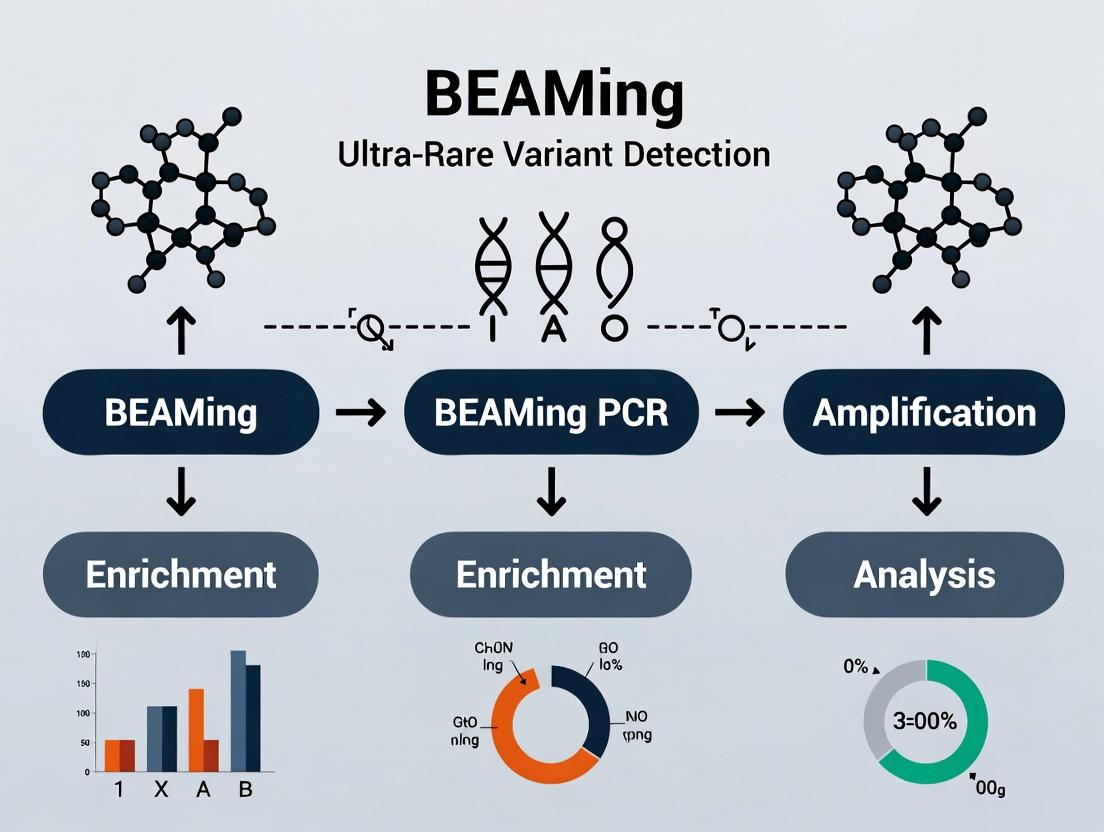
This comprehensive guide explores BEAMing (Beads, Emulsion, Amplification, and Magnetics) technology, a powerful digital PCR-based method revolutionizing ultra-rare variant detection.
BEAMing Technology: A Comprehensive Guide to Ultra-Rare Variant Detection for Drug Development
Abstract
This comprehensive guide explores BEAMing (Beads, Emulsion, Amplification, and Magnetics) technology, a powerful digital PCR-based method revolutionizing ultra-rare variant detection. Aimed at researchers, scientists, and drug development professionals, the article covers foundational principles, detailed workflows for liquid biopsy and oncology applications, key troubleshooting and optimization strategies for sensitivity and specificity, and a critical comparison with NGS and other digital PCR methods. We synthesize current best practices and future directions, providing a roadmap for implementing BEAMing in preclinical and clinical research to detect mutations below 0.01% variant allele frequency.
What is BEAMing? Core Principles and the Need for Ultra-Sensitive Detection
Introduction
Within the broader thesis on advancing ultra-rare variant detection, BEAMing (Beads, Emulsion, Amplification, and Magnetics) stands as a foundational technology. It physically links a polymerase chain reaction (PCR) product to a magnetic bead, enabling the digital quantification of nucleic acid sequences and the detection of mutations present at frequencies as low as 0.01%. This application note provides a detailed deconstruction of the BEAMing workflow, protocols, and essential resources for researchers and drug development professionals engaged in biomarker discovery and liquid biopsy analysis.
Core Principles and Workflow
BEAMing transforms a population of DNA molecules into a population of beads, where each bead carries thousands of copies of a single original DNA molecule. This compartmentalization via water-in-oil emulsion PCR allows for the clonal amplification of individual templates. Subsequent flow cytometry analysis of bead-bound probes enables the digital counting of wild-type and mutant sequences.
Diagram 1: BEAMing Core Workflow
Key Research Reagent Solutions
The following table details essential materials for a standard BEAMing experiment.
| Reagent/Material | Function & Critical Specification |
|---|---|
| Streptavidin-coated Magnetic Beads | Solid support for PCR. Size uniformity (e.g., 1-μm diameter) is critical for consistent flow cytometry signals. |
| Biotinylated PCR Primers | Allows amplicon tethering to streptavidin beads. HPLC purification recommended. |
| Water-in-Oil Emulsion Reagents | Includes surfactants and oils (e.g., mineral oil) to create stable microreactors for compartmentalized PCR. |
| High-Fidelity DNA Polymerase | Enzyme with low error rate to minimize amplification artifacts during emulsion PCR. |
| Fluorescently-Labeled Flow Cytometry Probes | allele-specific oligonucleotides for mutant and wild-type detection (e.g., FAM vs. VIC/HEX). Must be carefully designed for mismatch discrimination. |
| Magnetic Separation Rack | For efficient bead washing and recovery post-emulsion breakage. |
| Flow Cytometer | Instrument capable of detecting 1-μm beads and distinguishing fluorescence signals at appropriate wavelengths. |
Detailed Experimental Protocol: BEAMing for Plasma-Derived ctDNA
Note: Optimize all cycle numbers and reagent concentrations for your specific target.
1. Sample Preparation & Biotinylated PCR
- Input: 10-50 ng of cell-free DNA (cfDNA) from plasma.
- First PCR: Perform a conventional symmetric PCR in a 50 μL reaction using biotinylated forward and reverse primers targeting your region of interest.
- Purification: Purify the amplicon using magnetic bead-based clean-up. Elute in 30 μL nuclease-free water.
- Bead Binding: Incubate the purified biotinylated amplicon with 1 x 10^7 streptavidin-coated magnetic beads in binding buffer for 15 minutes at room temperature. Wash twice.
2. Emulsion Formation & Amplification
- Aqueous Phase Preparation: Prepare a 200 μL PCR mix containing bead-bound DNA, dNTPs, high-fidelity polymerase, and non-biotinylated primers. Keep on ice.
- Oil Phase Preparation: Prepare 400 μL of oil-surfactant mixture.
- Emulsify: Combine aqueous and oil phases. Emulsify by vigorous vortexing for 5-10 minutes or using a mechanical homogenizer to create a stable milk-white emulsion. Aliquot 100 μL into PCR tubes.
- Emulsion PCR: Run thermocycling (e.g., 95°C for 5 min; 45 cycles of: 95°C 30s, 55-60°C 30s, 72°C 45s; final 72°C 5 min).
3. Bead Recovery & Hybridization
- Break Emulsion: Pool emulsion aliquots. Add 1 mL of isopropanol or perfluorooctanol, vortex, and centrifuge. Discard oil/aqueous layer.
- Wash Beads: Wash bead pellet twice with 500 μL of 0.1% Tween-20, then twice with 500 μL of TE buffer.
- Denaturation: Resuspend beads in 100 μL of 0.1 M NaOH for 5 min to denature dsDNA. Wash twice in 1x hybridization buffer.
- Probe Hybridization: Resuspend beads in 50 μL hybridization buffer containing 100 nM of each fluorescent probe. Heat to 95°C for 2 min, then incubate at 45°C for 30 min in the dark. Wash twice to remove excess probe.
4. Analysis & Quantification
- Flow Cytometry: Resuspend beads in 200 μL hybridization buffer. Analyze on a flow cytometer, collecting at least 100,000 bead events. Use a scatter gate to isolate single beads. Measure fluorescence in FAM (mutant) and VIC/HEX (wild-type) channels.
- Data Analysis: Beads are classified as mutant-positive, wild-type-positive, or negative based on fluorescence thresholds set from controls.
Data Presentation: Typical BEAMing Performance Metrics
The quantitative performance of BEAMing is benchmarked against other rare variant detection methods, as summarized below.
Table 1: Comparison of Ultra-Rare Variant Detection Methods
| Method | Theoretical Detection Limit | Effective Input DNA | Key Limitation |
|---|---|---|---|
| BEAMing | 0.01% - 0.1% | High (≥10 ng, pre-amplified) | Labor-intensive workflow; requires specialized emulsion handling. |
| ddPCR (Droplet Digital PCR) | 0.001% - 0.01% | Moderate (1-10 ng) | Limited multiplexing capability per reaction. |
| NGS (Ultra-deep Sequencing) | 0.1% - 1.0% | Very High (≥50 ng) | Susceptible to sequencing artifacts; complex bioinformatics. |
| ARMS-PCR / qPCR | 1.0% - 5.0% | Low (1-5 ng) | Poor sensitivity below 1% variant allele frequency. |
Diagram 2: BEAMing Data Analysis Logic
Conclusion
BEAMing provides a robust, digital approach for the absolute quantification of ultra-rare genetic variants. While newer technologies like ddPCR offer streamlined workflows, BEAMing's capacity for high-level multiplexing via different bead regions or fluorescent probes maintains its relevance in specific research and diagnostic contexts, particularly for validating low-frequency oncogenic mutations in circulating tumor DNA for therapeutic monitoring.
Within the context of advancing BEAMing (Beads, Emulsion, Amplification, and Magnetics) technology for ultra-rare variant detection, the pursuit of variants below 0.1% Variant Allele Frequency (VAF) represents a critical frontier. This capability is paramount for early cancer detection via liquid biopsy, monitoring minimal residual disease (MRD), understanding tumor heterogeneity, and assessing the emergence of treatment-resistant clones long before clinical manifestation. The limitation of conventional next-generation sequencing (NGS), typically with a detection limit of 1-5% VAF, necessitates ultra-sensitive methods to access this biologically and clinically significant information.
Quantitative Data: Clinical Significance of Low-VAF Variants
Table 1: Clinical Applications and Required Sensitivity Thresholds
| Clinical/Research Application | Typical VAF Range | Required Detection Sensitivity | Biological/Clinical Implication |
|---|---|---|---|
| Early Cancer Detection | 0.01% - 0.1% | ≤0.01% | Detection of tumor-derived ctDNA in asymptomatic or early-stage patients. |
| Minimal Residual Disease (MRD) Monitoring | 0.001% - 0.1% | ≤0.001% | Identification of residual cancer cells post-treatment to predict relapse. |
| Therapy Resistance Emergence | 0.1% - 1% | ≤0.1% | Early detection of resistant subclones before radiographic progression. |
| Tumor Heterogeneity Profiling | 0.1% - 5% | ≤0.1% | Mapping subclonal architecture for comprehensive understanding. |
Table 2: Comparison of Ultra-Sensitive Detection Technologies
| Technology | Theoretical Sensitivity | Practical Sensitivity (Typical) | Key Principle |
|---|---|---|---|
| Digital PCR (dPCR) | ~0.001% | 0.01% - 0.1% | Target-specific partitioning and endpoint PCR. |
| BEAMing | ~0.001% | 0.01% - 0.01% | Emulsion PCR on magnetic beads + flow cytometry. |
| ddPCR (Droplet Digital PCR) | ~0.001% | 0.01% - 0.1% | Water-oil emulsion droplet partitioning. |
| Ultra-deep NGS (with duplex tagging) | ~0.01% | 0.1% | Barcoding of both DNA strands to reduce errors. |
BEAMing Protocol for Ultra-Rare Variant Detection (<0.1% VAF)
Protocol: BEAMing Assay forKRASG12D Mutation Detection in Plasma ctDNA
I. Sample Preparation & Target Amplification
- Cell-Free DNA (cfDNA) Extraction: Isolate cfDNA from 2-10 mL of patient plasma using a silica-membrane based kit (e.g., QIAamp Circulating Nucleic Acid Kit). Elute in 50 µL of low-EDTA TE buffer.
- Primary PCR Amplification:
- Reaction Mix (50 µL):
- 10-50 ng cfDNA
- 1x High-Fidelity PCR Buffer
- 200 µM each dNTP
- 0.5 µM forward primer (biotinylated at 5’ end)
- 0.5 µM reverse primer
- 1.0 U high-fidelity DNA polymerase (e.g., Platinum SuperFi II)
- Cycling Conditions:
- 98°C for 2 min.
- 35 cycles of: 98°C for 10 sec, 65°C for 15 sec, 72°C for 30 sec.
- Final extension: 72°C for 5 min.
- Reaction Mix (50 µL):
- Amplicon Purification: Purify the biotinylated PCR product using magnetic streptavidin beads. Wash 3x with BW buffer (5 mM Tris-HCl pH 7.5, 0.5 mM EDTA, 1 M NaCl). Elute the single-stranded DNA with 50 µL of 0.1 M NaOH, then neutralize with 50 µL of 0.1 M HCl.
II. Emulsion PCR (Microreactor Generation & Amplification)
- Prepare Oil Phase: Mix 800 µL of surfactant (ABIL EM 90) with 200 mL of mineral oil by stirring for 1 hour.
- Prepare Aqueous Phase (100 µL):
- Purified single-stranded DNA template
- 1x PCR buffer
- 200 µM dNTPs
- 0.2 µM reverse primer (identical to step I.2)
- 0.2 µM forward primer coupled to magnetic beads via a 5’ amino group
- 2 U DNA polymerase
- Generate Emulsion: Mix the aqueous phase with 400 µL of the oil phase by vortexing vigorously for 5 minutes to create a water-in-oil emulsion, forming ~10⁷ microreactors.
- Emulsion PCR: Perform PCR on the emulsion:
- 94°C for 4 min.
- 50 cycles of: 94°C for 30 sec, 58°C for 45 sec, 72°C for 45 sec.
- 72°C for 10 min.
III. Bead Recovery & Hybridization
- Break Emulsion: Add 1 mL of isopropanol, vortex, and centrifuge. Discard oil layer. Wash bead pellet 3x with 1 mL of 1x PBS/0.1% Tween-20.
- Mutation-Specific Hybridization: Split beads into separate tubes for wild-type and mutant (KRAS G12D) detection. Resuspend beads in 100 µL hybridization buffer containing a fluorescently labeled (e.g., FITC) mutation-specific oligonucleotide probe or a wild-type-specific (e.g., Cy5) probe.
- Hybridize: Incubate at 50°C for 30 min, then wash to remove unbound probe.
IV. Flow Cytometry Analysis & Enumeration
- Bead Analysis: Analyze beads on a flow cytometer. Gate on bead population based on side-scatter.
- Variant Quantification: Detect fluorescence from FITC (mutant) and Cy5 (wild-type). A bead is positive if its fluorescence exceeds a pre-set threshold based on negative controls.
- Calculate VAF: VAF = (Number of mutant beads) / (Total number of mutant + wild-type beads). Statistical confidence intervals (e.g., Poisson) must be applied.
Visualizations
BEAMing Technology Workflow for Rare Variant Detection
Core Challenge & Solutions for Low-VAF Detection
The Scientist's Toolkit: Key Research Reagent Solutions
Table 3: Essential Materials for BEAMing-Based Ultra-Sensitive Detection
| Reagent/Material | Supplier Examples | Function in Protocol | Critical Consideration |
|---|---|---|---|
| High-Fidelity DNA Polymerase | Thermo Fisher, NEB, Takara | Primary PCR amplification of low-input cfDNA. Minimizes early amplification errors. | Must have ultra-low error rate to prevent false positive variants. |
| Streptavidin-Coated Magnetic Beads | Thermo Fisher, Cytiva, Sigma-Aldrich | Capture of biotinylated primary PCR product for ssDNA generation. | Binding capacity and uniformity are crucial for consistent template loading. |
| Emulsion Generation Oil & Surfactant | Sigma-Aldrich, ABIL EM 90 (Evonik) | Creates stable water-in-oil microreactors for clonal amplification. | Stability of emulsion during thermocycling is paramount for partitioning efficiency. |
| Amino-Modified Primers on Beads | Custom synthesis (e.g., Integrated DNA Technologies) | Solid-phase primer for emulsion PCR; amplicons remain covalently bound. | Coupling efficiency and bead uniformity directly impact final signal. |
| Mutation-Specific Fluorescent Probes | Biosearch Technologies, IDT | Sequence-specific hybridization for allele discrimination on beads. | Melting temperature (Tm) matching and specificity are critical for low background. |
| Flow Cytometer | BD Biosciences, Beckman Coulter | Digital enumeration of fluorescently labeled mutant and wild-type beads. | Sensitivity and stability in detecting single-bead fluorescence. |
Application Notes
BEAMing (Beads, Emulsification, Amplification, and Magnetics) technology represents a cornerstone methodology for the detection and quantification of ultra-rare somatic mutations (e.g., from circulating tumor DNA) within a vast background of wild-type DNA. Its unparalleled sensitivity, capable of detecting a single mutant molecule among 10,000 wild-type sequences, directly addresses a critical need in oncology, liquid biopsy development, and therapy monitoring. This protocol outlines the core workflow, emphasizing the critical steps that enable digital PCR-like precision through a combination of emulsion microfluidics and flow cytometry.
The process begins with the generation of a PCR product flanked by universal primer sequences, which is then bound to streptavidin-coated magnetic beads. A water-in-oil emulsion is created, compartmentalizing individual beads and PCR reagents into microreactors. Within each droplet, a single bead is clonally amplified via emulsion PCR, culminating in thousands of copies of the original template attached to the bead surface. After breaking the emulsion, the beads are hybridized with fluorescently labeled allele-specific probes and analyzed by flow cytometry. Each fluorescent bead corresponds to a single original DNA molecule, enabling absolute digital quantification of mutant and wild-type alleles.
Table 1: Representative BEAMing Performance Metrics for Ultra-Rare Variant Detection
| Parameter | Typical Performance Range | Key Implication for Research |
|---|---|---|
| Detection Sensitivity | 0.01% - 0.001% allelic frequency | Enables monitoring of minimal residual disease and early resistance mutations. |
| Input DNA Requirement | 1 - 50 ng of circulating free DNA | Compatible with limited-yield clinical samples (e.g., from plasma). |
| Dynamic Range | 4 - 5 orders of magnitude | Allows quantification from ultra-rare to highly prevalent variants in a single assay. |
| Assay Precision (CV for % mutant) | <10% for variants >0.1% | Provides reliable longitudinal tracking of mutation burden. |
| Multiplexing Capacity | Up to 4-6 variants per reaction (via probe color) | Efficient for profiling hotspot mutation panels. |
Experimental Protocol: BEAMing for ctDNA Mutation Analysis
I. Sample Preparation and Primary PCR
Objective: To generate a template suitable for emulsion PCR with universal primer handles.
- Extract circulating tumor DNA (ctDNA) from 1-4 mL of patient plasma using a silica-membrane or bead-based kit. Elute in 20-50 µL of low-EDTA TE buffer or nuclease-free water.
- Design and synthesize gene-specific primers for your target mutation(s). Forward and reverse primers must each have a 5' extension containing a universal primer sequence (e.g., Primer A and Primer B sequences).
- Prepare the primary PCR mix in a 50 µL total volume:
- 1X High-Fidelity PCR Buffer
- 200 µM each dNTP
- 0.2 µM forward primer (with universal handle)
- 0.2 µM reverse primer (with universal handle)
- 1-10 ng ctDNA template
- 1.25 units of high-fidelity DNA polymerase
- Amplify using a touch-down or optimized cycling program to maximize specificity. Purify the PCR product using AMPure XP beads (0.8X ratio) to remove primers and nonspecific fragments. Elute in 30 µL of low-EDTA TE buffer. Quantify by fluorometry.
II. Bead Template Preparation
- Dilute the purified primary PCR product to a concentration of approximately 10^7 molecules/µL.
- Bind template to beads: In a 100 µL reaction, mix:
- 10^7 streptavidin-coated magnetic beads (1 µm diameter)
- 10^8 molecules of biotinylated primary PCR product (10:1 molecule-to-bead ratio) in 1X Binding & Wash Buffer (5 mM Tris-HCl, pH 7.5, 0.5 mM EDTA, 1 M NaCl).
- Incubate at room temperature for 15 minutes with gentle rotation. Separate beads on a magnetic rack and wash twice with 200 µL of 1X B&W Buffer.
- Resuspend beads in 100 µL of low-EDTA TE buffer. The beads are now ready for emulsification.
III. Emulsion PCR (ePCR)
Objective: To perform clonal amplification of single DNA molecules on individual beads in microreactors.
- Prepare the PCR mix for emulsification:
- 1X Thermophilic DNA Polymerase Buffer
- 200 µM each dNTP
- 0.5% W-1 detergent (optional stabilizer)
- 2.5 units of DNA polymerase
- ~10^6 template-bound beads from Step II
- 0.4 µM Primer A (universal forward)
- 0.4 µM biotinylated Primer B (universal reverse)
- Nuclease-free water to 1 mL.
- Create the water-in-oil emulsion using a microfluidic droplet generator or vigorous vortexing with an oil/surfactant mixture (e.g., ABIL EM 90 in mineral oil). Aim for droplets with an average diameter of 5-10 µm.
- Amplify the emulsion using standard PCR cycling conditions for the universal primers.
- Break the emulsion by adding 2 mL of perfluorooctanol to 1 mL of emulsion and vortexing. Centrifuge briefly. Remove the aqueous (bead-containing) layer.
- Wash beads extensively with 0.1% Tween 20, followed by washes with low-EDTE TE buffer.
IV. Hybridization and Flow Cytometry
Objective: To fluorescently label beads based on their carried DNA sequence for digital counting.
- Denature the bead-bound DNA by incubating beads in 100 µL of 0.1 M NaOH for 5 minutes. Neutralize and wash in 1X Hybridization Buffer (e.g., 5X SSC, 0.1% Tween 20).
- Hybridize with allele-specific probes. Prepare two separate hybridization reactions (mutant and wild-type) in 50 µL of 1X Hybridization Buffer:
- Mutant Probe Mix: 100 nM fluorescently labeled (e.g., FAM) probe perfectly complementary to the mutant sequence.
- Wild-Type Probe Mix: 100 nM fluorescently labeled (e.g., HEX) probe perfectly complementary to the wild-type sequence.
- Split the bead population equally into each tube.
- Incubate at 45°C for 30 minutes, then wash twice with 200 µL of 1X Hybridization Buffer at 45°C.
- Analyze beads using a flow cytometer equipped with 488 nm and 532 nm lasers. Gate on bead population (size/scatter), then analyze fluorescence in FAM and HEX channels.
- Quantify: The percentage of mutant allele is calculated as: (Number of beads fluorescent in mutant channel) / (Total number of DNA-positive beads) x 100.
Visual Workflows
Diagram 1: BEAMing High-Level Workflow
Diagram 2: BEAMing Core Principle and Digital Quantification
The Scientist's Toolkit: Key Research Reagent Solutions
Table 2: Essential Materials for BEAMing Experiments
| Item | Function | Critical Specification / Note |
|---|---|---|
| Streptavidin Magnetic Beads | Solid support for template capture and clonal amplification. | 1 µm diameter, uniform size distribution. High streptavidin density. |
| High-Fidelity DNA Polymerase | Primary PCR to generate template with minimal errors. | >50X fidelity over Taq. Essential for avoiding PCR-induced artifacts. |
| Biotinylated dNTPs/Primers | Incorporates biotin for bead-binding of primary PCR product. | Used in primary PCR or for biotinylating the universal reverse primer. |
| Microfluidic Droplet Generator or Oil/Surfactant Kit | Creates monodisperse water-in-oil emulsions. | Critical for consistent microreactor formation. Kits (e.g., Bio-Rad, RainDance) ensure reproducibility. |
| Thermostable DNA Polymerase (for ePCR) | Amplifies DNA within the emulsion droplets. | Must be robust and function efficiently in emulsion environments. |
| Fluorescently Labeled LNA/DNA Oligonucleotide Probes | Allele-specific detection of mutant vs. wild-type sequences. | Locked Nucleic Acid (LNA) bases enhance specificity and thermal stability. |
| Flow Cytometer with 488nm & 532nm Lasers | Digital counting of fluorescent bead populations. | Must distinguish small (1µm) beads and resolve fluorescence signals (e.g., FAM vs. HEX). |
| SPRI (Solid Phase Reversible Immobilization) Beads | PCR clean-up and size selection. | AMPure XP beads standard for nucleic acid purification between steps. |
| Low-EDTA TE Buffer | Resuspension and storage of nucleic acids and beads. | Minimizes inhibition of downstream enzymatic steps vs. standard EDTA-containing buffers. |
Application Notes
Liquid biopsy, utilizing circulating tumor DNA (ctDNA), has become a cornerstone for non-invasive cancer management. Its adoption is primarily driven by three high-impact applications: therapy selection via genotyping, detection of Minimal Residual Disease (MRD) post-treatment, and multi-cancer early detection (MCED). BEAMing (Beads, Emulsification, Amplification, and Magnetics) technology provides the requisite sensitivity for ultra-rare variant detection (down to 0.01% variant allele frequency) essential for MRD and early detection, outperforming conventional NGS and digital PCR in specificity for low-frequency alleles.
Table 1: Performance Metrics of Key Liquid Biopsy Applications
| Application | Typical ctDNA VAF Range | Key Clinical Utility | Required Assay Sensitivity | Example Technology Suites |
|---|---|---|---|---|
| Therapy Selection | 0.1% - 5%+ | Identify targetable mutations (e.g., EGFR T790M) to guide therapy. | ~0.1% - 1% | NGS Panels, ddPCR. |
| MRD Detection | 0.001% - 0.1% | Detect residual disease after curative therapy; prognostic for recurrence. | <0.01% | BEAMing, tumor-informed ddPCR/NGS, whole-genome sequencing. |
| Early Cancer Detection | 0.0001% - 0.01% | Screen asymptomatic populations for cancer signals; requires high specificity. | <0.01% | BEAMing, methylation-based NGS, fragmentomics. |
Table 2: Comparative Analytical Performance of Ultra-Sensitive Technologies
| Technology | Approximate Limit of Detection (VAF) | Key Strength | Primary Limitation |
|---|---|---|---|
| Conventional NGS | 1% - 5% | Broad multiplexing capability. | High error rate limits sensitivity. |
| Digital PCR (ddPCR) | 0.01% - 0.1% | Absolute quantification, high precision. | Limited multiplexing (2-4 plex). |
| BEAMing | 0.01% - 0.001% | Ultra-high sensitivity with high multiplexing potential. | Workflow complexity; requires prior sequence knowledge. |
| Error-Corrected NGS | 0.1% - 0.01% | Genome-wide discovery potential. | Cost and complexity for deep sequencing. |
Experimental Protocols
Protocol 1: BEAMing Workflow for MRD Analysis
Objective: Detect and quantify tumor-specific mutations in plasma for MRD assessment with a sensitivity of 0.01% VAF.
Materials (The Scientist's Toolkit):
- Research Reagent Solutions & Essential Materials:
- Plasma-derived cfDNA: Isolated using magnetic bead-based kits (e.g., QIAamp Circulating Nucleic Acid Kit). Function: The target analyte containing ultra-rare mutant alleles.
- BEAMing Primers (Biotinylated and Specific): Designed for known tumor-derived mutations and wild-type sequences. Function: To specifically amplify and tag target DNA fragments for emulsion PCR.
- Streptavidin-coated Magnetic Beads: 1μm diameter. Function: Solid support for PCR amplification in water-in-oil emulsions.
- Emulsion Oil & Detergent Kits: (e.g., Drop-Seq kits or homemade PicoSurf surfactant in mineral oil). Function: To create millions of picoliter-scale aqueous reactors for single-molecule amplification.
- Fluorescently Labeled Flow Probes: Mutation-specific and wild-type-specific probes with distinct fluorophores (e.g., FAM, Cy5). Function: For hybridization and detection of mutant vs. wild-type beads via flow cytometry.
- Flow Cytometer: High-throughput capable. Function: To count and differentiate mutant (fluorescent) and wild-type beads.
Procedure:
- Input DNA Preparation: Extract cfDNA from 2-5 mL of patient plasma. Elute in 50 μL of low-EDTA TE buffer.
- First-round PCR (Biotinylation): Perform a multiplexed PCR (25-30 cycles) using biotinylated primers targeting the mutation loci of interest. Purify the amplicons using SPRI beads.
- Bead Coupling: Incubate biotinylated amplicons with streptavidin-coated magnetic beads to allow binding. Wash to remove unbound DNA.
- Emulsion PCR: Resuspend DNA-bound beads in PCR master mix. Vigorously mix this aqueous phase with oil/surfactant to generate a stable water-in-oil emulsion, creating ~10⁷ microreactors per mL, each containing a single bead and PCR reagents.
- Amplification within Emulsions: Perform thermal cycling. A single DNA molecule bound to each bead is amplified, producing ~10⁷ copies clonally attached to that bead.
- Emulsion Breaking: Add isopropanol and detergent to break the emulsion. Recover the beads by magnetic separation and wash thoroughly.
- Hybridization: Incubate beads with fluorescent probes designed to be perfectly complementary to either the mutant or wild-type sequence.
- Flow Cytometry Analysis: Analyze beads on a flow cytometer. Beads are identified by size/scatter. Fluorescence intensity distinguishes mutant-positive beads (e.g., FAM+) from wild-type beads (e.g., Cy5+). The ratio of mutant to total beads provides the VAF.
Protocol 2: Tumor-Informed vs. Tumor-Naïve MRD Testing
Objective: Compare two primary strategies for designing MRD assays.
Detailed Methodology:
- Tumor-Informed Approach (e.g., Signatera-like):
- Tumor Sequencing: Perform whole-exome or whole-genome sequencing of the patient's resected tumor and matched normal blood DNA to identify 16-50 patient-specific somatic mutations (e.g., SNVs, indels).
- Custom Panel Design: Synthesize a patient-specific multiplex PCR primer panel to amplify these unique mutations.
- Plasma Analysis: Use BEAMing or ultra-deep sequencing (with error correction) on serial plasma samples to track these personalized mutations. This approach maximizes signal-to-noise ratio.
- Tumor-Naïve Approach (Fixed Panel):
- Panel Selection: Use a pre-defined, fixed panel of genomic regions covering common mutations and cancer-related genes (e.g., 50-200 gene pan-cancer panel).
- Plasma Analysis: Apply BEAMing or deep sequencing to patient plasma without prior tumor sequencing.
- Bioinformatic Filtering: Use computational methods to filter out clonal hematopoiesis (CHIP) variants and sequencing artifacts. This approach is faster but may have lower specificity for a given patient.
Visualizations
Title: BEAMing Technology Workflow for Rare Variant Detection
Title: Comparison of Tumor-Informed vs. Tumor-Naïve MRD Strategies
Title: Required Assay Sensitivity by Clinical Application
Application Notes
The detection and quantification of ultra-rare genetic variants, such as somatic mutations in cancer or residual disease, present a significant challenge in molecular diagnostics and research. The evolution from Standard PCR through Digital PCR (dPCR) to the BEAMing (Beads, Emulsion, Amplification, and Magnetics) technology represents a paradigm shift in sensitivity and absolute quantification. This progression is central to a thesis focused on employing BEAMing for breakthrough research in ultra-rare variant detection, enabling applications in early cancer diagnosis, therapy monitoring, and understanding tumor heterogeneity.
Standard (Quantitative) PCR (qPCR): Provides relative quantification by measuring amplification in real-time. Its sensitivity is limited, typically detecting variants at an allele frequency of 1-5%, due to background noise and PCR bias. It is unsuitable for definitive ultra-rare detection.
Digital PCR (dPCR): A breakthrough enabling absolute quantification without standard curves. By partitioning a sample into thousands of individual reactions, it applies Poisson statistics to count target molecules directly. This increases sensitivity to ~0.1% allele frequency and improves precision for low-abundance targets.
BEAMing Technology: A sophisticated fusion of dPCR principles with emulsion PCR on magnetic beads. It transforms individual DNA molecules into bead-bound clones, which are then analyzed via flow cytometry or sequencing. This workflow drastically reduces cross-contamination and error rates, pushing detection sensitivity to 0.01% or lower, making it the gold standard for ultra-rare variant detection in complex backgrounds.
Quantitative Comparison of PCR Technologies:
| Parameter | Standard qPCR | Digital PCR (dPCR) | BEAMing |
|---|---|---|---|
| Quantification Method | Relative (Cq value) | Absolute (Poisson statistics) | Absolute (Digital counting) |
| Typical Sensitivity (VAF) | 1% - 5% | 0.1% - 0.01% | 0.01% - 0.001% |
| Partitioning | Bulk reaction | Physical (microchips/droplets) | Emulsion + Bead-based |
| Detection Readout | Fluorescence (probes/dyes) | Endpoint fluorescence | Flow cytometry / Next-Generation Sequencing |
| Throughput | High | Medium to High | Medium (specialized) |
| Key Advantage | Fast, well-established, multiplexable | High precision, absolute quantification | Ultimate sensitivity for rare variants |
| Primary Limitation | Low sensitivity for rare alleles | Partitioning limits, cost | Complex workflow, specialized expertise |
Detailed Protocols
Protocol 1: Standard qPCR for Mutation Screening (SYBR Green)
Objective: To relatively quantify a known point mutation with an expected variant allele frequency (VAF) >5%.
Materials:
- Template DNA: 10-100 ng genomic DNA.
- Primers: Forward and reverse, specific to the target region.
- SYBR Green Master Mix: Contains Hot Start Taq DNA polymerase, dNTPs, buffer, and SYBR Green I dye.
- qPCR Instrument.
Methodology:
- Reaction Setup: Prepare a 20 µL reaction mix: 10 µL 2X SYBR Green Master Mix, 0.5 µM each primer, template DNA, nuclease-free water.
- Thermocycling Program:
- Stage 1: Initial Denaturation: 95°C for 2 min.
- Stage 2: 40 Cycles of:
- Denaturation: 95°C for 15 sec.
- Annealing/Extension: 60°C for 1 min (acquire SYBR Green signal).
- Melting Curve Analysis: After cycling, run from 65°C to 95°C, +0.5°C/step, hold 5 sec/step.
- Data Analysis: Determine Cq (Quantification Cycle) values. Use ΔΔCq method for relative quantification against a reference gene. Non-specific amplification is identified by aberrant melting peaks.
Protocol 2: Droplet Digital PCR (ddPCR) for Rare Variant Detection
Objective: To absolutely quantify a mutant allele present at ~0.1% VAF.
Materials:
- ddPCR Supermix for Probes (No dUTP).
- Target-specific FAM-labeled mutant probe and HEX/VIC-labeled wild-type probe.
- Droplet Generator and DG Cartridges.
- Droplet Reader.
Methodology:
- Reaction Assembly: Prepare a 20 µL reaction: 10 µL ddPCR Supermix, 1 µL each primer (900 nM final), 0.5 µL each probe (250 nM final), 5-100 ng DNA, water.
- Droplet Generation: Transfer reaction mix to the DG cartridge's sample well. Add 70 µL of Droplet Generation Oil to the oil well. Place the cartridge in the droplet generator. This creates ~20,000 nanoliter-sized droplets.
- PCR Amplification: Transfer the emulsified sample to a 96-well PCR plate. Seal and run on a thermal cycler:
- 95°C for 10 min (enzyme activation).
- 40 cycles of: 94°C for 30 sec, 55-60°C for 1 min (ramp rate 2°C/sec).
- 98°C for 10 min (enzyme deactivation). Hold at 4°C.
- Droplet Reading: Load plate into the droplet reader. It reads the fluorescence (FAM and HEX) of each droplet individually.
- Data Analysis: Use the instrument's software (e.g., QuantaSoft). Apply amplitude thresholds to distinguish four populations: double-negative (empty), FAM-positive (mutant), HEX-positive (wild-type), and double-positive droplets. The concentration (copies/µL) is calculated using Poisson correction: c = -ln(1 - p) / v, where p is the fraction of positive droplets and v is the droplet volume.
Protocol 3: BEAMing for Ultra-Rare Variant Detection (<0.01% VAF)
Objective: To detect and quantify a single-nucleotide variant at frequencies below 0.01% from circulating tumor DNA (ctDNA).
Materials:
- Magnetic Beads: Streptavidin-coated, 1 µm diameter.
- Biotinylated PCR Primers.
- Emulsion PCR Reagents: Water-in-oil emulsion components (surfactants, mineral oil).
- Flow Cytometry Probes: Allele-specific fluorescent probes (e.g., for wild-type and mutant).
- Flow Cytometer.
Methodology:
- First-Standard PCR: Amplify the target region from patient ctDNA (e.g., 50 ng) using biotinylated primers. Purify the amplicon.
- Bead Preparation: Incubate the biotinylated amplicon with streptavidin-coated magnetic beads. Each DNA molecule binds to a single bead via the biotin-streptavidin interaction.
- Emulsion Creation: Mix the DNA-bound beads with PCR reagents (primers, dNTPs, polymerase) in an aqueous phase. This mixture is vigorously agitated in a large volume of oil/surfactant to create millions of individual water-in-oil microreactors, each ideally containing a single bead and a single DNA molecule.
- Emulsion PCR (clonal amplification): Perform a standard PCR. Within each microreactor, the single DNA template is amplified, producing thousands of copies that all remain covalently bound to the same bead.
- Emulsion Breaking: After PCR, add isopropanol and break the emulsion by centrifugation. Wash the beads.
- Hybridization: Incubate the beads with allele-specific fluorescent probes. For a point mutation, two probes are used: one labeled with a fluorescent dye (e.g., PE) specific for the mutant sequence, and another with a different dye (e.g., FITC) for the wild-type sequence.
- Flow Cytometry Analysis: Analyze the beads on a flow cytometer. Each bead corresponds to one original DNA molecule. Beads are classified as:
- Mutant: High PE signal, low FITC.
- Wild-type: High FITC signal, low PE.
- Negative: Low both signals (failed amplification).
- Double-positive: (rare, indicates non-specific binding).
- Quantification: Count at least 1 million beads. The mutant allele frequency is calculated as: (Number of mutant beads) / (Number of mutant + wild-type beads). This digital counting provides ultra-sensitive quantification.
Visualizations
Title: Evolution and Drivers of PCR Technologies
Title: BEAMing Protocol Workflow Steps
The Scientist's Toolkit: Key Research Reagent Solutions
| Item | Function & Importance |
|---|---|
| Hot Start Taq DNA Polymerase | Reduces non-specific amplification during PCR setup, critical for preserving rare mutant templates. |
| Biotinylated PCR Primers | Enable covalent attachment of amplicons to streptavidin-coated beads in BEAMing, a foundational step. |
| Streptavidin-Coated Magnetic Beads (1µm) | Solid support for single-molecule capture and subsequent clonal amplification in emulsion. |
| Droplet Generation Oil & Surfactants | Essential for creating stable water-in-oil emulsions for dPCR and BEAMing, defining partition integrity. |
| Allele-Specific Fluorescent Probes (TaqMan-style) | Enable precise discrimination between wild-type and mutant sequences during endpoint detection in dPCR/BEAMing. |
| ddPCR/QX200 Droplet Reader Oil | Specific oil formulation required for accurate droplet reading in ddPCR systems without droplet dissolution. |
| Emulsion PCR Reagent Kit | Optimized buffer systems containing compatible polymers and surfactants for robust amplification within droplets. |
| Magnetic Bead Separation Rack | For efficient washing and buffer exchange of bead-bound DNA during BEAMing protocol steps. |
| Nuclease-Free Water & Tubes | Prevent sample degradation and contamination, which is paramount in ultra-sensitive rare allele detection. |
| Quantitative DNA Standard (Reference Material) | Crucial for validating assay sensitivity, specificity, and limit of detection across all platforms. |
Implementing BEAMing: A Step-by-Step Protocol and Key Use Cases in Biomedicine
This application note details the core experimental workflows for BEAMing (Beads, Emulsion, Amplification, and Magnetics) technology, a digital PCR-based method central to ultra-rare variant detection research. Within the broader thesis, BEAMing's power lies in its ability to detect somatic mutations at frequencies as low as 0.01% by combining compartmentalized amplification with precise flow cytometric enumeration, enabling breakthroughs in liquid biopsy, minimal residual disease monitoring, and therapy resistance research.
Sample Preparation Protocol for BEAMing
Objective: To isolate and prepare genomic DNA (gDNA) or cell-free DNA (cfDNA) targets for subsequent emulsion PCR.
Detailed Protocol:
- Nucleic Acid Extraction: Isolate gDNA from cells/tissues or cfDNA from plasma using silica-membrane column kits or magnetic bead-based systems. For cfDNA, a minimum of 10 mL of EDTA plasma is recommended.
- Quantification & Quality Control:
- Quantify DNA using a fluorometric assay (e.g., Qubit dsDNA HS Assay).
- Assess fragment size distribution using a Bioanalyzer or TapeStation (cfDNA should show a peak ~170 bp).
- Target Amplification (Pre-PCR): Perform a limited-cycle (typically 20-25 cycles) multiplex PCR to amplify the genomic regions of interest using primers tagged with universal sequences.
- Purification: Purify the amplicons using AMPure XP beads or similar to remove primers, dNTPs, and enzymes.
- Template Dilution: Dilute the purified amplicon to a concentration optimal for limiting dilution during emulsion generation (~10⁷–10⁸ molecules/mL).
Table 1: Sample Preparation QC Metrics & Targets
| Parameter | gDNA | cfDNA | Measurement Method |
|---|---|---|---|
| Minimum Input Mass | 10 ng | 5-30 ng (from ~10 mL plasma) | Fluorometry |
| Concentration Range | 1-10 ng/µL | 0.1-5 ng/µL | Fluorometry |
| Purity (A260/A280) | 1.8-2.0 | 1.8-2.0 | Spectrophotometry |
| Integrity | High MW smear | Sharp peak at ~170 bp | Capillary Electrophoresis |
Emulsion PCR (ePCR) Protocol
Objective: To compartmentalize individual DNA templates and primer-coated beads into water-in-oil microreactors for clonal amplification.
Detailed Protocol:
- Bead Preparation: Use streptavidin-coated magnetic beads (1-2 µm diameter) coupled to biotinylated universal primers complementary to the amplicon tags.
- Emulsion Formulation:
- Prepare the Aqueous Phase: Combine PCR master mix, diluted DNA templates from Step 2.5, and primer-coated beads. The bead:template ratio is critical (~1:1 to ensure a high proportion of beads carry zero or one template).
- Prepare the Oil Phase: A surfactant-stabilized mineral oil mix (e.g., ABIL WE 09 in mineral oil).
- Emulsification: Vigorously mix the two phases using a tissue homogenizer or a specialized emulsification device (e.g., IKA Ultra-Turrax) for 5-10 minutes to create a stable water-in-oil emulsion. Droplet diameter should be 5-50 µm.
- Thermocycling: Perform PCR amplification in a standard thermocycler using the following profile:
- 95°C for 5 min (initial denaturation)
- 45-50 cycles of: 95°C for 30 sec, 55-60°C for 45 sec, 72°C for 60 sec.
- 72°C for 10 min (final extension).
- Emulsion Breaking: After PCR, pool emulsions into a tube. Add isopropanol or a commercial breaking solution, vortex, and centrifuge. The aqueous phase containing the beads is recovered.
Table 2: Critical ePCR Parameters & Optimal Values
| Component | Optimal Condition/Value | Purpose/Impact |
|---|---|---|
| Bead:Template Ratio | 1:1 to 3:1 | Maximizes beads with single template; minimizes empty/duplicate beads |
| Droplet Size | 5-50 µm diameter | Ensures single-bead & single-template compartmentalization |
| PCR Cycles | 45-50 cycles | Ensures sufficient clonal amplification on bead surface |
| Surfactant (ABIL WE 09) | 2-4% (w/w) in oil | Stabilizes emulsion during thermocycling |
Flow Cytometry Analysis Protocol
Objective: To detect and enumerate beads carrying wild-type or mutant sequences using fluorescent hybridization probes.
Detailed Protocol:
- Bead Hybridization & Staining:
- Denature the PCR products on beads (e.g., with NaOH).
- Hybridize fluorescently labeled, allele-specific oligonucleotide probes to the bead-bound DNA. Mutant probes are labeled with FAM (λem ~520 nm). Wild-type probes are labeled with phycoerythrin (PE, λem ~578 nm) or a similar distinct fluorophore.
- Include a universal probe labeled with a third fluorophore (e.g., APC) to identify all DNA-carrying beads.
- Instrument Setup:
- Use a high-sensitivity flow cytometer (e.g., BD FACSymphony, Cytek Aurora).
- Configure forward scatter (FSC) vs. side scatter (SSC) to gate on single beads.
- Set up fluorescence detectors for FAM (530/30 nm), PE (585/42 nm), and APC (660/20 nm).
- Adjust PMT voltages using unstained and single-stained bead controls.
- Data Acquisition & Analysis:
- Acquire at least 100,000-1,000,000 events per sample at a low flow rate.
- Apply sequential gating: 1) Beads (FSC-A vs SSC-A), 2) Singlets (FSC-H vs FSC-A), 3) DNA-positive beads (APC+).
- Analyze the final population for FAM (mutant) and PE (wild-type) fluorescence. Beads are classified as mutant (FAM+ PE-), wild-type (FAM- PE+), or negative/inconclusive.
- Variant Frequency Calculation: Calculate mutant allele frequency (MAF) as: (Number of mutant beads) / (Number of mutant + wild-type beads) × 100%.
Table 3: Flow Cytometry Setup & Analysis Parameters
| Parameter | Setting/Measurement | Purpose |
|---|---|---|
| Primary Gating | FSC-A vs. SSC-A | Identify bead population |
| Singlet Gate | FSC-H vs. FSC-A | Exclude bead aggregates |
| DNA-Positive Gate | APC Signal > Threshold | Select beads with amplified DNA |
| Mutant Detection | FAM Fluorescence | Specific to mutant allele probe |
| Wild-Type Detection | PE Fluorescence | Specific to wild-type allele probe |
| Sensitivity Threshold | ~0.01% MAF | Based on Poisson statistics & bead count |
Visualized Workflows & Pathways
Diagram 1: BEAMing technology core workflow (79 characters)
Diagram 2: Emulsion PCR compartmentalization principle (78 characters)
Diagram 3: Flow cytometry gating strategy for BEAMing (74 characters)
The Scientist's Toolkit: Key Research Reagent Solutions
Table 4: Essential Materials for BEAMing Experiments
| Reagent/Material | Function/Application | Example Product/Type |
|---|---|---|
| cfDNA Extraction Kit | Isolation of high-quality, fragment-size-preserved cfDNA from plasma. | QIAamp Circulating Nucleic Acid Kit, MagMAX Cell-Free DNA Kit |
| Streptavidin-Coated Magnetic Beads | Solid support for primer immobilization and template capture. | Dynabeads MyOne Streptavidin C1 (1 µm) |
| Emulsion Oil & Surfactant | Forms stable water-in-oil microreactors for compartmentalized PCR. | ABIL WE 09 (2-4%) in mineral oil, Sigma PCR Oil |
| High-Fidelity DNA Polymerase | Accurate amplification during pre-PCR and ePCR. | KAPA HiFi HotStart, Q5 Hot Start |
| Allele-Specific Fluorescent Probes | Discrimination of mutant vs. wild-type sequences via flow cytometry. | FAM-labeled mutant probes, PE-labeled wild-type probes |
| Flow Cytometry Alignment Beads | Daily calibration and performance validation of the flow cytometer. | CS&T Beads (BD), Rainbow Calibration Particles |
| AMPure XP Beads | Post-amplification clean-up and size selection. | Beckman Coulter AMPure XP |
| Nuclease-Free Water | Preparation of all aqueous solutions to prevent nucleic acid degradation. | Invitrogen UltraPure DNase/RNase-Free Water |
Within the context of developing BEAMing (Beads, Emulsion, Amplification, and Magnetics) technology for ultra-rare variant detection in oncology and liquid biopsy applications, the design of primers and probes is the foundational determinant of success. Optimal design ensures the selective amplification and digital quantification of mutant alleles present at frequencies as low as 0.01% against a wild-type background. This application note details the critical parameters and validated protocols for achieving maximal specificity and efficiency in this demanding setting.
Critical Design Parameters & Quantitative Benchmarks
The following table summarizes the key quantitative parameters for primer and probe design tailored to BEAMing's requirements for rare allele detection.
Table 1: Optimal Parameters for Primers and Probes in BEAMing Assays
| Parameter | Primer Recommendation | Probe Recommendation | Rationale for BEAMing Context |
|---|---|---|---|
| Length | 18-30 bases | 15-25 bases | Balances specificity with reliable hybridization in emulsion PCR. |
| Tm (Melting Temp) | 58-62°C (within 1°C of each other) | 68-72°C (8-10°C > primers) | Ensures simultaneous primer annealing and stable probe binding for specific detection. |
| GC Content | 40-60% | 40-60% | Prevents secondary structures; ensures stable yet not overly stringent binding. |
| 3' End Stability | Avoid ΔG > -9 kcal/mol | N/A (blocked 3') | Minimizes primer-dimer and mispriming, critical for emulsion microenvironments. |
| Amplicon Length | 80-150 bp | N/A | Compatible with fragmented ctDNA and efficient amplification in emulsion droplets. |
| Specificity Check | BLAST against ref. genome | BLAST against ref. genome | Mandatory to avoid co-amplification of pseudogenes or homologous sequences. |
Detailed Experimental Protocols
Protocol 1:In SilicoDesign and Specificity Validation for BEAMing
This protocol must be completed prior to synthesis.
- Target Identification: Define the exact genomic coordinate and sequence context of the variant (e.g., KRAS G12D).
- Primer Design: Using tools like Primer3 or NCBI Primer-BLAST, design primers flanking the variant. Enforce parameters from Table 1. Place the variant in the middle third of the amplicon.
- Probe Design: Design a hydrolysis (TaqMan) probe overlapping the variant site.
- For allele-specific detection, design two probes: a wild-type probe (perfect match to WT) and a mutant probe (perfect match to mutant). The differentiating base should be centered.
- Use minor groove binder (MGB) or locked nucleic acid (LNA) modifications to increase Tm and specificity, allowing shorter probes.
- Specificity Screening: Perform a BLASTN search of all primer and probe sequences against the human reference genome (GRCh38). Discard designs with significant off-target homology (>80% identity over >15 bases).
- Secondary Structure Analysis: Analyze all oligonucleotides for hairpins and dimerization using tools like OligoAnalyzer (IDT). Avoid stable secondary structures (ΔG < -5 kcal/mol) at annealing temperatures.
Protocol 2: Wet-Lab Validation of Primer/Probe Efficiency
Validate designs in bulk PCR before progressing to emulsion BEAMing.
- Reaction Setup: Prepare a standard 25 µL qPCR reaction using a master mix optimized for probe-based detection (e.g., TaqMan Universal PCR Master Mix).
- Template: Use control plasmids or synthetic gDNA blocks containing known wild-type and mutant sequences.
- Primer/Probe Concentration: Titrate primer pairs (50-900 nM final) and probe (50-250 nM final) to determine optimal concentrations.
- Thermal Cycling:
- Hold: 50°C for 2 min, 95°C for 10 min.
- 45 Cycles: 95°C for 15 sec, 60°C for 1 min (acquire fluorescence).
- Efficiency Calculation:
- Perform serial dilutions (e.g., 1:10) of the template.
- Plot Cq values against log10 template concentration. The slope is used to calculate efficiency: Efficiency % = (10^(-1/slope) - 1) * 100%.
- Acceptance Criterion: Efficiency between 90-110% (slope of -3.6 to -3.1). R² > 0.99.
Protocol 3: BEAMing-Specific Validation for Ultra-Rare Variant Detection
- Emulsion PCR Setup: Incorporate the validated primers/probes into the BEAMing emulsion PCR protocol, where each template molecule is amplified within a separate aqueous microdroplet in oil.
- Limit of Detection (LOD) Assessment:
- Spike mutant control DNA into wild-type background genomic DNA at defined variant allele frequencies (VAFs: 1%, 0.1%, 0.01%, 0.001%).
- Process samples through the full BEAMing workflow: emulsion PCR, bead recovery, and flow cytometry analysis using fluorescently labeled allele-specific probes.
- Analysis: The number of mutant (fluorescent) beads vs. total beads gives the digital VAF. The LOD is the lowest VAF where the measured mutant count is statistically significant (e.g., p<0.01) above the false-positive background measured in a 0% VAF control.
Visual Workflows
Title: Primer-Probe Design & Validation Workflow for BEAMing
Title: BEAMing Emulsion PCR & Allele-Specific Detection
The Scientist's Toolkit: Research Reagent Solutions
Table 2: Essential Reagents for BEAMing Assay Development
| Reagent / Material | Function in BEAMing Workflow | Critical Consideration |
|---|---|---|
| LNA- or MGB-Modified TaqMan Probes | Allele-specific detection with enhanced mismatch discrimination. Increases probe Tm, allowing shorter, more specific designs. | Essential for distinguishing single-base variants in a digital PCR format. Fluorophore choice (FAM/VIC) must match flow cytometer lasers. |
| Primers with 5' Biotin or Amino Modifications | For covalent coupling to streptavidin- or carboxyl-coated magnetic beads. | Ensures stable primer immobilization during emulsion formation and stringent washes. |
| Synthetic gDNA Blocks (Wild-type & Mutant) | Positive controls for assay validation and determining limit of detection (LOD). | Must be sequence-verified. Used for spike-in experiments to create defined VAFs. |
| High-Fidelity, Hot-Start DNA Polymerase | Amplification in emulsion PCR with minimal error rates and reduced primer-dimer formation. | Critical for accuracy; errors during early cycles create false-positive mutant signals. |
| Microfluidic Emulsion Generator (or kits) | Creates monodisperse water-in-oil droplets for compartmentalized PCR. | Droplet uniformity is key to ensuring single-template encapsulation and quantitative digital results. |
| Fluorescent-Activated Cell Sorter (FACS) or Flow Cytometer | Digital quantification of mutant vs. wild-type beads post-amplification. | Must detect the specific fluorophores on hydrolysis probes. Sensitivity determines background signal. |
| Magnetic Bead Separator | Recovery and washing of magnetic beads post-emulsion breaking. | Enables stringent removal of unincorporated probes and primers to reduce background fluorescence. |
Circulating tumor DNA (ctDNA) analysis via liquid biopsy is transforming oncology clinical research. Within the broader thesis on BEAMing (Beads, Emulsion, Amplification, and Magnetics) technology for ultra-rare variant detection, this application note details its critical role in monitoring therapy response and detecting emergent resistance mechanisms. BEAMing's digital PCR-like sensitivity (0.01% variant allele frequency) enables precise, serial tracking of tumor burden and clonal evolution from plasma, offering a non-invasive alternative to tissue biopsies for longitudinal studies.
Table 1: Clinical Applications of ctDNA Monitoring with BEAMing
| Application | Measured Parameter | Typical BEAMing Sensitivity | Clinical/R&D Utility |
|---|---|---|---|
| Early Response Assessment | % change in variant allele frequency (VAF) of driver mutation(s) | 0.01% VAF | Detect molecular response weeks before radiographic changes. |
| Minimal Residual Disease (MRD) | Presence/absence of tumor-specific mutations post-treatment | 1-5 tumor molecules per 5 mL plasma | Predict relapse risk; adjuvant therapy stratification. |
| Emergence of Resistance | Detection of new resistance mutations (e.g., EGFR T790M, KRAS G12C) | 0.01%-0.1% VAF | Identify mechanism; guide subsequent targeted therapy. |
| Clonal Evolution Tracking | Dynamic changes in mutation allele frequency across multiple loci | Multiplex panels (5-10 targets) | Understand tumor heterogeneity and treatment pressure. |
Table 2: Representative Study Data: ctDNA Dynamics vs. Treatment Outcome
| Therapy Context | ctDNA Trend (On-Treatment) | Correlation with Radiographic Outcome (RECIST) | Median Lead Time Advantage |
|---|---|---|---|
| EGFR TKI in NSCLC | >50% drop in EGFR sensitizing mutation VAF by Week 3 | Associated with Partial Response (PR) | 8.9 weeks earlier than CT scan |
| Chemotherapy in CRC | Clearance of KRAS/NRAS mutations | Associated with prolonged Progression-Free Survival (PFS) | 10.2 weeks earlier |
| Acquired Resistance | Re-appearance or rise of original mutation + new resistance mutation | Preceded clinical/radiographic progression | 16.3 weeks earlier |
Experimental Protocols
Protocol 1: Serial ctDNA Collection & Processing for BEAMing Analysis
Objective: To collect and process plasma for longitudinal ctDNA analysis to track known variants. Materials: Cell-free DNA BCT tubes, centrifuge, 2 mL cryovials, -80°C freezer, QIAamp Circulating Nucleic Acid Kit, bioanalyzer. Procedure:
- Blood Draw: Collect 10 mL whole blood per time point into Cell-free DNA BCT tubes. Invert gently. Stable for up to 7 days at room temp.
- Plasma Isolation: Centrifuge at 1600 x g for 20 min at 4°C. Transfer supernatant to fresh tube. Centrifuge at 16,000 x g for 10 min at 4°C to remove residual cells.
- Plasma Storage: Aliquot 1-2 mL plasma into cryovials. Store at -80°C.
- cfDNA Extraction: Use QIAamp kit per manufacturer's protocol. Elute in 50 µL AVE buffer.
- Quality Control: Quantify using fluorometry (e.g., Qubit hsDNA assay). Assess fragment size profile via bioanalyzer (expected peak ~170 bp).
Protocol 2: BEAMing Assay for Targeted Mutation Quantification
Objective: To quantify specific mutant allele frequencies from extracted cfDNA. Materials: BEAMing-ready PCR primers and probes for target, thermocycler, emulsion oil phase, streptavidin beads, flow cytometer. Procedure:
- Primary PCR: Amplify target region from cfDNA (10-50 ng) using biotinylated primers. Purify amplicons.
- Emulsion PCR Preparation: Bind biotinylated amplicons to streptavidin-coated magnetic beads. Create a water-in-oil emulsion with PCR reagents, isolating individual DNA molecules on beads.
- Emulsion PCR: Perform PCR within droplets to clonally amplify each bound DNA molecule onto its bead.
- Emulsion Breaking: Recover beads from emulsion. Wash thoroughly.
- Mutation Detection Hybridization: Incubate beads with fluorescently labeled, mutation-specific probes (e.g., wild-type: FAM, mutant: VIC). Use stringent washes.
- Flow Cytometry Analysis: Analyze ≥1,000,000 beads per sample. Mutant allele frequency = (mutant beads) / (mutant + wild-type beads). Apply Poisson correction for beads with >1 molecule.
Visualization: Workflows and Pathways
Title: BEAMing ctDNA Analysis Workflow
Title: EGFR TKI Response and Resistance Pathway
The Scientist's Toolkit: Research Reagent Solutions
Table 3: Essential Reagents & Materials for BEAMing-based ctDNA Tracking
| Item/Category | Function & Importance | Example Product/Note |
|---|---|---|
| Stabilized Blood Collection Tubes | Preserves cfDNA profile by preventing genomic DNA release from leukocytes. Critical for reproducible longitudinal data. | Cell-free DNA BCT (Streck), PAXgene Blood ccfDNA Tube |
| High-Sensitivity cfDNA Extraction Kit | Maximizes yield of short, fragmented ctDNA from large plasma volumes (≥4 mL). | QIAamp Circulating Nucleic Acid Kit, MagMAX Cell-Free DNA Isolation Kit |
| BEAMing-Compatible Primer/Probe Sets | Target-specific reagents designed for emulsion PCR and fluorescent hybridization. Must be highly specific for mutant vs. wild-type. | Custom-designed, HPLC-purified oligonucleotides. |
| Emulsion Oil & Surfactant | Creates stable microreactors for single-molecule amplification. Consistency is key for digital quantification. | Sigma PCR-Ready Emulsion Oil, custom surfactant solutions. |
| Streptavidin Magnetic Beads | Solid support for amplicon capture and clonal amplification. Uniform size is critical for flow analysis. | 1.0 µm magnetic beads, high streptavidin density. |
| Mutation-Specific Fluorescent Probes | Discriminate mutant from wild-type sequences on beads. Requires stringent mismatch discrimination. | Dual-labeled (Quencher/Fluor) LNA or TaqMan probes. |
| High-Throughput Flow Cytometer | Analyzes millions of beads to count mutant and wild-type populations. Requires stable calibration. | BD FACSymphony, Thermo Fisher Attune NxT. |
| Digital PCR Master Mix | Optimized polymerase and buffers for amplification within emulsion droplets. | dPCR Master Mix for emulsions. |
Minimal Residual Disease (MRD) Monitoring in Hematologic and Solid Tumors
The thesis on BEAMing (Beads, Emulsion, Amplification, and Magnetics) technology posits that its unique digital PCR-through-emulsion architecture provides the optimal combination of sensitivity, specificity, and quantitative accuracy for ultra-rare variant detection. This capability is foundational for modern Minimal Residual Disease (MRD) monitoring, where detecting a single tumor-derived molecule among >10,000 normal molecules is required to predict clinical relapse and guide therapeutic intervention. This document details application notes and protocols for MRD assessment within this technological framework.
Comparative Performance of MRD Detection Technologies
Table 1: Quantitative Comparison of Key MRD Detection Platforms
| Technology | Theoretical Sensitivity | Effective Input DNA | Key Advantages | Primary Limitations | Best Suited For |
|---|---|---|---|---|---|
| BEAMing dPCR | 0.01% (1 in 10^4) | 2-5 mL plasma equivalent | Absolute quantification; high specificity via dual selection (emulsion + magnetic); low error rate. | Pre-defined mutation panel required; higher per-sample cost. | Solid tumors (ctDNA); known hotspot mutations. |
| NGS-Based (Tumor-Informed) | 0.001% (1 in 10^5) | 5-10 mL plasma equivalent | Ultra-high sensitivity; tracks 10-100s of patient-specific mutations; no a priori locus needed. | Complex bioinformatics; longer turnaround time; risk of clonal hematopoiesis (CHIP) interference. | Both heme & solid tumors; when no dominant mutation is known. |
| Flow Cytometry (MFC) | 0.01% (1 in 10^4) | 10^6 nucleated cells | Rapid; provides immunophenotype; detects aberrant patterns. | Operator-dependent; limited standardization; low sensitivity in hemodilute samples. | Hematologic malignancies (ALL, AML, MM). |
| qPCR (Allele-Specific) | 0.01% (1 in 10^4) | 1-2 µg gDNA | Standardized; fast; cost-effective. | Requires pre-defined target; prone to amplification bias; limited multiplexing. | Hematologic cancers with classic fusion genes (e.g., BCR::ABL1). |
Detailed Protocols
Protocol 3.1: BEAMing-based MRD Detection from Plasma ctDNA
Objective: To quantify tumor-derived mutant allele frequency in plasma cell-free DNA for solid tumor MRD assessment.
Research Reagent Solutions & Essential Materials:
| Item | Function |
|---|---|
| Streptavidin-coated Magnetic Beads | Solid support for primer immobilization and subsequent target capture. |
| Biotinylated Target-Specific PCR Primers | Enables covalent attachment of amplification templates to beads. |
| Water-in-Oil Emulsion Reagents | Creates >10^7 discrete microreactors for clonal amplification, preventing recombination. |
| Mutation-Specific Fluorescent Probe(s) (e.g., FAM-labeled) | Detects mutant allele within amplified beads. |
| Wild-Type-Specific Fluorescent Probe(s) (e.g., VIC/HEX-labeled) | Detects wild-type allele; enables ratio calculation. |
| Flow Cytometer with 488nm laser | For final bead analysis and counting of fluorescent populations. |
| cfDNA Isolation Kit (Magnetic Bead-based) | High-yield, low-fragmentation isolation of cell-free DNA from blood plasma. |
Methodology:
- Sample Preparation: Collect 10mL blood in Streck or CellSave tubes. Centrifuge at 1600× g for 20 min. Isolate plasma and perform a second high-speed centrifugation (16,000× g, 10 min). Extract cfDNA using a validated magnetic bead-based kit. Elute in 50 µL TE buffer.
- First-PCR & Bead Coupling: Perform a limited-cycle (20-25 cycles) PCR using biotinylated primers targeting the mutation hotspot region. Purify the amplicon. Incubate with streptavidin-coated magnetic beads to generate bead-DNA complexes.
- Emulsion PCR: Resuspend bead-DNA complexes in PCR master mix. Vigorously mix with oil-surfactant solution to create a stable water-in-oil emulsion. Perform PCR (35-40 cycles). Each bead is compartmentalized, allowing clonal amplification of a single DNA molecule.
- Emulsion Breaking & Bead Recovery: Break the emulsion using butanol or a proprietary breaking solution. Wash beads extensively.
- Mutation Detection Hybridization: Incubate beads with fluorescently labeled, mutation-specific and wild-type-specific probes under stringent conditions. Wash to remove non-specifically bound probes.
- Flow Cytometric Analysis: Analyze beads on a flow cytometer. Beads are gated based on fluorescence: mutant-positive (FAM+), wild-type-positive (VIC+), and negative. MRD level is calculated as: (Number of mutant beads) / (Number of mutant + wild-type beads).
Protocol 3.2: Tumor-Informed NGS-based MRD Monitoring
Objective: To track a patient-specific set of somatic mutations (from WES of tumor tissue) in serial post-treatment plasma samples.
Methodology:
- Panel Design: Perform Whole Exome Sequencing (WES) on tumor tissue and matched germline DNA. Identify 16-50 somatic mutations (SNVs, indels). Design a custom hybridization capture panel.
- Library Preparation & Capture: Construct dual-indexed NGS libraries from serial plasma cfDNA samples (typically 20-50 ng input). Perform hybrid capture using the custom panel.
- Ultra-Deep Sequencing: Sequence captured libraries to a minimum depth of 100,000x on an Illumina platform.
- Bioinformatic Analysis: Align reads to reference genome. Apply unique molecular identifiers (UMI) to correct for PCR and sequencing errors. Use a validated caller (e.g., Mutect2, LoFreq) to identify reads containing tumor-specific mutations. Apply a threshold (e.g., ≥2 mutant molecules per mutation, with ≥3 mutations detected) to call MRD positivity.
Visualizations
Title: MRD Monitoring Decision & Workflow Diagram
Title: BEAMing Technology Step-by-Step Process
Application Notes
This document details the application of BEAMing (Beads, Emulsion, Amplification, and Magnetics) technology for ultra-rare variant detection in two critical fields: viral load quantification in infectious diseases and non-invasive prenatal testing (NIPT) for fetal aneuploidies. BEAMing's core strength lies in its ability to partition individual DNA molecules into water-in-oil emulsion droplets, perform digital PCR, and subsequently detect sequence variants with a sensitivity down to 0.01% allele frequency, making it ideal for monitoring low-abundance pathogens and fetal DNA in maternal plasma.
Table 1: Quantitative Performance of BEAMing vs. Conventional Methods
| Application | Target | BEAMing Sensitivity (VAF*) | qPCR/NGSS Sensitivity | Key Advantage of BEAMing |
|---|---|---|---|---|
| Infectious Disease | HIV-1 Drug Resistance Mutations | 0.01% - 0.1% | 1% - 20% | Early detection of resistant subpopulations. |
| Infectious Disease | HBV / HCV Viral Load | <10 copies/mL | 10-50 IU/mL | Ultra-sensitive quantification for cure monitoring. |
| Prenatal Diagnostics | Fetal Trisomy 21 (chr21) | <0.1% allelic imbalance | ~1% allelic imbalance (cfDNA-Seq) | Enhanced accuracy for high-BMI & early gestation. |
| Prenatal Diagnostics | Paternal SNP in Maternal Plasma | 0.01% VAF | N/A | Direct detection of paternally inherited alleles. |
*VAF: Variant Allele Frequency
Table 2: Comparison of BEAMing Workflow Components by Application
| Workflow Stage | Infectious Disease Quantification | Prenatal Diagnostics (NIPT) |
|---|---|---|
| Sample Input | Viral RNA/DNA from serum/plasma | Cell-free DNA (cfDNA) from maternal plasma |
| Primary Assay | RT-digital PCR or digital PCR | Multiplex digital PCR (e.g., for chr21, chr18, chr13 SNPs) |
| Detection Probe | Allele-specific fluorescent probes for wild-type vs. mutant | Chromosome-enumerating probes (CEP) & SNP-allele specific probes |
| Primary Readout | Absolute viral count & mutation frequency | Ratio of chromosome-specific counts (e.g., chr21/chr1) |
| Key Challenge | High sequence diversity of viral genomes | Low fetal fraction (<4%) in maternal cfDNA |
Experimental Protocols
Protocol 1: BEAMing for Detection of HIV-1 Drug Resistance Mutations
Objective: To quantify ultra-rare drug-resistant HIV-1 variants in patient plasma.
Materials: See "The Scientist's Toolkit" below.
Procedure:
- Nucleic Acid Isolation: Extract viral RNA from 1 mL of patient plasma using the QIAamp Viral RNA Mini Kit. Elute in 60 µL of AVE buffer.
- Reverse Transcription & Primary PCR: Generate cDNA and amplify a ~200 bp region of the HIV-1 pol gene (covering key resistance codons) using biotinylated primers. Perform 25 cycles of PCR.
- BEAMing Emulsion Preparation:
- Prepare the aqueous phase (200 µL total): 20 µL of biotinylated amplicon, 1x PCR buffer, 2.5 mM MgCl2, 0.2 mM dNTPs, 0.05 U/µL DNA polymerase, and 0.4 µM of each allele-specific, fluorescently labeled (FAM or HEX) probe.
- Prepare the oil phase (800 µL): 4% (w/w) ABIL WE 09 surfactant in mineral oil.
- Mix phases using a magnetic stirrer to create a water-in-oil emulsion. Dispense 100 µL aliquots into PCR strip tubes (~5-10 million droplets/tube).
- Emulsion PCR (dPCR): Run the following thermocycling program: 95°C for 5 min; 50 cycles of 95°C for 30s, 58°C for 60s, 72°C for 30s; 72°C for 5 min.
- Emulsion Breakage & Bead Recovery: Break the emulsion using 500 µL of butanol per tube. Pool contents and recover the streptavidin-coated magnetic beads using a magnet. Wash beads twice with 1 mL of TE-Tween.
- Flow Cytometry Analysis: Resuspend beads in 100 µL of TE. Analyze on a flow cytometer equipped with 488 nm and 532 nm lasers. Beads are gated by size, and fluorescence is measured to distinguish wild-type (FAM+) from mutant (HEX+) populations.
- Data Analysis: Calculate mutant allele frequency as (Number of HEX+ beads) / (Total number of FAM+ + HEX+ beads) * 100%.
Protocol 2: BEAMing for Non-Invasive Aneuploidy Detection (NIPT)
Objective: To detect fetal trisomy 21 from maternal plasma cfDNA by quantifying chromosome 21 allelic ratios.
Materials: See "The Scientist's Toolkit" below.
Procedure:
- cfDNA Extraction & Preparation: Isolate cfDNA from 10-20 mL of maternal blood plasma (collected in Streck Cell-Free DNA BCT tubes) using the QIAamp Circulating Nucleic Acid Kit. Elute in 50 µL.
- Multiplex Digital PCR Assay Design: Design two probe sets:
- Reference Assay: Targets a highly conserved region on a reference chromosome (e.g., chromosome 1). Use a VIC-labeled probe.
- Target Assay: Targets a unique, highly homozygous region on chromosome 21. Use a FAM-labeled probe.
- BEAMing Emulsion dPCR: Set up a 100 µL aqueous PCR mix containing ~20 ng of maternal cfDNA, 1x digital PCR supermix, and both probe assays at optimal concentrations. Generate emulsion and perform dPCR as in Protocol 1, step 4, with an optimized annealing temperature.
- Post-PCR Processing & Bead Counting: Break the emulsion and recover beads as in Protocol 1, step 5.
- Dual-Laser Flow Cytometry: Analyze beads using flow cytometry. Count four populations: FAM+ (chr21), VIC+ (chr1), FAM+/VIC+ (double-positive), and negative beads.
- Ratio Calculation & Diagnosis: Calculate the normalized chr21 ratio: (Number of FAM+ beads) / (Number of VIC+ beads). Compare this ratio to a validated, population-derived cutoff established from euploid pregnancies. A statistically significant elevation indicates a high risk for fetal trisomy 21.
Visualizations
The Scientist's Toolkit
Table 3: Essential Research Reagent Solutions for BEAMing Protocols
| Reagent / Material | Supplier Example | Function in BEAMing Workflow |
|---|---|---|
| Streptavidin-Coated Magnetic Beads | Thermo Fisher (Dynabeads) | Solid support for capturing biotinylated amplicons; core of the "bead" in BEAMing. |
| ABIL WE 09 Surfactant | Evonik Industries | Critical for forming stable water-in-oil emulsion microreactors. |
| dNTP Mix (PCR Grade) | New England Biolabs | Building blocks for the emulsion PCR amplification step. |
| Hot-Start DNA Polymerase | Takara Bio | High-fidelity polymerase for specific amplification within droplets. |
| Allele-Specific TaqMan Probes (FAM/HEX/VIC) | Integrated DNA Technologies | Fluorescently labeled probes for discriminating wild-type vs. mutant sequences. |
| QIAamp Viral RNA Mini Kit | QIAGEN | For purification of viral nucleic acids from plasma/serum. |
| QIAamp Circulating Nucleic Acid Kit | QIAGEN | Optimized for isolation of short-fragment cfDNA from plasma. |
| Streck Cell-Free DNA BCT Tubes | Streck | Blood collection tubes that stabilize cfDNA and prevent genomic DNA contamination. |
| Mineral Oil (Molecular Biology Grade) | Sigma-Aldrich | Oil phase for creating the water-in-oil emulsion. |
| 1X TE-Tween Buffer | Lab-prepared | Washing buffer for beads after emulsion breakage; reduces clumping. |
Mastering BEAMing: Troubleshooting Common Pitfalls and Maximizing Assay Performance
Within the thesis on BEAMing (Beads, Emulsions, Amplification, and Magnetics) technology for ultra-rare variant detection, emulsion stability is the foundational pillar. The technology's power to detect mutations at frequencies below 0.01% hinges on the generation of monodisperse water-in-oil microreactors, each containing a single DNA template and a single magnetic bead. Cross-contamination between droplets or polydisperse droplet sizes directly compromises digital quantification, leading to false positives and inaccurate variant allele frequencies. This application note details protocols and considerations for achieving optimal emulsion stability.
Research Reagent Solutions: The Emulsion Toolkit
| Reagent/Material | Function in BEAMing |
|---|---|
| Surfactant (e.g., Pico-Surf, Span 80) | Stabilizes the water-oil interface, prevents droplet coalescence, and ensures emulsion longevity during thermocycling. |
| Carrier Oil (e.g., Fluorinated Oil, Mineral Oil) | The continuous phase; low viscosity and high gas permeability are critical for thermocycling. Fluorinated oils offer superior biocompatibility. |
| PCR Components (dNTPs, Polymerase, Buffer) | The aqueous, dispersed phase. Must be compatible with the surfactant and oil without inhibiting enzyme activity. |
| Magnetic Beads (Streptavidin-coated) | Solid support for PCR amplification; one bead per droplet is ideal. Bead surface chemistry impacts primer coupling and biocompatibility. |
| Microfluidic Device (Chip) | For monodisperse droplet generation. Chip material (PDMS, glass) and channel geometry determine shear forces and droplet size. |
| DNA Template (Fragmented, Biotinylated) | The target analyte. Must be properly fragmented and biotinylated for capture onto beads prior to emulsification. |
Application Notes & Protocols
Protocol 1: Generation of Monodisperse Emulsions via Flow-Focusing Microfluidics
Objective: To produce a population of water-in-oil droplets with a coefficient of variation (CV) in diameter of <3%. Materials: Microfluidic chip, syringe pumps, surfactant-supplemented fluorinated oil (2% w/w), aqueous PCR mix with beads, collection tube. Method:
- Prime: Flush the oil channels of the chip with surfactant-oil mixture.
- Load: Load the aqueous phase (containing PCR reagents, template, and beads) into a separate syringe.
- Set Flow Rates: Using precision syringe pumps, set flow rates. A typical ratio is continuous phase (oil):dispersed phase (aqueous) = 3:1. Example: Oil = 15 µL/min, Aqueous = 5 µL/min.
- Collect: Collect droplets in a PCR tube for 5-10 minutes. Visually monitor droplet formation for consistency.
- Break-in Protocol: After collection, incubate the emulsion at room temperature for 15 min to allow interface stabilization before thermocycling.
Protocol 2: Assessing Emulsion Stability and Monodispersity
Objective: To quantify droplet size distribution and check for coalescence. Materials: Microscope with camera, image analysis software (e.g., ImageJ), hemocytometer or PDMS slab. Method:
- Image Capture: Pipette a small aliquot of the emulsion onto a hemocytometer or between a PDMS slab and glass slide. Capture multiple bright-field images.
- Size Analysis: Use software to measure droplet diameters (n > 200). Calculate mean diameter and CV.
- Stability Check: Incubate a separate aliquot at PCR cycling temperatures (e.g., 4°C to 95°C) for 1 hour. Re-image and check for significant changes in size distribution or visible coalescence.
Protocol 3: Mitigating Cross-Contamination
Objective: To prevent exchange of amplicons between droplets. Materials: Surfactant, appropriate oil, rigorous cleaning agents (e.g., Hellmanex III, isopropanol). Method:
- Surfactant Optimization: Use a biocompatible, block-copolymer surfactant at or above its critical micelle concentration (CMC) to form a dense, impermeable barrier.
- Equipment Decontamination: Flush microfluidic systems and tubing sequentially with: 1% Hellmanex, DI water, 70% isopropanol, and pure oil between runs.
- Post-PCR Handling: After thermocycling, keep emulsions cold and process for breaking promptly. Do not vortex or vigorously pipette.
Table 1: Impact of Surfactant Concentration on Emulsion Stability
| Surfactant (% in oil) | Mean Droplet Diameter (µm) | CV (%) | Coalescence Observed after 40 PCR cycles? |
|---|---|---|---|
| 0.5% | 105 | 8.2 | Yes (Severe) |
| 1.0% | 98 | 4.1 | Yes (Minor) |
| 2.0% | 96 | 2.8 | No |
| 3.0% | 95 | 2.9 | No |
Table 2: Effect of Aqueous:Oil Flow Rate Ratio on Droplet Monodispersity
| Aqueous:Oil Flow Rate Ratio | Droplet Diameter (µm) | CV (%) | Generation Frequency (Hz) |
|---|---|---|---|
| 1:5 | 87 | 1.9 | 1200 |
| 1:3 | 96 | 2.8 | 900 |
| 1:2 | 112 | 5.7 | 600 |
| 1:1 | 135 | 12.4 | 350 |
Experimental Workflow & Pathway Diagrams
Title: BEAMing Workflow for Rare Variant Detection
Title: Key Factors in Emulsion Stability
Within the pursuit of ultra-rare variant detection for cancer monitoring, therapy resistance, and minimal residual disease, digital PCR (dPCR) platforms represent a cornerstone. This application note is framed within a broader thesis on the evolution of BEAMing (Beads, Emulsion, Amplification, and Magnetics) technology, a transformative method that converts single DNA molecules into individual, clonally amplified magnetic beads for digital analysis. The core thesis posits that integrating next-generation BEAMing workflows with advanced pre-analytical and bioinformatic strategies is essential to reliably achieve and surpass the 0.01% Variant Allele Frequency (VAF) detection threshold, thereby unlocking new frontiers in liquid biopsy and precision oncology research.
Key Challenges & Technical Strategies for <0.01% VAF
The reliable detection of variants below 0.01% VAF is confounded by pre-analytical noise, PCR errors, and sequencing artifacts. The following integrated strategies address these bottlenecks.
Table 1: Core Strategies and Their Impact on Detection Limits
| Strategy | Mechanism | Key Benefit | Approximate LoD Improvement* |
|---|---|---|---|
| Molecular Barcoding (UIDs/UMIs) | Tags each original DNA molecule with a unique identifier. | Distinguishes true variants from PCR/sequencing errors. | 10-100x (to ~0.01% VAF) |
| Error-Corrected Sequencing | Bioinformatic consensus-building from UID families. | Reduces sequencing error rate to <10^-6. | Enables <0.01% VAF |
| High-Throughput dPCR Partitioning | Increases number of discrete reaction chambers (e.g., >100,000). | Enhances statistical power and input molecule sampling. | 5-10x over standard dPCR |
| Multiplexed Droplet-Based BEAMing | Combines BEAMing emulsion generation with targeted NGS. | Enables parallel, specific analysis of 10-50 loci. | Maintains sensitivity at scale |
| In-Silico Background Subtraction | Uses control samples to create an empirical noise model. | Filters recurring technical artifacts. | Critical for <0.05% VAF |
LoD: Limit of Detection; improvement relative to standard PCR/NGS without the strategy.
Detailed Experimental Protocols
Protocol 3.1: UID-Adapter Ligation for BEAMing-Compatible NGS Libraries
Objective: To tag each double-stranded DNA molecule prior to BEAMing emulsion PCR for subsequent error correction.
Materials:
- Fragmented, size-selected cfDNA (50-200 ng).
- Duplex-Specific Nuclease (DSN) for background depletion (optional).
- UID Adapter Mix (containing random 12-base UMI and partial Illumina adapters).
- High-Fidelity, Thermally-Stable DNA Ligase.
- SPRIselect Beads.
Procedure:
- End Repair & A-Tailing: Perform standard end-repair and A-tailing of 50-200 ng input cfDNA using a commercial library prep kit.
- UID Adapter Ligation:
- Set up a 50 µL reaction: DNA (from step 1), 1x Ligation Buffer, 15 pmol UID Adapter Mix, 5 U DNA Ligase.
- Incubate at 20°C for 2 hours. This extended, low-temperature incubation maximizes ligation efficiency of unique adapters to individual molecules.
- Heat-inactivate at 65°C for 10 min.
- Clean-up: Purify using SPRIselect Beads at a 1.0x ratio. Elute in 23 µL nuclease-free water.
- Amplification (BEAMing Primer Addition): Perform 8-10 cycles of PCR with primers that add:
- A 5' universal sequence compatible with subsequent BEAMing emulsion PCR primers.
- The remaining portion of the Illumina sequencing adapters (i-S5, i7 index).
- Final Purification: Clean the amplified library with a 0.8x SPRI bead ratio. Quantify via fluorometry.
Protocol 3.2: Multiplexed Droplet BEAMing & Target Enrichment
Objective: To clonally amplify UID-labeled library molecules on magnetic beads within droplets for target-specific capture.
Materials:
- UID-labeled library from Protocol 3.1.
- Streptavidin-coated magnetic beads (1 µm).
- Biotinylated, gene-specific capture probes (20-50 plex).
- Microfluidic droplet generator and oil.
- Emulsion PCR reagents (dNTPs, polymerase, primers complementary to universal BEAMing sequence).
- PCR thermocycler with in-situ emulsion capability.
- Droplet Breakage Solution (PFO).
Procedure:
- Bead-Probe Hybridization:
- Incubate 10^8 streptavidin beads with 2 pmol of each biotinylated capture probe in hybridization buffer for 30 min at RT.
- Wash 3x with 1x B&W buffer to remove excess probes.
- Emulsion Formation:
- Mix the washed probe-bead complex (5 x 10^6 beads) with the UID-labeled library (200-500 pg) and emulsion PCR master mix.
- Generate droplets using a microfluidic chip or cartridge. Target >100,000 droplets per sample.
- Emulsion PCR:
- Transfer the emulsion to a PCR tube.
- Run the following thermocycling protocol:
- 95°C for 5 min (initial denaturation).
- 45 cycles of: 95°C for 30s, 60°C for 45s, 72°C for 90s.
- 72°C for 10 min (final extension).
- Droplet Breakage and Bead Recovery:
- Add PFO solution to break the emulsion. Wash beads with 1 mL of 1x TE + 0.1% Tween-20.
- Isolate beads using a magnet. Resuspend in 100 µL hybridization buffer.
Protocol 3.3: Target Capture & NGS Preparation
- On-Bead Target Capture: Incubate the recovered beads from 3.2 at 55°C for 4 hours with gentle agitation to allow target DNA to hybridize to the complementary probe on the bead surface.
- Stringency Washes: Perform three 5-minute washes at 55°C with pre-warmed stringency wash buffer to remove non-specifically bound DNA.
- On-Bead PCR for NGS: Directly resuspend beads in a 50 µL PCR mix containing Illumina P5/P7 primers. Perform 15 cycles of PCR. The amplicons are now bead-derived, clonal, and ready for sequencing.
- Pool and Sequence: Pool libraries, quantify, and sequence on an Illumina platform (MiSeq/NextSeq) with 2x150 bp paired-end reads, targeting a minimum of 1M reads per sample.
Visualization: Workflows and Pathways
Title: Integrated BEAMing Workflow for Ultra-Rare Variant Detection
Title: Error Correction via UIDs and Consensus Sequencing
The Scientist's Toolkit: Research Reagent Solutions
Table 2: Essential Materials for Ultra-Sensitive BEAMing Protocols
| Item / Reagent | Function / Role in Protocol | Critical Specification |
|---|---|---|
| Duplex-Specific Nuclease (DSN) | Depletes wild-type background by digesting double-stranded DNA, enriching for low-frequency mutant strands. | High thermal stability for selective digestion. |
| UID Adapter Kits | Provides unique molecular identifiers for error correction. | Long random UMI length (≥12nt); efficient ligation chemistry. |
| Streptavidin Magnetic Beads (1µm) | Solid support for probe hybridization and clonal amplification in BEAMing. | Uniform size; high streptavidin density; low non-specific binding. |
| Biotinylated Capture Probes | Sequence-specific capture of target genomic regions from the BEAMing library. | Long (~100nt) RNA or DNA probes; pan-cancer hotspot panels available. |
| Microfluidic Droplet Generator | Creates monodisperse water-in-oil emulsions for partitioning. | Consistent droplet volume (∼2 nL); high throughput (>10^6 droplets/hr). |
| Emulsion-Stable DNA Polymerase | Performs PCR within the confined droplet environment. | Robust activity in emulsion; high fidelity; hot-start capability. |
| Perfluoro-octanol (PFO) | Breaks the water-in-oil emulsion post-PCR to recover beads. | Molecular biology grade; effective with surfactant-based emulsions. |
| Bioinformatic Pipeline (e.g., fgbio) | Performs UMI consensus, error correction, and variant calling. | Supports duplex-aware consensus; low false-positive algorithms. |
Within the thesis framework on BEAMing (Beads, Emulsion, Amplification, and Magnetics) technology for ultra-rare variant detection (<0.1% allele frequency), controlling background noise is the paramount challenge. Background stems primarily from two sources: polymerase errors introduced during amplification and cross-contamination leading to false-positive signals. This document details application notes and protocols to mitigate these factors, ensuring the specificity required for sensitive applications like liquid biopsy and therapy resistance monitoring.
Table 1: Primary Sources of PCR-Derived Background Noise
| Source | Description | Estimated Error Rate | Impact on BEAMing |
|---|---|---|---|
| Polymerase Misincorporation | Erroneous base incorporation during amplification. | 10^-4 to 10^-6 errors/base (varies by enzyme) | Primary source of low-frequency false variant calls. |
| Template Switching / Chimeras | Incompletely extended primers anneal to non-target molecules. | Highly variable; increased in later cycles. | Creates artifactual hybrid molecules, confounding haplotype analysis. |
| Cross-Contamination | Carryover of amplicons or plasmids between experiments. | N/A (preventable) | Can cause catastrophic false-positive signals. |
| Damaged/Oxidized Bases | e.g., 8-oxoguanine causing G→T transversions. | Dependent on sample prep. | Mimics true somatic variants, especially in FFPE samples. |
Research Reagent Solutions Toolkit
Table 2: Essential Reagents for Noise Suppression
| Reagent/Material | Function in Noise Control | Example/Notes |
|---|---|---|
| High-Fidelity DNA Polymerase | Reduces misincorporation errors via 3'→5' exonuclease proofreading. | Q5 Hot Start, KAPA HiFi, PrimeSTAR GXL. |
| dNTPs with CleanRoom Quality | Minimizes base contamination from oxidation or hydrolysis. | Ultra-pure, pH-balanced, QC'd for low background. |
| Uracil-DNA Glycosylase (UDG) | Prevents carryover contamination by degrading uracil-containing prior amplicons. | Used in pre-PCR mix, inactivated by heat. |
| Molecular Biology Grade Water | Free of nucleic acids and nucleases. | Critical for all master mix preparation. |
| Plasma/Serum Collection Tubes | Stabilizes cell-free DNA, prevents leukocyte lysis & wild-type background release. | Streck Cell-Free DNA BCT, PAXgene Blood ccfDNA. |
| Digital PCR/PCR Cloning Plates | Enables physical partitioning for single-molecule amplification. | 96-well or 384-well plates for emulsion breaking in BEAMing. |
| Barcoded Adaptors (UMIs) | Unique Molecular Identifiers to tag original molecules pre-amplification. | Allows bioinformatic correction of PCR errors & duplicates. |
Detailed Protocols
Protocol: UDG Treatment for Carryover Prevention
Objective: Enzymatically degrade contaminating amplicons from previous PCRs.
- Master Mix Preparation: For a 50 µL PCR reaction, include 1.0 unit of UDG (e.g., Thermolabile UDG from NEB).
- Incubation: Incubate the complete reaction mix (template, primers, dNTPs, buffer, UDG) at 25°C for 10 minutes.
- Enzyme Inactivation & Amplification: Directly transfer reactions to a thermocycler. The initial 50°C hold for 2 minutes during hot-start polymerase activation will fully inactivate the thermolabile UDG. Proceed with cycling. Note: Use dUTP in place of dTTP in all previous amplification reactions for this system to be effective.
Protocol: Incorporating Unique Molecular Identifiers (UMIs)
Objective: Tag each original DNA molecule to distinguish true variants from PCR errors.
- Design: Use custom adaptors containing a random degenerate base region (e.g., 12-mer N) as the UMI. These are incorporated during initial library construction or in a dedicated pre-amplification step.
- First-Strand Synthesis: Perform a limited-cycle (≤5) PCR or ligation reaction to attach barcoded adaptors to each template molecule.
- BEAMing Workflow: Proceed with standard BEAMing emulsion PCR where each bead captures one original molecule and its unique UMI.
- Bioinformatic Correction: Post-sequencing, cluster reads by UMI. A true variant is called only if supported by multiple reads and is present in ≥95% of reads from the same UMI family. PCR errors appear as minority reads within a UMI family.
Visualized Workflows
Diagram 1: Integrated BEAMing workflow with noise control.
Diagram 2: Noise sources & corresponding control strategies.
Within the broader thesis on BEAMing (Beads, Emulsion, Amplification, and Magnetics) technology for ultra-rare variant detection research, the analysis of circulating tumor DNA (ctDNA) presents a unique frontier. ctDNA, often present at miniscule fractions within a high background of wild-type DNA, demands exceptional sensitivity and specificity. This application note details protocols and considerations for navigating the inherent challenges of low-quantity, low-quality ctDNA inputs to ensure reliable and reproducible results in BEAMing-based assays.
Key Challenges and Quantitative Benchmarks
The primary hurdles in low-quantity ctDNA analysis are summarized in Table 1. Success requires navigating a narrow window between sufficient input for statistical confidence and the physical limitations of the sample.
Table 1: Key Challenges in Low-Quantity ctDNA Analysis
| Challenge | Typical Range/Threshold | Impact on BEAMing |
|---|---|---|
| Total Input DNA | Often < 30 ng from 1-2 mL plasma | Limits number of genomic copies analyzed, affecting variant detection confidence. |
| ctDNA Fraction | Can be < 0.1% in early-stage or MRD settings | Demands ultra-high specificity to distinguish true mutant molecules from PCR/sequencing errors. |
| Fragment Length | ~ 160-180 bp (shorter than germline DNA) | Influences PCR efficiency and requires optimized library preparation protocols. |
| Inhibitor Presence | Hemoglobin (H<0.1 mM), Heparin, EDTA | Can reduce PCR amplification efficiency, leading to drop-out and false negatives. |
| Wild-Type Background | Vast excess of non-target DNA | Competes for primers/polymerase, can mask rare variant signals. |
Experimental Protocols
Protocol: Pre-Analytical ctDNA Isolation and QC for BEAMing
Objective: To maximize yield and purity of ctDNA from low-volume plasma samples. Materials: Streck Cell-Free DNA BCT tubes or K₂EDTA tubes, double-spin plasma separation protocol, QIAamp Circulating Nucleic Acid Kit (or equivalent), Agilent Bioanalyzer/TapeStation, Qubit dsDNA HS Assay. Procedure:
- Blood Collection & Plasma Separation: Collect blood into appropriate stabilizing tubes. Centrifuge at 1600 x g for 10 min at 4°C within 2 hours. Transfer supernatant to a fresh tube. Perform a second centrifugation at 16,000 x g for 10 min at 4°C. Aliquot and store plasma at -80°C.
- ctDNA Extraction: Use silica-membrane based kits optimized for short-fragment DNA. Elute in a minimal volume (e.g., 20-25 µL) of low-EDTA TE buffer or nuclease-free water to concentrate the sample.
- Quality Control:
- Quantity: Use fluorometry (Qubit HS) for concentration. Record total yield (ng).
- Size Distribution: Perform microcapillary electrophoresis. A peak at ~165 bp confirms ctDNA presence.
- Purity: Assess A260/A280 ratio (~1.8-2.0) and A260/A230 ratio (>1.8).
Protocol: BEAMing Digital PCR Assay for Ultra-Rare Variants
Objective: To detect and quantify single-nucleotide variants (SNVs) at allelic frequencies as low as 0.01% from low-input ctDNA. Materials: BEAMing core kit (containing emulsion PCR reagents, magnetic beads with capture probes), target-specific PCR primers (wild-type and mutant-specific), thermostable polymerase, droplet generation oil, magnetic rack, flow cytometer or next-generation sequencer. Procedure:
- Pre-Amplification (If Required): For very low inputs (<10 ng), perform a limited-cycle (≤10 cycles) multiplex PCR to amplify target regions. Purify product.
- Emulsion PCR Setup: Dilute DNA to ~3-10 ng/µL. Assemble PCR mix containing:
- 10-30 ng template DNA
- 1X PCR buffer, dNTPs, polymerase
- Forward and reverse primers (biotinylated reverse primer)
- Streptavidin-coated magnetic beads with gene-specific capture probes
- Emulsion Generation: Mix the aqueous PCR phase with oil/surfactant. Vortex or use a microfluidic droplet generator to create millions of water-in-oil compartments, each containing ≤1 bead and ≤1 DNA molecule.
- Emulsion PCR Cycling: Perform thermocycling to amplify captured DNA molecules onto the bead surface.
- Emulsion Breaking & Bead Recovery: Use alcohol and detergent to break emulsions. Wash beads and magnetically isolate them.
- Mutation Detection (Flow Cytometry):
- Hybridize beads with fluorescently labeled allele-specific probes (FAM for mutant, VIC/HEX for wild-type).
- Analyze on a flow cytometer. Beads are gated, and fluorescence identifies wild-type-only, mutant-only, or double-positive (potentially heterozygous) populations.
- Quantification: Calculate variant allele frequency (VAF) as: (Number of mutant beads) / (Total number of wild-type + mutant beads) * 100%.
Visualizations
Title: BEAMing Workflow for Low-Input ctDNA Analysis
Title: Factors Determining BEAMing Assay Sensitivity
The Scientist's Toolkit: Essential Research Reagent Solutions
Table 2: Key Reagents for Low-Quantity ctDNA BEAMing Assays
| Item | Function & Rationale |
|---|---|
| Cell-Free DNA Blood Collection Tubes (e.g., Streck BCT) | Preserves nucleosomal fragment profile and prevents genomic DNA release from white blood cells, stabilizing ctDNA yield for delayed processing. |
| Silica-Membrane ctDNA Extraction Kits (e.g., QIAamp CNA, Circulomics) | Optimized for short-fragment binding and elution in small volumes, maximizing recovery from low-concentration samples. |
| High-Fidelity, Low-Bias Polymerase (e.g., KAPA HiFi, Q5) | Critical for maintaining sequence accuracy during pre-amplification and emulsion PCR, minimizing introduced errors that mimic mutations. |
| Biotinylated PCR Primers & Streptavidin Magnetic Beads | Enables covalent capture of amplicons onto beads during emulsion PCR, forming the basis for digital analysis. |
| Allele-Specific Fluorescent Probes (TaqMan-style) | Allows precise discrimination of wild-type vs. mutant sequences during post-emulsion hybridization and flow cytometry. |
| Droplet Generation Oil & Surfactants | Creates stable, monodisperse water-in-oil emulsions, ensuring effective compartmentalization for single-molecule PCR. |
| Digital PCR Buffer Systems | Formulated to enhance emulsion stability and promote efficient amplification within droplets, crucial for low-input samples. |
Application Notes
In the context of BEAMing (Beads, Emulsion, Amplification, and Magnetics) technology for ultra-rare variant detection, robust data analysis is paramount. The extreme sensitivity required to detect mutations at frequencies below 0.01% necessitates stringent statistical frameworks to distinguish true biological signals from technical artifacts arising from PCR errors, sequencing errors, and stochastic sampling. This protocol details the methodology for establishing analytical thresholds and confidence limits for BEAMing-derived digital PCR data.
Core Statistical Challenge: The data from a BEAMing experiment represent a digital readout—counts of wild-type (WT) and mutant (MT) beads. At ultra-low variant allele frequencies (VAF), the Poisson distribution governs the probability of observing a mutant bead count by chance, given the error rate of the assay.
Key Quantitative Parameters for Threshold Setting:
| Parameter | Symbol | Typical Value (Example) | Description |
|---|---|---|---|
| Total Beads Analyzed | N | 1,000,000 | Total number of valid beads (partitions) analyzed per sample. |
| Assay Background Error Rate | ε | 0.0001% - 0.001% (10⁻⁶ - 10⁻⁵) | Per-base per-amplicon error rate, derived from negative controls. |
| Critical Threshold (Lᴼ) | Lᴼ | Variable | The minimum mutant count above which a signal is considered non-artifactual. Calculated statistically. |
| Limit of Detection (LOD) | LOD | ~0.0005% VAF | The lowest VAF that can be reliably detected with a defined confidence (e.g., 95%). |
| Limit of Blank (LOB) | LOB | ~0.0002% VAF | The highest apparent VAF consistently observed in negative control samples. |
Table 1: Confidence Limit Determination based on Poisson Statistics. (Based on an example background error rate ε = 5 x 10⁻⁶ and N = 1,000,000 beads)
| Confidence Level | Lambda (λ = ε * N) | Critical Number of Mutant Beads (k) | Minimum Reported VAF (k/N) |
|---|---|---|---|
| 95% | 5 | ≥ 10 | 0.0010% |
| 99% | 5 | ≥ 13 | 0.0013% |
| 99.9% | 5 | ≥ 17 | 0.0017% |
Note: 'k' is determined as the smallest integer for which the cumulative Poisson probability P(X ≥ k | λ) is < (1 - confidence level).
Experimental Protocols
Protocol 1: Determination of Assay Background Error Rate (ε)
Objective: Empirically establish the baseline technical error rate using high-fidelity wild-type control samples.
- Sample Preparation: Process a minimum of 10 replicates of a known wild-type genomic DNA sample (e.g., NA12878) or synthetic wild-type template using the standard BEAMing workflow.
- BEAMing & Sequencing: Execute the full BEAMing protocol (emulsion PCR, bead recovery, flow cytometry or sequencing). Use a deep sequencing depth to capture extremely rare erroneous events.
- Data Analysis: Align sequences to the reference. For the target locus, count all beads carrying sequences with the specific mutation of interest.
- Calculation: For each replicate i, calculate the apparent error rate: εi = (MTbeadsi / Totalbeads_i). Determine the mean and 95th percentile of ε across all replicates. The 95th percentile value is used as the conservative background error rate (ε) for subsequent threshold calculations.
Protocol 2: Establishing the Critical Threshold (Lᴼ) and Limit of Detection
Objective: Define the minimum mutant bead count required to claim a positive detection with 95% confidence.
- Model: Assume the background false mutant beads follow a Poisson distribution with mean λ = ε * N, where N is the total beads analyzed for the test sample.
- Calculation: Compute the cumulative distribution function (CDF) of Poisson(λ). Find the critical value Lᴼ where P(X ≤ Lᴼ) ≥ 0.95. A sample is considered positive if Mutant Bead Count > Lᴼ.
- Example: If ε = 1 x 10⁻⁵ and N = 500,000, then λ = 5. The 95% CDF for Poisson(5) is ~0.986 at k=10. Therefore, Lᴼ = 10. Any sample with ≥11 mutant beads is considered positive.
- LOD Calculation: The LOD in VAF is (Lᴼ / N). Using the above, LOD = 11/500,000 = 0.0022%. This should be verified with spiked-in positive controls at this VAF.
Protocol 3: Reporting Confidence Intervals for Positive Calls
Objective: Report the Variant Allele Frequency (VAF) with a confidence interval that accounts for sampling uncertainty (binomial proportion) and background error.
- For a Positive Sample: Calculate observed VAF: p = (M / N), where M is the mutant bead count.
- Interval Estimation: Use the Wilson Score Interval or the Clopper-Pearson (exact) binomial interval. For digital counts, Clopper-Pearson is recommended.
- Formula (Clopper-Pearson): The 95% CI [plower, pupper] is found using the beta distribution:
- plower = B(α/2; M, N-M+1)
- pupper = B(1-α/2; M+1, N-M) Where α=0.05 for 95% CI, and B is the quantile of the Beta distribution.
- Reporting: Report as: VAF = 0.0045% (95% CI: 0.0031% - 0.0065%).
Visualizations
Diagram 1: BEAMing Data Analysis Decision Workflow
Diagram 2: Statistical Parameter Relationship Map
The Scientist's Toolkit: Research Reagent Solutions
| Item | Function in BEAMing Analysis |
|---|---|
| High-Fidelity Wild-Type Control DNA | Provides the essential baseline for empirical determination of the assay background error rate (ε). |
| Synthetic Mutant DNA Spikes | Precisely quantified templates used at known, low VAFs (e.g., 0.001%, 0.01%) to validate the calculated LOD and threshold settings. |
| Ultra-Pure Nuclease-Free Water | Serves as a critical "No-Template Control" (NTC) to monitor laboratory and reagent contamination. |
| Digital PCR/Poisson Analysis Software | Specialized software (e.g., QuantaSoft, custom R/Python scripts) capable of processing raw bead counts, applying Poisson models, and calculating Clopper-Pearson confidence intervals. |
| Bar-Coded Sequencing Primers | Enable high-throughput multiplexing of negative controls and replicates for error rate determination without lane-to-lane variability. |
| Standardized Bead Counting Instrument | A calibrated flow cytometer or bead counter ensures consistent 'N' (total beads analyzed), a fundamental variable in all statistical calculations. |
BEAMing vs. NGS and dPCR: A Critical Comparison of Sensitivity, Cost, and Throughput
Within the ongoing thesis on BEAMing (Beads, Emulsion, Amplification, and Magnetics) technology for ultra-rare variant detection, establishing definitive performance benchmarks against current gold-standard methods is paramount. Next-Generation Sequencing (NGS) panels represent the most widely adopted technology for variant profiling in clinical research and drug development. This application note details a comparative analysis, pitting the digital-PCR-like precision of BEAMing against the broad sequencing power of NGS panels, focusing on critical metrics of sensitivity, specificity, and limit of detection (LOD) for ultra-rare somatic variants.
The following tables consolidate data from recent comparative studies evaluating BEAMing technology against high-depth NGS panels (typically >10,000x coverage) for detecting known, low-frequency variants in circulating tumor DNA (ctDNA) and formalin-fixed, paraffin-embedded (FFPE) samples.
Table 1: Performance Metrics for Variant Detection in ctDNA
| Metric | BEAMing Assay (Digital Detection) | High-Depth NGS Panel (>10,000x) | Notes / Context |
|---|---|---|---|
| Analytical Sensitivity (LOD) | 0.01% - 0.05% Variant Allele Frequency (VAF) | 0.1% - 1.0% VAF (practical) | BEAMing's compartmentalization enables single-molecule detection. |
| Specificity (for known variants) | >99.9999% | ~99.9% - 99.99% | BEAMing's allele-specific primers/probes minimize false positives. |
| Precision (Repeatability) | CV < 10% at 0.1% VAF | CV 15-30% at 0.1% VAF | BEAMing shows superior reproducibility near the LOD. |
| Input DNA Requirement | 10-30 ng plasma-derived DNA | 50-100 ng plasma-derived DNA | BEAMing is more efficient with limited input material. |
Table 2: Comparative Analysis in FFPE Tumor Samples
| Metric | BEAMing Technology | NGS Panel (500-1000x) | Key Implication |
|---|---|---|---|
| Sensitivity in Low-Purity Samples | Maintains sensitivity down to 0.1% VAF even with low tumor purity. | Sensitivity degrades significantly below 5-10% tumor purity. | BEAMing is robust for heterogeneous or contaminated samples. |
| Specificity vs. Artifacts | Highly resistant to formalin-induced C>T artifacts due to digital confirmation. | Requires specialized bioinformatics filters (e.g., duplex sequencing) for similar specificity. | Reduces bioinformatic burden and uncertainty. |
| Multiplexing Capacity | Low to Moderate (typically 3-10 variants per assay). | High (50-500+ genes per panel). | BEAMing is ideal for validated, high-value biomarker panels. |
Experimental Protocols
Protocol 1: Head-to-Head Comparison for ctDNA Variant Detection Objective: To directly compare the LOD and specificity of BEAMing and NGS for predefined mutations in a background of wild-type genomic DNA.
- Sample Preparation: Create a dilution series of synthetically engineered DNA fragments harboring target mutations (e.g., KRAS G12D, EGFR T790M) in wild-type human genomic DNA. Spike-in levels: 10%, 1%, 0.1%, 0.01%, and 0.001% VAF.
- BEAMing Protocol: a. PCR Amplification: Perform a first-round PCR using allele-specific primers to amplify target regions from 30 ng of input DNA. b. Emulsion PCR: Dilute amplicons and mix with magnetic beads (coated with forward primers) and PCR reagents. Create a water-in-oil emulsion, generating millions of microreactors where single DNA molecules are amplified onto bead surfaces. c. Emulsion Breaking: Break the emulsion and purify the beads. d. Allele Detection: Hybridize fluorescently labeled, allele-specific probes to the beads. Use flow cytometry to count beads fluorescing in green (mutant) vs. red (wild-type) channels. e. Quantification: Calculate VAF as (mutant beads / (mutant + wild-type beads)) * 100%.
- NGS Panel Protocol: a. Library Preparation: Prepare sequencing libraries from 50 ng of the same input DNA using a commercial hybrid-capture panel (e.g., 50-gene cancer panel). b. Target Enrichment: Perform hybrid capture according to manufacturer's instructions. c. Sequencing: Sequence on an Illumina platform to achieve >10,000x average coverage per target. d. Bioinformatics: Align reads (using BWA-MEM), call variants (using GATK Mutect2), and apply a panel-of-normal filter to remove sequencing artifacts.
- Analysis: Plot measured VAF vs. expected VAF for both technologies. Calculate sensitivity (true positive rate) and specificity (true negative rate) at each dilution level.
Protocol 2: Specificity Assessment in FFPE Samples Objective: To evaluate false-positive rates in FFPE-derived DNA with known artifactual signatures.
- Sample Selection: Obtain 10 FFPE tumor blocks with known mutation profiles via prior orthogonal validation. Include samples with high rates of cytosine deamination.
- Parallel Processing: Extract DNA from all samples. Split each extract for analysis by BEAMing and the NGS panel.
- BEAMing Analysis: Run BEAMing assays for the known true mutations and common artifact-prone loci. The digital, probe-based detection inherently ignores non-specifically amplified sequences.
- NGS Analysis: Process through the NGS workflow. Analyze raw data with and without specialized artifact-suppression bioinformatic pipelines (e.g., using UMI (Unique Molecular Identifier) or duplex consensus calling).
- Benchmarking: Compare called variants from both methods to the known "ground truth." Record all false positives, noting their frequency and sequence context.
Visualizations
Title: BEAMing vs. NGS Workflow Comparison
Title: BEAMing Digital Detection Principle
The Scientist's Toolkit: Key Research Reagent Solutions
| Item / Reagent | Function in BEAMing Protocol | Key Consideration |
|---|---|---|
| Magnetic Beads (Streptavidin-coated) | Solid support for emulsion PCR. Primers are biotinylated and bind irreversibly. | Bead size uniformity is critical for consistent emulsion generation and flow cytometry. |
| Allele-Specific Primers & Probes | Enable selective amplification and detection of single-nucleotide variants (SNVs). | Must be rigorously optimized for 3'-end mismatch discrimination to maximize specificity. |
| Emulsion Oil & Surfactants | Create stable, monodisperse water-in-oil emulsions for compartmentalization. | Stability of microreactors during PCR thermocycling is essential to prevent coalescence. |
| Flow Cytometer | Quantitative readout device; counts and differentiates fluorescently labeled beads. | Requires configuration for precise detection of two or more fluorescence channels. |
| Synthetic Reference Standards (Horizon, Seracare) | Precisely quantified mutant DNA spiked into wild-type background. | Essential for validating assay LOD, linearity, and for head-to-head benchmarking studies. |
| Hybrid-Capture NGS Panel Kit (e.g., Illumina, Agilent) | Comparator method for broad genomic profiling. | Must select a panel with sufficient depth (>10,000x) for meaningful low-VAF comparison. |
| Unique Molecular Index (UMI) Adapters | For NGS protocols, enables bioinformatic error correction to improve specificity. | Critical for reducing false positives in NGS data when benchmarking against BEAMing. |
Application Notes
In ultra-rare variant detection research, particularly for applications in liquid biopsy, minimal residual disease (MRD) monitoring, and early cancer detection, selecting an appropriate workflow is critical. BEAMing (Beads, Emulsion, Amplification, and Magnetics) technology serves as a benchmark due to its exceptional sensitivity (down to 0.01% variant allele frequency) and precision. This analysis compares BEAMing to other prominent workflows—Droplet Digital PCR (ddPCR) and Next-Generation Sequencing (NGS) panels—focusing on three operational pillars critical for translational research and drug development.
Turnaround Time: BEAMing and ddPCR offer rapid, actionable results (hours to 1-2 days) suitable for clinical trial patient stratification, while NGS, despite longer cycles, provides unparalleled breadth of discovery. Scalability: BEAMing, while highly precise, faces challenges in scaling to very high sample numbers due to its emulsion manipulation steps. ddPCR and NGS are more amenable to full automation and 96/384-well formats. Multiplexing Capabilities: NGS leads in multiplexing thousands of loci. BEAMing can multiplex tens of targets per reaction via color-coded beads. ddPCR multiplexing is limited by fluorescence channels (typically 4-6).
The choice depends on the research question: BEAMing for ultra-sensitive validation of known hotspots, ddPCR for high-throughput monitoring of a few targets, and NGS for discovery or profiling many targets at moderate sensitivity.
Quantitative Workflow Comparison
Table 1: Comparative Analysis of Key Workflow Parameters
| Parameter | BEAMing Technology | Droplet Digital PCR (ddPCR) | Targeted NGS Panels |
|---|---|---|---|
| Typical Turnaround Time | 24-48 hours | 4-8 hours (handson) + analysis | 3-7 days (library prep to analysis) |
| Effective Variant Allele Frequency (VAF) Detection Limit | 0.01% - 0.001% | 0.1% - 0.01% | 1% - 0.1% (with duplexing ~0.1%) |
| Scalability (Samples/Technician/Week) | Moderate (~50-100) | High (~200-500) | High (~100-200) |
| Multiplexing Capacity | Moderate (Tens of targets) | Low-Moderate (2-6 targets/well) | Very High (Hundreds of targets) |
| Primary Best Application | Gold-standard validation, ultra-rare variant detection | High-throughput sample screening, absolute quantification | Discovery, broad mutation profiling, comprehensive genomic analysis |
| Relative Cost per Sample | High | Low-Moderate | Moderate-High |
Experimental Protocols
Protocol 1: BEAMing for Plasma-Derived cfDNA Variant Detection
Objective: Detect and quantify ultra-rare somatic mutations (e.g., KRAS G12D) in cell-free DNA. Key Reagents: See "Scientist's Toolkit" below. Procedure:
- cfDNA Extraction & Target Amplification: Isolate cfDNA from 2-5 mL plasma using a silica-membrane column. Perform a first-round PCR with biotinylated primers specific to the KRAS locus (amplicon ~150 bp).
- Emulsion PCR Preparation: Dilute the biotinylated PCR product. Create a water-in-oil emulsion containing:
- Aqueous phase: Diluted PCR product, PCR master mix, and streptavidin-coated magnetic beads.
- Oil phase: Surfactant in mineral oil.
- Vigorously mix to create ~10^7 microreactors, each ideally containing one bead and one DNA molecule.
- Emulsion PCR & Bead Recovery: Perform thermo-cycling. Break the emulsion using isopropanol and a magnetic stand. Wash beads.
- Mutation Detection by Flow Cytometry: For each mutation assay, perform two hybridization reactions:
- Wild-type Probe: Labeled with fluorescein.
- Mutant Probe (e.g., G12D): Labeled with phycoerythrin. Hybridize probes to beads bound with single-stranded amplicons. Analyze on a flow cytometer. Count beads fluorescing in each channel to calculate mutant allele frequency: (Mutant Beads / (Mutant + Wild-type Beads)).
Protocol 2: ddPCR for Variant Quantification
Objective: Absolutely quantify a known variant (e.g., EGFR T790M) in tumor DNA. Procedure:
- Assay Design: Use a mutation-specific probe (HEX) and a wild-type probe (FAM) with the same primer set.
- Droplet Generation: Mix 20 ng digested genomic DNA with ddPCR supermix, primers, and probes. Generate 20,000 nanodroplets using a droplet generator.
- PCR Amplification: Transfer droplets to a 96-well plate and run endpoint PCR.
- Droplet Reading & Analysis: Place plate in a droplet reader. It measures fluorescence in each droplet. Use Poisson statistics to calculate the absolute copy number of mutant and wild-type alleles per input volume.
Signaling Pathway & Workflow Diagrams
Diagram 1: BEAMing Technology Core Workflow
Diagram 2: Workflow Selection Logic for Variant Detection
The Scientist's Toolkit
Table 2: Key Research Reagent Solutions for BEAMing Experiments
| Reagent / Material | Function in Protocol | Critical Notes |
|---|---|---|
| Streptavidin-Coated Magnetic Beads | Solid support for emulsion PCR; binds biotinylated amplicons. | Bead size uniformity (e.g., 1μm) is crucial for consistent emulsion formation and flow cytometry. |
| Biotinylated PCR Primers | Enables immobilization of first-round amplicon onto streptavidin beads. | High purity (HPLC-grade) required to prevent interference with bead binding. |
| Water-in-Oil Emulsion Reagents | Creates microreactors for clonal amplification. | Typically a specific surfactant (e.g., ABIL EM 90) in mineral oil. Stability of emulsion is key. |
| Mutation-Specific Fluorescent Probes | Detects wild-type vs. mutant sequences on beads via hybridization. | Requires careful design for Tm matching and specificity. Different fluorophores (FITC, PE, APC) allow multiplexing. |
| Flow Cytometer with Sorting Capability | Analyzes and counts fluorescent beads; can sort for downstream sequencing. | Must be calibrated for the bead size and fluorophores used. High throughput mode is beneficial. |
| Blocking Oligonucleotides | Reduces nonspecific probe hybridization to wild-type sequences. | Improves signal-to-noise ratio, essential for detecting very low VAFs. |
Within the thesis context of advancing BEAMing (Beads, Emulsion, Amplification, and Magnetics) technology for ultra-rare variant detection in oncology and liquid biopsy applications, a rigorous cost-benefit analysis is essential. This analysis enables research and drug development teams to optimize resource allocation, improve assay reproducibility, and scale workflows for clinical validation. The high sensitivity required for detecting mutations at frequencies below 0.01% necessitates specialized, often costly, instrumentation and reagents. This document provides detailed application notes and protocols, with a focus on quantitative cost structures and practical methodologies.
Quantitative Cost Breakdown for BEAMing Workflow
The following tables summarize current (2024-2025) cost structures for establishing and operating a BEAMing platform. Prices are approximate and can vary based on vendor, geographic region, and volume discounts.
Table 1: Capital Instrumentation Costs & Specifications
| Instrument Category | Example Models (Vendor) | Approximate Cost (USD) | Key Specifications for BEAMing | Estimated Lifespan (Years) |
|---|---|---|---|---|
| Digital PCR System (ddPCR) | QIAcuity One (Qiagen), QuantStudio Absolute Q (Thermo Fisher) | $70,000 - $120,000 | 5-plex capability, nanoplate-based partitioning, high throughput | 7 |
| Emulsion Generator | TissueLyser II (Qiagen), custom microfluidic systems | $15,000 - $50,000 | Consistent bead-in-water-in-oil emulsion generation | 5 |
| Next-Generation Sequencing (NGS) System | MiSeq (Illumina), Ion GeneStudio S5 (Thermo Fisher) | $50,000 - $125,000 | Short-read, high-accuracy for amplicon sequencing of beads | 6 |
| Magnetic Separation Rack | DynaMag-2 (Thermo Fisher) | $500 - $2,000 | For efficient bead recovery post-emulsion breaking | 10 |
| Thermal Cycler (qPCR) | QuantStudio 5 (Thermo Fisher), CFX Opus (Bio-Rad) | $25,000 - $40,000 | Precise temperature control for on-bead PCR | 8 |
Table 2: Per-Sample Reagent & Consumable Cost Analysis (96-sample run)
| Reagent/Consumable | Function in BEAMing Workflow | Approximate Cost per Sample (USD) | Key Vendor Examples |
|---|---|---|---|
| Primer-Probe Sets (ddPCR) | Target-specific amplification & detection | $15 - $40 | Bio-Rad, Thermo Fisher, IDT |
| BEAMing Beads (Streptavidin-coated) | Solid-phase support for PCR and target capture | $8 - $15 | Thermo Fisher, Bangs Laboratories |
| Emulsion Oil & Surfactants | Form stable microreactors for clonal amplification | $3 - $7 | Bio-Rad, Sigma-Aldrich |
| Master Mix (Restriction Enzyme + Polymerase) | Digests wild-type and amplifies mutant sequences | $10 - $25 | New England Biolabs, Thermo Fisher |
| NGS Library Prep Kit | Prepares bead DNA for sequencing validation | $20 - $50 | Illumina, Thermo Fisher |
| DNA Extraction Kit (cfDNA) | Isolation of target DNA from plasma/serum | $25 - $60 | Qiagen, Thermo Fisher, Roche |
| Total Estimated Reagent Cost per Sample | $81 - $197 |
Table 3: Operational & Overhead Costs (Annual Estimate for a Mid-Scale Lab)
| Cost Category | Annual Estimate (USD) | Details & Assumptions |
|---|---|---|
| Personnel (1 FTE Technician + 0.5 FTE Scientist) | $120,000 - $180,000 | Salaries, benefits. Critical for skilled emulsion handling. |
| Facility & Utilities (Lab Space) | $15,000 - $30,000 | Dedicated pre-PCR, post-PCR, and emulsion rooms. |
| Instrument Service Contracts (15% of capital) | $20,000 - $40,000 | Ensures uptime and calibration for key instruments. |
| Quality Control & Reference Materials | $10,000 - $25,000 | Synthetic spike-in controls, reference cell lines. |
| Data Analysis Software & Storage | $5,000 - $15,000 | Bioinformatics pipelines for variant calling from NGS/ddPCR. |
| Total Estimated Annual Operational Overhead | $170,000 - $290,000 |
Detailed Experimental Protocols
Protocol 2.1: BEAMing for Plasma cfDNA Ultra-Rare Variant Detection
Objective: To detect and quantify somatic single-nucleotide variants (SNVs) at frequencies as low as 0.001% from 5 mL of patient plasma.
Materials & Reagents:
- QIAamp Circulating Nucleic Acid Kit (Qiagen)
- Streptavidin-coated magnetic beads (3.0 µm, Thermo Fisher)
- Biotinylated target-specific primers (IDT)
- Restriction enzyme (e.g., BsaI-HI for mutant enrichment)
- HotStart Taq DNA Polymerase (NEB)
- Droplet Generation Oil for Probes (Bio-Rad)
- QX200 Droplet Reader (Bio-Rad) or equivalent ddPCR system.
Methodology:
- cfDNA Extraction: Extract cell-free DNA from 5 mL of EDTA plasma per manufacturer's protocol. Elute in 50 µL of Tris-EDTA buffer. Quantify using Qubit dsDNA HS Assay.
- First-Round PCR & Bead Coupling:
- Perform a 25 µL PCR reaction containing 10 ng cfDNA, biotinylated primers, and HotStart Taq. Use the following cycling conditions: 95°C for 5 min; 35 cycles of (95°C for 30s, 60°C for 30s, 72°C for 45s); final extension 72°C for 5 min.
- Incubate PCR amplicons with 10^7 streptavidin beads for 15 min at room temperature with gentle rotation. Wash beads 3x with Bind & Wash Buffer.
- Emulsion PCR Preparation:
- Prepare a PCR master mix containing primers, dNTPs, HotStart Taq, and the restriction enzyme. The enzyme will digest wild-type sequences, enriching for mutant alleles.
- Resuspend the DNA-bound beads in the master mix.
- Generate a water-in-oil emulsion using a microfluidic droplet generator or vigorous vortexing with emulsion oil. Aim for >10^6 droplets per sample, ensuring most contain ≤1 bead.
- Emulsion PCR & Breaking:
- Cycle the emulsion: 95°C for 5 min; 45 cycles of (95°C for 30s, 58°C for 90s, 72°C for 90s); final hold at 10°C.
- Break the emulsion using perfluorooctanol. Recover beads magnetically and wash twice with TE buffer.
- Detection & Quantification (ddPCR):
- Resuspend beads in a ddPCR supermix containing mutant-specific TaqMan probes (FAM-labeled) and reference control probes (HEX/VIC-labeled).
- Generate droplets using a QX200 Droplet Generator.
- Perform PCR in a thermal cycler: 95°C for 10 min; 40 cycles of (94°C for 30s, 60°C for 60s); signal stabilization at 4°C.
- Read droplets on a QX200 Droplet Reader. Analyze using QuantaSoft software. Variant allele frequency (VAF) = (FAM-positive droplets / total bead-derived droplets) * 100.
- Validation (Optional - NGS): For high-confidence calls, prepare a sequencing library directly from the recovered beads using a targeted amplicon NGS kit (e.g., Illumina TruSeq Custom Amplicon). Sequence on a MiSeq. Analyze with a pipeline like
GATK Mutect2orVarScan2.
Protocol 2.2: Cost-Saving Optimization for Primer/Probe Validation
Objective: To validate custom primer-probe sets in a cost-effective, small-scale droplet digital PCR (ddPCR) experiment before committing to a full BEAMing run.
Methodology:
- Control Template Preparation: Use synthetic gBlocks (IDT) containing wild-type and target mutant sequences. Dilute mutant gBlock in wild-type background to create a 1% VAF standard.
- Miniaturized ddPCR Reaction: Set up a 20 µL ddPCR reaction with 1x ddPCR Supermix, primers/probes at 900 nM/250 nM final concentration, and 5 ng of the 1% VAF standard. Include a no-template control (NTC).
- Droplet Generation & PCR: Generate droplets for 8 samples (1 standard + 1 NTC) using one cartridge. Proceed with PCR as in Protocol 2.1, Step 5.
- Analysis: Confirm clear cluster separation between mutant-positive, wild-type-only, and negative droplets. Accept primer-probe sets with >10,000 total droplets, <5 positive droplets in the NTC, and a measured VAF within 15% of the expected 1%.
Visualizations
Title: BEAMing Technology Core Experimental Workflow
Title: Decision Logic for BEAMing Platform Investment
The Scientist's Toolkit: Key Research Reagent Solutions
| Item (Vendor Example) | Function in BEAMing | Critical Specification Notes |
|---|---|---|
| QIAamp Circulating Nucleic Acid Kit (Qiagen) | Isolation of high-integrity, inhibitor-free cfDNA from plasma. | Maximizes yield from low-volume samples; critical for avoiding PCR inhibition in droplets. |
| Dynabeads MyOne Streptavidin C1 (Thermo Fisher) | Solid-phase support for primer coupling and clonal amplification. | Uniform 1 µm size ensures consistent emulsion partitioning; high biotin-binding capacity. |
| ddPCR Supermix for Probes (No dUTP) (Bio-Rad) | PCR master mix optimized for droplet digital PCR. | Provides consistent droplet formation and robust amplification; choice of "no dUTP" allows use with restriction enzymes. |
| BsaI-HF v2 (NEB) | Restriction enzyme for selective digestion of wild-type sequences. | High-fidelity (HF) version reduces star activity; enables mutant enrichment during emulsion PCR. |
| TruSeq Custom Amplicon Low-Throughput Kit (Illumina) | Targeted NGS library preparation from bead-bound amplicons. | Provides sequence-level validation of ddPCR-called variants; essential for detecting novel or complex variants. |
| gBlocks Gene Fragments (IDT) | Synthetic double-stranded DNA controls for assay development. | Used to create known VAF standards (e.g., 0.1%, 1%, 5%) for limit of detection (LOD) and quantification studies. |
| QX200 Droplet Generator (Bio-Rad) | Creates uniform nanoliter-sized water-in-oil droplets. | Instrument consistency is paramount for reproducible partitioning and absolute quantification. |
Application Notes: Validation of BEAMing-Based Ultra-Rare Variant Assays
The transition of BEAMing (Beads, Emulsion, Amplification, and Magnetics) technology from a research tool to a clinically validated method for ultra-rare variant detection (e.g., <0.01% allele frequency) necessitates rigorous adherence to established validation frameworks. For clinical laboratories in the United States, the Clinical Laboratory Improvement Amendments (CLIA) regulations and the College of American Pathologists (CAP) accreditation requirements provide the mandatory structure. The core principle is the establishment of assay performance characteristics through documented, controlled experiments that prove the test is accurate, reliable, and clinically reportable.
Key CLIA/CAP Validation Parameters for BEAMing Assays:
- Accuracy: Agreement with a reference method or clinical truth.
- Precision: Repeatability (within-run) and Reproducibility (between-run, between-operator, between-day).
- Analytical Sensitivity (Limit of Detection - LoD): The lowest variant allele fraction (VAF) detectable with ≥95% confidence.
- Analytical Specificity: Includes interference studies (e.g., from hemoglobin, lipids) and cross-reactivity.
- Reportable Range: The range of VAFs over which the test provides quantitative results.
- Reference Range: Establishment of a "wild-type" or negative baseline, critical for defining positive calls in ultra-rare contexts.
- Sample Stability: Effects of storage time, temperature, and freeze-thaw cycles on results.
Standardization Challenges in BEAMing: Standardization is complicated by the multi-step BEAMing workflow, which integrates emulsion PCR, bead recovery, and flow cytometry or sequencing. Key variables requiring strict control include bead uniformity, emulsion stability, PCR efficiency within droplets, and hybridization stringency. Inter-laboratory reproducibility demands standardized reagent lots, calibrated instruments, and detailed SOPs.
Table 1: Summary of Key Analytical Validation Parameters
| Validation Parameter | Experimental Design | Acceptance Criterion | Result |
|---|---|---|---|
| Limit of Detection (LoD) | 20 replicates of contrived samples at 0.01%, 0.05%, 0.1% VAF | ≥19/20 detects at LoD | 0.05% VAF (20/20 detects) |
| Within-Run Precision | 10 replicates of 3 samples (0.1%, 1%, 5% VAF) in one run | CV of VAF <15% | CVs: 8.2%, 5.1%, 3.7% |
| Between-Run Precision | 3 samples (0.1%, 1%, 5% VAF) across 5 days, 2 operators | CV of VAF <20% | CVs: 12.5%, 8.9%, 6.4% |
| Accuracy (vs. dPCR) | 30 clinical plasma cfDNA samples with known variants | Correlation R² > 0.95 | R² = 0.98, slope = 1.02 |
| Analytical Specificity (Interference) | Spiked recovery in samples with bilirubin (20 mg/dL), hemoglobin (500 mg/dL), lipid (3000 mg/dL) | Recovery of VAF within 20% of control | All within ±15% recovery |
Experimental Protocols
Protocol 1: Determination of Limit of Detection (LoD) for an Ultra-Rare Variant
Objective: To empirically determine the lowest VAF detectable with ≥95% confidence for a specific single nucleotide variant (SNV) using BEAMing.
Materials:
- Wild-type genomic DNA (gDNA) or cell-free DNA (cfDNA).
- Synthetic mutant DNA target.
- BEAMing primer sets (barcoded forward, biotinylated reverse).
- Emulsion oil and surfactant (e.g., ABIL EM 90).
- Streptavidin-coated magnetic beads.
- Magnetic separator.
- Flow cytometer or next-generation sequencer.
- Digital PCR system (for orthogonal confirmation).
Methodology:
- Sample Preparation: Create a dilution series of synthetic mutant DNA in wild-type background to generate contrived samples at VAFs of 0.001%, 0.005%, 0.01%, 0.05%, and 0.1%.
- BEAMing Reaction: For each VAF level and a negative (wild-type only) control, perform 20 independent replicate reactions.
- Amplify target region with barcoded primers.
- Generate a water-in-oil emulsion to compartmentalize individual DNA molecules and beads.
- Perform emulsion PCR to clonally amplify bound molecules.
- Break emulsion and recover beads.
- Hybridize fluorescence-labeled allele-specific probes (wild-type and mutant).
- Detection & Analysis: Analyze beads via flow cytometry. A bead is scored as mutant or wild-type based on fluorescence thresholds established from controls.
- Data Calculation: For each VAF level, calculate the detection rate (% of replicates where the mutant signal is significantly above the negative control). The LoD is the lowest VAF where ≥95% of replicates (≥19/20) are positive.
Protocol 2: Precision (Repeatability & Reproducibility) Study
Objective: To assess the variation in measured VAF results within a run and between runs.
Materials: As in Protocol 1, plus defined control materials at low, mid, and high VAF.
Methodology:
- Within-Run (Repeatability): Process 10 replicates of each control material (e.g., 0.1%, 1%, 5% VAF) in a single BEAMing run by a single operator.
- Between-Run (Reproducibility): Process 3 replicates of each control material across 5 separate runs. Introduce intentional variables: different days, two qualified operators, different reagent lots.
- Analysis: Calculate the mean VAF, standard deviation (SD), and coefficient of variation (CV%) for each control level for both within-run and between-run data. Compare to pre-defined acceptance criteria (e.g., CV <20% for low VAF samples).
Mandatory Visualization
Title: CLIA/CAP Assay Validation Workflow for BEAMing
Title: Experimental Protocol for Empirical LoD Determination
The Scientist's Toolkit: Research Reagent Solutions
Table 2: Essential Materials for BEAMing Assay Validation
| Item | Function in BEAMing Validation |
|---|---|
| Synthetic Reference Standards | Precisely quantified mutant and wild-type DNA constructs for creating accurate dilution series for LoD, precision, and accuracy studies. |
| Certified Reference Materials (CRMs) | Commercially available, cell-line derived or synthetic materials with validated variant fractions for unbiased accuracy assessment. |
| Barcoded Primers & Probes | Sequence-specific oligonucleotides for amplification and allele discrimination; barcodes enable multiplexing and reduce index cross-talk. |
| Streptavidin-Coated Magnetic Beads | Solid support for emulsion PCR; uniform bead size and coating are critical for reproducible amplification and flow cytometry analysis. |
| Emulsion Oil & Surfactants | Create stable water-in-oil compartments for digital PCR amplification; consistency is vital for uniform droplet size and DNA partitioning. |
| Digital PCR Master Mix | Used for orthogonal confirmation of VAF in contrived and patient samples during accuracy studies. Provides absolute quantification. |
| Flow Cytometer with 488nm/561nm Lasers | Instrument for detecting fluorescence-labeled probes on beads. Requires daily calibration with validation beads for consistent performance. |
| Clinical cfDNA Collection Tubes | Standardized blood collection tubes containing stabilizers to prevent white blood cell lysis and preserve the native cfDNA profile. |
In the pursuit of ultra-rare variant detection, particularly within the framework of BEAMing (Bead, Emulsion, Amplification, and Magnetics) technology, the selection of an appropriate platform or assay is critical. The requirements for pure research discovery diverge significantly from those of clinical diagnostics. This application note establishes a decision matrix to guide researchers and drug development professionals in selecting tools optimized for their specific phase of work, from initial discovery to clinical validation.
Decision Matrix: Research vs. Clinical Diagnostic Needs
The following table summarizes the core differentiating factors between research-grade and clinical diagnostic-grade tools for ultra-rare variant detection.
Table 1: Decision Matrix for Research vs. Clinical Diagnostic Tool Selection
| Criterion | Research Context | Clinical Diagnostic Context |
|---|---|---|
| Primary Goal | Discovery, hypothesis generation, mechanism of action. | Patient management, treatment decisions, prognosis. |
| Regulatory Status | For Research Use Only (RUO). Not for diagnostic procedures. | FDA Cleared/Approved, CE-IVD, or Laboratory Developed Test (LDT) with full validation. |
| Validation Burden | Analytical validation (sensitivity, specificity) often sufficient for publication. | Rigorous analytical & clinical validation required (CLIA/CAP, ISO 15189 standards). |
| Throughput & Scale | Flexible; can be low-to-medium throughput, adaptable to various sample types. | High, consistent throughput optimized for standardized sample types (e.g., FFPE, blood draws). |
| Workflow & Ease of Use | Can tolerate complex, multi-step protocols (e.g., emulsion generation, bead enrichment). | Must be simple, automated, and minimize hands-on time to reduce error and variability. |
| Result Turnaround Time (TAT) | Not a primary constraint; can be days to weeks. | A critical constraint; often required within 72 hours or less. |
| Cost Per Sample | Secondary concern to capability and flexibility. | A major operational consideration; must be justifiable and reimbursable. |
| Data Analysis & Reporting | Exploratory bioinformatics; raw data often re-analyzed. | Standardized, locked-down bioinformatics pipelines with clear, interpretable reports. |
| Example BEAMing Application | Detecting and quantifying ultra-rare resistant clones in pre-clinical cancer models. | Monitoring EGFR T790M mutations in NSCLC patients on tyrosine kinase inhibitor therapy. |
Experimental Protocol: Research-Grade BEAMing for Ultra-Rare Variant Discovery
This protocol details a research-use BEAMing workflow for detecting variants at <0.01% allele frequency.
1. Sample Preparation & Target Amplification
- Input: 50-100 ng of genomic DNA (from cell lines, tissue, or liquid biopsy).
- Primer Design: Design PCR primers flanking the genomic region of interest. Incorporate a 5' universal sequence (e.g., A or B adapter) for subsequent emulsion PCR.
- PCR Mix: 1X PCR buffer, 2.5 mM MgCl₂, 200 µM dNTPs, 0.2 µM each primer, 2.5 U high-fidelity DNA polymerase, template DNA.
- Cycling: 98°C 30s; [98°C 10s, 60°C 20s, 72°C 30s] x 35 cycles; 72°C 5 min.
2. Emulsion PCR (Microreactor Generation)
- Oil Phase Preparation: Combine 4.5 mL of light mineral oil, 500 µL of Span 80, and 60 µL of Tween 80. Vortex thoroughly.
- Aqueous Phase Preparation: Combine 200 µL of 2X PCR mix, 10⁸ streptavidin-coated magnetic beads (for biotinylated PCR products), 5 µM fluorescent probe specific for the wild-type sequence, and the amplified product from Step 1. Dilute to 400 µL with nuclease-free water.
- Emulsification: Add the aqueous phase to the oil phase in a 15 mL conical tube. Vortex at maximum speed for 5 minutes to create a water-in-oil emulsion. The emulsion should appear milky white.
- Emulsion PCR: Aliquot emulsion into PCR tubes. Run PCR: 94°C 4 min; [94°C 30s, 58°C 45s, 72°C 45s] x 45 cycles; 72°C 10 min.
3. Bead Recovery and Fluorescent Labeling
- Emulsion Breaking: Combine PCR reactions in a 2 mL tube. Add 1 mL of isobutanol. Vortex for 30s. Centrifuge at 13,000 rpm for 5 min. Discard the upper (oil) phase.
- Bead Washing: Add 1 mL of 1X TE + 0.1% Tween 20 to the beads. Vortex, place on a magnetic rack, and discard supernatant. Repeat twice.
- Hybridization/Detection: Resuspend beads in 100 µL of 1X hybridization buffer containing fluorescently labeled detection probes (e.g., a FAM-labeled probe for the mutant allele and a Cy5-labeled probe for the wild-type allele). Hybridize at 50°C for 30 min. Wash beads 3x with hybridization wash buffer.
4. Flow Cytometry Analysis
- Resuspend beads in 500 µL of 1X PBS + 0.1% BSA.
- Analyze on a flow cytometer equipped with 488 nm and 640 nm lasers. Gate on bead population (via forward/side scatter) and analyze fluorescence in FAM and Cy5 channels.
- Data Interpretation: A bead positive for the mutant probe (FAM) but negative for the wild-type probe (Cy5) represents a single mutant DNA molecule. Quantify mutant allele frequency as (Number of mutant-positive beads / Total number of DNA-carrying beads) x 100.
Visualization of Workflows
BEAMing Workflow & Goal Divergence
Decision Path: Research vs Diagnostic Tool Selection
The Scientist's Toolkit: Key Research Reagent Solutions for BEAMing
Table 2: Essential Materials for Research-Grade BEAMing Experiments
| Item | Function | Example/Notes |
|---|---|---|
| High-Fidelity DNA Polymerase | Minimizes PCR errors during initial target and clonal amplification, critical for variant calling. | Platinum SuperFi II, Q5 Hot Start. |
| Streptavidin-Coated Magnetic Beads | Solid support for clonal amplification; binds biotinylated PCR products. | Dynabeads MyOne Streptavidin C1 (1 µm diameter). |
| Emulsion Oil & Surfactants | Creates stable water-in-oil microreactors to physically separate single DNA molecules for clonal PCR. | Light Mineral Oil, Span 80, Tween 80. |
| Biotinylated PCR Primers | Facilitates covalent binding of the amplified target DNA to the streptavidin-coated beads. | 5' biotin modification on the forward primer. |
| Allele-Specific Fluorescent Probes | Enables discrimination between wild-type and mutant sequences on beads via flow cytometry. | TaqMan-style probes with different fluorophores (FAM, Cy5). |
| Flow Cytometer | Instrument for quantifying the fluorescence signal of individual beads, enabling digital counting. | Requires capability for 1 µm particle analysis and appropriate lasers/filters. |
| Nucleic Acid Extraction Kit | High-yield, high-purity isolation of DNA from complex matrices (e.g., plasma, FFPE). | Column-based or magnetic bead-based kits. |
Conclusion
BEAMing technology stands as a cornerstone for ultra-rare variant detection, offering unparalleled sensitivity and quantitative precision essential for modern translational research, especially in oncology and liquid biopsy applications. By understanding its foundational principles (Intent 1), researchers can effectively design and implement robust protocols (Intent 2). Success hinges on meticulous optimization to overcome technical challenges related to emulsion chemistry and background noise (Intent 3). While NGS offers broader discovery power, BEAMing's superior sensitivity for tracking known variants makes it an indispensable, complementary tool, as highlighted in comparative analyses (Intent 4). Future directions point toward increased automation, higher multiplexing, and integration into standardized clinical pathways for monitoring minimal residual disease and early treatment response, solidifying its role in the era of precision medicine.