Mastering ChIP-seq Library Preparation: A 2024 Step-by-Step Protocol for Researchers & Drug Developers
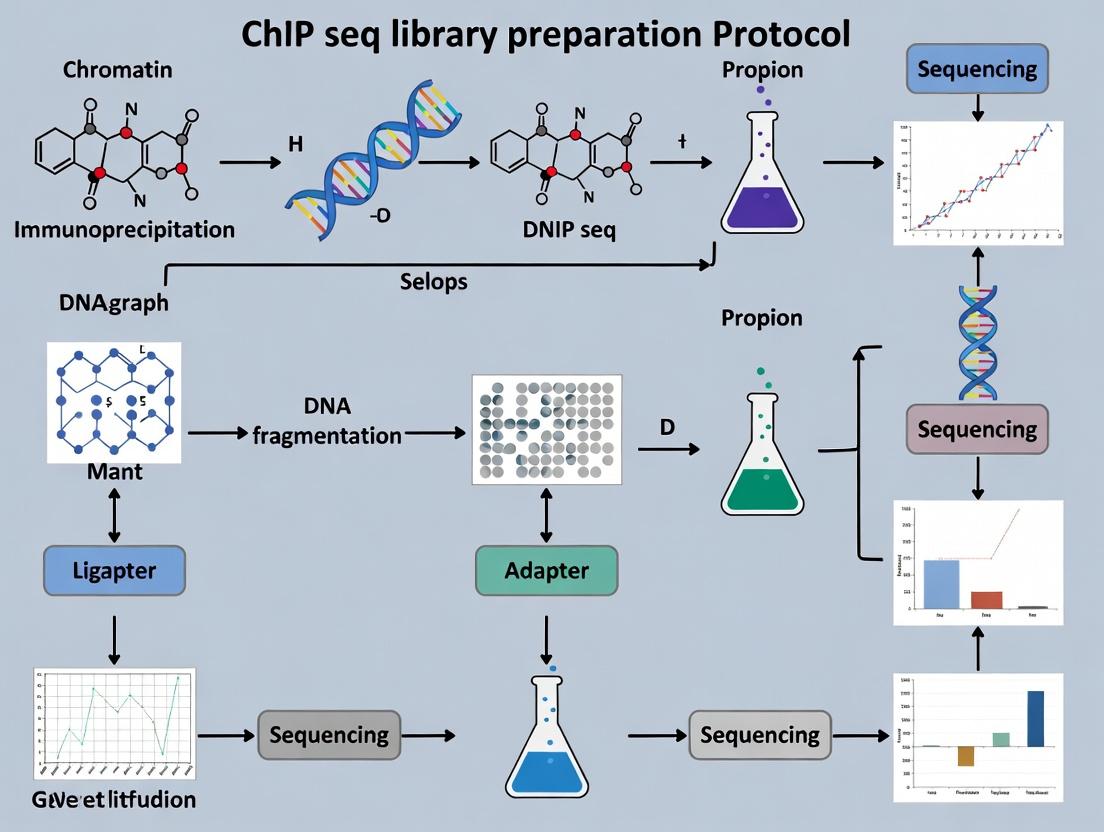
This comprehensive guide details the complete Chromatin Immunoprecipitation Sequencing (ChIP-seq) library preparation workflow, from foundational concepts to advanced optimization.
Mastering ChIP-seq Library Preparation: A 2024 Step-by-Step Protocol for Researchers & Drug Developers
Abstract
This comprehensive guide details the complete Chromatin Immunoprecipitation Sequencing (ChIP-seq) library preparation workflow, from foundational concepts to advanced optimization. Aimed at researchers, scientists, and drug development professionals, it covers the core principles of chromatin immunoprecipitation, a detailed step-by-step protocol for library construction using the latest kits and methods, common troubleshooting scenarios and optimization strategies, and validation techniques for ensuring high-quality, reproducible data. The article synthesizes current best practices to empower users in generating robust NGS libraries for epigenomic profiling and biomarker discovery.
ChIP-seq Library Prep 101: Core Principles, Applications, and Experimental Design for Epigenetic Analysis
What is ChIP-seq? Defining the Workflow from Cells to Sequencing Data
ChIP-seq (Chromatin Immunoprecipitation followed by sequencing) is a method used to analyze protein interactions with DNA genome-wide. It combines chromatin immunoprecipitation (ChIP) with massively parallel DNA sequencing to identify binding sites of transcription factors, histone modifications, or other chromatin-associated proteins.
The ChIP-seq Workflow: An Application Note
This protocol is framed within a thesis investigating optimization parameters for ChIP-seq library preparation, focusing on efficiency, specificity, and adapter dimer suppression.
Cell Culture and Crosslinking
Objective: Fix protein-DNA interactions in situ.
- Grow cells to 70-80% confluence.
- Add 1% formaldehyde (final concentration) directly to culture medium. Incubate for 10 minutes at room temperature with gentle agitation.
- Quench crosslinking by adding glycine to a final concentration of 0.125 M. Incubate for 5 minutes at room temperature.
- Wash cells twice with ice-cold phosphate-buffered saline (PBS). Harvest cells by scraping.
- Pellet cells by centrifugation (500 x g, 5 min, 4°C). Flash-freeze pellet in liquid nitrogen or proceed immediately to lysis.
Cell Lysis and Chromatin Shearing
Objective: Isolate and fragment chromatin to 200-600 bp.
- Resuspend cell pellet in Farnham Lysis Buffer (5 mM PIPES pH 8.0, 85 mM KCl, 0.5% NP-40 + fresh protease inhibitors).
- Incubate on ice for 15 minutes. Pellet nuclei (5,000 x g, 5 min, 4°C).
- Resuspend nuclear pellet in Sonication Buffer (10 mM Tris-HCl pH 8.0, 1 mM EDTA, 0.1% SDS + protease inhibitors).
- Shear chromatin using a focused ultrasonicator (e.g., Covaris S220). Thesis Parameter: Optimize shearing conditions (time, peak power, duty factor) for different cell types. Typical settings: 105 sec, 140 W peak power, 5% duty factor, 200 cycles/burst.
- Clarify sheared chromatin by centrifugation (16,000 x g, 10 min, 4°C). Transfer supernatant.
Immunoprecipitation
Objective: Enrich for DNA fragments bound by the protein of interest.
- Pre-clear chromatin by incubating with Protein A/G magnetic beads for 1 hour at 4°C.
- Incubate chromatin supernatant with 1-10 µg of specific antibody overnight at 4°C with rotation. Thesis Parameter: Compare antibody efficiencies and specificity using different lots and clones.
- Add pre-washed Protein A/G magnetic beads. Incubate for 2 hours at 4°C.
- Wash beads sequentially with:
- Low Salt Wash Buffer
- High Salt Wash Buffer
- LiCl Wash Buffer
- TE Buffer (twice)
- Elute chromatin complexes from beads using freshly prepared Elution Buffer (1% SDS, 0.1 M NaHCO3). Incubate at 65°C for 15 minutes with shaking.
Crosslink Reversal and DNA Purification
- Add NaCl to eluate (final 200 mM) and incubate overnight at 65°C to reverse crosslinks.
- Add RNase A and incubate 30 min at 37°C. Add Proteinase K and incubate 2 hours at 55°C.
- Purify DNA using a silica-membrane-based PCR purification kit. Elute in 30-50 µL TE or nuclease-free water.
Library Preparation for Sequencing
Objective: Construct a sequencing library from immunoprecipitated DNA fragments.
- End Repair: Convert overhangs to blunt ends using T4 DNA Polymerase and Klenow Fragment.
- A-tailing: Add a single 'A' nucleotide to 3' ends using Klenow Fragment (exo-).
- Adapter Ligation: Ligate indexed, 'T'-overhanging sequencing adapters using T4 DNA Ligase. Thesis Parameter: Test different adapter:insert ratios and ligation times to minimize adapter dimer formation.
- Size Selection: Use double-sided SPRI bead purification to select fragments in the 200-500 bp range (includes adapter length).
- PCR Amplification: Enrich adapter-ligated fragments using 10-15 cycles of PCR with indexed primers.
- Final Clean-up: Purify library with SPRI beads. Quantify by Qubit fluorometry and analyze size distribution by Bioanalyzer/TapeStation.
Sequencing and Primary Data Analysis
- Pool libraries and sequence on an Illumina platform (typically 50-100 million single-end 50-bp reads per sample for histone marks; more for transcription factors).
- Primary analysis includes:
- Demultiplexing: Assign reads to samples via index sequences.
- Quality Control: Assess read quality with FastQC.
- Alignment: Map reads to a reference genome (e.g., hg38) using aligners like Bowtie2 or BWA.
- Duplicate Marking: Flag potential PCR duplicates.
- Peak Calling: Identify significant enrichment regions using callers like MACS2.
Table 1: Typical Yield Metrics Across ChIP-seq Workflow
| Workflow Stage | Typical Yield (Starting from 10^7 Cells) | Notes / Quality Check |
|---|---|---|
| Crosslinked Cells | ~10^7 cells | Viability >95% pre-fixation. |
| Sheared Chromatin | 10-50 µg DNA | Fragment size: 200-600 bp (analyze on agarose gel/Bioanalyzer). |
| Post-IP DNA | 5-100 ng | Highly target-dependent. Histone marks yield more than TFs. |
| Final Library | 10-50 nM in 30 µL | Size distribution: ~300 bp peak (Bioanalyzer). |
Table 2: Key Sequencing Parameters and Standards
| Parameter | Recommended Value | Purpose/Rationale |
|---|---|---|
| Sequencing Depth | 20-50 million reads (histones) 50-100 million reads (TFs) | Balance statistical power and cost. |
| Read Length | 50-150 bp single-end | Sufficient for mapping. Paired-end recommended for complex genomes. |
| Alignment Rate | >70-80% | Indicates library quality and specificity. |
| PCR Duplicate Rate | <20-30% | Lower is better; indicates complexity. |
| FRiP Score* | >1% (TFs), >10% (histones) | Measures signal-to-noise. |
*Fraction of Reads in Peaks.
Experimental Protocol: Key Optimization Experiment from Thesis Research
Title: Optimization of Adapter Ligation Conditions to Minimize Dimer Formation in Low-Input ChIP-seq Libraries.
Objective: Systematically vary adapter concentration and ligation time to maximize library complexity and minimize non-informative adapter dimer reads.
Materials:
- Purified ChIP DNA (1-10 ng in 15 µL).
- Illumina-Compatible Adapters (15 µM stock).
- T4 DNA Ligase Buffer (10X, with ATP).
- T4 DNA Ligase.
- SPRIselect Beads.
Method:
- Set up 5 ligation reactions with constant DNA input and varying adapter concentration (Adapter:Insert molar ratios of 5:1, 10:1, 20:1, 50:1, 100:1).
- For each ratio, aliquot three identical reactions to test ligation times (15 min, 30 min, 60 min) at 20°C.
- Stop reactions by adding EDTA.
- Perform double-sided SPRI bead clean-up (0.5X followed by 0.8X ratio) to select 200-500 bp fragments.
- Amplify each library with 15 cycles of PCR using indexed primers.
- Analyze 1 µL of each final library on a High Sensitivity Bioanalyzer chip.
- Quantify the percentage of adapter dimer peak (~128 bp) relative to the library peak (~300 bp).
Analysis: The optimal condition is defined as the lowest adapter:insert ratio and shortest time yielding a library with >90% of fragments in the desired size range and <10% adapter dimer by molarity.
Visualization: The ChIP-seq Workflow and Analysis Pathway
ChIP-seq Experimental and Analysis Workflow
TF ChIP-seq Reveals Signaling Pathway Binding
The Scientist's Toolkit: Key Research Reagent Solutions
Table 3: Essential Materials for ChIP-seq Library Preparation
| Item | Function & Importance | Notes for Thesis Optimization |
|---|---|---|
| Formaldehyde (37%) | Crosslinks proteins to DNA, preserving in vivo interactions. | Crosslinking time/concentration is critical; over-fixation reduces shearing efficiency. |
| Magnetic Protein A/G Beads | Capture antibody-protein-DNA complexes. | Bead composition (A vs. G) depends on antibody species/isotype. Blocking reduces background. |
| High-Specificity Antibody | Binds target protein with high affinity and specificity. | The single most critical reagent. Must be validated for ChIP. |
| Focus Ultrasonicator (e.g., Covaris) | Provides consistent, reproducible chromatin shearing with low heat. | Optimization of shearing settings per cell type is a major thesis variable. |
| Size-Selective SPRI Beads | Clean up and size-select DNA fragments at multiple steps. | Ratios for double-sided size selection are key for library fragment distribution. |
| Indexed Sequencing Adapters | Allow multiplexing and provide priming sites for sequencing. | Adapter concentration and design (e.g., truncated, methylated) impact ligation efficiency and dimer formation. |
| High-Fidelity PCR Mix | Amplifies library with minimal bias and errors. | Cycle number must be minimized to preserve complexity; master mix choice affects yield. |
| DNA High Sensitivity Assay | Accurate quantification of low-concentration DNA (Bioanalyzer, TapeStation). | Essential for quality control before and after library prep, and before pooling for sequencing. |
Application Notes: Quantitative Landscape of Epigenetic & Transcriptional Mapping
The systematic profiling of transcription factor (TF) binding and histone modifications via Chromatin Immunoprecipitation followed by sequencing (ChIP-seq) is a cornerstone of functional genomics. Within drug discovery, these maps identify disease-driving regulatory circuits, predict therapeutic responsiveness, and reveal novel, druggable biomarkers. The following tables summarize key quantitative benchmarks and applications.
Table 1: Comparative Output of ChIP-seq Applications in Drug Discovery
| Target Class | Typical Peak Count per Genome | Primary Drug Discovery Application | Key Readout for Biomarkers |
|---|---|---|---|
| Transcription Factor (e.g., p53) | 3,000 - 50,000 | Identify oncogenic TF circuits; small-molecule inhibitor target validation. | Differential binding sites correlating with disease state or treatment response. |
| Promoter-Associated Histone Mark (H3K4me3) | 20,000 - 80,000 | Map active promoters; assess transcriptional reprogramming in disease. | Promoter mark density as a surrogate for oncogene activation. |
| Enhancer-Associated Histone Mark (H3K27ac) | 50,000 - 150,000 | Discover super-enhancers driving oncogene expression; prioritize non-coding regions. | Enhancer strength/signature as a prognostic or predictive biomarker. |
| Repressive Histone Mark (H3K27me3) | 10,000 - 100,000 | Map polycomb-repressed regions; identify silenced tumor suppressors. | Loss/gain of repression marks as indicators of disease progression. |
Table 2: Key Performance Metrics for Robust ChIP-seq Library Prep
| Protocol Metric | Ideal Target Range | Impact on Downstream Analysis & Biomarker Discovery |
|---|---|---|
| Fragment Size Post-Sonication | 200 - 500 bp | Critical for peak resolution; affects accuracy of binding site localization. |
| Post-IP DNA Yield | 5 - 50 ng (qPCR quantification) | Low yield increases PCR duplicates, reducing quantitative accuracy for differential analysis. |
| Library Complexity (NRF) | > 0.8 | High complexity is essential for detecting low-abundance, disease-relevant binding events. |
| Fraction of Reads in Peaks (FRiP) | TF: >1%, Histones: >10% | Primary indicator of IP efficiency; low FRiP compromises biomarker signal detection. |
Detailed Experimental Protocols
Protocol 1: Crosslinking & Chromatin Preparation for Cultured Cells (Adherent)
- Materials: Cell culture, 37% formaldehyde, 2.5M glycine, PBS, cell scraper, lysis buffers (LB1: 50mM HEPES-KOH pH7.5, 140mM NaCl, 1mM EDTA, 10% glycerol, 0.5% NP-40, 0.25% Triton X-100; LB2: 10mM Tris-HCl pH8.0, 200mM NaCl, 1mM EDTA, 0.5mM EGTA), SDS shearing buffer, sonicator (focused ultrasonicator or bath).
- Method:
- Crosslinking: Add 37% formaldehyde directly to culture medium to a final concentration of 1%. Incubate 10 min at room temperature (RT) with gentle rocking.
- Quenching: Add 2.5M glycine to a final concentration of 0.125M. Incubate 5 min at RT.
- Harvesting: Aspirate medium, wash cells 2x with ice-cold PBS. Scrape cells into PBS, pellet at 800xg for 5 min at 4°C.
- Lysis: Resuspend cell pellet in 1 mL LB1, incubate 10 min at 4°C with rotation. Pellet nuclei (800xg, 5 min, 4°C). Resuspend in 1 mL LB2, incubate 10 min at 4°C with rotation. Pellet nuclei again.
- Shearing: Resuspend pellet in 0.5-1 mL SDS shearing buffer (0.1% SDS final). Sonicate to achieve 200-500 bp fragments (optimize for cell type/sonicator). Centrifuge at 20,000xg for 10 min at 4°C; supernatant is sheared chromatin.
Protocol 2: Magnetic Bead-Based Chromatin Immunoprecipitation
- Materials: Sheared chromatin, protein A/G magnetic beads, ChIP-validated antibody, IP/wash buffers (Low Salt: 0.1% SDS, 1% Triton X-100, 2mM EDTA, 20mM Tris-HCl pH8.0, 150mM NaCl; High Salt: same with 500mM NaCl; LiCl: 0.25M LiCl, 1% NP-40, 1% sodium deoxycholate, 1mM EDTA, 10mM Tris-HCl pH8.0), TE buffer, Elution Buffer (1% SDS, 0.1M NaHCO3).
- Method:
- Pre-clearing: Dilute chromatin 1:10 in IP dilution buffer. Add 20-50 µL washed magnetic beads per IP. Rotate 1 hr at 4°C. Discard beads.
- Immunoprecipitation: Add 1-10 µg antibody to pre-cleared chromatin. Incubate overnight at 4°C with rotation.
- Bead Capture: Add 40-60 µL pre-washed magnetic beads. Incubate 2-4 hrs at 4°C.
- Washing: Wash beads sequentially on a magnetic stand: 1x with Low Salt buffer, 1x with High Salt buffer, 1x with LiCl buffer, 2x with TE buffer. Perform each wash for 3-5 minutes at 4°C.
- Elution: Resuspend beads in 150 µL Elution Buffer. Incubate at 65°C for 15-30 min with agitation. Collect supernatant. Reverse crosslinks by adding NaCl to 200mM and incubating at 65°C overnight.
- DNA Purification: Treat with RNase A and Proteinase K. Purify DNA using silica-membrane columns. Elute in 20-30 µL TE or nuclease-free water.
Signaling Pathways & Workflow Visualizations
Title: ChIP-seq Experimental Workflow from Cells to Library
Title: Druggable Regulatory Circuit Mapped by ChIP-seq
The Scientist's Toolkit: Key Research Reagent Solutions
Table 3: Essential Materials for ChIP-seq Library Preparation & Analysis
| Reagent/Material | Function & Importance |
|---|---|
| ChIP-Validated Antibodies | Specificity is paramount. Validated antibodies (e.g., CUT&Tag grade) ensure high signal-to-noise, critical for identifying true biomarkers. |
| Magnetic Beads (Protein A/G) | Enable rapid, low-background immobilization of antibody-chromatin complexes. Crucial for protocol reproducibility and scalability. |
| High-Fidelity DNA Polymerase | Used in library amplification PCR. Minimizes introduction of mutations during amplification, preserving sequence integrity. |
| Dual-Indexed Adapter Kits | Allow multiplexing of samples. Unique barcodes for each sample are essential for cost-effective, high-throughput screening in drug discovery projects. |
| Size Selection Beads (SPRI) | Perform clean-up and size selection of DNA libraries. Determine final insert size distribution, impacting sequencing quality and mapping. |
| qPCR Assay for Positive/Negative Genomic Loci | Pre-sequencing quality control. Quantifies enrichment at known binding sites vs. control regions, predicting FRiP score. |
| High-Sensitivity DNA Assay Kits | Accurately quantify low-concentration DNA post-IP and post-library prep. Essential for balancing sequencing depth across multiplexed samples. |
1. Introduction & Context Within the broader thesis on optimizing Chromatin Immunoprecipitation followed by sequencing (ChIP-seq) workflows, library preparation is the critical transformation step that converts immunoprecipitated (IP) DNA fragments into a sequencer-compatible format. This process dictates library complexity, specificity, and ultimately, the quality and interpretability of sequencing data. This application note details modern protocols and reagent solutions, emphasizing quantitative benchmarks and procedural clarity for robust, reproducible results in drug target discovery and basic research.
2. Quantitative Benchmarks for Library Prep Success The success of ChIP-seq library preparation is gauged by several quantitative metrics, typically assessed via bioanalyzer or fragment analyzer systems.
Table 1: Key Quantitative Metrics for ChIP-seq Library QC
| Metric | Target Range | Instrument | Implication of Deviation |
|---|---|---|---|
| DNA Concentration | > 2 nM for Illumina | Qubit/QPCR | Low yield: Insufficient sequencing clusters; high yield may indicate contamination. |
| Fragment Size Distribution | Peak ~250-350 bp | Bioanalyzer | Shift to larger sizes: Incomplete size selection or adapter dimer contamination if peak < 150 bp. |
| Adapter Dimer Presence | < 5% of total signal | Bioanalyzer | >10%: Inefficient clean-up, reduces sequencing efficiency for target fragments. |
| Molarity (for pooling) | 4-20 nM, normalized | QPCR | Unequal pooling leads to skewed sequencing depth across samples. |
Table 2: Comparison of Common Library Prep Methods for Low-Input ChIP-DNA
| Method | Recommended Input | Key Advantage | Typical Workflow Time | Cost per Sample |
|---|---|---|---|---|
| Ligation-Based (Standard) | 1-10 ng | High robustness, low bias | ~6 hours | $ |
| Tagmentation-Based (e.g., ChIPmentation) | 50 pg - 2 ng | Faster, fewer steps | ~4 hours | $$ |
| Single-Tube Enzymatic | 100 pg - 1 ng | Minimal handling, automated | ~3 hours | $$ |
| PCR-Free | > 50 ng | No amplification bias | ~6 hours | $ |
3. Detailed Experimental Protocol: Ligation-Based Library Preparation for ChIP-DNA This protocol is optimized for 1-10 ng of input ChIP-DNA derived from a standard protein A/G bead-based IP and elution.
A. End Repair & A-Tailing Objective: Generate blunt-ended, 5’-phosphorylated fragments with a single 3’ A-overhang for adapter ligation.
- Prepare the reaction mix on ice:
- ChIP-DNA Eluate: 1-10 ng in 45 µL.
- End Repair & A-Tailing Buffer (10X): 5 µL.
- End Repair & A-Tailing Enzyme Mix: 2.5 µL.
- Incubate in a thermal cycler: 20 minutes at 20°C, then 30 minutes at 65°C. Hold at 4°C.
- Purify using 1.8X volumes of solid-phase reversible immobilization (SPRI) beads. Elute in 22 µL of 10 mM Tris-HCl, pH 8.0.
B. Adapter Ligation Objective: Ligate platform-specific indexed adapters to both ends of the DNA fragment.
- Prepare the ligation mix on ice:
- Purified DNA from Step A: 20 µL.
- Ligation Buffer (2X): 25 µL.
- Unique Dual Index Adapter (15 µM): 2.5 µL.
- DNA Ligase: 2.5 µL.
- Incubate at 20°C for 15 minutes.
- Purify with 0.9X SPRI beads to remove excess adapters. Perform two washes with 80% ethanol. Elute in 22 µL of Tris buffer.
C. Size Selection & PCR Enrichment Objective: Select fragments of desired length and amplify the library via limited-cycle PCR.
- Perform double-sided SPRI bead size selection:
- Add 0.5X bead volume to sample, mix, incubate 5 min. Save supernatant (contains larger fragments).
- Add 0.3X original sample volume of fresh beads to supernatant, mix, incubate. Discard supernatant.
- Wash beads, elute in 22 µL. This selects fragments typically >250 bp.
- Prepare PCR mix:
- Size-selected DNA: 20 µL.
- Universal PCR Primer Mix (10 µM): 5 µL.
- Indexing PCR Primer (10 µM): 5 µL.
- High-Fidelity PCR Master Mix (2X): 25 µL.
- Run PCR: 98°C for 30s; 8-12 cycles of [98°C for 10s, 60°C for 30s, 72°C for 30s]; final extension at 72°C for 5 min.
- Purify with 1X SPRI beads. Elute in 25 µL Tris buffer. Quantify by Qubit and analyze size distribution.
4. Visualizing the Workflow and Key Considerations
Diagram 1: ChIP-seq Library Prep Core Workflow
Diagram 2: Molecular Steps of End Prep & Ligation
5. The Scientist's Toolkit: Key Research Reagent Solutions
Table 3: Essential Materials for ChIP-seq Library Construction
| Item | Function | Example/Notes |
|---|---|---|
| SPRI Magnetic Beads | Size-selective purification & clean-up | Enable precise fragment selection and removal of enzymes, salts, and adapters. |
| High-Fidelity DNA Ligase | Joins adapter to insert DNA | Critical for efficient, unbiased ligation with low adapter-dimer formation. |
| Universal & Indexed PCR Primers | Amplifies library and adds indices | Indexing allows multiplexing; primers must match sequencer platform. |
| Thermostable Polymerase Mix | End repair, A-tailing, and PCR | A single, robust enzyme mix can streamline the workflow for low inputs. |
| Fluorometric DNA Assay Kits | Accurate quantification of dsDNA | Qubit assays are superior to UV absorbance for low-concentration libraries. |
| Fragment Analyzer Chips | Assess library size distribution | Essential QC to confirm correct peak size and absence of adapter dimers. |
| Unique Dual Index (UDI) Adapters | Sample multiplexing | Minimize index hopping errors in patterned flow cell sequencers. |
Application Notes
The selection and optimization of reagents for Chromatin Immunoprecipitation followed by sequencing (ChIP-seq) is fundamental to data integrity. Within a broader thesis on ChIP-seq library preparation protocol research, these components dictate specificity, signal-to-noise ratio, and library complexity. Crosslinking agents fix protein-DNA interactions, but over-fixing can mask epitopes and reduce sonication efficiency. Enzymatic machinery must balance fragmentation accuracy with end-repair and adapter ligation fidelity. Magnetic bead-based size selection has largely replaced gel extraction, offering higher recovery and reproducibility. Commercial kits streamline processes but may introduce platform-specific biases that must be accounted for in comparative studies. The quantitative data below benchmark current leading options.
Quantitative Reagent Comparison
Table 1: Comparison of Common Crosslinking Agents for ChIP-seq
| Crosslinking Agent | Typical Conc. | Incubation Time | Key Advantage | Primary Disadvantage |
|---|---|---|---|---|
| Formaldehyde (FA) | 1% | 8-10 min @ RT | Reversible, standard | Can over-crosslink |
| DSG (Disuccinimidyl glutarate) | 2 mM | 45 min @ RT | Stabilizes protein-protein | Requires FA double-fix |
| EGS (Ethylene glycol bis(succinimidyl succinate)) | 1.5 mM | 45 min @ RT | Long spacer arm | Requires FA double-fix |
| UV Light | 254 nm | N/A | Zero-length, for direct contacts | Low efficiency in tissue |
Table 2: Key Enzymatic Reagents for Library Prep
| Enzyme | Supplier Examples | Critical Function | Typical Incubation | Notes |
|---|---|---|---|---|
| Micrococcal Nuclease (MNase) | NEB, Thermo Fisher | Histone positioning | 5-20 min @ 37°C | Digests linker DNA |
| Sonication Shearing | Covaris, Bioruptor | Generic fragmentation | Variable cycles | Equipment-dependent |
| T4 DNA Polymerase | NEB, Roche | End-repair | 30 min @ 20°C | Blunts ends |
| Klenow Fragment (exo-) | NEB, Thermo Fisher | A-tailing | 30 min @ 37°C | Adds 3' A-overhang |
| T4 DNA Ligase | NEB, Takara | Adapter ligation | 15 min @ 20°C | High efficiency critical |
Table 3: Magnetic Bead Selection for Size Selection & Cleanup
| Bead Type | Supplier | Size Selection Range | Binding Buffer | Elution Buffer |
|---|---|---|---|---|
| SPRIselect | Beckman Coulter | 100-1000 bp | PEG/NaCl | 10 mM Tris, pH 8.0-8.5 |
| AMPure XP | Beckman Coulter | 100 bp > | PEG/NaCl | 10 mM Tris, pH 8.0-8.5 |
| NEBNext Sample Purification | NEB | 150-700 bp | Proprietary | 10 mM Tris, pH 8.0-8.5 |
| Sera-Mag SpeedBeads | Cytiva | Adjustable via PEG ratio | PEG/NaCl | 10 mM Tris, pH 8.0-8.5 |
Table 4: Example Commercial ChIP & Library Prep Kits
| Kit Name | Supplier | Key Inclusions | Avg. Hands-on Time | Typical Yield from 10^6 Cells |
|---|---|---|---|---|
| ChIP-IT High Sensitivity | Active Motif | Beads, buffers, controls | 6 hours | 5-25 ng |
| Magna ChIP A/G | MilliporeSigma | Protein A/G beads | 5 hours | 10-30 ng |
| NEBNext Ultra II DNA Library | NEB | Enzymes, adapters, beads | 2.5 hours | 20-100 ng (post-ChIP) |
| Diagenode MicroPlex Library | Diagenode | Unique dual indexing | 2 hours | 15-80 ng (post-ChIP) |
Experimental Protocols
Protocol 1: Optimization of Dual Crosslinking for Transcription Factors
Objective: Enhance recovery of transcription factor-bound DNA using a combination of DSG and formaldehyde. Reagents: DSG (Thermo Fisher, #20593), Formaldehyde (37%, Methanol-free), Glycine (2.5 M), PBS, Lysis Buffers. Equipment: Orbital shaker, centrifuge, sonicator (e.g., Covaris S220).
Methodology:
- Cell Preparation: Harvest 1x10^7 cells per condition. Wash twice with PBS.
- Primary Crosslinking: Resuspend cell pellet in 10 mL serum-free media. Add DSG to a final concentration of 2 mM. Incubate for 45 minutes at room temperature with gentle rotation.
- Secondary Crosslinking: Add formaldehyde directly to the DSG-cell mixture to a final concentration of 1%. Incubate for 10 minutes at room temperature with gentle rotation.
- Quenching: Add 1 mL of 2.5 M glycine to a final concentration of 0.125 M. Incubate for 5 minutes at room temperature with rotation.
- Wash: Pellet cells at 800 x g for 5 min at 4°C. Wash twice with 10 mL ice-cold PBS.
- Lysis & Shearing: Proceed with standard ChIP lysis buffers. Shear chromatin using a Covaris S220 (140 µL in a microTUBE; Settings: 200 cycles/burst, 20% duty factor, 140W peak power, 60 seconds). Verify fragment size (200-600 bp) on a 1.5% agarose gel.
- Immunoprecipitation: Use 5 µg of specific antibody and 50 µL of Protein A/G magnetic beads per ChIP reaction. Incubate overnight at 4°C.
Protocol 2: High-Fidelity Library Preparation from Low-Input ChIP DNA
Objective: Generate sequencing libraries from 1-10 ng of ChIP-enriched DNA using a commercial kit with minimal bias. Reagents: NEBNext Ultra II DNA Library Prep Kit (NEB, #E7645), SPRIselect beads (Beckman Coulter, #B23318), 80% Ethanol, Dual Index Primers. Equipment: Thermal cycler, magnetic rack, microcentrifuge.
Methodology:
- End Repair: Combine up to 10 ng ChIP DNA in 32 µL with 7 µL NEBNext Ultra II End Prep Reaction Buffer and 3 µL NEBNext Ultra II End Prep Enzyme Mix. Incubate in a thermal cycler: 20°C for 30 minutes, then 65°C for 30 minutes. Hold at 4°C.
- Adapter Ligation: Add 30 µL Blunt/TA Ligase Master Mix, 1 µL of 1:5 diluted NEBNext Adaptor for Illumina, and 2.5 µL Ligation Enhancer directly to the end prep reaction (total 75 µL). Mix and incubate at 20°C for 15 minutes.
- Clean-up: Add 60 µL (0.8X) of well-resuspended SPRIselect beads to the ligation reaction. Mix, incubate 5 minutes, place on magnet. Transfer 120 µL of cleared supernatant to a new tube.
- Size Selection: Add 30 µL (0.2X) of SPRIselect beads to the supernatant (total 150 µL, now at a 1X ratio). Mix, incubate 5 minutes, place on magnet. Discard supernatant. Wash beads twice with 200 µL 80% ethanol. Elute DNA in 20 µL 10 mM Tris-HCl (pH 8.0).
- PCR Amplification: Prepare PCR mix: 20 µL eluted DNA, 2.5 µL each of i5 and i7 primer, 25 µL NEBNext Ultra II Q5 Master Mix. Cycle: 98°C 30s; 10-12 cycles of (98°C 10s, 65°C 75s); 65°C 5 min.
- Final Clean-up: Add 45 µL (0.9X) SPRIselect beads to the 50 µL PCR. Mix, incubate, place on magnet. Discard supernatant. Wash beads twice with 80% ethanol. Elute in 22 µL Tris buffer. Quantify by qPCR or bioanalyzer.
Mandatory Visualization
The Scientist's Toolkit: Essential Research Reagent Solutions
Table 5: Core Toolkit for ChIP-seq Library Preparation Research
| Item | Function |
|---|---|
| Methanol-free Formaldehyde | Primary crosslinker; preserves protein-DNA interactions without interference. |
| Protein A/G Magnetic Beads | Capture antibody-target protein complexes; efficient washing and elution. |
| Covaris AFA Tubes | Ensure consistent acoustic shearing of chromatin to optimal fragment size. |
| Micrococcal Nuclease (MNase) | For nucleosome positioning studies; digests linker DNA. |
| SPRIselect Magnetic Beads | Solid-phase reversible immobilization for size selection and cleanup. |
| NEBNext Ultra II Master Mix | High-fidelity enzymes for end-prep, ligation, and PCR in library construction. |
| Unique Dual Index (UDI) Primers | Multiplex samples while eliminating index hopping artifacts. |
| High-Sensitivity DNA Assay | Accurately quantify low-concentration libraries (e.g., Agilent Bioanalyzer/ TapeStation, Qubit). |
| ChIP-Validated Antibody | Target-specific antibody with proven performance in ChIP assays. |
| RNase A & Proteinase K | Essential for digesting RNA and proteins during DNA purification post-IP. |
Within a comprehensive thesis on ChIP-seq library preparation protocol optimization, rigorous experimental pre-planning is paramount. This document outlines critical considerations for antibody validation, experimental controls, and statistical sample number determination to ensure robust, reproducible, and publication-quality ChIP-seq data.
Antibody Selection and Validation
Selection Criteria
A successful Chromatin Immunoprecipitation (ChIP) experiment is fundamentally dependent on antibody quality. Key selection criteria must be evaluated prior to purchase.
Table 1: Antibody Selection Criteria for ChIP-seq
| Criterion | Description | Optimal Specification/Note |
|---|---|---|
| Application Validation | Evidence the antibody has been successfully used in ChIP or ChIP-seq. | “ChIP-seq Grade” or literature citations with PMIDs. |
| Species Reactivity | Compatibility with the species of the experimental sample. | Must match (e.g., human, mouse, rat). |
| Target Specificity | Antibody recognizes the intended antigen (e.g., histone mark, transcription factor). | Check against knockout/knockdown validation data if available. |
| Host Species | Species in which the antibody was raised (e.g., rabbit, mouse). | Determines compatibility with secondary reagents and control IgGs. |
| Clonality | Monoclonal vs. polyclonal. | Monoclonal: high specificity, limited epitope. Polyclonal: often higher signal but risk of cross-reactivity. |
| Conjugation | Whether the antibody is bound to beads or tagged. | Pre-conjugated to Protein A/G beads can improve reproducibility. |
| Lot Consistency | Performance uniformity between different manufacturing lots. | Supplier should provide lot-specific validation data. |
Validation Protocols
Protocol 2.2.1: Positive Control Target Validation (e.g., H3K4me3, H3K27ac)
- Objective: Confirm antibody efficacy in the researcher’s laboratory conditions.
- Method:
- Perform ChIP using the candidate antibody on a cell line with known, abundant enrichment of the target (e.g., H3K4me3 at active gene promoters in HeLa cells).
- Analyze enrichment via qPCR at 2-3 well-characterized genomic loci.
- Compare enrichment (% Input) to values reported in literature or to a previously validated antibody.
- Success Criteria: Strong, specific enrichment (>10-fold over IgG) at positive control loci and no enrichment at a known negative control locus (e.g., gene desert).
Protocol 2.2.2: Specificity Validation via Knockout/Knockdown
- Objective: Confirm signal is specific to the target protein or modification.
- Method:
- Perform parallel ChIP-seq experiments on isogenic wild-type and target knockout (or knockdown) cell lines.
- Sequence and map reads.
- Success Criteria: Dramatic reduction or complete absence of called peaks in the knockout/knockdown sample compared to wild-type.
Essential Experimental Controls
A complete ChIP-seq experiment requires multiple controls to interpret results accurately and identify technical artifacts.
Table 2: Mandatory Controls for ChIP-seq Experiments
| Control Type | Purpose | Protocol & Interpretation |
|---|---|---|
| IgG Control | Identifies non-specific background binding of chromatin to beads/antibody. | Use same host species as primary antibody. Perform identical ChIP protocol with normal IgG. Peaks present in both IP and IgG are likely background. |
| Input DNA (Reference) | Represents the chromatin population prior to IP. Controls for genomic copy number and open chromatin bias. | Take 1-10% of sheared chromatin before IP. Process alongside IP samples (reverse crosslinks, purify DNA). Used for peak calling normalization. |
| Positive Control Antibody | Validates overall ChIP protocol success. | Include a well-characterized antibody (e.g., H3K4me3) in each experiment. Confirms chromatin shearing and IP were effective. |
| Negative Genomic Locus (qPCR) | Assesses non-specific enrichment. | Test IP DNA by qPCR at a region known to lack the target. Enrichment should be minimal (~1-fold of IgG). |
| Spike-in Controls | Normalizes for technical variation (e.g., cell count, IP efficiency) between samples. | Use chromatin from a different species (e.g., D. melanogaster) added in fixed amounts to each sample. Align reads separately to reference genomes. |
Determining Sample Number and Statistical Power
Key Principles
Sample number (n) refers to independent biological replicates—cultures or animals processed separately. Technical replicates (aliquots from the same sample) cannot account for biological variability. For most discovery-focused studies, a minimum of n=2 is mandatory, but n=3 is strongly recommended to permit basic statistical assessment.
Power Analysis Protocol
Protocol 4.2.1: Empirical Power Calculation for Differential Binding
- Objective: Estimate the required biological replicates to detect a significant change in peak intensity between two conditions.
- Method (Using Pilot Data):
- Conduct a pilot ChIP-seq experiment with n=2 per condition.
- Call peaks and identify regions common to both replicates.
- For these regions, calculate the mean read count and variance for each condition.
- Use a statistical power calculator (e.g., R package
ssizeRNAorChIPpower) inputting: desired fold-change (e.g., 2.0), estimated variance from pilot, significance level (alpha, typically 0.05), and desired power (typically 0.8 or 80%). - The tool outputs the recommended number of biological replicates.
- Note: In the absence of pilot data, consult previous similar studies. For complex in vivo models or patient samples with high variability, n may need to be ≥4.
Table 3: Recommended Minimum Biological Replicates Based on Experiment Type
| Experiment Type | Recommended Minimum n | Rationale |
|---|---|---|
| Descriptive ChIP-seq (e.g., mapping a factor in a cell line) | 2 | Defines binding landscape but limited statistical confidence. |
| Comparative ChIP-seq (e.g., treated vs. untreated cell lines) | 3 | Enables statistical testing for differential binding. |
| In vivo / Primary Tissue ChIP-seq | 3-5 | Accounts for higher biological variability between individuals. |
| Clinical Cohort Studies | ≥5 per group | Required for robust analysis of heterogeneous human samples. |
The Scientist's Toolkit: Research Reagent Solutions
Table 4: Essential Materials for ChIP-seq Pre-Planning and Execution
| Item | Function | Example/Note |
|---|---|---|
| ChIP-Grade Antibody | Specifically immunoprecipitates the target protein or histone modification. | Suppliers: Cell Signaling Technology (CST), Abcam, Diagenode, Active Motif. |
| Protein A/G Magnetic Beads | Efficiently capture antibody-target complexes for washing and elution. | More reproducible than agarose beads. Choose Protein A/G mix for broad species reactivity. |
| Chromatin Shearing Kit | Standardizes DNA fragmentation to optimal 200-500 bp fragments. | Includes validated enzyme (e.g., MNase) or protocol for sonication (Covaris focused ultrasonicator). |
| Crosslinking Reagent | Fixes protein-DNA interactions in place. | Formaldehyde (1% final conc.) is standard. For distal factors, consider dual crosslinking (e.g., DSG + formaldehyde). |
| qPCR Reagents & Primers | Validates antibody performance and chromatin shearing efficiency. | Design primers for known positive and negative genomic loci. Use SYBR Green master mix. |
| Spike-in Chromatin | Enables normalization across samples with different cell numbers or IP efficiencies. | D. melanogaster chromatin (e.g., from S2 cells) or synthetic nucleosome spikes. |
| High-Sensitivity DNA Assay | Precisely quantifies low-yield ChIP DNA before library prep. | Fluorometric assays (e.g., Qubit dsDNA HS Assay). Avoid spectrophotometers for low concentrations. |
| Library Prep Kit for Low Input | Converts picogram amounts of ChIP DNA into sequencing libraries. | Kits with dedicated ligation or tagmentation chemistry for <10 ng input (e.g., NEBNext Ultra II, SMARTer ThruPLEX). |
| Dual-Indexed Adapters | Allows multiplexing of many samples in a single sequencing run, reducing batch effects. | Unique dual indexes (UDIs) are essential to eliminate index hopping misassignment. |
Visualized Workflows and Relationships
Diagram 1: ChIP-seq Pre-Planning Decision Workflow
Diagram 2: Sample Number Determination via Power Analysis
A Step-by-Step ChIP-seq Library Prep Protocol: From Fragmented DNA to Indexed NGS Libraries
Application Notes
Within the broader thesis on optimizing ChIP-seq library preparation, the initial step of end repair and 5' phosphorylation is critical for ensuring high-quality, ligation-ready DNA fragments. This stage converts the heterogeneous, fragmented DNA—often generated by sonication or enzymatic cleavage—into blunt-ended fragments with 5' phosphate groups, a universal prerequisite for adapter ligation in next-generation sequencing (NGS) library construction. The efficiency of this step directly impacts library complexity, yield, and the reduction of artifact formation. Recent advancements in enzyme master mixes have improved reaction speed and fidelity, enabling more robust protocols for low-input and damaged samples, which is paramount in clinical and drug development research.
Table 1: Comparison of Commercial End-Repair & 5' Phosphorylation Kits
| Kit Name | Reaction Time | Input DNA Range | Compatible with FFPE? | Adapter Ligation Efficiency (%) | Key Component |
|---|---|---|---|---|---|
| NEBNext Ultra II End Repair | 30 min | 1 ng–1 µg | Yes | >95 | Taq DNA Polymerase, T4 PNK |
| KAPA HyperPrep | 45 min | 100 pg–1 µg | Limited | >90 | Proprietary Enzyme Blend |
| Illumina DNA Prep | 20 min | 500 pg–1 µg | No | >95 | Fast DNA Ligase |
| Swift Accel-NGS 1S | 15 min | 100 pg–1 µg | Yes | >98 | Multi-enzyme Cocktail |
Experimental Protocols
Detailed Methodology: End Repair and 5' Phosphorylation for ChIP-seq DNA
This protocol is optimized for 1–100 ng of ChIP-enriched, fragmented DNA.
Reagents:
- NEBNext Ultra II End Repair Reaction Buffer (5X)
- NEBNext Ultra II End Repair Enzyme Mix
- Nuclease-free water
- Purification beads (e.g., SPRIselect)
Procedure:
- Reaction Assembly: In a sterile PCR tube, combine the following on ice:
- X µL: Fragmented DNA (1–100 ng in volume ≤ 32.5 µL)
- 10 µL: NEBNext Ultra II End Repair Reaction Buffer (5X)
- 5 µL: NEBNext Ultra II End Repair Enzyme Mix
- Nuclease-free water to a final volume of 50 µL.
- Mix thoroughly by pipetting. Centrifuge briefly.
- Incubate in a thermal cycler at 20°C for 30 minutes.
- Purification: Post-incubation, add 90 µL (1.8X) of room-temperature SPRIselect beads to the 50 µL reaction. Mix thoroughly. Incubate for 5 minutes at room temperature.
- Place the tube on a magnetic stand until the supernatant is clear (~5 minutes). Carefully discard the supernatant.
- Wash: With the tube on the magnet, add 200 µL of freshly prepared 80% ethanol. Incubate for 30 seconds, then discard the ethanol. Repeat this wash step once.
- Air-dry the beads for ~5 minutes or until dry. Do not over-dry.
- Remove from the magnet. Elute DNA in 23 µL of 10 mM Tris-HCl (pH 8.0) or nuclease-free water. Mix well, incubate for 2 minutes, then place on the magnet. Transfer 20 µL of clean supernatant containing end-repaired DNA to a new tube.
- Proceed immediately to the next stage (dA-tailing) or store at -20°C.
Visualizations
Diagram Title: Enzymatic Pathway for DNA End Repair
Diagram Title: End Repair & 5' Phosphorylation Experimental Workflow
The Scientist's Toolkit
Table 2: Essential Research Reagent Solutions
| Item | Function in End Repair/Phosphorylation |
|---|---|
| T4 DNA Polymerase | Possesses 5'→3' polymerase activity to fill in 5' overhangs and 3'→5' exonuclease activity to chew back 3' overhangs, creating blunt ends. |
| T4 Polynucleotide Kinase (PNK) | Catalyzes the transfer of a phosphate group from ATP to the 5' hydroxyl terminus of DNA, essential for subsequent adapter ligation. |
| Klenow Fragment | The large fragment of E. coli DNA Polymerase I used to fill in 5' overhangs via its 5'→3' polymerase activity (lacking exonuclease activity). |
| ATP (10 mM) | The phosphate donor molecule required for the 5' phosphorylation reaction catalyzed by T4 PNK. |
| dNTP Mix | Provides the nucleotide triphosphates (dATP, dCTP, dGTP, dTTP) required for the polymerase-based fill-in reaction. |
| SPRI/AMPure Beads | Magnetic beads used for post-reaction clean-up, removing enzymes, salts, and short fragments to purify the end-repaired DNA. |
| 10X End Repair Reaction Buffer | Typically contains Mg²⁺, ATP, and dNTPs in an optimized buffer to support simultaneous enzymatic activities. |
Within the broader thesis investigating optimization strategies for Chromatin Immunoprecipitation Sequencing (ChIP-seq) library preparation, the adapter ligation stage is a critical juncture influencing both experimental flexibility and data fidelity. This application note examines the decision point between using universal adapters versus unique dual-indexed (UDI) adapters, a choice with significant implications for multiplexing capacity, index hopping mitigation, and overall data quality in high-throughput ChIP-seq studies relevant to drug discovery and functional genomics.
Quantitative Comparison: Universal vs. Unique Dual Indexed Adapters
The following tables summarize key performance and design metrics.
Table 1: Functional Comparison of Adapter Types
| Parameter | Universal Adapters | Unique Dual-Indexed Adapters (UDIs) |
|---|---|---|
| Primary Application | Low-plex studies, single samples, or proof-of-concept work. | High-throughput multiplexing, large cohort studies, biobank profiling. |
| Multiplexing Capacity | Limited by available single indices (e.g., 24-96). | High; combinatorial dual indices (e.g., i7 and i5) enable hundreds to thousands of unique combinations. |
| Index Hopping Risk | Higher. Misassignment can occur, especially on patterned flow cells. | Significantly reduced. Unique dual-index pairs are more resilient to misassignment. |
| Demultiplexing Accuracy | Standard. Relies on a single barcode sequence. | High. Requires matching of two independent barcodes, reducing errors. |
| Cost per Sample | Lower upfront reagent cost. | Higher per-sample reagent cost. |
| Data Integrity | Adequate for smaller studies. | Superior for large, multi-sample projects, minimizing sample misidentification. |
| Common Platforms | Standard Illumina, NEBNext. | Illumina UDI sets, IDT for Illumina UDIs, Twist Bioscience UDIs. |
Table 2: Performance Metrics from Recent Studies (2023-2024)
| Study Focus | Adapter Type | Reported Index Hopping Rate | Measured Cross-Contamination | Recommended For |
|---|---|---|---|---|
| ChIP-seq of Histone Mods (Bentley et al., 2023) | Universal (Single Index) | 0.5-1.2% | ≤ 0.8% | Projects with < 48 samples. |
| Epigenetic Drug Screening (Kato et al., 2024) | Unique Dual-Indexed (UDI) | < 0.1% | ≤ 0.05% | High-value screens, clinical samples, > 96 samples. |
| Multiplexed TF ChIP-seq (Ronan et al., 2023) | Unique Dual-Indexed (UDI) | 0.05-0.2% | ≤ 0.1% | Consortium projects, biobanking. |
Detailed Experimental Protocols
Protocol 3.1: Ligation with Universal Adapters for ChIP-seq
Objective: To ligate universal, single-indexed adapters to ChIP-enriched, end-repaired/dA-tailed DNA fragments. Materials: Purified ChIP DNA, NEBNext Ultra II Ligation Module (or equivalent), Universal Adapter (15 μM), USER Enzyme.
- Setup Reaction: In a PCR tube, combine:
- ChIP DNA (in 32.5 μL): 50-100 ng (optimal) in elution buffer.
- Ligation Master Mix (12.5 μL): 10 μL Blunt/TA Ligase Master Mix, 1.25 μL Universal Adapter (15 μM), 1.25 μL Dilution Buffer.
- Incubate: Mix thoroughly and centrifuge. Incubate at 20°C for 15 minutes.
- Clean-up: Add 16 μL (0.8X) room-temperature AMPure XP beads to the 45 μL ligation reaction. Mix and incubate for 5 minutes. Pellet beads, wash twice with 80% ethanol, and elute DNA in 17 μL 0.1X TE buffer.
- USER Treatment (Optional): To digest adapter concatemers, add 3 μL of USER Enzyme to the eluted DNA. Incubate at 37°C for 15 minutes. Proceed directly to PCR enrichment.
Protocol 3.2: Ligation with Unique Dual-Indexed Adapters for ChIP-seq
Objective: To ligate unique i5 and i7 adapter pairs, enabling high-plex, low-cross-contamination sequencing. Materials: Purified ChIP DNA, NEBNext Ultra II Ligation Module, IDT for Illumina UDI Adapter Plate (i5 and i7, 15 μM each), USER Enzyme.
- Reaction Setup: In a PCR plate, per sample, combine:
- ChIP DNA (in 26.5 μL): 50-100 ng.
- Ligation Master Mix (18.5 μL): 15 μL Blunt/TA Ligase Master Mix, 1.5 μL of unique i5 adapter (15 μM), 1.5 μL of unique i7 adapter (15 μM), 0.5 μL Dilution Buffer.
- Critical: Maintain a sample-to-adapter index map for demultiplexing.
- Incubate: Mix thoroughly. Incubate at 20°C for 15 minutes.
- Clean-up: Add 36 μL (0.8X) room-temperature AMPure XP beads. Follow standard bead washing (2x 80% ethanol). Elute DNA in 23 μL 0.1X TE buffer.
- USER Treatment: Add 3 μL USER Enzyme to each well. Incubate at 37°C for 15 minutes. Proceed to index-specific PCR.
Visualization of Workflow and Decision Logic
Diagram 1: Adapter Ligation Decision Workflow for ChIP-seq
Diagram 2: Adapter Structure Comparison
The Scientist's Toolkit: Research Reagent Solutions
| Item / Reagent Solution | Function in Adapter Ligation | Key Considerations for ChIP-seq |
|---|---|---|
| NEBNext Ultra II Ligation Module | Provides optimized buffer and high-concentration T4 DNA Ligase for efficient blunt-end/TA ligation of adapters to dA-tailed DNA. | High efficiency is critical for low-input ChIP DNA. Includes master mix for convenience. |
| IDT for Illumina UDI Adapter Sets | Pre-annealed, dual-indexed adapters with unique i5 and i7 index pairs. Essential for high-plex studies. | Choose sets with balanced nucleotide diversity. Ensure compatibility with your sequencer (NovaSeq 6000, NextSeq 2000, etc.). |
| Illumina TruSeq DNA UD Indexes | Combinatorial dual-index kits offering extensive multiplexing capability with validated performance. | Well-supported by Illumina's analysis suites. Ideal for core facility standardization. |
| AMPure XP Beads | Solid-phase reversible immobilization (SPRI) beads for post-ligation size selection and clean-up. | The 0.8X ratio post-ligation effectively removes adapter dimers and unligated adapters. |
| USER (Uracil-Specific Excision Reagent) Enzyme | Cleaves at uracil bases, breaking adapter concatemers formed during ligation. Reduces background in sequencing. | Critical step after ligation with adapters containing a deoxyuracil (dU) base. |
| Agilent High Sensitivity D1000 ScreenTape | For quality control of the post-ligation library, assessing size distribution and confirming adapter dimer removal. | More sensitive than gel electrophoresis for detecting small adapter-dimer peaks (~120-130 bp). |
Within the broader thesis investigating optimization strategies for ChIP-seq library preparation, Stage 3—size selection—is a critical determinant of final data quality. This step removes adapter dimers, fragments outside the desired insert size range, and residual reagents. The choice between SPRI (Solid Phase Reversible Immobilization) bead-based cleanup and gel excision (manual or automated) directly impacts library yield, size distribution, and the signal-to-noise ratio in sequencing. This application note provides a comparative analysis and detailed protocols to guide selection based on experimental goals.
Comparative Analysis: SPRI Beads vs. Gel Electrophoresis
Table 1: Strategic Comparison of Size Selection Methods
| Parameter | SPRI Beads | Gel Excision (Manual/Automated) |
|---|---|---|
| Principle | Selective binding of DNA by carboxylated magnetic beads in PEG/NaCl buffer. | Physical separation by electrophoretic mobility and excision of target band. |
| Optimal Insert Size Range | Broad selection (e.g., 100-500 bp). Best for narrow size ranges (±~50 bp). | High precision for any range. Ideal for stringent or non-standard ranges (e.g., 150-200 bp). |
| Resolution | Low. Gaussian-like distribution based on bead-to-sample ratio. | High. Discrete separation by base pair length. |
| Hands-on Time | Low (~15-30 minutes). | High for manual (~45-60 min); Medium for automated systems. |
| Yield Recovery | High (typically 80-95%), but inversely proportional to selectivity. | Moderate to Low (50-80%), subject to excision skill and gel recovery. |
| Risk of Contamination | Low (closed-tube system). | Moderate (gel debris, SYBR dye carryover, cross-well contamination). |
| Scalability & Throughput | Excellent (96-well plate format). Amenable to automation. | Low for manual; High for automated gel systems (e.g., Pippin, BluePippin). |
| Cost per Sample | Low. | Moderate to High (gels, cassettes, dyes). |
| Best Application Context | Routine ChIP-seq with standard insert sizes; high-throughput studies; input DNA libraries. | Critical applications requiring tight size uniformity (e.g., nucleosome positioning); removal of persistent adapter dimers. |
Table 2: Quantitative Performance Summary from Recent Studies (2022-2024)
| Method (Study) | Target Size (bp) | Mean Size Achieved (bp) | Size SD (± bp) | Library Yield (nM) | Adapter Dimer Residual |
|---|---|---|---|---|---|
| Double-Sided SPRI (Lee et al., 2023) | 200-400 | 320 | 45 | 12.5 | <0.5% |
| Single Cut Gel (Manual) | 250-300 | 275 | 15 | 6.8 | ~0% |
| Automated Pippin | 150-200 | 175 | 10 | 9.2 | ~0% |
| Standard SPRI (1.0x) | Broad | 280 | 80 | 15.0 | 1-3% |
Detailed Experimental Protocols
Protocol 3.1: Double-Sided SPRI Bead Size Selection
Objective: To selectively isolate DNA fragments within a ~200-400 bp range (including adapters) for standard ChIP-seq.
Reagents & Equipment:
- AMPure XP or SPRIselect magnetic beads.
- Fresh 80% Ethanol.
- Elution Buffer (10 mM Tris-HCl, pH 8.0-8.5).
- Magnetic stand, 1.5 mL tubes, pipettes.
Procedure:
- First Cleanup (Remove Large Fragments): Bring ligated library to 50 μL with nuclease-free water. Add 30 μL of room-temperature bead suspension (0.6x ratio). Mix thoroughly by pipetting. Incubate for 5 minutes at room temperature (RT).
- Place on magnetic stand for 5 minutes or until supernatant is clear. Transfer supernatant (~80 μL) containing fragments smaller than ~500 bp to a new tube. Discard beads.
- Second Cleanup (Remove Small Fragments/Adapter Dimers): To the supernatant, add 16 μL of bead suspension (0.2x ratio of the original 50 μL volume). Mix thoroughly. Incubate for 5 minutes at RT.
- Place on magnetic stand. Once clear, carefully remove and discard the supernatant.
- Wash: With beads on the magnet, add 200 μL of 80% ethanol. Incubate for 30 seconds, then remove ethanol. Repeat wash once. Air-dry beads for 2-5 minutes.
- Elute: Remove from magnet. Resuspend dried beads in 22 μL Elution Buffer. Incubate for 2 minutes at RT. Place on magnet. Transfer 20 μL of purified library to a fresh tube. Proceed to QC.
Protocol 3.2: Manual Gel Excision & Purification
Objective: To precisely isolate a 250-300 bp insert library.
Reagents & Equipment:
- High-resolution agarose (e.g., 2-3% NuSieve GTG or E-Gel EX).
- DNA ladder (e.g., 50 bp or 100 bp).
- SYBR Safe or GelGreen nucleic acid stain.
- Gel loading dye (no xylene cyanol).
- QIAquick Gel Extraction Kit or equivalent.
- Scalpel or razor blade, blue-light transilluminator.
Procedure:
- Gel Preparation & Electrophoresis: Prepare a high-percentage agarose gel in 1x TAE with safe DNA stain. Mix library with appropriate dye. Load ladder and samples. Run at low voltage (5-6 V/cm) for optimal separation.
- Visualization & Excision: Visualize bands on a blue-light transilluminator to minimize UV damage. Identify and mark the target smear (e.g., between 275-325 bp on ladder, accounting for ~125 bp adapters). Excise gel slice with a clean scalpel, minimizing gel volume.
- Purification: Weigh gel slice. Use QIAquick Gel Extraction Kit per manufacturer's instructions. Key steps: dissolve gel slice in Buffer QG, bind DNA to column, wash with Buffer PE, elute in 20-30 μL EB or water. Ensure gel is fully dissolved.
Visualization of Decision and Workflow
Title: Decision Flow for Size Selection Strategy
Title: Parallel Workflows for SPRI vs Gel Methods
The Scientist's Toolkit: Research Reagent Solutions
Table 3: Essential Materials for Size Selection
| Item | Function & Rationale | Example Product |
|---|---|---|
| SPRI Magnetic Beads | Carboxylated beads that reversibly bind DNA in PEG/NaCl buffer. Ratio controls size cut-off. Crucial for fast, scalable cleanup. | AMPure XP, SPRIselect, MagBio HighPrep PCR |
| High-Recovery Elution Buffer | Low-salt, slightly alkaline buffer (e.g., Tris-HCl, pH 8.5) to efficiently elute DNA from beads or silica columns, maximizing yield. | Qiagen EB Buffer, Teknova Elution Buffer |
| High-Resolution Agarose | Agarose with high sieving properties for optimal separation of small DNA fragments (100-1000 bp). | Lonza NuSieve GTG, Invitrogen E-Gel EX |
| Safe Nucleic Acid Stain | Low-toxicity, visible light-excitable dyes for gel visualization, minimizing DNA damage compared to ethidium bromide/UV. | Invitrogen SYBR Safe, Biotium GelGreen |
| Automated Size Selection System | Instrument and cassettes for highly reproducible, hands-off gel-based size selection. | Sage Science Pippin HT, BluePippin |
| Fragment Analyzer | Capillary electrophoresis system for precise quality control of library size distribution and concentration before sequencing. | Agilent 2100 Bioanalyzer (High Sensitivity DNA kit), Fragment Analyzer |
| Magnetic Stand | For efficient separation of magnetic beads from solution during SPRI cleanups. Essential for 96-well format processing. | Thermo Scientific MagnaRack, Alpaqua MagnaBot |
Within the comprehensive workflow of Chromatin Immunoprecipitation followed by sequencing (ChIP-seq), library amplification via Polymerase Chain Reaction (PCR) is a critical yet potentially biasing step. Following adapter ligation, PCR is employed to selectively amplify adapter-modified DNA fragments to generate sufficient material for next-generation sequencing (NGS). However, excessive PCR cycles can lead to significant artifacts, including:
- Duplication Bias: Over-amplification of identical template molecules, leading to skewed representation and wasted sequencing depth.
- GC Bias: Differential amplification efficiency of fragments based on their guanine-cytosine (GC) content.
- Chimera Formation: Generation of artificial hybrid molecules from non-contiguous genomic segments.
- Loss of Rare Species: Under-representation of low-abundance, genuine chromatin fragments.
This application note, framed within a broader thesis on optimizing ChIP-seq library preparation, details experimental strategies to determine the optimal PCR cycle number. The goal is to achieve adequate library yield while minimizing amplification-induced bias, thereby preserving the biological authenticity of the epigenomic profile.
Table 1: Impact of PCR Cycle Number on Library Metrics
| PCR Cycles | Average Library Yield (nM) | % Duplicate Reads (post-dedup) | Complexity (Unique Reads in Millions) | GC Bias (Deviation from Reference) |
|---|---|---|---|---|
| 8-10 | 2 - 5 | 5 - 15% | High (>10M) | Minimal (<2%) |
| 12-14 | 8 - 15 | 15 - 30% | Moderate (5-10M) | Moderate (2-5%) |
| 16-18 | 20 - 40 | 30 - 60% | Low (<5M) | Significant (>5%) |
| >18 | >50 | >70% | Very Low | Severe |
Table 2: Recommended PCR Cycles Based on Input Material
| ChIP DNA Input Amount | Recommended Starting Cycles | Primary Risk at This Input |
|---|---|---|
| > 50 ng | 8 - 10 | Under-amplification, low yield |
| 10 - 50 ng | 10 - 12 | Balanced optimization target |
| 5 - 10 ng | 12 - 14 | Moderate duplication bias |
| < 5 ng (Low Input) | 14 - 16* | High duplication, reduced complexity |
*Note: For very low inputs, consider using specialized high-fidelity, low-bias polymerases and duplicate-removal bioinformatics pipelines.
Experimental Protocol: Determining Optimal Cycle Number
Protocol 1: Cycle Number Titration and qPCR Monitoring
Objective: To empirically determine the minimum number of PCR cycles required for sufficient library amplification by monitoring the reaction kinetics.
Materials: Purified post-ligation ChIP DNA, high-fidelity DNA polymerase master mix (e.g., KAPA HiFi, NEB Next Ultra II), Library amplification primers with unique dual indexes (UDIs), Real-time PCR instrument, Qubit fluorometer, Bioanalyzer/TapeStation.
Detailed Methodology:
- Setup Reaction Master Mix: For
Nlibraries, prepare a master mix forN+2reactions:- High-Fidelity 2X PCR Master Mix: 25 µL x (N+2)
- Library-Specific Primer Mix (15 µM each): 5 µL x (N+2)
- Nuclease-free H₂O: 15 µL x (N+2)
- Aliquot and Add Template: Dispense 45 µL of master mix into
NPCR tubes/strips. Add 5 µL of each uniquely indexed, purified ligation product to individual tubes. Include a no-template control (NTC, 5 µL H₂O). - Real-Time PCR Program: Run on a real-time cycler.
- 98°C for 45 sec (initial denaturation)
- Cycle 1-18: 98°C for 15 sec, 60°C for 30 sec, 72°C for 30 sec (Acquire fluorescence signal at this step)
- 72°C for 1 min (final extension)
- Hold at 4°C.
- Determine Cq and Cq Saturation Point: Analyze amplification curves. The Optimal Cycle Number is typically 2-3 cycles before the curve plateaus (saturation). This is the "Cq Saturation Point." Excessive cycling beyond this point yields minimal additional product but increases duplicates.
- Parallel Bulk Amplification: Using the same master mix and templates, run separate, non-reader PCR reactions at the following cycle numbers: Cq-3, Cq-2, Cq-1, Cq, Cq+1, Cq+2.
- Purification and QC: Purify all reactions using SPRI beads (0.8X ratio). Quantify yields with Qubit and assess size distribution via Bioanalyzer (High Sensitivity DNA kit).
- Sequencing and Analysis: Pool equimolar amounts of libraries from different cycle numbers (using unique dual indexes to demultiplex). Sequence on a mid-output flow cell. Post-sequencing, analyze:
- Duplicate read percentage (using tools like
picard MarkDuplicates). - Library complexity (number of unique, non-duplicate reads).
- GC-content correlation with input DNA or a reference genome.
- Duplicate read percentage (using tools like
Protocol 2: Post-Sequencing Bioinformatic Validation
Objective: To quantify amplification bias from sequencing data.
Tools Required: FastQC, Picard Tools, samtools, deepTools.
Workflow:
- Demultiplex and QC: Use
bcl2fastqorIllumina DRAGEN. RunFastQCfor initial quality. - Alignment: Map reads to reference genome using
Bowtie2orBWA. - Duplicate Marking: Run
picard MarkDuplicatesto identify PCR and optical duplicates. - Complexity Calculation: Use Picard's
EstimateLibraryComplexitytool. - GC Bias Plot: Use
picard CollectGcBiasMetricsto generate a plot comparing the observed vs. expected GC distribution. - Fragment Size Distribution: Use
samtoolsanddeepTools plotFingerprintto assess if over-amplification has altered the expected fragment profile.
Visualizations
Diagram 1: Workflow for Determining Optimal PCR Cycles
Diagram 2: Trade-offs Between Low vs. High PCR Cycles
The Scientist's Toolkit: Research Reagent Solutions
Table 3: Essential Materials for Bias-Minimized Library Amplification
| Item | Example Product/Brand | Function in Protocol |
|---|---|---|
| High-Fidelity, Low-Bias DNA Polymerase | KAPA HiFi HotStart ReadyMix, NEB Next Ultra II Q5 Master Mix | Engineered for even amplification across GC content, minimal error rate, and reduced duplicate formation. Critical for low-input samples. |
| Unique Dual Index (UDI) Primer Sets | Illumina CD Indexes, IDT for Illumina UDI | Enable massive multiplexing while providing error correction for index misassignment and accurate demultiplexing of cycle titration samples. |
| SPRI Magnetic Beads | AMPure XP, KAPA Pure Beads | For size-selective cleanup and purification of PCR reactions, removing primers, dimers, and large artifacts. |
| High Sensitivity DNA QC Kit | Agilent High Sensitivity DNA Kit (Bioanalyzer), D5000 ScreenTape (TapeStation) | Accurate sizing and quantification of final libraries, ensuring correct fragment distribution before sequencing. |
| Library Quantification Kit | KAPA Library Quantification Kit (qPCR-based) | Provides absolute molar concentration of amplifiable library fragments, critical for accurate pooling and loading onto sequencer. |
| Real-Time PCR Instrument | Applied Biosystems QuantStudio, Bio-Rad CFX | For monitoring amplification kinetics in Protocol 1 to determine the Cq saturation point. |
In the context of a comprehensive thesis on ChIP-seq library preparation protocol optimization, the final quality control (QC) step is critical. This stage ensures that constructed libraries meet the required specifications for concentration, fragment size distribution, and absence of adapter-dimer contamination before high-throughput sequencing. Reliable QC data directly influences sequencing performance, cluster density, and the biological validity of results. This application note details the integrated use of Qubit fluorometry, Bioanalyzer/TapeStation electrophoresis, and library quantification qPCR to provide a complete assessment of next-generation sequencing (NGS) library quality.
Quantitative QC Metrics and Their Significance
A successful ChIP-seq library must pass three complementary QC checks. The following table summarizes the key parameters, their ideal ranges, and the implications of deviation.
Table 1: Key QC Metrics for ChIP-seq Libraries
| QC Assay | Parameter Measured | Ideal Outcome for ChIP-seq | Consequences of Failure |
|---|---|---|---|
| Qubit Fluorometry | Double-stranded DNA (dsDNA) concentration (ng/µL). | ≥ 1 ng/µL in elution buffer. | Low yield: Insufficient material for sequencing. Overestimation vs. qPCR indicates high adapter-dimer or single-stranded DNA. |
| Bioanalyzer/TapeStation | Fragment size distribution (bp). | Sharp peak in target range (e.g., 250-350 bp for histone marks; 300-500 bp for TFs). | Broad profile: Poor size selection. Peak ~125 bp: Adapter-dimer contamination. Large peak: Incomplete fragmentation or PCR over-amplification. |
| Library Quantification qPCR | Amplifiable library concentration (nM). | > 2 nM, with good correlation to Qubit for clean libraries. | Significant drop vs. Qubit: High proportion of non-amplifiable fragments (e.g., adapter-dimers, primer dimers). Leads to low cluster density on sequencer. |
Detailed Protocols
Protocol 1: dsDNA Quantification using Qubit Fluorometer
Principle: The Qubit dsDNA High-Sensitivity (HS) assay uses a fluorescent dye that exhibits a large fluorescence enhancement upon binding to dsDNA, providing specificity over RNA, single-stranded DNA, and free nucleotides.
Materials:
- Qubit dsDNA HS Assay Kit (Invitrogen, Q32851)
- Qubit assay tubes
- Qubit 4 Fluorometer
- ChIP-seq library in 10-30 µL elution buffer (e.g., 10 mM Tris-HCl, pH 8.0-8.5)
Method:
- Prepare the working solution by diluting the Qubit dsDNA HS reagent 1:200 in the provided buffer.
- Pipette 190 µL of working solution into each assay tube. For standards: Add 10 µL of standard #1 to tube S1 and 10 µL of standard #2 to tube S2.
- For samples: Add 1-5 µL of the library (volume
V_sample) to 190 µL of working solution. The optimal Qubit reading is between 0.5 and 30 ng/µL. Adjust sample volume accordingly. - Vortex tubes for 2-3 seconds and incubate at room temperature for 2 minutes.
- On the Qubit fluorometer, select the
dsDNA HSassay and read the standards, then the samples. - Calculation: The instrument reports concentration (
C_Qubitin ng/µL). Calculate the total yield: Total dsDNA (ng) =C_Qubit× Total Elution Volume (µL). Note: This measures all dsDNA, including adapter-dimers.
Protocol 2: Fragment Size Analysis using Agilent Bioanalyzer
Principle: Microfluidic capillary electrophoresis separates DNA fragments by size, providing a high-resolution electropherogram and gel-like image.
Materials:
- Agilent High Sensitivity DNA Kit (5067-4626)
- Bioanalyzer instrument and chip priming station
- DNA HS Chip
Method:
- Prepare the gel-dye mix: Add 15 µL of the filtered DNA dye concentrate to the entire vial of DNA gel matrix. Vortex and centrifuge.
- Load 9 µL of the gel-dye mix into the chip priming station's well marked
G. - Place the chip in the station, close the lid, and depress the syringe plunger until held by the clip. Wait exactly 30 seconds.
- Release the clip and wait 5 seconds before slowly pulling the plunger back to the 1 mL mark.
- Load 9 µL of gel-dye mix into wells
G1andG2. - Load 5 µL of the DNA Marker into all sample wells (
1-11) and the ladder well. - Load 1 µL of the DNA ladder into the ladder well. Load 1 µL of each library (diluted 1:5 in nuclease-free water if concentration is high) into separate sample wells.
- Place the chip in the vortex adapter and vortex for 1 minute at 2400 rpm.
- Insert the chip into the Agilent Bioanalyzer and run the
High Sensitivity DNAassay. - Analysis: Review the electropherogram for a monomodal peak in the expected size range. The software provides the molar concentration of fragments within a selected size range, which is useful for calculating pooling ratios.
Protocol 3: Accurate Quantification using Library Quantification qPCR
Principle: qPCR with primers specific to the Illumina adapter sequences quantifies only fragments that are capable of undergoing bridge amplification on the flow cell (i.e., contain intact adapters on both ends).
Materials:
- KAPA Library Quantification Kit for Illumina Platforms (KK4824) or equivalent
- qPCR instrument (e.g., Applied Biosystems 7500, QuantStudio)
- Optical qPCR plates/seals
Method:
- Dilute the library to approximately 1-10 pM in 10 mM Tris-HCl, pH 8.0, based on Qubit/Bioanalyzer estimates. Perform a series of 4-5 additional 1:5 to 1:10 serial dilutions.
- Prepare the qPCR master mix according to the kit instructions. Typically, this includes 2X SYBR Green qPCR Master Mix and 10X Primer Premix.
- Combine master mix with each library dilution and standards in triplicate. A no-template control (NTC) is essential.
- Run the qPCR with the recommended cycling conditions (e.g., 95°C for 5 min, then 35 cycles of 95°C for 30 sec and 60°C for 45 sec).
- Analysis: The software generates a standard curve from the known standards. The concentration (in nM) of each library dilution is interpolated from the curve. Use the dilution that falls within the linear range of the standard curve and has a Cq value between 15-25 for final calculation. The final qPCR concentration is used to dilute the library to the required loading concentration for sequencing (e.g., 1.2-1.8 nM for Illumina NovaSeq).
Workflow and Data Integration Diagram
Diagram Title: ChIP-seq Final QC Decision Workflow
The Scientist's Toolkit: Essential Research Reagent Solutions
Table 2: Key Reagents and Instruments for Final Library QC
| Item Name | Supplier/Example Catalog # | Primary Function in QC |
|---|---|---|
| Qubit dsDNA HS Assay Kit | Invitrogen (Q32851) | Fluorometric quantification of total double-stranded DNA concentration with high sensitivity and specificity. |
| Agilent High Sensitivity DNA Kit | Agilent (5067-4626) | Provides all reagents and chips for microfluidic electrophoretic analysis of DNA fragment size distribution (35-7000 bp). |
| KAPA Library Quantification Kit | Roche (KK4824) | qPCR-based absolute quantification of amplifiable library fragments using Illumina adapter-specific primers. |
| Nuclease-free Water | Various (e.g., Invitrogen AM9937) | Critical for all dilutions to prevent degradation of libraries by contaminants. |
| Low-Bind Microcentrifuge Tubes | Various (e.g., Eppendorf DNA LoBind) | Minimizes DNA adsorption to tube walls during dilution steps, improving accuracy. |
| Optical qPCR Plate & Seal | Applied Biosystems (e.g., 4346906) | Ensures optimal signal detection during qPCR quantification. |
| Qubit 4 Fluorometer | Invitrogen | Instrument for reading Qubit assay tubes. Calibrated for high-sensitivity DNA quantitation. |
| Agilent 2100 Bioanalyzer | Agilent | Instrument system for running DNA chips and analyzing fragment size. |
Solving Common ChIP-seq Library Prep Problems: Low Yield, Bias, and QC Failure Fixes
Within the context of thesis research on ChIP-seq library preparation protocol optimization, low final library yield is a critical bottleneck. It compromises sequencing depth, statistical power, and cost-effectiveness. This application note systematically diagnoses the three primary failure points: Immunoprecipitation (IP) Efficiency, Post-IP DNA Recovery, and PCR Amplification. We provide targeted protocols and analytical workflows to identify and resolve these issues.
Diagnosing Immunoprecipitation (IP) Efficiency
Low IP efficiency directly reduces the amount of target DNA available for library construction. Key quantitative metrics for diagnosis are summarized below.
Table 1: Key Metrics for Diagnosing IP Efficiency
| Metric | Acceptable Range | Indicator of Problem | Common Causes |
|---|---|---|---|
| Antibody:Chromatin Ratio | 1-5 µg per 25-30 µg chromatin | Outside range | Suboptimal antibody titration; degraded antibody. |
| % Input Recovery (qPCR) | 1-10% for strong enrichments | <0.5% for positive control locus | Poor antibody specificity/affinity; cross-linking issues. |
| Post-IP Bead Bound vs. Unbound | >70% target in bound fraction (by qPCR) | High signal in supernatant | Insufficient bead capacity; inadequate washing stringency. |
Protocol 1.1: Quantitative IP Efficiency Assay by qPCR
Purpose: To quantify enrichment at a known positive control locus relative to a negative control region. Materials: SYBR Green Master Mix, locus-specific primers, purified pre-IP DNA (Input), and post-IP DNA. Steps:
- Dilute Input DNA 1:100 to represent 1% of total chromatin.
- Run qPCR for all samples (1% Input, Post-IP DNA) with positive and negative control primer sets.
- Calculate % Input Recovery:
% Recovery = 100 * 2^(Ct(1% Input) - Ct(IP)).
Diagnosing Post-IP DNA Recovery
Inefficient elution and purification after IP can lead to significant DNA loss before library construction.
Table 2: DNA Recovery Stage Diagnostics
| Stage | Typical Yield (from 25 µg chromatin) | Low Yield Cause | Solution |
|---|---|---|---|
| Reverse Cross-linking & Purification | 50-200 ng total DNA | Incomplete reversal (temperature/time); silica column overloading. | Elute column twice; use carrier RNA in ethanol precip. |
| DNA Fragment Size Post-Sonication | 150-500 bp peak (Covaris) | Over/under-sonication; genomic DNA contamination. | Run Bioanalyzer; re-optimize shearing. |
| Post-Cleanup Recovery | >80% recovery | Inefficient bead binding (incorrect PEG/NaCl ratio). | Use high-quality SPRI beads; calibrate bead:DNA ratio. |
Protocol 2.1: High-Sensitivity DNA Recovery Post1-IP
Purpose: Maximize recovery of low-concentration DNA after cross-link reversal. Materials: Proteinase K, RNase A, Qiagen MinElute PCR Purification Kit, Glycogen (20 µg/mL). Steps:
- After Proteinase K treatment at 65°C, add 2 µL RNase A, incubate 30 min at 37°C.
- Add 500 µL binding buffer (PB) and 2 µL glycogen to the sample.
- Bind to MinElute column, wash twice with PE buffer, air-dry, and elute in 15 µL EB buffer pre-warmed to 55°C.
Diagnosing PCR Amplification Issues
The final library amplification is prone to bias and low yield, especially with limited input DNA.
Table 3: PCR Amplification Troubleshooting Data
| Parameter | Optimal Condition | Effect of Deviation | Recommended Fix |
|---|---|---|---|
| Input DNA Amount | 1-10 ng into 50 µL rxn | <1 ng: stochastic loss; >10 ng: increased duplicates. | Scale reaction number, not volume. |
| Cycle Number | Minimum required (often 12-18) | Excess cycles: over-amplification, bias, chimera formation. | Perform pilot qPCR to determine cycles for 50% saturation. |
| Polymerase Choice | High-fidelity, low-bias enzymes | Standard Taq: biases in GC-rich regions. | Use KAPA HiFi or NEB Next Ultra II. |
| Adapter Dimer Formation | Not detectable on Bioanalyzer | Consumes reagents, dominates final library. | Use dual-size selection SPRI beads; optimize adapter concentration. |
Protocol 3.1: qPCR-Based Cycle Number Determination
Purpose: To empirically determine the optimal number of PCR cycles to avoid over-amplification. Materials: Library construction reagents (adapters, PCR mix), SYBR Green Master Mix, primer complementary to adapter sequence. Steps:
- Set up the final library amplification reaction mix. Remove a 5 µL aliquot and place in a separate tube. Add SYBR Green Master Mix and adapter-specific primer.
- Run this aliquot in a qPCR machine alongside a standard curve of a known library.
- Run the main PCR reaction for
N-2cycles, whereNis the cycle at which the qPCR aliquot reached 1/3 of maximum fluorescence. Pause, remove, and finish amplification for the remaining 2 cycles.
The Scientist's Toolkit: Research Reagent Solutions
Table 4: Essential Reagents for ChIP-seq Yield Optimization
| Reagent / Kit | Function | Key Consideration |
|---|---|---|
| Magna ChIP Protein A/G Beads | Antibody capture and chromatin isolation. | Uniform size and low non-specific binding are critical. |
| Covaris S-series Ultrasonicator | Shearing chromatin to target size range. | Reproducible, low-tube-to-tube variability vs. probe sonication. |
| NEBNext Ultra II DNA Library Prep Kit | End repair, A-tailing, adapter ligation. | Optimized for low-input, high-efficiency blunt-end ligation. |
| KAPA HiFi HotStart ReadyMix | High-fidelity PCR amplification of adapter-ligated DNA. | Minimizes amplification bias and adapter dimer formation. |
| AMPure XP/SPRIselect Beads | Size selection and purification of DNA fragments. | Precise bead:DNA ratio controls size cutoff; essential for dimer removal. |
| Agilent High Sensitivity DNA Kit | Quantification and size analysis of libraries. | Accurate picogram-level quantification and fragment distribution. |
Diagnostic Workflow Diagrams
Diagram 1: Root Cause Diagnosis Workflow for Low Library Yield
Diagram 2: ChIP-seq Protocol with Key Yield Checkpoints
Within the broader thesis research on optimizing Chromatin Immunoprecipitation sequencing (ChIP-seq) library preparation, a critical bottleneck is the final amplification step. Excessive PCR cycles introduce sequence-dependent amplification biases, jackknife artifacts, and increase duplicate reads, reducing library complexity and compromising quantitative accuracy. This application note details experimental strategies for minimizing these artifacts through precise cycle optimization and informed selection of high-fidelity DNA polymerases.
Table 1: Impact of PCR Cycle Number on Library Metrics
| PCR Cycles | % Duplicate Reads (Paired-End) | % of Reads in Blacklisted Regions | Estimated Library Complexity (M Unique Fragments) | Notes |
|---|---|---|---|---|
| 8-10 | 15-25% | 1-3% | 15-25 | Optimal for high-input, high-quality IPs. |
| 12-14 | 25-40% | 3-5% | 8-15 | Typical for standard inputs. Complexity loss begins. |
| 16-18 | 40-65% | 5-10% | 3-8 | High duplication, increased background noise. |
| >18 | >70% | >10% | <3 | Severe artifacts, unreliable for quantitation. |
Table 2: Comparison of Common High-Fidelity PCR Enzymes for NGS Library Amplification
| Enzyme | Key Feature | Error Rate (per bp) | Recommended Max Cycles | Best For / Notes |
|---|---|---|---|---|
| KAPA HiFi HotStart | Ultra-high fidelity, A-tailer | ~4.5 x 10⁻⁷ | 18-20 | Gold standard for complex genomes; minimizes bias. |
| NEB Next Ultra II Q5 | High-fidelity, robust | ~2.8 x 10⁻⁷ | 18-20 | Excellent for GC-rich regions; high processivity. |
| ThermoFisher Platinum SuperFi II | High-fidelity, salt-tolerant | ~1.4 x 10⁻⁶ | 15-18 | Good for difficult templates; proprietary fidelity system. |
| Takara Ex Taq HS (Low-Fidelity Control) | Standard Taq | ~8.0 x 10⁻⁶ | 12-14 | Not recommended for final amplification; shown for comparison. |
Experimental Protocols
Protocol 3.1: Determining Optimal PCR Cycle Number for ChIP-seq Libraries
Objective: To empirically determine the minimum number of PCR cycles required for sufficient library yield without excessive duplication.
Materials: Purified post-ligation ChIP DNA, selected high-fidelity master mix, Illumina-compatible index primers, thermal cycler, Qubit dsDNA HS Assay Kit, Bioanalyzer/TapeStation.
Procedure:
- Set Up Cycle Gradient Reaction: Prepare a single large PCR master mix containing all components except indexes. Aliquot equal volumes into 6 tubes. Add unique dual index primer pairs to each tube.
- Amplify: Run the following thermocycling profile with varying Cycle Numbers (N): 8, 10, 12, 14, 16, 18.
- 98°C for 45 s (Initial Denaturation)
- Cycle N times:
- 98°C for 15 s (Denaturation)
- 60°C for 30 s (Annealing)
- 72°C for 30 s (Extension)
- 72°C for 1 min (Final Extension)
- Hold at 4°C.
- Purify: Clean up all reactions using a 1.0x SPRI bead purification. Elute in 20 µL TE buffer.
- Quantify & Quality Control:
- Measure concentration with Qubit.
- Assess size distribution (~250-350 bp) via Bioanalyzer.
- Pool & Sequence: Pool equal molar amounts from each cycled library. Sequence on a mid-output flow cell (e.g., NextSeq 500/550, 75bp PE).
- Analysis: Post-sequencing, calculate duplicate read percentages and library complexity (using tools like
picard MarkDuplicates). The optimal cycle is the lowest yielding >2 nM final library with <30% duplication.
Protocol 3.2: Side-by-Side Evaluation of Polymerase Performance
Objective: To compare library complexity and bias introduced by different high-fidelity enzymes using a standardized ChIP DNA input.
Materials: Aliquots of a single, purified post-ligation ChIP DNA sample, test polymerases (see Table 2), respective recommended buffers, thermal cycler, Qubit, Bioanalyzer.
Procedure:
- Standardize Input: Dilute the post-ligation DNA to 1 ng/µL in TE buffer.
- Reaction Setup: For each test polymerase, set up a 50 µL PCR reaction per the manufacturer's "NGS Library Amplification" guidelines, using 5 ng (5 µL) of input DNA and a common set of index primers.
- Amplify: Run all reactions for the same, pre-determined optimal cycle number (e.g., 12 cycles) using each enzyme's recommended thermal profile.
- Purify & QC: Purify all libraries with 1.0x SPRI beads. Elute in 25 µL. Measure concentration and profile.
- Sequencing & Analysis: Pool equimolar amounts and sequence. Analyze:
- Duplication rate (primary metric).
- GC-bias: Plot read distribution across genomic bins with varying GC content.
- Complexity: Estimate unique molecular content.
- Coverage evenness: Calculate fold-coverage deviation across promoters.
Visualizations
Optimization Experimental Workflow
PCR Cycle Impact on Library Quality
The Scientist's Toolkit: Research Reagent Solutions
| Item | Function in Protocol | Key Consideration |
|---|---|---|
| KAPA HiFi HotStart ReadyMix | One-tube mix for high-fidelity, bias-minimized amplification. | Superior performance for low-input and AT/GC-rich targets. |
| SPRIselect Beads | Size-selective purification post-ligation and post-PCR. | Ratio (e.g., 0.9x vs 1.0x) critical for removing adapter dimer. |
| Qubit dsDNA HS Assay Kit | Accurate quantification of low-concentration DNA libraries. | More specific for dsDNA than spectrophotometry (Nanodrop). |
| Agilent High Sensitivity D1000/5000 ScreenTape | Precise sizing and quantification of library fragments. | Essential for verifying insert size and absence of primer dimer. |
| Unique Dual Index (UDI) Primers | Multiplexing while minimizing index hopping artifacts. | Crucial for pooled sequencing of cycle/enzyme test libraries. |
| NEBNext Ultra II Q5 Master Mix | Robust alternative polymerase for challenging templates. | Often provides higher yield from suboptimal inputs. |
| Phusion Blood Direct Polymerase | For direct amplification from cross-linked material (qChIP). | Used in earlier protocol steps, not typically for final library PCR. |
Within the broader thesis research on optimizing Chromatin Immunoprecipitation sequencing (ChIP-seq) library preparation, controlling library size distribution is a critical determinant of success and data quality. Adapter dimer formation and the presence of off-target fragments (e.g., primer dimer, non-specific PCR products) are prevalent issues that consume sequencing capacity, reduce library complexity, and compromise downstream bioinformatic analysis. This application note provides a systematic troubleshooting guide, supported by current experimental data and detailed protocols, to identify and mitigate these artifacts.
Quantitative Analysis of Common Artifacts
The following table summarizes the characteristic sizes and molarity ranges of common artifacts versus ideal ChIP-seq fragments, based on aggregated data from recent literature and internal thesis experiments.
Table 1: Size and Abundance Profile of Library Components
| Library Component | Typical Size Range (bp) | Average Molarity in Problematic Libraries (nM) | Average Molarity in Clean Libraries (nM) | Primary Identification Method |
|---|---|---|---|---|
| Adapter Dimer | 120-130 bp | 15.2 ± 4.5 | 0.1 ± 0.05 | Bioanalyzer/TapeStation peak |
| Primer Dimer | 50-80 bp | 8.7 ± 3.1 | Not Detected | Bioanalyzer/TapeStation peak |
| Off-Target PCR Prods. | 150-300 bp | 12.5 ± 5.2 | 1.2 ± 0.8 | Broad peak on Bioanalyzer |
| Ideal ChIP Fragments | 200-600 bp | 4.5 ± 2.1 | 14.8 ± 3.5 | Broad peak, expected size |
Detailed Troubleshooting Protocols
Protocol 1: Pre-Hybridization SPRI Size Selection
This protocol is designed to remove large fragments that can inhibit adapter ligation efficiency and promote dimer formation.
- Material: AMPure XP or SPRIselect beads.
- Bring the final adapter-ligated reaction to 50 µL with nuclease-free water in a low-retention tube.
- Add 0.45x volume of room-temperature SPRI beads (22.5 µL). Mix thoroughly by pipetting.
- Incubate at room temperature for 5 minutes.
- Place on a magnet. Stand until the supernatant is clear (~5 minutes).
- Transfer the supernatant (contains fragments <~700 bp) to a new tube. Discard the beads-bound fraction.
- To the supernatant, add 0.65x volume of the original ligation volume of SPRI beads (32.5 µL for a 50 µL starting volume). Mix thoroughly.
- Incubate at room temperature for 5 minutes.
- Place on a magnet. Stand until clear.
- Remove and discard the supernatant.
- With the tube on the magnet, wash beads with 200 µL of freshly prepared 80% ethanol. Incubate 30 seconds, then discard. Repeat for a total of two washes.
- Air-dry beads for 5 minutes. Remove from magnet and elute DNA in 17 µL of Tris-HCl (10 mM, pH 8.0).
Protocol 2: Post-Amplification Gel Purification for Dimer Removal
A stringent method to excise the exact target size range.
- Material: 2-4% High-Resolution Agarose Gel, SYBR Gold stain.
- Prepare the PCR-amplified library by adding loading dye.
- Load the entire sample into a single well alongside a low-molecular-weight ladder (e.g., 25/50/100 bp increments).
- Run gel at 100V for 60-70 minutes in 1x TAE buffer until optimal separation is achieved.
- Stain the gel in SYBR Gold (1:10,000 dilution in 1x TAE) for 10-15 minutes with gentle agitation.
- Visualize on a blue-light transilluminator. Avoid UV light to prevent DNA damage.
- Using a clean scalpel, excise a gel slice corresponding to the target size range (e.g., 200-600 bp). Minimize gel volume.
- Purify DNA using a gel extraction kit, following manufacturer’s instructions. Elute in 20-25 µL of elution buffer.
Protocol 3: qPCR-Based Quantification of Adapter Dimer Contamination
Quantify dimer levels prior to large-scale amplification.
- Reagents: Library-specific qPCR assay, Universal SYBR Green master mix.
- Perform a 1:10,000 dilution of the adapter-ligated library (pre-amplification) in nuclease-free water.
- Set up qPCR reactions in triplicate:
- 10 µL SYBR Green Master Mix
- 1 µL Library-specific forward primer (2 µM)
- 1 µL Library-specific reverse primer (2 µM)
- 8 µL diluted library or standard
- Use a serial dilution of a validated library (e.g., 10 pM to 0.001 pM) to generate a standard curve.
- Run qPCR with standard cycling conditions (95°C for 2 min, then 40 cycles of 95°C for 15 sec, 60°C for 1 min).
- Analysis: If the Cq value for the undiluted, pre-amplified library is <10-12 cycles in a primer set spanning the adapter-insert junction, it indicates excessive adapter-dimer background. Proceed to cleanup (Protocol 1 or 2) before amplification.
Visualization of Workflows and Relationships
Diagram Title: ChIP-seq Library Prep & Troubleshooting Workflow
Diagram Title: Adapter Dimer Cause and Solution Map
The Scientist's Toolkit: Research Reagent Solutions
Table 2: Essential Reagents for Mitigating Size Distribution Issues
| Reagent / Kit | Primary Function | Role in Troubleshooting |
|---|---|---|
| SPRIselect / AMPure XP Beads | Solid-phase reversible immobilization for nucleic acid purification and size selection. | Enables precise, post-ligation and post-PCR size selection via ratio optimization (see Protocol 1) to exclude dimers. |
| High-Recovery Gel Extraction Kit (e.g., Qiagen QIAquick, NEB Monarch) | Purification of DNA from agarose gels. | Critical for stringent excision of the target size band, physically removing adapter dimers and off-target fragments (Protocol 2). |
| High-Fidelity DNA Polymerase (e.g., KAPA HiFi, NEB Q5) | PCR amplification with low error rate and high processivity. | Reduces amplification of misprimed products and dimer artifacts due to superior specificity. |
| Low-DNA-Bind Tubes and Tips | Minimize surface adhesion of nucleic acids. | Prevents loss of low-input material and cross-contamination between purification steps. |
| SYBR Gold Nucleic Acid Gel Stain | Ultrasensitive fluorescent dye for dsDNA. | Allows visualization of low-mass contaminants like adapter dimers during gel purification with minimal DNA damage. |
| Fragment Analyzer / Bioanalyzer | Microfluidic capillary electrophoresis for nucleic acid sizing and quantification. | Essential diagnostic tool for identifying the size and abundance of adapter dimers (peak ~125 bp) and off-target fragments. |
| qPCR Library Quantification Kit (e.g., KAPA SYBR, Illumina Library Quant) | Quantitative PCR for absolute quantification of amplifiable library molecules. | Distinguishes between productive library fragments and non-ligated adapter dimers (Protocol 3), informing cleanup needs. |
Optimization for Low-Input and Single-Cell ChIP-seq (scChIP-seq) Protocols
This application note is framed within a broader thesis research project aimed at systematically evaluating and optimizing ChIP-seq library preparation protocols. The primary objective is to overcome the critical limitations of conventional ChIP-seq, which requires millions of cells, thereby enabling robust epigenetic profiling from low-input samples (<10,000 cells) and single cells. This advancement is pivotal for exploring cellular heterogeneity in development, cancer, and drug response.
Key Challenges & Optimization Targets
The transition from bulk to low-input and single-cell ChIP-seq introduces specific challenges that require targeted protocol optimizations.
Table 1: Key Challenges and Corresponding Optimization Strategies
| Challenge | Impact on Data | Optimization Strategy |
|---|---|---|
| Low Signal-to-Noise | High background, poor peak calling. | Use of high-affinity beads (e.g., protein A/G), stringent washes, background reduction enzymes. |
| DNA Loss during Processing | Low library complexity, high PCR duplicate rate. | Minimized reaction volumes, carrier molecules (e.g., glycogen), SPRI bead clean-up optimizations. |
| Amplification Bias | Skewed representation, false positives/negatives. | Linear amplification (e.g., LIANTI), controlled PCR cycle number, unique molecular identifiers (UMIs). |
| Cell Isolation & Barcoding | Doublet formation, sample mix-up. | Microfluidics (e.g., Drop-ChIP, Paired-Tag), nanowell platforms, combinatorial barcoding. |
| Background from Unbound Antibodies | Non-specific signal. | Extensive antibody validation, use of F(ab')2 fragments, tagmentation-based methods (CUT&Tag). |
Detailed Optimized Protocols
Optimized Low-Input ChIP-seq (for 500 - 10,000 cells)
This protocol is optimized from the MicroChIP and LinDA methods, focusing on reducing losses.
Materials & Reagents:
- Crosslinking: 1% formaldehyde in PBS.
- Lysis Buffer: 50 mM Tris-HCl (pH 8.0), 10 mM EDTA, 1% SDS, plus protease inhibitors.
- Immunoprecipitation (IP) Buffer: 16.7 mM Tris-HCl (pH 8.0), 167 mM NaCl, 1.2 mM EDTA, 1.1% Triton X-100, 0.01% SDS.
- Magnetic Beads: Protein A/G or pan-mouse/rabbit IgG beads with high binding capacity.
- Wash Buffers: Low Salt (0.1% SDS, 1% Triton, 2mM EDTA, 20mM Tris, 150mM NaCl); High Salt (0.1% SDS, 1% Triton, 2mM EDTA, 20mM Tris, 500mM NaCl); LiCl (0.25M LiCl, 1% NP-40, 1% deoxycholate, 1mM EDTA, 10mM Tris); TE (pH 8.0).
- Elution & Decrosslinking Buffer: 1% SDS, 0.1M NaHCO3.
- DNA Clean-up: SPRIselect beads, glycogen.
Procedure:
- Cell Fixation & Lysis: Fix 500-10,000 cells with 1% formaldehyde for 10 min at RT. Quench with 125 mM glycine. Pellet cells, wash with PBS. Lyse in 50 µL Lysis Buffer for 10 min on ice.
- Chromatin Shearing: Sonicate using a focused ultrasonicator (Covaris) or Bioruptor (Diagenode) to achieve 100-500 bp fragments. Keep samples ice-cold. Centrifuge to remove debris.
- Immunoprecipitation: Dilute sheared lysate 10-fold with IP Buffer. Add 1-2 µg of validated antibody (e.g., H3K4me3, H3K27me3, H3K27ac). Incubate overnight at 4°C with rotation.
- Bead Capture & Washes: Add 20 µL pre-blocked magnetic beads. Incubate 2-4 hours. Capture beads and perform sequential 5-minute washes with 1 mL of: Low Salt, High Salt, LiCl, and TE buffers.
- Elution & Decrosslinking: Elute DNA twice with 50 µL Elution Buffer (vortexing, 30 min RT). Combine eluates. Add 1 µL RNase A, incubate 30 min at 37°C. Add 2 µL Proteinase K, incubate 2 hours at 55°C, then 65°C overnight to reverse crosslinks.
- DNA Recovery: Purify DNA using SPRIselect beads at a 1.8:1 ratio (beads:sample) in the presence of 20 µg glycogen as carrier. Elute in 22 µL low TE buffer.
Single-Cell ChIP-seq (scChIP-seq) via Combinatorial Barcoding
This protocol is adapted from the Paired-Tag and scCUT&Tag approaches, using tagmentation for efficiency.
Materials & Reagents:
- Concanavalin A-coated Magnetic Beads: For cell/nucleus capture.
- Permeabilization Buffer: 20 mM HEPES (pH 7.5), 150 mM NaCl, 0.5 mM Spermidine, 0.1% Digitonin, protease inhibitors.
- Tagmentation Enzyme: Hyperactive Tn5 transposase pre-loaded with mosaic end adapters (for CUT&Tag) or a Protein A-Tn5 fusion.
- Barcoding Reagents: Unique dual-index (i5 and i7) PCR primers for combinatorial indexing.
- Amplification Mix: 2x KAPA HiFi HotStart ReadyMix.
- Quenching Buffer: 10 mM EDTA in PBS.
Procedure:
- Nuclei Preparation & Bead Binding: Isolate nuclei from a single-cell suspension using a gentle lysis buffer. Incubate nuclei with ConA beads to immobilize them.
- Antibody Binding: Permeabilize bead-bound nuclei with Permeabilization Buffer. Incubate with primary antibody (1-2 hours, RT), wash.
- Tagmentation: If using Protein A-Tn5, add this fusion protein directly. If using standard Tn5, add a secondary antibody, then a Protein A-Tn5 adapter. Incubate to allow tethering of Tn5 to the target epitope. Add MgCl2 to activate tagmentation (1 hour, 37°C). Quench immediately with Quenching Buffer.
- Barcoding & Release: Resuspend beads in a low-volume PCR mix containing a unique pair of i5 and i7 index primers. Perform a short (5-8 cycle) PCR to barcode the DNA from each nucleus. Pool all reactions.
- Library Amplification: Purify pooled DNA with SPRI beads. Perform a final limited-cycle PCR (8-12 cycles) with a common primer pair to fully construct the sequencing library.
- Sequencing: Purify library and sequence on an Illumina platform with paired-end reads (e.g., 2x150 bp).
The Scientist's Toolkit: Essential Research Reagent Solutions
Table 2: Key Reagents for Low-Input/scChIP-seq
| Item | Function & Rationale | Example Product/Brand |
|---|---|---|
| Validated ChIP-seq Grade Antibodies | High specificity and low background are non-negotiable for low inputs. | Cell Signaling Technology (CST) antibodies, Abcam, Diagenode. |
| Protein A/G Magnetic Beads | Efficient capture of antibody-bound complexes with minimal non-specific binding. | Dynabeads (Thermo Fisher), Sera-Mag beads (Cytiva). |
| SPRIselect Beads | Size-selective nucleic acid clean-up; adjustable ratios optimize recovery of small fragments. | Beckman Coulter SPRIselect. |
| Hyperactive Tn5 Transposase | Enables tagmentation-based methods (CUT&Tag), drastically reducing hands-on time and input requirements. | Illumina Tagment DNA TDE1, homemade purified Tn5. |
| Dual-Index PCR Primers | Enables combinatorial barcoding for single-cell or multiplexed experiments, reducing index hopping. | Illumina TruSeq, IDT for Illumina. |
| PCR Enzyme for Low-Bias Amplification | High-fidelity polymerase minimizes amplification artifacts during limited-cycle PCR. | KAPA HiFi HotStart, NEB Next Ultra II Q5. |
| Carrier Molecules | Precipitate and co-precipitate pg-ng amounts of DNA to prevent tube adhesion losses. | Glycogen, linear acrylamide, Pellet Paint (Merck). |
| Micrococcal Nuclease (MNase) | For native (non-crosslinking) ChIP protocols; digests chromatin to mononucleosomes. | NEB MNase. |
| Digital PCR System | Absolute quantification of library concentration and quality pre-sequencing. | Bio-Rad QX200, Thermo Fisher QuantStudio. |
Data Analysis & Quality Control Metrics
Table 3: Essential QC Metrics for Low-Input/scChIP-seq Experiments
| Metric | Bulk ChIP-seq Target | Low-Input (5k cells) Target | Single-Cell (Pooled) Target | Assessment Method |
|---|---|---|---|---|
| Estimated Library Size | 10-20M reads | 5-15M reads | 50-100K reads/cell | Sequencing depth. |
| PCR Duplicate Rate | <20% | <40% | <60%* | Picard MarkDuplicates. |
| FRiP (Fraction of Reads in Peaks) | 1-5% (broad), >5% (sharp) | >1% | >0.5%* | MACS2, SEACR. |
| Peak Number | 10k-50k | 5k-25k | 500-5k per cell | MACS2, Peak calling. |
| Signal-to-Noise (S/N) | High (visual) | Moderate | Lower (expected) | Enrichment over input/ IgG. |
| Cross-Correlation (NSC/ RSC) | NSC >1.05, RSC >0.8 | NSC >1.02, RSC >0.5 | Often not applicable | SPP, Phantompeakqualtools. |
*Higher duplicate rates and lower FRiP are expected in scChIP-seq due to lower starting material and are mitigated by profiling many cells.
Visualized Workflows & Pathways
Within the broader thesis investigating ChIP-seq library preparation protocols, a central pillar of robust experimental design is the systematic minimization of batch effects and technical variation. Reproducible chromatin profiling is critical for downstream analyses in fundamental biology and drug target validation. This document outlines application notes and detailed protocols to enhance reproducibility.
Technical variation in ChIP-seq arises from multiple stages. Key contributors include:
- Cell Culture/Population Heterogeneity: Variation in growth conditions and passage number.
- Crosslinking Efficiency: Inconsistency in formaldehyde concentration, incubation time, and quenching.
- Chromatin Fragmentation: Variance in sonication energy/duration or enzymatic digestion.
- Immunoprecipitation: Differences in antibody lot, affinity, incubation time, and wash stringency.
- Library Preparation: Reagent lot variability, polymerase bias, and PCR amplification artifacts.
- Sequencing: Differences in flow-cell, chemistry lot, and cluster density.
Batch effects occur when these technical variations are confounded with biological groups of interest, leading to false conclusions.
Key Strategies and Application Notes
Experimental Design & Sample Randomization
Protocol: Sample Randomization for a Multi-Group ChIP-seq Experiment
- Objective: To distribute technical confounders evenly across biological groups.
- Methodology:
- List all biological samples with their group identifiers (e.g., Control, TreatmentA, TreatmentB).
- Assign a unique code to each sample.
- Using a random number generator, reorder the samples without regard to their group.
- Process samples in this randomized order throughout all subsequent steps: cell harvesting, crosslinking, library prep.
- If processing in multiple "batches" (e.g., due to sonicator capacity), ensure each batch contains a proportional, randomized representation of all biological groups.
- Record the processing order meticulously in lab records.
Technical and Biological Replication
Protocol: Implementing Replicates in a ChIP-seq Study
- Biological Replicates: Independently derived biological samples (e.g., cells from different passages grown and treated separately). These are non-negotiable for statistical inference.
- Technical Replicates: Aliquots from the same biological sample processed through the library prep protocol independently. Useful for diagnosing protocol-specific variability.
- Recommended Design: A minimum of three biological replicates per condition, processed in a randomized order. Technical replicates (e.g., duplicate libraries from one IP) are less informative than additional biological replicates for assessing biological signal.
Use of Controls and Spike-ins
Application Note: Normalization across batches is challenging. Genomic controls (Input DNA) correct for background but not for IP efficiency differences.
- Protocol: Utilizing Exogenous Spike-in Chromatin
- Material: Use chromatin from a different species (e.g., Drosophila melanogaster S2 cells for human studies), with species-specific antibodies.
- Spike-in Addition: Add a fixed amount of spike-in chromatin (e.g., 1% by mass) to each fixed and sonicated sample immediately before the immunoprecipitation step.
- Dual Analysis: Sequence all libraries. Align reads to combined (human + Drosophila) genome.
- Normalization: Use the read count from the spike-in chromatin to normalize the IP efficiency across samples. This controls for differences in IP, library prep, and sequencing depth between batches.
Standardized Protocols with Calibration
Protocol: Sonication Calibration for Consistent Fragment Size
- Objective: Achieve a target fragment size distribution (200-500 bp) across all batches.
- Methodology:
- Prepare a large, homogeneous batch of crosslinked cells. Aliquot into multiple identical tubes.
- Subject aliquots to sonication with varying cycles (e.g., 4, 6, 8, 10 cycles) using fixed parameters (power, pulse on/off time).
- Reverse crosslinks for each aliquot, purify DNA, and run on a Bioanalyzer or TapeStation.
- Plot fragment size distribution versus sonication cycles. Determine the optimal cycle number yielding the target peak size.
- Document all instrument settings (model, probe type, power output, sample volume, tube type). Use this exact setup for all experimental samples.
- Re-calibrate if any key parameter changes (new sonicator, different cell type, altered crosslinking time).
Data Presentation
Table 1: Impact of Replication Strategy on Peak Identification (Simulated Data)
| Condition | Biological Replicates (n) | Technical Replicates (n) | Irreproducible Discovery Rate (IDR) < 0.05 | High-Confidence Peaks Identified |
|---|---|---|---|---|
| Treatment vs. Control | 2 | 1 | 15% | ~5,200 |
| Treatment vs. Control | 3 | 1 | 5% | ~8,500 |
| Treatment vs. Control | 2 | 2 | 12% | ~5,800 |
Table 2: Effect of Spike-in Normalization on Cross-Batch Correlation
| Sample Pair (Same Condition) | Processing Batch | Pearson Correlation (w/o Spike-in) | Pearson Correlation (with Spike-in) |
|---|---|---|---|
| BioRep1 vs. BioRep2 | Same | 0.98 | 0.99 |
| BioRep1 vs. BioRep3 | Different | 0.76 | 0.95 |
Experimental Protocols
Detailed Protocol: ChIP-seq with Spike-in Normalization and Randomized Block Design
Title: Integrated ChIP-seq Protocol for Reproducibility
I. Pre-Experiment Planning & Randomization
- Finalize biological replicate list (n≥3 per group).
- Perform sample randomization as per protocol above.
- Prepare a single master mix of crosslinking solution for all samples.
II. Cell Harvesting & Crosslinking
- Harvest cells according to randomized list.
- Crosslink with 1% formaldehyde for exactly 10 minutes at room temperature with gentle agitation. Use a timer.
- Quench with 125 mM glycine for 5 minutes.
- Wash twice with cold PBS. Pellet and flash-freeze. Store at -80°C.
III. Chromatin Preparation & Sonication
- Lyse cells in appropriate buffers (e.g., SDS Lysis Buffer).
- Perform calibrated sonication (see protocol above) to achieve 200-500 bp fragments.
- Take a 2% aliquot as "Input" control. Reverse crosslink and purify.
- Quantify chromatin concentration (e.g., Qubit).
IV. Immunoprecipitation with Spike-in
- Dilute chromatin to equal concentration in IP Dilution Buffer.
- Add 1% (v/v) of pre-quantified Drosophila S2 spike-in chromatin to each sample.
- Pre-clear with protein A/G beads for 1 hour.
- Incubate with validated, titered antibody (same lot number) overnight at 4°C with rotation.
- Capture with beads, wash with low-salt, high-salt, LiCl, and TE buffers sequentially.
- Elute chromatin. Reverse crosslinks overnight at 65°C.
V. Library Preparation & Sequencing
- Purify IP and Input DNA.
- Use a high-fidelity, low-bias library preparation kit for all samples.
- Perform limited-cycle PCR amplification (determine optimal cycles via qPCR).
- Quantify libraries, pool in equimolar ratios based on qPCR data (not Bioanalyzer).
- Sequence on a single flow-cell lane if possible, or balance samples from all conditions across lanes.
Mandatory Visualization
Title: Experimental Workflow for Minimizing Batch Effects
Title: Sources of Technical Variation Leading to Batch Effects
The Scientist's Toolkit
Table 3: Essential Research Reagent Solutions for Reproducible ChIP-seq
| Item | Function & Rationale |
|---|---|
| Validated, Lot-Controlled Antibody | Primary IP reagent; the largest source of variability. Use antibodies with published ChIP-seq validation (e.g., ENCODE). Purchase a large lot for an entire study. |
| Crosslinking Reagent (e.g., Ultra-Pure Formaldehyde) | Ensures consistent protein-DNA crosslinking. Variability in purity/age affects efficiency. |
| Exogenous Spike-in Chromatin (e.g., D. melanogaster) | Enables normalization for differences in IP efficiency and library prep between samples/batches. Critical for cross-study comparisons. |
| Covaris Sonication System or Calibrated Bioruptor | Provides consistent, shear-based fragmentation with minimal heating. Calibration is essential. |
| Magnetic Protein A/G Beads | For IP. Consistent bead size and binding capacity reduce non-specific pull-down. |
| High-Fidelity Library Prep Kit (e.g., ThruPLEX) | Minimizes PCR bias and maintains complexity of IP'd DNA library. Reduces over-amplification artifacts. |
| qPCR Quantification Kit (e.g., KAPA Library Quant) | Accurate, sequence-specific quantification of adapter-ligated fragments for equimolar pooling. Superior to fluorometry for this step. |
| Size Selection Beads (e.g., SPRIselect) | Reproducible clean-up and size selection post-sonication and post-PCR. Ratios determine size cut-off. |
Validating Your ChIP-seq Library: QC Metrics, Benchmarking, and Comparative Method Analysis
Within the broader thesis investigating optimization strategies for Chromatin Immunoprecipitation sequencing (ChIP-seq) library preparation protocols, three quantitative control (QC) metrics emerge as non-negotiable determinants of experimental success: final library concentration, fragment size distribution, and library complexity. These metrics directly influence sequencing data quality, impact biological interpretation, and determine cost-efficiency in drug discovery pipelines. This application note details standardized protocols and analytical frameworks for assessing these metrics, ensuring robust and reproducible NGS library preparation for epigenetic research and target validation.
Table 1: Key QC Metric Thresholds for ChIP-seq Libraries
| QC Metric | Ideal Range | Minimum Passable | Measurement Technology | Primary Impact |
|---|---|---|---|---|
| Library Concentration | 2-10 nM (qPCR) | > 1 nM | qPCR / Fluorometry | Sequencing cluster density |
| Average Fragment Size | 200-350 bp (Post-adapter) | 150-500 bp | Bioanalyzer / TapeStation | Read alignment & resolution |
| Insert Size | 100-250 bp | 50-300 bp | Bioanalyzer (Post-PCR) | Peak calling accuracy |
| Library Complexity (NRF) | > 0.8 | > 0.5 | Sequencing depth analysis | Signal uniqueness & saturation |
Table 2: Comparative Analysis of QC Measurement Platforms
| Platform/Assay | Measured Parameter | Sample Input | Speed | Cost per Sample | Recommended Use Case |
|---|---|---|---|---|---|
| Qubit Fluorometer | Total dsDNA concentration | 1-20 µL | < 2 min | Low | Quick, post-amplification quantitation |
| qPCR (Kapa/Kapa) | Amplifiable library concentration | 1-2 µL | ~2 hrs | Medium | Gold standard for sequencing loading |
| Agilent Bioanalyzer | Fragment size distribution & purity | 1 µL | 30 min | High | Precise size profiling, adapter-dimer detection |
| Agilent TapeStation | Fragment size distribution & purity | 1-2 µL | 2 min | Medium-High | Higher throughput size analysis |
| MiSeq Nano Run | Final library complexity & quality | 4-6 pM loading | 4-24 hrs | Very High | Pre-production run for critical samples |
Detailed Experimental Protocols
Protocol 3.1: Accurate Quantitation of Amplifiable Library Concentration via qPCR
This protocol is adapted from the KAPA Library Quantification Kit and is critical for avoiding under- or over-clustering on Illumina platforms.
I. Principle: Quantitative PCR using adapter-specific primers provides a measure of the concentration of library fragments that are competent for cluster generation, unlike fluorometry which measures all double-stranded DNA.
II. Reagents & Equipment:
- KAPA Library Quantification Kit (Illumina) or equivalent
- Diluted PhiX Control Library (10 pM) for standard curve
- Nuclease-free water
- Optical-grade 96-well plate or strips
- Real-time PCR system (e.g., Applied Biosystems QuantStudio)
III. Procedure:
- Prepare Standard Dilutions: Thaw and vortex the 10 pM PhiX control. Serially dilute in nuclease-free water to create standards at 2 pM, 0.2 pM, 0.02 pM, and 0.002 pM.
- Prepare Library Dilutions: Dilute the test ChIP-seq library 1:10,000 in nuclease-free water (initial dilution). From this, prepare a further 1:5 dilution (final dilution factor 1:50,000).
- Prepare Master Mix: For each reaction (including standards, samples, and NTC), combine:
- 12 µL KAPA SYBR Fast qPCR Master Mix (2X)
- 2.4 µL Primer Premix (10X)
- 4.6 µL Nuclease-free water
- Total per reaction: 19 µL
- Plate Setup: Aliquot 19 µL of master mix into each well. Add 1 µL of the appropriate standard, diluted library, or water (NTC) to each well. Perform in triplicate.
- Run qPCR Program:
- Step 1: 95°C for 5 min (1 cycle)
- Step 2: 95°C for 30 sec, 60°C for 45 sec (35 cycles)
- Melt curve analysis: 60°C to 95°C
- Data Analysis: The instrument software generates a standard curve from the PhiX Ct values. The concentration of the diluted library (in pM) is interpolated from its average Ct. Multiply by the dilution factor (50,000) to obtain the original library concentration in pM. Convert to nM for sequencing (1 pM = 0.001 nM).
Protocol 3.2: Fragment Size Distribution Analysis Using High-Sensitivity D1000 ScreenTape
This protocol provides a higher-throughput alternative to the Bioanalyzer for determining average fragment size and detecting adapter dimers (~125 bp).
I. Principle: Electrophoretic separation of DNA fragments on a proprietary tape matrix, followed by fluorescent detection, generates a digital electropherogram and gel image.
II. Reagents & Equipment:
- Agilent TapeStation Instrument (4200 or 4150)
- D1000 ScreenTape
- D1000 Reagents (Sample Buffer, Ladder)
- Vortexer and centrifuge
- 8-tube PCR strips
III. Procedure:
- Equilibrate Reagents: Allow ScreenTape, Sample Buffer, and Ladder to reach room temperature (30 min).
- Prepare Ladder: Pipette 15 µL of Sample Buffer into a tube. Add 1 µL of D1000 Ladder. Vortex and centrifuge briefly.
- Prepare Samples: For each ChIP-seq library, pipette 15 µL of Sample Buffer into a tube. Add 1 µL of undiluted library. Vortex and centrifuge briefly.
- Load Tape & Plate: Place the D1000 ScreenTape into the instrument. Load the ladder into well position 1. Load samples into subsequent positions.
- Run Analysis: Initiate the run from the associated software. The run completes in approximately 2 minutes per sample.
- Data Interpretation: The software reports the average size (bp) and molarity (nM) for each peak. The primary peak should correspond to the library insert + adapters. A significant peak at ~125 bp indicates adapter-dimer contamination, which requires purification (e.g., via double-sided SPRI bead cleanup) prior to sequencing.
Protocol 3.3: Assessing Library Complexity via Pre-Sequencing Analysis
This protocol outlines a bioinformatic approach to estimate library complexity from shallow sequencing data, such as a MiSeq nano run.
I. Principle: Complexity measures the fraction of unique DNA fragments in a library. The Non-Redundant Fraction (NRF) is calculated as the number of unique, deduplicated reads divided by the total number of reads.
II. Computational Workflow:
- Generate Shallow Sequencing Data: Pool and sequence libraries on a MiSeq Nano flow cell (2x25 bp is sufficient).
- Initial Processing: Demultiplex reads using
bcl2fastqorIllumina DRAGEN. - Alignment: Align reads to the appropriate reference genome (e.g., hg38) using a aligner like
Bowtie2orBWA.
Post-Alignment Processing: Convert SAM to BAM, sort, and filter for properly paired, mapped reads.
PCR Duplicate Marking: Use
picardorsamtoolsto mark duplicates.Calculate Complexity Metrics:
- Extract the "LIBRARY" and "READ_PAIRs" numbers from the
picardoutput metrics file. - NRF = (READPAIRSEXAMINED - UNPAIREDREADDUPLICATES - READPAIRDUPLICATES) / READPAIRSEXAMINED
- An NRF > 0.8 indicates high complexity. Values below 0.5 suggest over-amplification or insufficient starting material, common challenges in low-input ChIP-seq protocols under study in the broader thesis.
- Extract the "LIBRARY" and "READ_PAIRs" numbers from the
Mandatory Visualizations
Title: ChIP-seq Library Prep & QC Workflow for Success
Title: Troubleshooting Low QC Metrics in ChIP-seq Libraries
The Scientist's Toolkit
Table 3: Essential Research Reagent Solutions for ChIP-seq Library QC
| Item/Category | Example Product | Function in QC Protocol |
|---|---|---|
| Fluorometric DNA Quantitation | Qubit dsDNA HS Assay Kit (Thermo Fisher) | Accurately measures total dsDNA concentration post-amplification, prior to normalization for qPCR. |
| qPCR Library Quantification | KAPA Library Quantification Kit (Roche) | Gold-standard for determining amplifiable library concentration via adapter-specific primers. |
| Fragment Size Analysis | Agilent High Sensitivity D1000 ScreenTape (Agilent) | Provides precise size distribution and molarity; critical for detecting adapter dimers and verifying insert size. |
| Size-Selective Purification | AMPure XP / SPRIselect Beads (Beckman Coulter) | Enables precise fragment size selection via bead-to-sample ratio adjustment, removing unwanted small fragments. |
| PCR Enrichment Master Mix | KAPA HiFi HotStart ReadyMix (Roche) | High-fidelity polymerase for limited-cycle library amplification, minimizing duplication artifacts. |
| Adapter & Index Oligos | IDT for Illumina UD Indexes (Integrated DNA Technologies) | Provides unique dual indexes (UDIs) for multiplexing, reducing index hopping and improving sample identity fidelity. |
| Low-Input Library Prep | NEBNext Ultra II FS DNA Library Prep (NEB) | Optimized enzyme blends for efficient processing of low-yield ChIP DNA, directly impacting final complexity. |
| Bioinformatics Pipeline | nf-core/chipseq (Nextflow) | Standardized, version-controlled pipeline for automated QC metric calculation (including complexity). |
Within the broader thesis research focused on optimizing ChIP-seq library preparation protocols, benchmarking against established standards is a critical step for validation. The Encyclopedia of DNA Elements (ENCODE) Project provides comprehensive experimental guidelines, quality metrics, and standardized analysis pipelines. Utilizing these resources ensures that novel or modified ChIP-seq protocols generate data comparable in quality to that of large-scale consortia, enabling robust biological interpretation and facilitating data sharing within the scientific and drug development communities. This application note details the use of ENCODE benchmarks and public datasets to evaluate protocol performance.
ENCODE Quality Metrics and Thresholds for ChIP-seq
The ENCODE Consortium has defined specific, tiered quality metrics for ChIP-seq experiments. The following table summarizes the key quantitative standards for transcription factor (TF) and histone mark ChIP-seq datasets.
Table 1: ENCODE ChIP-seq Quality Metrics and Standards
| Metric | Description | Threshold (Tier 1 - Ideal) | Threshold (Tier 2 - Acceptable) | Measurement Tool (ENCODE) |
|---|---|---|---|---|
| PCR Bottleneck Coefficient (PBC) | Measures library complexity. | PBC1 ≥ 0.9 | PBC1 ≥ 0.8, PBC2 ≥ 0.9 | plotFingerprint / bamPEFragmentSize |
| Non-Redundant Fraction (NRF) | Fraction of non-redundant, unique reads. | NRF ≥ 0.95 | NRF ≥ 0.8 | preseq |
| Fraction of Reads in Peaks (FRiP) | Signal-to-noise ratio. | TF: ≥ 0.05Histone: ≥ 0.3 | TF: ≥ 0.02Histone: ≥ 0.1 | plotEnrichment / MACS2 |
| Cross-Correlation (NSC / RSC) | Normalized Strand Cross-Correlation. | NSC ≥ 1.1, RSC ≥ 1 | NSC ≥ 1.05, RSC ≥ 0.8 | plotCrossCorrelation |
| Peak Concordance (IDR) | Irreproducibility Discovery Rate for replicates. | IDR ≤ 0.05 (for 2 reps) | IDR ≤ 0.1 (for 2 reps) | IDR Pipeline |
Protocol: Benchmarking a New ChIP-seq Library Prep Against ENCODE Standards
Materials and Reagent Solutions
Table 2: Research Reagent Solutions for Benchmarking
| Reagent / Kit | Function in Benchmarking Protocol |
|---|---|
| ENCODE Reference Cell Line (e.g., K562, GM12878) | Provides a standardized biological material with extensive public data for direct comparison. |
| Certified ENCODE Antibody | An antibody validated by ENCODE for ChIP, ensuring target specificity. |
| Commercial High-Sensitivity DNA Assay Kit | Accurate quantification of low-yield ChIP and library DNA for quality control. |
| Standardized Library Preparation Kit | Used for the "control" library prep method alongside the novel protocol. |
| SPRI Bead-Based Size Selection Beads | For consistent post-library cleanup and size selection. |
| qPCR Assay for Positive/Negative Genomic Regions | Validates ChIP enrichment prior to deep sequencing. |
| High-Fidelity DNA Polymerase for Library Amplification | Minimizes PCR duplicates, critical for achieving high NRF scores. |
Experimental Workflow for Protocol Comparison
Step 1: Experimental Design
- Culture ENCODE reference cell lines (e.g., K562) under standard conditions.
- Perform ChIP for a target (e.g., H3K27ac histone mark) in biological duplicates using the novel library preparation protocol (Test) and a standard protocol (Control). Use the same sonicated chromatin and antibody aliquot for both.
Step 2: Library Preparation & Sequencing
- Process ChIP-enriched DNA and input controls through the respective library prep protocols.
- Perform quality control (QC) using a Bioanalyzer/TapeStation for library fragment size distribution.
- Quantify libraries by qPCR. Pool libraries at equimolar ratios and sequence on an Illumina platform to a minimum depth of 20 million non-redundant, aligned reads per sample (ENCODE guideline).
Step 3: Data Processing with ENCODE Pipeline
- Use the ENCODE ChIP-seq pipeline (available on GitHub) for standardized analysis.
- Alignment: Align reads to the GRCh38 human reference genome using
bwa mem. - Filtering: Remove low-quality reads, duplicates, and reads from blacklisted regions.
- Peak Calling: Call peaks using SPP or MACS2 with input control.
- Quality Metrics: Calculate all metrics in Table 1 using pipeline tools.
- Alignment: Align reads to the GRCh38 human reference genome using
Step 4: Comparison to Public Datasets
- Download raw sequencing data (FASTQ files) for the same cell line and target from the ENCODE Portal (e.g., accession ENCFF000VOA).
- Process the public data through the identical ENCODE pipeline used in Step 3.
- Directly compare quality metrics (FRiP, PBC, NSC/RSC) and peak overlap (using Bedtools) between the novel protocol, the in-house control, and the public ENCODE dataset.
Data Visualization and Interpretation
Workflow for Benchmarking Against ENCODE Standards
Diagram 1: Benchmarking workflow for ChIP-seq protocol comparison.
Key Quality Metrics Evaluation Logic
Diagram 2: Decision tree for evaluating ENCODE ChIP-seq quality metrics.
Application Notes for Drug Development Research
For professionals in drug development, benchmarking against ENCODE standards ensures that epigenetic data generated for target identification or biomarker discovery is of clinical-grade quality. The FRiP and IDR metrics are particularly crucial for assessing the robustness of signal in primary patient samples, which often have limited material. Utilizing the ENCODE pipeline guarantees reproducibility, a key requirement for regulatory submissions. Public ENCODE datasets from disease-relevant cell types can also serve as invaluable baseline controls for evaluating compound-induced changes in histone modifications or transcription factor binding.
Within the broader thesis on ChIP-seq library preparation protocol research, this application note provides a detailed comparative analysis of widely used commercial kits and custom laboratory protocols. The selection of a library preparation method is critical for data quality, cost-efficiency, and experimental throughput in chromatin immunoprecipitation sequencing (ChIP-seq) studies, impacting downstream analysis in drug development and basic research.
Quantitative Comparison of Key Performance Metrics
Table 1: Performance and Cost Analysis of Library Prep Methods
| Feature / Metric | NEB Next Ultra II | Illumina DNA Prep | Diagenode MicroPlex | Custom Protocol (e.g., Thyme et al.) |
|---|---|---|---|---|
| Input DNA Range | 1 ng – 1 µg | 1 ng – 1 µg | 100 pg – 50 ng | 500 pg – 1 µg |
| Hands-on Time | ~3 hours | ~2.5 hours | ~2 hours | ~6 hours |
| Total Time | ~3.5 hours | ~3 hours | ~4.5 hours (inc. TAGmentation) | ~8 hours |
| Cost per Sample (USD) | ~$35 – $50 | ~$40 – $55 | ~$45 – $60 | ~$15 – $25 |
| Adapter Dimer Rate | Low (<5%) | Very Low (<2%) | Low (<5%) | Variable (2-10%)* |
| PCR Cycles (Typical) | 4-12 cycles | 5-14 cycles | 12-18 cycles | 10-18 cycles |
| Complexity/ Duplication Rate | High Complexity | High Complexity | Moderate to High | Variable, often lower complexity* |
| Automation Compatibility | High | High (i7 & i5 indexes) | Moderate | Low |
*Highly dependent on practitioner skill and protocol optimization.
Table 2: Yield and Quality Metrics from Representative Studies
| Method | Average Yield (nM) | % > Q30 (Read 1) | % Mapping Rate | CV Across Samples |
|---|---|---|---|---|
| NEB Next Ultra II | 45.2 ± 12.1 | 92.5% | 88.7% | 8.5% |
| Illumina DNA Prep | 51.8 ± 10.5 | 93.8% | 90.1% | 7.2% |
| Diagenode MicroPlex v3 | 38.7 ± 15.3 | 91.2% | 85.4% | 12.1% |
| Custom (Full enzymatic) | 30.5 ± 18.4 | 89.5% | 82.3% | 15.8% |
Detailed Protocols
Protocol 1: Standard Workflow for Commercial Kits (NEB/Illumina/Diagenode)
This is a generalized workflow; refer to specific manufacturer instructions for precise volumes and incubation times.
1. End Repair & A-tailing (if required)
- Input: 1-100 ng of ChIP-enriched or purified DNA in 50 µL EB.
- Reagent Setup: Combine DNA with provided End Prep/Blunt/TA Master Mix.
- Incubation: Thermocycler: 20-30 min at 20°C, then 20-30 min at 65-72°C.
- Clean-up: Use 1.8x sample volume of paramagnetic beads (e.g., SPRI). Elute in 15-25 µL.
2. Adapter Ligation or TAGmentation
- For NEB/Diagenode (Ligation): Combine end-prepped DNA with Ligation Master Mix and barcoded adapters. Incubate 15-60 min at 20°C. Perform bead clean-up (0.7-0.9x ratio) to remove adapter dimer.
- For Illumina (TAGmentation): Combine DNA with ATM and Buffer. Incubate 5-15 min at 55°C. Stop reaction with provided Stop Ligation buffer, which also adds adapters via ligation.
3. Library Amplification & Final Clean-up
- PCR Setup: Combine ligated/TAGmented DNA with PCR Master Mix and index primers.
- Cycling Conditions:
- 98°C for 30-45 sec (initial denaturation)
- Cycle (4-18x): 98°C for 10-15 sec, 60-65°C for 30-75 sec, 65-72°C for 30 sec.
- Final Extension: 65-72°C for 1-5 min.
- Final Clean-up: Use 0.8-1.0x bead ratio. Elute in 20-30 µL EB or TE. Quantify via qPCR and fragment analyzer.
Protocol 2: Custom Enzymatic Protocol (Based on Thyme et al., with modifications)
Specialized for low-input ChIP-DNA. Materials: T4 DNA Polymerase, Klenow Fragment, T4 PNK, Taq Polymerase, ATP, dNTPs, PEG-8000, purified indexed adapters, SPRI beads.
1. End Repair
- In a 0.2 mL tube, combine:
- ChIP DNA in 50 µL
- 7 µL 10x T4 DNA Ligase Buffer
- 5 µL 10 mM dNTP mix
- 3 µL T4 DNA Polymerase (3 U/µL)
- 1 µL Klenow Fragment (5 U/µL)
- 1 µL T4 PNK (10 U/µL)
- Incubate at 20°C for 30 min, then clean up with 1.8x beads. Elute in 32 µL EB.
2. A-tailing
- To eluate, add:
- 5 µL 10x NEBuffer 2
- 10 µL 1 mM dATP
- 3 µL Klenow exo- (5 U/µL)
- Incubate at 37°C for 30 min. Clean up with 1.8x beads. Elute in 15 µL EB.
3. Adapter Ligation (PEG-enhanced for low input)
- To eluate, add:
- 20 µL 2x Quick Ligase Buffer
- 2.5 µL 15 µM stock Adapter Mix
- 2.5 µL PEG-8000 (50% w/v)
- 1 µL Quick T4 DNA Ligase
- Incubate at 20°C for 15 min. Perform double-sided bead clean-up: first with 0.5x beads (save supernatant), then add 0.5x more beads to supernatant (final 1.0x) to pellet ligated products.
4. Size Selection and Amplification
- Resuspend beads from ligation in 20 µL EB. Separate supernatant (library).
- Set up PCR as in Protocol 1, but with 12-18 cycles. Perform final 1.0x bead clean-up.
Visualized Workflows and Pathways
ChIP-seq Library Prep Workflow
Custom Protocol with Double-Sided Cleanup
Library Method Selection Decision Tree
The Scientist's Toolkit: Essential Research Reagent Solutions
Table 3: Key Reagents and Their Functions in ChIP-seq Library Prep
| Item | Function & Importance | Example Product/Catalog |
|---|---|---|
| DNA Clean-up Beads (SPRI) | Paramagnetic bead-based purification of DNA fragments after each enzymatic step. Critical for buffer exchange and size selection. | Beckman Coulter AMPure XP, KAPA Pure Beads |
| High-Fidelity PCR Mix | Enzyme mix for minimal-bias amplification of adapter-ligated DNA. Contains proofreading polymerase for high fidelity. | NEB Q5 Ultra II, KAPA HiFi HotStart, Illumina PCR Mix |
| Unique Dual Index (UDI) Kits | Pre-designed, combinatorial barcodes that minimize index hopping and allow high-level multiplexing. Essential for NGS. | Illumina IDT for Illumina UDIs, NEB Unique Dual Index Primers |
| Fluorometric QC Kits | Accurate quantification of library concentration, essential for balanced pooling. More accurate than spectrophotometry for dsDNA. | Invitrogen Qubit dsDNA HS Assay, Promega QuantiFluor |
| Fragment Analyzer/ Bioanalyzer | Microfluidic capillary electrophoresis for assessing library size distribution and detecting adapter dimer contamination. | Agilent High Sensitivity DNA Kit, FEMTO Pulse System |
| T4 DNA Ligase Buffer (with ATP) | Universal buffer for end-repair and ligation steps. Provides optimal ionic conditions and ATP cofactor for enzymatic activity. | NEB T4 DNA Ligase Buffer (10x), homemade PEG-supplemented buffer |
| PEG 8000 | Polyethylene glycol used in custom protocols to increase effective concentration of DNA and adapters, drastically improving low-input ligation efficiency. | Promega PEG 8000 (50% w/v) |
| Next-Gen Sequencing Standards | Pre-made, validated libraries (e.g., from phage genomes) used as internal controls to monitor sequencing performance and kit efficiency across runs. | Illumina PhiX Control v3 |
Within the broader context of ChIP-seq library preparation protocol research, validation through orthogonal methods is paramount. Reliance on a single assay can lead to false-positive or context-limited conclusions. Integrating chromatin accessibility (ATAC-seq), protein-DNA interaction (CUT&RUN), and transcriptional output (RNA-seq) data provides a multi-layered validation framework that strengthens biological inferences from ChIP-seq experiments.
Application Notes
Rationale for Multi-Assay Correlation
ChIP-seq identifies genomic loci bound by a protein of interest but cannot distinguish direct from indirect binding or assess functional transcriptional outcomes. Correlative analysis with complementary assays addresses these gaps:
- ATAC-seq validates that ChIP-seq peaks occur in regions of open chromatin, a prerequisite for most functional protein-DNA interactions.
- CUT&RUN offers an orthogonal, low-input validation of ChIP-seq protein binding profiles with lower background.
- RNA-seq determines if changes in transcription factor binding (ChIP-seq) or chromatin state (ATAC-seq) correlate with changes in gene expression of putative target genes.
Key Correlation Analyses and Data Interpretation
Quantitative integration of data from these assays involves specific bioinformatic comparisons, as summarized in Table 1.
Table 1: Core Correlation Analyses and Expected Outcomes
| Correlation | Analysis Method | Typical Metric | Interpretation of Positive Correlation |
|---|---|---|---|
| ChIP-seq vs ATAC-seq | Peak overlap analysis; Signal correlation at shared genomic regions. | % of ChIP peaks in ATAC peaks; Pearson's r at promoters/enhancers. | ChIP-seq targets are in accessible chromatin, supporting biologically relevant binding. |
| ChIP-seq vs CUT&RUN | Direct comparison of peak calls and signal profiles. | Peak recall (sensitivity); Spearman's rank correlation of read counts in peaks. | High concordance validates the specificity and reproducibility of the protein-DNA interaction. |
| ChIP-seq/ATAC-seq vs RNA-seq | Association of binding/accessibility changes with expression changes of nearest gene. | Gene set enrichment analysis; Regression of log2(fold-change) values. | Suggests direct regulatory function of the bound or accessible region. |
Detailed Protocols
Protocol 1: Correlative Analysis Workflow for Multi-Assay Validation
This protocol outlines the computational steps for integrating data from ChIP-seq, ATAC-seq, CUT&RUN, and RNA-seq.
Materials:
- High-performance computing cluster or workstation.
- Aligned sequencing files (BAM format) for all assays.
- Called peak files (BED/NARROWPEAK format) for ChIP-seq, ATAC-seq, CUT&RUN.
- Gene expression matrix (counts or TPM) from RNA-seq.
Procedure:
- Data Normalization & Standardization:
- Convert all peak files to a unified genomic coordinate system (e.g., hg38).
- For signal correlation, generate genome-wide signal tracks (e.g., bigWig files) normalized for sequencing depth (e.g., using
bamCoveragefrom deeptools).
- Peak Overlap Analysis:
- Use
bedtools intersectto calculate the overlap between ChIP-seq peaks and ATAC-seq peaks. A typical threshold is ≥1 bp overlap. - Calculate the percentage of ChIP-seq peaks falling within accessible regions.
- Use
- Signal Correlation at Regulatory Regions:
- Extract signal intensities from normalized bigWig files at defined regions (e.g., merged peak sets, promoter regions) using
multiBigwigSummary. - Compute pairwise Pearson correlations between assays and visualize as a heatmap.
- Extract signal intensities from normalized bigWig files at defined regions (e.g., merged peak sets, promoter regions) using
- Integration with Transcriptional Output:
- Annotate ChIP-seq or ATAC-seq peaks to their nearest gene transcription start site (TSS) using tools like
ChIPseeker. - For differential analyses, correlate the log2 fold-change in peak intensity/accessibility with the log2 fold-change in expression of the associated gene using a scatter plot and linear regression.
- Annotate ChIP-seq or ATAC-seq peaks to their nearest gene transcription start site (TSS) using tools like
Protocol 2: Experimental Validation of ChIP-seq Findings via CUT&RUN
This orthogonal assay validates protein-DNA interactions with high resolution and low background.
Materials:
- Permeabilized cells or isolated nuclei.
- Target protein-specific antibody.
- pA-MNase fusion protein (commercially available).
- Digitonin-based wash buffers.
- Calcium chloride (CaCl₂), EGTA.
- DNA purification kit.
Procedure:
- Binding: Incubate 500,000 permeabilized cells with a validated antibody (1:100 dilution) targeting the same protein used in ChIP-seq in 50 µL binding buffer for 2 hours at 4°C.
- pA-MNase Recruitment: Wash cells, then incubate with pA-MNase (1:1000 dilution) in 50 µL Dig-Wash buffer for 1 hour at 4°C.
- Chromatin Cleavage: Place tubes on ice, add CaCl₂ to a final concentration of 2 mM, and incubate exactly 30 minutes to activate MNase digestion.
- Reaction Termination: Add an equal volume of 2X STOP buffer (340 mM NaCl, 20 mM EGTA, 4 mM EDTA, 50 µg/mL RNase A, 50 µg/mL Glycogen) and incubate at 37°C for 10 minutes.
- DNA Extraction: Centrifuge, transfer the supernatant containing released fragments, and purify DNA using a spin column kit.
- Library Preparation & Sequencing: Construct sequencing libraries using a dedicated ultra-low-input DNA library kit. Sequence on an Illumina platform (minimum 5 million paired-end reads).
- Analysis: Map reads, call peaks, and compare location and shape to original ChIP-seq peaks as in Table 1.
The Scientist's Toolkit: Research Reagent Solutions
Table 2: Essential Reagents for Multi-Assay Validation Studies
| Reagent / Kit | Primary Function | Key Consideration for Validation |
|---|---|---|
| Magnetic Protein A/G Beads | Immunoprecipitation in ChIP-seq. | Batch consistency is critical for replicating ChIP-seq results for correlation. |
| Validated Antibody for Target | Target-specific enrichment in ChIP & CUT&RUN. | Must be validated for both techniques; same clone/lot ideal for correlation. |
| Hyperactive Tn5 Transposase | Tagmentation in ATAC-seq. | Lot-to-lot activity variation can affect insertion profile, influencing correlation metrics. |
| pA-MNase Fusion Protein | Targeted cleavage in CUT&RUN. | Commercial recombinant protein ensures consistent enzymatic activity for orthogonal validation. |
| Ultra-Low Input DNA Library Kit | Library prep from nanogram DNA (CUT&RUN, ATAC). | High efficiency and minimal bias are required to maintain authentic signal profiles. |
| Strand-Specific RNA Library Kit | RNA-seq library construction. | Preserves directional information for accurate transcriptional landscape mapping. |
Visualizations
Diagram 1: Logical Flow of Multi-Assay Validation
Diagram 2: CUT&RUN Protocol Workflow for Validation
Abstract Within the broader thesis research on optimizing Chromatin Immunoprecipitation followed by sequencing (ChIP-seq) library preparation protocols, robust assessment of data quality is paramount. This Application Note details three critical, interconnected quality indicators: Signal-to-Noise Ratio (SNR), Peak Enrichment, and Background Levels. We present standardized protocols for their calculation, benchmark values derived from recent public datasets (e.g., ENCODE, CistromeDB), and implementation guidelines to facilitate objective comparison between experimental runs and protocol variations.
The reliability of ChIP-seq data for identifying protein-DNA interactions is contingent on library quality. A common pitfall in protocol optimization is the lack of standardized, quantitative metrics post-sequencing. This document operationalizes three key metrics, framing them as essential endpoints for evaluating any modification to fixation, sonication, immunoprecipitation, or amplification steps in library preparation.
Core Quality Metrics: Definitions and Calculations
Signal-to-Noise Ratio (SNR)
SNR quantifies the specificity of the immunoprecipitation by comparing reads in peak regions versus non-specific background regions.
- Formula: SNR = (Reads in Peaks / Total Mapped Reads) / (Reads in Control Regions / Total Mapped Reads)
- Interpretation: An SNR > 5 is typically considered acceptable, with > 10 indicating high specificity. Lower values suggest excessive background or poor IP efficiency.
Peak Enrichment (Fold Change over Background)
This metric assesses the magnitude of enrichment at called peak loci, often calculated by tools like MACS2. It reflects the strength of the protein-DNA interaction signal.
- Formula (simplified): Enrichment = (Read count in peak summit ± n bp) / (Read count in matched background regions).
- Interpretation: Enrichment scores vary by target (e.g., H3K4me3 peaks often show >100-fold enrichment, while transcription factors may show 10-30 fold). Consistent drops in enrichment across a protocol batch indicate issues.
Background Levels (Global & Local)
Background measures non-specific pull-down of DNA.
- Global Background: Fraction of reads in "blacklist" regions (e.g., ENCODE DAC Blacklisted Regions) or high-signal artifacts.
- Local Background: Read density in flanking regions around peaks or in input-matched control regions.
- Interpretation: High global background (>5% of reads in blacklists) suggests DNA contamination or over-sonication. High local background compresses enrichment scores.
Table 1: Benchmark Values for Key Quality Metrics
| Quality Indicator | Calculation Method | Recommended Tool | Benchmark (Good) | Benchmark (Excellent) | Protocol Step Most Influential |
|---|---|---|---|---|---|
| Signal-to-Noise Ratio | (Peak Reads / Total Reads) / (Control Reads / Total Reads) | plotFingerprint (deepTools) |
SNR > 5 | SNR > 10 | Immunoprecipitation & Wash Stringency |
| Peak Enrichment (Fold Change) | MACS2 model, -log10(p-value) & fold change | MACS2, SPP | > 10 (TFs), > 50 (Histones) | > 20 (TFs), > 100 (Histones) | Cross-linking Efficiency & Antibody Specificity |
| Global Background | % of reads in ENCODE blacklist regions | blacklist_filter.py (pyATAC) |
< 5% of total reads | < 2% of total reads | Sonication Efficiency & Size Selection |
| Fraction of Reads in Peaks (FRiP) | Reads in peaks / Total mapped reads | filterPeaks (HOMER), deepTools |
> 1% (TFs), > 20% (Histones) | > 5% (TFs), > 30% (Histones) | Library Complexity & IP Specificity |
Experimental Protocols for Assessment
Protocol 3.1: Computational Pipeline for Metric Derivation
- Input: Paired-end FASTQ files (ChIP and Input control), reference genome.
- Step 1 (Alignment): Align reads using Bowtie2 or BWA with default parameters. Filter for uniquely mapped, non-duplicate reads using SAMtools/Picard.
- Step 2 (Peak Calling): Call peaks using MACS2 (
macs2 callpeak -t ChIP.bam -c Input.bam -f BAM -g [genome size] -B --broadfor broad marks). - Step 3 (Metric Calculation):
- FRiP & SNR: Use
readCoveragefrom HOMER (analyzeChIP-Seq.pl ChIP.bam genome -i Input.bam) orplotFingerprintfrom deepTools. - Background: Intersect BAM files with ENCODE blacklist using BEDTools (
bedtools intersect -v -a peaks.narrowPeak -b blacklist.bed).
- FRiP & SNR: Use
- Output: Comprehensive QC report with tabulated metrics.
Protocol 3.2: Cross-Protocol Comparison Experiment
- Design: Prepare libraries for a control cell line (e.g., K562) targeting a well-characterized factor (e.g., CTCF) using (a) the standard protocol, (b) a modified sonication condition, and (c) a different library prep kit.
- Sequencing: Sequence all libraries to a consistent depth (e.g., 20 million non-duplicate reads) on the same platform.
- Analysis: Process all datasets identically using Protocol 3.1. Compare metrics in a consolidated table to isolate the effect of the protocol variable.
The Scientist's Toolkit: Research Reagent Solutions
Table 2: Essential Reagents for High-Quality ChIP-seq Library Prep
| Reagent/Material | Function in Protocol | Impact on Quality Indicators |
|---|---|---|
| High-Affinity Validated Antibody | Specific immunoprecipitation of target antigen. | Primary driver of Peak Enrichment and SNR; non-specific antibodies increase background. |
| Magnetic Protein A/G Beads | Capture antibody-target complex. | Bead uniformity affects reproducibility of IP efficiency and background levels. |
| Controlled Ultrasonic Shearer | Fragment chromatin to optimal size (200-600 bp). | Inefficient shearing increases global background; over-sonication reduces library complexity. |
| PCR Library Prep Kit with Low Bias | Amplify and index purified ChIP DNA. | Kit efficiency determines library complexity, impacting FRiP score and duplicate rates. |
| SPRIselect Beads | Size selection and clean-up post-amplification. | Critical for removing primer dimers and large fragments that contribute to background noise. |
| High-Quality Input DNA | Control for open chromatin and sequencing bias. | Essential for accurate peak calling and calculation of all enrichment metrics. |
Visualizations
Title: ChIP-seq Protocol QC and Optimization Workflow
Title: Protocol Flaws Impact Quality Metrics and Results
Conclusion
Successful ChIP-seq library preparation is a critical, multi-stage process that demands a firm grasp of foundational principles, meticulous execution of the enzymatic protocol, proactive troubleshooting, and rigorous validation. By integrating the strategies outlined across the four intents—from robust experimental design and optimized step-by-step methods to problem-solving and quality assessment—researchers can generate high-complexity, low-bias libraries essential for reliable epigenomic discovery. As the field advances, emerging trends such as ultra-low-input methods, single-cell epigenomics, and long-read ChIP-seq will further depend on the refinement of these core library preparation techniques. Mastering this protocol is fundamental for driving insights into gene regulation, disease mechanisms, and the development of novel epigenetic therapies.