Housekeeping Genes in RT-PCR: A Comprehensive Guide to Efficiency Assessment, Best Practices, and Validation Strategies for Researchers
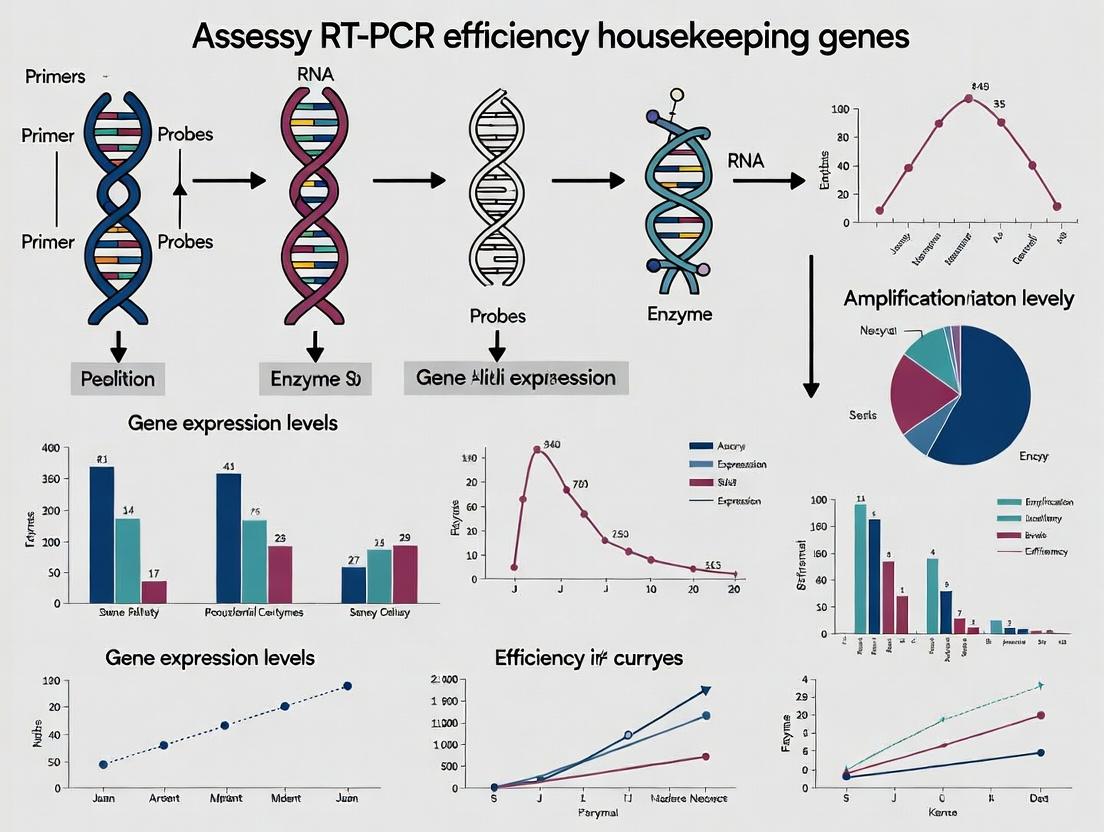
This article provides a systematic framework for researchers and drug development professionals to assess and optimize RT-PCR efficiency using housekeeping genes.
Housekeeping Genes in RT-PCR: A Comprehensive Guide to Efficiency Assessment, Best Practices, and Validation Strategies for Researchers
Abstract
This article provides a systematic framework for researchers and drug development professionals to assess and optimize RT-PCR efficiency using housekeeping genes. It explores the foundational principles of normalization, details best-practice methodologies for efficiency calculations, offers troubleshooting solutions for common pitfalls, and presents comparative validation strategies. The content bridges theoretical concepts with practical application, empowering scientists to generate robust, reproducible, and quantitatively accurate gene expression data essential for preclinical and clinical research.
The Cornerstone of Quantification: Understanding Housekeeping Genes and RT-PCR Efficiency Fundamentals
In the critical assessment of RT-PCR efficiency for gene expression analysis, the selection of appropriate reference genes stands as a foundational, non-negotiable step. Relative quantification, the standard method for comparing target gene expression across samples, relies entirely on the stability of these reference, or "housekeeping," genes to normalize for variations in RNA input, reverse transcription efficiency, and overall cDNA loading. This guide compares the performance of commonly used housekeeping genes against each other and underscores the consequences of poor selection through experimental data.
The Perils of Suboptimal Reference Gene Selection: A Data-Driven Comparison The assumption that classic housekeeping genes like GAPDH and β-actin (ACTB) are universally stable is flawed. Their expression can vary significantly with experimental conditions, leading to distorted results. The table below summarizes key stability metrics (calculated by algorithms like geNorm and NormFinder) for a panel of candidate genes in different tissue types, based on recent studies.
Table 1: Comparative Stability of Common Housekeeping Genes Across Sample Types
| Gene Symbol | Full Name | Stability in Cancer Cell Lines (M-value)* | Stability in Neuronal Tissue (M-value)* | Stability Under Hypoxia (M-value)* | Key Limitation |
|---|---|---|---|---|---|
| GAPDH | Glyceraldehyde-3-Phosphate Dehydrogenase | 0.85 (Low) | 1.2 (Very Low) | 1.5 (Very Low) | Highly sensitive to metabolic & oxidative stress. |
| ACTB | Beta-Actin | 0.78 (Low) | 0.95 (Low) | 0.9 (Low) | Altered by cytoskeletal dynamics; variable in proliferation. |
| 18S rRNA | 18S Ribosomal RNA | 0.45 (Medium) | 0.35 (High) | 0.5 (Medium) | Abundant, can skew quantification; requires separate optimization. |
| HPRT1 | Hypoxanthine Phosphoribosyltransferase 1 | 0.3 (High) | 0.6 (Medium) | 0.4 (High) | Lower expression level; may not be ideal for low-abundance targets. |
| PPIA | Peptidylprolyl Isomerase A (Cyclophilin A) | 0.25 (High) | 0.5 (Medium) | 0.28 (High) | Often stable across diverse conditions; robust performer. |
| RPLP0 | Ribosomal Protein Lateral Stalk Subunit P0 | 0.28 (High) | 0.4 (High) | 0.32 (High) | Involved in translation; generally stable across many experiments. |
*Lower M-value (from geNorm) indicates higher stability. Rankings: Very Low (>1.0), Low (0.7-1.0), Medium (0.5-0.69), High (<0.5). Data is a synthesis from recent publications.
Experimental Protocol: Validating Housekeeping Gene Stability
- Sample Preparation: Collect all test samples (e.g., control vs. treated, different tissue types) with at least 5-6 biological replicates per group. Homogenize and extract total RNA using a silica-membrane column method with DNase I treatment.
- RNA Quality Control: Measure RNA concentration via spectrophotometry (e.g., Nanodrop). Verify integrity using an Agilent Bioanalyzer; all samples must have an RNA Integrity Number (RIN) > 8.0.
- Reverse Transcription: Convert 1 µg of total RNA to cDNA using a high-capacity reverse transcription kit with random hexamers, following a standardized thermocycler protocol.
- qPCR Assay Design: Design primers for 3-5 candidate reference genes (PPIA, RPLP0, HPRT1, etc.) and target genes. Amplicons should be 80-150 bp, spanning an exon-exon junction. Perform primer efficiency validation using a 5-log dilution series; only primers with 90-110% efficiency and a single melt curve peak are used.
- qPCR Run: Perform reactions in triplicate on a 96-well plate using a SYBR Green master mix. Use a standardized cycling program (e.g., 95°C for 10 min, followed by 40 cycles of 95°C for 15 sec and 60°C for 1 min).
- Stability Analysis: Calculate Cq values. Input triplicate Cqs into dedicated software (e.g., RefFinder, which integrates geNorm, NormFinder, BestKeeper, and the ΔΔCq method). The software will rank genes by stability and recommend the optimal number of genes (usually 2-3) for normalization.
Housekeeping Gene Validation Workflow
The Impact on Results: A Case Study The following table demonstrates how the choice of reference gene directly alters the final interpretation of a target gene's expression in a hypothetical drug treatment study.
Table 2: Impact of Reference Gene on Calculated Fold-Change of Target Gene MYC
| Normalization Method | Calculated Fold-Change (Treated vs. Control) | Interpretation | Data Reliability |
|---|---|---|---|
| Single Gene: GAPDH | 0.45 (Down-regulation) | Drug suppresses MYC | Low - GAPDH itself altered by treatment. |
| Single Gene: ACTB | 1.8 (Up-regulation) | Drug induces MYC | Low - ACTB unstable in proliferating cells. |
| Single Gene: PPIA | 1.1 (No change) | Drug has no effect on MYC | Medium - Single stable gene. |
| Geometric Mean of PPIA & RPLP0 | 1.05 (No significant change) | Drug has no effect on MYC | High - Robust, multi-gene normalization. |
Impact of Reference Gene Choice on Results
The Scientist's Toolkit: Research Reagent Solutions for Reliable Normalization
| Item | Function & Rationale |
|---|---|
| DNase I, RNase-free | Removes genomic DNA contamination during RNA purification, preventing false-positive amplification in SYBR Green assays. |
| RNA Integrity Assay (e.g., Bioanalyzer) | Quantitatively assesses RNA degradation; critical for ensuring only high-quality (RIN > 8) samples are compared. |
| High-Capacity cDNA Reverse Transcription Kit | Uses random hexamers for uniform priming, ensuring comprehensive conversion of mRNA, including reference gene transcripts. |
| Pre-Validated PrimePCR Assays (Bio-Rad) | Commercially available, efficiency-verified qPCR assays for both target and reference genes, reducing optimization time. |
| SYBR Green Master Mix with ROX | Provides fluorescent detection of dsDNA amplification; contains a passive reference dye (ROX) to normalize for well-to-well volume variations. |
| Reference Gene Stability Analysis Software (RefFinder) | A free, web-based tool that integrates four major algorithms to provide a comprehensive ranking of candidate reference genes. |
Within the broader thesis of assessing RT-PCR efficiency using housekeeping genes, the accuracy of the relative quantification ΔΔCq method is paramount. This guide compares the impact of assuming 100% efficiency versus calculating gene-specific efficiency on ΔΔCq accuracy, using experimental data.
Comparative Data Analysis
The following table summarizes data from a model experiment comparing the fold-change calculation for a target gene (MYC) normalized to a reference gene (GAPDH) under two efficiency (E) scenarios.
Table 1: Impact of Amplification Efficiency on ΔΔCq Accuracy
| Gene | Assumed E (100%) | Cq (Control) | Cq (Treated) | ΔCq | Calculated E (%) | Cq (Control) | Cq (Treated) | ΔCq (E-corrected) |
|---|---|---|---|---|---|---|---|---|
| GAPDH | 100% (2.0) | 22.1 | 21.8 | -0.3 | 98% (1.98) | 22.1 | 21.8 | -0.31 |
| MYC | 100% (2.0) | 25.5 | 23.9 | -1.6 | 92% (1.92) | 25.5 | 23.9 | -1.52 |
| Result | Fold-Change (2^-ΔΔCq) | 2.42 | Fold-Change [E^(−ΔΔCq)] | 2.28 |
ΔΔCq was calculated relative to the control sample. A 6% difference in MYC amplification efficiency (92% vs. 100%) led to a 5.8% overestimation in fold-change when efficiency was assumed to be ideal.
Detailed Experimental Protocol
1. RNA Extraction & cDNA Synthesis:
- Total RNA is extracted from matched treated and control cell lines using a silica-membrane column kit with on-column DNase I digestion.
- RNA concentration and purity (A260/A280 ratio of ~2.0) are verified via spectrophotometry.
- 1 µg of total RNA is reverse transcribed in a 20 µL reaction using random hexamers and a Moloney Murine Leukemia Virus (M-MuLV) reverse transcriptase with RNase H– activity.
2. Primer Validation & Efficiency Calculation:
- Primer pairs for MYC and GAPDH are designed spanning exon-exon junctions.
- A standard curve is generated using a 5-log serial dilution (e.g., 1:10 to 1:100,000) of a pooled cDNA sample.
- Each dilution is run in triplicate on a real-time PCR instrument using a fluorescent intercalating dye master mix.
- Amplification efficiency (E) for each gene is calculated from the slope of the Cq vs. log(concentration) plot using the formula: E = 10^(−1/slope) − 1. The percentage is reported as %E = E × 100.
3. Comparative Quantitative PCR (qPCR):
- Experimental cDNA samples (control and treated) are run in technical quadruplicate for both target (MYC) and reference (GAPDH) genes.
- The same master mix and thermal cycling protocol are used for all reactions: 95°C for 3 min, followed by 40 cycles of 95°C for 10 s and 60°C for 30 s.
- Mean Cq values are calculated for each gene/sample combination after removing outliers.
4. Data Analysis:
- Method A (Assumed 100% Efficiency): ΔΔCq is calculated, and fold-change is derived as 2^(-ΔΔCq).
- Method B (Gene-Specific Efficiency): Cq values are converted to relative quantities using the formula Quantity = E^(−Cq). Fold-change is derived from the efficiency-corrected normalized relative quantities (Target/Reference).
Title: qPCR Workflow for Efficiency Impact Analysis
Title: Logical Relationship of Efficiency & ΔΔCq Accuracy
The Scientist's Toolkit: Key Research Reagent Solutions
Table 2: Essential Reagents for RT-qPCR Efficiency Assessment
| Item | Function in This Context |
|---|---|
| DNase I, RNase-free | Eliminates genomic DNA contamination during RNA prep, preventing false-positive Cq values. |
| Reverse Transcriptase (e.g., M-MuLV) | Synthesizes stable cDNA from RNA templates; RNase H– variants reduce RNA degradation. |
| qPCR Master Mix with Intercalating Dye (e.g., SYBR Green) | Provides fluorescence signal proportional to double-stranded DNA amplicon yield. Essential for generating standard curves. |
| Validated Primer Pairs | Gene-specific oligonucleotides with high efficiency (90–105%), minimal primer-dimer formation, and spanning an intron. |
| Nuclease-free Water | A critical, often overlooked reagent. Serves as a no-template control (NTC) diluent and ensures no RNase/DNase contamination. |
| Standard Curve Template (e.g., pooled cDNA) | A concentrated, stable cDNA sample used to create serial dilutions for calculating primer efficiency (E). |
| 3-Phenylpyridine | 3-Phenylpyridine, CAS:1008-88-4, MF:C11H9N, MW:155.2 g/mol |
| Blasticidin S | Blasticidin S|Selection Antibiotic for Cell Culture |
In the context of a broader thesis on assessing RT-PCR efficiency using housekeeping genes, this guide compares the stability and reliability of traditional reference genes (GAPDH, ACTB) against a panel of alternative candidates. The selection of an optimal reference gene is critical for accurate normalization in gene expression studies, as no single gene is universally stable across all experimental conditions.
Comparative Analysis of Reference Gene Stability
The following table summarizes stability data (as M values from geNorm analysis, where lower M = more stable) for common reference genes across three experimental model systems. Data was aggregated from recent studies (2023-2024).
Table 1: Stability Comparison of Candidate Reference Genes Across Model Systems
| Gene Symbol | Full Name | HepG2 Cell Line (Toxin Exposure) | Mouse Cardiac Tissue (Hypoxia) | Human PBMCs (Inflammatory Stimulus) | Overall Ranking (Geometric Mean) |
|---|---|---|---|---|---|
| GAPDH | Glyceraldehyde-3-Phosphate Dehydrogenase | 0.82 | 1.15 | 0.95 | 0.97 |
| ACTB | Beta-Actin | 0.78 | 1.22 | 1.10 | 1.03 |
| HPRT1 | Hypoxanthine Phosphoribosyltransferase 1 | 0.65 | 0.72 | 0.58 | 0.65 |
| RPLP0 | Ribosomal Protein Lateral Stalk Subunit P0 | 0.59 | 0.88 | 0.70 | 0.72 |
| TBP | TATA-Box Binding Protein | 0.71 | 0.55 | 0.81 | 0.69 |
| YWHAZ | Tyrosine 3-Monooxygenase/Tryptophan 5-Monooxygenase Activation Protein Zeta | 0.54 | 0.68 | 0.52 | 0.58 |
| PPIA | Peptidylprolyl Isomerase A | 0.70 | 0.75 | 0.69 | 0.71 |
| B2M | Beta-2-Microglobulin | 1.05 | 0.95 | 1.22 | 1.07 |
Experimental Protocols for Validation
1. Sample Preparation & RNA Isolation
- Protocol: Tissues or cells are homogenized in TRIzol reagent. Total RNA is extracted using the chloroform-isopropanol method, followed by a DNase I treatment to remove genomic DNA. RNA purity (A260/A280 ratio of 1.8-2.0) and integrity (RIN > 8.5, assessed via Bioanalyzer) are verified.
2. Reverse Transcription (cDNA Synthesis)
- Protocol: 1 µg of total RNA is reverse transcribed using a mixture of Oligo(dT)18 and random hexamer primers with a fixed amount of murine leukemia virus reverse transcriptase (MMLV-RT) at 42°C for 60 minutes, followed by enzyme inactivation at 70°C for 10 minutes.
3. Quantitative Real-Time PCR (qPCR)
- Protocol: Reactions are performed in triplicate using 2x SYBR Green Master Mix. Each 20 µL reaction contains 10 ng cDNA, 0.5 µM of each primer, and master mix. Cycling conditions: 95°C for 10 min (initial denaturation), followed by 40 cycles of 95°C for 15 sec and 60°C for 1 min (annealing/extension). A melt curve analysis (65°C to 95°C) confirms amplicon specificity.
4. Stability Analysis
- Protocol: Cycle threshold (Ct) values are imported into specialized algorithms (geNorm, NormFinder, BestKeeper). The geNorm algorithm calculates a stability measure (M) for each gene; stepwise exclusion of the least stable gene yields a ranking. The pairwise variation (Vn/Vn+1) determines the optimal number of reference genes for normalization (V < 0.15 indicates n genes are sufficient).
Visualization of Workflow and Analysis Logic
Title: Workflow for Validating Reference Gene Stability
Title: geNorm Algorithm Stepwise Exclusion Logic
The Scientist's Toolkit: Research Reagent Solutions
Table 2: Essential Materials for Reference Gene Validation Studies
| Item | Function & Rationale |
|---|---|
| TRIzol/RNAzol RT | Monophasic solution of phenol and guanidine isothiocyanate for simultaneous lysis and stabilization of RNA, preventing degradation. |
| DNase I (RNase-free) | Enzyme that degrades trace genomic DNA contaminants in RNA samples, preventing false-positive PCR signals. |
| High-Capacity cDNA Reverse Transcription Kit | Provides a consistent system for synthesizing cDNA from total RNA, often including both random hexamers and Oligo(dT) primers. |
| SYBR Green qPCR Master Mix (2X) | Contains Hot Start DNA polymerase, dNTPs, buffers, and the SYBR Green I dye, which fluoresces when bound to double-stranded DNA, simplifying reaction setup. |
| Validated qPCR Primers | Pre-designed, sequence-verified primer pairs for target and candidate reference genes, ensuring high amplification efficiency (90-110%). |
| Bioanalyzer / TapeStation | Microfluidics-based systems for assessing RNA Integrity Number (RIN) or RNA Quality Number (RQN), critical for verifying input material quality. |
| geNorm / NormFinder Software | Specialized algorithms that use raw Ct values to calculate gene expression stability measures and determine the optimal number of reference genes. |
| Universal Human/Mouse Reference RNA | Commercially available standardized RNA from multiple tissues/cell lines, used as an inter-assay control to monitor technical variability. |
| Cloticasone Propionate | Cloticasone Propionate |
| (S)-Oxybutynin hydrochloride | (S)-Oxybutynin Hydrochloride|CAS 230949-16-3 |
Within the thesis context of assessing RT-PCR efficiency, housekeeping genes (HKGs) are ubiquitously used as endogenous controls for normalization, based on the core assumption of their stable expression across all tissues and experimental conditions. This guide compares the performance of common HKGs against each other and against alternative normalization strategies, highlighting the critical limitations when these genes fail to maintain stable expression.
Comparative Performance of Common Housekeeping Genes
The following table summarizes experimental data from recent studies (2023-2024) comparing the expression stability of classical HKGs under different biological stresses. Stability was measured using the geNorm algorithm (M value) and Coefficient of Variation (CV %); lower values indicate greater stability.
Table 1: Stability of Common HKGs Across Experimental Conditions
| Housekeeping Gene | Normal Tissue (M value) | Inflammatory Stimulus (M value) | Hypoxic Stress (M value) | Tumor vs. Normal (CV %) |
|---|---|---|---|---|
| GAPDH | 0.32 | 1.45 | 1.87 | 28.5% |
| β-actin (ACTB) | 0.35 | 1.62 | 1.53 | 32.1% |
| 18S rRNA | 0.28 | 0.95 | 1.21 | 12.3% |
| HPRT1 | 0.41 | 0.89 | 1.05 | 15.7% |
| YWHAZ | 0.38 | 0.52 | 0.78 | 9.8% |
| PPIA | 0.40 | 0.61 | 0.91 | 11.2% |
Data synthesized from recent publications in *Sci Rep (2023), BMC Mol Biol (2024), and J Mol Diagn (2024).*
Alternative Normalization Strategies: A Performance Comparison
When HKGs show variability, alternative methods must be considered. The table below compares the efficiency, cost, and robustness of different RT-PCR normalization approaches.
Table 2: Comparison of Normalization Strategies for RT-PCR
| Method | Principle | Technical Difficulty | Cost | Robustness in Heterogeneous Samples | Key Limitation |
|---|---|---|---|---|---|
| Single HKG | Normalize to one reference gene | Low | $ | Low | High error if HKG is regulated |
| Multiple HKGs | Normalize to geometric mean of ≥3 | Medium | $$ | Medium-High | Requires prior validation; increased labor |
| Spike-in Controls | Add known quantity of exogenous RNA | Medium | $$ | High | Must be added at lysis; corrects for isolation only |
| Digital PCR | Absolute quantification; no HKG | High | $$$ | Very High | High cost; lower throughput |
| RNA-seq | Global normalization (e.g., TPM) | Very High | $$$$ | High | Cost and bioinformatics complexity |
Detailed Experimental Protocols
Protocol 1: geNorm Analysis for HKG Stability Validation
Objective: To determine the most stable HKGs for a specific experimental set.
- Sample Preparation: Prepare total RNA from at least 8 biological replicates per experimental condition (e.g., control, treated).
- Reverse Transcription: Convert 1 µg total RNA to cDNA using a random hexamer primer and a standardized reverse transcriptase kit.
- qPCR Setup: Perform qPCR in triplicate for each candidate HKG (minimum of 5 genes) and target genes. Use a SYBR Green master mix with optimized primer pairs (efficiency 90-110%).
- Data Collection: Record Cq values. Calculate PCR efficiency for each assay via standard curve.
- geNorm Analysis: Input Cq values into geNorm software (or equivalent algorithm). The software calculates an expression stability value (M) for each gene by stepwise exclusion of the least stable gene. It also determines the optimal number of HKGs by calculating the pairwise variation (Vn/Vn+1). A V value below 0.15 indicates no need for additional reference genes.
Protocol 2: Spike-in Control Normalization Experiment
Objective: To normalize qPCR data using an exogenous spike-in control, correcting for RNA isolation and reverse transcription efficiency.
- Spike-in Addition: At the beginning of RNA isolation, add a known, constant amount of a non-competitive exogenous RNA (e.g., Arabidopsis thaliana chlorophyll synthase, atCPS) to each sample's lysis buffer.
- RNA Isolation & cDNA Synthesis: Proceed with standard RNA isolation. Perform reverse transcription on equal total RNA amounts, using the same protocol for all samples.
- Dual qPCR: Perform simultaneous qPCR for the spike-in RNA (atCPS) and the target endogenous genes. Use distinct, non-cross-reactive assays.
- Calculation: Normalize the target gene Cq to the spike-in Cq for each sample (ΔCqsample = Cqtarget - Cq_spike-in). Proceed with relative quantification (ΔΔCq) using a control sample as calibrator.
Visualizations
Title: Consequences of Violating Housekeeping Gene Assumptions
Title: Spike-in Control Normalization Workflow
The Scientist's Toolkit: Research Reagent Solutions
Table 3: Essential Reagents for HKG Validation & RT-PCR Normalization
| Item | Function & Rationale |
|---|---|
| RNase Inhibitor | Protects RNA integrity during isolation and cDNA synthesis. Critical for reproducible Cq values. |
| High-Efficiency Reverse Transcriptase | Ensures complete and consistent cDNA synthesis from all RNA samples, minimizing technical variation. |
| Pre-Validated HKG Primer Assays | SYBR Green or probe-based assays with published validation data for specific tissues/cells. Reduces optimization time. |
| Commercial Spike-in RNA Kits (e.g., ercRNA) | Provides pre-quantified, non-homologous RNA sequences to add at lysis for external control normalization. |
| qPCR Master Mix with ROX | Provides uniform fluorescent background (ROX) for well-to-well signal normalization in plate readers. |
| Digital PCR Master Mix | Enables absolute quantification without reference genes, partitioning samples into thousands of droplets or wells. |
| RNA Integrity Number (RIN) Analysis Kits | (e.g., Bioanalyzer/TapeStation) Objectively assesses RNA quality, a prerequisite for any stable HKG use. |
| GeNorm or NormFinder Software | Algorithmic tools to objectively rank candidate HKGs by stability from a panel of experimental sample data. |
| CNP-AFU | CNP-AFU, CAS:157843-41-9, MF:C12H14ClNO7, MW:319.69 g/mol |
| 6-Nitropiperonal | 6-Nitropiperonal|C8H5NO5|712-97-0 |
The accurate quantification of gene expression using Reverse Transcription Quantitative PCR (RT-qPCR) hinges on proper assay efficiency assessment. The Minimum Information for Publication of Quantitative Real-Time PCR Experiments (MIQE) guidelines have standardized this process, transforming it from an often-overlooked variable into a cornerstone of rigorous research. This comparison guide evaluates efficiency assessment methodologies within the context of housekeeping gene (HKG) validation for reliable normalization.
Comparison of Efficiency Assessment Methods
The selection and validation of HKGs require precise efficiency measurement. The table below compares the standard curve method with the amplification plot-derived method, both mandated by MIQE for comprehensive reporting.
Table 1: Comparison of RT-qPCR Efficiency Assessment Methods
| Method | Standard Protocol | Key Output | Optimal Range (MIQE) | Required Replicates | Primary Advantage | Primary Limitation |
|---|---|---|---|---|---|---|
| Standard Curve (Serial Dilution) | 5-point, 10-fold serial dilution of cDNA or synthetic template. Run in duplicate or triplicate. | Slope (Efficiency = 10(−1/slope) - 1). R2 (linearity). | 90–110% (E = 100% ± 10%) | Min. 3 biological, 2 technical | Directly measures assay performance; calculates exact PCR efficiency. | Does not account for sample-specific inhibitors; consumes more reagents. |
| Amplification Plot (LinRegPCR, etc.) | Single reaction per sample. Software analyzes the exponential phase of individual amplification curves. | Per-sample efficiency, mean efficiency per amplicon. | 90–110% (E = 100% ± 10%) | Min. 3 biological, 1 technical | Identifies sample-to-sample efficiency variation; economical. | Relies on software algorithm; requires clear exponential phase data. |
Experimental Protocols for HKG Validation
A core thesis in HKG research involves validating candidate genes as stable normalizers. The following protocols are essential.
Protocol 1: Standard Curve Generation for Efficiency & Dynamic Range
- Template Preparation: Pool equal amounts of cDNA from all experimental samples.
- Serial Dilution: Create a 5-log dilution series (e.g., 1:10, 1:100, 1:1000, 1:10,000, 1:100,000) in nuclease-free water.
- qPCR Setup: Run each dilution in triplicate for both the target gene(s) and candidate HKGs.
- Data Analysis: Plot mean Cq (Quantification Cycle) vs. log10(template input). Calculate slope and R2 from the linear regression. Efficiency (E) = [10(-1/slope)] - 1. An R2 > 0.990 is expected.
Protocol 2: Assessment of HKG Expression Stability
- Sample Cohort: Include cDNA from all experimental conditions and replicates.
- qPCR Run: Amplify all candidate HKGs (e.g., ACTB, GAPDH, HPRT1, PPIA, RPLP0) and genes of interest across all samples.
- Data Processing: Calculate Cq values using an algorithm (e.g., LinRegPCR) that assigns a per-sample efficiency.
- Stability Analysis: Input Cq values into stability algorithms (e.g., geNorm, NormFinder, BestKeeper).
- Output: The algorithm ranks HKGs by their expression stability (M-value in geNorm); lower M-value indicates greater stability.
Visualizing the Workflow
MIQE-Compliant HKG Validation Workflow
How MIQE Shapes Efficiency Assessment
The Scientist's Toolkit: Research Reagent Solutions
Table 2: Essential Reagents for MIQE-Compliant RT-qPCR Efficiency Analysis
| Item | Function | Key Considerations for MIQE Compliance |
|---|---|---|
| High-Quality RNA Isolation Kit | Extracts intact, pure total RNA from samples. | Must report RNA Integrity Number (RIN) and absorbance ratios (A260/280, A260/230). |
| Genomic DNA Elimination Kit | Removes contaminating genomic DNA prior to RT. | Critical for avoiding false-positive amplification. Method must be stated. |
| Reverse Transcriptase with Built-in RNase Inhibitor | Synthesizes stable cDNA from RNA template. | Enzyme type (e.g., Moloney Murine Leukemia Virus) and priming method (oligo-dT, random hexamers, gene-specific) must be specified. |
| qPCR Master Mix with Universal Dye (e.g., SYBR Green I) | Provides all components for amplification and fluorescence detection. | Dye chemistry and polymerase must be reported. Should include passive reference dye (ROX) if required by instrument. |
| Validated Primer Pairs | Specifically amplify target sequence. | Must report sequences, amplicon length, exon-intron span, and primer concentrations used. In silico and empirical validation required. |
| Nuclease-Free Water | Diluent for reactions and standards. | Ensures no RNase/DNase contamination that could degrade templates or affect Cq values. |
| Optical Plates/Seals | Reaction vessels compatible with thermocycler. | Must ensure a proper seal to prevent evaporation, which significantly impacts efficiency measurement. |
| 5-Fluorocytidine | 5-Fluorocytidine|CAS 2341-22-2|Research Grade | Research-grade 5-Fluorocytidine for investigating cancer therapy and antiviral agents. This product is For Research Use Only (RUO). Not for human or veterinary diagnosis or therapy. |
| 4-Bromo-2-methylpyridine | 4-Bromo-2-methylpyridine, CAS:22282-99-1, MF:C6H6BrN, MW:172.02 g/mol | Chemical Reagent |
From Theory to Bench: Step-by-Step Methods to Calculate and Apply PCR Efficiency
Within the critical research framework of Assessing RT-PCR efficiency using housekeeping genes, the accurate determination of amplification efficiency is paramount. The Standard Curve Methodology remains the gold-standard protocol for this purpose, providing a robust, absolute measure of PCR reaction performance. This guide objectively compares this foundational approach with alternative efficiency determination methods, providing supporting experimental data to inform researchers, scientists, and drug development professionals.
Comparative Analysis of Efficiency Determination Methods
Table 1: Comparison of PCR Efficiency Determination Methodologies
| Methodology | Principle | Reported Efficiency (Mean ± SD) | Key Advantage | Primary Limitation | Suitability for Housekeeping Gene Validation |
|---|---|---|---|---|---|
| Standard Curve (Gold Standard) | Serial dilution of template to plot Cq vs. log(input). | 98.5% ± 3.5% | Direct, absolute measure; checks linearity. | Requires large amount of template; assumes identical efficiency across dilutions. | Excellent. Provides absolute efficiency for each assay. |
| LinRegPCR | Analyzes raw fluorescence curves of individual reactions to calculate per-sample efficiency. | 95.0% ± 6.0% | No standard curve needed; provides per-reaction efficiency. | Requires high-quality fluorescence data; software-dependent. | Good. Allows efficiency analysis of housekeeping gene runs. |
| Solver (Kinetic) Methods | Models the entire amplification curve using nonlinear regression. | 97.0% ± 5.0% | Theoretical robustness; models reaction kinetics. | Computationally intensive; complex implementation. | Moderate. Useful for in-depth kinetic analysis. |
| ΔΔCq Assumption | Assumes an ideal, universal efficiency of 100% for all assays. | Assumed 100% | Extreme simplicity; no additional experiments. | Major source of inaccuracy; not empirically derived. | Poor. Invalidates precise normalization. |
Experimental Protocols
Protocol 1: Gold-Standard Standard Curve Generation for Housekeeping Gene Assays
- Template Preparation: Use a pooled cDNA sample from all experimental conditions. Perform a minimum of 5 serial 1:5 or 1:10 dilutions.
- PCR Setup: Run all dilutions in triplicate on the same qPCR plate alongside no-template controls (NTCs).
- Data Analysis: Plot mean Cq (Quantification Cycle) values against the logarithm of the relative template concentration. Perform linear regression.
- Efficiency Calculation: Apply the formula: Efficiency (%) = [10^(-1/slope) - 1] * 100%. An ideal reaction has a slope of -3.32 and 100% efficiency. Acceptable range: 90-110%.
Protocol 2: LinRegPCR Analysis for Post-Run Efficiency Assessment
- Data Export: Export raw fluorescence data (Rn vs. Cycle) from the qPCR instrument.
- Software Input: Import data into LinRegPCR software.
- Baseline & Window-of-Linearity: Set a uniform baseline or allow software determination. The algorithm identifies the exponential phase for each sample.
- Efficiency Calculation: Software calculates a per-amplicon efficiency from the regression of the exponential phases across all samples, providing a mean efficiency and its variation.
Visualizing the Workflow and Data Interpretation
The Scientist's Toolkit: Research Reagent Solutions
Table 2: Essential Materials for Standard Curve Validation
| Item | Function in Protocol | Critical Quality Consideration |
|---|---|---|
| High-Purity cDNA Pool | Serves as the dilution template for the standard curve. | Representative of all samples; free of PCR inhibitors. |
| RNase/DNase-Free Water | Solvent for creating precise serial dilutions. | Certified nuclease-free to prevent template degradation. |
| Master Mix with Intercalating Dye (e.g., SYBR Green) | Provides fluorescence signal proportional to amplicon mass. | Batch-to-batch consistency; high efficiency claim. |
| Validated Housekeeping Gene Primers | Specific amplification of the reference target. | Designed for 70-150 bp amplicon; verified single peak in melt curve. |
| Optical qPCR Plates & Seals | Reaction vessel for thermal cycling and fluorescence detection. | Flat, clear seals for consistent optical readings; no-evaporation seals. |
| Calibrated Pipettes & Tips | Accuracy in generating serial dilutions and reaction assembly. | Regular calibration; use of low-retention tips for viscous master mix. |
| Linear Regression Analysis Software (e.g., LinRegPCR, qBASE+, custom spreadsheet) | Calculates slope and efficiency from Cq data. | Proper handling of outliers and background fluorescence setting. |
| antimycin A1 | Antimycin A1 | Antimycin A1 inhibits mitochondrial electron transport. This product is for research use only (RUO). Not for personal use. |
| N-Biotinyl-6-aminohexanoic acid | 6-[5-(2-Oxo-hexahydro-thieno[3,4-D]imidazol-4-Yl)-pentanoylamino]-hexanoic Acid | High-purity 6-[5-(2-Oxo-hexahydro-thieno[3,4-D]imidazol-4-Yl)-pentanoylamino]-hexanoic Acid for RUO. Explore streptavidin/biotin studies. For Research Use Only. Not for human use. |
For the rigorous assessment of RT-PCR efficiency using housekeeping genes, the Standard Curve Methodology provides an unrivaled, direct measurement that is critical for reliable normalization in drug development and biomedical research. While computational post-assay methods like LinRegPCR offer valuable insights, they do not replace the empirical validation provided by a standard curve. The assumption of 100% efficiency remains a significant source of inaccuracy. Therefore, employing the gold-standard protocol is non-negotiable for generating publication-quality, reproducible quantitative data.
Article Context
This guide is framed within the thesis research on Assessing RT-PCR efficiency using housekeeping genes. Accurate quantification of gene expression relies on a robust RT-PCR assay with a well-defined linear dynamic range (LDR) and a low limit of detection (LOD). This guide compares the performance of a featured SYBR Green master mix (Product X) against two common alternatives using experimental data generated from a housekeeping gene efficiency study.
The core experiment evaluated the LDR and LOD for the human housekeeping gene GAPDH using three different RT-PCR master mixes.
Protocol 1: Template Dilution Series for LDR
- cDNA Source: Total RNA from HeLa cells was reverse-transcribed using a high-capacity cDNA kit.
- Standard Preparation: The cDNA was serially diluted (10-fold) across 8 orders of magnitude, from 10 ng/µL to 0.0001 pg/µL.
- qPCR Setup: Each dilution was amplified in technical quadruplicate using:
- Primers: GAPDH-specific primers (125 nM final concentration).
- Master Mixes:
- Product X: SybrFast-X Master Mix (2X).
- Alternative A: Standard SYBR Green Master Mix (2X).
- Alternative B: Hot-Start SYBR Green Master Mix (2X).
- Cycling Conditions: 95°C for 2 min; 40 cycles of 95°C for 5 sec, 60°C for 30 sec; followed by a melt curve analysis.
- Data Analysis: Cq values were plotted against the log10 of the template input. The linear range was defined where the efficiency (E) satisfied: 90% < E < 110% with R² > 0.99. The LOD was calculated as the lowest concentration with Cq < 35 and detectable in all replicates.
Protocol 2: Limit of Detection (LOD) Validation
- Low-Concentration Replicates: The dilution point identified near the LOD was run across 24 technical replicates per master mix.
- LOD Calculation: The LOD was defined as the concentration at which 95% of replicates produced a detectable amplification (Cq < 35).
Comparative Performance Data
Table 1: LDR and LOD Performance for GAPDH Amplification
| Master Mix | Linear Dynamic Range (logs) | Lowest Quantifiable Point (pg/µL) | PCR Efficiency (%) | R² | Limit of Detection (LOD) (pg/µL) |
|---|---|---|---|---|---|
| Product X (SybrFast-X) | 7.5 (10^7 to 0.032) | 0.032 | 99.8 ± 1.2 | 0.9995 | 0.008 |
| Alternative A (Standard) | 6.0 (10^7 to 1.0) | 1.0 | 102.5 ± 3.1 | 0.9982 | 0.5 |
| Alternative B (Hot-Start) | 7.0 (10^7 to 0.1) | 0.1 | 98.5 ± 2.5 | 0.9990 | 0.025 |
Table 2: Precision at Low Template Concentration (0.1 pg/µL)
| Master Mix | Mean Cq (n=24) | Standard Deviation (Cq) | % CV | Detection Rate (%) |
|---|---|---|---|---|
| Product X | 31.4 | 0.28 | 0.89 | 100 |
| Alternative A | 29.8* | 0.85 | 2.85 | 83 |
| Alternative B | 31.8 | 0.41 | 1.29 | 100 |
Note: Alternative A showed earlier Cq but poorer precision and detection rate, indicating non-specific background.
Visualizing the Experimental Workflow
Title: RT-PCR LDR and LOD Assessment Workflow
Title: Thesis Context: LDR and LOD Role in RT-PCR Efficiency
The Scientist's Toolkit: Research Reagent Solutions
Table 3: Essential Reagents for RT-PCR Efficiency Studies
| Item | Function in LDR/LOD Experiments |
|---|---|
| High-Quality RNA Isolation Kit | Obtains pure, intact total RNA free of genomic DNA and inhibitors, ensuring accurate cDNA synthesis. |
| Reverse Transcriptase with Consistent Efficiency | Converts RNA to cDNA with high fidelity and yield across all samples, critical for quantitative downstream analysis. |
| Validated Housekeeping Gene Primers (e.g., GAPDH) | Specific primer pair for a stably expressed reference gene, used to generate the standard curve for assay validation. |
| High-Performance SYBR Green Master Mix (Product X) | Provides robust polymerase, optimized buffer, and dye for sensitive, specific amplification over a wide linear range. |
| Nuclease-Free Water | Serves as dilution medium and negative control to rule out contamination in low-concentration LOD tests. |
| Calibrated Digital Micropipettes | Ensures precise and accurate liquid handling for creating serial dilutions, critical for defining the LDR. |
| Optical qPCR Plates & Seals | Provide clear, thin-walled wells for optimal thermal conductivity and fluorescence detection with no evaporation. |
| Quantitative PCR Instrument | Instrument with sensitive optics and stable thermal cycling to accurately measure Cq values at low template levels. |
| Biotin-LC-LC-NHS | Biotin-LC-LC-NHS, CAS:89889-52-1, MF:C26H41N5O7S, MW:567.7 g/mol |
| Biotin-C5-amino-C5-amino | N-Biotinylcaproylaminocaproic Acid|CAS 89889-51-0 |
Within the critical research framework of Assessing RT-PCR efficiency using housekeeping genes, the accuracy of quantitative PCR (qPCR) hinges on precise template preparation and rigorous data analysis. This guide compares methodologies and performance for generating reliable standard curves, a cornerstone for evaluating amplification efficiency.
The Critical Role of Serial Dilution in Efficiency Assessment
A standard curve created from a serial dilution of known template concentrations is the primary tool for determining PCR efficiency. Efficiency (E), calculated as E = 10^(-1/slope) – 1, ideally should be 100% (a slope of -3.32). Deviations indicate issues with reaction optimization, inhibitor presence, or poor dilution technique, directly impacting the reliability of housekeeping gene normalization in comparative Ct (ΔΔCt) studies.
Experimental Protocol: Generating a Standard Curve for Housekeeping Gene Assays
1. Template Preparation (cDNA Synthesis):
- Material: Total RNA (high RIN >8), reverse transcriptase, primers (oligo-dT and/or random hexamers), dNTPs, RNase inhibitor.
- Method: Synthesize cDNA from 1 µg of RNA using a robust reverse transcription kit. Perform reactions in duplicate to account for synthesis variability. Dilute the final cDNA product in a consistent, RNase/DNase-free buffer (e.g., 10 mM Tris-HCl, pH 8.0) to a uniform volume.
2. Serial Dilution Protocol:
- Method: Perform a logarithmic dilution series (e.g., 1:10) across at least 5 orders of magnitude. Use low-binding tubes and fresh pipette tips for each transfer. The diluent should match the final cDNA suspension buffer. Vortex gently and spin down after each dilution step.
- Best Practice: Prepare the dilution series in triplicate from independent stock solutions to distinguish pipetting error from template-specific variation.
3. qPCR Setup and Data Plotting:
- Method: Run each dilution point, including a no-template control (NTC), in replicate (n≥3) on the qPCR instrument. Use a housekeeping gene assay (e.g., GAPDH, ACTB, 18S rRNA) with a fluorescence chemistry (SYBR Green or probe-based).
- Plotting: Plot the mean Ct value (y-axis) against the log10 of the known starting template amount (x-axis). Perform linear regression analysis. The R² value indicates the goodness of fit, while the slope determines efficiency.
Performance Comparison: Dilution Technique & Template Quality
The following table summarizes key experimental outcomes based on methodological variations, directly impacting housekeeping gene reliability.
Table 1: Impact of Template Preparation and Dilution Method on Standard Curve Metrics
| Factor Evaluated | Alternative A (Best Practice) | Alternative B (Suboptimal Practice) | Experimental Outcome (Mean ± SD) |
|---|---|---|---|
| Dilution Technique | Logarithmic series with dedicated tips & vortexing | "Stacked" serial dilution reusing tips, no mixing | Slope: -3.29 ± 0.04 vs. -3.52 ± 0.15R²: 0.999 ± 0.001 vs. 0.985 ± 0.010 |
| Diluent Composition | Low-EDTA TE buffer or nuclease-free water | Carry-over in reaction buffer or culture medium | Efficiency: 101% ± 2% vs. 92% ± 6%CV at low conc.: <5% vs. >15% |
| Template Integrity | High-quality cDNA from RNA (RIN >8) | cDNA from partially degraded RNA (RIN <6) | Linear Dynamic Range: 6 logs vs. 4 logsLate Dilution Reproducibility: Poor CV vs. Very Poor CV |
| Replicate Strategy | Technical replicates from independent dilution series | Technical replicates from a single stock dilution | Identifies Error Type: Yes (pipetting vs. preparation) vs. No |
The Scientist's Toolkit: Research Reagent Solutions
Table 2: Essential Materials for Reliable Serial Dilution Studies
| Item | Function & Rationale |
|---|---|
| Low-Binding Microcentrifuge Tubes | Minimizes nucleic acid adhesion to tube walls, critical for accuracy at low concentrations. |
| Certified Nuclease-Free Water | The standard diluent; ensures no enzymatic degradation of the template. |
| Calibrated, High-Precision Micropipettes | Essential for accurate volumetric transfers, especially for creating the initial stock. |
| Digital Vortex Mixer | Ensures homogeneous template distribution in the diluent before each transfer step. |
| Standardized Reference cDNA | Commercially available or lab-curated universal cDNA for inter-assay comparison. |
| qPCR Plates with Optical Seals | Provides consistent optical clarity and prevents well-to-well contamination and evaporation. |
| 1-Palmitoyl-3-chloropropanediol | 3-Chloro-1,2-propanediol 1-Palmitate|CAS 30557-04-1 |
| 2-Nitrophenyl b-D-xylopyranoside | 2-Nitrophenyl b-D-xylopyranoside, CAS:10238-27-4, MF:C11H13NO7, MW:271.22 g/mol |
Visualizing the Workflow and Data Relationship
Title: Workflow for Standard Curve Generation in RT-PCR
Title: Impact of Preparation on PCR Efficiency and Data Reliability
This comparison guide evaluates methodologies for calculating RT-PCR amplification efficiency, a critical parameter in gene expression analysis, within the broader thesis of "Assessing RT-PCR efficiency using housekeeping genes." Accurate efficiency determination is paramount for reliable normalization and biological interpretation.
Experimental Data & Protocol Comparison
The following table summarizes key experimental approaches for efficiency calculation, their underlying principles, and comparative performance.
| Method | Core Protocol Description | Typical Efficiency Output (E) | Coefficient of Determination (R²) | Suitability for Housekeeping Genes |
|---|---|---|---|---|
| Serial Dilution Standard Curve | A dilution series (e.g., 1:5, 1:10) of a known template (cDNA or plasmid) is amplified. Cq is plotted against log10(Starting Quantity). Slope is derived from linear regression. | E = 10^(-1/slope) | Often >0.990 | High. Allows direct empirical measurement for each assay. |
| LinRegPCR Algorithm | Uses raw fluorescence data from all samples (no dilutions) to determine the exponential phase for each reaction, calculating a per-amplicon efficiency. | Mean per-run efficiency (E) | N/A (not based on standard curve) | Moderate. Provides individual reaction efficiencies but assumes optimal assay design. |
| Statistical Methods (e.g., LRE) | Uses the Logistic Regression of fluorescence (LRE) on the Cq value to model the amplification process without a standard curve. | Model-derived E | N/A | Moderate. Useful for post-run analysis of existing data sets. |
Detailed Experimental Protocols
Serial Dilution Standard Curve Protocol
This is the gold-standard, most cited method for empirical efficiency calculation.
- Template Preparation: Create a concentrated stock of template containing the target amplicon (e.g., pooled cDNA, plasmid).
- Dilution Series: Perform a minimum of 5-point, 10-fold (or 5-fold) serial dilution. A 5-log range is recommended.
- RT-PCR Setup: Run the dilution series in triplicate on the same plate as unknown samples. Use identical reaction mix and cycling conditions.
- Data Analysis: Calculate the mean Cq for each dilution. Plot mean Cq (y-axis) vs. log10(Starting Quantity or Dilution Factor) (x-axis).
- Efficiency Calculation: Perform linear regression. Apply the slope to the formula: Efficiency (E) = 10^(-1/slope) - 1. Multiply by 100 for percent efficiency (e.g., E=2.0 equals 100% efficiency).
LinRegPCR Software Protocol
A standard curve-free method for post-run analysis.
- Data Export: Run all samples (including housekeeping genes) under standard conditions. Export raw fluorescence data.
- Data Import: Import data into LinRegPCR software.
- Baseline & Window-of-Linearity: Software automatically or manually identifies the exponential phase for each amplification curve.
- Efficiency Calculation: The software performs regression on the exponential phase for each sample, grouping amplicons and reporting a mean efficiency per amplicon (gene).
Visualizing Efficiency Assessment Workflows
Diagram Title: Workflow for RT-PCR Efficiency Calculation Methods
The Scientist's Toolkit: Key Research Reagent Solutions
| Item | Function in Efficiency Analysis |
|---|---|
| High-Purity Nucleic Acid Template | cDNA or plasmid for standard curve; essential for generating a reliable and reproducible dilution series. |
| Validated Primer Pairs | Primers with minimal primer-dimer formation and high specificity are critical for achieving optimal (near 100%) and consistent efficiency. |
| Master Mix with Robust Polymerase | A consistent, high-performance mix ensures reproducible amplification kinetics across all wells and dilution points. |
| Intercalating Dye (e.g., SYBR Green I) | For monitoring double-stranded DNA accumulation during PCR in real-time. Dye saturation at high concentrations can affect curve shape. |
| Nuclease-Free Water | Used for precise serial dilutions; contaminants can inhibit reactions and skew efficiency results. |
| qPCR Plates/Tubes with Optical Seals | Ensure consistent thermal conductivity and prevent evaporation, which is crucial for accuracy across a multi-step dilution series. |
| qPCR Instrument Calibration Kit | Regular calibration ensures accurate fluorescence detection across all channels, which is vital for methods analyzing raw fluorescence. |
| 5-Chlorouridine | 5-Chlorouridine, CAS:2880-89-9, MF:C9H11ClN2O6, MW:278.64 g/mol |
| 1,3-Dibromoacetone | 1,3-Dibromoacetone|98% Purity|Research Grade |
Incorporating Efficiency into ΔΔCq and Other Relative Quantification Models
Relative quantification in reverse transcription quantitative PCR (RT-qPCR) is fundamental for gene expression analysis in fields like drug development. The classic ΔΔCq model assumes ideal, target-independent amplification efficiency (E=2, or 100%). This assumption is often violated in practice, introducing significant bias. This guide compares efficiency-incorporated quantification models, framed within research assessing RT-PCR efficiency using housekeeping genes.
Key Quantification Models: A Comparative Analysis
The table below compares the core mathematical models, their assumptions, and impact on accuracy.
Table 1: Comparison of Relative Quantification Models
| Model Name | Core Formula | Efficiency Assumption | Key Advantage | Primary Limitation |
|---|---|---|---|---|
| Classic ΔΔCq | R = 2^(-ΔΔCq) | Fixed at 100% (E=2). | Extreme simplicity and speed. | High inaccuracy if efficiencies deviate from 100%. |
| Pfaffl Model | R = (Etarget)^(-ΔCqtarget) / (Eref)^(-ΔCqref) | Uses experimentally determined per-amplicon efficiency (E). | Incorporates actual amplicon efficiency, greatly improving accuracy. | Requires rigorous, separate efficiency validation for each assay. |
| Individual Efficiency ΔΔCq | R = (Etarget)^(-ΔCqtarget) / (Eref)^(-ΔCqref) where ΔCq = Cqsample - Cqcalibrator | Uses per-sample, per-amplicon efficiency. Can be derived from standard curve or LINREG. | Accounts for inter-sample inhibition or variation affecting efficiency. Most accurate. | Computationally intensive; requires high-quality individual sample data. |
| Cy0 Method | Uses second derivative maximum instead of Cq, integrated into efficiency-aware models. | Decouples efficiency calculation from threshold setting. | Reduces Cq variability from threshold selection; robust with low-efficiency reactions. | Requires robust algorithm implementation in analysis software. |
Experimental Protocol for Model Validation
To compare these models, a validation experiment was conducted using synthetic cDNA and human total RNA spiked with known ratios of target gene constructs.
Protocol 1: Efficiency Determination and Model Testing
- Sample Preparation: A two-fold serial dilution series (e.g., 1:1 to 1:64) is created from the cDNA/RNA sample, with at least 5 data points.
- RT-qPCR Run: Each dilution is amplified in triplicate for both the target gene(s) of interest (GOI) and the selected reference gene(s) (HKG). Use a reaction volume of 20 µL with a robust master mix.
- Efficiency Calculation:
- For each amplicon (GOI and HKG), plot the mean Cq (or Cy0) value against the logarithm of the relative input amount.
- Perform linear regression. The slope is used to calculate amplification efficiency: E = 10^(-1/slope).
- An ideal efficiency of 100% corresponds to a slope of -3.32. Acceptable range is typically 90-110% (E=1.9 to 2.1).
- Data Analysis with Different Models:
- Apply the ΔΔCq model (assuming E=2 for all).
- Apply the Pfaffl model using the per-amplicon efficiencies from step 3.
- If sufficient dilution points per sample are run, apply individual efficiency corrections.
Table 2: Example Experimental Results from a Spiked-In Validation Study
| Input Ratio (True) | Classic ΔΔCq (Estimated Ratio) | Pfaffl Model (Estimated Ratio) | Individual Efficiency ΔΔCq (Estimated Ratio) |
|---|---|---|---|
| 1.0 | 1.0 (Reference) | 1.0 (Reference) | 1.0 (Reference) |
| 4.0 | 3.2 | 4.1 | 4.0 |
| 0.25 | 0.18 | 0.24 | 0.26 |
Data demonstrates the bias introduced by the classic model when amplicon efficiencies are 92% (GOI) and 105% (HKG).
Visualizing the Workflow for Accurate Relative Quantification
Workflow for Assessing Model Impact
The Scientist's Toolkit: Essential Reagents and Materials
Table 3: Key Research Reagent Solutions for Efficiency-Aware qPCR
| Item | Function in Efficiency Assessment |
|---|---|
| High-Quality Reverse Transcriptase | Produces cDNA with minimal bias and inhibitors, providing a true baseline for amplification efficiency. |
| qPCR Master Mix with Universal Dye (e.g., SYBR Green I) | Allows for efficiency determination via standard curve. Dye must be stable and bright across a wide linear range. |
| Nuclease-Free Water | Critical for preparing dilution series; contaminants can drastically alter amplification efficiency. |
| Synthetic Oligonucleotides or RNA Spike-Ins | For creating absolute standard curves to validate per-assay efficiency independently of biological sample quality. |
| Validated, Primer-Sequence Verified Assays | Primers with minimal dimer formation and high specificity are prerequisite for obtaining a reliable efficiency value. |
| Digital Pipettes and Certified Low-Bind Tips | Essential for accuracy and precision when creating the serial dilutions for standard curves. |
| Indoxyl acetate | Indoxyl acetate, CAS:608-08-2, MF:C10H9NO2, MW:175.18 g/mol |
| Hymexazol | Hymexazol |
Within the broader thesis on Assessing RT-PCR efficiency using housekeeping genes, selecting optimal analysis software is critical. Accurate quantification of housekeeping genes, essential for data normalization, depends on the precision of baseline setting, threshold selection, and amplification efficiency calculation. This guide compares proprietary instrument software with third-party platforms.
Comparison of qPCR Analysis Software Platforms
| Feature / Platform | Thermo Fisher Cloud (QuantStudio) | Bio-Rad CFX Maestro | QIAGEN CLC Genomics Workbench | qbase+ (Biogazelle) |
|---|---|---|---|---|
| Primary Use | Proprietary instrument control & analysis | Proprietary instrument control & analysis | Third-party multi-omics analysis | Third-party specialized qPCR analysis |
| Amplification Efficiency Calculation | Automatic, based on standard curve | Automatic, from standard curve or linreg | Manual import, advanced modeling | Automated, with confidence intervals |
| Housekeeping Gene Selection | Manual user selection | Manual user selection | GeNorm & NormFinder algorithms integrated | GeNorm, NormFinder, ΔCt, RefFinder |
| Multi-Experiment Normalization | Limited | Limited | Yes | Advanced, for large-scale studies |
| Statistical Analysis for Drug Dev. | Basic t-tests, ANOVA | Basic t-tests, ANOVA | Advanced statistical package | Dedicated gene expression stats |
| Support for MIQE Guidelines | Partial (exports key parameters) | Partial (exports key parameters) | High (tracking of metadata) | Very High (central to design) |
| Cost Model | Subscription (often bundled) | Perpetual license (instrument buy) | Perpetual or subscription license | Subscription-based |
| Key Strength | Seamless instrument integration | Optimized for Bio-Rad instruments | Integration with NGS & other data | Gold-standard for complex qPCR |
Supporting Experimental Data: Analysis of HK Gene Stability
Objective: To compare the variance in calculated target gene expression (a drug target, MYC) when normalized using different housekeeping genes (HKG) identified by different software platforms from the same raw qPCR dataset.
Experimental Protocol:
- Sample: Human cell line treated with a novel oncology compound (n=6) vs. DMSO control (n=6).
- RNA Extraction: Using QIAGEN RNeasy kit with on-column DNase digestion.
- cDNA Synthesis: High-Capacity cDNA Reverse Transcription Kit (Applied Biosystems) with 500ng total RNA input.
- qPCR Run: Performed on a Bio-Rad CFX384. Assays: MYC (target), and five candidate HKGs (ACTB, GAPDH, HPRT1, PPIA, RPLP0). All reactions in triplicate.
- Analysis: Raw Cq data exported and analyzed separately in CFX Maestro 2.0 and qbase+ 3.4.
- HKG Selection: In CFX Maestro, GAPDH and ACTB were manually selected as HKGs. qbase+ used its GeNorm module to identify HPRT1 and PPIA as the most stable pair.
- Normalization & Statistics: MYC ΔΔCq calculated for each platform's recommended HKGs. Fold-change and p-value (unpaired t-test) computed.
Results Summary Table:
| Analysis Platform | Recommended HKGs | Normalized MYC Fold-Change (Treated vs. Control) | p-value | Coefficient of Variation (CV) across Replicates |
|---|---|---|---|---|
| Bio-Rad CFX Maestro | GAPDH, ACTB | 8.5 | 0.003 | 12.4% |
| qbase+ | HPRT1, PPIA (GeNorm) | 5.1 | 0.021 | 6.8% |
Interpretation: The third-party platform (qbase+) identified a more stable pair of housekeeping genes, leading to a lower coefficient of variation and a more precise (though lower magnitude) fold-change estimate. This demonstrates how software choice directly impacts final results in drug efficacy studies.
Software Analysis Impact on HK Gene Normalization
The Scientist's Toolkit: Research Reagent Solutions
| Item | Function in RT-PCR Efficiency Research |
|---|---|
| High-Quality Total RNA Kit (e.g., RNeasy) | Ensures pure, intact RNA free of genomic DNA, crucial for accurate cDNA synthesis and Cq values. |
| Validated RT Primer Mix (Random Hexamers/Oligo-dT) | Dictates cDNA synthesis efficiency and representation; impacts downstream qPCR quantification. |
| TaqMan Gene Expression Assays | Fluorogenic probe-based assays offer high specificity and consistent amplification efficiency. |
| SYBR Green Master Mix | Cost-effective dye for monitoring amplification; requires post-run melt curve analysis for specificity. |
| Nuclease-Free Water | Prevents degradation of RNA, primers, and enzymes, ensuring reaction integrity. |
| Validated Housekeeping Gene Assays | Pre-optimized assays for common HKGs like HPRT1 or PPIA, reducing validation workload. |
| qPCR Plate Sealing Film | Prevents well-to-well contamination and evaporation, critical for reproducibility across plates. |
| Digital Pipettes & Calibrated Tips | Ensures precise and accurate liquid handling for reproducible master mixes and sample loading. |
| 6,7-Dimethoxy-4-coumarinylacetic acid | 6,7-Dimethoxy-4-coumarinylacetic acid, CAS:88404-26-6, MF:C13H12O6, MW:264.23 g/mol |
| 4-Bromocinnamic acid | 4-Bromocinnamic acid, CAS:1200-07-3, MF:C9H7BrO2, MW:227.05 g/mol |
Solving Common Pitfalls: Troubleshooting Low Efficiency and Optimizing Assay Robustness
Within the critical framework of Assessing RT-PCR Efficiency Using Housekeeping Genes Research, achieving optimal amplification is non-negotiable for reliable gene expression quantification. Sub-optimal efficiency, often manifested through inaccurate Cq values and non-linear standard curves, frequently originates from primer dimers, template secondary structures, and reaction inhibitors. This guide compares methodological approaches and reagent solutions for diagnosing these issues, providing a direct performance comparison to inform researcher choice.
Comparison of Diagnostic Methods
The following table summarizes key techniques for diagnosing common RT-PCR efficiency problems, comparing their principle, sensitivity, throughput, and typical experimental outcome.
Table 1: Comparative Analysis of Methods for Diagnosing RT-PCR Inefficiency
| Diagnostic Method | Primary Target | Principle | Throughput | Key Experimental Output | Best for Identifying |
|---|---|---|---|---|---|
| Polyacrylamide Gel Electrophoresis (PAGE) | Primer Dimers, Non-specific Products | Size-based separation of nucleic acids on a dense matrix. | Low | Discrete bands visualized post-electrophoresis. | Primer dimers, spurious amplicons. |
| Melt Curve Analysis | Non-specific Products, Primer Dimers | Monitoring fluorescence loss of intercalating dye with increasing temperature. | High | Peaks in the negative derivative of fluorescence (-dF/dT). | Product heterogeneity, dimer Tm. |
| Dilution Series & Standard Curve | Overall Reaction Inhibition, Efficiency | Linear regression of Cq vs. log template input. | Medium | Amplification efficiency (E) from slope: E = 10^(-1/slope) - 1. | PCR inhibitors, poor enzyme performance. |
| Bioanalyzer/TapeStation | Product Size Distribution, Purity | Microfluidics-based capillary electrophoresis. | Medium | Electropherogram with precise fragment sizes. | Primer dimer quantification, amplicon purity. |
| RT-qPCR with Probe-Based Detection | Secondary Structure at Probe Site | Sequence-specific probe adds an extra layer of specificity. | High | Specific fluorescence increase, cleaner baseline. | Secondary structure in amplicon region. |
Experimental Protocols for Key Comparisons
Protocol 1: High-Resolution Melt Curve Analysis for Primer Dimer Detection
Objective: To distinguish specific amplicon from primer dimer based on dissociation temperature (Tm).
- Run SYBR Green-based qPCR using the standard thermal cycling protocol.
- Post-amplification Melt Step: Heat from 65°C to 95°C, continuously monitoring fluorescence (e.g., 0.5°C increments, 5 sec/step).
- Data Analysis: Plot the negative derivative of fluorescence versus temperature (-dF/dT vs. T). A single sharp peak indicates a specific product. Additional lower Tm peak(s) (often 65-75°C) suggest primer dimer formation.
- Comparison Point: Compare melt profiles of no-template controls (NTCs) to sample reactions. Dimers in NTC confirm primer-self-complementarity.
Protocol 2: Standard Curve Analysis for Assessing Inhibition & Efficiency
Objective: To calculate amplification efficiency and detect the presence of inhibitors.
- Prepare Template Dilution Series: Create a 5- or 10-fold serial dilution of a high-concentration cDNA or gDNA sample (e.g., 5 dilutions).
- Run qPCR: Amplify all dilution points in triplicate.
- Generate Standard Curve: Plot mean Cq value (y-axis) against the logarithm of the relative template concentration (x-axis).
- Perform Linear Regression: Calculate the slope of the trendline.
- Calculate Efficiency: E = [10^(-1/slope)] - 1. Ideal efficiency = 1.0 (100%).
- Comparison Metric: Reactions with inhibitors show lower efficiency (<90%) and/or poor linearity (R² < 0.990). Compare efficiency values obtained with different polymerase/buffer systems or sample purification methods.
Protocol 3: Gel Electrophoresis for Direct Product Visualization
Objective: To visually confirm amplicon size and identify low molecular weight primer dimers.
- Post-qPCR Product Collection: Remove a portion (e.g., 10 µL) of the final PCR reaction.
- High-Resolution Gel: Load product on a 4-20% polyacrylamide gel or a dedicated high-percentage agarose gel (e.g., 4%).
- Electrophoresis: Run at constant voltage until sufficient separation is achieved.
- Staining & Visualization: Stain with ethidium bromide or SYBR Safe and image under UV.
- Comparison Output: Specific amplicon appears as a single band at expected size. Primer dimers appear as a fuzzy, fast-migrating band (~30-80 bp).
Visualizing the Diagnostic Workflow
Title: Diagnostic Decision Tree for qPCR Efficiency Issues
The Scientist's Toolkit: Research Reagent Solutions
Table 2: Essential Reagents for Optimizing RT-qPCR Assays
| Reagent / Material | Function in Diagnosis/Optimization | Key Consideration |
|---|---|---|
| Hot-Start DNA Polymerase | Reduces non-specific amplification and primer dimer formation by limiting enzyme activity until initial denaturation. | Critical for low-template or complex samples. Compare polymerase specificity scores. |
| PCR Enhancers (e.g., Betaine, DMSO) | Destabilize GC-rich secondary structures in template, improving primer access and polymerization efficiency. | Titration required; typically 0.5-1M Betaine or 2-10% DMSO. |
| SYBR Green I Dye | Intercalating dye for real-time quantification and post-amplification melt curve analysis. | High-quality, PCR-grade dye ensures robust melt curve data. |
| Hydrolysis (TaqMan) Probes | Provide sequence-specific detection, eliminating signal from primer dimers and non-specific products. | Essential for multiplexing or in presence of predictable secondary structure. |
| RNase Inhibitor | Protects RNA template during reverse transcription, crucial for accurate cDNA synthesis efficiency. | A must for sensitive RT steps; compare units/µL and robustness. |
| Solid-Phase Reversible Immobilization (SPRI) Beads | For post-extraction nucleic acid clean-up to remove salts, enzymes, and other PCR inhibitors. | Often yields higher purity than column-based methods for difficult samples. |
| High-Fidelity Buffer Systems | Often contain proprietary additives that promote primer specificity and stabilize polymerase. | Compare standard vs. specialized buffers from the same vendor. |
| NTPO | NTPO, CAS:103333-74-0, MF:C3H12NO9P3, MW:299.05 g/mol | Chemical Reagent |
| Ergosterol acetate | Ergosterol acetate, CAS:2418-45-3, MF:C30H46O2, MW:438.7 g/mol | Chemical Reagent |
Within the broader thesis research on Assessing RT-PCR efficiency using housekeeping genes, robust optimization of the polymerase chain reaction (PCR) is a foundational step. The accuracy of gene expression quantification, especially for endogenous controls like GAPDH, ACTB, and 18S rRNA, is paramount. This guide compares the impact of three core optimization strategies—primer redesign, annealing temperature gradients, and Mg2+ concentration titration—on PCR efficiency, specificity, and yield, providing experimental data to inform protocol development.
Comparative Analysis of Optimization Strategies
The following table summarizes the performance outcomes of applying each optimization strategy to the amplification of the human GAPDH gene, compared to a suboptimal initial primer set. Efficiency (E) was calculated from standard curve slopes using the formula E = [10^(-1/slope) - 1] * 100%. Specificity was assessed via melt curve analysis and gel electrophoresis.
Table 1: Performance Comparison of Optimization Strategies for GAPDH Amplification
| Optimization Strategy | Avg. PCR Efficiency (E) | Specificity (Melt Curve Peak) | Mean Cq Value (10 ng cDNA) | Yield (ng/μL) |
|---|---|---|---|---|
| Initial Suboptimal Primers | 78% ± 5 | Multiple peaks | 28.5 ± 0.8 | 15 ± 3 |
| Primer Redesign (In silico) | 99% ± 2 | Single sharp peak | 24.1 ± 0.3 | 42 ± 5 |
| Annealing Temp Gradient | 92% ± 3 (at optimal Ta) | Single peak (at optimal Ta) | 25.8 ± 0.5 | 35 ± 4 |
| Mg2+ Titration (1.5-4.0 mM) | 95% ± 2 (at 3.0 mM) | Single peak (at 3.0 mM) | 25.0 ± 0.4 | 38 ± 4 |
| Combined Approach (Redesign + Optimal Ta/Mg2+) | 100% ± 1 | Single sharp peak | 23.9 ± 0.2 | 45 ± 3 |
Experimental Protocols
Protocol 1: Primer Redesign and In Silico Analysis
- Objective: Design primers with improved specificity and efficiency.
- Methodology:
- Input target gene sequence (e.g., NM_002046.7 for GAPDH) into design tools (e.g., NCBI Primer-BLAST, IDT OligoAnalyzer).
- Set parameters: amplicon length 80-150 bp, primer Tm 58-60°C, GC content 40-60%, avoid secondary structures and SNPs.
- Check specificity against the appropriate genome database to ensure single-target amplification.
- Synthesize primers (standard desalting purification).
- Comparison: New primers are compared to initial primers via in silico hairpin/dimer analysis and empirically via temperature gradients.
Protocol 2: Annealing Temperature Gradient Optimization
- Objective: Determine the optimal temperature for specific primer binding.
- Methodology:
- Prepare a master mix containing cDNA template, primers, polymerase, dNTPs, and buffer at a standard Mg2+ concentration (e.g., 1.5 mM).
- Aliquot equal volumes into PCR tubes or a 96-well plate.
- Set the thermal cycler's annealing step to a gradient spanning 12-16 wells (e.g., 55.0°C to 65.0°C).
- Run the PCR. Analyze results using melt curve analysis and gel electrophoresis to identify the temperature yielding the lowest Cq and a single, specific product.
Protocol 3: Mg2+ Concentration Titration
- Objective: Identify the optimal MgClâ‚‚ concentration for polymerase fidelity and yield.
- Methodology:
- Prepare a series of PCR master mixes identical in all components except MgClâ‚‚ concentration.
- Titrate MgClâ‚‚ across a range (e.g., 1.0 mM, 1.5 mM, 2.0 mM, 2.5 mM, 3.0 mM, 3.5 mM, 4.0 mM). Use a Mg2+-free buffer as the base.
- Use a single, fixed annealing temperature (preferably the estimated optimal Ta).
- Run the PCR. Plot Cq values and assess yield/quality to determine the concentration providing the best efficiency without promoting non-specific amplification.
Visualizing the Optimization Workflow
Title: PCR Optimization Decision Pathway
The Scientist's Toolkit: Research Reagent Solutions
Table 2: Essential Reagents for RT-PCR Optimization
| Item | Function in Optimization | Example Product/Catalog |
|---|---|---|
| High-Fidelity DNA Polymerase | Provides robust amplification with low error rates, critical for reliable quantification. | Thermo Scientific Phusion High-Fidelity DNA Polymerase |
| MgClâ‚‚ Solution (25 mM) | Titratable source of magnesium ions, a critical cofactor for polymerase activity. | Invitrogen MgClâ‚‚ Solution (25 mM) |
| dNTP Mix (10 mM each) | Building blocks for DNA synthesis; consistent quality ensures accurate incorporation. | New England Biolabs dNTP Solution Set |
| SYBR Green I Master Mix | Contains dye, polymerase, dNTPs, and buffer; enables real-time monitoring and melt curve analysis. | Bio-Rad SsoAdvanced Universal SYBR Green Supermix |
| Nuclease-Free Water | Solvent for master mixes; must be free of contaminants that inhibit PCR. | Ambion Nuclease-Free Water (not DEPC-Treated) |
| Low-Binding Tubes & Tips | Minimizes loss of nucleic acids and reagents, crucial for reproducible titrations. | Eppendorf LoBind Tubes |
| Thermal Cycler with Gradient Function | Allows parallel testing of multiple annealing temperatures in a single run. | Bio-Rad C1000 Touch Thermal Cycler with Gradient |
| Primer Design Software | Analyzes sequences for specificity, Tm, and secondary structures. | NCBI Primer-BLAST (web tool) |
| 5-Methylpyridin-2(1H)-one | 5-Methylpyridin-2(1H)-one, CAS:1003-68-5, MF:C6H7NO, MW:109.13 g/mol | Chemical Reagent |
| Tienilic Acid | Tienilic Acid|CAS 40180-04-9|For Research | Tienilic acid is a research tool for studying drug-induced liver injury (DILI) and metabolic activation. This product is for research use only, not for human consumption. |
Within the broader thesis of Assessing RT-PCR efficiency using housekeeping genes, the integrity of input RNA is a fundamental but often variable parameter. This guide compares the performance of different reverse transcription (RT) systems when challenged with RNA of varying Quality Integrity Numbers (RIN), a critical consideration for accurate gene expression quantification.
Comparative Experimental Data
The following data summarizes a typical experiment comparing a premium one-step RT-qPCR master mix (Product X) against two common alternatives (Standard Two-Step Kit Y and Economy Enzyme Z) using a housekeeping gene (e.g., GAPDH) target.
Table 1: Impact of RNA RIN on RT-qPCR Efficiency (Cq Values)
| RIN Value | Product X (Cq ± SD) | Kit Y (Cq ± SD) | Enzyme Z (Cq ± SD) | Notes |
|---|---|---|---|---|
| 10 (Intact) | 20.5 ± 0.2 | 21.0 ± 0.3 | 21.8 ± 0.4 | Baseline performance |
| 8 (Moderate) | 20.7 ± 0.3 | 21.8 ± 0.5 | 23.5 ± 0.7 | Product X shows minimal Cq shift |
| 6 (Degraded) | 21.5 ± 0.4 | 23.2 ± 0.8 | 28.1 ± 1.2 | Enzyme Z fails reliably |
| 4 (Highly Degraded) | 22.8 ± 0.6 | 27.5 ± 1.5 | Undetermined | Only Product X yields quantifiable Cq |
Table 2: Calculated RT Efficiency and Yield from Serial Dilutions (RIN 8)
| Product | RT Efficiency (%) | Relative cDNA Yield* | Intercept (R²) |
|---|---|---|---|
| Product X | 98.5 | 1.00 | 0.999 |
| Kit Y | 92.3 | 0.65 | 0.995 |
| Enzyme Z | 85.1 | 0.31 | 0.987 |
*Yield normalized to Product X at 10ng input RNA.
Detailed Experimental Protocol
Objective: To assess the robustness of RT enzymes to RNA degradation and their impact on downstream qPCR of housekeeping genes.
Sample Preparation:
- RNA Degradation Series: A single high-quality human total RNA sample (RIN 10) was subjected to controlled heat degradation (70°C for 0, 2, 5, 10 minutes) to generate a series with RIN values of 10, 8, 6, and 4. RIN was verified using an Agilent Bioanalyzer 2100.
- RNA Quantification: All samples were normalized to 50 ng/µL concentration using RNase-free water.
Reverse Transcription & qPCR:
- RT Reactions: For each RIN condition, 100 ng of RNA was used as input in parallel 20 µL RT reactions following each manufacturer's protocol (Product X, Kit Y, Enzyme Z). All reactions included genomic DNA removal steps.
- qPCR Amplification: 2 µL of each cDNA product was amplified in triplicate 25 µL qPCR reactions using SYBR Green chemistry and primers for GAPDH, ACTB, and a low-abundance target gene. A standard curve (5-log dilution series of high-quality cDNA) was included on each plate to calculate amplification efficiency.
- Data Analysis: Mean Cq values were calculated. RT efficiency was derived from the slope of the standard curve: Efficiency % = [10^(-1/slope) - 1] * 100. Relative cDNA yield was estimated by the ∆Cq method against the RIN 10 control for Product X.
Pathway & Workflow Visualizations
Title: Experimental Workflow for Assessing RT Enzyme Robustness
Title: Impact of RNA Integrity on cDNA Synthesis and qPCR Outcome
The Scientist's Toolkit: Research Reagent Solutions
Table 3: Essential Materials for RNA Integrity and RT Efficiency Studies
| Item | Function & Importance |
|---|---|
| Bioanalyzer/TapeStation | Provides objective RIN/RQN for RNA integrity assessment, crucial for sample qualification. |
| RNase Inhibitors | Protects RNA templates from degradation during RT setup, critical for low-RIN samples. |
| Robust RT Enzyme Mix | Engineered polymerases with high processivity and strand-displacement activity to read through degradation blocks. |
| gDNA Removal System | Essential for accurate Cq values; can be magnetic bead-based or enzymatic (DNase I). |
| qPCR Master Mix with Inhibitor Resistance | Compensates for potential carryover impurities from degraded samples or RT reactions. |
| Primers for Amplicons of Varying Length | Short amplicons (60-100 bp) are less affected by RNA fragmentation and provide a more reliable signal from degraded samples. |
| Standardized Reference RNA | Commercially available degraded RNA controls for inter-experiment and inter-lab comparison. |
| 2-Acetylanthracene | 2-Acetylanthracene, CAS:10210-32-9, MF:C16H12O, MW:220.26 g/mol |
| Biotin-EDA | Biotin-EDA, CAS:111790-37-5, MF:C12H22N4O2S, MW:286.40 g/mol |
Within the broader thesis on Assessing RT-PCR efficiency using housekeeping genes, confirming the specificity of the amplified product is paramount. Non-specific amplification or primer-dimer formation can severely skew quantification, especially critical when evaluating the stable expression of reference genes. This guide compares two core post-amplification validation techniques: Melt Curve Analysis and Gel Electrophoresis.
Performance Comparison
The following table objectively compares the two methods based on key performance metrics relevant to RT-PCR validation.
Table 1: Comparison of Specificity Validation Methods for RT-PCR
| Metric | Melt Curve Analysis | Agarose Gel Electrophoresis |
|---|---|---|
| Primary Principle | Monitoring fluorescence loss as dsDNA denatures with increasing temperature. | Size-based separation of DNA fragments in an electric field. |
| Throughput | High (in-tube, post-run, automated). | Low (manual post-run handling required). |
| Resolution | High (can distinguish products with small Tm differences). | Low to Moderate (limited by gel percentage and ladder resolution). |
| Sensitivity | High (detects minor non-specific products). | Low (requires significant DNA mass for visualization). |
| Quantification | Indirect (via curve shape). | No (qualitative only). |
| Post-PCR Handling | Closed-tube, minimizing contamination. | Open-tube, high contamination risk. |
| Experimental Time | ~10-15 minutes post-PCR (automated). | 1-2 hours (casting, running, staining, imaging). |
| Key Output | Melt peak(s) at specific melting temperature(s) (Tm). | Band(s) at specific molecular weights. |
| Best For | Rapid validation of single, specific amplicons; SNP detection. | Confirming amplicon size; checking for gross contamination or multiple bands. |
Supporting Experimental Data from Housekeeping Gene Analysis
A study evaluating candidate housekeeping genes (GAPDH, β-Actin, 18S rRNA) in a specific tissue model generated the following comparative data.
Table 2: Validation Results for Candidate Housekeeping Gene Amplicons
| Gene Target | Amplicon Size (bp) | Melt Curve Analysis: Peak Tm (°C) | Gel Electrophoresis: Result | Specificity Conclusion |
|---|---|---|---|---|
| GAPDH | 142 | 78.5 ± 0.3 (Single sharp peak) | Single, crisp band at ~140 bp | High specificity. Suitable for efficiency analysis. |
| β-Actin | 185 | 79.1 ± 0.4 & 72.0 ± 1.5 (Two peaks) | Primary band at ~185 bp, faint smear lower. | Primer-dimer formation. Requires optimization. |
| 18S rRNA | 219 | 81.2 ± 0.2 (Single sharp peak) | Single, bright band at ~220 bp | High specificity. Risk of high abundance skewing Cq. |
Detailed Experimental Protocols
Protocol 1: Melt Curve Analysis for Amplicon Specificity
Methodology: Following SYBR Green-based RT-PCR, a melt curve cycle is run.
- Program Setup: On the real-time PCR instrument, set the melt curve stage from 65°C to 95°C, with a continuous fluorescence measurement (e.g., 0.5°C increments, 5-second hold per step).
- Data Acquisition: The instrument plots the negative derivative of fluorescence (-dF/dT) versus temperature (T).
- Analysis: A single, sharp peak indicates a single, specific PCR product. Multiple peaks or broad peaks suggest non-specific amplification, primer-dimers, or contaminating DNA.
Protocol 2: Agarose Gel Electrophoresis for Amplicon Size Verification
Methodology:
- Gel Preparation: Prepare a 2-3% agarose gel by dissolving agarose in 1X TAE buffer. Add a nucleic acid stain (e.g., SYBR Safe, ethidium bromide) at the recommended concentration. Cast the gel with a comb.
- Sample Loading: Mix 5-10 µL of the post-PCR product with 6X loading dye. Load the mixture alongside a suitable DNA ladder (e.g., 50-1000 bp range).
- Electrophoresis: Run the gel at 5-8 V/cm in 1X TAE buffer until adequate separation is achieved.
- Visualization: Image the gel under UV or blue-light transillumination. The band location should correspond to the expected amplicon size.
Visualizing the Validation Workflow
Diagram 1: Post-PCR specificity validation decision pathway.
The Scientist's Toolkit: Research Reagent Solutions
Table 3: Essential Materials for Specificity Validation
| Item | Function in Validation |
|---|---|
| SYBR Green I Master Mix | Intercalating dye for real-time quantification and subsequent melt curve generation. |
| Optical PCR Plates/Seals | Ensure clear fluorescence detection during melt curve analysis. |
| Molecular Biology Grade Agarose | Matrix for size-based separation of DNA amplicons via electrophoresis. |
| DNA Gel Stain (e.g., SYBR Safe) | Binds dsDNA for visualization under specific light; safer alternative to ethidium bromide. |
| DNA Ladder (50-1000 bp range) | Essential molecular weight standard for confirming amplicon size on a gel. |
| 1X TAE Buffer | Running buffer for electrophoresis; maintains pH and conductivity. |
| 6X DNA Loading Dye | Adds density to samples for gel loading and contains trackers to monitor migration. |
| qPCR Instrument Software | Contains algorithms to acquire and analyze melt curve data (-dF/dT plots). |
| 4-Chloro-6,7-dimethoxyquinazoline | 4-Chloro-6,7-dimethoxyquinazoline, CAS:13790-39-1, MF:C10H9ClN2O2, MW:224.64 g/mol |
| Hernandulcin | Hernandulcin | Natural Sweetener | For Research |
Within the broader thesis on Assessing RT-PCR efficiency using housekeeping genes, this guide compares approaches to salvage a qPCR assay with poor amplification efficiency for a critical drug target. Accurate quantification is paramount for preclinical research, and inefficient assays can derail development timelines. This case study compares the performance of a redesigned assay using a novel master mix against standard solutions.
Experimental Protocols
Protocol 1: Initial Efficiency Assessment
- cDNA Synthesis: 1 µg total RNA was reverse transcribed using a standard oligo(dT) and random hexamer primer mix with M-MLV reverse transcriptase.
- qPCR Setup: Reactions contained 2 µL cDNA, 0.5 µM each primer, and 1X standard SYBR Green master mix. Cycling: 95°C for 3 min, 45 cycles of (95°C for 15 sec, 60°C for 30 sec, 72°C for 30 sec).
- Efficiency Calculation: A 5-log serial dilution of pooled cDNA was amplified. PCR efficiency (E) was calculated from the slope of the standard curve: E = [10^(-1/slope) - 1] * 100%.
Protocol 2: Rescue Strategy with Enhanced Master Mix
- Primer Redesign: New primers were designed using an algorithm favoring amplicons 70-120 bp, avoiding secondary structures, and spanning an exon-exon junction.
- Re-optimization: Reactions used the same cDNA and cycling conditions as Protocol 1, but substituted the standard master mix with "RescueMM" (see Toolkit), which includes a novel polymerase and buffer additives.
- Validation: Amplification specificity was confirmed via melt curve analysis. Normalization was performed using two validated housekeeping genes (GAPDH, β-Actin).
Performance Comparison Data
The table below summarizes the key performance metrics before and after the rescue intervention.
Table 1: Assay Performance Comparison
| Parameter | Original Assay (Standard Mix) | Redesigned Assay (RescueMM) | Alternative: Hot-Start Taq Mix |
|---|---|---|---|
| Amplification Efficiency | 78% | 99.8% | 95% |
| R² of Standard Curve | 0.985 | 0.999 | 0.998 |
| Mean Cq (10 ng cDNA) | 28.5 ± 0.7 | 24.1 ± 0.2 | 25.0 ± 0.4 |
| Inter-assay CV (%) | 12.5% | 3.2% | 5.1% |
| Specificity (Melt Curve) | Multiple peaks | Single sharp peak | Single peak |
Visualizing the Rescue Workflow
Title: Workflow for Salvaging an Inefficient qPCR Assay
The Scientist's Toolkit: Research Reagent Solutions
Table 2: Essential Reagents for RT-PCR Efficiency Optimization
| Reagent/Material | Function & Role in Rescue |
|---|---|
| High-Fidelity Reverse Transcriptase | Generves high-quality, full-length cDNA with minimal inhibitors, addressing template issues. |
| RescueMM Master Mix | Proprietary mix with polymerase resistant to common inhibitors and buffer additives for tough templates. |
| qPCR-Grade Primer Design Software | Algorithms optimize primer Tm, secondary structure, and specificity to prevent primer-dimer artifacts. |
| Validated Housekeeping Gene Panels | Pre-validated primers for stable reference genes (e.g., GAPDH, β-Actin, HPRT1) for reliable normalization. |
| Nucleic Acid Purification Kits (Silica-Membrane) | Ensure removal of contaminants (salts, organics) from cDNA samples that inhibit polymerase. |
| Digital PCR System | Provides absolute quantification to independently validate the accuracy of the rescued qPCR assay. |
| 4-Methylpyrimidine | 4-Methylpyrimidine|High-Purity Reference Standard |
| Sodium cinnamate | Sodium cinnamate, CAS:538-42-1, MF:C9H7NaO2, MW:170.14 g/mol |
This comparison demonstrates that a systematic approach combining primer redesign and a specialized master mix (RescueMM) can dramatically rescue a failing assay, outperforming standard or generic hot-start alternatives. The resulting high-efficiency assay provides robust, reproducible data critical for accurate quantification of drug target genes, directly supporting the core thesis on the necessity of rigorous efficiency assessment in RT-PCR.
Ensuring Rigor: Validation Protocols and Comparative Analysis of Reference Genes
The selection of optimal reference genes is a critical step in the normalization of RT-qPCR data for accurate gene expression analysis. Within the broader thesis on Assessing RT-PCR efficiency using housekeeping genes research, three established algorithmic tools—geNorm, NormFinder, and BestKeeper—are routinely employed for stability assessment. This guide provides an objective comparison of these algorithms, their performance, and underlying methodologies.
Algorithm Comparison and Performance Data
The following table summarizes the core principles, output metrics, and comparative performance characteristics of the three algorithms based on recent experimental studies.
Table 1: Comparative Analysis of Reference Gene Stability Assessment Algorithms
| Feature | geNorm (VBA applet) | NormFinder (Excel plugin) | BestKeeper (Excel template) |
|---|---|---|---|
| Primary Metric | Stability measure (M); Pairwise variation (V) | Stability value (SV) | Standard Deviation (SD) & Coefficient of Variation (CV) |
| Statistical Basis | Pairwise comparison of expression ratios. | Model-based, estimates intra- and inter-group variation. | Correlation analysis based on raw Cq values. |
| Group Handling | Can analyze, but does not separate inter-group variation. | Explicitly models sample subgroups. | Does not inherently handle groups; best for homogeneous sets. |
| Input Data | Relative quantities (linearized ∆Cq). | Relative quantities (linearized ∆Cq). | Raw, non-logarithmic Cq values. |
| Output | Ranks genes by increasing M; Vn/n+1 suggests optimal number of genes. | Ranks genes by increasing SV; provides most stable single gene. | Ranks genes by low SD/CV; provides correlation matrix. |
| Key Strength | Determines optimal number of reference genes. | Robust against co-regulation; identifies best single gene. | Simple, direct use of Cq data. |
| Key Limitation | Assumes co-regulation; sensitive to candidate gene panel. | Requires a priori group definition. | Sensitive to outliers; less effective with heterogeneous samples. |
| Typical Concordance | High with NormFinder for top-ranked genes; lower with BestKeeper. | High with geNorm; often differs for single gene recommendation. | Results can diverge significantly from the others. |
Supporting Experimental Data Summary: A 2023 study evaluating 10 candidate genes in human myocardial tissue under hypoxic stress reported the following top-three stability rankings:
- geNorm: B2M (M=0.32), PPIA (M=0.32), HPRT1 (M=0.55). Pairwise variation V2/3 = 0.08 (<0.15), deeming two genes sufficient.
- NormFinder: PPIA (SV=0.21), B2M (SV=0.24), GAPDH (SV=0.41). Recommended PPIA as the single best gene.
- BestKeeper: ACTB (SD=0.98), GAPDH (SD=1.05), PPIA (SD=1.12). Ranked based on raw Cq standard deviation.
Experimental Protocols for Algorithm Application
The standard workflow for a comprehensive stability assessment involves parallel analysis using all three algorithms.
Protocol 1: Sample Preparation and RT-qPCR
- Tissue/Cell Samples: Collect biological replicates (n≥6) representing all experimental conditions/tissues of interest.
- RNA Extraction: Isolate total RNA using a silica-membrane column method. Assess purity (A260/A280 ratio ~2.0) and integrity (RIN > 7.0) via spectrophotometry and microfluidics.
- cDNA Synthesis: Perform reverse transcription on 1 µg of total RNA using an oligo(dT) and/or random hexamer primer mix and a reverse transcriptase with RNase inhibitor.
- qPCR Amplification: Run reactions in triplicate. Use a SYBR Green master mix. Cycling conditions: 95°C for 3 min; 40 cycles of 95°C for 10 sec, 60°C for 30 sec; followed by a melt curve analysis. Include a no-template control (NTC).
Protocol 2: Data Pre-processing for geNorm and NormFinder
- Calculate the mean Cq for each gene replicate.
- Convert Cq values to relative quantities (RQ) using the formula: RQ = E^(minCq – sampleCq), where E is the per-gene amplification efficiency (typically derived from a standard curve), and minCq is the lowest Cq value for that gene across all samples.
- Import the RQ data matrix into the respective software.
Protocol 3: Data Input for BestKeeper
- Input the raw, non-logarithmic mean Cq values directly into the BestKeeper Excel template.
- Ensure correct grouping as defined by the experimental design for comparative analyses.
Visualized Workflows and Relationships
Workflow for Reference Gene Stability Assessment
Logical Relationship of Algorithm Core Questions
The Scientist's Toolkit: Research Reagent Solutions
Table 2: Essential Materials for Reference Gene Validation Studies
| Item | Function in Experiment |
|---|---|
| High-Capacity cDNA Reverse Transcription Kit | Provides all components (enzyme, buffer, dNTPs, primers) for efficient and consistent conversion of RNA to cDNA, minimizing technical variation. |
| SYBR Green qPCR Master Mix (2X) | Contains hot-start Taq polymerase, dNTPs, buffer, SYBR Green dye, and ROX passive reference dye for robust, sensitive amplification and detection. |
| RNA Integrity Number (RIN) Kit | Utilizes microfluidic capillary electrophoresis to numerically quantify RNA degradation, ensuring only high-quality samples (RIN >7) are used. |
| Nuclease-Free Water | Certified free of RNases and DNases to prevent degradation of sensitive RNA and cDNA samples during reaction setup. |
| Validated Primer Assays | Pre-designed, sequence-verified primer pairs for candidate housekeeping genes (e.g., GAPDH, ACTB, 18S rRNA) and target genes, ensuring specific amplification. |
| Standard Curve Template DNA | Genomic DNA or a linearized plasmid containing amplicon sequences for generating standard curves to calculate per-gene PCR efficiency (E). |
| Methylcyclopentane | Methylcyclopentane, CAS:96-37-7, MF:C6H12, MW:84.16 g/mol |
| Metoclopramide-d3 | Metoclopramide-d3|High-Quality Isotope Labeled Standard |
In the pursuit of accurate gene expression quantification via RT-qPCR, the normalization of data using stable reference genes—often termed "housekeeping genes"—is a critical step. The broader thesis of assessing RT-PCR efficiency must contend with a fundamental pitfall: the assumption that a single, universal reference gene exists across all experimental conditions. This guide compares the performance of commonly used reference genes under varying biological contexts, supported by experimental data, to demonstrate that condition-specific validation is non-negotiable.
The Experimental Imperative: A Comparative Analysis
A typical validation experiment involves assessing the expression stability of multiple candidate reference genes across different sample sets (e.g., different tissues, disease states, or drug treatments). The goal is to identify the most stable genes for that specific condition to ensure reliable normalization of target genes.
Table 1: Expression Stability of Common Reference Genes Across Three Experimental Conditions Data presented as Stability Measure (M value from geNorm algorithm; lower M = greater stability).
| Candidate Reference Gene | Condition A: Liver Tissue (Healthy vs. Diseased) | Condition B: Cancer Cell Line (Drug Treatment vs. Control) | Condition C: Brain Development (Multiple Time Points) |
|---|---|---|---|
| GAPDH | 1.21 | 0.85 | 1.45 |
| ACTB (β-actin) | 1.05 | 1.32 | 1.28 |
| 18S rRNA | 0.92 | 1.56 | 0.78 |
| HPRT1 | 0.65 | 0.72 | 0.95 |
| SDHA | 0.58 | 0.68 | 1.12 |
| B2M | 1.34 | 0.61 | 1.41 |
| Most Stable Pair | SDHA & HPRT1 | SDHA & B2M | 18S rRNA & HPRT1 |
Key Interpretation: No single gene ranks as the most stable across all three conditions. For instance, GAPDH, often used as a default, shows high variability in liver and brain studies. The optimal reference gene(s) must be empirically determined for each new experimental setup.
Experimental Protocol for Reference Gene Validation
1. Candidate Gene Selection & Sample Preparation:
- Select 6-10 candidate reference genes from different functional classes (e.g., cytoskeletal, metabolic, ribosomal).
- Prepare RNA from all experimental conditions and replicates (minimum n=3 per group). Include a wide range of expected expression levels for target genes.
2. RT-qPCR Execution:
- Reverse transcribe total RNA using a consistent method (e.g., oligo-dT and random hexamers).
- Run qPCR for all candidate genes on all samples. Perform reactions in technical triplicate.
- Ensure PCR efficiency (E) for each assay is between 90-110%, calculated from a standard dilution curve (slope of -3.1 to -3.6).
3. Stability Analysis with geNorm/RefFinder:
- Input raw quantification cycle (Cq) values into stability analysis software (e.g., geNorm, NormFinder, BestKeeper).
- The geNorm algorithm calculates an expression stability measure (M); stepwise exclusion of the least stable gene yields a ranked list.
- It also determines the optimal number of reference genes by calculating the pairwise variation (Vn/Vn+1). A V value below 0.15 suggests that n reference genes are sufficient.
4. Final Normalization:
- Use the geometric mean of the Cq values from the top 2-3 most stable genes to calculate a normalization factor for each sample.
- Apply this factor to normalize the expression data of your target genes of interest.
The Workflow for Condition-Specific Validation
Title: Validation Workflow for Reference Gene Selection
Impact of Unstable Reference Genes on Results
Title: Consequence of Reference Gene Choice on Data
The Scientist's Toolkit: Essential Research Reagent Solutions
| Item | Function in Reference Gene Validation |
|---|---|
| High-Quality RNA Isolation Kit | Ensures pure, intact total RNA free of genomic DNA and inhibitors, which is critical for accurate Cq values. |
| Reverse Transcription Kit with Random Hexamers | Provides comprehensive cDNA synthesis from all RNA species, minimizing bias against long mRNAs or those without poly-A tails. |
| TaqMan Assays or SYBR Green Master Mix | Fluorogenic chemistry for precise qPCR quantification. SYBR Green is cost-effective for many genes; TaqMan probes offer higher specificity. |
| Validated qPCR Primers | Primer pairs with published validation data or designed in silico and tested for high efficiency and single amplicon production. |
| Nuclease-Free Water & Plastics | Prevents RNase/DNase contamination that can degrade samples and reagents, compromising reproducibility. |
| qPCR Plate Sealer & Optical Film | Ensures a complete seal to prevent well-to-well contamination and evaporation during thermal cycling. |
| Standard Curve Template (e.g., Genomic DNA) | Used to generate a dilution series for calculating PCR amplification efficiency for each primer set. |
| Stability Analysis Software (geNorm, NormFinder) | Specialized algorithms to process Cq data and statistically determine the most stable reference genes for the experimental set. |
| 5-Hydroxypyrimidine | 5-Hydroxypyrimidine Supplier|CAS 26456-59-7|RUO |
| Dienestrol | Dienestrol, CAS:13029-44-2, MF:C18H18O2, MW:266.3 g/mol |
The experimental comparisons clearly demonstrate that the expression stability of common "housekeeping" genes is profoundly context-dependent. Relying on a presumed universal reference gene, such as GAPDH or ACTB, without prior validation introduces a significant and often overlooked source of error, leading to potentially false conclusions. Robust, publication-ready RT-qPCR data mandates a preliminary condition-specific validation study to identify the optimal reference gene(s), thereby safeguarding the integrity of gene expression analysis in research and drug development.
Accurate normalization in RT-qPCR is critical for reliable gene expression analysis. Housekeeping genes (HKGs), presumed to maintain stable expression across experimental conditions, are the standard for this purpose. However, their stability is not universal and must be empirically validated for each experimental model. This guide compares commonly used HKGs and provides a framework for their systematic evaluation, a core component of any thesis on assessing RT-PCR efficiency.
The table below summarizes frequently used HKGs and their general characteristics, which must be validated for specific conditions.
Table 1: Candidate Housekeeping Genes for RT-qPCR Normalization
| Gene Symbol | Full Name | Primary Function | Reported Stability Considerations |
|---|---|---|---|
| ACTB | Beta-Actin | Cytoskeletal structural protein | Widely used, but can vary with cell proliferation, motility, and some treatments. |
| GAPDH | Glyceraldehyde-3-Phosphate Dehydrogenase | Glycolytic enzyme | Expression can be affected by cellular metabolism, hypoxia, and diabetes-related studies. |
| 18S rRNA | 18S Ribosomal RNA | Ribosomal component | Highly abundant, which can lead to quantification issues with less abundant targets. |
| HPRT1 | Hypoxanthine Phosphoribosyltransferase 1 | Purine synthesis | Often stable in immune and neural cells; sensitive to some drug treatments. |
| PPIA | Peptidylprolyl Isomerase A (Cyclophilin A) | Protein folding | Frequently shows high stability across many tissue types. |
| RPLP0 | Ribosomal Protein Lateral Stalk Subunit P0 | Ribosomal protein | Often stable, but may vary in proliferation or ribosome-biogenesis studies. |
| TBP | TATA-Box Binding Protein | Transcription initiation factor | Generally stable, but low expression levels require sensitive detection. |
| YWHAZ | Tyrosine 3-Monooxygenase/Tryptophan 5-Monooxygenase Activation Protein Zeta | Signal transduction adapter | Demonstrated high stability in many cancer and developmental studies. |
Experimental Protocol for Housekeeping Gene Validation
A robust validation involves analyzing a panel of candidate HKGs across all sample groups.
1. Sample Preparation & RNA Extraction:
- Isolate total RNA from all samples (e.g., control vs. treated, different time points) using a silica-membrane column method with DNase I treatment.
- Quantify RNA purity (A260/A280 ratio ~1.9-2.1) and integrity (RIN > 8.0 recommended).
2. Reverse Transcription:
- Use a consistent amount of total RNA (e.g., 500 ng - 1 µg) for all samples.
- Perform reverse transcription using random hexamers and/or oligo-dT primers with a multiScribe reverse transcriptase.
- Include a no-reverse transcriptase control (-RT) for each sample to test for genomic DNA contamination.
3. qPCR Amplification:
- Prepare reactions in triplicate for each sample and each candidate HKG (e.g., ACTB, GAPDH, HPRT1, PPIA, YWHAZ).
- Use a SYBR Green or probe-based master mix on a calibrated instrument.
- Standard cycling conditions: 95°C for 10 min (enzyme activation), followed by 40 cycles of 95°C for 15 sec (denaturation) and 60°C for 1 min (annealing/extension).
- Generate a melting curve for SYBR Green assays to confirm amplicon specificity.
4. Data Analysis & Stability Ranking:
- Calculate Cq (quantification cycle) values.
- Import Cq data into specialized algorithms (e.g., geNorm, NormFinder, BestKeeper) to determine the most stable HKG(s) for your specific experimental set.
- The algorithm output provides a stability measure (M-value in geNorm; stability value in NormFinder); lower values indicate greater stability.
Comparative Experimental Data
A hypothetical dataset from a study on liver tissue under drug treatment illustrates typical validation outcomes.
Table 2: Stability Ranking of Candidate HKGs in a Liver Toxicity Model (n=24 samples)
| Gene Name | Average Cq | Standard Deviation (Cq) | geNorm M-value (Lower = More Stable) | NormFinder Stability Value (Lower = More Stable) | Recommended for Normalization? |
|---|---|---|---|---|---|
| PPIA | 22.1 | 0.38 | 0.32 | 0.12 | Yes (Most Stable) |
| YWHAZ | 23.4 | 0.41 | 0.35 | 0.15 | Yes |
| HPRT1 | 26.8 | 0.65 | 0.58 | 0.31 | Potential Secondary |
| TBP | 28.9 | 0.88 | 0.72 | 0.44 | No |
| GAPDH | 19.5 | 1.20 | 1.05 | 0.89 | No |
| ACTB | 18.7 | 1.35 | 1.18 | 1.01 | No |
Conclusion from Table 2: PPIA and YWHAZ are the most stable HKGs for this specific liver toxicity model, while traditional genes like ACTB and GAPDH show unacceptably high variability.
The Scientist's Toolkit: Essential Reagents & Materials
Table 3: Key Research Reagent Solutions for HKG Validation
| Item | Function in Experiment |
|---|---|
| DNase I (RNase-free) | Degrades contaminating genomic DNA during RNA purification to prevent false-positive Cq values. |
| High-Capacity cDNA Reverse Transcription Kit | Converts purified RNA into stable cDNA for qPCR amplification. |
| SYBR Green or TaqMan Universal PCR Master Mix | Contains polymerase, dNTPs, buffer, and fluorescent chemistry for real-time PCR detection. |
| Validated qPCR Primers (Pre-designed or lab-designed) | Gene-specific oligonucleotides for amplifying each HKG and target gene. Must be tested for efficiency (90-110%). |
| Nuclease-Free Water | Solvent for all reactions to prevent RNase or DNase contamination. |
| Standard Curve Template (Genomic DNA, Plasmid) | Used to calculate primer amplification efficiency across a dilution series. |
| Software: geNorm / NormFinder / BestKeeper | Specialized algorithms to objectively rank HKG stability based on experimental Cq data. |
| Ochromycinone | Ochromycinone, CAS:28882-53-3, MF:C19H14O4, MW:306.3 g/mol |
| (+/-)-Lisofylline | (+/-)-Lisofylline, CAS:6493-06-7, MF:C13H20N4O3, MW:280.32 g/mol |
Experimental Workflow Diagram
Title: Experimental Workflow for Housekeeping Gene Validation
Role of HKGs in RT-PCR Normalization Pathway
Title: Normalization of Target Gene Cq Using a Housekeeping Gene
No single housekeeping gene is universally optimal. A comparative analysis, as outlined, is a non-negotiable step in rigorous RT-qPCR experimental design. Researchers must empirically validate HKGs for their specific model to ensure that normalization corrects for technical variation without introducing biological bias, thereby upholding the integrity of conclusions in drug development and basic research.
In the critical assessment of RT-PCR efficiency using housekeeping genes, external controls like synthetic oligonucleotides (oligos) and RNA/DNA spike-ins are indispensable. They enable the differentiation between true biological variation and technical noise arising from inefficiencies in reverse transcription, amplification, or inhibitor presence. This guide compares the performance and application of commercially available synthetic control products against traditional endogenous housekeeping genes.
Performance Comparison: Synthetic Spike-Ins vs. Endogenous Housekeepers
The table below summarizes key performance metrics based on recent comparative studies.
Table 1: Comparative Performance of External Synthetic Controls and Endogenous Housekeepers
| Control Type | Product/Example | Key Advantage | Primary Limitation | Recommended Use Case |
|---|---|---|---|---|
| Synthetic RNA Spike-In | ERCC (External RNA Controls Consortium) RNA Mix | Defined, absolute copy number; pan-organism applicability. | Does not control for RNA extraction efficiency. | Normalization for RT and PCR efficiency; absolute quantification. |
| Synthetic RNA Spike-In | SequinSpike | In silico-designed, non-human sequences; multiplexable. | Requires careful titration to match sample abundance. | Detecting technical artifacts in transcriptomic pipelines. |
| Synthetic DNA Oligo (qPCR) | Custom qPCR Amplicon | Highly stable; cost-effective; simple to use. | Does not control for reverse transcription step. | Monitoring PCR inhibition and plate-to-plate variability. |
| Endogenous Housekeeper | GAPDH, ACTB, 18S rRNA | Controls for total RNA input and extraction. | Expression can vary with experimental conditions and tissue type. | Relative quantification in stable, validated systems. |
Experimental Data & Protocol: Assessing RT Inhibition
A pivotal experiment demonstrating the utility of synthetic DNA oligos involves spiking them into cDNA reactions to detect PCR inhibitors.
Key Experimental Protocol:
- Spike-In Addition: A synthetic, non-competitive double-stranded DNA oligo (e.g., 100-200 bp, unrelated to target species) is added at a fixed concentration (e.g., 107 copies/µL) to all cDNA samples and a standard curve dilution series prior to qPCR setup.
- qPCR Execution: A specific qPCR assay for the spike-in sequence is run in parallel with assays for target genes and endogenous housekeepers on the same plate.
- Data Analysis: The Cq value of the synthetic oligo is measured across all wells. A significant delay (ΔCq > 1) in samples compared to the standard curve or negative control wells indicates the presence of PCR inhibitors affecting reaction efficiency.
Table 2: Representative Data from an RT Inhibition Test
| Sample Condition | Mean Target Gene Cq | Mean Housekeeper Cq (GAPDH) | Mean Synthetic Oligo Spike-In Cq | Inference |
|---|---|---|---|---|
| Purified cDNA (Control) | 22.5 | 19.1 | 16.8 | No inhibition. |
| cDNA with 0.1% Heparin | 25.7 (Δ +3.2) | 22.3 (Δ +3.2) | 20.1 (Δ +3.3) | Global inhibition detected. Data unreliable. |
| Biological Treatment A | 24.1 (Δ +1.6) | 19.0 (Δ -0.1) | 16.9 (Δ +0.1) | True biological upregulation of target. |
Visualizing Control Strategies
Title: Control Points in the RT-PCR Workflow
The Scientist's Toolkit: Research Reagent Solutions
Table 3: Essential Reagents for Implementing External Controls
| Reagent/Material | Function | Example Product/Brand |
|---|---|---|
| Synthetic RNA Spike-In Mix | Provides non-biological, sequence-specific RNA molecules at known concentrations for normalization and efficiency monitoring. | ERCC RNA Spike-In Mix (Thermo Fisher), Spike-In RNA Variants (SIRVs) (Lexogen) |
| Custom dsDNA Oligo | A double-stranded DNA fragment used as a universal qPCR positive control to detect PCR inhibition. | IDT gBlocks, Sigma-Aldrich custom duplex oligos. |
| Digital PCR (dPCR) Master Mix | Enables absolute quantification of spike-in copies without a standard curve, providing the highest precision. | QIAcuity Digital PCR Master Mix (QIAGEN), ddPCR Supermix (Bio-Rad). |
| Inhibitor-Resistant RT Enzyme | Engineered reverse transcriptases tolerant to common contaminants (e.g., heparin, hematin), reducing the need for correction. | Inviteginase (Invitrogen), TGIRT enzymes (Integrated DNA Technologies). |
| Multiplex qPCR Assay Kits | Allow simultaneous amplification of target, housekeeper, and synthetic control in a single well using different fluorescent dyes. | TaqMan Fast Advanced Master Mix (Thermo Fisher), PrimeTime Gene Expression Master Mix (IDT). |
| 2-Bromomalonaldehyde | 2-Bromomalonaldehyde, CAS:2065-75-0, MF:C3H3BrO2, MW:150.96 g/mol | Chemical Reagent |
| 8-Chloro-1-octanol | 8-Chloro-1-octanol, CAS:23144-52-7, MF:C8H17ClO, MW:164.67 g/mol | Chemical Reagent |
Accurate normalization using stable housekeeping genes (HKGs) is a cornerstone of reliable RT-qPCR data, a critical component in biomedical research and drug development. This guide compares the performance of a leading RT-PCR master mix, ExactaMix PLUS, against two common alternatives, StandardTaq ONE and FastFire PREMIX, in the context of assessing amplification efficiency using common HKGs.
Experimental Data Comparison: Amplification Efficiency & Consistency
Table 1: Comparative Performance of RT-PCR Master Mixes with Common Housekeeping Genes
| Master Mix | Avg. Efficiency (GAPDH) | Efficiency CV* (%) | Avg. Cq (ACTB) | Cq SD (ACTB) | Dynamic Range (18S) |
|---|---|---|---|---|---|
| ExactaMix PLUS | 99.8% | 1.2 | 22.3 | 0.15 | 7 logs |
| StandardTaq ONE | 95.5% | 3.8 | 22.5 | 0.38 | 6 logs |
| FastFire PREMIX | 101.5% | 4.5 | 22.1 | 0.42 | 5 logs |
*CV: Coefficient of Variation across 5 replicate standard curves. Data generated from 10-fold serial dilutions of human reference RNA. Efficiency calculated from standard curve slope (Efficiency% = [10^(-1/slope) - 1] x 100). Cq values at 10 ng input RNA.
Key Finding: ExactaMix PLUS demonstrates optimal efficiency closest to the ideal 100% with the lowest variability (CV), crucial for precise ΔΔCq calculations in relative quantification.
Detailed Experimental Protocols
Protocol 1: Standard Curve Generation for Efficiency Calculation
- Template: Prepare a 5-point, 10-fold serial dilution (e.g., 100 ng/µL to 0.01 ng/µL) of high-quality reference RNA.
- Reverse Transcription: For each master mix, synthesize cDNA from 1 µg of each dilution using the same anchored oligo(dT) primer and enzyme.
- qPCR Setup:
- Reaction Volume: 20 µL.
- Components: 1X Master Mix, 300 nM forward/reverse primers (for GAPDH, ACTB, 18S), 2 µL cDNA template, nuclease-free water.
- Cycling Conditions (ExactaMix PLUS): 95°C for 2 min; 40 cycles of 95°C for 15 sec, 60°C for 30 sec (acquire fluorescence).
- Analysis: Plot Cq (Quantification Cycle) vs. log10(RNA input). Calculate amplification efficiency from the slope: E = (10^(-1/slope) - 1).
Protocol 2: Inter-Run Replication Assessment for HKG Stability
- Sample Set: Include a minimum of 3 biological replicates across 2 different conditions (e.g., treated vs. control).
- Plate Design: Run the same cDNA samples across three separate qPCR runs (days). Include the standard curve and no-template controls (NTCs) on each plate.
- Data Processing: Calculate the mean Cq and standard deviation (SD) for each HKG (e.g., ACTB) across all runs. A lower SD indicates higher run-to-run consistency of the master mix.
Visualizing the Workflow and Validation Logic
Diagram 1: Comparative Master Mix Validation Workflow
Diagram 2: Logical Framework for Master Mix Assessment
The Scientist's Toolkit: Key Research Reagent Solutions
Table 2: Essential Reagents for HGK Efficiency Validation Experiments
| Item | Function & Importance in HGK Studies |
|---|---|
| Anchored Oligo(dT) Primer | Ensures consistent priming during cDNA synthesis, reducing 3'-bias crucial for comparing different HKGs. |
| RNAse Inhibitor | Protects RNA integrity during reverse transcription, preventing degradation that disproportionately affects long HKGs. |
| Nuclease-Free Water | Prevents enzymatic degradation of primers, templates, and probes, a common source of inter-run variation. |
| Certified RNA Reference Standard | Provides a stable, consistent template for generating standard curves to compare mixes across experiments. |
| Pre-Validated HGK Primers | Primer sets with published amplicon specificity and length (optimal 80-150 bp) for GAPDH, ACTB, 18S rRNA. |
| Low-Adhesion Microcentrifuge Tubes | Maximizes reagent recovery during serial dilution steps, critical for accurate standard curve preparation. |
| Optical Grade Plate Seals | Prevents well-to-well contamination and evaporation during cycling, ensuring Cq precision for low-Cq HKGs. |
| Mipafox | Mipafox, CAS:371-86-8, MF:C6-H16-F-N2-O-P, MW:182.18 g/mol |
| Thiazolidinedione | 2,4-Thiazolidinedione|CAS 2295-31-0|Reagent |
Conclusion
Accurate assessment of RT-PCR efficiency using properly validated housekeeping genes is not a mere technical step but a fundamental pillar of rigorous molecular research. Mastering the foundational principles, methodological applications, troubleshooting techniques, and comparative validation strategies outlined here is essential for generating data that withstands scientific scrutiny. As the field advances towards more complex multiplex assays, digital PCR, and single-cell applications, the principles of careful normalization and efficiency control will remain paramount. For drug development professionals, this rigor directly translates to reliable biomarker discovery, accurate target validation, and ultimately, more robust decision-making in the pipeline from bench to bedside. Future directions will likely involve the adoption of AI-driven stability prediction and automated, integrated platforms for end-to-end assay validation.