CRISPR-Cas13: The Programmable RNA Editing Toolkit Revolutionizing Therapeutic Development
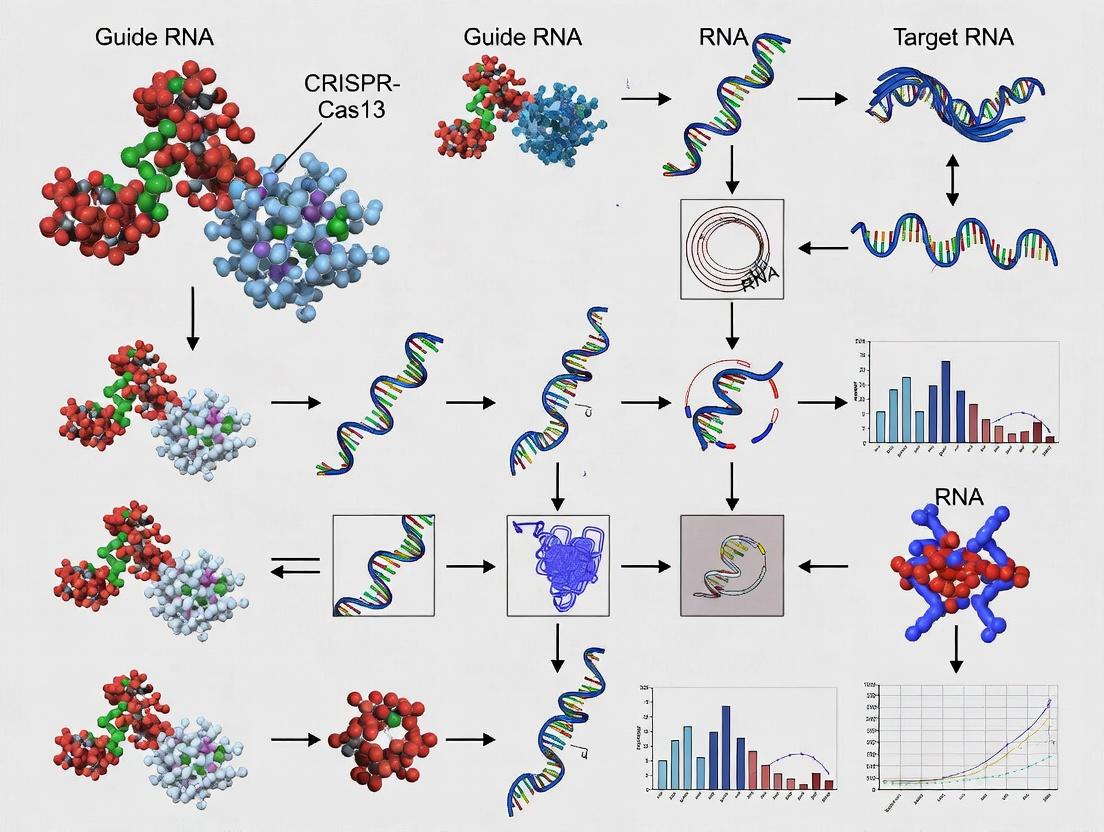
This article provides a comprehensive overview of CRISPR-Cas13 systems for targeted RNA manipulation, tailored for research scientists and drug development professionals.
CRISPR-Cas13: The Programmable RNA Editing Toolkit Revolutionizing Therapeutic Development
Abstract
This article provides a comprehensive overview of CRISPR-Cas13 systems for targeted RNA manipulation, tailored for research scientists and drug development professionals. It explores the foundational biology of Cas13 subtypes (e.g., Cas13a/d, Cas13b, Cas13X/Y), distinguishing them from DNA-targeting Cas9/Cas12. The methodological section details practical workflows for gRNA design, delivery systems (LNPs, AAVs), and key applications in transcript knockdown, RNA base editing (REPAIR, RESCUE), and viral RNA targeting. We address common troubleshooting challenges, including off-target effects, immunogenicity, and delivery optimization. Finally, the article validates Cas13's utility through comparative analysis with RNAi, antisense oligonucleotides (ASOs), and other RNA-editing platforms (ADARs), highlighting its unique advantages and current limitations. This guide synthesizes the current state of the field to empower researchers in developing next-generation RNA-targeted therapies.
From DNA to RNA: Demystifying CRISPR-Cas13 Biology and Mechanisms
Within the expanding toolkit for programmable RNA editing, the Cas13 family of RNA-targeting CRISPR-Cas systems has emerged as a cornerstone technology. Unlike DNA-targeting Cas9 or Cas12, Cas13 proteins are guided to single-stranded RNA transcripts, where they exhibit targeted RNase activity. This capability, particularly when engineered into catalytically inactive or modified forms, enables precise RNA manipulation without altering the genome, a key thesis for therapeutic and basic research applications. This document details the defining characteristics, comparative performance, and experimental protocols for the major Cas13 subtypes.
Key Characteristics and Applications
| Subtype | Prototype System | Size (aa) | Guide RNA (crRNA) Structure | Primary Cleavage Motif | Collateral Activity | Key Applications |
|---|---|---|---|---|---|---|
| Cas13a (C2c2) | Leptotrichia shahii (LshCas13a) | ~1250 | Direct repeat 5' of spacer | U-rich (prefers 3' of U) | High (ssRNA) | RNA knockdown, diagnostics (SHERLOCK), live-cell RNA imaging. |
| Cas13b | Prevotella sp. (PspCas13b) | ~1150 | Flanked by direct repeats | More permissive than Cas13a | Variable (lower than Cas13a) | RNA knockdown, base editing (REPAIR, RESCUE), transcriptomic imaging. |
| Cas13d | Ruminococcus flavefaciens (RfxCas13d) | ~930 | Minimal direct repeats | Highly permissive | Low to undetectable | In vivo RNA knockdown, multiplexed screening, therapeutic target validation. |
| Cas13X/Y | Engineered/Uncultivated | ~775-850 | Ultra-minimal | Permissive | Undetectable reported | In vivo therapeutic RNA editing due to compact size, favorable for AAV delivery. |
Quantitative Performance Metrics (Representative Data)
Table summarizing activity, specificity, and size data from recent literature.
| Metric | Cas13a (Lsh) | Cas13b (Psp) | Cas13d (Rfx) | Cas13X.1 |
|---|---|---|---|---|
| Knockdown Efficiency (in cells) | 50-80% | 70-90% | 80-95% | 60-85% |
| Relative Collateral Effect | High | Moderate | Low/None | None Reported |
| Protein Size (kB) | ~3.8 | ~3.5 | ~2.8 | ~2.4 |
| Optimal Temperature | 37°C | 37°C | 37°C | 37°C |
| PFS Requirement | 3' H (not G) | 5' D (not C), 3' N | None | None |
Experimental Protocols
Protocol: Mammalian Cell RNA Knockdown using RfxCas13d
Objective: To achieve specific transcript knockdown in HEK293T cells using RfxCas13d. Principle: Co-delivery of a plasmid expressing RfxCas13d and a crRNA expression cassette leads to formation of ribonucleoprotein complexes that cleave target mRNA.
Materials:
- Plasmid: pXR001-RfxCas13d (Addgene #109049).
- crRNA Cloning Oligos: Designed with target-specific 30nt spacer.
- Cells: HEK293T.
- Transfection Reagent: Lipofectamine 3000.
- Validation: RT-qPCR reagents.
Procedure:
- crRNA Construction: Clone annealed oligos into the BsmBI site of the crRNA expression vector (e.g., pUC19-U6-sgRfx).
- Cell Seeding: Seed 2e5 HEK293T cells per well in a 24-well plate 24h before transfection.
- Transfection: Co-transfect 250ng of pXR001-RfxCas13d and 250ng of crRNA plasmid using Lipofectamine 3000 per manufacturer's protocol.
- Incubation: Incubate cells for 48-72h at 37°C, 5% CO2.
- Harvest & Analysis: Extract total RNA. Perform cDNA synthesis followed by RT-qPCR for target and housekeeping genes (e.g., GAPDH). Calculate knockdown efficiency via ΔΔCt method.
Protocol: Cas13-based RNA Detection (SHERLOCKv2)
Objective: Sensitive, specific detection of RNA target using Cas13 collateral activity. Principle: Upon target recognition, activated Cas13 indiscriminately cleaves reporter RNA molecules, generating a fluorescent signal.
Materials:
- Purified Cas13 Protein: LwaCas13a, PspCas13b, or CcaCas13b.
- crRNA: Designed against target sequence.
- Reporter: Fluorescently quenched RNA reporter (e.g., FAM-UU-BHQ1).
- Isothermal Amplification Reagents: RPA or RT-RPA primers.
Procedure:
- Sample Amplification: Perform RT-RPA on extracted RNA sample for 30-45 min at 42°C to amplify target.
- Detection Reaction:
- Prepare a 10 µL reaction: 1x Reaction Buffer, 50nM Cas13 protein, 50nM crRNA, 50nM reporter, and 2 µL of amplified product.
- Incubate at 37°C for 30-60 min in a real-time PCR machine or plate reader.
- Data Collection: Monitor fluorescence (FAM, Ex/Em: 485/535 nm) every 2 min. A significant increase over negative control indicates target presence.
Visualization of Concepts and Workflows
Title: RfxCas13d-Mediated RNA Knockdown Workflow
Title: SHERLOCK RNA Detection Principle
The Scientist's Toolkit: Research Reagent Solutions
| Reagent / Material | Function / Purpose | Example Source/ID |
|---|---|---|
| pXR001-RfxCas13d | Mammalian expression vector for NLS-tagged RfxCas13d. Enables efficient nuclear RNA targeting. | Addgene #109049 |
| LwaCas13a Protein | Purified, active Cas13a protein for in vitro applications like SHERLOCK or biochemical assays. | Integrated DNA Technologies (IDT) |
| BsmBI-v2 Enzyme | High-fidelity restriction enzyme for cloning crRNA spacers into expression backbones. | New England Biolabs (NEB) |
| Fluorescent RNA Reporter | Quenched RNA oligonucleotide (e.g., FAM-UU-BHQ1). Cleaved by activated Cas13 to produce fluorescent signal. | Biosearch Technologies |
| Lipofectamine 3000 | High-efficiency transfection reagent for plasmid and RNP delivery into mammalian cell lines. | Thermo Fisher Scientific |
| RT-qPCR Kit (One-Step) | Enables quantitative analysis of RNA knockdown efficiency directly from cell lysates or RNA. | TaKaRa Bio |
| HybridRNA crRNA Synthesis Kit | For in vitro transcription of high-purity, specific crRNAs for use with recombinant Cas13 protein. | Trilink BioTechnologies |
| AAV-DJ/PhP.eB Serotype | Adeno-associated virus serotypes for efficient packaging and in vivo delivery of compact Cas13X/Y systems. | Vector Biolabs |
Application Notes
Within the broader thesis on CRISPR-Cas13 for programmable RNA editing, understanding the core mechanism of crRNA guidance and RNase-mediated cleavage is fundamental. Unlike DNA-targeting Cas9, the Cas13 family (e.g., Cas13a, Cas13d) are RNA-guided RNases that bind and cleave specific single-stranded RNA (ssRNA) targets. This mechanism enables precise RNA knockdown, imaging, and editing (via catalytically dead fusions) without altering the genome. Recent advancements focus on improving specificity to minimize collateral RNA cleavage, engineering variants with minimal protospacer flanking site (PFS) restrictions, and developing in vivo delivery systems for therapeutic applications.
Table 1: Key Characteristics of Common Cas13 Effectors
| Effector | Size (aa) | crRNA Length | PFS Requirement | Cleavage Pattern | Primary Applications |
|---|---|---|---|---|---|
| Cas13a (Lsh) | ~1250 | 64 nt | 3' H, U, A | Uracil-sensitive | RNA knockdown, diagnostics (SHERLOCK) |
| Cas13d (Rfx) | ~930 | 51 nt | None | Non-specific | In vivo RNA editing, high-specificity knockdown |
| Cas13b (Ber) | ~1150 | 66 nt | 5' D, 3' H | Adenine-sensitive | Multiplexed RNA targeting, base editing (REPAIR) |
Table 2: Quantitative Performance Metrics for Cas13d-mediated Knockdown
| Parameter | HEK293T Cells (in vitro) | Mouse Liver (in vivo) | Notes |
|---|---|---|---|
| Knockdown Efficiency | 85-95% | 50-70% | Measured by RNA-seq at 48-72h post-delivery. |
| On-target Specificity | High (≥98%) | Moderate-High | Improved by engineered, high-fidelity variants. |
| Collateral Activity | Low/Detectable | Low/Undetectable | Context-dependent; a key safety consideration. |
| Delivery Method | Lipid Nanoparticle (LNP) | AAV or LNP | AAV serotype and promoter choice critical for in vivo efficacy. |
Experimental Protocols
Protocol 1: Designing and Cloning crRNA Arrays for Multiplexed RNA Targeting
Objective: To construct a plasmid expressing a single transcript encoding multiple crRNAs targeting distinct RNA sequences. Materials: Target RNA sequences, CRISPR design software (e.g., ChopChop, CRISPick), oligonucleotides, BsmBI restriction enzyme, T4 DNA ligase, plasmid backbone (e.g., pC013 for Cas13d). Procedure:
- Design: For each target, design a 30-nt spacer sequence complementary to the target RNA, avoiding stable secondary structures. Select a Cas13d crRNA direct repeat (DR) sequence (e.g., 5'-GAUUUAGACUACCCCAAAAACGAAGGGGACUAAAAC-3').
- Oligo Synthesis: Synthesize oligonucleotides for each crRNA in the format: 5'- [BsmBI site]-DR-spacer-3'.
- Annealing & Phosphorylation: Anneal complementary oligos and phosphorylate using T4 PNK.
- Golden Gate Assembly: Perform a BsmBI-v2 Golden Gate assembly reaction: Mix 50 ng of linearized backbone with equimolar amounts of each annealed crRNA insert, 1µL BsmBI, 1µL T4 DNA ligase, and 1X T4 ligase buffer. Cycle: (37°C for 5 min, 20°C for 5 min) x 30 cycles, then 55°C for 5 min, 80°C for 10 min.
- Transformation & Validation: Transform into competent E. coli, isolate plasmid, and verify by Sanger sequencing across the array.
Protocol 2: Assessing RNA Knockdown and Specificity in Mammalian Cells
Objective: To measure on-target knockdown and transcriptome-wide off-target effects of a Cas13-crRNA complex. Materials: HEK293T cells, Cas13 expression plasmid (e.g., pC0046-EF1a-Cas13d-2xNLS), crRNA expression plasmid, transfection reagent (e.g., Lipofectamine 3000), TRIzol, qRT-PCR reagents, RNA-seq library prep kit. Procedure:
- Cell Transfection: Seed 2e5 cells/well in a 12-well plate. Co-transfect 500 ng Cas13 plasmid and 500 ng crRNA plasmid using lipid transfection. Include non-targeting crRNA control.
- RNA Harvest: At 48 hours post-transfection, lyse cells in TRIzol and extract total RNA.
- On-target Validation: Perform cDNA synthesis and qRT-PCR for the target gene and housekeeping controls (e.g., GAPDH). Calculate knockdown efficiency via the ΔΔCt method.
- Off-target Analysis: Prepare stranded RNA-seq libraries from 1 µg of total RNA per sample. Sequence on a platform yielding ≥20M paired-end reads per sample.
- Bioinformatics: Align reads to the reference genome (e.g., GRCh38). Use differential expression analysis (DESeq2) to compare targeting vs. control samples. Significant up/down-regulation of non-target transcripts indicates potential off-target effects.
Protocol 3: In vivo Delivery and Efficacy Testing of Cas13d Using AAV
Objective: To achieve tissue-specific RNA knockdown in a mouse model. Materials: AAV vectors (e.g., AAV8 expressing Cas13d under a liver-specific promoter and a separate U6-crRNA expression cassette), C57BL/6 mice, saline, syringes, tissue homogenizer. Procedure:
- AAV Preparation: Obtain high-purity (>1e13 vg/mL) AAV stocks.
- Animal Injection: Administer 1e11 vector genomes (vg) of each AAV (Cas13 + crRNA) via tail vein injection to 8-week-old mice (n=5 per group). Control group receives non-targeting crRNA AAV.
- Tissue Collection: Euthanize mice 4 weeks post-injection. Perfuse liver with cold PBS, excise, and snap-freeze in liquid N2.
- Analysis: Homogenize tissue. Extract RNA and protein. Assess knockdown by qRT-PCR and/or western blot for the target protein. Perform RNA-seq on liver RNA to evaluate specificity and collateral effects in vivo.
Diagrams
Title: Cas13 crRNA Guidance and Target RNA Cleavage
Title: In Vitro Cas13 Knockdown and Specificity Workflow
The Scientist's Toolkit
Table 3: Essential Research Reagent Solutions for Cas13 RNA Editing
| Item | Function & Brief Explanation | Example Product/Catalog |
|---|---|---|
| Cas13 Expression Plasmid | Drives expression of the Cas13 nuclease (wild-type or engineered) in cells. Often includes nuclear localization signals (NLS). | pC0046-EF1a-Cas13d-NLS (Addgene #138149) |
| crRNA Cloning Backbone | Plasmid with a U6 promoter for expression of single or arrayed crRNAs. Contains type VI-specific direct repeats. | pC013-sgRNA (Addgene #138150) |
| High-Fidelity Cas13 Variant | Engineered protein with reduced collateral RNase activity, crucial for therapeutic applications. | Cas13d.abe8e (high-fidelity mutant) |
| RNase Inhibitor | Protects RNA samples from degradation during extraction and handling, critical for accurate quantification. | Murine RNase Inhibitor (NEB) |
| Stranded RNA-seq Kit | For preparation of sequencing libraries that preserve strand information, enabling precise off-target mapping. | NEBNext Ultra II Directional RNA Library Prep Kit |
| Lipid Nanoparticles (LNPs) | For efficient in vitro and in vivo delivery of Cas13 mRNA and crRNA. | Custom-formulated LNPs or commercial transfection reagents. |
| AAV Serotype Vector | For safe, persistent in vivo delivery of Cas13 and crRNA genes to specific tissues (e.g., liver, CNS). | AAV8 (liver tropism), AAV9 (broad tropism) |
| Target RNA Positive Control | Synthetic RNA template containing the target sequence for in vitro validation of cleavage activity. | gBlock Gene Fragment (IDT) |
Cas13, a Class 2 Type VI CRISPR-associated protein, is distinguished by its exclusive targeting and manipulation of RNA, in contrast to the DNA-cleaving Cas9 (Type II) and Cas12 (Type V) systems. This application note, framed within a thesis on CRISPR-Cas13 for programmable RNA editing, details its fundamental distinctions and provides practical protocols for researchers in RNA biology and therapeutic development.
The table below summarizes the key quantitative and functional differences between Cas13, Cas9, and Cas12 systems.
Table 1: Comparative Properties of Cas9, Cas12, and Cas13 Systems
| Property | Cas9 (e.g., SpCas9) | Cas12 (e.g., LbCas12a/Cpf1) | Cas13 (e.g., LwaCas13a) |
|---|---|---|---|
| Target Nucleic Acid | DNA (dsDNA) | DNA (dsDNA) | RNA (ssRNA) |
| Guide Molecule | crRNA + tracrRNA (or sgRNA) | crRNA (single, no tracrRNA) | crRNA (single, no tracrRNA) |
| Protospacer Adjacent Motif (PAM) | PAM (e.g., 5'-NGG-3' for SpCas9) | PAM (e.g., 5'-TTTV-3' for LbCas12a) | Protospacer Flanking Site (PFS) - Minimal sequence preference (e.g., non-G 3' of target for LwaCas13a) |
| Cleavage Mechanism | Blunt-ended dsDNA break | Staggered dsDNA break with 5' overhangs | Collateral RNase Activity - Cleaves non-target ssRNA upon target binding |
| Primary Nuclease Domains | RuvC, HNH | RuvC-like | Two Higher Eukaryotes and Prokaryotes Nucleotide-binding (HEPN) domains |
| Key Applications | Gene knockout, knock-in, repression | DNA editing, diagnostics (DETECTR) | RNA knockdown, editing, imaging, diagnostics (SHERLOCK) |
Application Notes and Experimental Protocols
Protocol 1: Setup for Cas13d-mediated RNA Knockdown in Mammalian Cells
Objective: To achieve programmable degradation of a target mRNA using the compact Cas13d (e.g., RfxCas13d/CasRx) system.
Materials & Reagents:
- Plasmid expressing mammalian-codon-optimized Cas13d nuclease (e.g., pCAG-nCasRx).
- Plasmid expressing guide RNA (crRNA) under a U6 promoter, targeting your RNA sequence of interest.
- HEK293T or other relevant cell line.
- Transfection reagent (e.g., Lipofectamine 3000).
- RT-qPCR reagents for knockdown validation.
Procedure:
- Design crRNA: Identify a 22-30 nt target sequence in the mature mRNA transcript. Avoid regions with extensive secondary structure. No strict PFS is required for Cas13d.
- Clone crRNA: Synthesize oligonucleotides encoding the spacer, anneal, and clone into the BsmBI site of your gRNA expression plasmid.
- Cell Transfection: Seed cells in a 24-well plate. At 60-80% confluency, co-transfect 250 ng of Cas13d expression plasmid and 250 ng of gRNA plasmid using your transfection reagent per manufacturer's protocol. Include non-targeting gRNA and Cas13d-only controls.
- Harvest RNA: 48-72 hours post-transfection, harvest cells and isolate total RNA.
- Validation: Perform RT-qPCR to quantify remaining levels of the target mRNA relative to housekeeping genes (e.g., GAPDH, ACTB). Calculate percent knockdown.
Table 2: Typical Knockdown Efficiency (Cas13d)
| Target Gene | Cell Line | crRNA Efficiency (Screening) | Average Knockdown (%) | Time Point (h post-transfection) |
|---|---|---|---|---|
| EGFP mRNA | HEK293T | Top 3 of 5 designs | 85-95% | 72 |
| PPIB mRNA | HeLa | Top 2 of 4 designs | 70-80% | 48 |
Protocol 2: SHERLOCK (Specific High-sensitivity Enzymatic Reporter unLOCKing) for Nucleic Acid Detection
Objective: To detect specific RNA/DNA sequences using Cas13's collateral RNase activity.
Materials & Reagents:
- Purified LwaCas13a or PsmCas13b protein.
- In vitro transcribed crRNA targeting pathogen sequence (e.g., SARS-CoV-2 ORF1ab).
- Synthetic RNA target.
- Fluorescent quenched RNA reporter (e.g., FAM-UUUrU-BHQ1).
- Isothermal amplification reagents (RPA for DNA or RT-RPA for RNA).
- Fluorescence plate reader or lateral flow strip.
Procedure:
- Sample Preparation: Extract nucleic acid from sample. If starting with DNA, skip to step 2. For RNA, include a reverse transcription step.
- Isothermal Amplification: Perform Recombinase Polymerase Amplification (RPA) at 37-42°C for 15-30 min to amplify the target region. This step provides the substrate for Cas13.
- Cas13 Detection Reaction:
- Prepare reaction mix: 25 nM Cas13, 25 nM crRNA, 125 nM RNA reporter in appropriate buffer.
- Add 2 µL of the RPA amplicon to the reaction.
- Incubate at 37°C for 5-60 minutes.
- Readout: Measure fluorescence in real-time or at endpoint. Alternatively, for lateral flow readout, use a biotin-labeled reporter and FAM-biotin detection strips.
Table 3: SHERLOCK Assay Performance Data
| Target | Cas Protein | Amplification Method | Limit of Detection (LOD) | Time to Result |
|---|---|---|---|---|
| SARS-CoV-2 RNA | LwaCas13a | RT-RPA | ~10-100 copies/µL | ~60 minutes |
| Zika Virus RNA | PsmCas13b | RT-RPA | ~1-10 copies/µL | ~90 minutes |
| SNP Genotyping | LwaCas13a | RPA | ~10% allele fraction | ~45 minutes |
Visualizing Key Distinctions and Workflows
Diagram 1: Cas9/12 vs Cas13 Mechanism & Outcome
Diagram 2: Cas13 RNA Knockdown Experimental Workflow
The Scientist's Toolkit: Essential Research Reagent Solutions
Table 4: Key Reagents for Cas13 Research & Development
| Reagent / Material | Provider Examples | Key Function in Cas13 Applications |
|---|---|---|
| Purified Cas13 Protein (LwaCas13a, PsmCas13b, RfxCas13d) | IDT, BioLabs, Thermo Fisher | Core enzyme for in vitro assays (SHERLOCK) and for biochemical characterization. |
| Mammalian Cas13d (CasRx) Expression Plasmid | Addgene (plasmid #109049) | Ready-to-use vector for high-efficiency RNA knockdown in mammalian cells. |
| crRNA Cloning Vector (U6 promoter) | Addgene, Custom synthesis | Backbone for expressing guide RNAs in mammalian or other eukaryotic systems. |
| Fluorescent Quenched RNA Reporter (FAM-UUUrU-BHQ1) | IDT, Sigma-Aldrich | Substrate for detecting collateral cleavage activity in diagnostic and biochemical assays. |
| Recombinase Polymerase Amplification (RPA) Kit | TwistDx | For rapid, isothermal amplification of target sequences prior to Cas13 detection (SHERLOCK). |
| dCas13-ADAR Fusion Constructs | Addgene, Custom build | For precise RNA base editing (e.g., A-to-I conversion) without cleavage. |
| RNase Inhibitors (Murine, Human) | Thermo Fisher, NEB | Critical for preventing non-specific RNA degradation during sample prep and reaction assembly. |
| Nuclease-free Buffers & Water | Ambion, Sigma-Aldrich | Essential for all RNA-centric experiments to maintain integrity of RNA guides, targets, and products. |
Application Notes
Within the broader thesis on CRISPR-Cas13 for programmable RNA editing, the Cas13 family (e.g., Cas13d, Cas13b) represents a paradigm shift from permanent DNA editing to transient RNA targeting. Unlike CRISPR-Cas9, which creates irreversible genomic double-strand breaks, Cas13 is an RNA-guided ribonuclease that achieves reversible, catalytic RNA knockdown without altering the genome. This mechanism offers significant advantages for therapeutic and research applications where transient modulation is desired, such as in functional genomics, antiviral defense, and treatment of conditions driven by transient gene expression or RNA viruses.
Key advantages include:
- Reversibility & Safety: Effects are transient as Cas13 cleaves only target RNA molecules, allowing gene expression to return to baseline over time as new RNA is transcribed, reducing off-target genomic concerns.
- Catalytic Efficiency: A single Cas13-crRNA complex can cleave multiple target RNA molecules in trans, providing potent knockdown without high stoichiometric requirements.
- Subcellular Targeting: Engineered variants can be directed to specific organelles (e.g., mitochondria, cytoplasm) to manipulate localized transcript pools.
- Multiplexing: Single crRNA arrays enable simultaneous knockdown of multiple RNA targets, facilitating network biology studies.
Protocols
Protocol 1: In Vitro Validation of Cas13d Knockdown Efficiency Using a Dual-Luciferase Reporter Assay
Objective: To quantitatively assess the RNA cleavage activity and specificity of a Cas13d system in vitro.
Materials: See Research Reagent Solutions table.
Method:
- crRNA Design & Synthesis: Design a 28-30 nt spacer sequence complementary to the target region within the Renilla luciferase (Rluc) reporter transcript. Include direct repeat sequences (DR) flanking the spacer. Order as an oligo and clone into a suitable expression plasmid or order as a synthetic crRNA.
- Plasmid Co-transfection: In a 24-well plate, seed 5 x 10⁴ HEK293T cells per well. After 24 hours, co-transfect using a suitable transfection reagent:
- Group 1 (Test): 250 ng Cas13d expression plasmid (e.g., pXR001: EF1a-Cas13d-2xNLS) + 250 ng crRNA expression plasmid (U6-crRNA) + 250 ng psicheck2-Rluc-target (firefly luciferase, Fluc, as internal control).
- Group 2 (Control): 250 ng Cas13d plasmid + 250 ng non-targeting crRNA plasmid + 250 ng psicheck2 reporter.
- Group 3 (Baseline): 500 ng empty vector + 250 ng psicheck2 reporter.
- Assay & Analysis: 48 hours post-transfection, lyse cells and measure Fluc and Rluc activities using a dual-luciferase assay kit. Normalize Rluc activity to Fluc activity for each well. Calculate % knockdown relative to the non-targeting control group.
Table 1: Representative In Vitro Knockdown Data
| Target Gene (Reporter) | Cas13 Variant | crRNA Spacer Length (nt) | Normalized Rluc/Fluc Ratio (Mean ± SD) | % Knockdown | n |
|---|---|---|---|---|---|
| Rluc (Positive Control) | Cas13d (RfxCas13d) | 30 | 0.15 ± 0.03 | 85% | 6 |
| Rluc (Positive Control) | Cas13d (RfxCas13d) | 28 | 0.22 ± 0.04 | 78% | 6 |
| Non-targeting Control | Cas13d (RfxCas13d) | 30 | 1.00 ± 0.12 | 0% | 6 |
| Fluc (Off-target Check) | Cas13d (RfxCas13d) | 30 | 0.98 ± 0.10 | 2% | 6 |
Protocol 2: Reversible Knockdown Kinetics in a Live-Cell System
Objective: To monitor the onset, peak, and recovery of RNA knockdown over time.
Method:
- Stable Cell Line Generation: Create a cell line stably expressing both the Cas13d protein (under a doxycycline-inducible promoter) and a GFP reporter transcript containing the target sequence in its 3' UTR.
- Induction & Time-Course: Induce Cas13d expression with 1 µg/mL doxycycline. Simultaneously, induce crRNA expression (if using an inducible system) or transfect synthetic crRNA.
- Sampling: At defined time points (e.g., 0, 12, 24, 48, 72, 96, 120 hours post-induction), harvest triplicate samples.
- Analysis:
- Flow Cytometry: Measure GFP mean fluorescence intensity (MFI).
- qRT-PCR: Isolate RNA, perform reverse transcription, and quantify target GFP mRNA levels relative to a housekeeping gene (e.g., GAPDH).
- Data Fitting: Plot % mRNA remaining or % GFP MFI over time. Use nonlinear regression to estimate the time to 50% knockdown (T₅₀⁽ᵏⁿᵒᶜᵏ⁾) and time to 50% recovery (T₅₀⁽ʳᵉᶜᵒᵛᵉʳʸ⁾) after Cas13d induction ceases.
Table 2: Kinetics of Reversible Knockdown (Representative Data)
| Target Transcript | Peak Knockdown (% mRNA remaining) | T₅₀⁽ᵏⁿᵒᶜᵏ⁾ (hours) | Time to Washout/Cessation (hours) | T₅₀⁽ʳᵉᶜᵒᵛᵉʳʸ⁾ (hours) | Full Recovery (to >90% baseline) |
|---|---|---|---|---|---|
| GFP-N1 | 25% ± 5% | 18 | 48 | 40 | ~96 hours |
| SARS-CoV-2 ORF1a (in vitro model) | 15% ± 3% | 12 | 24 | 28 | ~72 hours |
Diagrams
Title: Catalytic RNA Knockdown & Reversal Mechanism
Title: In Vitro Cas13 Knockdown Validation Workflow
The Scientist's Toolkit: Research Reagent Solutions
| Reagent/Material | Function & Critical Notes |
|---|---|
| RfxCas13d (CasRx) Expression Plasmid (e.g., pXR001) | Mammalian expression vector for the compact, efficient Cas13d ortholog. Often includes nuclear localization signals (NLS) for proper trafficking. |
| U6-crRNA Cloning Vector (e.g., pU6-RfxCas13d-crRNA) | Vector for expressing crRNA from a U6 RNA Pol III promoter. Allows simple insertion of spacer sequences via golden gate or oligo annealing. |
| Synthetic, Chemically Modified crRNA | Pre-designed, HPLC-purified crRNA with 2'-O-methyl or phosphorothioate backbone modifications to enhance serum stability for in vivo or hard-to-transfect cell studies. |
| Dual-Luciferase Reporter System (e.g., psiCHECK2) | Vector containing Renilla (target) and Firefly (normalization) luciferase genes. Essential for quantitative, high-throughput knockdown efficiency screening. |
| CRISPR-Cas13 Knockdown Positive Control Kit (e.g., GFP-targeting crRNA + GFP reporter) | Validated control set to benchmark system performance and optimize delivery/assay conditions in a new cell type. |
| RNA Clean-Up Kit with DNase I | For high-quality RNA isolation post-knockdown, critical for downstream qRT-PCR analysis to measure endogenous transcript levels. |
| Cas13-Validated NEGATIVE CONTROL crRNA | A scrambled or non-targeting crRNA with no known homology to the host transcriptome. Mandatory for distinguishing specific from nonspecific effects. |
| Cell Line with Doxycycline-Inducible Cas13d | Enables precise temporal control over Cas13d expression, crucial for kinetic studies of knockdown and recovery. |
The CRISPR-Cas13 system, derived from the adaptive immune mechanisms of bacteria and archaea, has been repurposed as a highly specific, programmable RNA-targeting tool. Unlike DNA-editing Cas9 systems, Cas13 enzymes (e.g., Cas13a, Cas13b, Cas13d) bind and cleave single-stranded RNA, offering powerful applications in RNA knockdown, imaging, tracking, and base editing (via catalytically inactive dCas13 fused to effectors like ADAR2). This programmable RNA interference capability is transformative for functional genomics studies, therapeutic development for RNA viruses, and correction of disease-causing alleles at the transcript level without genomic alteration. The following notes and protocols are framed within a research thesis aiming to develop robust, high-specificity CRISPR-Cas13 platforms for programmable RNA editing in mammalian cells.
Table 1: Comparison of Common Cas13 Orthologs for Mammalian RNA Targeting
| Ortholog | Size (aa) | PFS Requirement* | Cleavage Activity | Primary Reference (Year) | Reported On-Target Efficiency Range (Mammalian Cells) | Reported Off-Target Effect Profile |
|---|---|---|---|---|---|---|
| LwaCas13a | 968 | 3' H, A, U | High | Abudayyeh et al., 2017 | 50-90% knockdown | Moderate; collateral activity reported in vitro |
| PspCas13b | 1120 | 3' D (not C) | Very High | Smargon et al., 2017 | 60-95% knockdown | Lower collateral; high specificity variants engineered |
| RfxCas13d | 967 | None | High | Konermann et al., 2018 | 70-98% knockdown | Minimal collateral; preferred for in vivo applications |
| Cas13X.1 | 775-850 | None | Moderate | Xu et al., 2021 | 40-80% knockdown | Compact size; engineered for improved specificity |
*PFS: Protospacer Flanking Site. H= A,C,U; D= A,G,U.
Table 2: Performance Metrics of Cas13-Based RNA Editing (REPAIRv2 & RESCUE Systems)
| System | Cas13 Fusion | Target Base Change | Editing Efficiency Range (HEK293T) | Precision (Key Off-Target Metric) | Primary Application |
|---|---|---|---|---|---|
| REPAIRv2 | dPspCas13b-ADAR2dd | A-to-I (A→G) | 20-40% (on endogenous transcripts) | >10,000:1 (A-to-I vs. C-to-U) | Correcting G-to-A point mutations. |
| RESCUE | dPspCas13b-ADAR2dd (E488Q) | C-to-U (via A-to-I on anticodon) | 10-30% | Lower than REPAIR; requires optimized guides | Expanding editable bases for metabolic pathway modulation. |
Experimental Protocols
Protocol 3.1: Mammalian Cell Knockdown Using RfxCas13d (Lentiviral Delivery)
Objective: Achieve robust, specific RNA knockdown in HEK293T cells. Materials: See "The Scientist's Toolkit" (Section 5). Procedure:
- Guide RNA Design & Cloning:
- Design 3-5 crRNAs targeting distinct regions of the transcript of interest. Avoid introns and highly structured regions if possible.
- Order oligos:
5'-[Target-specific 22-30 nt]-GTTTAAGAGCTATGCTGGAAAC-3'. - Anneal and clone into the BsmBI site of lentiviral guide expression vector (e.g., lentiGuide-Puro with a U6 promoter).
- Lentivirus Production:
- In a 6-well plate, co-transfect HEK293T cells with:
- 0.5 µg psPAX2 (packaging plasmid)
- 0.25 µg pMD2.G (VSV-G envelope plasmid)
- 0.75 µg lenti-Cas13d (EF1a promoter) or lenti-dCas13d-effector
- 0.5 µg lenti-guide RNA plasmid
- Using 6 µL of polyethylenimine (PEI) in OPTI-MEM.
- Replace medium after 6-8 hours.
- Harvest viral supernatant at 48 and 72 hours post-transfection, filter through a 0.45 µm filter.
- In a 6-well plate, co-transfect HEK293T cells with:
- Transduction and Selection:
- Incubate target cells with viral supernatant + 8 µg/mL polybrene for 24h.
- 48h post-transduction, begin selection with 2 µg/mL puromycin (for guide plasmid selection) or appropriate antibiotic for Cas13 plasmid. Maintain selection for 5-7 days.
- Knockdown Validation:
- Harvest cells 7-10 days post-transduction.
- Extract total RNA, perform reverse transcription, and analyze target RNA levels via qPCR normalized to housekeeping genes (e.g., GAPDH, ACTB).
- For single-cell analysis, perform RNA-FISH or single-cell RNA sequencing.
Protocol 3.2: A-to-I RNA Editing Using dCas13b-ADAR2dd (REPAIRv2 System)
Objective: Site-specific adenosine-to-inosine editing on a native mRNA transcript. Procedure:
- System Assembly:
- Obtain REPAIRv2 plasmid (Addgene #132923): dPspCas13b-ADAR2dd(E488Q) under a CMV promoter, with guide RNA expressed from a U6 promoter.
- crRNA Design for Editing:
- Design crRNA such that the target adenosine is positioned within bases 4-8 of the spacer sequence (5' end of the spacer). A 3' D (A,G,U) PFS is required for PspCas13b.
- Cell Transfection:
- Seed HEK293T cells in a 24-well plate to reach 70-80% confluency at transfection.
- Transfect 500 ng of REPAIRv2 plasmid and 200 ng of guide RNA plasmid (if separate) using 2 µL of Lipofectamine 3000 per manufacturer's protocol.
- Harvest and Analysis:
- 72 hours post-transfection, harvest cells for RNA extraction.
- Perform RT-PCR on the region of interest.
- Quantify editing efficiency by Sanger sequencing (trace decomposition analysis) or next-generation amplicon sequencing.
- Critical Control: Include a transfection with a catalytically dead ADAR mutant (E488A) to confirm editing is enzyme-dependent.
Diagrams and Visualizations
Diagram Title: Lentiviral RfxCas13d Knockdown Workflow
Diagram Title: dCas13b-ADAR2dd Mediated A-to-I RNA Editing Mechanism
The Scientist's Toolkit: Essential Research Reagent Solutions
Table 3: Key Reagents for CRISPR-Cas13 RNA Editing Research
| Reagent/Category | Example Product/Supplier | Function in Experiment | Critical Notes |
|---|---|---|---|
| Cas13 Expression Plasmids | lentiRfxCas13d (Addgene #138154), pC0043-PspCas13b (Addgene #103854) | Provides mammalian-codon optimized Cas13/dCas13 under appropriate promoter (EF1a, CMV). | Choose based on ortholog properties (size, PFS, activity). |
| Guide RNA Cloning Vectors | lentiGuide-Puro (U6 promoter, Addgene #52963) modified for Cas13 scaffold | Enables stable, high-expression of crRNA with correct scaffold for chosen Cas13. | Must match scaffold sequence (e.g., direct repeat) for the specific Cas13 ortholog. |
| Lentiviral Packaging Mix | psPAX2 (Addgene #12260), pMD2.G (Addgene #12259) | Second-generation packaging plasmids for production of VSV-G pseudotyped lentivirus. | Essential for efficient delivery in hard-to-transfect cells. |
| RNA Editing Effector Plasmid | REPAIRv2 (Addgene #132923) | All-in-one plasmid expressing dPspCas13b-ADAR2dd(E488Q) fusion and guide RNA. | Gold standard for A-to-I editing; includes specificity-enhancing mutation. |
| Transfection Reagent | Lipofectamine 3000 (Thermo Fisher), PEIpro (Polyplus) | For plasmid delivery in standard cell lines (HEK293T). | Optimize ratio for each cell line. PEI is cost-effective for lentiviral production. |
| Detection & Validation | LunaScript RT SuperMix Kit (NEB), Sanger/Next-Gen Sequencing | Confirm RNA knockdown (qPCR) or precise base editing (sequencing). | Amplicon-seq is gold standard for quantifying editing efficiency and off-targets. |
| Cell Line | HEK293T/17 (ATCC CRL-11268) | Standard workhorse for protocol optimization, transfection, and virus production. | Easily transfectable, robust growth, high lentiviral titers. |
A Practical Guide to Designing and Deploying Cas13 Systems for Research and Therapy
Within the broader thesis on CRISPR-Cas13 for programmable RNA editing, the design of the guide RNA (gRNA) is the single most critical determinant of experimental success. Unlike DNA-targeting Cas9, Cas13 systems (e.g., Cas13a/d, Cas13b) bind and cleave single-stranded RNA, offering reversible, tunable gene knockdown without genomic alteration. Strategic gRNA design for Cas13 must balance potent on-target efficiency against the risk of collateral RNAse activity and off-target binding, which can confound research results and therapeutic applications. This document outlines current principles, quantitative data, and protocols for designing high-performance Cas13 gRNAs.
Core Principles of Cas13 gRNA Design
Cas13 gRNA design diverges significantly from Cas9 paradigms. Key considerations include:
- Target Region Accessibility: Secondary and tertiary RNA structures can occlude the target site. Design must consider the native folding of the transcript.
- Specificity & Off-Target Minimization: Mismatch tolerance varies by Cas13 ortholog. gRNAs must be screened against the entire transcriptome to avoid unintended binding, especially in regions of high homology.
- Sequence Composition: Specific nucleotide preferences and restrictions exist near the Protospacer Flanking Site (PFS) and within the spacer sequence.
- Collateral Activity Mitigation: High-efficiency guides can induce robust collateral cleavage. For precise applications, guides with moderate efficiency but high specificity may be preferable.
Quantitative Design Parameters
The following table summarizes critical parameters for two common Cas13 orthologs, based on recent empirical studies.
Table 1: Comparative Design Rules for Common Cas13 Orthologs
| Parameter | Cas13a (LwaCas13a, LshCas13a) | Cas13b (PspCas13b, RfxCas13d) | Rationale & Impact on Efficiency/Specificity |
|---|---|---|---|
| Spacer Length | 28-30 nt | 30 nt (Rfx) | Optimal length ensures stable Cas13-gRNA complex formation. Deviations reduce activity. |
| PFS Requirement | 3' end of target must be A, U, or C (No 3' G). | Minimal requirement; some variants prefer 5' D (A/G/U). | A strict PFS for Cas13a limits targetable sites but enhances specificity. Cas13d's flexibility increases target range. |
| Nucleotide Bias | Avoid G in first 5 nt of spacer. Enrichment of A/U in seed region (positions 3-10). | Avoid >4 consecutive Gs. Preference for U-rich spacers. | G-rich starts can reduce activity. Seed region composition is critical for initial target recognition and mismatch sensitivity. |
| Off-Target Tolerance | Low tolerance for mismatches in seed region (pos. 2-8). Tolerates mismatches in 3' end. | High specificity; mismatches, especially in central seed region, drastically reduce cleavage. | Guides with unique seed sequences dramatically lower off-target risk. |
| Optimal GC Content | 30-70% | 40-60% | Extremely low or high GC content can impair binding kinetics and specificity. |
Experimental Protocol: In Silico gRNA Design & Screening Workflow
Protocol Title: Comprehensive Computational Pipeline for High-Specificity Cas13 gRNA Selection
Objective: To design and rank candidate gRNAs against a target RNA transcript for maximal on-target efficiency and minimal off-target potential.
Materials & Reagent Solutions:
- Target Transcript Sequence: FASTA file for the gene of interest, including relevant isoforms.
- Reference Transcriptome: A comprehensive transcriptome FASTA file (e.g., from Ensembl, RefSeq) for the relevant species and cell type.
- Software/Platforms: Local command-line tools (e.g.,
bowtie2,RNAfold) or cloud-based platforms (e.g., Chop-Chop, CRISPick). - High-Performance Computing Access: For genome-wide alignment and folding predictions.
Procedure:
- Target Region Definition: Input the full-length cDNA sequence of your target transcript. Define the coding region or functional domain you wish to target. Avoid the first and last 50-100 nt of the coding sequence to miss translational start/stop machinery.
- Candidate gRNA Generation: a. Using a scripting language (Python, Perl), slide a window (28-30 nt) across the target region. b. Apply ortholog-specific filters from Table 1 (e.g., for Cas13a, discard all windows with a 3' G PFS).
- On-Target Efficiency Prediction:
a. For each passing spacer, extract its sequence.
b. Predict local target site accessibility using
RNAfold(ViennaRNA Package) to calculate the Minimum Free Energy (MFE) of the secondary structure for a 60-80 nt window centered on the spacer. Rank guides by low MFE (more open/unstructured region). c. Score nucleotide composition based on empirical rules (e.g., reward A/U in seed, penalize G at start). - Genome-Wide Off-Target Screening:
a. Build an indexed reference of the transcriptome using
bowtie2-build. b. Align each candidate gRNA spacer sequence against the transcriptome index usingbowtie2in--localmode with high sensitivity settings (-D 20 -R 3 -N 0 -L 10 -i S,1,0.50). c. Parse alignment output to count potential off-targets. Impose strict penalties for mismatches in the seed region (pos. 2-8). Guides with zero off-targets bearing ≤2 mismatches in the seed are prioritized. - Final Ranking and Selection: a. Generate a composite score for each guide: (Accessibility Score * 0.5) + (Sequence Composition Score * 0.3) - (Off-Target Penalty Score * 0.2). b. Select the top 3-5 ranked gRNAs for in vitro validation. Always include at least one gRNA targeting a different region as a biological replicate.
The Scientist's Toolkit
Table 2: Essential Reagents & Resources for Cas13 gRNA Design & Validation
| Item | Function & Application |
|---|---|
| Synthetic gRNA or crRNA | Chemically synthesized, precision-guide RNA for rapid in vitro or cellular testing. High-purity, modification-ready (e.g., 3' TT overhangs for Cas13a). |
| IVT Template DNA Oligos | DNA oligonucleotides containing a T7 promoter sequence followed by the gRNA scaffold and a cloning site for the spacer. For inexpensive, high-yield in vitro transcription (IVT) of gRNAs. |
| T7 RNA Polymerase Kit | High-yield RNA synthesis kit for producing large amounts of gRNA for biochemical assays or microinjection. |
| RNase Inhibitor (e.g., RNasin) | Essential for all RNA handling steps to prevent degradation of gRNAs and target RNA. |
| Nuclease-Free Duplex Buffer | For annealing crRNA to direct Cas13 protein in vitro to form the functional ribonucleoprotein (RNP) complex. |
| Fluorescent RNA Reporter (e.g., RNAse Alert) | A quenched fluorescent RNA substrate used in in vitro cleavage assays to measure Cas13 collateral activity and guide efficiency kinetically. |
| In Vitro Transcribed Target RNA | Unlabeled or fluorescently labeled RNA substrate containing the target sequence. For direct measurement of on-target cleavage via gel electrophoresis. |
| Next-Generation Sequencing (NGS) Library Prep Kit | For transcriptome-wide profiling (e.g., RNA-seq) to experimentally assess on-target knockdown and genome-wide off-target effects in cells. |
Visualization of Workflows
Title: Cas13 gRNA Design Pipeline
Title: Cas13 RNA Targeting & Collateral Cleavage
Within the burgeoning field of programmable RNA editing, particularly using CRISPR-Cas13 systems, the efficient and safe delivery of editor components (e.g., Cas13 ribonucleoprotein, mRNA, or guide RNA) into target cells in vivo is a paramount challenge. This application note details three leading delivery platforms—Lipid Nanoparticles (LNPs), Adeno-Associated Viruses (AAVs), and Virus-Like Particles (VLPs)—providing comparative data, detailed protocols, and essential toolkits for researchers.
Quantitative Comparison of Delivery Platforms
The following table summarizes key characteristics of each vehicle for RNA editor delivery.
Table 1: Comparative Analysis of RNA Editor Delivery Vehicles
| Feature | Lipid Nanoparticles (LNPs) | Adeno-Associated Viruses (AAVs) | Virus-Like Particles (VLPs) |
|---|---|---|---|
| Primary Cargo | mRNA, RNPs, gRNA | DNA (expressing Cas13/gRNA) | Pre-assembled RNPs, mRNA |
| Packaging Capacity | High (~10,000 nt for mRNA) | Limited (~4.7 kb max) | Moderate (~5 kb protein/RNA) |
| Immunogenicity | Low to moderate (dose-dependent) | High (pre-existing & acquired immunity) | Low (no viral genome) |
| Production Timeline | Rapid (days to weeks) | Slow (months for high-titer production) | Moderate (weeks) |
| Tropism | Adjustable via lipid composition | Determined by serotype capsid | Tunable via surface engineering |
| Duration of Effect | Transient (days to weeks) | Persistent (months to years) | Transient (days to a week) |
| Key Advantage | Scalability, tunability, low immunogenicity | Long-lasting expression | High efficiency, low immunogenicity |
| Key Limitation | Potential liver tropism, transient | Limited cargo size, immunogenicity | Complex manufacturing, transient |
| In Vivo Editing Efficiency (Liver) | 40-60% (mRNA cargo) | 20-50% (subject to serotype) | 30-70% (RNP cargo) |
Detailed Application Protocols
Protocol: Formulation of LNPs for Cas13 mRNA/gRNA Delivery
This protocol outlines the microfluidic mixing method for encapsulating Cas13 mRNA and guide RNA.
Materials:
- Ethanol-soluble ionizable lipid (e.g., DLin-MC3-DMA), cholesterol, DSPC, DMG-PEG-2000.
- Cas13 mRNA and chemically modified gRNA in 10 mM citrate buffer (pH 4.0).
- Microfluidic mixer (e.g., NanoAssemblr) and syringes.
- Dialysis cassettes (MWCO 3.5 kDa).
Procedure:
- Prepare Lipid Mix: Dissolve ionizable lipid, cholesterol, DSPC, and PEG-lipid at a molar ratio of 50:38.5:10:1.5 in ethanol to a final concentration of 12.5 mM total lipid.
- Prepare Aqueous Phase: Combine Cas13 mRNA and gRNA at the desired molar ratio in 10 mM citrate buffer (pH 4.0).
- Microfluidic Mixing: Load the lipid (organic) and RNA (aqueous) phases into separate syringes. Pump both phases into a standard staggered herringbone microfluidic mixer at a total flow rate of 12 mL/min and a flow rate ratio (aqueous:organic) of 3:1.
- Buffer Exchange: Immediately dilute the formed LNP mixture 5x with 1x PBS (pH 7.4). Concentrate using tangential flow filtration or centrifugal filters (100 kDa MWCO).
- Dialysis: Dialyze the concentrated LNPs against 1x PBS (pH 7.4) for 18 hours at 4°C to remove residual ethanol.
- Characterization: Measure particle size and PDI via DLS, RNA encapsulation efficiency using a Ribogreen assay, and sterility.
Protocol: Production of AAVs Encoding Cas13 System
This protocol describes HEK293 cell transfection for AAV production.
Materials:
- HEK293T cells, PEI-Max transfection reagent.
- Three plasmids: Rep/Cap plasmid (serotype of choice), adenoviral helper plasmid, and ITR-flanked transgene plasmid encoding Cas13 and gRNA expression cassettes (total < 4.7 kb).
- Iodixanol gradient solutions (15%, 25%, 40%, 60%).
Procedure:
- Cell Seeding: Seed HEK293T cells in hyperflasks or cell factories to reach 70% confluency at transfection.
- Transfection: For 1 L of culture, mix the three plasmids at a 1:1:1 molar ratio in serum-free medium. Add PEI-Max at a 3:1 PEI:DNA ratio, incubate 15 min, and add to cells.
- Harvest: 72 hours post-transfection, harvest cells and media. Pellet cells via centrifugation. Lyse cell pellet via freeze-thaw and Benzonase treatment to release AAV particles.
- Purification: Clarify the lysate by centrifugation. Purify AAVs from the supernatant by iodixanol density gradient ultracentrifugation (e.g., 38,000 rpm for 2 hours in a Type 70 Ti rotor).
- Collection & Buffer Exchange: Collect the opaque band at the 40-60% iodixanol interface. Desalt into PBS using PD-10 columns or dialysis. Concentrate using centrifugal concentrators (100 kDa MWCO).
- Titration: Determine genomic titer (vg/mL) via qPCR with primers against the transgene or ITR region.
Protocol: Assembly of VLPs for Cas13 RNP Delivery
This protocol describes the production of MS2 bacteriophage-based VLPs loaded with Cas13-gRNA RNP.
Materials:
- Plasmids for E. coli expression: MS2 coat protein (CP) fused to RNA-binding motif (e.g., λN) and Cas13 protein (with nuclear export signal, NES).
- E. coli BL21(DE3) cells, IPTG.
- Sucrose cushion (20% w/v in PBS).
- Purified, in vitro transcribed gRNA containing the MS2 stem-loop recognition sequence.
Procedure:
- Protein Expression: Transform E. coli with the MS2-λN plasmid. Induce expression with 0.5 mM IPTG at OD600 ~0.6 for 4-6 hours at 37°C.
- VLP Assembly & Purification: Lyse cells by sonication. Assemble VLPs in vitro by incubating purified MS2-λN CP and gRNA (with MS2 loops) in assembly buffer (50 mM Tris, 100 mM NaCl, pH 7.5) for 1 hour at 25°C.
- RNP Loading: Purify Cas13-NES protein. Incubate pre-assembled MS2 VLPs (containing gRNA) with Cas13 protein to form the complete RNP inside the VLP.
- Purification: Layer the VLP-RNP mixture over a 20% sucrose cushion and ultracentrifuge at 150,000 x g for 4 hours. Resuspend the pellet in PBS.
- Characterization: Analyze size by TEM and DLS. Confirm RNP incorporation by SDS-PAGE and western blot for Cas13. Assess nuclease activity via in vitro cleavage assay.
Visualized Workflows and Pathways
Title: Delivery Pathways for RNA Editors
Title: Vehicle Selection Decision Tree
The Scientist's Toolkit
Table 2: Essential Research Reagents for RNA Editor Delivery
| Reagent/Material | Function in Delivery Research | Example Supplier/Catalog |
|---|---|---|
| Ionizable Cationic Lipids | Core component of LNPs; enables nucleic acid encapsulation and endosomal escape. | Echelon Biosciences, Avanti Polar Lipids (DLin-MC3-DMA) |
| AAV Serotype Capsid Plasmids | Determines tissue tropism and transduction efficiency of AAV vectors. | Addgene (pAAV2/8, pAAV2/9), Vigene Biosciences |
| MS2 Bacteriophage Coat Protein | Scaffold protein for assembly of RNA-targeting VLPs; can be fused to RNA-binding domains. | MilliporeSigma, in-house expression plasmid |
| Benzonase Nuclease | Degrades unpackaged nucleic acids during AAV/VLP purification to reduce contaminants. | MilliporeSigma (E1014) |
| Ribogreen/Quant-iT RNA Assay | Quantifies RNA encapsulation efficiency in LNPs or VLPs. | Thermo Fisher Scientific (R11490) |
| Polyethylenimine (PEI-Max) | High-efficiency transfection reagent for AAV production in HEK293 cells. | Polysciences (24765) |
| Iodixanol (OptiPrep) | Used for density gradient ultracentrifugation to purify AAVs with high infectivity. | Sigma-Aldrich (D1556) |
| Microfluidic Mixer (NanoAssemblr) | Enables reproducible, scalable formulation of LNPs with narrow polydispersity. | Precision NanoSystems |
| Size Exclusion Chromatography Columns | For final polishing and buffer exchange of AAVs/VLPs to remove aggregates. | Cytiva (Superose 6 Increase) |
| Cas13 Protein (with NES/NLS tags) | The active editor component for RNP delivery via VLPs or for in vitro assays. | IDT, Thermo Fisher, in-house purification |
Programmable transcript knockdown using CRISPR-Cas13 is a cornerstone application in RNA-targeting CRISPR systems. Unlike DNA-editing CRISPR-Cas9, Cas13 (e.g., subtypes RfxCas13d/CasRx, PspCas13b, LwaCas13a) binds and cleaves specific RNA sequences via a CRISPR RNA (crRNA) guide, leading to transcript degradation without altering the genome. This application is pivotal in functional genomics for probing gene function, modeling disease-associated splice variants, and identifying potential therapeutic targets by inducing transient, reversible knockdowns. Its precision and programmability offer advantages over RNAi, including reduced off-target effects and high multiplexing capability. This note details protocols and considerations for implementing Cas13-mediated knockdown in mammalian cell culture.
Research Reagent Solutions: Essential Toolkit
| Reagent/Material | Function & Explanation |
|---|---|
| Cas13 Expression Vector | Plasmid or viral vector (lentivirus, AAV) expressing a mammalian-codon-optimized Cas13 nuclease (e.g., RfxCas13d). Serves as the catalytic effector. |
| crRNA Expression Construct | Vector expressing the targeting guide RNA, often as part of a Pol III transcript (U6 promoter). The spacer sequence (∼22-30 nt) defines target specificity. |
| Positive Control crRNA | A validated guide targeting a housekeeping gene (e.g., GAPDH, ACTB) to confirm system efficacy. Essential for benchmarking. |
| Negative Control crRNA | A non-targeting or scrambled guide RNA to control for non-specific effects of Cas13 expression and crRNA delivery. |
| Delivery Reagent | Lipid-based transfection reagent (e.g., Lipofectamine 3000) for plasmid/RNP delivery, or viral transduction reagents (polybrene for lentivirus). |
| RNA Extraction Kit | High-quality kit for total RNA isolation, free of genomic DNA contamination, for downstream qRT-PCR analysis. |
| qRT-PCR Assay | TaqMan probes or SYBR Green primers specific to the target transcript to quantify knockdown efficiency. |
| Cell Viability Assay | Reagent (e.g., CellTiter-Glo) to assess potential cytotoxicity from Cas13 collateral RNAse activity or overexpression. |
| Nuclease-Free Buffers | Essential for handling and diluting RNA guides and RNP complexes to prevent degradation. |
Key Experimental Protocols
Protocol 1: Design and Cloning of crRNA Spacers
- Target Selection: Identify the target region within the mature mRNA transcript. Avoid areas with strong secondary structure or significant SNP density. For functional knock-down, target coding regions or early exons.
- Spacer Design: Design a 22-30 nt spacer sequence complementary to the target RNA. Precede the spacer with the direct repeat (DR) sequence specific to your Cas13 subtype (e.g., for RfxCas13d: 5'-GAUUUAGACUACCCCAAAAACGAAGGGGACUAAAAC-3').
- Off-target Prediction: Use tools like Cas13design (Zhang Lab) to check for potential off-targets in the transcriptome of interest.
- Oligo Cloning: Order oligos as single-stranded DNA, anneal, and clone into a U6-driven expression vector downstream of the DR via Golden Gate or BsmBI-based assembly.
- Validation: Sanger sequence the final construct to confirm correct spacer insertion.
Protocol 2: Mammalian Cell Transfection and Knockdown Validation
- Day 1: Seed appropriate number of cells (e.g., HEK293T, HeLa) in 24-well plate to reach 70-90% confluency at transfection.
- Day 2: Transfection. For lipofection of plasmids:
- Prepare Solution A: Dilute 500 ng Cas13 expression plasmid + 250 ng crRNA expression plasmid (or combined vector) in 50 µL Opti-MEM.
- Prepare Solution B: Dilute 1.5 µL Lipofectamine 3000 reagent in 50 µL Opti-MEM. Incubate 5 min.
- Combine Solutions A & B, mix, incubate 15-20 min at RT.
- Add the 100 µL complex dropwise to cells in complete medium. Include positive and negative control crRNA conditions.
- Day 4 (48-72h post-transfection): Harvest.
- Lyse cells directly for RNA extraction using kit protocol. Include a DNase I digestion step.
- Quantify RNA concentration and purity (A260/A280 ~2.0).
- cDNA Synthesis & qPCR: Synthesize cDNA from 500 ng-1 µg total RNA using a reverse transcriptase kit with random hexamers/oligo-dT. Perform qPCR in triplicate using transcript-specific primers and a reference gene (e.g., GAPDH, HPRT1). Use the 2^(-ΔΔCt) method to calculate relative knockdown efficiency.
Protocol 3: Assessing Transcript Knockdown Specificity
- RNA-Seq for Off-target Profiling: 72h post-transfection, extract total RNA and prepare sequencing libraries (poly-A selected). Sequence to a depth of ~30 million reads per sample.
- Bioinformatic Analysis: Map reads to the reference genome/transcriptome. Use differential expression analysis (e.g., DESeq2) to compare negative control vs. target knockdown samples. Significant up/down-regulation of non-target genes indicates potential off-target effects or cellular response.
- Collateral Activity Assay: Co-transfect a fluorescent reporter plasmid (e.g., expressing mCherry) alongside the Cas13/crRNA system. Use FACS to monitor broad reduction in reporter signal versus control, which may indicate nonspecific collateral RNA cleavage.
Table 1: Comparison of Cas13 Subtypes for Transcript Knockdown
| Subtype | Size (aa) | Required PFS | Typical Knockdown Efficiency* (mammalian cells) | Common Applications |
|---|---|---|---|---|
| RfxCas13d (CasRx) | ~967 | None | 70-95% | In vivo knockdown, multiplexed screens, neuronal studies |
| PspCas13b | ~1127 | 3' end, non-G | 60-90% | RNA imaging, high-fidelity variants (e.g., Cas13b-Hfx) |
| LwaCas13a | ~968 | 3' end, non-G | 50-85% | Early proof-of-concept, diagnostic development |
*Efficiency varies by target transcript, cell type, and delivery method.
Table 2: Typical Knockdown Validation Metrics (qRT-PCR)
| Parameter | Target Gene X | Positive Control (GAPDH) | Negative Control (scramble) |
|---|---|---|---|
| ΔCt (Target - Reference Gene) | 8.5 ± 0.3 | 3.1 ± 0.2 | 5.0 ± 0.1 |
| Relative Expression (2^(-ΔΔCt)) | 0.15 ± 0.05 | 0.10 ± 0.03 | 1.00 ± 0.10 |
| Knockdown Efficiency (%) | 85% | 90% | N/A |
Cas13 Transcript Knockdown Workflow
Cas13 Binding and Cleavage Mechanism
Within the broader thesis investigating CRISPR-Cas13 for programmable RNA editing, the REPAIR and RESCUE systems represent a pivotal evolution. While Cas13 is utilized for targeted RNA cleavage and knockdown, these base editing systems adapt the programmable targeting of a catalytically inactive Cas13 (dCas13) to direct adenosine deaminase enzymes for precise single-nucleotide conversion without cutting the RNA backbone. This application note details the use of REPAIR (RNA Editing for Programmable A to I Replacement) for A-to-I (G) editing and its evolved variant, RESCUE (RNA Editing for Specific C to U Exchange), for extended C-to-U editing, providing researchers with tools for transient, reversible transcriptome engineering.
Table 1: Comparison of REPAIR and RESCUE RNA Editing Systems
| Feature | REPAIRv1 (dCas13b-ADAR2dd) | REPAIRv2 (Optimized) | RESCUE (dCas13b-ADAR2dd*) |
|---|---|---|---|
| Editor Fusion | dPspCas13b-ADAR2dd (E488Q) | dPspCas13b-ADAR2dd (E488Q/T375G) | dPspCas13b-ADAR2dd* (E488Q/T375G) |
| Primary Edit | A-to-Inosine (read as G) | A-to-Inosine (read as G) | C-to-Uracil (U) |
| Off-target Profile (Transcriptome-wide) | High (~18,385 sites) | Reduced (~849 sites) | Moderate |
| Editing Efficiency (Model Sites) | 20-40% | Up to 51% | 20-40% (C-to-U); retains A-to-I |
| Key Innovation | - | Mutagenesis & rational design | Mutagenesis to alter ADAR2dd specificity |
| Reference | Cox et al., Science, 2017 | Cox et al., Science, 2017 | Abudayyeh et al., Science, 2019 |
Research Reagent Solutions Toolkit
Table 2: Essential Research Reagents & Materials
| Reagent/Material | Function/Description |
|---|---|
| dPspCas13b-ADAR2dd Plasmid | Expresses the fusion protein: dCas13b for targeting + ADAR2 deaminase domain for A-to-I editing. |
| RESCUE Plasmid | Expresses the mutant (ADAR2dd*) fusion protein enabling C-to-U editing. |
| CRISPR RNA (crRNA) Expression Vector | Plasmid for expressing the guide RNA targeting the desired RNA sequence. |
| Delivery Vehicle (LNP or AAV) | For in vivo delivery; Lipid Nanoparticles (LNPs) for hepatocytes, AAV for various tissues. |
| RT-PCR & RNA-seq Reagents | For quantifying editing efficiency and assessing transcriptome-wide off-targets. |
| Next-Generation Sequencing Kit | Amplicon-seq for high-throughput validation of on-target and predicted off-target sites. |
| Antibodies for Fusion Protein | For Western blot validation of editor protein expression (e.g., anti-FLAG, anti-Cas13b). |
Detailed Experimental Protocols
Protocol 1: Mammalian Cell Transfection for REPAIR/RESCUE Editing Objective: To perform transient RNA base editing in HEK293T cells.
- crRNA Design: Design a 30-nt spacer targeting the region 3’ of an editable A (for REPAIR) or C (for RESCUE) within a structured loop for optimal ADAR activity. Avoid targeting essential splicing regions.
- Plasmid Preparation: Co-clone the crRNA sequence into a U6 expression plasmid. Prepare endotoxin-free plasmid DNA for the editor (REPAIR/RESCUE) and crRNA constructs.
- Cell Seeding: Seed HEK293T cells in a 24-well plate to reach 70-80% confluency at transfection.
- Transfection: For each well, mix 500 ng of editor plasmid and 250 ng of crRNA plasmid with 1.5 µL of polyethylenimine (PEI) in 50 µL Opti-MEM. Incubate 15 min, add dropwise to cells.
- Harvest: 48-72 hours post-transfection, lyse cells for RNA extraction using TRIzol reagent.
- Analysis: Perform RT-PCR on extracted RNA, followed by Sanger sequencing or amplicon deep sequencing to quantify editing efficiency.
Protocol 2: Assessment of RNA Editing Efficiency & Specificity Objective: To quantify on-target editing and transcriptome-wide off-targets.
- cDNA Synthesis: Treat extracted RNA with DNase I. Synthesize cDNA using a reverse transcription kit with random hexamers.
- On-target Amplification: Design PCR primers flanking the target site. Amplify using high-fidelity DNA polymerase.
- Sequencing & Quantification: Purify PCR amplicons and submit for Sanger sequencing. Use chromatogram decomposition tools (e.g., EditR) or next-generation amplicon sequencing for precise efficiency calculation.
- RNA-seq for Off-targets: Prepare stranded RNA-seq libraries from poly(A)-selected RNA of transfected and control cells. Sequence on a platform yielding >30 million paired-end reads per sample.
- Bioinformatic Analysis: Map reads to the reference genome. Use variant calling pipelines (e.g., GATK) tuned for RNA editing detection, filtering SNPs and focusing on A-to-G (REPAIR) or C-to-U (RESCUE) mismatches. Compare to negative control samples.
System Diagrams
Diagram 1: REPAIR/RESCUE RNA Base Editing Mechanism
Diagram 2: Experimental Workflow for RNA Base Editing
Application Notes
CRISPR-Cas13 systems represent a transformative approach for directly targeting and degrading RNA virus genomes and transcripts. Unlike DNA-targeting Cas9, Cas13 enzymes (e.g., Cas13a, Cas13b, Cas13d) bind and cleave single-stranded RNA (ssRNA) upon activation by a complementary CRISPR RNA (crRNA). This programmable RNA targeting is leveraged to inhibit viral replication without altering the host genome. The primary applications include:
- Direct Antiviral Therapy: Design of crRNAs complementary to conserved, essential regions of viral RNA genomes (e.g., SARS-CoV-2, Influenza, HCV, HIV) to direct Cas13-mediated cleavage and suppress replication.
- Diagnostic Detection: Utilizing the "collateral" nonspecific RNase activity of activated Cas13 (e.g., in SHERLOCK assays) for sensitive, sequence-specific detection of viral RNA.
- Prophylaxis: Delivery of Cas13 and crRNA expression constructs to susceptible tissues (e.g., respiratory epithelium) to establish a state of "ready immunity" against future infection.
Table 1: Key Cas13 Effectors for Antiviral Applications
| Effector | Size (aa) | Protospacer Flanking Sequence (PFS) | Key Feature | Demonstrated Antiviral Use |
|---|---|---|---|---|
| Cas13a (LshCas13a) | ~970 | Prefers 5' H, W, or N | First characterized; robust collateral activity. | Influenza A, SARS-CoV-2 (in vitro) |
| Cas13b (PspCas13b) | ~1120 | None | High specificity; used in RNA editing (RESCUE). | Lymphocytic choriomeningitis virus (LCMV) |
| Cas13d (RfxCas13d) | ~930 | None | Most compact; high efficiency in mammalian cells. | SARS-CoV-2, Influenza A (in vitro & in vivo) |
Table 2: In Vivo Efficacy of Cas13d Against SARS-CoV-2 in Mouse Models
| Delivery Method | Target Region | Viral Load Reduction | Experimental Model | Reference (Year) |
|---|---|---|---|---|
| AAV9 intranasal | Conserved ORF1a/b | ~90% in lungs | K18-hACE2 mouse | Blanchard et al., 2021 |
| Lipid Nanoparticle (LNP) | Nucleocapsid (N) gene | ~80% in lungs | BALB/c mouse | Abbott et al., 2020 |
| LNP | Leader sequence | ~95% in nasal turbinate | Syrian hamster | Blanchard et al., 2021 |
Protocols
Protocol 1: Design and In Vitro Validation of Antiviral crRNAs Objective: To design and test crRNAs for Cas13d-mediated cleavage of a target viral RNA sequence. Materials: See "The Scientist's Toolkit." Procedure:
- Target Selection: Identify conserved, accessible regions within the viral RNA genome using tools like
CRISPRscanand align sequences from multiple strains. Avoid regions with high secondary structure (predict usingRNAfold). - crRNA Design: For each target site, design a 22-30nt spacer sequence complementary to the viral RNA. Clone the spacer into a U6-promoter driven crRNA expression plasmid (e.g., pRGEN-Cas13d).
- In Vitro Transcription: Synthesize the target viral RNA fragment (200-500 nt) via in vitro transcription (IVT) with a T7 promoter.
- In Vitro Cleavage Assay:
- Express and purify recombinant Cas13d protein from E. coli.
- Transcribe the designed crRNA in vitro or use synthetic crRNA.
- Reaction Mix: Combine 50 nM Cas13d, 50 nM crRNA, 10 nM target RNA, 1x NEBuffer r3.1, 1 U/μL RNase Inhibitor in nuclease-free water. Incubate at 37°C for 1 hour.
- Analysis: Run products on a denaturing urea-PAGE gel or a Bioanalyzer RNA chip. Successful cleavage yields two smaller fragments versus a single band in the no-Cas13 control.
Protocol 2: Assessing Antiviral Efficacy in Mammalian Cells Objective: To evaluate the suppression of viral replication in infected cells expressing Cas13d and antiviral crRNAs. Materials: See "The Scientist's Toolkit." Procedure:
- Stable Cell Line Generation: Lentivirally transduce Vero E6 or A549 cells with a construct expressing nuclear-localized, FLAG-tagged RfxCas13d (driven by EF1α). Select with puromycin (2 μg/mL) for 7 days.
- crRNA Delivery: Transfect stable Cas13d cells with 100 ng of individual crRNA expression plasmids or a pool using a lipid-based transfection reagent.
- Viral Challenge: 24h post-transfection, infect cells with the target virus (e.g., SARS-CoV-2, Influenza A) at a low MOI (0.1) in biosafety level-appropriate conditions.
- Harvest and Quantification: At 24-48 hours post-infection (hpi):
- Collect supernatant for viral titer measurement by plaque assay or TCID50.
- Lyse cells for total RNA extraction. Perform RT-qPCR on viral genes (e.g., N gene for SARS-CoV-2) and normalize to a host gene (e.g., GAPDH).
- Off-target Assessment: Perform RNA-Seq on treated, infected cells versus controls. Analyze differential expression and search for potential off-target sites with ≤3 mismatches to the crRNA spacer.
Visualizations
Diagram Title: Antiviral crRNA Development Workflow
Diagram Title: Cas13 Antiviral Mechanism of Action
The Scientist's Toolkit
Table 3: Essential Research Reagents for Antiviral Cas13 Studies
| Reagent/Material | Supplier Examples | Function in Protocol |
|---|---|---|
| Recombinant RfxCas13d Protein | GenScript, BioLabs | Core nuclease for in vitro cleavage assays (Protocol 1). |
| U6-crRNA Cloning Vector | Addgene (pRGEN-Cas13d) | Backbone for expressing custom crRNAs in mammalian cells. |
| Nuclease-free Duplex Buffer | IDT, Thermo Fisher | For resuspending and diluting synthetic crRNAs. |
| T7 High-Yield RNA Synthesis Kit | NEB, Thermo Fisher | Synthesis of target viral RNA fragments for in vitro assays. |
| RfxCas13d Stable Cell Line | Generated in-house (Protocol 2) | Consistent Cas13 expression for antiviral challenge experiments. |
| Lipofectamine 3000 | Thermo Fisher | Transfection of crRNA plasmids into mammalian cells. |
| Viral RNA Extraction Kit | QIAGEN, Zymo Research | Isolation of viral RNA for RT-qPCR from infected cells. |
| One-Step RT-qPCR Master Mix | Bio-Rad, Thermo Fisher | Quantitative measurement of viral RNA load post-treatment. |
| AAV9 or LNP Formulation | Vigene, Precision NanoSystems | In vivo delivery of Cas13 and crRNA payloads to respiratory tract. |
| RNase Inhibitor | Lucigen, Thermo Fisher | Prevents RNA degradation during in vitro reactions and assays. |
Within the broader thesis exploring CRISPR-Cas13 as a programmable platform for RNA editing, this document details specific application notes and experimental protocols for its deployment across three major therapeutic domains: neurological disorders, oncology, and infectious diseases. Cas13’s inherent RNA-targeting capability—enabling transcript knockdown, precise base editing (via ADAR fusions), and modulation of splicing—positions it uniquely for targeting non-coding RNAs, viral genomes, and disease-associated mRNAs without genomic DNA alteration. The following sections provide current quantitative data, validated protocols, and essential toolkits for researchers advancing these applications.
Table 1: Current CRISPR-Cas13 Therapeutic Pipeline Overview (2024-2025)
| Therapeutic Area | Target/Indication | Cas13 System Used | Development Stage (as of 2025) | Key Metric / Recent Result (Quantitative) | Company/Institution (Example) |
|---|---|---|---|---|---|
| Neurological Disorders | SNCA mRNA (α-synuclein) for Parkinson’s Disease | RfxCas13d (Rcr) | Preclinical in vivo | ~60% reduction of α-synuclein protein in mouse substantia nigra; behavioral improvement in rotorod test by 40%. | Academic (MIT/Broad) |
| HTT mRNA (Mutant huntingtin) for Huntington’s Disease | PspCas13b | Preclinical in vitro | Allele-specific knockdown: 80% reduction of mutant HTT vs. 20% of wild-type in patient-derived neurons. | ||
| MAPT mRNA (Tau) for Alzheimer’s Disease | RfxCas13d | Preclinical in vivo | 50% reduction of pathological Tau in PS19 mouse model; reduced neuroinflammation (IL-6 down 35%). | ||
| Oncology | KRAS G12D mutation (mRNA) | Cas13d-ADAR2dd (REPAIR) | Preclinical in vitro | Editing efficiency ~35% in pancreatic cancer cell lines; reduced proliferation by 55%. | |
| MYC oncogene mRNA | LwaCas13a | Preclinical in vivo (mouse xenograft) | Tumor growth inhibition of 70% vs. control; MYC protein knockdown >80%. | ||
| PD-L1 immune checkpoint mRNA | RfxCas13d | Preclinical in vitro | Enhanced T-cell mediated tumor cell killing by 3-fold in co-culture assays. | ||
| Infectious Disease | SARS-CoV-2 RNA genome (conserved regions) | LbuCas13a | Preclinical (primary human airway cells) | Viral titer reduction of 99% in infected cells; PAC-MAN strategy validated. | Stanford University |
| Influenza A virus RNA segments | Cas13d (Rcr) | Preclinical in vivo (mouse) | 90% reduction in lung viral load; increased survival from 20% to 80%. | ||
| HIV-1 RNA (structural genes) | PspCas13b | Preclinical in vitro (latent cell models) | >95% reduction in viral RNA and p24 antigen post-reactivation. |
Table 2: Comparison of Key Cas13 Effectors for Therapeutic Applications
| Cas13 Variant | Size (aa) | PFS Preference | Primary Therapeutic Application | Key Advantage | Editing Fusion Compatible? |
|---|---|---|---|---|---|
| LwaCas13a | 968 | 3' H (not U) | Oncology, Infectious Disease | High specificity, well-characterized | Yes (ADAR) |
| PspCas13b | 1090 | 3' D (not C) | Neurological, Infectious Disease | High activity, good for fusions | Yes (preferred for ADAR) |
| RfxCas13d (Rcr) | 790 | None | Broad (All areas) | Small size, high efficiency, flexible PFS | Yes |
| LbuCas13a | 877 | 3' U | Infectious Disease | Very high RNAse activity | Limited |
Application Notes & Experimental Protocols
Neurological Disorders: Targeting SNCA mRNA in Parkinson's Disease Models
Application Note: The strategy employs AAV-delivered RfxCas13d with a guide RNA targeting the SNCA mRNA coding region. The objective is transcript knockdown to reduce α-synuclein protein aggregation, a key pathological hallmark.
Protocol 3.1.1: AAV Production and Intracranial Delivery for Mouse Model
- Objective: Package RfxCas13d and gRNA expression cassettes into AAV9 (serotype for CNS tropism) and administer to the substantia nigra of an α-synuclein overexpression mouse model.
- Materials:
- pAAV-U6-gRNA-hSyn-RfxCas13d-NLS-P2A-mCherry plasmid.
- AAV9 rep/cap plasmid, pHelper plasmid.
- HEK293T cells, PEI-Max transfection reagent.
- Iodixanol gradient solutions, Amicon Ultra-15 centrifugal filters.
- Stereotaxic frame (Kopf), Hamilton syringe, 4-6 week old mice.
- Method:
- AAV9 Production: Co-transfect HEK293T cells at 80% confluency in 15-cm dishes with 10 µg of AAV vector plasmid, 10 µg of pAAV9, and 20 µg of pHelper using PEI-Max (1:3 DNA:PEI ratio). Harvest cells 72h post-transfection.
- Purification: Lyse cells via freeze-thaw, treat with Benzonase, and clarify. Layer supernatant on an iodixanol step gradient (15%, 25%, 40%, 60%) in ultracentrifuge tubes. Centrifuge at 350,000 x g for 2h at 18°C.
- Collection & Concentration: Extract the 40% iodixanol fraction containing virus. Concentrate and buffer-exchange into PBS using a 100kDa Amicon filter. Titrate via qPCR (primers targeting ITR region).
- Stereotaxic Injection: Anesthetize mouse and secure in stereotaxic frame. Bregma coordinates for substantia nigra: AP -3.2 mm, ML ±1.3 mm, DV -4.5 mm. Inject 2 µL of AAV9 (1x10^13 vg/mL total) per site at 0.2 µL/min. Wait 5 min before needle retraction.
- Analysis: After 4-6 weeks, perfuse mice. Analyze one hemisphere for mCherry expression (delivery verification) and the other for α-synuclein reduction via Western blot (protocol 3.1.2).
Protocol 3.1.2: Quantitative Analysis of Target Knockdown in Brain Tissue
- Homogenization: Homogenize snap-frozen substantia nigra tissue in RIPA buffer with protease inhibitors using a motorized pestle.
- Western Blot: Load 20 µg of protein on a 4-12% Bis-Tris gel. Transfer to PVDF membrane. Block with 5% BSA. Probe with primary antibodies: mouse anti-α-synuclein (1:1000) and rabbit anti-GAPDH (1:5000). Use IRDye secondary antibodies (1:15000).
- Quantification: Image on an Odyssey CLx. Normalize α-synuclein band intensity to GAPDH. Compare to AAV-control injected mice.
Oncology: Editing Oncogenic KRAS G12D Mutation at the RNA Level
Application Note: This uses a REPAIR (RNA Editing for Programmable A to I Replacement) system. A catalytically dead PspCas13b (dCas13b) is fused to the ADAR2 deaminase domain and directed by a guide RNA to the mutant adenosine. The ADAR domain converts adenosine to inosine (read as guanosine), effectively correcting the G12D (GAC) codon to G12G (GGC, glycine).
Protocol 3.2.1: In Vitro Editing in Pancreatic Cancer Cell Lines
- Objective: Transfect REPAIR system components into MiaPaCa-2 (KRAS G12D) cells and measure editing efficiency and functional impact.
- Materials:
- Plasmids: pCMV-dPspCas13b-ADAR2dd (E488Q), pU6-gRNA (targeting KRAS G12D locus).
- MiaPaCa-2 cells, Lipofectamine 3000.
- TRIzol, RT-PCR kit, Sanger sequencing reagents, CellTiter-Glo.
- Method:
- Cell Transfection: Seed 2e5 cells/well in a 24-well plate. At 80% confluency, co-transfect 500 ng of dCas13b-ADAR plasmid and 250 ng of gRNA plasmid using Lipofectamine 3000 per manufacturer's protocol.
- RNA Harvest & cDNA Synthesis: 48h post-transfection, lyse cells in TRIzol. Isolate total RNA, treat with DNase I, and synthesize cDNA using random hexamers.
- Editing Efficiency Analysis: Amplify the KRAS region surrounding codon 12 by PCR. Submit for Sanger sequencing. Use chromatogram decomposition software (e.g., EditR or BEAT) to calculate the percentage of A-to-I (G) conversion.
- Phenotypic Assay: In parallel, seed transfected cells in 96-well plates for proliferation. At 72h, add CellTiter-Glo reagent and measure luminescence. Normalize to control (non-targeting gRNA).
Infectious Disease: Pan-coronavirus Targeting with Cas13
Application Note: The prophylactic antiviral CRISPR (PAC-MAN) strategy uses LbuCas13a co-delivered with a pool of gRNAs targeting highly conserved regions across SARS-CoV-2 and related sarbecovirus genomes to degrade viral RNA upon infection.
Protocol 3.3.1: Testing in Human Primary Airway Epithelial Cell Model
- Objective: Deliver Cas13/gRNA ribonucleoprotein (RNP) complex to differentiated human airway epithelial cultures (HAE) and challenge with SARS-CoV-2.
- Materials:
- Recombinant LbuCas13a protein (NLS-tagged), chemically synthesized crRNA pool (4-6 targeting ORF1ab, Spike, N).
- Differentiated HAE cultures at air-liquid interface (ALI), Lipofectamine CRISPRMAX.
- SARS-CoV-2 (WA1 strain), BSL-3 facility, qRT-PCR kit for viral nucleocapsid (N) gene.
- Method:
- RNP Complex Formation: For each culture, complex 2 µg of LbuCas13a protein with 2 µg of total crRNA (equimolar pool) in serum-free medium. Incubate 10 min at room temperature.
- Apical Delivery: Dilute complex in Opti-MEM. Gently wash HAE apical surface with PBS. Apply RNP-complex/Lipofectamine CRISPRMAX mixture (per manufacturer) to the apical surface. Incubate for 6h at 37°C in air-liquid interface.
- Viral Challenge: 24h post-delivery, inoculate apical surface with SARS-CoV-2 at an MOI of 0.1 in 50 µL inoculum. Incubate 1h, then wash.
- Viral Titer Quantification: Collect apical washes (PBS) at 24, 48, and 72h post-infection. Extract RNA and perform qRT-PCR for viral N gene. Compare Ct values to RNP-free infected controls. Calculate viral titer reduction.
Visualization: Diagrams & Workflows
Title: General Workflow for Cas13 Therapeutic Development
Title: KRAS G12D RNA Editing by Cas13-ADAR Disrupts Oncogenic Signaling
The Scientist's Toolkit: Research Reagent Solutions
Table 3: Essential Reagents for Cas13 Therapeutic Pipeline Research
| Reagent / Material | Supplier Examples | Function in Cas13 Applications | Key Consideration |
|---|---|---|---|
| Nuclease-Active Recombinant Cas13 Protein | IDT, GenScript, BioVision | For in vitro RNP assembly and cleavage assays. Essential for infectious disease work. | Verify RNAse activity via fluorescent reporter assay. Purity >95%. |
| Catalytically Dead Cas13 (dCas13) Vector | Addgene (plasmids #109049, #103854) | Base for engineering fusions (e.g., ADAR, splicing factors). Used in RNA editing and modulation. | Check point mutation (e.g., H797A for RfxCas13d) inactivates RNAse. |
| ADAR Deaminase Domain (E488Q mutant) | Addgene (plasmid #103886) | Fused to dCas13 for REPAIR-mediated A-to-I RNA editing. E488Q reduces off-target editing. | |
| Chemically Modified crRNA/gRNA | Synthego, IDT, Dharmacon | Enhances stability in vivo. 2'-O-methyl, phosphorothioate at 3' ends common. | Design includes direct repeat and spacer (28-30nt). |
| AAV Helper-Free System (Serotype 9) | Cell Biolabs, Addgene (pAAV9) | Standard for in vivo CNS delivery of Cas13 components. Good neuronal/glial tropism. | Optimize titer; consider dual-AAV for larger cargo. |
| Lipid Nanoparticles (LNPs) | Precision NanoSystems, Avanti | For systemic or local delivery of Cas13 mRNA/gRNA in vivo. Key for liver/lung targeting. | Formulate with ionizable lipid, PEG-lipid, cholesterol, phospholipid. |
| RNA Target Mimic (Positive Control) | Custom synthesis (IDT) | Synthetic RNA fragment containing perfect target site. Essential for in vitro validation. | Include PFS sequence. Use as standard in cleavage gels. |
| Next-Gen Sequencing Kit for RNA Off-target | Illumina (TruSeq), NEBnext | Assess transcriptome-wide off-target effects via methods like RNA-Cas13-seq or CIRCLE-seq. | High depth (>50M reads) recommended. |
| Differentiated HAE Culture System | Epithelix, MatTek | Physiologically relevant model for testing antiviral Cas13 strategies against respiratory viruses. | Maintain at ALI for >4 weeks for full differentiation. |
| CellTiter-Glo 3D | Promega | Measure viability/proliferation in 3D cancer spheroid models post-Cas13 treatment. | Optimized for spheroid penetration and lytic capacity. |
Solving the Puzzle: Mitigating Off-Target Effects and Optimizing Cas13 Performance
Identifying and Quantifying Cas13 Collateral (Broad) and Transcriptome-Wide Off-Target Effects
Within the broader thesis on CRISPR-Cas13 for programmable RNA editing, a critical challenge is the system's reported collateral RNase activity and potential transcriptome-wide off-target effects. Cas13, upon activation by its target RNA, can promiscuously cleave non-target RNAs in its vicinity. This poses significant risks for therapeutic applications, where precise editing is paramount. This Application Note provides detailed protocols and analytical frameworks for rigorously identifying and quantifying these two distinct but related phenomena: 1) Broad, localized collateral cleavage, and 2) Genome-wide, target-dependent off-target effects.
Table 1: Summary of Key Metrics from Recent Cas13 Off-Target Studies
| Study & Cas13 Ortholog | Collateral Activity Assay | Estimated Collateral Cleavage Rate (per active complex) | Transcriptome-wide Off-target Detection Method | Significant Off-target Sites Identified | Key Finding |
|---|---|---|---|---|---|
| Smargon et al., 2017 (LwaCas13a) | Fluorescent Reporter Cleavage | High in vitro; variable in cells | RNA-seq (depleted rRNA) | Hundreds of differentially expressed genes | Off-target effects correlated with collateral activity in cells. |
| Mahas et al., 2021 (Cas13d, RfxCas13d) | ssRNA Sensor Cleavage (NGS) | Lower than LwaCas13a in vitro | Covalent Modification Profiling (CMP-seq) | Minimal, sequence-independent | Engineered, high-fidelity (HF) variants (e.g., RfxCas13d-N2V8) show drastically reduced collateral. |
| Kushawah et al., 2020 (RfxCas13d) | Single-Molecule Imaging (COSMIC) | Quantified in living embryos | RNA-seq in mouse embryos | Limited, context-dependent | Collateral detectable but did not generate widespread transcriptomic changes in model. |
| Wessels et al., 2020 (LwaCas13a) | Dual-Fluorescence Reporter (HEK293T) | N/A | Targeted RNA-seq (TROWEL) | Dozens of specific off-targets | Off-targets driven by guide-target mismatches, not collateral. |
| Tian et al., 2024 (Cas13d) | Electrochemical Sensor | ~0.2-1.0 non-target cleavages/min | Long-read cDNA sequencing (PacBio) | Dozens of novel splice variants altered | Collateral effect on RNA-binding protein dynamics is a major contributor to transcriptomic noise. |
Table 2: Comparison of High-Fidelity (HF) Cas13 Variants
| Variant Name (Parent) | Key Mutations | Reported Collateral Reduction (vs. WT) | Reported Transcriptome-wide Off-target Reduction | Primary Assay Used for Development |
|---|---|---|---|---|
| RfxCas13d-N2V8 (RfxCas13d) | N2A, V8R | >100-fold in vitro | ~10-fold (by CMP-seq) | CMP-seq & in vitro collateral |
| LwaCas13a-KQ (LwaCas13a) | K169R, H439R, N515R | ~50-fold in mammalian cells | Significant reduction in DEGs | Dual-fluorescence reporter & RNA-seq |
| PspCas13b-ACE (PspCas13b) | R194A, R195A, K196A | >1000-fold in vitro | Confirmed minimal by sequencing | Fluorescent RNA sensor cleavage |
Detailed Experimental Protocols
Protocol: QuantifyingIn VitroCollateral RNase Activity
Objective: To measure the non-specific RNase activity of activated Cas13 ribonucleoproteins (RNPs) in a controlled biochemical environment.
Reagents:
- Purified Cas13 protein (WT and HF variants).
- crRNA (targeting a specific sequence).
- Target RNA (complementary to crRNA).
- Fluorescently-labeled non-target reporter RNA (e.g., FAM-labeled poly-U RNA).
- Nuclease-free buffer (20 mM HEPES, 150 mM KCl, 5 mM MgCl₂, 1 mM DTT, pH 7.5).
- Stop solution (95% formamide, 10 mM EDTA).
- Polyacrylamide gel electrophoresis (PAGE) or plate reader setup.
Procedure:
- RNP Formation: Pre-complex 100 nM Cas13 with 120 nM crRNA in reaction buffer. Incubate at 37°C for 10 minutes.
- Reaction Assembly: In a 96-well plate, combine:
- 10 µL of Cas13-crRNA RNP.
- 5 µL of target RNA (final concentration 10 nM).
- 5 µL of fluorescent reporter RNA (final concentration 1 µM).
- Kinetic Measurement: Immediately transfer plate to a fluorescence plate reader pre-heated to 37°C. Monitor fluorescence (Ex/Em: 490/520 nm) every 30 seconds for 60 minutes.
- Data Analysis: Calculate the initial rate of fluorescence increase for reactions with and without target RNA. The target-dependent rate is the measure of collateral activity. Normalize WT activity to 100% to calculate percentage reduction for HF variants.
Protocol: Transcriptome-Wide Off-Target Profiling by CMP-seq
Objective: To identify all RNA sites covalently modified by catalytically inactive dCas13 fused to an adenosine deaminase (e.g., ADAR2) acting as a proximity labeler.
Reagents:
- HEK293T or relevant cell line.
- Plasmids expressing dCas13-ADAR2dd (catalytically dead deaminase) and guide RNA.
- Control: Non-targeting guide RNA.
- TRIzol reagent for total RNA extraction.
- Poly(A) RNA selection beads.
- Library prep kit for RNA-seq (e.g., NEBNext Ultra II).
- Primers for cDNA synthesis and PCR.
Procedure:
- Cell Transfection: Transfect cells with dCas13-ADAR2dd and target-specific crRNA plasmid. Include a non-targeting crRNA control. Harvest cells 48 hours post-transfection.
- RNA Extraction & Enrichment: Extract total RNA with TRIzol. Perform two rounds of poly(A) selection to enrich for mRNA.
- Reverse Transcription & Library Prep: Convert RNA to cDNA using random hexamers. During library preparation, use enzymes that retain or create signatures of A-to-I editing (e.g., read-through of inosines as guanosines).
- Sequencing & Bioinformatic Analysis:
- Sequence on an Illumina platform (minimum 30M paired-end reads per sample).
- Align reads to the reference genome/transcriptome using a splice-aware aligner (e.g., STAR).
- Identify A-to-G mismatches (indicative of A-to-I editing) in the experimental sample vs. the non-targeting control using tools like GATK or specialized pipelines (e.g., RES-Scanner).
- Filter for sites with significant enrichment (p-value < 0.01, fold-change > 5) in the target sample. These represent transcriptome-wide, guide-dependent off-target binding sites.
Diagrams
Title: Two Pathways of Cas13 Off-Target Effects
Title: CMP-seq Workflow for Off-Target Mapping
The Scientist's Toolkit: Research Reagent Solutions
Table 3: Essential Reagents for Cas13 Off-Target Studies
| Reagent / Solution | Function & Application | Example Product / Note |
|---|---|---|
| High-Fidelity Cas13 Variants | Engineered proteins with point mutations that drastically reduce collateral activity while maintaining on-target potency. Essential for therapeutic development. | RfxCas13d-N2V8 plasmid (Addgene #138150), LwaCas13a-KQ. |
| Fluorescent RNA Reporter Probes | Sensitive, real-time measurement of collateral RNase activity in vitro and in cell lysates. FAM-quencher pairs are commonly used. | Synthetic oligos with 5' FAM, internal Iowa Black FQ. Can be purchased from IDT, Sigma. |
| CMP-seq / TROWEL Vector Systems | Plasmid kits expressing catalytically inactive dCas13 fused to adenosine deaminase (for CMP-seq) or other modifiers for off-target labeling. | dPspCas13b-ADAR2dd (Addgene #138154) for CMP-seq. |
| Nucleotide Analogs (4-thiouridine, 6-thioguanosine) | For metabolic labeling of nascent RNA in methods like TIME-seq or SLAM-seq, to distinguish direct cleavage from secondary transcriptional effects. | 4sU (Merck, #T4509). Critical for temporal resolution. |
| Structured RNA Target Controls | Defined, folded RNA molecules to test Cas13 activity and collateral under different target accessibility conditions. | RNase-free, HPLC-purified RNA from companies like Trilink. |
| Single-Molecule Imaging Buffers | Specialized buffers for live-cell imaging of Cas13 collateral (e.g., COSMIC assay), requiring photostability and cell viability. | Commercial live-cell imaging buffers (e.g., from Thermo Fisher) supplemented with oxygen scavengers. |
Application Notes
Within the broader thesis on CRISPR-Cas13 for programmable RNA editing, a key challenge is the collateral RNA cleavage activity of wild-type Cas13, which poses significant risks for therapeutic applications. Recent engineering efforts have successfully addressed this limitation through structure-guided protein engineering and rational gRNA scaffold design. These solutions enable precise RNA knockdown and binding without indiscriminate trans-cleavage, opening avenues for safer RNA-targeting tools and diagnostics.
High-Fidelity Cas13 Variants: Mutagenesis studies targeting the catalytic HEPN domains have yielded variants such as Cas13d (RfxCas13d) H797A and LwaCas13a N1053A, which exhibit drastically reduced collateral activity while maintaining robust on-target binding and cleavage under specific conditions. Quantitative comparisons of these variants are presented in Table 1.
Improved gRNA Scaffolds: For applications requiring only RNA binding (e.g., recruitment of effector proteins, live RNA imaging), nuclease-dead Cas13 (dCas13) is used. Its efficiency is heavily dependent on gRNA stability and structure. Optimized scaffolds, incorporating pre-ordered stems and stability-enhancing mutations derived from structural analyses, improve dCas13-RNA complex formation and target occupancy. Key reagent solutions are cataloged in the toolkit section.
Protocols
Protocol 1: Assessing Collateral Cleavage Activity of Cas13 Variants
Objective: To quantitatively compare the trans-cleavage activity of wild-type and engineered high-fidelity (HiFi) Cas13 variants.
Materials:
- Purified wild-type and mutant Cas13 proteins (e.g., RfxCas13d, RfxCas13d-H797A).
- In vitro transcribed target RNA and a fluorophore-quencher labeled reporter RNA (e.g., FAM-UUURUUU-BHQ1).
- Nuclease-free buffer (20 mM HEPES, 60 mM KCl, 6 mM MgCl2, pH 6.8).
Method:
- Prepare a 20 µL reaction mixture containing 50 nM Cas13 protein, 5 nM target RNA, and 500 nM reporter RNA in assay buffer.
- Load the mixture into a qPCR plate or fluorometer.
- Immediately initiate fluorescence measurement (Ex/Em: 485/535 nm) every 30 seconds for 60 minutes at 37°C.
- Calculate the initial rate of fluorescence increase (RFU/sec) over the linear phase. Normalize the rate of the HiFi variant to the wild-type protein (set at 100%). Data should resemble Table 1.
Protocol 2: Evaluating On-Target Knockdown Efficiency in Mammalian Cells
Objective: To validate the target-specific RNA cleavage efficiency of HiFi Cas13 variants in a cellular context.
Materials:
- HEK293T cells.
- Plasmids expressing wild-type or HiFi Cas13 and a target-specific gRNA.
- Control plasmid expressing a non-targeting gRNA.
- RT-qPCR reagents.
Method:
- Co-transfect HEK293T cells (in a 24-well plate) with 400 ng of Cas13 expression plasmid and 100 ng of gRNA expression plasmid using a standard transfection reagent.
- Harvest cells 48 hours post-transfection and isolate total RNA.
- Perform reverse transcription followed by qPCR for the target mRNA and a housekeeping gene (e.g., GAPDH).
- Calculate the relative expression (2^-ΔΔCt) of the target mRNA in cells with the targeting gRNA versus the non-targeting control gRNA for each Cas13 variant.
Data Tables
Table 1: Characterization of Engineered High-Fidelity Cas13 Variants
| Variant Name | Parent Ortholog | Key Mutation(s) | Collateral Activity (% of WT) | On-Target Knockdown Efficiency (% of WT) | Primary Application |
|---|---|---|---|---|---|
| RfxCas13d-H797A | RfxCas13d (Cas13d) | H797A | < 2% | 80-90% | Specific RNA cleavage with minimal trans-activity. |
| LwaCas13a-N1053A | LwaCas13a (Cas13a) | N1053A | ~0.1% | ~70% | High-specificity RNA knockdown. |
| PspCas13b-R1088E | PspCas13b (Cas13b) | R1088E | ~1% | ~85% | Programmable RNA binding/cleavage with high fidelity. |
Diagrams
Title: Engineering Solutions for Cas13 Collateral Activity
Title: Protocol for Cellular Knockdown Validation
The Scientist's Toolkit
Table 2: Key Research Reagent Solutions for Cas13 Engineering
| Item | Function/Description | Example/Catalog Consideration |
|---|---|---|
| High-Fidelity Cas13 Expression Plasmid | Mammalian expression vector for engineered, collateral-deficient Cas13 protein. | pC0046-RfxCas13d-H797A (Addgene). |
| Optimized gRNA Expression Backbone | Plasmid with U6 promoter and engineered scaffold for stable gRNA expression. | pAC-1542 (with pre-ordered stem loops). |
| Fluorogenic Reporter RNA | Synthetic RNA oligonucleotide with fluorophore/quencher pair to measure Cas13 collateral cleavage. | FAM-UUUUUUU-BHQ1 (commercially synthesized). |
| dCas13 Fusion Protein Construct | Plasmid expressing nuclease-dead Cas13 fused to an effector domain (e.g., ADAR for editing). | pC005-dPspCas13b-ADAR2dd. |
| Positive Control Target RNA | In vitro transcribed RNA containing a known, well-characterized target sequence. | NEB Luciferase Control RNA. |
| Collateral Activity Assay Buffer | Optimized reaction buffer for in vitro Cas13 cleavage assays, containing Mg2+. | 20mM HEPES, 60mM KCl, 6mM MgCl2, pH 6.8. |
Within the broader thesis on CRISPR-Cas13 for programmable RNA editing, a critical translational hurdle is pre-existing and adaptive immune recognition. Both the Cas13 nuclease itself and the viral vectors commonly used for delivery can elicit immune responses that reduce therapeutic efficacy and pose safety risks. These Application Notes detail current strategies and protocols to mitigate these immunogenicity challenges.
Table 1: Prevalence of Pre-existing Immunity to Common CRISPR-Cas and Vectors
| Antigen/Source | Seroprevalence in Human Population (%) | Key Immune Effectors | Reference (Year) |
|---|---|---|---|
| Cas13a (Lbu) | 2.5 - 18 | Anti-Cas13 IgG, Memory T-cells | Charles et al. (2023) |
| Cas13b (Psp) | 10 - 25 | Anti-Cas13 IgG | Simhadri et al. (2022) |
| AAV2 | 30 - 70 | Neutralizing Antibodies (NAbs) | Li et al. (2022) |
| AAV5 | ~20 - 40 | Neutralizing Antibodies (NAbs) | Elmore et al. (2023) |
| AAV9 | ~30 - 50 | Neutralizing Antibodies (NAbs) | fitzgerald et al. (2024) |
| LNP Components | Variable | Anti-PEG Ig, Complement | Chen et al. (2023) |
Table 2: Strategies to Reduce Immunogenicity and Key Metrics
| Strategy | Target | Reduction in Anti-Drug Antibodies | Impact on Functional Activity |
|---|---|---|---|
| Cas13 Humanization | Cas13 Protein | 60-80% (in murine models) | Retains >90% RNA-editing |
| De-immunized Epitope Design | T-cell Epitopes | 95% predicted epitope removal | Requires verification for each variant |
| Proteosome Knockdown | Antigen Presentation | ~70% reduction in T-cell activation | Potential off-target effects |
| Vector Capsid Engineering | AAV Capsid | NAb evasion in 50-100% of seropositive models | Alters tropism; batch variability |
| Empty Capsid Co-administration | AAV NAbs | Up to 5-fold increased transduction in presence of NAbs | Requires precise dosing ratio |
| Immunosuppression Regimen | Adaptive Immune System | Prevents ADA in >90% of subjects | Increased infection risk; transient |
Protocols
Protocol:In SilicoDe-immunization of Cas13 Protein
Objective: To computationally design Cas13 variants with reduced human MHC-II T-cell epitopes. Materials: See "Research Reagent Solutions" (Section 5). Workflow:
- Sequence Input: Obtain the amino acid sequence of your target Cas13 ortholog (e.g., LbuCas13a).
- Epitope Prediction: Use the IEDB Analysis Resource consensus tool to predict 15-mer peptides binding to common HLA-DR alleles (e.g., DRB1*01:01, *03:01, *04:01, *07:01, *11:01, *15:01).
- Identify Immunodominant Clusters: Aggregate overlapping predicted epitopes into immunodominant regions.
- Amino Acid Substitution Design: For each residue within immunodominant clusters, consult structure (e.g., PDB file) to identify solvent-accessible positions. Use Rosetta or FoldX to model conservative (e.g., lysine to arginine) or structure-guided non-conservative substitutions that disrupt MHC-II binding.
- Filtering: Filter designs that (a) disrupt conserved catalytic or RNA-binding residues, (b) significantly destabilize protein folding (ΔΔG > 2.0 kcal/mol), or (c) introduce new potential epitopes.
- Output: Generate a list of 3-5 prioritized variant sequences for synthesis and in vitro testing.
Protocol:In VitroT-cell Activation Assay for Cas13 Variants
Objective: Experimentally validate reduced immunogenicity of engineered Cas13 variants using human peripheral blood mononuclear cells (PBMCs). Materials: Human PBMCs from multiple donors, candidate Cas13 proteins (wild-type and de-immunized), LPS-free PBS, RPMI-1640+10% human AB serum, anti-CD28/CD49d co-stimulatory antibodies, ELISA kits for IFN-γ and IL-2. Workflow:
- PBMC Isolation & Plating: Isfresh PBMCs from leukopaks using density gradient centrifugation. Plate 2x10^5 cells per well in a 96-well U-bottom plate.
- Antigen Stimulation: Treat cells with:
- Negative Control: Media only.
- Positive Control: 5 µg/mL Staphylococcal Enterotoxin B (SEB).
- Test Conditions: 10 µg/mL of wild-type Cas13 or de-immunized variant proteins. Include co-stimulatory antibodies (1 µg/mL each).
- Incubation: Incubate plates at 37°C, 5% CO2 for 5-6 days.
- Restimulation & Cytokine Measurement: On day 5, add brefeldin A for the final 4-6 hours. Harvest cells for intracellular cytokine staining (ICS) via flow cytometry (CD4+, IFN-γ+, IL-2+) or collect supernatant for ELISA quantification of IFN-γ/IL-2.
- Analysis: Calculate the frequency of antigen-responsive T-cells. A successful de-immunized variant should show a statistically significant reduction (target >70%) in cytokine-positive T-cells compared to the wild-type protein.
Protocol: Evaluating AAV Neutralization in Murine Models with Pre-existing Immunity
Objective: Assess the ability of engineered AAV capsids to evade pre-existing neutralizing antibodies (NAbs). Materials: C57BL/6 mice, wild-type AAV9, engineered AAV capsid (e.g., AAV-S), AAV-luciferase reporter vectors, PBS, in vivo imaging system (IVIS). Workflow:
- Induction of Pre-existing Immunity: Immunize mice (n=8 per group) intramuscularly with 1e11 vg of empty wild-type AAV9 capsids. Wait 4 weeks for a robust NAb response.
- Titration of NAbs (Optional): Collect serum pre-challenge to determine NAb titer via in vitro transduction inhibition assay.
- Challenge with Reporter Vector: Inject immunized and naïve control mice intravenously with 5e11 vg of AAV-luciferase packaged in either wild-type or engineered capsids.
- Bioluminescence Imaging: At day 7 and 14 post-injection, administer D-luciferin substrate and image mice using IVIS.
- Quantification: Measure total flux (photons/sec) in a defined region of interest (e.g., liver). Compare luciferase signal in immunized mice receiving engineered capsids versus wild-type capsids. Effective evasion is demonstrated by no significant signal reduction in the engineered group compared to naïve mice.
Visualizations
Title: Immune Activation Pathway Against Cas13/AAV
Title: Cas13 De-immunization Design Workflow
Research Reagent Solutions
Table 3: Essential Toolkit for Immunogenicity Studies
| Item | Function/Application | Example Product/Resource |
|---|---|---|
| IEDB Analysis Resource | In silico prediction of T-cell and B-cell epitopes. | Immune Epitope Database (IEDB.org) tools (Consensus, NetMHCIIpan) |
| Rosetta Software Suite | Protein modeling for structure-guided de-immunization design. | RosettaCommons (academic license) |
| Human PBMCs | Primary human immune cells for in vitro immunogenicity assays. | Commercial vendors (e.g., STEMCELL Tech, AllCells) or donor collections. |
| HLA-Diverse Donor Screens | Assessing immunogenicity across human population genetics. | PBMCs from HLA-typed donors (e.g., Hemacare, Discovery Life Sciences). |
| Anti-Human CD4/IFN-γ/IL-2 Antibodies | Flow cytometry analysis of antigen-specific T-cell responses. | BioLegend, BD Biosciences fluorochrome-conjugated clones. |
| AAV Neutralization Assay Kit | Quantifying serum neutralizing antibodies against AAV serotypes. | Promega AAVanced Neutralization Titer Assay or in-house HEK293 reporter assays. |
| Proteosome Inhibitor (e.g., Bortezomib) | Temporarily抑制 antigen presentation for vector re-administration studies. | MilliporeSigma. For in vivo research use only. |
| Anti-PEG Antibody ELISA | Detecting immune response against PEGylated LNPs. | Hycult Biotech HPEG2 IgM/IgG ELISA kits. |
1. Introduction Within the broader thesis on CRISPR-Cas13 for programmable RNA editing, a central challenge is the precise temporal control of the system. Cas13-mediated RNA cleavage is immediate and irreversible, making the kinetics of its expression and activity paramount. Optimal therapeutic or research outcomes require a balance: sufficient Cas13 expression and delivery to achieve high on-target editing efficiency, but with a controlled duration to minimize off-target effects, immunogenicity, and adaptive cellular responses. These Application Notes detail protocols and analyses for quantifying and modulating this critical balance.
2. Quantitative Framework: Key Parameters and Data The following table summarizes the core quantitative relationships between expression parameters, kinetic outcomes, and final efficacy metrics.
Table 1: Parameters Influencing Cas13 Editing Balance
| Parameter | Impact on Efficiency | Impact on Duration | Optimal Range (from current literature)* | Measurement Method |
|---|---|---|---|---|
| Delivery Modality | ||||
| mRNA Transfection | High peak, rapid onset | Short (days) | N/A | Protocol 2.1 |
| Viral Delivery (AAV, Lentivirus) | Moderate, depends on tropism | Long (weeks-months) | AAV dose: 1e11-1e13 vg/mL | Protocol 2.2 |
| Promoter Strength | ||||
| Strong (CMV, Cbh) | High expression, high efficiency | Prolonged activity | N/A | qRT-PCR, Protocol 3.1 |
| Moderate/Tissue-Specific | Moderate, cell-type specific | Context-dependent duration | N/A | qRT-PCR, Protocol 3.1 |
| Catalytically Inactive Cas13 (dCas13) Fusions | ||||
| Base Editor (e.g., ADAR2dd) | Moderate-High correction efficiency | Tied to dCas13 persistence | N/A | RNA-seq, Protocol 3.2 |
| Regulatory Elements | ||||
| Degradation Tags (e.g., PEST) | Maintains high initial efficiency | Significantly shortens half-life | N/A | Immunoblot, Protocol 3.3 |
| miRNA Binding Sites | Cell-type-specific dampening | Reduces duration in target cells | N/A | Flow cytometry, Protocol 3.4 |
*Ranges are illustrative and target-dependent.
3. Experimental Protocols
Protocol 3.1: Quantifying Cas13 Expression Kinetics via qRT-PCR Objective: Measure Cas13 mRNA levels over time post-delivery. Materials: Cells, delivery vehicle (LNP, viral vector), TRIzol, cDNA synthesis kit, qPCR primers for Cas13 and housekeeping gene (e.g., GAPDH). Procedure:
- Deliver Cas13 construct via chosen method to cultured cells in a multi-well plate.
- At time points (e.g., 6h, 24h, 48h, 72h, 7d), lyse cells directly in TRIzol. Store at -80°C.
- Isolate total RNA following TRIzol manufacturer's protocol. Treat with DNase I.
- Synthesize cDNA from 1 µg of RNA using a reverse transcription kit.
- Perform qPCR in triplicate using SYBR Green master mix. Use primers specific for the delivered Cas13 transgene.
- Calculate relative Cas13 mRNA levels (2^-ΔΔCt) normalized to housekeeping gene and the earliest time point. Analysis: Plot relative expression vs. time to model expression kinetics.
Protocol 3.2: Assessing Editing Efficiency & Duration by RNA-seq Objective: Quantify on-target editing and transcriptome-wide off-target effects over a time course. Materials: Total RNA (from Protocol 3.1), rRNA depletion kit, library prep kit, sequencing platform. Procedure:
- For selected time points, prepare high-quality total RNA (RIN > 8.5).
- Deplete ribosomal RNA using a strand-specific kit.
- Prepare sequencing libraries according to kit instructions. Include unique dual indexes.
- Sequence on an Illumina platform to a minimum depth of 30 million paired-end reads per sample.
- Bioinformatic Analysis:
a. Align reads to the human transcriptome (e.g., GRCh38) using STAR.
b. For on-target analysis: quantify reads at the target site supporting the desired edit vs. wild-type.
c. For off-target analysis: use established pipelines (e.g.,
Cas13-offtarget) to identify aberrant transcript degradation or editing. Analysis: Calculate editing percentage (edited reads / total reads) per time point. Plot to correlate efficiency with expression kinetics.
Protocol 3.3: Modulating Cas13 Protein Half-life with Degradation Tags Objective: Engineer Cas13 for shorter cellular persistence to limit effect duration. Materials: Cas13 expression plasmid, primers to fuse PEST (or other) degron sequence to Cas13 C- or N-terminus, cloning reagents. Procedure:
- Amplify the PEST degron sequence and Cas13 gene with overlapping homology.
- Use Gibson Assembly or Golden Gate cloning to fuse the degron in-frame with Cas13.
- Transform and sequence-verify the construct.
- Co-transfect HEK293T cells with the degron-Cas13 plasmid and a reporter plasmid expressing target RNA with a fluorescent output.
- Harvest cells at 24h, 48h, 72h intervals.
- Perform immunoblot (anti-Cas13, anti-GAPDH) on lysates to measure protein decay.
- In parallel, analyze fluorescence by flow cytometry to measure functional activity decay. Analysis: Compare protein half-life and functional half-life of tagged vs. wild-type Cas13.
4. Visualizing Relationships and Workflows
Diagram 1: Factors in the Cas13 Efficiency-Duration Trade-off (82 chars)
Diagram 2: Experimental Workflow for Kinetic Profiling (67 chars)
5. The Scientist's Toolkit: Key Reagent Solutions
| Reagent / Material | Function in Optimization Context |
|---|---|
| Chemically Modified Cas13 mRNA (e.g., N1-methylpseudouridine) | Enhances translation efficiency and reduces immunogenicity, allowing higher peak protein expression for a given dose. |
| AAV Serotype Library (e.g., AAV9, AAVrh10, AAV-LK03) | Enables screening for delivery vectors that provide the desired tissue tropism and expression level/duration profile. |
| Tissue-Specific or Inducible Promoters (e.g., SYN1, Alb, TRE3G) | Restricts Cas13 expression to target cells or allows temporal control via small molecules (doxycycline), fine-tuning the effect window. |
| Plasmid Encoding NLS-PEST-Degron | Readily fused to Cas13 to create destabilized versions, enabling direct experimental shortening of protein half-life. |
| CRISPRi/a sgRNA Libraries | To screen for host factors that regulate Cas13 expression or activity kinetics, identifying novel knobs for control. |
| Dual-Luciferase or Fluorescent Reporter Assays | Contain target RNA sequence; allow rapid, high-throughput quantification of Cas13 editing activity kinetics in live cells. |
| Poly(A) Tail Length Assay Kits (e.g., ePAT) | Critical for characterizing delivered mRNA reagents, as poly(A) tail length directly impacts translational efficiency and mRNA stability. |
| Next-Generation Sequencing Kits (rRNA-depletion) | Essential for unbiased, transcriptome-wide assessment of on-target efficiency and off-target effects across the time course. |
1. Introduction in Thesis Context Within the broader thesis on developing CRISPR-Cas13 as a programmable RNA editing platform, rigorous validation in mammalian cell and animal models is paramount. This guide addresses common pitfalls encountered during these critical stages, providing troubleshooting protocols to ensure data robustness and accelerate therapeutic development.
2. Common Pitfalls & Solutions: Data Summary Tables
Table 1: Mammalian Cell Model Pitfalls in Cas13 Experiments
| Pitfall | Symptom | Likely Cause | Quantitative Benchmark & Solution |
|---|---|---|---|
| Low Editing Efficiency | <20% knockdown of target RNA (qRT-PCR). | Poor gRNA design, suboptimal delivery, low Cas13 expression. | Aim for >70% transfection efficiency (flow cytometry). Solution: Use validated gRNA design tools (e.g., Cas13design), titrate RNP or mRNA amounts, employ high-efficiency transfection (e.g., electroporation). |
| High Off-Target Effects | >10% expression change in non-target RNAs (RNA-seq). | gRNA seed region homology, excessive Cas13 concentration. | Acceptable off-target rate: <5%. Solution: Use truncated gRNAs (tru-gRNAs), limit Cas13 dose, perform transcriptome-wide off-target screening. |
| Cytotoxicity & Immune Activation | >30% reduction in cell viability vs. control, IFN response gene upregulation. | Mammalian cell sensing of transfected RNA, collateral RNA cleavage. | Viability should be >80% of mock control. Solution: Use purified RNPs instead of in vitro transcribed RNA; employ modified nucleotides (e.g., N1-methylpseudouridine) in Cas13/gRNA transcripts. |
| Variable Expression | High standard deviation in editing readouts across replicates. | Inconsistent cell passage number, transfection reagent batch variability, mycoplasma contamination. | Passage cells <30 times. Solution: Standardize cell culture protocols, use authenticated cell lines, perform routine mycoplasma testing (PCR). |
Table 2: In Vivo Model Pitfalls in Cas13 Delivery
| Pitfall | Symptom | Likely Cause | Quantitative Benchmark & Solution |
|---|---|---|---|
| Low In Vivo Delivery Efficiency | <5% target knockdown in tissue of interest. | Poor stability/penetration of delivery vehicle, immune clearance, incorrect route. | Solution: For AAV, screen serotypes (e.g., AAV9 for liver/neurons). For LNPs, optimize lipid composition & PEGylation. Use tissue-specific promoters. |
| Immunogenicity | Elevated serum cytokines (e.g., IFN-γ, IL-6), hepatotoxicity. | Host immune response to bacterial Cas protein or delivery vehicle (e.g., AAV capsids, LNP components). | Solution: Use immunomodulatory regimens (e.g., corticosteroids), screen for pre-existing AAV neutralizing antibodies, consider Cas13 orthologs. |
| Off-Target Editing in Tissue | Phenotype not correlating with on-target knockdown. | Promiscuous gRNA activity in complex transcriptome. | Solution: Conduct RNA-seq on treated vs. control tissues. Validate findings with multiple, independent gRNAs targeting the same gene. |
| Transient Effect Duration | Knockdown reverts to baseline <7 days post-treatment. | Rapid turnover of Cas13 protein or mRNA, cell division in proliferative tissues. | Solution: For sustained effect, use AAV or non-integrating lentivirus for persistent expression. For LNPs, consider repeat dosing schedules. |
3. Detailed Experimental Protocols
Protocol 3.1: Validating Cas13 gRNA Efficiency & Specificity in Mammalian Cells Objective: To quantify on-target knockdown and identify transcriptome-wide off-targets.
- gRNA Design & Cloning: Design three gRNAs per target using Cas13design. Clone into an appropriate expression plasmid (e.g., with a U6 promoter).
- Cell Transfection: Seed HEK293T cells in 24-well plates. Co-transfect with Cas13 expression plasmid and individual gRNA plasmids (100 ng each) using a polyethyleneimine (PEI) protocol.
- RNA Extraction & qRT-PCR: 48h post-transfection, extract total RNA. Perform reverse transcription and qPCR for the target gene and 3-5 housekeeping genes. Calculate % knockdown via ΔΔCt.
- RNA-Seq for Off-Target Analysis: For the most effective gRNA, prepare total RNA libraries from treated and control cells (in triplicate). Perform 150bp paired-end sequencing. Map reads to the reference genome and analyze differential expression using a pipeline like STAR+DESeq2. Flag genes with significant (p-adj <0.05) expression changes.
Protocol 3.2: Assessing Cas13 LNP Formulation Efficacy & Toxicity In Vivo Objective: To evaluate target engagement and safety of Cas13 mRNA/gRNA LNPs in a mouse model.
- LNP Preparation: Formulate Cas13 mRNA and chemically modified gRNA using a microfluidic mixer with ionizable lipid, phospholipid, cholesterol, and PEG-lipid. Dialyze, concentrate, and filter sterilize.
- Mouse Dosing: Adminstrate LNPs via tail-vein injection to C57BL/6 mice (n=5 per group) at a dose of 0.5 mg/kg mRNA. Include PBS and scrambled gRNA controls.
- Sample Collection: 72h post-injection, collect blood for serum chemistry (ALT/AST for liver toxicity) and cytokine profiling. Perfuse animals, harvest target organs (e.g., liver), snap-freeze for RNA/protein analysis.
- Analysis: Homogenize tissue, extract RNA. Perform qRT-PCR for target knockdown. For immunogenicity, analyze serum via Luminex cytokine assay.
4. Visualizations
Title: CRISPR-Cas13 RNA Editing R&D Workflow
Title: Immune Recognition Pathways for RNA Therapeutics
5. The Scientist's Toolkit: Research Reagent Solutions
| Item | Function & Rationale |
|---|---|
| Chemically Modified gRNA | Incorporation of 2'-O-methyl, phosphorothioate analogs increases stability, reduces immunogenicity, and improves in vivo half-life. |
| Ionizable Lipid Nanoparticles (LNPs) | The current gold-standard for in vivo mRNA/gRNA delivery; protects payload, enables cell entry, and can be targeted to specific tissues. |
| AAV Vectors (Serotype Library) | For persistent Cas13 expression; different serotypes (AAV9, AAVrh.10, etc.) enable tropism to liver, CNS, muscle, etc. |
| Tru-gRNA Scaffolds | Truncated gRNA designs that maintain on-target efficiency while significantly reducing off-target RNA cleavage. |
| N1-methylpseudouridine (m1Ψ) | Modified nucleotide for in vitro transcription of Cas13 mRNA; dampens innate immune sensing and enhances translational efficiency. |
| Ribonuclease Inhibitors | Critical in RNA extraction and RNP assembly buffers to prevent sample degradation and maintain complex integrity. |
| Pre-validated Control gRNAs | Essential positive (e.g., targeting highly expressed housekeeping genes) and negative (scrambled, non-targeting) controls for assay validation. |
| Mycoplasma Detection Kit | Routine testing is mandatory; mycoplasma infection drastically alters cell transcriptomes, confounding RNA editing studies. |
Benchmarking Cas13: How It Stacks Up Against RNAi, ASOs, and Other Editing Platforms
Within the expanding field of programmable RNA targeting for research and therapeutics, two principal technologies dominate: CRISPR-Cas13 and RNA interference (RNAi) using small interfering RNA (siRNA) or short hairpin RNA (shRNA). This application note provides a detailed comparison of their mechanisms, efficacy, and off-target profiles, framed within a thesis on CRISPR-Cas13 for RNA editing research. It includes standardized protocols and reagent toolkits to empower researchers in selecting and implementing the optimal system.
Mechanism of Action: A Structural and Functional Breakdown
Cas13 (e.g., Cas13d) Cas13 is a CRISPR-associated, RNA-guided, RNA-targeting ribonuclease. Upon formation of the crRNA-guide:target-RNA duplex, the Cas13 protein undergoes conformational activation, unleashing non-specific collateral RNase activity that can degrade nearby non-target RNAs. This activity is central to diagnostic applications but a significant concern for therapeutic use. Engineered, catalytically "dead" Cas13 (dCas13) fused to effector domains (e.g., ADAR2 for A-to-I editing) enables precise RNA modification without cleavage.
RNAi (siRNA/shRNA) RNAi utilizes exogenous double-stranded siRNA or endogenously expressed shRNA (processed by Dicer into siRNA). The siRNA is loaded into the RNA-induced silencing complex (RISC). The passenger strand is discarded, and the guide strand directs RISC to complementary mRNA targets, where Argonaute 2 (Ago2) cleaves the transcript, leading to degradation. This is a eukaryotic endogenous pathway.
Mechanism Diagrams
Title: Core Mechanisms of Cas13 and RNAi Pathways
Comparative Efficacy & Characteristics
Table 1: Head-to-Head Comparison of Key Parameters
| Parameter | CRISPR-Cas13 (Catalytically Active) | RNAi (siRNA/shRNA) | dCas13-Effector Fusions |
|---|---|---|---|
| Primary Action | Cleaves target RNA; non-specific collateral cleavage. | RISC-mediated cleavage (slicing) of target mRNA. | Binds target RNA; delivers effector (e.g., editor, recruiter). |
| Catalytic Nature | Multiple turnovers per active complex. | Multiple turnovers (RISC is recyclable). | Single turnover (binding-dependent). |
| Knockdown Efficiency | Very high (>95%) but confounded by collateral effects. | High (70-95%) in optimized conditions. | N/A (No knockdown). Editing efficiency variable (20-80%). |
| Knockdown Kinetics | Rapid (hours), but transient with episomal delivery. | Rapid (hours for siRNA; days for shRNA). | Binding is rapid; editing kinetics depend on effector. |
| Duration of Effect | Transient (days). Limited by guide/Cas13 stability. | siRNA: Transient (5-7 days). shRNA: Stable with integration. | Transient (days). |
| Specificity & Off-Targets | Low. Collateral activity is a major confounder. Mismatch tolerance is moderate. | Moderate to High. Seed-region matches cause major off-targets. Chemical modifications improve specificity. | High. Catalytically dead; no collateral. Specificity depends on guide design. |
| Delivery Vehicles | AAV, LNP, electroporation (size ~4.2 kb for Cas13d). | LNP, conjugated siRNA, viral vectors (shRNA). Smaller payload. | Same as active Cas13. |
| Key Advantages | Programmable with single RNA guide. Diagnostic utility (collateral). Base editing potential (dCas13). | Well-established, clinically validated (e.g., Patisiran). Efficient, potent knockdown. | Highly specific RNA binding. Enables precise editing (A-to-I, C-to-U), imaging, trafficking. |
| Key Limitations | Collateral cleavage toxic in eukaryotes. Immunogenicity concerns. Larger payload. | Saturation of endogenous RNAi machinery. Potential for interferon response. Seed-driven off-targets. | Lower efficiency for editing. Requires endogenous or co-delivered effector. |
Experimental Protocols
Protocol 1: Evaluating Target Knockdown with Cas13 in Mammalian Cells
Objective: To assess RNA knockdown efficiency and collateral effects of catalytically active Cas13. Workflow Diagram:
Title: Cas13 Knockdown & Collateral Assay Workflow
Detailed Steps:
- crRNA Design: Design a 22-30nt spacer sequence specific to your target mRNA. Clone it into a crRNA expression vector downstream of a direct repeat sequence for your Cas13 ortholog (e.g., Cas13d from Ruminococcus flavefaciens).
- Cell Transfection: Seed HEK293T cells in a 24-well plate. Co-transfect 250ng of a mammalian Cas13 expression plasmid (e.g., pC013-Cas13d) and 250ng of the crRNA expression plasmid using a lipid-based transfection reagent. Include controls: crRNA only, Cas13 only, non-targeting crRNA.
- Cell Harvest: Harvest cells at 24, 48, and 72 hours post-transfection in TRIzol reagent.
- RNA Isolation: Isolate total RNA following the TRIzol protocol. Treat with DNase I to remove genomic DNA contamination.
- qRT-PCR: Synthesize cDNA using a reverse transcription kit. Perform quantitative PCR using TaqMan or SYBR Green assays for:
- The target gene of interest.
- A known non-target "collateral reporter" transcript (e.g., a highly expressed housekeeping gene like GAPDH or a transfected reporter).
- A stable endogenous control gene (e.g., HPRT1) for normalization.
- Analysis: Calculate % knockdown using the 2^(-ΔΔCt) method. Compare collateral reporter levels in experimental vs. control groups to assess non-specific activity.
Protocol 2: Comparing Specificity: Cas13 vs. siRNA via RNA-Seq
Objective: To perform genome-wide transcriptome analysis for on-target and off-target effects. Workflow Diagram:
Title: RNA-Seq Workflow for Off-Target Analysis
Detailed Steps:
- Experimental Setup: Prepare three biological replicates for each condition: (i) Cas13 + target crRNA, (ii) Commercial siRNA targeting the same mRNA region, (iii) Non-targeting crRNA/siRNA controls, (iv) Untreated cells.
- Cell Treatment & Harvest: Treat cells according to optimized knockdown protocols. Harvest total RNA at the time point of peak knockdown (e.g., 48h) using a column-based kit that preserves RNA integrity.
- RNA QC: Assess RNA concentration and integrity using a Bioanalyzer. Proceed only with samples having an RNA Integrity Number (RIN) > 8.5.
- RNA-Seq Library Preparation: Use a stranded mRNA-seq library preparation kit (e.g., Illumina TruSeq). Pool libraries and sequence on a NovaSeq platform (PE 150bp) to a depth of ~30 million reads per sample.
- Bioinformatics Pipeline:
- Alignment: Trim adapters with Trimmomatic. Align reads to the human genome (GRCh38) using STAR.
- Quantification: Generate gene-level read counts using featureCounts.
- Differential Expression: Analyze using DESeq2. Identify significantly dysregulated genes (adj. p-value < 0.05, |log2FC| > 1) in treatment groups vs. non-targeting controls.
- Off-target Analysis: Check if differentially expressed genes contain complementary sequences to the seed region of the siRNA (nucleotides 2-8) or have partial complementarity to the Cas13 crRNA spacer.
- Validation: Select 3-5 putative off-target genes for validation by qRT-PCR using independent biological samples.
The Scientist's Toolkit: Key Research Reagents
Table 2: Essential Reagents for Comparative Studies
| Reagent / Material | Function in Experiment | Example Product/Catalog |
|---|---|---|
| Mammalian Cas13d Expression Plasmid | Provides the RNA-guided RNase protein for Cas13 experiments. | pC013-Cas13d-NLS (Addgene #138147) |
| crRNA Cloning Backbone | Vector for expressing the target-specific guide RNA. | pC013-sgRNA (Addgene #138146) |
| Chemically Modified siRNA | Positive control for efficient, specific RNAi-mediated knockdown. | Silencer Select Pre-designed siRNA (Thermo Fisher) |
| Lipid Transfection Reagent | For efficient co-delivery of DNA (Cas13+crRNA) or siRNA into cells. | Lipofectamine 3000 (DNA) or RNAiMAX (siRNA) |
| Total RNA Isolation Kit | High-yield, high-purity RNA extraction for qRT-PCR and RNA-seq. | RNeasy Mini Kit (Qiagen) or TRIzol Reagent |
| DNase I (RNase-free) | Critical for removing genomic DNA prior to cDNA synthesis. | DNase I, Amplification Grade |
| High-Capacity cDNA Reverse Transcription Kit | Consistent cDNA synthesis from varied RNA inputs. | High-Capacity cDNA Reverse Transcription Kit |
| SYBR Green or TaqMan qPCR Master Mix | For quantitative measurement of transcript levels. | PowerUp SYBR Green or TaqMan Fast Advanced |
| Stranded mRNA-Seq Library Prep Kit | Preparation of sequencing libraries from poly-A RNA. | Illumina Stranded mRNA Prep |
| dCas13-ADAR2dd (EDITOR) Plasmid | For programmable A-to-I RNA editing (dCas13 application). | pC013-dCas13d-ADAR2dd (Addgene #138150) |
Within the broader thesis on CRISPR-Cas13 for programmable RNA editing, a critical comparative analysis must be made against the established technology of Antisense Oligonucleotides (ASOs). This application note contrasts the mechanisms, performance metrics, and practical applications of these two RNA-targeting platforms to inform strategic decisions in therapeutic and basic research.
Core Mechanism & Pathway Diagrams
Quantitative Comparison Table
Table 1: Comparative Performance Metrics of Cas13 Systems vs. ASOs
| Parameter | CRISPR-Cas13 (e.g., RfxCas13d) | Gapmer ASOs | Steric-Block ASOs (e.g., 2'-MOE, PMO) |
|---|---|---|---|
| Primary Mechanism | Programmable RNase, collateral activity | RNase H1-mediated cleavage of RNA-DNA duplex | Steric blockade of splicing machinery or translation |
| Typical Length | crRNA: ~30 nt; Protein: ~1100-1300 aa | 16-20 nucleotides | 18-30 nucleotides |
| Delivery Format | mRNA + crRNA or RNP; AAV for in vivo | Mostly single-stranded, chemically synthesized | Single-stranded, chemically synthesized |
| Knockdown Efficiency (Cell Culture) | 50-95% (varies with guide, delivery) | 70-90% (IC50 in nM range) | Functional effect, not direct knockdown |
| On-target Specificity | High but collateral cleavage can cause off-target effects | High, but can have off-target hybridization risks | Very high, sequence-specific binding |
| Therapeutic Durability | Transient (RNP/mRNA) or potentially long (AAV) | Transient; requires repeated dosing (weeks-months) | Long-lasting (months for some tissues) |
| Key Advantage | Programmability, multiplexing, diagnostic utility | Potent catalytic degradation, established chemistry | Excellent safety profile, splice modulation |
| Key Limitation | Large size, immunogenicity, collateral activity | Potential for hepatotoxicity, narrow therapeutic window | Limited to nuclear/nucleolar targets, difficult delivery |
Experimental Protocols
Protocol 4.1: Designing and Testing Cas13d for RNA Knockdown in Mammalian Cells
Objective: To achieve targeted RNA knockdown using the RfxCas13d system in HEK293T cells. Materials: See "The Scientist's Toolkit" below. Procedure:
- Guide RNA Design: Using the Cas13design tool (https://cas13design.nygenome.org/), design 3-5 crRNAs targeting distinct regions of the transcript of interest. Include a non-targeting guide control.
- Plasmid Cloning: Clone the crRNA sequences into the BsmBI site of a mammalian expression vector containing the RfxCas13d coding sequence (e.g., pXR001:EF1a-Cas13d-2xNLS) using Golden Gate assembly. Verify by Sanger sequencing.
- Cell Transfection: Seed HEK293T cells in a 24-well plate to reach 70-80% confluency at transfection. For each well, prepare a transfection mix with 500 ng of Cas13d-crRNA plasmid and 1.5 µL of Lipofectamine 3000 in Opti-MEM, according to the manufacturer's protocol. Include plasmid-only and non-targeting guide controls.
- Harvest and Analysis: 48-72 hours post-transfection, harvest cells for RNA extraction using a TRIzol-based method.
- qRT-PCR Validation: Synthesize cDNA. Perform qPCR with target-specific primers and normalize to a housekeeping gene (e.g., GAPDH). Calculate % knockdown relative to non-targeting control.
- Off-target Assessment: Perform RNA-Seq on treated and control samples to assess transcriptome-wide changes and potential collateral effects.
Protocol 4.2: Testing a Gapmer ASO for mRNA KnockdownIn Vitro
Objective: To evaluate the potency and dose-response of a DNA-Gapmer ASO in a hepatocyte cell line. Materials: See "The Scientist's Toolkit" below. Procedure:
- ASO Design & Resuspension: Design a chimeric "gapmer" ASO (5-10-5, 2'-MOE wings, DNA central gap) against the target. Resuspend lyophilized ASO in nuclease-free PBS to a 1 mM stock. Store at -20°C.
- Cell Seeding & Transfection: Seed HepG2 cells in a 96-well plate at 10,000 cells/well in complete medium. Incubate for 24 hours.
- Dose-Response Treatment: Prepare serial dilutions of the ASO (e.g., 100 nM, 30 nM, 10 nM, 3 nM, 1 nM) in serum-free medium. Complex the ASO with 0.3 µL/well of Lipofectamine RNAiMAX according to the manufacturer's protocol. Add complexes to cells in triplicate. Include a scrambled ASO control.
- Incubation: Incubate cells for 48 hours.
- qRT-PCR Analysis: Lyse cells directly in the well using a cell lysis buffer with DNase I. Perform reverse transcription and qPCR for the target mRNA, normalized to a stable reference gene.
- IC50 Calculation: Plot log(ASO concentration) vs. normalized target mRNA levels (% of control). Fit a 4-parameter logistic curve to calculate the IC50 value.
The Scientist's Toolkit: Research Reagent Solutions
| Item | Function & Key Features | Example Vendor/Product |
|---|---|---|
| RfxCas13d Expression Plasmid | Mammalian expression vector for the compact Cas13d nuclease and crRNA scaffold. Essential for Cas13-mediated RNA targeting. | Addgene (#109049, pXR001: EF1a-Cas13d-2xNLS) |
| BsmBI-v2 Restriction Enzyme | A Type IIS enzyme used for Golden Gate assembly of crRNA sequences into the Cas13 expression vector backbone. | NEB (BsmBI-v2, #R0739S) |
| Lipofectamine 3000 Transfection Reagent | A cationic lipid reagent for high-efficiency plasmid delivery into a wide range of mammalian cell lines. | Thermo Fisher Scientific (L3000015) |
| DNase I, RNase-free | Critical for removing genomic DNA contamination during RNA purification prior to cDNA synthesis for qPCR. | Roche (04716728001) |
| SYBR Green qPCR Master Mix | For quantitative real-time PCR (qRT-PCR) to measure target RNA levels after Cas13 or ASO treatment. | Bio-Rad (1725274) |
| Gapmer ASO (2'-MOE/DNA) | A chimeric antisense oligonucleotide with a central DNA gap for RNase H1 recruitment and modified wings for stability. | Custom synthesis from IDT or Bio-Synthesis Inc. |
| Lipofectamine RNAiMAX | A specialized transfection reagent optimized for the delivery of single-stranded oligonucleotides like ASOs into cells. | Thermo Fisher Scientific (13778150) |
| RNAScope Probes | For single-molecule RNA in situ hybridization to visually confirm transcript knockdown in fixed cells or tissues. | ACD Bio (Advanced Cell Diagnostics) |
Within the broader thesis on CRISPR-Cas13 for programmable RNA editing, this Application Note provides a critical comparison between two dominant RNA editing platforms: CRISPR-Cas13 systems and endogenous ADAR (Adenosine Deaminase Acting on RNA)-based deamination systems. Both technologies enable precise, programmable RNA sequence alterations without permanent genomic change, holding immense potential for research, therapeutic development, and functional genomics. This document outlines their mechanisms, applications, and provides practical protocols for implementation.
Mechanism & System Architecture
CRISPR-Cas13 Systems
Cas13 (e.g., Cas13a, Cas13b, Cas13d) is an RNA-guided RNase. Upon binding to a target RNA sequence specified by its CRISPR RNA (crRNA), the Cas13 protein becomes activated and cleaves the target RNA. For editing purposes, the natural nuclease activity is often inactivated (creating dCas13) and fused to an effector domain, such as the adenosine deaminase ADAR2 (for A-to-I editing) or other modulators. The system is wholly exogenous and programmable via crRNA design.
ADAR-Based Deamination Systems
This approach repurposes endogenous ADAR enzymes (primarily ADAR1 and ADAR2), which naturally catalyze the deamination of adenosine (A) to inosine (I) in double-stranded RNA (dsRNA). Inosine is read as guanosine (G) by cellular machinery. Programmable editing is achieved by delivering an engineered guide RNA (typically an antisense oligonucleotide) that hybridizes to the target mRNA, forming a dsRNA structure that recruits endogenous ADAR. Alternatively, engineered ADAR domains (e.g., hyperactive ADAR2dd) can be exogenously supplied, often fused to a dsRNA-binding domain and targeted via a guide RNA.
Comparative Analysis
Table 1: Core Characteristics Comparison
| Feature | CRISPR-Cas13-Based Editing | ADAR-Based (Endogenous) Editing |
|---|---|---|
| Core Enzyme | Cas13 (bacterial derived, e.g., PspCas13b, RfxCas13d) fused to deaminase (e.g., ADAR2dd). | Human ADAR1 or ADAR2 (endogenous or engineered). |
| Guide Component | CRISPR RNA (crRNA), ~64 nt for Cas13d. | Antisense Oligonucleotide or guide RNA, ~20-110 nt. |
| Targeting Specificity | High, determined by crRNA spacer (22-30 nt) and protospacer flanking sequence (PFS). | Moderate to High, determined by guide complementarity and editing window. |
| Primary Edit Type | A-to-I (G), C-to-U possible with different effectors. | Primarily A-to-I (G). |
| Typical Efficiency (in cells) | 20-80% (highly variable by system and target). | 10-50% for endogenous recruitment; up to 80% with engineered ADAR. |
| Off-Target Effects | RNA cleavage (active Cas13), guide-independent RNA trans-cleavage ("collateral effect"), and off-target editing. | Widespread off-target editing on endogenous dsRNA structures; guide-dependent off-targets. |
| Delivery | Large payload: Cas13 + effector + crRNA. Can be challenging for viral delivery. | Smaller payload: Engineered guide RNA only (for endogenous recruitment) or compact deaminase domain + guide. |
| Immunogenicity | High risk due to bacterial Cas protein. | Lower risk when using human ADAR domains or recruiting endogenous enzymes. |
| Key Advantage | Highly modular; can fuse various effectors; good for multiplexing. | Minimal footprint; potentially lower immunogenicity; utilizes natural A-to-I biology. |
Table 2: Quantitative Performance Metrics (Representative Data from Recent Studies)
| Metric | Cas13-ADAR Fusion (e.g., REPAIRx) | Engineered ADAR-Guide (e.g., RESTORE) |
|---|---|---|
| On-Target Editing Efficiency (Range) | 35-75% (reported on HEK293T reporter transcripts) | 20-60% (reported on endogenous transcripts in primary cells) |
| Positional Preference (Editing Window) | ~5-10 nt window 3' of PFS. | Typically 1-2 preferred adenosines opposite a mismatch/gap in the guide. |
| Off-Target Transcriptome-wide | Thousands of off-targets reported for early systems; improved by engineered, high-fidelity variants. | Hundreds to thousands of off-targets, mostly in structured endogenous dsRNA regions. |
| Delivery Format (Common) | All-in-one AAV or lentiviral plasmid; RNP for ex vivo. | Chemically modified synthetic guide RNA; mRNA + guide for ex vivo. |
| Duration of Effect | Transient (RNP) to sustained (viral/plasmid). | Transient (days to weeks) with synthetic guides. |
Experimental Protocols
Protocol: Cas13d-ADAR2dd Fusion Editing in Mammalian Cells
Objective: To perform A-to-I editing on a target mRNA in HEK293T cells using a plasmid-encoded Cas13d-ADAR2dd fusion and crRNA. Key Reagents: See "The Scientist's Toolkit" below.
crRNA Design & Cloning:
- Design a 22-30 nt spacer sequence complementary to your target RNA, ensuring it avoids essential secondary structures. Verify the presence of a suitable PFS (for RfxCas13d, a 5'-H, where H is A/C/U).
- Order an oligo encoding the spacer and clone it into your Cas13d crRNA expression plasmid (e.g., via BsmBI digestion and Golden Gate assembly).
Plasmid Transfection:
- Seed HEK293T cells in a 24-well plate to reach 70-80% confluency at transfection.
- For each well, prepare a transfection mix: 500 ng of Cas13d-ADAR2dd fusion expression plasmid, 250 ng of crRNA expression plasmid, and 1.5 µL of a suitable transfection reagent (e.g., PEI Max) in 50 µL of Opti-MEM. Incubate 15 min.
- Add mix dropwise to cells in complete medium.
Harvest and Analysis (48-72h post-transfection):
- Extract total RNA using TRIzol reagent.
- Perform RT-PCR on the region of interest.
- Quantify editing efficiency by Sanger sequencing (trace decomposition analysis) or next-generation amplicon sequencing.
Protocol: Endogenous ADAR Recruitment Using Chemically Modified ASOs
Objective: To recruit endogenous ADAR1 for site-directed A-to-I editing using a steric-block oligonucleotide. Key Reagents: See "The Scientist's Toolkit" below.
Guide Design & Ordering:
- Design a 20-30 nt antisense oligonucleotide complementary to the target region. Introduce a strategic mismatch (e.g., a C or G) opposite the target adenosine to create a favorable "E-motif" for ADAR recruitment.
- Order the ASO with full 2'-O-methyl and phosphorothioate backbone modifications to enhance stability and recruitment.
Cell Transfection:
- Seed cells (e.g., HeLa or primary fibroblasts) in a 96-well plate.
- For lipofection, dilute ASO to 10 µM stock. Using a lipid-based transfection reagent for nucleic acids, complex 5-50 nM final ASO concentration with 0.5 µL reagent in 20 µL Opti-MEM. Add to cells in 80 µL medium.
- For difficult cells, consider gymnosis (passive uptake) using 1-5 µM ASO without transfection reagent over 3-5 days.
Harvest and Analysis (48-96h post-transfection):
- Lyse cells directly for RNA extraction or harvest RNA via standard methods.
- Conduct cDNA synthesis and PCR amplification around the target site.
- Assess editing efficiency via targeted next-generation sequencing (amplicon-seq) for accurate quantification at the specific base.
Visualizations
Diagram 1: Cas13-ADAR Fusion Editing Mechanism
Diagram 2: Endogenous ADAR Recruitment by ASO
The Scientist's Toolkit: Key Research Reagent Solutions
Table 3: Essential Reagents for RNA Editing Experiments
| Reagent | Function & Role | Example Product/Source |
|---|---|---|
| Nuclease-deficient Cas13 (dCas13) Vector | Backbone for fusion effector construction. Provides programmable RNA targeting. | pC0046 (RfxCas13d expression plasmid, Addgene). |
| Engineered Deaminase Domain | Catalytic core for base conversion (e.g., A-to-I). | ADAR2dd (E488Q/T375G) mutant, codon-optimized for human cells. |
| crRNA Cloning Backbone | Plasmid for high-expression of guide RNA under Pol III promoter. | pC0049 (RfxCas13d crRNA scaffold, Addgene). |
| Chemically Modified ASOs | For endogenous ADAR recruitment. 2'-O-methyl/PS modifications enhance stability/recruitment. | Custom synthesis from IDT, Trilink, or Horizon. |
| High-Fidelity Polymerase | For accurate amplification of edited RNA/cDNA for sequencing analysis. | Q5 Hot Start Polymerase (NEB), PrimeSTAR GXL (Takara). |
| Next-Gen Sequencing Kit | For deep, quantitative analysis of editing efficiency and off-targets. | Illumina DNA Prep, or amplicon-seq kits (e.g., from Swift Biosciences). |
| Transfection Reagent (RNP) | For delivering pre-assembled Cas13-guid RNP complexes. | Lipofectamine CRISPRMAX (Thermo Fisher). |
| RNA Extraction Reagent | For high-integrity total RNA isolation from transfected cells. | TRIzol Reagent (Thermo Fisher) or column-based kits (e.g., RNeasy, Qiagen). |
Evaluating Specificity and Safety Profiles Across Different RNA-Targeting Modalities
Within the broader thesis on CRISPR-Cas13 for programmable RNA editing, this document provides Application Notes and Protocols for evaluating the specificity and safety of leading RNA-targeting modalities. As these technologies advance towards therapeutic applications, rigorous comparative analysis of off-target effects and immune stimulation is paramount.
Application Notes
Comparative Specificity Metrics of RNA-Targeting Modalities
Current research indicates significant variability in off-target rates among different systems. Specificity is influenced by guide design, enzymatic fidelity, and cellular context.
Table 1: Quantified Specificity Profiles of Major Modalities
| Modality | Typical On-Target Efficiency (Cell Culture) | Reported Off-Target Rate (Transcriptome-wide) | Primary Specificity Concern | Key Validation Method |
|---|---|---|---|---|
| CRISPR-Cas13d (RfxCas13d) | 50-90% knockdown | 0.1 - 5% (via RNA-Seq) | Collateral RNA cleavage activity | CLEAR-Seq, NGS |
| RNA Interference (siRNA) | 70-95% knockdown | 5 - 15% (via microarray) | Seed-region miRNA-like off-targets | RNA-Seq, RISC-Seq |
| ASO Gapmers (RNase H1) | 60-85% knockdown | 1 - 10% (via RNA-Seq) | Non-antisense effects, RNase H1 saturation | RNA-Seq, SAFE-Seq |
| Ribonuclease Targeting Chimeras (RIBOTACs) | 40-80% degradation | Data limited; predicted moderate | Off-target small molecule binding | Chemo-profiling, NGS |
| RNA Base Editors (e.g., REPAIR) | 20-60% editing | 10,000 - 20,000 transcriptome-wide edits (A-to-I) | Adenosine deaminase (ADAR) promiscuity | RNA-Seq, ICE analysis |
Safety and Immune Profiling
Unintended immune activation is a critical safety hurdle. Different modalities present distinct profiles of innate immune sensor engagement (e.g., TLRs, RIG-I, PKR, OAS).
Table 2: Immune Activation Profiles
| Modality | Primary Immune Sensor Concerns | Common Mitigation Strategy | In Vivo Toxicity Indicator |
|---|---|---|---|
| CRISPR-Cas13 (bacterial-derived) | RIG-I (dsRNA byproducts), PKR | Incorporation of ESEs, HPLC purification | Elevated IFN-β, liver enzyme elevation |
| siRNA (synthetic) | TLR7/8 (endosomal), PKR | 2'-O-methyl modifications, uridine depletion | Cytokine release, complement activation |
| ASO (Phosphorothioate) | TLR9 (CpG motifs if DNA), non-TLR | Backbone modification optimization, motif avoidance | Thrombocytopenia, renal tubular changes |
| mRNA-targeting AAV Vectors | TLR2/9 (capsid), IFN response to DNA | Capsid engineering, promoter selection | Hepatotoxicity, neutralizing antibodies |
Protocols
Protocol 1: Transcriptome-Wide Off-Target Assessment via RNA-Seq
Objective: To quantify sequence-based off-target effects of an RNA-targeting therapeutic candidate.
Materials: Treated cells, TRIzol, Poly(A) RNA selection beads, cDNA synthesis kit, NGS library prep kit, bioinformatics pipeline (e.g., STAR aligner, DESeq2).
Procedure:
- Treatment & Harvest: Apply your RNA-targeting agent (e.g., RNP, siRNA) to cultured cells in triplicate. Include a scrambled guide/non-targeting control. Harvest cells at peak efficiency timepoint (e.g., 48-72h) in TRIzol.
- RNA Extraction & QC: Extract total RNA following manufacturer's protocol. Assess integrity (RIN > 9.0 via Bioanalyzer).
- Library Preparation: Perform poly(A) selection. Generate stranded RNA-Seq libraries using a validated kit (e.g., Illumina TruSeq). Use sufficient depth (>30 million reads/sample).
- Sequencing & Analysis: Sequence on a Next-Gen platform (e.g., Illumina NovaSeq). Map reads to the reference transcriptome.
- Differential Expression: Identify significantly differentially expressed genes (adjusted p-value < 0.05, |log2FC| > 1) between treated and control samples. Exclude the intended on-target gene from the off-target list.
- Pathway Analysis: Input the off-target gene list into enrichment analysis tools (e.g., DAVID, GSEA) to identify perturbed biological pathways.
Protocol 2: In Vitro Immune Activation Assay (PBMC Co-culture)
Objective: To profile innate immune responses triggered by delivery formulations.
Materials: Fresh human PBMCs from multiple donors, test article (formulated RNA-targeting agent), control reagents (e.g., LPS, R848), cell culture media, ELISA kits for IFN-α, IFN-β, TNF-α, IL-6.
Procedure:
- PBMC Isolation: Isolate PBMCs from donor blood via density gradient centrifugation (Ficoll-Paque). Plate cells in 96-well plates at 2e5 cells/well.
- Dosing: Treat PBMCs with a dose range of the test article (e.g., 0.1, 1, 10 nM). Include negative (vehicle) and positive controls (LPS for TLR4, R848 for TLR7/8).
- Incubation & Collection: Incubate for 24h at 37°C, 5% CO2. Collect supernatant by centrifugation.
- Cytokine Quantification: Analyze supernatants using high-sensitivity ELISA or multiplex Luminex assays for key cytokines (IFN-α/β, TNF-α, IL-6).
- Data Interpretation: Compare cytokine levels from test articles to negative control. A ≥2-fold increase over baseline in multiple donors indicates significant immune activation.
Diagrams
Diagram 1: RNA Modality Specificity Concerns & Strategy
Diagram 2: RNA Therapeutic Immune Sensor Pathways
The Scientist's Toolkit: Research Reagent Solutions
Table 3: Essential Reagents for Specificity & Safety Evaluation
| Reagent / Kit | Vendor Examples (Non-exhaustive) | Primary Function in Evaluation |
|---|---|---|
| High-Fidelity Total RNA-Seq Kit | Illumina (TruSeq Stranded Total RNA), NEB (NEBNext Ultra II) | Transcriptome-wide off-target discovery via library prep. |
| CLEAR-Seq Reagents | Custom; Requires TPRT and NGS | Specifically detects collateral RNA cleavage by Cas13. |
| Human PBMCs, Fresh or Cryo | STEMCELL Tech, AllCells | Primary immune cells for in vitro cytokine release assays. |
| Multiplex Cytokine Assay Panel | Luminex (Discovery Assay), MSD (U-PLEX) | Simultaneously quantifies multiple inflammatory cytokines from supernatant. |
| CRISPR-Cas13 Nuclease | IDT (Alt-R Cas13a/Cas13d), MCLAB (Cas13 proteins) | Purified enzyme for RNP assembly and specificity benchmarking. |
| Chemically Modified NTPs/Nucleosides | TriLink (CleanCap, N1-Methylpseudouridine), Thermo Fisher | Incorporation into guides/RNA to reduce immune activation. |
| RNase H1 Activity Assay | Internal expression & purification; kits available (e.g., Abcam) | Quantify ASO-mediated RNase H engagement and potential saturation. |
| Bioinformatics Pipeline (Software) | CLC Genomics Workbench, Partek Flow, custom Snakemake | Essential for processing NGS data and identifying off-target events. |
Within the broader thesis on CRISPR-Cas13 for programmable RNA editing, assessing therapeutic potential requires a multi-faceted approach. This document provides application notes and detailed protocols focusing on three critical translational pillars: Scalability of gRNA and Cas13 effector production, Delivery Hurdles specific to RNA-targeting systems, and Clinical Translation pathways, including relevant preclinical models and regulatory considerations. Cas13's RNA-targeting action offers a transient, tunable effect but introduces unique challenges in stability, immunogenicity, and off-target transcriptome effects compared to DNA-editing systems.
Table 1: Comparison of Cas13 Orthologs for Therapeutic Development
| Ortholog | Size (aa) | Target RNA | Collateral Activity (HEK293T) | PFS Requirement | Key Therapeutic Consideration |
|---|---|---|---|---|---|
| Cas13a (LshCas13a) | 1128-1250 | ssRNA | High | 3' A, U | Potent knockdown, high collateral risk. |
| Cas13b (PspCas13b) | 1120 | ssRNA | Moderate | 3' D (A,G,U) | High specificity, preferred for precise editing. |
| Cas13d (RfxCas13d) | ~930 | ssRNA | Low/None | None | Compact size, high specificity, ideal for AAV delivery. |
Table 2: Current In Vivo Delivery Platforms for Cas13 RNA Editing
| Delivery Platform | Max Payload (kb) | Primary Target Tissue/Cell | Key Scalability & Clinical Hurdle |
|---|---|---|---|
| Adeno-Associated Virus (AAV) | ~4.7 kb | Liver, CNS, Muscle, Eye | Packaging limit (Cas13d fits with promoter/gRNA); immunogenicity to capsid. |
| Lipid Nanoparticles (LNP) | >10 kb | Liver (systemic), Immune cells (ex vivo) | Manufacturing scalability excellent; targeted delivery beyond liver is challenging. |
| Virus-Like Particle (VLP) | Variable | Hematopoietic, specific receptors | Tissue-specific targeting feasible; scalable GMP production is nascent. |
Table 3: Key Metrics from Recent Preclinical Cas13 Therapeutic Studies (2023-2024)
| Disease Model (Target) | Delivery Method | Editing Efficiency (In Vivo) | Observed Phenotypic Rescue | Major Safety Finding |
|---|---|---|---|---|
| Huntington’s (HTT mRNA) | AAV9-Cas13d (CNS) | ~50% mRNA knockdown in striatum | Reduction in mutant HTT aggregates; motor improvement. | Minimal transcriptome-wide off-targets by RNA-seq. |
| Alpha-1 Antitrypsin Def. (PiZ) | LNP-Cas13d (Liver) | ~80% serum mutant AAT reduction | Normalization of liver pathology in mice. | Transient elevation of liver enzymes (ASL/ALT). |
| Influenza A (Viral RNA) | LNP-Cas13 (Lung) | >90% viral RNA reduction in lungs | Protection from lethal challenge. | Innate immune activation (IFN response) noted. |
Experimental Protocols
Protocol 3.1: High-Throughput Screening for Optimal gRNA Design (Scalability) Objective: Identify potent and specific gRNAs for a target mRNA transcript at scale. Materials: Synthetic gRNA library pool, HEK293T cells, plasmid expressing RfxCas13d, total RNA extraction kit, RT-qPCR reagents, next-generation sequencing (NGS) platform.
- Design & Synthesis: Design a tiling library of 50-100 gRNAs spanning the target mRNA region (50-300 nt around site). Include 2-3 positive/negative control gRNAs.
- Parallel Transfection: In a 96-well plate, co-transfect HEK293T cells with the Cas13d expression plasmid and individual gRNAs (or pool for NGS-based screening). Use a minimum of n=3 replicates.
- Harvest & Analysis: 48h post-transfection, lyse cells and extract total RNA.
- Primary Screen (qPCR): Perform RT-qPCR for the target mRNA and 5-10 predicted off-target transcripts. Calculate % knockdown relative to non-targeting control gRNA.
- Secondary Validation: Select top 5-10 gRNAs. Re-test in biological triplicate. Perform RNA-Seq to assess genome-wide transcriptomic changes and confirm specificity.
Protocol 3.2: Assessing In Vivo Delivery Efficacy and Biodistribution Objective: Evaluate the efficiency and tissue tropism of an LNP-formulated Cas13d mRNA/gRNA system. Materials: LNP-formulated Cas13d mRNA and gRNA, Luciferase reporter mRNA, IVIS imaging system, qPCR tissue homogenization kit, TaqMan assays.
- Formulation: Encapsulate Cas13d mRNA and target-specific gRNA at a 1:1 mass ratio in clinically relevant LNPs (e.g., ionizable lipid, DSPC, cholesterol, PEG-lipid).
- Animal Administration: Inject mice intravenously with LNP-Cas13 (e.g., 1 mg/kg mRNA dose). Include a control group receiving LNP with non-targeting gRNA.
- Biodistribution Analysis (24h & 72h):
- Imaging: If mRNA encodes a reporter (e.g., nano-luciferase), perform IVIS imaging.
- Molecular: Sacrifice animals, harvest tissues (liver, spleen, lung, kidney). Homogenize, extract RNA, and quantify Cas13d mRNA levels via reverse transcription qPCR (RT-qPCR) using species-specific primers.
- Target Engagement Assessment: From the same tissues, measure knockdown of the target endogenous mRNA using RT-qPCR.
Protocol 3.3: GLP-Toxicology Study Framework for Cas13 Therapy (Clinical Translation) Objective: Outline a standard safety and toxicology study protocol to support an IND application. Materials: GMP-grade Cas13 therapeutic product, rodent and non-rodent species (e.g., mouse/rat and rabbit or NHP), clinical pathology analyzers, histopathology equipment.
- Study Design: Conduct a repeat-dose toxicity study in two relevant species. Include vehicle control, low, mid, and high-dose groups (n=10/sex/group for rodents, n=3/sex/group for NHPs).
- Dosing Regimen: Administer the therapeutic via the intended clinical route (e.g., IV infusion) weekly for 4-13 weeks.
- Endpoint Analysis:
- Clinical Observations: Daily cage-side observations, weekly body weight, food consumption.
- Clinical Pathology: Collect blood for hematology, coagulation, and clinical chemistry (liver/kidney enzymes, electrolytes) at mid-study and termination.
- Gross Necropsy & Histopathology: Full necropsy. Weigh and preserve all major organs. Process for H&E staining of tissues, focusing on liver, spleen, kidney, heart, lung, and injection site.
- Immunogenicity: Measure anti-Cas13 antibody titers in serum at baseline and termination.
- Reporting: Compile all data into a comprehensive study report evaluating dose-dependent toxicity, identifying no-observed-adverse-effect-level (NOAEL), and recommending a safe starting clinical dose.
Visualizations
Diagram 1: Cas13 RNA Targeting and Therapeutic Pathway
Diagram 2: Workflow for Clinical Translation of Cas13 Therapy
The Scientist's Toolkit: Research Reagent Solutions
Table 4: Essential Reagents for Cas13 Therapeutic Development
| Item | Function/Application | Example Vendor/Product Note |
|---|---|---|
| RfxCas13d Expression Plasmid | Source of Cas13d protein for in vitro and initial in vivo studies. | Addgene #109049 (pXR001: EF1a-RfxCas13d-NLS-HA). |
| GMP-Grade Cas13 mRNA | Clinical-grade effector molecule for LNP formulation. | TriLink BioTechnologies (CleanCap technology). |
| Chemically Modified gRNA | Enhanced stability and reduced immunogenicity for in vivo use. | Synthego (2'-O-methyl, phosphorothioate modifications). |
| Ionizable Cationic Lipid | Critical component of LNPs for efficient mRNA encapsulation and delivery. | MedChemExpress (SM-102, DLin-MC3-DMA). |
| AAV Serotype Kit (e.g., AAV9, AAVPHP.eB) | For screening tissue-specific tropism for CNS or liver delivery. | Vigene Biosciences (pre-packaged AAV capsid libraries). |
| RNA-seq Library Prep Kit | Essential for assessing on-target knockdown and transcriptome-wide off-target effects. | Illumina (Stranded Total RNA Prep) or NovaSeq. |
| Anti-Cas13 Antibody (ELISA Kit) | To measure immunogenicity and protein expression in preclinical studies. | Custom development required from vendors like AntibodySystems. |
| In Vivo Imaging System (IVIS) | For real-time, non-invasive tracking of biodistribution via luciferase reporters. | PerkinElmer (IVIS Spectrum). |
Conclusion
CRISPR-Cas13 has firmly established itself as a versatile and powerful platform for programmable RNA manipulation, offering distinct advantages of programmability, reversibility, and catalytic activity over traditional RNA-targeting tools. From foundational understanding to methodological deployment, researchers now have a robust framework for applying Cas13 in both basic research and therapeutic development. While challenges in specificity, delivery, and immune activation persist, ongoing engineering efforts in high-fidelity enzymes, optimized gRNAs, and advanced delivery vectors are rapidly addressing these limitations. The comparative analysis validates Cas13's unique niche, particularly for multiplexed transcript modulation and precise RNA base editing. Looking forward, the convergence of Cas13 with other modalities—such as small molecule control or integration with DNA editors—promises to unlock new frontiers in precision medicine. For drug development professionals, Cas13 represents a transformative toolkit with the potential to target previously 'undruggable' RNA-centric diseases, heralding a new chapter in RNA-targeted therapeutics.