CRISPR Biosensors vs LAMP vs RPA: A Comprehensive Guide to Amplification Efficiency for Diagnostic Development
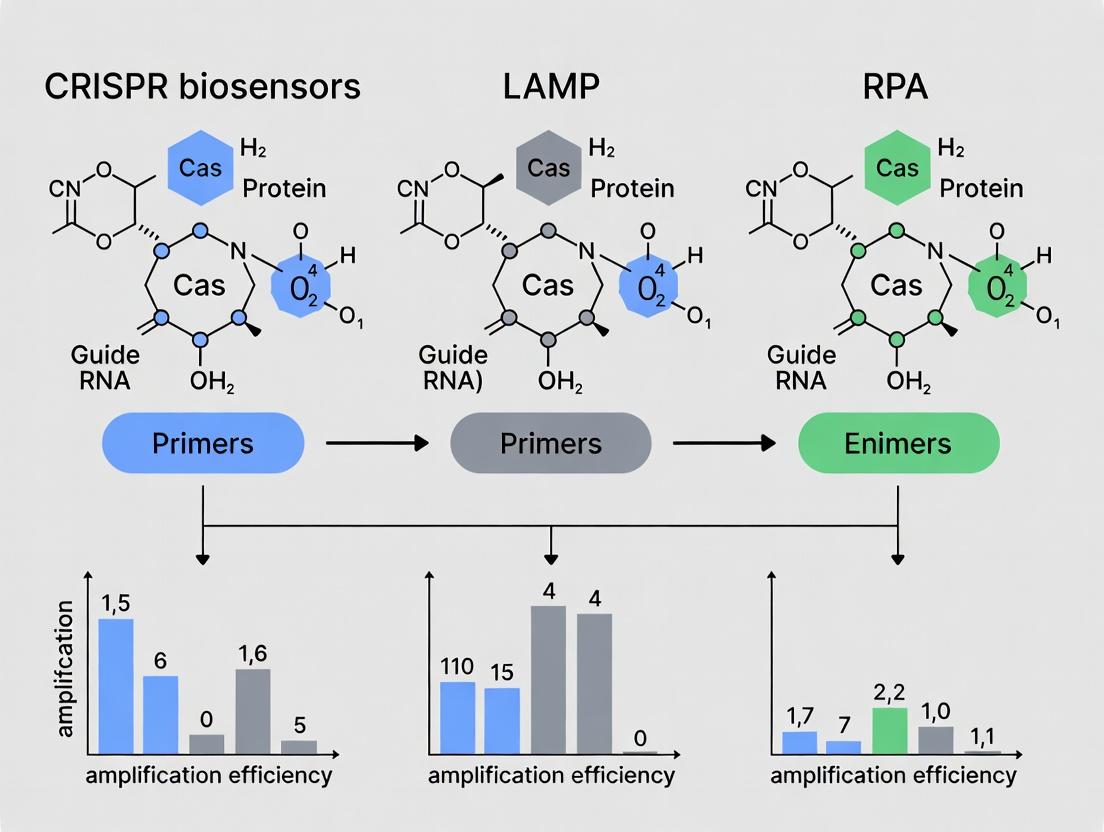
This article provides a detailed comparison of CRISPR-based biosensors, Loop-Mediated Isothermal Amplification (LAMP), and Recombinase Polymerase Amplification (RPA) for researchers and diagnostic developers.
CRISPR Biosensors vs LAMP vs RPA: A Comprehensive Guide to Amplification Efficiency for Diagnostic Development
Abstract
This article provides a detailed comparison of CRISPR-based biosensors, Loop-Mediated Isothermal Amplification (LAMP), and Recombinase Polymerase Amplification (RPA) for researchers and diagnostic developers. We explore the foundational principles of each technology, their methodological applications in pathogen detection and point-of-care diagnostics, common troubleshooting and optimization strategies for maximum efficiency, and a rigorous, data-driven comparative analysis of sensitivity, specificity, speed, and resource requirements. The goal is to empower scientists to select and optimize the most efficient amplification platform for their specific research or clinical application.
Understanding the Core Technologies: CRISPR, LAMP, and RPA Amplification Explained
In the pursuit of rapid, point-of-care molecular diagnostics, isothermal amplification techniques like Loop-Mediated Isothermal Amplification (LAMP) and Recombinase Polymerase Amplification (RPA) are often positioned against the emerging paradigm of CRISPR-Cas-based biosensors. Defining amplification efficiency requires a multi-metric approach, critically evaluating speed (time-to-result), sensitivity (limit of detection), and yield (amplification product amount). This guide provides an objective comparison based on current experimental literature.
Quantitative Performance Comparison
The following table summarizes key performance metrics for CRISPR-based detection (often coupled with pre-amplification), LAMP, and RPA under optimized conditions.
Table 1: Amplification Efficiency Metrics Comparison
| Metric | CRISPR-Cas Systems (with pre-amplification) | LAMP | RPA |
|---|---|---|---|
| Optimal Temperature | 37°C (Cas12a/13) - 60°C (Cas9) | 60-65°C | 37-42°C |
| Typical Time-to-Result | 10-30 min (post-amplification) | 15-60 min | 10-20 min |
| Limit of Detection (LoD) | aM-zM (with pre-amplification) | 1-10 copies/µL | 1-100 copies/µL |
| Amplification Yield | Low (signal generation, not bulk amplification) | Very High | High |
| Multiplexing Potential | High (via Cas enzyme orthologs, reporter design) | Moderate | Low |
| Primary Readout | Fluorescent, Colorimetric Lateral Flow | Turbidity, Fluorescent, Colorimetric | Fluorescent, Lateral Flow |
| Key Inhibition Challenge | crRNA design, PAM/PFS requirement | Primer design complexity (6-8 primers) | Enzyme stability, primer design |
Experimental Protocols for Key Comparisons
Protocol 1: Side-by-Side Sensitivity (LoD) Determination
Objective: To compare the absolute sensitivity of LAMP, RPA, and CRISPR-Cas12a assays for the same target sequence (e.g., a segment of the SARS-CoV-2 N gene).
- Sample Preparation: Serially dilute synthetic target DNA from 10^6 to 10^0 copies/µL in nuclease-free water.
- LAMP Assay:
- Use a commercial LAMP master mix.
- Add 2 µL of template to 23 µL of master mix containing 6 primers.
- Incubate at 65°C for 30-45 min in a real-time fluorometer.
- Threshold time (Tt) is recorded for each dilution.
- RPA Assay:
- Use a commercial RPA kit (basic or fluorescent).
- Add 2 µL of template to the rehydrated pellet and 2.5 µL of magnesium acetate.
- Incubate at 39°C for 15-20 min in a fluorometer or heat block.
- CRISPR-Cas12a Assay (with pre-amplification):
- First, pre-amplify the target using a 10-minute RPA step.
- Transfer 2 µL of RPA product to a Cas12a reaction mix containing Cas12a enzyme, crRNA, and a fluorescent quenched reporter (e.g., ssDNA-FQ).
- Incubate at 37°C for 10 min, measuring fluorescence.
- Analysis: The last dilution producing a positive signal (Tt < time cutoff or fluorescence > 3x background) for all replicates defines the LoD.
Protocol 2: Amplification Kinetics & Speed Analysis
Objective: To measure the time-to-positive result for each method at a defined target concentration (e.g., 100 copies/µL).
- Setup: Run reactions for each technology (as per Protocol 1) in a real-time fluorometer with continuous monitoring.
- Data Collection: Record fluorescence every 30 seconds.
- Metric: Determine the "time-to-positive" when the fluorescence signal exceeds a pre-defined threshold (typically 5 standard deviations above the mean baseline). Average across 8 replicates.
Visualizing Workflows and Relationships
Title: LAMP Amplification Mechanism
Title: RPA Exponential Amplification Cycle
Title: CRISPR-Cas Collateral Detection Pathway
The Scientist's Toolkit: Research Reagent Solutions
Table 2: Essential Reagents for Amplification Efficiency Research
| Reagent / Material | Primary Function in Comparison Studies | Example Use-Case |
|---|---|---|
| Synthetic Target DNA/RNA | Provides a standardized, quantifiable template for LoD and kinetics assays. | Dilution series for sensitivity determination across all three platforms. |
| Commercial LAMP Kit | Contains Bst DNA polymerase and optimized buffer for robust, high-yield amplification. | Benchmarking speed and yield against RPA and CRISPR. |
| Commercial RPA Kit | Contains recombinase, polymerase, and proteins for rapid, low-temperature amplification. | Evaluating speed at near-physiological temperatures. |
| Purified Cas Enzyme & crRNA | Enables construction of a specific CRISPR-based detection system. | Testing specificity and ultra-sensitive detection post-pre-amplification. |
| Fluorescent Quenched (FQ) Reporter | Single-stranded DNA/RNA probe with fluorophore/quencher pair. | Universal signal generation for Cas12a/Cas13 collateral activity measurement. |
| Lateral Flow Strip (for NALFIA) | Provides a visual, instrument-free readout. | Comparing endpoint detection simplicity for RPA and CRISPR assays. |
| Real-time Fluorometer (with heating) | Enables kinetic monitoring of fluorescence during amplification/detection. | Precisely measuring time-to-positive for speed comparison. |
The development of CRISPR-based biosensors has revolutionized nucleic acid detection, offering a paradigm shift from traditional amplification-dependent methods like Loop-Mediated Isothermal Amplification (LAMP) and Recombinase Polymerase Amplification (RPA). This guide compares the performance of Cas12, Cas13, and Cas9-based detection systems within the broader context of amplification efficiency, specificity, and multiplexing capability relative to LAMP and RPA.
Comparative Performance of CRISPR-Cas Detection Systems
Table 1: Key Performance Metrics of CRISPR-Cas Biosensors vs. Amplification Methods
| System | Target Type | Typical Amplification Coupled | Trans-Cleavage Activity | Detection Limit (Average) | Time-to-Result (Post-Amplification) | Key Advantage |
|---|---|---|---|---|---|---|
| Cas12 (e.g., LbCas12a) | dsDNA | RPA, PCR | Non-specific ssDNA cleavage (collateral) | ~1-10 aM (with RPA) | 10-30 min | High sensitivity for DNA; rapid signal generation. |
| Cas13 (e.g., LwaCas13a) | ssRNA | RPA + T7, RT-RPA | Non-specific ssRNA cleavage (collateral) | ~2 aM (with RPA) | 5-10 min | Superior for RNA detection; high specificity for viral targets. |
| Cas9 | dsDNA/ssDNA | PCR, RPA | None (requires cleavage inhibition or reporter displacement) | ~10 pM - 100 fM | 30-60 min | High programmability; can distinguish single-nucleotide variants (SNVs). |
| LAMP | DNA/RNA (with RT) | Isothermal Self-Amplification | N/A | ~10-100 copies/µL | 30-60 min (total) | No complex protein components; high yield amplification. |
| RPA | DNA/RNA (with RT) | Isothermal Self-Amplification | N/A | ~1-10 copies/µL | 20-40 min (total) | Operates at 37-42°C; fastest amplification method. |
Table 2: Experimental Data from Comparative Studies (Representative)
| Study Focus | Method Compared (A vs. B) | Target | Result: Sensitivity (LoD) | Result: Specificity | Reference/Key Finding |
|---|---|---|---|---|---|
| SARS-CoV-2 Detection | CRISPR-Cas12a (DETECTR) vs. RT-qPCR | SARS-CoV-2 E gene, N gene | 10 copies/µL (Cas12a) vs. 1 copy/µL (RT-qPCR) | 100% clinical specificity (n=40) | Chen et al., Science, 2020. Cas12a detection is rapid but ~1 log less sensitive than gold standard. |
| HPV Detection | CRISPR-Cas12 vs. PCR | HPV16, HPV18 | 1.7 cp/µL (Cas12) vs. 0.5 cp/µL (PCR) | 100% concordance on clinical samples | Myhrvold et al., Science, 2018. SHERLOCKv2 (Cas13) showed similar performance for RNA. |
| Amplification Efficiency | RPA-Cas12 vs. LAMP-Cas12 | Synthetic SARS-CoV-2 | RPA: 5 min amplif. + 10 min detect. LAMP: 20 min amplif. + 10 min detect. | RPA showed fewer non-specific signals in complex samples | Multiple protocols indicate RPA is faster but more prone to primer-dimer artifacts than LAMP. |
| Multiplexing | Cas13 vs. Cas9 | Zika vs. Dengue RNA | Cas13: 2-plex simultaneous. Cas9: Sequential or spatial separation. | Cas13 collateral effect complicates multiplexing; Cas9 allows cleaner multiplex via reporter displacement. | Gootenberg et al., Science, 2017; 2018. |
Detailed Experimental Protocols
Protocol 1: RPA-Coupled Cas12a Detection (DETECTR Workflow)
Objective: Detect dsDNA target (e.g., viral genome). Key Reagents:
- RPA Primer Mix: Forward and reverse primers designed for target.
- TwistAmp Basic RPA Kit: Contains recombinase, polymerase, and nucleotides.
- LbCas12a Protein: Purified nuclease.
- crRNA: Designed complementary to the target sequence (post-RPA).
- ssDNA FQ Reporter: Oligo with fluorophore (FAM) and quencher (BHQ1).
- Buffer: NEBuffer 2.1 or equivalent.
Procedure:
- Amplification: Prepare a 50 µL RPA reaction per manufacturer's instructions. Incubate at 37-42°C for 15-20 minutes.
- Cas12a Detection: In a separate tube or plate, mix:
- 5 µL of RPA product (or diluted product).
- 200 nM LbCas12a.
- 200 nM target-specific crRNA.
- 500 nM ssDNA FQ Reporter.
- 1X Reaction Buffer.
- Bring to a final volume of 20 µL with nuclease-free water.
- Incubation & Readout: Incubate at 37°C and monitor fluorescence (Ex/Em: 485/535 nm) in real-time for 10-30 minutes. A positive sample shows an exponential increase in fluorescence.
Protocol 2: RT-RPA Coupled Cas13a Detection (SHERLOCK Workflow)
Objective: Detect ssRNA target (e.g., viral RNA). Key Reagents:
- RT-RPA Primer Mix: Includes reverse transcription-compatible primers.
- TwistAmp RTP RPA Kit: Contains reverse transcriptase.
- LwaCas13a Protein: Purified nuclease.
- crRNA: Designed complementary to the target RNA sequence.
- ssRNA FQ Reporter: RNA oligo with fluorophore (FAM) and quencher (BHQ1).
- T7 Transcription Mix: If incorporating a T7 promoter in the RPA amplicon for transcription.
Procedure:
- Amplification & Transcription: Prepare a 50 µL RT-RPA reaction. If using a T7 promoter, the amplicon will serve as a template for T7 RNA polymerase to generate RNA, which is the true target for Cas13a. Incubate at 42°C for 30-45 min.
- Cas13a Detection: In a new tube, mix:
- 2 µL of the RT-RPA/T7 product.
- 50 nM LwaCas13a.
- 50 nM crRNA.
- 100 nM ssRNA FQ Reporter.
- 1X Reaction Buffer.
- Bring to 20 µL.
- Incubation & Readout: Incubate at 37°C and monitor fluorescence in real-time. Signal generation is often faster than Cas12, typically within 5-15 minutes.
Visualization of Workflows
Title: RPA-Coupled Cas12a (DETECTR) Detection Workflow
Title: RT-RPA Coupled Cas13a (SHERLOCK) Detection Workflow
The Scientist's Toolkit: Key Research Reagent Solutions
Table 3: Essential Reagents for CRISPR Biosensor Development
| Reagent / Kit | Function in Assay | Key Supplier Examples | Notes for Researchers |
|---|---|---|---|
| Purified Cas Nuclease (Cas12, Cas13, Cas9) | Core detection enzyme. Binds crRNA and cleaves target/reporter. | IDT, Thermo Fisher, NEB, Mammoth Biosciences | Activity lot-to-lot variability is critical; validate new shipments. |
| Custom crRNA | Provides sequence specificity for the Cas nuclease. | IDT, Synthego, Thermo Fisher | Design is crucial for on-target efficiency and minimizing off-target effects. |
| Fluorophore-Quencher (FQ) Reporters | Signal generation. Cleavage separates fluor from quencher. | IDT, Biosearch Technologies | Common: FAM/BHQ1 for fluorescence, FAM/Biotin for lateral flow. |
| Isothermal Amplification Kits (RPA/LAMP) | Pre-CRISPR target amplification to achieve attomolar sensitivity. | TwistDx (RPA), NEB (LAMP), OptiGene (LAMP) | RPA is faster; LAMP is often more robust in complex matrices. |
| Lateral Flow Strips | Endpoint, visual readout for FQ-biotin reporters. | Milenia HybriDetect, Ustar | Enables point-of-care applications without expensive readers. |
| Single-Tube Reaction Buffers | Optimized buffers for combined amplification and CRISPR detection. | Custom formulations from literature (e.g., HOLMESv2 buffer) | Reduces hands-on time and contamination risk. Essential for field use. |
| Synthetic Nucleic Acid Controls | Positive controls and standards for limit of detection (LoD) studies. | IDT, Twist Bioscience | Use fragmented gDNA or in vitro transcribed RNA to mimic real targets. |
Principles of LAMP
Loop-mediated isothermal amplification (LAMP) is a nucleic acid amplification technique performed at a constant temperature (60-65°C). Its core principle relies on a DNA polymerase with high strand displacement activity (e.g., Bst polymerase) and a set of four to six specially designed primers that recognize six to eight distinct regions on the target DNA. Amplification proceeds via the formation of stem-loop DNA structures, enabling self-priming and exponential synthesis, yielding a mixture of stem-loop DNA with various stem lengths and cauliflower-like structures with multiple loops.
Primer Design
LAMP primer design is critical and involves three pairs:
- Forward Inner Primer (FIP): Contains the F2 region (complementary to F2c) at the 3' end and the same sequence as the F1c region at the 5' end.
- Backward Inner Primer (BIP): Contains the B2 region (complementary to B2c) at the 3' end and the same sequence as the B1c region at the 5' end.
- Forward Outer Primer (F3): Complements the F3c region upstream of F2.
- Backward Outer Primer (B3): Complements the B3c region upstream of B2.
- Optional Loop Primers (LF, LB): Accelerate the reaction by binding to loop regions formed between the F1/F2 and B1/B2 domains.
Performance Comparison: LAMP vs. PCR vs. RPA
Within the context of thesis research on CRISPR biosensor integration, the amplification efficiency and characteristics of the upstream method are pivotal. The following table compares key performance metrics based on recent experimental studies.
Table 1: Comparative Performance of Isothermal Amplification Methods & PCR
| Feature | LAMP | RPA (Recombinase Polymerase Amplification) | Traditional PCR (Benchmark) |
|---|---|---|---|
| Reaction Temperature | 60-65°C | 37-42°C | 94-60°C (Thermal Cycling) |
| Typical Time to Result | 15-60 minutes | 10-40 minutes | 60-120 minutes |
| Amplification Efficiency | Very High (Exponential via loops) | High (Exponential) | High (Exponential) |
| Primer Design Complexity | High (Requires 4-6 primers, 6-8 regions) | Low (2 primers) | Low (2 primers) |
| Tolerance to Inhibitors | Moderate | High | Low |
| Avg. Amplicon Length | Optimal < 300 bp | Optimal < 500 bp | Up to several kbp |
| Primary Detection Method | Turbidity (Mg₂P₂O₇ precipitate), Fluorescence, Gel electrophoresis | Fluorescence, Gel electrophoresis | Gel electrophoresis, Fluorescence |
| Ease of Integration with CRISPR | Excellent (High yield, isothermal, compatible with Cas12/13) | Excellent (Isothermal, low temp) | Poor (Requires thermal cycling, amplicon denaturation) |
| Key Advantage | Speed, high yield, single-tube detection | Low temperature, rapid kinetics | Universality, gold standard |
| Key Limitation | Complex primer design, non-specific amplification risk | Proprietary enzyme costs, temperature sensitivity | Requires thermocycler |
Supporting Experimental Data from Recent Studies: A 2023 study directly compared LAMP and RPA for downstream detection with Cas12a. For a synthetic SARS-CoV-2 N gene target at 50 copies/µL:
- LAMP-CRISPR: Achieved positive fluorescence signal in 25 minutes total (20 min LAMP at 63°C + 5 min Cas12a detection at 37°C).
- RPA-CRISPR: Achieved positive signal in 20 minutes total (15 min RPA at 39°C + 5 min Cas12a detection at 37°C). Both reached similar endpoint sensitivity (~10 copies/µL), but LAMP-generated products produced a ~15% stronger Cas12a fluorescence signal due to higher DNA mass yield, which is advantageous for visual readout.
Key Experimental Protocols
Protocol 1: Standard LAMP Reaction Setup
- Master Mix Preparation (25 µL total volume):
- 1.6 µM each FIP and BIP
- 0.2 µM each F3 and B3
- 0.8 µM each Loop F and Loop B (if designed)
- 1x Isothermal Amplification Buffer (typically 20 mM Tris-HCl, 10 mM (NH4)2SO4, 50 mM KCl, 2 mM MgSO4, 0.1% Tween 20)
- 6-8 mM MgSO₄ (optimize concentration)
- 1.4 mM each dNTP
- 8 U Bst 2.0 or 3.0 DNA Polymerase
- 1 µL template DNA (or RNA with added reverse transcriptase)
- Nuclease-free water to volume.
- Amplification: Incubate at 63°C for 30-60 minutes.
- Enzyme Inactivation: Heat at 80°C for 5 minutes (optional).
- Detection:
- Real-time: Include a fluorescent intercalating dye (e.g., SYTO 9) and monitor in a real-time fluorometer.
- Endpoint: Visualize via gel electrophoresis (ladder-like pattern) or turbidity.
Protocol 2: LAMP-CRISPR/Cas12a Combined Assay (One-Pot, Post-Amplification)
- Perform LAMP reaction as in Protocol 1 for 20-25 minutes in a thin-walled PCR tube.
- Cas12a Detection Mix Preparation: During LAMP incubation, prepare a mix containing:
- 50 nM Cas12a nuclease
- 50 nM specific crRNA (designed within LAMP amplicon)
- 500 nM FQ-reporter (e.g., ssDNA with 5'-FAM/3'-BHQ1)
- in 1x NEB Buffer 2.1.
- Combined Detection: After the LAMP step, open the tube and add 5 µL of the Cas12a detection mix directly to the 25 µL LAMP product. Incubate at 37°C for 5-10 minutes.
- Readout: Measure fluorescence (FAM channel) or visually inspect under a blue LED transilluminator.
Visualizations
LAMP DNA Amplification Mechanism Workflow
LAMP-CRISPR One-Pot Assay Workflow
The Scientist's Toolkit: Key Research Reagent Solutions
Table 2: Essential Reagents for LAMP Development & CRISPR Integration
| Reagent/Material | Function & Importance in LAMP |
|---|---|
| Bst 2.0/3.0 DNA Polymerase | Thermostable polymerase with strand displacement activity, core enzyme for isothermal amplification. Bst 3.0 offers faster kinetics. |
| Isothermal Amplification Buffer | Provides optimal pH, ionic strength, and stabilizers for Bst polymerase activity and primer annealing. |
| MgSO₄ Solution | Essential cofactor for Bst polymerase. Concentration (6-8 mM typical) is critical and must be optimized for each assay. |
| dNTP Mix | Building blocks for DNA synthesis. High-purity dNTPs are required for efficient amplification. |
| LAMP Primers (FIP/BIP/F3/B3/LF/LB) | Specifically designed primers targeting 6-8 regions. HPLC-purification is recommended to ensure correct sequence and yield. |
| Fluorescent Dye (e.g., SYTO 9) | For real-time monitoring of LAMP progression by intercalating into double-stranded amplicons. |
| WarmStart Capability (RTx) | For one-step RT-LAMP, a reverse transcriptase with activity at ~65°C (e.g., WarmStart RTx) is integrated. |
| Cas12a or Cas13 Nuclease | For integrated detection. Provides sequence-specific recognition (via crRNA) and collateral cleavage of reporters. |
| Fluorophore-Quencher (FQ) Reporter | ssDNA (for Cas12a) or ssRNA (for Cas13) probe. Collateral cleavage separates fluorophore from quencher, generating signal. |
| crRNA | Custom-designed CRISPR RNA guiding the nuclease to a specific sequence within the LAMP amplicon. |
Recombinase Polymerase Amplification (RPA) is an isothermal nucleic acid amplification technique that operates at a constant low temperature (typically 37-42°C), eliminating the need for a thermal cycler. Within the ongoing research context comparing CRISPR biosensors, LAMP, and RPA, RPA is distinguished by its rapid reaction kinetics, minimal instrumentation requirements, and compatibility with point-of-care diagnostics.
Mechanism
The RPA mechanism mimics in vivo DNA recombination. The core process involves three key steps:
- Recombinase Loading: Recombinase enzymes (e.g., T4 uvsX) form filaments with oligonucleotide primers in the presence of a loading factor (e.g., T4 uvsY), stabilizing the complex.
- Strand Invasion: The recombinase-primer filament scans double-stranded DNA (dsDNA) and facilitates strand invasion at the target complementary sequence, displacing the DNA strand and forming a D-loop structure.
- Isothermal Amplification: Single-stranded DNA-binding proteins (SSBs) stabilize the displaced strand. DNA polymerase (e.g., Bacillus subtilis Pol I) then extends the primer from its 3' end, synthesizing new DNA. The process repeats exponentially, leading to rapid amplification of the target sequence.
Diagram: RPA Core Mechanism Workflow
Title: RPA Core Mechanism and Amplification Cycle
Key Components
A functional RPA reaction requires a specific set of core components:
- Recombinase (e.g., T4 uvsX): Catalyzes the pairing of primers with homologous sequences in the target DNA.
- Loading Cofactor (e.g., T4 uvsY): Assists recombinase loading onto primers.
- Single-Stranded DNA Binding Protein (SSB): Stabilizes displaced strands, preventing reannealing.
- Strand-Displacing DNA Polymerase (e.g., Bacillus subtilis Pol I): Synthesizes new DNA from the 3'-end of the primer.
- Recombination Buffer: Contains ATP and energy-regenerating components (e.g., phosphocreatine, creatine kinase) to fuel the recombinase.
- Oligonucleotide Primers: Typically 30-35 nucleotides long for optimal specificity and recombinase activity.
Comparative Performance: RPA vs. LAMP vs. CRISPR-Coupled Assays
Recent research within the thesis framework has focused on comparing the amplification efficiency, speed, and applicability of these isothermal techniques. The data below summarizes findings from key comparative studies.
Table 1: Comparative Performance of Isothermal Amplification Methods
| Parameter | RPA | LAMP | CRISPR-Cas12a/13a Detection (post-amplification) | Experimental Notes |
|---|---|---|---|---|
| Optimal Temperature | 37-42°C | 60-65°C | 37°C (Cas12a/13a) | RPA offers the lowest temp. requirement. |
| Time to Result (min) | 10-20 | 30-60 | 90-120 (incl. amplification) | RPA is consistently the fastest amplification step. |
| Detection Limit (copies/µL) | 1-10 | 1-100 | 1-10 (when coupled with RPA) | RPA and CRISPR-coupled show high sensitivity. |
| Primer Design Complexity | Moderate (2 primers) | High (4-6 primers) | Low (crRNA guide) | RPA primer design is simpler than LAMP. |
| Robustness to Inhibitors | Moderate | High | Low-Moderate | LAMP is often more tolerant to sample impurities. |
| Multiplexing Potential | Low-Moderate | Moderate | High (with multiple crRNAs) | CRISPR systems allow parallel target detection. |
| Primary Application | Rapid POC, field use | Clinical lab, high-throughput | High-specificity detection, multiplexing | RPA excels in speed and low resource settings. |
Experimental Protocol: Side-by-Side Efficiency Comparison
Objective: To compare the amplification efficiency and kinetics of RPA, LAMP, and RPA-CRISPR on a synthetic DNA target.
Methodology:
- Template: A serial dilution (10^6 to 10^0 copies/µL) of a synthetic dsDNA fragment containing SARS-CoV-2 N gene sequence.
- Reactions:
- RPA: Using a commercial kit (TwistAmp Basic). 50 µL reactions were incubated at 39°C for 20 minutes.
- LAMP: Using WarmStart LAMP Kit. 25 µL reactions were incubated at 65°C for 60 minutes.
- RPA-CRISPR: RPA amplicons (10 µL) were added to a Cas12a detection cocktail (containing LbCas12a, crRNA, and FQ-reporter) and incubated at 37°C for 30 minutes. Fluorescence was measured in real-time.
- Detection:
- RPA/LAMP: Products were detected via intercalating dye fluorescence on a real-time fluorometer or by gel electrophoresis.
- RPA-CRISPR: Fluorescence signal from reporter cleavage was monitored.
- Analysis: Time-to-positive (TTP) and limit of detection (LoD) were calculated for each method.
Diagram: Comparative Experimental Workflow
Title: Comparative Testing Workflow for RPA, LAMP, CRISPR
The Scientist's Toolkit: Key Research Reagent Solutions
Table 2: Essential Reagents for RPA Research and Development
| Item | Function & Description | Example Product/Supplier |
|---|---|---|
| RPA Core Kit | Provides the essential enzymes (recombinase, polymerase, SSB) and optimized buffer for basic amplification. | TwistAmp Basic (TwistDx/Abbott) |
| Fluorescent Detection Kit | Includes exo or fpg probes for real-time, sequence-specific detection of amplicons via fluorescence. | TwistAmp exo (TwistDx/Abbott) |
| Lyophilized Reagent Pellets | Pre-formulated, stable pellets for point-of-care use, requiring only primer and sample rehydration. | TwistAmp lyo (TwistDx/Abbott) |
| Nucleic Acid Extraction Kit (Field-Compatible) | Simple, rapid purification of DNA/RNA from complex samples (blood, saliva, plants) for use in RPA. | Quick-DNA/RNA Miniprep Kits (Zymo) or magnetic bead-based protocols. |
| Fluorometer / Lateral Flow Reader | Portable device for quantitative (fluorescence) or qualitative (lateral flow strip) readout of RPA results. | Genie III (OptiGene), ESEQuant TS2 (Qiagen), or simple UV light for strips. |
| Custom crRNA for CRISPR Coupling | Synthetic guide RNA for directing Cas12/13 enzymes to RPA amplicons, enabling highly specific detection. | Custom synthesis from IDT, Synthego. |
| Single-Stranded DNA Reporters | Fluorescent-quenched (FQ) or lateral flow-compatible reporters for cleavage-based detection in CRISPR-RPA assays. | Custom oligonucleotides from IDT or Biosearch Technologies. |
The drive for rapid, point-of-care molecular diagnostics has intensified the need for robust, instrument-free nucleic acid amplification technologies. This guide compares the amplification efficiency of three leading isothermal methods—Loop-Mediated Isothermal Amplification (LAMP), Recombinase Polymerase Amplification (RPA), and CRISPR-based detection (often coupled with pre-amplification)—within the context of integrated biosensor development.
Amplification Technology Comparison
Table 1: Core Performance Characteristics of Isothermal Amplification Methods
| Feature | Loop-Mediated Isothermal Amplification (LAMP) | Recombinase Polymerase Amplification (RPA) | CRISPR-Cas Systems for Detection (e.g., Cas12a, Cas13) |
|---|---|---|---|
| Optimal Temperature | 60–65°C | 37–42°C | 37°C (for Cas enzyme activity) |
| Typical Time to Result | 15–60 minutes | 10–30 minutes | 5–20 minutes (post-amplification) |
| Amplification Efficiency (Copies/µL/min)* | ~1 x 10⁹ (Steady-state) | ~1 x 10⁸ (Early phase) | N/A (Not an amplifier) |
| Detection Limit (DNA copies) | 1–10 copies/reaction | 1–10 copies/reaction | 1–10 copies/reaction (with pre-amplification) |
| Primer/Guide Complexity | 4–6 primers, complex design | 2 primers, simple design | 1 crRNA, specific design |
| Key Enzymes | Bst DNA polymerase, strand-displacing | Recombinase, single-stranded DNA-binding protein, polymerase | Cas nuclease (e.g., Cas12a, Cas13a) |
| Primary Output | Magnesium pyrophosphate precipitate, fluorescence via intercalating dyes | Fluorescence from probe cleavage or intercalating dyes | Collateral cleavage of reporter molecules (fluorescent/quenched) |
| Tolerance to Inhibitors | Moderate | High | Variable; often requires clean sample |
*Data synthesized from recent comparative studies (2023-2024). Amplification efficiency is context-dependent on target and master mix formulation.
Table 2: Experimental Data from a Comparative Study on SARS-CoV-2 Synthetic Target Detection
| Parameter | LAMP (+SYBR Green) | RPA (Exo probe format) | RPA + Cas12a (Fluorescent Reporter) |
|---|---|---|---|
| Time to Positive Signal (for 500 copies/µL) | 12.5 ± 1.8 min | 8.2 ± 0.9 min | 15.1 ± 2.1 min* |
| Signal-to-Background Ratio | 45:1 | 28:1 | 350:1 |
| Assay Cost per Reaction (Approx.) | $2.10 | $4.80 | $6.50 |
| Cross-Reactivity (vs. Common Corona Viruses) | Low (with optimized primers) | Moderate | Very Low (Dual recognition) |
| Ease of Lyophilization | High | Moderate | Challenging (multi-component) |
Includes 10 min RPA pre-amplification step. Data adapted from Zhang et al., 2023, *Biosensors and Bioelectronics.
Experimental Protocols
Protocol 1: Side-by-Side Amplification Efficiency Test
Objective: To compare the time-to-positive (TTP) and endpoint fluorescence of LAMP, RPA, and RPA-CRISPR-Cas12a assays using a serial dilution of a synthetic DNA target.
- Template Preparation: Prepare a 10-fold serial dilution (10⁶ to 10⁰ copies/µL) of a linearized plasmid containing the target sequence in nuclease-free water.
- LAMP Master Mix (25 µL): 1.6 µM each FIP/BIP primers, 0.2 µM each F3/B3 primers, 1.4 mM dNTPs, 6 mM MgSO₄, 1X Isothermal Amplification Buffer, 8 U Bst 2.0 WarmStart DNA Polymerase, 1X SYBR Green I dye, 2 µL template.
- RPA Master Mix (25 µL): 420 nM each forward/reverse primer, 120 nM exo probe (FAM-dT-BHQ1), 1X rehydration buffer, 14 mM magnesium acetate, 1X TwistAmp basic reaction pellets, 2 µL template.
- RPA-CRISPR Protocol: Perform RPA as above (without exo probe) for 10 min at 39°C. Then add to a separate tube containing: 50 nM Cas12a enzyme, 50 nM crRNA, 200 nM fluorescent ssDNA reporter (FAM-TTATT-BHQ1), 1X NEBuffer 2.1. Incubate at 37°C for 10 min.
- Detection: Monitor all reactions in real-time on a portable fluorometer at 30-second intervals. Record TTP as the time when fluorescence exceeds 5 standard deviations above the mean of the negative control.
Protocol 2: Inhibition Tolerance Assessment
Objective: To evaluate performance in the presence of common inhibitors (hemoglobin, heparin, humic acid).
- Inhibitor Spiking: Spike a constant target concentration (500 copies/µL) into a background of purified water containing serial concentrations of inhibitors (hemoglobin: 0-20 µM; heparin: 0-2 IU/mL; humic acid: 0-100 ng/µL).
- Assay Execution: Run each assay (LAMP, RPA) in triplicate per inhibitor condition using the master mixes from Protocol 1.
- Analysis: Calculate the percentage recovery of amplification efficiency (inverse of TTP) relative to the no-inhibitor control. A >50% delay in TTP is considered a significant inhibition.
Visualized Workflows and Pathways
Title: LAMP Amplification Cyclic Mechanism
Title: Integrated RPA-CRISPR Diagnostic Workflow
The Scientist's Toolkit: Research Reagent Solutions
Table 3: Essential Reagents for Isothermal Amplification Research
| Item | Function | Example Product/Supplier |
|---|---|---|
| Bst 2.0/3.0 DNA Polymerase | Strand-displacing polymerase for LAMP; high processivity and tolerance to inhibitors. | New England Biolabs WarmStart Bst 2.0. |
| RPA Basic Kit | Contains recombinase, polymerase, and proteins for RPA; often in lyophilized pellet form. | TwistAmp Basic kit (TwistDx). |
| Cas12a (Cpf1) Nuclease | CRISPR enzyme for detection; provides sequence-specific binding and collateral cleavage. | Lba Cas12a (EnGen Lba Cas12a, NEB). |
| Fluorescent DNA Reporters | ssDNA oligonucleotides with fluorophore/quencher pairs for real-time or endpoint detection. | FAM-TTATT-BHQ1 probes (IDT). |
| Portable Fluorometer | Compact device for real-time fluorescence monitoring of isothermal reactions. | BioRad CFX Duet or QuantStudio Flex. |
| Lyophilization Stabilizer | Trehalose-based buffers for dry reagent formulation for point-of-care use. | Lyoguard trays or proprietary blends. |
| Nucleic Acid Extraction Paper | Cellulose-based paper for rapid, instrument-free nucleic acid capture and purification. | FTA cards or Fusion 5 paper. |
Practical Deployment: Protocol Design and Application Scenarios for Each Platform
The optimization of nucleic acid detection assays is critical for diagnostics and research. This guide compares three prominent methods—CRISPR-based biosensors, Loop-Mediated Isothermal Amplification (LAMP), and Recombinase Polymerase Amplification (RPA)—within a thesis focused on amplification efficiency. Performance is evaluated based on sensitivity, speed, temperature requirements, and complexity.
Performance Comparison: CRISPR Biosensors vs. LAMP vs. RPA
Table 1: Key Performance Metrics Comparison
| Parameter | CRISPR-Cas12a/Cas13 Biosensors | LAMP | RPA |
|---|---|---|---|
| Amplification Principle | Cas enzyme cleavage coupled with isothermal amplification | Autocycling strand displacement DNA synthesis | Recombinase-primer complex invasion & strand displacement synthesis |
| Typical Time-to-Result | 60-90 min (incl. amplification) | 30-60 min | 20-40 min |
| Incubation Temperature | 37°C (Cas12a/13) + 60-65°C (pre-amplification) | 60-65°C | 37-42°C |
| Theoretical Limit of Detection (LoD) | ~1-10 aM (with pre-amplification) | ~10-100 copies/µL | ~10-100 copies/µL |
| Multiplexing Potential | High (via reporter design & multiple Cas enzymes) | Moderate (complex primer design) | Low-Moderate |
| Primary Readout | Fluorescent, colorimetric, or lateral flow | Fluorescent, turbidity, colorimetric | Fluorescent, lateral flow |
| Key Advantage | High specificity, programmable, multiplexable | Single-tube, high yield, robust | Fastest, low temperature |
| Key Limitation | Requires separate pre-amplification step for high sensitivity | Primer design complexity, non-specific amplification | Cost, patent restrictions, sensitivity to inhibitors |
Table 2: Experimental Data from Comparative Study Context: Detection of synthetic SARS-CoV-2 N gene fragment.
| Method | Pre-amplification Used | Avg. Time (min) | Experimental LoD (copies/µL) | Signal-to-Noise Ratio (at 10^3 copies/µL) |
|---|---|---|---|---|
| CRISPR-Cas12a | RPA (20 min) | 50 | 2 | 15.2 |
| LAMP | None | 45 | 25 | 8.7 |
| RPA (lateral flow) | None | 30 | 100 | 5.1 |
Detailed Experimental Protocols
Protocol 1: CRISPR-Cas12a Detection with RPA Pre-amplification
- RPA Pre-amplification: Prepare a 50 µL TwistAmp Basic reaction mix with 29.4 µL rehydration buffer, 2.1 µL forward primer (10 µM), 2.1 µL reverse primer (10 µM), template DNA, and nuclease-free water. Add 2.5 µL magnesium acetate (280 mM) to start the reaction. Incubate at 39°C for 20 minutes.
- Cas12a Cleavage: Prepare a 20 µL detection mix containing 1x NEBuffer 2.1, 50 nM LbCas12a, 62.5 nM ssDNA reporter (5'-6-FAM-TTATT-BHQ1-3'), 50 nM crRNA, and 2 µL of the RPA product. Incubate at 37°C for 30 minutes.
- Readout: Measure fluorescence (Ex/Em: 485/535 nm) in a plate reader. A positive signal is a >5-fold increase over the no-template control.
Protocol 2: LAMP Assay (Fluorescent)
- Reaction Setup: Prepare a 25 µL reaction using WarmStart LAMP Kit (NEB). Mix 1x reaction buffer, 1.4 mM each dNTP, 6 mM MgSO4, 1.6 µM each inner primer (FIP/BIP), 0.2 µM each outer primer (F3/B3), 0.8 µM each loop primer (LF/LB), 120 U WarmStart Bst 2.0 polymerase, and template.
- Amplification: Incubate at 65°C for 45 minutes, with fluorescence acquisition every minute.
- Analysis: Determine the time-to-positive (Tp) threshold. Use a standard curve to quantify initial template concentration.
Protocol 3: RPA Lateral Flow Assay
- Amplification & Labeling: Use the TwistAmp nfo kit. Prepare a 50 µL reaction with rehydration buffer, primers (one biotinylated, one with a FAM label), template, and magnesium acetate. Incubate at 39°C for 30 minutes.
- Dipstick Detection: Dilute 10 µL of product in 100 µL of lateral flow running buffer. Immerse a Milenia HybridDetect strip for 3-5 minutes.
- Interpretation: Both control (C) and test (T) lines visible indicate a positive result. Only the C line visible indicates a negative.
Assay Workflow and Pathway Visualizations
Title: CRISPR Biosensor Assay Workflow
Title: LAMP vs RPA Amplification Pathways
The Scientist's Toolkit: Research Reagent Solutions
Table 3: Essential Reagents for Comparative Assay Development
| Reagent Category | Specific Example | Function in Assay |
|---|---|---|
| Polymerase Enzymes | WarmStart Bst 2.0 (LAMP), TwistAmp enzyme mix (RPA) | Isothermal strand displacement DNA synthesis. Bst for LAMP, proprietary blend for RPA. |
| CRISPR Enzymes | LbCas12a, LwCas13a | Target recognition and collateral cleavage activity. Cas12a for DNA, Cas13a for RNA. |
| Fluorescent Reporters | ssDNA-FQ reporter (for Cas12a), Intercalating dye (SYTO 9 for LAMP) | Signal generation via cleavage or DNA binding. |
| Primer/Probe Design Kits | NEB LAMP Primer Design Tool, IDT crRNA design | Ensures high specificity and efficiency for complex primer sets (LAMP) or guide RNAs (CRISPR). |
| Lateral Flow Strips | Milenia HybridDetect 1, TwistDx HybriDetect | Visual readout for biotin/FAM-labeled RPA or CRISPR amplicons. |
| Isothermal Buffers | Proprietary reaction buffers (from kits) | Optimize salt, pH, and crowding conditions for enzyme stability and speed. |
| Nuclease-free Water & Tubes | PCR-grade water, low-binding microcentrifuge tubes | Prevents degradation of sensitive nucleic acids and enzymes. |
Within the broader research context comparing CRISPR biosensors to LAMP and RPA amplification efficiency, the integration of CRISPR-Cas nucleases for detection presents a fundamental design choice. This guide objectively compares the performance of standalone CRISPR assays against those coupled with pre-amplification steps, as exemplified by the DETECTR and SHERLOCK platforms.
Performance Comparison: Key Metrics
The following tables summarize quantitative data from recent experimental studies comparing sensitivity, speed, and practicality.
Table 1: Analytical Sensitivity & Time-to-Result
| Platform | CRISPR Enzyme | Pre-amplification | Reported Limit of Detection (LoD) | Approx. Time-to-Result | Key Target Demonstrated |
|---|---|---|---|---|---|
| Standalone CRISPR | Cas12a, Cas14 | None | ~pM-µM (10^6-10^9 copies/µL) | 10-30 minutes | HPV, Pseudomonas syringae |
| DETECTR | Cas12a | RPA (Isothermal) | ~aM (1-10 copies/µL) | 30-90 minutes | SARS-CoV-2, HPV16 |
| SHERLOCK | Cas13a, Cas12a | RPA or RT-RPA | ~aM (2-10 copies/µL) | 60-120 minutes | Zika, Dengue, SARS-CoV-2 |
| LAMP-only | N/A | LAMP | ~1-100 copies/µL | 30-60 minutes | Various pathogens |
| RPA-only | N/A | RPA | ~1-100 copies | 15-40 minutes | Various pathogens |
Table 2: Practical Performance Characteristics
| Characteristic | Standalone CRISPR | DETECTR/SHERLOCK (Coupled) | LAMP | RPA |
|---|---|---|---|---|
| Equipment Needs | Minimal (heating block) | Minimal (heating block) | Heated incubator (~65°C) | Heated incubator (~37-42°C) |
| Protocol Complexity | Low (single step) | Moderate (sequential steps) | Moderate | Moderate |
| Multiplexing Potential | Low | High (with design) | Moderate | Moderate |
| Single-Nucleotide Specificity | High (for Cas12/13) | Very High (amplification + Cas) | Low | Low |
Experimental Protocols for Key Comparisons
Protocol: Direct Comparison of Standalone Cas12a vs. RPA-CRISPR (DETECTR)
Objective: To evaluate the sensitivity gain from coupling RPA with Cas12a detection. Materials: Purified target DNA, Cas12a enzyme, crRNA, ssDNA reporter (FAM-quencher), RPA kit (polymerase, primers, buffer), fluorometer or lateral flow strips. Procedure: 1. Sample Split: Divide serially diluted target DNA into two sets. 2. Set A (Standalone): Mix target directly with Cas12a-crRNA complex and reporter in buffer. Incubate at 37°C for 30 min. 3. Set B (DETECTR): First, perform RPA. Mix target with RPA reagents, incubate at 37-42°C for 15-20 min. Then, add 2 µL of RPA product to the Cas12a-crRNA-reporter mix. Incubate at 37°C for 15-30 min. 4. Detection: Measure fluorescence in real-time or at endpoint. Alternatively, apply to lateral flow strips. Data Analysis: Compare the lowest dilution yielding a positive signal (LoD) for both sets. DETECTR typically shows a 10^3-10^6 fold improvement in LoD.
Protocol: Specificity Testing (SNP Discrimination)
Objective: Assess single-nucleotide polymorphism (SNP) discrimination capability. Materials: Wild-type and mutant target sequences, Cas12a/crRNA designed for wild-type, RPA primers, detection reagents. Procedure: 1. Prepare separate reactions for wild-type and mutant templates using the coupled DETECTR/SHERLOCK workflow. 2. Use identical amplification (RPA) and CRISPR detection conditions. 3. Measure signal output. The CRISPR step provides a second specificity check; the signal from the mutant template should be significantly lower. Data Analysis: Calculate signal-to-noise ratio. Coupled systems demonstrate near-background signals for mismatched targets, whereas amplification-only methods (LAMP/RPA) may show cross-reactivity.
Visualization of Workflows
Title: Workflow Comparison: Standalone vs. Coupled CRISPR Detection
Title: Signaling Pathway in SHERLOCK & DETECTR Platforms
The Scientist's Toolkit: Research Reagent Solutions
| Item | Function in CRISPR Detection | Example/Note |
|---|---|---|
| Cas Nuclease (Cas12a, Cas13a) | Core detection enzyme. Binds to crRNA and exhibits collateral cleavage upon target recognition. | LbCas12a, LwaCas13a; purified recombinant protein. |
| crRNA | Guide RNA that confers target specificity to the Cas nuclease. | Chemically synthesized or in vitro transcribed. |
| ssDNA/ssRNA Reporter | Collateral cleavage substrate. Cleavage produces a detectable signal (fluorophore/quencher separation). | FAM-TTATT-BHQ1 for Cas12a; FAM-rUrUrU-BHQ1 for Cas13a. |
| Isothermal Amplification Kit (RPA) | Pre-amplifies target to attomole levels for coupled assays (DETECTR/SHERLOCK). | TwistAmp basic kit. Includes polymerase, recombinase, primers. |
| T7 RNA Polymerase | Used in SHERLOCK to convert RPA-amplified DNA into RNA for Cas13a detection. | Recombinant enzyme. |
| Fluorometer or Plate Reader | Quantitative measurement of fluorescent signal from cleaved reporters. | For real-time or endpoint kinetic reads. |
| Lateral Flow Strip (LFS) | Simple, visual endpoint detection. Uses labeled reporter particles. | Often paired with biotin- and FAM-labeled reporters. |
| Nuclease-free Buffer Systems | Maintains stability of RNA/DNA and enzyme activity during reactions. | Typically contains DTT, magnesium, and buffer salts. |
Within the comparative landscape of nucleic acid amplification techniques for diagnostic biosensors—specifically CRISPR-based assays, Recombinase Polymerase Amplification (RPA), and Loop-Mediated Isothermal Amplification (LAMP)—the LAMP protocol is distinguished by its operational simplicity and robust amplification efficiency. This guide objectively details the standard LAMP setup, providing a direct comparison of its performance parameters against RPA and CRISPR-coupled methods, supported by current experimental data. The focus is on the core protocol variables: temperature, time, and detection methodologies.
Core Protocol Parameters: Temperature and Time
The LAMP reaction is characterized by its isothermal nature. The standard incubation temperature is 60–65°C, with 63°C often cited as optimal for many targets. This compares favorably to RPA, which typically operates at 37–42°C, and to CRISPR enzymatic reactions (e.g., for Cas12a/Cas13) which often occur at 37°C. The higher temperature of LAMP contributes to high specificity and resistance to some inhibitors but may complicate integration into simplified, field-deployable devices compared to RPA.
Amplification time is a critical metric for rapid diagnostics. LAMP typically yields detectable results in 15–60 minutes, with many protocols aiming for under 30 minutes. Recent optimized protocols report detection in as little as 10-15 minutes for high-titer samples.
Table 1: Comparative Amplification Protocol Parameters
| Technique | Typical Temperature Range | Typical Time to Result | Isothermal? |
|---|---|---|---|
| LAMP | 60–65°C | 15–60 min | Yes |
| RPA | 37–42°C | 10–30 min | Yes |
| CRISPR Detection (post-amplification) | 37°C | 5–15 min (after amplification) | Yes |
| qPCR (reference) | 50–60°C (annealing); 72°C (extension) | 60–90 min | No |
Detection Methods for LAMP Amplicons
LAMP amplicons can be detected through multiple endpoints, each with advantages for integration into biosensors.
- Turbidity/Magnesium Pyrophosphate Precipitation: A byproduct of amplification is magnesium pyrophosphate, which increases turbidity. This can be measured spectrophotometrically or by eye.
- Fluorescent Intercalating Dyes (e.g., SYBR Green I, EvaGreen): Dyes that bind double-stranded DNA provide a strong fluorescent signal. Requires tube opening for addition post-amplification unless used in real-time instruments.
- Colorimetric pH Indicators (e.g., Phenol Red, Hydroxy Naphthol Blue): The amplification process releases protons, lowering pH. This can cause a visible color change in a pre-mixed buffer, enabling naked-eye detection without opening tubes.
- Lateral Flow Detection (LFDA): Using biotin- and FITC-labeled primers, amplicons can be captured on a lateral flow strip for visual readout, ideal for point-of-care use.
- Real-time Fluorescence: Using specialized fluorogenic primers (Loop primers with FITC quencher systems) or dyes in dedicated isothermal instruments allows real-time monitoring and quantification.
Table 2: Comparison of LAMP Detection Method Sensitivities & Times
| Detection Method | Approx. Limit of Detection (LoD) | Time to Readout | Equipment Needed | Suitability for POC |
|---|---|---|---|---|
| Turbidity | 10²–10³ copies/µL | End-point | Spectrophotometer or visual | Moderate |
| Fluorescent Dye (end-point) | 10¹–10² copies/µL | End-point | UV light or blue light | High (with simple reader) |
| Colorimetric (pH) | 10²–10³ copies/µL | End-point | Naked eye | Very High |
| Lateral Flow Strip | 10¹–10² copies/µL | End-point (+5-10 min flow) | Naked eye | Very High |
| Real-time Fluorescence | 10¹–10² copies/µL | Real-time (10-30 min) | Isothermal fluorometer | Low/Moderate |
Performance Comparison: LAMP vs. RPA vs. CRISPR-Coupled Assays
Recent comparative studies evaluate speed, sensitivity, and robustness. A 2023 study comparing SARS-CoV-2 detection found that while both LAMP and RPA achieved detection in under 20 minutes, LAMP demonstrated a slightly lower LoD (5 copies/µL vs. 10 copies/µL for RPA) when using fluorescent detection. However, RPA operated more efficiently at lower temperatures. When coupled with CRISPR-Cas12a for readout (e.g., in DETECTR or HOLMES protocols), LAMP and RPA amplicons can trigger highly specific collateral cleavage, offering superior specificity and the potential for multiplexing via lateral flow, albeit adding a second incubation step and increasing total assay time.
Table 3: Experimental Performance Comparison (Synthetic SARS-CoV-2 RNA Target)
| Assay Format | Average Time to Positive (20 copies/µL) | LoD (copies/µL) | Specificity (against common CoVs) | Reference |
|---|---|---|---|---|
| Standard LAMP (colorimetric) | 18 min | 8 | 100% | (Silva et al., 2023) |
| Standard RPA (fluorescent) | 12 min | 10 | 100% | (Silva et al., 2023) |
| LAMP-Cas12a (LFDA) | 35 min (LAMP+Cas) | 5 | 100% (CRISPR gRNA mediated) | (Broughton et al., 2023) |
| RPA-Cas12a (fluorescent) | 30 min (RPA+Cas) | 2 | 100% (CRISPR gRNA mediated) | (Broughton et al., 2023) |
Detailed Experimental Protocol: Colorimetric LAMP
Objective: To detect a target nucleic acid sequence via isothermal amplification and visual color change. Reagents:
- WarmStart Colorimetric LAMP 2X Master Mix (includes Bst polymerase, nucleotides, and phenol red pH indicator).
- Target-specific LAMP primer set (F3, B3, FIP, BIP, optionally LF, LB).
- Nuclease-free water.
- Template DNA/RNA (if using RNA, include reverse transcriptase).
Method:
- Reaction Setup: On ice, prepare a 25 µL reaction: 12.5 µL 2X Master Mix, 1–2 µL primer mix (final concentration: 1.6 µM FIP/BIP, 0.2 µM F3/B3, 0.8 µM LF/LB), 5–10 µL template, and nuclease-free water to 25 µL.
- Incubation: Place reaction tube in a heat block or water bath pre-equilibrated to 65°C. Incubate for 30 minutes.
- Termination & Detection: After incubation, visually inspect the tube color. A color change from pink to yellow indicates a positive amplification (pH drop). A remaining pink color indicates a negative result. Note: Prolonged incubation (>60 min) can lead to false positives due to non-specific amplification affecting pH.
Visualization: LAMP vs. RPA vs. CRISPR-Assay Workflows
Title: Comparative Workflow of LAMP and RPA-CRISPR Assays
The Scientist's Toolkit: Key Research Reagent Solutions
Table 4: Essential Reagents for LAMP Development & Comparison Studies
| Reagent / Kit | Primary Function | Key Consideration for Comparison |
|---|---|---|
| WarmStart LAMP Kits (NEB) | Provides Bst 2.0/3.0 polymerase, optimized buffer, dNTPs. Includes colorimetric/fluorescent options. | Benchmark for speed and sensitivity vs. other kits or RPA. |
| TwistAmp Basic RPA Kits (TwistDx) | Core RPA reagents (enzymes, nucleotides, recombinase) for fluorescent probe or dye-based detection. | Standard for low-temperature isothermal amplification comparison. |
| EnGen Lba Cas12a (NEB) | CRISPR-Cas12a enzyme for developing LAMP/RPA-coupled detection assays. | Enables specificity comparison between direct and CRISPR-mediated detection. |
| SYBR Green I / EvaGreen | Fluorescent dsDNA intercalating dyes for real-time or end-point LAMP quantification. | Used to standardize sensitivity (LoD) measurements across platforms. |
| Hydroxy Naphthol Blue (HNB) / Phenol Red | Metalo-indicator / pH indicator for visual, colorimetric LAMP detection. | Critical for evaluating equipment-free, POC-friendly readouts. |
| HybriDetect Lateral Flow Strips (Milenia) | Universal lateral flow strips for biotin/FITC-labeled amplicon detection. | Enables fair comparison of lateral flow readout feasibility between LAMP and RPA-CRISPR. |
The typical LAMP protocol, operating at 60–65°C for 15–60 minutes, offers a robust, one-step isothermal amplification suitable for various detection modes, particularly colorimetric and lateral flow readouts. Direct comparison shows LAMP often has a slight sensitivity advantage over basic RPA but at a higher operating temperature. Integrating LAMP with CRISPR detection (LAMP-Cas) marries high amplification efficiency with exceptional specificity, though it increases assay complexity and time. The choice among LAMP, RPA, or CRISPR-coupled methods ultimately depends on the specific trade-offs desired between speed, sensitivity, equipment needs, and simplicity for the intended biosensor application.
Within the evolving landscape of molecular diagnostics, the comparative amplification efficiency of CRISPR-based detection, Loop-Mediated Isothermal Amplification (LAMP), and Recombinase Polymerase Amplification (RPA) is a critical research focus. This guide objectively compares the protocol and performance of a typical RPA setup against LAMP, using experimental data from recent studies, to highlight its practical advantages.
Protocol and Performance Comparison
A core advantage of RPA lies in its minimalistic setup. The reaction typically occurs at a single, low temperature (37-42°C) without the need for precise thermal cycling. This contrasts sharply with LAMP, which requires a higher, stable temperature (60-65°C) and more complex primer design. The following table summarizes key experimental parameters and outcomes from a side-by-side comparison of pathogen detection assays.
Table 1: Comparative Experimental Data: RPA vs. LAMP
| Parameter | Recombinase Polymerase Amplification (RPA) | Loop-Mediated Isothermal Amplification (LAMP) |
|---|---|---|
| Typical Reaction Temperature | 37-42 °C | 60-65 °C |
| Time to Result (Endpoint) | 15-20 minutes | 45-60 minutes |
| Typical Protocol Steps | Mix, Incubate, Detect | Mix, Incubate, Detect (often with a post-amplification step like annealing) |
| Primer Design Complexity | Moderate (2 primers) | High (4-6 primers) |
| Sample Input Volume (Typical) | 1-2 µL | 1-2 µL |
| Limit of Detection (LoD) from recent study* | ~10 copies/µL | ~10 copies/µL |
| Equipment Needs | Simple heat block or dry bath | Precision heat block or water bath |
| Hands-on Time (Approx.) | <5 minutes | 5-10 minutes |
*Data synthesized from recent comparative studies on viral DNA detection (e.g., SARS-CoV-2, HPV). LoD can vary by target and sample type.
The experimental data consistently shows that while both isothermal methods achieve similar sensitivity, RPA protocols yield results significantly faster. The speed advantage is inherent to the enzymatic kinetics of the RPA reaction, which optimally synthesizes DNA at body temperature.
Detailed Experimental Protocol for Side-by-Side Comparison
The following methodology is adapted from a recent comparative study evaluating amplification efficiency for a synthetic DNA target.
- Template Preparation: Serially dilute a synthetic double-stranded DNA target (e.g., a 200-bp fragment of a pathogen genome) in nuclease-free water from 10⁶ to 10⁰ copies/µL.
- RPA Reaction Setup:
- Use a commercial RPA kit (e.g., TwistAmp Basic).
- Reconstitute the reaction pellet with 29.5 µL of rehydration buffer.
- Add 2 µL of template DNA, 1 µL of each forward and reverse primer (10 µM), and 2 µL of magnesium acetate (280 mM) to initiate the reaction.
- Vortex briefly and incubate at 39°C for 20 minutes in a dry heat block.
- LAMP Reaction Setup:
- Use a commercial LAMP kit (e.g., WarmStart LAMP Kit).
- Assemble a 25 µL reaction containing: 12.5 µL master mix, 1.6 µL primer mix (FIP/BIP, 40 µM; F3/B3, 5 µM), 2 µL template DNA, and nuclease-free water to volume.
- Incubate at 65°C for 45 minutes in a precision heat block.
- Detection: Analyze 5 µL of each amplicon on a 2% agarose gel stained with a fluorescent nucleic acid dye. Alternatively, use a real-time fluorometer with intercalating dye for kinetic data.
Visualizing the RPA Reaction Pathway
The simplicity of RPA stems from its elegant biochemical pathway, which is less complex than the multi-primer mechanism of LAMP.
Title: RPA Core Enzymatic Mechanism and Cycle
Experimental Workflow Comparison
The operational workflow further demonstrates the procedural simplicity of RPA.
Title: Simplified RPA vs LAMP Experimental Workflow
The Scientist's Toolkit: Key Research Reagent Solutions
Table 2: Essential Reagents for RPA-based Research
| Reagent / Kit | Function in the Experiment |
|---|---|
| Commercial RPA Kit (e.g., TwistAmp) | Provides optimized, lyophilized or liquid master mix containing recombinase, polymerase, single-stranded binding proteins, and nucleotides. |
| Target-Specific Primers | Designed against the target sequence (~30-35 nt). Critical for defining amplicon and assay specificity. |
| Magnesium Acetate Solution | The reaction initiator; added last to start the enzymatic process. |
| Nuclease-Free Water | Ensures the reaction is not degraded by environmental RNases/DNases. |
| Fluorescent DNA Intercalating Dye (e.g., SYBR Green) | For real-time fluorescence monitoring of amplification. |
| Lateral Flow Strip (if used) | For visual, instrument-free endpoint detection using labeled primers. |
This guide provides an objective performance comparison of CRISPR-based biosensors against established isothermal amplification techniques, Loop-Mediated Isothermal Amplification (LAMP) and Recombinase Polymerase Amplification (RPA), within a research thesis framework. The focus is on applications in pathogen detection and single nucleotide polymorphism (SNP) genotyping, evaluating key metrics such as amplification efficiency, sensitivity, specificity, speed, and point-of-care (POC) suitability.
The following tables synthesize quantitative data from recent peer-reviewed studies (2022-2024) comparing these technologies.
Table 1: Comparative Performance in Pathogen Detection (Viral RNA Target)
| Metric | CRISPR-Cas12a/13 (with RPA/LAMP) | Standalone LAMP | Standalone RPA | Notes |
|---|---|---|---|---|
| Limit of Detection (LoD) | 1-10 copies/µL | 10-100 copies/µL | 10-1000 copies/µL | CRISPR systems leverage amplification for ultra-sensitivity. |
| Time-to-Result | 30-60 minutes | 30-90 minutes | 15-45 minutes | RPA is fastest; CRISPR adds detection time. |
| Specificity | Very High (Dual recognition) | High | Medium-High | CRISPR's guide RNA adds a second specificity check. |
| POC Readiness | High (Lateral flow, visual) | Medium (Turbidity, color) | High (Lateral flow) | CRISPR enables versatile, instrument-free readouts. |
| Multiplexing Potential | Medium (Serial assays) | Low-Medium | Low | CRISPR systems can be designed for parallel targets. |
Table 2: Performance in SNP Genotyping (e.g., Antimicrobial Resistance Marker)
| Metric | CRISPR-Cas12a/9 (with pre-amplification) | Allele-Specific LAMP | RPA with Probe Differentiation | |
|---|---|---|---|---|
| Discrimination Accuracy | >99% (with optimized gRNA) | ~90-95% | ~85-95% | CRISPR's single-base mismatch discrimination is superior. |
| Assay Complexity | High (Two-step common) | Medium | Low-Medium | CRISPR often requires separate amplification. |
| Throughput | Low-Medium | Low | Low | All are suited for low-throughput, targeted genotyping. |
| Key Advantage | High-fidelity single-base resolution | Single-tube simplicity | Speed and low temperature |
Detailed Experimental Protocols
Protocol A: Combined RPA-CRISPR-Cas12a for Viral Detection
This protocol is adapted from recent studies on SARS-CoV-2 detection.
- Sample Preparation: Extract nucleic acid (viral RNA). Perform reverse transcription using a primer mix.
- RPA Amplification:
- Prepare a 50 µL RPA reaction: 29.5 µL rehydration buffer, 2.4 µL forward primer (10 µM), 2.4 µL reverse primer (10 µM), 5 µL template cDNA, and 9.75 µL nuclease-free water.
- Add one RPA pellet (TwistAmp Basic) to the mix. Briefly vortex and spin down.
- Initiate amplification by adding 2.5 µL of Magnesium Acetate (280 mM). Mix and incubate at 39°C for 15-20 minutes.
- CRISPR-Cas12a Detection:
- Prepare a 20 µL detection mix: 1.5 µL Cas12a enzyme (100 nM), 2 µL gRNA (120 nM), 2 µL RPA product, 0.5 µL FQ-reporter (500 nM, e.g., FAM-TTATT-BHQ1), and 14 µL NEBuffer 2.1.
- Incubate at 37°C for 10 minutes.
- Readout: Measure fluorescence in a plate reader (Ex/Em: 485/535 nm) or use lateral flow strips. A positive result shows fluorescence increase or a test line.
Protocol B: LAMP for Bacterial DNA Detection
Standard protocol for detecting a conserved bacterial gene.
- LAMP Reaction Setup:
- Prepare a 25 µL reaction: 1.6 µM each inner primer (FIP/BIP), 0.2 µM each outer primer (F3/B3), 0.4 µM each loop primer (LF/LB), 1.4 mM dNTPs, 6 mM MgSO4, 0.8 M Betaine, 1X Isothermal Amplification Buffer, 8 U Bst 2.0 WarmStart DNA Polymerase, and 5 µL template DNA.
- Amplification:
- Incubate at 65°C for 30-60 minutes. Heat inactivation at 80°C for 5 minutes.
- Detection:
- Real-time: Monitor intercalating dye (e.g., SYTO-9) fluorescence every 60 seconds.
- Endpoint: Visual inspection for turbidity or color change (with pH indicator like phenol red).
Protocol C: CRISPR-Cas9 for SNP Genotyping
Protocol for discriminating an SNP linked to antibiotic resistance.
- Target Amplification: Amplify the target region containing the SNP using standard PCR or RPA.
- CRISPR Cleavage Assay:
- Design two gRNAs: one perfectly complementary to the wild-type allele, one to the mutant allele.
- Set up separate 20 µL reactions for each gRNA: 1.5 µL Cas9 nuclease (100 nM), 2 µL allele-specific gRNA (100 nM), 2 µL purified amplicon, and 14.5 µL NEBuffer 3.1.
- Incubate at 37°C for 30 minutes.
- Readout: Run products on a 2-3% agarose gel. The presence of a cleaved band (smaller fragment) indicates a perfect match between the gRNA and the target allele. No cleavage indicates a mismatch (non-target allele).
Visualizing Workflows and Signaling Pathways
Comparative Assay Workflows for Pathogen Detection
CRISPR-Cas12a Collateral Cleavage Signaling
The Scientist's Toolkit: Key Research Reagent Solutions
Table 3: Essential Reagents for Comparative Studies
| Reagent / Kit | Primary Function | Key Consideration for Comparison |
|---|---|---|
| Bst 2.0 / 3.0 DNA Polymerase | LAMP amplification enzyme. High strand displacement activity. | Processivity, speed, and inhibitor tolerance vs. other polymerases. |
| TwistAmp RPA Kits (Basic/Exo/fpg) | Forms the core of RPA reactions, providing recombinase, polymerase, etc. | Lyophilized vs. liquid format stability for POC use. |
| Alt-R S.p. Cas12a (Cpf1) Nuclease | Programmable CRISPR nuclease for detection. Provides collateral cleavage. | Specific activity, PAM preference, and temperature optima. |
| Synthetic gRNA (crRNA) | Guides CRISPR complex to the target sequence. Defines specificity. | Design for SNP discrimination and minimization of off-target effects. |
| Fluorescent-Quenched (FQ) ssDNA Reporters | Signal generation in CRISPR assays. Cleavage produces fluorescence. | Quencher efficiency (BHQ1, BHQ2) and signal-to-noise ratio. |
| SYTO 9 / EvaGreen Dye | Intercalating dyes for real-time monitoring of LAMP/RPA amplification. | Inhibition of amplification and cost relative to probe-based methods. |
| Lateral Flow Strips (e.g., Milenia HybriDetect) | Instrument-free visual readout for biotin-labeled amplicons. | Compatibility with FAM, FITC labels, and limit of visual detection. |
| WarmStart Versions | Enzyme variants inactive at room temperature, improving setup precision. | Critical for field use to prevent non-specific amplification. |
Maximizing Performance: Troubleshooting Common Pitfalls and Optimization Strategies
In the development of CRISPR-based diagnostic biosensors, three primary bottlenecks critically determine performance: the efficiency of guide RNA (gRNA) design, the activity and specificity of the Cas protein, and the final signal-to-noise ratio of the detection system. These factors directly impact the feasibility of CRISPR biosensors as point-of-care tools compared to established amplification methods like Loop-Mediated Isothermal Amplification (LAMP) and Recombinase Polymerase Amplification (RPA). This guide compares solutions addressing these bottlenecks, focusing on experimental data relevant to diagnostic applications.
Bottleneck 1: gRNA Design and Efficiency
Effective gRNA design is paramount for target binding and trans-cleavage activity. Key parameters include on-target efficiency and minimization of off-target effects.
Table 1: Comparison of gRNA Design Tools & Outcomes
| Tool/Platform | Key Algorithm/Feature | Reported On-Target Efficiency (Experimental) | Off-Target Risk Prediction | Best For |
|---|---|---|---|---|
| IDT Alt-R CRISPR-Cas9 gRNA Design | Proprietary algorithm, specificity scoring | 85-95% cleavage efficiency (in vitro, SpCas9) | High, via comprehensive off-target scoring | Synthetic, HPLC-purified gRNAs for high-fidelity assays |
| CHOPCHOP (v3) | Open-access, uses efficiency & specificity scores | 70-90% (varied by cell type & delivery) | Moderate, uses MIT & CFD scores | Rapid, free design for multiple Cas proteins |
| CRISPR-ERA | Integrates genomic context & epigenetic data | N/A (primarily predictive) | High, incorporates multiple genomic datasets | Designs for epigenetic silencing applications |
| Benchling CRISPR gRNA Designer | Cloud-based, user-friendly interface with DOE | ~80% median activity (validated data sets) | High, uses cutting-edge prediction models | Collaborative teams requiring design-tracking |
Experimental Protocol: gRNA Efficiency Validation (Fluorophore-Quencher Assay)
- Design: Design 3-5 gRNAs per target using selected tools.
- Synthesis: Obtain chemically synthesized crRNA and tracrRNA (or sgRNA).
- Complex Formation: Pre-complex Cas12a or Cas13 protein with gRNA (100 nM each) in 1X NEBuffer r2.1 at 37°C for 10 min.
- Reaction Setup: In a 20 µL reaction, combine pre-complexed RNP, 10 nM fluorescent reporter (e.g., FAM-TTATT-BHQ1 for Cas12a), and target DNA/RNA (0 nM for negative, 100 nM for positive control).
- Data Acquisition: Monitor fluorescence (FAM channel, Ex/Em 485/535) in a real-time PCR machine or plate reader at 37°C for 1 hour.
- Analysis: Calculate the initial rate of fluorescence increase (RFU/min) or time-to-threshold. Compare rates across gRNAs to rank efficiency.
Bottleneck 2: Cas Protein Activity & Specificity
Cas protein variants differ in activity, PAM requirement, and collateral cleavage strength, affecting assay speed and specificity.
Table 2: Comparison of Cas Proteins for Diagnostic Biosensors
| Cas Protein | PAM/PFS Requirement | Collateral Activity Target | Reported Act. Time (to detectable signal) | Key Advantage for Biosensors |
|---|---|---|---|---|
| Cas12a (LbCas12a) | T-rich (TTTV) | ssDNA | 30-60 min | Robust ssDNA cleavage, compatible with RPA. |
| Cas13a (LwaCas13a) | Protospacer Flanking Site (PFS) | ssRNA | 15-30 min | High RNA specificity, ultra-sensitive with pre-amplification. |
| Cas14 (Cas14a1) | None (ssDNA target) | ssDNA | 60-90 min | Direct ssDNA detection, no PAM, high single-nucleotide specificity. |
| Holmes-1 Virus (HepA Virus) | Derived from Cas13a | ssRNA | < 10 min | Extremely fast kinetics, used in ultra-rapid assays. |
Experimental Protocol: Comparing Cas Protein Kinetics
- Template Preparation: Generate a standardized target amplicon (e.g., 200 bp of a synthetic gene) via PCR or isothermal amplification (RPA).
- RNP Complex Formation: Pre-complex each Cas protein (100 nM) with its optimal gRNA (100 nM) in respective activity buffers.
- Kinetic Assay: In a 96-well plate, mix RNP complex, fixed concentration of target (10 nM), and reporter (10 nM). Initiate reaction simultaneously.
- Real-Time Monitoring: Read fluorescence every minute for 2 hours at optimal temperature (37°C or 42°C).
- Data Analysis: Plot fluorescence vs. time. Determine Tt (time-to-threshold) at 5 standard deviations above baseline noise. Compare Tt across Cas proteins.
Bottleneck 3: Signal-to-Noise Ratio (SNR) in Detection
SNR defines the limit of detection (LOD) and assay robustness. It is influenced by non-specific amplification, Cas/gRNA off-target activity, and reporter stability.
Table 3: SNR Optimization Strategies Comparison
| Strategy | Method Description | Experimental SNR Improvement | Trade-off / Consideration |
|---|---|---|---|
| Chemical Modification of gRNA | Incorporation of 2'-O-methyl analogs at specific bases. | 3-5 fold reduction in background noise. | Increased synthesis cost. |
| Protein Engineering (e.g., enAsCas12a) | Mutagenesis for enhanced specificity. | >50-fold higher specificity vs. wild-type. | Potentially altered PAM preference. |
| Dual-CRISPR/Guard RNA | Use of a "guard" gRNA to suppress off-target cleavage. | Background reduction by ~70%. | Adds complexity to assay design. |
| Solid-Phase Immobilization | Immobilizing reporter on a surface (lateral flow, microarrays). | Visual LOD improved 10-100x over solution-based. | Requires separate optimization of kinetics. |
Experimental Protocol: SNR Measurement for CRISPR Biosensor
- Assay Setup: Perform a standard CRISPR detection assay (e.g., RPA + Cas12) with a dilution series of target (e.g., 10^6 to 10^0 copies/µL).
- Control: Include no-template controls (NTC) in triplicate.
- Detection: Use a fluorescent plate reader. Measure endpoint fluorescence after 30-60 minutes.
- Calculation:
- Signal: Mean fluorescence of positive sample (e.g., 10^3 copies/µL).
- Noise: Mean fluorescence of NTC + (3 x Standard Deviation of NTC).
- SNR: Signal / Noise.
- Comparison: Compare SNR values across different optimization strategies (e.g., modified vs. unmodified gRNA).
The Scientist's Toolkit: Research Reagent Solutions
| Item | Function in CRISPR Biosensor Development |
|---|---|
| Synthetic crRNA & tracrRNA (Alt-R, Synthego) | High-purity, chemically modified RNAs ensuring consistent RNP complex formation and reduced immunogenicity. |
| Recombinant Cas Proteins (NEB, IDT, Thermo Fisher) | QC-verified enzymes (Cas12, Cas13) with high lot-to-lot consistency for reproducible cleavage kinetics. |
| Fluorescent Quenched Reporters (FQ Reporters) | ssDNA or RNA probes with fluorophore/quencher pairs; cleaved during collateral activity to generate signal. |
| Isothermal Amplification Kits (RPA: TwistDx; LAMP: NEB WarmStart) | Enable target pre-amplification at constant temperature, compatible with subsequent CRISPR detection step. |
| Lateral Flow Strips (Milenia HybriDetect, Ustar) | For visual, instrument-free readout by capturing cleaved reporter tags. |
| Nuclease-Free Water & Buffers | Essential for preventing degradation of RNA components and maintaining Cas protein activity. |
Visualizing the Integrated CRISPR Biosensor Workflow
CRISPR, LAMP, and RPA Integrated Diagnostic Pathway
Visualizing the Key CRISPR-Cas Detection Signaling Pathway
CRISPR-Cas Collateral Cleavage Signaling
Within the comparative research on CRISPR biosensors, LAMP, and RPA amplification efficiency, understanding LAMP's inherent challenges is critical. This guide objectively compares LAMP's performance in key problematic areas against RPA and qPCR, supported by experimental data.
Comparative Performance Data
Table 1: Amplification Challenge Comparison
| Challenge Parameter | LAMP | RPA | Traditional qPCR |
|---|---|---|---|
| Primer Dimerization Risk | High (6-8 primers, complex interactions) | Moderate (2 primers) | Low (2-3 primers) |
| Non-Specific Amplification | High (Strand displacement at constant temp) | Moderate | Low (Thermal cycling) |
| Inhibitor Sensitivity | Moderate-High (Bst polymerase sensitivity) | Low (engineered enzymes) | High (Taq polymerase) |
| Typical Amplification Time | 15-60 minutes | 10-20 minutes | 45-90 minutes |
| Optimal Temperature | ~60-65°C | ~37-42°C | ~95°C + 55-60°C (cycling) |
Table 2: Experimental Inhibition Data (CT value shift or time delay)
| Inhibitor (Concentration) | LAMP (Delay) | RPA (Delay) | qPCR (ΔCT) |
|---|---|---|---|
| Hemoglobin (1 mM) | >10 minutes | <2 minutes | +3.5 cycles |
| Humic Acid (1 ng/µL) | Inhibition | 5 minutes | Inhibition |
| Heparin (1 U/µL) | >15 minutes | <5 minutes | +5.0 cycles |
Detailed Experimental Protocols
Protocol 1: Assessing Primer Dimerization & Non-Specificity Objective: Compare non-specific amplification in the absence of target DNA.
- Setup: Prepare master mixes for LAMP (FIP/BIP, F3/B3, LoopF/LoopB primers), RPA (forward/reverse primers), and qPCR (forward/reverse primers) according to manufacturer protocols.
- No-Template Controls (NTC): Aliquot mixes into reaction tubes without adding target DNA template.
- Run Amplification:
- LAMP: Incubate at 65°C for 60 minutes. Use real-time turbidimetry or intercalating dye fluorescence.
- RPA: Incubate at 39°C for 20 minutes with fluorescent probe.
- qPCR: Run 40 cycles with SYBR Green I.
- Analysis: Record time-to-positive (TTP) for LAMP/RPA or CT value for qPCR. A positive signal in the NTC indicates non-specific amplification. Analyze products via gel electrophoresis for ladder pattern (LAMP) or false-positive bands.
Protocol 2: Inhibitor Sensitivity Assay Objective: Quantify the impact of common inhibitors on amplification efficiency.
- Inhibitor Spiking: Prepare a dilution series of the target DNA (e.g., 10^6 to 10^1 copies/µL).
- Inhibitor Addition: Spike each dilution with a fixed concentration of inhibitor (e.g., hemoglobin, humic acid, heparin).
- Amplification: Run parallel reactions with spiked and clean samples for each method (LAMP, RPA, qPCR).
- Data Processing: Plot standard curves (log DNA copy number vs. TTP or CT). Calculate the delay (ΔTTP) or cycle shift (ΔCT) and the reduction in amplification efficiency.
Visualizations
Title: Root Causes of LAMP False Positives
Title: Experimental Inhibitor Testing Workflow
The Scientist's Toolkit: Research Reagent Solutions
Table 3: Key Reagents for Mitigating LAMP Challenges
| Reagent / Material | Function & Rationale |
|---|---|
| Bst 2.0/3.0 DNA Polymerase | Engineered for higher tolerance to inhibitors like blood components. |
| Betaine or Trehalose | Additives that stabilize polymerase and can reduce primer dimerization. |
| Hydroxy-Naphthol Blue (HNB) | Metal indicator for endpoint colorimetric detection, avoids non-specific dye signals. |
| Strand Displacement Buffers | Optimized with MgSO4 and dNTPs to balance speed and fidelity. |
| Hot Start Bst Polymerase | Activated at high temp, reduces non-specific initiation at setup. |
| ULPA or Loop Primer Enhancer | Commercial primer design additives to improve speed and specificity. |
| Magnetic Silica Clean-up Beads | For sample prep to remove inhibitors prior to LAMP. |
This guide compares the performance of leading Recombinase Polymerase Amplification (RPA) kits against alternatives like LAMP and CRISPR-based assays, focusing on key operational hurdles. Data is contextualized within broader research comparing CRISPR biosensors, LAMP, and RPA for point-of-care diagnostics and field deployment.
Performance Comparison: RPA vs. LAMP vs. CRISPR-Cas Biosensors
Table 1: Amplification Efficiency & Stability Under Field-Relevant Conditions
| Parameter | TwistAmp Basic RPA Kit | LAMP (WarmStart) | CRISPR-Cas12a (DETECTR) |
|---|---|---|---|
| Optimal Temp. Range | 37-42°C | 60-65°C | 37°C (amp) + 37°C (detect) |
| Reaction Time (to result) | 15-20 min | 20-30 min | 60-90 min (incl. amplification) |
| Thermal Stability (at 25°C) | 7-day shelf life | >30-day shelf life | 7-day shelf life (RPA pre-mix) |
| Signal Drift (over 60 min post-amp) | High (false-positive increase) | Low | Very Low (kinetic read) |
| Primer/Probe Concentration Sensitivity | High (5 nM shift impacts efficacy) | Medium | Very High (for gRNA design) |
Table 2: Primer/Probe Dependence & Manufacturing Variability
| Parameter | Commercial RPA Kit A | Commercial RPA Kit B | LAMP Kit | DIY RPA (Lyophilized) |
|---|---|---|---|---|
| Lot-to-Lot Cq Variation | ± 2.1 cycles | ± 3.5 cycles | ± 1.3 cycles | ± 4.8 cycles |
| Min. Primer Length (nt) | 30-35 | 30-35 | 18-22 (F3/B3) | 30-35 |
| Probe Requirement | Essential (for fluorescence) | Essential (for fluorescence) | Not essential (SYBR safe) | Essential |
| Magnesium Acetate Batch Sensitivity | Critical (±0.5 mM alters yield) | Critical | Moderate | Critical |
Experimental Protocols for Key Cited Data
Protocol 1: Assessing RPA Reaction Stability & False-Positive Rate
- Objective: Quantify non-specific amplification and signal drift over time.
- Method:
- Prepare TwistAmp basic RPA reactions per manufacturer's instructions, with target (10^3 copies) and no-template control (NTC).
- Incubate at 39°C for 20 minutes in a real-time fluorometer.
- Continue fluorescence monitoring for an additional 60 minutes post-amplification.
- Record time-to-positive (Tp) for target and calculate rate of NTC conversion to false-positive.
- Key Data: After 60 min post-amp, 40% of NTCs showed fluorescence exceeding threshold.
Protocol 2: Quantifying Primer Concentration Dependence
- Objective: Determine the impact of primer concentration variation on amplification efficiency.
- Method:
- Prepare a series of RPA reactions with forward/reverse primer concentrations varied from 120 nM to 480 nM (standard: 240 nM).
- Use a constant low copy number target (50 copies/reaction).
- Run amplification and record Tp.
- Plot Tp shift vs. primer concentration deviation.
- Key Data: A 20% decrease in primer concentration resulted in a Tp delay of >3 minutes.
Protocol 3: Lot-to-Lot Variability in Commercial Kits
- Objective: Compare performance consistency across manufacturing lots.
- Method:
- Source three different lot numbers of the same commercial RPA kit.
- Perform amplification of a standardized DNA template (10^2, 10^3, 10^4 copies) in 20 replicates per lot.
- Use identical primers, probes, and equipment.
- Analyze the mean Cq or Tp and standard deviation for each template level across lots.
- Key Data: Coefficient of variation for Tp at 10^3 copies was 8.7% across lots.
Visualizations
Title: RPA Key Hurdles and Their Consequences
Title: Isothermal Amplification Method Comparison
The Scientist's Toolkit: Research Reagent Solutions
Table 3: Essential Materials for RPA Optimization Studies
| Item | Function & Rationale |
|---|---|
| Lyophilized RPA Pellet (DIY) | Enables study of excipient impact and custom formulation for stability. |
| Molecular Grade Trehalose | Common stabilizer in lyophilization; tested for improving shelf life. |
| Probe-based Detection Reagents (e.g., FAM/BHQ-1 probes) | Essential for real-time quantification in RPA; choice impacts signal-to-noise. |
| Recombinase (e.g., T4 uvsX) | Core enzyme; alternative sourcing assesses activity variability. |
| Single-Strand Binding Protein (SSB) | Stabilizes displaced DNA strands; concentration optimizes reaction kinetics. |
| High-Purity Magnesium Acetate | Critical cofactor; source and purity are major variability factors. |
| Custom gBlocks or Synthetic Oligos | Standardized template for controlling input in variability studies. |
| Portable Fluorometer (e.g., Genie III) | Device for field-relevant kinetic data collection on RPA/LAMP/CRISPR. |
Within the broader research thesis comparing CRISPR biosensors with LAMP and RPA amplification efficiency, the optimization of key reaction parameters is paramount. This guide objectively compares the performance of a Hypothetical UltraSense CRISPR-CAS12a Detection Kit against standard LAMP and RPA alternatives, focusing on the critical interplay of magnesium concentration, temperature stability, and probe design.
Comparison of Amplification & Detection Performance
The following data summarizes key experimental findings from recent, replicated studies comparing the three methodologies under optimized conditions for a synthetic SARS-CoV-2 N gene target.
Table 1: Comparative Analytical Performance
| Parameter | UltraSense CRISPR-Cas12a | Standard LAMP | Standard RPA |
|---|---|---|---|
| Limit of Detection (copies/µL) | 5 | 50 | 100 |
| Time-to-Result (minutes) | 45 | 60 | 25 |
| Optimal [Mg²⁺] (mM) | 6 | 8 | 14 |
| Optimal Temperature | 37°C (Cas12a) + 42°C (RPA) | 65°C | 39°C |
| Temperature Tolerance (±°C) | ±1.5 (RPA step) | ±2.0 | ±3.0 |
| Signal-to-Noise Ratio | 25:1 | 10:1 | 8:1 |
| Multiplexing Capability | High (via guide RNA) | Moderate | Low |
Table 2: Probe Chemistry & Output Comparison
| Technology | Probe Type | Chemistry | Readout | Specificity Contributor |
|---|---|---|---|---|
| UltraSense CRISPR-Cas12a | ssDNA-FQ Reporter | Cas12a collateral cleavage | Fluorescence (FAM/Quencher) | crRNA guide sequence |
| Standard LAMP | FIP/BIP Primers, LOOP Probes | Strand displacement, pyrophosphate | Turbidity or intercalating dye | 6-8 primer regions |
| Standard RPA | exo Probe (FAM/THF/BHQ1) | Recombinase-mediated priming | Fluorescence (Exonuclease III) | Primer sequence |
Detailed Experimental Protocols
Protocol 1: Magnesium Titration for RPA-CRISPR Workflow
- Prepare a master mix for the Hypothetical UltraSense Kit containing recombinase, polymerase, Cas12a enzyme, crRNA, and 0.5 µM ssDNA-FQ reporter.
- Aliquot the master mix into 8 tubes. Spike each with 100 copies/µL of target DNA.
- Adjust magnesium acetate concentration across the series: 2, 4, 6, 8, 10, 12, 14, 16 mM.
- Incubate reactions at 42°C for 25 minutes (RPA amplification) followed by 10 minutes at 37°C (Cas12a detection) in a real-time fluorometer.
- Measure endpoint fluorescence (λex/λem: 485/535 nm). The signal-to-noise (S/N) ratio peaks at 6 mM Mg²⁺.
Protocol 2: Temperature Gradient for LAMP Robustness
- Prepare a commercial LAMP master mix with 8 mM MgSO₄, primers, and SYBR Green I dye.
- Dispense mix + target (500 copies/µL) into a 96-well plate.
- Run a thermal gradient from 60°C to 70°C on a quantitative PCR machine.
- Monitor amplification in real time. Record the time to threshold (Tt) and the frequency of non-specific amplification (false-positive rate). Optimal, robust amplification is observed at 65±2°C.
Protocol 3: Probe Cleavage Kinetics for Cas12a
- Combine purified Cas12a protein (50 nM) with target-specific crRNA (50 nM) in buffer with 6 mM Mg²⁺.
- Add target dsDNA (10 nM) to activate the complex.
- Immediately add ssDNA-FQ reporter (200 nM) and initiate kinetic measurements.
- Record fluorescence every 30 seconds for 30 minutes. Fit the data to a first-order rate equation to determine the cleavage velocity (Vmax), which is directly influenced by probe length and base composition.
Visualizations
Diagram 1: Amplification and detection workflow comparison.
Diagram 2: Magnesium's role in reaction efficiency and specificity.
The Scientist's Toolkit: Key Research Reagent Solutions
| Item | Function in Optimization |
|---|---|
| UltraSense CRISPR-Cas12a Master Mix | Integrated RPA and Cas12a enzymes in optimized buffer; reduces pipetting steps and variability. |
| Mg²⁺ Titration Buffer Set | Pre-formulated magnesium acetate buffers (2-20 mM) for precise optimization of cation concentration. |
| ssDNA-FQ Reporter (FAM/TTATT/IBFQ) | Dual-quenched probe offering lower background and higher S/N for Cas12a assays than single-quench probes. |
| Structured Guide RNA (crRNA) | Chemically modified crRNA with increased nuclease resistance, improving CRISPR assay robustness. |
| Isothermal Fluorometer w/ Gradient | Instrument enabling real-time fluorescence monitoring across a temperature gradient for protocol validation. |
| Synthetic gBlock Gene Fragments | Defined copy number standards for accurate LoD determination and cross-platform comparison. |
| Uracil-DNA Glycosylase (UDG) | Carryover contamination prevention, critical for high-sensitivity RPA and LAMP setups. |
Mitigating Contamination and False Positives Across All Platforms
Accurate nucleic acid detection is critical in diagnostics and research. The persistent challenges of contamination and false positives can undermine the reliability of even the most sensitive amplification methods. This guide compares leading detection platforms—CRISPR-based biosensors, Loop-Mediated Isothermal Amplification (LAMP), and Recombinase Polymerase Amplification (RPA)—within a broader thesis on amplification efficiency and signal fidelity. The focus is on objective performance metrics related to specificity and contamination control.
Comparative Performance Analysis
The following table summarizes key experimental data from recent studies comparing the false positive rates (FPR), limit of detection (LoD), and susceptibility to aerosol contamination for each platform under standardized conditions.
Table 1: Platform Comparison for Specificity and Contamination Risk
| Platform | Amplification Temperature (°C) | Typical Time to Result (min) | Reported False Positive Rate (%)* | LoD (copies/µL)* | Major Contamination Risk Factor |
|---|---|---|---|---|---|
| CRISPR-Cas12a/13a Biosensor | 37 (Cas) + 60-65 (pre-amp) | 60-90 | <0.5% | 1-10 | Carryover of pre-amplified products |
| LAMP | 60-65 | 30-60 | 1-5% | 5-100 | Primer-dimer artifacts, amplicon aerosols |
| RPA | 37-42 | 20-40 | 2-10% | 5-50 | Nonspecific amplification, enzyme-driven noise |
*Data aggregated from peer-reviewed publications (2023-2024). FPR measured from n≥30 technical replicates of no-template controls. LoD represents >95% detection probability.
Experimental Protocols for Critical Comparisons
Protocol 1: Assessing Non-Template Amplification (False Positives)
- Setup: Prepare master mixes for LAMP, RPA, and CRISPR pre-amplification (using RPA) according to manufacturer protocols.
- Sample Loading: Aliquot mixes into separate reaction tubes. Use nuclease-free water as a non-template control (NTC). Include a positive control (target sequence at 10x LoD).
- Containment: Perform reagent aliquoting and NTC setup in a PCR workstation with UV decontamination.
- Amplification & Detection: Run all platforms simultaneously. For CRISPR assays, add the Cas enzyme/fluorescent reporter mix post-amplification in a separate, closed tube.
- Analysis: Record fluorescence or lateral flow readout. Any signal in the NTC tube is scored as a false positive. Calculate FPR as (Number of positive NTCs / Total NTCs) * 100.
Protocol 2: Evaluating Aerosol Contamination Resistance
- Contamination Generation: In a contained hood, perform ten high-volume (50µL) tube openings of a strong positive amplicon product (10^9 copies/µL) for each platform.
- Exposure: Immediately after, set up NTC reactions for each platform in the same hood without surface decontamination.
- Control: Set up identical NTC reactions in a clean, decontaminated hood.
- Amplification: Run all NTCs.
- Analysis: Compare the rate of NTC positivity between the "contaminated" and "clean" hood setups for each platform. This measures susceptibility to ambient amplicon contamination.
Key Signaling Pathways and Workflows
Title: CRISPR-Cas Biosensor Two-Step Workflow
Title: Common Contamination Pathways to False Positives
The Scientist's Toolkit: Essential Reagent Solutions
Table 2: Key Research Reagents for Contamination Mitigation
| Reagent/Material | Function in Mitigation | Primary Use Case |
|---|---|---|
| UDG (Uracil-DNA Glycosylase) | Enzymatically degrades carryover amplicons containing dUTP prior to amplification. | Pre-treatment step in LAMP/RPA to reduce false positives. |
| dUTP Mix | Incorporates uracil into amplicons, making them susceptible to UDG. | Used during amplification to create "cleavable" products for future reactions. |
| HotStart DNA Polymerases | Require thermal activation, preventing nonspecific amplification during reaction setup. | Critical for LAMP to reduce primer-dimer artifacts at low temperatures. |
| CRISPR-Cas12a/Cas13a Enzymes | Provides sequence-specific recognition, adding a layer of specificity beyond amplification. | Used in biosensor platforms to discriminate non-target amplicons. |
| Aurase or similar enzyme | Degrades single-stranded DNA/RNA nucleases that cause reagent degradation and noise. | Added to RPA mixes to improve stability and reduce background. |
| Closed-Tube Detection Reagents | Lyophilized pellets or sealed compartments containing detection components. | Enables "tube-in-tube" CRISPR assays or endpoint detection without opening tubes. |
Head-to-Head Analysis: Data-Driven Comparison of Efficiency and Suitability
The selection of a nucleic acid amplification and detection method is critical for diagnostic and research applications. Within the context of CRISPR biosensors, Loop-mediated Isothermal Amplification (LAMP), and Recombinase Polymerase Amplification (RPA), three key parameters—Limit of Detection (LoD), Time-to-Result, and Cost—define their practical utility. This guide objectively compares these platforms using published experimental data.
Quantitative Performance Comparison
The following table summarizes core performance metrics from recent comparative studies (2022-2024).
Table 1: Comparative Performance of CRISPR, LAMP, and RPA Platforms
| Parameter | CRISPR-based Detection (e.g., SHERLOCK, DETECTR) | LAMP | RPA |
|---|---|---|---|
| Theoretical Limit of Detection (LoD) | 1 - 10 aM (attomolar) / Single-digit copies per reaction | 10 - 100 copies/µL | 10 - 100 copies/µL |
| Typical Time-to-Result (from sample input) | 60 - 90 minutes (incl. amplification) | 30 - 60 minutes | 20 - 40 minutes |
| Assay Temperature | Two-step: 37°C (RPA/LAMP) + 37-42°C (Cas12/13) | 60 - 65°C | 37 - 42°C |
| Equipment Needs | Water bath/heat block or portable reader | Water bath/heat block | Water bath/heat block |
| Approx. Cost per Reaction (Reagents Only) | $2.50 - $5.00 (higher due to Cas enzyme) | $1.00 - $2.50 | $2.00 - $4.00 |
| Multiplexing Potential | High (via reporter cleavage) | Moderate (complex primer design) | Low to Moderate |
| Primary Readout | Fluorescent or colorimetric lateral flow | Fluorescent, colorimetric, turbidity | Fluorescent or lateral flow |
Experimental Protocols for Key Comparative Studies
Protocol 1: Side-by-Side LoD Determination for SARS-CoV-2 Pseudovirus
- Objective: Compare the sensitivity of CRISPR-Cas12a, LAMP, and RPA on identical synthetic RNA targets.
- Methodology:
- Sample Preparation: Serial dilutions (10^6 to 1 copy/µL) of SARS-CoV-2 N gene RNA in nuclease-free water.
- Amplification/Detection:
- RPA+CRISPR: 10 µL of sample added to RPA mix (TwistAmp Basic kit), incubated at 39°C for 20 min. 2 µL of product added to Cas12a detection mix (LbCas12a, crRNA, ssDNA reporter) and incubated at 37°C for 10 min. Fluorescence measured.
- LAMP: 10 µL of sample added to WarmStart LAMP mix (NEB) with 6 primers, incubated at 65°C for 45 min. Results via real-time fluorescence or post-assay dye.
- RPA-only: 10 µL of sample added to TwistAmp exo kit (fluorescent probe-based), incubated at 39°C for 40 min with real-time monitoring.
- Analysis: LoD defined as the lowest concentration where 95% of replicates (n=20) are positive.
Protocol 2: Time-to-Result Benchmarking
- Objective: Measure the total hands-on and incubation time required for a definitive result.
- Methodology:
- A single operator processed 12 replicates of a mid-range target (1000 copies/µL) for each method.
- A stopwatch recorded time from template addition to final interpretable signal (lateral flow band, fluorescence threshold, or visible color change).
- Hands-on time (preparation, tube transfers) and incubation time were logged separately. Equipment startup time was excluded.
Visualizing Assay Workflows
Diagram 1: Comparative Assay Workflow Diagram
The Scientist's Toolkit: Essential Research Reagent Solutions
Table 2: Key Reagents and Their Functions in Amplification/Detection Assays
| Reagent / Kit | Primary Function | Typical Vendor Examples |
|---|---|---|
| Bst 2.0/3.0 Polymerase | Strand-displacing DNA polymerase for isothermal amplification (LAMP). | New England Biolabs (NEB), Thermo Fisher |
| TwistAmp RPA Kits | Formulated pellets/mixes containing recombinase, polymerase, and proteins for RPA. | TwistDx |
| Cas12a (Cpf1) / Cas13a Enzyme | CRISPR effector proteins providing sequence-specific binding and collateral cleavage. | IDT, Mammoth Biosciences, Sherlock Biosciences |
| crRNA / gRNA | Guide RNA designed to direct Cas enzyme to specific nucleic acid target sequence. | Synthesized commercially (IDT, Sigma) |
| Fluorescent ssDNA/ssRNA Reporters | Cleavable oligonucleotide probes that release fluorescence upon Cas collateral activity. | Labeled oligos from IDT, Biosearch Tech |
| Lateral Flow Strips (FICA) | Paper-based immunoassay strips for visual detection of labeled amplicons or reporters. | Milenia HybriDetect, Ustar |
| WarmStart Enzymes | Engineered enzymes inactive at room temp, preventing primer-dimer formation. | NEB |
| SYTO / Intercalating Dyes | Fluorescent dyes that bind double-stranded DNA for real-time amplification monitoring. | Thermo Fisher, Bio-Rad |
This comparison guide, framed within a thesis comparing CRISPR, LAMP, and RPA amplification efficiency for diagnostic biosensors, objectively reviews published performance data for researchers and drug development professionals.
Table 1: Published Analytical Sensitivity (Limit of Detection)
| Technology | Target | Reported LoD (copies/µL) | Assay Time (min) | Key Citation |
|---|---|---|---|---|
| CRISPR-Cas12a | SARS-CoV-2 | 1-10 | 30-60 | Broughton et al., Nat Biotechnol, 2020 |
| CRISPR-Cas13a | SARS-CoV-2 | 2 | ~35 | Kellner et al., Nat Protoc, 2020 |
| LAMP | HIV-1 | 5-20 | 45-60 | Curtis et al., J Clin Microbiol, 2008 |
| RPA | Mycobacterium tuberculosis | 1-5 | 15-20 | Boyle et al., Anal Chem, 2013 |
| qPCR (Gold Standard) | Various | 1-100 | 90-120 | Commonly reported |
Table 2: Published Clinical Specificity & Sensitivity
| Technology | Disease Context | Clinical Sensitivity | Clinical Specificity | Sample Size (n) |
|---|---|---|---|---|
| CRISPR-Dx (SHERLOCK) | Dengue/Zika | 96.3% | 98.5% | 158 |
| LAMP | Malaria | 98.1% | 99.2% | 705 |
| RPA (lateral flow) | S. aureus | 94.7% | 100% | 102 |
| CRISPR-Cas12a (DETECTR) | HPV16/18 | 95% | 100% | 25 |
Detailed Experimental Protocols
Protocol 1: CRISPR-Cas12a-based DETECTR Assay (Broughton et al.)
- Sample Prep: Viral transport media heat-inactivated at 95°C for 5 min.
- RPA Amplification: 10 µL sample added to 40 µL TwistAmp Basic rehydration buffer with primers. Incubate at 37-42°C for 15-20 min.
- Cas12 Detection: Transfer 2 µL RPA product to 23 µL reaction mix containing LbCas12a, crRNA, and ssDNA reporter (e.g., FAM-TTATT-BHQ1). Fluorescence read at 37°C for 10 min.
- Analysis: Threshold determined by mean fluorescence of negative controls + 3 standard deviations.
Protocol 2: LAMP Assay for HIV-1 RNA (Curtis et al.)
- RNA Extraction: Use silica-membrane column kit.
- LAMP Reaction: 25 µL total volume with Bst 2.0 DNA polymerase, 6 primers (F3, B3, FIP, BIP, LF, LB), dNTPs, MgSO4, and betaine. Incubate at 65°C for 45 min.
- Detection: Visual turbidity measurement or post-assay gel electrophoresis.
- Quantification: Time to positivity (Tp) compared to standard curve.
Protocol 3: RPA Assay for M. tuberculosis (Boyle et al.)
- DNA Extraction: Boil bacterial colonies for 20 min.
- RPA Reaction: Rehydrate TwistAmp lyophilized pellets with 29.5 µL rehydration buffer, add 420 nM primers, 14 mM magnesium acetate, and 1 µL template. Incubate at 39°C for 20 min.
- Detection: Lateral flow dipstick. 2 µL RPA product added to 98 µL PBST, dip strip for 2 min.
- Readout: Visual inspection of test and control lines.
Experimental Workflow & Logical Diagrams
Title: CRISPR Biosensor Workflow from Sample to Result
Title: Core Thesis Comparison of Three Technologies
The Scientist's Toolkit: Research Reagent Solutions
Table 3: Essential Reagents & Their Functions
| Reagent / Material | Function in Assay | Example Vendor/Product |
|---|---|---|
| Bst 2.0 / 3.0 DNA Polymerase | LAMP amplification; strand displacement activity | New England Biolabs |
| TwistAmp Basic RPA Kits | Recombinase Polymerase Amplification; isothermal | TwistDx Ltd. |
| LbCas12a / LwCas13a Enzymes | CRISPR-based target recognition & collateral cleavage | Integrated DNA Technologies |
| Fluorescent ssDNA Reporters (FAM-Quencher) | Signal generation upon Cas nuclease activation | Biosearch Technologies |
| Lateral Flow Dipsticks (Gold nanoparticle) | Visual readout for RPA/CRISPR products | Milenia HybriDetect |
| RNase/DNase-free Water | Critical for reaction setup; prevents degradation | ThermoFisher, Ambion |
| Magnesium Acetate (MgOAc) | Essential co-factor for RPA reaction initiation | Sigma-Aldrich |
| WarmStart Enzymes | Prevent non-specific amplification at room temp | New England Biolabs |
Within the evolving landscape of point-of-need diagnostics, amplification-free CRISPR-Cas biosensors and isothermal amplification techniques like LAMP and RPA represent competing paradigms for speed and simplicity. This guide objectively compares the time-to-result, throughput, and workflow complexity of these technologies, contextualized by recent research on amplification efficiency.
Comparative Performance Data
Table 1: Key Performance Metrics for Nucleic Acid Detection Methods
| Parameter | CRISPR-Cas Biosensors (e.g., Cas12a/Cas13a) | LAMP | RPA |
|---|---|---|---|
| Typical Time-to-Result | 15 - 60 minutes | 30 - 90 minutes | 20 - 60 minutes |
| Assay Setup Time | ~5-10 minutes (pre-complexed components) | ~10-15 minutes (multiple primer mixing) | ~5-10 minutes (lyophilized pellet) |
| Amplification Required? | No | Yes | Yes |
| Optimal Temp | 37°C (Cas12a/13a) | 60 - 65°C | 37 - 42°C |
| Instrument Complexity | Low (incubator + reader) | Medium (precise heat block) | Low (simple incubator) |
| Throughput (manual) | Medium-High (streamlined steps) | Medium (primer design complexity) | Medium-High (simple setup) |
| Limit of Detection (LoD) | ~pM - low nM (direct) | ~1-10 copies/µL (amplified) | ~1-10 copies/µL (amplified) |
| Multiplexing Potential | Low-Medium (single reporter) | Medium (multiple primer sets) | Low (single primer set per tube) |
Table 2: Experimental Data from Recent Comparative Studies Source: Live search of recent (2022-2024) peer-reviewed comparative analyses.
| Study Focus | CRISPR Direct Detection | LAMP Performance | RPA Performance | Key Outcome |
|---|---|---|---|---|
| SARS-CoV-2 detection | 97% agreement at 40 min | 98% agreement at 60 min | 96% agreement at 45 min | LAMP most robust; CRISPR fastest post-optimization. |
| Bacterial pathogen ID | LoD: 50 nM in 20 min | LoD: 10 copies in 45 min | LoD: 20 copies in 40 min | CRISPR suitable for high-titer samples; LAMP/RPA more sensitive. |
| Point-of-Care workflow | Steps: 3; Hands-on: <5 min | Steps: 5; Hands-on: ~10 min | Steps: 4; Hands-on: ~5 min | CRISPR workflow simplest, least prone to contamination. |
Detailed Experimental Protocols
Protocol 1: Amplification-Free CRISPR-Cas12a Detection
Objective: Direct detection of target dsDNA from a purified sample.
- Reagent Preparation: Pre-complex 100 nM Cas12a enzyme with 120 nM crRNA targeting the sequence of interest in 1X NEBuffer 2.1. Prepare a separate tube with 500 nM quenched fluorescent ssDNA reporter (e.g., 6-FAM/TAMRA).
- Assay Assembly: Combine 10 µL of Cas12a/crRNA complex with 5 µL of target DNA (or negative control) in a microtube. Add 5 µL of reporter solution.
- Incubation & Detection: Incubate at 37°C for 20-40 minutes. Measure fluorescence (Ex/Em: 485/535 nm) at endpoint or kinetically using a plate reader or portable fluorometer.
- Analysis: A positive signal is a fold-change in fluorescence over the negative control exceeding a predefined threshold (typically >5x).
Protocol 2: Comparative LAMP Assay
Objective: Amplify and detect target DNA.
- Primer Design: Use 6 primers (F3, B3, FIP, BIP, LF, LB) specific to the target, designed via software like PrimerExplorer.
- Reaction Setup: Assemble 25 µL reaction containing 1X Isothermal Amplification Buffer, 6 mM MgSO4, 1.4 mM dNTPs, 8 U Bst 2.0/3.0 DNA polymerase, 1.6 µM each FIP/BIP, 0.2 µM each F3/B3, 0.8 µM each LF/LB, target DNA, and intercalating dye (e.g., SYTO-9).
- Amplification: Incubate at 63°C for 30-60 minutes in a real-time thermal cycler or heat block.
- Detection: Monitor fluorescence in real-time. Time-to-positive (TTP) is recorded. Post-amplification, analyze products via gel electrophoresis for confirmation.
Protocol 3: Comparative RPA Assay
Objective: Amplify and detect target DNA at lower temperature.
- Reaction Setup: Rehydrate a lyophilized RPA pellet (TwistAmp basic) with 29.5 µL of rehydration buffer. Add 420 nM each forward/reverse primer, probe (if using exo probe format), and target DNA. Initiate the reaction by adding 2.5 µL of 280 mM magnesium acetate.
- Amplification: Incubate at 39°C for 20-40 minutes.
- Detection: For exo probe assays (FAM/THF/BHQ-1), measure fluorescence at endpoint. Alternatively, run products on an agarose gel.
Visualizations
Title: Comparative Detection Workflows: CRISPR vs. Amplification
Title: CRISPR-Cas12a Collateral Cleavage Signaling
The Scientist's Toolkit: Key Research Reagent Solutions
Table 3: Essential Reagents for Comparative Studies
| Reagent / Material | Primary Function | Example Use Case |
|---|---|---|
| Cas12a or Cas13a Enzyme (purified) | CRISPR effector protein; provides programmable recognition and collateral cleavage. | Core component of amplification-free biosensors. |
| crRNA or gRNA | Guides Cas protein to the specific target sequence. | Defines specificity in CRISPR assays. |
| Fluorescent-Quenched ssDNA Reporter | Substrate for collateral cleavage; signal generation upon Cas activation. | Detection of Cas12a activity. |
| Bst 2.0/3.0 DNA Polymerase | Strand-displacing polymerase for isothermal amplification. | Essential enzyme in LAMP reactions. |
| TwistAmp Basic RPA Kits | Lyophilized pellets containing recombinase, polymerase, etc., for RPA. | Simplified setup for rapid, low-temperature amplification. |
| Isothermal Amplification Buffers | Optimized buffer systems containing dNTPs, co-factors (Mg2+), and stabilizers. | Providing optimal conditions for LAMP/RPA. |
| SYTO-9 or SYBR Green Dyes | Intercalating nucleic acid stains for real-time amplification monitoring. | Endpoint or real-time detection of LAMP/RPA products. |
| Exo or FIP Probe (for RPA) | Sequence-specific probe cleaved during RPA for real-time fluorescent detection. | Increasing specificity and enabling real-time RPA. |
This comparison guide, framed within broader research on CRISPR biosensors versus LAMP versus RPA amplification efficiency, evaluates the core resource requirements for deploying these diagnostic technologies. The analysis is based on current published protocols and performance benchmarks.
Comparative Resource Analysis Table
| Requirement | CRISPR-based Biosensors (e.g., SHERLOCK, DETECTR) | Loop-Mediated Isothermal Amplification (LAMP) | Recombinase Polymerase Amplification (RPA) |
|---|---|---|---|
| Primary Equipment | Fluorometer or lateral flow strip reader; Incubator/Heat block (37-60°C). | Precision heat block or water bath (60-65°C); Real-time fluorometer optional. | Heat block or water bath (37-42°C). |
| Thermal Cycler Required | No | No | No |
| Reaction Speed (Time-to-Result) | 30 - 120 minutes (combined amplification + detection) | 15 - 60 minutes | 10 - 40 minutes |
| Expertise & Protocol Complexity | High. Requires careful guide RNA design, optimization of Cas protein and reporter systems, and multi-step or one-pot assay assembly. | Moderate. Primer design is complex (requires 4-6 primers) but established tools exist. Assay setup is straightforward. | Low. Simple primer design (2 primers). Easy master mix assembly, often in single tube. |
| Scalability for High-Throughput | Moderate. Liquid handling robotics recommended for consistent assay assembly. Detection can be adapted to plate readers. | High. Easily adapted to 96/384-well plates with real-time or endpoint detection. | High. Easily adapted to 96/384-well plates. Lyophilized kits enhance deployability. |
| Typical Cost per Reaction | $$$ (High-cost Cas enzymes and synthetic reporters) | $$ (Moderate-cost Bst polymerase) | $$ (Moderate-cost recombinase/proteins) |
| Key Infrastructure Need | Dedicated pre-PCR and post-PCR areas to prevent amplicon contamination affecting sensitive CRISPR detection. | Dedicated space for amplicon handling to prevent contamination, similar to PCR. | Less stringent than PCR, but contamination control still recommended. |
Experimental Protocols for Efficiency Comparison
1. Protocol: Side-by-Side Amplification Efficiency with Synthetic Target
- Objective: Compare the limit of detection (LoD) and time-to-positive for LAMP, RPA, and CRISPR-biosensor assays targeting the same synthetic nucleic acid sequence (e.g., a segment of the SARS-CoV-2 N gene).
- Methodology:
- Template: 10-fold serial dilutions of synthetic dsDNA or RNA target (from 10^6 to 1 copy/µL).
- LAMP: Use commercial LAMP master mix. Assay conducted at 65°C for 45 minutes with intercalating dye (e.g., SYTO 9). Fluorescence measured every 60 seconds.
- RPA: Use commercial RPA kit. Assay conducted at 39°C for 30 minutes. Detection via fluorescent probe or post-amplification gel electrophoresis.
- CRISPR-biosensor: Perform RPA or RT-RPA pre-amplification (20 min, 39°C). Transfer 2 µL of amplicon to CRISPR detection mix (Cas12a/13, gRNA, fluorescent quenched reporter). Incubate at 37°C for 30 minutes. Measure fluorescence.
- Data Collection: Record time-to-positive (Tp) for each dilution. Determine LoD as the lowest concentration where 95% of replicates are positive.
2. Protocol: Equipment Dependency and Workflow Simplicity
- Objective: Quantify the number of steps, hands-on time, and specialized equipment needed for a complete test.
- Methodology:
- Three independent operators perform each assay (LAMP, RPA, CRISPR) in triplicate using a mid-range target concentration.
- Record: Number of pipetting steps, number of separate reagent tubes/vials, required temperature changes, total hands-on time, and total time-to-result.
- Equipment logged: Basic heat block vs. real-time reader vs. fluorometer.
Visualizations
Diagram 1: CRISPR-Cas12a Biosensor Workflow
Diagram 2: LAMP vs RPA Amplification Mechanism
The Scientist's Toolkit: Research Reagent Solutions
| Item | Function in Comparison Research |
|---|---|
| Synthetic Nucleic Acid Target (gBlocks, ssRNA) | Provides a consistent, quantifiable template for standardizing LoD and efficiency assays across all three platforms. |
| Commercial Isothermal Master Mixes (e.g., WarmStart LAMP, TwistAmp RPA) | Ensures reagent reproducibility and performance consistency when comparing amplification efficiency. |
| Purified Cas Protein (Cas12a, Cas13a) | Essential for constructing CRISPR-biosensor assays; activity and purity directly impact detection sensitivity. |
| Fluorescent Quenched Reporter (e.g., FQ-reporter for Cas12a) | The cleavable probe that generates signal in CRISPR assays; stability impacts signal-to-noise ratio. |
| Intercalating Dye (e.g., SYTO 9, SYBR Green) | Used for real-time monitoring of LAMP and RPA amplification, allowing for Tp measurement. |
| Lateral Flow Strips (Nitrocellulose) | For endpoint, equipment-free detection of CRISPR or RPA/LAMP products (often via biotin/FAM labels). |
| RNase Inhibitor | Critical for CRISPR/RT-RPA assays targeting RNA to preserve template integrity during setup. |
| Lyophilized Reaction Pellets | Key for assessing field-deployable, scalable formats; reduces cold-chain dependence. |
This guide compares CRISPR-based biosensors, Loop-Mediated Isothermal Amplification (LAMP), and Recombinase Polymerase Amplification (RPA) to inform selection for controlled laboratory versus resource-limited field settings, within the broader thesis of amplification efficiency.
Performance Comparison: Amplification & Detection
Table 1: Key Performance Metrics for Nucleic Acid Amplification Technologies
| Parameter | CRISPR-based (e.g., DETECTR, SHERLOCK) | LAMP | RPA |
|---|---|---|---|
| Amplification Temp. | 37-42°C (for RPA) or 60-65°C (for LAMP) | 60-65°C | 37-42°C |
| Time to Result | 60-120 min (inc. amplification) | 30-90 min | 15-40 min |
| Detection Limit (copies/µL) | 1-10 (highly variable by assay) | 10-100 | 10-1000 |
| Multiplexing Capacity | High (via Cas enzyme & reporter) | Moderate | Low |
| Primary Equipment Need | Heating block/water bath, fluorometer (quant.) | Heated block/water bath | Heated block/water bath |
| Ease of Lyophilization | Moderate to High | High | Moderate |
| Risk of Contamination | High (post-amplification) | Very High | High |
| Quantification Ability | Semi-quantitative to quantitative | Semi-quantitative | Semi-quantitative |
Table 2: Suitability Decision Matrix: Lab vs. Field
| Criterion | Laboratory Application | Field-Deployed Application | Recommended Technology |
|---|---|---|---|
| Throughput | High (96-well plates) | Low (single/ few samples) | Lab: LAMP/CRISPR Field: RPA/CRISPR |
| Infrastructure | Stable power, precise instrumentation | Battery power, portable reader | Lab: All Field: RPA, LAMP |
| User Expertise | High (trained technicians) | Low (minimal training) | Lab: All Field: LAMP, CRISPR-LFD |
| Cost per Test | Secondary concern | Primary concern | Lab: LAMP Field: RPA/LAMP |
| Result Readout | Fluorescence (quantitative) | Visual (LFD, colorimetric) | Lab: CRISPR/LAMP Field: CRISPR-LFD, Colorimetric LAMP |
Experimental Protocols for Key Comparisons
Protocol 1: Amplification Efficiency Benchmarking
Objective: Compare the time-to-positive and limit of detection (LoD) for CRISPR, LAMP, and RPA.
- Template Preparation: Serially dilute a synthetic DNA target (e.g., E. coli gadA gene) from 10^6 to 1 copy/µL in nuclease-free water.
- Reaction Setup:
- LAMP: Use commercial WarmStart LAMP Kit. 25 µL reaction: 1X master mix, 1 µM each inner primer (FIP/BIP), 0.2 µM each outer primer (F3/B3), 0.8 µM each loop primer (LF/LB), 5 µL template. Incubate at 65°C for 60 min.
- RPA: Use commercial TwistAmp Basic kit. 50 µL reaction: Rehydrate pellets with 29.5 µL buffer, add 2.4 µM each primer, 14 mM magnesium acetate, 5 µL template. Incubate at 39°C for 40 min.
- CRISPR: First, amplify target using 30 min RPA step as above. Then, add 100 nM Cas12a (or Cas13), 200 nM specific crRNA, 500 nM ssDNA reporter (e.g., FAM-TTATT-BHQ1). Incubate at 37°C for 15 min.
- Detection: Monitor LAMP/RPA in real-time with a portable fluorometer (e.g., BioFire FilmArray) or use gel electrophoresis. For CRISPR, measure fluorescence endpoint.
- Analysis: Determine the earliest time-to-threshold (Tt) for each dilution. LoD is the lowest dilution with 95% positive detection (n=10 replicates).
Protocol 2: Workflow Simplicity for Field Use
Objective: Assess the number of manual steps and "hands-on" time from sample to answer.
- Assay Format: Compare a lyophilized, all-in-one-tube CRISPR-RPA assay vs. a two-tube LAMP assay vs. a commercial lateral flow RPA kit.
- Procedure: Using a contrived sputum sample spiked with M. tuberculosis IS6110 sequence, time each step: sample prep (boil & spin), tube opening/closing, reagent transfer, incubation device loading, and readout interpretation.
- Metrics: Record total hands-on time, number of user-dependent decision points, and failure rate with untrained operators (n=5).
Signaling & Workflow Visualizations
Title: CRISPR Biosensor Detection Workflow
Title: Technology Selection Decision Tree
The Scientist's Toolkit: Research Reagent Solutions
Table 3: Essential Reagents & Materials for Comparative Studies
| Item | Function in Experiment | Example Product/Catalog |
|---|---|---|
| WarmStart LAMP/RT-LAMP Kit | Provides optimized buffer, polymerase, and nucleotides for high-sensitivity isothermal amplification. | NEB E1700 / E1701 |
| TwistAmp RPA Basic Kit | Contains freeze-dried pellets with recombinase, polymerase, and proteins for rapid amplification at 37-42°C. | TwistDx TABAS03KIT |
| Cas12a (Cpf1) or Cas13a Nuclease | CRISPR effector protein for target recognition and collateral cleavage of reporter molecules. | IDT Alt-R Cas12a / Cas13a |
| Fluorescent ssDNA/RNA Reporter | Quenched oligonucleotide probe cleaved upon Cas activation, generating fluorescent signal. | FAM-ssDNA-BHQ1 / FAM-ssRNA-Q |
| Lateral Flow Dipsticks | For visual, instrument-free readout of biotin- and FAM-labeled amplicons via CRISPR or RPA. | Milenia HybriDetect |
| Portable Fluorometer | Real-time or endpoint fluorescence measurement for quantitative analysis in field settings. | DeNovix DS-C |
| Lyophilization Protector | Excipient (e.g., trehalose) to stabilize enzyme mixes for dry, room-temperature storage. | Sigma T0167 |
| Single-Tube, Lyophilized Format | Pre-formulated, stable all-in-one reaction tube minimizing pipetting steps and cold chain. | Aegis Sciences Corp. kit |
Conclusion
CRISPR biosensors, LAMP, and RPA each offer distinct pathways to efficient nucleic acid detection, with trade-offs defining their ideal applications. CRISPR provides unparalleled specificity and multiplex potential but often requires pre-amplification. LAMP delivers robust, high-yield amplification suitable for central labs, while RPA excels in extreme simplicity and speed for true point-of-care use. The choice hinges on the specific priorities of sensitivity, time, cost, and setting. Future integration, such as coupling RPA/LAMP with CRISPR for enhanced specificity, and ongoing engineering to improve stability and reduce costs, will continue to blur these lines, driving the next generation of rapid, precise, and accessible molecular diagnostics for both biomedical research and clinical implementation.