ChIP-Seq Master Guide: From Principles to Protocol for Epigenetic Research
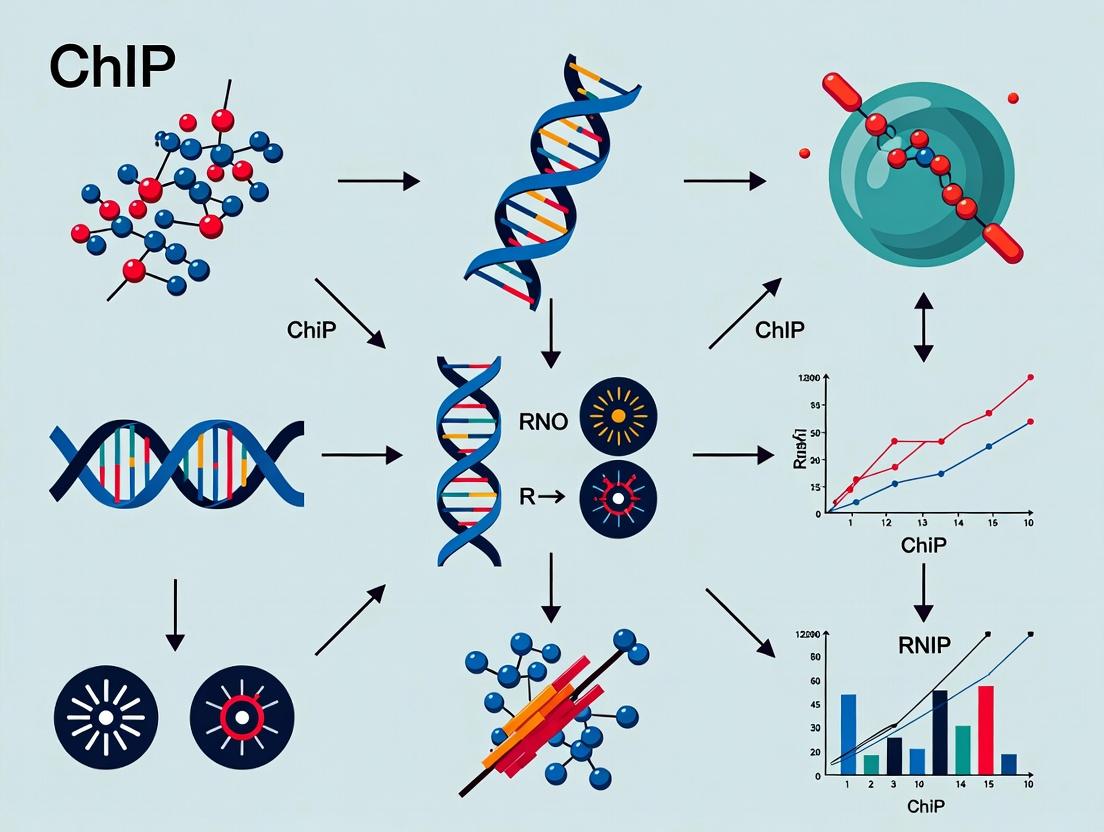
This comprehensive guide demystifies Chromatin Immunoprecipitation (ChIP) for researchers, scientists, and drug development professionals.
ChIP-Seq Master Guide: From Principles to Protocol for Epigenetic Research
Abstract
This comprehensive guide demystifies Chromatin Immunoprecipitation (ChIP) for researchers, scientists, and drug development professionals. Covering foundational molecular principles, step-by-step methodological workflows, common troubleshooting strategies, and advanced validation techniques, this article provides a complete framework for successful ChIP experiments. Learn how to optimize protocols, interpret results accurately, and apply ChIP data to advance biomedical discovery and therapeutic target identification.
What is ChIP? Understanding the Core Principles of Chromatin Immunoprecipitation
Chromatin Immunoprecipitation (ChIP) is an indispensable molecular biology technique that provides a snapshot of protein-DNA interactions within their native chromatin context. This in-depth guide is framed within a broader thesis that asserts the fundamental principle of ChIP—the selective enrichment of specific chromatin fragments via antibody-mediated capture—is the cornerstone for all downstream analysis and discovery. The evolution of the protocol, from its foundational crosslinking and shearing steps to modern high-throughput sequencing, directly dictates the resolution, specificity, and biological relevance of the data generated. This whitepaper details the core methodology, recent quantitative benchmarks, and essential tools for implementing robust ChIP experiments.
Core Principles and Quantitative Benchmarks
The efficacy of a ChIP experiment is quantified by its signal-to-noise ratio and enrichment over background. Key performance metrics, derived from recent literature and consortium benchmarks, are summarized below.
Table 1: Quantitative Performance Metrics for ChIP-Seq
| Metric | Typical Target Value | Description & Impact |
|---|---|---|
| FRiP Score | >1% (Histone marks) >5% (TFs) | Fraction of Reads in Peaks. Primary measure of signal enrichment. |
| Peak Count | Varies by factor & cell type | Number of called peaks; too few may indicate poor IP, too many may indicate noise. |
| Cross-Correlation (NSC/ RSC) | NSC ≥ 1.05, RSC ≥ 0.8 | Normalized/Relative Strand Cross-correlation. Measures fragment size distribution quality. |
| PCR Bottleneck Coefficient | > 0.8 | Assesses library complexity; lower values indicate over-amplification. |
| Mapping Rate | > 70% | Percentage of reads aligning uniquely to the reference genome. |
Table 2: Comparison of ChIP Methodologies
| Method | Resolution | Throughput | Primary Application |
|---|---|---|---|
| ChIP-qPCR | Single locus | Low | Validation of specific candidate regions. |
| ChIP-chip | ~100 bp | Medium | Genome-wide profiling using microarray hybridization (largely supplanted). |
| ChIP-seq | ~10-200 bp | High | Genome-wide profiling with high dynamic range and low background. |
| CUT&RUN/ CUT&Tag | ~10-200 bp | High | In situ cleavage with lower cells/background; no crosslinking/sonication. |
Detailed Experimental Protocol: Crosslinked ChIP-seq
The following protocol represents a current, optimized methodology for transcription factor ChIP-seq.
1. Crosslinking & Cell Harvesting
- Treat cells (typically 1x10^6 to 1x10^7 per IP) with 1% formaldehyde for 8-12 minutes at room temperature to covalently link proteins to DNA.
- Quench crosslinking with 125mM glycine for 5 minutes.
- Wash cells twice with ice-cold PBS containing protease inhibitors. Pellet and flash-freeze or proceed immediately.
2. Chromatin Preparation and Shearing
- Lyse cells sequentially in: 1) Cell Lysis Buffer (10mM Tris-HCl pH 8.0, 10mM NaCl, 0.2% NP-40), then 2) Nuclear Lysis Buffer (50mM Tris-HCl pH 8.0, 10mM EDTA, 1% SDS).
- Sonication: Shear chromatin to an average size of 200-500 bp using a focused ultrasonicator (e.g., Covaris). Settings vary by instrument (e.g., 105s, Duty Factor 5%, 140 W PIP, 200 cycles/burst for a Covaris S220). Critical: Optimize for each cell type. Centrifuge to remove debris.
- Alternative: Enzymatic shearing (e.g., using MNase) can be used for native ChIP.
3. Immunoprecipitation
- Dilute sheared chromatin 10-fold in ChIP Dilution Buffer (16.7mM Tris-HCl pH 8.0, 167mM NaCl, 1.2mM EDTA, 1.1% Triton X-100, 0.01% SDS).
- Pre-clear with Protein A/G beads for 1 hour at 4°C.
- Incubate supernatant with 1-10 µg of specific, validated antibody overnight at 4°C with rotation.
- Capture immune complexes with pre-blocked Protein A/G magnetic beads for 2 hours.
- Wash beads sequentially with: Low Salt Wash Buffer (0.1% SDS, 1% Triton X-100, 2mM EDTA, 20mM Tris-HCl pH 8.0, 150mM NaCl), High Salt Wash Buffer (same, but 500mM NaCl), LiCl Wash Buffer (0.25M LiCl, 1% NP-40, 1% deoxycholate, 1mM EDTA, 10mM Tris-HCl pH 8.0), and twice with TE Buffer.
4. Elution, Reverse Crosslinking, and Purification
- Elute chromatin twice with Fresh Elution Buffer (1% SDS, 0.1M NaHCO3), incubating at 65°C for 15 minutes with shaking.
- Add NaCl to 200mM and reverse crosslinks overnight at 65°C.
- Treat with RNase A and Proteinase K.
- Purify DNA using silica membrane-based columns or SPRI beads.
5. Library Preparation and Sequencing
- Prepare sequencing library from purified ChIP DNA using a commercial kit (e.g., Illumina, NEB). Steps include end-repair, A-tailing, adapter ligation, and limited-cycle PCR amplification.
- Size-select for fragments ~200-400 bp.
- Perform quality control (Bioanalyzer/TapeStation, qPCR quantification).
- Sequence on an appropriate platform (e.g., Illumina NovaSeq) to a depth of 20-40 million reads per sample for transcription factors.
Visualizing the ChIP-seq Workflow and Data Analysis
Diagram Title: ChIP-seq Experimental and Computational Workflow
Diagram Title: Principle of Antibody-Mediated Chromatin Enrichment
The Scientist's Toolkit: Essential Research Reagent Solutions
Table 3: Key Reagents and Materials for ChIP Experiments
| Item | Function & Critical Considerations |
|---|---|
| Validated ChIP-grade Antibody | Specificity is paramount. Must be validated for immunoprecipitation under crosslinked conditions. Use knock-out/knock-down controls. |
| Protein A/G Magnetic Beads | For efficient capture of antibody-bound complexes. Magnetic separation reduces background vs. agarose beads. |
| Focused Ultrasonicator (e.g., Covaris) | Provides consistent, tunable acoustic shearing for uniform fragment sizes with low heat generation. |
| Formaldehyde (Molecular Biology Grade) | Crosslinking agent. Freshness and concentration (typically 1%) are critical for efficient protein-DNA fixation. |
| Protease/Phosphatase Inhibitor Cocktails | Preserve protein epitopes and post-translational modifications during cell lysis and processing. |
| Silica-membrane DNA Cleanup Columns/ SPRI Beads | For efficient purification of low-concentration ChIP DNA after reverse crosslinking. |
| High-Sensitivity DNA Assay Kits (e.g., Qubit, Bioanalyzer) | Accurate quantification and quality assessment of dilute ChIP DNA and final libraries. |
| Commercial ChIP-seq Library Prep Kit | Optimized for low-input DNA, minimizing bias and maximizing library complexity during adapter ligation and amplification. |
| Control qPCR Primers | Positive control (known binding site) and negative control (non-target genomic region) primers are essential for validating every ChIP experiment prior to sequencing. |
Chromatin Immunoprecipitation (ChIP) is the cornerstone experimental technique for interrogating the epigenetic landscape, testing the central hypothesis that protein-DNA interactions can be captured in vivo and quantified to map functional genomic elements. This whitepaper, framed within a broader thesis on ChIP principle and protocol research, provides an in-depth technical guide to the core methodology. It details how ChIP translates the biological reality of chromatin architecture into analyzable data, enabling researchers to decipher transcription factor binding sites, histone modification patterns, and variant histone localization. The subsequent discussion covers advanced protocols, data quantification, and integration with next-generation sequencing (ChIP-seq), providing a critical resource for researchers, scientists, and drug development professionals seeking to validate epigenetic targets and mechanisms.
The fundamental premise of ChIP is that transient or stable interactions between proteins and genomic DNA can be chemically stabilized, isolated, and identified. This allows for a snapshot of the in vivo epigenetic state. The "epigenetic landscape" metaphor refers to the complex, dynamic patterning of chemical modifications and protein occupancies along the chromatin fiber that dictates cellular identity and function. ChIP is the primary tool for empirically charting this landscape, testing hypotheses about gene regulation mechanisms in development, disease, and drug response.
Core Principle: FromIn VivoCrosslinking to Target Enrichment
The ChIP protocol operationalizes its central hypothesis through a series of critical steps designed to preserve native interactions and selectively purify fragments of DNA associated with a protein of interest.
Detailed Experimental Protocol
Step 1: Crosslinking
- Method: Cells or tissues are treated with a reversible chemical crosslinker, most commonly 1% formaldehyde, for 8-12 minutes at room temperature.
- Function: Creates covalent bonds between proteins and DNA (and between closely associated proteins) that are in direct contact, freezing transient interactions.
- Quenching: Reaction is stopped with glycine (final concentration 125 mM).
Step 2: Chromatin Preparation & Fragmentation
- Cell Lysis: Cells are lysed in a series of buffers to isolate nuclei.
- Fragmentation: Chromatin is fragmented to manageable sizes (200-1000 bp). Two primary methods exist:
- Sonication (Physical Shearing): Uses high-frequency sound waves. Protocol: Typically 4-10 cycles of 30-second pulses at high power, with cooling intervals on ice. Must be optimized for each cell type and sonicator.
- Micrococcal Nuclease Digestion (Enzymatic Digestion): Cleaves linker DNA between nucleosomes. Protocol: Incubate isolated nuclei with MNase (e.g., 2-20 units per 10^6 cells) for 5-20 minutes at 37°C to yield primarily mononucleosomal fragments.
Step 3: Immunoprecipitation
- Principle: The solubilized, fragmented chromatin is incubated with an antibody specific to the target protein (e.g., H3K27me3, RNA Polymerase II, p53).
- Protocol: Pre-clear chromatin with protein A/G beads (30-60 min). Incubate supernatant with specific antibody (typically 1-10 µg) overnight at 4°C with rotation. Add protein A/G beads the next day to capture the antibody-chromatin complex (2-4 hours at 4°C).
- Washing: Beads are stringently washed with a series of buffers (e.g., low salt, high salt, LiCl wash, TE buffer) to remove non-specifically bound chromatin.
Step 4: Reverse Crosslinking, DNA Purification, & Analysis
- Elution & Reversal: Complexes are eluted from beads (e.g., with 1% SDS, 0.1M NaHCO3). Crosslinks are reversed by incubating with high salt (200 mM NaCl) at 65°C overnight.
- DNA Cleanup: Treatment with RNase A and Proteinase K, followed by phenol-chloroform extraction or column-based purification to recover DNA.
- Analysis: Enriched DNA is quantified and analyzed via qPCR (for specific loci) or next-generation sequencing (ChIP-seq for genome-wide mapping).
Quantitative Data & Analysis
Table 1: Key Quantitative Metrics in a Standard ChIP Experiment
| Metric | Typical Target/Range | Importance & Interpretation |
|---|---|---|
| Chromatin Fragment Size | 200-500 bp (sonication) | Critical for resolution. Smaller fragments yield higher mapping precision but require more sequencing depth for ChIP-seq. |
| DNA Yield Post-IP | 5-100 ng (highly variable) | Depends on antibody efficacy, target abundance, and starting material. Low yield can indicate poor IP efficiency. |
| % Input Recovery | 0.1% - 10% (by qPCR) | Enrichment at a positive control locus vs. a negative control locus. Essential for normalizing qPCR data. |
| Signal-to-Noise Ratio | >5-fold (qPCR) | Fold-enrichment of target locus over negative control locus. Validates specific antibody pull-down. |
| ChIP-seq Sequencing Depth | 10-40 million mapped reads (histones) | Deeper sequencing (20-60M reads) is required for transcription factors with punctate binding. |
| FRiP Score | >1% (histones), >0.5% (TFs) | Fraction of Reads in Peaks. Primary quality metric for ChIP-seq; indicates enrichment efficiency. |
Table 2: Comparison of Chromatin Fragmentation Methods
| Parameter | Sonication | Micrococcal Nuclease (MNase) |
|---|---|---|
| Principle | Physical shearing | Enzymatic digestion of linker DNA |
| Fragment Profile | Random, size range varies | Nucleosome-defined (mainly mono-, di-nucleosomes) |
| Best For | Transcription factors, co-factors, broad histone marks | Nucleosome positioning studies, histone variants |
| Key Advantage | Unbiased fragmentation; works for all proteins | Preserves nucleosome structure; precise cleavage |
| Key Disadvantage | Requires optimization; may damage epitopes | Under-represents open chromatin regions |
The Scientist's Toolkit: Research Reagent Solutions
Table 3: Essential Materials for ChIP Experiments
| Item | Function & Critical Consideration |
|---|---|
| Formaldehyde (37%) | Reversible crosslinker. Must be fresh for efficient protein-DNA crosslinking. |
| Protein A/G Magnetic Beads | Solid support for antibody capture. Magnetic beads offer easier washing and lower background than agarose. |
| ChIP-Qualified Antibody | The single most critical reagent. Must be validated for specificity and efficacy in ChIP applications. |
| Protease Inhibitor Cocktail | Added to all lysis and wash buffers to prevent protein degradation during sample processing. |
| MNase Enzyme | For enzymatic chromatin digestion. Requires titration for each cell type to achieve optimal nucleosomal ladder. |
| Glycine (2.5M Stock) | Quenches formaldehyde to stop the crosslinking reaction, preventing over-crosslinking. |
| ChIP-seq Library Prep Kit | For preparing sequencing libraries from low-input immunoprecipitated DNA. |
| Control Primers (qPCR) | Validated primer pairs for a known positive binding site and a negative control genomic region. |
From Data to Landscape: Integration & Visualization
The raw output of ChIP-seq is millions of short DNA sequences ("reads"). Bioinformatics pipelines align these reads to a reference genome, identify regions of significant enrichment ("peaks"), and annotate these peaks relative to genes and other genomic features. This creates the actual map of the epigenetic landscape—visualized as browser tracks showing signal intensity across the genome—which can be correlated with gene expression and other omics data to derive mechanistic insights.
ChIP Core Workflow: Hypothesis to Data
Molecular Principle of Chromatin Immunoprecipitation
The ChIP technique stands as the definitive experimental test for the central hypothesis that the functional epigenetic state can be captured via in vivo crosslinking and antibody-mediated isolation. Its evolution into ChIP-seq has provided an unprecedented, genome-wide lens on the regulatory machinery of the cell. Mastery of its detailed protocol—from crosslinking optimization and antibody selection to fragmentation control and rigorous quantification—is essential for generating reliable maps of the epigenetic landscape. These maps are indispensable for advancing basic research in gene regulation and for identifying and validating novel epigenetic drug targets in therapeutic development.
Chromatin Immunoprecipitation (ChIP) is a cornerstone technique for mapping protein-DNA interactions in vivo, essential for understanding gene regulation, epigenetics, and cellular response pathways. The core efficacy of any ChIP protocol hinges on the precise interplay of four fundamental components: antibodies for specific antigen capture, chromatin as the biological substrate, crosslinking for interaction preservation, and beads for target isolation. This whitepaper provides an in-depth technical analysis of these components, framing their optimization as critical to the validity and reproducibility of data within a broader ChIP research thesis.
Antibodies: The Specificity Determinants
Antibodies are the primary specificity agents in ChIP, dictating which protein or histone modification is targeted.
Key Characteristics & Selection Criteria
Polyclonal vs. Monoclonal: Polyclonals recognize multiple epitopes, offering signal amplification but potential cross-reactivity. Monoclonals provide high specificity to a single epitope but may be sensitive to epitope occlusion due to crosslinking or conformation.
Validation for ChIP: An antibody validated for Western Blot or immunofluorescence is not necessarily validated for ChIP. ChIP-grade antibodies must recognize the target in its native, crosslinked chromatin context.
Experimental Protocol: Antibody Validation via Positive Control PCR
- Objective: Confirm antibody efficacy by assessing enrichment at a known genomic binding site.
- Method:
- Perform ChIP with the test antibody and a species-matched IgG control.
- Analyze precipitated DNA by quantitative PCR (qPCR) using primers flanking a well-established binding site for the target protein (e.g., promoter of a known target gene).
- Calculate % Input and Fold Enrichment over IgG.
- Success Criterion: Significant enrichment (typically >10-fold over IgG) at the positive control locus, with no signal at a negative control region.
Table 1: Antibody Selection Criteria Quantitative Summary
| Criterion | Optimal Target/Value | Impact on ChIP Outcome |
|---|---|---|
| Host Species | Compatible with secondary bead coupling (e.g., rabbit, mouse) | Enables efficient pull-down. |
| Clonality | Monoclonal for defined epitopes; Polyclonal for complex targets | Specificity vs. robustness. |
| ChIP Validation | Published ChIP-seq/ChIP-qPCR data or vendor "ChIP-grade" claim | Highest predictor of success. |
| Titer | Use vendor-recommended amount; typically 1-10 µg per reaction | Under-use reduces yield; over-use increases background. |
Chromatin: The Substrate Preparation
Chromatin preparation involves cell lysis, crosslinking, and fragmentation to generate soluble, antibody-accessible complexes.
Crosslinking: Capturing Transient Interactions
Formaldehyde is the universal crosslinker, creating reversible methylol bridges between proximal amines (protein-protein, protein-DNA). Dual crosslinking (e.g., DSG + Formaldehyde) is used for challenging proteins or distal interactions.
Experimental Protocol: Standard Formaldehyde Crosslinking
- Reagents: 37% Formaldehyde, 2.5M Glycine (quencher), PBS.
- Method:
- Add formaldehyde directly to cell culture medium to a final concentration of 1%.
- Incubate with gentle agitation for 8-12 minutes at room temperature.
- Quench by adding glycine to a final concentration of 0.125M and incubate for 5 min.
- Wash cells twice with ice-cold PBS.
- Critical Note: Time and concentration are optimized empirically. Over-crosslinking reduces chromatin accessibility and antibody binding.
Fragmentation: Achieving Optimal Size
Fragmentation balances DNA fragment length (resolution) and epitope accessibility. Sonication (acoustic shearing) is most common.
Table 2: Chromatin Fragmentation Methods & Data
| Method | Typical Fragment Size | Key Parameter | Advantage |
|---|---|---|---|
| Bath Sonicator | 200-1000 bp | Pulse time, power, total time | Processes multiple samples. |
| Probe Sonicator | 200-500 bp | Amplitude, pulse duration | Efficient for dense pellets. |
| Enzymatic (MNase) | ~150 bp (mononucleosome) | Enzyme concentration, time | Precise, no equipment needed. |
Protocol: Sonication Optimization & Size Check
- Lysate crosslinked cell pellet in SDS lysis buffer.
- Sonicate using optimized pulses (e.g., 30 sec ON, 30 sec OFF, 15 cycles at 4°C).
- Reverse crosslink a 50 µl aliquot (with 5M NaCl at 65°C for 4 hrs, then Proteinase K).
- Purify DNA and analyze on a 2% agarose gel or Bioanalyzer. Target size: 200-500 bp.
Beads: The Isolation Matrix
Beads provide a solid-phase support for immunocomplex capture.
Bead Types and Binding Dynamics
Protein A/G Beads: Bacterial proteins with high affinity for the Fc region of antibodies. Species-specific binding affinities vary (see Table 3). Magnetic beads are now standard for ease of handling.
Blocking: Beads must be blocked with BSA or salmon sperm DNA to prevent non-specific chromatin binding.
Table 3: Bead-Antibody Binding Affinities
| Bead Type | Human IgG | Mouse IgG | Rabbit IgG | Goat IgG |
|---|---|---|---|---|
| Protein A | Strong (subtype var.) | Strong (IgG2a, 2b) | Strong | Weak |
| Protein G | Strong (all subtypes) | Strong (all subtypes) | Strong | Strong |
| Protein A/G | Strong (all) | Strong (all) | Strong | Strong |
Protocol: Bead Preparation & Immunoprecipitation
- Resuspend Protein A/G magnetic beads and wash 2x in cold ChIP Dilution Buffer.
- Block beads with 0.5% BSA in Dilution Buffer for 1 hr at 4°C.
- Incubate pre-cleared chromatin with primary antibody (or control IgG) overnight at 4°C.
- Add blocked beads to the chromatin-antibody mix and incubate 2-4 hrs.
- Capture beads on a magnet and wash sequentially with: Low Salt Wash Buffer, High Salt Wash Buffer, LiCl Wash Buffer, and TE Buffer.
- Elute complexes with fresh Elution Buffer (1% SDS, 0.1M NaHCO3).
The Scientist's Toolkit: Research Reagent Solutions
Table 4: Essential Materials for Chromatin Immunoprecipitation
| Reagent/Material | Function | Key Consideration |
|---|---|---|
| Formaldehyde (37%) | Reversible protein-DNA crosslinking. | Use fresh, aliquoted; handle in fume hood. |
| Protease Inhibitor Cocktail | Preserves chromatin integrity during prep. | Add fresh to all buffers before use. |
| Protein A/G Magnetic Beads | Solid-phase capture of antibody complexes. | Choose A, G, or A/G based on host species. |
| ChIP-Validated Primary Antibody | Specific target antigen recognition. | Most critical variable; demand validation data. |
| Normal IgG (Species-Matched) | Negative control for non-specific binding. | Must be same host species as primary Ab. |
| RNase A & Proteinase K | Nucleic acid purification post-IP. | Essential for clean DNA recovery. |
| Magnetic Separation Rack | Efficient bead capture and buffer removal. | Enables rapid, low-background washes. |
| qPCR Primers (Control Loci) | Assay for enrichment/validation. | Include positive and negative genomic regions. |
Visualized Workflows and Relationships
Diagram 1: Core ChIP Experimental Workflow
Diagram 2: Molecular Interaction Core in ChIP
The Chromatin Immunoprecipitation (ChIP) principle has been a cornerstone of epigenetics and gene regulation research, enabling the study of protein-DNA interactions in vivo. This whitepaper, framed within a broader thesis on ChIP principle and protocol research, details its technical evolution from a low-throughput assay to a genome-wide discovery platform and beyond, addressing an audience of researchers, scientists, and drug development professionals.
Historical Context and Technical Evolution
The foundational ChIP assay, developed in the 1980s and refined through the 1990s, involves formaldehyde cross-linking, chromatin fragmentation, specific antibody-based immunoprecipitation, reversal of cross-links, and analysis of the co-precipitated DNA. Initial readouts utilized Southern blotting or low-throughput PCR, limiting analysis to known genomic loci. The quantitative leap came with the integration of DNA microarrays (ChIP-on-chip) in the 2000s, but this was constrained by array design. The advent of next-generation sequencing (NGS) catalyzed the revolution to ChIP-seq, providing an unbiased, high-resolution, genome-wide view of transcription factor binding sites and histone modification landscapes.
Core ChIP-seq Protocol: A Detailed Methodology
- Cross-linking: Treat cells with 1% formaldehyde for 8-12 minutes at room temperature to covalently link proteins to DNA. Quench with glycine.
- Cell Lysis & Chromatin Preparation: Lyse cells. Isolate nuclei and resuspend in SDS lysis buffer.
- Chromatin Fragmentation: Using a focused ultrasonicator (e.g., Covaris), shear chromatin to an average size of 200-600 bp. Optimize settings for cell type and fixative.
- Immunoprecipitation: Clarify sheared lysate. Incubate an aliquot (10-100 µg chromatin) with 1-10 µg of validated, specific antibody overnight at 4°C. Capture antibody complexes with Protein A/G beads.
- Washing & Elution: Wash beads sequentially with Low Salt, High Salt, LiCl, and TE buffers. Elute complexes with fresh elution buffer (1% SDS, 0.1M NaHCO3).
- Reverse Cross-linking & DNA Purification: Add NaCl (to 0.2M) and incubate at 65°C overnight to reverse cross-links. Treat with RNase A and Proteinase K. Purify DNA using phenol-chloroform extraction or spin columns.
- Library Preparation & Sequencing: Prepare sequencing library from purified DNA: end-repair, A-tailing, adapter ligation, size selection (e.g., 200-300 bp), and limited-cycle PCR amplification. Perform sequencing on an Illumina platform (typically 50-100 million single-end 50bp reads per sample for human histones).
Quantitative Evolution: From ChIP to Modern Methods
The table below summarizes key quantitative metrics that highlight the evolution of the technology.
Table 1: Performance Metrics of ChIP-Based Technologies
| Technology | Throughput (Loci/Experiment) | Resolution | Input DNA Requirement | Primary Application |
|---|---|---|---|---|
| Traditional ChIP (qPCR) | 1-10 (targeted) | Locus-specific | 1-10 ng | Candidate locus validation |
| ChIP-on-chip | ~10⁶ (array-limited) | 30-100 bp | 50-100 ng | Genome-wide profiling (non-repetitive regions) |
| ChIP-seq | Genome-wide | 10-200 bp | 1-50 ng | De novo discovery of binding sites/modifications |
| CUT&RUN/Tag | Genome-wide | Single-nucleotide | ~1000 cells | Low-input, high-resolution profiling |
| ChIP-exo | Genome-wide | Near-base-pair | 5-50 ng | High-resolution mapping of protein-DNA boundaries |
Beyond ChIP-seq: Emerging Techniques
The field has evolved to address ChIP-seq limitations (high cell input, background noise). Cleavage Under Targets and Release Using Nuclease (CUT&RUN) and its sequencing-based cousin CUT&Tag use a protein A-Tn5 fusion protein to cleave and tag genomic sites bound by an antibody in situ, offering low-background profiles from ultra-low cell inputs. ChIP-exo uses exonuclease digestion to trim bound DNA, yielding near-base-pair resolution of transcription factor footprints.
Signaling Pathways in Chromatin Regulation
A simplified pathway of a canonical signal-to-chromatin response is depicted below.
Short Title: Signal to Chromatin Modification Pathway
Experimental Workflow: ChIP-seq vs. CUT&Tag
The core procedural differences between established ChIP-seq and the newer CUT&Tag method are illustrated below.
Short Title: ChIP-seq vs CUT&Tag Workflow Comparison
The Scientist's Toolkit: Key Research Reagent Solutions
Table 2: Essential Materials for Chromatin Profiling Experiments
| Item | Function/Description | Key Consideration |
|---|---|---|
| Validated ChIP-grade Antibody | Specific immunoglobulin for the target protein or histone modification. | Primary determinant of success; requires rigorous validation (knockout/knockdown controls). |
| Protein A/G Magnetic Beads | Superparamagnetic beads coated with Protein A and/or G for efficient antibody-immunocomplex capture. | Offer faster washing and lower background compared to agarose beads. |
| Formaldehyde (37%) | Crosslinking agent that creates reversible protein-DNA and protein-protein bonds. | Concentration and time must be optimized to balance signal and accessibility. |
| Micrococcal Nuclease (MNase) or Covaris Focused-Ultrasonicator | Enzymatic (MNase) or physical (sonication) method for chromatin fragmentation. | Sonication is standard for crosslinked ChIP; MNase is used for native chromatin. |
| Protein A-Tn5 Fusion Protein | Engineered protein for CUT&Tag; combines antibody binding (Protein A) and library tagging (Tn5 transposase). | Enables direct, in-situ tagmentation of antibody-bound chromatin. |
| SPRI (Solid Phase Reversible Immobilization) Beads | Magnetic beads for DNA size selection and clean-up during library preparation. | Critical for selecting optimally sized DNA fragments and removing adapter dimers. |
| High-Fidelity DNA Polymerase | PCR enzyme for limited-cycle amplification of sequencing libraries. | Minimizes PCR bias and errors during library amplification. |
| Dual-Indexed Sequencing Adapters | Oligonucleotides containing sequencing primer sites and unique molecular indices (UMIs). | Enable multiplexing of samples and reduction of index-hopping artifacts. |
The evolution from ChIP to ChIP-seq represents a paradigm shift from candidate-based to discovery-driven research in epigenomics. The continued innovation toward techniques like CUT&Tag and ChIP-exo addresses critical limitations in resolution, input material, and background noise. This progression, grounded in the core ChIP principle, provides increasingly powerful tools for drug development professionals and researchers to map the regulatory genome and identify novel therapeutic targets.
Chromatin Immunoprecipitation (ChIP) is a cornerstone technique for studying protein-DNA interactions in vivo. Its principle—crosslinking, fragmentation, immunoprecipitation, and analysis—provides a direct snapshot of genomic occupancy. This whitepaper, framed within ongoing research to refine ChIP specificity, sensitivity, and throughput, details three major applications that have revolutionized functional genomics and drug discovery: mapping transcription factor binding sites, profiling histone modifications, and generating comprehensive epigenetic profiles.
Transcription Factor (TF) Mapping
This application identifies the precise genomic locations where a TF binds, elucidating gene regulatory networks.
Detailed Protocol: ChIP-seq for TF Mapping
- Crosslinking: Treat cells with 1% formaldehyde for 10 minutes at room temperature to covalently link TFs to DNA.
- Cell Lysis & Sonication: Lyse cells and use ultrasonication to shear chromatin to 200-500 bp fragments.
- Immunoprecipitation: Incubate lysate with antibody specific to the TF of interest. Use Protein A/G magnetic beads to capture antibody-protein-DNA complexes.
- Washing & Reverse Crosslinking: Wash beads stringently. Reverse crosslinks at 65°C with high-salt buffer.
- DNA Purification: Recover DNA using phenol-chloroform extraction or spin columns.
- Library Prep & Sequencing: Prepare sequencing library (end repair, A-tailing, adapter ligation, PCR amplification) for high-throughput sequencing (e.g., Illumina).
- Data Analysis: Align reads to a reference genome. Call peaks using algorithms (MACS2, HOMER) to identify significant enrichment sites.
Key Quantitative Data for TF ChIP-seq
| Metric | Typical Range/Value | Significance |
|---|---|---|
| Input DNA Required | 1-10 ng | Starting material for library prep. |
| Recommended Sequencing Depth | 20-50 million reads (mammalian genome) | Balances cost and sensitivity for peak calling. |
| Peak Width | 100-500 bp | Reflects TF footprint and antibody resolution. |
| False Discovery Rate (FDR) Cutoff | q-value < 0.01 | Standard threshold for significant peak calling. |
| Signal-to-Noise Ratio | > 5 (ideal) | Measure of IP specificity (enriched vs control). |
TF ChIP-seq Workflow Diagram
Title: ChIP-seq Workflow for Transcription Factor Mapping
Histone Modification Analysis
ChIP enables genome-wide profiling of histone post-translational modifications (PTMs), defining chromatin states and regulatory elements.
Detailed Protocol: ChIP-seq for Histone Modifications Note: Differs from TF protocol mainly in crosslinking and fragmentation.
- Optional Crosslinking: For most histone PTMs, native ChIP (no crosslinking) is performed. For some labile marks, use light formaldehyde fixation (1%, 5 min).
- Micrococcal Nuclease (MNase) Digestion: Use MNase to digest chromatin, primarily releasing mononucleosomes (~147 bp DNA). This preserves nucleosome positioning.
- Immunoprecipitation: Use validated antibody against specific histone mark (e.g., H3K4me3, H3K27ac).
- DNA Recovery & Library Prep: Reverse crosslinks if used, purify DNA. Library prep includes a size selection step for ~200-300 bp fragments (nucleosomal DNA + adapters).
- Sequencing & Analysis: Sequence. Align reads and call broad enrichment regions for histone marks using tools like SICER or BroadPeak.
Key Quantitative Data for Histone Mark ChIP-seq
| Metric | Typical Range/Value | Significance |
|---|---|---|
| MNase Digestion Goal | >70% mononucleosomes | Optimal for nucleosome-resolution mapping. |
| Recommended Sequencing Depth | 30-60 million reads (mammalian) | Higher depth needed for broad domains. |
| Peak/Domain Width | 1-10 kb (broad marks) | Reflects extended chromatin domains. |
| Fragment Size Post-Lib Prep | ~200-300 bp | Indicator of successful nucleosome IP. |
| IP Efficiency | 1-10% of input DNA | Varies by antibody quality and mark abundance. |
Histone Modification Analysis Pathway
Title: Histone Mark IP Links to Chromatin State
Epigenetic Profiling
Integrative analysis of multiple ChIP-seq datasets (TFs, histone marks, chromatin accessibility) generates a multi-layered epigenetic profile, crucial for understanding cell identity and disease.
Detailed Protocol: Integrative Epigenomic Analysis This is a computational meta-analysis protocol.
- Data Acquisition: Perform or obtain ChIP-seq datasets for multiple factors (e.g., RNA Pol II, H3K27ac, H3K4me3, H3K27me3) and ATAC-seq or DNase-seq data.
- Uniform Processing: Process all datasets through a standardized pipeline (alignment, peak calling, quality control).
- Chromatin State Segmentation: Use a hidden Markov model-based tool (e.g., ChromHMM, Segway) to segment the genome into discrete states (e.g., "Active Promoter," "Enhancer," "Repressed Heterochromatin").
- Integrative Visualization: View aligned tracks on a genome browser (e.g., IGV, UCSC).
- Correlation & Motif Analysis: Perform correlation between datasets. Perform de novo motif discovery within enhancer regions to infer cooperating TFs.
Quantitative Data for Epigenetic Profiling
| Analysis Type | Common Tool/Metric | Output/Interpretation |
|---|---|---|
| Peak Overlap | BEDTools intersect | Quantifies co-localization of factors (e.g., % of enhancers with a specific TF). |
| Chromatin States | ChromHMM (Posterior Probability) | Probability of a genomic segment belonging to a defined functional state. |
| Motif Enrichment | HOMER (p-value, % of targets) | Statistical significance of TF binding motifs in a set of regions. |
| Differential Analysis | DESeq2/diffBind (Fold Change, adj. p-value) | Identifies significant changes in mark occupancy between conditions. |
Integrative Epigenomic Profiling Workflow
Title: Data Integration for Epigenetic Profiling
The Scientist's Toolkit: Key Research Reagent Solutions
| Item | Function & Critical Considerations |
|---|---|
| High-Quality Antibodies | Specificity is paramount. Use ChIP-validated, ideally ChIP-seq-grade antibodies for target protein or histone mark. Check citations. |
| Protein A/G Magnetic Beads | Efficient capture of antibody complexes. Offer easier washing and lower background than agarose beads. |
| Micrococcal Nuclease (MNase) | For native ChIP. Must be titrated for each cell type to achieve optimal mononucleosome digestion. |
| Ultra-Sensitive DNA Library Prep Kit | Essential for low-input ChIP DNA (e.g., from rare cell populations). Reduces amplification bias. |
| PCR Inhibitor Removal Columns | Critical for clean DNA post-reverse crosslinking, as salts and proteins can inhibit library prep. |
| Spike-in Control DNA/Antibody | Normalization control (e.g., Drosophila chromatin) for quantitative comparisons between samples, addressing IP efficiency variation. |
| Dual Indexing Adapters | For multiplexing multiple samples in a single sequencing run, reducing cost and batch effects. |
| Robust Peak Calling Software | Algorithm (e.g., MACS2 for sharp peaks, SICER for broad domains) must match the biological target's binding profile. |
Step-by-Step ChIP Protocol: From Cell Culture to Library Prep
This whitepaper serves as a core chapter in a broader thesis investigating the principles and optimization of Chromatin Immunoprecipitation (ChIP) protocols. The reliability of any ChIP experiment hinges on a rigorously designed Phase 1, where the selection and implementation of controls directly determine data validity and biological interpretation. This guide details the experimental design, purpose, and methodologies for essential controls, providing a framework for researchers to produce publication-quality, reproducible epigenomic data.
The Quintessential Controls in ChIP: Purpose and Rationale
Input DNA Control
The Input sample is a non-immunoprecipitated portion of the sonicated chromatin, processed alongside the ChIP samples.
- Purpose: Serves as a normalization control for total chromatin content and accessibility. It accounts for variations in DNA concentration, PCR efficiency, and regional differences in chromatin shearing or primer accessibility during qPCR analysis.
- Protocol: Typically, 1-10% of the total chromatin used per IP is set aside prior to the addition of antibody. This sample undergoes cross-link reversal, proteinase K digestion, and DNA purification simultaneously with the ChIP samples.
IgG Isotype Control
The IgG control utilizes a non-specific antibody (e.g., normal rabbit IgG) of the same isotype as the specific ChIP antibody.
- Purpose: Identifies background signal caused by non-specific antibody binding to chromatin, protein A/G bead affinity, or residual protein complexes. It establishes the baseline for "noise" in the experiment.
- Protocol: An equivalent concentration of non-specific IgG is used in place of the target-specific antibody, with all other steps identical.
Positive Control Target
A genomic region known to be enriched for the target antigen.
- Purpose: Validates the efficacy of the antibody, IP conditions, and overall protocol. A successful positive control confirms the experiment worked technically.
- Example: For histone modification H3K4me3 in active genes, the promoter of GAPDH or ACTB is commonly used. For a transcription factor like RNA Polymerase II, the promoter or transcribed region of a highly active housekeeping gene serves this role.
Negative Control Target
A genomic region confirmed to lack the target antigen.
- Purpose: Confirms the specificity of the observed enrichment. It ensures the signal in the ChIP sample is not an artifact of open chromatin or non-specific DNA binding.
- Example: A "gene desert" region or the coding region of an inactive, silenced gene (e.g., MYOD1 in non-muscle cells) are standard choices.
Table 1: Expected Enrichment Ranges for Controls in qPCR Analysis (Representative Values)
| Control Type | Typical Fold-Enrichment (vs Input) | % Input | Key Interpretation |
|---|---|---|---|
| Specific ChIP (Target Region) | 10 - 1000+ (context-dependent) | 0.1% - 10%+ | True positive signal. Must be significantly above IgG and Negative Control. |
| IgG Control | 0.5 - 2 | 0.01% - 0.1% | Defines background level. Target ChIP should be >> IgG. |
| Positive Control Region | ≥ 10 (for strong marks) | ≥ 0.1% | Validates experimental success. Failure indicates protocol/antibody issue. |
| Negative Control Region | ~1 (≈ IgG level) | ~0.01% - 0.05% | Confirms specificity. Target ChIP signal here indicates off-target binding. |
Note: These are generalized values. Actual ranges depend on antigen abundance, antibody quality, and chromatin accessibility.
Detailed Experimental Protocols
Protocol: Input DNA Sample Preparation
- After chromatin shearing and clarification, remove an aliquot representing 1-10% of the volume used for a single IP.
- Add 5M NaCl to a final concentration of 200mM and 10μg of RNase A. Incubate at 65°C for 2 hours.
- Add Proteinase K to a final concentration of 0.2 μg/μL. Incubate at 55°C for 30 minutes.
- Purify DNA using a PCR purification kit or phenol-chloroform extraction. Elute in 50-100 μL TE buffer or nuclease-free water.
- Quantify DNA by fluorometry. This sample is used directly as the "Input" standard curve in downstream qPCR.
Protocol: IgG Control Immunoprecipitation
- Prepare an identical aliquot of pre-cleared chromatin as used for the specific antibody IP.
- Add an equivalent mass (typically 1-5 μg) of normal IgG (e.g., Normal Rabbit IgG) from the same host species as the specific antibody.
- Follow the identical incubation, wash, and elution steps as the specific IP.
- Process the eluate alongside the specific IP samples for cross-link reversal and DNA purification.
Visualizing Control Logic and Workflow
Title: ChIP Experimental Workflow & Control Logic
Title: Criteria for Valid ChIP-qPCR Data Interpretation
The Scientist's Toolkit: Research Reagent Solutions
Table 2: Essential Materials for ChIP Experimental Controls
| Item | Function & Rationale | Example/Note |
|---|---|---|
| Specific ChIP-grade Antibody | Precisely captures the target protein or histone modification. Validated for IP and specificity (e.g., by knockout/knockdown). | Antibodies from Abcam (CEP), Cell Signaling (CST), or Diagenode. |
| Normal IgG (Isotype Control) | Matches the host species and isotype (e.g., Rabbit IgG) of the specific antibody to control for non-specific binding. | Must be non-immune serum from the same species. |
| Protein A/G Magnetic Beads | High-affinity capture of antibody-bound complexes. Magnetic beads offer easier washing and lower background. | Beads are pre-blocked with BSA or salmon sperm DNA. |
| PCR Purification Kit | Efficient recovery of low-concentration DNA from Input, ChIP, and IgG samples after reversal. | Columns with high DNA binding affinity and low elution volume. |
| Validated qPCR Primers | Amplify Positive Control, Negative Control, and Target Regions with high efficiency (90-110%) and specificity. | Design primers ~100-150 bp; verify single amplicon by melt curve. |
| Sonicator (Ultrasonic) | Generates optimal chromatin fragment sizes (200-500 bp). Consistency is critical for all samples. | Covaris S-series (focused) or Bioruptor (bath) are standard. |
| Fluorometric DNA Quantifier | Accurately measures low DNA concentrations from purified Input and ChIP samples for normalization. | Qubit with dsDNA HS Assay is preferred over UV absorbance. |
Within the broader thesis on ChIP principle and protocol research, the fixation step is critical. It must preserve protein-DNA interactions with minimal disruption to chromatin structure and epitope accessibility. This guide provides a technical comparison of formaldehyde with alternative fixatives, outlining optimized protocols for each.
Core Principles of Fixation for ChIP
Effective chromatin immunoprecipitation requires the reversible crosslinking of proteins to DNA and proteins to proteins. Formaldehyde, a monofunctional aldehyde, is the historical standard. However, alternatives like DSG (disuccinimidyl glutarate), EGS (ethylene glycol bis(succinimidyl succinate)), and UV light are employed to target specific interactions or overcome formaldehyde's limitations, such as over-crosslinking or poor preservation of certain complexes.
Quantitative Comparison of Fixatives
Table 1: Characteristics of Common ChIP Fixatives
| Fixative | Type | Crosslink Length | Primary Target | Key Advantage | Key Disadvantage | Optimal Concentration & Time (Typical) |
|---|---|---|---|---|---|---|
| Formaldehyde | Short, reversible | ~2 Å | Protein-Nucleic Acid; Protein-Protein (Lys, Arg, Ser) | Penetrates cells rapidly; easily reversible. | Can over-crosslink; may mask epitopes. | 1% for 8-10 min at RT |
| DSG | Long, reversible | ~7.7 Å | Protein-Protein (primary amines) | Stabilizes distal protein interactions; good for weak DNA binders. | Poor membrane penetration; often used in combination. | 2 mM for 45 min at RT (pre-fix before FA) |
| EGS | Long, reversible | ~16 Å | Protein-Protein (primary amines) | Useful for very large protein complexes. | Very poor aqueous solubility; requires DMSO. | 1-5 mM for 45 min at RT |
| UV Light | Zero-length, irreversible | 0 Å | Protein-DNA (direct contact, Thy/Cyt) | No chemical crosslinker; ideal for direct, tight binders. | Limited to surface cultures; inefficient for indirect proteins. | 254 nm, 100-400 mJ/cm² |
Table 2: Application-Specific Fixative Recommendations
| Research Goal | Recommended Fixative(s) | Protocol Rationale |
|---|---|---|
| Mapping transcription factor binding sites | Formaldehyde alone | Standard for most TFs with strong DNA association. |
| Studying co-activator/co-repressor complexes | DSG + Formaldehyde (sequential) | DSG stabilizes protein-protein interactions before FA crosslinks to DNA. |
| Analyzing histone modifications | Formaldehyde alone or mild UV | Histones are tightly DNA-bound; over-crosslinking is a greater concern. |
| Investigating weak or transient DNA binders | DSG/EGS + Formaldehyde | Long-arm crosslinkers capture complexes before they dissociate. |
| Mapping direct DNA-binding proteins (e.g., certain polymerases) | UV Crosslinking | Provides "zero-length" precision for direct contacts. |
Detailed Experimental Protocols
Protocol 1: Standard Formaldehyde Fixation for Adherent Cells
- Grow cells to 70-80% confluency in a 15 cm dish.
- Add 1/10 volume of fresh 11% formaldehyde solution (prepared from 37% stock in PBS) directly to the culture medium to achieve a final concentration of 1%.
- Incubate at room temperature for 10 minutes on a gentle rocker.
- Quench the reaction by adding 1/20 volume of 2.5M glycine (final ~125mM). Incubate for 5 minutes at room temperature.
- Aspirate medium, wash cells twice with ice-cold PBS.
- Scrape cells in PBS + protease inhibitors. Pellet at 800 x g for 5 min at 4°C. Flash-freeze pellet or proceed to sonication.
Protocol 2: Sequential DSG + Formaldehyde Fixation
Note: DSG is membrane-impermeable. For intracellular targets, use a permeabilization step or combine with a penetrating fixative like FA.
- Wash cells once with PBS.
- Prepare 2 mM DSG in DMSO, then dilute to working concentration in PBS.
- Incubate cells with DSG solution for 45 minutes at room temperature.
- Wash twice with PBS.
- Perform standard formaldehyde fixation (Protocol 1, steps 2-6) on the DSG-treated cells.
Protocol 3: UV Crosslinking for Adherent Cells
- Place culture dishes on ice and remove lid.
- Wash cells twice with ice-cold PBS.
- Aspirate PBS completely, leaving a thin monolayer.
- Irradiate cells in a UV crosslinker (254 nm) with a dose of 100-400 mJ/cm². Optimal dose requires empirical testing.
- Proceed to cell scraping and lysis. No quenching or reversal is needed.
Diagrams & Workflows
Title: Fixative Selection Workflow for ChIP
Title: Fixative Chemistry & Chromatin Impact
The Scientist's Toolkit: Research Reagent Solutions
Table 3: Essential Materials for Fixation Optimization
| Reagent/Material | Function in Experiment | Key Consideration |
|---|---|---|
| 37% Formaldehyde (Methanol-free) | Primary fixative for standard ChIP. | Methanol-free is critical to avoid histone modification artifacts. Aliquot and store airtight. |
| Disuccinimidyl Glutarate (DSG) | Homobifunctional NHS-ester crosslinker for protein-protein stabilization. | Prepare fresh in DMSO. Use before FA for sequential crosslinking. |
| Protease Inhibitor Cocktail (PIC) | Prevents protein degradation during and post-fixation. | Must be added to all lysis and wash buffers immediately before use. |
| Glycine (2.5M stock) | Quenches formaldehyde reactivity by reacting with excess aldehydes. | Essential for stopping crosslinking and preventing over-fixation. |
| UV Crosslinker (254 nm) | Provides precise, zero-length crosslinking for direct protein-DNA contacts. | Calibration of energy output (mJ/cm²) is necessary for reproducibility. |
| DMSO (Cell Culture Grade) | Solvent for water-insoluble crosslinkers like DSG and EGS. | Use low-hyroscopic grade to prevent water absorption and ester hydrolysis. |
| SDS Lysis Buffer | Initial cell lysis buffer post-fixation. | SDS helps denature and solubilize crosslinked chromatin efficiently. |
| Pierce Reversible Protein Crosslinker Kit | Commercial kit containing DSG and a cleavable reagent for optimization. | Useful for standardized testing of dual crosslinking approaches. |
This section constitutes a critical technical phase within the broader thesis on Chromatin Immunoprecipitation (ChIP) principles and protocol research. Following cell fixation and lysis, the preparation of optimally sized chromatin fragments via sonication is paramount for achieving high-resolution binding profiles. This guide details current methodologies for chromatin shearing, sizing, and quality control (QC), which directly impact the specificity and signal-to-noise ratio of final ChIP-seq data.
Chromatin Preparation: Pre-Sonication Considerations
Prior to sonication, fixed chromatin must be isolated from nuclei. The protocol below outlines a standard preparation method.
Detailed Protocol: Nuclear Lysis and Chromatin Preparation
- Resuspend Pellet: Following cell lysis from Phase 2, pellet nuclei (e.g., 5 min, 700 x g, 4°C). Carefully decant supernatant. Resuspend the nuclear pellet in 1 mL of cold Nuclear Lysis Buffer (1% SDS, 10 mM EDTA, 50 mM Tris-HCl, pH 8.1) with protease inhibitors.
- Incubate: Incubate on ice for 10 minutes to allow for nuclear membrane dissolution and chromatin accessibility.
- Aliquot: Distribute the lysate into microcentrifuge tubes. A volume of 100-200 µL per tube is typical for efficient sonication. Ensure the lysate is free of bubbles.
- Pre-Cool: Keep all aliquots on ice until ready to sonicate. Maintaining a cold temperature is essential to prevent sample degradation and reversal of crosslinks.
Chromatin Sonication: Methodologies and Optimization
Sonication uses high-frequency acoustic waves to shear crosslinked chromatin into random fragments. The goal is a majority of fragments between 200-600 bp, with an ideal target of 200-300 bp for transcription factor studies.
Detailed Protocol: Covaris Adaptive Focused Acoustics (AFA) Sonication
AFA sonication is the current gold standard for reproducible, bath-based shearing.
- Instrument Setup: Pre-cool the Covaris water bath to 4-6°C. Degas water for >30 minutes prior to use.
- Tube Selection: Load chromatin aliquot into a Covaris microTUBE or milliTUBE as per manufacturer's volume recommendations.
- Parameter Programming: Input parameters into the software. Common settings for a 130 µL sample in a microTUBE are:
- Peak Incident Power (W): 105
- Duty Factor: 5%
- Cycles per Burst: 200
- Treatment Time (seconds): 45-180 (See optimization below)
- Temperature: Maintained at <10°C.
- Run: Start the sonication program. Multiple cycles may be required.
- Optimization: A time course experiment (e.g., 45, 90, 135, 180 sec) is mandatory for each new cell type or fixation condition. Analyze fragment size after each time point by agarose gel electrophoresis or bioanalyzer.
Alternative Method: Probe Sonication While less consistent, probe sonication is still used. Key parameters include amplitude (20-30%), pulse cycle (10 sec ON, 30-45 sec OFF), and total ON time (2-5 minutes). Keep samples in an ice-ethanol bath. Consistency requires meticulous probe positioning.
Table 1: Quantitative Sonication Parameters by Instrument Type
| Instrument Type | Model Example | Typical Power Setting | Duty Cycle | Treatment Time | Target Volume | Avg. Fragment Output (optimized) |
|---|---|---|---|---|---|---|
| Focused Acoustics | Covaris S2/S220 | 105 W (Peak Inc.) | 5% | 45-180 sec | 100-130 µL | 200-500 bp |
| Focused Acoustics | Covaris M220 | 75 W (Peak Inc.) | 10% | 120-300 sec | 50-500 µL | 150-700 bp |
| Probe Sonicator | Branson Sonifier | 20-30% Amplitude | Pulse (10s on/30s off) | 2-5 min total ON time | 0.5-1 mL | 200-1000 bp (broad) |
Post-Sonication Processing
- Clarification: Pellet insoluble debris (15 min, 15,000 x g, 4°C). Transfer the supernatant (sheared chromatin) to a new tube.
- Dilution: Dilute the SDS concentration to 0.1% using ChIP Dilution Buffer (0.01% SDS, 1.1% Triton X-100, 1.2 mM EDTA, 16.7 mM Tris-HCl, pH 8.1, 167 mM NaCl). This prepares chromatin for immunoprecipitation.
- Storage: Aliquot and freeze at -80°C if not proceeding immediately to IP.
Quality Control: Fragment Size Analysis
Rigorous QC is non-negotiable. The primary metric is fragment size distribution.
Detailed Protocol: Fragment Analysis via TapeStation/Bioanalyzer
- Decrosslinking: Take a 10-50 µL aliquot of sheared chromatin. Add 1 µL of 10 mg/mL RNase A and incubate at 37°C for 30 min. Add 2 µL of 20 mg/mL Proteinase K and 10 µL of 5M NaCl. Incubate at 65°C for 4-6 hours or overnight.
- DNA Purification: Purify DNA using a PCR purification kit (e.g., QIAquick). Elute in 30 µL of EB buffer or water.
- Analysis: Load 1 µL of purified DNA onto a High Sensitivity DNA chip for Agilent Bioanalyzer or D5000/D1000 ScreenTape for Agilent TapeStation according to the manufacturer's instructions.
- Interpretation: The electropherogram should show a smooth, symmetrical peak. Calculate the modal fragment size. The majority of DNA should fall within the 200-600 bp range.
Table 2: QC Metrics and Acceptance Criteria
| QC Method | Parameter Measured | Optimal Result | Acceptable Range | Failure Indicator |
|---|---|---|---|---|
| Bioanalyzer/TapeStation | Fragment Size Distribution | Smooth peak, mode ~250-300 bp | Majority between 200-600 bp | Smear >1000 bp; peak <150 bp |
| Spectrophotometry (Nanodrop) | DNA Concentration | >5 ng/µL (post-purification QC aliquot) | N/A | Very low yield indicates poor shearing or loss |
| Agarose Gel Electrophoresis | Gross Fragment Size | Sharp band at target size | Smear centered at target size | High molecular weight smear (under-sheared) |
Figure 1: Chromatin Prep & Sonication Core Workflow
Figure 2: Sonication Optimization Logic for New Conditions
The Scientist's Toolkit: Key Reagent Solutions
Table 3: Essential Materials for Chromatin Preparation & Sonication
| Item | Function & Critical Notes |
|---|---|
| Nuclear Lysis Buffer (1% SDS, 10 mM EDTA, 50 mM Tris-HCl, pH 8.1) | Dissolves nuclear membranes, releasing chromatin for shearing. SDS concentration is critical for efficient lysis and subsequent sonication efficiency. |
| Protease Inhibitor Cocktail (PIC) | Added fresh to all buffers to prevent proteolytic degradation of target proteins and histone epitopes. |
| Covaris microTUBEs or milliTUBES | Specialized tubes designed for focused acoustics. Correct tube type for sample volume is essential for energy coupling and reproducibility. |
| Diagenode Bioruptor (Pico/UCD-200) | Alternative bath sonicator. Requires specific milliTUBEs or TPX strips. Effective for high-throughput, multi-sample processing. |
| RNase A (10 mg/mL) | Used in QC aliquot preparation to remove RNA which can interfere with DNA fragment analysis. |
| Proteinase K (20 mg/mL) | Digests proteins during the decrosslinking step of the QC protocol. |
| 5M Sodium Chloride (NaCl) | Provides ionic strength to facilitate reversal of formaldehyde crosslinks during the 65°C incubation. |
| High Sensitivity DNA Assay Kit (Agilent Bioanalyzer or TapeStation) | Gold-standard for precise, quantitative analysis of chromatin fragment size distribution. |
| QIAquick PCR Purification Kit (or equivalent) | For rapid purification of DNA from the QC aliquot after decrosslinking, removing salts, proteins, and detergents prior to size analysis. |
| Tris-EDTA (TE) Buffer, pH 8.0 | Optimal elution/storage buffer for purified DNA from QC steps, stabilizing DNA for long-term storage. |
This guide details the critical fourth phase of the Chromatin Immunoprecipitation (ChIP) protocol. Following chromatin shearing and preceding elution/wash steps, this phase is dedicated to the specific isolation of protein-DNA complexes using antibody-antigen recognition. The success of the entire ChIP experiment hinges on the precision of antibody selection, the efficiency of immune-complex formation, and the complete capture of these complexes by beads, ultimately determining the signal-to-noise ratio and specificity of the final data.
Antibody Selection: Criteria and Validation
The selection of an appropriate antibody is the single most critical factor in ChIP. A poor choice leads to nonspecific binding, high background, and unreliable results.
Key Selection Criteria:
- Specificity: Must be validated for ChIP or ChIP-seq (CUT&Tag validation is not sufficient). Preference for monoclonal antibodies for consistency or well-validated polyclonals.
- Immunogen: Knowledge of the epitope is crucial. Antibodies against post-translationally modified sites (e.g., acetylated lysines, phosphorylated serines) must be checked for cross-reactivity.
- Species Reactivity: Must match the model organism of the study.
- Host Species: Should differ from the sample species to prevent interference during capture.
- Validation: Published ChIP data in peer-reviewed journals or manufacturer-provided validation (e.g., knockout/knockdown controls, peptide blocking) is essential.
Quantitative Data on Antibody Performance:
Table 1: Comparison of Common Antibody Validation Metrics for ChIP
| Validation Method | Optimal Outcome | Typical Success Rate in Literature | Key Consideration |
|---|---|---|---|
| Knockout/Knockdown | >90% signal reduction in target-deficient cells. | 85-95% for well-validated antibodies. | Gold standard but not always feasible. |
| Peptide Blocking | >80% reduction in IP signal with competing peptide. | 70-90% | Epitope must be linear and accessible. |
| Genetic Tag IP | High correlation (R² > 0.8) with tagged protein ChIP. | 80-95% | Requires genetically modified system. |
| Western Blot Post-IP | Single band at correct molecular weight. | 60-80% | Confirms specificity but not ChIP efficacy. |
Experimental Protocol: Pre-ChIP Validation via Peptide Blocking
- Prepare Two Identical Chromatin Samples: Use 10 µg of sheared chromatin per condition.
- Pre-incubation: For the test sample, incubate 1-5 µg of the ChIP antibody with a 5-10x molar excess of the immunogen peptide for 2 hours at 4°C on a rotator. The control sample receives antibody alone.
- Proceed with Standard ChIP: Add both antibody mixtures to their respective chromatin samples and continue with the standard incubation and capture protocol.
- Analysis: Quantify target enrichment via qPCR. A successful block shows >80% reduction in signal compared to the unblocked control.
Antibody-Chromatin Incubation: Optimizing Complex Formation
This step allows the antibody to bind its cognate antigen within the cross-linked chromatin complex.
Detailed Methodology:
- Dilution: Dilute the validated antibody in ChIP Dilution Buffer (typically: 0.01% SDS, 1.1% Triton X-100, 1.2 mM EDTA, 16.7 mM Tris-HCl pH 8.1, 167 mM NaCl, plus protease inhibitors). The optimal dilution (usually 1:50 to 1:500) must be determined empirically.
- Incubation Conditions: Add diluted antibody to the pre-cleared chromatin (from Phase 3). Incubate at 4°C with constant rotation for a defined period.
- Time Course: Overnight (12-16 hours) is standard for maximum recovery. For robust targets, 2-4 hours may suffice.
- Volume & Dynamics: Ensure sufficient volume for efficient mixing (typically 500 µL to 1 mL).
Optimization Data:
Table 2: Impact of Incubation Parameters on IP Efficiency
| Parameter | Typical Range | Effect on Yield | Effect on Background |
|---|---|---|---|
| Incubation Time | 2h - Overnight | Increases up to ~12h | Slight increase with time. |
| Antibody Amount | 1 µg - 10 µg per IP | Plateaus at saturation point | Increases significantly with excess. |
| Temperature | 4°C | Optimal for specificity | Higher temps (e.g., 25°C) increase nonspecific binding. |
| Salt Concentration | 150-167 mM NaCl | Balanced specificity/yield | Lower [NaCl] increases background. |
Bead Capture: Isolating Immune Complexes
Protein A/G-coated magnetic beads are used to capture the antibody-antigen-chromatin complex, facilitating its separation from the solution.
Core Principles and Selection:
- Bead Type: Magnetic beads coated with recombinant Protein A, Protein G, or a mixture (Protein A/G). The choice depends on the antibody's host species and Fc region isotype.
- Blocking: Beads must be pre-blocked with an inert protein (e.g., BSA, salmon sperm DNA) to prevent nonspecific chromatin binding.
- Capacity: Typically, 20-50 µL of bead slurry is used per IP, capable of binding 5-20 µg of antibody.
Table 3: Research Reagent Solutions Toolkit
| Item | Function | Key Considerations |
|---|---|---|
| ChIP-Validated Antibody | Specifically binds the target protein or histone modification. | Check for ChIP-seq certification; lot-to-lot variability. |
| Magnetic Beads (Protein A/G) | Capture antibody via Fc region. | Select A, G, or A/G based on antibody host species. |
| ChIP Dilution Buffer | Provides optimal ionic and detergent conditions for antibody binding. | Must contain protease inhibitors; SDS concentration is critical. |
| BSA (Molecular Biology Grade) | Blocks nonspecific binding sites on beads. | Use acetylated BSA to avoid interference. |
| Sheared Salmon Sperm DNA/ tRNA | Blocks nonspecific binding of DNA to beads & antibody. | Essential for low-background results. |
| Low-Retention Microcentrifuge Tubes | Minimizes sample loss during handling. | Critical for maintaining high recovery of complexes. |
Experimental Protocol: Bead Preparation and Capture
- Bead Preparation: Resuspend Protein A/G magnetic beads thoroughly. For each IP, aliquot 25-50 µL of slurry into a tube.
- Washing: Place tube on a magnetic rack. Discard supernatant once clear. Wash beads twice with 1 mL of cold ChIP Dilution Buffer. Resuspend in 100 µL of the same buffer.
- Blocking (Optional but Recommended): Incubate washed beads with 0.5 mg/mL BSA and 0.2 mg/mL sheared salmon sperm DNA for 1 hour at 4°C with rotation. Wash twice before use.
- Capture: Add the pre-washed, blocked beads to the antibody-chromatin mixture from Section 2.
- Incubation: Incubate at 4°C for 1-2 hours with constant rotation. This allows the antibody's Fc region to bind to Protein A/G on the beads.
- Separation and Washing: Place the tube on a magnetic rack. Carefully remove and save the supernatant (the "flow-through" which can be analyzed for unbound material). Proceed to a series of stringent washes (Phase 5) to remove non-specifically bound material.
This section constitutes a critical technical chapter within a broader thesis investigating the optimization of Chromatin Immunoprecipitation (ChIP) protocols for enhanced signal-to-noise ratios in epigenetic drug discovery. Phase 5 is the definitive step where specifically immunoprecipitated protein-DNA complexes are isolated from non-specific background, the covalent bonds are reversed, and the target genomic DNA is purified for downstream analysis. The efficiency and stringency of this phase directly determine the specificity, yield, and purity of the final DNA, impacting the reliability of qPCR, microarray, or sequencing results.
Detailed Methodologies
Washing: Sequential Stringency Elution
The objective is to remove non-specifically bound chromatin and reagents while retaining the antibody-target complex. A tiered approach using buffers of increasing ionic strength is employed.
Protocol:
- Low Salt Wash: Centrifuge the bead-immune complex pellet (from Phase 4). Carefully aspirate supernatant. Resuspend pellet in 1 mL of Low Salt Immune Complex Wash Buffer (Table 1). Rotate for 5 minutes at 4°C. Centrifuge (2,500 x g, 1 min, 4°C), aspirate supernatant. Repeat once.
- High Salt Wash: Resuspend pellet in 1 mL of High Salt Immune Complex Wash Buffer. Rotate for 5 minutes at 4°C. Centrifuge, aspirate.
- LiCl Wash: Resuspend pellet in 1 mL of LiCl Wash Buffer. Rotate for 5 minutes at 4°C. Centrifuge, aspirate.
- TE Buffer Wash: Resuspend pellet in 1 mL of TE Buffer. Rotate for 1 minute at 4°C. Centrifuge, aspirate. Perform a second TE wash.
- Elution: After final aspiration, resuspend bead complex in 100-200 µL of Elution Buffer (1% SDS, 0.1M NaHCO₃). Vortex briefly. Incubate at 65°C for 15-30 minutes with intermittent vortexing (every 5 min). Centrifuge (2,500 x g, 1 min, RT). Carefully transfer the supernatant (eluent) containing the chromatin to a new tube.
Reverse Crosslinking and DNA Purification
This step decouples proteins from DNA and degrades RNA/proteins, freeing the target DNA fragments.
Protocol:
- Reverse Crosslinking: To the eluent, add NaCl to a final concentration of 200 mM (e.g., add 10 µL of 5M NaCl per 200 µL eluent). Incubate at 65°C for 4-6 hours (or overnight) to reverse formaldehyde crosslinks.
- Digestion: Add 10 µL of 0.5M EDTA, 20 µL of 1M Tris-HCl (pH 6.5), and 2 µL of Proteinase K (20 mg/mL). Incubate at 45°C for 1-2 hours.
- DNA Recovery: Purify DNA using a silica-membrane spin column kit optimized for recovery of small fragments (e.g., ChIP-seq grade). Bind DNA in high-salt conditions, wash with ethanol-based buffers, and elute in 10-30 µL of nuclease-free water or TE buffer (pH 8.0). Elution with pre-warmed (55°C) buffer increases yield.
- Quantification & Quality Control: Quantify DNA yield using a fluorometric assay (e.g., Qubit dsDNA HS Assay). Assess fragment size distribution using a Bioanalyzer or TapeStation.
Data Presentation
Table 1: Composition and Function of Critical Wash Buffers
| Buffer Name | Key Components | Typical Ionic Strength | Primary Function | Key Consideration |
|---|---|---|---|---|
| Low Salt Wash | 150mM NaCl, 0.1% SDS, 1% Triton X-100, 1mM EDTA, 20mM Tris-HCl (pH 8.1) | ~150 mM NaCl | Removes non-specific ionic interactions & detergent-soluble material. | First wash; sets baseline stringency. |
| High Salt Wash | 500mM NaCl, 0.1% SDS, 1% Triton X-100, 1mM EDTA, 20mM Tris-HCl (pH 8.1) | ~500 mM NaCl | Disrupts weakly bound chromatin-protein complexes. | Critical for reducing background. |
| LiCl Wash | 250mM LiCl, 1% NP-40, 1% Na-deoxycholate, 1mM EDTA, 10mM Tris-HCl (pH 8.1) | ~250 mM LiCl | Removes residual protein aggregates and contaminants via chaotropic action. | Harsh detergent mix. |
| TE Buffer | 1mM EDTA, 10mM Tris-HCl (pH 8.0) | Very Low | Final rinse to remove salts and detergents before elution. | Prepares for low-SDS elution buffer. |
Table 2: Typical DNA Yield and Purity Metrics Post-Phase 5 (Representative Data)
| Sample Type | Input Material | Typical DNA Yield (Fluorometric) | 260/280 Ratio | Primary Downstream Application |
|---|---|---|---|---|
| Transcription Factor ChIP | 1-5 x 10⁶ cells | 1 - 20 ng | 1.6 - 1.9 | qPCR, Library Prep for Seq |
| Histone Mark ChIP | 1-5 x 10⁶ cells | 10 - 100 ng | 1.7 - 2.0 | qPCR, Microarray, Seq |
| Control IgG | 1-5 x 10⁶ cells | < 1 ng | Variable | Background Reference |
Mandatory Visualizations
Diagram 1: Tiered Stringency Wash Protocol
Diagram 2: Reverse Crosslinking and DNA Purification Workflow
The Scientist's Toolkit
Table 3: Essential Research Reagent Solutions for Phase 5
| Item | Function & Rationale | Example Product/Cat. No. (if generic) |
|---|---|---|
| Magnetic Protein A/G Beads | Solid support for antibody-antigen capture; enables rapid buffer exchange via magnetic separation. | Dynabeads, Sera-Mag beads. |
| Low/High Salt Wash Buffers | Tiered stringency buffers to sequentially dissociate non-specifically bound chromatin. | See Table 1 for composition. Often prepared in-house. |
| LiCl Wash Buffer | Harsh, chaotropic wash to remove stubborn contaminants and protein aggregates. | See Table 1. |
| TE Buffer (pH 8.0) | Low-ionic final rinse to prepare complexes for elution. | RNase/DNase-free. |
| Elution Buffer (1% SDS, 0.1M NaHCO₃) | Disrupts antibody-antigen binding at elevated temperature, releasing complexes into solution. | Freshly prepared, may require pH adjustment. |
| Proteinase K (20 mg/mL) | Serine protease that digests histones and other proteins post-crosslink reversal. | Molecular biology grade, RNA-free. |
| ChIP-grade DNA Purification Columns | Silica-membrane columns optimized for binding short, sheared DNA fragments (100-500 bp). | Qiagen MinElute, Thermo Scientific ChIP DNA Clean & Concentrator. |
| Fluorometric DNA Quantification Kit | Highly sensitive, dye-based assay for accurate quantitation of low-concentration, protein-contaminated DNA. | Invitrogen Qubit dsDNA HS Assay. |
| High-Sensitivity DNA Fragment Analyzer | Microfluidic capillary electrophoresis for assessing size distribution and quality of purified ChIP DNA. | Agilent Bioanalyzer HS DNA, TapeStation Genomic DNA assay. |
This technical guide, a core chapter within a comprehensive thesis on Chromatin Immunoprecipitation (ChIP) principles and protocols, details the critical downstream analytical methods following the immunoprecipitation and purification of protein-bound DNA fragments. The choice of downstream analysis—quantitative PCR (qPCR), microarray hybridization (ChIP-chip), or next-generation sequencing (ChIP-seq)—determines the resolution, throughput, and biological insight gained from a ChIP experiment. This document provides current methodologies, data interpretation frameworks, and practical considerations for researchers and drug development professionals.
Table 1: Comparative Analysis of Downstream ChIP Methods
| Feature | qPCR (Targeted) | Microarray (ChIP-chip) | Sequencing (ChIP-seq) |
|---|---|---|---|
| Throughput | Low (1-10s of loci) | Medium (Genome-wide, but limited by array features) | High (Comprehensive genome-wide) |
| Resolution | High (Single locus) | Limited by probe spacing (100-5,000 bp) | Single-base pair |
| Prior Knowledge Required | Yes (Primer design for specific regions) | Yes (Array design based on known genome) | No (Discovery-driven) |
| Primary Output | Enrichment fold-change (ΔΔCt) | Fluorescence intensity ratio (IP vs Input) | Sequence reads (FASTQ), mapped peaks (BED) |
| Quantitative Nature | Absolute or relative quantification | Semi-quantitative | Quantitative (Read count-based) |
| Cost per Sample | Low | Medium | High |
| Key Applications | Validation of specific binding sites, time-course studies | Historical genome-wide profiling, comparative analysis in non-model organisms with array | De novo peak discovery, motif analysis, epigenomic mapping |
| Data Analysis Complexity | Low | Medium | High (Requires bioinformatics pipeline) |
Detailed Methodologies
Quantitative PCR (qPCR)
This protocol validates suspected protein-DNA interactions at specific genomic loci.
- Primer Design: Design primers (18-22 bp, Tm ~60°C, amplicon 70-200 bp) flanking the suspected binding site and control regions (e.g., a non-enriched, gene-desert region).
- Standard Curve (Optional for absolute quantification): Prepare serial dilutions of a known DNA template (e.g., input DNA) to assess PCR efficiency (90-110% ideal).
- qPCR Reaction Setup:
- Combine 1-5 ng of ChIP-enriched DNA or 1:100 diluted input DNA with SYBR Green or TaqMan master mix.
- Add forward and reverse primers (final concentration 200-500 nM each).
- Perform reactions in triplicate on a real-time PCR instrument.
- Data Analysis (ΔΔCt Method):
- Calculate ΔCt = Ct(ChIP) - Ct(Input) for both target and control regions.
- Calculate ΔΔCt = ΔCt(target) - ΔCt(control).
- Determine fold enrichment = 2-ΔΔCt.
ChIP-chip Protocol
This method hybridizes enriched DNA to a genome-wide tiling microarray.
- Amplification and Labeling: The immunoprecipitated DNA and reference input DNA (typically 5-50 ng) are amplified using ligation-mediated PCR (LM-PCR) or whole-genome amplification. The amplicons are then labeled with fluorescent dyes (e.g., Cy5 for ChIP, Cy3 for Input).
- Hybridization: The labeled samples are combined and hybridized to a high-density oligonucleotide tiling array (e.g., Affymetrix or Agilent platforms) for 24-40 hours under stringent conditions.
- Washing and Scanning: Arrays are washed to remove non-specific binding and scanned using a dual-laser scanner to capture fluorescence intensities at each probe.
- Data Analysis: Image analysis yields intensity values. After spatial and intensity-dependent normalization, a sliding window algorithm identifies genomic regions with significantly higher ChIP signal versus input (peak calling). Data is often viewed in a genomic browser.
ChIP-seq Protocol
This is the contemporary standard for genome-wide, high-resolution binding site mapping.
- Library Preparation: The immunoprecipitated DNA (1-50 ng) is end-repaired, A-tailed, and ligated to platform-specific sequencing adapters. Fragments of a specified size range (150-300 bp) are selected by gel extraction or bead-based size selection. The library is PCR-amplified (12-18 cycles).
- Cluster Generation & Sequencing: The library is loaded onto a flow cell (Illumina) or chip (Ion Torrent) for clonal amplification and sequencing-by-synthesis, generating millions of short reads (typically 50-150 bp).
- Bioinformatic Analysis Pipeline:
- Read Alignment: Sequenced reads (FASTQ) are aligned to a reference genome (e.g., using Bowtie2, BWA).
- Peak Calling: Aligned reads (BAM) are analyzed with algorithms (e.g., MACS2, SICER) to identify genomic regions with significant read enrichment over background (control input or a shifted control).
- Downstream Analysis: Identified peaks (BED format) can be annotated to nearby genes, analyzed for sequence motifs (e.g., using MEME-ChIP, HOMER), and integrated with other genomic datasets.
Visualizing the Analysis Workflow and Logic
Title: Decision Tree for ChIP Downstream Analysis Selection
Title: Core ChIP-seq Bioinformatics Pipeline
The Scientist's Toolkit: Research Reagent Solutions
Table 2: Essential Reagents and Materials for Downstream Analysis
| Item | Function/Description | Example/Criteria |
|---|---|---|
| SYBR Green Master Mix | Fluorescent dye that intercalates into double-stranded DNA for real-time quantification in qPCR. | Must have high efficiency and specificity; validated for chromatin DNA. |
| TaqMan Probes & Assays | Sequence-specific fluorescently labeled probes for highly specific target quantification in multiplex qPCR. | Requires separate probe design for each locus of interest. |
| Whole Genome Amplification Kit | Uniformly amplifies limited ChIP DNA for robust labeling in ChIP-chip or library prep for ChIP-seq. | Should minimize amplification bias (e.g., using Phi29 polymerase). |
| Fluorescent Dye Couples (Cy3/Cy5) | Used to differentially label ChIP and input DNA samples for two-color microarray hybridization. | High specific activity and photostability are critical. |
| ChIP-seq Library Prep Kit | All-in-one reagent set for end repair, A-tailing, adapter ligation, and size selection of DNA for NGS. | Optimized for low-input (ng) DNA; includes purification beads and index primers. |
| High-Sensitivity DNA Assay Kit | Fluorometric or capillary electrophoresis-based quantification of dilute DNA libraries prior to sequencing. | Essential for accurate pooling and loading of multiplexed ChIP-seq libraries (e.g., Qubit, Bioanalyzer). |
| Indexed Sequencing Primers | Unique barcodes allow multiplexing of multiple libraries in a single sequencing lane, reducing cost. | Compatibility with chosen sequencing platform (Illumina, Ion Torrent) is mandatory. |
| Positive Control Antibody | Antibody against a well-characterized histone modification (e.g., H3K4me3, H3K27ac) to validate entire ChIP procedure. | Crucial for troubleshooting and protocol standardization. |
| Control Primer Sets | qPCR primers for known enriched (positive) and non-enriched (negative) genomic regions. | Used to calculate fold enrichment and signal-to-noise ratio for every experiment. |
This whitepaper details the application of chromatin immunoprecipitation (ChIP) and related methodologies in modern drug discovery, specifically for target identification and mechanism of action (MoA) studies. These techniques are critical for validating a drug’s target and understanding its downstream molecular consequences, thereby reducing attrition in the pharmaceutical pipeline. The content is framed within a broader thesis on advancing ChIP principles and protocols for enhanced specificity and throughput in complex biological systems.
Core Applications in the Drug Discovery Pipeline
Target Identification & Validation
ChIP-based assays are indispensable for confirming direct physical interactions between a drug candidate (e.g., an inhibitor) and its presumed epigenetic or transcriptional regulator target. This moves beyond correlative data to provide causal evidence of engagement.
Mechanism of Action Elucidation
Comprehensive MoA studies involve mapping genome-wide changes in histone modifications, transcription factor binding, or RNA polymerase II occupancy following drug treatment. This reveals the downstream transcriptional networks and pathways affected.
Biomarker Discovery
Identifying specific chromatin signatures or binding events associated with drug response can lead to predictive biomarkers for patient stratification in clinical trials.
Table 1: Key Quantitative Metrics from Recent ChIP-Based Drug Discovery Studies
| Drug/Target Class | Assay Type | Key Metric (e.g., Binding Peak Change) | Associated Phenotype | Study Year |
|---|---|---|---|---|
| BET Inhibitor (e.g., JQ1) | ChIP-seq (BRD4) | >70% reduction at oncogenic super-enhancers (e.g., MYC) | Cell cycle arrest, apoptosis | 2023 |
| EZH2 Inhibitor (Tazemetostat) | CUT&RUN (H3K27me3) | ~50% decrease at target gene loci (e.g., CDKN1A) | Senescence induction | 2022 |
| Nuclear Receptor Agonist | ChIP-exo (Receptor Binding) | Binding site resolution to ± 5 bp | Target gene transactivation | 2024 |
| PROTAC Degrader | Time-course ChIP (Target Protein) | >90% loss of target chromatin occupancy at 4 hours | Sustained downstream effect | 2023 |
Detailed Experimental Protocols
Protocol 1: ChIP-seq for Target Engagement Validation
Objective: Confirm direct binding displacement of a chromatin-associated protein by a small-molecule inhibitor.
Materials: Crosslinked cells (drug-treated vs. DMSO control), specific antibody against target protein, Protein A/G magnetic beads, sonicator, library prep kit for NGS.
Method:
- Crosslinking: Treat cells with 1% formaldehyde for 10 min at room temperature. Quench with 125mM glycine.
- Cell Lysis & Sonication: Lyse cells and sonicate chromatin to shear DNA to 200-500 bp fragments. Verify fragment size by agarose gel electrophoresis.
- Immunoprecipitation: Incubate clarified lysate with target-specific antibody overnight at 4°C. Add beads for 2 hours, then wash sequentially with low-salt, high-salt, LiCl, and TE buffers.
- Elution & Decrosslinking: Elute complexes in fresh elution buffer (1% SDS, 100mM NaHCO3) and reverse crosslinks at 65°C overnight.
- DNA Purification: Use RNase A and Proteinase K treatment, followed by phenol-chloroform extraction and ethanol precipitation.
- Library Prep & Sequencing: Prepare sequencing libraries from input and IP DNA. Sequence on an Illumina platform (≥20 million reads/sample).
- Analysis: Map reads to reference genome, call peaks (e.g., using MACS2), and perform differential binding analysis between conditions.
Protocol 2: Combinatorial MoA Profiling with ATAC-seq and ChIP
Objective: Integrate chromatin accessibility and histone modification data to deconvolute complex drug MoA.
Materials: Native or fixed nuclei, Tn5 transposase (for ATAC-seq), antibodies for histone marks (e.g., H3K27ac, H3K4me3).
Method:
- Parallel Sample Processing: Split drug-treated and control cells into two aliquots.
- ATAC-seq Arm: Process one aliquot using standard ATAC-seq protocol: lyse cells, perform tagmentation with Tn5, purify, and amplify DNA for sequencing.
- ChIP-seq Arm: For the other aliquot, perform native ChIP (if using histone marks) or crosslink ChIP (if using transcription factors) as in Protocol 1.
- Integrative Bioinformatics: Align sequence data. Correlate drug-induced changes in chromatin accessibility (ATAC-seq peaks) with changes in specific histone modifications (ChIP-seq peaks) at regulatory elements (promoters, enhancers). Use tools like DiffBind and motif discovery suites.
Visualizations of Key Concepts and Workflows
Diagram 1: Drug MoA Deconvolution via Chromatin Analysis (79 chars)
Diagram 2: ChIP-seq Workflow for Drug MoA Studies (60 chars)
The Scientist's Toolkit: Research Reagent Solutions
Table 2: Essential Reagents & Kits for ChIP-based Drug Discovery
| Item | Function / Role in Experiment | Key Considerations for Selection |
|---|---|---|
| High-Affinity, Validated Antibodies | Specific immunoprecipitation of target protein or histone modification. | Validation for ChIP application (ChIP-grade) is critical. Check cited literature. |
| Magnetic Beads (Protein A/G) | Efficient capture of antibody-antigen complexes. | Superior recovery and lower background vs. agarose beads. |
| Chromatin Shearing Kit (Enzymatic or Sonication) | Consistent fragmentation of chromatin to optimal size. | Enzymatic kits offer simplicity; sonication requires optimization but is versatile. |
| Crosslinking Reagents (e.g., DSG, EGS) | Reversible crosslinkers for stabilizing weak or indirect protein-DNA interactions. | Used in sequential crosslinking with formaldehyde for challenging targets. |
| ChIP-seq Library Prep Kit (Low-Input) | Preparation of sequencing libraries from nanogram IP DNA. | Must handle low-input, high-GC content DNA efficiently. |
| SPRI Beads | Size selection and purification of DNA fragments post-IP and library prep. | Fast, reproducible alternative to column/ethanol purification. |
| qPCR Primers for Positive/Negative Genomic Loci | Quantitative validation of ChIP enrichment at specific sites. | Essential for initial assay optimization and quick-hit validation. |
| Cell-Permeable Histone Deacetylase (HDAC) / Methyltransferase Inhibitors | Positive controls for ChIP assays targeting specific histone marks. | Ensure expected changes in mark occupancy (e.g., HDACi increases H3K9ac). |
Integrating robust ChIP methodologies into the drug discovery pipeline provides an essential layer of mechanistic insight. By directly linking target engagement to functional chromatin and transcriptional outcomes, these approaches validate therapeutic hypotheses, uncover potential resistance mechanisms, and contribute to the development of safer, more effective medicines. Ongoing advancements in ChIP protocols, particularly towards single-cell applications and higher throughput, promise to further refine these applications.
ChIP Troubleshooting: Solving Common Problems and Optimizing Signal-to-Noise
Chromatin Immunoprecipitation (ChIP) is a cornerstone technique for mapping protein-DNA interactions in vivo. However, the path from cells to sequencing data is fraught with pitfalls that can manifest as low yield or, ultimately, no signal. This technical guide, framed within broader ChIP principle and protocol research, addresses the three most critical experimental variables: antibody selection, crosslinking efficiency, and chromatin shearing by sonication. Success here establishes the foundation for all downstream analysis.
Antibody Selection and Validation: The Primary Specificity Check
The antibody is the most specific variable in ChIP. A failed antibody invalidates the entire experiment.
Quantitative Considerations for Antibody Validation
| Validation Method | Key Metric | Acceptance Threshold | Typical Data Source |
|---|---|---|---|
| Western Blot (Lysate) | Band at expected molecular weight; no major non-specific bands. | Single, strong predominant band. | In-house validation or manufacturer's data. |
| Knockout/Knockdown Control | % Signal Reduction in ChIP-qPCR. | >70% reduction at positive control loci. | Published studies or required in-house validation. |
| IgG Control | Fold enrichment over IgG. | >10-fold for strong loci; context-dependent. | Experimental/internal control. |
| ChIP-Grade Certification | Vendor specification. | Listed for ChIP or ChIP-seq. | Manufacturer's website/COA. |
Protocol: Knockout/Knockdown Validation for ChIP Antibodies
- Cell Preparation: Obtain isogenic cell lines: wild-type (WT) and target protein knockout (KO) or inducible knockdown (KD).
- Crosslinking & Lysis: Perform standard ChIP crosslinking (see Section 2) on WT and KO/KD cell aliquots.
- Chromatin Preparation: Lyse cells and shear chromatin to 200-500 bp (see Section 3).
- Parallel Immunoprecipitation: Split each chromatin preparation (WT and KO) into two tubes. Immunoprecipitate one with the target antibody, the other with species-matched IgG.
- qPCR Analysis: Analyze immunoprecipitated DNA by qPCR for 2-3 known positive binding loci and 1 negative control locus.
- Calculation: Signal in the KO/KD sample (target Ab) should be reduced to near-background (IgG) levels at positive loci.
Antibody Validation via Knockout Control Workflow
Crosslinking Optimization: Balancing Capture and Accessibility
Crosslinking captures transient interactions but over-crosslinking masks epitopes and hinders shearing.
Quantitative Crosslinking Parameters
| Factor | Recommended Standard | Troubleshooting Adjustments |
|---|---|---|
| Formaldehyde Concentration | 1% final (v/v) | For fragile complexes or low signal: test 1.5%. For shearing issues: test 0.5-0.75%. |
| Crosslinking Time | 8-12 min at RT | For dense chromatin or nuclei: increase to 15 min. For sensitive epitopes: reduce to 5 min. |
| Quenching Agent | 125 mM Glycine, 5 min | Consistent time is critical; do not exceed. |
| Dual Crosslinkers (e.g., for Histones) | 1.5mM EGS (ethylene glycol bis(succinimidyl succinate)) for 30 min, then 1% Formaldehyde for 10 min | Use for distal or weak DNA-protein interactions. Requires extensive optimization. |
Protocol: Crosslinking Time Course Titration
- Prepare Cells: Aliquot 1x10^6 cells per condition into 6 tubes.
- Crosslink: Add 1% formaldehyde and incubate at room temperature for 2, 5, 8, 12, 15, and 20 minutes. Vortex gently at start.
- Quench: Add glycine to 125 mM final concentration, incubate 5 min.
- Wash: Pellet cells, wash 2x with cold PBS.
- Proceed: Continue with standard lysis and shearing.
- Analysis: Perform identical ChIP with all samples. Assess yield via qPCR at a positive control locus and shearing efficiency by agarose gel.
Crosslinking Optimization Experimental Design
Chromatin Shearing by Sonication: Fragment Size Distribution is Key
Uniform shearing to 200-500 bp is required for resolution and IP efficiency. Under-shearing reduces accessibility; over-shearing damages epitopes.
Quantitative Sonication Parameters (Covaris Focused-Ultrasonicator)
| Parameter | Typical Range | Effect of Increase | Fix for Low Yield |
|---|---|---|---|
| Peak Incident Power (W) | 105-140 | Increases shear energy, reduces fragment size. | Gradually increase power in 10W steps. |
| Duty Factor (%) | 5-10% | Increases "on" time, reduces fragment size. | Increase incrementally (e.g., 5% -> 7.5%). |
| Cycles per Burst | 200-1000 | More cycles per burst reduce fragment size. | Increase cycles (e.g., 200 -> 400). |
| Treatment Time (min) | 4-8 (per tube) | Longer time reduces fragment size. | Add 1-2 minute increments. |
| Cell Count per Tube | 0.5-4 x 10^6 | Higher count requires more energy/time. | Ensure consistent cell numbers; increase energy if count is high. |
Protocol: Establishing a Sonication Profile
- Lysate Preparation: After crosslinking and lysis, resuspend nuclear pellet in 1 ml shearing buffer. Distribute into Covaris microTUBEs.
- Test Run: Use manufacturer's recommended starting settings (e.g., 105W, 5% DF, 200 CPB, 6 min).
- Reverse Crosslink & Purity: Take 50 µl of sheared chromatin. Reverse crosslink (65°C overnight with NaCl + RNase A), purify with DNA clean-up kit.
- Fragment Analysis: Run purified DNA on 2% agarose gel or Bioanalyzer/TapeStation.
- Iterate: Adjust parameters based on output. Aim for a smooth smear centered at ~300 bp.
The Scientist's Toolkit: Essential Research Reagent Solutions
| Reagent/Material | Function & Critical Role | Example Product/Buffer |
|---|---|---|
| ChIP-Validated Antibody | Binds target epitope in fixed, sheared chromatin context. Primary determinant of specificity. | Vendor-certified "ChIP-seq grade" antibodies. |
| Formaldehyde (37%) | Reversible protein-DNA crosslinker. Concentration and time critically affect capture vs. accessibility. | Molecular biology grade, methanol-free. |
| Protease Inhibitor Cocktail | Prevents degradation of crosslinked complexes during sample processing. | EDTA-free cocktail (e.g., Roche cOmplete). |
| Covaris microTUBE | Specialized tube for focused ultrasonication. Ensures consistent acoustic coupling and shearing. | Covaris microTUBE, 130µl or 1ml capacity. |
| Magnetic Protein A/G Beads | Efficient capture of antibody-protein-DNA complexes. Low non-specific binding is essential. | Dynabeads Protein A/G, Sera-Mag beads. |
| Glycine (2.5M stock) | Quenches formaldehyde crosslinking reaction. Prevents over-crosslinking. | Molecular biology grade in PBS. |
| ChIP Elution Buffer | Releases immunoprecipitated DNA from beads while reversing crosslinks. Typically contains SDS and NaHCO3. | 1% SDS, 100mM NaHCO3. |
| RNA-free DNA Clean-up Beads/Columns | Purifies final ChIP DNA for qPCR or library prep. Removes proteins, salts, and RNA. | SPRIselect beads, MinElute PCR Purification columns. |
Systematic troubleshooting of the ChIP protocol requires treating antibody validation, crosslinking, and sonication as interdependent but optimizable variables. The quantitative frameworks and protocols provided here, situated within rigorous ChIP principle research, allow researchers to diagnose the root cause of low yield or no signal. Success in these initial steps ensures the integrity of data for downstream applications in drug discovery and basic research.
Within the broader thesis on advancing Chromatin Immunoprecipitation (ChIP) principles and protocols, a primary technical challenge is high background noise, which compromises data accuracy and reproducibility. This whitepaper provides an in-depth technical guide focused on two critical levers for noise reduction: optimizing wash stringency and improving bead-antibody-antigen complex specificity. We present current methodologies, quantitative data comparisons, and actionable protocols to enhance signal-to-noise ratios in ChIP experiments.
High background in ChIP-seq or ChIP-qPCR data often stems from non-specific antibody binding, inadequate removal of unbound chromatin, or non-specific interactions with magnetic/protein beads. Improving wash stringency selectively removes loosely bound contaminants while retaining true protein-DNA complexes. Concurrently, enhancing bead specificity ensures the solid-phase matrix captures only the target immunocomplex.
Quantitative Data: Impact of Wash & Bead Parameters
The following tables summarize key experimental findings from recent literature on optimizing these parameters.
Table 1: Impact of Wash Buffer Ionic Strength on Background Signal Retention
| Wash Buffer Variant (NaCl Concentration) | % of Input DNA (Target Locus) | % of Input DNA (Negative Control Locus) | Signal-to-Noise Ratio (Target/Control) |
|---|---|---|---|
| Low Stringency (150 mM NaCl) | 0.85% | 0.45% | 1.89 |
| Standard Stringency (300 mM NaCl) | 0.80% | 0.15% | 5.33 |
| High Stringency (500 mM NaCl) | 0.75% | 0.05% | 15.00 |
| Very High Stringency (700 mM NaCl) | 0.40% | 0.02% | 20.00 |
Table 2: Comparison of Bead Types for Non-Specific DNA Binding
| Bead Type & Pretreatment | Total DNA Yield (ng) | % of DNA Mapping to Peaks (Target) | % of DNA in Blacklist Regions |
|---|---|---|---|
| Protein A, No Blocking | 55.2 | 12.5% | 8.7% |
| Protein A, BSA/ tRNA Blocked | 42.1 | 18.3% | 5.1% |
| Protein G, No Blocking | 48.7 | 14.1% | 7.9% |
| Protein G, BSA/ tRNA Blocked | 38.9 | 20.5% | 4.3% |
| Magnetic Streptavidin, No Blocking | 65.5 | 8.2% | 15.2% |
| Magnetic Streptavidin, Sheared Salmon Sperm DNA Blocked | 25.6 | 32.8% | 1.9% |
Experimental Protocols for Optimization
Protocol 3.1: Tiered-Stringency Wash for ChIP
This protocol employs a series of washes with increasing ionic strength to progressively remove non-specific interactions.
Materials: ChIP samples post-antibody incubation and bead capture. Buffers:
- Wash Buffer A: 20 mM Tris-HCl (pH 8.0), 150 mM NaCl, 2 mM EDTA, 1% Triton X-100, 0.1% SDS.
- Wash Buffer B: 20 mM Tris-HCl (pH 8.0), 300 mM NaCl, 2 mM EDTA, 1% Triton X-100, 0.1% SDS.
- Wash Buffer C: 20 mM Tris-HCl (pH 8.0), 500 mM NaCl, 2 mM EDTA, 1% Triton X-100, 0.1% SDS.
- Final Wash Buffer: 10 mM Tris-HCl (pH 8.0), 1 mM EDTA, 250 mM LiCl, 1% NP-40, 1% deoxycholate.
- TE Buffer: 10 mM Tris-HCl (pH 8.0), 1 mM EDTA.
Method:
- Pellet bead complexes using a magnetic stand. Carefully aspirate supernatant.
- Resuspend beads in 1 mL of Wash Buffer A. Rotate for 5 minutes at 4°C. Pellet and aspirate.
- Resuspend beads in 1 mL of Wash Buffer B. Rotate for 5 minutes at 4°C. Pellet and aspirate.
- Resuspend beads in 1 mL of Wash Buffer C. Rotate for 3 minutes at 4°C. Pellet and aspirate. This high-salt wash is critical for removing electrostatic-based non-specific binding.
- Resuspend beads in 1 mL of Final Wash Buffer. Rotate for 5 minutes at 4°C. Pellet and aspirate.
- Perform two quick washes with 1 mL of ice-cold TE Buffer. (1-minute rotation each).
- Proceed to DNA elution.
Protocol 3.2: Bead Blocking for Reduced Non-Specific DNA Binding
Pre-blocking beads minimizes the adsorption of DNA fragments to the bead surface itself.
Materials: Magnetic Protein A/G beads, PBS, Bovine Serum Albumin (BSA, 10 mg/mL), Yeast tRNA (1 mg/mL), Sheared Salmon Sperm DNA (0.5 mg/mL).
Method:
- Aliquot required volume of beads into a tube. Wash twice with 1x PBS.
- Resuspend beads in Blocking Buffer (PBS containing 0.5% BSA, 0.1 mg/mL Yeast tRNA, and 0.05 mg/mL sheared salmon sperm DNA).
- Rotate the bead suspension for 1-2 hours at 4°C.
- Pellet beads and wash once with ChIP lysis buffer before use.
- Incubate the pre-blocked beads with the antibody-chromatin complex as per standard protocol.
Visualizations
Title: Mechanism of Stringency Wash in ChIP
Title: ChIP Workflow with Noise Reduction Steps
The Scientist's Toolkit: Research Reagent Solutions
| Item | Function in Improving Stringency/Specificity | Key Consideration |
|---|---|---|
| High-Fidelity Antibodies (ChIP-grade) | Specifically recognizes target epitope despite crosslinking; primary determinant of signal specificity. | Validate for ChIP application; check cited references for performance data. |
| Magnetic Protein A/G Beads | Solid-phase matrix for antibody capture. Uniform size and consistent binding capacity are critical. | Choose based on antibody species/isotype. Pre-block to reduce non-specific DNA adherence. |
| Ultra-Pure BSA & Carrier Nucleic Acids (tRNA, Salmon Sperm DNA) | Blocks non-specific binding sites on beads and tube surfaces during immunoprecipitation. | Use nuclease-free, highly purified components to avoid introducing contaminants. |
| Precision-Formulated Wash Buffers | Systematic removal of contaminants. Varied salt (NaCl, LiCl) and detergent (SDS, Triton, Deoxycholate) concentrations target different interaction types. | Prepare fresh from concentrated stocks; adjust pH and molarity with precision. |
| DNA/RNA Cleanup Magnetic Beads (Post-Elution) | Purifies final ChIP DNA away from residual salts, detergents, and proteins that inhibit downstream qPCR or library prep. | Optimize bead-to-sample ratio to maximize recovery of low-yield ChIP DNA. |
| ChIP-Seq Grade Protease Inhibitors | Prevents degradation of the target protein and chromatin complex during the lengthy procedure. | Use broad-spectrum cocktails; add fresh to all lysis and wash buffers. |
Within Chromatin Immunoprecipitation (ChIP) research, the principle of precise chromatin fragmentation is foundational. Optimal fragment size (200-500 bp) is critical for resolution and signal-to-noise ratio, directly impacting the validity of protein-DNA interaction data. This technical guide examines the core challenges in achieving this target via sonication, presents current methodologies, and provides a framework for protocol optimization integral to robust ChIP-seq outcomes.
The ChIP protocol relies on crosslinking, fragmentation, immunoprecipitation, and analysis. Fragmentation aims to shear chromatin into pieces small enough for high-resolution mapping while retaining the antibody-epitope binding site. Overshearing (<150 bp) risks destroying protein-binding sites, leading to false negatives. Undershearing (>1000 bp) reduces mapping resolution and increases background noise. The 200-500 bp range represents the empirical sweet spot, balancing these factors for next-generation sequencing applications.
Core Sonication Challenges
Physical and Biochemical Variables
Sonication utilizes high-frequency sound waves to create cavitation bubbles in a liquid sample, whose collapse generates shear forces. Achieving the 200-500 bp window consistently is complicated by interrelated variables.
Table 1: Key Variables Influencing Sonication Fragment Size
| Variable | Impact on Fragment Size | Typical Optimal Range |
|---|---|---|
| Sample Volume | Inconsistent energy transfer outside range. | 100-500 µL per tube |
| Cell Count / Chromatin Concentration | Too high: uneven shearing; too low: over-shearing. | 0.5-2 million cells per 100 µL |
| Lysis & Buffer Ionic Strength | Viscosity and salt affect cavitation efficiency. | SDS (0.1-0.5%) or Triton X-100 based buffers |
| Sonication Time (Total) | Primary determinant; longer time = smaller fragments. | Protocol-dependent (see Table 2) |
| Amplitude / Power Output | Higher power = more energy per pulse. | 20-40% for tip sonication; manufacturer settings for ultrasonicator |
| Pulse Cycle (On/Off) | Prevents overheating; off time allows heat dissipation. | 10-30 sec ON, 30-60 sec OFF |
| Sample Temperature | Overheating degrades samples and alters shearing. | Maintained at 2-6°C |
| Crosslinking Time/Agent | Over-crosslinking (e.g., >10 min 1% FA) increases shear resistance. | Formaldehyde: 1%, 8-10 min |
Equipment-Specific Challenges
- Cup-Horn & Bath Sonicators: More gentle, less sample-to-sample variability but often require longer times and struggle with viscous samples.
- Probe Tip Sonicators: Highly efficient but risk cross-contamination, aerosol generation, and rapid heat production. Sample positioning is critical.
Current Experimental Protocols for Optimization
Standardized Optimization Workflow
Objective: Determine the precise sonication cycles needed for a specific cell type and fixation condition to yield 200-500 bp fragments.
Materials: Covaris S220 focused- ultrasonicator (or equivalent Bioruptor bath sonicator), crosslinked chromatin (1e6 cells per 100µL in lysis buffer), ice, proteinase K, DNA purification kit, Bioanalyzer/TapeStation.
Protocol:
- Prepare Identical Aliquots: Divide pre-lysed, crosslinked chromatin into 8 identical PCR tubes (~100 µL each).
- Setup Equipment: For a Covaris system, fill the water bath with degassed, chilled water. Set base parameters (Peak Incident Power: 175W, Duty Factor: 10%, Cycles per Burst: 200).
- Time-Course Sonication: Subject tubes to increasing total sonication times (e.g., 1, 2, 4, 6, 8, 10, 12, 15 minutes).
- Reverse Crosslinks: Pool a 10 µL fraction from each time point with 90 µL elution buffer and 2 µL Proteinase K. Incubate at 65°C for 2 hours, then 95°C for 10 minutes.
- DNA Purification: Purify the DNA using a silica-column-based kit.
- Fragment Analysis: Run purified DNA on a High Sensitivity DNA Bioanalyzer chip or TapeStation.
- Analysis: Plot fragment size distribution vs. time. Select the time point where the majority of the smear is centered between 200-500 bp.
Table 2: Example Optimization Results for Different Systems
| Cell Type | Sonication Device | Key Settings | Optimal Time (for 200-500bp) | Avg. Peak Size |
|---|---|---|---|---|
| HeLa | Covaris S220 | PIP: 175W, DF: 10%, CPB: 200 | 8 minutes | 350 bp |
| Mouse ES Cells | Bioruptor Pico | 30 sec ON / 30 sec OFF, 4°C | 6 cycles (6 min total ON) | 300 bp |
| Yeast (S. cerevisiae) | Probe Sonicator | 40% amplitude, pulse 15s ON/45s OFF | 3 minutes (total ON) | 400 bp |
| Liver Tissue | Covaris S220 | PIP: 200W, DF: 15%, CPB: 500 | 12 minutes | 450 bp |
Post-Sonication Evaluation Protocol
After determining optimal conditions, a full-scale ChIP sonication must be validated.
- Run 1% of the post-sonicated, reverse-crosslinked, and purified "Input" DNA on an agarose gel or Bioanalyzer.
- The profile should be a smooth smear, not a discrete band. Use a size-calling software to confirm the modal size is within target.
- Proceed to immunoprecipitation only if the size distribution is correct.
The Scientist's Toolkit: Research Reagent Solutions
Table 3: Essential Materials for Sonication Optimization
| Item | Function & Rationale |
|---|---|
| Focused-ultrasonicator (e.g., Covaris) | Delivers consistent, tunable acoustic energy with minimal heat transfer for reproducible fragmentation. |
| MicroTUBE with AFA Fiber & Cap (Covaris) | Ensures proper sample volume and positioning for optimal energy coupling in focused ultrasonicator. |
| Diagenode Bioruptor | Bath sonicator offering simultaneous processing of multiple samples in a cooled water bath. |
| High Sensitivity DNA Assay (Agilent Bioanalyzer/TapeStation) | Provides precise digital electrophoretograms of fragment size distribution, superior to agarose gels. |
| MNase (Micrococcal Nuclease) | Enzymatic shearing alternative; used for native ChIP or in combination with sonication. |
| Dynabeads Protein A/G | Magnetic beads for efficient IP; their uniform size contributes to post-sonication processing consistency. |
| Protease Inhibitor Cocktail (PIC) | Added to all lysis and sonication buffers to prevent chromatin degradation during processing. |
| RNase A | Used during DNA purification post-sonication to remove RNA that can interfere with fragment analysis. |
Advanced Strategies and Troubleshooting
- Combined Enzymatic-Mechanical Shearing: A brief MNase digestion followed by short sonication can improve uniformity, especially for tough tissues.
- Troubleshooting Overshearing: Reduce sonication time/cycles, lower amplitude/power, increase cell concentration, or reduce crosslinking time.
- Troubleshooting Undershearing: Increase sonication time/cycles, ensure sample is fully lysed (no clumps), check equipment calibration, or increase crosslinking slightly.
- Consistency is Key: Always use the same equipment, tube type, volume, and cell count across experiments.
Title: Sonication Optimization and Troubleshooting Workflow
Title: Key Variables Affecting Sonication Fragment Size
Within Chromatin Immunoprecipitation (ChIP) research, antibody specificity is the cornerstone of data validity. The selection between commercially validated antibodies and those requiring in-house validation is a critical methodological decision impacting reproducibility, cost, and timeline. This guide examines the core considerations, grounded in ChIP principle and protocol research.
Defining Validation Tiers
Commercially Validated Antibodies: These are antibodies where the manufacturer provides application-specific data (e.g., ChIP-seq, ChIP-qPCR) demonstrating performance. Validation may include knockout/knockdown controls, peptide blocking assays, and comparison to published datasets.
Antibodies for In-House Validation: These are antibodies sold with limited or no application-specific data. The burden of proving specificity for the intended ChIP assay falls entirely on the researcher.
Quantitative Comparison: Validated vs. In-House
The decision matrix involves multiple quantitative and qualitative factors.
Table 1: Cost and Timeline Analysis
| Factor | Commercially Validated Antibody | Antibody for In-House Validation |
|---|---|---|
| Initial Unit Cost | High (Premium of 50-200%) | Low to Moderate |
| Validation Time | Low (0-2 weeks for verification) | High (4-16 weeks for full characterization) |
| Hidden Costs | Lower risk of failed experiments | High (Labor, secondary reagents, sequencing/library prep on invalid samples) |
| Total Project Cost Risk | Lower | Significantly Higher |
Table 2: Performance and Reliability Metrics
| Metric | Commercially Validated Antibody | In-House Validated Antibody |
|---|---|---|
| Specificity Documentation | Often includes WB, ICC, KO/KD data | Sparse; may only have immunogen sequence |
| Lot-to-Lot Consistency | Generally higher, with COA provided | Variable; requires re-validation per lot |
| Recommended Protocol | Usually provided (elution buffers, bead ratios) | Must be optimized de novo |
| Reproducibility (Inter-lab) | Higher | Lower, dependent on validation rigor |
| Primary Risk | Over-reliance on vendor claims; antigen accessibility in chromatin | Non-specific binding, off-target enrichment, false positives/negatives |
Core Experimental Protocols for In-House Validation
A rigorous in-house validation protocol is non-negotiable. Below is a summarized workflow.
Protocol 1: Specificity Verification by Western Blot (Lysate)
Methodology:
- Prepare whole-cell lysates from:
- Wild-type (WT) cells.
- Genetic knockout (KO) or stable knockdown (KD) cells for the target protein.
- Perform SDS-PAGE and western blotting with the candidate antibody.
- Expected Result: A single band at the correct molecular weight in WT lysate, absent in KO/KD lysate.
- Note: This confirms specificity in denatured protein, not necessarily in native chromatin.
Protocol 2: Peptide Blocking Assay (ChIP Specific)
Methodology:
- Aliquot the ChIP-grade antibody into two portions.
- Pre-incubate one portion with a 5-10x molar excess of the immunogenic peptide (blocked sample). Incubate the other with a nonspecific peptide or buffer alone (control sample).
- Use both samples in parallel ChIP experiments.
- Expected Result: Significant reduction (≥70-90%) in target enrichment in the blocked sample versus control, as measured by qPCR at positive control loci.
Protocol 3: Knockout/Knockdown Validation (Gold Standard for ChIP)
Methodology:
- Perform ChIP-qPCR using the candidate antibody in isogenic WT and KO/KD cell lines.
- Analyze enrichment at multiple known positive binding loci and negative control regions.
- Expected Result: Significant enrichment at positive loci in WT cells, which is abolished or drastically reduced in KO/KD cells. No change at negative control regions.
- Data Presentation: Results should be plotted as % Input or Fold Enrichment over a negative control region.
Title: In-House Antibody Validation Workflow for ChIP
The Scientist's Toolkit: Research Reagent Solutions
Table 3: Essential Reagents for ChIP Antibody Validation
| Reagent / Solution | Function in Validation | Critical Consideration |
|---|---|---|
| Validated Positive Control Antibody (e.g., H3K4me3, H3K27ac) | Assay performance control. Verifies ChIP protocol is working. | Use a highly validated antibody from a reputable source. |
| Isogenic KO/Knockdown Cell Line Pair | Gold-standard control for antibody specificity in its native context. | CRISPR-Cas9 KO is preferred over siRNA for permanence. |
| Immunogenic Peptide | For peptide blocking assays to confirm signal is antigen-specific. | Must match the exact epitope sequence used for immunization. |
| ChIP-Grade Protein A/G Magnetic Beads | For antibody-antigen complex pulldown. | Minimize non-specific background binding. |
| qPCR Primers for Known Target Sites | Quantify enrichment at genuine binding loci versus negative regions. | Use published loci or pre-validate via prior ChIP-seq data. |
| Genomic DNA Purification Kit | Clean recovery of immunoprecipitated DNA for qPCR or sequencing. | High purity is essential for library preparation. |
| ChIP-Seq Library Prep Kit | For genome-wide validation after specificity is confirmed via qPCR. | Select kits optimized for low-input DNA. |
Decision Pathway for Antibody Selection
The optimal choice depends on project constraints and risk tolerance. The following diagram outlines the logical decision process.
Title: Antibody Selection Decision Tree for ChIP
In ChIP research, the integrity of the antibody defines the integrity of the data. While commercially validated antibodies offer a faster, lower-risk path with higher reproducibility—essential for drug development and translational research—they command a premium and require critical appraisal of vendor data. In-house validation, though resource-intensive, is often unavoidable for novel targets or modified epitopes and provides the deepest understanding of reagent limitations. A hybrid approach, where initial screening uses validated antibodies followed by in-house validation for custom applications, balances efficiency with rigor. Ultimately, the selection must align with the core thesis of the research: generating robust, reproducible chromatin biology data.
Within the broader thesis of Chromatin Immunoprecipitation (ChIP) principle and protocol research, the initial crosslinking step is a critical determinant of experimental success. This step irreversibly captures transient, in vivo protein-DNA and protein-protein interactions, freezing the chromatin landscape for subsequent analysis. Inefficient crosslinking yields poor target recovery, while excessive crosslinking masks epitopes and impedes chromatin fragmentation, leading to high background noise and low resolution. This technical guide provides an in-depth examination of the core variables—formaldehyde concentration, crosslinking time, and quenching efficiency—to establish robust, reproducible protocols.
The Crosslinking Reaction: Core Principles
Formaldehyde (HCHO) acts as a short-range (∼2 Å) crosslinker, creating methylol adducts that form Schiff bases with amino groups on proteins and DNA. The reaction is rapid but reversible. The optimal condition is a precise balance: capturing sufficient interactions while maintaining chromatin shearing efficiency and antibody recognition.
Quantitative Optimization Data
Recent studies and protocol optimizations converge on specific ranges for mammalian cells. The following table synthesizes current consensus data.
Table 1: Optimization Matrix for Formaldehyde Crosslinking in Mammalian Cell ChIP
| Target Protein / Complex | Recommended [HCHO] | Crosslinking Time | Quenching Agent & Concentration | Key Rationale & Notes |
|---|---|---|---|---|
| Histone Modifications | 0.5% - 1% | 5 - 10 min | Glycine, 125 mM | Histone-DNA contacts are stable; minimal crosslinking preserves epitope integrity and enables efficient sonication. |
| Transcription Factors | 1% | 8 - 12 min | Glycine, 125 mM | Standard condition for capturing dynamic DNA-binding proteins. Must be titrated for specific factors. |
| Co-activators/Pol II | 1% - 1.5% | 10 - 15 min | Glycine, 125 mM | Longer-range or weaker interactions require slightly stronger crosslinking. Risk of reduced shearing efficiency increases. |
| Chromatin Architecture | 2% | 20 - 30 min | Glycine, 125 mM | Extended fixation for capturing long-range loops or mediator complex interactions via ChIP-loop or similar. Requires rigorous sonication optimization. |
Detailed Experimental Protocols
Protocol A: Standard Crosslinking & Quenching for Adherent Cells
- Preparation: Warm cell culture medium to 37°C. Prepare 1X PBS, chilled to 4°C. Prepare fresh 11% formaldehyde solution by diluting 37% stock in warm medium. Prepare 2.5M glycine (quench solution).
- Crosslinking: Aspirate culture medium. Add pre-warmed 1% formaldehyde solution directly to cells (1mL per 10cm dish). Incubate for 10 minutes at room temperature with gentle rocking.
- Quenching: Add glycine to a final concentration of 125 mM (e.g., 50 µL of 2.5M glycine per 1 mL of fixative). Swirl gently and incubate for 5 minutes at room temperature to neutralize formaldehyde.
- Washing: Aspirate the solution. Wash cells twice with 5 mL of ice-cold 1X PBS. Scrape cells in PBS containing protease inhibitors. Pellet cells (800 x g, 5 min, 4°C). Flash-freeze pellet in liquid N₂ or proceed to lysis.
Protocol B: Dual Crosslinking for Refractory Targets
For proteins that interact indirectly with DNA or are poorly crosslinked by formaldehyde alone.
- Perform standard crosslinking as in Protocol A.
- Resuspend the PBS-washed cell pellet in 1 mL of PBS.
- Add the amine-reactive, non-cleavable crosslinker Disuccinimidyl Glutarate (DSG) from a fresh 25 mM stock in DMSO to a final concentration of 2 mM.
- Incubate for 45 minutes at room temperature with rotation.
- Pellet cells (800 x g, 5 min). Wash twice with 5 mL of PBS. Proceed to standard formaldehyde crosslinking (Protocol A) before final quenching and washing.
Visualization of Workflows and Relationships
Title: ChIP Crosslinking Optimization Workflow
Title: Crosslinking Spectrum and Outcome
The Scientist's Toolkit: Key Research Reagent Solutions
Table 2: Essential Materials for Crosslinking Optimization
| Item | Function & Rationale |
|---|---|
| 37% Formaldehyde, Molecular Biology Grade | High-purity stock for consistent crosslinking. Avoid methanol-stabilized versions for sensitive applications. |
| 2.5M Glycine Solution, Sterile | Effective quenching agent. Terminates crosslinking by reacting with excess formaldehyde. Must be fresh. |
| Disuccinimidyl Glutarate (DSG) | Amine-reactive, membrane-permeable crosslinker for dual crosslinking. Stabilizes protein-protein interactions prior to HCHO fixation. |
| Protease Inhibitor Cocktail (EDTA-free) | Added to all wash and lysis buffers post-crosslinking to prevent protein degradation during subsequent steps. EDTA-free is often critical for MNase digestion steps. |
| DMSO, Anhydrous | High-quality solvent for preparing DSG stock solutions to ensure stability and cell permeability. |
| Sonicator with Microtip (or Bioruptor) | For chromatin shearing. Optimization of sonication time/power is required after any change in crosslinking stringency. |
| Anti-Histone H3 (control antibody) | Essential positive control for any crosslinking optimization experiment, as histones are efficiently crosslinked under mild conditions. |
Critical QC Checkpoints Throughout the Protocol
Embedded within the broader thesis of advancing Chromatin Immunoprecipitation (ChIP) principle and protocol research, this technical guide delineates the indispensable quality control (QC) checkpoints that safeguard experimental validity. ChIP's susceptibility to variability necessitates rigorous, protocol-embedded QC to ensure the specificity, sensitivity, and reproducibility of protein-DNA interaction data, which is paramount for downstream applications in target discovery and validation within drug development.
The ChIP protocol is a multi-step cascade where errors compound. A failed experiment, undetected until sequencing, represents a catastrophic loss of resources and time. This guide posits that QC must be integrated as actionable checkpoints, not as retrospective analyses. Each checkpoint is designed to interrogate a specific technical parameter, allowing for protocol correction or termination before proceeding to costly downstream steps.
Critical QC Checkpoints: From Cells to Libraries
The following checkpoints are non-negotiable for publication-grade ChIP experiments. Quantitative thresholds, derived from recent literature and consortia guidelines (e.g., ENCODE), are summarized in Table 1.
Checkpoint 1: Input Material Viability & Quantification
Protocol Step: After cell harvesting or tissue processing. QC Goal: Verify starting material quality and normalize inputs. Detailed Methodology:
- Cell Count & Viability: For cell cultures, perform trypan blue exclusion counting. Viability should exceed 95% for most applications.
- Tissue Disassociation QC: For tissues, assess nuclear yield and integrity via DAPI staining under a microscope. Excessive cytoplasmic debris indicates poor lysis.
- Total DNA/Protein Quantification: Use fluorometric assays (e.g., Qubit dsDNA BR Assay) for precise quantification of cross-linked chromatin. Normalize all samples to a consistent mass (e.g., 25 µg of DNA or 1x10^6 cells) before sonication. Action Threshold: Proceed only if viability >95% and chromatin concentration is sufficient and consistent across samples.
Checkpoint 2: Chromatin Shearing Efficiency
Protocol Step: After sonication or enzymatic fragmentation. QC Goal: Achieve optimal DNA fragment size (200–500 bp for histone marks; 300–1000 bp for transcription factors). Detailed Methodology:
- Decrosslink & Purity: Take a 50 µL aliquot of sheared chromatin. Add 1 µL of RNase A (10 mg/mL), incubate at 65°C for 30 minutes, then add 2 µL of Proteinase K (20 mg/mL) and incubate at 65°C for 2 hours.
- DNA Cleanup: Purify DNA using a PCR purification kit. Elute in 30 µL of TE buffer.
- Fragment Analysis: Assess fragment size distribution using a Bioanalyzer (Agilent) or TapeStation (High Sensitivity D5000/1000 assays). Do not rely on agarose gels for precise sizing. Action Threshold: The modal fragment size should be within the target range. If too large, resume sonication/enzymatic treatment. If too small, the sample is likely compromised; restart with new material.
Checkpoint 3: Immunoprecipitation (IP) Efficiency & Specificity
Protocol Step: After bead-antibody-chromatin incubation and wash steps. QC Goal: Confirm successful and specific enrichment of the target epitope. Detailed Methodology:
- Post-IP Bead Aliquot: Before elution, remove a 10% bead slurry aliquot (beads + bound chromatin).
- Decrosslink & Quantify: Process the aliquot alongside a 1% input sample (saved from Checkpoint 2) as described in Checkpoint 2, step 1 & 2.
- qPCR Analysis: Perform quantitative PCR on known positive and negative control genomic regions. Use 1-2% of the purified DNA from both the IP and Input samples in a 10 µL SYBR Green reaction. Calculate % Input. Action Threshold: Enrichment at positive control regions should be significantly (>10-fold) higher than at negative control regions. A successful IP typically yields 1-10% recovery (% Input) for strong histone marks and 0.1-1% for transcription factors.
Checkpoint 4: Library Preparation & Sequencing QC
Protocol Step: After end-repair/A-tailing, adapter ligation, and PCR amplification. QC Goal: Verify library quality, quantity, and fragment size before sequencing. Detailed Methodology:
- Post-Amplification Cleanup: Purify the final library using double-sided SPRI bead selection (e.g., 0.6x to 1.2x ratio) to remove primer dimers and large fragments.
- Library Quantification: Use fluorometry (Qubit dsDNA HS Assay) for concentration and qPCR (Kapa Library Quantification Kit) for accurate quantification of amplifiable fragments.
- Final Size Distribution: Run the library on a Bioanalyzer/TapeStation (High Sensitivity DNA assay). The profile should show a sharp peak ~50-100 bp larger than the modal insert size from Checkpoint 2 (due to adapters). Action Threshold: Library concentration must meet the sequencing platform's minimum (e.g., >2 nM for Illumina). The size profile must be unimodal with minimal adapter dimer contamination (<5% of total signal).
Table 1: Summary of Quantitative QC Thresholds
| Checkpoint | Parameter Measured | Target/Threshold | Acceptable Range | Failure Action |
|---|---|---|---|---|
| 1. Input Material | Cell Viability | >95% | 95-100% | Discard culture, repeat. |
| Chromatin Concentration | Consistency (e.g., 50 ng/µL) | CV <15% across samples | Adjust volume or prep new batch. | |
| 2. Shearing Efficiency | Modal Fragment Size | Histones: 200-500 bp TFs: 300-1000 bp | Within 50 bp of target | Re-optimize/continue shearing. |
| 3. IP Efficiency | % Input (Positive Control) | Histones: 1-10% TFs: 0.1-1% | >10-fold over negative locus | Test new antibody aliquot; troubleshoot IP. |
| Enrichment Fold-Change | >10-fold | As high as possible | ||
| 4. Library Prep | Library Concentration (qPCR) | >2 nM | Platform-dependent | Re-amplify or restart prep. |
| Adapter Dimer Contamination | <5% of total signal | 0-5% | Perform additional size selection. |
Visualizing the QC Workflow
Title: Critical QC Checkpoints in the ChIP-seq Workflow
The Scientist's Toolkit: Essential Research Reagent Solutions
| Item | Function & Critical Role in QC |
|---|---|
| Fluorometric DNA/RNA Assay Kits (e.g., Qubit dsDNA HS/BR) | Precisely quantifies low-abundance, sheared chromatin and final libraries without interference from RNA, proteins, or salts, unlike spectrophotometers (A260). Essential for normalization at CP1 and CP4. |
| High Sensitivity Fragment Analyzer (Bioanalyzer/TapeStation) | Provides digital electrophoregrams for exact DNA fragment size distribution. The only reliable method for assessing shearing efficiency (CP2) and final library quality (CP4). |
| Validated, ChIP-Grade Antibodies | Antibodies with proven enrichment in ChIP applications. Specificity is paramount for IP efficiency (CP3). Use antibodies with published ChIP-seq data or validated by the ENCODE consortium. |
| Magnetic Protein A/G Beads | Provide consistent, low-backhead matrix for antibody binding and chromatin capture. Bead lot consistency is critical for reproducible IP efficiency across experiments. |
| SYBR Green qPCR Master Mix & Validated Primer Sets | For quantifying enrichment at control loci during CP3. Primer sets must be pre-validated for efficiency (90-110%) and specificity (single peak in melt curve). |
| PCR Purification & Size Selection Beads (SPRI) | Enable cleanup of decrosslinked DNA and, crucially, size selection of final libraries to remove adapter dimers and optimize insert size (CP4). Ratios are protocol-critical. |
| Library Quantification Kit for NGS (qPCR-based) | Accurately measures concentration of amplifiable, adapter-ligated fragments in the final library (CP4). More accurate than fluorometry alone for sequencing pool normalization. |
Integrating these critical QC checkpoints transforms ChIP from a black-box procedure into a traceable, troubleshootable, and reproducible assay. Each checkpoint generates quantitative data that documents the health of the experiment, providing confidence in the resulting biological conclusions and ensuring that resources are invested only in samples that pass stringent technical validation. This framework is foundational to the thesis that robust, QC-driven protocols are the bedrock of meaningful ChIP principle research and its translation into drug discovery.
Adapting Protocols for Challenging Samples (Tissues, Low Cell Numbers)
Chromatin Immunoprecipitation (ChIP) is a cornerstone technique for mapping protein-DNA interactions in vivo, fundamentally advancing our understanding of gene regulation and epigenetic mechanisms. This whitepaper, framed within a broader thesis on ChIP principle and protocol research, addresses the critical translational challenge of applying this powerful assay to biologically relevant but technically demanding sample types: primary tissues and samples with low cell numbers. The fidelity of ChIP data hinges on robust chromatin preparation and immunoprecipitation, steps that are severely compromised when input material is limited or inherently complex. Adapting protocols for these challenging samples is not merely an optimization but a necessity for meaningful biological discovery in fields like oncology, neurobiology, and drug development.
Core Challenges and Quantitative Considerations
The primary challenges when working with tissues and low cell inputs involve chromatin yield/quality, signal-to-noise ratio, and technical variability. The tables below summarize key quantitative data from recent studies.
Table 1: Impact of Starting Cell Number on ChIP-seq Data Quality
| Starting Material | Minimum Recommended Cells (Native ChIP) | Minimum Recommended Cells (X-ChIP) | Estimated DNA Yield Post-IP | Key Quality Metric (Post-Seq) |
|---|---|---|---|---|
| Cultured Cells | 100,000 - 500,000 | 500,000 - 1,000,000 | 1-10 ng | NSC > 1.05, RSC > 0.8 |
| Primary Tissue | 50,000 - 100,000* | 200,000 - 500,000* | 0.5-5 ng | NSC > 1.0, RSC > 0.5 |
| Low-Input/Single-Cell | 100 - 10,000 (via carrier) | 1,000 - 50,000 (via carrier) | <0.1 ng (amplified) | PCR Bottlenecking Score < 0.5 |
*Highly tissue-dependent. NSC: Normalized Strand Cross-correlation; RSC: Relative Strand Cross-correlation.
Table 2: Comparison of Platform Sensitivities for Low-Input ChIP
| Platform/Kit Name | Claimed Minimum Cell Number | Assay Type | Key Innovation | Best Suited For |
|---|---|---|---|---|
| CUT&RUN / CUT&Tag | 100 - 1,000 cells | In situ | Targeted tagmentation | Ultra-low input, high resolution |
| MicroChIP | 10,000 cells | X-ChIP | Microscale reactions | Small tissue biopsies |
| Carrier-Assisted ChIP | 100 - 1,000 cells | Native/X | Drosophila S2 carrier chromatin | Preserving endogenous profiles |
| iChIP | 10,000 - 50,000 cells | X-ChIP | Indexed pooling | High-throughput screening |
| ChIPmentation | 10,000 cells | X-ChIP | Tn5 tagmentation integration | Fast library prep |
Detailed Adapted Methodologies
MicroChIP Protocol for Fine-Needle Aspirate or Tissue Core Biopsies
This protocol is optimized for 10,000 to 50,000 cells.
Reagents & Equipment: Covaris S220 or Bioruptor Pico, magnetic rack for 0.2 mL tubes, protein A/G magnetic beads, low-retention tubes.
Procedure:
- Tissue Dissociation: Mechanically dissociate tissue using a gentleMACS dissociator in 1 mL of chilled PBS with protease inhibitors. Filter through a 40 µm cell strainer. Centrifuge at 500 x g for 5 min at 4°C. Count cells.
- Crosslinking & Quenching: Resuspend pellet in 1% formaldehyde (in PBS) for 8 minutes at room temperature. Quench with 125 mM glycine (final concentration) for 5 min. Pellet cells.
- Microscale Chromatin Shearing: Lyse cell pellet (from 50k cells) in 130 µL of LB1 buffer (50 mM HEPES-KOH pH 7.5, 140 mM NaCl, 1 mM EDTA, 10% glycerol, 0.5% NP-40, 0.25% Triton X-100). Incubate 10 min on rotator at 4°C. Pellet nuclei, wash with 130 µL LB2 (10 mM Tris-HCl pH 8.0, 200 mM NaCl, 1 mM EDTA, 0.5 mM EGTA). Pellet again. Resuspend nuclei in 100 µL of SDS Shearing Buffer (10 mM Tris-HCl pH 8.0, 1 mM EDTA, 0.1% SDS). Transfer to a 130 µL Covaris microTUBE. Shear using a Covaris S220 with the following settings: Peak Incident Power: 105W, Duty Factor: 5%, Cycles per Burst: 200, Time: 180 seconds. Target fragment size: 200-500 bp.
- Immunoprecipitation: Dilute sheared chromatin 10-fold with ChIP Dilution Buffer (16.7 mM Tris-HCl pH 8.0, 167 mM NaCl, 1.2 mM EDTA, 1.1% Triton X-100, 0.01% SDS). Add 1-5 µg of target-specific antibody. Incubate overnight at 4°C with rotation. Add 20 µL of pre-washed protein A/G magnetic beads and incubate for 2 hours.
- Washing & Elution: Wash beads sequentially for 5 min each on a magnetic rack with: a) Low Salt Wash Buffer (20 mM Tris-HCl pH 8.0, 150 mM NaCl, 2 mM EDTA, 1% Triton X-100, 0.1% SDS), b) High Salt Wash Buffer (20 mM Tris-HCl pH 8.0, 500 mM NaCl, 2 mM EDTA, 1% Triton X-100, 0.1% SDS), c) LiCl Wash Buffer (10 mM Tris-HCl pH 8.0, 250 mM LiCl, 1 mM EDTA, 1% NP-40, 1% deoxycholate), d) TE Buffer (twice). Elute chromatin in 100 µL of freshly prepared Elution Buffer (50 mM NaHCO₃, 1% SDS) by vortexing at 65°C for 15 min.
- Reverse Crosslinks & Cleanup: Add 4 µL of 5M NaCl and 1 µL of 20 mg/mL Proteinase K to the eluate. Incubate at 65°C overnight. Recover DNA using a SPRI bead-based cleanup at a 1.8x ratio. Elute in 20 µL of 10 mM Tris-HCl, pH 8.0.
Carrier-Assisted Low-Cell-Number ChIP-seq
This protocol enables ChIP from as few as 100-1,000 mammalian cells by using exogenous carrier chromatin.
Critical Note: The carrier chromatin (e.g., from Drosophila S2 cells) must be from a species absent in the experimental sample to allow for bioinformatic separation post-sequencing.
Procedure:
- Preparation of Carrier Chromatin: Fix 1 x 10^8 Drosophila S2 cells with 1% formaldehyde. Quench, pellet, and wash. Lyse cells and isolate nuclei. Shear chromatin to ~200-500 bp using sonication. Aliquot and store at -80°C.
- Mixing with Sample: Mix 100-1,000 fixed and lysed mammalian cells (in SDS Shearing Buffer) with 1 µg (as chromatin mass) of fixed Drosophila S2 carrier chromatin in a total volume of 100 µL. Proceed with simultaneous sonication (as in MicroChIP Step 3).
- Immunoprecipitation: The antibody must be validated to recognize the epitope in both the target and carrier species (e.g., histone modifications). Proceed with IP as standard. The carrier increases the total chromatin mass, improving bead recovery and wash efficiency.
- Bioinformatic Demultiplexing: Sequence the library. Align reads to a combined reference genome (e.g., hg38 + dm6). Separate analysis is performed on reads aligning uniquely to the target genome.
The Scientist's Toolkit: Research Reagent Solutions
Table 3: Essential Materials for Challenging Sample ChIP
| Item | Function & Rationale | Example Product/Source |
|---|---|---|
| Micrococcal Nuclease (MNase) | For native ChIP; digests linker DNA, useful for fragile tissues where sonication is inefficient. | Worthington Biochemical, NEB |
| CUT&RUN/CUT&Tag Assay Kits | Replace conventional ChIP; use antibody-targeted cleavage/tagmentation in situ, minimizing sample loss. | EpiCypher, Cell Signaling Technology |
| Protein A/G Magnetic Beads (Low Binding) | Reduce non-specific sticking of scarce chromatin. | Invitrogen Dynabeads, SureBeads |
| SPRI (Solid Phase Reversible Immobilization) Beads | For consistent, high-recovery DNA clean-up post-IP and library prep. | Beckman Coulter AMPure, homemade PEG/NaCl |
| Single-Indexed or Dual-Indexed UMI Adapters | For ultra-low-input libraries; UMIs (Unique Molecular Identifiers) correct for PCR duplicates and bias. | Illumina TruSeq, Nextera, custom |
| Chromatin Shearing Enzyme | Enzymatic shearing (e.g., Tn5, MNase) as an alternative to sonication for minute sample volumes. | Covaris truChIP Chromatin Shearing Kit |
| Cell Strainers (10-40 µm) | For generating single-cell suspensions from tissue without clogs. | PluriSelect, Falcon |
| Protease/Phosphatase Inhibitor Cocktails | Critical for preserving post-translational modifications in sensitive primary tissue lysates. | Roche cOmplete, PhosSTOP |
Visualization of Workflows and Pathways
Title: MicroChIP Workflow for Tissue Biopsies
Title: Logic of Carrier-Assisted ChIP
Validating ChIP Results: Ensuring Specificity and Comparing Methodologies
Chromatin Immunoprecipitation (ChIP) is a cornerstone technique for mapping protein-DNA interactions in vivo. However, the specificity of the antibody and the biological relevance of the identified binding sites are perpetual sources of concern. Consequently, rigorous validation is not a supplementary step but an integral component of any robust ChIP principle and protocol research. This guide details three essential, orthogonal validation methods: using a positive control locus, functional perturbation via siRNA/knockout, and computational motif analysis. Together, they confirm antibody specificity, establish causal relationships, and verify biochemical mechanism, transforming a ChIP signal into a credible biological insight.
Method 1: Positive Control Locus Validation
This method validates the entire ChIP workflow by targeting a genomic region with well-established, high-occupancy binding for the protein of interest.
Detailed Protocol: qPCR Validation at a Positive Control Locus
- Post-ChIP DNA Analysis: Following chromatin immunoprecipitation, DNA purification, and if applicable, library preparation and sequencing (ChIP-seq), select known positive control loci.
- Primer Design: Design SYBR Green-based qPCR primers (amplicon size: 80-150 bp) flanking the well-characterized binding peak. Also, design primers for a non-enriched, genomic "negative control" region (e.g., gene desert, active gene promoter for a repressor).
- qPCR Execution: Perform qPCR on three templates:
- Test IP (ChIP) DNA: Immunoprecipitated DNA.
- Input Control DNA: Pre-IP, sonicated genomic DNA (typically diluted 1:10 to 1:100).
- Negative IP DNA: DNA from an IgG or no-antibody control IP.
- Data Analysis: Calculate % Input for each region:
% Input = 2^(Ct[Input] - Ct[IP]) * Dilution Factor * 100. Enrichment is confirmed when the % Input at the positive control locus is significantly higher (often 10-100 fold) than at the negative control region and the negative IP control.
Table 1: Example qPCR Validation Data for a Transcription Factor (TF)
| Genomic Region | Ct (Test IP) | Ct (Input) | % Input | Fold Enrichment vs. Negative Control |
|---|---|---|---|---|
| Known Binding Site (Positive) | 24.5 | 21.0 | 2.8% | 45.2 |
| Gene Desert (Negative) | 31.0 | 21.0 | 0.062% | 1.0 (Reference) |
| Negative IgG IP (Positive Locus) | 32.8 | 21.0 | 0.008% | 0.13 |
Method 2: Functional Perturbation (siRNA/Knockout)
This method establishes a causal link by demonstrating that reduction or elimination of the target protein ablates its corresponding ChIP signal.
Detailed Protocol: ChIP Followed by siRNA-Mediated Knockdown
- Cell Perturbation: Treat cells with target-specific siRNA or sgRNA (for CRISPRi) to deplete the protein of interest. Use a non-targeting siRNA as a negative control. For knockout, generate a clonal cell line using CRISPR-Cas9.
- Efficiency Validation: 48-72 hours post-transfection (or upon clonal selection), validate knockdown/knockout by western blot or qRT-PCR.
- Parallel ChIP: Perform ChIP in parallel on knockdown/knockout cells and control cells using the same antibody.
- Analysis: Compare ChIP signal strength between conditions. Use qPCR on known binding sites (from ChIP-seq) or re-sequence (ChIP-seq). A significant reduction in signal confirms the antibody's specificity for the target protein.
Table 2: Expected Outcomes from Perturbation Validation
| Perturbation Type | Target Protein Level | Expected ChIP Signal at Binding Sites | Interpretation of Positive Result |
|---|---|---|---|
| siRNA Knockdown | Reduced (>70%) | Significantly Decreased | Antibody is specific to target. |
| CRISPR Knockout | Absent | Ablated (Background Level) | Antibody is highly specific. |
| CRISPR Inhibition (CRISPRi) | Transcriptional Repression | Significantly Decreased | Confirms de novo binding dependency. |
Diagram Title: Workflow for Functional Perturbation Validation
Method 3: Motif Analysis
This computational method validates the biochemical activity of the protein by checking if its known DNA-binding motif is statistically enriched under the ChIP-seq peaks.
Detailed Protocol: De Novo and Known Motif Discovery
- Peak Calling: Identify significant peaks from ChIP-seq data using callers like MACS2.
- Sequence Extraction: Extract genomic DNA sequences (e.g., ±100 bp from peak summit) of the top 500-1000 highest-confidence peaks.
- De Novo Motif Discovery: Input sequences into tools like MEME-ChIP, HOMER, or STREME to discover overrepresented sequence patterns without prior bias.
- Known Motif Enrichment: Use HOMER or AME to scan peaks against databases (JASPAR, CIS-BP) for enrichment of the known motif of the immunoprecipitated protein.
- Validation: A successful experiment will yield the canonical binding motif of the target protein as the top de novo hit and show significant enrichment for its known motif compared to background genomic sequences.
Table 3: Key Outputs from Motif Analysis Validation
| Analysis Type | Tool Example | Positive Validation Outcome | Typical Metric (E-value / p-value) |
|---|---|---|---|
| De Novo Discovery | MEME-ChIP | Top discovered motif matches known consensus motif of target protein. | E-value < 1e-10 |
| Known Motif Enrichment | HOMER | Known target motif is significantly more frequent in peaks vs. background. | p-value < 1e-12 |
| Motif Location | CentriMo | Enriched motif is precisely positioned at the ChIP-seq peak summit. | p-value < 1e-5 |
Diagram Title: Motif Analysis Validation Logic Flow
The Scientist's Toolkit: Research Reagent Solutions
Table 4: Essential Materials for ChIP Validation Experiments
| Item / Reagent | Function in Validation | Example Vendor/Product (Illustrative) |
|---|---|---|
| Validated Positive Control qPCR Primer Pairs | Amplify known binding regions and negative control regions for % Input quantification. | Custom design, IDT |
| High-Specificity siRNA or sgRNA Libraries | For targeted knockdown/knockout of the protein of interest to test ChIP signal dependence. | Dharmacon, Horizon Discovery |
| Validated ChIP-Grade Antibody | Essential for all methods. Must be validated for specificity (e.g., by knockout). | Cell Signaling Tech., Abcam, Diagenode |
| Chromatin Shearing Reagents (Enzymatic or Sonicator) | Generate optimal chromatin fragment size (200-600 bp) for resolution. | Covaris S2, Diagenode pG-Tn5 |
| Magnetic Protein A/G Beads | Capture antibody-chromatin complexes efficiently and with low background. | Thermo Fisher, Millipore |
| Crosslinking Reagents (Formaldehyde, DSG) | Reversible fixation of protein-DNA interactions. | Thermo Fisher |
| Cell Line with Known Binding Profile | Provides a biological system with established positive control loci (e.g., K562 for GATA1). | ATCC |
| In Silico Motif Analysis Suite (MEME-ChIP, HOMER) | Perform de novo and known motif discovery/enrichment analysis. | meme-suite.org, homer.ucsd.edu |
| High-Fidelity DNA Polymerase for Library Prep | Amplify ChIP DNA for sequencing with minimal bias. | NEB, KAPA Biosystems |
Within the broader thesis on Chromatin Immunoprecipitation (ChIP) principles and protocols, a fundamental decision point for researchers is the choice of downstream detection method. This guide provides an in-depth technical comparison between ChIP-qPCR (quantitative Polymerase Chain Reaction) and ChIP-seq (sequencing), framing them as complementary tools designed to answer distinct biological questions. The optimal choice is dictated by the experimental hypothesis, required resolution, and available resources.
The table below summarizes the key quantitative and qualitative differences between the two methodologies.
Table 1: Quantitative & Technical Comparison of ChIP-qPCR and ChIP-seq
| Parameter | ChIP-qPCR | ChIP-seq |
|---|---|---|
| Genomic Scope | Targeted (1-100 loci) | Genome-wide discovery |
| Throughput | Low to medium (10s of samples) | High (1-10s of samples per run) |
| Required DNA | ~1-10 ng of enriched ChIP-DNA | ~1-50 ng of enriched ChIP-DNA |
| Resolution | Primer-defined (100-300 bp) | ~100-200 bp (based on fragment size) |
| Primary Output | Quantitative fold-enrichment at known sites | Map of binding events/peaks across genome |
| Cost per Sample | Low | High (sequencing cost dominant) |
| Data Analysis Complexity | Low (ΔΔCt method) | High (alignment, peak calling, bioinformatics) |
| Time to Result | Fast (hours after ChIP) | Slow (days to weeks, includes library prep & sequencing) |
| Best For | Validating known sites, time courses, multiple conditions | Discovering novel binding sites, genomic distribution, co-binding patterns |
Detailed Experimental Protocols
Core ChIP Protocol (Common First Steps)
- Crosslinking & Harvesting: Treat cells with 1% formaldehyde for 8-12 minutes at room temperature to crosslink proteins to DNA. Quench with 125 mM glycine.
- Cell Lysis & Sonication: Lyse cells in SDS buffer. Sonicate chromatin to shear DNA to an average fragment size of 200-500 bp. Critical optimization step.
- Immunoprecipitation: Incubate sheared chromatin with a validated, high-specificity antibody against the target protein. Use protein A/G magnetic beads to capture antibody-protein-DNA complexes.
- Washes & Elution: Wash beads stringently (e.g., Low Salt, High Salt, LiCl, TE buffers). Elute complexes in freshly prepared elution buffer (1% SDS, 100mM NaHCO3).
- Reverse Crosslinking & Purification: Incubate eluates at 65°C overnight with 200 mM NaCl to reverse crosslinks. Treat with Proteinase K and RNase A. Purify DNA using column-based purification.
ChIP-qPCR Protocol
- Primer Design: Design SYBR Green-based qPCR primers (amplicon 80-150 bp) specific to positive control (known binding site) and negative control (non-enriched genomic region) loci. Validate primer efficiency.
- Quantitative PCR: Use 1-5% of the purified ChIP DNA as template per 10-20 µL qPCR reaction. Perform reactions in technical triplicates. Include a standard curve or use the ΔΔCt method.
- Data Analysis: Calculate % Input (2^(Ct[Input] - Ct[ChIP] - log2(Input Dilution Factor)) * 100) or Fold Enrichment relative to a negative control region.
ChIP-seq Library Preparation Protocol
- End Repair & A-tailing: Blunt the sheared DNA ends using a mix of T4 DNA Polymerase, Klenow Fragment, and T4 PNK. Then, add a single 'A' nucleotide to the 3' ends using Klenow exo-.
- Adapter Ligation: Ligate double-stranded, indexed sequencing adapters with a complementary 'T' overhang to the A-tailed DNA fragments.
- Size Selection: Use SPRI (solid-phase reversible immobilization) beads to select adapter-ligated fragments in the desired size range (typically 200-400 bp).
- PCR Enrichment: Perform limited-cycle PCR (8-12 cycles) with primers complementary to the adapter sequences to enrich for library fragments and add full sequencing primer motifs.
- Library QC & Sequencing: Quantify the final library using fluorometry (Qubit) and assess size distribution (Bioanalyzer/TapeStation). Pool libraries and sequence on an appropriate platform (e.g., Illumina NovaSeq) to a depth of 20-50 million reads per sample for transcription factors, or higher for histone marks.
Visualizing the Decision Workflow
Title: Decision Workflow for Choosing Between ChIP-qPCR and ChIP-seq
The Scientist's Toolkit: Key Research Reagent Solutions
Table 2: Essential Materials for ChIP Experiments
| Reagent/Material | Function & Explanation |
|---|---|
| High-Specificity ChIP-Validated Antibody | The most critical reagent. Must be validated for immunoprecipitation under cross-linked conditions. High specificity minimizes background. |
| Protein A/G Magnetic Beads | Provide efficient capture of antibody-protein-DNA complexes. Magnetic separation minimizes sample loss compared to agarose beads. |
| Formaldehyde (37%) | Reversible crosslinking agent that fixes protein-DNA interactions in living cells prior to lysis. |
| Sonication System (Ultrasonic Processor or Bioruptor) | For chromatin shearing. Covaris systems provide consistent acoustic shearing; bath sonicator (Bioruptor) is a cost-effective alternative. |
| ChIP-Grade DNA Purification Kit | Silica-membrane columns optimized for low-elution-volume recovery of picogram-nanogram amounts of ChIP DNA. |
| SYBR Green qPCR Master Mix (for ChIP-qPCR) | Sensitive, cost-effective dye-based chemistry for quantifying DNA enrichment at specific loci. |
| ChIP-seq Library Prep Kit (e.g., Illumina, NEB) | All-in-one kits containing optimized enzymes and buffers for end-prep, A-tailing, adapter ligation, and PCR enrichment of ChIP DNA. |
| SPRI (AMPure) Beads | Size-select and purify DNA fragments during library prep. Critical for removing adapter dimers and selecting optimal insert sizes. |
| DNA High-Sensitivity Assay Kit (Qubit/Bioanalyzer) | Accurately quantify low-concentration DNA inputs (sonicated chromatin, ChIP DNA, final library) and assess size distribution. |
Within the broader thesis on Chromatin Immunoprecipitation (ChIP) principle and protocol research, the choice between Native ChIP (N-ChIP) and Crosslinking ChIP (X-ChIP) represents a fundamental methodological decision. This analysis provides an in-depth technical comparison of these two core approaches, evaluating their principles, applications, and technical nuances to guide researchers in selecting the optimal protocol for their specific epigenetic or protein-DNA interaction studies.
Principle and Mechanism
Native ChIP (N-ChIP) isolates protein-DNA complexes through gentle, nuclease-based fragmentation of native chromatin without chemical crosslinking. It is ideally suited for studying histones and their post-translational modifications, where associations are inherently strong.
Crosslinking ChIP (X-ChIP) employs formaldehyde to covalently crosslink proteins to DNA in vivo prior to cell lysis and fragmentation, typically via sonication. This "freezes" transient or weak interactions, making it essential for studying transcription factors, co-factors, and chromatin remodelers.
Quantitative Comparison: Core Parameters
Table 1: Comparative Overview of Native ChIP vs. Crosslinking ChIP
| Parameter | Native ChIP (N-ChIP) | Crosslinking ChIP (X-ChIP) |
|---|---|---|
| Primary Use Case | Stable, high-affinity complexes (e.g., histones & modifications) | Transient, low-affinity complexes (e.g., transcription factors) |
| Fragmentation Method | Enzymatic (Micrococcal Nuclease, MNase) | Physical (Sonication) |
| Typical Resolution | Nucleosome-level (∼150-200 bp) | Variable (200-1000 bp) |
| Crosslinking Reversal | Not required | Required (Heat + NaCl) |
| Typical Protocol Duration | 1-2 days | 2-3 days |
| Key Advantage | High resolution; preserves native epitopes | Captures transient interactions |
| Key Limitation | Poor for non-histone proteins | Potential for epitope masking; background noise |
Table 2: Typical Yield and Quality Metrics (Representative Data)
| Metric | Native ChIP | X-ChIP |
|---|---|---|
| DNA Yield per 10^6 Cells | 5-50 ng (histone target) | 1-20 ng (highly variable by target) |
| Signal-to-Noise Ratio | Generally High | Can be lower; requires controls |
| Success Rate for TFs | <10% | >70% (target-dependent) |
| Peak Sharpness (ChIP-seq) | High (nucleosome-sized peaks) | Broader peaks |
Detailed Experimental Protocols
Protocol A: Native ChIP for Histone Modifications
1. Cell Lysis & Chromatin Preparation:
- Harvest cells, wash with PBS. Lyse in hypotonic buffer (10 mM Tris-HCl pH 7.5, 10 mM NaCl, 3 mM MgCl2, 0.5% NP-40) on ice for 10 min. Pellet nuclei.
- Resuspend nuclei in MNase Digestion Buffer (50 mM Tris-HCl pH 7.5, 5 mM CaCl2). Add Micrococcal Nuclease (0.5-5 U/10^6 cells). Incubate 5-15 min at 37°C.
- Stop reaction with EGTA (final 10 mM). Centrifuge; soluble chromatin supernatant is used for IP.
2. Immunoprecipitation:
- Pre-clear chromatin with Protein A/G beads for 1 hr at 4°C.
- Incubate supernatant with 1-5 µg of specific antibody (e.g., anti-H3K4me3, anti-H3K27ac) overnight at 4°C with rotation.
- Add pre-blocked Protein A/G beads for 2 hours.
- Wash beads sequentially: 2x with Low Salt Wash Buffer, 2x with High Salt Wash Buffer, 2x with LiCl Wash Buffer, 2x with TE Buffer.
3. DNA Elution & Clean-up:
- Elute complexes in Elution Buffer (50 mM Tris-HCl pH 8.0, 10 mM EDTA, 1% SDS) at 65°C for 15 min with vortexing.
- Add RNase A (0.2 mg/mL) and incubate 30 min at 37°C.
- Add Proteinase K (0.2 mg/mL) and incubate 2 hours at 55°C.
- Purify DNA using phenol-chloroform extraction or spin columns. Analyze via qPCR or sequencing.
Protocol B: Crosslinking ChIP for Transcription Factors
1. Crosslinking & Cell Lysis:
- Add 37% Formaldehyde directly to cell culture to a final concentration of 1%. Incubate 8-12 minutes at room temperature with gentle shaking.
- Quench crosslinking with 2.5 M Glycine (final 125 mM) for 5 min. Wash cells with cold PBS.
- Lyse cells in Lysis Buffer 1 (50 mM HEPES-KOH pH 7.5, 140 mM NaCl, 1 mM EDTA, 10% Glycerol, 0.5% NP-40, 0.25% Triton X-100) for 10 min on ice.
- Pellet nuclei, then lyse in Lysis Buffer 2 (10 mM Tris-HCl pH 8.0, 200 mM NaCl, 1 mM EDTA, 0.5 mM EGTA) for 10 min on ice.
- Pellet and resuspend in Sonication Buffer (10 mM Tris-HCl pH 8.0, 100 mM NaCl, 1 mM EDTA, 0.5 mM EGTA, 0.1% Na-Deoxycholate, 0.5% N-Lauroylsarcosine).
2. Chromatin Shearing:
- Sonicate using a focused ultrasonicator (e.g., Covaris) or probe sonicator to shear DNA to an average size of 200-500 bp. Centrifuge to clear debris.
- Critical: Take an aliquot, reverse crosslinks, and run on agarose gel to verify fragment size.
3. Immunoprecipitation & Wash:
- Dilute sheared chromatin 1:10 in ChIP Dilution Buffer.
- Pre-clear with beads for 1 hr.
- Incubate with target antibody (e.g., anti-p65, anti-MYC) overnight at 4°C.
- Add beads, incubate 2 hours.
- Wash sequentially: 2x with Low Salt Wash Buffer, 2x with High Salt Wash Buffer, 2x with LiCl Wash Buffer, 2x with TE Buffer.
4. Crosslink Reversal & DNA Purification:
- Elute in freshly prepared Elution Buffer (1% SDS, 100 mM NaHCO3).
- Add NaCl to a final concentration of 200 mM. Incubate at 65°C overnight to reverse crosslinks.
- Add RNase A (30 min at 37°C), then Proteinase K (2 hours at 55°C).
- Purify DNA using spin columns. The DNA is ready for downstream analysis.
Visualization of Workflows and Principles
Title: Native ChIP Experimental Workflow
Title: Crosslinking ChIP Experimental Workflow
Title: Decision Logic for ChIP Method Selection
The Scientist's Toolkit: Key Reagent Solutions
Table 3: Essential Research Reagents for ChIP Protocols
| Reagent/Material | Primary Function | Key Considerations |
|---|---|---|
| Formaldehyde (37%) | Reversible protein-DNA crosslinking in X-ChIP. | Freshness critical; crosslinking time must be optimized to balance signal & background. |
| Micrococcal Nuclease (MNase) | Enzymatic digestion of linker DNA for N-ChIP. | Requires Ca2+; titration is essential for mononucleosome enrichment. |
| Protease Inhibitor Cocktails | Prevent degradation of proteins/chromatin during preparation. | Must be added fresh to all lysis and wash buffers. |
| Protein A/G Magnetic Beads | Capture antibody-antigen complexes. | Pre-blocking with BSA/sheared salmon sperm DNA reduces non-specific binding. |
| ChIP-Sequenced Grade Antibody | Target-specific immunoprecipitation. | Validation for ChIP is mandatory; check citations and knock-out/negative control data. |
| Glycine (2.5 M) | Quench formaldehyde crosslinking reaction. | Ensures crosslinking is stopped reproducibly. |
| Sodium Deoxycholate / Lauroylsarcosine | Detergents in sonication buffer for efficient chromatin shearing. | Aid in solubilizing crosslinked chromatin. |
| RNAse A & Proteinase K | Remove RNA and proteins during DNA clean-up. | Essential for pure DNA recovery post-IP. |
| SPRI/AMPure Beads | Post-elution DNA size selection and clean-up for sequencing. | Preferred over column purification for ChIP-seq library prep. |
| qPCR Primers for Positive/Negative Genomic Loci | Validate ChIP enrichment. | Include known binding sites (positive) and gene deserts/IgG control regions (negative). |
The comparative analysis of Native and Crosslinking ChIP underscores that the choice is fundamentally target-driven. N-ChIP offers superior resolution and fidelity for stable nucleosome-level interactions, while X-ChIP is indispensable for capturing the dynamic interactome of regulatory proteins. Advances in protocol refinements, such as the use of dual crosslinkers (e.g., DSG + formaldehyde) or combined MNase/sonication approaches, continue to expand the boundaries of both techniques. This foundational understanding within ChIP principle research empowers investigators to design robust epigenetic and gene regulation studies, directly impacting biomarker discovery and therapeutic target validation in drug development.
Benchmarking Against Alternative Techniques (CUT&RUN, CUT&Tag, ATAC-seq)
Within the broader thesis on Chromatin Immunoprecipitation (ChIP) principle and protocol research, the evolution of epigenomic mapping technologies presents a critical juncture. While ChIP-seq established the paradigm for protein-DNA interaction profiling, its limitations in sensitivity, resolution, cell number requirements, and operational complexity spurred the development of transformative alternatives. This technical guide provides an in-depth benchmarking analysis of three pivotal techniques—CUT&RUN, CUT&Tag, and ATAC-seq—against the ChIP-seq gold standard. The thesis posits that the selection of an epigenomic profiling method is no longer a default choice but a strategic decision contingent on biological question, sample type, and desired output, with each protocol representing a distinct optimization of the core principle of targeted chromatin interrogation.
ChIP-seq: Isolates protein-bound DNA via crosslinking, sonication, immunoprecipitation, and sequencing. CUT&RUN (Cleavage Under Targets & Release Using Nuclease): Uses permeabilized cells and a Protein A-Micrococcal Nuclease (pA-MNase) fusion tethered by an antibody to perform in situ cleavage of target-associated DNA. CUT&Tag (Cleavage Under Targets & Tagmentation): Employs a Protein A-Tn5 Transposase (pA-Tn5) fusion tethered by an antibody to perform in situ tagmentation, directly inserting sequencing adapters. ATAC-seq (Assay for Transposase-Accessible Chromatin): Uses a hyperactive Tn5 transposase to simultaneously fragment and tag open, nucleosome-free regions of chromatin.
The following table summarizes the key qualitative and application-based distinctions.
Table 1: High-Level Technique Comparison
| Feature | ChIP-seq | CUT&RUN | CUT&Tag | ATAC-seq |
|---|---|---|---|---|
| Primary Target | Protein-DNA interactions | Protein-DNA interactions | Protein-DNA interactions | Chromatin accessibility |
| Cell Input | 10^5 - 10^7 | 10^2 - 10^5 | 1 - 10^5 | 500 - 50,000 |
| Resolution | ~100-300 bp | Single-nucleotide (MNase) | Single-nucleotide (Tn5) | Single-nucleotide (Tn5) |
| Crosslinking | Required (usually) | No | No | No |
| Background Noise | High (sonication artifacts) | Very Low | Low | Low (in open chromatin) |
| Protocol Duration | 3-5 days | ~1 day | ~1 day | ~3 hours |
| Key Strength | Gold standard, wide acceptance | Low background, high resolution/sensitivity | Simplicity, low input, high signal-to-noise | Maps open chromatin, nucleosome positions |
| Key Limitation | High noise, high input, artifacts | Requires permeabilization optimization | Antibody specificity critical | Indirect protein mapping |
Detailed Methodologies and Protocols
CUT&RUN Protocol (Key Steps)
- Cell Preparation: Harvest and wash cells. Bind cells to Concanavalin A-coated magnetic beads in a binding/wash buffer.
- Permeabilization & Antibody Incubation: Permeabilize cells with Digitonin-containing buffer. Incubate with primary antibody against target protein overnight at 4°C.
- pA-MNase Binding: Wash and incubate with pA-MNase fusion protein in Digitonin buffer for 1 hour at 4°C.
- Chromatin Cleavage: Wash and activate MNase by adding CaCl₂. Incubate at 0-4°C for precisely 30 minutes. Stop reaction with EGTA.
- DNA Release & Recovery: Release cleaved chromatin fragments by incubating at 37°C. Purify DNA using phenol-chloroform or a column-based method.
- Library Prep & Sequencing: Construct sequencing libraries (typically requiring ligation of adapters) for high-throughput sequencing.
CUT&Tag Protocol (Key Steps)
- Cell Preparation & Binding: Harvest cells. Bind to Concanavalin A-coated magnetic beads.
- Permeabilization & Antibody Incubation: Permeabilize with Digitonin buffer. Incubate with primary antibody (1-2 hours, room temp). Wash.
- pA-Tn5 Binding: Incubate with secondary antibody (if needed) or directly with pA-Tn5 adapter complex.
- Tagmentation: Wash and resuspend in a Tagmentation buffer containing Mg²⁺ to activate Tn5. Incubate at 37°C for 1 hour.
- DNA Extraction: Add SDS and Proteinase K to stop reaction and digest proteins. Extract DNA with a simple spin column or SPRI beads.
- PCR Amplification & Sequencing: The extracted DNA already has adapters inserted. Amplify with primers containing full Illumina indices and sequence.
ATAC-seq Protocol (Key Steps)
- Cell Lysis: Harvest cells, lyse with a cold hypotonic buffer to isolate nuclei. Centrifuge immediately.
- Tagmentation: Resuspend nuclei in a transposition reaction mix containing the engineered Tn5 transposase preloaded with sequencing adapters (Nextera). Incubate at 37°C for 30 minutes.
- DNA Purification: Purify tagmented DNA using a column or SPRI bead cleanup.
- PCR Amplification & Sequencing: Amplify the library with limited-cycle PCR using primers complementary to the adapter ends. Size-select libraries to remove large fragments and dimer adapters before sequencing.
Quantitative Performance Benchmarking
Table 2: Quantitative Performance Metrics (Representative Data)
| Metric | ChIP-seq | CUT&RUN | CUT&Tag | ATAC-seq |
|---|---|---|---|---|
| Typical Sequencing Depth | 20-50M reads | 5-20M reads | 5-20M reads | 50-100M reads (for nucleosome positioning) |
| Fraction of Reads in Peaks (FRiP) | 1-10% | 30-80% | 30-70% | 20-50% (varies with openness) |
| Signal-to-Noise Ratio | Low-Medium | Very High | Very High | High (in peaks) |
| Cross-correlation (NSC/ RSC) | Variable, often <1.5 | Often >5 | Often >5 | Not typically applied |
| Duplicate Rate | Medium-High | Low | Low-Medium | Medium (from mitochondrial reads) |
| Protocol Cost per Sample (Relative) | 1.0x (Baseline) | ~0.7x | ~0.6x | ~0.4x |
| Mitochondrial Read % | Low | Low | Low | Very High (30-80%), requires mitigation |
Visualizing Workflows and Logical Relationships
Diagram 1: Comparative Workflows of Four Epigenomic Profiling Techniques
Diagram 2: Strategic Selection Guide for Epigenomic Profiling Method
The Scientist's Toolkit: Essential Research Reagents
Table 3: Key Reagent Solutions for Featured Techniques
| Reagent | Primary Function | Key Technique(s) | Notes |
|---|---|---|---|
| Protein A/G-MNase Fusion | Antibody-tethered nuclease for in situ cleavage. | CUT&RUN | Critical for low-background fragmentation. Commercial and in-house preparations available. |
| Protein A-Tn5 Fusion (pA-Tn5) | Antibody-tethered transposase for in situ tagmentation. | CUT&Tag | Pre-loaded with sequencing adapters. The core reagent enabling direct library construction. |
| Hyperactive Tn5 Transposase | Engineered enzyme for simultaneous fragmentation and adapter tagging. | ATAC-seq | Must be pre-loaded with Nextera-style adapters for efficient library generation. |
| Digitonin | Mild, cholesterol-dependent detergent for cell membrane permeabilization. | CUT&RUN, CUT&Tag | Concentration optimization (typically 0.01-0.1%) is crucial for success. |
| Concanavalin A Magnetic Beads | Bind glycoproteins on cell surface to immobilize cells during reactions. | CUT&RUN, CUT&Tag | Enables efficient washing and buffer exchanges without centrifugation. |
| SPRI (Solid Phase Reversible Immobilization) Beads | Magnetic beads for size-selective DNA cleanup and purification. | All | Used for post-reaction DNA cleanup, size selection, and PCR purification. |
| Nextera-style Adapter Oligos | Short, double-stranded DNA sequences providing priming sites for PCR. | ATAC-seq, CUT&Tag | Pre-loaded onto Tn5. Design affects library complexity and indexing options. |
| Dual Index PCR Primers | Amplify tagmented DNA while adding unique sample barcodes. | ATAC-seq, CUT&Tag | Essential for multiplexing many samples in a single sequencing run. |
| Antibody (High Quality) | Target-specific immunoglobulin for protein of interest. | ChIP-seq, CUT&RUN, CUT&Tag | Specificity and efficiency are the single most critical variable for success. Validate for native conditions. |
This whitepaper, situated within a broader thesis on Chromatin Immunoprecipitation (ChIP) principle and protocol research, provides an in-depth technical guide to the computational analysis of ChIP-seq data. The transition from wet-lab protocol to biological insight hinges on robust data interpretation, encompassing peak calling, statistical validation, and intuitive visualization.
Peak Calling: Identifying Enriched Genomic Regions
Peak calling is the foundational step of distinguishing true signal (enriched DNA fragments) from background noise in aligned sequencing data.
Experimental Protocol (Typical Workflow):
- Input Preparation: Generate aligned read files (BAM format) for both the ChIP sample and a matched control (e.g., Input DNA or IgG).
- Duplicate Marking: Use tools like Picard or SAMtools to mark or remove PCR duplicates, mitigating amplification biases.
- Peak Calling Execution: Run a peak caller with appropriate parameters. For broad histone marks (e.g., H3K27me3), use broad peak callers; for sharp transcription factor (TF) peaks, use narrow peak callers.
Example using MACS2:
- Output Generation: The primary output is a BED or narrowPeak file listing genomic coordinates, statistical scores, and fold-enrichment for each called peak.
Quantitative Comparison of Common Peak Callers: Table 1: Key peak-calling algorithms and their optimal use cases.
| Tool | Primary Model | Best For | Control Required? | Key Output |
|---|---|---|---|---|
| MACS2 | Poisson/negative binomial | Narrow peaks (TFs), Broad peaks | Yes (strongly recommended) | BED, narrowPeak, broadPeak |
| HOMER | Binomial | De novo motif discovery, both narrow/broad | Optional | BED, with annotation |
| SEACR | AUC-based thresholding | Sparse data (e.g., CUT&RUN/TAG) | Yes (IgG or Input) | BED (stringent/relaxed) |
| SICER2 | Spatial clustering | Broad domains, histone marks | Yes | BED (identified domains) |
| Genrich | AUC-based (simplified) | ATAC-seq, no control available | Optional | BED |
Title: Computational workflow for peak calling from aligned reads.
Statistical Analysis & Validation
Post-peak calling, statistical measures assess quality and biological significance.
Key Metrics & Protocols:
Irreproducible Discovery Rate (IDR): For assessing reproducibility between replicates.
- Protocol: Run peak caller on each replicate independently, then use the
idrpackage to compare ranked peak lists. Peaks passing a chosen IDR threshold (e.g., 0.05) are considered highly reproducible.
- Protocol: Run peak caller on each replicate independently, then use the
Fold-Enrichment (FE) & p/q-values: Quantify signal strength and significance.
- Protocol: Directly output by peak callers. FE is the ratio of ChIP to control signal. q-values (FDR-adjusted p-values) correct for multiple testing.
Motif Analysis: Discovers over-represented DNA sequences, indicating TF binding motifs.
- Protocol: Extract sequences from peak regions. Use tools like HOMER (
findMotifsGenome.pl) or MEME-ChIP for de novo discovery and known motif matching.
- Protocol: Extract sequences from peak regions. Use tools like HOMER (
Quantitative Data Interpretation Table: Table 2: Statistical thresholds and their interpretation for peak calling results.
| Metric | Typical Threshold | Interpretation | Tool/Output |
|---|---|---|---|
| q-value (FDR) | < 0.01 | Less than 1% false positives expected | MACS2, HOMER |
| Fold-Enrichment | > 5-10x | Strong signal over background | MACS2 output |
| IDR Value | < 0.05 | High reproducibility between replicates | IDR pipeline |
| Peak Score | Varies | Often -log10(p-value) or similar | narrowPeak file |
Title: Statistical validation and filtering pipeline for identified peaks.
Visualization Tools
Effective visualization is critical for interpretation and presentation.
Essential Visualization Types & Protocols:
Browser-Based Tracks (IGV, UCSC Genome Browser):
- Protocol: Convert BAM files to bigWig format for efficient viewing (
bamCoveragefrom deepTools). Upload peak (BED) and bigWig tracks to visualize signal at specific loci.
- Protocol: Convert BAM files to bigWig format for efficient viewing (
Summary Plots:
- Average Profile Plots: Show average ChIP signal across all transcription start sites (TSS) or peak centers.
- Protocol: Use
computeMatrixandplotProfilefrom deepTools.
- Protocol: Use
- Heatmaps: Display signal intensity across genomic regions, sorted by strength.
- Protocol: Use
computeMatrixandplotHeatmapfrom deepTools.
- Protocol: Use
- Average Profile Plots: Show average ChIP signal across all transcription start sites (TSS) or peak centers.
Volcano & Scatter Plots: Used in differential binding analysis (e.g., with diffBind) to visualize log2 fold-change vs. statistical significance.
Title: Decision flow for selecting visualization tools based on analysis goal.
The Scientist's Toolkit: Research Reagent & Software Solutions
Table 3: Essential resources for ChIP-seq data interpretation.
| Category | Item/Reagent/Tool | Function / Purpose |
|---|---|---|
| Wet-Lab Reagent | Protein A/G Magnetic Beads | Immobilization of antibody-antigen complexes during ChIP. |
| Wet-Lab Reagent | High-Sensitivity DNA Assay | Accurate quantification of low-yield ChIP DNA prior to library prep. |
| Wet-Lab Reagent | Ultra-Fidelity PCR Master Mix | High-fidelity amplification of ChIP DNA libraries with minimal bias. |
| Software Tool | MACS2 | Standardized peak calling for TF and histone mark datasets. |
| Software Tool | deepTools | Generation of normalized bigWig files and summary visualizations. |
| Software Tool | Integrative Genomics Viewer (IGV) | Interactive exploration of aligned reads and peaks at specific loci. |
| Database | ENCODE / Cistrome DB | Public repositories for validated antibodies, protocols, and control data. |
| Pipeline | nf-core/chipseq | Containerized, reproducible analysis pipeline covering all steps. |
Within the framework of ChIP research, rigorous data interpretation through statistically sound peak calling, validation, and multi-faceted visualization transforms raw sequencing data into defensible biological insights. This computational phase is as critical as the wet-lab protocol, ultimately determining the validity and impact of findings in downstream research and drug discovery efforts.
Reporting Standards and Reproducibility Best Practices
Chromatin Immunoprecipitation (ChIP) is a cornerstone technique for mapping protein-DNA interactions in vivo. Its application spans fundamental biology to drug development, elucidating transcription factor binding, histone modifications, and epigenetic drug mechanisms. However, the complexity and multi-step nature of ChIP protocols make them particularly susceptible to reproducibility crises. Inconsistent antibody specificity, variable cross-linking conditions, and diverse data analysis pipelines can yield conflicting results. This guide establishes rigorous reporting standards and reproducibility best practices tailored for ChIP research, ensuring that findings are robust, verifiable, and translatable to therapeutic contexts.
Minimum Reporting Standards for ChIP Experiments (ChIP-RS)
Comprehensive reporting is the first pillar of reproducibility. The following tables summarize the minimum information required for any ChIP-based publication or data deposit.
Table 1: Essential Experimental Metadata
| Category | Specific Parameter | Why It's Critical |
|---|---|---|
| Biological Material | Cell line (RRID) or tissue origin, species, passage number, culture conditions. | Genetic background and cell state dramatically affect chromatin landscape. |
| Cross-linking | Fixative (e.g., 1% formaldehyde), duration, quenching agent (e.g., glycine). | Under-/over-fixation alters antigen accessibility and epitope recognition. |
| Chromatin Prep | Sonication device, power, duration, cycles; average fragment size (gel image). | Fragment size distribution impacts resolution and signal-to-noise ratio. |
| Immunoprecipitation | Antibody (vendor, catalog#, lot#, RRID, host species), amount used. | Antibody specificity is the single largest variable; lot-to-lot variation occurs. |
| DNA Recovery & Analysis | qPCR primers (sequences, genomic coordinates), sequencing platform, library prep kit. | Primer efficiency and sequencing depth dictate detection sensitivity. |
Table 2: Mandatory Data Quality Metrics
| Metric | Acceptable Range | Method of Calculation/Verification |
|---|---|---|
| Chromatin Fragment Size | 200–500 bp (for histone marks); 300–1000 bp (for transcription factors). | Gel electrophoresis or bioanalyzer trace (must be provided). |
| IP Efficiency | Typically >1% of input for strong marks/binders; variable. | (qPCR signal in IP / qPCR signal in Input) * 100%. |
| Signal-to-Noise (qPCR) | Positive control region >> Negative control region (e.g., 10-fold). | Fold enrichment over IgG or non-specific antibody control. |
| Sequencing Library Complexity | Non-redundant fraction of reads > 0.8 for deep sequencing. | Preseq or similar package to estimate library complexity. |
| Sequencing Saturation | >70% of peaks identified at sub-sampled reads. | Check saturation curves from peak caller or ChIPQC. |
Detailed Experimental Protocols for Key Controls
Implementing and reporting these control experiments is non-negotiable for robust ChIP.
Protocol A: Verification of Antibody Specificity for ChIP
- Objective: Confirm the antibody binds specifically to the intended target epitope in the context of cross-linked chromatin.
- Methodology:
- Perform standard ChIP with the target antibody.
- In parallel, treat an aliquot of cross-linked, sonicated chromatin with recombinant target protein (or a peptide matching the immunogen) in a 10:1 molar excess for 1 hour at 4°C prior to antibody addition.
- Complete the IP and DNA recovery.
- Analyze by qPCR at known positive and negative genomic loci.
- Expected Outcome: Signal at positive loci in the competition sample (Step 2) should be reduced by >70% compared to the standard ChIP. No effect is expected at negative loci.
Protocol B: Input DNA Reference Preparation
- Objective: Generate an unbiased control representing the whole-genome chromatin fragment population.
- Methodology:
- After sonication, remove an aliquot of chromatin (typically 1-10% of total volume).
- Reverse cross-links by incubating with 5M NaCl at 65°C for 4-6 hours (or overnight).
- Treat with RNase A and Proteinase K.
- Purify DNA via phenol-chloroform extraction or silica-column-based kits.
- Quantify DNA. This "Input DNA" is used for qPCR normalization and sequencing library construction.
Visualization of Workflows and Logical Frameworks
Title: ChIP-seq Experimental and QC Workflow
Title: Three Pillars of ChIP Reproducibility
The Scientist's Toolkit: Key Research Reagent Solutions
Table 3: Essential Materials for Reproducible ChIP
| Item | Function & Critical Consideration | Example (Non-exhaustive) |
|---|---|---|
| Validated ChIP-Grade Antibody | Binds specifically to target in fixed, sheared chromatin context. Must provide lot number and validation data (see Protocol A). | CST, Abcam, Diagenode antibodies with ChIP-seq validation data. |
| Magnetic Protein A/G Beads | Efficient capture of antibody-antigen complexes. Bead composition (A vs. G vs. A/G) must match antibody host species. | Dynabeads, Magna ChIP beads. |
| Cross-linking Reagent | Preserves transient protein-DNA interactions. Formaldehyde concentration and time are empirically determined. | Ultrapure 16% or 37% Formaldehyde (Methanol-free). |
| Chromatin Shearing Enzyme/System | Generates uniform, appropriately sized chromatin fragments. Enzymatic (MNase) vs. sonication (Covaris, Bioruptor) impacts resolution. | Covaris S2/S220, Diagenode Bioruptor, MNase. |
| Dual-Indexed Sequencing Library Kit | Prepares sequencing libraries from low-input IP DNA. Minimizes index hopping and PCR duplicates. | Illumina TruSeq ChIP Library Prep Kit, NEB Next Ultra II. |
| Spike-in Control Chromatin/DNA | Normalizes for technical variation (IP efficiency, recovery) across experiments. Essential for quantitative comparisons. | D. melanogaster chromatin, S. pombe chromatin, or synthetic DNA spikes. |
Conclusion
Mastering ChIP requires a synthesis of robust foundational knowledge, meticulous protocol execution, proactive troubleshooting, and rigorous validation. This guide has detailed the journey from understanding the principle of capturing in vivo protein-DNA interactions to implementing a reliable protocol and interpreting the resulting data. For biomedical and clinical research, high-quality ChIP data is indispensable for decoding transcriptional regulation, epigenetic mechanisms, and disease pathways. Future directions point toward low-input and single-cell ChIP techniques, integration with multi-omics datasets, and the accelerated use of ChIP in identifying and validating novel therapeutic targets, particularly in oncology and neurology. By adhering to the principles and optimizations outlined, researchers can generate reliable, publication-quality data that drives discovery forward.