A Comprehensive Guide to CRISPR Validation Using RNA-Seq: From Basics to Advanced Analysis
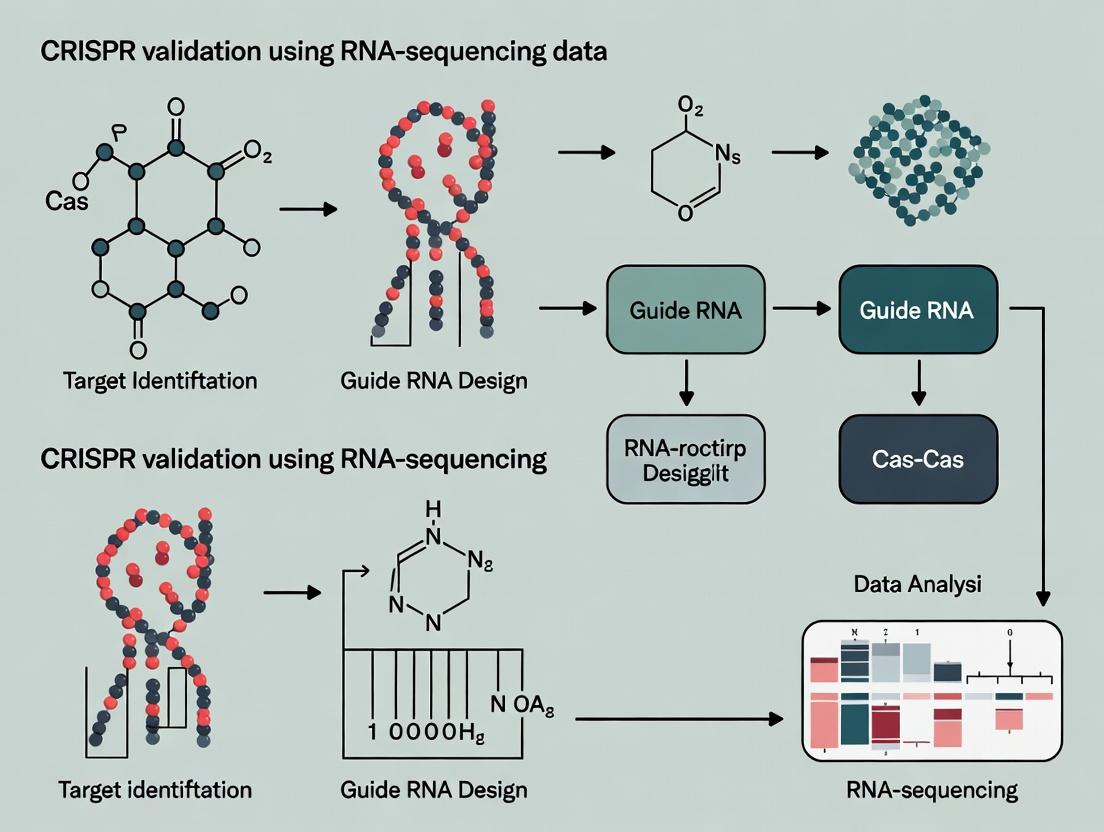
This article provides a complete framework for researchers and drug development professionals to validate CRISPR-Cas9 gene editing experiments using RNA-sequencing data.
A Comprehensive Guide to CRISPR Validation Using RNA-Seq: From Basics to Advanced Analysis
Abstract
This article provides a complete framework for researchers and drug development professionals to validate CRISPR-Cas9 gene editing experiments using RNA-sequencing data. It begins by establishing the foundational rationale for RNA-seq as a validation tool, explaining how transcriptional readouts confirm on-target edits and reveal off-target effects. The methodological core details best practices for experimental design, library preparation, and a step-by-step bioinformatics pipeline for differential expression and pathway analysis specific to CRISPR outcomes. A dedicated troubleshooting section addresses common pitfalls in data interpretation, normalization challenges, and strategies to distinguish direct editing effects from cellular responses. Finally, the guide offers comparative insights, benchmarking RNA-seq against alternative validation methods like qPCR, Sanger sequencing, and NGS-based approaches, evaluating their respective sensitivity, cost, and scalability. This resource synthesizes current standards and advanced techniques to ensure robust, publication-ready validation of CRISPR-mediated genetic manipulations.
Why RNA-Seq is the Gold Standard for CRISPR Validation: Unveiling the Transcriptional Landscape
CRISPR-Cas9 genome editing induces targeted DNA double-strand breaks (DSBs), triggering complex cellular responses that significantly alter the transcriptome beyond the intended edit. This Application Note details protocols for the comprehensive validation of CRISPR edits and their broader transcriptional consequences using bulk and single-cell RNA-sequencing (RNA-seq). Framed within a thesis on CRISPR validation, we provide methodologies to distinguish on-target effects from pervasive off-target and bystander transcriptomic perturbations, which are critical for therapeutic development.
While CRISPR-Cas9 is celebrated for its precision, the cellular response to DNA damage and repair creates a transcriptional "ripple effect." Key processes include:
- DNA Damage Response (DDR) Activation: P53, ATM/ATR, and downstream pathways are upregulated.
- Cellular Stress and Apoptosis: Unintended activation can lead to cell death or senescence.
- Immunogenic Response: dsDNA breaks can activate innate immune sensors (e.g., cGAS-STING).
- Off-Target Editing: Guide RNA-dependent editing at genomic sites with sequence homology.
- Bystander Effects: Transcriptional changes in genes proximal to the cut site or involved in linked regulatory networks. RNA-seq is the optimal tool to capture these genome-wide manifestations, providing a necessary layer of validation beyond Sanger sequencing or targeted PCR.
Application Notes: Key Transcriptomic Signatures Post-Cutting
The table below summarizes frequently observed transcriptional changes from recent studies (2023-2024) analyzing wild-type Cas9 editing in human cell lines (e.g., HEK293T, iPSCs, primary T-cells).
Table 1: Common Transcriptomic Signatures Post-CRISPR-Cas9 Editing
| Response Category | Key Upregulated Pathways/Genes | Typical Fold-Change (Range) | Time Post-Transfection (Peak) | Primary Detection Method |
|---|---|---|---|---|
| DNA Damage Response (DDR) | TP53, CDKN1A (p21), MDM2, BRCA1, RAD51 | 2x - 10x | 24 - 48 hours | Bulk RNA-seq, qPCR |
| Cell Cycle Arrest | CDKN1A, GADD45A, BTG2 | 3x - 8x | 24 - 48 hours | Bulk RNA-seq, scRNA-seq |
| Apoptosis Regulation | BAX, PMAIP1 (Noxa), FAS, CASP8 | 2x - 6x | 48 - 72 hours | Bulk RNA-seq, Caspase assay |
| Innate Immune Response | IFIT1, IFI44L, ISG15, MX1 (Type I IFN response) | 5x - 50x | 24 - 72 hours | Bulk RNA-seq, Nanostring |
| Chromatin Remodeling | H2AX (phosphorylation marker), SMARCA genes | Varied | 24+ hours | CUT&Tag, ATAC-seq + RNA-seq |
| Off-Target Signature | Mutations at predicted off-target loci; adjacent gene dysregulation | Context-dependent | Persistent | WGS, Targeted RNA-seq |
Distinguishing On-Target from Off-Target Effects
A critical application is differentiating intended editing effects from confounding responses.
- Control Comparisons: Always compare to:
- Non-treated cells: Baseline transcriptome.
- Cas9-only (no gRNA): Controls for Cas9 overexpression.
- Inactive dCas9 (with gRNA): Controls for gRNA binding/steric effects without cutting.
- Multiple gRNAs for the same target: Confirms phenotype is edit-specific, not gRNA-specific.
- Time-Course Analysis: DDR and immune responses are often transient, while successful knock-out (KO) or knock-in (KI) effects are stable.
Detailed Experimental Protocols
Protocol 1: Longitudinal RNA-seq for CRISPR Validation
Objective: To temporally resolve the direct DNA damage response from the sustained transcriptional effects of a stable genomic edit.
Materials & Reagents:
- Cell Line: Target cell line (e.g., iPSC).
- CRISPR Components: Cas9 expression plasmid or RNP complex, validated sgRNA.
- Transfection Reagent: Lipofectamine CRISPRMAX or Neon Electroporation system.
- RNA Stabilization: TRIzol or Qiazol.
- Library Prep Kit: Stranded mRNA-seq kit (e.g., Illumina Stranded Total RNA Prep Ligation with Ribozero Plus).
- Sequencing Platform: Illumina NovaSeq (≥30M paired-end reads/sample).
Procedure:
- Cell Preparation & Editing: Seed 1x10^6 cells per condition. Transfect with:
- Condition A: Cas9 + target sgRNA.
- Condition B: Cas9 only.
- Condition C: dCas9 + target sgRNA.
- Condition D: Mock transfection.
- Time-Course Harvesting: Harvest cell pellets (in triplicate) at T=6h, 24h, 48h, 72h, and 7 days post-transfection. Immediately lyse in TRIzol and store at -80°C.
- RNA Extraction & QC: Extract total RNA. Assess integrity (RIN > 9.0, Agilent Bioanalyzer).
- RNA-seq Library Preparation: Following kit instructions:
- Deplete ribosomal RNA.
- Fragment and synthesize cDNA.
- Add dual-index adapters and amplify.
- Validate libraries (Fragment Analyzer) and quantify (qPCR).
- Sequencing & Analysis:
- Pool and sequence (150bp PE).
- Bioinformatic Pipeline:
- Alignment (STAR) to reference genome.
- Quantification (featureCounts) against gene annotation (GENCODE).
- Differential Expression (DE) Analysis (DESeq2) comparing Condition A vs. B/C/D at each time point.
- Pathway Enrichment (GSEA, Reactome) on DE gene lists.
Protocol 2: Single-Cell RNA-seq (scRNA-seq) for Heterogeneity Assessment
Objective: To dissect cell-to-cell heterogeneity in editing outcomes and transcriptomic responses within a pooled population.
Materials & Reagents:
- Cell Line/Primary Cells: Target cells.
- CRISPR Delivery: Lentiviral sgRNA (with cell barcode) for stable expression.
- scRNA-seq Platform: 10x Genomics Chromium Controller.
- Reagent Kits: 10x Genomics Chromium Next GEM Single Cell 3’ Kit v3.1.
- Bioinformatic Tools: CellRanger, Seurat, CRISPR-specific analysis packages (e.g., CROP-seq tools).
Procedure:
- Pooled CRISPR Screening Setup: Generate a lentiviral library of sgRNAs (target + non-targeting controls). Infect at low MOI to ensure single sgRNA integration per cell. Apply selection (e.g., puromycin).
- Single-Cell Suspension Preparation: 7 days post-infection, harvest, wash, and resuspend in PBS + 0.04% BSA. Pass through a 40μm strainer. Determine viability (>90%).
- 10x Genomics Library Generation: Load cells onto Chromium Chip B per manufacturer's protocol to target 10,000 cells. Generate Gel Bead-In-Emulsions (GEMs), perform reverse transcription, and cDNA amplification.
- Library Construction & Sequencing: Fragment cDNA, add sample indexes, and sequence on Illumina NovaSeq (≈50,000 reads/cell).
- Data Analysis:
- Alignment & Quantification: Use
cellranger countto align reads, call cells, and generate gene expression matrices. - sgRNA Assignment: Correlate cellular barcodes with sgRNA sequences from the cDNA library.
- Clustering & Differential Expression: Use Seurat to cluster cells based on transcriptomes. Perform DE analysis between cells harboring the target sgRNA vs. non-targeting controls within each cluster to identify edit-associated states.
- Alignment & Quantification: Use
The Scientist's Toolkit: Essential Research Reagents
Table 2: Key Reagent Solutions for CRISPR-Transcriptomics Studies
| Reagent / Material | Function & Application | Example Product/Catalog |
|---|---|---|
| High-Fidelity Cas9 Nuclease | Reduces off-target cutting, minimizing confounding transcriptomic noise. | IDT Alt-R S.p. HiFi Cas9 |
| Synthetic sgRNA (chemically modified) | Improves stability and reduces immune activation compared to plasmid-derived gRNA. | Synthego sgRNA EZ Kit |
| RNP Complex | Direct delivery of pre-formed Cas9-sgRNA ribonucleoprotein. Fast, potent, reduces off-targets. | In-house complex using purified Cas9 & synthetic sgRNA |
| Stranded Total RNA Library Prep Kit with Globin/rRNA Depletion | For bulk RNA-seq from blood cells or highly ribosomal samples. Preserves strand info. | Illumina Stranded Total RNA Prep with Ribo-Zero Plus |
| 10x Genomics Single Cell 3’ Reagent Kits | For capturing single-cell transcriptomes and sgRNA identities in parallel. | Chromium Next GEM Single Cell 3’ Kit v3.1 |
| Dual-guide CRISPR Control Kit | Validates phenotype is due to editing, not single-guide artifacts. | ToolGen Dual Target CRISPR Control Set |
| CRISPR RNA-seq Analysis Software Suite | Integrated pipeline for alignment, quantification, and visualization of CRISPR-specific outcomes. | Partek Flow with CRISPR module |
Visualizing Pathways and Workflows
Title: CRISPR Transcriptomics Validation Workflow
Title: Key Transcriptomic Responses to CRISPR Cutting
Within CRISPR-based functional genomics research, validating on-target editing efficacy (knockout/KO), transcript reduction (knockdown/KD), or gene activation (CRISPRa) is a critical step. This protocol, framed within a thesis utilizing RNA-sequencing (RNA-seq) for comprehensive CRISPR validation, details methods to confirm intended genetic perturbations before downstream transcriptomic analysis.
Table 1: Core Validation Techniques for CRISPR Perturbations
| Perturbation Type | Primary Validation Method | Key Quantitative Metrics | Typical Success Threshold | RNA-seq Integration |
|---|---|---|---|---|
| Knockout (KO) | T7 Endonuclease I (T7EI) or ICE/Synthego Analysis | % Indels, Editing Efficiency | >70% indels for biallelic KO | Confirm loss of target gene expression. |
| Knockout (KO) | Sanger Sequencing & Decomposition | % of each indel trace | High proportion of frameshift indels | Correlate with expression null. |
| Knockdown (KD) | qRT-PCR (for CRISPRi) | % mRNA expression remaining vs. control | <30% mRNA remaining | Primary confirmatory data for RNA-seq. |
| Activation (CRISPRa) | qRT-PCR | Fold-change increase in mRNA | >5-10x increase (context-dependent) | Confirm upstream of global transcriptomic changes. |
| All Types | Western Blot (if Ab available) | Protein level reduction/absence | Undetectable or >80% reduction | Gold standard for KO; links RNA to protein. |
| All Types | RNA-sequencing | Transcripts per million (TPM), FPKM | Significant differential expression (p<0.05) | Genome-wide on- and off-target assessment. |
Detailed Experimental Protocols
Protocol 1: Validation of CRISPR Knockout via T7 Endonuclease I Assay
Principle: Detects heteroduplex DNA formed by annealing wild-type and indel-containing strands.
- Genomic DNA Extraction: Harvest cells 72-96h post-transfection/transduction. Use silica-column kit.
- PCR Amplification: Design primers ~300-500bp flanking target site. Use high-fidelity polymerase.
- Heteroduplex Formation: Denature/reanneal PCR product: 95°C for 10 min, ramp down to 25°C at -0.1°C/sec.
- T7EI Digestion: Incubate 15µl reannealed product with 5U T7EI (NEB) at 37°C for 60 min.
- Analysis: Run on 2% agarose gel. Cleaved bands indicate indels. Calculate efficiency: % indel = 100 * (1 - sqrt(1 - (b+c)/(a+b+c))), where a=uncut band intensity, b and c=cut band intensities.
Protocol 2: Validation of Knockdown/Activation via qRT-PCR
Principle: Quantify target mRNA levels relative to controls.
- RNA Extraction: Use TRIzol or column-based kit with DNase I treatment. Harvest at timepoint optimal for perturbation (e.g., 5-7 days for CRISPRi/a).
- cDNA Synthesis: Use 500ng-1µg total RNA with random hexamers and reverse transcriptase.
- qPCR: Perform in triplicate with target-specific primers and SYBR Green master mix. Include at least two stable housekeeping genes (e.g., GAPDH, ACTB).
- Analysis: Calculate ∆∆Ct to determine fold-change relative to non-targeting sgRNA control.
Protocol 3: RNA-seq Sample Preparation for Validation
Principle: Genome-wide confirmation and off-target profiling.
- Library Prep: Use stranded, poly-A-selection mRNA-seq kit (e.g., Illumina). Maintain high RNA Integrity Number (RIN >8.5).
- Sequencing: Aim for 25-40 million paired-end reads per sample (e.g., 2x150 bp).
- Bioinformatic Analysis:
- Align reads to reference genome (e.g., STAR aligner).
- Quantify gene expression (e.g., featureCounts, Salmon).
- For KO: Verify target gene expression depletion.
- For KD/a: Confirm specific directional change.
- Perform differential expression analysis (DESeq2, edgeR) to identify off-target effects.
Visualization of Workflows
Title: CRISPR Knockout Validation Multi-Method Workflow
Title: RNA-seq Validation Pathway for CRISPR Edits
The Scientist's Toolkit: Research Reagent Solutions
Table 2: Essential Reagents for CRISPR Validation Experiments
| Reagent / Kit | Primary Function | Example Provider / Catalog | Critical Notes |
|---|---|---|---|
| T7 Endonuclease I | Detects indels via mismatch cleavage. | NEB, M0302S | Sensitive to heteroduplex quality; use high-fidelity PCR product. |
| Surveyor Nuclease S | Alternative to T7EI for indel detection. | IDT, 706025 | Similar principle, different buffer requirements. |
| ICE Analysis Software | Quantifies indel % from Sanger traces. | Synthego ICE Tool (Free) | Digital, more accurate than gel-based T7EI. |
| High-Fidelity PCR Master Mix | Amplifies genomic target locus cleanly. | NEB Q5, KAPA HiFi | Critical for downstream cleavage assays. |
| CRISPR-i/a qPCR Assay | Validates transcriptional changes. | Custom TaqMan or SYBR assays | Must span different exons to avoid gDNA amplification. |
| RNeasy Mini Kit | High-quality RNA extraction for qPCR/RNA-seq. | Qiagen, 74104 | Includes DNase step to remove gDNA contamination. |
| Stranded mRNA-seq Kit | Library prep for transcriptome analysis. | Illumina TruSeq, NEBNext Ultra II | Poly-A selection enriches for mRNA. |
| ddPCR Supermix | Absolute quantification of editing efficiency. | Bio-Rad, 1863024 | Alternative for highly precise, digital quantification. |
| Anti-Target Protein Antibody | Validates KO at protein level via Western. | Cell Signaling Technology, various | Requires prior knowledge of antibody specificity. |
| Next-Gen Sequencing Standards | Controls for RNA-seq library quantification. | Illumina PhiX, KAPA Library Quant Kits | Essential for accurate pooling and loading. |
This Application Note details protocols for utilizing RNA-sequencing (RNA-seq) to comprehensively identify off-target transcriptional effects in CRISPR-based experimental and therapeutic workflows. Accurate characterization of these genome-wide perturbations is critical for validating specificity, ensuring phenotypic fidelity, and de-risking drug development.
Within the broader thesis of CRISPR validation, confirming on-target editing is necessary but insufficient. A comprehensive validation framework must interrogate the entire transcriptional landscape to detect unintended effects, which may arise from guide RNA (gRNA) off-target binding, epigenetic bystander effects, or cellular stress responses. RNA-seq provides the unbiased, genome-wide scope required for this critical assessment, moving beyond targeted amplicon sequencing to capture the full spectrum of transcriptional dysregulation.
Key Quantitative Findings from Recent Studies
Table 1: Summary of RNA-Seq Studies Detecting CRISPR Off-Target Transcriptional Effects
| Study Focus (Year) | CRISPR System | Cell Type | Key Finding | % of Samples Showing Significant Off-Target Transcriptional Changes |
|---|---|---|---|---|
| gRNA-Dependent Off-Targets (2023) | SpCas9, HiFi Cas9 | iPSC-derived neurons | Even high-fidelity nucleases can induce off-target expression changes with certain gRNAs. | ~15-20% |
| Epigenetic Modulator Delivery (2024) | dCas9-KRAB, dCas9-p300 | T cells | Transcriptional regulators cause widespread, long-range dysregulation beyond the immediate target site. | >90% |
| Base Editor Analysis (2023) | BE4, ABE8e | Hepatocyte cell line | Base editors can induce persistent p53-mediated stress response pathways. | ~30% |
| Control Comparison | Delivery Vehicle (e.g., RNP, LV) | Various | Lipofection/electroporation alone can trigger transient interferon response. | ~40-60% (transient) |
Detailed Experimental Protocols
Protocol 1: RNA-Seq Experimental Workflow for Off-Target Detection
Objective: To generate strand-specific, ribosomal RNA-depleted total RNA-seq libraries for differential gene expression analysis.
Materials:
- Cells treated with CRISPR intervention and appropriate controls (untransfected, delivery-only).
- TRIzol or equivalent RNA stabilization reagent.
- DNase I (RNase-free).
- rRNA depletion kit (e.g., NEBNext rRNA Depletion Kit).
- Strand-specific library prep kit (e.g., NEBNext Ultra II Directional RNA Library Prep).
- Bioanalyzer/TapeStation and appropriate Qubit assay.
Procedure:
- Sample Collection: Harvest cells at optimal timepoint post-treatment (e.g., 72 hrs for nuclease effects). Include biological replicates (n≥3).
- RNA Extraction: Isolate total RNA using TRIzol, following manufacturer's protocol. Perform on-column DNase I treatment.
- RNA QC: Assess integrity (RIN > 8.5 recommended) and quantity.
- rRNA Depletion: Deplete ribosomal RNA from 500 ng - 1 µg total RNA.
- Library Preparation: Construct strand-specific cDNA libraries. Include unique dual indices for sample multiplexing.
- Library QC & Sequencing: Validate library size (~300 bp insert) and concentration. Pool libraries and sequence on an Illumina platform to a minimum depth of 30 million paired-end 150 bp reads per sample.
Protocol 2: Bioinformatics Pipeline for Differential Expression & Pathway Analysis
Objective: To process RNA-seq data, identify differentially expressed genes (DEGs), and perform functional enrichment.
Materials:
- High-performance computing cluster.
- FastQ files from sequencer.
Procedure:
- Quality Control: Use
FastQCandMultiQCto assess read quality. - Alignment: Map reads to the appropriate reference genome (e.g., GRCh38) using a splice-aware aligner like
STAR. - Quantification: Generate gene-level counts using
featureCounts(from Subread package) against a standard annotation (e.g., GENCODE). - Differential Expression: Perform analysis in R using
DESeq2. Key comparisons: (i) CRISPR sample vs. untransfected control, (ii) CRISPR sample vs. delivery-only control. - Thresholding: Define DEGs using adjusted p-value (FDR) < 0.05 and |log2(fold change)| > 1.
- Pathway Analysis: Input DEG list into enrichment tools like
clusterProfiler(for GO, KEGG) orGSEAfor pre-ranked gene set analysis.
Visualizations
Title: RNA-Seq Workflow for Off-Target Detection
Title: Sources of Off-Target Transcriptional Effects
The Scientist's Toolkit: Research Reagent Solutions
Table 2: Essential Materials for RNA-Seq Based CRISPR Validation
| Item | Function & Rationale |
|---|---|
| High-Fidelity/Modified Cas9 Variants (e.g., HiFi Cas9, eSpCas9) | Reduce gRNA-dependent DNA off-target cleavage, lowering consequent transcriptional noise. |
| Delivery-Only Controls (e.g., empty RNP complexes, vehicle liposomes) | Critical control to isolate and subtract transcriptional effects caused by the delivery method itself. |
| rRNA Depletion Kits | Preserve non-coding and pre-mRNA species, offering a more complete picture of transcriptional perturbations compared to poly-A selection. |
| Spike-In RNA Controls (e.g., ERCC RNA Spike-In Mix) | Added prior to library prep to monitor technical variability and normalization efficacy across samples. |
| Strand-Specific Library Prep Kits | Resolve overlapping transcription, crucial for identifying antisense or non-coding RNA effects near target sites. |
| Validated gRNA Controls | gRNAs with known, minimal off-target profiles (from published studies) serve as essential baseline comparators for new gRNAs. |
| p53 Pathway Reporter Cell Lines | Functional assays to quickly screen for and validate potential DNA damage stress responses triggered by editors. |
Within a CRISPR validation study using RNA-sequencing, the statistical confidence and biological accuracy of gene expression results hinge on three foundational metrics: Read Depth, Coverage, and Replicates. Read depth (sequencing depth) determines the quantitative sensitivity for detecting differential expression, especially for low-abundance transcripts. Coverage (breadth) ensures the target transcriptome is uniformly sampled, critical for identifying splice variants or editing events introduced by CRISPR. Biological and technical replicates are non-negotiable for estimating variance and achieving robust statistical power, allowing researchers to distinguish true CRISPR-mediated transcriptional changes from stochastic noise. This protocol details the experimental design, quality control, and analysis steps to optimize these metrics for validating CRISPR knockout, knockdown, or activation experiments.
Application Notes
Quantitative Metrics: Definitions and Benchmarks
The table below summarizes target benchmarks for each key metric in a typical CRISPR validation RNA-Seq experiment.
Table 1: Target Benchmarks for RNA-Seq Validation Metrics
| Metric | Definition | Recommended Benchmark for CRISPR Validation | Rationale |
|---|---|---|---|
| Read Depth | Number of aligned reads per sample. | 30-50 million reads per library for mammalian genomes. | Balances cost with power to detect 1.5-fold changes in most expressed genes. For low-fold changes or rare transcripts, ≥80M reads may be needed. |
| Coverage Uniformity | Evenness of read distribution across transcripts. | >80% of target bases covered at ≥10x; low 5’-3’ bias. | Ensures reliable quantification across entire gene body, crucial for detecting aberrant splicing from CRISPR indels. |
| Biological Replicates | Independently treated samples (e.g., cells, animals). | Minimum n=3 per condition (control vs. edited). | Essential for estimating biological variance. n=3 is a bare minimum; n=5-6 greatly improves power and false discovery rate (FDR) control. |
| Technical Replicates | Repeated library prep from the same RNA sample. | Typically not required post-QC if biological replicates are used. | Can identify technical noise from library prep but does not replace biological replicates. |
Experimental Protocol: RNA-Seq for CRISPR Validation
This protocol outlines the steps from cell harvest to data analysis, emphasizing points critical for metric optimization.
Protocol: RNA-Seq Workflow for Validating CRISPR-Mediated Transcriptional Changes
A. Experimental Design & Sample Preparation
- CRISPR Experiment: Perform CRISPR-Cas9 (or other CRISPR system) editing and appropriate control (e.g., non-targeting guide) in your cell line or model system.
- Replication Strategy: Plan for a minimum of 3 independent biological replicates per condition. Each replicate should originate from a separate culture/animal/edit event, processed independently through RNA isolation.
- RNA Extraction:
- Harvest cells/tissue 48-72 hours post-transfection (or after appropriate phenotypic confirmation).
- Use a column-based or TRIzol method to extract total RNA.
- Quantify RNA using a fluorometric assay (e.g., Qubit). Ensure RNA Integrity Number (RIN) ≥ 8.5 (Agilent Bioanalyzer/TapeStation).
B. Library Preparation and Sequencing
- Poly-A Selection: Use poly-A tail mRNA enrichment to focus on coding transcripts. (For total RNA or ribo-depletion protocols, adjust coverage expectations).
- Library Construction: Use a stranded, ultra-high-fidelity reverse transcription kit to minimize bias and preserve strand information. Incorporate unique dual indexing (UDI) to prevent index hopping.
- Sequencing Depth Calibration: Based on Table 1, aim for 30-50 million paired-end 150bp reads per sample. Paired-end sequencing is strongly recommended for improved mapping and isoform resolution.
- Sequencing Run: Pool libraries equimolarly and sequence on an Illumina NovaSeq or HiSeq platform to achieve the required depth across all samples.
C. Bioinformatic Processing & Quality Control
- Raw Read QC: Use
FastQCto assess per-base quality, adapter contamination, and sequence duplication levels. - Alignment & Mapping: Map reads to the appropriate reference genome (e.g., GRCh38) using a splice-aware aligner like STAR.
- Metric Calculation:
- Read Depth: Calculate total aligned reads per sample from the
STARlog file. - Coverage & Uniformity: Use
RSeQCorQualimapto generate gene body coverage plots and calculate metrics like the 5’-3’ bias.
- Read Depth: Calculate total aligned reads per sample from the
- Quantification: Generate a count matrix (genes/transcripts vs. samples) using
featureCounts(for genes) orSalmon(for transcripts). - Differential Expression Analysis: Use
DESeq2oredgeRin R/Bioconductor, which explicitly model variance using your biological replicates. A significant result typically requires |log2FoldChange| > 0.585 (≈1.5x) and adjusted p-value (FDR) < 0.05.
Visualizations
Title: RNA-Seq Validation Workflow for CRISPR Studies
Title: How Key Metrics Underpin Validation Credibility
The Scientist's Toolkit
Table 2: Essential Research Reagent Solutions for RNA-Seq Validation of CRISPR Experiments
| Item | Example Product/Brand | Function in Protocol |
|---|---|---|
| RNA Extraction Kit | Qiagen RNeasy Mini Kit, Zymo Quick-RNA Kit | Isolates high-integrity total RNA, critical for accurate downstream quantification. |
| RNA QC System | Agilent Bioanalyzer 2100 / TapeStation | Precisely assesses RNA Integrity Number (RIN) to filter out degraded samples. |
| mRNA Selection Beads | NEBNext Poly(A) mRNA Magnetic Isolation Module | Enriches for polyadenylated mRNA from total RNA, standard for most expression studies. |
| Stranded RNA Lib Prep Kit | Illumina Stranded mRNA Prep, Takara SMART-Seq v4 | Constructs sequencing libraries that preserve strand-of-origin information, improving accuracy. |
| Ultra High-Fidelity RT Enzyme | SuperScript IV Reverse Transcriptase | Minimizes errors and bias during cDNA synthesis, improving fidelity. |
| Unique Dual Index (UDI) Kits | IDT for Illumina UDIs, Nextera DNA UD Indexes | Prevents index hopping (crosstalk) between multiplexed samples in a sequencing pool. |
| qPCR Quantification Kit | Kapa Library Quantification Kit (Roche) | Accurately measures final library concentration for precise equimolar pooling before sequencing. |
Within the broader thesis on CRISPR validation using RNA-sequencing data, the selection and validation of guide RNAs (gRNAs) is the foundational step. This application note details a complete pipeline for integrating in silico gRNA design tools with downstream experimental protocols for functional confirmation, with a focus on generating RNA-seq-validatable knockouts.
In Silico gRNA Design and Prioritization
The initial phase involves computational prediction to maximize on-target efficiency and minimize off-target effects.
Key Design Tools and Metrics (Current as of 2024)
A comparative analysis of leading gRNA design tools reveals distinct algorithms and output metrics.
Table 1: Comparison of Primary gRNA Design Tools
| Tool Name | Primary Algorithm | Key Output Metrics | Optimal Score Range | Reference Genome Integration |
|---|---|---|---|---|
| CRISPRscan | Convolutional Neural Network | Likelihood Score | 0-100 (Higher is better) | Hg19, Hg38, mm10 |
| CHOPCHOP | Rule-based + MIT specificity | Efficiency, Specificity, CFD Score | Efficiency: 0-100, CFD: 0-1 | Broad (20+ species) |
| CRISPick (Broad) | Rule Set 2 (R2) Score | On-target Score, Off-target Rank | R2 Score: 0-100 | Hg38, mm10 |
| CRISPR-DT | Deep Learning | On-target, Off-target, DNA/RNA scores | 0-1 (Higher is better) | Custom upload |
| CCTop | Smith-Waterman alignment | Efficiency, Specificity, # Off-targets | Specificity: 0-100 | Standard UCSC assemblies |
Protocol 1.1: Multi-Tool gRNA Design and Consensus Ranking
Objective: To generate a robust, consensus-ranked list of gRNAs for a target gene. Materials: Gene ID (e.g., ENSG00000139618 for human BRCA1), access to CHOPCHOP, CRISPick, and CRISPR-DT web servers or local installs. Procedure:
- Input: Navigate to each tool. Input the target gene identifier or genomic coordinates (e.g., Chr17:43,044,295-43,125,482). Set parameters: gRNA length (typically 20nt), NGG PAM (for SpCas9), and specify the correct reference genome (Hg38).
- Run Analysis: Execute the design algorithm on each platform. Download the full list of suggested gRNAs with their efficiency and specificity scores.
- Data Normalization: For each tool, normalize the primary efficiency score to a 0-100 scale (e.g., convert CRISPick's R2 score from 0-1 to 0-100).
- Consensus Ranking: Compile all gRNAs in a spreadsheet. For each unique gRNA sequence, calculate the average normalized efficiency score across all tools that identified it. Rank gRNAs by this average score, prioritizing those appearing in multiple tools.
- Off-target Filtering: Apply a strict filter: discard any gRNA with a predicted off-target site having ≤3 mismatches in the seed region (PAM-proximal 8-12 bases) in coding or promoter regions, using the aggregated off-target predictions.
Wet-Lab Confirmation Protocol
Following design and synthesis, gRNAs must be experimentally validated.
Protocol 2.1: T7 Endonuclease I (T7EI) Assay for Initial Editing Efficiency
Objective: To rapidly assess CRISPR-Cas9-induced indel formation at the target locus. Materials: Synthesized gRNAs (or plasmids), Cas9 nuclease (IDT, 10µg/µL), target cell line, transfection reagent, PCR reagents, T7 Endonuclease I enzyme (NEB), agarose gel equipment. Procedure:
- Transfection: Co-transfect 500 ng of Cas9 expression plasmid (or 100 ng of Cas9 protein) with 200 ng of each gRNA expression plasmid (or 50 pmol of synthetic gRNA) into 2e5 target cells in a 24-well plate.
- Harvest Genomic DNA: 72 hours post-transfection, harvest cells and extract genomic DNA.
- PCR Amplification: Design primers ~300-500 bp flanking the target site. Perform PCR (35 cycles) on 100 ng of genomic DNA.
- Heteroduplex Formation: Purify PCR product. Denature and reanneal: 95°C for 10 min, ramp down to 85°C at -2°C/s, then to 25°C at -0.1°C/s.
- T7EI Digestion: Digest 200 ng of reannealed PCR product with 5 units of T7EI at 37°C for 30 minutes.
- Analysis: Run digested products on a 2% agarose gel. Cleavage into two lower bands indicates presence of indels. Calculate indel frequency using band intensity densitometry: % Indel = 100 × (1 - sqrt(1 - (b+c)/(a+b+c))), where a is integrated intensity of undigested band, and b & c are digested bands.
Protocol 2.2: RNA-seq Based Validation of Knockout and Transcriptional Consequences
Objective: To definitively confirm gene knockout and capture genome-wide off-target transcriptional effects as part of the thesis validation framework. Materials: TRIzol reagent, poly-A selection beads, cDNA synthesis kit, NGS platform (Illumina), bioinformatics pipeline (HISAT2, StringTie, DESeq2). Procedure:
- Sample Preparation: Generate stable knockout pools using the top 2-3 gRNAs from Protocol 2.1. Include a non-targeting gRNA control. In triplicate, culture 5e5 cells per condition.
- RNA Extraction & Sequencing: Extract total RNA using TRIzol. Perform poly-A selection, library prep (Illumina Stranded mRNA kit), and sequence on an Illumina NovaSeq to a depth of ~30 million 150bp paired-end reads per sample.
- Bioinformatic Analysis for Knockout Confirmation: a. Read Alignment: Align reads to the human reference genome (Hg38) using HISAT2. b. Junction Read Analysis: Use StringTie or manual IGV inspection to identify aberrant splicing events or reads spanning novel exon-exon junctions caused by frameshift indels. c. Expression Quantification: Generate read counts per gene with featureCounts. Confirm target gene expression is reduced to background levels (FPKM < 1).
- Off-target Analysis: Perform differential gene expression (DGE) analysis with DESeq2 (KO vs. Control). Apply a significance threshold of adjusted p-value (padj) < 0.05 and |log2 fold change| > 1. Pathway enrichment analysis (GO, KEGG) on the DGE list identifies compensatory or collateral transcriptional networks.
Visualized Workflows
Title: In Silico gRNA Design and Consensus Ranking Workflow
Title: RNA-seq Validation and Transcriptomic Analysis Workflow
The Scientist's Toolkit
Table 2: Essential Research Reagent Solutions
| Item | Function in Protocol | Example Vendor/Cat. # |
|---|---|---|
| Synthetic crRNA/tracrRNA | Provides targeting specificity for Cas9; used in RNP complex delivery. | IDT, Alt-R CRISPR-Cas9 crRNA |
| Recombinant SpCas9 Nuclease | The effector enzyme that creates double-strand breaks at the gRNA-specified locus. | Thermo Fisher, A36498 |
| T7 Endonuclease I | Detects heteroduplex mismatches in PCR products, indicating indel formation. | New England Biolabs, E3321 |
| RNase-free DNase Set | For removal of genomic DNA contamination during RNA extraction for RNA-seq. | Qiagen, 79254 |
| Stranded mRNA Library Prep Kit | Prepares sequencing libraries from poly-A enriched mRNA, preserving strand information. | Illumina, 20040532 |
| Poly(A) Magnetic Beads | Isolates mRNA from total RNA by poly-A tail selection for RNA-seq. | NEB, S1420S |
| DESeq2 R Package | Performs statistical analysis for differential gene expression from RNA-seq count data. | Bioconductor, doi: 10.18129/B9.bioc.DESeq2 |
| Genome Analysis Toolkit (GATK) | For variant calling and processing NGS data; can be used for indel characterization. | Broad Institute, v4.5.0.0 |
Step-by-Step: Designing and Executing Your CRISPR RNA-Seq Validation Pipeline
Application Notes
Within a CRISPR validation thesis using RNA-sequencing (RNA-seq), a rigorous experimental design is paramount to distinguish true on-target gene-editing effects from off-target perturbations and technical noise. This document outlines the critical components of timepoint selection, control design, and replication strategy to ensure robust, interpretable data for downstream bioinformatic analysis.
1. Rationale for Timepoint Selection: The choice of timepoints post-transfection is dictated by the mechanism of CRISPR-Cas9 activity and the biological process under study. For standard CRISPR knockout (KO) validation, multiple timepoints are necessary to capture the transition from DNA cleavage to steady-state mRNA depletion.
Table 1: Recommended Timepoints for CRISPR-Cas9 KO Validation
| Timepoint (Post-transfection) | Primary Goal | RNA-seq Rationale | Considerations |
|---|---|---|---|
| 48-72 hours | Assess early editing efficiency & initial transcriptional response. | Cas9 cleavage and NHEJ repair are complete. Detect early nonsense-mediated decay (NMD) and acute compensatory network changes. | Bulk RNA-seq at this stage may capture heterogeneity from mixed edited/unedited populations. |
| 5-7 days | Measure stable knockout phenotype. | Target mRNA is largely depleted. Cellular systems have reached a new transcriptional steady-state. | Optimal for most functional validation studies. Requires stable cell population (e.g., puromycin selection). |
| ≥14 days | Evaluate long-term adaptive responses & clonal selection effects. | Identifies secondary, persistent transcriptional adaptations. | Crucial for studies of chronic gene loss (e.g., tumor suppressor genes) but may conflate direct and indirect effects. |
2. Essential Control Design: Appropriate controls are non-negotiable for accurate bioinformatic analysis. They enable the differentiation of specific gene-editing effects from non-specific cellular responses to the CRISPR machinery itself.
- Non-Targeting gRNA Control (NT-gRNA): A gRNA with no perfect complementarity to the genome under study. This is the primary control for accounting for non-specific effects of Cas9 binding, DNA damage response, and cellular transduction/transfection.
- Wild-Type (WT) Untreated Control: Unmanipulated cells. This control establishes the baseline transcriptome and is essential for assessing the global impact of the CRISPR delivery process (e.g., viral infection, lipofection stress).
- Targeting gRNA(s): At least two independent gRNAs per target gene are required to control for off-target effects unique to a single gRNA sequence. Concordant results between independent gRNAs strengthen the validation of on-target effects.
3. Replication Strategy: Replication guards against technical artifacts and biological variability.
- Biological Replicates: Independently performed experiments (different cell passages, transductions/transfections) are essential. Minimum n=3 is standard for RNA-seq.
- Technical Replicates: Multiple sequencing libraries from the same RNA sample are generally unnecessary for modern, high-depth RNA-seq but may be used to assess library prep variability.
- Experimental Replication: The entire validation experiment, from cell culture to sequencing, should be repeated independently to confirm key findings, forming a core chapter of the thesis.
Protocols
Protocol 1: Generation of CRISPR-Cas9 Knockout Cell Pools for Time-Course RNA-seq
I. Materials: Research Reagent Solutions
| Item | Function & Rationale |
|---|---|
| Lentiviral sgRNA plasmid (e.g., lentiCRISPRv2, lentiGuide-Puro) | Delivers sgRNA and Cas9 nuclease (and often a puromycin resistance gene) for stable integration. |
| HEK293T cells | Standard packaging cell line for lentivirus production. |
| Polyethylenimine (PEI) Transfection Reagent | For co-transfection of lentiviral packaging plasmids and sgRNA vector in HEK293Ts. |
| Target cell line of interest | The cell model for the functional genomics study. |
| Polybrene (Hexadimethrine bromide) | Enhances lentiviral transduction efficiency. |
| Puromycin Dihydrochloride | Selects for cells successfully transduced with the sgRNA/Cas9 construct. |
| TRIzol Reagent | For high-quality total RNA isolation, preserving mRNA integrity for sequencing. |
| RNase-free DNase I | Critical for removing genomic DNA contamination from RNA samples prior to RNA-seq. |
II. Methodology:
- sgRNA Design & Cloning: Design two independent sgRNAs per target gene using validated platforms (e.g., Broad Institute GPP). Clone into your lentiviral sgRNA backbone via BsmBI restriction sites.
- Lentivirus Production (Day -3): In HEK293T cells, co-transfect the sgRNA plasmid with packaging plasmids (psPAX2, pMD2.G) using PEI. Harvest viral supernatant at 48 and 72 hours post-transfection.
- Target Cell Transduction & Selection (Day 0): Transduce target cells with viral supernatant containing NT-gRNA or targeting gRNAs in the presence of polybrene. Begin puromycin selection 24-48 hours post-transduction. Maintain selection for 5-7 days until control (untransduced) cells are completely dead.
- Sample Harvesting for RNA-seq: a. Timepoint 1 (Day 3 Post-Selection): Wash cells with PBS, lyse directly in TRIzol. Store at -80°C. b. Timepoint 2 (Day 7 Post-Selection): Passage cells as needed. Harvest a representative sample as in (a). c. Timepoint 3 (Day 14+ Post-Selection): Continue culturing cells without puromycin. Harvest as in (a).
- RNA Isolation & QC: Isolate total RNA using the TRIzol-chloroform method. Treat with DNase I. Assess RNA integrity (RIN > 8.5) using an Agilent Bioanalyzer.
- Library Prep & Sequencing: Prepare stranded mRNA-seq libraries (e.g., using Illumina TruSeq Stranded mRNA kit). Sequence on an Illumina platform to a minimum depth of 30-40 million paired-end reads per sample.
Protocol 2: Inferential Analysis of RNA-seq Data for Validation
I. Materials: Bioinformatics Toolkit
| Item | Function & Rationale |
|---|---|
| FastQC | Quality control tool for raw sequencing reads. |
| STAR aligner | Spliced read aligner for mapping reads to the reference genome. |
| featureCounts (Subread package) | Efficiently counts reads aligned to genomic features (genes). |
| DESeq2 (R/Bioconductor) | Statistical package for differential expression analysis, modeling counts with negative binomial distribution. Handles complex designs. |
| Integrative Genomics Viewer (IGV) | Visualizes aligned reads to confirm editing at the genomic locus (indels) and assess expression. |
II. Methodology:
- Quality Control & Alignment: Run FastQC. Trim adapters if needed. Align reads to the appropriate reference genome (e.g., GRCh38) using STAR with gene annotation guidance.
- Quantification: Generate a counts matrix using featureCounts, quantifying reads per gene per sample.
- Differential Expression Analysis (DESeq2):
a. Primary Contrast:
Targeting_gRNA vs. NT_gRNA(at each timepoint). This identifies the specific transcriptional consequence of knocking out the target gene. b. Secondary Contrast:NT_gRNA vs. WT(at each timepoint). This identifies and allows correction for any non-specific effects of the CRISPR-Cas9 system and selection. c. Filtering: Genes with an adjusted p-value (padj) < 0.05 and |log2FoldChange| > 1 are typically considered significantly differentially expressed. - Validation: Confirm loss of target gene mRNA expression. Visualize the genomic locus in IGV to see loss of coverage over exons and confirm presence of indels. Perform Gene Set Enrichment Analysis (GSEA) to confirm expected pathway perturbations.
Visualizations
Title: CRISPR RNA-seq Validation Workflow
Title: Deconvoluting CRISPR RNA-seq Signals with Controls
Within a CRISPR validation thesis using RNA-sequencing, accurate transcriptomic analysis of edited samples is paramount. This requires meticulous RNA extraction and library preparation to preserve the integrity of RNA molecules, which may harbor subtle sequence alterations, and to minimize bias that could obscure genuine editing effects or confound validation.
Key Challenges in Edited Sample Workflow
- Preserving RNA Integrity: Edited cells or tissues may undergo stress responses, altering RNA degradation profiles.
- Minimizing Genomic DNA Contamination: gDNA contamination can lead to false-positive mapping of CRISPR edits in RNA-seq data.
- Capturing All Transcripts Without Bias: Library prep must not favor wild-type over edited transcripts (or vice-versa) to accurately quantify editing efficiency and allele-specific expression.
- Handling Low-Input Samples: Common in CRISPR-edited clonal lines or primary cell experiments.
Best Practices for RNA Extraction
Protocol: DNase I-Based RNA Purification for Edited Cells
Objective: To isolate high-integrity, gDNA-free total RNA from CRISPR-edited cell cultures.
Reagents & Equipment:
- Lysis Buffer (e.g., containing guanidine thiocyanate)
- β-Mercaptoethanol
- RNA-grade DNase I and Buffer
- RNA binding columns and wash buffers
- Nuclease-free water
- Magnetic stand (for bead-based protocols)
- Qubit Fluorometer, Bioanalyzer/TapeStation
Methodology:
- Lysis: Homogenize up to 1e6 cells in 350-600 µL lysis buffer + 1% β-ME. Pass 5-10 times through a pipette tip or needle.
- gDNA Elimination: Add 10 µL of DNase I (1 U/µL) directly to the lysate-bound column OR perform an in-solution digestion. Incubate at room temp for 15 minutes.
- Wash: Perform two washes with ethanol-based wash buffers.
- Elution: Elute RNA in 30-50 µL nuclease-free water.
- Quality Control: Quantify via Qubit. Assess integrity (RNA Integrity Number, RIN) using capillary electrophoresis. Acceptance Criteria: RIN > 8.5 for mammalian cells, minimal gDNA contamination (ΔCq > 5 in qPCR with no-RT control).
Best Practices for Library Preparation
Protocol: Stranded mRNA-Seq Library Prep for Low-Input Edited Samples
Objective: To generate unbiased, strand-preserving sequencing libraries from 10-100 ng of input RNA.
Reagents & Equipment:
- Poly(A) Magnetic Beads or rRNA Depletion Kit
- Fragmentation Buffer
- Reverse Transcriptase (High-fidelity, RNase H-)
- Strand-Specific Second Strand Synthesis Mix
- Library Amplification PCR Mix with Unique Dual Indexes (UDIs)
- SPRI Beads
- Thermocycler, Magnetic Stand, Agilent Bioanalyzer
Methodology:
- Poly(A) Selection/Depletion: Isolate mRNA using poly(A) beads. For ribo-depletion, follow manufacturer's protocol. Critical for avoiding rRNA-derived gDNA background.
- Fragmentation & Priming: Elute and fragment mRNA at 94°C for specified time (e.g., 8 min for 300 bp insert). Use divalent cations under elevated temperature.
- First Strand cDNA Synthesis: Use random hexamers and reverse transcriptase.
- Second Strand Synthesis: Use dUTP incorporation for strand marking. Synthesize second strand.
- Adapter Ligation: Clean up cDNA, ligate UDI adapters.
- Uracil Digestion & PCR Enrichment: Digest the dUTP-containing strand. Perform limited-cycle PCR (12-15 cycles) to enrich adapter-ligated fragments.
- Library QC: Clean with SPRI beads. Quantify via fluorometry. Profile fragment distribution (Bioanalyzer). Acceptance: Sharp peak at desired insert size, no adapter dimer (~125 bp).
Data Presentation: Key QC Metrics and Reagents
Table 1: Quantitative QC Benchmarks for Edited Sample RNA-Seq
| QC Step | Metric | Target Value | Rationale for Edited Samples |
|---|---|---|---|
| RNA Extraction | Concentration (Qubit) | > 20 ng/µL | Sufficient for library prep. |
| A260/A280 Ratio | 1.9 - 2.1 | Indicates pure RNA, free of contaminants. | |
| RNA Integrity Number (RIN) | ≥ 8.5 (Mammalian) | Ensures full-length transcript representation. | |
| gDNA Contamination (qPCR ΔCq) | > 5 cycles (no-RT vs RT+) | Prevents false edit calls from residual gDNA. | |
| Library Prep | Pre-PCR Concentration | > 1 nM | Indicates successful adapter ligation. |
| Final Library Size | Peak ± 50 bp of target | Ensures uniform sequencing. | |
| Adapter Dimer Presence | < 5% of total signal | Maximizes informative reads. | |
| Sequencing | % Aligned to Genome | > 85% (Human/Mouse) | Indifies library complexity and specificity. |
| Duplication Rate | Varies by depth | High rate may indicate low input or PCR bias. | |
| Strand-Specificity | > 90% | Validates strand-specific protocol fidelity. |
Table 2: Research Reagent Solutions Toolkit
| Item | Function | Critical Consideration for Edited Samples |
|---|---|---|
| DNase I (RNase-free) | Digests genomic DNA post-lysis. | Essential to prevent gDNA reads masquerading as edited transcripts. |
| Magnetic Poly(A) Beads | Isolates polyadenylated mRNA. | Reduces background from gDNA contamination in rRNA depletion kits. |
| Ribo-depletion Kit | Removes ribosomal RNA. | Preferred for non-polyA targets; ensure it does not bias against edited sequences. |
| High-Fidelity RT Enzyme | Synthesizes cDNA from RNA template. | Minimizes introduction of errors that could be mistaken for editing events. |
| UDI Adapters | Provides unique sample barcodes. | Critical for multiplexing edited samples and preventing index hopping artifacts. |
| SPRI Size Selection Beads | Cleans up and size-selects fragments. | Removes adapter dimers and selects optimal insert size for even coverage. |
| RNA-Seq QC Kit (Bioanalyzer) | Assesses RNA and library integrity. | Provides RIN and library profile, key for troubleshooting biased results. |
Visualizing Workflows and Logical Relationships
Title: RNA Extraction Protocol for Edited Samples
Title: Stranded RNA-Seq Library Preparation Workflow
Title: Role of RNA Protocols in CRISPR Validation Thesis
Within the framework of a thesis focused on validating CRISPR-mediated genetic perturbations using RNA-sequencing, a robust and reproducible bioinformatics pipeline is foundational. This pipeline enables the accurate assessment of gene expression changes resulting from CRISPR knockout, knockdown, or activation experiments. The initial stages—quality control, alignment, and quantification—are critical for generating reliable data upon which differential expression and downstream pathway analyses depend. Errors introduced here propagate, compromising the validation of CRISPR guide RNA efficacy and phenotypic outcomes.
Application Notes
- FastQC provides an immediate diagnostic overview of raw sequencing data quality, identifying issues (e.g., adapter contamination, poor base quality) that could skew alignment and quantification in CRISPR validation studies.
- STAR (Spliced Transcripts Alignment to a Reference) is preferred for its speed and accuracy in aligning RNA-seq reads, including those spanning splice junctions. This is essential for detecting aberrant splicing patterns that may arise from certain CRISPR editing outcomes.
- featureCounts offers a fast and efficient method to quantify aligned reads against genomic features (genes, exons). Its direct read assignment to genes minimizes ambiguity, providing the clean count matrix necessary for statistical comparison between CRISPR-treated and control samples.
- Integrated Workflow: Automating these steps using workflow managers (e.g., Nextflow, Snakemake) ensures reproducibility, a cornerstone for validating CRISPR screens across multiple biological replicates.
Experimental Protocols
Protocol 1: Raw Read Quality Assessment with FastQC
Objective: To assess the quality of raw FASTQ files from RNA-seq of CRISPR-treated and control cells.
- Prepare Input: Gather paired-end or single-end FASTQ files. Ensure files are named systematically (e.g.,
Control_Rep1_R1.fastq.gz,CRISPR_Rep1_R1.fastq.gz). - Run FastQC:
Aggregate Reports: Use MultiQC to summarize results.
Interpretation: Examine the HTML report. Key metrics: Per base sequence quality (Q-score >30 generally good), per sequence quality scores, adapter content, and sequence duplication levels. Poor quality samples may require trimming before proceeding.
Protocol 2: Genome Alignment with STAR
Objective: To align quality-checked RNA-seq reads to a reference genome. Prerequisites: Generate a STAR genome index for your reference genome and annotation (GTF file).
Alignment Steps:
- For each sample, run STAR alignment:
- Outputs: This produces a sorted BAM file (
sample_aligned_Aligned.sortedByCoord.out.bam) and a preliminary read count file (sample_aligned_ReadsPerGene.out.tab).
Protocol 3: Gene-level Quantification with featureCounts
Objective: To generate a count matrix of reads assigned to genes for downstream differential expression analysis.
- Run featureCounts on all BAM files simultaneously:
- Format Count Matrix: The file
gene_counts.txtcontains the count matrix. The first column is the gene identifier, and subsequent columns are counts for each sample. This matrix is ready for analysis in R/Bioconductor packages like DESeq2 or edgeR.
Visualizations
Diagram Title: RNA-seq Pipeline for CRISPR Validation
Data Presentation
Table 1: Key Quality Metrics from FastQC (Hypothetical Data)
| Sample | Mean Q-Score | % Adapter Content | % GC | % Duplication | Assessment |
|---|---|---|---|---|---|
| Control_Rep1 | 36 | 0.5 | 48 | 12% | PASS |
| Control_Rep2 | 35 | 0.6 | 49 | 10% | PASS |
| CRISPR_Rep1 | 34 | 5.2 | 47 | 15% | ADAPTER WARN |
| CRISPR_Rep2 | 37 | 0.4 | 48 | 11% | PASS |
Table 2: STAR Alignment Statistics
| Sample | Total Reads | Uniquely Mapped | % Uniquely Mapped | % Multi-mapped | % Unmapped |
|---|---|---|---|---|---|
| Control_Rep1 | 40,123,456 | 36,500,111 | 91.0% | 5.1% | 3.9% |
| Control_Rep2 | 38,987,123 | 35,200,987 | 90.3% | 5.5% | 4.2% |
| CRISPR_Rep1 | 39,500,411 | 34,800,500 | 88.1% | 6.0% | 5.9% |
| CRISPR_Rep2 | 41,234,567 | 37,800,432 | 91.7% | 4.9% | 3.4% |
Table 3: featureCounts Assignment Summary
| Sample | Total Fragments | Assigned | % Assigned | Unassigned_NoFeatures | Unassigned_Ambiguity |
|---|---|---|---|---|---|
| Control_Rep1 | 36,500,111 | 32,987,654 | 90.4% | 2,100,123 | 450,987 |
| Control_Rep2 | 35,200,987 | 31,876,543 | 90.5% | 2,000,432 | 432,112 |
| CRISPR_Rep1 | 34,800,500 | 31,000,123 | 89.1% | 2,300,111 | 543,210 |
| CRISPR_Rep2 | 37,800,432 | 34,123,456 | 90.3% | 2,100,987 | 543,221 |
The Scientist's Toolkit
Research Reagent & Software Solutions
| Item | Function in Pipeline | Example/Version |
|---|---|---|
| Raw RNA-seq Data | Input material; FASTQ files from sequencing of CRISPR & control samples. | Illumina, NovaSeq. |
| Reference Genome | Digital sequence for aligning reads to determine origin. | GRCh38 (human), GRCm39 (mouse). |
| Annotation File (GTF/GFF3) | Defines genomic coordinates of genes, exons, and other features for quantification. | GENCODE, Ensembl. |
| FastQC | Software for initial quality control of raw sequencing data. | v0.12.1 |
| Trimmomatic or Cutadapt | Tools to remove adapters and low-quality bases if needed. | v0.39, v4.6 |
| STAR Aligner | Spliced-aware ultra-fast aligner for RNA-seq reads. | v2.7.11a |
| SAMtools | Utilities for processing and indexing alignment (BAM) files. | v1.20 |
| featureCounts | Efficient program for summarizing reads to genomic features. | v2.0.7 |
| MultiQC | Aggregates results from multiple tools into a single report. | v1.19 |
| High-Performance Computing (HPC) Cluster | Essential for running resource-intensive alignment steps. | SLURM, SGE. |
Application Notes
Integrating differential expression (DE) analysis with CRISPR screening is a powerful approach for validating gene function and understanding molecular mechanisms. Within a thesis on CRISPR validation using RNA-seq, this pipeline serves to quantify the transcriptomic consequences of genetic perturbations (e.g., knockout, activation). The analysis identifies genes that are differentially expressed as a direct or indirect result of the CRISPR intervention, providing insights into downstream pathways, off-target effects, and network rewiring. DESeq2 and edgeR are the industry-standard, robust statistical packages for this task, employing generalized linear models (GLMs) based on the negative binomial distribution to account for biological variability and count-based sequencing data.
A critical consideration is the experimental design. For pooled CRISPR screens with single-guide RNA (sgRNA) readouts, specialized tools (e.g., MAGeCK) are used. This protocol focuses on bulk RNA-seq from samples where a specific gene has been targeted (e.g., in cell pools or clones), compared to control samples (e.g., non-targeting sgRNA). Proper normalization, dispersion estimation, and multiple-testing correction are paramount for generating a reliable candidate list for downstream thesis validation.
Quantitative Data Comparison of DESeq2 vs. edgeR
Table 1: Core Statistical Features of DESeq2 and edgeR
| Feature | DESeq2 | edgeR |
|---|---|---|
| Core Distribution | Negative Binomial | Negative Binomial |
| Default Normalization | Median of ratios (size factors) | Trimmed Mean of M-values (TMM) |
| Dispersion Estimation | Empirical Bayes shrinkage, trended | Empirical Bayes shrinkage, tagwise |
| Model Framework | GLM with logarithmic link | GLM with logarithmic link |
| Handling of Low Counts | Automatic independent filtering | Requires user discretion (filterByExpr recommended) |
| Key Output | Log2 fold change (LFC), p-value, adjusted p-value | Log2 fold change (CPM), p-value, adjusted p-value |
| Strengths | Robust with small sample sizes, stringent. | Flexible, excellent for complex designs. |
Experimental Protocol: Differential Expression Analysis Workflow
1. Prerequisite Data Preparation
- Input Data: A read count matrix, where rows are genes (ENSEMBL/GeneID) and columns are samples. Counts should be generated using alignment tools (e.g., STAR, HISAT2) and quantifiers (e.g., featureCounts, HTSeq).
- Metadata Table: A tab-separated file detailing sample information (e.g., SampleID, Condition, Batch, sgRNA_Target).
2. DESeq2 Protocol
- Step 1: Load Data & Create DESeqDataSet.
Step 2: Pre-filtering & Normalization.
Step 3: Extract Results.
Step 4: Multiple Testing Correction & Export.
3. edgeR Protocol
- Step 1: Load Data & Create DGEList.
Step 2: Filtering & Normalization.
Step 3: Model Design, Dispersion & GLM.
Step 4: Hypothesis Testing & Export.
Visualizations
Title: DE Analysis Workflow with DESeq2/edgeR
Title: Transcriptomic Effects of a CRISPR Knockout
The Scientist's Toolkit: Research Reagent Solutions
Table 2: Essential Computational Tools & Resources for DE Analysis
| Item | Function & Explanation |
|---|---|
| R/Bioconductor | Open-source software environment for statistical computing, essential for running DESeq2 and edgeR. |
| DESeq2 Package | An R package for differential analysis of count-based sequencing data using shrinkage estimation. |
| edgeR Package | An R package for differential expression analysis of digital gene expression data. |
| tximport/ tximeta | Tools to import and summarize transcript-level abundance estimates to gene-level counts. |
| AnnotationDbi/ org.Hs.eg.db | Bioconductor annotation packages to map gene identifiers (e.g., ENSEMBL to Gene Symbol). |
| EnhancedVolcano | R package for creating publication-ready volcano plots from DE analysis results. |
| clusterProfiler | R package for functional enrichment analysis (GO, KEGG) of DE gene lists. |
| FastQC & MultiQC | Quality control tools for raw and processed sequencing data. |
| High-Performance Computing (HPC) Cluster or Cloud (AWS/GCP) | Necessary computational resources for processing large-scale RNA-seq datasets. |
Application Notes
Within the thesis context of CRISPR validation using RNA-sequencing, functional interpretation via enrichment analysis is the critical step that moves from a list of differentially expressed genes (DEGs) to actionable biological insights. Following CRISPR-mediated knockout or perturbation, RNA-seq quantifies transcriptional consequences. GSEA, GO, and KEGG analyses translate these gene expression changes into an understanding of disrupted biological processes, pathways, and molecular functions, thereby validating the intended target and revealing potential on- or off-target effects.
Key Applications in CRISPR Validation Research:
- Validation of Intended Mechanism: Confirming that CRISPR targeting of a specific gene enriches for expected pathway disruptions (e.g., KO of a tumor suppressor gene enriching for cell cycle-related GO terms).
- Identification of Compensatory Mechanisms: Uncovering alternative pathways activated or suppressed in response to the genetic perturbation.
- Assessment of Off-Target Effects: Detecting enrichment in unexpected biological processes, which may indicate secondary, off-target impacts of the CRISPR guide RNA.
- Prioritization for Drug Development: Identifying key vulnerable pathways in disease models for potential therapeutic intervention.
Core Methodologies and Protocols
Standardized Protocol for Enrichment Analysis Post-CRISPR RNA-seq
Objective: To perform functional enrichment analysis on differentially expressed genes identified from RNA-sequencing of CRISPR-perturbed vs. control samples.
Input: A ranked or filtered list of genes from RNA-seq differential expression analysis (e.g., from DESeq2, edgeR).
Software/Tools: R/Bioconductor packages (clusterProfiler, enrichplot, DOSE, pathview) or web-based platforms (WebGestalt, g:Profiler).
Step-by-Step Protocol:
Data Preparation:
- Generate a gene list ranked by a statistic such as log2 fold change or signed p-value (-log10(p-value)*sign(FC)). Alternatively, use a thresholded list of significant DEGs (e.g., adj. p-value < 0.05, |log2FC| > 1).
- Mandatory: Convert gene identifiers (e.g., Ensembl IDs) to the required format (ENTREZID for clusterProfiler) using an annotation package (org.Hs.eg.db).
Gene Set Enrichment Analysis (GSEA):
- Principle: Determines if members of a prior-defined gene set are randomly distributed or found at the top/bottom of a ranked gene list.
- Command (R/clusterProfiler):
Over-Representation Analysis (ORA) for GO & KEGG:
- Principle: Tests whether genes in a significant DEG list are overrepresented in annotated gene sets.
- Command (R/clusterProfiler):
Visualization & Interpretation:
- Generate dotplots, enrichment plots (for GSEA), and cnetplots.
- Pathway Mapping: Use the
pathviewR package to map gene expression data (log2FC) onto KEGG pathway diagrams.
Experimental Workflow Diagram
Title: Workflow for Functional Analysis in CRISPR RNA-seq Studies
Key Signaling Pathways in CRISPR Validation Context
Common pathways disrupted in CRISPR-based functional genomics studies, particularly in oncology and disease modeling.
Title: Common Pathways Enriched After CRISPR Perturbation
Data Presentation
Table 1: Comparison of Key Functional Enrichment Methods
| Feature | GSEA | GO (ORA) | KEGG (ORA) |
|---|---|---|---|
| Core Principle | Rank-based, considers all genes | Threshold-based, uses only significant DEGs | Threshold-based, uses only significant DEGs |
| Input Requirement | Ranked list by metric (e.g., log2FC) | Binary list of significant DEGs | Binary list of significant DEGs |
| Sensitivity | High, detects subtle coordinated shifts | Lower, requires strong per-gene thresholds | Lower, requires strong per-gene thresholds |
| Primary Output | Enrichment Score (ES), Normalized ES (NES) | Odds Ratio, p-value, Gene Ratio | Odds Ratio, p-value, Gene Ratio |
| Best For in CRISPR Context | Identifying broad, coordinated pathway changes | Defining specific disrupted biological processes | Mapping DEGs onto known metabolic/signaling pathways |
Table 2: Example GSEA Results Following CRISPR Knockout of Gene X
| Pathway (Hallmark) | NES | p.adj | Leading Edge Genes |
|---|---|---|---|
| E2F_TARGETS | 2.45 | <0.001 | CDK1, MCM5, PCNA |
| G2M_CHECKPOINT | 2.32 | <0.001 | CCNB1, PLK1, BUB1 |
| MYCTARGETSV1 | 1.98 | 0.003 | NCL, NPM1, NDRG1 |
| INFLAMMATORY_RESPONSE | -1.85 | 0.022 | IL6, CXCL8, TNF |
The Scientist's Toolkit
Table 3: Essential Research Reagents & Solutions for RNA-seq and Enrichment Analysis
| Item / Resource | Function / Purpose | Example / Provider |
|---|---|---|
| CRISPR-Cas9 System | Enables targeted gene knockout or activation for functional validation. | Synthego sgRNA, Alt-R CRISPR-Cas9 (IDT) |
| RNA Extraction Kit | High-quality, integrity-preserving total RNA isolation from edited cells. | RNeasy Plus Mini Kit (Qiagen), TRIzol (Thermo) |
| RNA-seq Library Prep Kit | Converts purified RNA into sequencing-ready cDNA libraries. | TruSeq Stranded mRNA (Illumina), NEBNext Ultra II (NEB) |
| Reference Genome & Annotation | Essential for read alignment and gene quantification. | GENCODE, Ensembl, UCSC Genome Browser |
| Enrichment Analysis Software | Performs GSEA, GO, and KEGG calculations and statistical testing. | clusterProfiler (R), GSEA software (Broad), WebGestalt |
| Gene Set Databases | Curated collections of gene sets for enrichment testing. | MSigDB, Gene Ontology, KEGG PATHWAY |
| Visualization Tools | Generates publication-quality plots of enrichment results. | enrichplot (R), Cytoscape, ggplot2 |
| Cell Viability Assay | Validates phenotypic consequence of CRISPR edit alongside RNA-seq. | CellTiter-Glo (Promega), Annexin V Apoptosis Assay |
Within CRISPR validation studies using RNA-seq, confirming on-target gene knockout and assessing off-target transcriptional or splicing effects is critical. This document provides application notes and detailed protocols for three core visualization techniques—Volcano Plots, Heatmaps, and Sashimi Plots—to analyze differential gene expression and alternative splicing outcomes from validation experiments.
The Scientist's Toolkit: Research Reagent Solutions
| Item | Function in CRISPR/RNA-seq Validation |
|---|---|
| CRISPR Ribonucleoprotein (RNP) | Delivery of Cas9 and sgRNA for precise editing; reduces off-target effects. |
| Poly(A) Selection or rRNA Depletion Kits | mRNA enrichment from total RNA for sequencing library prep. |
| Stranded RNA-seq Library Prep Kit | Creates sequencing libraries preserving strand information for accurate transcript quantification. |
| Spike-in RNA Controls (e.g., ERCC) | Normalization controls for technical variation in RNA-seq quantification. |
| Splicing Reporter Assay (Minigene) | Functional validation of predicted alternative splicing events. |
| RT-qPCR Assay with Junction-spanning Primers | Independent, quantitative validation of splicing changes identified by RNA-seq. |
| Differential Expression/Splicing Software (e.g., DESeq2, DEXSeq, rMATS) | Statistical computation of significant changes from count data. |
Application Notes & Protocols
Volcano Plots for Differential Expression Validation
Purpose: To quickly identify statistically significant and biologically relevant differentially expressed genes (DEGs) following CRISPR-mediated perturbation, distinguishing on-target effects from unexpected transcriptional changes.
Quantitative Data Summary: Table 1: Typical Thresholds for Volcano Plot Interpretation
| Parameter | Common Threshold | Interpretation |
|---|---|---|
| Log2 Fold Change (Log2FC) | > │1│ or > │0.585│ | 2-fold or 1.5-fold change cutoff. |
| p-value | < 0.05 | Nominally significant. |
| Adjusted p-value (FDR/BH) | < 0.05 or < 0.1 | Statistically significant after multiple test correction. |
| Key Quadrants | Top-left & Top-right | Genes meeting both significance and magnitude cutoffs. |
Protocol:
- Data Input: Prepare a table with columns: GeneID, Log2FoldChange, p-value, Adjusted p-value (FDR).
- Statistical Filtering: Filter genes based on pre-defined thresholds (e.g., FDR < 0.1, │Log2FC│ > 0.585).
- Plot Generation (R/ggplot2):
- Interpretation: Identify and annotate top DEGs (e.g., the targeted gene) for validation.
Diagram Title: Volcano Plot Generation and Analysis Workflow
Heatmaps for Gene Expression Clustering
Purpose: To visualize expression patterns of significant DEGs across multiple samples (e.g., replicates, time points, different sgRNAs), assessing experimental consistency and identifying potential outlier samples or co-regulated gene clusters.
Protocol:
- Data Preparation: Extract normalized expression values (e.g., VST from DESeq2, TPM) for significant DEGs.
- Data Scaling: Scale expression values (Z-score) across rows (genes) to emphasize pattern differences.
- Clustering: Apply hierarchical clustering to genes and/or samples using Euclidean distance and complete linkage.
- Plot Generation (R/pheatmap):
- Validation: Confirm that control and edited sample clusters are distinct and replicates group together.
Sashimi Plots for Splicing Validation
Purpose: To visually validate predicted alternative splicing events (exon skipping, intron retention, etc.) by plotting RNA-seq read coverage and junction reads spanning splice sites. This is crucial for confirming CRISPR-induced exon deletions or frameshift-induced nonsense-mediated decay (NMD).
Quantitative Data Summary: Table 2: Key Metrics for Splicing Validation
| Metric | Description | Validation Criterion |
|---|---|---|
| Junction Read Count | Number of reads spanning a splice junction. | Significant change between control and treated. |
| Percent Spliced In (PSI/Ψ) | Proportion of reads including an exon/event. | │ΔPSI│ > 0.1 (10%) is often biologically relevant. |
| Coverage Depth | Read depth across exons/introns. | Drop in coverage confirms exon deletion or NMD. |
Protocol:
- Splicing Quantification: Use software (e.g., rMATS, MAJIQ, DEXSeq) to calculate PSI and identify statistically significant splicing events (FDR < 0.05).
- Generate Plot Data: Prepare BAM files (aligned reads) for control and edited samples and a GTF annotation file.
- Plot Generation (Python/gviz-api or IGV):
- Using ggsashimi (command line/R):
- Using ggsashimi (command line/R):
- Interpretation: Look for loss of junction reads and coverage in the edited sample for the targeted exon, confirming successful splicing disruption.
Diagram Title: Sashimi Plot Generation for Splicing Validation
Integrated Validation Workflow
Diagram Title: Integrated Multi-Plot CRISPR Validation Workflow
Solving Common Pitfalls: Optimizing RNA-Seq Analysis for Robust CRISPR Validation
Introduction Within CRISPR-Cas9 validation studies using RNA-sequencing, a critical challenge is the accurate quantification of differential expression between edited (e.g., gene knockout) and control samples. High variance between these groups, often stemming from batch effects, library preparation artifacts, and inherent biological noise, can obscure true gene expression changes and lead to false positives or negatives. This Application Note details robust normalization strategies and protocols specifically designed to mitigate this variance, ensuring reliable interpretation of CRISPR editing outcomes in transcriptomic data.
Core Normalization Strategies and Comparative Data The choice of normalization method is pivotal. The table below summarizes the application, advantages, and limitations of key strategies, based on current best practices in the field.
Table 1: Comparative Analysis of Normalization Methods for CRISPR-Cas9 RNA-seq Validation
| Method | Primary Use Case | Key Advantage | Key Limitation |
|---|---|---|---|
| Median-of-Ratios (DESeq2) | Most experiments with biological replicates. | Robust to large numbers of differentially expressed genes (DEGs), common in CRISPR screens. | Assumes most genes are not DEGs; can be biased with extreme transcriptional shifts. |
| Trimmed Mean of M-values (TMM - edgeR) | Pairwise comparisons between control and edited samples. | Reduces bias from highly expressed or variant genes; good for global scaling. | Less effective with asymmetric DEG distributions. |
| Upper Quartile (UQ) | Experiments with strong compositional differences. | Mitigates influence of very highly expressed genes. | Performance can degrade with high levels of differential expression. |
| Transcripts Per Million (TPM) | Within-sample gene expression comparison. | Corrects for gene length and sequencing depth, enabling sample-level comparison. | Not designed for between-sample differential analysis without additional scaling. |
| Spike-in Normalization (e.g., ERCC) | Experiments with global transcriptional shifts or altered total RNA content. | Accounts for technical variation independently of biological changes. | Requires careful experimental design and additional cost; spike-in kinetics may vary. |
Detailed Experimental Protocols
Protocol 1: DESeq2 Median-of-Ratios Normalization for CRISPR Validation Objective: To normalize read counts and perform differential expression analysis between isogenic control and edited cell lines. Materials: RNA-seq raw count matrix (e.g., from STAR/HTSeq), R environment with DESeq2 package installed. Procedure:
- Data Input: Load the raw count matrix into R. Rows correspond to genes, columns to samples. Define a sample information dataframe indicating "condition" (e.g., "Control" or "Edited").
- DESeqDataSet Object: Create a DESeqDataSet object using
DESeqDataSetFromMatrix(countData, colData, design = ~ condition). - Pre-filtering: Optionally remove genes with very low counts (e.g., < 10 counts across all samples) to reduce computation.
- Normalization & Analysis: Execute the core DESeq2 function:
dds <- DESeq(dds). This function performs: a. Estimation of size factors (normalization factors) using the median-of-ratios method. b. Estimation of gene-wise dispersions. c. Fitting of a negative binomial generalized linear model and Wald statistics testing. - Results Extraction: Retrieve the normalized results using
results <- results(dds, contrast=c("condition", "Edited", "Control")). Normalized counts can be obtained viacounts(dds, normalized=TRUE).
Protocol 2: Spike-in Controlled Normalization for Severe Transcriptional Shifts Objective: To normalize RNA-seq data where CRISPR editing induces massive global changes in the transcriptome (e.g., essential gene knockout). Materials: Cells, ERCC ExFold RNA Spike-In Mix (Thermo Fisher), standard RNA-seq library prep kit, sequencing platform. Procedure:
- Spike-in Addition: During RNA extraction or immediately after, add a known, constant amount of ERCC Spike-In Mix to each cell lysate or purified RNA sample from control and edited conditions.
- Library Preparation & Sequencing: Proceed with standard poly-A selection or ribodepletion, library prep, and sequencing. Ensure sufficient depth to also sequence spike-in RNAs.
- Alignment & Counting: Map reads to a combined reference genome (host + ERCC sequences). Generate separate count matrices for endogenous genes and spike-in RNAs.
- Spike-in Factor Calculation: For each sample, calculate a size factor based solely on the spike-in counts. In R, using the
DESeq2package:spikeinFactors <- estimateSizeFactorsForMatrix(spikeinCountMatrix). - Application to Endogenous Genes: Apply these spike-in-derived size factors to the endogenous gene count matrix for normalization in downstream differential expression analysis.
The Scientist's Toolkit: Research Reagent Solutions
Table 2: Essential Reagents and Materials
| Item | Function in CRISPR RNA-seq Validation |
|---|---|
| Isogenic Control Cell Line | Genetically matched background, critical for isolating the effect of the specific edit from random genetic variance. |
| ERCC RNA Spike-In Mix | Exogenous RNA controls added at known concentrations to monitor technical variation and normalize for total RNA content changes. |
| RNase Inhibitor | Protects RNA integrity during sample preparation, especially critical for long protocols or sensitive samples. |
| High-Sensitivity DNA/RNA Assay Kits (e.g., Bioanalyzer/Qubit) | Accurate quantification of low-input or precious library samples to ensure balanced sequencing. |
| Dual-Indexed UMI Adapter Kits | Enables multiplexing and accurate PCR duplicate removal, improving quantification accuracy. |
| CRISPR Cleanup Reagents (e.g., puromycin, FACS antibodies) | For efficient selection or sorting of successfully edited cells, ensuring high edit-purity population for RNA extraction. |
Visualization of Workflows and Concepts
Decision Tree for Normalization Method Selection
Spike-in Controlled Normalization Experimental Workflow
Distinguishing Direct Effects from Cellular Stress Responses
Within CRISPR validation studies using RNA-sequencing, a central challenge is differentiating the direct transcriptional consequences of gene knockout from secondary, indirect effects arising from cellular stress responses. Off-target effects, p53-mediated DNA damage responses, and interferon signaling can confound data interpretation. This document provides application notes and protocols to deconvolute these signals.
The table below summarizes common stress responses, their triggers, and measured transcriptional signatures in CRISPR-Cas9 studies.
Table 1: Common Stress Responses in CRISPR-Cas9 Experiments
| Stress Response Type | Primary Trigger | Key Marker Genes (Human) | Typical Fold-Change in RNA-seq | Onset Post-Transfection |
|---|---|---|---|---|
| p53/DNA Damage Response | Double-Strand Breaks (DSBs) | CDKN1A (p21), MDM2, GADD45A | 2x - 10x | 24 - 48 hours |
| Interferon/Inflammatory Response | Cytosolic DNA or RNA | ISG15, MX1, IFIT1, OAS1 | 5x - 50x | 12 - 72 hours |
| Unfolded Protein Response (UPR) | ER Stress from proteomic imbalance | HSPA5 (BiP), DDIT3 (CHOP), XBP1s | 3x - 20x | 24 - 96 hours |
| Apoptosis | Severe/irreparable damage | PMAIP1 (NOXA), BBC3 (PUMA), CASP3 | 4x - 15x | 48 - 96 hours |
Experimental Protocols
Protocol 1: Time-Course RNA-seq to Decouple Primary from Secondary Effects
Objective: Capture transcriptional dynamics to distinguish early, direct targets from later, stress-induced changes.
Materials:
- Cells undergoing CRISPR-Cas9 knockout (e.g., via lentiviral transduction or lipofection).
- Appropriate controls (non-targeting sgRNA, Cas9-only).
- RNA extraction kit (e.g., miRNeasy Mini Kit, Qiagen).
- Library prep kit for stranded mRNA-seq (e.g., NEBNext Ultra II).
Procedure:
- Harvest Time Points: Collect cell pellets for RNA extraction at multiple time points post-transfection/induction (e.g., 6h, 24h, 48h, 72h, 96h). Include biological triplicates.
- RNA Extraction & QC: Extract total RNA, treat with DNase I. Assess integrity (RIN > 8.5).
- Library Preparation & Sequencing: Generate stranded mRNA-seq libraries. Sequence to a depth of ≥ 25 million paired-end reads per sample.
- Bioinformatic Analysis:
- Align reads to reference genome (e.g., STAR aligner).
- Generate gene counts (e.g., featureCounts).
- Perform differential expression analysis (e.g., DESeq2) comparing knockout to control at each time point.
- Cluster significantly differentially expressed genes (DEGs) by expression trajectory over time. Early, sustained changes are candidate direct effects. Later, co-regulated waves suggest stress responses.
Protocol 2: Pharmacological Inhibition of Stress Pathways
Objective: To suppress specific stress responses and identify the subset of DEGs dependent on that pathway.
Materials:
- Small molecule inhibitors: p53 inhibitor (e.g., Pifithrin-α, 10 µM), JAK/STAT inhibitor (e.g., Ruxolitinib, 1 µM), Integrated Stress Response inhibitor (ISRIB, 200 nM).
- DMSO vehicle control.
Procedure:
- Pre-treatment: One hour prior to CRISPR-Cas9 delivery, treat cells with the appropriate inhibitor or vehicle control.
- CRISPR Delivery & Culture: Perform knockout as planned. Maintain inhibitor/vehicle in culture media, refreshing every 24 hours.
- Harvest: Collect samples at a critical time point (e.g., 48h) identified from Protocol 1.
- RNA-seq & Analysis: Process samples for RNA-seq as in Protocol 1. Perform differential expression analysis comparing:
- (Knockout + DMSO) vs. (Control + DMSO) -> All DEGs.
- (Knockout + Inhibitor) vs. (Control + Inhibitor) -> DEGs with inhibited stress response.
- Genes that lose significance upon inhibitor treatment are linked to that specific stress pathway.
Protocol 3: Validation of Direct Targets using dCas9-Based Repression (CRISPRi)
Objective: Validate candidate direct target genes by using catalytically dead Cas9 (dCas9) fused to a KRAB repressor domain, which reduces transcription without creating DSBs.
Materials:
- Stable cell line expressing dCas9-KRAB.
- sgRNAs targeting the promoter region of candidate direct target genes.
- Non-targeting sgRNA control.
Procedure:
- Design & Deliver: Design sgRNAs targeting within -200 bp to +50 bp of the candidate gene's transcription start site. Deliver via lentivirus or transfection into the dCas9-KRAB cell line.
- Harvest & Profile: After 72 hours of sgRNA expression, harvest cells for RNA extraction.
- qRT-PCR Validation: Perform qRT-PCR for the candidate gene and known stress markers.
- Direct Effect Evidence: Candidate gene expression is significantly reduced by CRISPRi, while stress markers (e.g., CDKN1A, ISG15) remain unchanged.
- Indirect Effect Evidence: Candidate gene expression is not reduced by CRISPRi, suggesting its upregulation in the knockout was secondary to DSBs or stress.
Visualization of Pathways and Workflows
Title: Stress Responses Confound CRISPR RNA-seq Data
Title: Three-Pronged Experimental Workflow
The Scientist's Toolkit: Research Reagent Solutions
Table 2: Essential Reagents for Disentangling Direct vs. Stress Effects
| Item | Function in This Context | Example Product/Catalog Number |
|---|---|---|
| Cas9 Nuclease | Creates the knockout, but also the DSB that triggers stress. | TrueCut Cas9 Protein (Thermo Fisher, A36499) |
| dCas9-KRAB Expression System | Enables CRISPRi repression without DSBs to validate direct targets. | lenti dCas9-KRAB blast (Addgene, #89567) |
| p53 Pathway Inhibitor | Suppresses p53-mediated DDR to identify dependent DEGs. | Pifithrin-α, p53 inhibitor (Sigma, P4359) |
| JAK/STAT Inhibitor | Blocks interferon/ISG response signaling. | Ruxolitinib (Selleckchem, S1378) |
| ISRIB | Inhibits the Integrated Stress Response (a branch of UPR). | ISRIB, trans- (Sigma, SML0843) |
| Stranded mRNA-seq Kit | For accurate transcriptional profiling. | NEBNext Ultra II Directional RNA Library Prep (NEB, #E7760) |
| sgRNA Design Tool | For designing knockout and CRISPRi sgRNAs. | CHOPCHOP (https://chopchop.cbu.uib.no/) |
| Biological Reference RNA | For assay quality control and normalization. | Universal Human Reference RNA (Agilent, 740000) |
Application Notes
The advent of CRISPR-Cas9 gene editing has revolutionized functional genomics, enabling precise genetic perturbations. However, a significant challenge in interpreting the outcomes of such experiments is incomplete penetrance—the phenomenon where a genetic modification does not produce its expected phenotypic effect in all cells within an isogenic population. This is often due to underlying heterogeneous cell populations, where pre-existing genetic, epigenetic, or transcriptional variation buffers the effect of the perturbation. Within the broader thesis of CRISPR validation using RNA-sequencing, understanding this heterogeneity is paramount. It moves the analysis from bulk-level correlations to a mechanistic understanding of why only a subset of cells responds, directly impacting target validation and drug development strategies.
Bulk RNA-sequencing of CRISPR-edited pools averages signals across responsive and non-responsive cells, masking the true effect size and potentially missing critical resistance or sensitivity pathways. Therefore, analytical frameworks must integrate single-cell or multi-modal data to deconvolve subpopulations. Key applications include:
- Identifying Genetic Modifiers: Discovering background mutations or expression states that confer resistance to a knockout's effect.
- Characterizing Epigenetic Buffering: Mapping how chromatin accessibility states influence the penetrance of transcriptional changes post-editing.
- Improving Therapeutic Predictions: For drug target validation, distinguishing cells where target knockout leads to cell death (penetrant) from those where compensatory pathways ensure survival (non-penetrant) identifies combination therapy opportunities.
The following data, derived from a model experiment where a tumor suppressor gene was knocked out in a cancer cell line, illustrates the quantitative impact of incomplete penetrance. Bulk RNA-seq shows muted differential expression, while single-cell analysis reveals the distinct subpopulations.
Table 1: Comparison of Bulk vs. Single-Cell RNA-seq Analysis of a CRISPR Knockout
| Metric | Bulk RNA-seq (Pooled Cells) | Single-Cell RNA-seq (Clustered Analysis) |
|---|---|---|
| Apparent Differentially Expressed Genes (DEGs) | 52 (p-adj < 0.05) | Cluster 1 (Penetrant, 65%): 488 DEGs |
| Cluster 2 (Non-Penetrant, 35%): 12 DEGs | ||
| Fold Change (Key Pathway Gene) | -1.8x | Cluster 1: -4.2x |
| Cluster 2: -1.1x | ||
| Interpretation of KO Effect | Moderate pathway dampening | Bimodal response: strong pathway shutdown vs. minimal effect |
Experimental Protocols
Protocol 1: Single-Cell RNA-seq Followed by CRISPR Genotyping (scRNA-seq + Perturb-seq)
Objective: To link the transcriptional state of individual cells to the presence of a CRISPR-induced genetic perturbation within a heterogeneous pool.
- CRISPR Transduction & Culture: Transduce a polyclonal cell population with lentiviral sgRNA (target and non-targeting controls) at a low MOI to ensure single integrations. Culture for sufficient time for gene editing and phenotypic manifestation (e.g., 7-14 days). Include a fluorescent marker or barcode for sgRNA identity.
- Single-Cell Suspension Preparation: Harvest cells, ensuring >90% viability. Wash with PBS and resuspend in appropriate buffer for your scRNA-seq platform (e.g., 1x PBS with 0.04% BSA for 10x Genomics).
- Library Preparation & Sequencing: Use a platform that captures CRISPR guide barcodes (e.g., 10x Genomics with Feature Barcoding technology). Prepare cDNA and sgRNA amplicon libraries according to the manufacturer's protocol. Sequence to a minimum depth of 50,000 reads/cell for gene expression and 5,000 reads/cell for sgRNA barcodes.
- Computational Analysis:
- Alignment & Quantification: Use Cell Ranger (10x) or equivalent to align reads to the composite genome (host + sgRNA sequences) and generate gene expression and feature barcode matrices.
- Cell Calling & Demultiplexing: Assign each cell to its perturbed gene based on the enriched sgRNA barcode.
- Clustering & Differential Expression: Perform standard scRNA-seq analysis (normalization, PCA, UMAP, clustering). Perform differential expression analysis within each sgRNA-assigned population to identify transcriptional subtypes (penetrant vs. non-penetrant clusters).
Protocol 2: High-Throughput Imaging coupled with In Situ Sequencing (ISS)
Objective: To spatially resolve the phenotypic consequences of incomplete penetrance in a clonal population.
- Generation of Clonal Cell Lines: Perform CRISPR editing, single-cell sorting into 96-well plates, and expand clones. Genotype clones via PCR and Sanger sequencing to confirm intended edits.
- Phenotypic Staining: Seed genotyped clones in multi-well imaging plates. At assay timepoint, fix cells and stain with fluorescent dyes or antibodies for key phenotypic markers (e.g., a marker of pathway activation, cell cycle, or apoptosis).
- In Situ Sequencing for Transcriptomics: Process fixed cells for ISS (e.g., using CosMx SMI or Xenium platforms) to detect the expression of 50-100+ target genes simultaneously, providing a spatial transcriptomic profile.
- Image & Data Analysis: Acquire high-resolution fluorescent images. Use image analysis software (e.g., CellProfiler) to segment individual cells and quantify fluorescence intensity for each phenotypic marker and transcript. Correlate high-dimensional transcriptomic patterns with phenotypic output on a cell-by-cell basis to define determinants of penetrance.
The Scientist's Toolkit
Table 2: Essential Research Reagent Solutions
| Item | Function & Application |
|---|---|
| Lentiviral sgRNA Libraries (e.g., Brunello) | Ensures consistent, high-efficiency delivery and expression of CRISPR guides for pooled screens. Contains barcodes for guide deconvolution. |
| 10x Genomics Chromium Single Cell 3' Kit with Feature Barcoding | Enables simultaneous capture of single-cell transcriptomes and associated sgRNA identities in Perturb-seq workflows. |
| Validated Knockout Cell Line Controls (e.g., from Horizon Discovery) | Provides genetically defined, isogenic control lines essential for benchmarking penetrance levels and assay performance. |
| Live Cell Fluorescent Biosensors (e.g., FUCCI for cell cycle) | Allows real-time, longitudinal tracking of phenotypic heterogeneity in response to CRISPR edits in live cell populations. |
| Nextera XT DNA Library Prep Kit | Used for preparing amplicon libraries from recovered sgRNA sequences for deep sequencing and clone tracking. |
| Anti-Cas9 Monoclonal Antibody | Enables enrichment of transfected cells via FACS or magnetic beads, increasing editing efficiency in the starting population. |
Visualizations
Title: Cellular Heterogeneity Causes Incomplete Penetrance
Title: Perturb-seq Experimental Workflow
Managing False Positives in Differential Expression and Off-Target Detection
Within the broader thesis investigating CRISPR validation using RNA-sequencing data, a critical challenge is the management of false positives. In differential expression (DE) analysis, these are genes incorrectly identified as differentially expressed. In off-target detection for CRISPR screens, they are genomic sites erroneously flagged as edited. Both compromise the validity of downstream conclusions and therapeutic development. This document provides application notes and protocols to mitigate these errors.
Table 1: Common Sources of False Positives in RNA-seq Analysis
| Source | Typical Impact (False Positive Rate Increase) | Primary Detection Method |
|---|---|---|
| Batch Effects | 5-25% | PCA, Sample Correlation Heatmaps |
| Transcript Length Bias | Up to 10% (for certain tools) | Read Count vs. Length Plot |
| GC Content Bias | Variable | GC Content Distribution Plot |
| Low Abundance Genes | Can be very high (e.g., >30%) | Mean-Dispersion Plots (DESeq2) |
| Inadequate Replication | Exponential increase with low n | Power Analysis Simulations |
| Cross-Mapping Reads | Particularly high in paralogous genes | Tools like Rsubread, STAR with careful settings |
Table 2: Comparison of Statistical Methods for FPR Control in DE
| Method / Approach | Primary FPR Control Mechanism | Best For | Key Consideration |
|---|---|---|---|
| Benjamini-Hochberg (BH) | Controls False Discovery Rate (FDR) | General purpose, large number of tests | Assumes independent or positively correlated tests. |
| q-value (Storey et al.) | Estimates FDR based on p-value distribution | Studies with large proportion of true negatives | More robust than BH when many features are unchanged. |
| Independent Filtering | Removes low-count genes prior to testing | RNA-seq with many low-expression genes | Increases detection power while controlling FDR. |
| Wald Test (DESeq2) | Empirical Bayes shrinkage of dispersion estimates | Experiments with low replication (n=3-5) | Reduces false positives from dispersion outliers. |
| Likelihood Ratio Test (LRT) | Nested model comparison | Time-course, multi-factor designs | More powerful than Wald for complex designs. |
Experimental Protocols
Protocol 3.1: Comprehensive RNA-seq Workflow for Minimizing DE False Positives
Objective: To generate differential expression data from CRISPR-treated samples with controlled false positive rates. Materials: Total RNA from CRISPR-edited and control cells (biological replicates n>=4), poly-A selection or rRNA depletion kits, strand-specific library prep kit, sequencing platform.
Experimental Design & Power Analysis:
- Prior to experiment, use tools like
PROPER(R) orpowsimRto simulate power. For a typical CRISPR validation, target 80% power to detect a 1.5-fold change at FDR < 0.05. This often necessitates at least 4 biological replicates per condition.
- Prior to experiment, use tools like
RNA Extraction & QC:
- Extract RNA using a column-based method with DNase I treatment.
- Assess integrity using Agilent Bioanalyzer (RIN > 8.5 required).
Library Preparation & Sequencing:
- Perform rRNA depletion (recommended for broader transcriptome coverage).
- Construct strand-specific libraries using a kit like NEBNext Ultra II.
- Pool libraries and sequence on an Illumina platform to a minimum depth of 30 million paired-end 150bp reads per sample.
Bioinformatic Processing:
- Quality Control: Use
FastQCandMultiQC. - Adapter Trimming: Use
cutadaptorTrimmomatic. - Alignment: Map to the appropriate reference genome (e.g., GRCh38) using a splice-aware aligner like STAR with the following key parameters to reduce mismapping:
- Quantification: Generate gene-level counts using
featureCounts(from the Subread package) with parameters:
- Quality Control: Use
Differential Expression Analysis in R:
- Use
DESeq2for robust statistical modeling.
- Use
Protocol 3.2: Orthogonal Validation of DE Candidates
Objective: To confirm true positive hits from RNA-seq analysis.
- Selection: Choose 10-20 significant genes (prioritizing top fold-change and low abundance genes, which are high-risk for FPs).
- qRT-PCR Validation:
- Synthesize cDNA from original RNA samples using a high-fidelity reverse transcriptase.
- Design TaqMan assays or SYBR Green primers spanning an exon-exon junction.
- Run qPCR in technical triplicates. Use at least 3 stable reference genes (e.g., GAPDH, ACTB, HPRT1) for normalization via the ∆∆Ct method.
- Analysis: Calculate correlation between RNA-seq log2 fold-change and qPCR ∆∆Ct. Expect R^2 > 0.85. Discrepancies indicate potential false positives.
Protocol 3.3: Bioinformatics Pipeline for CRISPR Off-Target Detection from RNA-seq Data
Objective: To identify potential off-target editing events from RNA-seq alignment files while minimizing false calls. Materials: BAM files from Protocol 3.1, reference genome, guide RNA sequence(s).
Alignment File Processing:
- Sort and index BAM files using
samtools. - Perform duplicate marking if necessary (though often skipped for RNA-seq variant calling).
- Sort and index BAM files using
Variant Calling for Mismatches/Indels:
- Use a specialized RNA-seq variant caller that accounts for splicing and mapping artifacts, such as GATK’s
SplitNCigarReadsandHaplotypeCallerin GVCF mode per sample. - Critical Parameter:
--dont-use-soft-clipped-bases trueprevents false positives from misaligned read ends.
- Use a specialized RNA-seq variant caller that accounts for splicing and mapping artifacts, such as GATK’s
Joint Genotyping & Filtering:
- Combine GVCFs from all samples.
- Apply stringent hard filters to the raw variant callset:
Off-Target Annotation:
- Extract variants found only in treated samples and not in controls.
- Intersect these variant loci with a list of predicted off-target sites for your gRNA (generated by tools like Cas-OFFinder or CRISPOR).
- Manually inspect the alignment (using IGV) of reads supporting any candidate off-target variant to rule out mapping artifacts.
Visualizations
Diagram 1: RNA-Seq FPR Control Workflow
Diagram 2: CRISPR Off-Target Detection & Filtering
The Scientist's Toolkit: Research Reagent Solutions
Table 3: Essential Reagents & Tools for CRISPR/RNA-seq Validation Studies
| Item | Function & Rationale | Example Product |
|---|---|---|
| High-Fidelity Reverse Transcriptase | Generates cDNA with minimal bias and high yield for both RNA-seq library prep and qRT-PCR validation. Essential for accurate quantification. | SuperScript IV |
| Ribonuclease Inhibitor | Protects RNA integrity during all handling steps. Critical for preventing degradation that introduces technical noise and false DE calls. | RNaseOUT |
| Strand-Specific RNA-seq Library Prep Kit | Preserves strand information, allowing accurate gene assignment and reducing false positives from antisense transcription or overlapping genes. | NEBNext Ultra II Directional |
| DNA/RNA Clean & Concentrator Kit | For efficient size selection and cleanup of libraries and RNA samples. Improves sequencing quality and reduces adapter contamination. | Zymo Research Clean & Concentrator |
| ERCC RNA Spike-In Mix | Exogenous control RNAs added before library prep. Used to monitor technical variance, identify batch effects, and calibrate cross-sample comparisons. | Thermo Fisher ERCC ExFold |
| Digital PCR System | Provides absolute quantification for validating gene expression changes or CRISPR editing efficiency without reliance on reference genes. Offers high precision for low-FP validation. | Bio-Rad QX200 |
| CRISPR-Cas9 Off-Target Prediction Tool (Web) | Generates list of potential off-target sites for guide RNA design and candidate filtering in detection pipelines. | CRISPOR.org |
| Integrative Genomics Viewer (IGV) | Desktop application for visual inspection of RNA-seq alignments and candidate variants. The final, essential step for rejecting false positives from mapping artifacts. | Broad Institute IGV |
In CRISPR-based functional genomics, validation via RNA-sequencing (RNA-seq) is a gold standard. This application note addresses the critical experimental design trade-off between sequencing depth and sample number within a fixed budget. We provide a data-driven framework and protocols to maximize statistical power for detecting differential expression in CRISPR validation screens.
This work is framed within a broader thesis on robust CRISPR validation using RNA-seq. A core challenge is allocating finite resources to either sequence each sample more deeply (increasing reads per sample) or to increase biological replication (more samples per condition). The optimal balance is crucial for identifying true gene expression changes induced by genetic perturbations while controlling for false positives.
Quantitative Data & Comparative Analysis
Recent benchmarks (2023-2024) illustrate the diminishing returns of increased sequencing depth for bulk RNA-seq in differential expression (DE) analysis.
Table 1: Power Analysis for Detecting 2-Fold DE Change (α=0.05)
| Sample Size per Condition | Sequencing Depth (M reads) | Statistical Power | Estimated Cost per Condition (USD) |
|---|---|---|---|
| 3 | 100 | 78% | 2,100 |
| 4 | 75 | 82% | 2,200 |
| 5 | 50 | 85% | 2,250 |
| 6 | 30 | 84% | 2,280 |
| 4 | 100 | 91% | 2,800 |
Note: Costs are approximate based on current commercial library prep & sequencing rates. Power calculated for a gene with moderate expression (10-50 FPKM). Data synthesized from recent public benchmarks (e.g., Conesa et al., 2024; Williams et al., 2023).
Table 2: Key Considerations for Decision-Making
| Factor | Favors Higher Depth | Favors Higher Sample Number |
|---|---|---|
| Primary Goal | Detect low-abundance transcripts, splice variants | Robust DE analysis, population heterogeneity |
| Expected Effect Size | Small fold-changes (<1.5x) | Large fold-changes (>2x) |
| Transcriptome Complexity | High (e.g., whole transcriptome, many isoforms) | Lower (e.g., focused gene panels) |
| Biological Variability | Low (inbred cell lines, clonal populations) | High (primary cells, in vivo samples) |
Recommended Experimental Protocols
Protocol 1: Pilot Study for Resource Allocation
Objective: To empirically determine sample variability and inform final experimental design.
- Perform CRISPR Perturbation: Generate control (e.g., non-targeting sgRNA) and knockout (target gene sgRNA) cell lines. Use a minimum of 2 independent biological replicates per condition at this stage.
- RNA Extraction & Library Prep: Extract total RNA using a column-based method with DNase treatment. Prepare stranded mRNA-seq libraries using a cost-effective kit (see Toolkit).
- Sequencing: Sequence all pilot samples at a moderate depth (e.g., 30-40 million reads per sample).
- Bioinformatics & Analysis:
- Align reads to reference genome (STAR aligner).
- Quantify gene-level counts (featureCounts).
- Perform DE analysis (DESeq2).
- Key Output: Calculate the mean-variance relationship of gene expression across your specific model system. Estimate the biological coefficient of variation (BCV).
Protocol 2: Optimized Full-Scale CRISPR Validation Experiment
Objective: Execute a powered experiment based on pilot data.
- Determine Sample Size: Using the BCV from Protocol 1 and your desired effect size (e.g., 2-fold change), use power calculation tools (e.g.,
powsimR,RNAseqPower) to find the minimum sample size needed for >80% power. - Calculate Optimal Depth: For the sample size from step 1, refer to saturation curves (see Diagram 1). Select the depth where the curve of newly detected differentially expressed genes plateaus. This is typically between 20-50 M reads for most bulk RNA-seq DE studies.
- Scale Up Perturbations: Generate the required number of biological replicates (recommended n≥4 per condition for adequate power). Include independent transductions/clonal expansions.
- Library Preparation & Multiplexing: Use unique dual indexes (UDIs) to pool multiple libraries, allowing flexible sequencing across several lanes/runs to achieve target depth.
- Sequencing & Analysis: Sequence pooled libraries on an appropriate platform (e.g., NovaSeq 6000 S2 flow cell). Perform DE analysis as in Protocol 1, followed by pathway enrichment analysis (GSEA, GO) for validation.
Diagrams: Workflows and Decision Logic
Title: Experimental Design Optimization Workflow
Title: Design Trade-offs Summary
The Scientist's Toolkit: Research Reagent Solutions
Table 3: Essential Materials for CRISPR RNA-seq Validation
| Item & Example Product | Function in Protocol |
|---|---|
| CRISPR Nucleofection Kit (e.g., Lonza 4D-Nucleofector Kit for Cell Lines) | High-efficiency delivery of ribonucleoprotein (RNP) complexes for precise gene editing. Critical for generating clean isogenic controls and knockouts. |
| Next-Gen sgRNA Synthesis Kit (e.g., Synthego CRISPRxpt Gene Knockout Kit) | Provides high-purity, modified sgRNAs for enhanced editing efficiency and reduced off-target effects, ensuring specific phenotypic validation. |
| Stranded mRNA Library Prep Kit (e.g., Illumina Stranded mRNA Prep, Ligation) | Converts purified mRNA into sequencing-ready libraries with strand information, crucial for accurate transcript quantification and isoform analysis. |
| Dual Index UDIs (e.g., IDT for Illumina RNA UD Indexes Set A) | Unique dual indexes allow massive multiplexing of samples, reducing per-sample cost and enabling flexible pooling for optimal depth/sample balance. |
| RNA QC & Quantification System (e.g., Agilent TapeStation 4150 with RNA ScreenTape) | Accurately assesses RNA Integrity Number (RIN) and quantity, a critical QC step to ensure only high-quality samples proceed to library prep, preventing costly sequencing failures. |
| Cell Line-Specific Culture Media (e.g., Gibco Opti-MEM I Reduced Serum Medium for HEK293) | Maintains consistent cell health and phenotype during editing and expansion, minimizing non-CRISPR-related transcriptional changes. |
| RNase Inhibitor (e.g., Murine RNase Inhibitor, NEB) | Protects RNA integrity during extraction and library preparation, especially critical for long or low-abundance transcripts. |
| Automated Liquid Handler (e.g., Integra ASSIST PLUS) | Enables high-precision, reproducible library normalization and pooling, essential for achieving the calculated optimal sequencing depth across many samples with minimal error. |
Within a thesis focused on validating CRISPR-mediated gene knockouts and their transcriptional consequences using RNA-sequencing data, the selection of an appropriate bioinformatics suite is critical. This choice directly impacts the accuracy, reproducibility, and efficiency of downstream analyses, from raw data processing to the identification of differentially expressed genes and pathway enrichment. This document outlines the essential criteria for selecting tools, provides detailed application notes for a representative analysis, and furnishes a protocol for CRISPR validation.
Selection Criteria and Comparative Data
The primary criteria are categorized, with key considerations for CRISPR/RNA-seq research. Quantitative data on popular suites is summarized below.
Table 1: Core Selection Criteria for Bioinformatics Suites
| Criterion | Description & Relevance to CRISPR/RNA-seq |
|---|---|
| Functionality | Must support a full workflow: raw read QC, alignment, quantification (preferably at gene and isoform level), differential expression, and pathway analysis. Essential for comprehensive validation. |
| Usability | Balance between a user-friendly GUI for researchers and CLI/scripting access for customization and reproducible pipelines. |
| Reproducibility | Native support for containerization (Docker/Singularity) and workflow managers (Nextflow, Snakemake). Critical for thesis documentation and peer review. |
| Cost & Licensing | Open-source is preferred for transparency and cost, but commercial suites may offer integrated support and compliance features important in drug development. |
| Community & Support | Active user community, clear documentation, and timely developer support for troubleshooting novel CRISPR-related analytical challenges. |
| Computational Efficiency | Efficient handling of large RNA-seq datasets, with options for parallel processing and low memory footprint. |
| Interoperability & Standards | Adherence to standard file formats (FASTQ, BAM, GTF, etc.) and compatibility with public repositories (GEO, SRA). |
Table 2: Comparison of Representative Bioinformatics Suites
| Suite/Platform | Type | Key Strengths | Considerations | Best For |
|---|---|---|---|---|
| Galaxy | Web-based Platform | Intuitive GUI, vast toolset, strong reproducibility, excellent for beginners. | Server-dependent; high-performance tasks may be limited. | Researchers prioritizing ease-of-use and reproducible workflows without CLI. |
| Bioconductor (R) | Package Ecosystem | Unmatched statistical rigor, vast specialization (e.g., DESeq2, limma-voom), full customization. |
Steep learning curve (R/programming required). | Statistically rigorous analysis by users with bioinformatics/computational support. |
| CLC Genomics WB | Commercial Suite | Integrated, user-friendly GUI with powerful visualization, strong technical support. | High cost, proprietary algorithms. | Labs/drug development professionals needing a supported, all-in-one solution. |
| Nextflow Pipelines | Workflow Framework | Maximum reproducibility, portable across compute environments, scalable to HPC/cloud. | Requires pipeline configuration and CLI knowledge. | Production-grade, scalable analyses in collaborative or high-throughput settings. |
| Partek Flow | Commercial Platform | Powerful GUI combined with advanced statistics, excellent for OMICs integration. | Commercial cost. | Research and drug development teams analyzing multi-omics data. |
Application Notes: CRISPR Validation via RNA-seq
Objective: Confirm on-target knockout and assess off-target transcriptional effects. Workflow: Quality Control → Alignment & Quantification → Differential Expression → Pathway Analysis → Validation.
Diagram Title: CRISPR RNA-seq Analysis Workflow
Detailed Experimental Protocol
Protocol 1: Differential Expression Analysis for CRISPR Knockout Validation This protocol uses R/Bioconductor for rigorous statistical analysis.
Materials & Reagents:
- Input Data: Gene count matrix (e.g., from STAR/featureCounts or Salmon).
- Software: R (v4.3+), RStudio, Bioconductor packages
DESeq2,tximport(if using Salmon),ggplot2.
Procedure:
- Installation: In R, install and load required packages.
Data Import: Create a sample metadata table and import counts.
For transcript-level quantifiers (Salmon):
For gene-level counts:
Quality Filtering: Remove genes with very low counts.
Differential Expression: Run the DESeq2 pipeline.
Interpretation & Visualization:
- Generate an MA-plot:
plotMA(res, ylim=c(-5,5)) - Create a PCA plot for sample relationships:
- Generate an MA-plot:
The Scientist's Toolkit: Research Reagent Solutions
| Item | Function in CRISPR/RNA-seq Validation |
|---|---|
| High-Quality Total RNA Kit | Isolate intact, DNA-free RNA for sequencing; critical for accurate gene expression quantification. |
| RNase Inhibitors | Prevent sample degradation during cDNA library preparation, preserving transcript representation. |
| Dual-index UMI Adapters | Enable multiplexing and accurate removal of PCR duplicates, improving quantification accuracy. |
| Spike-in RNA Controls | Normalize for technical variation (e.g., using ERCC RNA Spike-In Mix) across samples. |
| Validated qPCR Assays | Independently confirm expression changes of key differentially expressed genes identified in silico. |
| Target-specific Antibodies | Validate protein-level knockout and downstream pathway effects (e.g., phospho-antibodies). |
Pathway Analysis Visualization
Following DE analysis, pathway enrichment identifies biological processes affected by the knockout.
Diagram Title: Pathway Enrichment Analysis Logic
Protocol 2: Gene Set Enrichment Analysis (GSEA) Using clusterProfiler Procedure:
- Prepare Ranked Gene List: From DESeq2 results, create a vector of genes ranked by statistic.
Run GSEA: Against a specific gene set collection (e.g., Hallmarks).
Visualize: Generate an enrichment plot for the top pathway.
Selecting a bioinformatics suite for CRISPR/RNA-seq validation requires balancing analytical power, usability, and reproducibility. Within a thesis context, a combination of a user-friendly platform (e.g., Galaxy) for initial exploration and a rigorous, scriptable environment (R/Bioconductor) for final analysis is often optimal. The provided protocols offer a foundational, reproducible pipeline for generating and interpreting high-confidence validation data.
Benchmarking Success: How RNA-Seq Stacks Up Against Other CRISPR Validation Methods
A central thesis in modern functional genomics posits that RNA-sequencing (RNA-Seq) provides a comprehensive, hypothesis-generating map of transcriptional changes following CRISPR-mediated genetic perturbation. However, rigorous validation of these high-throughput findings is a cornerstone of credible research. This application note details a comparative analysis of RNA-Seq versus established, targeted validation techniques—quantitative PCR (qPCR), Western Blot, and Flow Cytometry. The focus is on designing a robust, multi-modal validation pipeline to confirm gene expression, protein abundance, and cellular phenotype changes identified in a CRISPR-RNA-Seq screen, thereby transitioning from genome-wide discovery to mechanistically sound conclusions.
Table 1: Core Comparison of Techniques for CRISPR Validation
| Parameter | RNA-Sequencing (RNA-Seq) | Quantitative PCR (qPCR) | Western Blot | Flow Cytometry |
|---|---|---|---|---|
| Primary Measured Output | Whole-transcriptome cDNA sequences | Targeted cDNA amplification (specific transcripts) | Targeted protein abundance & size | Protein abundance/surface marker on single cells |
| Throughput | High (10,000+ genes) | Medium (10-100 targets) | Low (1-10 targets per blot) | High (millions of cells; 10-30 parameters) |
| Sensitivity | High (broad dynamic range) | Very High (detects low copy numbers) | Moderate (ng-µg protein required) | High (can detect rare cell populations) |
| Quantification | Relative (FPKM, TPM) or Absolute (with spike-ins) | Absolute or Relative (using standard curves & ΔΔCq) | Semi-quantitative (relative to control) | Absolute (molecules of equivalent fluorochrome, MESF) or Relative |
| Key Advantage for Validation | Unbiased discovery of off-target effects & novel pathways | Gold-standard sensitivity for transcript validation | Direct confirmation of protein-level knockout/knockdown | Links genotype to phenotype at single-cell resolution |
| Key Limitation | Expensive; complex bioinformatics; indirect protein inference | Predefined targets only; no novel discovery | Antibody-dependent; poor multiplexing; semi-quantitative | Requires specific fluorophore-conjugated antibodies |
| Typical Turnaround Time | Days to weeks (incl. analysis) | Hours to 1 day | 1-3 days | Hours to 1 day |
| Cost per Sample | $$$ | $ | $$ | $$-$$$ |
Detailed Experimental Protocols
Protocol 3.1: Target Selection and Sample Preparation for Validation
- Objective: To prepare isogenic control and CRISPR-edited cell populations from the original RNA-Seq experiment for downstream validation.
- Materials: Validated clonal cell lines (control and knockout), appropriate cell culture reagents, TRIzol or RIPA buffer, DNase I.
- Procedure:
- Culture control and CRISPR-edited clonal cell lines to 70-80% confluence.
- For RNA (qPCR): Harvest cells in TRIzol, isolate total RNA per manufacturer's protocol. Treat with DNase I to remove genomic DNA. Assess purity (A260/A280 ~2.0) and integrity (RIN > 9.0 via Bioanalyzer).
- For Protein (Western Blot/Flow): Harvest cells by scraping. For Western, lyse in RIPA buffer with protease inhibitors. For Flow, generate a single-cell suspension using enzyme-free dissociation buffer.
- Normalize cell counts or lysate volumes across samples.
Protocol 3.2: qPCR for Transcript-Level Validation
- Objective: To validate differential expression of key genes identified by RNA-Seq.
- Materials: High-capacity cDNA reverse transcription kit, SYBR Green or TaqMan Master Mix, gene-specific primers/probes, real-time PCR system.
- Procedure:
- Synthesize cDNA from 1 µg of total RNA using a reverse transcription kit.
- Design primers (amplicon 80-150 bp) spanning an exon-exon junction. Validate primer efficiency (90-110%).
- Prepare reactions in triplicate: 10 µL Master Mix, 1 µL cDNA, 200 nM primers, nuclease-free water to 20 µL.
- Run on real-time cycler: 95°C for 10 min, then 40 cycles of (95°C for 15 sec, 60°C for 1 min).
- Calculate relative expression (ΔΔCq method) using two stable reference genes (e.g., GAPDH, ACTB).
Protocol 3.3: Western Blot for Protein-Level Validation
- Objective: To confirm CRISPR-induced knockout at the protein level.
- Materials: SDS-PAGE gel system, PVDF membrane, primary & HRP-conjugated secondary antibodies, chemiluminescent substrate, imaging system.
- Procedure:
- Quantify protein lysates using a BCA assay. Load 20-30 µg protein per lane on a 4-20% gradient SDS-PAGE gel.
- Electrophorese at 120V, then transfer to PVDF membrane at 100V for 1 hour.
- Block membrane with 5% non-fat milk in TBST for 1 hour.
- Incubate with primary antibody (diluted in blocking buffer) overnight at 4°C.
- Wash 3x with TBST, incubate with HRP-conjugated secondary antibody for 1 hour at RT.
- Wash 3x, develop using ECL substrate, and image. Re-probe with a loading control antibody (e.g., β-Actin).
Protocol 3.4: Flow Cytometry for Phenotypic Validation
- Objective: To assess functional consequences (e.g., surface marker changes, apoptosis) in single cells.
- Materials: Fluorochrome-conjugated antibodies, viability dye (e.g., 7-AAD), fixation/permeabilization buffer (if needed), flow cytometer.
- Procedure:
- Aliquot 1x10^6 cells per sample into FACS tubes.
- Wash with FACS buffer (PBS + 2% FBS). Stain with viability dye for 10 min.
- Stain with surface antibody cocktails for 30 min at 4°C in the dark. Wash twice.
- For intracellular targets, fix and permeabilize cells using a commercial kit, then stain.
- Resuspend in FACS buffer and acquire data on a flow cytometer. Use fluorescence-minus-one (FMO) controls for gating.
- Analyze data using FlowJo software to quantify population shifts.
Visualizations
Title: CRISPR Validation Multi-Modal Workflow
Title: Molecular Cascade & Assay Targets for Validation
The Scientist's Toolkit: Key Research Reagent Solutions
Table 2: Essential Materials for CRISPR Validation Experiments
| Reagent / Kit | Primary Function | Example Application in Protocol |
|---|---|---|
| TRIzol Reagent | Monophasic solution for simultaneous RNA/DNA/protein isolation from cells. | Total RNA extraction for qPCR (Protocol 3.1). |
| High-Capacity cDNA Kit | Reverse transcribes total RNA into stable cDNA with high efficiency and yield. | cDNA synthesis from RNA-seq-derived samples (Protocol 3.2). |
| SYBR Green Master Mix | Fluorescent dye that binds double-stranded DNA for real-time PCR quantification. | qPCR amplification and detection (Protocol 3.2). |
| Validated Primary Antibodies | Highly specific antibodies with confirmed reactivity for Western Blot or Flow Cytometry. | Detection of target protein knockout (Protocols 3.3 & 3.4). |
| HRP-Conjugated Secondary Antibody | Enzyme-linked antibody for chemiluminescent signal amplification. | Western Blot detection (Protocol 3.3). |
| Fluorochrome-Conjugated Antibodies | Antibodies labeled with dyes (e.g., FITC, PE) for multi-parameter detection. | Staining surface/intracellular proteins in Flow Cytometry (Protocol 3.4). |
| 7-AAD Viability Stain | Fluorescent dye excluded by live cells; stains DNA of dead cells. | Distinguishing live from dead cells in flow cytometry (Protocol 3.4). |
| RIPA Lysis Buffer | Robust buffer for total protein extraction from cultured cells, containing detergents and inhibitors. | Protein lysate preparation for Western Blot (Protocol 3.1). |
| Flow Cytometry Compensation Beads | Antibody-capture beads used to calculate and correct for spectral overlap in flow panels. | Setting up multicolor flow cytometry experiments (Protocol 3.4). |
Within CRISPR validation research, accurate transcriptional profiling is paramount. This application note compares targeted RNA sequencing and whole-transcriptome approaches, focusing on sequencing depth efficiency, cost, and applicability for validating on-target edits and detecting off-target effects. Targeted RNA-Seq provides ultra-deep coverage of specific gene panels, while whole-transcriptome methods offer an unbiased view of global expression changes. This analysis provides protocols and data to guide selection based on project goals in therapeutic development.
Validating CRISPR-Cas9 edits requires precise measurement of gene expression changes, splice variants, and aberrant transcripts. The choice between targeted and whole-transcriptome RNA-Seq impacts detection sensitivity for low-abundance transcripts, cost-per-sample, and experimental throughput. This document contextualizes this choice within a CRISPR validation pipeline, where confirming on-target efficacy and screening for unexpected off-target transcriptional dysregulation are critical.
Key Performance Metrics: A Quantitative Comparison
Table 1: Head-to-Head Comparison of Key Metrics
| Metric | Targeted RNA-Seq | Whole-Transcriptome RNA-Seq (Standard) | Notes for CRISPR Validation |
|---|---|---|---|
| Typical Sequencing Depth | 5-50 million reads/sample | 20-50 million reads/sample | Targeted allocates depth to genes of interest. |
| Effective Depth on Target | ~500-1000x | ~5-50x | Targeted enables detection of low-frequency alleles/transcripts. |
| Cost per Sample (USD) | $50 - $150 | $200 - $500 | Cost varies with panel size, multiplexing. |
| Hands-on Time | Low-Moderate | Moderate-High | Targeted involves extra panel design/hybridization. |
| Detects Novel Events | No | Yes | Critical for unknown off-target effects. |
| Ideal for Gene Panels | >100 genes | <100 genes | Targeted efficiency improves with focused panels. |
| Sensitivity for Low-Abundance Transcripts | High | Moderate | Essential for editing efficiency in rare cell types. |
Table 2: Example Data from a CRISPR Knockout Validation Study
| Approach | Genes Interrogated | Avg. Depth per Gene | % Coverage at 100x | Detected Differential Splicing Events | Identified Unanticipated Pathway Dysregulation |
|---|---|---|---|---|---|
| Targeted Panel (100 genes) | 100 (pre-defined) | 1,250x | 99.8% | High confidence for panel genes | No |
| Whole-Transcriptome | ~18,000 | 35x | 45.2% | Genome-wide, but lower depth per gene | Yes (p53 stress response) |
Protocol: Targeted RNA-Seq for CRISPR Validation
Panel Design and Library Preparation
Objective: Design hybridization probes to capture transcripts of genes relevant to the CRISPR target pathway and potential off-target sites. Materials: See "The Scientist's Toolkit" (Section 6). Procedure:
- Design Phase: Compile a gene list including: the direct target gene(s), members of its core pathway, known compensatory genes, and genes with high sequence homology (potential off-targets). Use tools like UCSC In-Silico PCR for specificity checks.
- Probe Synthesis: Design 80-120 bp biotinylated DNA oligonucleotide probes tiled across the exonic regions of each transcript. Include positive control probes for housekeeping genes and negative controls for non-human sequences.
- RNA Extraction & QC: Extract total RNA from CRISPR-treated and control samples (minimum 10 ng, 100 ng recommended). Assess RNA Integrity Number (RIN) > 7.0 using Bioanalyzer.
- Library Construction: Generate standard Illumina-compatible cDNA libraries using a kit such as NEBNext Ultra II RNA Library Prep.
- Target Enrichment:
- Hybridize the library to the custom probe panel for 16-24 hours at 65°C.
- Capture probe-bound fragments using streptavidin-coated magnetic beads.
- Wash stringently to remove non-specifically bound DNA.
- Perform a second-round of PCR amplification (10-12 cycles) to enrich the captured library.
- Sequencing: Pool enriched libraries and sequence on an Illumina platform (e.g., NovaSeq 6000) to a minimum depth of 5 million reads per sample. A 75bp paired-end run is typically sufficient.
Data Analysis Workflow
Primary Software: BWA, STAR, FeatureCounts, DESeq2, IGV. Steps:
- Alignment: Map reads to the human reference genome (GRCh38) using STAR with splice-aware settings.
- Quantification: Generate read counts per gene/transcript using FeatureCounts, guided by a GTF file.
- Differential Expression: Use DESeq2 to identify statistically significant (padj < 0.05) expression changes between edited and control samples.
- Variant Calling: Use GATK Best Practices for RNA-seq SNP/Indel calling to identify potential sequence-level edits introduced by CRISPR.
- Visualization: Load BAM files into IGV to inspect read coverage and splicing patterns at the target locus.
Protocol: Whole-Transcriptome RNA-Seq for CRISPR Validation
Library Preparation and Sequencing
Objective: Generate an unbiased profile of the entire transcriptome to assess on-target effects and discover aberrant global changes. Materials: See "The Scientist's Toolkit" (Section 6). Procedure:
- RNA Extraction & QC: As per 3.1, Step 3. Use RIN > 8.0 for optimal results.
- Ribodepletion: Treat RNA with a ribosomal RNA depletion kit (e.g., Illumina Ribo-Zero Plus) to enrich for mRNA and non-coding RNA. Do not use poly-A selection, as it will miss non-polyadenylated aberrant transcripts.
- Library Construction: Generate sequencing libraries using a stranded, ribodepletion-compatible kit (e.g., NEBNext Ultra II Directional RNA Library Prep).
- Sequencing: Pool libraries and sequence on an Illumina platform to a depth of 30-50 million paired-end (150bp) reads per sample to ensure sufficient coverage for differential expression and splicing analysis across the broad transcriptome.
Data Analysis Workflow
Primary Software: STAR, HISAT2, StringTie, Ballgown, DESeq2, rMATS. Steps:
- Alignment & Assembly: Map reads with STAR or HISAT2. Use StringTie for reference-guided or de novo transcript assembly to identify novel isoforms.
- Quantification: Obtain transcript-level counts using StringTie or kallisto.
- Differential Expression & Splicing: Perform expression analysis with DESeq2. Use rMATS to detect significant alternative splicing events genome-wide.
- Pathway & Enrichment Analysis: Input gene lists into tools like GSEA, DAVID, or Ingenuity Pathway Analysis (IPA) to identify dysregulated biological pathways and predict upstream regulators.
- Fusion & Novel Transcript Detection: Use tools like STAR-Fusion or MiXCR to identify potential gene fusions or recombinant transcripts resulting from DNA repair errors.
Visualizations
Title: Decision Flowchart: Choosing RNA-Seq Method for CRISPR Validation
Title: Core Bioinformatics Pipelines for Targeted vs. Whole-Transcriptome Data
The Scientist's Toolkit: Research Reagent Solutions
Table 3: Essential Materials and Reagents
| Item | Function in Protocol | Example Product (Supplier) |
|---|---|---|
| Streptavidin Magnetic Beads | Capture biotinylated probe:RNA hybrids during targeted enrichment. | Dynabeads MyOne Streptavidin C1 (Thermo Fisher) |
| Custom Hybridization Capture Probes | Selectively bind transcripts of interest for targeted RNA-Seq. | xGen Lockdown Panels (IDT) or SureSelectXT (Agilent) |
| Ribosomal RNA Depletion Kit | Remove abundant rRNA to enrich coding and non-coding RNA for whole-transcriptome. | NEBNext rRNA Depletion Kit (NEB) |
| Stranded RNA Library Prep Kit | Create sequencing-ready cDNA libraries while preserving strand information. | NEBNext Ultra II Directional RNA Library Prep Kit (NEB) |
| RNA Integrity Analyzer | Assess RNA quality (RIN) prior to library prep; critical for data quality. | 2100 Bioanalyzer RNA Nano Kit (Agilent) |
| High-Fidelity DNA Polymerase | Amplify libraries post-capture or during prep with minimal bias. | KAPA HiFi HotStart ReadyMix (Roche) |
| Dual-Indexed Adapters | Unique barcoding of samples for multiplexed, pooled sequencing. | IDT for Illumina UD Indexes (IDT) |
| CRISPR-Cas9 Edited Cell Line RNA | The primary test material; includes positive/negative controls. | Generated in-house or sourced from repositories (ATCC). |
Within the broader thesis of CRISPR-based functional genomics validation, a critical challenge is the frequent discordance between gene knockdown/knockout at the RNA level and the resulting phenotypic outcome. This discrepancy can arise from post-transcriptional regulation, protein turnover, or compensatory mechanisms. Therefore, integrating RNA-sequencing (RNA-seq) data with downstream proteomics and phenotypic assays is essential to establish robust causal links between gene expression perturbation and cellular function, ultimately strengthening target validation in drug discovery pipelines.
Application Notes: A Framework for Multi-Omic CRISPR Validation
Rationale for Integration
A CRISPR screen identifies candidate genes affecting a phenotype (e.g., cell viability, drug resistance). RNA-seq validates on-target knockdown and assesses transcriptomic changes. However, proteomic correlation confirms the functional protein-level change, while phenotypic assays (e.g., high-content imaging, viability) measure the ultimate biological effect. Aligning these three data layers filters out false positives from technical noise or transcript-level compensation.
Key Quantitative Insights from Recent Studies
Recent analyses highlight the importance of multi-omic integration. The median correlation coefficient (Spearman's ρ) between mRNA and protein abundance in mammalian cells typically ranges from 0.4 to 0.6. Following CRISPR-mediated perturbation, this correlation can be significantly lower for specific regulatory genes.
Table 1: Typical Correlation Metrics Across Omics Layers Post-CRISPR Perturbation
| Omics Layer Comparison | Typical Spearman's ρ Range | Notes & Implications for CRISPR Validation |
|---|---|---|
| RNA-seq vs. Proteomics (Steady-State) | 0.40 – 0.65 | Baseline correlation; essential for establishing expected translation. |
| RNA-seq (Log2FC) vs. Proteomics (Log2FC) Post-CRISPRi/a | 0.30 – 0.55 | Lower correlation indicates strong post-transcriptional regulation; target may require direct protein inhibition. |
| Proteomics (Log2FC) vs. Phenotypic Assay Score | 0.50 – 0.75 | Higher correlation suggests protein change is a direct driver of phenotype. |
| RNA-seq (Log2FC) vs. Phenotypic Assay Score | 0.20 – 0.50 | Weak direct correlation underscores need for proteomic intermediate data. |
Detailed Protocols
Protocol A: Tandem CRISPR Perturbation, RNA-seq, and Proteomic Sample Preparation
Objective: To generate matched RNA and protein lysates from the same CRISPR-perturbed cell population for multi-omic analysis.
Materials:
- CRISPR-modified cell line (e.g., polyclonal pool or clonal).
- Appropriate lysis buffers: TRIzol or TRI-Reagent (for simultaneous RNA/protein extraction) or separate dedicated buffers.
- Magnetic beads for RNA cleanup (e.g., SPRI beads).
- Proteomic digestion kit (e.g., S-Trap columns).
- Bicinchoninic acid (BCA) and Qubit quantification assays.
Procedure:
- Cell Culture & Perturbation: Seed cells in triplicate. Perform CRISPR knockout (e.g., via lentiviral sgRNA delivery and puromycin selection) or CRISPR interference (CRISPRi) for 5-7 days.
- Simultaneous Lysis: Wash cells with PBS. Add TRIzol (1 ml per 10⁶ cells) directly to the plate. Pipette to lyse. Incubate 5 min at RT.
- Phase Separation: Add 0.2 ml chloroform per 1 ml TRIzol. Shake vigorously. Centrifuge at 12,000 × g, 15 min, 4°C. The mixture separates into: a red organic phase (protein), an interphase (DNA), and a colorless aqueous phase (RNA).
- RNA Isolation: Transfer the aqueous phase to a new tube. Purify RNA using a silica-membrane column or magnetic beads. Include DNase I treatment. Elute in nuclease-free water. Assess RNA integrity (RIN > 8.5 for RNA-seq).
- Protein Precipitation: Remove the aqueous phase. Add 0.3 ml 100% ethanol to the interphase and organic phase. Invert to mix. Incubate 3 min at RT. Centrifuge at 2,000 × g, 5 min, 4°C. Discard supernatant.
- Protein Wash & Solubilization: Wash protein pellet 3x with 0.3 M guanidine hydrochloride in 95% ethanol. Vortex and centrifuge between washes. Air-dry pellet 5 min. Solubilize in 1% SDS, 100 mM TEAB, pH 8.5, with sonication. Quantify by BCA assay.
- Proteomic Processing: Digest 50 µg protein using S-Trap protocol: reduce (DTT), alkylate (IAA), acidify, bind to S-Trap, digest with trypsin/Lys-C overnight at 37°C, elute peptides. Desalt using C18 StageTips. Dry and reconstitute in LC-MS loading buffer.
Protocol B: Data Integration and Correlation Analysis Workflow
Objective: To computationally align RNA-seq, proteomics, and phenotypic data for a unified analysis.
Materials:
- RNA-seq data: FASTQ files -> Salmon or STAR alignment -> DESeq2 for differential expression (gene-level log2 fold change, adjusted p-value).
- Proteomics data: RAW files -> MaxQuant or DIA-NN analysis -> protein-group level log2 fold change and significance.
- Phenotypic data: Normalized assay readout (e.g., Z-score, percent viability).
- R or Python environment with packages:
limma,plyr,ggplot2,corrplot(R) orpandas,numpy,scipy,seaborn(Python).
Procedure:
- Gene/Protein Identifier Mapping: Unify identifiers using HGNC symbols. Map proteomics data to corresponding genes.
- Common Target Filtering: Retain only genes/proteins detected and quantified in both omics datasets.
- Normalization & Scaling: Ensure fold changes are comparable (median-centered or Z-scored per dataset).
- Correlation Calculation: Perform pairwise Spearman rank correlation for all common features between:
- RNA log2FC vs. Protein log2FC.
- RNA log2FC vs. Phenotype Z-score.
- Protein log2FC vs. Phenotype Z-score.
- Visualization & Interpretation: Generate scatter plots with regression lines. Identify outliers (e.g., high RNA change, minimal protein change) for further biological investigation.
Visualizations
Diagram 1: Multi-omic CRISPR validation workflow
Diagram 2: Correlation relationships between omics layers
The Scientist's Toolkit: Research Reagent Solutions
Table 2: Essential Materials for Integrated Multi-Omic CRISPR Validation
| Item | Supplier Examples | Function in Workflow |
|---|---|---|
| TRIzol/TRI-Reagent | Thermo Fisher, Sigma-Aldrich | Simultaneous extraction of RNA, DNA, and protein from a single sample, ensuring perfect sample matching. |
| S-Trap Micro Spin Columns | Protifi, Scienion | Efficient digestion and cleanup of proteins solubilized from TRIzol pellets or SDS-containing buffers for downstream MS. |
| CRISPRi/a sgRNA Lentiviral Library | Dharmacon, Sigma (MISSION) | For transcriptome-wide perturbation studies with matched sgRNA barcodes for phenotype deconvolution. |
| Multiplexed TMTpro 16/18-Plex Kits | Thermo Fisher | Enable high-throughput, quantitative comparison of up to 18 proteomic samples in a single MS run, reducing batch effects. |
| Cell Titer-Glo/CyQUANT Assays | Promega, Thermo Fisher | Robust, plate-based phenotypic assays for viability/cell count, correlating with omics data from parallel plates. |
| High-Content Imaging System | PerkinElmer, Cytiva | Captures complex phenotypic data (morphology, fluorescence) for correlation with molecular changes. |
| Salmon/Kallisto & DESeq2 | Open Source (Bioconductor) | Fast, accurate RNA-seq quantification and differential expression analysis. |
| MaxQuant/DIA-NN Software | Max Planck Inst., Vadim Demichev Lab | Comprehensive analysis pipeline for label-free or multiplexed (TMT) proteomics data. |
Within the broader thesis of CRISPR-Cas9 functional validation using RNA-sequencing (RNA-seq) data, assessing transcriptional perturbation tools like CRISPR activation (CRISPRa) and interference (CRISPRi) requires metrics beyond simple differential expression. Transcriptional burst analysis—quantifying the frequency and size of stochastic transcription events—provides a deeper, mechanistic validation layer. This case study details how integrating RNA-seq data analysis with bursting parameters offers a robust framework for confirming the efficacy and specificity of CRISPRa/i systems in modulating gene expression dynamics.
Application Notes: Core Concepts and Data
2.1 Transcriptional Bursting Parameters Transcriptional bursting is characterized by two key kinetic parameters derived from single-cell or allele-specific RNA-seq data:
- Burst Frequency (k_on): The rate at which a gene transitions from an inactive to an active transcription state.
- Burst Size (b): The number of mRNA molecules produced during an active burst period.
CRISPRa primarily aims to increase burst frequency, while CRISPRi predominantly reduces burst size or frequency.
2.2 Quantitative Data Summary from a Model Study Table 1: Summary of Transcriptional Burst Parameters Following CRISPRa/i Perturbation at a Model Locus (e.g., MYC)
| Condition | Target Gene | Mean Expression (TPM) | Burst Frequency (k_on) Change | Burst Size (b) Change | Primary Burst Parameter Affected |
|---|---|---|---|---|---|
| Non-Targeting Control | MYC | 120.5 ± 15.2 | Reference (1x) | Reference (1x) | - |
| CRISPRa (dCas9-VPR) | MYC | 410.3 ± 48.7 | 2.8x Increase | 1.2x Increase | Frequency |
| CRISPRi (dCas9-KRAB) | MYC | 35.6 ± 8.1 | 3.5x Decrease | 1.1x Decrease | Frequency |
| CRISPRa (Off-Target Gene) | Gene X | 10.2 ± 2.1 | 1.1x Increase | 1.0x (No change) | None |
Experimental Protocols
3.1 Protocol: Experimental Workflow for CRISPRa/i Validation with Burst Analysis A. Cell Line Engineering & Perturbation
- Cell Culture: Maintain HEK293T or relevant cell line in appropriate media.
- Lentiviral Transduction: Co-transduce cells with:
- Stable dCas9 Effector: Lentivirus expressing dCas9-VPR (for CRISPRa) or dCas9-KRAB (for CRISPRi).
- Guide RNA (gRNA) Library: Lentivirus expressing target-specific gRNAs (e.g., targeting the promoter of MYC) and non-targeting controls (NTCs). Use a low MOI for single-copy integration.
- Selection: Apply appropriate antibiotics (e.g., puromycin, blasticidin) for 5-7 days to select for successfully transduced cells.
- Harvesting: Harvest cells 96-120 hours post-transduction for RNA extraction.
B. RNA-seq Library Preparation & Sequencing
- RNA Extraction: Use a column-based kit (e.g., RNeasy Plus) to extract total RNA. Include DNase I treatment.
- Quality Control: Assess RNA integrity (RIN > 8.0) using Bioanalyzer or TapeStation.
- Library Prep: Use a stranded mRNA-seq library preparation kit (e.g., Illumina TruSeq). Barcode samples for multiplexing.
- Sequencing: Perform paired-end sequencing (2x 150 bp) on an Illumina platform to a minimum depth of 30 million reads per sample.
C. Computational Analysis for Burst Parameters
- RNA-seq Processing:
- Align reads to the reference genome (e.g., GRCh38) using STAR aligner.
- Quantify gene-level counts using featureCounts.
- Burst Analysis (using scRNA-seq or allele-specific data):
- Option A (Single-Cell RNA-seq): Process data through Cell Ranger. Use the
scVeloorBernsteinmodel to infer transcriptional kinetics. - Option B (Allele-Specific from Bulk): For heterozygous SNPs, use tools like
AlleleSeqorQUANTASto assign reads to maternal/paternal alleles. Model burst parameters using a two-state Markov model (e.g.,VanillaICE).
- Option A (Single-Cell RNA-seq): Process data through Cell Ranger. Use the
- Parameter Estimation: Fit a Poisson-Beta or Gamma distribution model to the expression distribution across cells/alleles to extract estimates for burst frequency (k_on) and burst size (b).
Visualization of Concepts and Workflow
Title: CRISPRa/i Validation via Transcriptional Burst Analysis Workflow
Title: CRISPRa/i Mechanisms Impacting Transcriptional Bursting
The Scientist's Toolkit: Research Reagent Solutions
Table 2: Essential Materials for CRISPRa/i Burst Analysis Experiments
| Reagent / Material | Function / Role | Example Product (Supplier) |
|---|---|---|
| dCas9 Effector Plasmids | Provides the nuclease-dead Cas9 fused to transcriptional modulators. | pLV-dCas9-VPR (Addgene #114189), lenti-dCas9-KRAB (Addgene #89567) |
| gRNA Cloning Vector | Backbone for expressing target-specific single guide RNAs (sgRNAs). | lentiGuide-Puro (Addgene #52963) |
| Lentiviral Packaging Plasmids | Required for production of lentiviral particles to deliver constructs. | psPAX2 (Addgene #12260), pMD2.G (Addgene #12259) |
| Cell Line with Heterozygous SNPs | Enables allele-specific burst analysis from bulk RNA-seq. | GM12878 (Coriell Institute) or engineered lines. |
| Stranded mRNA-seq Kit | Prepares sequencing libraries from poly-A selected RNA. | TruSeq Stranded mRNA LT (Illumina), NEBNext Ultra II (NEB) |
| Burst Analysis Software | Computational tools to model transcriptional kinetics. | scVelo (Python), RNAvelocity, VanillaICE (R/Bioconductor) |
| Next-Gen Sequencer | Platform for generating high-depth RNA-seq data. | NovaSeq 6000 (Illumina), NextSeq 2000 (Illumina) |
Within a broader thesis on validating CRISPR-mediated genetic perturbations using RNA-sequencing (RNA-seq), a critical challenge lies in accurately distinguishing true on-target and off-target transcriptional consequences from noise. This is particularly pertinent when the expected changes are subtle, such as minor isoform switching due to alternative splicing alterations or modest dysregulation of lowly expressed, key regulatory transcripts (e.g., transcription factors, non-coding RNAs). Standard bulk RNA-seq analyses often lack the sensitivity to detect these changes and the specificity to avoid false positives. This document outlines application notes and protocols to enhance both sensitivity and specificity in RNA-seq data analysis for robust CRISPR validation.
Table 1: Comparison of Methods for Detecting Differential Isoform Usage
| Method | Key Principle | Pros for Sensitivity/Specificity | Best Use Case |
|---|---|---|---|
| DEXSeq | Models exon/feature counts | High specificity for complex loci; controls for total gene expression. | Detecting differential exon usage from CRISPR-induced splicing factor knockouts. |
| SUPPA2 | Uses transcript relative abundances from quantification | Fast; works well with low replicate numbers; sensitive to proportional changes. | Rapid screening for global isoform changes post-CRISPR editing. |
| rMATS | Models splicing junction counts | High sensitivity for specific splicing event types (SE, A5SS, etc.); robust. | Validating CRISPR edits designed to alter a specific splicing event. |
| Cufflinks/Cuffdiff2 | De novo assembly & differential expression | Useful for novel isoform discovery in unannotated regions. | Exploring novel isoforms from CRISPR-mediated genomic rearrangements. |
| Salmon + Swish | Alignment-free quantification with inferential replication | High sensitivity for low-abundance transcripts; efficient with many samples. | Detecting low-level transcript expression changes in large-scale CRISPR screens. |
Table 2: Factors Influencing Sensitivity for Low-Abundance Transcripts
| Factor | Recommendation for Enhancement | Impact on Sensitivity |
|---|---|---|
| Sequencing Depth | ≥ 50-100 million paired-end reads per sample for complex genomes. | Directly increases probability of capturing rare transcripts. |
| Library Prep | Use of UMI (Unique Molecular Identifier)-based kits (e.g., SMARTer). | Reduces technical duplicates, improving quantitative accuracy for low counts. |
| RNA Input | Use of ribosomal RNA depletion over poly-A selection. | Retains non-polyadenylated and partially degraded transcripts. |
| Bioinformatic Quantification | Use of alignment-free, bias-aware tools (e.g., Salmon, kallisto). | More accurate estimates of transcript-level abundances. |
Detailed Experimental Protocols
Protocol 3.1: High-Sensitivity RNA-seq Library Preparation for CRISPR-Treated Cells
Objective: Generate stranded RNA-seq libraries from control and CRISPR-edited cells, optimized for detection of low-abundance transcripts and isoform diversity.
Materials:
- RNeasy Plus Mini Kit (Qiagen) or equivalent with gDNA eliminator.
- Qubit RNA HS Assay Kit.
- TapeStation with High Sensitivity RNA ScreenTape.
- SMART-Seq Stranded Kit (Takara Bio) - for full-length, low-input sensitivity with UMIs.
- Agencourt AMPure XP beads.
- PCR cycler with heated lid.
- Bioanalyzer High Sensitivity DNA chip.
Procedure:
- Cell Lysis & RNA Extraction:
- Harvest 0.5-1 million cells per condition (CRISPR-treated and control). Include biological replicates (n≥3).
- Lyse cells and extract total RNA using RNeasy Plus Kit. Elute in 30 µL RNase-free water.
- RNA QC & Quantification:
- Measure RNA concentration using Qubit HS Assay.
- Assess RNA Integrity Number (RIN) using TapeStation. Proceed only if RIN > 8.5.
- cDNA Synthesis & Amplification (SMART-Seq):
- Use 10 ng total RNA as input per reaction.
- Perform first-strand synthesis using the SMART-Seq Oligo, which incorporates a template-switching mechanism for full-length capture.
- Amplify cDNA via LD PCR (12-14 cycles).
- Clean up cDNA using AMPure XP beads (0.7x ratio).
- Library Construction & Indexing:
- Fragment the purified cDNA via sonication (Covaris) to ~200 bp.
- Perform end-repair, A-tailing, and ligation of dual-indexed adapters (with UMIs) per kit protocol.
- Perform 10 cycles of library amplification.
- Clean up final libraries with AMPure XP beads (0.9x ratio).
- Library QC & Pooling:
- Assess library fragment size distribution using a Bioanalyzer High Sensitivity DNA chip (expected peak ~280 bp).
- Quantify libraries using Qubit dsDNA HS Assay.
- Pool libraries at equimolar concentrations (e.g., 4 nM each).
- Sequencing:
- Sequence on an Illumina NovaSeq 6000 platform using a 150 bp Paired-End run.
- Target 80-100 million read pairs per library to ensure depth for low-abundance transcript detection.
Protocol 3.2: Computational Analysis for Isoform-Specific Changes
Objective: Analyze RNA-seq data to identify statistically significant differential transcript usage (DTU) and expression of low-abundance transcripts.
Materials (Software):
- FastQC, MultiQC for quality control.
- Trimmomatic or Cutadapt for adapter trimming.
- Salmon (with
--validateMappingsand--seqBiasflags) for quasi-mapping and transcript-level quantification against a reference transcriptome (e.g., GENCODE). - tximport in R to summarize transcript abundances to gene level.
- sashimi in R for visualization of specific splicing events.
- R/Bioconductor packages:
DEXSeq,IsoformSwitchAnalyzeR,DRIMSeq.
Procedure:
- Quality Control & Trimming:
- Run
FastQCon raw FASTQ files. Aggregate reports withMultiQC. - Trim adapters and low-quality bases using
Trimmomatic:
- Run
Transcript-level Quantification with Salmon:
- Build a decoy-aware Salmon index for the reference transcriptome and genome.
- Quantify samples in alignment-free mode:
Differential Transcript Usage (DTU) Analysis with IsoformSwitchAnalyzeR:
- Import Salmon quantification into R using
tximport. Use
IsoformSwitchAnalyzeRto perform DTU analysis:Extract results:
extractTopSwitches(switchList, filterForConsequences = TRUE).
- Import Salmon quantification into R using
- Visualization:
- Generate switching plots and isoform abundance plots for top hits.
- Create Sashimi plots for specific genes of interest using
ggsashimi.
Visualization of Workflows and Relationships
Title: RNA-seq Workflow for CRISPR Validation
Title: Sensitivity-Specificity Balance & Solutions
The Scientist's Toolkit: Research Reagent Solutions
Table 3: Essential Reagents & Kits for High-Sensitivity RNA-seq in CRISPR Validation
| Item & Supplier | Function in Protocol | Critical for Sensitivity/Specificity |
|---|---|---|
| RNeasy Plus Mini Kit (Qiagen) | Integrated gDNA elimination and total RNA purification. | Removes genomic DNA contamination, preventing false-positive mapping and improving specificity. |
| SMART-Seq Stranded Kit (Takara Bio) | Full-length cDNA synthesis with UMIs and strand-specific library prep. | UMIs correct for PCR duplicates, boosting sensitivity and accuracy for low-count transcripts. Template-switching enhances 5' coverage. |
| NEBNext rRNA Depletion Kit (Human/Mouse/Rat) | Removal of ribosomal RNA from total RNA. | Increases sequencing reads from informative, low-abundance mRNA and non-coding RNA vs. poly-A selection. |
| Agencourt AMPure XP Beads (Beckman Coulter) | Size-selective purification of cDNA and libraries. | Provides consistent size selection, removing adapter dimers and large fragments that impair quantitation. |
| Qubit dsDNA HS Assay Kit (Thermo Fisher) | Fluorometric quantification of double-stranded DNA libraries. | More accurate than spectrophotometry for low-concentration library stocks, ensuring proper pooling for balanced sequencing. |
| Illumina NovaSeq 6000 S4 Reagent Kit | Ultra-high-output sequencing flow cell. | Enables >80M PE reads per sample cost-effectively, providing the depth required for sensitivity to low-abundance changes. |
Application Notes
CRISPR-pooled screens are foundational for identifying gene targets that drive phenotypic responses. Traditional validation, using bulk RNA-seq of sorted cell populations, averages signals across heterogeneous cells, masking the impact of individual editing events on transcriptional networks. Integrating single-cell RNA sequencing (scRNA-seq) enables the simultaneous capture of gRNA identity and the full transcriptome from thousands of single cells, transforming validation into a high-resolution, clonal-level analysis. This protocol details a method for validating hits from a CRISPRko screen by linking knockout (KO) clones to their distinct transcriptional states.
Key Quantitative Findings from Recent Studies:
Table 1: Comparative Analysis of Validation Methods
| Metric | Bulk RNA-seq (Sorted Pools) | Single-Cell RNA-seq (CITE-seq) | Advantage of scRNA-seq |
|---|---|---|---|
| Resolution | Population average | Single cell / Clone level | Identifies subpopulations & rare clones |
| Data Points per Sample | 1 transcriptome | 1,000 - 10,000 transcriptomes | Enables multivariate statistical modeling |
| Key Output | Differential expression (DE) genes | DE, cell clustering, trajectory inference | Maps KO effect to specific cell states |
| Multiplexing Capacity | Low (1-2 gRNAs per sample) | High (10-100s of gRNAs per pool) | Validates dozens of hits in one experiment |
| Typical Cost per Sample | $500 - $1,500 | $1,000 - $3,000 | Higher information density per dollar |
Protocol: Clonal Resolution of CRISPRko Pools via Feature Barcoding scRNA-seq
I. Sample Preparation & Library Generation
- Transduction & Selection: Transduce target cells (e.g., A549, Jurkat) with your pooled CRISPRko library (e.g., Brunello) at a low MOI (<0.3) to ensure single-integration events. Select with puromycin for 5-7 days.
- PCR Amplification of gRNA Constructs: Harvest 1x10^6 cells. Extract genomic DNA. Amplify gRNA sequences using primers adding partial Illumina adapter sequences. Purify amplicons.
- Feature Barcoding via Lentiviral Construct: For intracellular detection, use a lentiviral vector (e.g., lentiCRISPRv2) modified to include a poly-A tailed gRNA transcript. Alternatively, use a commercial feature barcoding system (e.g., 10x Genomics Feature Barcoding technology).
- Single-Cell Partitioning & Library Prep: Use a platform like the 10x Genomics Chromium. Load cells, gRNA amplicon (feature barcode), and Gel Beads to generate single-cell GEMs. Perform GEM-RT, cleanup, and cDNA amplification. Construct separate libraries for gene expression (from cDNA) and gRNA detection (from feature barcode amplicon).
II. Sequencing & Primary Data Analysis
- Sequencing: Pool libraries and sequence on an Illumina platform. Recommended depth: ≥20,000 reads/cell for gene expression; ≥5,000 reads/cell for feature barcoding.
- Cell Ranger Analysis: Use
cellranger count(10x Genomics) with the feature barcode reference to align reads, count UMIs, and create a feature-barcode matrix. This generates a combined matrix linking each cell barcode to its gene expression profile and detected gRNA(s).
III. Downstream Computational Analysis
- Quality Control & Assignment: Filter cells (e.g., >500 genes/cell, <10% mitochondrial reads). Confidently assign gRNAs to cells using tools like
MULTI-seqorCellRanger's barcode assignment algorithm. Retain only single-gRNA+ cells for clean clonal analysis. - Clustering & Visualization: Using Seurat or Scanpy, normalize gene expression, find variable features, scale data, and perform PCA. Cluster cells using UMAP/t-SNE and graph-based clustering. Annotate clusters by known marker genes.
- Differential Expression & Phenotype Linking: For each target gene KO (e.g., CDK2), subset cells containing its gRNA vs. control gRNA (e.g., non-targeting). Perform differential expression analysis (Wilcoxon rank-sum test) within or across clusters to identify KO-specific signatures.
Mandatory Visualizations
Workflow: From Pooled Screen to scRNA-seq Clonal Validation
Data Structure: Linked gRNA & Transcriptome per Cell
The Scientist's Toolkit: Key Research Reagent Solutions
Table 2: Essential Materials for scRNA-seq CRISPR Validation
| Item | Function & Role in Protocol |
|---|---|
| Pooled CRISPRko Library (e.g., Brunello) | Defined set of gRNAs targeting genes of interest; screening starting point. |
| Lentiviral Feature Barcoding Vector | Viral construct enabling co-encapsulation of gRNA and cell barcode during scRNA-seq. |
| 10x Genomics Chromium Controller & Kit | Microfluidic platform for partitioning single cells and generating barcoded libraries. |
| Dual Index Kit TT Set A | For multiplexing samples during sequencing library preparation. |
| Cell Ranger Software Suite | Primary analysis pipeline for demultiplexing, aligning, and counting feature barcodes. |
| Seurat R Toolkit / Scanpy Python Package | Core computational environments for QC, clustering, and differential expression. |
| Sorted Non-Targeting Control Cells | Essential biological control for defining baseline transcriptional state. |
| NovaSeq 6000 S4 Flow Cell | High-output sequencing to achieve required depth for thousands of cells. |
Conclusion
Validating CRISPR experiments with RNA-sequencing provides an unparalleled, systems-level view of editing outcomes, moving beyond simple confirmation of indels to a holistic understanding of transcriptional consequences. This guide has outlined the journey from foundational principles—establishing why transcriptional readouts are critical—through a robust methodological pipeline, essential troubleshooting steps, and a comparative evaluation against other techniques. The key takeaway is that a well-designed RNA-seq validation strategy not only confirms the intended genetic modification but also proactively uncovers off-target effects and nuanced biological responses, de-risking downstream research and therapeutic development. Future directions point toward the routine integration of single-cell RNA-seq for clonal deconvolution, long-read sequencing for full isoform resolution, and the application of machine learning to predict transcriptional outcomes from gRNA sequence alone. For researchers and drug developers, mastering CRISPR validation with RNA-seq is no longer optional but a fundamental component of rigorous, reproducible, and translatable genome engineering science.